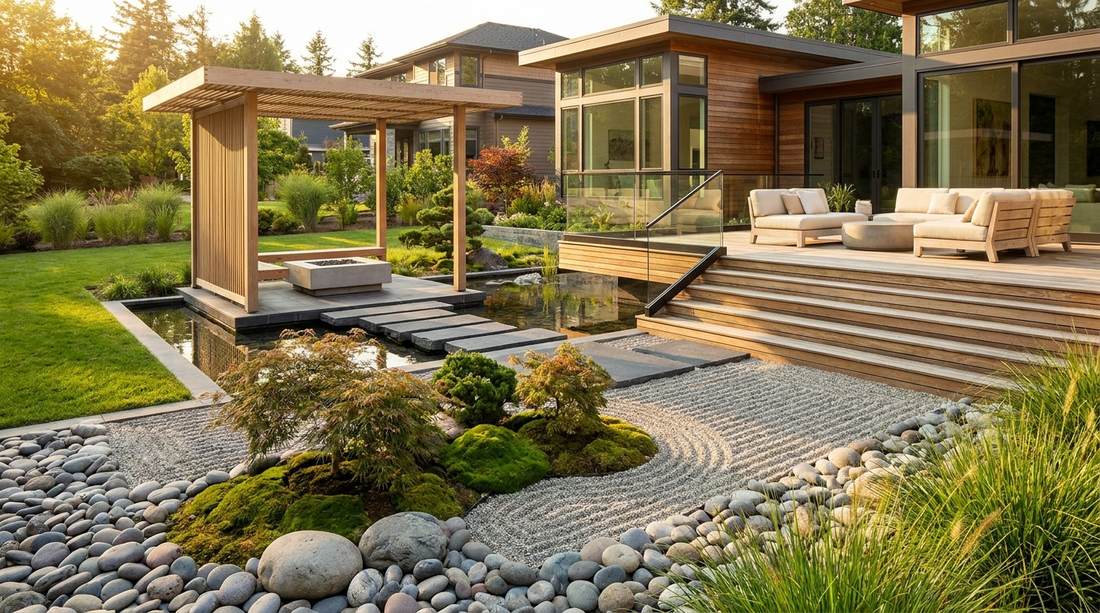
A modern japanese garden instantly elevates an ordinary backyard into a luxury sanctuary. By sourcing premium bulk materials and smart structural kits, installation becomes incredibly affordable. Unlock designer-level Zen layouts without paying commercial landscaping fees.
Design SnapshotKey Principles
- Kanso (Simplicity): Eliminate clutter to achieve visual clarity and mental calm through minimal, purposeful elements
- Fukinsei (Asymmetry): Embrace natural imbalance over rigid symmetry to create organic, flowing compositions
- Ma (Negative Space): Honor emptiness between elements as essential to harmony, not mere absence
- Shizen (Natural Essence): Arrange components intentionally yet achieve spontaneous, uncontrived appearance
Contemporary Hardscape Foundations
1. Split Granite Pathways With Steel Edging
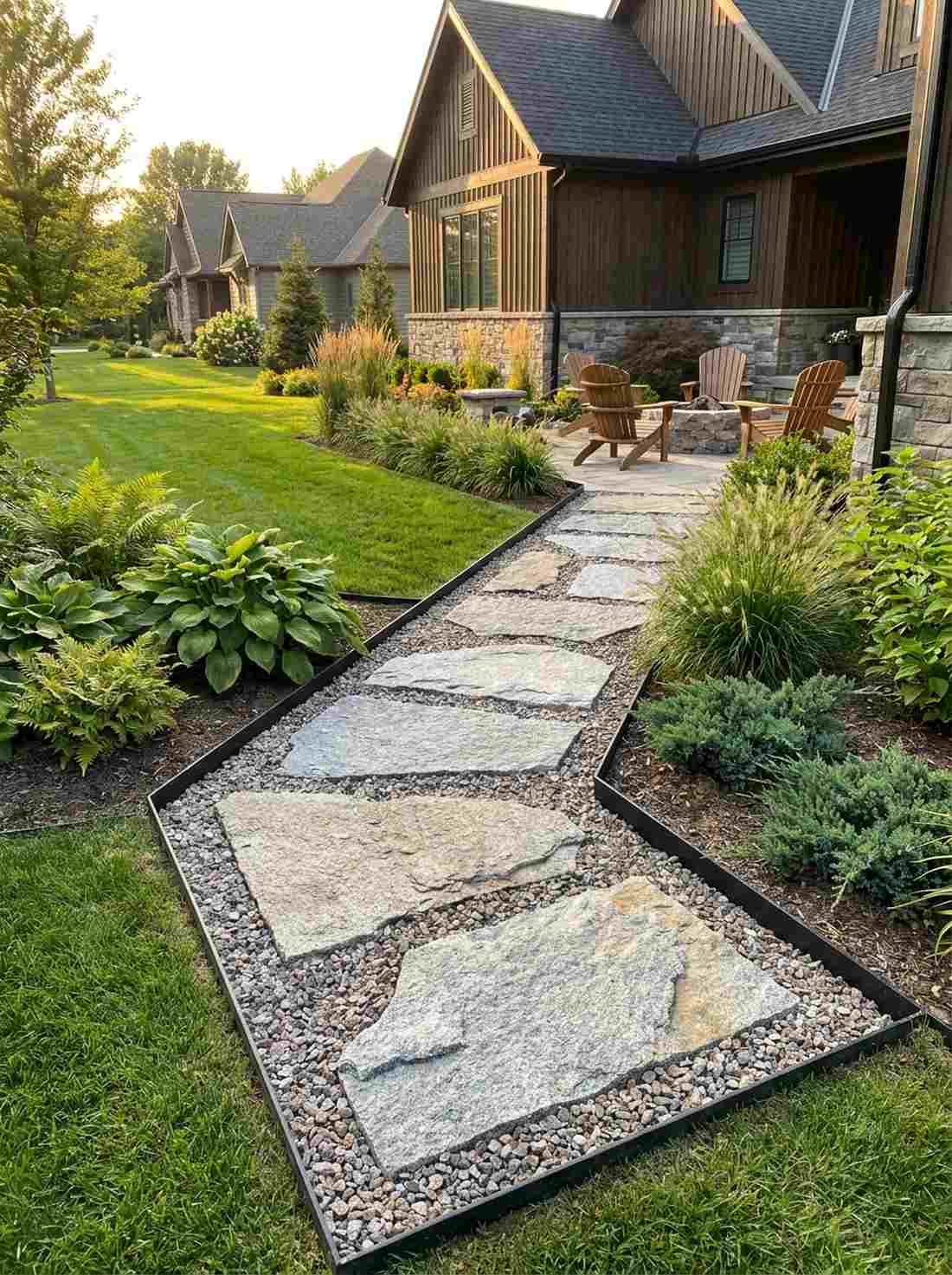
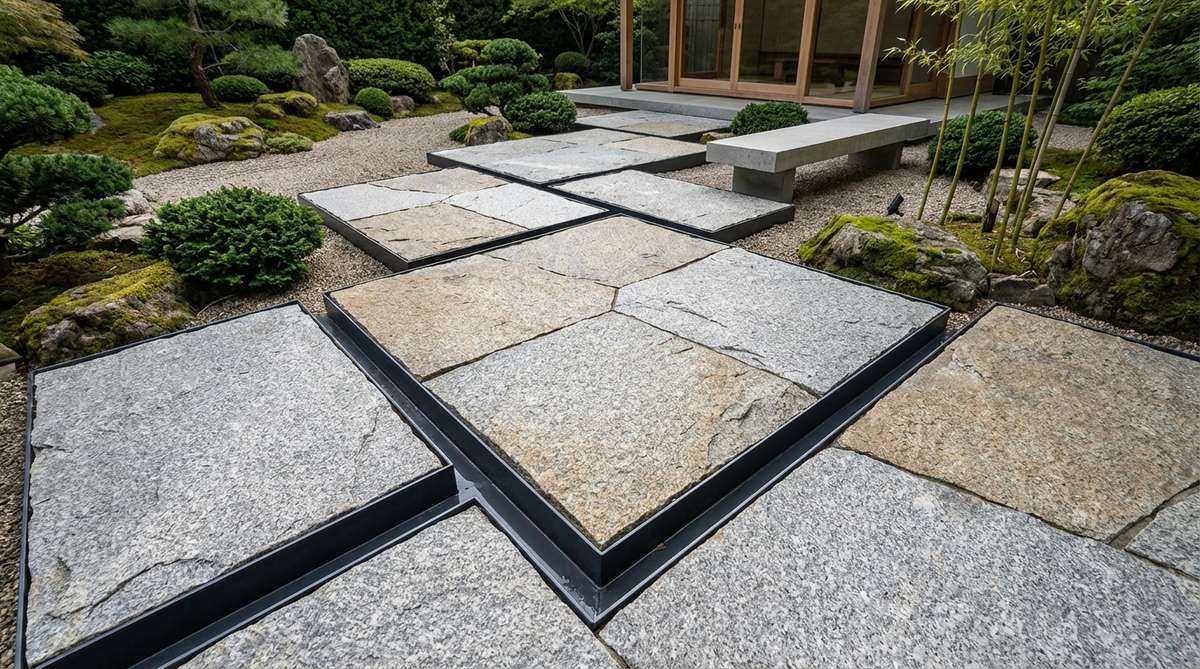
Feels like entering a high-end Kyoto spa retreat. This contemporary stone walkway design works exceptionally well for defining an entryway or guiding guests through a side yard.
Standard flat concrete blocks look instantly dated next to textured edges. Interlocking this hardscape with dark structural borders gives a designer-level finish that outlasts any weather. Add professional-grade landscape fabric underneath to prevent settling.
You can easily pull this off for around $80–$150 per pathway segment. Save this to your DIY weekend garden board!
- Key Materials: Split granite slabs, black steel edge restraints
- Vibe / Style: Architectural minimalism
- Difficulty: Moderate weekend build
- Budget Breakdown: Stone: $90 | Edging: $40.
- Creator’s Tip: Dig the trench 2 inches deeper than necessary to add a leveling sand base.
- Smart Sourcing: Get a flexible steel landscape edging (bulk pack) and heavy-duty commercial weed barrier.
2. Poured Concrete Pads With Raked Gravel Surrounds
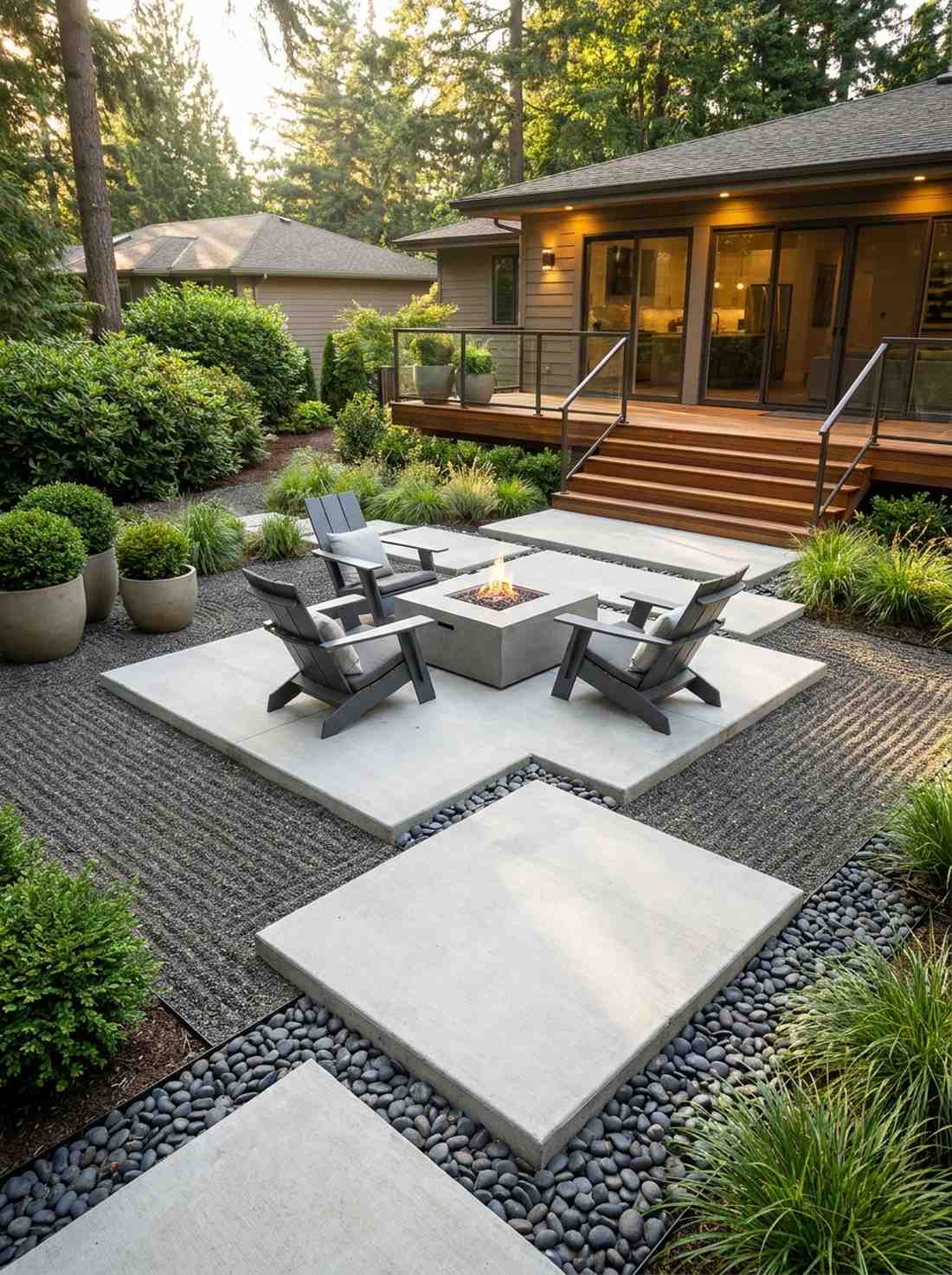
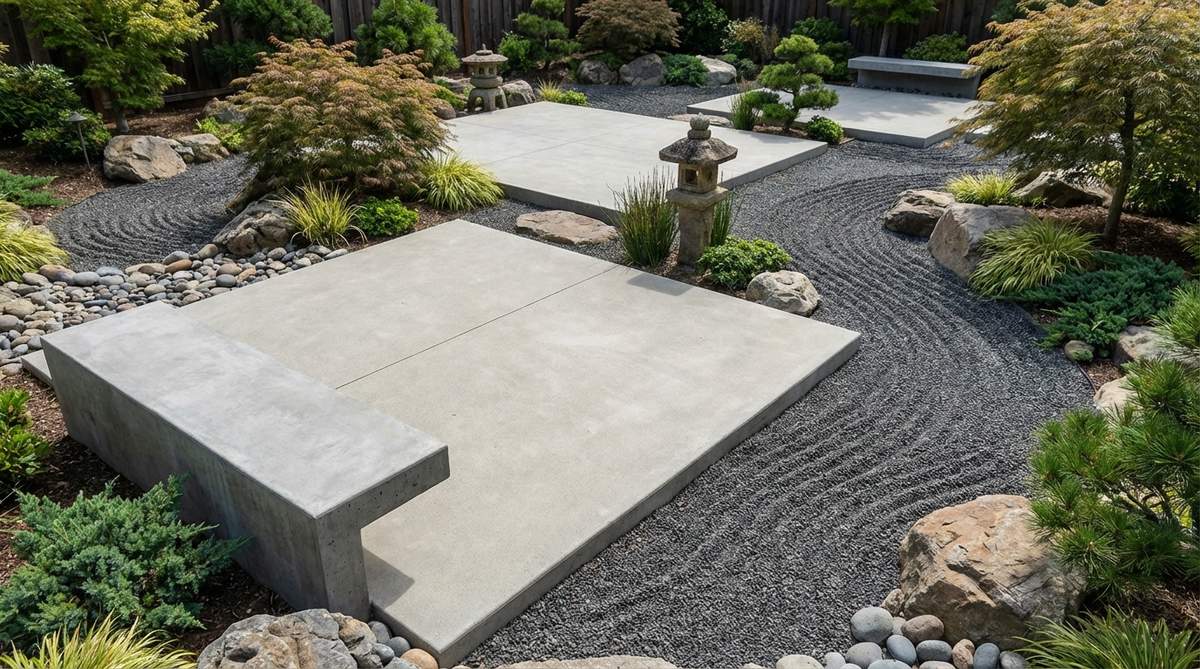
Radiates that serene, billionaire-mansion courtyard energy. A minimalist concrete and gravel patio serves beautifully as an anchored seating lounge in a larger backyard.
Pouring one massive slab is a common mistake that guarantees ugly stress cracks. Breaking the platforms up creates an optical illusion of a much larger, highly curated space. Utilizing dark pebble infill amplifies the architectural contrast.
Expect to spend around $50–$90 per individual poured section. It’s a fast upgrade that completely changes the vibe.
- Key Materials: Quick-set concrete, dark pea gravel, wood forms
- Vibe / Style: Modern Zen lounge
- Difficulty: Intermediate masonry
- Budget Breakdown: Concrete: $45 | Gravel: $35.
- Creator’s Tip: Seal the concrete immediately after curing to prevent organic staining from nearby trees.
- Smart Sourcing: Use a reusable geometric concrete mold kit and pre-washed black decorative river stones.
3. Charcoal Composite Decking Platforms
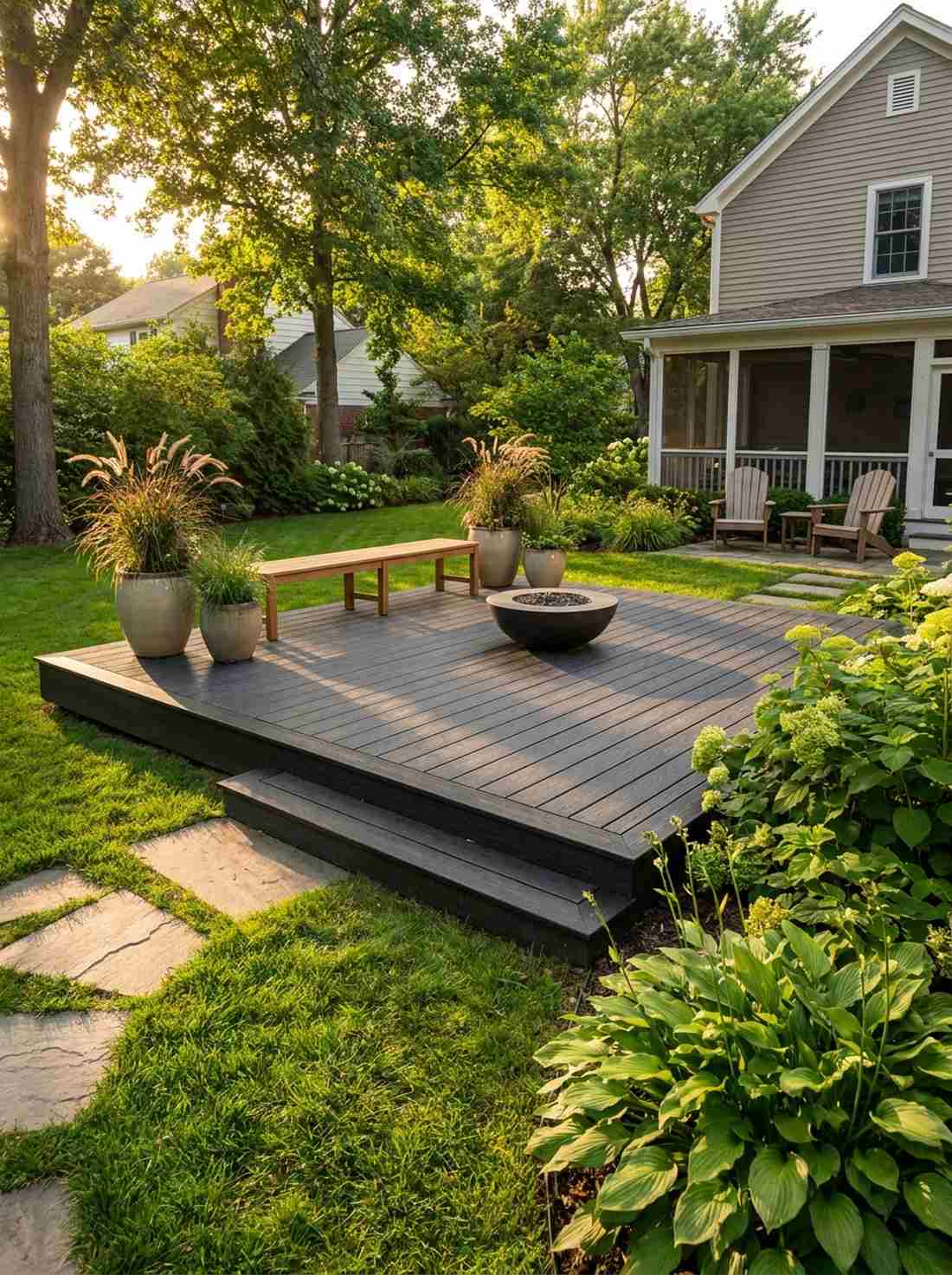
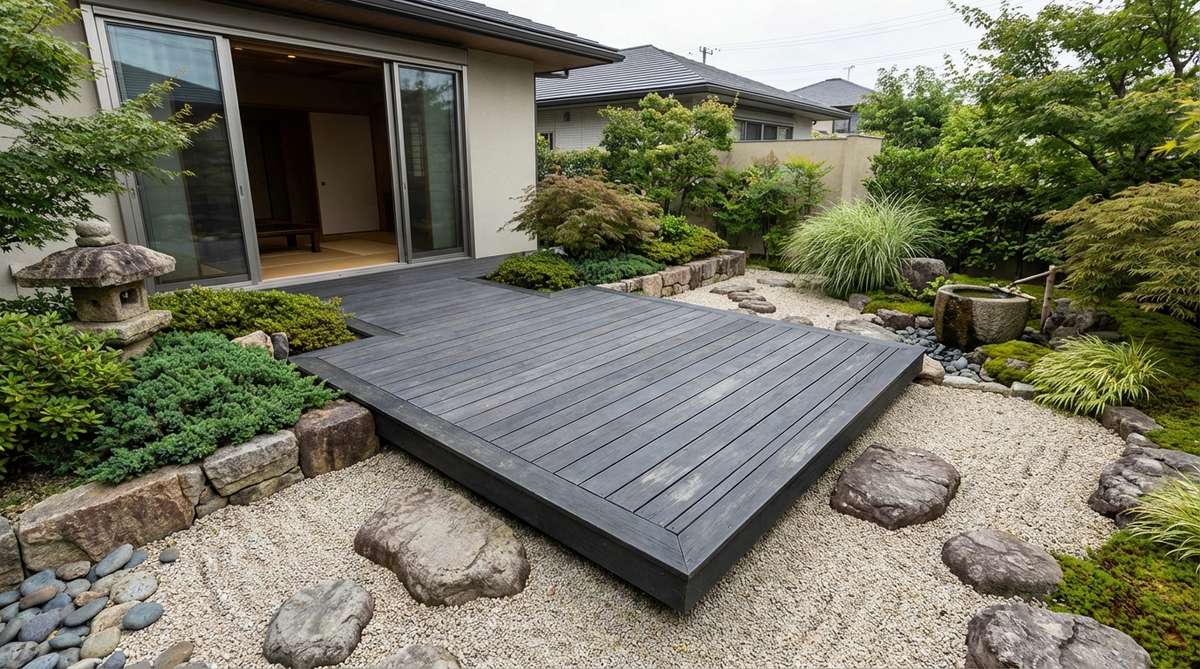
Brings a moody, grounded aesthetic straight out of a luxury design magazine. This elevated dark wood platform perfectly bridges the gap between indoor living rooms and outdoor meditation zones.
Natural wood rots quickly when placed directly over damp ground cover. Switching to a synthetic blend delivers a surprisingly premium look while remaining entirely maintenance-free. The deep charcoal tone makes surrounding green foliage visually pop.
Material costs generally range from $150–$300 for a compact meditation square. Pin this if you’re planning a small space upgrade!
- Key Materials: Charcoal composite boards, hidden fasteners
- Vibe / Style: Moody contemporary
- Difficulty: Basic carpentry
- Budget Breakdown: Decking: $200 | Hardware: $40.
- Creator’s Tip: Overhang the edges slightly to hide the structural frame entirely from view.
- Smart Sourcing: Invest in UV-coated composite fascia boards and a hidden deck fastener starter kit.
4. Herringbone Wood With Marble Inlay
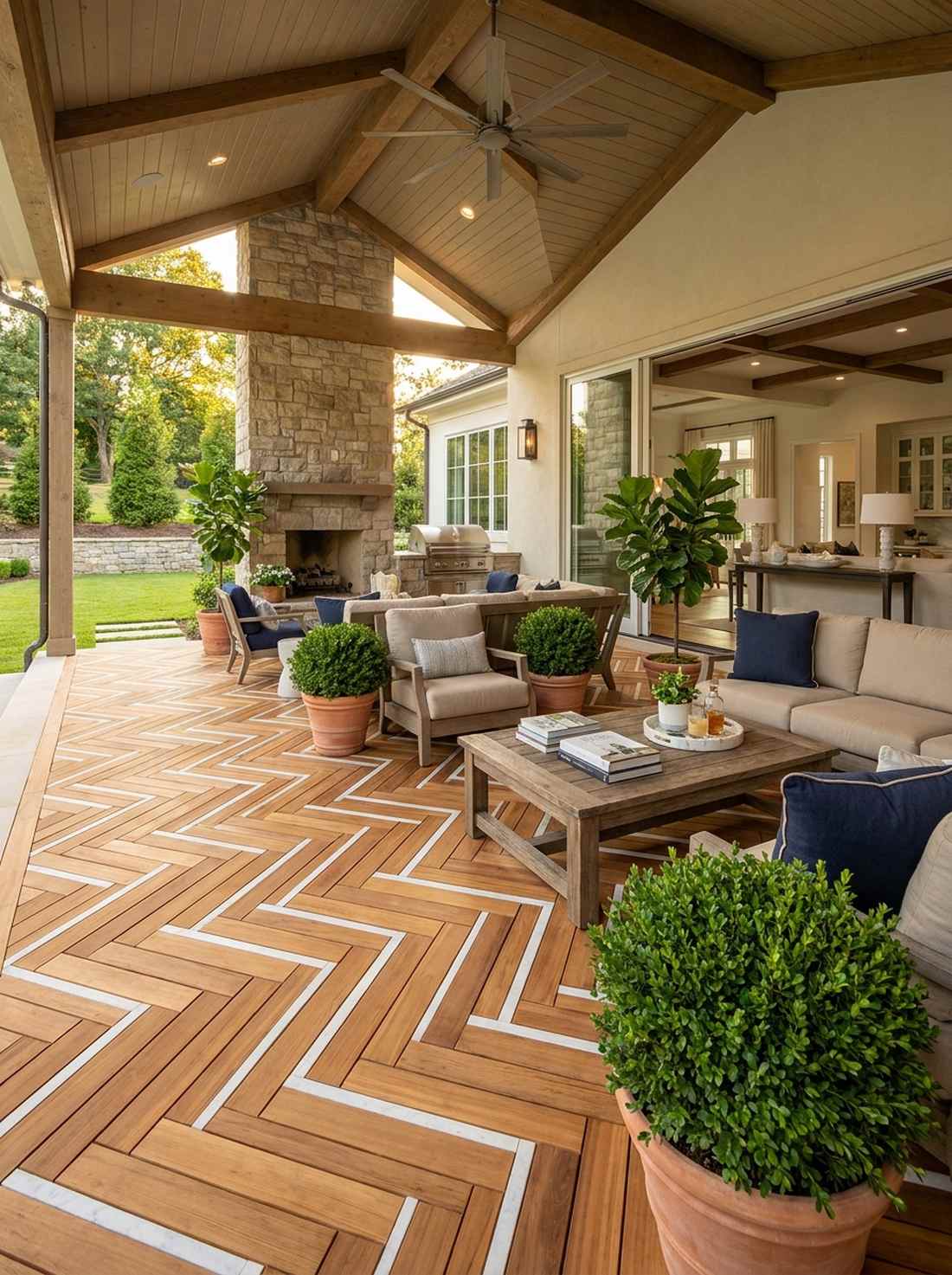
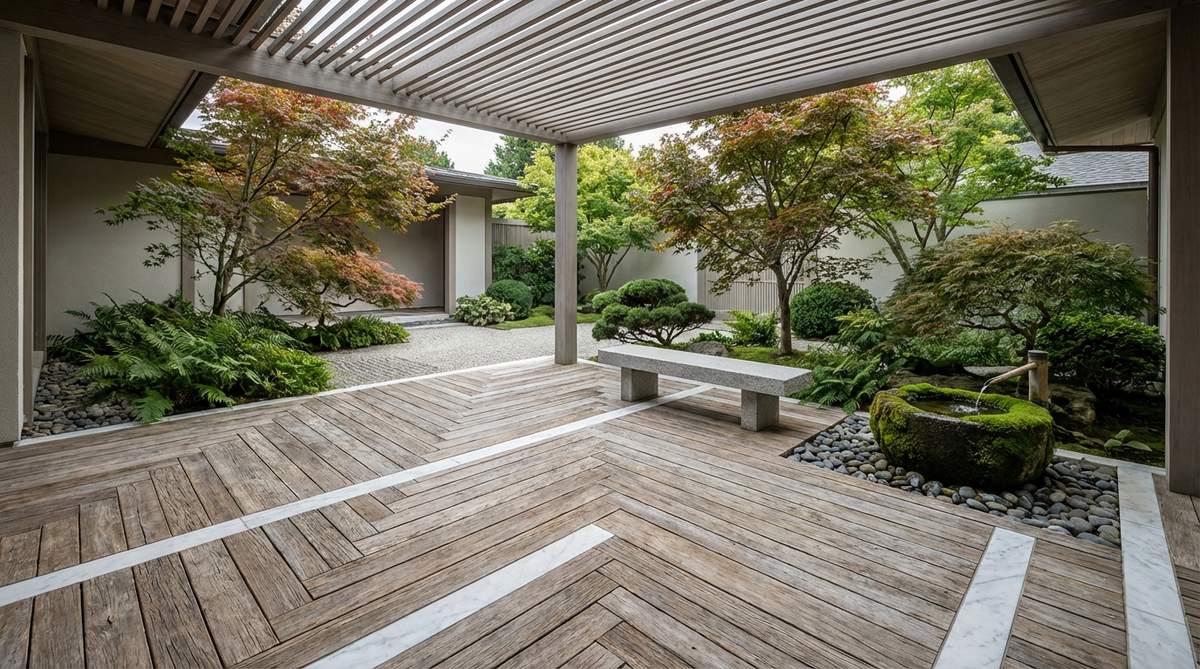
Evokes the feeling of walking through an exclusive boutique hotel. This hybrid patterned flooring layout is the ultimate statement piece for a covered patio or enclosed veranda.
Straight planks lack visual tension, making outdoor floors feel cheap. Injecting bright stone strips into the repeating wooden geometry looks far more expensive than it actually is. It merges organic warmth with rigid, high-end stone accents.
You can execute a small section of this for about $200–$400.
- Key Materials: Treated cedar planks, white marble border tiles
- Vibe / Style: East-meets-West luxury
- Difficulty: Advanced precision cutting
- Budget Breakdown: Wood: $150 | Marble accents: $80.
- Creator’s Tip: Use a template jig to ensure every angle is cut at exactly 45 degrees.
- Smart Sourcing: Grab pre-cut marble threshold strips and marine-grade clear wood sealant.
This next setup is ridiculously cheap but looks like a $1,000 custom landscape installation…
5. Geometrically Arranged Basalt Columns
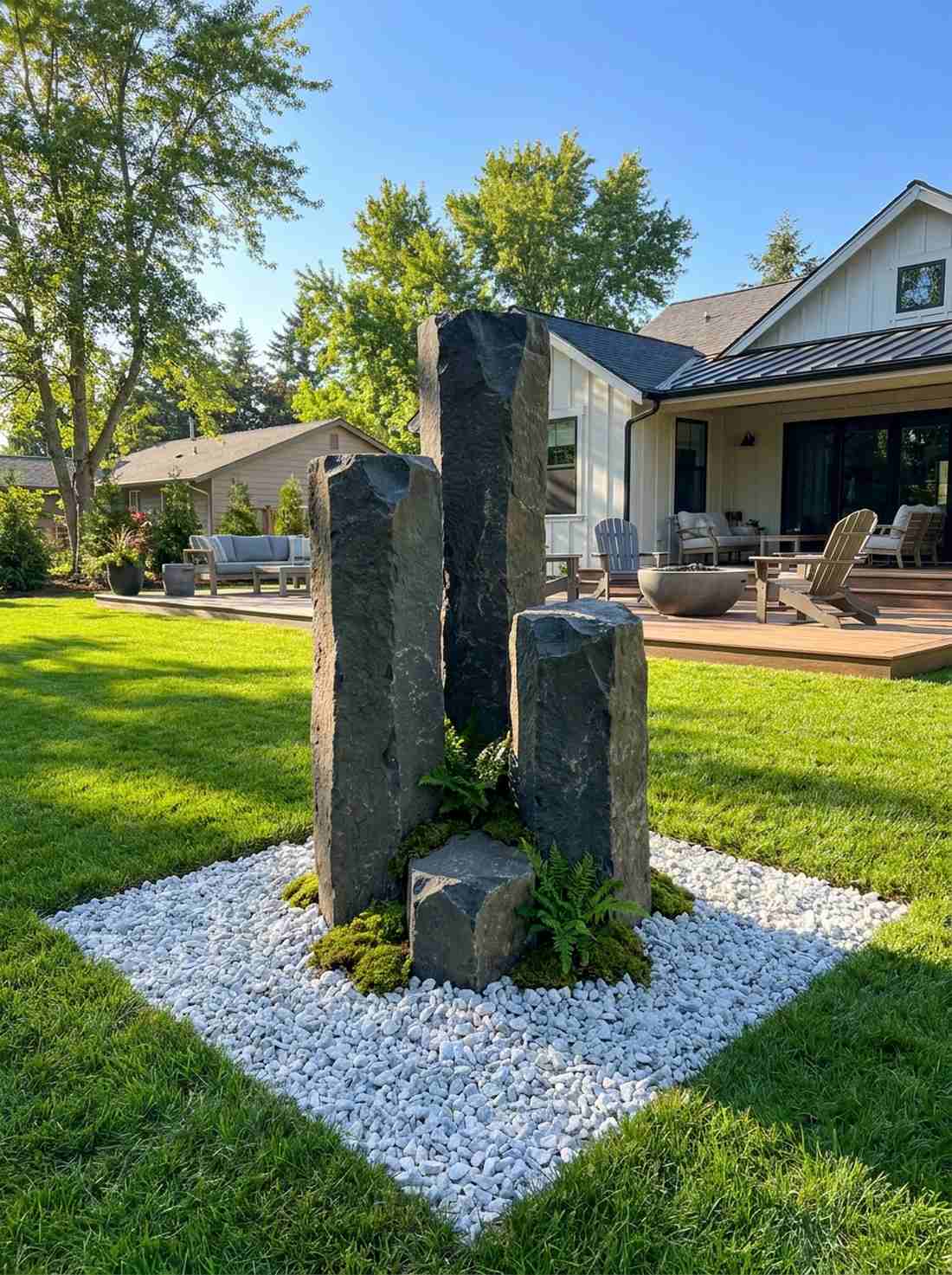
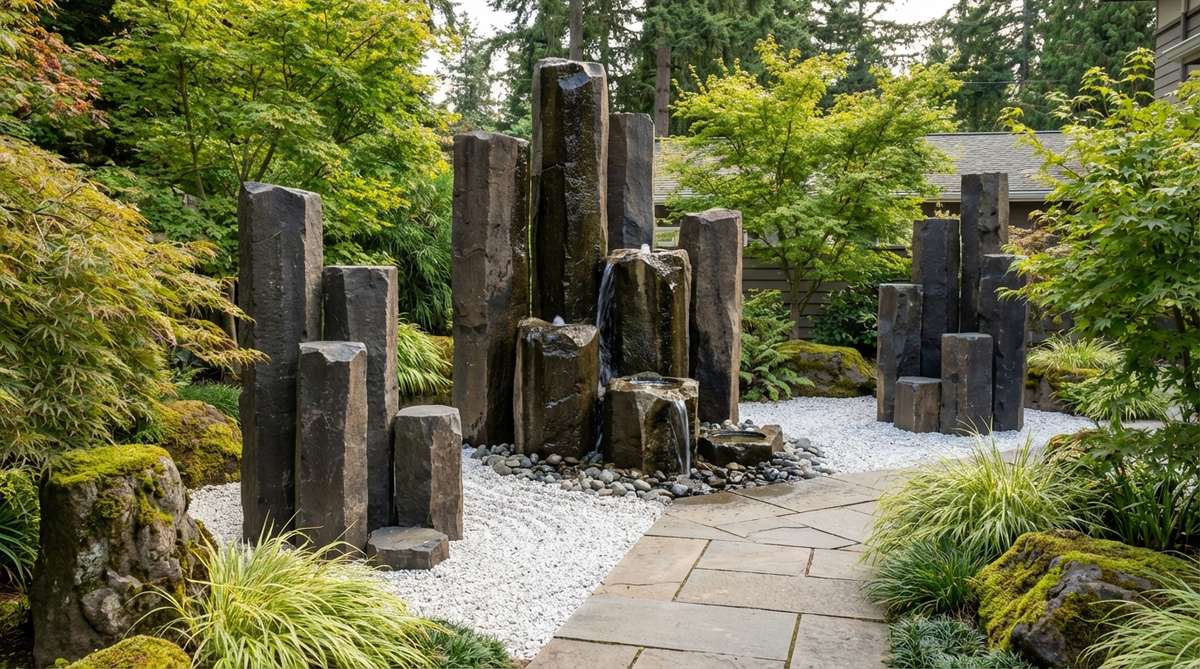
Feels like ancient ruins were teleported into a modern art museum. An upright stone pillar arrangement acts as a flawless sculptural focal point in an empty lawn corner.
Using scattered flat rocks rarely commands attention. Clustering sheer vertical elements creates sudden, dramatic height that stops the eye immediately. Throwing some miniature garden supplies like moss accents at the base softens the intense geometry.
Sourcing these elements locally can keep costs under $150 for a trio of columns. Highly recommended for a quick weekend win.
- Key Materials: Natural basalt pillars, white leveling sand
- Vibe / Style: Striking monolithic art
- Difficulty: Heavy lifting required
- Budget Breakdown: Stones: $120 | Base prep: $20.
- Creator’s Tip: Bury at least one-third of the column underground to ensure structural stability.
- Smart Sourcing: Look for lightweight faux basalt columns and white crushed marble gravel (bulk bag).
6. Brushed Concrete With Exposed Aggregate
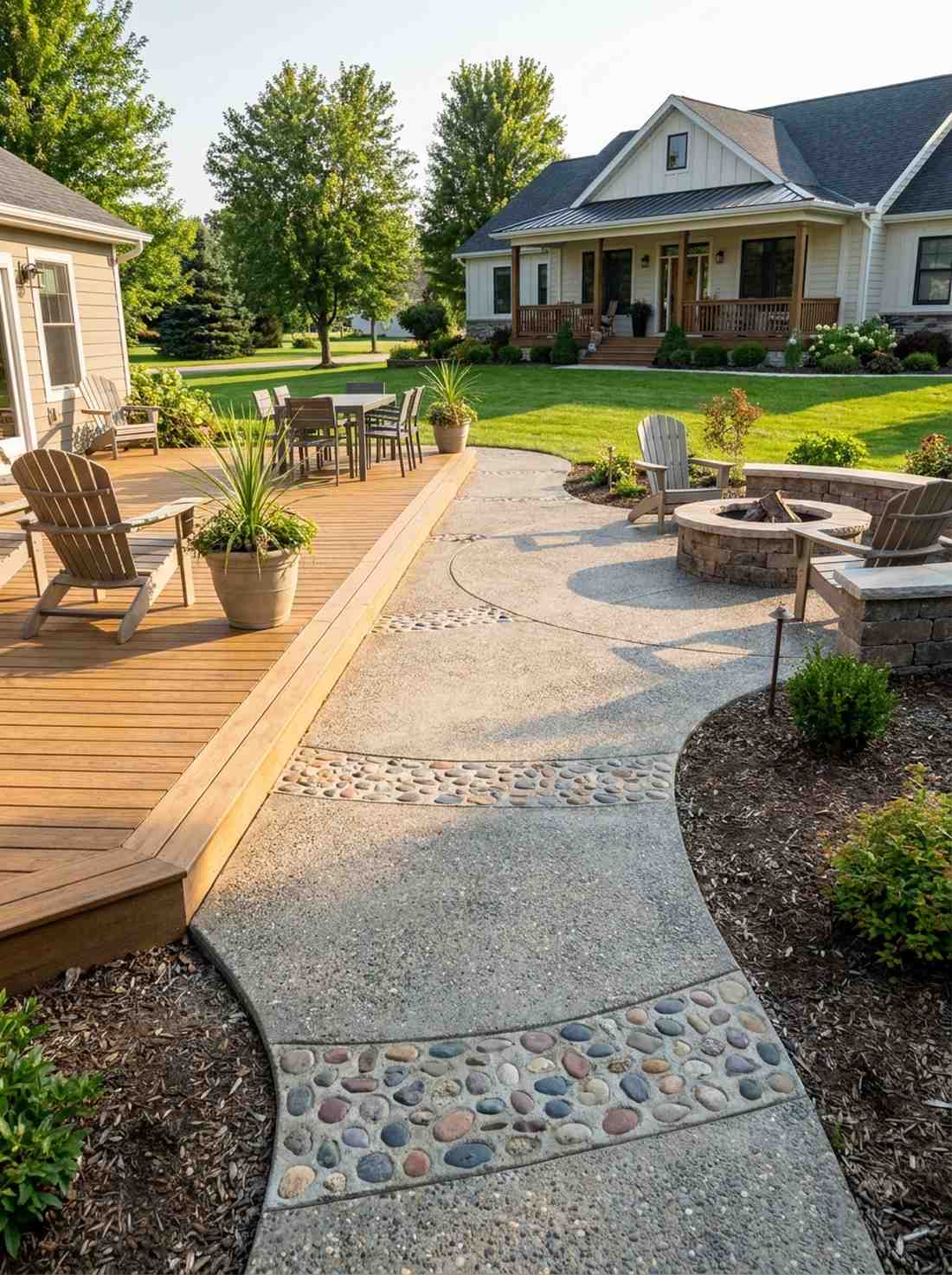
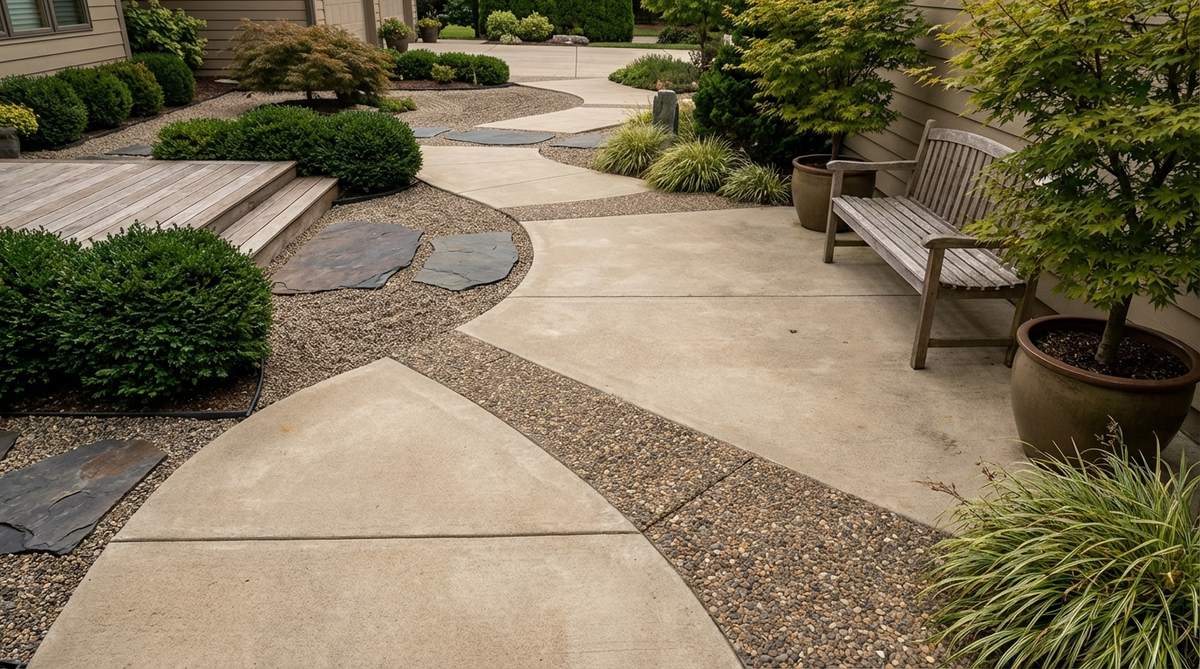
Offers the raw, tactile charm of a riverbed but with urban stability. A textured gravel concrete pour is the ultimate non-slip surface for high-traffic transition areas.
Smooth concrete becomes dangerously slick during morning dew or rain. Washing away the top cement layer reveals the embedded stones, solving safety issues while adding immense visual depth. It completely redefines standard backyard hardscaping.
This surface technique adds almost nothing to standard concrete costs, usually around $30 in surface retarder.
- Key Materials: Concrete mix, colorful river aggregate, surface retarder
- Vibe / Style: Earthy industrial
- Difficulty: Timing-sensitive masonry
- Budget Breakdown: Mix: $60 | Surface retarder: $25.
- Creator’s Tip: Wash the surface exactly when the underlying concrete is firm but the top is still slightly soft.
- Smart Sourcing: Use a commercial-grade concrete retarder spray and acrylic high-gloss stone sealer.
7. Corten Steel Retaining Walls
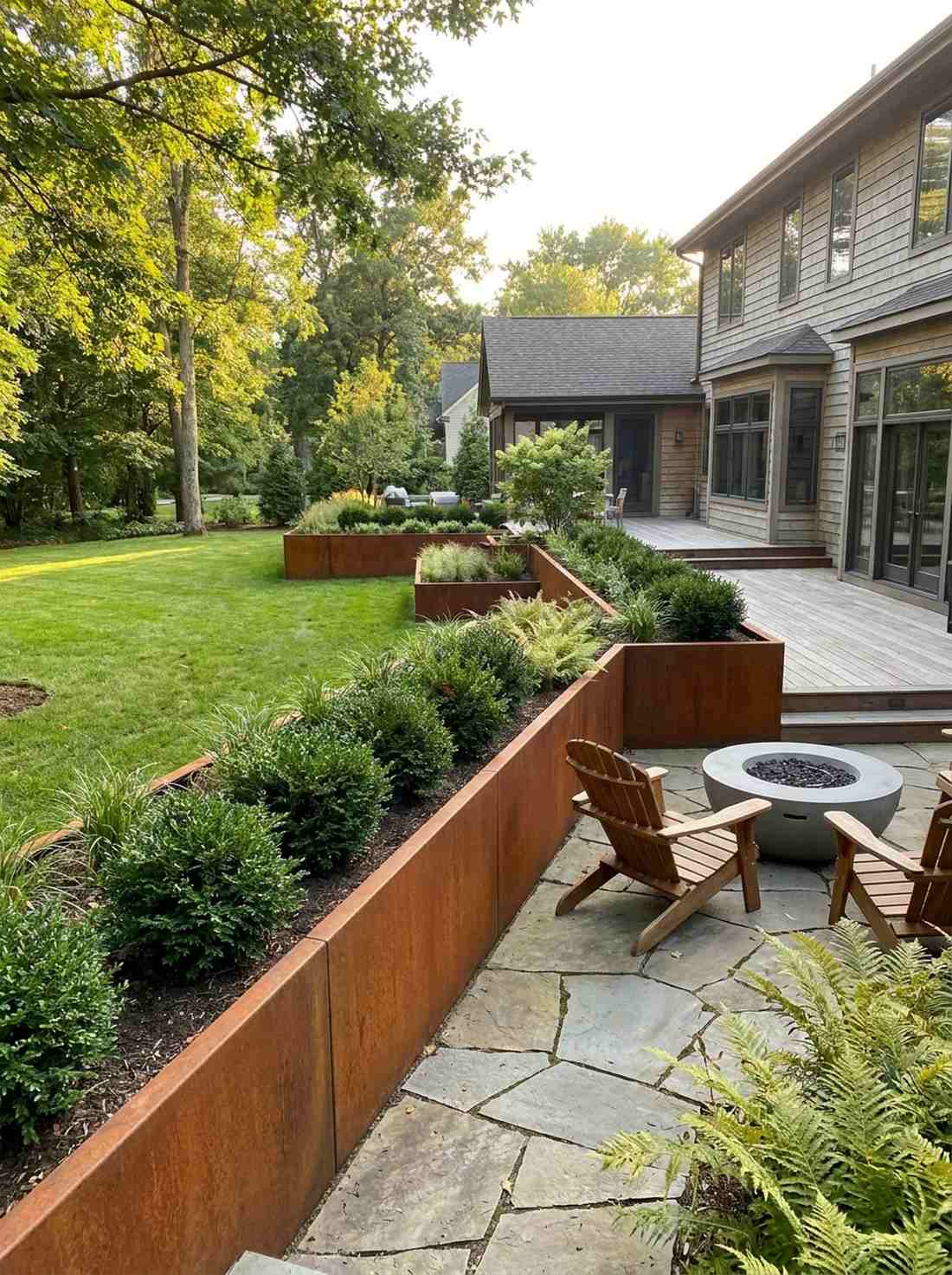
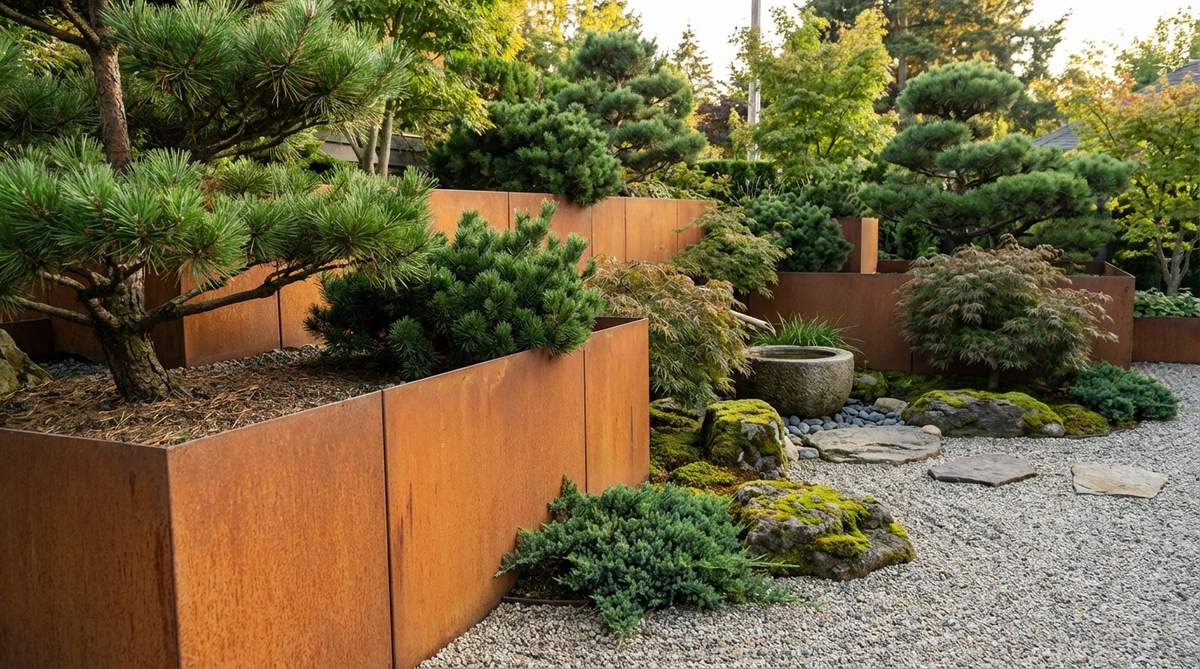
Delivers a fiery burst of rust-orange against deep green shrubbery. A weathering metal garden border perfectly frames an elevated plant bed or gentle slope.
Timber retaining walls eventually warp and decay in moist soil. Opting for oxidized metal plates provides indestructible support that naturally gets more beautiful over time. The industrial edge creates a stunning modern contrast against soft ferns.
Expect to spend around $100–$250 per panel section. Save this to your heavy landscaping board!
- Key Materials: Corten steel panels, heavy-duty stakes
- Vibe / Style: Edgy contemporary landscape
- Difficulty: Moderate installation
- Budget Breakdown: Steel panels: $180 | Hardware: $30.
- Creator’s Tip: Spray the new steel with a mixture of hydrogen peroxide, salt, and vinegar to force the rust patina in 24 hours.
- Smart Sourcing: Order pre-cut Corten steel planter kits and anti-corrosion grounding stakes.
Modern Water Elements With Zen Spirit
8. Linear Water Blade Over Black Pebbles
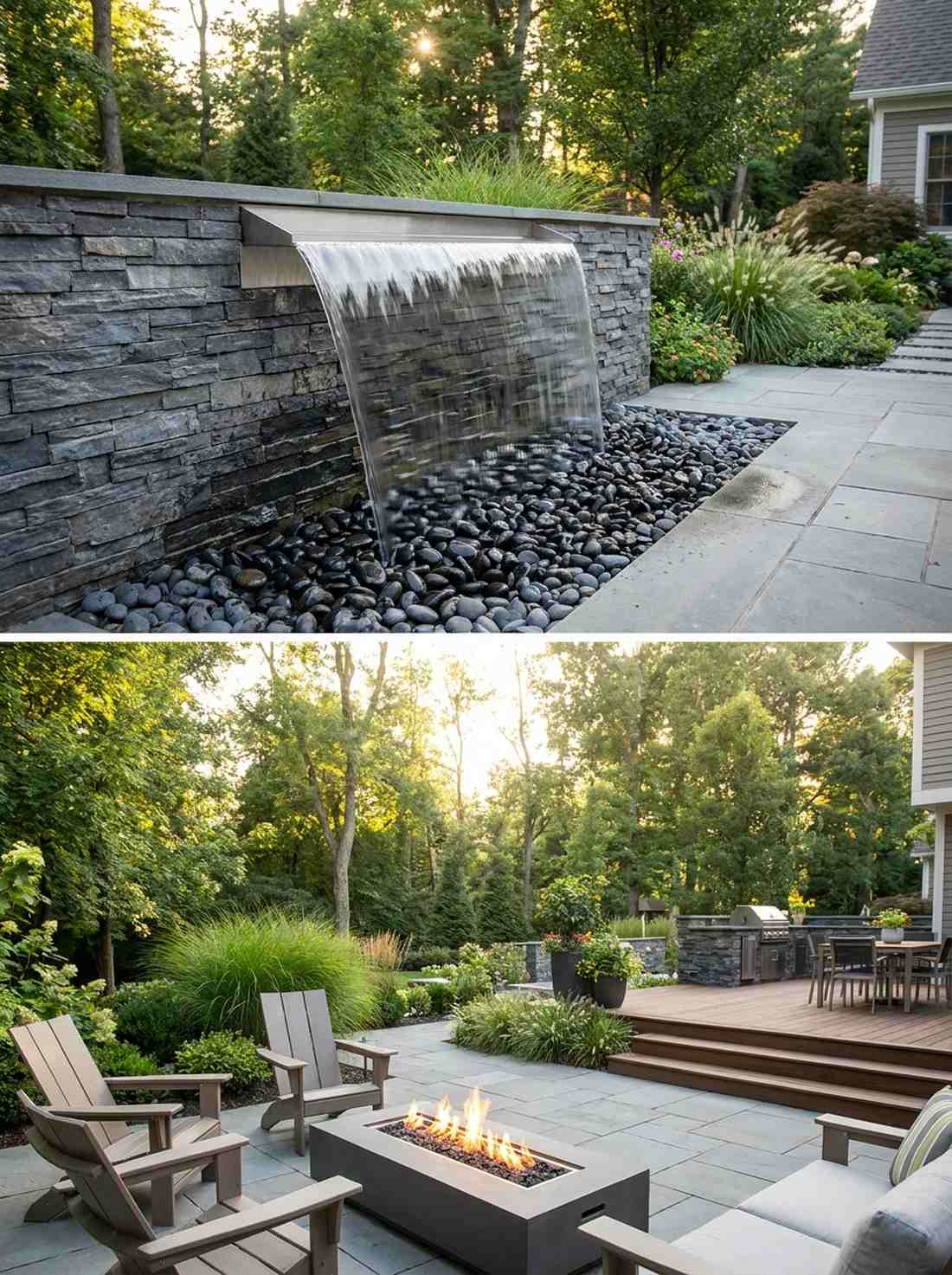
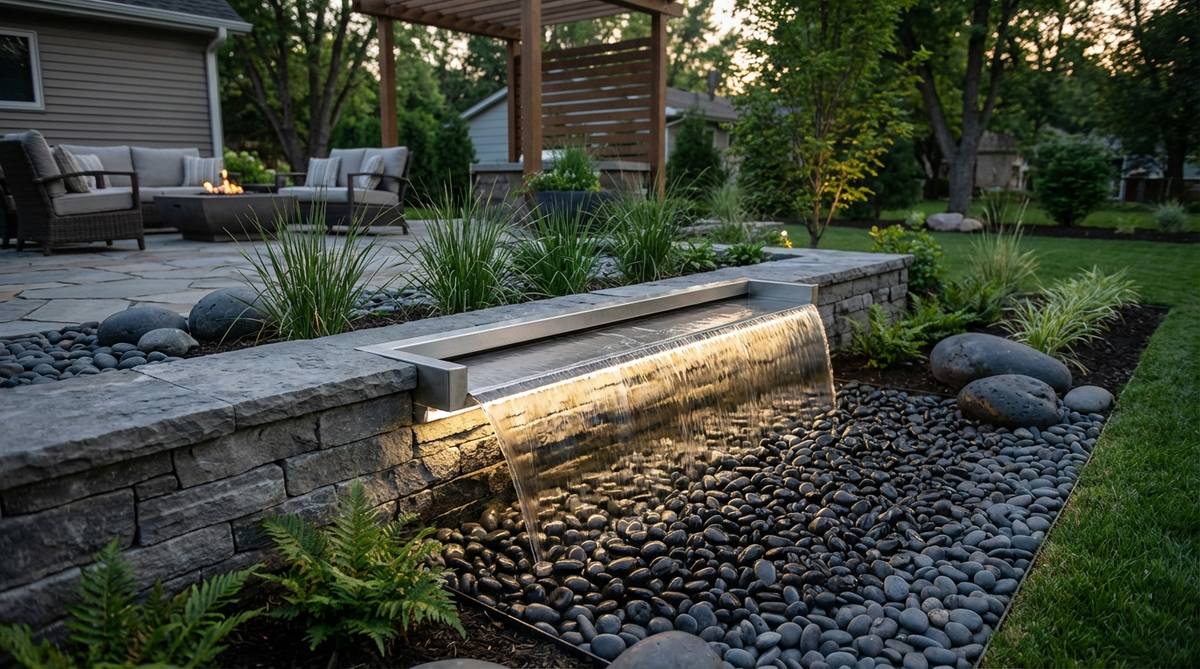
Sounds like a gentle rainfall inside a private spa. A sleek metal waterfall feature is the ultimate acoustic upgrade for drowning out annoying neighborhood traffic noise.
Puddle-like plastic fountains look cheap and clog easily. Forcing water through a sharp stainless steel lip creates a perfectly smooth, glass-like sheet that screams luxury. The hidden underground basin keeps the aesthetic incredibly minimal.
A basic setup can be assembled for roughly $150–$250. This is a game-changer for backyard relaxation.
- Key Materials: Stainless spillway, submersible pump, black river rock
- Vibe / Style: High-end hotel courtyard
- Difficulty: Intermediate plumbing
- Budget Breakdown: Spillway: $90 | Pump/Basin: $110.
- Creator’s Tip: Add a flow-control valve to perfectly dial in the sound level of the falling water.
- Smart Sourcing: Buy a stainless steel waterfall spillway kit and a heavy-duty pondless fountain basin.
9. Infinity Edge Koi Pond
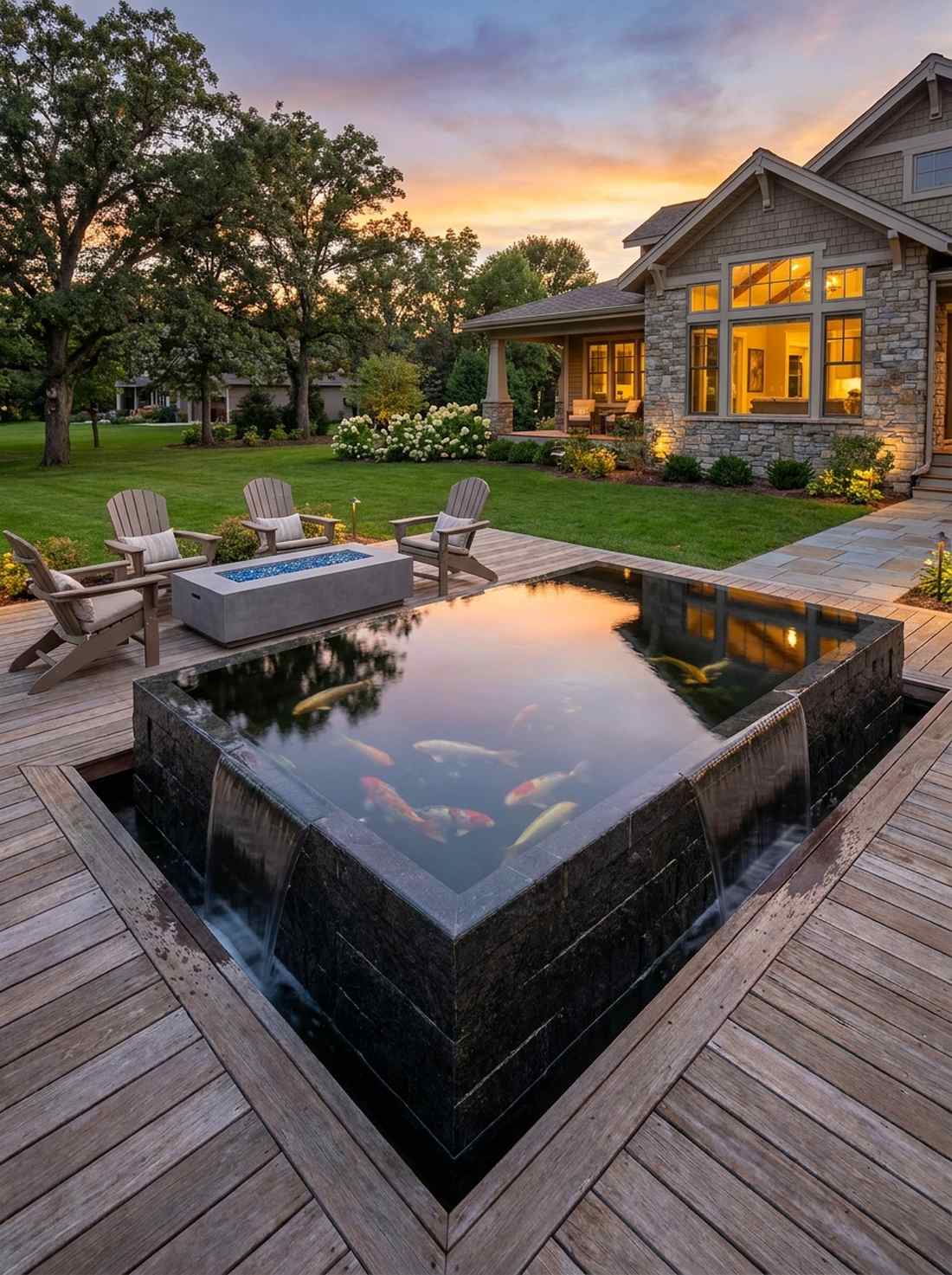
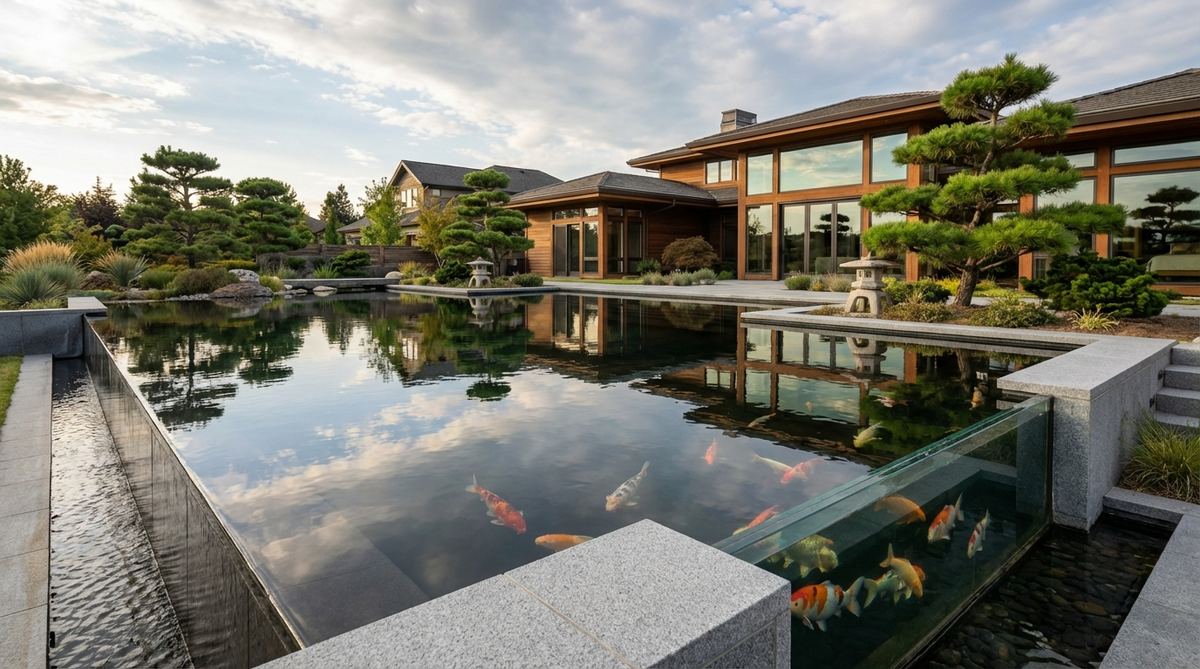
Looks like a liquid mirror reflecting the sky right in your backyard. An elevated rimless water basin brings mesmerizing, dynamic life to an otherwise static patio space.
Exposed rubber pond liners instantly ruin the magic of water features. Engineering a flawless overflow lip makes the water seamlessly disappear into the horizon. Tucking a hidden catch basin underneath recirculates everything cleanly.
This is a premium build, usually starting around $400 for a DIY compact version. Pin this for ultimate backyard goals!
- Key Materials: EPDM liner, reinforced blocks, high-capacity pump
- Vibe / Style: Ultra-modern aquatic luxury
- Difficulty: Advanced engineering
- Budget Breakdown: Liner: $150 | Filtration/Pump: $200.
- Creator’s Tip: Use a laser level to ensure the infinity edge is accurate down to the millimeter.
- Smart Sourcing: Invest in a commercial-grade EPDM pond liner and a variable speed submersible water pump.
Most DIYers get this completely wrong… until they try the exact layout trick coming up next.
💡 Must-Have Supplies for High-End Setups
To build these setups faster and ensure they last, skip the generic craft aisles and invest in the right foundational kits.
- Base & Support: Commercial-grade geotextile weed barriers (bulk roll)
- Setup Tools: Laser leveling alignment starter kits
- Weather/Durability Protection: UV-resistant clear acrylic masonry sealants
10. Bubbling Boulder With LED Accents
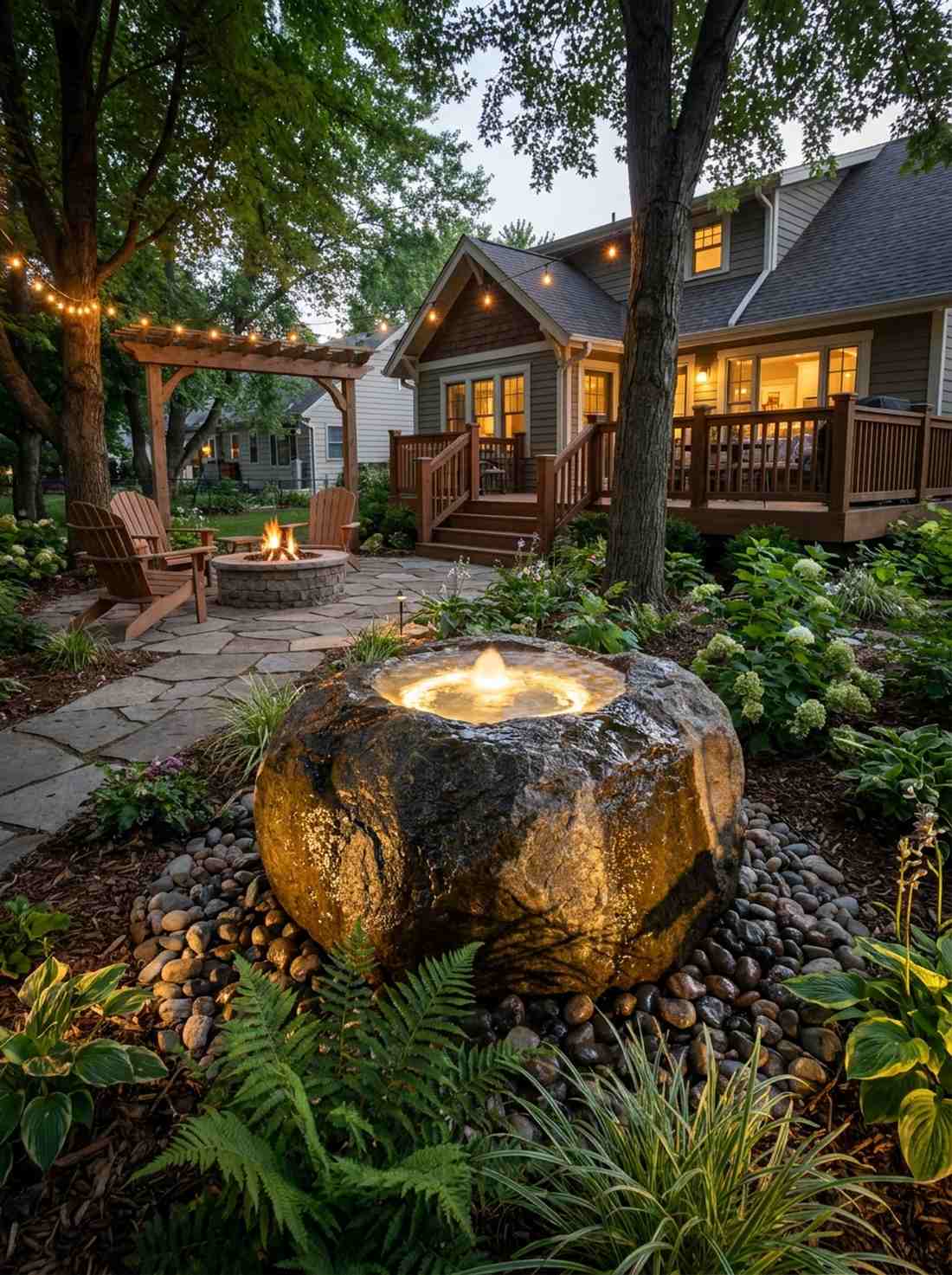
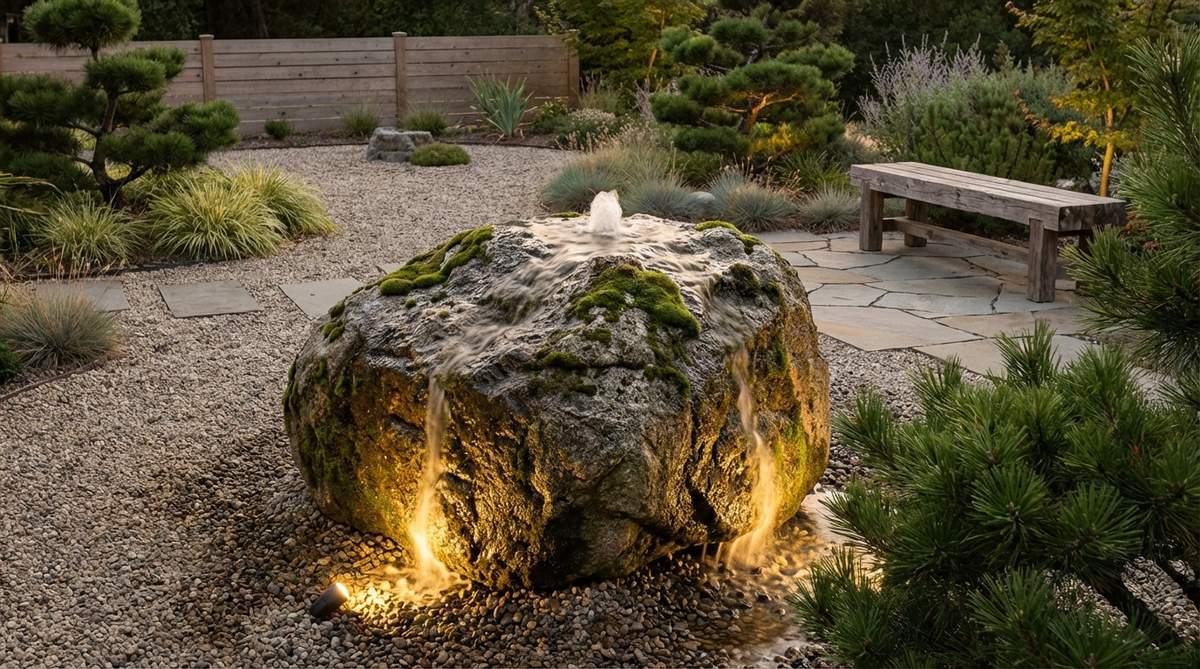
Feels like a magical glowing spring discovered in the woods. A drilled stone fountain display is a compact way to introduce running water into a tiny flowerbed.
Pre-molded plastic fountains crack in the sun and look artificial. Core-drilling a genuine rock transforms a basic landscaping stone into an expensive-looking custom piece. At night, uplighting the ripples creates captivating moving shadows.
You can piece this together for about $100–$180. The evening transformation is totally worth it.
- Key Materials: Drilled natural rock, tubing, waterproof LEDs
- Vibe / Style: Enchanted evening garden
- Difficulty: Moderate DIY
- Budget Breakdown: Pre-drilled rock: $80 | Lighting/Pump: $60.
- Creator’s Tip: Hide the LED ring light slightly below the water’s surface inside the drill hole for a subtle glow.
- Smart Sourcing: Pick up a complete bubbling boulder starter kit and waterproof outdoor LED ring lights.
11. Glass Channel Water Feature
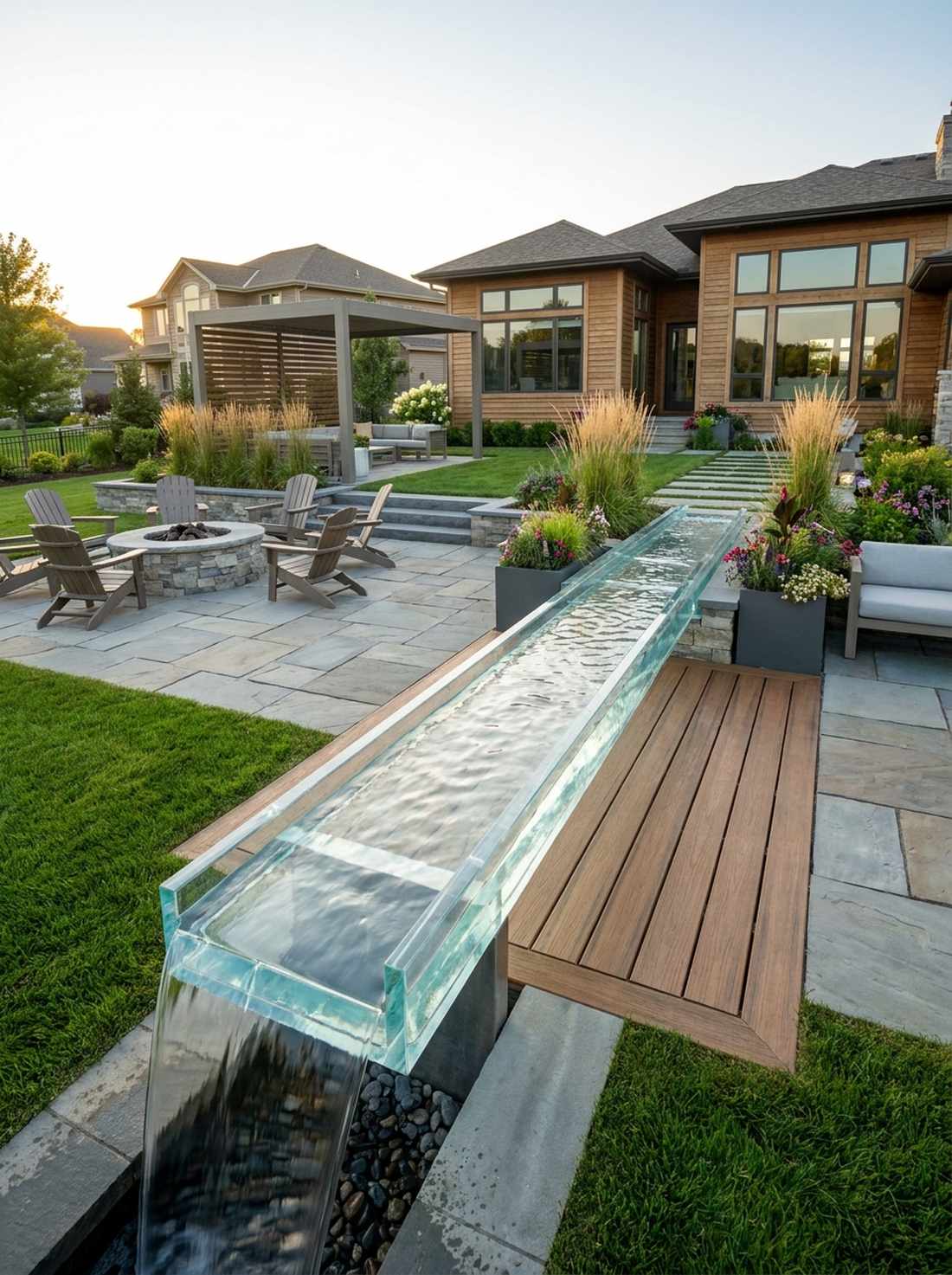
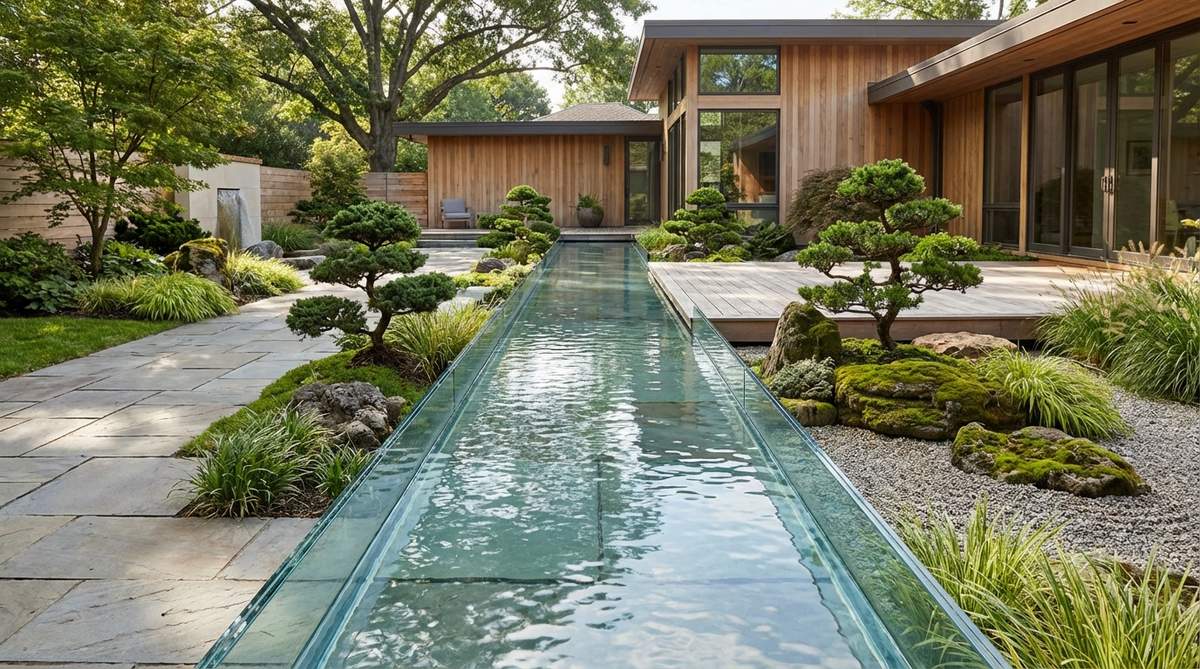
Creates the jaw-dropping illusion of water floating mid-air. A transparent aquatic pathway is an ultra-chic element that connects different zones of your outdoor layout.
Digging a muddy trench for a stream looks messy and requires constant weeding. Suspending the flow in a crystal-clear acrylic track completely modernizes the concept. It’s a striking way to guide foot traffic over a symbolic bridge.
Material costs run around $200–$350 depending on the channel length.
- Key Materials: Thick tempered glass or acrylic sheets, silicone sealant
- Vibe / Style: Futuristic Zen
- Difficulty: Advanced fabrication
- Budget Breakdown: Acrylic: $180 | Sealant & Pump: $70.
- Creator’s Tip: Angle the channel at exactly a 2-degree drop for a smooth, splash-free flow.
- Smart Sourcing: Use UV-resistant clear acrylic troughs and aquarium-safe waterproof silicone (bulk pack).
12. Rain Chain Collection System
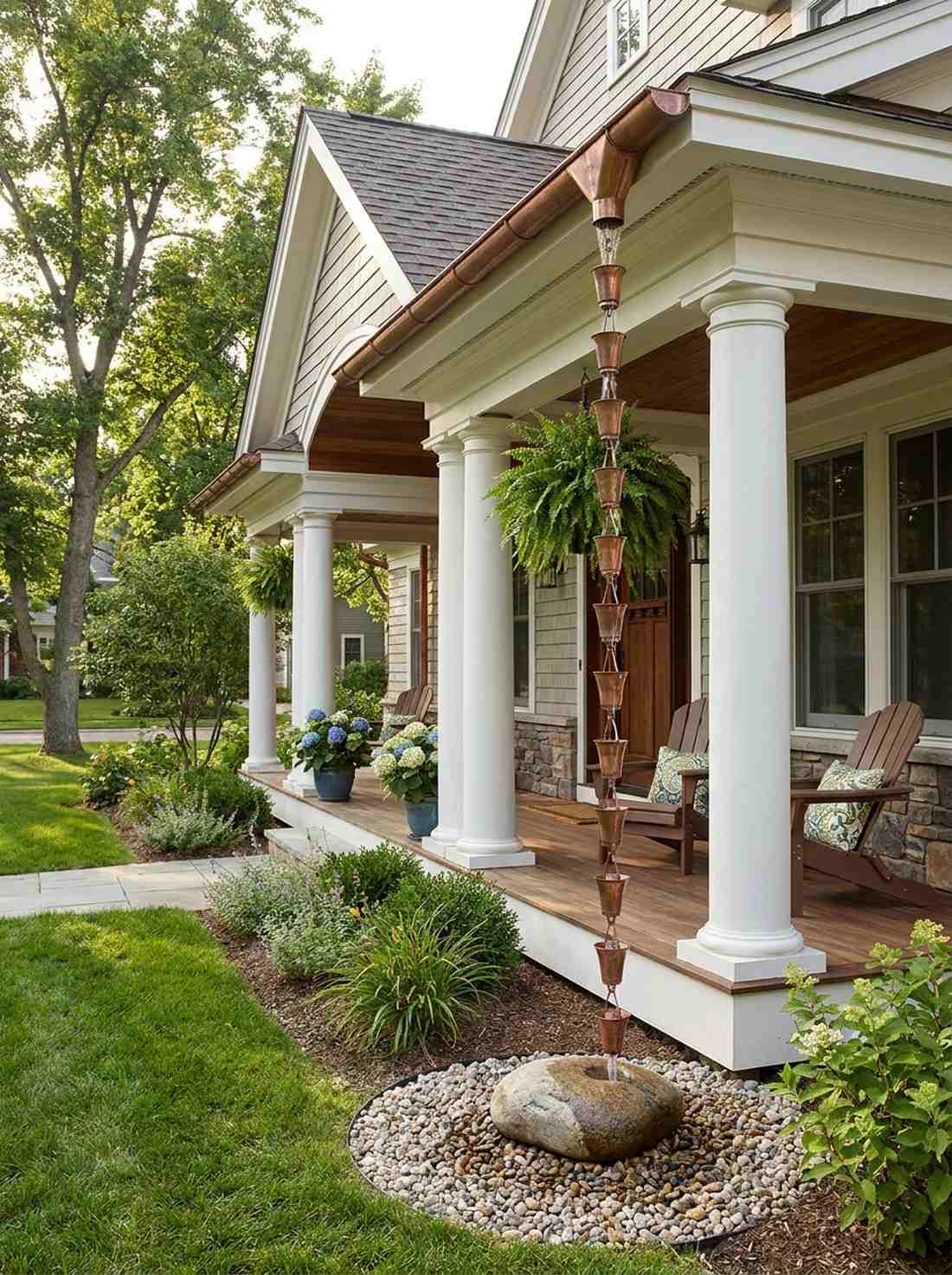
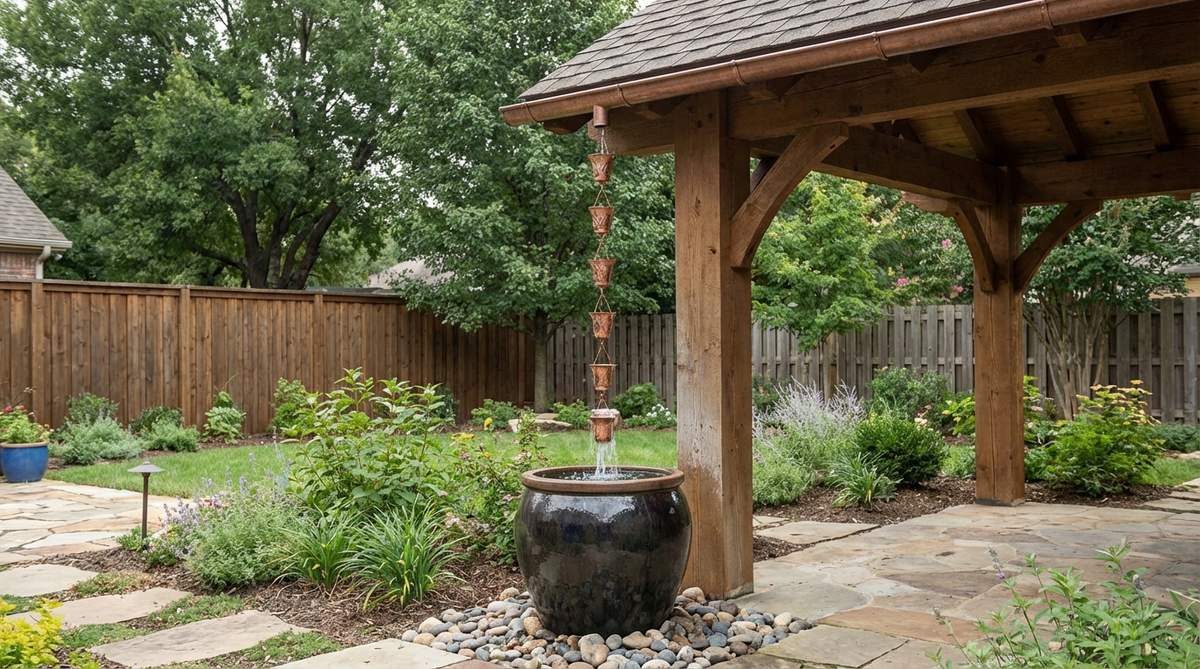
Turns an ugly gutter necessity into a hypnotic musical performance. A metal cup rainwater cascade is the perfect upgrade for an entry porch or veranda roof.
Standard aluminum downspouts destroy the aesthetic of a carefully curated exterior. Swapping them for linking metal cups adds vertical intrigue and a beautiful weathering patina. It’s an instant architectural face-lift for your home’s exterior.
You can buy and hang these for under $60–$90. Pin this to your easy curb-appeal board!
- Key Materials: Copper link chain, gravel catch basin
- Vibe / Style: Eco-chic traditional
- Difficulty: Easy beginner setup
- Budget Breakdown: Chain: $55 | Basin: $25.
- Creator’s Tip: Anchor the bottom of the chain to a heavy stone to prevent wild swinging during heavy winds.
- Smart Sourcing: Grab a pure copper rain chain kit and a flared gutter adapter insert.
13. Tiered Spill Fountain With Concrete Basins
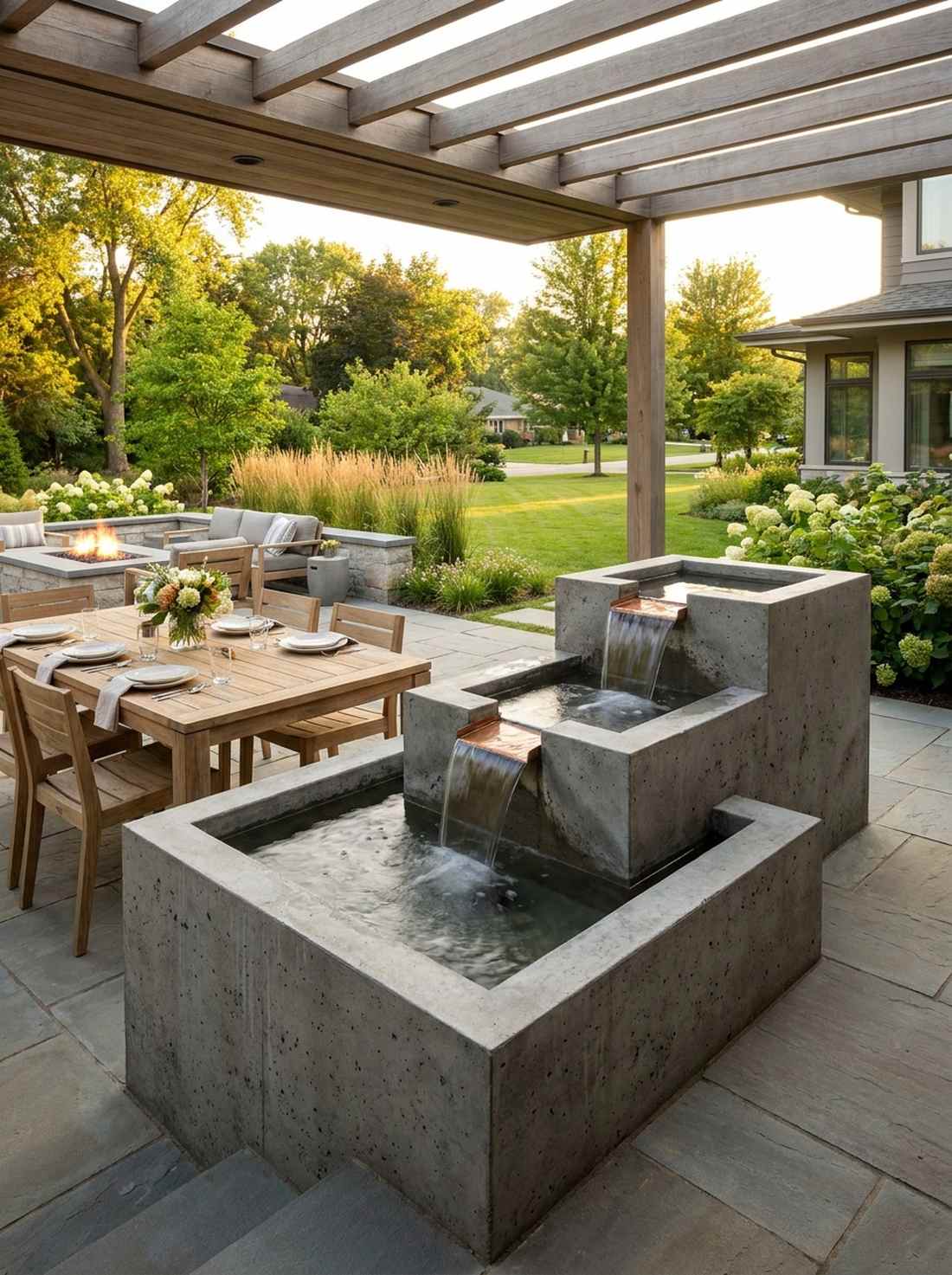
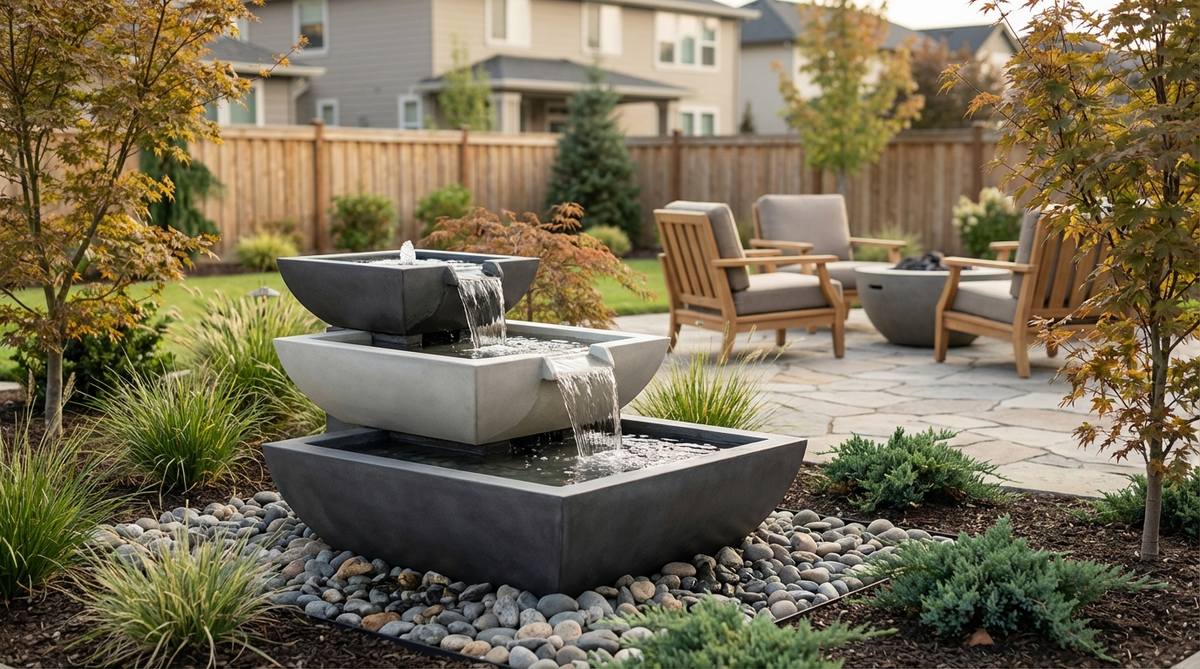
Commands attention like a centerpiece in a modern art gallery. A geometric tiered water cascade perfectly anchors the corner of an outdoor dining space.
Classic round bowls feel incredibly dated and out of place in modern architecture. Casting sharp, squared-off basins delivers a brutalist yet soothing aesthetic that aligns with contemporary homes. The layered drops amplify the ambient noise beautifully.
Pouring this yourself keeps the cost around $120–$180. It’s an aggressive design statement that pays off.
- Key Materials: Cement, square molding wood, vinyl tubing
- Vibe / Style: Brutalist Zen
- Difficulty: Intermediate molding
- Budget Breakdown: Concrete: $60 | Tubing/Pump: $50.
- Creator’s Tip: Embed a small piece of copper pipe into the spillway lip to ensure a clean water break.
- Smart Sourcing: Use a rapid-setting high-strength concrete mix and a submersible quiet-run water pump.
14. Shallow Reflecting Pool With Stepping Stones
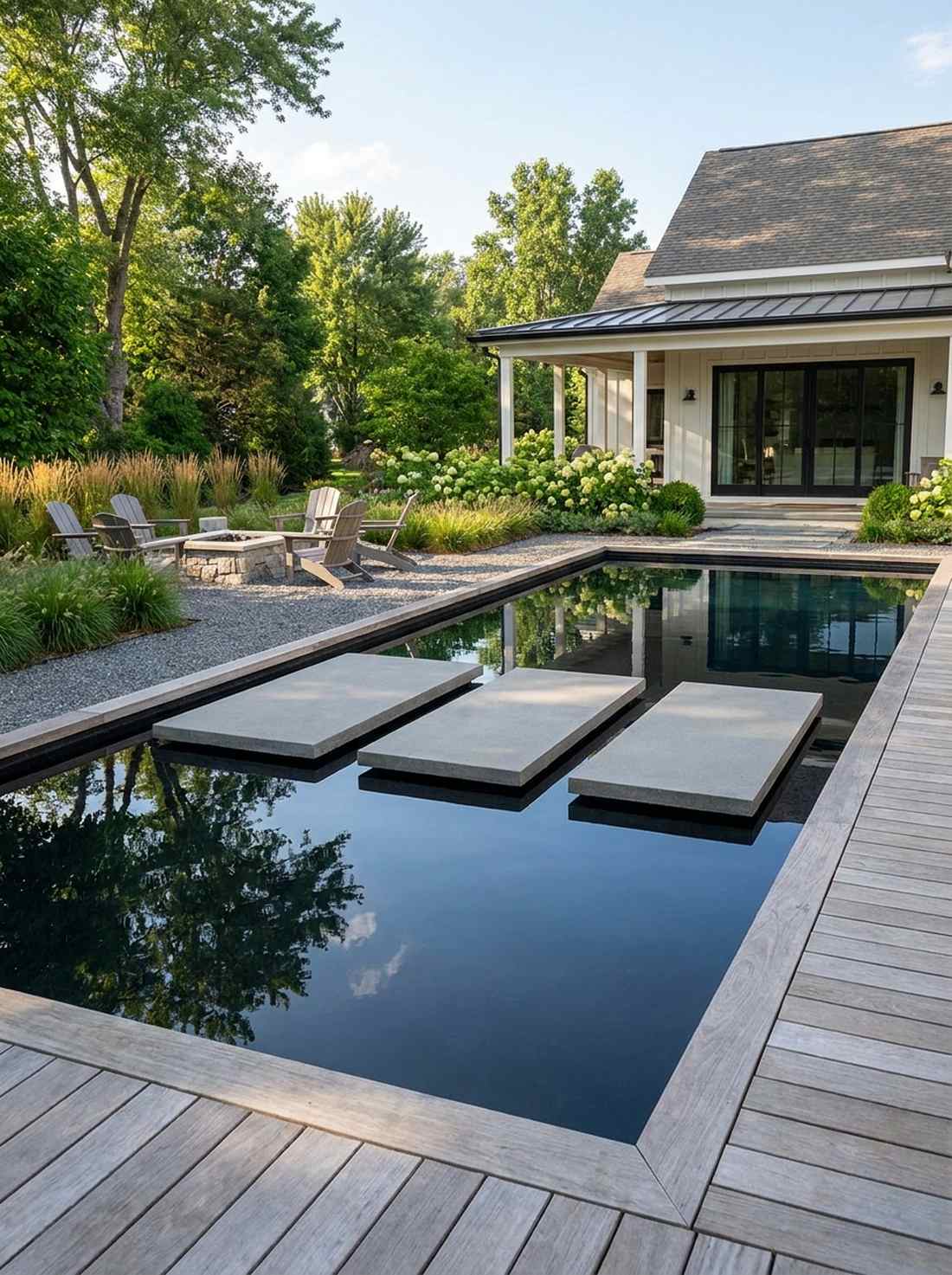
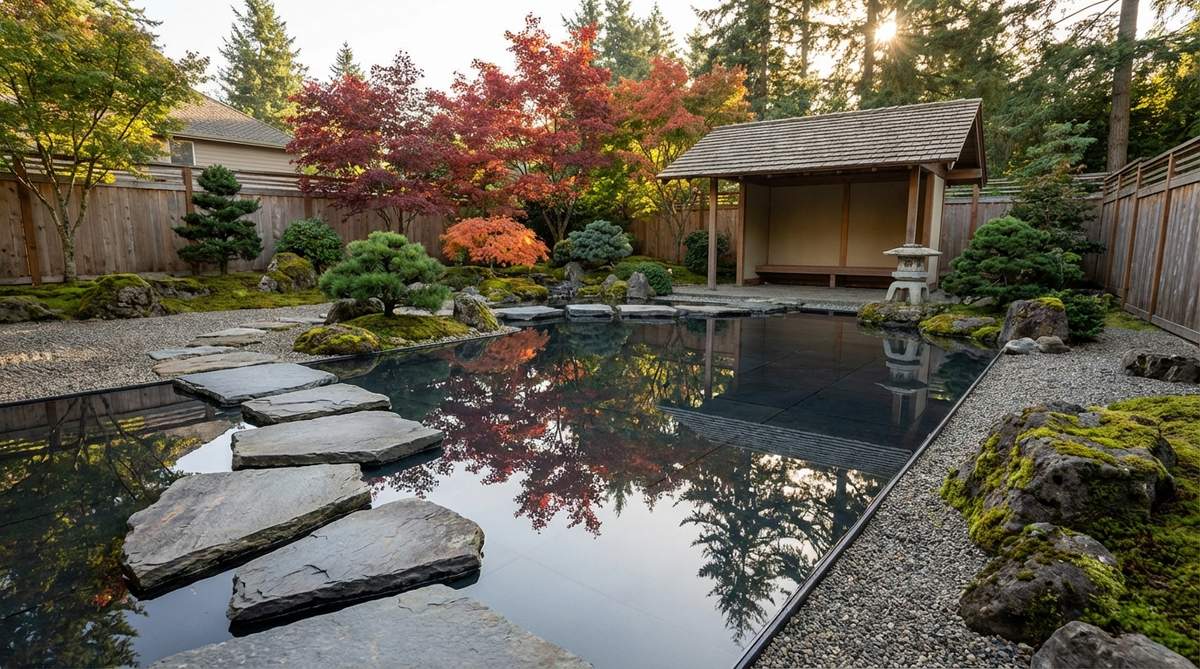
Feels like tiptoeing across a magical, untouched lake. A mirrored wading pool pathway forces guests to slow down and experience the environment mindfully.
Deep ponds are a massive liability and a headache to keep clean. A two-inch deep dark basin gives maximum reflective impact with almost zero maintenance. Placing floating pavers right across the middle creates an interactive architectural journey.
You can construct this minimalist feature for roughly $200–$400.
- Key Materials: EPDM liner, large concrete pavers, black dye
- Vibe / Style: Meditative floating illusion
- Difficulty: Moderate excavation
- Budget Breakdown: Pavers: $120 | Liner/Base: $150.
- Creator’s Tip: Paint the bottom of the basin flat black before sealing to enhance the mirror-reflection of the sky.
- Smart Sourcing: Secure heavy-duty porcelain outdoor pavers and pond-safe black water tint.
If you think your space is too small, this next clever hack will instantly change your mind…
Minimalist Planting Strategies
15. Repeating Boxwood Spheres
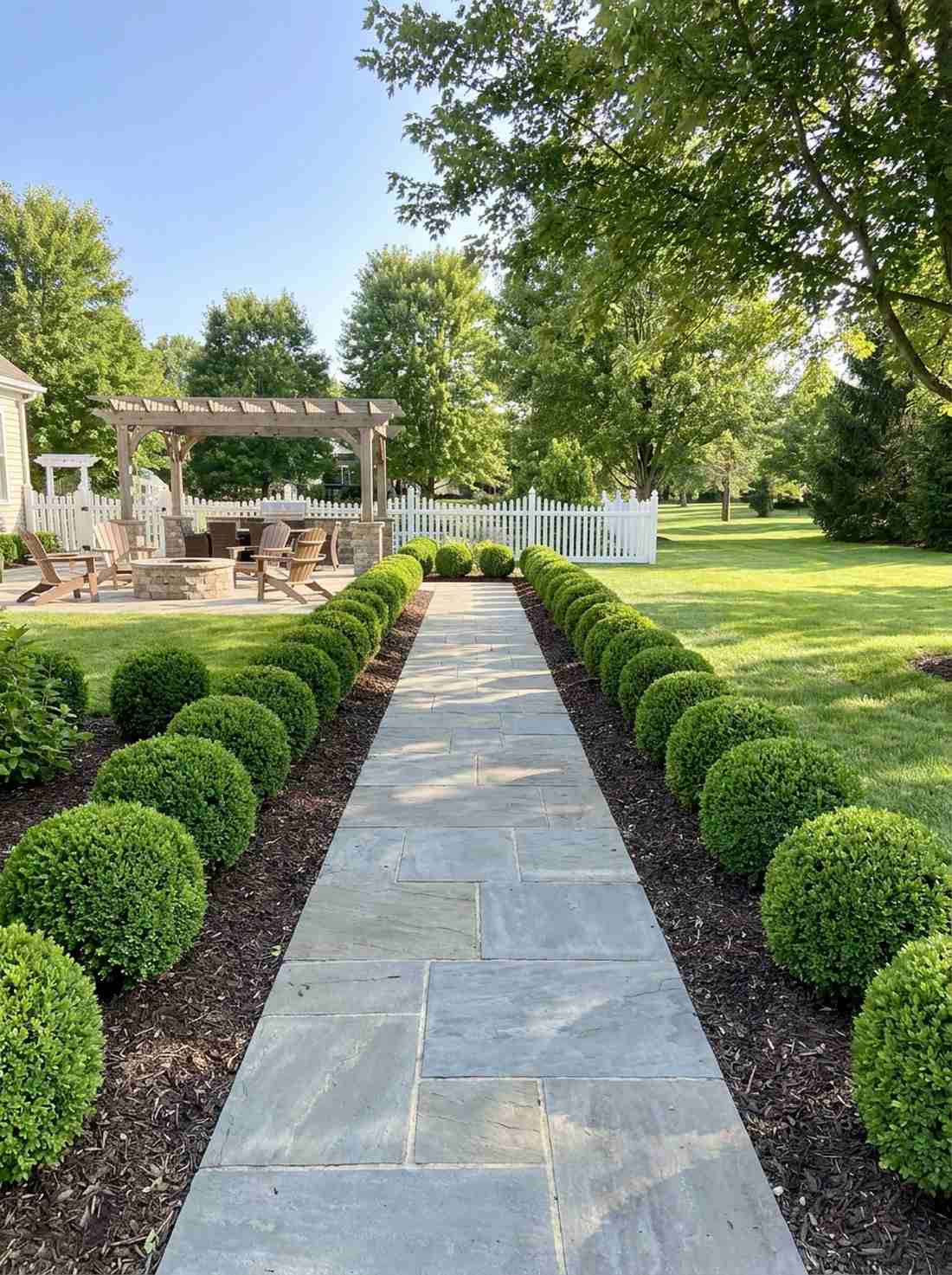
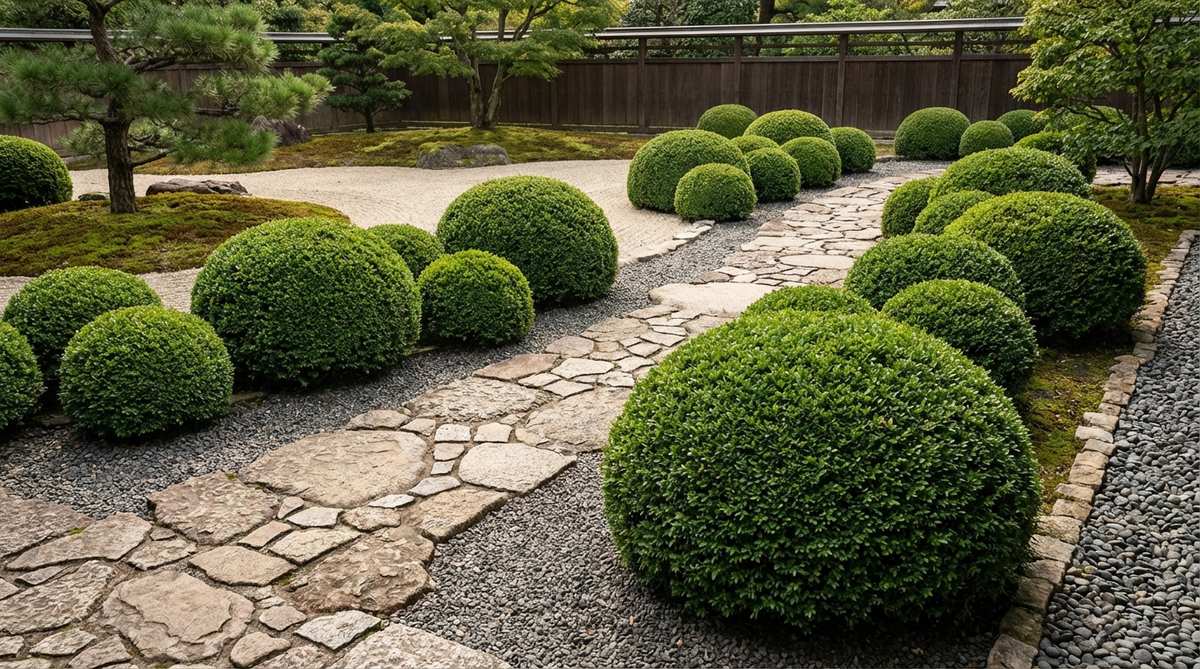
Brings a sense of absolute order and calm to chaotic yards. A geometric evergreen border layout creates a sharp, tailored boundary along fences or walkways.
Wild, unkempt bushes make a yard feel neglected and small. Forcing plants into strict spherical repetition establishes an undeniable rhythm that tricks the eye into seeing more depth. It’s a landscape designer’s secret for adding instant high-end structure.
Small starter shrubs cost about $20–$35 each. Save this to your low-maintenance garden board!
- Key Materials: Boxwood shrubs, organic mulch, sharp shears
- Vibe / Style: Structured botanical art
- Difficulty: Easy planting, ongoing maintenance
- Budget Breakdown: Shrubs: $150 (for 5) | Mulch: $20.
- Creator’s Tip: Use a wire globe frame over the bush while trimming to guarantee a perfect sphere every time.
- Smart Sourcing: Pick up a precision topiary shear kit and slow-release evergreen fertilizer spikes (bulk pack).
16. Mono-Species Ornamental Grass Meadows
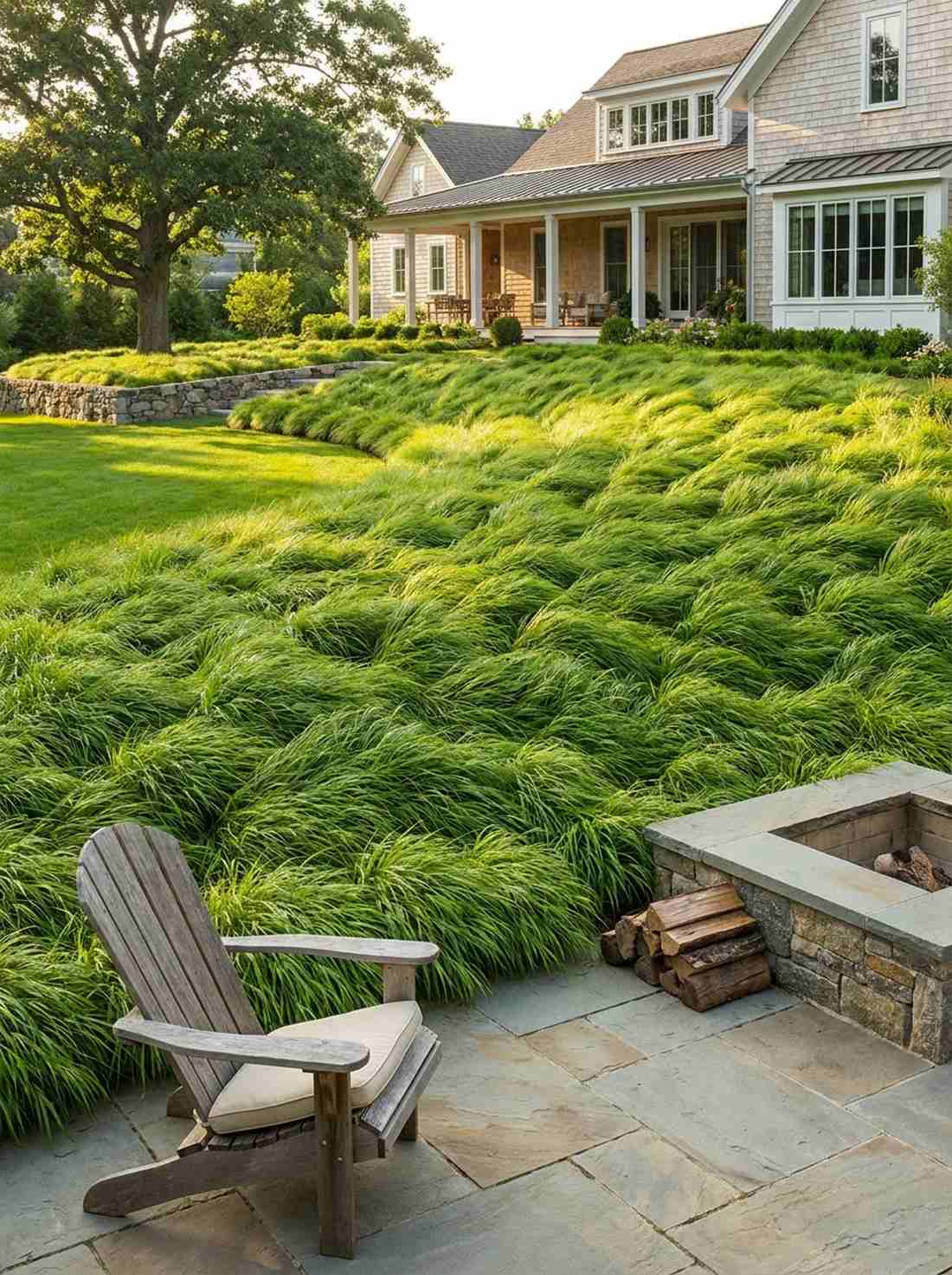
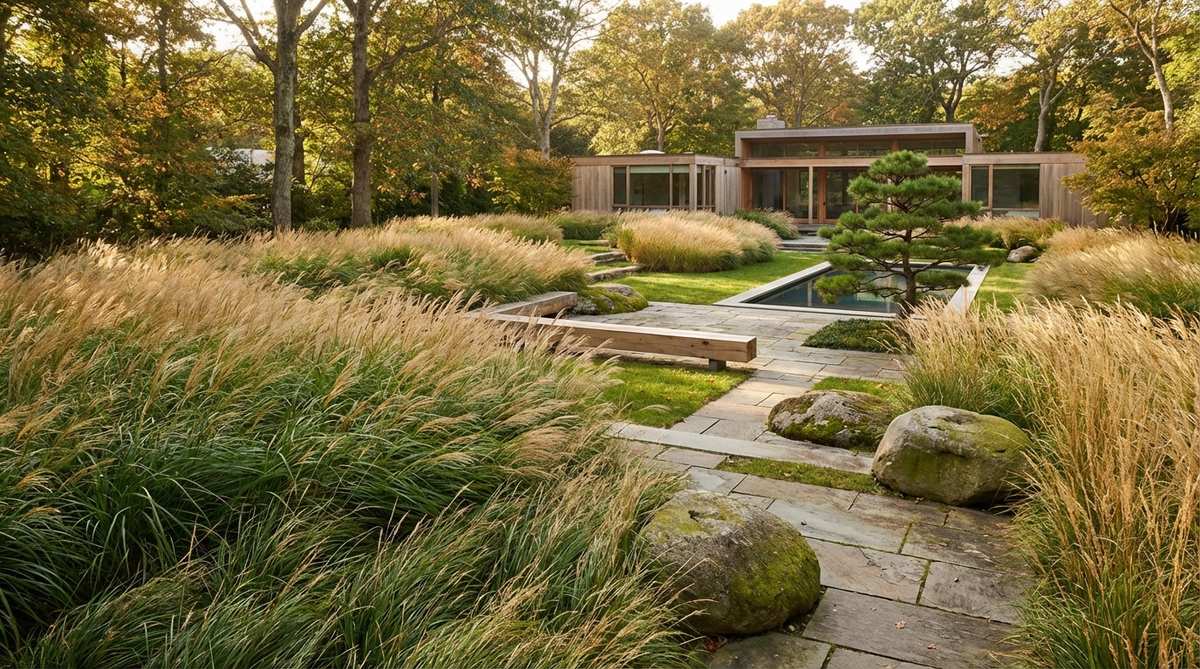
Looks like a rolling sea of green that dances in the breeze. A single-variety grass planting zone is a brilliant way to fill large empty spaces with dynamic texture.
Mixing too many colorful flowers often looks like a messy jumble. Sticking to one specific grass variety creates a sweeping, unified visual field that feels incredibly modern and intentional. The seasonal color shift provides year-round interest without replanting.
You can seed or plug a large area for under $100. It’s a fast upgrade that completely changes the vibe.
- Key Materials: Japanese forest grass plugs, compost base
- Vibe / Style: Sweeping minimalist meadow
- Difficulty: Very easy beginner setup
- Budget Breakdown: Grass plugs: $80 | Soil prep: $30.
- Creator’s Tip: Plant them in tight, curving drifts rather than straight rows to mimic natural wind patterns.
- Smart Sourcing: Order ornamental grass starter plugs (bulk pack) and a heavy-duty steel root auger.
17. Cloud-Pruned Pines
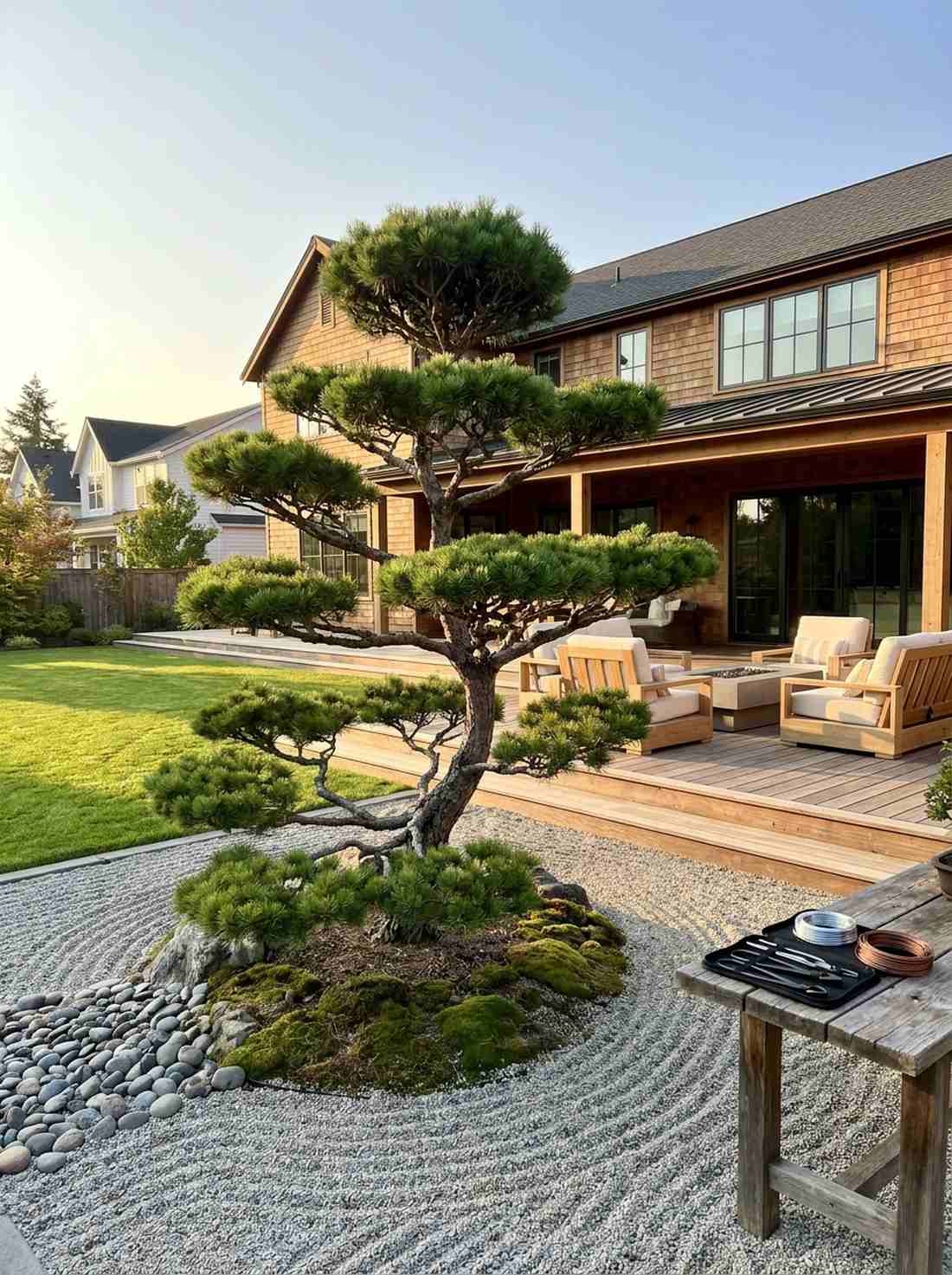
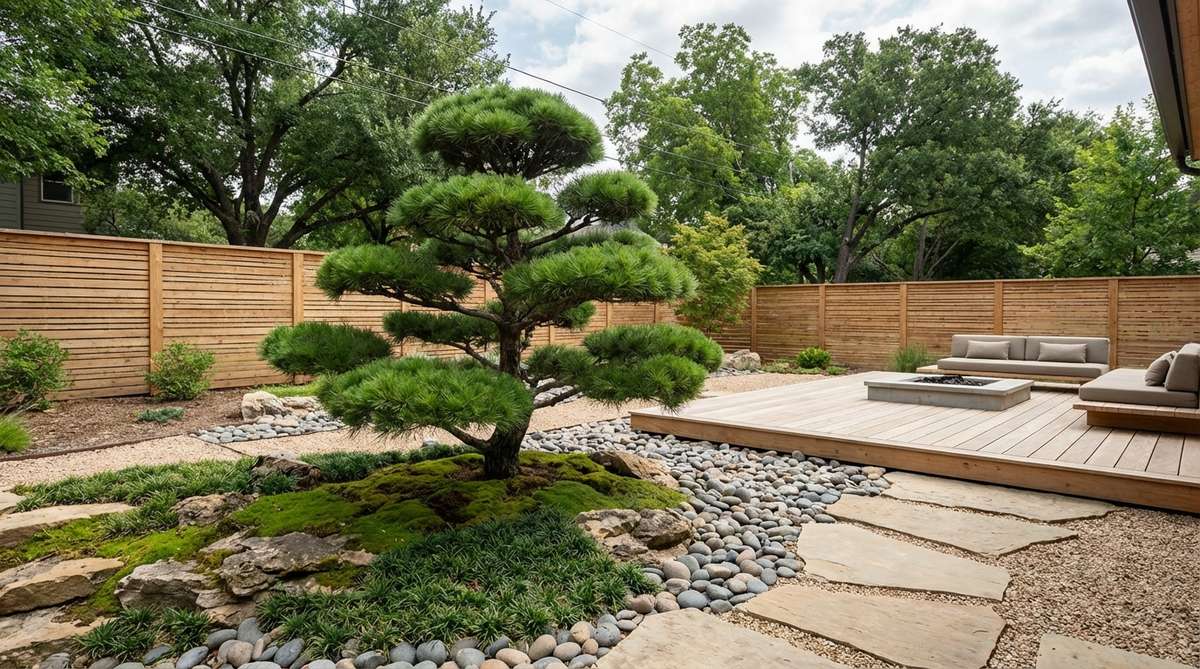
Transforms a basic tree into a living, breathing sculpture. A Niwaki-style shaped evergreen serves as the absolute crown jewel of any Zen landscape.
Letting pines grow naturally often blocks views and creates heavy shadows. Thinning the branches into floating aesthetic plates (Niwaki) exposes the beautiful trunk structure. This technique alone makes a $50 nursery tree look like a $2,000 imported specimen.
All it costs is the price of the base tree and some patience.
- Key Materials: Pinus mugo tree, bonsai wire, pruning paste
- Vibe / Style: Iconic heritage aesthetic
- Difficulty: Advanced pruning techniques
- Budget Breakdown: Starter pine: $60 | Tools: $40.
- Creator’s Tip: Only prune during late winter when the tree is dormant to prevent heavy sap bleeding.
- Smart Sourcing: Grab a carbon steel bonsai tool kit and anodized aluminum training wire.
18. Moss Carpet Groundcover
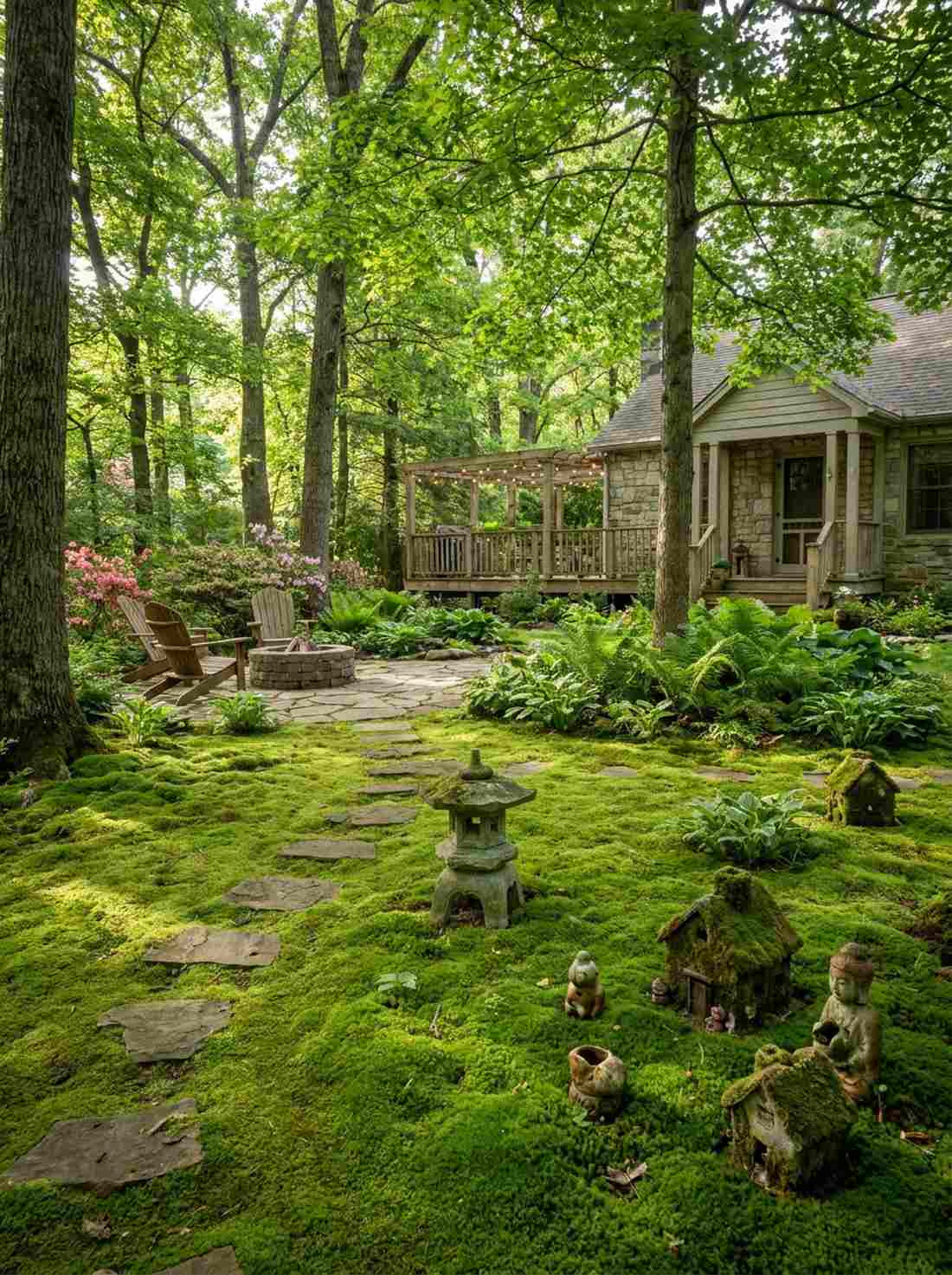
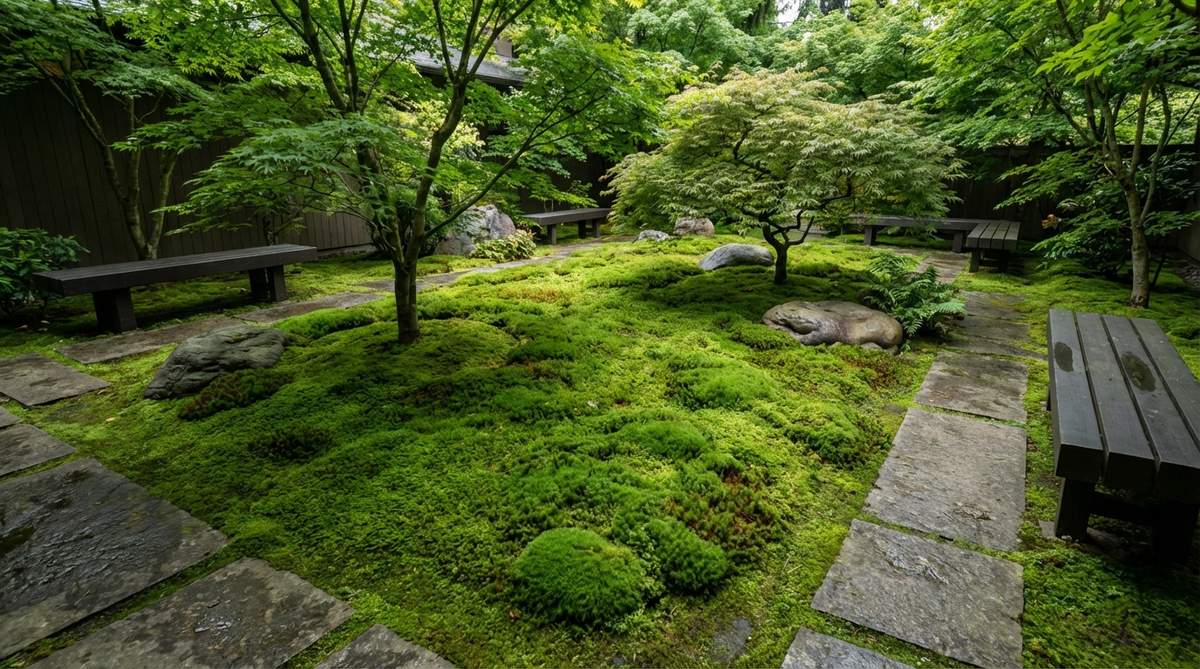
Feels like stepping into an ancient, mystical fairy tale forest. A living plush green groundcover thrives in dark, shady corners where nothing else survives.
Trying to force grass to grow under heavy tree canopies is a losing battle. Embracing sheet moss completely eliminates the need for a lawnmower while delivering a velvet-like texture. If you add some miniature garden supplies like small stone lanterns, the scale looks incredible.
You can establish a small patch using a slurry mix for under $40.
- Key Materials: Live moss fragments, buttermilk (for slurry), acidic soil
- Vibe / Style: Lush woodland magic
- Difficulty: Moderate patience required
- Budget Breakdown: Moss base: $25 | Soil prep: $15.
- Creator’s Tip: Keep the area consistently misted for the first 4 weeks until the rhizomes attach to the soil.
- Smart Sourcing: Use pre-cut live sheet moss trays and an automatic outdoor misting timer system.
Landscapers usually charge thousands for this specific look, but the DIY workaround is shockingly simple.
19. Architectural Bamboo Screens
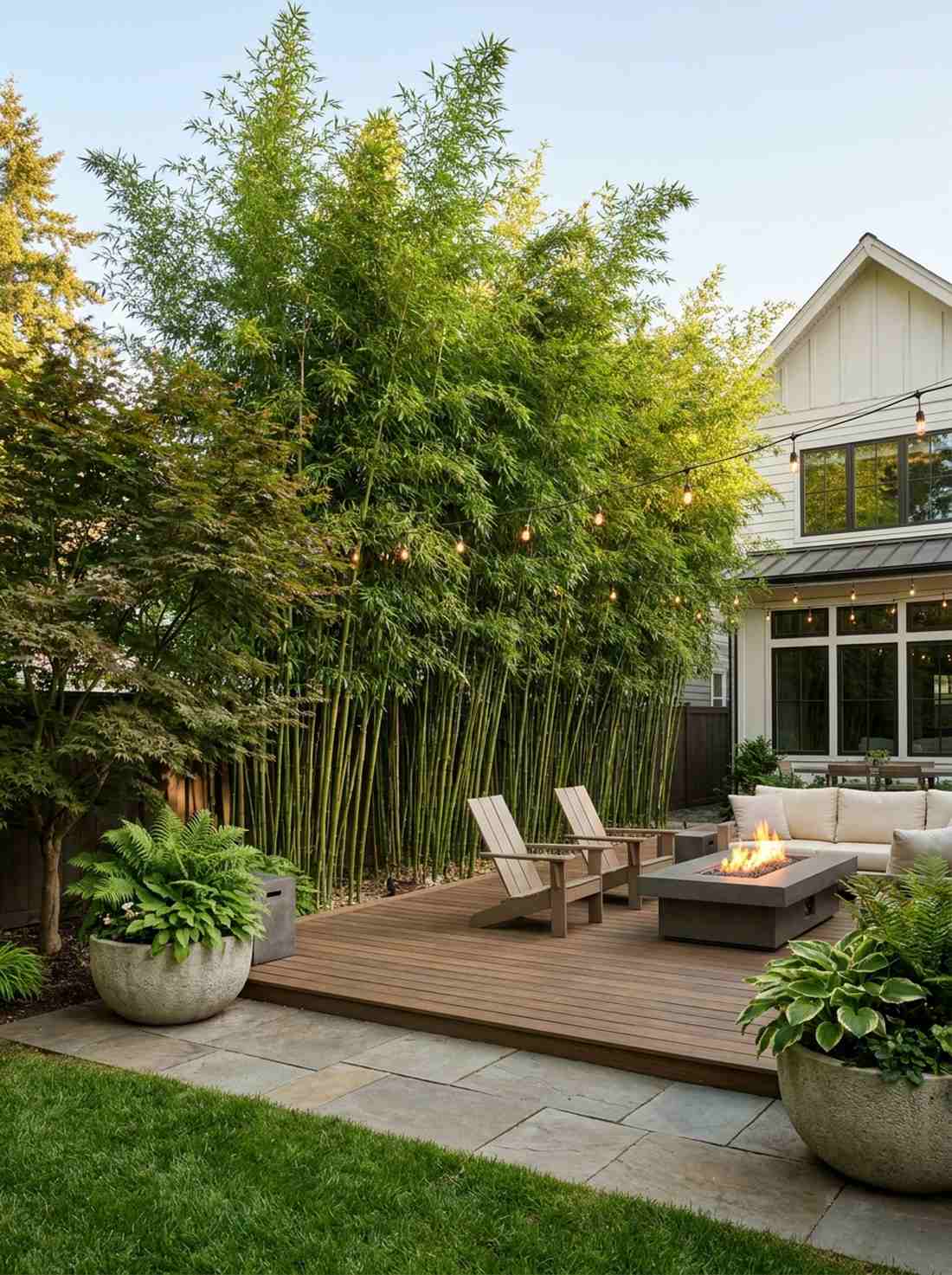
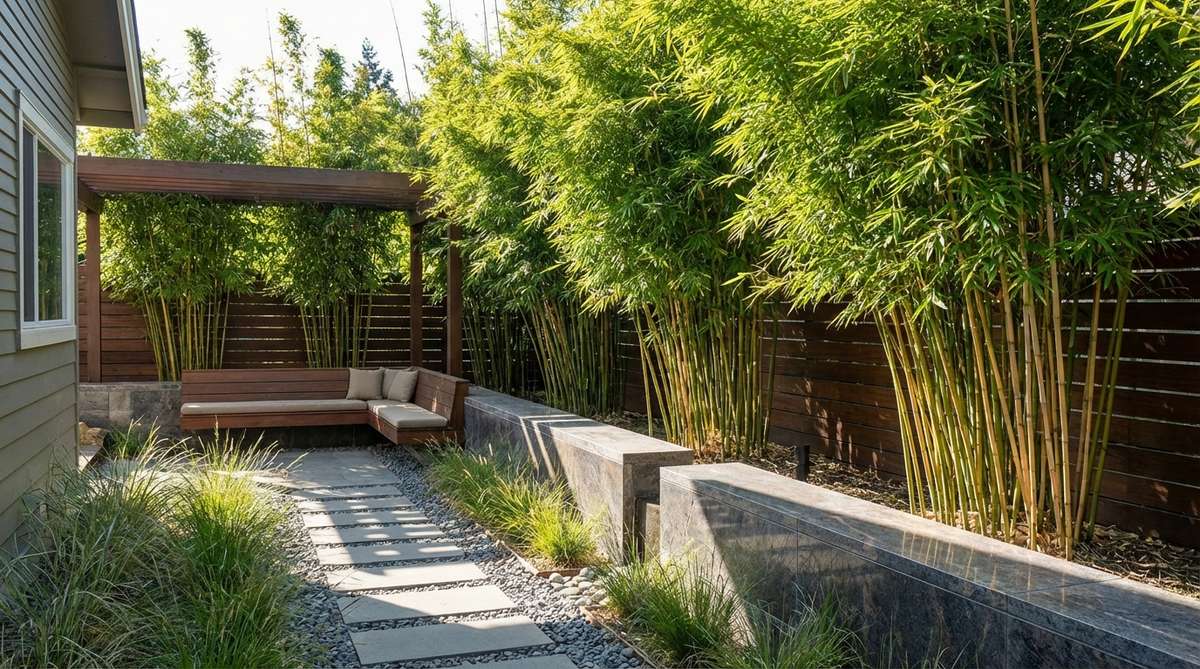
Provides an instant barrier of rustling, tropical privacy. A living bamboo boundary wall is the ultimate hack for hiding ugly neighbor fences or enclosing a patio.
Building wooden privacy fences is expensive and labor-intensive. Planting dense clumping varieties creates a towering green wall in just one season. The vertical stalks add a beautiful architectural rhythm that sways peacefully in the wind.
You can plant a 10-foot linear barrier for roughly $150–$250. Pin this to your privacy garden board!
- Key Materials: Clumping bamboo varieties, deep root barrier
- Vibe / Style: Secluded Zen hideaway
- Difficulty: Easy planting, strict containment
- Budget Breakdown: Plants: $140 | Root barrier: $60.
- Creator’s Tip: Only buy “clumping” (sympodial) bamboo to prevent it from aggressively overtaking your entire yard.
- Smart Sourcing: Secure a heavy-duty HDPE bamboo root barrier and high-nitrogen liquid foliage fertilizer.
20. Singular Specimen Japanese Maple
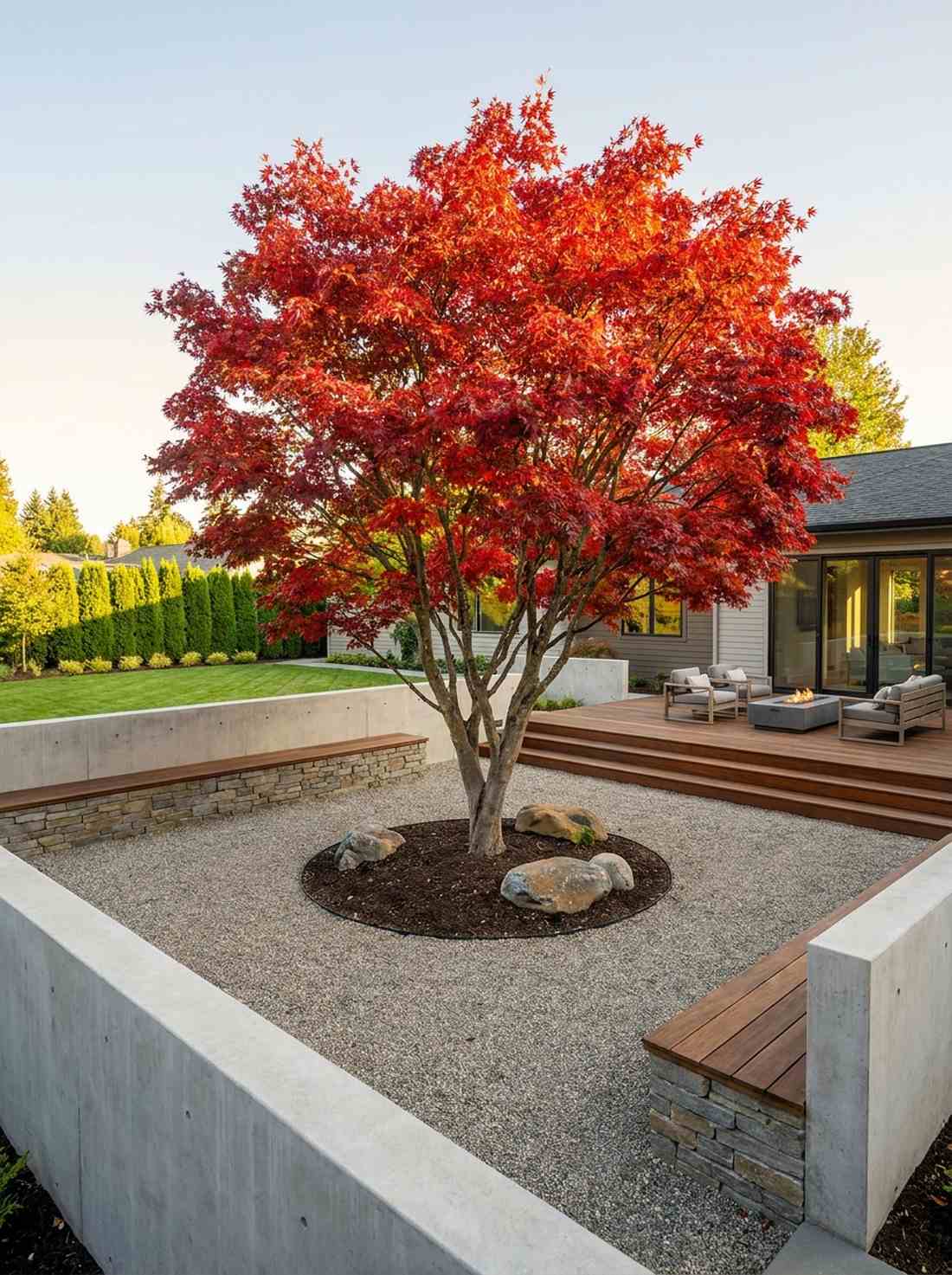
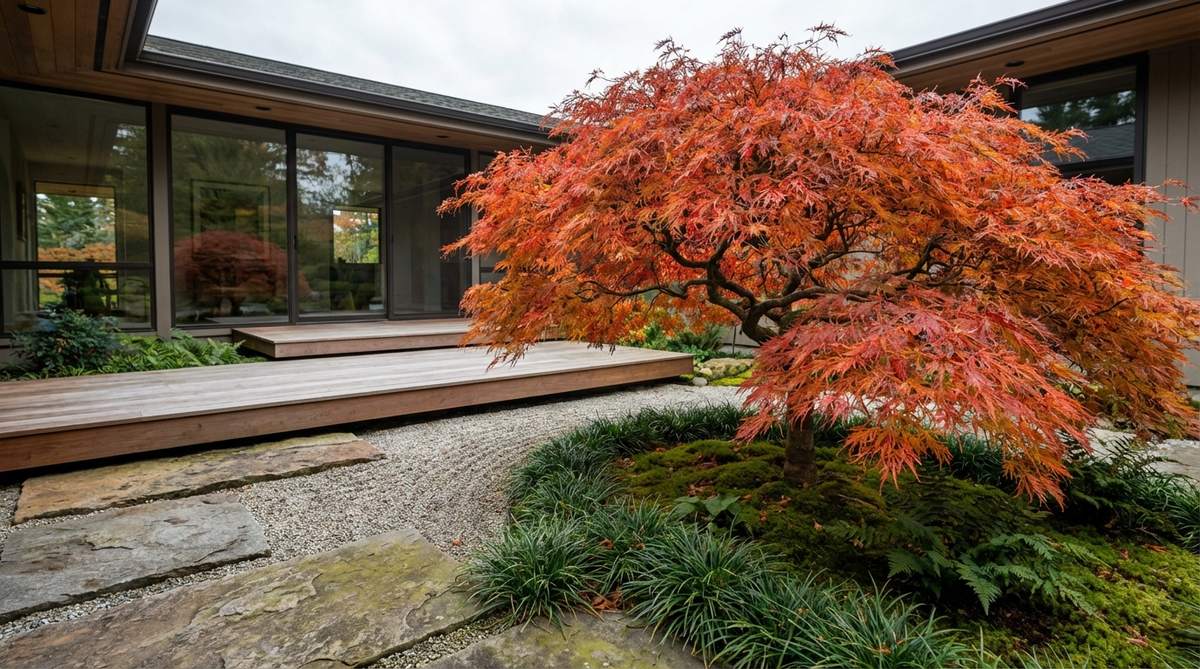
Paints your yard with an explosive burst of crimson autumn fire. A solitary focal-point ornamental tree acts as the visual anchor for a minimalist gravel courtyard.
Overcrowding a garden with dozens of trees dilutes the visual impact. Giving one exceptional tree total breathing room turns it into a piece of standalone art. The delicate, lacy leaves contrast perfectly against harsh concrete or stone walls.
Depending on the tree’s maturity, this will run you $100–$300.
- Key Materials: Japanese maple sapling, well-draining soil mix
- Vibe / Style: Dramatic seasonal centerpiece
- Difficulty: Easy planting
- Budget Breakdown: Tree: $150 | Base mulch: $20.
- Creator’s Tip: Plant it where it receives morning sun but is protected from harsh afternoon heat to prevent leaf scorch.
- Smart Sourcing: Invest in a premium Japanese maple starter sapling and organic root growth stimulator.
21. Linear Bamboo Groves
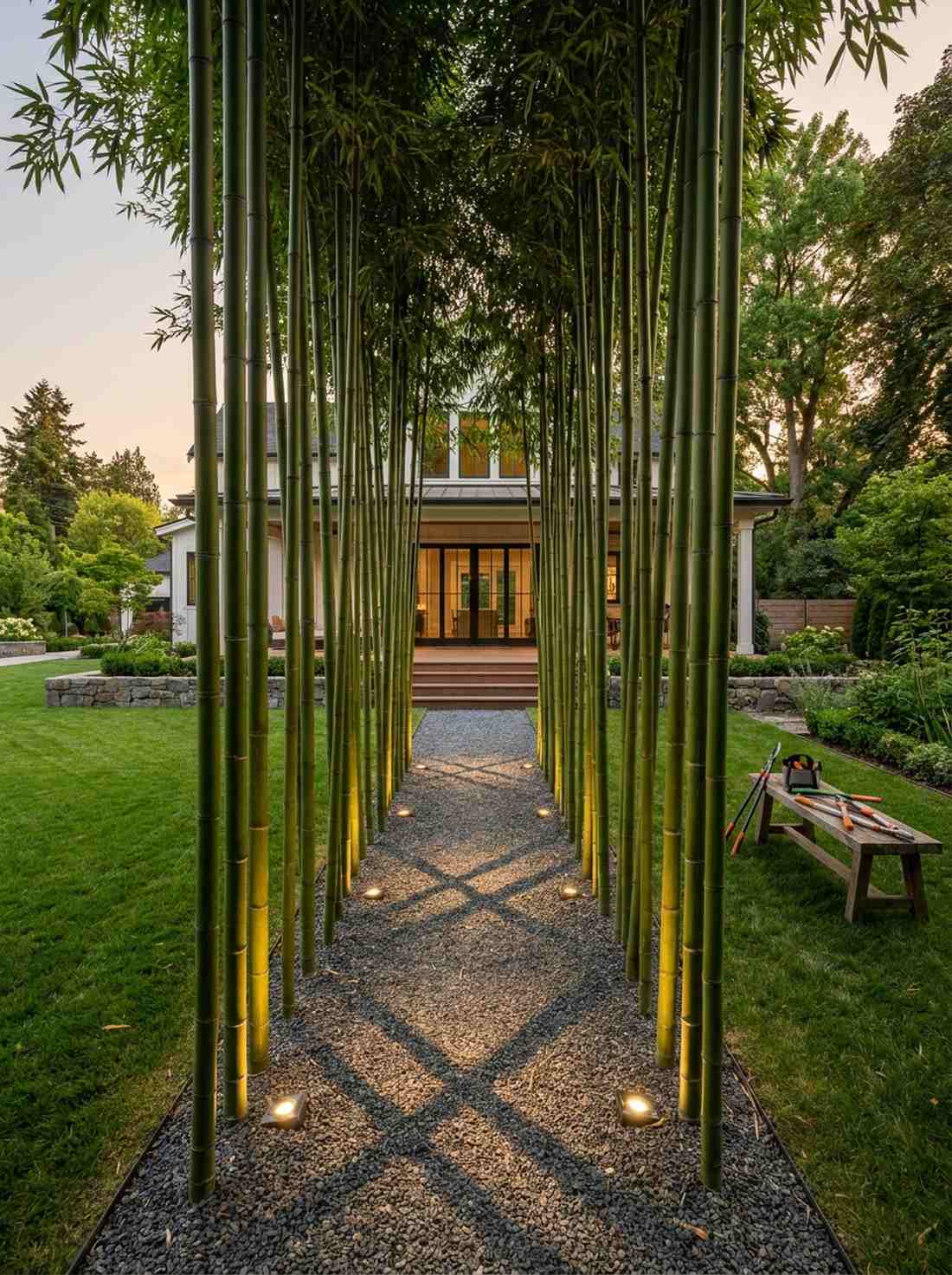
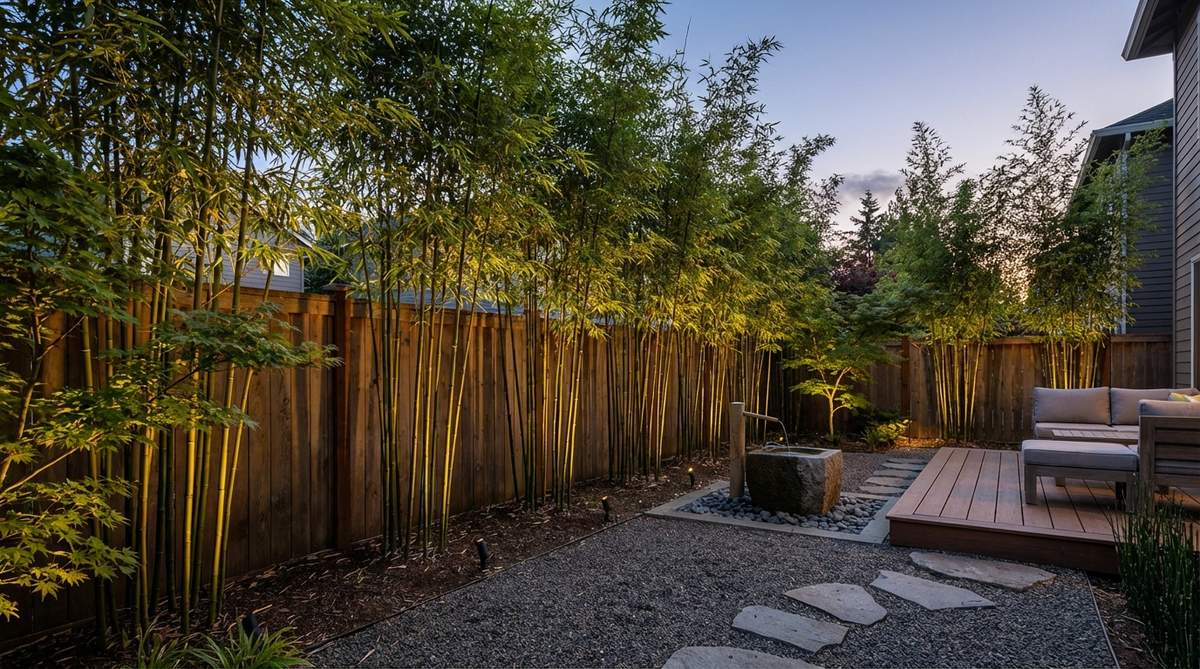
Creates a dramatic hallway of towering green pillars. A narrow stalk garden pathway is perfect for framing a walkway leading to a backyard entrance.
Wide bushes often choke off narrow side-yards. Stripping the lower foliage off tall stalks forces the plant’s energy upward, creating a clean, high-end colonnade effect. It maximizes vertical space while keeping the ground level completely walkable.
A few starter pots and some pruning tools keep this under $120.
- Key Materials: Bamboo stalks, sharp loppers, gravel pathway
- Vibe / Style: Vertical tropical corridor
- Difficulty: Moderate pruning
- Budget Breakdown: Plants: $90 | Pruning tools: $30.
- Creator’s Tip: Install an uplight at the base of every third stalk to create massive, dramatic shadows at night.
- Smart Sourcing: Get a titanium bypass lopper kit and solar-powered outdoor pathway uplights (bulk pack).
Architectural Fusion Structures
22. Steel Pergola With Wisteria Canopy
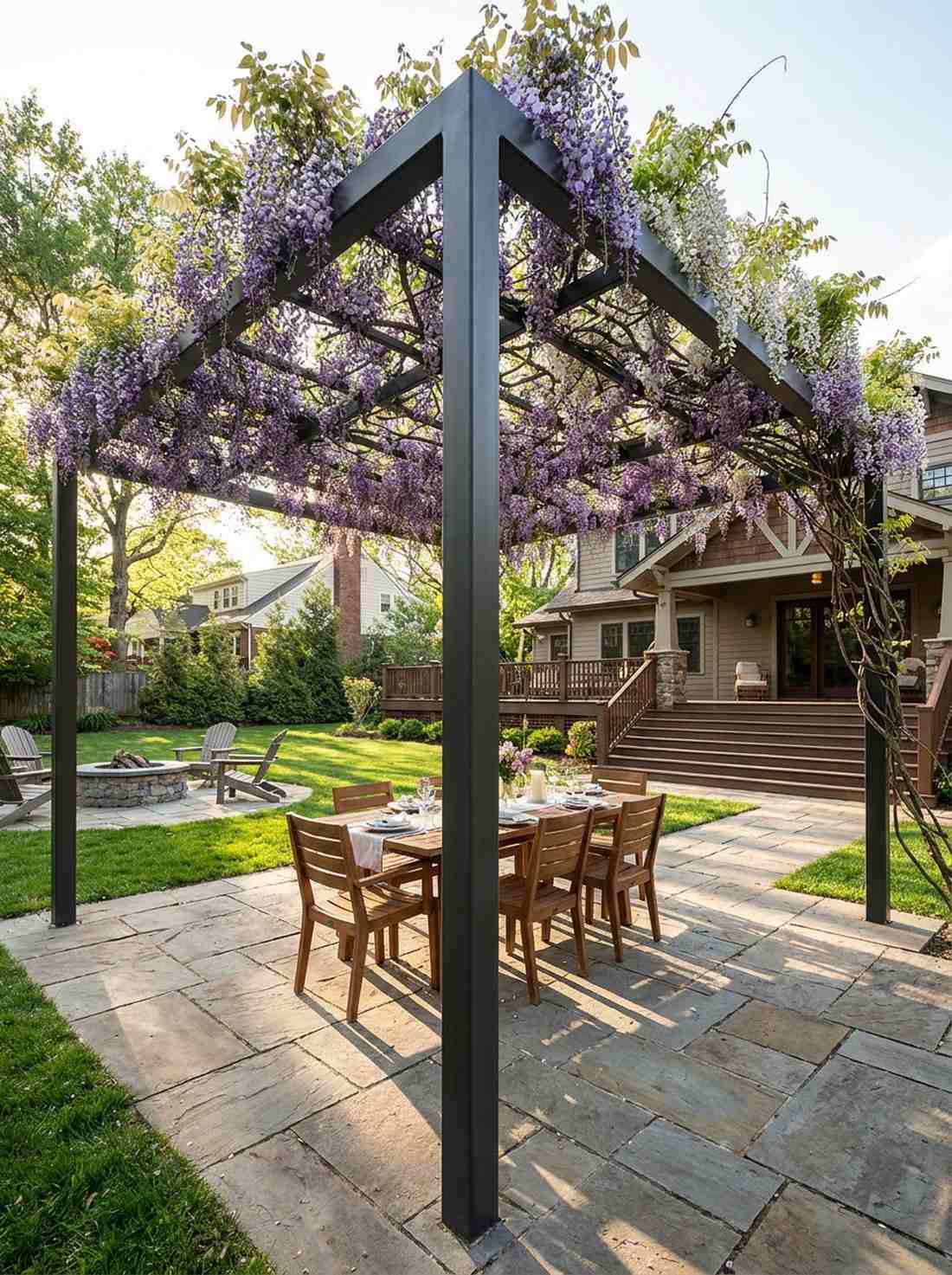
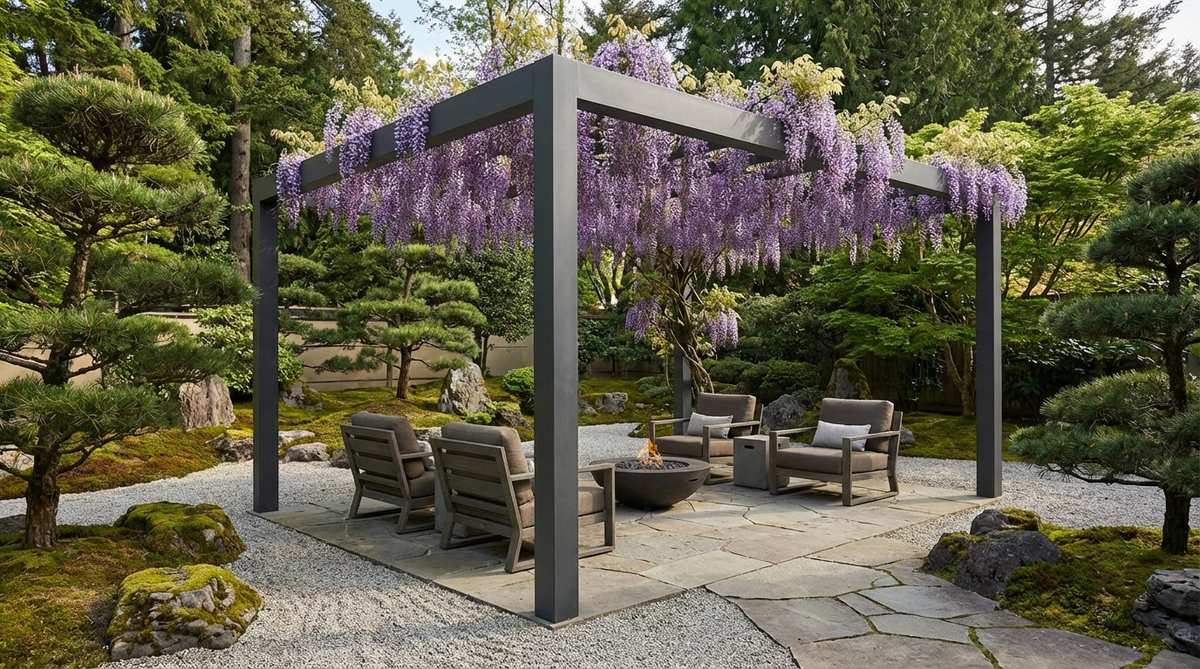
Offers the sensation of dining beneath a cascading floral waterfall. An industrial metal shade structure dripping with vines beautifully blends rigid architecture with wild nature.
Wooden pergolas warp and require constant restaining. A powder-coated steel frame gives a sharp, modern silhouette that easily supports the massive weight of mature vines. The blooming canopy provides naturally filtered, dappled sunlight.
A DIY frame assembly and starter vines will run you about $300–$500. Save this if you love outdoor dining setups!
- Key Materials: Steel tube framing, Wisteria vines, heavy wire
- Vibe / Style: Romantic industrial
- Difficulty: Advanced assembly
- Budget Breakdown: Steel frame kit: $350 | Vines: $60.
- Creator’s Tip: Aggressively prune the wisteria twice a year, otherwise it will crush the frame with its own weight.
- Smart Sourcing: Order a modular powder-coated steel pergola kit and a heavy-duty plant tying machine.
23. Glass-Walled Tea House
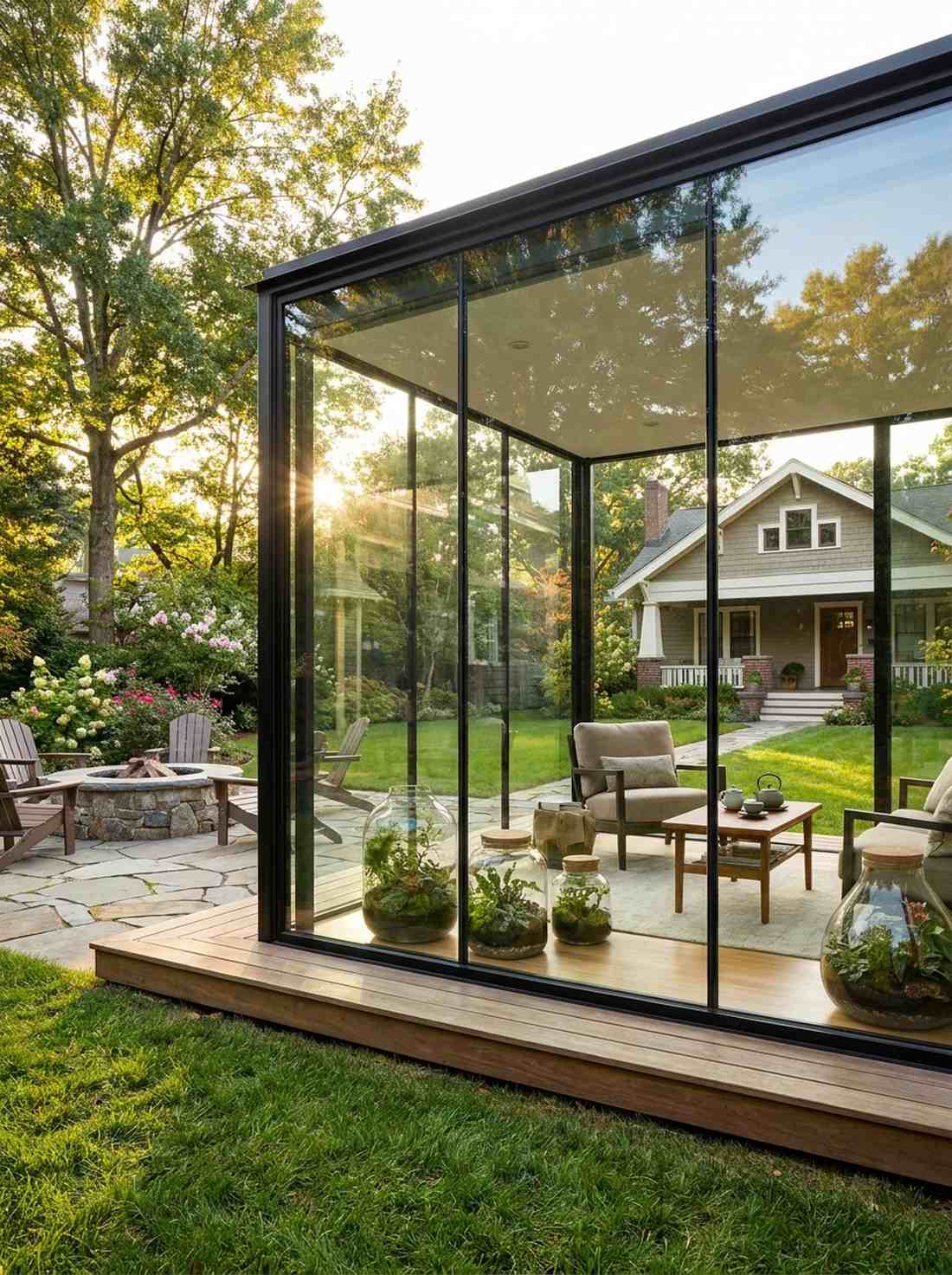
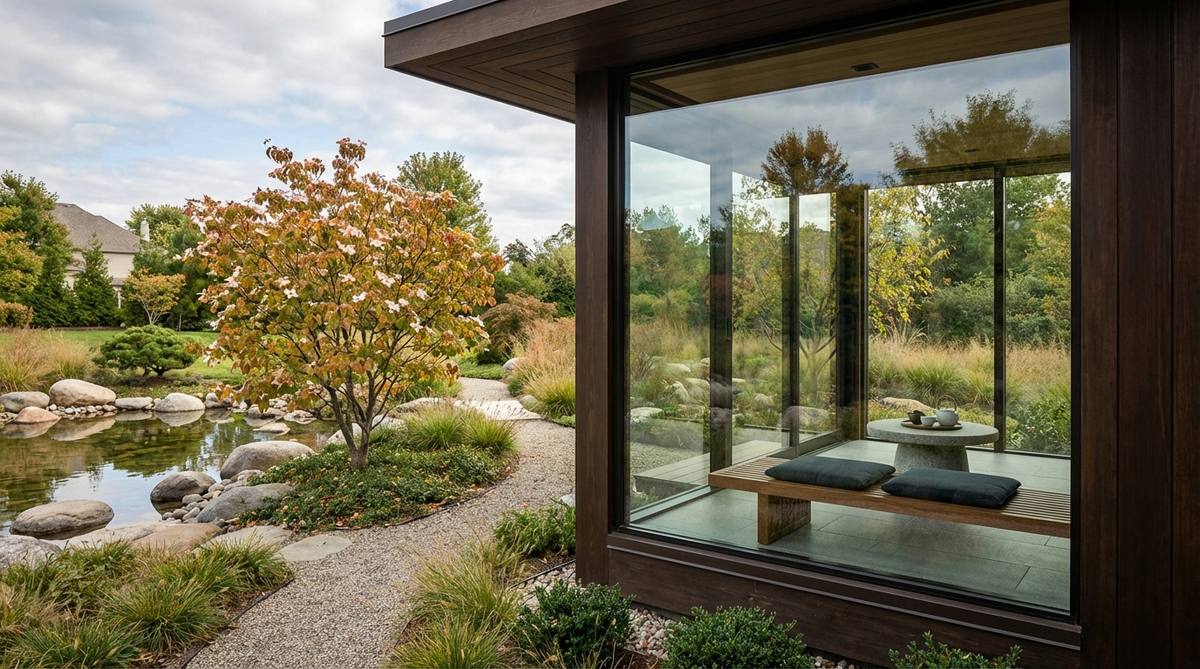
Feels like your own private meditation bubble floating in nature. A transparent backyard sanctuary cabin dissolves the barrier between indoor comfort and outdoor beauty.
Traditional wooden sheds block out the very garden you want to look at. Upgrading to floor-to-ceiling glass panels creates an immersive, climate-controlled viewing box. Adding some subtle terrarium accessories inside ties the macro and micro nature themes together.
This is a major architectural addition, typically starting around $1,500 DIY.
- Key Materials: Tempered glass panels, minimal steel framing, raised floor
- Vibe / Style: Ultra-modern retreat
- Difficulty: Expert construction
- Budget Breakdown: Framing: $600 | Glass: $800.
- Creator’s Tip: Orient the largest glass wall facing north to enjoy constant light without the baking greenhouse effect.
- Smart Sourcing: Source pre-cut tempered glass wall panels and a DIY studio cabin hardware kit.
Wait until you see how the next lighting trick completely transforms an ordinary yard after dark…
24. Minimalist Steel Gate Frame
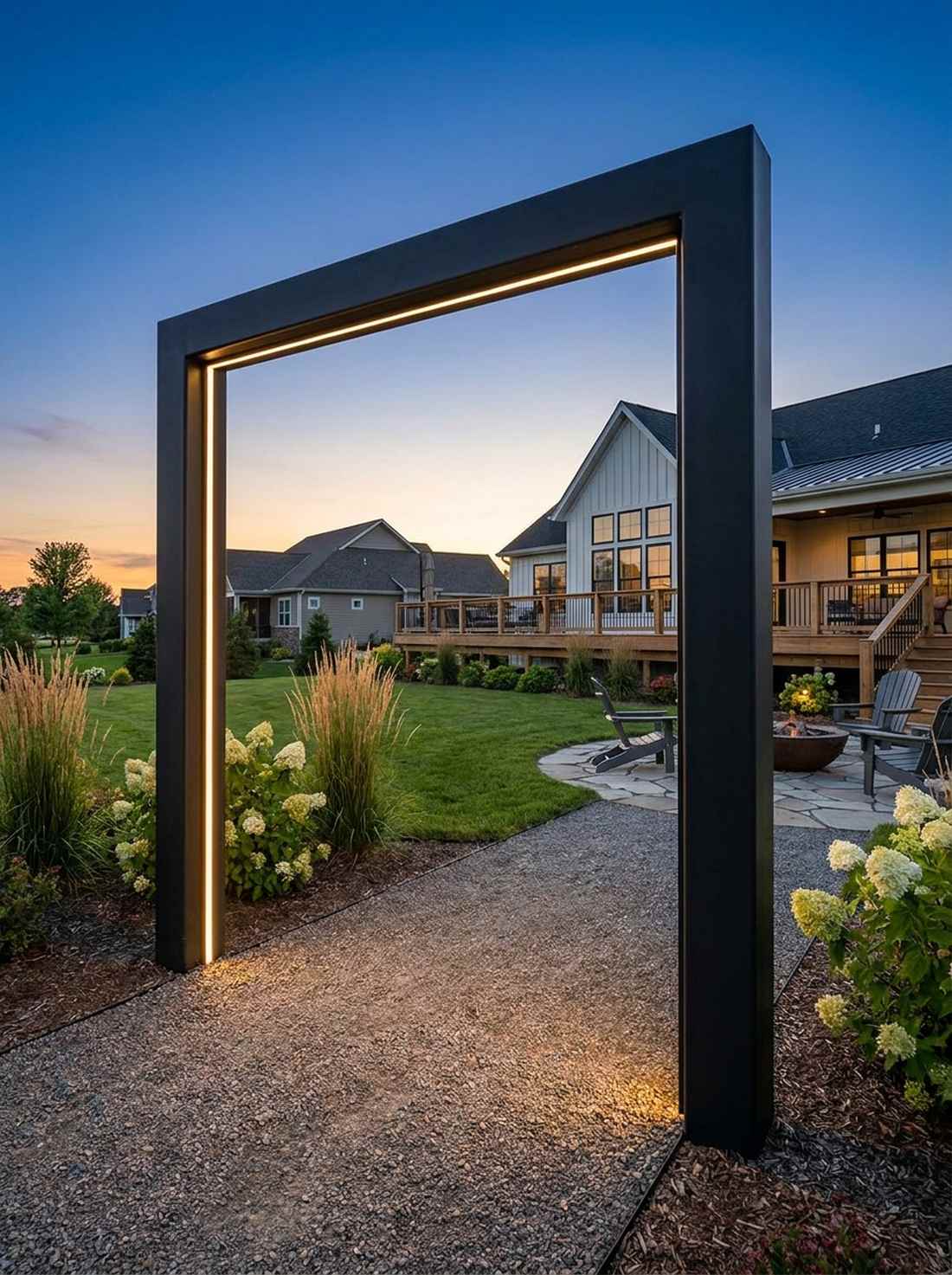
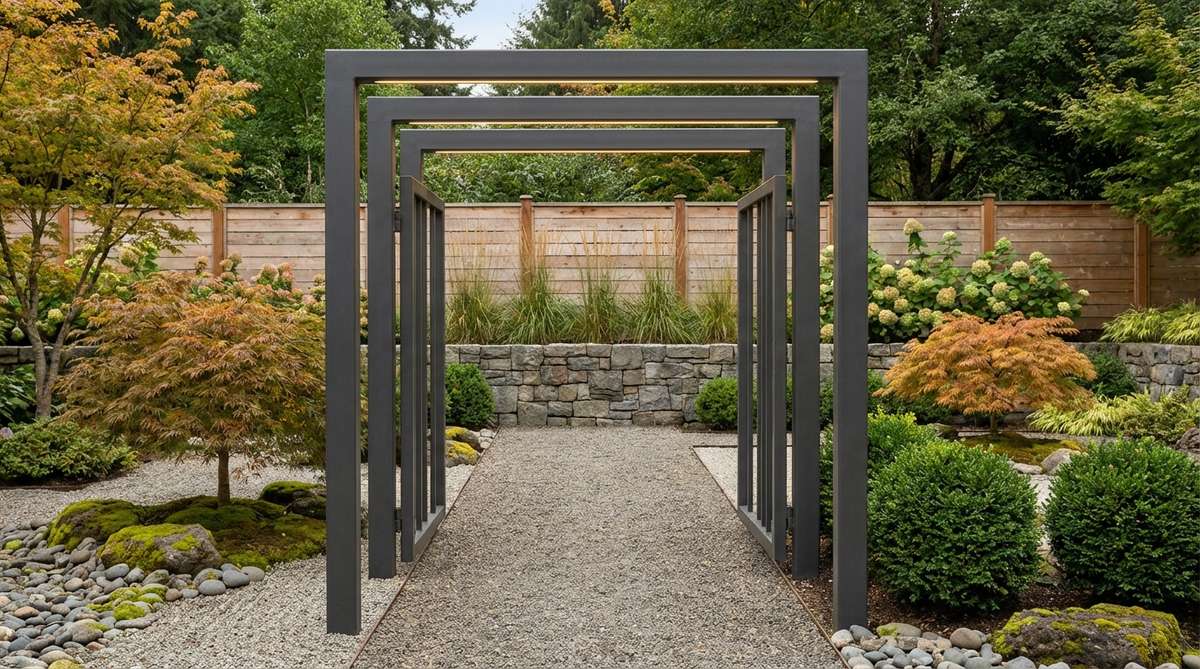
Acts as a bold, cinematic portal into your private sanctuary. A frameless metal entry archway redefines the traditional garden entrance with sleek, modern geometry.
Flimsy wooden arches degrade quickly and feel highly suburban. Welding or bolting a stark, charcoal-colored square tubing frame creates an imposing, high-end threshold. It boldly announces the transition from the chaotic street into your peaceful zone.
You can assemble a bolt-together version for about $150–$250.
- Key Materials: Square steel tubing, concrete footings, matte black paint
- Vibe / Style: Contemporary transition portal
- Difficulty: Intermediate structural assembly
- Budget Breakdown: Steel tubes: $140 | Footings: $40.
- Creator’s Tip: Hide a waterproof LED strip on the inner lip of the arch to create a glowing frame at night.
- Smart Sourcing: Use a bolt-together steel archway kit and rust-proofing matte black spray enamel.
25. Floating Deck Over Gravel Sea
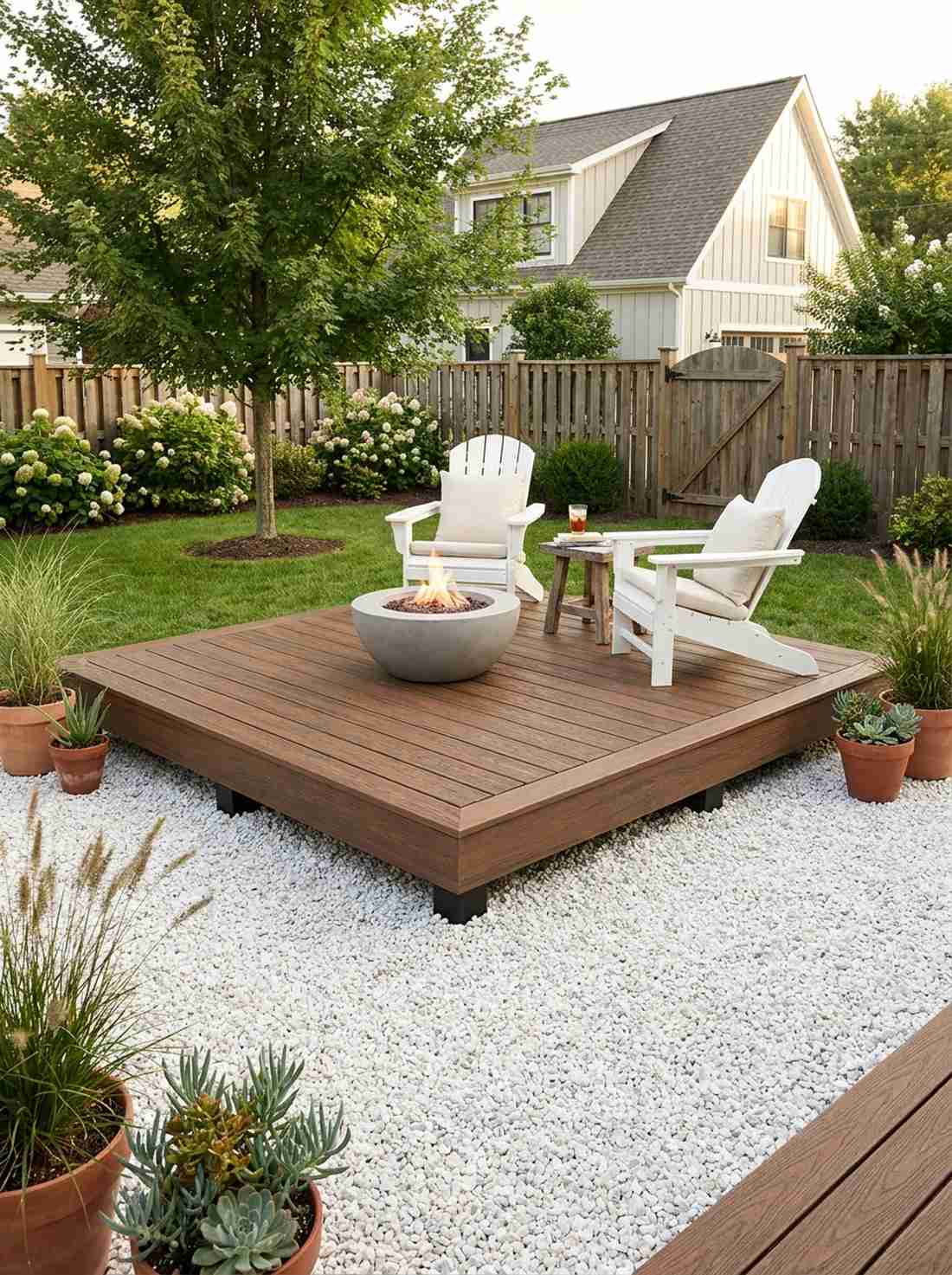
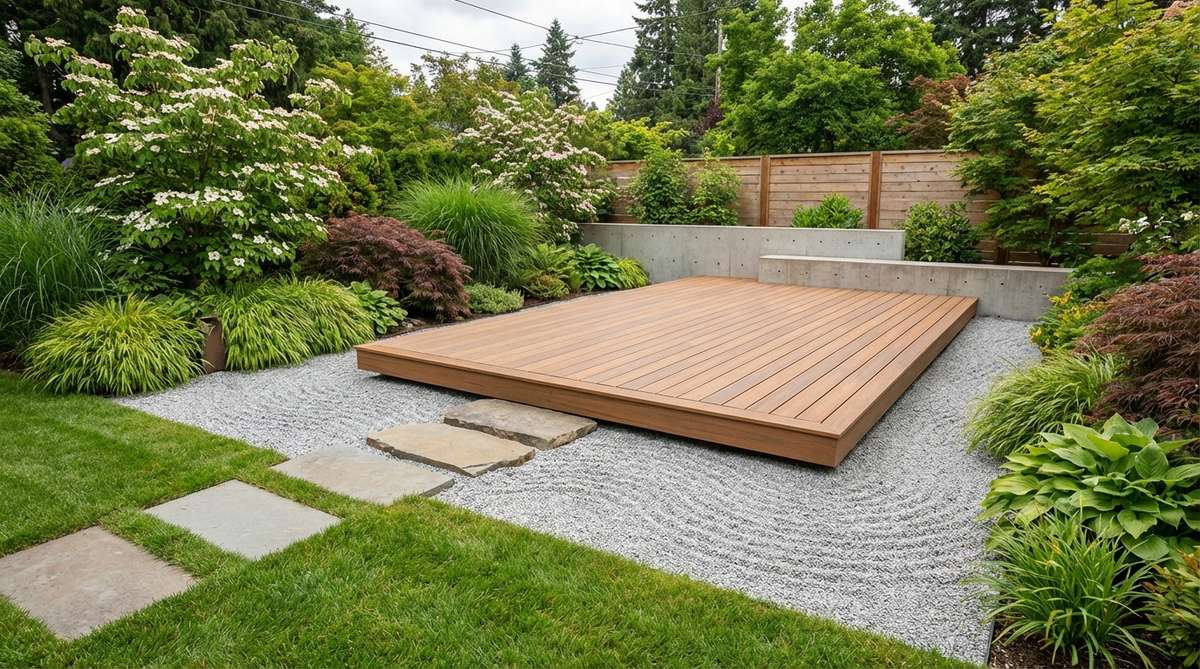
Gives the incredible illusion of hovering right above the earth. An elevated island platform layout turns a basic seating area into a symbolic ship sailing on stone.
Slapping a deck flush against the dirt looks heavy and invites moisture rot. Lifting the joists just eight inches off the ground and hiding the support blocks creates absolute magic. The shadow gap beneath the boards makes the entire structure appear weightless.
Materials for an 8×8 foot platform will cost roughly $250–$400. Pin this to your backyard layout board!
- Key Materials: Deck boards, concrete pier blocks, white gravel
- Vibe / Style: Weightless architectural illusion
- Difficulty: Moderate carpentry
- Budget Breakdown: Lumber: $220 | Gravel/Blocks: $80.
- Creator’s Tip: Paint the support piers flat black so they vanish completely into the shadows under the deck.
- Smart Sourcing: Secure adjustable deck support pedestals and premium composite decking boards (bundle).
26. Slatted Wood Privacy Fence
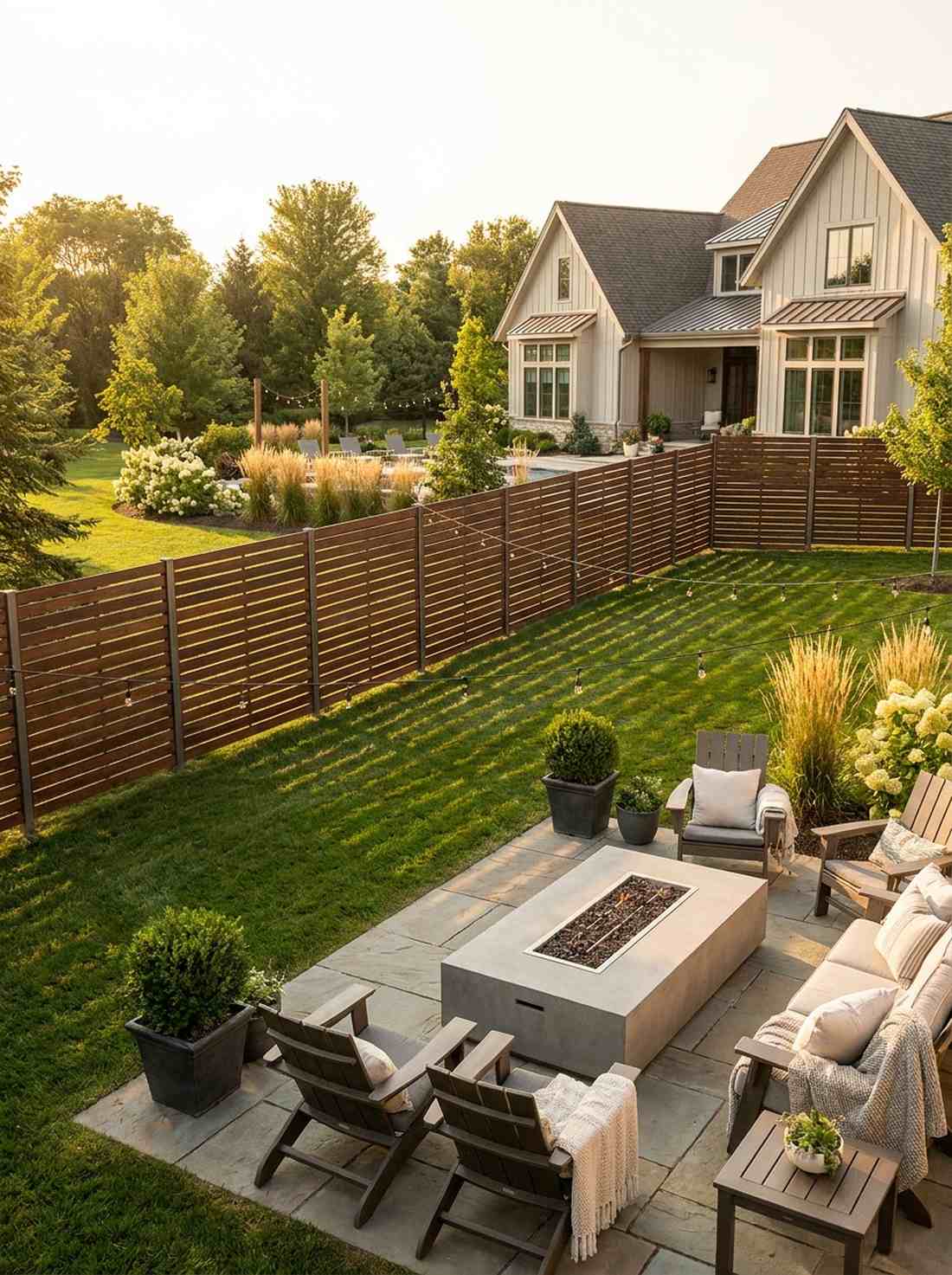
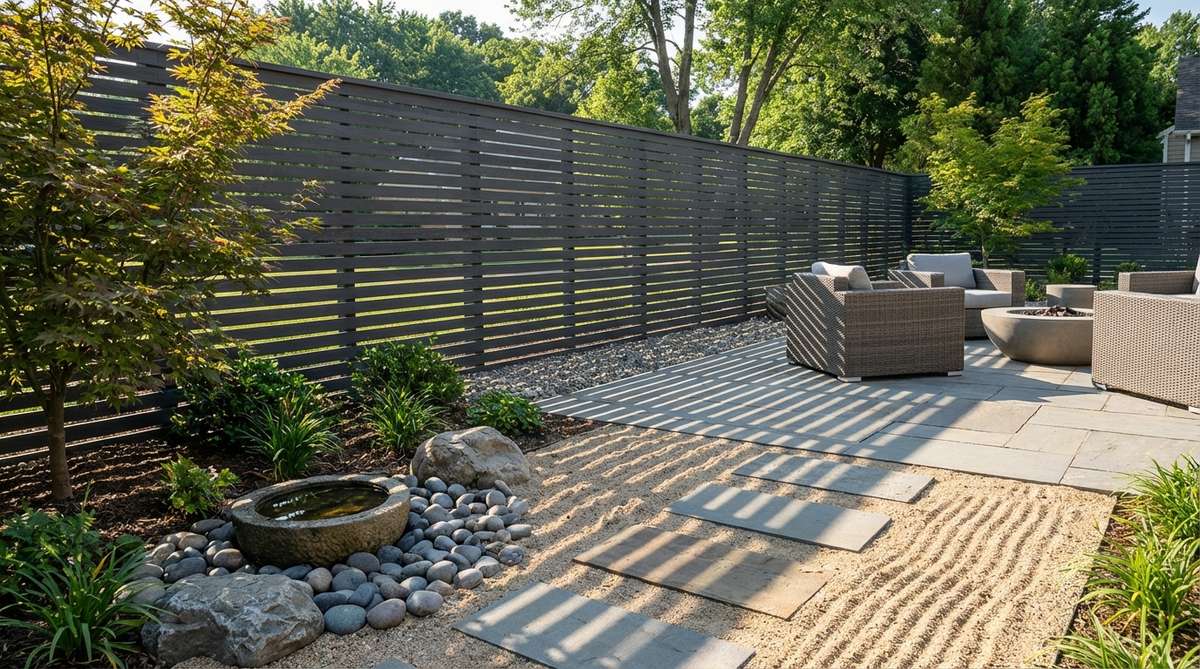
Cuts out nosy neighbors while letting the cool breeze flow through. A horizontal timber screening wall is the ultimate modern perimeter upgrade.
Traditional vertical dog-ear fences are an eyesore that completely trap heat. Flipping the boards horizontally with a tiny one-inch gap creates a sleek, slatted shadow effect. It modernizes the entire property line while maintaining absolute privacy.
Building this per 8-foot section costs about $80–$120 in lumber.
- Key Materials: Cedar slats, metal posts, dark stain
- Vibe / Style: Sleek suburban privacy
- Difficulty: Intermediate carpentry
- Budget Breakdown: Wood: $75 | Hardware/Stain: $30.
- Creator’s Tip: Use a scrap 1-inch block of wood as a spacer during installation to ensure perfectly uniform gaps.
- Smart Sourcing: Order pre-cut horizontal cedar slats (bulk bundle) and UV-resistant dark exterior wood stain.
27. Cantilevered Seating Bench
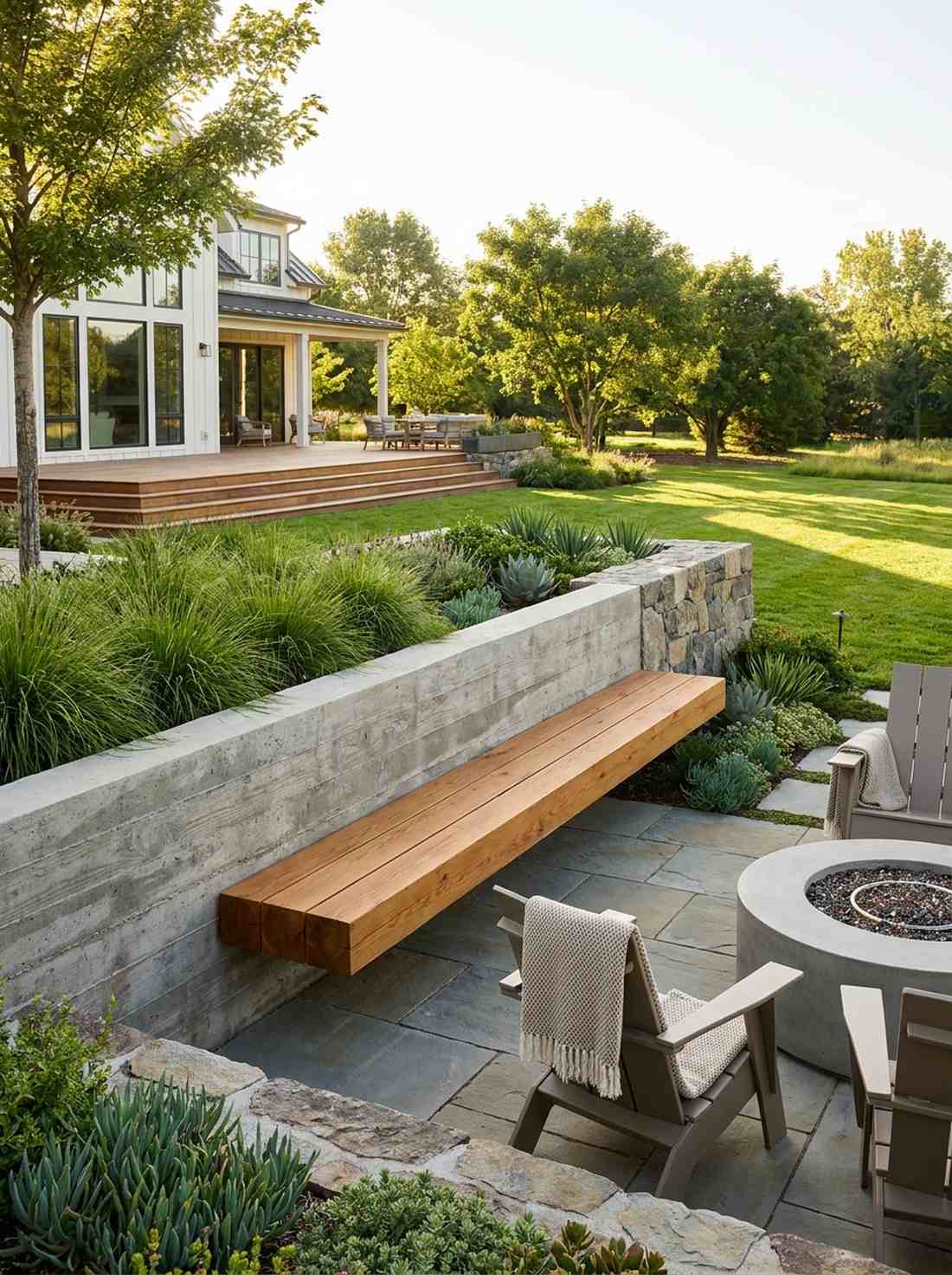
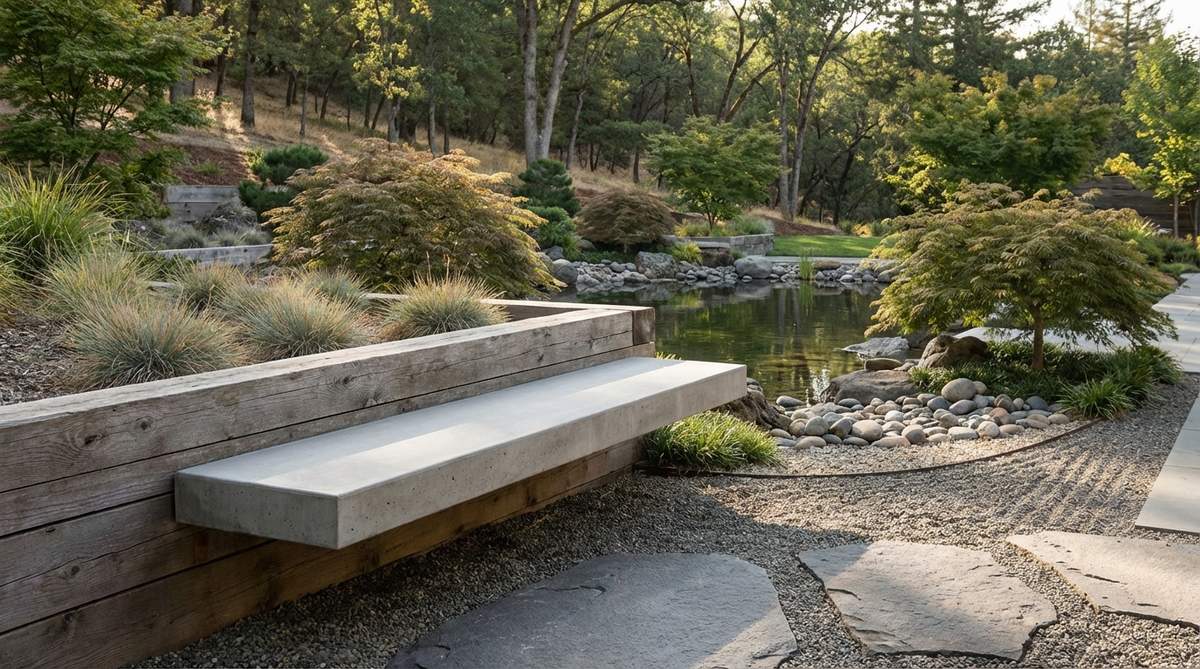
Looks like a gravity-defying magic trick built into your wall. A floating ledge bench design eliminates clunky furniture from your pristine landscape.
Bulky patio chairs clutter up the visual flow of a minimalist garden. Bolting heavy timber directly into a retaining wall provides permanent, invisible support. This structural hack opens up floor space and keeps the sightlines perfectly clean.
Adding this to an existing wall costs less than $100 in hardware and wood. Highly recommended for a quick weekend win.
- Key Materials: Heavy timber plank, steel L-brackets, masonry anchors
- Vibe / Style: Integrated modern functionality
- Difficulty: Intermediate masonry drilling
- Budget Breakdown: Timber: $50 | Heavy-duty brackets: $40.
- Creator’s Tip: Route a slight groove underneath the front edge to stop rain from wrapping around and rotting the underside.
- Smart Sourcing: Buy heavy-duty concealed floating bench brackets and a waterproof wood sealant kit.
Lighting & Ambiance Design
28. Uplighting For Specimen Trees
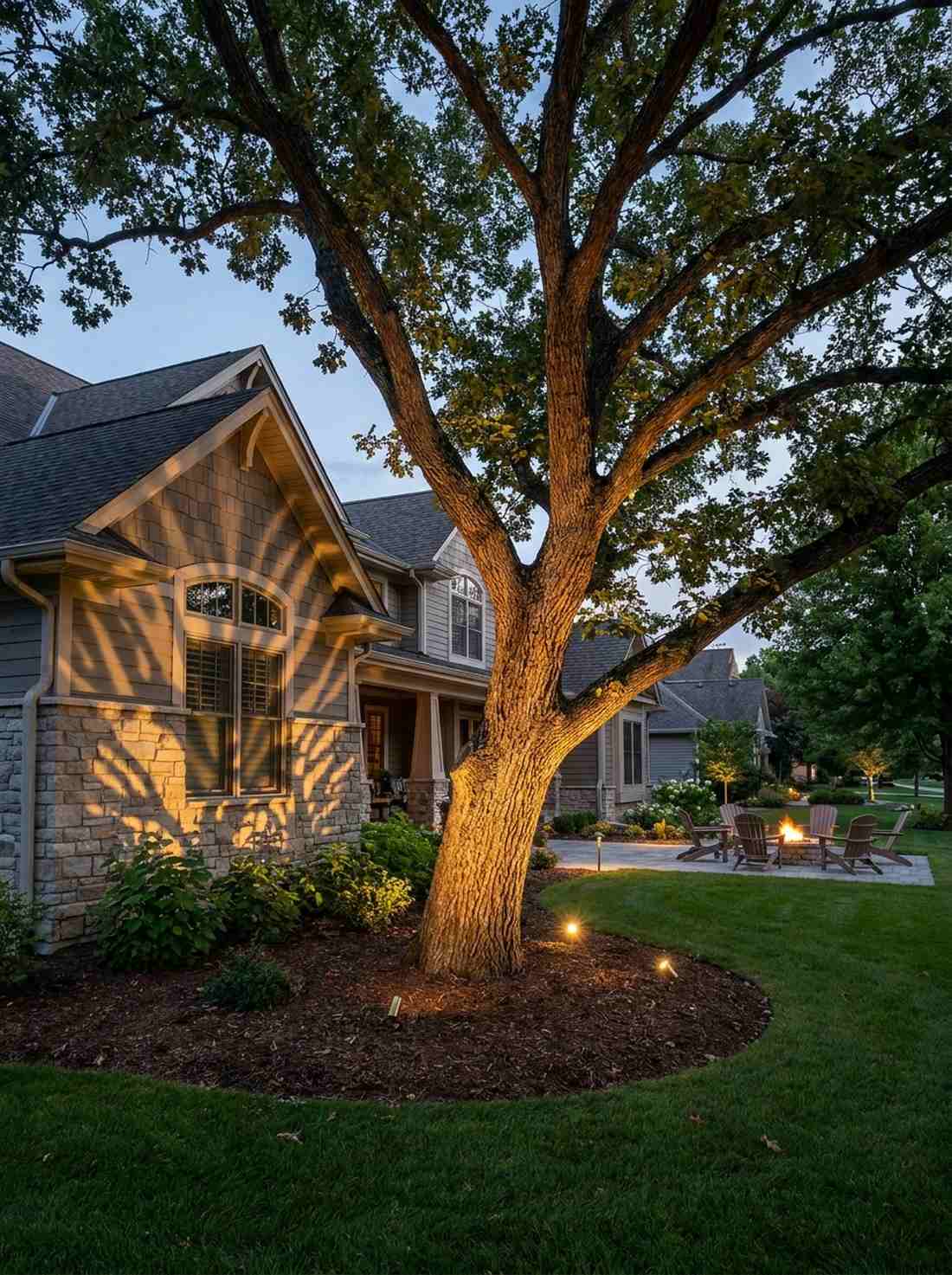
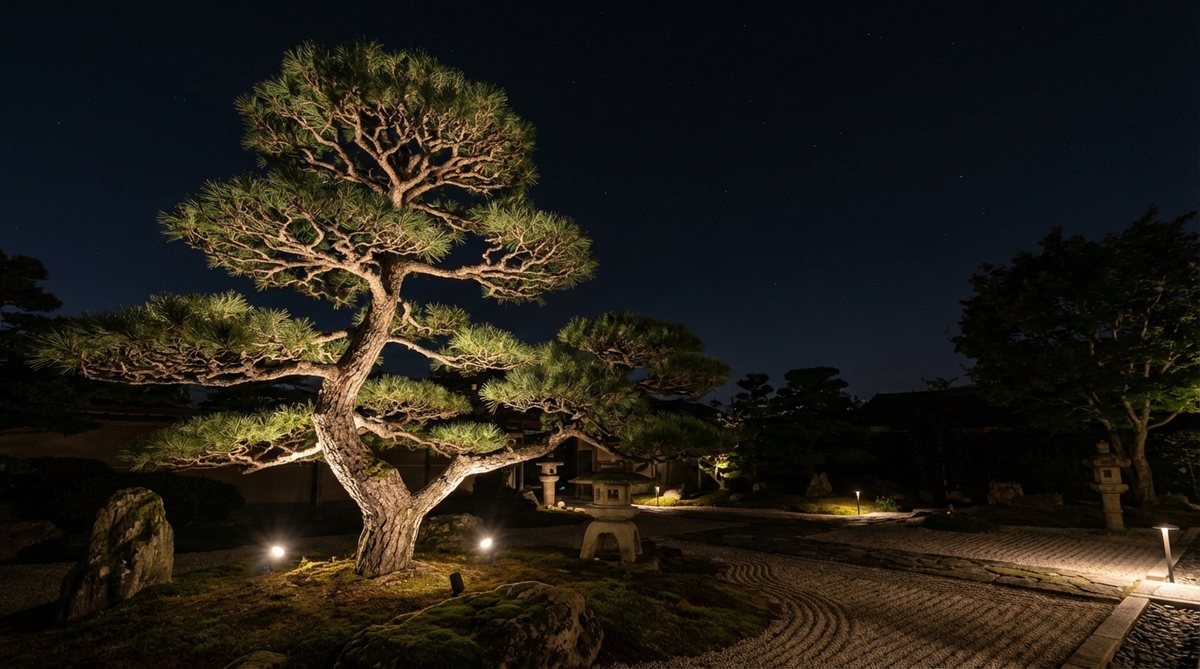
Casts dramatic, monstrously beautiful shadows against your home’s exterior. A directional canopy illumination setup turns ordinary trees into nighttime art installations.
Floodlights blast the yard with harsh, ugly security lighting. Hiding a narrow-beam spotlight directly at the base of a trunk highlights the intricate bark texture. It creates a high-end, resort-like ambiance that makes the property look insanely expensive.
You can set up a smart lighting system for under $80 per tree.
- Key Materials: Brass LED uplights, low-voltage wire, smart transformer
- Vibe / Style: Dramatic resort evening
- Difficulty: Easy electrical setup
- Budget Breakdown: Fixtures: $60 | Wiring/Transformer: $40.
- Creator’s Tip: Use warm 2700K bulbs; cool white light makes plants look artificial and dead.
- Smart Sourcing: Secure a low-voltage landscape brass uplight kit and a smart outdoor Wi-Fi timer switch.
Don’t finalize any outdoor plans until you see this game-changing material swap coming up…
Material Guide: Cheap vs. Premium Aesthetic
Knowing exactly where to save and where to spend makes all the difference in achieving that “looks expensive but isn’t” vibe.
- Standard vs. UV-Resistant/Premium: Standard plastics fade to a chalky white in one summer. Upgrading to UV-coated composites guarantees deep, rich colors that survive harsh sunlight.
- Pre-made Kits vs. Sourcing Locally: Scavenging hardware stores wastes weekends. Starter kits provide exact tolerances (especially for water features), saving you from disastrous leaks and saving money overall.
29. Path Edge Strip Lighting
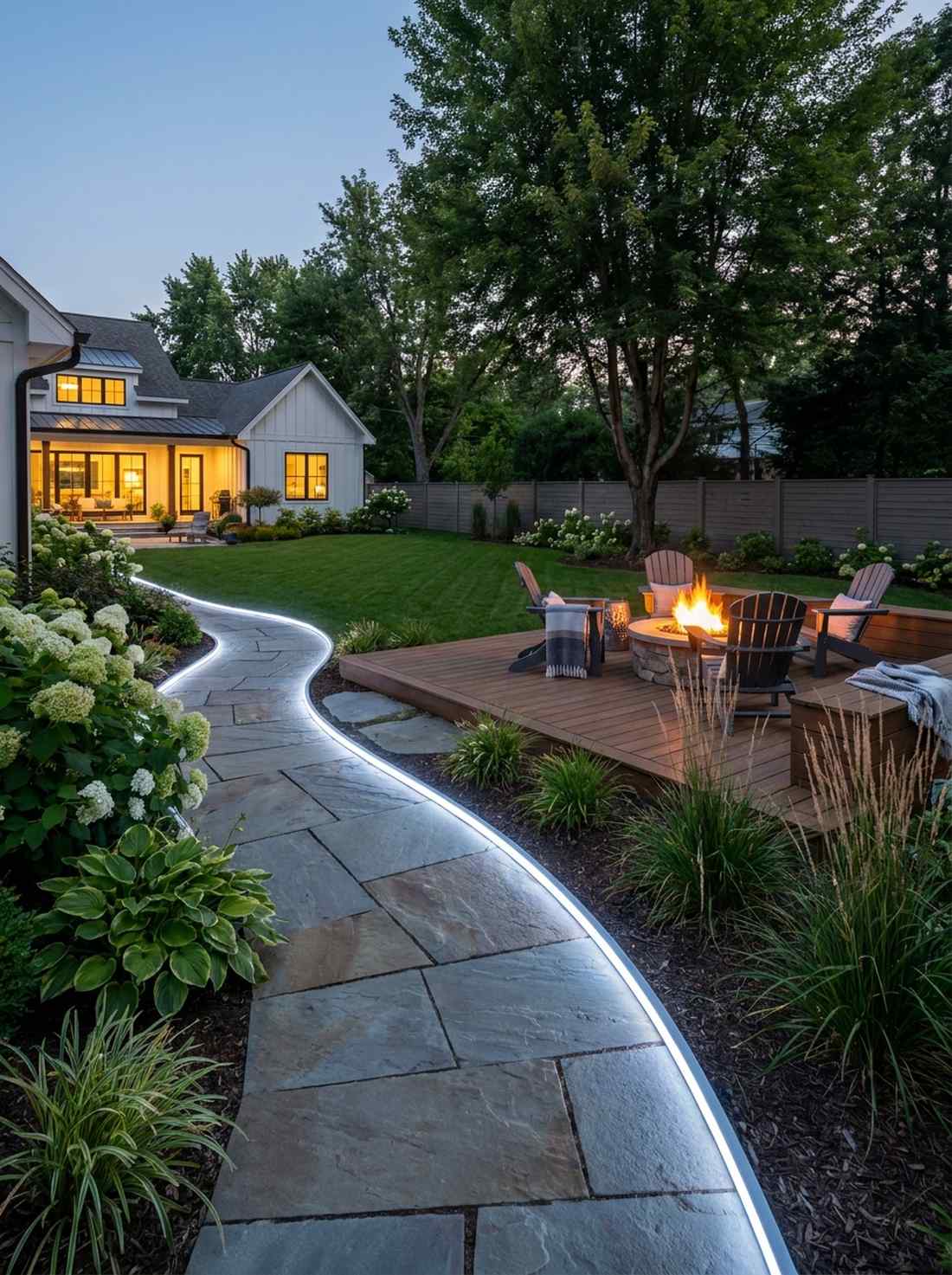
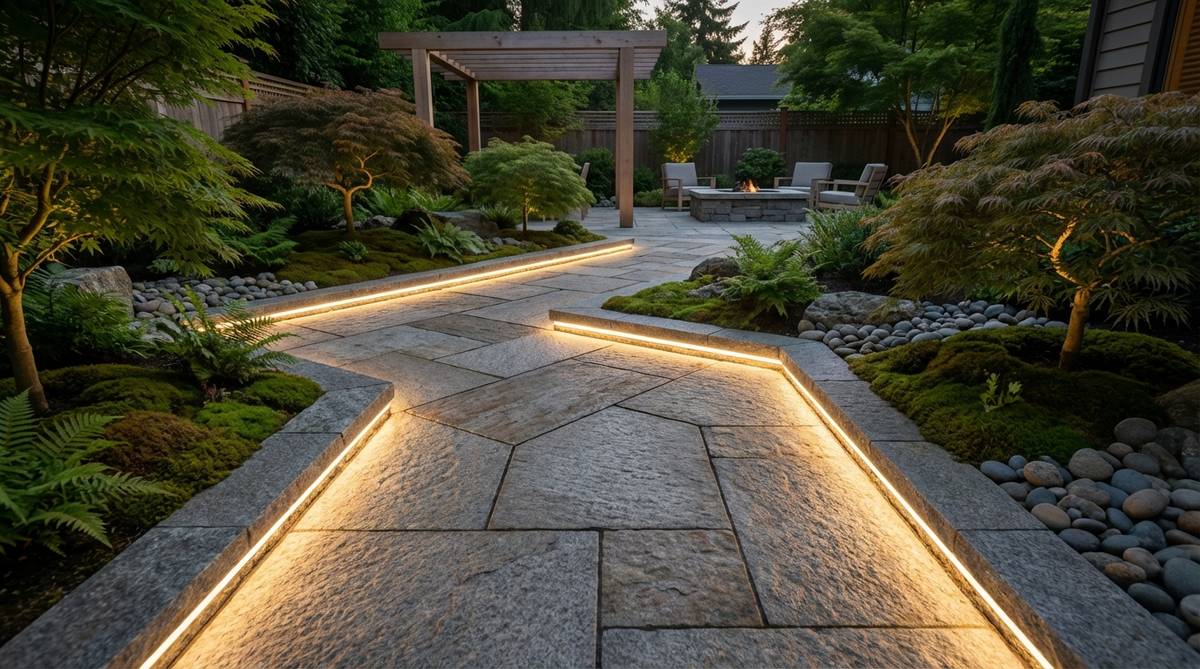
Looks like a glowing airport runway guiding you through the garden. An under-lip LED pathway glow provides incredible safety without any visible ugly fixtures.
Those cheap plastic solar stakes look terrible and break constantly. Routing a continuous waterproof neon strip under the lip of a walkway creates a seamless, floating border of light. This specific configuration defies expectations of standard yard lighting.
A 30-foot glowing edge can be installed for around $50–$90. Pin this for your patio upgrade plans!
- Key Materials: Waterproof LED neon strips, aluminum channel, adhesive
- Vibe / Style: Seamless futuristic glow
- Difficulty: Easy peel-and-stick
- Budget Breakdown: LED spool: $40 | Aluminum tracks: $30.
- Creator’s Tip: Use an aluminum diffusion channel to eliminate the “dotted” look of exposed LED nodes.
- Smart Sourcing: Grab an IP68 waterproof outdoor LED strip kit and aluminum LED diffuser channels (bulk pack).
30. Floating Lantern Globes
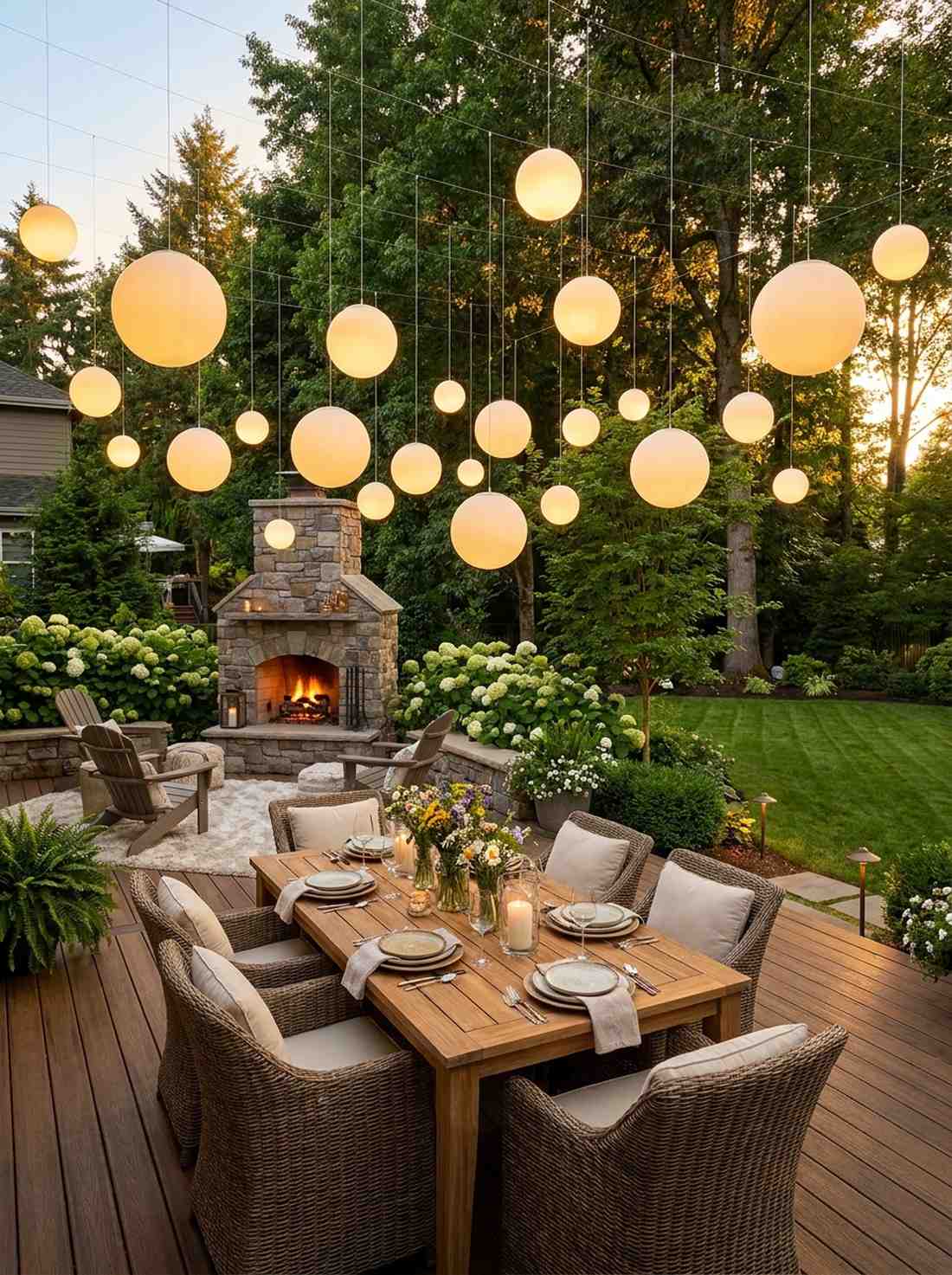
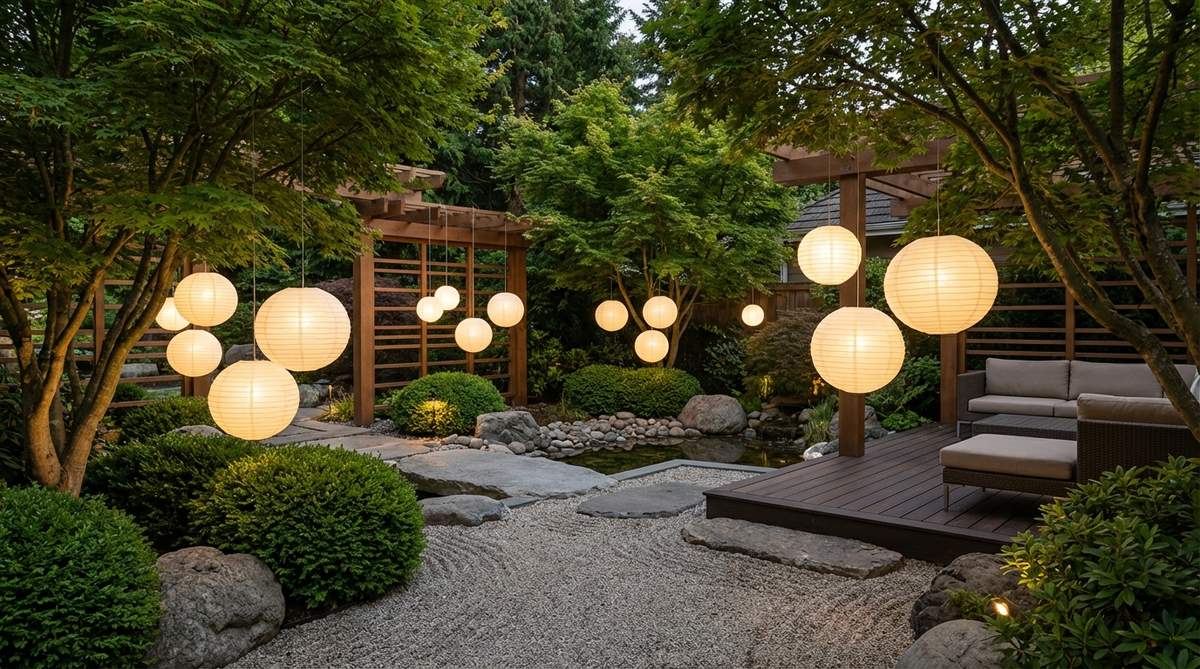
Captures the magic of a midsummer night’s dream. An orb-style suspended lighting layout adds whimsical, floating ambiance over a dining or meditation space.
Stringing generic patio bulbs is overdone and slightly cliché. Hanging perfect, glowing spheres at staggered heights via invisible fishing line looks like floating magic. It’s a surreal, right-brain aesthetic trick that immediately sparks joy.
You can create this magical canopy for about $60–$100.
- Key Materials: Waterproof LED globes, clear fishing line, tension hooks
- Vibe / Style: Enchanted floating orbs
- Difficulty: Easy aerial hanging
- Budget Breakdown: Light orbs: $70 | Suspension line: $10.
- Creator’s Tip: Hang them in odd numbers (3, 5, or 7) to maintain natural visual asymmetry.
- Smart Sourcing: Order rechargeable floating LED pool orbs and high-test clear fluorocarbon line.
31. Underwater Pond Illumination
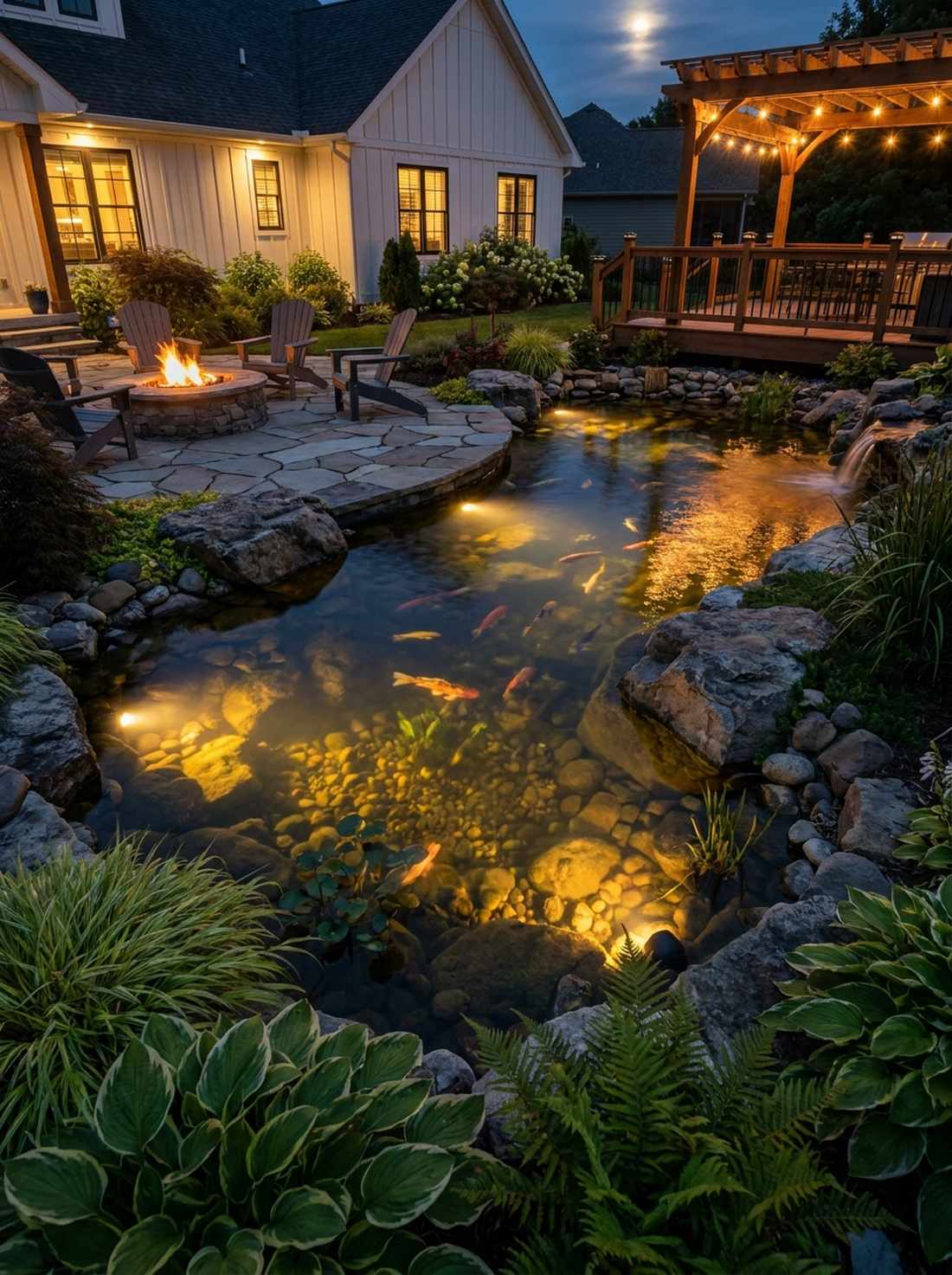
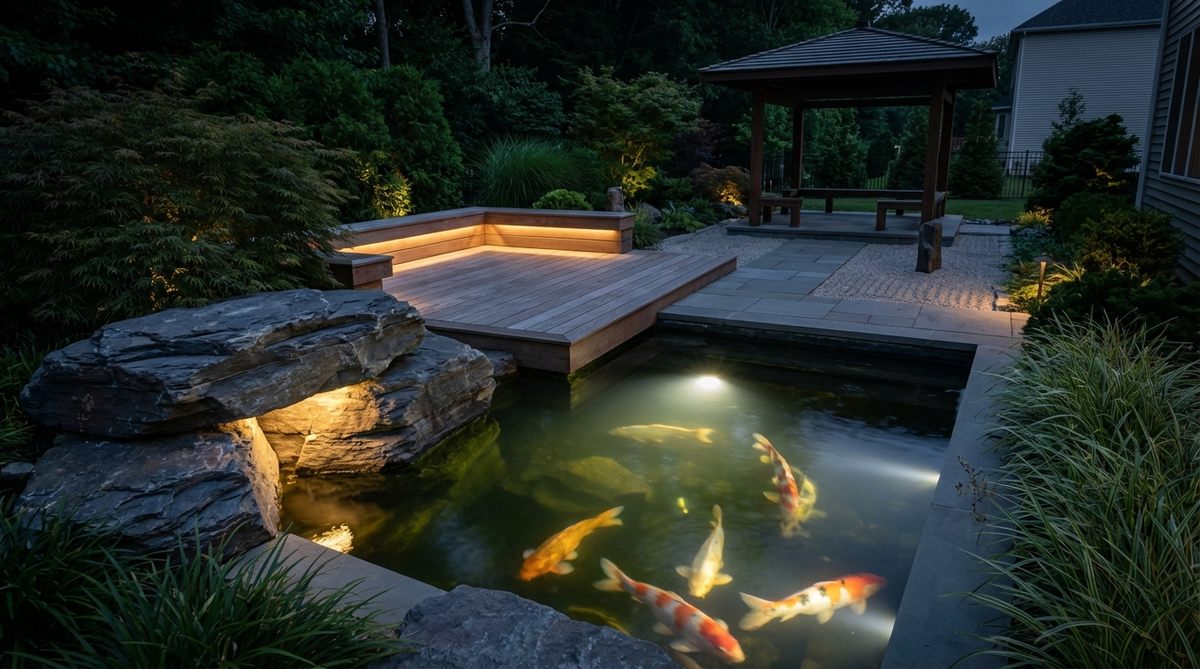
Turns a dark, scary pool of water into a mesmerizing, glowing jewel box. A submerged aquatic lighting system lets you watch the hypnotic movement of fish long after dark.
Leaving water features unlit wastes half of their visual potential. Sinking weighted puck lights into the base illuminates the ripples and fish from below, creating insane optical effects. It completely changes the atmospheric temperature of the yard.
These drop-in kits usually cost a surprisingly cheap $30–$50.
- Key Materials: Weighted submersible LEDs, waterproof remote
- Vibe / Style: Deep glowing lagoon
- Difficulty: Plug and play
- Budget Breakdown: Light kits: $40.
- Creator’s Tip: Place the lights behind a rock facing outward so you see the glow, not the glaring bulb itself.
- Smart Sourcing: Pick up a weighted submersible LED puck light set and aquatic-safe wire clips.
32. Backlit Stone Features
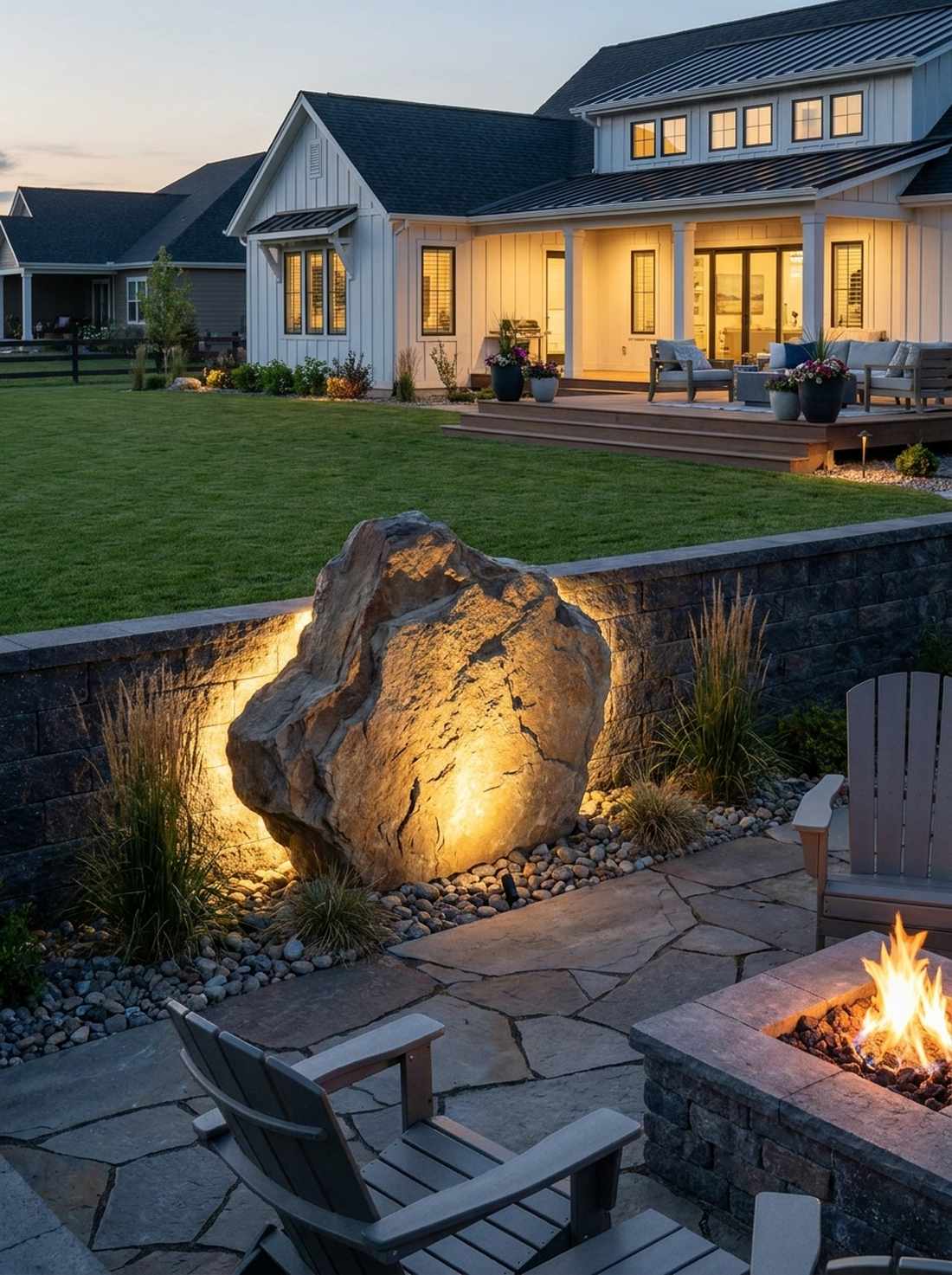
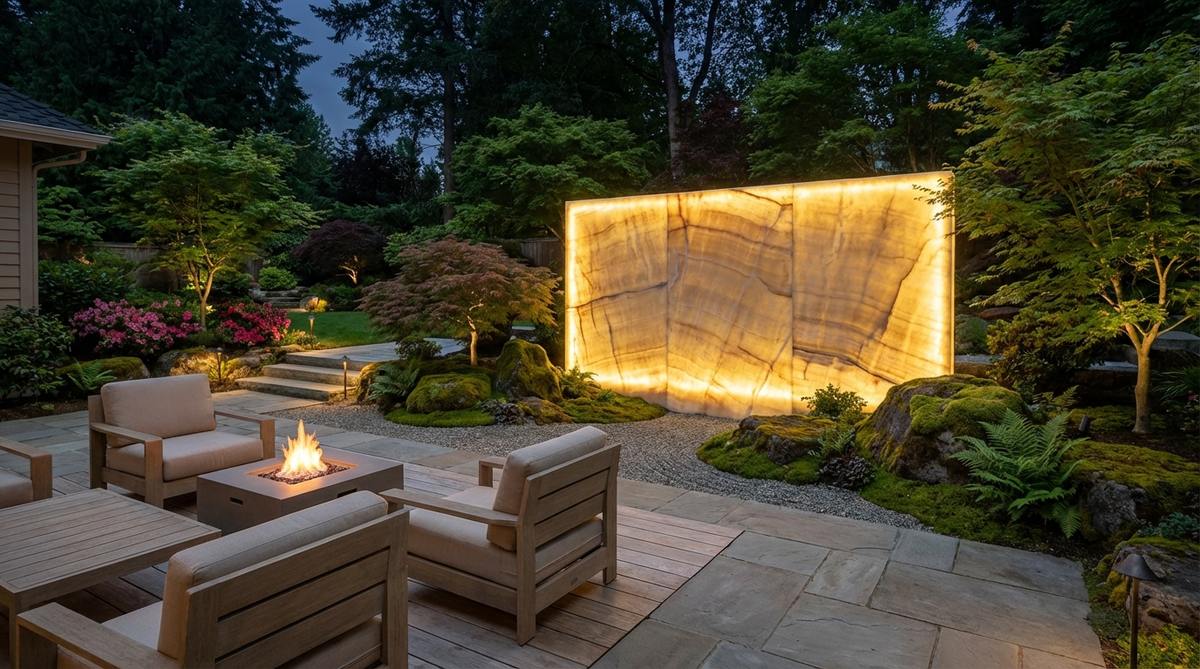
Creates a breathtaking halo effect that makes heavy rocks look weightless. A rear-illuminated boulder display is the ultimate flex for a custom landscape.
Shining light directly onto a flat wall washes out all texture. Placing a hidden strip directly behind a jagged stone slab forces the light to bleed around the edges. This silhouettes the rugged shape and gives a designer-level finish.
A simple backlight trick can be executed for under $40. Save this to your extreme DIY board!
- Key Materials: Feature boulder, waterproof LED bar, hidden brackets
- Vibe / Style: Dramatic silhouetted art
- Difficulty: Moderate positioning
- Budget Breakdown: Lighting bar: $35.
- Creator’s Tip: Ensure the light source is 100% blocked from the main viewing angle for the true halo effect.
- Smart Sourcing: Use a waterproof outdoor LED wash bar and a heavy-duty landscape spotlight stake.
This final trick ties everything together, securing that ultra-premium architectural aesthetic…
Compact Courtyard Solutions
33. Vertical Wall Garden With Zen Base
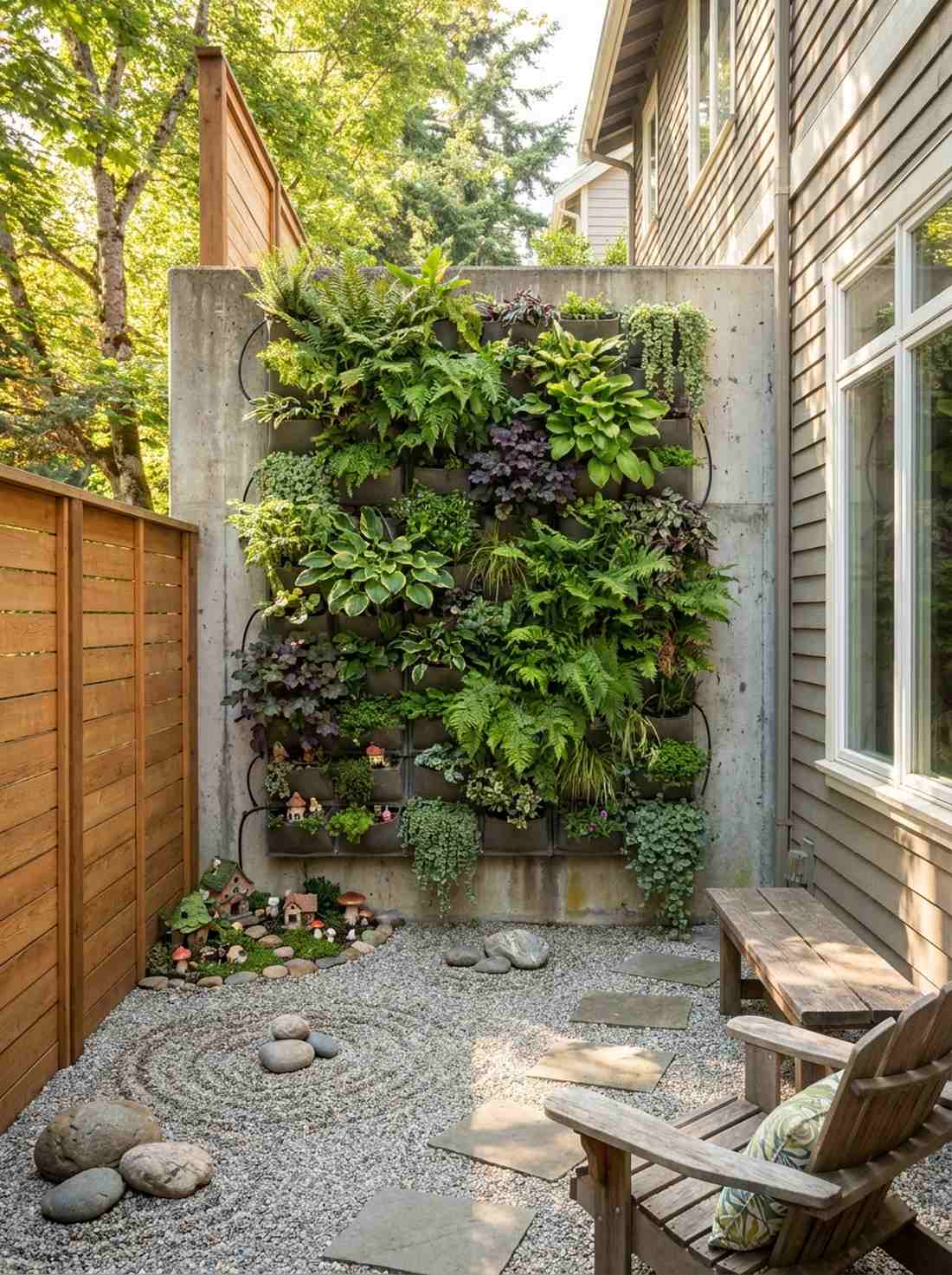
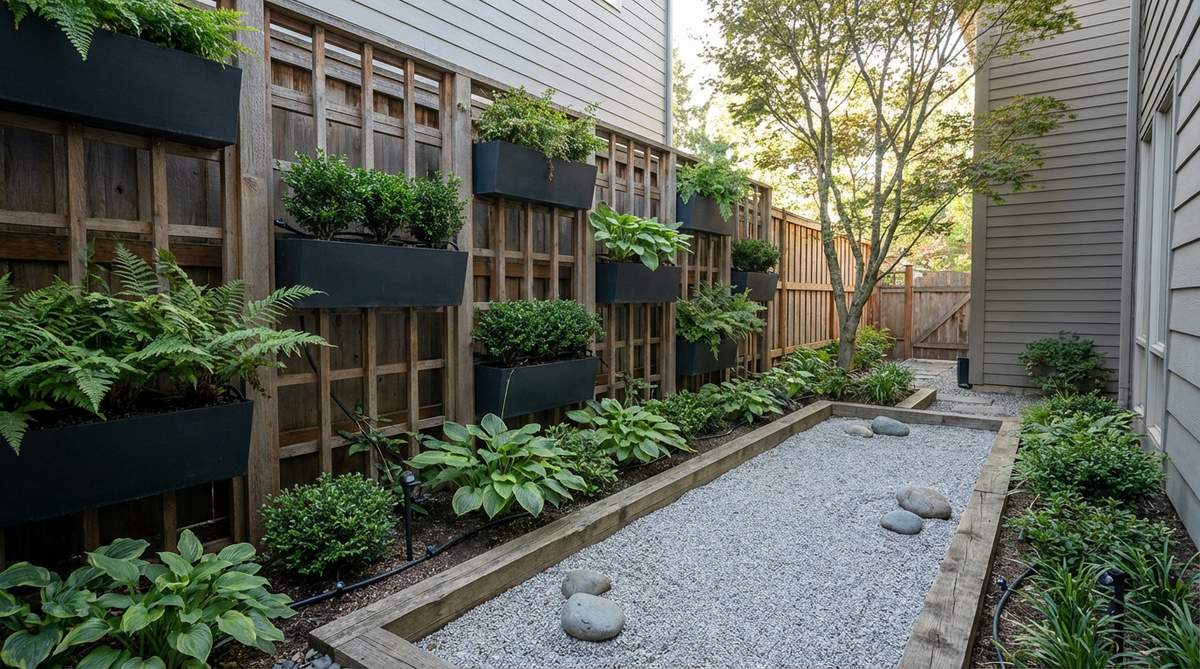
Feels like a lush living tapestry bursting out of a concrete wall. A vertical pocket planter system is the undisputed king of maximizing greenery in narrow side yards.
Wasting ground space is the ultimate sin in tight urban plots. This vertical strategy leverages unused fences while maintaining a clean, raked gravel bed below. Injecting some fairy garden kits into the pockets adds playful micro-details.
Setting up the frame and drip lines costs around $100–$200 depending on the grid size.
- Key Materials: Wall planter pockets, drip irrigation tubing, ferns
- Vibe / Style: Urban jungle ascent
- Difficulty: Intermediate plumbing and hanging
- Budget Breakdown: Planter frames: $90 | Irrigation lines: $45.
- Creator’s Tip: Put moisture-loving plants at the bottom tier, as water naturally drains downward through the pockets.
- Smart Sourcing: Invest in a modular vertical wall planter kit and a micro-drip irrigation starter set.
34. Glass Box Miniature Zen Garden
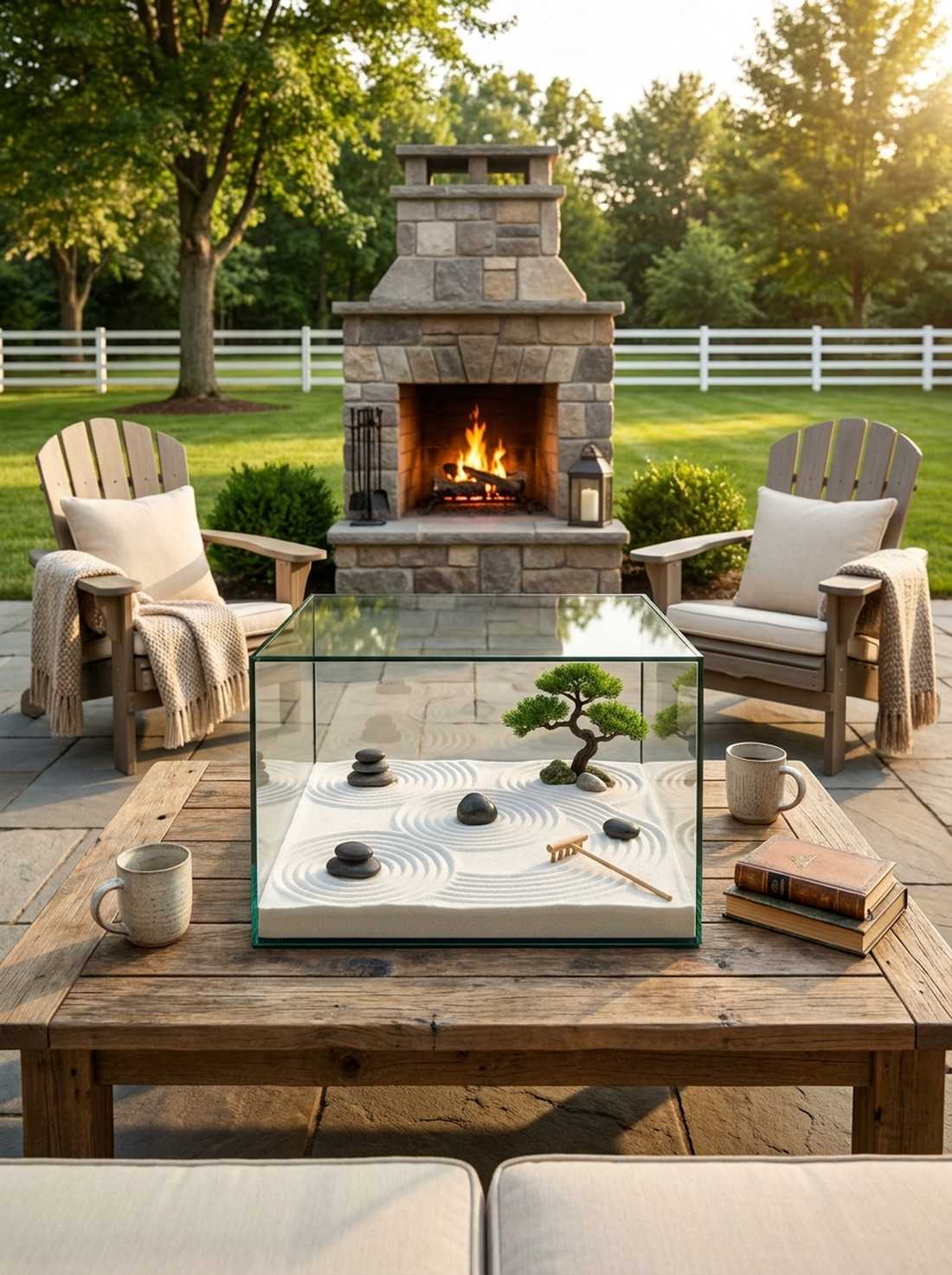
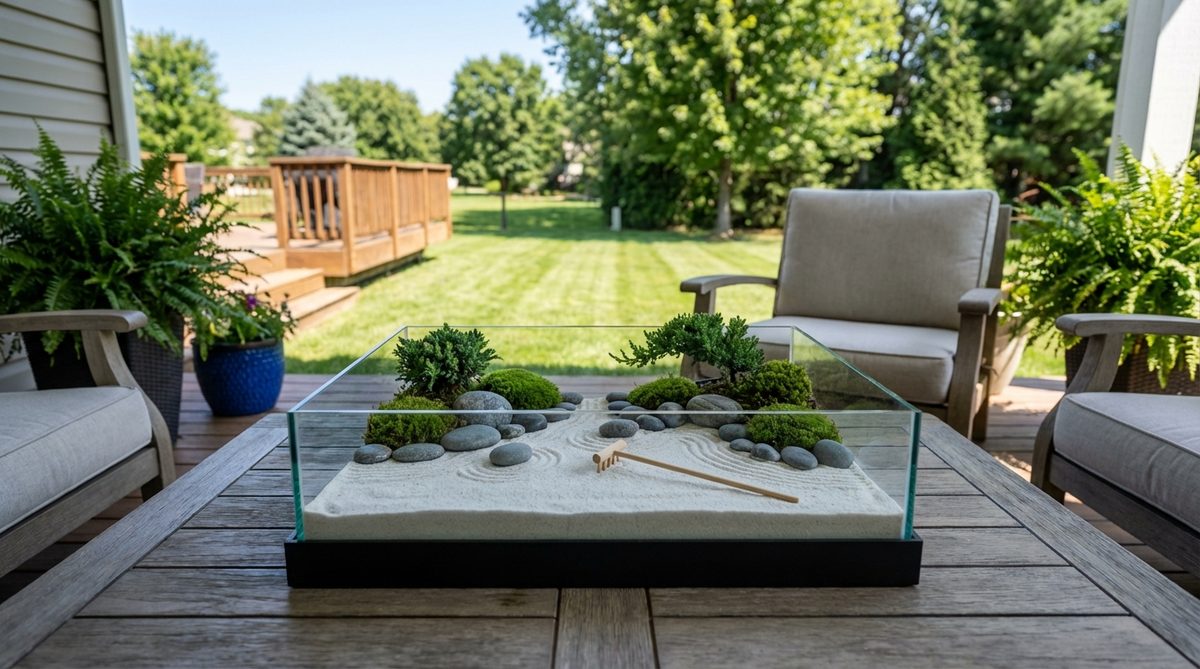
Captures an entire meditative landscape right on your patio table. A contained tabletop rock display is the absolute perfect aesthetic fix for tiny apartment balconies.
Potted plants on a table often look messy and drop dirt everywhere. Enclosing a dry landscape inside a sleek acrylic or glass box looks far more expensive than it is. Raking the tiny sand patterns becomes an addictive daily mindfulness routine.
You can easily pull this off for around $30–$60.
- Key Materials: Glass terrarium box, white sand, mini rake, stones
- Vibe / Style: Contained desk aesthetic
- Difficulty: Very easy assembly
- Budget Breakdown: Glass box: $30 | Sand/Stones: $15.
- Creator’s Tip: Mix a tiny amount of baby oil into the sand so it holds the rake patterns permanently without blowing away.
- Smart Sourcing: Order a geometric glass terrarium container and premium miniature garden supplies (starter pack).
35. Under-Stair Courtyard Nook
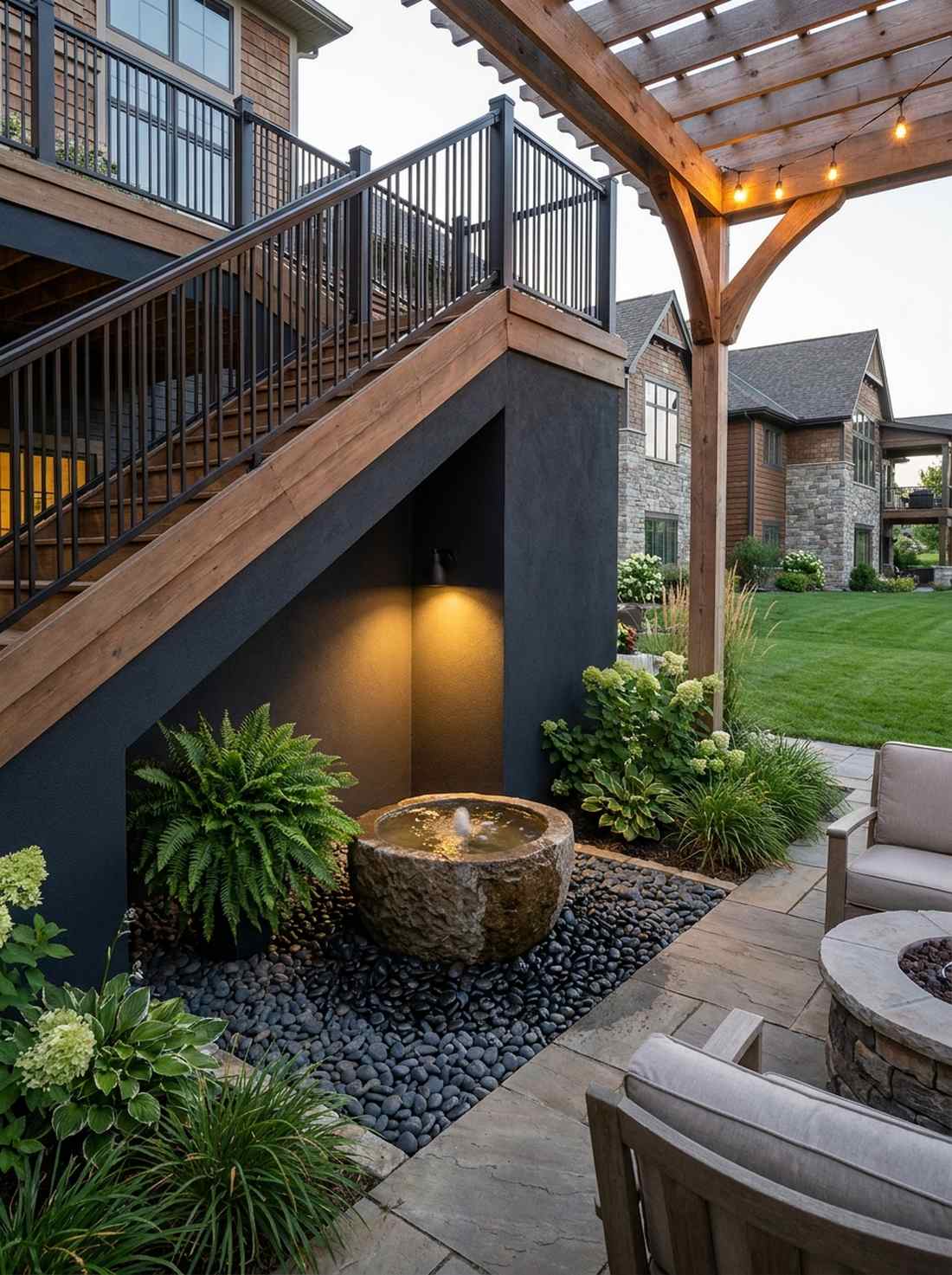
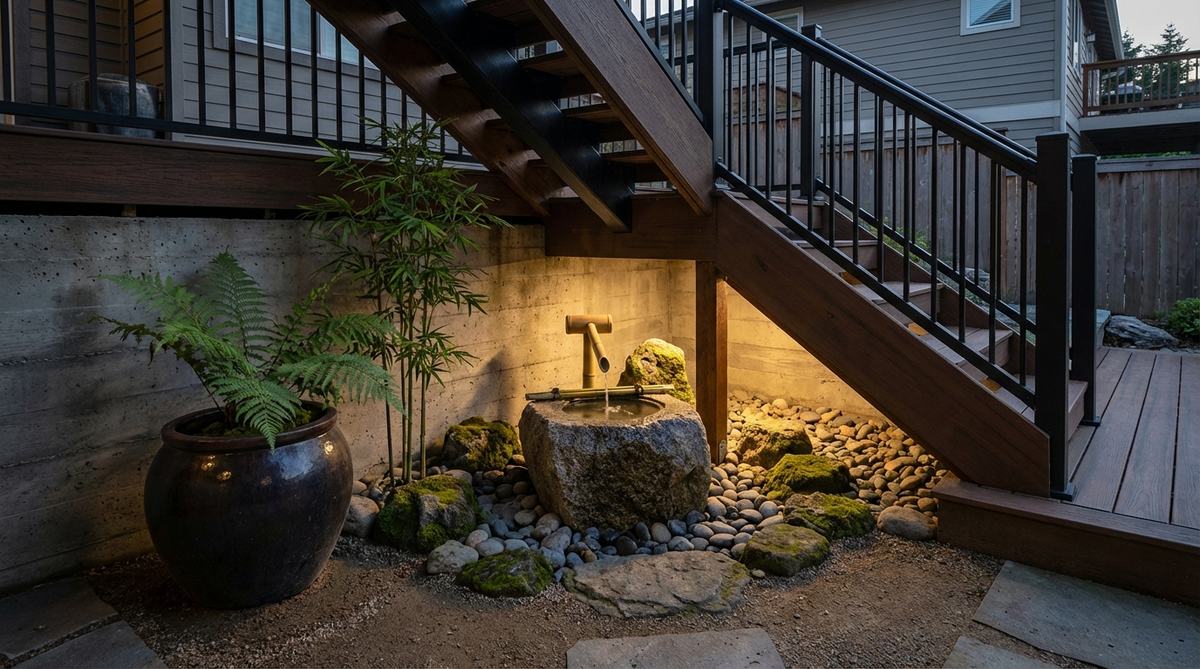
Transforms a dead, dusty corner into a secret, shaded hideaway. An under-stairway rock arrangement capitalizes on negative space that is usually completely ignored.
Leaving the space under an exterior staircase empty is a massive missed opportunity. Tucking a tiny water basin and a single spotlight into this cavernous area draws the eye in. It creates profound depth and utility out of thin air.
Revamping this tiny nook rarely costs more than $50–$80. Pin this if you have wasted space to fill!
- Key Materials: Stone basin, dark river rocks, singular fern
- Vibe / Style: Hidden architectural gem
- Difficulty: Easy styling
- Budget Breakdown: Basin: $40 | Rocks: $20.
- Creator’s Tip: Paint the underside of the stairs dark charcoal to make the illuminated basin below pop aggressively.
- Smart Sourcing: Pick up a carved stone water basin and polished black river pebbles (bulk bag).
36. Container Rock Garden Arrangement
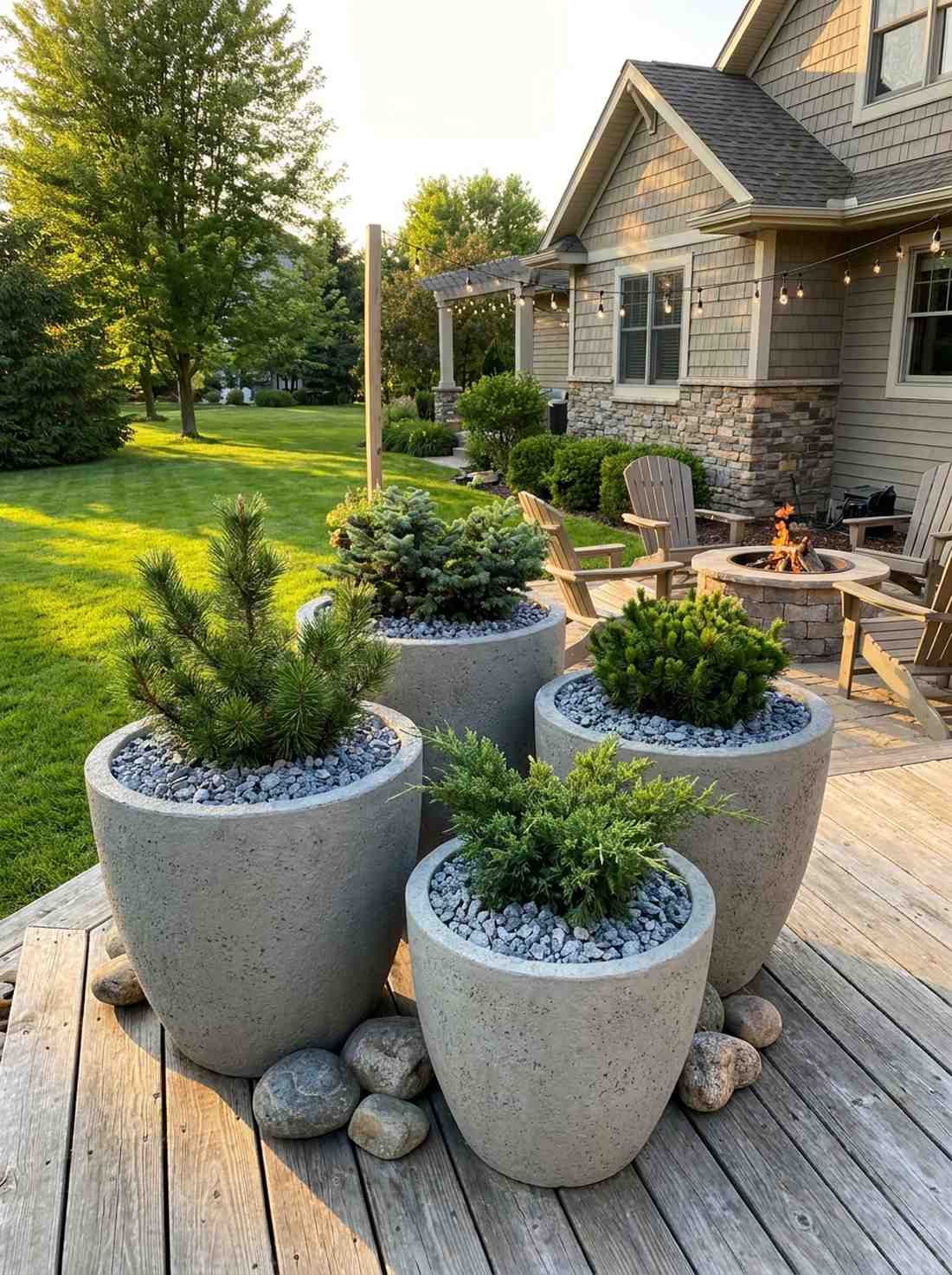
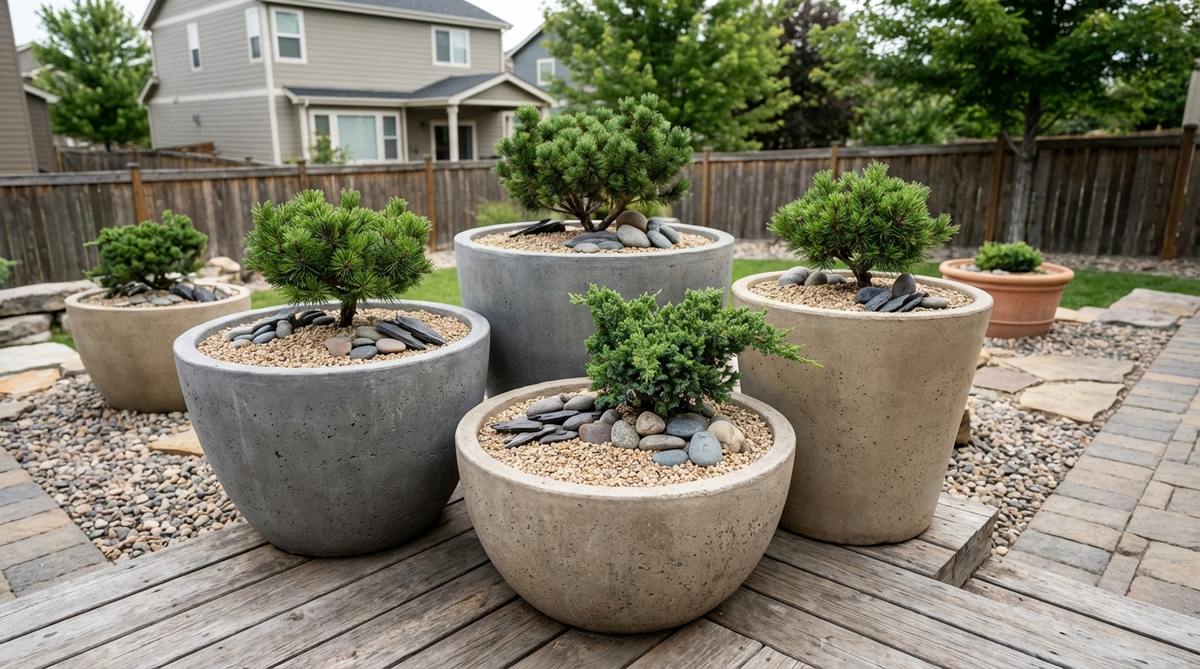
Delivers heavy masonry aesthetics without the permanent commitment. A cluster of oversized planters filled with stone and dwarf pines is a renter-friendly landscape hack.
Ripping up a rental property’s yard means losing your security deposit. Building massive, stylized gravel scenes inside massive fiberglass pots gives you the exact same look but is 100% portable. You can take your expensive-looking garden with you when you move.
Planter pots and filler will cost roughly $100–$200 for a trio arrangement.
- Key Materials: Large faux-concrete planters, gravel, dwarf conifers
- Vibe / Style: Portable brutalist nature
- Difficulty: Easy heavy lifting
- Budget Breakdown: Pots: $120 | Gravel/Plants: $60.
- Creator’s Tip: Fill the bottom half of the massive pots with empty plastic bottles to save money on gravel and reduce weight.
- Smart Sourcing: Get lightweight fiberglass concrete-look planters and dwarf evergreen starter shrubs.
37. Window View Miniature Landscape
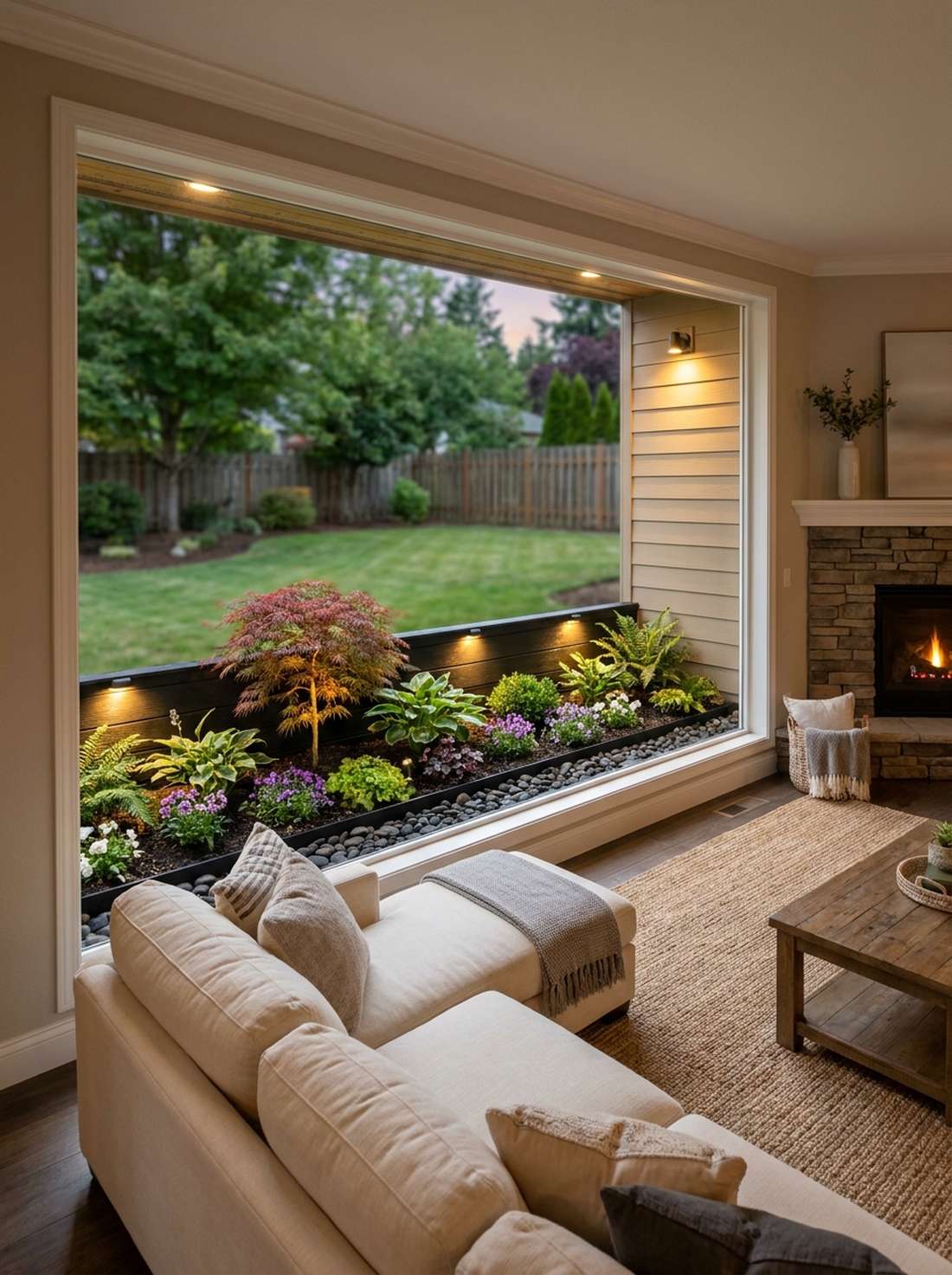
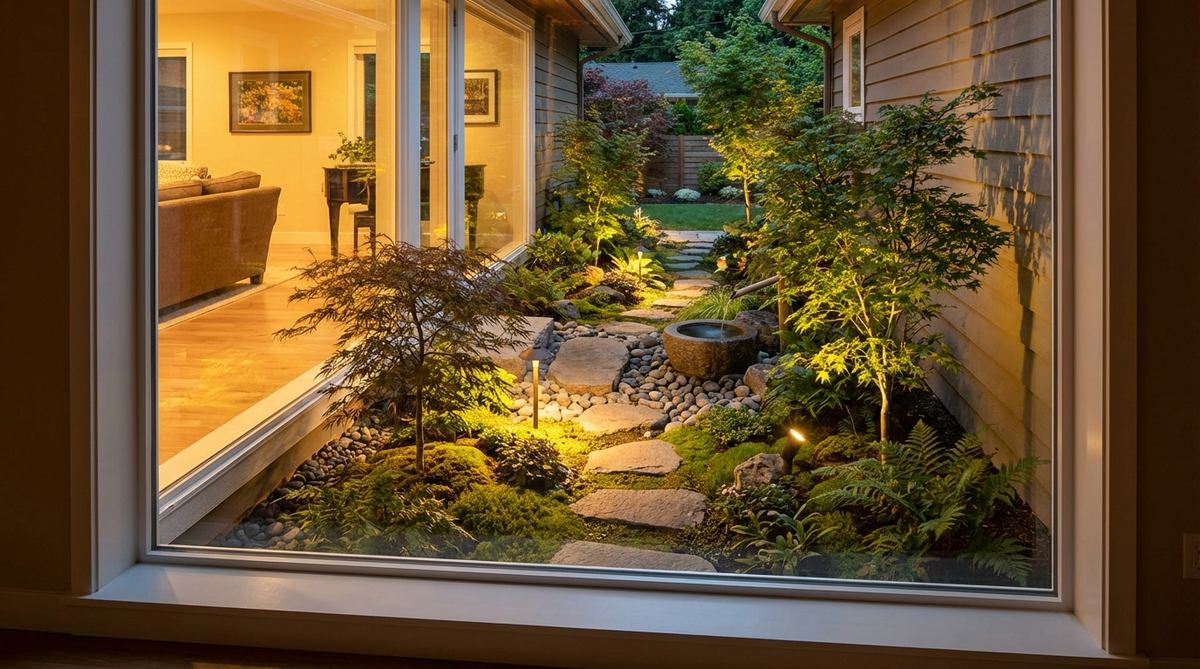
Turns your living room window into a live-action, framed painting. A targeted boundary bed layout focuses 100% of the design effort precisely where you look out.
Spending thousands on the back corners of a yard you never see is foolish. Compressing the budget into a highly detailed, 3-foot strip directly outside a major window delivers a shockingly premium look. You get to enjoy the garden from the couch year-round.
Concentrating materials in a small strip usually costs around $100–$150.
- Key Materials: Landscape edging, specimen plant, accent lighting
- Vibe / Style: Framed living artwork
- Difficulty: Easy weekend project
- Budget Breakdown: Plants: $70 | Edging/Lighting: $50.
- Creator’s Tip: Mount a spotlight onto the exterior wall above the window, aiming down, to avoid glaring light shining inside.
- Smart Sourcing: Use a no-dig landscape edging kit and a directional outdoor LED downlight.
Material Innovations For Today’s Gardens
38. Fiberglass Composite Boulders
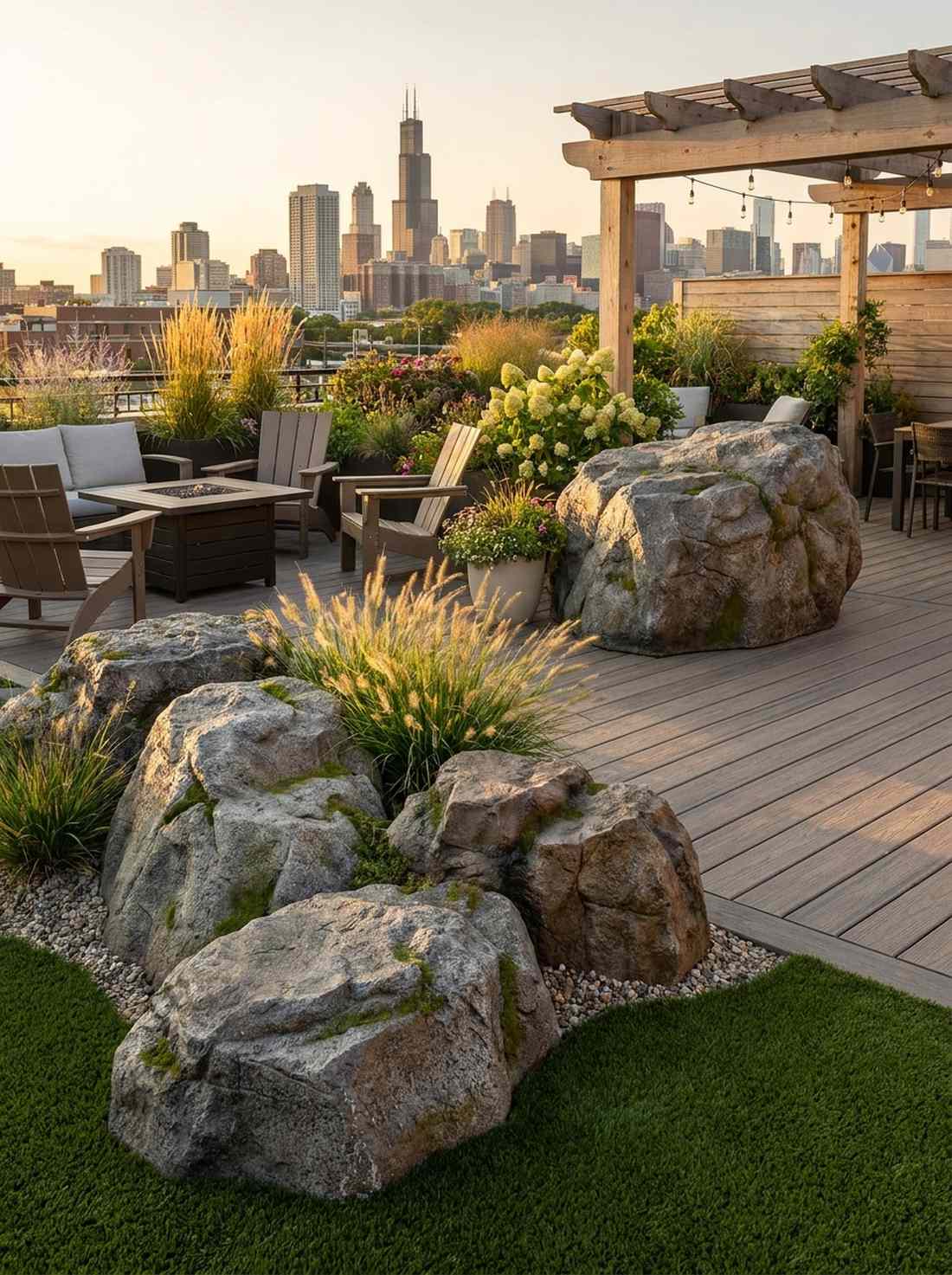
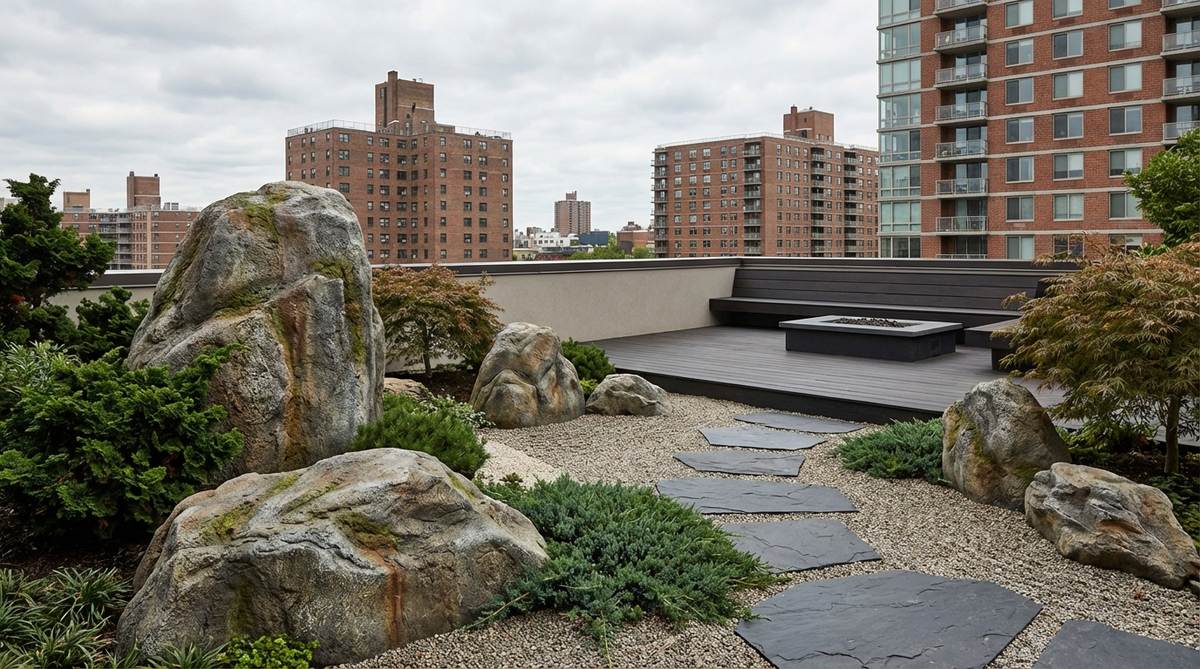
Looks identical to a two-ton granite slab but can be lifted with one hand. A lightweight faux rock installation is the ultimate cheat code for rooftop gardens and balconies.
Hauling real boulders requires heavy machinery and destroys turf. Dropping in hyper-realistic composite shells eliminates all logistical nightmares while giving a designer-level finish. It solves weight-limit problems instantly without sacrificing the rugged aesthetic.
These incredibly realistic fakes cost between $80–$150 each. Highly recommended for a quick weekend win.
- Key Materials: Molded fiberglass landscape boulders, anchoring stakes
- Vibe / Style: Effortless heavy masonry
- Difficulty: Extremely easy placement
- Budget Breakdown: Large faux boulder: $110.
- Creator’s Tip: Dig a slight depression and bury the bottom lip of the fake rock so it looks organically embedded in the dirt.
- Smart Sourcing: Order hyper-realistic fiberglass landscape boulders and heavy-duty ground anchor hooks.
39. Porcelain Paver Pathways
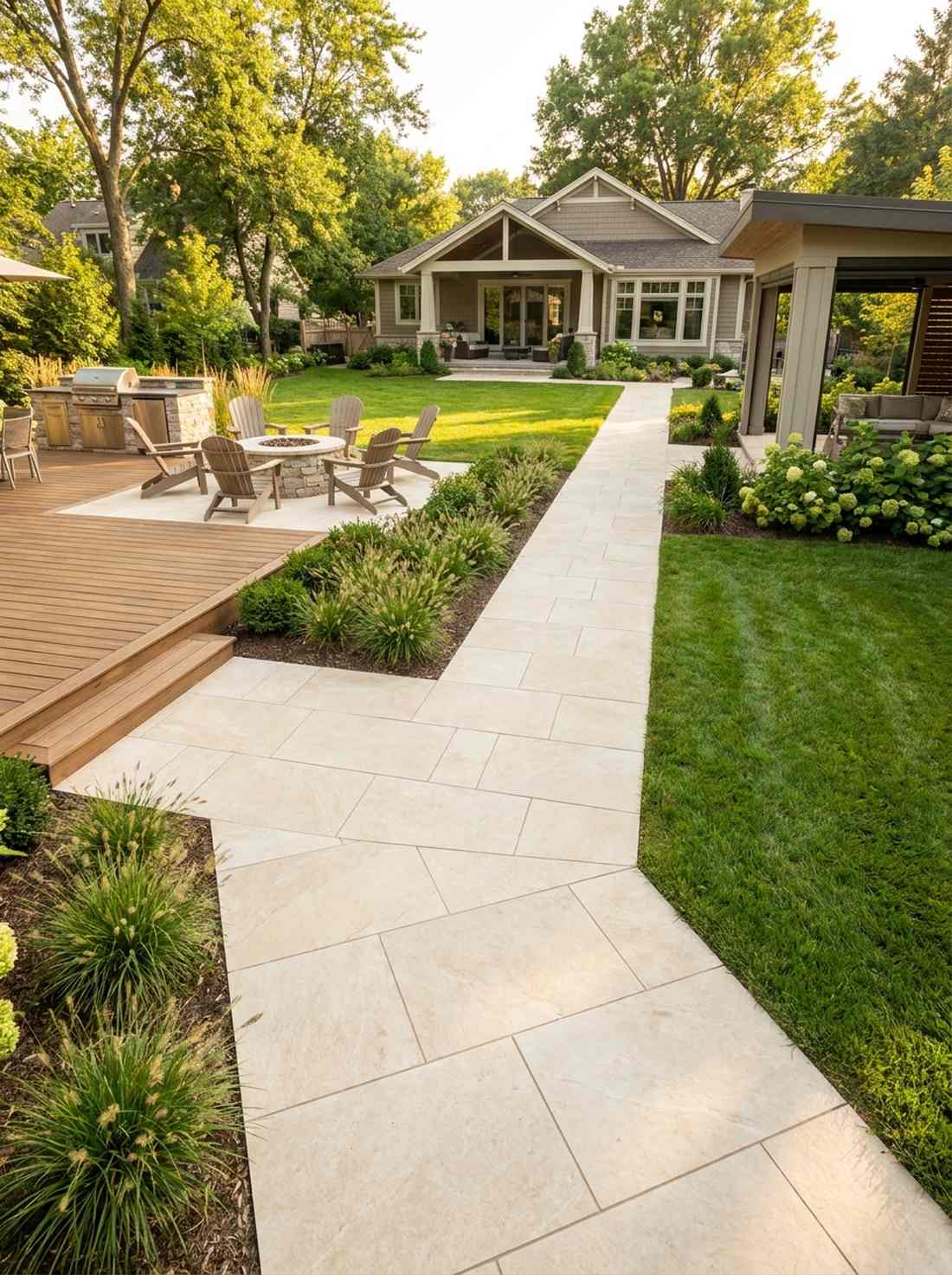
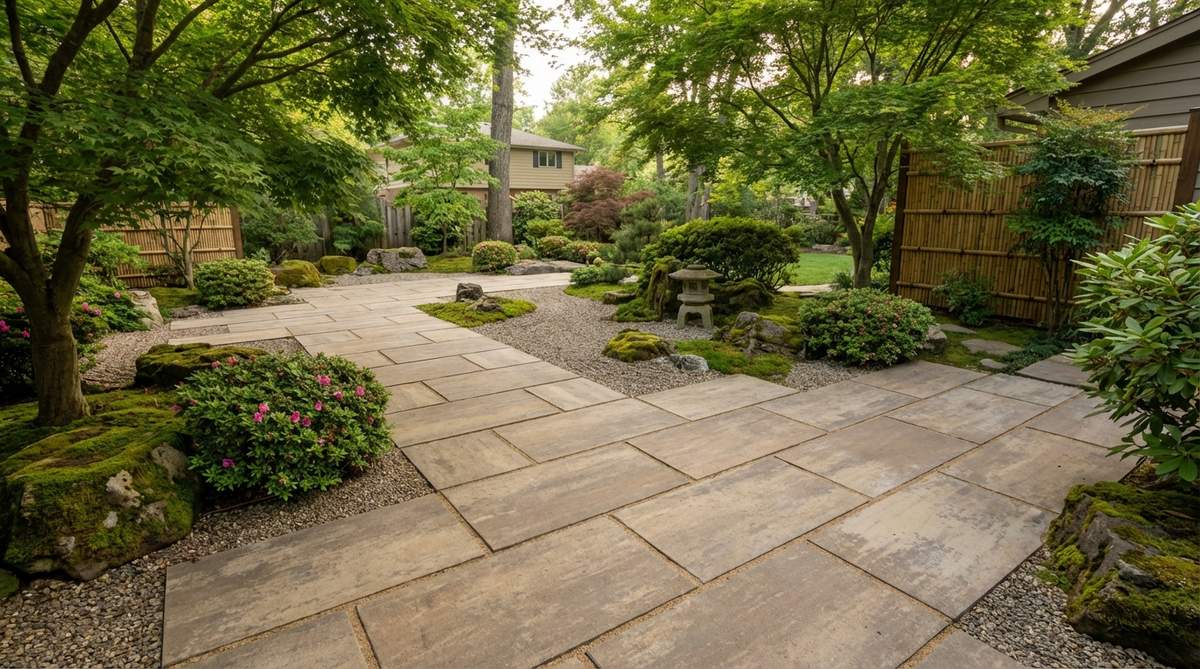
Delivers the flawless, stain-free perfection of a luxury interior floor outside. A large-format tile walkway completely modernizes the concept of stepping stones.
Natural limestone stains easily from wet leaves and cracks in freezing weather. Commercial-grade porcelain mimics the exact look of stone but is totally impervious to moss, mud, and cracking. It completely redefines standard backyard hardscaping.
You can cover a standard pathway for about $150–$300 depending on length.
- Key Materials: 2CM outdoor porcelain tiles, paver base sand
- Vibe / Style: Flawless contemporary walkway
- Difficulty: Moderate leveling required
- Budget Breakdown: Porcelain tiles: $200 | Sand base: $40.
- Creator’s Tip: Use self-leveling pedestal supports if you are placing them over an existing concrete patio.
- Smart Sourcing: Grab 2CM outdoor-rated porcelain pavers (bulk pack) and adjustable tile support pedestals.
40. Recycled Glass Mulch
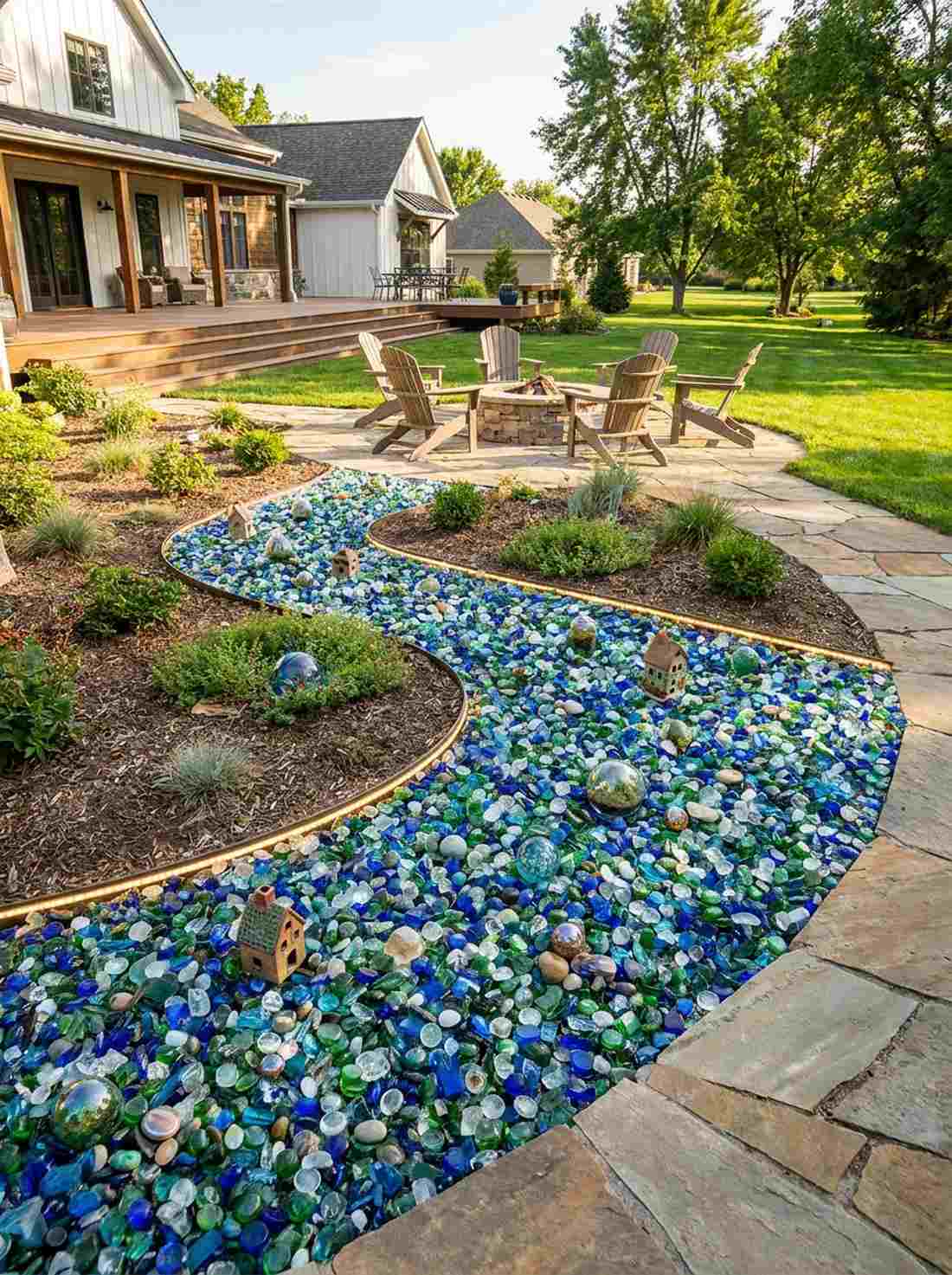
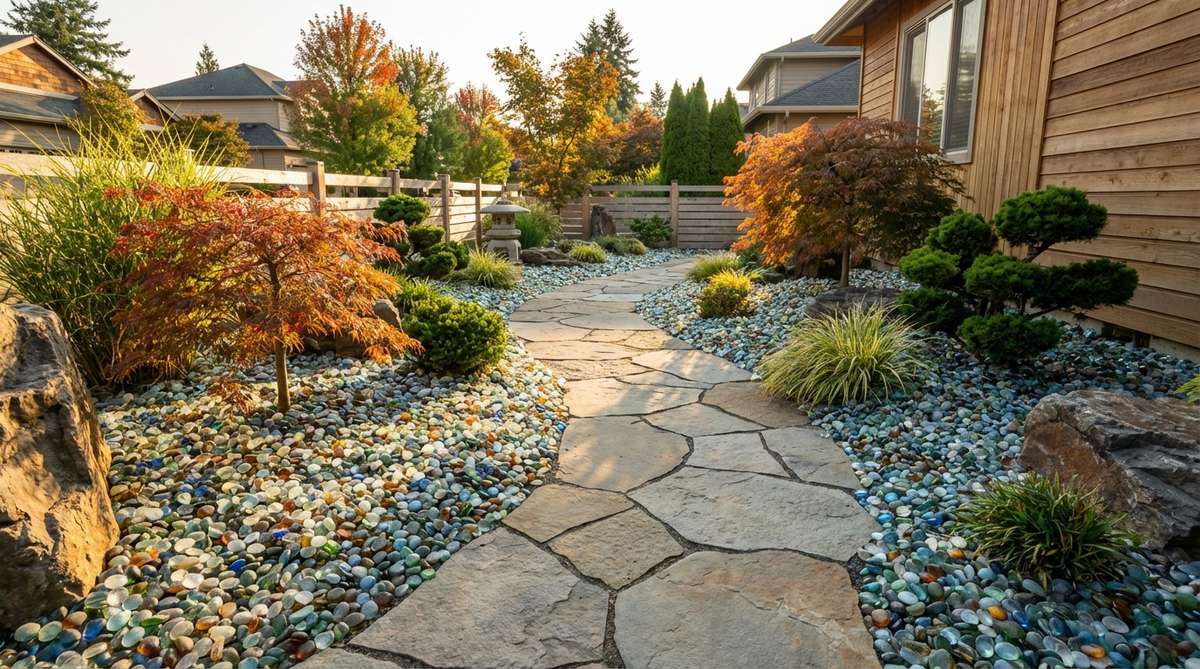
Looks like a river of crushed diamonds running through your plants. A tumbled glass groundcover bed is a striking, eco-friendly alternative to boring wood chips.
Wood mulch washes away in the rain and invites termites right to your foundation. Spreading smoothed, recycled glass pieces creates an indestructible, luminous barrier that never rots. Mixing in terrarium accessories makes the colorful base pop even more.
A few bags of this premium filler will cost around $40–$80. Save this to your garden hacks board!
- Key Materials: Tumbled landscape glass, heavy weed barrier
- Vibe / Style: Luminous eco-modern
- Difficulty: Easy pouring
- Budget Breakdown: Glass mulch: $50 | Fabric: $15.
- Creator’s Tip: Run an LED strip under the edge of the glass bed; the transparent rocks will catch and scatter the light brilliantly.
- Smart Sourcing: Use tumbled recycled landscape glass (bulk bag) and commercial-grade geotextile fabric.
41. Synthetic Moss Panels
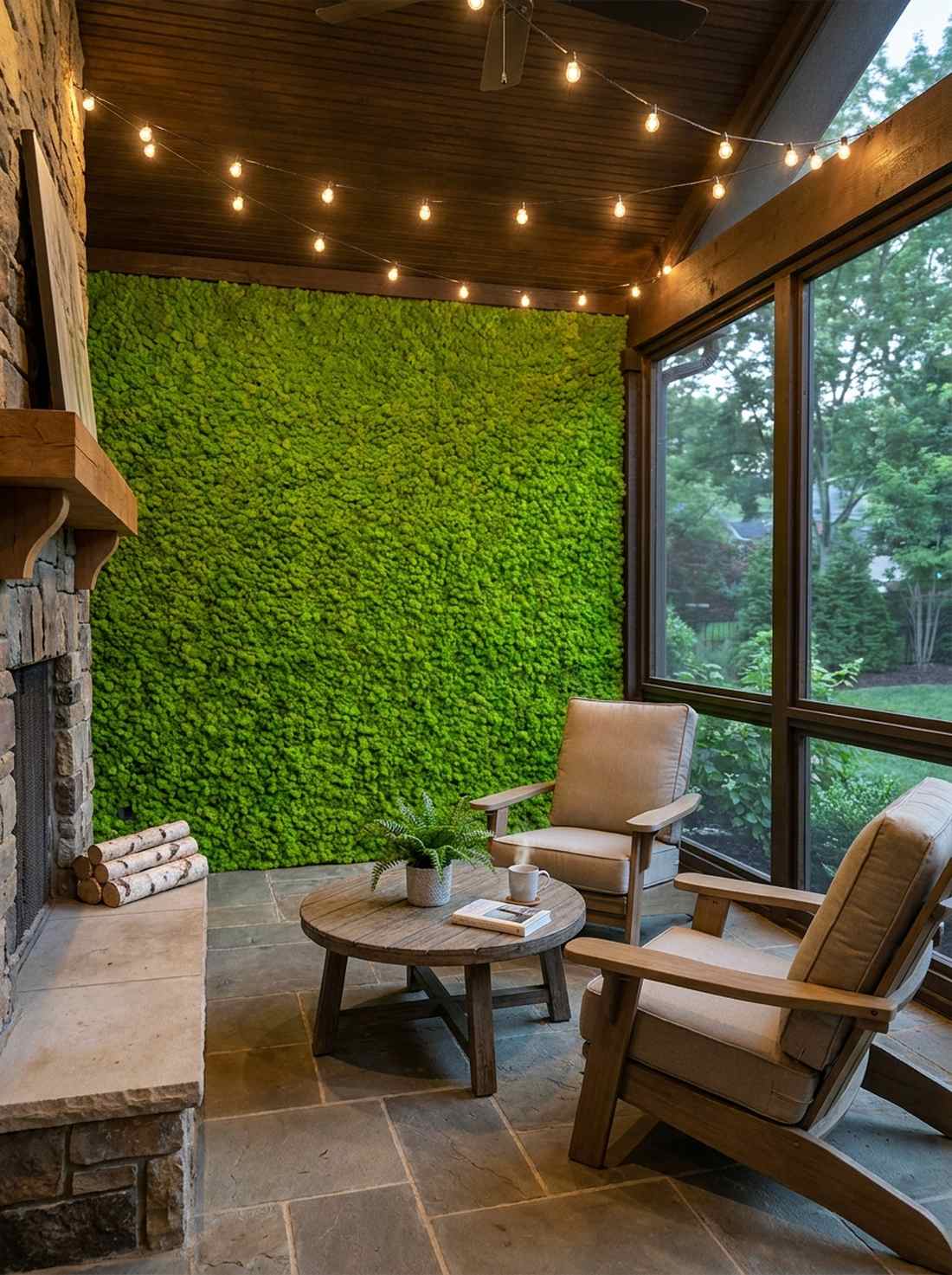
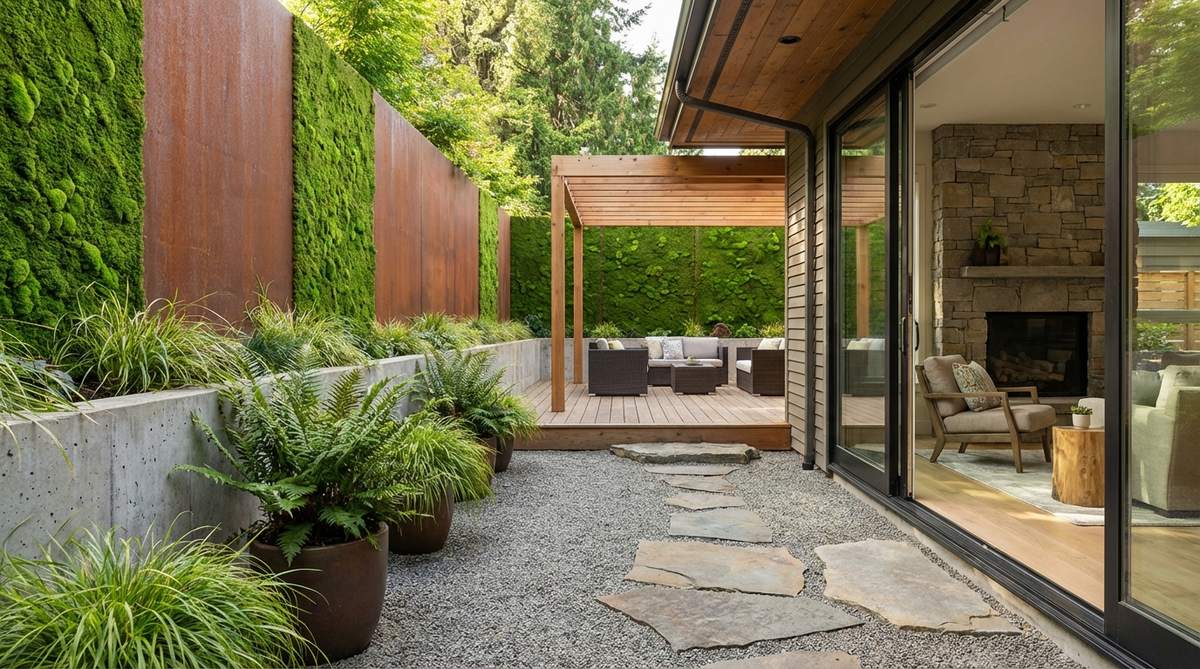
Provides a burst of vibrant, hyper-green texture on walls that never see the sun. A zero-maintenance faux greenery wall is perfect for dark, enclosed porches.
Trying to keep living moss alive vertically indoors is a moldy, expensive nightmare. Snapping together high-end, UV-treated replica panels looks wildly authentic but requires absolutely zero water. It’s shockingly simple and lasts for years.
You can cover a dramatic accent wall for roughly $100–$180.
- Key Materials: UV-coated artificial moss squares, staple gun
- Vibe / Style: Evergreen interior-exterior fusion
- Difficulty: Easy peel-and-stick/staple
- Budget Breakdown: Moss panels: $120 | Hardware: $10.
- Creator’s Tip: Fluff the panels vigorously with a hairdryer on cool setting to remove the “flat” look from shipping boxes.
- Smart Sourcing: Pick up UV-resistant artificial moss panels (bulk pack) and a heavy-duty pneumatic staple gun.
Most people ignore this last phase, but it’s exactly what guarantees long-term survival for the setup…
Seasonal & Sustainable Practices
42. Native Plant Substitutions
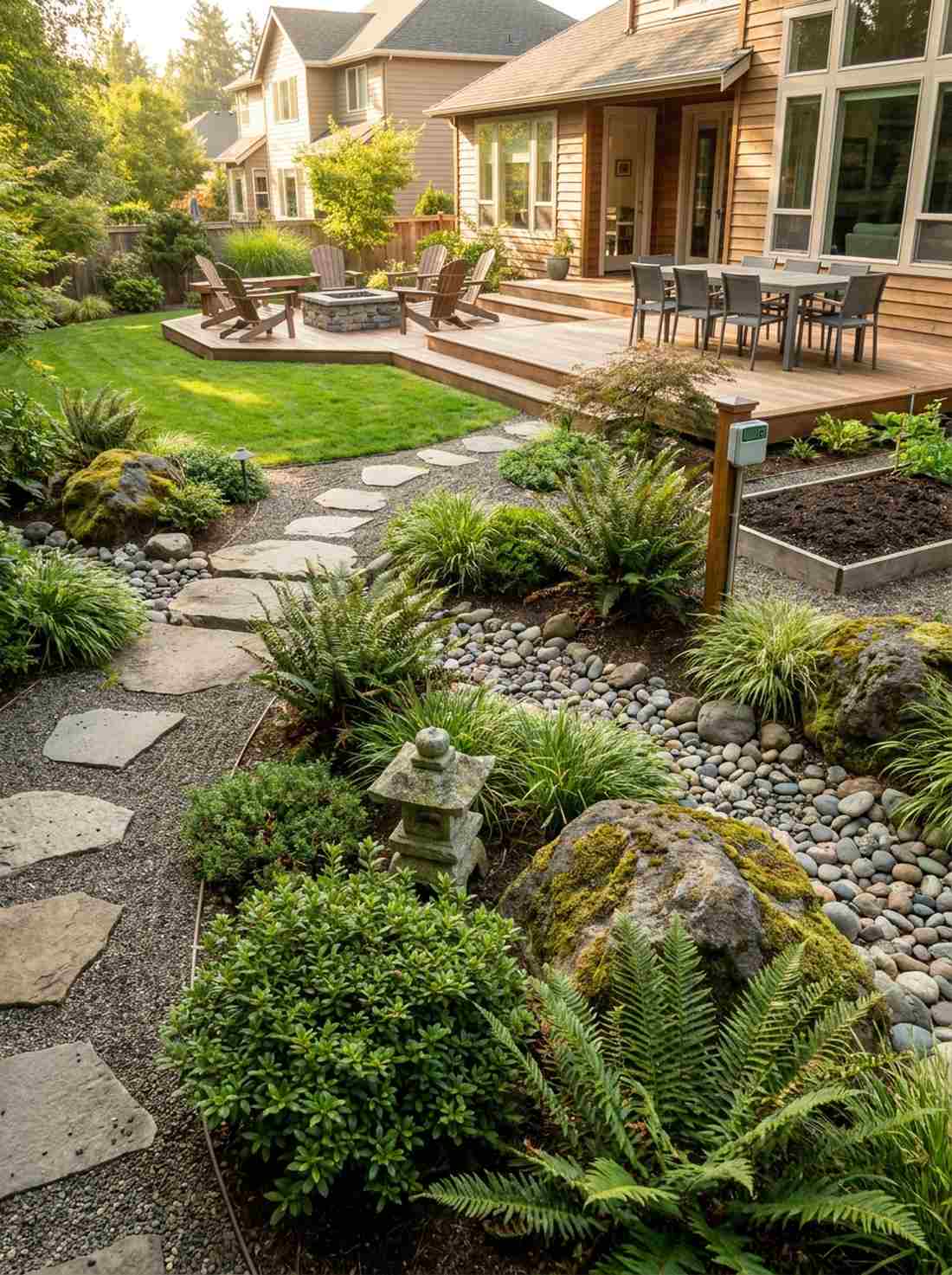
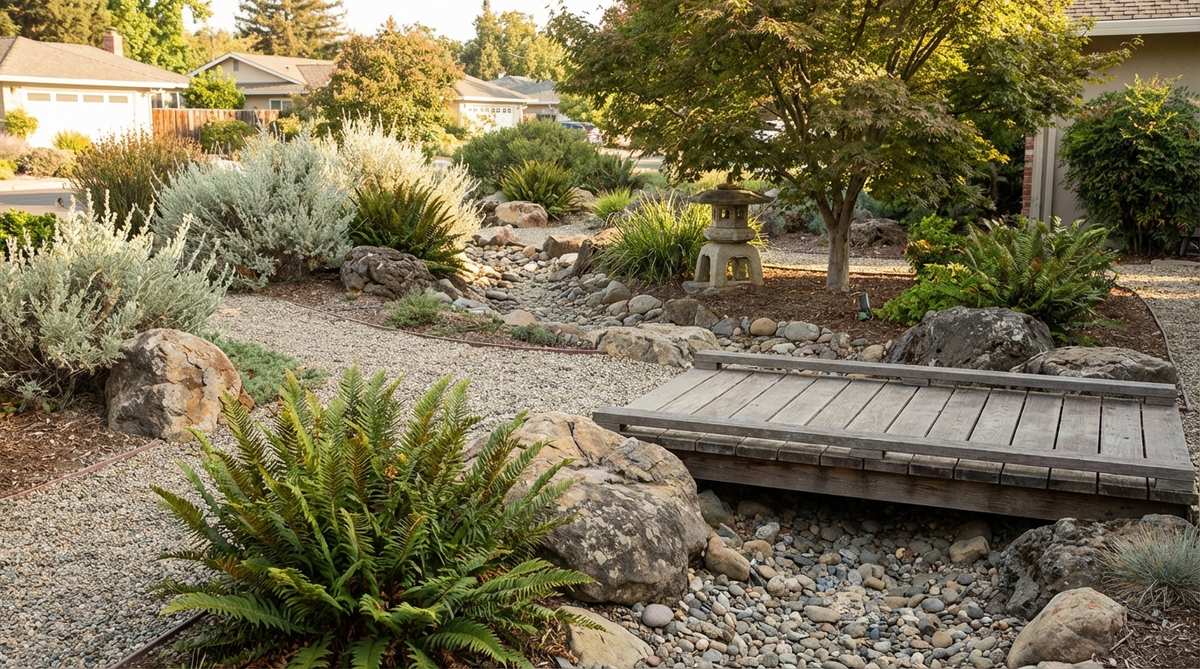
Keeps the gorgeous Asian aesthetic while thriving effortlessly in your local climate. A drought-tolerant regional planting scheme saves you from astronomical water bills.
Importing delicate exotic plants guarantees they will burn up and die in the summer heat. Swapping them for hardy local look-alikes delivers a surprisingly premium look without the life-support systems. It’s a designer secret for creating indestructible layouts.
Sourcing local varieties drops your nursery bill to around $50–$100.
- Key Materials: Local drought-resistant ferns and shrubs, organic compost
- Vibe / Style: Bulletproof local Zen
- Difficulty: Easy planting
- Budget Breakdown: Native plants: $80 | Soil amendments: $20.
- Creator’s Tip: Contact your local university extension office for a free list of native plants that mimic traditional Japanese foliage.
- Smart Sourcing: Invest in organic local compost booster and a smart weather-sensing irrigation controller.
43. Rainwater Harvesting Basins
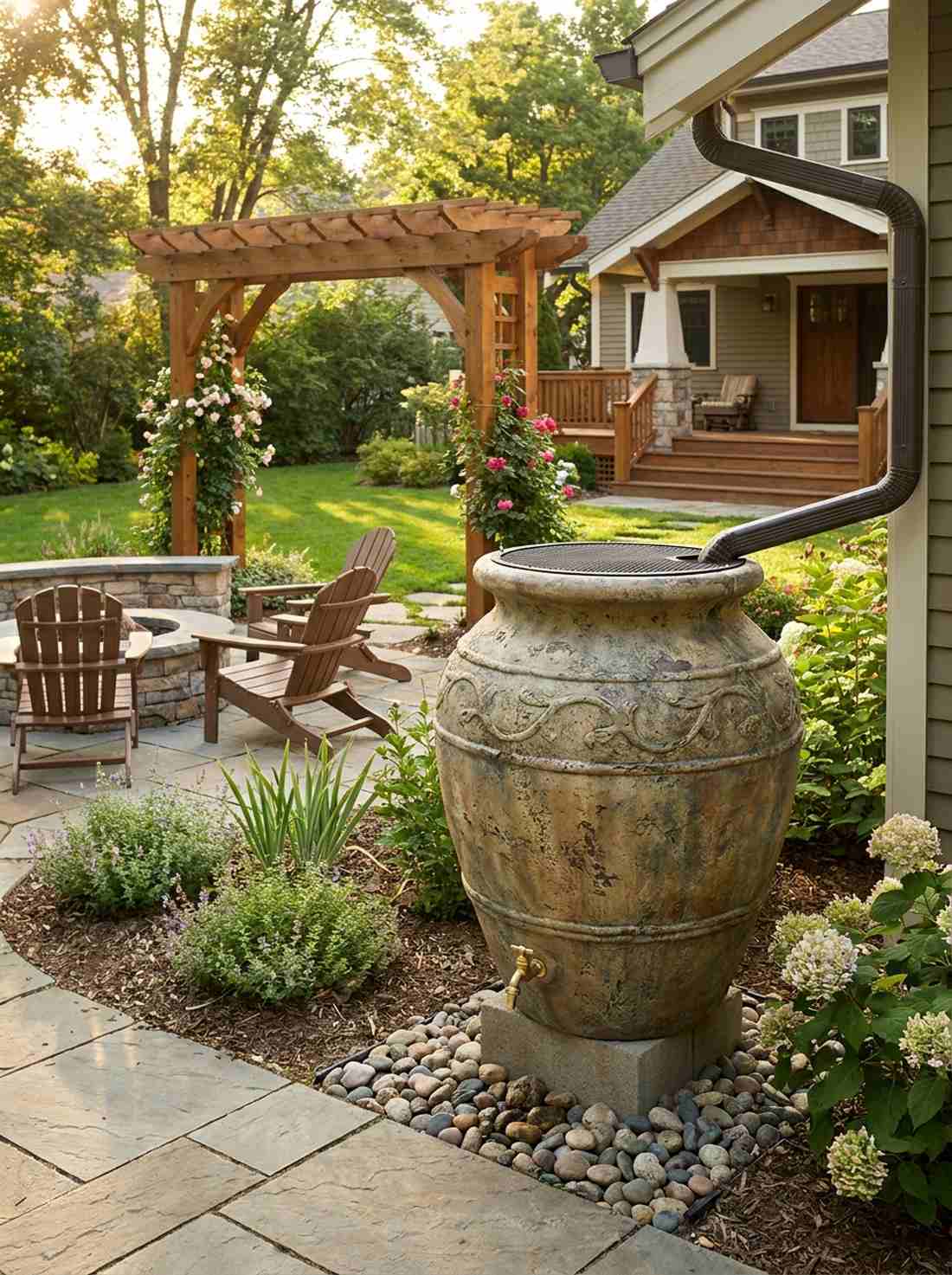
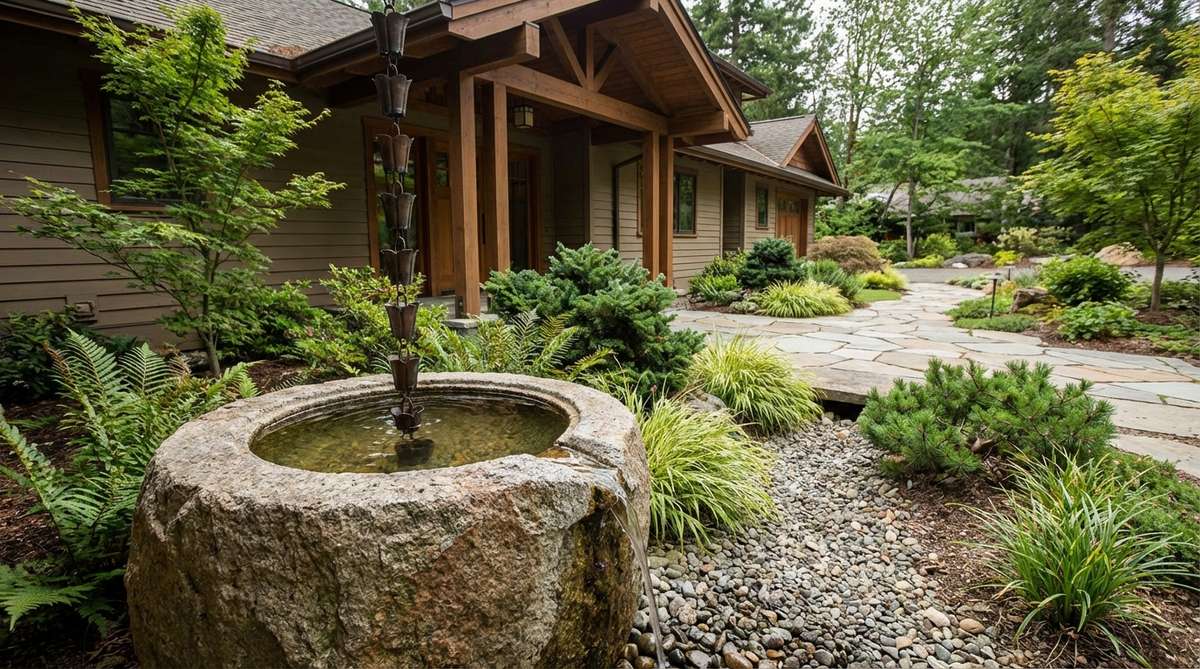
Looks like a beautiful historical artifact that secretly slashes your utility bills. A decorative stone water collection jar turns eco-friendly practices into stunning lawn art.
Ugly plastic rain barrels completely ruin the aesthetic of a curated patio. Upgrading to a large, ceramic-glazed or faux-stone catch basin looks incredibly authentic and high-end. It seamlessly blends function with the core theme of water flow.
A beautiful aesthetic barrel setup costs around $100–$200. Pin this to your eco-garden board!
- Key Materials: Ceramic or faux-stone rain barrel, brass spigot, debris screen
- Vibe / Style: Historic functional beauty
- Difficulty: Easy placement
- Budget Breakdown: Decorative barrel: $150 | Hardware: $30.
- Creator’s Tip: Elevate the barrel on a hidden cinderblock base so gravity provides enough pressure for a connected hose.
- Smart Sourcing: Order a faux-stone decorative rain barrel and a solid brass high-flow spigot kit.
44. Deciduous Trees For Seasonal Drama
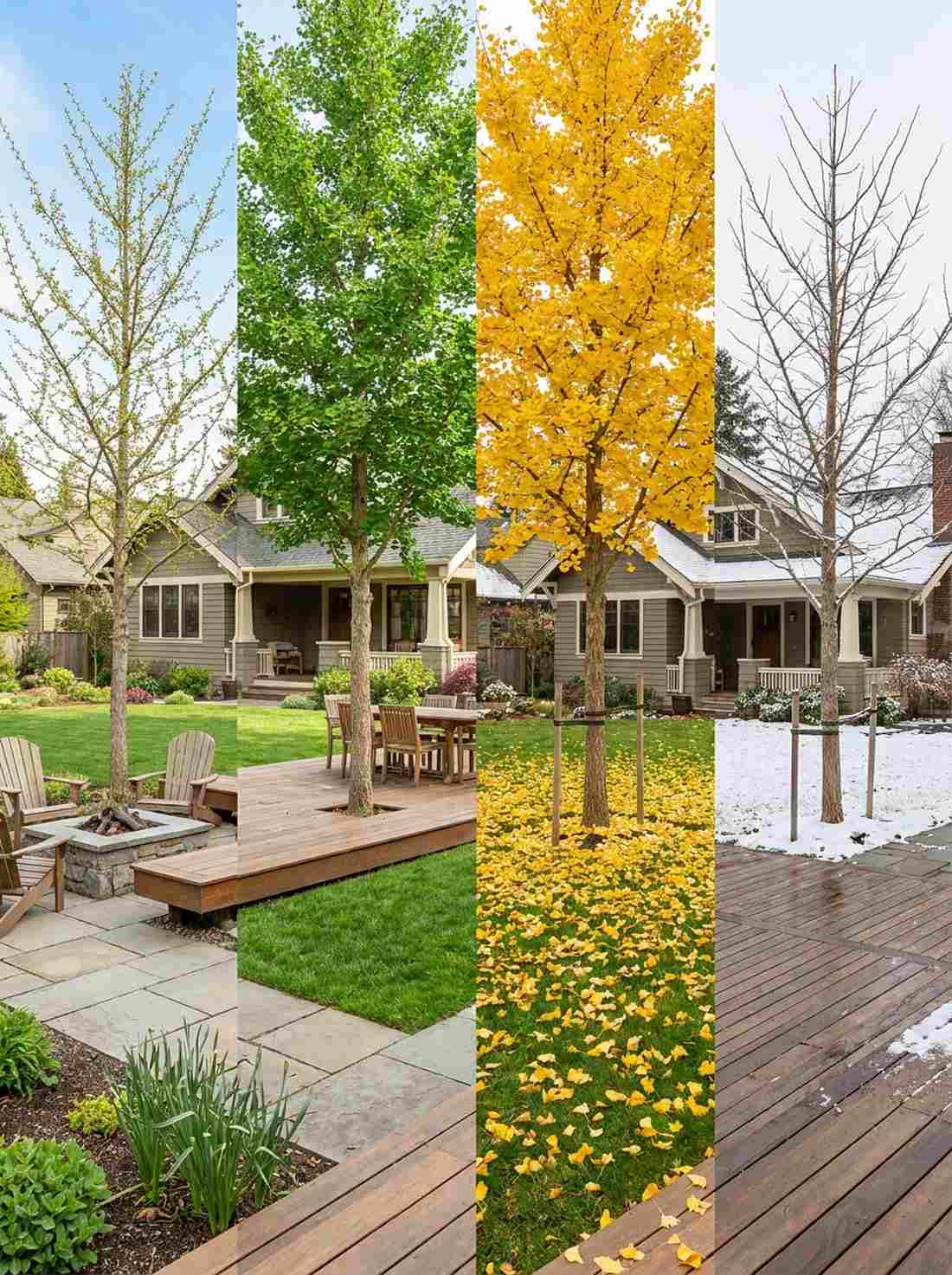
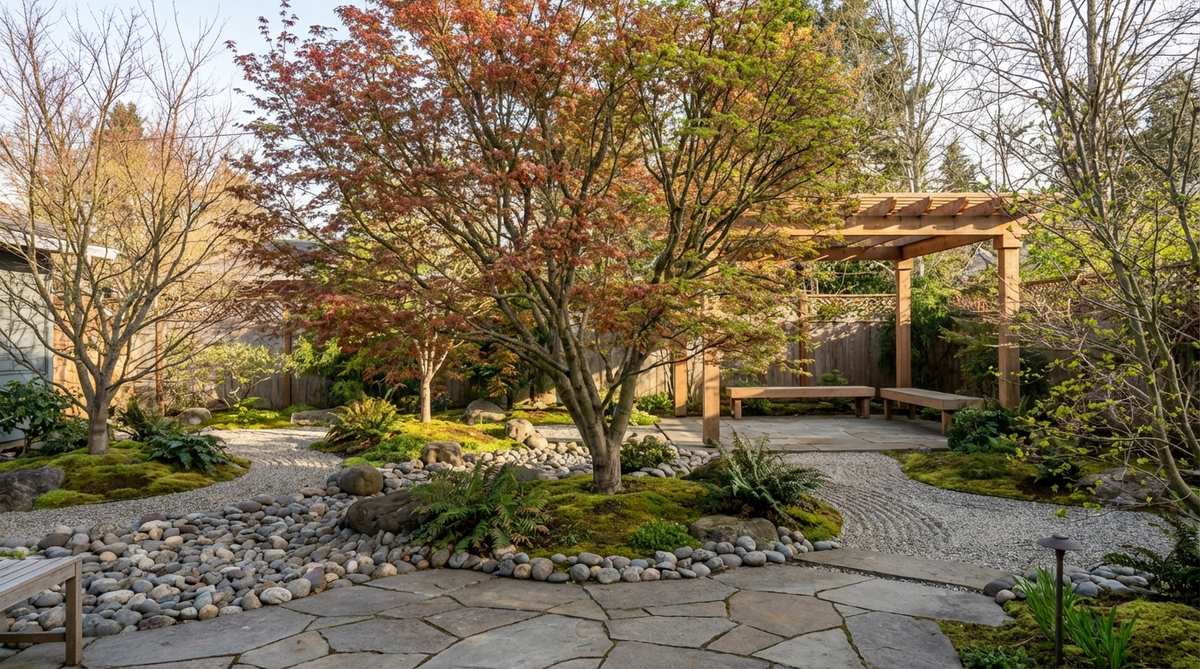
Forces your backyard to completely change its color palette four times a year. A shedding ornamental canopy tree acts as a dramatic, living calendar for your property.
An exclusively evergreen garden eventually feels static and boring. Injecting a tree that explodes with leaves, drops them, and exposes stark winter branches gives a designer-level finish that honors the passage of time. It’s the ultimate homage to true Zen philosophy.
A good mid-sized starter tree runs about $100–$250.
- Key Materials: Ginkgo or Cherry tree sapling, staking kit
- Vibe / Style: Dynamic seasonal performance
- Difficulty: Moderate planting and staking
- Budget Breakdown: Tree: $150 | Staking hardware: $20.
- Creator’s Tip: Leave the fallen autumn leaves on the ground for a few weeks; the carpet of color is an intentional design phase.
- Smart Sourcing: Grab a premium ornamental tree sapling and a heavy-duty tree staking kit.
45. Permeable Paving Systems
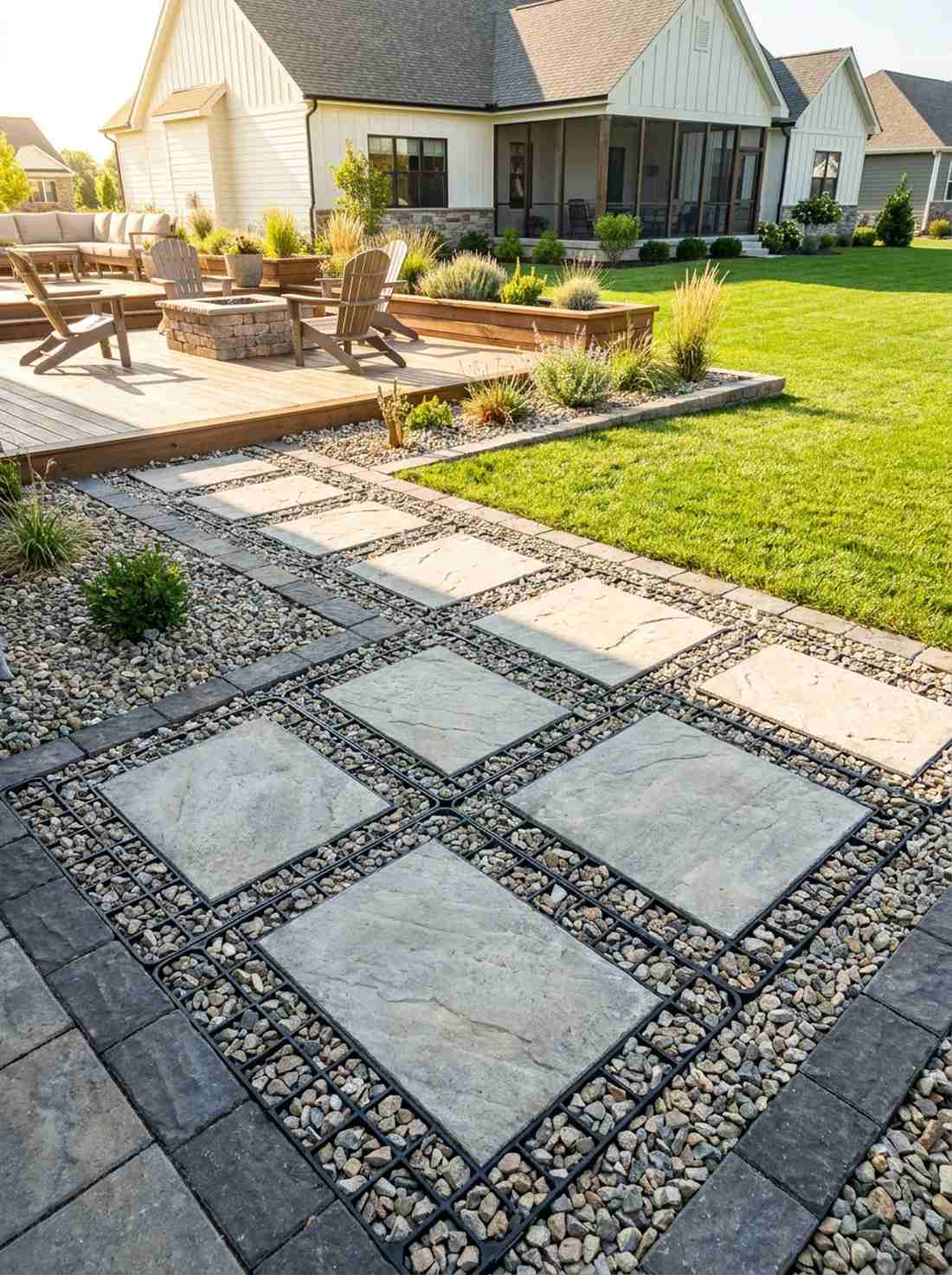
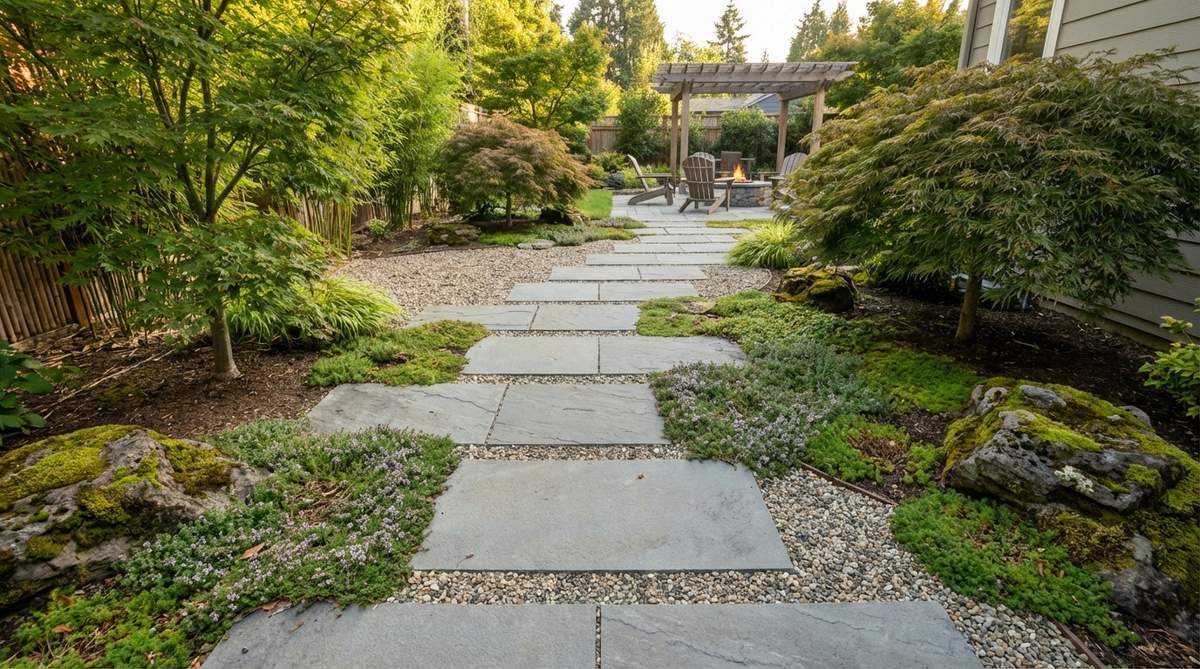
Eliminates massive muddy puddles while keeping the crisp, geometric lines of your walkway. An open-joint drainage hardscape is an invisible, high-tech upgrade for wet climates.
Solid concrete slabs turn into skating rinks and flood your flower beds during heavy storms. Using spacing grids filled with gravel allows gallons of water to vanish instantly into the earth. It looks far more expensive than it is while protecting your home’s foundation.
This grid system usually adds about $60–$100 to a standard pathway project.
- Key Materials: Plastic permeable grid, crushed gravel, border stones
- Vibe / Style: High-tech eco geometry
- Difficulty: Intermediate groundwork
- Budget Breakdown: Grid system: $70 | Gravel: $30.
- Creator’s Tip: Use angular crushed rock, not round river stones, to fill the grid so it locks together and doesn’t shift underfoot.
- Smart Sourcing: Get a heavy-duty permeable gravel grid (bulk pack) and commercial-grade landscape fabric.
Creating Your Modern Japanese Garden
The modern japanese garden represents the ultimate outdoor flex, proving that luxury aesthetics don’t require massive landscaping bills. By strategically sourcing 45 specific elements—like UV-coated resins, pre-cut hardscapes, and smart LED kits—you can engineer a premium architectural sanctuary on a totally manageable DIY budget. Fresh Garden Ideas recommends tackling just one focal point this weekend—a bubbling boulder, an illuminated bamboo screen, or a quick gravel patio—and letting that single massive win inspire your next phase.
Frequently Asked Questions
Can I create a modern Japanese garden in a small urban space?
Absolutely. Urban balconies and tiny side yards are the perfect canvas for high-end Tsubo-niwa courtyard layouts. Instead of wasting money on massive landscape rock, invest in premium starter kits like vertical wall planters, tabletop terrarium accessories, and UV-resistant faux bamboo screens. Even a 6-by-8-foot concrete slab can be transformed into a luxury Zen retreat using bulk modular deck tiles and a compact bubbling water feature kit.
What makes a Japanese garden “modern” versus traditional?
Modern layouts ditch the intensive, old-school maintenance in favor of durable, commercial-grade materials. Instead of rotting wood, you’ll see Corten steel, UV-coated composites, and architectural concrete paired with smart LED lighting systems. The aesthetic still relies heavily on asymmetry and negative space, but it uses pre-cut materials and high-end outdoor hardware to create a functional, weather-proof living area rather than just a viewing museum.
How much maintenance does a modern Japanese garden require?
If you source your materials correctly, maintenance drops to almost zero. By utilizing commercial-grade weed barriers beneath bulk gravel deliveries and installing automatic drip irrigation starter kits, the daily chores vanish. Swapping finicky live moss for UV-resistant synthetic panels or utilizing self-sustaining pondless fountain basins means you spend your weekends actually relaxing in the space rather than constantly repairing it.
What are the essential elements every modern Japanese garden needs?
To nail that “looks expensive but isn’t” aesthetic, you need three pillars: structural stone, dynamic water flow, and intentional lighting. You don’t need a massive waterfall—a simple pre-drilled basalt column kit handles the acoustic vibe. Ground the space with bulk dark river pebbles, and finish the scene with low-voltage landscape uplighting kits to make the textures pop dramatically after dark.
Can modern Japanese gardens work in climates different from Japan?
Yes, by leveraging smart native plant substitutions and heavy-duty weatherproofing. If you live in a scorching desert, swap delicate maples for drought-tolerant local varieties and lean heavily into Karesansui (dry rock garden) designs using bulk crushed marble and faux composite boulders. In freezing zones, utilize commercial-grade acrylic sealants on your hardscapes and rely on resilient evergreen shrubs to maintain that lush architectural structure year-round.