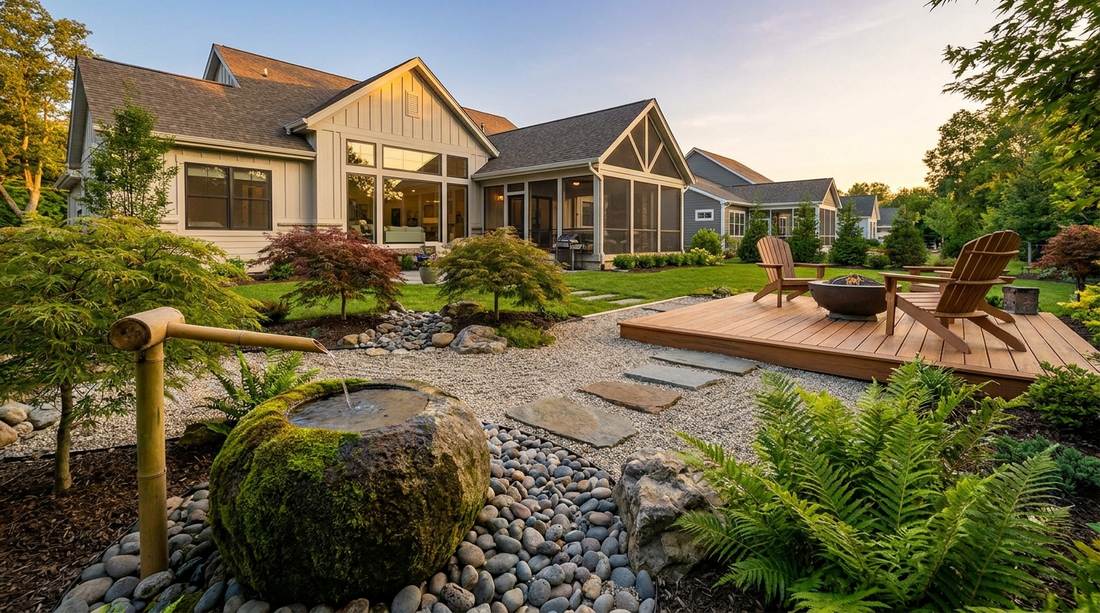
Designing an authentic japanese garden water feature instantly upgrades an ordinary backyard into a high-end luxury sanctuary. Replicating this traditional aesthetic requires smart material sourcing rather than an endless landscaping budget. These specific blueprints reveal exactly how to achieve designer-level tranquility using accessible, commercial-grade components.
Design Snapshot: Core Upgrades
- Purification Ritual: Authentic tsukubai basins instantly anchor a space, requiring heavy-duty stone bases rather than cheap fiberglass imitations.
- Sensory Layering: Combine deep-toned bamboo clackers with ultra-quiet submersible pumps to balance ambient natural sound perfectly.
- Asymmetric Composition: Strategic gogan stone placement creates a million-dollar look when anchored with premium weed-barrier fabrics and bulk river rock.
- Natural Materials: Sourcing UV-resistant faux bamboo or pre-sealed aged granite ensures your feature survives harsh seasonal shifts without cracking.
Traditional Stone Basins for Tea Garden Ceremonies
1. Tetsu Bachi Granite Basin
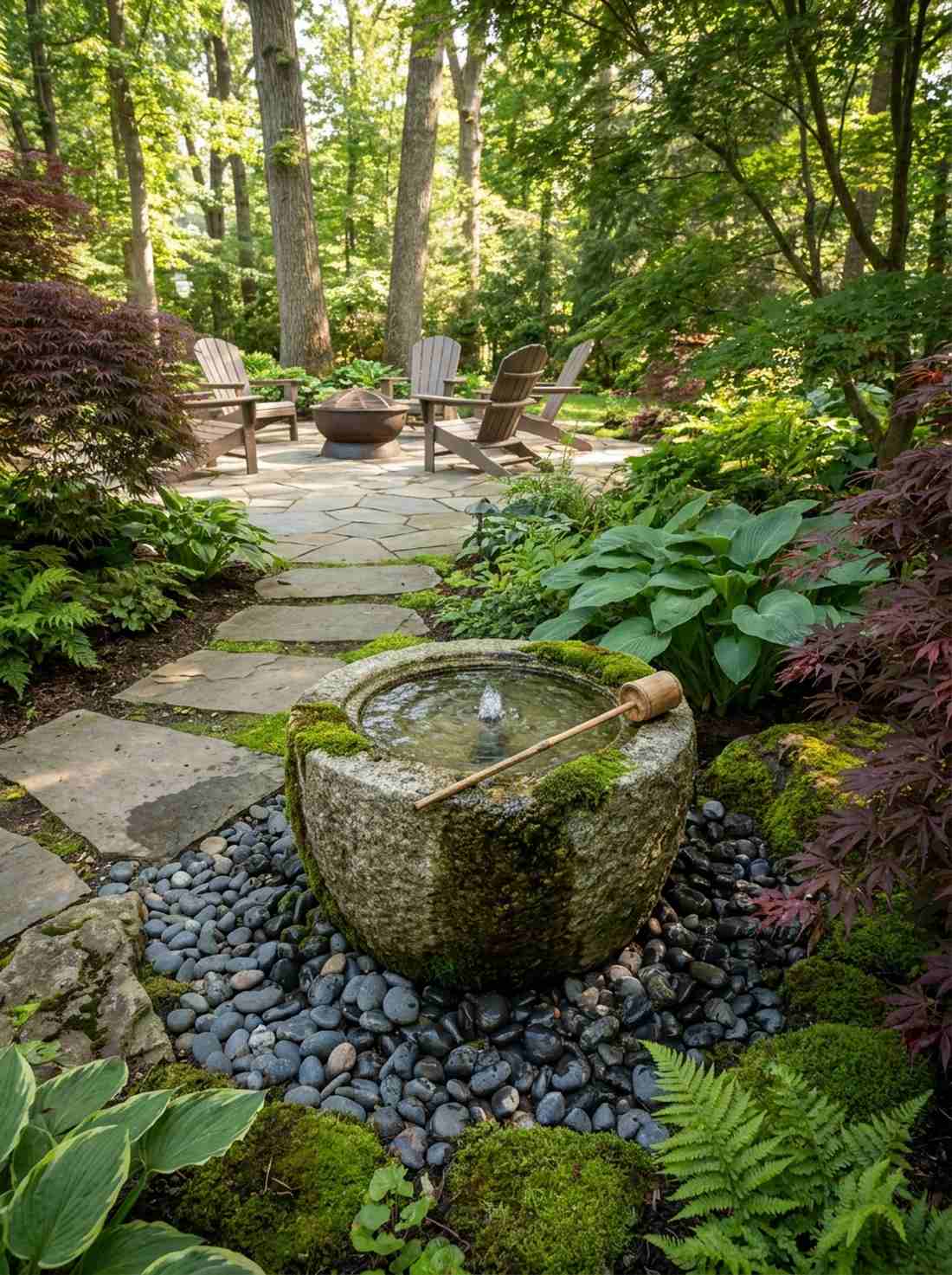
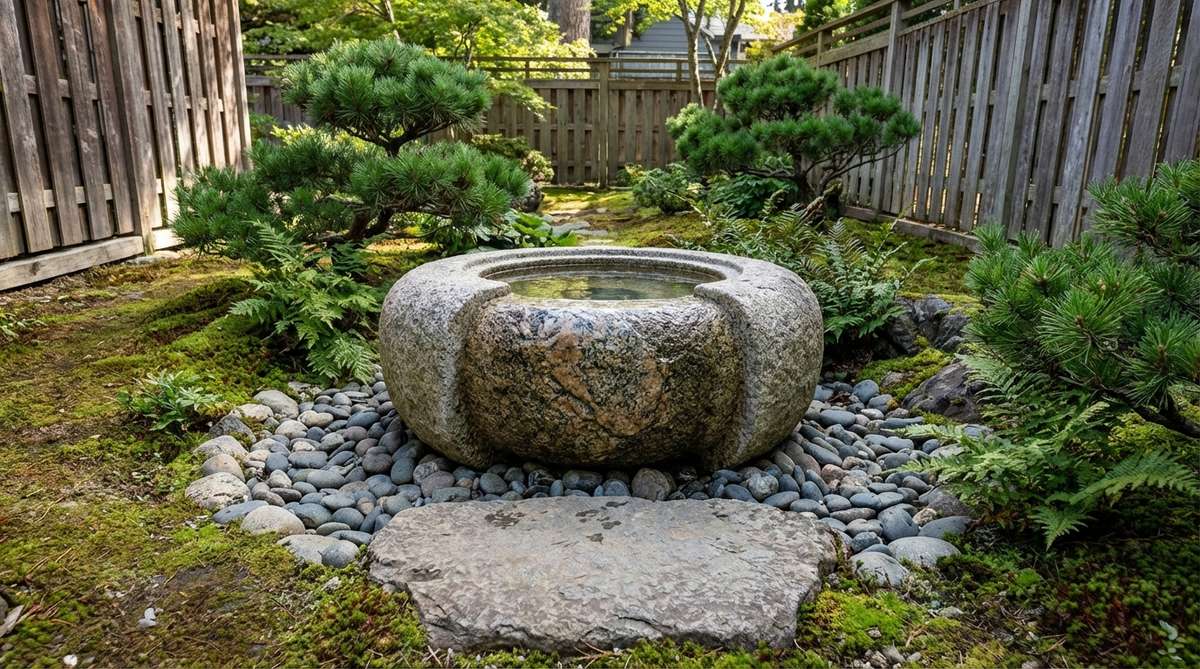
Feels like discovering a hidden monastery artifact right in your backyard. This classic granite basin setup works exceptionally well for an empty shaded corner near a patio or walkway.
Skipping cheap concrete imitations for solid carved stone delivers a surprisingly premium look that actually gets better with age. When you integrate pre-drilled stone basin kits, you eliminate the hassle of custom masonry and guarantee perfect water flow every time.
You can seamlessly pull off this foundational piece for around $150–$300 depending on the stone’s weight. Save this to your outdoor sanctuary board if you love timeless landscaping!
- Key Materials: Pre-carved granite basin, leveling sand, hidden pond liner basin
- Vibe / Style: Ancient temple tranquility
- Difficulty: Moderate weekend installation
- Budget Breakdown: Materials: $200 | Hidden Pump Base: $85
- Creator’s Tip: Use a specialized stone sealant on the exterior to prevent aggressive algae while letting moss grow naturally on the rim.
- Smart Sourcing: Pre-drilled granite tsukubai kits or heavy-duty underground fountain reservoirs (bulk capacity).
2. Zeni Bachi Coin-Shaped Bowl
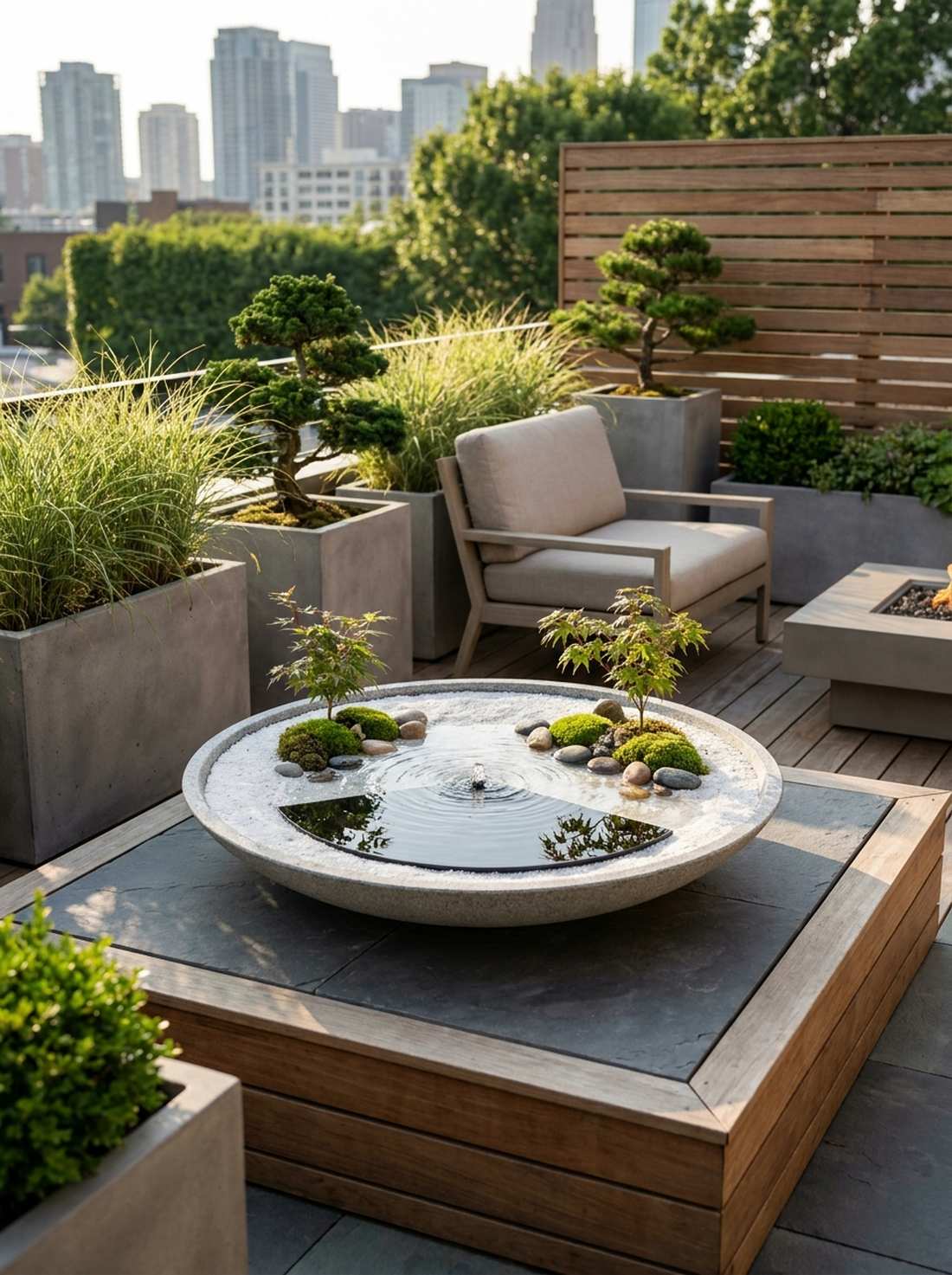
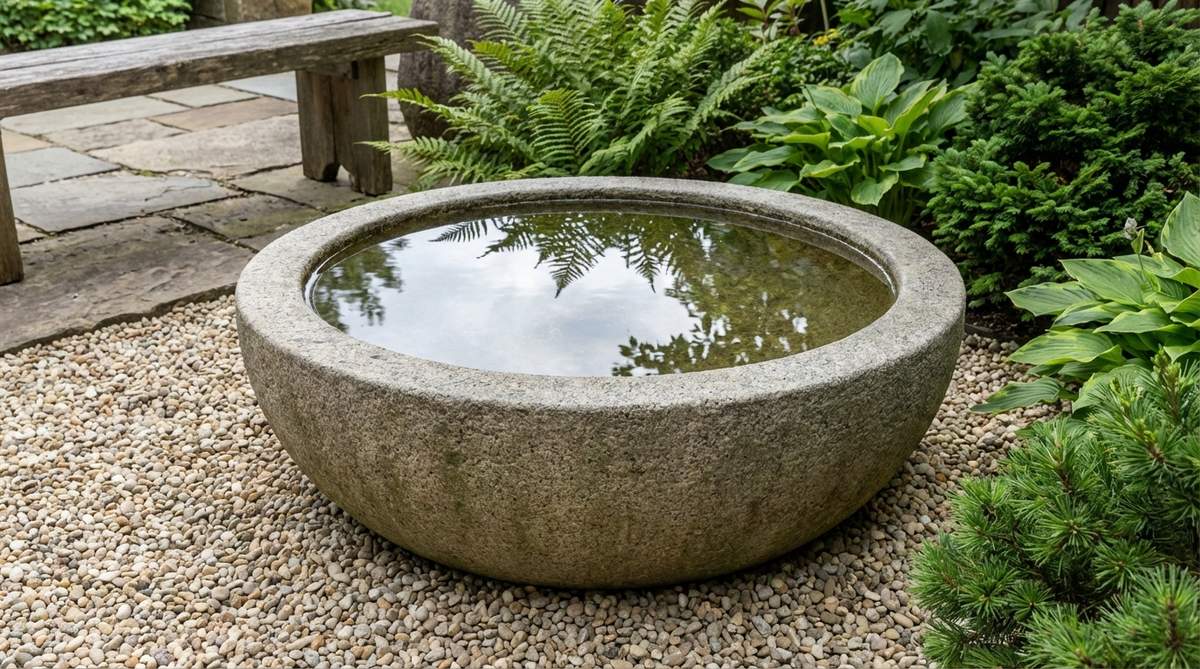
Vibes like an expensive spa courtyard meant only for VIPs. This shallow coin basin design is perfect for tight urban balconies or minimalist front entryways.
Ditching deep overwhelming fountains for this sleek, highly symbolic layout gives a designer-level finish to compact areas. Pairing this with modern miniature garden supplies and fine white silica sand completely modernizes the traditional tea garden aesthetic.
Expect to spend roughly $90–$150 to set this up correctly with good drainage. It’s a fast upgrade that completely changes the vibe of small outdoor footprints.
- Key Materials: Zeni bachi stone replica, white crushed marble sand, low-flow pump
- Vibe / Style: Crisp, minimalist Zen
- Difficulty: Easy beginner setup
- Budget Breakdown: Basin: $80 | Decorative Sand: $25
- Creator’s Tip: Place a small piece of black acrylic at the bottom of the bowl to create a perfect, mirror-like water reflection.
- Smart Sourcing: UV-coated resin replica basins or bulk bags of pure white landscaping sand.
3. Ginkaku-Ji Lattice Cube Basin
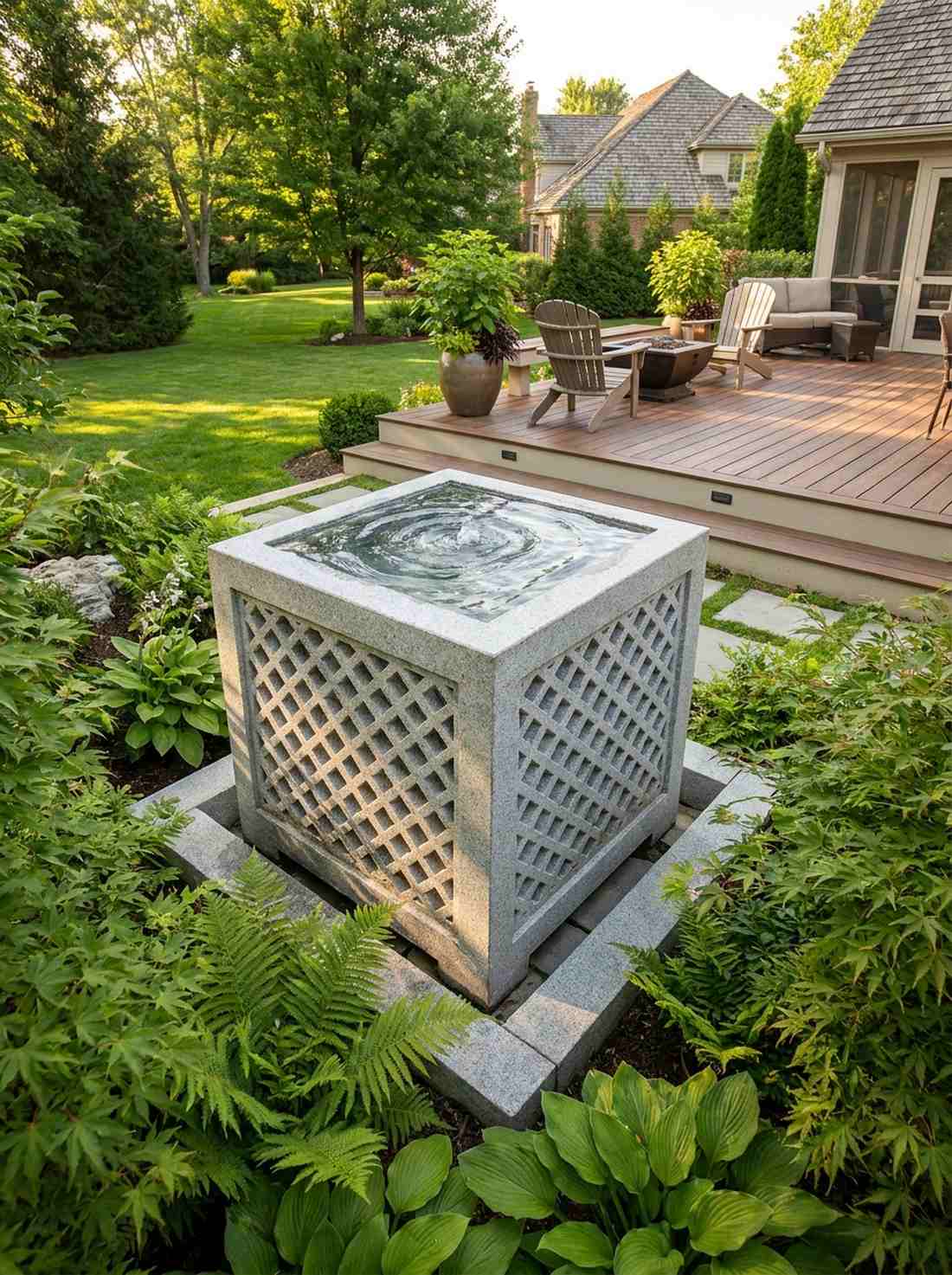
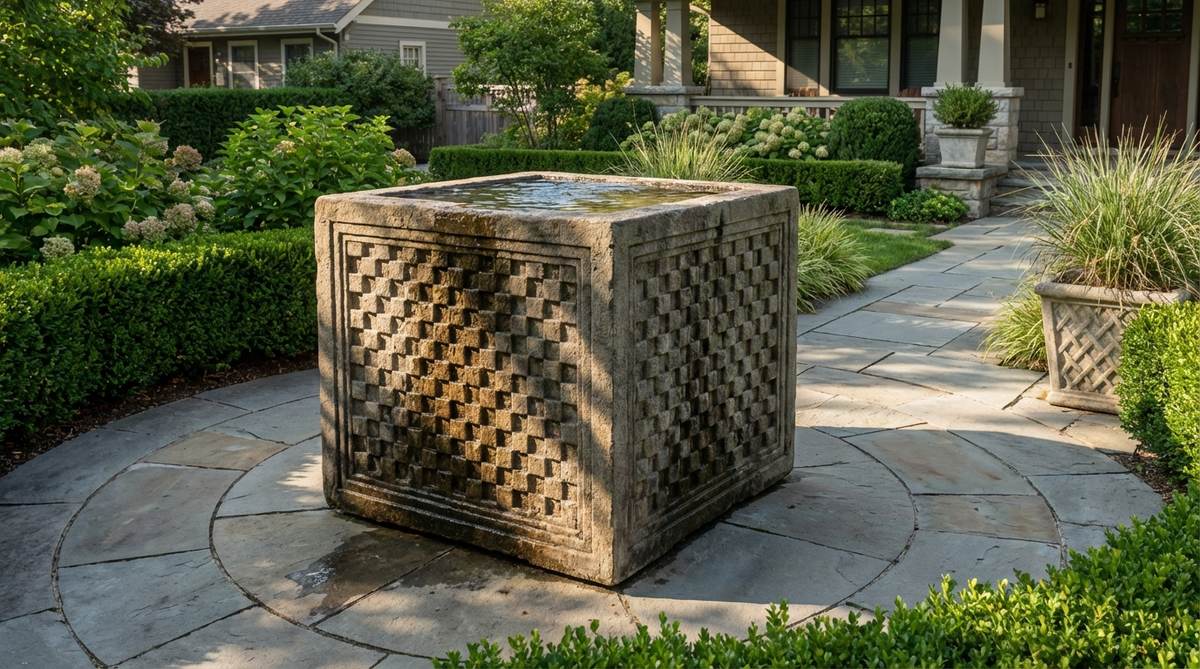
Straight out of a high-end Kyoto estate. This geometric landscape water feature makes a massive statement and operates beautifully as a standalone focal point in a formal garden.
The stark contrast of sharp lattice carving against soft natural foliage looks far more expensive than it actually is. If you’re using heavy blocks, anchoring them with commercial-grade leveling grids prevents sinking and keeps the strict geometric lines perfectly straight.
Building this robust layout typically runs between $250 and $400. Pin this layout if you’re aiming for a highly architectural garden aesthetic!
- Key Materials: Lattice-carved stone block, structural paver base, high-head water pump
- Vibe / Style: Bold, architectural tradition
- Difficulty: Advanced (requires heavy lifting)
- Budget Breakdown: Stone Block: $300 | Support Grid: $45
- Creator’s Tip: Angle the hidden return pipe slightly off-center to create a dynamic swirl effect inside the square basin.
- Smart Sourcing: Heavy-duty paver base panels (bulk pack) or weatherproof stone construction adhesive.
4. Natural River Rock Basin
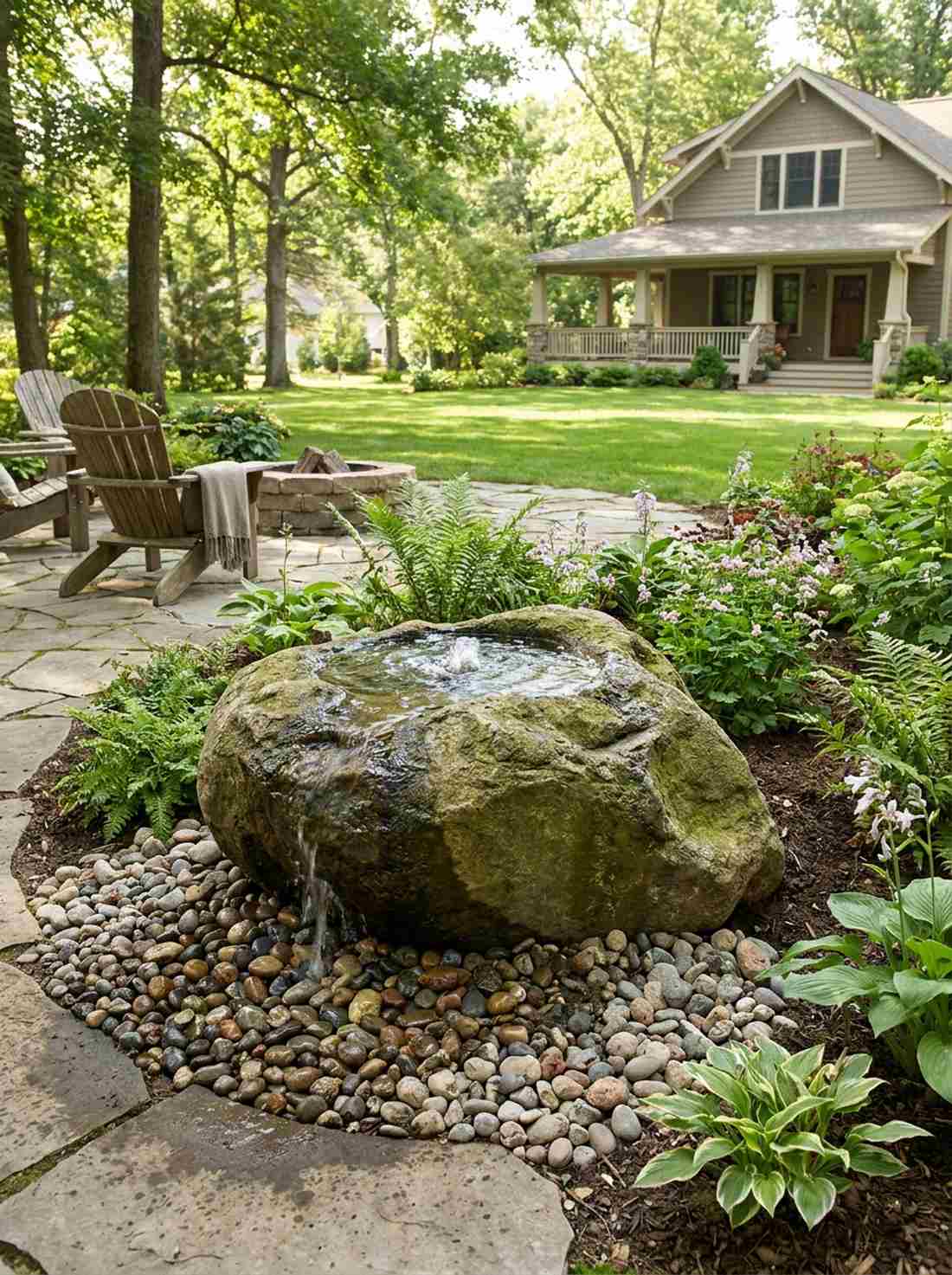
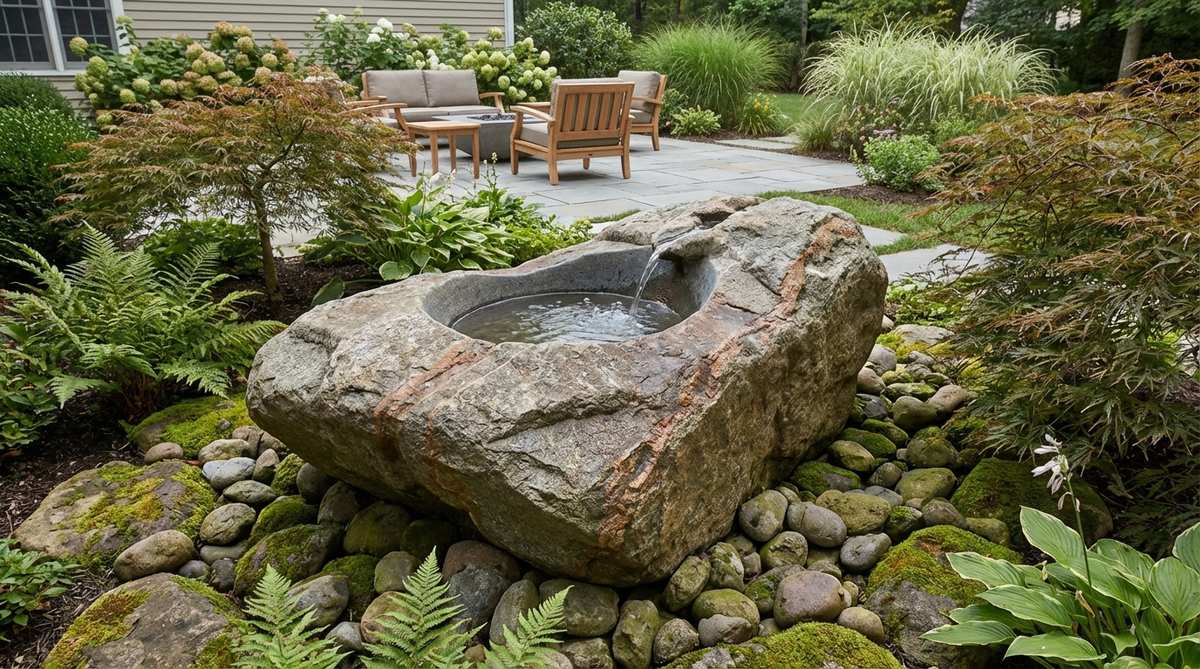
Feels like a pristine alpine spring you accidentally stumbled upon. This organic boulder basin is absolutely flawless for softening hardscape edges or blending into lush, woodland garden borders.
Embracing irregular shapes instead of perfect circles instantly gives that sought-after “always been there” aesthetic. Many landscapers elevate this look by hiding heavy-duty pond liner cutouts beneath the surrounding soil to capture spills without muddying the area.
Sourcing a pre-hollowed boulder usually costs around $100–$200 at a local stone yard. Highly recommended for a quick weekend win that feels entirely natural.
- Key Materials: Cored river boulder, EPDM rubber liner, river pebbles
- Vibe / Style: Rugged, woodland discovery
- Difficulty: Easy to moderate
- Budget Breakdown: Cored Rock: $150 | Base Pebbles: $30
- Creator’s Tip: Bury the bottom third of the boulder in the dirt; it grounds the feature visually so it doesn’t look like it was just dropped on the lawn.
- Smart Sourcing: Pre-cut 45-mil EPDM pond liners or polished mixed river pebbles (bulk bag).
This next setup is ridiculously cheap but looks like a $500 custom display installed by a professional…
5. Yoraku-Style Columnar Basin
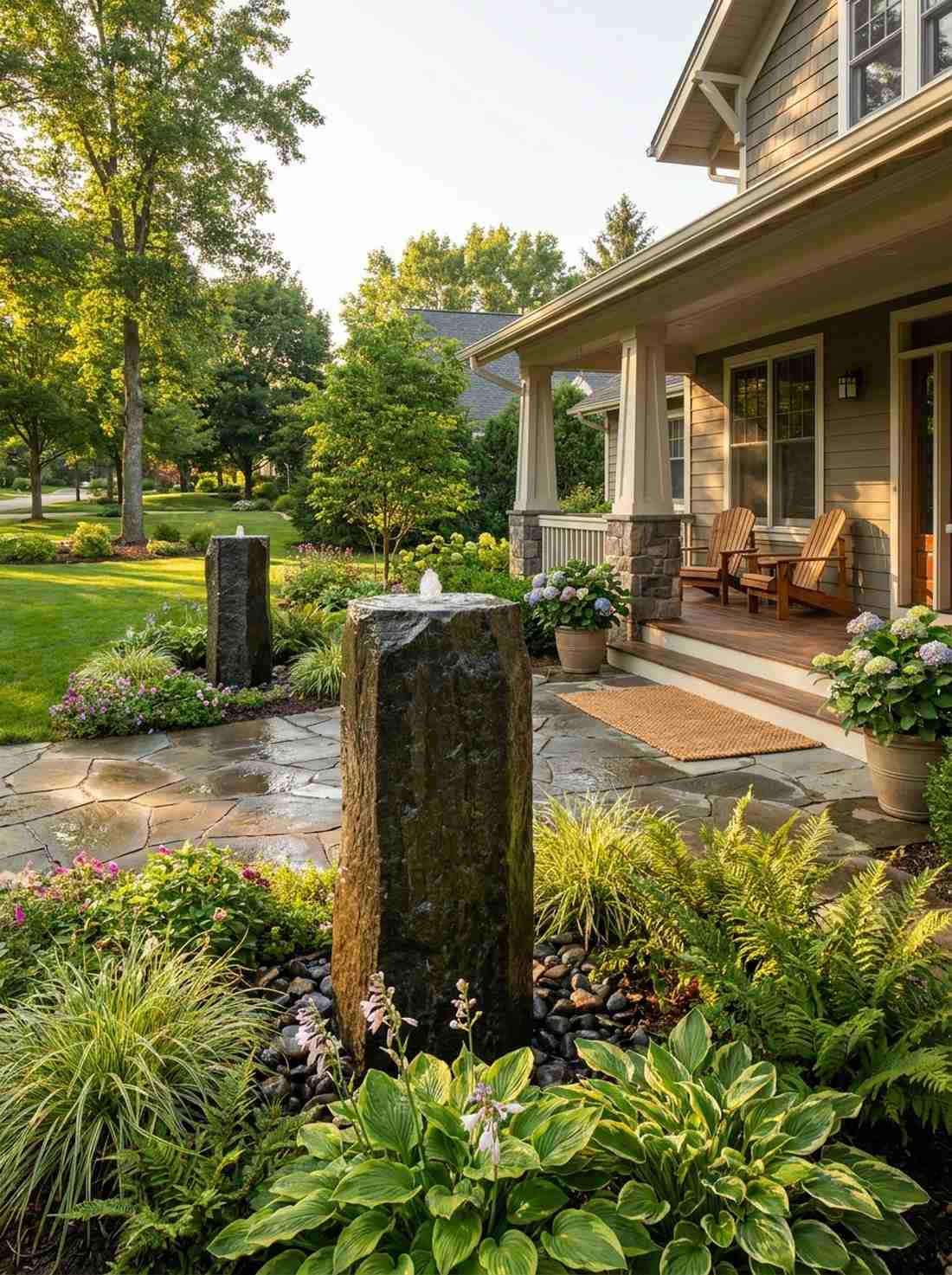
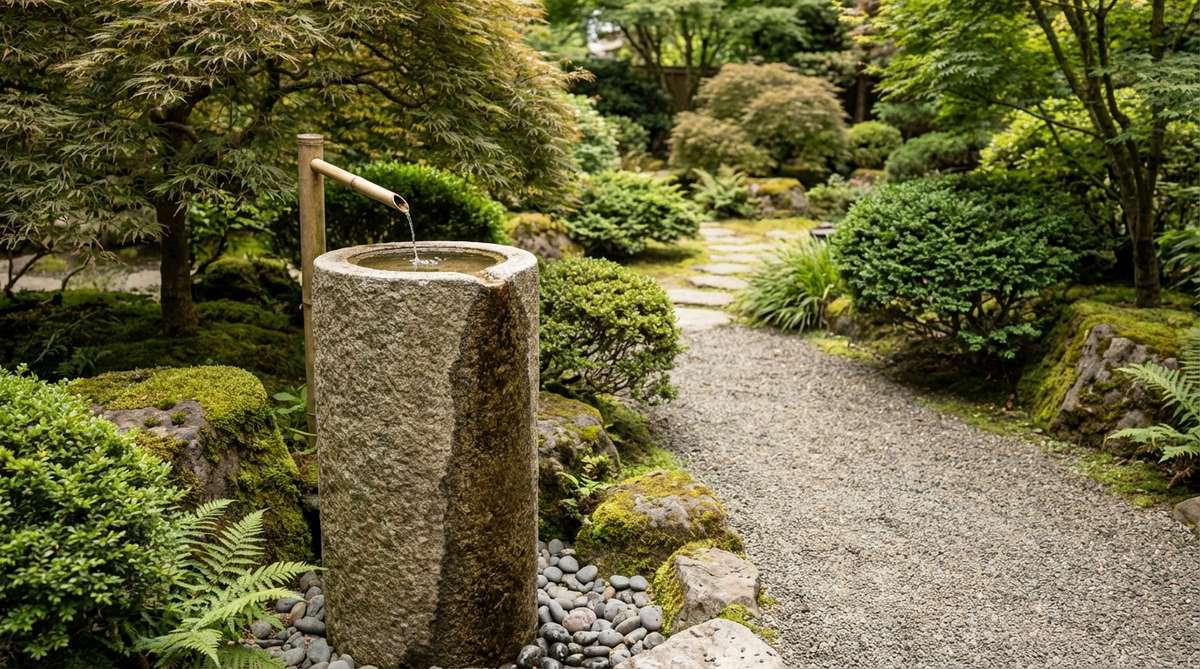
Gives off an incredibly sophisticated, curated museum vibe. This tall columnar stone fountain fits brilliantly along narrow side yards or flanking an entryway path.
Pulling water upward into a vertical pillar creates immediate dramatic height, saving you from having to build expensive stone mounds. Securing the pillar on a reinforced fountain base kit ensures it stays perfectly plumb and doesn’t tip during heavy rain.
A stunning columnar upgrade generally requires a $180–$350 investment. Save this idea if you need to add vertical interest to a flat, boring lawn!
- Key Materials: Basalt or granite column, heavy-duty underground catch basin, plumb line
- Vibe / Style: Sleek, vertical elegance
- Difficulty: Moderate (requires leveling)
- Budget Breakdown: Stone Column: $220 | Hidden Basin: $90
- Creator’s Tip: Run the pump cord through a rigid PVC conduit under the soil so you never accidentally cut it while gardening.
- Smart Sourcing: Reinforced underground fountain grates or high-lift submersible water pumps.
6. Fuji-San Mountain-Shaped Basin
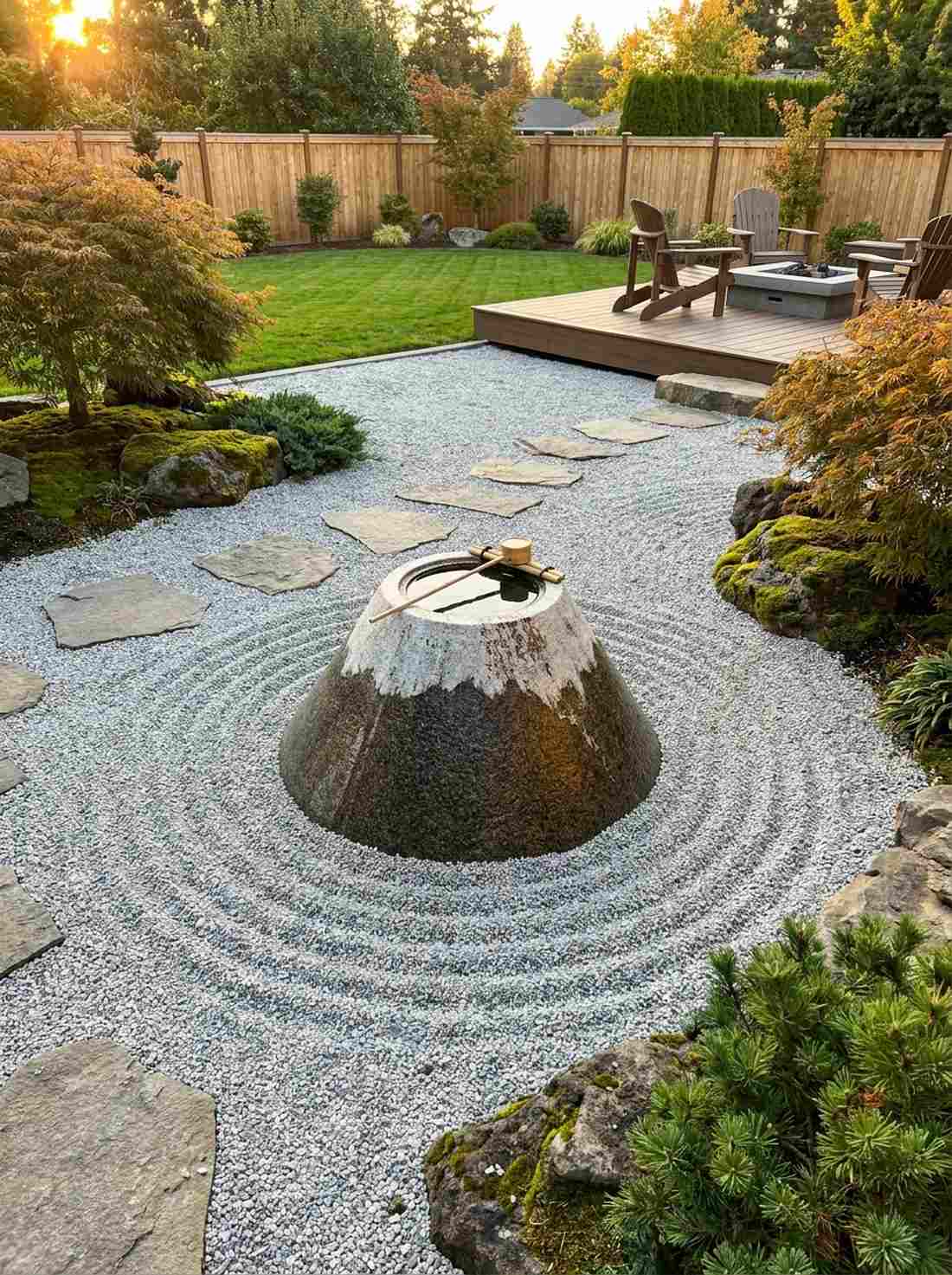
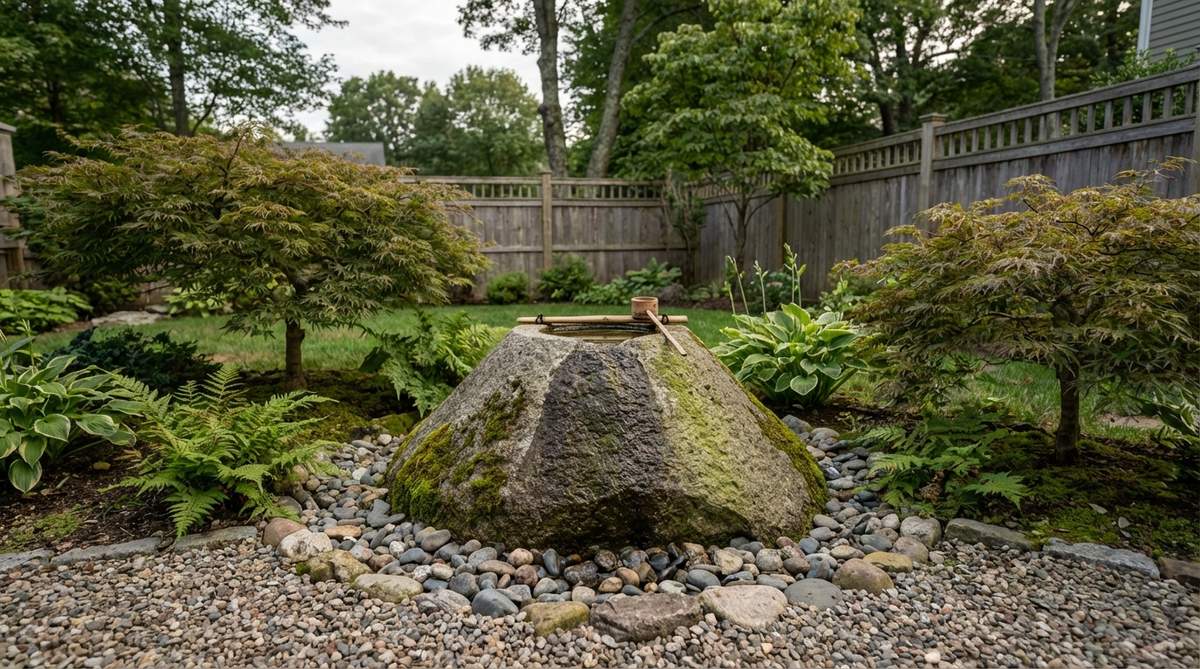
Captures the spiritual essence of a distant mountain peak right in your flowerbed. This conical water basin design serves perfectly as a central anchor in an expansive gravel sea.
Flipping the script on standard round bowls with a flared base adds incredible visual weight to your layout. When paired with high-quality weed barrier landscape fabric underneath your gravel, the entire space stays immaculate and visually striking year-round.
You can easily pull this off for around $130–$280. It’s a phenomenal way to introduce symbolic geometry into your landscape!
- Key Materials: Tapered stone basin, premium landscape fabric, crushed granite
- Vibe / Style: Grounded, iconic symmetry
- Difficulty: Easy beginner setup
- Budget Breakdown: Mountain Basin: $190 | Underlayment: $40
- Creator’s Tip: Rake the surrounding gravel in tight, concentric circles around the base to mimic clouds wrapping around a mountain peak.
- Smart Sourcing: Heavy-duty woven landscape fabric (bulk roll) or premium crushed granite aggregates.
7. Shikaku Square Modernist Basin
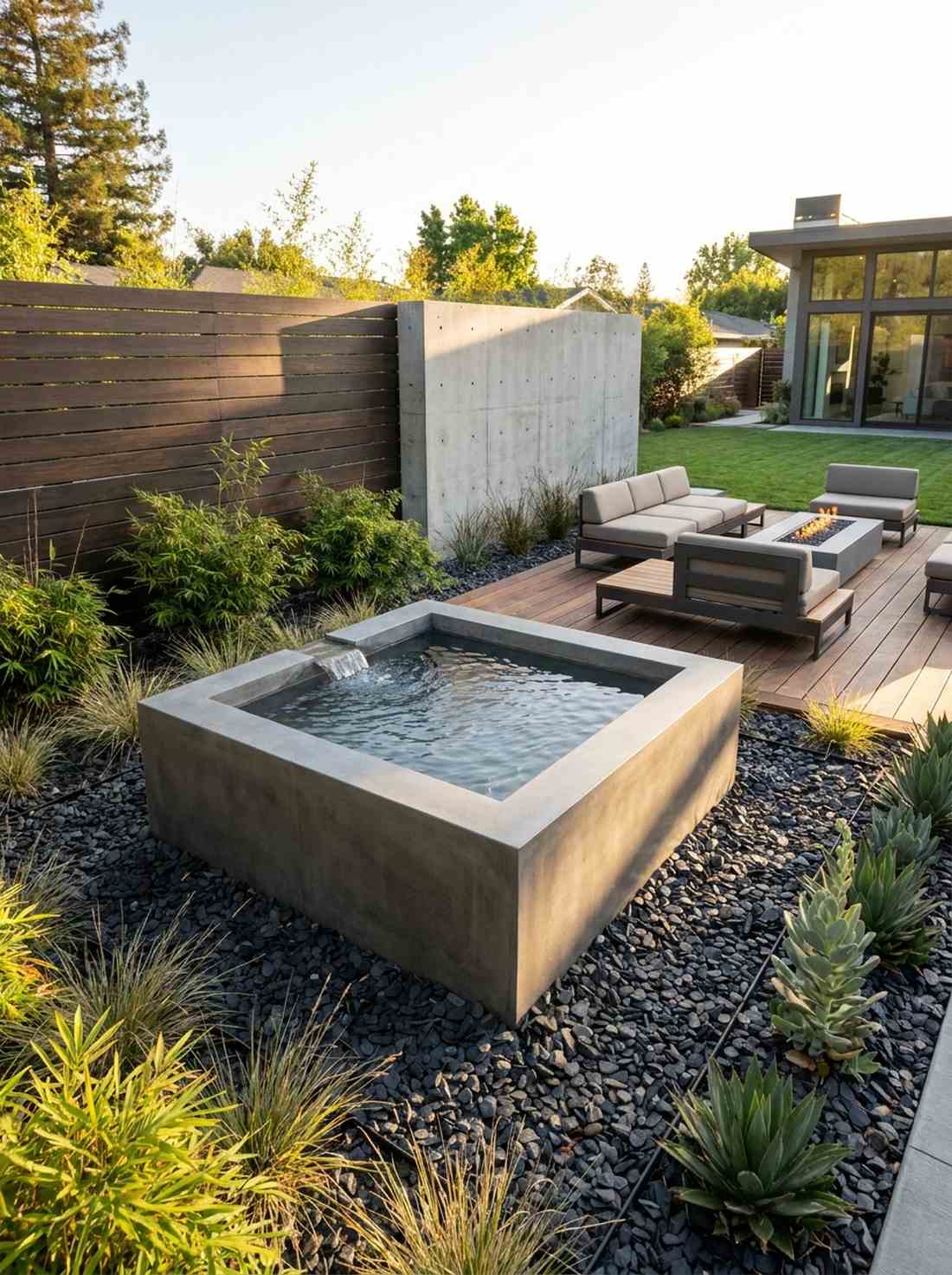
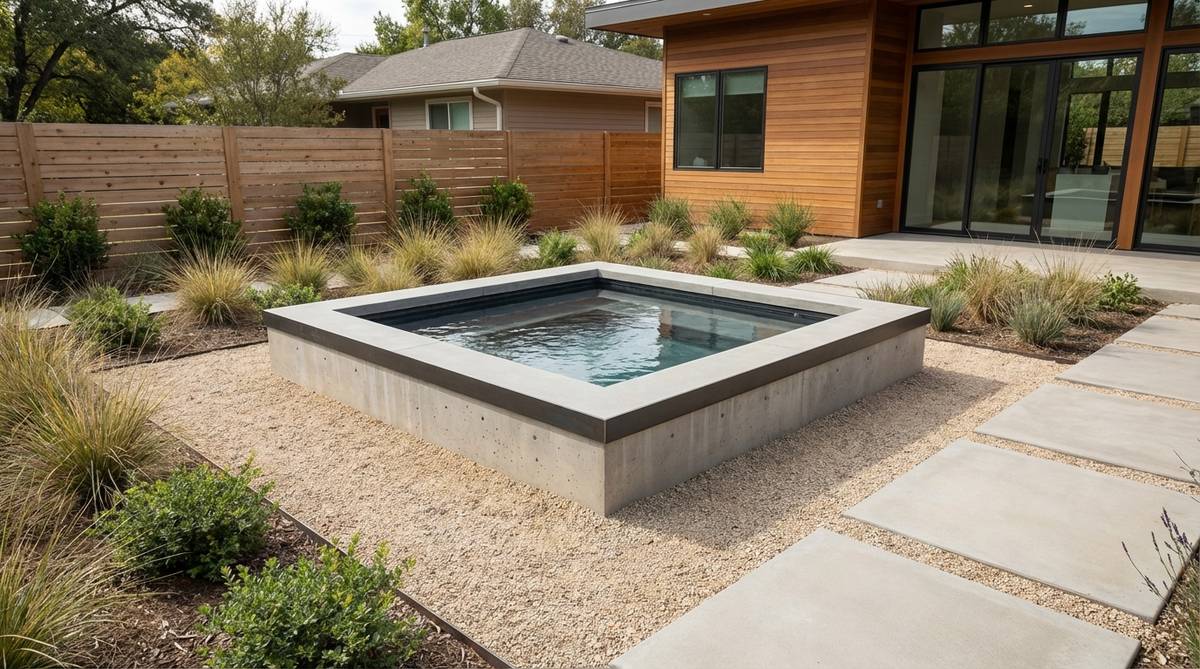
Vibes like an ultra-modern luxury hotel courtyard. This geometric modernist basin works wonders when placed against stark concrete walls or contemporary slatted fences.
Fusing ancient water rituals with sharp 90-degree angles delivers a surprisingly premium look that bridges old and new. Using pre-cast concrete basin molds or polished basalt keeps the lines impossibly crisp while remaining highly durable.
This chic contemporary layout usually costs $100–$250 to execute. Pin this to your modern landscaping inspiration board immediately!
- Key Materials: Square stone/concrete basin, dark slate chips, adjustable flow pump
- Vibe / Style: Ultra-modern Zen
- Difficulty: Easy, straightforward alignment
- Budget Breakdown: Square Basin: $140 | Slate Chips: $35
- Creator’s Tip: Align the edges of the square basin perfectly parallel to your house or patio lines to maintain strict architectural harmony.
- Smart Sourcing: Black slate garden chips (bulk pack) or adjustable dial mini water pumps.
Bamboo Fountain Systems: Kakei and Shishi-Odoshi
8. Shishi-Odoshi Deer Scarer Fountain
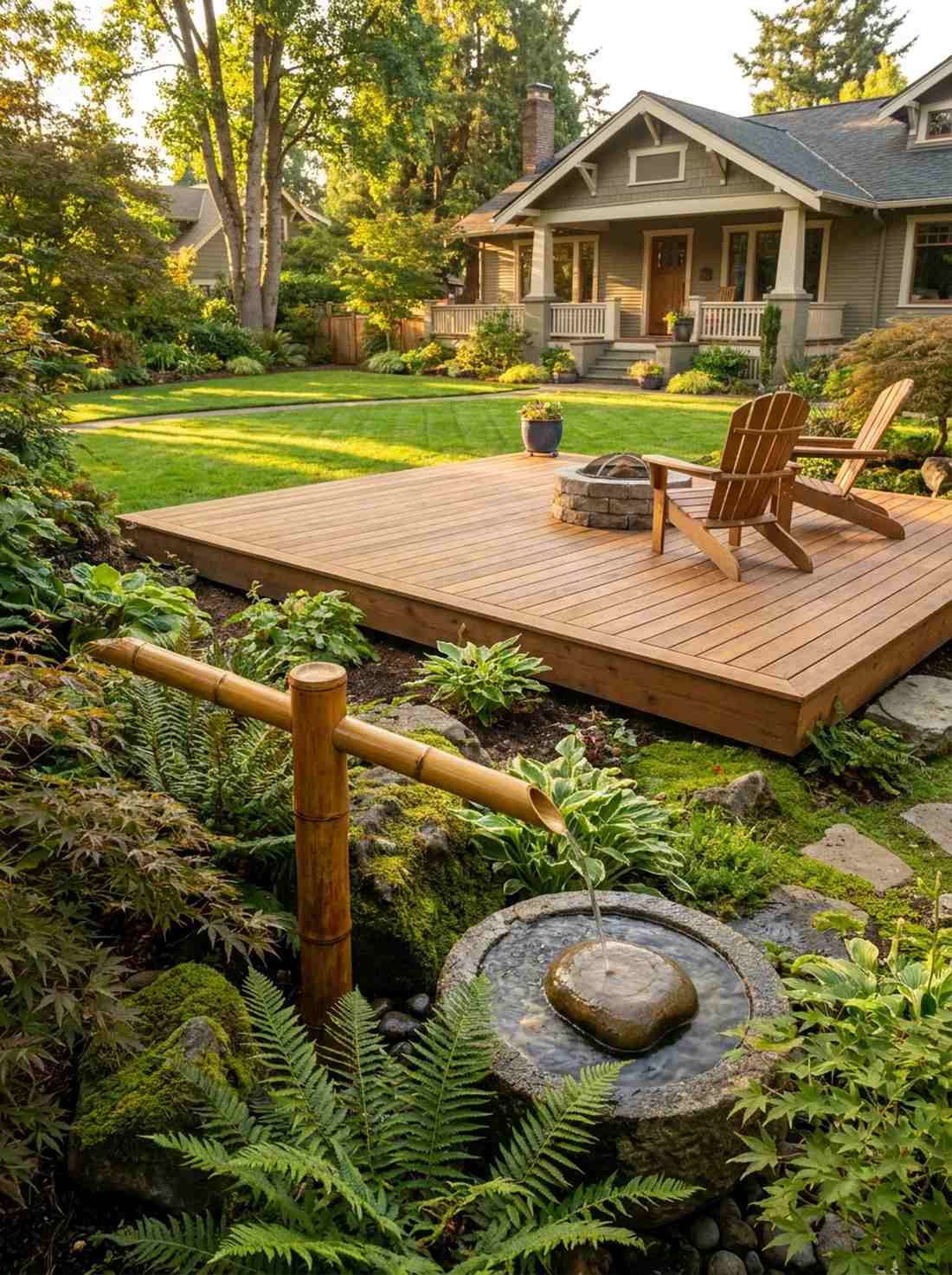
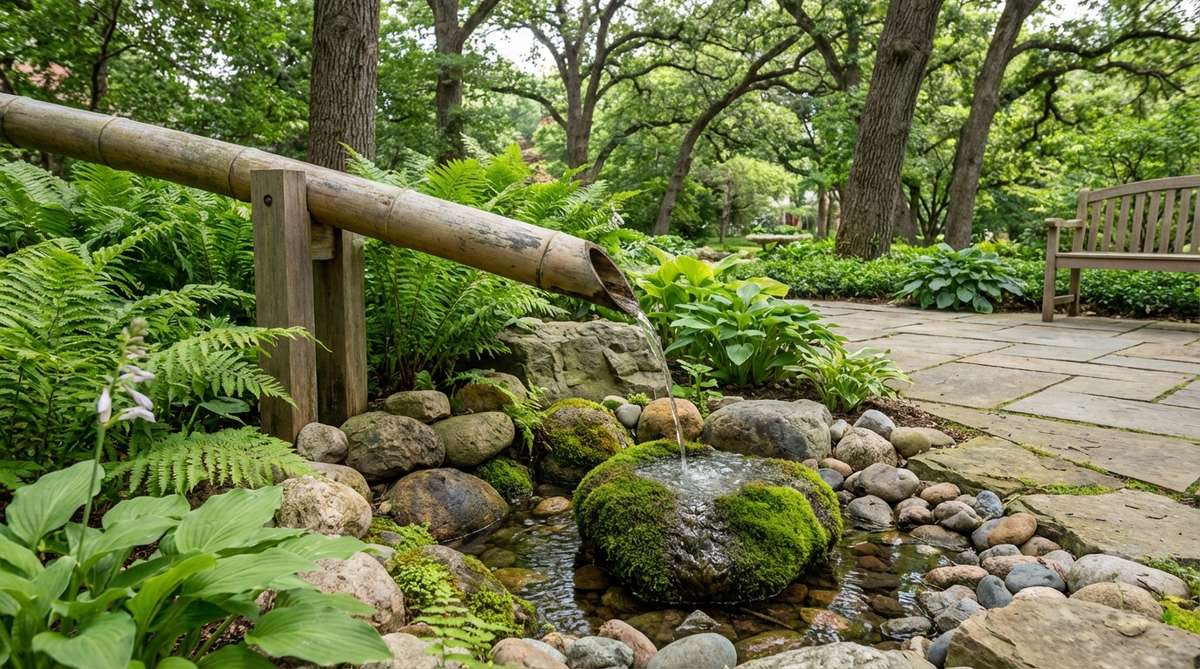
Brings a hypnotic, rhythmic heartbeat to an overly quiet backyard. This classic bamboo clacker fountain is exactly what you need near a meditation deck or densely planted corner.
Adding kinetic movement via a tipping arm completely transforms dead space into a dynamic, living feature. Upgrading to sealed bamboo fountain kits prevents the wood from splitting after just one season of sun and rain exposure.
You can set up an authentic clacking fountain for around $60–$120. Save this if you love gardens that engage your ears as well as your eyes!
- Key Materials: Pivoting bamboo arm kit, striking stone, 100-GPH pump
- Vibe / Style: Rhythmic, traditional charm
- Difficulty: Moderate (tuning the pivot)
- Budget Breakdown: Bamboo Kit: $85 | Low-flow Pump: $25
- Creator’s Tip: Place a small piece of dense rubber under the striking stone if the “clack” sound is too loud or echoes off nearby walls.
- Smart Sourcing: UV-coated bamboo shishi-odoshi kits or marine-grade clear wood sealant.
Most people get their fountain setup completely wrong… until they try the exact ultra-reliable layout coming up next.
💡 Must-Have Supplies for High-End Setups
To build these stunning water features faster and ensure they survive winter freezes, skip the generic craft aisles and invest in the right foundational kits.
- Base & Support: Pre-molded heavy-duty fountain reservoirs
- Setup Tools: All-in-one submersible pump and tubing starter kits
- Weather/Durability Protection: UV-resistant clear acrylic waterproofing spray
9. Single-Spout Kakei Bamboo Pipe
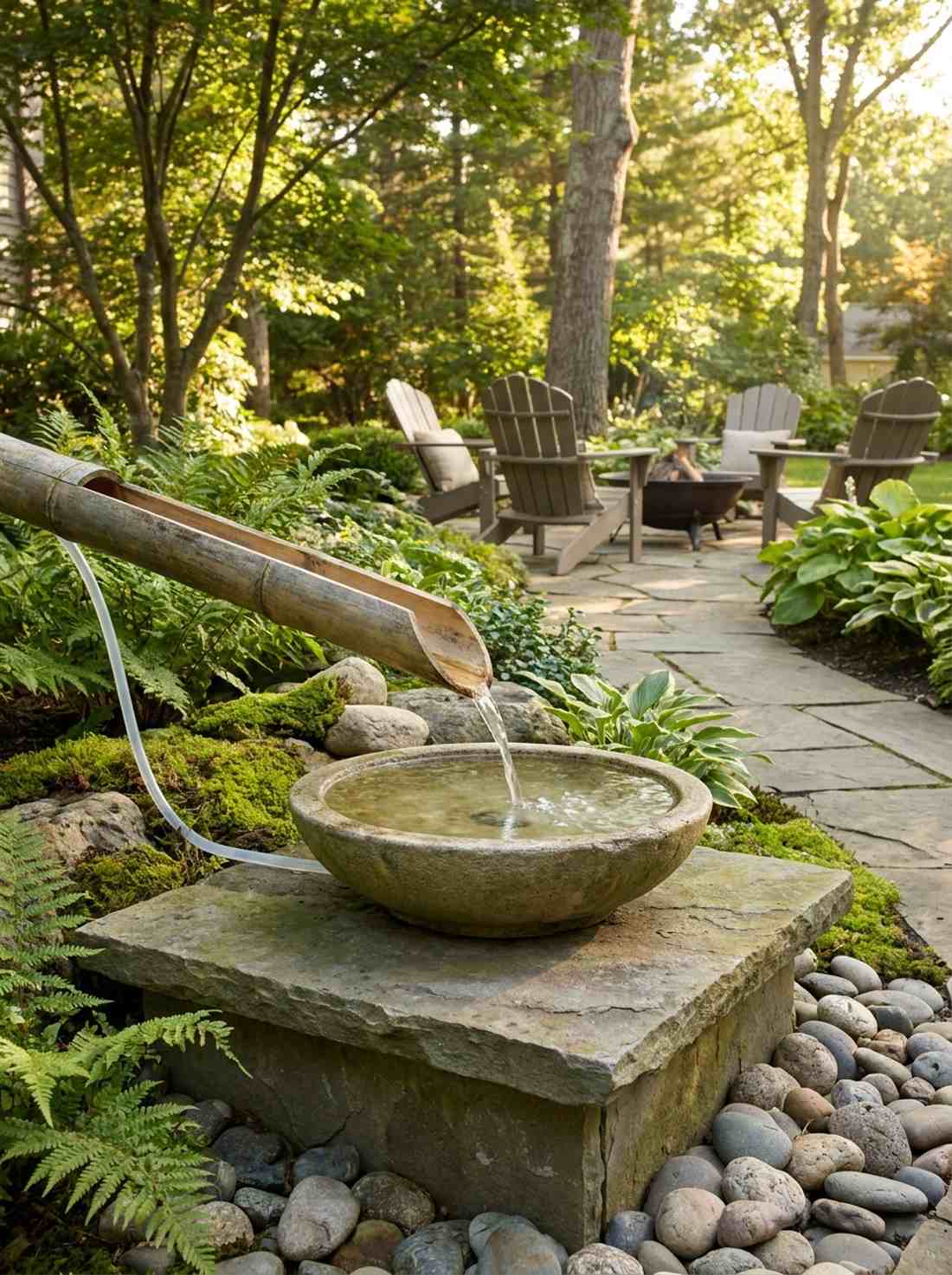
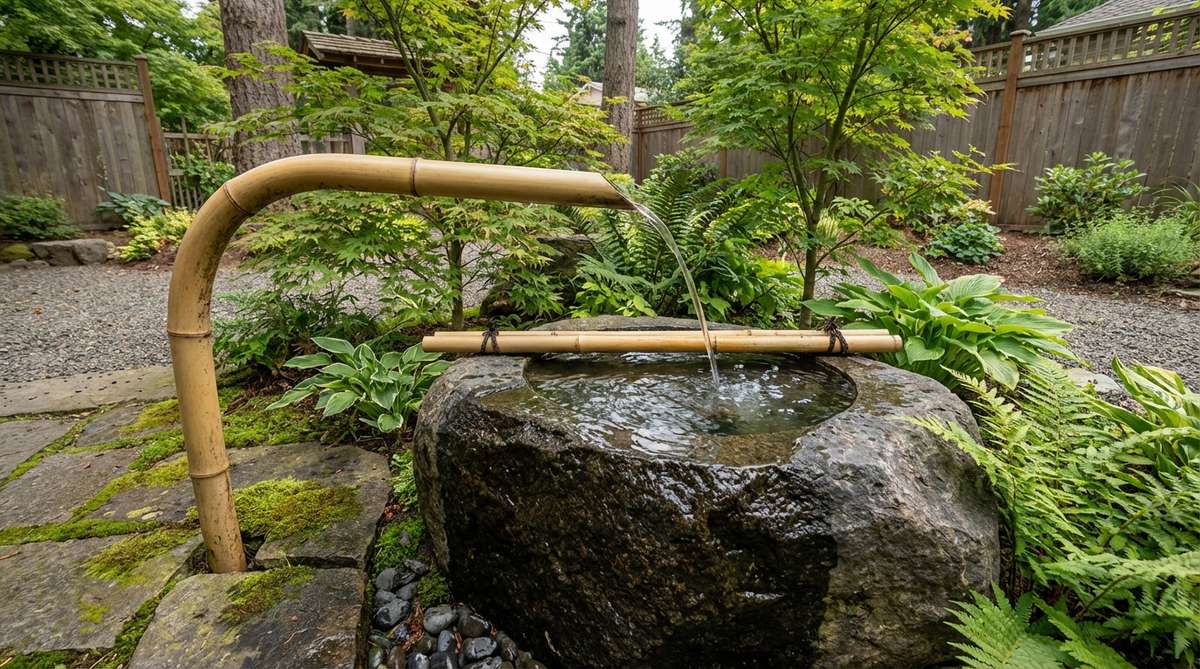
Feels like a serene trickle from a hidden spring. This minimalist bamboo spout design is perfect for feeding water into pre-existing birdbaths or standalone courtyard bowls.
A simple, single-stream delivery system looks far more expensive than it is when the proportions are right. Securing the spout with heavy-duty clear silicone tubing ensures you get a smooth, bubble-free water delivery that sounds like a gentle rain.
This is a super budget-friendly project you can complete for $40–$80. Highly recommended for beginners wanting instant gratification.
- Key Materials: Half-split bamboo spout, hidden vinyl tubing, mini pump
- Vibe / Style: Gentle, understated elegance
- Difficulty: Very easy beginner project
- Budget Breakdown: Bamboo Spout: $35 | Tubing & Pump: $25
- Creator’s Tip: Angle the bamboo spout downward at exactly 15 degrees to prevent water from running backward along the bottom of the pipe.
- Smart Sourcing: Kink-free silicone water tubing (bulk roll) or pre-assembled kakei bamboo spouts.
10. Dual-Arm Balance Fountain
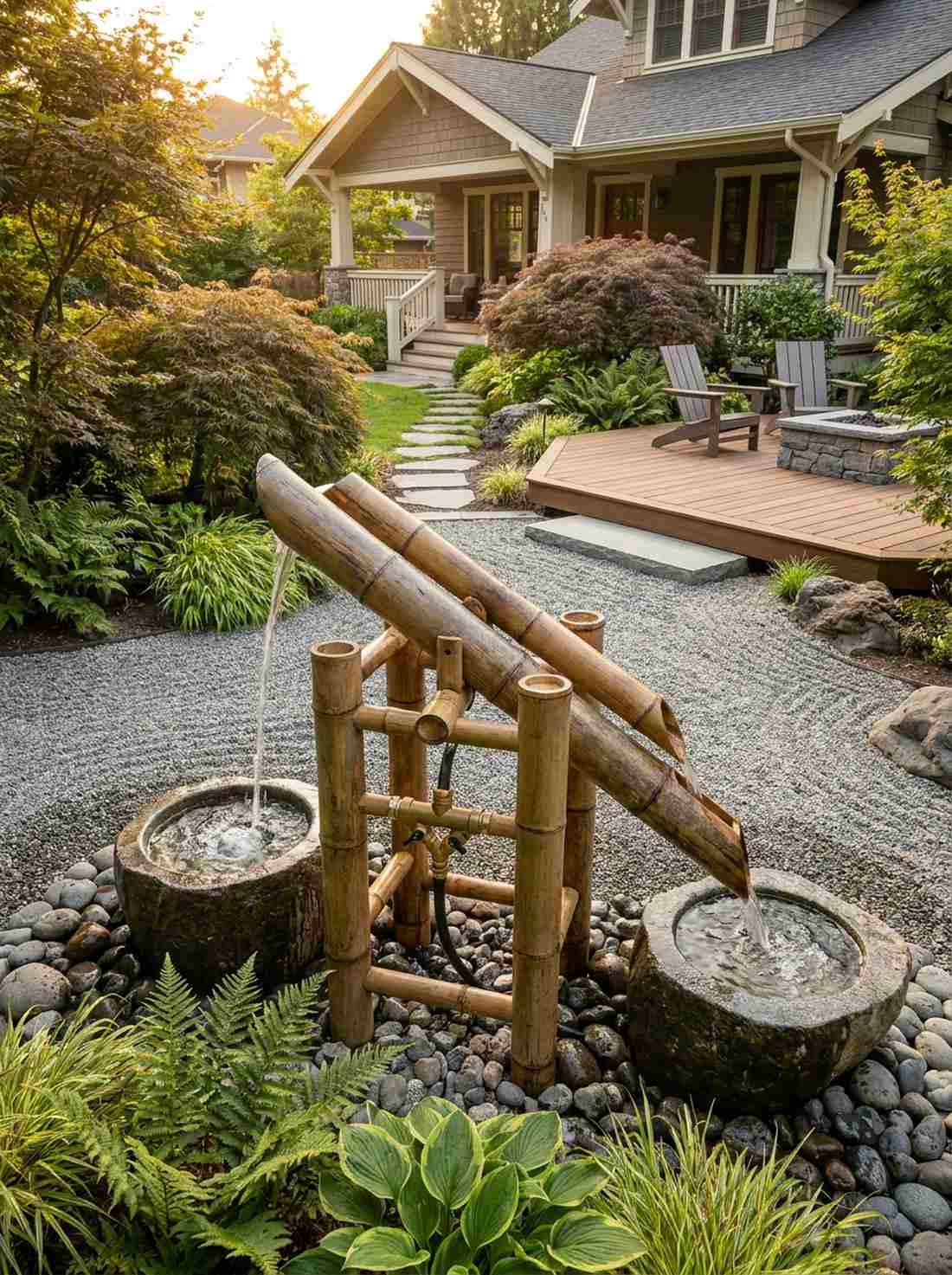
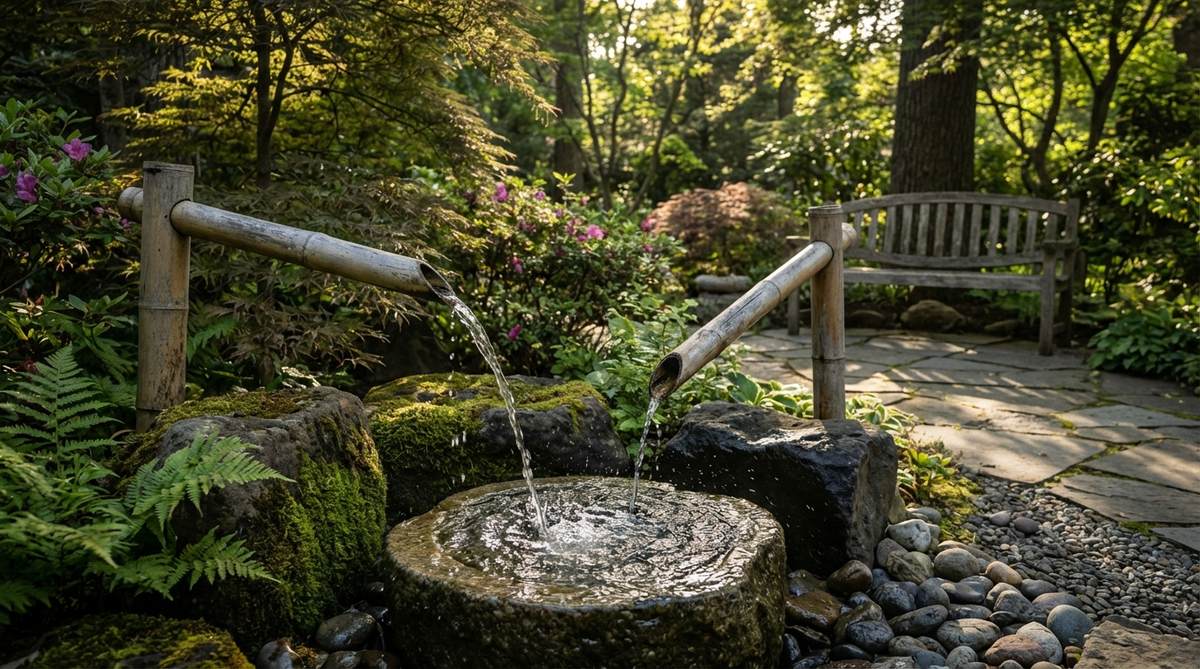
Mesmerizing to watch, it feels like complex, ancient engineering at play. This dual-action bamboo water feature is stunning when placed as a centerpiece in a dedicated gravel viewing garden.
Layering two alternating tipping arms delivers an incredibly complex soundscape that instantly elevates the space. If you incorporate Japanese garden fountain kits that feature adjustable counterweights, tuning the rhythm becomes completely effortless.
Expect to spend around $150–$250 for a well-calibrated dual system. Pin this complex setup if you want a true conversation starter!
- Key Materials: Dual pivot bamboo system, y-splitter valve, two striking basins
- Vibe / Style: Complex kinetic energy
- Difficulty: Advanced (requires precise water balancing)
- Budget Breakdown: Dual Kit: $180 | Brass Splitter: $20
- Creator’s Tip: Use an adjustable brass Y-valve on your pump output to perfectly control the fill speed of each individual bamboo arm.
- Smart Sourcing: Solid brass water flow splitters or premium authentic bamboo fountain kits.
11. Vertical Cascade Bamboo Stack
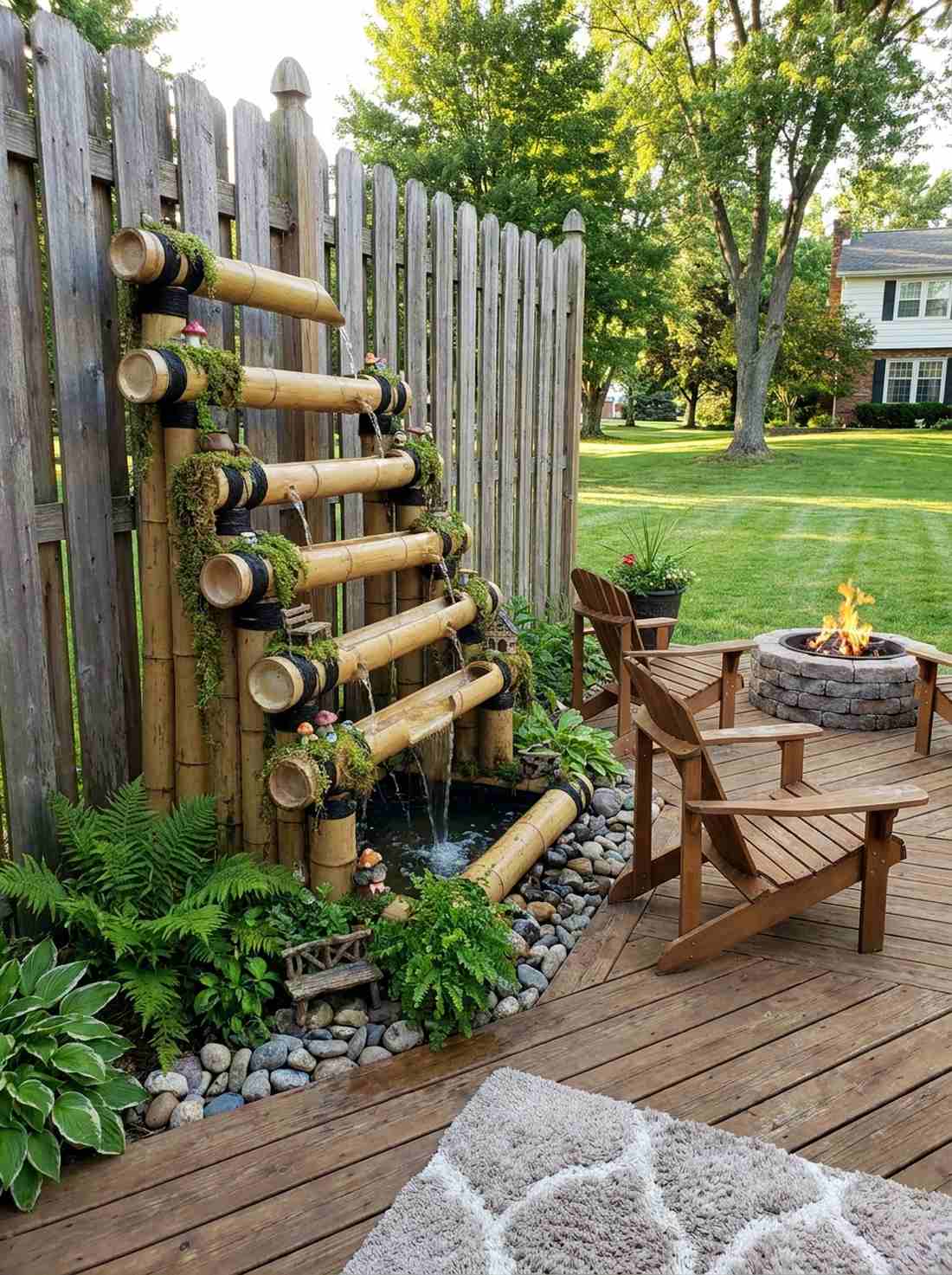
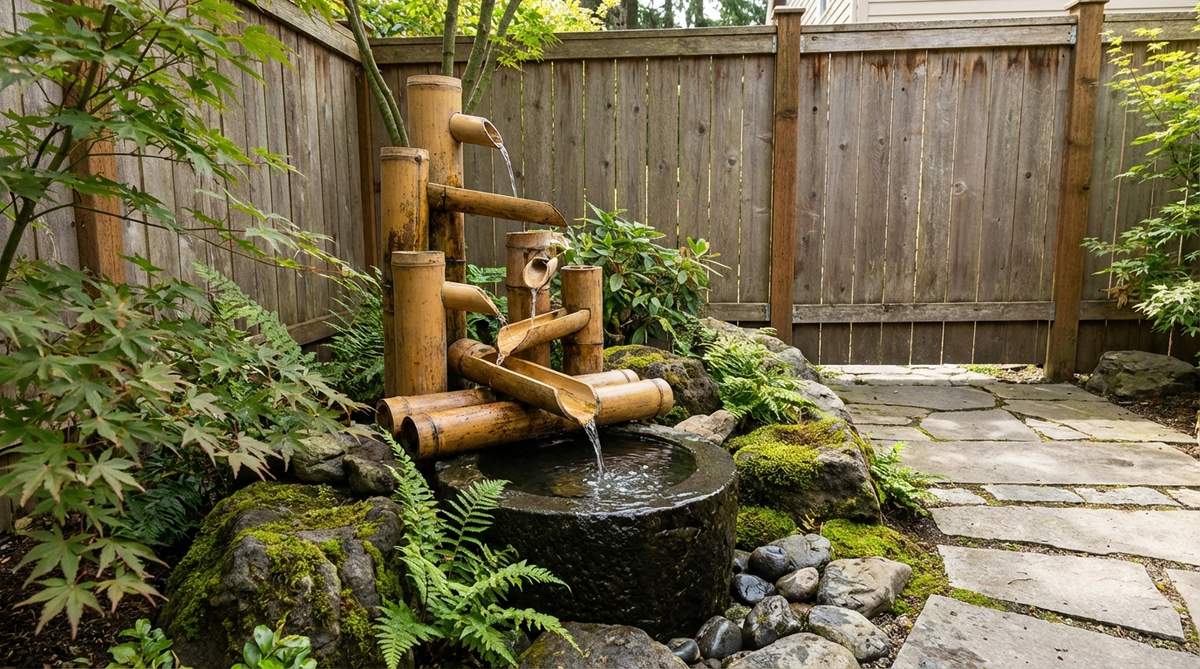
Creates a lush, multi-tiered rainforest vibe in an instant. This stacked vertical water flume works beautifully against blank wooden privacy fences or narrow patio walls.
Stacking the drop points forces the water to create multiple distinct splashing sounds, which acts as a phenomenal noise-canceling barrier for street traffic. Tucking fairy garden supplies or trailing mosses into the bamboo joints hides the mechanics and softens the aesthetic.
You can build this vertical acoustic wall for $90–$160. It’s an absolute game-changer for noisy urban yards!
- Key Materials: Tiered bamboo segments, zip ties/twine, vertical pump
- Vibe / Style: Layered, acoustic waterfall
- Difficulty: Moderate
- Budget Breakdown: Bamboo Poles: $60 | High-head Pump: $45
- Creator’s Tip: Wrap black zip-ties tightly around the joints for structural strength, then cover them by wrapping traditional black hemp twine over the ties.
- Smart Sourcing: Weather-resistant black hemp twine (bulk spool) or high-lift vertical pond pumps.
12. Low-Profile Ground-Level Spout
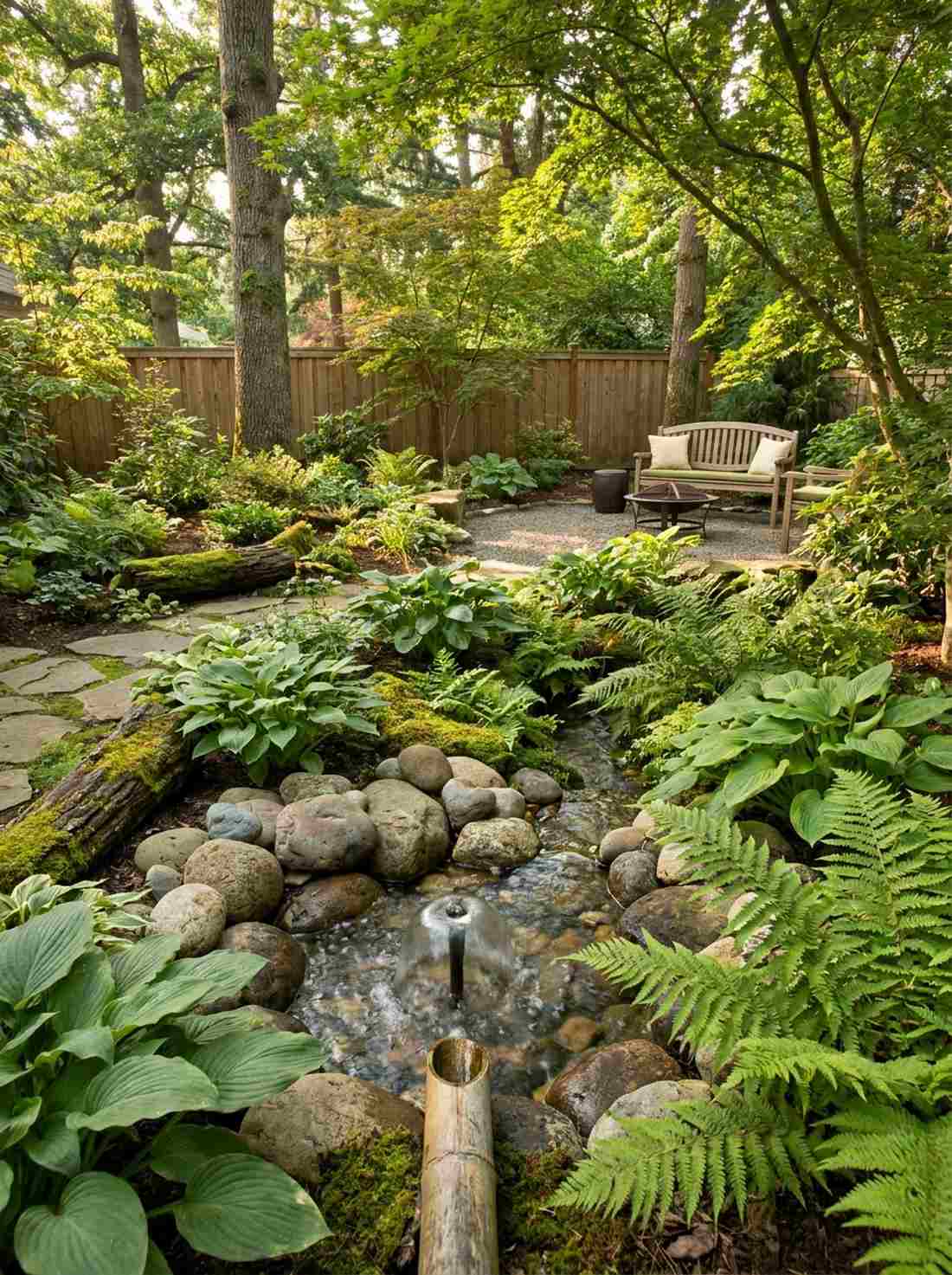
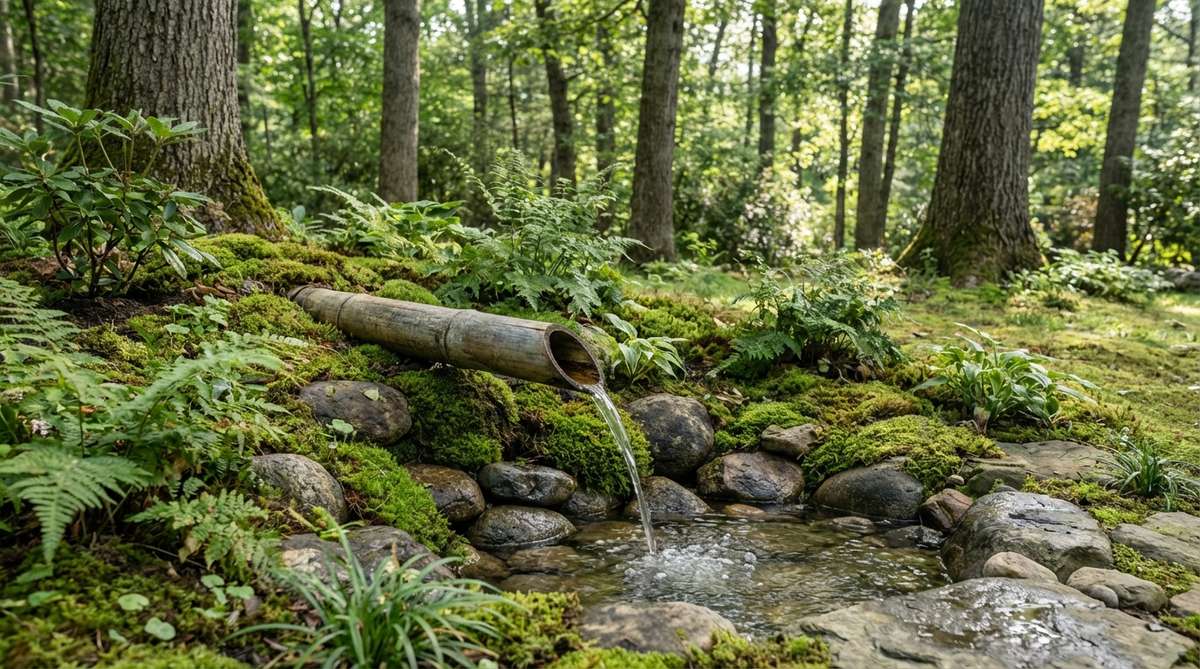
Looks like water is miraculously bubbling straight out of the forest floor. This hidden ground-spout design is exceptionally gorgeous when nestled deep within a hosta or fern bed.
Burying the mechanics completely gives a designer-level finish that feels incredibly organic and untouched. Using rigid PVC underground enclosures protects your pump from mud and roots while maintaining that magical, low-to-the-ground illusion.
This secret spring setup will run you roughly $70–$110. Save this to your landscaping board for a magical, hidden garden vibe!
- Key Materials: Short bamboo stub, underground catch basin, mesh screen
- Vibe / Style: Secret, magical woodland spring
- Difficulty: Moderate (requires digging)
- Budget Breakdown: Underground Basin: $65 | Spout & Pump: $30
- Creator’s Tip: Cover the top mesh of your catch basin with oversized river rocks so leaves don’t clog the water return during autumn.
- Smart Sourcing: Heavy-duty pond netting screens or pre-cut faux bamboo ground spouts.
13. Extended-Reach Pond Aerator
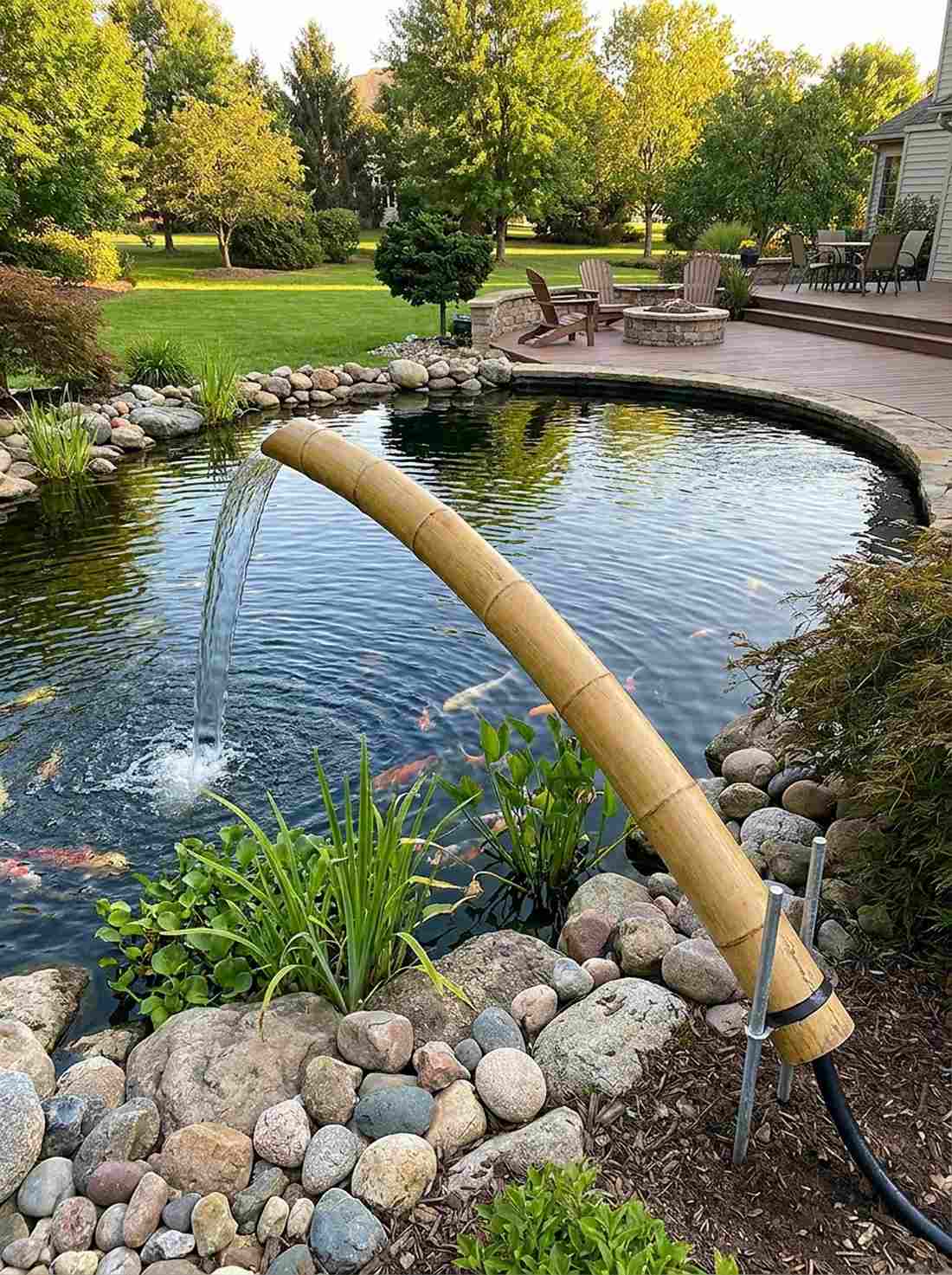
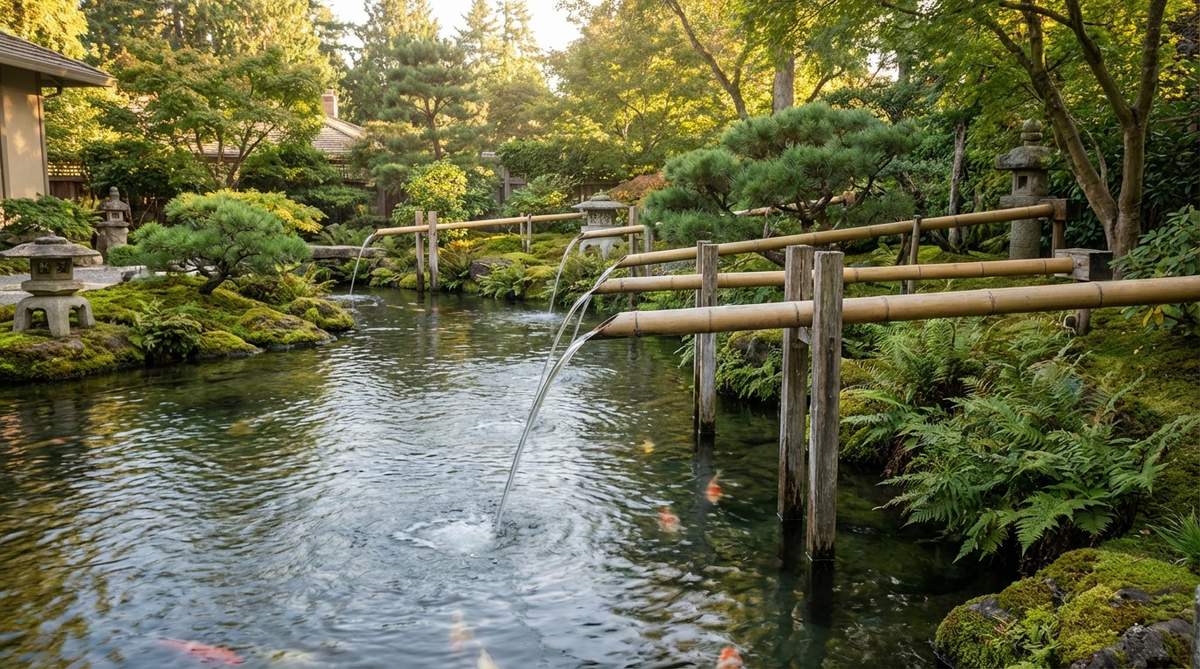
Provides a dramatic, sweeping architectural bridge over open water. This long-reach bamboo aqueduct is essential for delivering fresh oxygen to large koi ponds or deep water basins.
Extending the spout far over the water breaks up flat pond surfaces and delivers a surprisingly premium look. By securing the back end with heavy-duty landscaping stakes, you prevent the bamboo from bowing or snapping under the weight of the water flow.
You can upgrade your pond aeration beautifully for about $85–$140. Pin this if your backyard pond needs a visual and ecological boost!
- Key Materials: 5-foot thick-walled bamboo pole, metal support stakes, high-flow tubing
- Vibe / Style: Sweeping, dramatic functionality
- Difficulty: Moderate (requires balancing)
- Budget Breakdown: Jumbo Bamboo Pole: $60 | Support Hardware: $30
- Creator’s Tip: Drill out the internal nodes of the bamboo pole completely with a spade bit extension to ensure smooth, high-volume water flow.
- Smart Sourcing: Thick-walled cured bamboo poles (bulk pack) or galvanized steel landscaping stakes.
Stop scrolling. This next lighting trick completely transforms how a water feature looks at night…
14. Angled-Spout Wall Mount
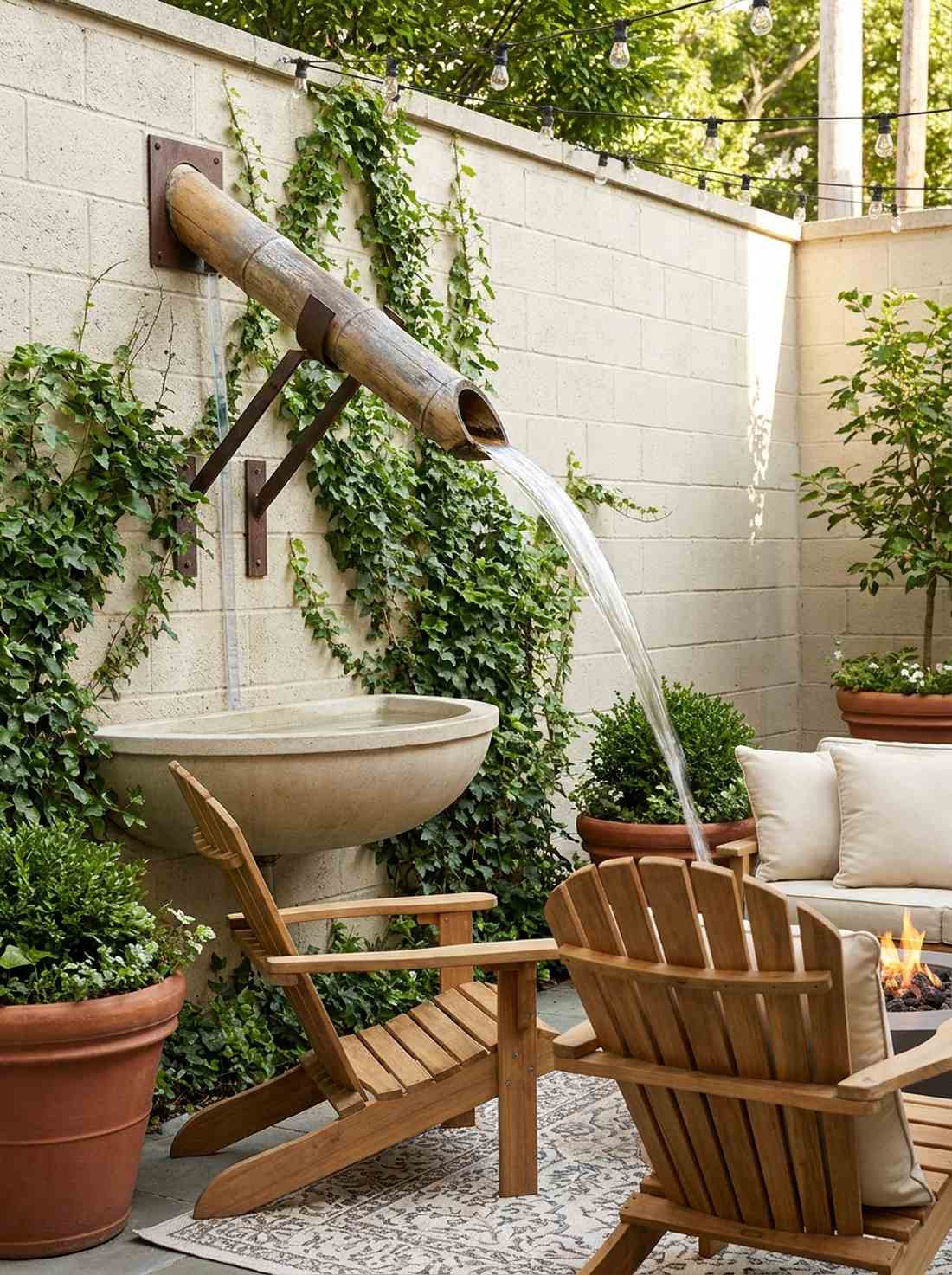
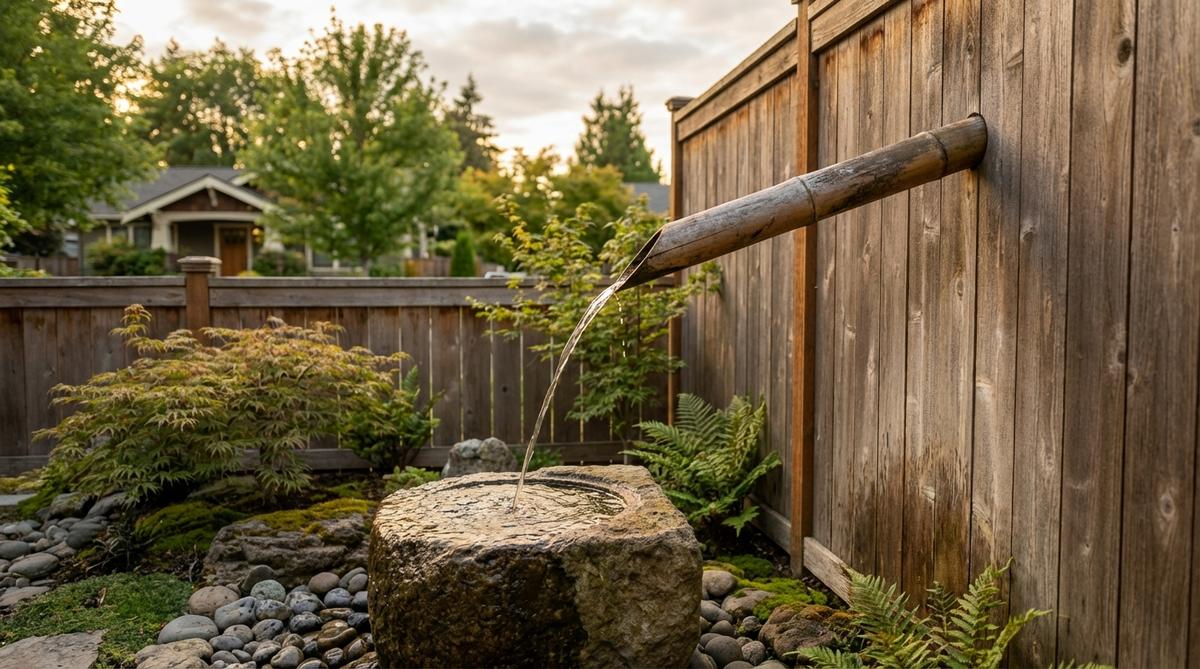
Creates a gorgeous floating water arch out of thin air. This wall-mounted spout setup is the ultimate space-saving hack for tight courtyard walls or apartment balconies.
Bolting the feature directly to vertical surfaces completely frees up your floor space while keeping the aesthetic impact high. Integrating waterproof mounting brackets ensures the bamboo doesn’t rot against the wall and keeps the spout locked perfectly at a 45-degree angle.
This chic wall feature can be installed for around $60–$100. Highly recommended for anyone working with zero square footage on the ground.
- Key Materials: Angled bamboo cut, wall masonry anchors, wall-mounted catch bowl
- Vibe / Style: Floating, modern space-saver
- Difficulty: Easy (requires basic drilling)
- Budget Breakdown: Bracket/Spout: $45 | Wall Anchors: $15
- Creator’s Tip: Run the clear water tubing up the backside of the wall or disguise it behind a climbing ivy plant to maintain the floating illusion.
- Smart Sourcing: Rust-proof wall mounting bracket kits or masonry drill bit starter kits.
15. Traditional Five-Stone Arrangement
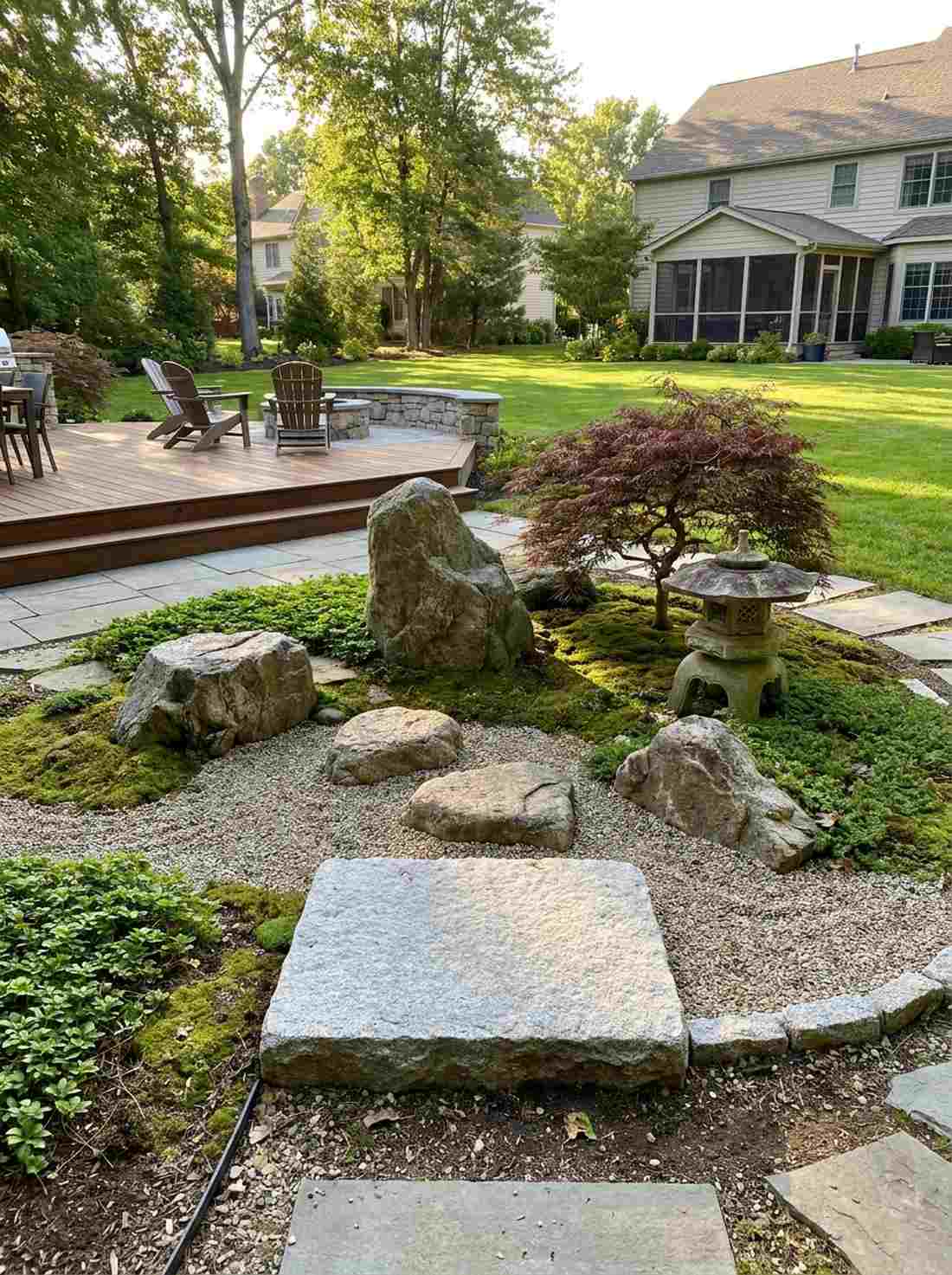
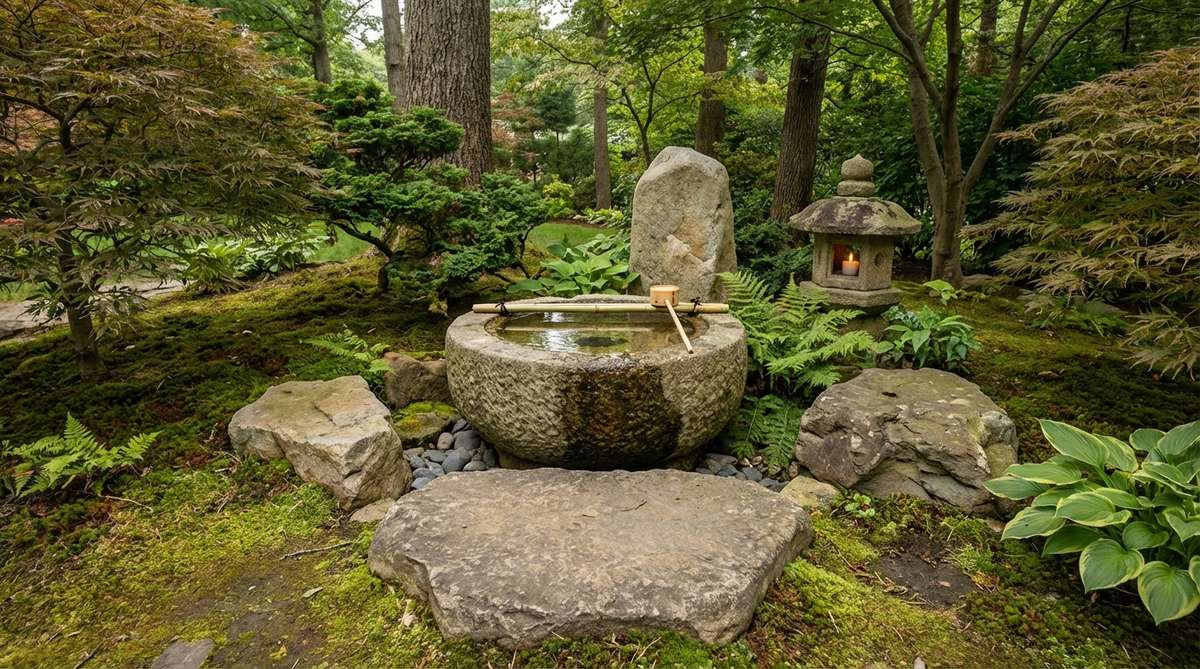
Feels like stepping into an ancient tea master’s personal courtyard. This classic gogan stone layout defines the absolute standard for a deeply authentic outdoor ritual space.
Positioning specific stones for standing, lighting, and flanking completely upgrades generic lawns instantly into intentional outdoor rooms. Using a pre-formulated stone positioning guide takes the guesswork out of the asymmetrical balance, making your DIY job look professionally engineered.
Depending on boulder sizing, this masterclass layout runs $200–$500. Save this specific arrangement to your premium landscaping Pinterest board!
- Key Materials: 5 distinct landscape boulders, leveling dirt, measuring tape
- Vibe / Style: Highly authentic, ceremonial balance
- Difficulty: Advanced (requires heavy stone moving)
- Budget Breakdown: 5 Boulders: $300 | Base Materials: $80
- Creator’s Tip: The front stepping stone should sit exactly 2 inches higher than the surrounding soil to designate it as a clear standing zone.
- Smart Sourcing: Heavy-duty stone lifting straps or authentic Oribe-style stone lanterns.
Complete Tsukubai Compositions with Stone Settings
16. Moss-Garden Tsukubai Setting
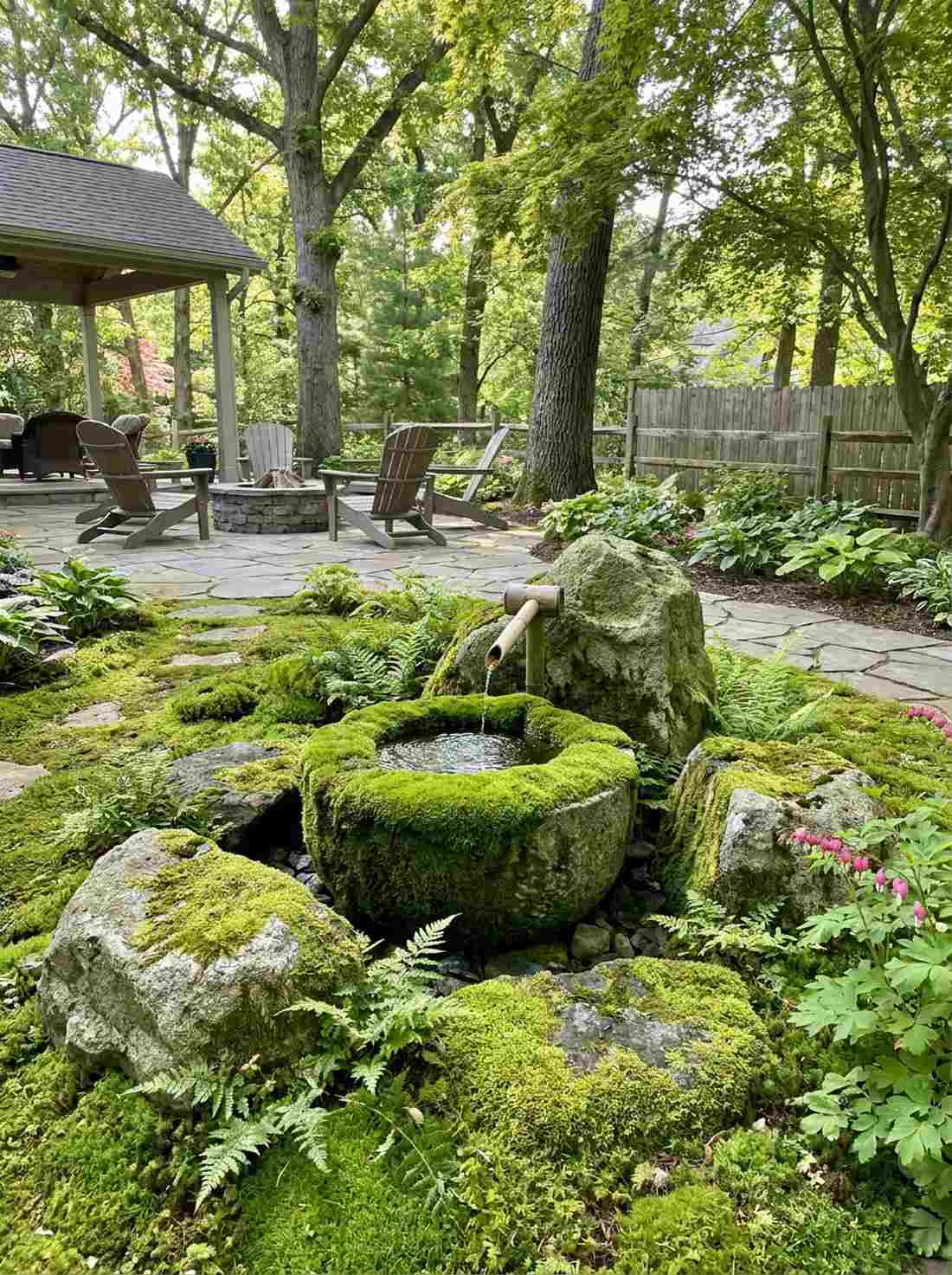
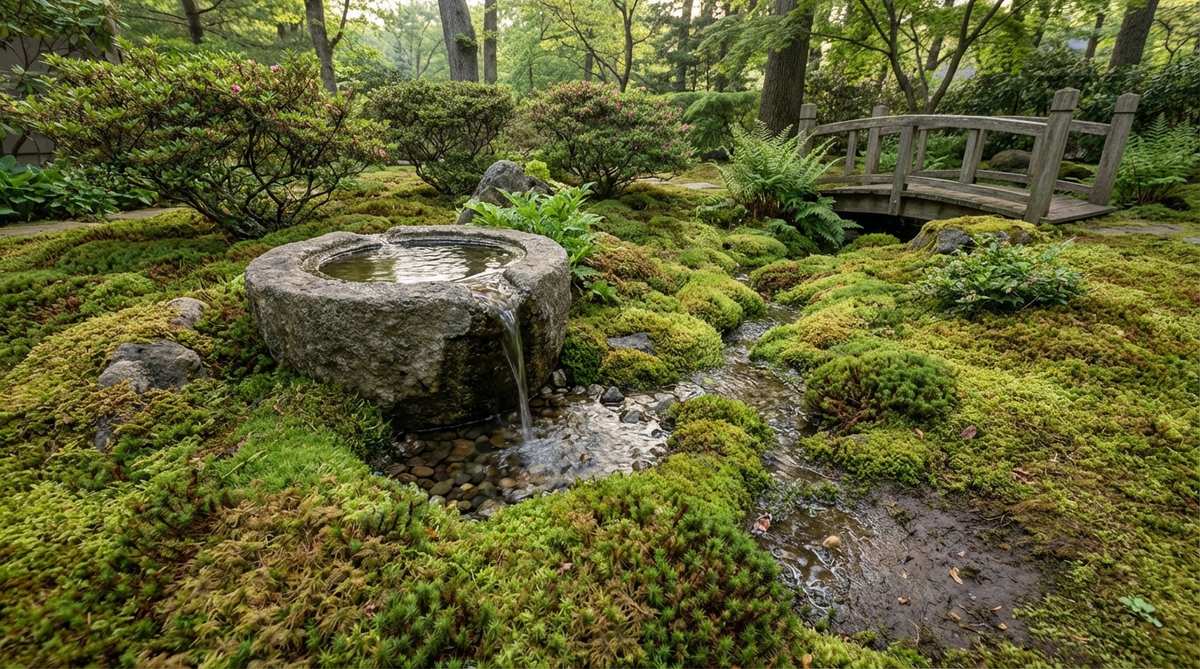
Looks like a lush, enchanted forest floor kissed by morning dew. This moss-embedded basin setup works flawlessly under the deep shade of old trees or covered patios.
Surrounding hard granite with vibrant green living carpet softens the entire aesthetic and screams high-end landscape design. You can easily cheat the years of aging by using live moss starter slurries to rapidly paint the stones and surrounding soil with green.
Creating this velvety green oasis costs around $100–$180. Pin this if you have a damp, shaded corner where grass refuses to grow!
- Key Materials: Stone basin, live moss patches, peat moss soil base
- Vibe / Style: Soft, aged woodland magic
- Difficulty: Easy (requires patience for growth)
- Budget Breakdown: Basin: $100 | Moss/Soil: $45
- Creator’s Tip: Mix buttermilk with live moss fragments in a blender and paint it onto the rocks to speed up moss colonization by months.
- Smart Sourcing: Live sheet moss (bulk boxes) or pre-mixed moss starter slurries.
17. Gravel Sea with Drain Basin
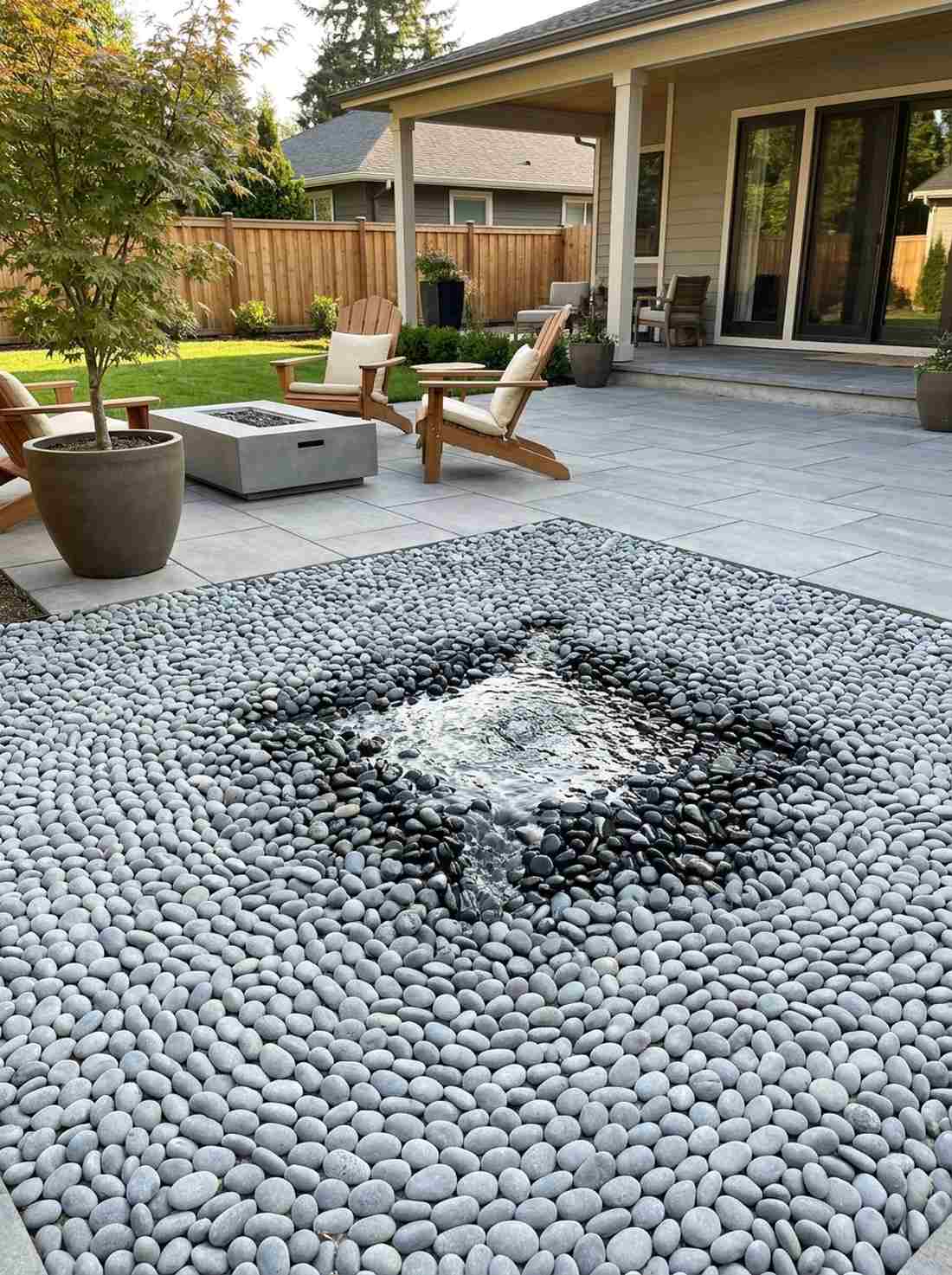
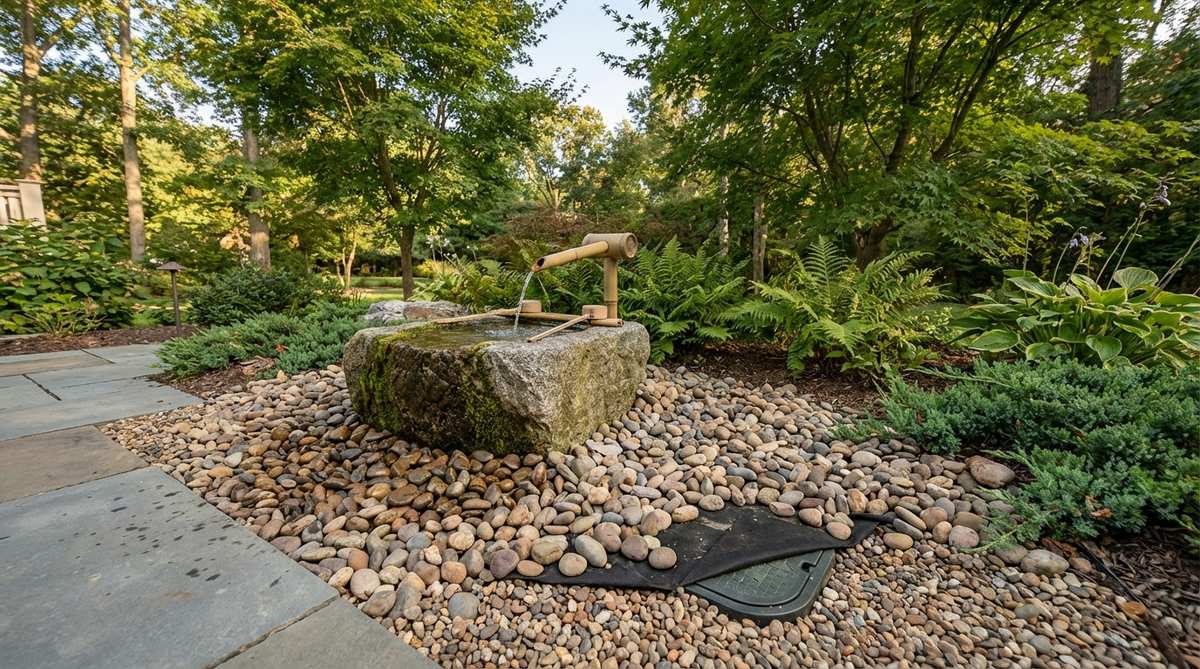
Radiates immense zen energy and immaculate cleanliness. This dry pebble sea drainage layout is the ultimate solution for patios where you absolutely cannot have muddy puddles.
Hiding the water reservoir beneath a crisp bed of perfectly raked stones delivers an ultra-premium aesthetic that stays incredibly neat. Installing a high-quality pondless waterfall vault beneath the gravel ensures that recirculating water never stagnates or breeds mosquitos.
This hyper-clean setup requires an investment of $150–$300. Save this if you want a water feature without the messy maintenance of a full pond!
- Key Materials: Underground pump vault, Mexican beach pebbles, geotextile fabric
- Vibe / Style: Crisp, immaculate Zen
- Difficulty: Moderate (requires digging a vault)
- Budget Breakdown: Pump Vault Kit: $160 | Premium Pebbles: $60
- Creator’s Tip: Use dark grey or black polished Mexican beach pebbles around the drain; the water makes them shine like glass, contrasting beautifully with the dry outer stones.
- Smart Sourcing: Pondless basin vault kits or polished black beach pebbles (bulk bag).
18. Stepping-Stone Path Approach
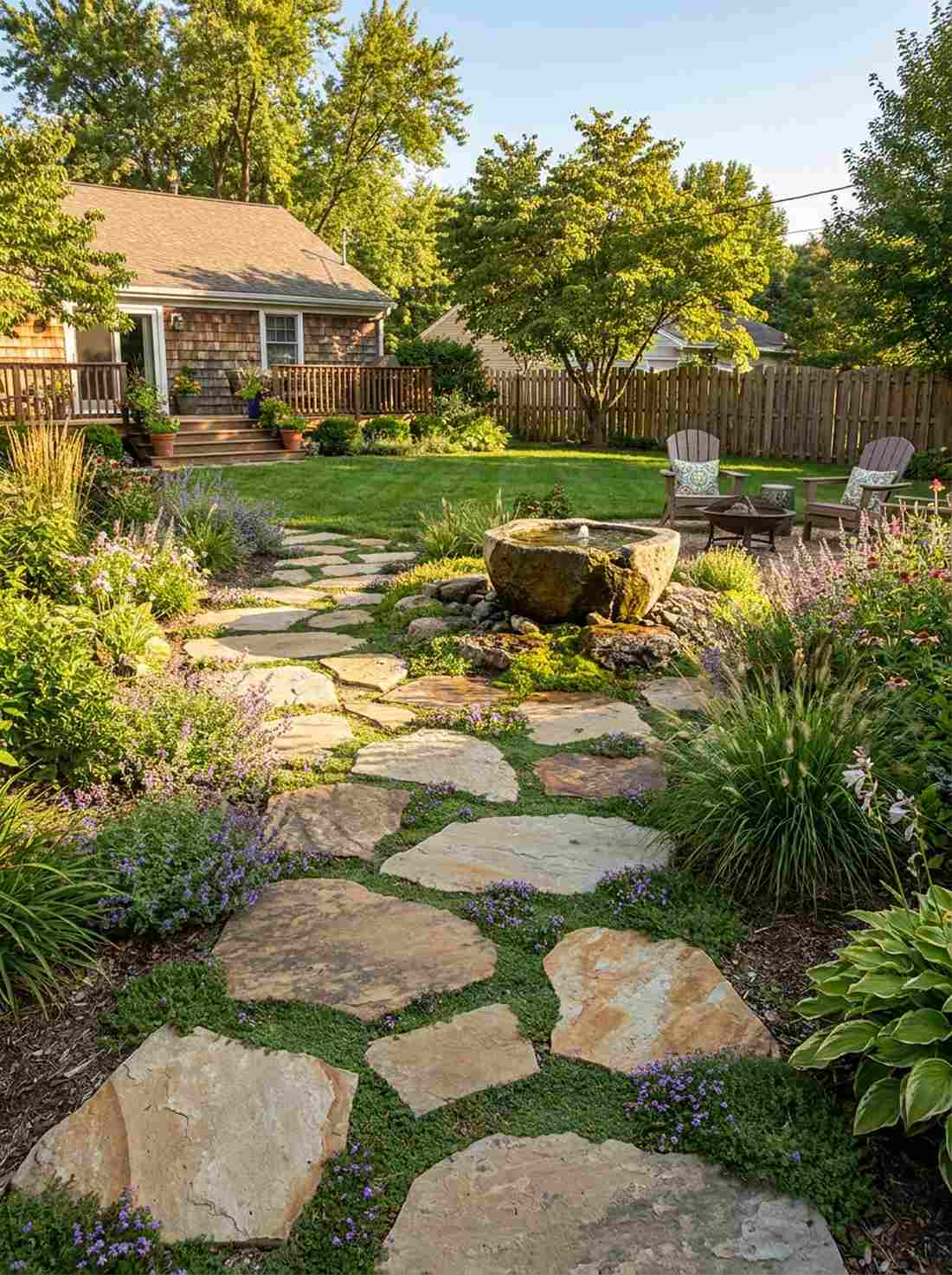
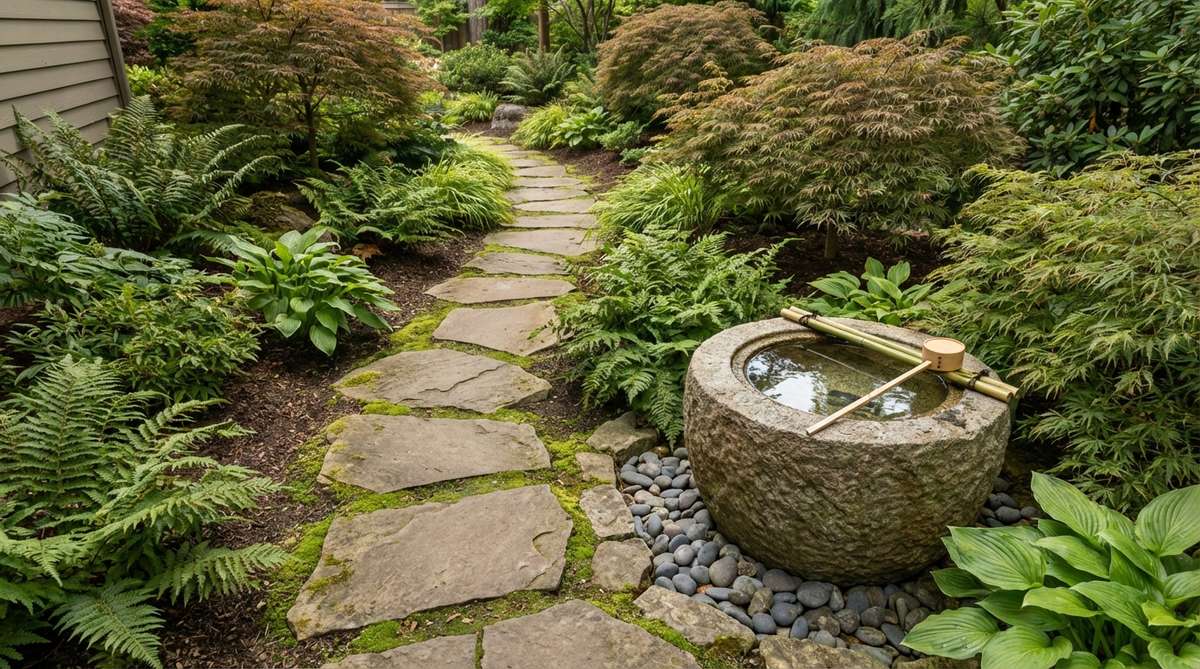
Builds beautiful anticipation with every single step you take. This winding stepping stone approach perfectly integrates a standalone water feature into the rest of your garden.
Forcing guests to slow down and watch their footing completely transforms a simple walk into a mindful, grounding experience. Staking down pre-cut natural flagstone mats saves you hours of leveling work while achieving that scattered, organic pathway look.
Laying down a gorgeous path to your basin usually costs $120–$250. It’s a phenomenal way to guide foot traffic away from delicate plants.
- Key Materials: Irregular flagstones, leveling sand, creeping thyme
- Vibe / Style: Mindful, wandering journey
- Difficulty: Moderate
- Budget Breakdown: Flagstones: $140 | Sand Base: $30
- Creator’s Tip: Space the center of each stone exactly 24 inches apart; this forces a natural, slightly shortened walking stride that slows the heart rate.
- Smart Sourcing: Pre-cut irregular flagstone kits or creeping thyme live plant plugs (bulk tray).
19. Bamboo-Fence Backdrop
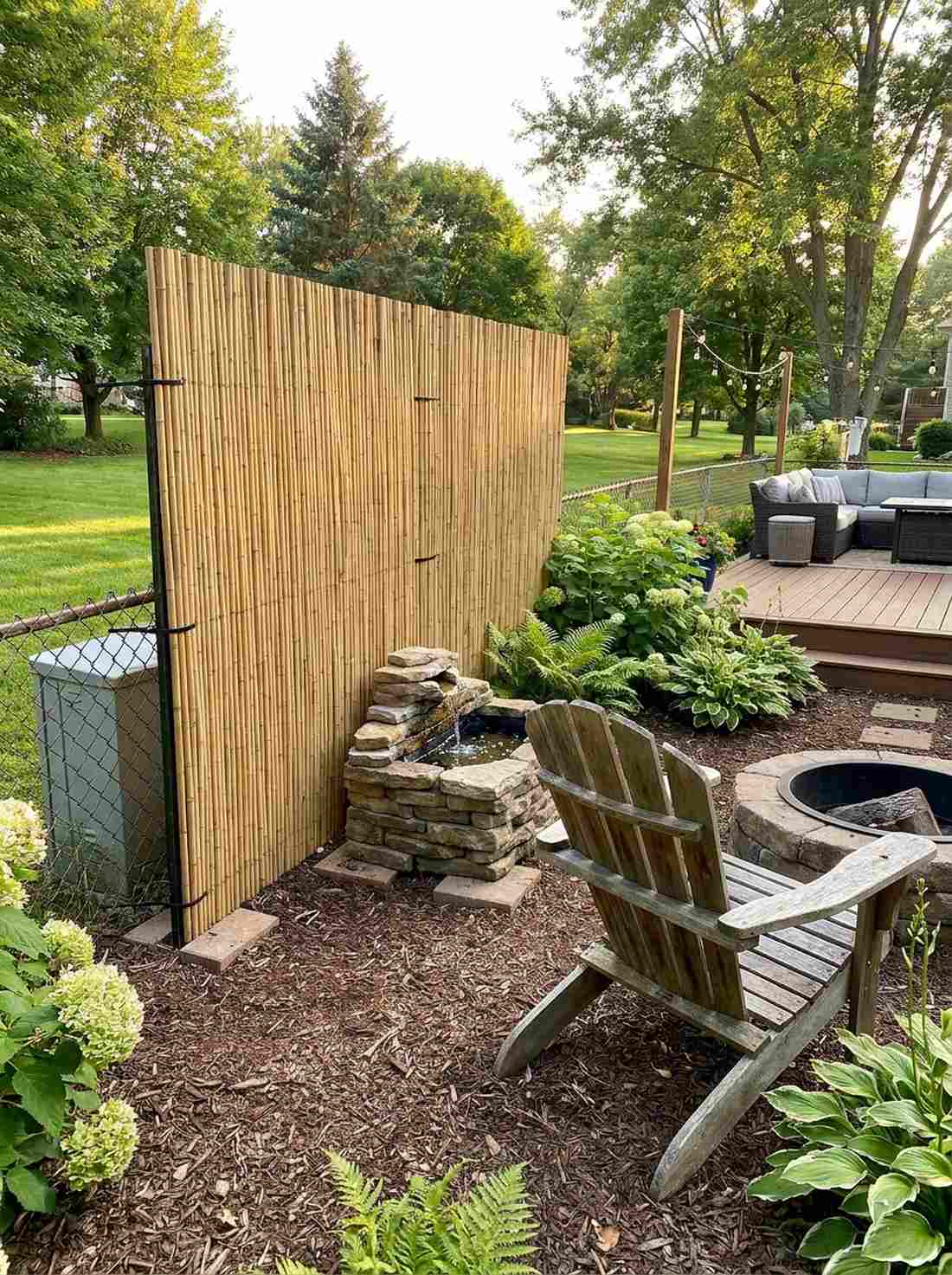
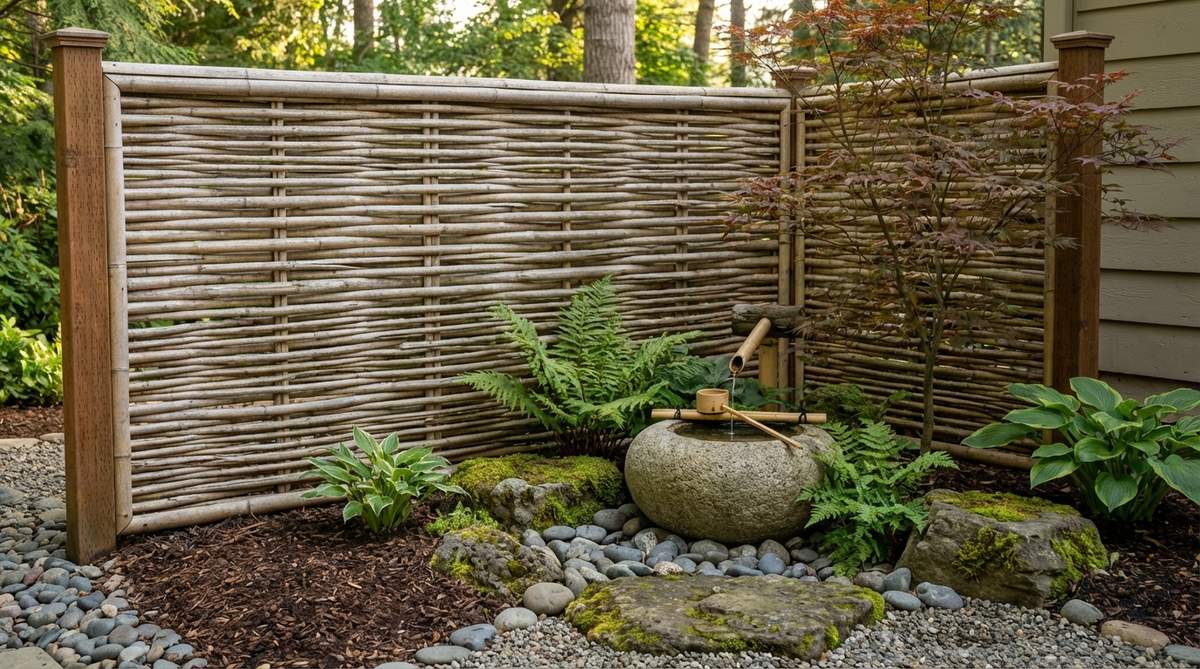
Instantly hides ugly chain-link fences and utility boxes. This woven bamboo screen backdrop creates the perfect neutral canvas behind your water basin to make the stone pop.
Framing your fountain with vertical lines stops the eye from wandering to the neighbor’s yard and delivers a surprisingly premium look. Utilizing rolled bamboo fencing panels allows you to erect a stunning privacy barrier in less than an hour with basic zip ties.
You can frame your setup beautifully for just $70–$150. Pin this to your backyard privacy ideas board!
- Key Materials: Rolled bamboo fence panel, steel support stakes, outdoor zip ties
- Vibe / Style: Intimate, enclosed sanctuary
- Difficulty: Very easy
- Budget Breakdown: Bamboo Roll: $80 | Stakes & Ties: $25
- Creator’s Tip: Elevate the bamboo roll one inch off the dirt before securing it to prevent ground moisture from rotting the bottom of the fence over time.
- Smart Sourcing: UV-coated rolled bamboo fencing or heavy-duty black outdoor cable ties.
Do not skip this next setup—it completely eliminates the need for expensive underground water pumps…
20. Integrated Stream Connection
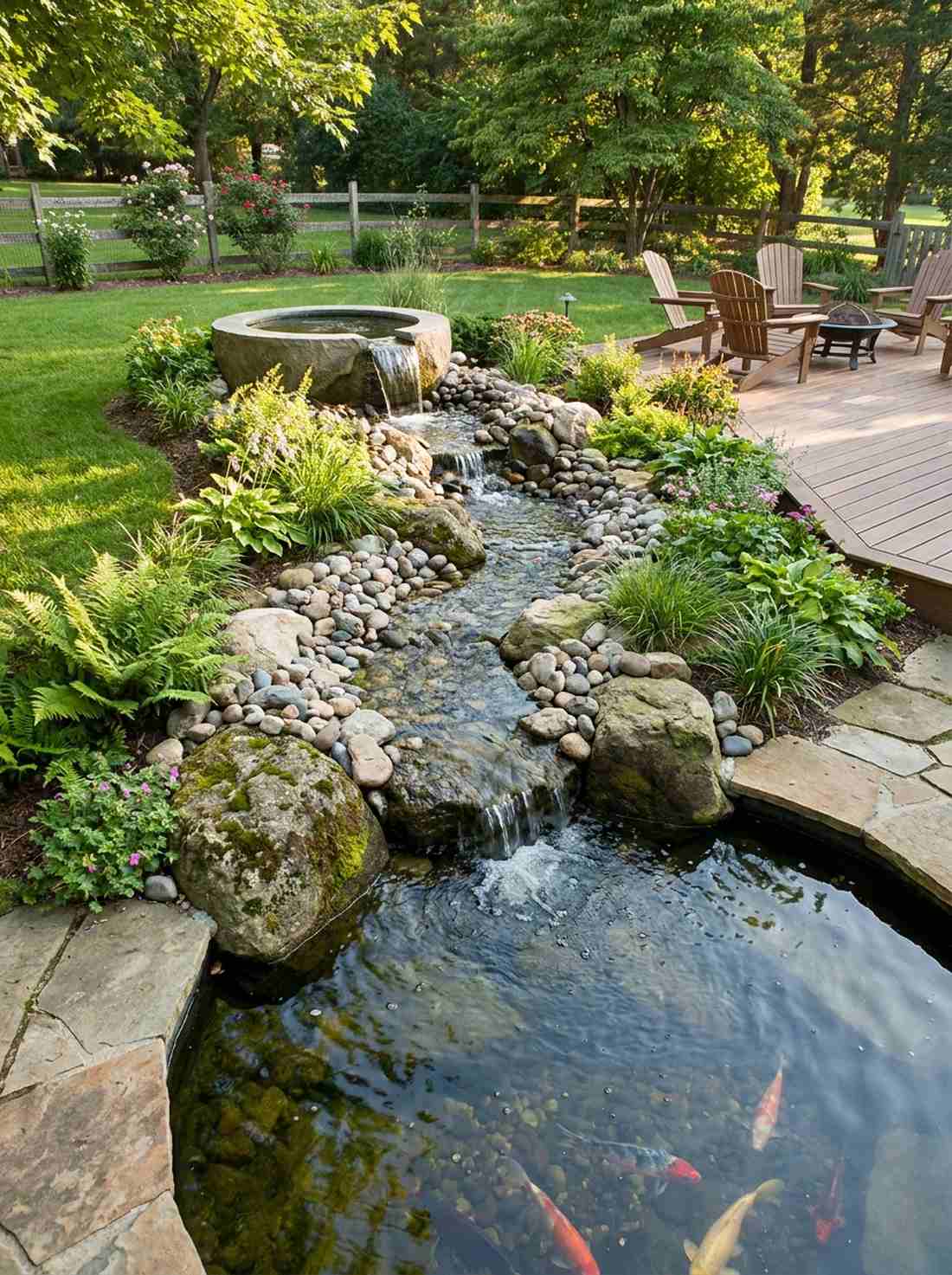
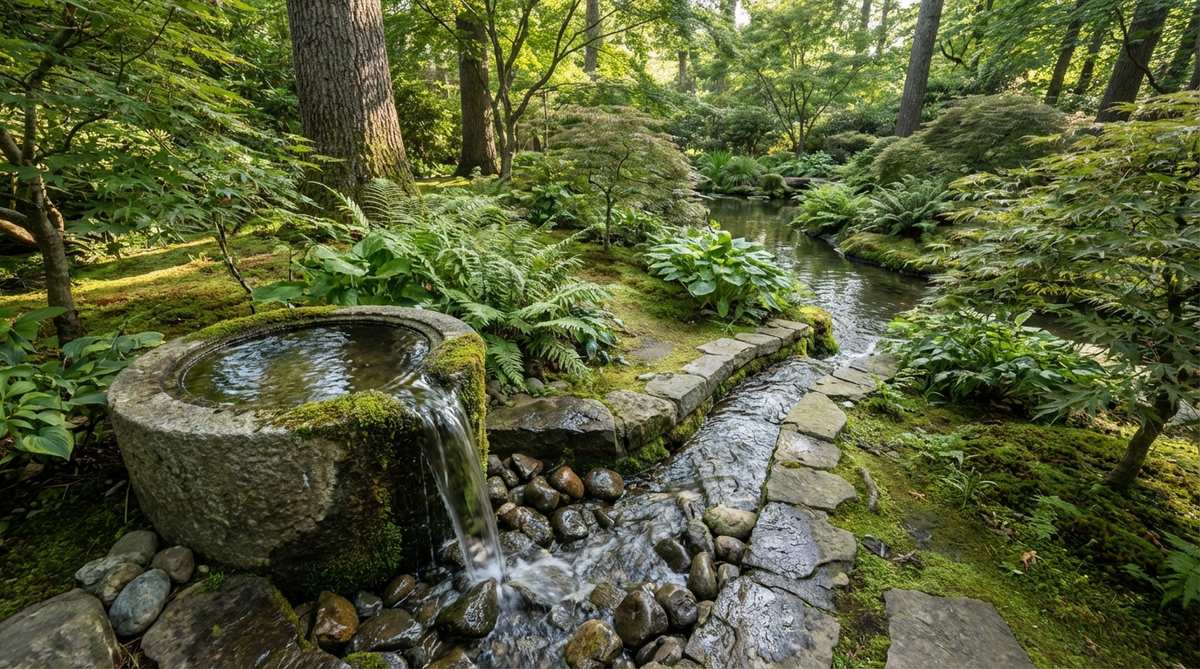
Feels like your garden was naturally carved by a passing river. This overflow stream integration brilliantly connects your standing basin directly into a larger koi pond or garden creek.
Letting gravity do the work instead of hidden plumbing gives a designer-level finish that is ecologically sound and stunning to watch. Securing the channel with flexible commercial-grade pond liners ensures that not a single drop of water is lost to the soil as it travels down.
Executing this natural flow transition costs roughly $100–$200. Save this if you are expanding an existing water landscape!
- Key Materials: Overflow basin lip, EPDM stream liner, river cobble
- Vibe / Style: Flowing, ecological connectivity
- Difficulty: Advanced (requires slope grading)
- Budget Breakdown: EPDM Liner: $90 | Cobblestones: $45
- Creator’s Tip: Create mini “drop pools” every few feet down the stream using larger rocks to slow the water down and increase the babbling sound.
- Smart Sourcing: Heavy-duty 45-mil stream liners (pre-cut) or waterfall expanding black foam sealant.
21. Fern-Grove Naturalistic Setting
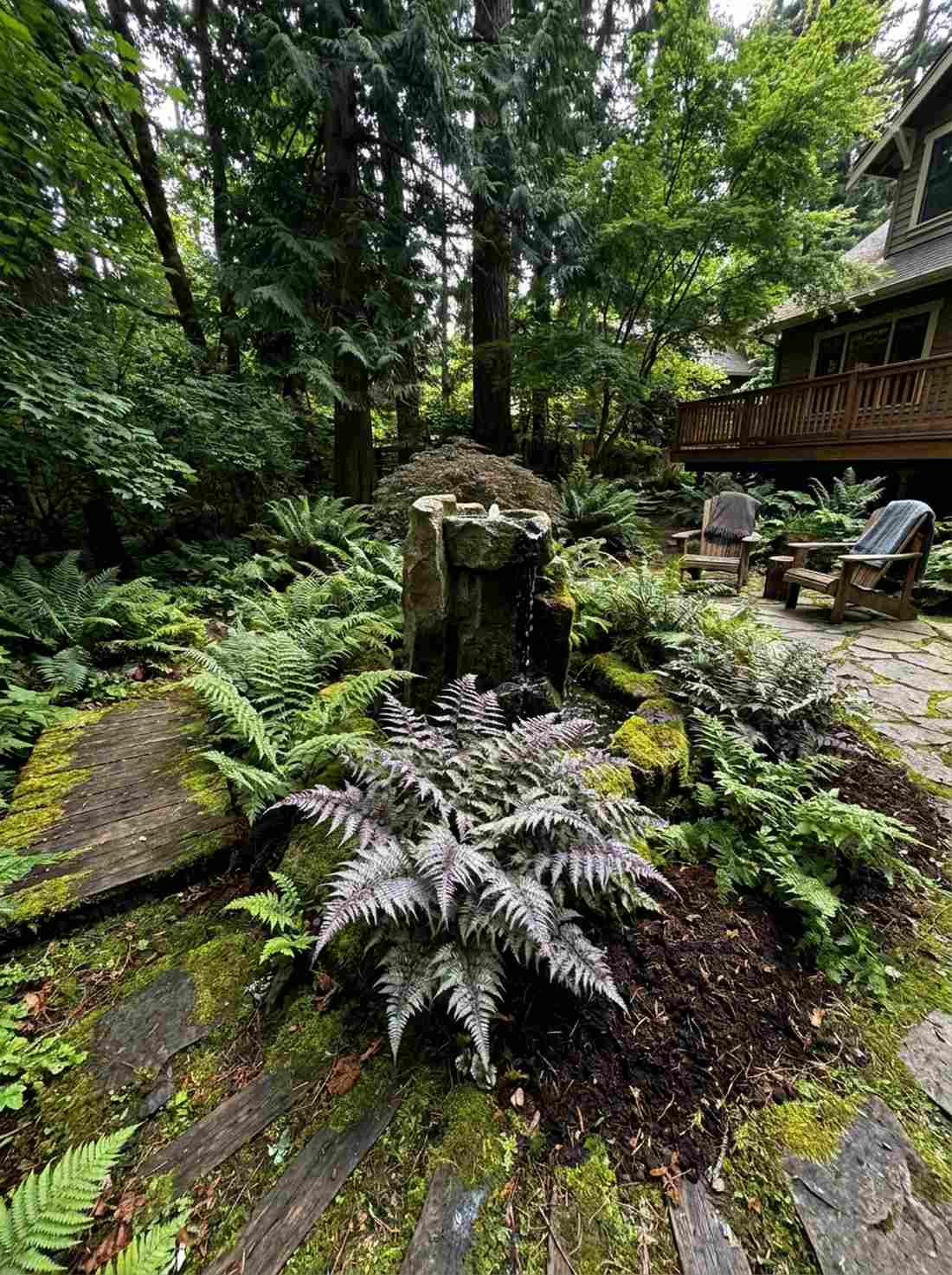
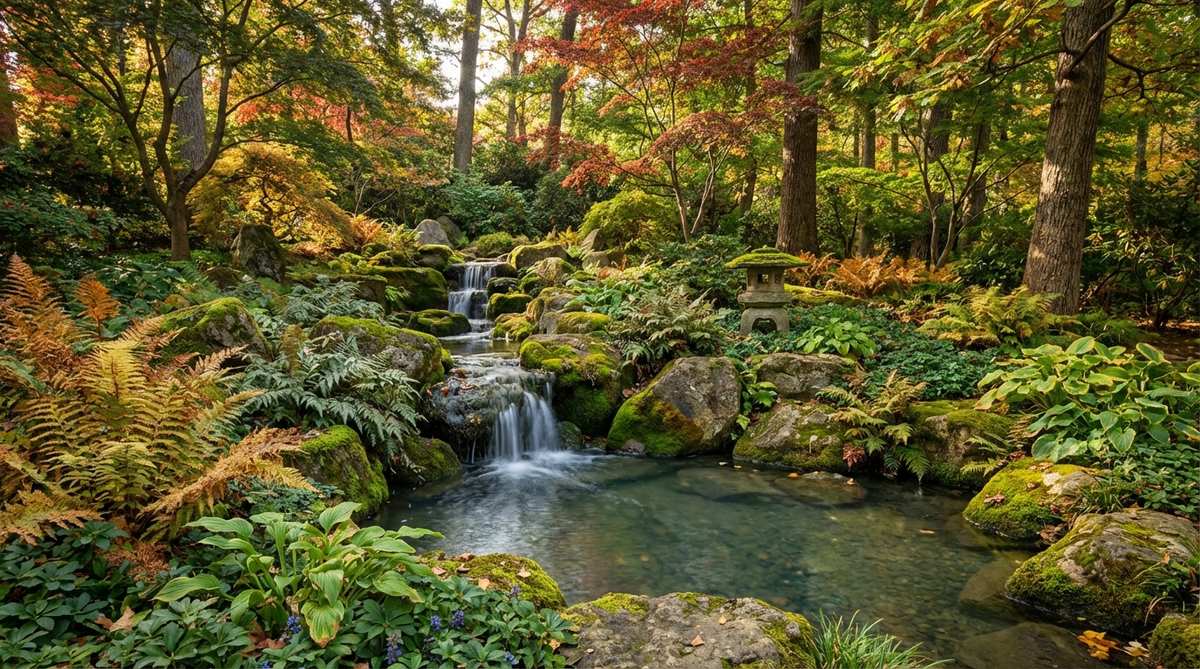
Looks like a forgotten fountain deep within a prehistoric jungle. This lush fern garden surround is perfect for heavily shaded backyards located in damp, cool climates.
Surrounding hard rock with explosive, feathery foliage completely softens the landscape and makes the water source look naturally discovered. Grabbing a shade-loving terrarium accessories pack or bulk bare-root ferns gives you explosive growth at a fraction of the nursery cost.
Planting a dense, moody grove around your basin runs about $80–$150. Highly recommended for properties in the Pacific Northwest or dense woodlands.
- Key Materials: Stone feature, assorted bare-root ferns, rich compost
- Vibe / Style: Wild, overgrown forest floor
- Difficulty: Easy beginner planting
- Budget Breakdown: Bare-root Ferns: $70 | Organic Compost: $20
- Creator’s Tip: Plant Japanese Painted Ferns directly next to the splash zone; their silvery-purple fronds look incredible when wet and catch the morning light perfectly.
- Smart Sourcing: Live bare-root woodland ferns (bulk pack) or premium organic compost bags.
22. Suikinkutsu Water-Harp Addition
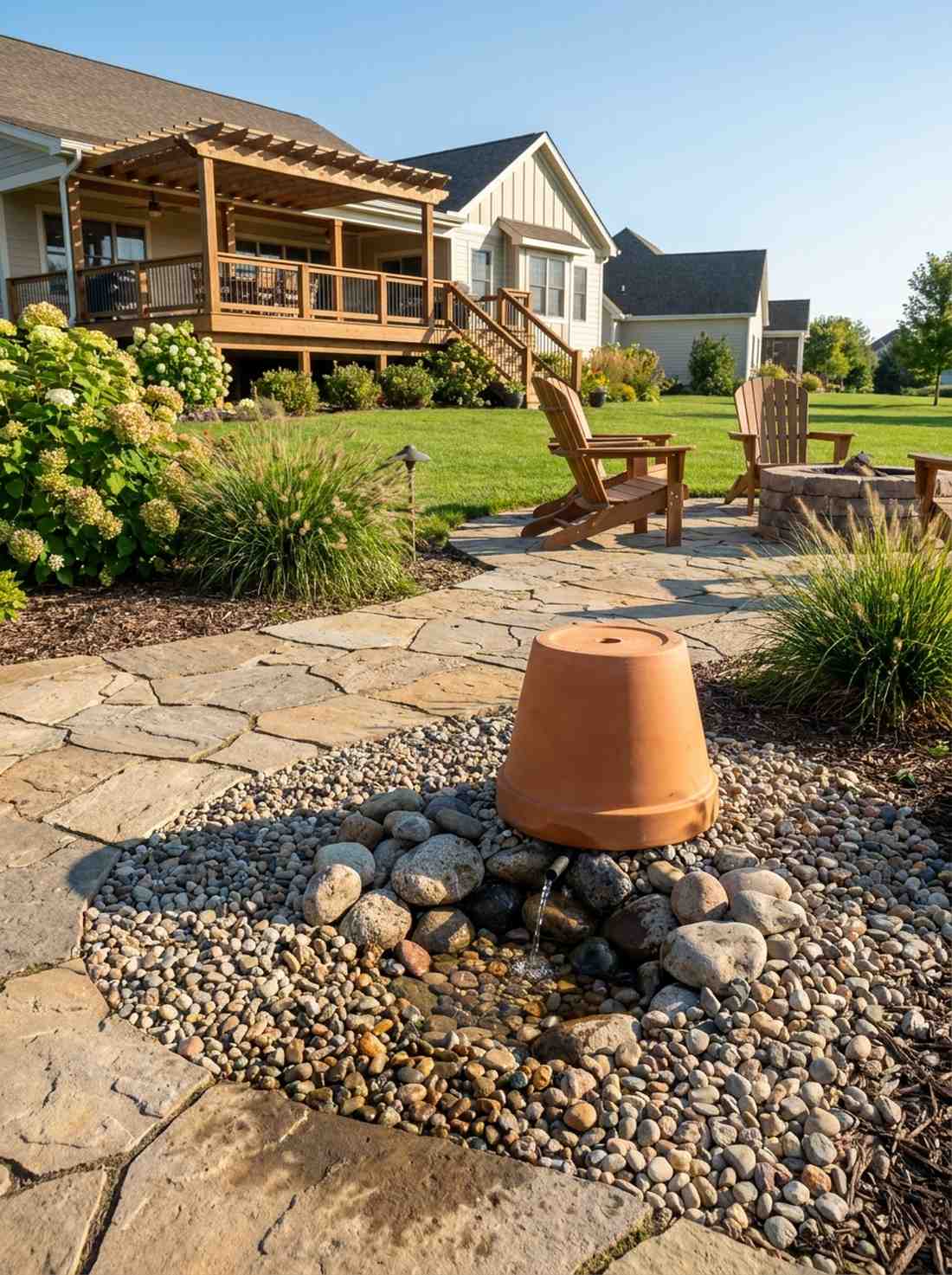
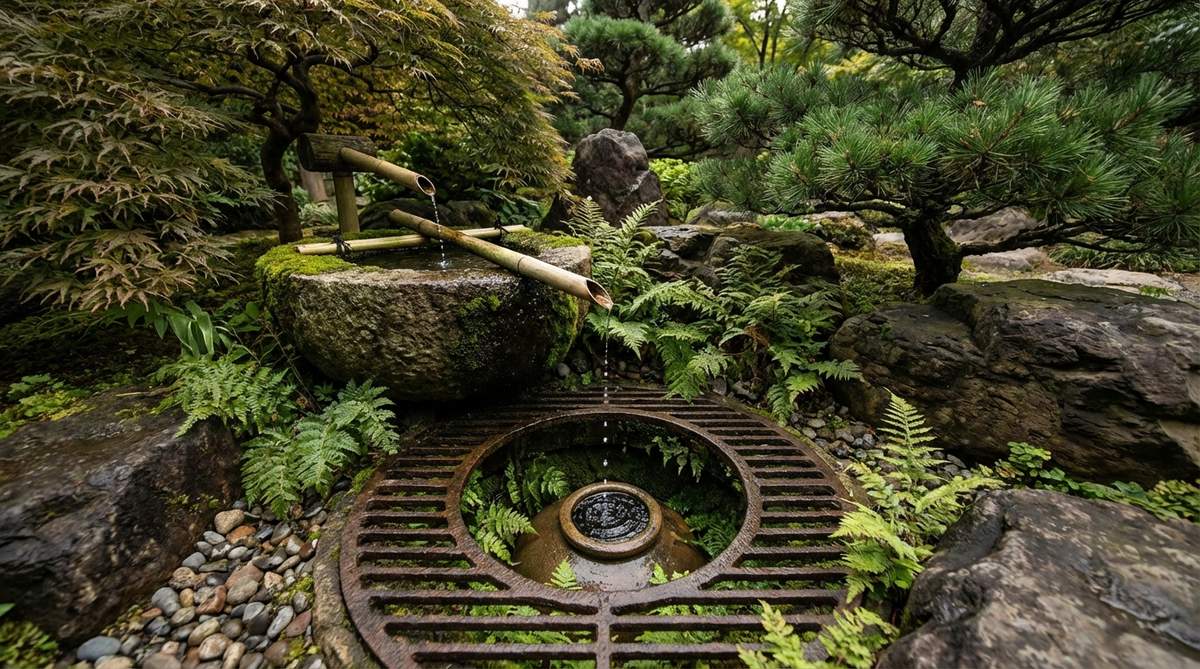
Brings literal underground magic to your garden pathways. This buried acoustic water harp creates delicate, bell-like echoing sounds every time a drop of water falls into the hidden chamber.
Installing an inverted ceramic pot beneath the drainage rocks looks far more expensive than it is, completely upgrading generic lawns instantly into sensory experiences. Using an unglazed large terracotta planter pot works perfectly as a budget-friendly resonating chamber for this acoustic trick.
You can build this hidden musical instrument for under $60! Pin this secret trick if you want to completely baffle and delight your garden guests.
- Key Materials: Large unglazed ceramic pot, drainage gravel, water tube
- Vibe / Style: Enchanting, hidden musicality
- Difficulty: Advanced (tuning the acoustics)
- Budget Breakdown: Terracotta Pot: $30 | Coarse Gravel: $15
- Creator’s Tip: The pot must be completely unglazed on the inside; the porous clay is what creates the sharp, metallic “ping” sound when the water droplets hit it.
- Smart Sourcing: Large unglazed terracotta pots or clean drainage gravel (bulk bag).
Cascading Japanese Garden Waterfall Designs
23. Mountain-Stream Cascade
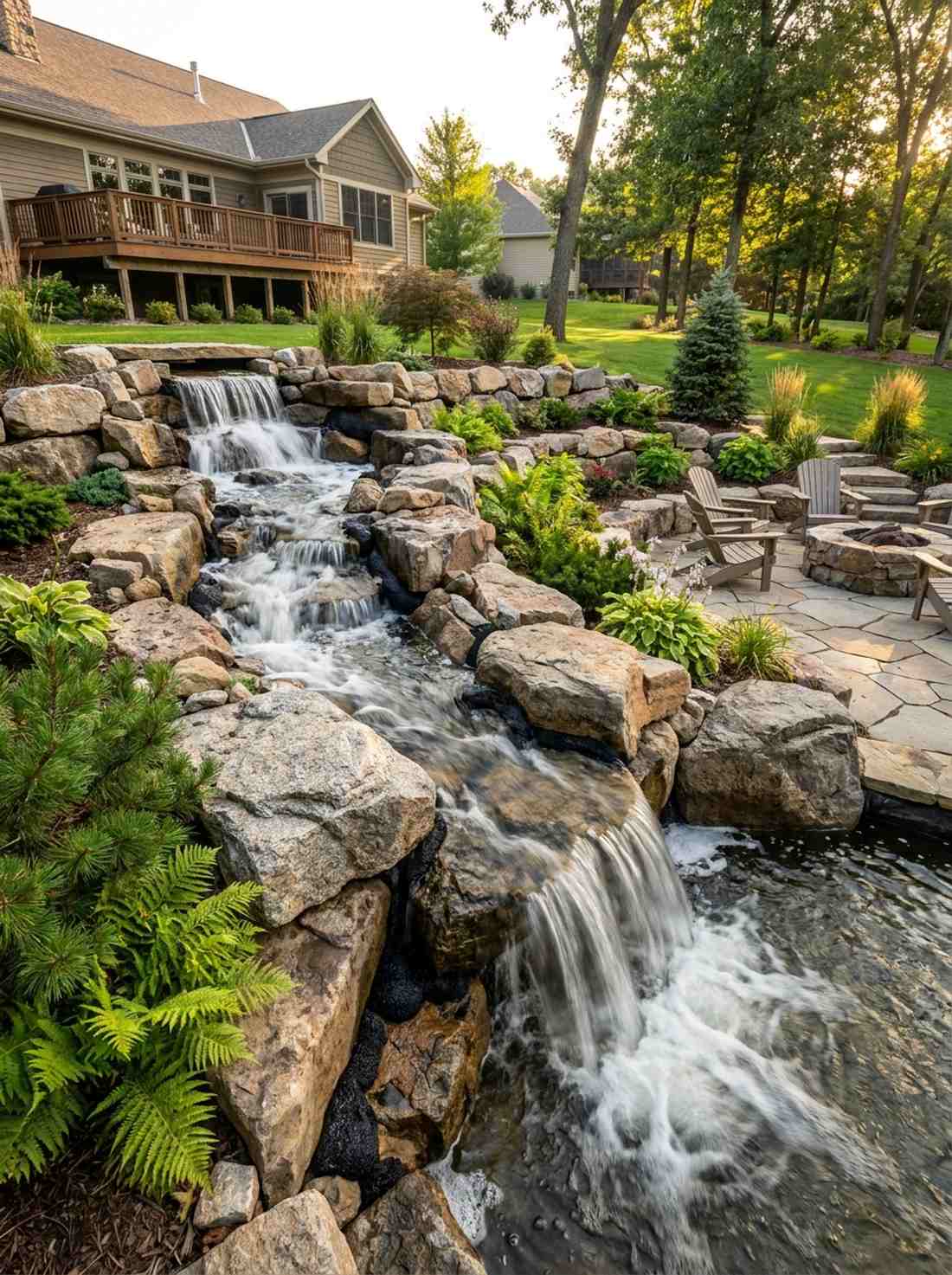
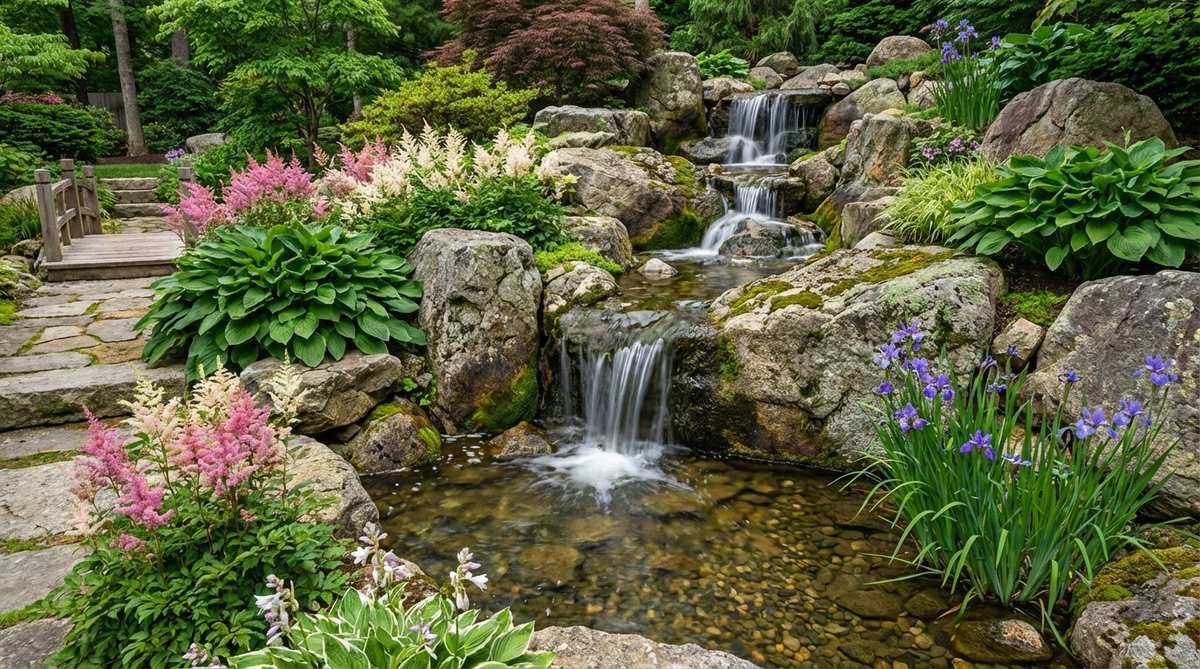
Feels like a rugged, untouched alpine river right on your property line. This boulder cascading waterfall is the ultimate showstopper for sloped yards or large garden retaining walls.
Stacking irregular boulders to force water to twist and turn delivers an ultra-premium aesthetic with a roaring acoustic profile. Investing in a high-volume waterfall spillway box ensures you get a thick, consistent rush of water rather than a disappointing trickle.
A full-scale mountain cascade is an investment, usually costing $400–$800. Save this ambitious project to your ultimate dream yard board!
- Key Materials: Large landscape boulders, waterfall spillway box, 2000+ GPH pump
- Vibe / Style: Roaring, dramatic alpine energy
- Difficulty: Advanced (requires heavy machinery/lifting)
- Budget Breakdown: Spillway & Pump: $250 | Boulders & Liner: $300
- Creator’s Tip: Use black expanding waterfall foam between the rocks to force water to flow OVER the boulders instead of disappearing underneath them.
- Smart Sourcing: High-volume waterfall spillway kits or black expanding waterfall foam sealant.
24. Sheet-Fall Rock Face
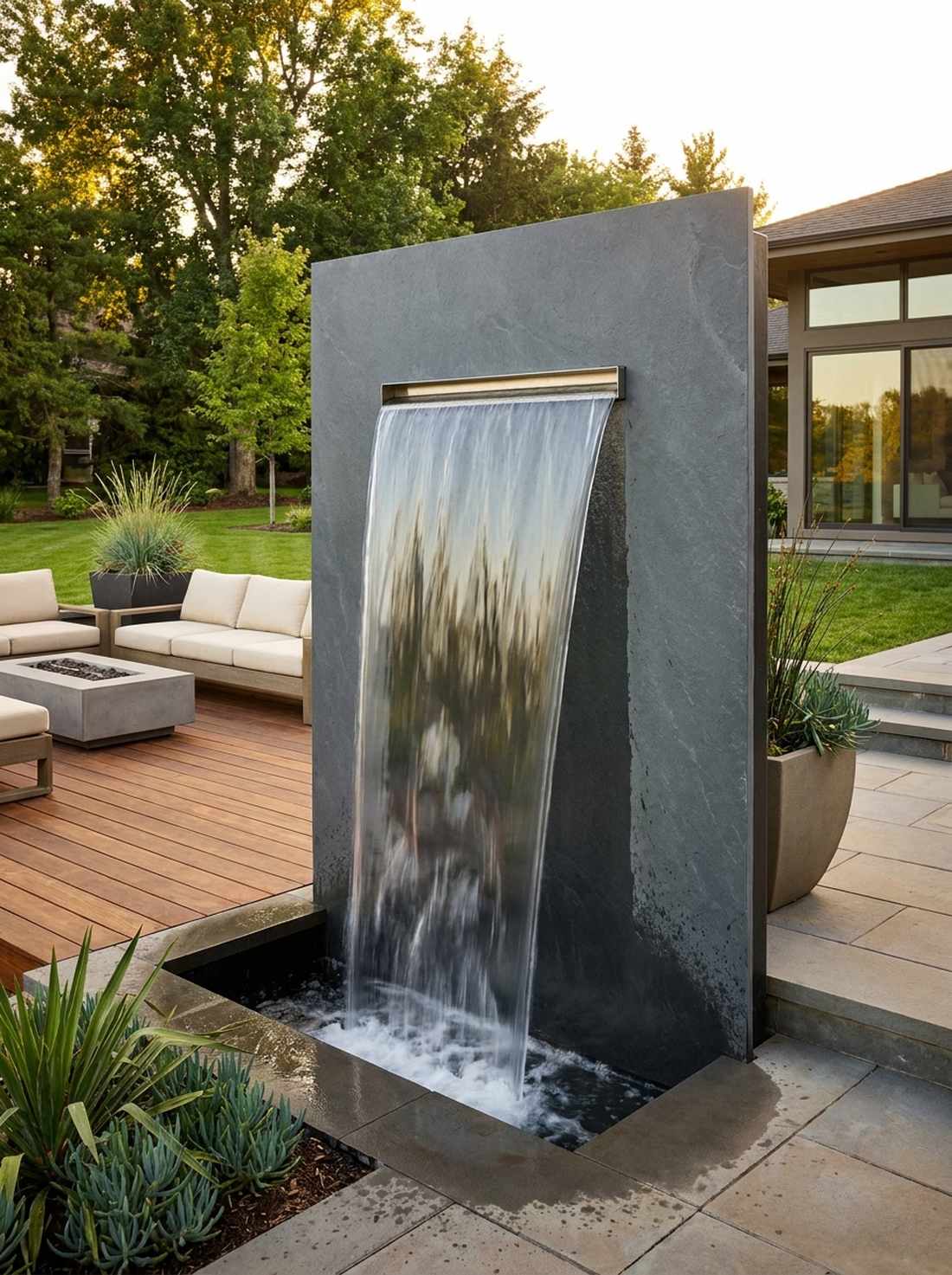
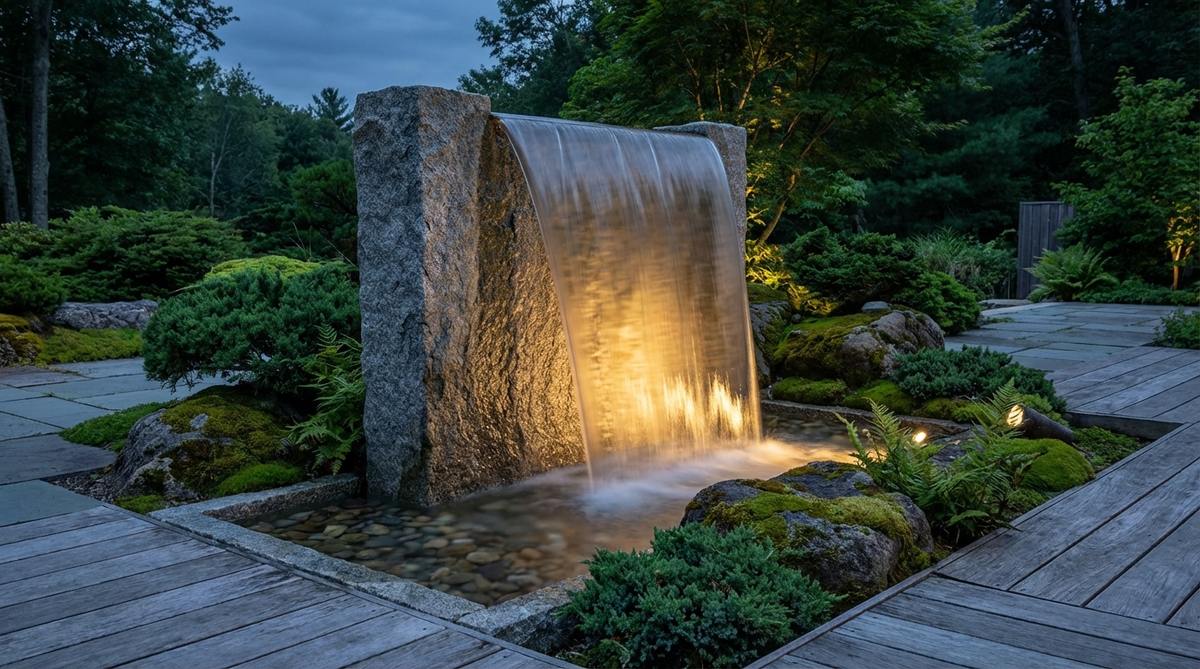
Vibes like an expensive minimalist art installation at a modern museum. This smooth water sheet design creates an unbroken curtain of water falling off a sheer, flat stone face.
Perfectly leveling a flat slab creates a glassy, mesmerizing water surface that completely upgrades generic lawns instantly. Using a specialized stainless steel sheer descent spillway buried at the top of the stone guarantees that flawless, glass-like water curtain effect.
Creating this sleek modern drop usually costs around $250–$450. Highly recommended for contemporary yards seeking clean, sharp aesthetics.
- Key Materials: Flat slate slab, sheer descent weir, heavy-duty catch basin
- Vibe / Style: Ultra-modern, glassy perfection
- Difficulty: Advanced (requires perfect leveling)
- Budget Breakdown: Sheer Spillway: $180 | Flat Slate Slab: $120
- Creator’s Tip: You must use a pump that pushes exactly 100 gallons per hour for every inch of spillway width to maintain an unbroken sheet of water.
- Smart Sourcing: Stainless steel sheer descent spillways or high-capacity magnetic drive water pumps.
Material Guide: Cheap vs. Premium Aesthetic
Knowing exactly where to save and where to spend makes all the difference in achieving that “looks like a $5,000 custom install but isn’t” vibe.
- Standard Wood vs. UV-Resistant Resins: Real bamboo cracks within a year. Upgrading to UV-coated resin or heavy-duty faux bamboo stops splitting and fading entirely.
- Pre-made Kits vs. Sourcing Locally: While finding rocks locally is cheap, buying pre-drilled tsukubai starter kits saves you the massive expense of buying masonry drill bits and risking cracking your own stone.
25. Bamboo-Flume Waterfall
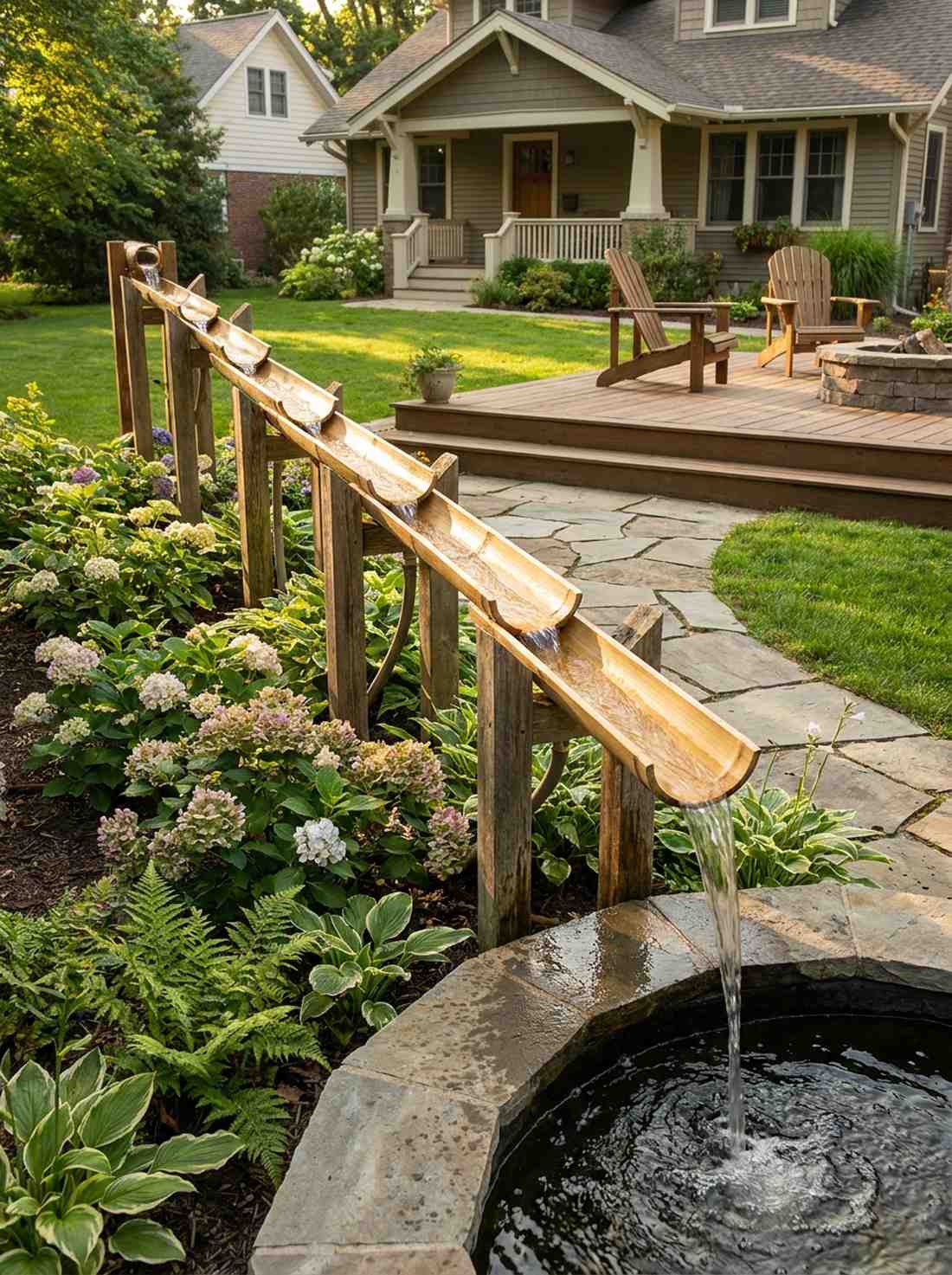
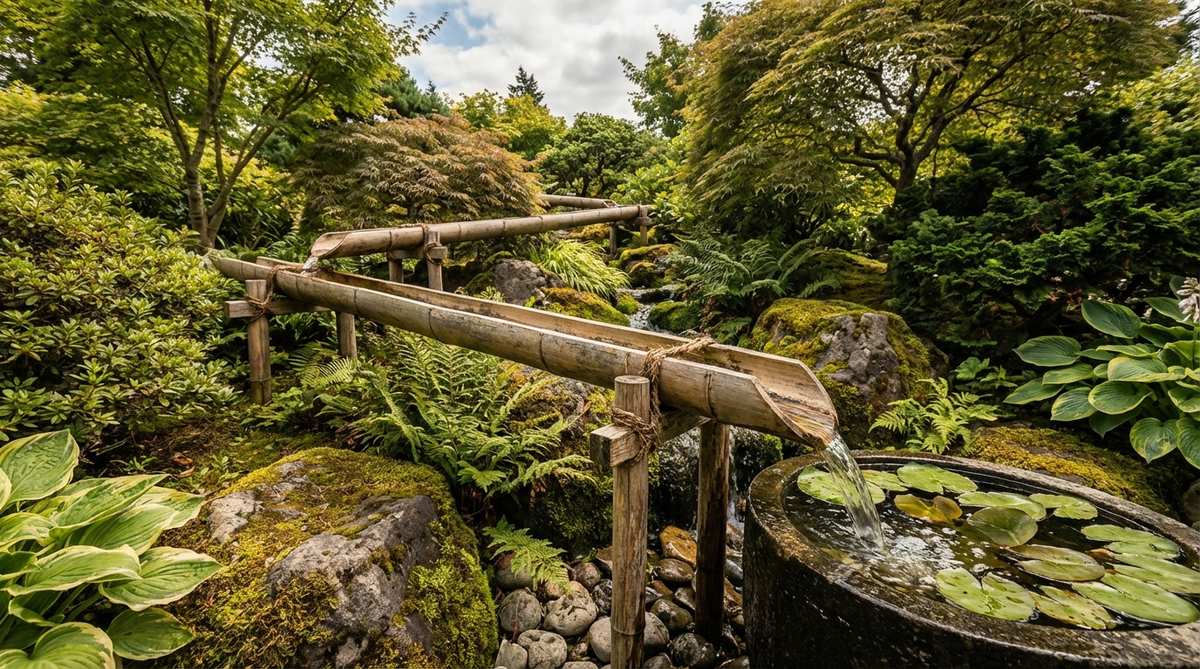
Looks like a clever jungle aqueduct delivering life to your garden. This elevated bamboo flume system bridges gaps over walkways or low-lying flower beds beautifully.
Creating an architectural bridge with moving water looks far more expensive than it is and adds incredible vertical dimension. Utilizing split bamboo half-rounds makes constructing the channels lightweight, inexpensive, and super easy to mount on simple wooden stakes.
This striking elevated water highway costs just $60–$120 to construct. Pin this if you want to move water dramatically across a long stretch of yard!
- Key Materials: Split bamboo halves, wooden stakes, hidden return hose
- Vibe / Style: Clever, rustic engineering
- Difficulty: Moderate
- Budget Breakdown: Split Bamboo: $45 | Support Stakes: $20
- Creator’s Tip: Overlap the bamboo sections by at least 4 inches at the joints so fast-moving water doesn’t leak out before reaching the final drop point.
- Smart Sourcing: Pre-split half-round bamboo poles (bulk pack) or weatherproof outdoor wood glue.
26. Tiered-Bowl Overflow System
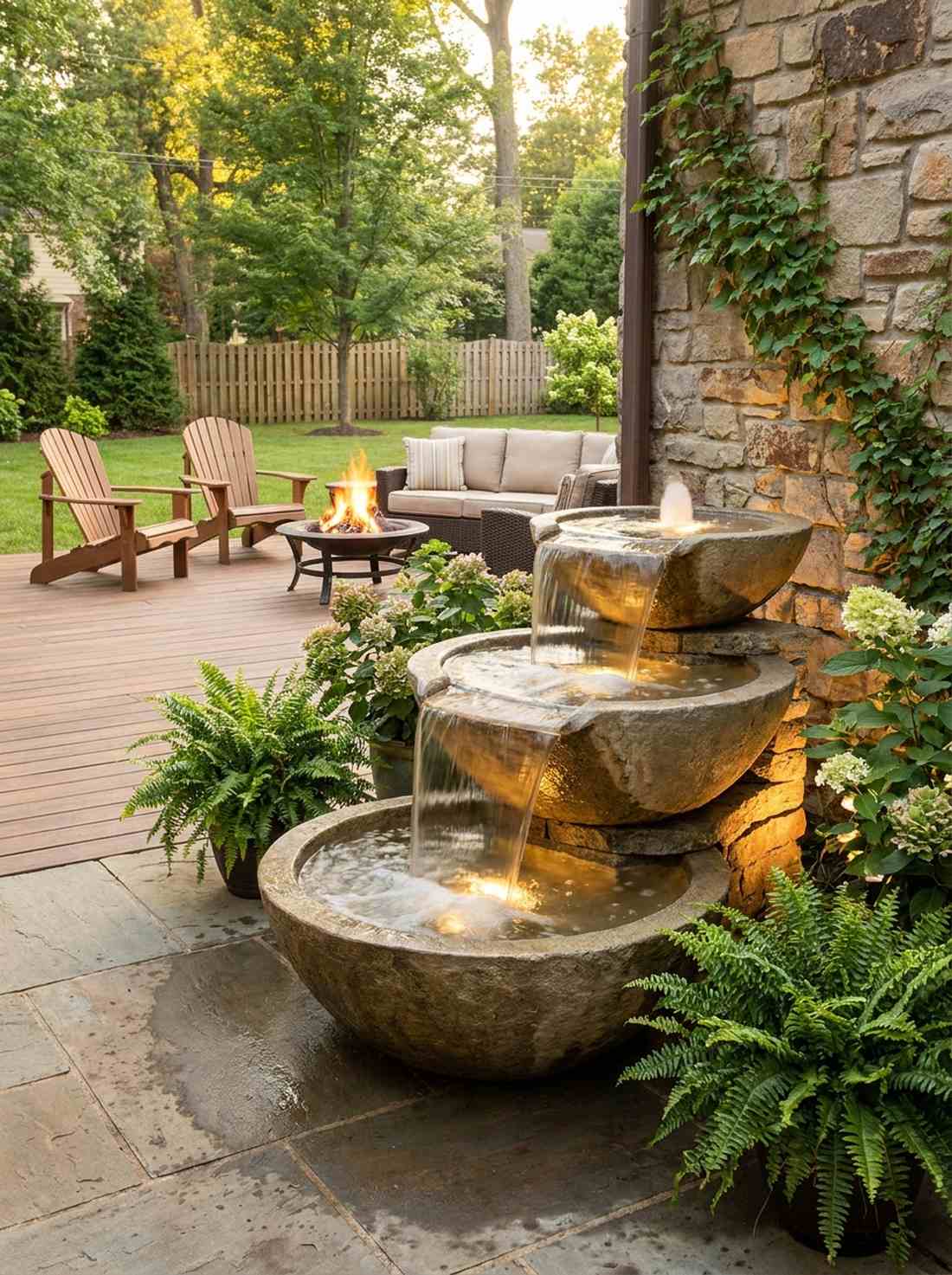
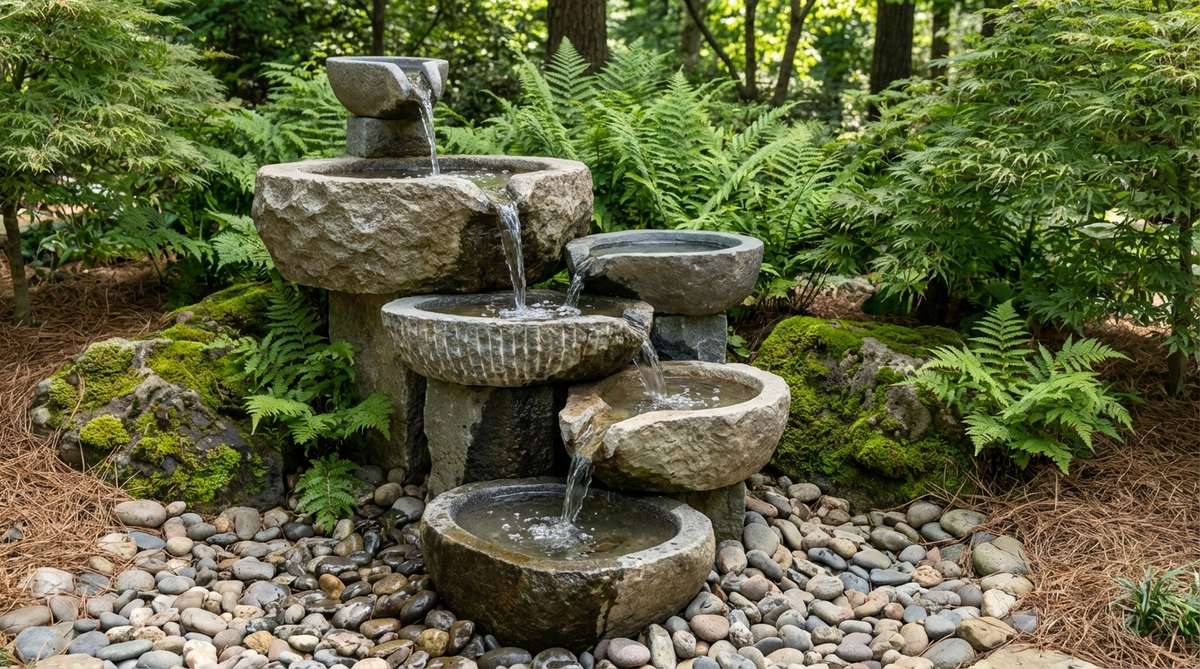
Creates a mesmerizing, never-ending staircase of water. This multi-level basin cascade is brilliant for corner patios where you want maximum sound but have minimal ground space.
Stacking three different sized bowls delivers an incredibly complex soundscape that completely transforms dead space into a focal point. Grabbing a tiered garden fountain kit takes all the plumbing guesswork out of the equation and guarantees the water pressure remains balanced.
You can set up a beautiful tiered system for about $150–$300. Save this to your small-space garden board for an instant height upgrade!
- Key Materials: 3 graduated stone bowls, central PVC pipe, leveling shims
- Vibe / Style: Layered, abundant flow
- Difficulty: Moderate (balancing water flow)
- Budget Breakdown: 3 Bowls: $190 | Internal Plumbing: $35
- Creator’s Tip: Slightly tilt the top two bowls forward by inserting a small wedge underneath; this forces the water to spill exactly where you want it rather than down the backside.
- Smart Sourcing: Pre-drilled tiered bowl fountain kits or plastic fountain leveling shims.
27. Rock-Garden Desert Stream
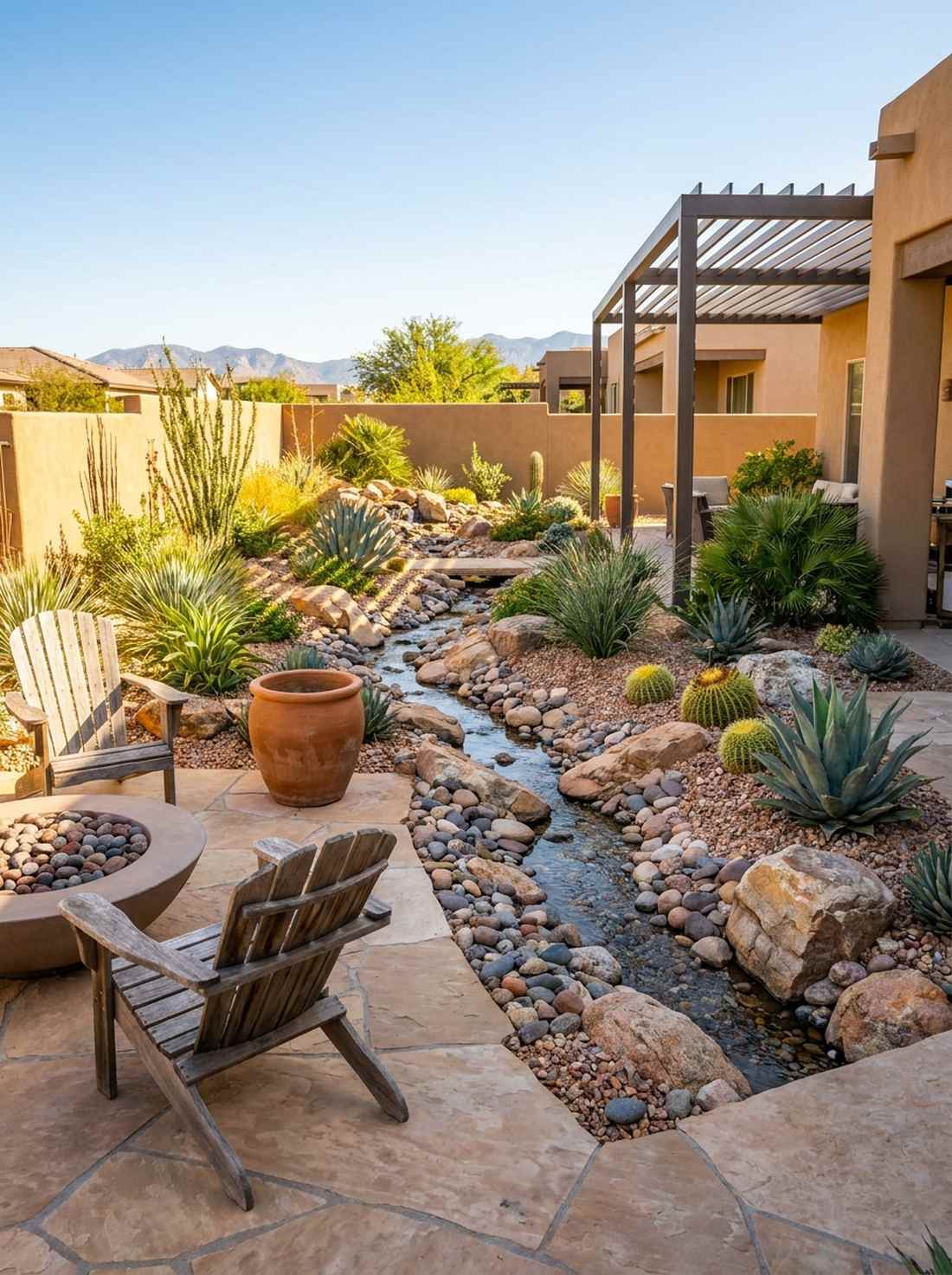
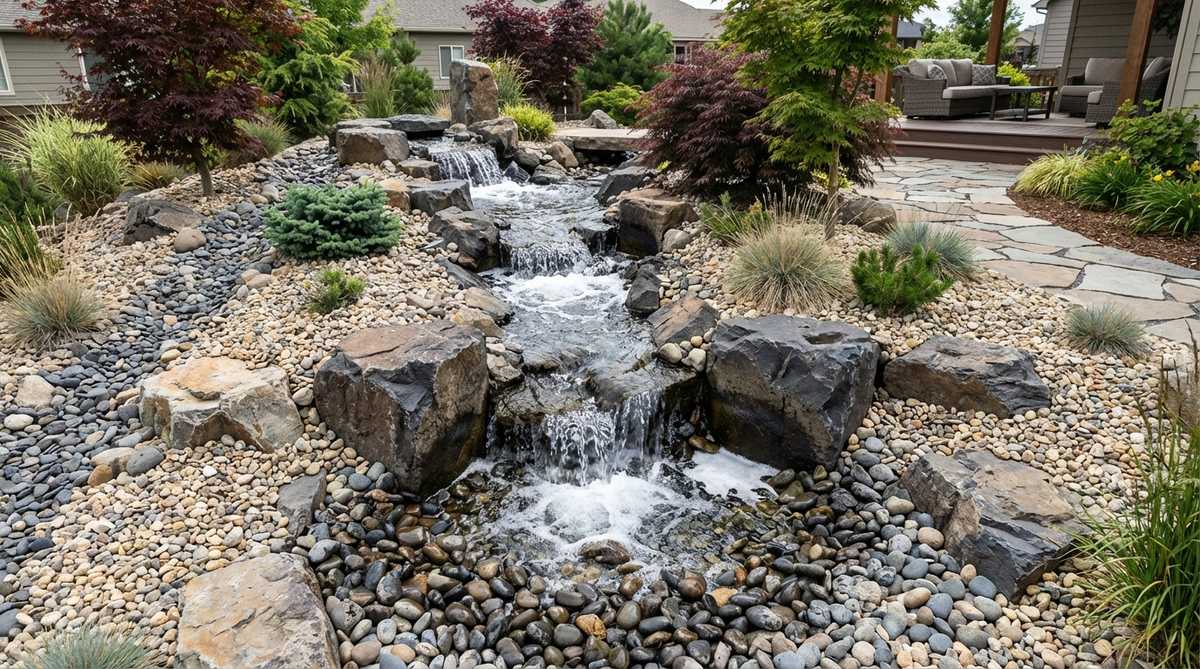
Strikingly beautiful contrast that mimics an oasis in an arid landscape. This dry riverbed water feature looks absolutely incredible snaking through succulents, agave, or modern xeriscaping.
Running a thin ribbon of water through an aggressively dry, rocky layout gives a designer-level finish and creates immense visual tension. Utilizing commercial-grade pond liners beneath the dry rocks ensures the water stays contained without soaking into the parched earth.
Building this stark, gorgeous contrast usually runs $180–$350. Pin this immediately if you live in a drought-prone state like California or Arizona!
- Key Materials: Desert-hued boulders, narrow stream liner, low-flow pump
- Vibe / Style: Arid, striking oasis
- Difficulty: Moderate
- Budget Breakdown: Stream Liner: $65 | Desert Boulders/Gravel: $150
- Creator’s Tip: Keep the water flow extremely low; a slow trickle through dry desert rocks looks much more natural and dramatic than a roaring rapid.
- Smart Sourcing: Pre-cut narrow stream EPDM liners or desert sunset decorative gravel (bulk bag).
28. Wall-Mounted Weeping Stones
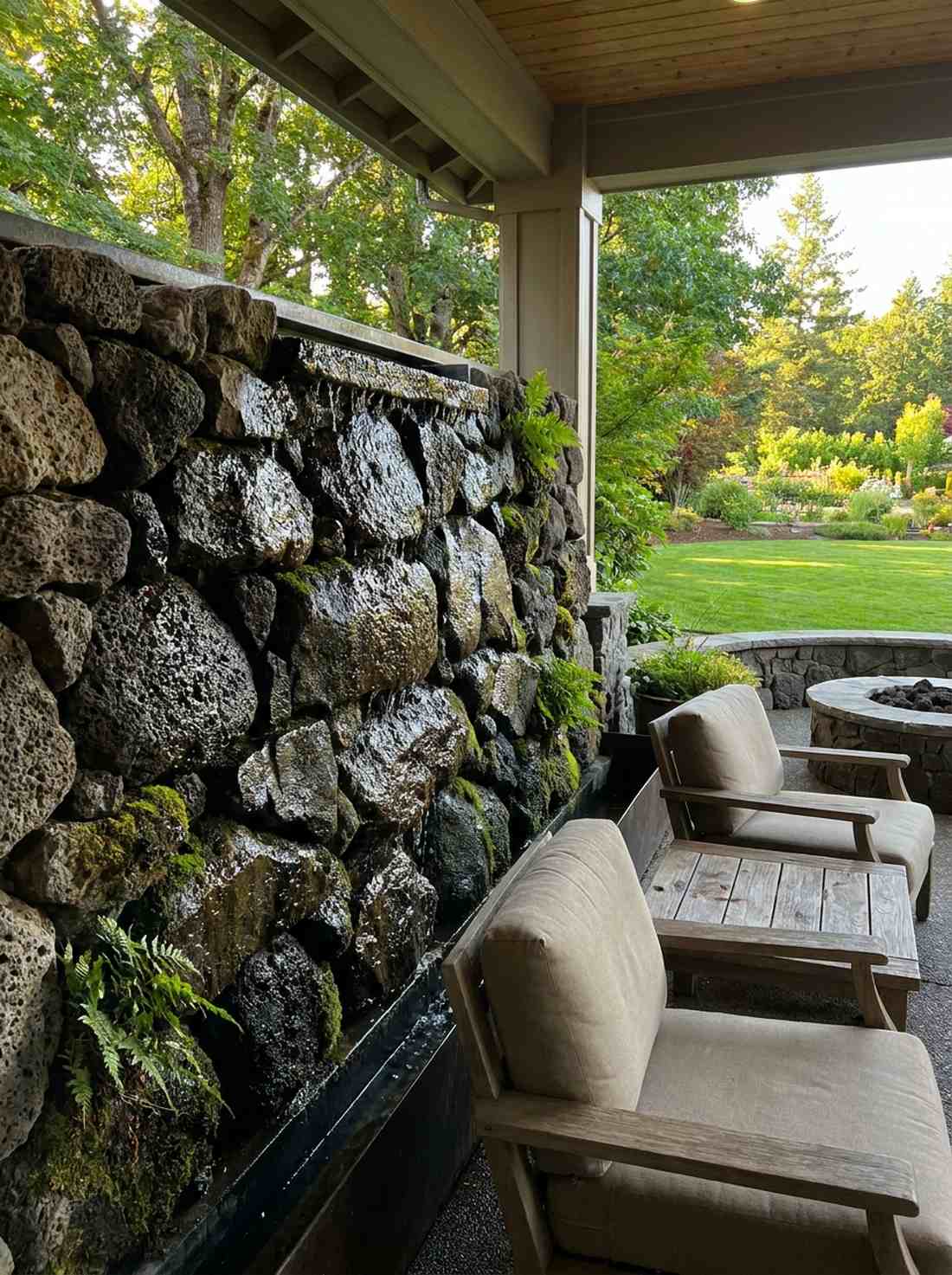
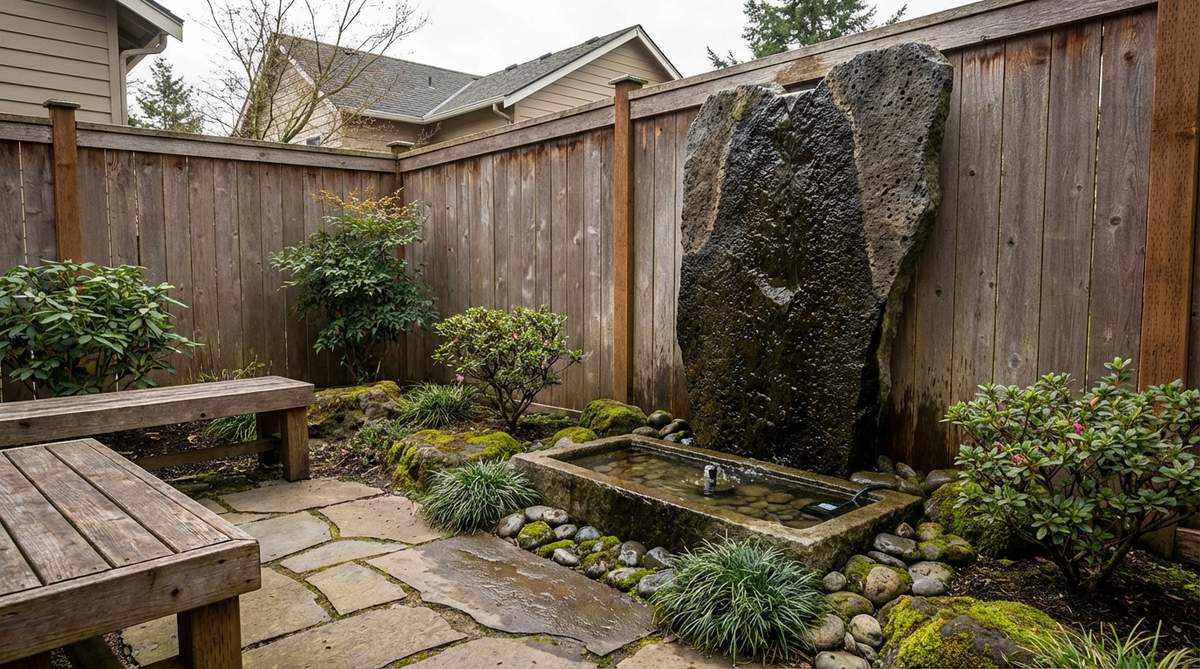
Vibes like an ancient, weeping cavern wall dripping with history. This porous weeping rock wall is incredibly subtle, making it perfect for intimate meditation nooks or indoor/outdoor transitions.
Ditching loud splashes for a shimmering, wet stone face delivers an ultra-premium aesthetic that won’t overwhelm a quiet conversation. Incorporating highly porous featherock or volcanic tufa boulders allows the water to actually wick through the stone itself, creating a glistening surface.
This subtle, quiet masterpiece usually costs $120–$250 to achieve. Highly recommended for anyone wanting visual movement without the loud splashing noise.
- Key Materials: Volcanic tufa stones, drip line irrigation tubing, hidden base trough
- Vibe / Style: Quiet, shimmering subtlety
- Difficulty: Moderate
- Budget Breakdown: Tufa Rock: $90 | Drip Tubing & Pump: $45
- Creator’s Tip: Run standard drip-irrigation tubing along the very top back edge of the stone; the slow drip rate perfectly creates the “weeping” effect without causing splashing.
- Smart Sourcing: Porous volcanic tufa rocks (bulk pack) or micro-drip irrigation starter kits.
You absolutely do not need a yard for this next idea—it works on apartment balconies and tiny concrete patios…
29. Container Water-Garden Basin
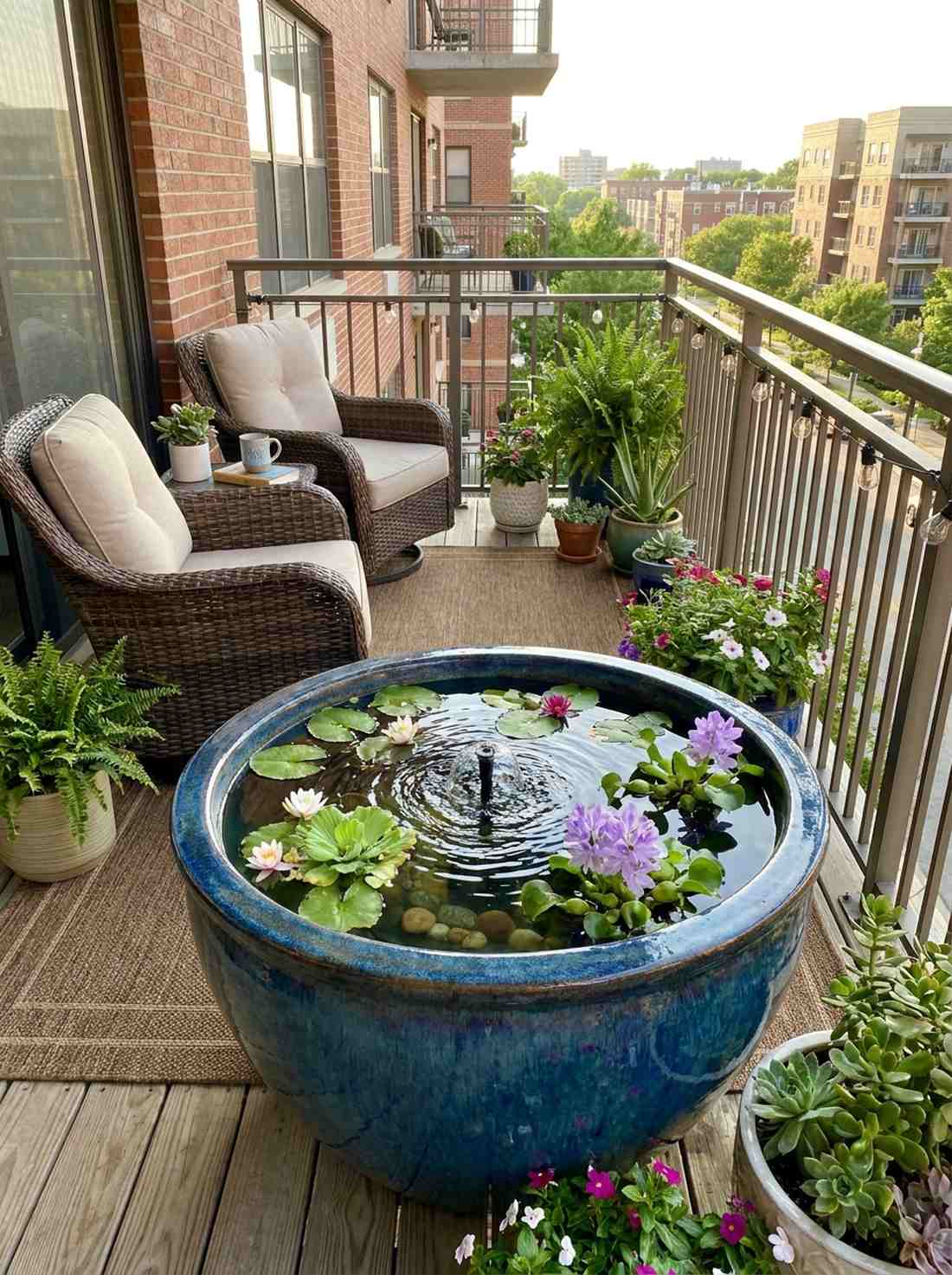
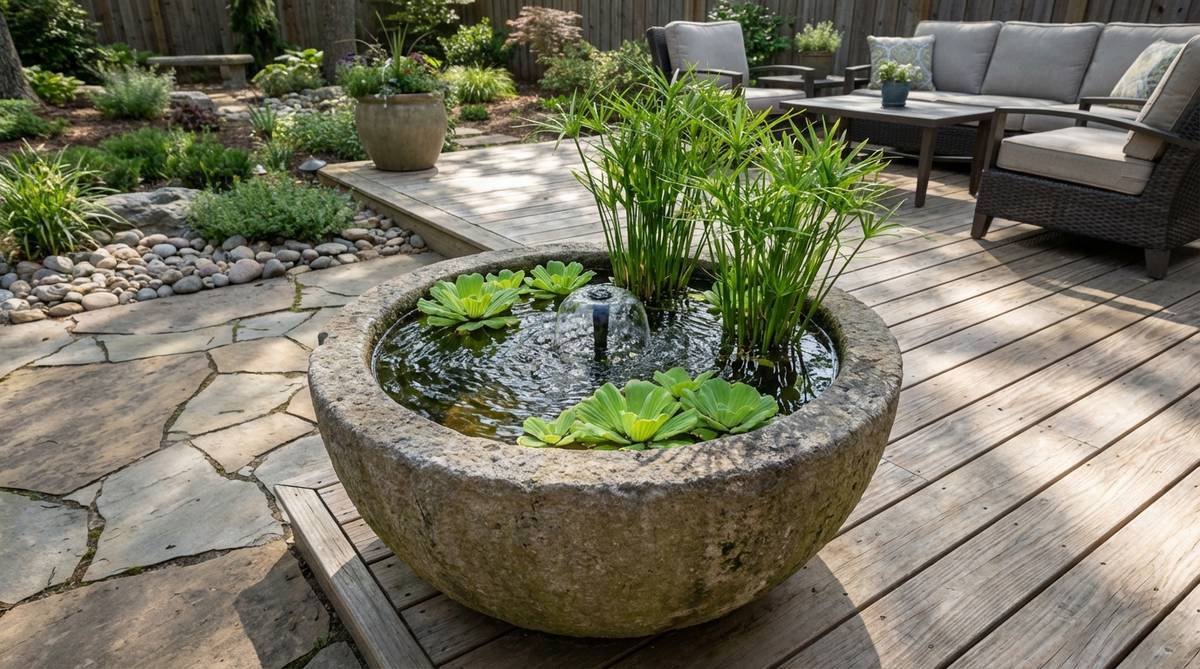
Brings a massive dose of zen to the tiniest of apartment balconies. This self-contained patio water bowl is the absolute perfect renter-friendly solution for instant aquatic vibes.
Shrinking a massive landscape feature down into a single large vessel completely upgrades generic patios instantly without any digging. Adding miniature garden supplies like dwarf water lilies and floating hyacinth turns a simple ceramic pot into a thriving micro-ecosystem.
You can set up this gorgeous miniature oasis for just $40–$90. Save this to your renter-friendly patio ideas board!
- Key Materials: Large glazed ceramic pot, mini submersible pump, aquatic floating plants
- Vibe / Style: Compact, renter-friendly oasis
- Difficulty: Extremely easy
- Budget Breakdown: Glazed Pot: $50 | Mini Pump & Plants: $30
- Creator’s Tip: Seal the drainage hole at the bottom of the ceramic pot with marine-grade silicone inside and out to guarantee it won’t leak on your deck.
- Smart Sourcing: Marine-grade clear silicone sealant or miniature 50-GPH submersible pumps.
Contemporary Adaptations for American Gardens
30. Pondless Disappearing Basin
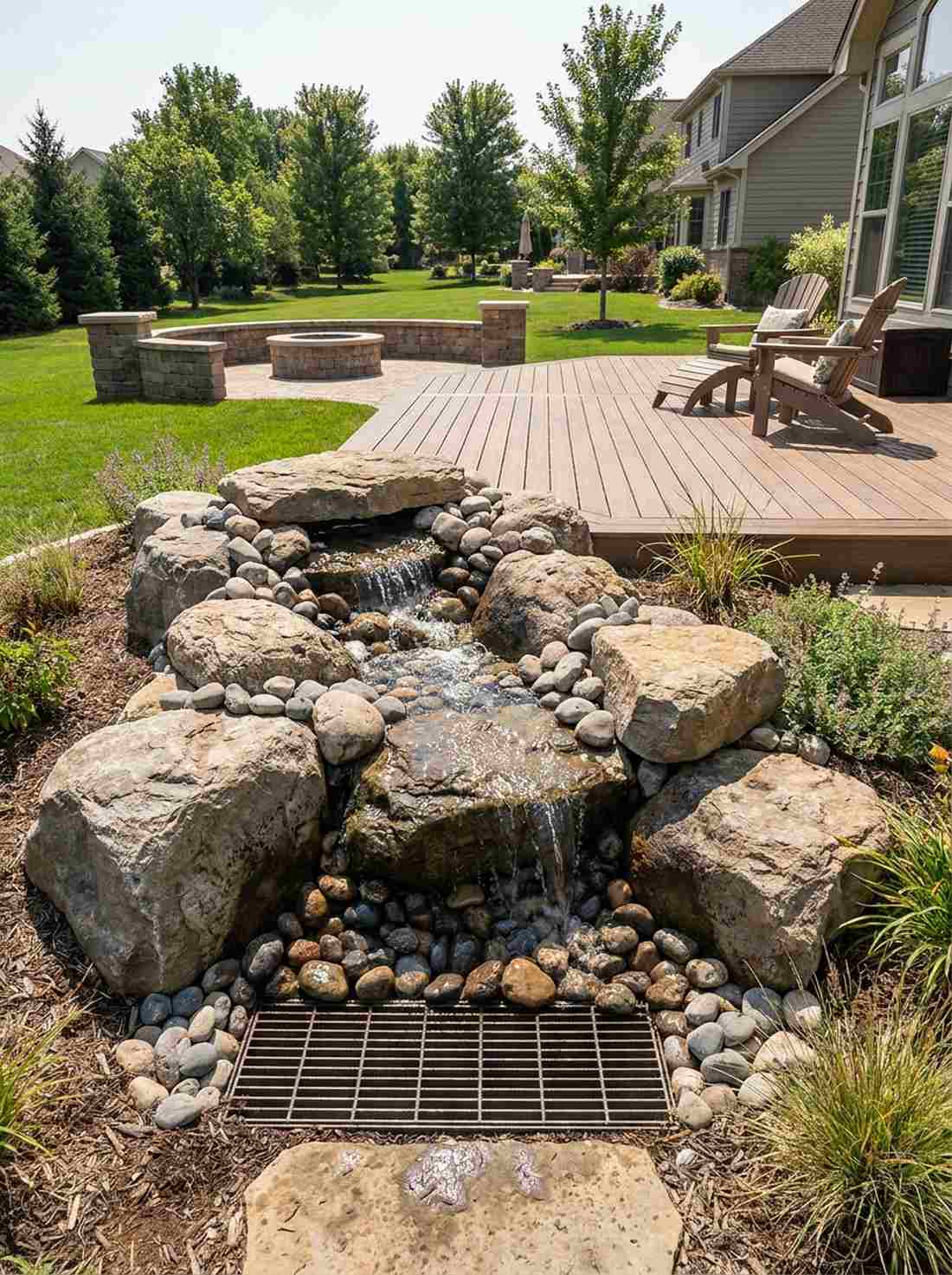
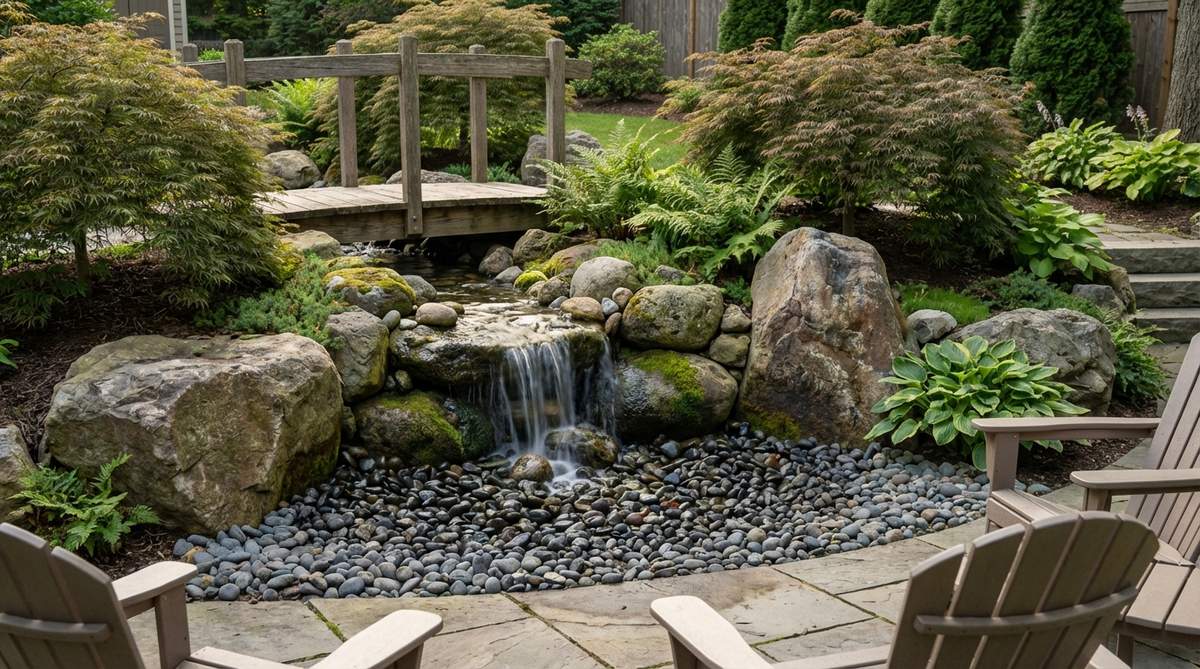
Provides all the acoustic beauty of a fountain with absolutely zero standing water danger for toddlers. This child-safe pondless vault is the ultimate modern family backyard hack.
Hiding the entire water volume underground looks far more expensive than it is and practically eliminates algae and mosquito breeding. Investing in a sturdy heavy-duty pump vault grid ensures you can stack massive boulders directly over the hidden water reservoir without it collapsing.
This ultra-safe, low-maintenance upgrade costs around $150–$300. Pin this if you want a stunning water feature but have curious pets or toddlers!
- Key Materials: Pondless underground vault, sturdy support grating, surface cobble
- Vibe / Style: Modern, low-maintenance safety
- Difficulty: Moderate (requires digging a deep hole)
- Budget Breakdown: Vault Grid Kit: $180 | Pump: $60
- Creator’s Tip: Cut a small trapdoor flap in your support grating so you can easily reach in and pull the pump out for winter cleaning without moving all the heavy surface rocks.
- Smart Sourcing: Heavy-duty pondless fountain basin kits or pre-cut fountain mesh screens.
31. Solar-Powered Fountain System
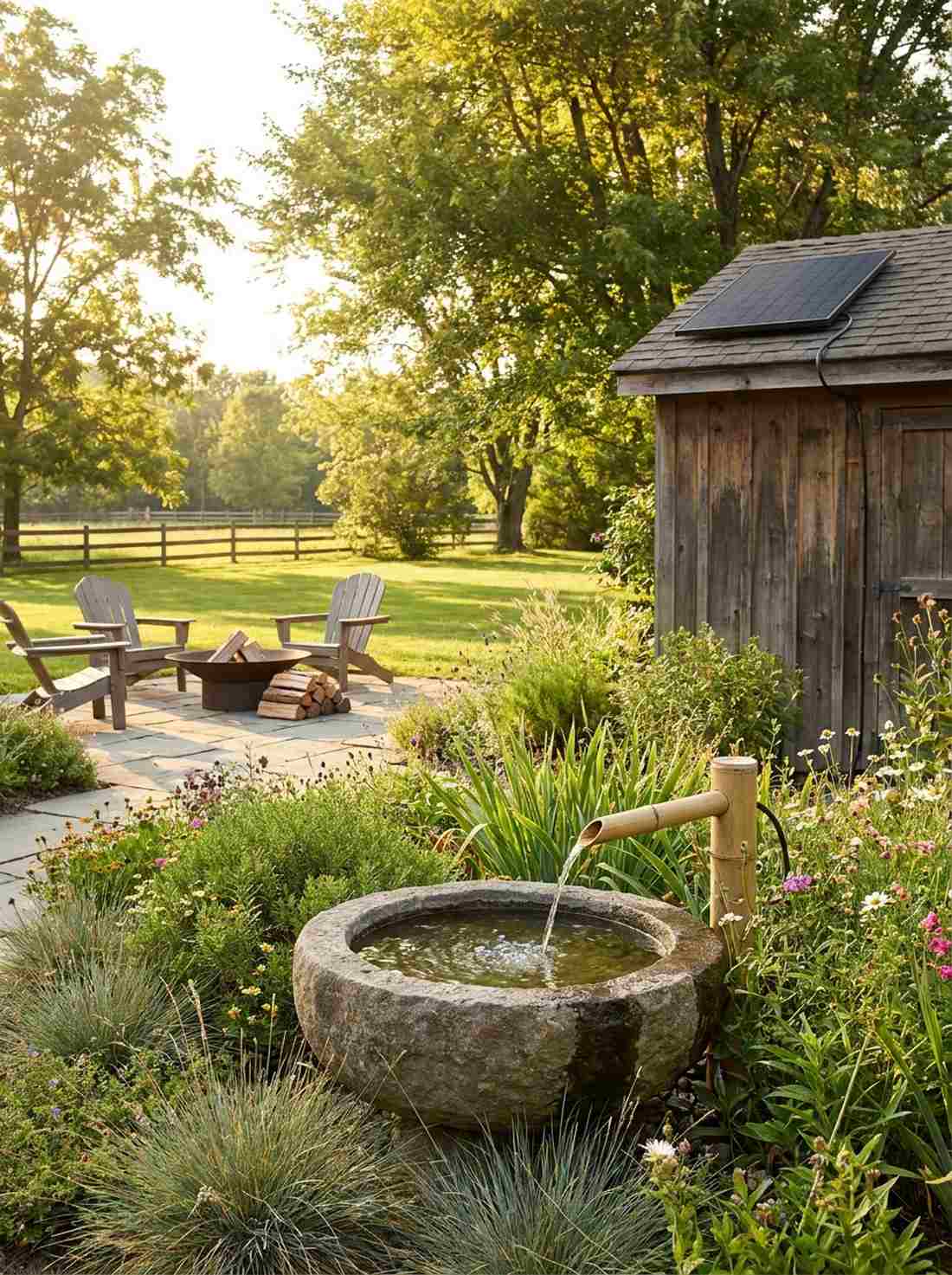
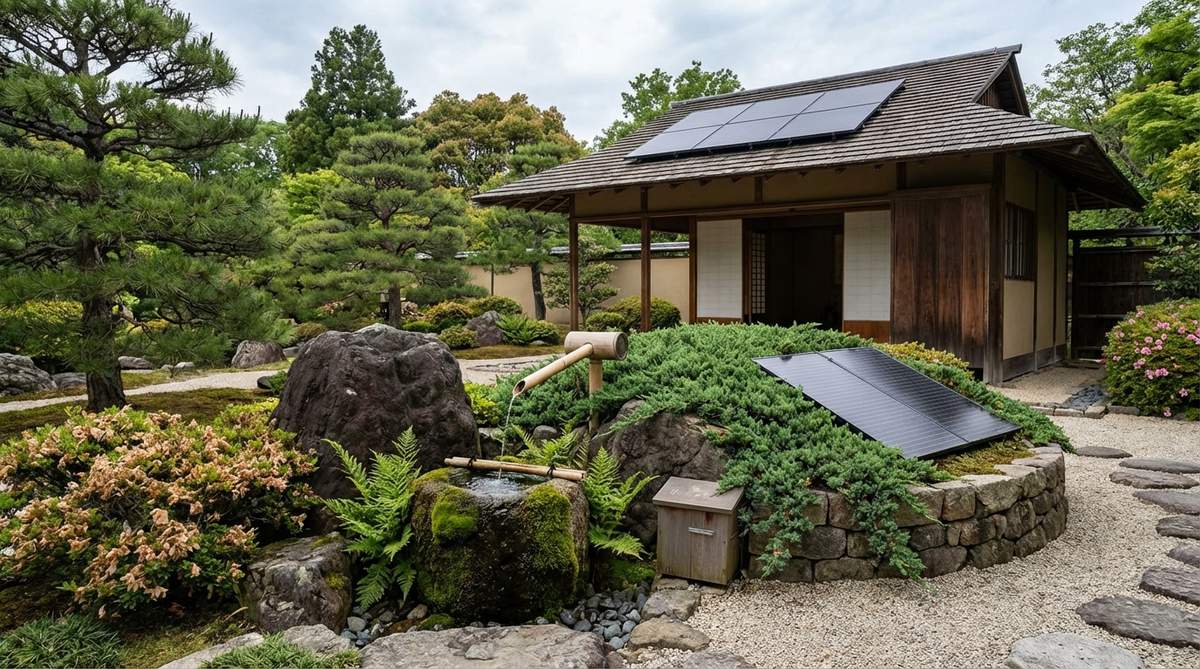
Lets you place a stunning water feature literally anywhere in the sun, zero extension cords required. This off-grid solar setup is brilliant for the far edges of large acreages or remote garden beds.
Eliminating the need to trench electrical wires through your lawn completely transforms dead space with zero electrical hassle. Upgrading to solar fountain pumps with battery backups ensures your bamboo spout keeps pouring even when a cloud passes over.
You can go completely off-grid for $80–$150. Highly recommended for eco-friendly gardeners who hate dealing with outdoor outlets.
- Key Materials: Solar panel kit, battery-backed pump, hidden tubing
- Vibe / Style: Eco-smart, off-grid freedom
- Difficulty: Very easy
- Budget Breakdown: Solar Pump Kit: $85 | Birdbath/Basin: $40
- Creator’s Tip: Mount the solar panel on the roof of a nearby shed or fence line so it stays hidden from view while still catching maximum mid-day rays.
- Smart Sourcing: Solar-powered water pump kits (with battery backup) or extra-long pump extension cables.
32. Heated Winter-Operation Basin
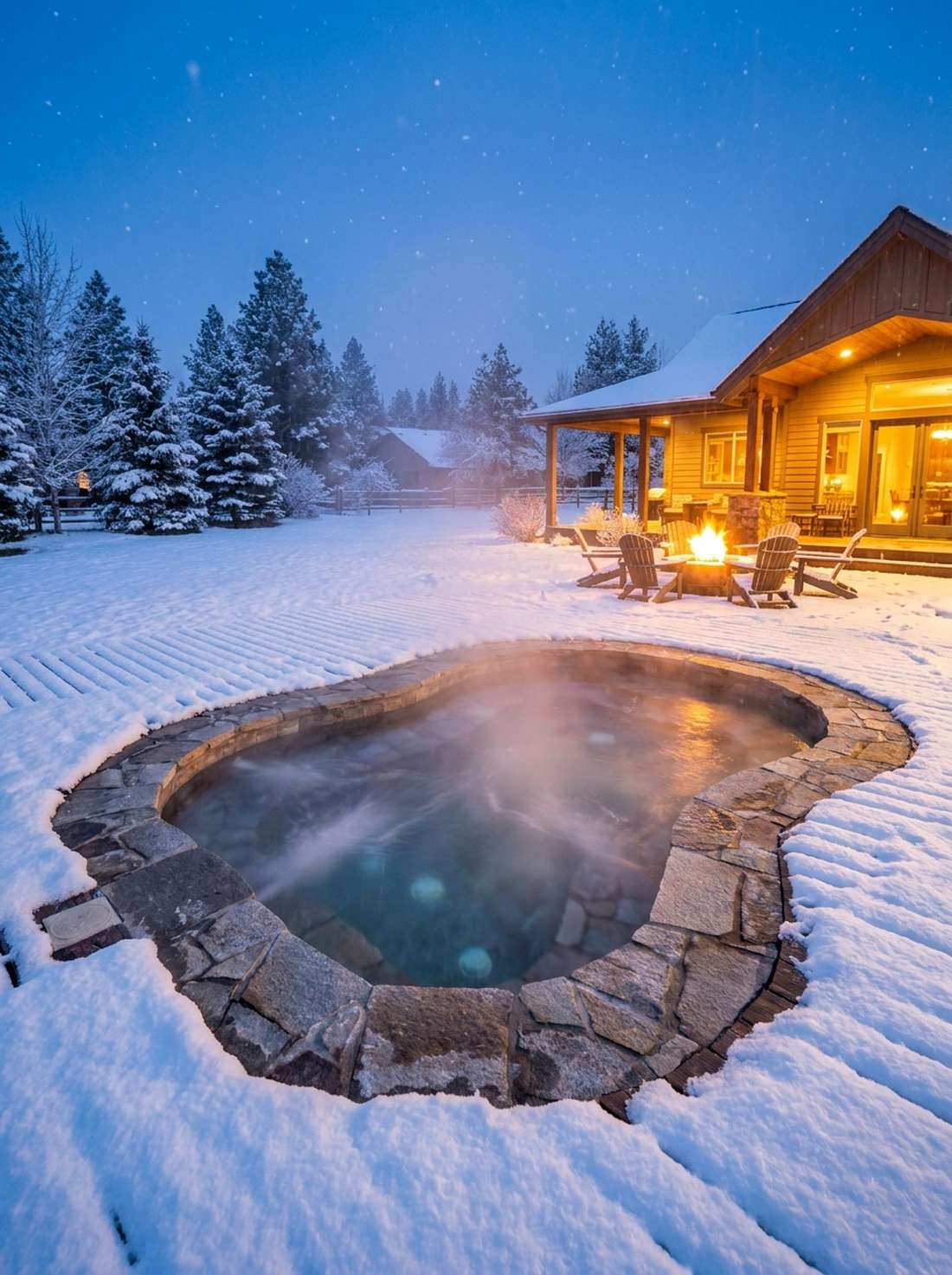
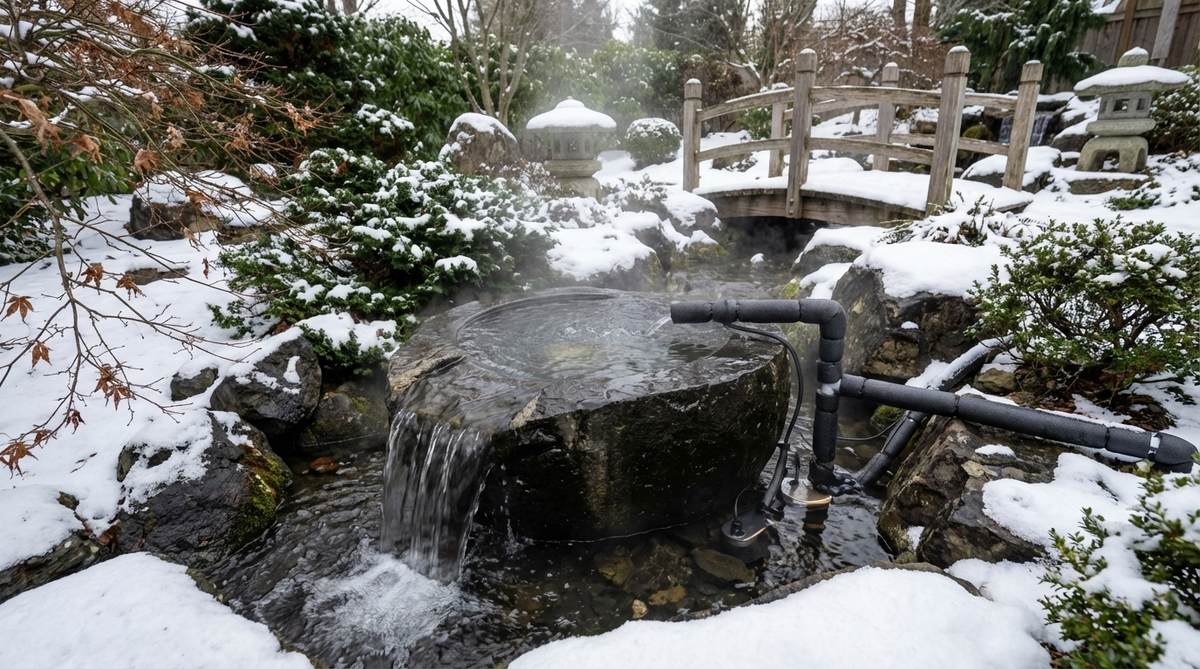
Looks like a steaming, magical hot spring amidst a freezing snowy landscape. This winterized heated basin creates jaw-dropping contrast when your entire yard is covered in white.
Keeping water flowing during sub-zero temperatures delivers a surprisingly premium look that makes your home stand out in the dead of winter. Dropping a simple submersible birdbath de-icer into your hidden reservoir prevents ice from destroying your pump and cracking your pipes.
Winterizing your setup costs just $40–$80 for the heating elements. Pin this if you live in a snowy climate and want year-round aesthetic appeal!
- Key Materials: Submersible de-icer unit, insulated foam tubing covers, heavy basin
- Vibe / Style: Steaming, resilient winter magic
- Difficulty: Easy
- Budget Breakdown: De-icer Element: $45 | Pipe Insulation: $15
- Creator’s Tip: Wrap all exposed water lines in black foam pipe insulation and tuck them behind rocks to keep the water from freezing before it hits the drop point.
- Smart Sourcing: Submersible thermostatic pond de-icers or weatherproof foam pipe insulation tape.
33. LED-Illuminated Basin Fountain
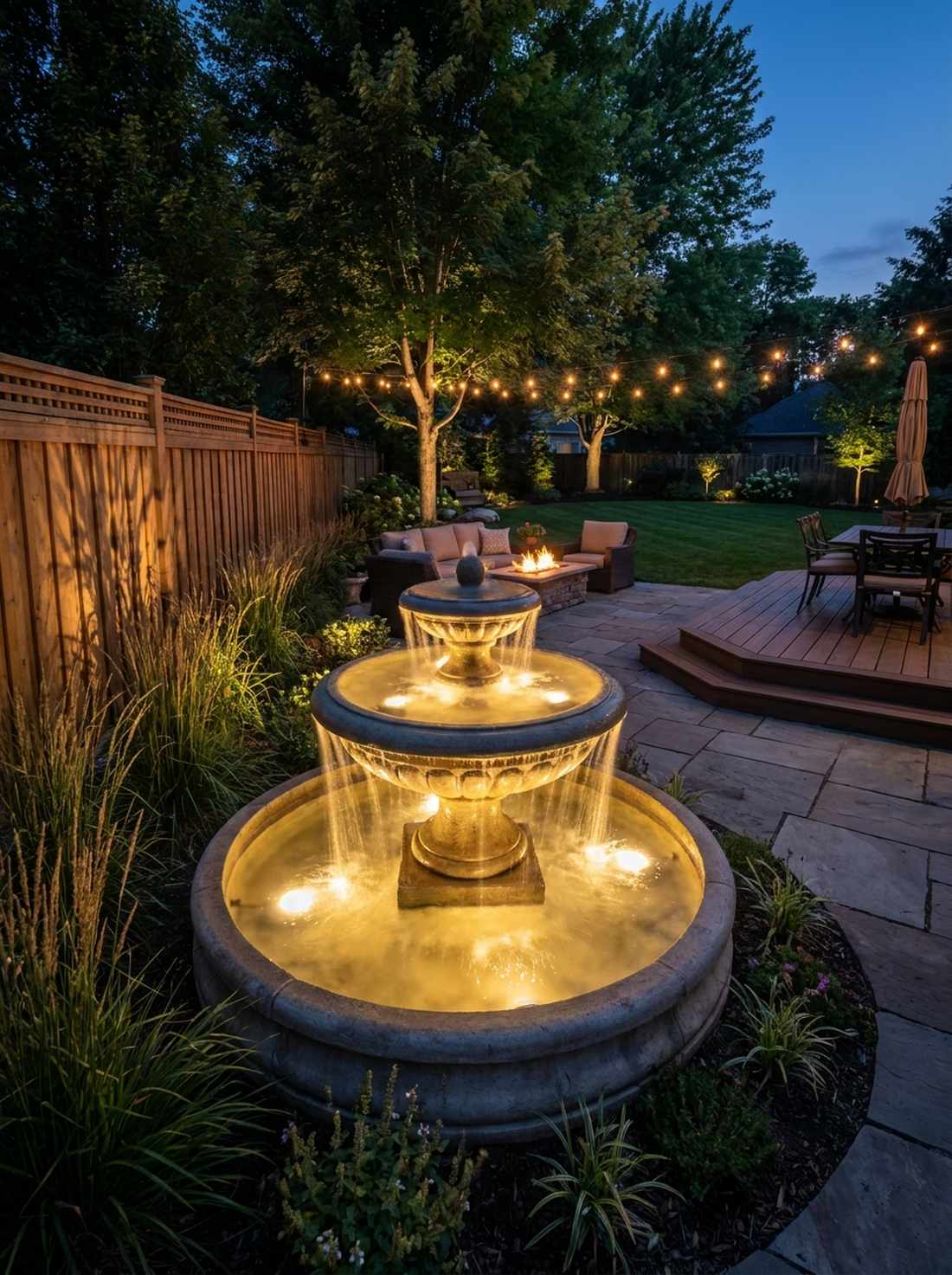
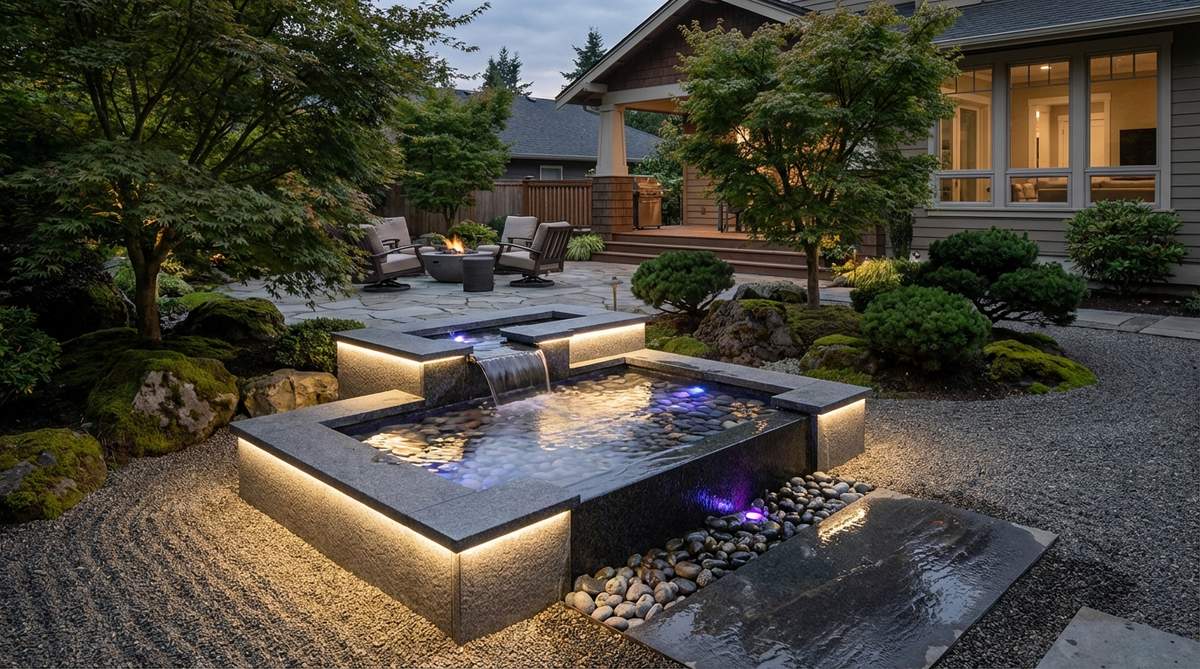
Turns your daytime zen garden into a glowing, moody nighttime lounge. This underwater LED lighting setup makes the splashing water dance with shadows across your fences.
Strategically uplighting moving water completely upgrades generic lawns instantly into high-end entertainment spaces after dark. Using warm-white submersible LED puck lights keeps the aesthetic elegant and classy, avoiding the cheap look of harsh multi-colored bulbs.
Adding a professional lighting suite runs about $50–$100. Save this to your outdoor entertaining board for immediate evening ambiance!
- Key Materials: Submersible warm LED lights, low-voltage transformer, weighted bases
- Vibe / Style: Glowing, luxurious nightscape
- Difficulty: Easy (plug and play)
- Budget Breakdown: LED Light Kit: $60 | Transformer: $25
- Creator’s Tip: Submerge the light directly under the water drop point; the falling water will catch the light and act like a glowing fiber-optic cable.
- Smart Sourcing: Submersible warm-white LED pond lights (starter kit) or outdoor smart lighting timers.
34. Smart-Controller Automated System
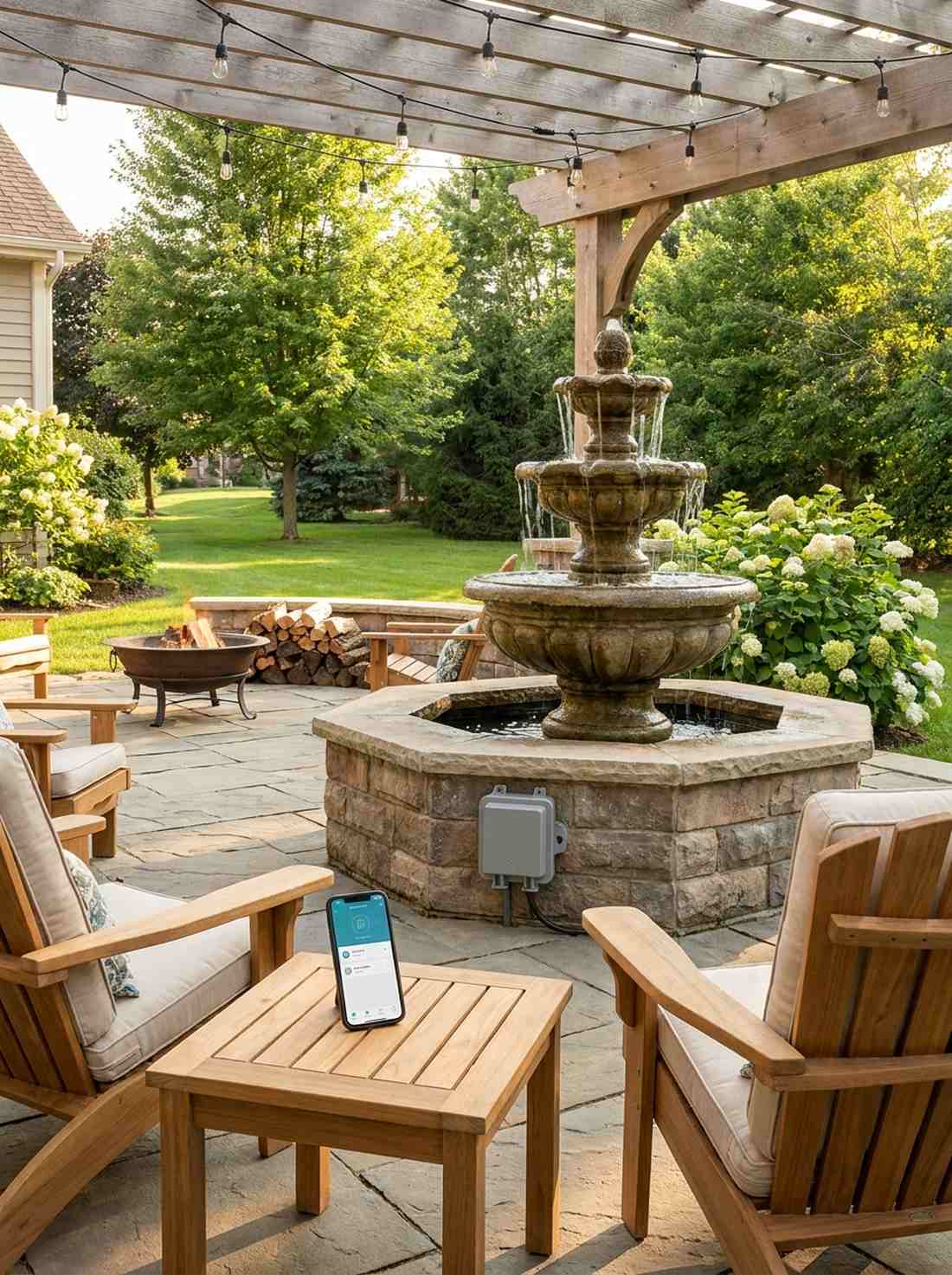
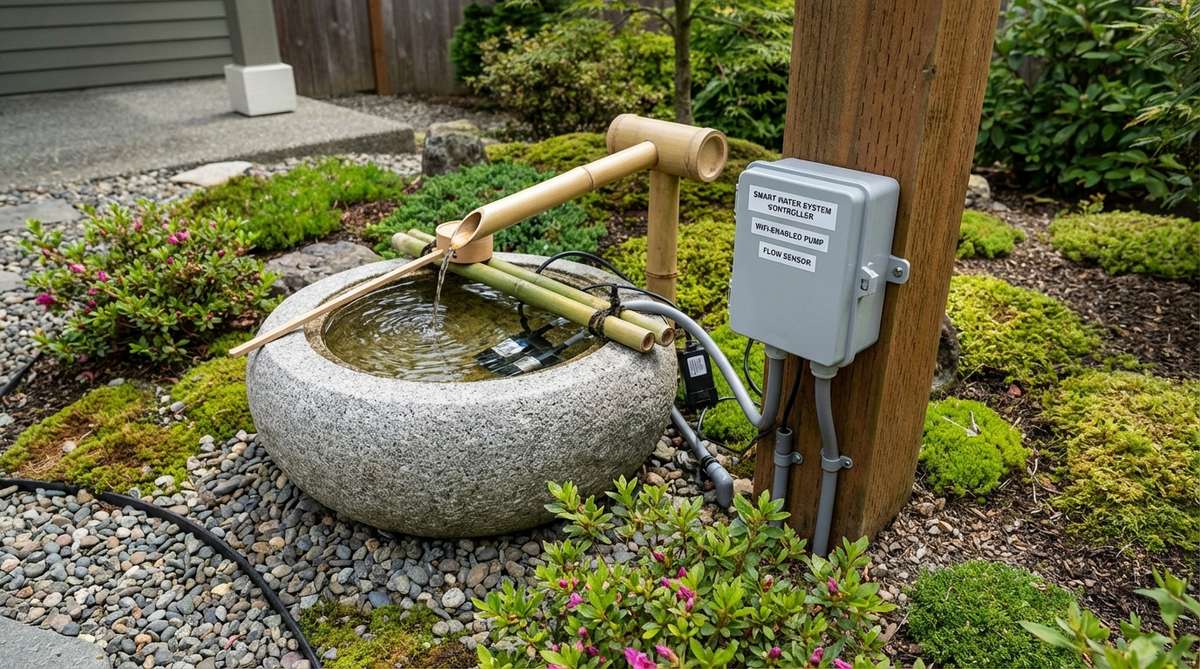
Feels like living in the future of landscaping luxury. This wifi-automated water system lets you turn on your fountain from your phone right before guests arrive.
Integrating modern tech into ancient stone designs looks far more expensive than it actually is and saves you money on electricity. Grabbing an outdoor-rated smart plug enclosure lets you set weather-based schedules so the fountain automatically turns off during heavy rainstorms.
Making your fountain smart costs a mere $30–$60. Highly recommended for the modern homeowner who wants total control from the couch!
- Key Materials: Outdoor weatherproof smart plug, wifi network, app-controlled timer
- Vibe / Style: Effortless, high-tech luxury
- Difficulty: Extremely easy
- Budget Breakdown: Smart Outdoor Plug: $35 | Protective Cover: $15
- Creator’s Tip: Set up an Alexa or Google Home routine called “Zen Mode” that simultaneously turns on the fountain pump, dims the patio lights, and plays soft ambient music.
- Smart Sourcing: Weatherproof outdoor smart plugs (dual outlet) or heavy-duty outdoor extension cord covers.
Bringing Traditional Premium Elements Home
Executing an authentic japanese garden water feature successfully means blending ancient aesthetic rules with modern, smart material sourcing. By utilizing these 30+ blueprints, you can skip the trial and error and build a feature that doesn’t just look expensive on day one, but survives harsh weather and operates effortlessly for years. Whether you opt for a simple pre-cut bamboo flume or a massive boulder cascade, starting with UV-coated materials and reliable submersible kits ensures your investment pays off.
Don’t try to build a massive waterfall on your first weekend—start with a highly controlled, pondless basin or a beautifully sourced starter kit. Observe how the acoustic profile changes your backyard’s energy, then scale up. The secret to that high-end landscaping magazine look is entirely in the foundation and the finishing touches, not just the budget.
Frequently Asked Questions
What is the difference between a tsukubai and a regular water basin?
A true tsukubai is a deeply intentional composition utilizing the gogan stone-setting technique, requiring a specific arrangement of functional stepping stones and a water delivery system (like a kakei spout). Rather than just a decorative birdbath, it sits low to the ground to force a bowing posture. To achieve this high-end look quickly, many landscapers buy complete ready-to-install tsukubai kits that include the perfectly proportioned flanking stones and pre-drilled basins.
How much water do Japanese garden fountains use?
Far less than you think. Because they use high-efficiency recirculating systems, a standard setup only requires 5-15 gallons of water in the hidden reservoir. Your only loss is through evaporation. By using an underground pondless basin vault, you drastically reduce sun exposure, meaning you might only need to top off the water by a gallon once a week during peak summer heat.
Can I build a tsukubai water feature in a cold climate?
Absolutely, but winterization is critical. If you live in freezing zones, you either need to drain the pump and store your bamboo inside, or invest in a submersible thermostatic pond de-icer. Using UV-treated faux bamboo components also prevents the cracking that natural wood suffers during severe freeze-thaw cycles.
What type of pump is best for a japanese garden waterfall?
It entirely depends on the “head height” (how high the water needs to be pushed). For a small bamboo trickler, a cheap 50-150 GPH pump is perfect. For a dramatic 3-foot cascading rock fall, you need a high-capacity magnetic drive pump rated for at least 500-800 GPH to ensure a thick, heavy flow of water instead of a disappointing trickle.
How do I prevent mosquitoes in my water basin?
Mosquitoes cannot breed in moving water. Ensuring your setup runs on an outdoor smart lighting timer for at least 12 hours a day breaks the surface tension they need. For extra protection in hidden underground reservoirs, simply drop in organic mosquito dunks (BTI bulk packs) once a month—they are highly effective and 100% safe for visiting birds, pets, and plants.
What plants grow well around a tsukubai basin?
Moisture-loving, shade-tolerant plants are the key to making the feature look like a natural oasis. Live bare-root woodland ferns, Japanese forest grass, and sweet flag thrive in the microclimate created by the splashing water. Avoid aggressive spreaders or plants that require bone-dry soil, and consider using pre-mixed moss starter slurries to rapidly age the surrounding stones for a premium, established aesthetic.