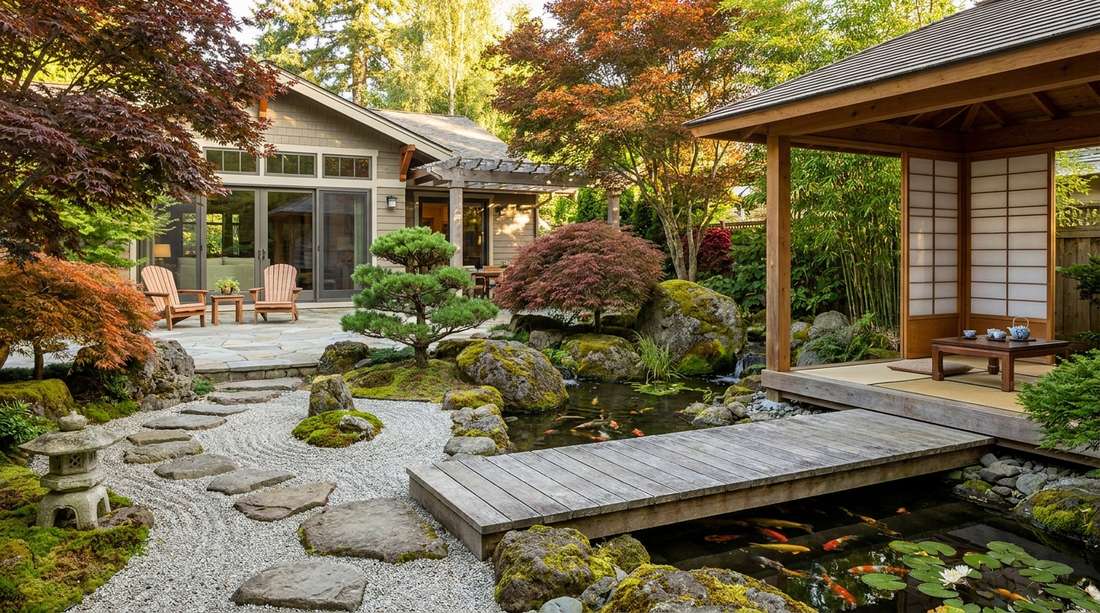
Authentic japanese gardens instantly elevate ordinary spaces into high-end zen retreats. Discover premium blueprint layouts using smart material hacks and bulk sourcing. Achieve timeless landscape aesthetics on a DIY budget.
Design Snapshot & Key Principles
- Asymmetry (Fukinsei): Dynamic diagonal positioning delivers a surprisingly premium look over rigid, cheap-looking symmetry.
- Simplicity (Kanso): Minimalist material sourcing makes small spaces look far more expensive and intentional.
- Natural Balance (Shizen): Utilizing weather-resistant garden kits mimics organic landscapes flawlessly.
- Emptiness (Ma): Leaving negative space proportionally reduces bulk material costs while amplifying visual impact.
Dry Landscape Foundations: Japanese Garden Design Without Water
Karesansui layouts completely bypass expensive plumbing by utilizing premium aggregates and faux-stone kits. These high-end Japanese garden design concepts convey movement entirely through smart material placement.
1. Raked Gravel Ocean
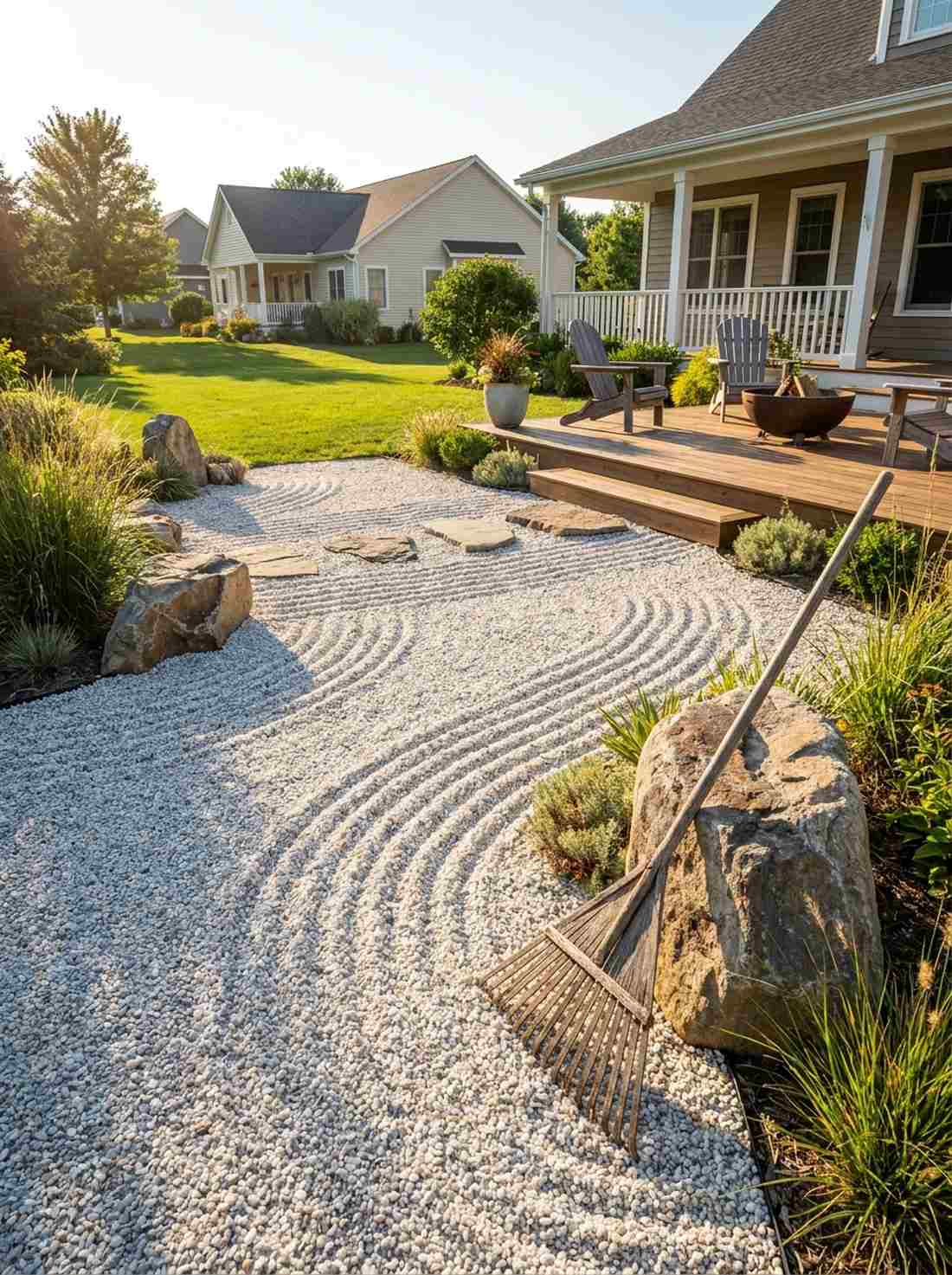
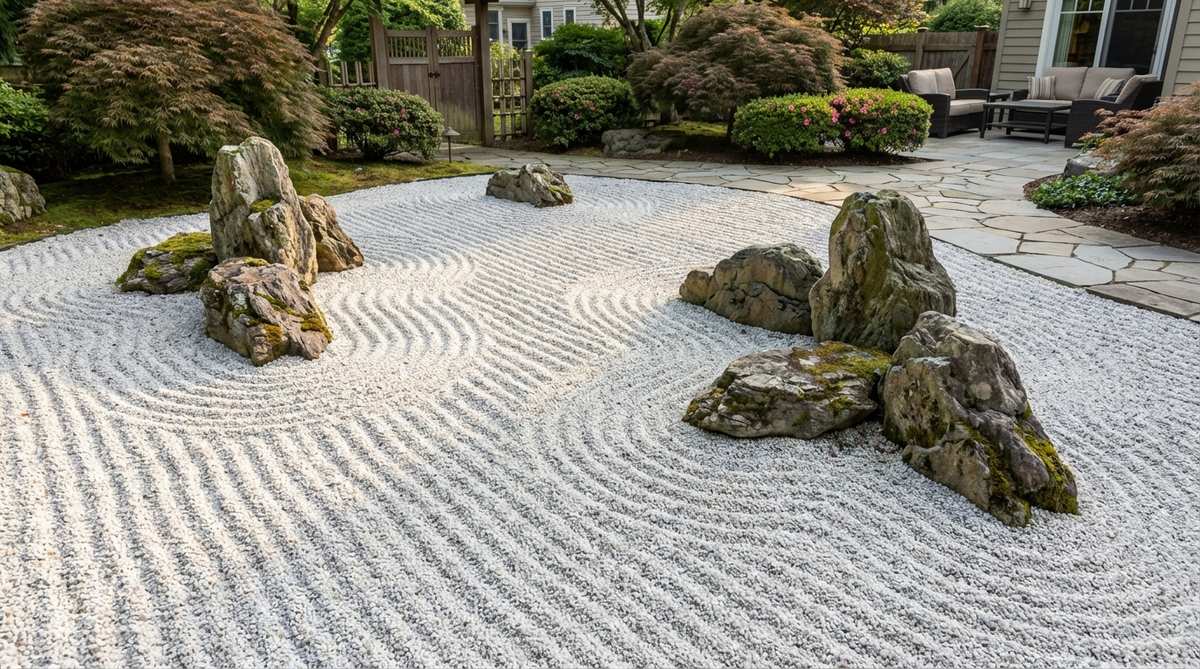
Feels like a sweeping coastal temple you accidentally discovered. Zen rock garden landscape setups work beautifully for flat, lifeless backyards.
Most beginners ruin this by using cheap pea gravel, but opting for crushed stone delivers a designer-level finish. Layer the base with commercial-grade weed barrier to prevent sinking.
You can easily pull this off for around $40–$80 depending on the stone. Save this to your DIY weekend garden board!
- Key Materials: Pre-washed white quartz, landscaping fabric.
- Vibe / Style: Minimalist coastal zen.
- Difficulty: Easy beginner setup.
- Budget Breakdown: Gravel: $45 | Base: $25.
- Creator’s Tip: Always use crushed stone; smooth pebbles will not hold rake lines.
- Smart Sourcing: Pre-mixed crushed granite (bulk bags) and weather-treated hardwood rakes.
2. Concentric Circle Meditation Zone
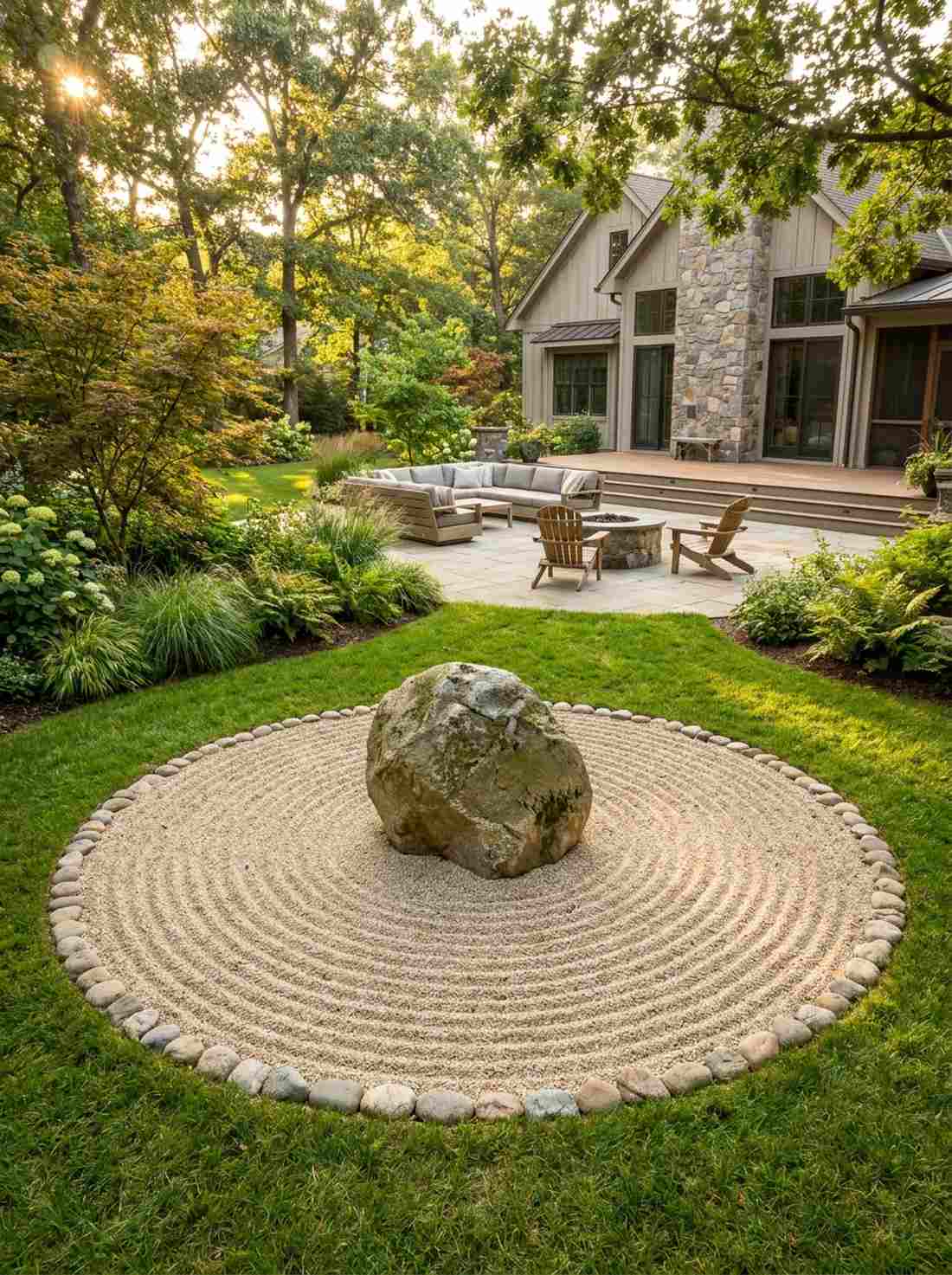
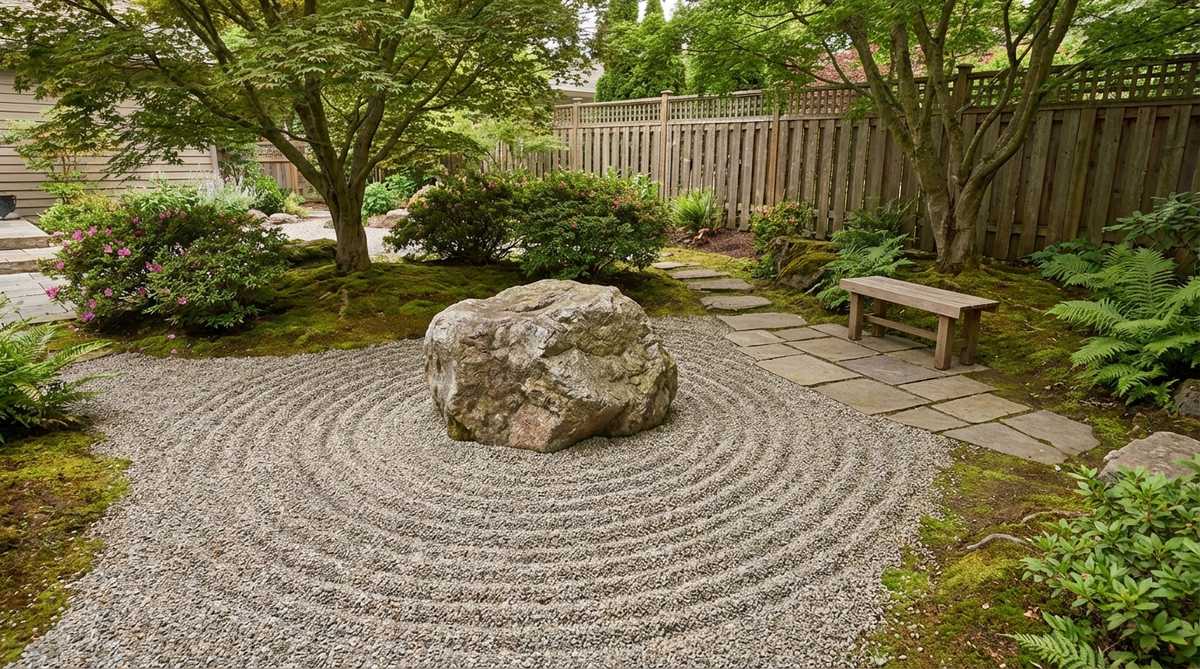
Straight out of a peaceful Kyoto retreat. A central meditation focal point serves exceptionally well as a standalone courtyard upgrade.
People often clutter their spaces, yet a single boulder creates a striking focal point that screams high-end luxury. Radiate the gravel perfectly using a simple string-and-stake compass method.
It’s a fast upgrade that completely changes the vibe for under $50.
- Key Materials: Feature boulder, fine gravel.
- Vibe / Style: Focused spiritual calm.
- Difficulty: Beginner friendly.
- Budget Breakdown: Stone: $30 | Gravel: $15.
- Creator’s Tip: Bury the central rock by one-third so it looks naturally anchored.
- Smart Sourcing: UV-coated faux landscape boulders and pre-cut circle fabric templates.
3. Mountain Range Rock Cluster
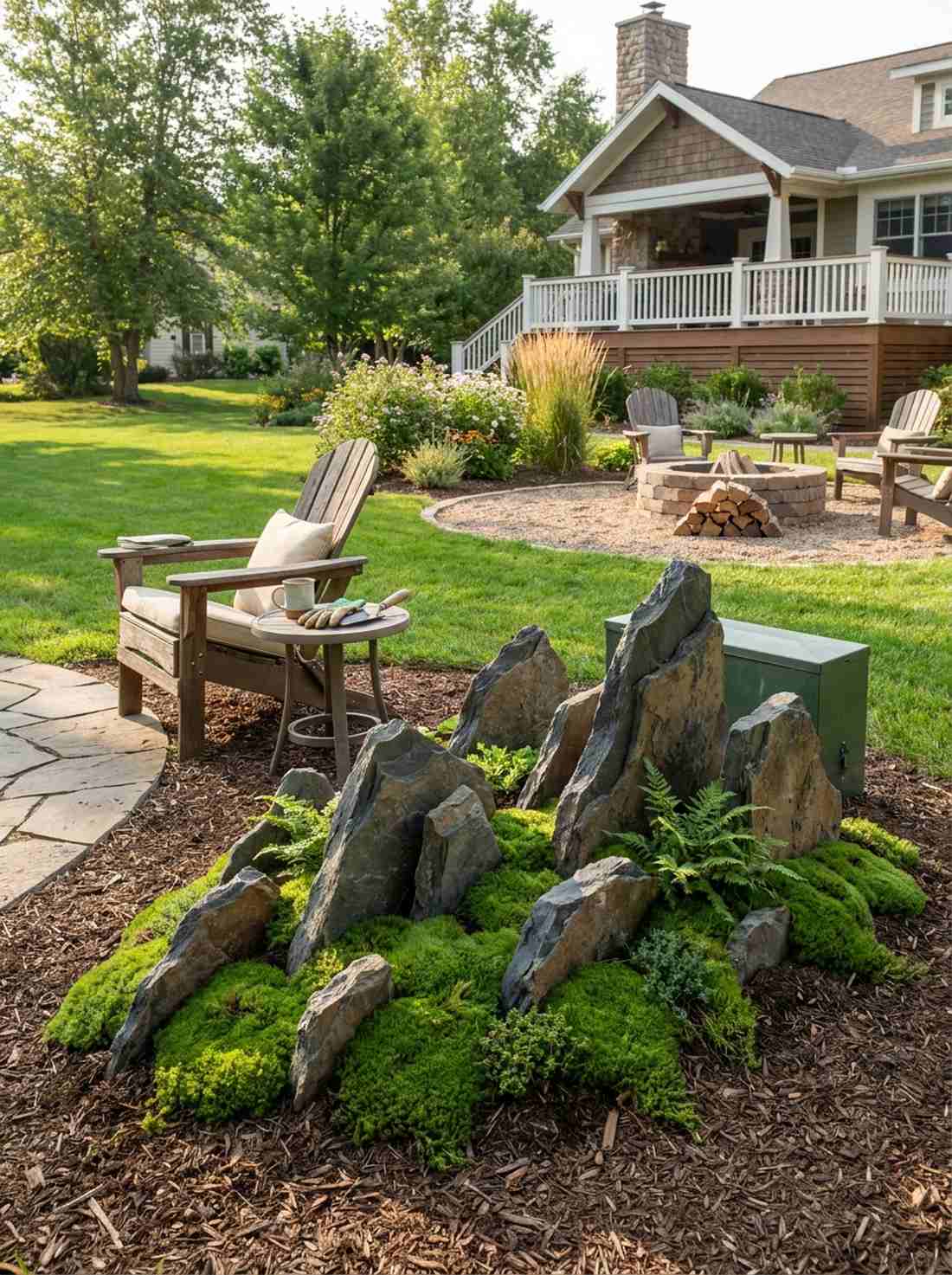
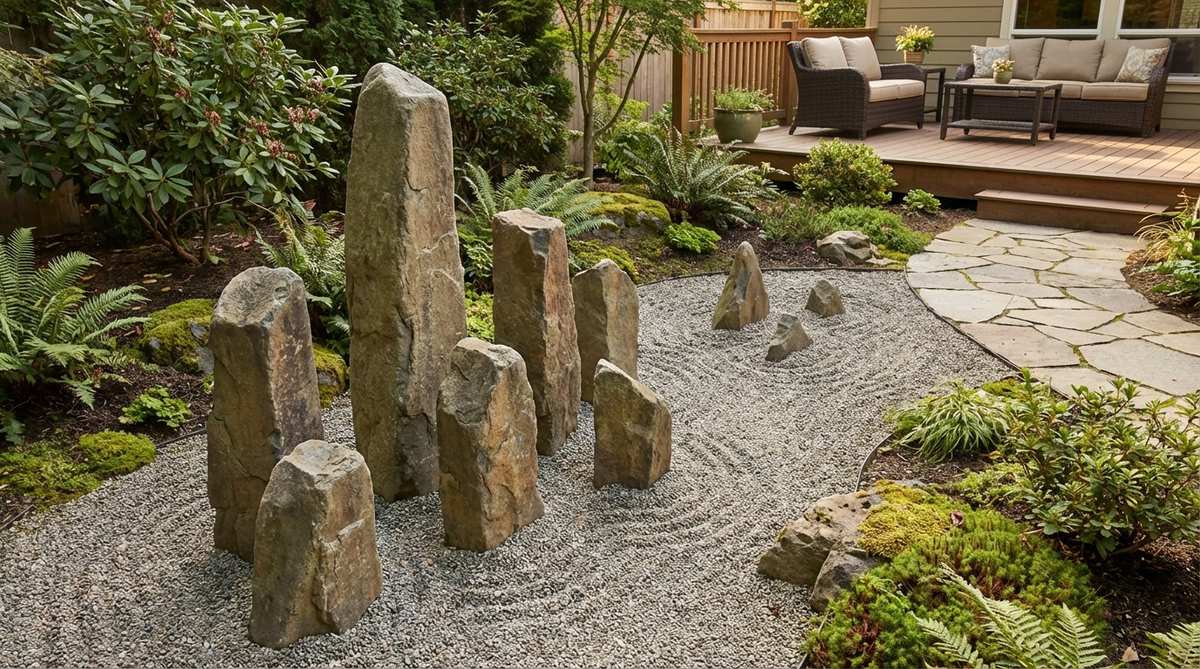
Brings a rugged, mountainous energy right to your doorstep. Miniature mountain rock clusters are perfect for hiding utility boxes or bare corners.
Symmetrical layouts usually look fake, but odd-numbered groupings provide an organically expensive aesthetic. Nestle them in premium terrarium accessories or dwarf moss to simulate forest foothills.
Expect to spend about $60 on good quality stones. Pin this if you’re planning a small space upgrade!
- Key Materials: Asymmetrical stones, groundcover moss.
- Vibe / Style: Rugged alpine aesthetic.
- Difficulty: Moderate lifting required.
- Budget Breakdown: Rocks: $45 | Moss: $15.
- Creator’s Tip: Angle the stones slightly uniformly to mimic natural geological thrusts.
- Smart Sourcing: Bulk pack natural slate stones and pre-grown Irish moss trays.
4. Diagonal Gravel Current
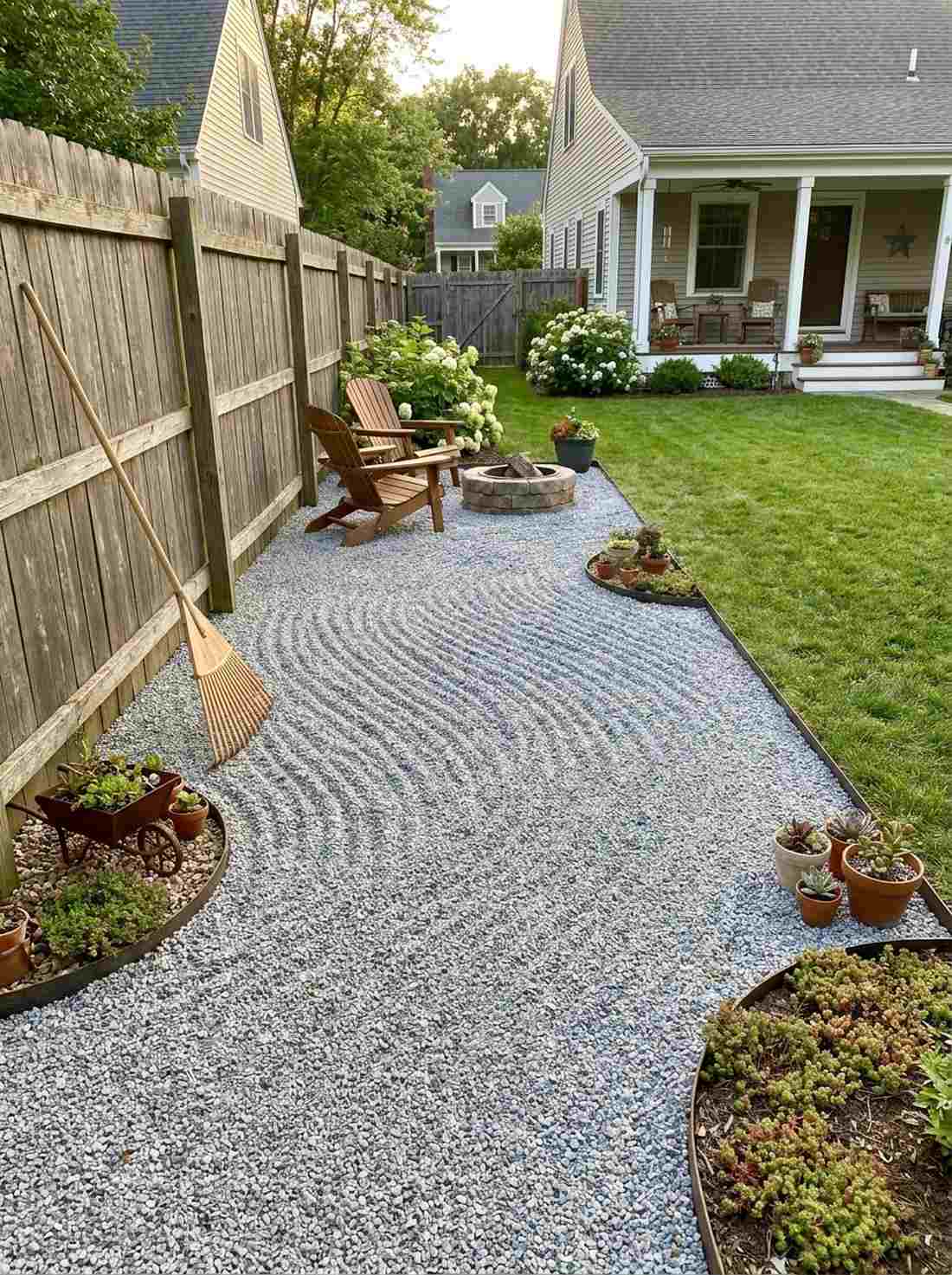
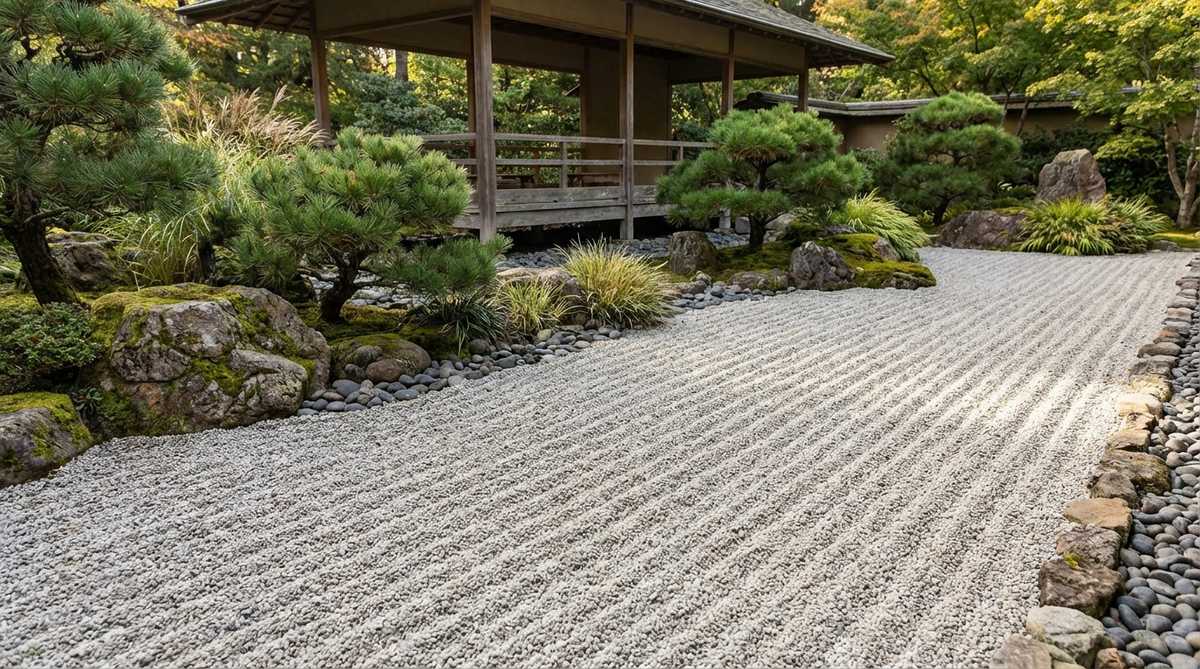
Creates a dynamic optical illusion of flowing water. Directional landscape raking instantly elongates a cramped side return or narrow patio.
Raking parallel to your fence makes yards look tiny, whereas diagonal lines trick the eye into seeing expansive acreage. Pair the edges with miniature garden supplies to soften the harsh borders.
This layout costs practically nothing if you already have the gravel base.
- Key Materials: Wide-tined rake, edge borders.
- Vibe / Style: Elongated energetic flow.
- Difficulty: Quick maintenance task.
- Budget Breakdown: Tools: $25 | Edging: $15.
- Creator’s Tip: Point the diagonal lines directly toward your primary seating area.
- Smart Sourcing: Heavy-duty steel garden edgers and multi-head adjustable rakes.
Most people get their outdoor aesthetics completely wrong… until they try the breathtaking layout coming up next.
5. Moss Island Archipelago
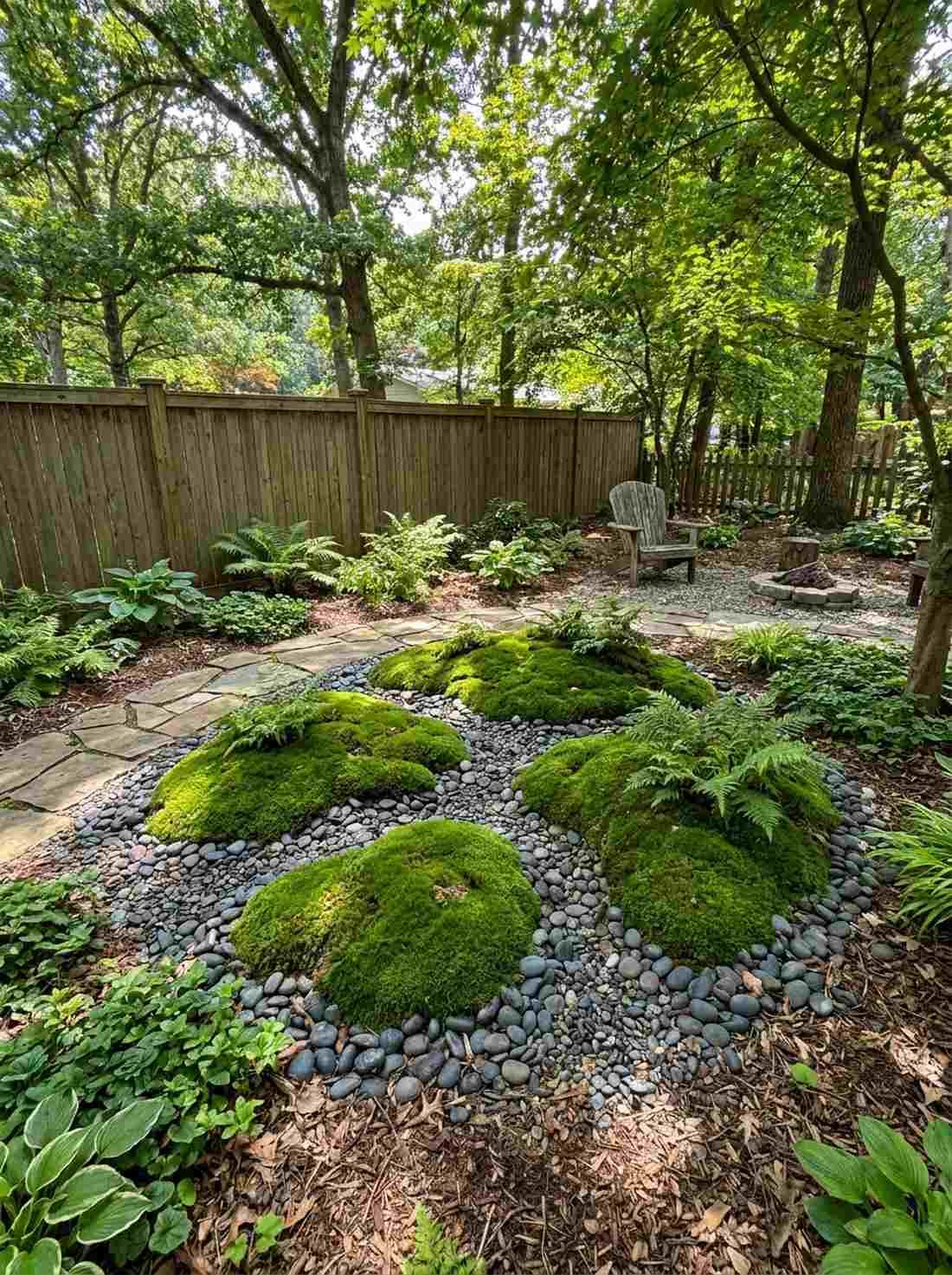
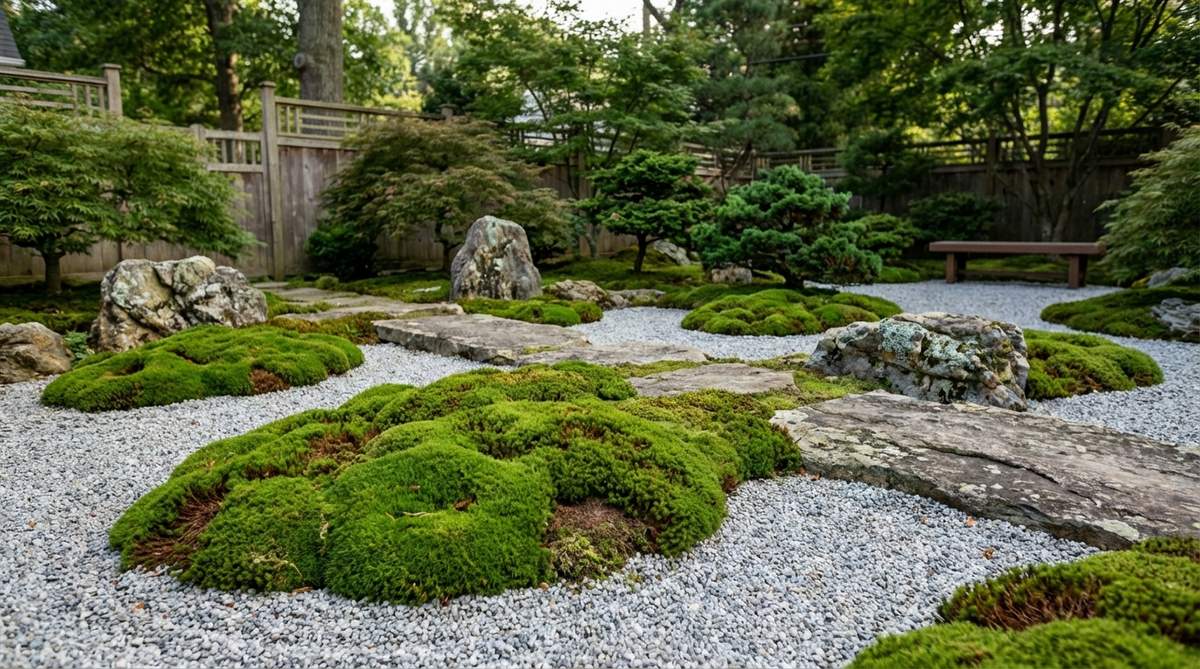
Feels like a floating emerald island chain in your backyard. Raised moss garden features work brilliantly for shaded garden corners.
Standard lawns struggle in shade, but embracing dedicated moss patches looks far more expensive than it actually is. Use high-retention soil additives to keep the mounds perfectly lush.
You can set this up in a weekend for around $35. Save this for your shady yard problem-solvers!
- Key Materials: Scotch moss, compacting soil.
- Vibe / Style: Lush woodland mystery.
- Difficulty: Moderate watering needs.
- Budget Breakdown: Moss flats: $25 | Soil: $10.
- Creator’s Tip: Mound the dirt 3 inches above the gravel to prevent rot.
- Smart Sourcing: Live moss terrarium starter kits and moisture-control potting mixes.
6. Sand Wave Garden
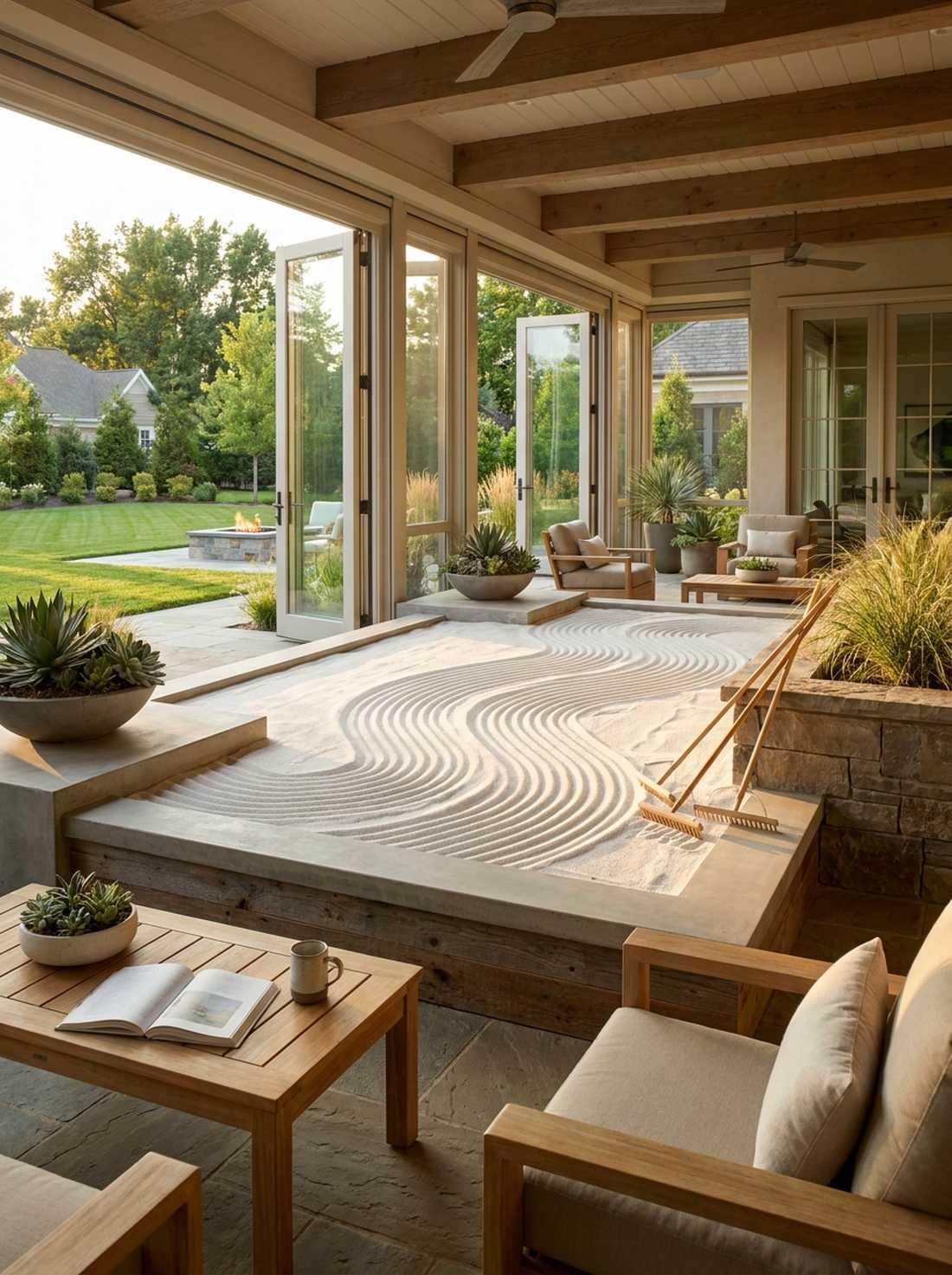
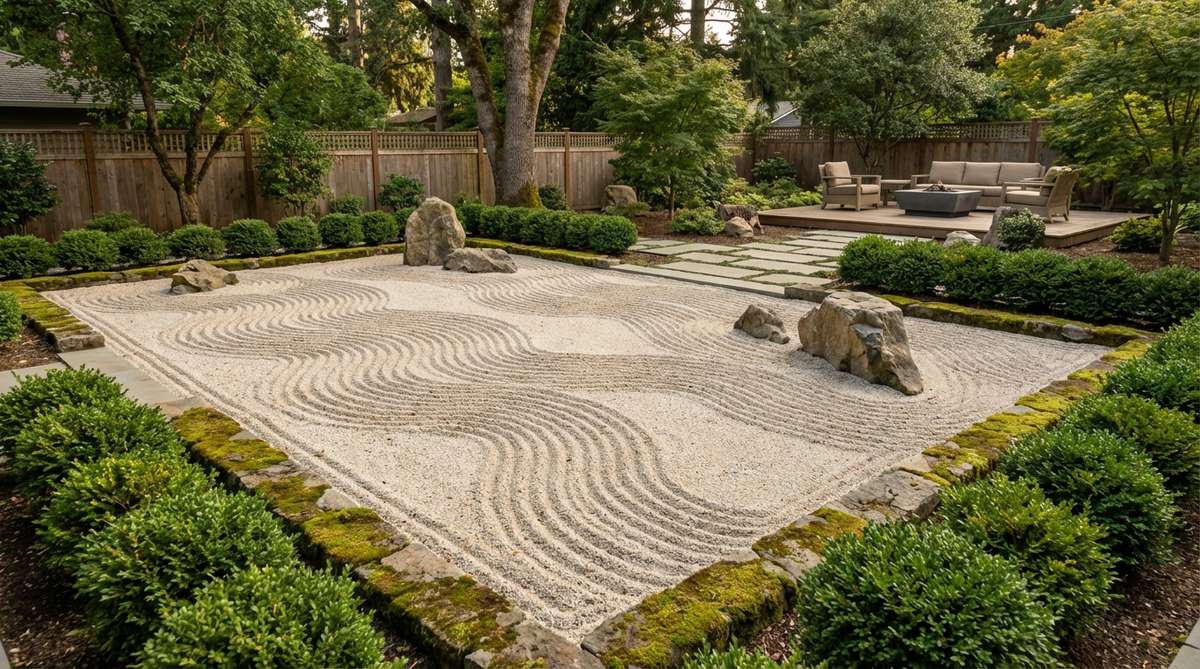
A mesmerizing texture that catches the golden hour light perfectly. Undulating sand garden beds are ideal for covered patios or indoor-outdoor sunrooms.
Coarse gravel is durable, but fine quartz creates an ultra-premium, wind-sculpted gallery vibe. Maintain the crests using specialty fine-tooth rakes designed for precision.
Invest about $30 in specialty sand for the best results.
- Key Materials: Fine quartz sand, detail rake.
- Vibe / Style: Sculptural and smooth.
- Difficulty: Needs weather protection.
- Budget Breakdown: Sand: $20 | Tools: $10.
- Creator’s Tip: Only install fine sand in areas fully protected from heavy rain.
- Smart Sourcing: Dust-free fine silica bags (bulk) and tabletop zen styling tools.
7. Single Specimen Focus
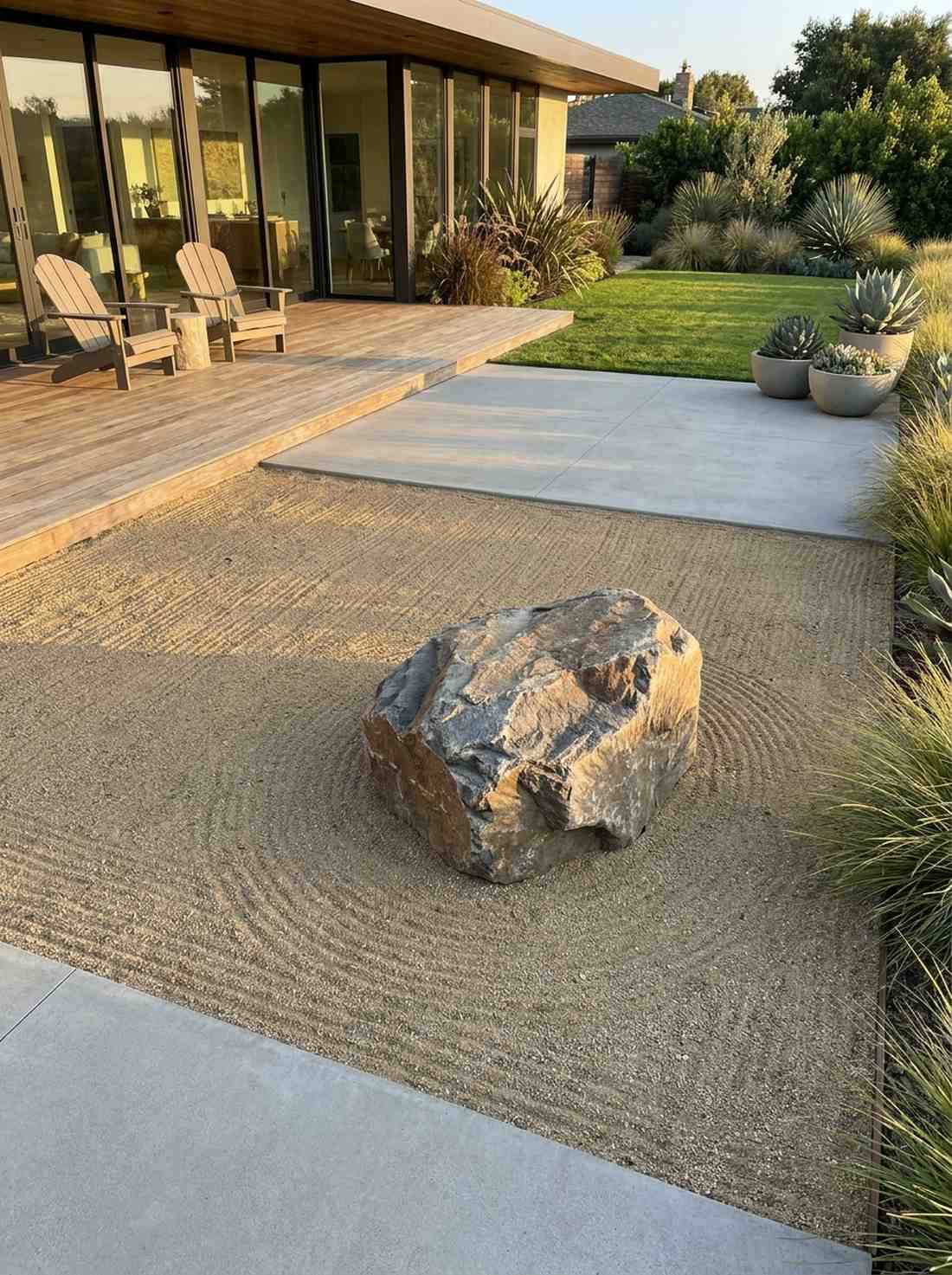
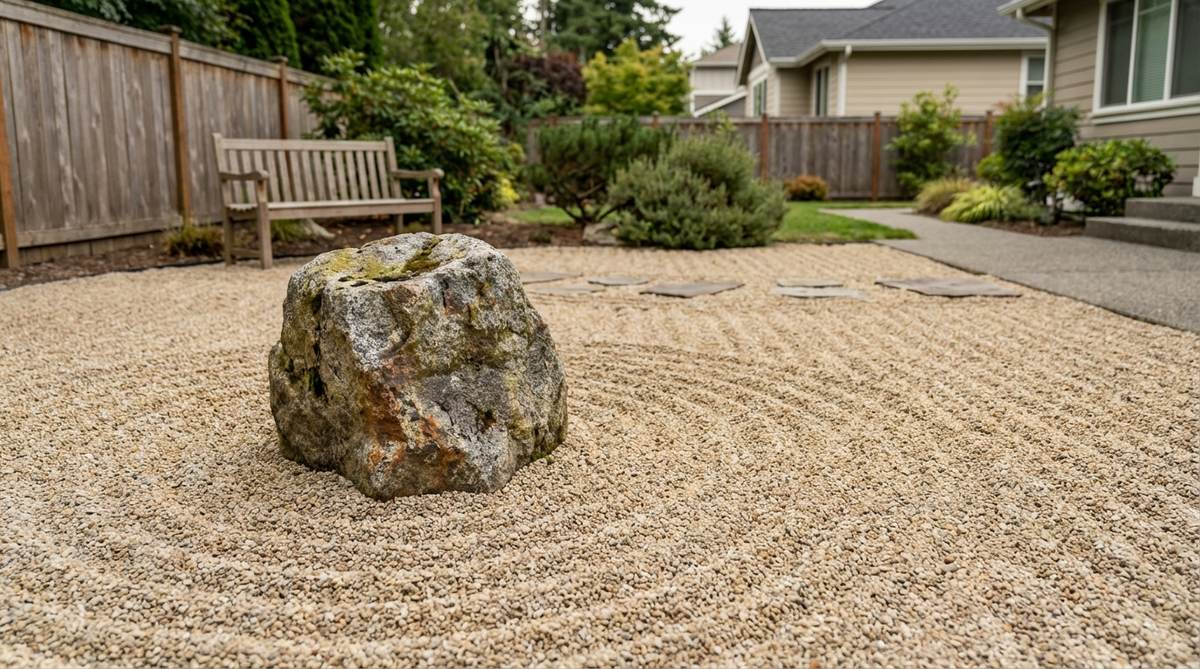
Embraces the dramatic power of absolute emptiness. A minimalist focal point garden is the ultimate statement piece for modern minimalist homes.
Over-planting kills the aesthetic, but isolating one stunning rock against negative space delivers an instant museum-quality aura. Secure it atop a heavy-duty leveling base so it never tilts.
Highly recommended for a low-maintenance, high-impact weekend win.
- Key Materials: One premium boulder, base gravel.
- Vibe / Style: Ultra-modern gallery.
- Difficulty: Very easy.
- Budget Breakdown: Specimen stone: $50+.
- Creator’s Tip: Place the stone using the golden ratio (roughly off-center by 1/3).
- Smart Sourcing: Hand-selected artisan landscape rocks and polymeric binding sand.
8. Rectangular Grid Pattern
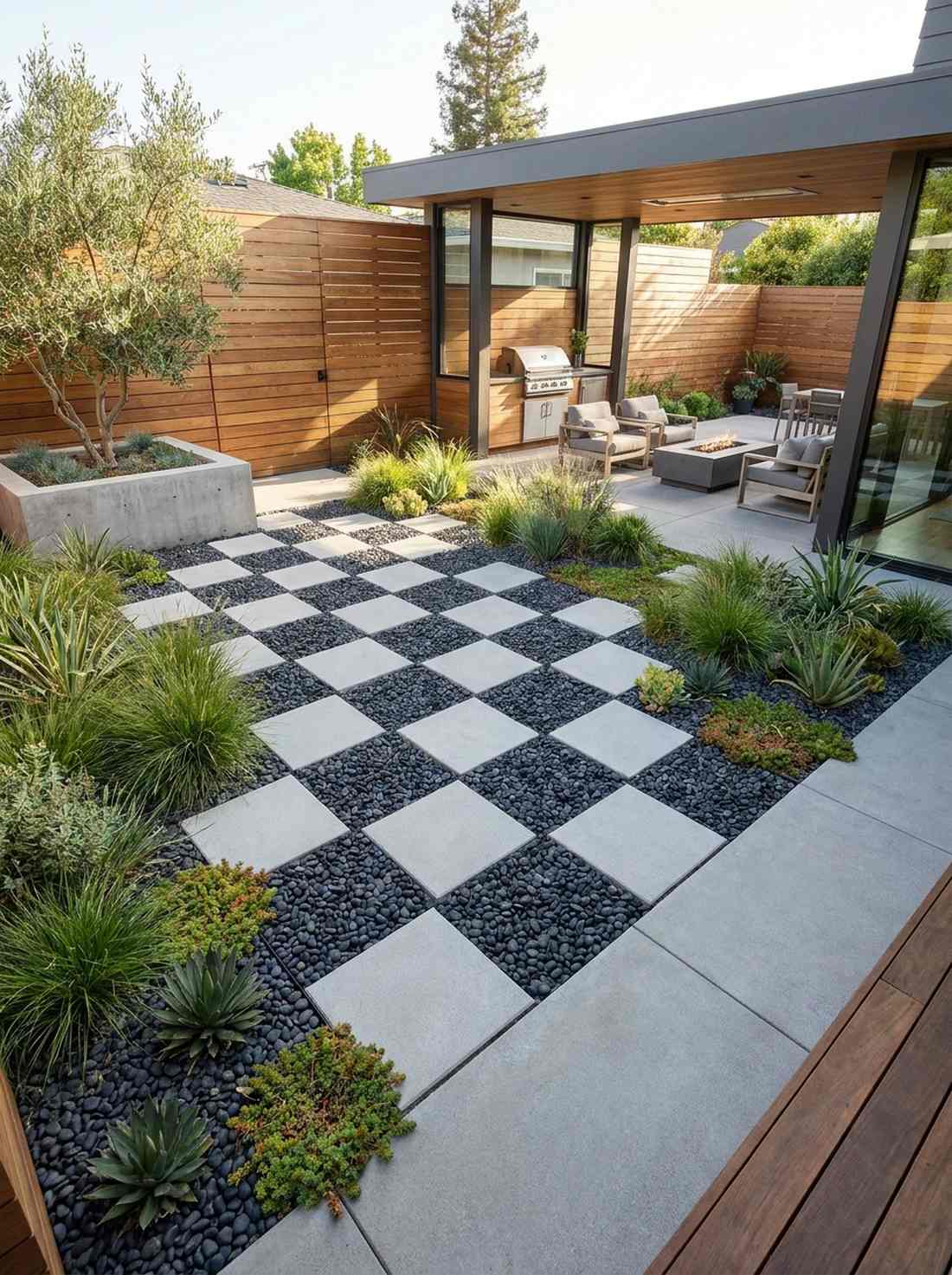
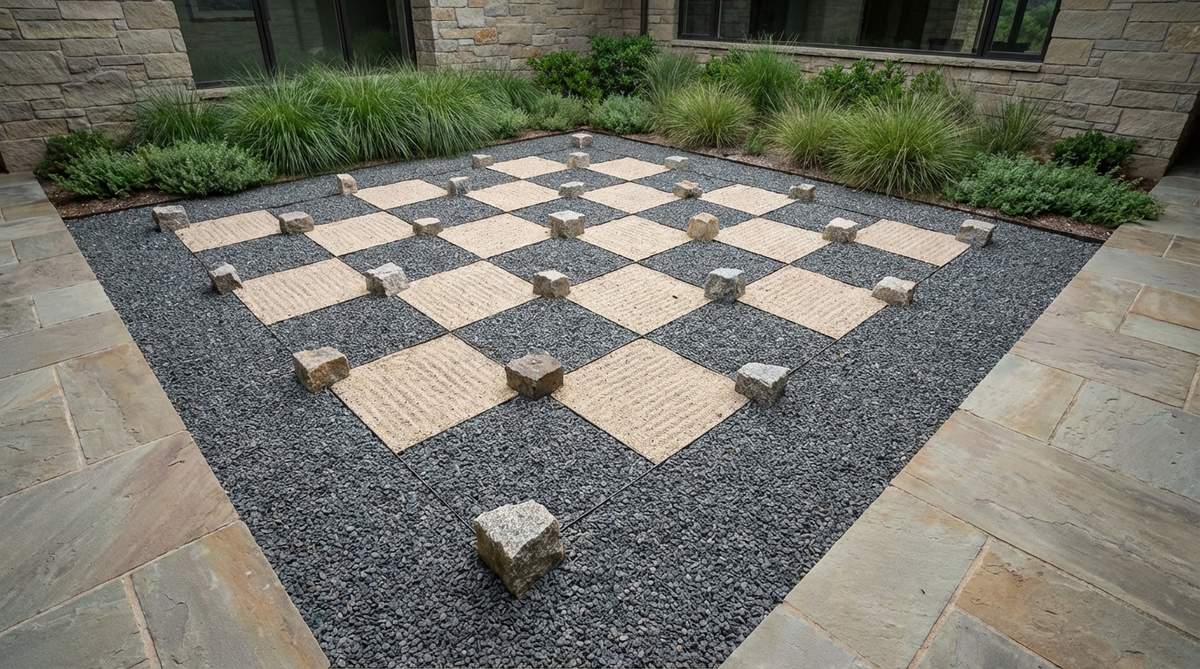
A bold collision of structured human geometry and wild nature. Checkerboard stone garden patterns are an absolute dream for enclosed architectural courtyards.
Organic curves are standard, but enforcing a rigid grid provides a highly contemporary, architect-designed appearance. Fill the gaps using bulk outdoor resin fillers or distinct contrasting pebbles.
This layout costs around $70–$100 but raises your property’s visual value instantly. Pin this for modern courtyard inspiration!
- Key Materials: Pavers, contrasting gravel.
- Vibe / Style: Structured contemporary chic.
- Difficulty: Requires precise measuring.
- Budget Breakdown: Pavers: $60 | Gravel: $30.
- Creator’s Tip: Use a chalk line to keep every single raked grid perfectly perpendicular.
- Smart Sourcing: Pre-cast geometric stepping stones and fade-resistant black river rock.
Water-Centered Japanese Garden Ideas: Ponds, Streams, and Reflection
Tsukiyama gardens use strategic reflections and water flow to completely transform outdoor acoustics. Integrating Japanese garden ideas with modern water features adds immense value.
9. Central Koi Pond
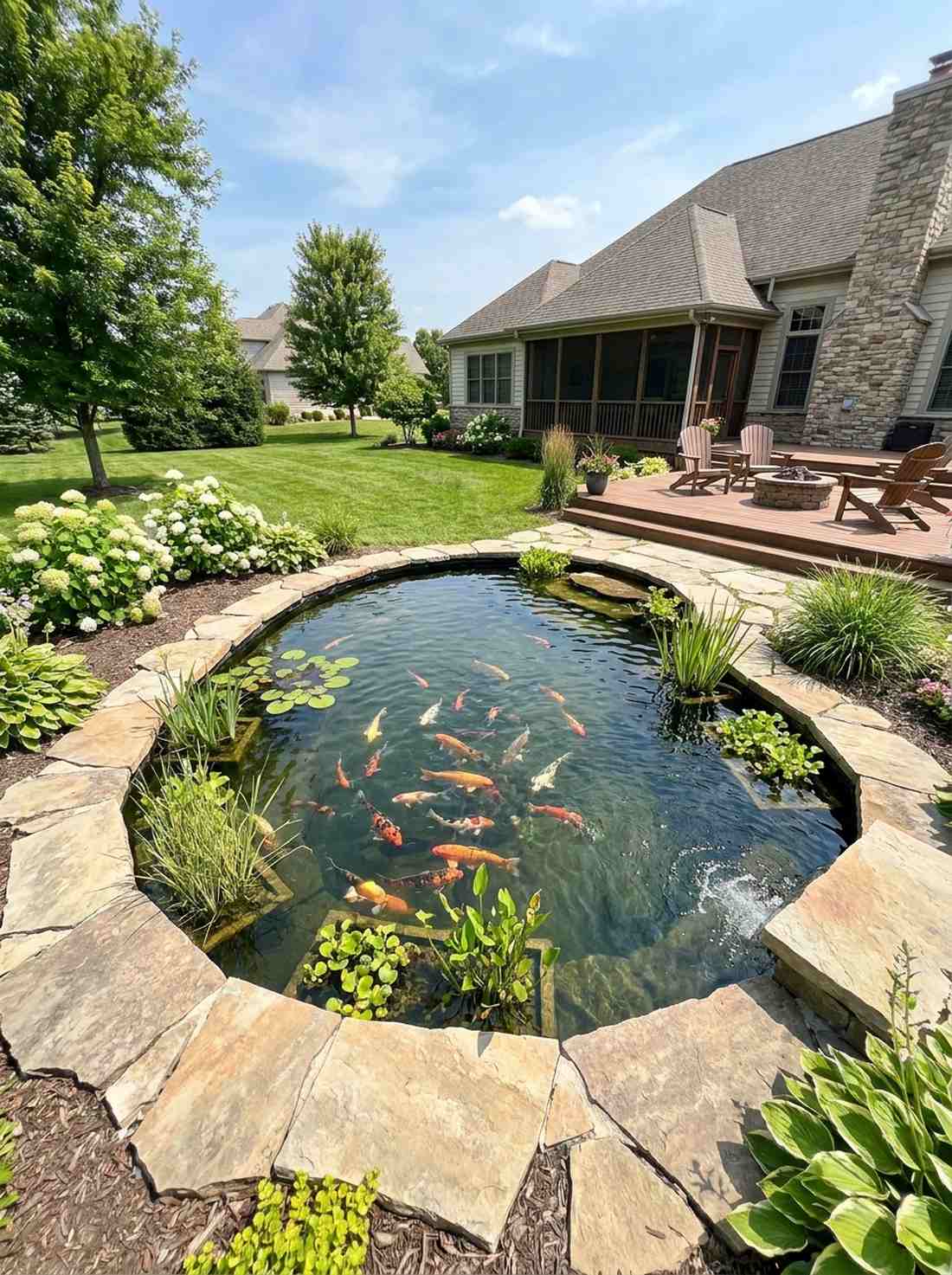
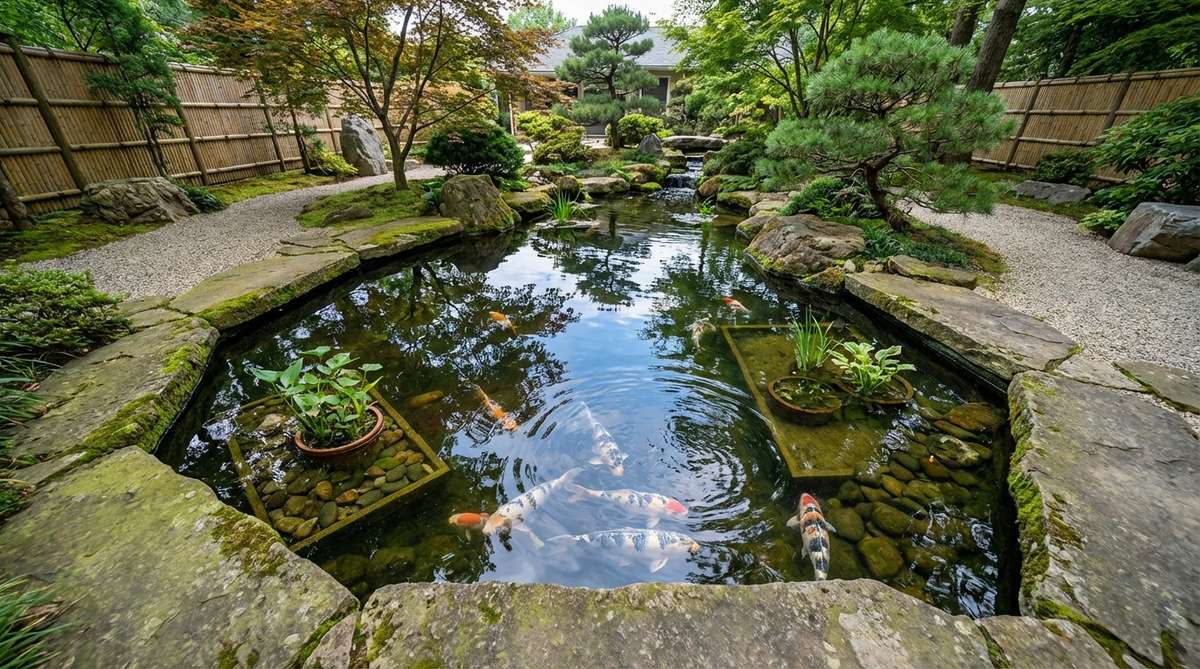
Feels like stepping into a vibrant, living ecosystem. Backyard koi pond installations become the ultimate mesmerizing centerpiece for any large landscape.
Flimsy DIY plastics always crack, but installing a proper shelf system ensures a premium, long-lasting sanctuary. Conceal the edges entirely using heavy-duty pond liners capped with natural flagstone.
Expect to invest $200+ for proper depth, but the result is breathtaking.
- Key Materials: EPDM liner, edge stones.
- Vibe / Style: Vibrant aquatic oasis.
- Difficulty: Advanced weekend project.
- Budget Breakdown: Liner: $120 | Pump: $80.
- Creator’s Tip: Dig marginal plant shelves at 12 inches to hide the steep drop-off.
- Smart Sourcing: 45-mil heavy-duty EPDM pond liners and submersible high-efficiency filtration pumps.
💡 Must-Have Supplies for High-End Setups
To build these setups faster and ensure they last, skip the generic craft aisles and invest in the right foundational kits.
- Base & Support: Commercial-grade non-woven geotextile fabric
- Setup Tools: Premium Japanese garden tool starter kits
- Weather/Durability Protection: UV-resistant clear outdoor sealant sprays
10. Stream with Boulder Obstacles
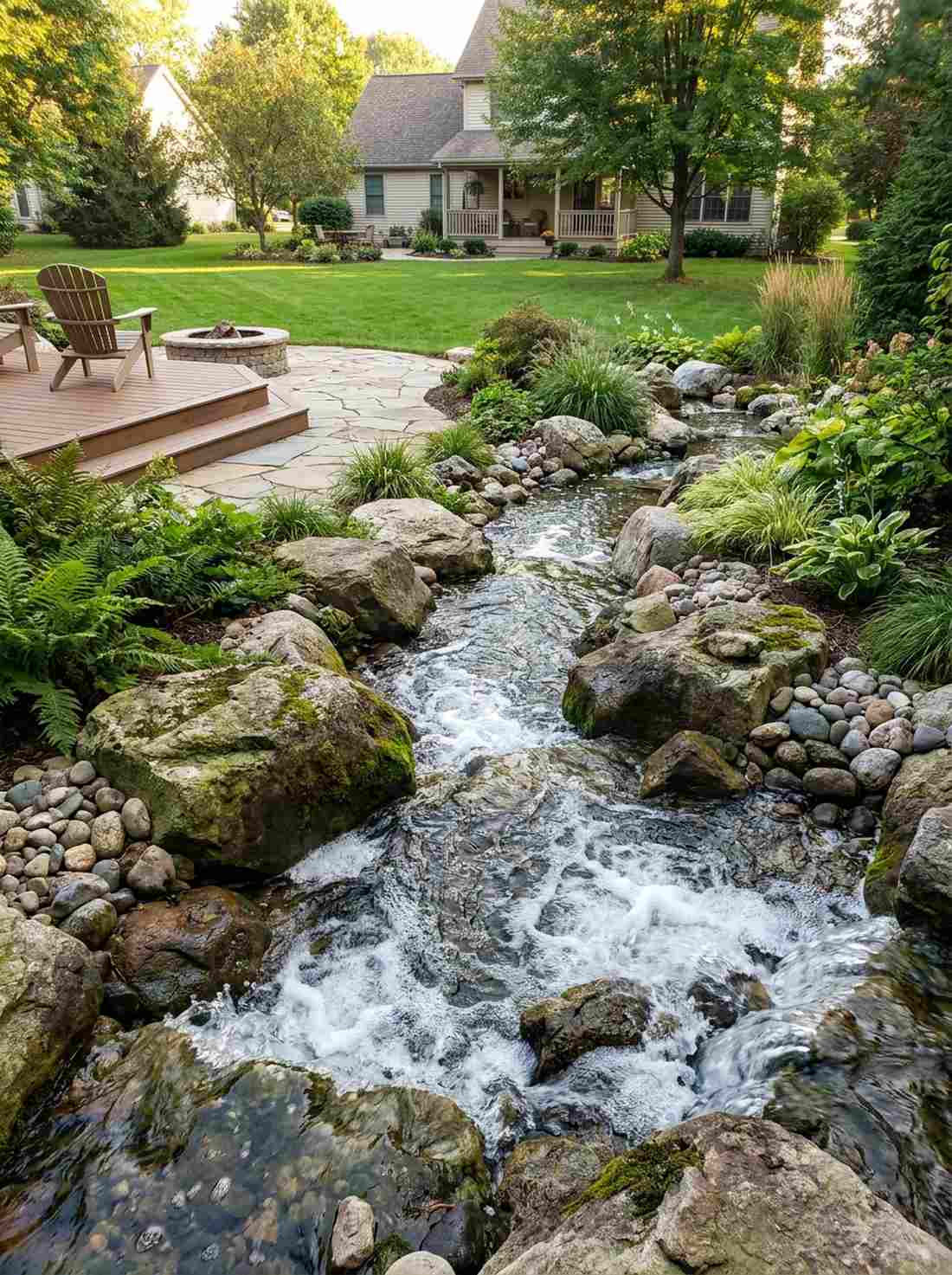
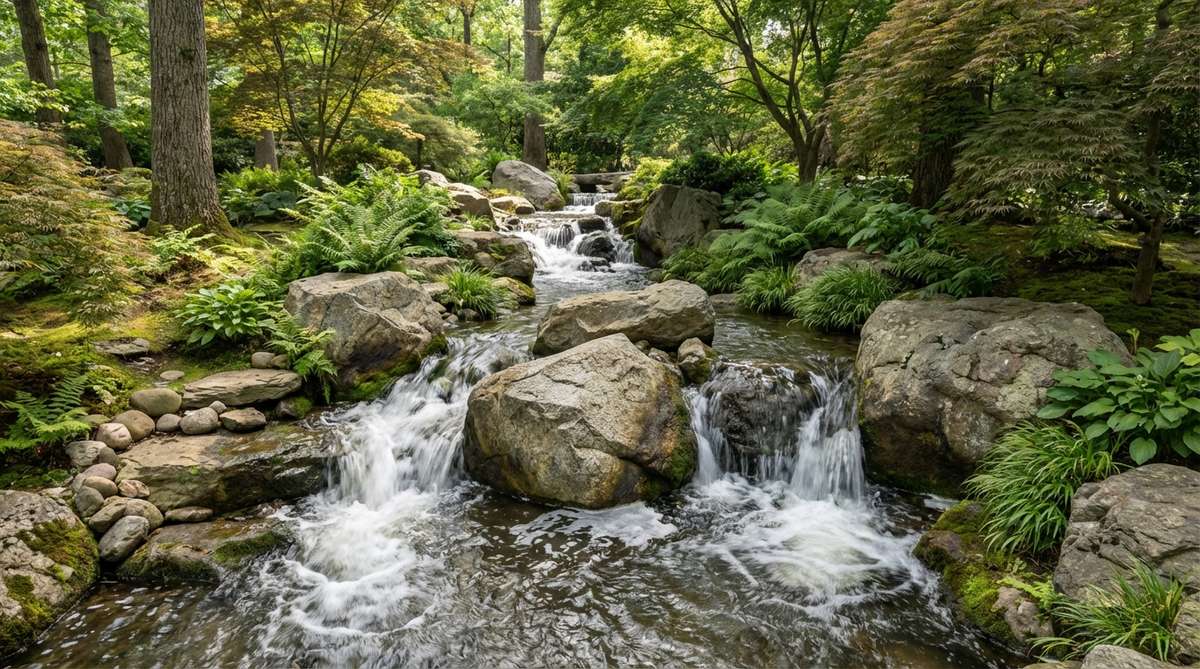
Delivers the incredibly soothing acoustic sound of a babbling mountain creek. DIY backyard stream cascades are perfect for drowning out annoying street traffic.
A flat water flow is boring, but adding strategic collision rocks creates white water that looks incredibly high-end. Lock the boulders in place with waterproof expanding waterfall foam.
You can build a small run for about $150. Save this to your outdoor audio-scaping board!
- Key Materials: Stream liner, foam sealant, boulders.
- Vibe / Style: Dynamic acoustic energy.
- Difficulty: Moderate plumbing skills.
- Budget Breakdown: Foam: $30 | Rocks/Liner: $120.
- Creator’s Tip: Always angle splash rocks slightly backward to prevent water from bouncing out of the stream.
- Smart Sourcing: Black pond waterfall foam sealant and pre-drilled water feature boulders.
11. Reflection Viewing Platform
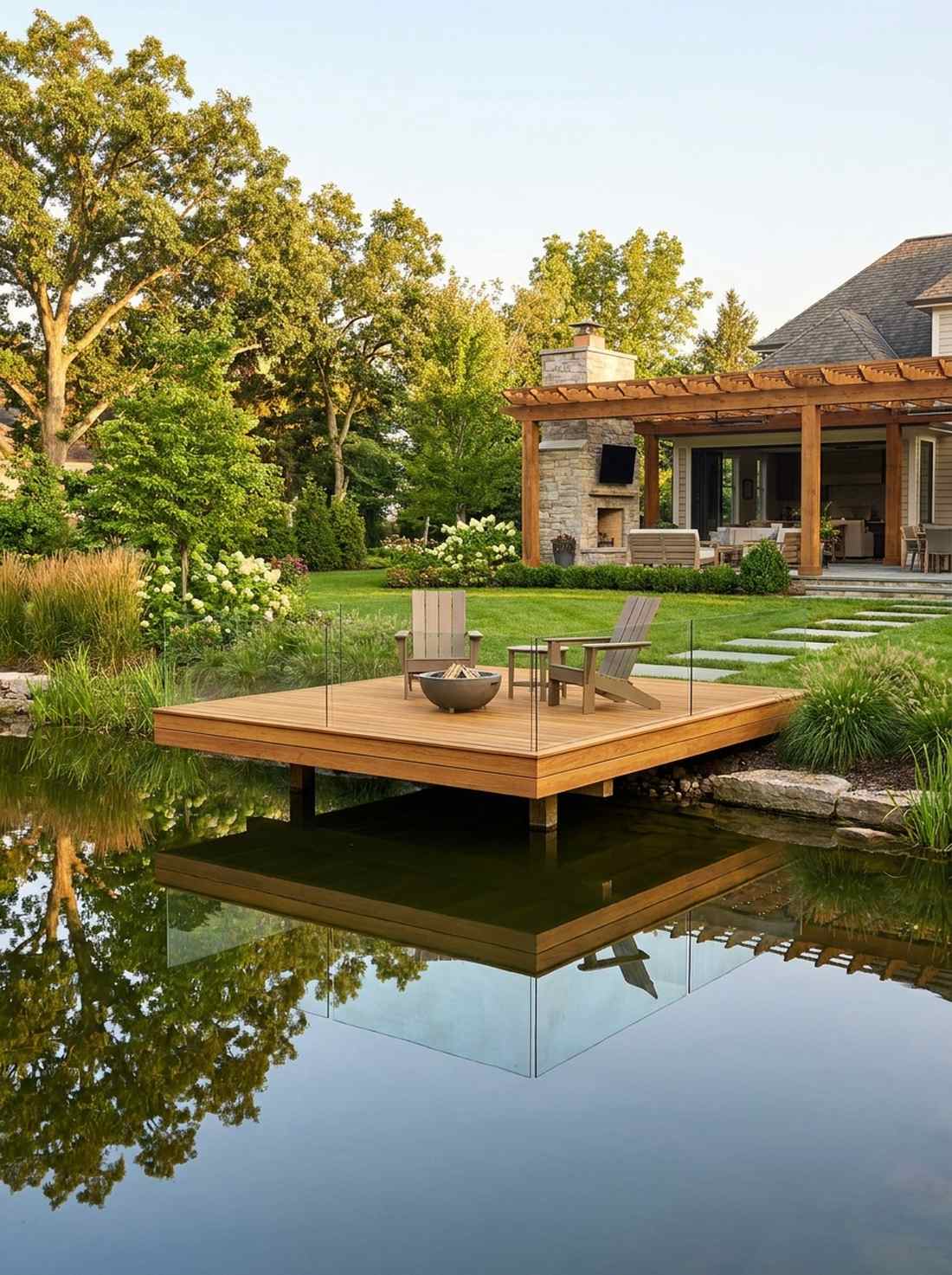
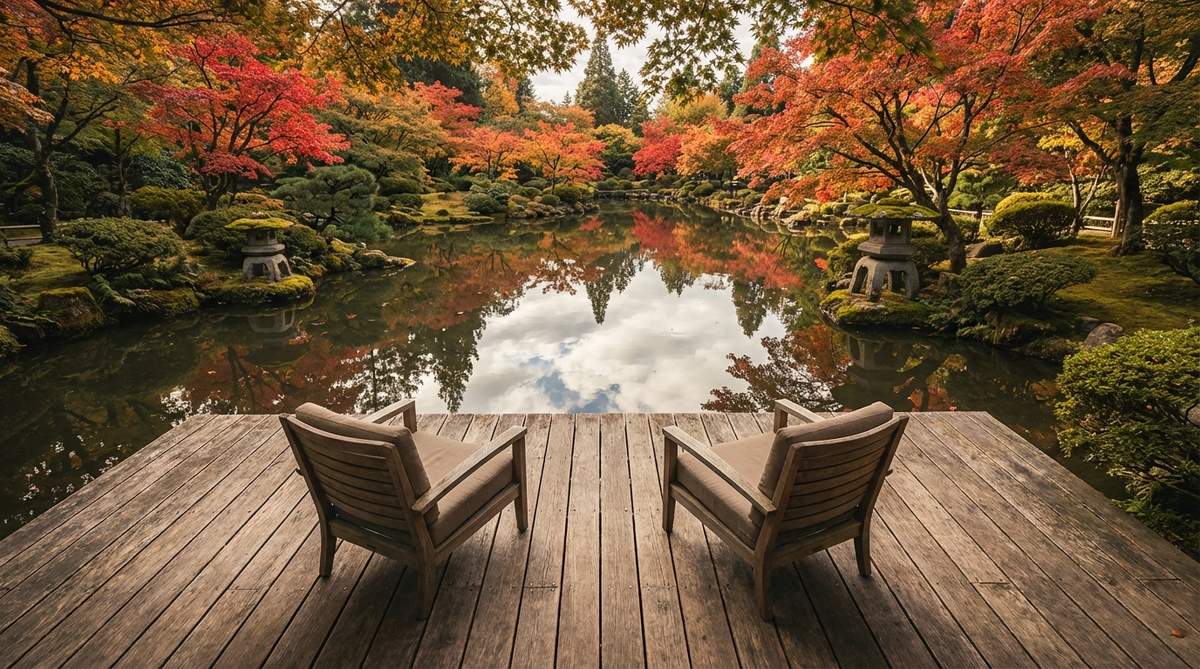
A suspended illusion that makes your yard look twice as big. Cantilevered wooden decks create a flawless architectural bridge over still water.
Traditional borders feel restrictive, but an overhang deck forces a designer-level interaction with the water’s surface. Build the frame using weather-treated structural lumber concealed below the waterline.
Platform materials usually run about $100–$200 for a modest viewing size.
- Key Materials: Cedar decking, support posts.
- Vibe / Style: Floating architectural elegance.
- Difficulty: Requires carpentry experience.
- Budget Breakdown: Wood: $120 | Hardware: $40.
- Creator’s Tip: Keep railings low or non-existent to maximize the unhindered reflection view.
- Smart Sourcing: Pre-cut composite decking boards and rust-proof marine-grade fasteners.
12. Waterfall Focal Point
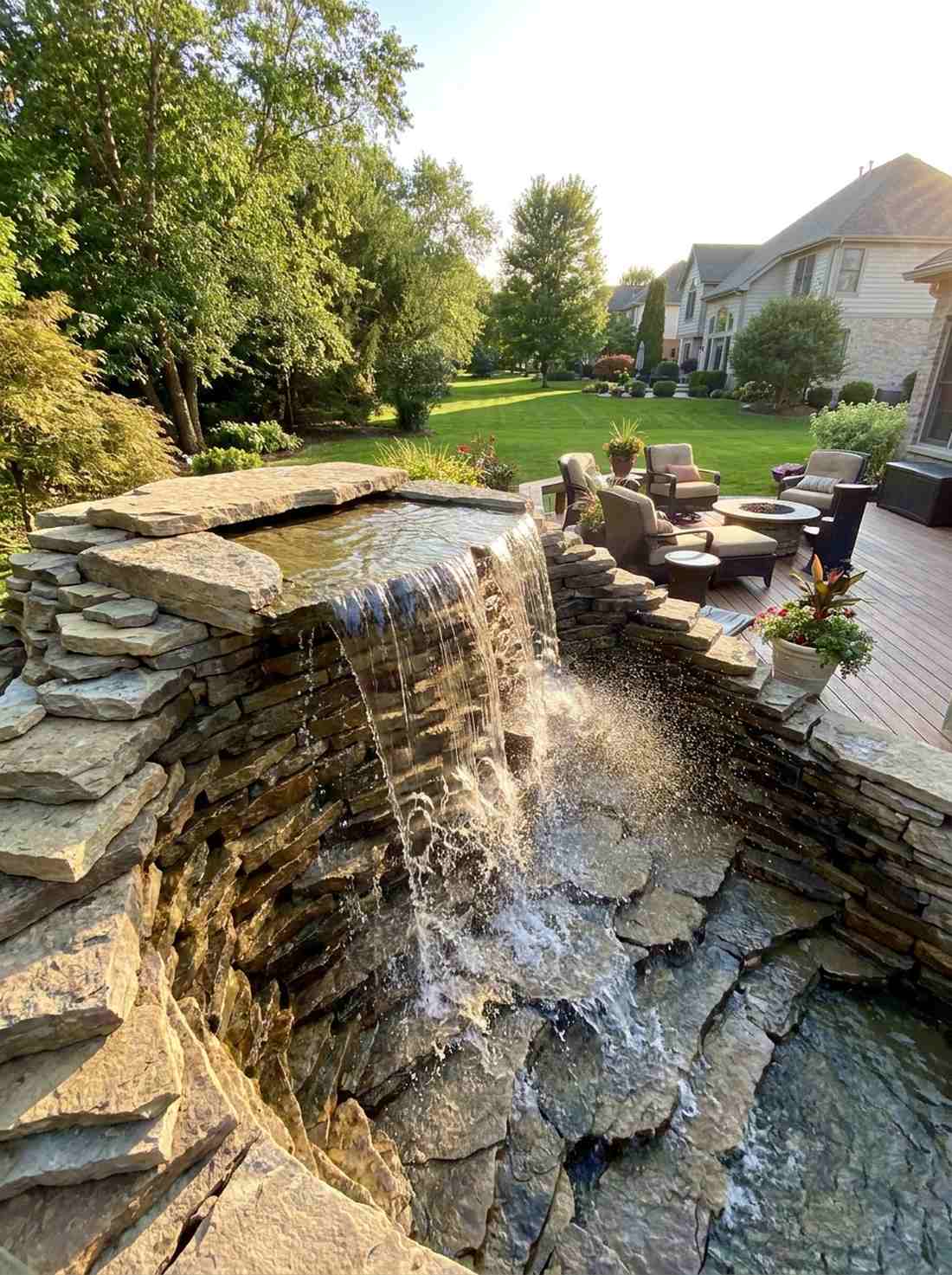
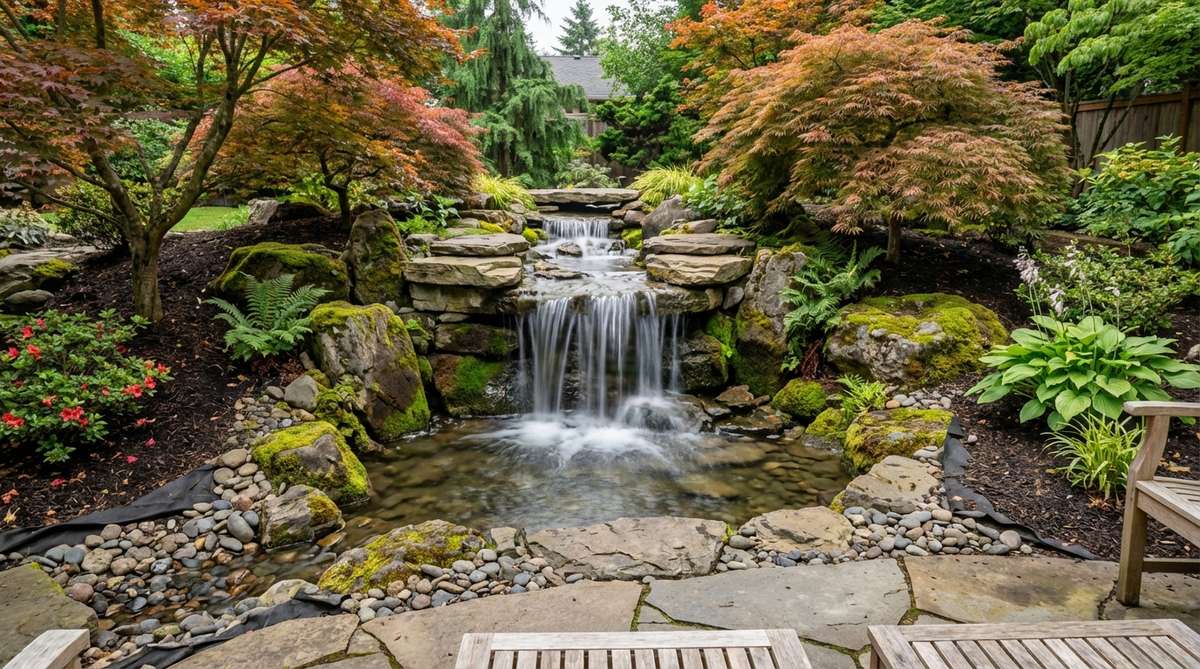
Produces a cooling mist that feels like a hidden rainforest. Backyard waterfall cascades act as a stunning vertical anchor for flat properties.
Store-bought plastic falls look incredibly cheap, but stacking natural spillway stones gives a millionaire-mansion finish. Ensure zero leaks by using a pre-formed spillway basin kit hidden at the crest.
This layout costs around $250. Pin this if you want a massive backyard transformation!
- Key Materials: Flat spillway stones, hidden basin.
- Vibe / Style: Majestic vertical drama.
- Difficulty: Heavy lifting needed.
- Budget Breakdown: Basin kit: $150 | Stone: $100.
- Creator’s Tip: Use a wide, flat ‘weir’ stone to spread the water into a glassy sheet.
- Smart Sourcing: Seamless waterfall weir boxes and high-torque outdoor water pumps.
13. Pond Island Composition
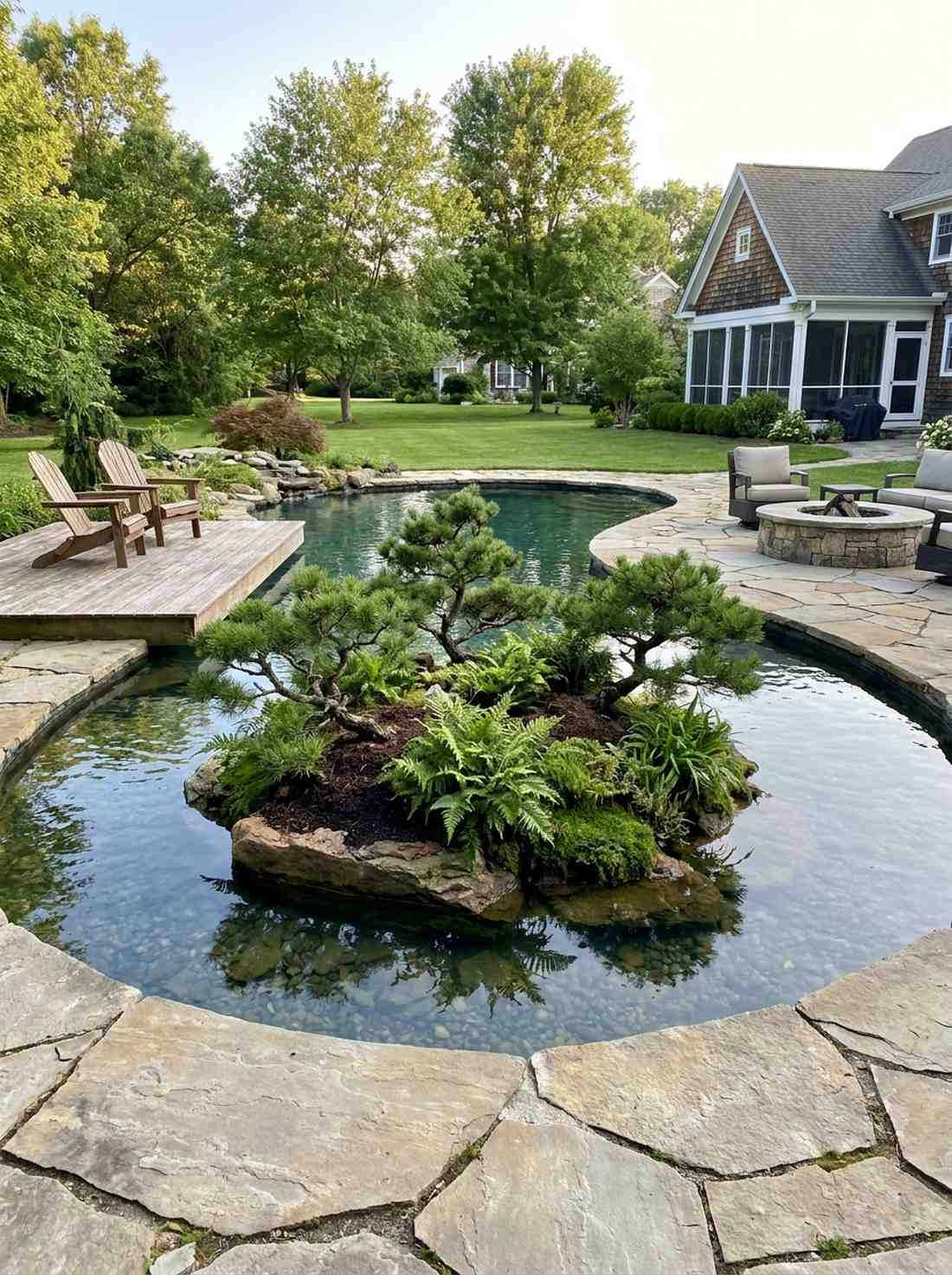
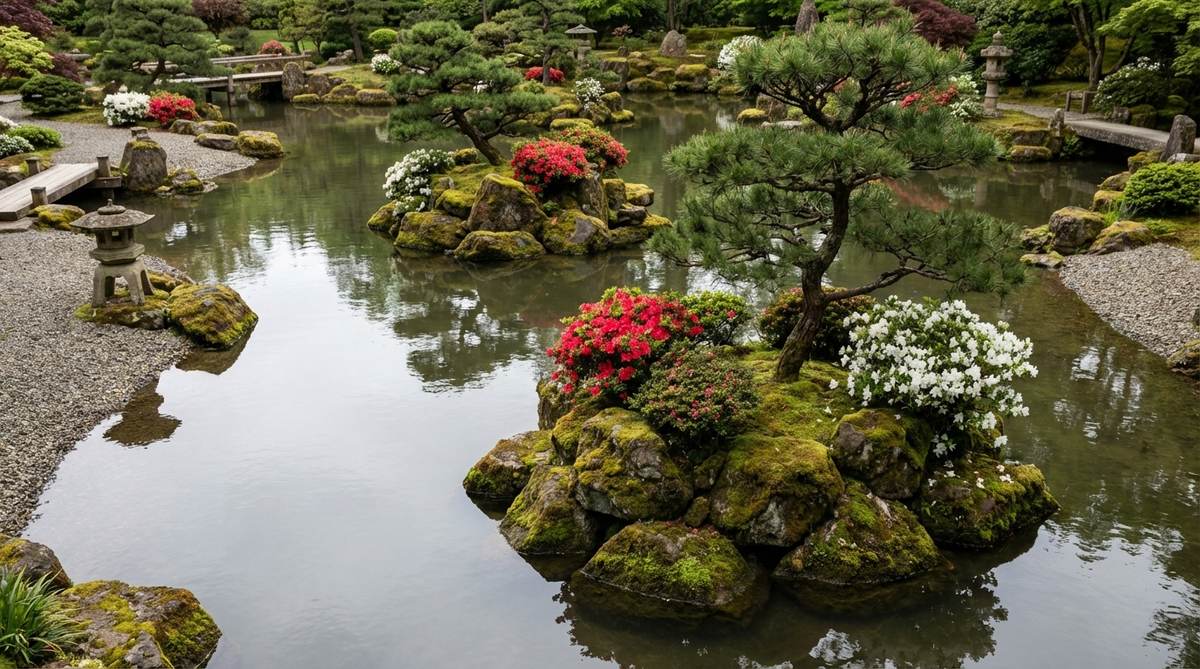
Mysterious and untouched, like a mythical sanctuary. Miniature pond island designs effortlessly break up massive, boring stretches of water.
Empty ponds lack scale, but dropping an inaccessible planted island instantly creates depth and high-end mystery. Plant dwarf pines on the mound using aquatic-safe clay substrate.
Creating an island out of leftover dig dirt is practically free!
- Key Materials: Submerged rock base, soil, dwarf pine.
- Vibe / Style: Mythical isolation.
- Difficulty: Easy if done before filling.
- Budget Breakdown: Plants: $40 | Base: Free dirt.
- Creator’s Tip: Make the island about 1/3 the size of the total pond to maintain perfect scale.
- Smart Sourcing: Pond-safe aquatic plant baskets and bonsai starter tree kits.
14. Zigzag Water Crossing
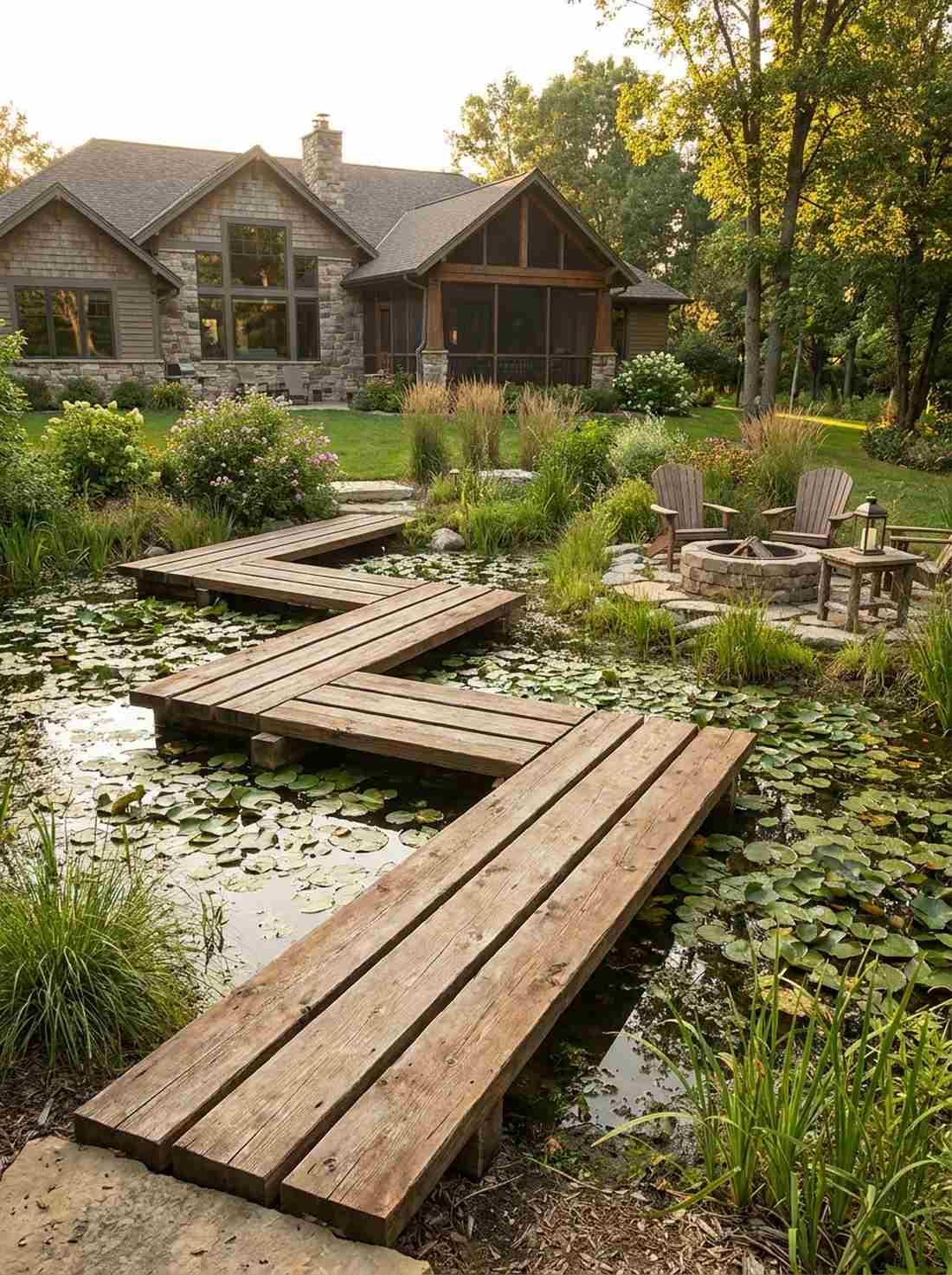
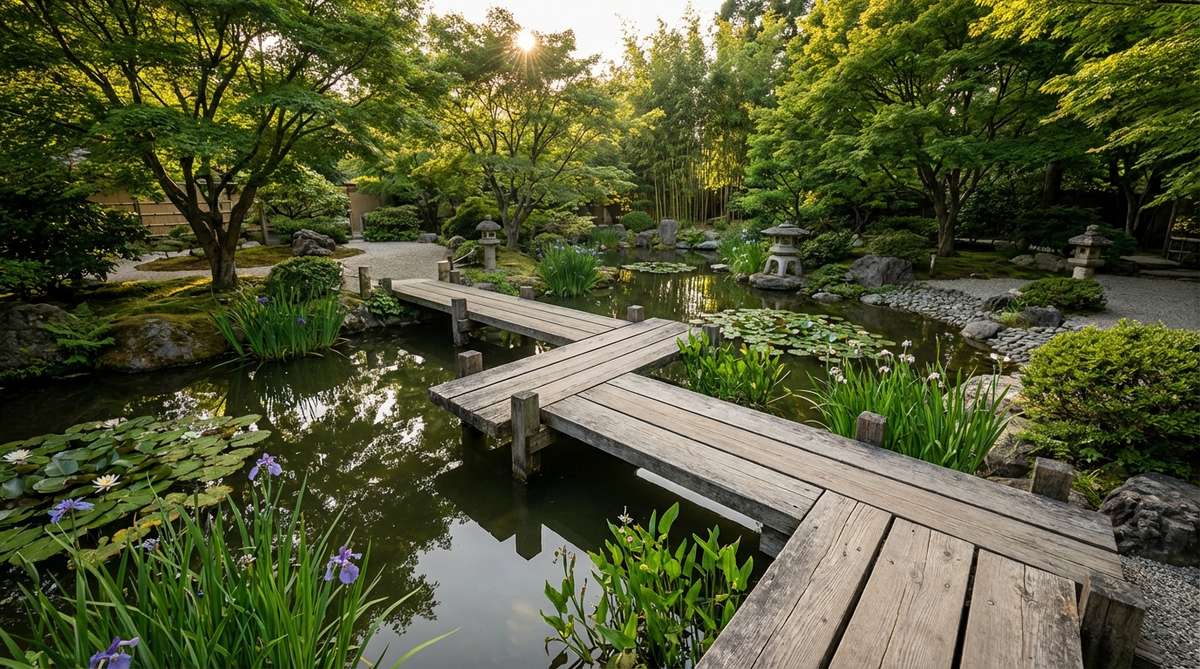
Forces you to slow down and truly absorb the scenery. Yatsuhashi zigzag bridges are the ultimate functional art piece over shallow marshy areas.
Straight bridges rush the eye, but staggered planks force a highly curated, 360-degree viewing experience. Build this layout fast using pre-cut outdoor lumber kits.
You can construct a gorgeous walkway for about $80. Save this for your pond planning ideas!
- Key Materials: 2×10 lumber planks, footings.
- Vibe / Style: Contemplative pathway.
- Difficulty: Basic woodworking.
- Budget Breakdown: Wood: $60 | Concrete bases: $20.
- Creator’s Tip: Leave a 2-inch gap between planks so visitors can see the water underneath.
- Smart Sourcing: Weather-sealed cedar board packs and anti-slip transparent wood stains.
This next setup is ridiculously cheap but looks like a $500 custom display…
15. Spring-Fed Source Display
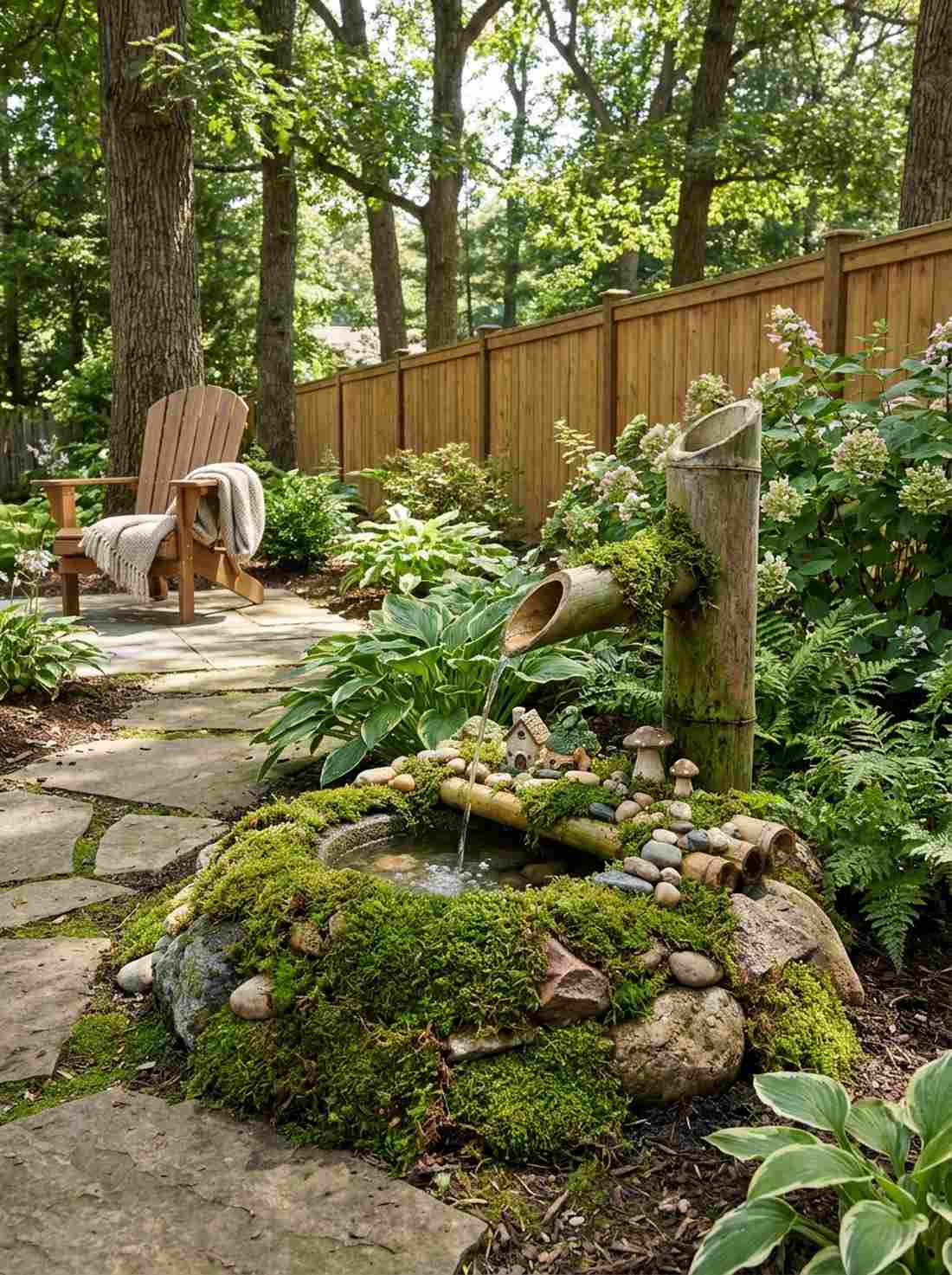
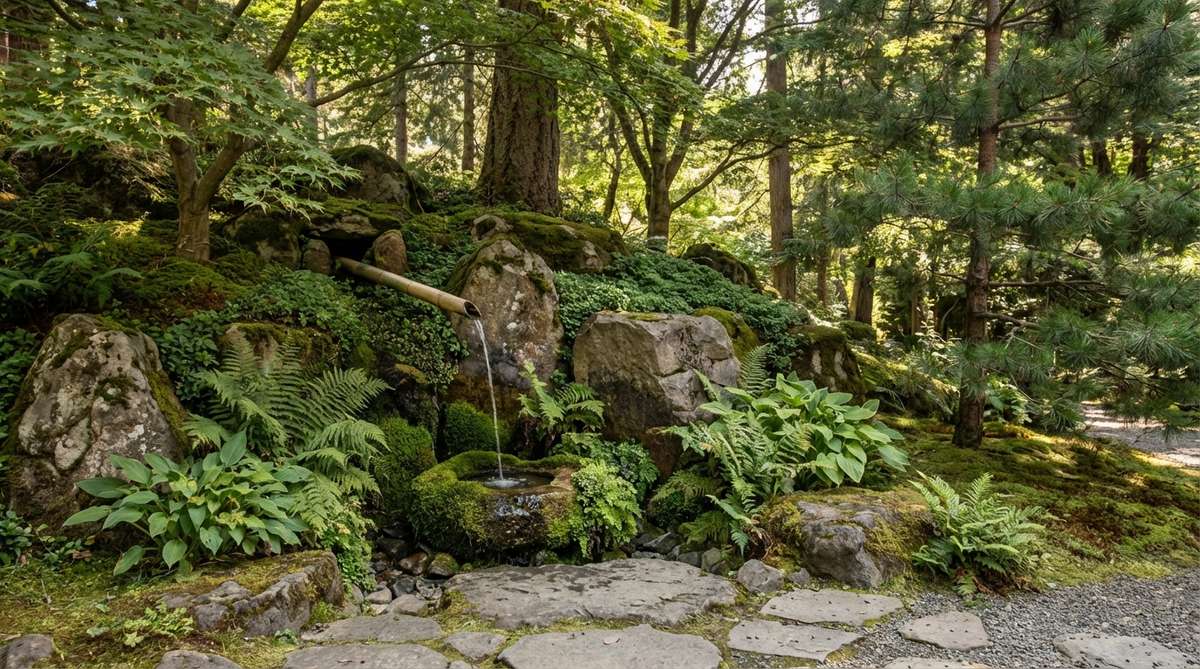
Feels like discovering a sacred, life-giving mountain spring. Bamboo water fountain kits instantly upgrade dark, neglected garden corners.
Exposed tubing destroys the magic, but hiding a micro-pump inside a bamboo spout delivers a flawless illusion. Let moss crawl over the base using fairy garden kit supplies for authenticity.
This is a super cheap $35 weekend win.
- Key Materials: Bamboo spout, micro-pump, catch basin.
- Vibe / Style: Sacred rustic spring.
- Difficulty: Very easy DIY.
- Budget Breakdown: Bamboo kit: $20 | Pump: $15.
- Creator’s Tip: Bury a plastic reservoir bucket completely underground to hide the recirculation mechanics.
- Smart Sourcing: Pre-assembled bamboo water spouts and solar-powered micro fountain pumps.
16. Dry Pond Transition
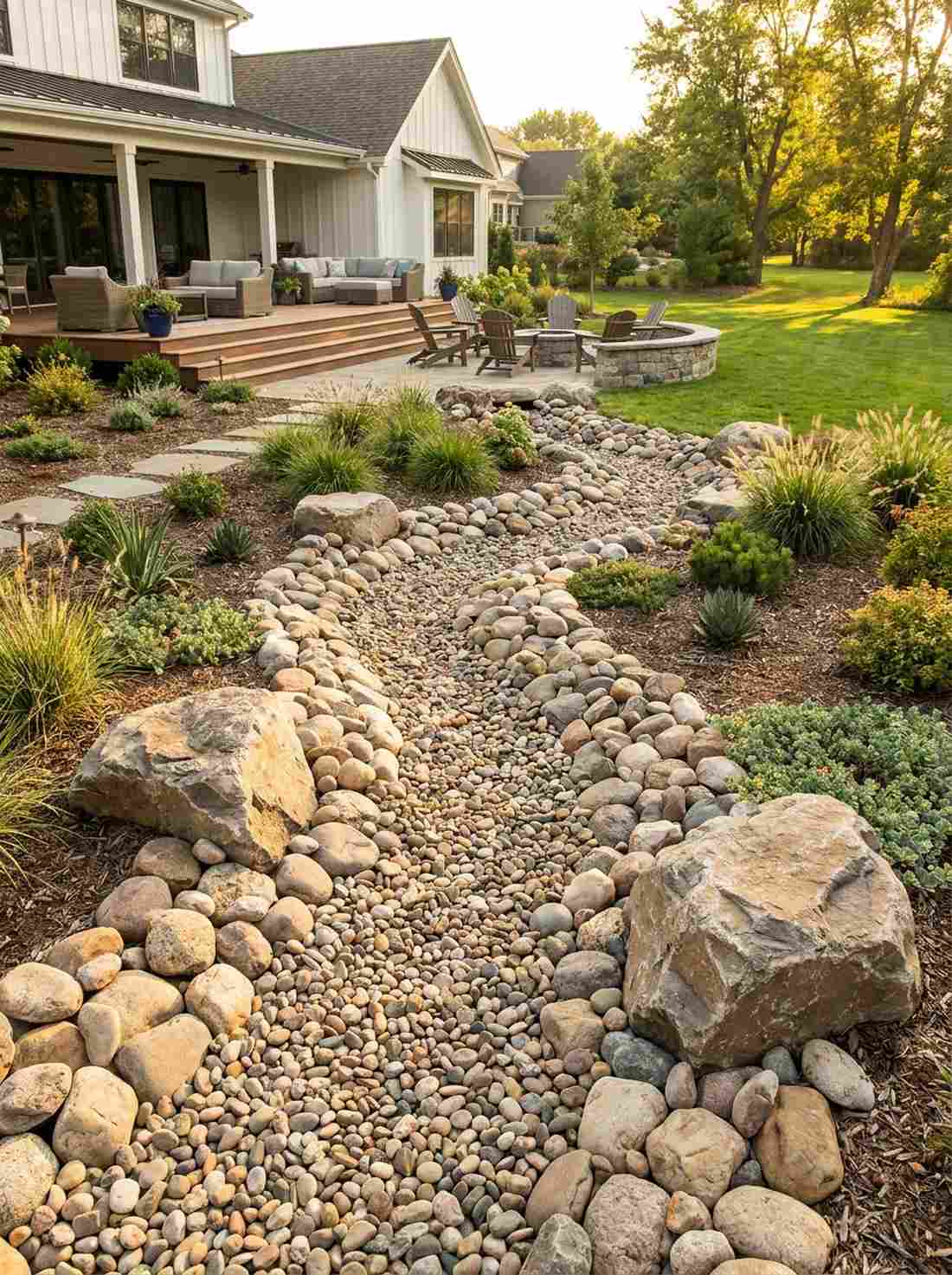
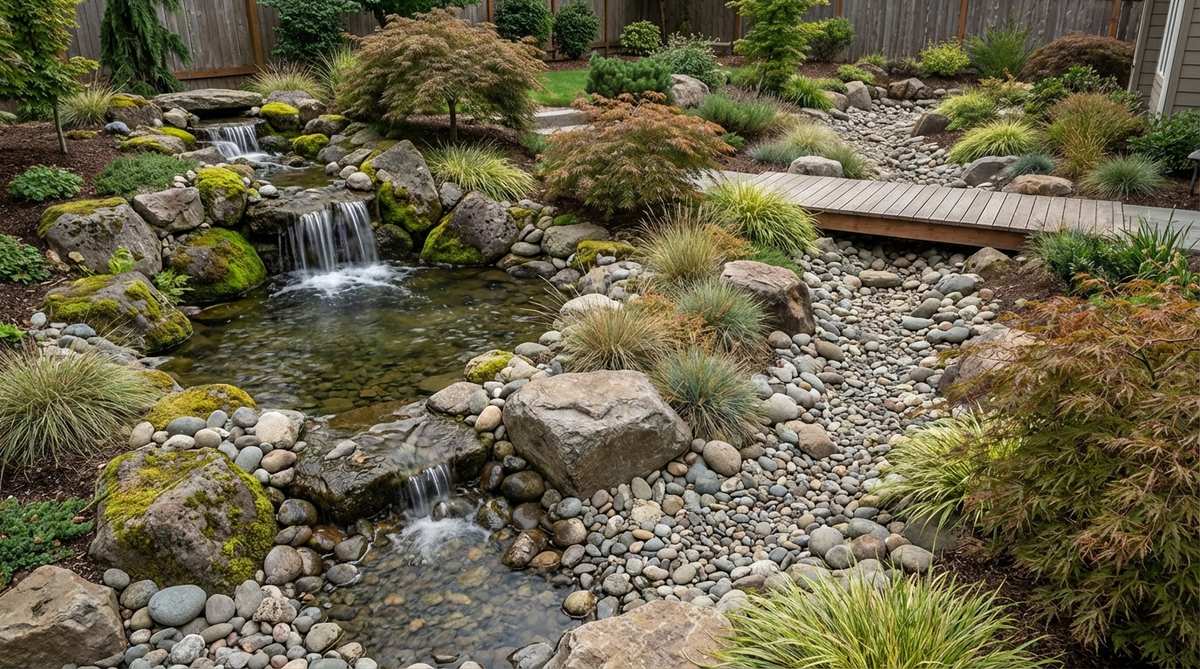
A brilliant eco-friendly hybrid for areas with heavy storm runoff. Dry streambed landscaping solves drainage issues while looking incredibly chic.
Ponds evaporate quickly, but a dry rock transition requires zero water while completely transforming yard drainage. Use bulk river rock assortments to build natural-looking banks.
You can upgrade your drainage for under $60. Pin this to your eco-friendly yard board!
- Key Materials: River rocks, cobble, drainage pipe.
- Vibe / Style: Seasonal riverbed.
- Difficulty: Moderate digging.
- Budget Breakdown: Rocks: $40 | Trench fabric: $20.
- Creator’s Tip: Place the largest boulders on the outside curves, just like how a real river deposits stones.
- Smart Sourcing: Pre-washed mixed river pebbles and heavy-duty perforated drainage pipes.
Pathway and Circulation Designs: Japanese Garden Landscape Movement
Mastering circulation transforms how a space feels. Japanese garden style relies heavily on pacing through textured steps and intentional visual reveals.
17. Tobi-ishi Stepping Stones
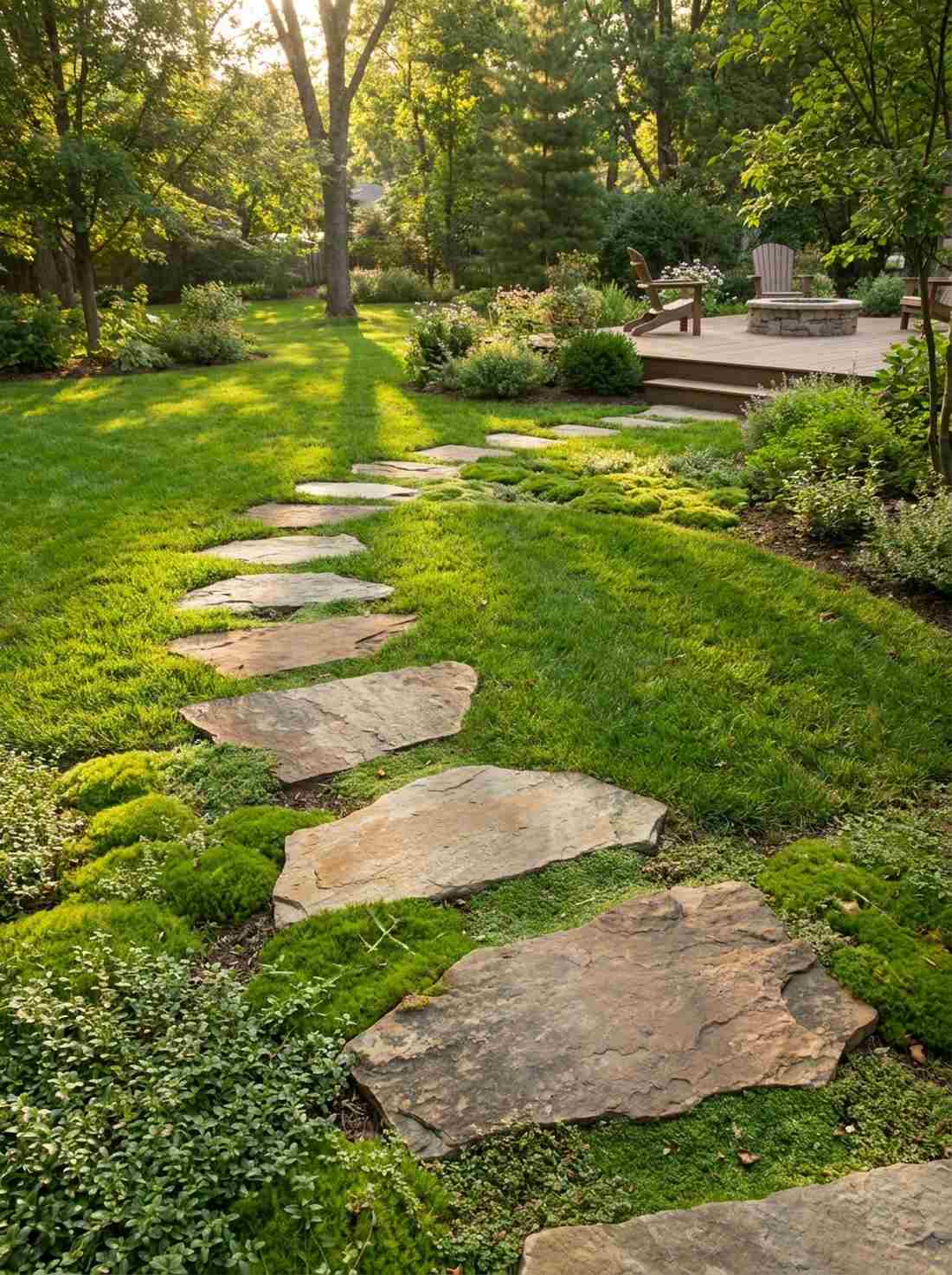
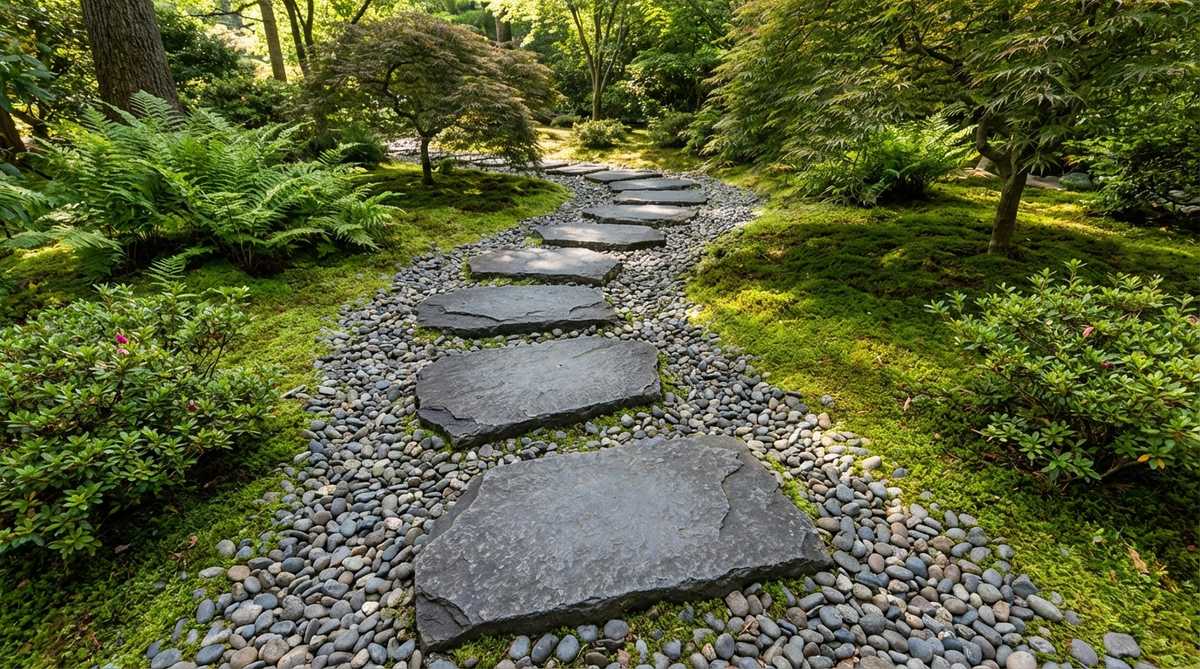
A floating path that demands your absolute, mindful attention. Irregular stepping stone pathways are perfect for preserving grass or delicate moss beds.
Generic concrete pavers look suburban, but sinking raw, flat stones delivers a deeply authentic, aged aesthetic. Stabilize the bases perfectly using quick-setting leveling sand.
Expect to spend about $10-$15 per large stone.
- Key Materials: Flat flagstones, sand base.
- Vibe / Style: Mindful rhythmic journey.
- Difficulty: Digging required.
- Budget Breakdown: Stones: $60 | Base sand: $15.
- Creator’s Tip: Space them exactly at comfortable stride length (about 24 inches center-to-center).
- Smart Sourcing: Heavy-duty natural flagstone pallets and polymeric pathway sand.
18. Nobedan Formal Paving
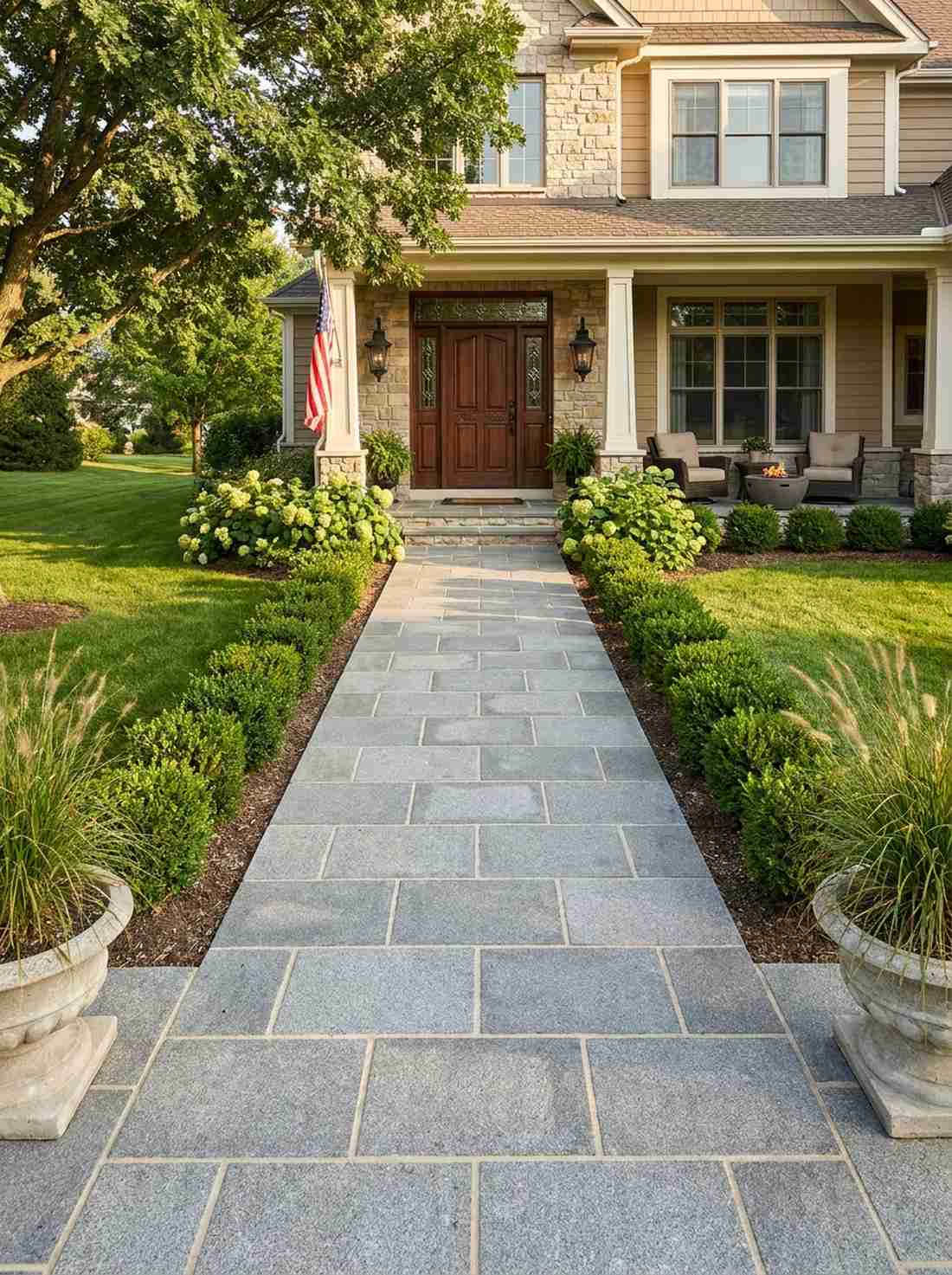
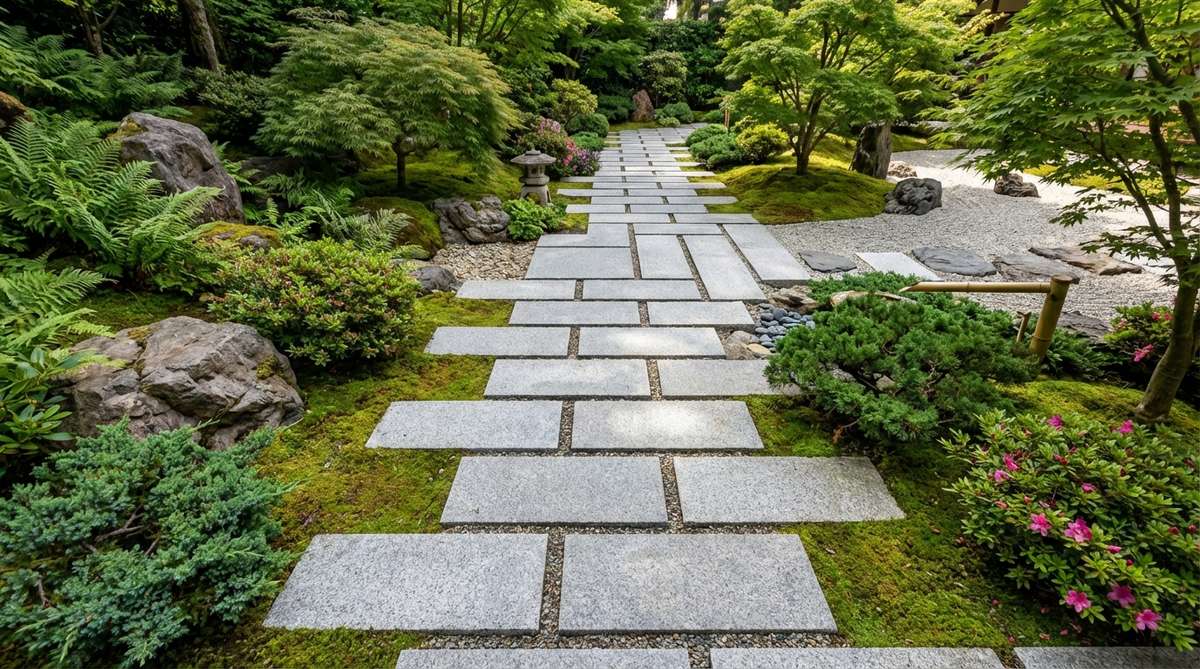
A highly sophisticated entryway that commands immediate respect. Formal staggered stone paths elevate your main property entrance to estate levels.
Pouring a solid concrete walk is boring, but arranging cut stones in a running bond screams high-end luxury architecture. Ditch the mortar and lock them in with premium jointing compound for freeze-thaw durability.
This layout requires a $150+ materials investment. Pin this for front yard upgrades!
- Key Materials: Cut granite blocks, joint sand.
- Vibe / Style: Imposing architectural formal.
- Difficulty: Requires precise leveling.
- Budget Breakdown: Pavers: $120 | Sand: $30.
- Creator’s Tip: Use a thick layer of tamped crushed gravel beneath the sand to prevent winter heaving.
- Smart Sourcing: Pre-cut rectangular granite pavers and all-weather polymeric jointing sand.
19. Circular Moon-Viewing Platform
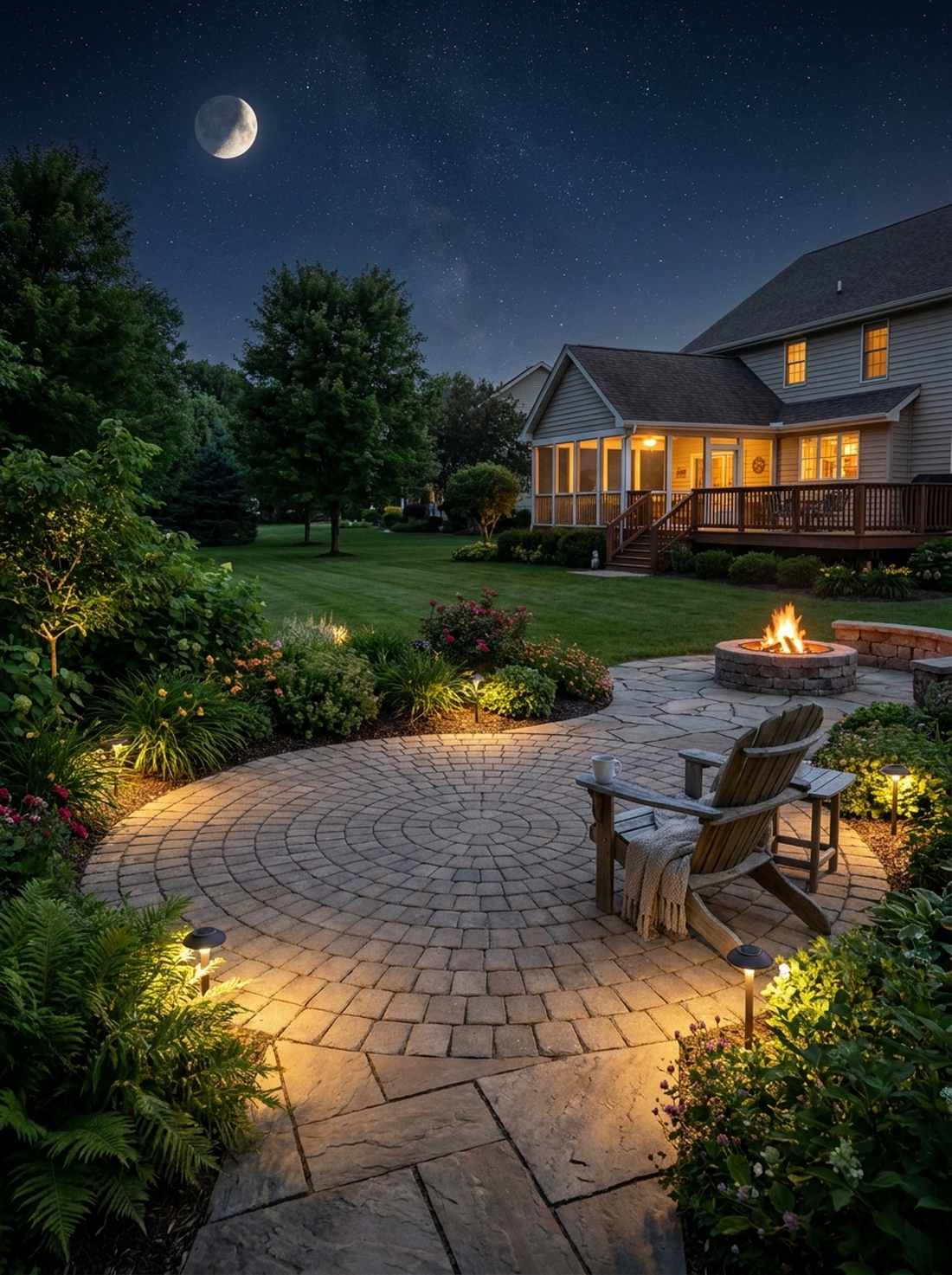
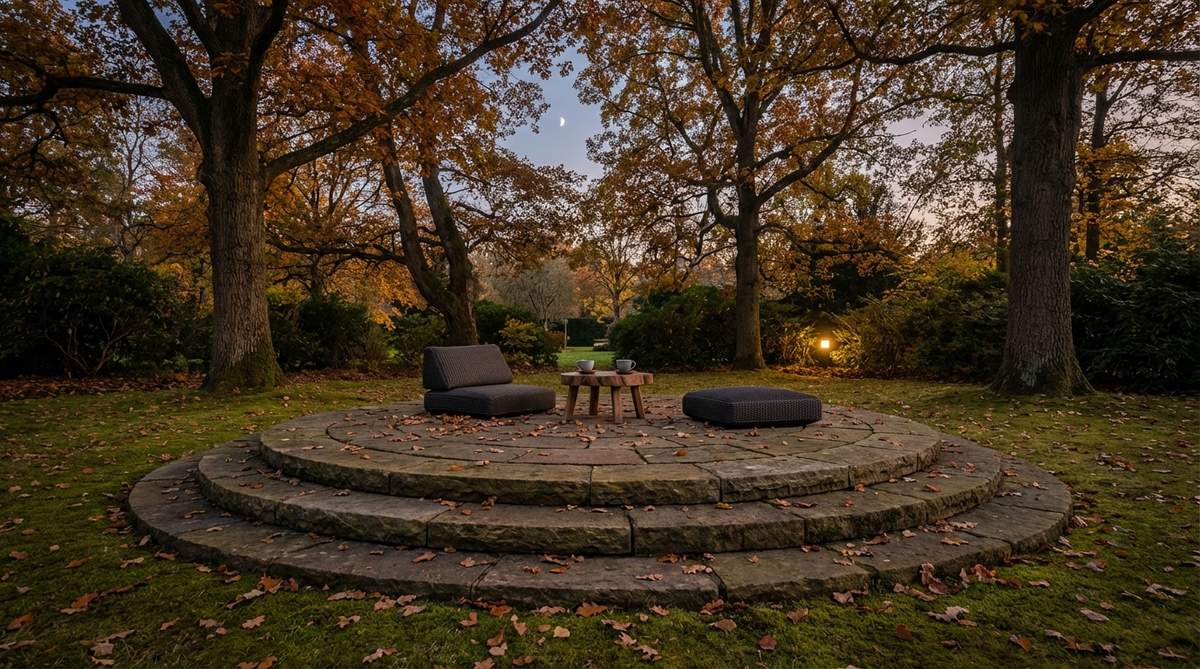
An enchanting nighttime oasis designed for starry skies. Circular patio stone layouts create a stunning geometric break from linear garden paths.
Square patios feel restrictive, but a radiating circle delivers a surprisingly premium look that draws visitors outward. Illuminate the perimeter softly using solar pathway lights hidden in the foliage.
You can build a small 8-foot circle for around $120.
- Key Materials: Concentric paving stones, edge lighting.
- Vibe / Style: Celestial evening retreat.
- Difficulty: Moderate circular cutting.
- Budget Breakdown: Circle kit: $100 | Lighting: $20.
- Creator’s Tip: Buy a pre-designed ‘patio circle kit’ rather than trying to cut individual stones into wedges.
- Smart Sourcing: Pre-cut circular stone patio kits and warm-white solar ground lights.
Stop wasting money on boring straight pathways. The next layout tricks the mind instantly…
20. Bamboo Split-Decision Path
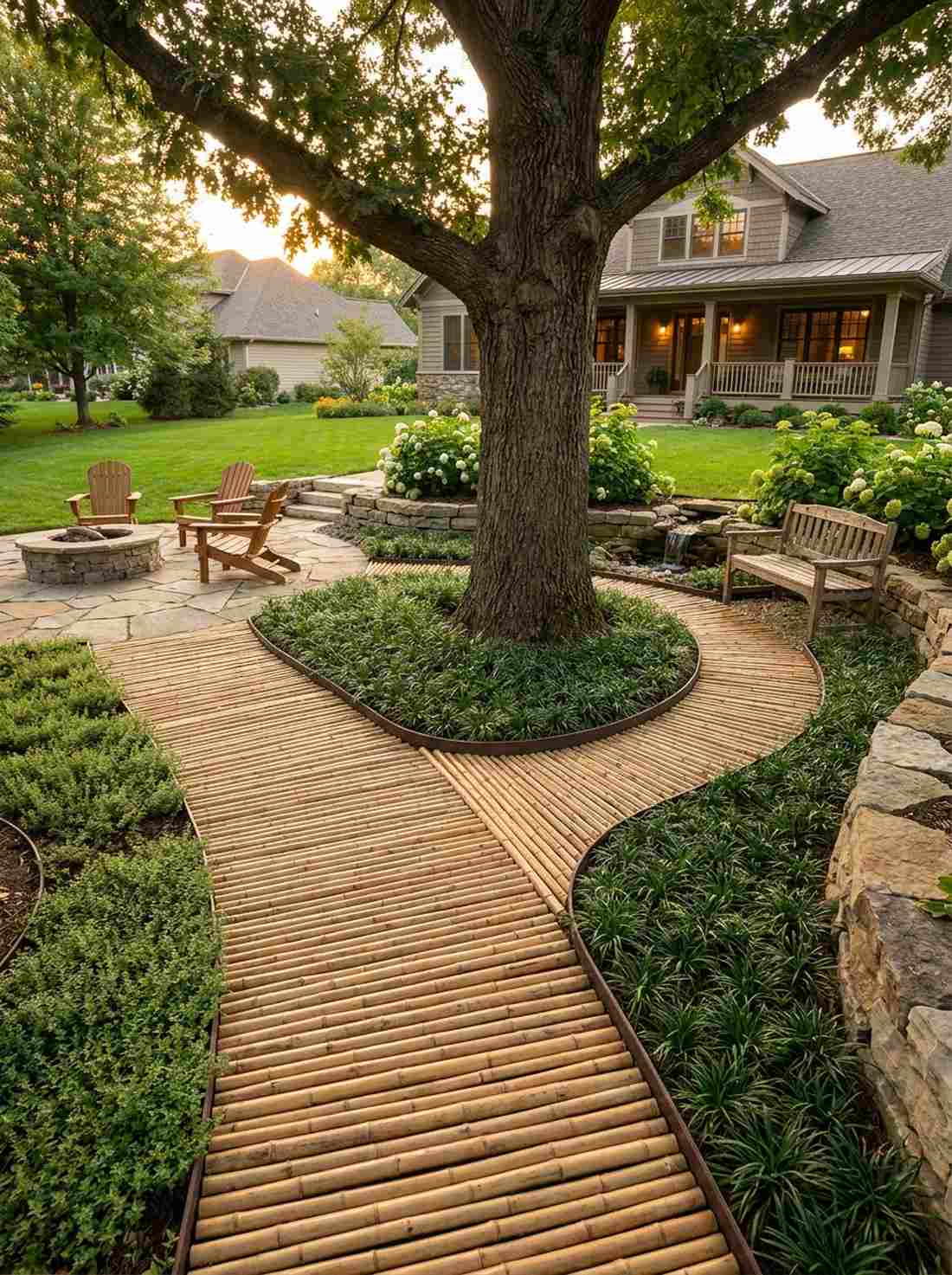
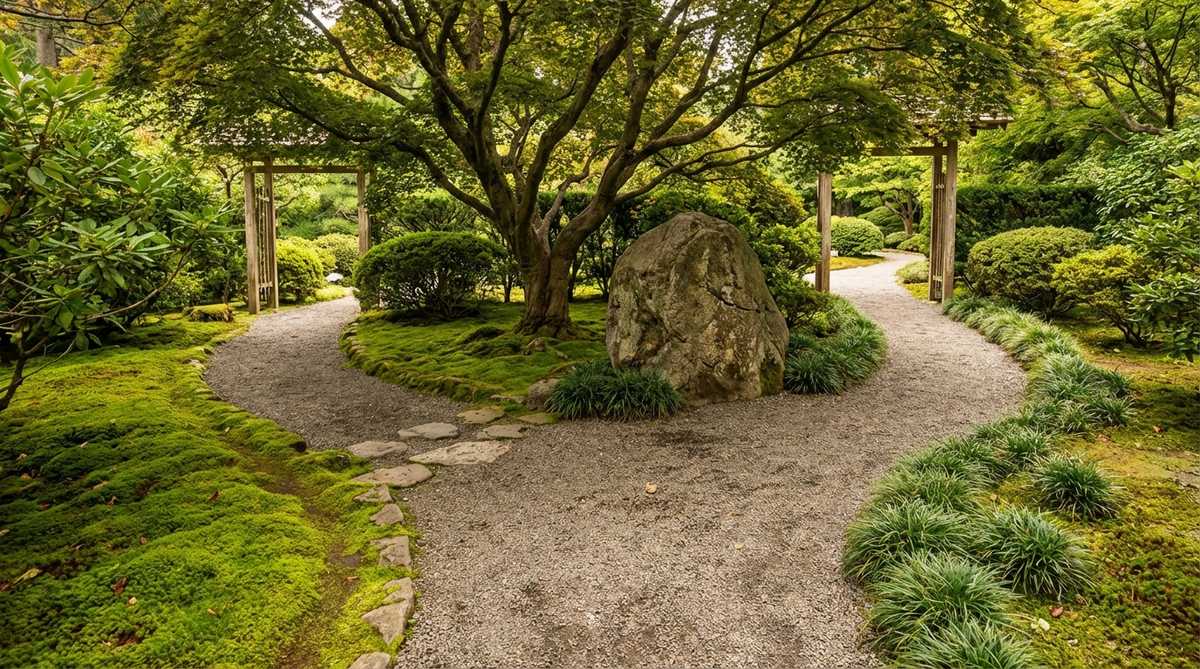
Adds a layer of mystery and interactive engagement to your yard. Forked garden pathway designs force visitors to make a fun, aesthetic choice.
A single straight path reveals everything too soon, while splitting around a tree creates a designer-level finish of hidden discovery. Delineate the split edges sharply using flexible garden border edging.
This trick costs nothing extra but adds massive visual interest. Save this layout idea!
- Key Materials: Obstacle feature, two groundcovers.
- Vibe / Style: Interactive discovery.
- Difficulty: Very easy planning.
- Budget Breakdown: Path material: $40 | Edging: $20.
- Creator’s Tip: Make one side of the split visibly narrower to create a “secret” alternative route.
- Smart Sourcing: Flexible no-dig pathway edging and bulk dwarf mondo grass plugs.
21. Grade-Separated Overlook
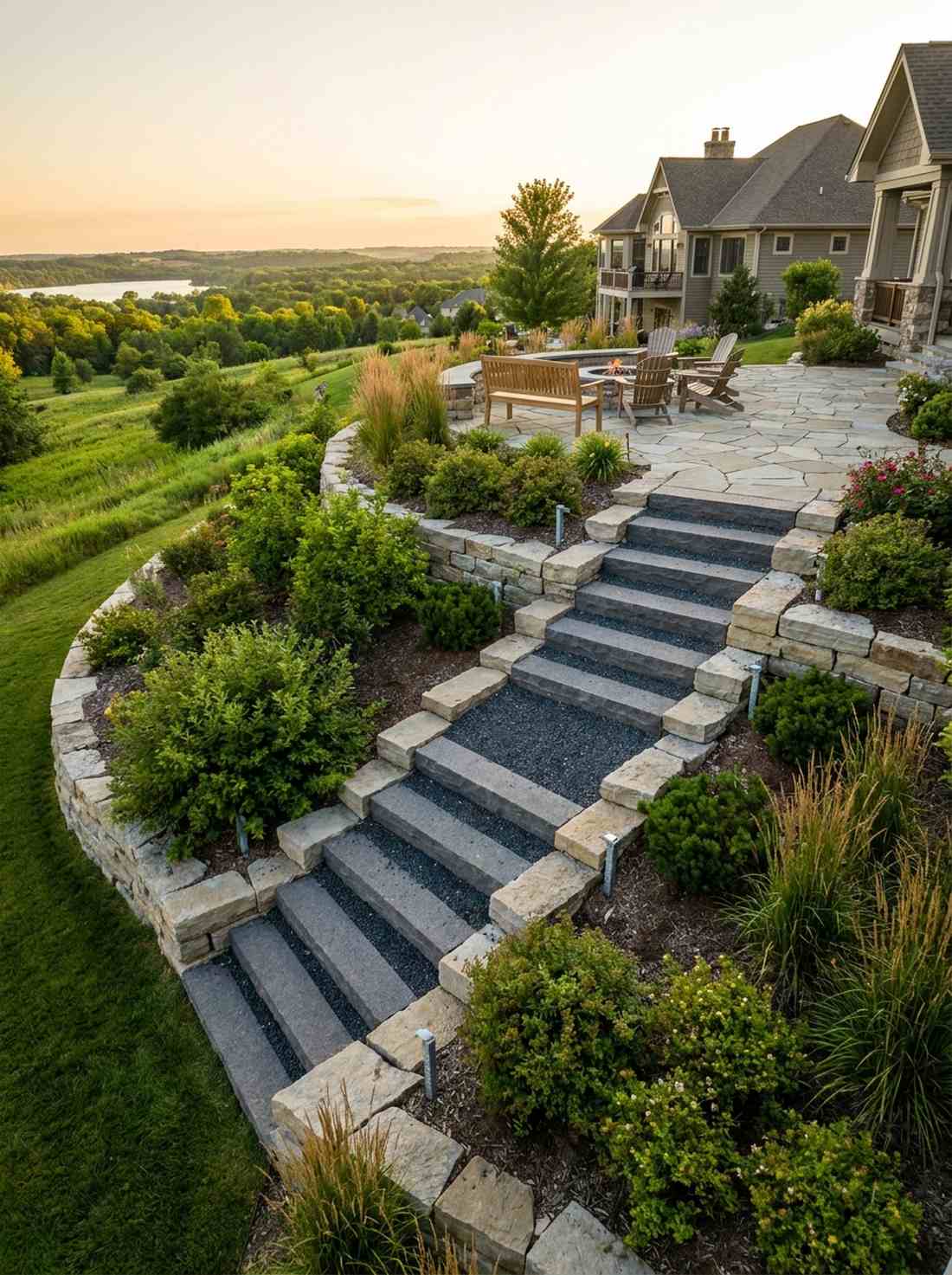
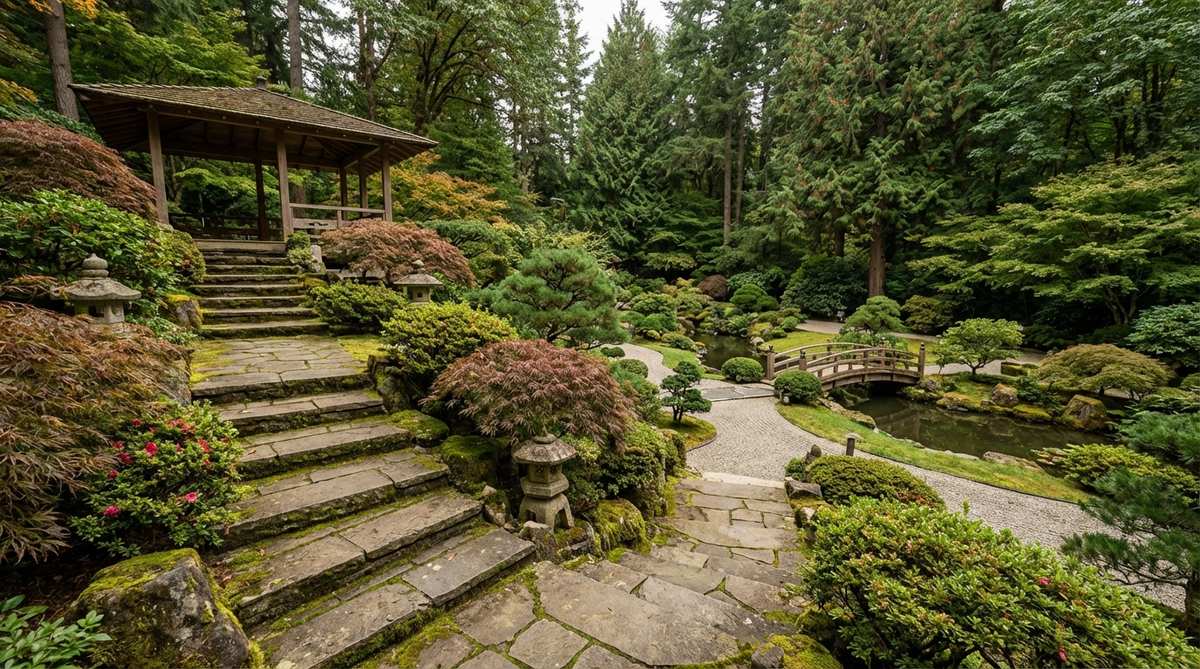
Transforms a boring hill into a majestic viewing theater. Elevated stone garden steps reward the physical climb with a breathtaking composed view.
Most people try to flatten sloped yards, but embracing the elevation looks far more expensive and dramatic. Anchor the risers firmly using heavy-duty landscape spikes.
Expect to spend $100–$200 on solid stone risers.
- Key Materials: Stone block risers, gravel treads.
- Vibe / Style: Dramatic theatrical reveal.
- Difficulty: Heavy manual labor.
- Budget Breakdown: Stone blocks: $150 | Spikes: $20.
- Creator’s Tip: Keep the step rise under 6 inches to make the ascent feel leisurely, not tiring.
- Smart Sourcing: Pre-cut heavy stone step blocks and galvanized landscaping spikes.
22. Narrow Passage Compression
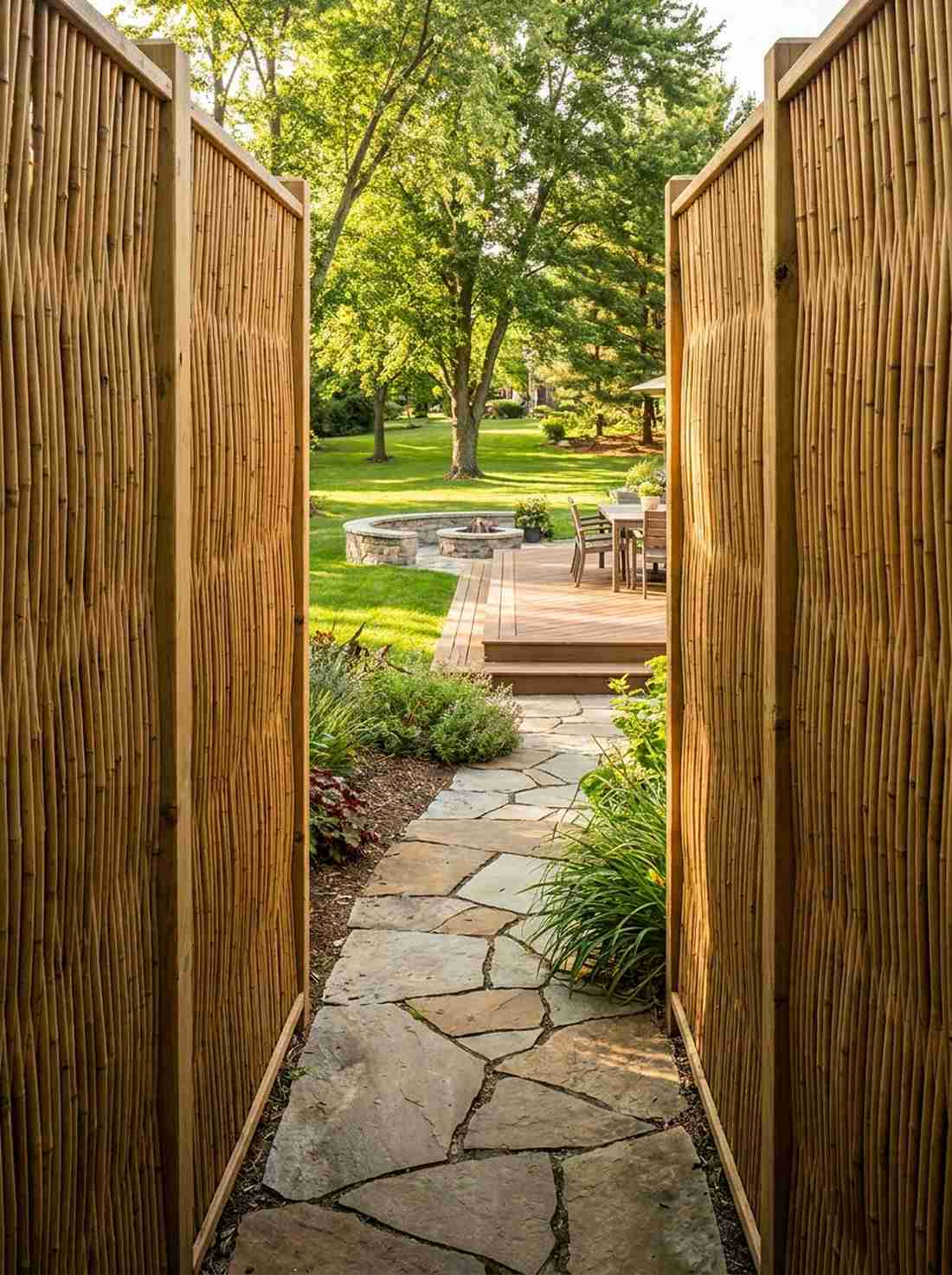
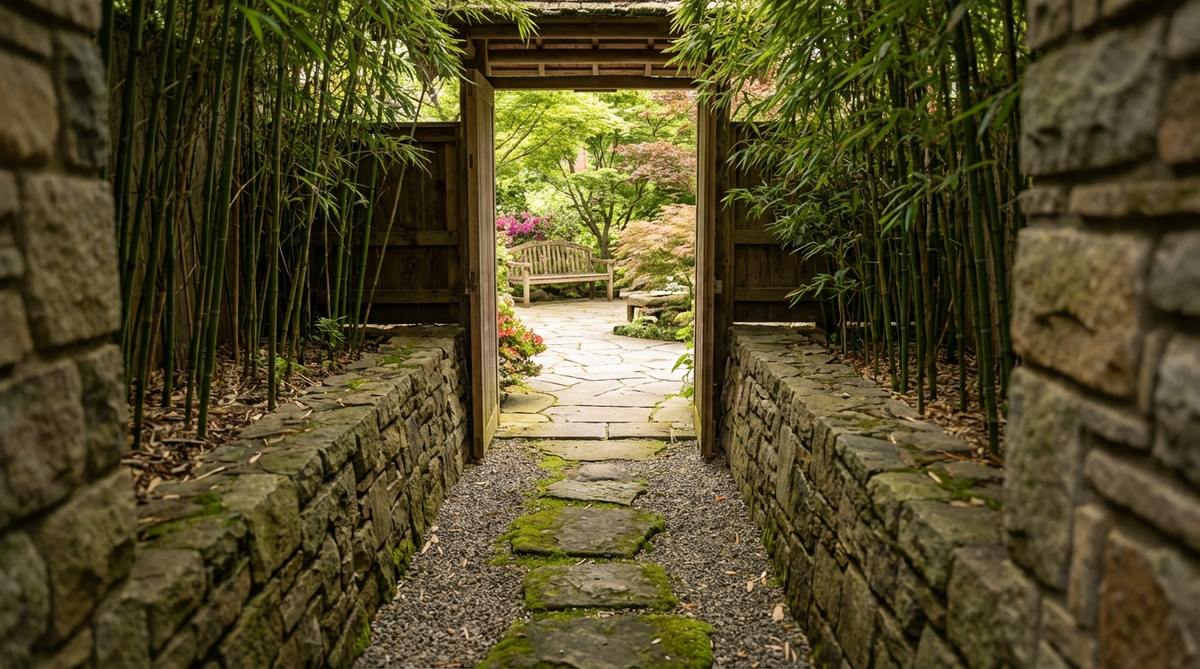
A psychological trick that makes your main garden feel massive. Compressed entryway designs build intense anticipation between two tight vertical walls.
Wide open gates ruin the surprise, but squeezing the walkway creates a “hide-and-reveal” tension that completely transforms the space. Line the sides with pre-assembled bamboo screens for instant verticality.
Pull this psychological trick off for under $80. Pin this to your landscape design board!
- Key Materials: Tall fencing or thick bamboo, narrow path.
- Vibe / Style: Tense anticipation.
- Difficulty: Easy visual trick.
- Budget Breakdown: Bamboo fencing: $60 | Posts: $20.
- Creator’s Tip: Reduce the walkway width to exactly 24 inches to force a single-file, immersive entry.
- Smart Sourcing: Pre-woven rolled bamboo fencing and fast-setting post hole concrete.
23. Gravel-to-Moss Transition
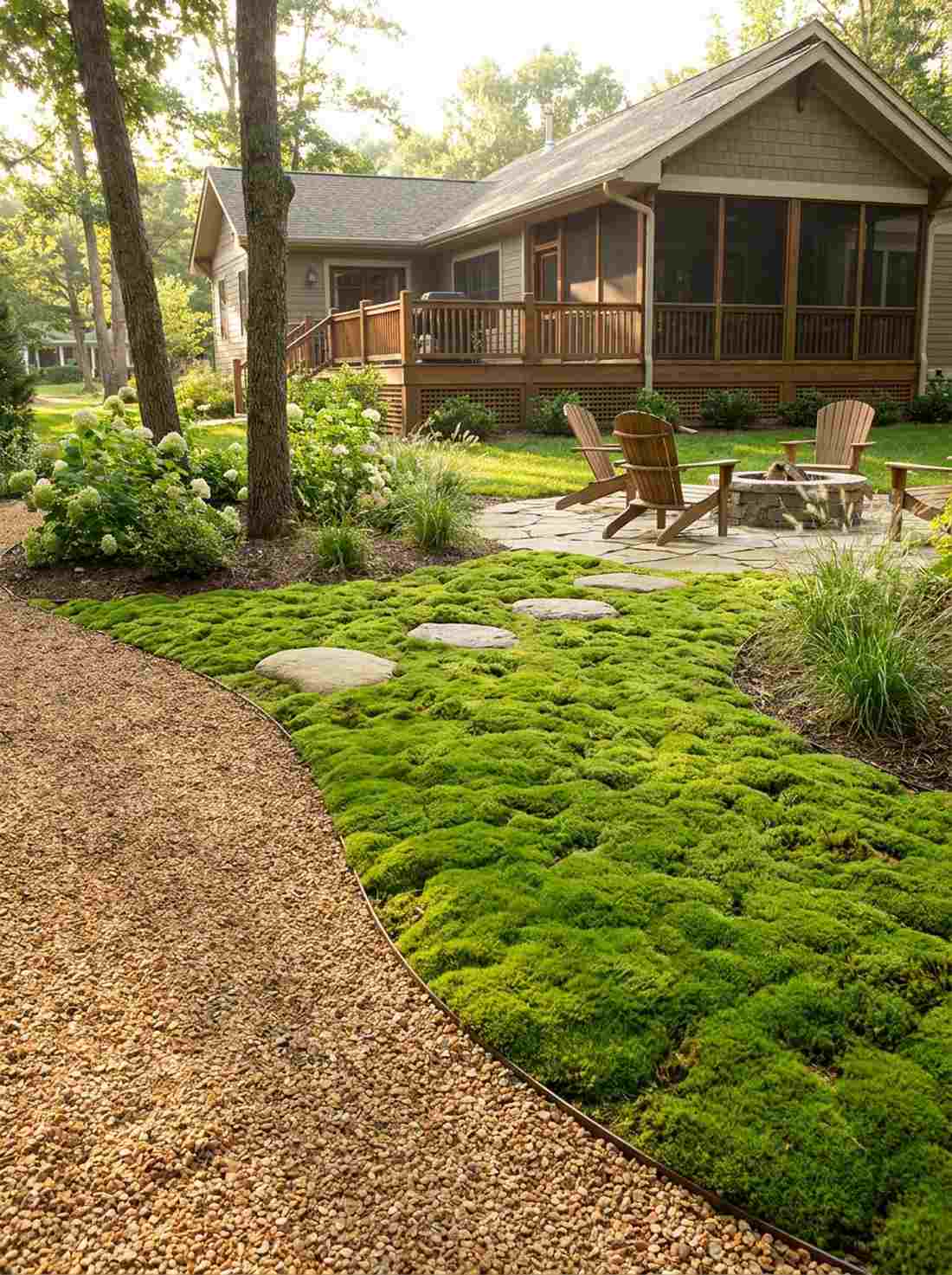
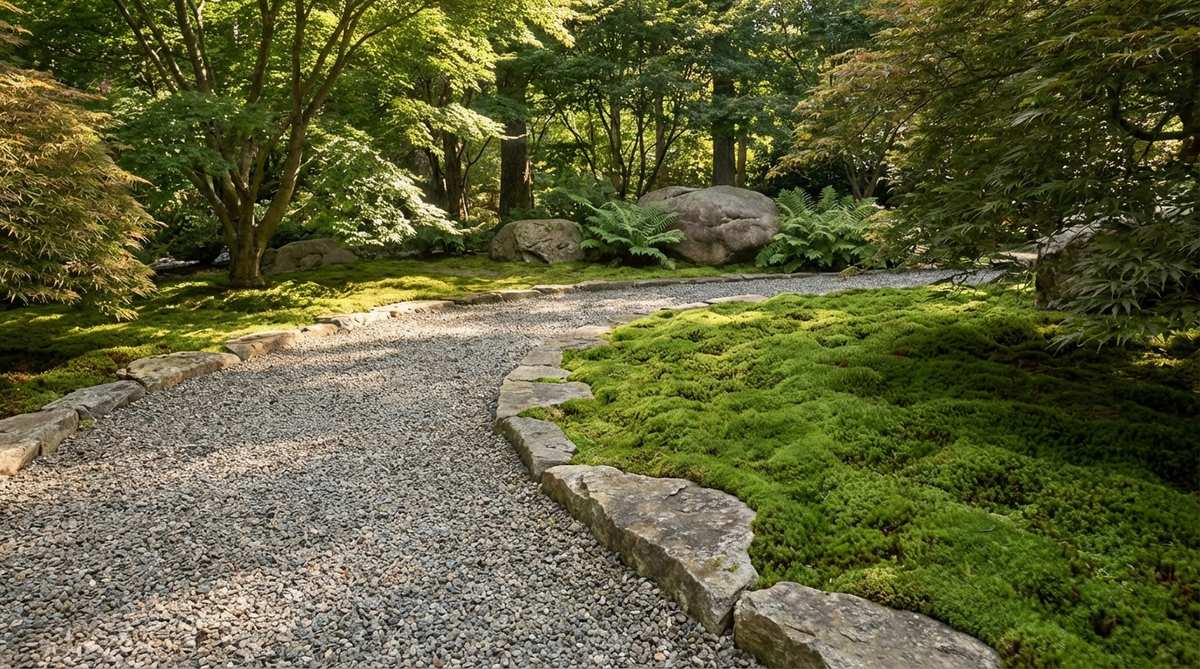
A sensory masterpiece you literally feel through your shoes. Textural garden material shifts silently cue the brain to enter a deeper state of calm.
Harsh borders look messy, but letting crunchy stone bleed into soft moss delivers a surprisingly premium look of aged wilderness. Keep the gravel from destroying the moss using hidden metal landscape binding strips.
This dual-texture setup costs around $45 to perfect.
- Key Materials: Moss flats, crushed gravel, hidden edging.
- Vibe / Style: Tactile sensory shift.
- Difficulty: Requires meticulous edging.
- Budget Breakdown: Edging: $20 | Materials: $25.
- Creator’s Tip: Cut the metal edging so it sits exactly 1/2 inch below the gravel line to stay invisible.
- Smart Sourcing: Bendable aluminum landscape edging and live sheet moss bulk boxes.
24. Bridge Pause Point
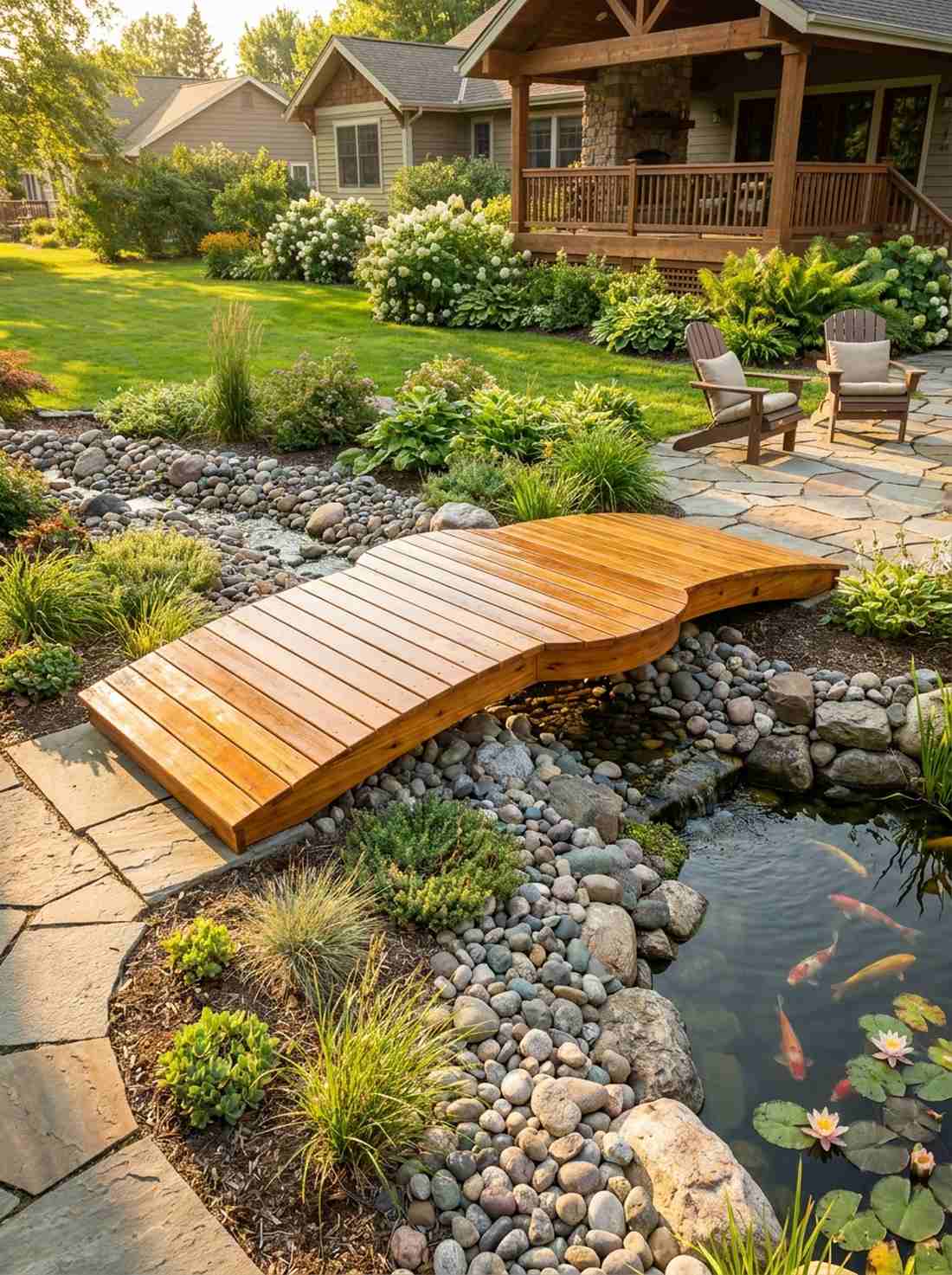
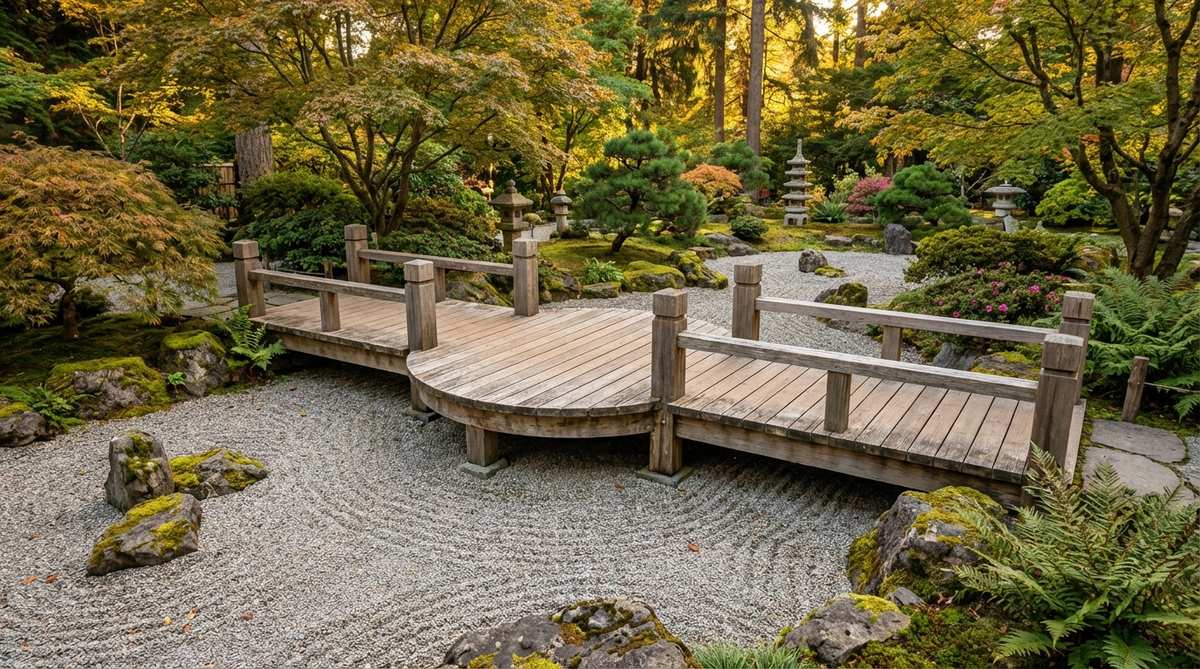
Turns a simple walkway into a composed viewing gallery. Garden bridge focal points force a deliberate stop over dry streams or koi ponds.
Flat bridges are just sidewalks, but adding a slight arched swell in the center gives a designer-level finish. Treat the wood heavily with UV-coated clear sealants to prevent rot.
Pre-made bridge kits start around $100. Save this idea for your water features!
- Key Materials: Arched wooden bridge kit, wood sealer.
- Vibe / Style: Elevated picturesque pause.
- Difficulty: Simple assembly.
- Budget Breakdown: Bridge kit: $100 | Sealant: $20.
- Creator’s Tip: Widen the very center of the bridge slightly to intuitively invite guests to stand and look.
- Smart Sourcing: Pre-fabricated arched cedar bridges and marine-grade UV clear coat sealers.
Most landscape designers charge thousands for the spatial illusions featured in the next section…
Spatial Organization Patterns: Japanese Garden Style Layouts
How you frame a view matters more than what you plant. These advanced spatial frameworks organize chaotic yards into highly curated, magazine-worthy scenes.
25. Borrowed Scenery Frame
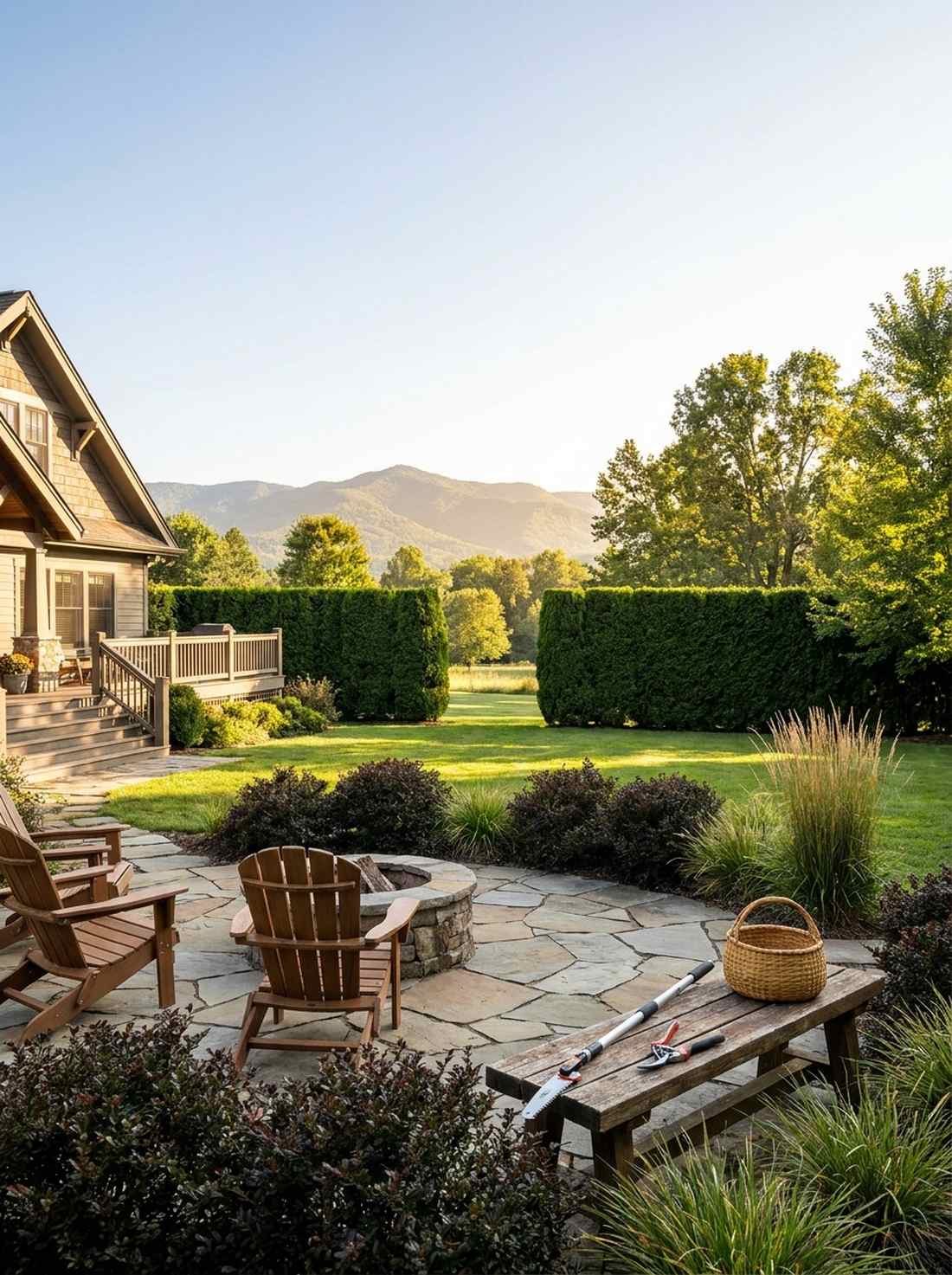
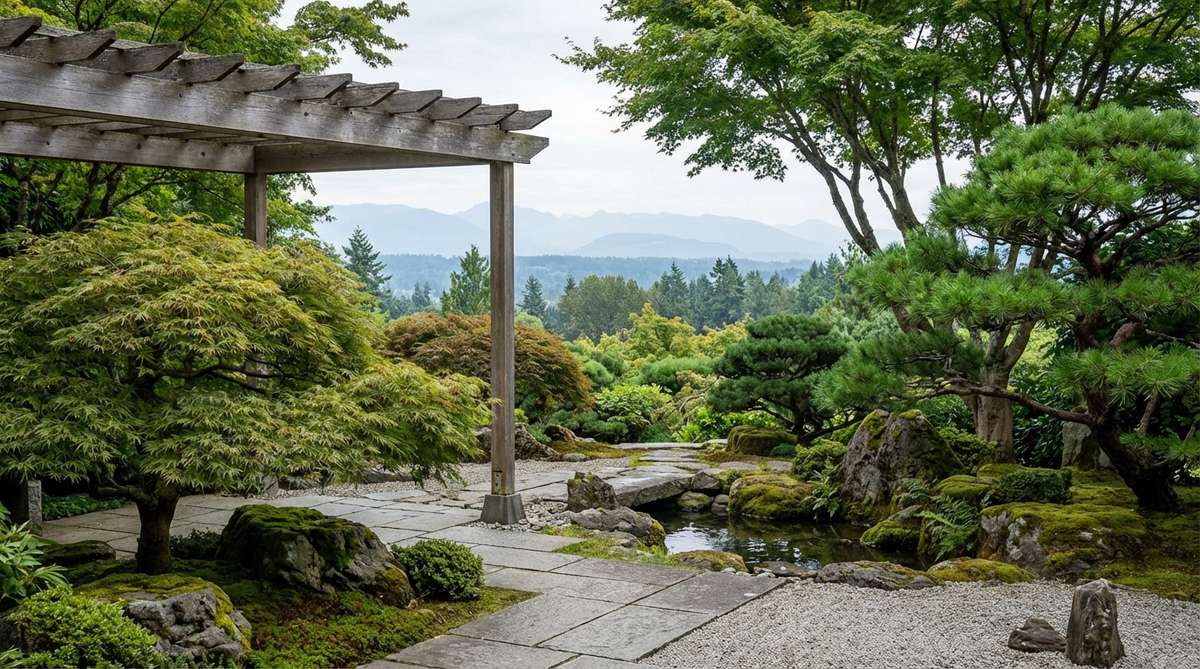
Steals the beauty of your neighbor’s trees for free. Shakkei borrowed scenery layouts magically expand your property line without buying an inch of land.
Solid fences make yards claustrophobic, but selectively pruning a view corridor to distant mountains or tall trees screams high-end luxury. Frame the shot perfectly using premium outdoor pruning shears.
This layout is literally free. Pin this brilliant visual hack!
- Key Materials: Existing background elements, pruning tools.
- Vibe / Style: Expansive boundary-less depth.
- Difficulty: Requires careful trimming.
- Budget Breakdown: Tools: $25.
- Creator’s Tip: Plant dark, low shrubs in the foreground to push the bright, borrowed background further away.
- Smart Sourcing: High-carbon steel bypass pruners and telescoping pole saws.
26. Three-Zone Depth Layering
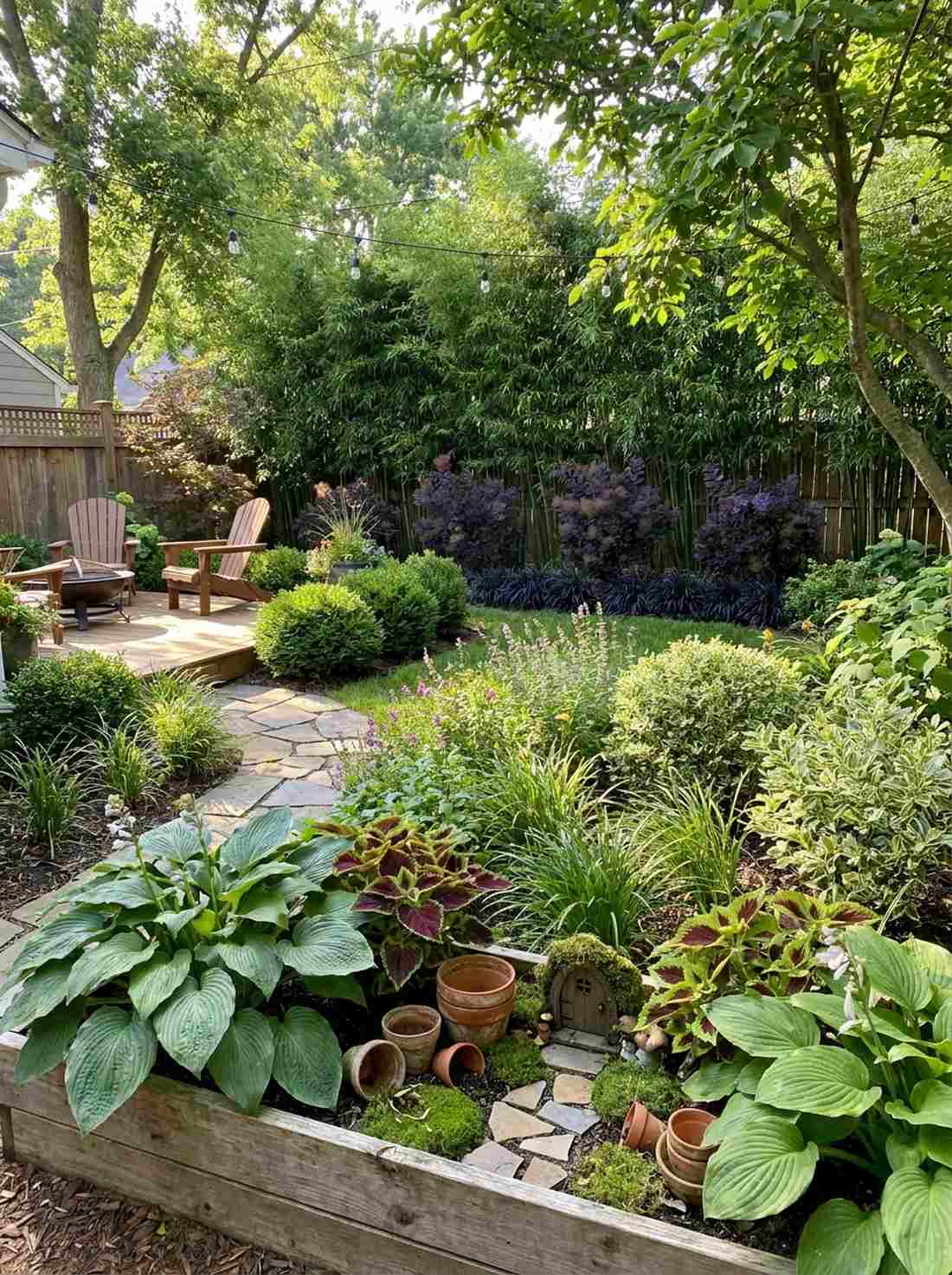
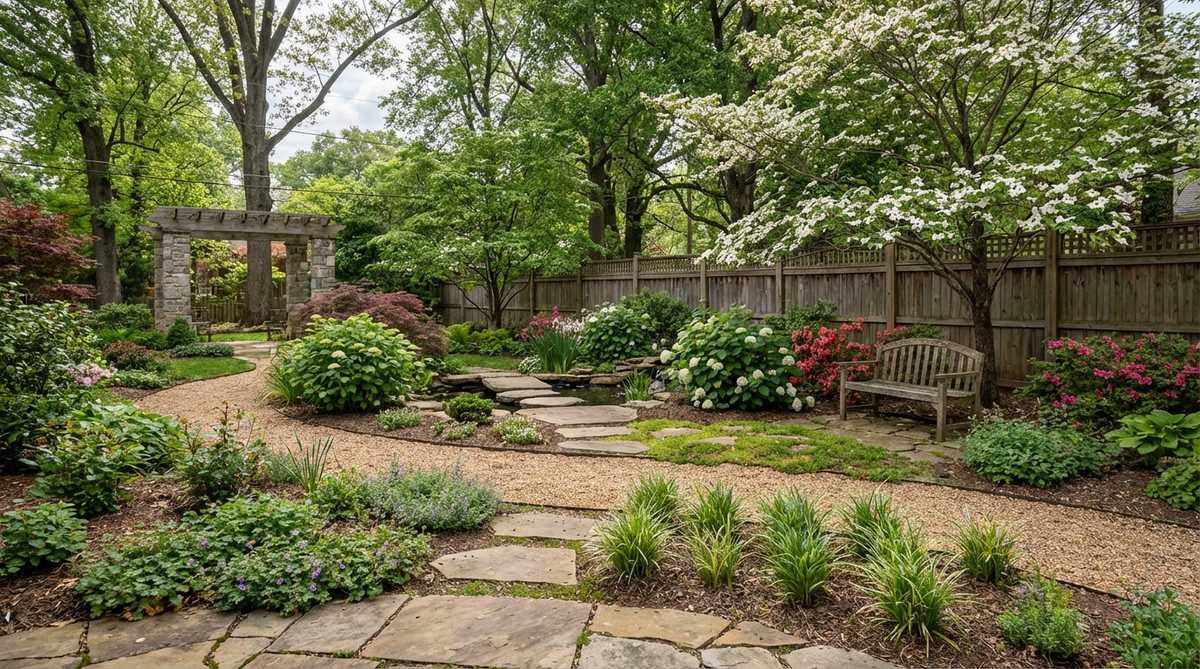
The ultimate theatrical staging trick for tiny suburban lots. Foreground-to-background depth planting makes a shallow yard feel miles deep.
Planting everything at the fence line is a rookie mistake, whereas layering sizes front-to-back delivers a surprisingly premium look. Use miniature garden supplies in the extreme foreground to force perspective.
You can execute this optical illusion for about $80 in varied plants.
- Key Materials: Fine textures for back, bold for front.
- Vibe / Style: Theatrical optical illusion.
- Difficulty: Strategic planning needed.
- Budget Breakdown: Shrubs: $50 | Groundcover: $30.
- Creator’s Tip: Put dark purple/black plants in the deep background—they recede visually and create shadow depth.
- Smart Sourcing: Assorted dwarf hosta root packs and tall faux bamboo privacy screens.
27. Courtyard Tsubo-Niwa
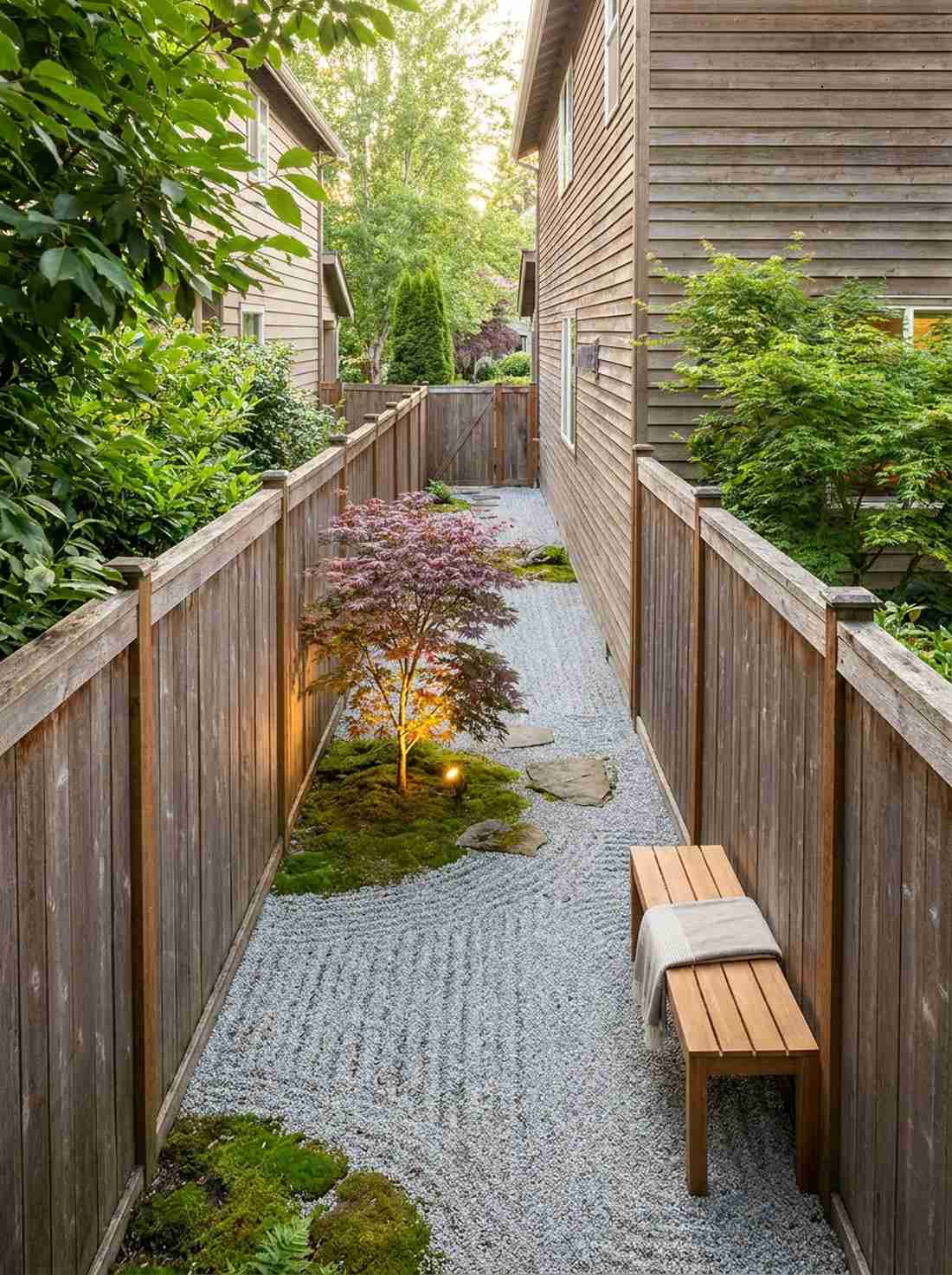
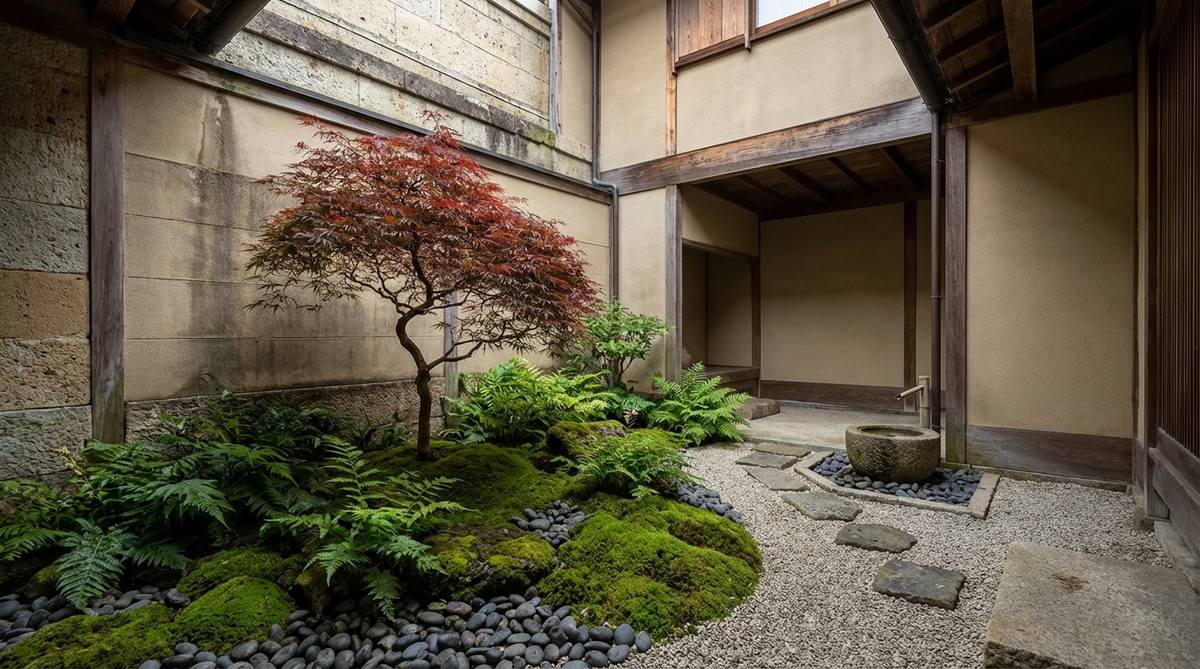
Turns an awkward, useless side alley into a mesmerizing living painting. Enclosed tsubo-niwa courtyard designs thrive in tight, high-walled spaces.
Overcrowding small spaces looks terrible, but limiting your palette to just three elements gives a designer-level finish. Spotlight the single maple tree using solar-powered LED uplights.
This minimalist setup costs under $100. Save this for your useless side-yard upgrade!
- Key Materials: One specimen plant, moss, gravel.
- Vibe / Style: Intimate minimalist jewel box.
- Difficulty: Very easy weekend job.
- Budget Breakdown: Tree: $50 | Lights/Gravel: $40.
- Creator’s Tip: Rake the gravel purely linearly to make the narrow space feel significantly longer.
- Smart Sourcing: Warm-white outdoor solar uplights and dwarf Japanese maple starter trees.
28. Asymmetric Balance Placement
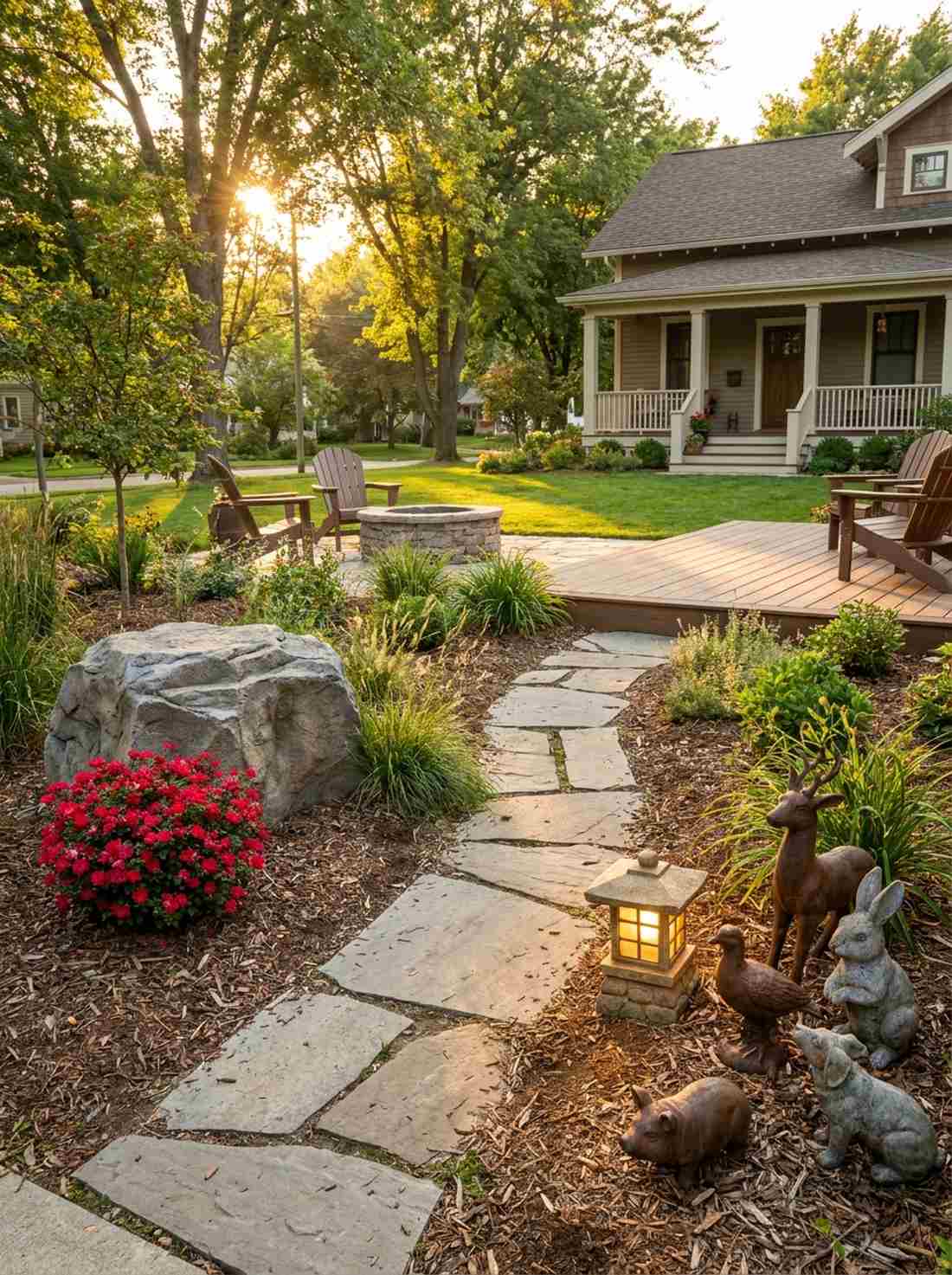
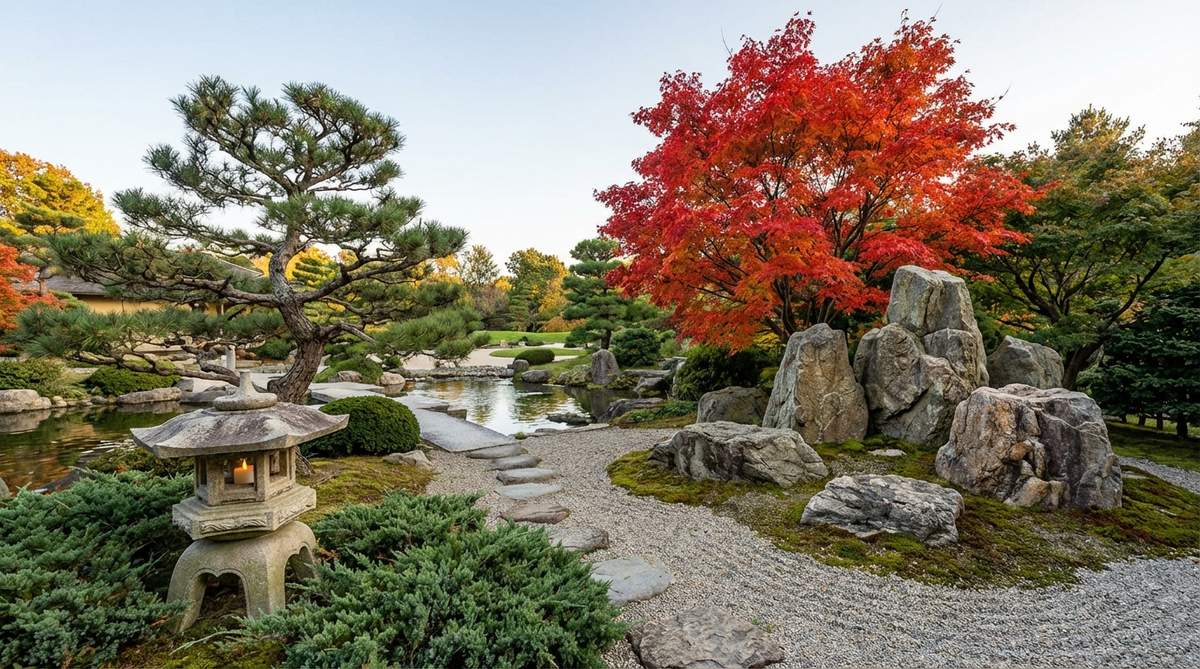
Ditches boring symmetry for dynamic, tension-filled beauty. Asymmetrical garden focal points create a layout that feels completely organic and wild.
Matching pots on both sides looks like a cheap hotel, but balancing a massive rock against a tiny bright lantern looks far more expensive. Utilize UV-coated outdoor decor statues for the counter-balance.
Perfectly balance your yard for around $75.
- Key Materials: One large element, one bright small element.
- Vibe / Style: Organic dynamic tension.
- Difficulty: Requires a good visual eye.
- Budget Breakdown: Large rock: $40 | Lantern: $35.
- Creator’s Tip: Visual weight matters more than physical size—a tiny bright red bush balances a massive grey boulder perfectly.
- Smart Sourcing: Authentic stone-look resin lanterns and lightweight artificial landscape boulders.
29. Peninsula and Bay Shaping
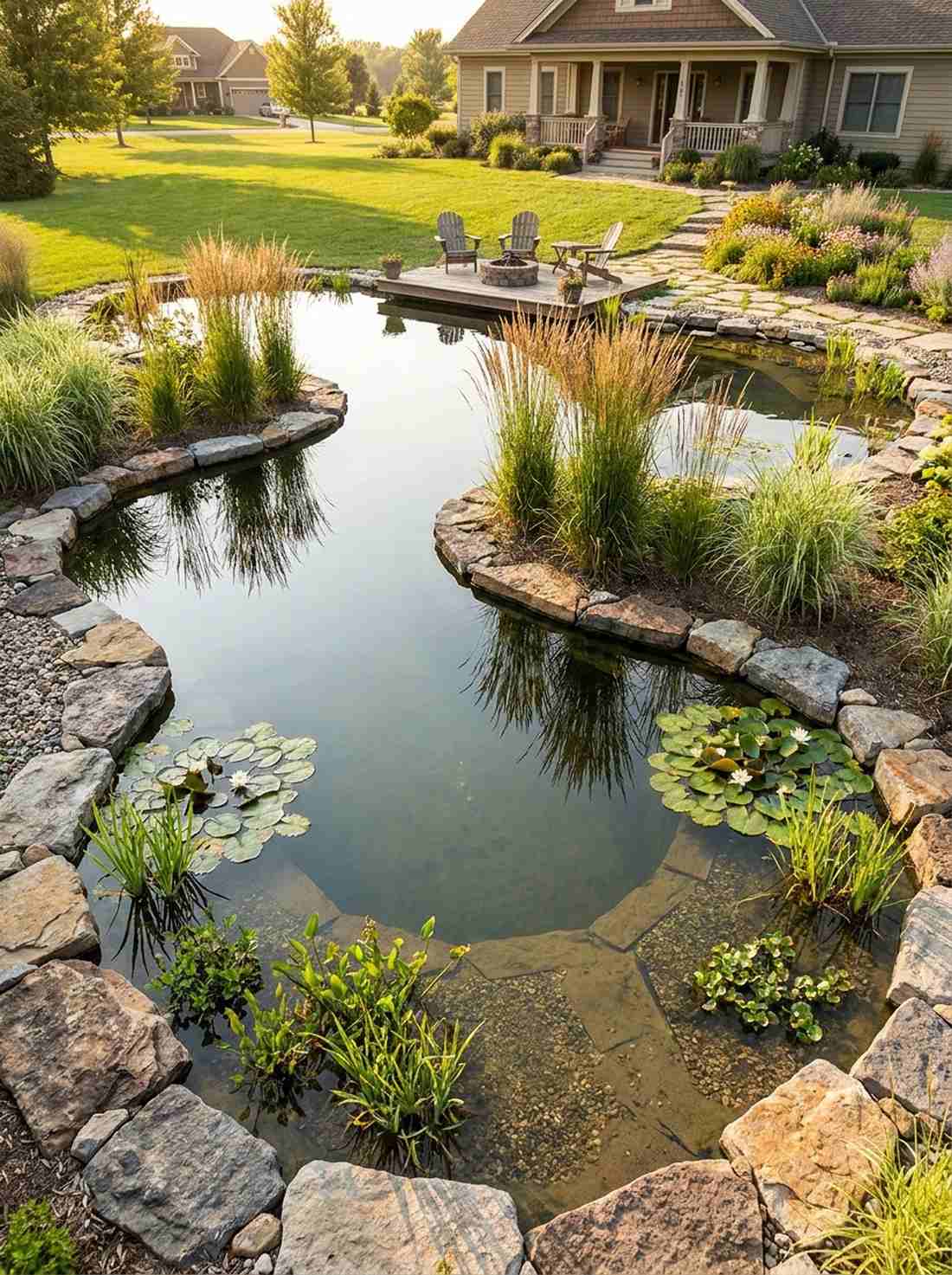
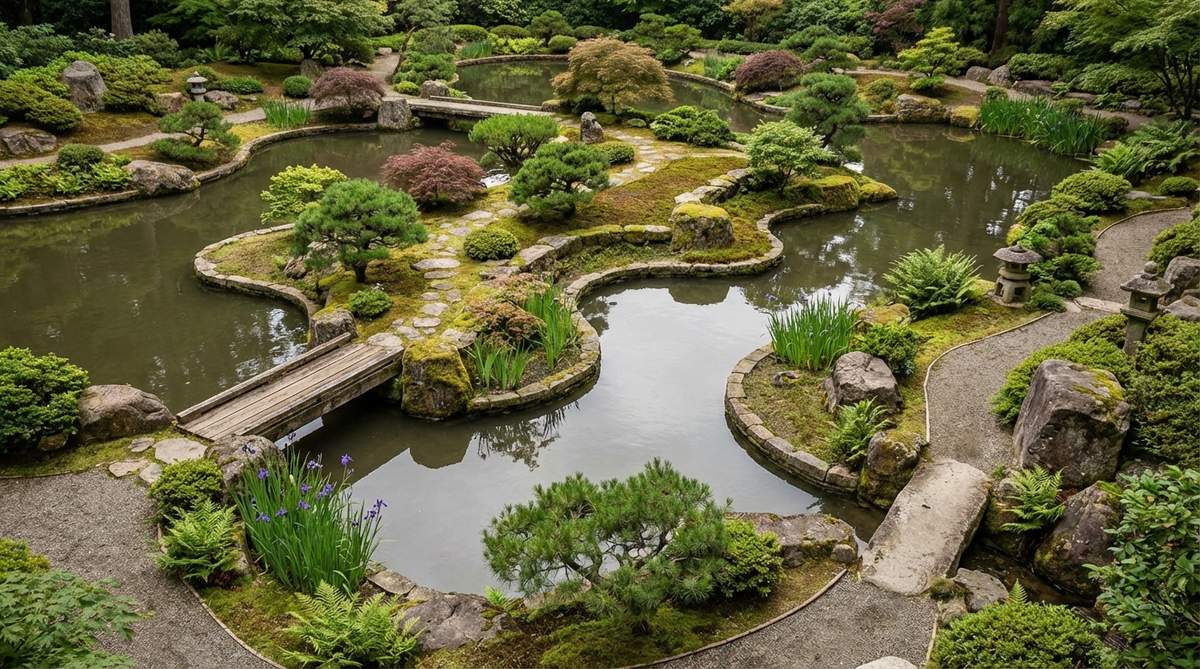
Creates a stunning, jigsaw-puzzle shoreline that begs to be explored. Interlocking water edge designs dramatically increase your planting area.
Perfectly round ponds look like cheap bathtubs, while carving deep bays and jutting peninsulas completely transforms the space. Reinforce the complex edges using heavy-duty pond liner seaming tape.
This takes extra digging but costs almost nothing. Pin this for pond inspiration!
- Key Materials: Liner tape, edge rocks.
- Vibe / Style: Intricate natural shoreline.
- Difficulty: Advanced digging required.
- Budget Breakdown: Tape: $25 | Rocks: $40.
- Creator’s Tip: Plant your tallest grasses strictly on the peninsulas to exaggerate the depth of the carved bays.
- Smart Sourcing: Waterproof EPDM seaming tape kits and aquatic marginal plant bundles.
If your garden feels boring to walk through, you are definitely missing the crucial step hidden in the next item…
30. Hide-and-Reveal Screening
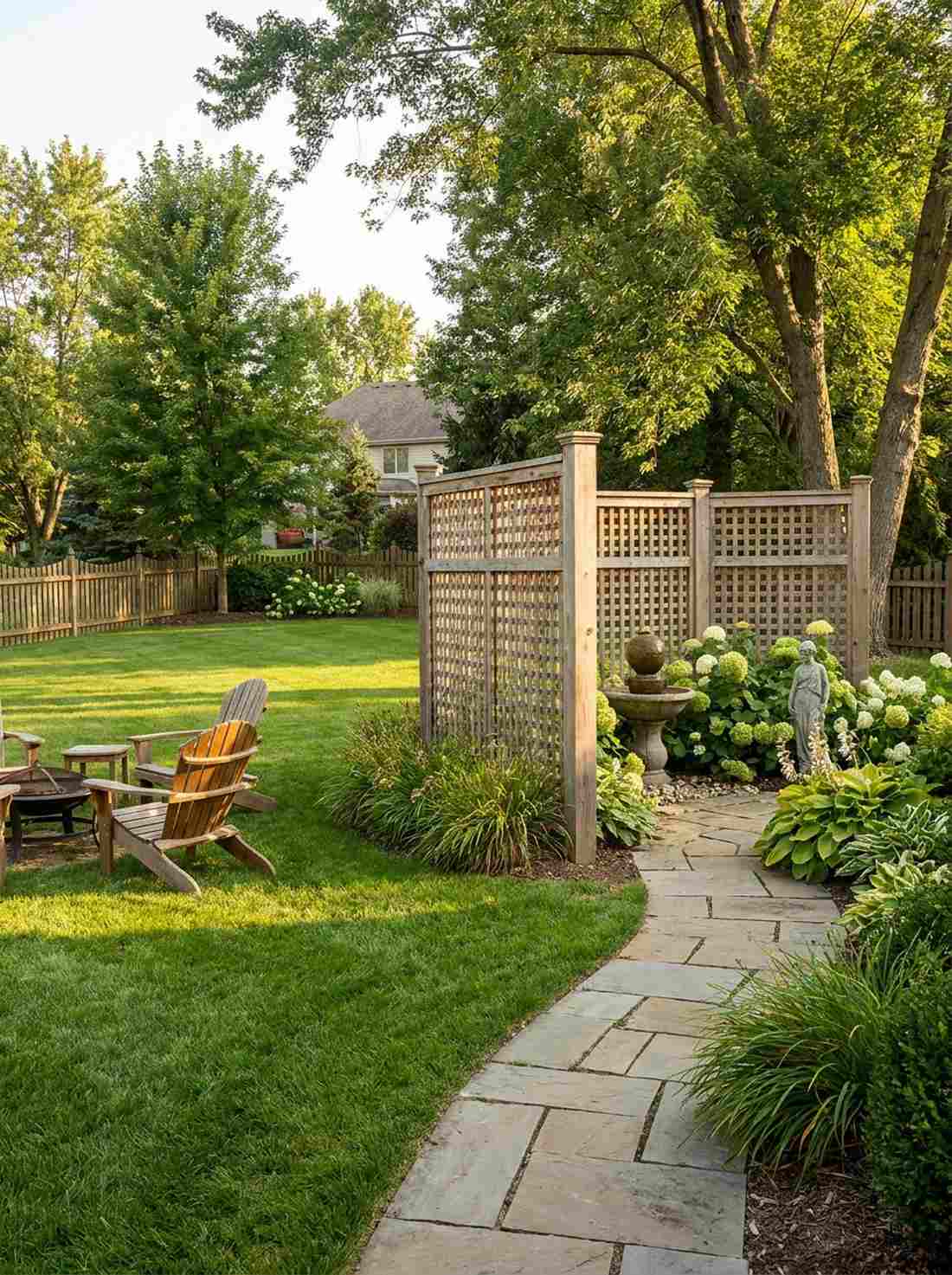
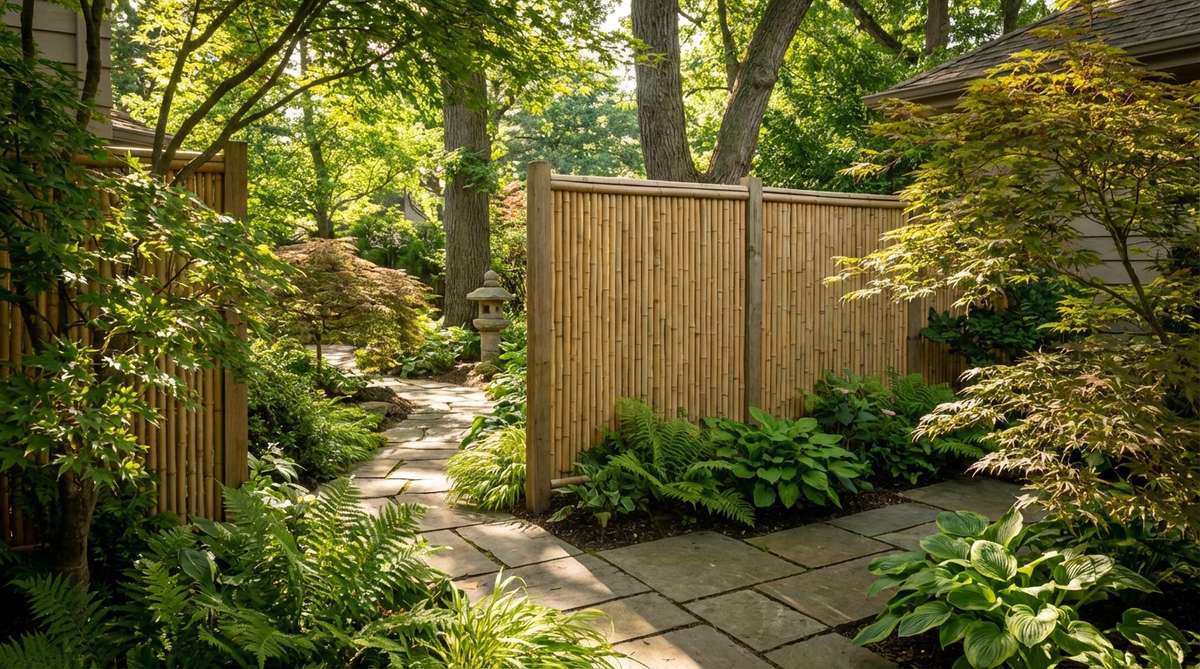
Forces your guests to explore around the corner to find the magic. Privacy screen garden reveals make a tiny backyard feel like a sprawling estate.
Showing the whole yard at once is boring, but blocking initial sight lines delivers a surprisingly premium look of mystery. Install weather-treated lattice panels to obscure the best features.
Set up a stunning reveal screen for under $60.
- Key Materials: Bamboo screen, support posts.
- Vibe / Style: Enticing hidden mystery.
- Difficulty: Easy installation.
- Budget Breakdown: Screen: $40 | Posts: $20.
- Creator’s Tip: Place your most expensive statue or water feature immediately behind the blind corner.
- Smart Sourcing: Freestanding outdoor privacy screens and decorative cedar lattice panels.
31. Threshold Transition Sequence
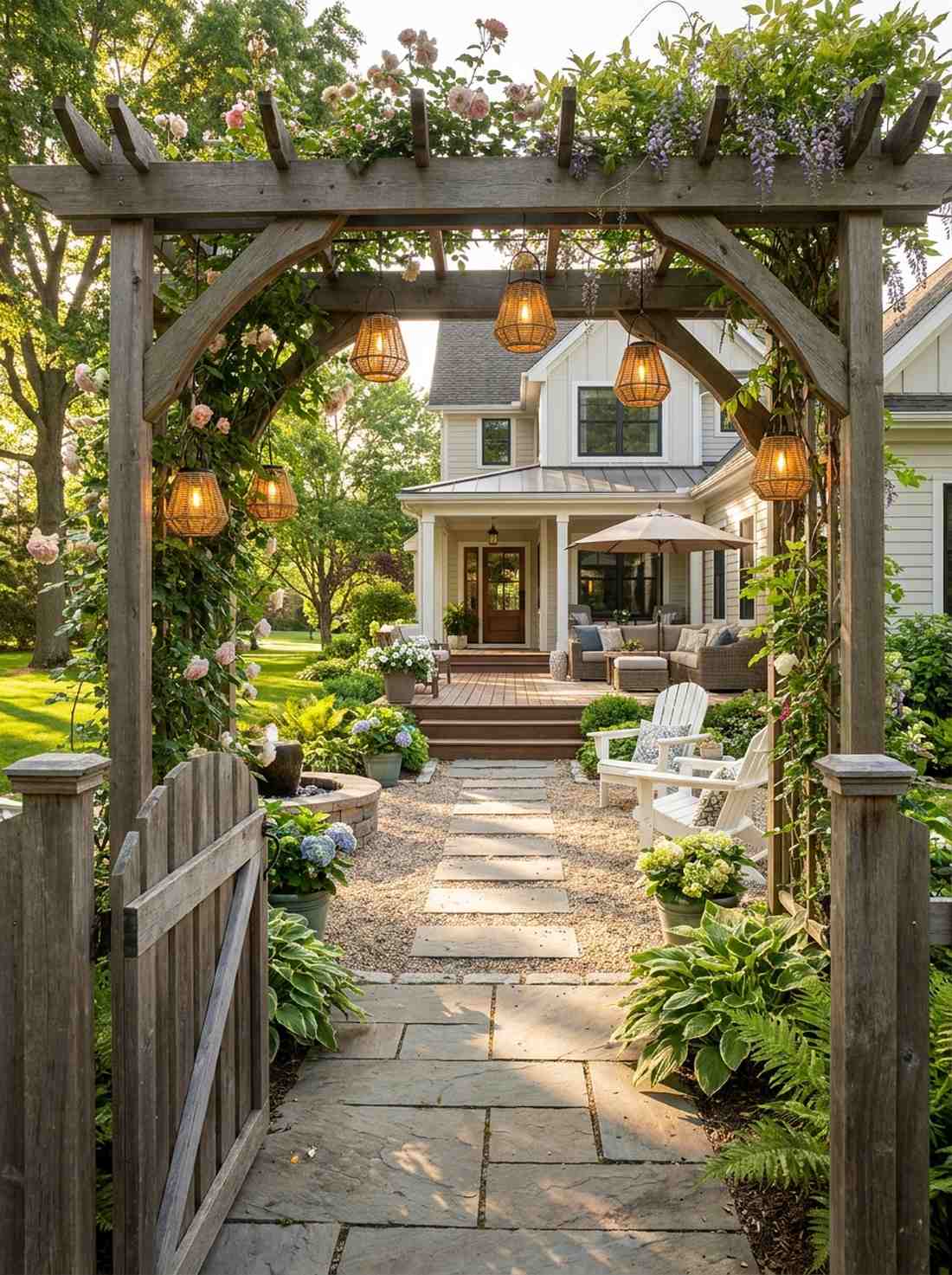
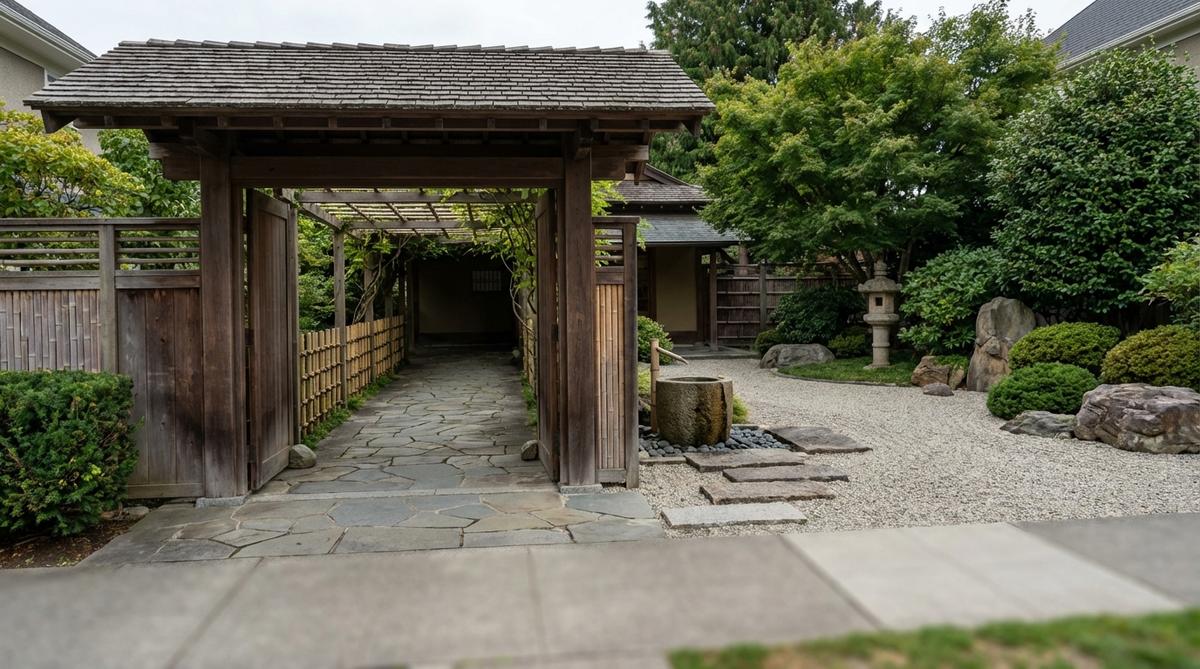
Washes away the stress of the street before you even enter. Layered garden entrance transitions create a profound psychological shift into zen.
A single gate feels abrupt, but stacking a gate, a covered path, and an open forecourt screams high-end luxury. Enhance the passage utilizing solar hanging lantern kits.
You can layer your entrance for about $100. Save this idea to boost your curb appeal!
- Key Materials: Archway, pathway stones, lighting.
- Vibe / Style: Sequential calming entry.
- Difficulty: Moderate building.
- Budget Breakdown: Arch: $70 | Lanterns: $30.
- Creator’s Tip: Change the sound of the footsteps (from concrete to gravel to wood) at each threshold.
- Smart Sourcing: Pre-built wooden garden arbors and waterproof solar hanging lanterns.
32. Radial Viewing Garden
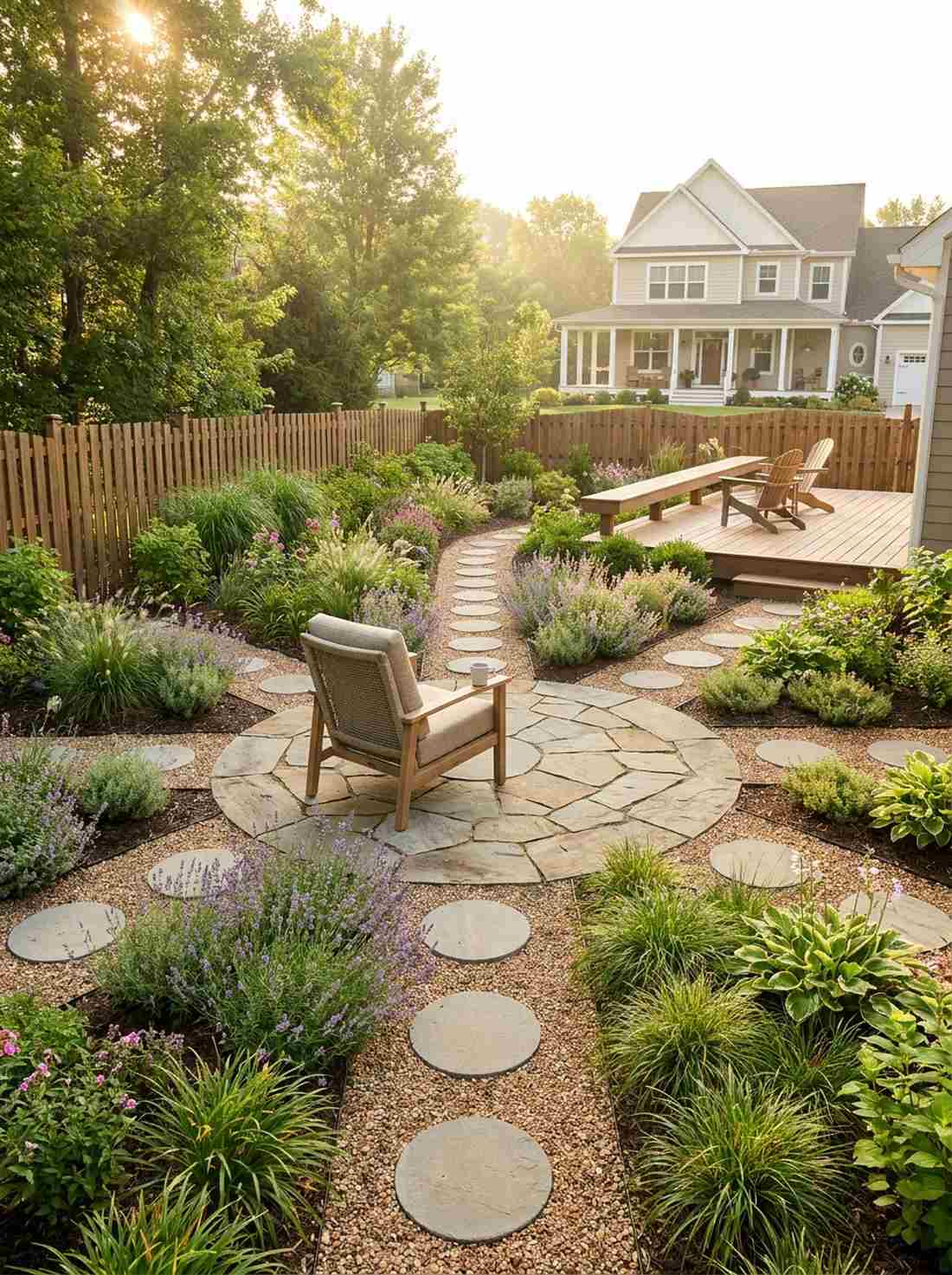
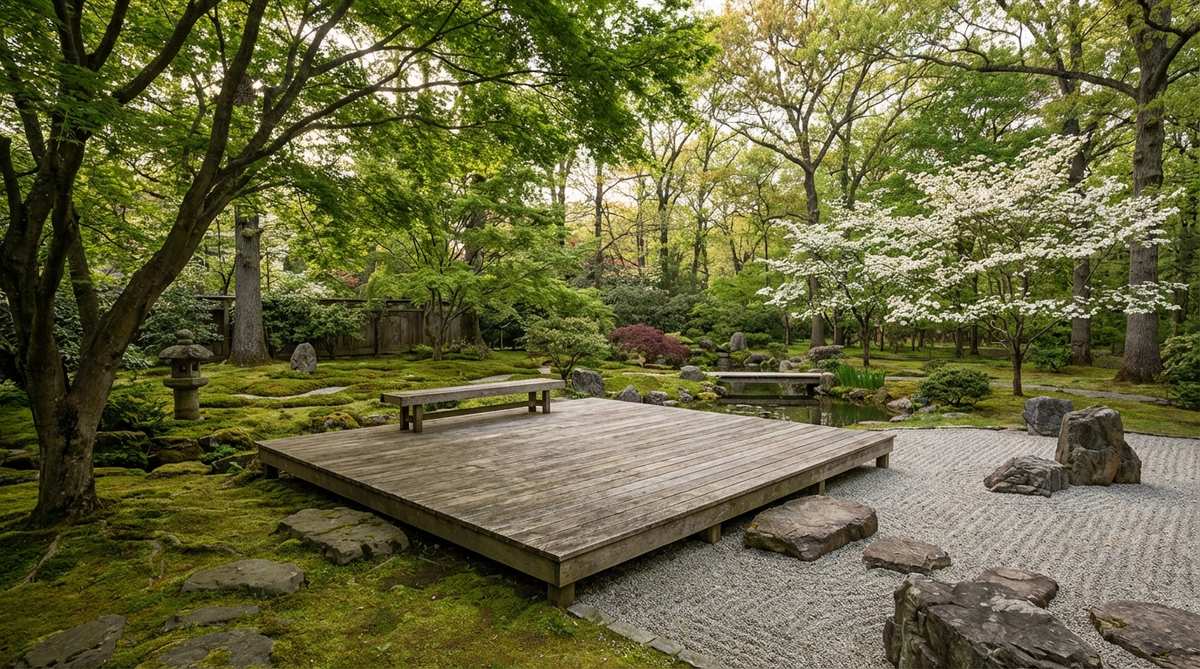
The ultimate setup for enjoying your morning coffee in peace. Fixed-point radial garden layouts are optimized for viewing from one perfect deck chair.
Scattering features everywhere looks messy, but orienting everything toward a central hub gives a designer-level finish. Keep your central patio pristine with high-pressure outdoor surface cleaners.
This layout focuses your budget into one spectacular $150 viewing zone.
- Key Materials: Seating hub, radiating pathways.
- Vibe / Style: Stationary panoramic calm.
- Difficulty: Focuses heavily on planning.
- Budget Breakdown: Hub materials: $100 | Path gravel: $50.
- Creator’s Tip: Perfect for elderly homeowners—the entire garden’s beauty comes straight to the viewer without walking.
- Smart Sourcing: All-weather patio meditation chairs and bulk circular stepping stones.
Material Guide: Cheap vs. Premium Aesthetic
Knowing exactly where to save and where to spend makes all the difference in achieving that “looks expensive but isn’t” vibe.
- Standard vs. UV-Resistant/Premium: Cheap plastic lanterns turn yellow and crack in months; always choose UV-coated resin or real stone to maintain the premium estate look.
- Pre-made Kits vs. Sourcing Locally: Buying pre-cut moss kits and pre-assembled bamboo screens saves hours of frustrating DIY and usually costs less than buying raw materials.
Seasonal Focus Arrangements: Year-Round Japanese Garden Ideas
Strategic planting ensures your yard doesn’t look dead in winter. These designs rotate visual dominance across all four seasons.
33. Spring Cherry-Viewing Lawn
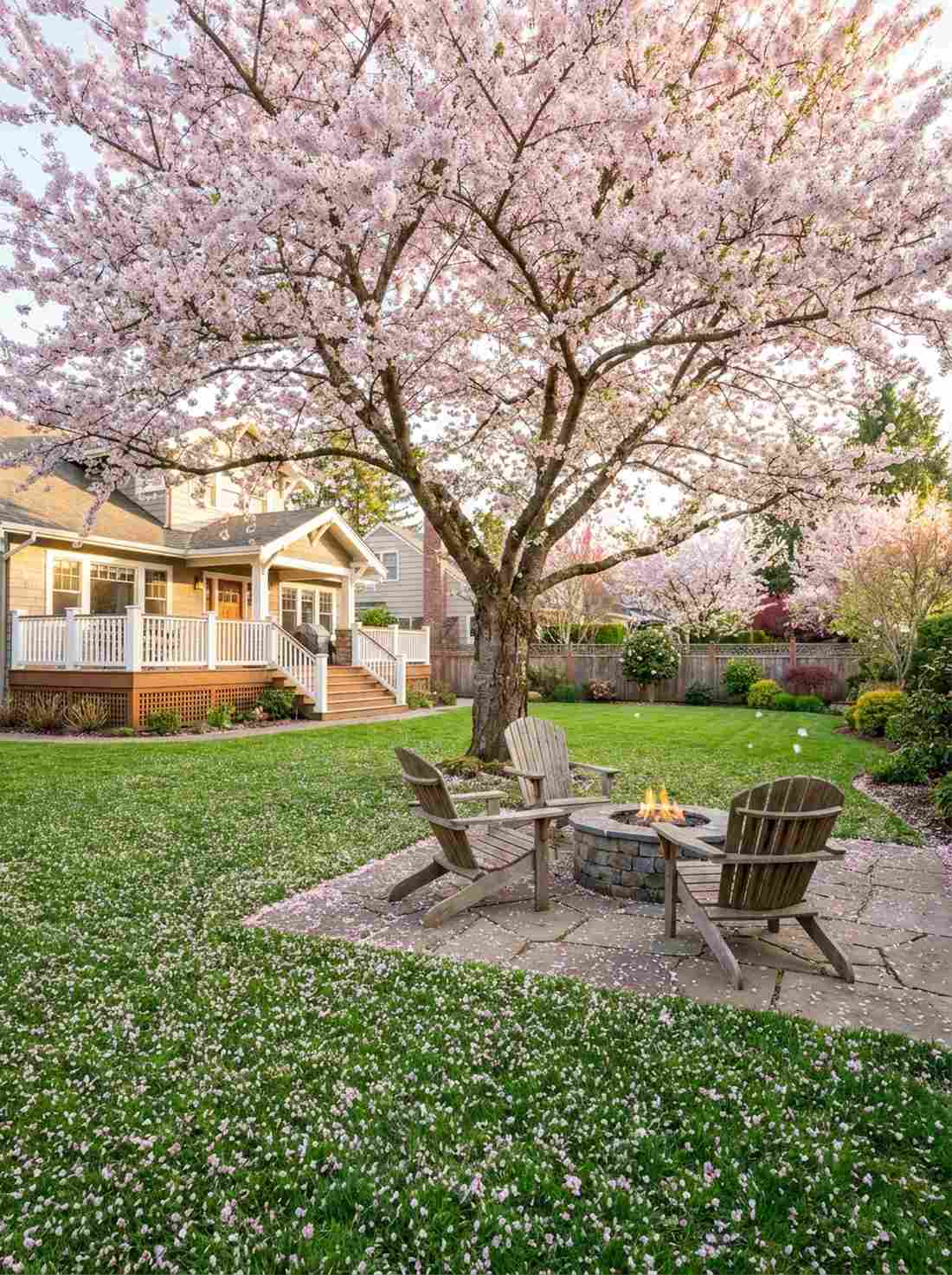
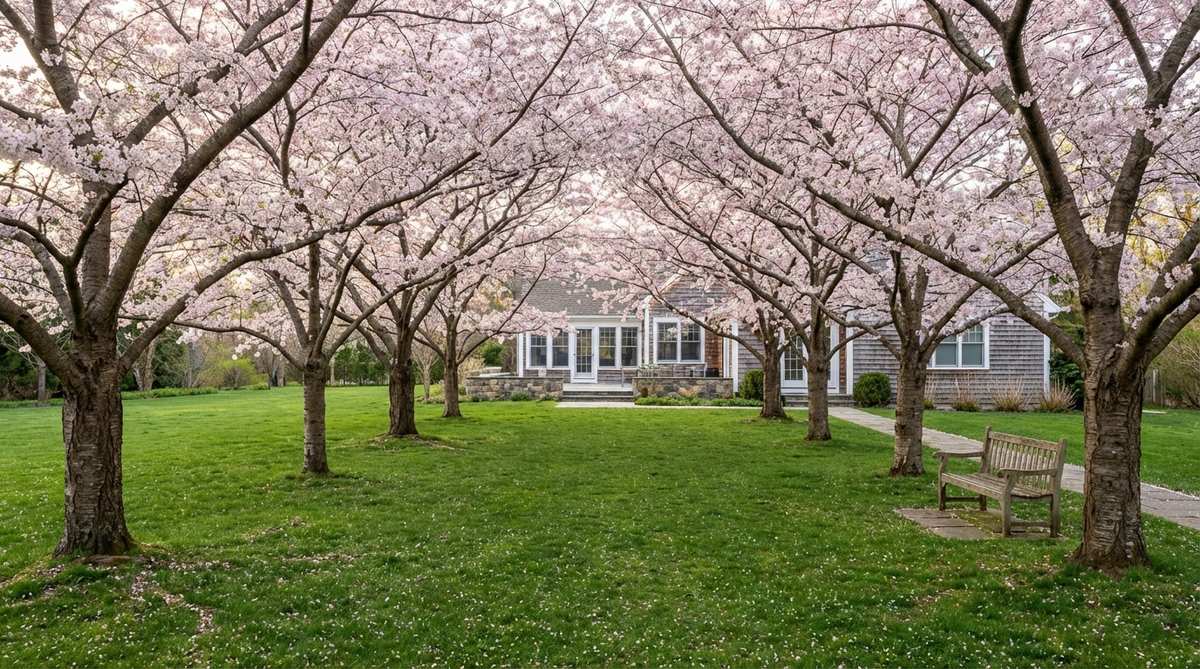
A soft, petal-covered sanctuary for ultimate spring relaxation. Hanami cherry blossom garden layouts turn a basic lawn into a seasonal festival.
Plain grass is boring, but a dedicated flat viewing area under a flowering canopy completely transforms the space. Keep the lawn incredibly lush using slow-release organic turf fertilizers.
Planting a bare-root cherry tree costs just $40. Pin this for spring garden goals!
- Key Materials: Yoshino cherry tree, manicured grass.
- Vibe / Style: Fleeting floral celebration.
- Difficulty: Requires tree maintenance.
- Budget Breakdown: Tree: $40 | Fertilizer: $15.
- Creator’s Tip: Keep the area immediately beneath the tree completely clear of other shrubs so falling petals create a solid blanket.
- Smart Sourcing: Live Yoshino cherry bare-root trees and premium grass seed blends.
34. Autumn Maple Corridor
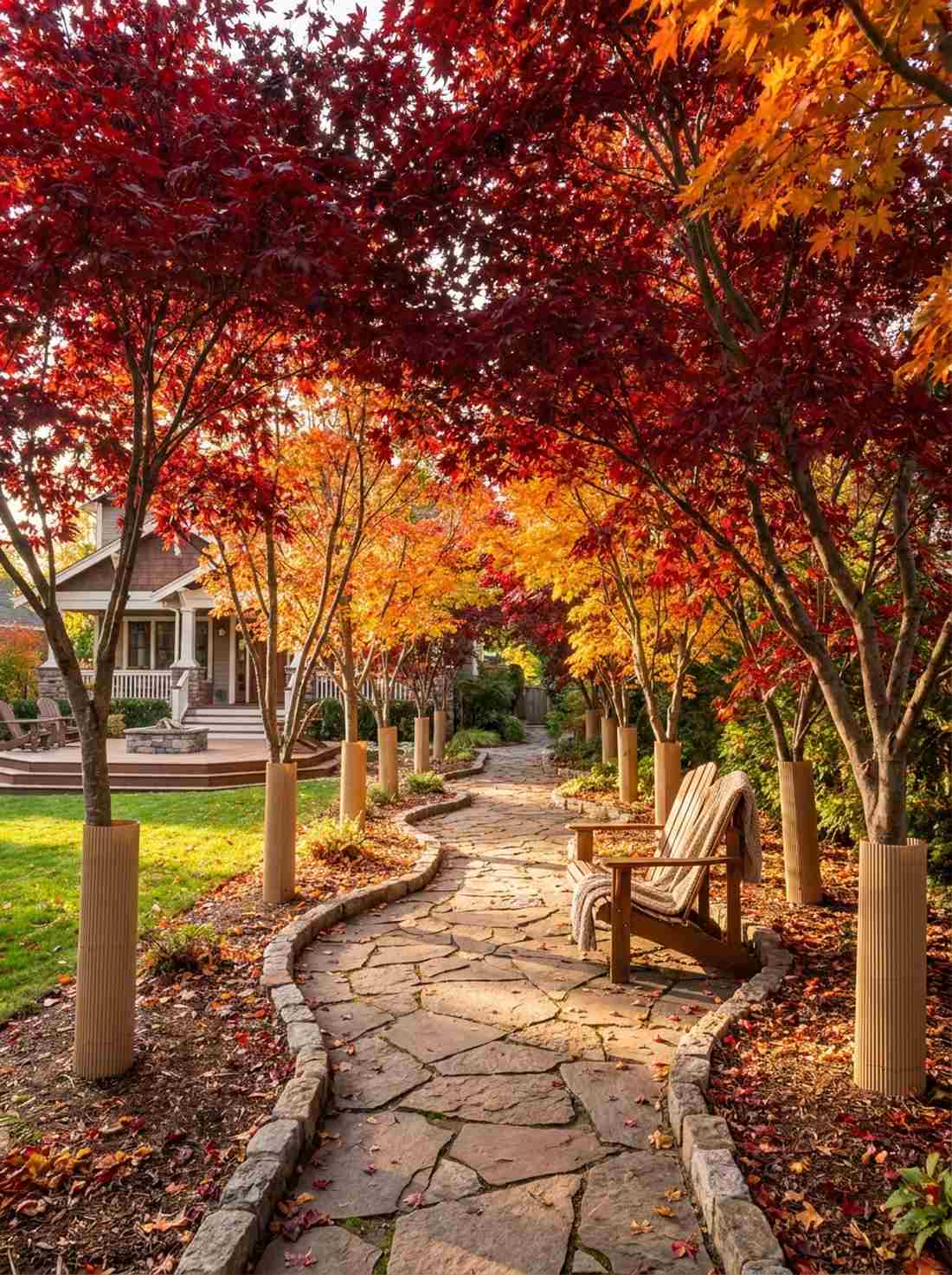
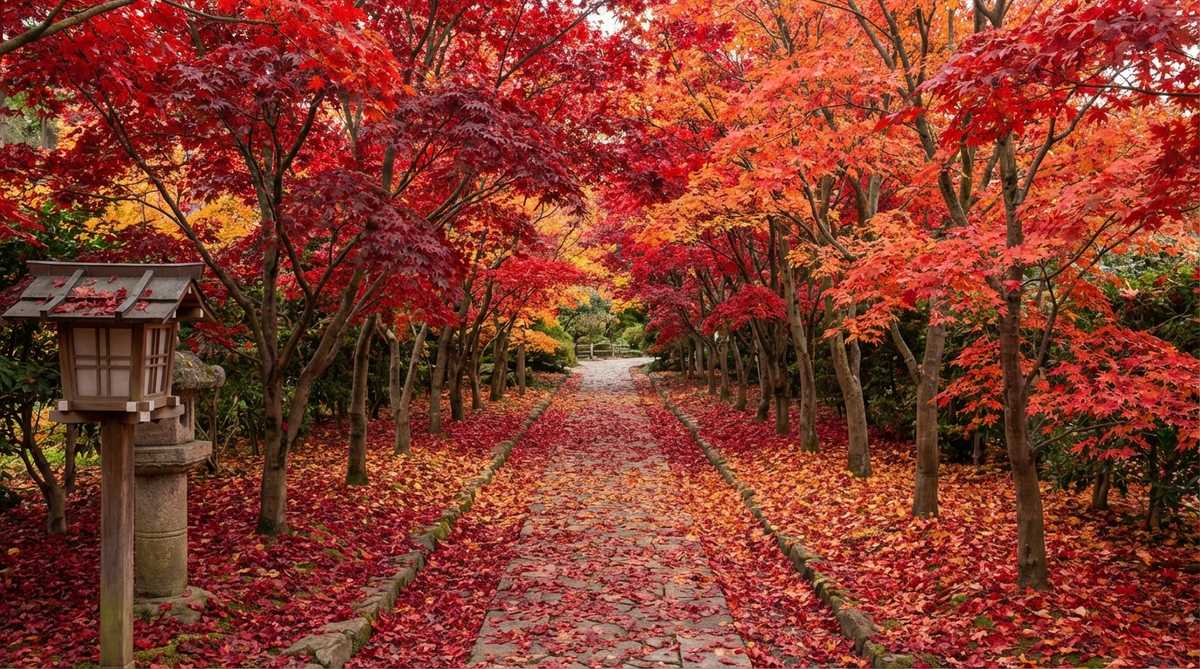
A blazing tunnel of crimson and gold that feels like a fairy tale. Japanese maple pathway designs provide the ultimate autumn color explosion.
Scattered trees lose impact, but planting them tightly along a walkway delivers a surprisingly premium look. Protect the delicate trunks over winter using breathable tree wrap guards.
A brilliant seasonal investment for around $150.
- Key Materials: Bloodgood maples, path border.
- Vibe / Style: Fiery canopy tunnel.
- Difficulty: Moderate digging.
- Budget Breakdown: Saplings (x3): $120 | Guards: $20.
- Creator’s Tip: Alternate varieties (one red, one orange) to maximize the intense autumn color contrast.
- Smart Sourcing: Bloodgood Japanese maple saplings and protective corrugated tree trunk guards.
If your yard looks dead and depressing by December, the next layout is the exact fix you need…
35. Winter Evergreen Structure
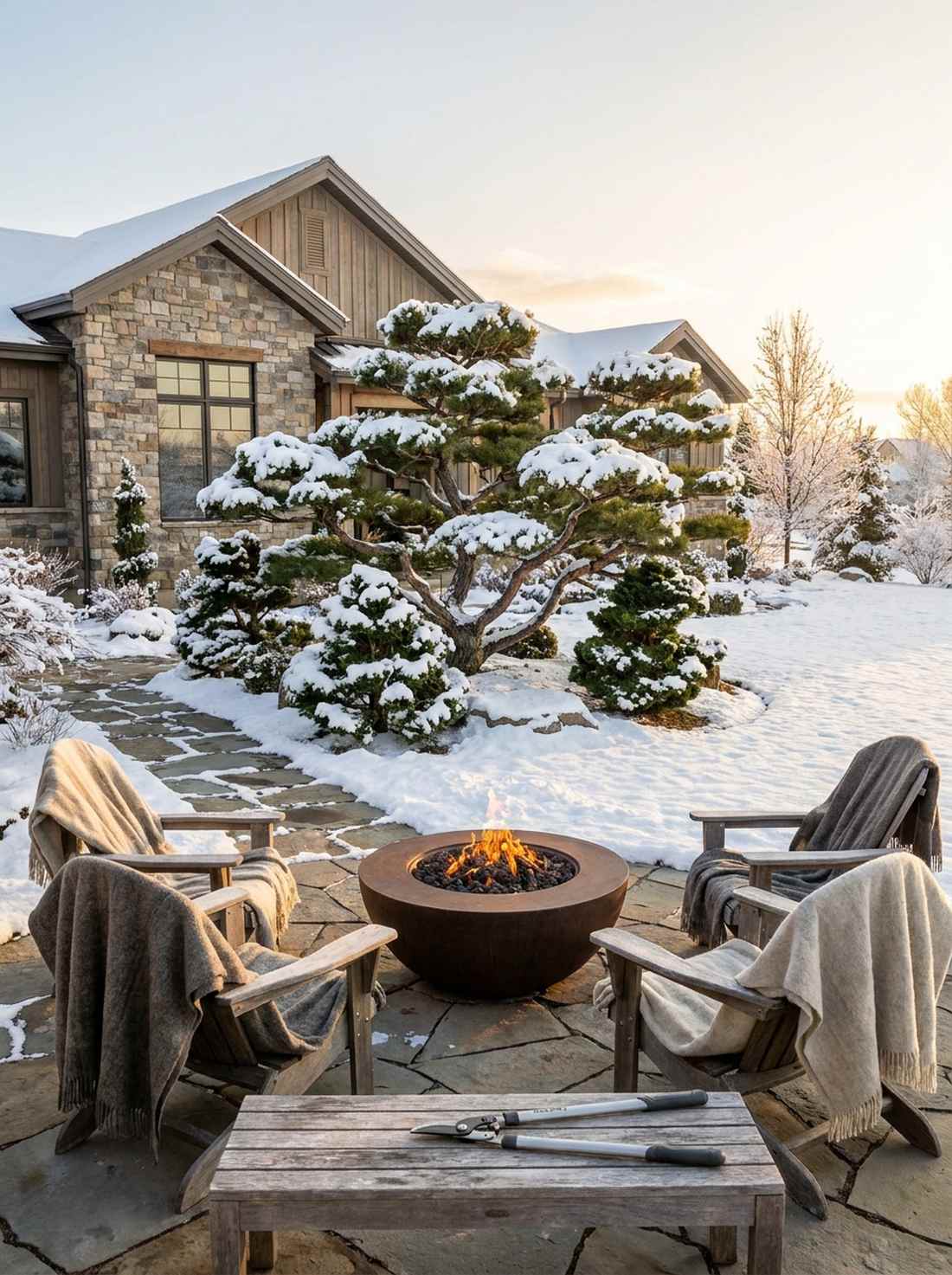
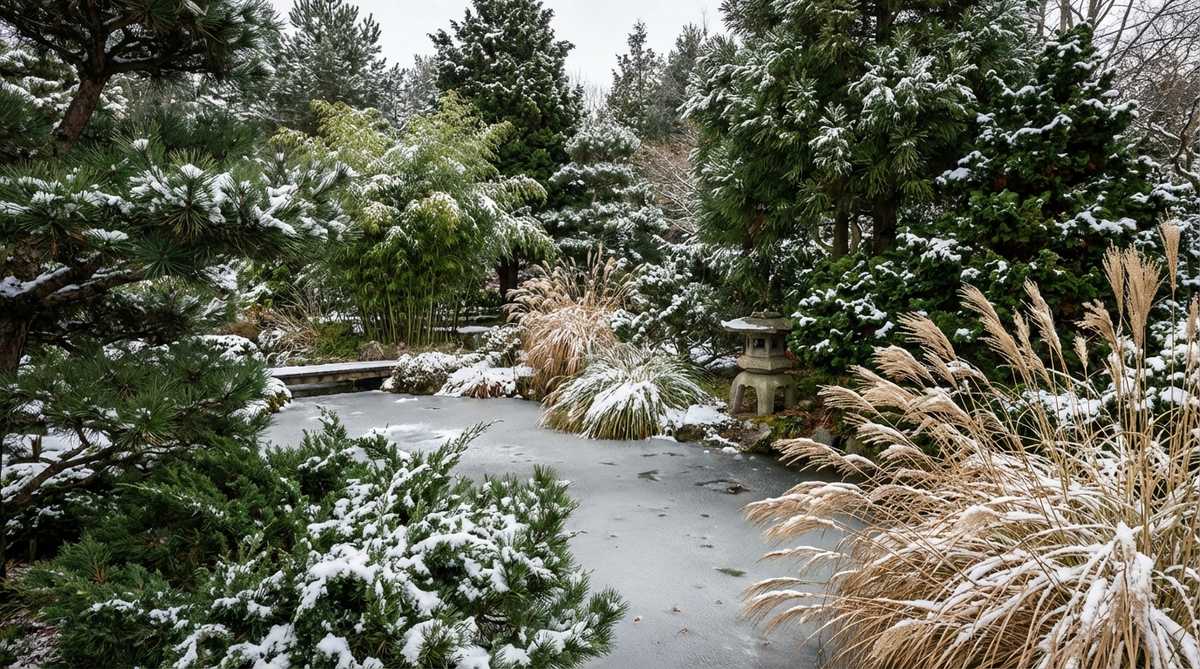
Maintains a striking, architectural green backbone even in the dead of snow. Winter-hardy evergreen garden setups prevent your yard from looking abandoned.
Deciduous-only yards look terrible in winter, but structural pines look far more expensive when everything else is bare. Prune them cleanly with heavy-duty bypass loppers.
This layout provides year-round insurance for about $80. Save this for winter-proofing!
- Key Materials: Black pines, Hinoki cypress.
- Vibe / Style: Resilient winter architecture.
- Difficulty: Requires structural pruning.
- Budget Breakdown: Shrubs: $60 | Tools: $20.
- Creator’s Tip: Prune them in late autumn to expose the twisting branches; the snow will settle beautifully on the pads.
- Smart Sourcing: Dwarf Hinoki cypress live plants and titanium blade garden loppers.
36. Summer Shade Retreat
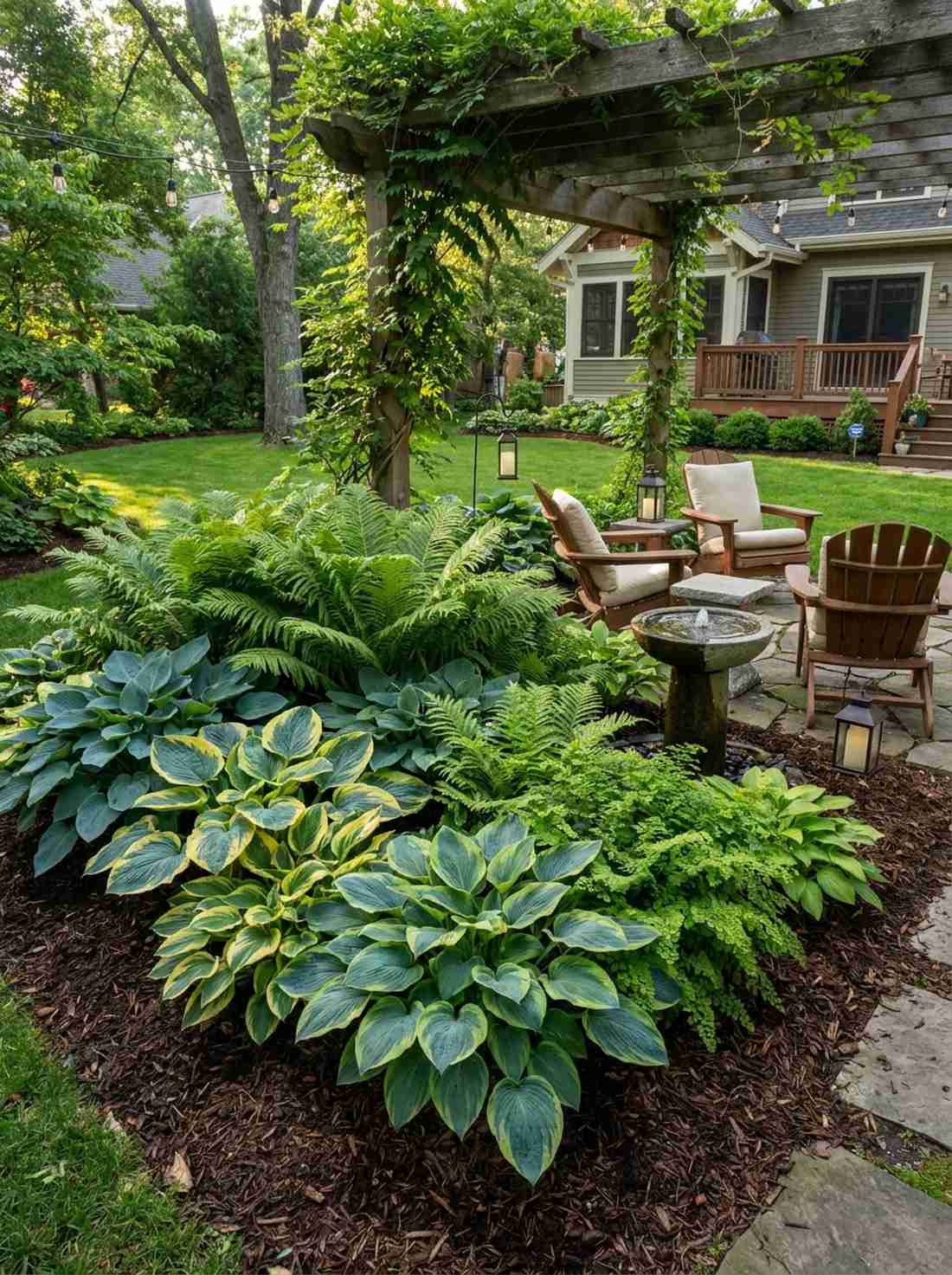
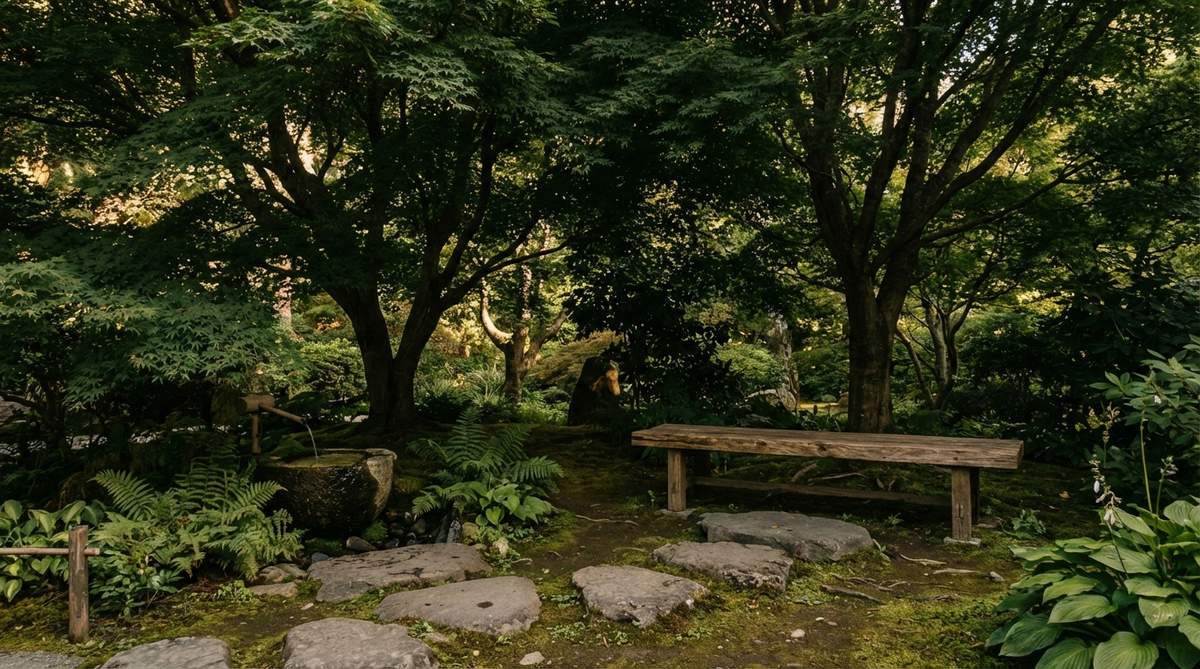
A lush, cool microclimate to escape the brutal July heat. Deep shade garden hosta beds drop the temperature while keeping the aesthetic incredibly rich.
Sun-baked patios are miserable, but a densely planted fern canopy screams high-end luxury resort. Boost the foliage size massively with water-retaining compost blends.
Create a cooling oasis for under $50.
- Key Materials: Assorted hostas, ferns, mulch.
- Vibe / Style: Lush cooling sanctuary.
- Difficulty: Easy planting.
- Budget Breakdown: Ferns/Hostas: $35 | Compost: $15.
- Creator’s Tip: Add a small trickling water basin nearby; the sound alone makes the area feel 10 degrees cooler.
- Smart Sourcing: Bulk bare-root fern assortments and organic moisture-control mulch.
37. Moon-Viewing Deck
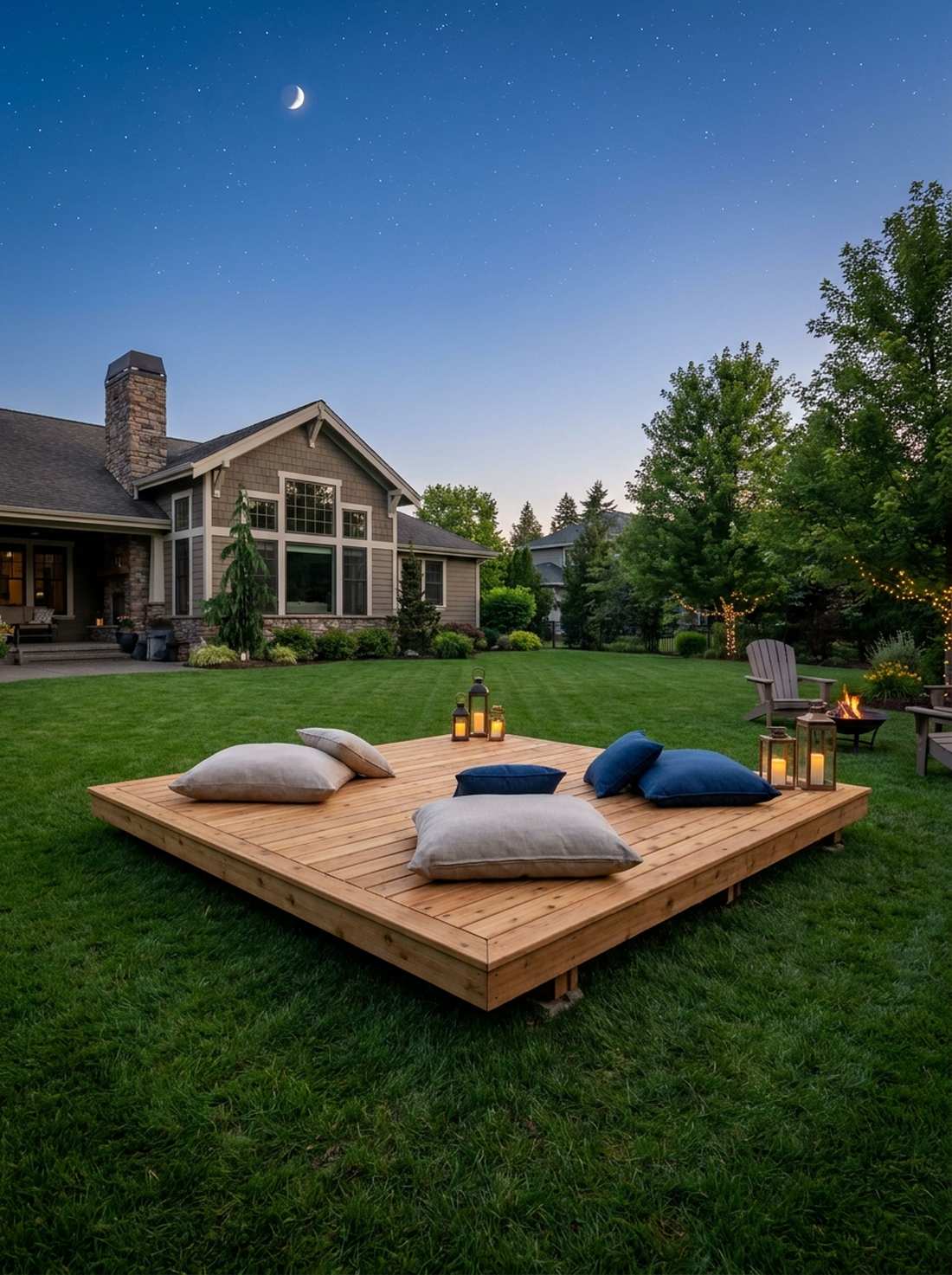
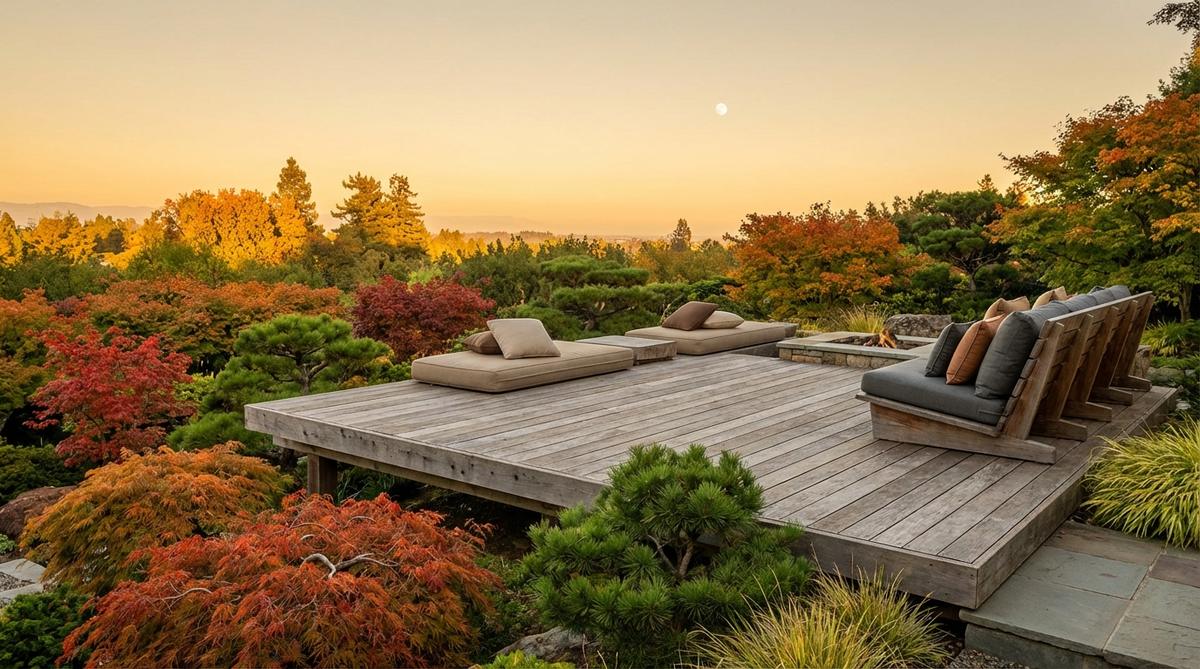
The perfect spot for late-night stargazing and autumn harvests. Elevated tsukimi moon-viewing platforms bring celestial romance to your backyard.
Sitting on the grass gets damp, but a low wooden platform provides a highly contemporary, architect-designed appearance. Keep the wood beautiful with anti-slip transparent wood stains.
Build a stunning 5×5 deck for about $100. Pin this for romantic yard ideas!
- Key Materials: Low deck frame, floor cushions.
- Vibe / Style: Celestial romantic evening.
- Difficulty: Basic carpentry.
- Budget Breakdown: Lumber: $70 | Stain: $30.
- Creator’s Tip: Ensure the deck has zero overhead obstructions facing the southern sky to catch the moon’s arc.
- Smart Sourcing: Pre-treated cedar deck planks and waterproof outdoor meditation cushions.
38. Four-Seasons Corner Planting
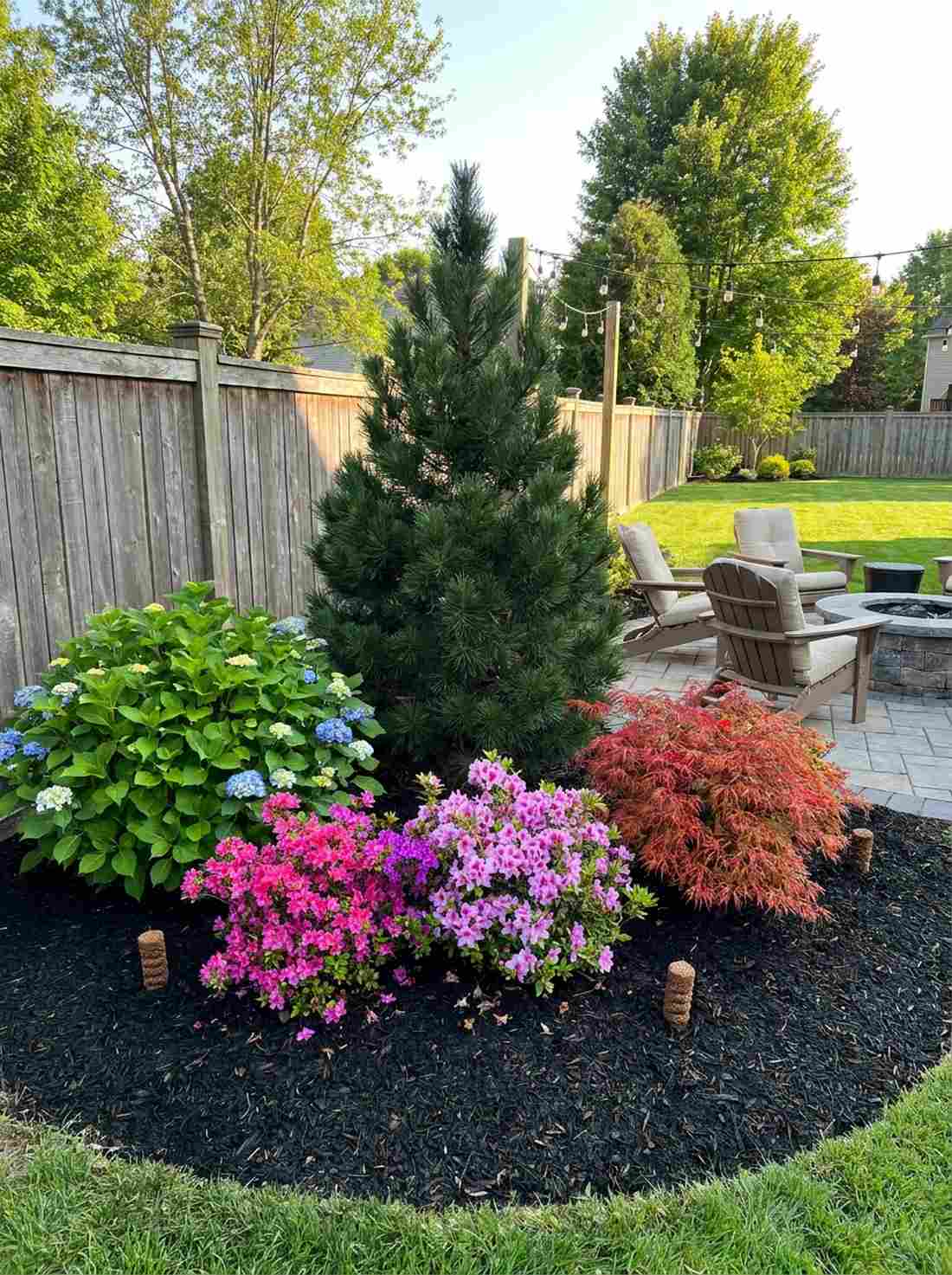
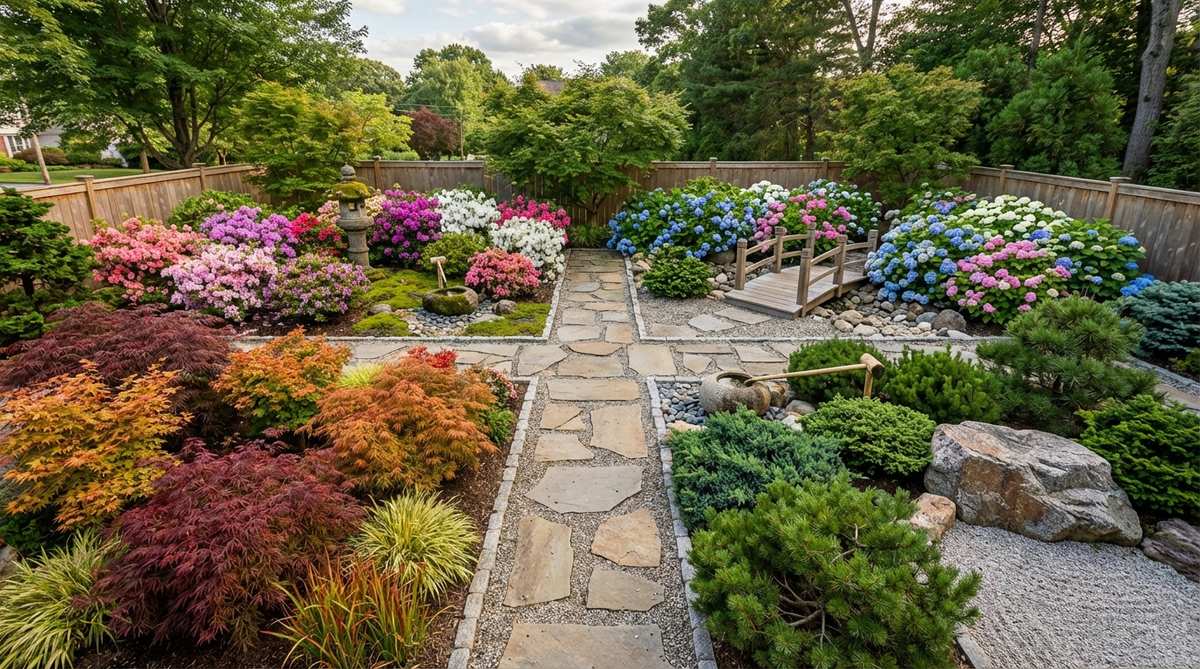
Guarantees one corner of your yard is always the star of the show. Rotating seasonal bloom corners provide massive visual ROI all year long.
Most gardens peak once and die off, but grouping four season-specific plants gives a designer-level finish that never quits. Keep the soil rich year-round with slow-release fertilizer spikes.
This layout is a brilliant $60 investment.
- Key Materials: Azalea, Hydrangea, Maple, Pine.
- Vibe / Style: Constant shifting interest.
- Difficulty: Needs plant spacing knowledge.
- Budget Breakdown: 4 Shrubs: $50 | Fertilizer: $10.
- Creator’s Tip: Plant the winter evergreen dead center to act as a solid backdrop for the other three rotating blooms.
- Smart Sourcing: Four-season live shrub bundles and all-purpose plant food spikes.
39. Early Spring Hellebore Cluster
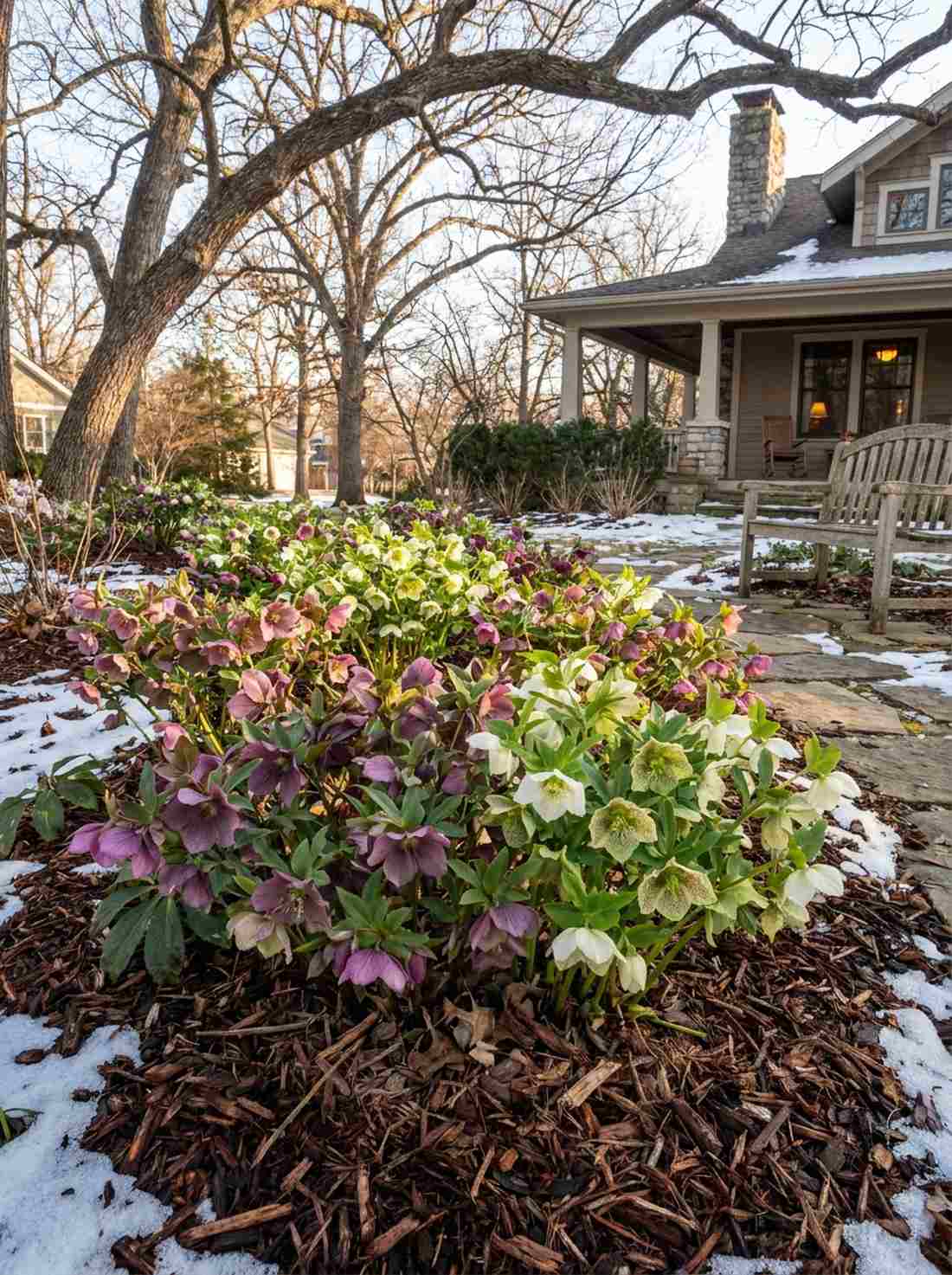
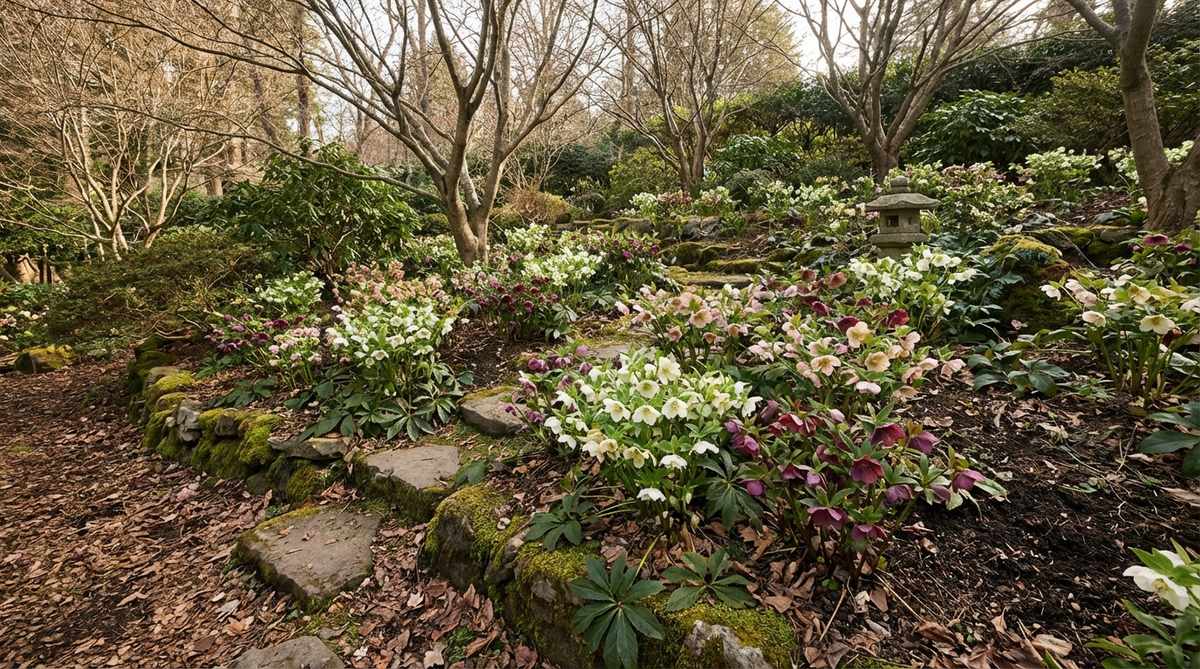
Pops with gorgeous color while the rest of the world is still frozen. Winter-blooming hellebore gardens provide hope during the bleakest months.
Waiting for May flowers is frustrating, but Lenten roses completely transform the space in February. Protect the young roots with premium insulating bark mulch.
Grab a bundle of these miracle bloomers for $45. Save this to your winter gardening board!
- Key Materials: Hellebore plants, bark mulch.
- Vibe / Style: Resilient early color.
- Difficulty: Very easy.
- Budget Breakdown: Plants: $35 | Mulch: $10.
- Creator’s Tip: Plant them directly beneath deciduous trees; they love the winter sun but need the summer shade.
- Smart Sourcing: Live Lenten rose starter plants and dark shredded cedar mulch.
The geometry of this next layout aligns with the sun itself. Seriously, look at this…
40. Summer Solstice Sunrise Alignment
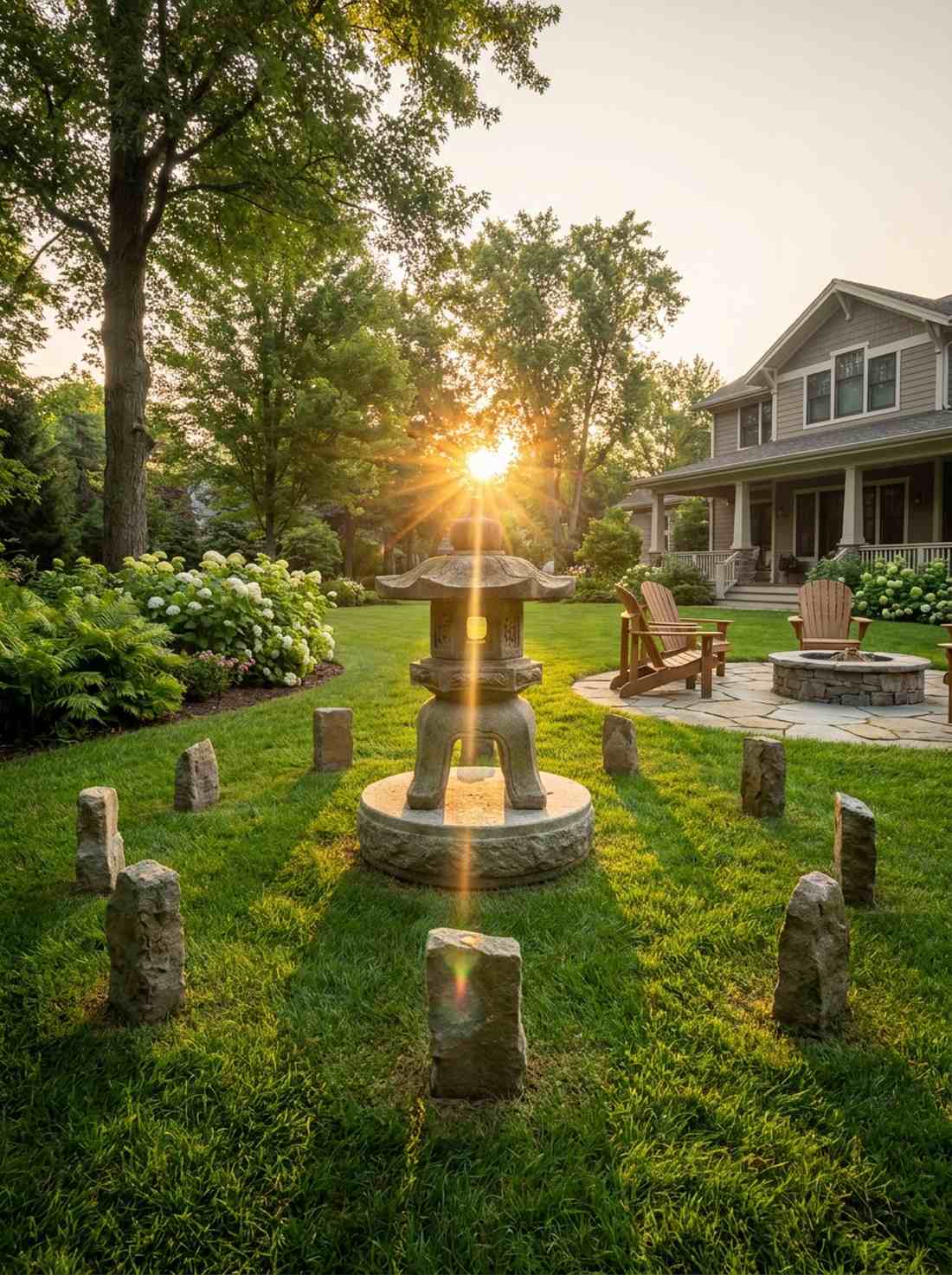
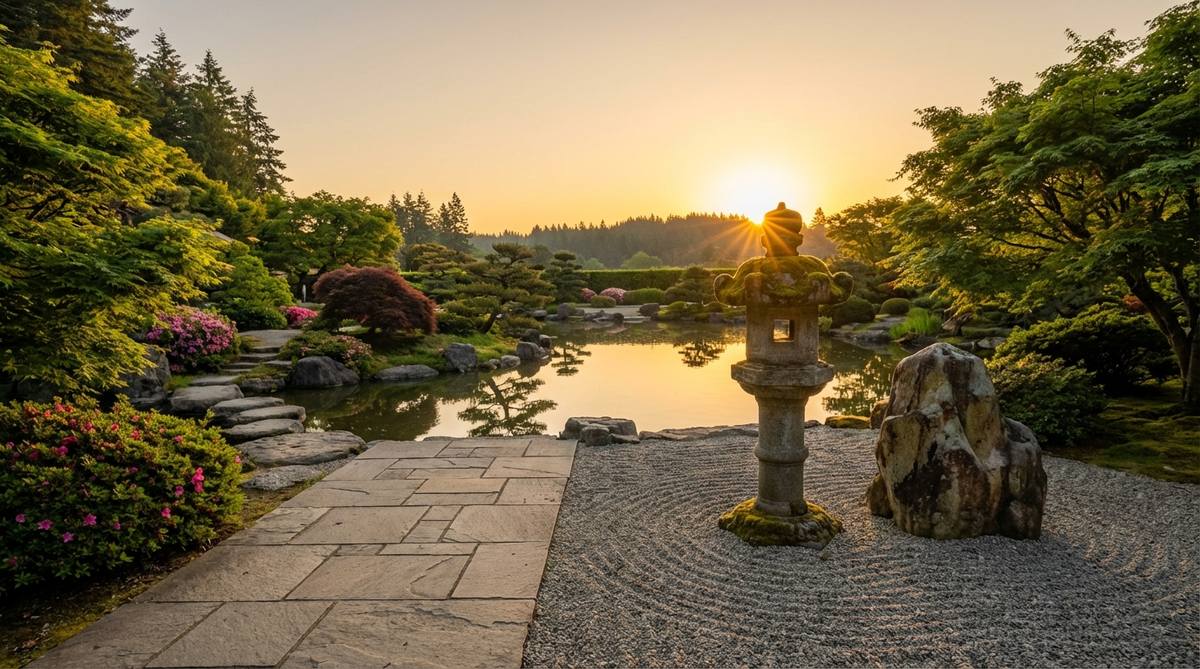
A literal Stonehenge in your backyard that catches the perfect June rays. Astronomical garden alignment points add deep, ancient meaning to modern yards.
Randomly placing a statue is fine, but aligning a focal point perfectly with the solstice sunrise looks far more expensive and profound. Mark the exact spot with a UV-coated pagoda statue.
This layout costs about $50 but adds priceless meaning.
- Key Materials: Compass app, feature statue.
- Vibe / Style: Ancient celestial tracking.
- Difficulty: Requires exact timing.
- Budget Breakdown: Statue: $50.
- Creator’s Tip: You don’t have to guess—use a free solar-tracking smartphone app to find the exact alignment line.
- Smart Sourcing: Authentic stone-resin pagoda lanterns and heavy-duty leveling bases.
Architectural Integration Schemes: Blending Structures with Japanese Garden Landscape
The garden shouldn’t stop where the house begins. Utilizing smart borders and screens seamlessly merges the indoors with the outdoors.
41. Engawa Veranda Edge
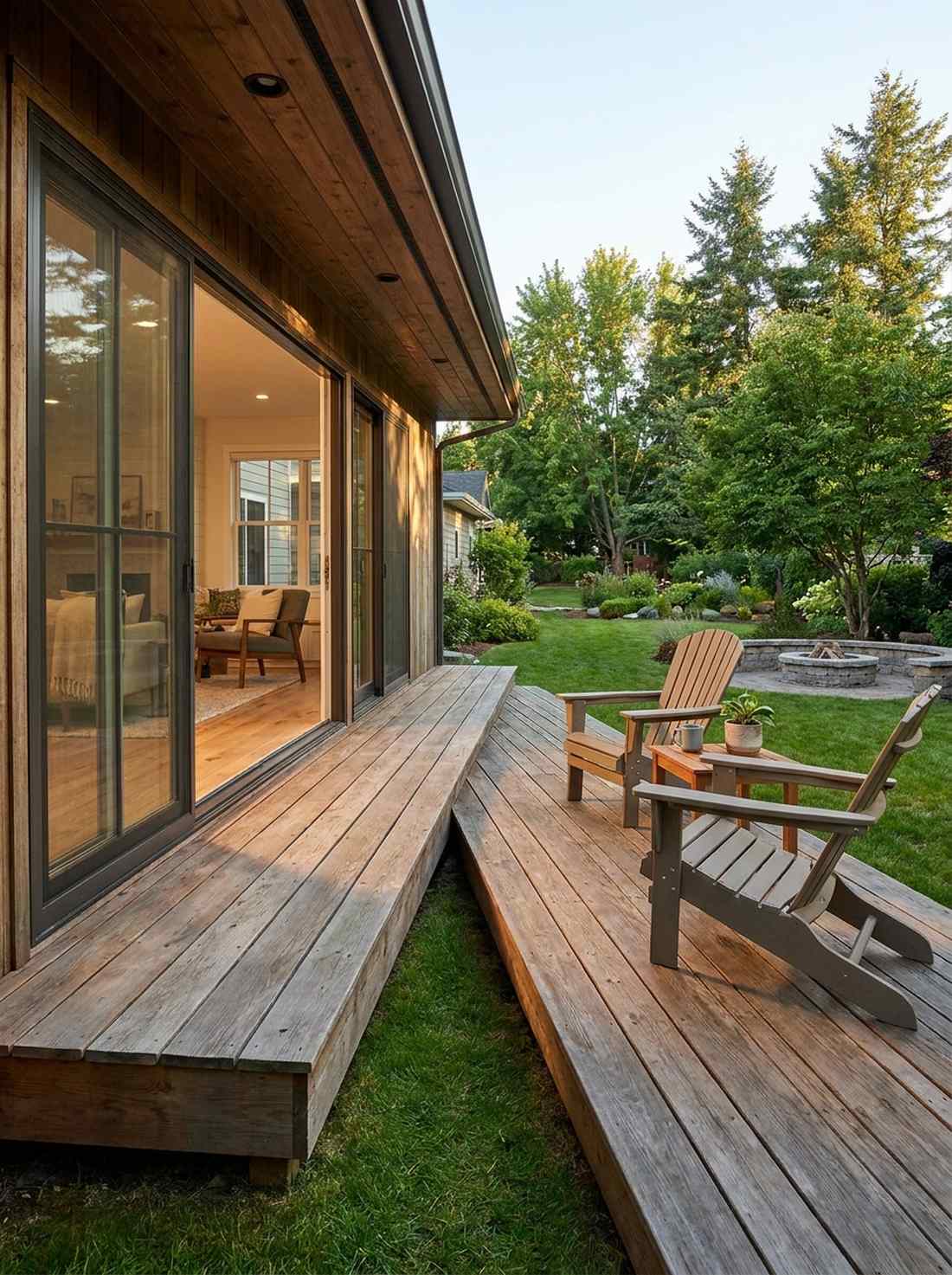
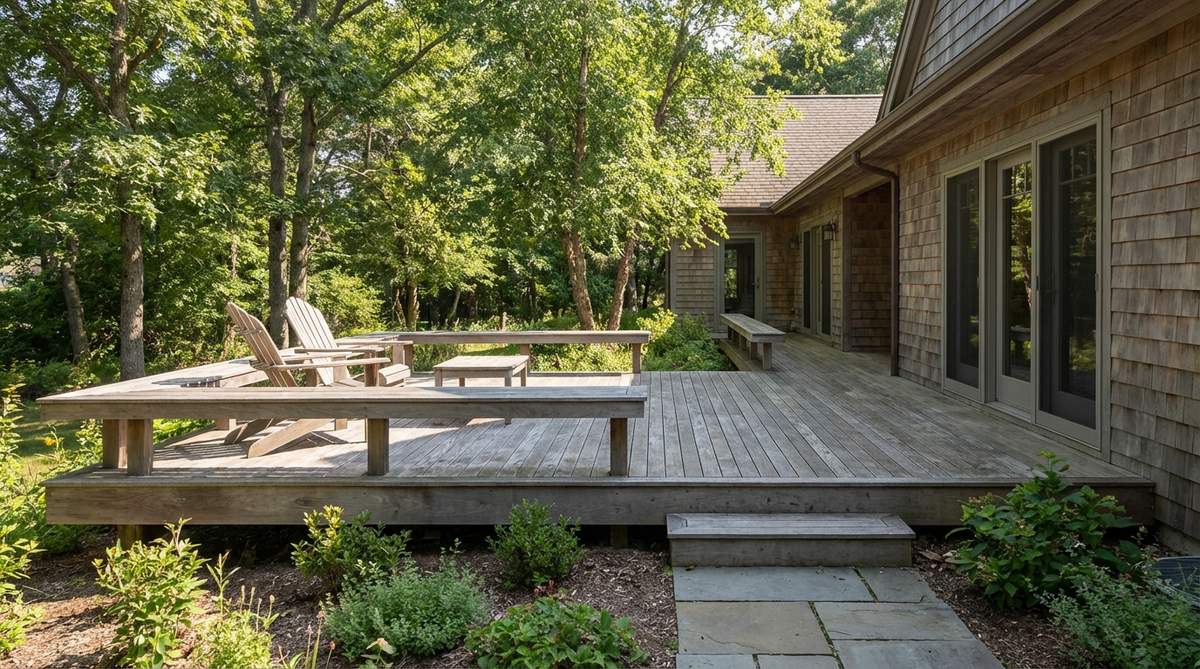
A stunning, foot-dangling threshold that connects your living room to nature. Traditional engawa wooden verandas replace bulky, ugly concrete patios perfectly.
Huge standard decks ruin the yard’s scale, whereas a narrow perimeter platform delivers a surprisingly premium look. Fasten the boards using hidden deck fastening systems for a flawless top.
Expect to spend around $150 on premium lumber. Pin this for outdoor living spaces!
- Key Materials: Weathered cedar boards, hidden screws.
- Vibe / Style: Intimate indoor-outdoor bridge.
- Difficulty: Moderate carpentry.
- Budget Breakdown: Cedar: $120 | Fasteners: $30.
- Creator’s Tip: Keep the veranda elevated exactly 12-18 inches to prevent rain splash-back from hitting the house.
- Smart Sourcing: Pre-cut Ipe or Cedar decking and hidden deck screw jig kits.
42. Shoji Screen Garden Wall
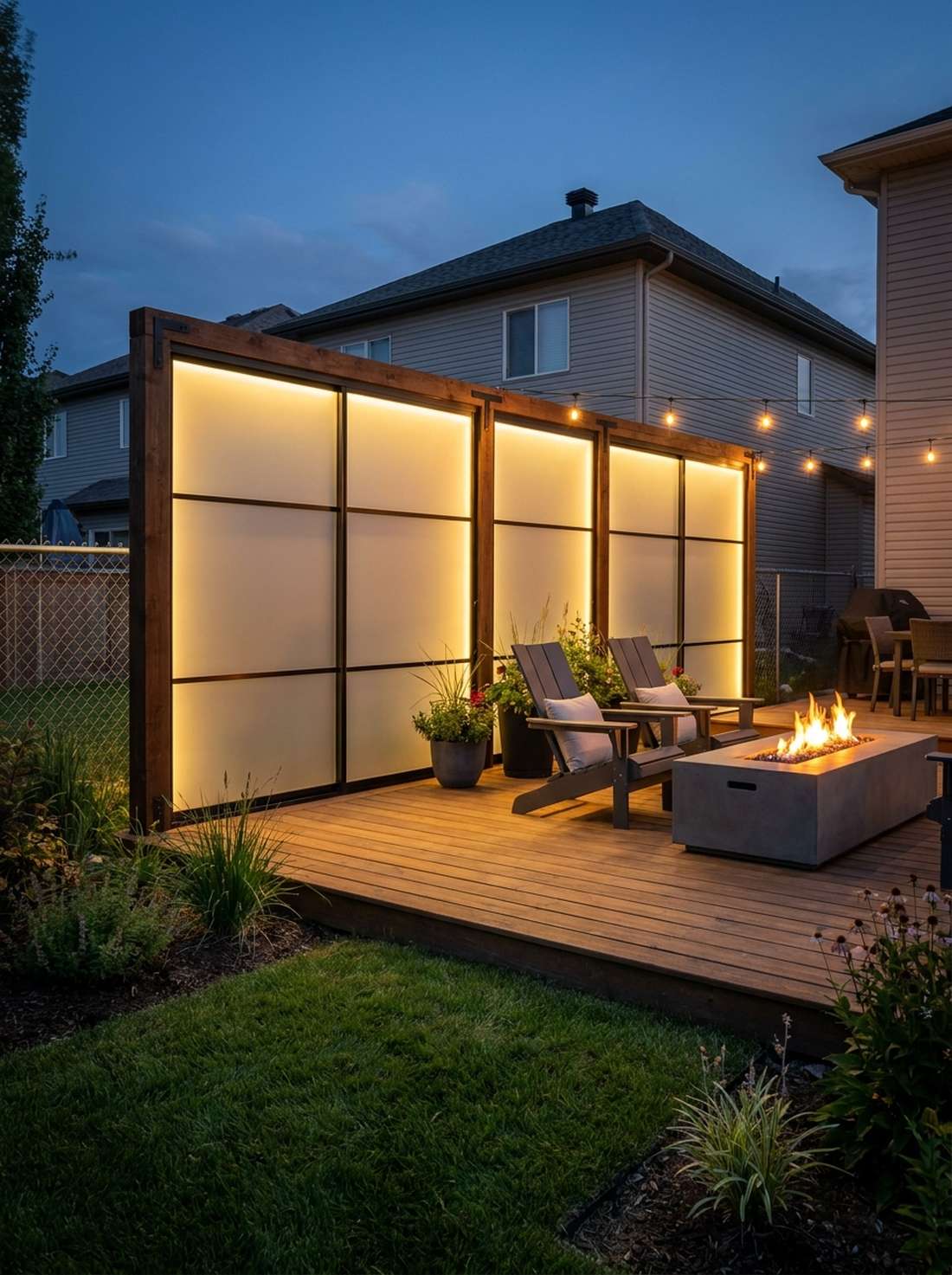
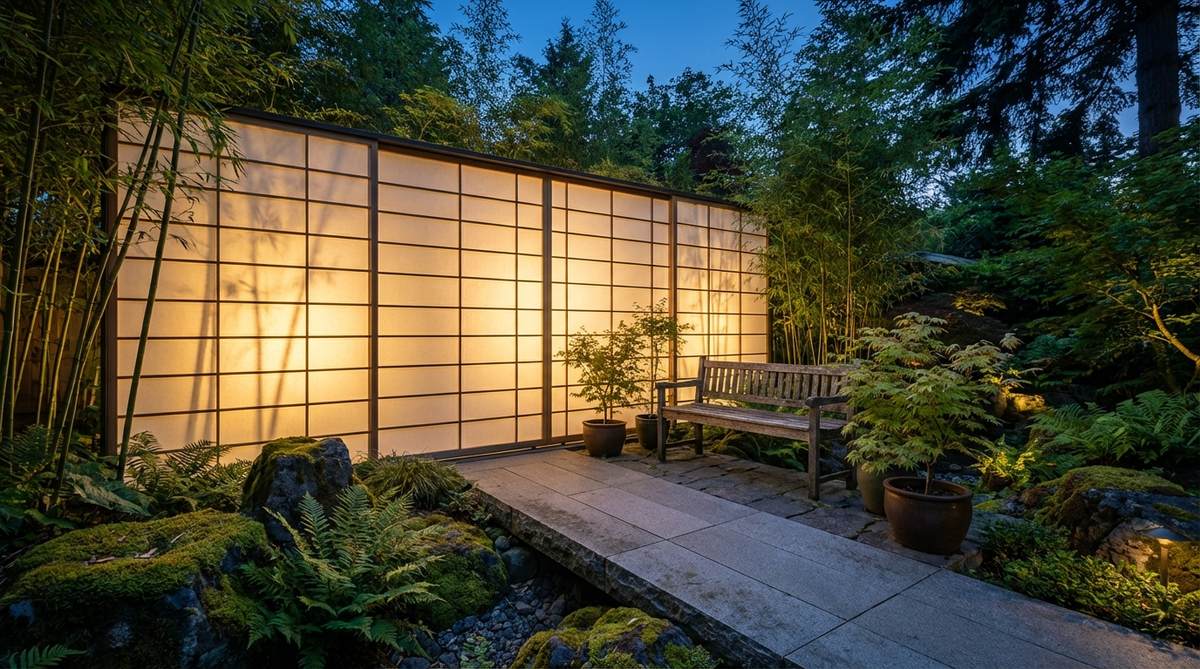
Casts a breathtaking, warm geometric glow across your patio at night. Outdoor acrylic shoji screens instantly hide ugly chain-link fences or neighbor views.
Paper screens melt in the rain, but using frosted acrylic completely transforms the space while surviving brutal weather. Frame them tightly with waterproof black aluminum tracking.
This massive visual upgrade costs around $100 per panel.
- Key Materials: Frosted acrylic sheets, timber frame.
- Vibe / Style: Glowing geometric privacy.
- Difficulty: Requires careful framing.
- Budget Breakdown: Acrylic: $60 | Wood frame: $40.
- Creator’s Tip: Backlight the screen with a cheap warm LED strip to make it look like a glowing lantern at night.
- Smart Sourcing: Frosted weatherproof acrylic panels and outdoor LED warm-white strip lights.
43. Takagaki Bamboo Fence
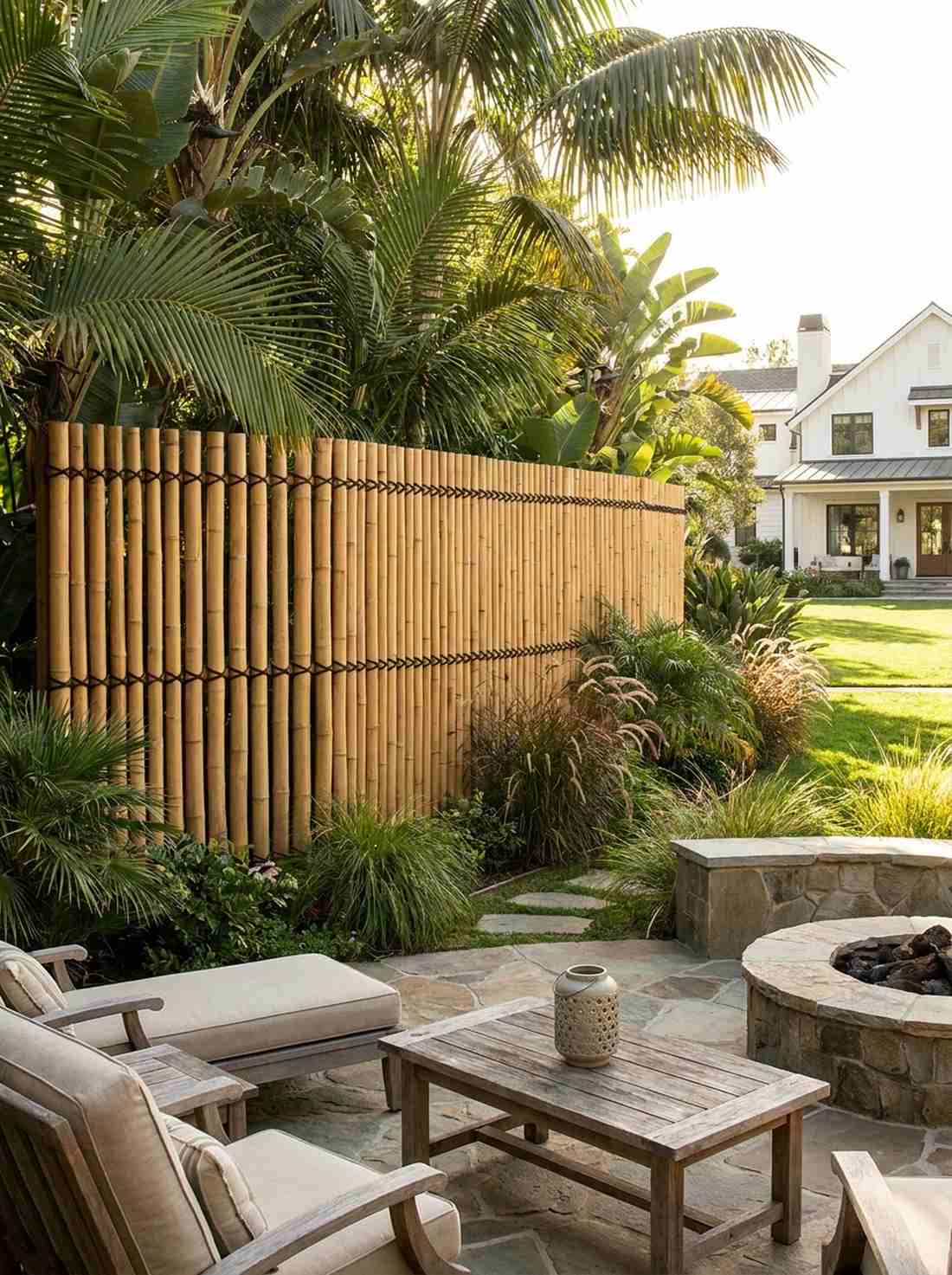
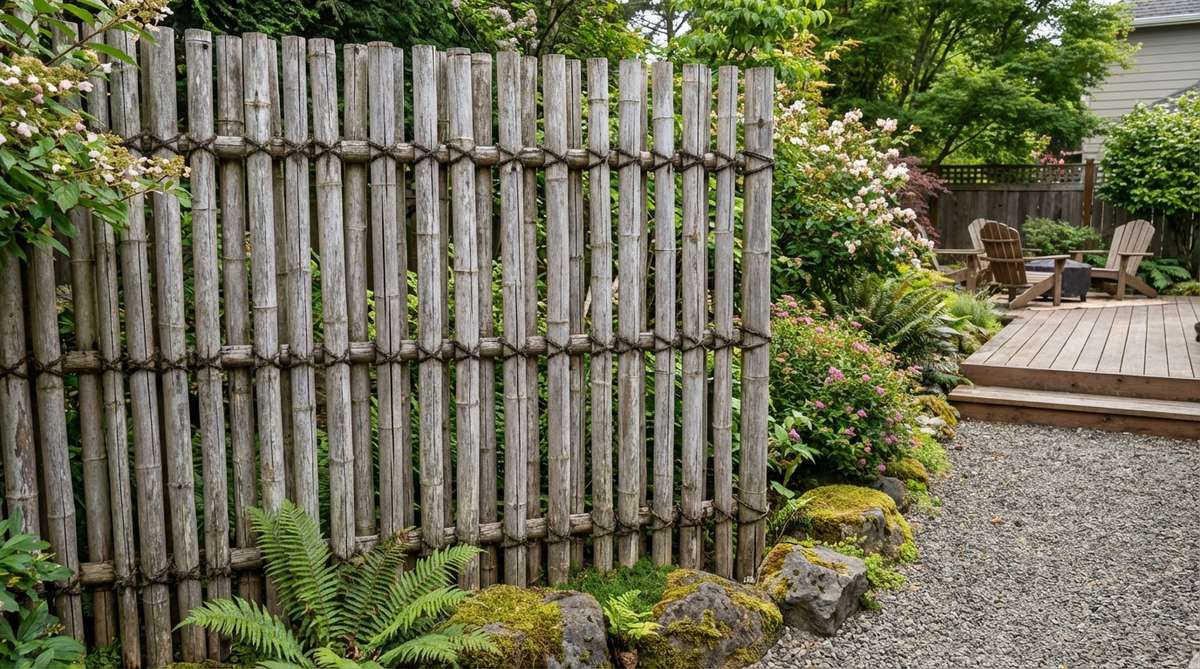
Provides flawless semi-transparent privacy without blocking the cool breeze. Traditional tied bamboo fencing is the ultimate aesthetic upgrade for boring boundaries.
Solid wood fences feel like a prison, but lashing vertical bamboo screams high-end luxury resort. Secure the poles tightly using black UV-resistant zip ties disguised as hemp cord.
You can fence a small section for under $80. Save this privacy hack!
- Key Materials: Bamboo poles, black lashing cord.
- Vibe / Style: Breezy tropical privacy.
- Difficulty: Time-consuming tying.
- Budget Breakdown: Bamboo bundle: $60 | Cord: $20.
- Creator’s Tip: Leave a 2-inch gap between poles to allow airflow and prevent the fence from blowing over in storms.
- Smart Sourcing: Bulk thick bamboo poles and heavy-duty black wax lashing cord.
44. Tea House Ceremonial Pavilion
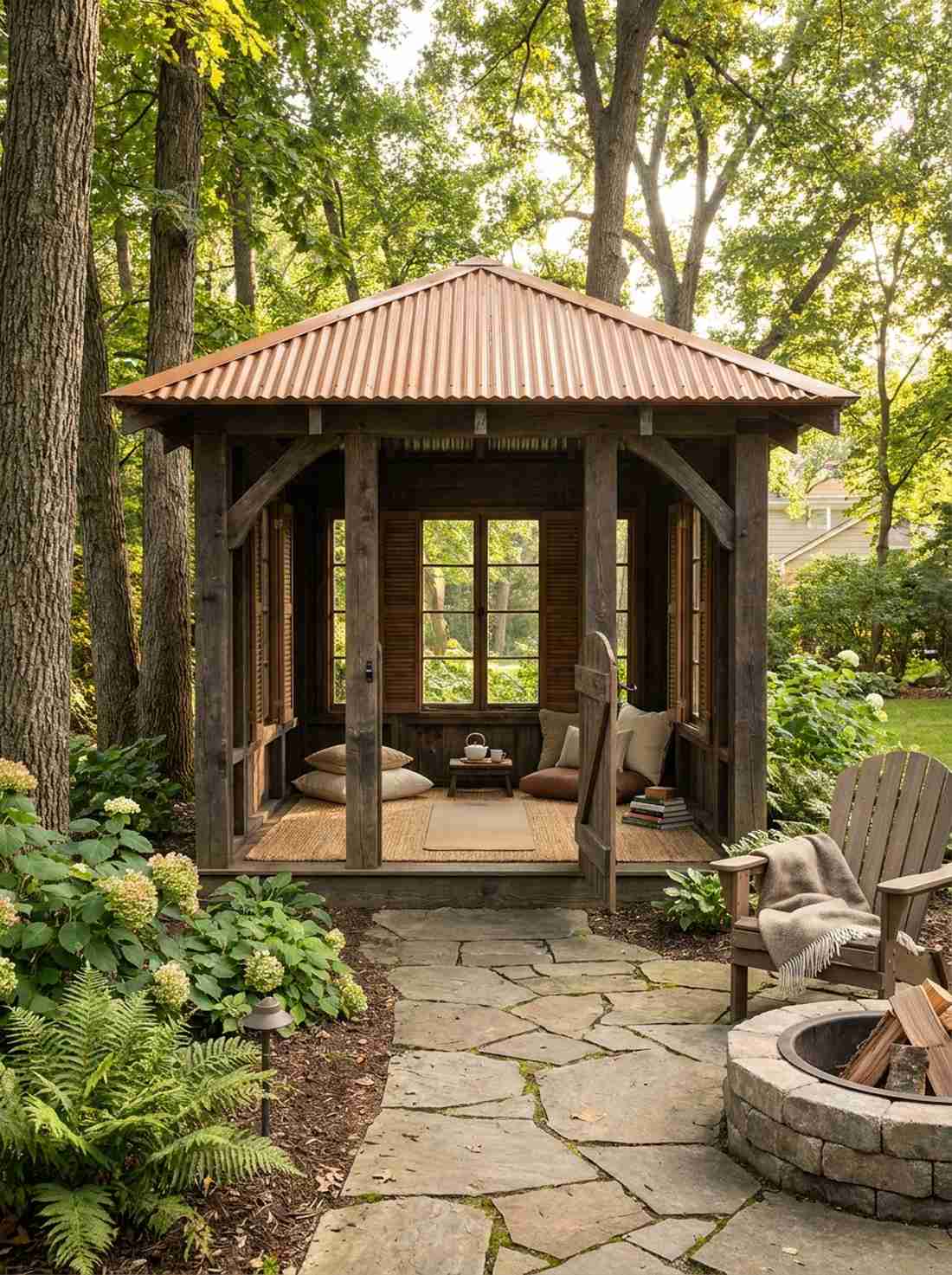
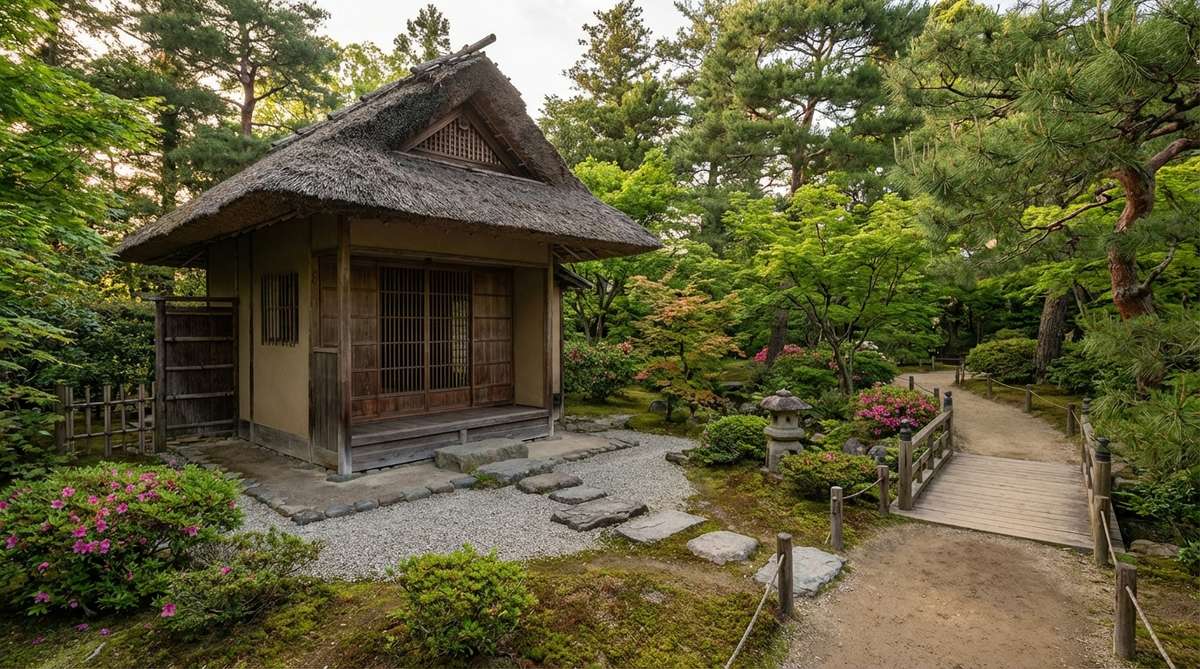
A secluded, rustic escape hidden at the very back of your property. Miniature backyard tea houses serve as incredible yoga or reading sanctuaries.
Buying a massive shed is an eyesore, but building a tiny 8×8 rustic pavilion looks far more expensive and intentional. Construct the roof easily using lightweight corrugated roofing sheets.
This is a larger DIY costing around $300-$500. Pin this for backyard shed ideas!
- Key Materials: Timber framing, rustic roof.
- Vibe / Style: Isolated rustic sanctuary.
- Difficulty: Advanced building project.
- Budget Breakdown: Lumber: $250 | Roof/Hardware: $150.
- Creator’s Tip: Build the doorway intentionally low so visitors have to physically bow to enter—it sets a mood of humility.
- Smart Sourcing: Pre-cut shed framing kits and faux-copper corrugated roof panels.
Most people ignore their entryways. Wait until you see how this next layout commands respect…
45. Roofed Entry Gate
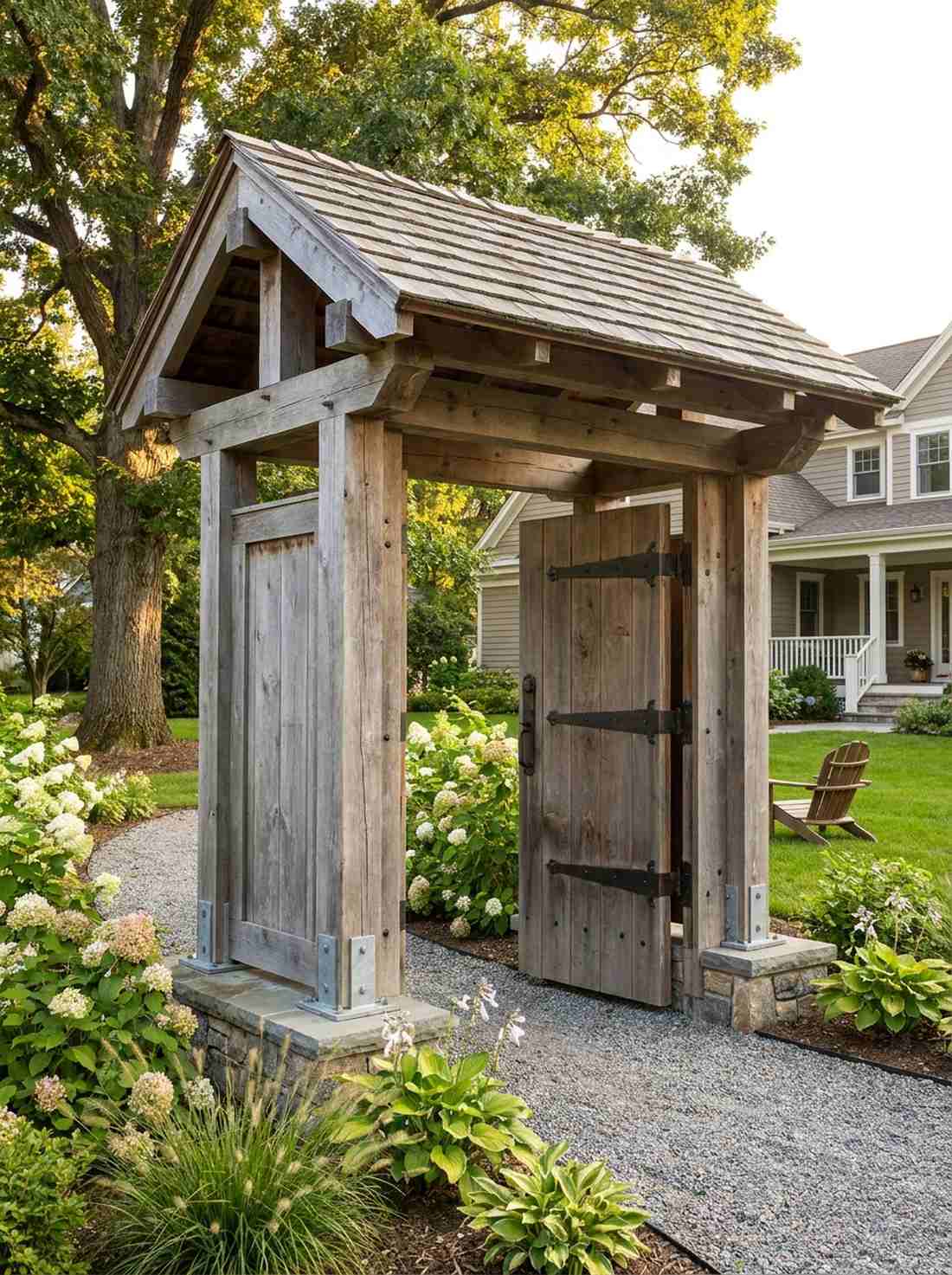
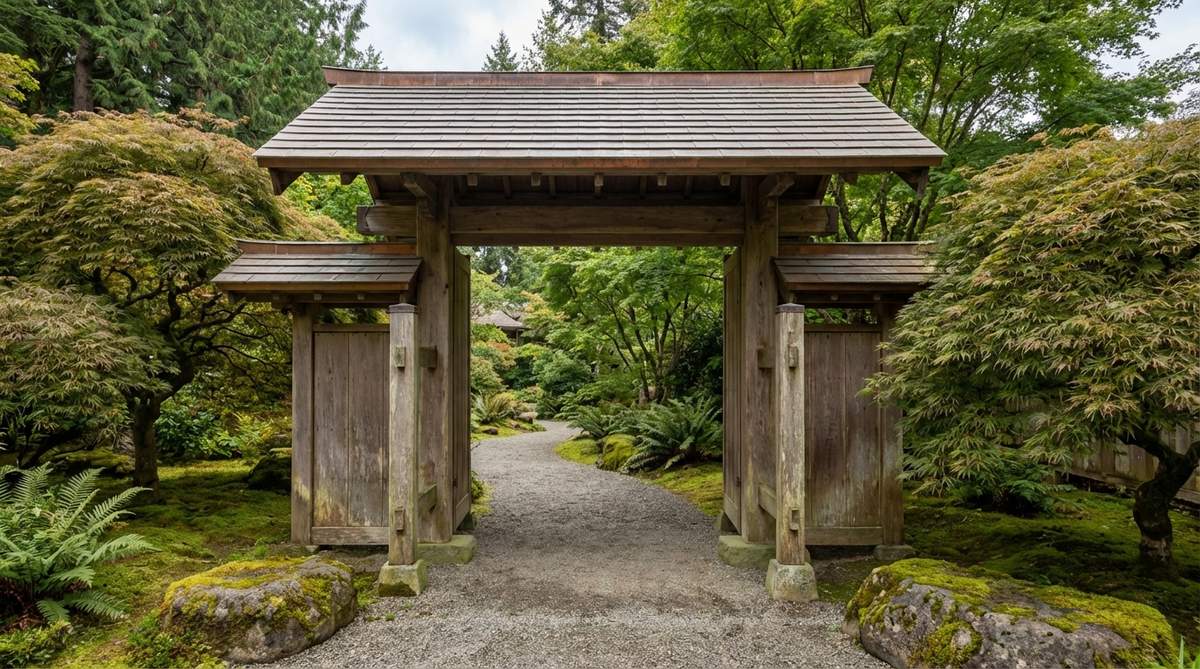
An imposing, majestic gateway that announces your garden is something special. Roofed timber entry gates give an unparalleled sense of arrival.
Flimsy wire gates look terrible, but a heavy timber structure with a small roof completely transforms the space. Protect the massive posts using galvanized post-base anchors.
Materials run about $150 for a solid entryway setup.
- Key Materials: 4×4 posts, shingles, heavy hardware.
- Vibe / Style: Majestic ceremonial arrival.
- Difficulty: Moderate heavy carpentry.
- Budget Breakdown: Timbers: $80 | Shingles/Hardware: $70.
- Creator’s Tip: Never paint the wood; let the cedar age naturally to a silver-grey wabi-sabi patina.
- Smart Sourcing: Heavy-duty steel post anchors and cedar roof shingle bundles.
46. Window-Framed Composition
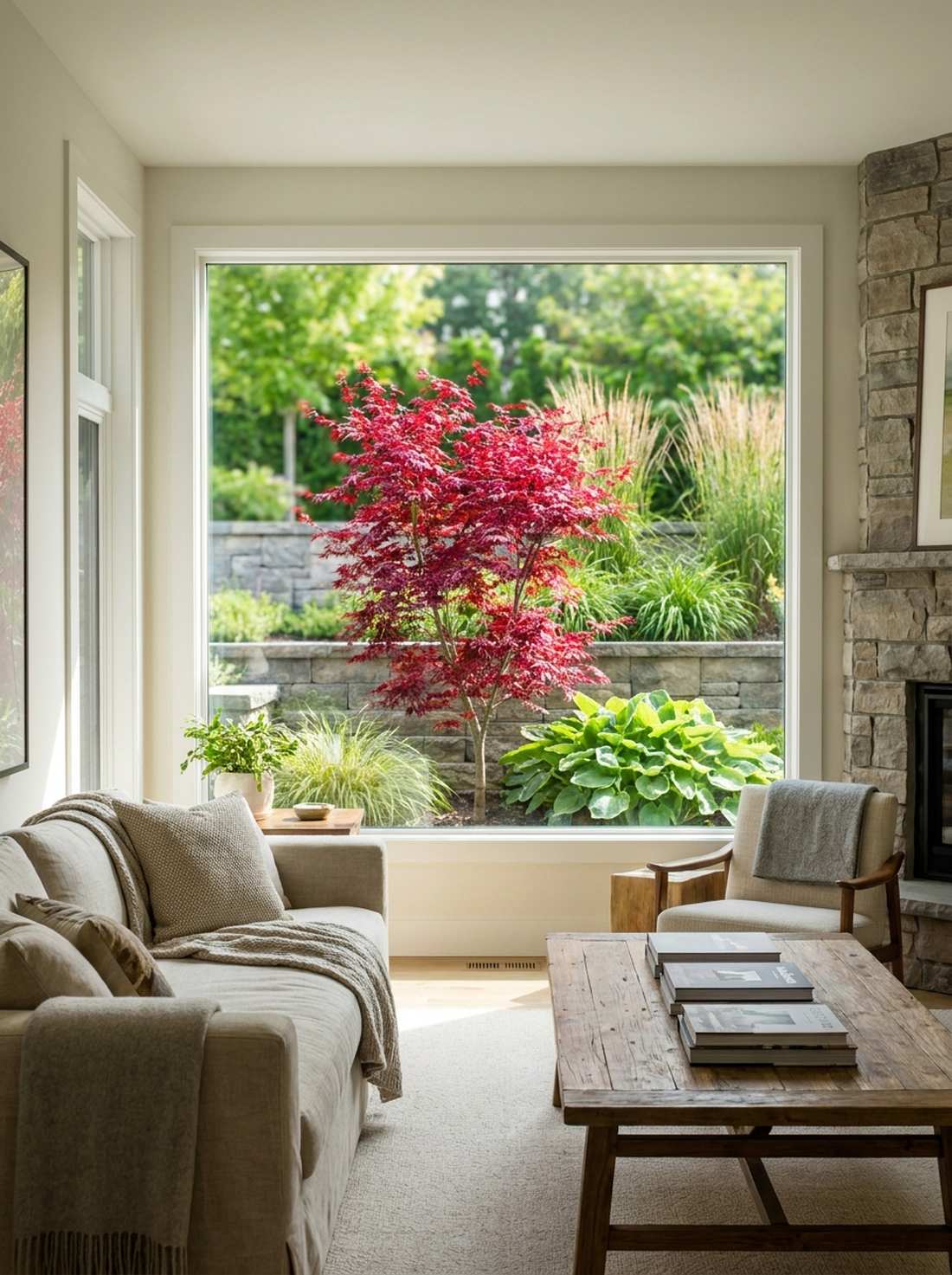
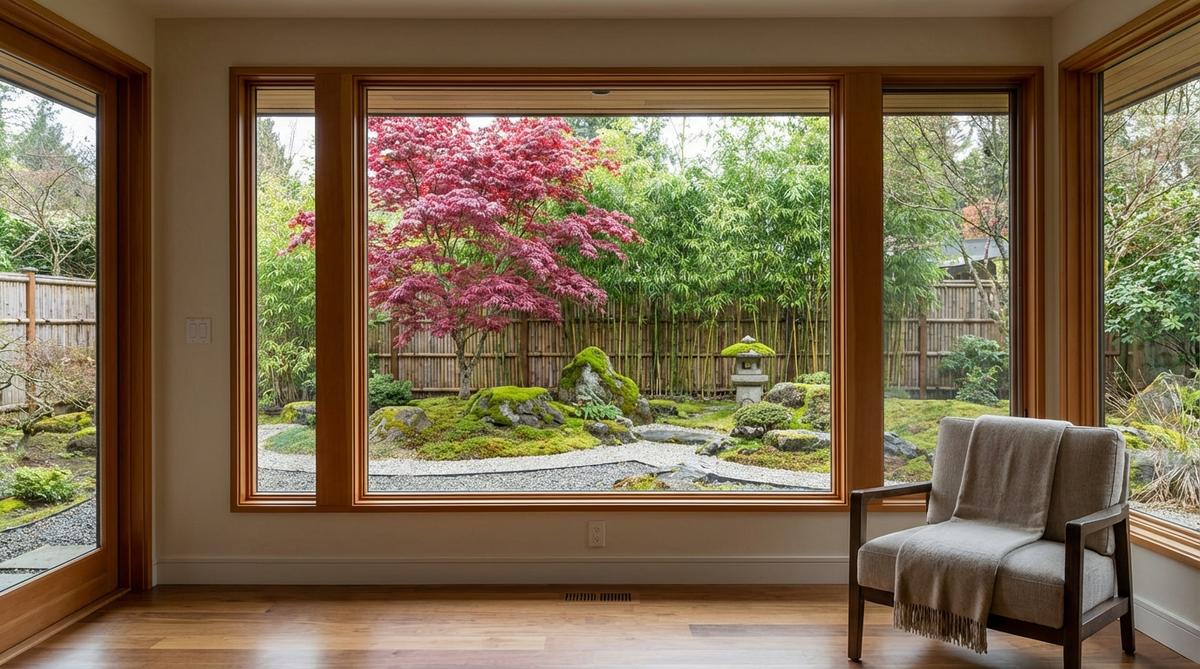
Turns your living room window into a living, breathing landscape painting. Picture-window garden framing treats the outdoors like a curated museum exhibit.
Decorating the whole yard is exhausting, but hyper-focusing a design directly outside one window delivers a surprisingly premium look. Keep the glass pristine with streak-free outdoor glass treatments.
This focused layout costs under $50. Save this for indoor-outdoor harmony!
- Key Materials: Specimen plant, clean background.
- Vibe / Style: Curated living art.
- Difficulty: Requires visual alignment.
- Budget Breakdown: Feature plant: $40 | Decor: $10.
- Creator’s Tip: Look through the window from inside the house while a friend moves the plant outside to find the perfect frame.
- Smart Sourcing: Premium Japanese maple saplings and outdoor window rain-repellent sprays.
47. Stone Lantern Lighting Network
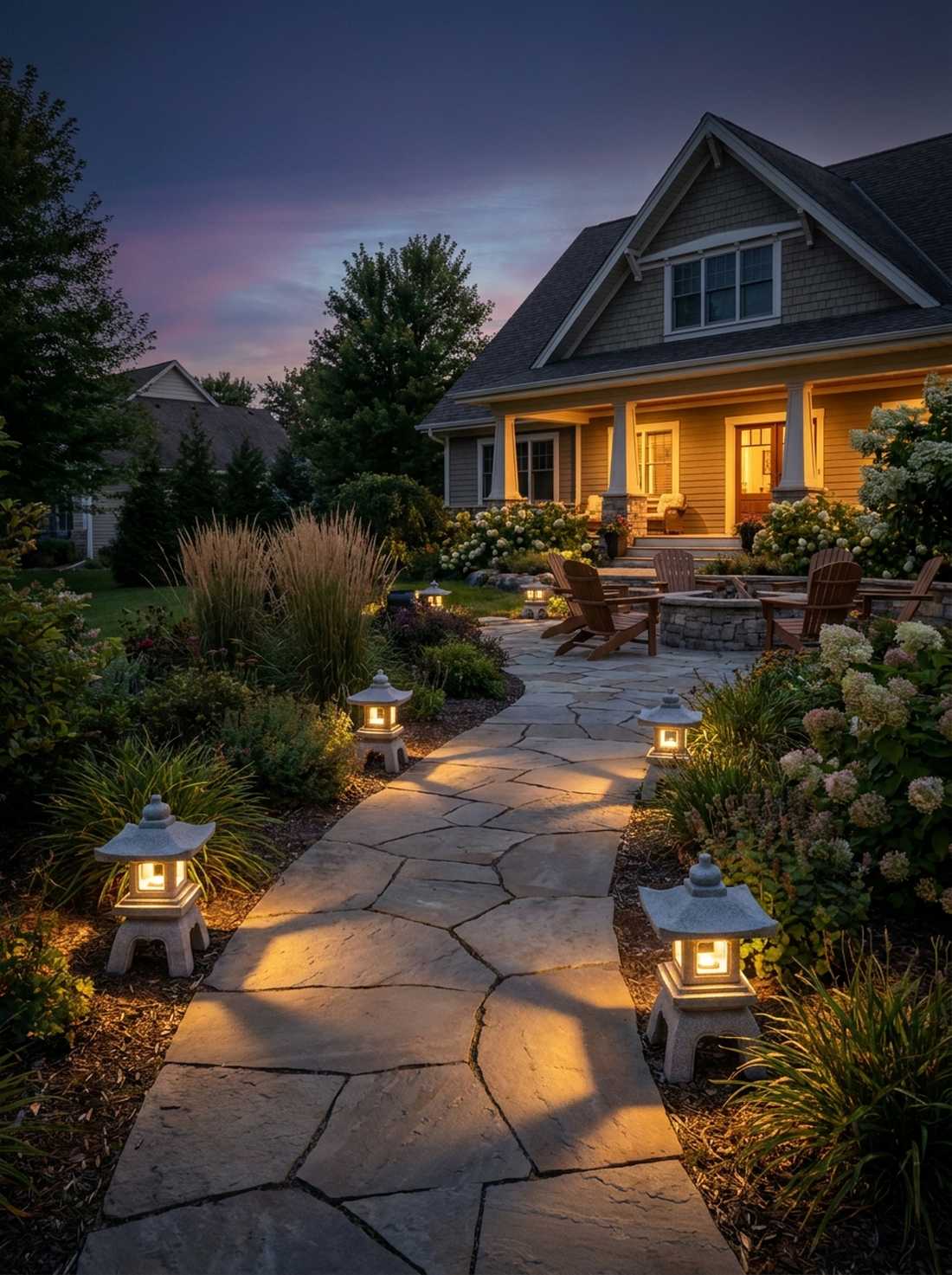
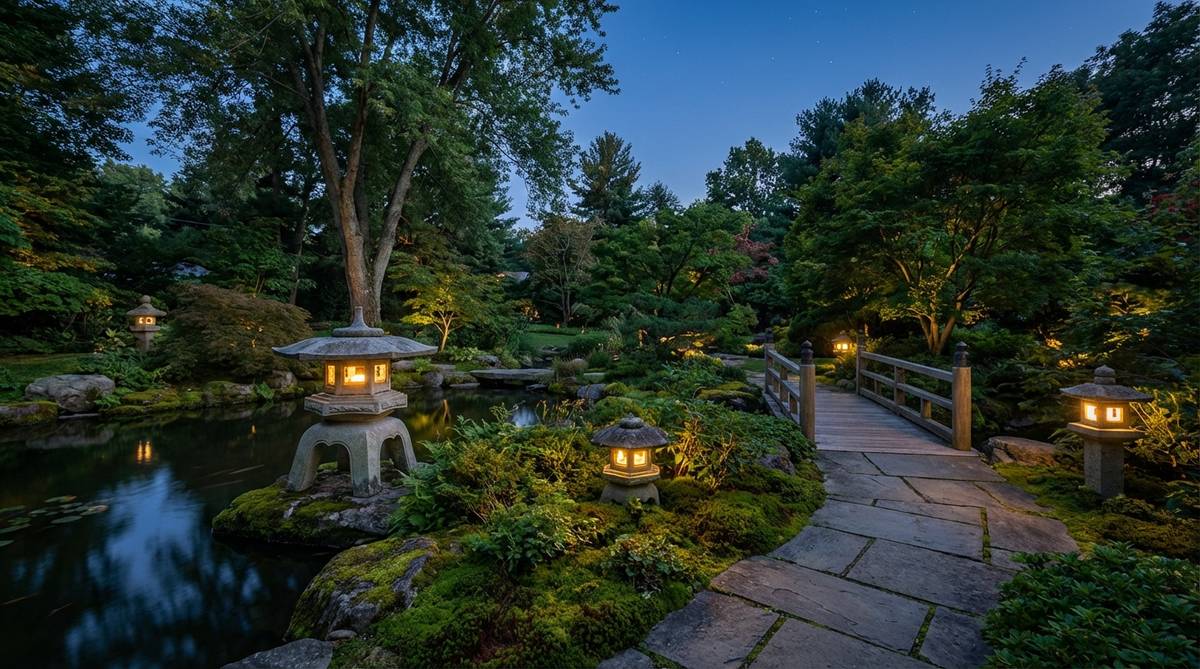
Casts a mysterious, ambient glow that makes evening walks unforgettable. Pagoda lantern pathway lighting completely beats blinding, ugly security floodlights.
Harsh spotlights ruin the mood, but low-level ambient stone lanterns scream high-end luxury. Skip the wiring nightmare by dropping waterproof LED puck lights inside hollow statues.
You can light a whole path for about $100.
- Key Materials: Resin/stone lanterns, LED lights.
- Vibe / Style: Mysterious nocturnal glow.
- Difficulty: Very easy setup.
- Budget Breakdown: Lanterns: $80 | Lights: $20.
- Creator’s Tip: Keep the lights below eye level to preserve the mystery of the night sky.
- Smart Sourcing: Hollow resin pagoda lanterns and solar-powered waterproof LED pucks.
48. Covered Bridge Shelter
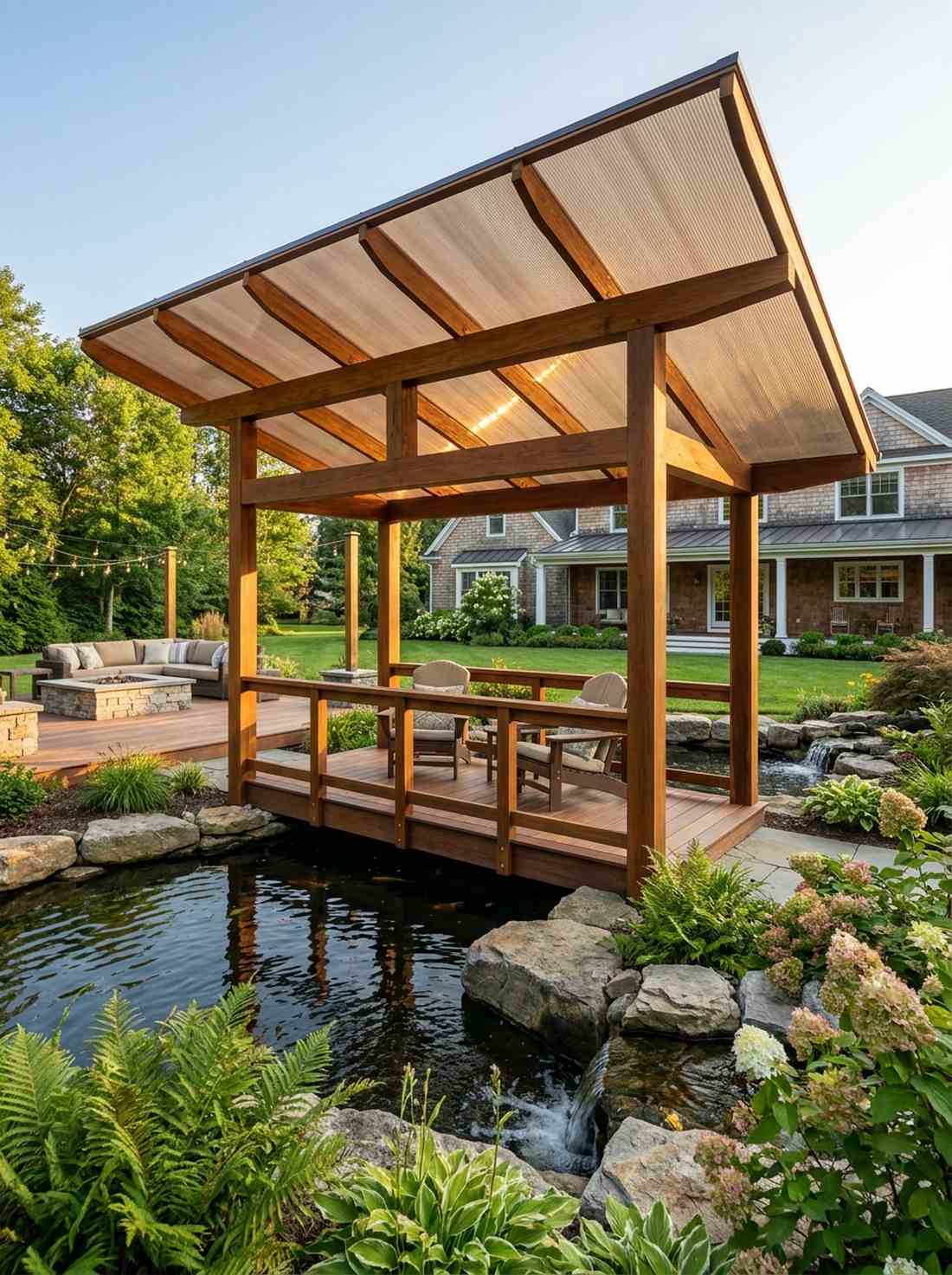
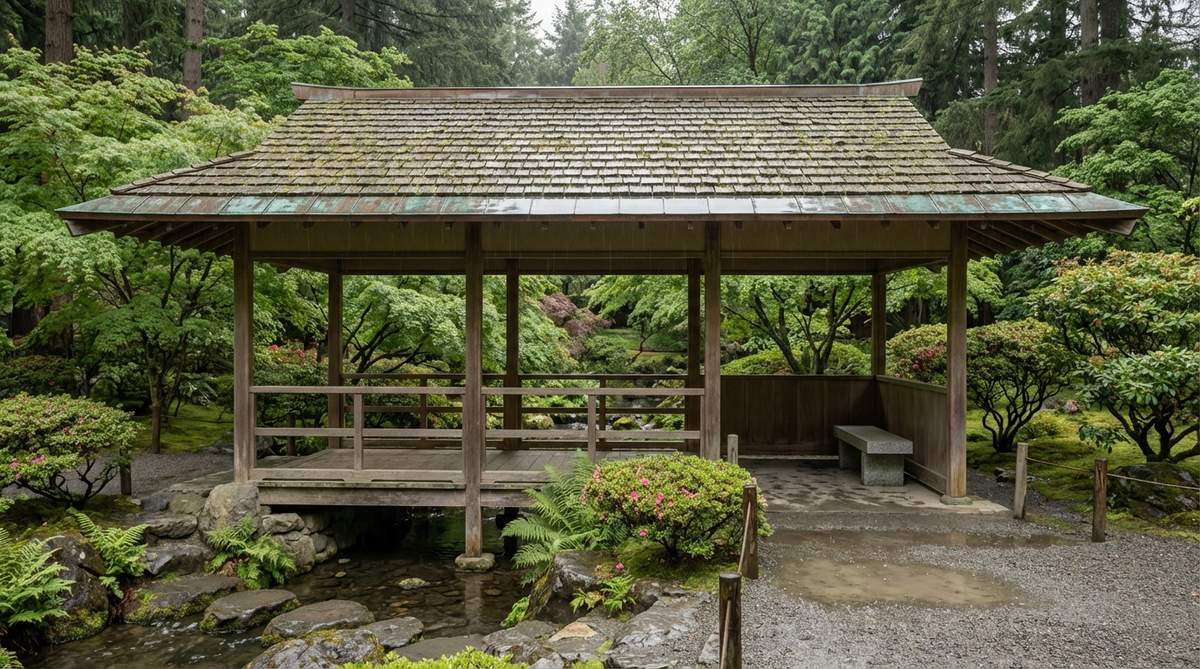
A stunning architectural marvel that lets you watch the rain in total comfort. Roofed garden bridge structures extend your outdoor season by months.
Getting soaked out back is miserable, but a covered pond bridge provides a highly contemporary, architect-designed appearance. Use lightweight polycarbonate roofing to avoid crushing the bridge frame.
Expect to spend $200+ on this epic upgrade. Pin this for massive pond ideas!
- Key Materials: Bridge base, roof frame, panels.
- Vibe / Style: Cozy sheltered viewing.
- Difficulty: Advanced carpentry.
- Budget Breakdown: Frame wood: $120 | Roof panels: $80.
- Creator’s Tip: Extend the eaves far past the handrails to deflect blowing rain effectively.
- Smart Sourcing: Tinted polycarbonate roofing sheets and weather-resistant structural screws.
Contemplative Viewing Layouts: Meditation and Stillness
These hyper-focused layouts are designed for stationary meditation. Every rock and rake line is calculated to trick the eye and calm the mind.
49. Temple Stone Garden Abstraction
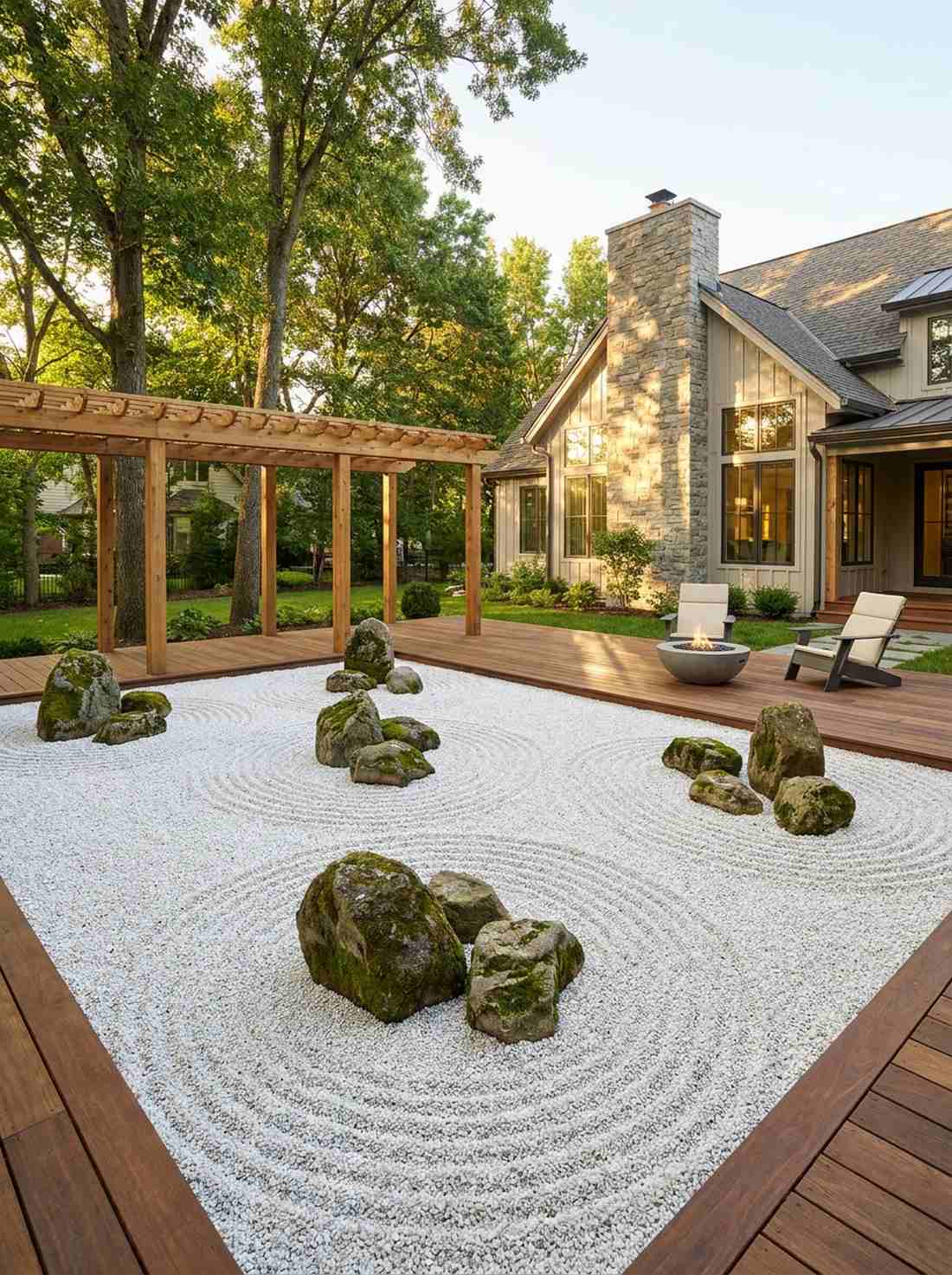
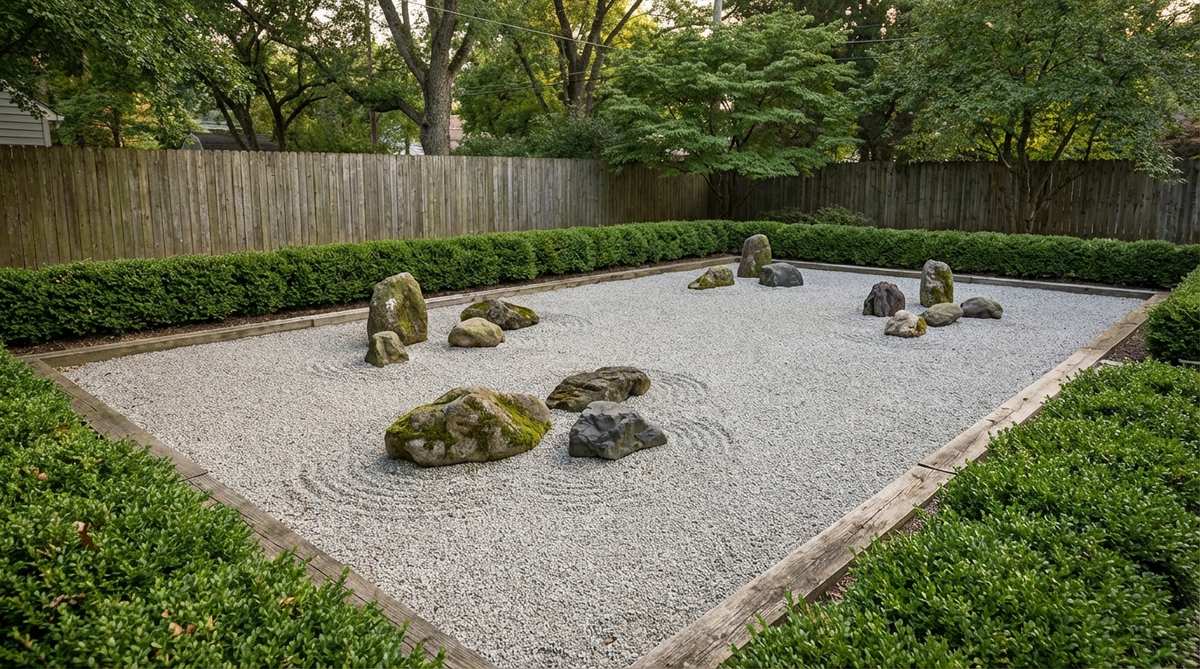
The legendary Ryoan-ji illusion where you can never see all the stones at once. Abstract dry rock layouts are the ultimate puzzle for deep meditation.
Placing rocks randomly looks amateurish, but using strict proportional math completely transforms the space into a philosophical masterpiece. Map the layout meticulously using laser leveling measurement tools.
Recreate this ancient puzzle for around $120.
- Key Materials: 15 premium stones, raked gravel.
- Vibe / Style: Deep philosophical abstraction.
- Difficulty: Requires intense mathematical planning.
- Budget Breakdown: Premium stones: $80 | Gravel: $40.
- Creator’s Tip: Arrange the 15 stones in 5 groups, positioned so that one rock is always hidden from any sitting angle.
- Smart Sourcing: Hand-selected zen rock assortments and cross-line laser levels.
Most people clutter their yards with junk. The next layout proves why doing LESS is actually better…
50. Single-Viewing-Point Composition
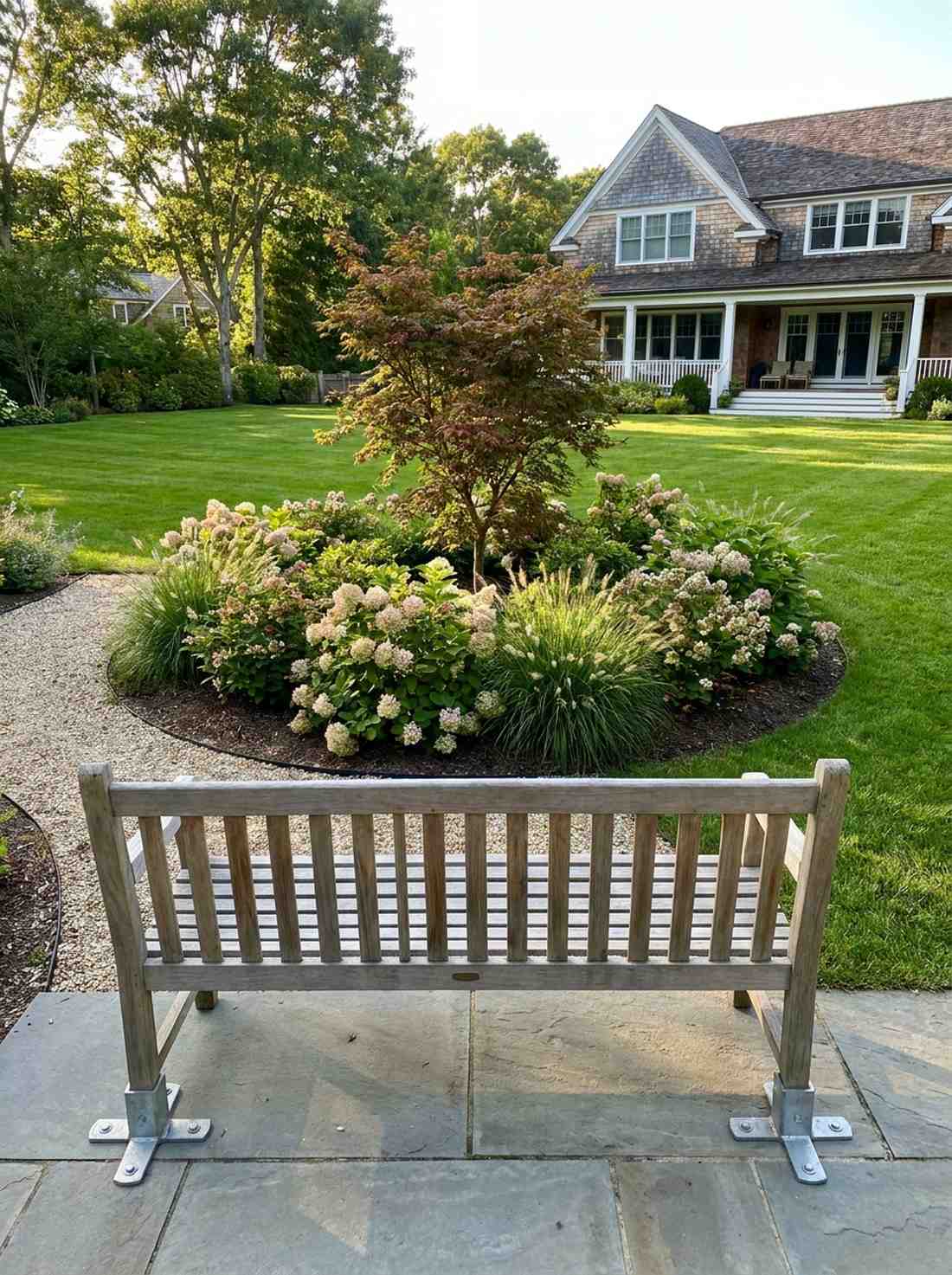
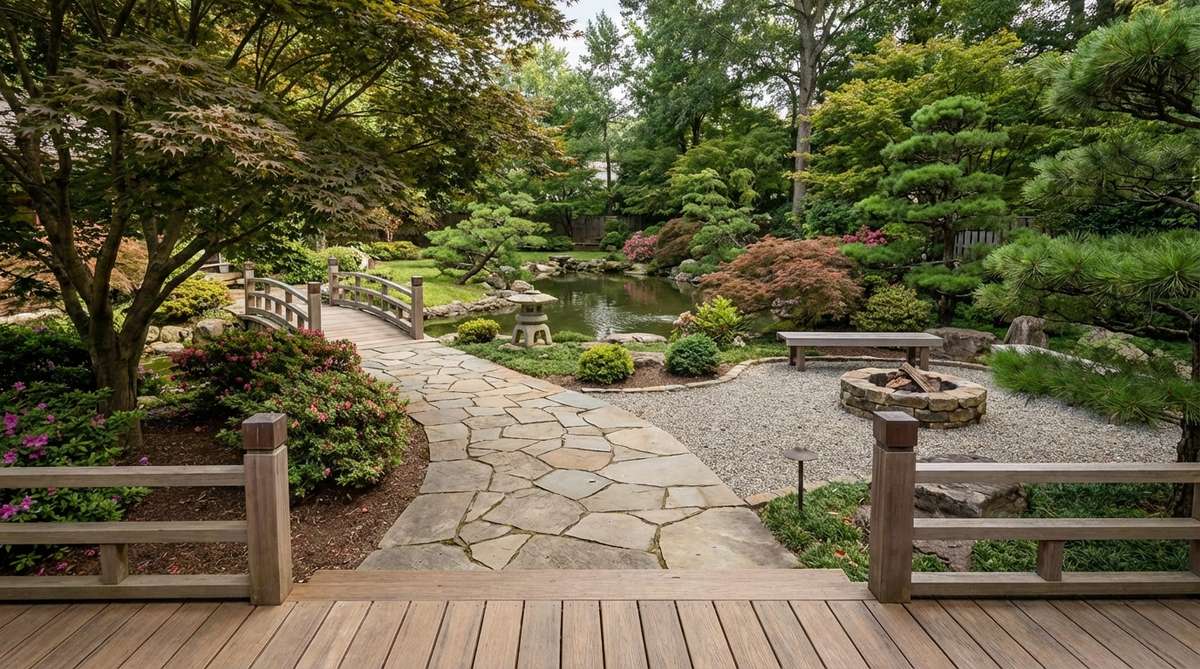
A fiercely disciplined layout optimized for exactly one perfect seat. Stationary viewing garden framing turns a single bench into the best seat in the house.
Designing for every angle dilutes the impact, but forcing a single perspective delivers a surprisingly premium look. Anchor your favorite bench with heavy-duty ground securing anchors.
This focused setup saves huge money, costing under $50. Save this minimalist trick!
- Key Materials: Viewing bench, clustered focal points.
- Vibe / Style: Intensely focused panorama.
- Difficulty: Easy execution, hard planning.
- Budget Breakdown: Bench hardware: $20 | Plants: $30.
- Creator’s Tip: Place a physical marker where your head sits, and base every single planting decision entirely from that line of sight.
- Smart Sourcing: Weatherproof teak garden benches and heavy-duty ground anchor kits.
51. Infinity-Edge Horizon
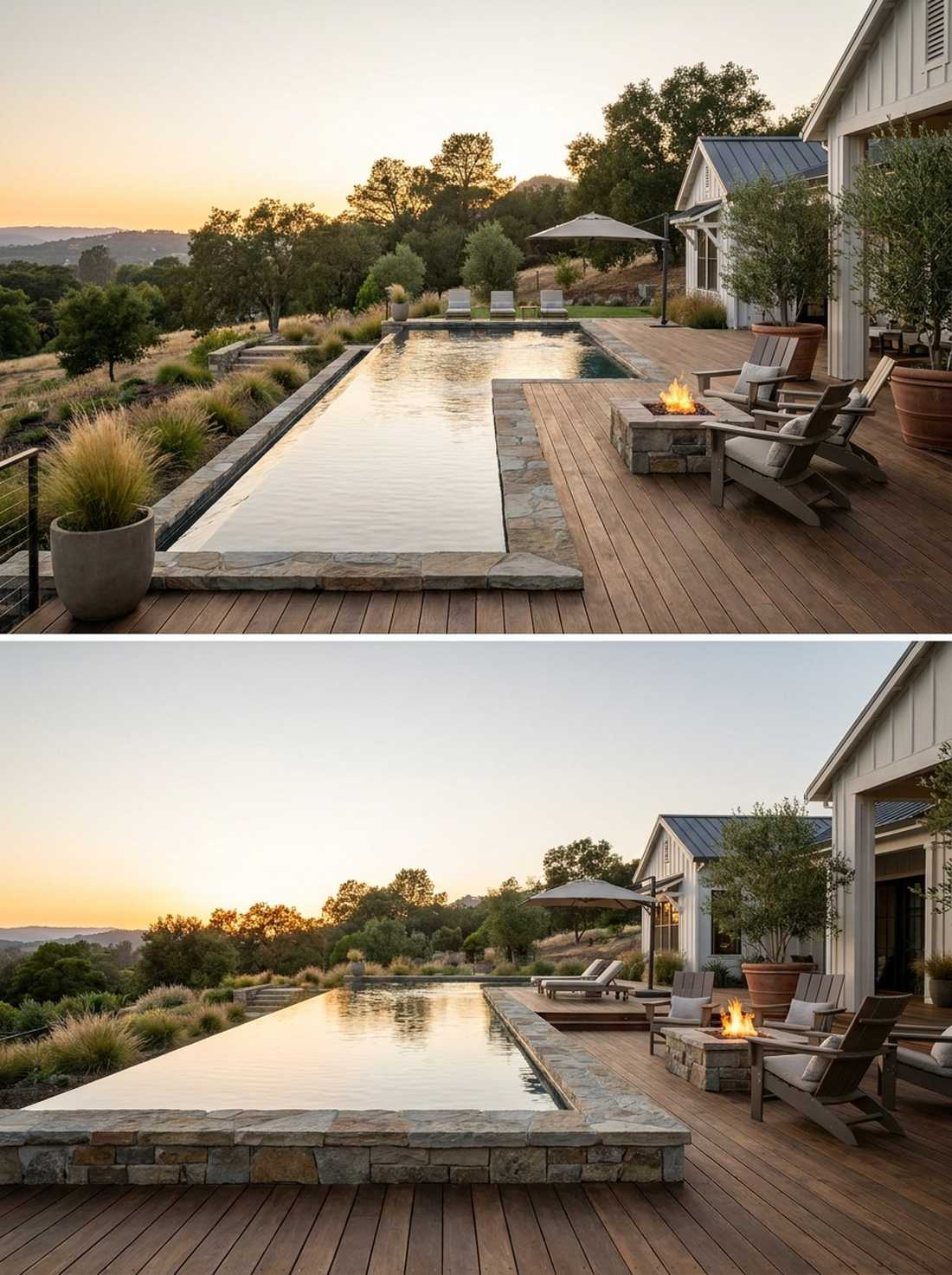
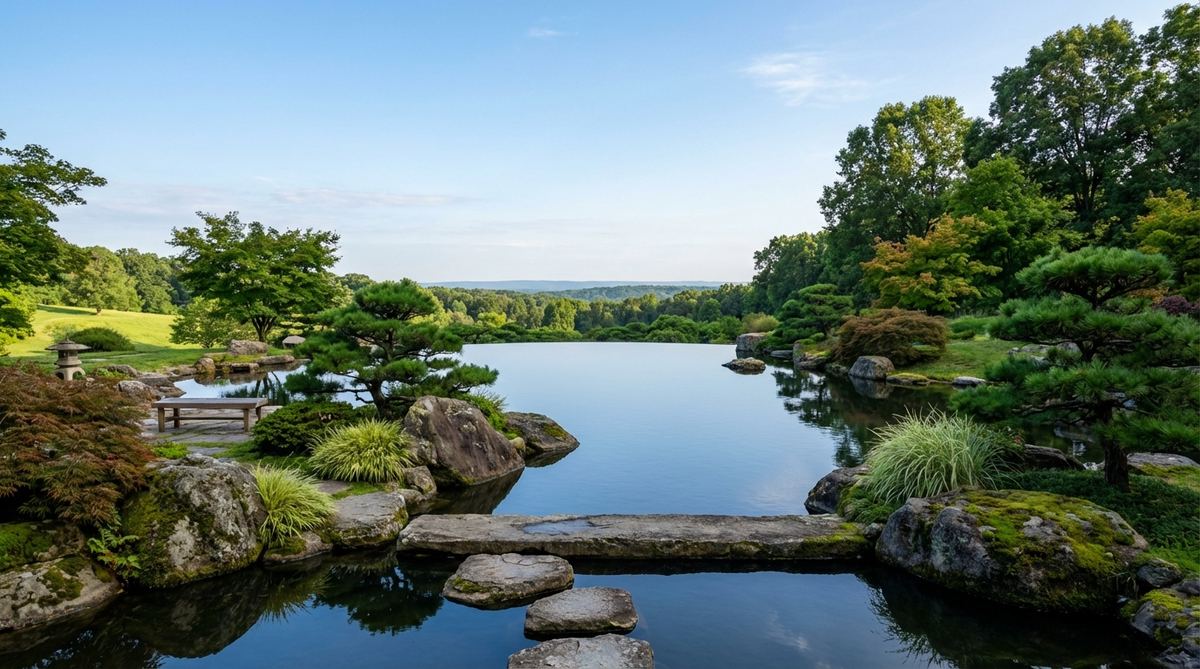
Blurs the line between your backyard pond and the horizon beyond. Infinity edge water features make a small hillside lot look like a million-dollar estate.
Standard pond lips look bulky, but dropping the far edge to match the horizon line screams high-end luxury. Maintain the perfect water level automatically using mechanical float valve kits.
This visual trick requires a $100 plumbing investment but adds massive property value.
- Key Materials: Catch basin, auto-fill valve.
- Vibe / Style: Boundless luxury estate.
- Difficulty: Advanced leveling required.
- Budget Breakdown: Valve kit: $40 | Extra liner: $60.
- Creator’s Tip: The pond edge must be leveled to within 1/16th of an inch for the infinity illusion to work smoothly.
- Smart Sourcing: Pond auto-fill float valves and precision laser levels.
52. Meditation Circle Enclosure
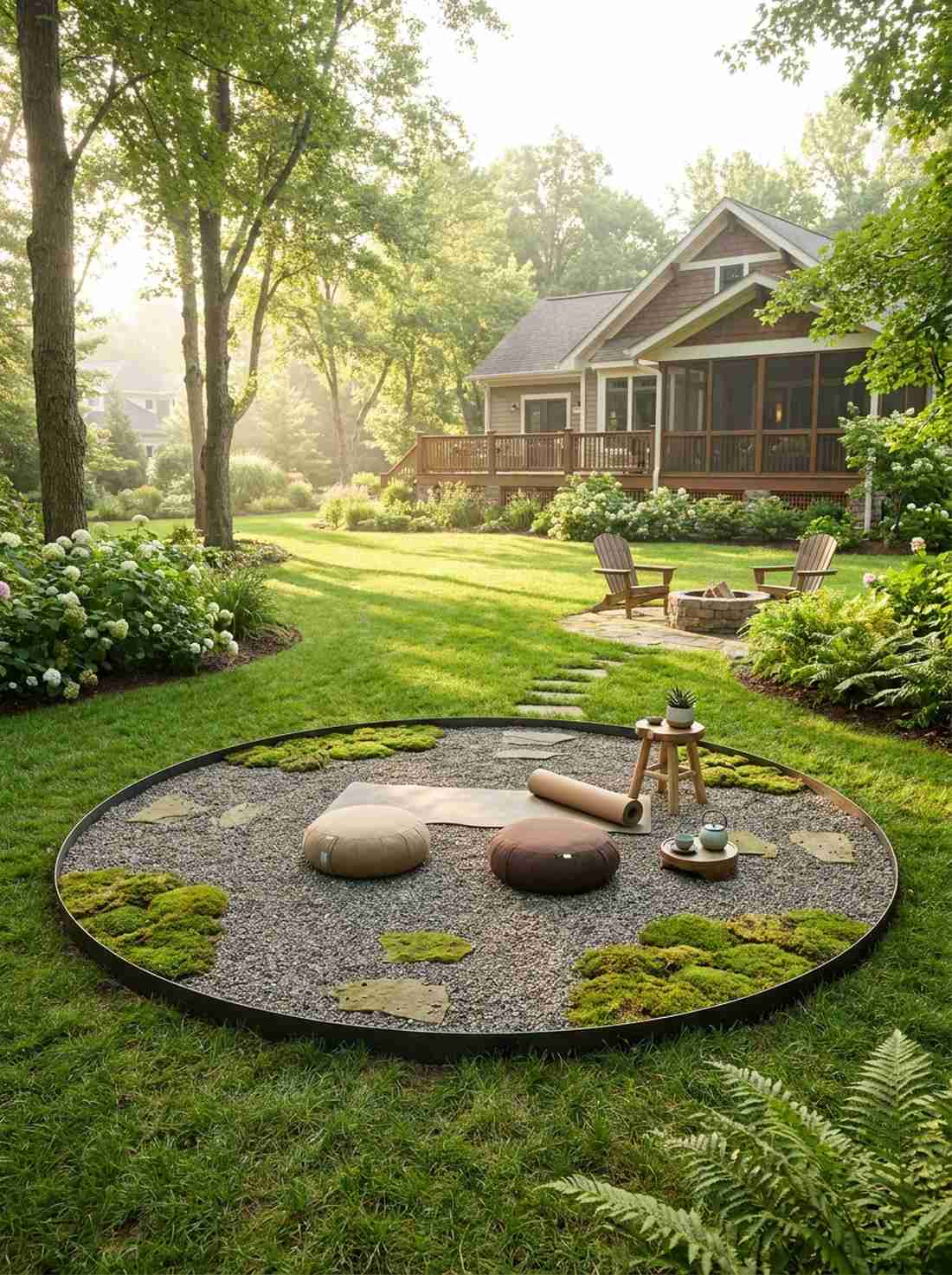
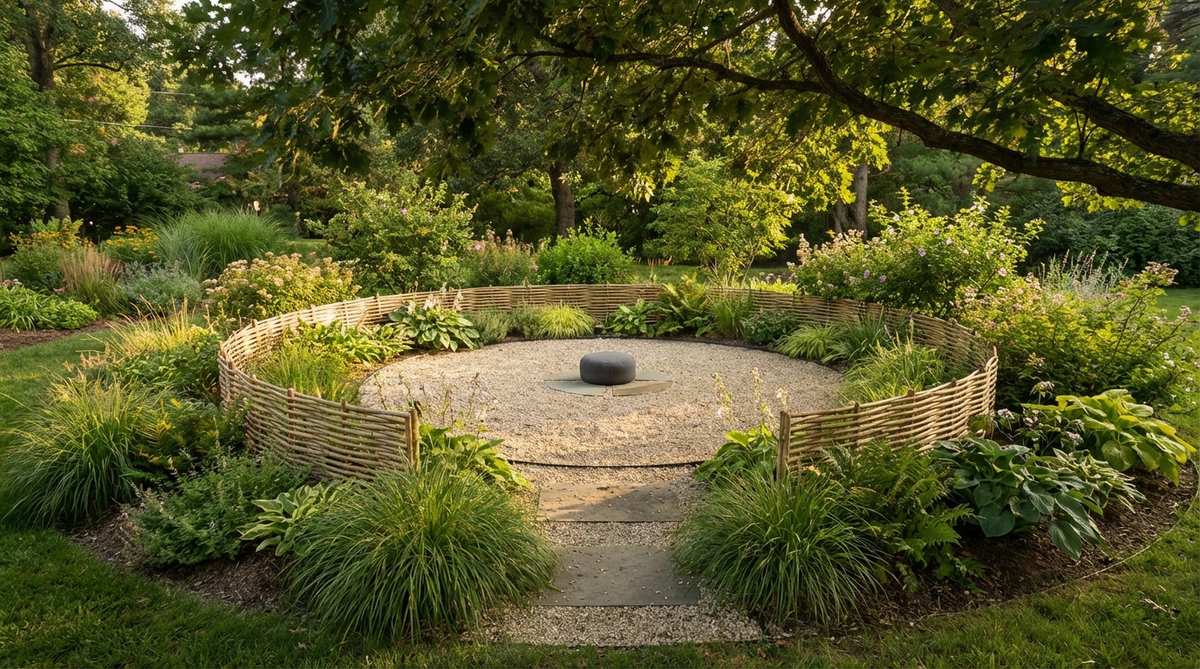
A perfectly bounded safe zone for morning yoga or deep zazen practice. Circular garden meditation enclosures provide immense psychological comfort.
Sitting in the open feels vulnerable, but an exact geometric circle completely transforms the space into a protected sanctuary. Define the ring perfectly using pre-cut steel landscape edging.
You can carve out this sanctuary for about $60. Pin this to your wellness board!
- Key Materials: Steel edging, fine gravel or moss.
- Vibe / Style: Protected geometric calm.
- Difficulty: Easy weekend project.
- Budget Breakdown: Edging rings: $40 | Base fill: $20.
- Creator’s Tip: Keep the diameter between 12-15 feet—any smaller feels claustrophobic, any larger loses the feeling of enclosure.
- Smart Sourcing: Flexible steel lawn edging strips and outdoor yoga meditation cushions.
53. Borrowed Light Reflection
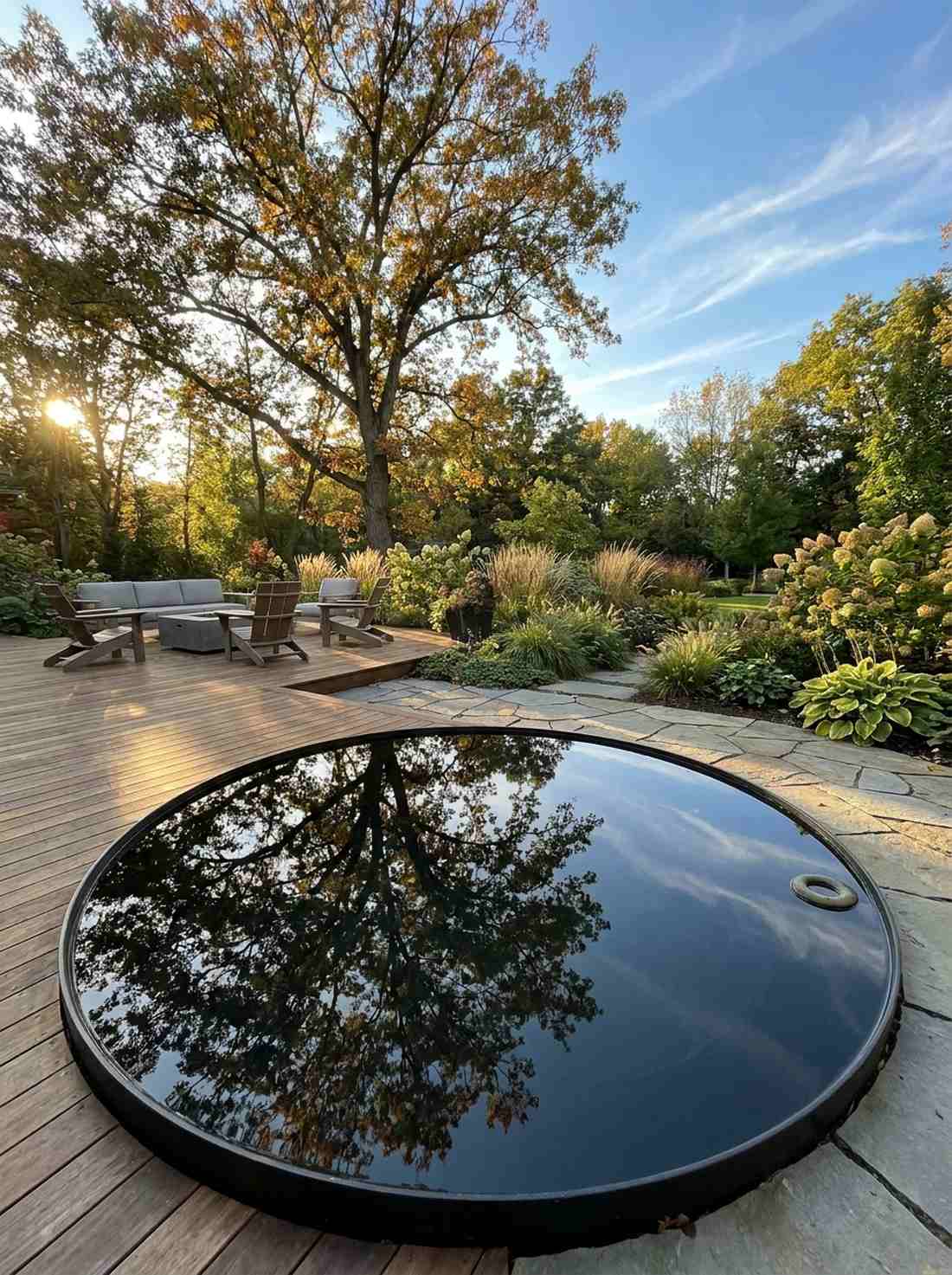
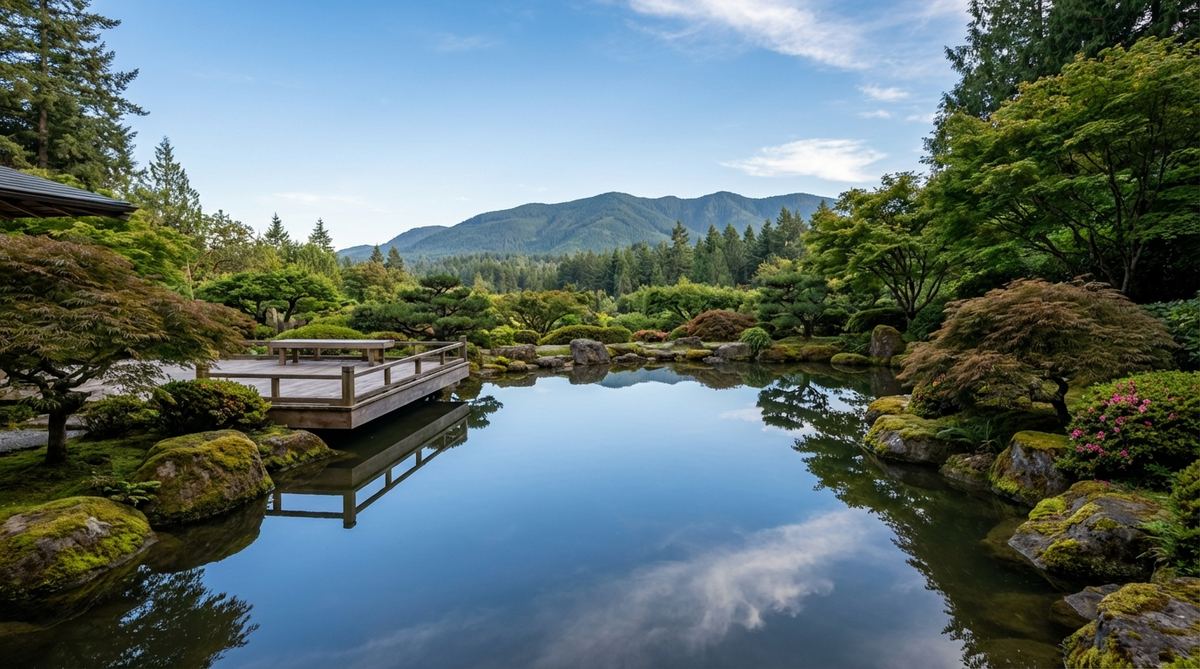
Turns a dark, boring pond into a brilliant mirror for the sky. Still water reflection basins double the visual impact of your best trees.
Turbulent water destroys reflections, but a perfectly still basin provides a highly contemporary, architect-designed appearance. Stop mosquito breeding silently using organic mosquito dunk tablets.
This serene mirror effect costs about $50 to setup.
- Key Materials: Shallow dark basin, mosquito control.
- Vibe / Style: Glassy mirrored perfection.
- Difficulty: Very easy.
- Budget Breakdown: Basin: $40 | Water treatment: $10.
- Creator’s Tip: Paint the bottom of the basin pitch black to maximize the mirror effect of the surface water.
- Smart Sourcing: Black preformed patio ponds and organic mosquito dunk rings.
54. Triptych Viewing Panels
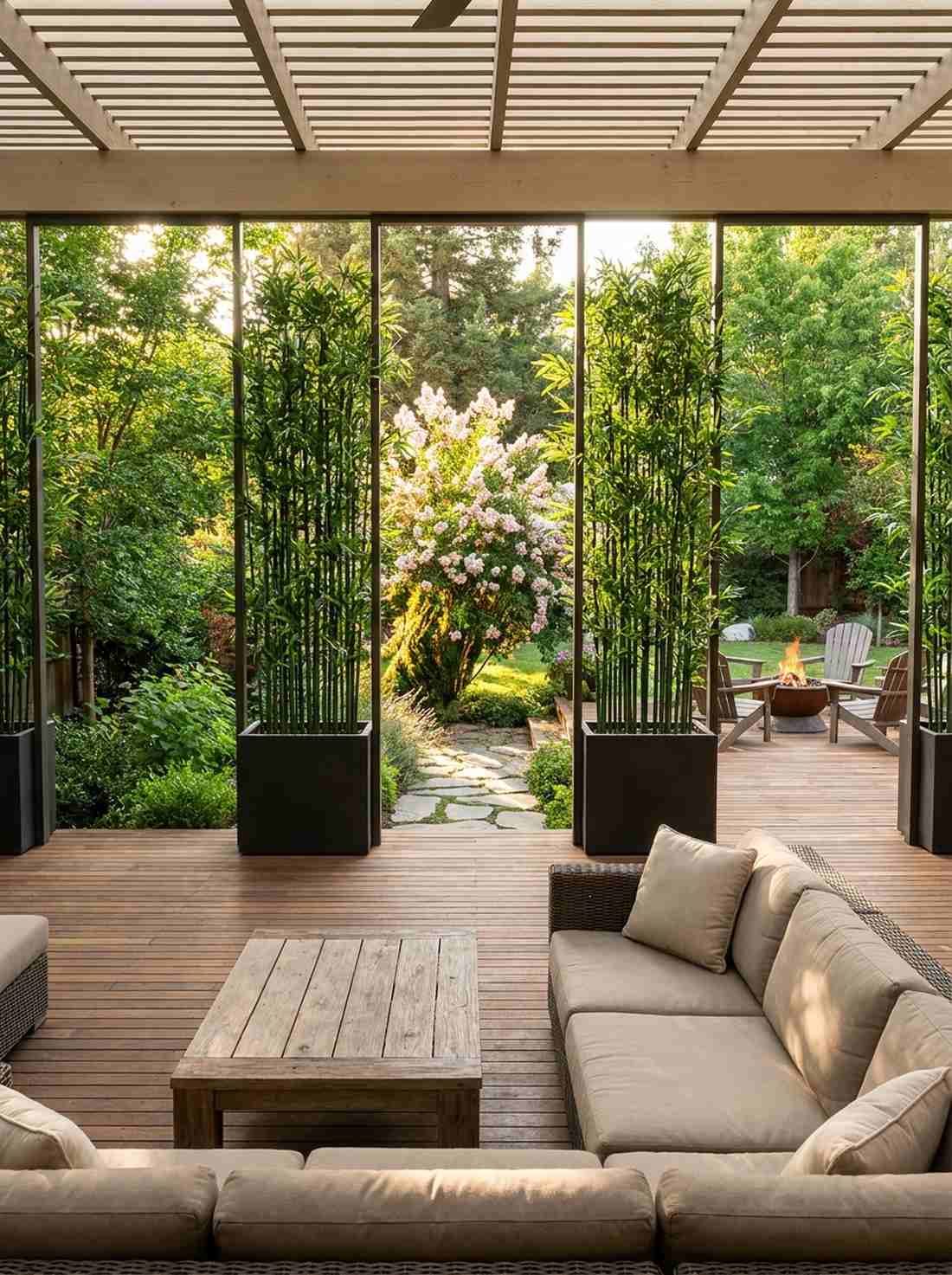
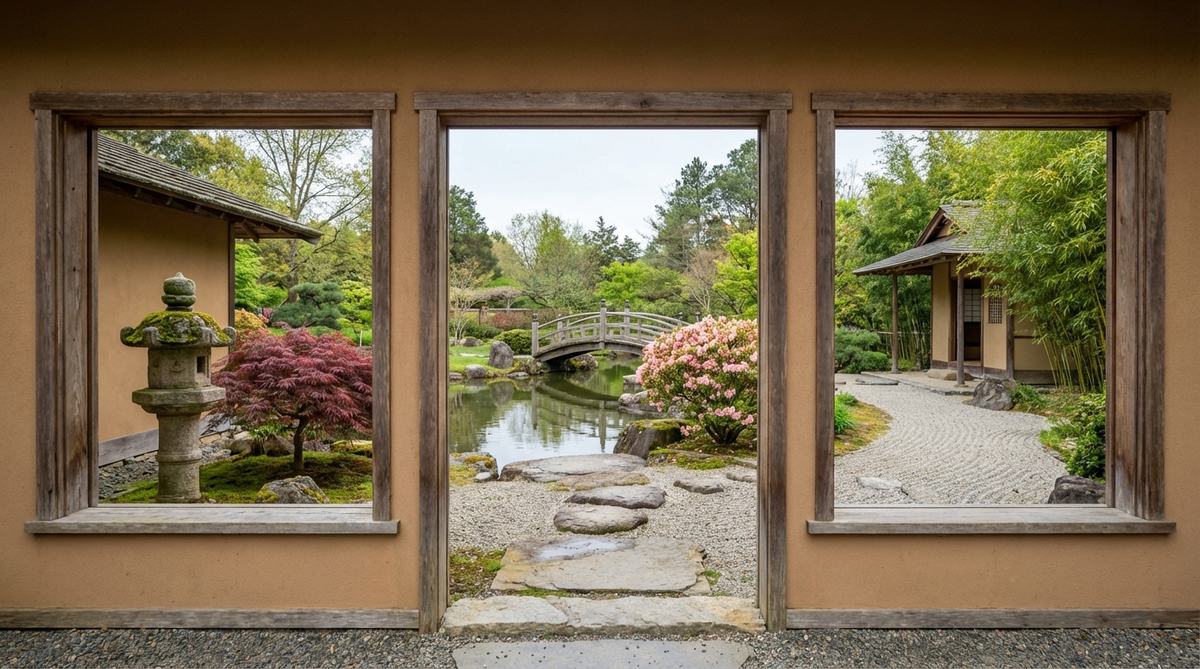
Splits a beautiful landscape into three distinct, framed pieces of art. Multi-panel garden view framing is the ultimate trick for long covered patios.
Looking at a wide yard is overwhelming, but breaking it up with vertical pillars delivers a surprisingly premium look. Use tall faux bamboo planters to instantly create the dividers.
Create this museum gallery effect for under $100. Save this patio hack!
- Key Materials: Vertical dividers, focal plants.
- Vibe / Style: Segmented gallery art.
- Difficulty: Easy placement.
- Budget Breakdown: Tall planters: $60 | Bamboo: $40.
- Creator’s Tip: Put the most dramatic focal piece dead center, and use the two flanking panels for simple, supporting textures.
- Smart Sourcing: Tall rectangular outdoor planters and UV-resistant artificial bamboo stalks.
The tension in this next layout is what makes professional landscape designers so expensive…
55. Vertical Rock Emphasis
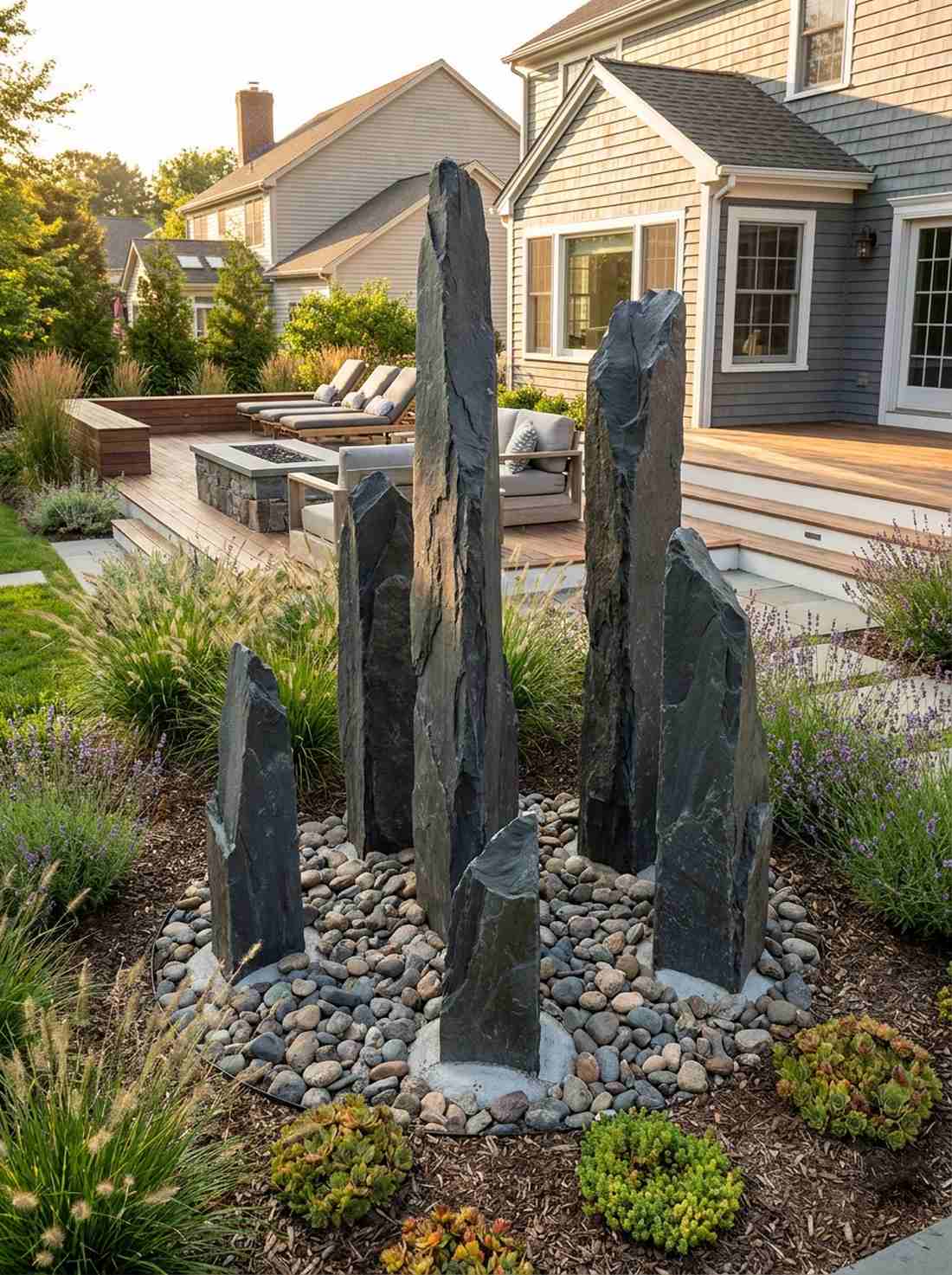
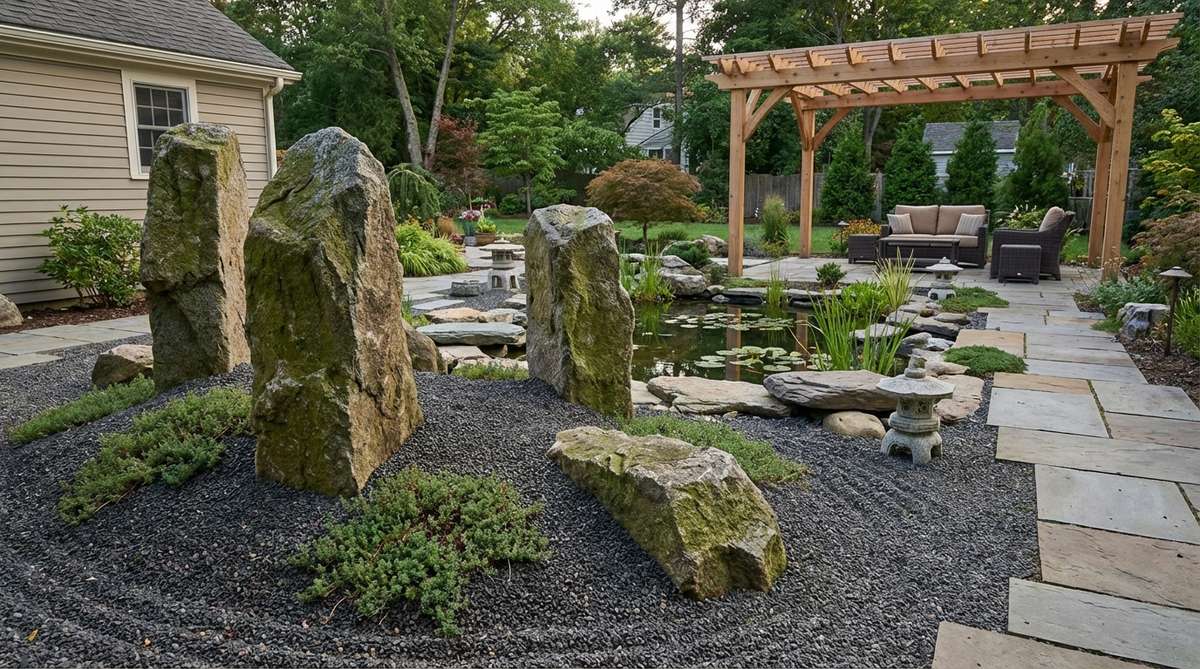
Injects massive, defiant energy into an otherwise flat, boring yard. Upright vertical stone placements symbolize towering mountains in a tiny space.
Laying rocks flat looks like a messy construction site, but burying them vertically screams high-end luxury and spiritual aspiration. Anchor heavy stones safely using fast-setting post hole concrete.
This layout requires about $80 for good stones and concrete.
- Key Materials: Tall jagged stones, concrete base.
- Vibe / Style: Defiant upward energy.
- Difficulty: Heavy labor.
- Budget Breakdown: Stones: $60 | Concrete: $20.
- Creator’s Tip: Always bury the base one-third of the way down to prevent frost-heaving from toppling the stone over.
- Smart Sourcing: Tall natural slate monoliths and quick-setting concrete mix bags.
56. Seasonal Bloom Rotation Spotlight
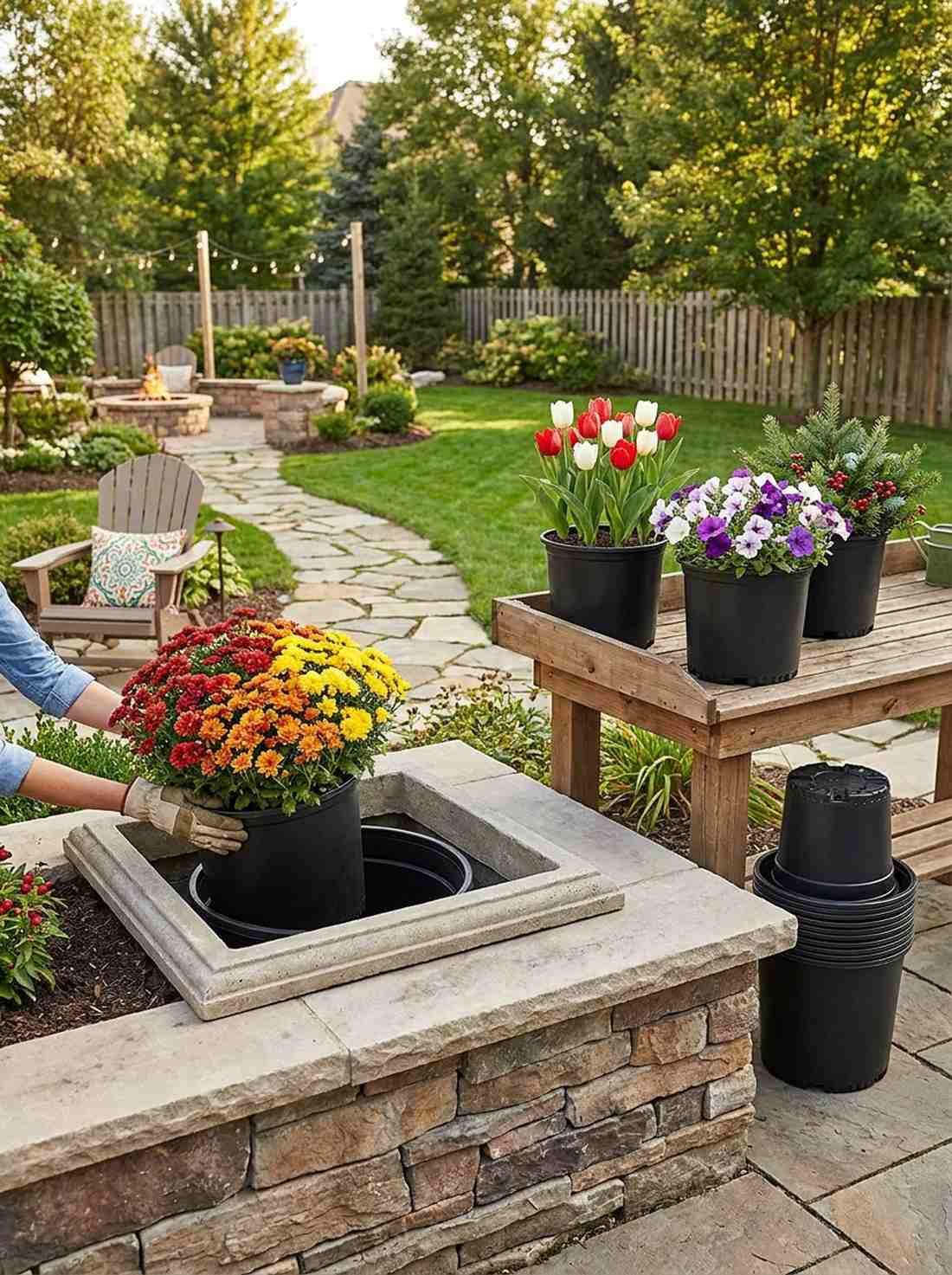
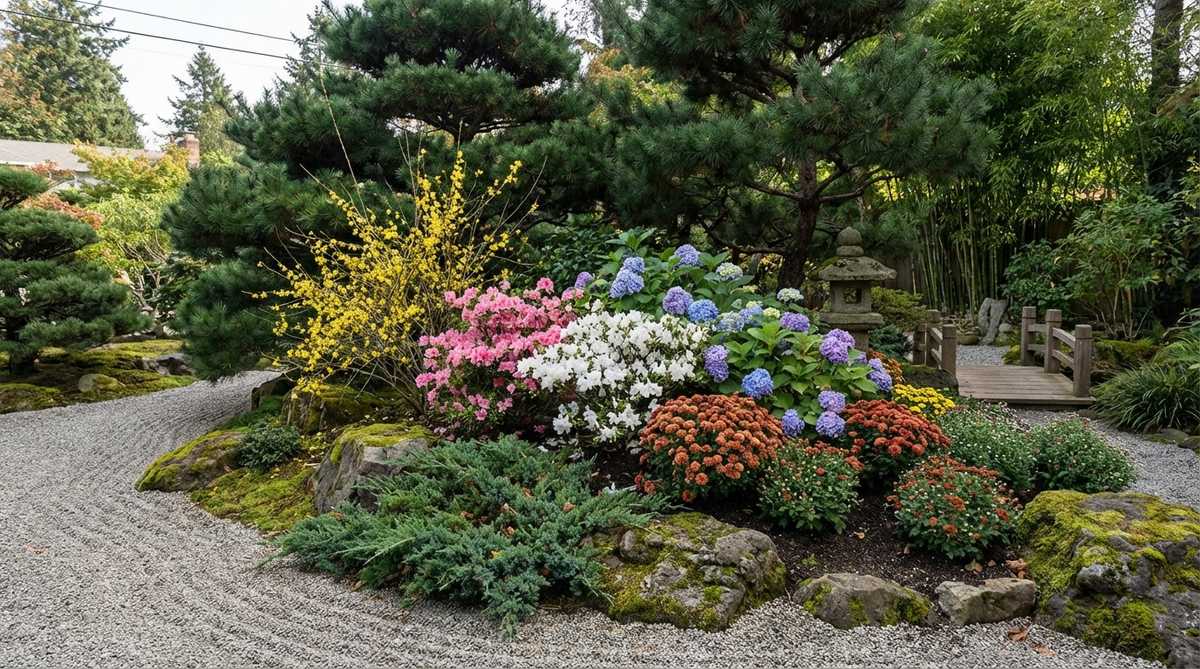
A genius hack that guarantees something beautiful is blooming every single month. Rotating seasonal spotlight planters keep your garden looking fresh year-round.
Planting indiscriminately looks chaotic, but dropping a designated seasonal pot into a fixed framed spot completely transforms the space. Swap pots seamlessly using heavy-duty drop-in planter inserts.
This rotating display costs about $60 to set up initially. Pin this genius hack!
- Key Materials: Drop-in pots, evergreen frame.
- Vibe / Style: Constantly refreshing beauty.
- Difficulty: Very easy maintenance.
- Budget Breakdown: Insert pots: $30 | Outer frame: $30.
- Creator’s Tip: Bury an empty, larger pot permanently in the ground, then simply drop your seasonal blooming pots inside it like a sleeve.
- Smart Sourcing: Heavy-duty plastic nursery pots (bulk pack) and decorative stone-look outer planters.
Transitional Garden Structures: Connecting Spaces and Experiences
How you move between spaces is just as important as the destination. These threshold hacks mentally prepare guests for the beauty ahead.
57. Gravel-Forecourt Buffer
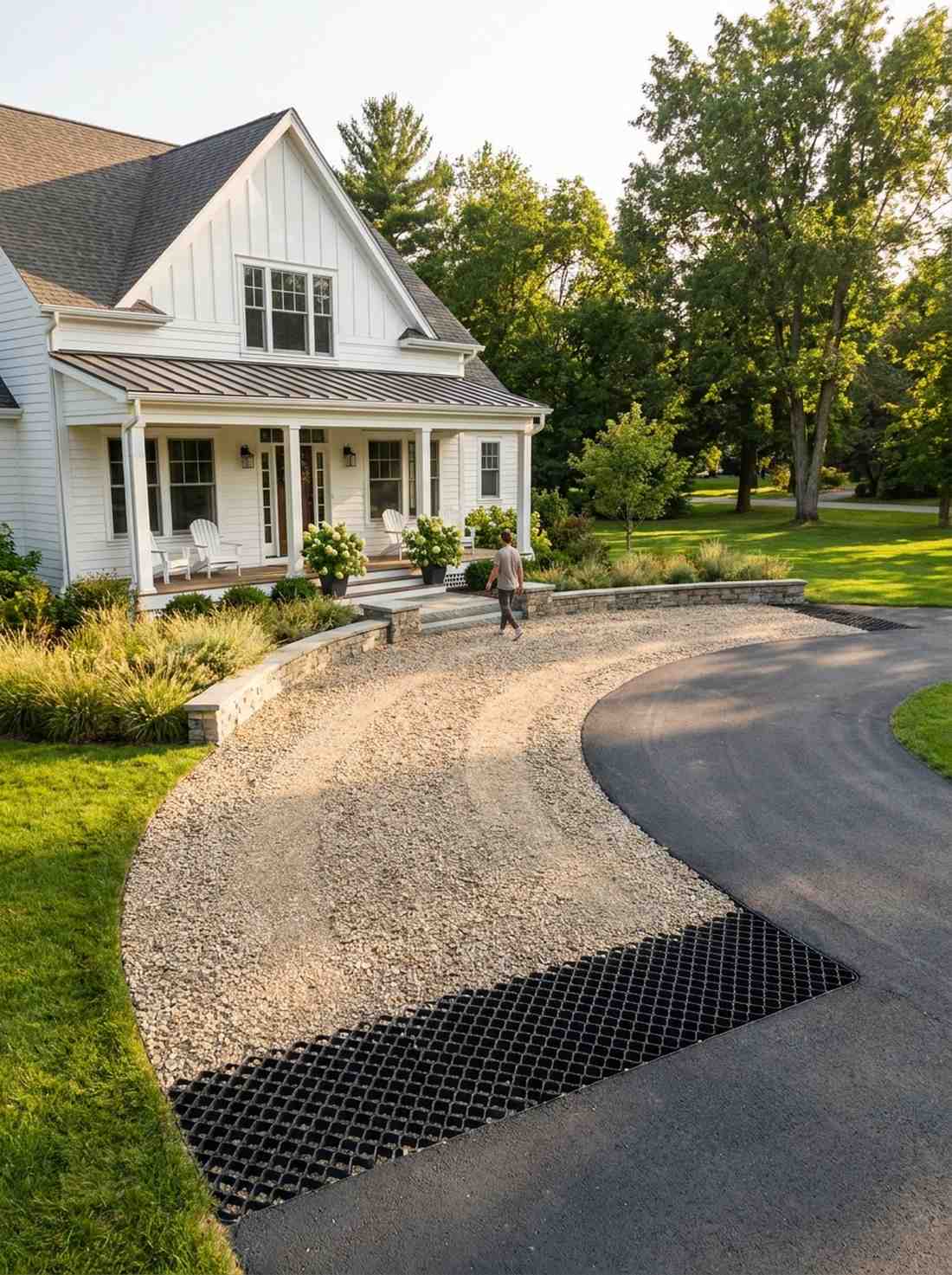
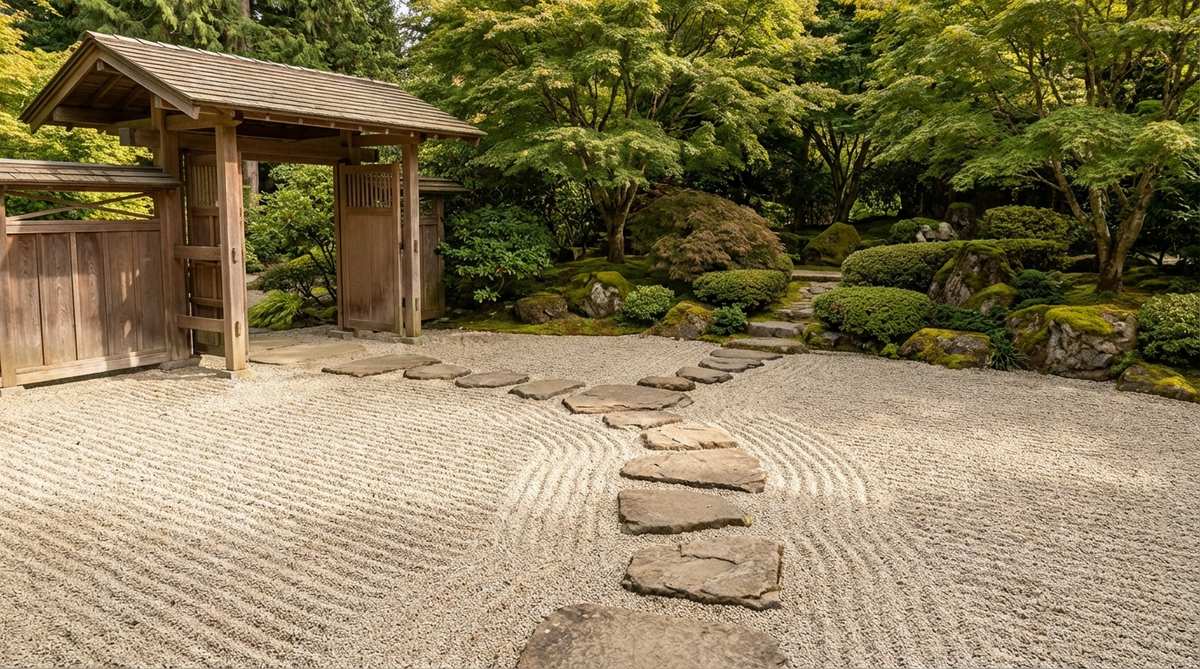
A crunching, neutral zone that mentally washes away the busy street. Transition gravel entry buffers force visitors to slow down before entering paradise.
Opening a gate directly into a garden is jarring, but adding a barren gravel moat delivers a surprisingly premium look. Keep the gravel locked in place with honeycomb gravel stabilizing grids.
You can build this sensory buffer for around $70.
- Key Materials: Crushed stone, stabilizing grid.
- Vibe / Style: Mind-clearing neutral transition.
- Difficulty: Easy digging.
- Budget Breakdown: Grid: $40 | Gravel: $30.
- Creator’s Tip: Make the forecourt wide enough that it requires exactly 10-15 seconds of walking to cross it.
- Smart Sourcing: Heavy-duty honeycomb gravel grids and pre-washed crushed aggregate bags.
58. Secondary Gate Threshold
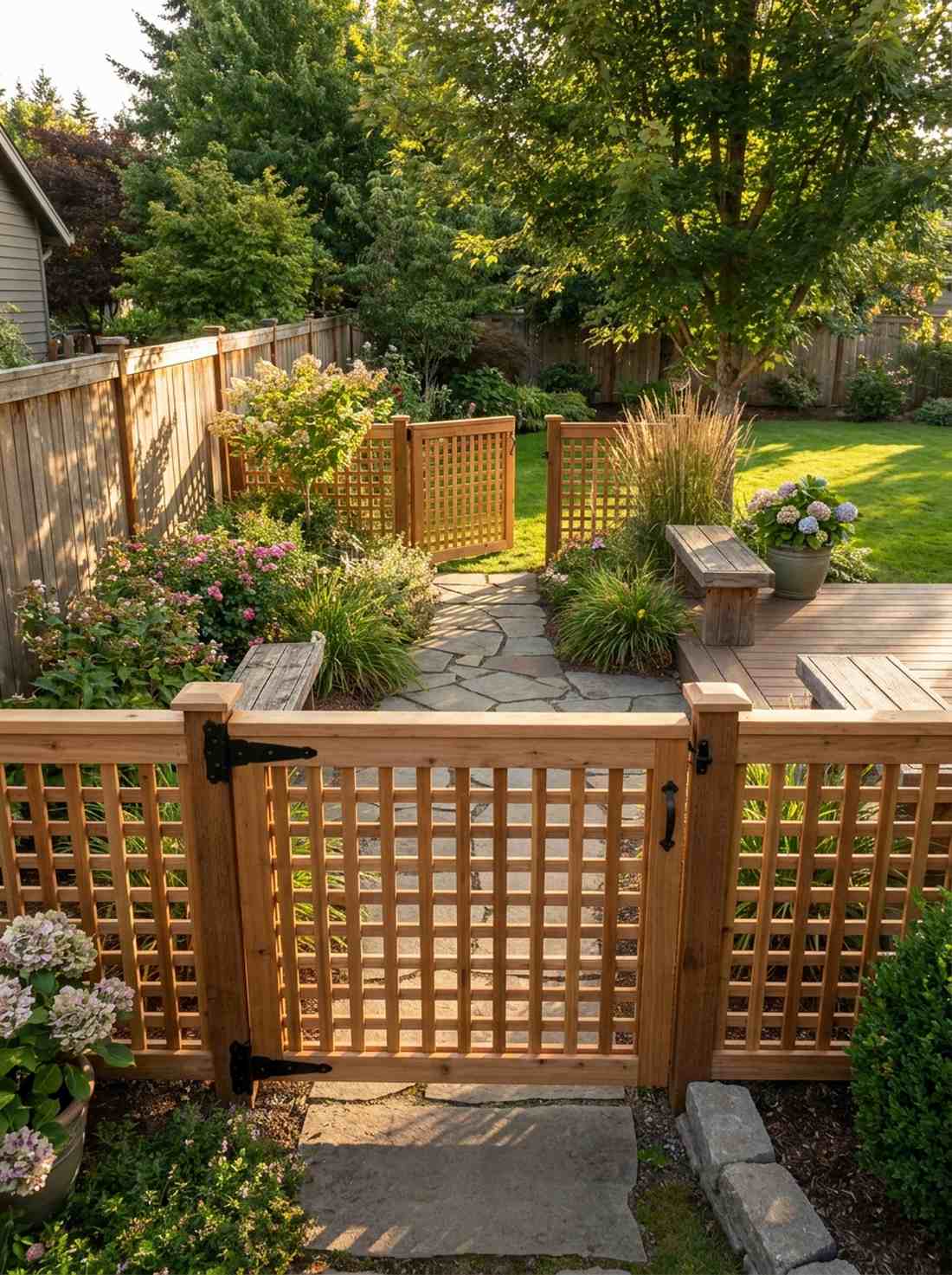
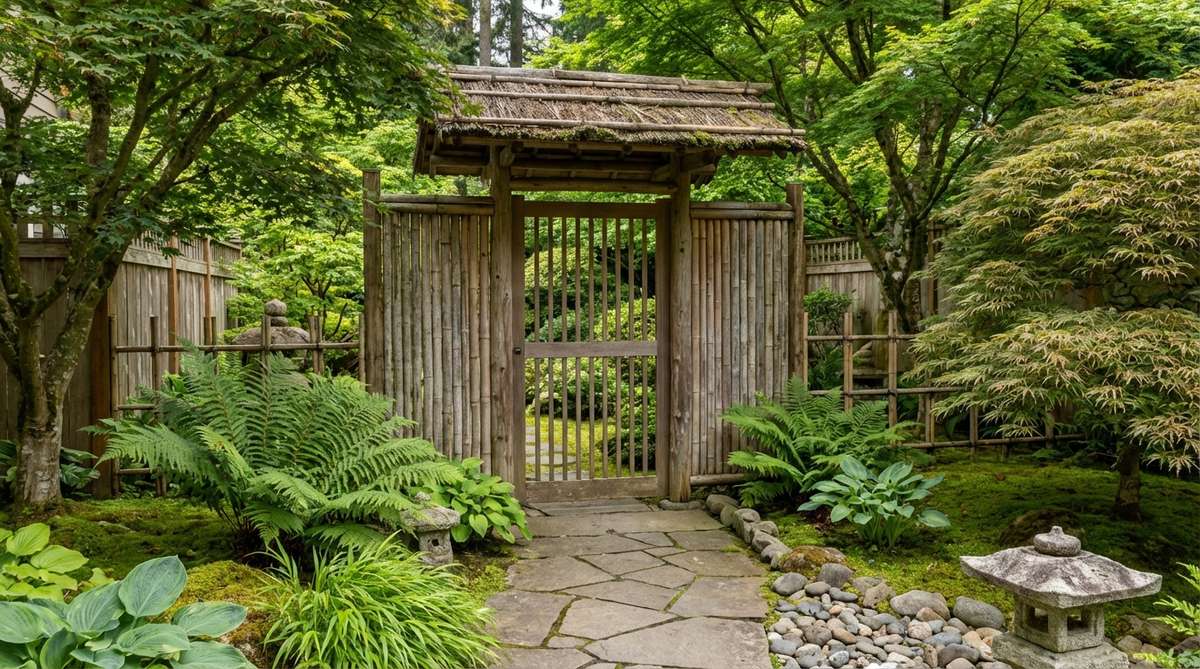
Makes your inner backyard feel like an ultra-exclusive VIP sanctuary. Double threshold garden gating heavily amplifies the feeling of deep privacy.
One gate is standard, but a lightweight interior gate deeper in the yard provides a highly contemporary, architect-designed appearance. Use pre-assembled cedar lattice gates for a quick install.
This psychological trick costs about $100. Save this for backyard layouts!
- Key Materials: Lightweight inner gate, pathway narrowing.
- Vibe / Style: Exclusive deep sanctuary.
- Difficulty: Basic installation.
- Budget Breakdown: Gate kit: $80 | Hardware: $20.
- Creator’s Tip: The second gate shouldn’t have a latch—it should swing freely, acting purely as a visual and psychological threshold.
- Smart Sourcing: Pre-built cedar garden gates and heavy-duty self-closing gate hinges.
59. Material Gradient Pathway
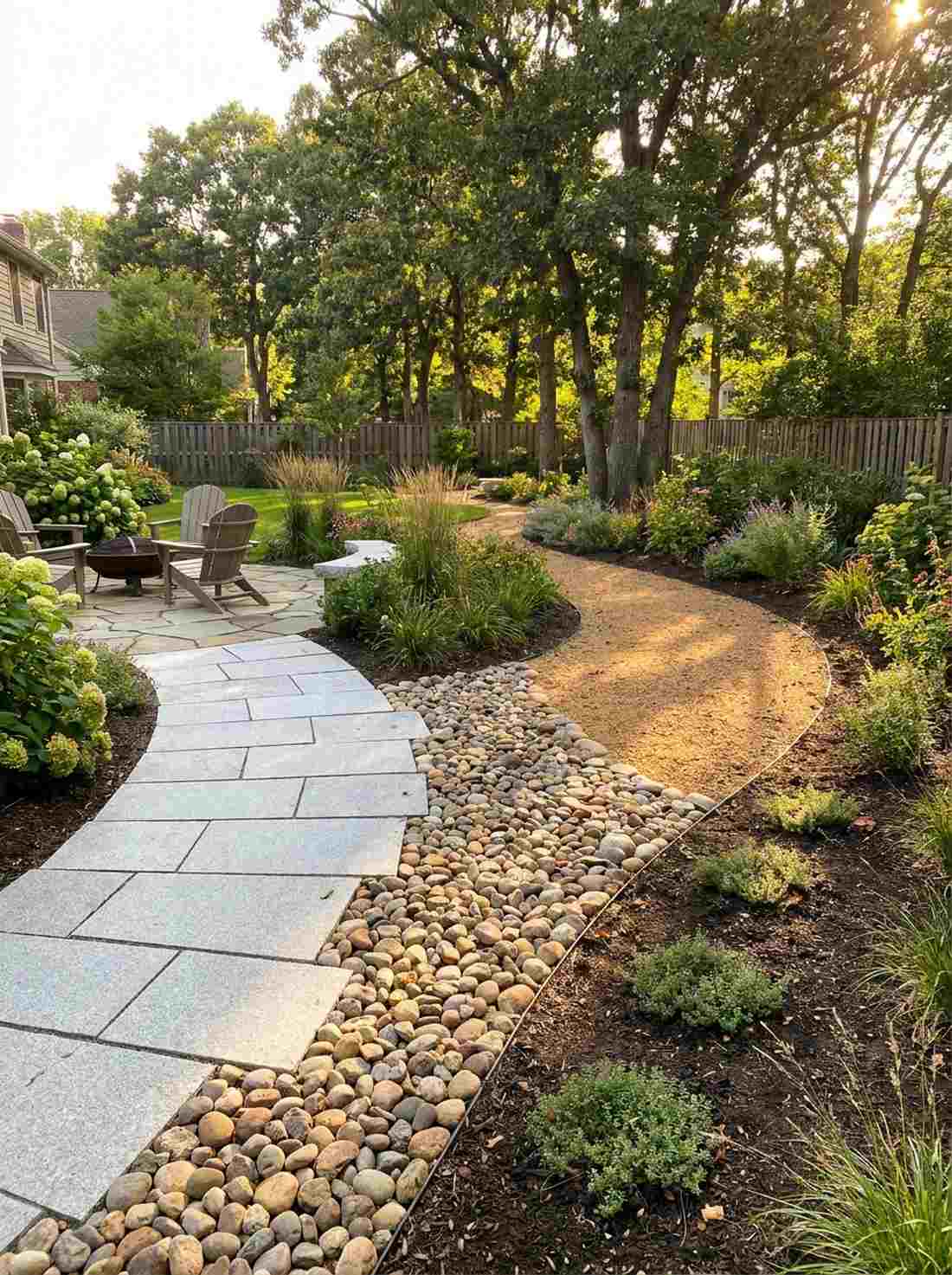
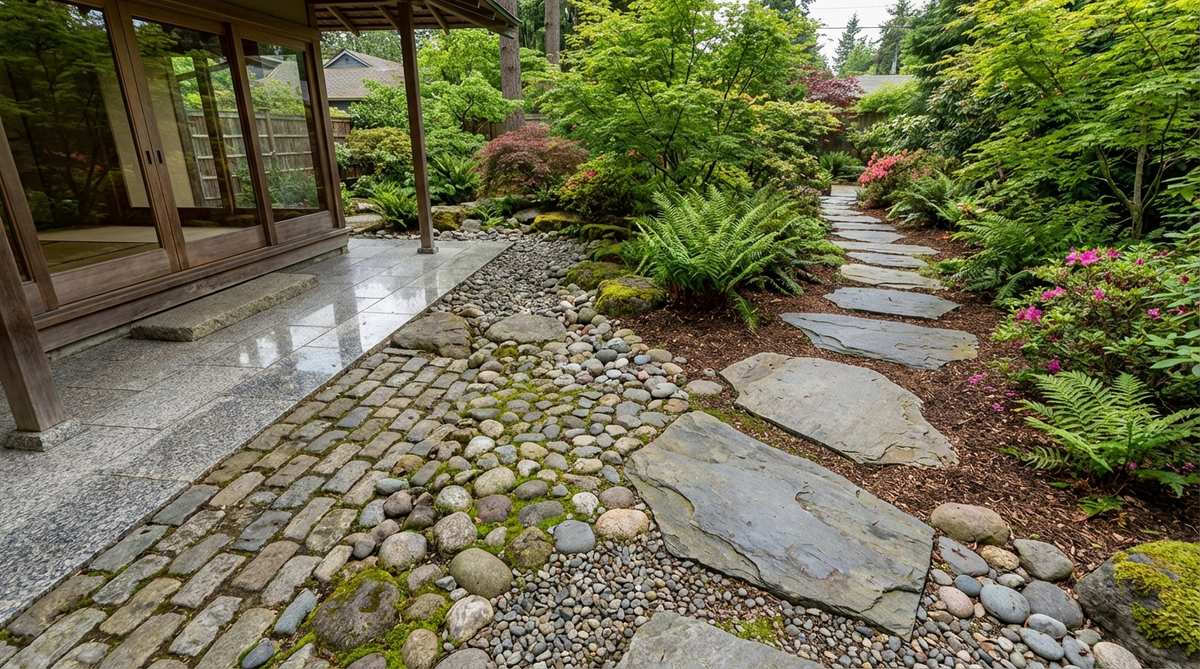
A seamless, dissolving pathway that blends human architecture into wild nature. Fading pathway material transitions completely eliminate ugly, harsh borders.
Abruptly stopping a concrete path looks cheap, but blending pavers into cobbles, then into dirt, screams high-end luxury. Secure the fading edges using hidden miniature garden supplies and groundcovers.
This fading trick costs almost nothing if you have leftover stones.
- Key Materials: Pavers, cobbles, gravel, dirt.
- Vibe / Style: Organic dissolving boundary.
- Difficulty: Requires artistic eye.
- Budget Breakdown: Mixed stones: $50.
- Creator’s Tip: Overlap the materials intentionally. Put a few cobbles on the paver section, and a few pavers deep into the gravel.
- Smart Sourcing: Mixed size river rock bags and creeping thyme groundcover seeds.
50. Canopy-Covered Connector
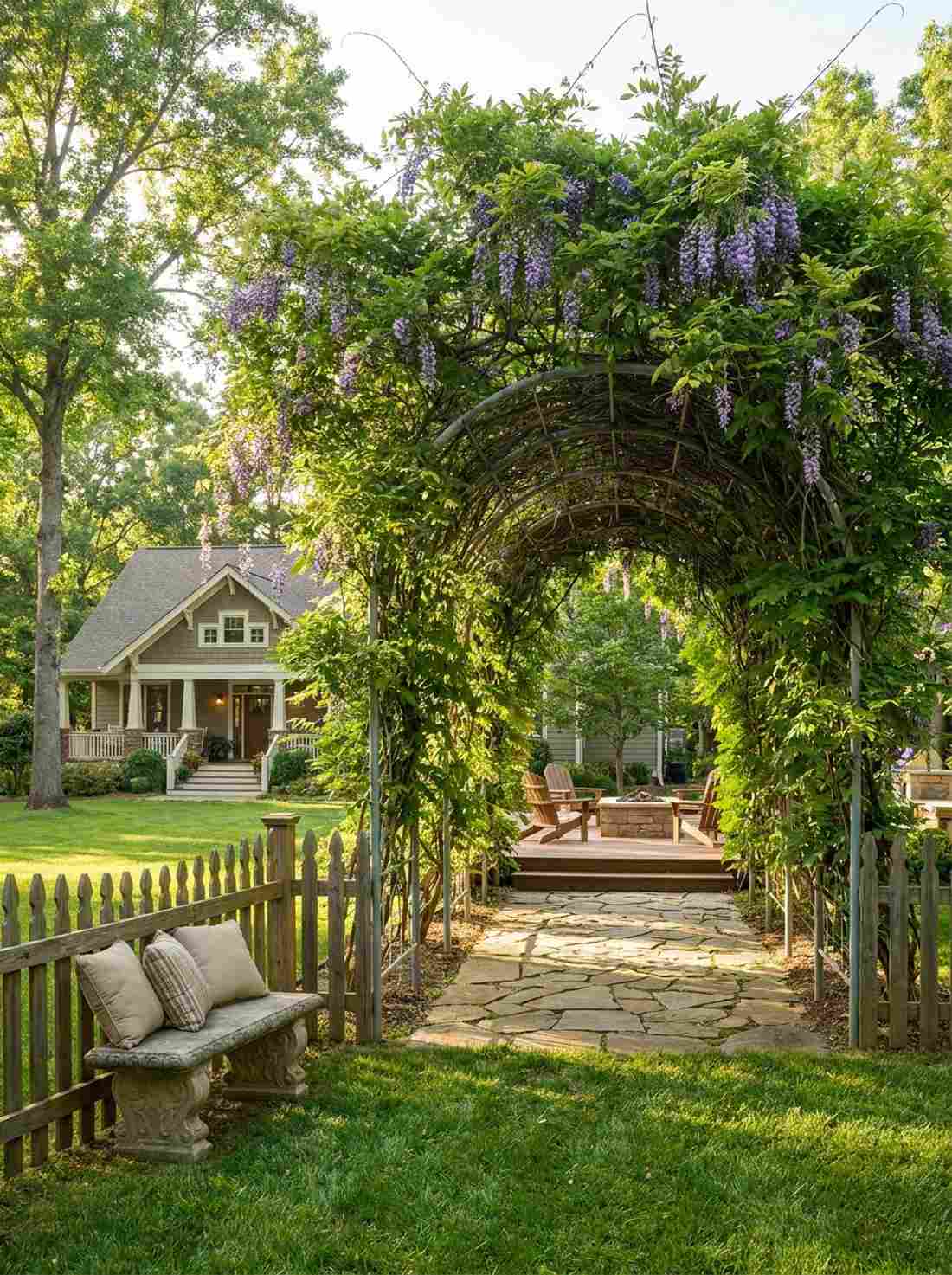
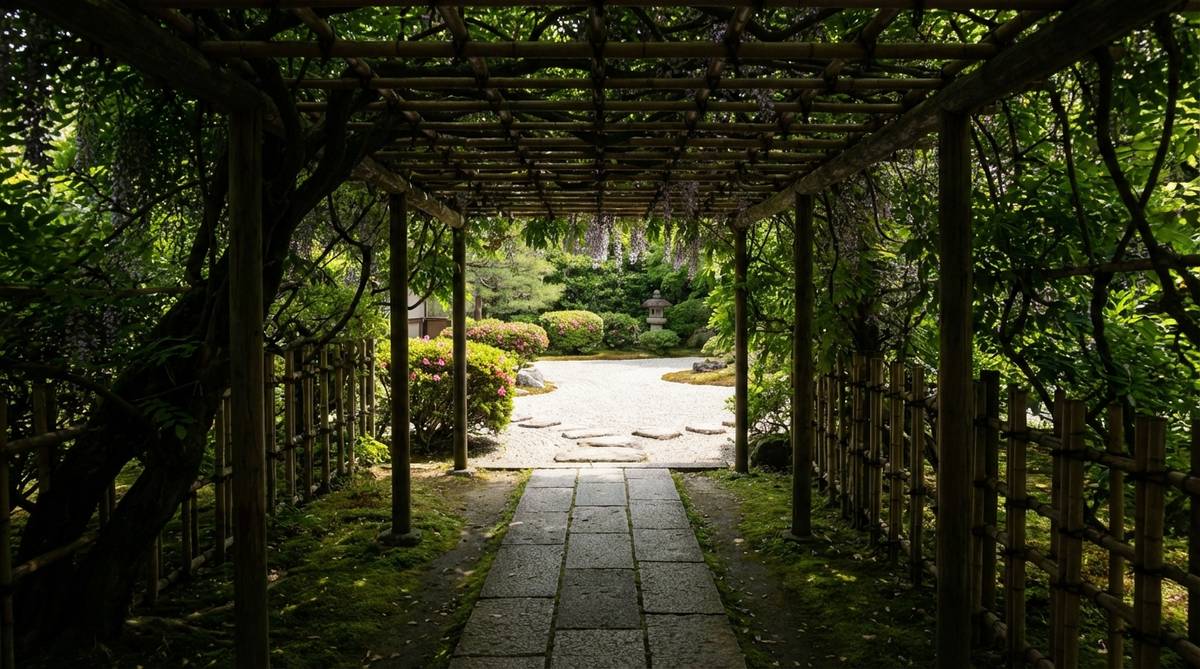
A breathtaking tunnel of greenery that feels like a portal to another world. Wisteria vine arbor tunnels create intense spatial compression and magical shade.
Walking across an open lawn is boring, but passing through a dense living tunnel completely transforms the space. Support heavy vines safely using heavy-duty galvanized steel arbors.
Expect to spend $150 on a solid frame. Pin this for romantic garden walks!
- Key Materials: Steel arbor frame, climbing vines.
- Vibe / Style: Enchanting green portal.
- Difficulty: Requires patience for growth.
- Budget Breakdown: Arbor: $120 | Vines: $30.
- Creator’s Tip: Wisteria gets incredibly heavy; never use cheap plastic arches or they will collapse in a few years.
- Smart Sourcing: Heavy-duty steel garden arches and fast-growing climbing vine starters.
61. Water Crossing Boundary
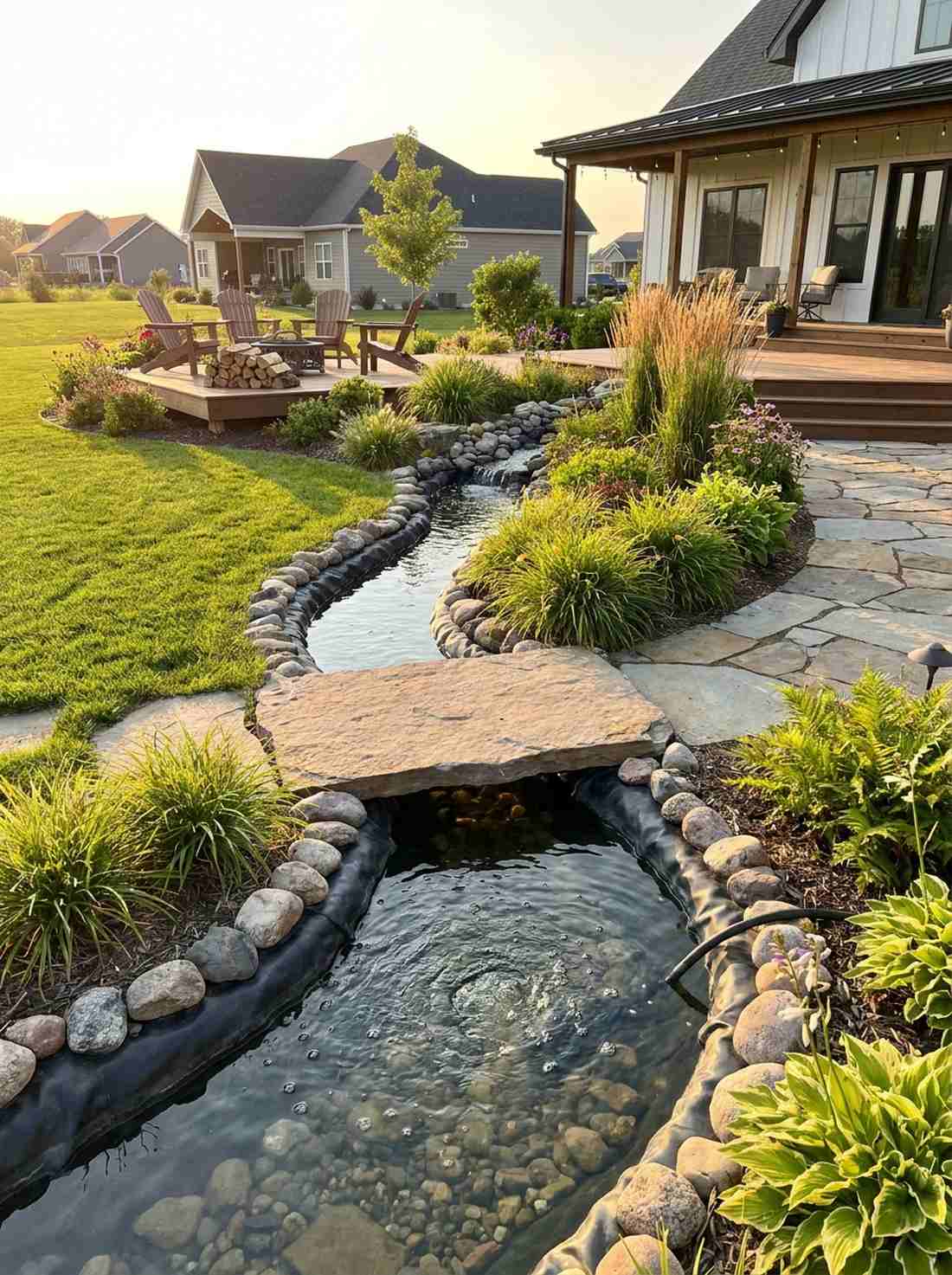
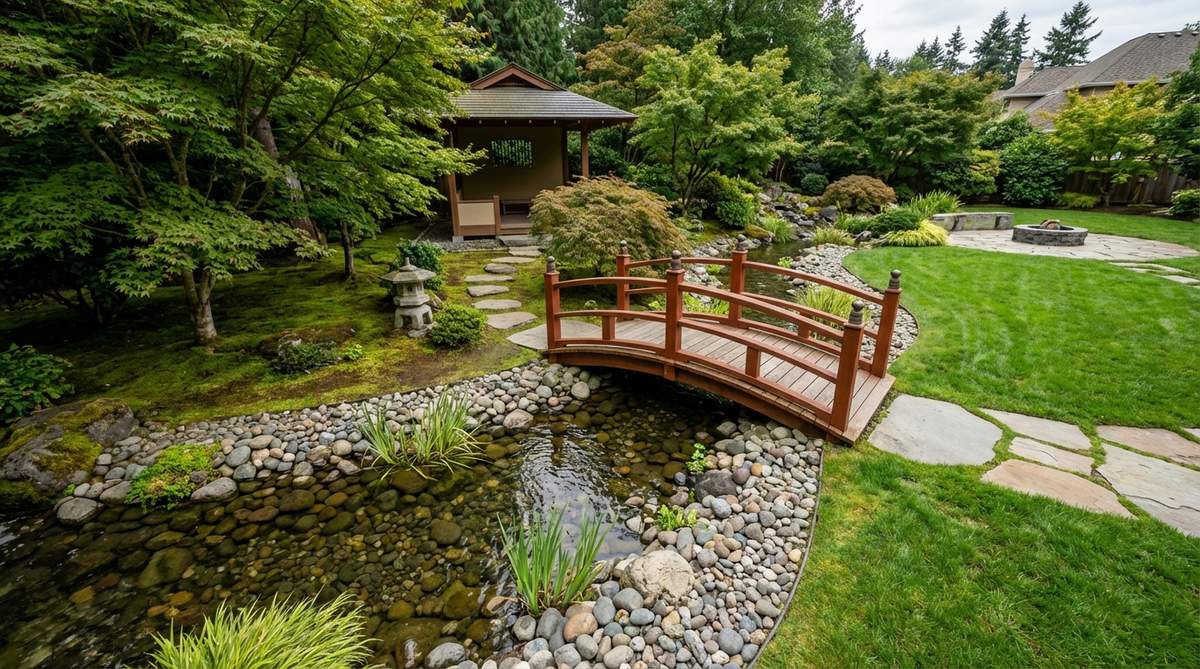
A psychological moat that forces you to leave your worries behind. Stream boundary garden crossings create the ultimate natural dividing line between yard zones.
Using fences to divide a yard looks claustrophobic, but a thin water channel delivers a surprisingly premium look. Line the narrow trench easily with pre-cut flexible pond liners.
You can build a narrow dividing stream for under $100.
- Key Materials: Narrow liner, stepping stone, pump.
- Vibe / Style: Purifying natural boundary.
- Difficulty: Moderate digging.
- Budget Breakdown: Liner: $50 | Pump: $50.
- Creator’s Tip: Make the stream just wide enough that it requires a deliberate, slightly exaggerated step to cross over.
- Smart Sourcing: Pre-cut EPDM liner rolls and submersible outdoor water pumps.
62. Elevation Change Steps
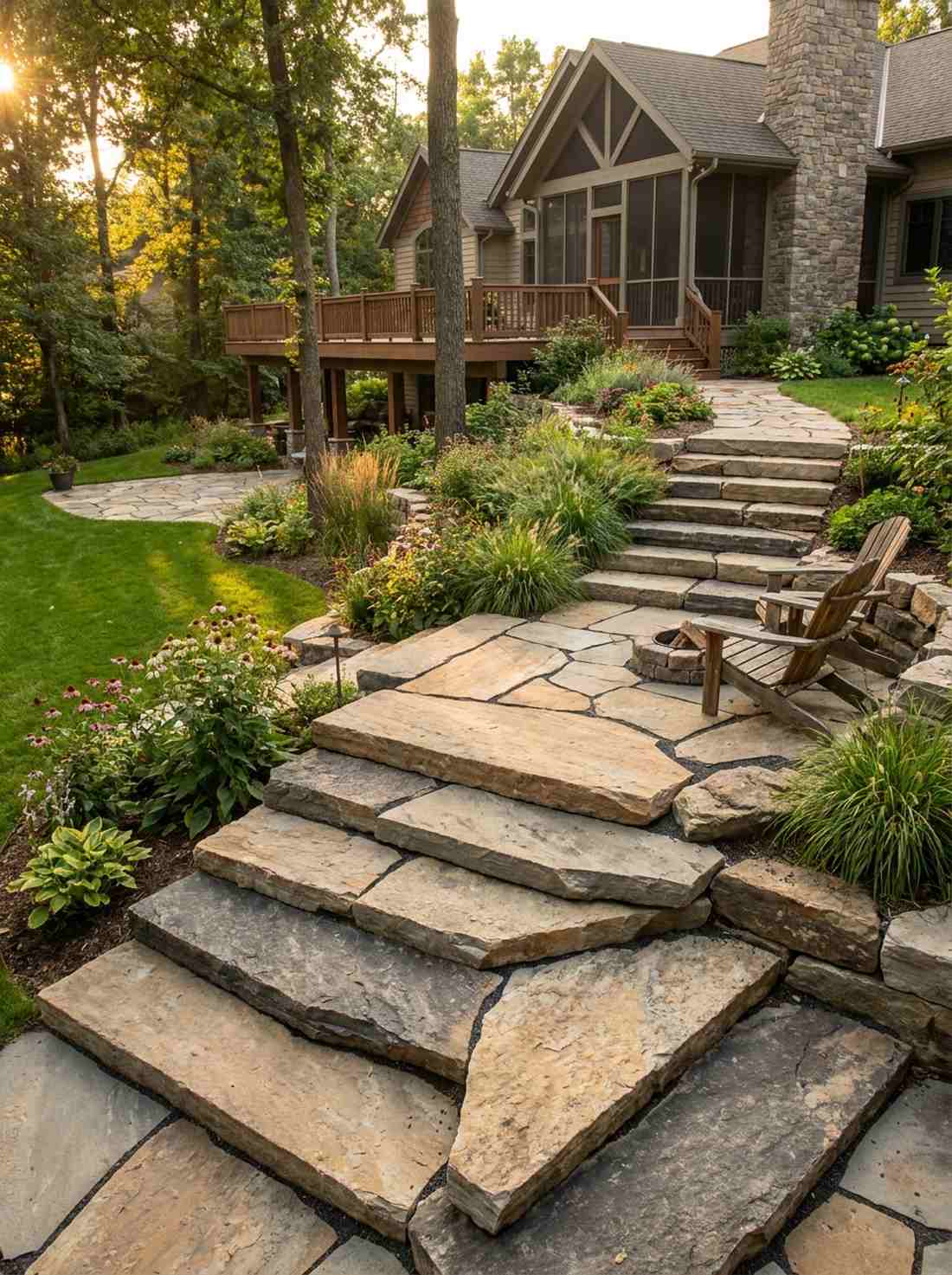
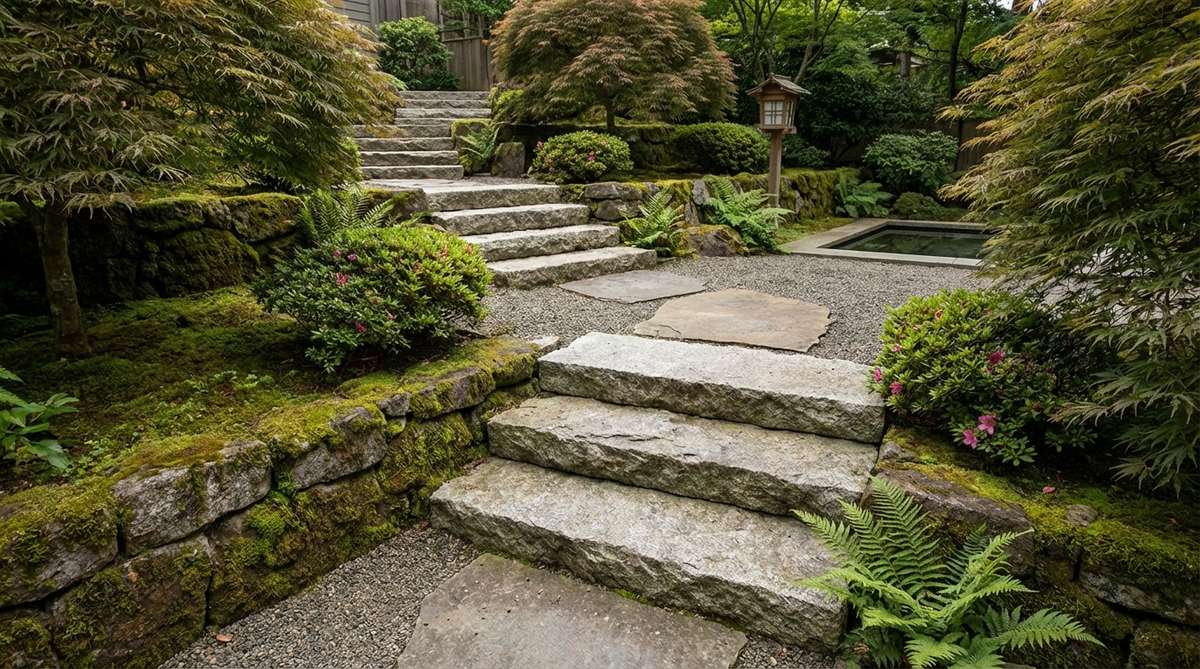
Turns a frustrating slope into a dramatic journey of ascension. Irregular stone garden stairs make the upper levels of your yard feel exclusive.
Perfectly uniform concrete steps look municipal, but varying tread depths provides a highly contemporary, architect-designed appearance. Fill the gaps tightly with polymeric stone dust.
This heavy lifting project costs around $150. Save this for sloped yard solutions!
- Key Materials: Massive flat stones, leveling dirt.
- Vibe / Style: Exclusive mountain climb.
- Difficulty: Heavy manual labor.
- Budget Breakdown: Stones: $120 | Dust: $30.
- Creator’s Tip: Throw in an intentionally deep step halfway up to force the climber to pause and look around.
- Smart Sourcing: Natural flat flagstone pallets and water-activated polymeric sand.
63. Hedge Corridor Progression
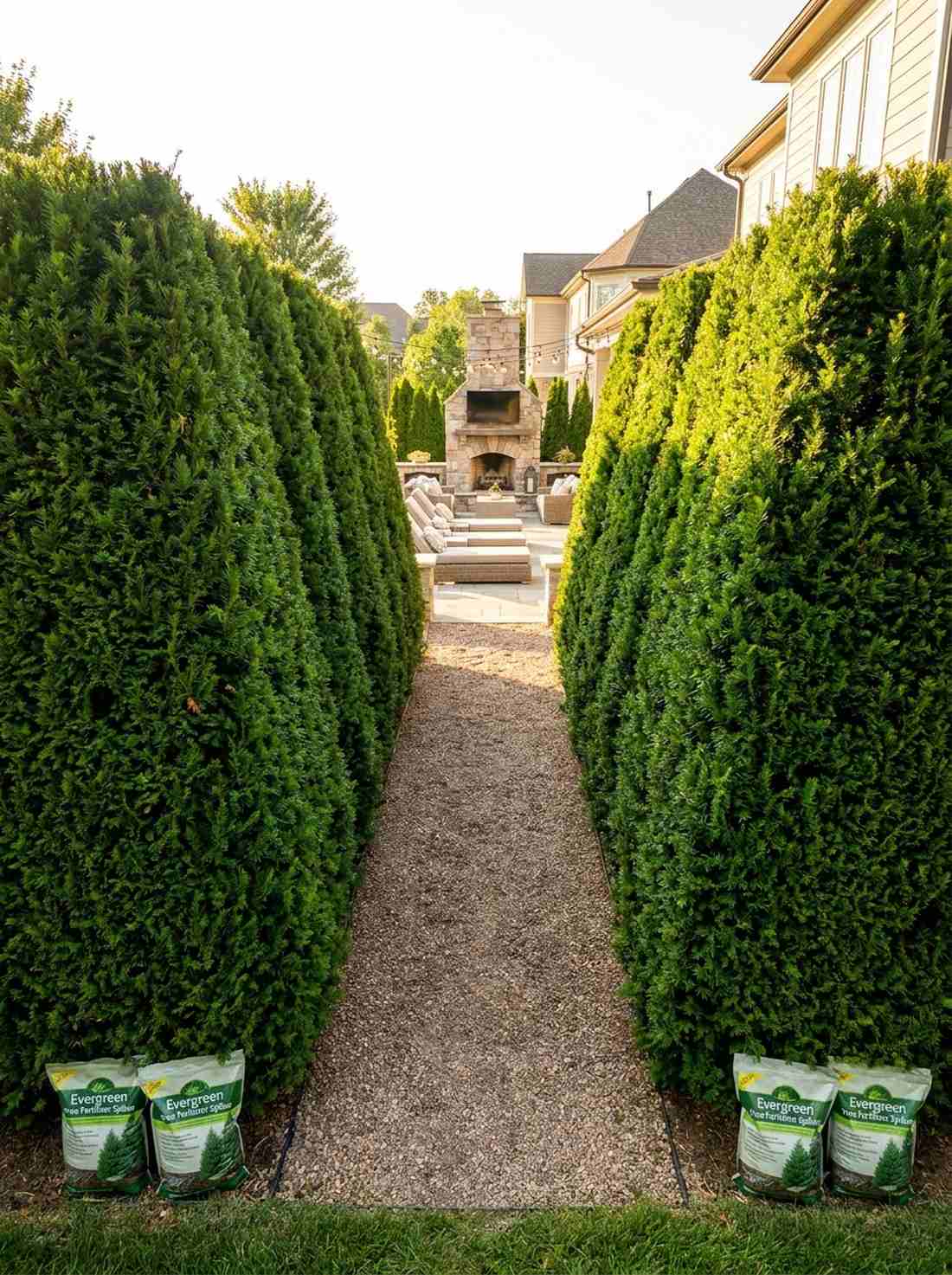
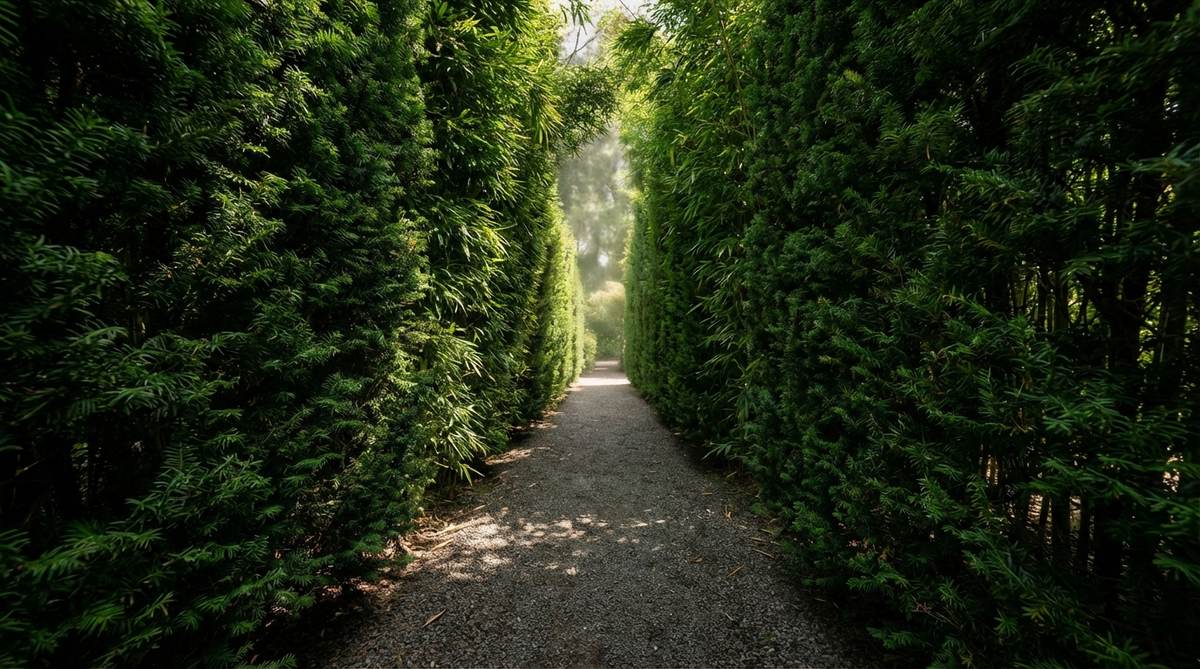
A towering green hallway that blocks out ugly neighbors entirely. Tall evergreen privacy corridors build massive anticipation for what lies at the end.
A chain-link fence is an eyesore, but a dense 8-foot yew wall completely transforms the space into a regal estate. Feed the hedges aggressively with high-nitrogen evergreen spikes.
Buying young shrubs costs about $100. Pin this for ultimate privacy!
- Key Materials: Tall dense evergreens, soil food.
- Vibe / Style: Regal imposing privacy.
- Difficulty: Requires routine shearing.
- Budget Breakdown: Shrubs: $80 | Spikes: $20.
- Creator’s Tip: Taper the top of the hedge slightly narrower than the bottom so sunlight can still reach the lower branches.
- Smart Sourcing: Fast-growing privacy shrub bundles and evergreen tree fertilizer spikes.
The final three layouts tie everything together perfectly. Don’t skip the lighting trick…
64. Stone Dust Path Softening
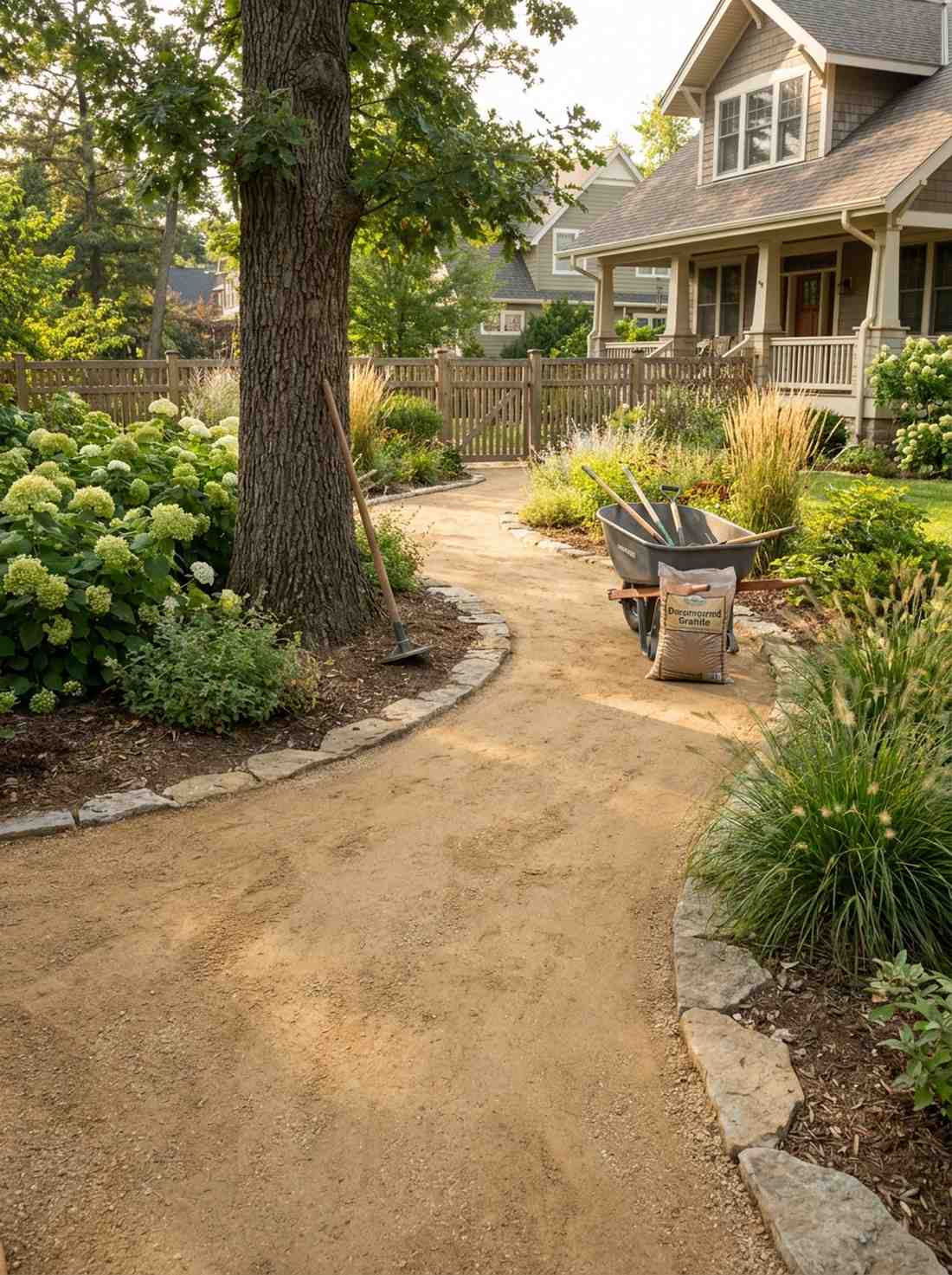
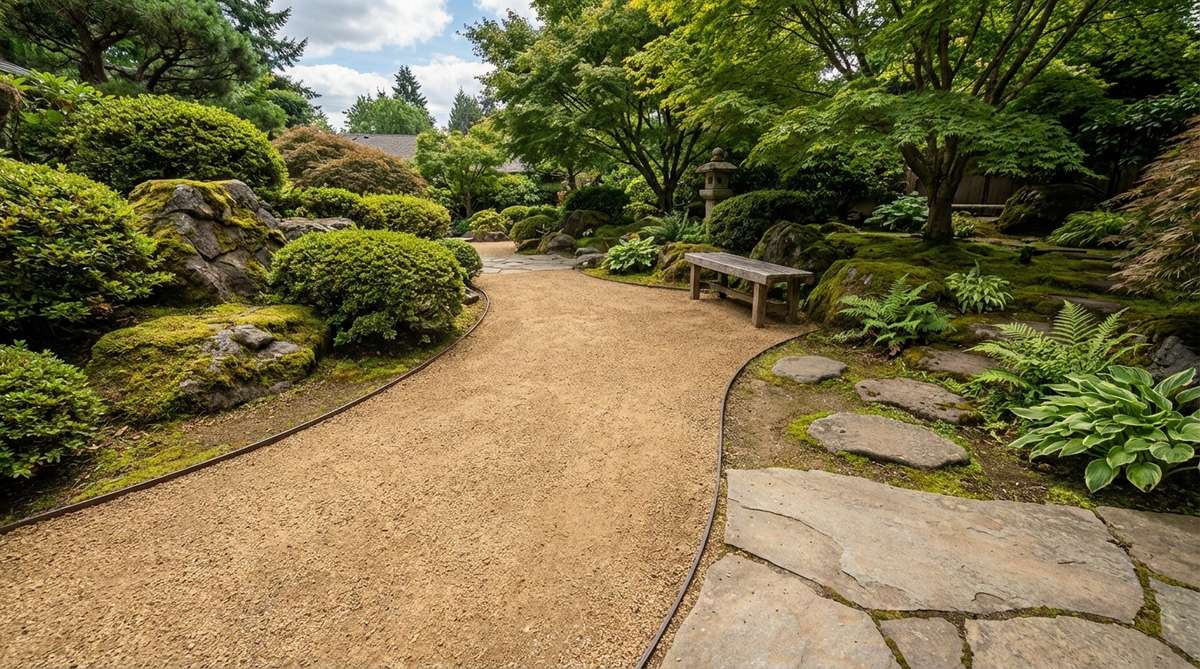
The perfect eco-friendly alternative to ugly poured concrete. Decomposed granite pathway bases are firm enough for wheelbarrows but soft enough to look natural.
Loose gravel kicks everywhere, but wetted and compacted stone dust screams high-end luxury while draining perfectly. Lock it in permanently using liquid pathway stabilizer treatments.
You can cover a massive path for around $80.
- Key Materials: Decomposed granite, hand tamper.
- Vibe / Style: Firm, organic utility.
- Difficulty: Heavy compacting work.
- Budget Breakdown: Granite dust: $50 | Stabilizer: $30.
- Creator’s Tip: Always compact it in thin 2-inch layers; trying to tamp a deep pile will leave it spongy and soft.
- Smart Sourcing: Bulk decomposed granite bags and liquid gravel binder sprays.
65. Moss-to-Gravel Textural Shift
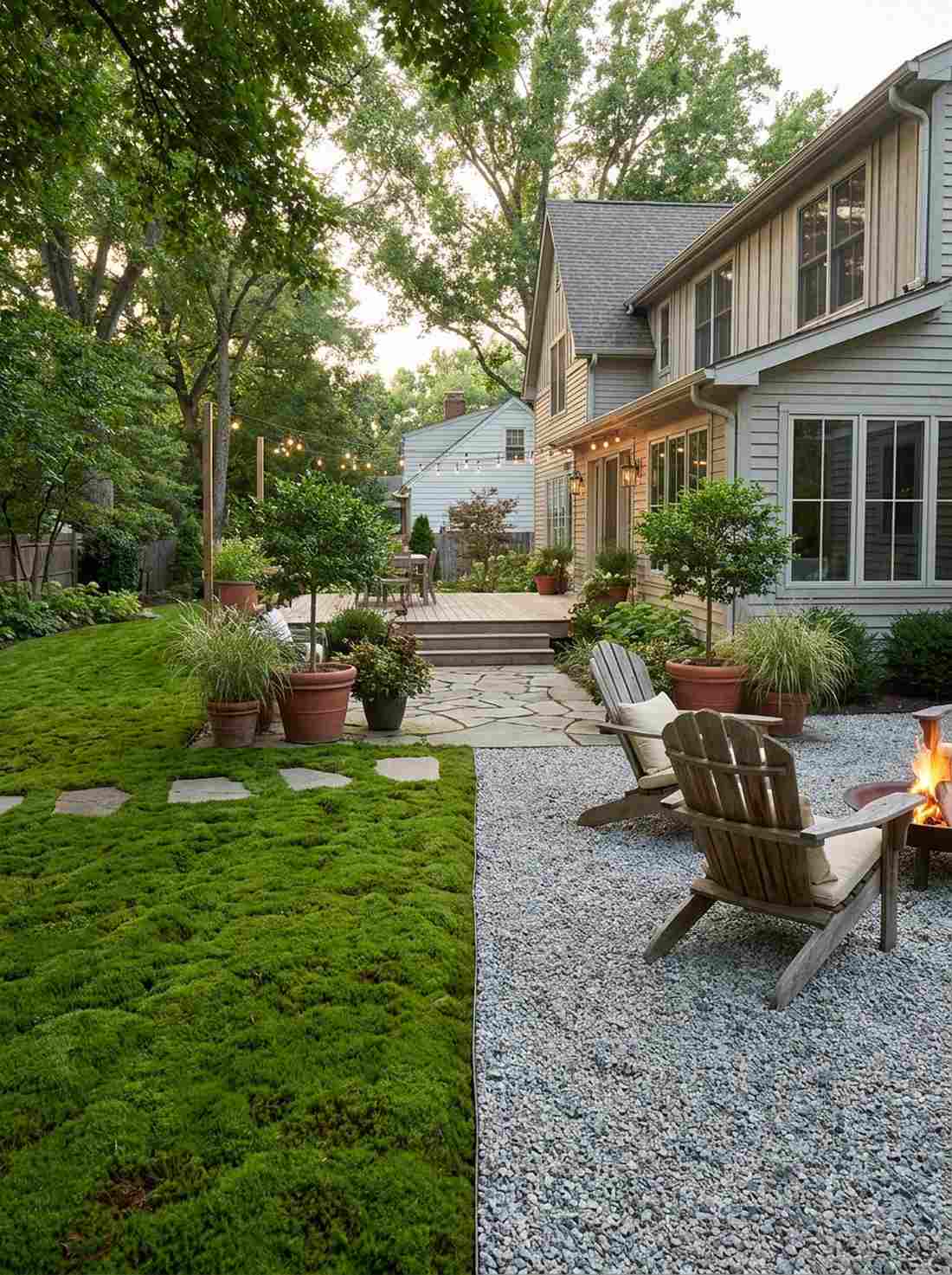
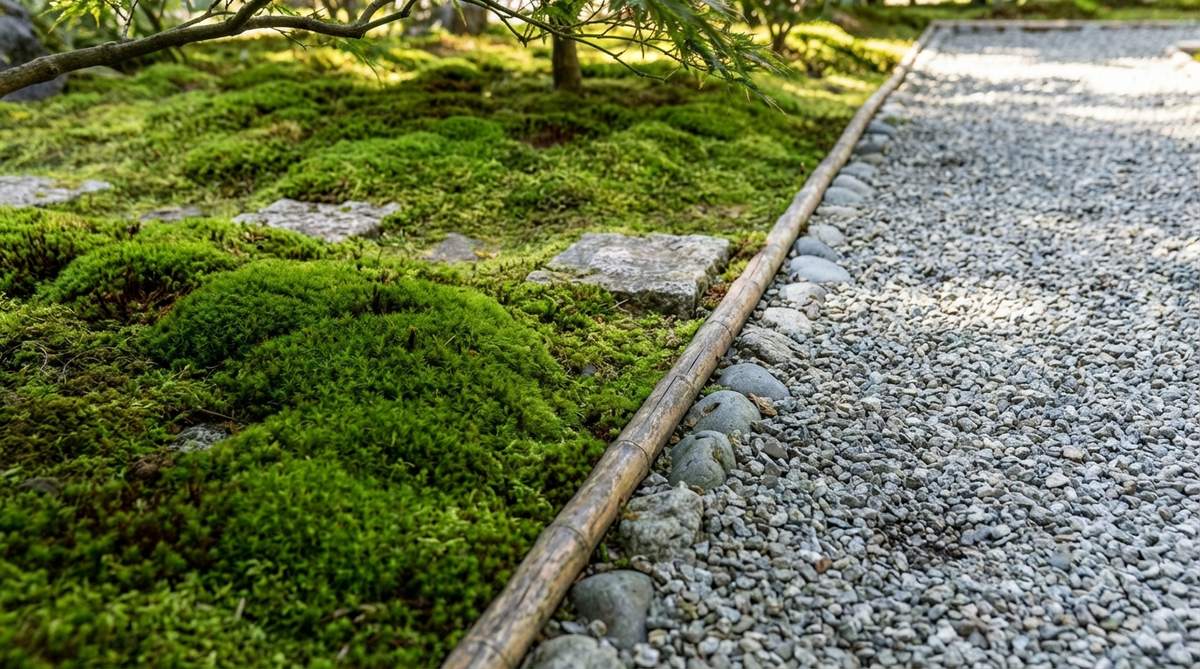
A striking visual collision of loud crunching stone and silent, soft green. High-contrast garden texture borders are a sensory masterpiece for tiny courtyards.
Blending everything together looks muddy, but a razor-sharp line between gravel and moss delivers a surprisingly premium look. Stop the stones from invading the moss using underground plastic landscape curbing.
This stunning contrast costs under $50. Save this for sensory garden ideas!
- Key Materials: Crushed stone, sheet moss, hard edge.
- Vibe / Style: Striking sensory contrast.
- Difficulty: Requires meticulous edging.
- Budget Breakdown: Edging: $20 | Moss/Gravel: $30.
- Creator’s Tip: The materials have opposite needs; ensure the moss side retains water while the gravel side drains instantly.
- Smart Sourcing: Heavy-duty plastic landscape edging and live sheet moss starter kits.
66. Pergola Light Modulation
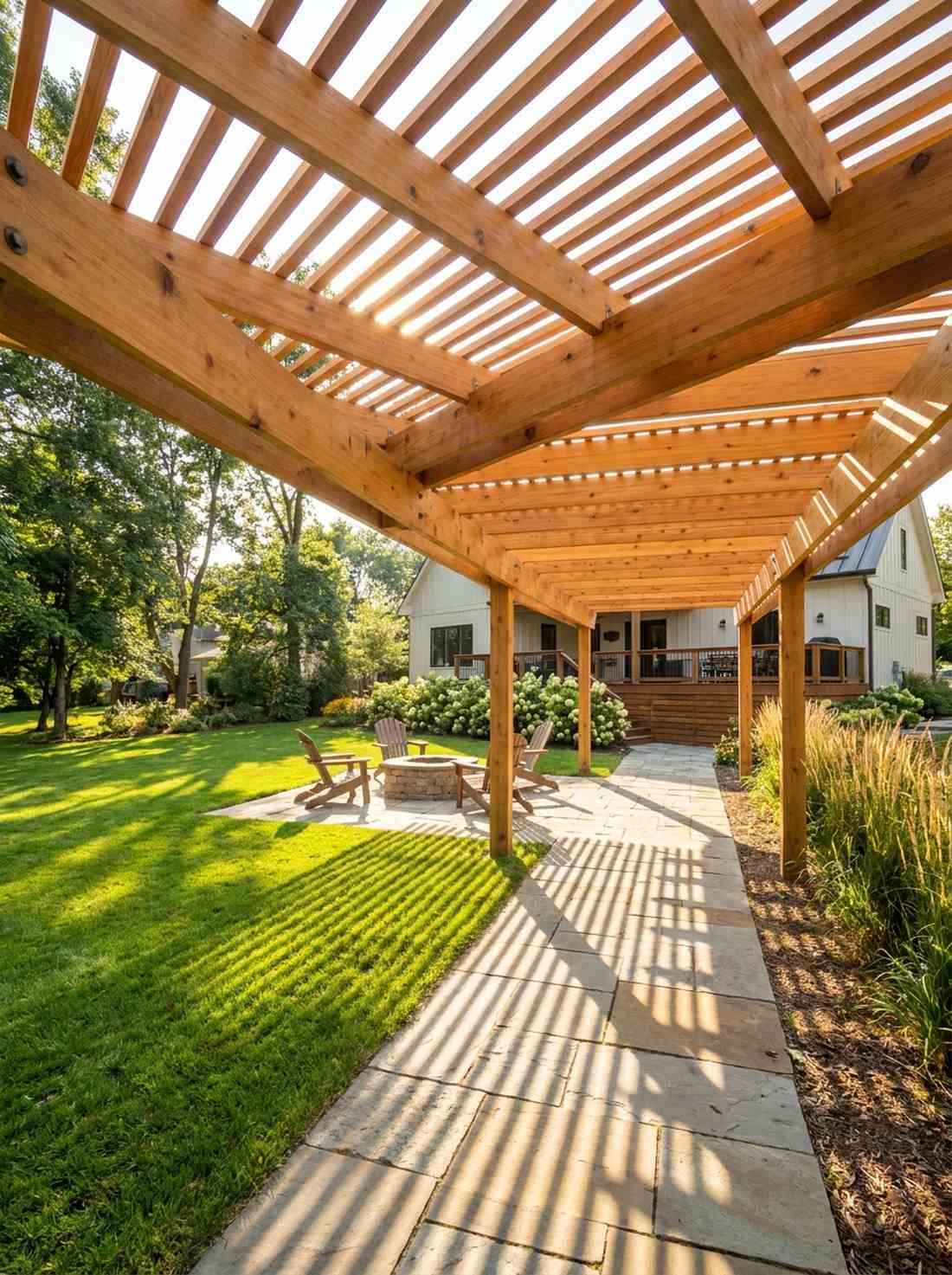
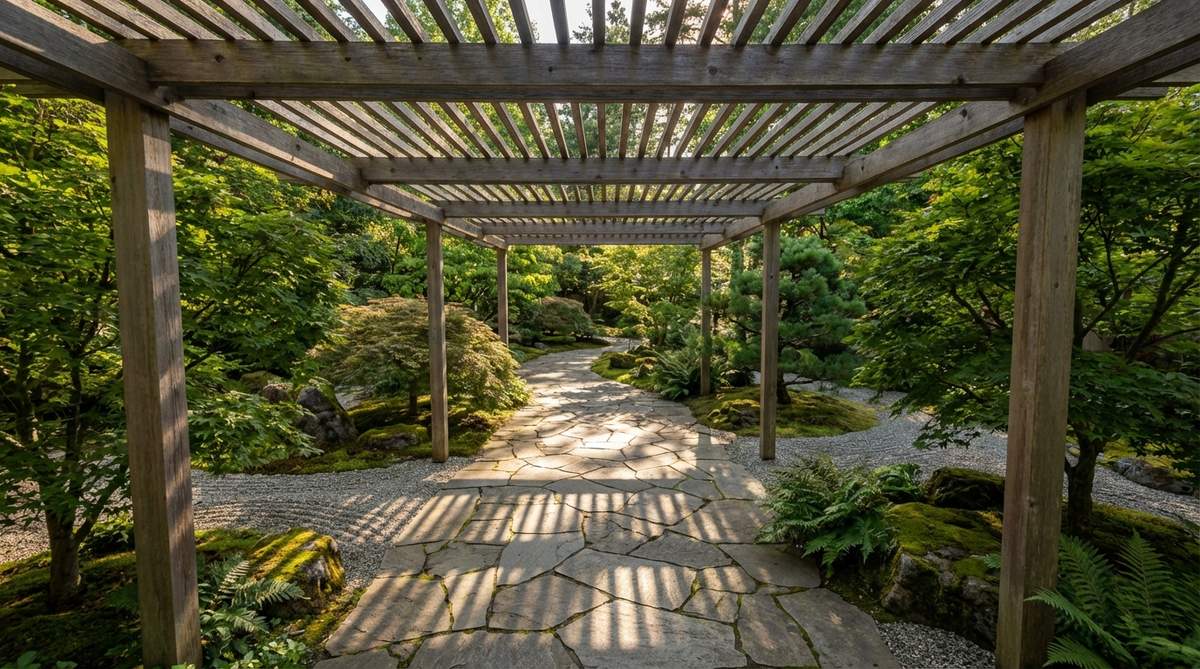
Casts a mesmerizing, shifting barcode of shadows across your walkway. Slatted wood garden pergolas animate dead pathways by slicing the sunlight.
A solid roof makes areas dark and depressing, but spaced wooden slats completely transform the space with moving, dynamic shade. Build the shade easily using pre-cut cedar pergola kits.
This architectural upgrade runs about $200-$300 but looks like a million bucks.
- Key Materials: Cedar beams, heavy lag bolts.
- Vibe / Style: Dynamic shifting shade.
- Difficulty: Advanced carpentry.
- Budget Breakdown: Lumber: $200 | Hardware: $50.
- Creator’s Tip: Orient the overhead slats exactly east-west so the shadows move dramatically north-south as the sun crosses the sky.
- Smart Sourcing: Pre-drilled wooden pergola kits and heavy-duty structural lag screws.
Bringing Japanese Garden Design Into Your Landscape
Building high-end japanese gardens doesn’t require a millionaire’s budget, just a deep understanding of premium aesthetics, asymmetry, and smart sourcing. The exact 66 layouts presented here prove that by utilizing bulk materials, UV-resistant kits, and DIY blueprints, you can mimic centuries-old design principles perfectly. Skip the cheap plastic decor, invest in commercial-grade weed barriers and premium aggregates, and start with just one transitional structure to completely transform your outdoor space.