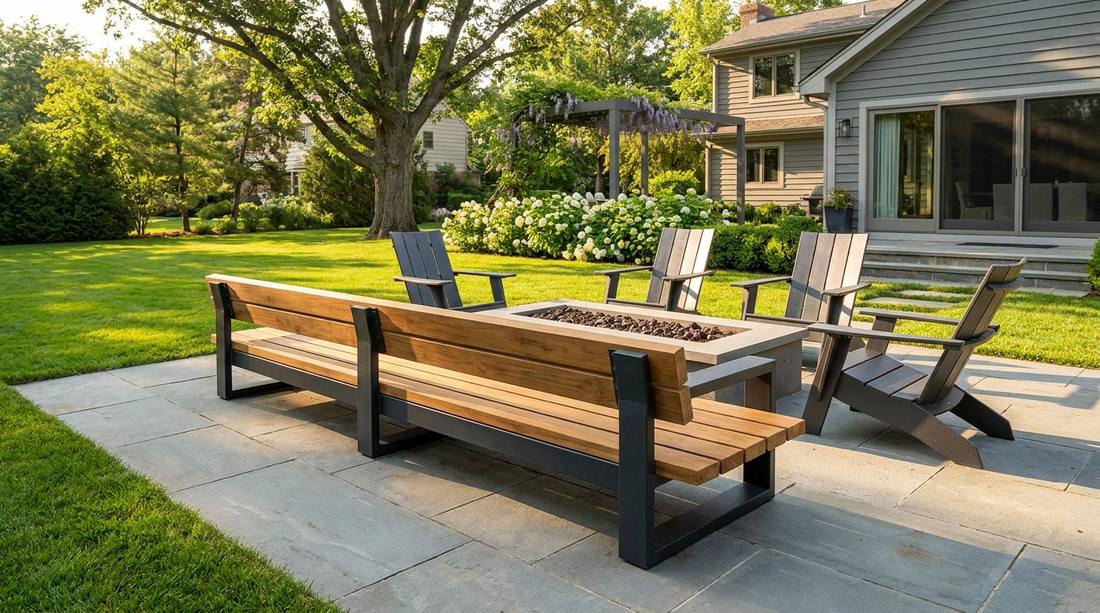
A contemporary garden bench instantly elevates any backyard into a high-end designer retreat. By sourcing commercial-grade materials directly, you bypass massive retail markups on outdoor furniture. Build a premium modern sanctuary without destroying your landscaping budget.
Design Snapshot Key Principles
- Material Integrity: Contemporary benches prioritize honest materials like teak, steel, and concrete that age gracefully outdoors
- Clean Lines: Streamlined forms with minimal ornamentation create visual calm in busy garden settings
- Multi-Functionality: Modern designs integrate storage, planters, or lighting to maximize utility without sacrificing aesthetics
- Contextual Harmony: Successful contemporary benches complement existing landscape architecture while making a distinct statement
Minimalist Linear Designs For Clean Landscapes
Linear benches define contemporary outdoor spaces through precision and restraint. Their horizontal emphasis creates visual flow along patios, pathways, and garden edges while providing generous seating without visual clutter.
1. Powder-Coated Steel Slat Bench
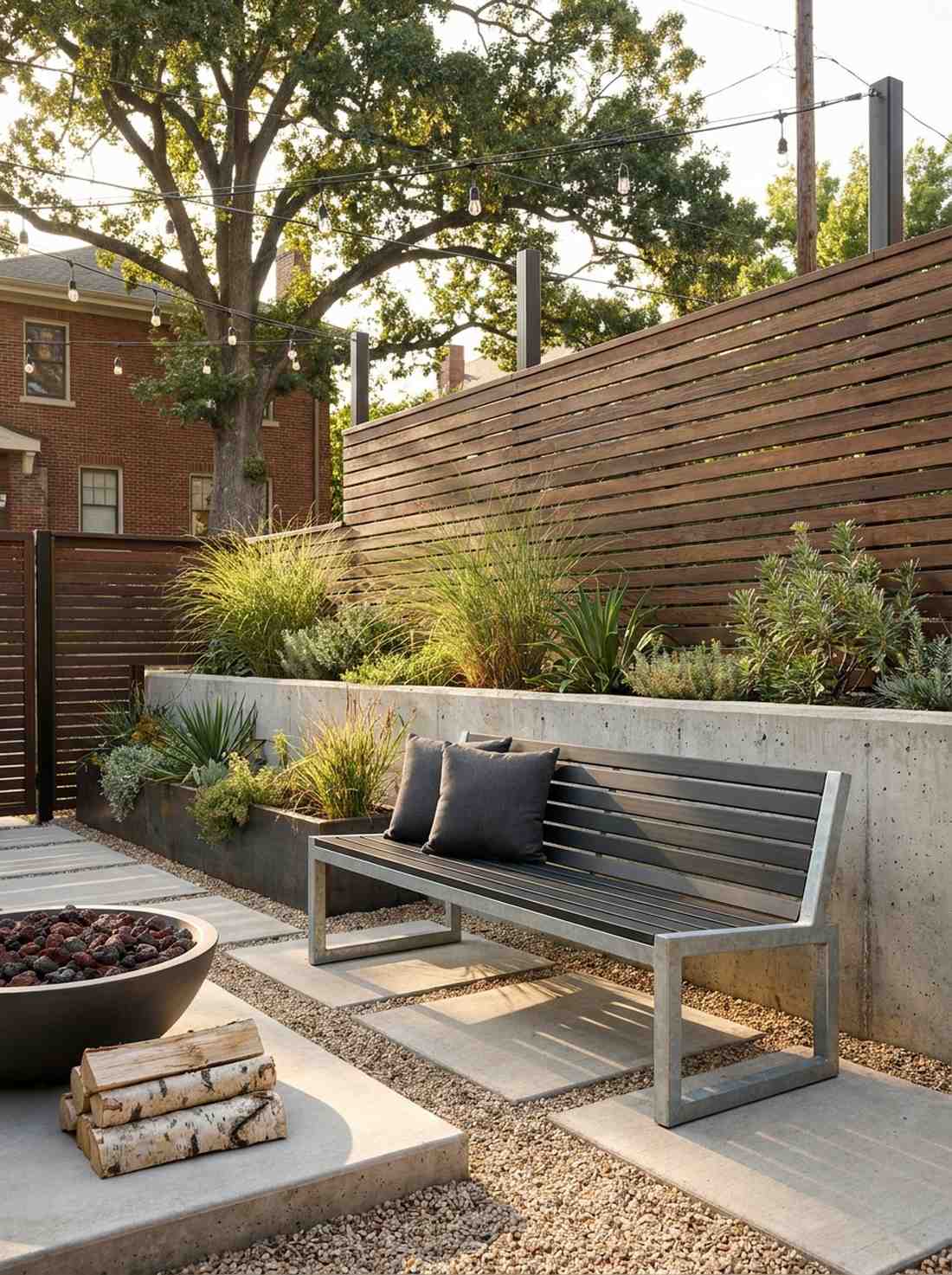
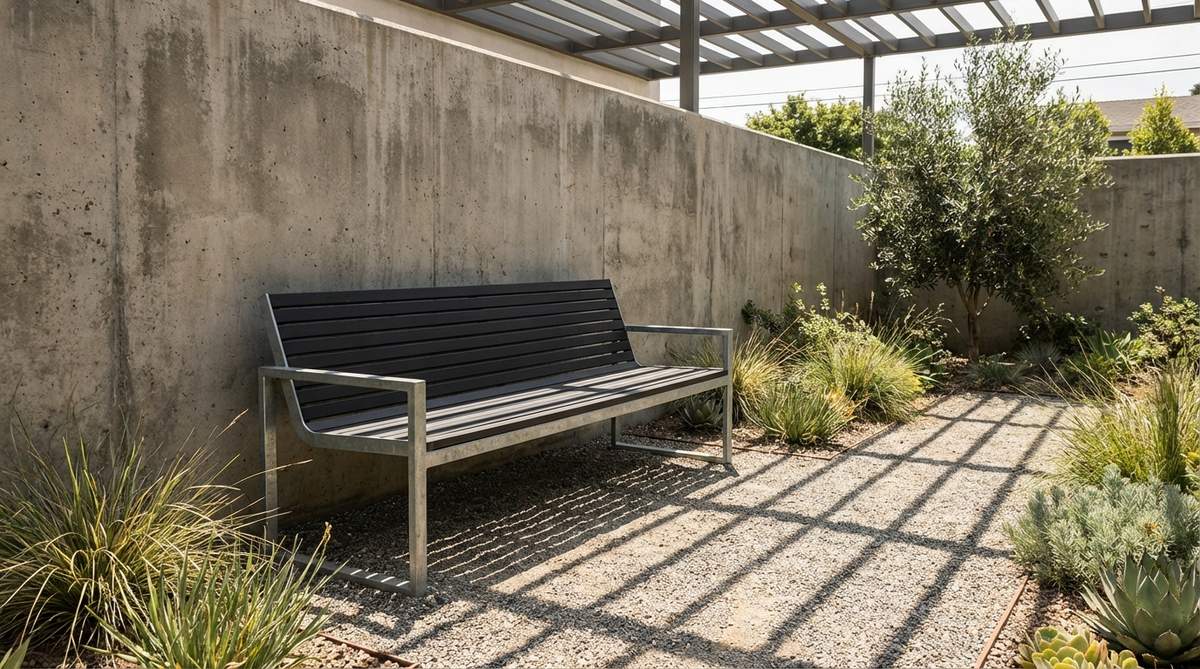
This layout feels like a sophisticated urban art gallery you accidentally discovered outdoors. A minimalist steel garden bench works exceptionally well for a narrow side-yard patio or modern gravel pathway.
Skipping standard flimsy patio furniture delivers a surprisingly premium look with incredible longevity. Integrating a pre-treated outdoor furniture framework alongside heavy-duty galvanized hardware guarantees a rust-free, high-end matte finish all year long.
You can easily pull this off for around $120–$180 if you source materials smartly. Save this to your modern outdoor seating board for weekend inspiration.
- Key Materials: Galvanized steel frames, matte-black powder-coated slats
- Vibe / Style: Urban industrial elegance
- Difficulty: Moderate assembly required
- Budget Breakdown: Frame kits: $85 | Hardware & Finish: $35.
- Creator’s Tip: Add a layer of clear automotive-grade UV spray over the powder coat to prevent chalking.
- Smart Sourcing: Get a pre-drilled steel slat frame kit and a matte UV-resistant sealant spray.
2. Backless Teak Platform Bench
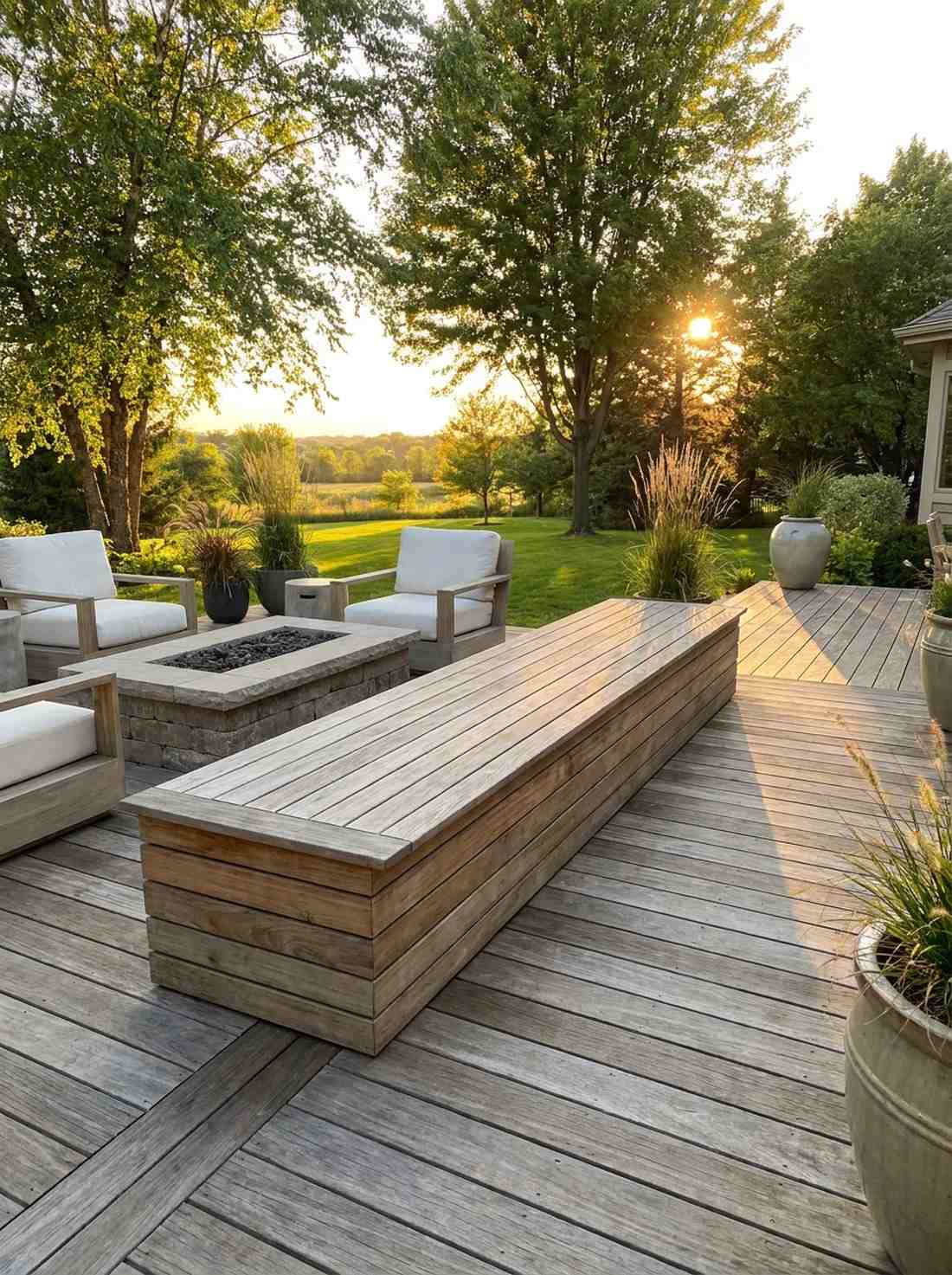
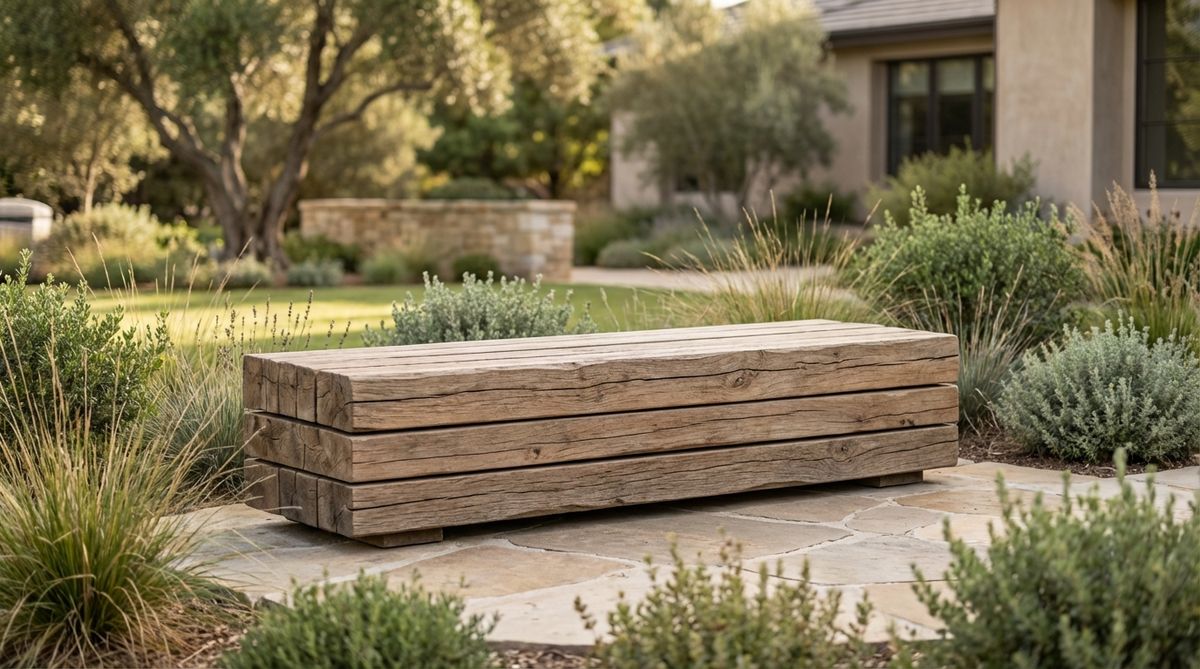
Radiating pure resort-level relaxation, this setup feels like stepping out onto a luxury spa terrace. The backless wooden outdoor seating is absolutely perfect for dividing an open-concept deck without blocking sunset views.
Choosing to run thick wood planks horizontally looks far more expensive than traditional criss-cross patio sets. Utilizing marine-grade lumber supplies creates that ultra-chic architectural boundary while allowing your garden’s sightlines to remain totally unobstructed.
Expect to spend roughly $200–$300 depending on the grade of lumber selected. It’s a fast upgrade that completely changes the spatial vibe.
- Key Materials: Thick grade-A teak planks, concealed bracket hardware
- Vibe / Style: Five-star minimalist resort
- Difficulty: Intermediate carpentry
- Budget Breakdown: Teak lumber: $220 | Hidden brackets: $40.
- Creator’s Tip: Let the teak weather naturally to a silver patina for a zero-maintenance designer look.
- Smart Sourcing: Grab a marine-grade teak oil gallon and heavy-duty concealed steel brackets.
3. Floating Wood Bench With Metal Brackets
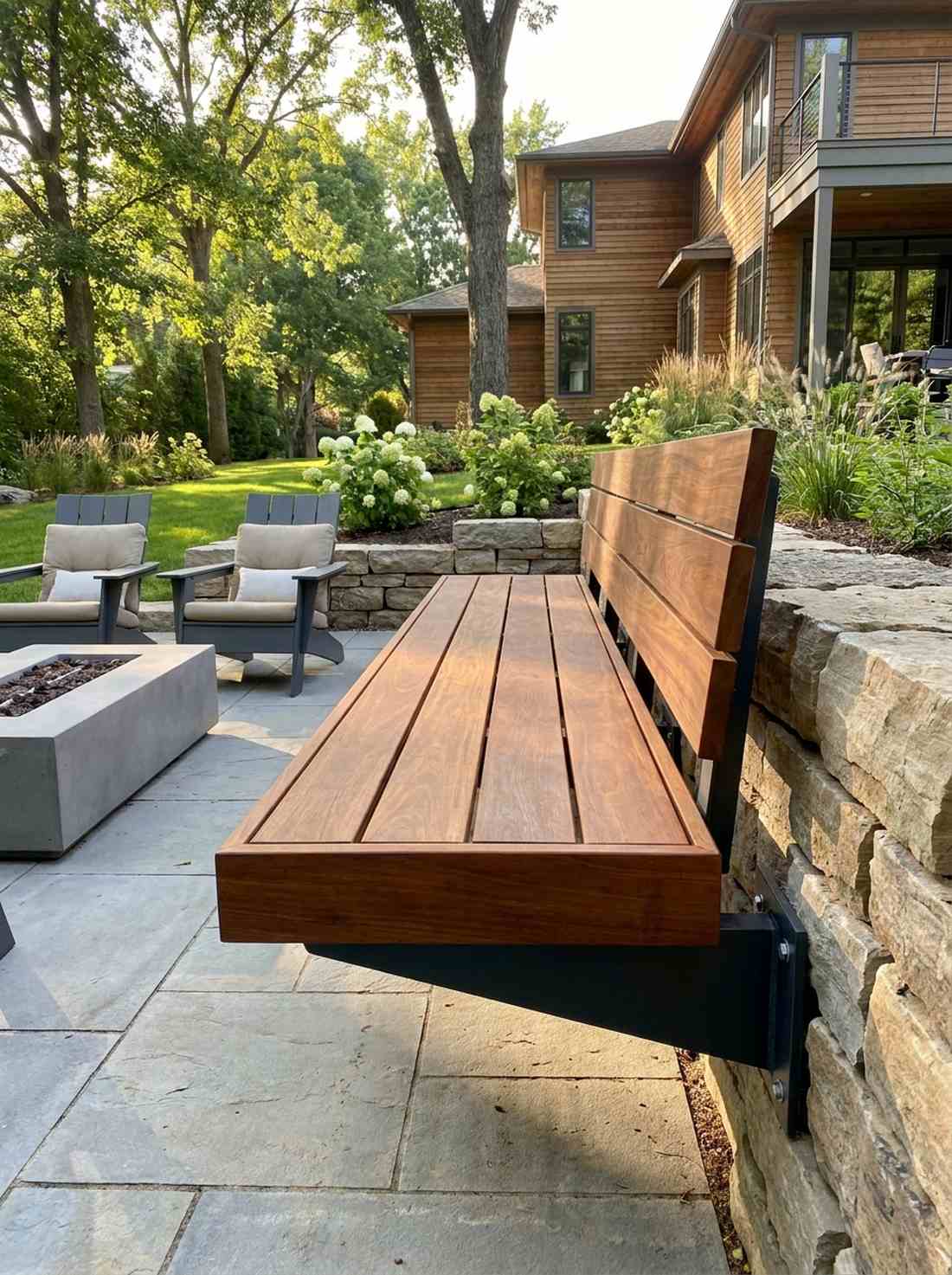
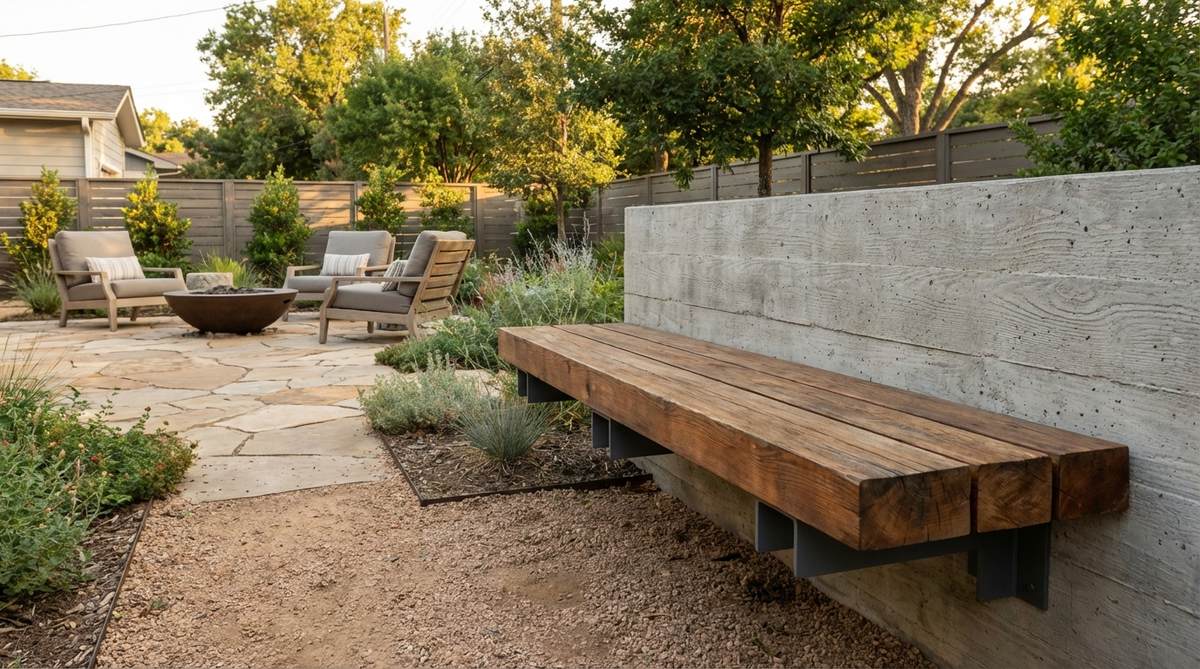
This gravity-defying build feels incredibly futuristic yet deeply grounded in nature. Implementing a floating cantilever garden bench transforms any boring retaining wall into a custom architectural masterpiece.
Most basic backyard seating clutters the floor, but this suspended configuration gives a designer-level finish that makes sweeping up leaves effortless. Leveraging industrial wall anchors ensures the cantilever design safely holds weight while highlighting high-end masonry.
A professional might charge $800, but DIY material costs sit around $150–$250. Pin this if you’re planning a small courtyard overhaul!
- Key Materials: Ipe wood decking boards, structural steel cantilever brackets
- Vibe / Style: Sleek architectural modernism
- Difficulty: Advanced (requires masonry anchoring)
- Budget Breakdown: Exotic wood top: $120 | Brackets/Anchors: $90.
- Creator’s Tip: Mount exactly at 18 inches high to match standard ergonomic dining proportions.
- Smart Sourcing: Use heavy-duty cantilever shelf brackets (2-pack) and pre-cut Ipe wood slabs.
4. Extended Linear Bench With Continuous Seating
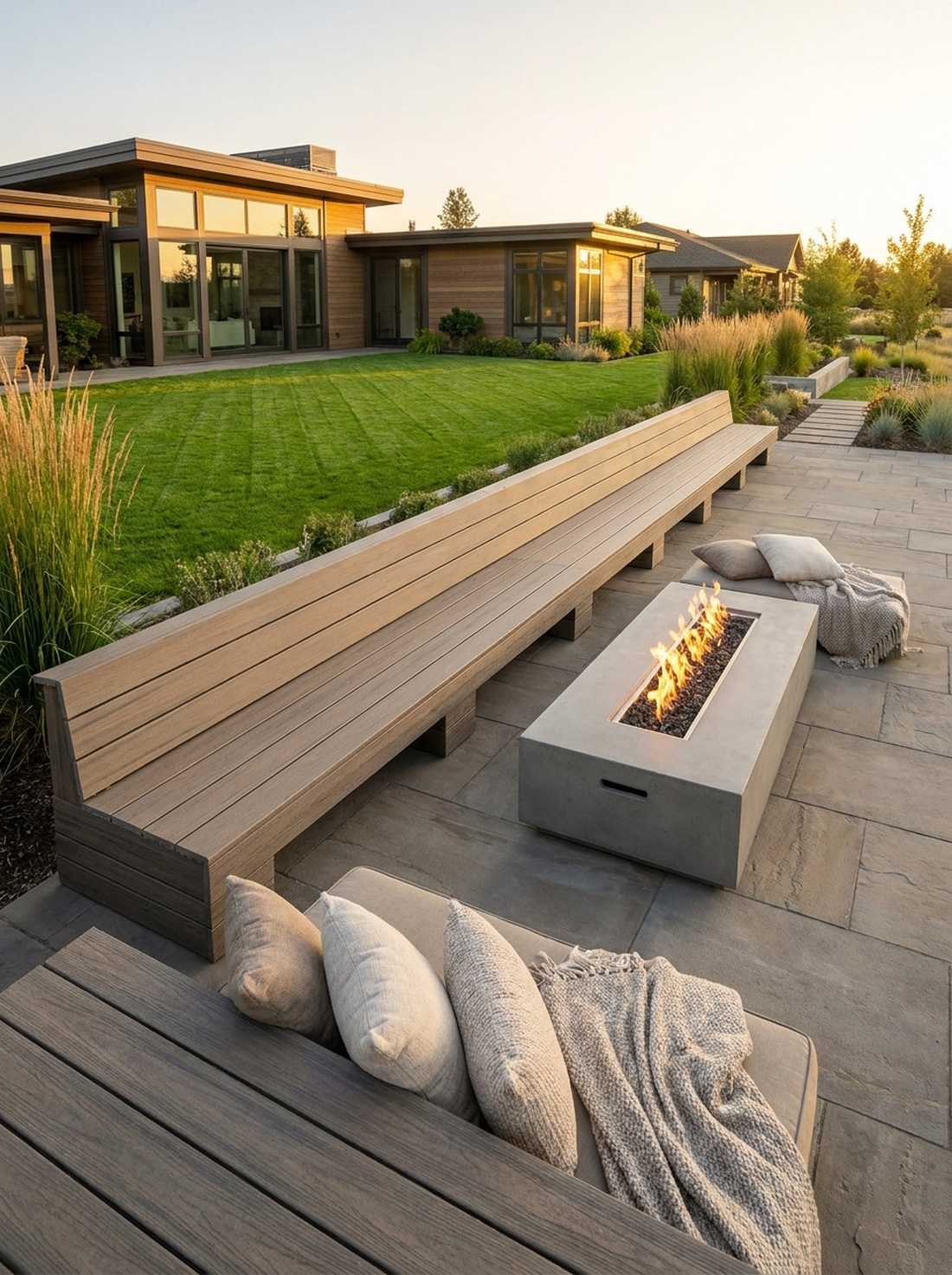
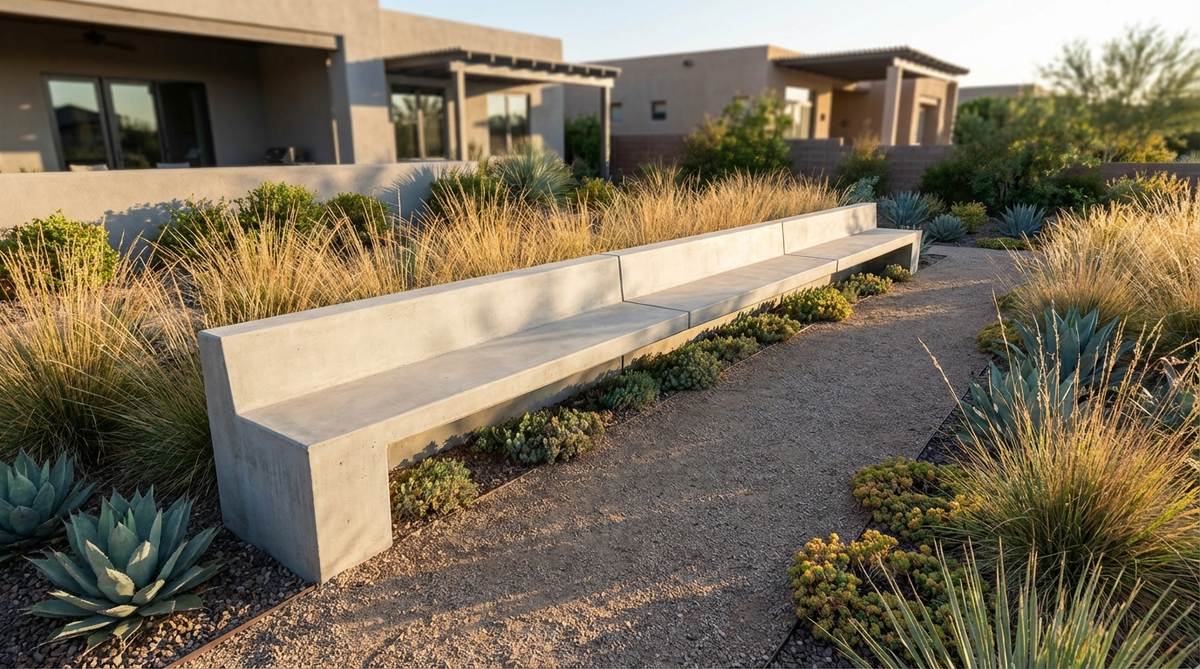
Stretching beautifully across the horizon, this setup feels like an endless runway of pure relaxation. A long continuous patio bench is the ultimate hack for framing large fire pit zones or expansive modern lawns.
Many homeowners clutter large spaces with individual chairs, but a single continuous run instantly provides a custom-built, luxury estate aesthetic. Ordering outdoor bench building kits in bulk keeps the horizontal lines completely unbroken and visually striking.
Setting up an 8-to-12-foot run generally costs between $300 and $450 in premium materials.
- Key Materials: Composite decking runs, modular support framing
- Vibe / Style: Expansive modern estate
- Difficulty: Intermediate layout
- Budget Breakdown: Continuous boards: $250 | Base framing: $150.
- Creator’s Tip: Never mix materials along the run; visual consistency is what makes it look expensive.
- Smart Sourcing: Buy composite deck fascia boards (bulk pack) and weatherproof leveling shims.
Most people get their patio layout completely wrong… until they try the exact curved configuration coming up next.
Organic & Curved Forms That Soften Hard Landscapes
Curved benches introduce flowing movement into geometric garden layouts. These organic shapes mimic natural forms while providing ergonomic comfort and visual interest that draws the eye through outdoor spaces.
5. Banana Bench With Gentle Arc
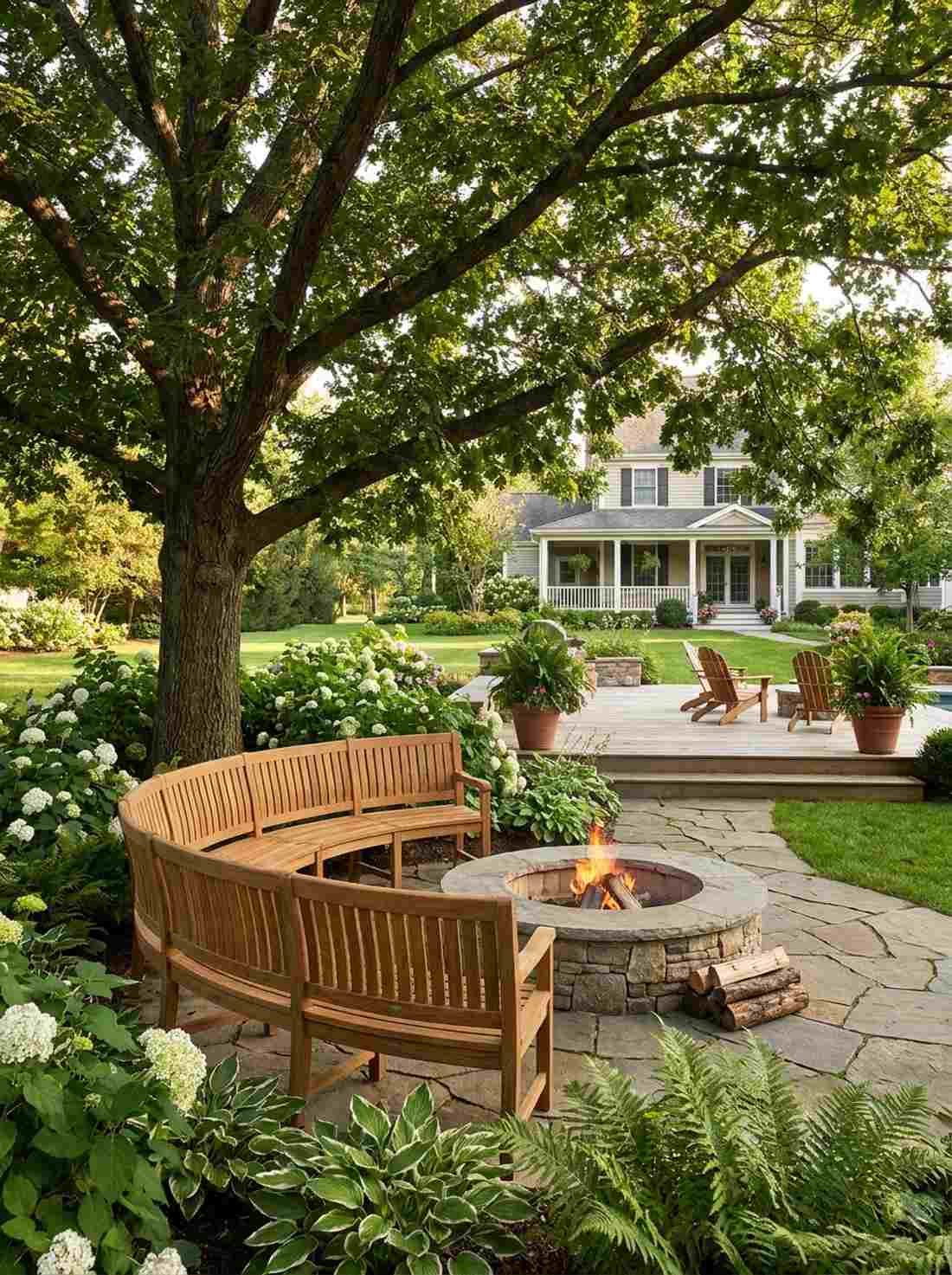
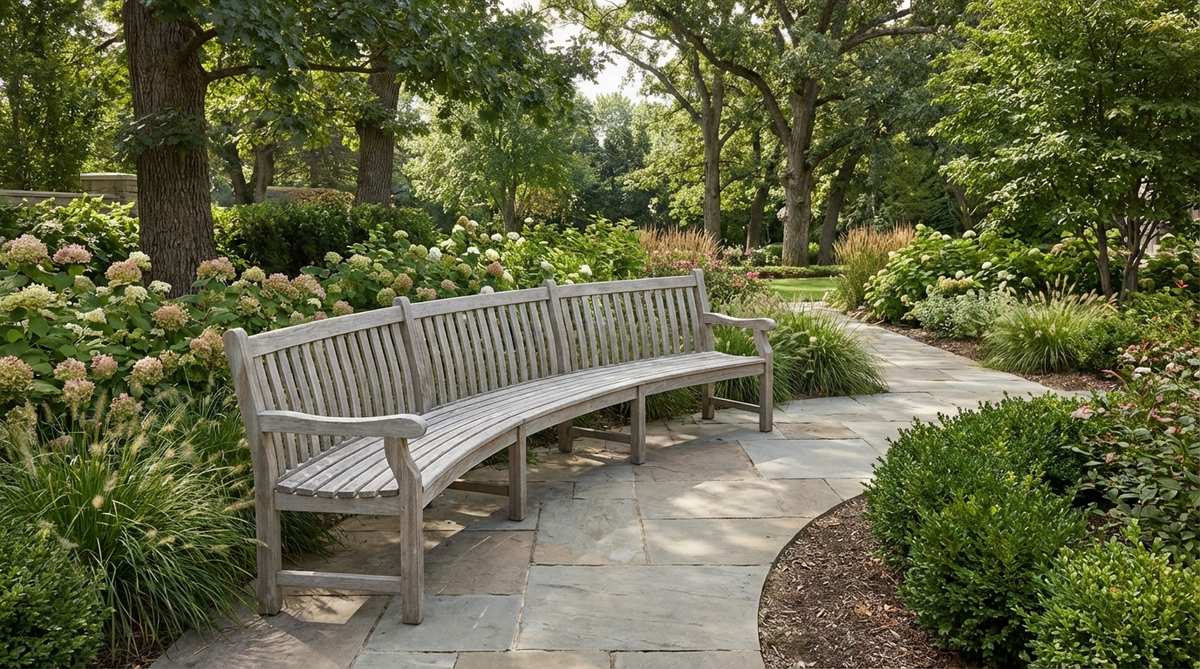
Curving gracefully around natural elements, this setup feels like a soft embrace in the middle of a lush sanctuary. A curved wooden garden bench works flawlessly tucked under the canopy of a massive shade tree.
Rather than fighting the natural landscape with rigid straight lines, this arc design effortlessly softens modern hardscaping. Seeking out specialized curved patio furniture blueprints creates an inviting, face-to-face conversational dynamic that basic rectangle benches lack.
Pre-fab kits range from $250–$400, making it an accessible luxury touch. Save this layout for your romantic garden redesign!
- Key Materials: Kiln-dried curved teak sections, stainless dowels
- Vibe / Style: Softened contemporary romance
- Difficulty: Easy (if using a pre-cut kit)
- Budget Breakdown: Curved kit: $320 | Wood glue/sealant: $30.
- Creator’s Tip: Position the curve facing a focal point like a birdbath or fire feature for optimal flow.
- Smart Sourcing: Invest in a pre-cut curved teak bench kit and marine-grade wood adhesive.
6. Sculptural Wave Concrete Bench
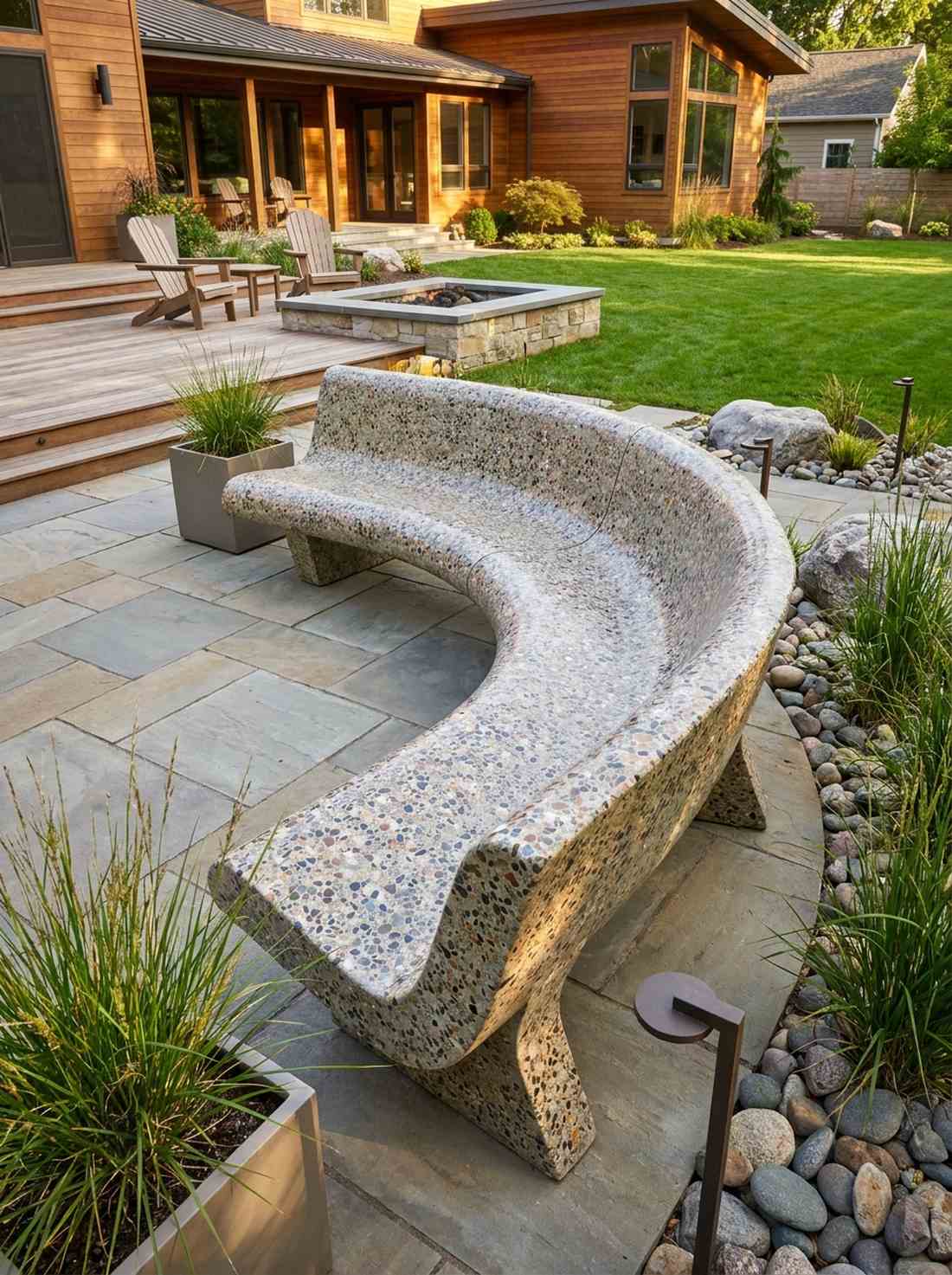
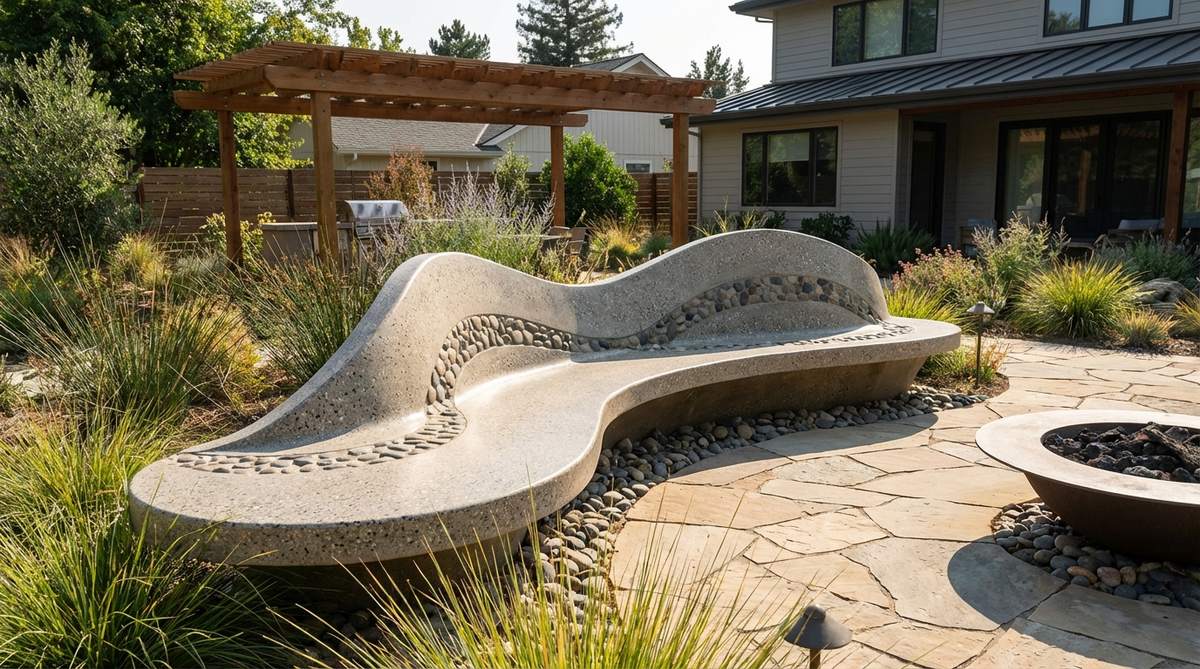
Strikingly bold, this concrete marvel feels like a frozen wave ripped straight from a modern art museum. A sculptural concrete outdoor bench anchors courtyards and acts as a jaw-dropping focal point.
While standard brick seating feels dated, an undulating concrete pour delivers a massive visual impact that commands attention. Utilizing high-strength concrete molding supplies allows you to cast these fluid, heavy-duty art pieces that double as permanent seating.
Pouring this yourself keeps costs around $150 in raw materials, compared to $1,500 retail.
- Key Materials: High-strength concrete mix, fiberglass molds, rebar
- Vibe / Style: Brutalist museum courtyard
- Difficulty: Advanced (requires molding/pouring)
- Budget Breakdown: Concrete mix/rebar: $90 | Mold materials: $60.
- Creator’s Tip: Add a polished aggregate finish to expose beautiful interior stones when the sunlight hits it.
- Smart Sourcing: Use rapid-set high-strength concrete (bulk bags) and a concrete polishing pad set.
7. Curved Corner Bench For Intimate Spaces
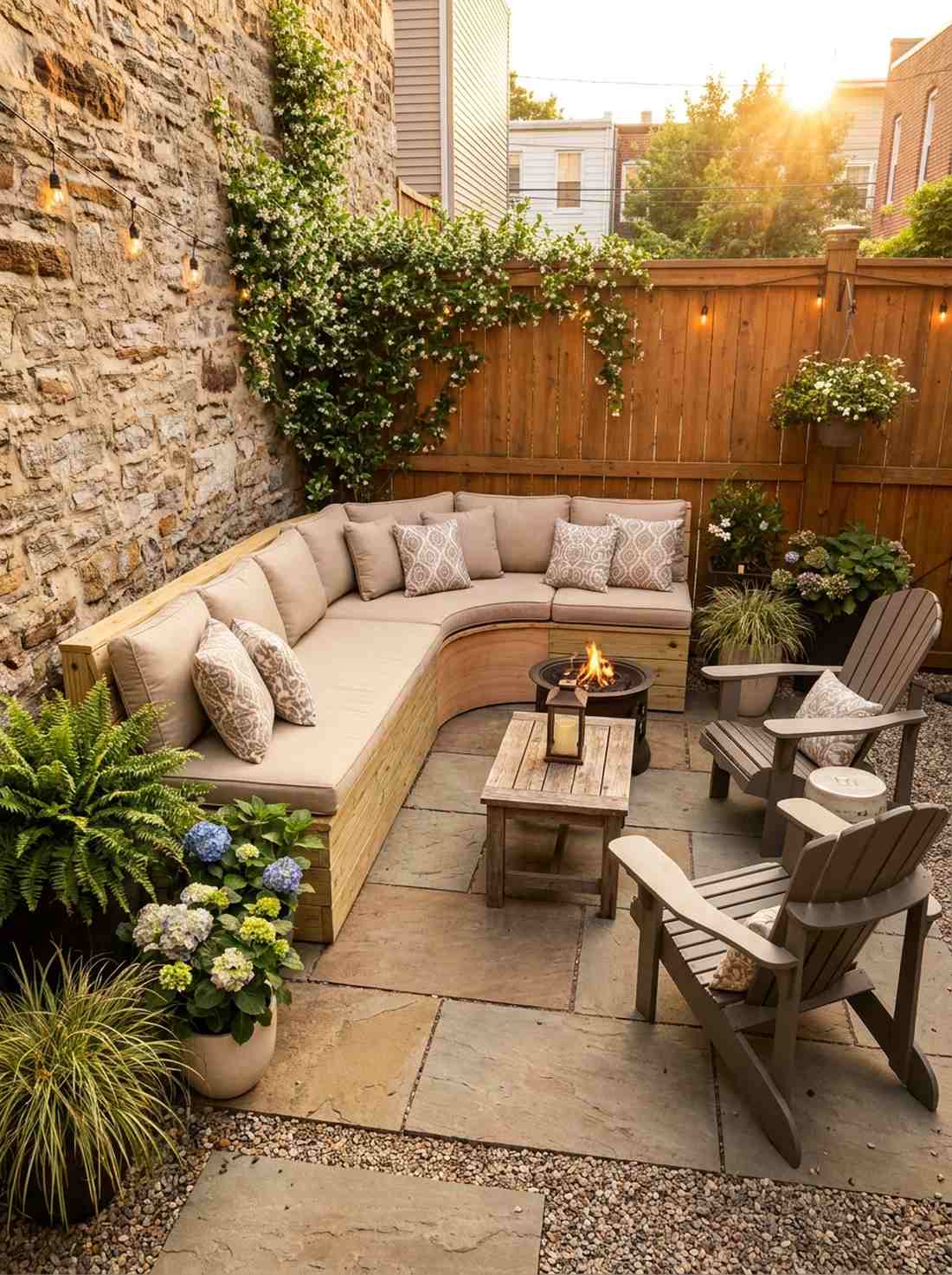
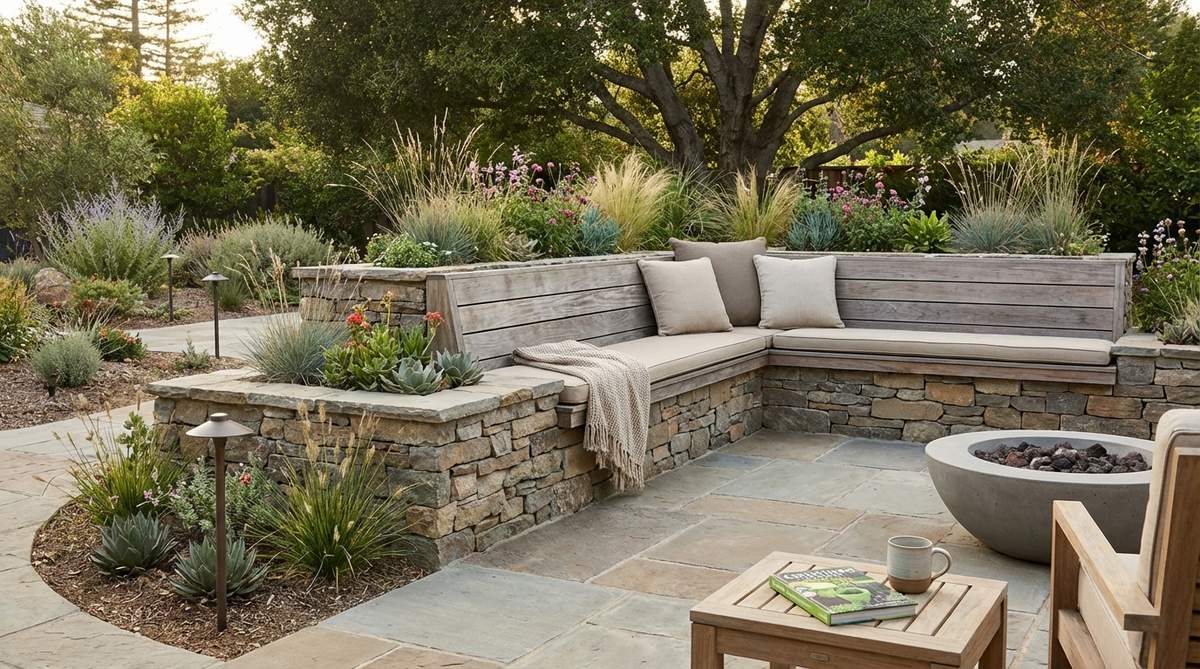
Tucked perfectly into an unused edge, this intimate design feels like your own private outdoor reading nook. The L-shaped patio seating area is phenomenal for maximizing seating in tiny, awkwardly shaped urban backyards.
Ignoring empty patio corners is a huge waste of square footage, but a wraparound build instantly solves the problem while looking custom. By upgrading with weatherproof outdoor cushion sets, you completely transition a cold stone corner into a highly coveted lounge zone.
Material costs typically hover around $200–$350 for the frame and cushions. Pin this layout to maximize your small space!
- Key Materials: Pressure-treated framing lumber, custom-cut outdoor foam
- Vibe / Style: Cozy urban lounge
- Difficulty: Intermediate
- Budget Breakdown: Framing materials: $120 | Premium cushions: $180.
- Creator’s Tip: Build the internal curve with flexible plywood (bender board) for a perfectly smooth radius.
- Smart Sourcing: Order UV-resistant custom bench cushions and flexible bender board panels.
8. Serpentine Bench With Continuous Flow
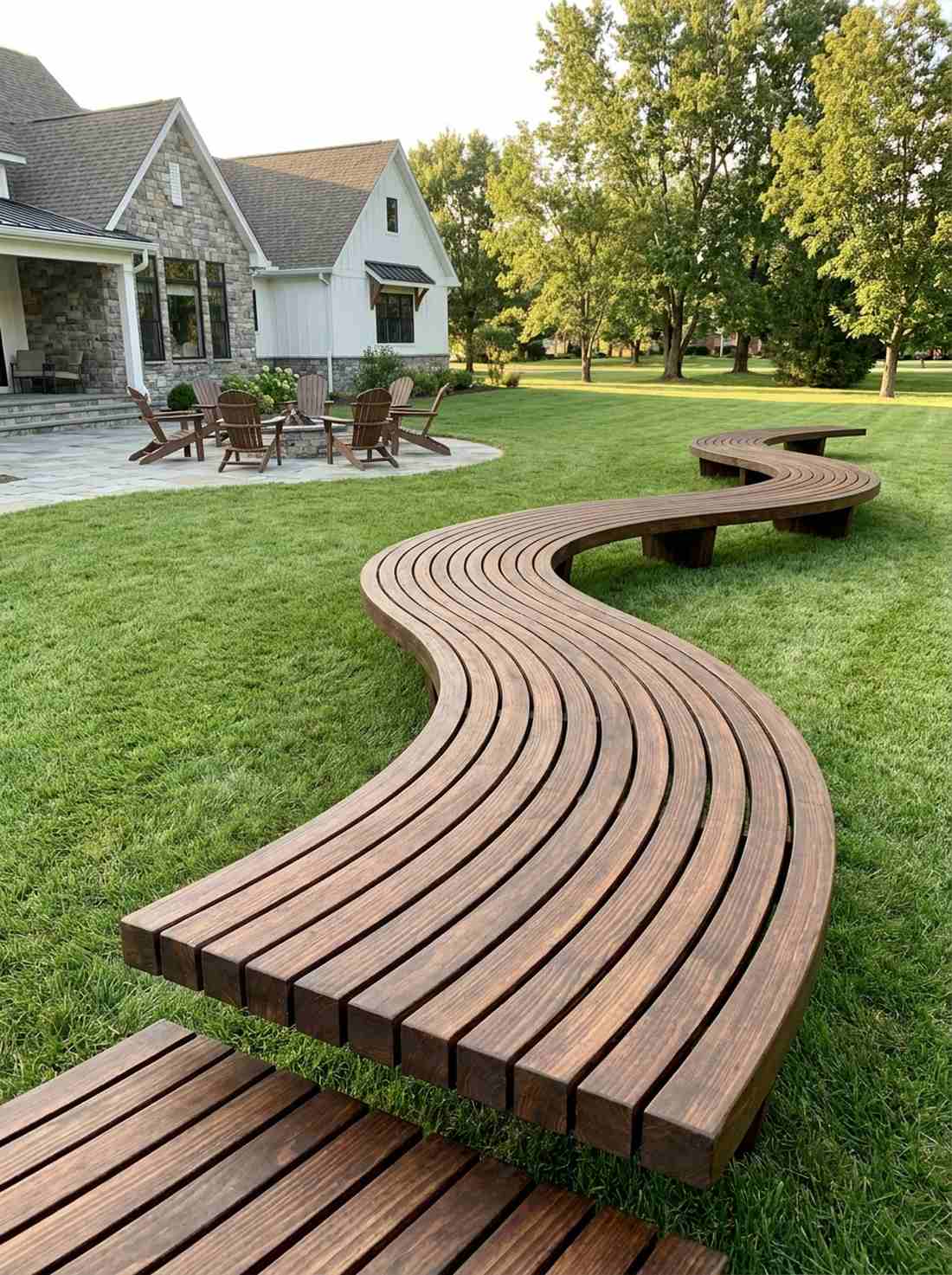
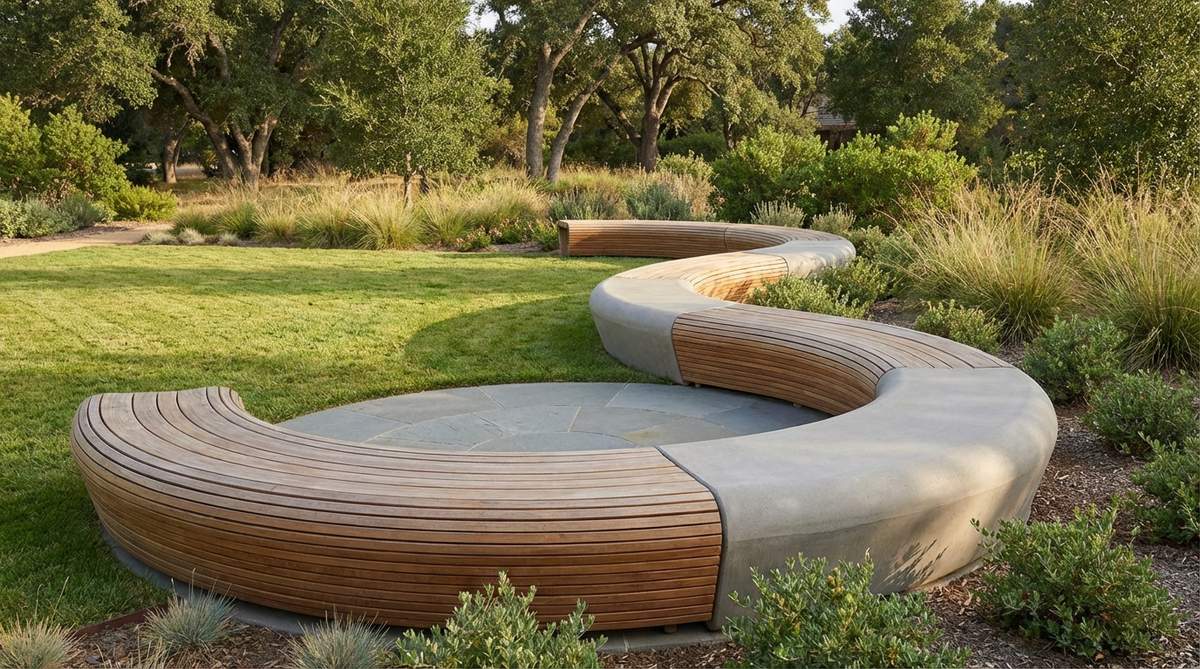
Rippling across the grass, this dynamic setup feels like a flowing river of wood right in your backyard. A serpentine landscape bench is visually stunning when placed freely in an open lawn or modern plaza.
Standard seating forces people into awkward lines, whereas an S-curved structure invites exploration and multidirectional conversation. Employing advanced landscape architectural brackets lets you form this continuous sculptural presence without any messy, visible seams.
Building an impressive 10-foot serpentine run costs around $400–$600 in high-end materials.
- Key Materials: Laminated curved wood, specialized hidden joint brackets
- Vibe / Style: Dynamic organic flow
- Difficulty: Advanced
- Budget Breakdown: Laminate wood runs: $450 | Connectors: $100.
- Creator’s Tip: Leave a 1/4-inch gap between seating slats so rain passes right through, avoiding puddles.
- Smart Sourcing: Pick up heavy-duty invisible joinery hardware and marine weatherproofing stain.
This next minimalist piece completely redefines luxury materials on a tight DIY budget…
💡 Must-Have Supplies for High-End Setups
To build these setups faster and ensure they last, skip the generic craft aisles and invest in the right foundational kits.
- Base & Support: Commercial-grade hidden steel brackets (bulk packs)
- Setup Tools: Outdoor masonry and deck screw starter kits
- Weather/Durability Protection: Marine-grade clear UV wood sealants
Material-Focused Statements For Bold Impact
Contemporary design celebrates honest materials showcased for their inherent qualities. These benches let wood grain, metal patina, or concrete texture take center stage through minimal intervention and pure forms.
9. Live Edge Wood Bench On Steel Legs
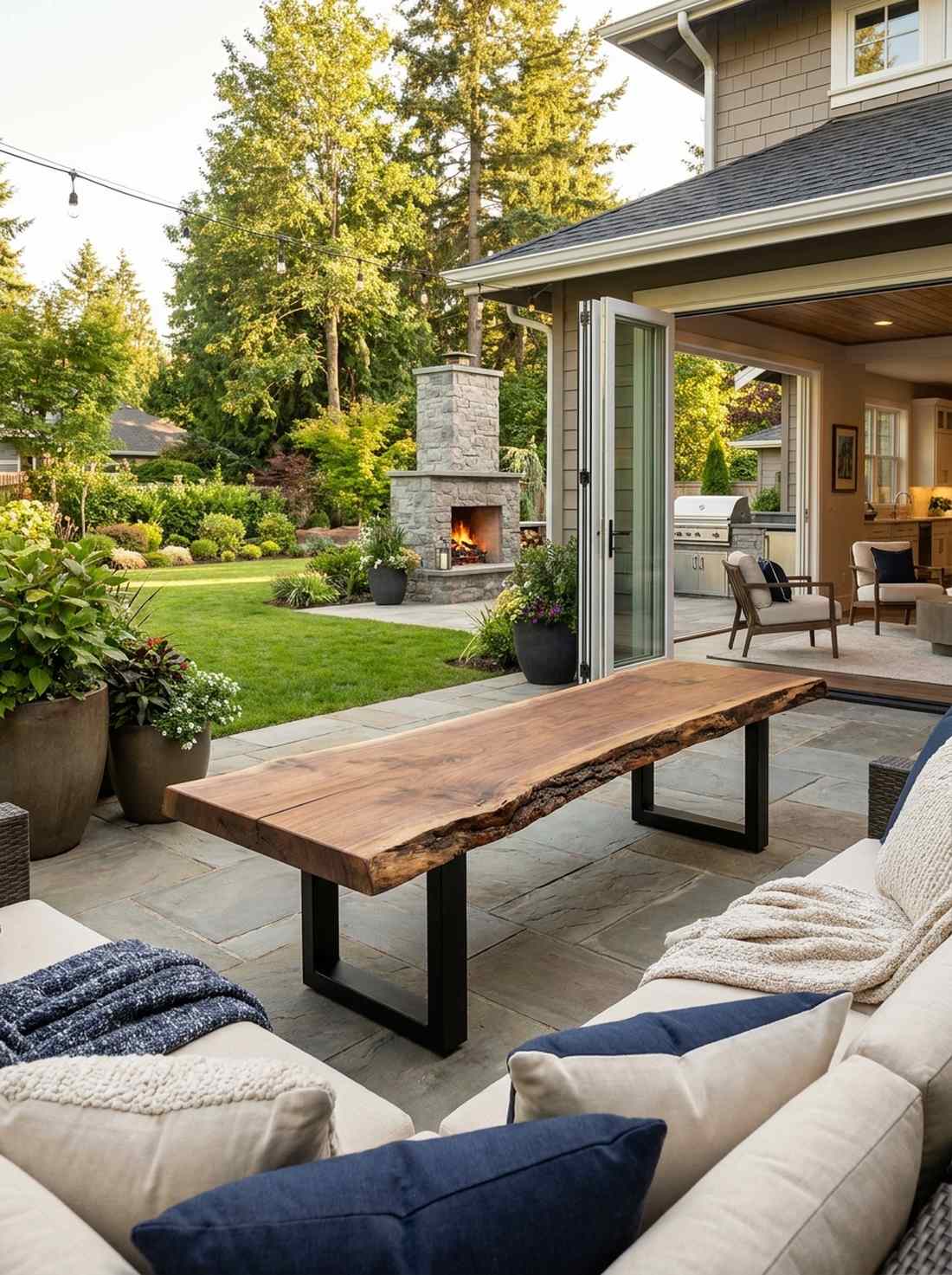
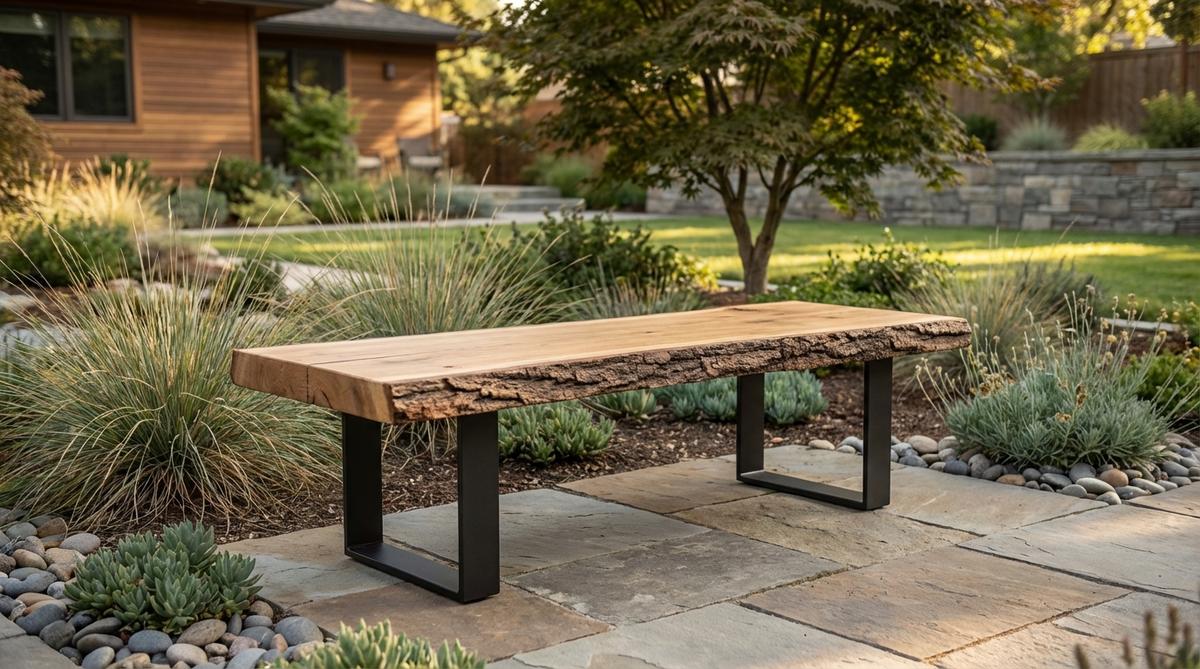
Blending rustic warmth with severe modernism, this seating feels like an upscale cabin retreat right in the city. Using a live edge slab bench with stark black metal legs is the ultimate transitional piece for mixed-material patios.
Mass-produced wooden benches often feel cheap, but utilizing a thick, natural-barked hardwood slab instantly establishes high-ticket luxury. Securing the wood to minimalist industrial metal table legs creates intense visual tension that interior designers obsess over.
Sourcing a local slab and ordering legs online keeps this stunning project under $200. Save this for your transitional patio mood board!
- Key Materials: 3-inch thick walnut/oak slab, powder-coated U-shaped steel legs
- Vibe / Style: Industrial organic fusion
- Difficulty: Easy (mostly assembly)
- Budget Breakdown: Raw wood slab: $120 | Steel legs: $60.
- Creator’s Tip: Use a wood hardener on the raw bark edge to prevent it from chipping off over time.
- Smart Sourcing: Order heavy-duty U-shaped steel bench legs and penetrating wood hardener resin.
10. Polished Concrete Block Bench
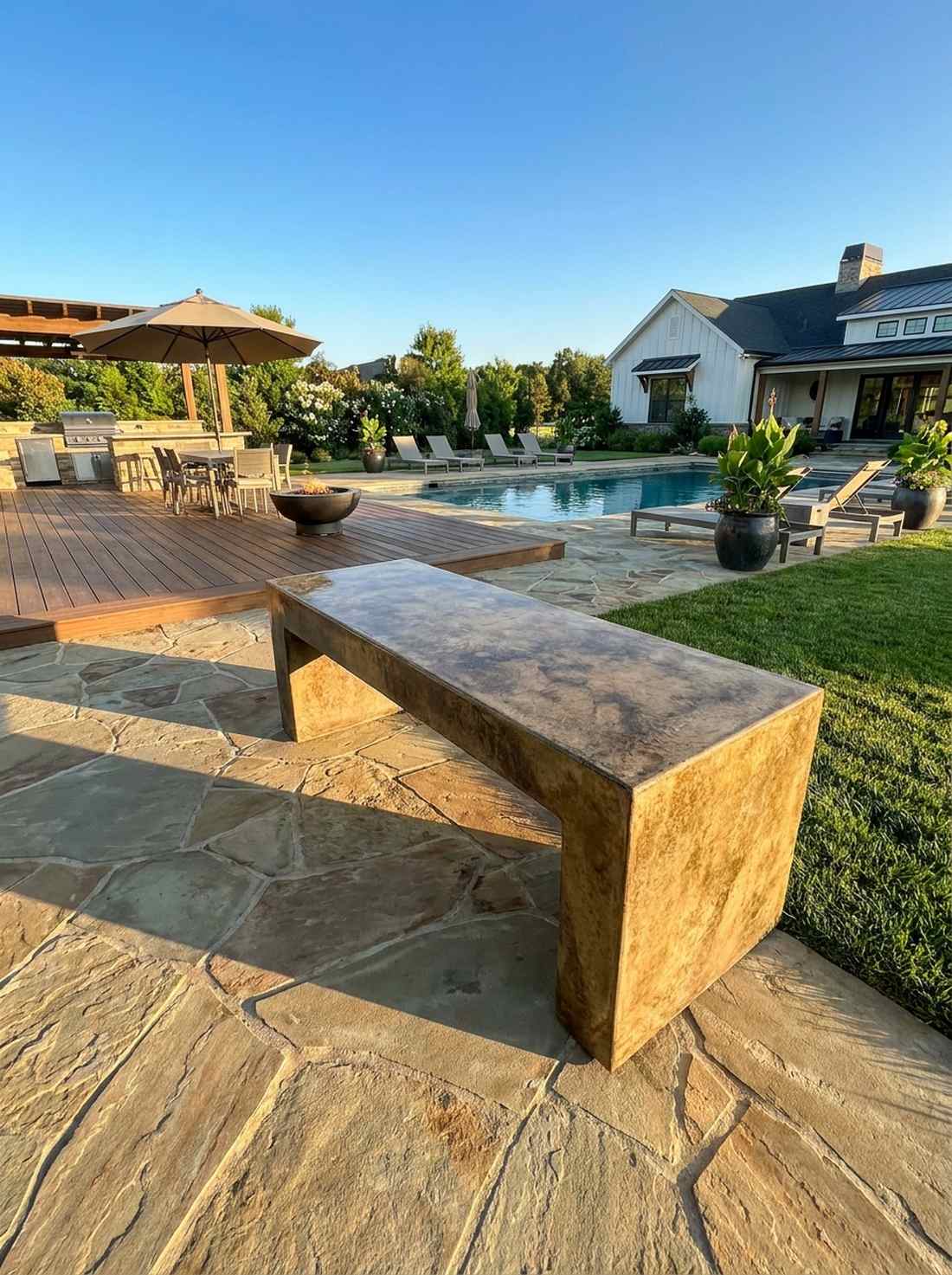
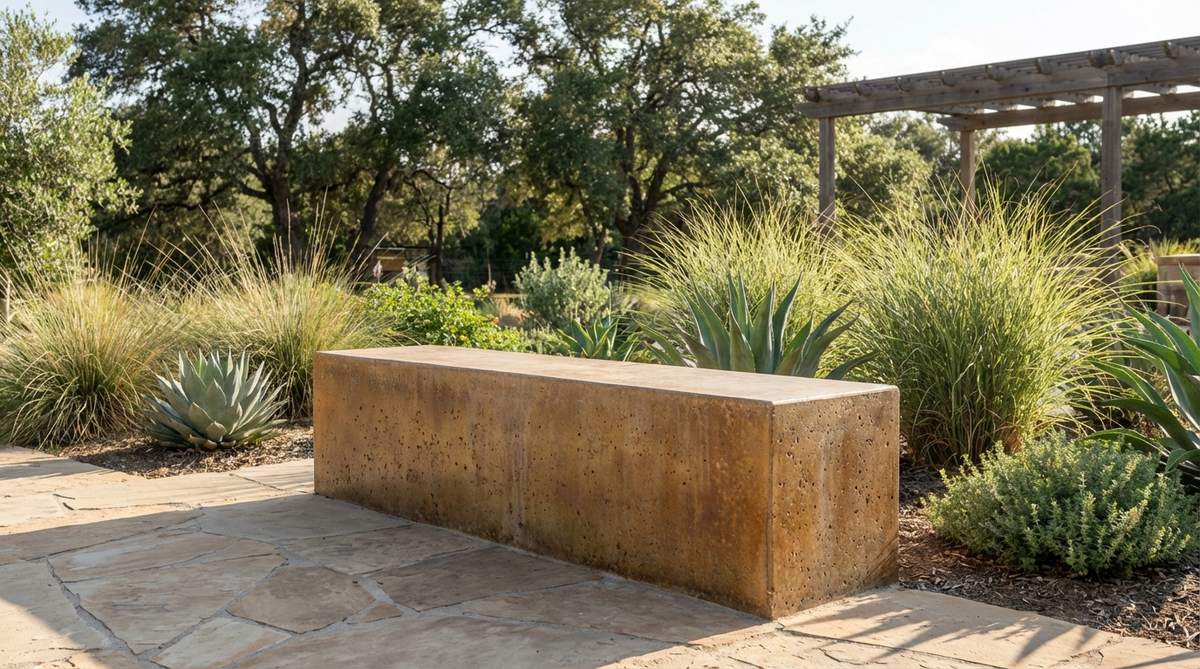
Commanding absolute authority, this monolithic structure feels like permanent luxury built into the very earth. A solid polished concrete bench acts as a massive thermal anchor for sun-drenched pool decks.
Opting for a sheer concrete mass instead of flimsy patio chairs delivers an immovable, brutalist aesthetic that laughs at harsh weather. Incorporating professional-grade concrete sealing supplies ensures the block remains cool to the touch and totally immune to water damage.
Forming and pouring this permanent fixture yourself costs barely $100 in materials.
- Key Materials: High-density concrete, acid stain, penetrating sealer
- Vibe / Style: Monolithic modern permanence
- Difficulty: Intermediate (heavy lifting)
- Budget Breakdown: Concrete/Stain: $70 | Sealer: $30.
- Creator’s Tip: Use an acid stain before sealing to give the concrete a mottled, high-end stone appearance.
- Smart Sourcing: Grab penetrating concrete wet-look sealer and reactive concrete acid stain kits.
11. Warm Galvanized Steel Bench
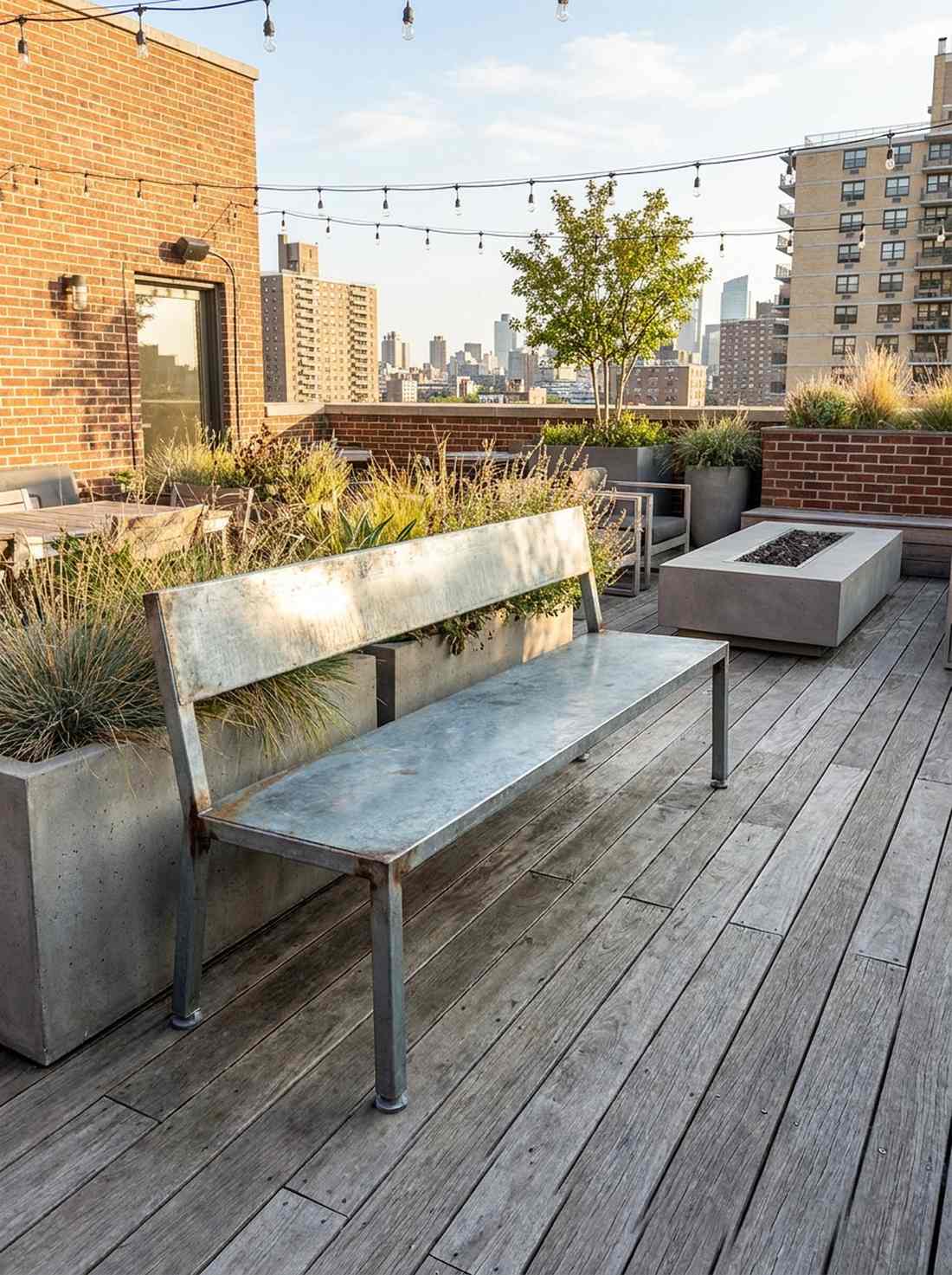
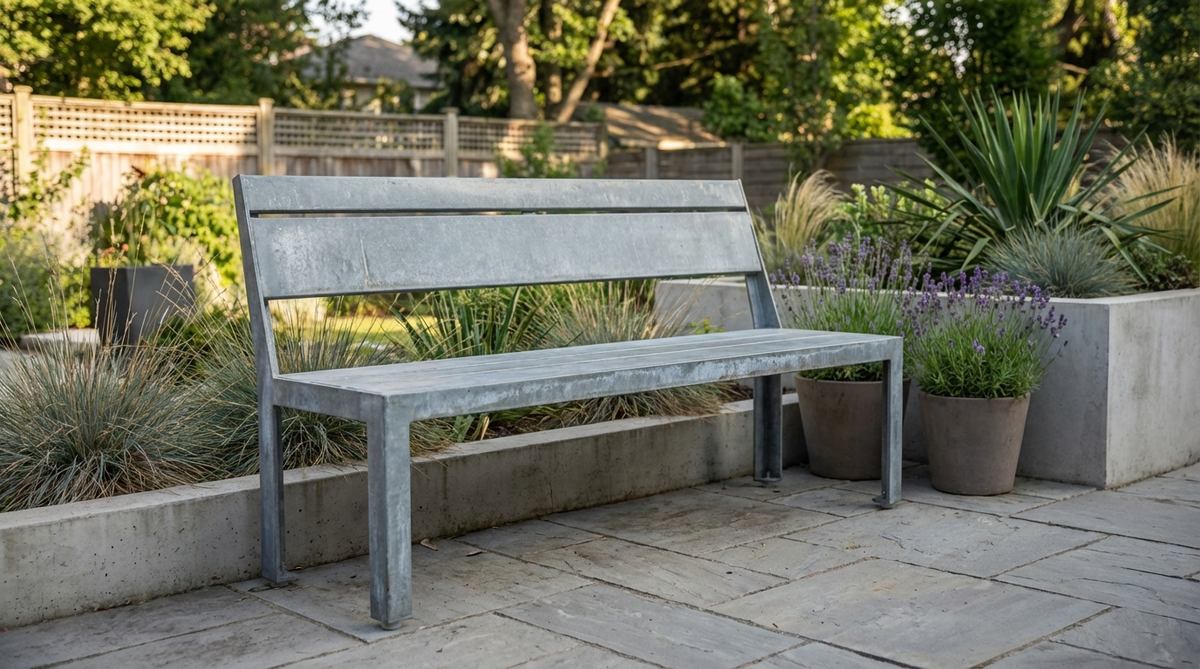
Glinting under the afternoon sun, this seating arrangement feels effortlessly cool and urban. A galvanized metal outdoor bench seamlessly fits into rooftop terraces or raw, industrial-style courtyard gardens.
While painted furniture chips and fades, allowing untreated galvanized steel to naturally oxidize guarantees a living, self-healing finish. Picking up industrial landscaping accessories like heavy-duty plastic glides protects your expensive deck while the metal develops its character.
You can assemble a pre-fabricated steel kit for about $150–$250. Pin this if you love the raw industrial look!
- Key Materials: Untreated galvanized steel framing, plastic deck glides
- Vibe / Style: Raw urban industrial
- Difficulty: Easy beginner setup
- Budget Breakdown: Steel bench frame: $180 | Deck protectors: $15.
- Creator’s Tip: Never use abrasive cleaners on the steel; let the dull grey zinc patina form naturally.
- Smart Sourcing: Get a galvanized outdoor seating kit and heavy-duty plastic furniture sliders.
12. Corten Steel Weathering Bench
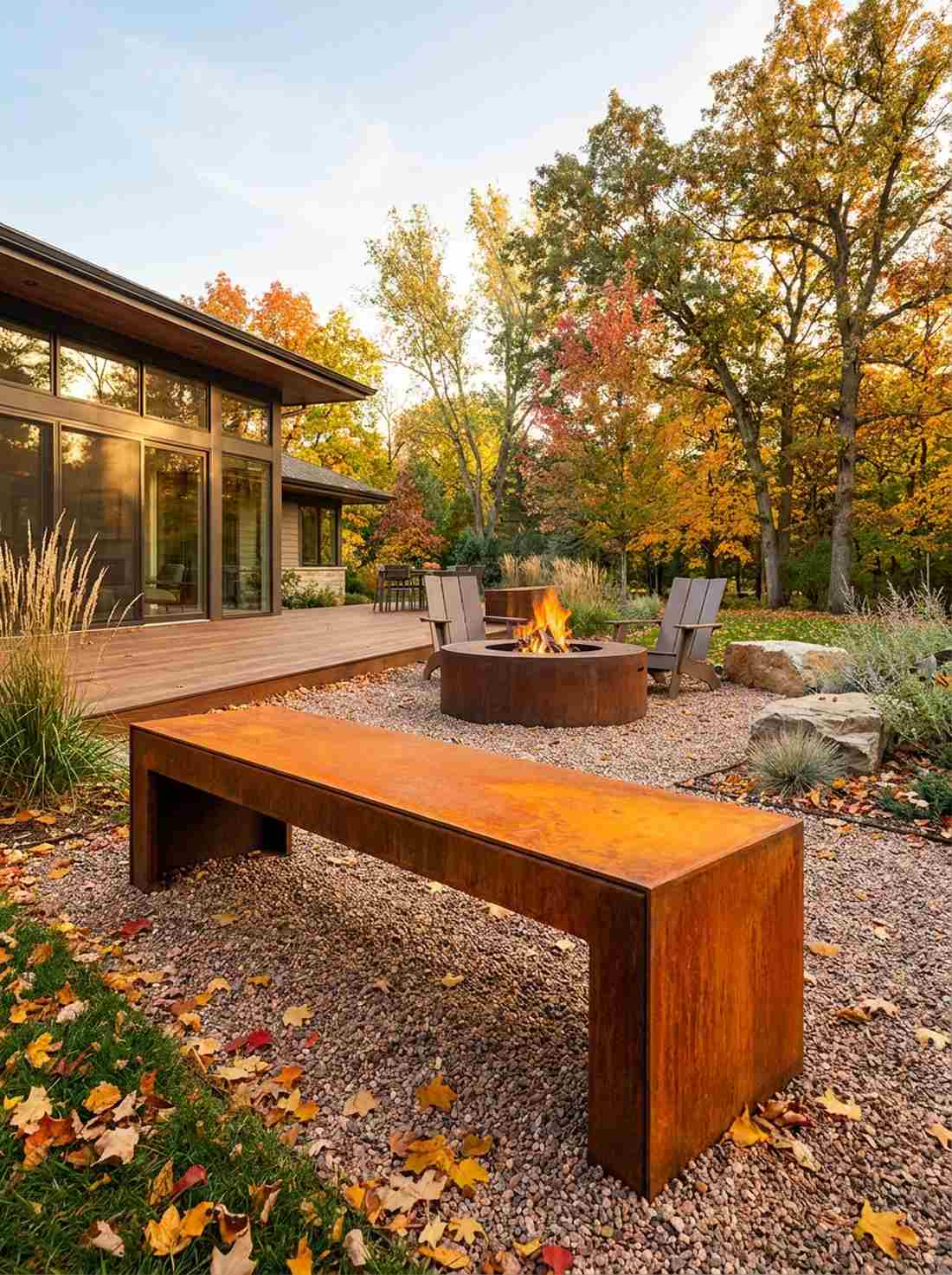
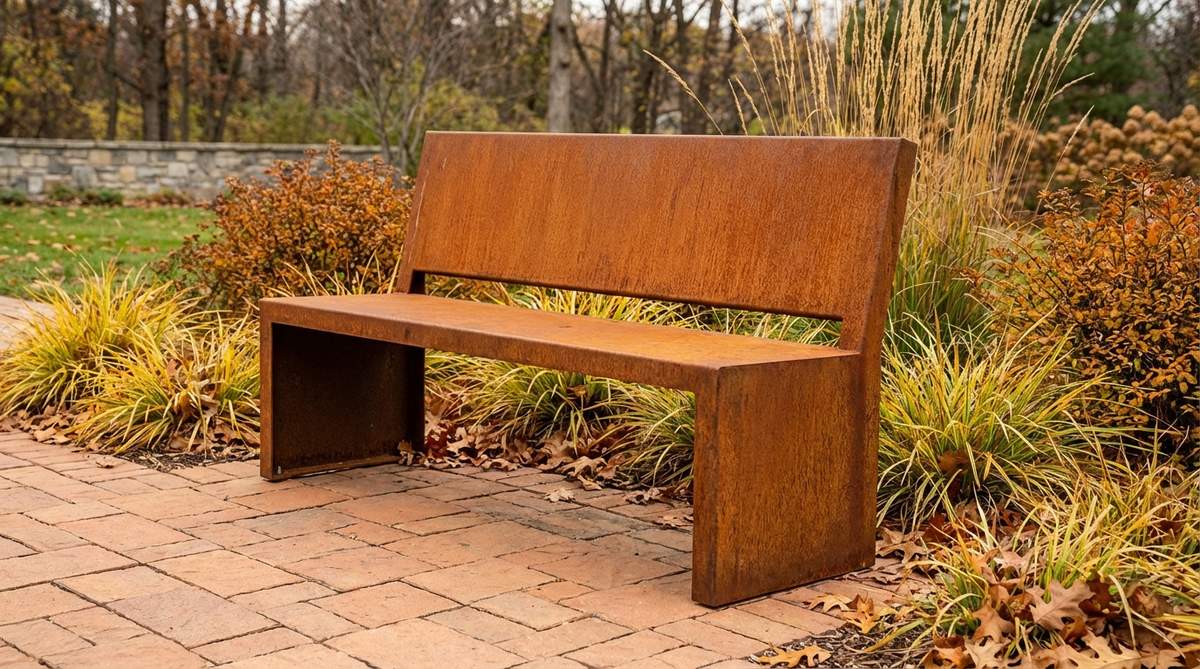
Glowing with warm, fiery hues, this ultra-modern layout feels deeply rooted in the autumn landscape. A Corten weathering steel bench provides unmatched age and architectural permanence the moment it’s installed.
Most metals degrade when exposed to the elements, but Corten intentionally rusts to form a stunning, indestructible protective barrier. Integrating premium hardscaping materials ensures you get that rich, zero-maintenance orange-brown patina that top landscape architects charge thousands to install.
Expect to pay a premium for real Corten (around $400–$700), but it genuinely lasts forever.
- Key Materials: Corten steel sheets/frame, stainless assembly bolts
- Vibe / Style: High-end architectural landscape
- Difficulty: Intermediate
- Budget Breakdown: Corten steel kit: $500 | Hardware: $30.
- Creator’s Tip: Place the bench on gravel rather than porous stone for the first year to avoid rust runoff stains.
- Smart Sourcing: Use a Corten steel rust accelerator spray and stainless steel marine bolts (bulk pack).
13. Teak And Stainless Steel Hybrid
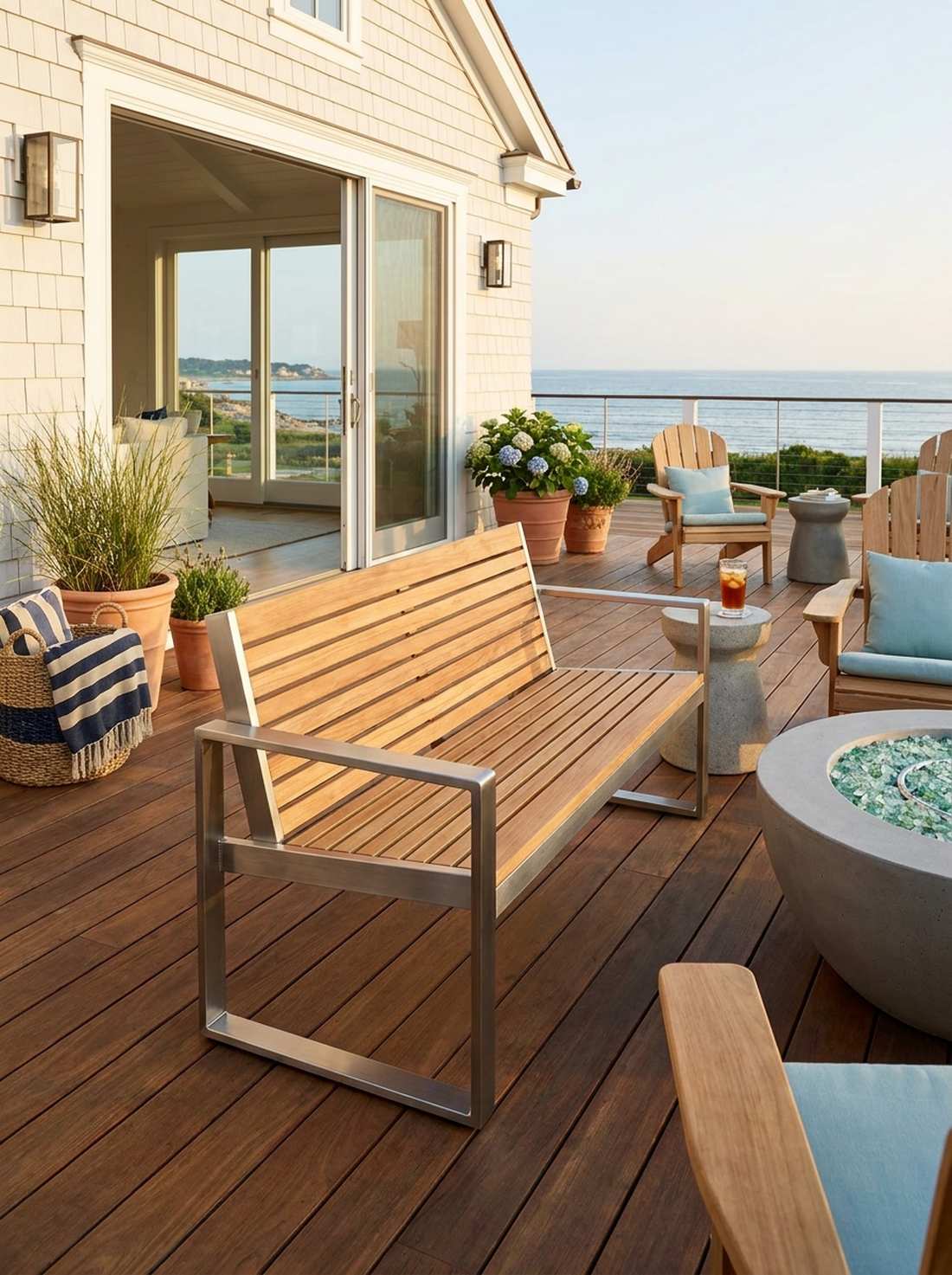
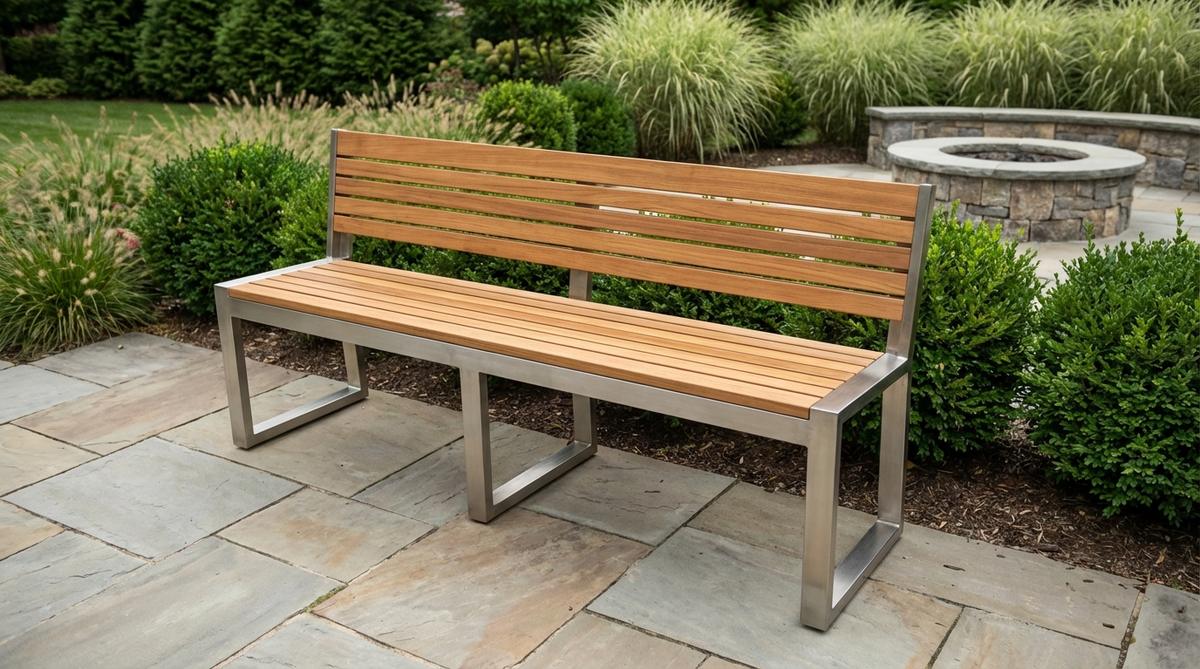
Perfectly balancing warm natural grain with icy metal precision, this piece feels like luxury yacht decking brought to land. The teak and metal hybrid bench is an absolute necessity for modern coastal homes.
Mixing pure organic wood with highly engineered metal components generates a classic contemporary aesthetic that completely outclasses basic box-store furniture. Insisting on marine-grade patio construction gear prevents salt-air corrosion, ensuring the steel remains brilliantly brushed for decades.
Building this from hybrid kits costs roughly $300–$450. Save this to your coastal home upgrade board!
- Key Materials: 316 marine-grade stainless frame, Grade-A teak slats
- Vibe / Style: Coastal luxury yacht
- Difficulty: Intermediate
- Budget Breakdown: Teak slats: $150 | Stainless frame kit: $250.
- Creator’s Tip: Always specify 316 stainless steel instead of 304 if you live within five miles of the ocean.
- Smart Sourcing: Buy pre-drilled Grade-A teak slats and a marine-grade stainless steel cleaner kit.
The upcoming dual-purpose setups will make you rethink every piece of furniture in your backyard…
Integrated Functional Designs Beyond Simple Seating
Multi-functional benches maximize utility in compact gardens by combining seating with storage, planters, or lighting. These designs deliver layered functionality without visual complexity.
14. Bench With Integrated End Planters
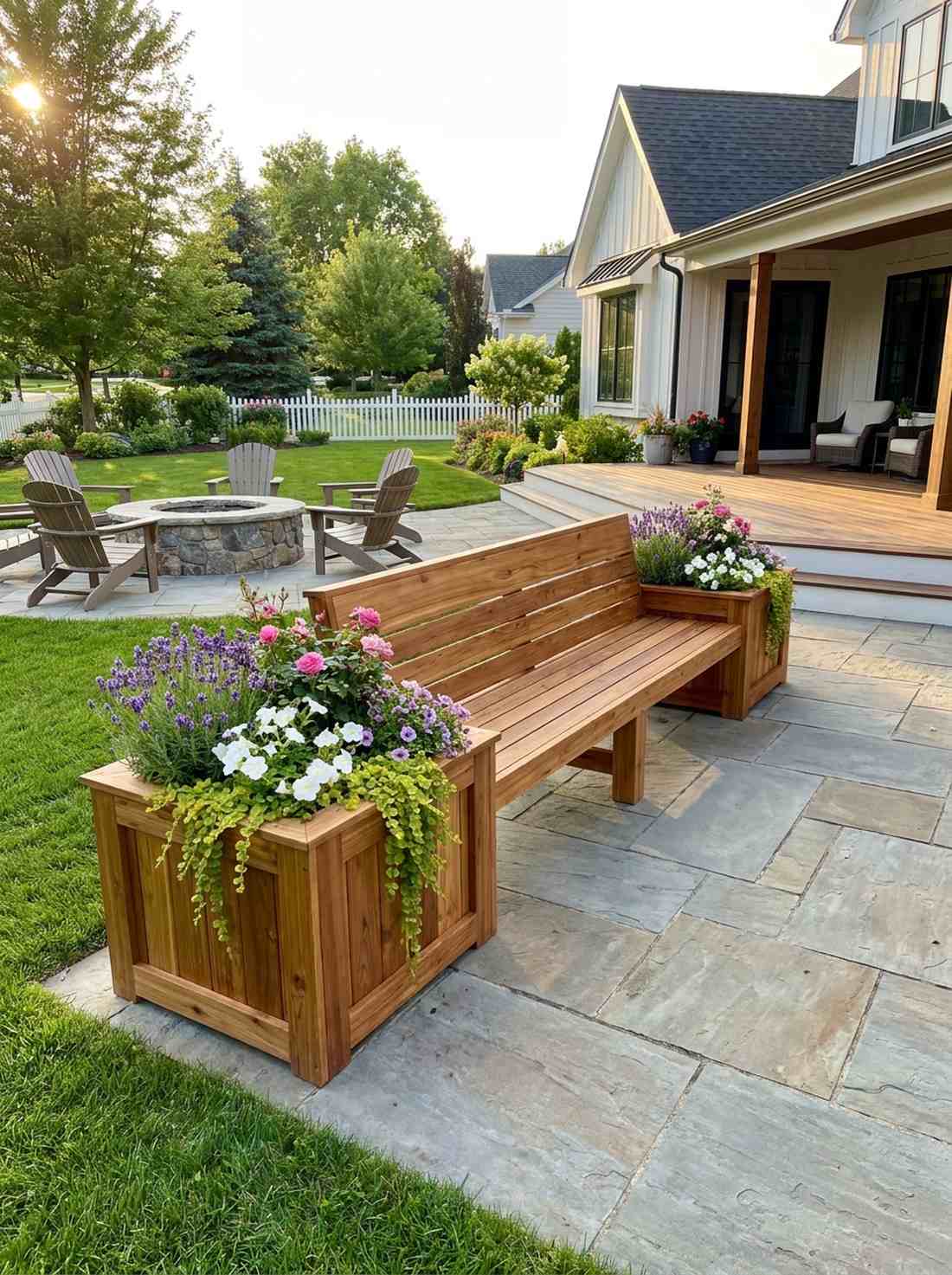
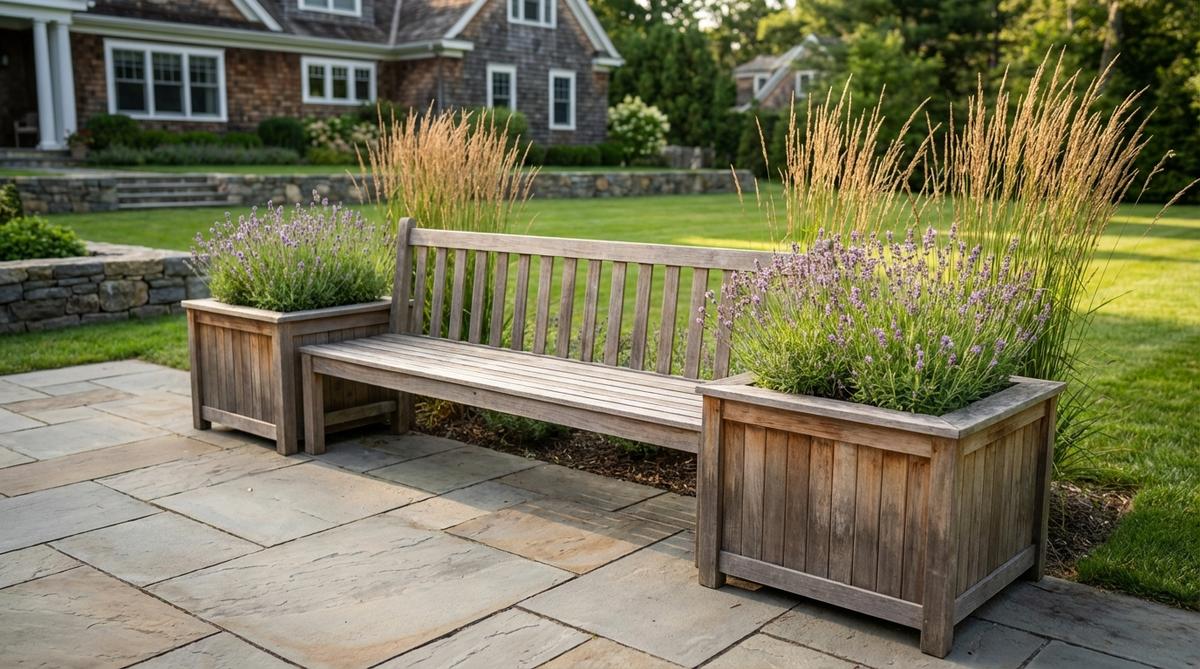
Surrounded by fragrant blooms, this brilliant dual-purpose design feels like you’re sitting inside a living garden. A bench with built-in planter boxes is incredibly smart for defining courtyard boundaries while saving space.
Freestanding pots easily clutter a patio, but building seamless planter integration directly into the seating structure produces a unified, high-end landscape feature. Sourcing moisture-proof composite decking materials is critical here to ensure wet planter soil doesn’t rot your seating area.
You can construct this two-in-one upgrade over a weekend for about $180–$250.
- Key Materials: Rot-resistant cedar or composite, heavy-duty planter liners
- Vibe / Style: Seamless living landscape
- Difficulty: Intermediate woodworking
- Budget Breakdown: Cedar lumber: $160 | Liners/Soil: $40.
- Creator’s Tip: Plant trailing vines like creeping jenny to spill over the sides and soften the sharp wooden edges.
- Smart Sourcing: Grab heavy-duty waterproof planter liners and pre-cut cedar decking boards.
15. Storage Bench With Lift-Top Seat
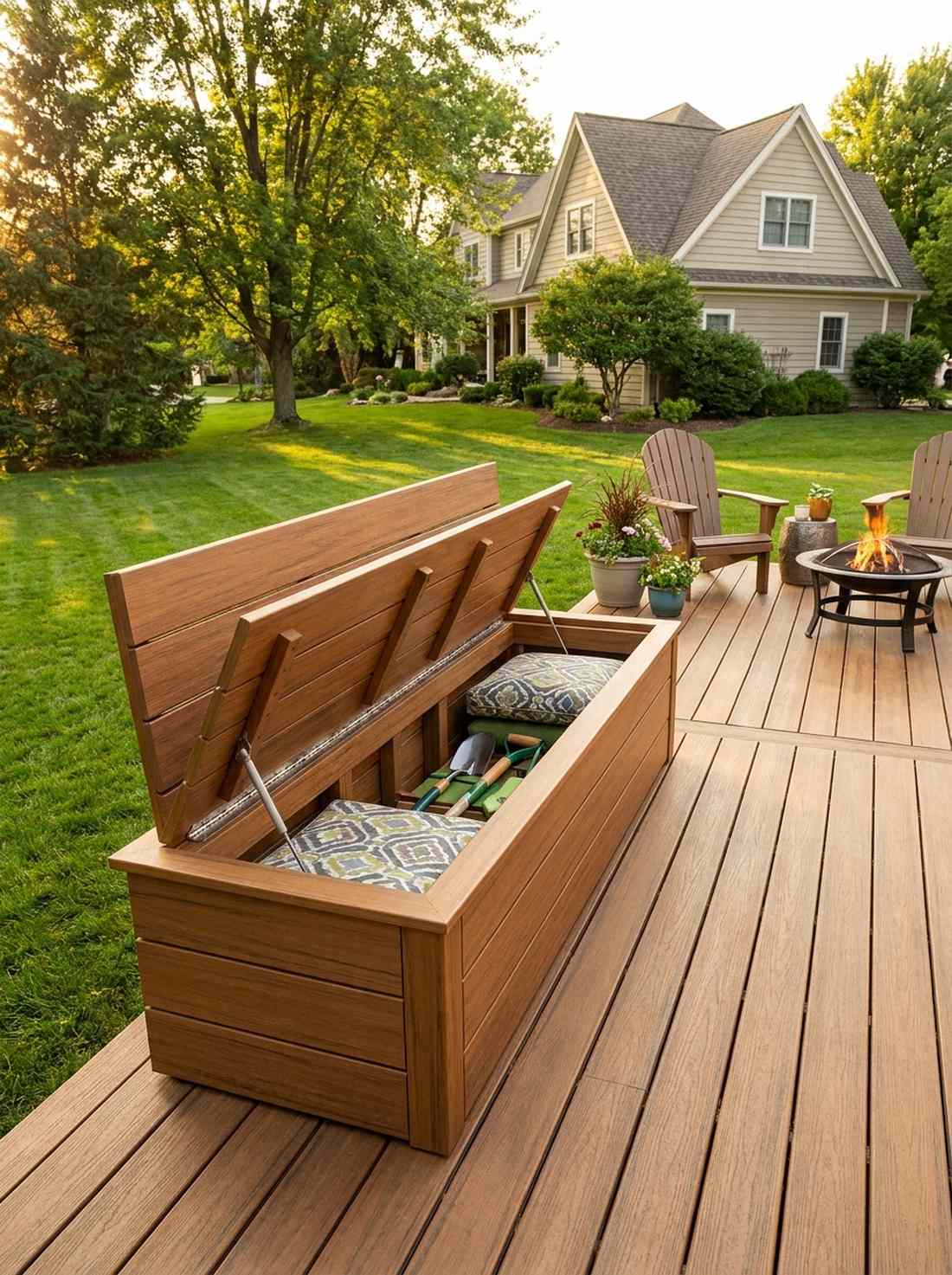
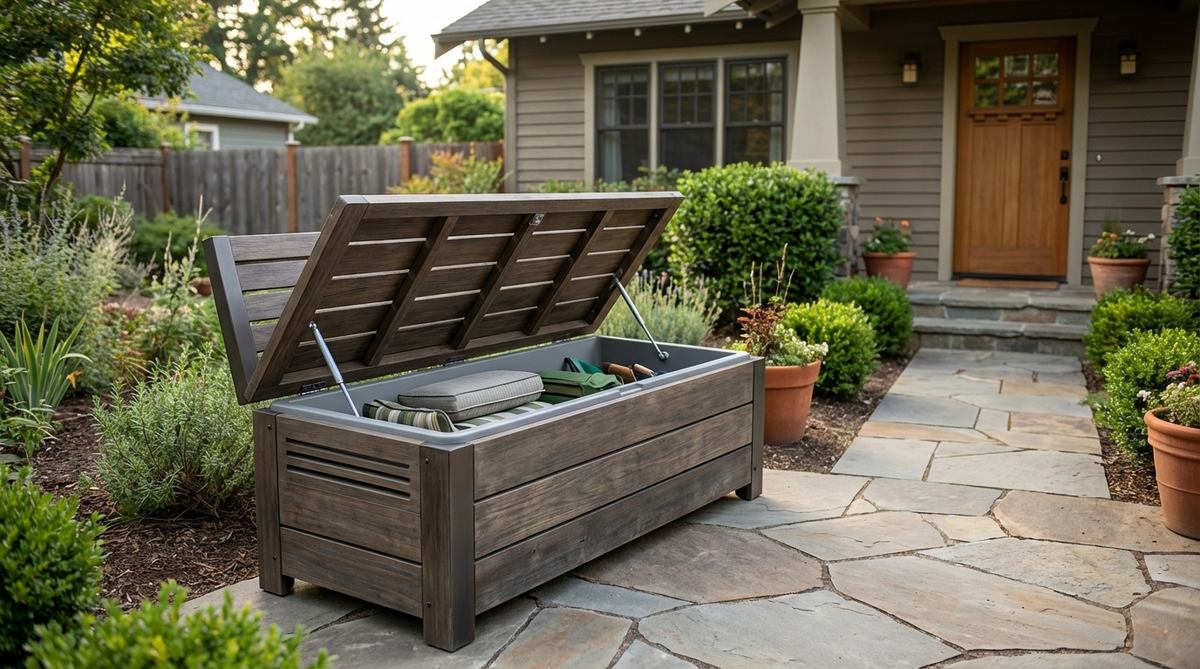
Sleek and deceivingly practical, this hidden compartment feels like an outdoor magician’s trick. The modern outdoor storage bench keeps tiny yards visually spotless by hiding away all the visual clutter.
Most storage bins look like cheap plastic trash cans, but wrapping the container in architectural wood paneling completely disguises the utility. Utilizing gas-strut hardware kits ensures the heavy wooden lid lifts effortlessly while keeping rain completely out of the interior.
Building this secret storage haven runs around $150–$220. Pin this for ultimate small-patio organization!
- Key Materials: Weatherproof exterior plywood, heavy-duty gas struts, exterior hinges
- Vibe / Style: Minimalist utility hidden in plain sight
- Difficulty: Intermediate
- Budget Breakdown: Wood/Paneling: $120 | Struts/Hinges: $50.
- Creator’s Tip: Drill small 1/4-inch holes in the bottom panel to ensure cross-ventilation and prevent mildew on stored cushions.
- Smart Sourcing: Invest in soft-close gas strut lid supports and rust-proof exterior piano hinges.
16. Bench With Integrated LED Lighting
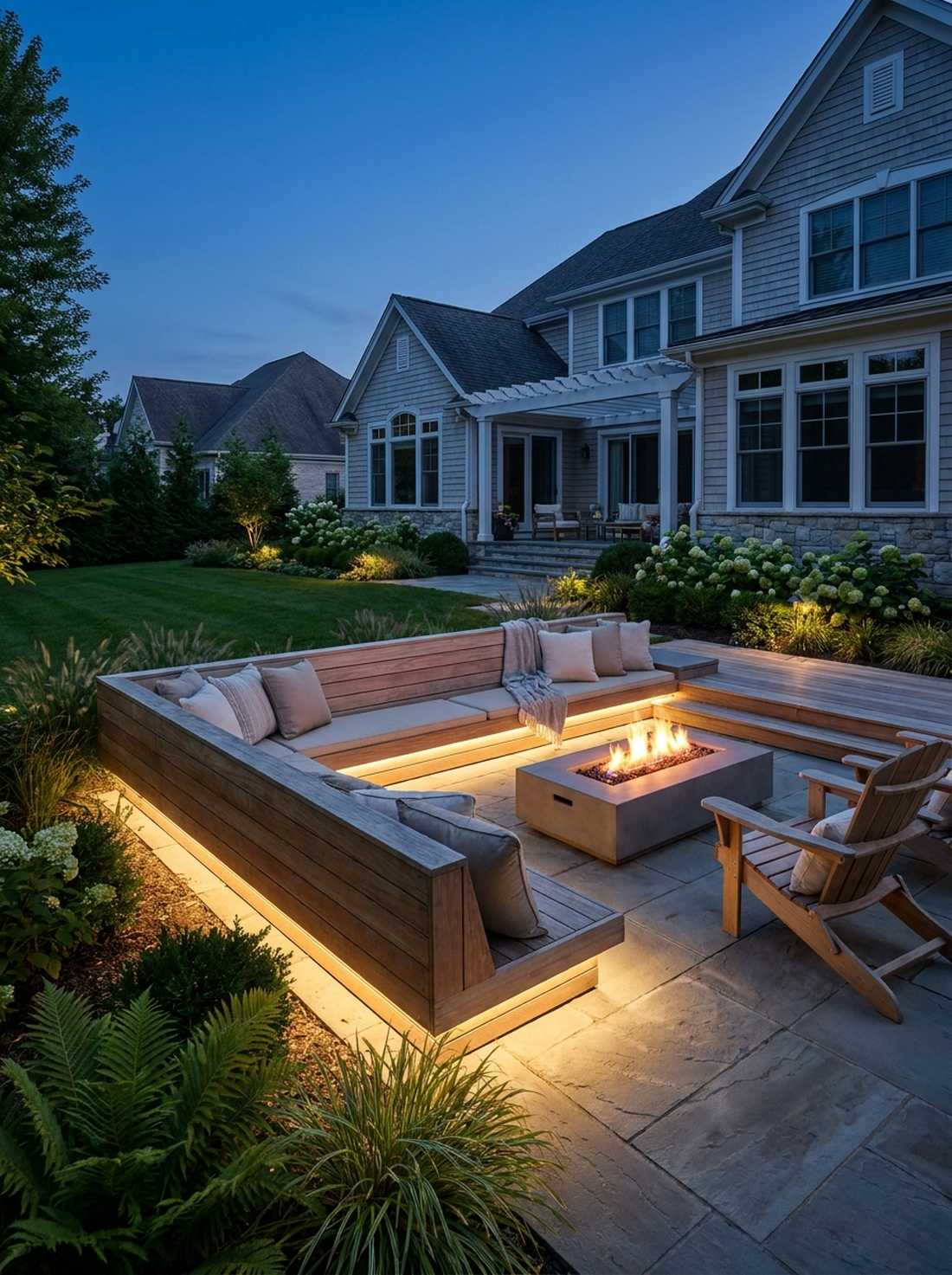
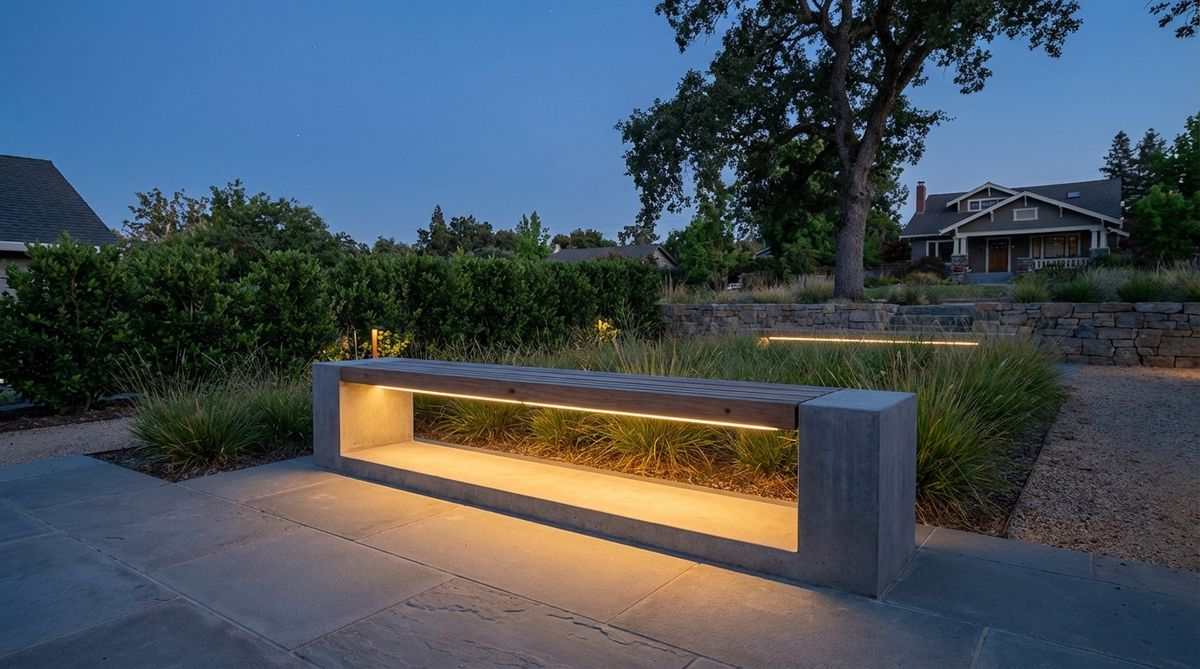
Glowing dramatically in the evening, this setup feels like a VIP lounge at a high-end resort. Integrating an under-glow LED garden bench completely eliminates the need for bulky pathway lighting.
Relying on glaring overhead floodlights ruins the nighttime ambiance, but recessed base lighting gives the bench a spectacular floating illusion. Installing smart outdoor LED strip kits lets you automate warm-white glows that elevate the entire backyard’s perceived value at sunset.
Adding the lighting tech only costs an extra $40–$70 on top of the bench build.
- Key Materials: Standard bench base, waterproof low-voltage LED channels
- Vibe / Style: Luxury nighttime lounge
- Difficulty: Easy electrical integration
- Budget Breakdown: LED strips: $35 | Aluminum channels: $20.
- Creator’s Tip: Hide the LED strips inside frosted aluminum tracking channels to diffuse the light and avoid cheap-looking light spots.
- Smart Sourcing: Buy IP68 waterproof LED strip kits and frosted aluminum LED diffuser channels.
Material Guide: Cheap vs. Premium Aesthetic
Knowing exactly where to save and where to spend makes all the difference in achieving that “looks expensive but isn’t” vibe.
- Standard vs. UV-Resistant/Premium: Standard wood stains fade in months. Upgrading to marine-grade sealants stops peeling and keeps the bench looking brand new for years.
- Pre-made Kits vs. Sourcing Locally: While raw lumber is cheap, precision-milled modular hardware kits often save you days of labor while guaranteeing a flawless, contractor-level finish.
17. Modular Bench System With Configuration Options
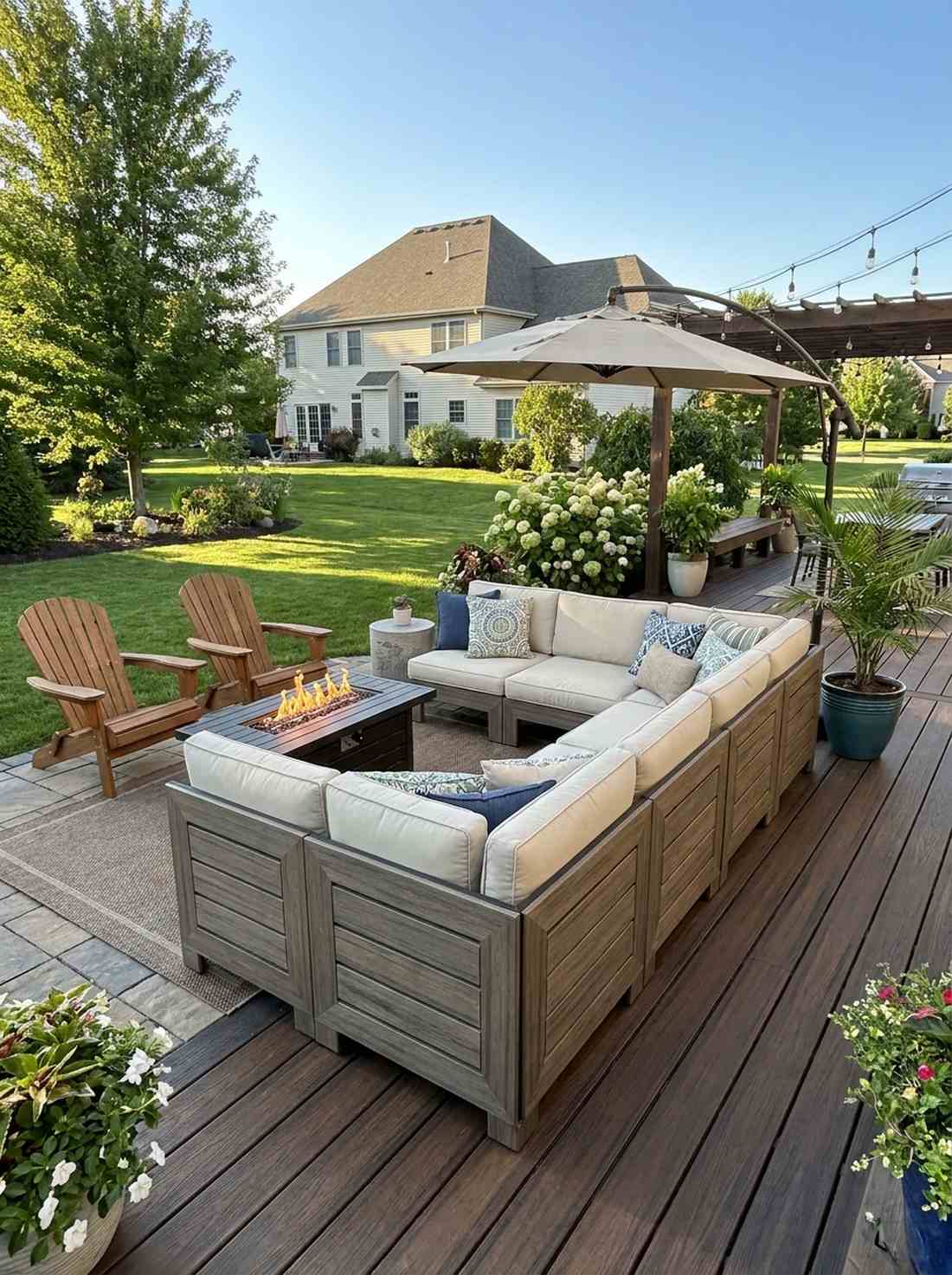
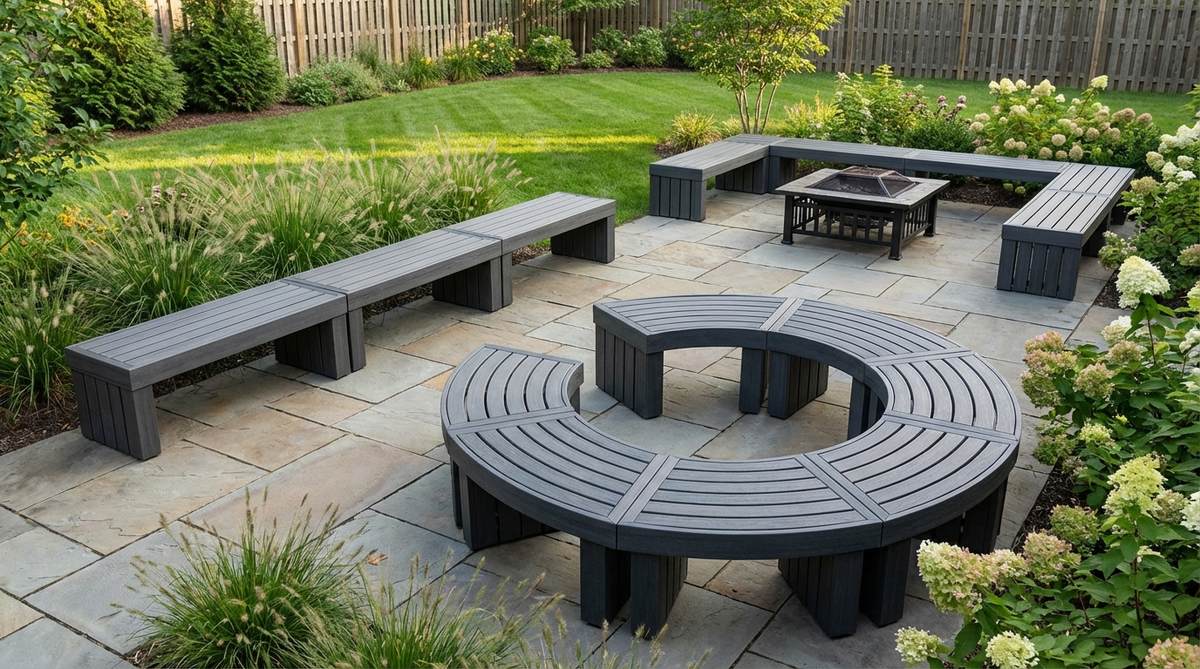
Endlessly adaptable, this Lego-like arrangement feels like you have a new patio every single weekend. Utilizing a modular outdoor seating system provides ultimate flexibility for huge parties or intimate fire-side chats.
Locking yourself into one massive, unmovable piece is a mistake; modular sections guarantee you can pivot your layout instantly. Sourcing commercial patio interlocking hardware allows you to snap straight and corner blocks together without any visible gaps.
Creating a 4-piece modular set usually costs around $400–$600 depending on the materials used. Save this genius layout for your next big outdoor party!
- Key Materials: Identical square base frames, interlocking hidden latches
- Vibe / Style: Ultra-adaptable event space
- Difficulty: Intermediate
- Budget Breakdown: Modular frames: $300 | Latch hardware: $80.
- Creator’s Tip: Build all modules to an exact 24×24 inch square standard so they fit together perfectly in any direction.
- Smart Sourcing: Use heavy-duty sectional furniture connectors and pre-cut composite decking tiles.
18. Bench-Planter-Privacy Screen Combo
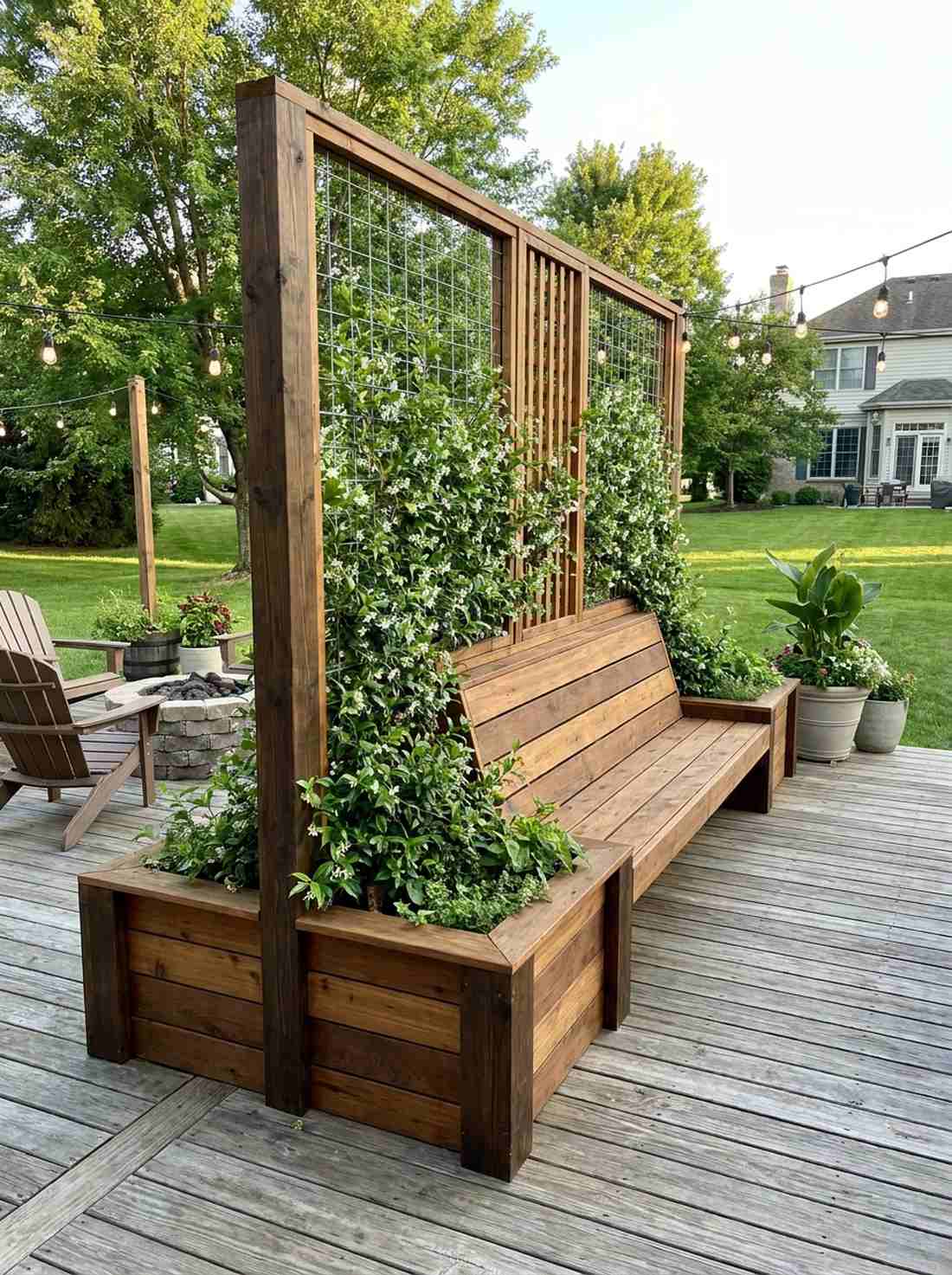
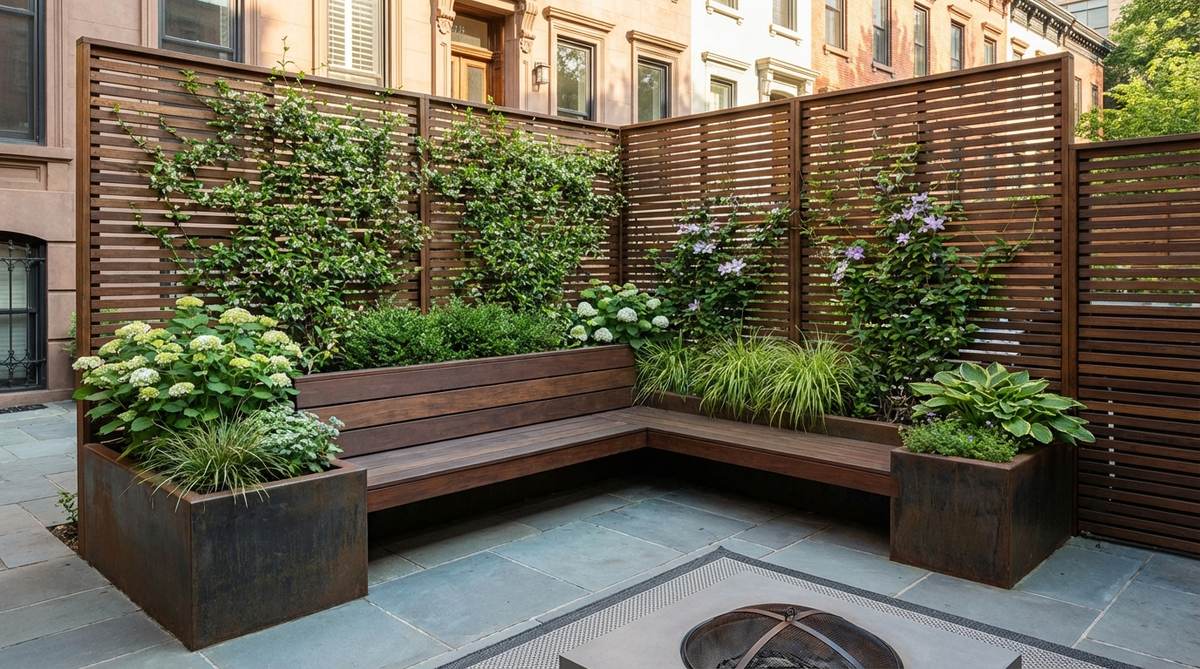
Towering with lush greenery, this three-in-one build feels like a secret fortress hidden from nosy neighbors. The bench with attached privacy screen is the absolute holy grail for tight townhouses or exposed balconies.
Using flimsy standalone screens looks messy, but anchoring a tall trellis directly into the heavy bench frame provides incredible structural stability. Equipping the backrest with vertical garden mesh kits allows you to train climbing jasmine, providing seating, screening, and sweet fragrance simultaneously.
You can build this entire privacy oasis for around $250–$350.
- Key Materials: Sturdy 4×4 posts, framed lattice or wire mesh, deep planter base
- Vibe / Style: Secluded green sanctuary
- Difficulty: Intermediate framing
- Budget Breakdown: Posts/Framing: $150 | Wire mesh: $60.
- Creator’s Tip: Slant the bench backrest at a 15-degree angle before attaching the straight vertical screen for maximum ergonomic comfort.
- Smart Sourcing: Pick up heavy-gauge welded wire trellis panels and climbing vine starter kits.
If you really want to make your neighbors jealous, you have to see these permanent architectural builds…
Architectural Built-In Seating For Permanent Installations
Fixed benches integrated into landscape architecture blur the boundaries between hardscape and furniture. These permanent installations create cohesive outdoor rooms with intentional seating placement.
19. Wall-Mounted Cantilever Bench
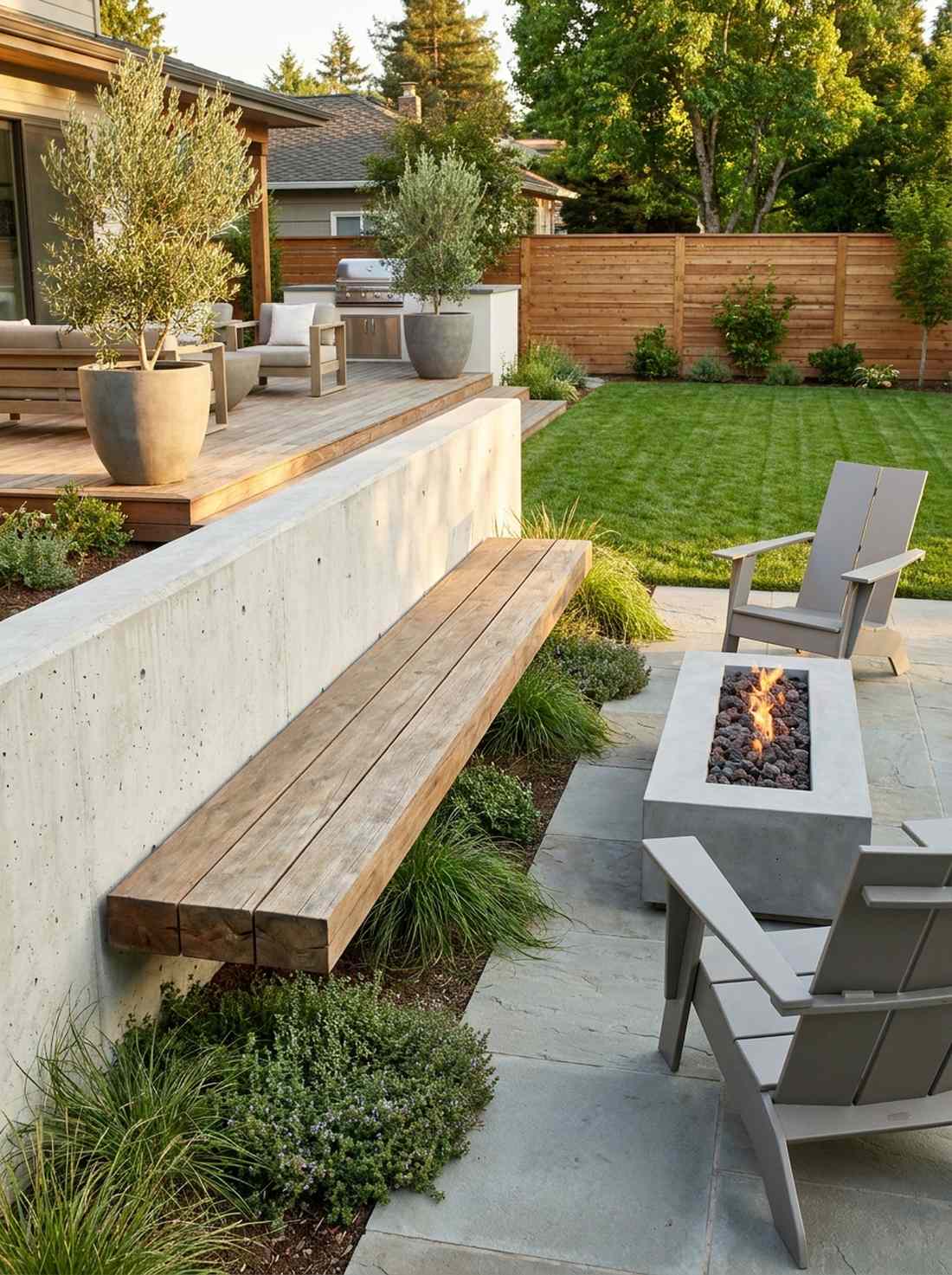
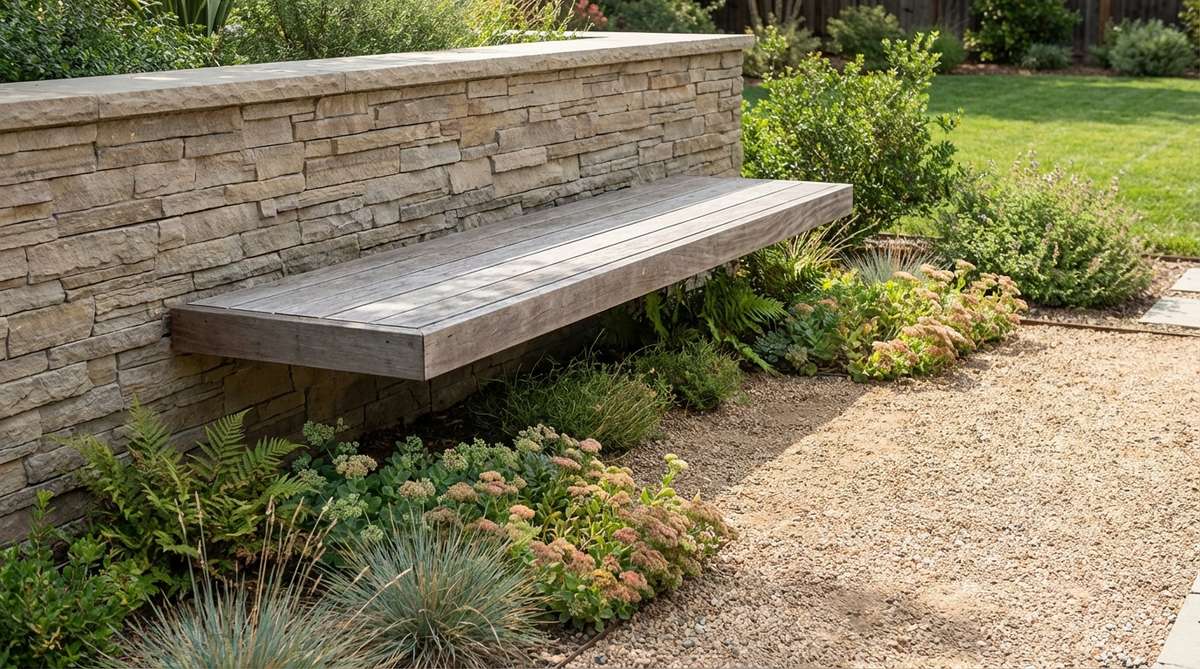
Seemingly magically floating mid-air, this fixed installation feels fiercely modern and impossibly clean. A wall-mounted garden bench transforms blank boundary walls into highly functional, jaw-dropping architectural elements.
Most backyard seating interrupts the ground plane, but completely removing the legs guarantees an ultra-luxurious, sweeping visual continuity. Relying on heavy-duty masonry lag shields ensures the floating projection remains rock-solid while ground-cover plants flow elegantly underneath.
This floating hack only requires about $100–$180 in heavy structural materials. Pin this for a minimalist yard transformation!
- Key Materials: Masonry anchors, hidden steel brackets, solid wood top
- Vibe / Style: Zero-gravity modernism
- Difficulty: Advanced (structural wall anchoring)
- Budget Breakdown: Bracket system: $80 | Seat material: $70.
- Creator’s Tip: Only attempt this on structurally sound concrete, brick, or properly reinforced stud walls to prevent collapsing.
- Smart Sourcing: Use industrial concrete lag shields (bulk pack) and heavy-duty blind shelf supports.
20. Fire Pit Surround Bench
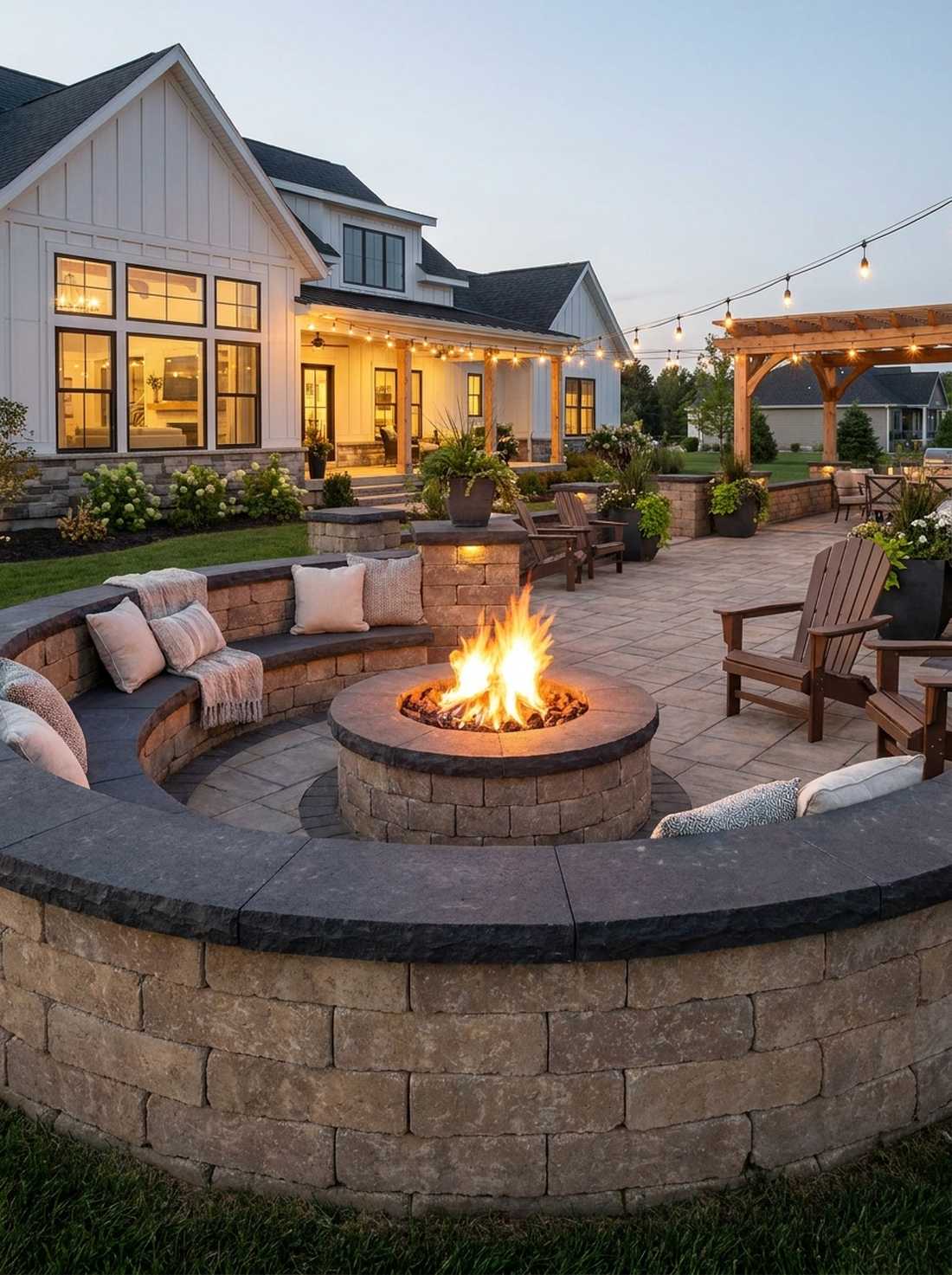
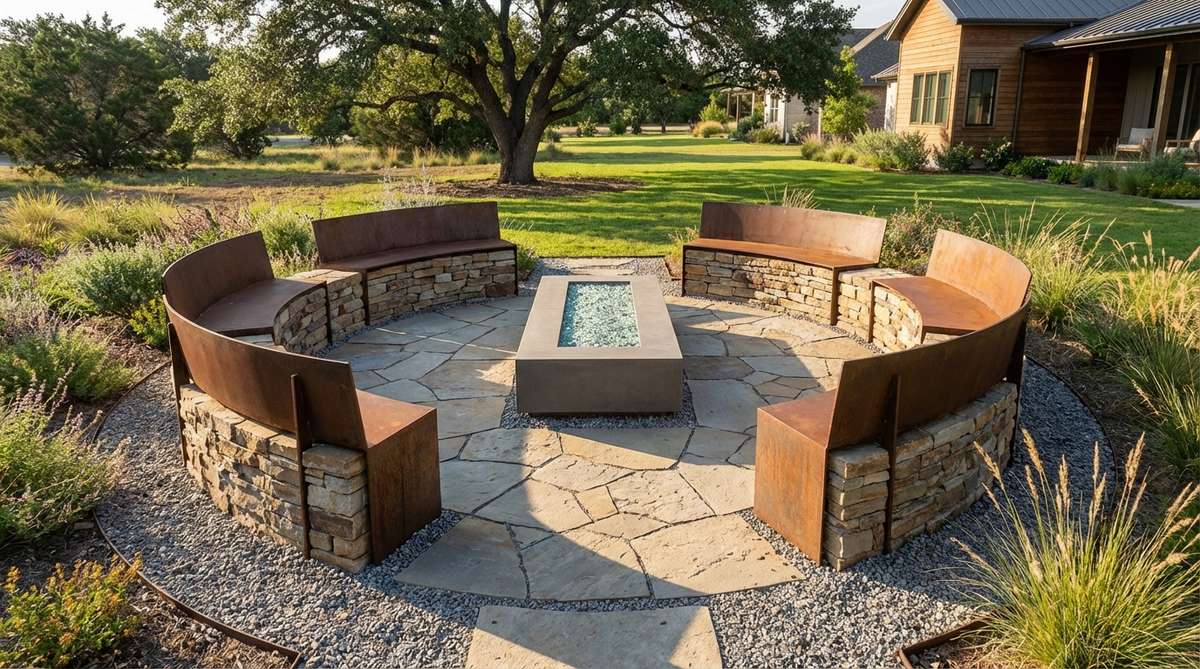
Curving perfectly around the roaring flames, this layout feels like an upscale modern campground. Building a built-in fire pit seating ring anchors the entire patio, turning it into a dedicated destination zone.
Throwing random lawn chairs around a fire looks incredibly sloppy, whereas a geometric, fixed surround creates a high-end 360-degree gathering hub. Investing in heat-resistant landscape block systems guarantees safety while maintaining that sleek, permanent masonry aesthetic.
Depending on the diameter, this masonry project will cost you around $350–$550.
- Key Materials: Retaining wall blocks, heat-resistant capstones
- Vibe / Style: High-end destination gathering
- Difficulty: Intermediate masonry
- Budget Breakdown: Wall blocks: $250 | Capstones/Adhesive: $150.
- Creator’s Tip: Always maintain a strict 30-to-36-inch clearance from the actual flame source to keep knees from getting uncomfortably hot.
- Smart Sourcing: Buy exterior masonry landscape adhesive and pre-cut radius retaining wall blocks.
21. Deck-Integrated Perimeter Bench
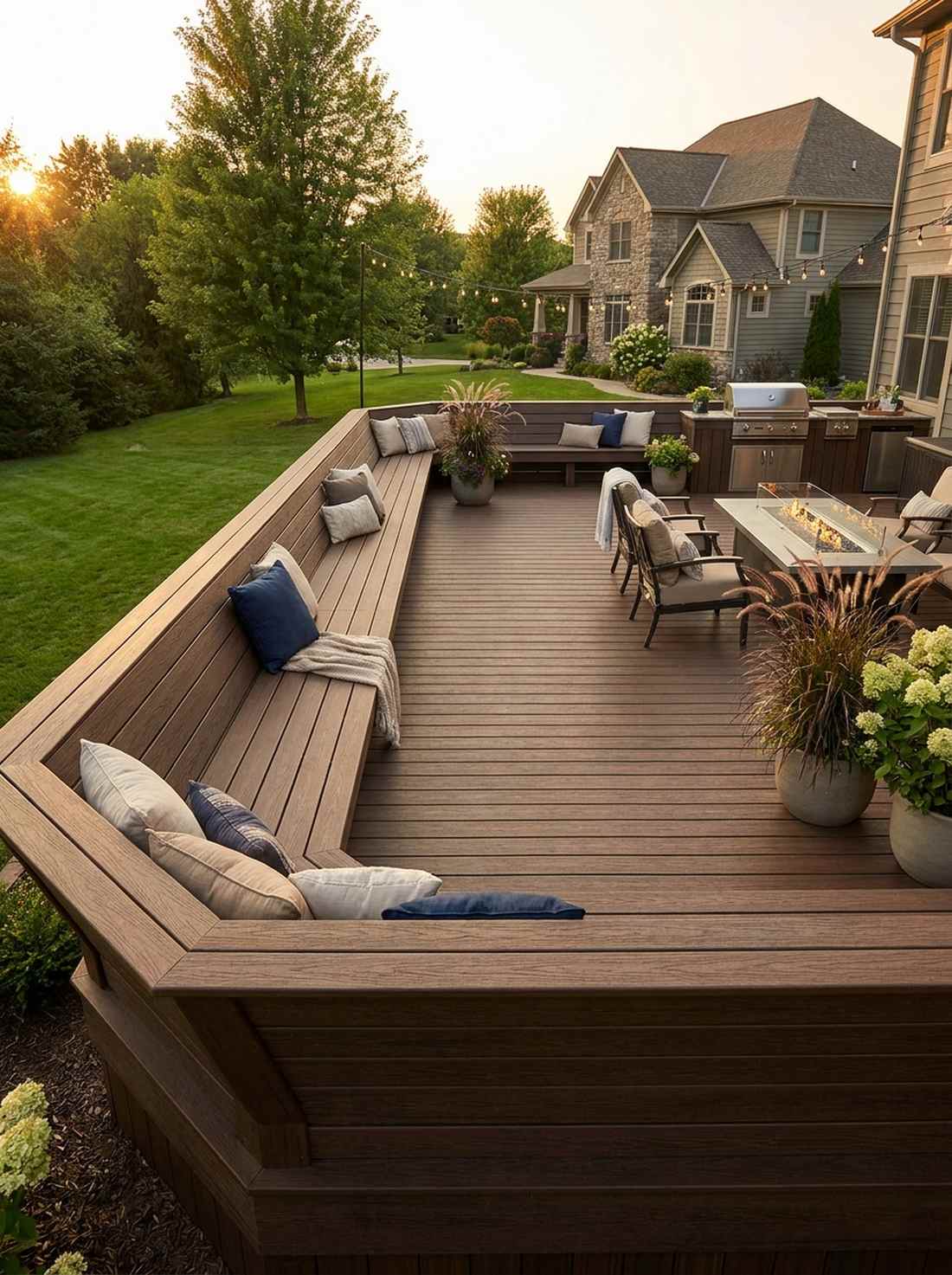
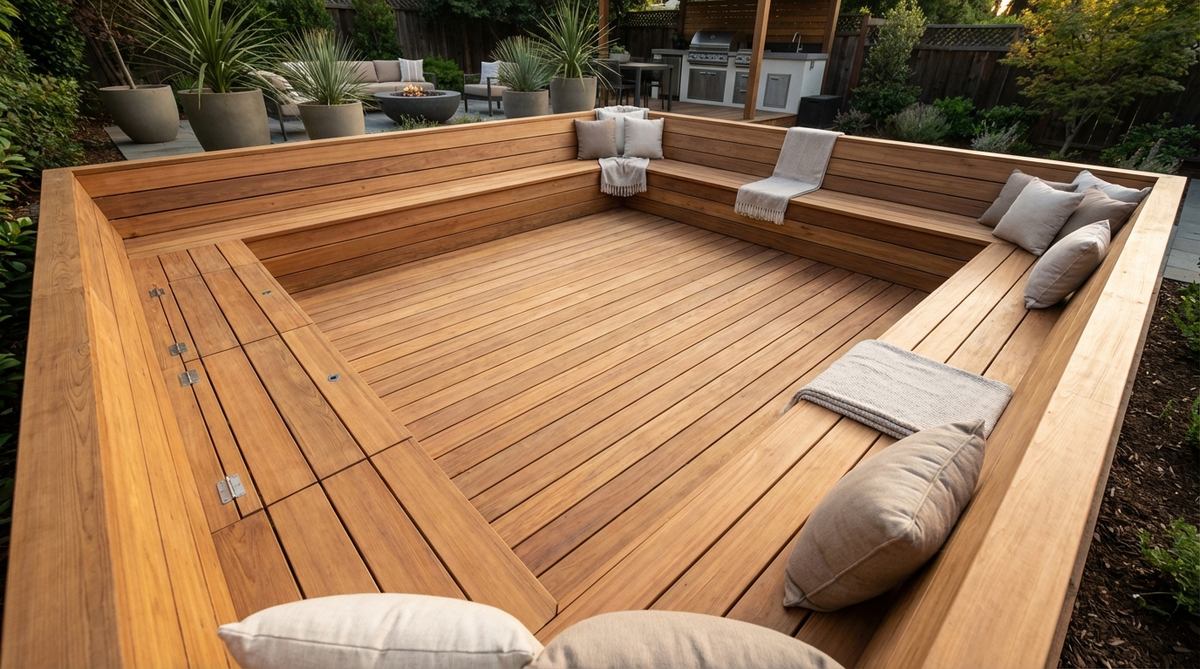
Framing the deck edges beautifully, this layout feels like a vast, unobstructed party deck. A perimeter deck bench entirely eliminates the need to buy bulky, space-wasting outdoor dining chairs.
Standard railings block views and eat up usable space, but substituting them with built-in seating creates a massive, seamless boundary. Using matching composite deck board materials visually ties the seating into the floor plane for an incredibly unified designer finish.
Adding this during a deck build adds about $15–$25 per linear foot. Save this idea if you’re remodeling a raised patio!
- Key Materials: Structural lumber framing, matching deck boards
- Vibe / Style: Unified party deck
- Difficulty: Intermediate carpentry
- Budget Breakdown: Framing: $100 | Composite decking tops: $200.
- Creator’s Tip: Angle the backrest back about 10 degrees and soften the front lip with a routed edge for major comfort upgrades.
- Smart Sourcing: Get hidden deck fastener kits and weatherproof framing brackets.
22. Raised Bed Wall Bench Combination
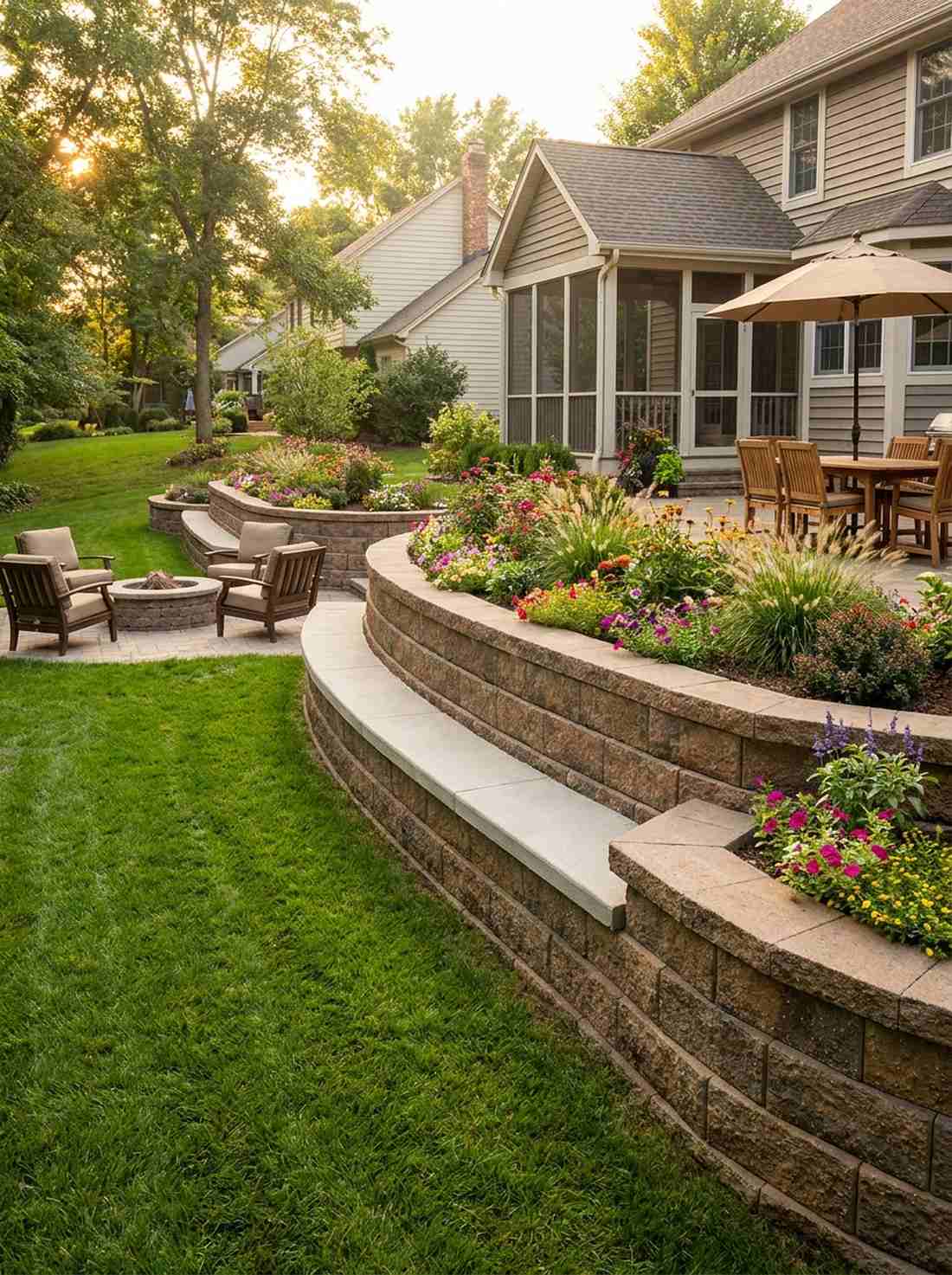
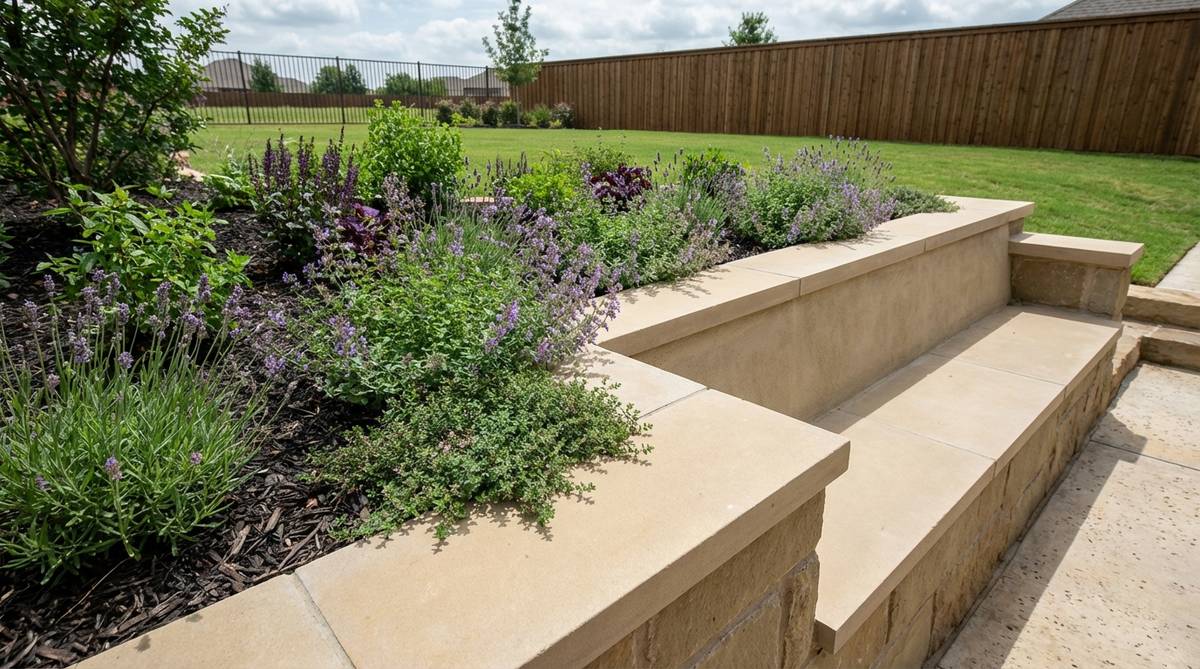
Blending beautifully into the garden architecture, this smart build feels like an organic extension of your plantings. Capping a wall to create a raised planter retaining bench pulls double duty in tight, sloping yards.
Building separate retaining walls and seating areas wastes precious budget and space. By deliberately widening the top cap of the planter wall using smooth concrete paver supplies, you instantly create miles of casual, impromptu seating along your garden beds.
Simply upgrading to a wider capstone usually only adds $100 to a standard wall project.
- Key Materials: Concrete wall blocks, extra-wide smooth capstones
- Vibe / Style: Seamless terraced landscaping
- Difficulty: Intermediate
- Budget Breakdown: Wide capstones: $120 | Masonry glue: $20.
- Creator’s Tip: Ensure the final capstone rests exactly between 16 and 18 inches off the ground to hit that perfect ergonomic sweet spot.
- Smart Sourcing: Order smooth cast-concrete wall caps and heavy-duty landscape block adhesive.
Don’t skip this final corner trick—it’s the absolute best way to maximize dead space…
23. L-Shaped Corner Built-In With Planters
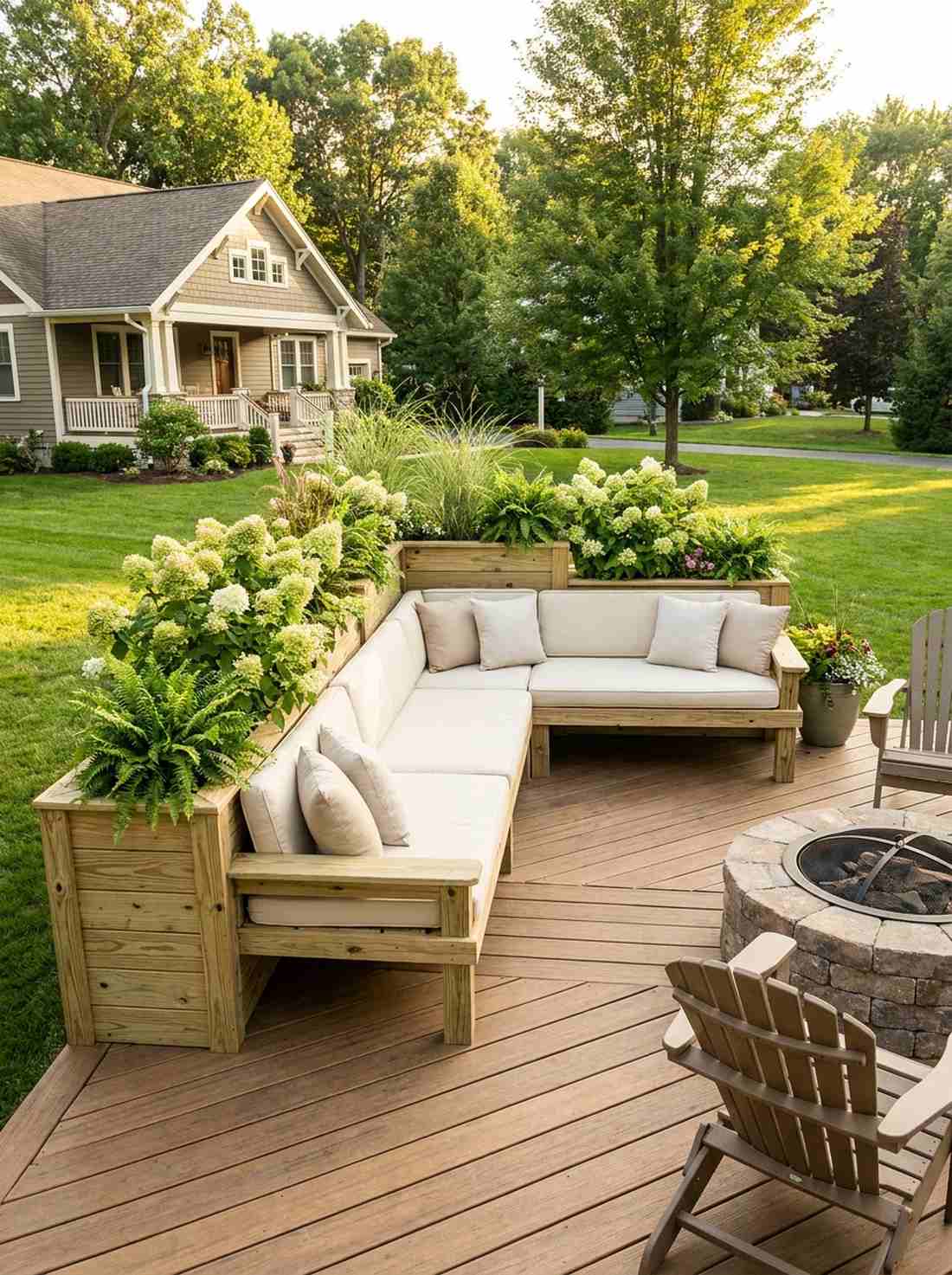
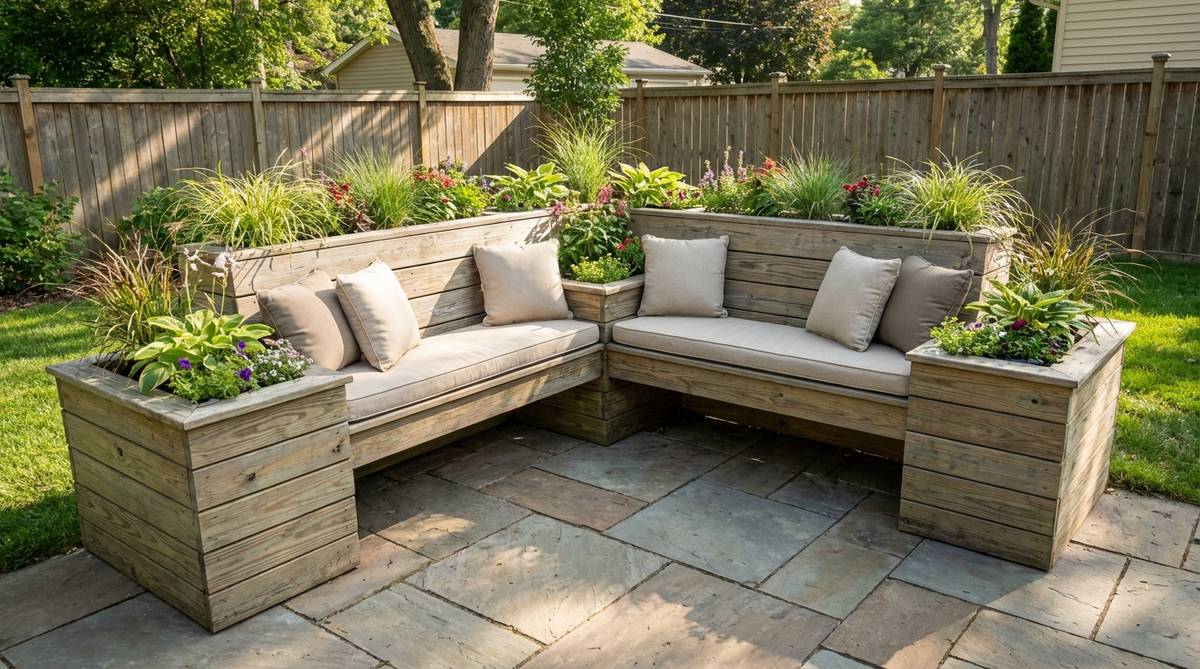
Transforming a neglected nook into a lush focal point, this setup feels like an exclusive VIP booth in a garden cafe. A custom L-shaped corner bench with planters forces dead space to become the most productive spot in the yard.
Leaving boundary corners empty is a massive design flaw, but bridging the gap with custom seating frames framed by tall plants fixes the geometry instantly. Integrating commercial weed barrier fabrics ensures soil stays contained in the planter boxes without rotting the wooden frame.
Building this custom corner oasis will set you back about $250–$350. Pin this to finally fix that awkward backyard corner!
- Key Materials: Pressure-treated ground-contact lumber, heavy landscape fabric
- Vibe / Style: Exclusive garden alcove
- Difficulty: Intermediate
- Budget Breakdown: Ground-contact lumber: $180 | Fabric/Screws: $50.
- Creator’s Tip: Build the planter boxes slightly taller than the bench backrest to create a stunning, tiered architectural backdrop.
- Smart Sourcing: Grab heavy-duty woven weed barrier fabric (bulk roll) and exterior-grade deck screw starter kits.
Transform Your Outdoor Space With Premium Bench Designs
The right contemporary garden bench completely shifts your landscape from basic to breathtaking simply by leveraging the right materials and smart blueprints. Whether you construct a floating cantilever, a monolithic concrete pour, or any of the exact 23 high-end styles detailed above, skipping retail markup saves you thousands while delivering premium durability.
Start by identifying your yard’s dead zones or awkward corners, then source commercial-grade kits and sealants to build out a permanent, weather-proof fixture. By focusing on smart sourcing and architectural lines, you guarantee an outdoor upgrade that looks like it cost a fortune.
Ready to finally build that dream patio? Grab those starter kits, choose your favorite blueprint, and transform your everyday garden into a luxury modern sanctuary.
Frequently Asked Questions
What materials work best for contemporary garden benches?
To achieve that expensive contemporary look while surviving the elements, prioritize marine-grade teak, powder-coated steel, and high-density concrete. Using premium outdoor patio materials ensures zero fading or rust. If you’re near the coast, marine-grade stainless steel is an absolute must to fight salt corrosion, whereas bulk concrete mixes and heavy galvanized metal kits are perfect for urban, budget-friendly industrial setups.
How do I maintain a contemporary outdoor bench?
Maintenance costs drop to zero if you source the right sealants from the start. Teak benches stay stunning when treated with UV-resistant marine teak oil, or they can naturally silver. For powder-coated metals, a quick automotive clear-coat spray prevents chalking. Avoid generic wood stains; always invest in penetrating clear outdoor wood sealers or commercial-grade concrete polishing kits to keep the piece looking brand new.
What’s the ideal bench height for comfortable outdoor seating?
To avoid that “cheap furniture” feel, always construct your bench seating surface strictly between 16 to 18 inches off the ground, perfectly mirroring high-end dining chair ergonomics. If you’re building a lounge-specific fire pit surround, dropping to 14-16 inches creates a cozier vibe. Always ensure a 16-18 inch seat depth, and utilize pre-cut outdoor cushion kits to guarantee maximum comfort.
Can contemporary benches work in traditional garden settings?
Absolutely. The secret to blending them is utilizing warm, organic materials like live-edge slab kits or thick teak rather than aggressive metals. Positioning a sleek, minimalist wooden bench inside an ornate traditional garden provides incredible visual contrast without looking out of place. Avoiding cheap plastic and investing in high-end natural wood sourcing bridges the gap perfectly.
Are modular bench systems worth the investment?
Modular interlocking seating kits are the ultimate money-saver for dynamic patios. Instead of buying multiple separate furniture sets for different occasions, modular hardware allows you to split or combine benches instantly. Purchasing heavy-duty sectional furniture connectors in bulk lets you infinitely expand the setup later, providing unmatched ROI for large families or frequent backyard entertainers.