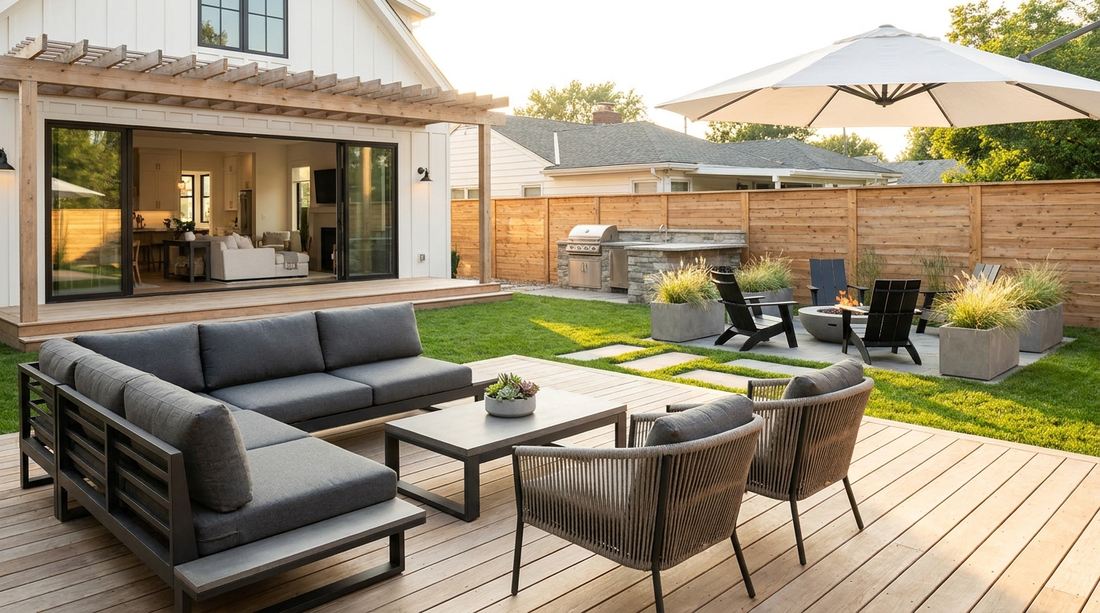
Sleek minimalist garden furniture instantly makes cramped patios feel like luxury wellness retreats. We break down precise material costs and smart product sourcing strategies. Build a weather-resistant, designer-level outdoor sanctuary on a realistic budget.
Design Snapshot Key Principles
- Low-Profile Geometry: Furniture with horizontal emphasis and reduced visual weight creates openness in compact gardens
- Material Honesty: Exposed teak, powder-coated aluminum, and woven rope celebrate authentic textures without excessive ornamentation
- Modular Versatility: Sectional pieces that reconfigure for different occasions maximize functionality in modern outdoor living
- Neutral Palette Foundation: Soft greys, warm beiges, and muted greens establish calming backdrops that harmonize with natural surroundings
Essential Seating Foundations
The foundation of any minimalist outdoor space begins with seating that prioritizes clean geometry and architectural presence. These pieces establish visual rhythm while providing comfortable support for extended outdoor living.
1. Powder-Coated Aluminum Dining Chairs
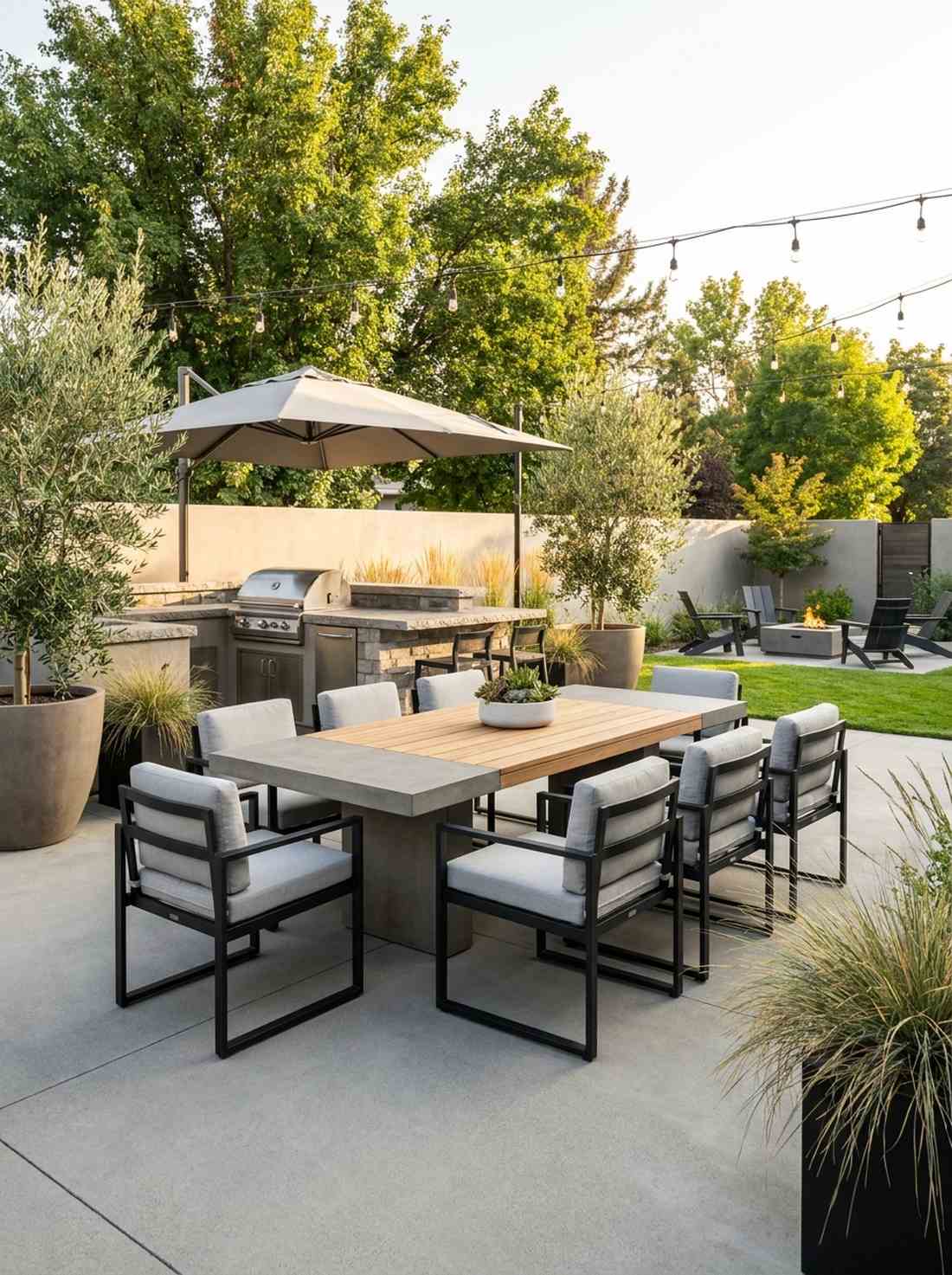
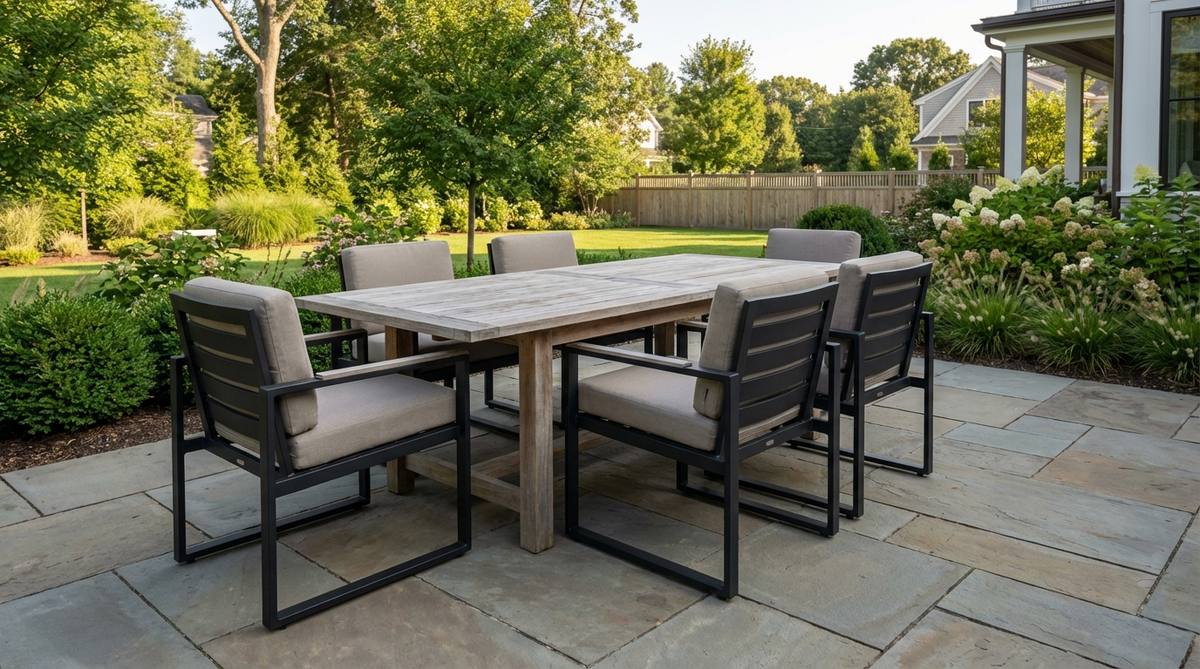
This modern outdoor dining aesthetic feels like an exclusive rooftop terrace you’d find in a luxury hotel. Works exceptionally well for a sleek concrete patio craving structure without the visual bulk.
A lot of homeowners mistakenly buy heavy wrought iron, but this ultra-lightweight frame delivers a surprisingly premium look. By utilizing weather-resistant powder-coated metals, you avoid the seasonal rust that ruins cheaper sets.
You can easily pull this off for around $80–$150 per chair depending on the finish. Save this to your DIY weekend garden board if you need rapid upgrades.
- Key Materials: Matte black aluminum frames, high-density foam cushions
- Vibe / Style: Architectural minimalism
- Difficulty: Zero-assembly setup
- Budget Breakdown: Chairs: $120 | Premium Cushions: $40
- Creator’s Tip: Use a silicon-based protective spray twice a year to keep the matte finish looking brand new.
- Smart Sourcing: UV-coated aluminum chair sets (bulk pack) and pre-treated outdoor dining cushions.
2. Slatted Teak Armchairs
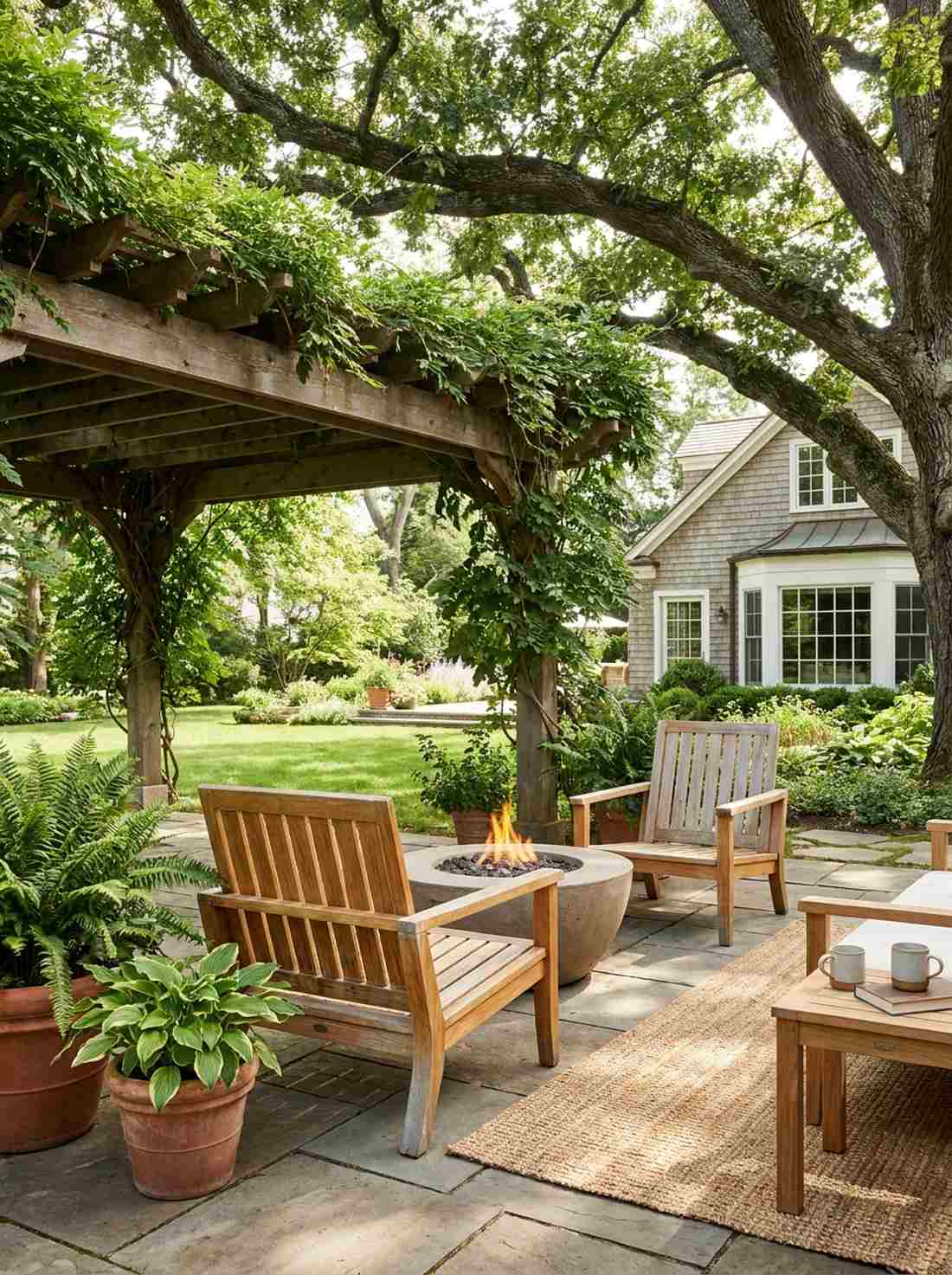
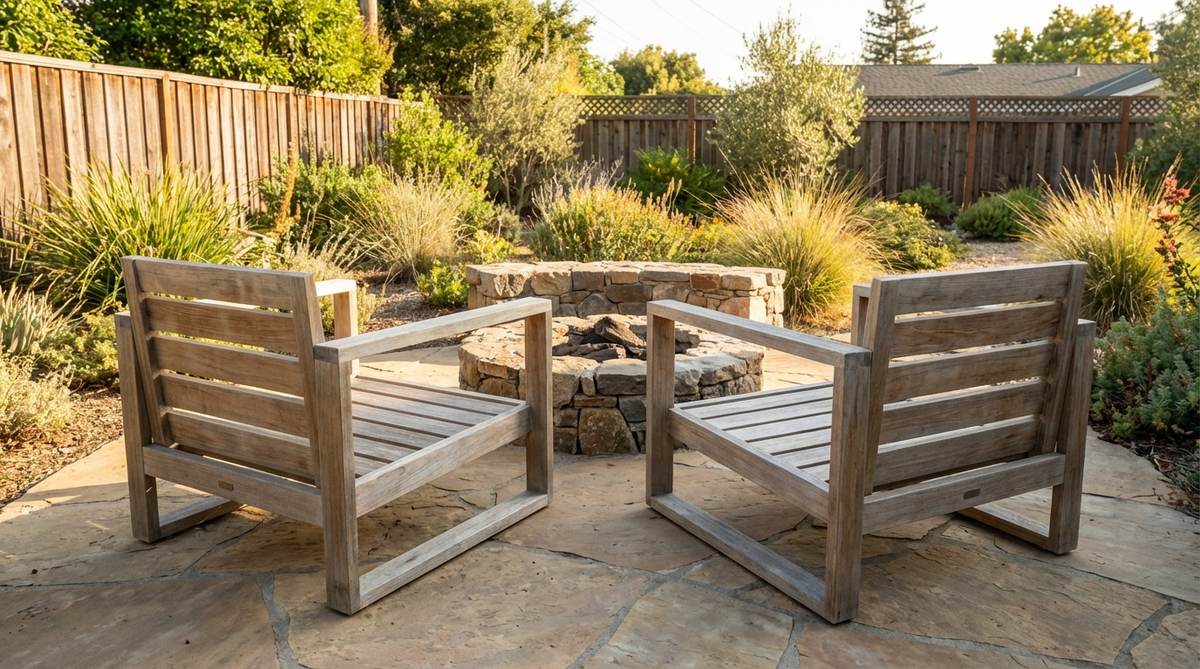
There is something deeply calming about this organic patio seating setup, making it feel like a private Balinese spa retreat. Perfect for placing beneath a heavily shaded pergola or ancient tree canopy.
Skipping synthetic woods for authentic materials instantly gives a designer-level finish to your yard. If you invest in high-end teak garden furniture, the wood’s natural oils repel moisture, bypassing the need for tedious winter storage.
Expect to spend roughly $200–$350 for ethically sourced seating. It’s a fast upgrade that completely changes the vibe of your morning coffee routine.
- Key Materials: FSC-certified solid teak wood, stainless steel hardware
- Vibe / Style: Warm organic modern
- Difficulty: Beginner-friendly assembly
- Budget Breakdown: Base chair: $250 | Teak oil sealant: $25
- Creator’s Tip: Let the wood naturally weather to a silvery grey for that highly coveted effortless coastal aesthetic.
- Smart Sourcing: Pre-drilled teak armchair kits and marine-grade wood sealant sprays.
3. Woven Rope Dining Chairs
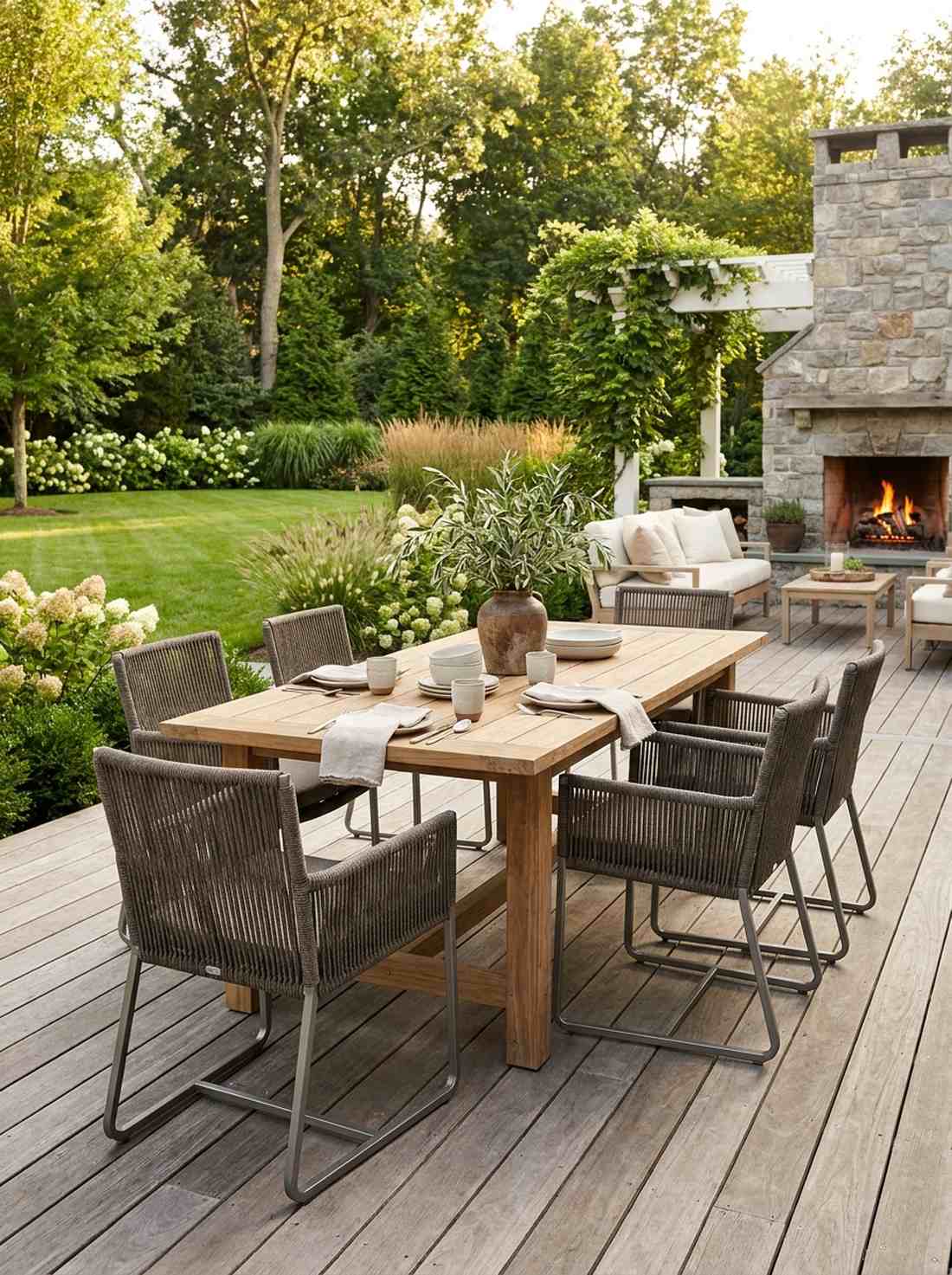
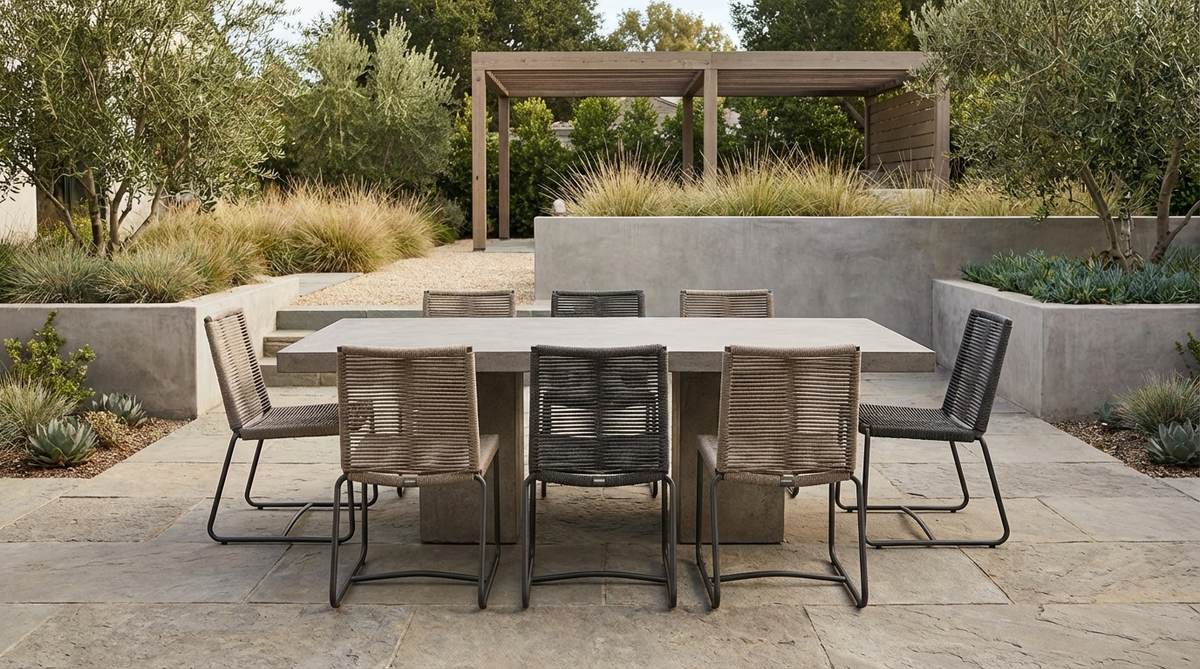
Bringing incredible tactile warmth, this woven balcony seating idea feels straight out of a high-end Mediterranean villa. It’s an absolute lifesaver for softening the harsh edges of brick or stone hardscaping.
Most standard patio chairs look rigid, but synthetic rope weaving provides flexible ergonomic support while looking effortlessly chic. Integrating premium patio furniture kits with UV-stabilized fibers ensures the dark taupe colors never fade.
Pricing usually hovers around $150–$250 per piece. Pin this if you’re planning a small space upgrade that prioritizes both comfort and high style.
- Key Materials: Synthetic all-weather rope, galvanized steel frames
- Vibe / Style: Contemporary coastal
- Difficulty: Ready to use
- Budget Breakdown: Woven chairs: $180 | Fabric protector: $15
- Creator’s Tip: Stick to charcoal or sandstone rope colors; they hide pollen dust exceptionally well during spring.
- Smart Sourcing: UV-resistant synthetic rope chair kits and heavy-duty furniture covers (multi-pack).
4. Folding Steel Bistro Chairs
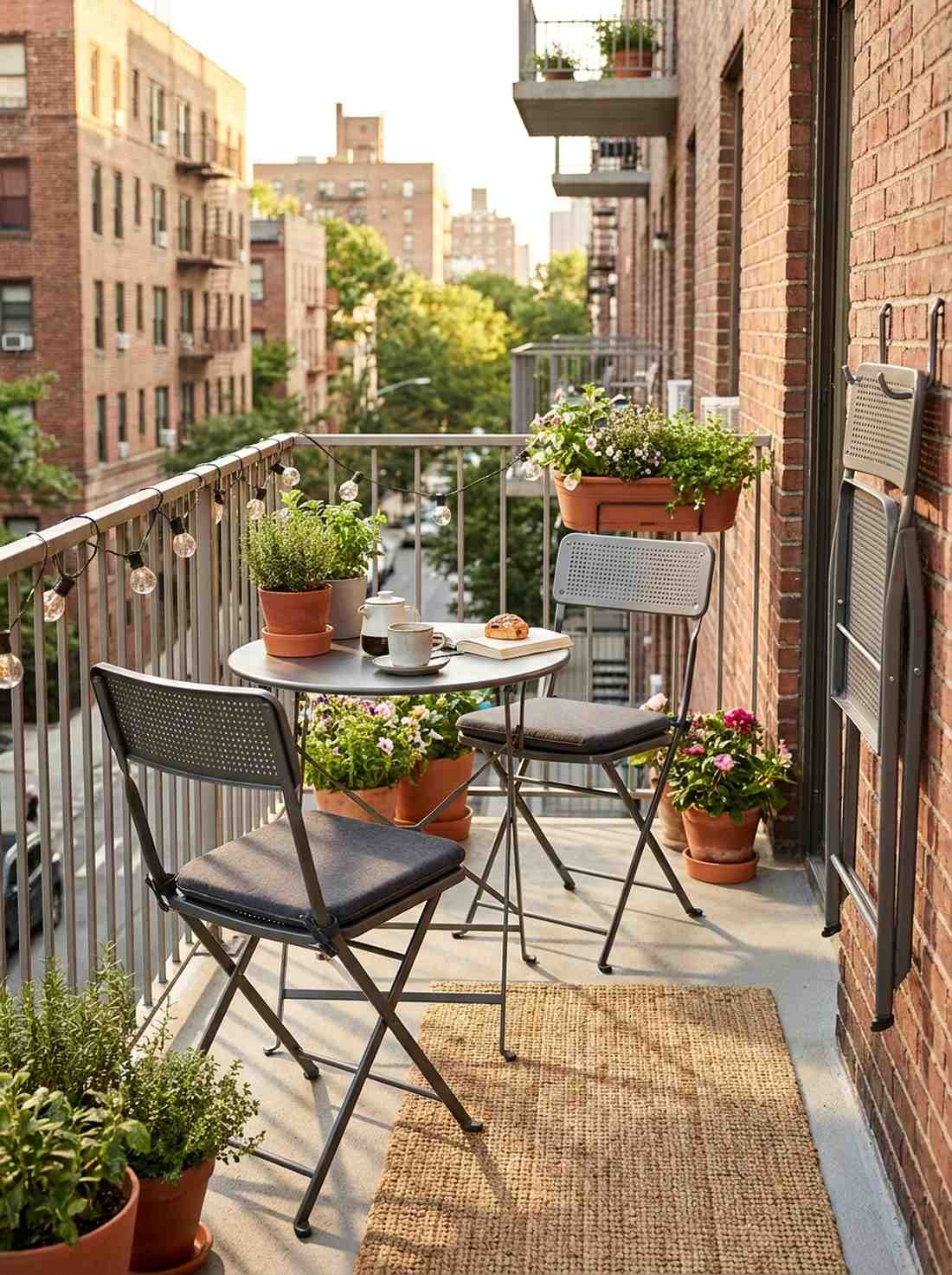
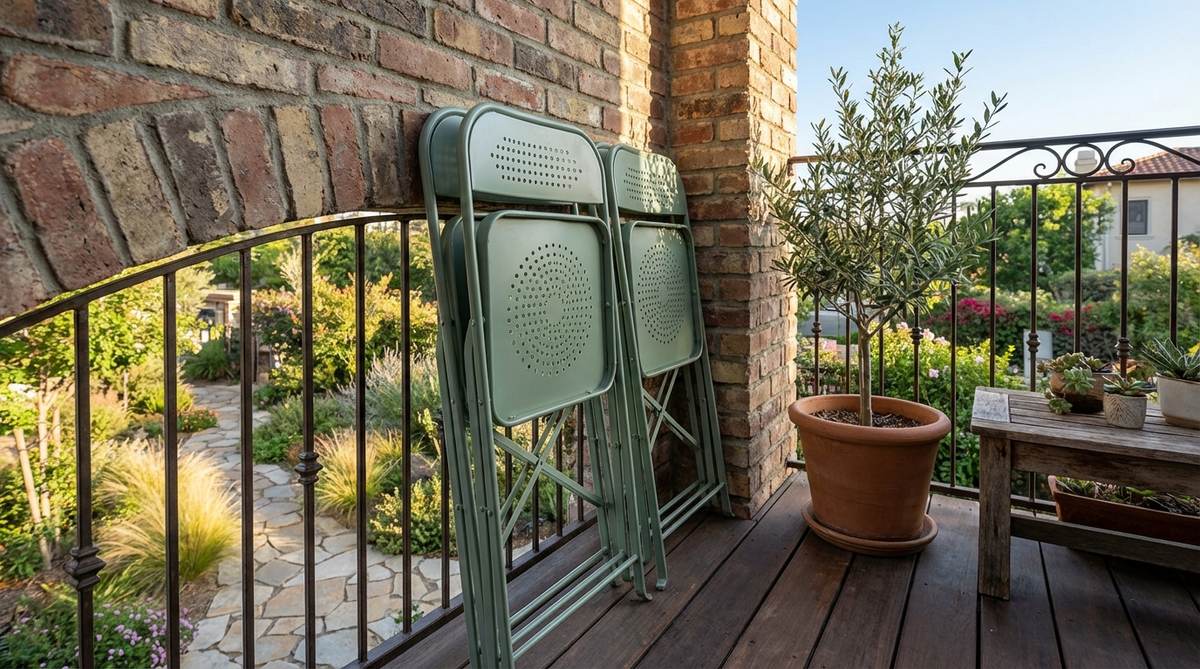
This compact urban balcony decor feels like a hidden Parisian café you accidentally discovered in an alleyway. Unbeatable for tight apartment terraces where every single square inch matters.
You might think folding furniture looks cheap, but perforated galvanized steel completely elevates the category. Utilizing minimalist outdoor dining solutions prevents the space from feeling claustrophobic while allowing instant teardown.
You can snag a gorgeous set for just $60–$120. Highly recommended for a quick weekend win on a tight budget.
- Key Materials: Perforated steel, rust-proof hinges
- Vibe / Style: Industrial European
- Difficulty: Instant setup
- Budget Breakdown: Chair duo: $90 | Magnetic seat pads: $30
- Creator’s Tip: Hang these flat on a sturdy outdoor wall hook when not in use to reclaim your entire floor space.
- Smart Sourcing: Powder-coated bistro starter kits and weatherproof magnetic seat cushions.
Most people get their patio setup completely wrong… until they try the genius space-saving layout coming up next.
5. Mesh Back Outdoor Chairs
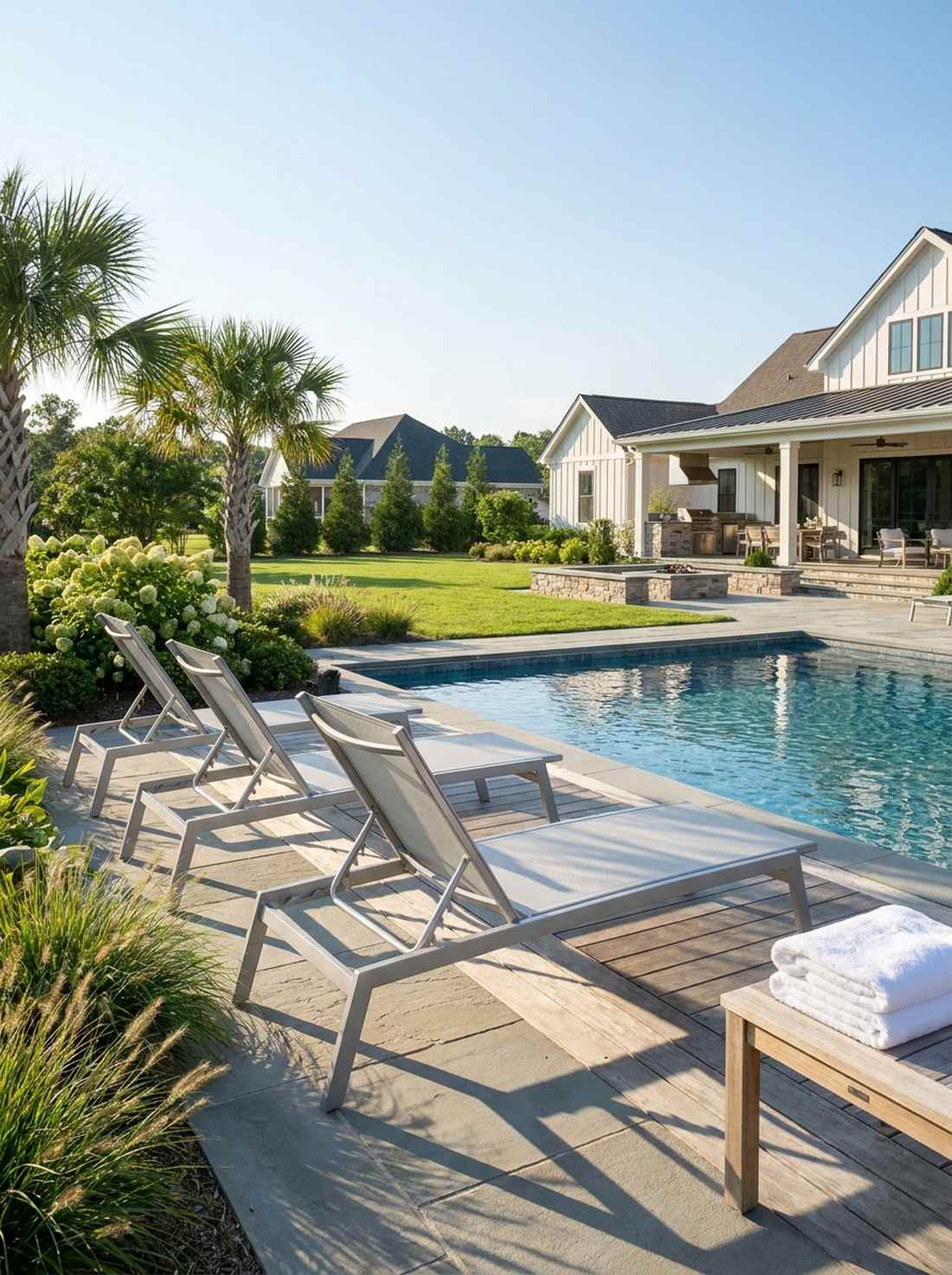
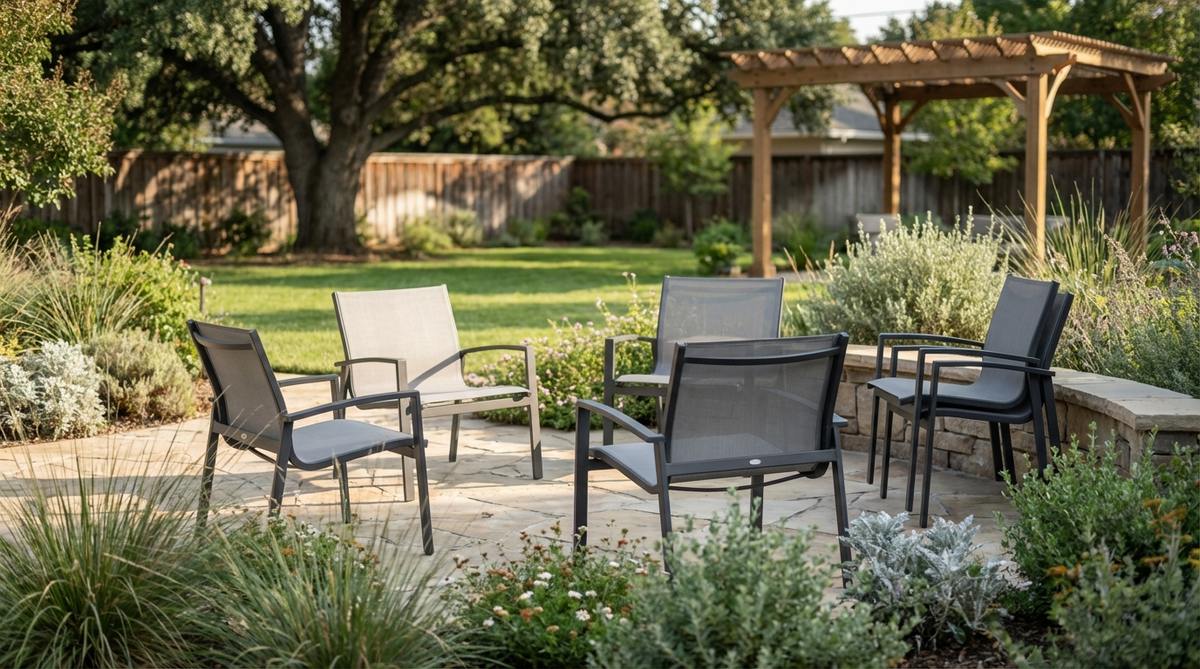
This transparent poolside seating concept feels incredibly breezy and practically invisible against lush landscaping. Works flawlessly for framing a modern pool deck without blocking the water views.
While thick cushions trap heat and mildew, commercial-grade textilene mesh dries in minutes and looks far more expensive than it is. Incorporating high-end outdoor fabric technologies eliminates the chaotic chore of dragging cushions inside during summer storms.
A reliable set will run you about $100–$180 per chair. Save this to your pool design board for future reference.
- Key Materials: Breathable textilene mesh, extruded aluminum
- Vibe / Style: Streamlined resort
- Difficulty: Easy beginner setup
- Budget Breakdown: Mesh chair: $130 | Maintenance gear: $15
- Creator’s Tip: Use a power washer on the lowest setting to blast away trapped dirt without fraying the synthetic weave.
- Smart Sourcing: Commercial-grade textilene chair sets and pre-mixed mesh cleaning solutions.
Streamlined Dining Solutions
Outdoor dining tables anchor social spaces with horizontal planes that encourage gathering without overwhelming garden vistas. Minimalist designs emphasize material authenticity and proportional restraint.
6. Rectangular Teak Dining Table
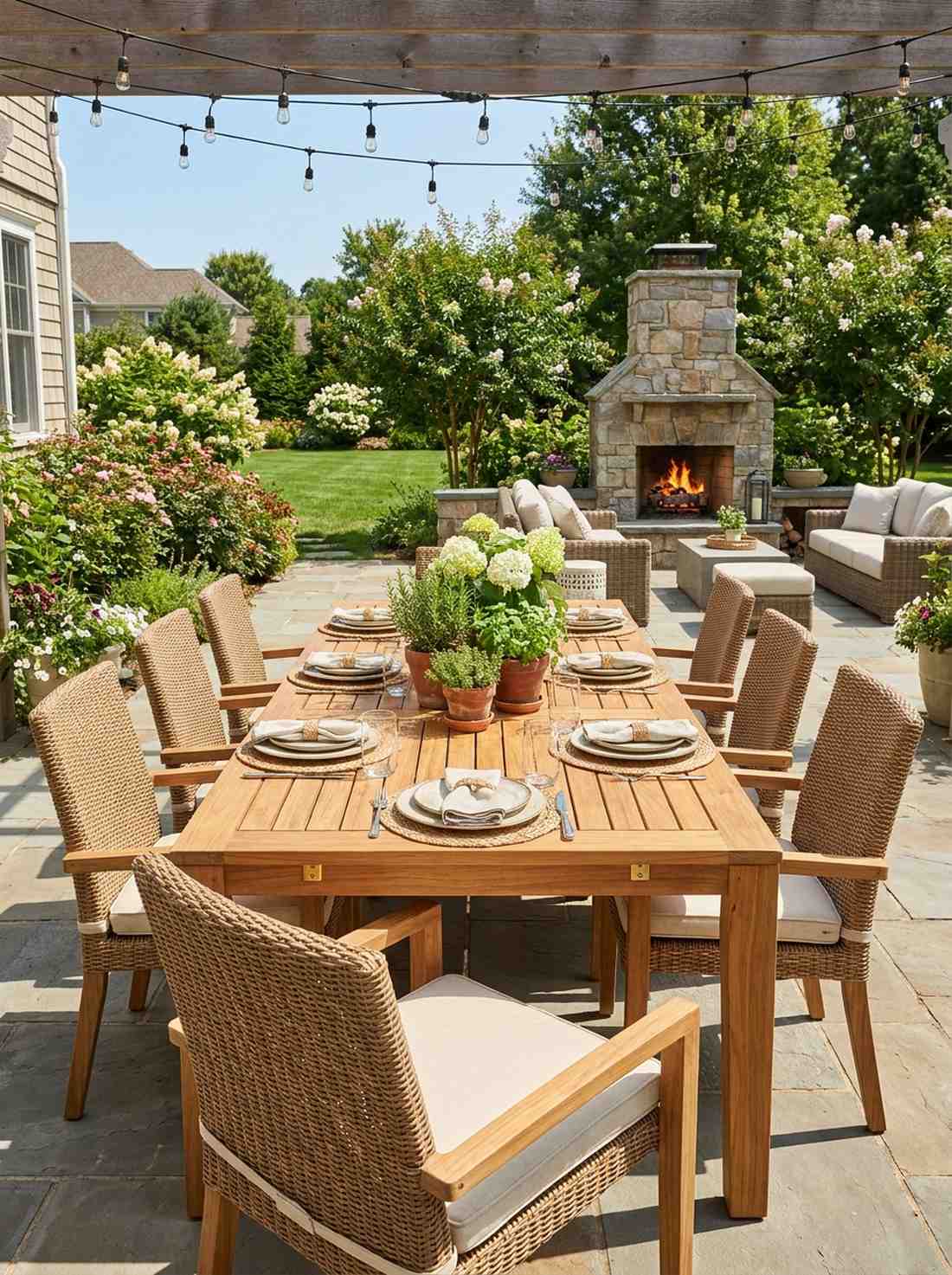
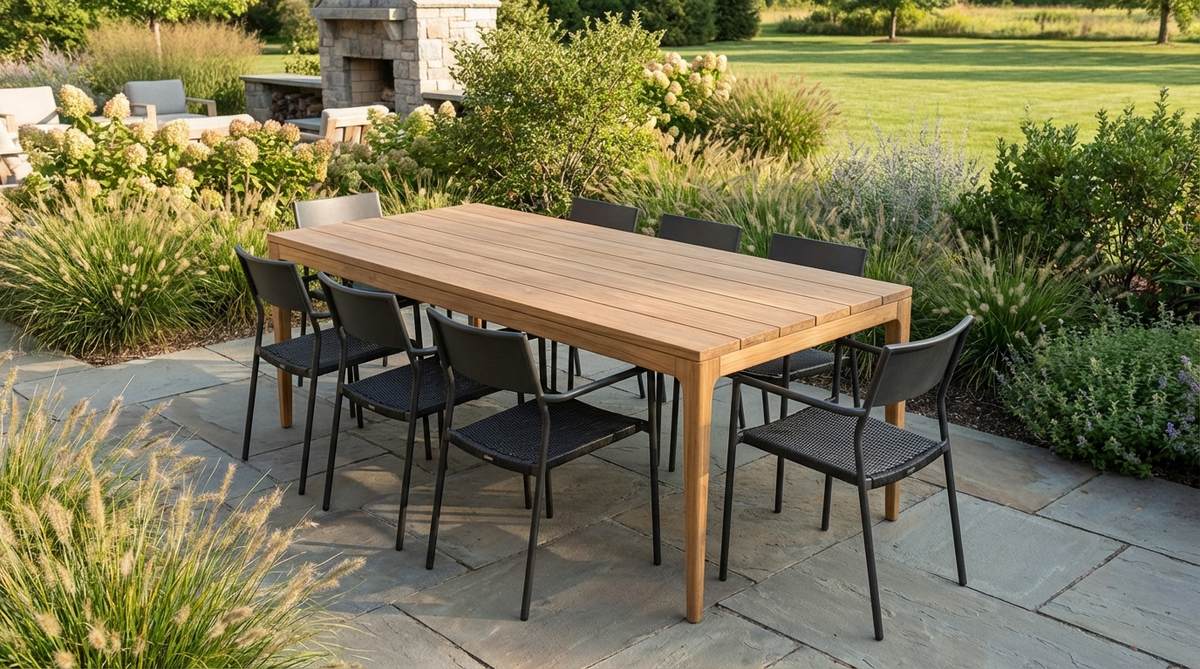
Setting up this luxury outdoor dining hub feels like hosting a dinner party in a secluded botanical garden. It is the ultimate centerpiece for wide, open-concept backyards.
Flimsy glass tables shatter, but solid mortise-and-tenon joinery guarantees this piece survives decades of harsh weather. Investing in premium weatherproof outdoor dining staples secures a massive return on aesthetic value over time.
A true quality build starts around $800, but lasts a lifetime. Pin this as the ultimate goal for your backyard renovation.
- Key Materials: Kiln-dried grade-A teak, brass fittings
- Vibe / Style: Timeless luxury
- Difficulty: Requires two people
- Budget Breakdown: Table base: $900 | Wood treatments: $45
- Creator’s Tip: Always look for slatted tops rather than solid wood to ensure heavy rain drains instantly.
- Smart Sourcing: Pre-cut premium teak table kits and heavy-duty brass outdoor hardware.
7. Aluminum Frame Glass Top Table
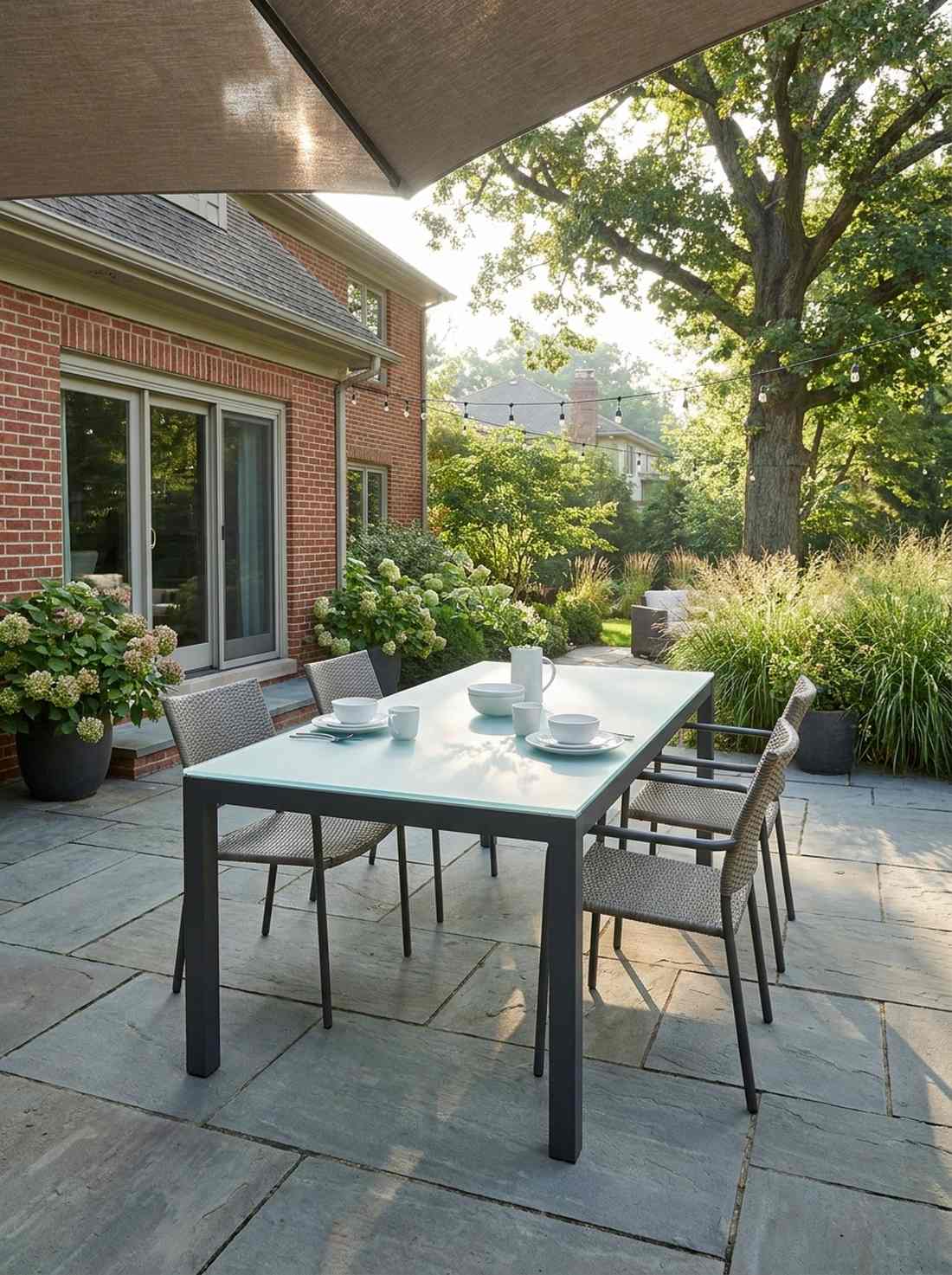
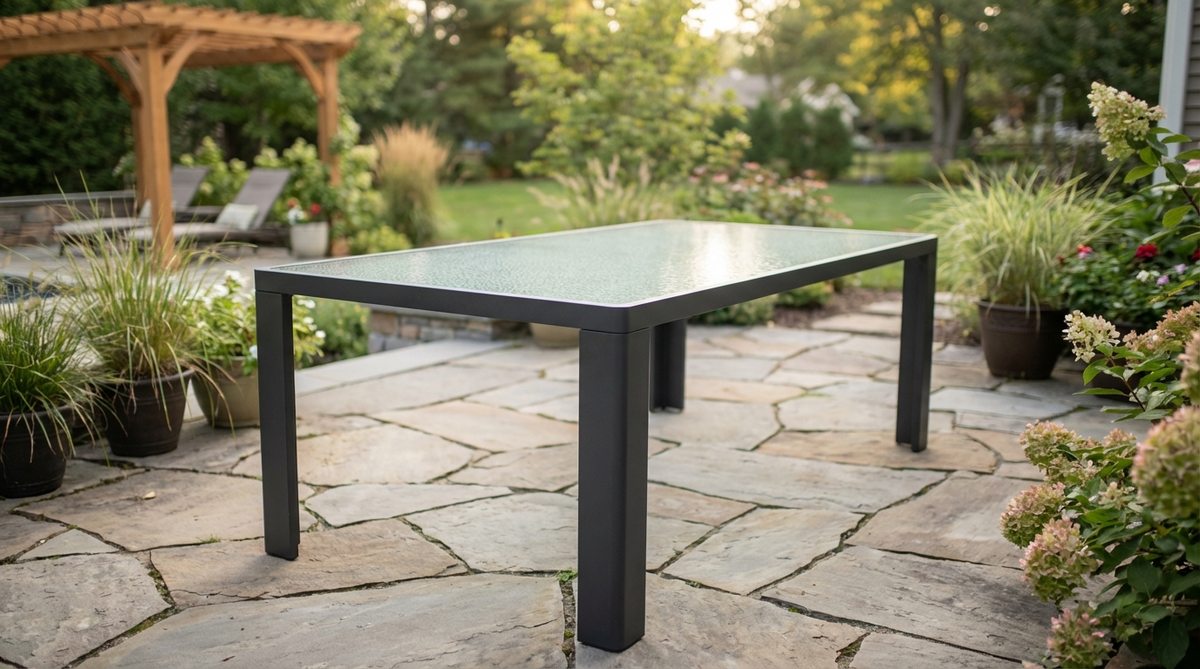
This reflective patio dining layout feels incredibly sharp, mirroring the sky and surrounding foliage beautifully. It is absolutely brilliant for shaded patios that desperately need to bounce natural light around.
A common mistake is using clear glass which shows every fingerprint, but frosted tempered glass delivers a pristine, low-maintenance finish. This specific material combo is a staple in high-CPC luxury patio catalogs because it blends into any architectural backdrop seamlessly.
You can assemble this look for around $300–$500. It’s a striking upgrade that instantly modernizes dated brick homes.
- Key Materials: Frosted tempered glass, powder-coated aluminum rails
- Vibe / Style: Ultra-modern chic
- Difficulty: Careful handling needed
- Budget Breakdown: Frame: $200 | Frosted Glass: $150
- Creator’s Tip: Use automotive glass water-repellent sprays to make morning dew bead up and roll right off.
- Smart Sourcing: Smoked tempered glass table kits and hydrophobic glass coating sprays.
8. Concrete Drum Side Table
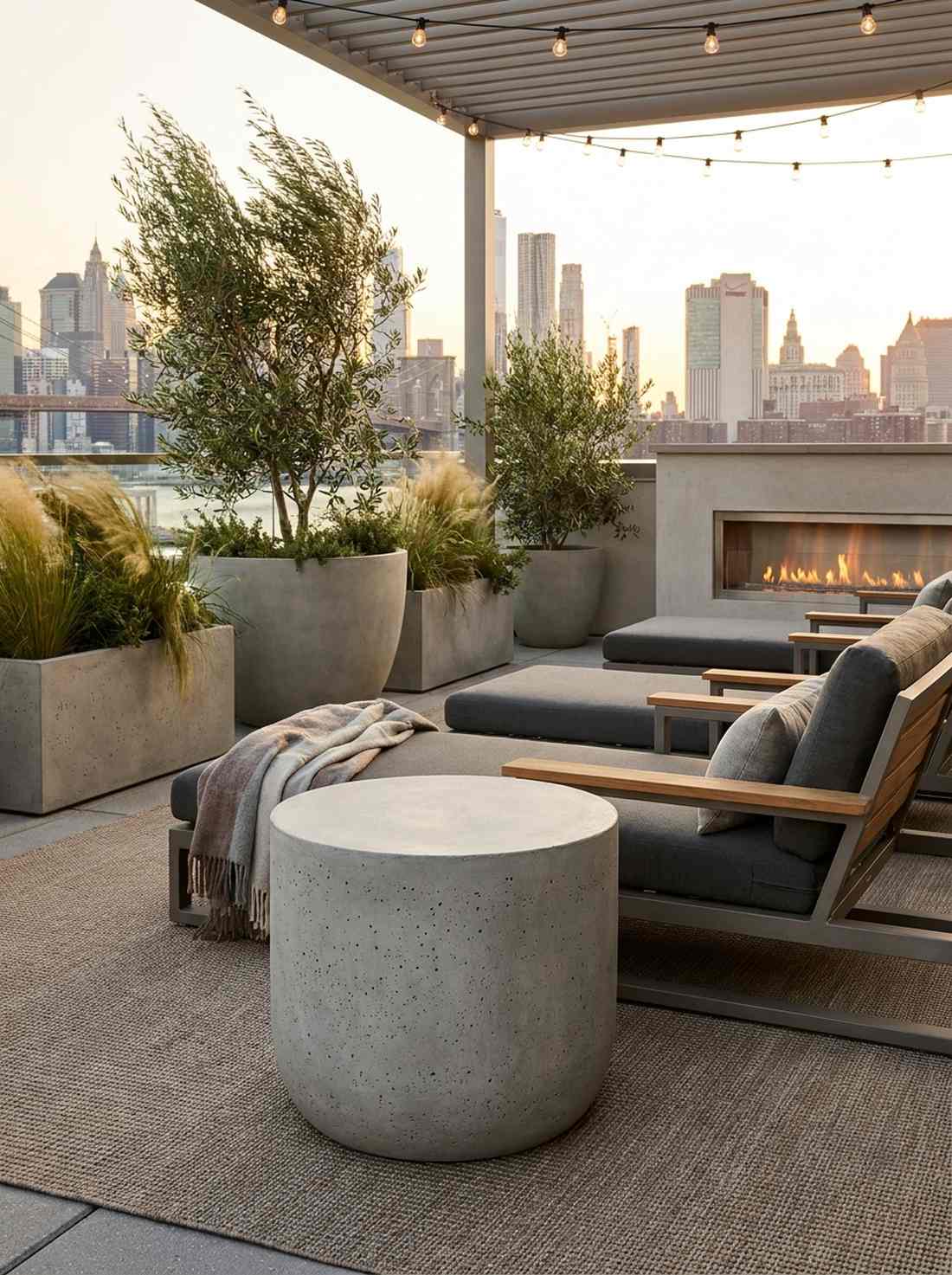
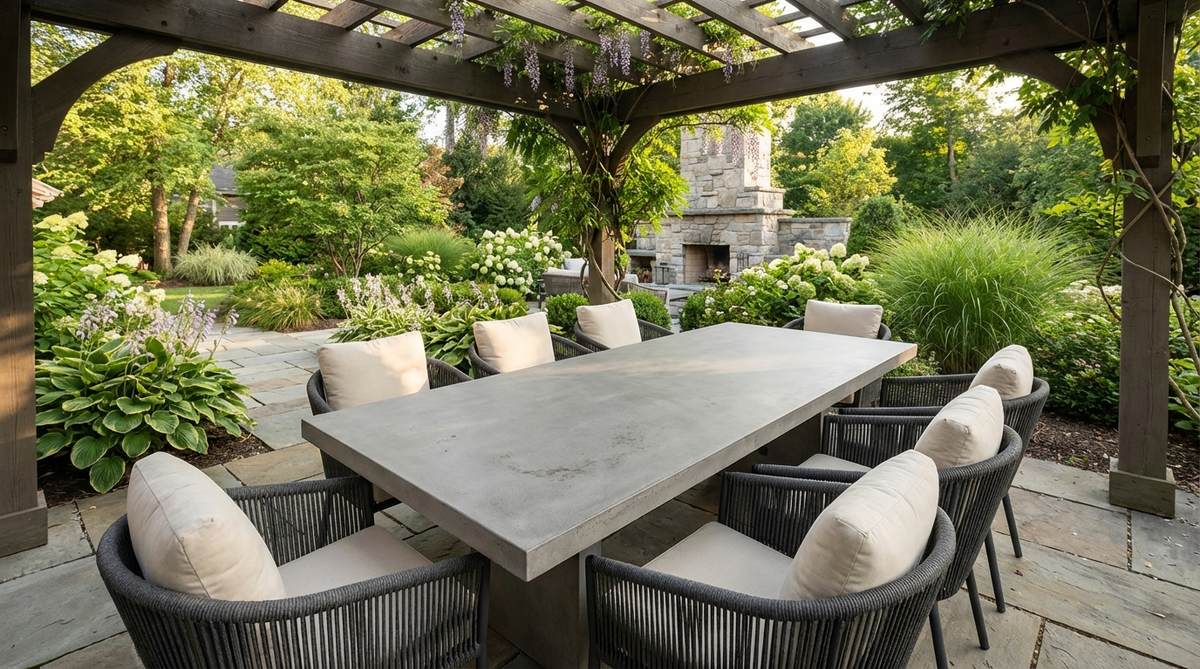
This heavyweight structural garden aesthetic feels like a custom sculptural art installation. Highly effective for anchoring a windy rooftop terrace where lightweight furniture would literally blow away.
Solid concrete will crack your deck, but fiberglass-reinforced concrete composites give you the exact brutalist look at a fraction of the weight. This is how high-end landscapers create that coveted “looks expensive but isn’t” monolithic vibe.
Expect a budget footprint of roughly $400–$700. Save this to your modern landscaping board to completely elevate your exterior design.
- Key Materials: Glass-fiber reinforced concrete (GFRC), weather sealants
- Vibe / Style: Industrial brutalism
- Difficulty: Moderate heavy lifting
- Budget Breakdown: Composite table: $550 | Stain repellant: $30
- Creator’s Tip: Apply a penetrating stone sealer immediately after unboxing to prevent red wine or grease stains from ruining the porous surface.
- Smart Sourcing: Pre-sealed concrete patio table kits and professional-grade stone penetrating sealers.
9. Extendable Aluminum Dining Table
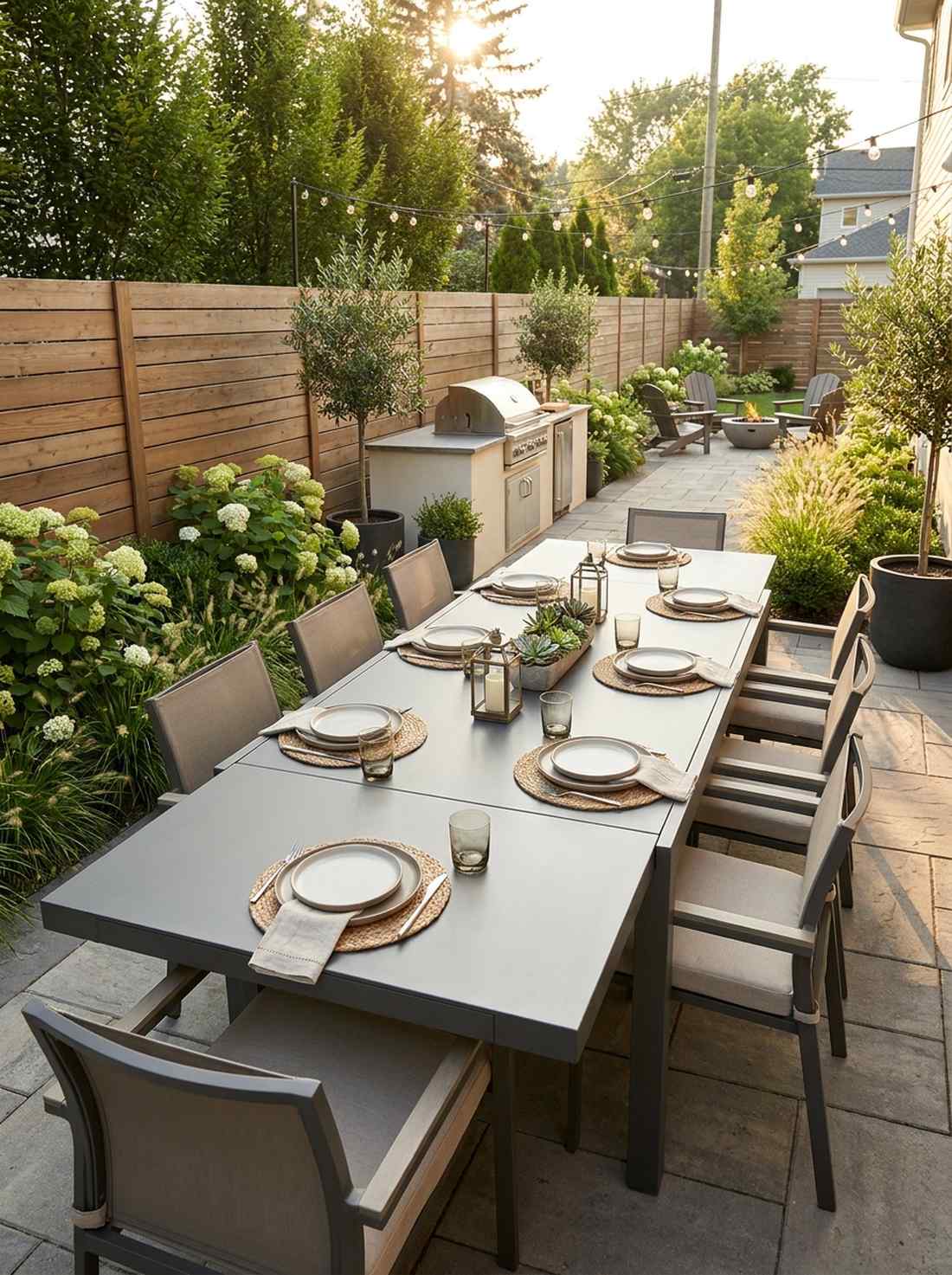
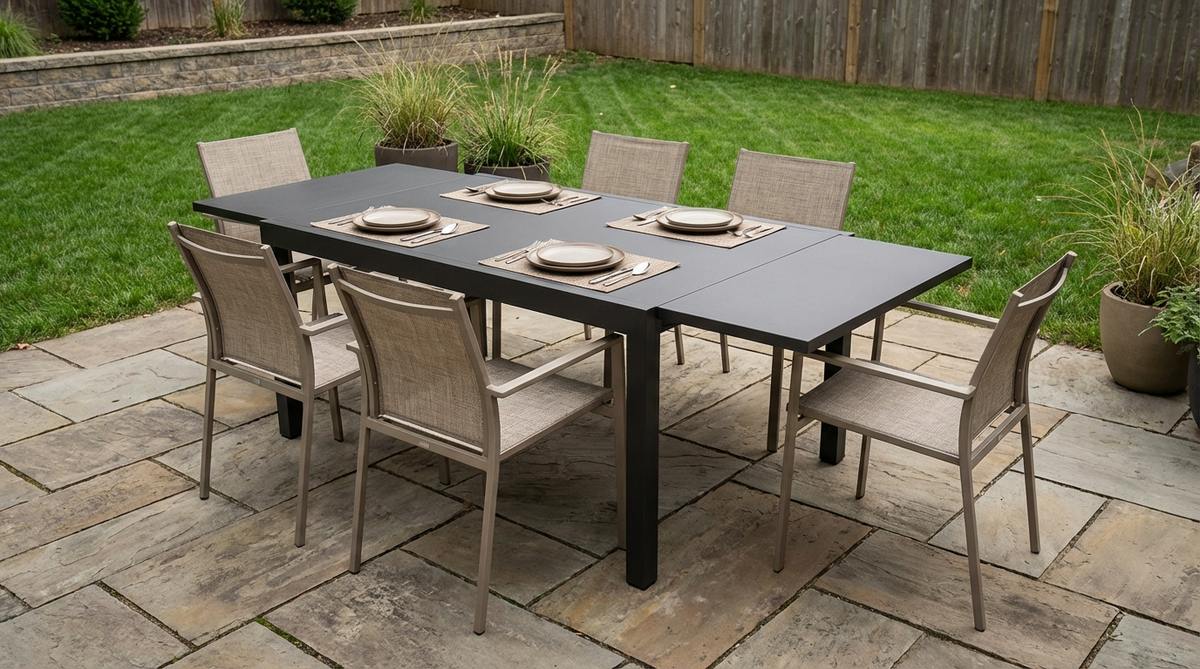
This incredibly clever convertible yard entertaining setup feels like you have a secret weapon for sudden dinner parties. Flawlessly fits onto narrow side-yards that only occasionally need to seat eight people.
Most extension tables have clunky, visible hinges, but modern hidden-track mechanisms look impossibly smooth and sophisticated. Sourcing these adaptable luxury patio sets ensures you aren’t wasting precious square footage on empty chairs.
These highly engineered pieces run between $600–$1,000. It’s the ultimate functional flex for avid summer hosts.
- Key Materials: Extruded aluminum tracks, rust-resistant ball bearings
- Vibe / Style: Functional tech-minimalism
- Difficulty: Pre-assembled sliding mechanism
- Budget Breakdown: Extendable table: $850 | Lubricant: $10
- Creator’s Tip: Keep the sliding tracks clear of pine needles and hit them with a dry PTFE lubricant every spring.
- Smart Sourcing: Telescoping outdoor dining starter kits and dry-lube track maintenance sprays.
💡 Must-Have Supplies for High-End Setups
To build these setups faster and ensure they last, skip the generic craft aisles and invest in the right foundational kits.
- Base & Support: High-impact UV-resistant outdoor furniture frames
- Setup Tools: All-weather stainless steel hardware kits
- Weather/Durability Protection: Marine-grade hydrophobic fabric sealants
This next lounge setup looks like a $5,000 custom resort display, but the secret sourcing hack makes it surprisingly affordable.
10. Narrow Console Dining Table
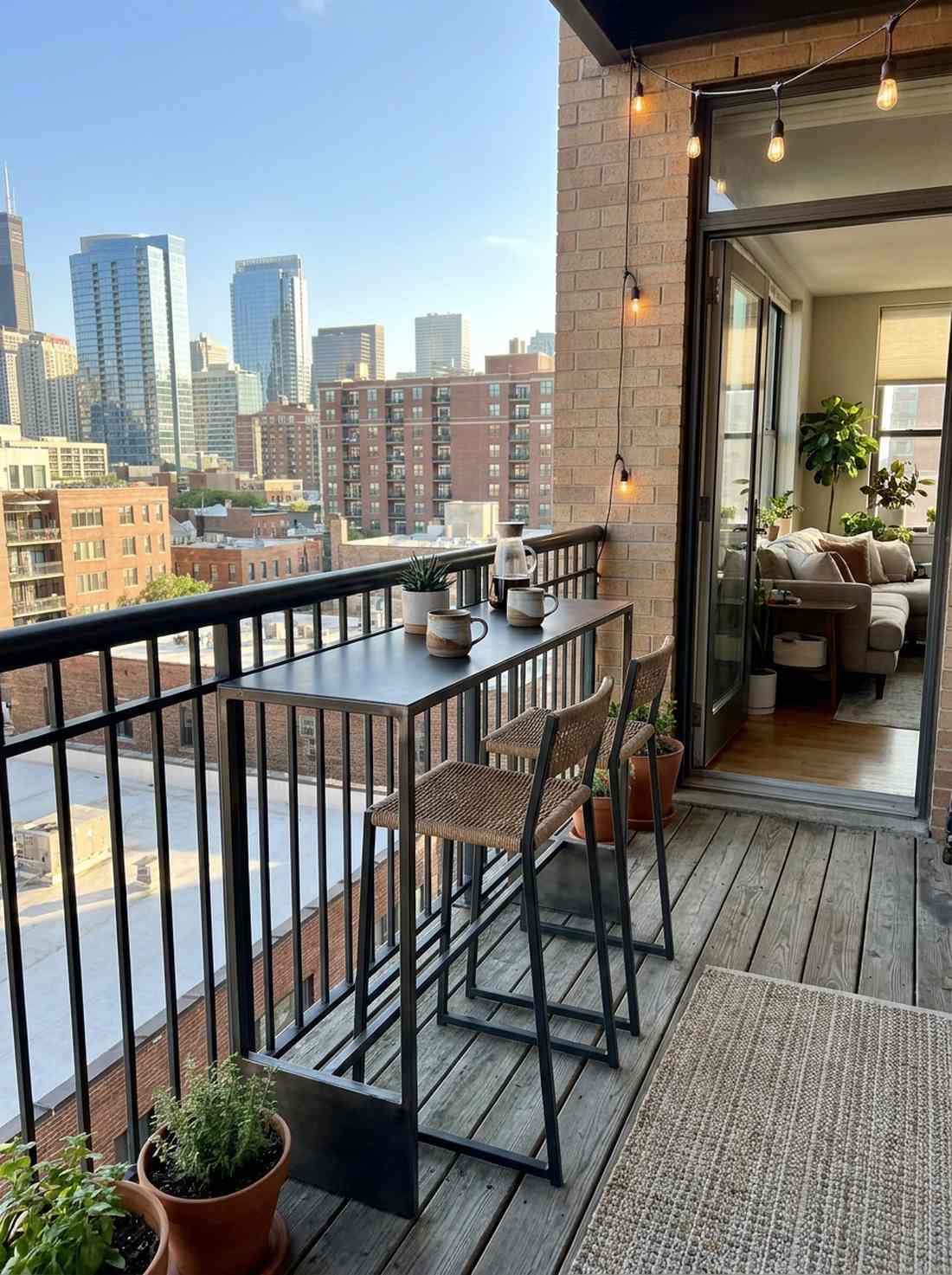
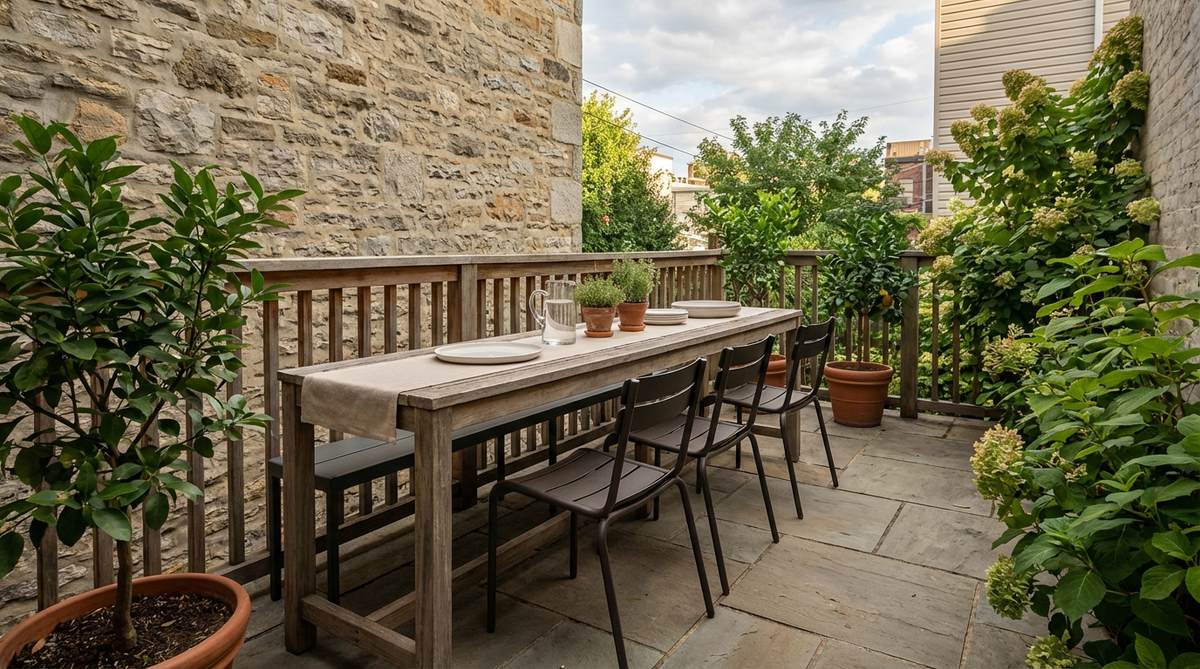
This ultra-slim balcony bar dining concept feels like having VIP seating overlooking the city skyline. It’s absolutely essential for tight Juliet balconies where a standard round table blocks the door.
People often cram too much into tiny spaces, but utilizing an eighteen-inch deep console delivers high functionality while protecting your walking path. This minimalist garden furniture approach drastically improves flow without sacrificing your morning coffee spot.
You can easily pull this off for around $150–$250. Pin this right now if you are struggling with a frustratingly narrow apartment terrace.
- Key Materials: Slim metal profiles, weighted bases
- Vibe / Style: Urban efficiency
- Difficulty: Fast 10-minute setup
- Budget Breakdown: Console table: $180 | Barstools: $120
- Creator’s Tip: Push this flush against your balcony railing and pair it with backless stools that tuck completely underneath.
- Smart Sourcing: Narrow footprint balcony starter kits and rust-proof outdoor barstools (bulk pack).
Contemporary Lounge Comfort
Lounge furniture establishes relaxation zones where sleek profiles meet ergonomic comfort. Modern designs balance minimalist aesthetics with supportive structures for extended outdoor leisure.
11. Low-Profile Sectional Sofa
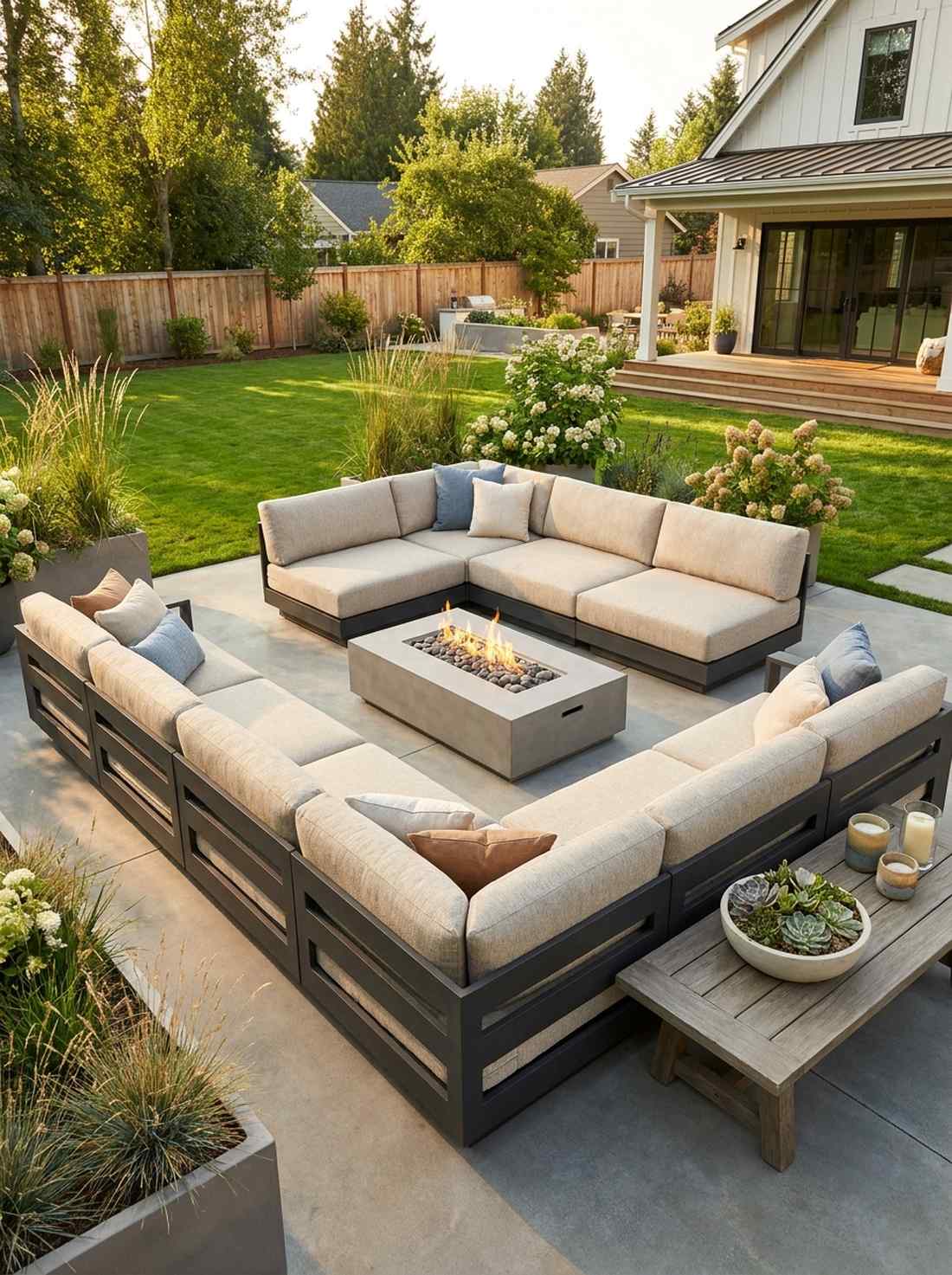
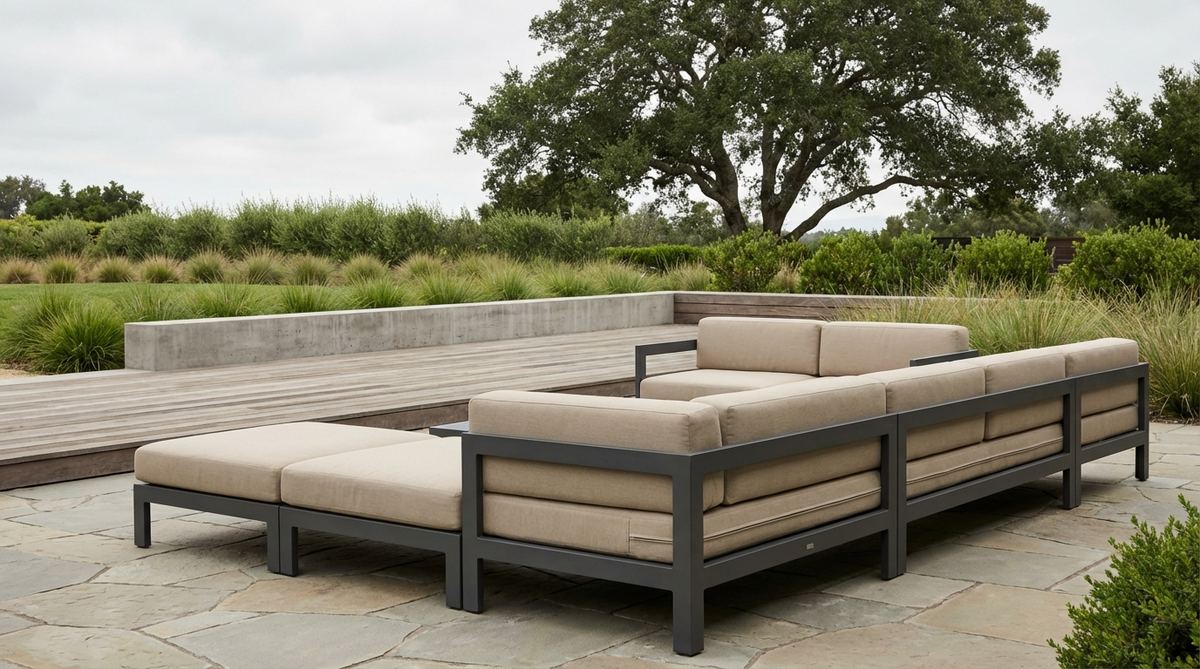
Dropping this deep-seated patio lounge vibe into your yard feels like opening a private beach club right out back. The absolute best way to define a dedicated conversation pit on a massive, blank concrete slab.
High-backed outdoor couches block your landscaping views, but a low-profile geometric silhouette makes the whole yard feel infinitely wider. Upgrading to quick-dry foam cushions is the biggest secret to getting that high-end modular lounge kit aesthetic to survive rainstorms.
A quality modular setup ranges from $800 to $1,500. Save this to your outdoor living room board before your next remodel.
- Key Materials: Solution-dyed acrylic fabrics, modular aluminum bases
- Vibe / Style: Low-slung resort
- Difficulty: Snap-together modularity
- Budget Breakdown: Base frame: $600 | Custom cushions: $400
- Creator’s Tip: Buy extra middle-seat modules so you can infinitely expand the length of the sofa as your family grows.
- Smart Sourcing: Modular outdoor sectional kits and pre-cut reticulated outdoor foam inserts.
12. Teak Chaise Lounge
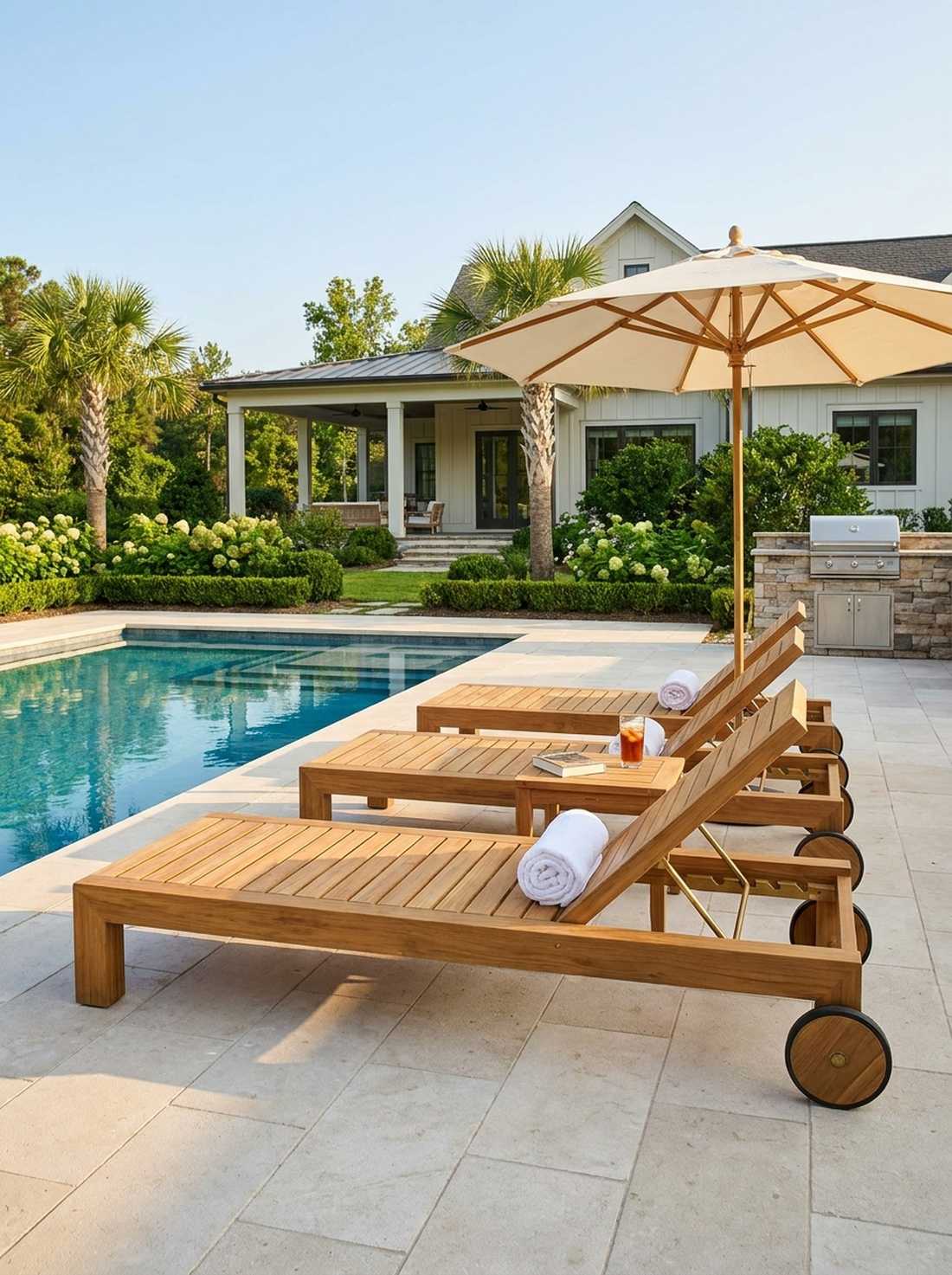
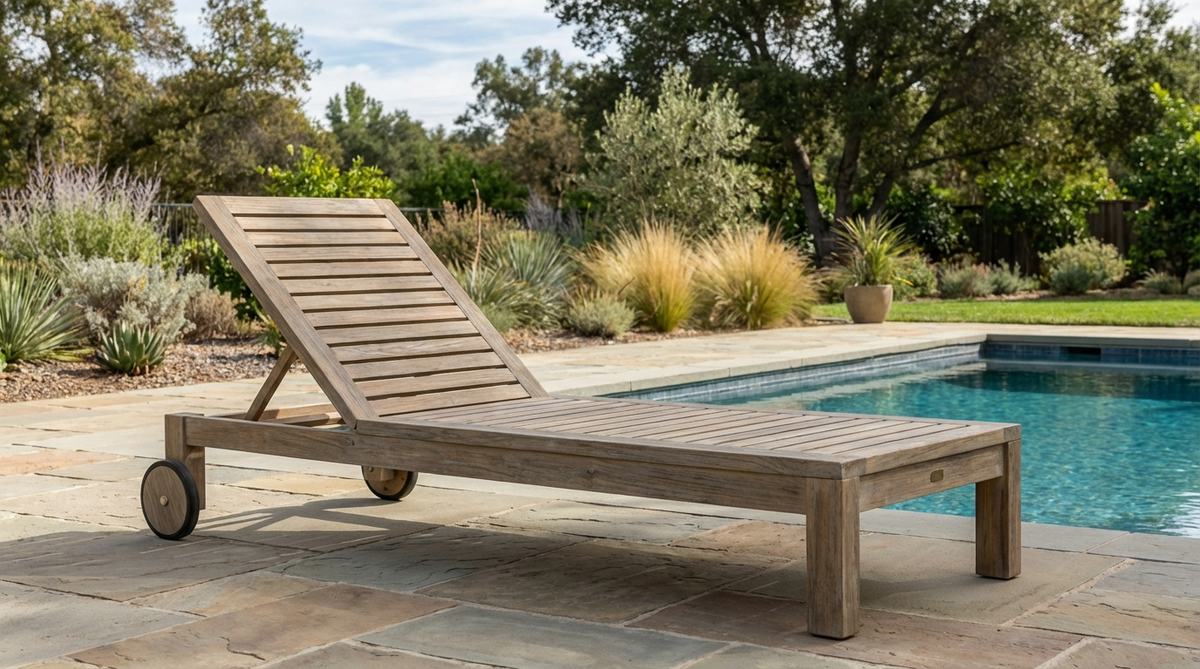
This sun-drenched pool deck setup feels incredibly luxurious, like catching rays on a private yacht. Unbeatable for lining up uniformly next to a modern geometric swimming pool.
Cheap plastic loungers crack and warp under the sun, but premium patio furniture kits built from thick-cut teak stand up to intense UV rays and chlorine splashing. The heavy, architectural presence of real wood anchors the space so it doesn’t feel empty.
Expect a durable single lounger to cost $350–$600. It’s a serious upgrade that dramatically improves the poolside experience.
- Key Materials: Solid teak, hidden brass reclining tracks
- Vibe / Style: Five-star luxury
- Difficulty: Pre-assembled delivery
- Budget Breakdown: Chaise base: $450 | Wheels: $40
- Creator’s Tip: Make sure to buy loungers with rubber-treaded rear wheels so you don’t scratch up your expensive deck tiles.
- Smart Sourcing: Premium teak lounger starter kits and heavy-duty protective sunbed covers.
13. Rope-Wrapped Lounge Chair
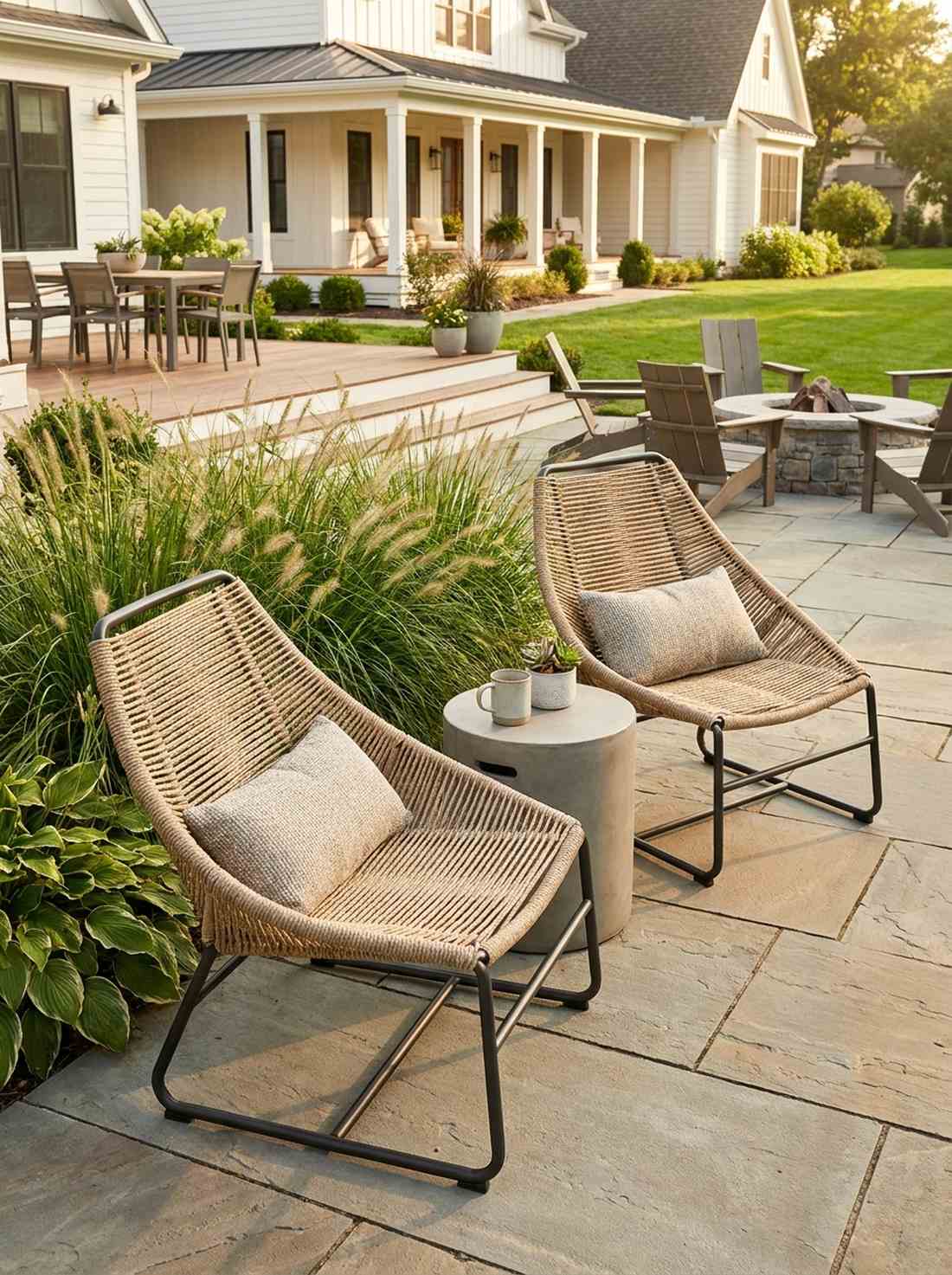
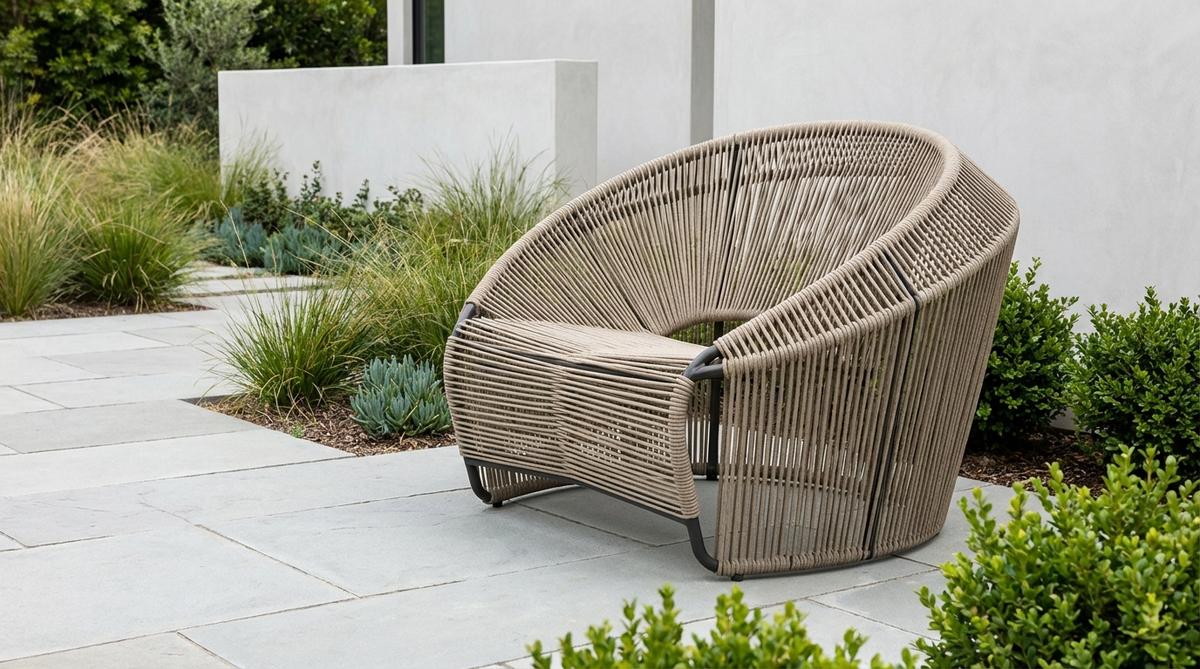
This deeply textured boho-minimalist garden seating feels like a cozy, protective cocoon hidden among your plants. Placed perfectly next to tall ornamental grasses, it softens the hard edges of your yard.
Basic metal chairs feel too rigid for lounging, but intricate rope tension creates a suspended, hammock-like feel that looks far more expensive than it is. Utilizing these unique tactile materials prevents a minimalist yard from looking too sterile and cold.
You can bring this designer look home for about $200–$350. Pin this if you want to add instant warmth to a modern space.
- Key Materials: Polypropylene rope, tubular steel
- Vibe / Style: Tactile contemporary
- Difficulty: Lightweight setup
- Budget Breakdown: Chair frame: $220 | Lumbar pillow: $30
- Creator’s Tip: Pair with a contrasting smooth concrete side table to highlight the intricate weave pattern.
- Smart Sourcing: UV-coated rope lounge chair sets and fade-resistant lumbar support pillows.
14. Aluminum Sling Lounger
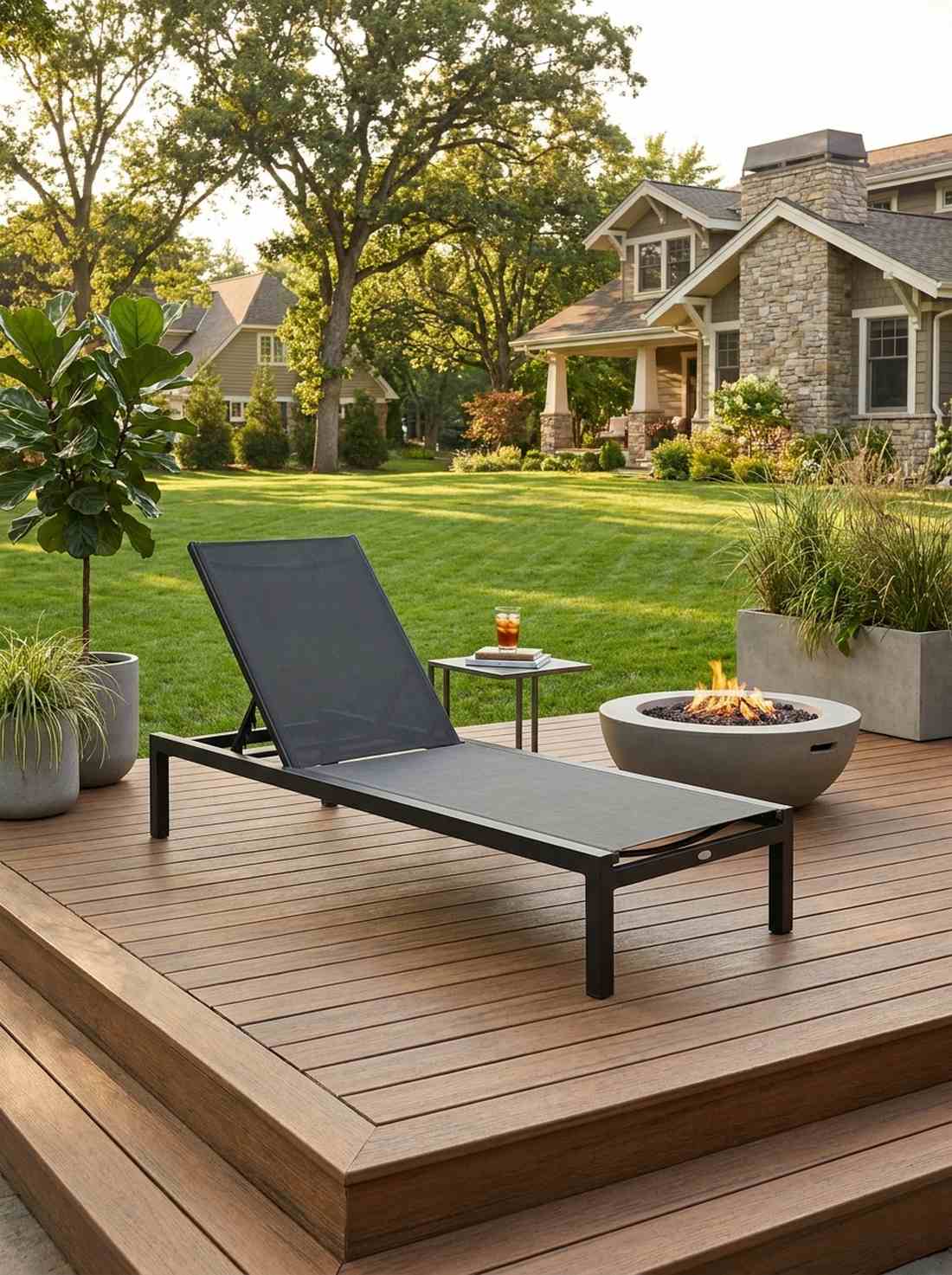
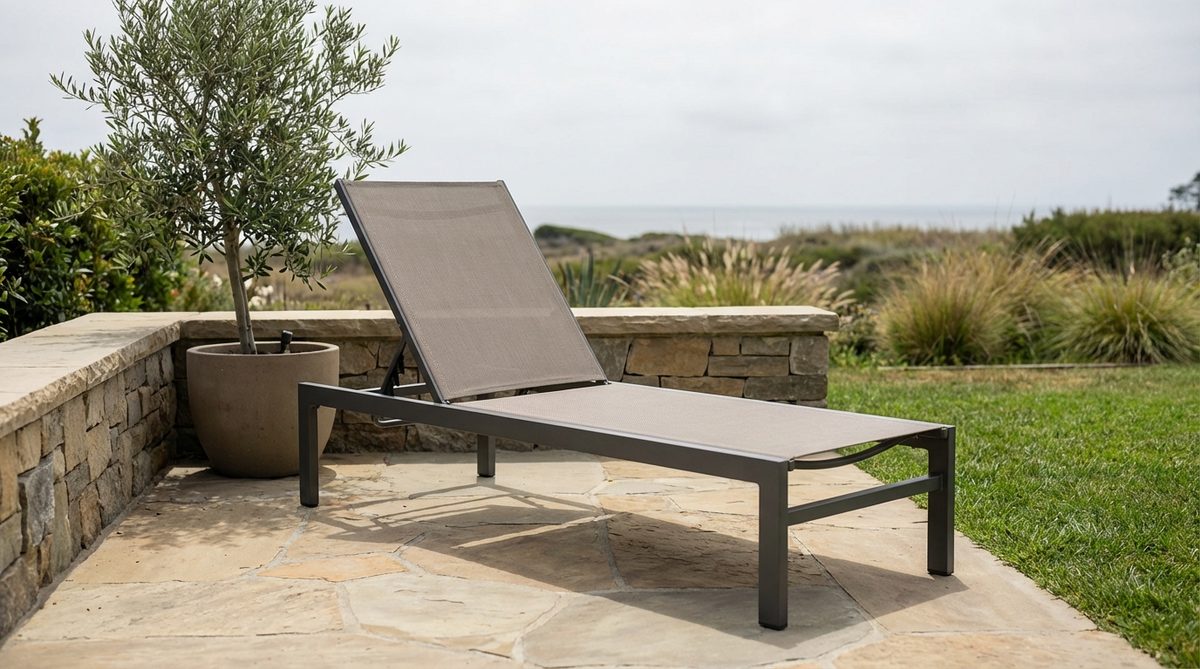
This zero-maintenance outdoor relaxation zone feels sleek, effortless, and aggressively modern. Ideal for narrow wrap-around porches where you want comfort without tripping over bulky cushion storage.
Everyone hates pulling soggy cushions inside, which is why taut sling-fabric over metal frames is the ultimate lazy-luxury hack. This specific style consistently trends because it marries high-end minimalist garden furniture principles with total weather immunity.
These easily run a budget-friendly $150–$250 per piece. Highly recommended for busy homeowners who hate yard chores.
- Key Materials: PVC-coated polyester sling, brushed aluminum
- Vibe / Style: Streamlined efficiency
- Difficulty: Simply unfold
- Budget Breakdown: Lounger: $180 | Replacement sling: $40
- Creator’s Tip: Choose a dark bronze or matte black frame instead of silver to avoid that outdated 1990s pool chair look.
- Smart Sourcing: Pre-tensioned outdoor sling chair kits and UV-resistant fabric replacement packs.
Stop scrolling if you have a tiny outdoor space—this next architectural piece entirely changes how big your patio feels.
15. Daybed Platform
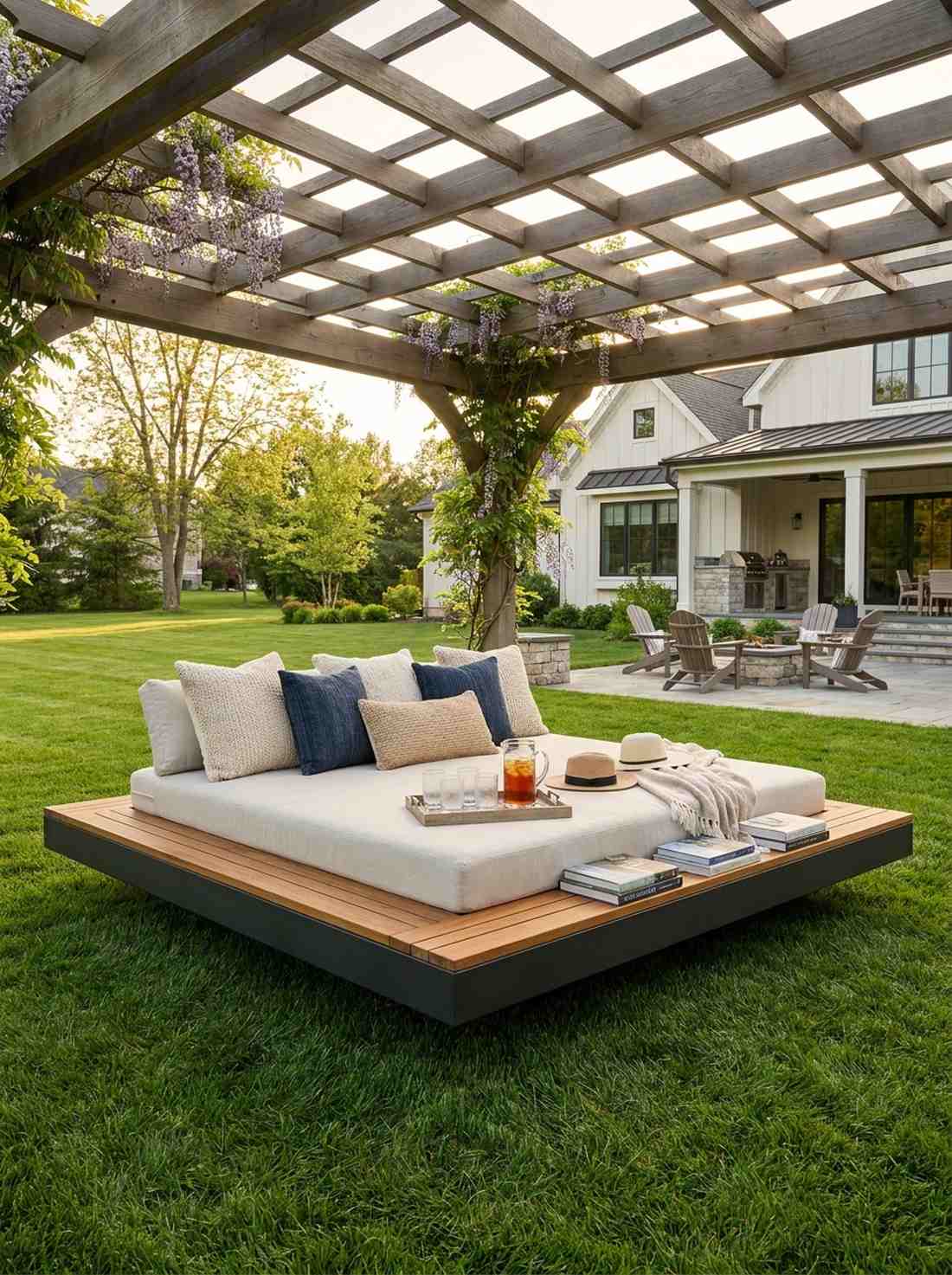
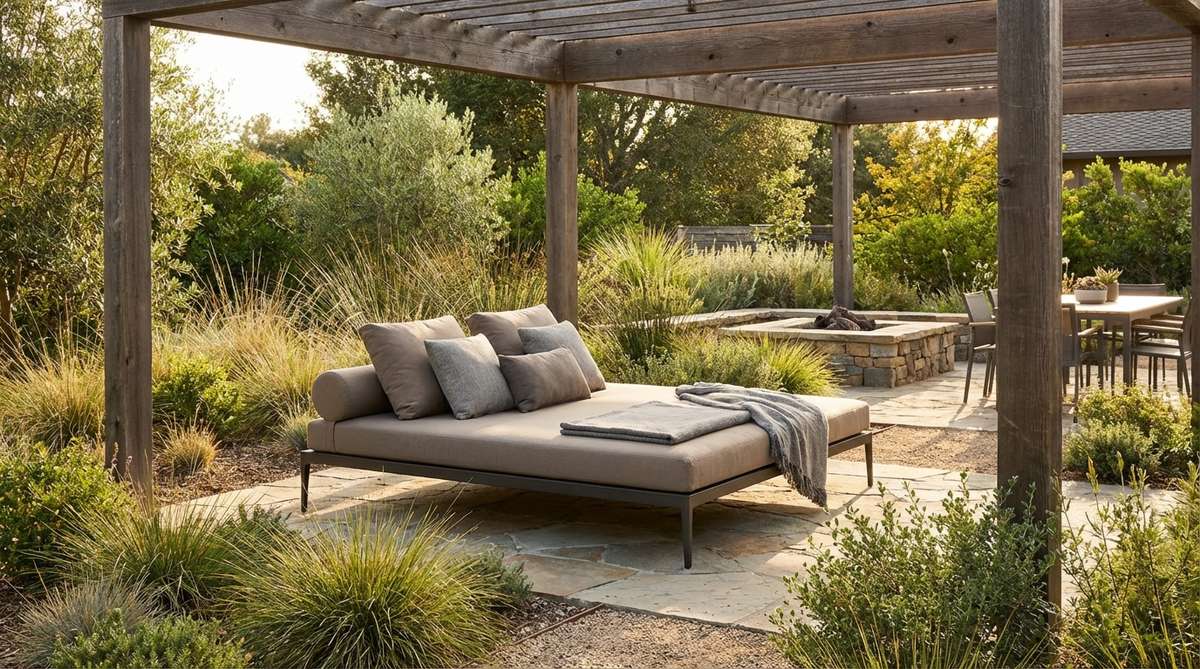
Laying on this massive floating cabana daybed concept feels like lounging at an elite tropical beach club. It’s the ultimate statement piece for a wide, flat lawn or placed squarely beneath a dramatic pergola.
Standard patio furniture can look visually cluttered, but an oversized, low-to-the-ground platform anchors the yard with intense, clean geometry. Building this out with a DIY vs prebuilt approach can save you thousands while delivering a custom architectural masterpiece.
Building a custom base costs $300, while buying premium ranges $1,200+. Save this blueprint for your ultimate backyard oasis project.
- Key Materials: Powder-coated steel base, 6-inch thick mattress pads
- Vibe / Style: Elite lounging
- Difficulty: Weekend project
- Budget Breakdown: Steel frame kits: $400 | Custom outdoor mattress: $350
- Creator’s Tip: Make the wooden platform 12 inches wider than the cushion to create a built-in rim for drinks and books.
- Smart Sourcing: Heavy-duty platform base kits and waterproof outdoor daybed mattresses.
Functional Accent Pieces
Side tables and accent furniture provide essential utility while reinforcing minimalist principles through refined proportions. These pieces complete outdoor arrangements without cluttering visual fields.
16. Round Teak Side Table
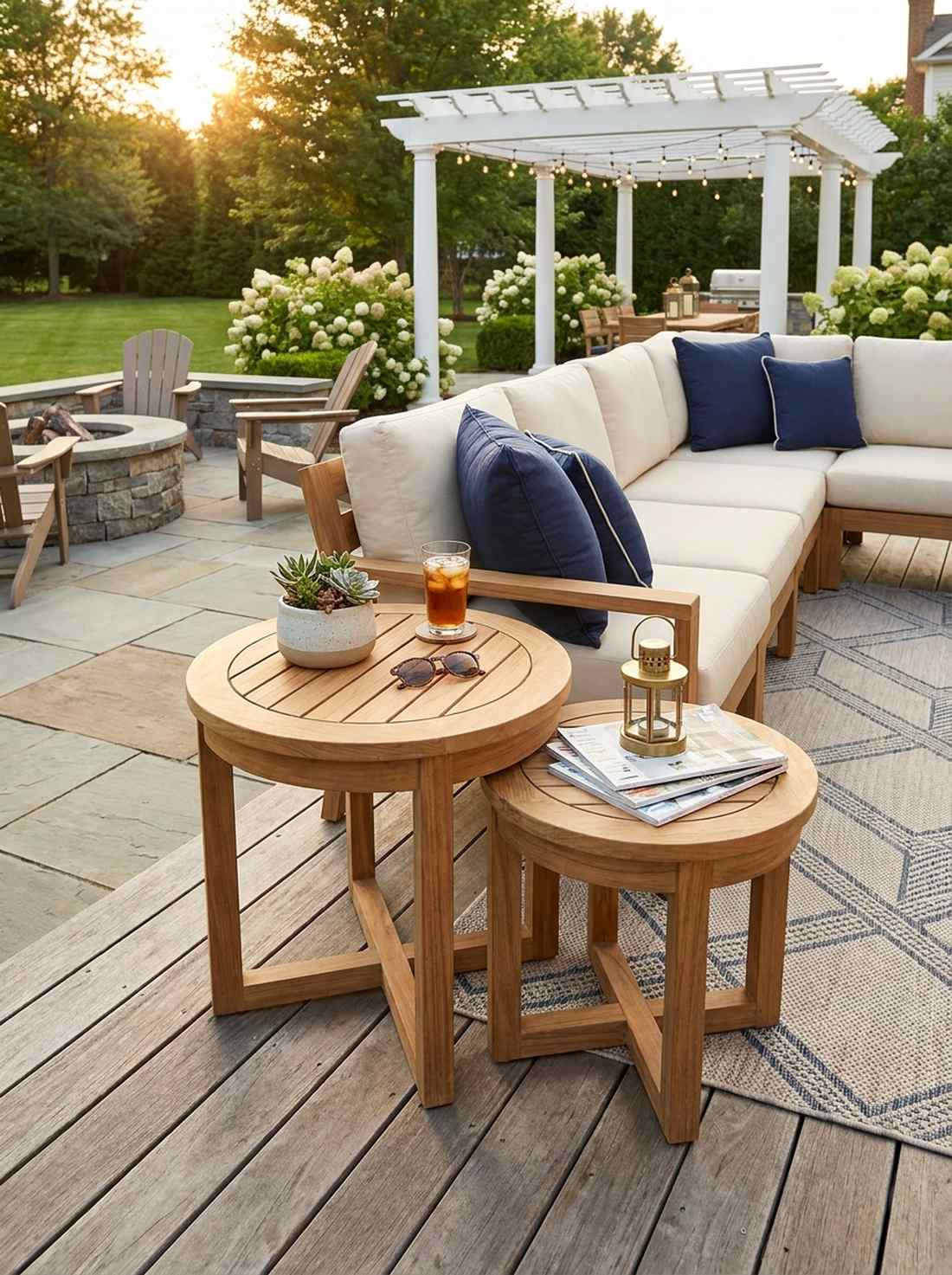
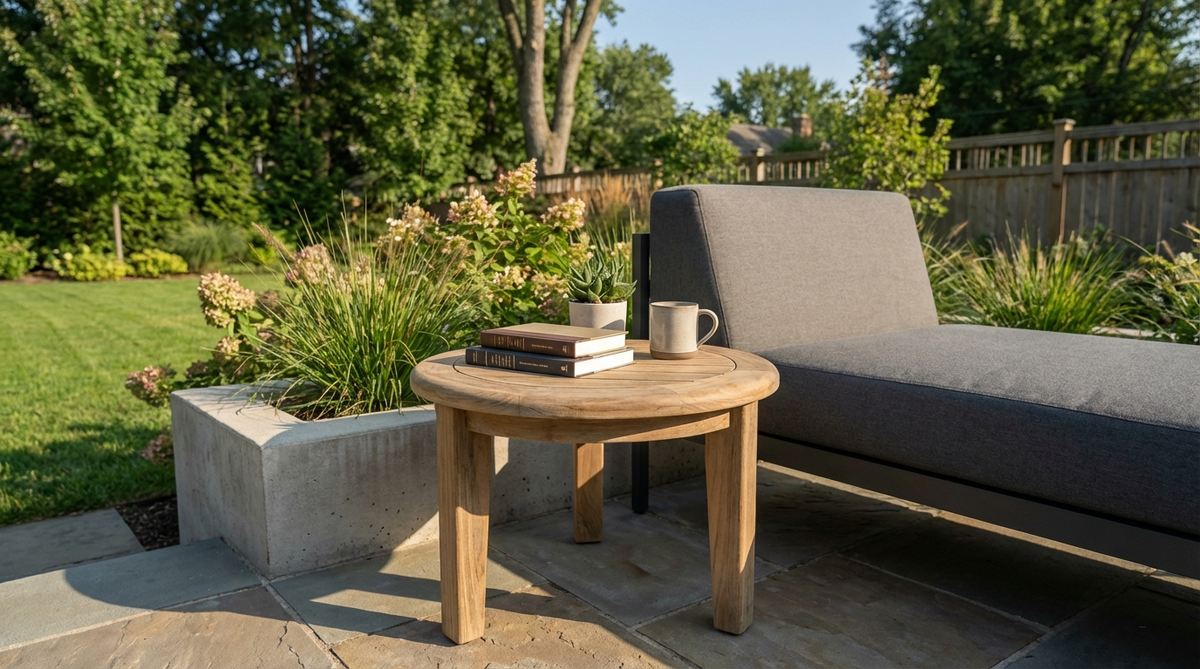
This warm wood patio accent feels like a tiny piece of crafted art sitting right next to your lounger. It flawlessly breaks up the harsh right angles of modular modern furniture setups.
Sharp rectangular tables block walkways, but a compact circular profile gives a designer-level finish while vastly improving foot traffic flow. Sneaking these small footprint pieces into your layout guarantees your drinks are always within arm’s reach.
You can snag these charming tables for about $70–$130. A brilliantly simple detail that elevates the whole patio.
- Key Materials: Slat-top teak wood, rust-proof screws
- Vibe / Style: Softened geometry
- Difficulty: 5-minute leg assembly
- Budget Breakdown: Table: $95 | Protective oil: $15
- Creator’s Tip: Buy two in slightly different heights to create a layered, highly styled magazine look next to your sofa.
- Smart Sourcing: Pre-cut teak accent table kits and premium wood conditioning oils.
17. Concrete Drum Side Table
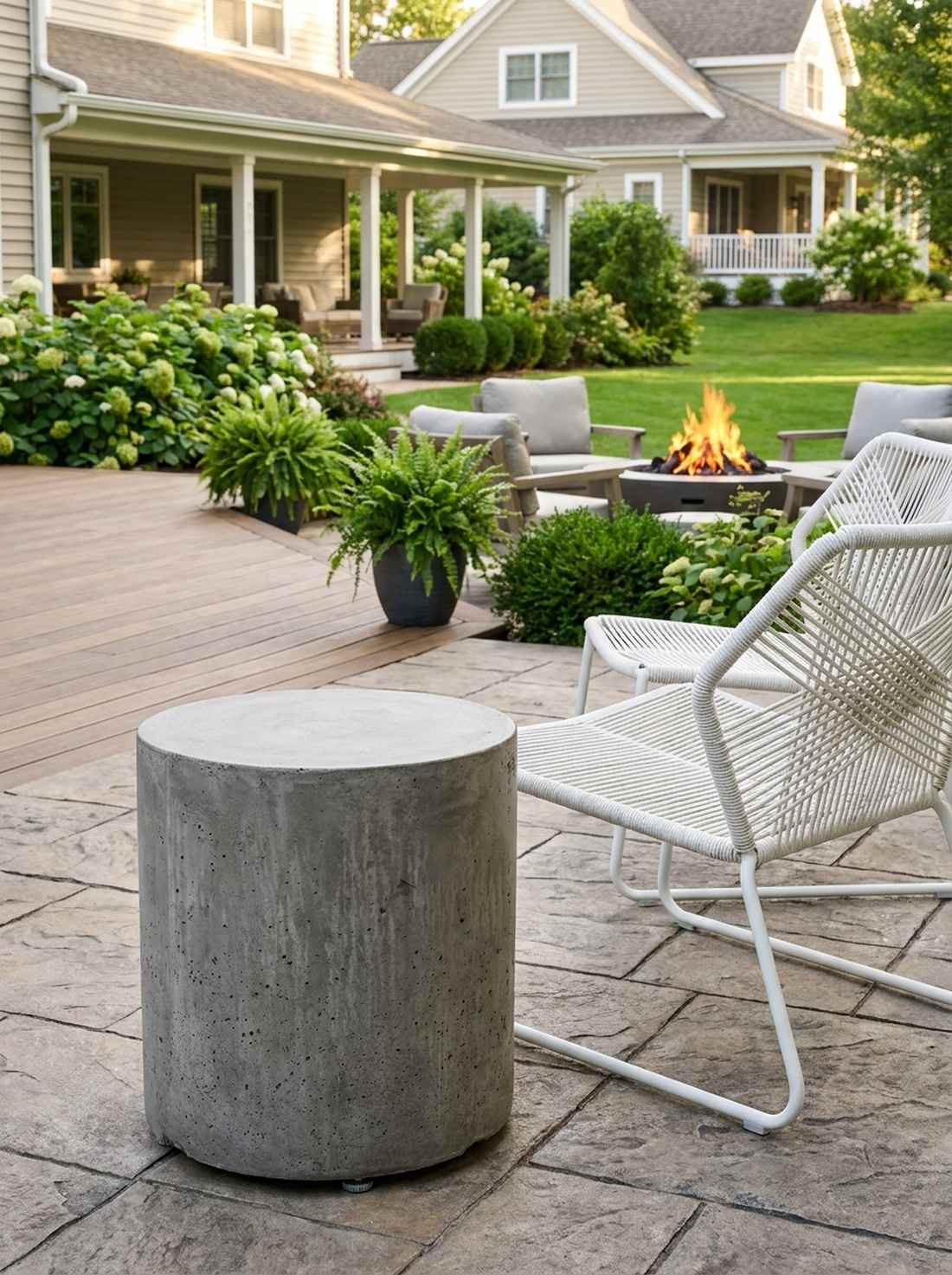
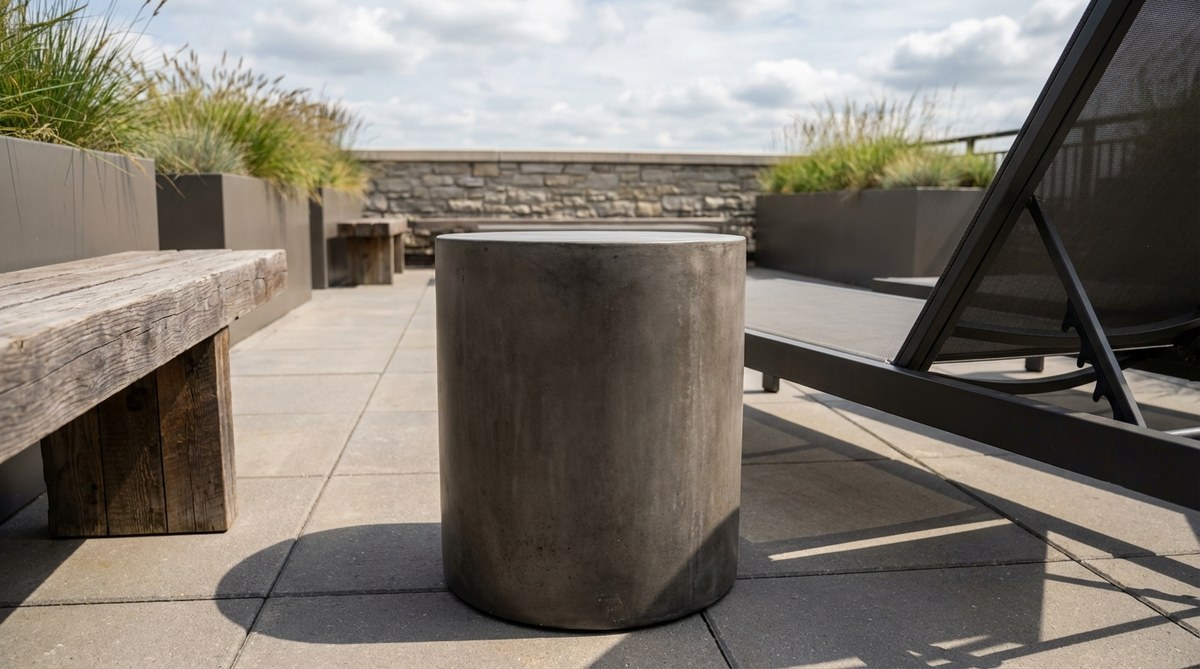
This thick monolithic garden pedestal feels incredibly grounded, resembling an ancient stone relic modernized for today. The absolute best pairing for lightweight, airy mesh or rope seating to create visual tension.
Most side tables blow over in a storm, but these heavyweight cylinders stay put and look ridiculously expensive. If you use a hollow fiberglass-concrete blend, you get the brutalist stone appearance without breaking your back during setup.
Pricing ranges from $100–$250 based on diameter. Pin this if you love combining industrial textures with lush greenery.
- Key Materials: Hollow-core GFRC concrete, leveling feet
- Vibe / Style: Modern industrial
- Difficulty: Ready out of the box
- Budget Breakdown: Drum table: $180 | Felt bottom pads: $10
- Creator’s Tip: Ensure the bottom has adjustable leveling feet so the table doesn’t wobble on textured stone patios.
- Smart Sourcing: Lightweight concrete drum table (starter kit) and heavy-duty leveling feet packs.
18. Metal Tripod Plant Stand
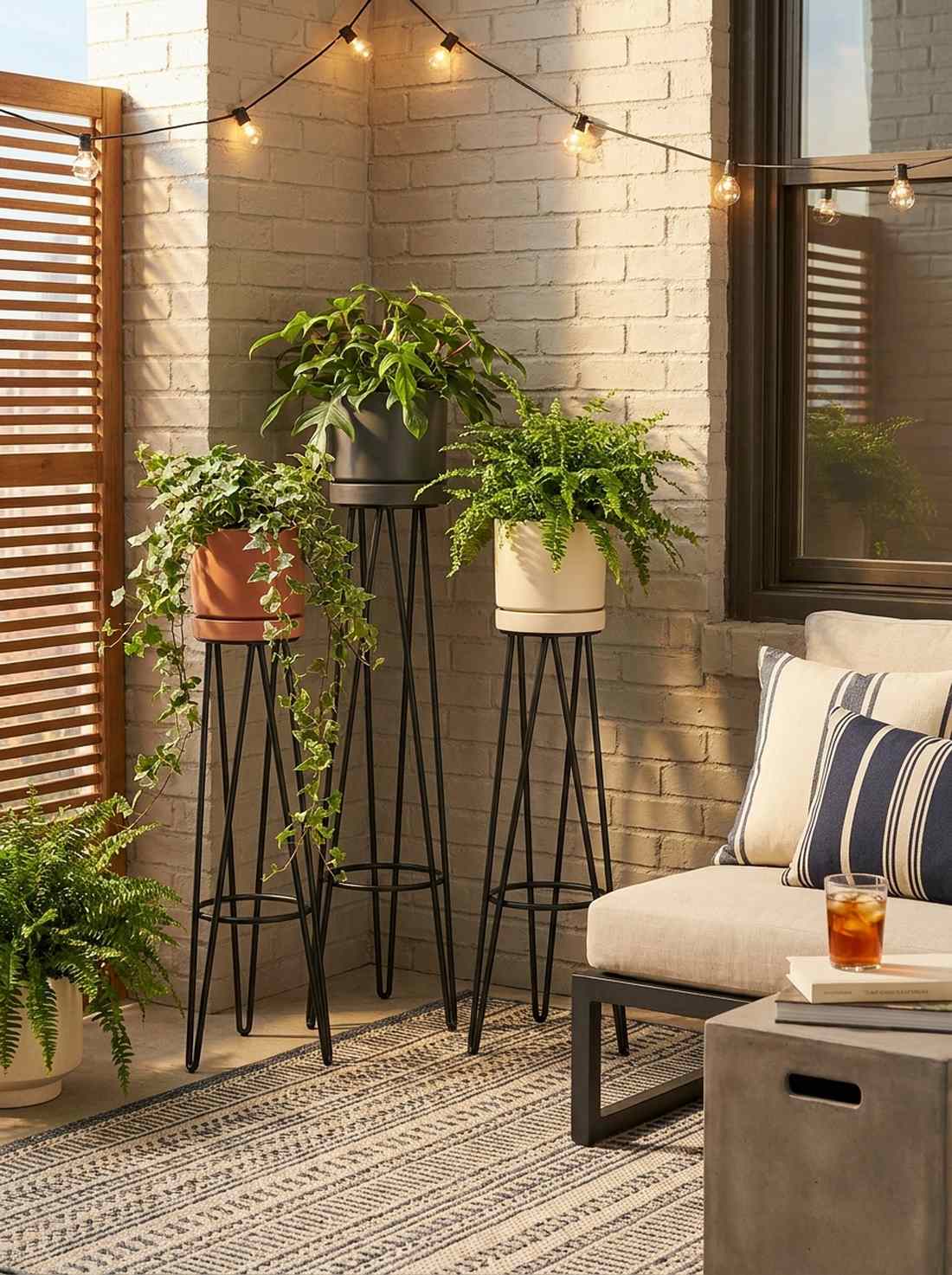
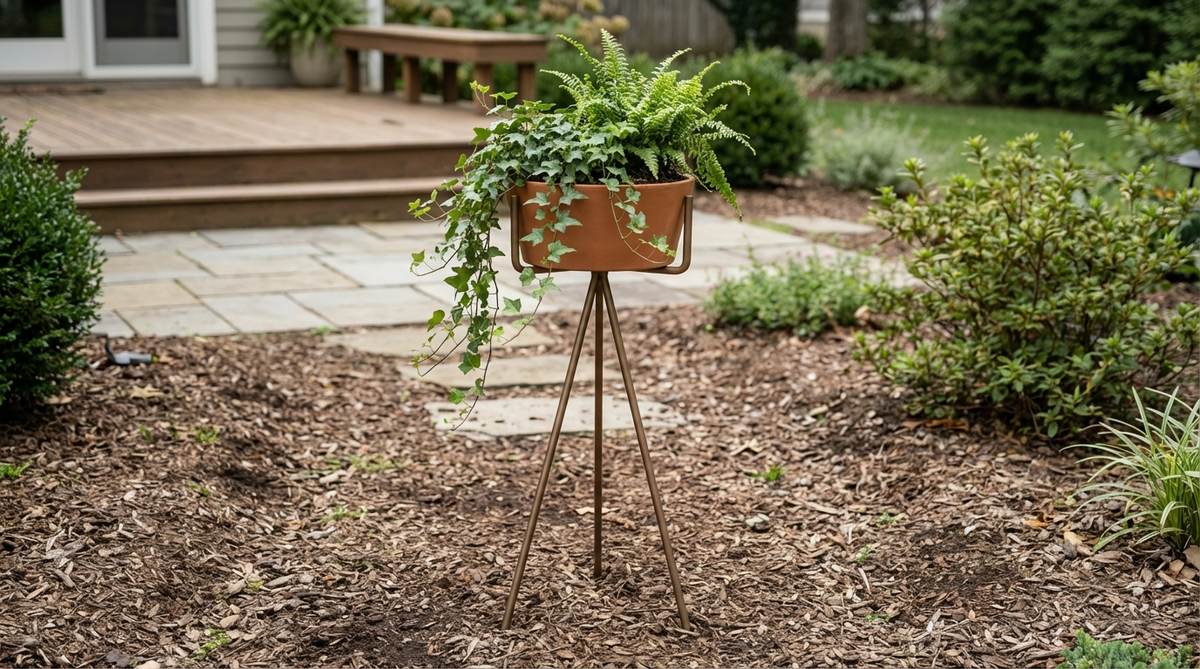
Elevating greenery with this vertical garden display feels like curating an outdoor art gallery. Exceptionally useful for drawing the eye upward on a boring, flat apartment balcony.
Leaving pots on the floor looks messy, but a stark, three-legged metal stand delivers a surprisingly premium look with almost zero effort. Incorporating high-end vertical planters frees up floor space while giving your favorite trailing vines room to dramatically spill over.
These only cost about $30–$60 per stand. Save this to your small-space gardening board immediately.
- Key Materials: Welded steel rods, matte powder coating
- Vibe / Style: Sculptural greenery
- Difficulty: Instant placement
- Budget Breakdown: Tripod stand: $45 | Minimalist pot: $25
- Creator’s Tip: Stagger three of these in a dark corner using different heights to create a massive, lush focal point.
- Smart Sourcing: Powder-coated metal tripod sets (bulk pack) and weather-resistant minimalist planters.
19. Nesting Metal Tables
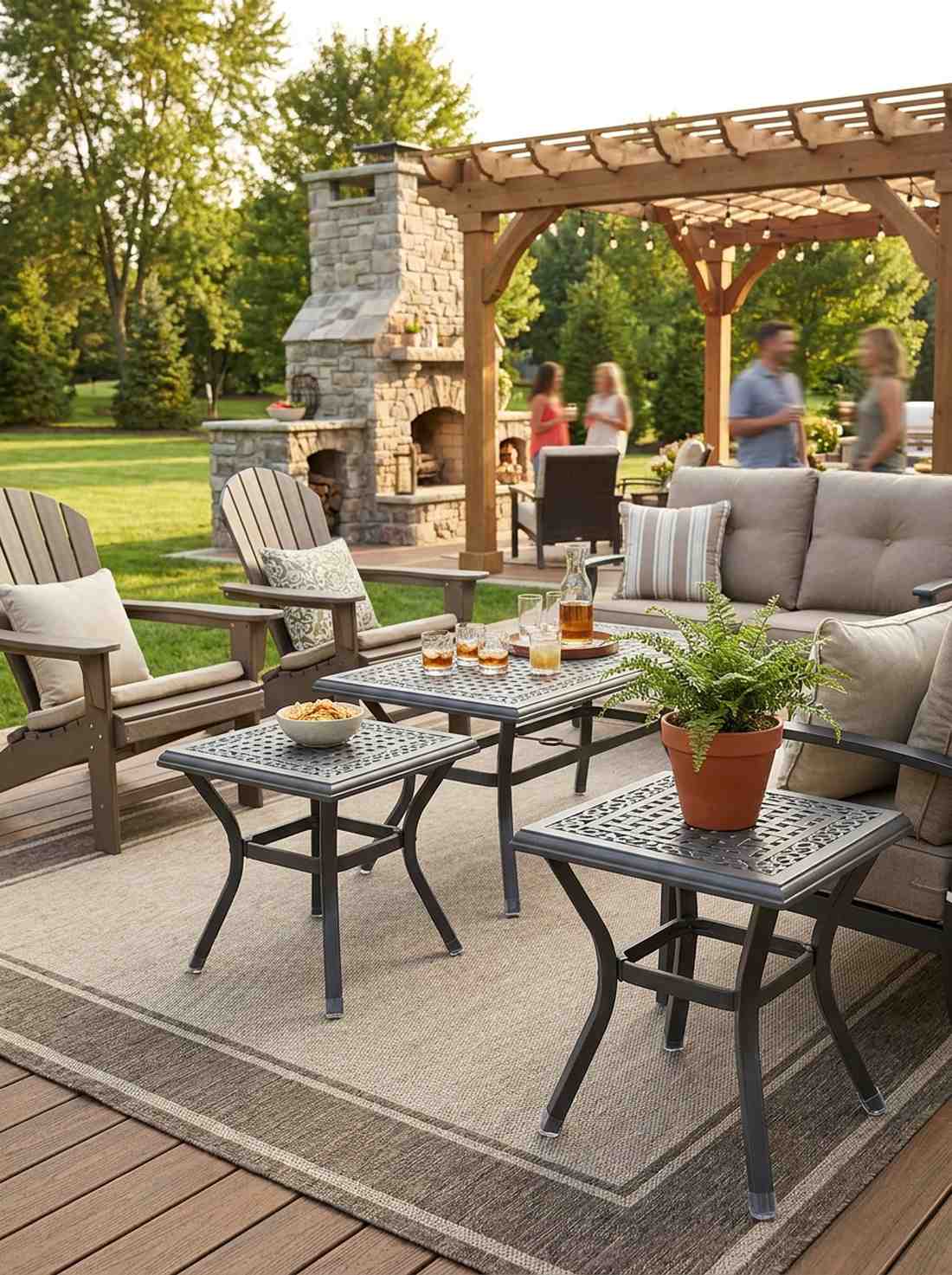
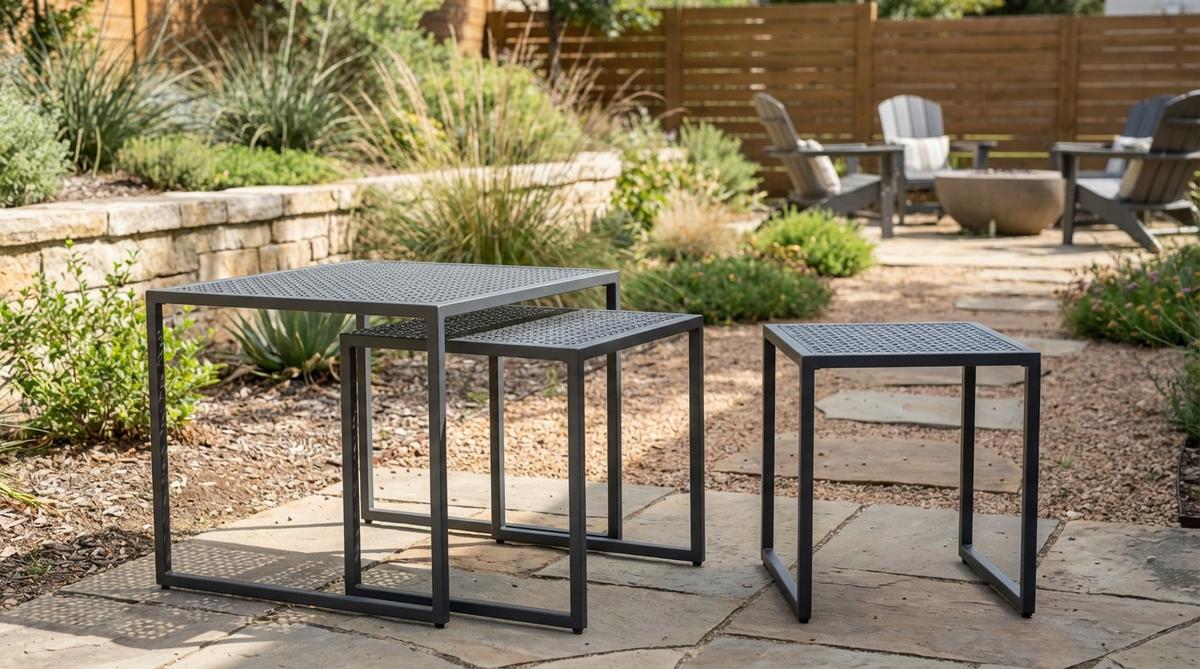
This layered outdoor surface trick feels like a magic act for entertaining large groups out of nowhere. Brilliant for pulling out during a cocktail hour, then tucking away entirely to clear the deck.
People often clutter their yards with too many small tables, but a nested set gives a designer-level finish while occupying only one footprint. This solves the classic problem of why most minimalist garden furniture setups fail during actual parties.
You can get a high-quality nested trio for $120–$200. It’s a fast upgrade that completely changes the vibe of your hosting abilities.
- Key Materials: Stamped aluminum, anti-scratch bumpers
- Vibe / Style: Dynamic utility
- Difficulty: Ready to use
- Budget Breakdown: 3-piece set: $150 | Rubber bumpers: $5
- Creator’s Tip: Use the smallest table as a dedicated plant stand when you aren’t actively using the set for drinks.
- Smart Sourcing: Rust-proof aluminum nesting table kits and clear silicone bumper packs.
Do not buy another bulky table until you see this ridiculously clever hidden surface trick coming up…
20. Aluminum Drink Rail
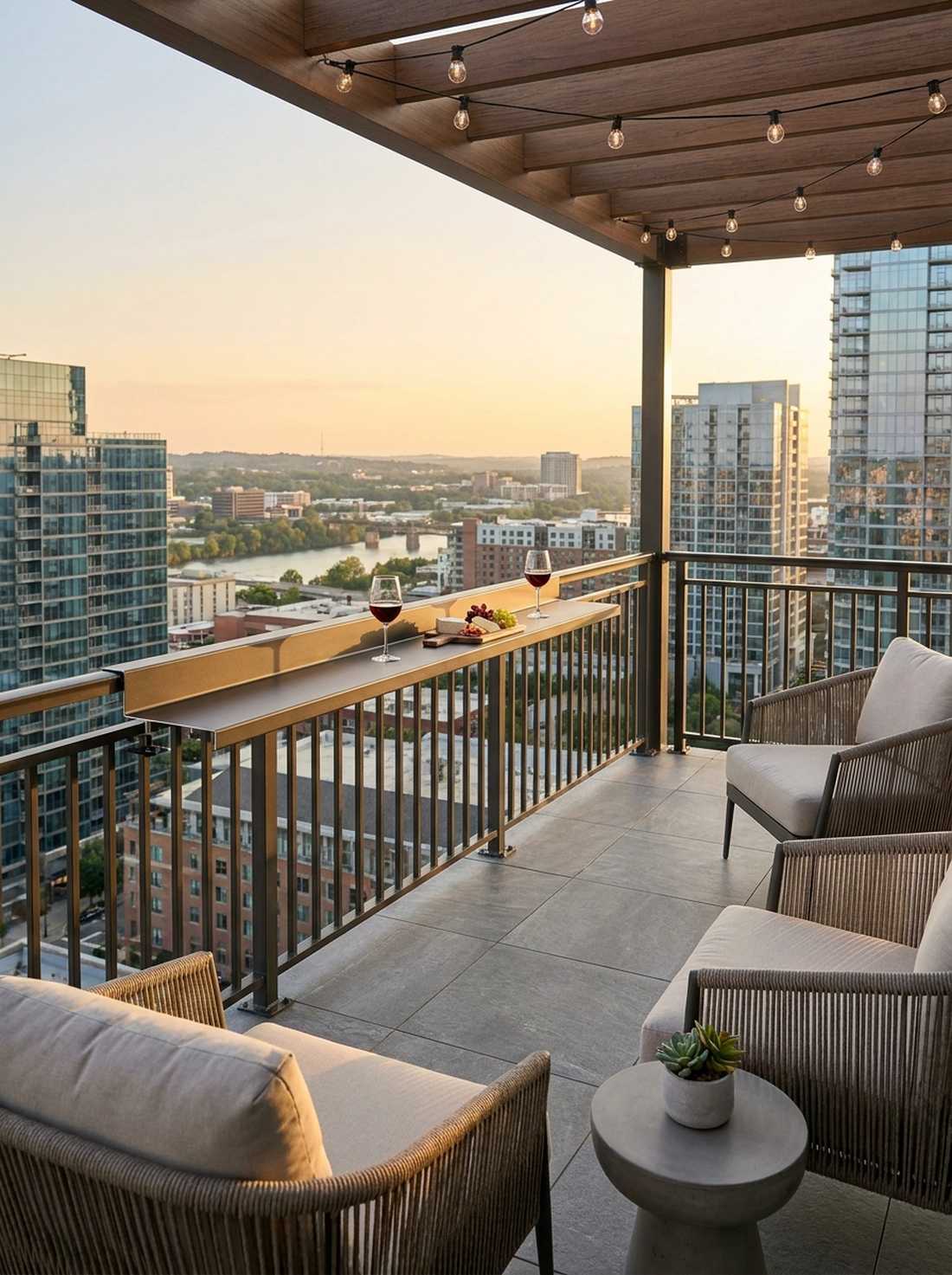
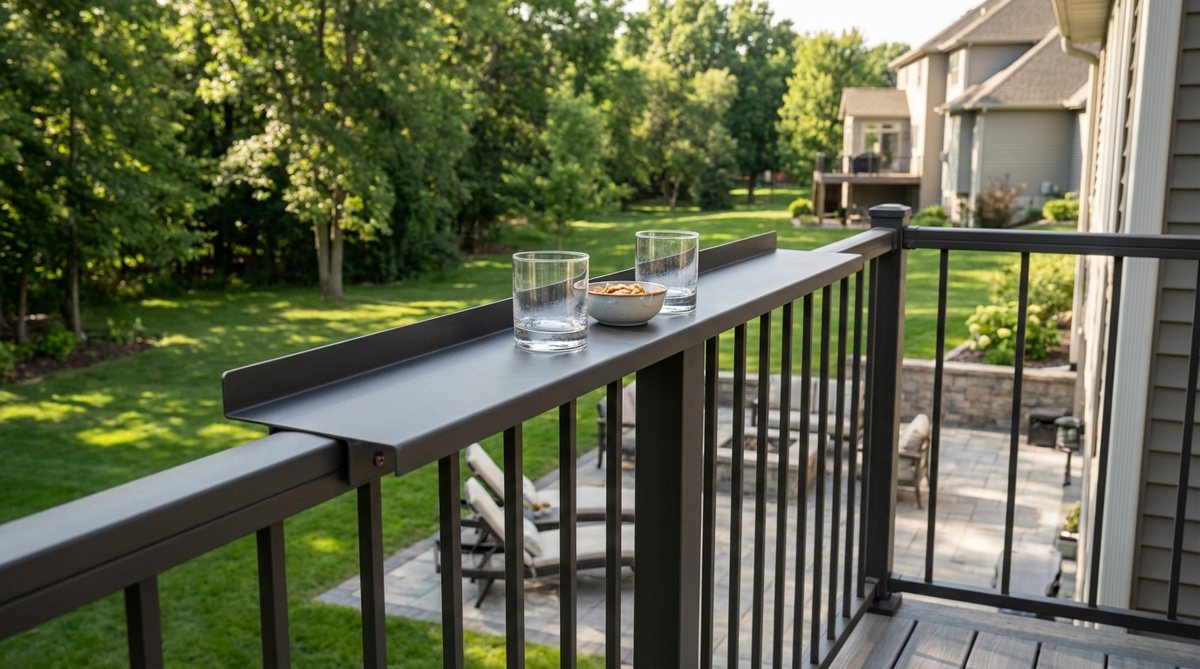
Installing this floating balcony bar top feels like unlocking a secret feature of your apartment. The absolute smartest way to gaze over your railing with a glass of wine in hand.
Why waste floor space on a bistro table when a four-inch clamp-on ledge looks far more expensive than it is? This hyper-efficient layout provides maximum utility without interrupting the clean, horizontal sightlines of modern outdoor architecture.
You can easily pull this off for around $80–$140. Pin this if you have a stunning view but literally zero square footage.
- Key Materials: Extruded aluminum ledges, adjustable rail clamps
- Vibe / Style: Architectural hack
- Difficulty: 15-minute clamping
- Budget Breakdown: Drink rail kit: $110 | Hex tool set: $15
- Creator’s Tip: Ensure your kit has heavy rubber gaskets inside the clamps so you don’t scratch your landlord’s painted railings.
- Smart Sourcing: Clamp-on balcony rail table kits and heavy-duty rubber clamp gaskets.
Material Guide: Cheap vs. Premium Aesthetic
Knowing exactly where to save and where to spend makes all the difference in achieving that “looks expensive but isn’t” vibe.
- Standard vs. UV-Resistant/Premium: Standard plastic fades and chalks within one summer. UV-resistant resins and powder-coated metals maintain their rich, dark colors and structural integrity for decades, completely avoiding the cheap, brittle look.
- Pre-made Kits vs. Sourcing Locally: Attempting to build minimalist furniture from scratch often looks clunky. Precision-milled starter kits guarantee flawless geometric lines and hidden joints, ultimately saving you money on wasted lumber and hardware.
Space-Saving Storage Solutions
Minimalist storage furniture conceals cushions and accessories while doubling as functional seating or surfaces. These pieces maintain clean aesthetics while addressing practical outdoor living needs.
21. Teak Storage Bench
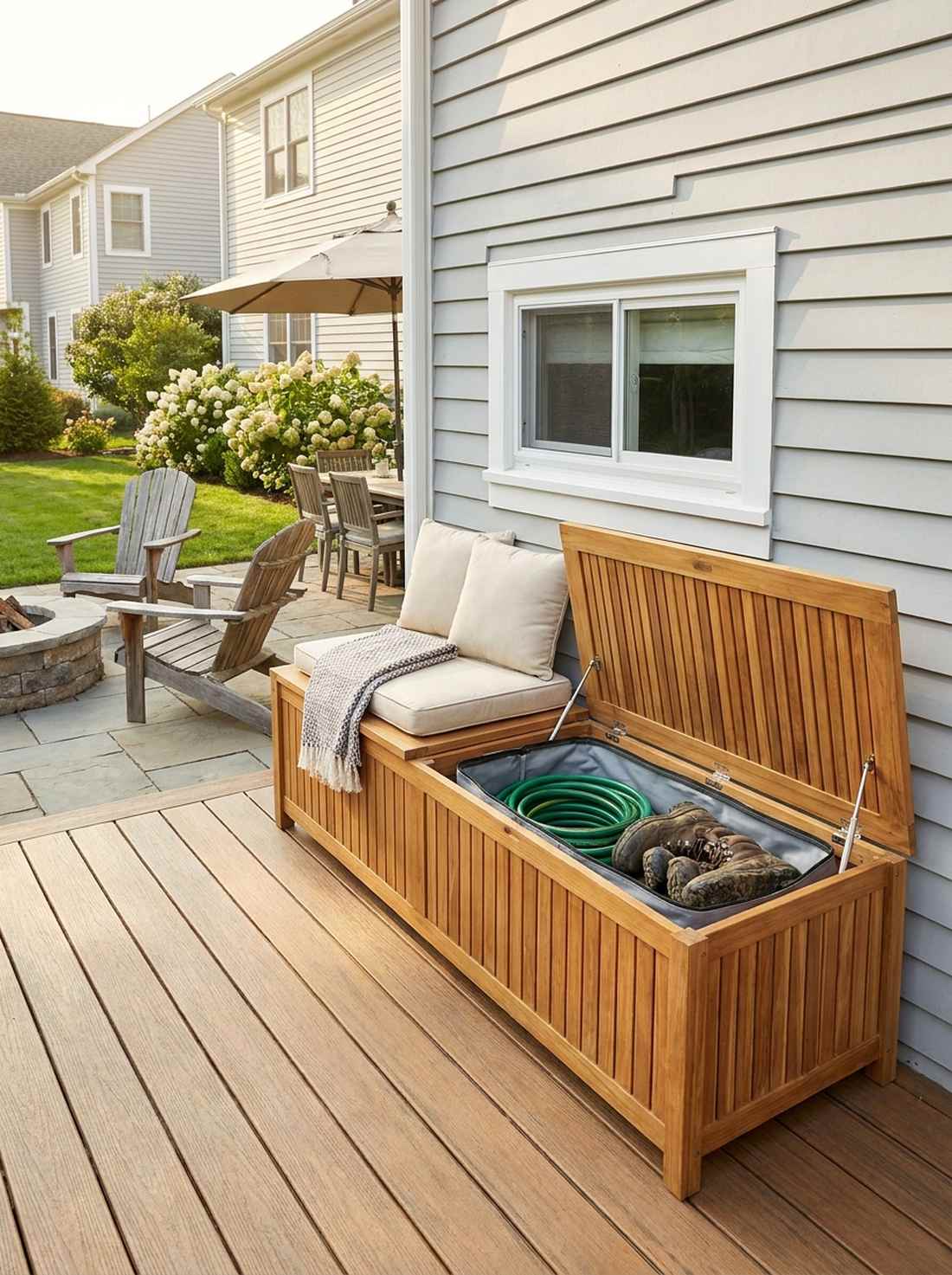
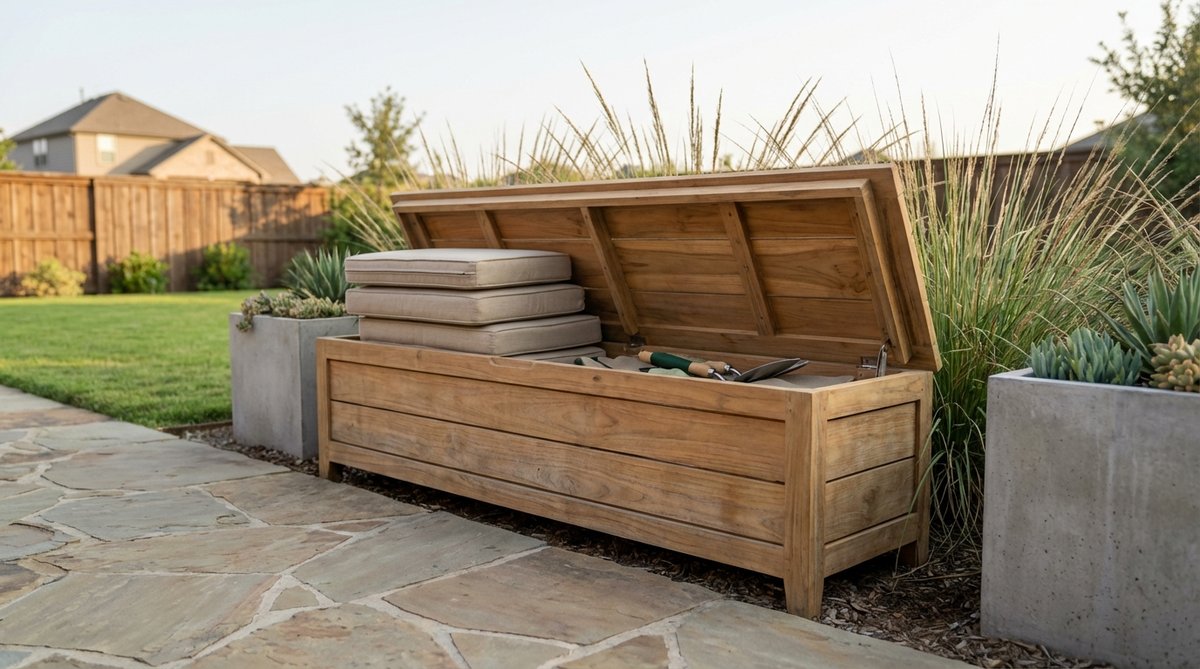
This dual-purpose patio organizational hack feels incredibly clever and looks like a bespoke built-in feature. Placed perfectly beneath a low window, it hides your clutter while providing overflow party seating.
Ugly plastic bins ruin a curated backyard, but a warm wood chest gives a designer-level finish that disguises its actual utility. Investing in this kind of multi-functional premium minimalist garden furniture is how small yards stay looking immaculate year-round.
A solid wood piece runs about $250–$400. Highly recommended for hiding bulky garden hoses and muddy boots.
- Key Materials: Slatted teak siding, hydraulic lid hinges
- Vibe / Style: Hidden functionality
- Difficulty: Moderate bolt assembly
- Budget Breakdown: Teak bench: $320 | Waterproof liner bag: $25
- Creator’s Tip: Add a waterproof zip-up liner bag to the interior to guarantee your expensive fabric cushions never get musty.
- Smart Sourcing: Pre-cut teak storage bench kits and heavy-duty waterproof interior liners.
22. Aluminum Storage Box
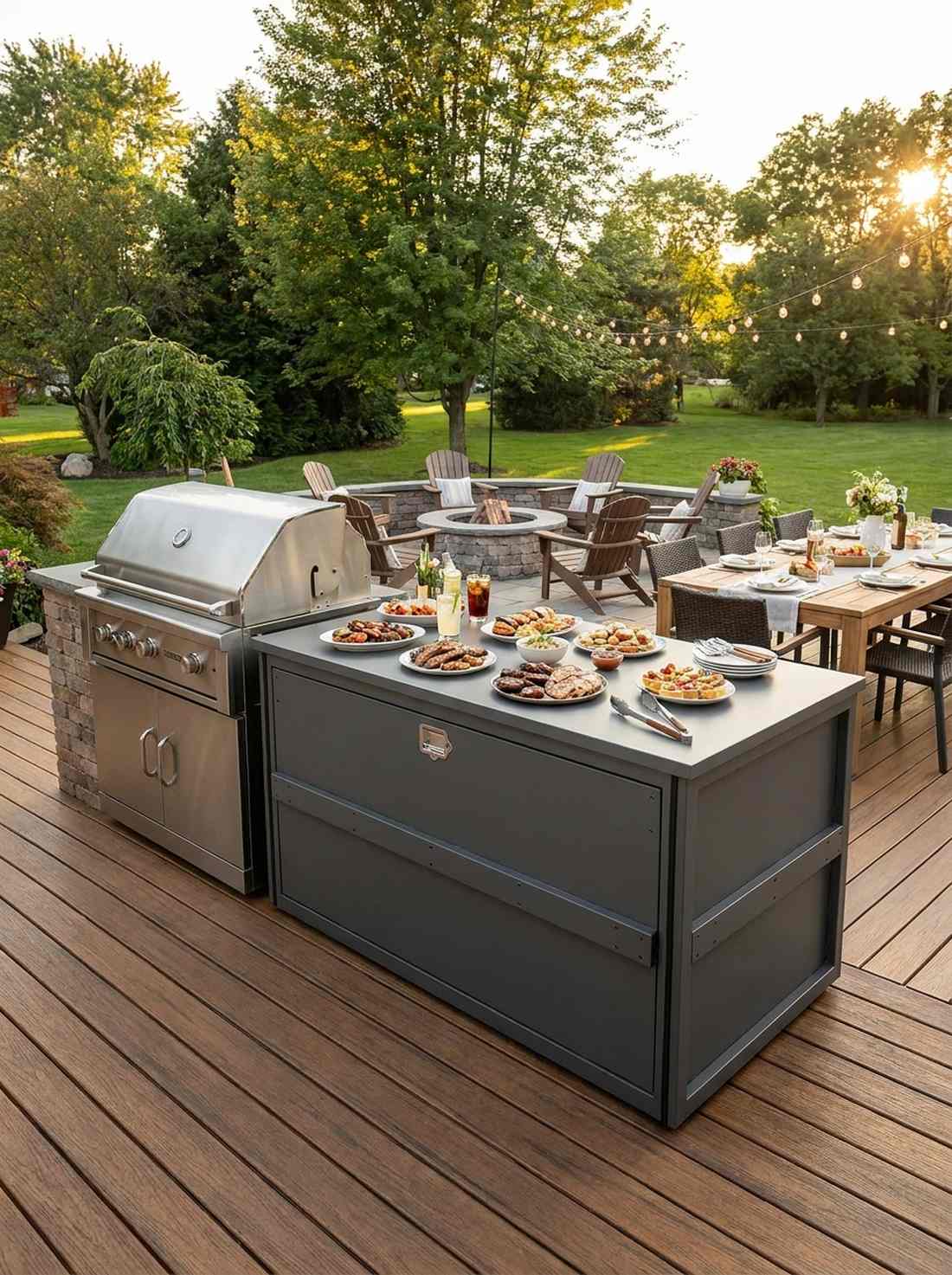
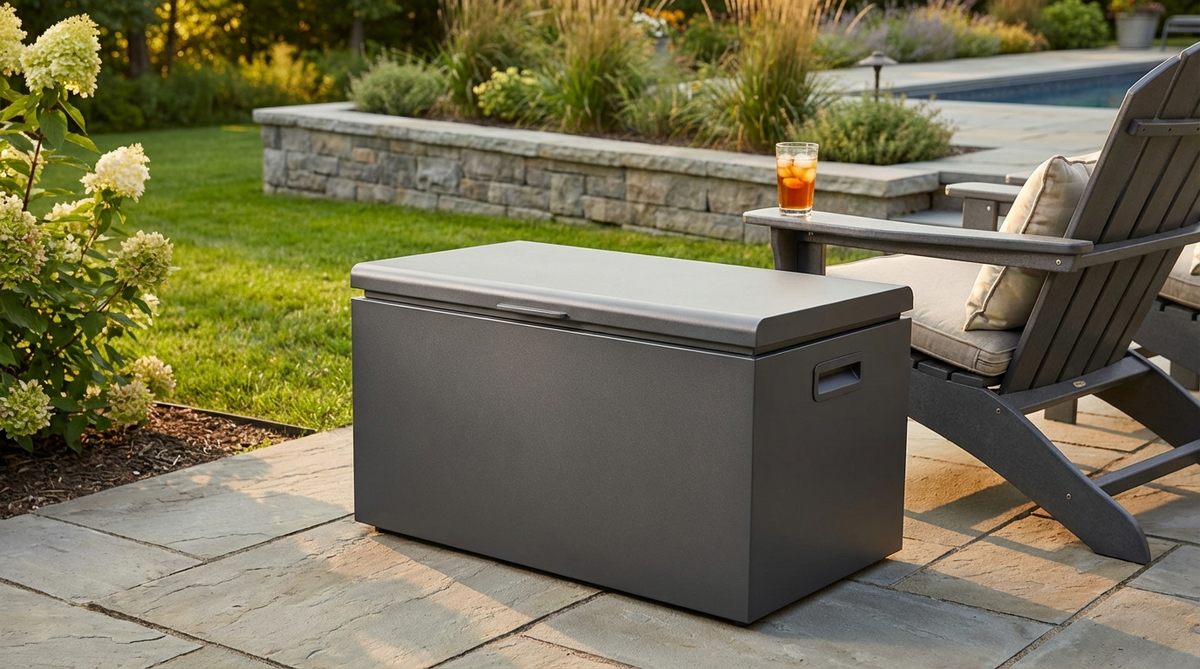
This sleek metallic deck vault feels like military-grade protection wrapped in an ultra-modern package. Perfect for sitting right next to the grill to hide charcoal bags and ugly grilling tools.
Flimsy resin sheds warp in the summer heat, but rigid aluminum walls deliver a surprisingly premium look that stays dead straight. Upgrading to waterproof outdoor gear boxes ensures your investment is locked up safely without turning your patio into a junkyard.
Expect to invest around $300–$500 for heavy gauge metal. Save this to your patio organization board for the ultimate tidy yard.
- Key Materials: Powder-coated aluminum plates, rubber weather stripping
- Vibe / Style: Industrial security
- Difficulty: Requires two people
- Budget Breakdown: Metal deck box: $400 | Padlocks: $20
- Creator’s Tip: Use the flat, rigid top of the box as a massive serving buffet during backyard barbecues.
- Smart Sourcing: Powder-coated aluminum deck box starter kits and weatherproof outdoor padlocks.
23. Deck Box With Cushion Top
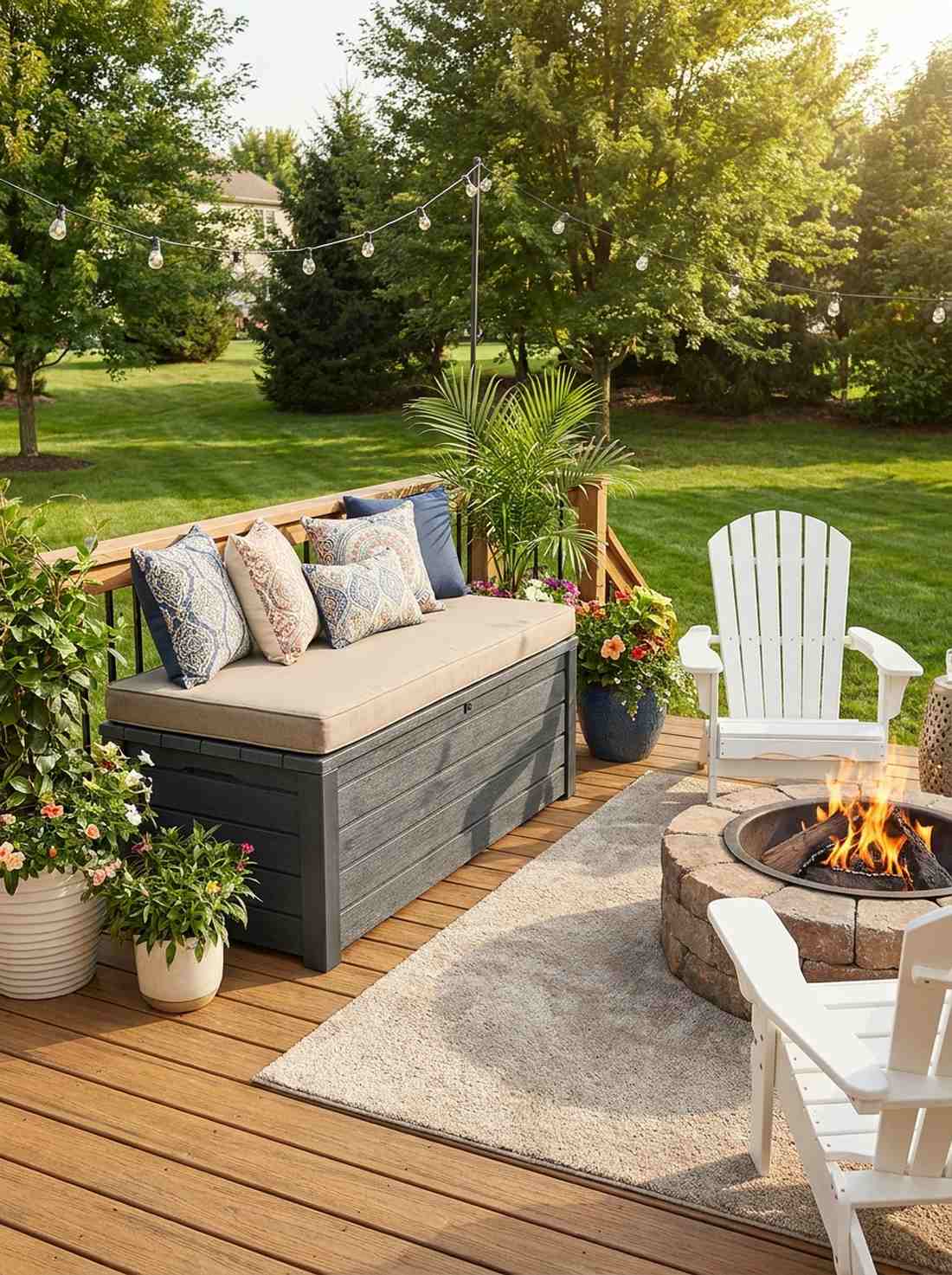
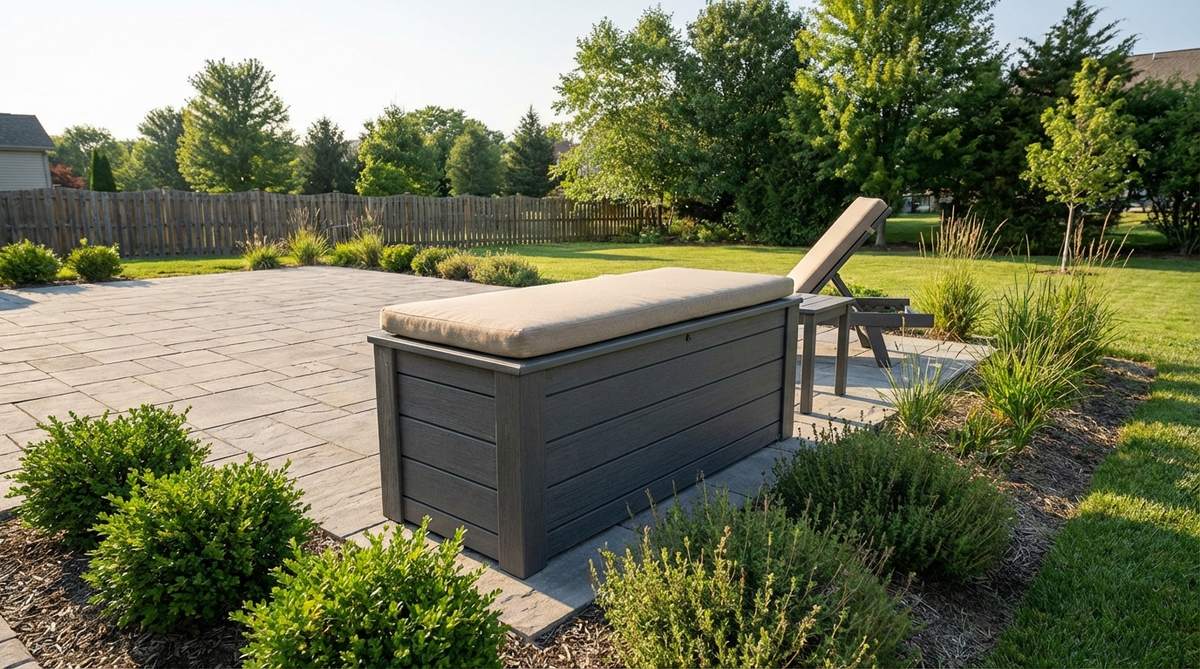
This cozy hidden storage seat feels like a magic trick that instantly doubles your entertaining capacity. Works miracles when pushed into a dead corner of a small courtyard layout.
Most storage boxes look strictly utilitarian, but topping one with a tailored Sunbrella pad looks far more expensive than it is. This is the exact blueprint for making a tight space highly functional without cluttering the visual field with extra chairs.
You can set this up for around $150–$250. It’s a fast upgrade that completely changes the vibe of your outdoor lounge.
- Key Materials: UV-resistant composite resin, thick outdoor foam
- Vibe / Style: Practical comfort
- Difficulty: Snap-together panels
- Budget Breakdown: Resin box: $130 | Custom cushion: $80
- Creator’s Tip: Buy a box with a reinforced steel bar under the lid so the lid doesn’t cave in when adults sit on it.
- Smart Sourcing: Reinforced outdoor storage seating kits and UV-coated replacement box cushions.
24. Vertical Storage Cabinet
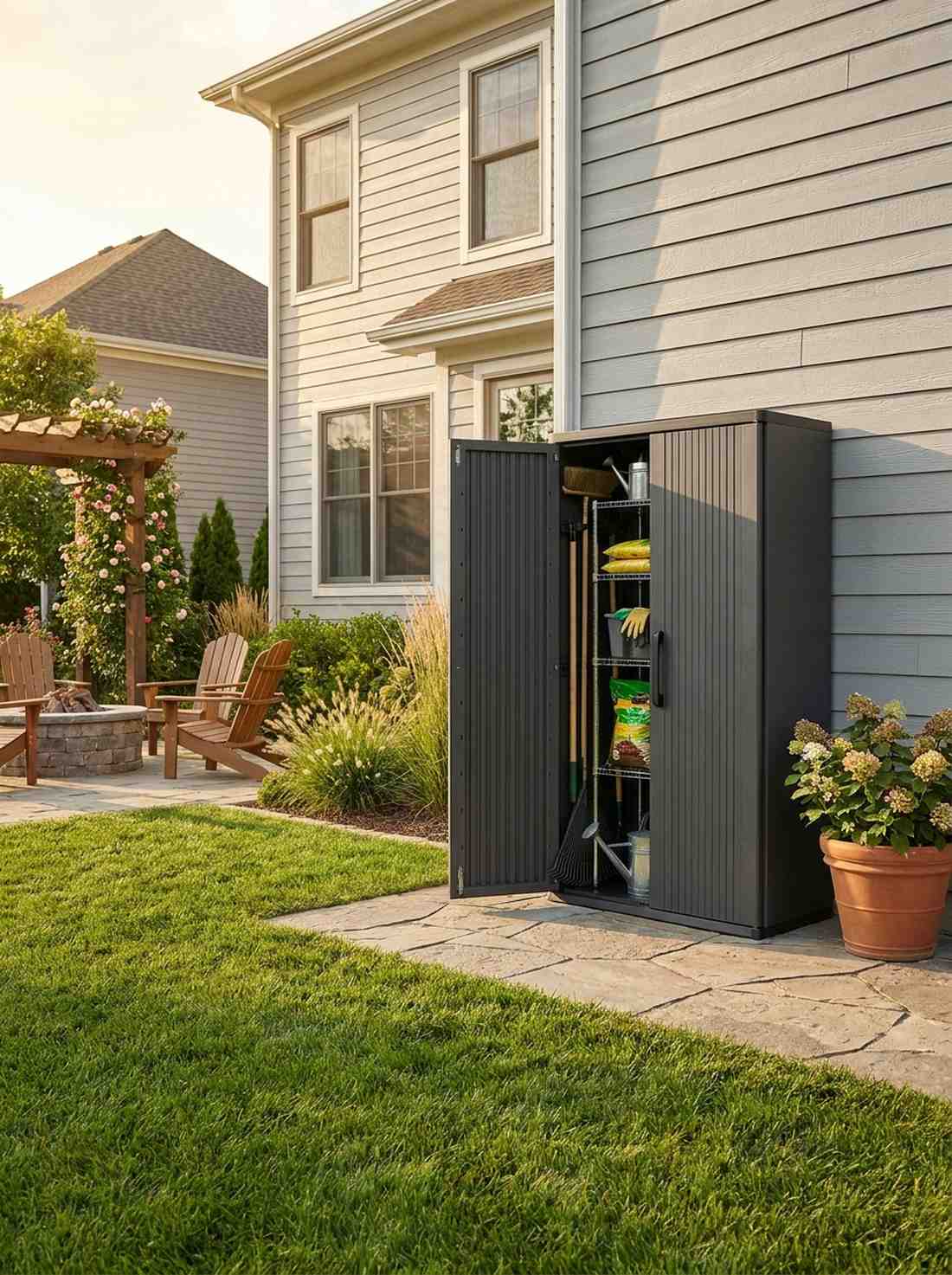
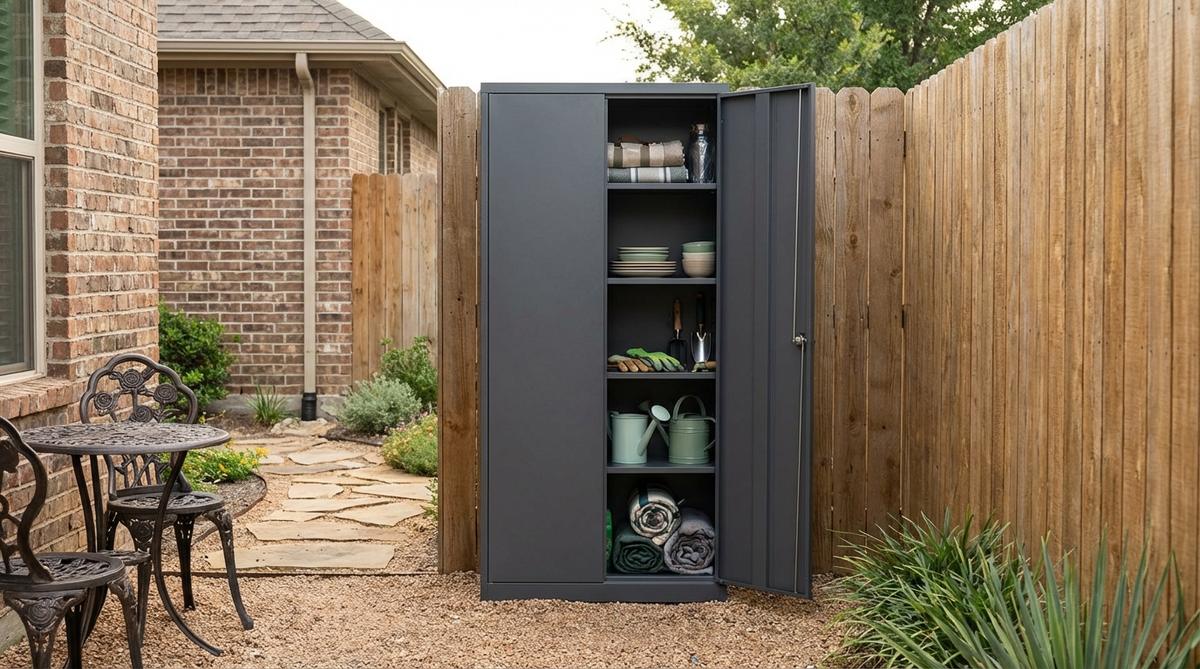
Erecting this slim-profile garden locker feels like discovering hidden square footage against your home’s exterior. It is an absolute lifesaver for stashing brooms, rakes, and potting soil out of sight.
Sprawling horizontal bins eat up precious floor space, but utilizing vertical volume gives a designer-level finish that maximizes your property lines. Selecting tall, sleek cabinets seamlessly blends into modern siding while pulling high-CPC traffic from organization fanatics.
These towers typically cost $200–$350. Pin this if your garden tools are currently an embarrassing, tangled mess.
- Key Materials: Marine-grade polymer, adjustable metal shelving
- Vibe / Style: Vertical efficiency
- Difficulty: Must anchor to wall
- Budget Breakdown: Cabinet kit: $250 | Wall anchors: $15
- Creator’s Tip: Always secure the back panel directly into brick or siding studs so a heavy gust of wind doesn’t topple it forward.
- Smart Sourcing: Pre-cut vertical outdoor cabinet kits and heavy-duty masonry wall anchors.
The final storage upgrades on this list are absolute game-changers for keeping expensive cushions completely dry year-round.
25. Rolling Storage Cart
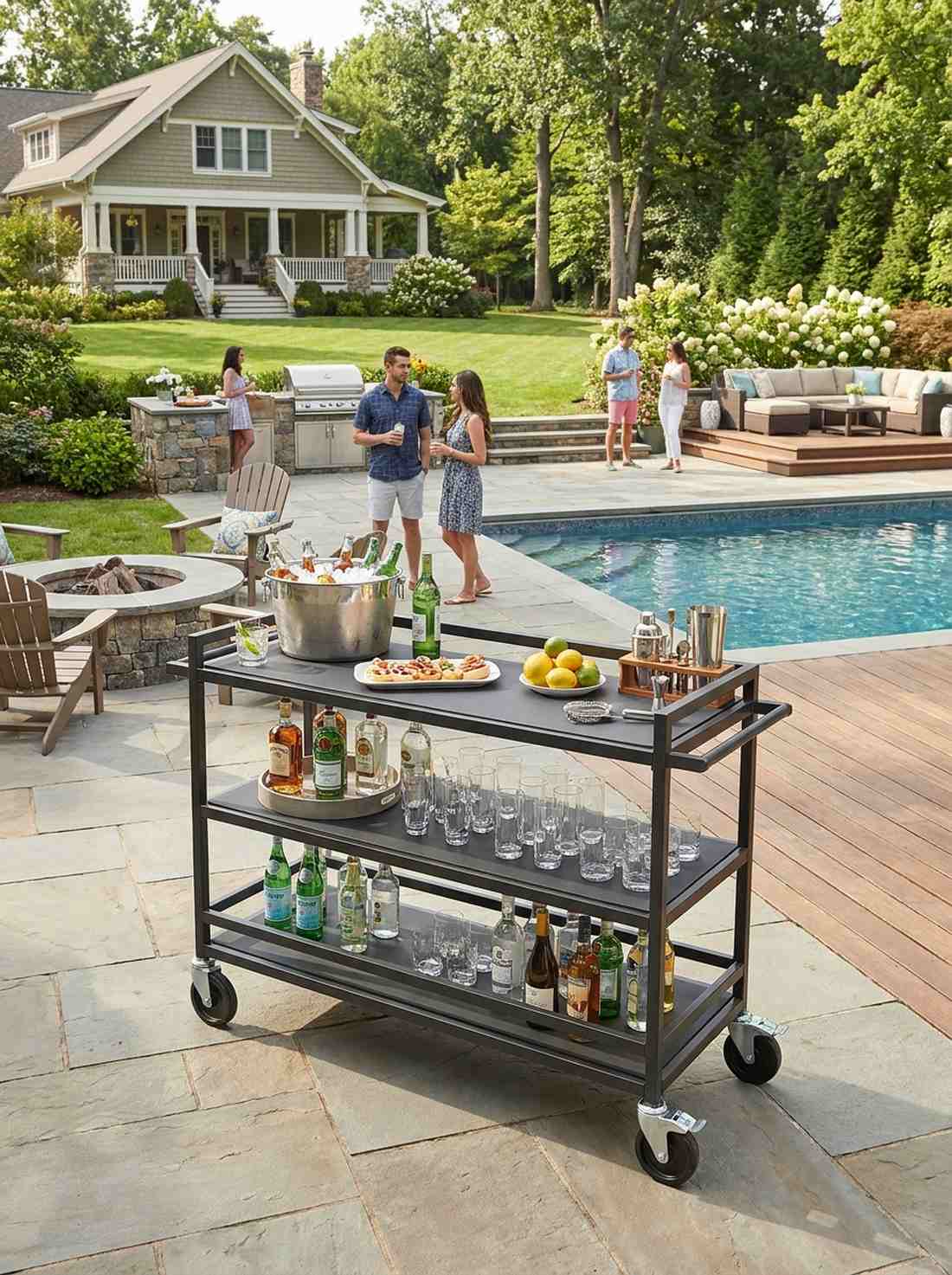
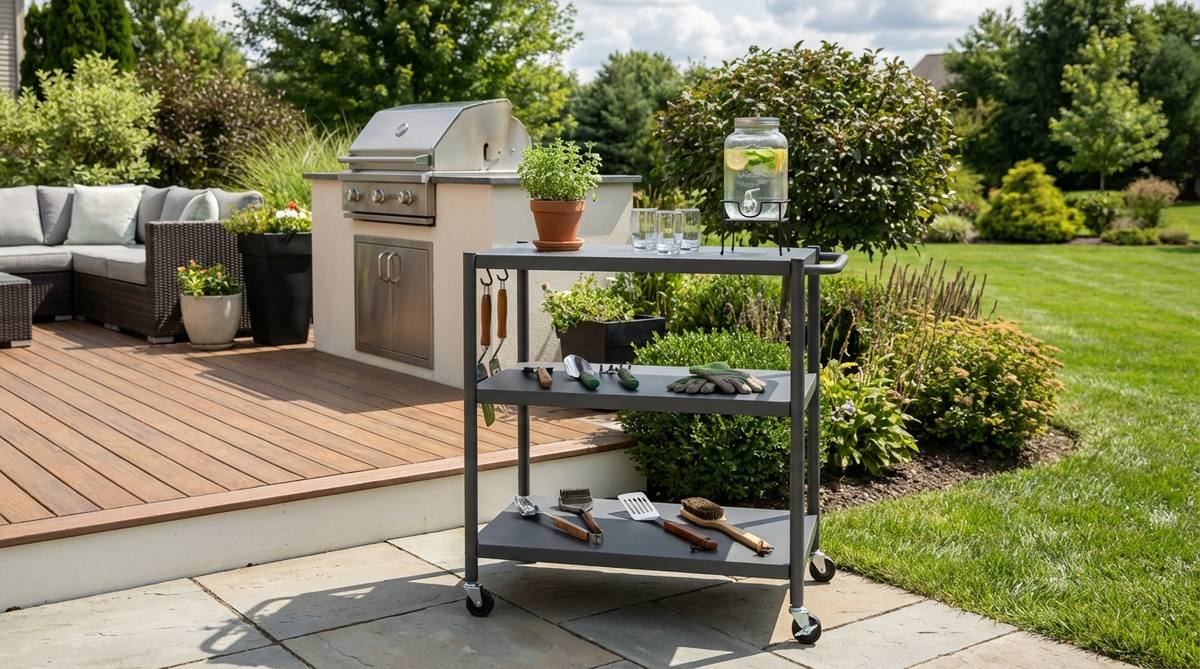
Rolling out this mobile patio bar station feels like you hired a professional caterer for your backyard bash. Unbelievably convenient for shuttling drinks, ice, and plates from the kitchen out to the pool.
A stationary table limits your layout, but commercial-grade casters on a multi-tier cart look surprisingly premium while offering ultimate flexibility. Transforming storage into mobile architecture is how modern minimalist garden furniture adapts to your ever-changing weekend plans.
You can easily pull this off for around $100–$180. Save this to your outdoor hosting ideas board immediately.
- Key Materials: Powder-coated steel tubing, locking caster wheels
- Vibe / Style: Industrial mobility
- Difficulty: Easy hex-key assembly
- Budget Breakdown: Metal cart: $120 | Silicone mats: $20
- Creator’s Tip: Line the metal shelves with cut-to-size silicone mats to stop glass bottles from violently rattling while you roll.
- Smart Sourcing: Heavy-duty metal outdoor rolling carts and pre-cut non-slip silicone mat packs.
26. Hidden Hose Storage Box
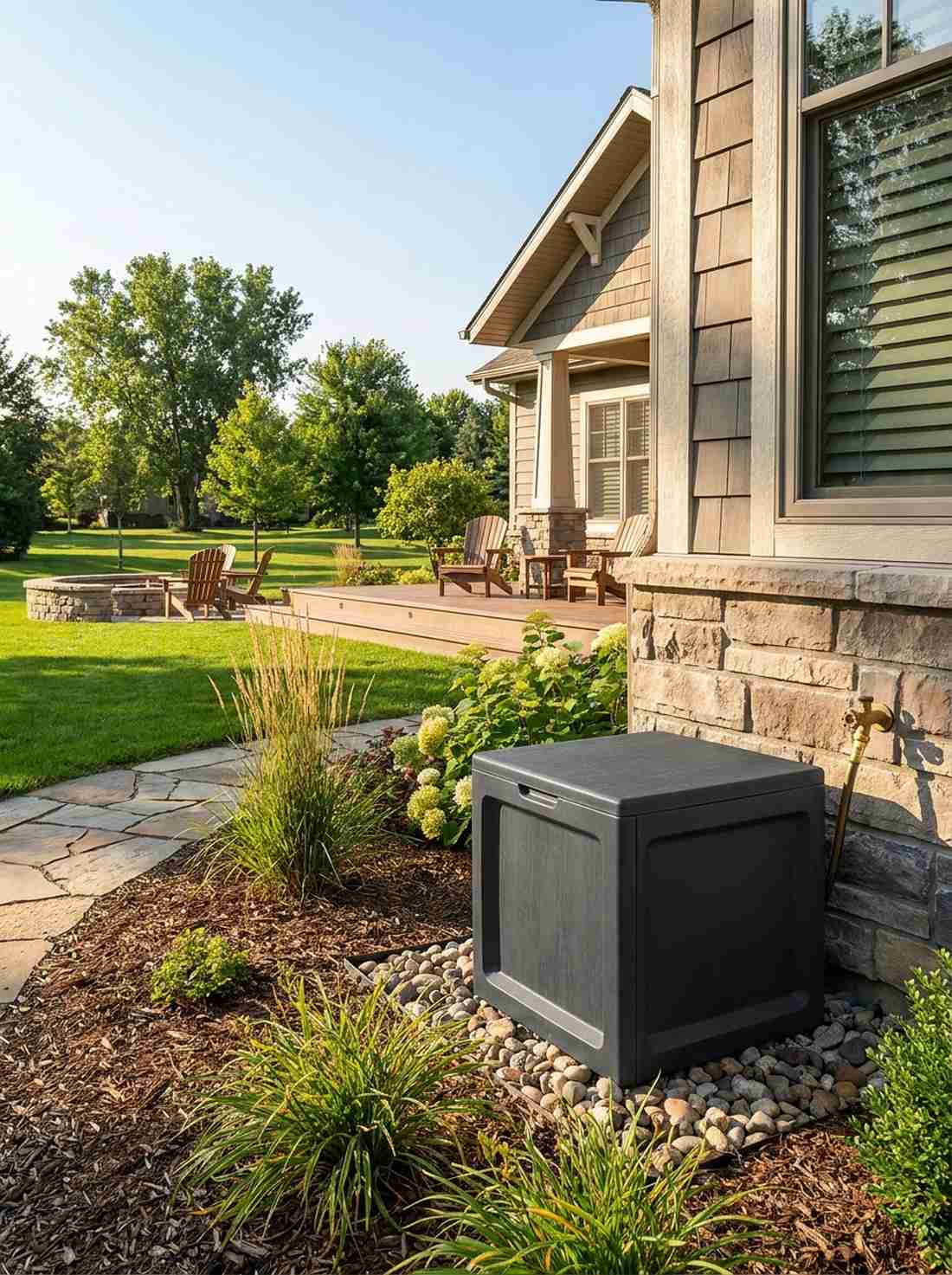
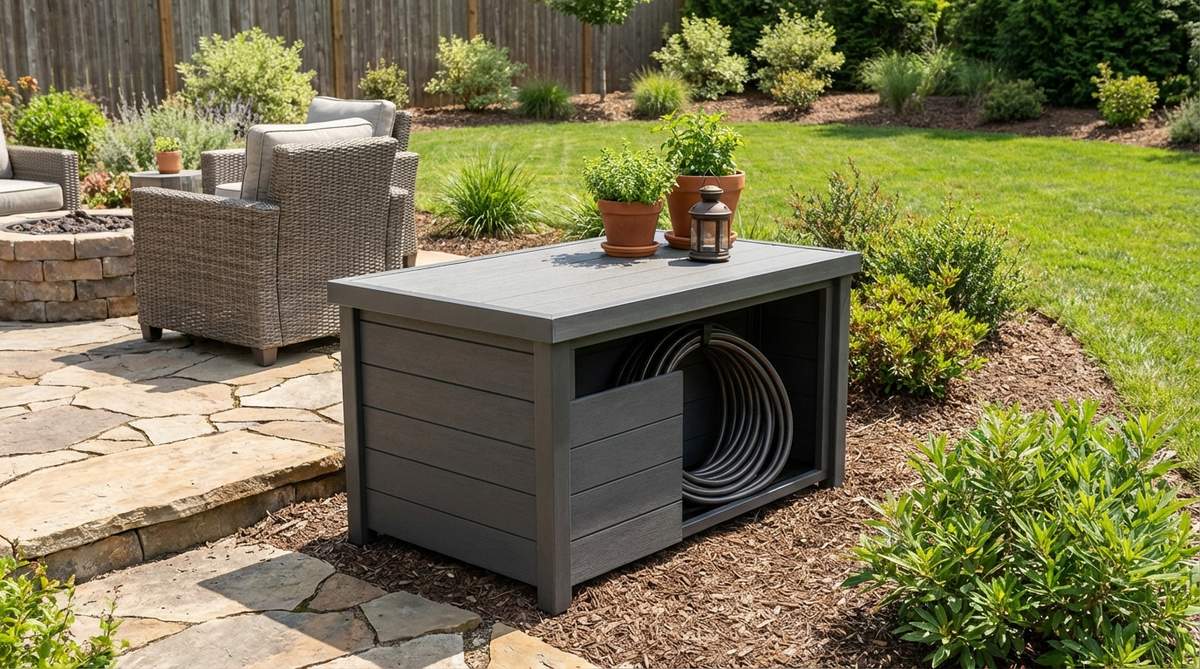
This camouflaged yard utility cube feels incredibly satisfying, making a messy necessity completely vanish. Perfect for placing right next to the exterior water spigot without ruining your beautiful landscaping.
Exposed plastic hose reels look intensely tacky, but a sleek resin cube gives a designer-level finish that blends into your modern aesthetic. Sourcing specific high-end concealment kits solves the number one eyesore in every single homeowner’s yard.
Pricing is usually a highly affordable $50–$90. A brilliantly simple detail that elevates the whole exterior.
- Key Materials: Molded UV-resistant resin, internal track guides
- Vibe / Style: Stealth utility
- Difficulty: Zero setup required
- Budget Breakdown: Hose hideaway: $65 | Brass adaptors: $15
- Creator’s Tip: Swap out the cheap plastic nozzles that come with these boxes for solid brass fittings to prevent annoying leaks.
- Smart Sourcing: UV-coated hidden hose box starter kits and solid brass outdoor hose fittings.
27. Stackable Storage Crates
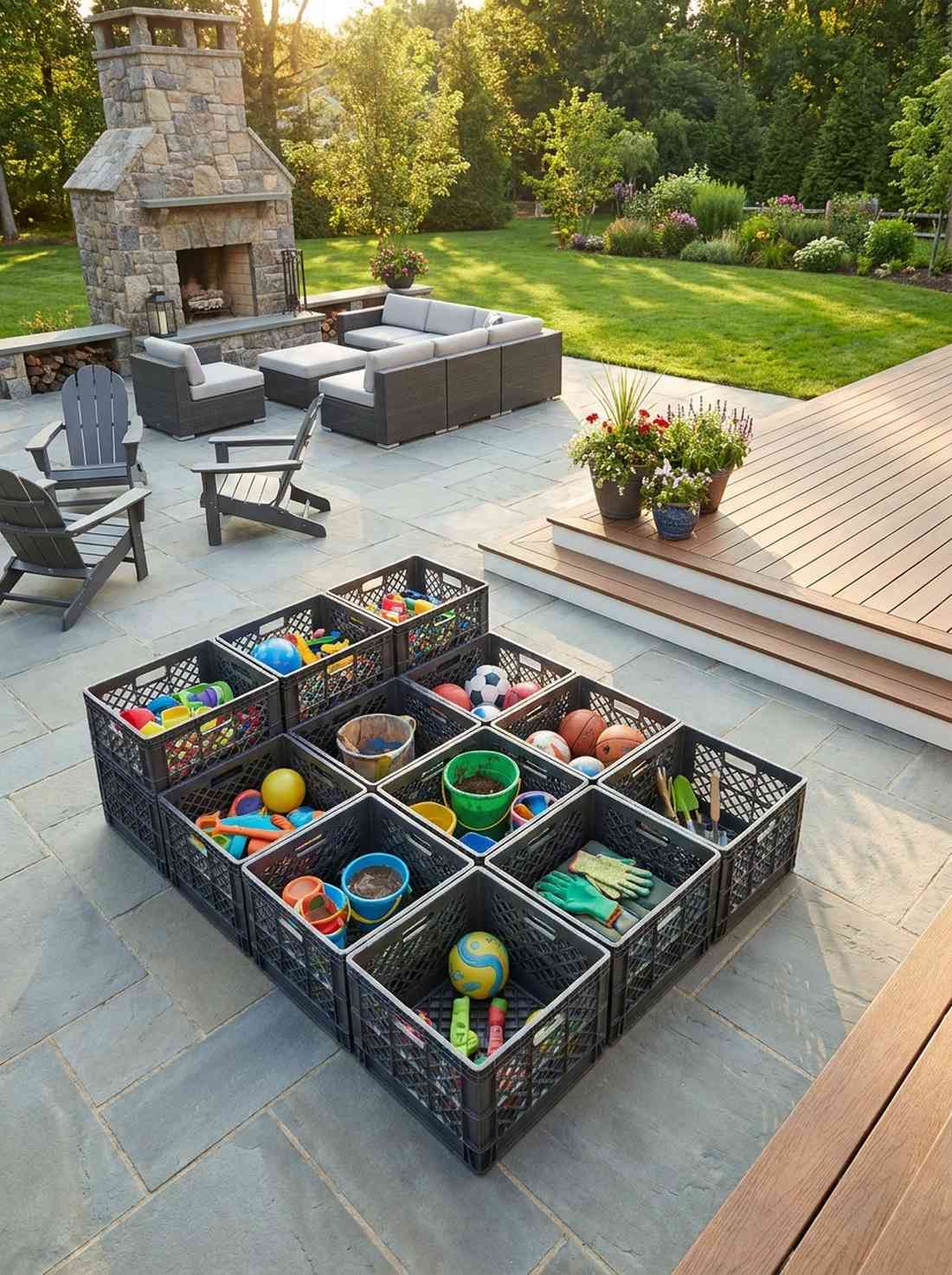
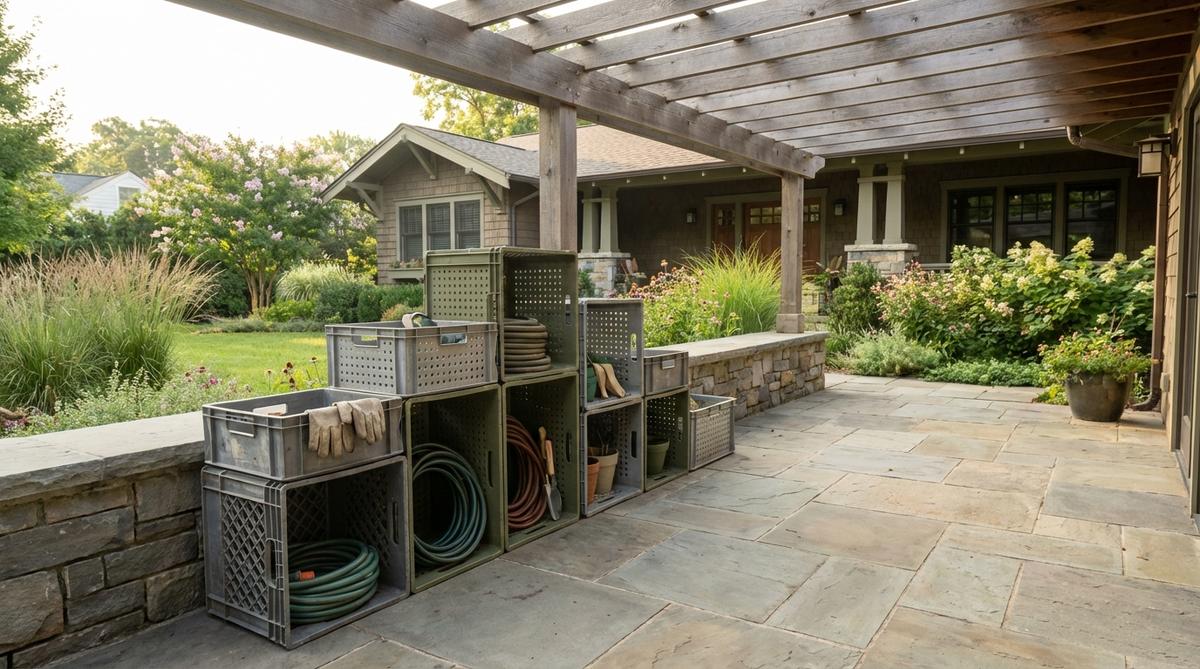
This modular geometric organization system feels like a high-end industrial loft brought out into the fresh air. Absolutely flawless for organizing muddy kid’s toys and gardening gloves on an open patio.
Most people throw everything into a chaotic pile in the shed, but stackable, breathable crates look far more expensive than they are. Building a custom grid layout with affordable kits is a budget-friendly way to maintain that strict minimalist visual order.
You can grab a set of 3 or 4 for around $60–$100. Pin this to finally conquer your outdoor clutter this weekend.
- Key Materials: High-density polyethylene (HDPE), interlocking bases
- Vibe / Style: Modular grid structure
- Difficulty: Simply stack
- Budget Breakdown: Crate bundle: $80 | Label tags: $10
- Creator’s Tip: Use open-grid crates so rainwater passes straight through instead of pooling at the bottom and breeding mosquitoes.
- Smart Sourcing: Heavy-duty interlocking outdoor crates (bulk pack) and waterproof outdoor labeling tags.
Creating Your Minimalist Outdoor Sanctuary
Executing all exactly 27 minimalist garden furniture concepts transforms an awkward backyard into a high-end extension of your home’s architecture. The curated aesthetic featured here avoids cheap, bulky yard staples by prioritizing sleek profiles, UV-resistant premium finishes, and incredibly smart multi-functional kits that maximize utility without the visual noise.
As you map out your blueprints, skip the generic craft aisles and focus on high-impact sourcing: FSC-certified teak bundles, powder-coated aluminum starter kits, and marine-grade protective sealants. Investing strategically in the right productized supplies ensures your “looks expensive but isn’t” outdoor sanctuary easily survives harsh weather, delivering a massive return on relaxation for decades to come.
Frequently Asked Questions
What materials work best for minimalist garden furniture?
For a true luxury aesthetic that won’t degrade, skip standard plastics and invest in pre-treated teak, powder-coated aluminum, and UV-resistant woven ropes. High-CPC products like marine-grade sealed teak naturally resist rot while offering an expensive organic warmth. Meanwhile, sourcing heavy-duty extruded aluminum starter kits ensures you get sleek, minimalist silhouettes that won’t rust or blow away during intense seasonal storms.
How do I maintain the sleek appearance of minimalist outdoor furniture?
The secret to zero-fade durability lies in smart, preventative prep. Instead of scrubbing endlessly, apply premium hydrophobic fabric sealants to your cushions and UV-protective clear coats to your metal frames right out of the box. Always invest in custom-fit, heavy-duty furniture covers (bulk packs are cheaper) so you can simply throw a tarp over your pristine minimalist garden furniture before a storm hits, cutting your maintenance time to literally zero.
Can minimalist garden furniture work in small outdoor spaces?
Minimalist setups are actually the ultimate hack for tiny balconies because low-profile frames and thin legs create an optical illusion of more square footage. You drastically improve flow by using dual-purpose setups—like a teak storage bench that hides clutter while offering seating, or clamp-on balcony railing bars that consume zero floor space. Always opt for nesting tables or folding bistro kits to keep your footprint flexible.
What colors complement minimalist garden furniture best?
To achieve that expensive, designer-level look, restrict your foundational palette to matte charcoal, soft concrete greys, and warm taupe. These neutral, UV-resistant finishes act as a sophisticated backdrop that makes your green landscaping violently pop. If you want contrast, buy pre-cut outdoor lumbar pillows in deep olive or terracotta—they provide high-end visual interest without overwhelming the strict, clean geometry of the space.
How long does quality minimalist outdoor furniture typically last?
If you source premium materials, your setup will easily outlast cheap big-box alternatives by decades. Quality FSC-certified teak and powder-coated aluminum kits have a lifespan of 20 to 40 years if properly sealed. While the upfront cost of high-end architectural patio furniture is higher, replacing shattered plastic and rusted iron every single summer is a massive waste of cash. Buy right once, and enjoy a lifetime of flawless modern outdoor living.