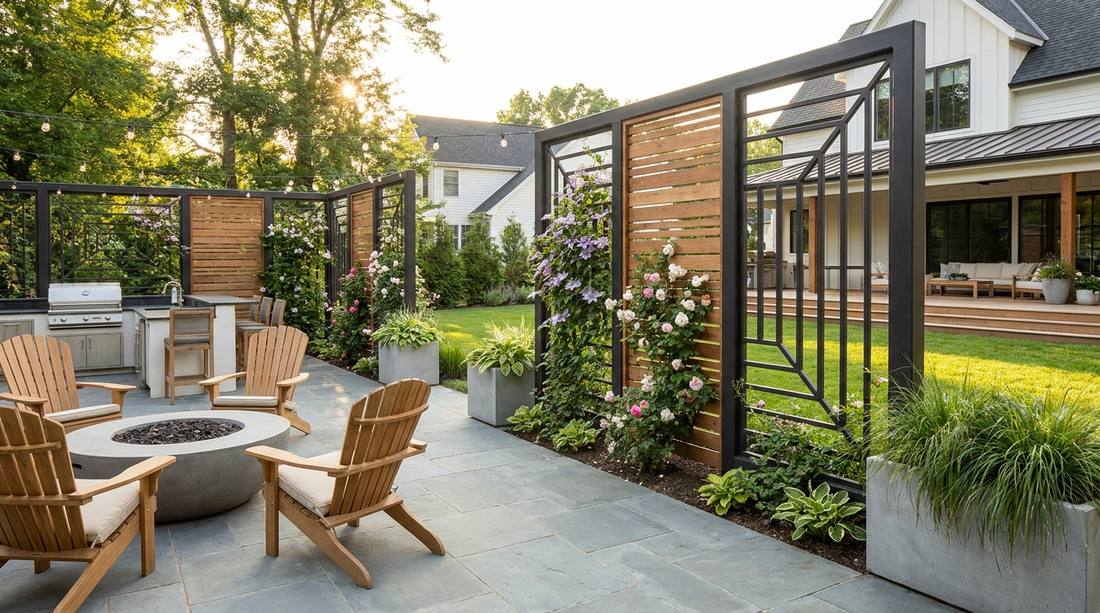
A modern garden trellis instantly elevates basic patios into architectural masterpieces. We uncover premium material sourcing and budget breakdowns for high-end setups. Build lush privacy screens that look custom-made without the designer price tag.
Design SnapshotKey Principles
- Material Selection: Choose weather-resistant materials like powder-coated steel, aluminum, cedar, or stainless steel cables for longevity
- Structural Integrity: Ensure proper anchoring with ground stakes or wall brackets to support mature plant weight
- Scale and Proportion: Match trellis dimensions to your space and plant vigor for balanced visual impact
- Grid Spacing: Select 4-6 inch openings for most climbers or wider grids for minimal, contemporary aesthetics
Minimalist Metal Designs That Define Clean Lines
1. Stainless Steel Cable Grid
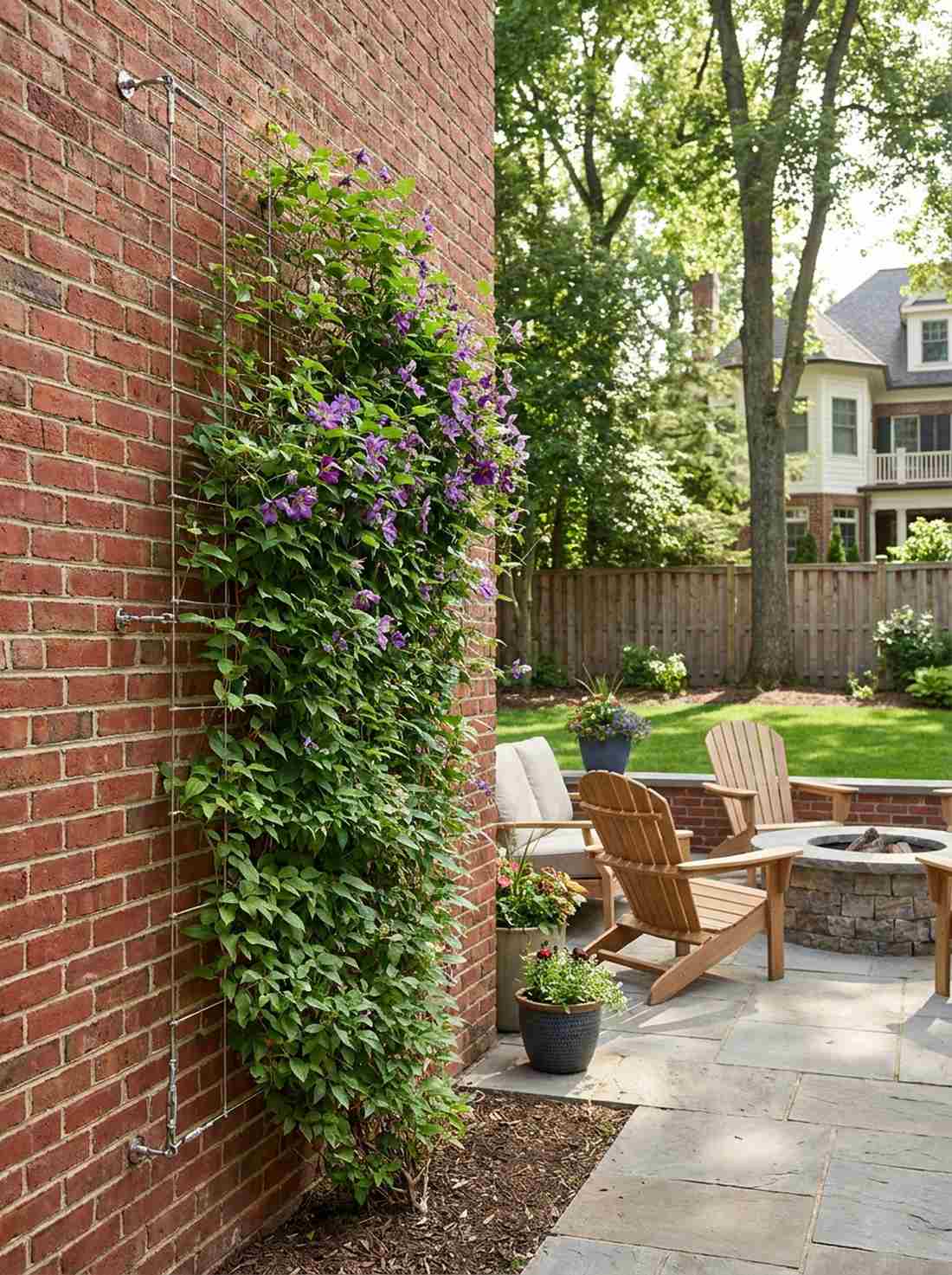
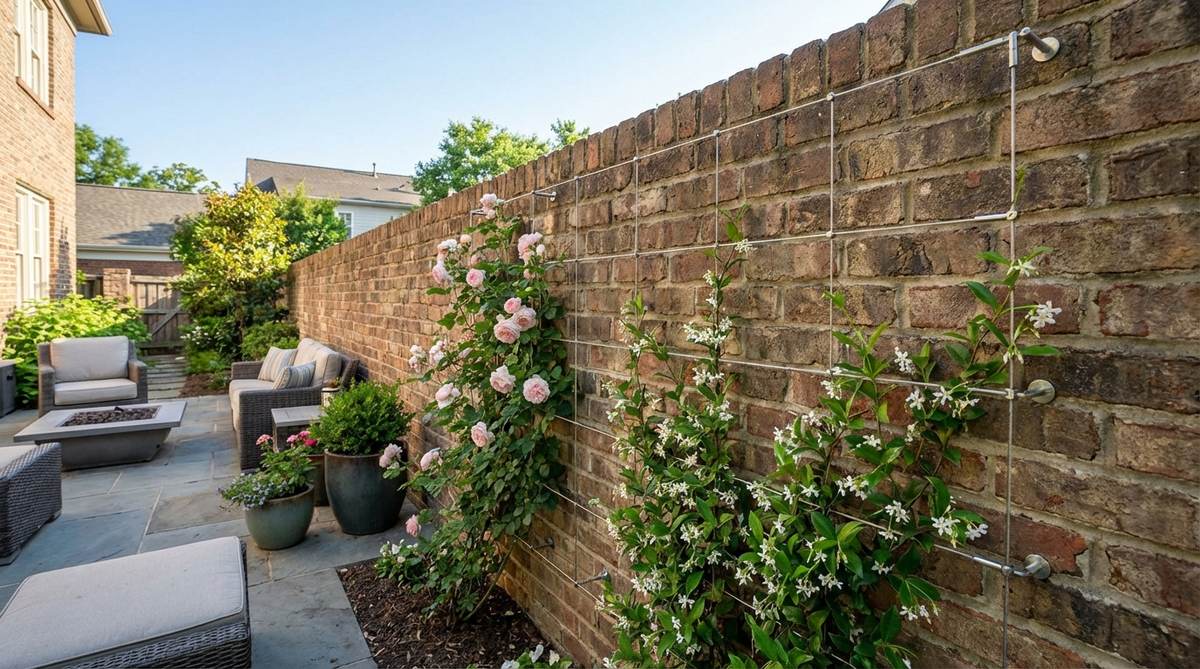
This layout feels like a floating green illusion masking your masonry. Adding a minimalist wire climbing plant support works exceptionally well for a shaded brick facade. It allows blooming vines to completely steal the spotlight without bulky frameworks.
Landscape designers often charge a premium for this aesthetic, but you can easily cheat the system. Grabbing commercial-grade heavy-duty hardware completely eliminates sagging over time. It delivers a surprisingly premium look that tricks the eye perfectly.
You can effortlessly set this up for around $40–$65. Save this to your DIY weekend garden board for your next exterior upgrade.
- Key Materials: Marine-grade steel cable spools and tensioners
- Vibe / Style: Invisible modern elegance
- Difficulty: Intermediate masonry drilling
- Budget Breakdown: Cables: $25 | Hardware: $30.
- Creator’s Tip: Use a masonry bit one size smaller than your anchors for a rock-solid grip.
- Smart Sourcing: Grab a pre-cut stainless steel cable starter kit and bulk pack wall-mount tensioners.
2. Powder-Coated Aluminum Grid Panels
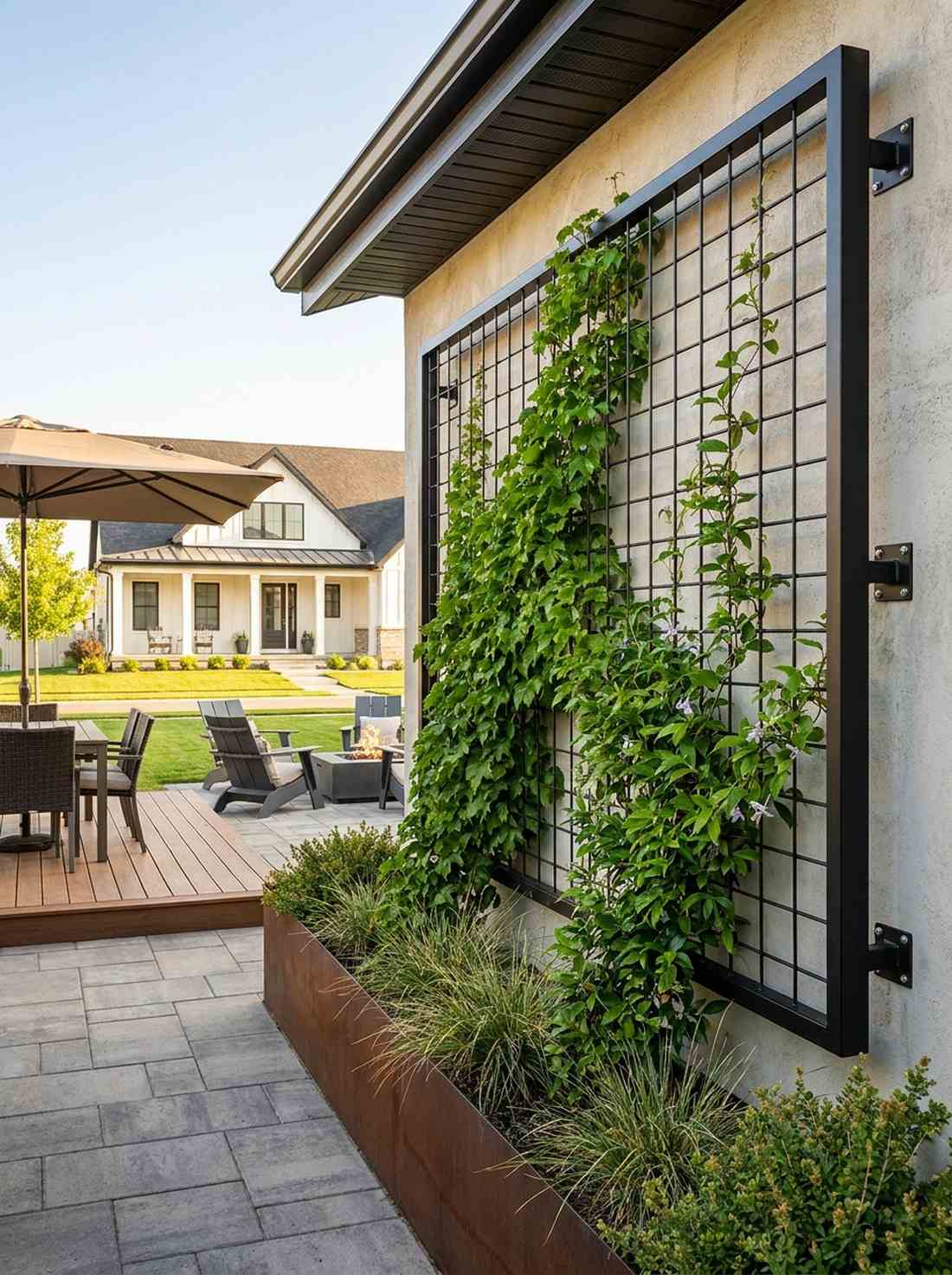
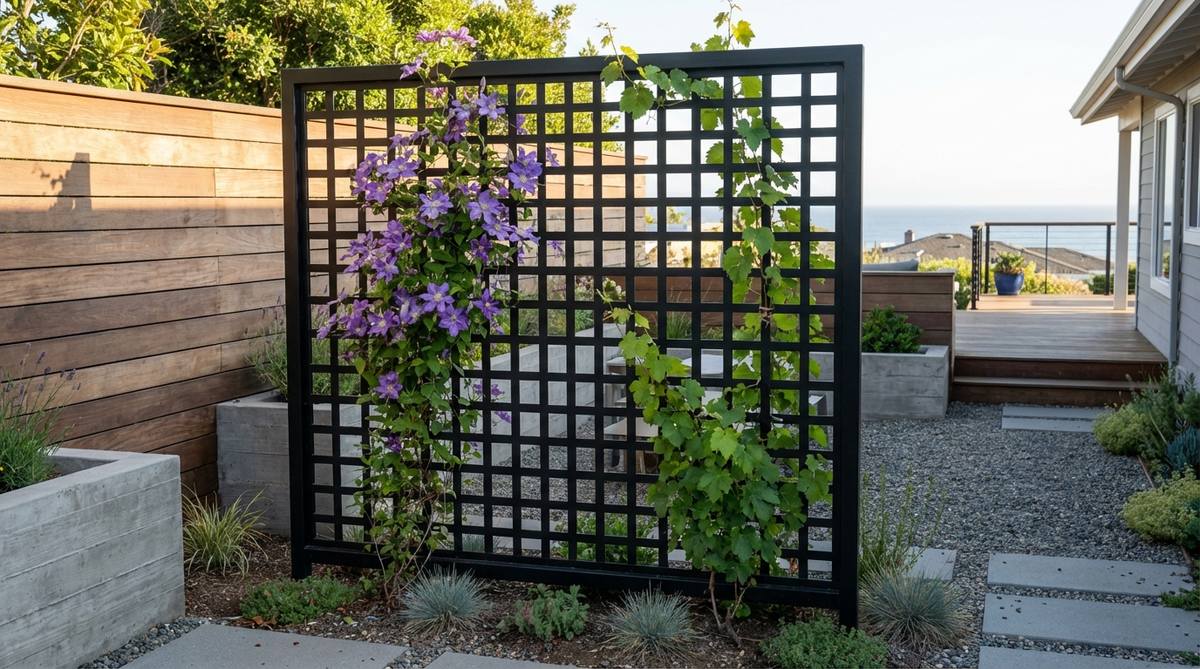
Imagine the sleek geometry of an upscale urban rooftop right in your backyard. A matte black aluminum plant grid provides the ultimate focal point. It is absolutely perfect for blank garage walls or contemporary courtyard borders.
Flimsy garden center grids rust within a season, making this heavy-duty upgrade essential. Sourcing UV-coated architectural panels guarantees zero maintenance while supporting aggressive climbers. The dark contrast against lush foliage looks incredibly high-end.
Expect to invest around $80–$120 per panel for lasting quality. This is highly recommended for a quick weekend win that won’t require ongoing painting.
- Key Materials: Rigid powder-coated metal mesh sheets
- Vibe / Style: Urban industrial chic
- Difficulty: Easy bracket mounting
- Budget Breakdown: Panel: $90 | Standoffs: $20.
- Creator’s Tip: Leave a two-inch gap behind the panel to prevent vine rot and wall moisture.
- Smart Sourcing: Invest in UV-coated aluminum grid screens and heavy-duty metal standoff brackets.
3. Vertical Slat Screen in Charcoal Steel
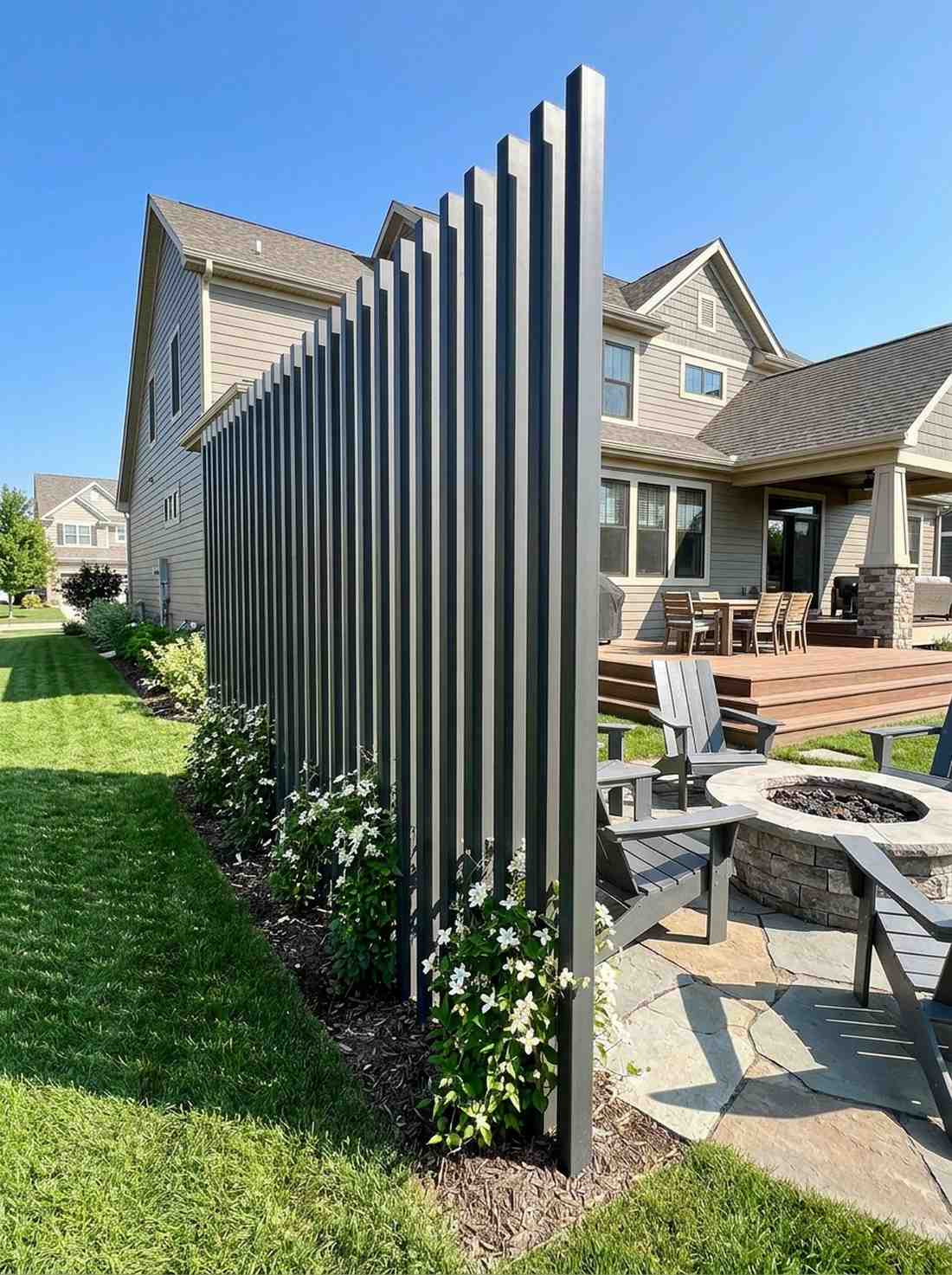
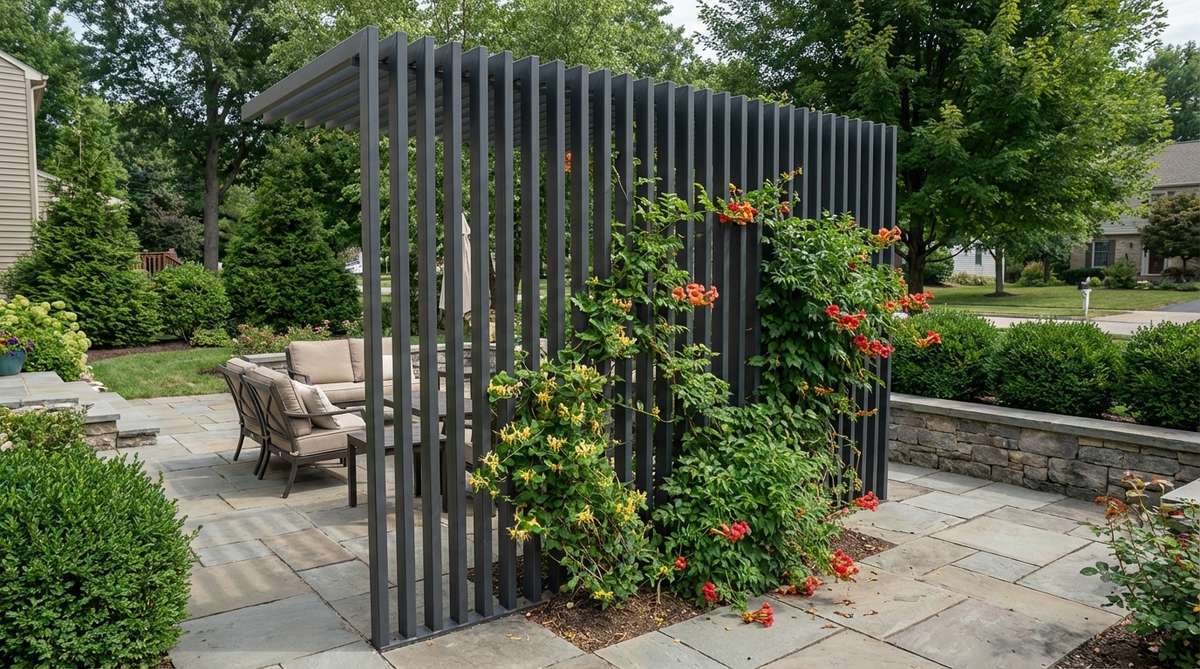
This vertical approach feels incredibly tall and expansive, drawing the eye upward. Installing a charcoal steel privacy divider transforms narrow side yards beautifully. It serves perfectly as a modern windbreak for exposed seating areas.
Most homeowners settle for basic lattice, entirely missing out on this sleek contemporary alternative. Using commercial-grade metal garden supplies completely stops warping. The shadow lines created by the vertical slats add massive curb appeal.
A solid installation will run you roughly $150–$200 for the base materials. Pin this if you are planning a small space upgrade that requires maximum impact.
- Key Materials: Pre-finished steel slats and ground anchors
- Vibe / Style: Architectural height enhancer
- Difficulty: Moderate ground leveling
- Budget Breakdown: Steel Slats: $130 | Anchors: $40.
- Creator’s Tip: Plant sweet autumn clematis at the base for an explosive late-season white contrast.
- Smart Sourcing: Order a pre-drilled charcoal steel slat kit and corrosion-resistant ground spikes (bulk pack).
4. Laser-Cut Metal Panels
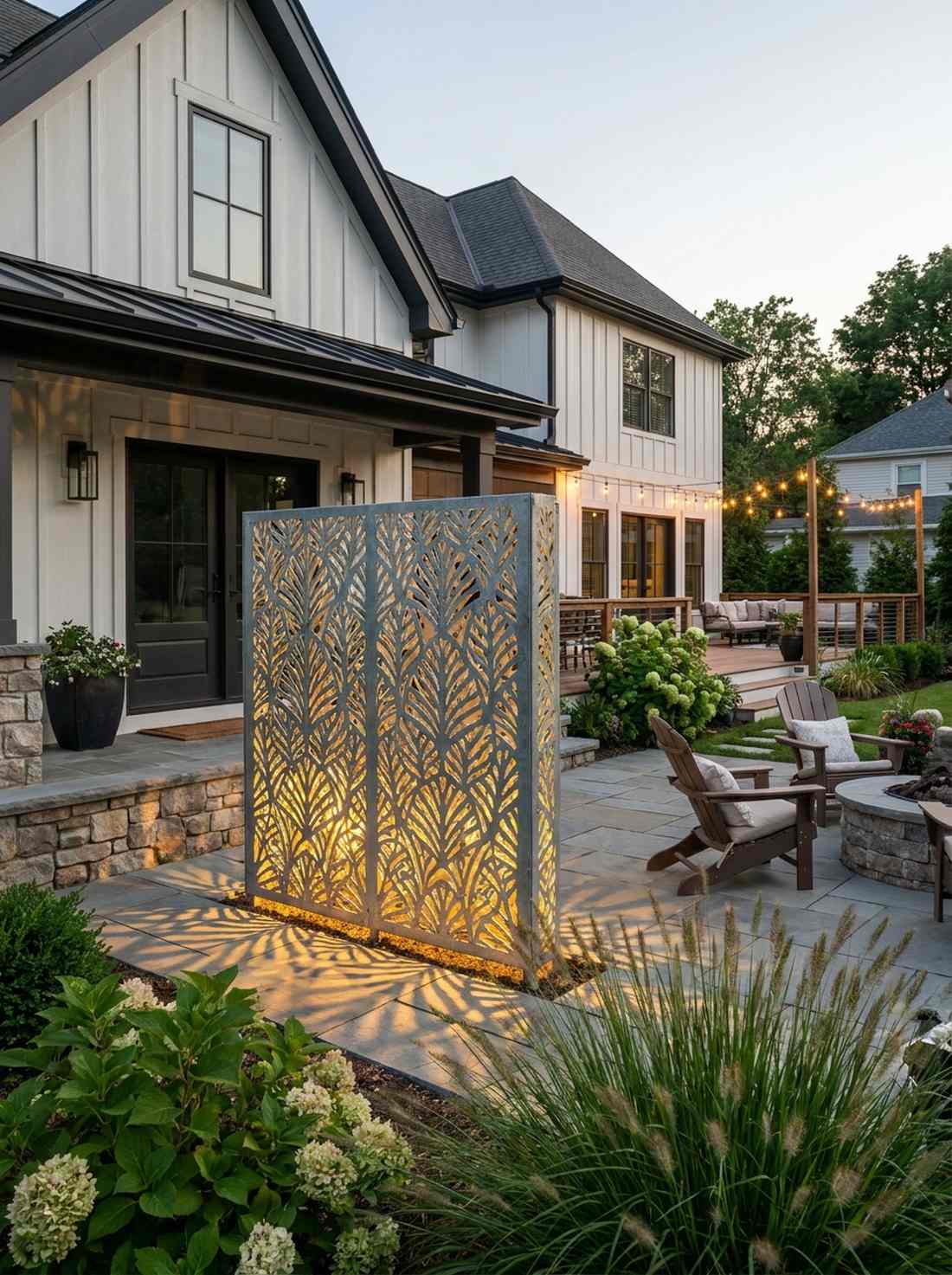
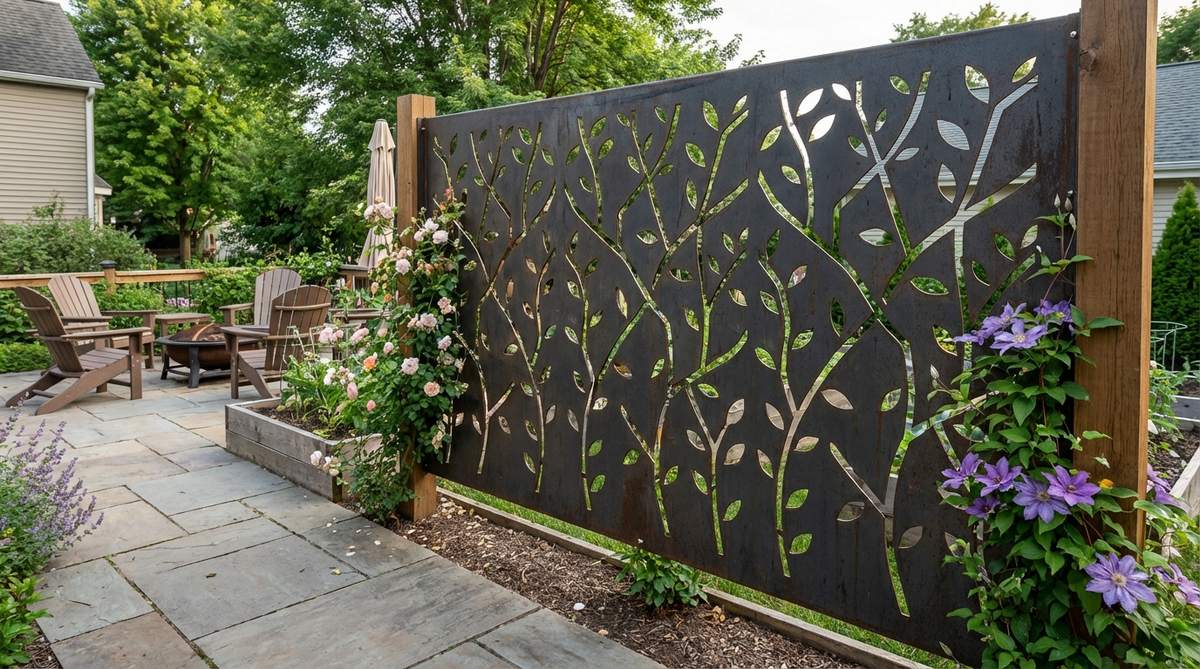
This installation acts as stunning outdoor art even before a single leaf sprouts. Utilizing a decorative laser-cut metal screen gives you year-round structural beauty. It works brilliantly as an illuminated statement piece near your main entryway.
Generic wire fences look cheap, but precision-cut motifs instantly scream luxury landscaping. Sourcing rust-resistant premium privacy screens ensures the intricate patterns survive harsh winters. It completely changes the dynamic of an otherwise boring outdoor corridor.
You can source high-quality panels for roughly $100–$250 depending on the thickness. The visual payoff makes it worth every single penny.
- Key Materials: Precision-cut galvanized metal sheets
- Vibe / Style: Upscale sculptural art
- Difficulty: Easy frame attachment
- Budget Breakdown: Decorative Panel: $150 | Edge Framing: $40.
- Creator’s Tip: Place a solar spotlight at the base to cast dramatic geometric shadows at night.
- Smart Sourcing: Buy powder-coated laser-cut privacy panels and a weatherproof outdoor lighting starter kit.
This next framework costs shockingly little but easily mimics a custom $500 architectural installation…
5. Industrial Pipe Framework
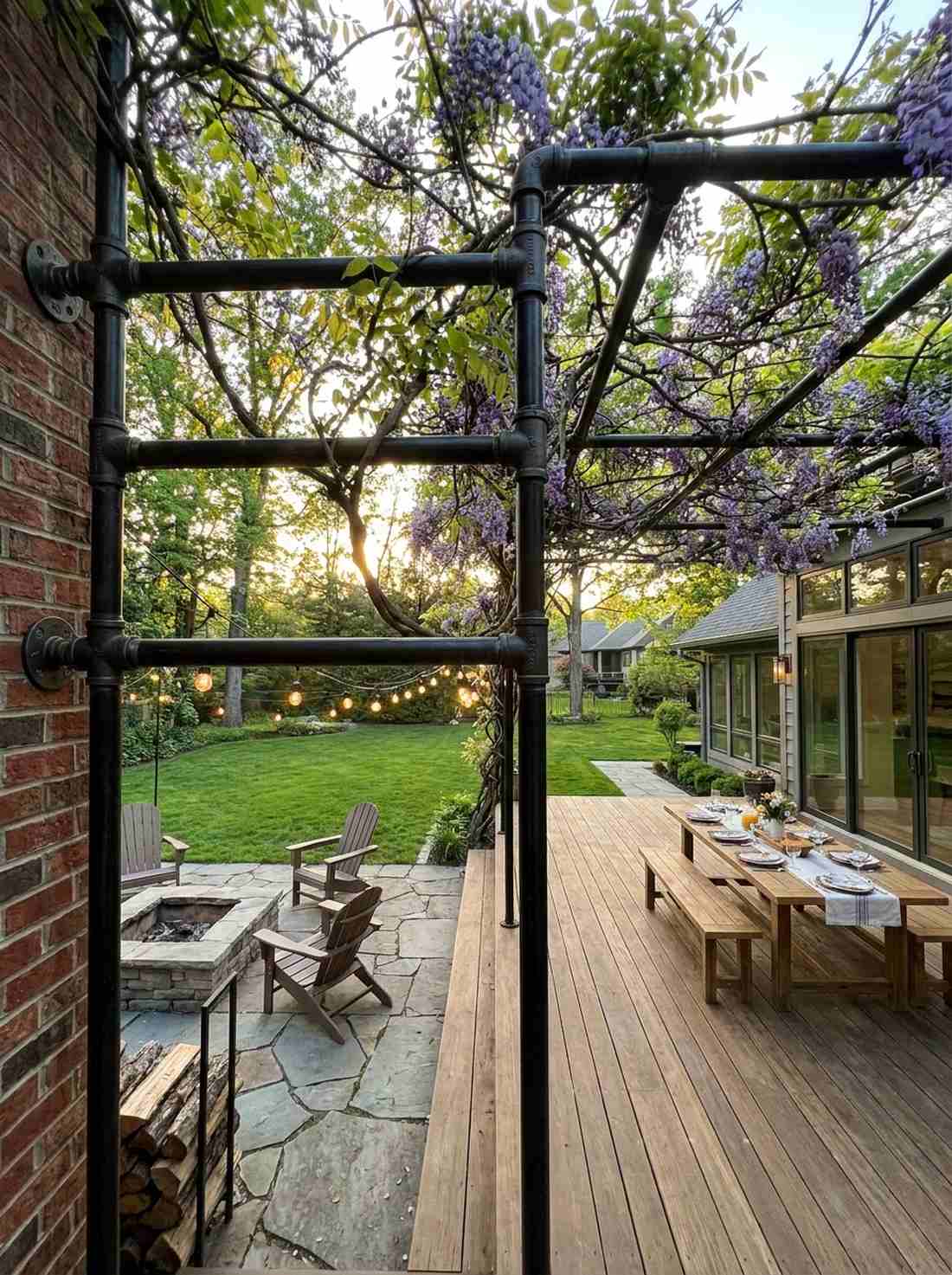
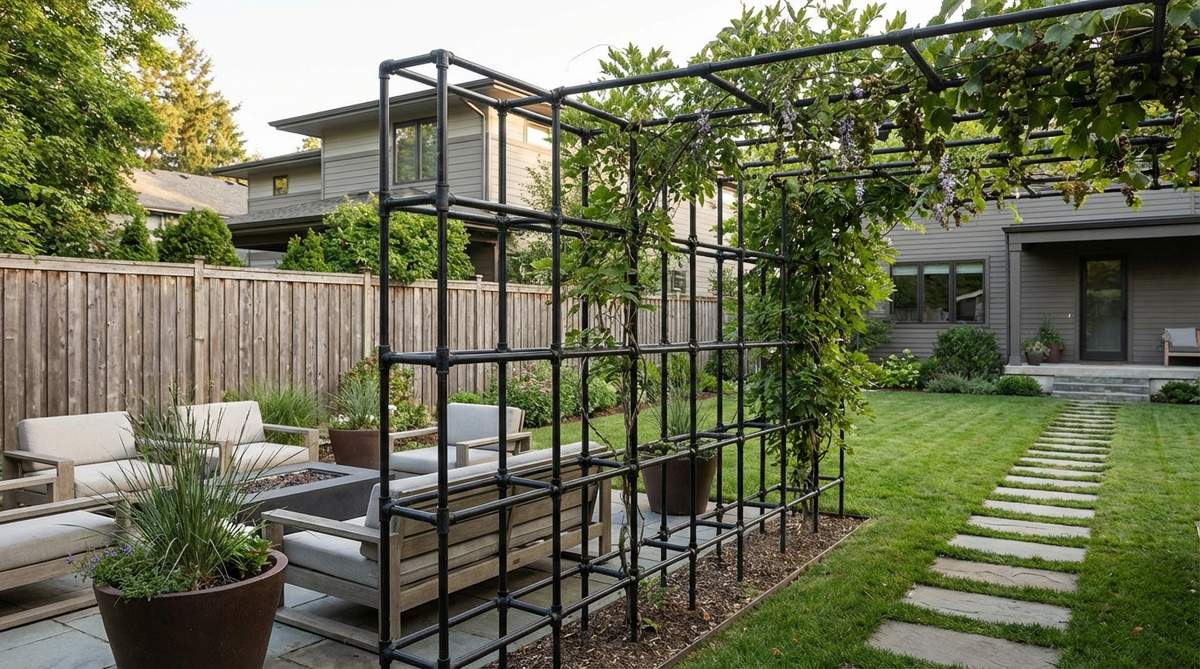
This rugged setup feels like an expensive loft extension brought into the fresh air. A black iron pipe climbing frame provides immense strength for heavy vines. It is ideal for supporting mature wisteria or creating a dense vineyard vibe.
People waste money on flimsy trellises that collapse under heavy woody vines. By utilizing modular plumbing components, you achieve a custom-fitted indestructible support system. This method allows you to tailor the exact dimensions to your specific courtyard.
You can easily pull this off for around $60–$90 using standard parts. Save this to your DIY weekend garden board to craft a heavy-duty masterpiece.
- Key Materials: Black iron pipes, flanges, and elbow joints
- Vibe / Style: Modern warehouse aesthetic
- Difficulty: Easy twisting and assembly
- Budget Breakdown: Pipes & Joints: $75 | Rust Spray: $10.
- Creator’s Tip: Wipe down all pipes with mineral spirits and apply a matte clear coat before assembly.
- Smart Sourcing: Pick up a bulk pack of iron pipe flanges and a UV-resistant clear matte enamel spray.
Contemporary Wooden Screens With Natural Warmth
6. Horizontal Cedar Plank Screen
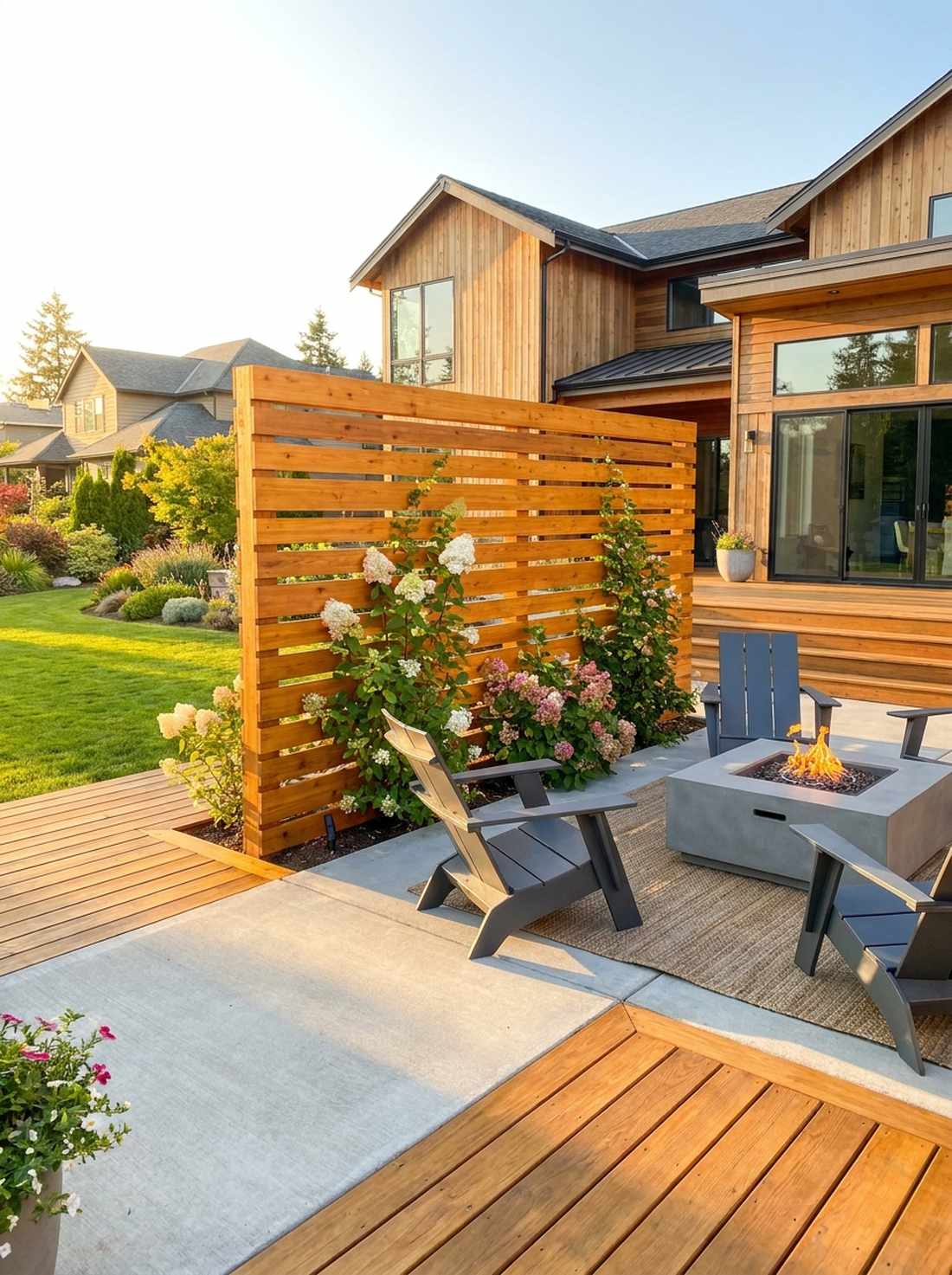
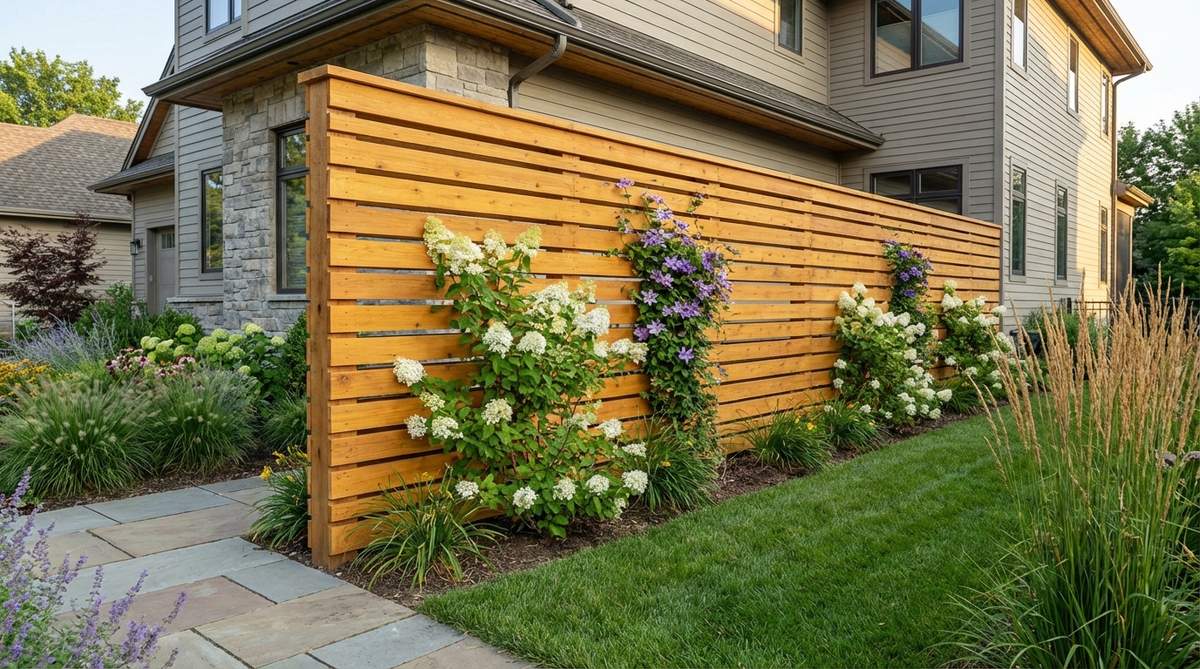
The warm honey tones in this build feel like an exclusive resort spa area. Constructing a horizontal cedar privacy trellis naturally softens harsh concrete surroundings. It functions brilliantly alongside a modern patio seating arrangement.
Vertical fences are overdone, but horizontal lines immediately establish a contemporary West Coast vibe. Sealing the wood with high-end UV blockers keeps the rich color from turning gray. It provides the perfect breathable structure for climbing hydrangeas.
This rewarding DIY build generally costs between $120 and $180. Pin this to your backyard renovation ideas for a major aesthetic boost.
- Key Materials: Premium cedar planks and exterior decking screws
- Vibe / Style: Warm coastal modern
- Difficulty: Intermediate woodworking
- Budget Breakdown: Cedar Timber: $130 | Fasteners: $20.
- Creator’s Tip: Use a scrap piece of 2-inch wood as a spacer to keep every gap flawlessly even.
- Smart Sourcing: Use a premium UV-blocking wood sealer and a bulk box of black exterior star-drive screws.
7. Vertical Wood Slat Divider
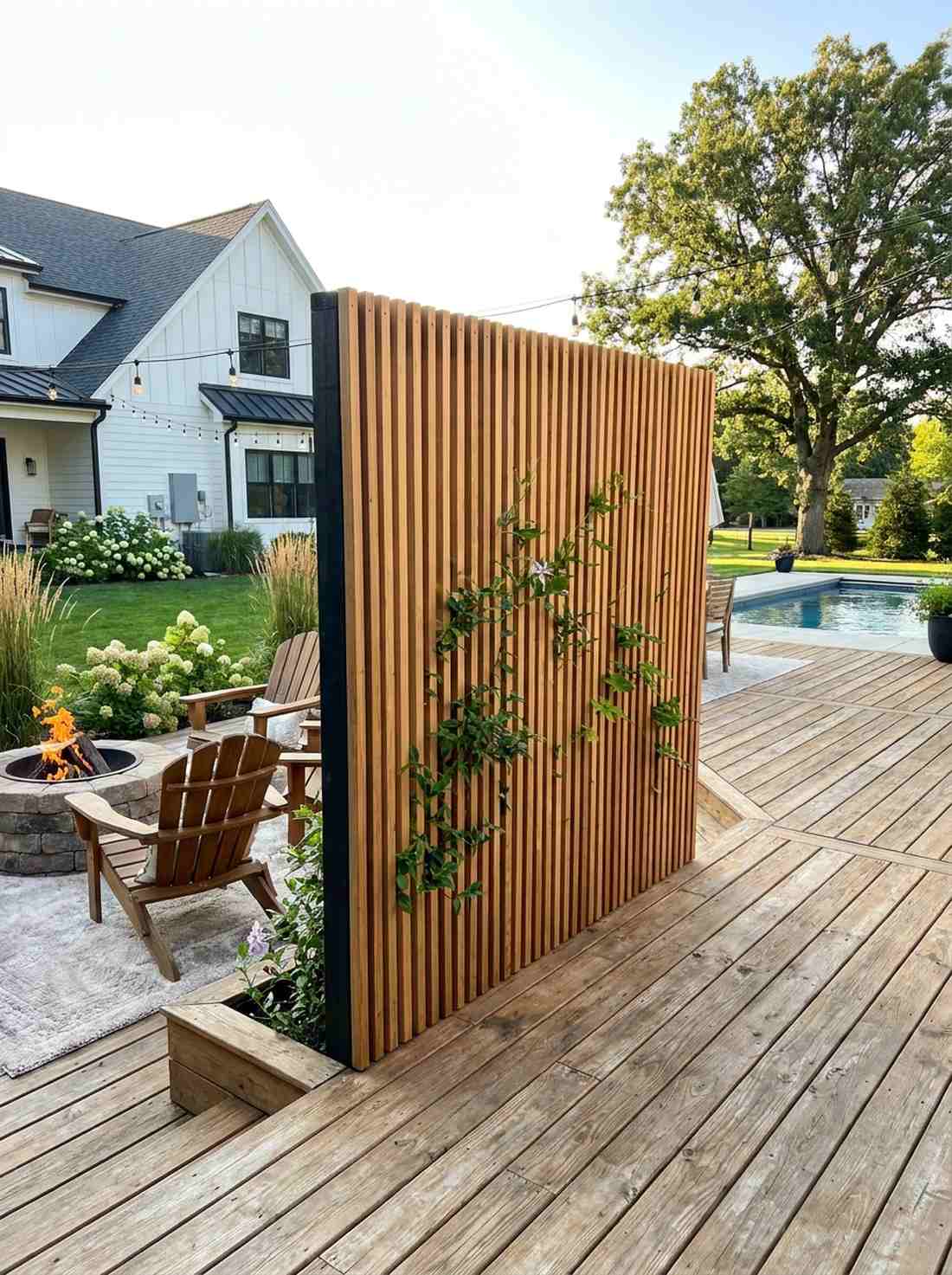
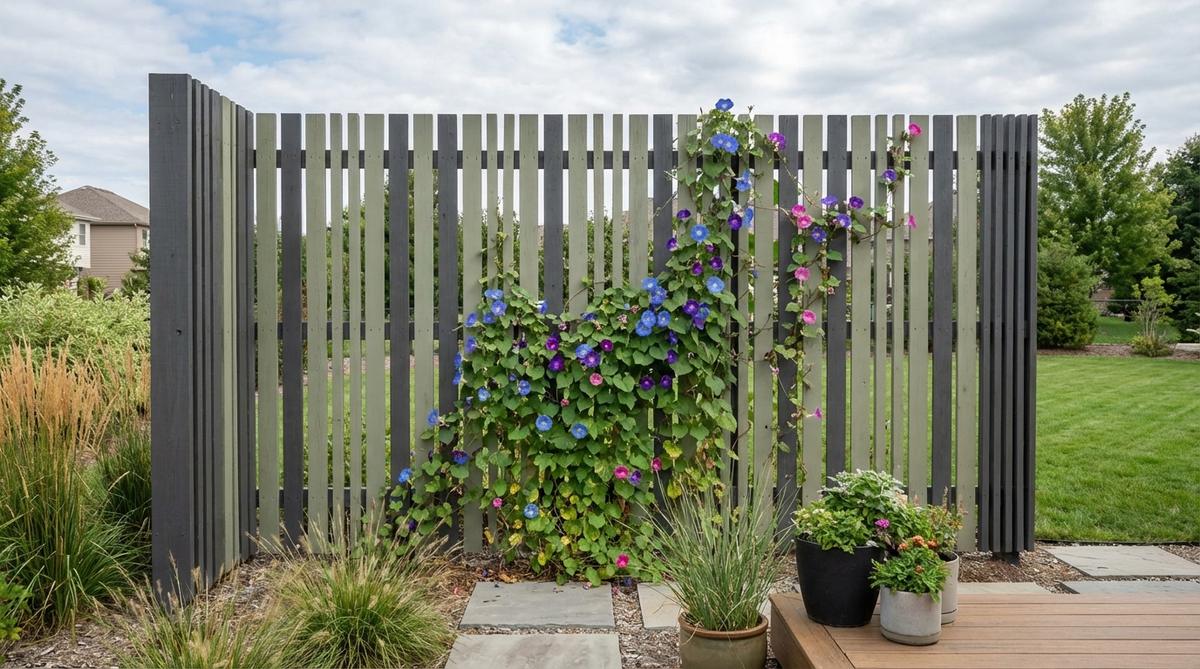
This layout adds an incredible rhythm that feels like walking through an architectural pavilion. Setting up a slatted timber garden divider creates distinct outdoor rooms seamlessly. It is the perfect solution for hiding unsightly pool pumps or utility boxes.
Using cheap treated pine often results in severe warping after the first summer rain. Upgrading to thermally modified timber or cedar ensures the clean vertical lines remain perfectly straight. The contrast of green tendrils weaving through straight timber is visually arresting.
A medium-sized divider screen costs around $90–$140 depending on your timber choice. It completely transforms chaotic yards into structured, calming spaces.
- Key Materials: 1×2 cedar slats and a sturdy frame
- Vibe / Style: Zen garden structure
- Difficulty: Moderate precise measuring
- Budget Breakdown: Slats: $85 | Frame structure: $35.
- Creator’s Tip: Paint the back support framing completely black so it visually disappears behind the slats.
- Smart Sourcing: Get a pre-cut cedar slat bundle and heavy-duty exterior construction adhesive.
8. Floating Timber Frame Trellis
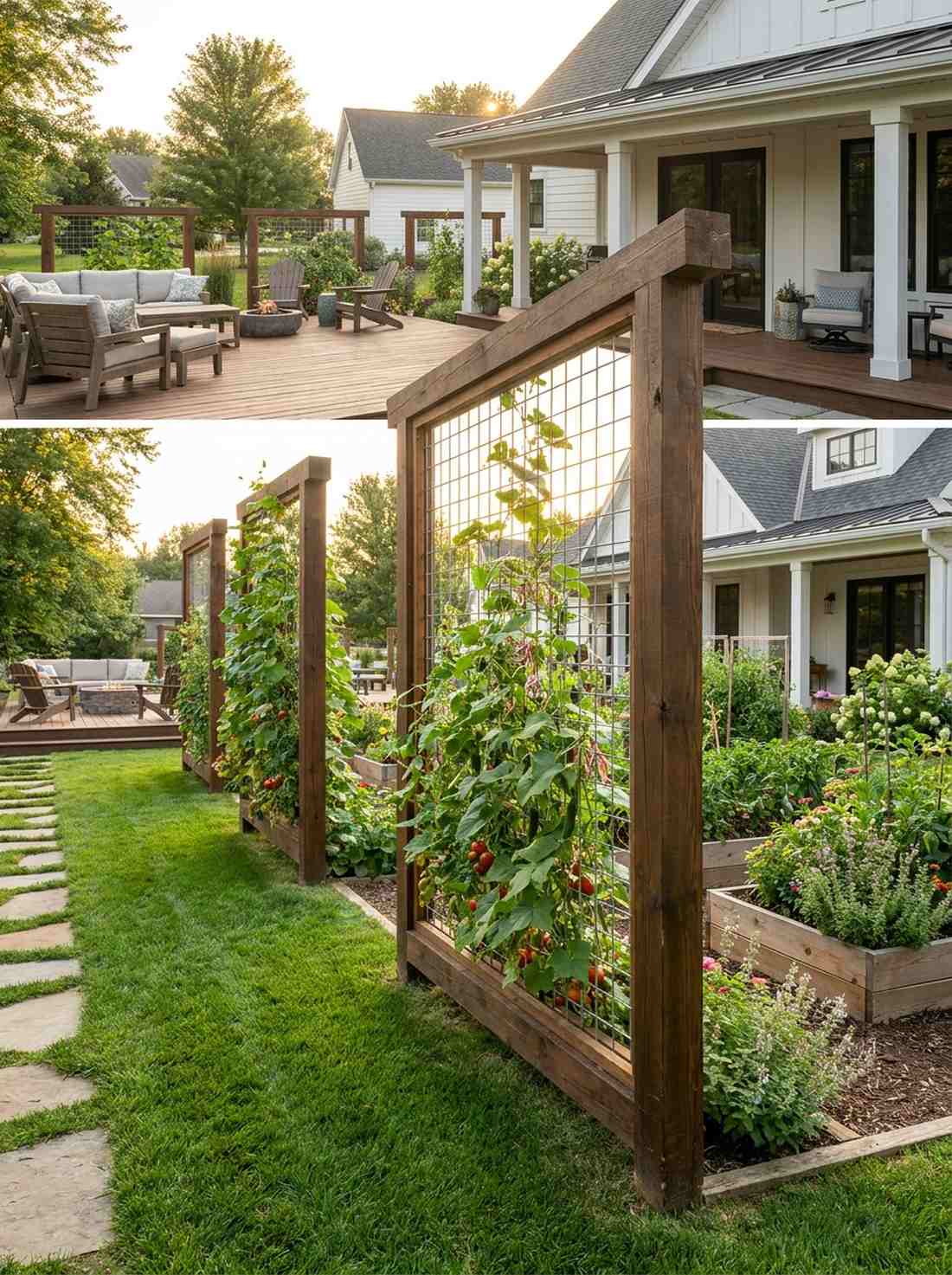
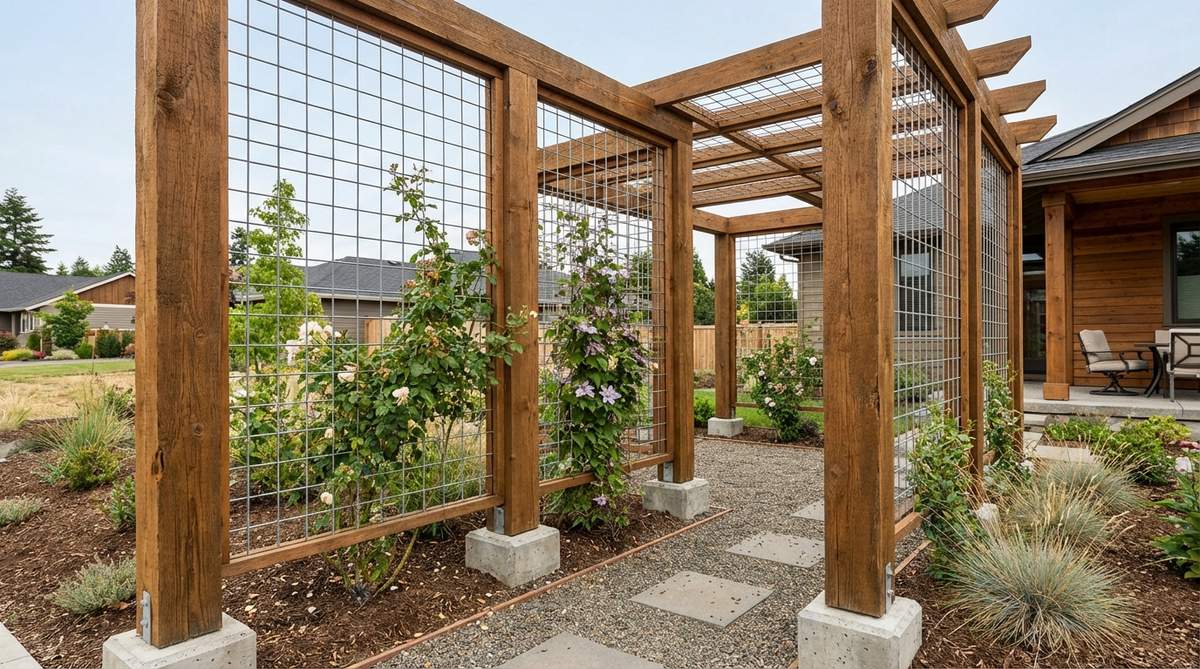
This hybrid design feels incredibly substantial while keeping the sightlines beautifully open and airy. Building a timber frame with wire mesh inserts blends rustic heft with modern minimalism. It works perfectly as a freestanding boundary between a lawn and a vegetable plot.
Solid wood screens can feel oppressive and block essential evening breezes in smaller yards. Incorporating high-quality fencing wire into a chunky frame delivers the best of both worlds. It looks far more expensive than it is and supports heavy food-producing vines easily.
You can execute this striking combo for roughly $75–$110 per section. Save this to your outdoor living board for an impactful property line upgrade.
- Key Materials: 4×4 timber posts and welded wire mesh grids
- Vibe / Style: Sophisticated modern farmhouse
- Difficulty: Advanced post hole digging
- Budget Breakdown: Timber: $60 | Wire Grid: $30.
- Creator’s Tip: Sandwich the wire mesh between two thinner strips of wood inside the frame for a clean edge.
- Smart Sourcing: Buy galvanized welded wire mesh (bulk roll) and pre-drilled timber joining brackets.
9. Slatted Privacy Panel With Built-In Planters
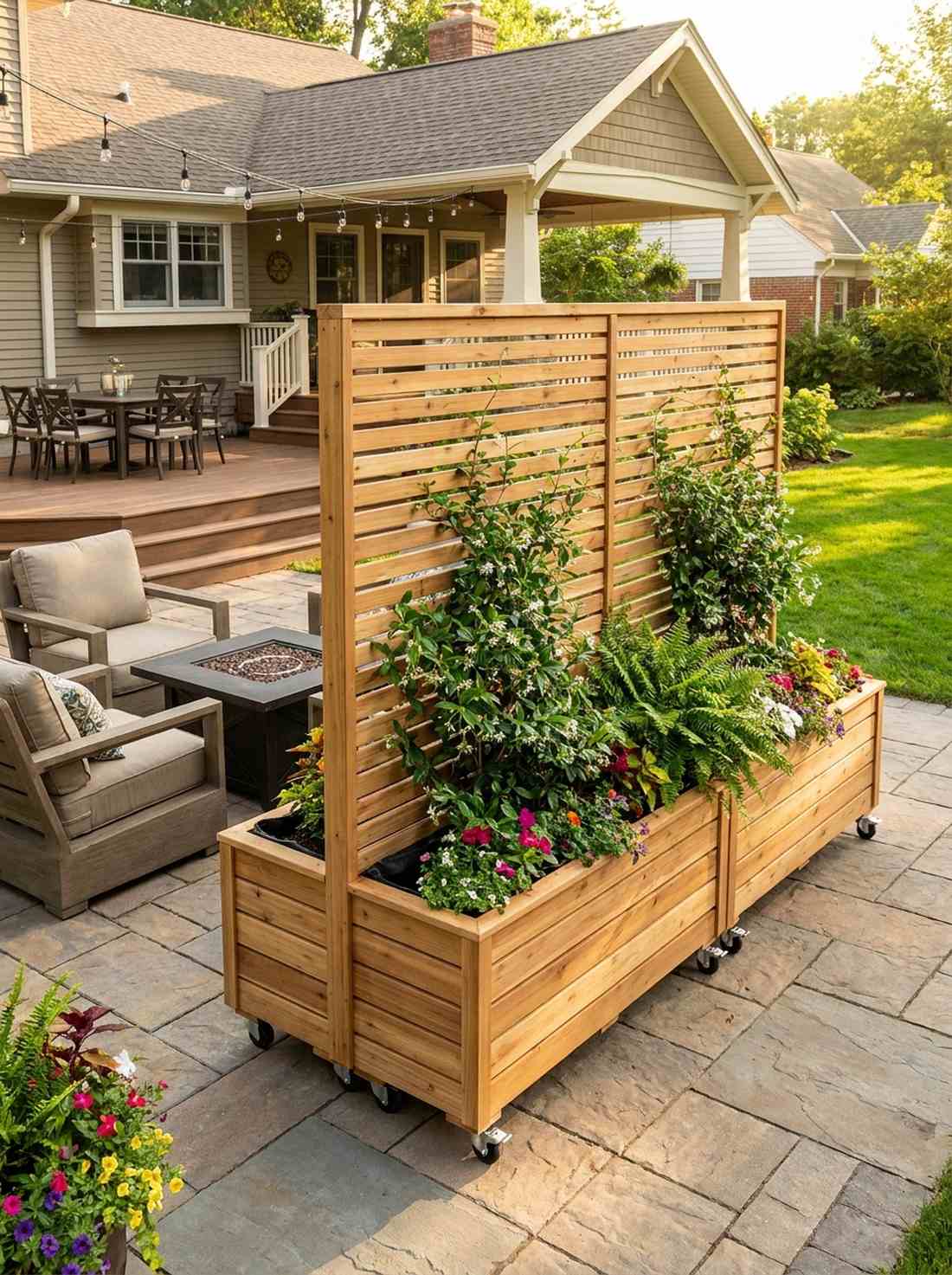
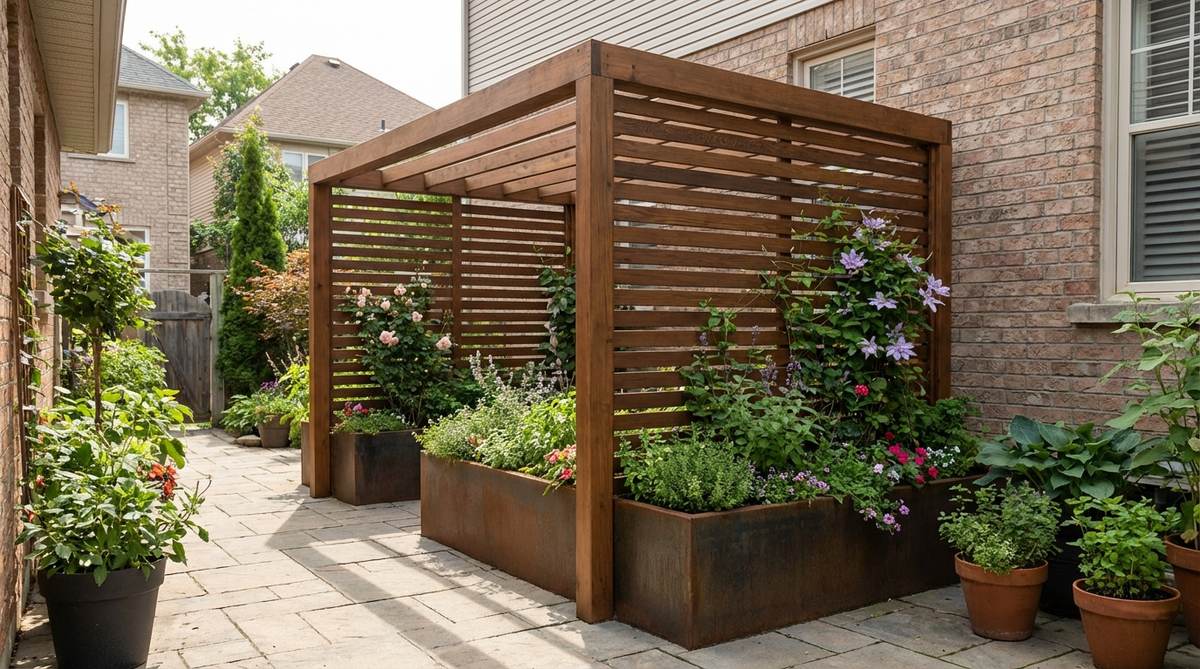
This self-contained unit feels like a lush botanical wall right on your balcony. A freestanding planter box trellis offers an all-in-one vertical gardening solution. It is absolutely essential for renters or anyone with a strict concrete-only courtyard.
Digging up a patio isn’t an option for most, making these modular units incredibly valuable. Utilizing premium waterproof liners inside the planter extends the wood’s lifespan by decades. This method guarantees a designer-level finish while protecting your decking from moisture rot.
Building or buying a solid kit will range from $150–$250. Pin this if you need massive greenery but have zero actual soil space.
- Key Materials: Exterior plywood, cedar cladding, and heavy casters
- Vibe / Style: Mobile urban oasis
- Difficulty: Intermediate box construction
- Budget Breakdown: Planter Base: $80 | Trellis Back: $90.
- Creator’s Tip: Install heavy-duty locking casters on the bottom so you can chase the sun across your patio.
- Smart Sourcing: Grab a pre-cut cedar planter trellis kit and a heavy-duty pond liner roll for waterproofing.
Most DIYers completely ignore this next geometric layout… until they see how it instantly multiplies curb appeal.
💡 Must-Have Supplies for High-End Setups
To build these setups faster and ensure they last, skip the generic craft aisles and invest in the right foundational kits.
- Base & Support: Heavy-duty powder-coated anchor spikes (bulk pack)
- Setup Tools: Laser-level and masonry drilling starter kit
- Weather/Durability Protection: Premium UV-blocking marine-grade wood sealant
10. Chevron Pattern Wood Screen
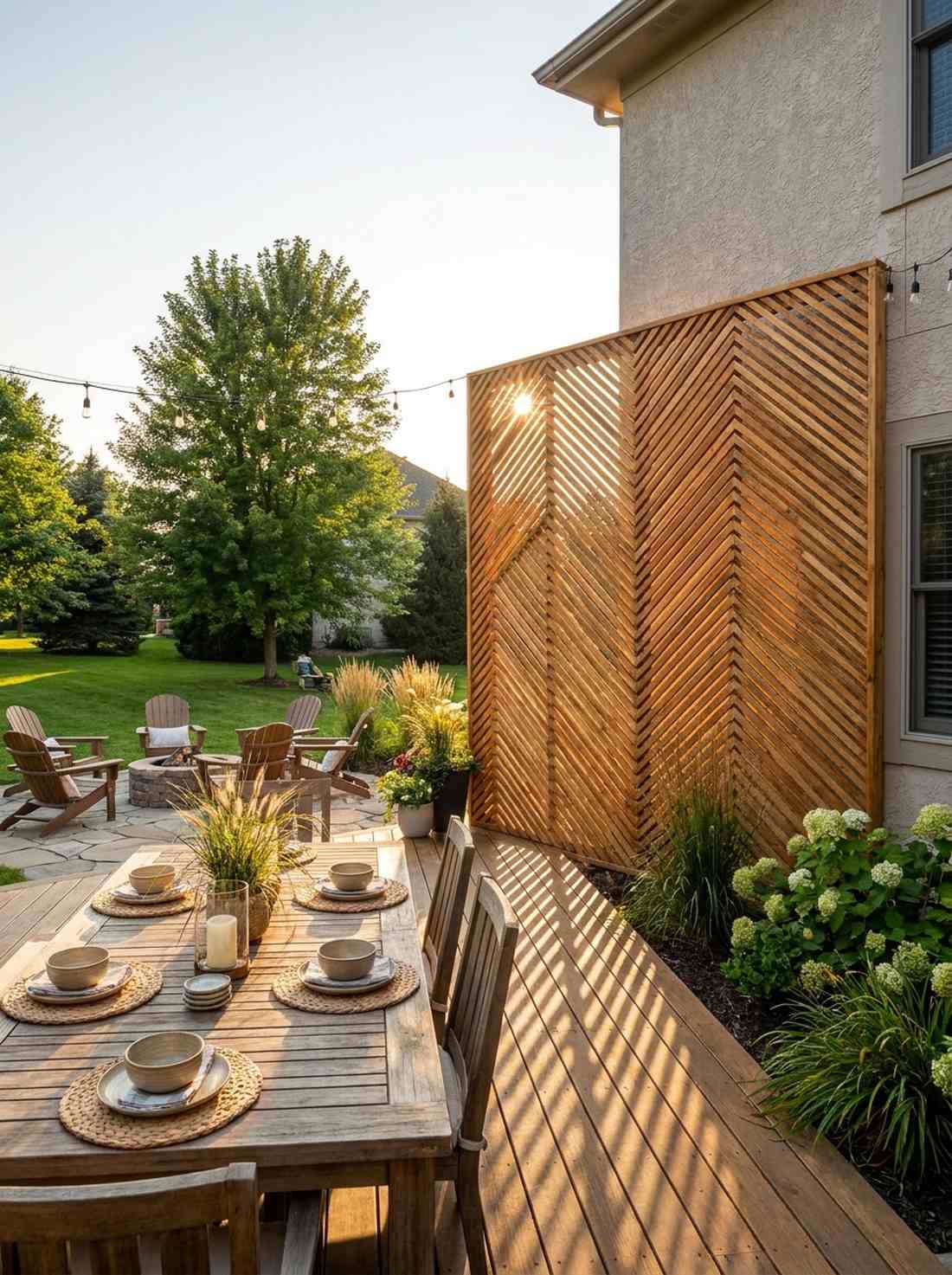
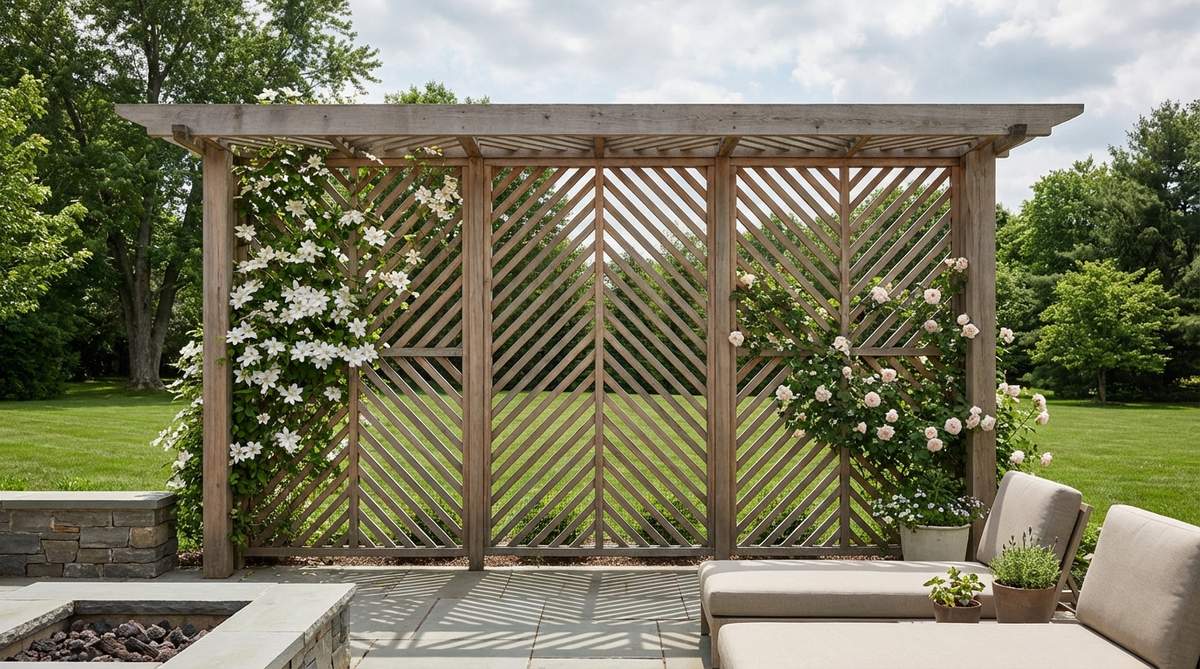
This dynamic angled setup feels like a piece of high-end interior flooring mounted outside. Creating a chevron wood slat trellis introduces exciting geometric movement to boring walls. It serves beautifully as an artistic backdrop for an outdoor dining table.
Basic horizontal slats are everywhere, but angled precision cuts completely elevate the aesthetic. Using specialized outdoor wood glue alongside brad nails ensures the intricate pattern never warps. It commands attention and proves that functional supports can be wildly stylish.
The extra cuts require patience, costing about $80–$130 in raw materials. The jaw-dropping shadowplay it creates at sunset is utterly unmatched.
- Key Materials: 1×2 wood strips, outdoor glue, and a nail gun
- Vibe / Style: High-end custom craftsmanship
- Difficulty: Advanced miter cutting
- Budget Breakdown: Wood Strips: $90 | Finish/Glue: $25.
- Creator’s Tip: Build the pattern flat on the ground over a plywood template before mounting it upright.
- Smart Sourcing: Get a weatherproof outdoor construction adhesive and pre-milled cedar trim bundles.
Geometric Statement Pieces For Bold Impact
11. Hexagonal Honeycomb Panel
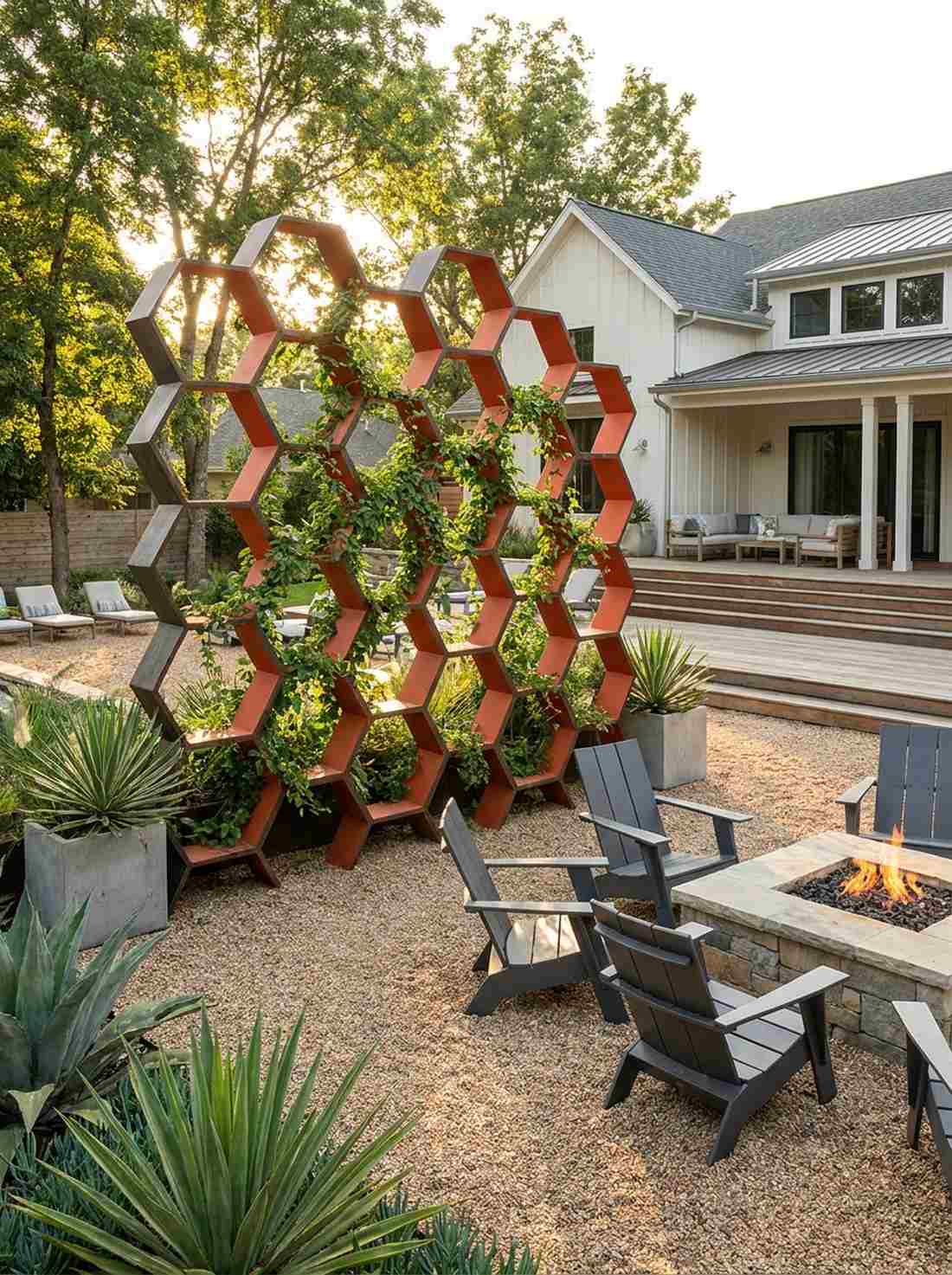
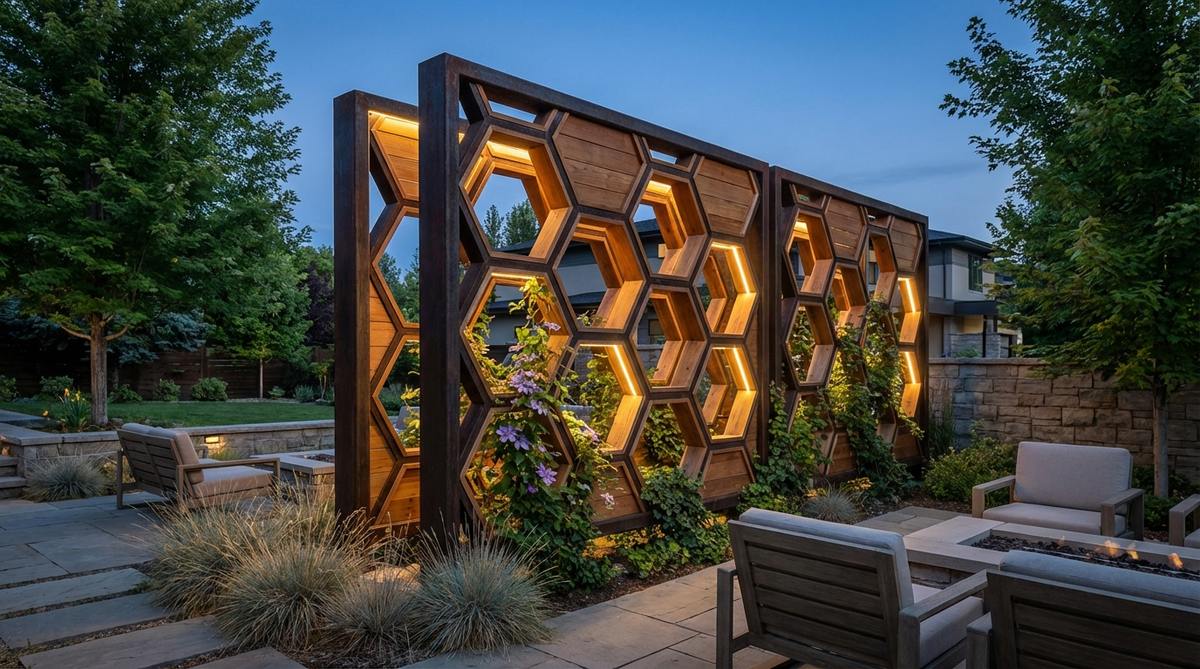
This repeating organic structure feels like a massive bee habitat blended with modern art. Hanging a hexagonal honeycomb plant screen delivers instant visual intrigue. It is perfectly scaled to act as a standalone centerpiece in a sparse gravel garden.
Standard squares are incredibly boring compared to this dynamic six-sided configuration. Sourcing lightweight architectural landscaping kits makes mounting this complex geometry surprisingly simple. It gives a designer-level finish that encourages vines to zig-zag naturally.
You can find modular honeycombs for about $90–$160 per section. Save this layout if you want your garden to break away from traditional grids.
- Key Materials: Pre-welded metal honeycombs or interlocking wood pieces
- Vibe / Style: Modern organic geometry
- Difficulty: Easy modular hanging
- Budget Breakdown: Hex Panels: $110 | Mounting Hardware: $20.
- Creator’s Tip: Paint only the inside edges of the hexagons in a bold accent color for a 3D pop.
- Smart Sourcing: Pick up a pre-cut geometric garden trellis kit and heavy-duty floating wall brackets.
12. Diamond Lattice Modernized
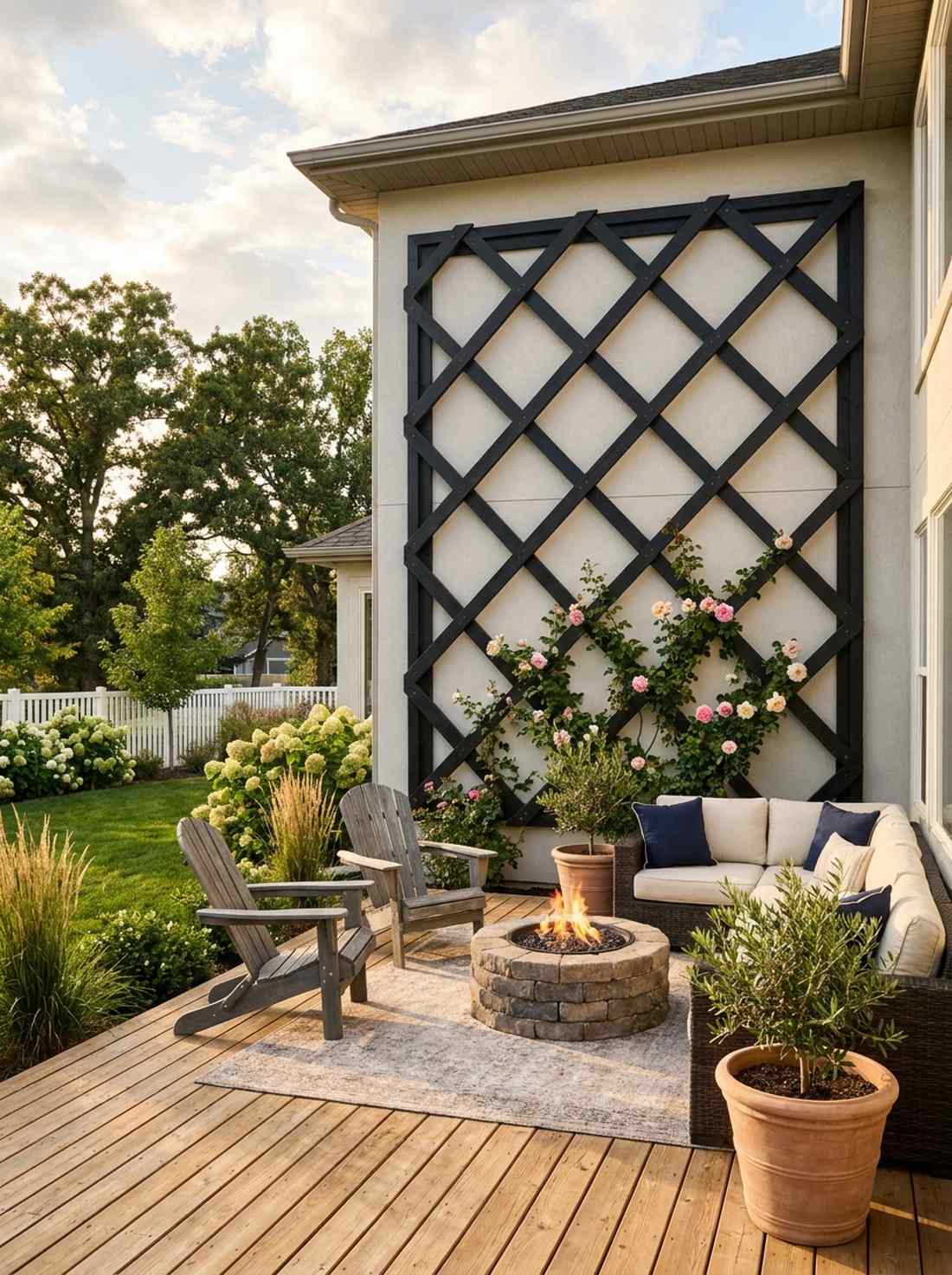
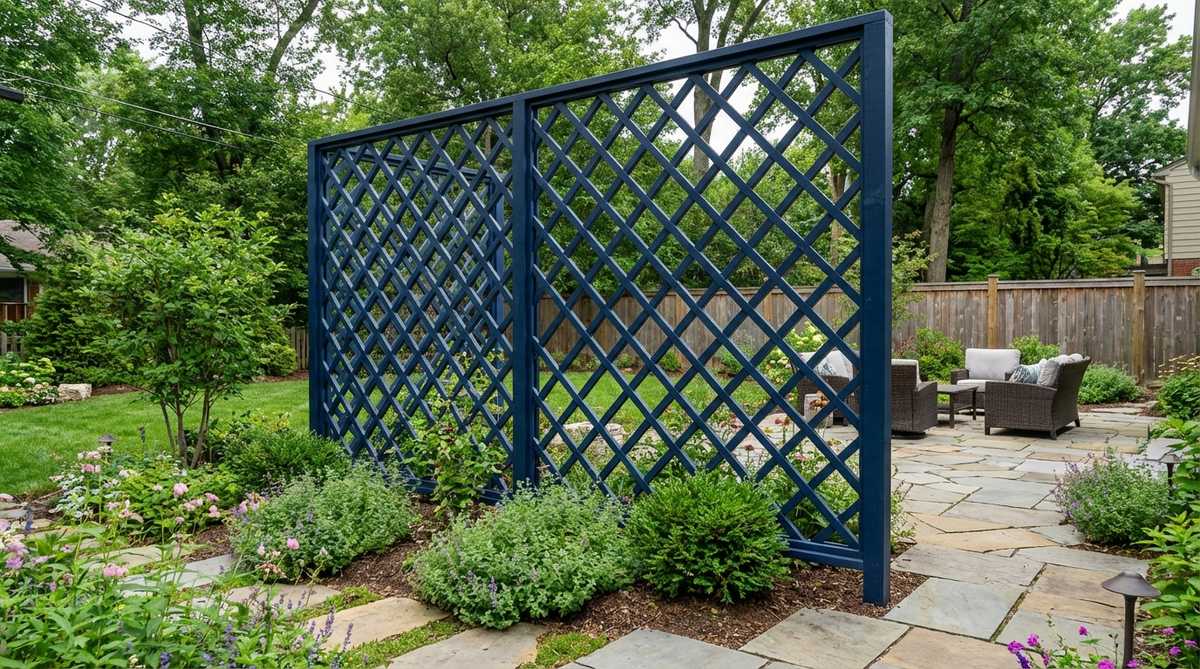
This oversized take on a classic pattern feels surprisingly fresh and bold. Installing a large-scale diamond climbing frame strips away the grandma-garden vibe entirely. It functions incredibly well painted in dark, moody colors against a bright exterior wall.
Traditional tight lattice looks notoriously cheap and flimsy after a single season. Scaling the diamonds up to 12 inches creates a striking visual weight that feels undeniably modern. It supports massive blooming roses while leaving plenty of negative space.
Building this custom oversized grid costs roughly $50–$85. Pin this idea to easily revamp a dated landscaping concept on a strict budget.
- Key Materials: Thick timber battens and heavy exterior screws
- Vibe / Style: Transitional contemporary elegance
- Difficulty: Intermediate measuring and leveling
- Budget Breakdown: Timber Battens: $55 | Premium Paint: $25.
- Creator’s Tip: Halve-joint the intersecting pieces so the trellis sits completely flush against the wall.
- Smart Sourcing: Use a matte black exterior wood paint and rust-proof decorative timber screws.
13. Circular Ring Trellis
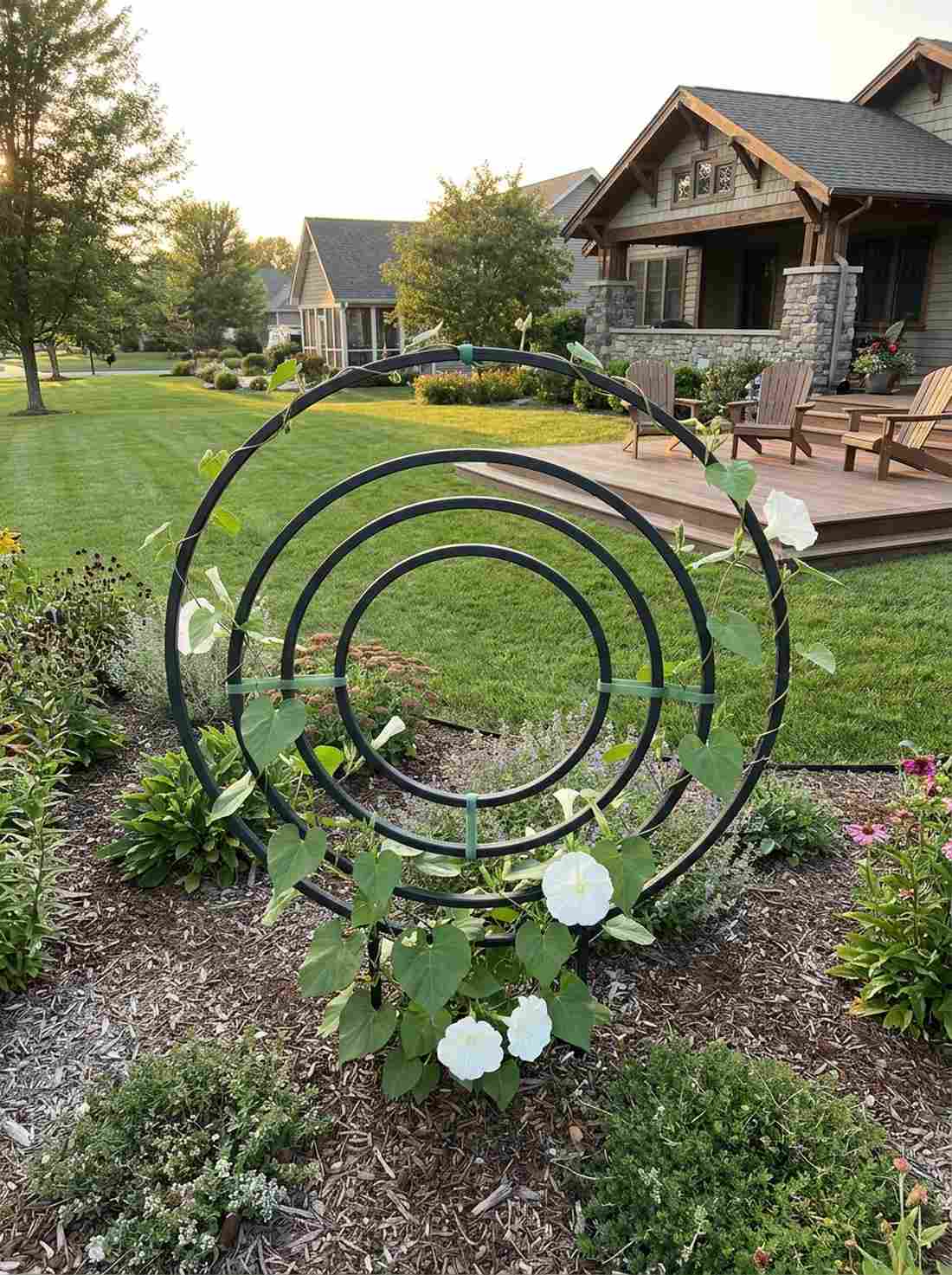
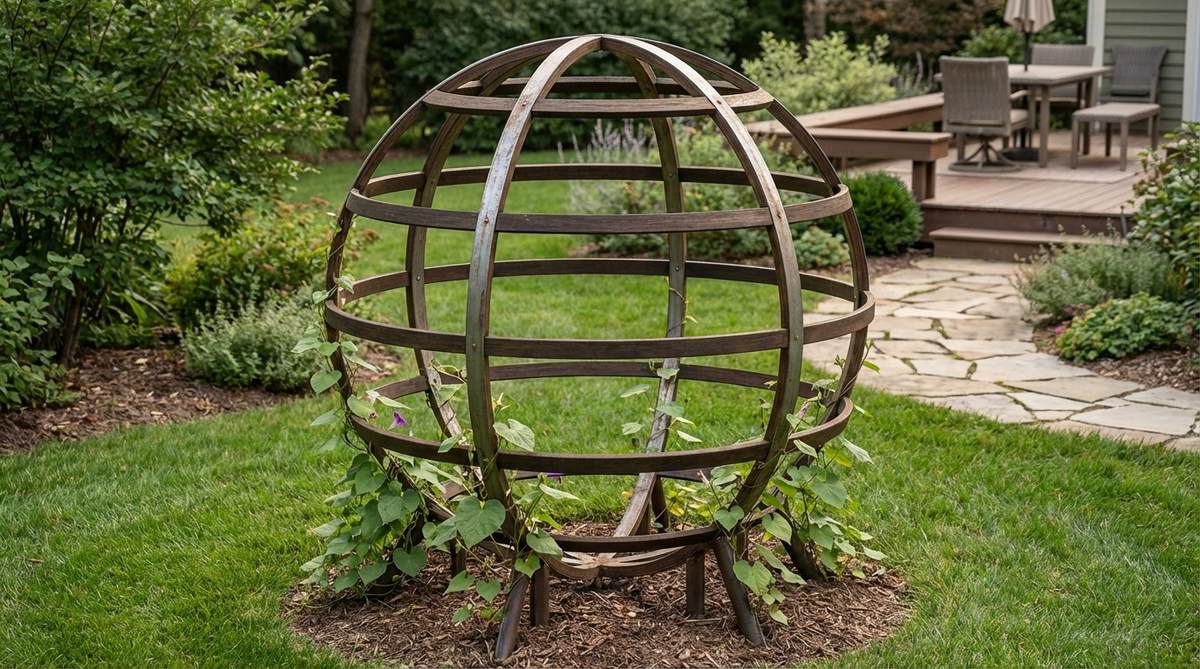
This curved silhouette feels like a sleek planetary orbit resting in your flowerbed. Setting up a concentric metal ring support totally breaks up the rigid lines of typical fencing. It is phenomenal for showcasing a single spectacular specimen plant like a moonflower.
Boxy frames dominate backyards, making circles an unexpected and highly premium choice. Investing in heavy-gauge steel plant grids prevents the wind from bending the structure. The spiraling growth of the vines accentuates the spherical illusion brilliantly.
You can purchase these sculptural pieces for around $70–$130 online. It is a fantastic low-effort way to inject high-end artistic flair into a dull lawn.
- Key Materials: Welded steel hoops and deep ground stakes
- Vibe / Style: Sculptural botanical art
- Difficulty: Easy push-in setup
- Budget Breakdown: Ring Frame: $85 | Ground Spikes: $15.
- Creator’s Tip: Gently tie the initial vine shoots to the outer ring using soft garden twine to establish the spiral.
- Smart Sourcing: Order a powder-coated circular garden obelisk kit and a spool of soft green plant ties.
14. Asymmetric Angular Frame
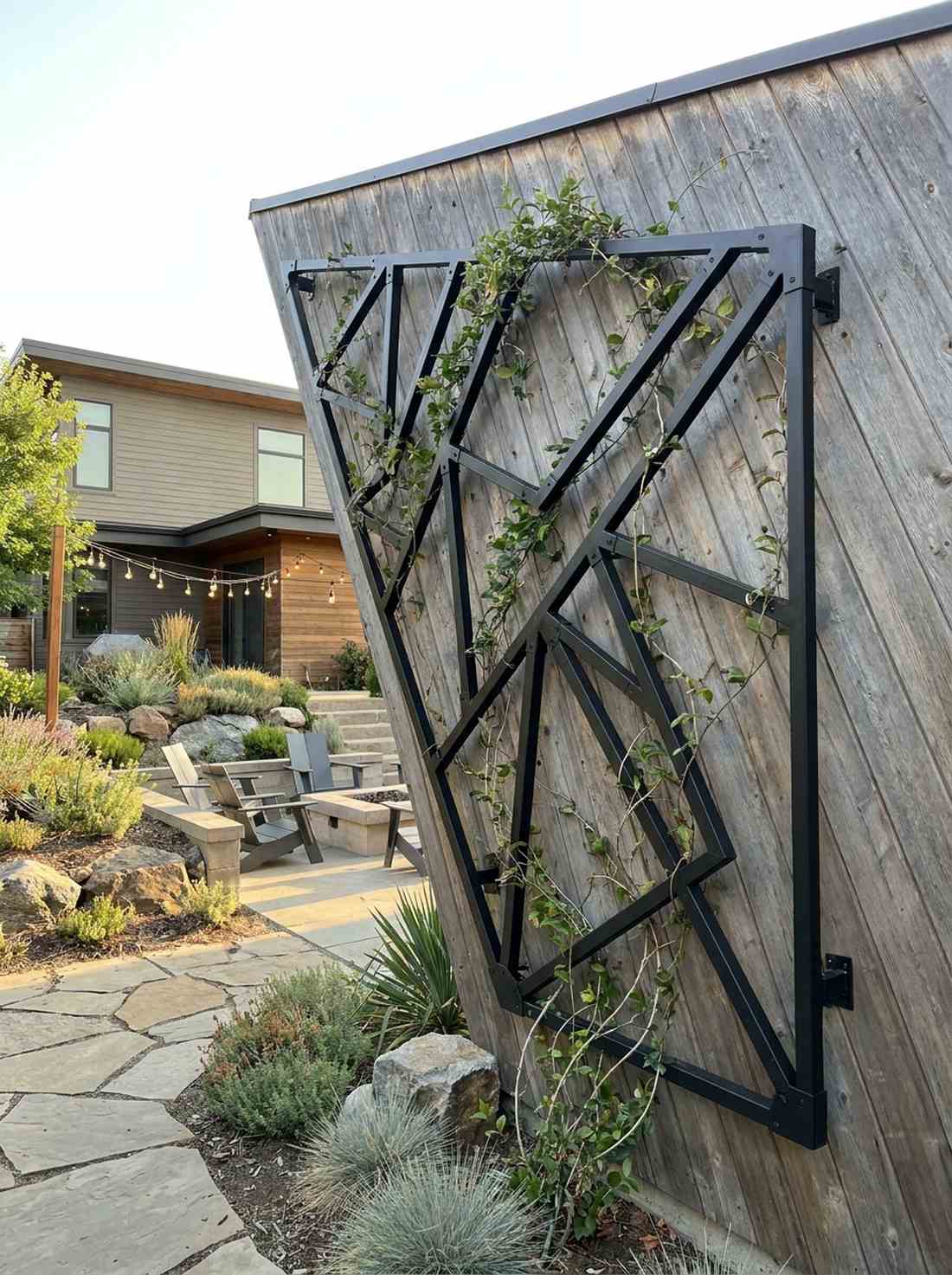
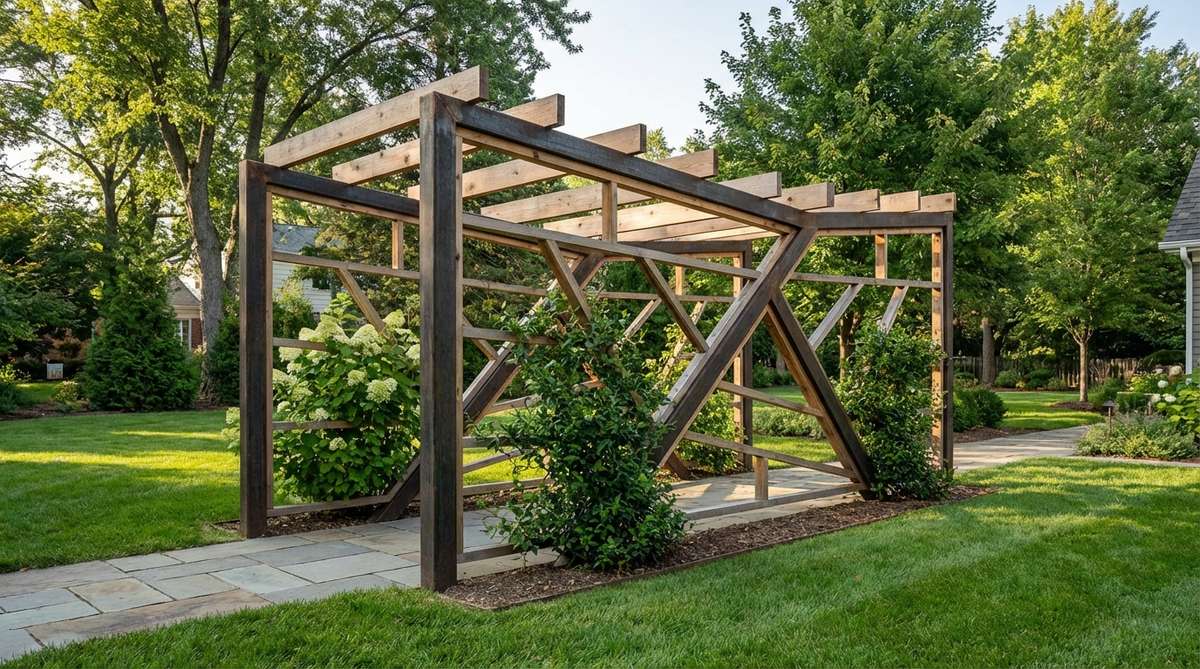
This off-balance construction feels like a sharp slice of abstract modernism. Mounting an asymmetrical metal vine framework demands immediate attention from anyone walking past. It is the absolute best way to decorate a weirdly shaped or slanted exterior wall.
Symmetrical designs can feel overly stiff and predictable in a free-flowing landscape. Embracing chaotic angles with premium steel supplies delivers an avant-garde aesthetic that shocks landscape designers. It creates a wild, untamed canvas that looks intentional and highly curated.
Custom angular kits or welding projects usually sit around $150–$250. Save this to your exterior design board for a truly unique conversational piece.
- Key Materials: Custom-cut square metal tubing and corner brackets
- Vibe / Style: Abstract industrial edge
- Difficulty: Advanced layout planning
- Budget Breakdown: Metal Tubing: $160 | Hardware: $40.
- Creator’s Tip: Sketch the exact angles on a large piece of cardboard to use as an assembly template.
- Smart Sourcing: Grab an adjustable angle metal connector bulk pack and matte black spray sealant.
Stop scrolling if you have a tiny outdoor space—this upcoming modular design will double your vertical footprint.
15. Modular Cube System
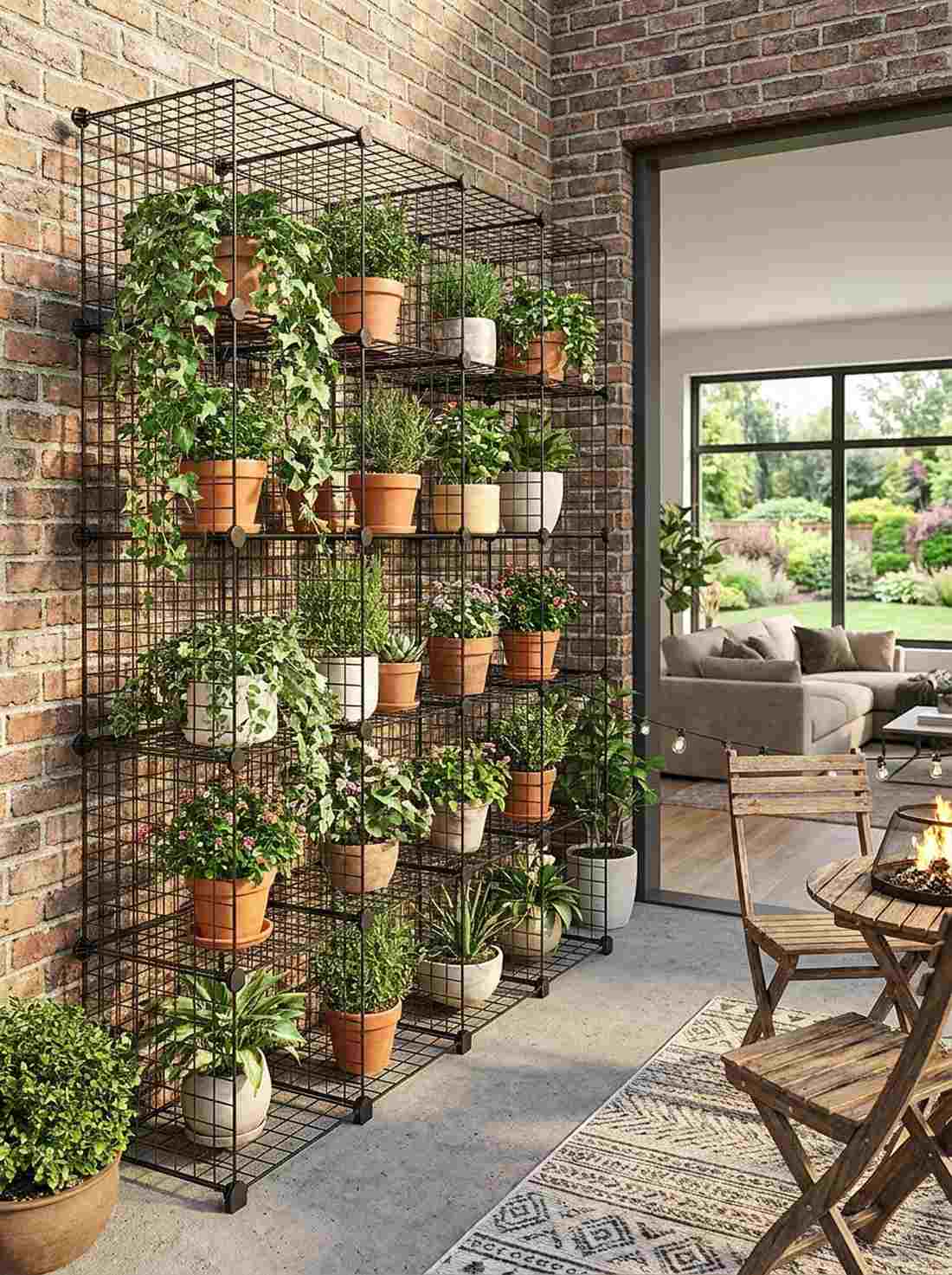
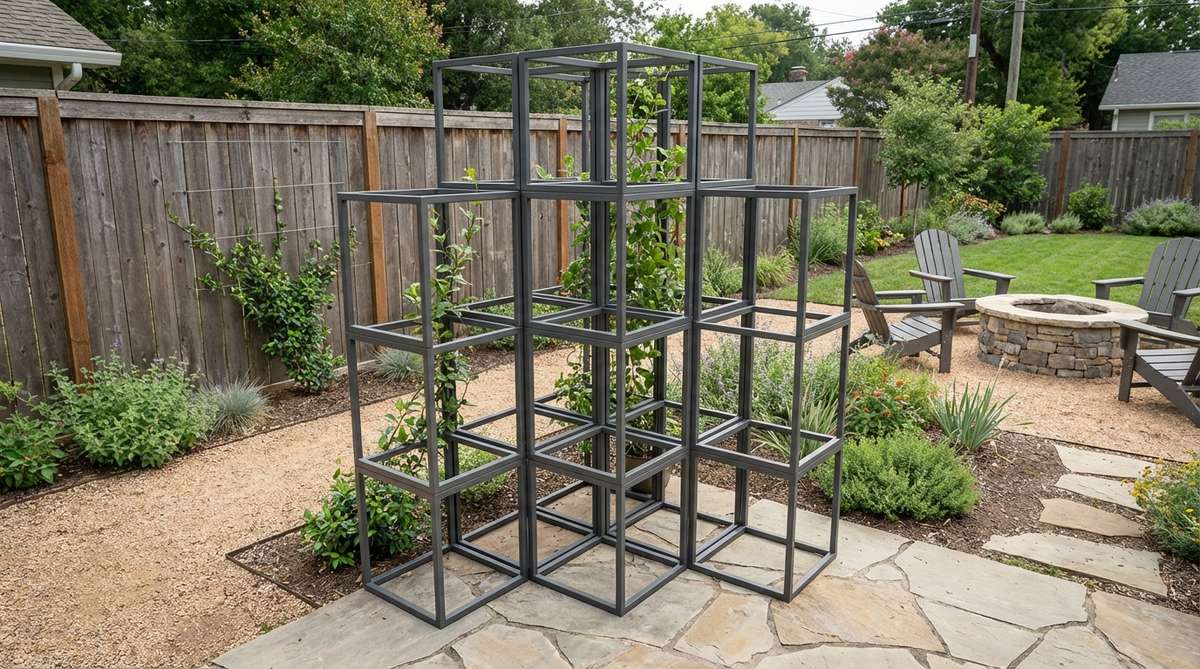
This stackable setup feels like giant architectural building blocks for your plants. Utilizing a modular wire cube plant system lets you grow upward infinitely. It is exceptionally brilliant for tiny urban patios where square footage is an absolute premium.
Static frames restrict your options when your gardening obsession eventually expands. Sourcing UV-coated connectable grids allows you to completely alter the shape season after season. It looks far more expensive than it is and adapts to any corner flawlessly.
Starter cube kits generally cost an affordable $40–$75. Pin this if you want maximum greenery but only have a tiny concrete footprint.
- Key Materials: Epoxy-coated steel grids and heavy-duty locking clips
- Vibe / Style: Adaptive modern minimalist
- Difficulty: Easy snap-together assembly
- Budget Breakdown: Base Kit: $45 | Extra Grids: $20.
- Creator’s Tip: Zip-tie the intersecting corners for added rigidity if you plan to stack them higher than four feet.
- Smart Sourcing: Invest in a modular metal grid starter kit and a bulk pack of UV-resistant zip ties.
Living Privacy Walls That Screen And Beautify
16. Double-Sided Freestanding Screen
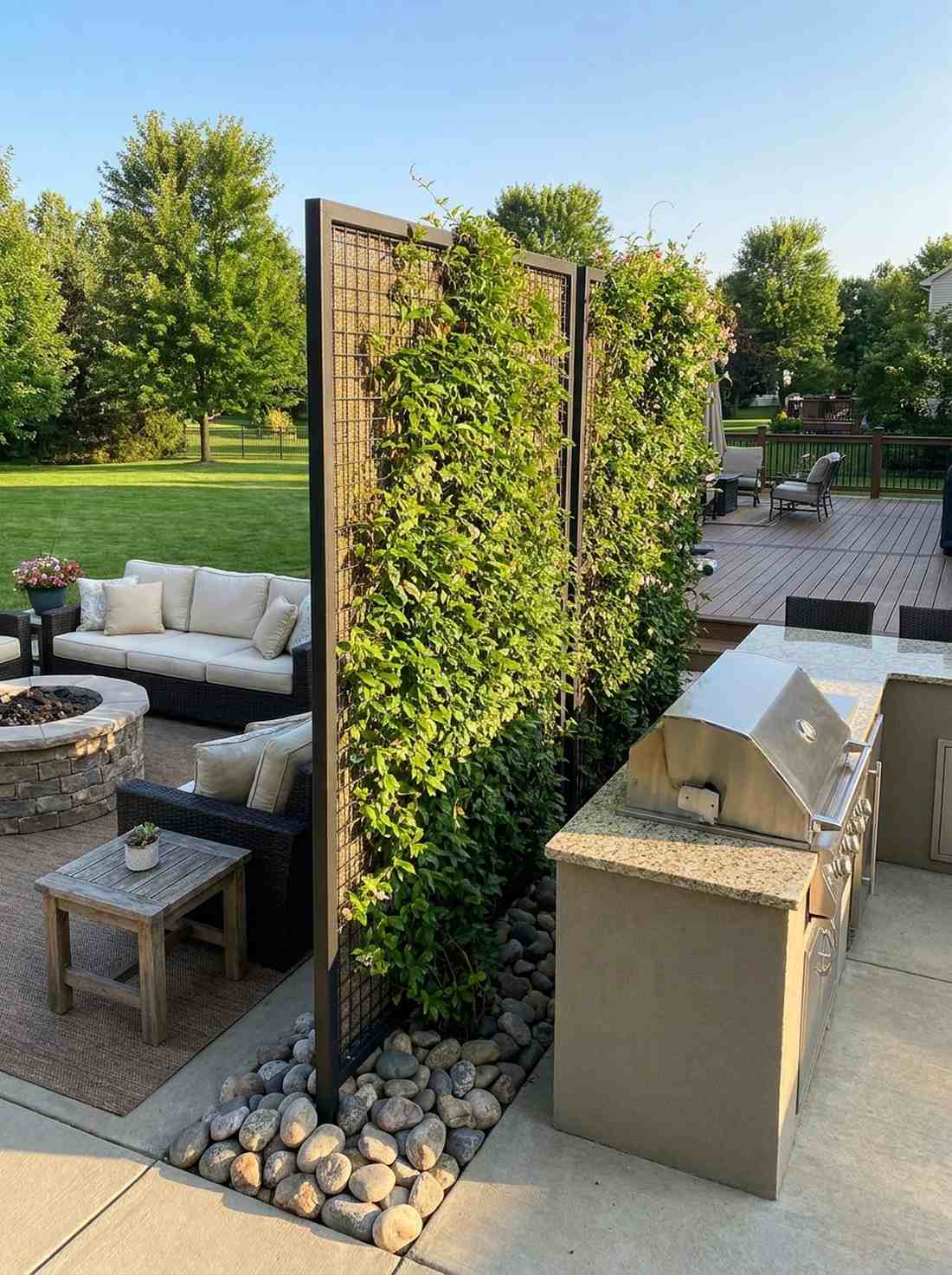
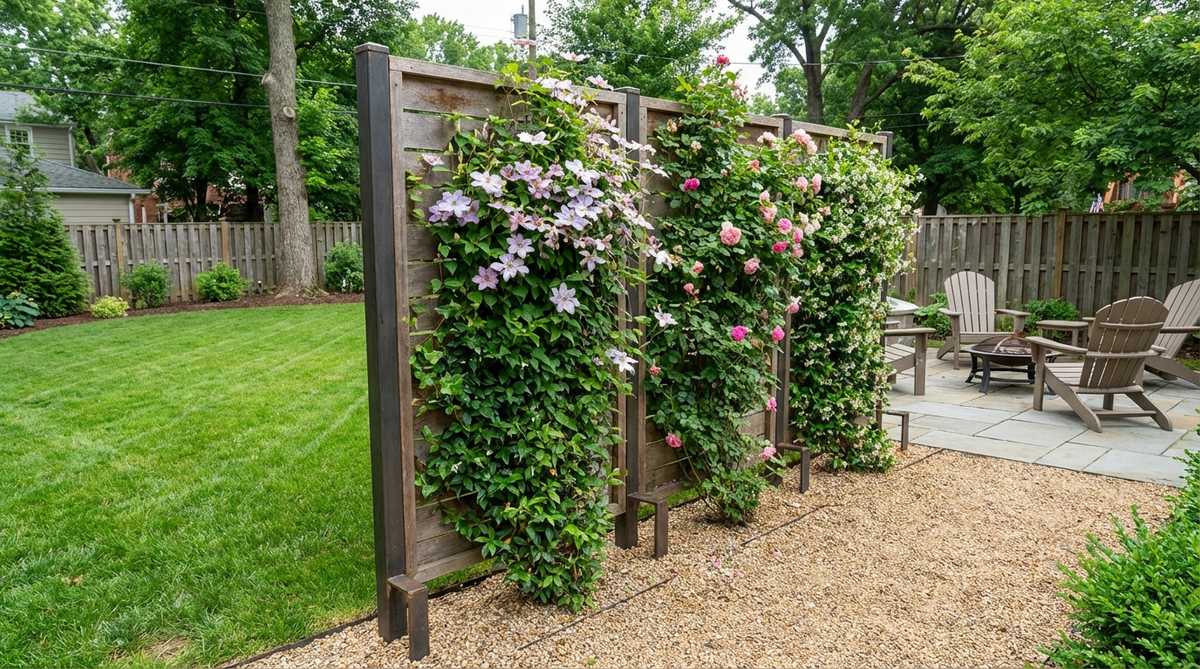
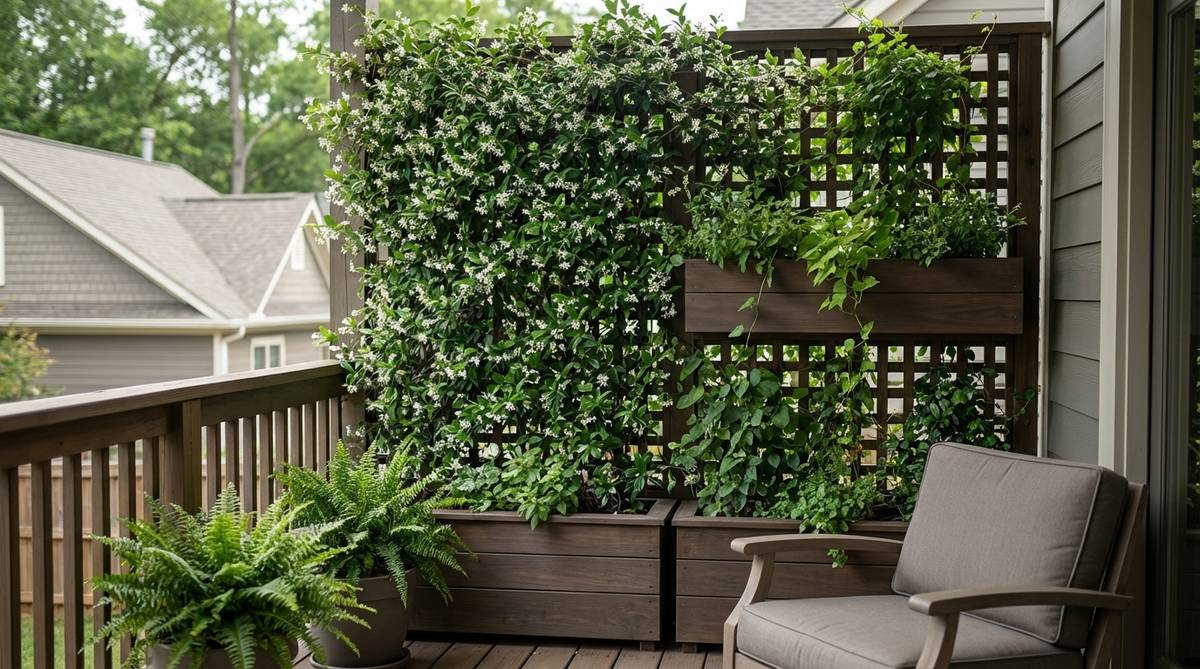
This lush divider feels like a thick, portable green wall blocking out the world. Dropping in a freestanding two-way privacy trellis instantly separates your lounging area from the grill zone. It acts as the perfect flexible boundary for large open-plan patios.
Permanent fences require annoying permits and back-breaking post-hole digging. Grabbing heavy-duty anchor-weighted screens gives you the exact same privacy without the legal headache. The dual-sided growth potential ensures both sides of your yard look incredibly vibrant.
A sturdy standalone unit will usually cost you between $130 and $200. It’s a fast upgrade that completely changes the vibe and flow of a space.
- Key Materials: Wide-base metal framework and dense mesh backing
- Vibe / Style: Portable luxury resort
- Difficulty: Easy bolt assembly
- Budget Breakdown: Trellis Frame: $140 | Base Weights: $30.
- Creator’s Tip: Place heavy decorative river rocks over the base plates to hide them and add extreme wind stability.
- Smart Sourcing: Order a freestanding heavy-duty privacy screen kit and decorative landscaping anchor stones.
17. Tall Vertical Panel System
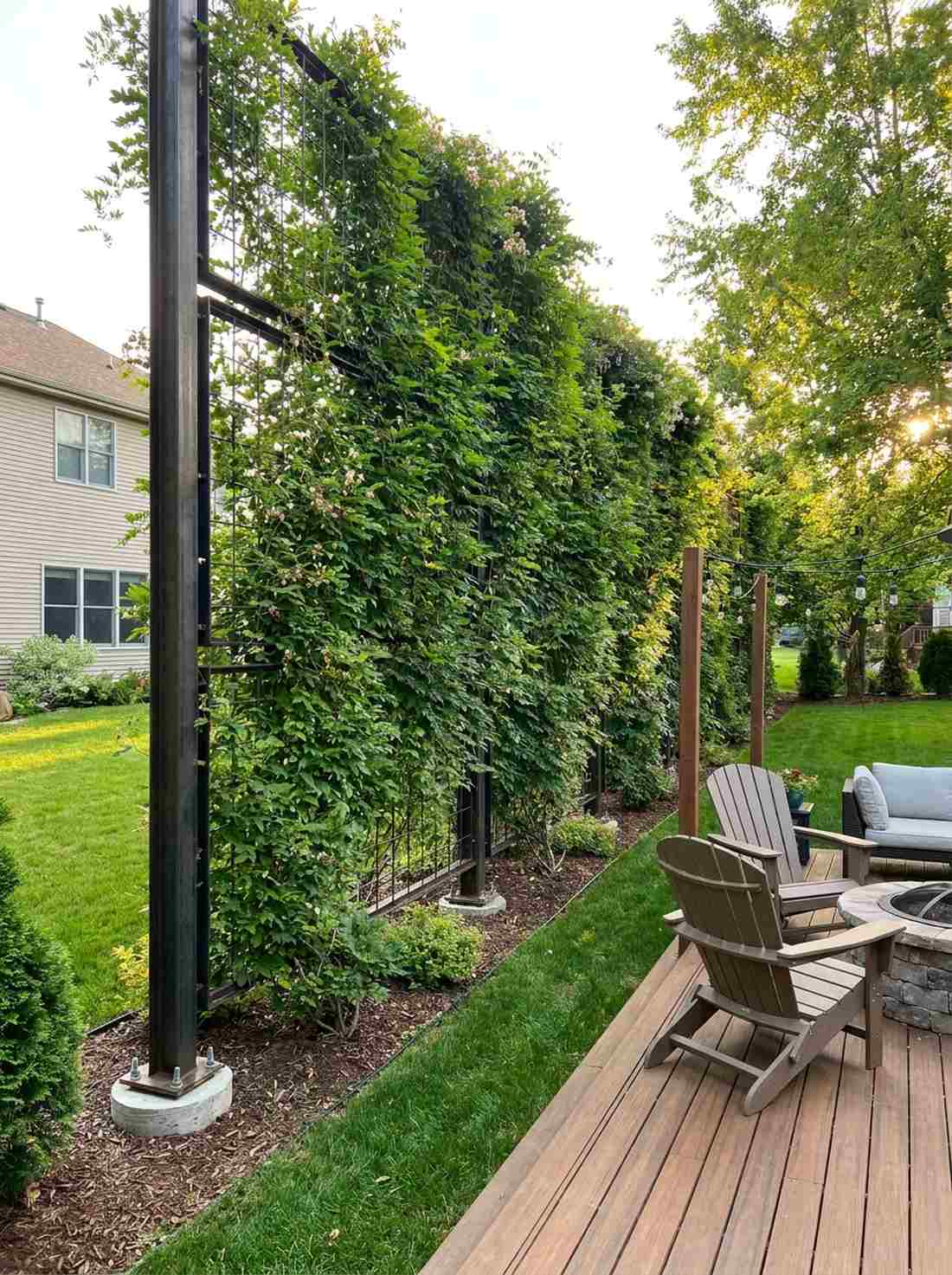
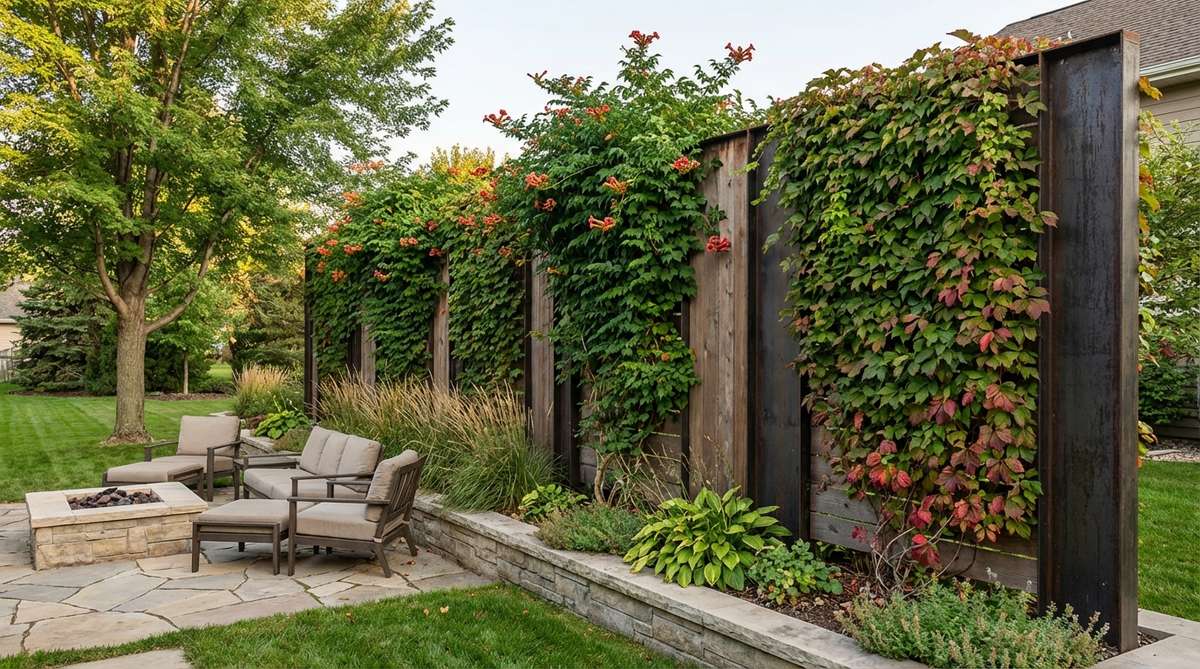
This towering green structure feels like an absolute fortress against nosy second-story neighbors. Installing an extra-tall vertical climbing panel completely reclaims your backyard seclusion. It works remarkably well along tight property lines in dense suburban neighborhoods.
Shorter trellises completely fail to block downward angles from adjacent properties. Using commercial-grade architectural landscaping kits allows you to safely build up to ten feet high. The sheer scale of the foliage delivers a surprisingly premium look that demands respect.
Tall commercial systems range from $200–$350 due to the required wind-load strength. Save this to your privacy solutions board if you hate feeling watched.
- Key Materials: Extended steel posts, concrete footings, and grid panels
- Vibe / Style: Towering green sanctuary
- Difficulty: Advanced concrete pouring
- Budget Breakdown: Steel Posts: $150 | Concrete/Grids: $90.
- Creator’s Tip: Set the metal posts in concrete at least 30 inches deep to ensure they survive severe storm winds.
- Smart Sourcing: Use a heavy-duty extended metal trellis kit and fast-setting post-hole concrete mix.
18. Bamboo Screen Trellis
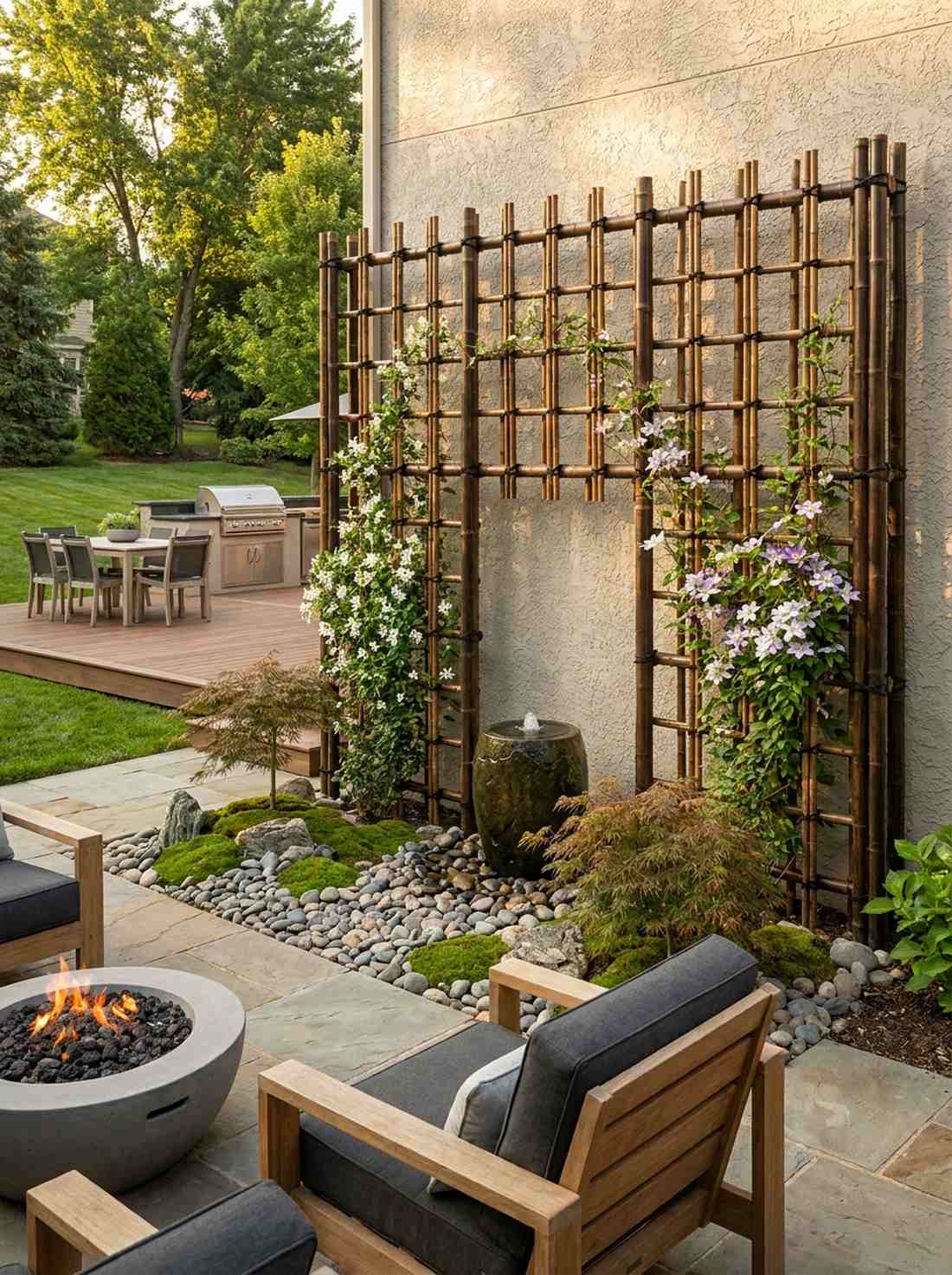
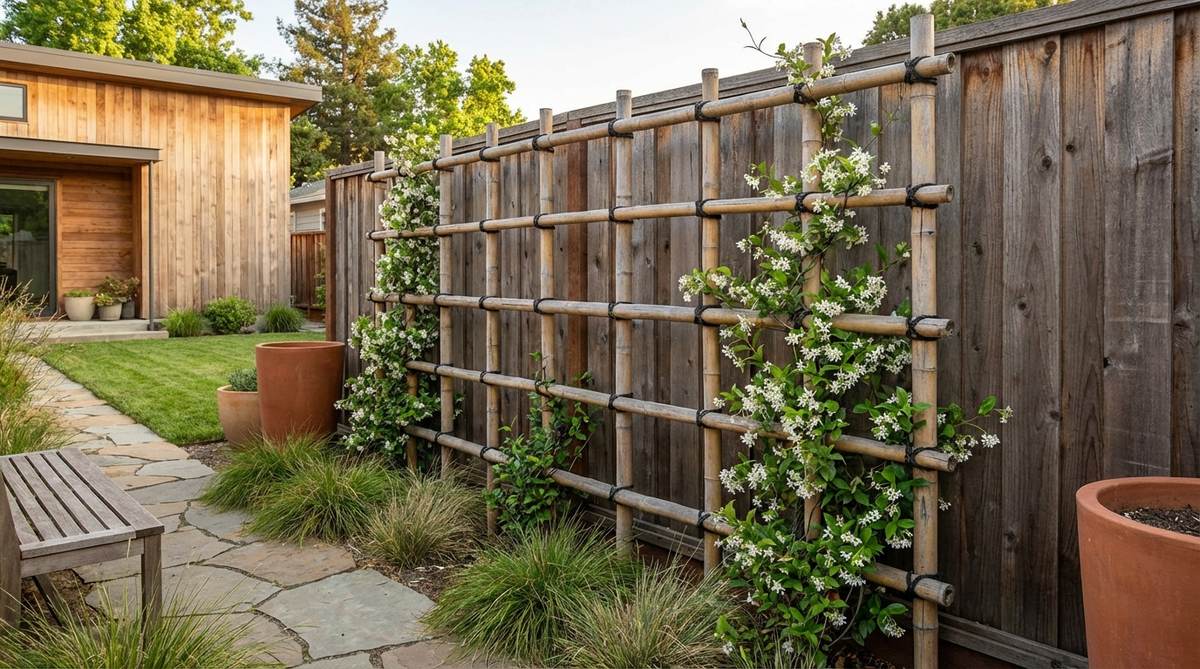
This exotic installation feels like a quiet meditation retreat hidden in the city. Lashing together a natural black bamboo privacy grid infuses serious Zen energy into concrete spaces. It is exceptionally ideal for framing a serene water feature or rock garden.
Standard orange trellis wood looks cheap next to the sleek, organic nodes of real bamboo. Sourcing UV-coated premium bamboo poles guarantees the stalks won’t crack or split in the sun. The combination of thick stalks and delicate vines creates stunning visual tension.
You can easily assemble a gorgeous bamboo wall for roughly $60–$95. Pin this idea to effortlessly craft a sustainable, rapid-renewable privacy barrier.
- Key Materials: Thick bamboo poles and weatherproof lashing twine
- Vibe / Style: Serene Japanese garden
- Difficulty: Intermediate knot tying
- Budget Breakdown: Bamboo Poles: $70 | Twine: $15.
- Creator’s Tip: Use traditional Japanese square lashing knots coated in clear glue for joints that literally never slip.
- Smart Sourcing: Grab a bulk pack of thick natural bamboo poles and a spool of UV-resistant black lashing cord.
19. Living Willow Screen
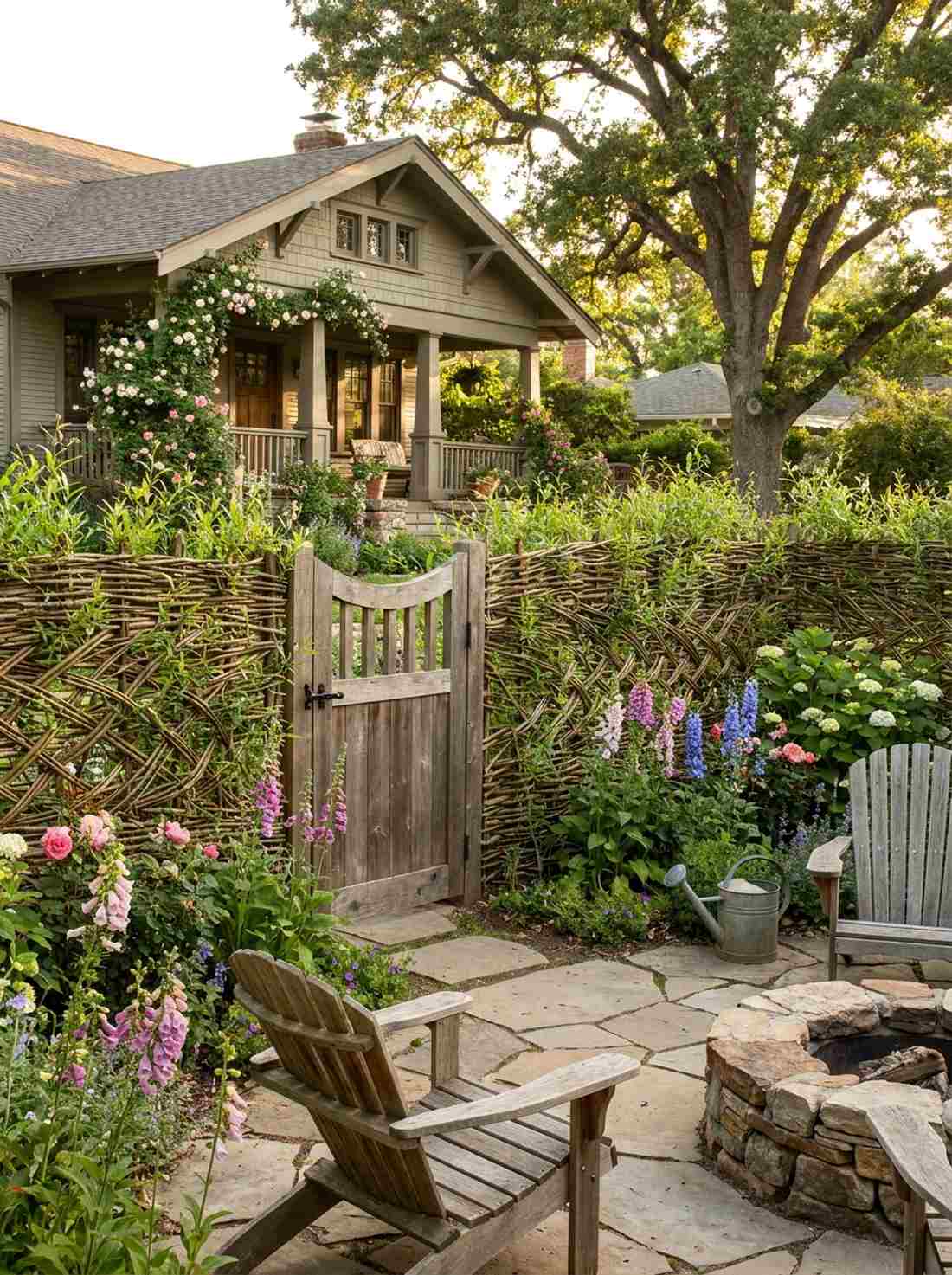
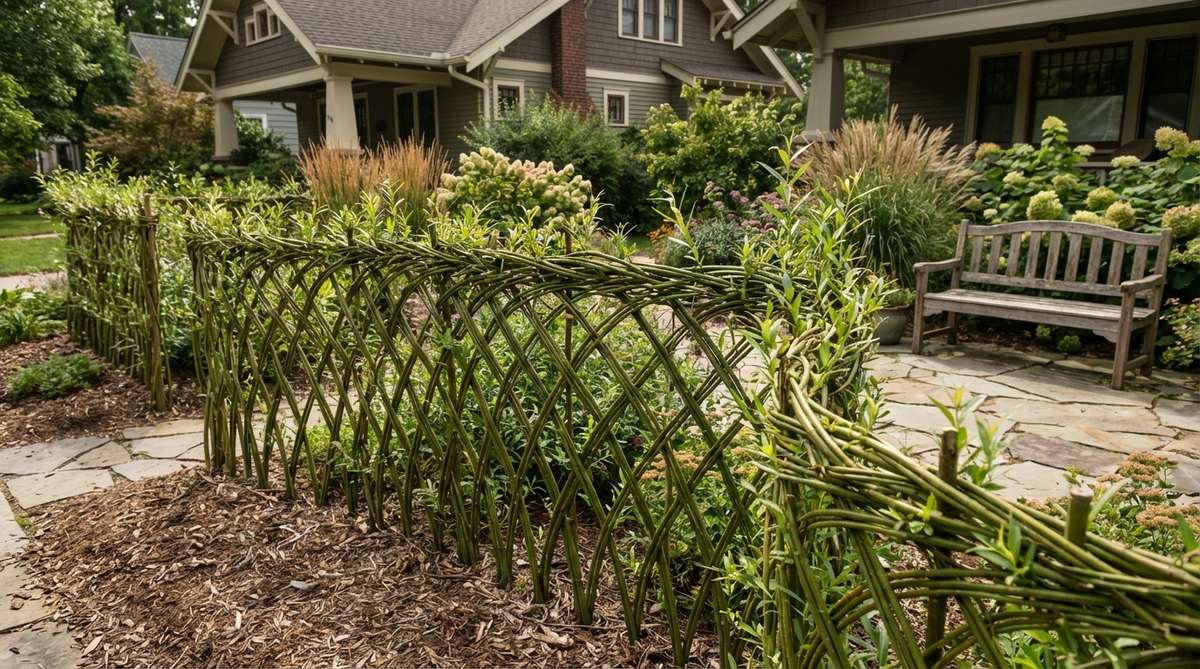
This woven wonder feels like a magical boundary straight out of an old-world fairy tale. Weaving a rooted living willow fence produces a barrier that actually gets stronger every year. It serves as an incredible eco-friendly windbreak for a rustic cottage garden.
Dead wood fences rot over time, but this living system completely regenerates itself. Utilizing fresh dormant willow whips allows the structure to literally grow its own support columns. It completely cheats the system, offering a self-repairing fence that costs almost nothing to maintain.
Buying fresh dormant branches usually costs just $40–$70 in the early spring. Highly recommended for a quick weekend win that rewards you for decades.
- Key Materials: Fresh-cut dormant willow whips and rooting hormone
- Vibe / Style: Enchanted living architecture
- Difficulty: Moderate weaving techniques
- Budget Breakdown: Willow Whips: $50 | Mulch: $10.
- Creator’s Tip: Keep the soil heavily saturated for the first month to ensure the woven branches push out aggressive roots.
- Smart Sourcing: Buy a living willow screen starter bundle and a high-yield root growth hormone powder.
You won’t believe how this next mixed-material approach entirely blocks nosy neighbors while keeping perfect airflow.
Material Guide: Cheap vs. Premium Aesthetic
Knowing exactly where to save and where to spend makes all the difference in achieving that “looks expensive but isn’t” vibe.
- Standard vs. UV-Resistant/Premium: Cheap plastic grids snap in winter and fade in summer. Upgrading to powder-coated steel or UV-sealed wood ensures your trellis survives aggressive vine weight and harsh weather without cracking.
- Pre-made Kits vs. Sourcing Locally: While hardware stores sell basic lattice, utilizing specialized architectural landscaping kits provides hidden hardware and flawless joints, saving you hours of frustrating custom cuts.
20. Mixed Material Privacy Wall
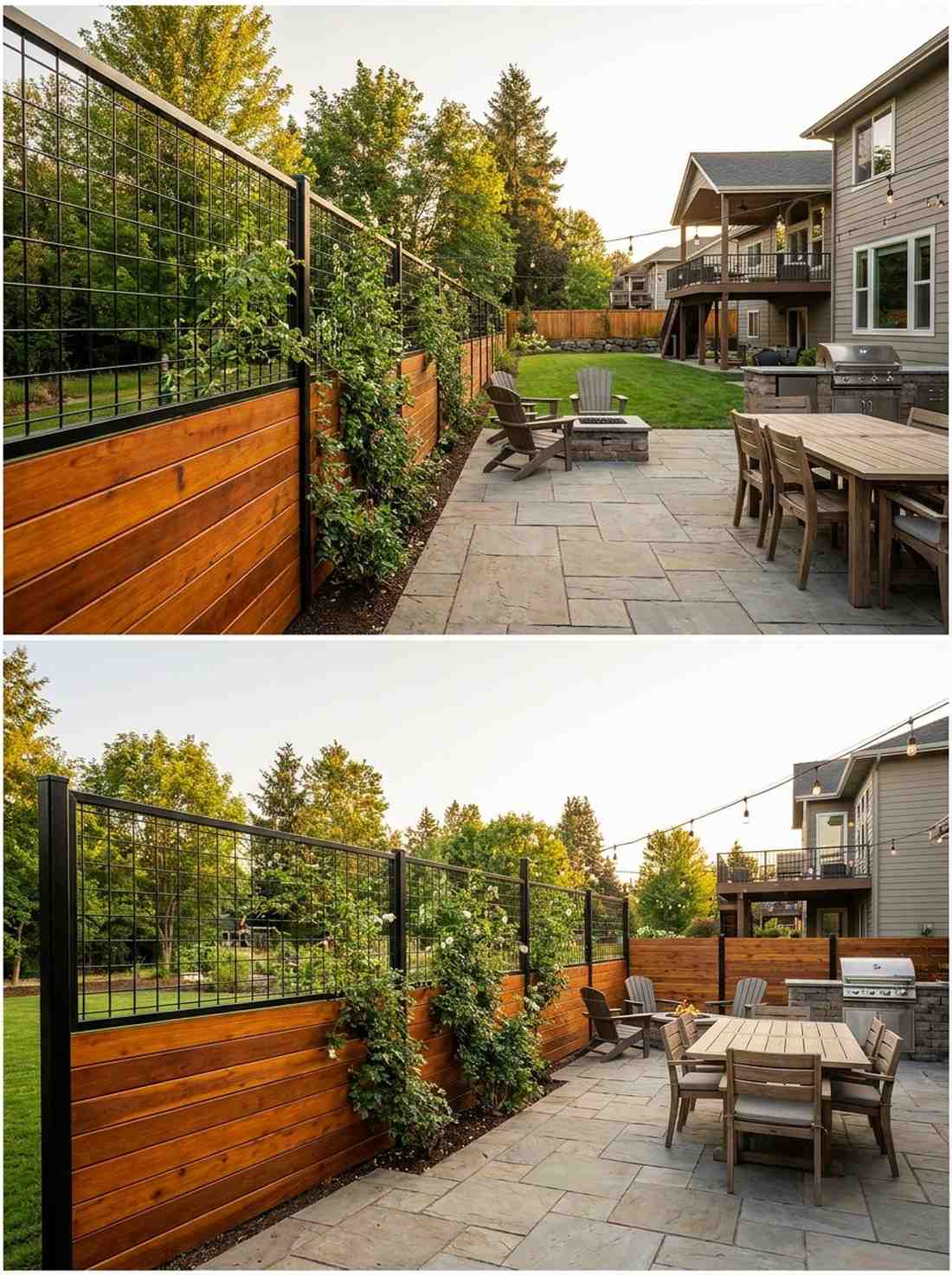
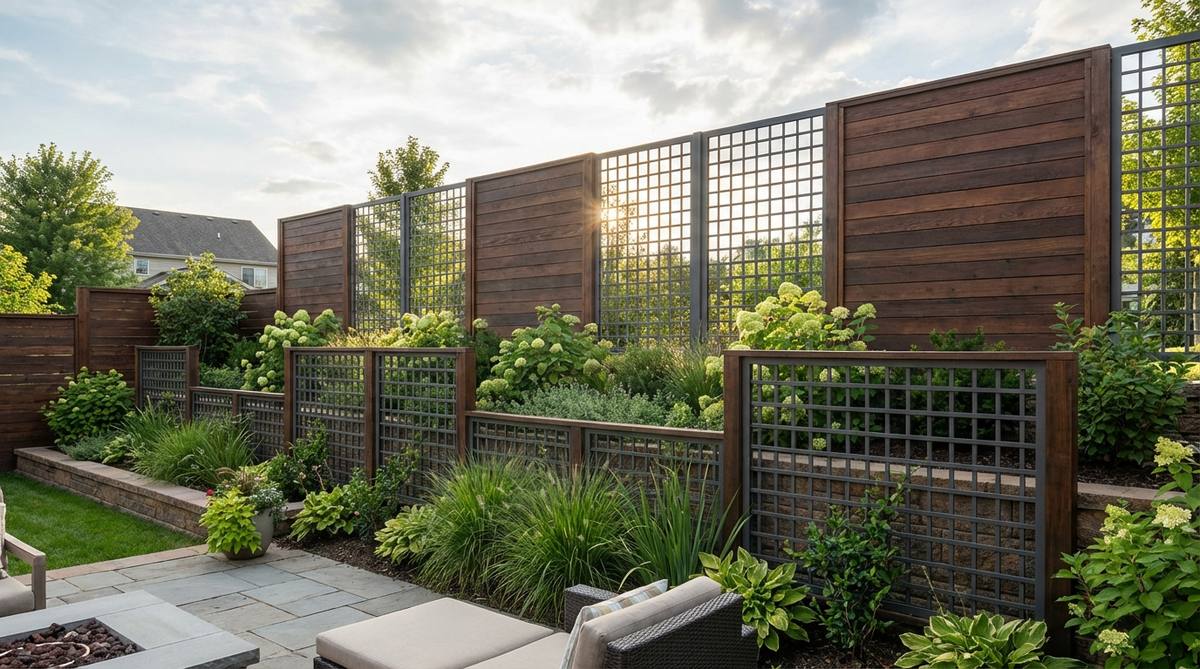
This dynamic layout feels like a custom designer boundary for a luxury townhouse. Combining a solid timber base with top-mounted steel grids offers the ultimate privacy hack. It is perfect for securing lower-level privacy while letting light spill over the top.
A giant solid wall feels like a prison, but adding a metal grid topper softens the perimeter beautifully. Sourcing heavy-duty climbing plant support sections completely transforms a boring existing fence. The contrast between rich warm wood and cold black steel looks insanely sophisticated.
Retrofitting an existing fence with these metal toppers costs about $45–$80 per panel. Save this to your DIY weekend garden board for a brilliant lighting compromise.
- Key Materials: Solid wood fence panels and metal grid toppers
- Vibe / Style: Modern residential upscale
- Difficulty: Easy top-mounting
- Budget Breakdown: Grid Toppers: $60 | Hardware: $15.
- Creator’s Tip: Bolt the metal toppers to the strong vertical fence posts, not just the flimsy horizontal top rail.
- Smart Sourcing: Pick up a metal trellis fence topper kit and heavy-duty exterior lag bolts (bulk pack).
Architectural Focal Points For Garden Drama
21. Arched Garden Portal
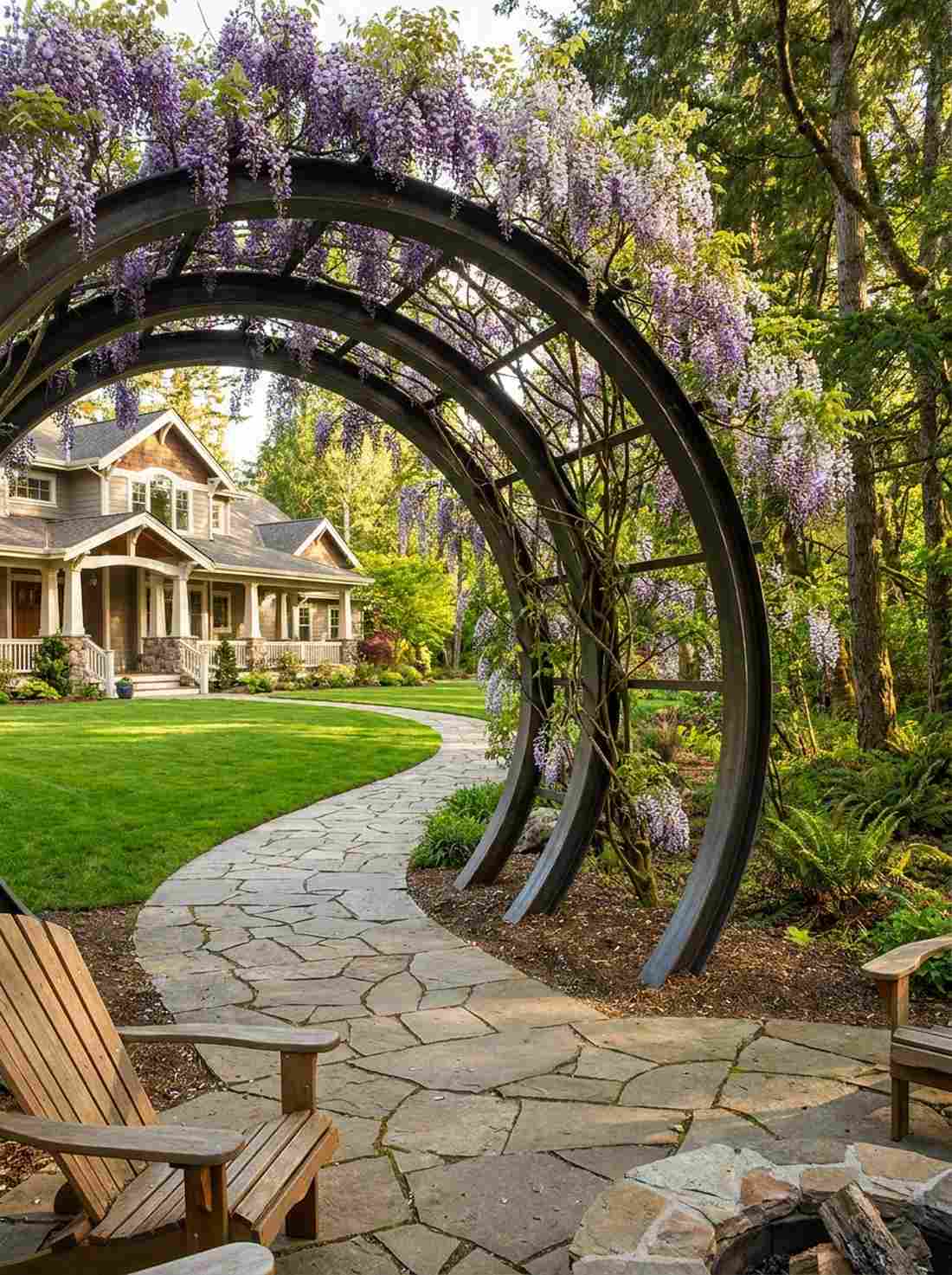
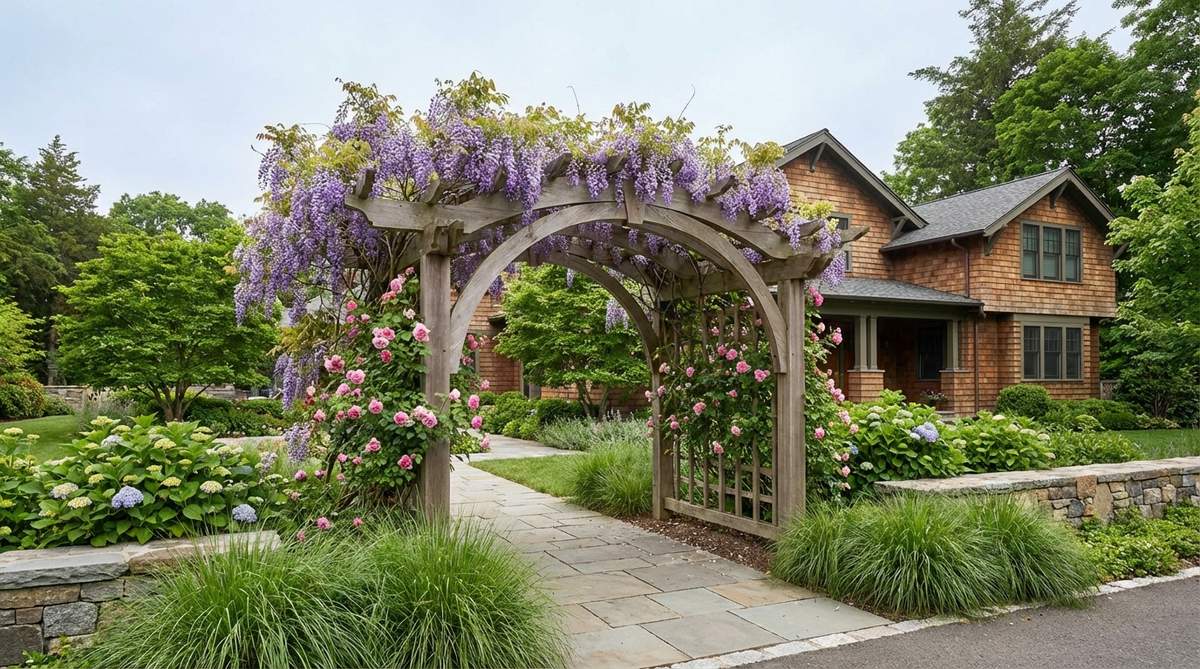
This sweeping overhead structure feels like a grand entrance to a secret botanical garden. Framing your pathway with an arched metal climbing portal builds incredible vertical drama. It works spectacularly as a transition point between a manicured lawn and a wild woodland area.
Flimsy garden center arches buckle under the weight of mature wisteria in a matter of months. Investing in a heavy-duty tubular steel arch gives a designer-level finish that endures brutal storms. Walking underneath a canopy of hanging, fragrant blooms is an unmatched sensory experience.
A commercial-grade arch kit runs roughly $150–$250. Pin this if you are planning a massive landscaping upgrade that demands a stunning focal point.
- Key Materials: Thick-gauge tubular steel arch segments
- Vibe / Style: Grand estate entrance
- Difficulty: Intermediate dual-person assembly
- Budget Breakdown: Steel Arch Kit: $180 | Anchors: $30.
- Creator’s Tip: Drive 3-foot rebar stakes into the ground and slide the hollow arch legs over them for hidden, massive stability.
- Smart Sourcing: Order a heavy-duty steel garden arch kit and a bulk pack of steel rebar anchor stakes.
22. Pergola-Style Trellis Roof
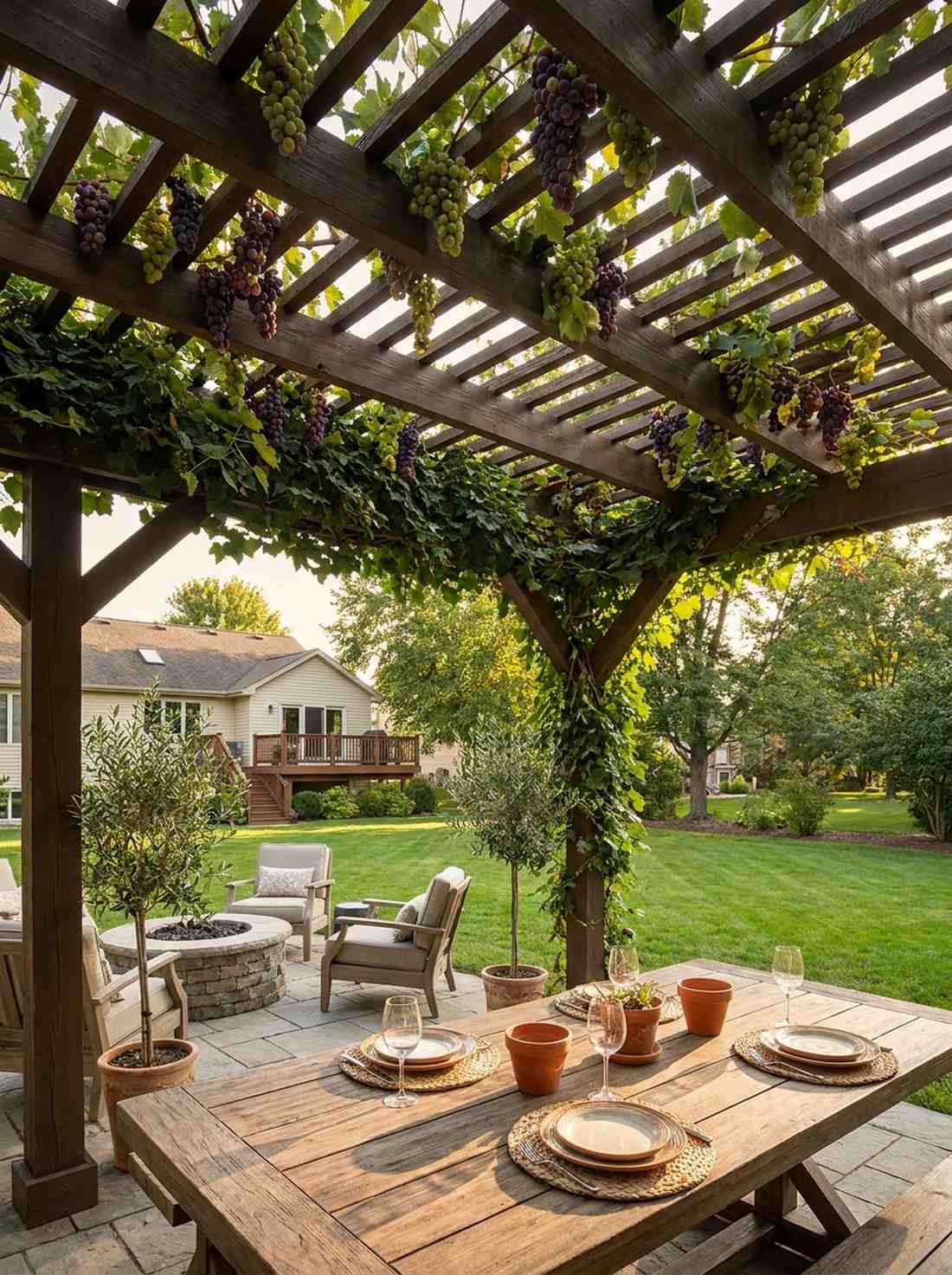
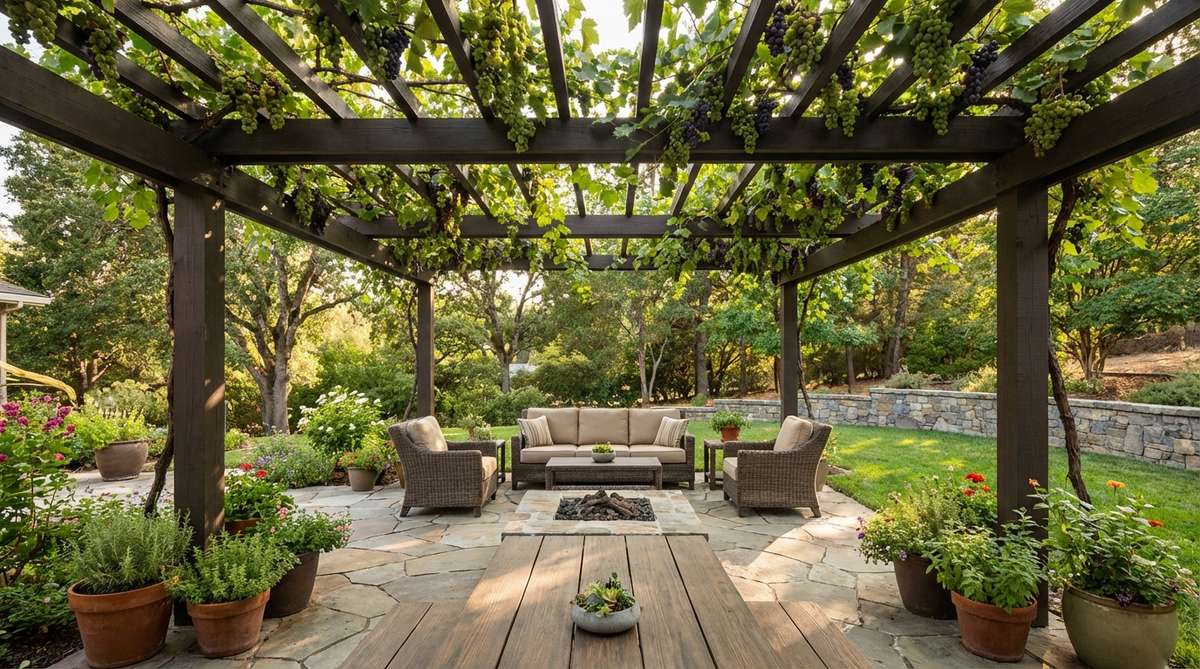
This shaded canopy feels like a luxurious Mediterranean dining terrace right in your yard. Constructing an overhead pergola trellis grid turns a blazing hot patio into a cool, leafy room. It is the absolute perfect support system for heavy fruiting grapevines or dense ivy.
Relying on cheap fabric umbrellas is a massive missed opportunity for vertical growing. Utilizing UV-coated privacy screens as the roof structure delivers a surprisingly premium look that filters light perfectly. The dappled shadows it casts over an outdoor dining table are pure magic.
Building the overhead slat grid costs about $200–$350 depending on the span width. It completely changes the vibe of your outdoor entertaining area.
- Key Materials: Sturdy 4×4 posts, 2×6 crossbeams, and top slating
- Vibe / Style: Tuscan vineyard terrace
- Difficulty: Advanced overhead construction
- Budget Breakdown: Timber Beams: $220 | Hardware: $70.
- Creator’s Tip: Angle the top slats at 45 degrees to block the harsh afternoon sun while letting morning light pour through.
- Smart Sourcing: Get a heavy-duty pergola bracket starter kit and premium exterior timber screws (bulk box).
23. Corner Wrap-Around Design
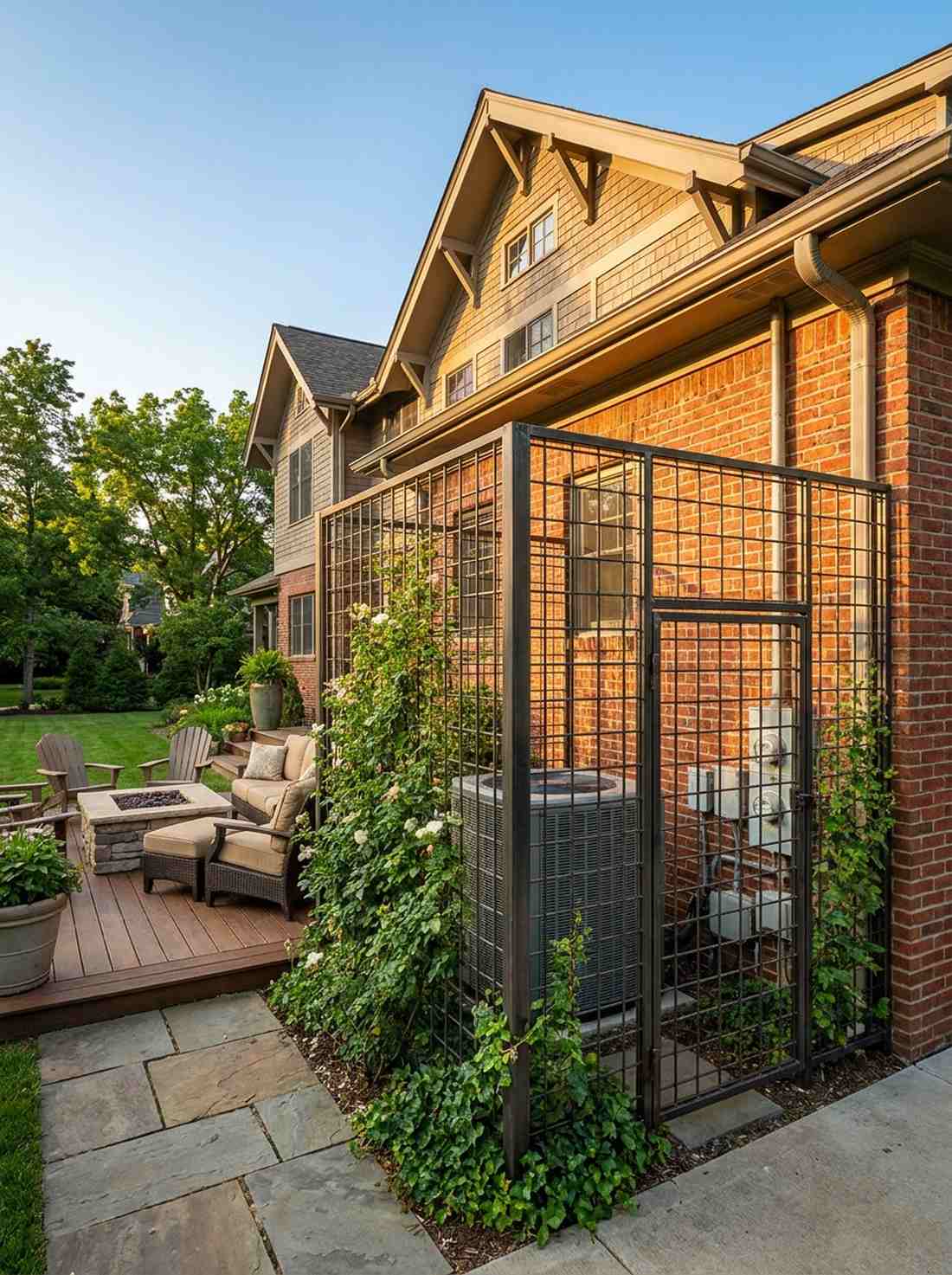
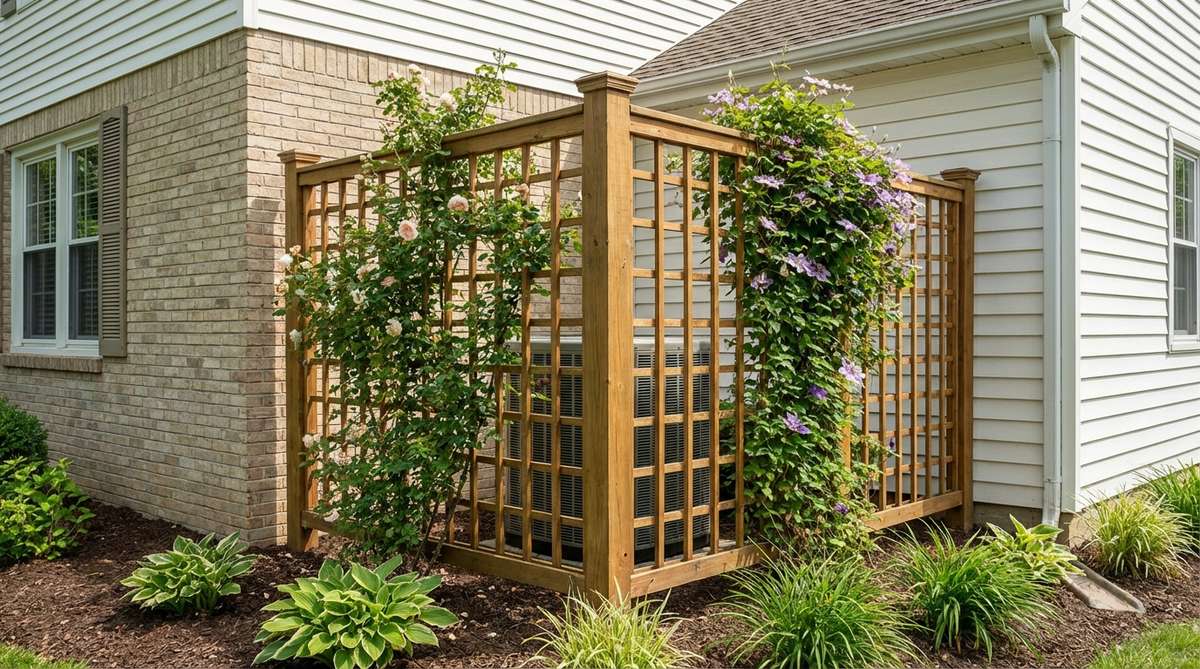
This smart right-angle build feels like a custom architectural hug for your home’s exterior. Installing an L-shaped corner climbing screen brilliantly softens sharp brick edges. It is incredibly effective at hiding ugly utility meters or bulky AC condenser units.
Most people leave house corners totally bare, which looks unfinished and stark. Sourcing specialized corner brackets and grids creates a seamless wraparound effect that tricks the eye. It completely masks unsightly hardware while drawing attention to the lush, climbing foliage.
This geometric problem-solver will run you about $120–$180. Save this to your exterior styling board to finally fix those awkward blind spots.
- Key Materials: Twin metal grid panels and 90-degree corner joints
- Vibe / Style: Clever architectural camouflage
- Difficulty: Moderate corner leveling
- Budget Breakdown: Grids: $130 | Corner Brackets: $25.
- Creator’s Tip: Leave a hinged section on one side of the L-shape so you can still easily access your utility meters.
- Smart Sourcing: Use a corner-wrap metal trellis kit and heavy-duty exterior mounting hinges.
24. Obelisk Tower Trellis
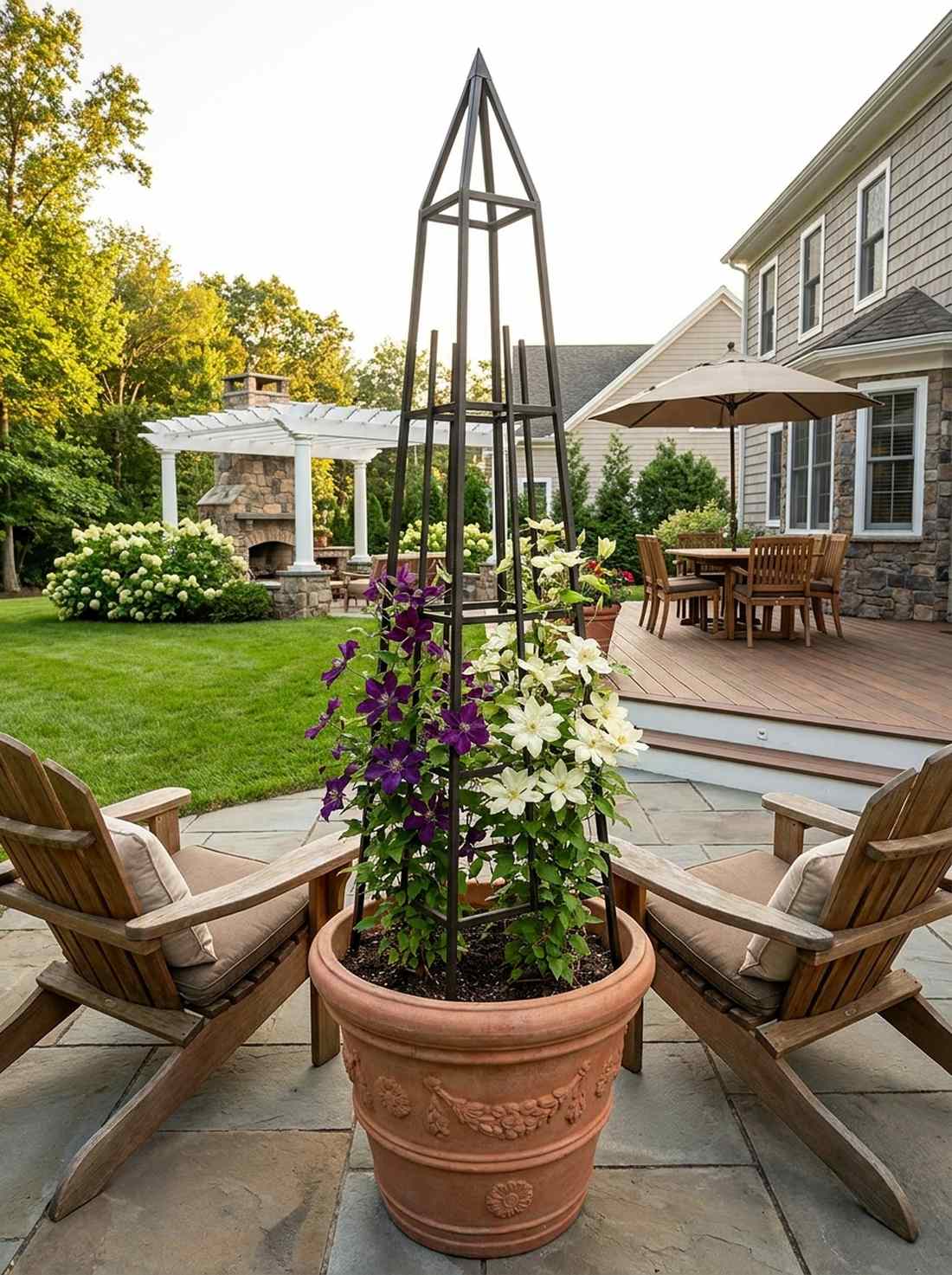
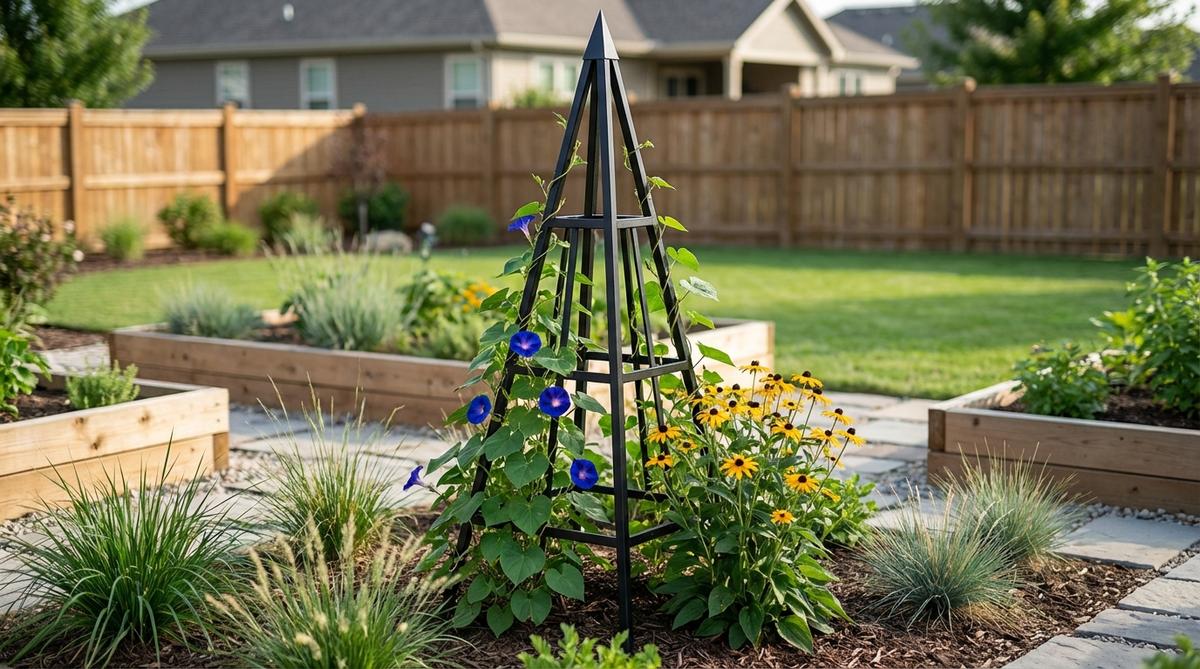
This striking pyramidal form feels like a majestic monument erupting from your flowerbeds. Dropping a freestanding metal garden obelisk provides massive vertical height without needing a wall. It is absolutely perfect for flanking a front door or sitting in the center of a large planter pot.
Flimsy tomato cages ruin the aesthetic of premium landscaping instantly. Upgrading to a solid iron architectural obelisk gives a designer-level finish that withstands gale-force winds. The geometric peak adds year-round structural interest even when the plants die back in winter.
A high-quality iron tower costs roughly $60–$110. Highly recommended for a quick weekend win that adds instant classical elegance.
- Key Materials: Powder-coated iron obelisk frame
- Vibe / Style: Classic English manor
- Difficulty: Zero-tool instant setup
- Budget Breakdown: Obelisk Tower: $85 | Ground Pins: $10.
- Creator’s Tip: Plant two different colors of clematis at the base so they weave together into a stunning blooming pillar.
- Smart Sourcing: Pick up a heavy-duty iron obelisk tower kit and a bulk pack of rust-proof securing pins.
The final design on this list is a high-end designer secret that instantly transforms boring exterior walls into living art.
25. Wall-Mounted Decorative Frame
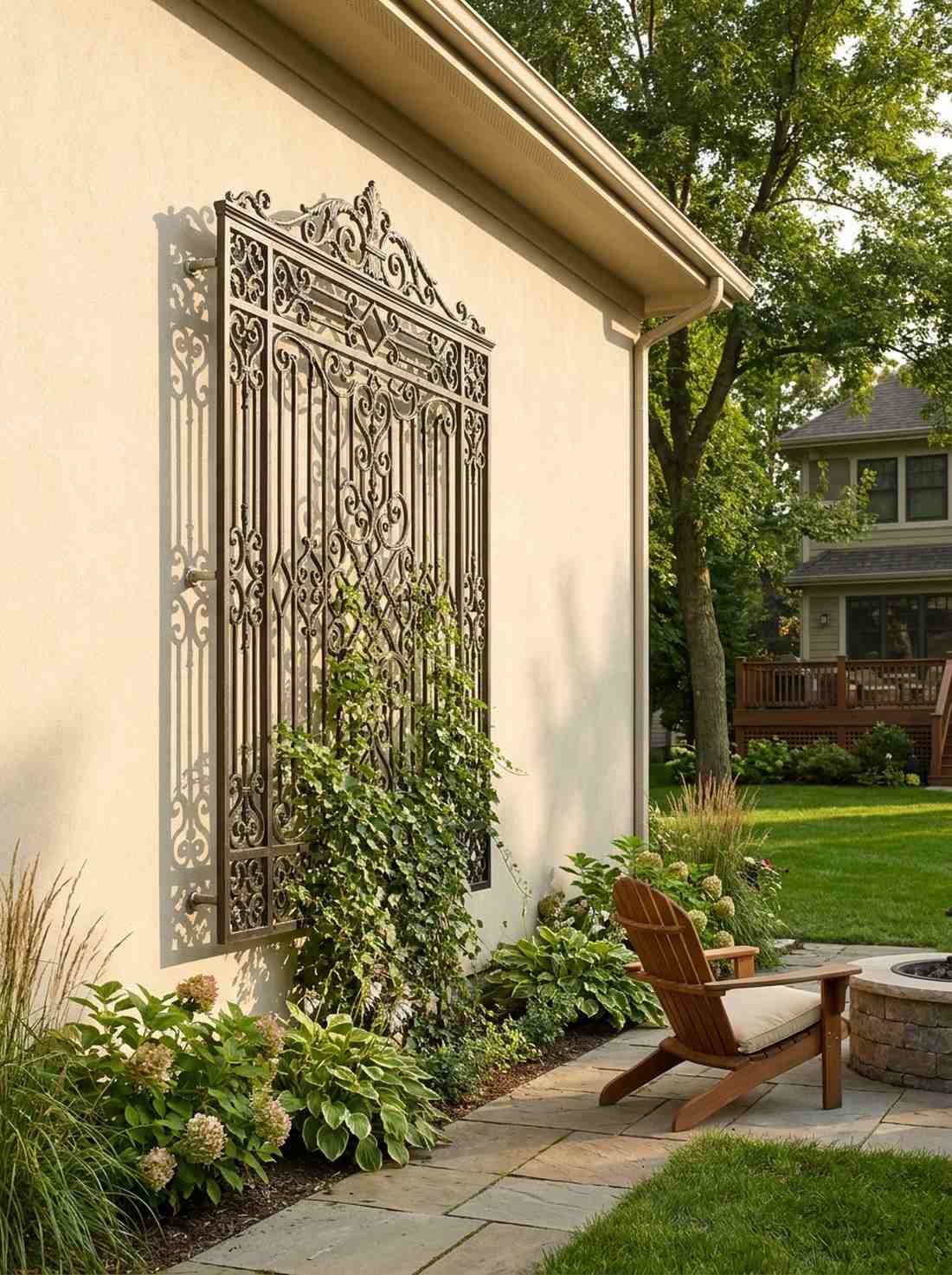
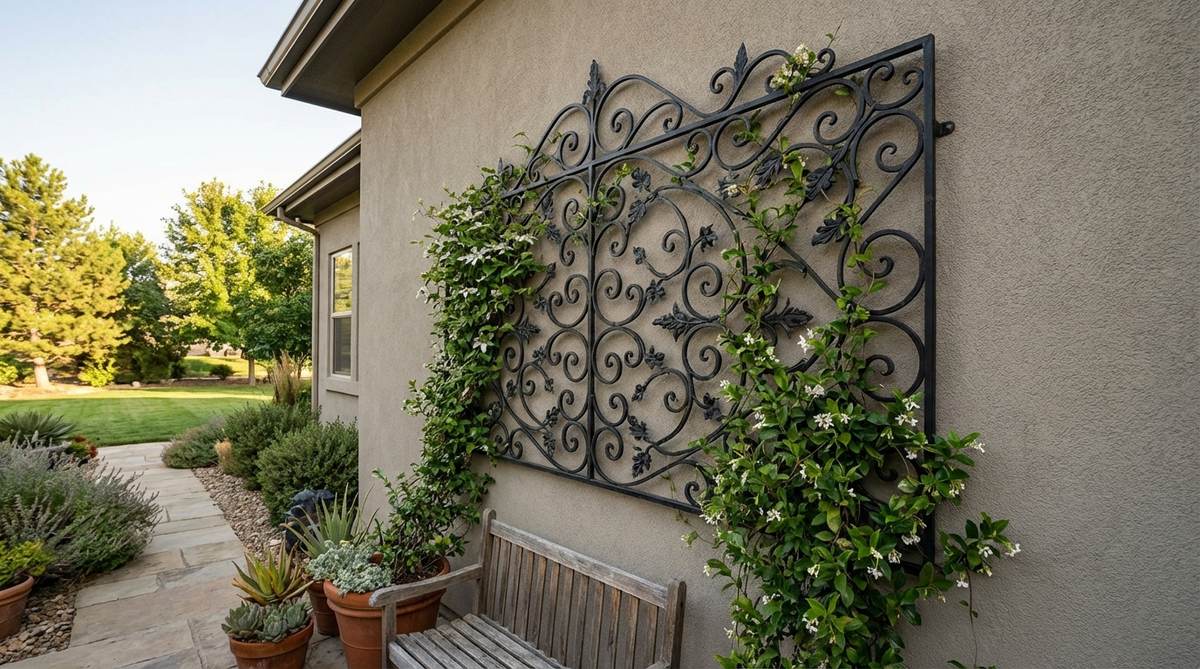
This ornate installation feels like an expensive wrought-iron painting hung in the open air. Securing a decorative wall-mounted metal trellis turns a massive blank stucco wall into a gallery display. It is the ultimate solution for large, windowless garage facades.
Plain wooden grids look cheap against massive brick walls. Sourcing UV-coated architectural wall panels ensures the structure itself looks just as beautiful as the ivy covering it. It cheats the system, offering luxury styling while keeping aggressive climbers away from your siding.
A premium decorative wall unit costs around $100–$150. Pin this to your exterior home improvement board for a massive curb appeal boost.
- Key Materials: Ornate cast-metal or heavy-wire decorative panels
- Vibe / Style: Luxurious outdoor gallery
- Difficulty: Intermediate masonry anchoring
- Budget Breakdown: Decorative Frame: $115 | Standoff Bolts: $25.
- Creator’s Tip: Use 3-inch standoff bolts so the frame casts a gorgeous, deep shadow against the wall behind it.
- Smart Sourcing: Order a premium decorative metal wall trellis and a heavy-duty masonry anchor starter kit.
Bringing Modern Trellis Design To Life
The right modern garden trellis does more than hold up plants; it completely redefines your exterior architecture. By utilizing these 25 heavy-duty climbing plant screens and DIY blueprints, you can establish a premium, high-end landscape without the designer price tag. Whether you opt for a sleek stainless cable system or a towering UV-coated privacy screen, prioritize smart sourcing and robust materials to guarantee your outdoor space looks expensive and survives the elements for decades.
Frequently Asked Questions
What is the best material for a modern garden trellis?
For a truly premium look, powder-coated steel and aluminum are the absolute best materials, resisting rust while offering incredible strength for heavy-duty climbing plant support. If you want a warmer vibe, skip cheap pine and invest in a cedar bulk pack or thermally modified wood for built-in rot resistance. Stainless steel cable starter kits are also highly recommended if you want that invisible, architectural landscaping look.
How do I anchor a freestanding trellis properly?
Never rely on shallow dirt pushing. To achieve a secure setup that won’t blow over, use heavy-duty powder-coated anchor spikes or dig 24-30 inch holes and use a fast-setting post concrete starter kit. For wall-mounted architectural panels, always use masonry anchors and heavy-duty metal standoff brackets to keep the frame 2-3 inches away from the wall, protecting your siding from moisture and vine rot.
Which climbing plants work best with modern trellis designs?
It completely depends on the strength of your frame. For lightweight or wire grid kits, delicate climbers like Clematis or sweet peas deliver massive color without bending the metal. For heavy-duty steel plant grids or thick timber frames, you can safely grow dense, woody vines like wisteria, climbing roses, or even productive grapevines. Always match the mature weight of the plant to the durability of your trellis kit.
How far should a trellis be mounted from a wall?
You must maintain a 2 to 4-inch gap using heavy-duty standoff brackets. Mounting a trellis completely flush against a wall is a massive mistake that traps moisture, destroys paint, and causes severe mold. Utilizing a spacer block kit ensures massive airflow, which keeps both your masonry and your climbing plants perfectly healthy year-round.
Can I install a modern trellis on a rental property?
Absolutely. The smartest solution for renters is to avoid drilling and instead use a freestanding planter box trellis kit or a modular metal grid system with weighted bases. You can also utilize heavy-duty removable fence brackets to hang UV-coated privacy screens over existing structures without leaving a single mark or losing your security deposit.