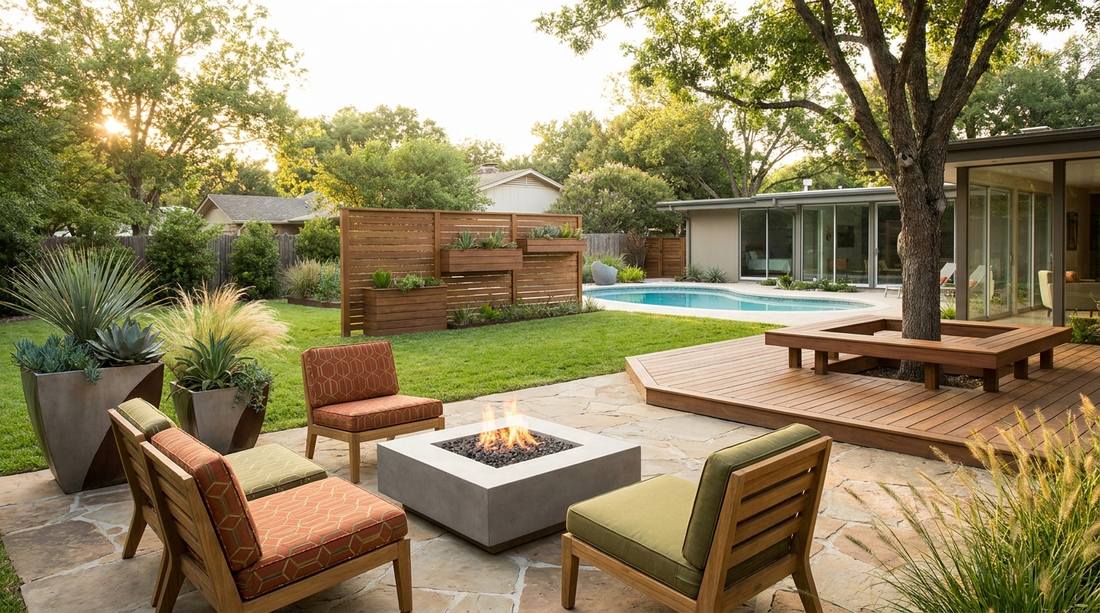
Achieving a luxury mid century modern garden doesn’t require a Hollywood budget if you know exactly what to buy. We break down the exact materials and layout blueprints you need. Expect a premium outdoor transformation that maximizes your budget.
Design Snapshot Key Principles
- Integration: Create seamless transitions between interior and exterior spaces using consistent materials and restrained color palettes
- Geometric Order: Employ rectangular pools, linear planters, and angular pathways to establish visual harmony and structural rhythm
- Natural Materials: Combine flagstone, concrete, wood, and natural boulders to balance modernist architecture with organic elements
- Minimalist Planting: Select low-maintenance plants with sculptural forms and architectural character, arranged in purposeful groups for maximum impact
Hardscape Foundations & Structural Elements
1. Concrete Grid Paving Systems
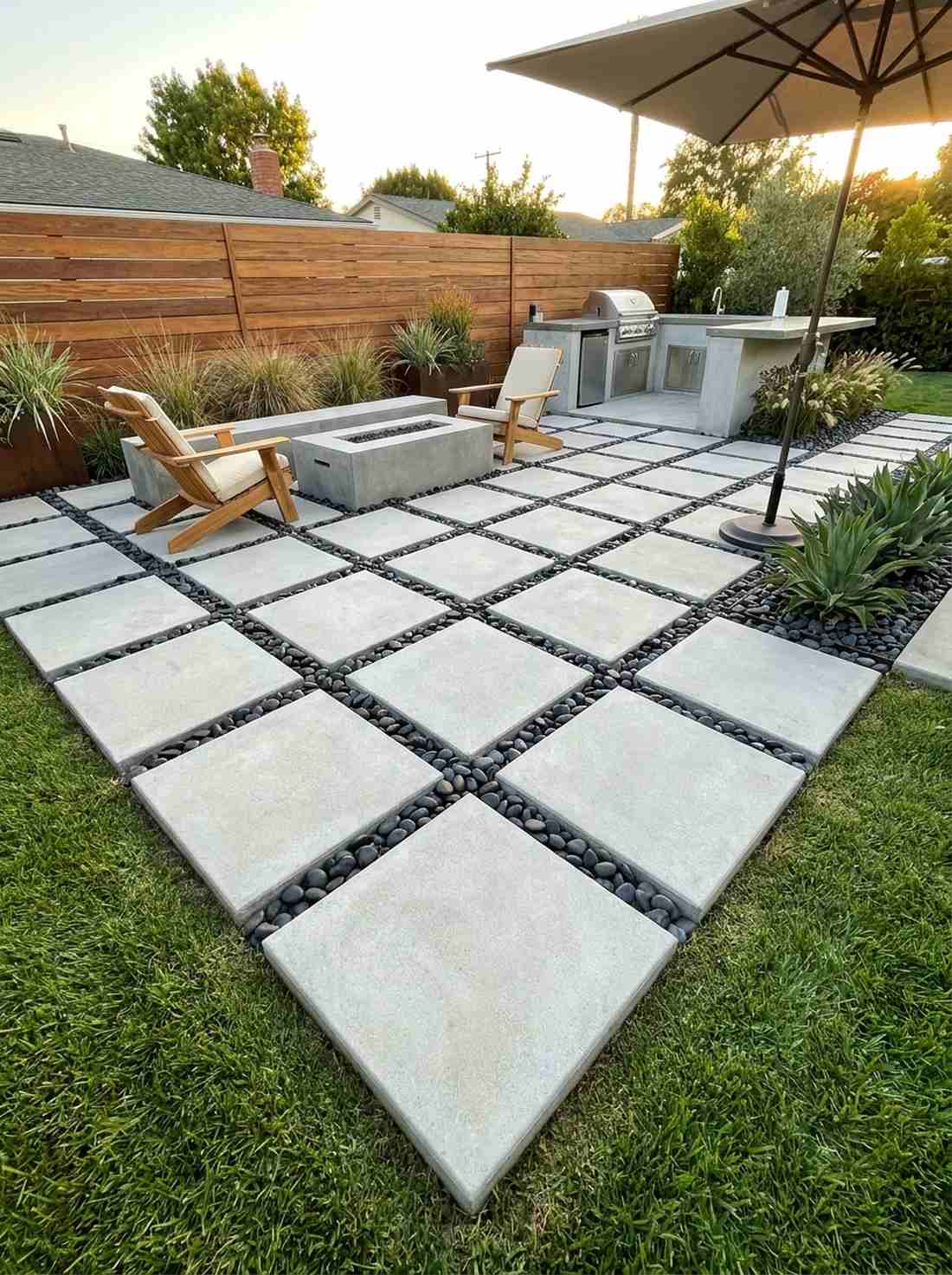
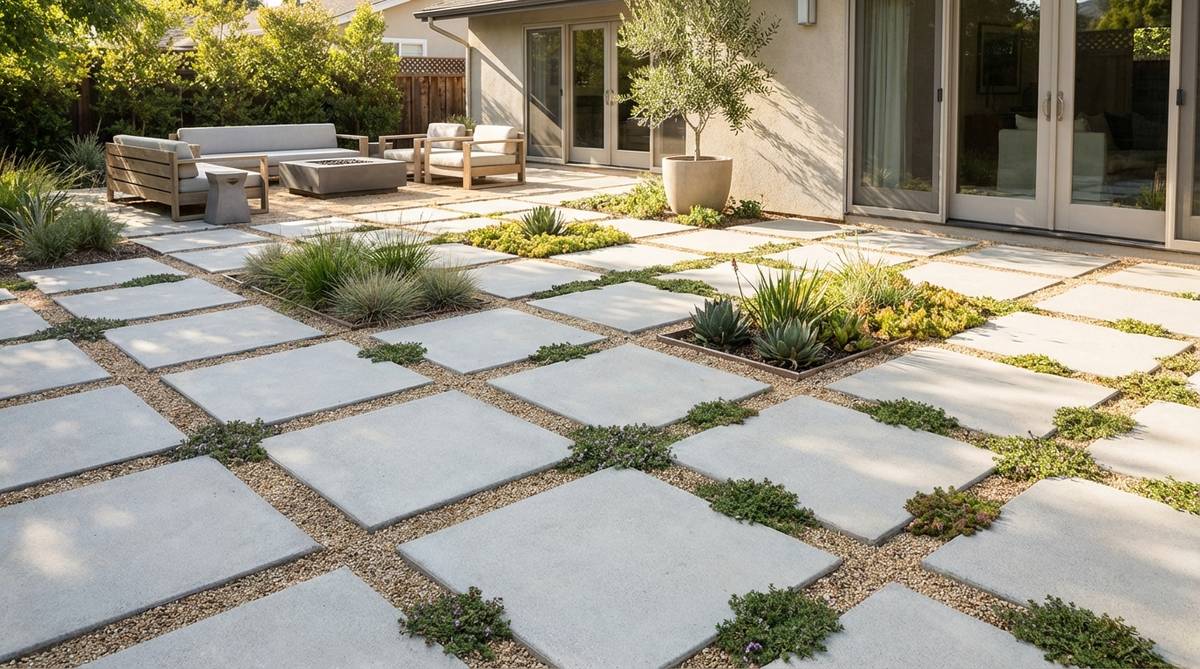
Feels like stepping into an architectural magazine layout. These mid century modern garden design grids are ideal for upgrading a bland suburban patio into a structured oasis.
Most homeowners overspend on stamped concrete when modular grids deliver a surprisingly premium look. Leaving a 3-inch gap packed with dark stones gives a designer-level finish that elevates the whole yard.
You can easily pull this off for around $200–$400 depending on your area. Pin this to your outdoor makeover board!
- Key Materials: Pre-cast heavy-duty square pavers
- Vibe / Style: Structured architectural luxury
- Difficulty: Moderate weekend DIY
- Budget Breakdown: Pavers: $150 | Base Sand: $30 | Filler Stones: $50.
- Creator’s Tip: Always use a tamped gravel base underneath to prevent the pavers from sinking unevenly over winter.
- Smart Sourcing: pre-cast concrete squares (bulk pack) and UV-coated black river rocks.
2. Flagstone Pathways with Irregular Patterns
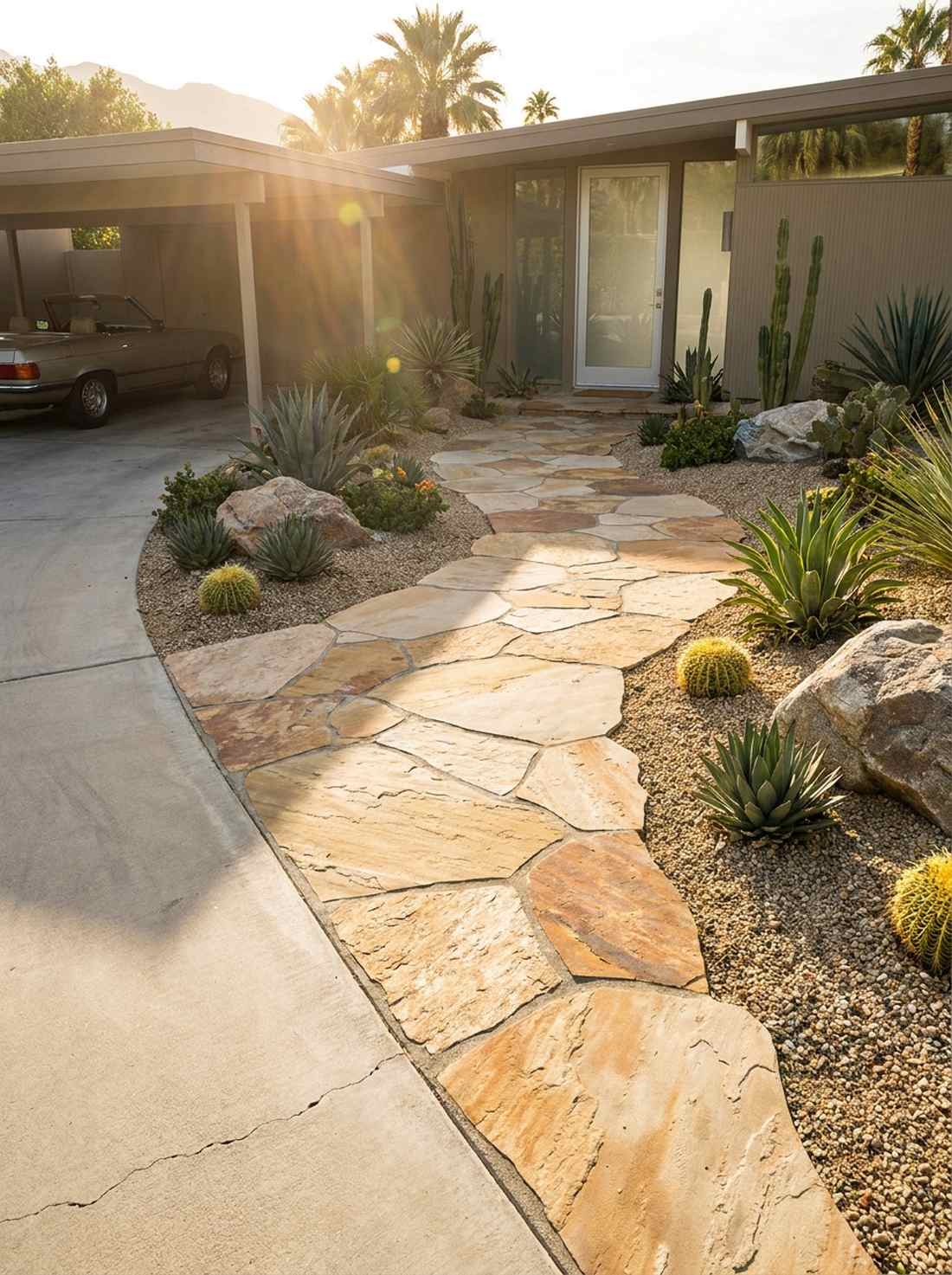
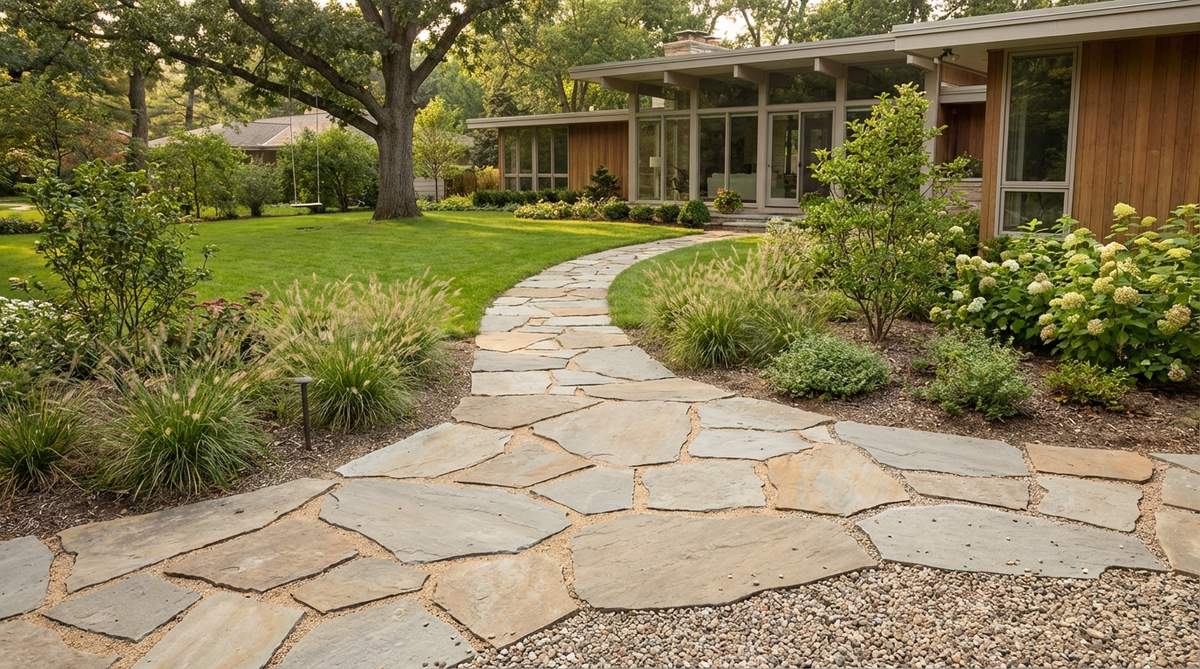
Straight out of a 1960s Palm Springs retreat. This retro garden pathway idea is perfect for seamlessly connecting a driveway to your front door.
Skipping rigid lines for irregular crazy paving looks far more expensive than it actually is. It perfectly offsets the sharp lines of modern architecture while requiring very little maintenance.
Expect to spend around $150–$300 depending on the stone variety.
- Key Materials: Natural irregular flagstone pallets
- Vibe / Style: Organic desert modernism
- Difficulty: Beginner friendly
- Budget Breakdown: Stone Pallet: $200 | Jointing Sand: $40.
- Creator’s Tip: Sweep polymeric sand into the joints and lightly mist it to lock the stones permanently in place.
- Smart Sourcing: premium natural flagstone pallets and weather-resistant polymeric jointing sand.
3. Dry-Stacked Stone Retaining Walls
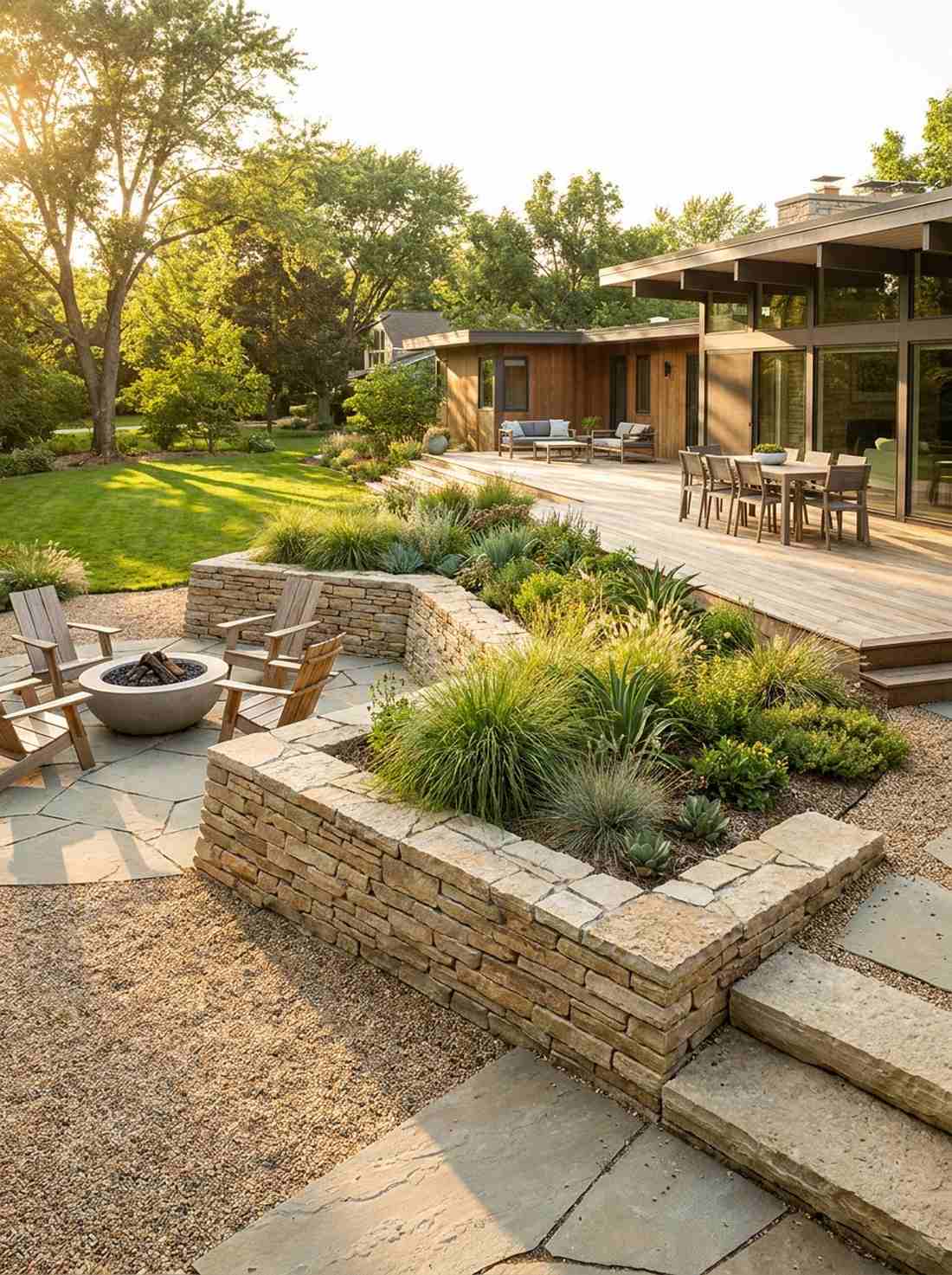
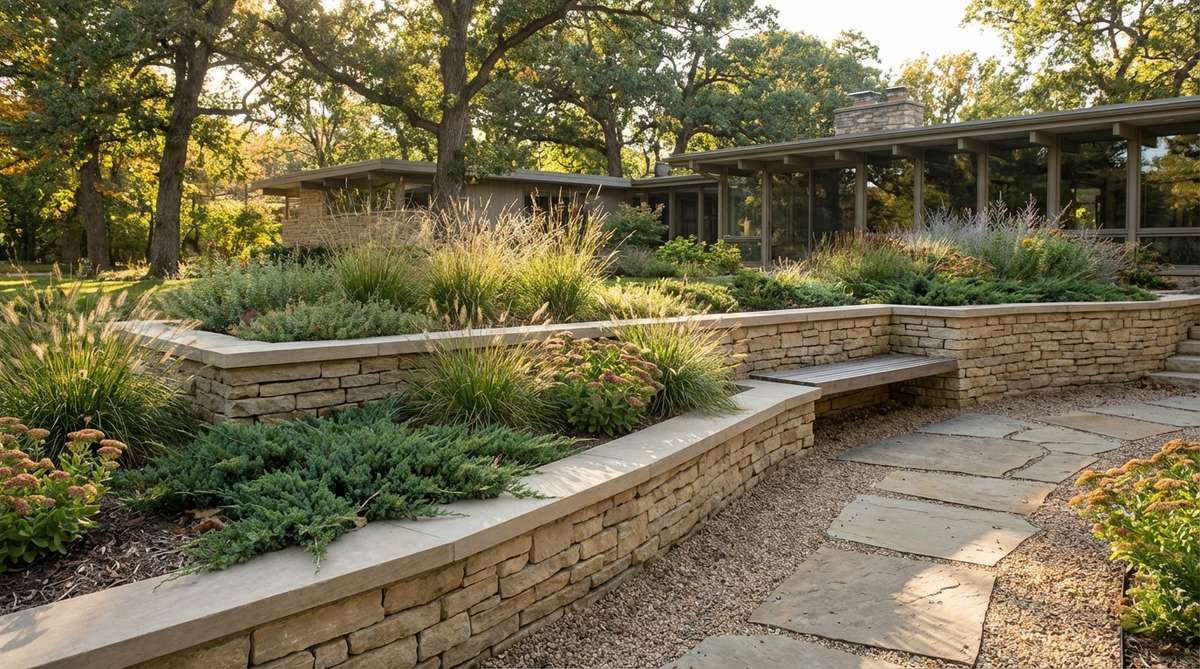
Brings an earthy, grounded warmth to your yard that feels incredibly timeless. Incorporating this into your mid century modern garden decor is brilliant for managing sloping backyards.
People often assume you need expensive masons and messy mortar, but dry-stacking gives a high-end, textured finish. Plus, the lack of mortar actually improves water drainage during heavy rains.
Materials usually run about $10–$15 per square face foot. Save this idea for your next landscaping weekend!
- Key Materials: Flat-stacked Lannon stone
- Vibe / Style: Textured rustic modern
- Difficulty: Labor intensive but simple
- Budget Breakdown: Stone: $300 | Backfill Gravel: $40.
- Creator’s Tip: Step each layer of stone slightly backward into the hill to naturally reinforce the retaining strength.
- Smart Sourcing: palletized Lannon stone (bulk) and heavy-duty landscaping block adhesive.
4. Cantilevered Concrete Steps
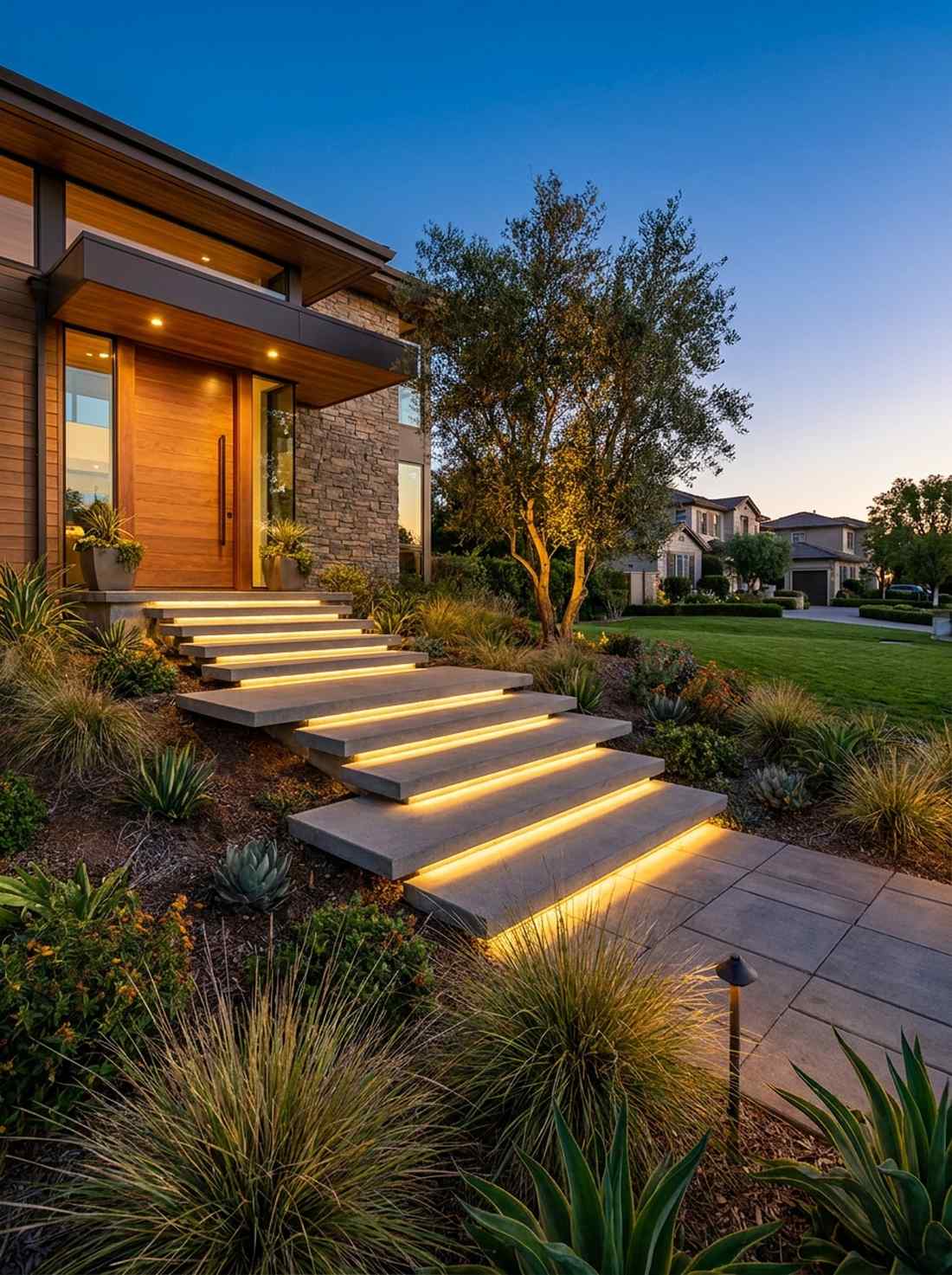
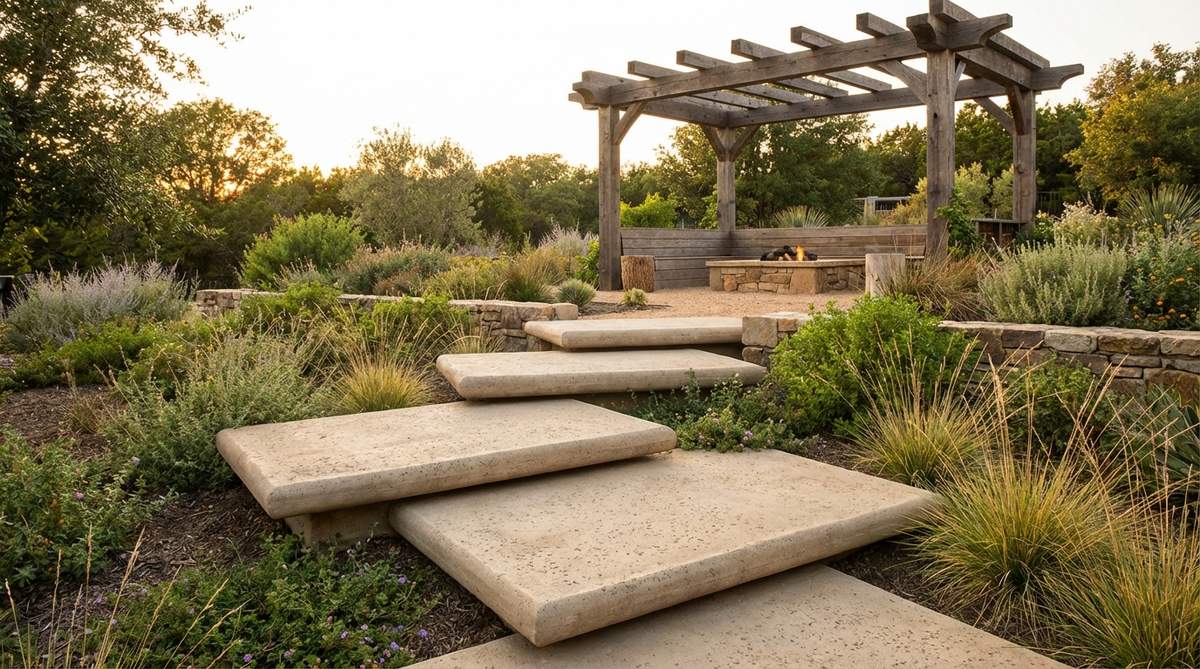
Defies gravity and feels intensely futuristic. These floating outdoor stairways serve as the ultimate front entryway statement for any retro-inspired home.
Contractors will tell you these are overly complicated, but using pre-fabricated steel brackets makes this luxury aesthetic completely accessible. The floating shadow lines they create at night are unbeatable.
This setup costs around $500+ depending on elevation. It’s a fast upgrade that completely changes the vibe.
- Key Materials: High-strength reinforced concrete
- Vibe / Style: Anti-gravity architectural
- Difficulty: Advanced DIY / Pro install
- Budget Breakdown: Brackets: $200 | Concrete Mix: $100 | Rebar: $50.
- Creator’s Tip: Install LED strip channels under the lip of the concrete forms before pouring for hidden nighttime illumination.
- Smart Sourcing: pre-welded steel cantilever brackets and high-strength fiberglass reinforced concrete mix.
Most people get this completely wrong… until they try the exact layout coming up next.
5. Breeze Block Privacy Screens
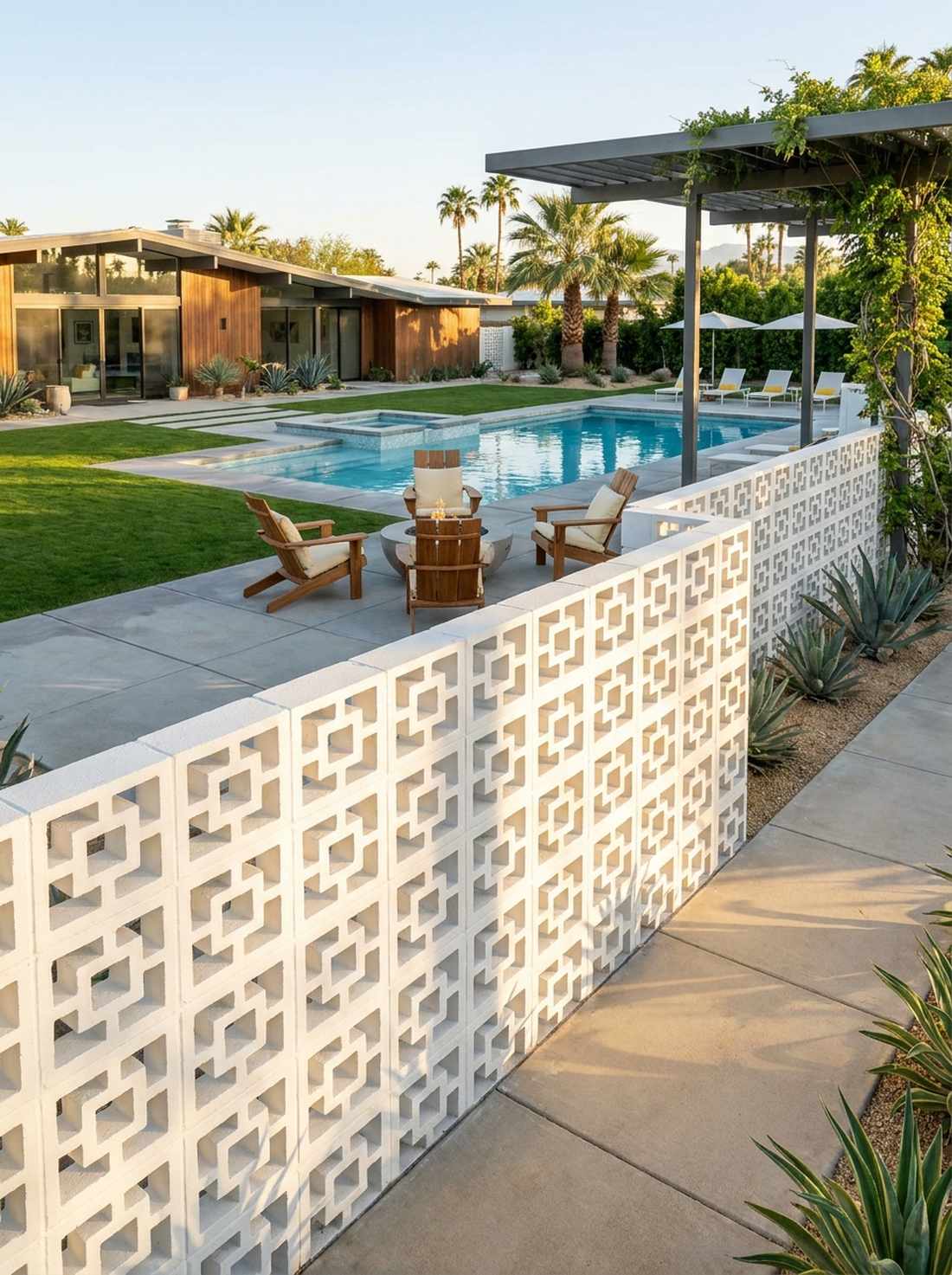
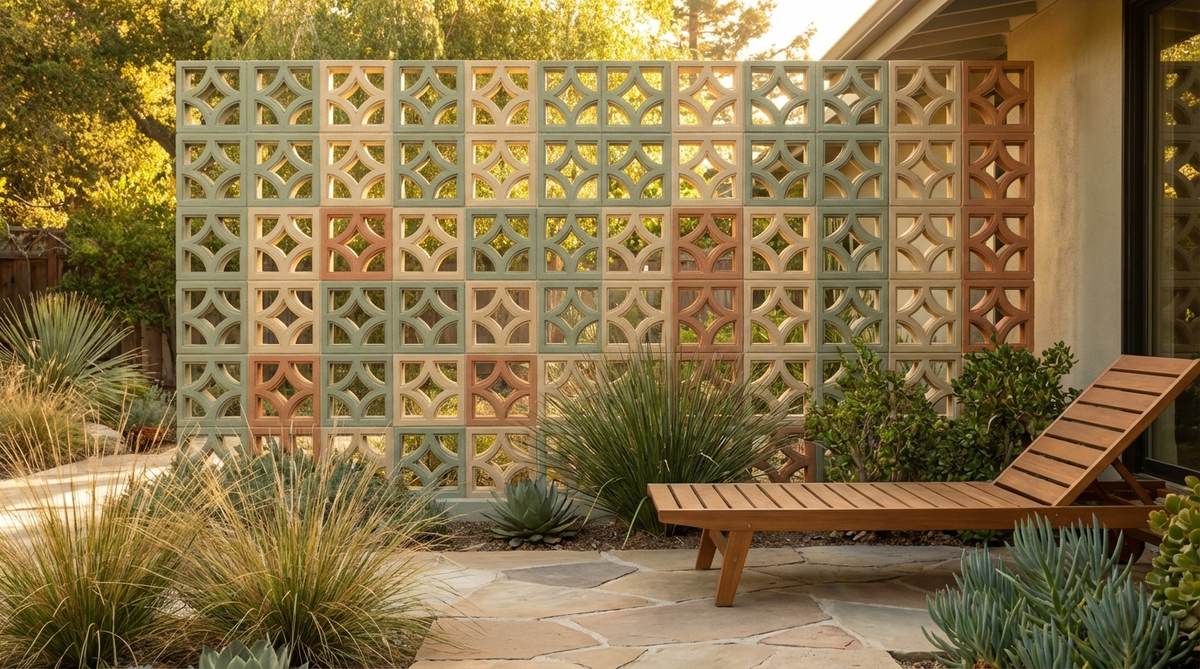
Radiates cool, vintage resort energy the second you see it. Utilizing a breeze block mid century modern garden fence is stunning as a courtyard divider or pool enclosure.
Forget boring wooden panels; these geometric concrete blocks instantly elevate your property value and curb appeal. They allow wind to flow freely while completely blocking the view of nosy neighbors.
Expect to invest about $35–$50 per square foot. Pin this if you love authentic retro details!
- Key Materials: Decorative geometric concrete blocks
- Vibe / Style: 1960s Palm Springs resort
- Difficulty: Moderate masonry skills needed
- Budget Breakdown: Blocks: $400 | Mortar: $50 | Paint/Sealer: $60.
- Creator’s Tip: Paint them a crisp matte white to make the geometric shadow patterns pop during the golden hour.
- Smart Sourcing: pre-cast geometric breeze blocks (pallet) and masonry sealing kits (UV-resistant).
6. Board-Formed Concrete Planters
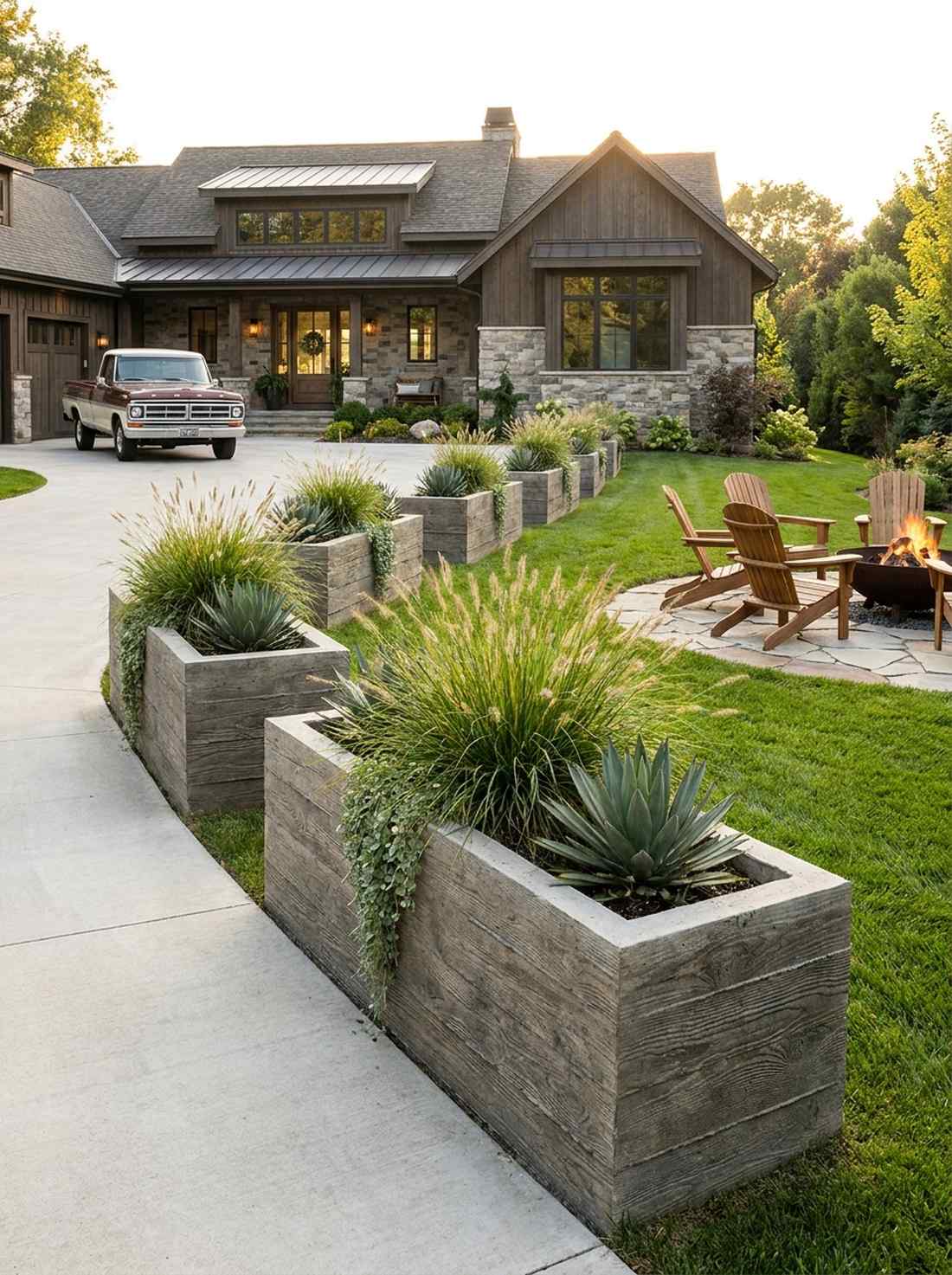
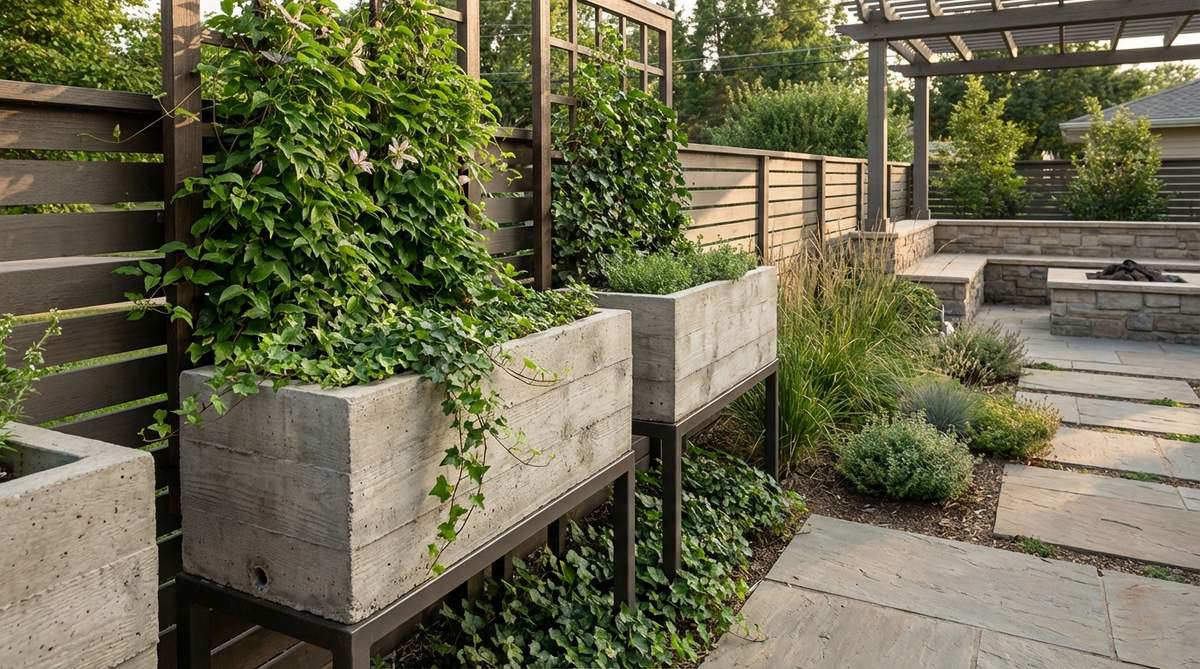
Offers a rugged, organic texture that feels intensely architectural. These modern structural planter boxes create highly defined borders along a driveway or entrance.
You don’t need a custom mason—using rough-sawn lumber as a DIY mold gives you that coveted industrial-chic texture for pennies on the dollar. It’s the ultimate secret for a heavy, permanent garden layout.
Materials run about $100 per large planter box. Save this if you love brutalist touches!
- Key Materials: Concrete and rough wood forms
- Vibe / Style: Brutalist organic
- Difficulty: Intermediate weekend project
- Budget Breakdown: Concrete: $60 | Lumber Forms: $40.
- Creator’s Tip: Do not sand the wood forms; the rougher the wood grain, the better the final texture will look once the mold is removed.
- Smart Sourcing: rough-sawn cedar forming boards and commercial-grade concrete release agent.
7. Pebble Mosaic Accent Panels
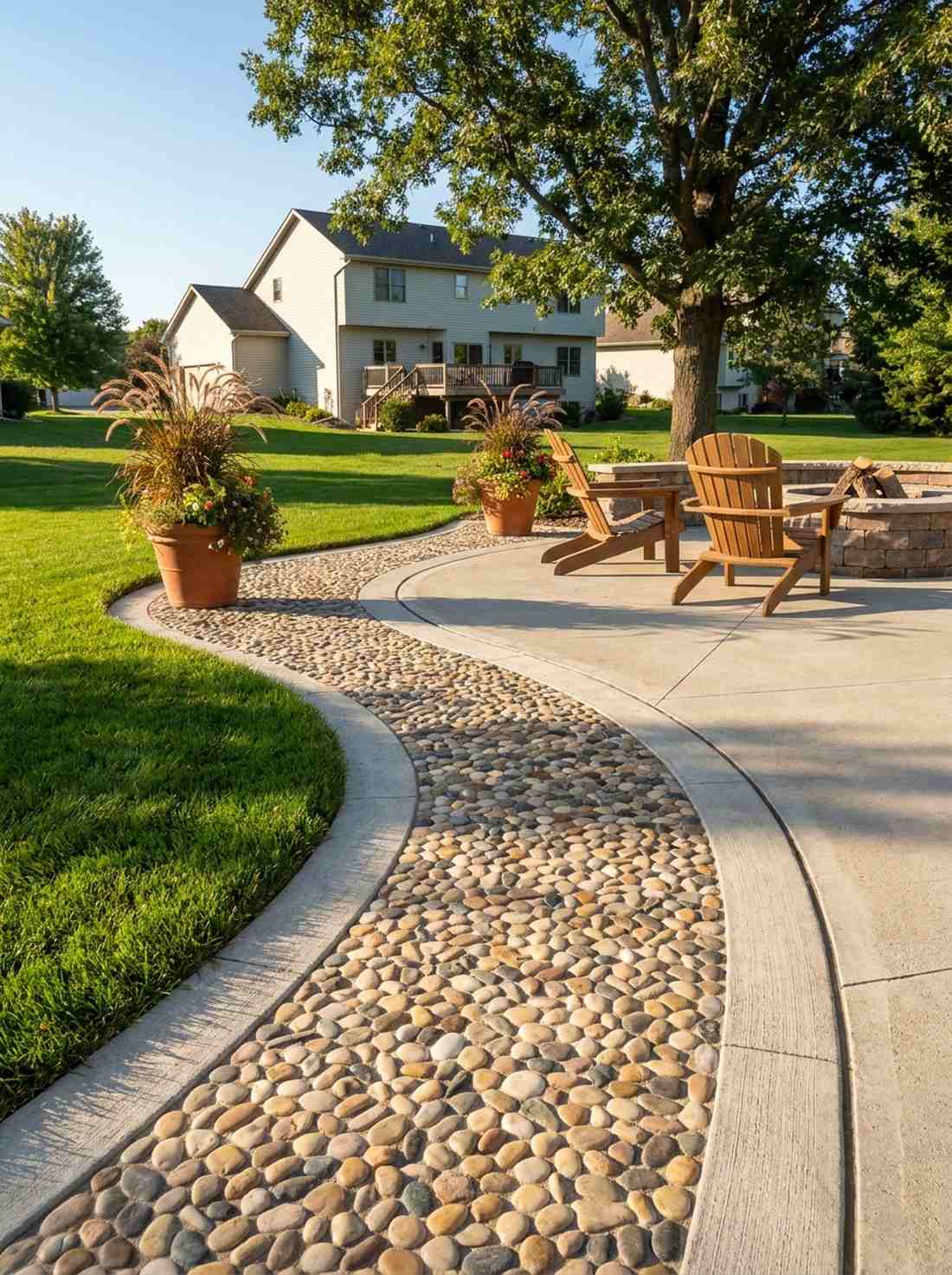
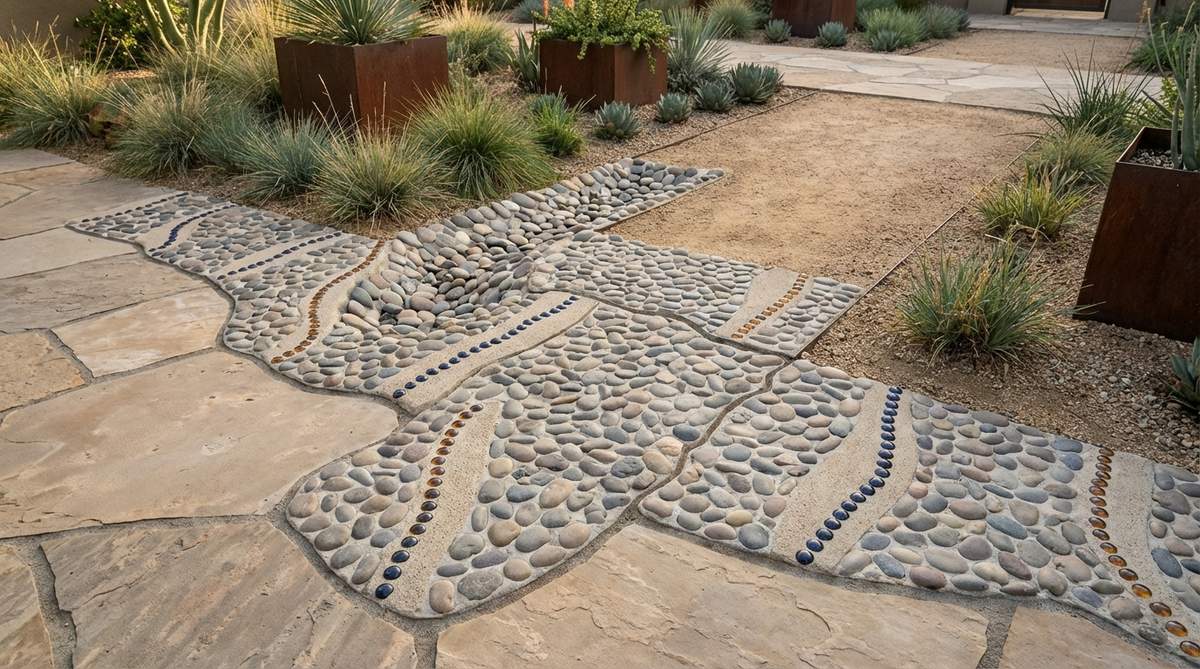
Feels like discovering a hidden art piece right underfoot. Using textured garden floor accents is beautiful for transition zones between grassy lawns and concrete patios.
Instead of pouring plain cement, embedding polished river stones delivers an unexpectedly luxurious detail. It breaks up monotonous gray spaces and introduces natural, flowing lines.
You can easily pull this off for around $30–$60. Highly recommended for a quick weekend win.
- Key Materials: Mesh-backed river pebbles
- Vibe / Style: Zen structural contrast
- Difficulty: Very easy
- Budget Breakdown: Pebble Mats: $40 | Thinset/Grout: $20.
- Creator’s Tip: Buy mesh-backed pebble tiles from the bathroom aisle instead of placing individual rocks by hand to save hours of labor.
- Smart Sourcing: mesh-backed pebble mosaic tiles (bulk pack) and waterproof exterior tile thinset.
8. Gravel and Decomposed Granite Courts
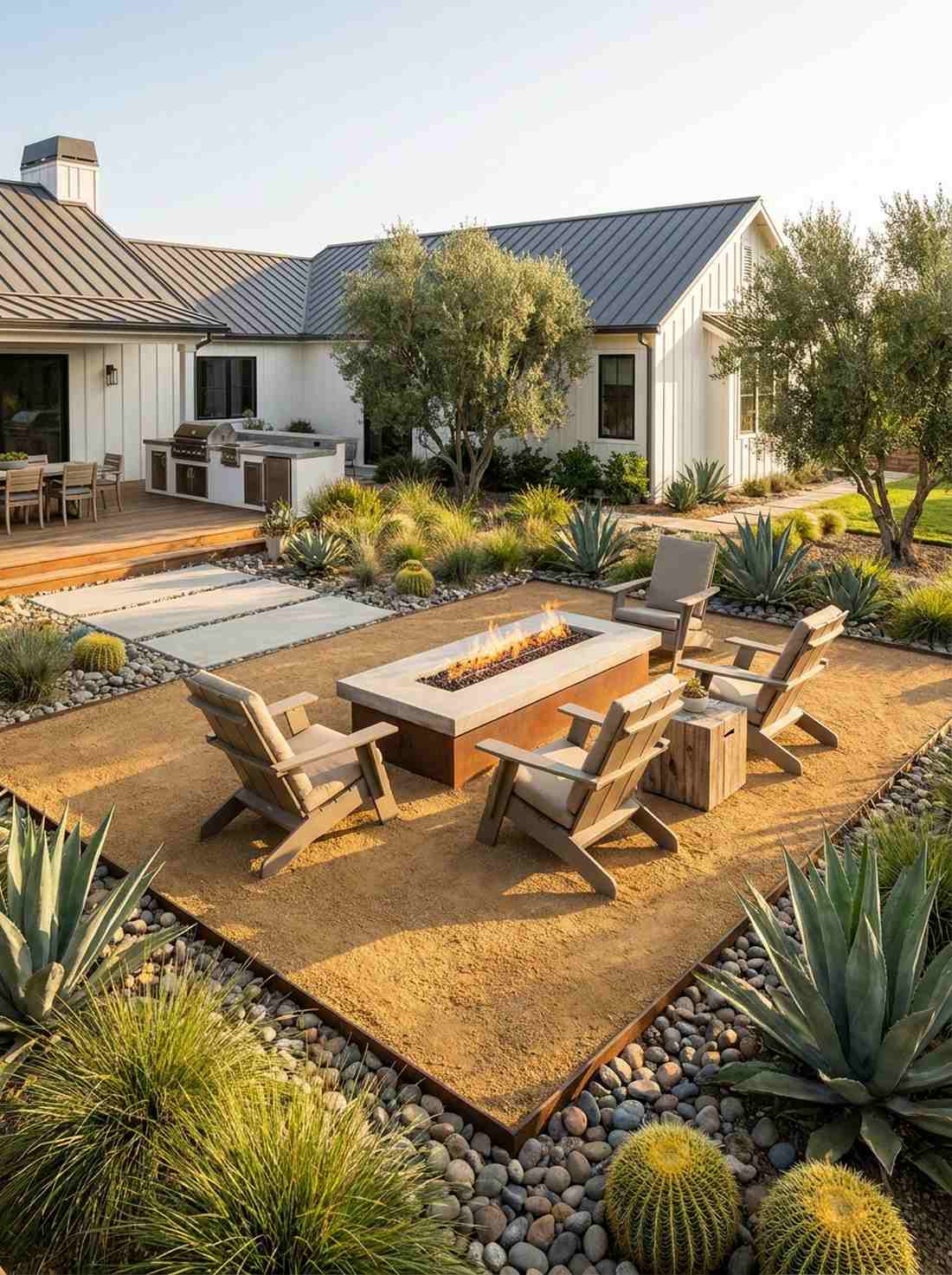
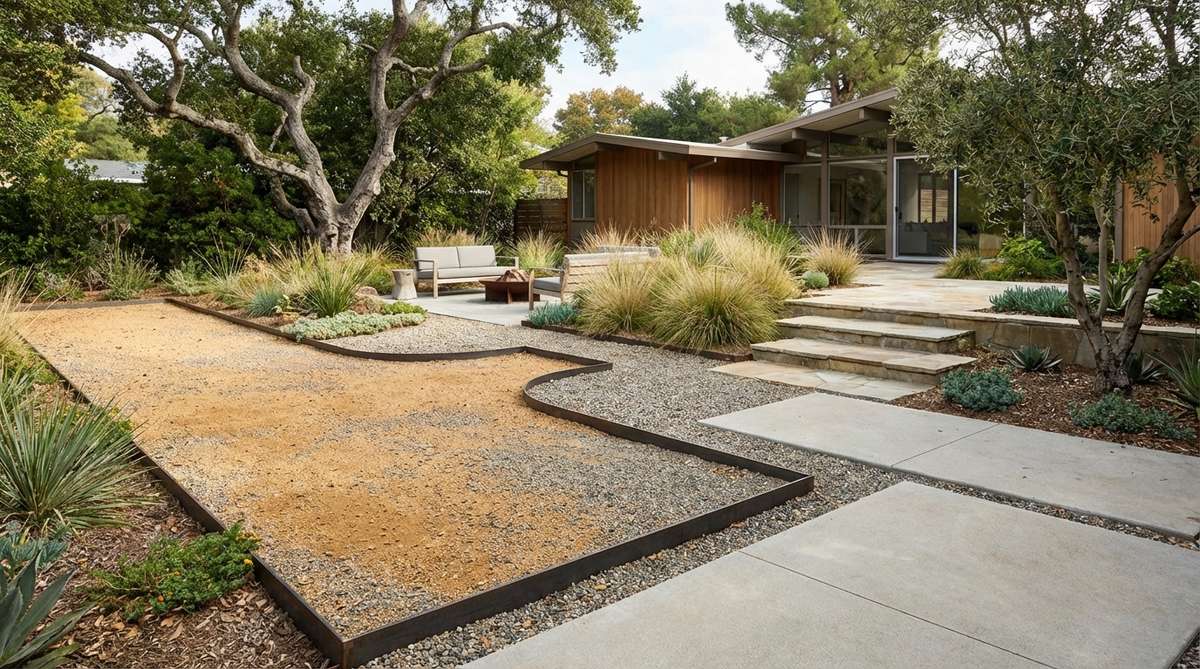
Channels the serenity of a high-end desert oasis immediately. Utilizing drought-tolerant garden flooring is ideal for low-water meditation courtyards or fire pit zones.
Ditching thirsty grass for crushed granite isn’t just eco-friendly; it establishes a premium, structured base. It crunches beautifully underfoot and completely eliminates the need for a lawnmower.
Coverage typically costs $2–$4 per square foot.
- Key Materials: Crushed granite and steel edging
- Vibe / Style: Minimalist desert landscape
- Difficulty: Beginner friendly
- Budget Breakdown: Granite: $150 | Weed Barrier: $40.
- Creator’s Tip: Use a plate compactor to tamp down the decomposed granite so it hardens into a flat, walkable surface rather than a mushy gravel pit.
- Smart Sourcing: stabilized decomposed granite (sacks) and heavy-duty commercial weed barrier (UV-coated).
9. Steel Edging and Coping
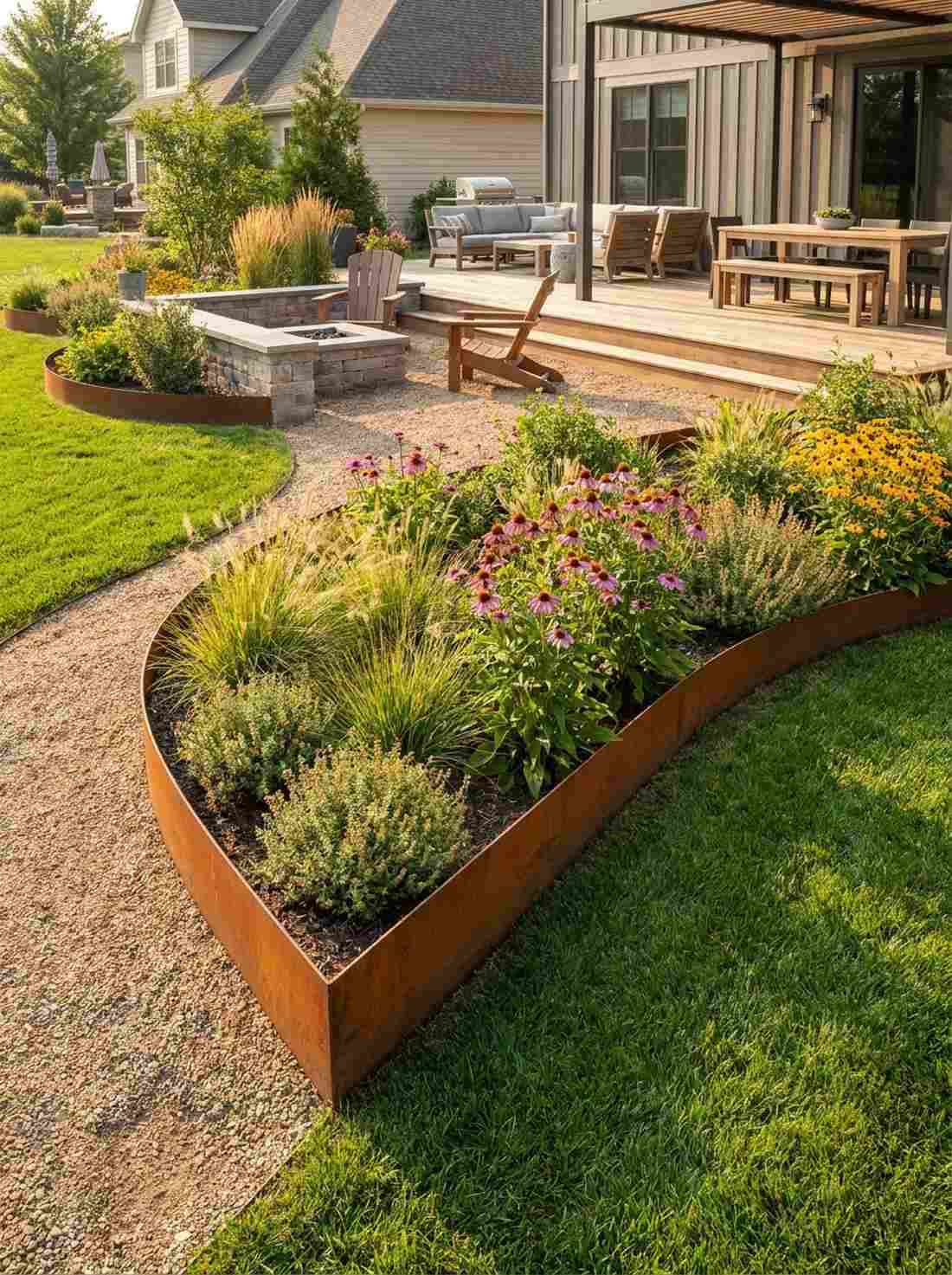
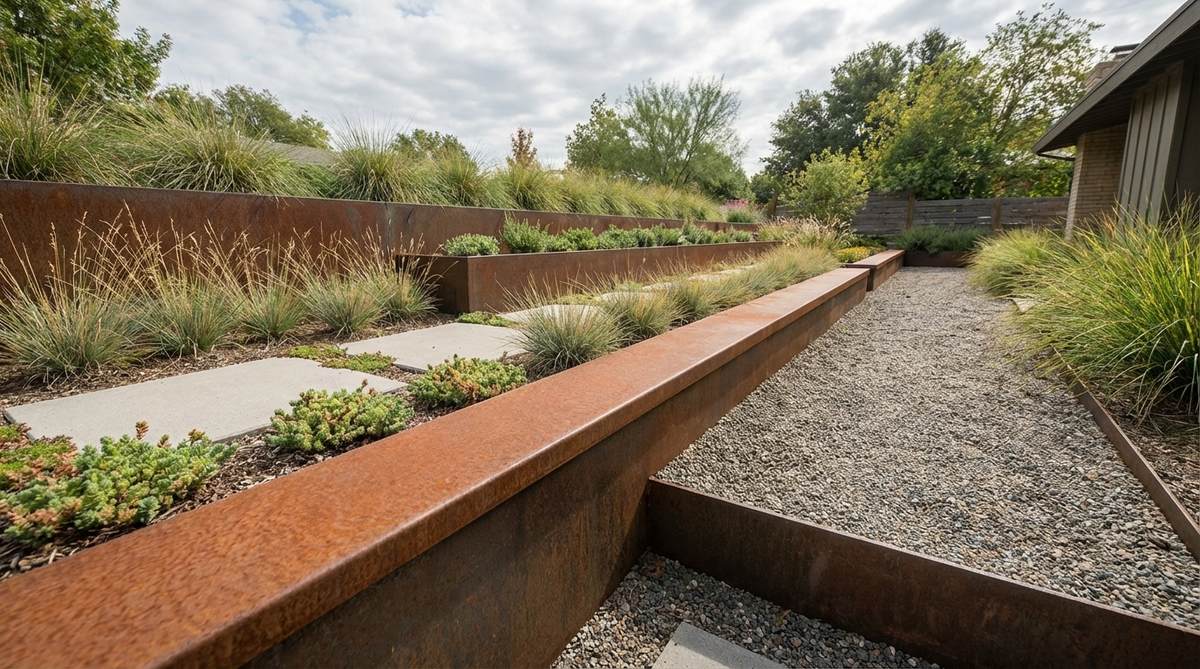
Delivers razor-sharp precision that makes every plant pop visually. Establishing mid century modern garden landscape lines is perfect for framing flower beds and separating materials.
Plastic landscape edging always looks cheap, but investing in weathering steel guarantees a timeless, rusted patina. It holds back heavy gravel effortlessly while providing a rigid, architectural boundary.
A bundled kit will run you about $50–$80. Pin this to remember the exact material!
- Key Materials: Bendable Corten steel strips
- Vibe / Style: Sharp industrial geometry
- Difficulty: Very easy
- Budget Breakdown: Steel Strips: $60 | Mallet/Spikes: $15.
- Creator’s Tip: Spray the steel with a mixture of hydrogen peroxide, vinegar, and salt to force it to develop its signature rust color in just two hours.
- Smart Sourcing: flexible Corten steel edging strips (bulk pack) and heavy-duty anchoring stakes.
This next setup is ridiculously cheap but looks like a $1,000 custom installation…
💡 Must-Have Supplies for High-End Setups
To build these setups faster and ensure they last, skip the generic craft aisles and invest in the right foundational kits.
- Base & Support: heavy-duty commercial weed barrier (UV-coated)
- Setup Tools: precision landscape edging kits
- Weather/Durability Protection: commercial-grade masonry sealant sprays
Architectural Plantings & Green Design
10. Columnar Evergreens as Vertical Accents
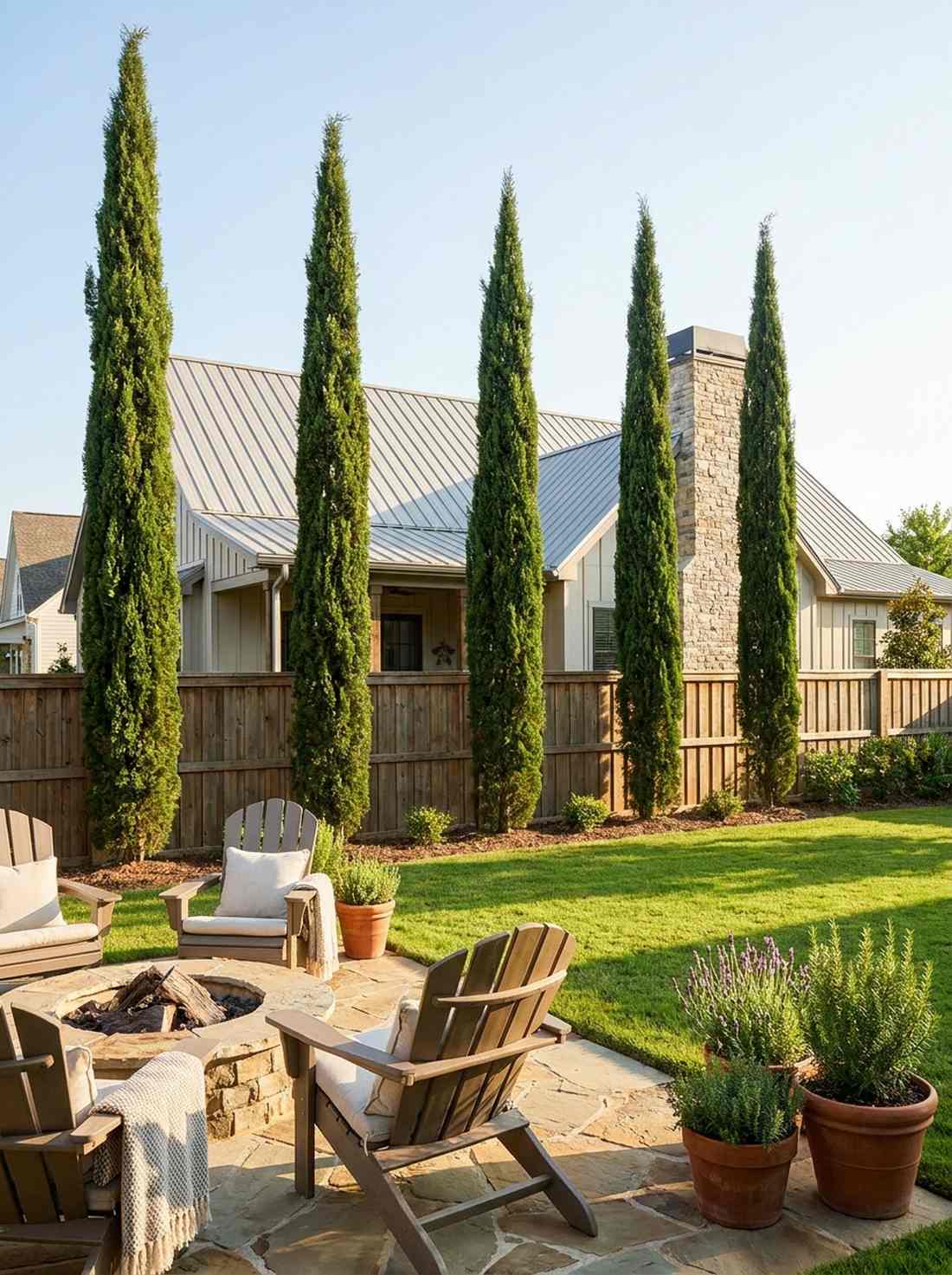
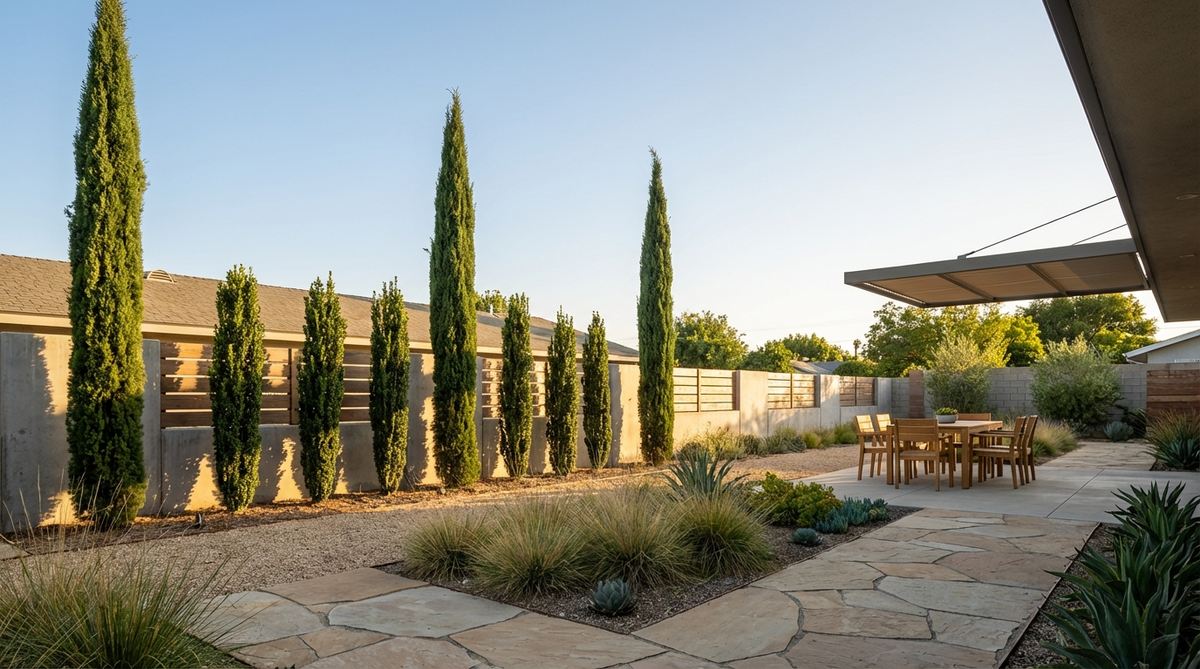
Brings dramatic, sky-reaching elegance to an otherwise flat yard. These sculptural vertical privacy plants are best planted along tight property boundaries.
Forget sprawling bushes; using narrow Italian Cypress instantly frames your home like a million-dollar estate. They take up almost zero ground space while pushing the eye directly upward to highlight your roofline.
Trees cost around $60–$120 each. A fantastic long-term investment for property aesthetics.
- Key Materials: Italian Cypress or Sky Pencil Holly
- Vibe / Style: Towering Mediterranean elegance
- Difficulty: Easy planting and maintenance
- Budget Breakdown: Trees (x3): $200 | Soil Amendments: $30.
- Creator’s Tip: Always plant them in odd numbers (3, 5, or 7) to keep the layout feeling organic rather than like an artificial wall.
- Smart Sourcing: starter kit of Italian Cypress saplings and slow-release evergreen fertilizer spikes.
11. Sculptural Succulents and Agaves
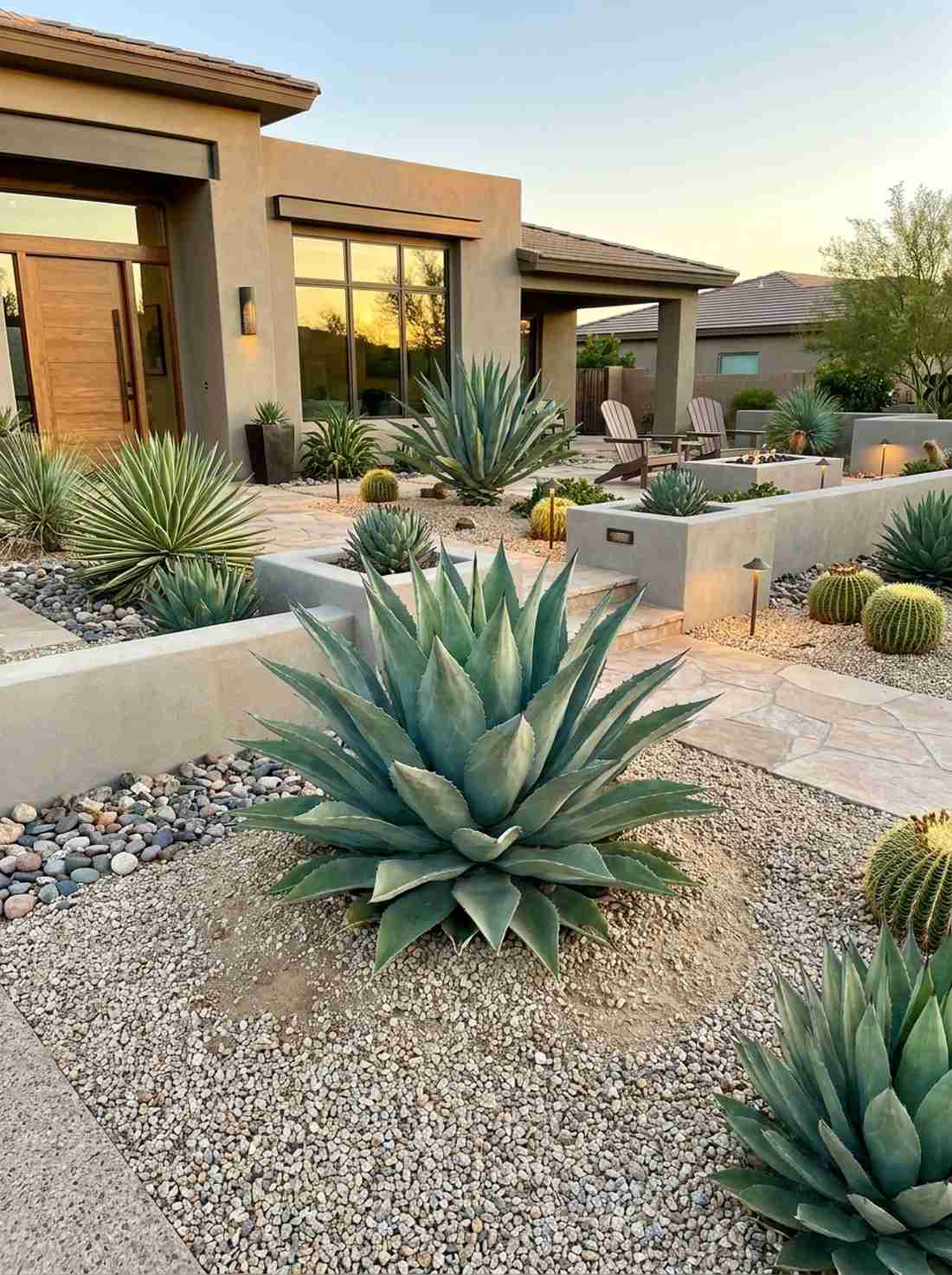
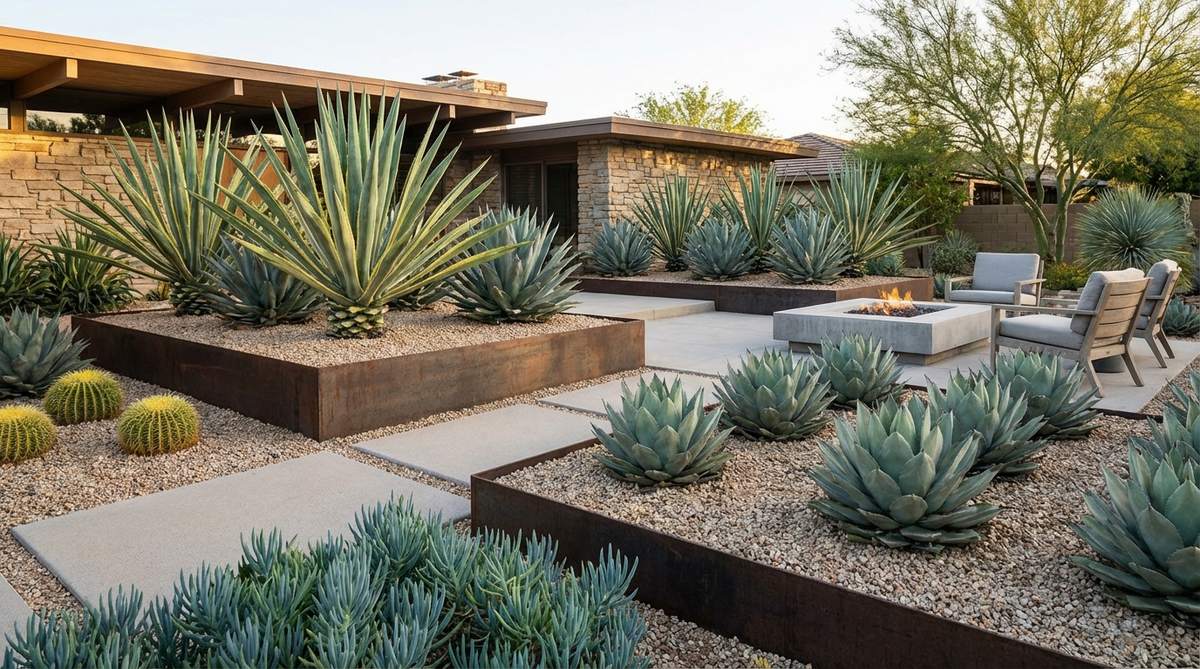
Bold, striking, and effortlessly cool all year round. These architectural garden succulents are stunning as dramatic focal points in front yard gravel beds.
People waste hours pruning traditional flowers, but a massive Agave thrives on neglect while acting like living modern art. Their massive, spiky leaves perfectly contrast against smooth concrete features.
Expect to spend $40–$100 depending on the starting size. Save this to your xeriscaping board!
- Key Materials: Century plant or Whale’s Tongue Agave
- Vibe / Style: Desert architectural drama
- Difficulty: Extremely low maintenance
- Budget Breakdown: Large Specimen: $70 | Pumice/Soil: $20.
- Creator’s Tip: Never bury the crown of the succulent; plant it slightly elevated on a mound of gravel to prevent root rot during rainy seasons.
- Smart Sourcing: large bare-root Agave specimens and premium cactus and succulent soil mix (bulk).
12. Ornamental Grass Masses
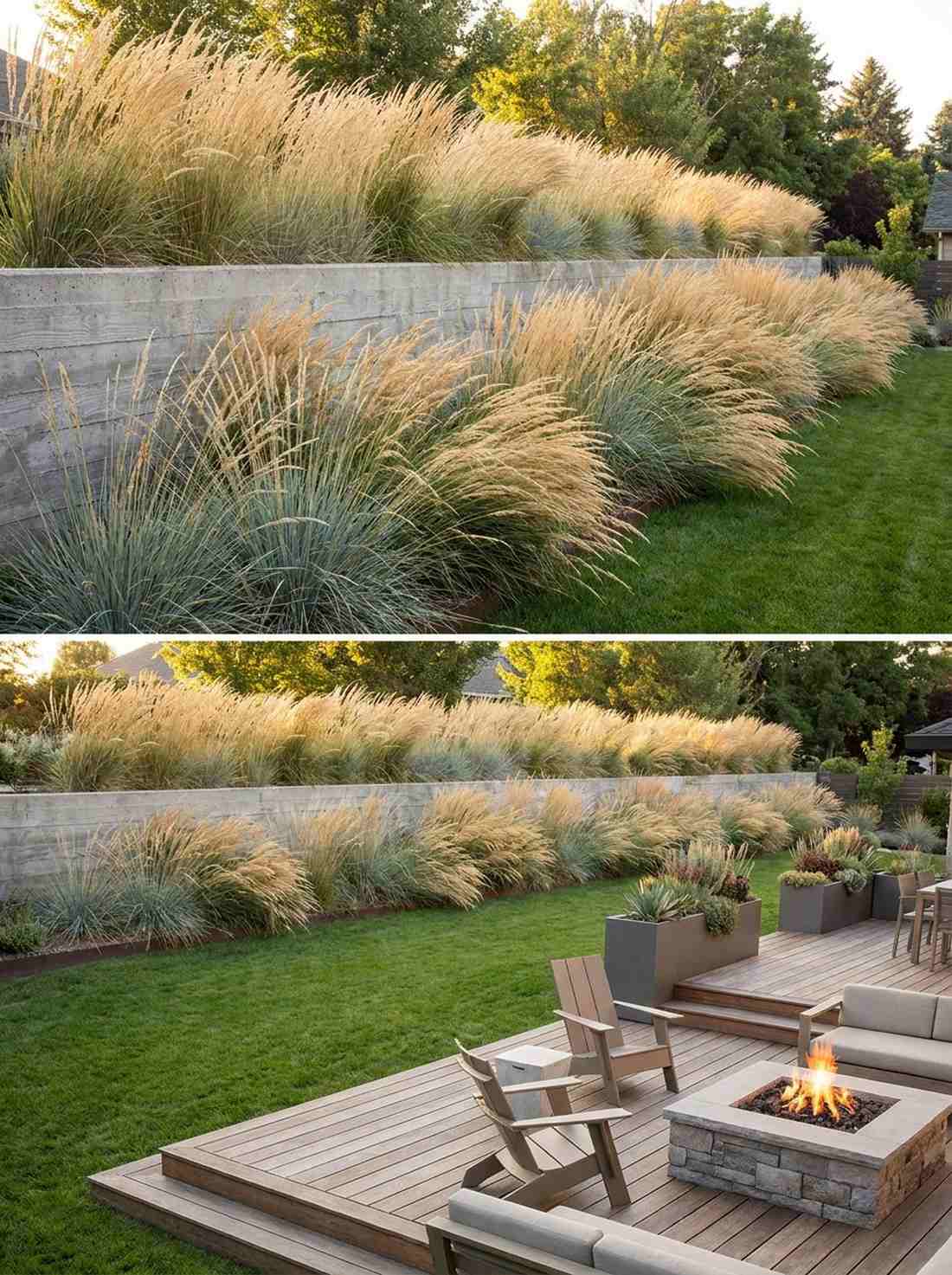
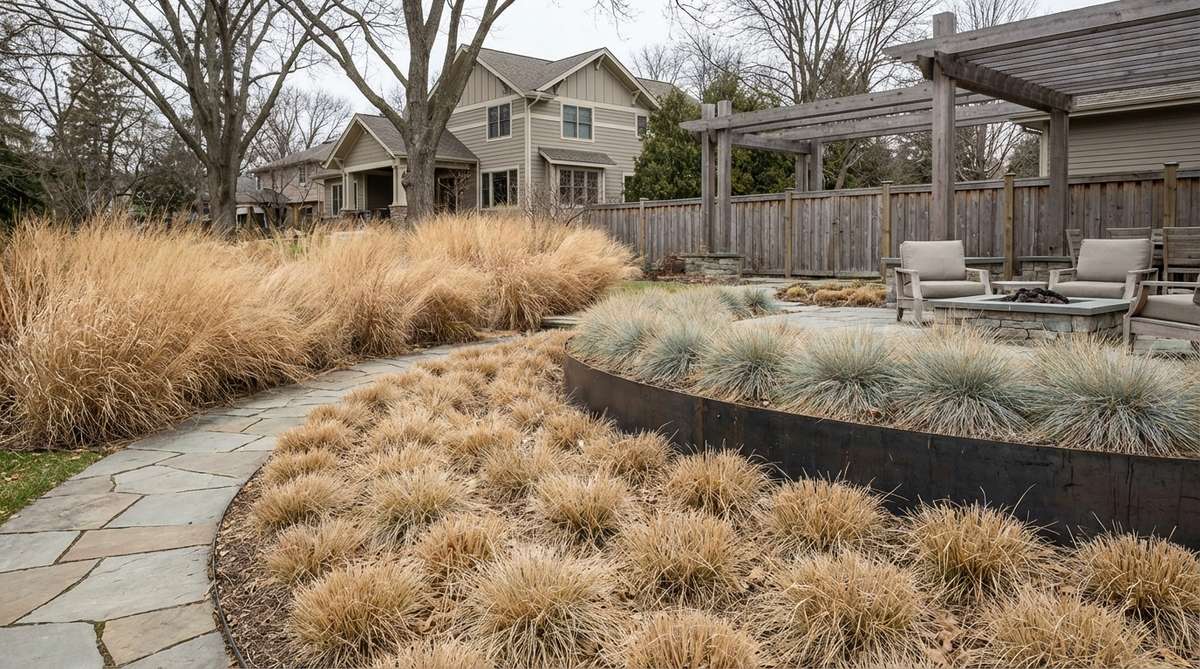
Soft, sweeping, and mesmerizing when the wind blows. Minimalist landscape grass clusters are an incredible trick for softening harsh concrete retaining walls.
Planting one or two looks messy; the secret to high-end design is massing 15+ grasses together for maximum impact. It creates a unified wave of texture that looks incredibly purposeful and designer-curated.
These run about $10–$20 per plant.
- Key Materials: Feather reed or blue oat grass
- Vibe / Style: Soft flowing modernism
- Difficulty: Beginner friendly
- Budget Breakdown: Grass Plugs (x15): $150 | Mulch: $30.
- Creator’s Tip: Cut them straight across down to 4 inches in late winter to ensure they grow back perfectly lush and spherical the following spring.
- Smart Sourcing: blue oat grass starter plugs (bulk tray) and organic root-stimulating compost.
13. Clipped Japanese Holly Spheres
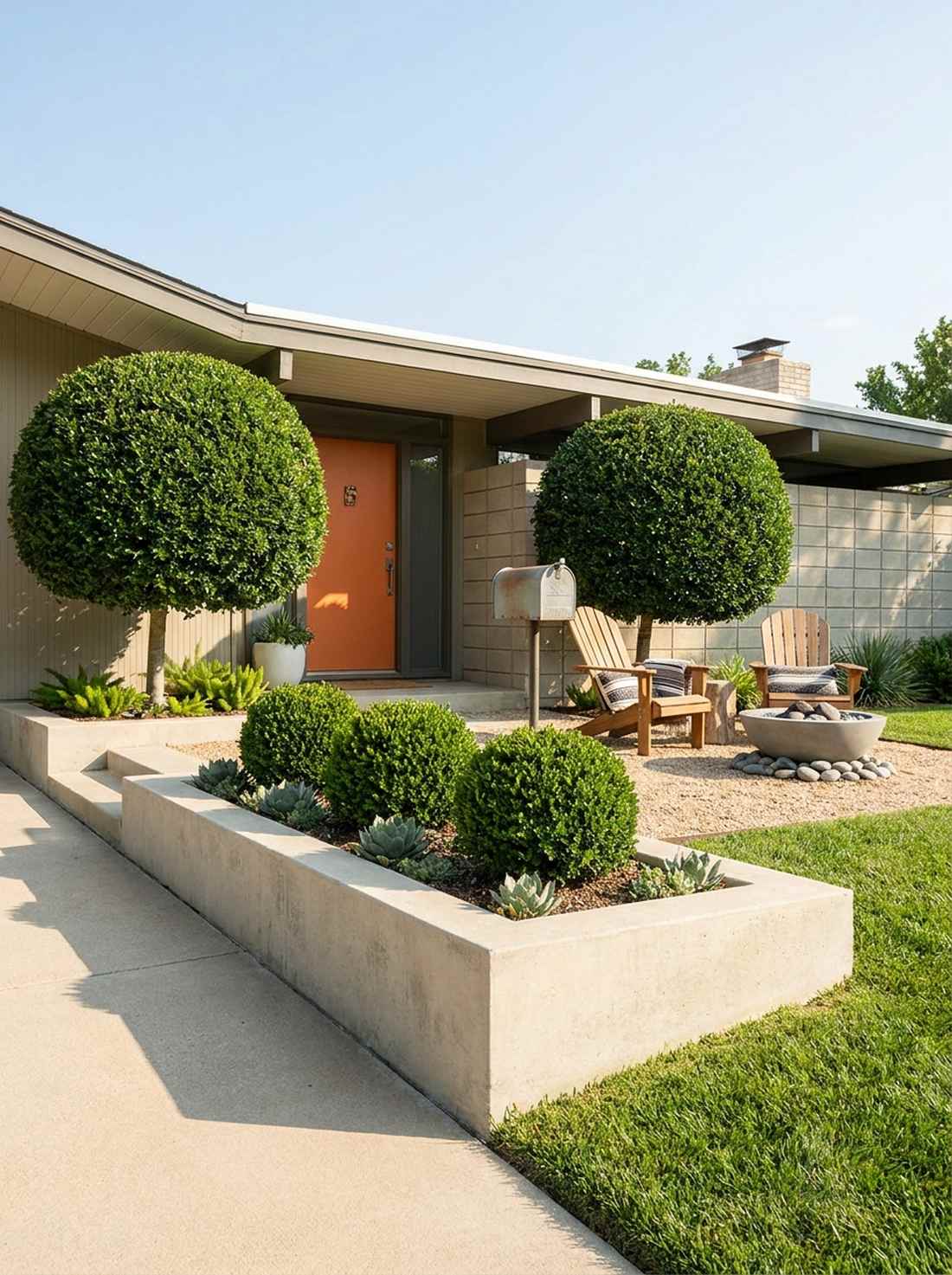
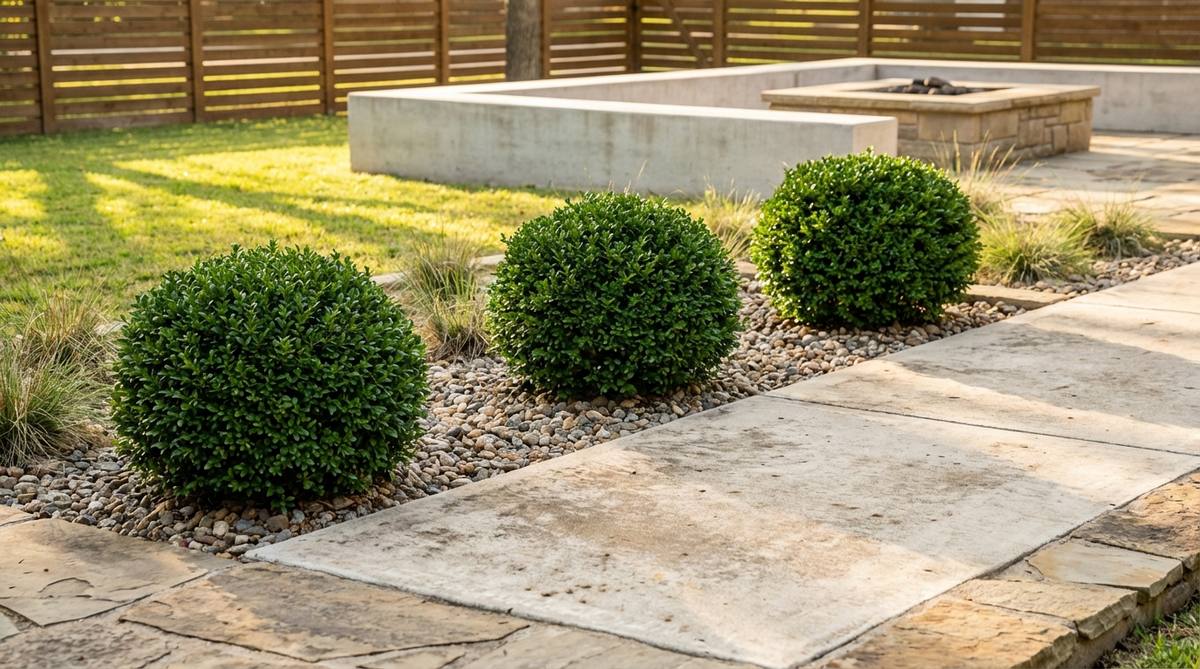
Imparts a satisfying sense of geometric perfection to the landscape. These are amazing mid century modern garden sculpture alternatives for flanking a retro entryway.
Boxwoods are overused and prone to blight; Japanese Holly provides a denser, darker green sphere that perfectly offsets light concrete. The crisp, spherical pruning plays perfectly into the era’s love for strict geometric shapes.
You can source these for $30–$50 per shrub.
- Key Materials: Ilex crenata cultivars
- Vibe / Style: Strict architectural geometry
- Difficulty: Moderate (requires pruning)
- Budget Breakdown: Shrubs: $120 | Topsoil: $20.
- Creator’s Tip: Use a wire frame guide while shearing to ensure you get a mathematically perfect circle rather than an uneven blob.
- Smart Sourcing: pre-shaped Japanese Holly bushes and precision bypass pruning shears.
14. Bamboo Grove Screening
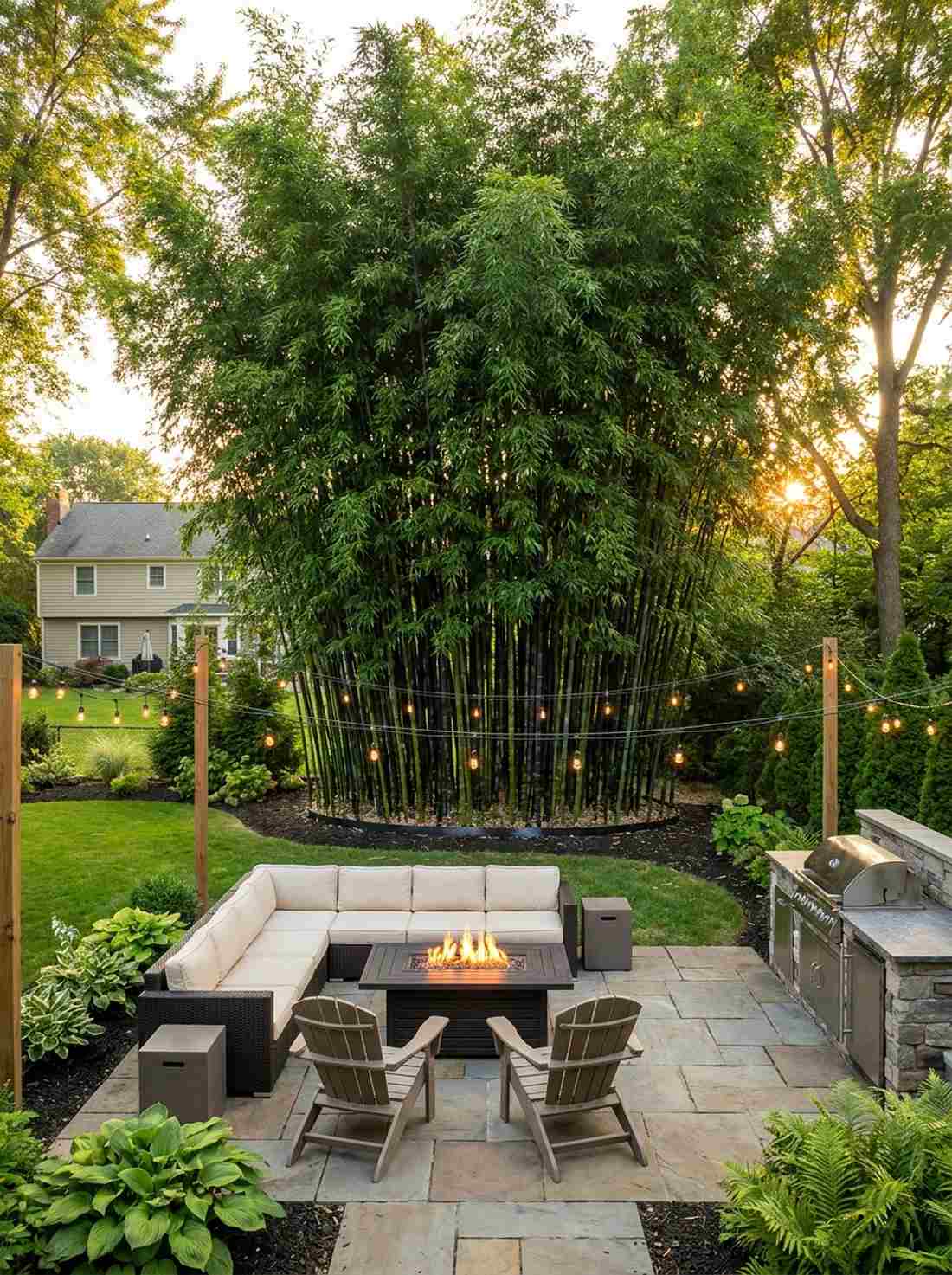
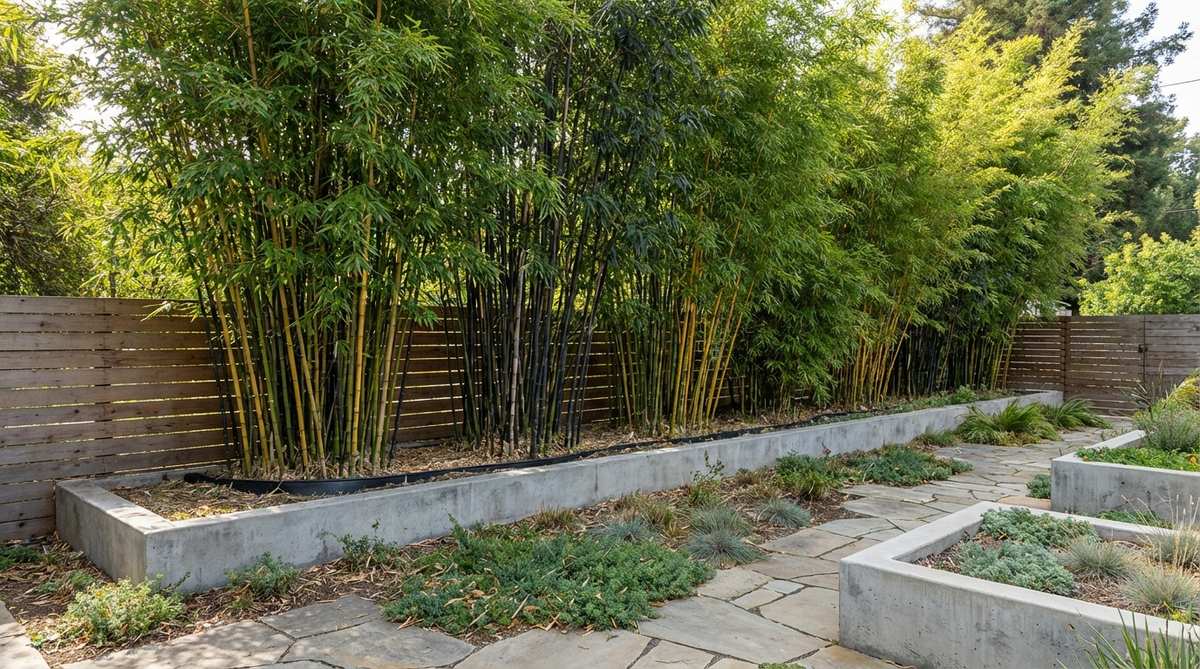
Creates a lush, towering wall of zen tranquility almost instantly. Fast-growing privacy screens like this are unbeatable for shielding a backyard patio from nosy neighbors.
Bamboo gets a bad rap for spreading, but installing clumping varieties with a proper rhizome barrier creates a contained, modern privacy fence. It gives you incredible vertical height far faster than any standard tree.
A starter grove will cost $150–$300. Pin this to your privacy solutions board!
- Key Materials: Clumping bamboo and containment barriers
- Vibe / Style: Towering tropical modern
- Difficulty: Moderate installation
- Budget Breakdown: Plants: $200 | Barrier Roll: $80.
- Creator’s Tip: Dig the rhizome barrier at least 24 inches deep and angle it slightly outward so wandering roots are forced up to the surface where you can clip them.
- Smart Sourcing: clumping black bamboo live plants and high-density polyethylene (HDPE) rhizome barrier rolls.
If you think that was smart, wait until you see how top designers are transforming dead ground space below…
15. Mass Groundcover Plantings
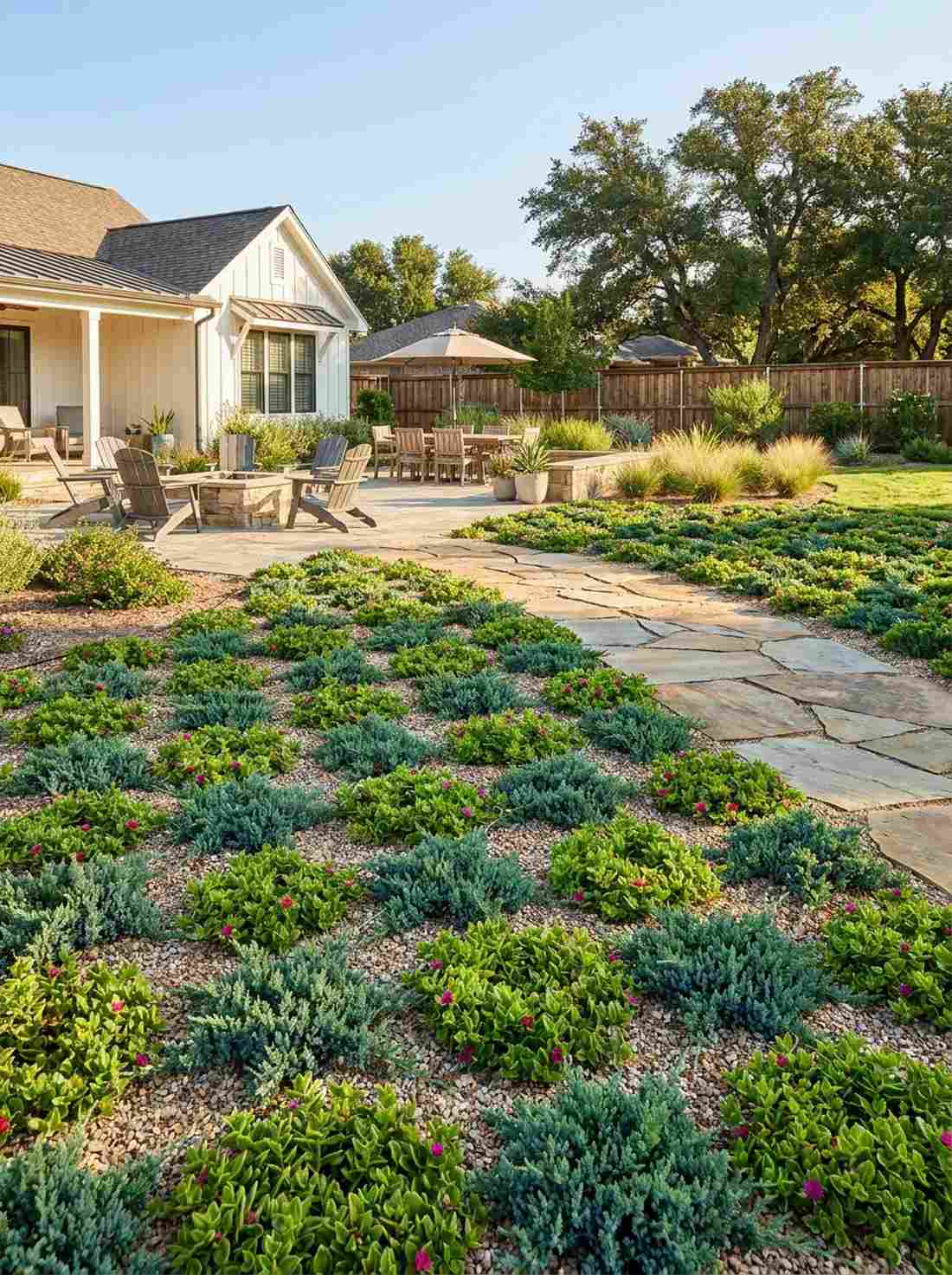
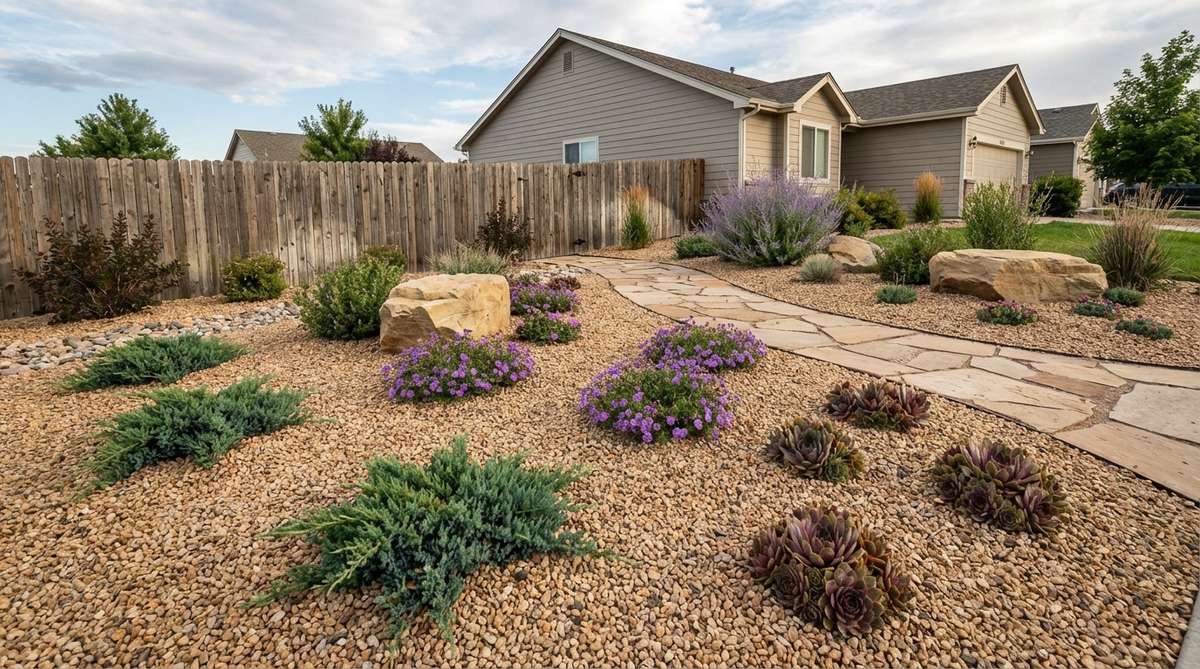
Feels like a living, textured carpet spanning your yard. Utilizing water-wise grass alternatives is the smartest way to replace thirsty traditional lawns in sunny spaces.
Lawn care is outdated; creeping junipers and rock purslane offer zero-mow greenery that looks incredibly intentional. Once established, they crowd out weeds and completely eliminate the need for chemical fertilizers.
You can buy flats for $50–$100.
- Key Materials: Creeping juniper or rock purslane flats
- Vibe / Style: Zero-mow minimal expanse
- Difficulty: Easy planting
- Budget Breakdown: Plant Flats: $80 | Gravel Mulch: $40.
- Creator’s Tip: Plant them in a strict grid pattern initially so even the growing phase looks like an intentional modern art installation.
- Smart Sourcing: creeping juniper flats (bulk pack) and pre-emergent weed control granules.
16. Specimen Olive Trees
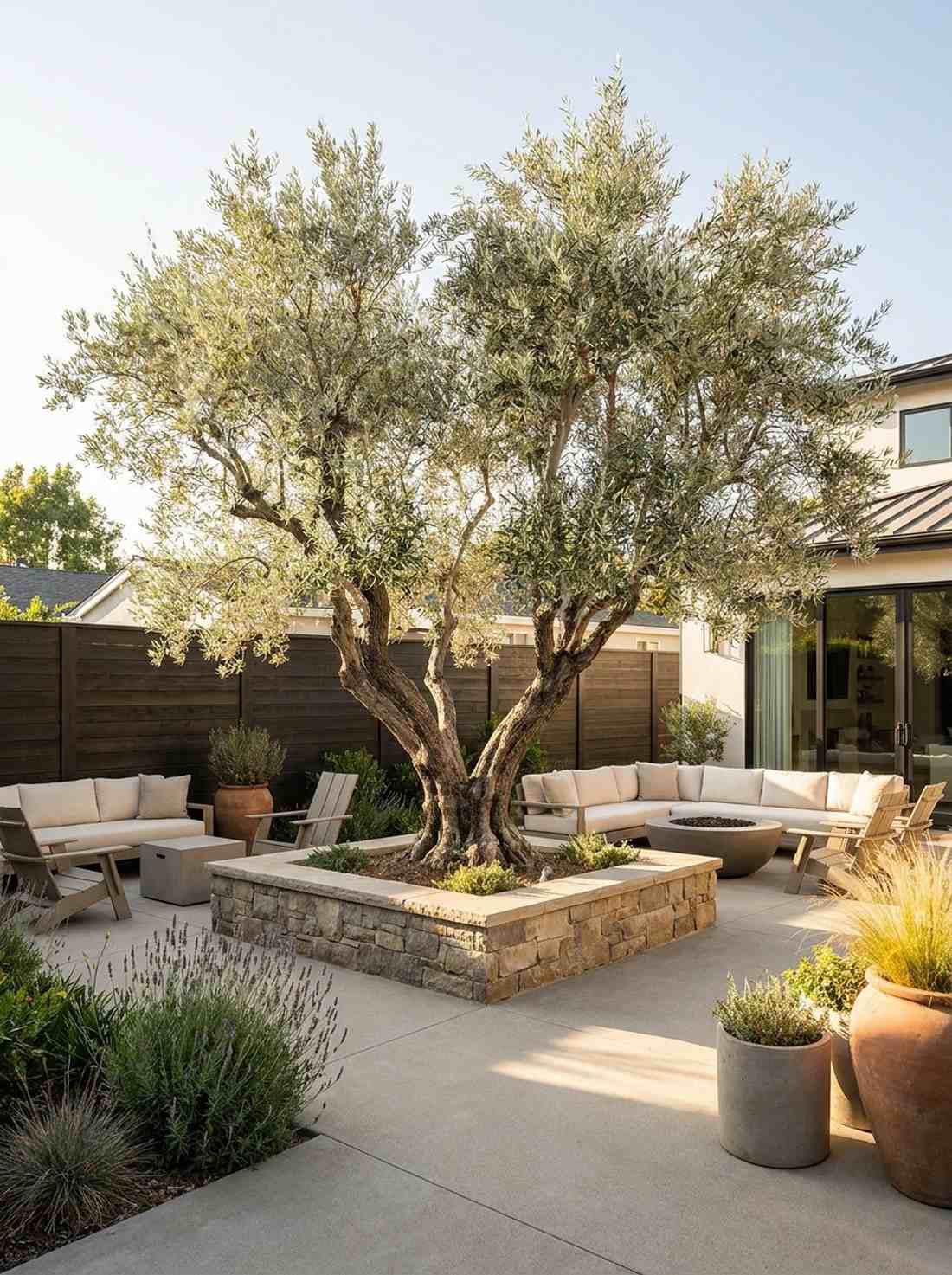
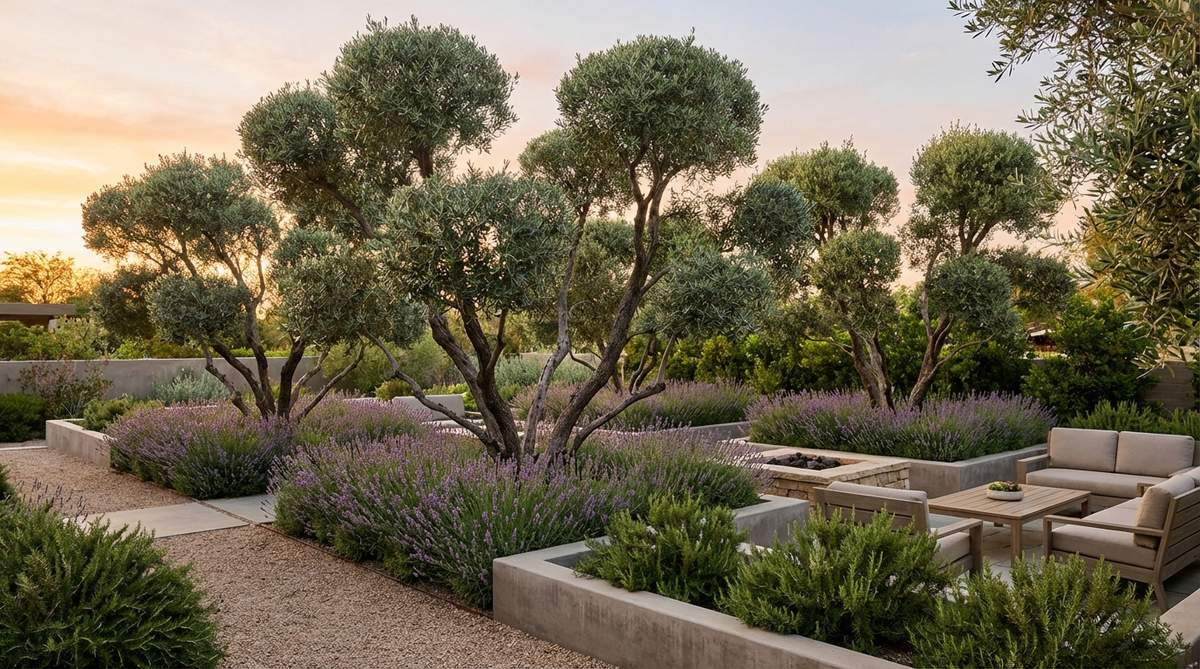
Gnarled, silvery, and bursting with Mediterranean romance. These focal point landscape trees are the ultimate anchor for a central courtyard or outdoor seating area.
Why settle for basic maples when a multi-trunk olive tree provides unparalleled, sculptural canopy structure? Their pale foliage glows against dark fencing, offering a deeply sophisticated, sun-drenched aesthetic.
Mature specimens range from $200–$500. A brilliant centerpiece for any modern yard.
- Key Materials: Multi-trunk fruitless olive trees
- Vibe / Style: Sophisticated Mediterranean modern
- Difficulty: Requires heavy lifting
- Budget Breakdown: Tree: $300 | Delivery/Install Prep: $100.
- Creator’s Tip: Opt for the “fruitless” varieties to avoid messy olive drops staining your pristine concrete patios.
- Smart Sourcing: fruitless olive tree saplings and heavy-duty tree staking kits.
17. Yucca and Desert Spoon Accents
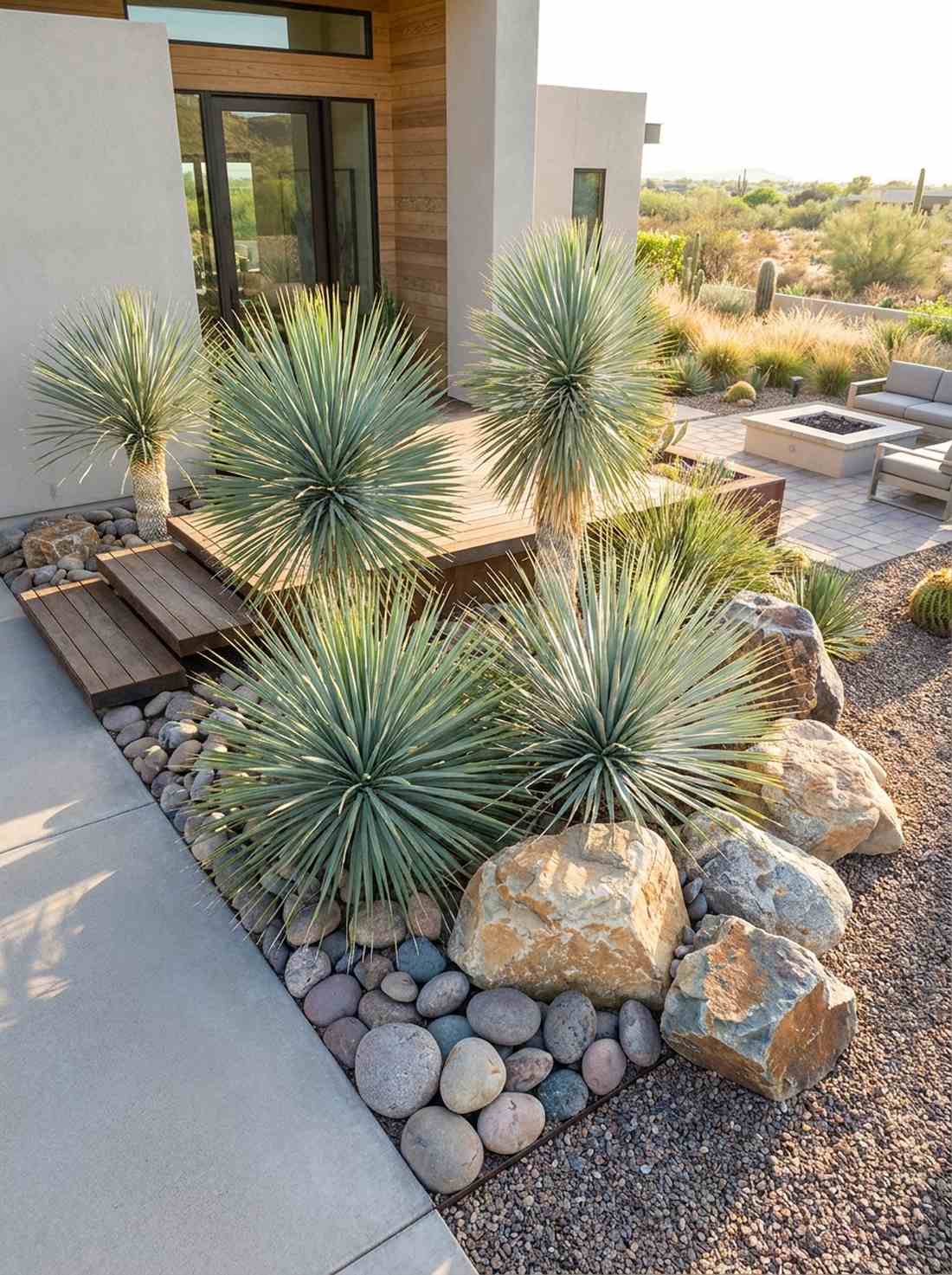
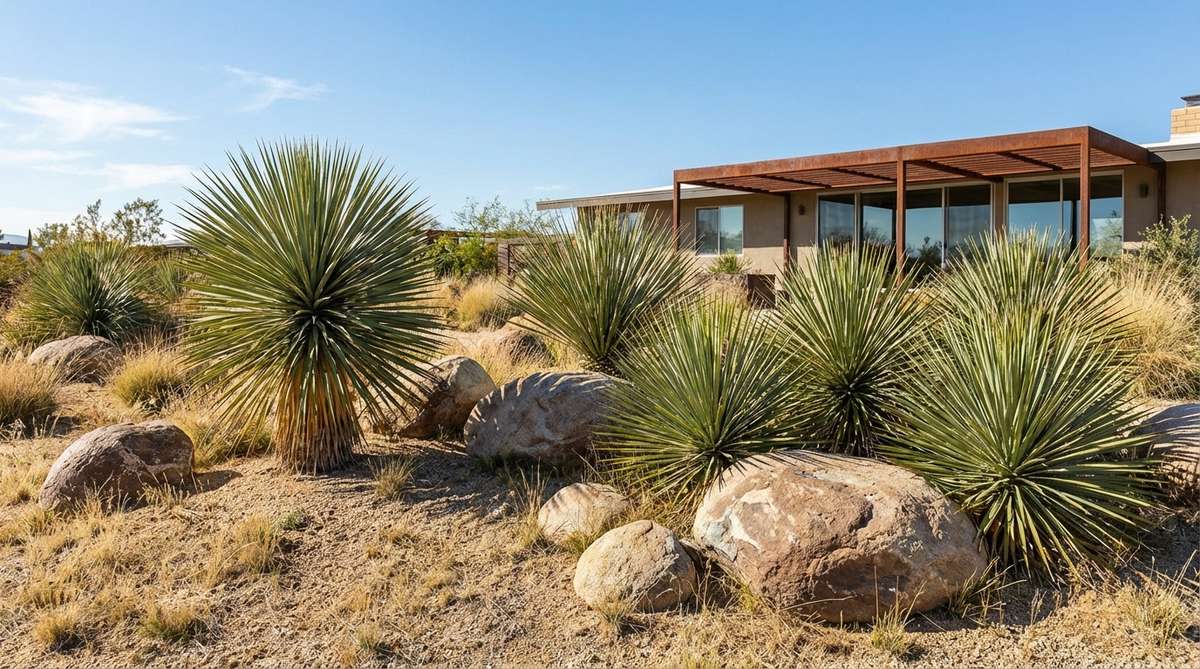
Edgy, spiky, and unapologetically bold. These dramatic desert landscape accents are perfect for highlighting sharp corners near walkways and entry steps.
These spiky rosettes celebrate native adaptation, proving that low-maintenance desert plants can look aggressively modern. They provide a futuristic silhouette that requires exactly zero supplemental watering once rooted.
These usually run $40–$80. Save this to your low-water landscaping board!
- Key Materials: Yucca rostrata or desert spoon
- Vibe / Style: Spiky futuristic desert
- Difficulty: Very low maintenance
- Budget Breakdown: Plants: $100 | Decorative Boulders: $50.
- Creator’s Tip: Surround the base with smooth, oversized river stones to emphasize the extreme contrast between soft rocks and spiky leaves.
- Smart Sourcing: Yucca rostrata starter plants and decorative landscape boulders (pallet).
18. Eucalyptus and Birch Groves
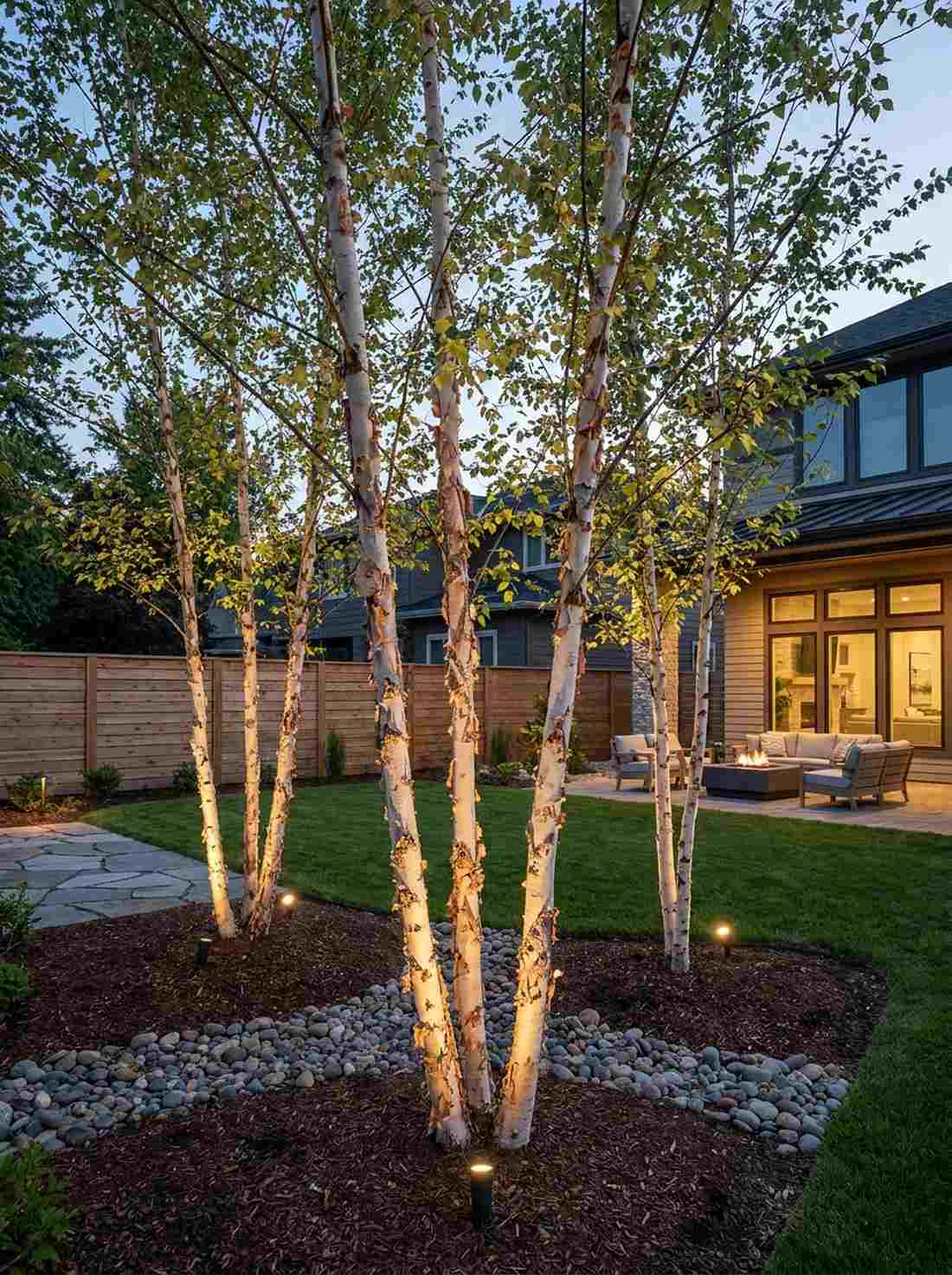
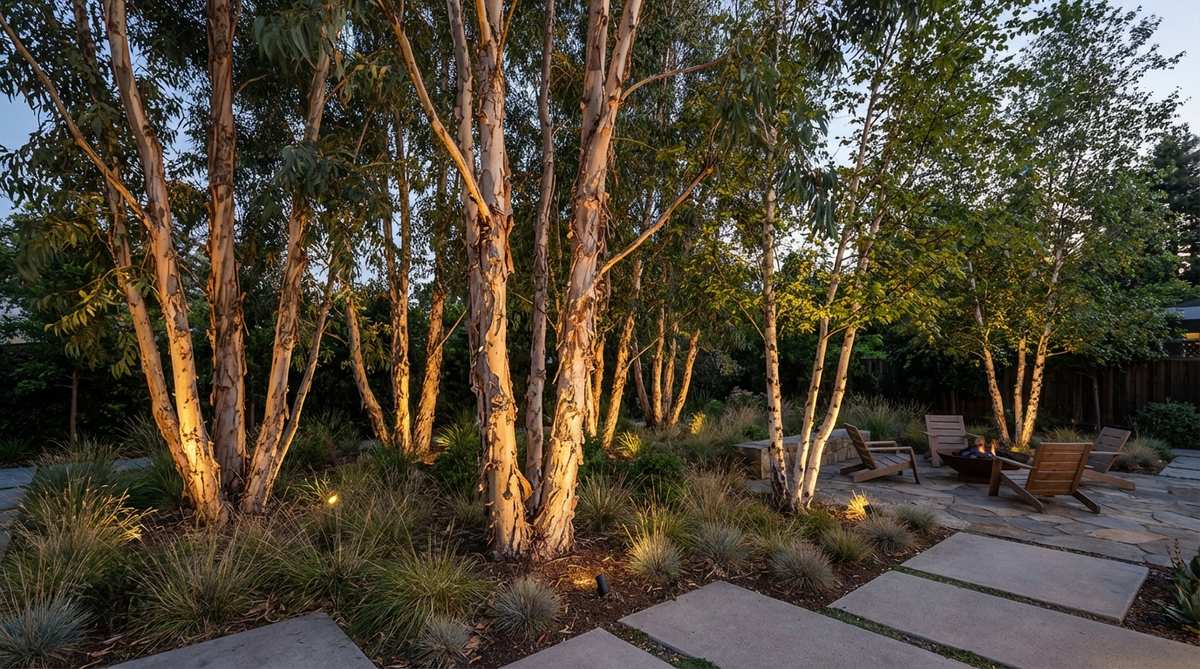
Feels like wandering through a ghostly, artistic forest. Utilizing multi-stem ornamental trees is incredible for creating vertical interest in expansive, empty side yards.
Planting them singly is a mistake; grouping them in clusters of three unlocks a designer-level grove effect that catches evening light beautifully. The peeling, contrasting bark becomes the main visual feature.
A trio will set you back $150–$250.
- Key Materials: White birch or eucalyptus saplings
- Vibe / Style: Textural woodland modern
- Difficulty: Moderate
- Budget Breakdown: Trees (x3): $180 | Uplighting: $60.
- Creator’s Tip: Plant them slightly off-center from one another in an asymmetrical triangle for the most natural-looking grove.
- Smart Sourcing: white birch tree sapling bundles and waterproof LED tree uplights (starter kit).
The difference between a basic yard and a luxury estate usually comes down to this next insane detail…
Water Features & Pool Designs
19. Rectangular Lap Pools
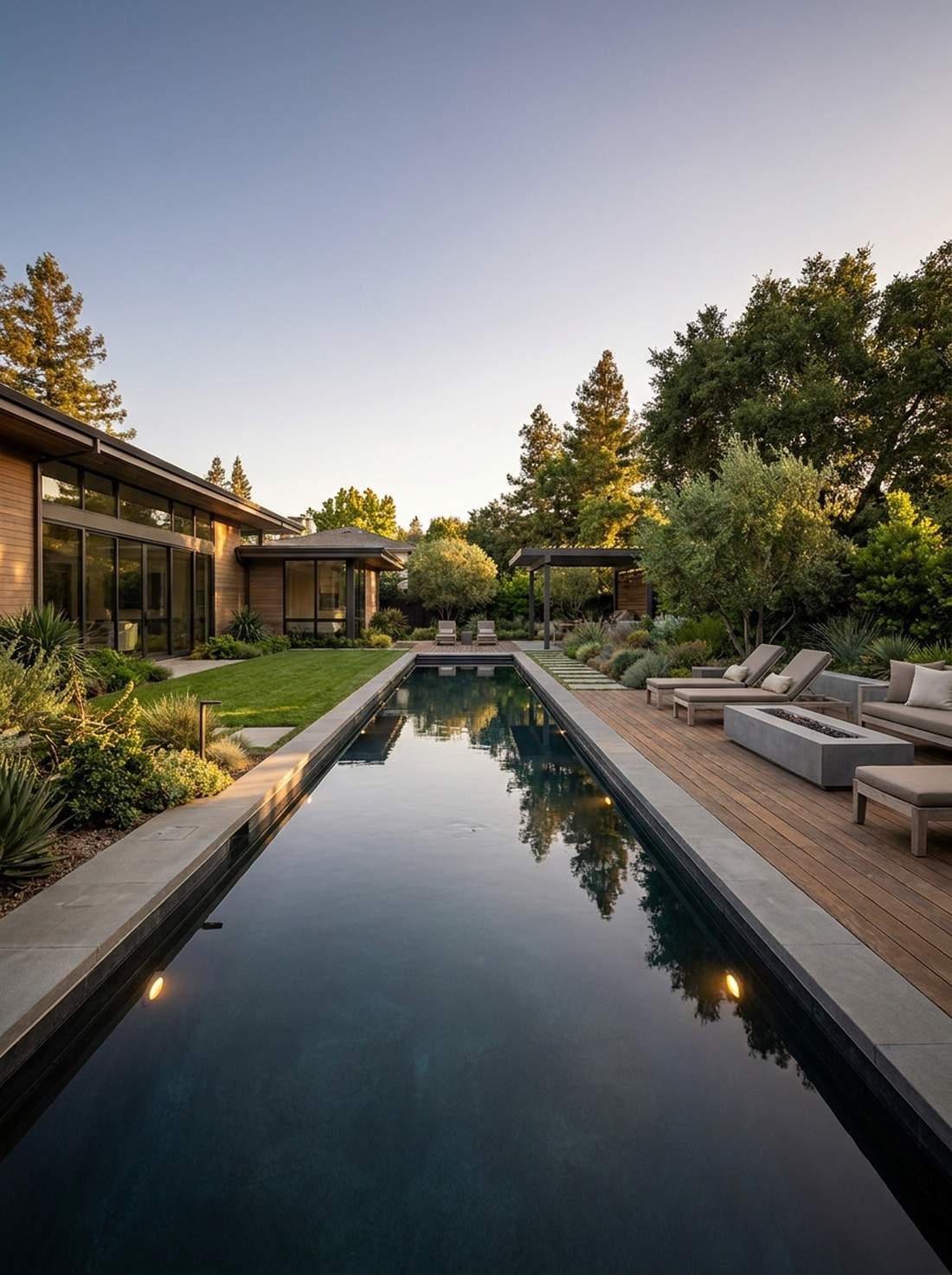
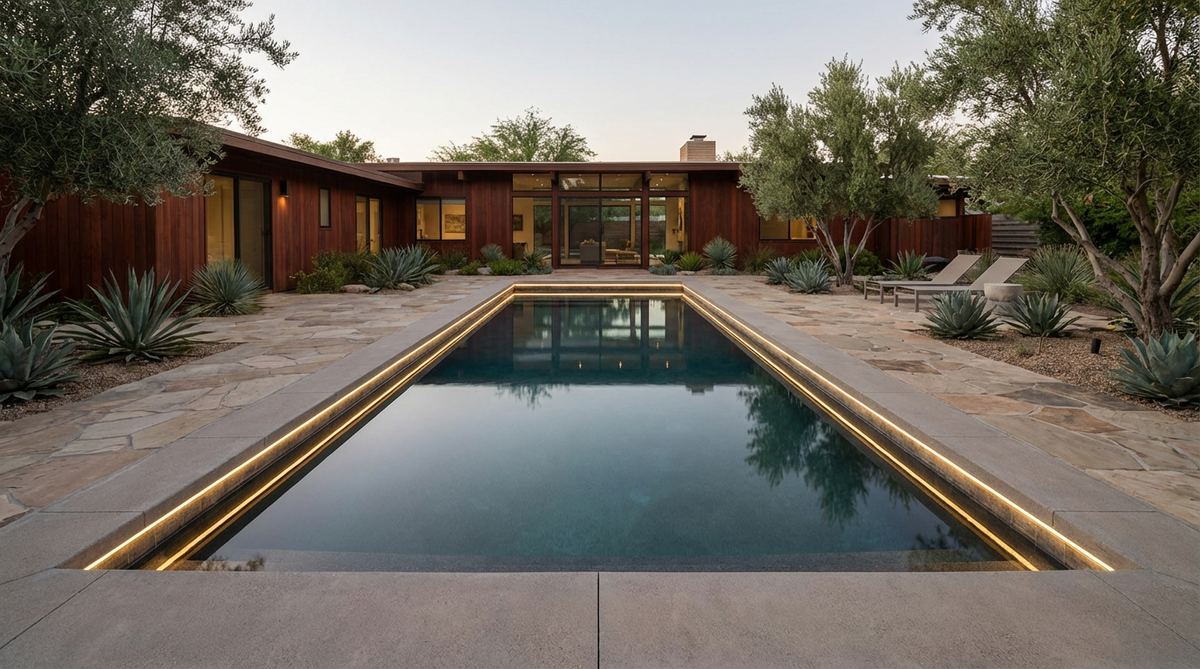
Exudes pure, cinematic luxury that totally transforms a property. Geometric backyard swimming pools are the ultimate functional anchor for a long, narrow backyard space.
Kidney-shaped pools are out; strict linear lap pools finished with dark plaster elevate your home’s value instantly. They mirror the sky perfectly and feel like an extension of the home’s architecture rather than a separate fun-zone.
A major project costing $30,000+. Pin this layout for your dream backyard build!
- Key Materials: Dark plaster and flush coping
- Vibe / Style: High-end architectural luxury
- Difficulty: Professional installation only
- Budget Breakdown: Excavation: $5k | Shell/Plaster: $15k | Equipment: $10k.
- Creator’s Tip: Choose a charcoal or black interior finish—it naturally heats the water via sunlight and turns the surface into a perfect mirror.
- Smart Sourcing: dark grey pool plaster mix and flush-mount LED pool lighting kits.
20. Knife-Edge Pool Perimeters
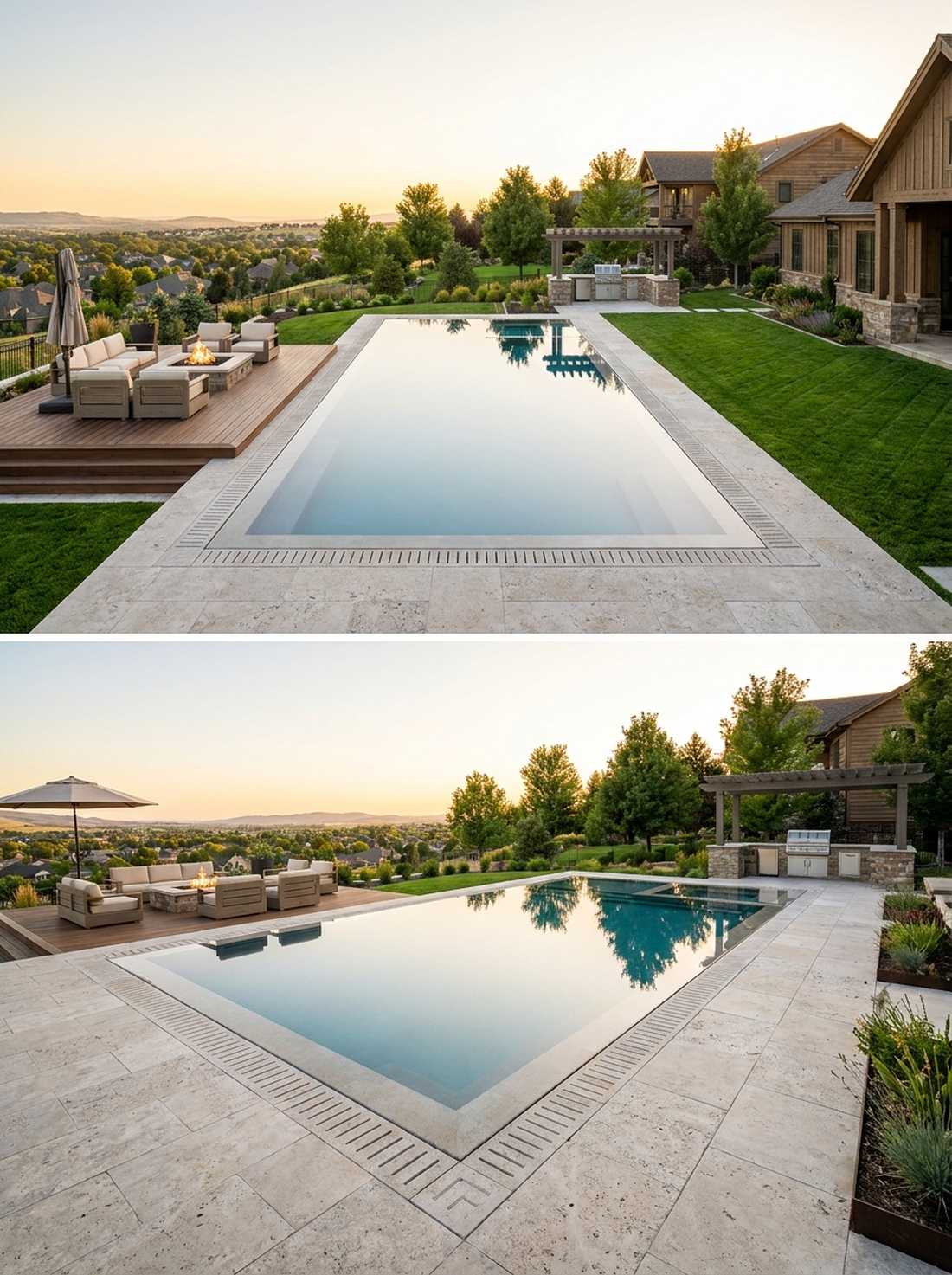
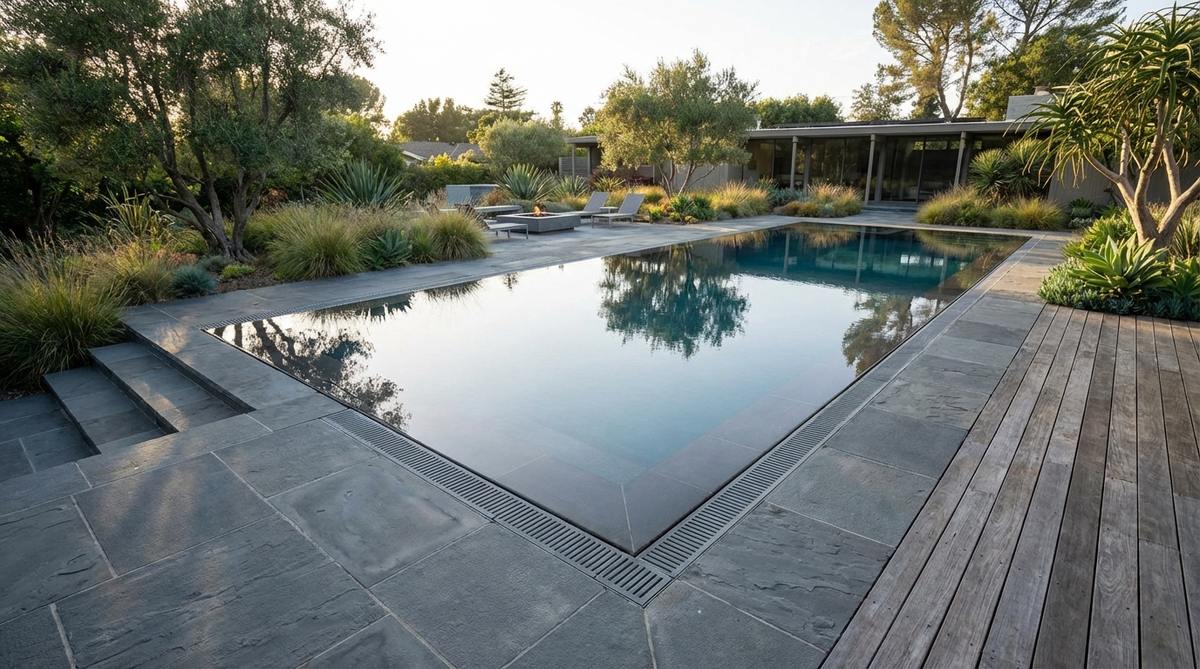
Visually seamless and breathtakingly still. These flush waterline pool designs are absolutely stunning for properties overlooking expansive views or hillsides.
Standard overhanging coping is visually disruptive; a hidden overflow channel creates a flat, mirror-like surface that screams high-end architecture. The water literally vanishes into the deck.
This is usually a $5,000+ upgrade over standard pool designs.
- Key Materials: Concealed overflow channels and grates
- Vibe / Style: Ultra-premium infinity illusion
- Difficulty: Expert engineering required
- Budget Breakdown: Grates: $1,000 | Hidden Surge Tank: $3,000 | Leveling: $1,000.
- Creator’s Tip: Ensure your deck material perfectly matches the interior tile line so the transition between hardscape and water feels invisible.
- Smart Sourcing: concealed pool overflow grates (UV-coated) and commercial-grade pool surge tanks.
21. Raised Rectangular Water Features
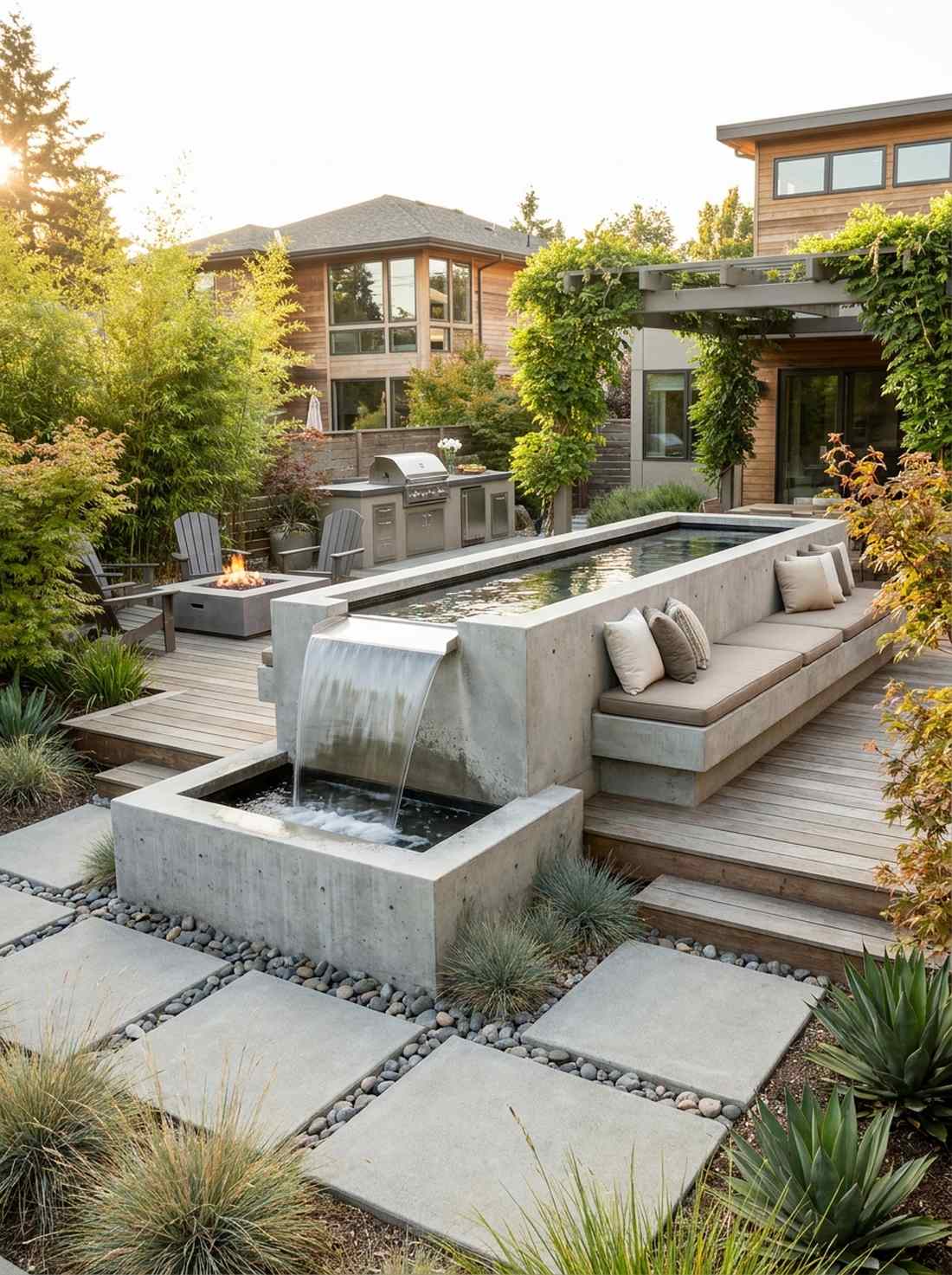
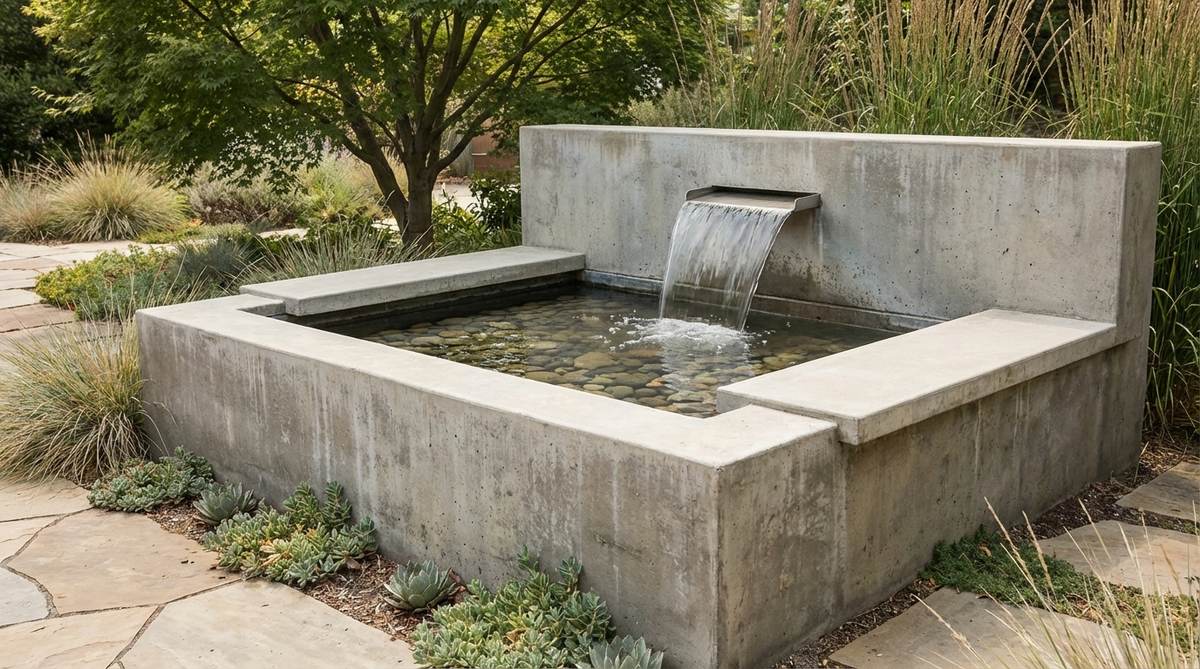
Delivers a soothing, structured acoustic backdrop to any seating area. Building modern concrete fountains is perfect for masking street noise in an urban courtyard.
Faux-stone waterfalls look tacky; a crisp, elevated concrete basin with a sleek stainless steel spout is the true mark of mid-century aesthetics. It provides a sharp, clean focal point that also doubles as extra bench seating.
You can DIY or buy pre-cast for $500–$1,200. Save this for your zen garden plans.
- Key Materials: Concrete basins and steel scuppers
- Vibe / Style: Structured acoustic zen
- Difficulty: Intermediate plumbing/DIY
- Budget Breakdown: Basin: $400 | Pump/Spout: $200.
- Creator’s Tip: Add an auto-fill valve connected to your irrigation line so you never have to manually refill the fountain due to evaporation.
- Smart Sourcing: stainless steel waterfall spillways and submersible quiet-run water pumps.
22. Boulder Fountain Compositions
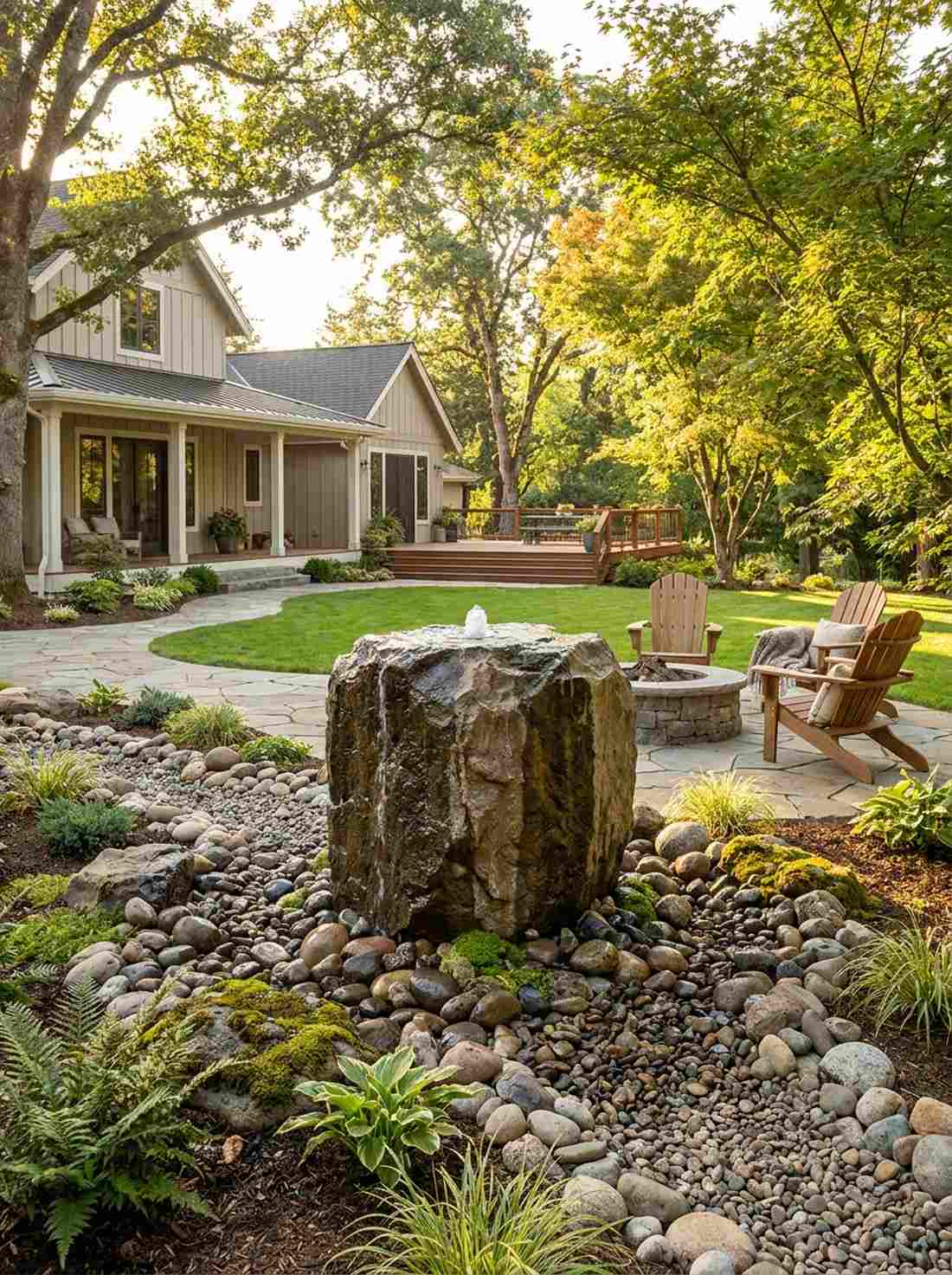
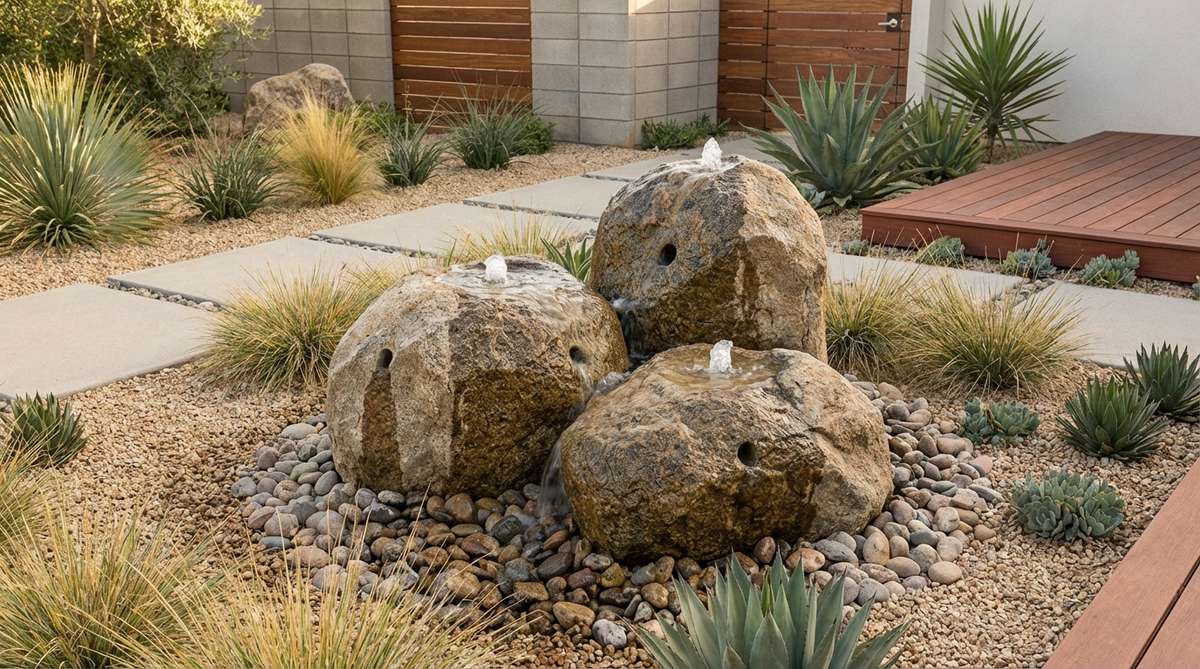
Balances rugged nature with engineered precision flawlessly. Drilled rock water features look spectacular tucked into a dry gravel bed or patio corner.
Skip the cheap resin fountains; drilling a massive natural boulder creates an authentic, heavy-duty focal point that outlasts trends. The water gently bubbling over raw stone creates an incredibly calming, natural vibe.
Setups usually run $300–$600 depending on rock size.
- Key Materials: Drilled natural boulders and hidden reservoirs
- Vibe / Style: Organic landscape integration
- Difficulty: Requires heavy lifting
- Budget Breakdown: Drilled Rock: $200 | Basin Kit: $150 | Pump: $50.
- Creator’s Tip: Bury the water basin completely and cover the top grate with river rocks so the boulder looks like a natural, weeping spring.
- Smart Sourcing: pre-drilled basalt fountain columns and heavy-duty underground fountain basins.
23. Linear Water Channels
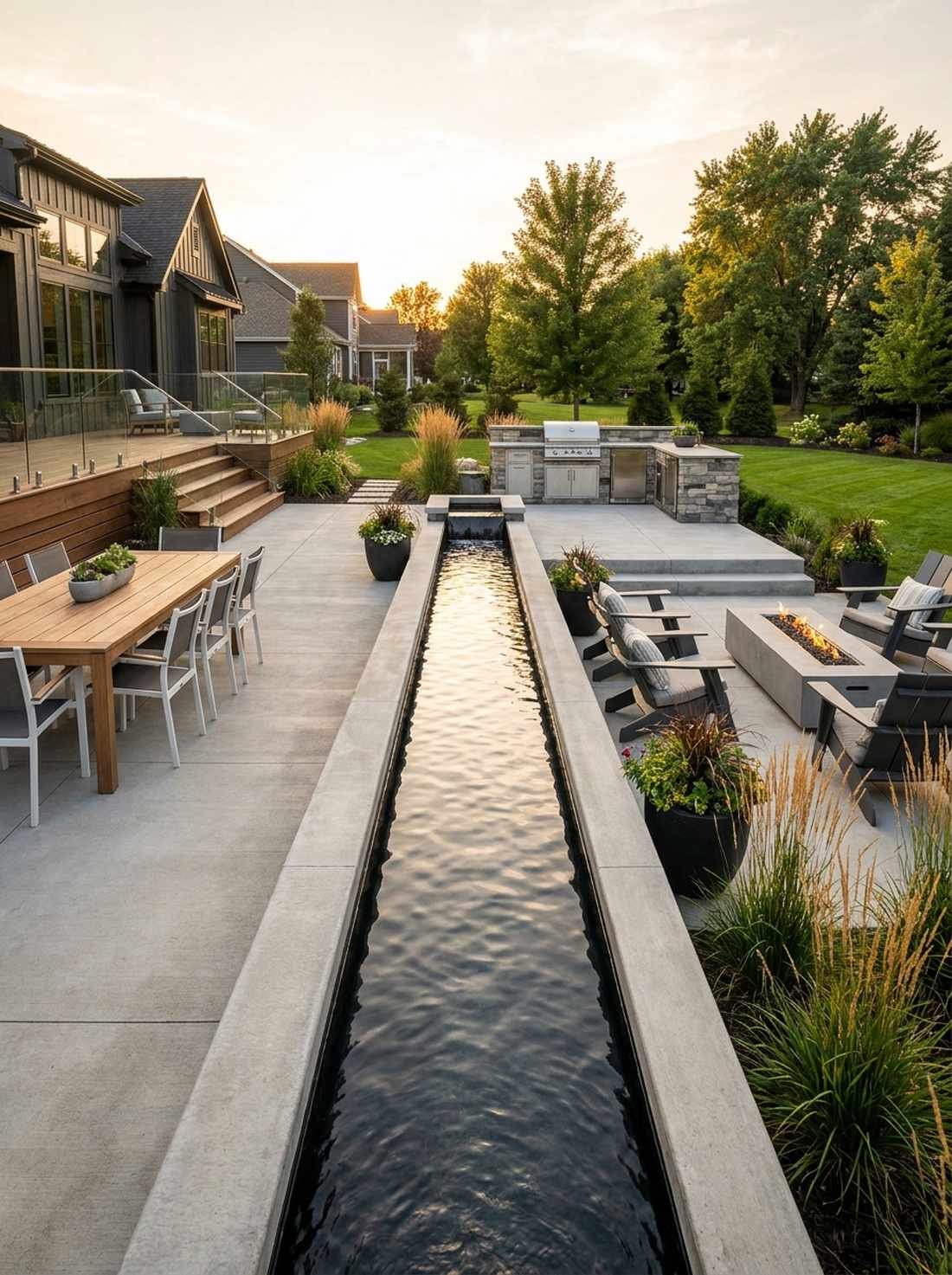
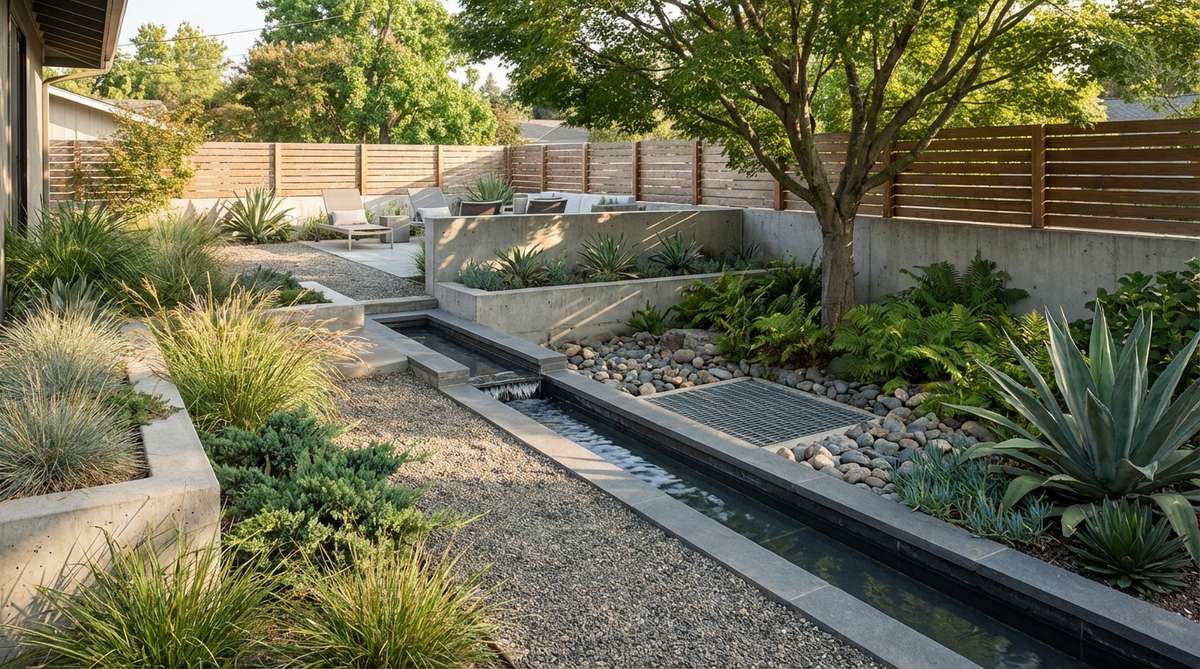
Sleek, guiding, and intensely architectural from every angle. Utilizing backyard water runnels is a genius way of connecting different outdoor zones or patios.
Most people ignore ground-level water flow, but a narrow runnel slicing through concrete is a masterclass in spatial design. It forces the eye to follow the path, making the whole yard feel infinitely larger and more deliberate.
Expect costs around $800–$1,500. Pin this if you love unique landscaping ideas!
- Key Materials: Concrete channels and recirculating pumps
- Vibe / Style: Guiding minimalist flow
- Difficulty: Advanced DIY / Pro install
- Budget Breakdown: Trench System: $500 | Waterproofing: $200 | Pump System: $300.
- Creator’s Tip: Dye the concrete inside the channel black to make the water look deeper and more reflective.
- Smart Sourcing: pre-cast concrete trench drains and waterproofing masonry sealers (commercial grade).
24. Circular Soaking Pools
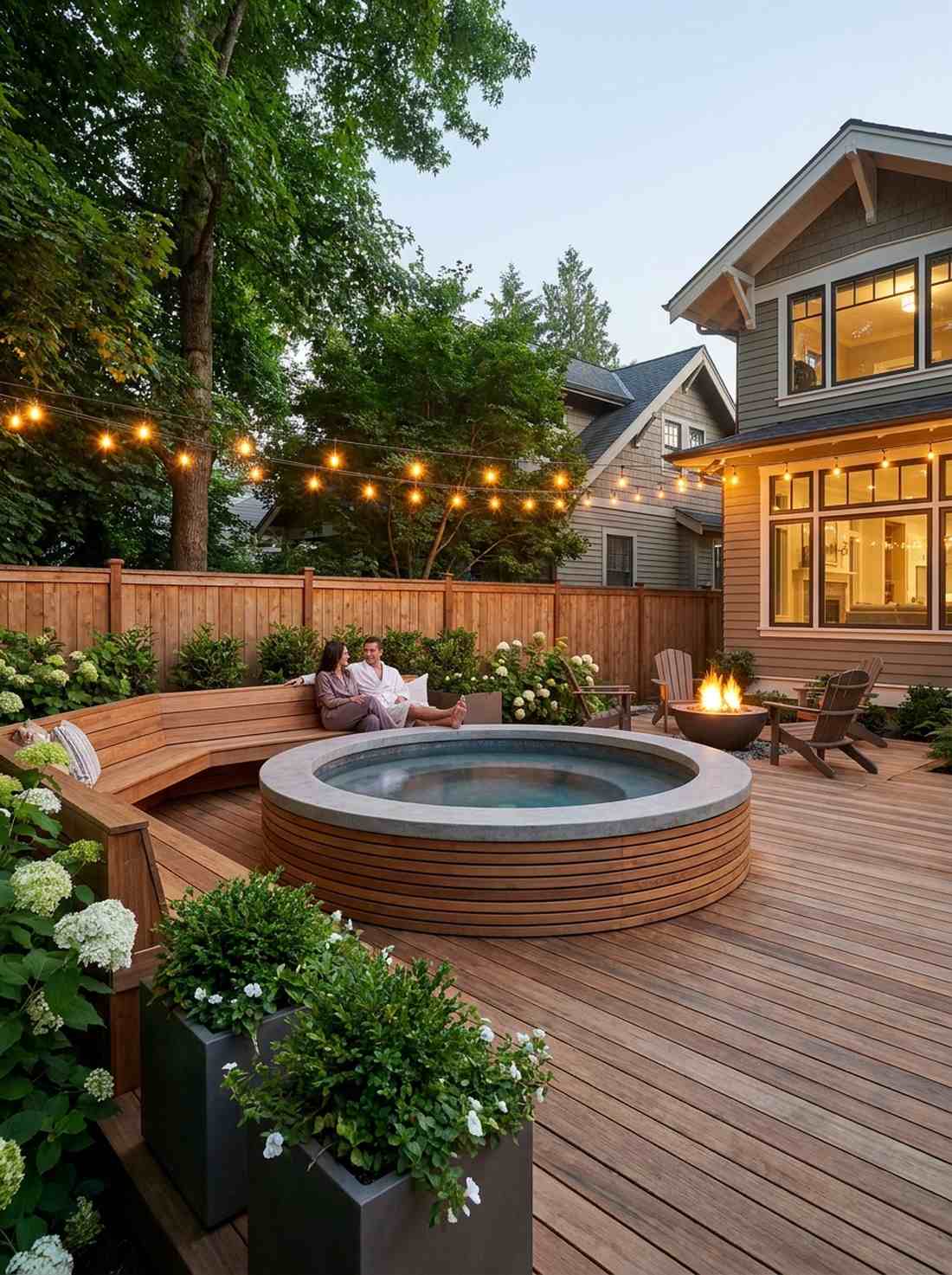
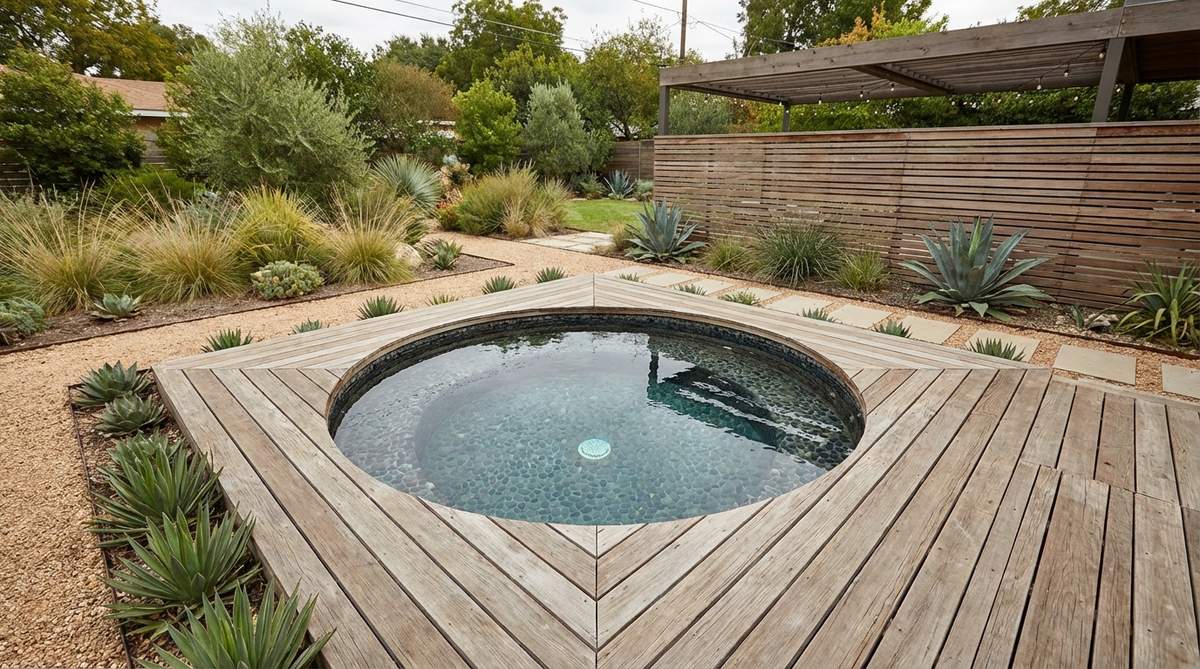
Intimate, retro, and invitingly deep for summer nights. These round plunge pools are a space-saving luxury that fits perfectly in small, urban backyards.
You don’t need a massive Olympic pool; a concrete soaking tub provides year-round relaxation while serving as a stunning visual anchor. The stark circle contrasts beautifully against straight patio lines and square planters.
These average $5,000–$10,000 to install.
- Key Materials: Pre-cast concrete or custom shotcrete
- Vibe / Style: Boutique hotel courtyard
- Difficulty: Professional installation
- Budget Breakdown: Tub Shell: $4,000 | Heater/Filter: $2,000.
- Creator’s Tip: Wrap the exterior of an above-ground tank in horizontal cedar slats to instantly blend it into a mid-century aesthetic.
- Smart Sourcing: pre-cast round concrete plunge pools and premium glass mosaic pool tiles.
Before you buy any outdoor furniture, you need to see how this specific piece changes everything…
Material Guide: Cheap vs. Premium Aesthetic
Knowing exactly where to save and where to spend makes all the difference in achieving that “looks expensive but isn’t” vibe.
- Standard Wood vs. Premium Teak: Cheap pine splinters and rots in two seasons, while premium treated teak silvers beautifully and withstands extreme weather without breaking down.
- Pre-made Kits vs. Sourcing Locally: Buying individual pieces at hardware stores often results in mismatched textures; pre-cut starter kits guarantee geometric precision and exact color matching for less money overall.
Outdoor Living Spaces & Furniture
25. Teak and Acacia Dining Sets
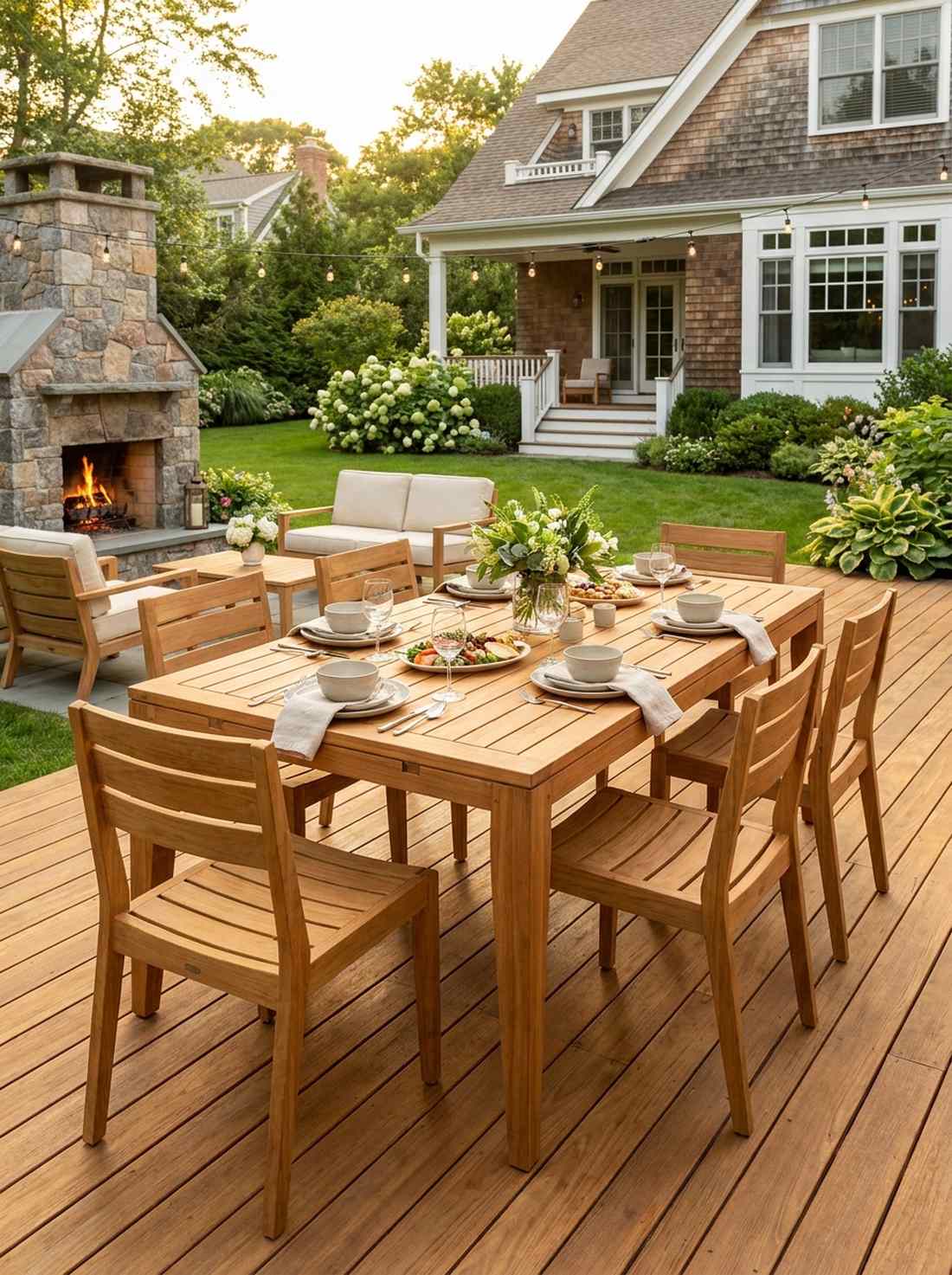
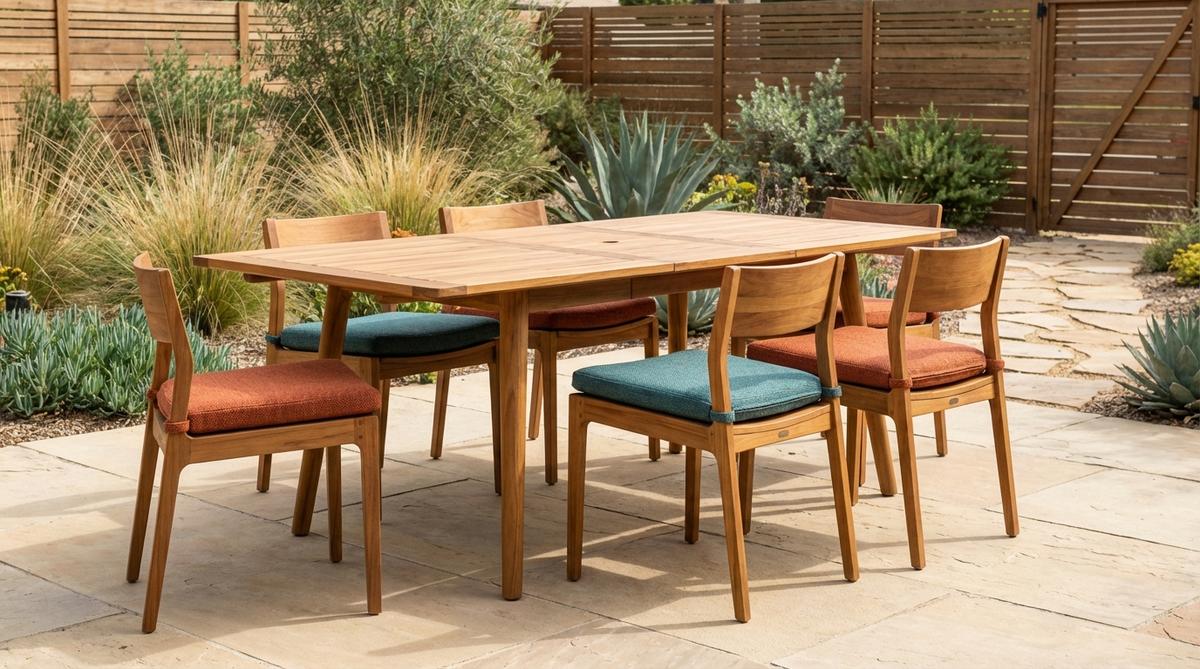
Warm, inviting, and effortlessly chic for any gathering. Adding authentic mid century modern garden furniture is essential for hosting upscale summer dinner parties.
Cheap plastic sets crack in a year; investing in raw teak that silvers over time is the ultimate flex for outdoor entertaining. The exposed joinery and tapered legs immediately anchor the space with period-accurate design.
Quality sets run between $800–$2,000.
- Key Materials: Solid hardwood tables and chairs
- Vibe / Style: Organic architectural entertaining
- Difficulty: Easy assembly
- Budget Breakdown: Table: $600 | Chairs (x6): $900.
- Creator’s Tip: If you want to keep the warm honey color rather than letting it turn silver, apply a premium teak oil twice a year.
- Smart Sourcing: solid teak outdoor dining tables and premium protective teak oil.
26. Cantilever Shade Structures
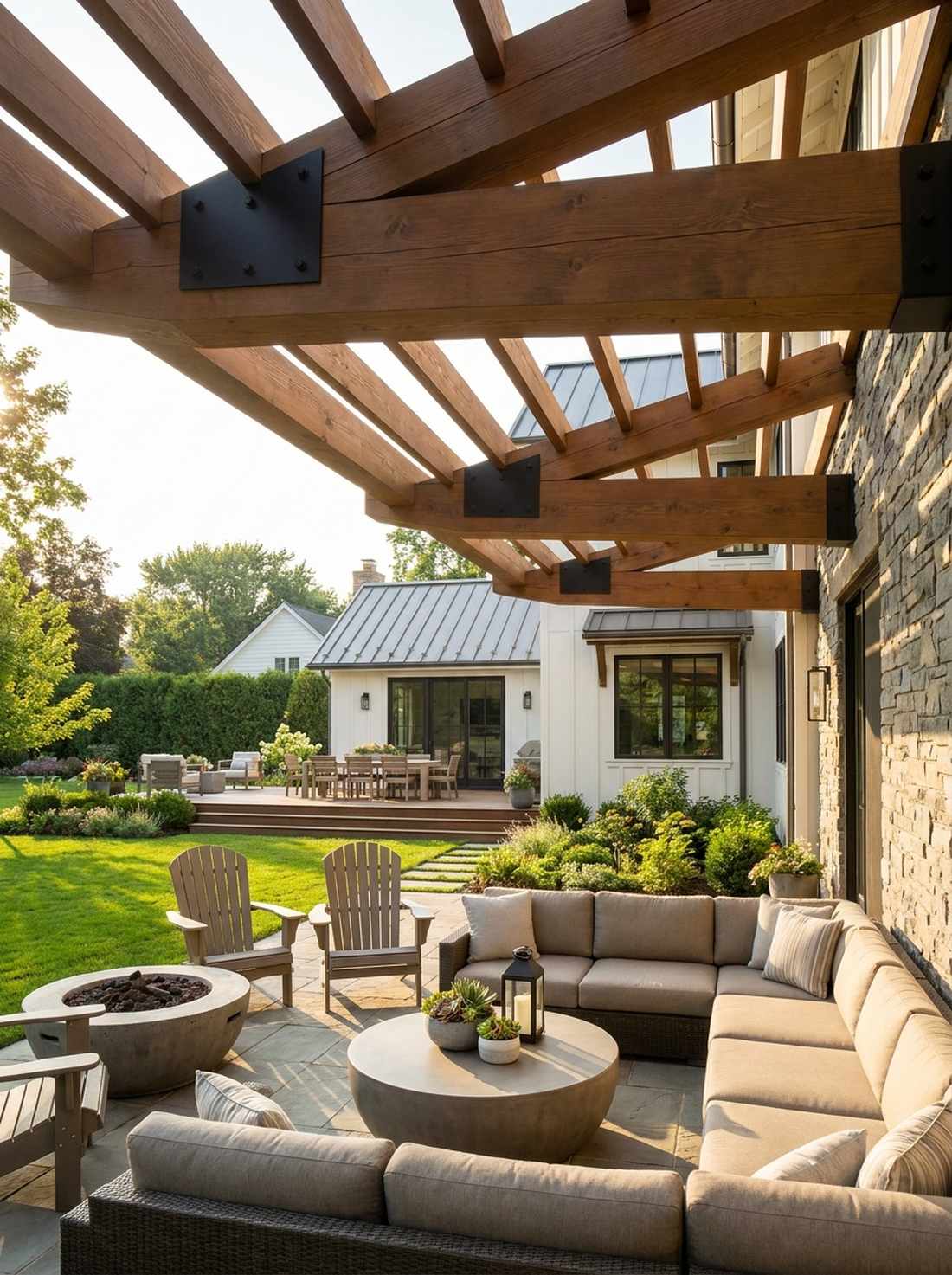
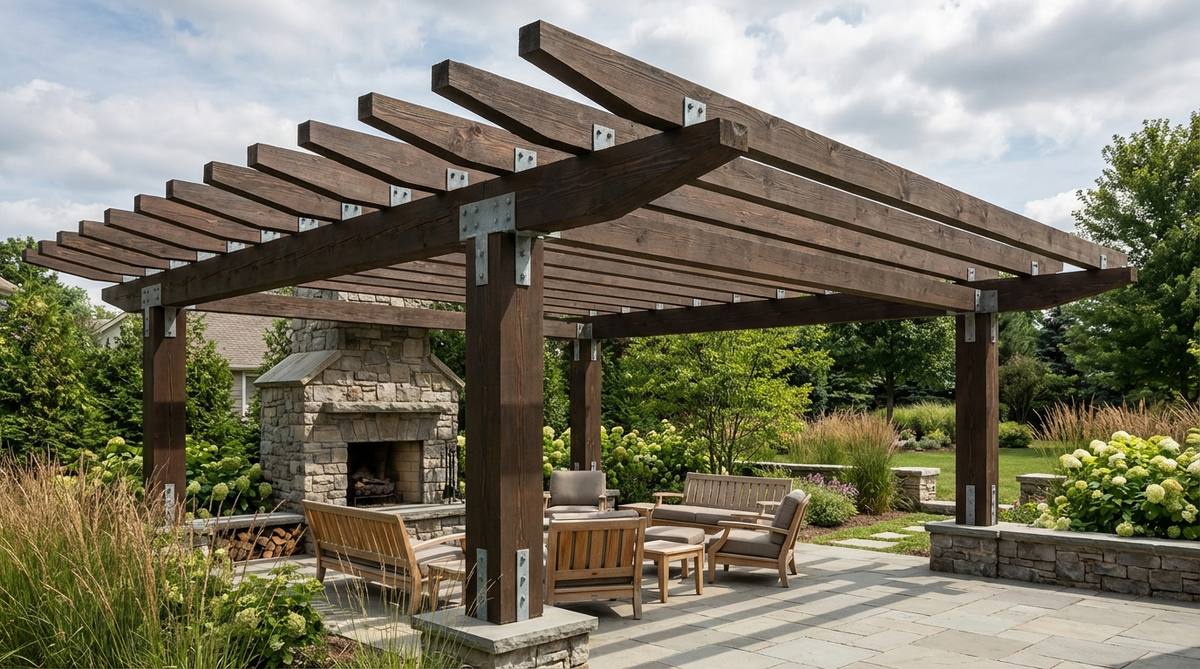
Provides cool, dramatic shadows that shift beautifully across the patio. Modern heavy timber pergolas are unmatched for shading a sun-drenched outdoor living room.
Flimsy umbrellas blow away and look messy; a heavy timber cantilever structure brings raw architectural power to your patio. With no front support posts, it completely opens up your line of sight to the yard.
Materials cost $1,500–$3,000. Save this to your patio upgrade board!
- Key Materials: Heavy timbers and steel brackets
- Vibe / Style: Defying-gravity structural shade
- Difficulty: Advanced building skills needed
- Budget Breakdown: Timbers: $800 | Custom Brackets: $500 | Hardware: $200.
- Creator’s Tip: Orient the overhead rafters east-to-west so they block the harsh midday sun while letting morning light filter through.
- Smart Sourcing: heavy-duty steel pergola brackets (powder-coated) and UV-blocking outdoor sun shade sails.
27. Wire Mesh Lounge Chairs
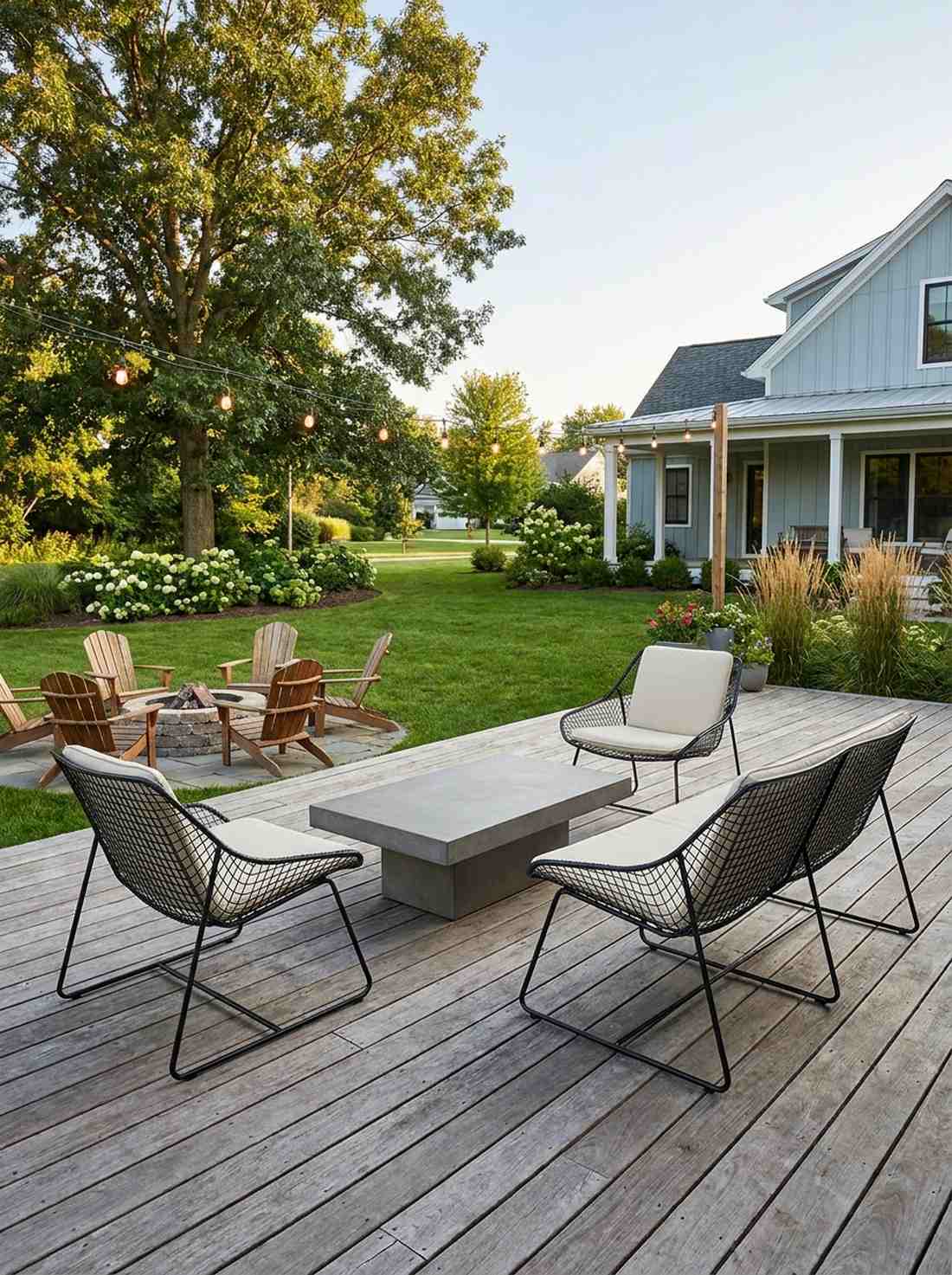
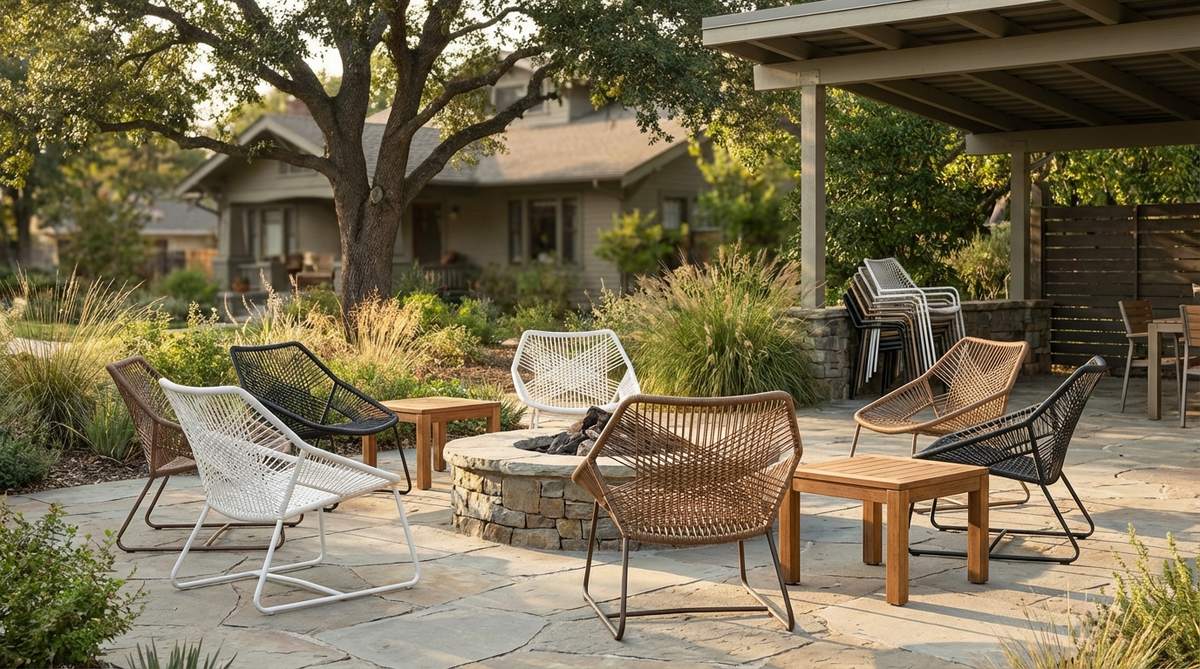
Strikingly airy and undeniably retro in all the right ways. Industrial outdoor seating is perfect when arranged around a fire pit or perched on a pool deck.
Bulky cushions hold water and mold, but powder-coated wire mesh chairs drain instantly and look like vintage designer pieces. Their visual lightness ensures they never clutter up small patio spaces.
These retail for about $150–$400 per chair.
- Key Materials: Powder-coated metal frames
- Vibe / Style: 1950s industrial chic
- Difficulty: Just unbox and place
- Budget Breakdown: Chair Set: $300 | Custom Cushions: $100.
- Creator’s Tip: Pair them with a low-slung concrete coffee table to contrast the thin, delicate wire with heavy, brutalist stone.
- Smart Sourcing: powder-coated wire mesh lounge chairs (set of 2) and all-weather custom fit chair cushions.
28. Built-In Concrete Seating
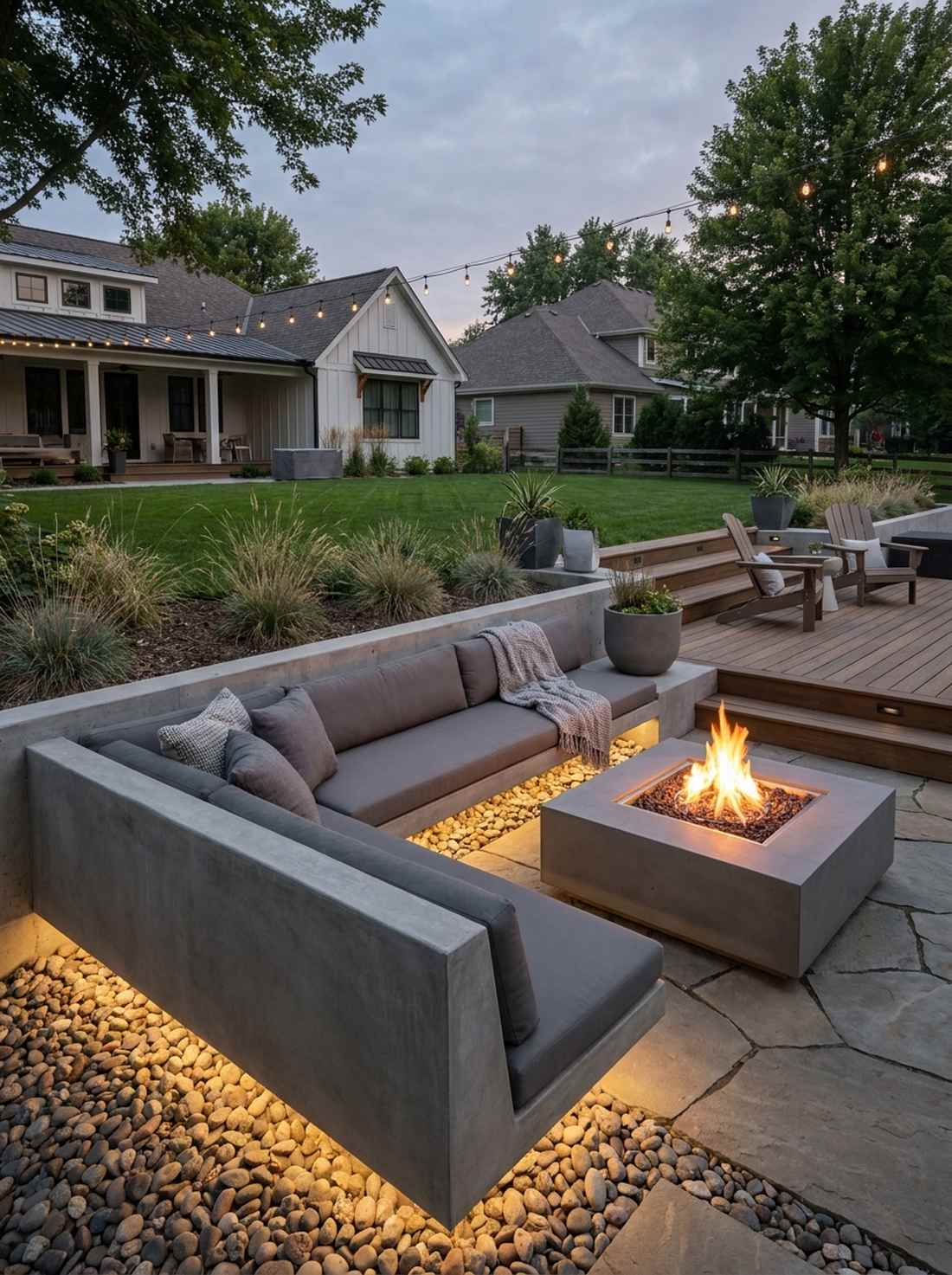
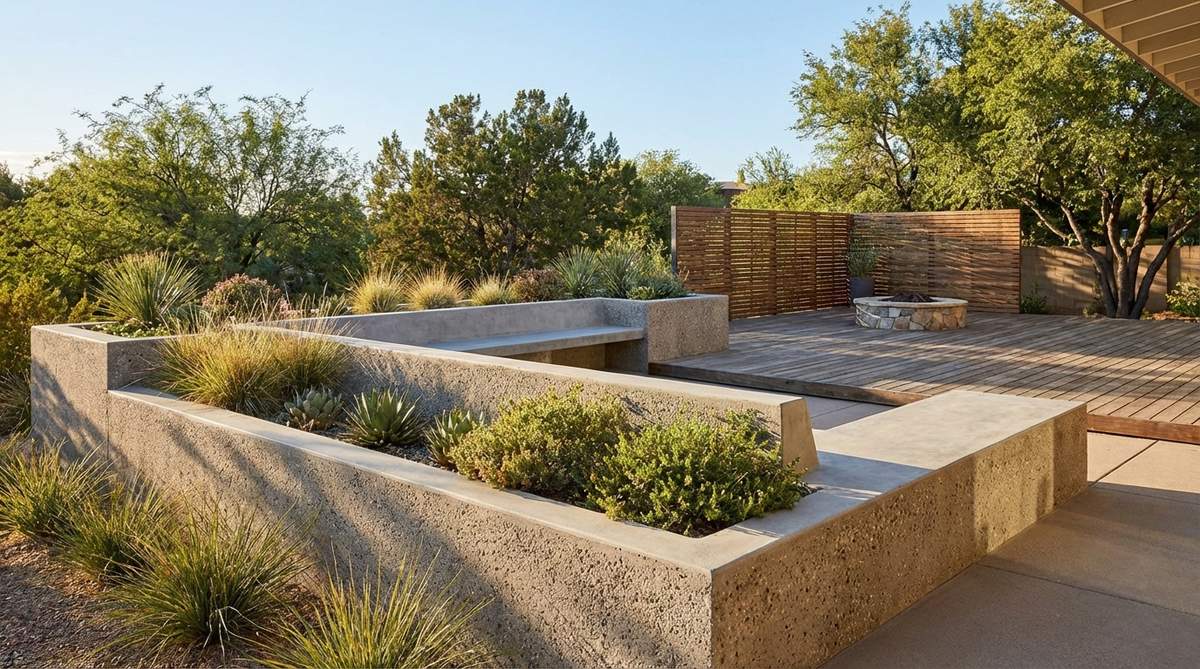
Solid, permanent, and incredibly sleek. Using a built-in mid century modern garden bench is genius for defining the edge of an outdoor fire lounge.
Freestanding benches clutter a space; pouring a seamless L-shaped concrete bench maximizes seating while maintaining strict minimalism. You never have to worry about storing it during winter, and it doubles as a retaining wall.
Materials run $400–$900 for a large pour.
- Key Materials: Poured concrete and wood forms
- Vibe / Style: Permanent architectural lounge
- Difficulty: Moderate DIY concrete work
- Budget Breakdown: Concrete: $300 | Rebar: $50 | Forms: $100.
- Creator’s Tip: Float the bottom of the bench 4 inches off the ground and install hidden LED strips for a glowing, floating effect at night.
- Smart Sourcing: concrete countertop mix (high strength) and outdoor-grade marine vinyl cushion fabric.
29. Butterfly Roof Pavilions
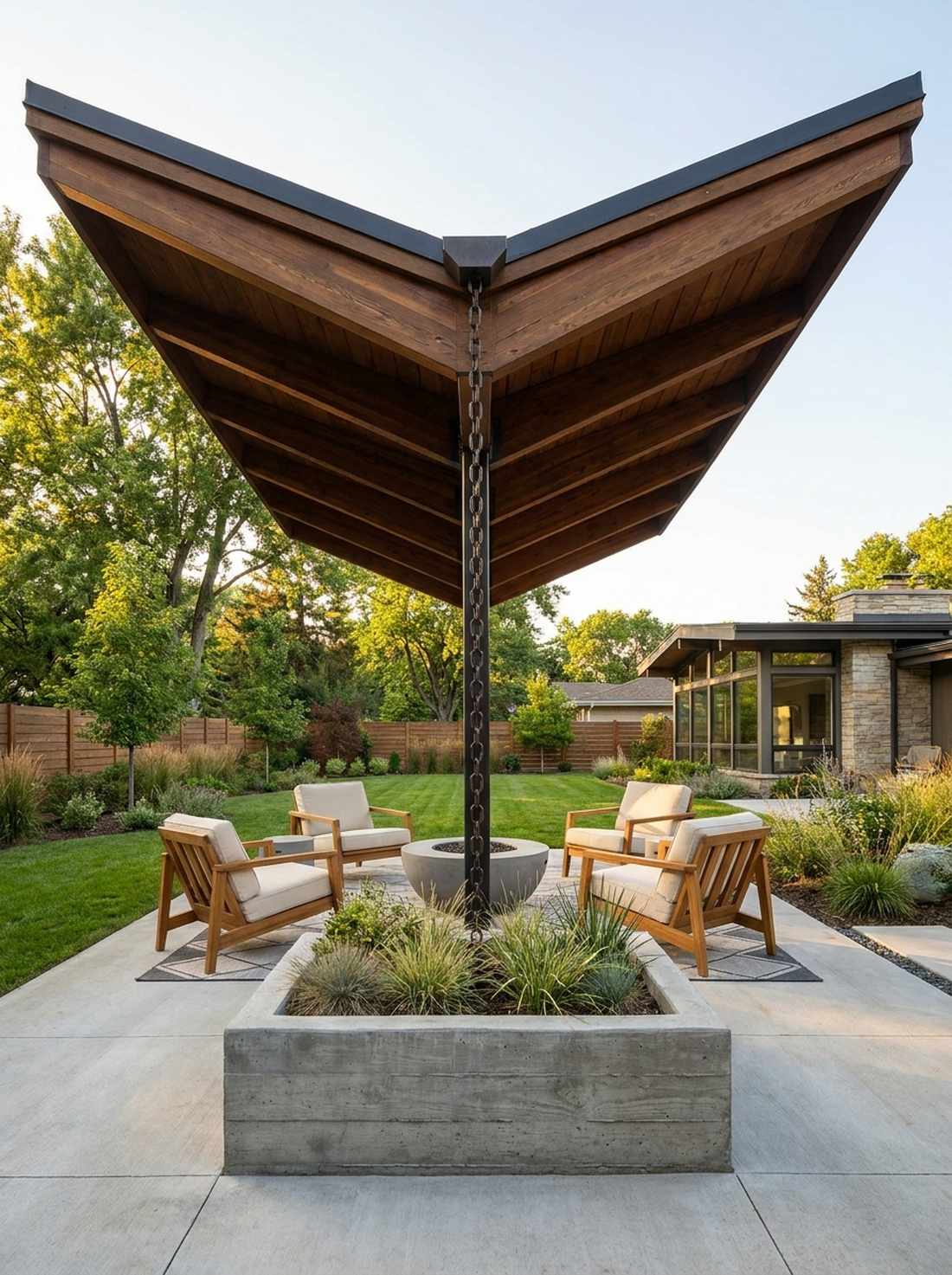
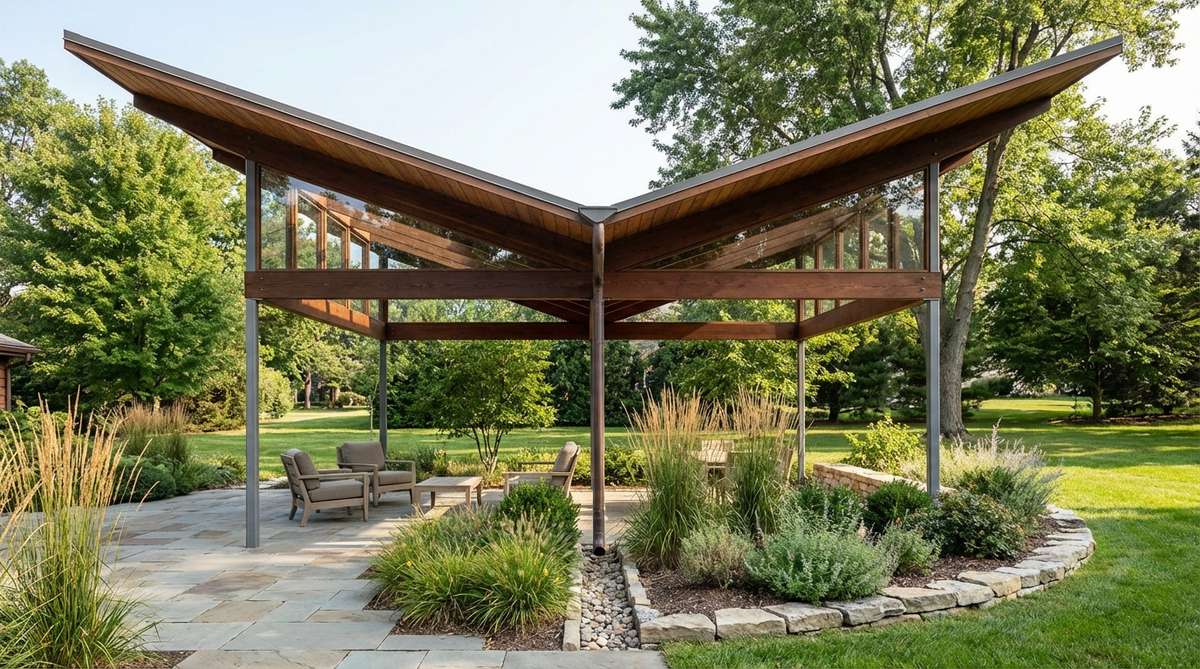
Iconic, optimistic, and soaring with authentic 1950s flair. These are incredible mid century modern garden shed alternatives that act as a breathtaking covered retreat.
Standard gable roofs look too traditional; the inverted butterfly roof is the ultimate hallmark of mid-century architecture. It captures rainwater perfectly in the center valley while opening up the sides for panoramic landscape views.
A custom build like this runs $3,000–$7,000. Pin this if you’re planning a custom yard build!
- Key Materials: Exposed beams and angled roofing
- Vibe / Style: Iconic 1950s structural optimism
- Difficulty: Requires professional framing
- Budget Breakdown: Beams: $1,500 | Roofing System: $800 | Posts: $500.
- Creator’s Tip: Direct the central roof valley into a modern rain chain that empties directly into a raised concrete planter box.
- Smart Sourcing: structural glulam beams (pre-cut) and seamless EPDM rubber roofing kits.
This next detail is often ignored, but it completely dictates whether your yard looks cheap or expensive at night…
30. Modular Outdoor Sectionals
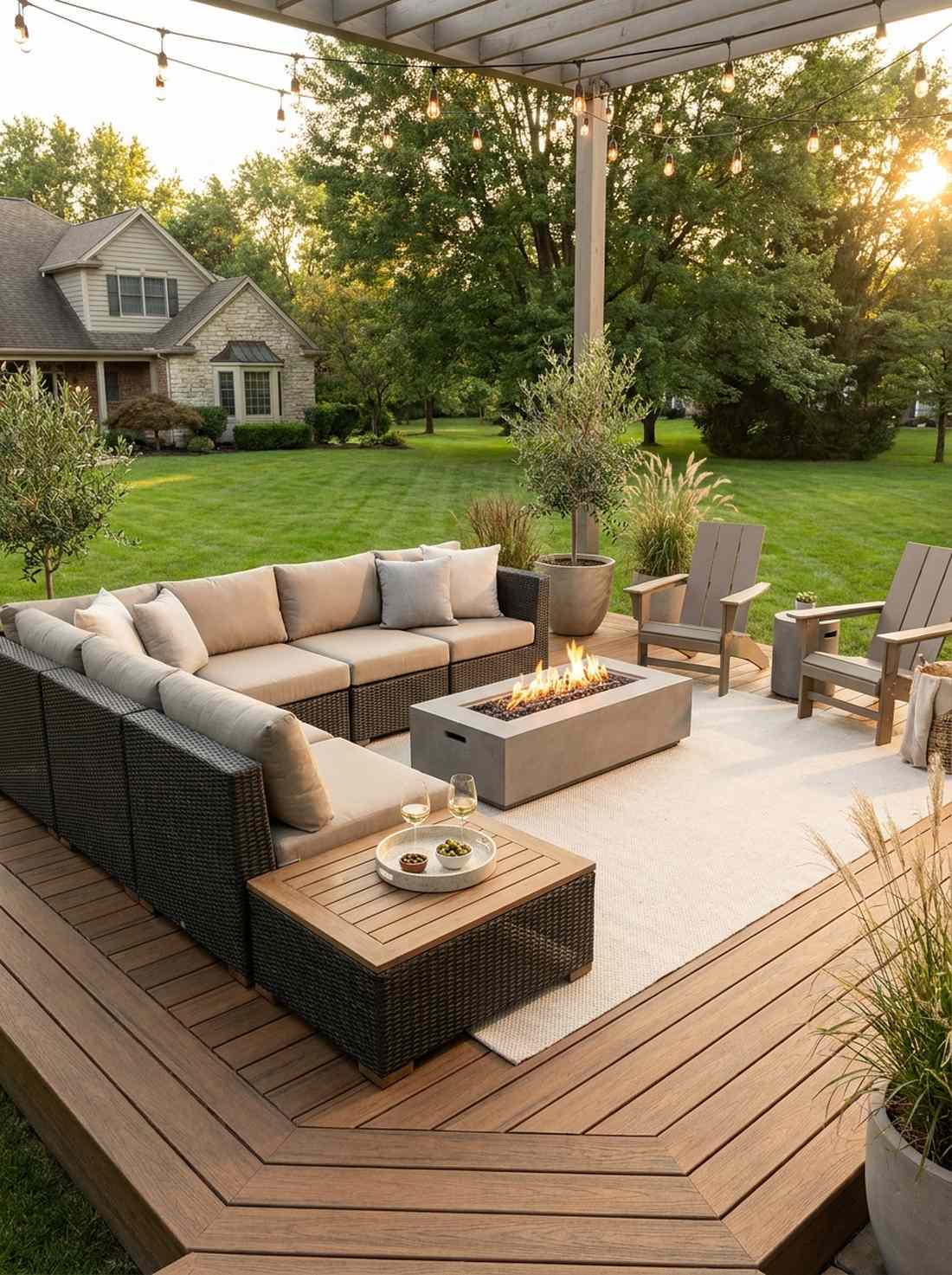
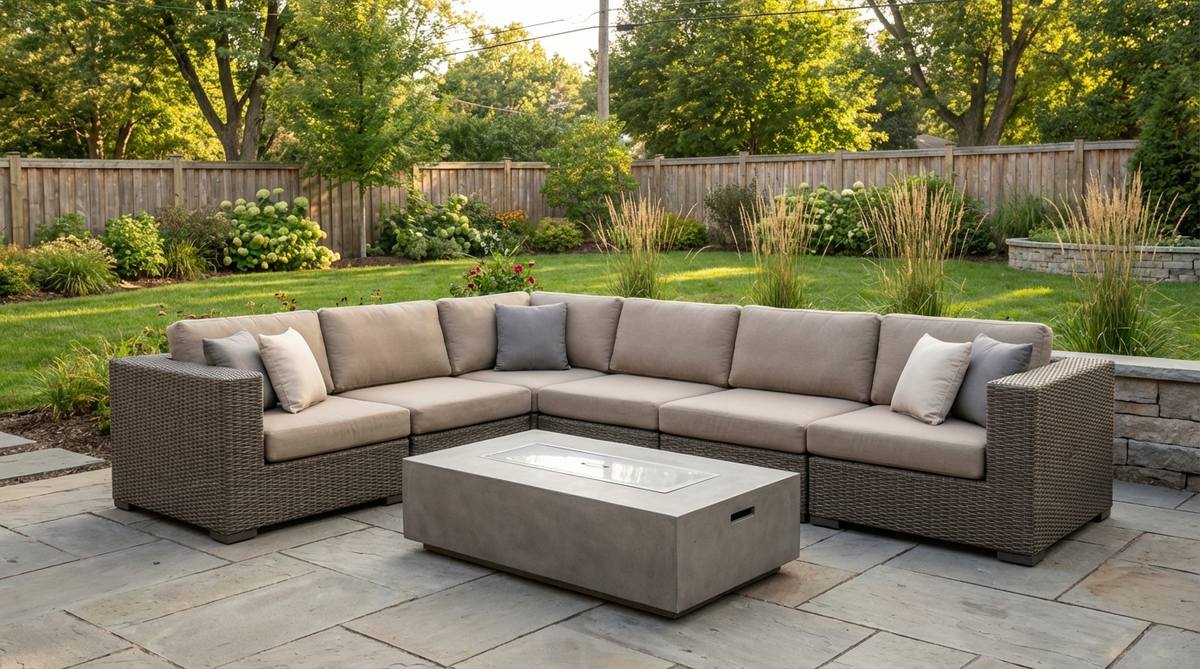
Offers low-slung, lounge-worthy comfort that invites you to stay outside for hours. Contemporary patio sofas are incredible for filling a large, geometric deck space.
Avoid busy floral patterns at all costs; solid neutral cushions on a low-profile frame deliver that sophisticated, boutique hotel vibe. Modular pieces let you rearrange the layout for parties or intimate fire-pit nights effortlessly.
Quality sets average $1,000–$2,500.
- Key Materials: Resin wicker and fade-resistant fabric
- Vibe / Style: Resort-level modern lounging
- Difficulty: Easy setup
- Budget Breakdown: Sectional Base: $1,200 | Cushions: $400.
- Creator’s Tip: Keep the cushions protected with waterproofing spray immediately after unboxing to ensure spilled wine rolls right off.
- Smart Sourcing: all-weather resin wicker sectionals and Sunbrella fade-resistant outdoor pillow covers.
Lighting & Finishing Accessories
31. Recessed LED Path Lighting
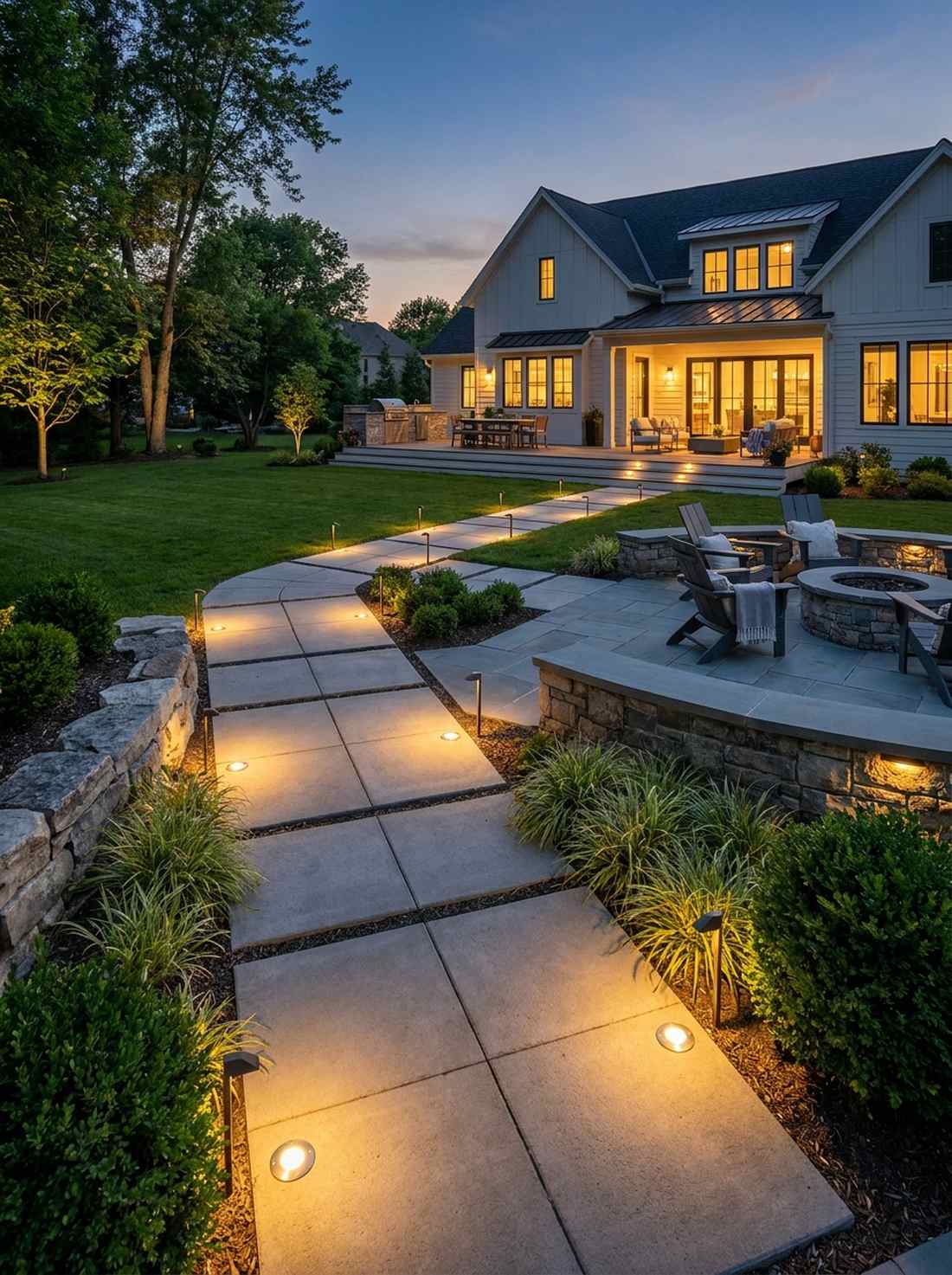
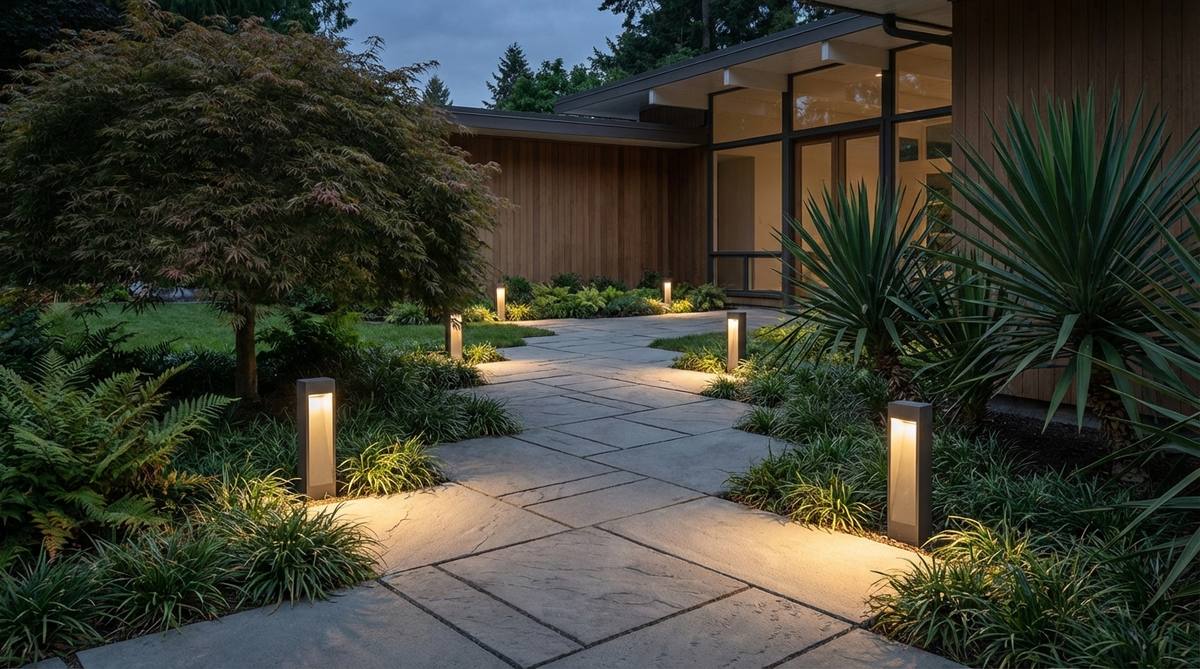
Casts a warm, guiding glow that feels high-tech yet incredibly subtle. Flush outdoor walkway lights are perfect for illuminating concrete grid pavers safely at night.
Those cheap solar stick lights always lean and look terrible; hardwiring flush-mounted LEDs creates a runway effect that screams luxury. They eliminate visual clutter during the day while providing dramatic up-lighting after dark.
Kits run about $20–$50 per fixture.
- Key Materials: Walkover LED puck lights
- Vibe / Style: Invisible daytime, luxury nighttime
- Difficulty: Intermediate low-voltage wiring
- Budget Breakdown: 10-Pack Lights: $150 | Transformer/Wire: $80.
- Creator’s Tip: Use a masonry core bit to drill perfectly round holes directly into the concrete pavers for a flush, factory-finished look.
- Smart Sourcing: recessed waterproof LED deck lights (bulk pack) and low-voltage landscape lighting transformers.
32. Uplighting for Tree Canopies
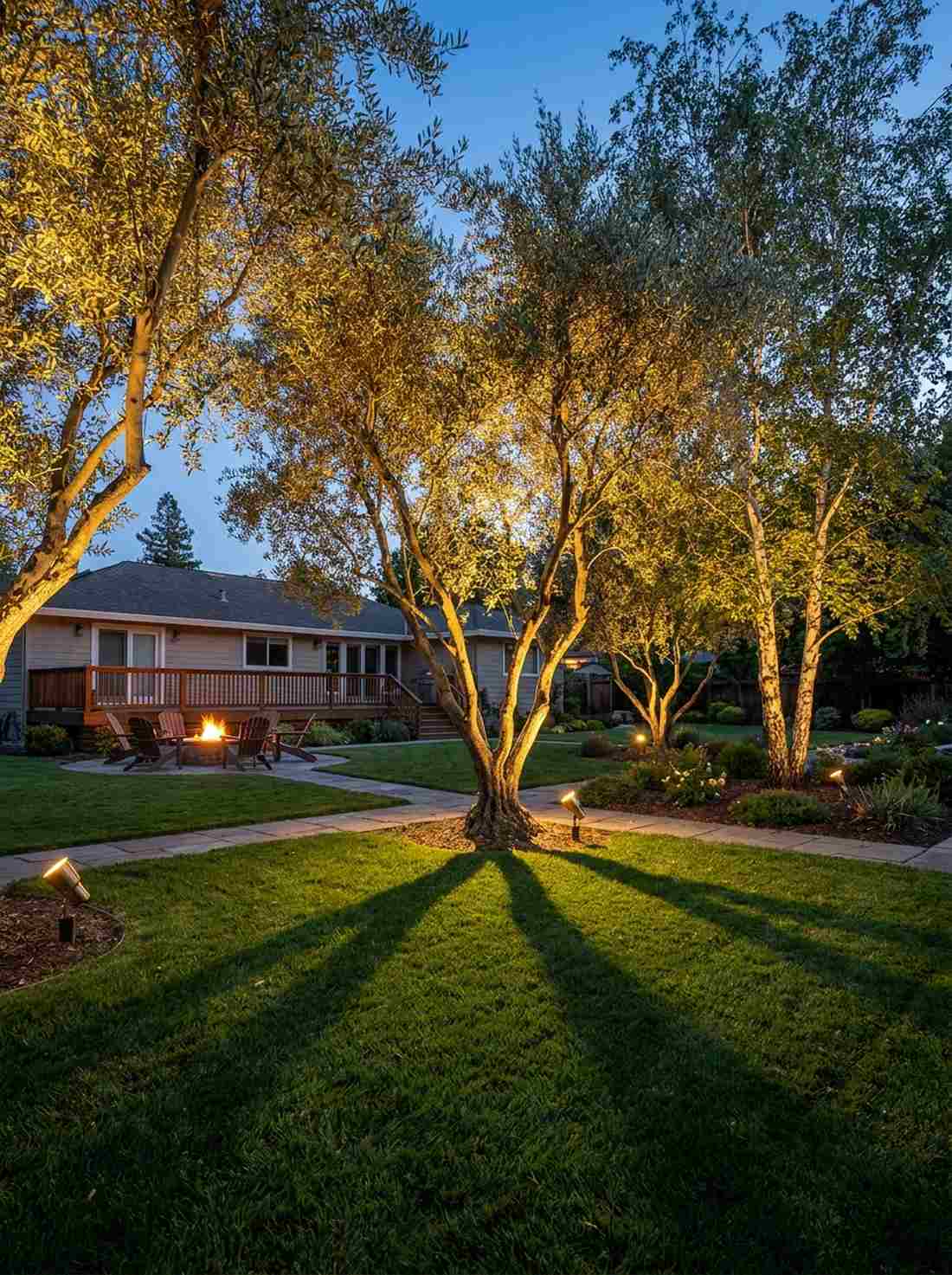
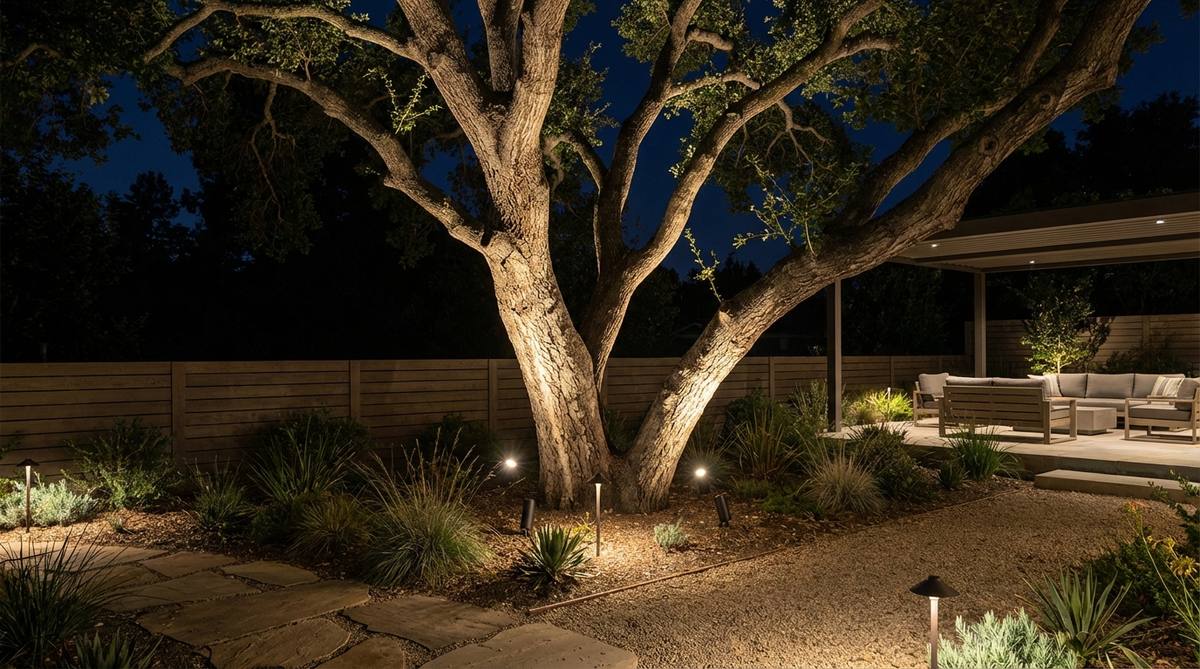
Turns ordinary bark into a glowing, nighttime masterpiece. Using dramatic landscape tree lighting is the ultimate trick for highlighting specimen olive or birch trees.
Flooding the whole yard with giant spotlights ruins the mood; targeted narrow-beam uplights create magical, contrasting shadows through the branches. It gives your garden immense vertical depth even in pitch blackness.
These cost $30–$80 per light. Save this for your exterior lighting plans!
- Key Materials: Brass directional spotlights
- Vibe / Style: Dramatic shadow play
- Difficulty: Very easy
- Budget Breakdown: Spotlights (x4): $120 | Cabling: $40.
- Creator’s Tip: Keep the light temperature between 2700K and 3000K for a warm, welcoming glow that doesn’t feel like a harsh security light.
- Smart Sourcing: brass directional landscape spotlights and smart outdoor lighting controller hubs.
33. Cylindrical Planters in Groupings
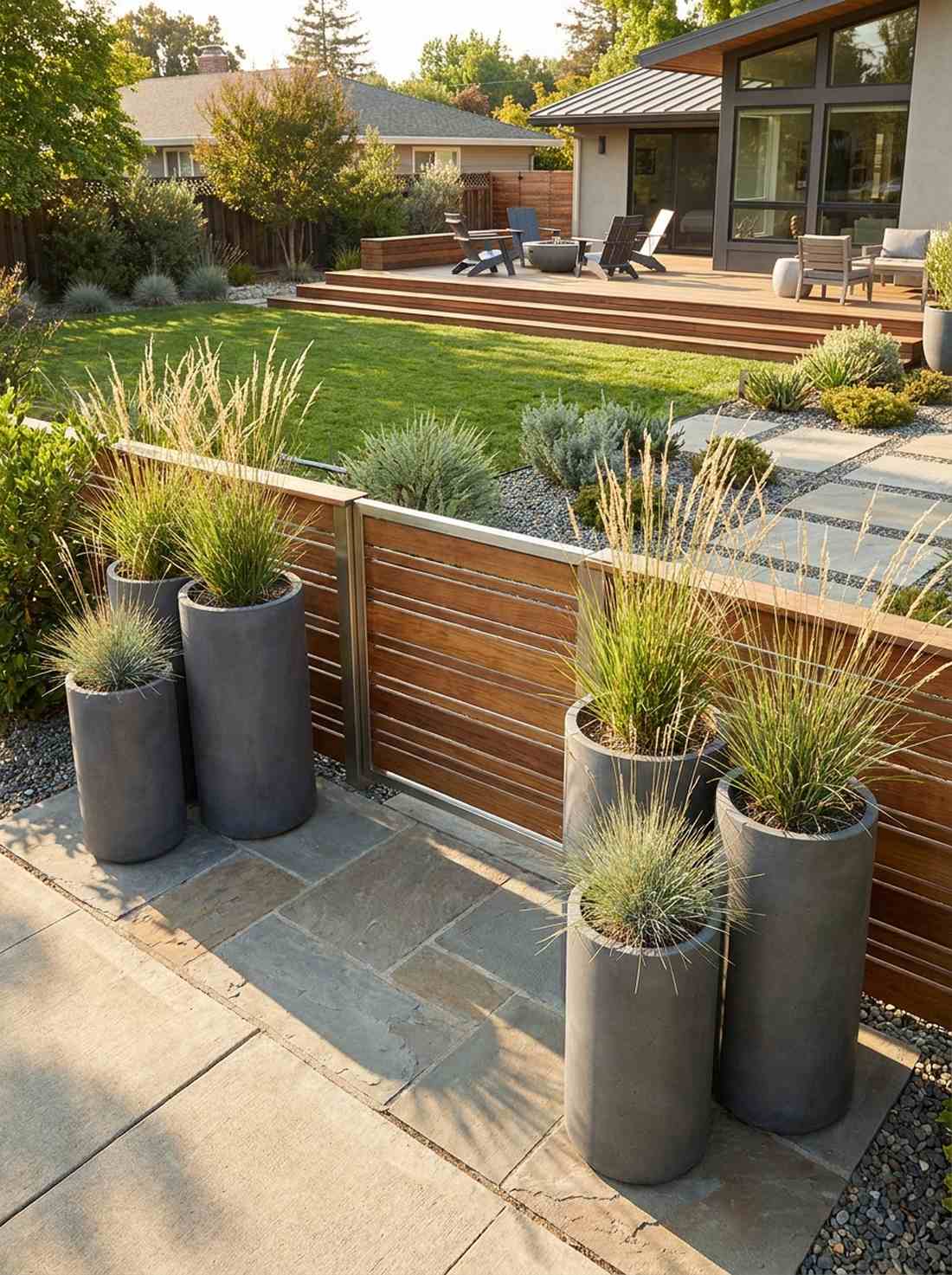
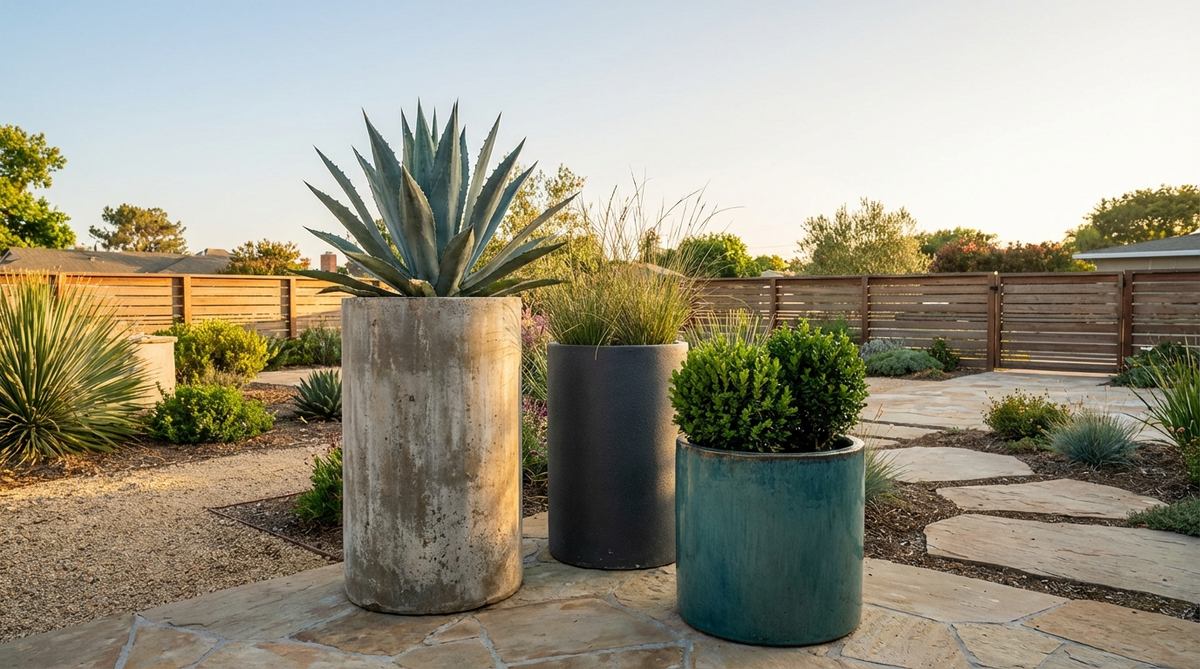
Clean, bold, and perfectly proportioned. Oversized modern outdoor pots make an incredible statement when flanking a mid century modern garden gate.
Mixing too many pot styles and colors looks chaotic; clustering three identical cylindrical planters in varying heights is an instant designer cheat code. It establishes rhythm and provides a perfect home for architectural grasses.
Sets usually cost $100–$300.
- Key Materials: Lightweight fiberglass or concrete pots
- Vibe / Style: Curated gallery entrance
- Difficulty: Simple styling
- Budget Breakdown: Planter Trio: $200 | Soil/Plants: $50.
- Creator’s Tip: Fill the bottom half of tall planters with empty plastic bottles before adding soil to keep them lightweight and save money on dirt.
- Smart Sourcing: fiberglass cylindrical planter sets (lightweight) and premium indoor/outdoor potting soil mix.
34. Steel Fire Bowls
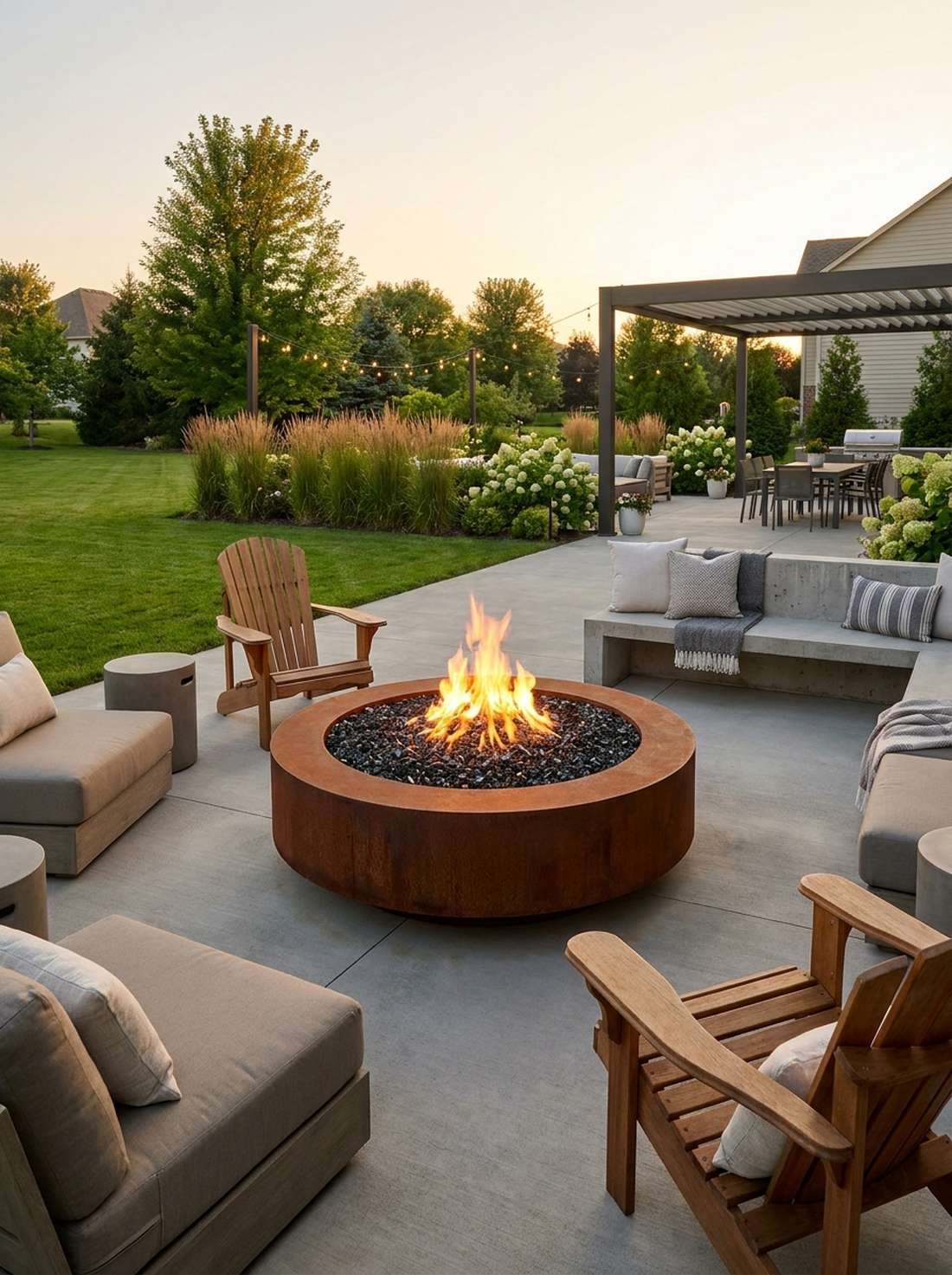
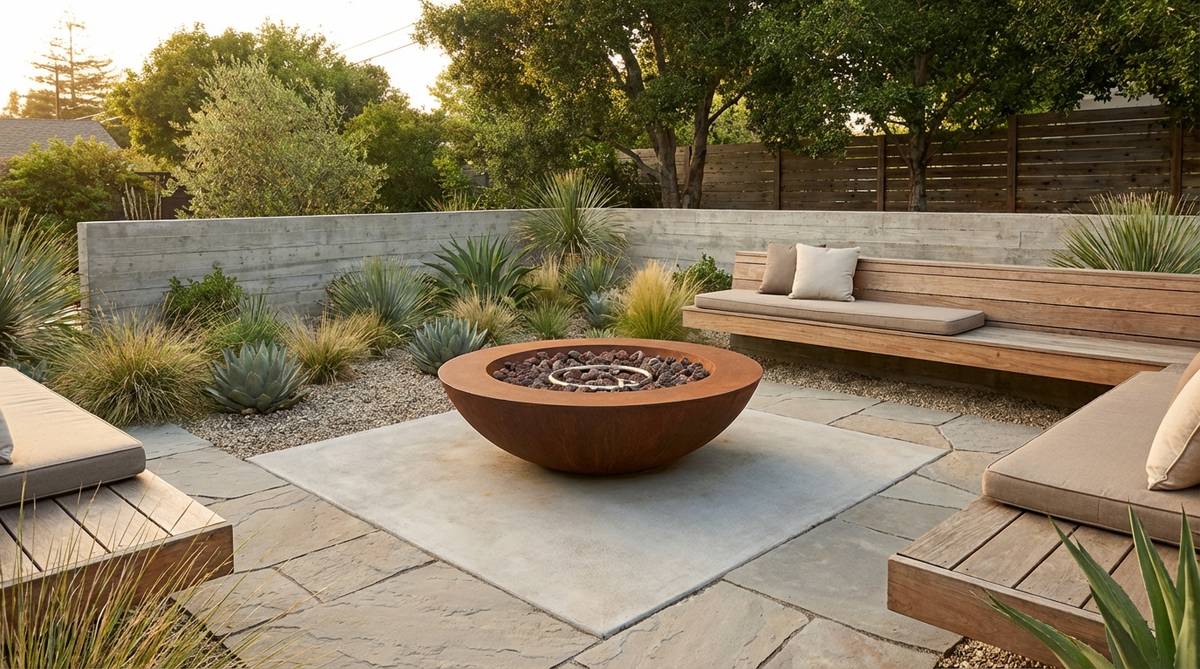
Brings primal warmth wrapped in sharp industrial elegance. Corten steel patio fire pits serve as the glowing centerpiece of an evening lounge area.
Stacked brick fire pits are completely outdated; a rusted steel bowl using smokeless gas lines provides clean heat without smelling like a campfire. The heavy metal profile perfectly complements smooth concrete surroundings.
These range from $200–$600 depending on size. Pin this to your backyard party board!
- Key Materials: Heavy gauge weathering steel
- Vibe / Style: Industrial minimalist gathering
- Difficulty: Easy (unless running gas lines)
- Budget Breakdown: Fire Bowl: $300 | Fire Glass/Rock: $50.
- Creator’s Tip: Fill the bowl with crushed black fire glass instead of fake logs to maintain the strictly modern aesthetic.
- Smart Sourcing: heavy-gauge Corten steel fire bowls and tempered fire glass rocks (bulk bag).
Warning: Missing this final setup step could ruin the structural integrity of your entire project…
35. Geometric Outdoor Rugs
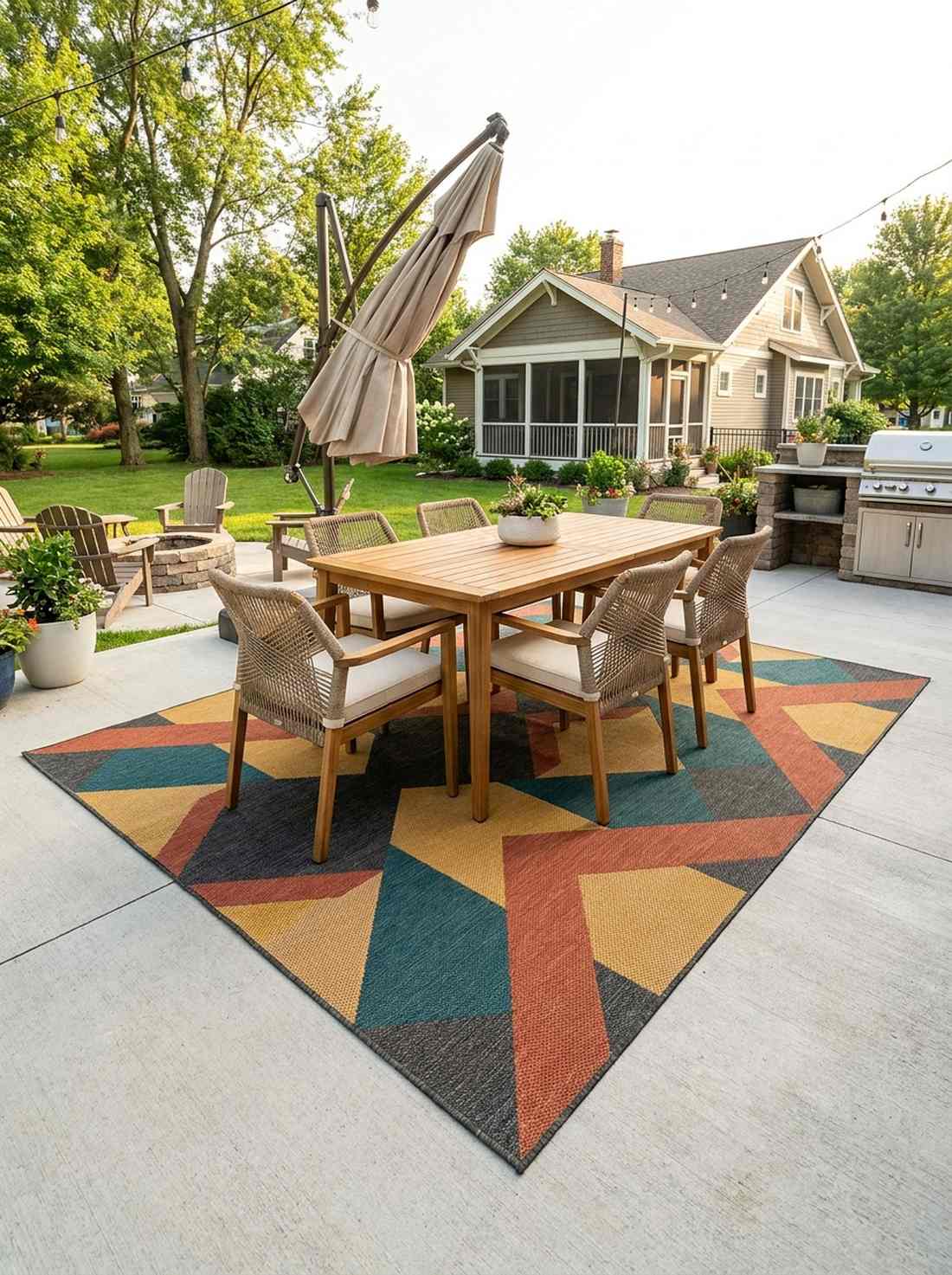
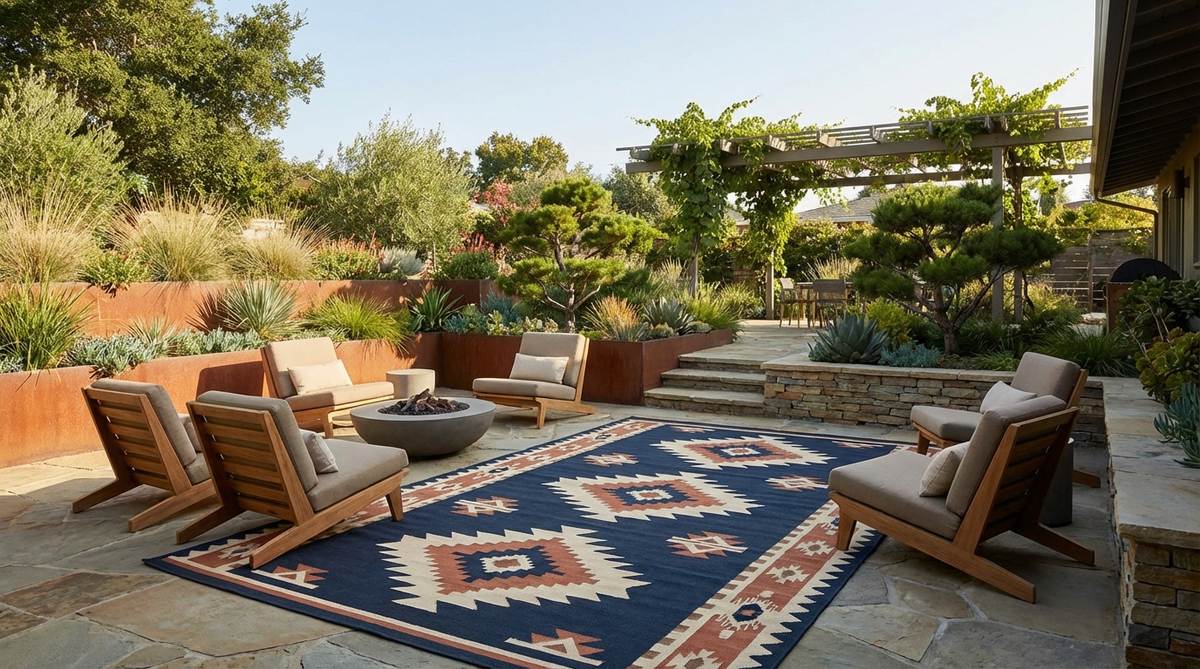
Ties the whole outdoor space together with a brilliant pop of retro geometry. Using weatherproof patio area rugs is essential for softening a harsh concrete dining deck.
Bare concrete can feel overwhelmingly cold and echoey; a bold, angular rug instantly anchors your mid century modern garden furniture and defines the seating zone. It adds massive visual warmth without permanent construction.
Quality outdoor rugs run $80–$150.
- Key Materials: Woven synthetic weather-resistant fibers
- Vibe / Style: Retro patterned comfort
- Difficulty: Roll and go
- Budget Breakdown: 8×10 Rug: $120 | Rug Pad: $30.
- Creator’s Tip: Always size up; the front legs of all your seating furniture should comfortably rest on the rug to prevent it from blowing around.
- Smart Sourcing: UV-coated geometric outdoor rugs and heavy-duty rug gripper pads.
36. Horizontal Board Fencing
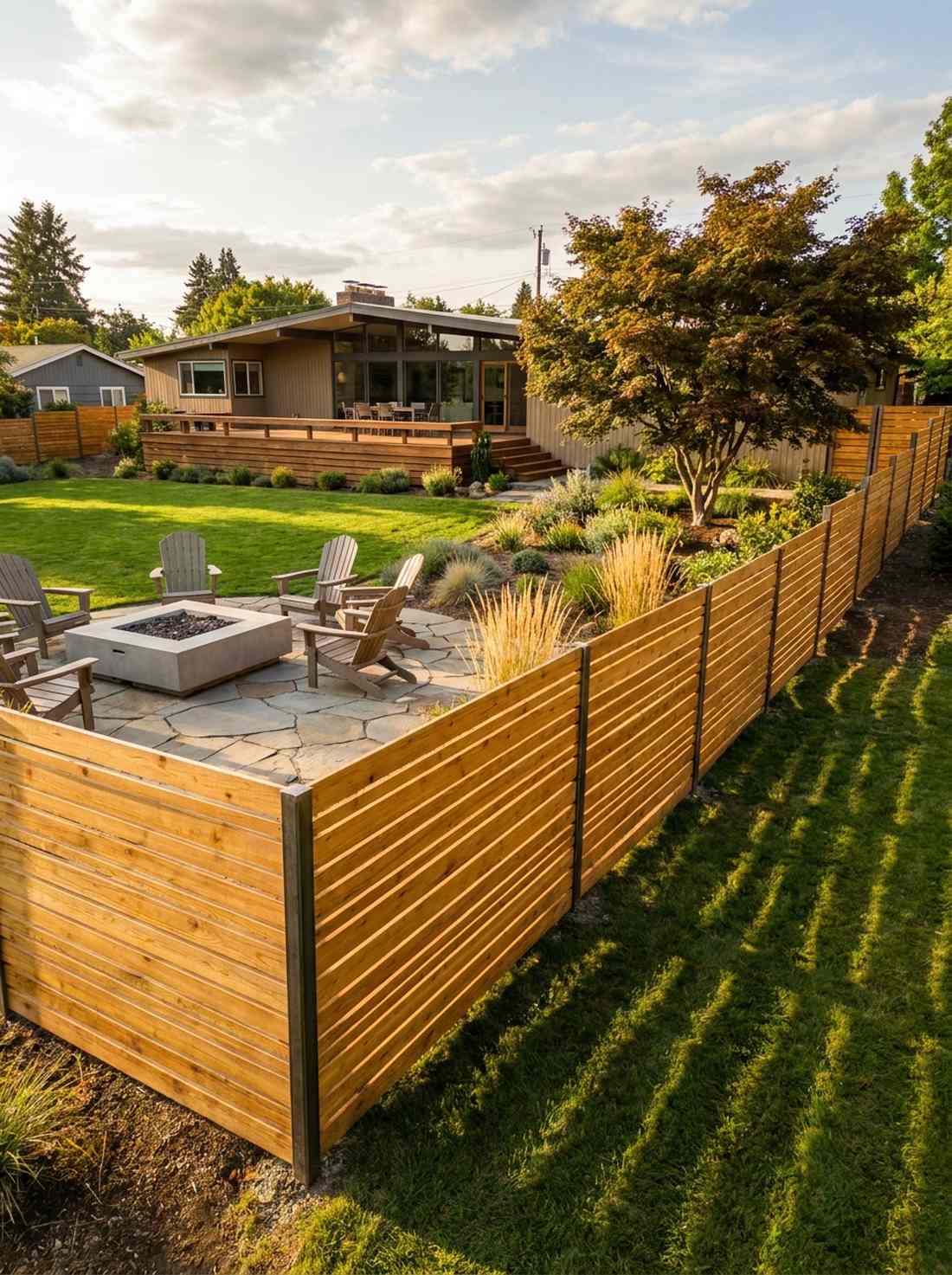
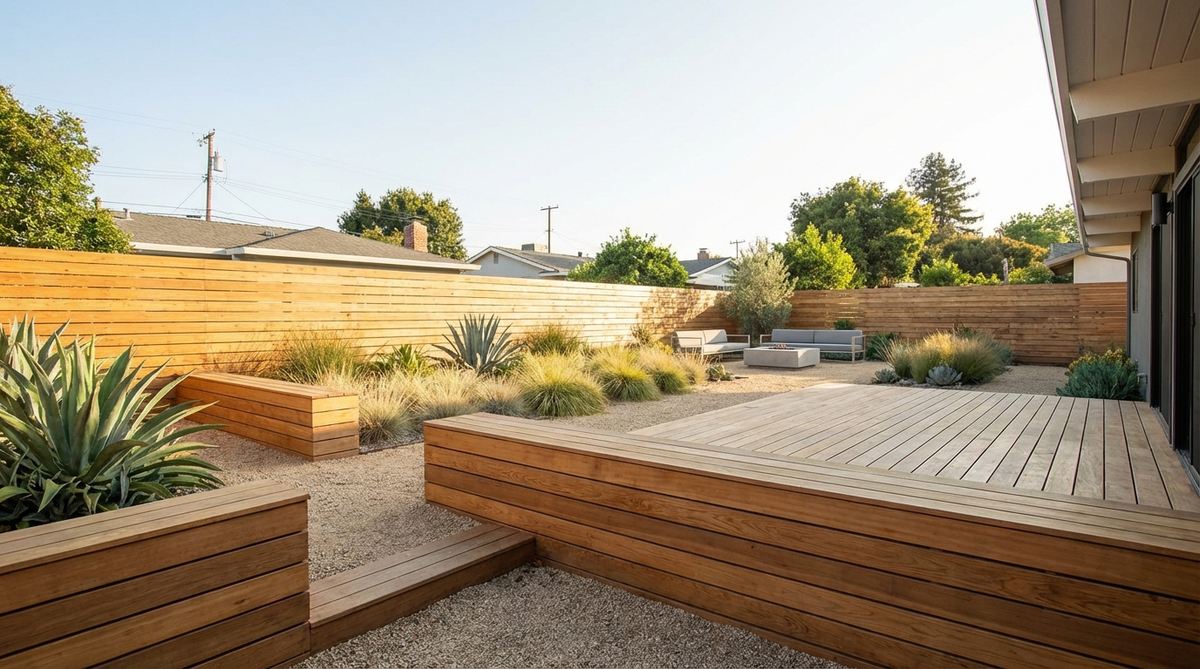
Stretches the eye, making your yard feel massive, continuous, and secure. Exploring mid century modern garden fence designs is perfect for surrounding the perimeter of a retro property.
Vertical dog-ear fences scream basic suburbia; horizontal cedar planks emphasize low, sweeping architectural lines that define the 1950s era. Leaving a quarter-inch gap between boards creates stunning shadow lines.
Materials cost around $25–$45 per linear foot. Save this to your property boundary ideas!
- Key Materials: Kiln-dried cedar planks and steel posts
- Vibe / Style: Expansive horizontal framing
- Difficulty: Intermediate carpentry
- Budget Breakdown: Lumber: $20/ft | Posts/Concrete: $10/ft.
- Creator’s Tip: Stain the wood with a clear UV-protectant rather than a colored paint to let the natural grain act as a design feature.
- Smart Sourcing: premium kiln-dried cedar planks (bulk) and exterior-grade wood stain and sealer.
Restoration Essentials & Maintenance
37. Documenting Original Features
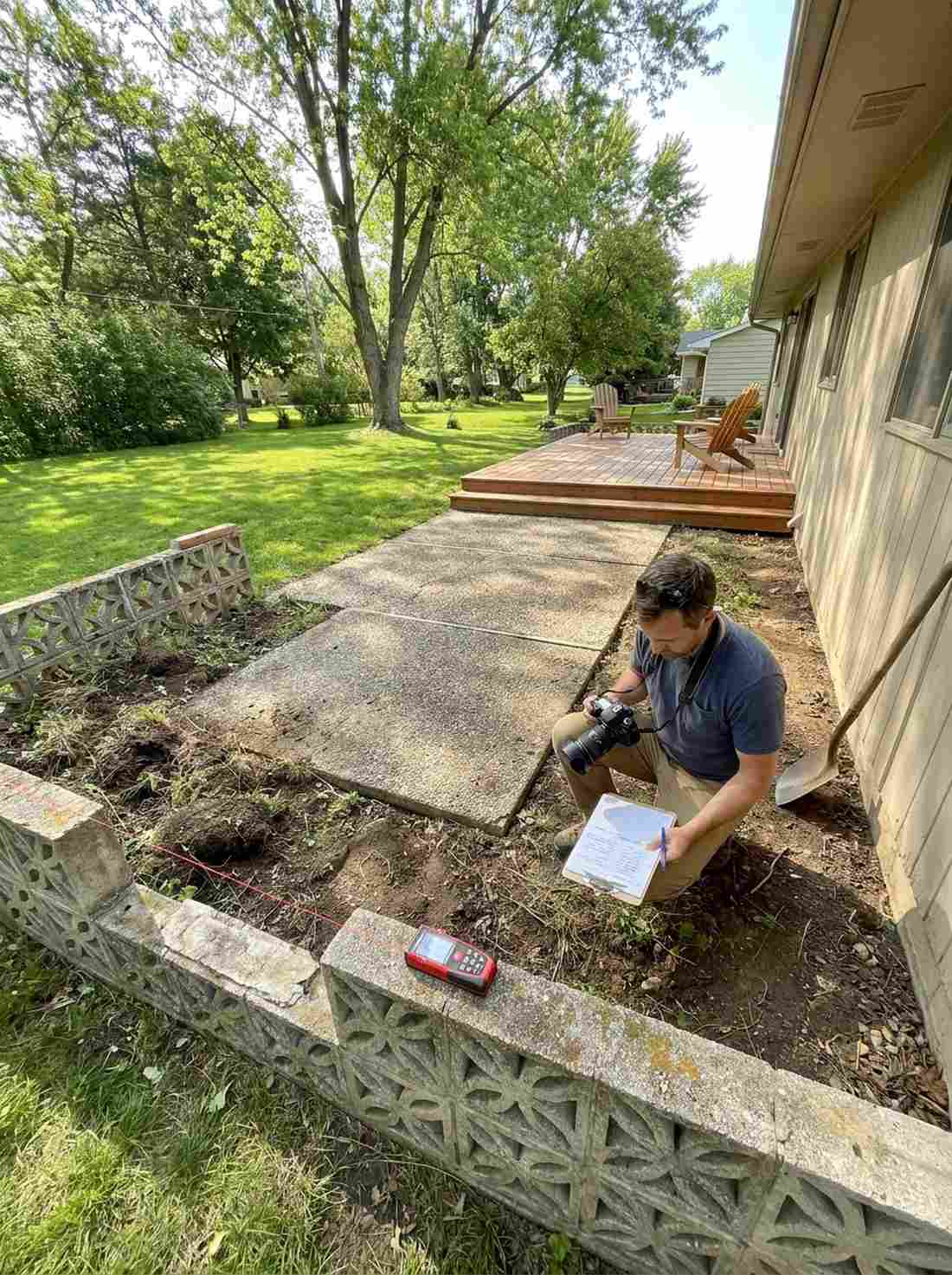
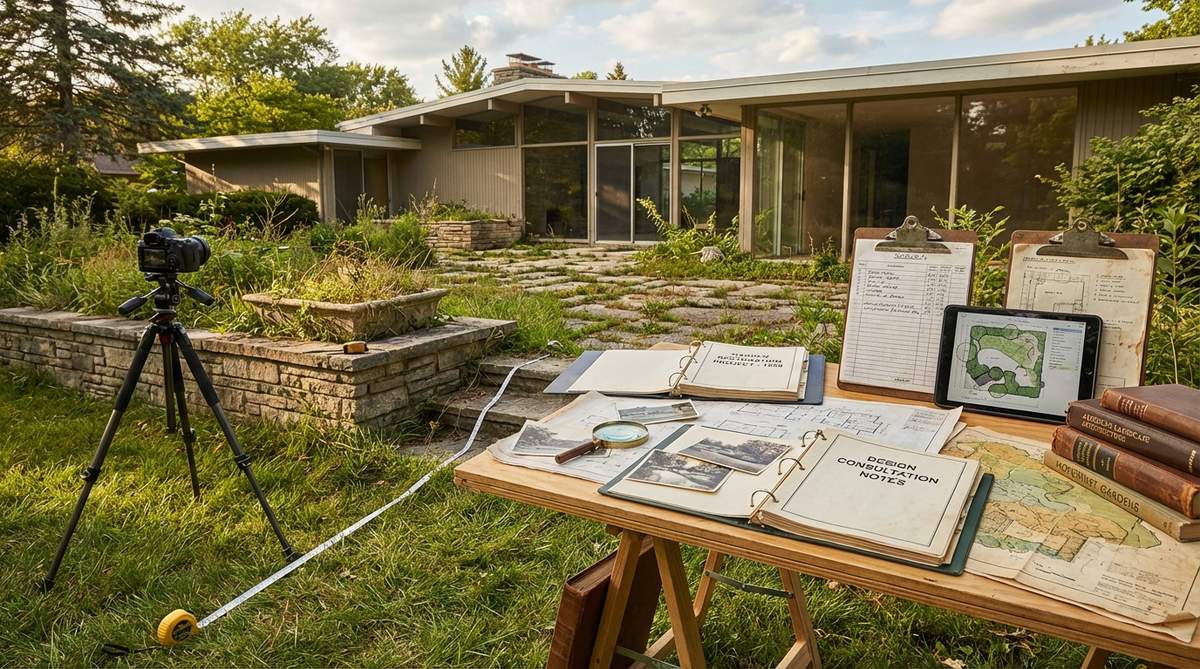
Feels like uncovering a hidden architectural treasure in your own backyard. Proper landscape preservation planning is the crucial first step before renovating a 1950s home.
Ripping everything out blindly is a rookie mistake; identifying and saving original aggregate concrete or breeze blocks adds massive historical and monetary value. You can blend vintage elements seamlessly with modern upgrades.
This costs absolutely nothing but your time.
- Key Materials: Camera and site planning notes
- Vibe / Style: Authentic historical reverence
- Difficulty: Research heavy
- Budget Breakdown: Time Investment Only: $0.
- Creator’s Tip: Dig a few inches down near the patio edge to see if a nicer original hardscape layer is hiding under years of overgrown dirt.
- Smart Sourcing: waterproof field notebooks and laser distance measuring tools.
38. Repairing Concrete Surfaces
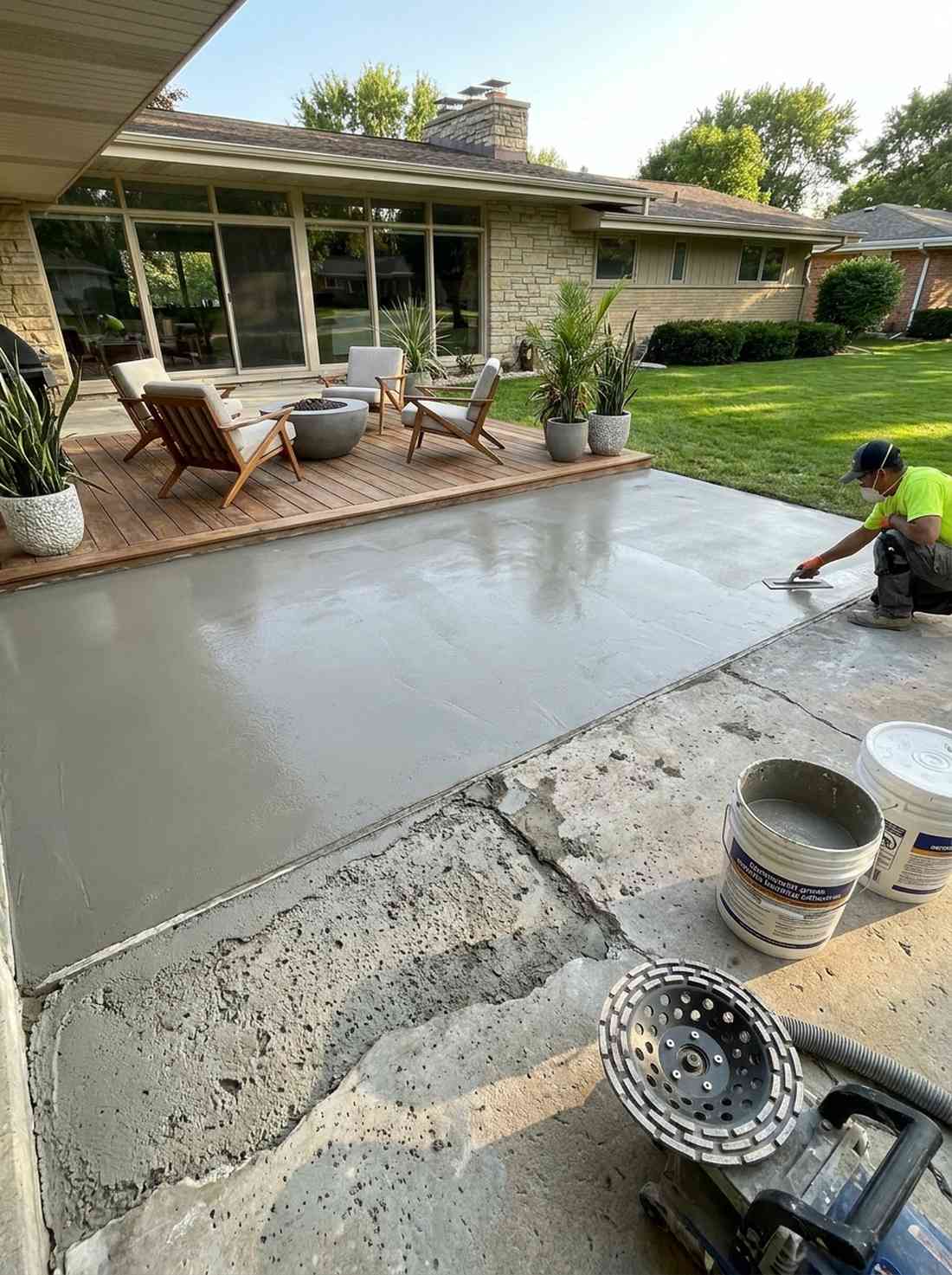
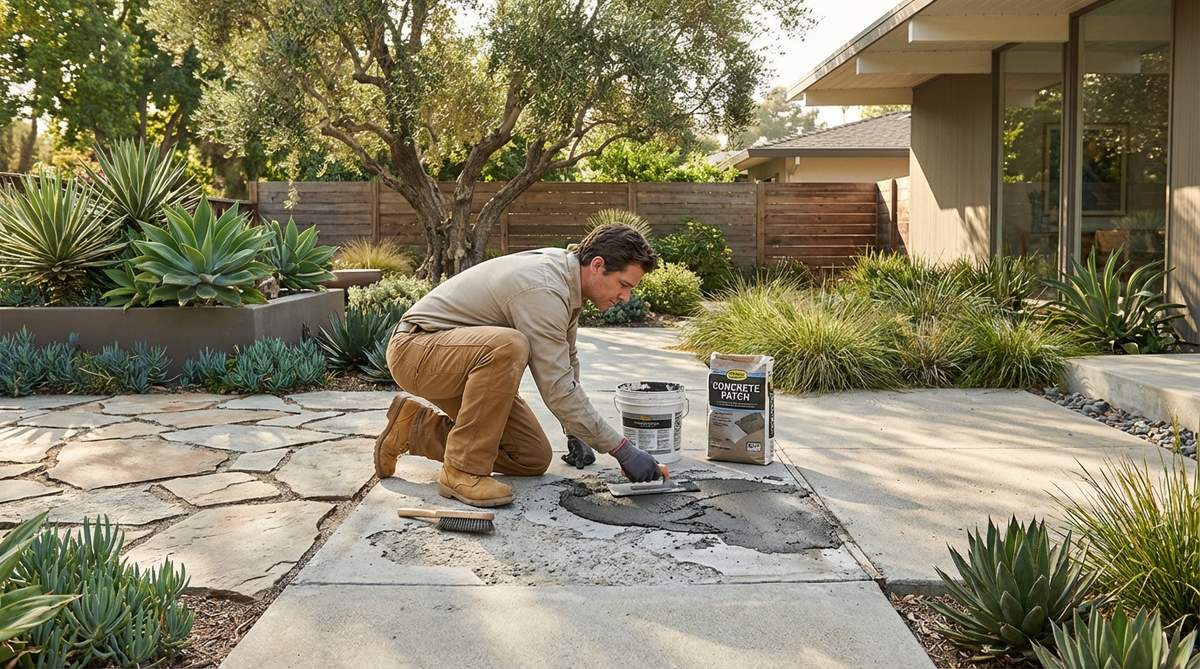
Brings cracked, sad patios back to their pristine, smooth glory. Mastering mid century patio restoration is essential for fixing spalled and weathered 60-year-old slabs.
Pouring all-new concrete costs an absolute fortune, but using high-grade bonding agents and resurfacers restores the original sleek aesthetic perfectly. It gives you a brand-new canvas without the demolition fees.
Repair kits run $50–$150. Pin this to save a ton on renovations!
- Key Materials: Concrete bonding adhesives and resurfacers
- Vibe / Style: Flawless renewed structure
- Difficulty: Labor intensive prep work
- Budget Breakdown: Bonding Agent: $40 | Resurfacer: $60 | Tools: $30.
- Creator’s Tip: Preparation is everything—rent a concrete grinder to expose fresh, porous cement before applying any patch so it bonds permanently.
- Smart Sourcing: commercial-grade concrete bonding adhesives and heavy-duty diamond cup grinding wheels.
39. Updating Irrigation Systems
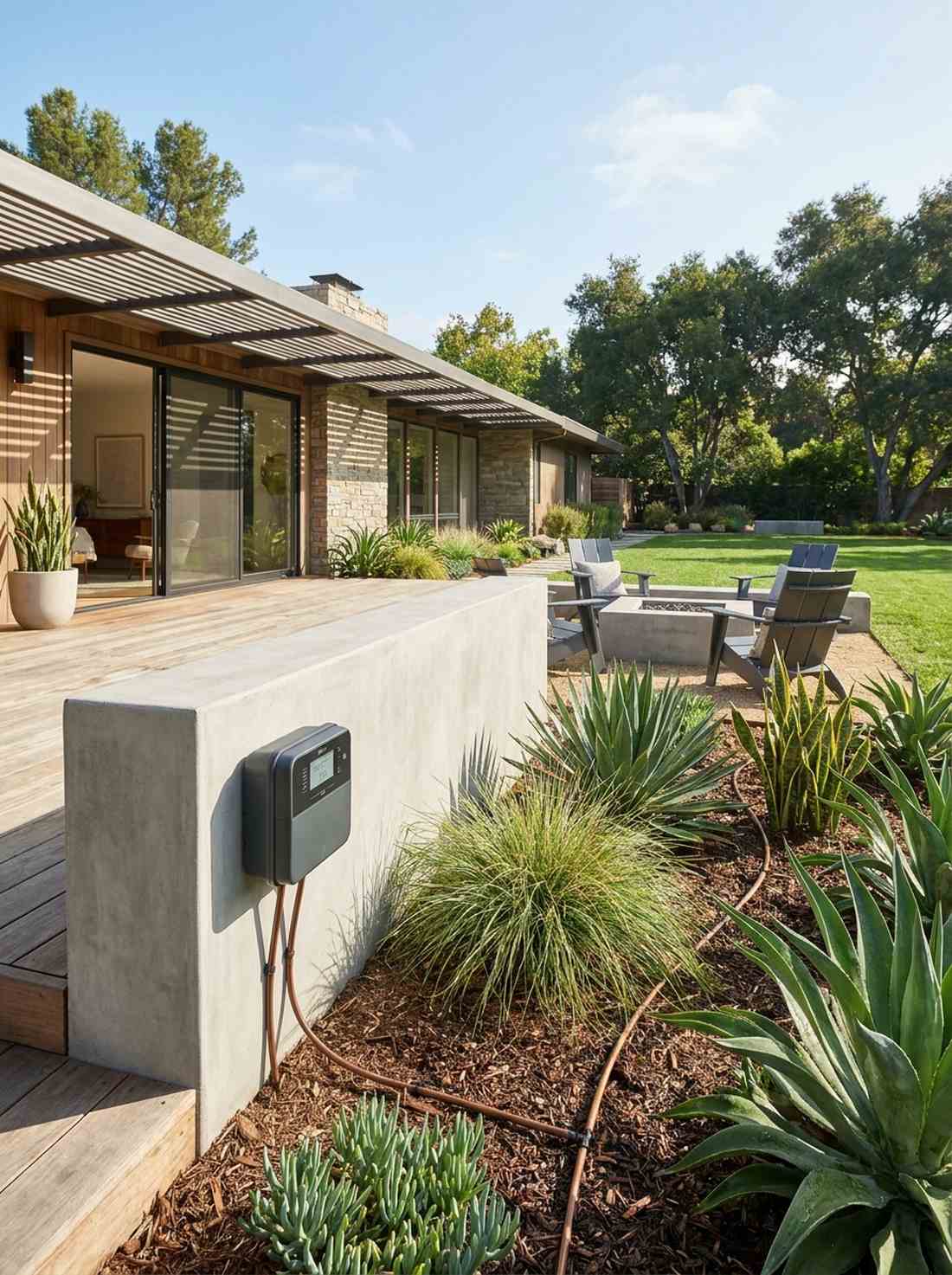
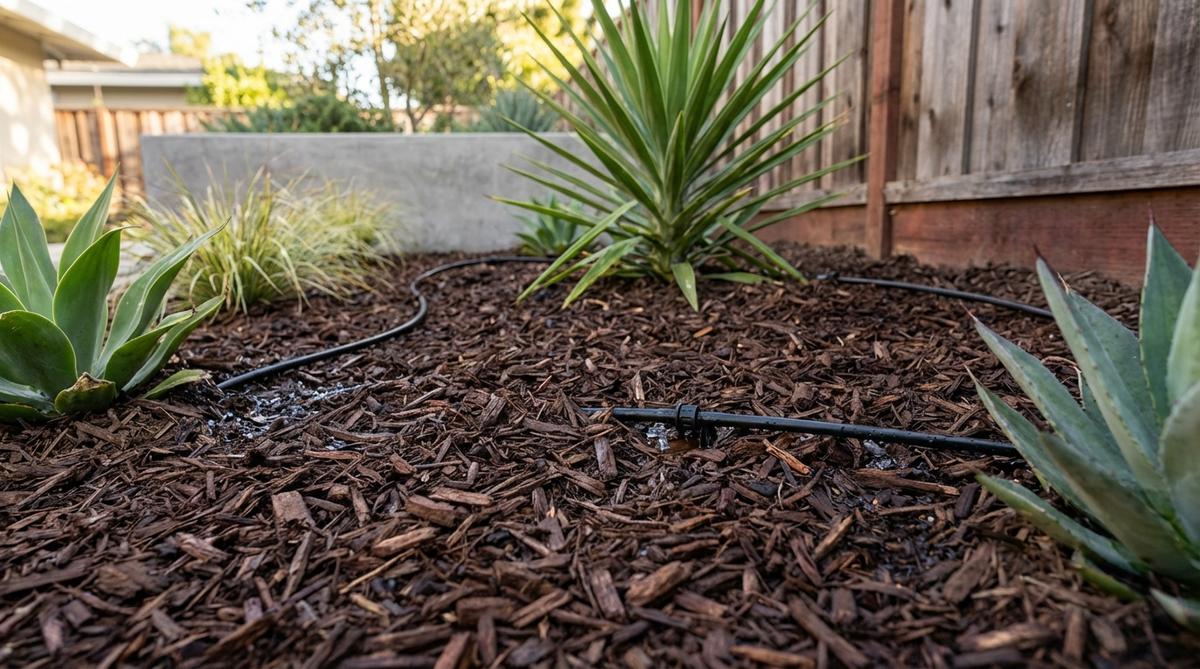
Invisible, incredibly efficient, and brilliantly modernized. Installing smart garden watering systems keeps your mid century modern gardens green without wasting a drop.
Traditional sprayers waste water and leave ugly hard-water stains on your pristine concrete walls; stealthy drip lines paired with a smart controller slash your water bill overnight. It puts the water exactly where the architectural plants need it.
A smart tech upgrade costs $150–$300.
- Key Materials: Smart controllers and drip tubing
- Vibe / Style: Invisible high-tech efficiency
- Difficulty: Easy tech swap
- Budget Breakdown: Smart Controller: $150 | Drip Tubing Roll: $50.
- Creator’s Tip: Use weather-sensing controllers that automatically skip watering days when local rain is forecasted.
- Smart Sourcing: WiFi-enabled smart irrigation controllers and pressure-compensating drip irrigation tubing (bulk roll).
You’ve made it this far—don’t ruin your hard work by ignoring the mature elements already in your yard…
40. Preserving Mature Specimens
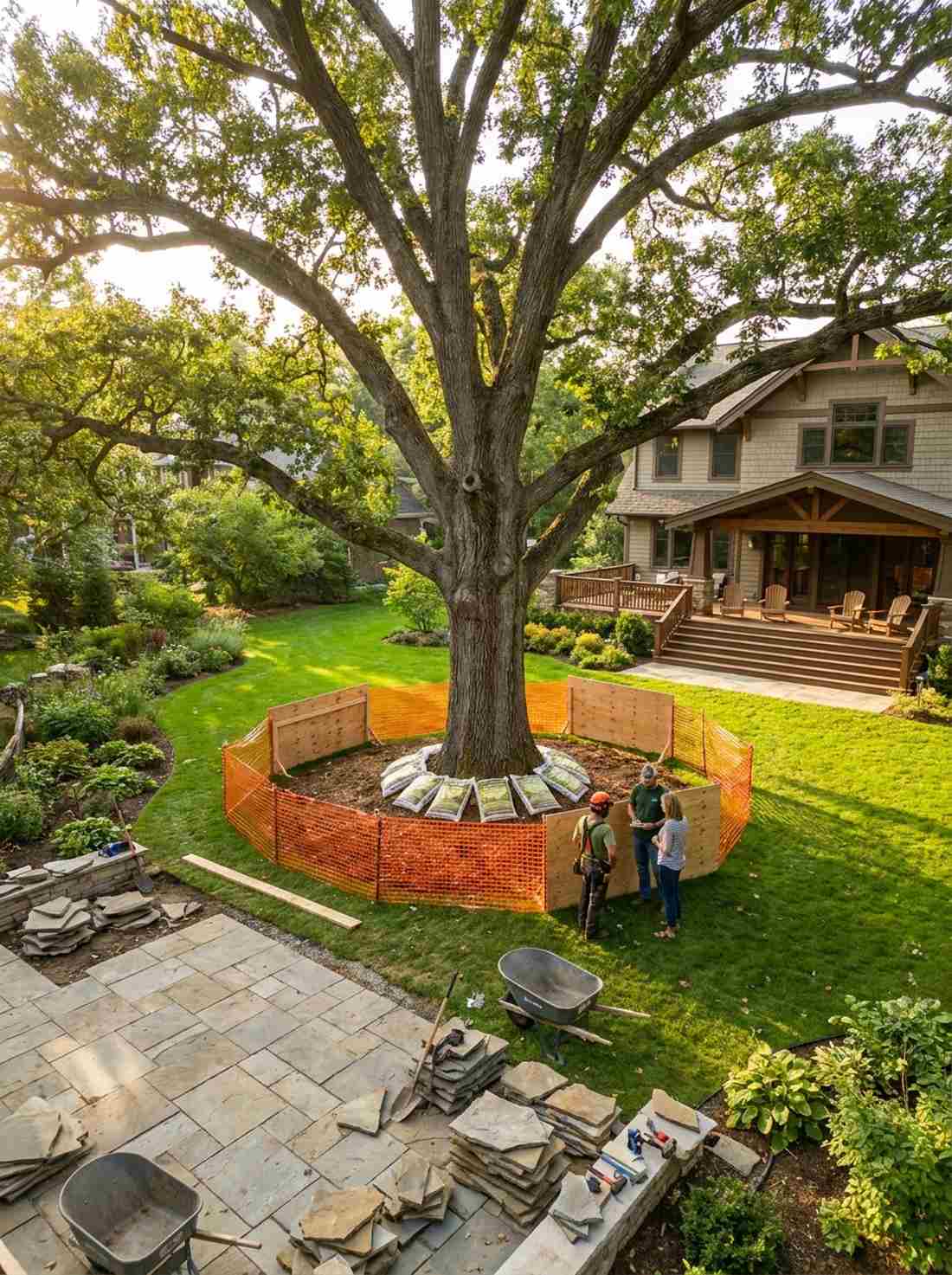
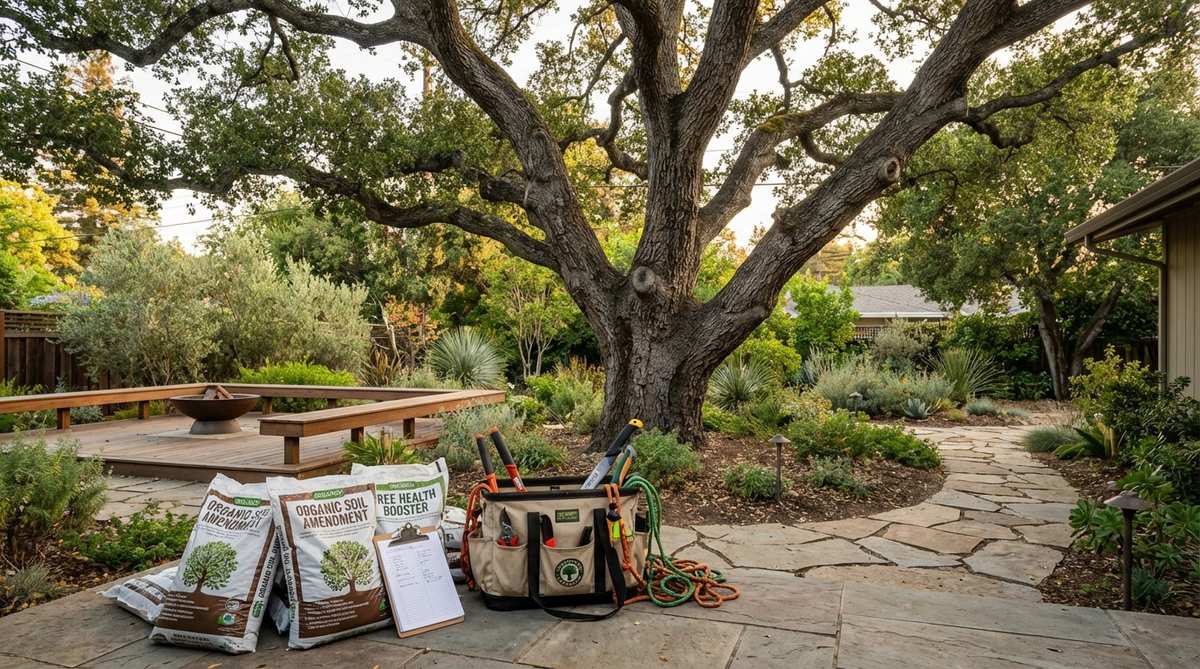
Respects the majestic, towering giants that give your yard its true soul. Mature landscape tree care is critical when doing a major yard haul or hardscape addition.
Cutting down old growth simply to make room for new designs is tragic; protecting these specimens is the true hallmark of high-end design. An old, sculptural tree cannot be bought at a nursery—it takes decades to grow.
Arborist pruning typically costs $200–$500.
- Key Materials: Root protection fencing and nutrients
- Vibe / Style: Established luxury estate
- Difficulty: Needs professional guidance
- Budget Breakdown: Arborist Consult: $150 | Deep Root Feed: $80.
- Creator’s Tip: Never let heavy construction machinery drive over the root zone of a mature tree, as soil compaction will slowly kill it over the next year.
- Smart Sourcing: mycorrhizal root inoculant powder and heavy-duty tree protection fencing.
Bringing Your Vision to Life
Creating an authentic, luxury outdoor space doesn’t mean blindly throwing money at the problem—it’s about strategic sourcing and knowing exactly which upgrades deliver a premium aesthetic. By following these 40 specific item blueprints, you can effectively balance geometric clarity, natural materials, and restrained plantings to achieve the sophisticated simplicity that defines this enduring era. Whether you are restoring an original landscape or designing a totally new space inspired by the aesthetic, executing these specific hardscape and planting strategies guarantees an expensive-looking finish that completely maximizes your budget.
Frequently Asked Questions
What plants are best for mid century modern gardens?
Focus on high-impact architectural specimens that look expensive but require almost zero maintenance. Premium choices include Italian Cypress starter kits for vertical boundaries, massive sculptural agaves, and drought-tolerant blue oat grass. To save money, buy bulk packs of creeping junipers instead of traditional grass seed. In warmer climates, investing in a single mature specimen olive tree completely transforms the yard and provides authentic, high-end period character without needing constant pruning.
How do I maintain the minimalist aesthetic in my mid century garden?
Extreme restraint and strategic material sourcing are your best friends. Limit your design to three foundational textures: smooth concrete, treated wood, and weathering steel edging. Skip cheap plastic borders and invest in flexible Corten steel edging strips to keep your lines perfectly crisp. Keep your planting beds tightly controlled by using a heavy-duty commercial weed barrier beneath crushed gravel, completely eliminating messy overgrowth and cluttered, high-maintenance flower beds.
What is the difference between mid century modern and contemporary landscape design?
Mid-century modern landscapes strictly rely on period-accurate design principles like seamless indoor-outdoor flow, modular concrete grid pavers, and horizontal fencing. Contemporary design is a broader mix of current trends that often lacks historical anchor points. If you want that expensive retro aesthetic, you must stick to classic materials—like sourcing pre-cast geometric breeze blocks and emphasizing long, sweeping horizontal lines rather than chaotic, asymmetrical modern layouts.
How can I restore an original mid century garden while improving functionality?
Start by auditing your existing layout before spending a dime on demolition. Preserve original aggregate concrete slabs by utilizing commercial-grade concrete resurfacers rather than paying thousands to pour new pads. Update your underlying infrastructure invisibly by swapping out old, wasteful sprinkler heads for WiFi-enabled smart irrigation controllers and hidden drip lines. This marries perfectly authentic 1950s visual preservation with premium, cost-saving modern performance.
What are essential hardscape materials for authentic mid century modern gardens?
Your ultimate foundational material is concrete—whether it’s used for grid paving, retaining walls, or DIY board-formed planters. Pair it with premium natural flagstone pallets arranged in crazy paving patterns for organic texture. For ground cover, skip mulch and bulk-buy stabilized decomposed granite for a crisp, low-maintenance finish. Finally, integrate wood elements using premium kiln-dried cedar planks for horizontal fencing, ensuring you strictly limit the material palette to keep the yard looking curated and expensive.