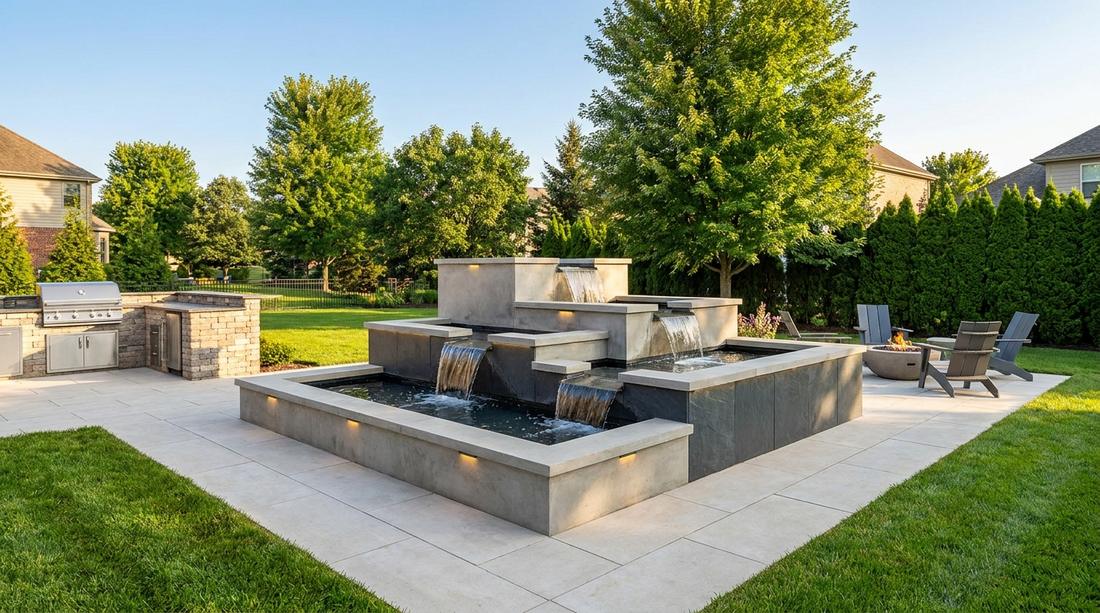
Finding the perfect modern garden fountain instantly elevates your backyard layout. We mapped out exactly how to build expensive-looking geometric water features affordably. Grab these smart material sourcing tips for a flawless, designer-level finish.
Design SnapshotKey Principles
- Geometric Precision: Clean lines and angular forms create visual order while directing water flow in predictable, elegant patterns
- Material Contrast: Combining concrete, metal, stone, and glass amplifies the interplay between solid structure and liquid movement
- Flow Control: Laminar nozzles and engineered channels produce smooth cascades, sheets, and arcs with minimal turbulence
- Spatial Integration: Scale and placement align with architectural elements to enhance rather than compete with existing design language
Linear Cascade Fountains That Define Contemporary Edges
Linear fountains direct water along precise horizontal or vertical planes, creating visual boundaries within the landscape. These features work exceptionally well in urban gardens and courtyard settings where space requires deliberate organization.
1. Single-Spout Linear Channel
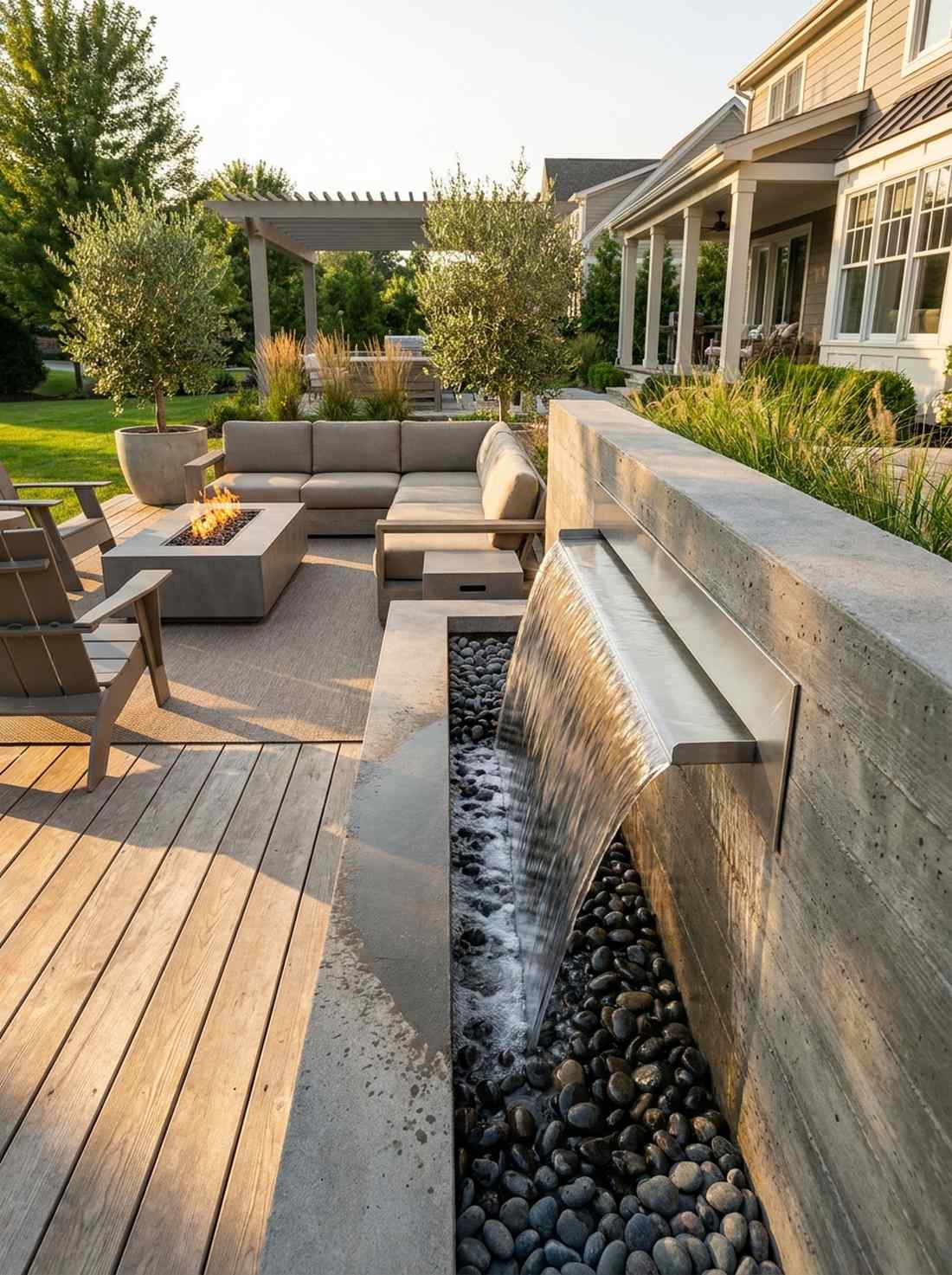
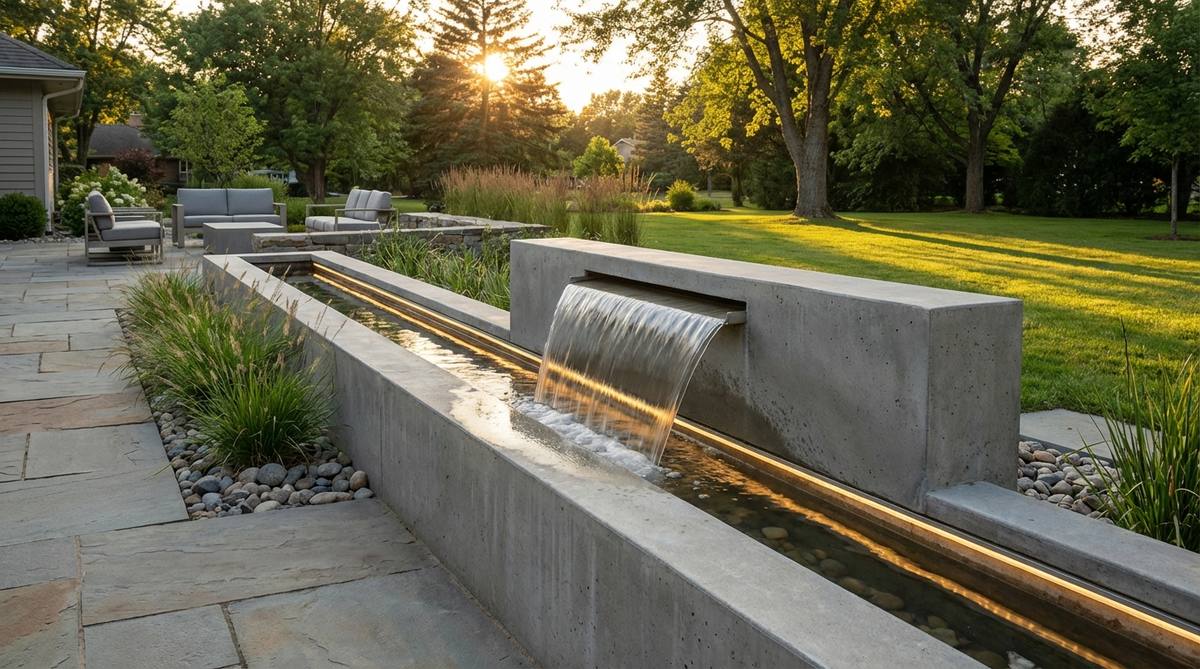
Gives off a sleek architectural gallery vibe that instantly calms the mind. Minimalist concrete water sheets are absolutely stunning when flanking a high-end patio edge or an outdoor lounge boundary.
Many landscapers overcomplicate this, but a straight channel delivers a surprisingly premium look with almost zero effort. Upgrading to a UV-resistant stainless steel spillway completely eliminates rust and algae buildup over time.
You can easily pull this off for around $150–$250 if you source smart. Save this to your modern outdoor upgrade board for future backyard planning!
- Key Materials: Stainless steel sheer descent spillway
- Vibe / Style: Clean architectural minimalism
- Difficulty: Beginner-friendly weekend DIY
- Budget Breakdown: Spillway hardware: $110 | Pump & tubing: $45 | Base block: $30.
- Creator’s Tip: Use an inline water filter to keep the sheet flow completely unbroken.
- Smart Sourcing: Pre-cut stainless steel spillways and a high-flow submersible pump starter kit.
2. Dual-Track Parallel Flow
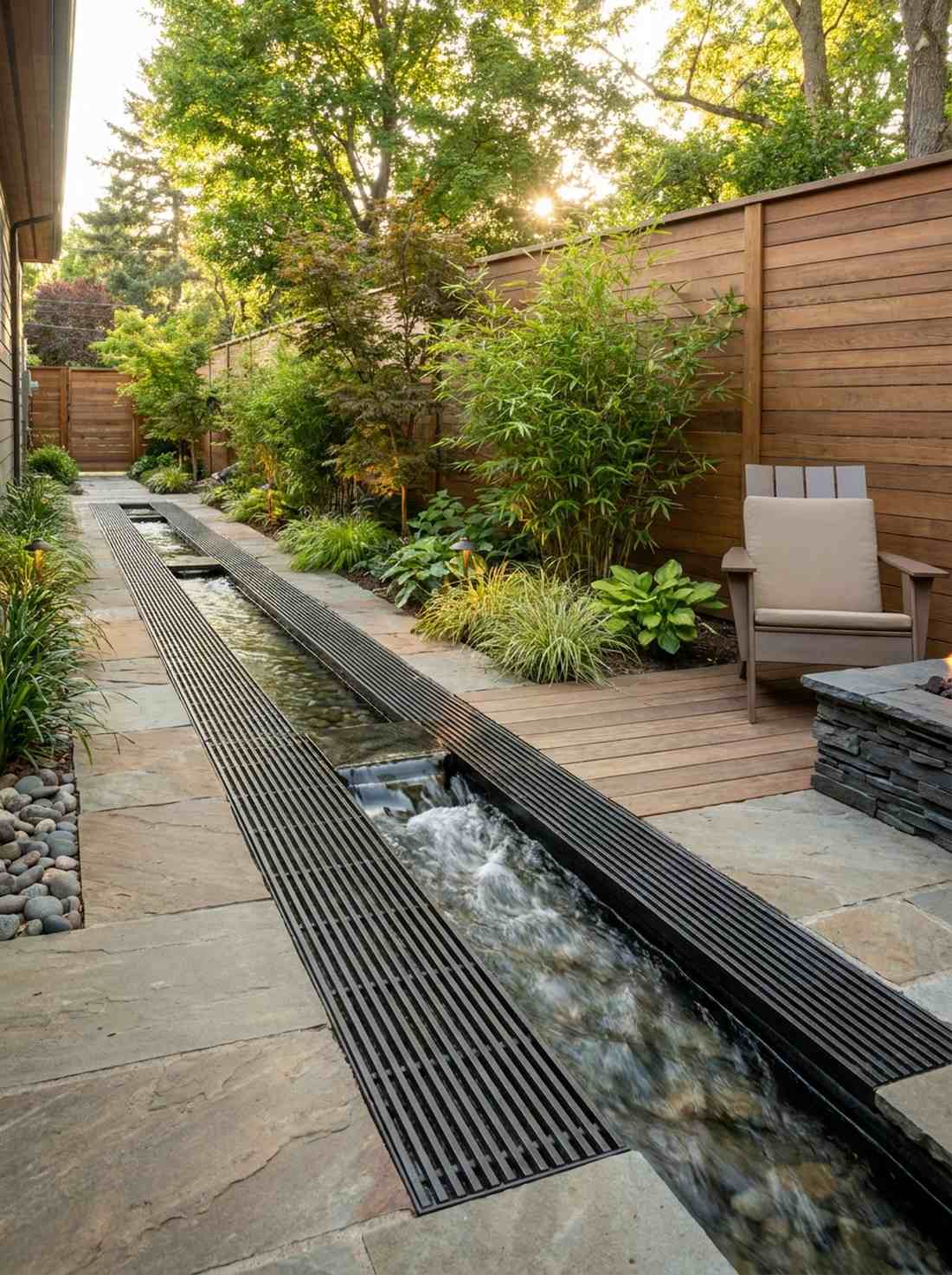
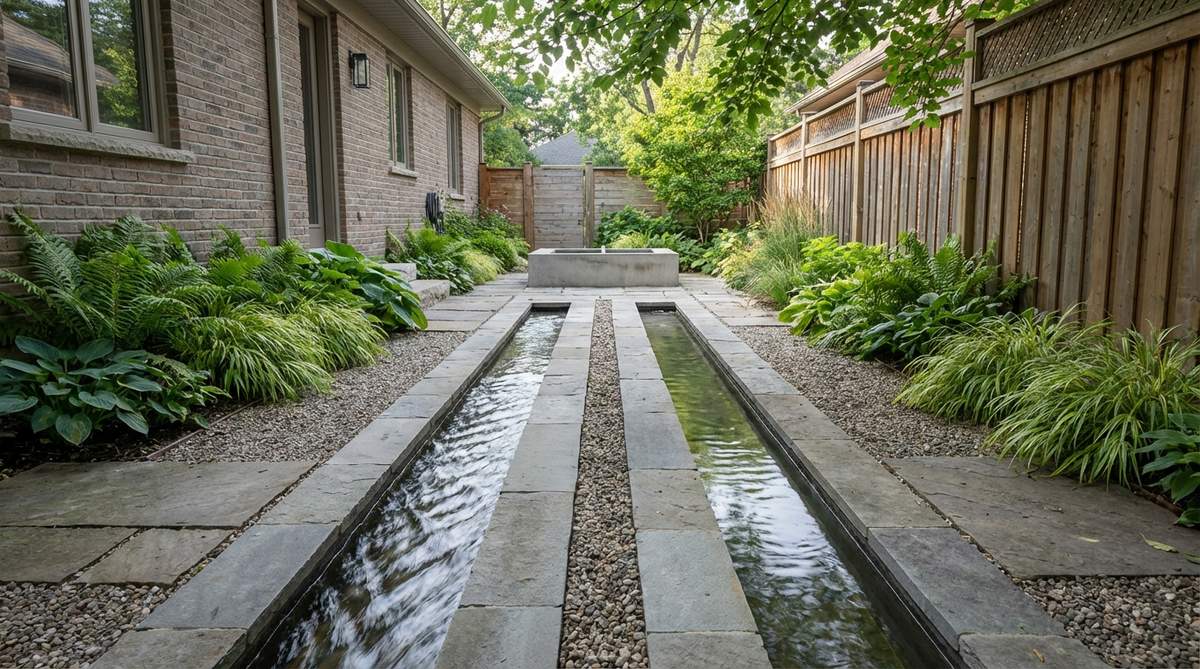
Feels like a hidden zen sanctuary you accidentally discovered at a five-star resort. Parallel urban stream designs work exceptionally well for narrow side yards lacking visual depth.
Forget standard pebble beds; layering distinct flow velocities creates dynamic rhythm that looks far more expensive than it is. Utilizing pre-cast submersible pump kits ensures your modern garden fountain design runs silently underneath decorative metal grates.
Expect to spend roughly $120–$180 on base materials and mechanicals. It’s a fast weekend upgrade that completely changes the walkway vibe.
- Key Materials: Twin narrow flow channels, concealed basin
- Vibe / Style: Modern zen retreat
- Difficulty: Intermediate plumbing alignment
- Budget Breakdown: Hidden basin: $50 | Dual pumps: $70 | Grating: $40.
- Creator’s Tip: Run the two tracks at slightly different speeds for an incredible layered acoustic sound.
- Smart Sourcing: Heavy-duty concealed catch basins (bulk pack) and adjustable flow water pumps.
3. Stepped Linear Descent
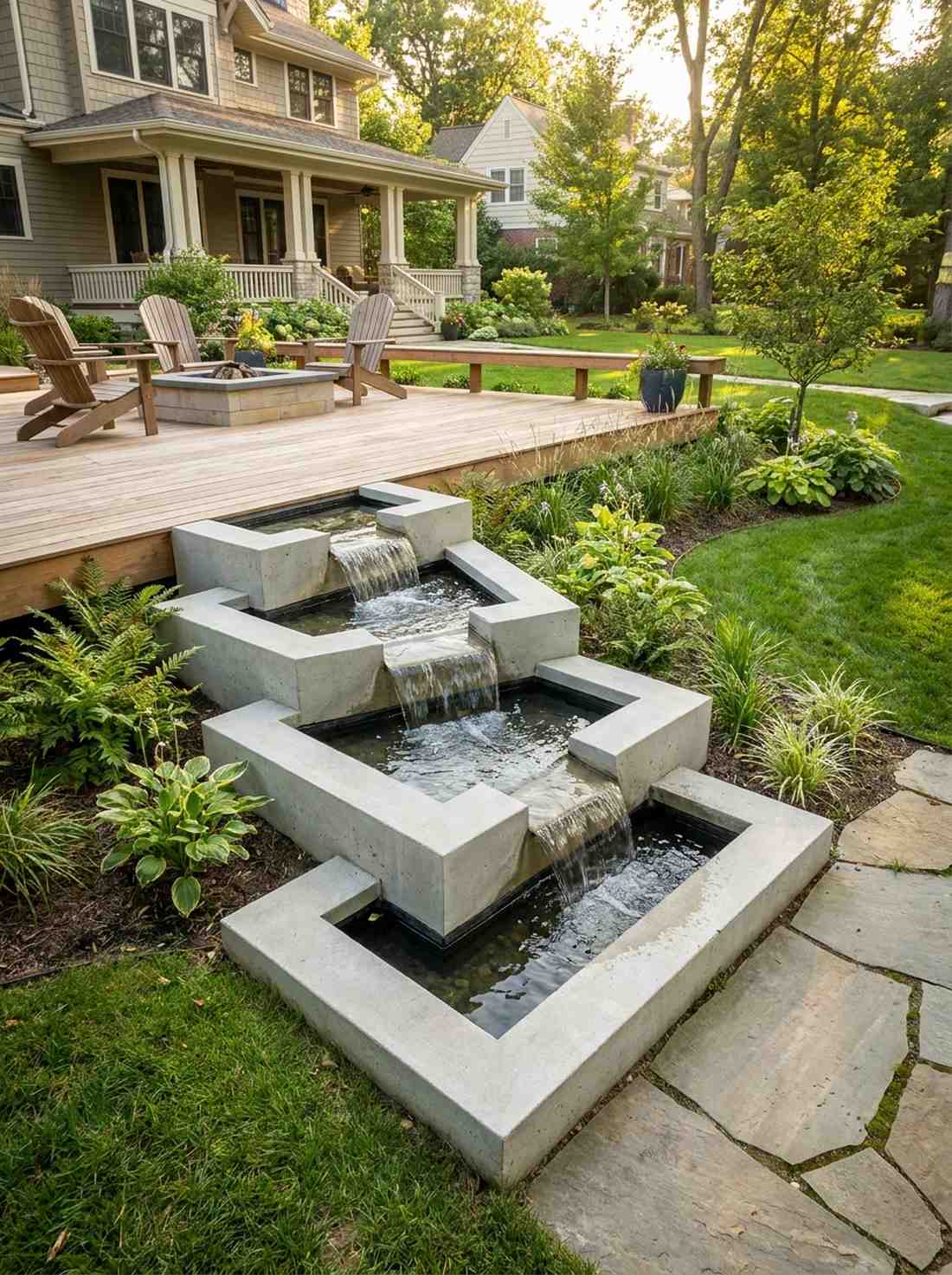
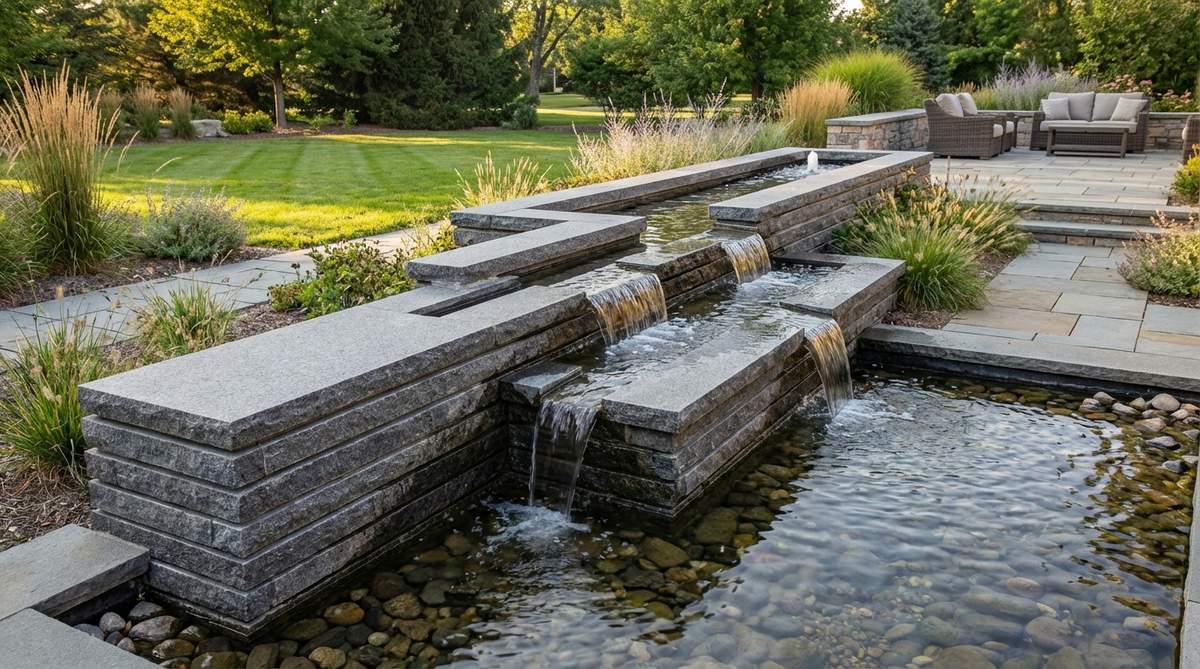
Delivers that soothing mountain stream acoustic but contained within sharp, deliberate boundaries. A terraced angular basin arrangement is perfect for bridging multi-level deck transitions.
People often assume cascading setups need massive space, yet precision-cut stone steps maximize vertical drop while keeping a tight footprint. Sneaking in some modern garden fountain ideas like heavy-duty epoxy sealers ensures the aesthetic outlasts harsh freezing winters.
Budgeting around $200–$350 gets you incredibly durable structural components.
- Key Materials: Pre-cast concrete steps, pond liner
- Vibe / Style: Structured geometric waterfall
- Difficulty: Moderate landscaping effort
- Budget Breakdown: Concrete block: $120 | Sealant: $60 | Plumbing: $50.
- Creator’s Tip: Ensure every step is perfectly level using a laser level to prevent lopsided water cascading.
- Smart Sourcing: UV-coated concrete sealant kits and commercial-grade EPDM pond liners.
4. Floating Linear Trough
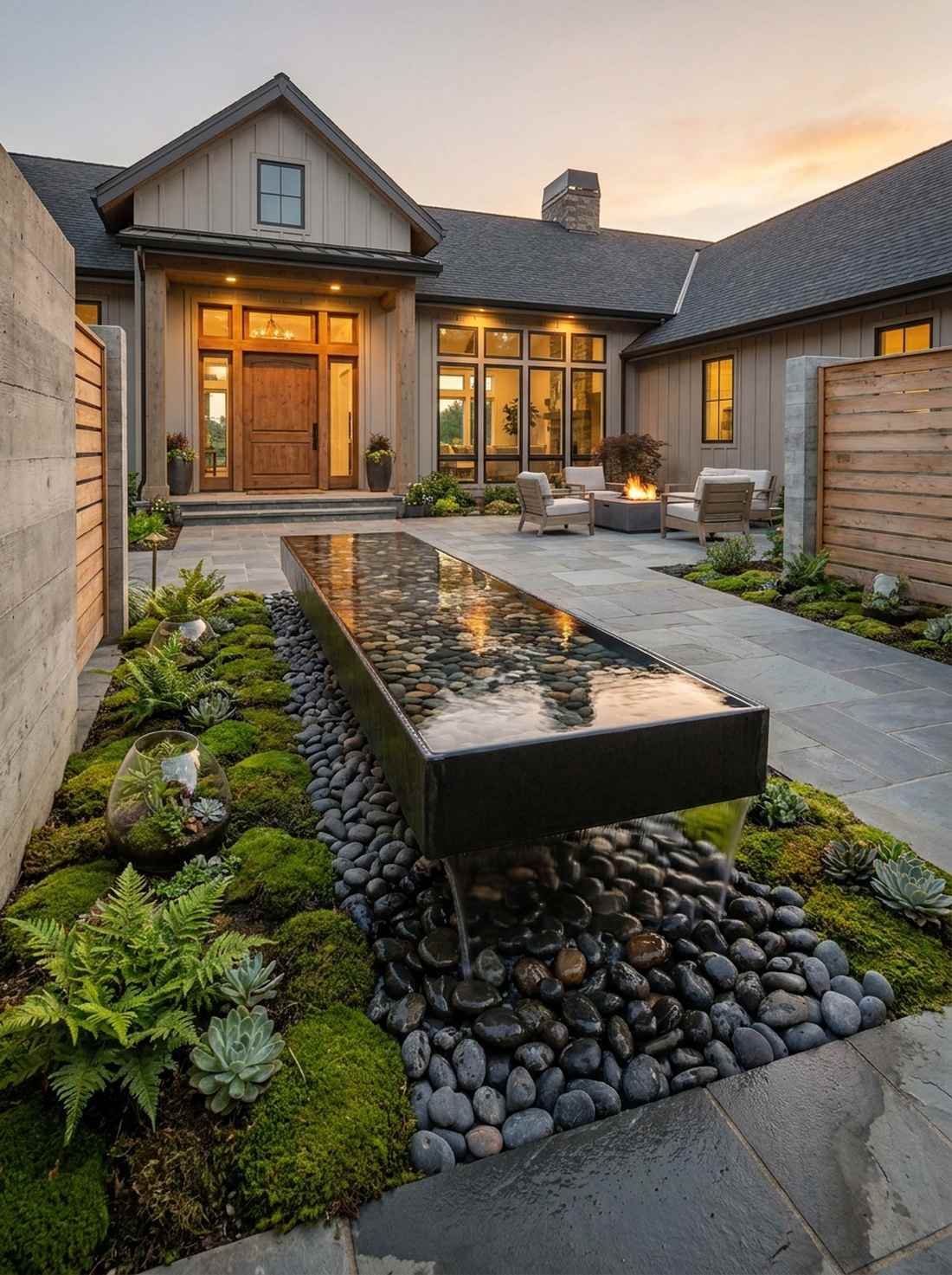
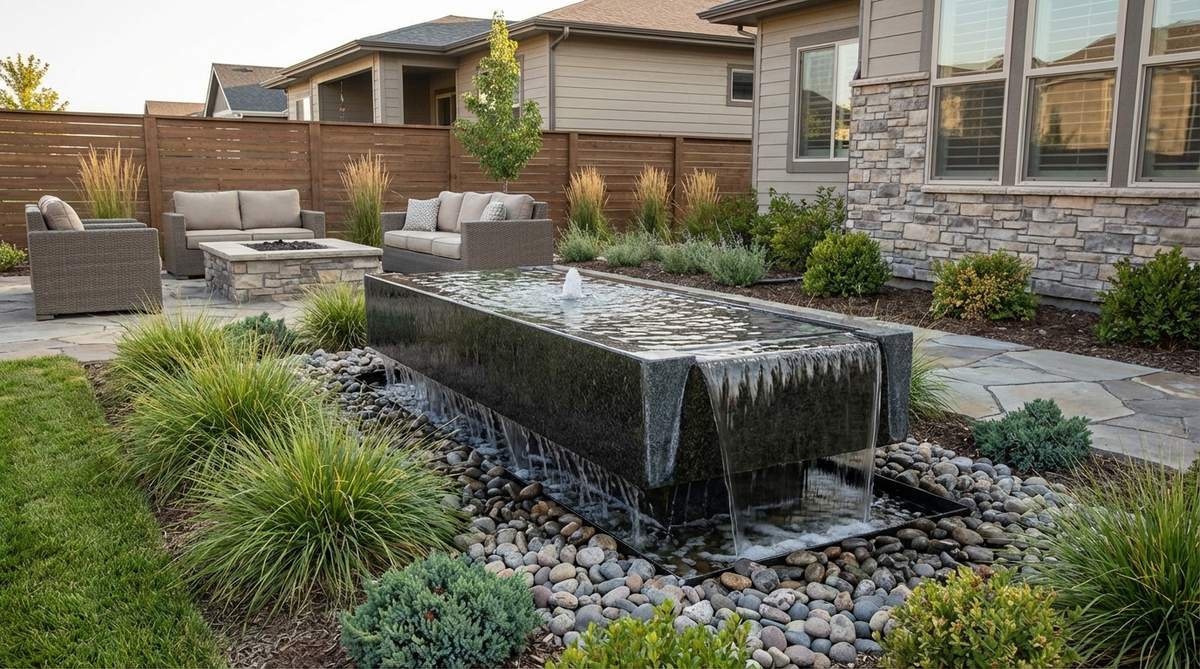
Projects an illusion of defying gravity that absolutely mesmerizes guests. A hovering infinity edge basin makes an unforgettable centerpiece for a formal entry courtyard.
The secret nobody tells you is hiding a reinforced fiberglass catch basin completely beneath heavy river rock. Grabbing high-grade terrarium accessories for surrounding moss accents softens the stark structural contrast perfectly.
You are looking at a $300–$500 range for quality structural supports. Pin this if you want a conversation-starting entryway!
- Key Materials: Hidden steel mounts, fiberglass basin
- Vibe / Style: Illusionary contemporary art
- Difficulty: Advanced structural mounting
- Budget Breakdown: Hidden mounts: $150 | Basin: $200 | Pebbles: $40.
- Creator’s Tip: Paint the hidden support brackets flat black so they disappear completely in the shadow.
- Smart Sourcing: Reinforced fiberglass water basins and bulk pack polished river stones.
5. Knife-Edge Linear Overflow
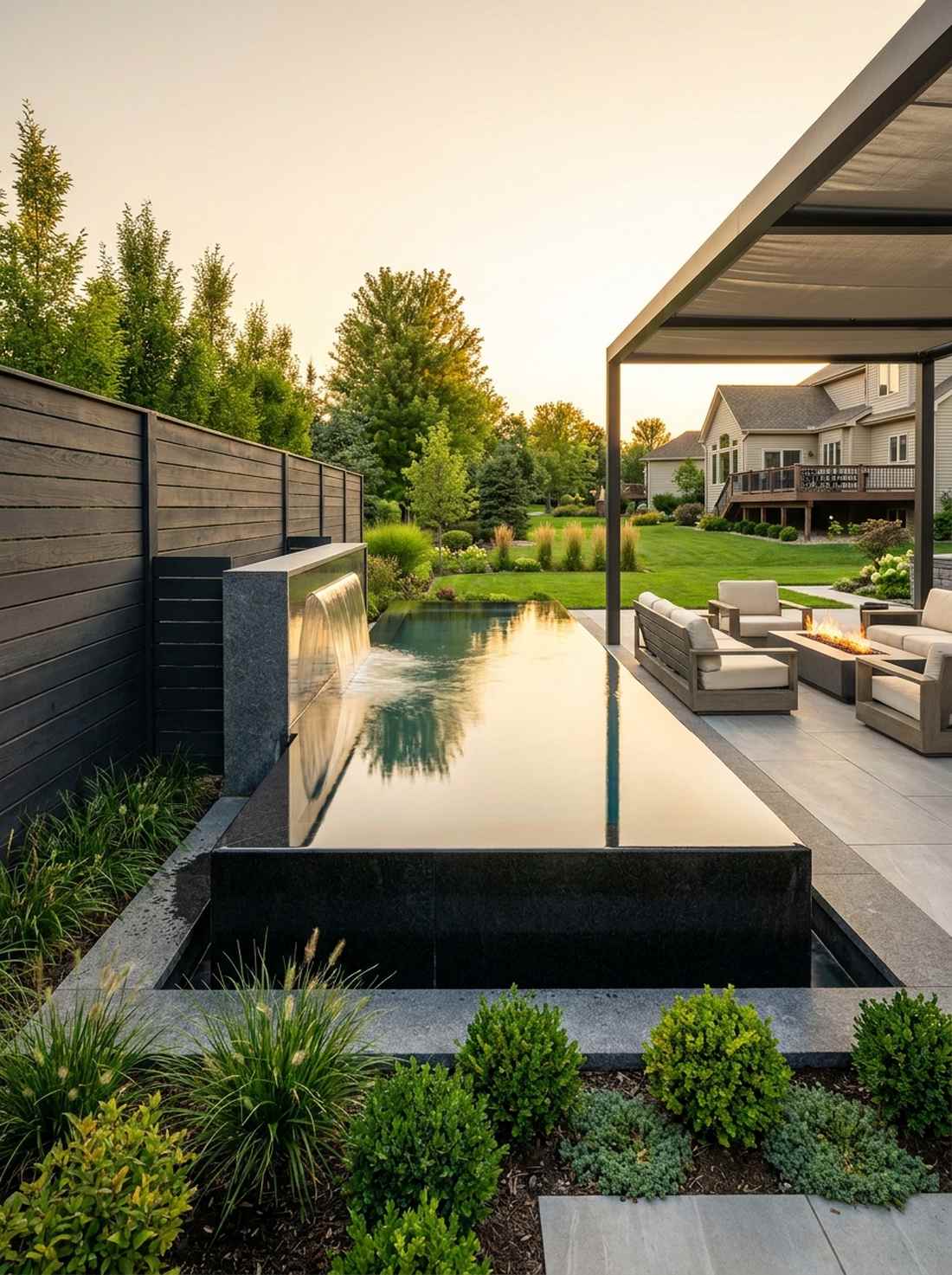
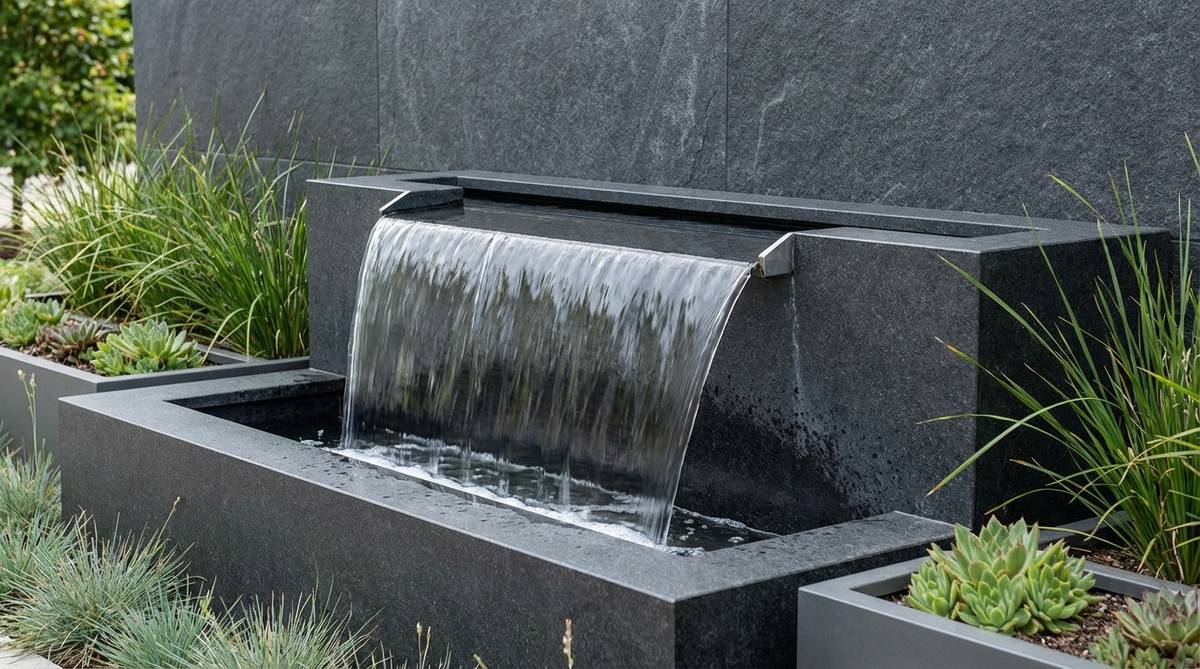
Captures the glassy, mirror-like perfection of a luxury spa retreat. Implementing razor-rim overflow features creates striking reflections against a dark, dramatic privacy fence.
Most DIYers fail here by using cheap plastic lips, but sourcing machined granite edges guarantees flawless, unbroken water tension. This is where investing in top-rated miniature garden supplies for the surrounding flora makes the transparent flow pop.
Precision cuts bring the cost to around $400–$600 depending on stone choice. The reflection quality is undeniably worth the extra spend.
- Key Materials: Machined stone slab, high-capacity pump
- Vibe / Style: Ultra-luxury reflection pool
- Difficulty: Precise leveling required
- Budget Breakdown: Machined edge: $300 | Base structure: $150 | Pump: $80.
- Creator’s Tip: Keep the water surface perfectly clean with a hidden skimmer to maintain the mirror effect.
- Smart Sourcing: Precision-cut acrylic overflow edges and premium pool skimming nets.
This next setup is ridiculously cheap to execute but looks exactly like a $3,000 custom landscape installation…
Cubic and Angular Structures With Dynamic Water Geometry
Cubic forms and angular compositions introduce three-dimensional interest through intersecting planes and offset volumes. These fountains function as sculptural focal points that anchor garden compositions.
6. Stacked Cube Cascade
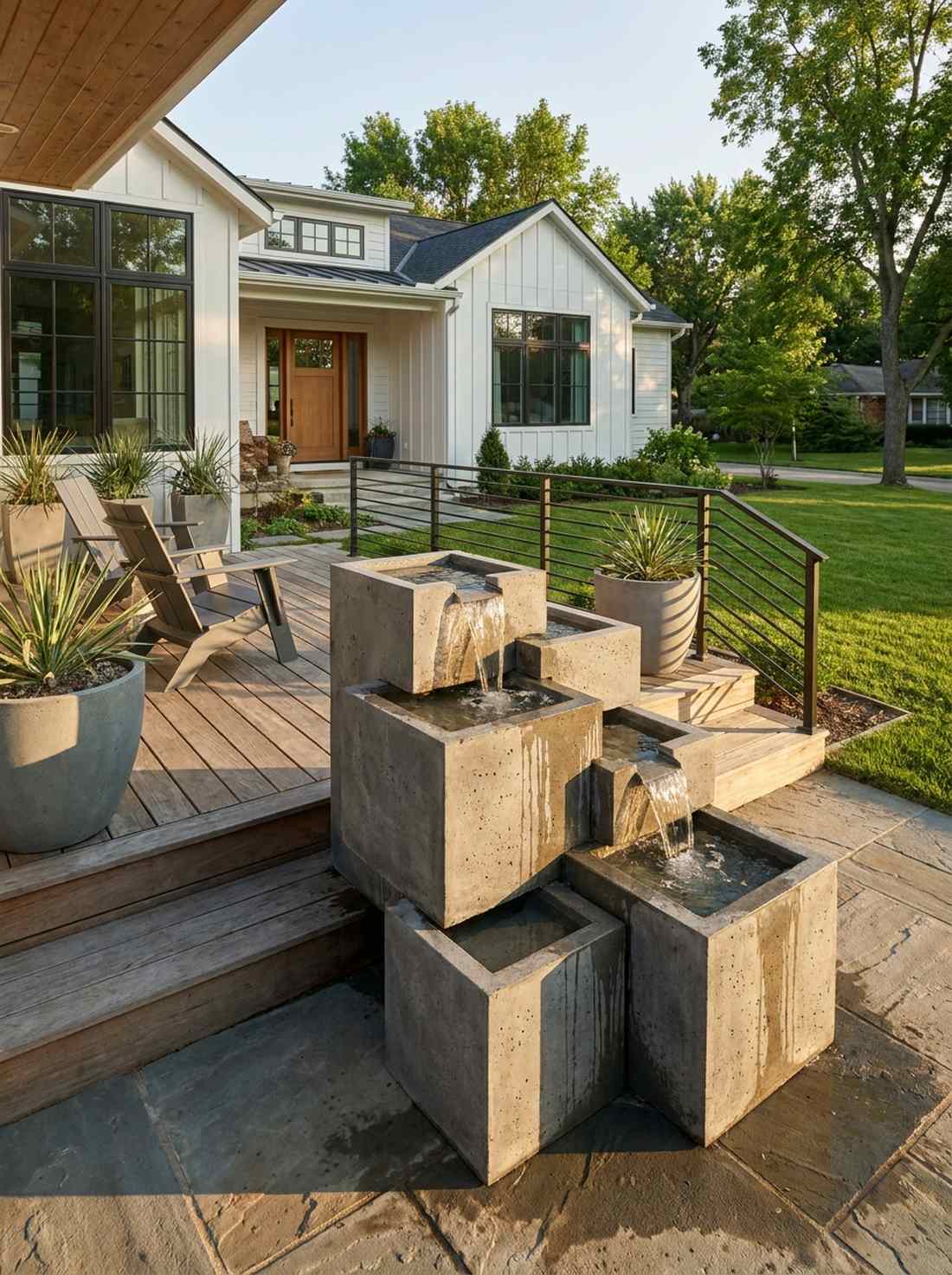
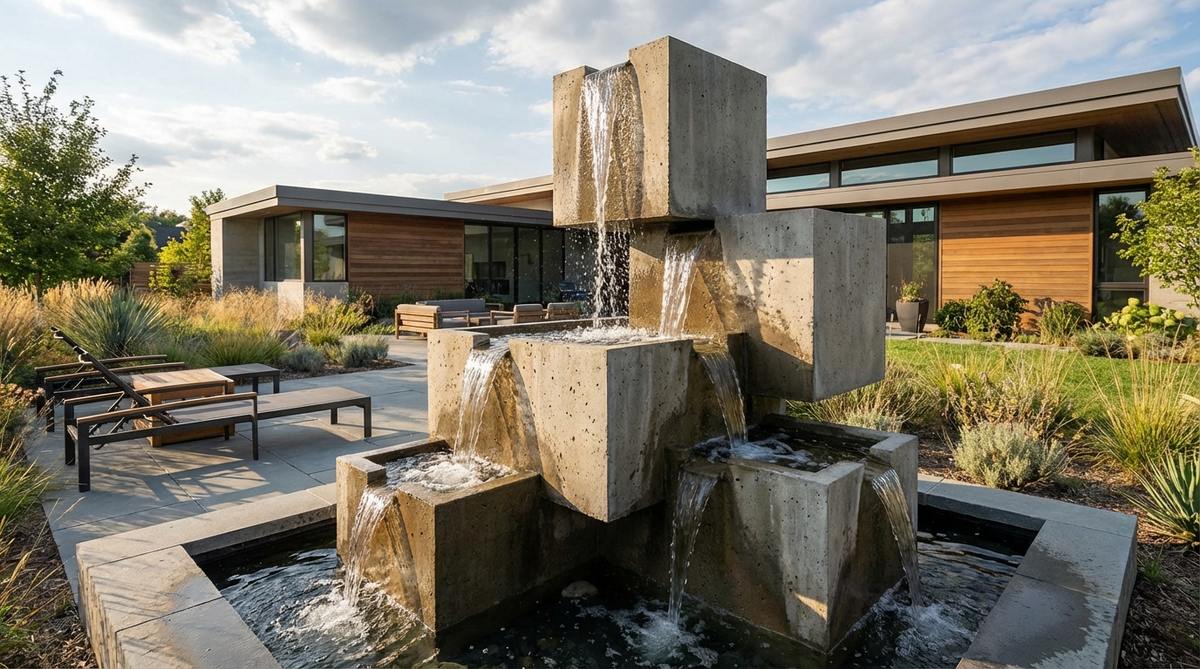
Creates a bold, brutalist rhythm that demands attention right away. Using offset geometric block cascades frames out a modern front porch beautifully.
Stacking identical boxes feels boring, but staggering varying dimensions gives a designer-level finish that plays with light and shadow. Sealing the interior with UV-coated waterproof membranes stops concrete degradation dead in its tracks.
Building this from scratch costs roughly $150–$280 in raw materials. Save this pin for when you want to make a massive architectural statement!
- Key Materials: GFRC boxes, waterproof sealant
- Vibe / Style: Brutalist landscape sculpture
- Difficulty: Intermediate stacking
- Budget Breakdown: Concrete forms: $120 | Sealer: $40 | Tubing: $20.
- Creator’s Tip: Hollow out the back of the cubes to hide the ugly PVC piping completely.
- Smart Sourcing: Pre-made GFRC cubic planters and liquid rubber waterproof sealant (bulk bucket).
7. Rotating Cube Fountain
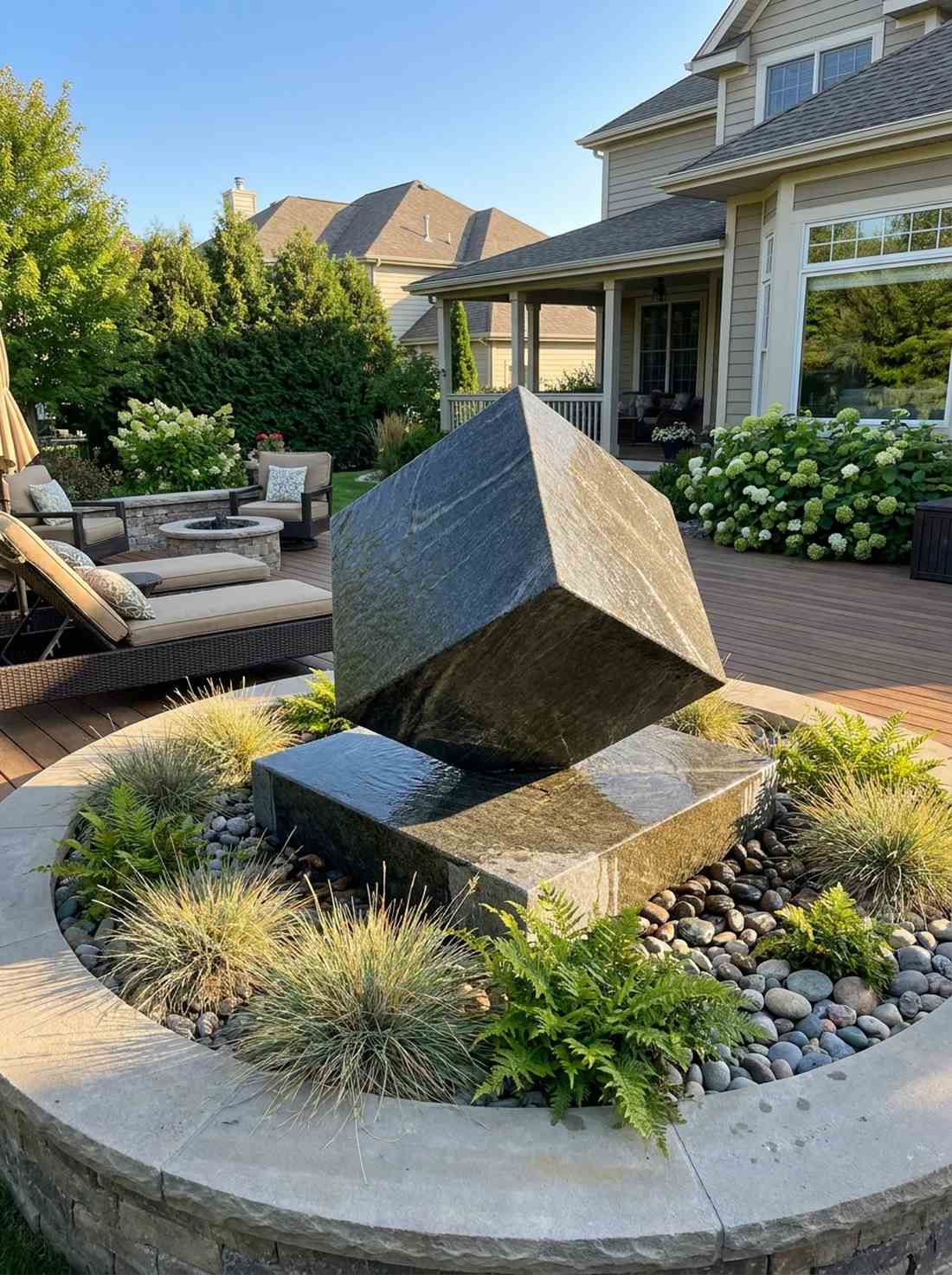
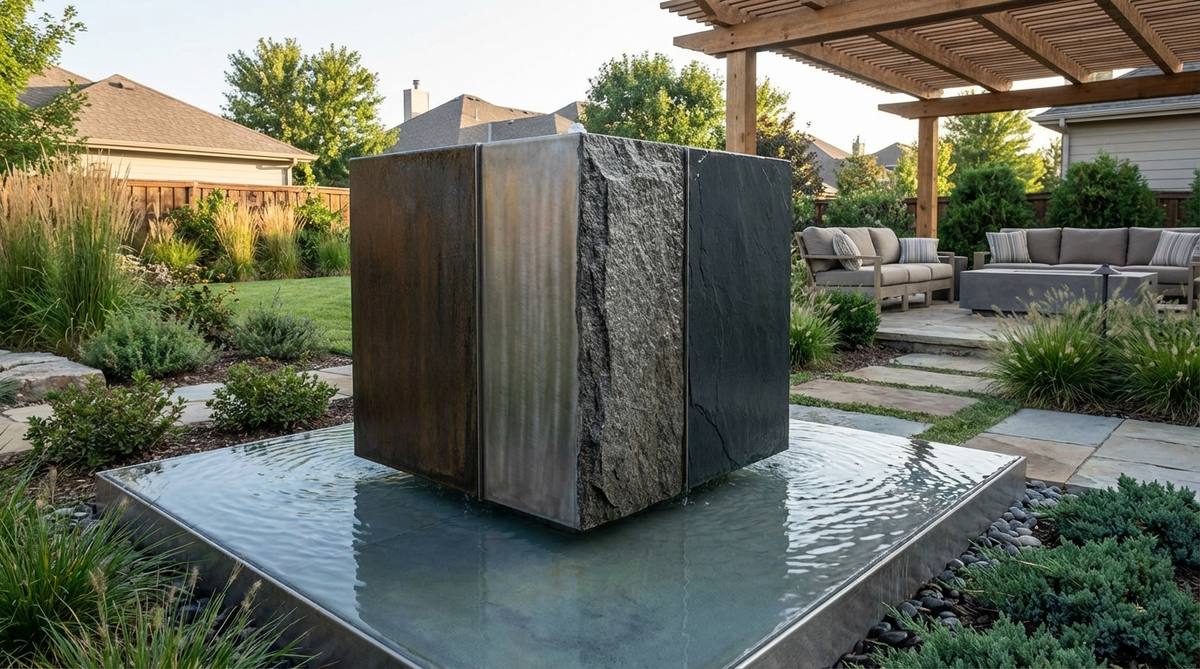
Offers a hypnotic, perpetual-motion centerpiece that feels incredibly futuristic. A kinetic stone water feature fits perfectly into a secluded meditation corner.
Believe it or not, heavy granite spheres or cubes can float on minimal water pressure if the hydraulic socket is calibrated correctly. Picking up an upgraded, budget-friendly high-torque pump kit is the real trick to maintaining consistent spin.
Pre-calibrated kits usually run $350–$500, skipping the impossible math required to do it yourself. It’s a fascinating focal point that never gets old.
- Key Materials: Calibrated stone cube, high-pressure pump
- Vibe / Style: Futuristic kinetic energy
- Difficulty: Advanced calibration (better to buy a kit)
- Budget Breakdown: Machined base/cube kit: $400 | Pump upgrade: $60.
- Creator’s Tip: Use distilled water to prevent mineral buildup from ruining the frictionless rotation socket.
- Smart Sourcing: Pre-calibrated rotating stone fountain kits and high-torque water feature pumps.
8. Corner-Spout Cubic Basin
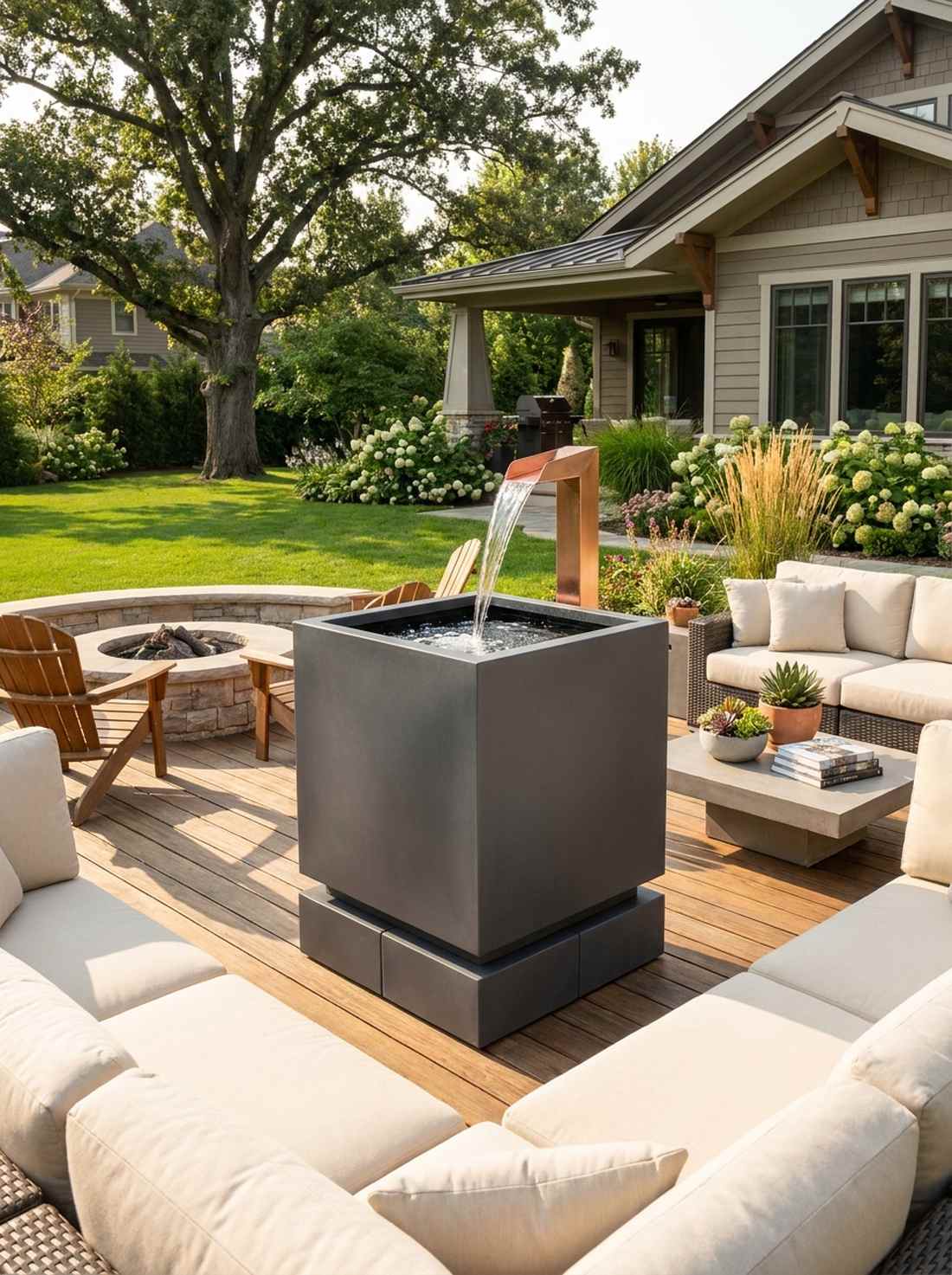
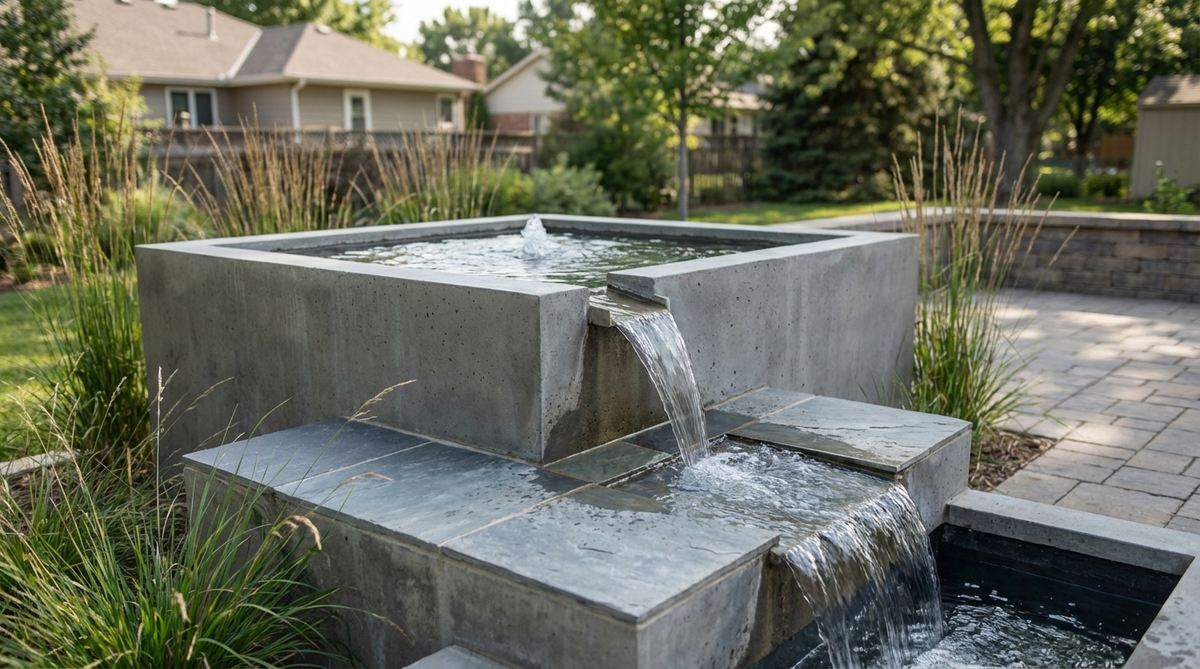
Pushes asymmetrical intrigue that feels both edgy and sophisticated. Diagonal flow plaza containers are ideal for anchoring the corners of an outdoor seating lounge.
Centered spouts are overdone; pushing the water source to the absolute edge breaks expectations and elongates the visible stream. You can easily elevate the base using commercial-grade modular pedestals for extra height without the heavy lifting.
Sourcing a pre-drilled container keeps the total project under $120. Highly recommended for a quick weekend win.
- Key Materials: Square geometric planter, copper spout
- Vibe / Style: Edgy modern asymmetry
- Difficulty: Super easy beginner DIY
- Budget Breakdown: Planter base: $60 | Spout kit: $25 | Pump: $30.
- Creator’s Tip: Direct the diagonal flow toward the main seating area so guests get the best acoustic experience.
- Smart Sourcing: Pre-drilled geometric resin planters and copper corner spillway kits.
9. Perforated Cubic Screen
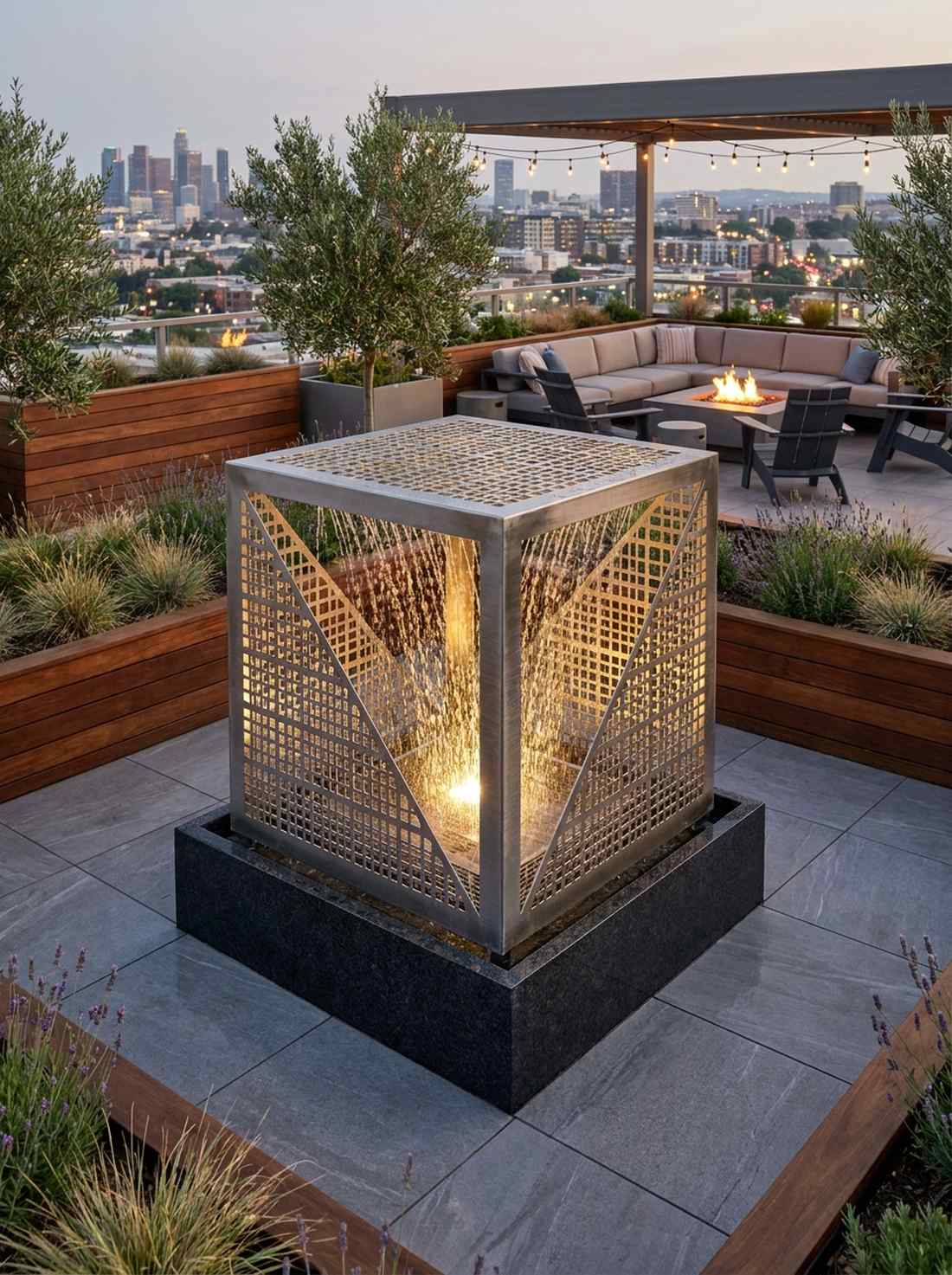
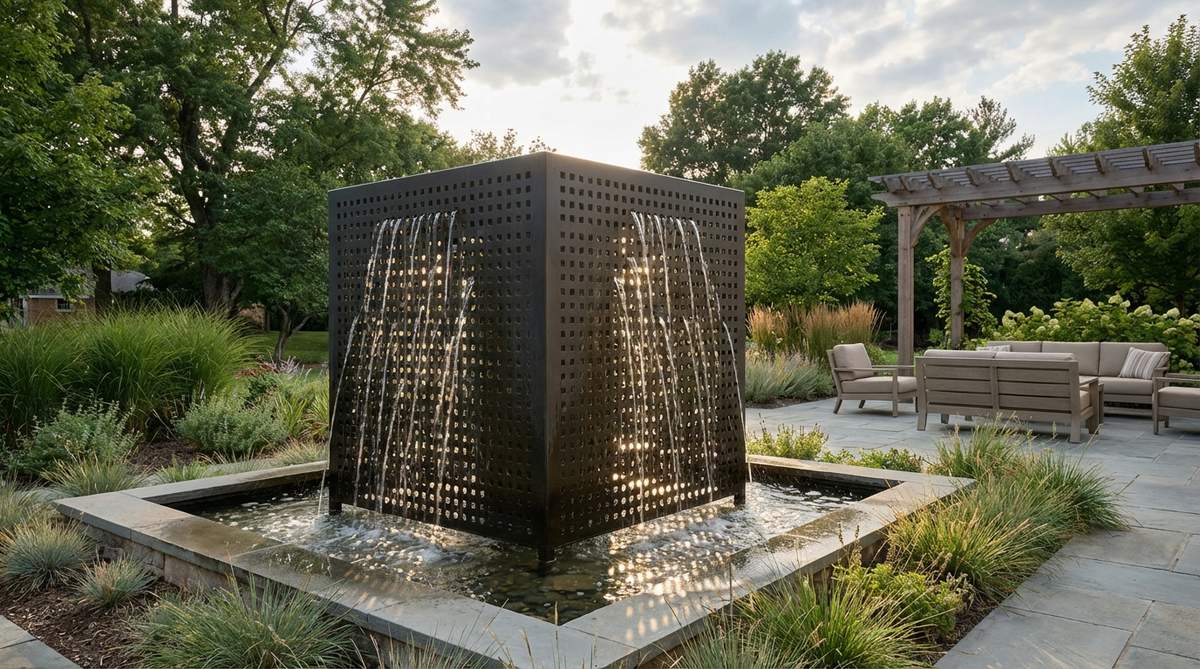
Emits a shimmering, high-tech glow as water slices through metal grids. A weeping steel architectural cube is the ultimate industrial-chic addition to an urban rooftop.
Solid blocks block the wind, but a porous metal structure lets air through while scattering droplets into a gorgeous mist. Upgrading to marine-grade stainless steel panels prevents the dreaded rust stains that ruin standard garden modern wall fountains.
Expect to budget around $250–$400 for precision-lasered metalwork. Pin this to your industrial outdoor aesthetic board!
- Key Materials: Perforated metal sheets, internal shower head
- Vibe / Style: Urban industrial chic
- Difficulty: Custom metal assembly
- Budget Breakdown: Metal panels: $180 | Internal manifold: $60 | Base: $50.
- Creator’s Tip: Put a waterproof LED inside the hollow cube to make the water droplets glow at night.
- Smart Sourcing: Pre-cut perforated aluminum panels and submersible color-changing LED pucks (starter kit).
💡 Must-Have Supplies for High-End Setups
To build these modern garden fountain setups faster and ensure they last, skip the generic craft aisles and invest in the right foundational kits.
- Base & Support: Heavy-duty fiberglass hidden water basins (bulk pack)
- Setup Tools: Adjustable flow rate submersible pump starter kits
- Weather/Durability Protection: UV-coated clear epoxy sealants
10. Triangular Wedge Spillway
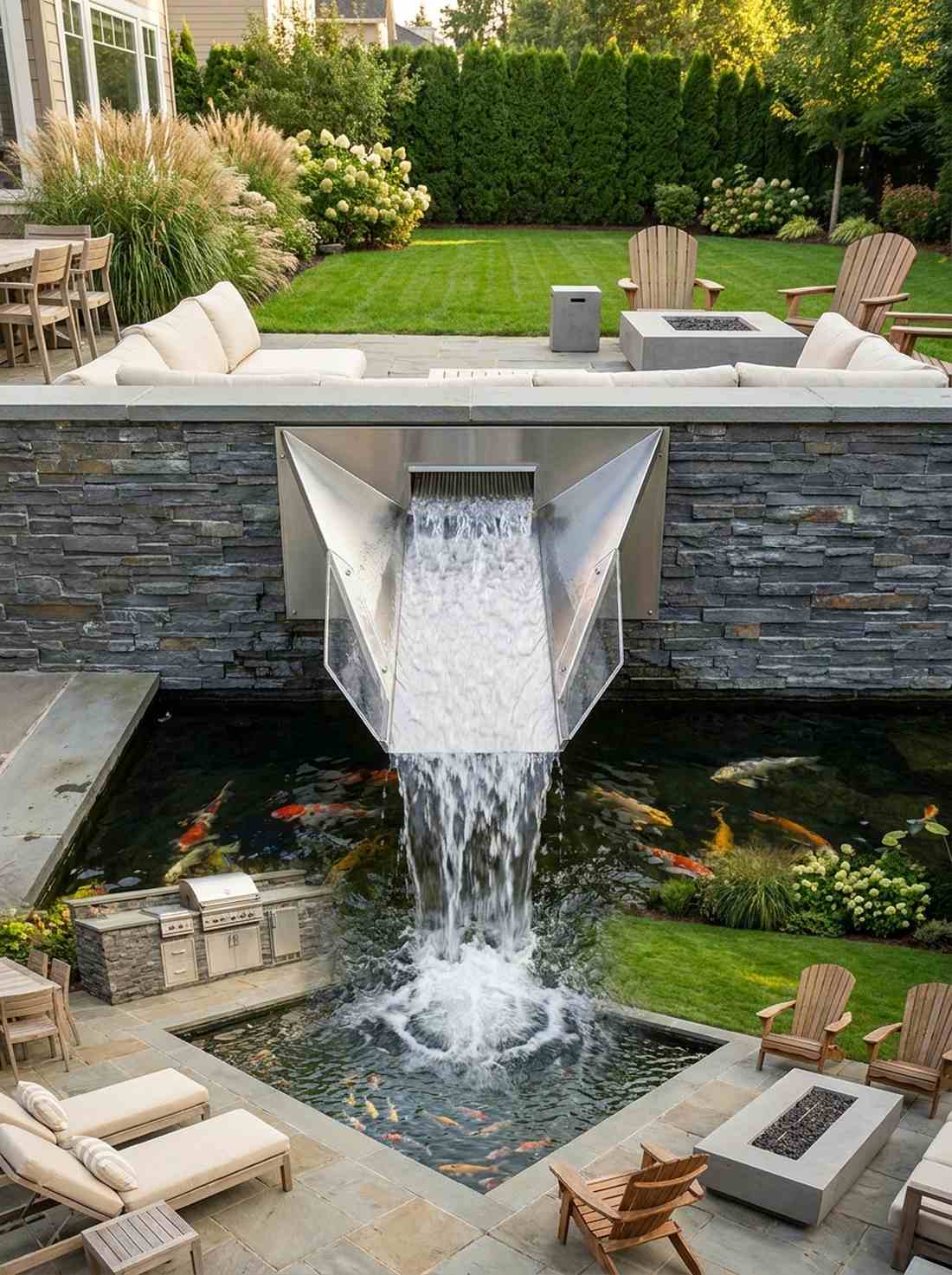
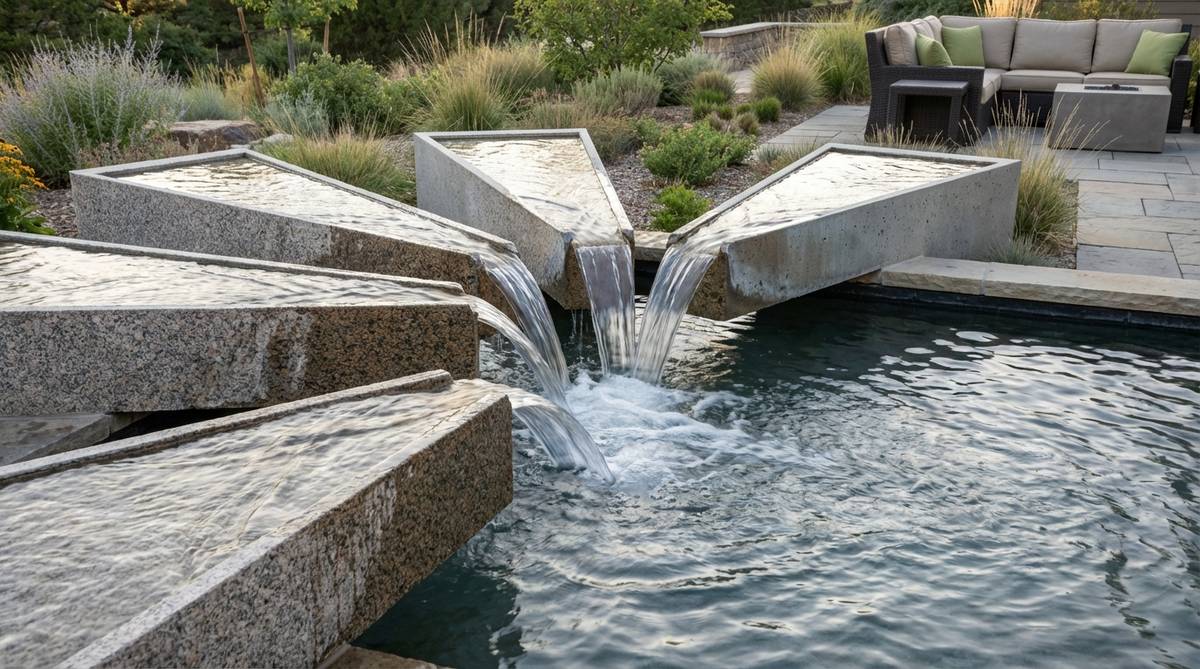
Funnels a powerful rushing current that commands the entire landscape. A flared spillway cascade works wonderfully cascading directly into an existing modern koi pond.
Standard flat spillways lack drama, whereas a widening wedge accelerates water velocity to create a thrilling acoustic crash. Incorporating premium acrylic water deflectors helps guide the splash zone cleanly into the catchment area.
You can easily achieve this custom look for about $180–$220.
- Key Materials: Triangular metal channel, high-volume pump
- Vibe / Style: Aggressive architectural flow
- Difficulty: Moderate plumbing needed
- Budget Breakdown: Wedge hardware: $90 | Pump: $60 | Piping: $40.
- Creator’s Tip: Rib or texture the floor of the wedge to break the water into rippling, turbulent patterns.
- Smart Sourcing: Stainless steel triangular flumes and premium acrylic splash guards.
Most backyard planners completely overlook the next technique… until they see how it instantly doubles the visual footprint of a tiny yard.
Sphere and Column Features Combining Curves With Structure
Spherical elements and vertical columns introduce curved geometry that softens the strict rectilinear vocabulary. These shapes demonstrate how water interacts with rounded surfaces through gravity and surface tension.
11. Granite Sphere Fountain
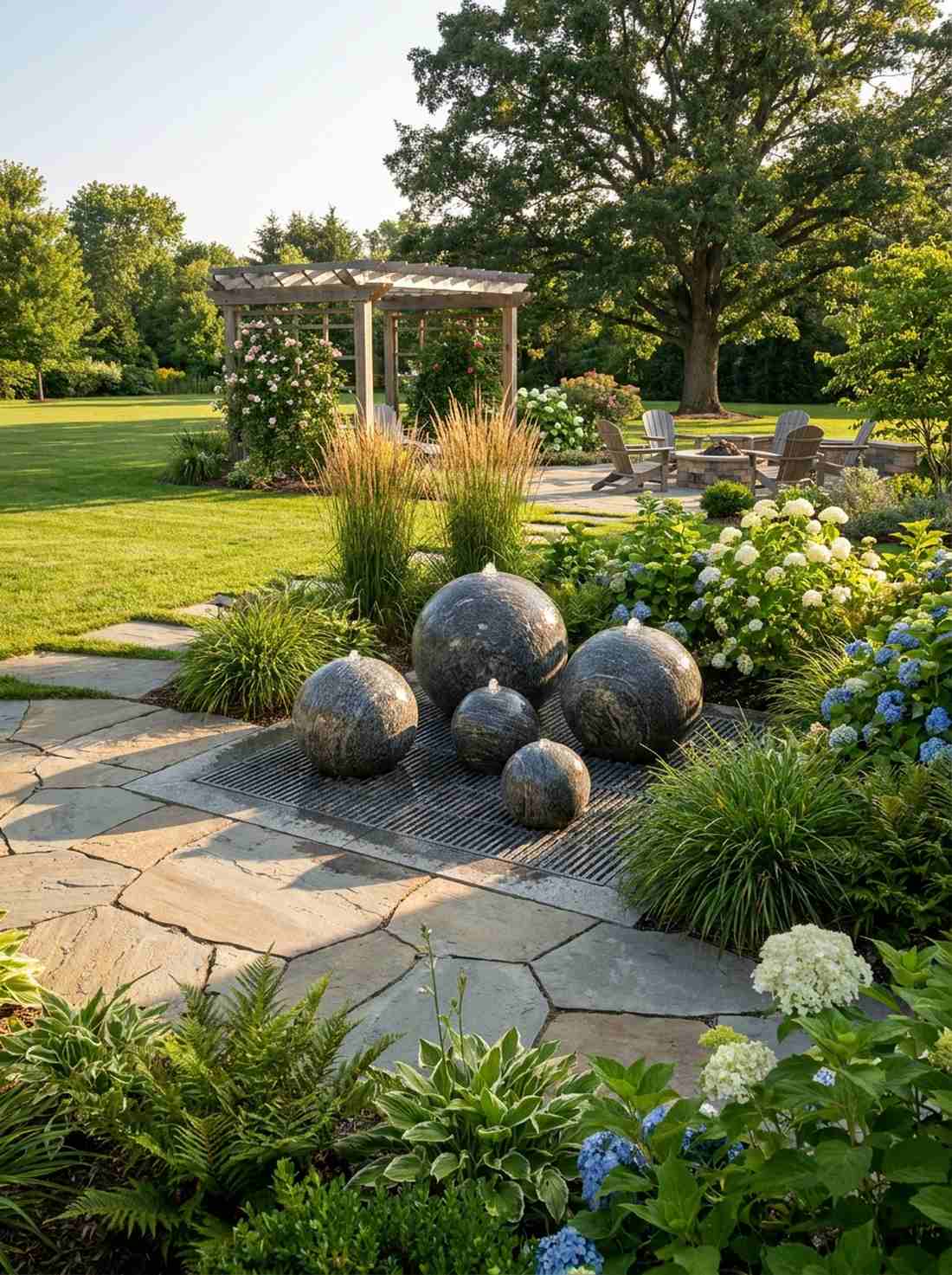
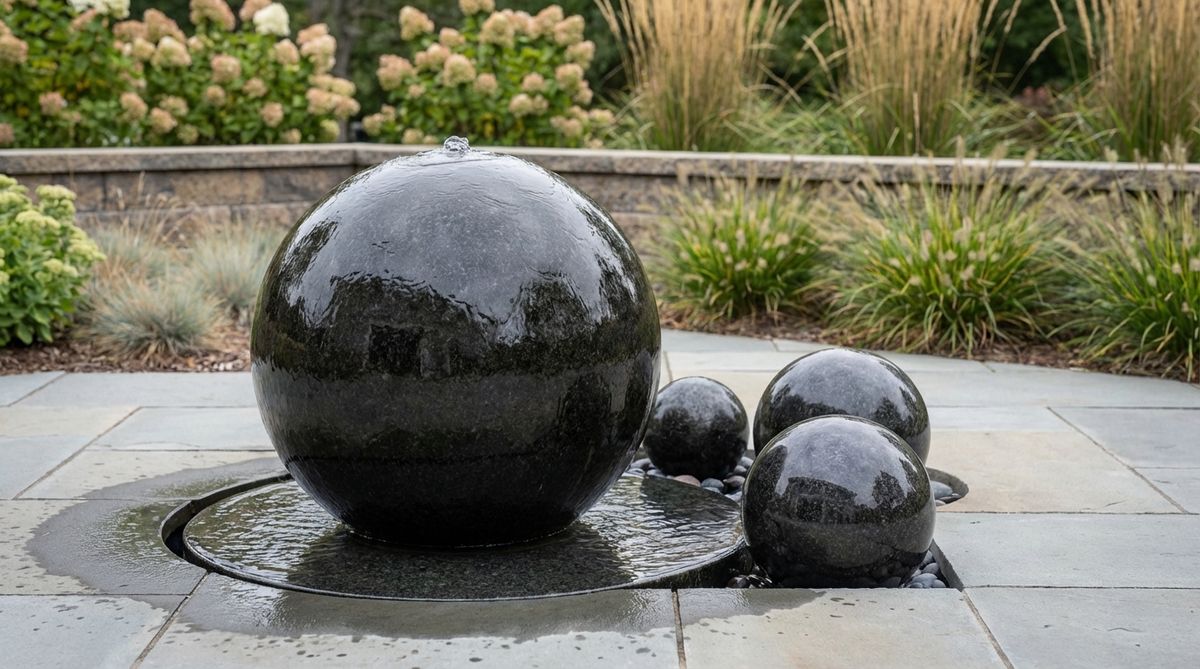
Projects ancient, elemental energy that grounds the surrounding foliage. Grouping spinning polished stone orbs transforms a boring lawn into a high-end sculpture garden.
Relying on a single focal point can feel sparse, but clustering varying sizes creates an organic, museum-quality display. Sourcing bulk packs of heavy-duty friction-fit tubing ensures your underground plumbing never leaks under the massive weight.
A decent starter kit for the base mechanics costs about $80, plus the stone. Save this to your serene landscaping ideas board!
- Key Materials: Carved granite spheres, heavy-duty reservoir
- Vibe / Style: Serene museum courtyard
- Difficulty: Heavy lifting required
- Budget Breakdown: Stone spheres: $200+ | Support grating: $60 | Plumbing: $30.
- Creator’s Tip: Set the spheres on reinforced heavy-duty grating so the catch basin is 100% invisible.
- Smart Sourcing: Reinforced heavy-duty pond grates and commercial-grade flexible tubing (bulk roll).
12. Clear Acrylic Sphere Cascade
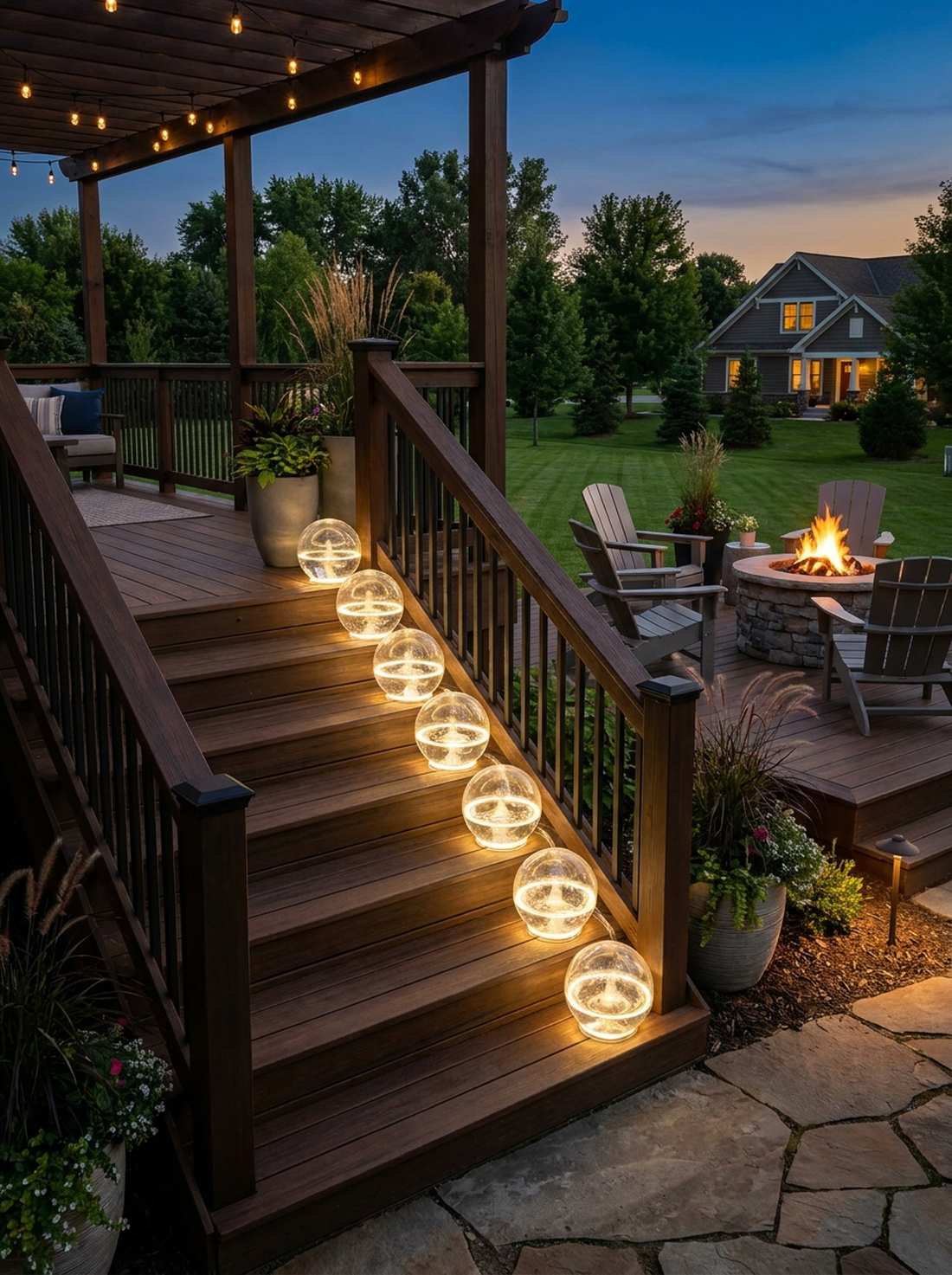
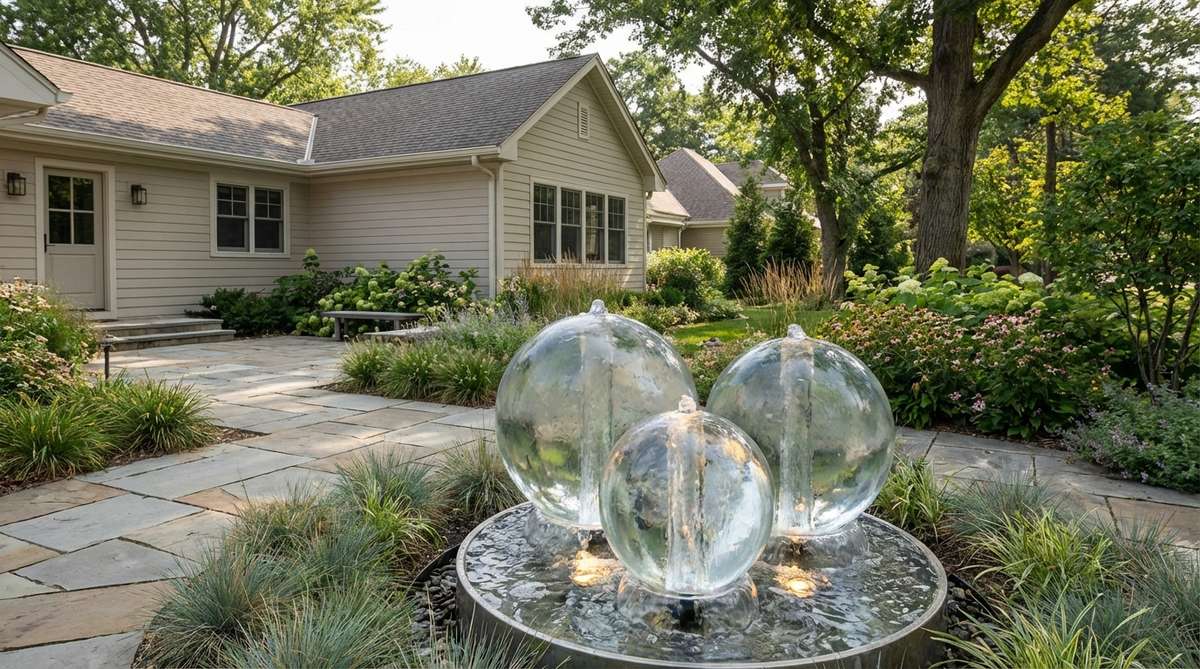
Looks like a suspended, glowing bubble straight out of a fantasy novel. Illuminated transparent water spheres act as stunning night-time accents along dark deck stairways.
Opaque materials hide the magic, but high-clarity resin lets you watch the internal turbulence dance under LED lighting. Snagging some fully waterproof submersible LED ring lights turns this into an absolute showstopper after dusk.
You can piece this together for under $90 if you buy standard globes. Save this if you need brilliant outdoor lighting ideas!
- Key Materials: Clear acrylic globes, LED ring light
- Vibe / Style: Ethereal night garden
- Difficulty: Beginner assembly
- Budget Breakdown: Acrylic spheres: $45 | LED ring: $20 | Base setup: $25.
- Creator’s Tip: Hide the power cords inside transparent PVC piping to maintain the floating illusion.
- Smart Sourcing: Pre-drilled clear acrylic globes and waterproof LED fountain ring lights.
13. Multi-Column Bubbler Array
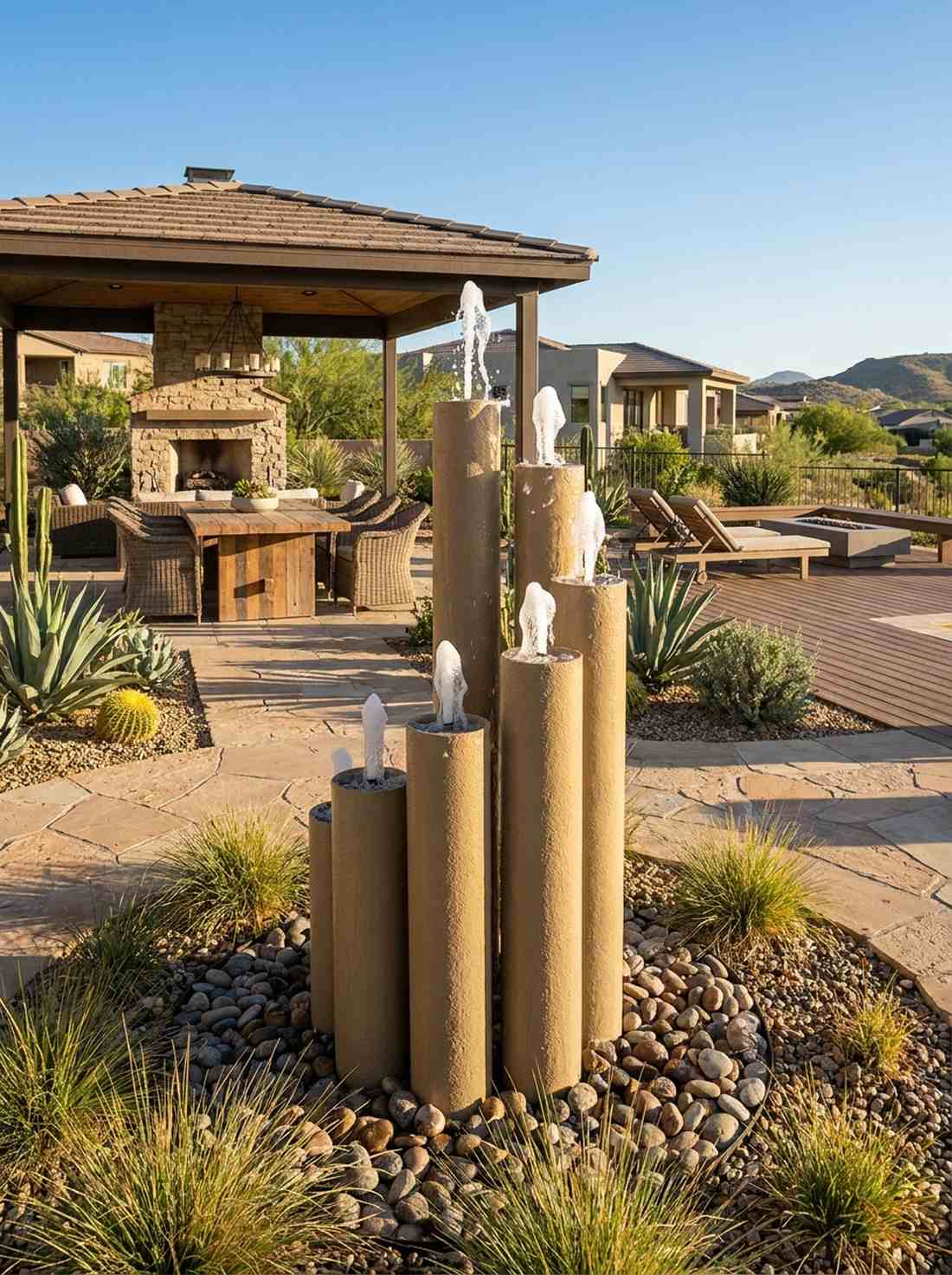
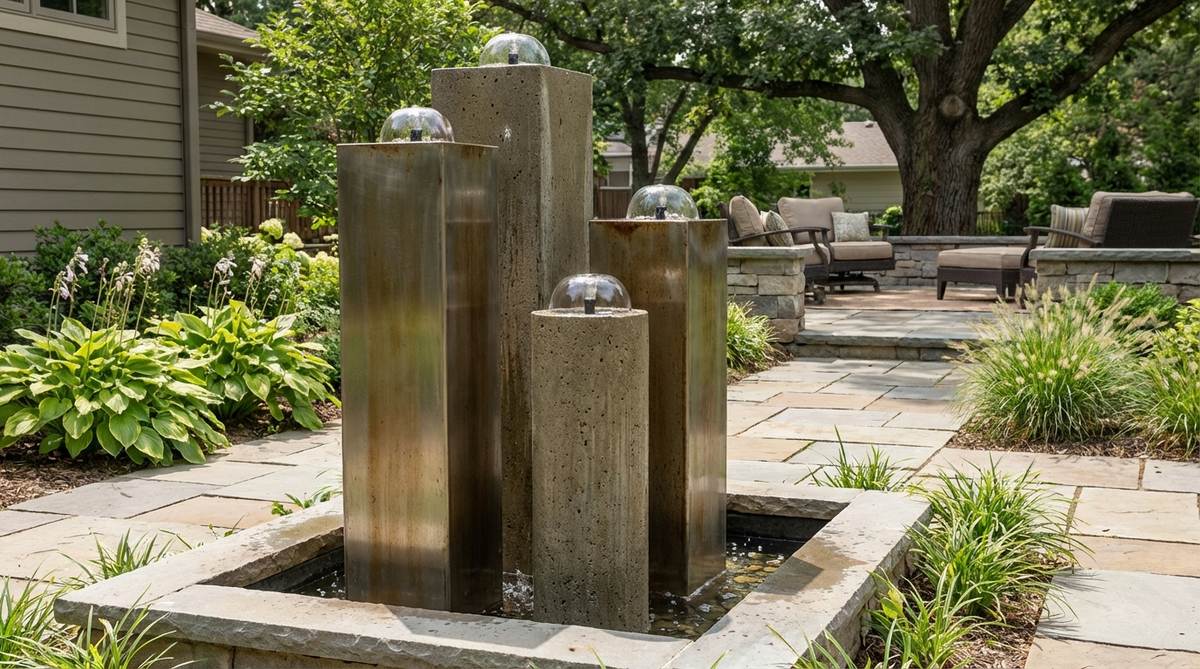
Delivers a playful, rhythmic skyline profile that softens rigid patio paving. A staggered vertical geyser array looks brilliant framing an outdoor dining pavilion.
Using a single height is a missed opportunity; mathematical stair-stepping of the pipes forces a rich, layered acoustic environment. Installing an adjustable multi-valve manifold allows you to fine-tune the exact dome height of every individual spout.
The plumbing manifolds and basic columns will set you back roughly $150–$250. It’s an incredibly water-efficient choice for dry climates.
- Key Materials: Varying PVC/metal pipes, bubbler nozzles
- Vibe / Style: Modern desert oasis
- Difficulty: Intermediate plumbing
- Budget Breakdown: Pipe columns: $80 | Manifold: $40 | Bubbler heads: $45.
- Creator’s Tip: Paint PVC pipes with a textured stone spray paint for an instant high-end finish on a budget.
- Smart Sourcing: Adjustable multi-valve brass manifolds and foam-effect bubbler nozzles (starter kit).
14. Helical Column Twist
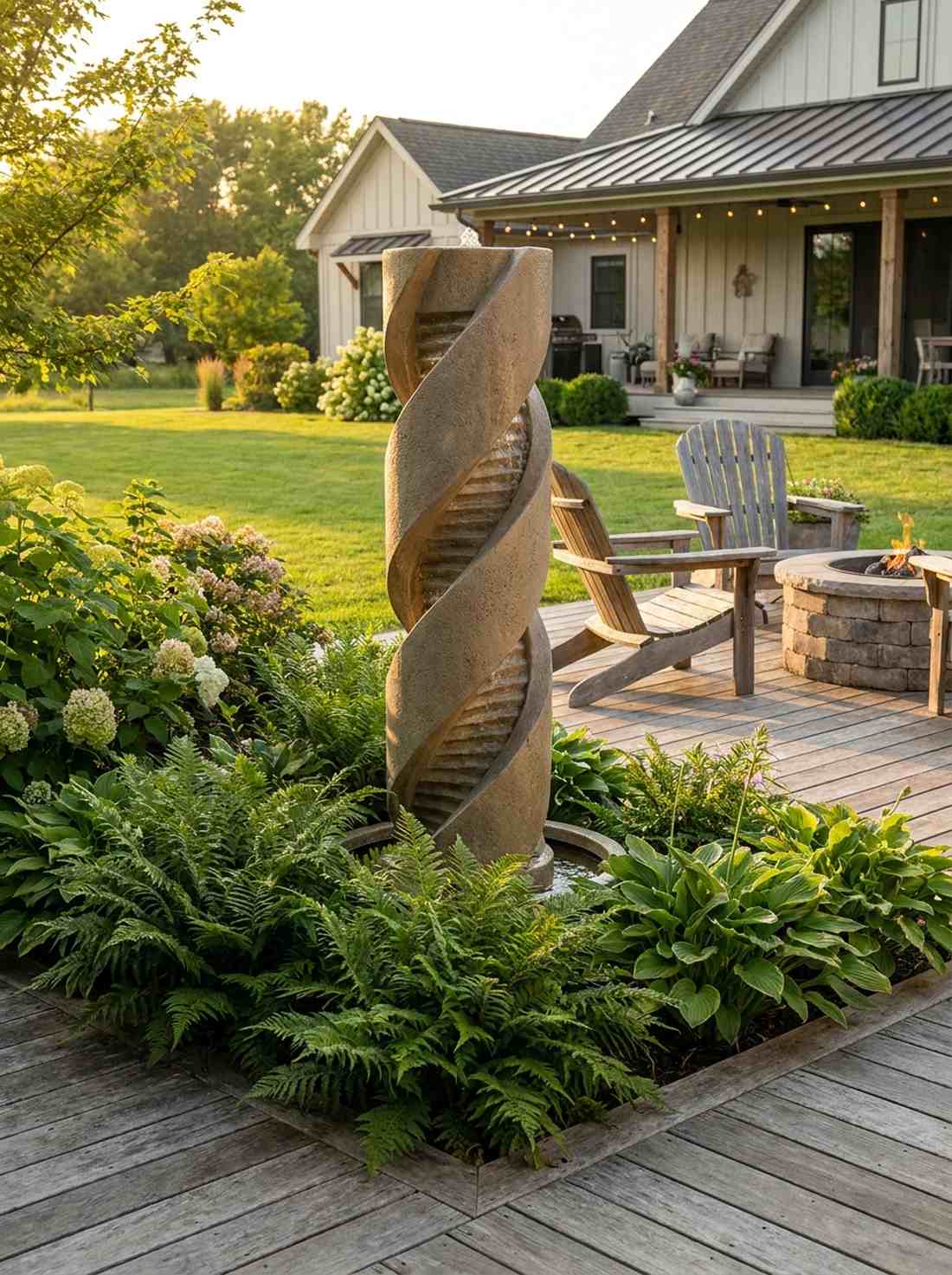
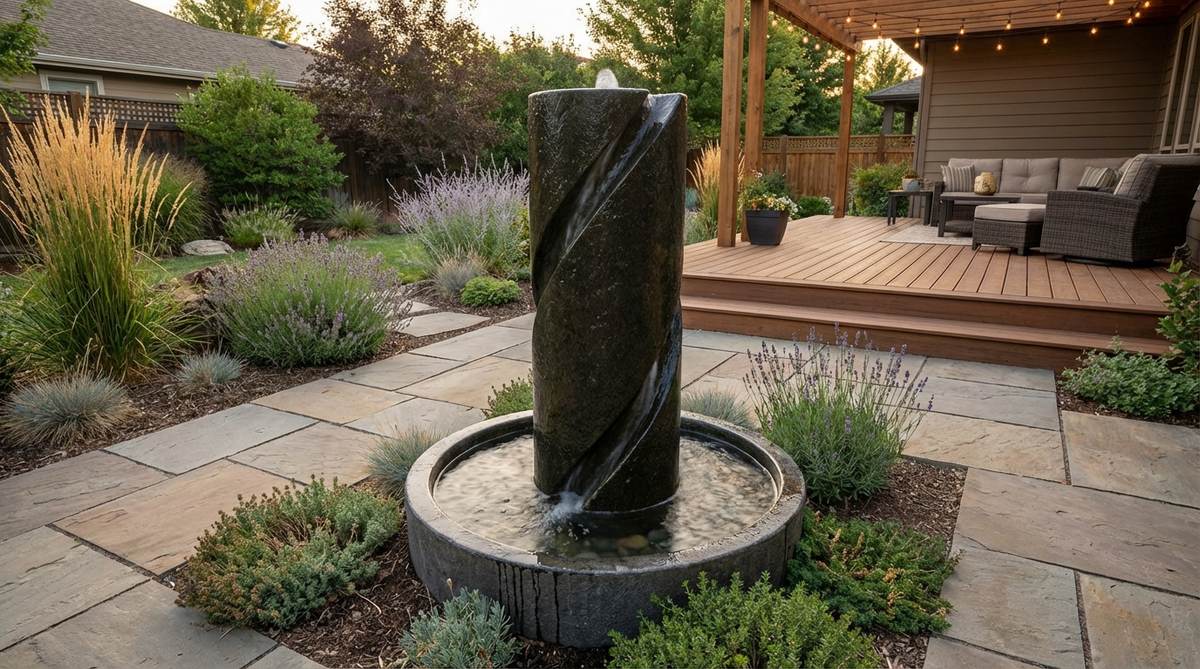
Twists and turns in a captivating spiral that feels both organic and highly engineered. Corkscrew water descent pillars are phenomenal standalone features for tight courtyard corners.
Straight drops splash everywhere, but a carved helix gracefully hugs the structure, entirely eliminating messy overspray. This is a brilliant excuse to utilize modern garden fountains made of lightweight GFRC (glass fiber reinforced concrete) for easy maneuvering.
Pre-cast helical towers typically cost between $300–$450. Pin this to your small space landscaping board right now!
- Key Materials: Pre-cast twisted column, hidden basin
- Vibe / Style: Kinetic garden sculpture
- Difficulty: Easy plug-and-play
- Budget Breakdown: Twist column: $250 | Base kit: $80 | Pump: $40.
- Creator’s Tip: Place surrounding ferns close to the column so the water visually disappears into the greenery.
- Smart Sourcing: Lightweight GFRC spiral fountain kits and algae-prevention water clarifying pods.
15. Hollow Column Internal Flow
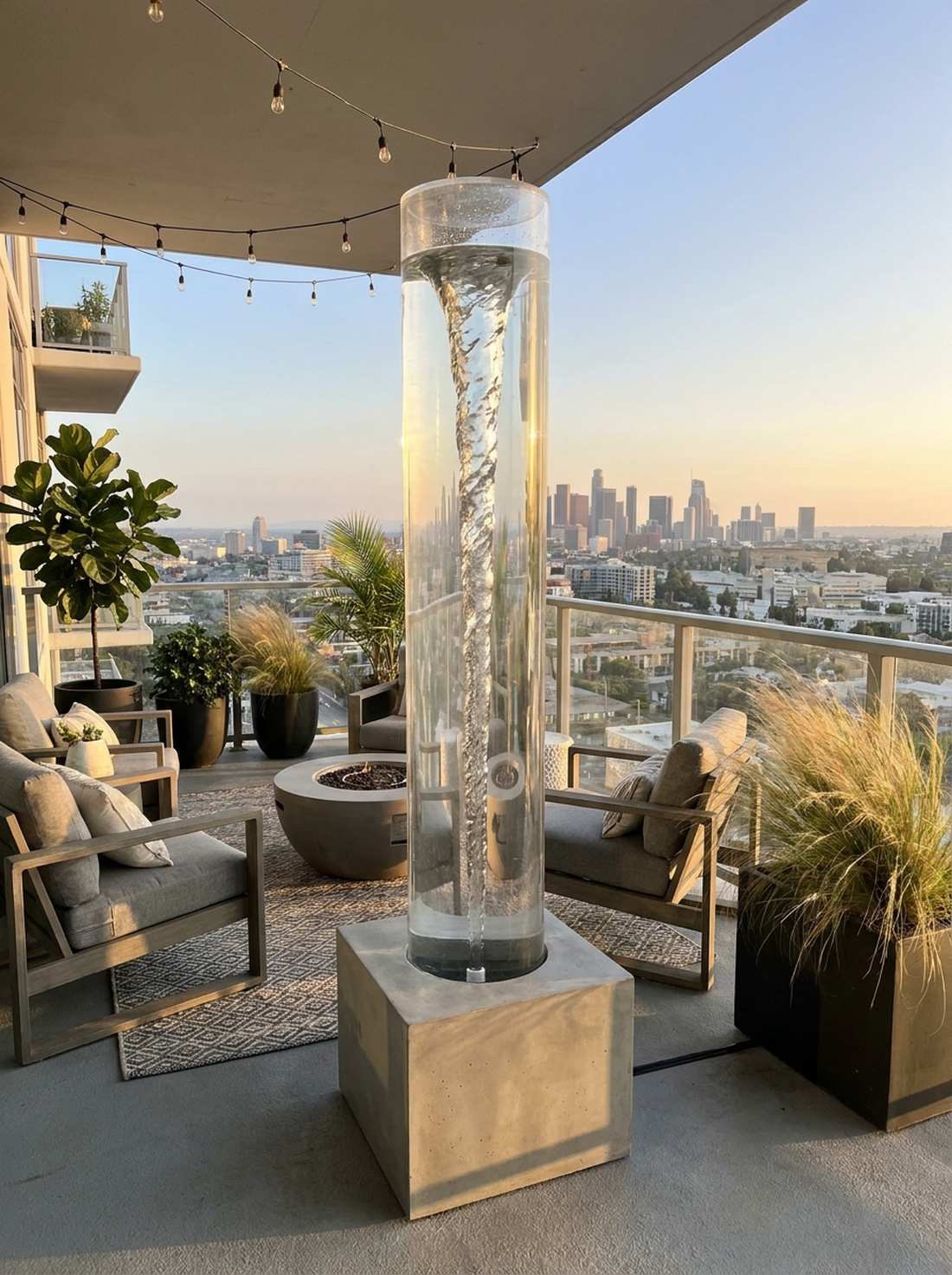
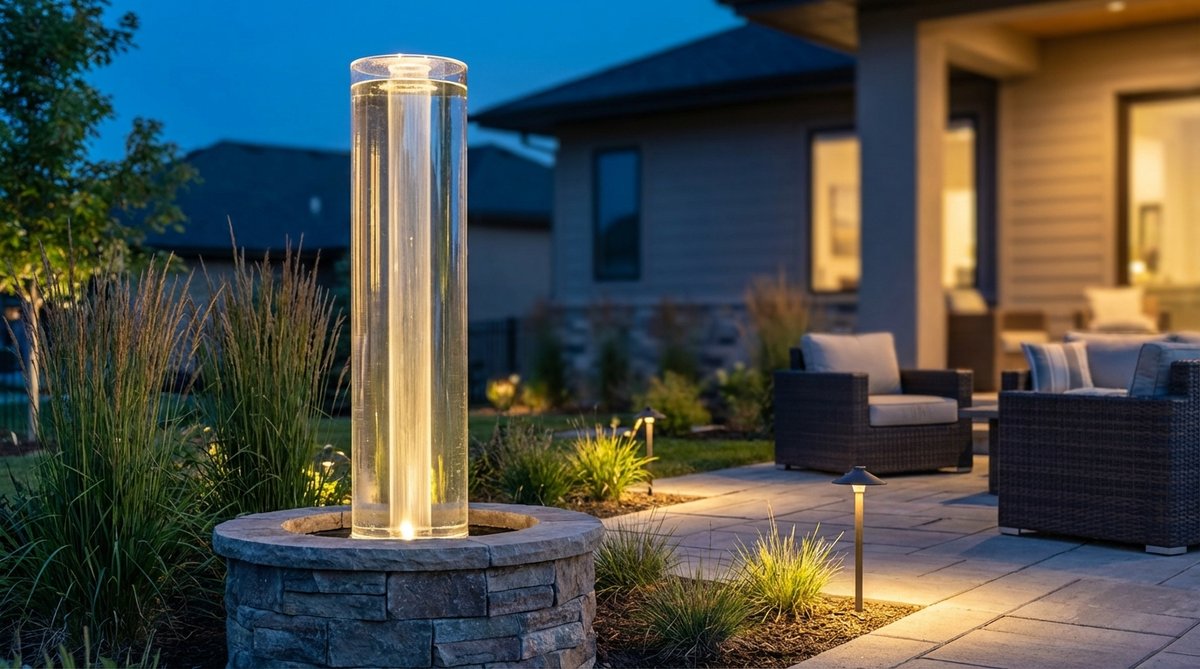
Creates an isolated, glass-enclosed vortex that commands total attention. Enclosed cylindrical water pillars are the absolute best choice for notoriously windy apartment balconies.
Exposed fountains lose half their volume to the wind, while a sealed acrylic tube preserves perfect laminar flow regardless of the weather. Injecting a few drops of pet-safe fountain clarifying enzymes keeps the internal viewing window crystal clear all season.
You can build a DIY version for under $100 using extruded acrylic pipes.
- Key Materials: Clear extruded acrylic tube, silicone sealant
- Vibe / Style: Sleek protective modernism
- Difficulty: Requires careful sealing
- Budget Breakdown: Acrylic tube: $50 | Base housing: $30 | Pump: $20.
- Creator’s Tip: Use marine-grade clear silicone at the base to prevent any microscopic leaks under pressure.
- Smart Sourcing: Pre-cut extruded acrylic cylinders and marine-grade clear silicone sealants.
Stop endlessly scrolling through boring patio layouts. The next vertical installation is the exact secret designers use to make blank fences look incredibly expensive…
Wall-Mounted Geometric Features That Maximize Vertical Space
Wall-mounted fountains utilize vertical surfaces to deliver water features where ground space remains limited. These installations transform blank walls into active landscape elements while conserving valuable floor area.
16. Rectangular Panel Waterfall
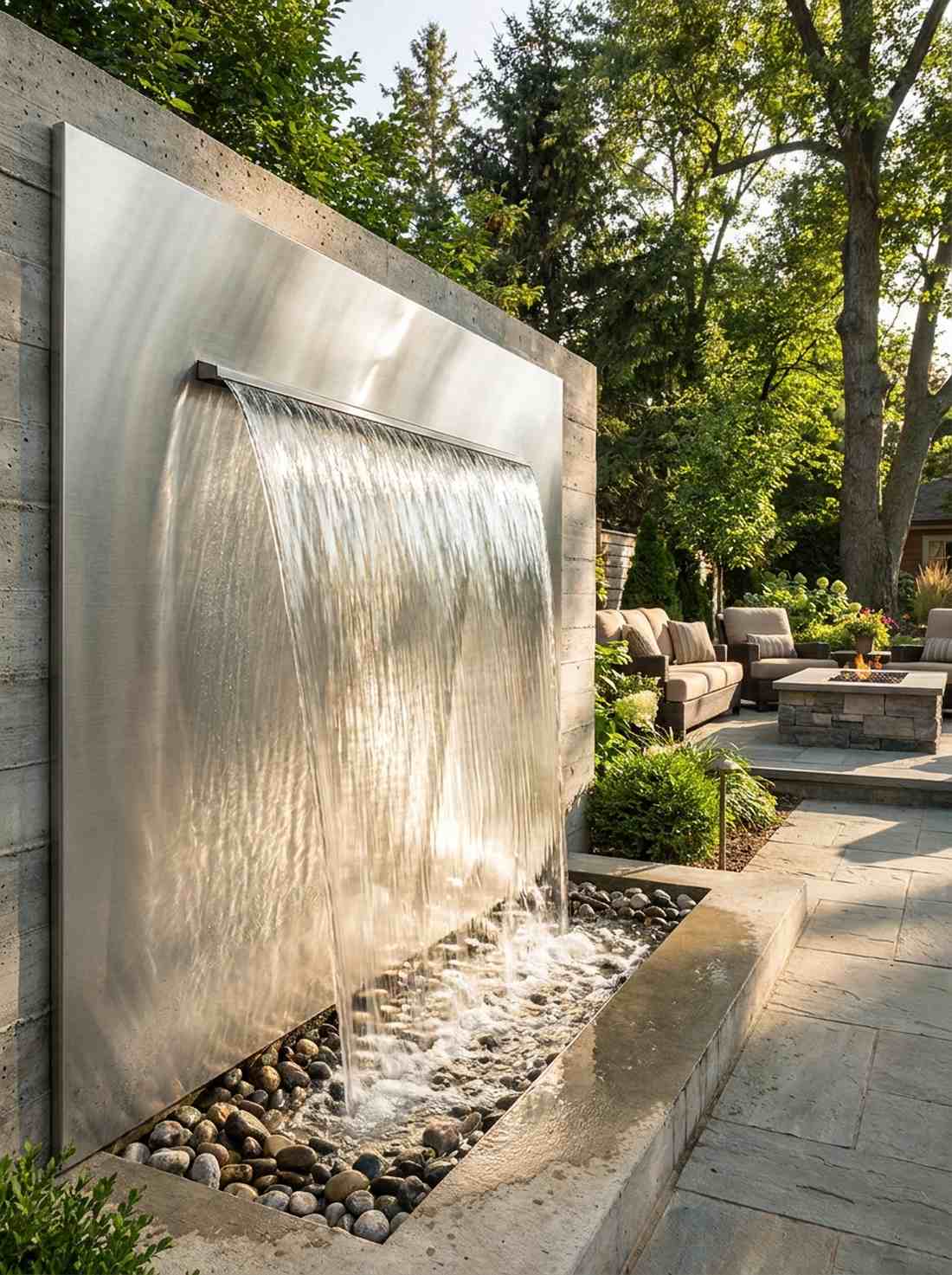
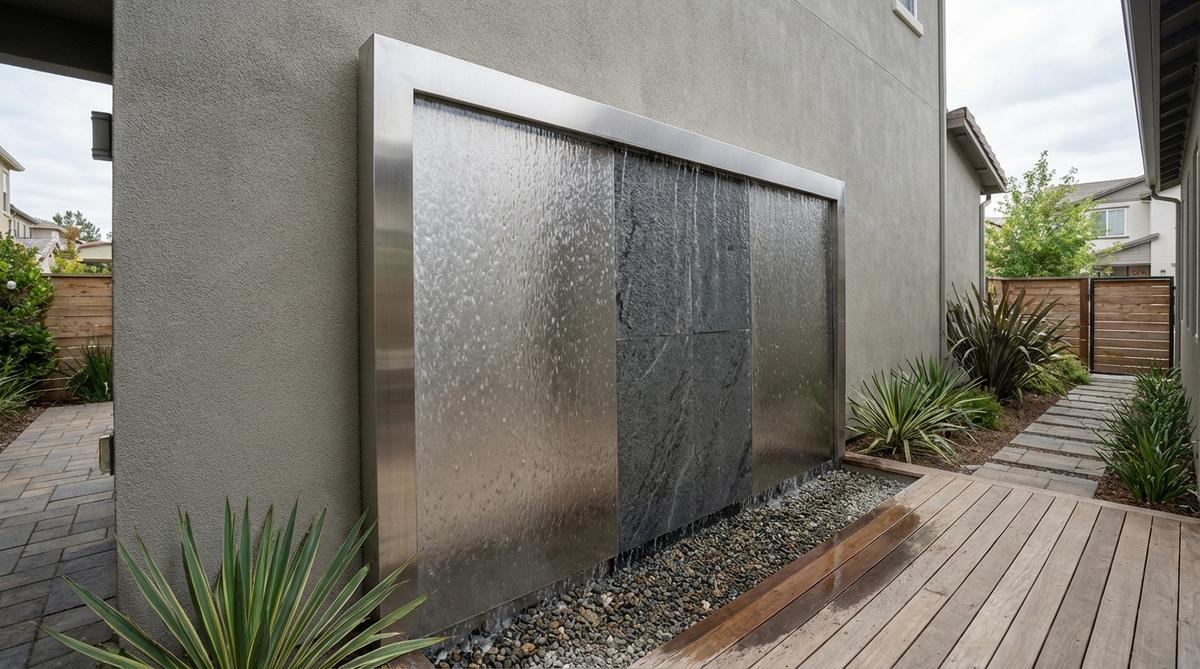
Acts as a living, breathing canvas of rippling water that brings dead space to life. A flush-mount sheer descent panel is the ultimate hack for dressing up ugly retaining walls.
Leaving a massive concrete wall bare is a crime when a simple brushed metal skin can distribute a flawless aquatic curtain. Securing a premium, whisper-quiet submersible pump guarantees you only hear the relaxing splash, not an annoying mechanical hum.
High-end wall kits run about $400–$700 but absolutely transform the property value.
- Key Materials: Brushed metal backdrop, top-mounted spillway
- Vibe / Style: Luxury hotel lobby exterior
- Difficulty: Advanced wall anchoring
- Budget Breakdown: Spillway header: $150 | Metal panel: $200 | Pump kit: $80.
- Creator’s Tip: Angle the bottom catch basin slightly inward so water doesn’t splash onto the walking path.
- Smart Sourcing: Flush-mount sheer descent spillways and whisper-quiet submersible fountain pumps.
17. Geometric Scupper Series
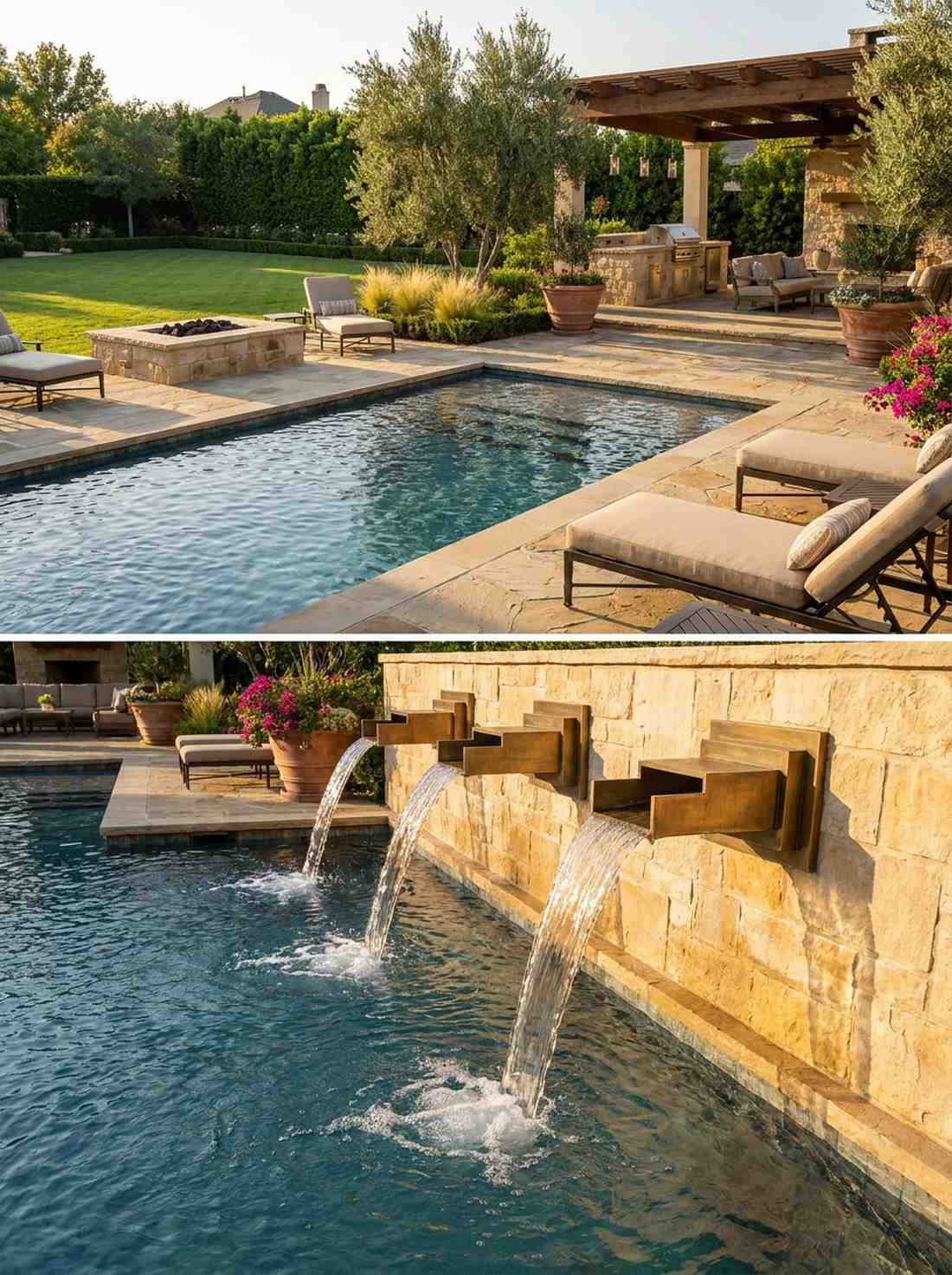
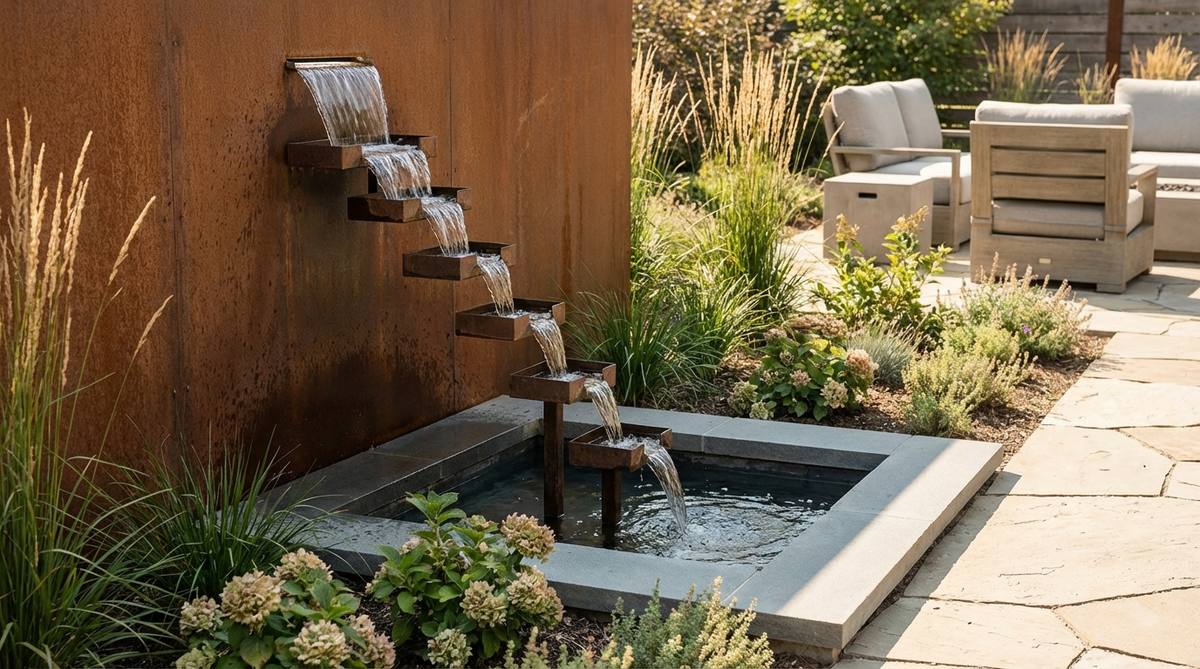
Projects a sharp, architectural rhythm that feels like a chic boutique hotel courtyard. Stepped brass wall spouts bring incredible tiered acoustic layering to poolside boundaries.
Many just drill holes in a wall, but extending rigid geometric lips pushes the water out, creating distinct, satisfying individual splashes. Upgrading your setup with a dedicated automatic water fill valve ensures the catchment never runs dry during hot summer weeks.
Individual metal scuppers cost about $50–$90 each. Pin this if you are planning a massive backyard pool renovation!
- Key Materials: Brass or copper scuppers, manifold pipe
- Vibe / Style: Mediterranean modern pool deck
- Difficulty: Requires masonry drilling
- Budget Breakdown: Scuppers (x3): $180 | Wall anchors: $20 | Plumbing: $50.
- Creator’s Tip: Space them exactly 16 inches apart to match standard masonry block lines for a cleaner look.
- Smart Sourcing: Square brass wall scuppers (bulk pack) and automatic float valve filler kits.
18. Angular Trough Offset
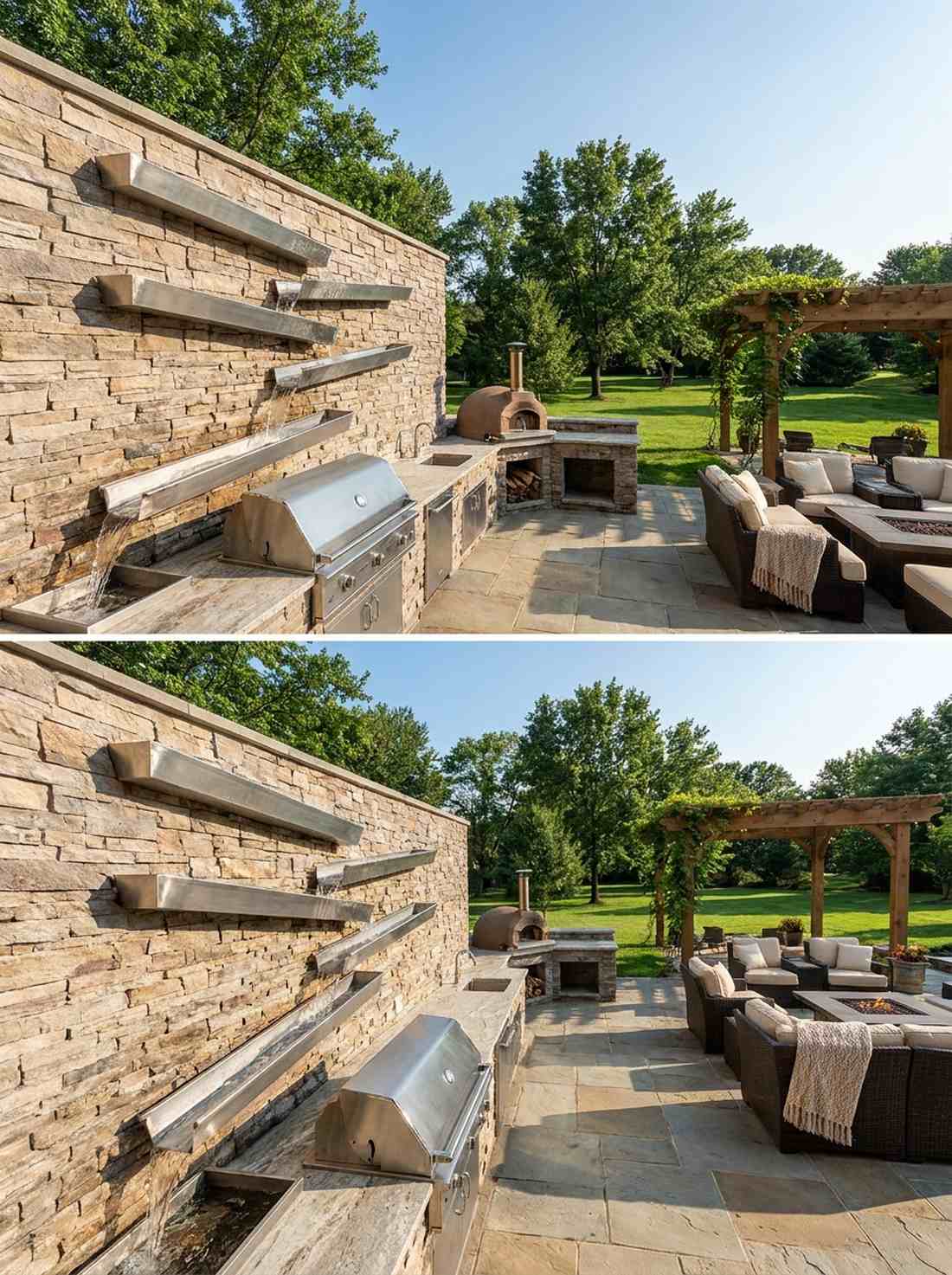
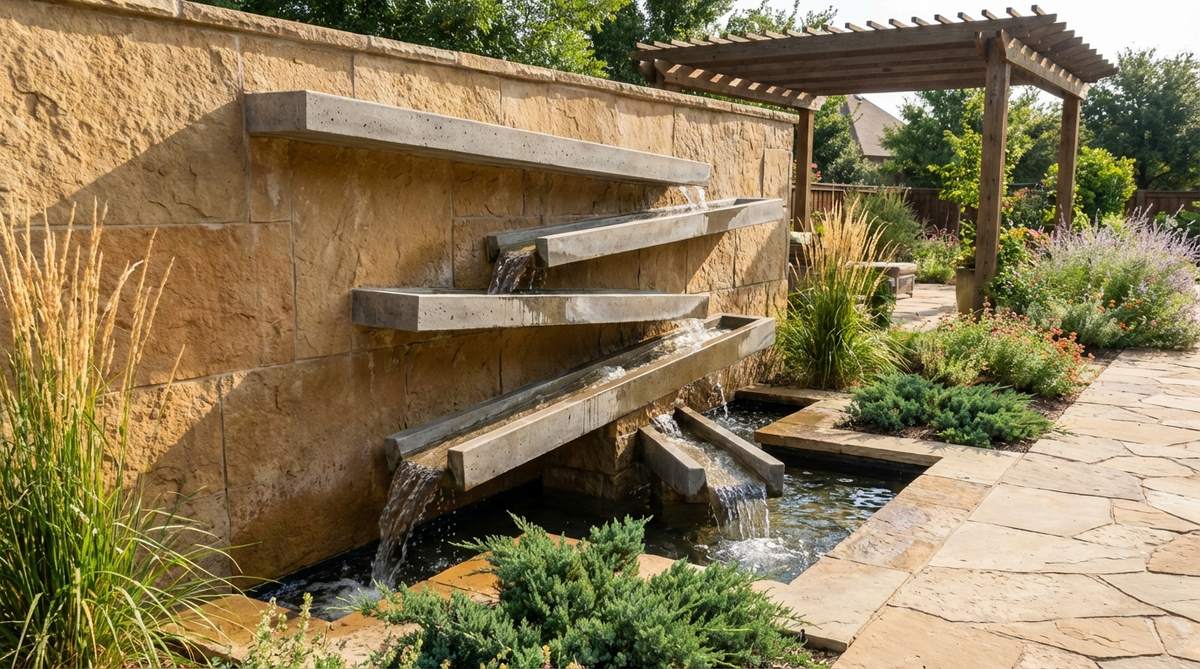
Navigates a zigzagged, kinetic pathway that keeps the eye moving constantly. Alternating wall-mounted water chutes serve as an incredible interactive backdrop for an outdoor kitchen.
A straight drop is predictable; bouncing the current back and forth across a vertical surface builds anticipation and slows the descent. This is exactly where buying a complete modern garden wall fountain kit saves you hours of frustrating math and alignment issues.
You can source pre-angled channel kits for roughly $150–$200. The visual complexity is absolutely unmatched for the price.
- Key Materials: Metal troughs, wall brackets
- Vibe / Style: Kinetic interactive wall
- Difficulty: Precision leveling required
- Budget Breakdown: Trough kit: $120 | Brackets: $30 | Pump: $40.
- Creator’s Tip: Use foam weatherstripping behind the brackets to absorb micro-vibrations against the wall.
- Smart Sourcing: Pre-angled metal water troughs and anti-vibration wall mounting kits.
19. Hexagonal Tile Weep Wall
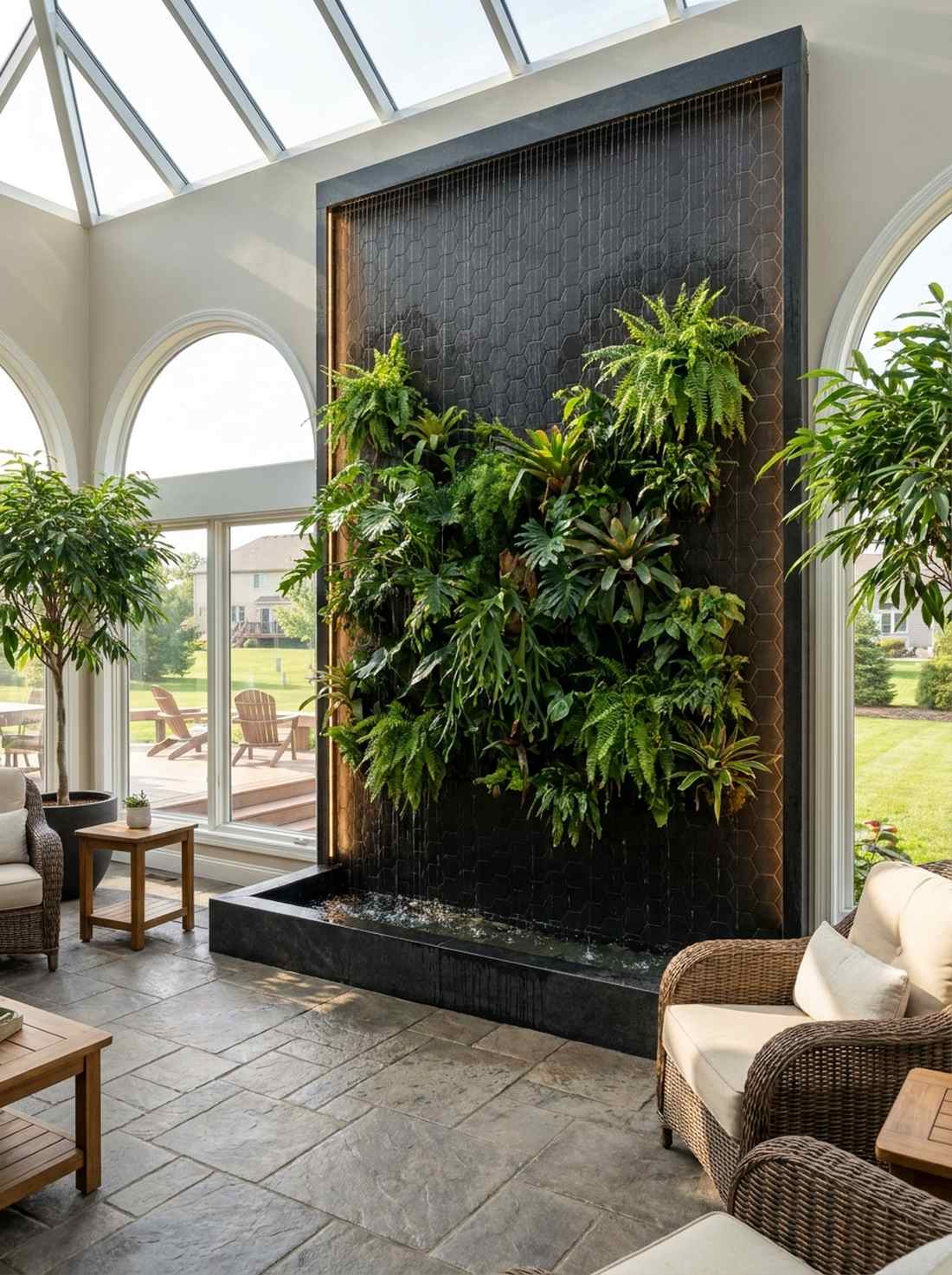
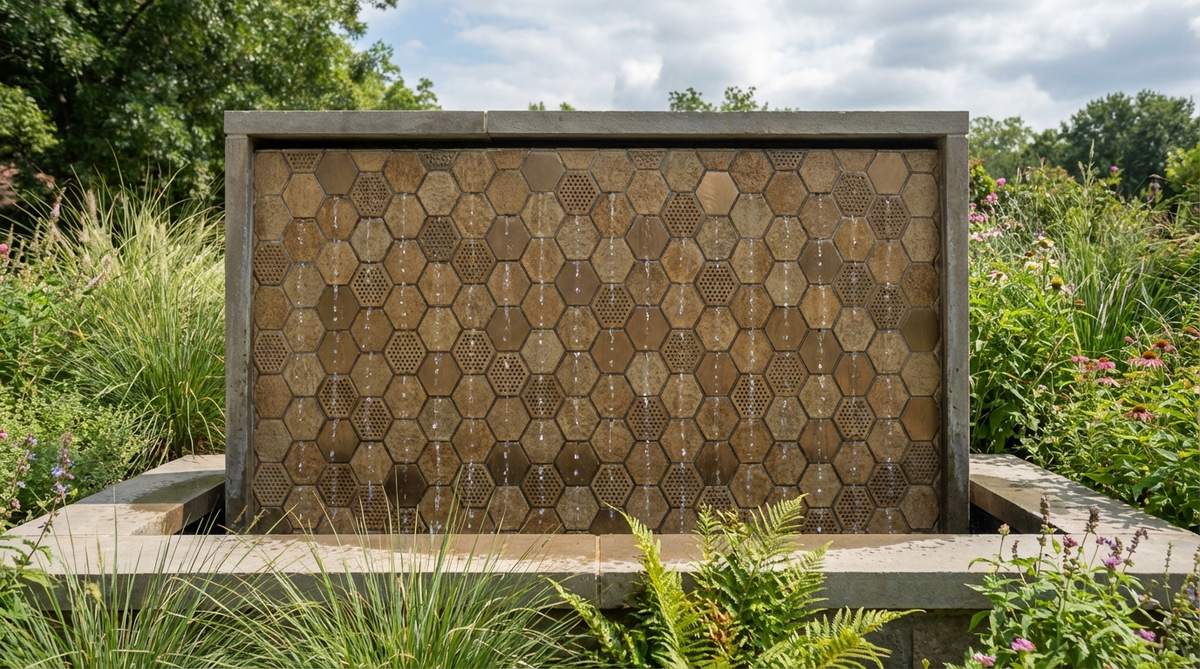
Feels like a digitized, geometric weeping forest wall that totally redefines vertical gardening. A honeycomb tessellation water wall creates a breathtaking focal point inside a sunroom or conservatory.
Standard flat tiles sheet water unevenly, but the intersecting grout lines of a hexagon matrix force a million beautiful micro-streams. Sealing the backer board with commercial-grade liquid waterproofing membrane is non-negotiable if you want to prevent hidden rot.
High-end geometric tiles will push the budget to $300–$500. Save this to your extreme home makeover Pinterest board!
- Key Materials: Hexagonal mosaic tiles, top drip line
- Vibe / Style: High-end botanical architecture
- Difficulty: Advanced tile masonry
- Budget Breakdown: Hex tiles: $200 | Backer board/Seal: $80 | Drip line: $30.
- Creator’s Tip: Use a dark charcoal epoxy grout so water stains never show up over the years.
- Smart Sourcing: Matte hexagonal mosaic tiles (bulk pack) and commercial-grade liquid waterproofing membranes.
Material Guide: Cheap vs. Premium Aesthetic
Knowing exactly where to save and where to spend makes all the difference in achieving that “looks expensive but isn’t” geometric vibe.
- Standard Plastic vs. UV-Resistant Metal: Upgrading to stainless steel or brass stops your fountain from becoming brittle and cracking under intense summer sun.
- Pre-made Fountain Kits vs. Sourcing Locally: Buying a fully matched pump-and-spillway starter kit saves you hours of frustrating pipe math and ensures the water pressure perfectly matches the spillway width.
20. Slot-Spout Wall Fountain
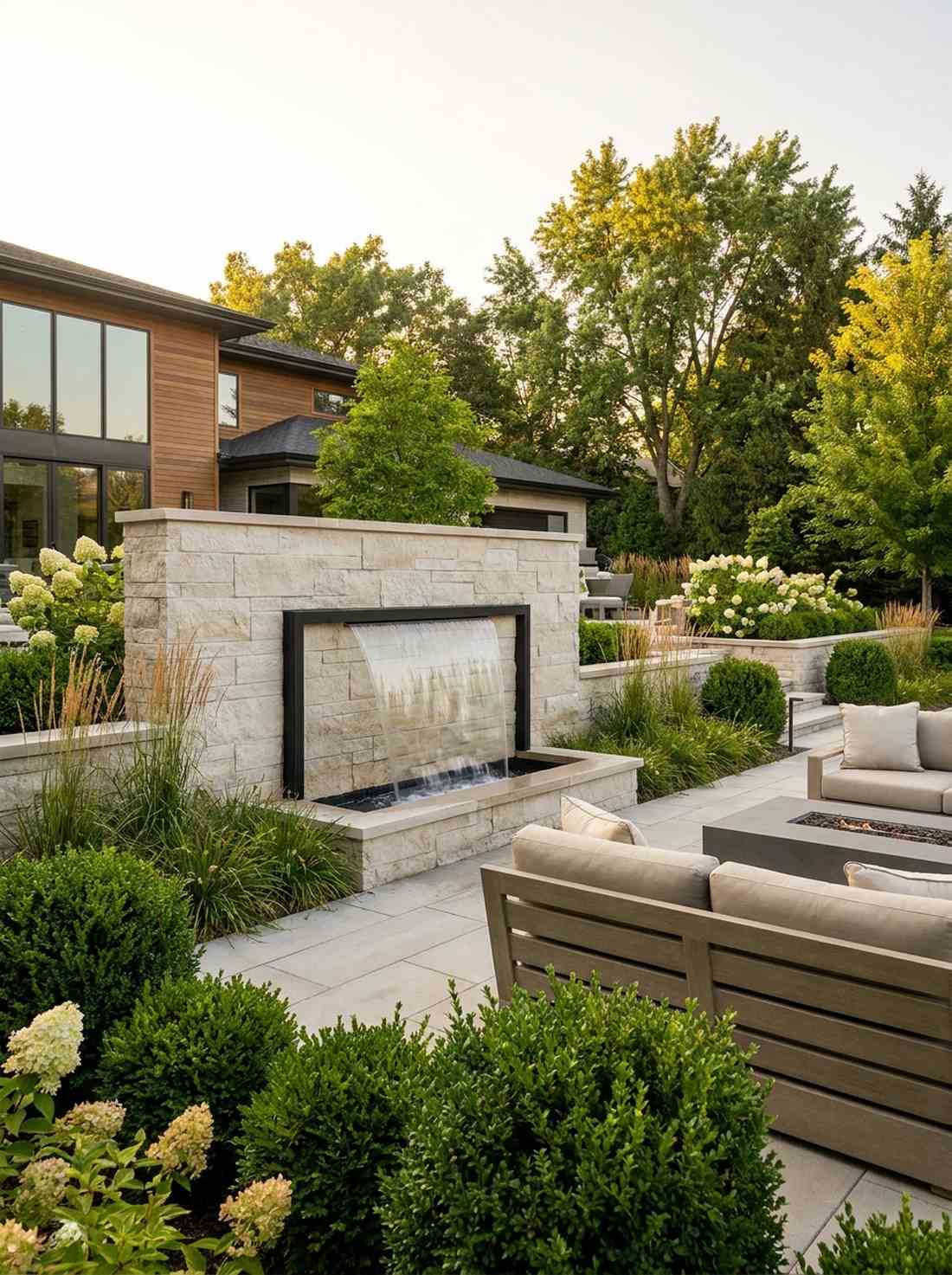
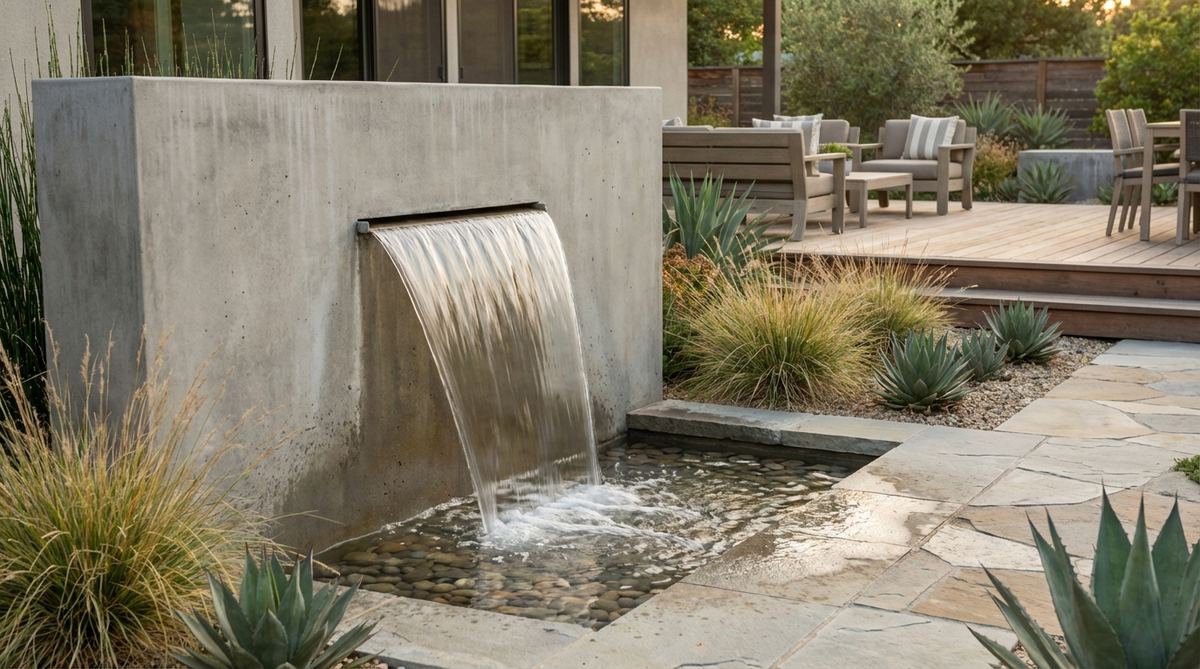
Slices through the architecture with a minimalist precision that feels exceptionally modern. Recessed linear slot waterfalls are the undisputed king of contemporary minimalist courtyard design.
Exposing chunky pipes ruins the illusion, whereas a razor-thin void embedded right into the masonry makes the water look like it’s bleeding from the stone. Utilizing pre-built stainless steel spillway baffles is the secret to achieving that flawless, glass-like sheet of water.
The hidden baffle hardware usually runs $150–$300 depending on width.
- Key Materials: Embedded spillway baffle, masonry facade
- Vibe / Style: Ultra-sleek invisible luxury
- Difficulty: Requires building into the wall
- Budget Breakdown: Baffle hardware: $160 | Masonry tools: $40 | Pump: $60.
- Creator’s Tip: Frame the slot with matte black metal trim to give it extreme visual contrast against light-colored stone.
- Smart Sourcing: Hidden stainless steel spillway baffles and high-lift vertical water pumps.
Don’t click away yet—these final multi-tiered masterpieces are exactly what you need to anchor a massive landscape overhaul…
Multi-Tier Geometric Designs For Layered Visual Impact
Multi-level fountains organize water movement through stacked geometric forms. These tiered structures create depth and complexity through repeated shapes at different scales.
21. Square Tier Pyramid
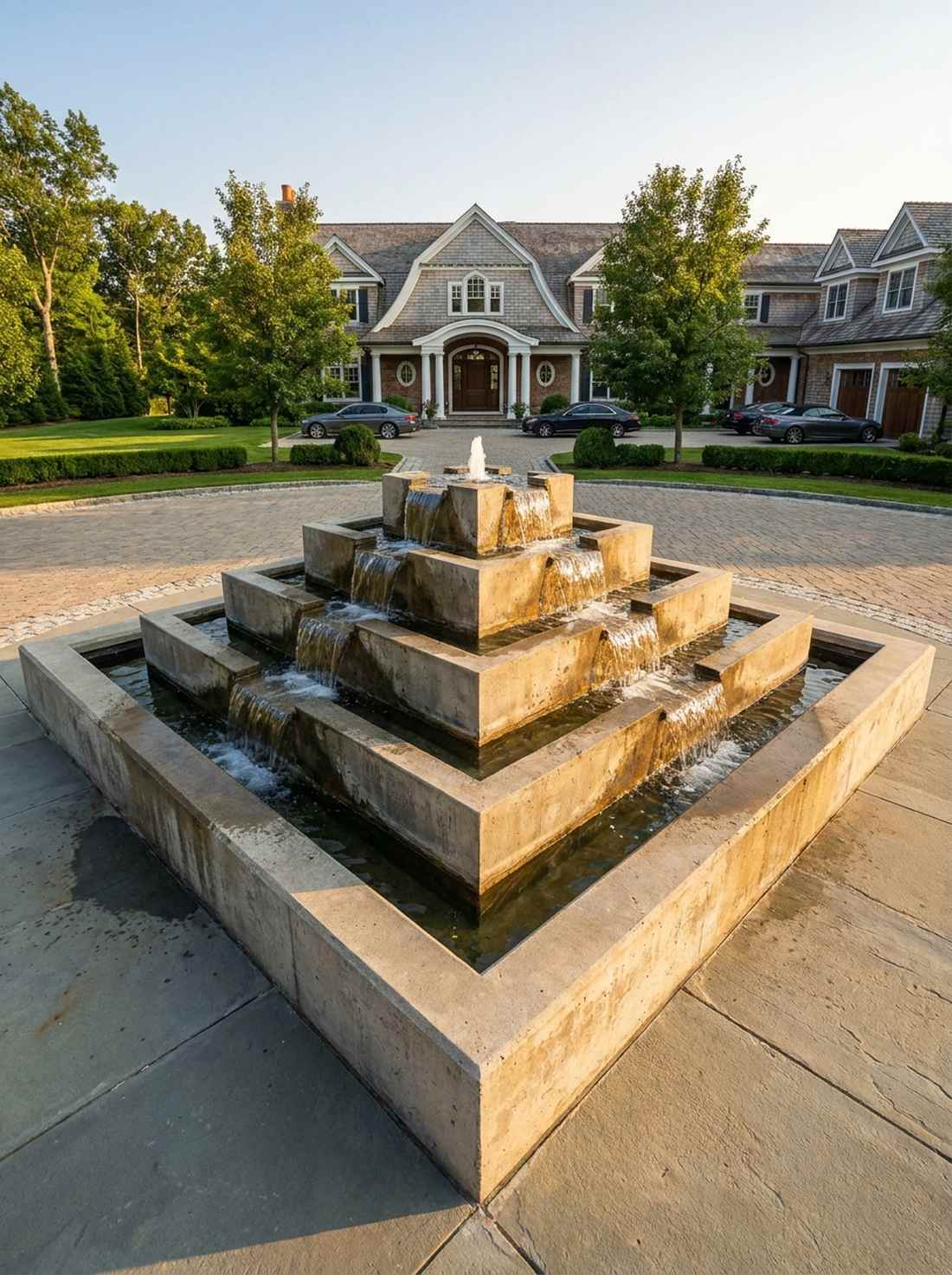
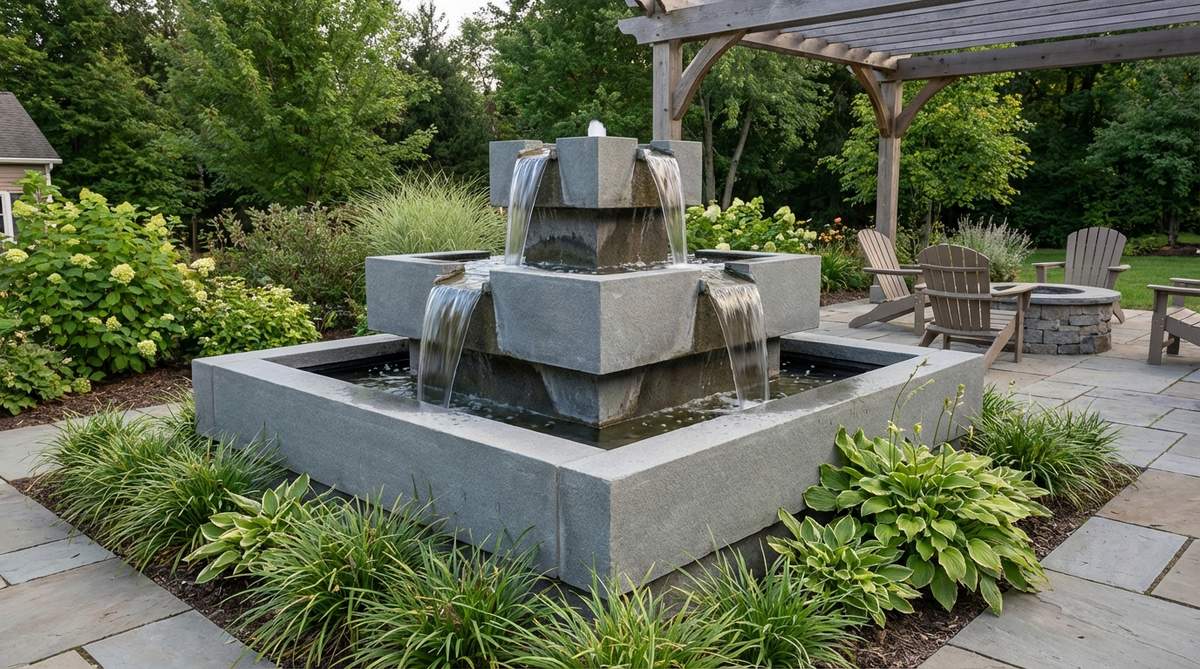
Establishes a majestic, modern ziggurat profile that absolutely dominates the landscape hierarchy. A stepped geometric basin tower looks magnificent centered perfectly in a circular driveway.
Flimsy resin replicas look cheap from afar, but utilizing heavy-cast angular bowls gives that authentic, permanent estate feel. Tossing in a few specialized water-clarifying treatment pods keeps every tier looking pristine without tedious weekly scrubbing.
Budget $500–$900 for a solid multi-level concrete setup. Pin this if you want absolute driveway dominance!
- Key Materials: Graduated square basins, central plumbing pipe
- Vibe / Style: Dominant estate focal point
- Difficulty: Heavy lifting and center alignment
- Budget Breakdown: Cast tiers: $600 | Pump/Pipe: $80 | Base prep: $50.
- Creator’s Tip: Shims are your best friend here; a 1-degree tilt will ruin the overflow symmetry on a square basin.
- Smart Sourcing: Graduated heavy-duty casting molds and water-clarifying treatment pods (bulk pack).
22. Offset Rectangular Plates
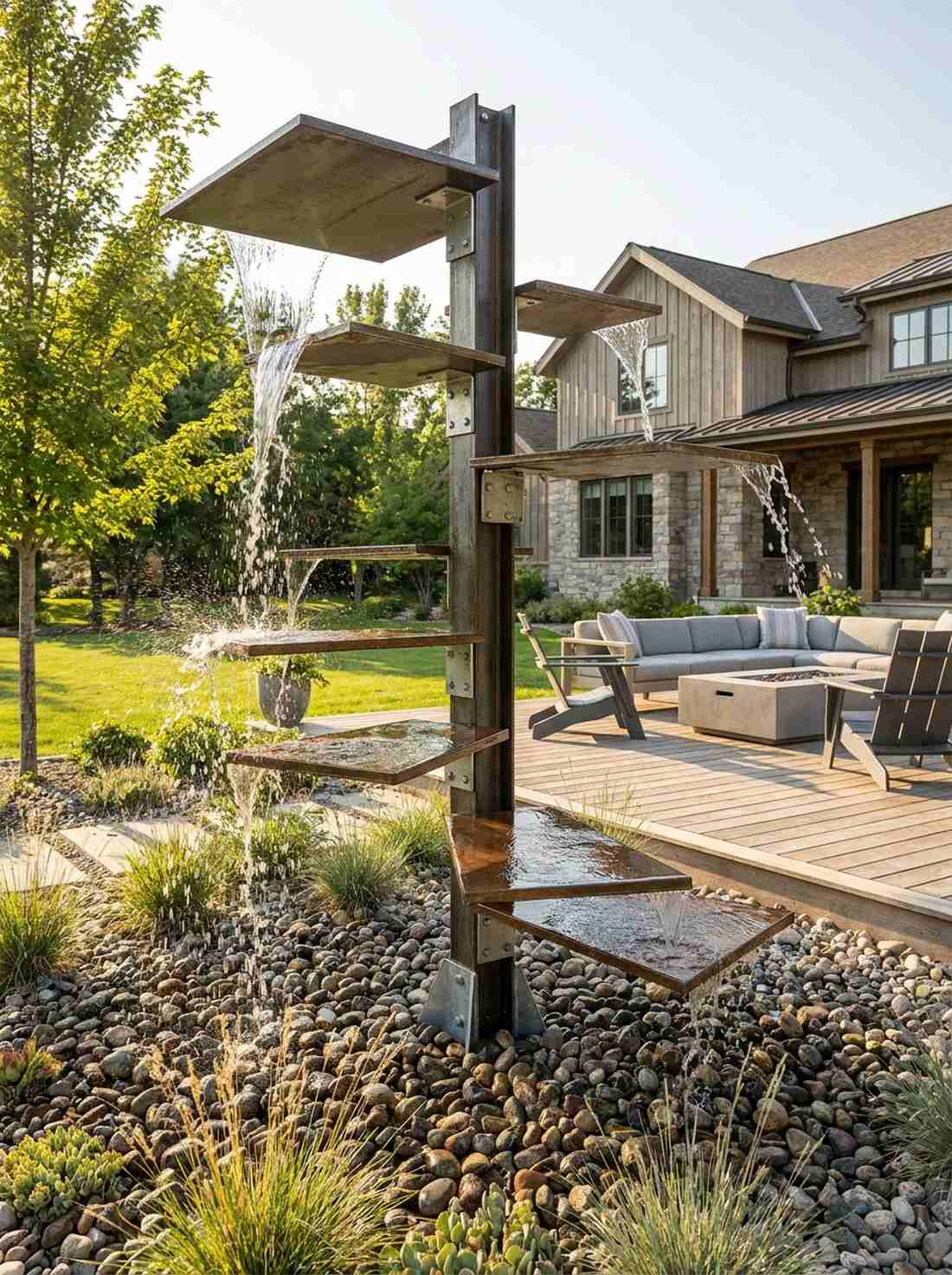
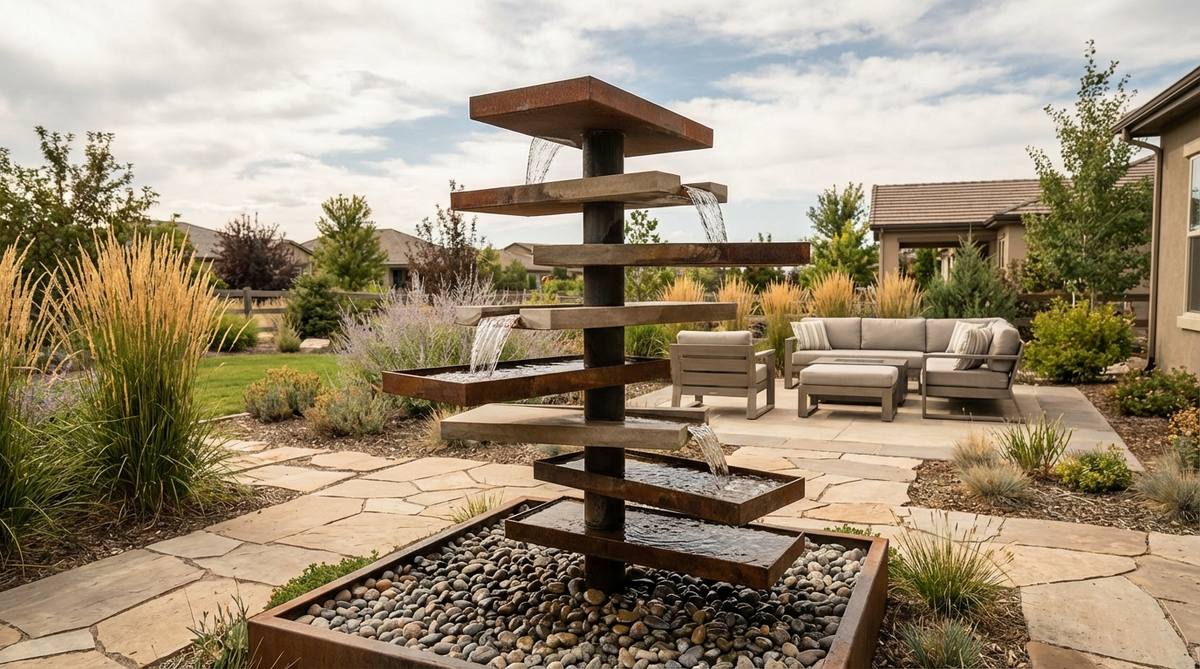
Spirals downward in a decentralized dance that catches the sunlight beautifully from every angle. Cantilevered cascading water shelves are incredible statement pieces for wide, shallow garden beds.
Perfect alignment is boring; dramatically shifting the rotational axis of each tier creates a thrilling, unpredictable splash pattern. Using heavy-duty galvanized steel mounting brackets ensures those suspended ledges never sag under the weight of flowing water.
Custom metal shelf assemblies cost roughly $250–$400 to fabricate.
- Key Materials: Steel plates, heavy-duty central spine
- Vibe / Style: Deconstructed architectural art
- Difficulty: Advanced metalworking
- Budget Breakdown: Steel plates: $180 | Spine structure: $100 | Pump: $50.
- Creator’s Tip: Apply a clear rust-preventative enamel over the metal shelves to maintain the raw industrial look.
- Smart Sourcing: Pre-cut thick acrylic plates (premium alternative) and galvanized steel mounting brackets.
23. Concentric Ring Cascade
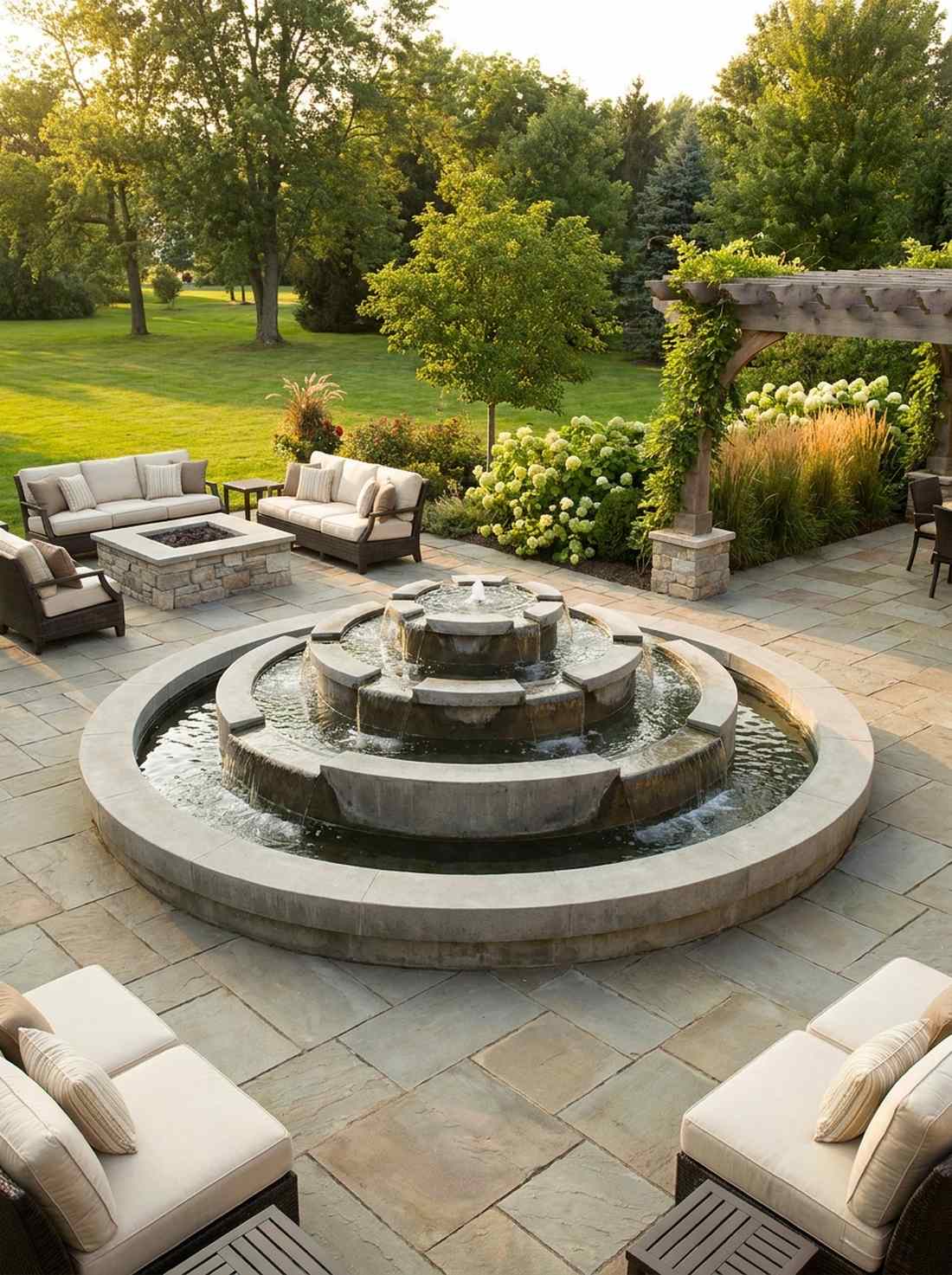
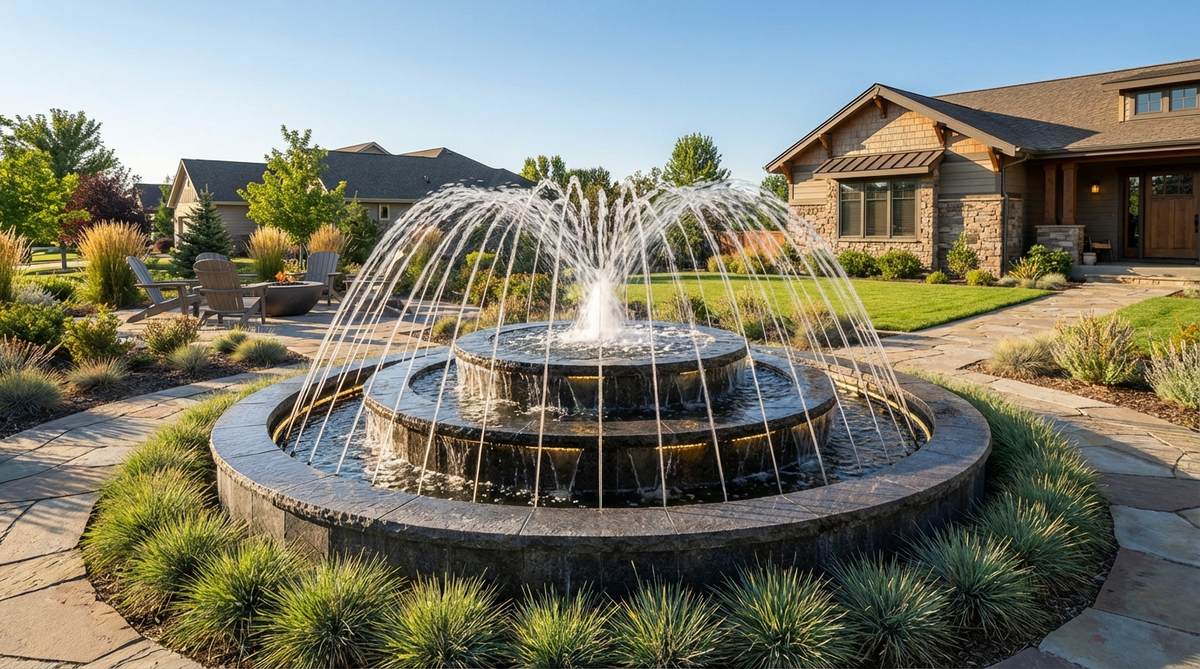
Radiates perfect symmetry that calms the environment with 360 degrees of flowing beauty. Radial tiered water halos are the ultimate 3D centerpiece for a large, open-air patio.
Square edges can feel harsh, but layered circular basins invite viewers to walk completely around the installation and engage with the flow. Grabbing a premium high-lift submersible pump guarantees the top ring gets enough pressure for a uniform overflow.
Pre-cast circular forms usually range from $400 to $800. Save this if you love perfectly symmetrical landscape architecture!
- Key Materials: Circular basins, leveling shims
- Vibe / Style: Symmetrical classic modernism
- Difficulty: Requires absolute perfection in leveling
- Budget Breakdown: Ring basins: $450 | Leveling base: $50 | Pump: $90.
- Creator’s Tip: Integrate an auto-fill valve into the lowest basin so the evaporation never starves the pump.
- Smart Sourcing: Premium high-lift submersible fountain pumps and brass automatic auto-fill valves.
24. Triangular Shelf Series
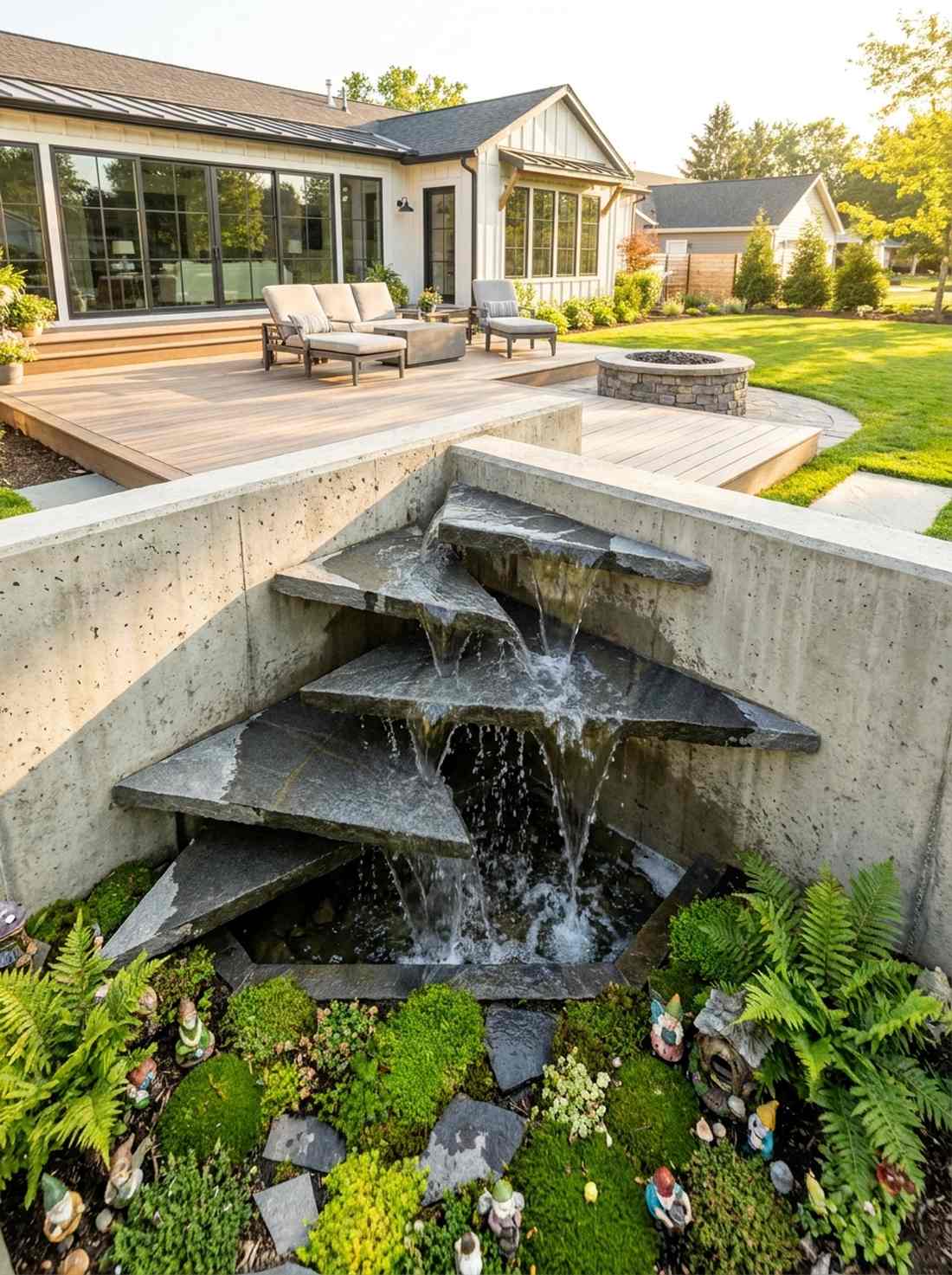
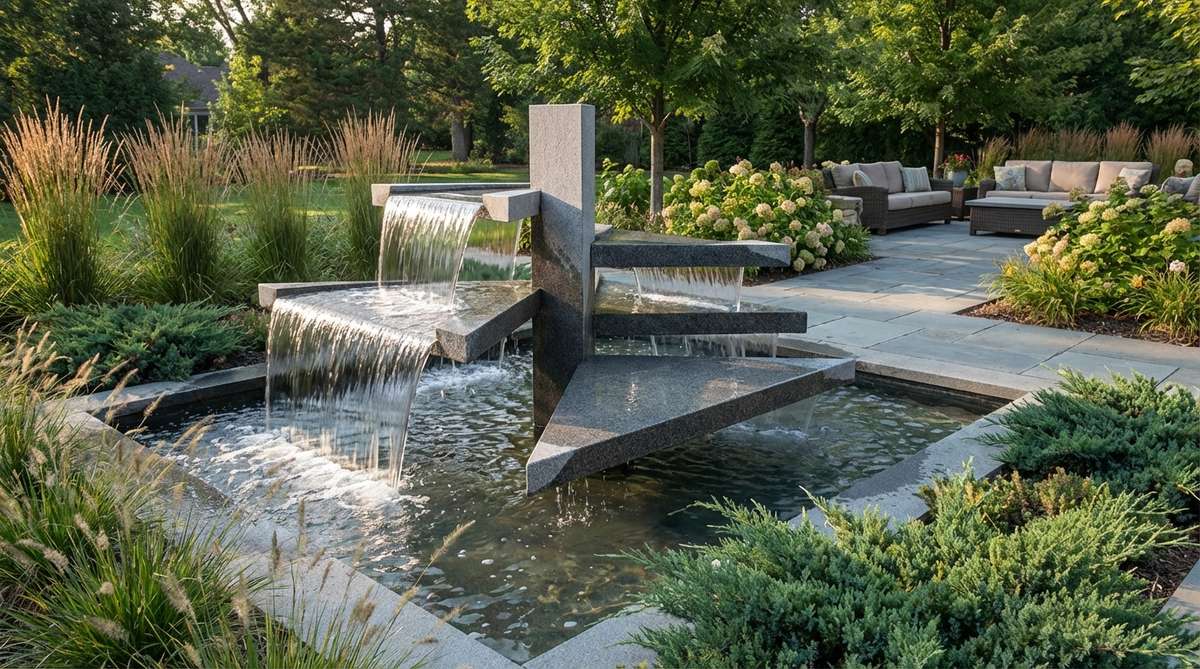
Slices through the air with aggressive, aerodynamic lines that scream high-end modern art. Diagonal cantilevered water steps bring incredible kinetic energy to a previously dead corner of the yard.
Soft curves blend in, but sharp angular drop-offs force water to accelerate and crash with highly satisfying acoustic feedback. Securing a complete fairy garden starter kit for the base plantings provides a whimsical contrast to the severe geometry above.
Creating these custom angles will run you about $180–$260 in raw materials.
- Key Materials: Custom cut triangular stone, wall brackets
- Vibe / Style: Aggressive geometric movement
- Difficulty: Requires custom stone/metal cuts
- Budget Breakdown: Shelf material: $120 | Brackets: $40 | Base flora: $30.
- Creator’s Tip: Grind a tiny drip groove underneath the tip of each triangle so water falls cleanly instead of running backward along the bottom.
- Smart Sourcing: Pre-cut geometric stone shelves and terrarium moss starter kits.
25. Modular Box Stack
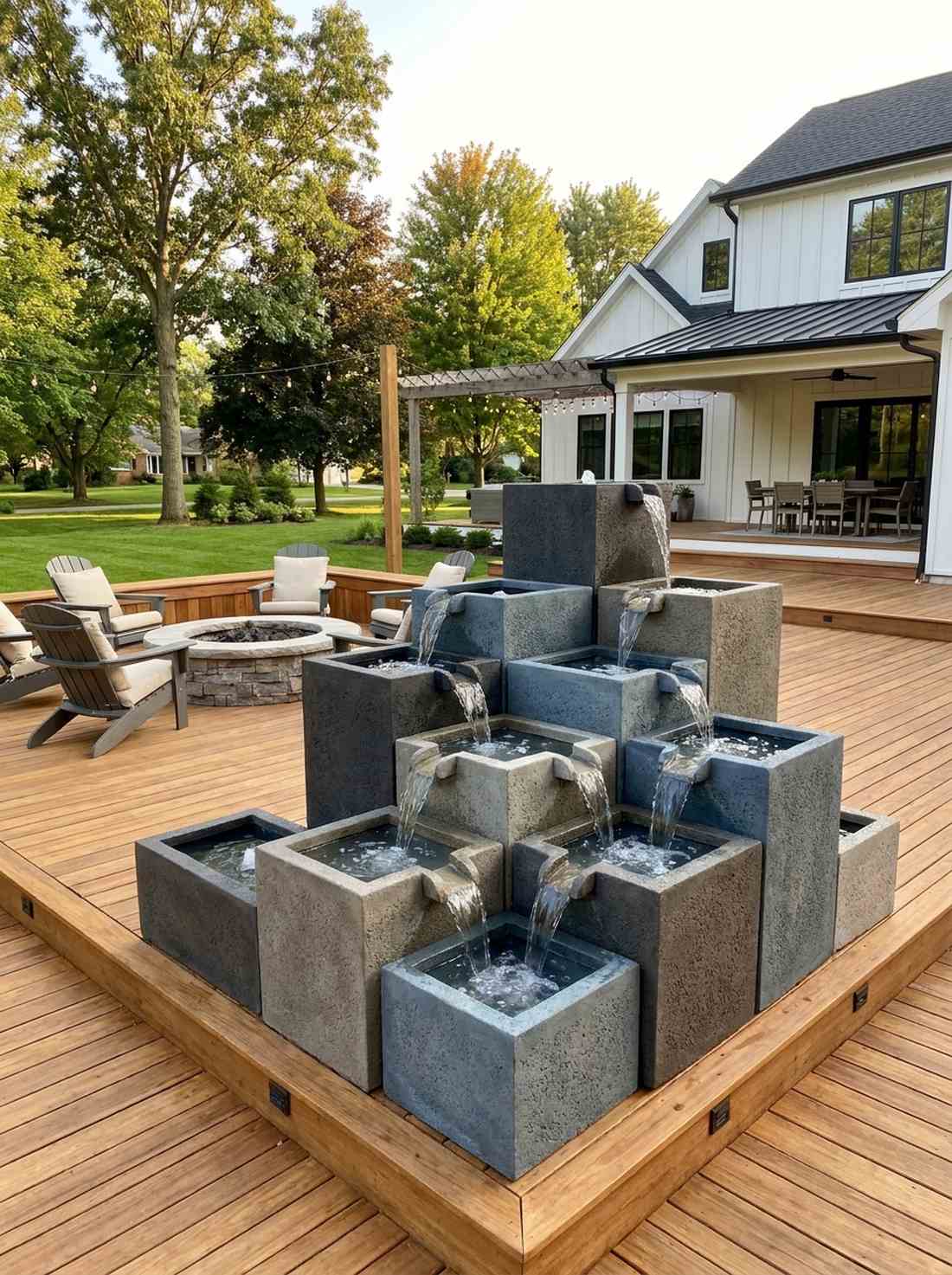
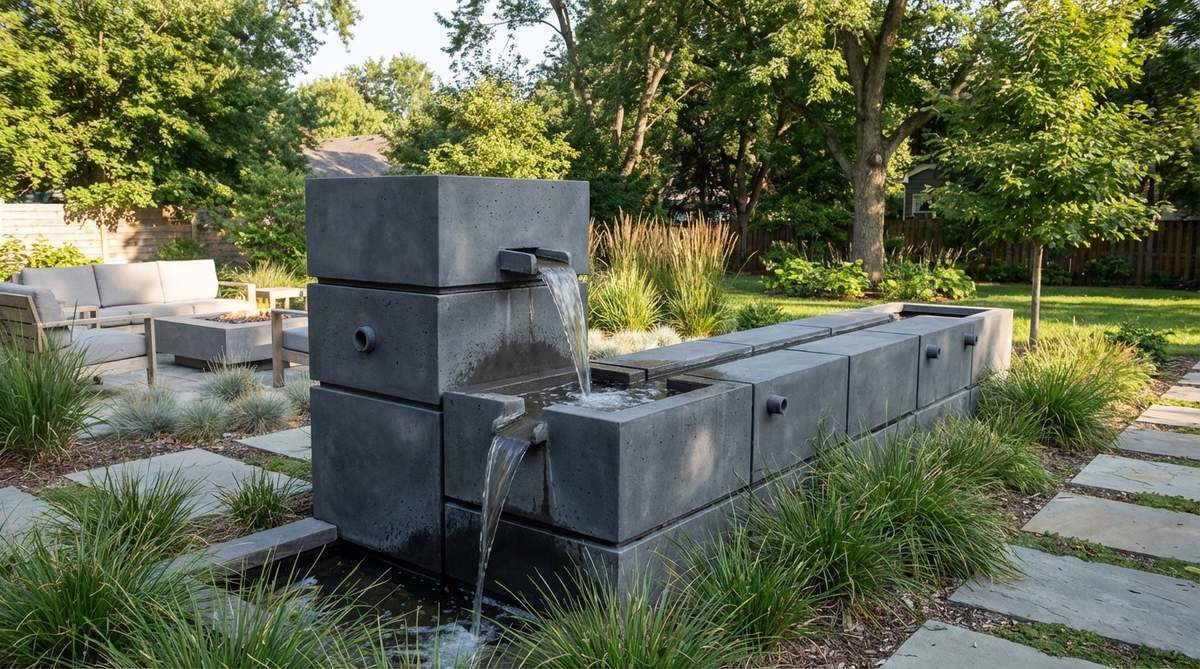
Delivers the ultimate adult LEGO experience, letting you build a wildly custom aquatic sculpture. A reconfigurable cubic fountain system adapts effortlessly as your outdoor living space evolves over the years.
Permanent fixtures are risky, but a standardized block system means you can scale up, tear down, or rearrange the flow path whenever you get bored. Snagging bulk packs of interlocking watertight seal gaskets is the only way to ensure the customizable joints don’t leak.
Starter kits of modular cubes start at $200 and can scale infinitely. Highly recommended for renters or serial re-decorators!
- Key Materials: Interlocking water cubes, rubber gaskets
- Vibe / Style: Customizable playfulness
- Difficulty: Plug-and-play simple
- Budget Breakdown: Base cube kits: $200 | Extra modules: $50/each.
- Creator’s Tip: Buy more modules than you think you need initially so the dye lots match perfectly.
- Smart Sourcing: Modular resin fountain block kits and watertight rubber gaskets (bulk pack).
Conclusion
Geometric water features transform outdoor spaces through precise form and controlled flow. These 25+ premium modern garden fountain designs demonstrate how architectural clarity combines with budget-friendly material sourcing to create compelling focal points. Skip the generic options and select high-end layouts that complement existing landscape geometry while driving maximum visual impact in your space.
Frequently Asked Questions
What materials work best for geometric fountain construction?
For a high-end look without the massive weight, utilizing pre-cast Glass Fiber Reinforced Concrete (GFRC) kits is the ultimate hack. If you want maximum durability and that sleek razor-edge flow, upgrading to UV-coated stainless steel spillways prevents rust and saves you replacement costs over time. Sourcing complete starter kits in these premium materials guarantees your modern garden fountain survives harsh weather without cracking.
How do geometric fountains handle wind and water loss?
Smart modern garden fountain designs combat wind by keeping the water tethered to solid surfaces. Flush-mount wall features and enclosed acrylic cylinder setups completely eliminate messy splash zones. To prevent your pump from burning out due to fast summer evaporation, investing in a cheap brass auto-fill valve kit connected to your sprinkler line is an absolute lifesaver.
What pump capacity suits residential geometric fountains?
If you want a flawless, glass-like sheet of water, you cannot cheap out on the pump. Residential modern garden fountain ideas typically demand a high-torque submersible pump rated between 400 and 800 gallons per hour. Sourcing an adjustable flow rate pump kit allows you to dial in the exact acoustic crash and flow speed without needing to swap out hardware.
Can geometric fountains integrate with existing pools?
Absolutely, and it’s one of the fastest ways to increase your property value. Utilizing brass geometric scuppers or pre-cut stainless steel sheer descent spillways directly on the pool edge creates a luxury resort vibe instantly. Ensure you grab commercial-grade epoxy sealants to protect your modern garden wall fountain materials from harsh pool chlorine.
How does lighting enhance geometric fountain features at night?
Nighttime illumination is what makes these modern backyard setups look truly expensive. Sourcing waterproof LED ring lights and installing them inside acrylic spheres or directly beneath a knife-edge overflow creates a glowing, ethereal mist. Opt for a bulk pack of submersible color-changing puck lights to easily adjust the aesthetic vibe right from your phone.