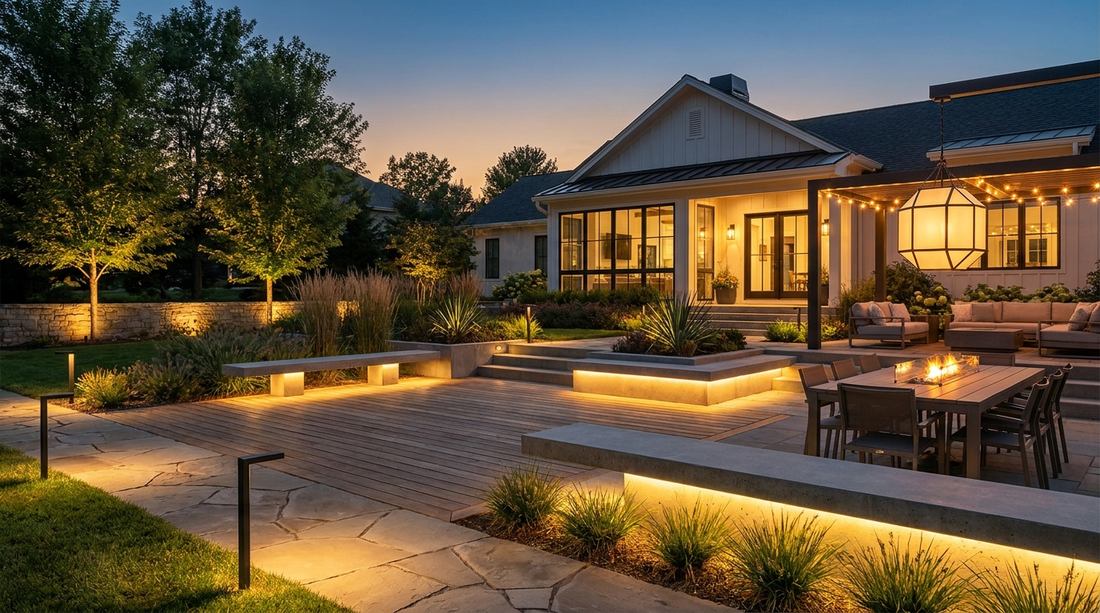
Strategic modern garden lighting turns flat landscaping into a captivating, high-end estate. These commercial-grade setups share exact budget breakdowns and premium fixture sourcing tricks. Achieve that rich designer aesthetic without overspending on basic materials.
Design Snapshot: Key Principles
- Layered Illumination: Combine ambient, accent, and task lighting to create depth and dimension across architectural surfaces
- Beam Control: Match fixture beam angles to feature size—narrow beams for columns, wide angles for facade washing
- Color Temperature: Warm whites (2700-3000K) enhance traditional materials; neutral tones (3500-4000K) suit contemporary architecture
- Energy Efficiency: LED fixtures consume 50-80% less power than traditional sources while delivering superior lumen output
Uplighting Fixtures for Vertical Drama
1. Narrow Beam Column Uplights
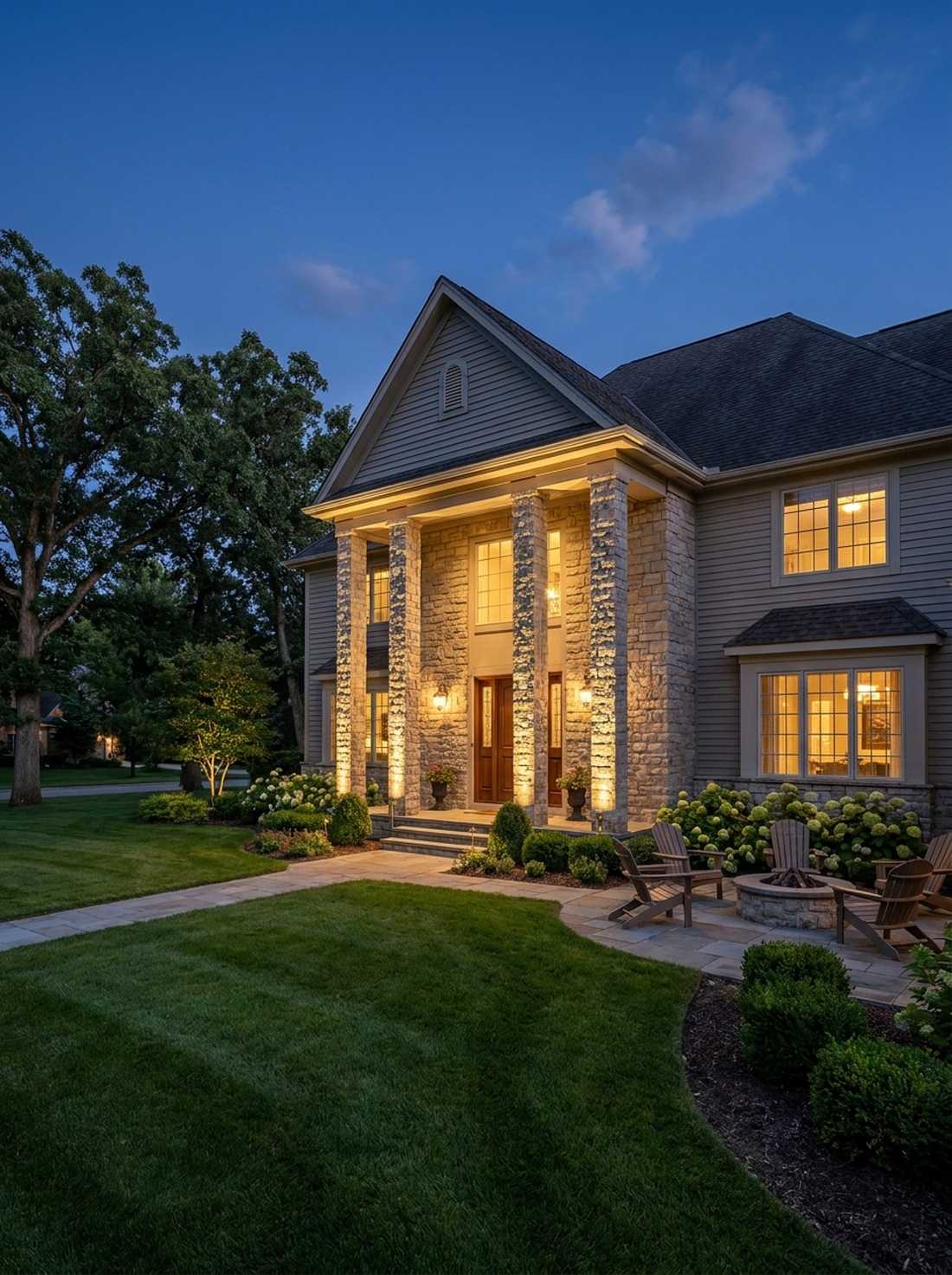
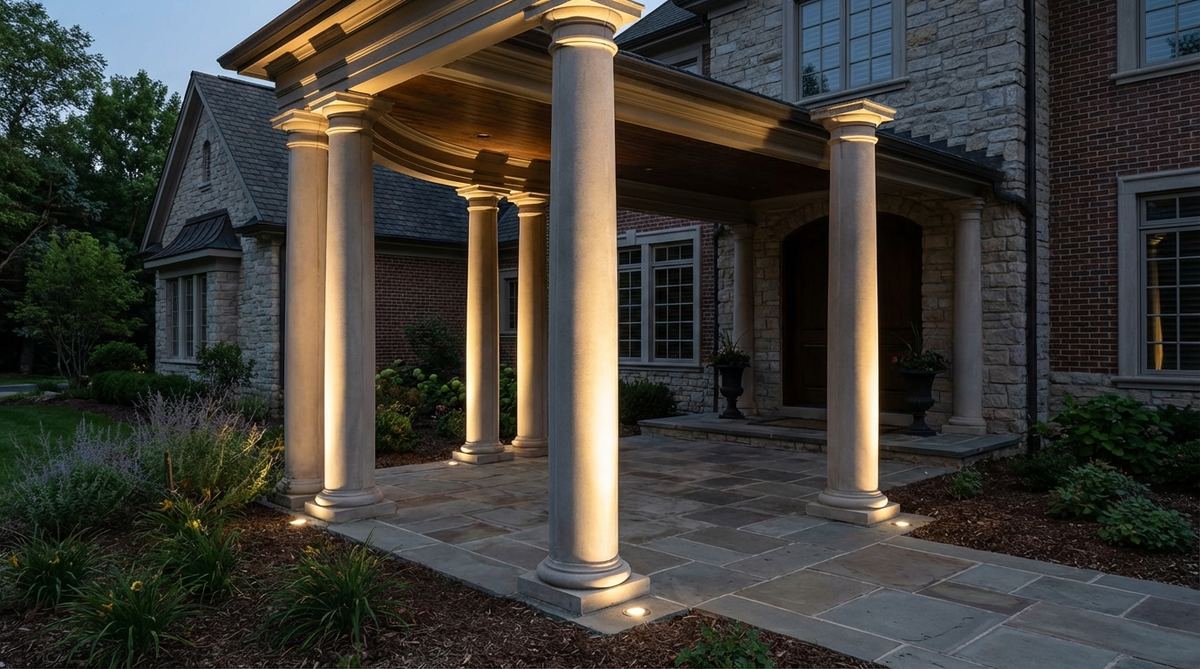
This layout feels like a stately, hidden manor thanks to dramatic architectural uplighting. It works exceptionally well for framing front entryways or tall stone pillars.
Amateurs often blast walls with wide floodlights, but this tight 10-degree beam delivers a surprisingly premium look. Concentrating the light exclusively on the column shaft creates intense modern garden lighting design impact.
You can easily pull this off for around $45–$80 per column. Save this to your exterior home upgrade board.
- Key Materials: Heavy-duty die-cast brass spotlights
- Vibe / Style: High-end luxury estate
- Difficulty: Intermediate hardwiring
- Budget Breakdown: Fixture: $45 | Waterproof cabling: $15
- Creator’s Tip: Set the fixture exactly 4 inches from the base to eliminate harsh ground shadows.
- Smart Sourcing: IP67-rated narrow beam LED fixtures and low-voltage landscape wire (bulk roll).
2. Wide-Angle Facade Uplights
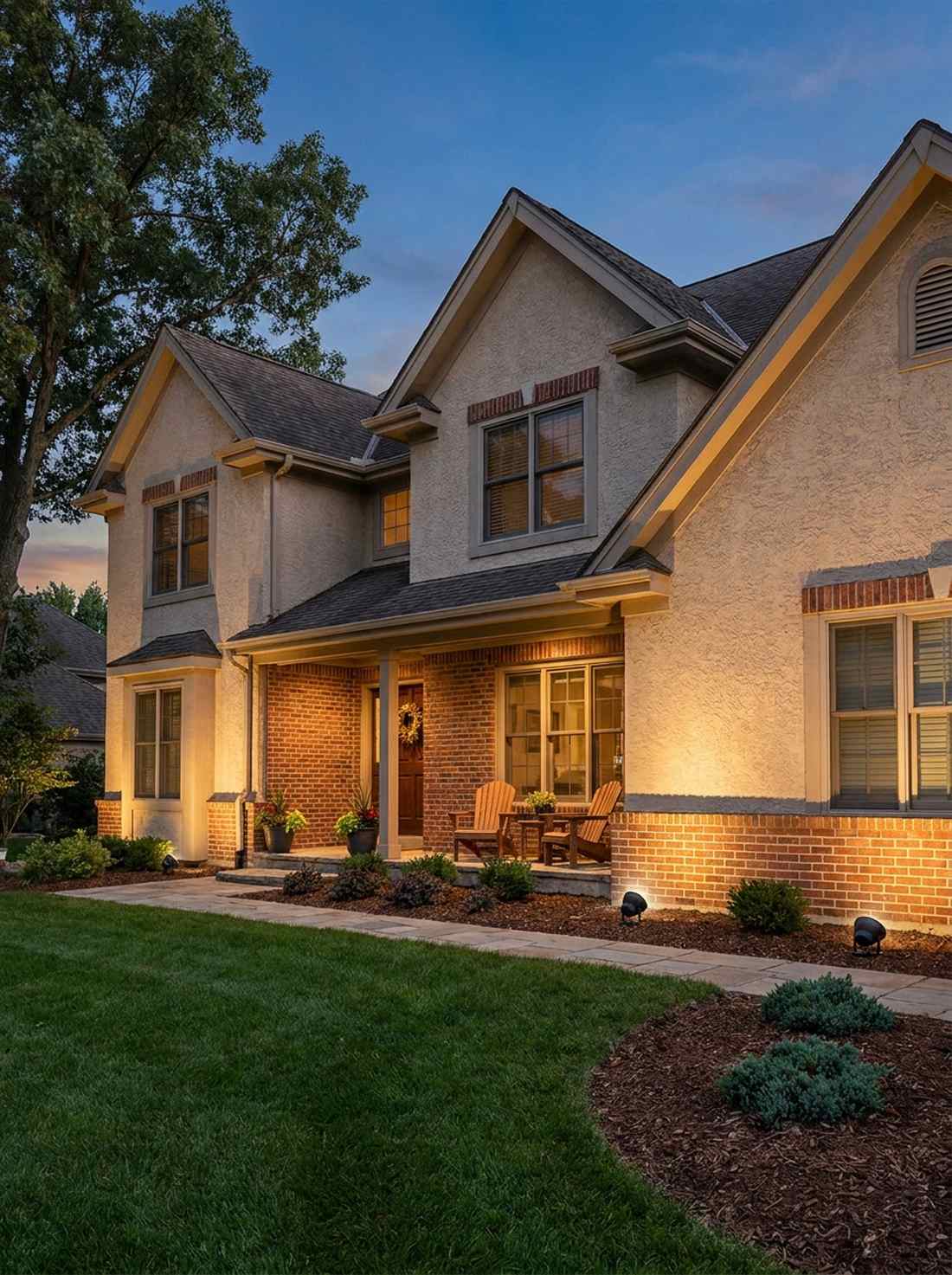
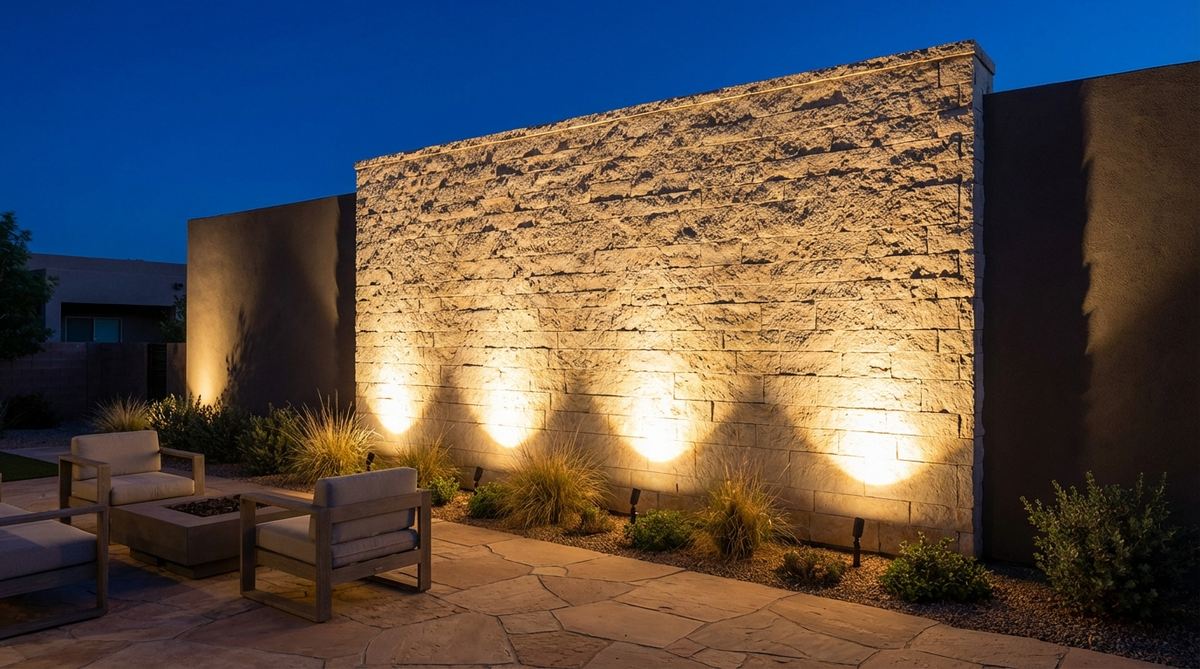
Bathing a house in warm light feels wonderfully inviting with this broad facade illumination setup. It is absolutely perfect for blank stucco or brick walls that look lifeless at night.
Most homeowners completely ignore wall texture, yet using wide-angle beams here looks far more expensive than it is. By spacing modern outdoor garden lighting units evenly, you highlight the mortar and masonry depth effortlessly.
Expect to invest around $150 for a full wall coverage setup.
- Key Materials: 30-degree wide flood LEDs
- Vibe / Style: Warm architectural modernism
- Difficulty: Beginner-friendly spacing
- Budget Breakdown: 3-pack floods: $90 | Central transformer: $60
- Creator’s Tip: Use 15W bulbs to avoid looking like a stadium; subtler is always better.
- Smart Sourcing: Commercial-grade wide flood uplights and weatherproof wire connectors (bulk pack).
3. Adjustable Gimbal Uplights
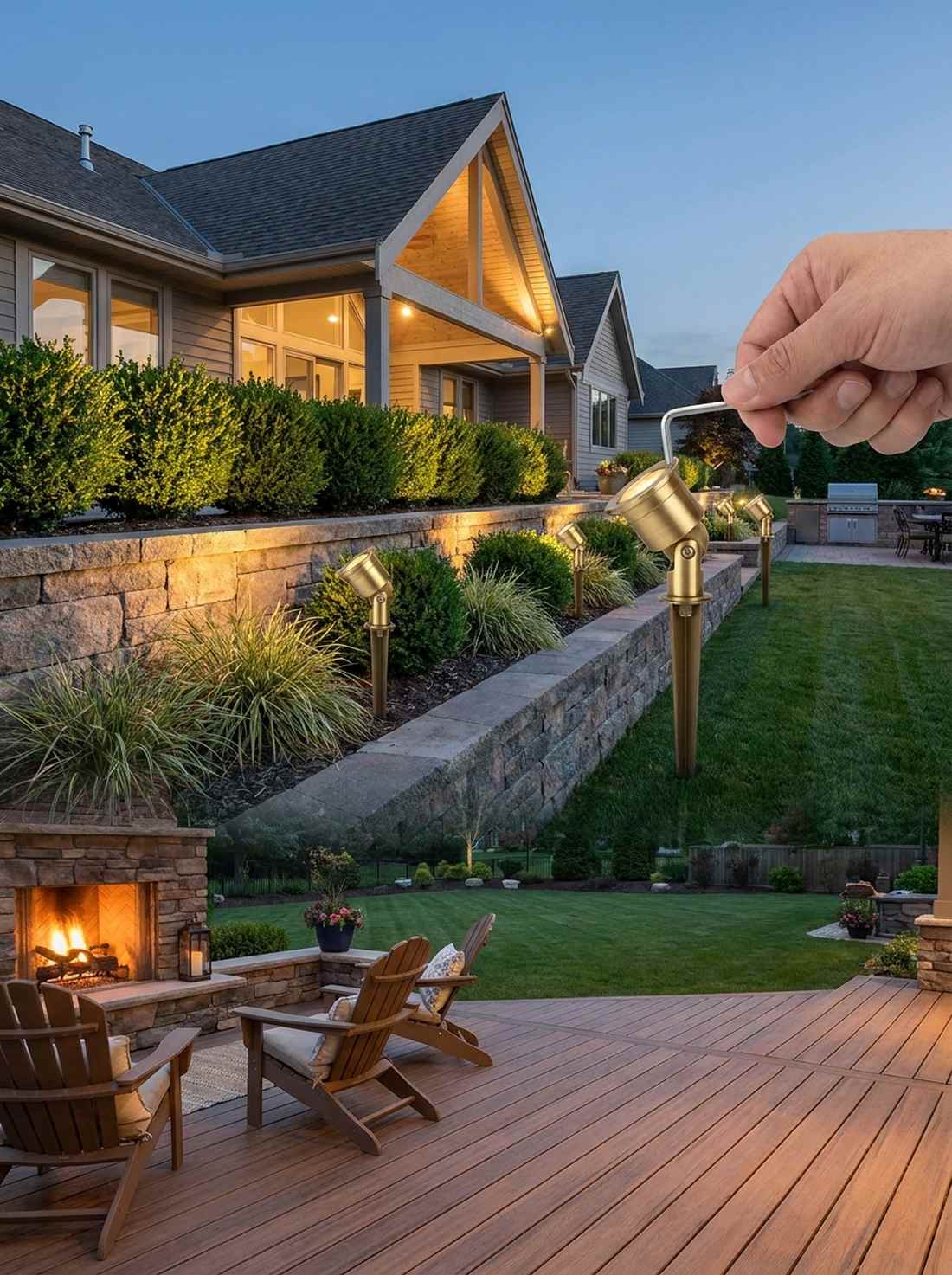
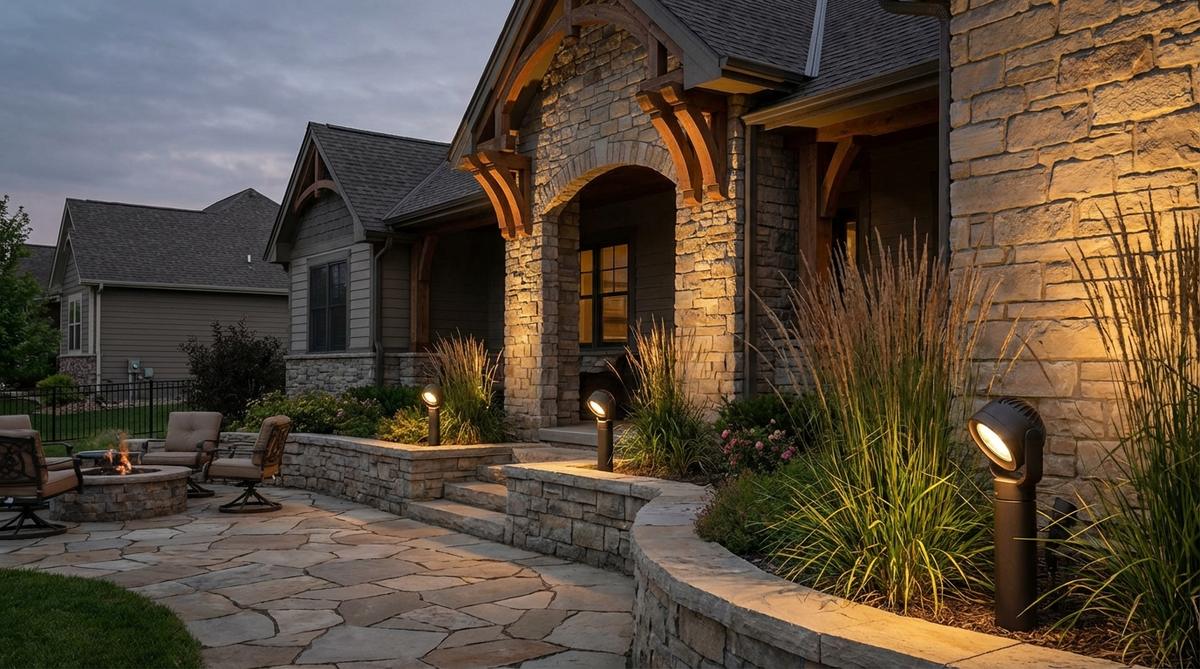
A touch of mechanical flexibility creates a vibe that feels straight out of an upscale resort using directional landscape accents. Brilliant for angled rooflines or stepped garden retaining walls.
Fixed lights often miss the mark entirely, but pivoting gimbals give a designer-level finish. Adjusting the angle post-installation ensures your modern garden lighting ideas adapt perfectly as surrounding plants grow.
Budget roughly $35 per fixture for high-quality adjustable units. Pin this if you love flexible garden designs!
- Key Materials: 180-degree pivoting gimbal housings
- Vibe / Style: Resort-style flexibility
- Difficulty: Easy ground staking
- Budget Breakdown: Gimbal fixture: $30 | Mounting stake: $5
- Creator’s Tip: Lock the mechanism tightly with an Allen wrench after aiming to prevent sagging.
- Smart Sourcing: Pre-sealed adjustable brass gimbals and corrosion-resistant ground stakes (multi-pack).
4. RGB Color-Changing Uplights
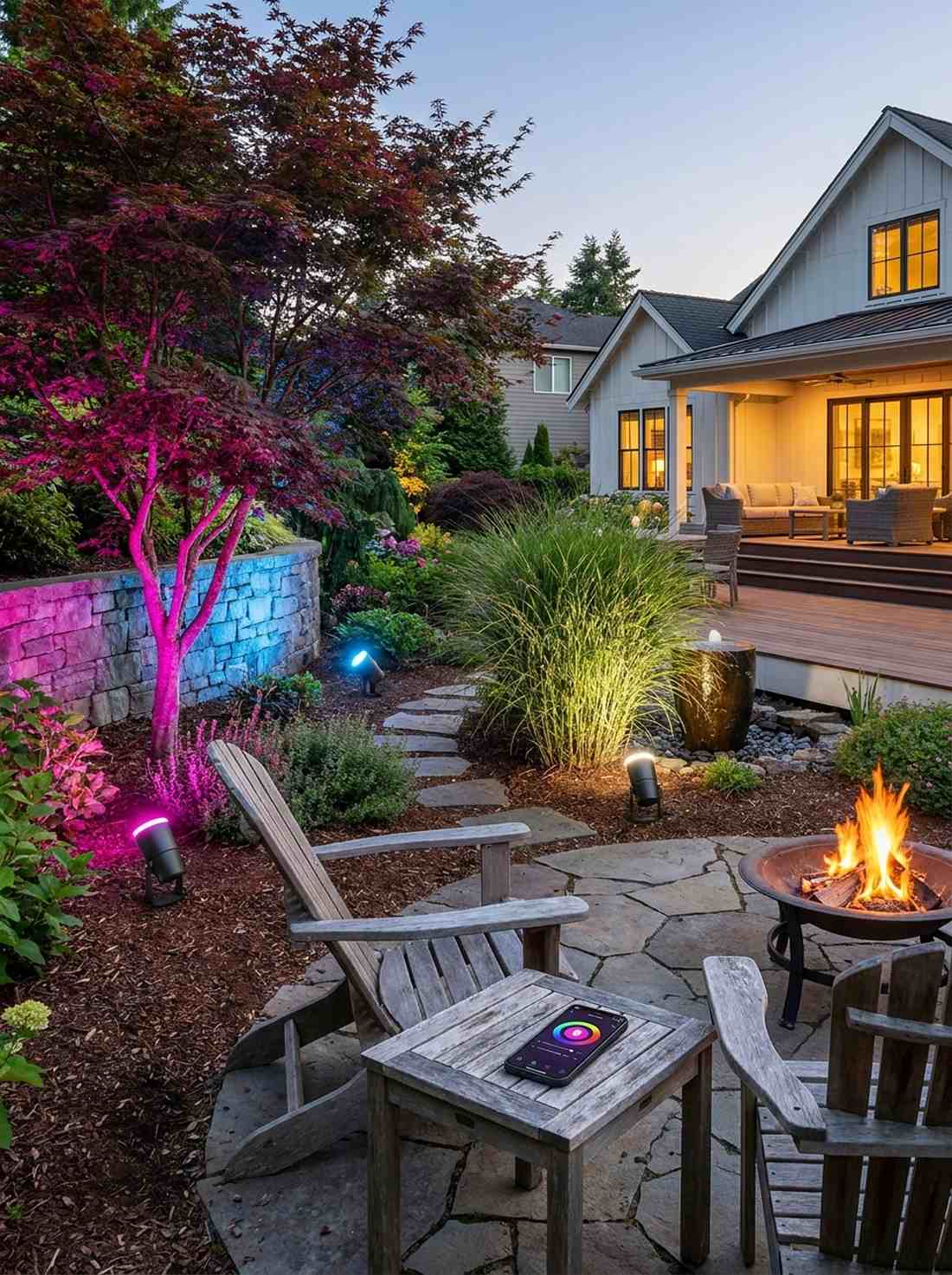
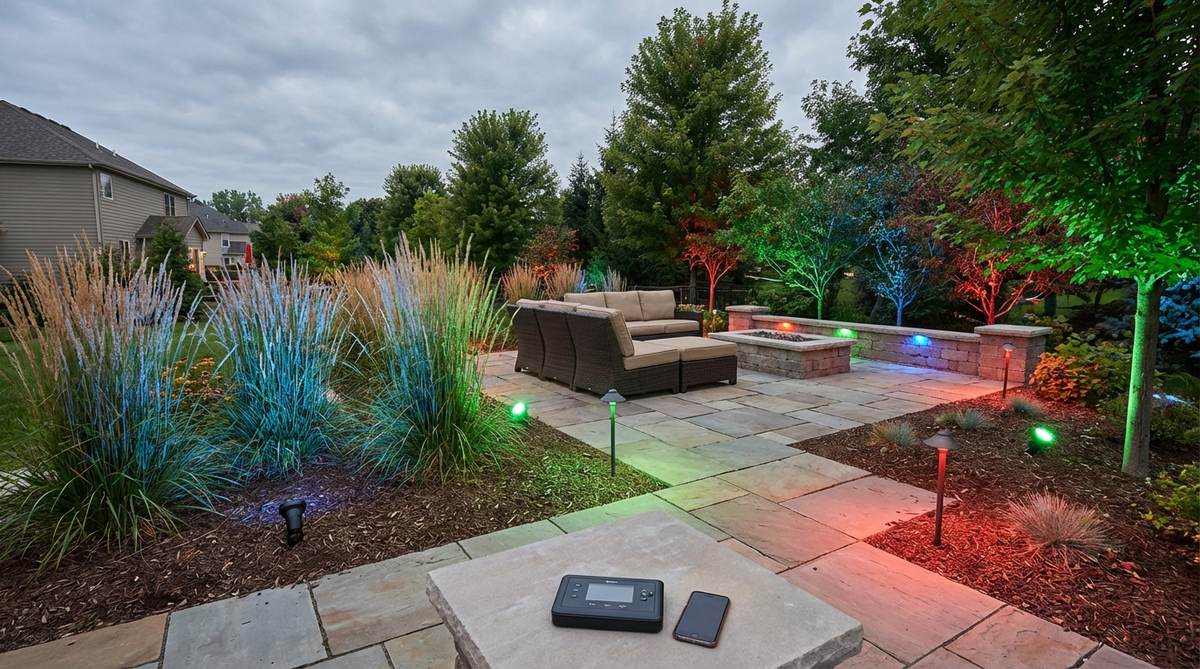
Instantly transition from cozy evenings to a vibrant party atmosphere with dynamic smart backyard lighting. Fantastic for entertaining spaces or highlighting seasonal landscaping features.
Standard white bulbs are fine, but smart RGB arrays offer unmatched versatility without replacing physical fixtures. These smart modern outdoor garden lighting kits let you paint your backyard with light using just your phone.
This setup runs around $80–$120 for a starter kit. It’s a fast upgrade that completely changes the vibe.
- Key Materials: Bluetooth-enabled RGB LED uplights
- Vibe / Style: Lively and modern
- Difficulty: Plug-and-play smart setup
- Budget Breakdown: RGB 4-pack kit: $90 | Smart hub: $30
- Creator’s Tip: Keep everyday usage on warm white (2700K) and save the bold colors for special events.
- Smart Sourcing: App-controlled RGB outdoor starter kits and UV-coated extension cables.
This next setup is ridiculously cheap but looks like a $500 custom landscape designer installation…
5. Low-Voltage Compact Uplights
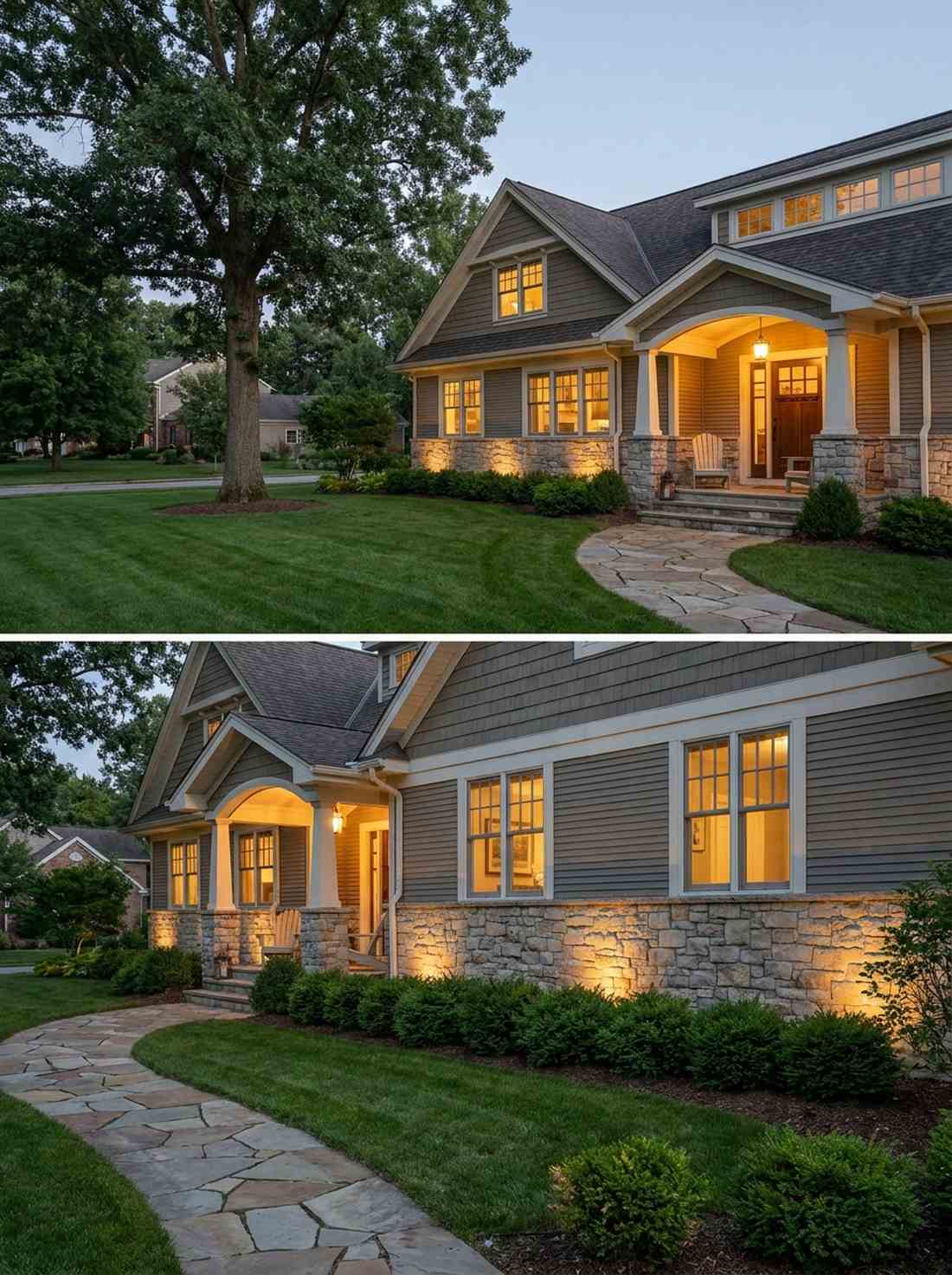
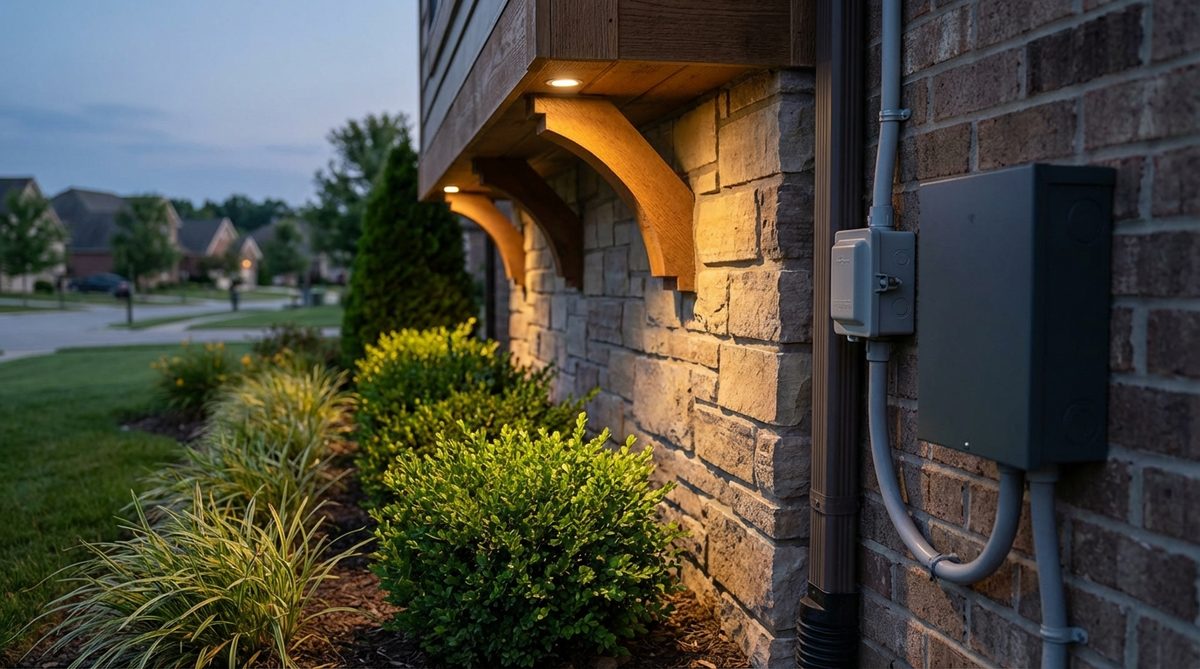
Tucked perfectly out of sight, this hidden foundation illumination creates an ethereal, glowing base for your home. Ideal for slipping under low garden hedges or tight architectural overhangs.
Big, bulky lights ruin daytime aesthetics, which is why these micro-fixtures trick the eye so well. Using a 12V system keeps installation safe while sneaking miniature garden supplies into the narrowest borders.
You can wire an entire bed for under $60. Save this for your budget curb appeal board.
- Key Materials: 12V miniature spot fixtures
- Vibe / Style: Invisible magic
- Difficulty: Very easy beginner DIY
- Budget Breakdown: 6-pack micro lights: $40 | 12V transformer: $20
- Creator’s Tip: Bury the low-voltage wire just two inches under mulch for an invisible finish.
- Smart Sourcing: Miniature low-voltage landscape kits and heavy-duty direct burial wire.
6. Shielded Glare-Free Uplights
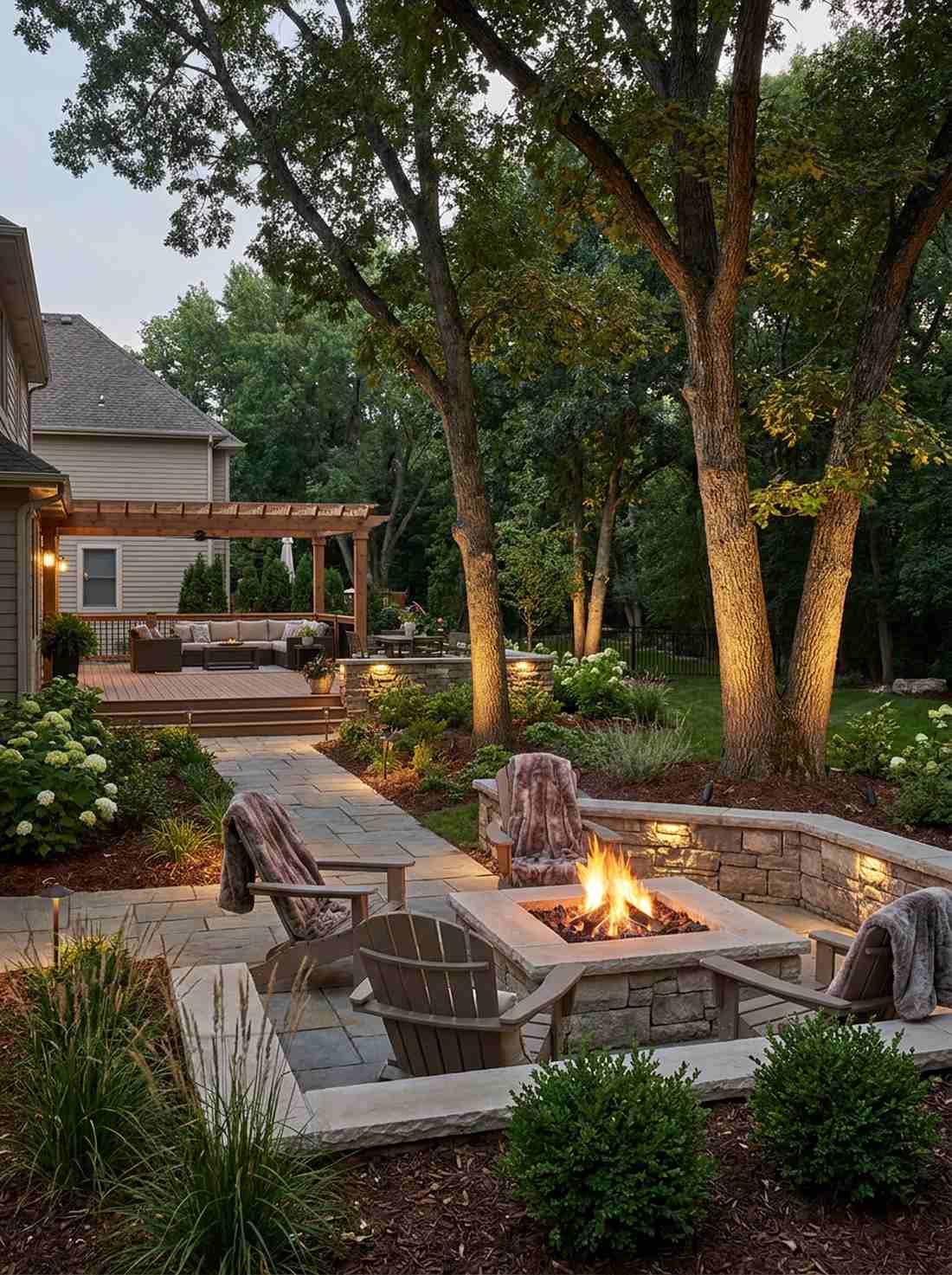
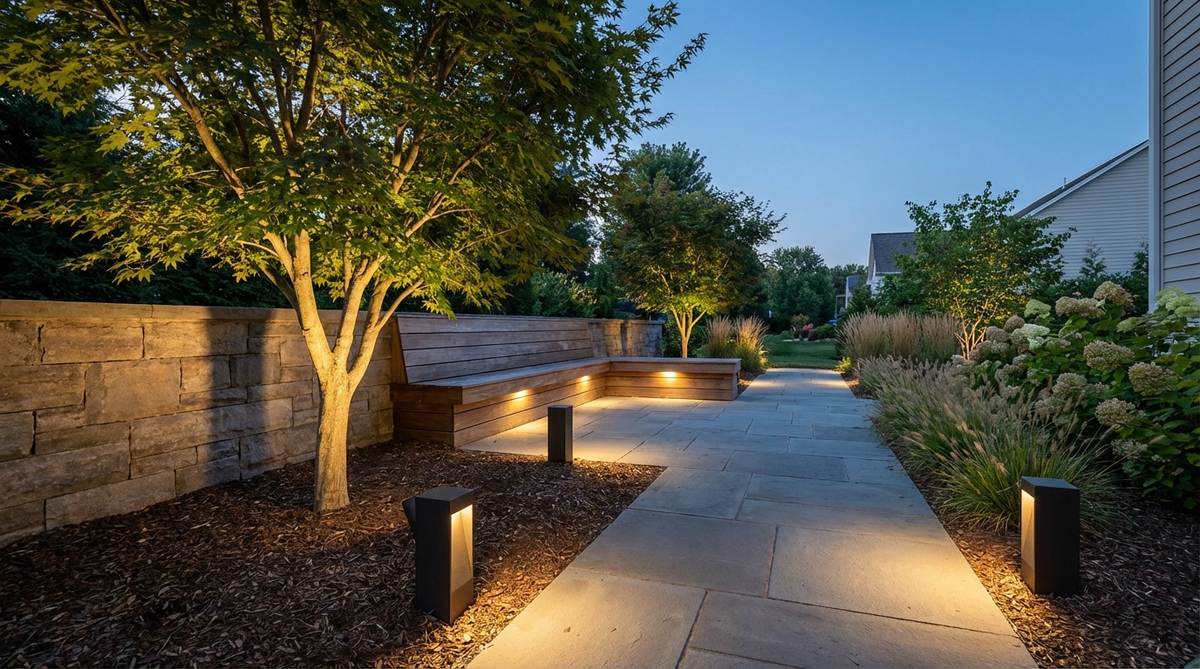
Enjoying your patio without blinding light in your eyes feels incredibly relaxing with baffled outdoor fixtures. Essential for placing near seating areas, fire pits, or pedestrian walkways.
Nothing ruins a mood faster than a harsh glare, but internal shields solve this issue instantly. It controls the light spill, pushing the illumination strictly onto your modern garden lighting design targets.
These specialized fixtures cost about $40–$55 each.
- Key Materials: Deep-recessed shielded uplights
- Vibe / Style: Refined comfort
- Difficulty: Intermediate placement
- Budget Breakdown: Shielded fixture: $45 | Glare louvers: $10
- Creator’s Tip: Angle the shield opening away from natural walking paths to hide the bulb entirely.
- Smart Sourcing: Anti-glare shielded LED spots (commercial grade) and snap-on hex louvers.
7. High-Power Architectural Floods
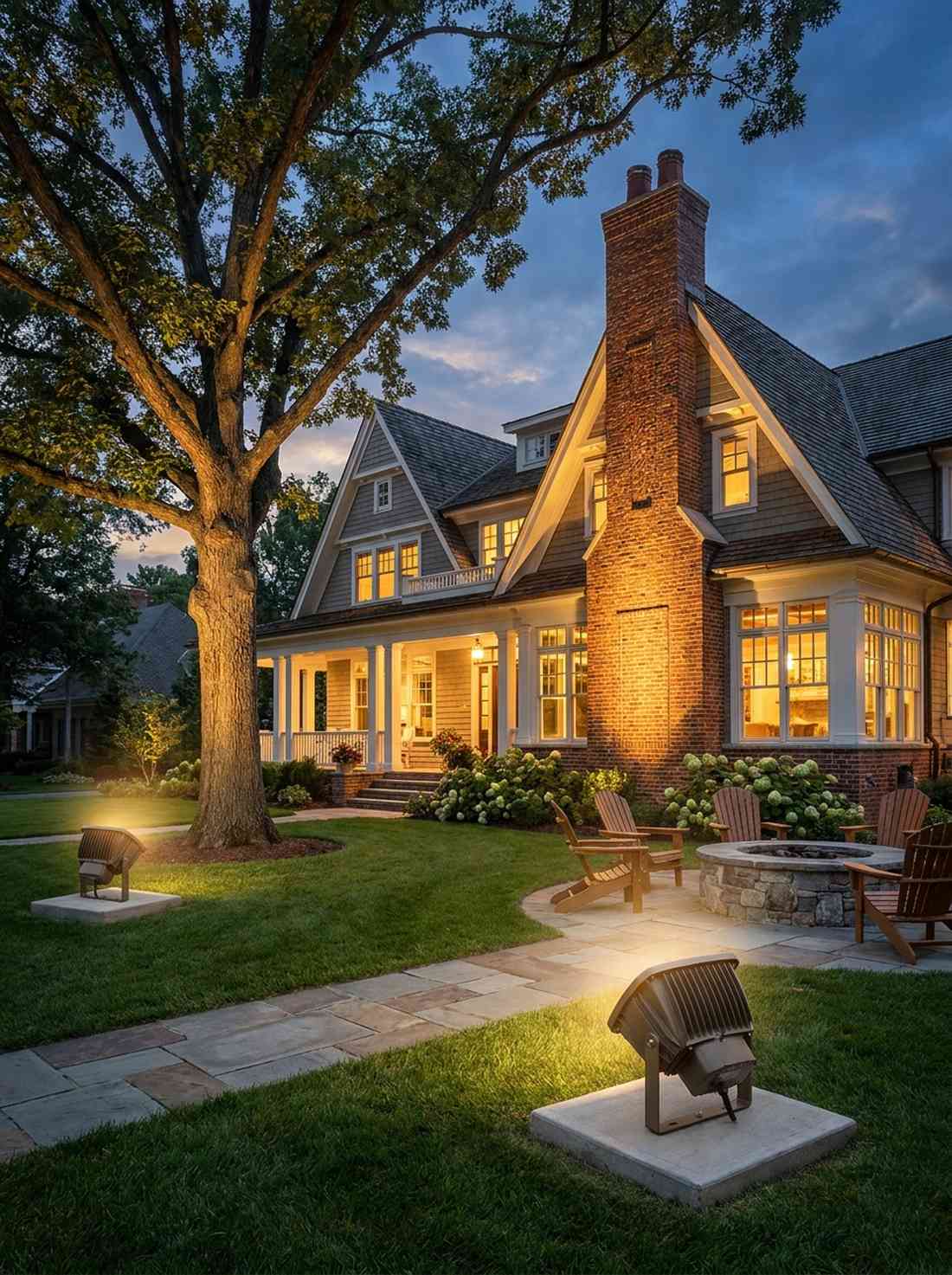
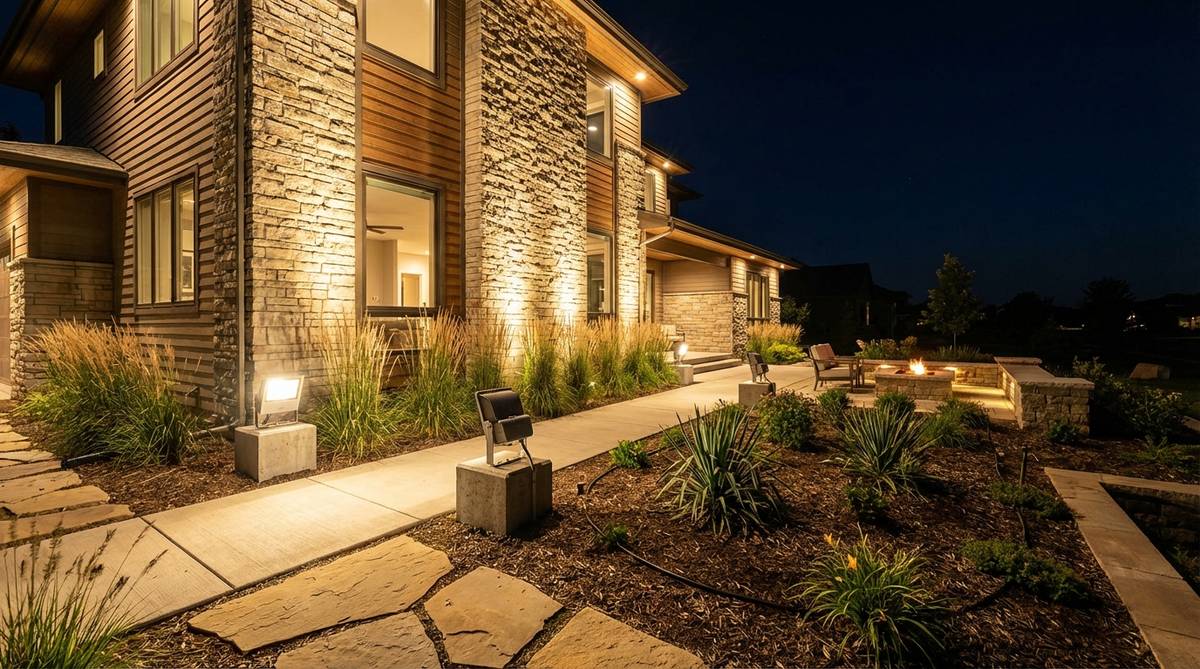
Command attention from the street with high-lumen exterior floods that feel grand and monumental. Best reserved for massive features like brick chimneys, multi-story gables, or mature oak trees.
Flimsy plastic solar lights look pathetic against large homes; this heavy-duty approach guarantees striking visibility. Delivering 3000+ lumens ensures your architecture isn’t swallowed by the dark.
Professional output will run you about $90–$130 per unit. Pin this if you have a massive exterior to light!
- Key Materials: Die-cast aluminum 3000-lumen floods
- Vibe / Style: Bold and commanding
- Difficulty: Advanced (requires solid mounting)
- Budget Breakdown: High-output LED flood: $100 | Concrete mounting pad: $15
- Creator’s Tip: Mount these on concrete pads, not dirt stakes, to prevent them from sinking under their own weight over time.
- Smart Sourcing: Heavy-duty die-cast aluminum floods and pre-mixed fast-set concrete bases.
Wall Wash & Linear Systems
8. LED Linear Wall Washers
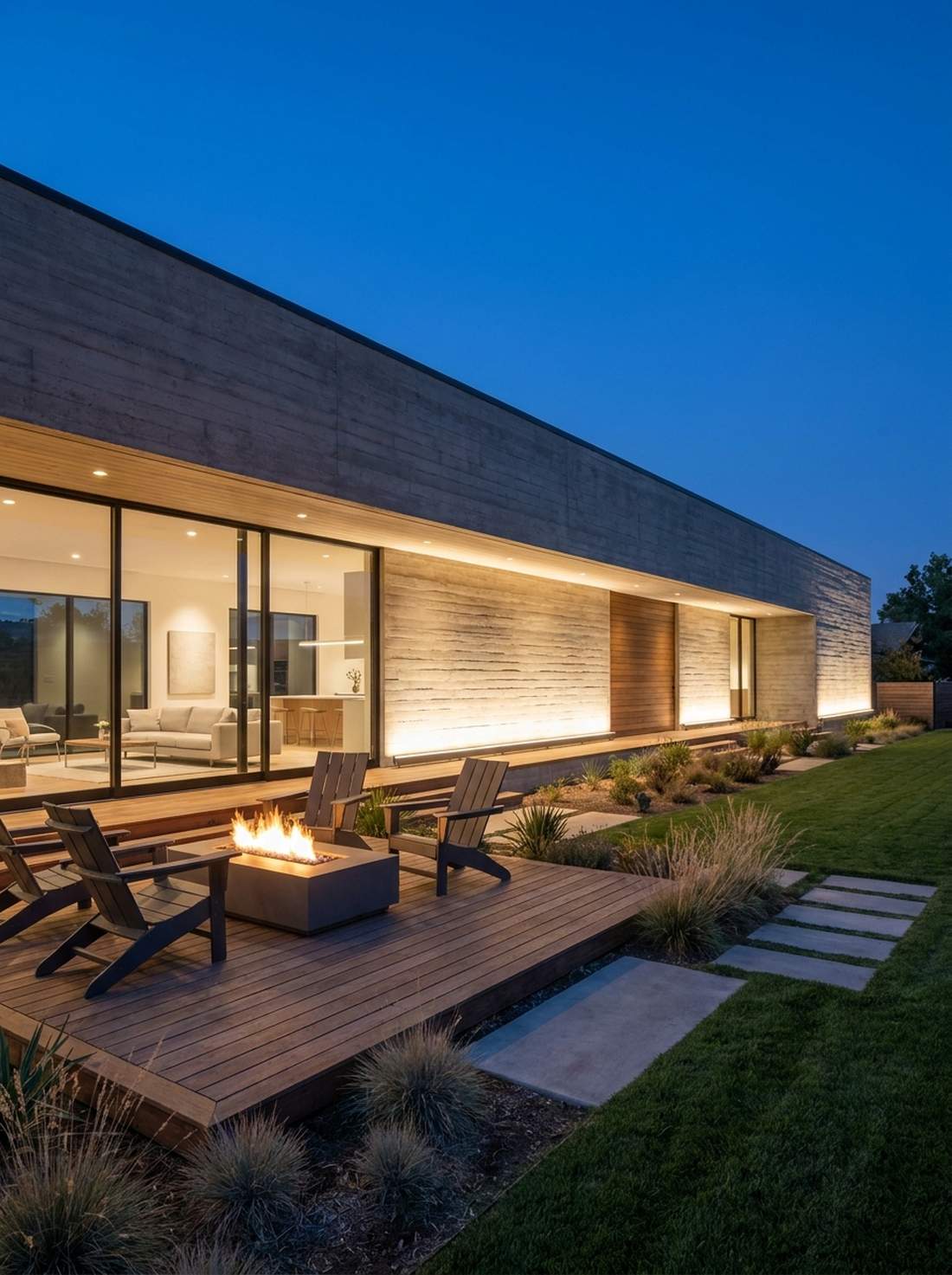
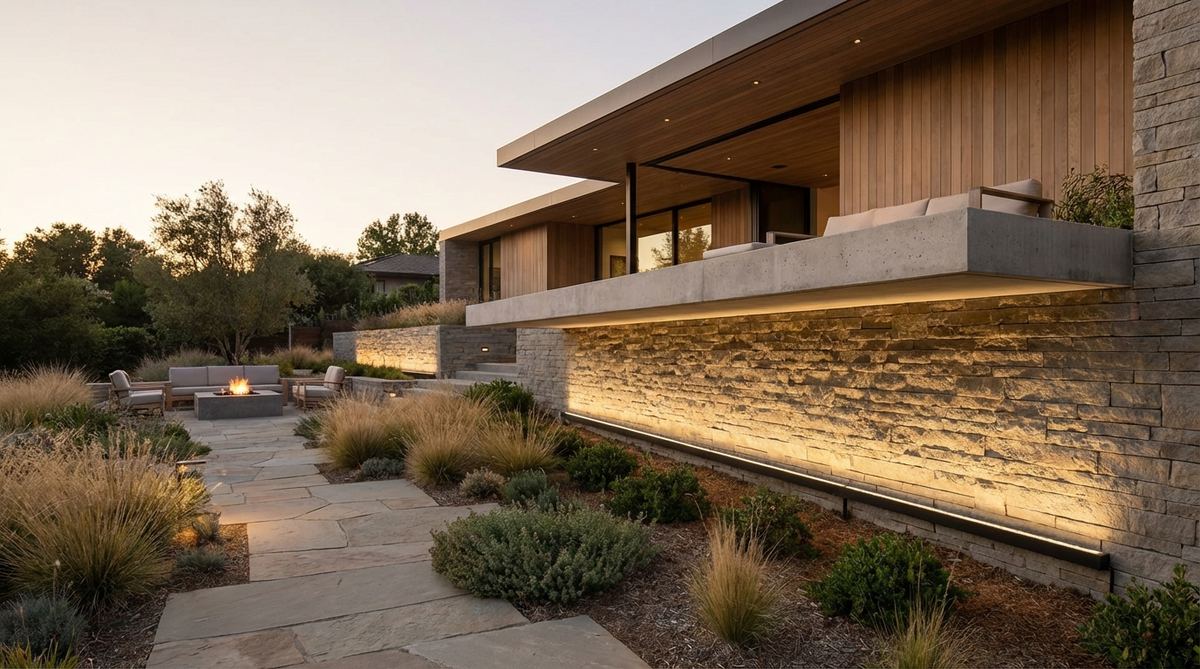
Sleek, continuous glowing lines give a modern exterior facade wash that looks undeniably futuristic. Perfectly tailored for contemporary flat-faced architecture or modern privacy fences.
Spotlights can leave annoying dark gaps, but these elongated arrays provide a flawless, unbroken sheet of light. Embracing linear modern outdoor garden lighting removes hotspots entirely, highlighting horizontal building lines.
Expect to spend $70–$100 per 3-foot section.
- Key Materials: 3ft LED linear washer bars
- Vibe / Style: Ultra-modern chic
- Difficulty: Intermediate leveling
- Budget Breakdown: Linear bar: $80 | Linkable cables: $10
- Creator’s Tip: Keep these strictly perfectly level; a slanted linear light ruins the modern architectural illusion.
- Smart Sourcing: Seamless linkable LED wall washers and weatherproof IP67 bridging cables.
9. Grazing Light Strips
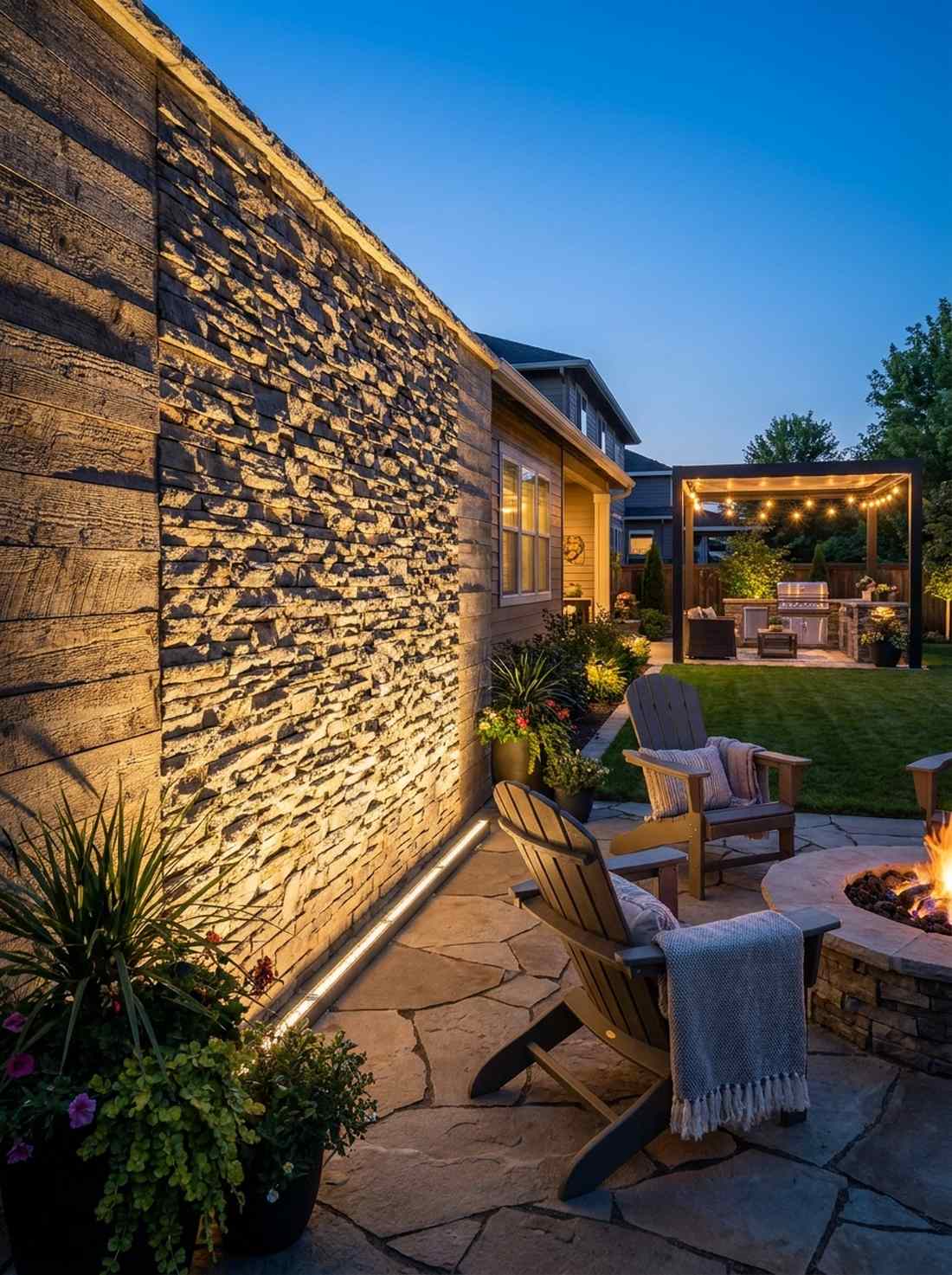
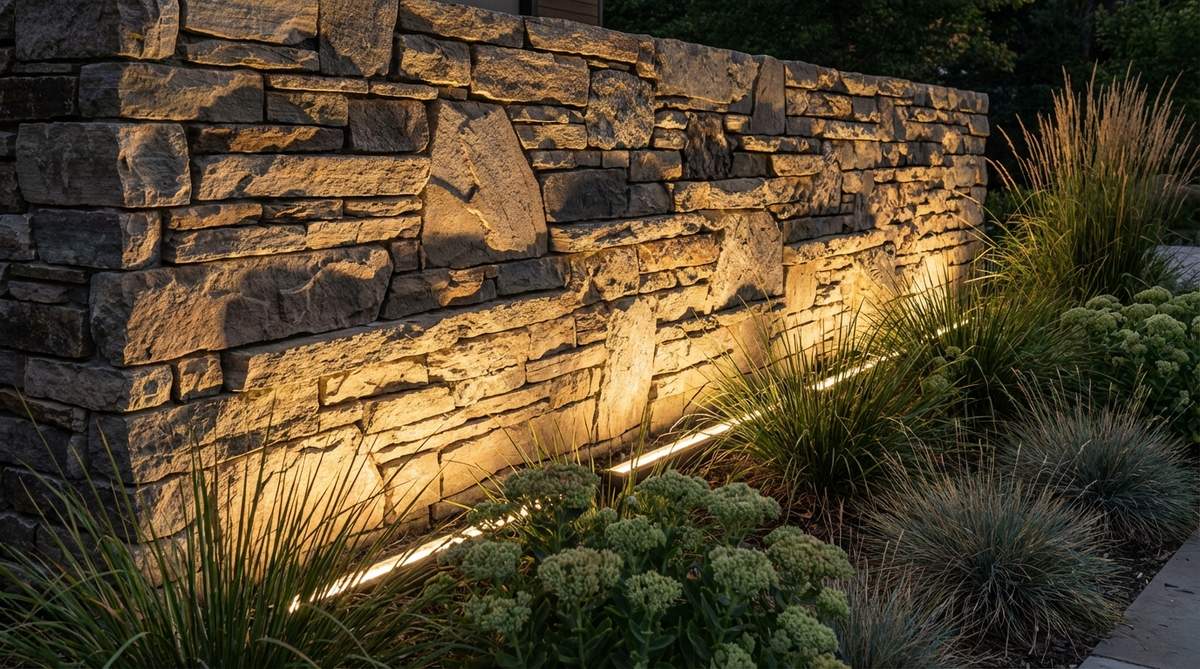
Reveal gorgeous hidden textures that make your walls feel alive with extreme close-proximity grazing. The ultimate choice for natural stone veneer, split-face brick, or rough timber siding.
Moving a light just a few inches closer completely changes the game, casting long, dramatic shadows across subtle bumps. This grazing technique is a staple in premium modern garden lighting ideas to exaggerate depth.
You can execute this textured look for roughly $60 a strip. Highly recommended for a quick weekend win.
- Key Materials: High-intensity narrow LED strips
- Vibe / Style: Tactile and rich
- Difficulty: Precise mounting required
- Budget Breakdown: Grazing strip: $45 | Aluminum mounting channel: $15
- Creator’s Tip: Never use this on flat drywall or smooth stucco, as it will highlight every single painting mistake.
- Smart Sourcing: Aluminum extrusion grazing channels (bulk pack) and high-density waterproof LED tapes.
Most people get this completely wrong… until they try the exact seamless layout coming up next.
10. RGB Linear Color Bars
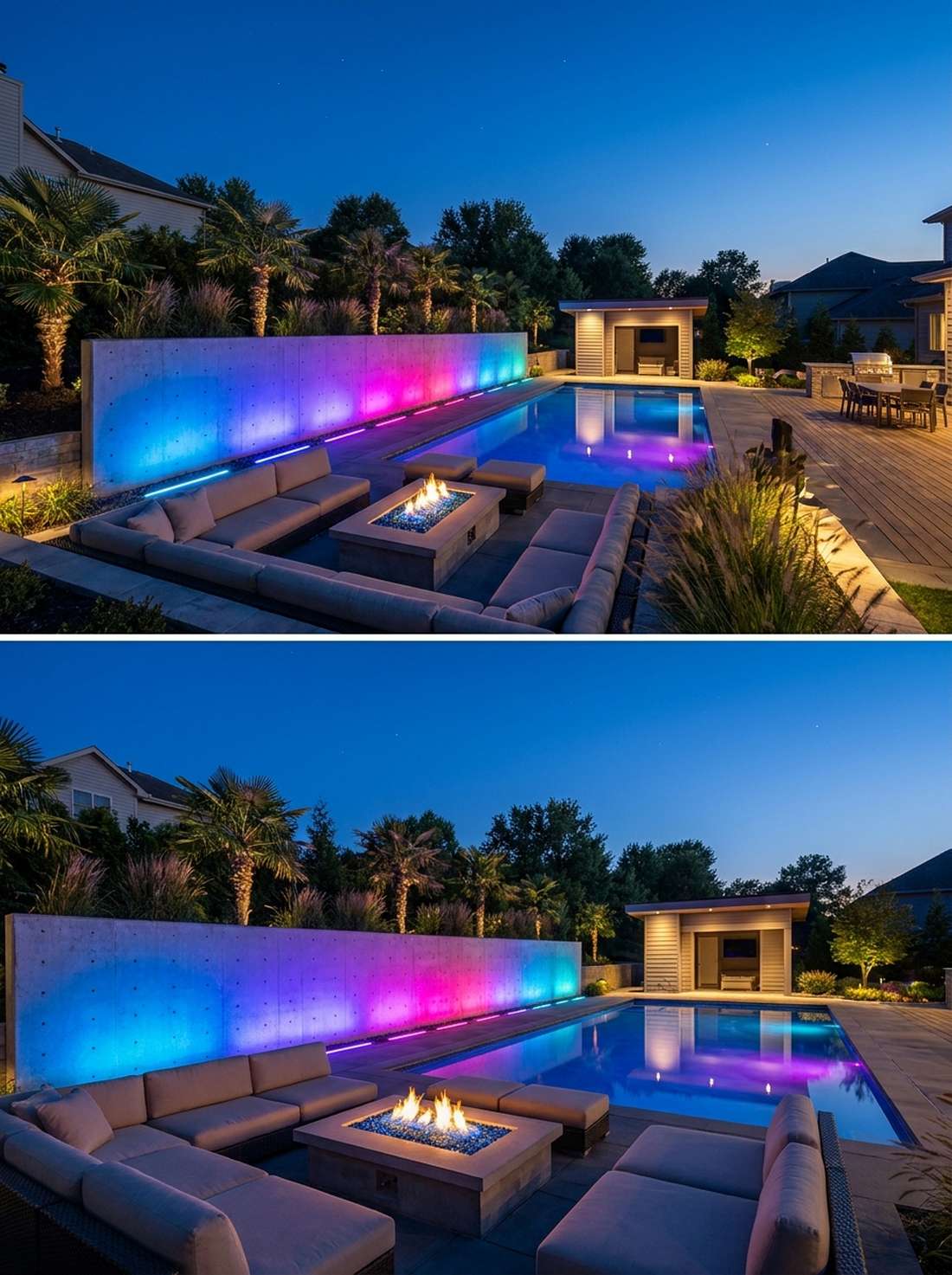
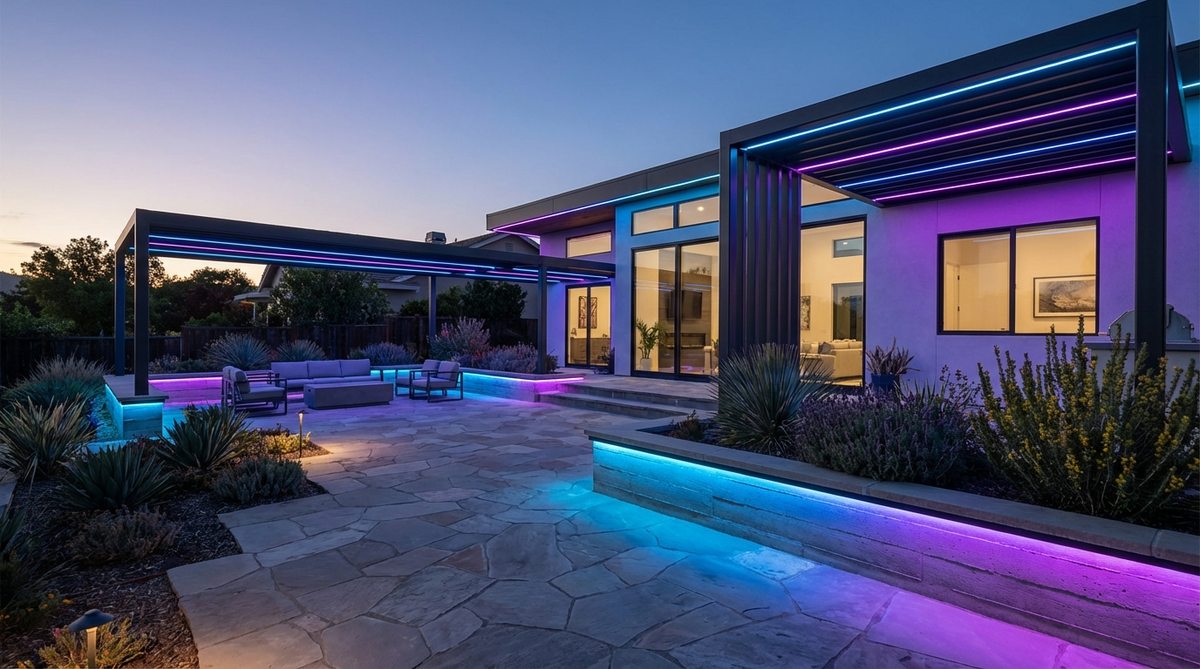
Turn a boring retaining wall into a spectacular glowing canvas using dynamic color wash bars. Incredible for outdoor lounges, pool houses, or modern concrete planters.
Static lighting is great, but adding DMX-controlled multi-channel strips gives your backyard commercial-level customization. Injecting color-changing modern outdoor garden lighting turns static architecture into a living, breathing background.
A full smart setup costs around $140–$200. Save this for your ultimate backyard makeover board.
- Key Materials: DMX-compatible RGB linear bars
- Vibe / Style: High-end nightlife
- Difficulty: Advanced tech setup
- Budget Breakdown: RGB bar: $120 | DMX controller box: $50
- Creator’s Tip: Program slow, subtle gradient fades—rapid blinking colors make the yard look cheap.
- Smart Sourcing: App-controlled RGB linear wall washers and waterproof DMX decoders.
💡 Must-Have Supplies for High-End Setups
To build these setups faster and ensure they last, skip the generic craft aisles and invest in the right foundational kits.
- Base & Support: Heavy-duty corrosion-resistant ground spikes (Bulk Pack)
- Setup Tools: Smart Low-Voltage Landscape Lighting Transformer Kits
- Weather/Durability Protection: Die-electric silicone grease for waterproof wire nuts
11. Weatherproof Cove Lighting
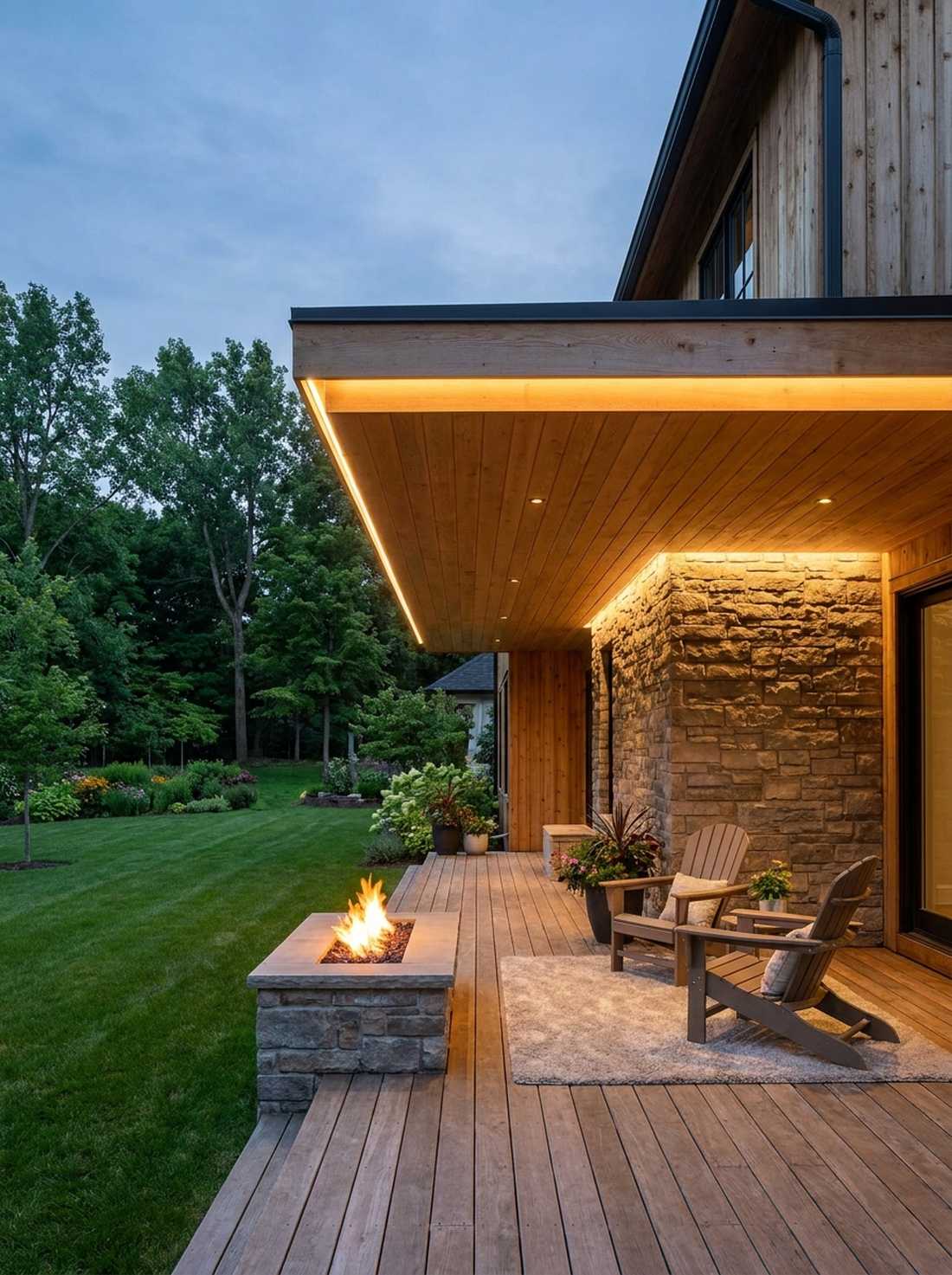
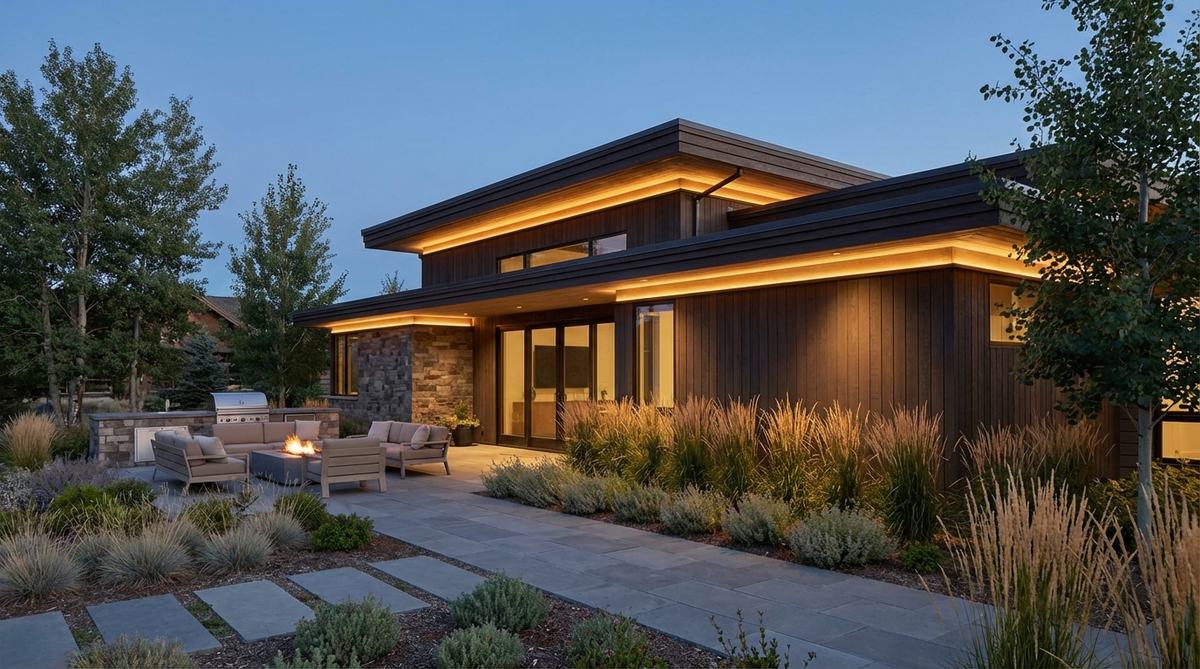
Achieve a floating roof effect that feels incredibly luxurious with concealed architectural eave lights. Designed to sit invisibly behind fascia boards, cornices, or custom overhangs.
Seeing the actual light bulb instantly kills the magic of indirect lighting; true elegance comes from hidden sources. Sealing waterproof strips inside custom coves delivers that ambient, indirect modern garden lighting design.
Materials run about $50 per 16-foot run.
- Key Materials: IP67-rated silicone encased LED tape
- Vibe / Style: Seamless luxury
- Difficulty: Intermediate carpentry
- Budget Breakdown: Waterproof tape roll: $35 | Outdoor adhesive tape: $15
- Creator’s Tip: Ensure your builder details a 2-inch light pocket during construction to completely hide the hardware.
- Smart Sourcing: IP67 silicone waterproof LED strips and marine-grade mounting tape.
12. Tunable White Linear Fixtures
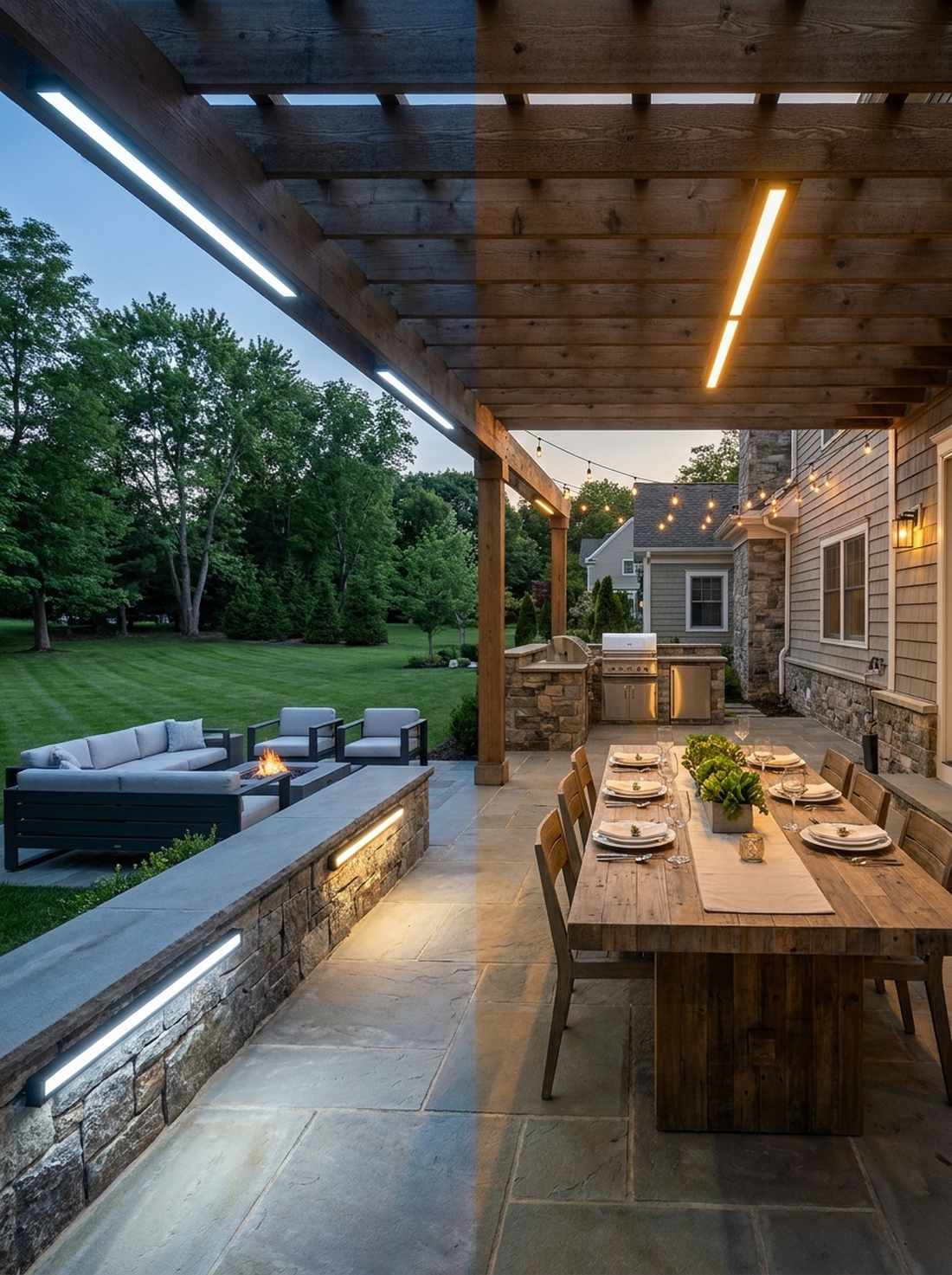
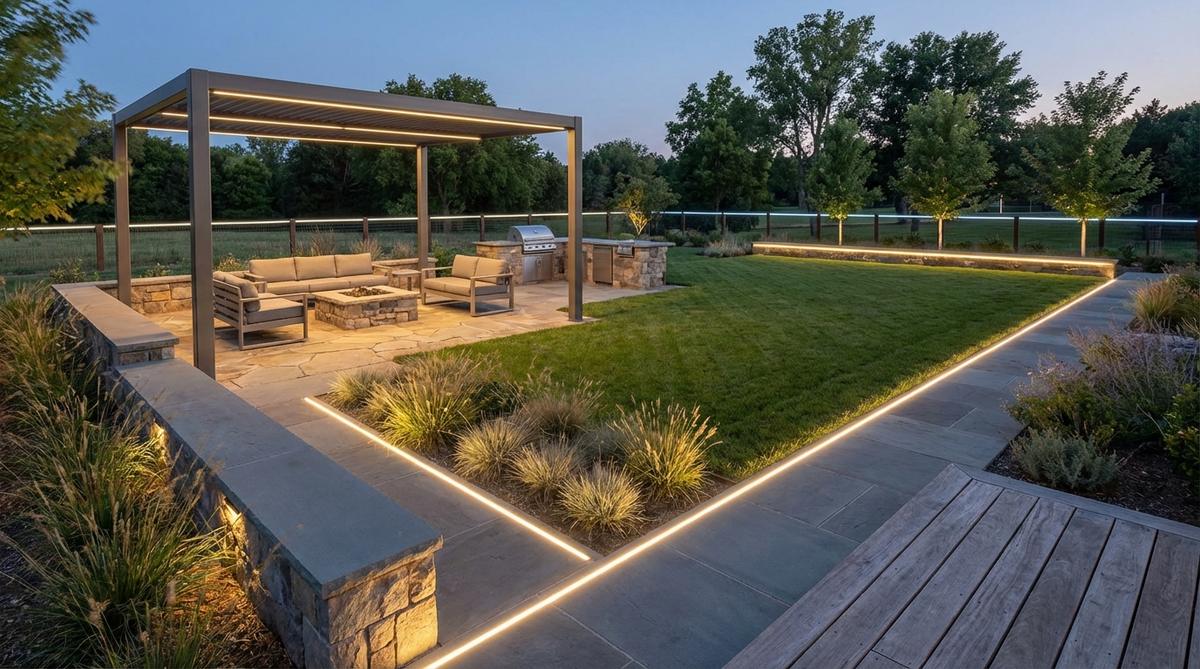
Shift from a crisp icy white to a warm golden hour glow with temperature-adjustable outdoor bars. Perfect for adapting to different seasons or shifting outdoor dining moods.
Committing to one single shade of white can be a mistake, so tunable LEDs give you an out. You can match the color rendering precisely to your modern outdoor garden lighting updates over time.
Expect to pay around $80–$110 for temperature-tunable units. Pin this to remember color temperature matters!
- Key Materials: CCT-tunable LED linear washers
- Vibe / Style: Mood-responsive
- Difficulty: Smart hub integration
- Budget Breakdown: Tunable fixture: $85 | Remote sync module: $20
- Creator’s Tip: Set it to 4000K for security at night, but dim to a cozy 2700K when hosting guests.
- Smart Sourcing: CCT-selectable outdoor wall washers and dual-channel LED controllers.
13. Modular Linkable Wall Bars
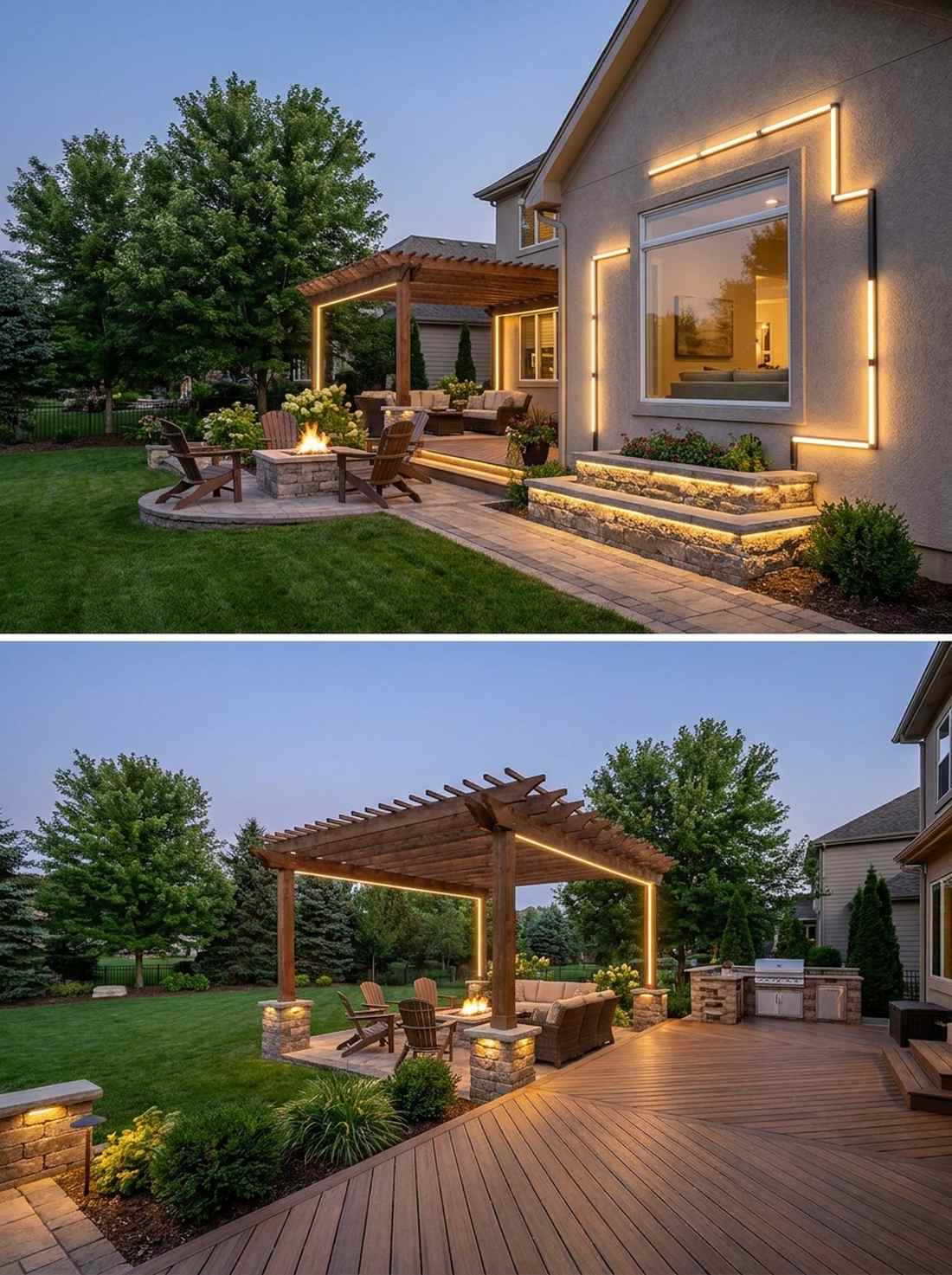
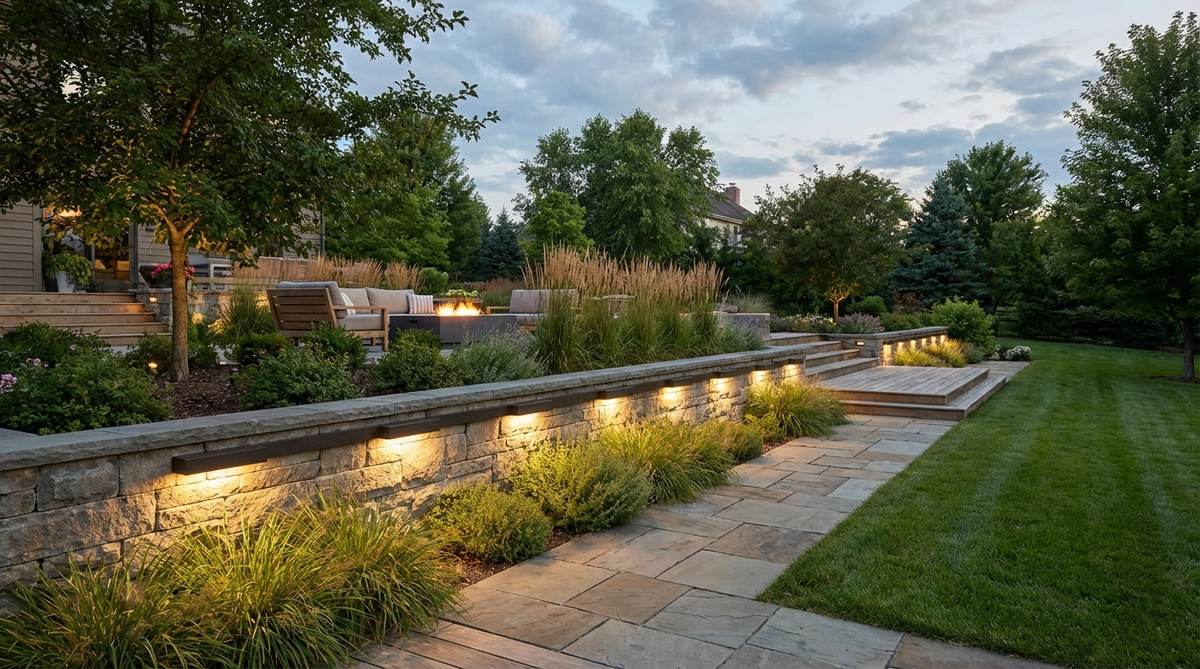
Customizing light lengths on the fly feels incredibly satisfying with these snap-together architectural strips. Superb for navigating around windows, doors, or stepped elevations.
Cutting standard strips ruins the waterproofing, but modular click-together segments maintain IP ratings flawlessly. Phasing this modern garden lighting installation allows you to expand your design as your budget permits.
Each modular block costs about $25–$40.
- Key Materials: 12-inch plug-and-play light bars
- Vibe / Style: Geometric precision
- Difficulty: Easy modular clipping
- Budget Breakdown: 4 modular sections: $100 | End caps: $10
- Creator’s Tip: Always plan your section breaks at natural architectural divisions like pilasters for a clean look.
- Smart Sourcing: Linkable waterproof LED modules (starter kit) and secure-lock jumper cables.
14. Micro-Spot Detail Lights
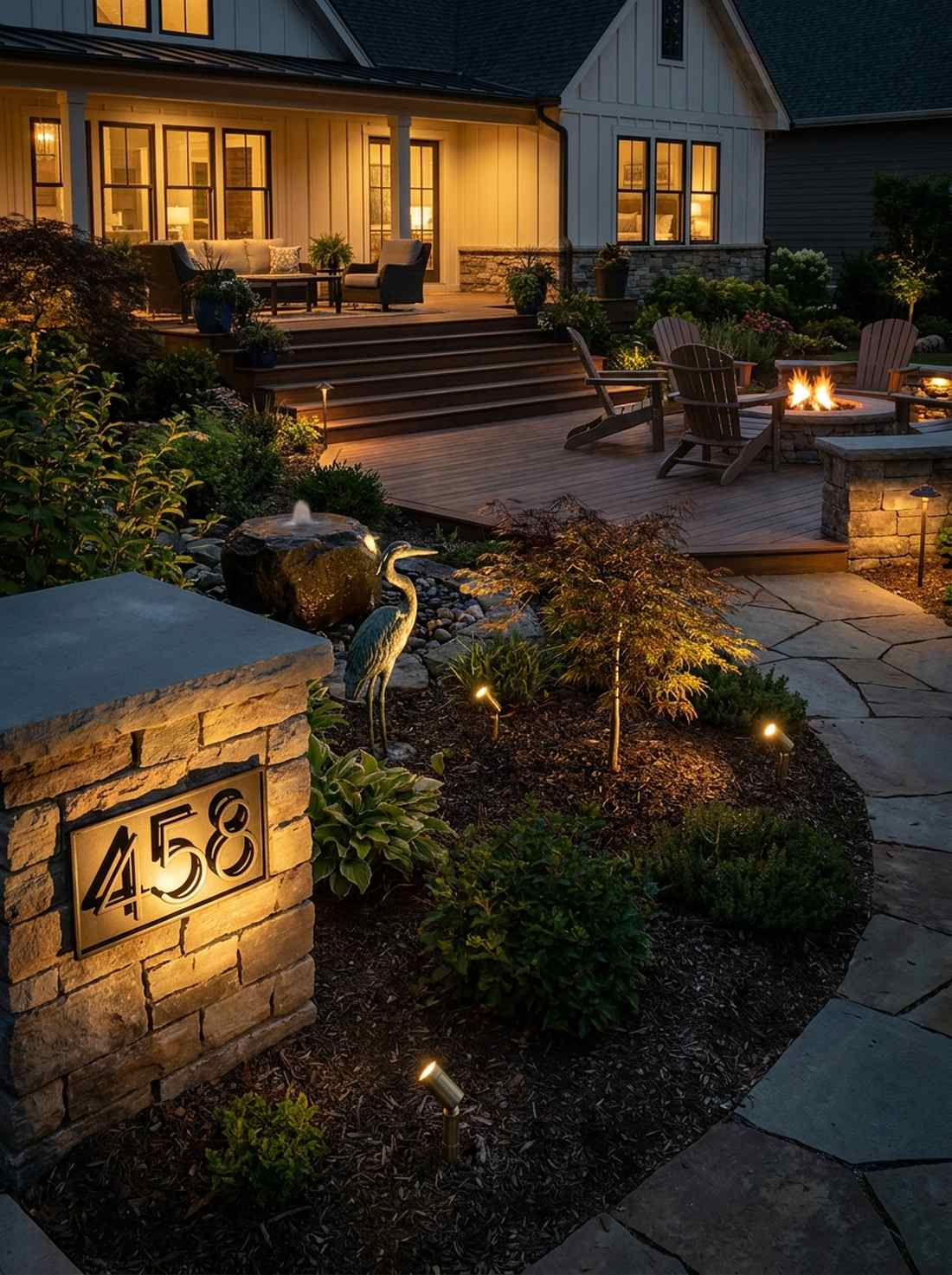
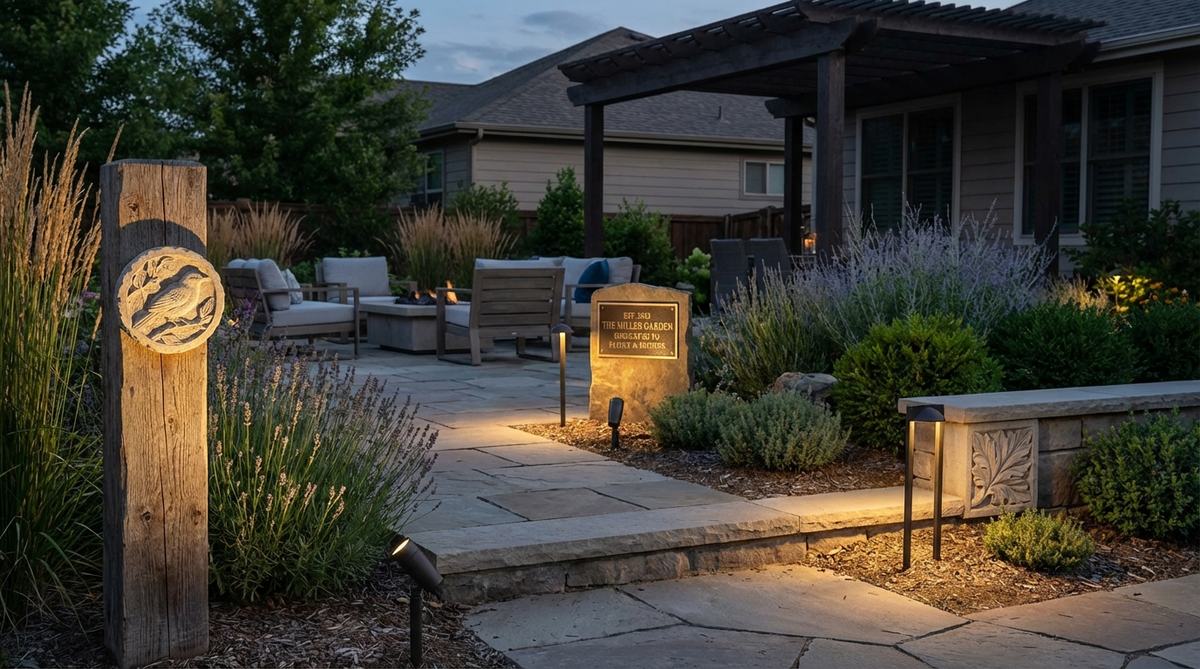
It feels like wandering through a curated museum exhibit with these tiny precision garden spots. Flawless for drawing the eye to a custom house number, small statuary, or water features.
Standard landscaping floods totally wash out delicate features, but an 8-degree micro-spot carves them out of the darkness. Pinpointing light this strictly is a top-tier secret in modern garden lighting ideas.
You can snag these specialized spots for roughly $30 each.
- Key Materials: 3-watt narrow beam mini spots
- Vibe / Style: Museum-quality detail
- Difficulty: Precision aiming required
- Budget Breakdown: Micro-spot fixture: $25 | Low-voltage tap: $5
- Creator’s Tip: Stand back 10 feet to aim; the tighter the beam, the harder it is to hit small targets up close.
- Smart Sourcing: Miniature brass 8-degree spot fixtures and silicone-filled wire nuts (bulk pack).
If you think standard path lights are good enough, this next commercial-grade trick will blow your mind…
15. Adjustable Accent Spotlights
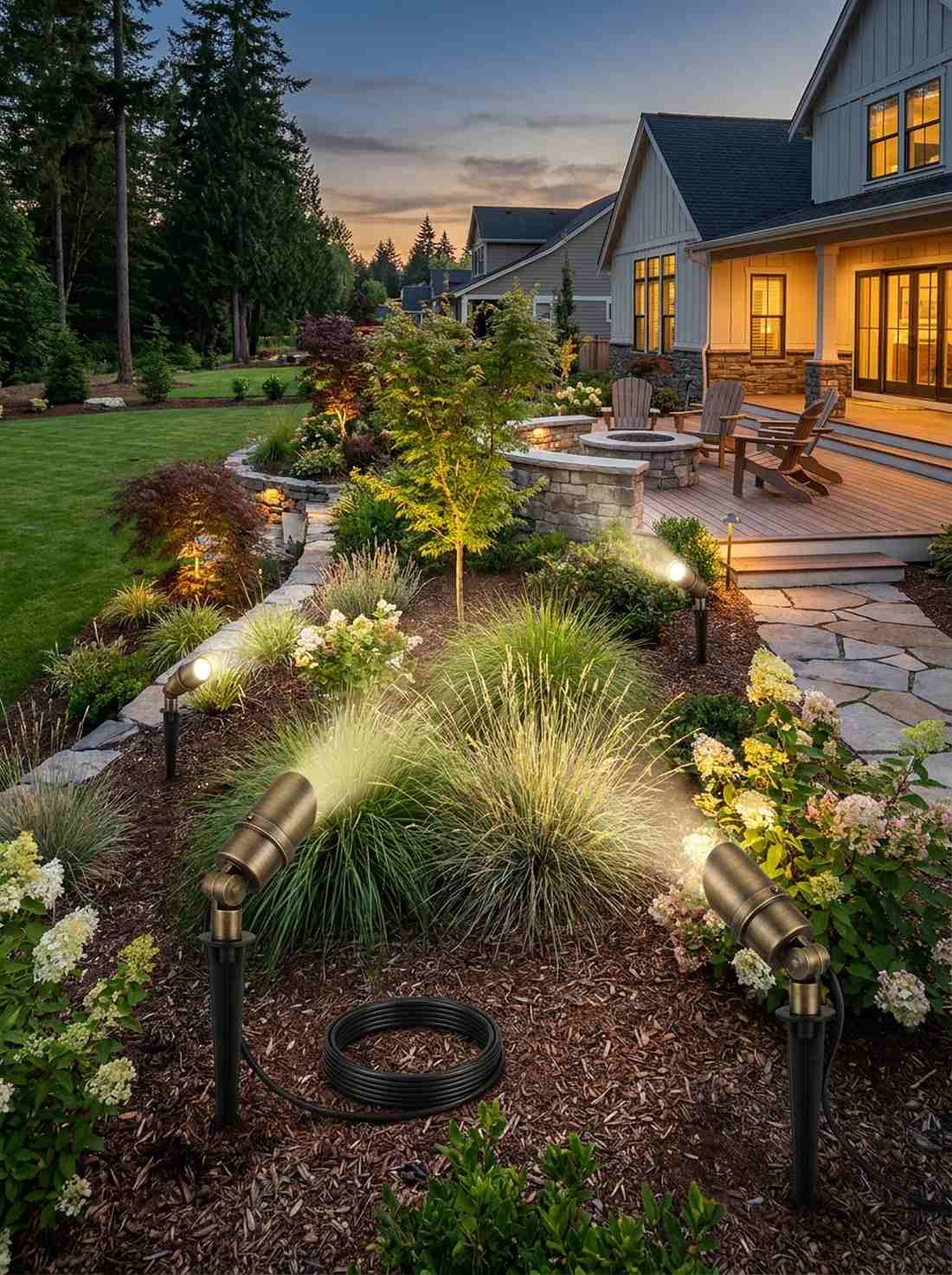
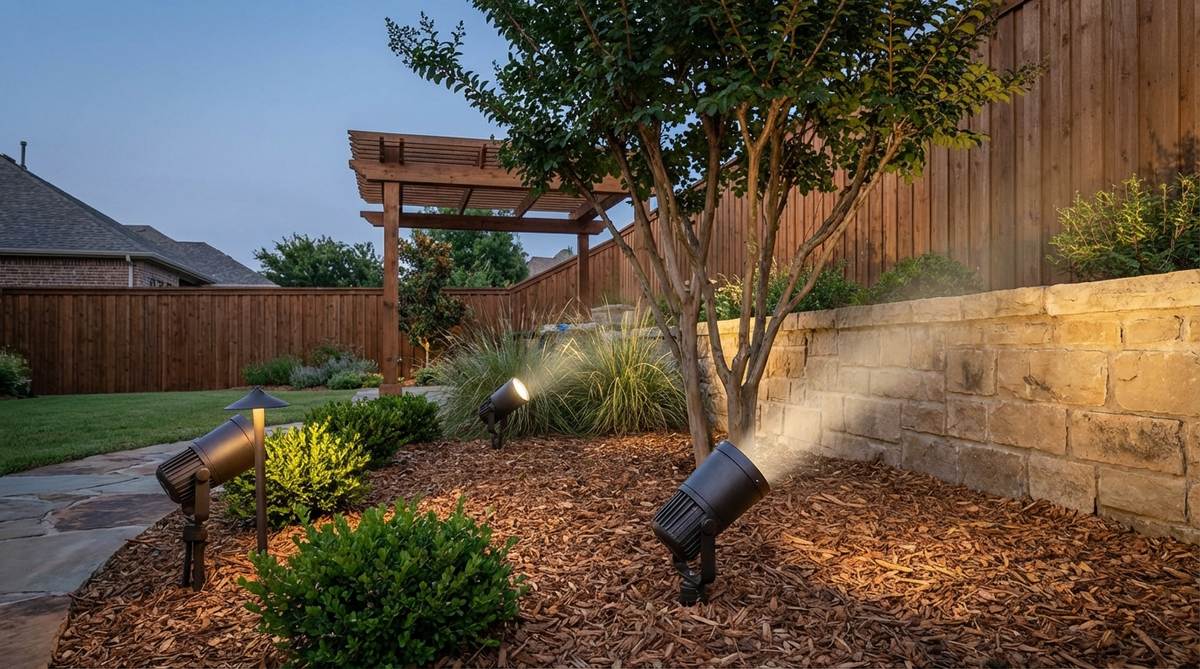
Adapting your yard as plants mature feels completely stress-free with multi-axis swivel spotlights. An absolute must-have for garden beds where foliage grows and shifts rapidly.
Buying fixed fixtures guarantees you’ll be replacing them in two years, whereas full 350-degree rotation guarantees longevity. This brilliant modern outdoor garden lighting trick saves you money on constant hardware replacements.
Budget about $45 per multi-axis unit. Save this to your smart landscaping board.
- Key Materials: 350-degree rotation brass spots
- Vibe / Style: Adaptable and rugged
- Difficulty: Easy ground adjustment
- Budget Breakdown: Swivel spotlight: $40 | Heavy ABS stake: $5
- Creator’s Tip: Leave a coiled loop of extra wire buried underneath so you can easily move the fixture a few feet later.
- Smart Sourcing: Solid brass adjustable accent spots and heavy-duty ABS mounting stakes.
16. Framing Projector Lights
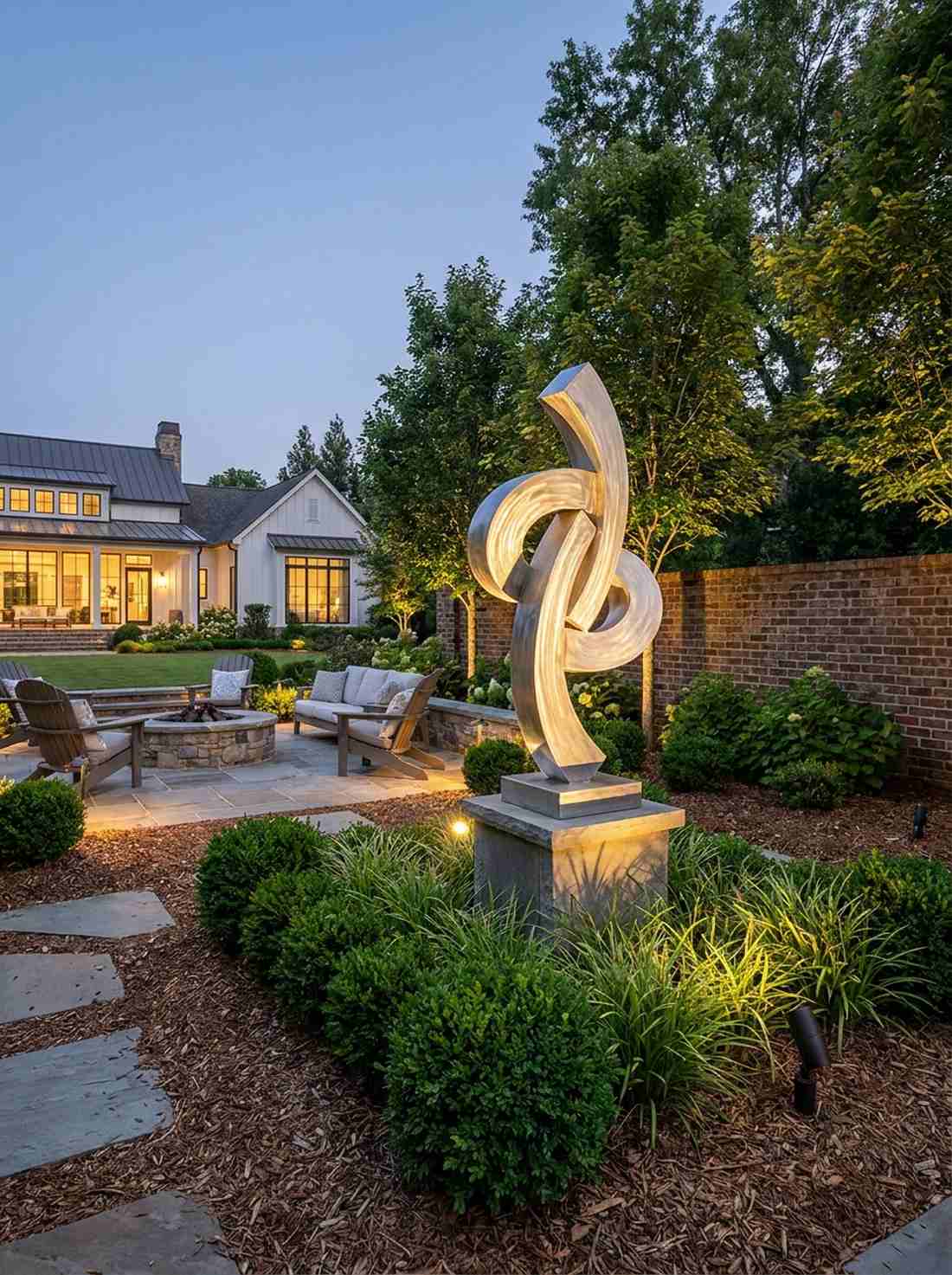
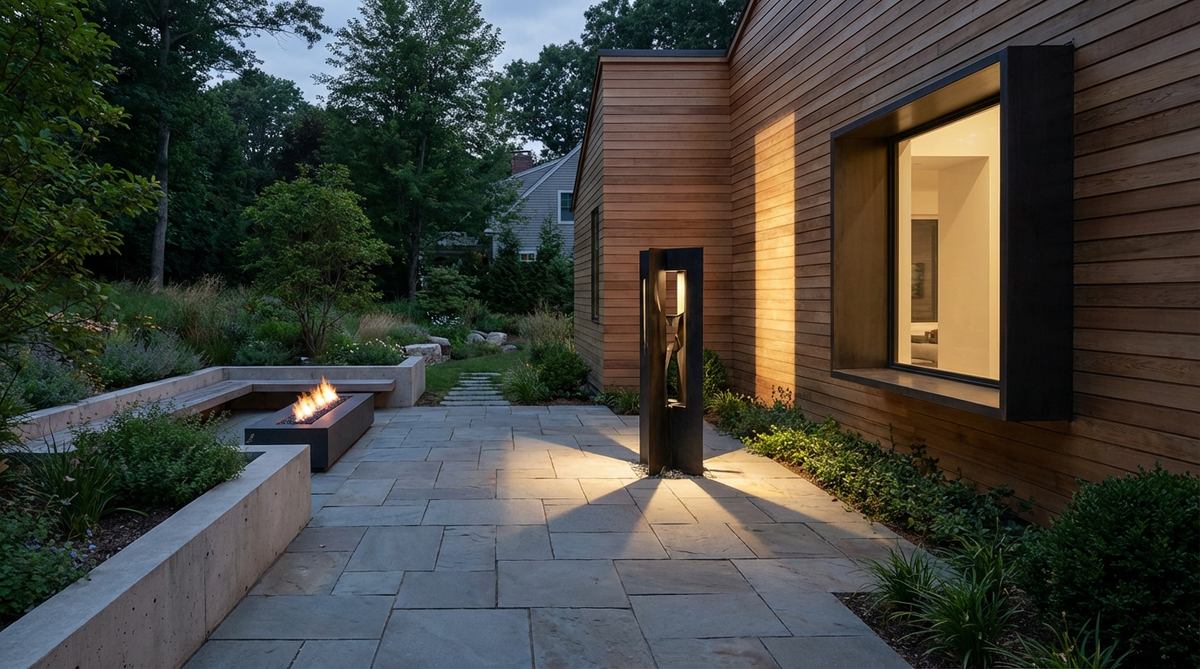
Experience sharp, laser-cut illumination that feels incredibly futuristic using shuttered projection fixtures. Incredible for isolating outdoor artwork, sculptures, or highly specific architectural rectangles.
Spillover light is the enemy of high-end design; internal mechanical shutters block light from hitting anything but the target. These theatrical-grade tools elevate standard modern garden lighting design into visual art.
This premium technique costs around $120–$180 per unit.
- Key Materials: LED projector with 4-blade shutters
- Vibe / Style: Theatrical precision
- Difficulty: Advanced mechanical tuning
- Budget Breakdown: Framing projector: $150 | Lenses: $30
- Creator’s Tip: Adjust the blades meticulously so the light stops exactly at the edge of the object to make it look like it’s glowing from within.
- Smart Sourcing: Outdoor-rated framing projector lights and interchangeable focal lenses.
17. Cross-Lighting Spot Pairs
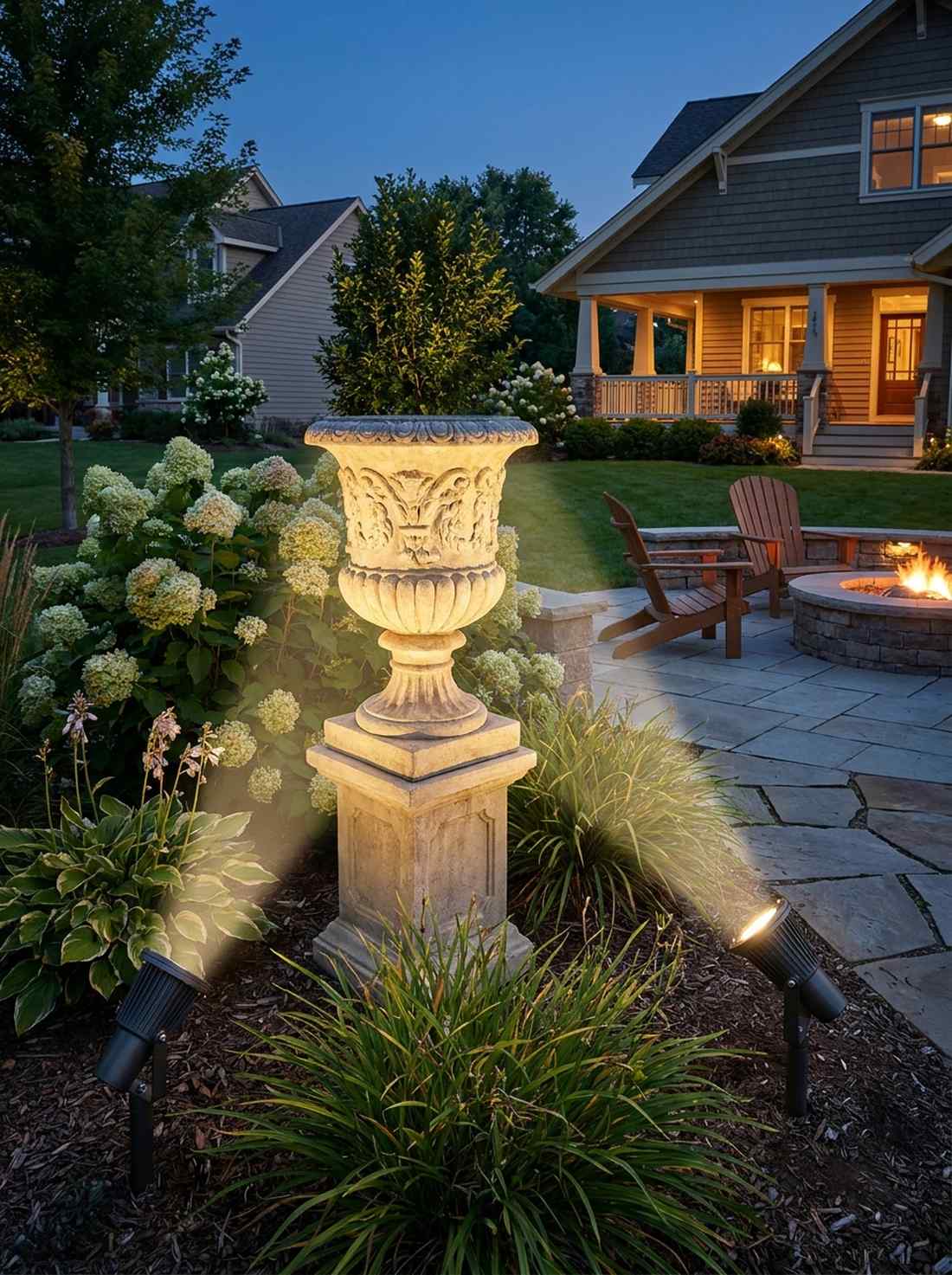
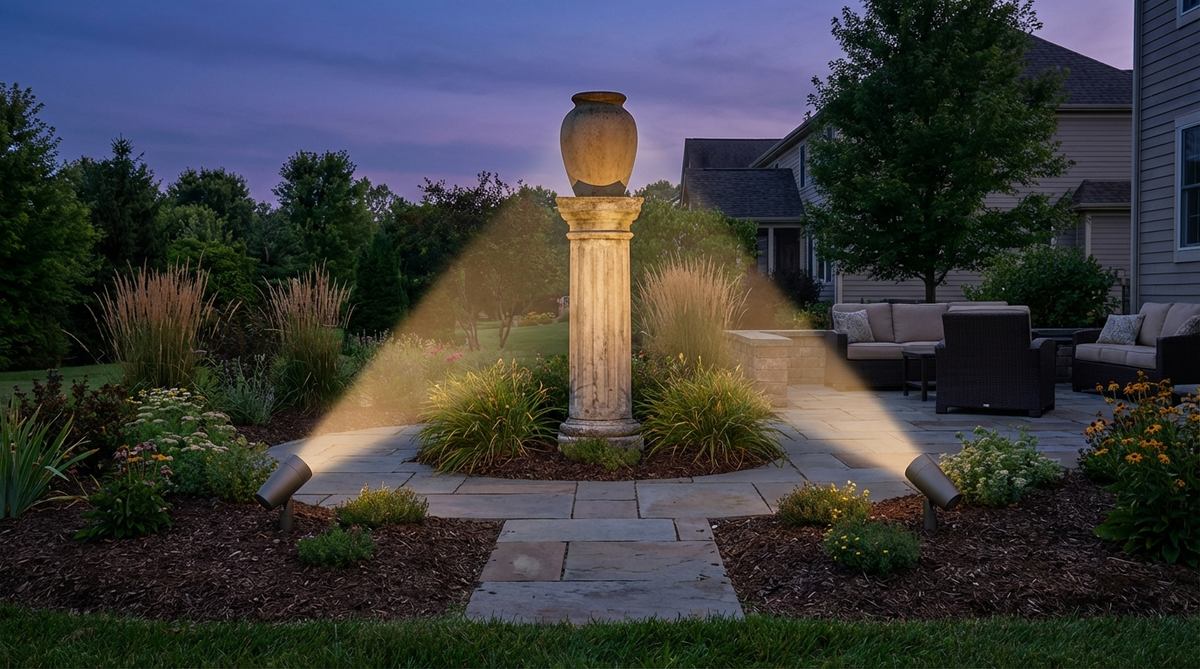
Wiping out ugly shadows feels like a magic trick with a dual-angle cross-lighting layout. Essential for bringing out the rich, 3D texture of statues, fountains, or massive urns.
A single light source flattens objects terribly, but intersecting beams from 45-degree angles restores sculptural volume. Relying on this dual-source strategy is how professionals handle complex modern outdoor garden lighting.
You can execute this pair setup for about $90–$110. Pin this for your focal point styling!
- Key Materials: Two matched 20-degree spotlights
- Vibe / Style: 3D sculptural pop
- Difficulty: Intermediate spacing
- Budget Breakdown: 2x Spotlights: $80 | Splitter cable: $15
- Creator’s Tip: Ensure both bulbs have the exact same lumen output and color temperature, or the object will look lopsided.
- Smart Sourcing: Matched LED accent spots (twin pack) and Y-splitter waterproof connectors.
18. Honeycomb Louvered Spots
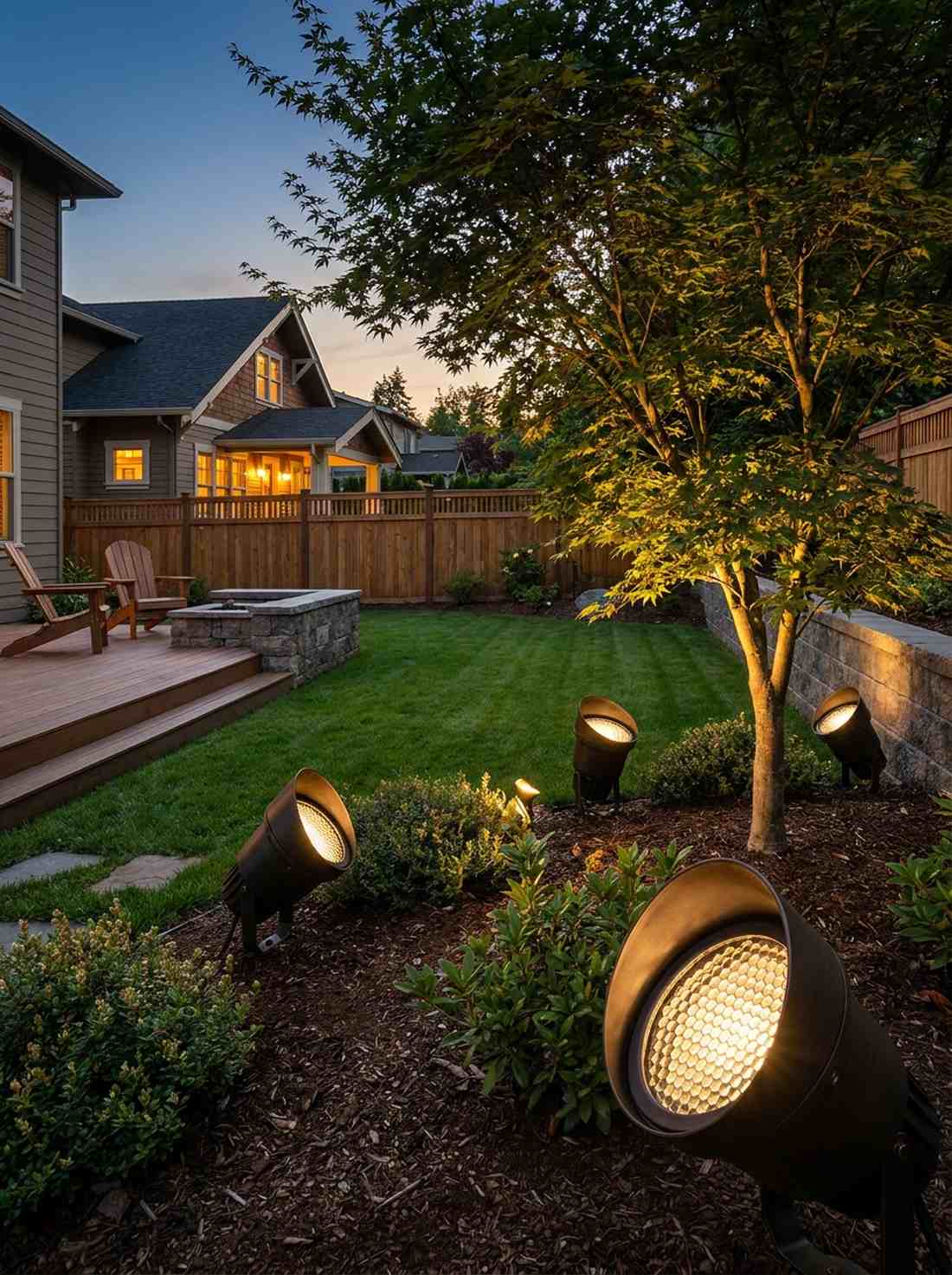
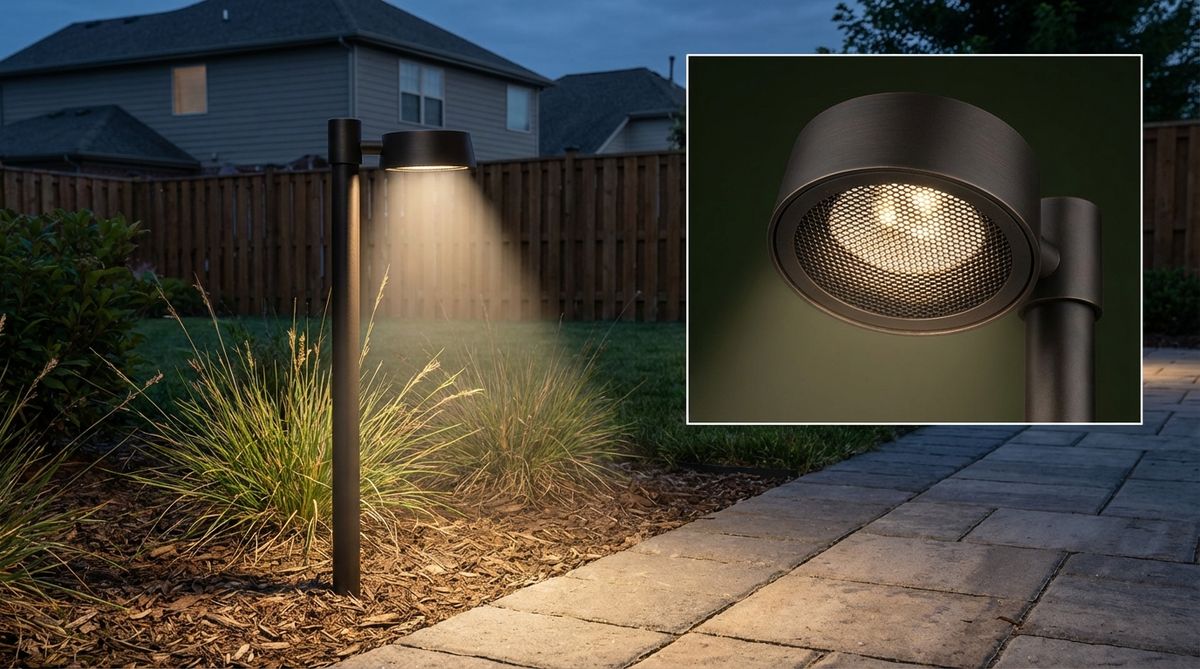
Keeping peace with the neighbors while lighting your yard feels amazing with light-restricting hex louvers. Highly necessary for dense neighborhoods where light trespass into adjacent windows is an issue.
Blinding the house next door is a rookie mistake; snapping a simple cellular louver onto the lens kills peripheral glare instantly. It shapes the beam strictly forward, an essential upgrade for modern garden lighting ideas.
Adding this accessory costs just $10–$15 per fixture.
- Key Materials: Snap-in honeycomb aluminum baffles
- Vibe / Style: Polite and focused
- Difficulty: Very simple snap-on
- Budget Breakdown: Standard spot: $40 | Honeycomb insert: $12
- Creator’s Tip: Buy fixtures with deep retaining rings so the louver fits flush behind the waterproof glass lens.
- Smart Sourcing: Honeycomb anti-glare louvers (bulk pack) and deep-cowl landscape fixtures.
19. Solar-Powered Accent Spots
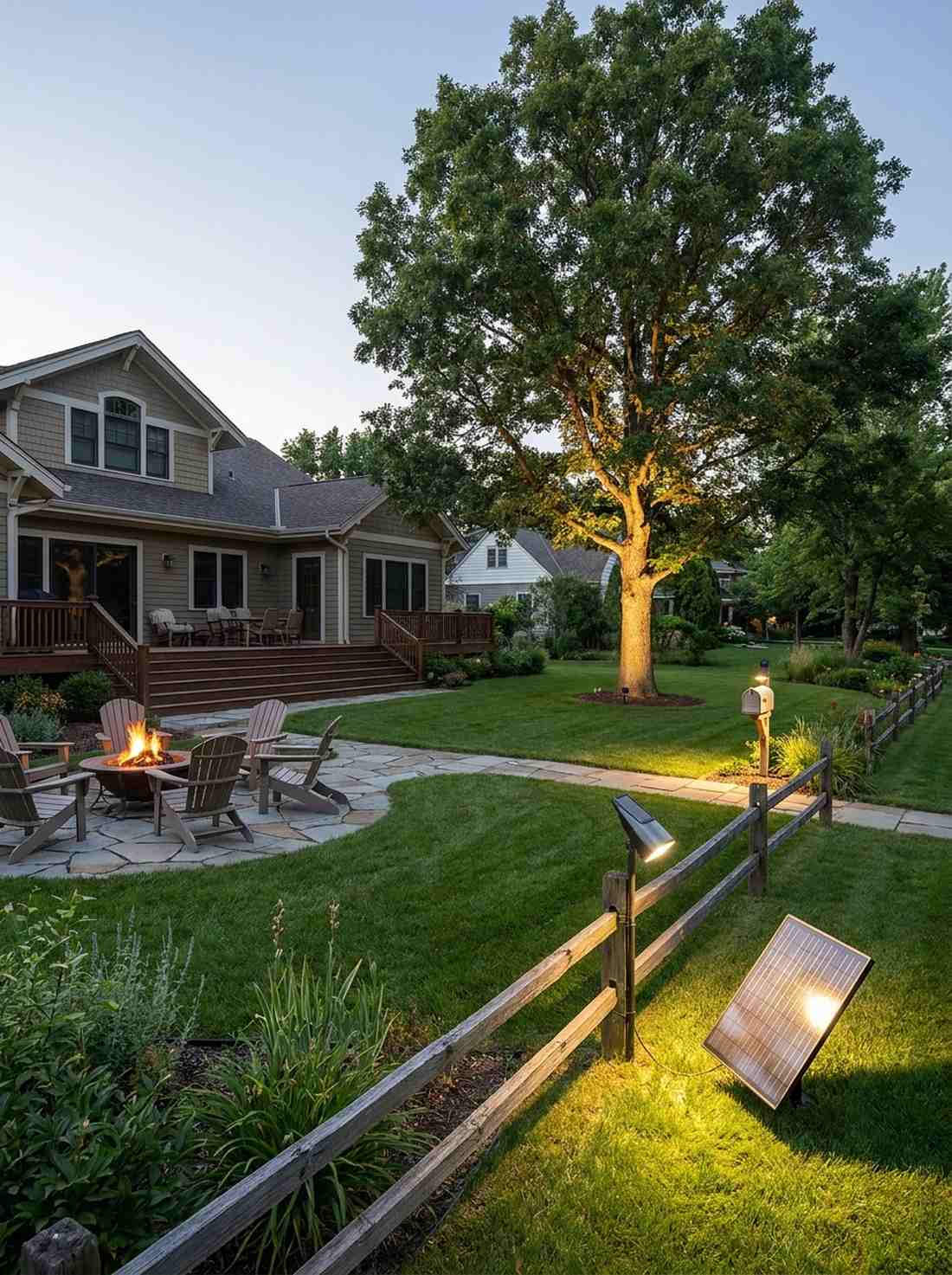
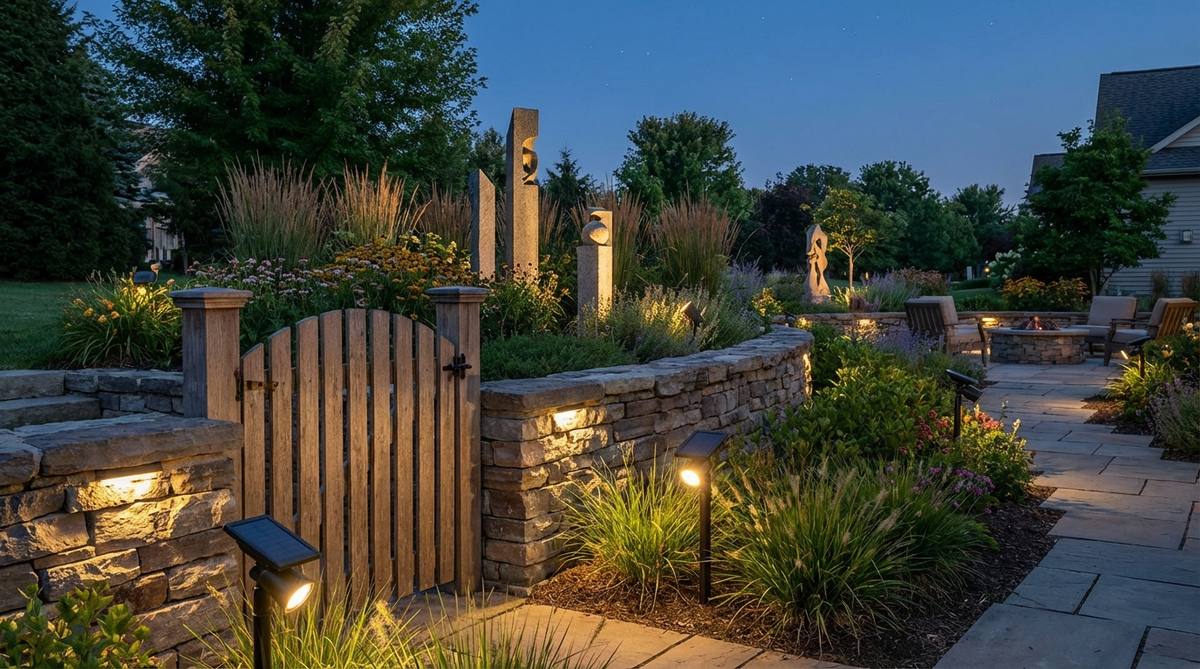
Lighting a distant corner of your property without tearing up the lawn feels liberating using high-output solar accents. The ultimate fix for remote gates, far-off trees, or isolated mailboxes.
Cheap plastic solar stakes die in a week, but investing in oversized photovoltaic panels actually delivers usable lumens. Ditching wires entirely allows you to drop modern garden lighting anywhere the sun touches.
A quality standalone solar unit runs $45–$70. Save this for wire-free garden hacks.
- Key Materials: High-capacity lithium solar spotlights
- Vibe / Style: Eco-friendly freedom
- Difficulty: Effortless placement
- Budget Breakdown: Solar fixture with remote panel: $60 | Upgraded batteries: $10
- Creator’s Tip: Choose models with a detached solar panel on a wire so you can place the light in the shade while the panel sits in the sun.
- Smart Sourcing: High-lumen solar spot starter kits and UV-resistant panel extension cords.
Think you know how to light a pathway? Wait until you see how commercial designers actually do it below…
20. Fiber-Optic Pin Spots
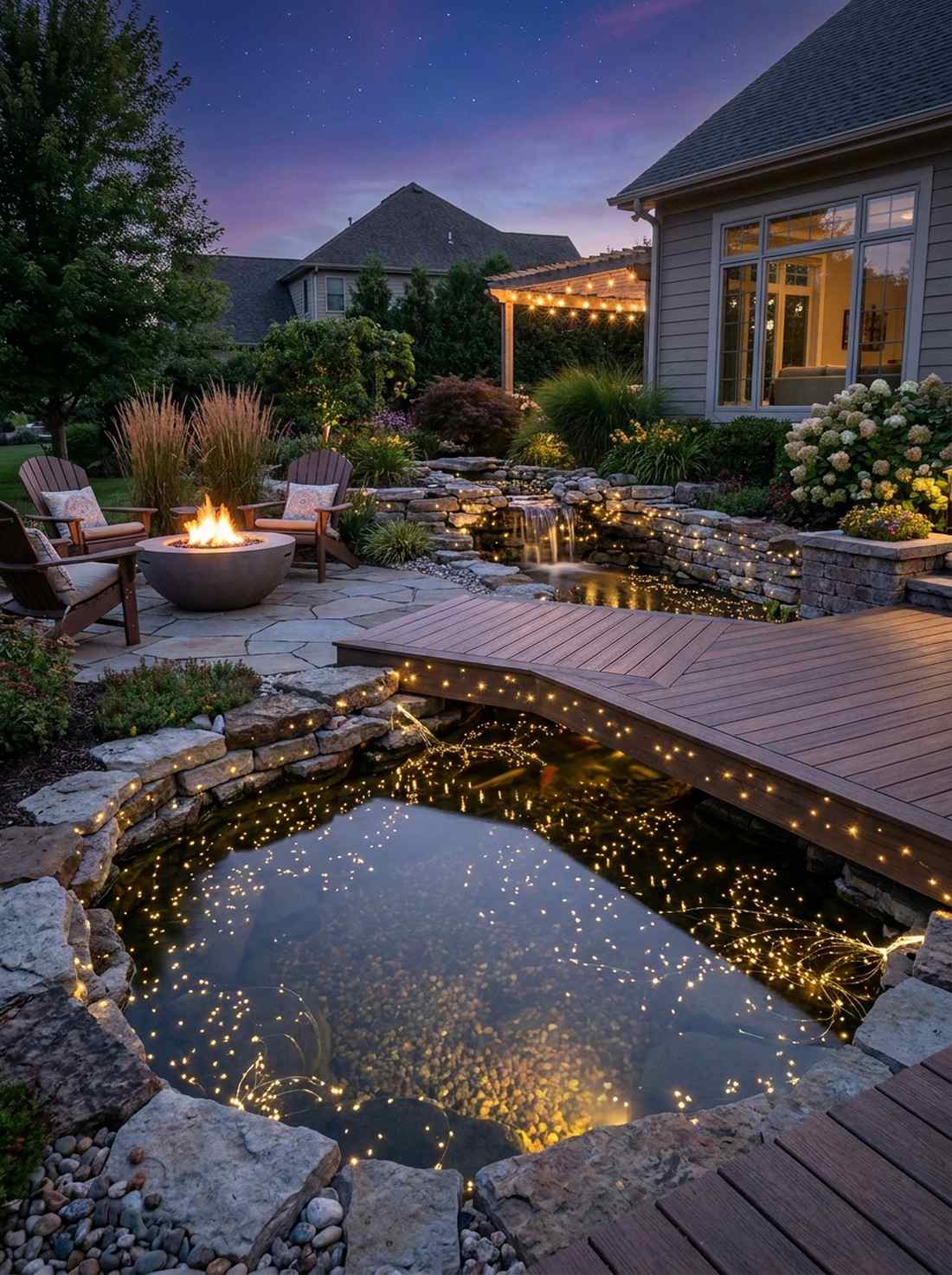
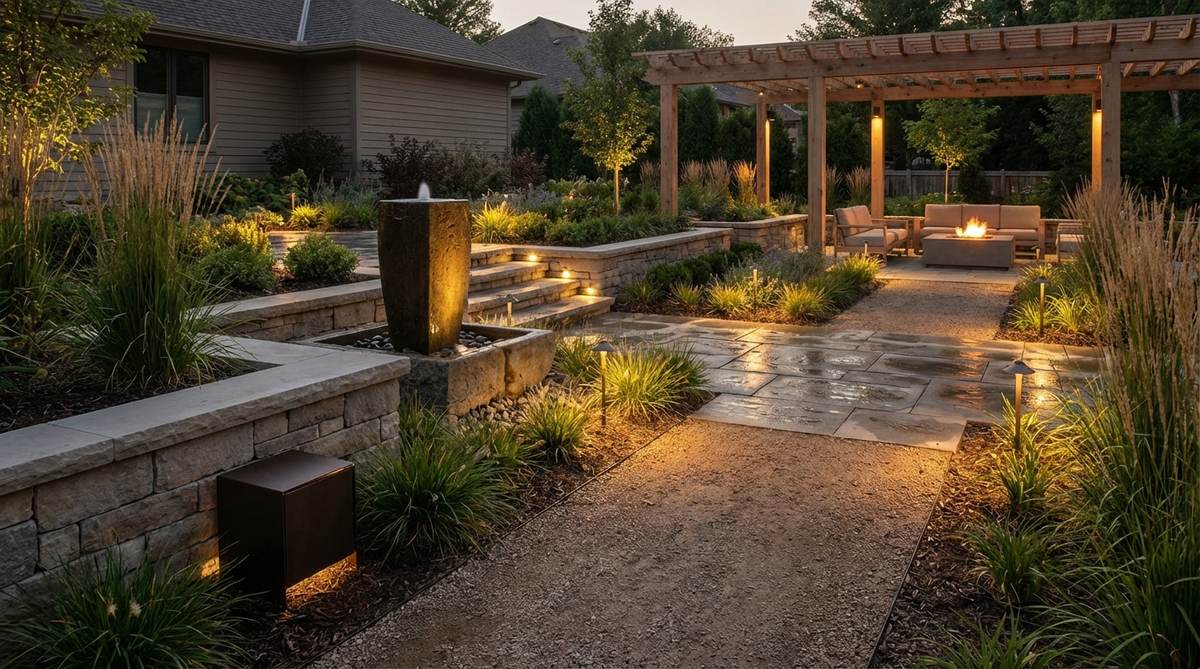
Creating a magical, starry-night effect feels incredibly safe near water using remote fiber-optic lighting. Totally ideal for intricate water features, koi ponds, or flammable wooden structures.
Mixing water and high voltage is a nightmare, but these passive acrylic threads carry zero electrical current. Piping light from a single, hidden illuminator box ensures your modern outdoor garden lighting is 100% hazard-free.
A full fiber bundle system costs around $150–$250.
- Key Materials: Central LED illuminator & fiber bundle
- Vibe / Style: Whimsical safety
- Difficulty: Advanced routing
- Budget Breakdown: Illuminator engine: $100 | 50-strand fiber bundle: $100
- Creator’s Tip: Buy end-glow fibers for tiny pinpoints of light, or side-glow fibers to outline the edges of steps.
- Smart Sourcing: End-glow fiber optic kits and weatherproof illuminator enclosures.
Architectural Bollards & Path Posts
21. Slim-Profile Architectural Bollards
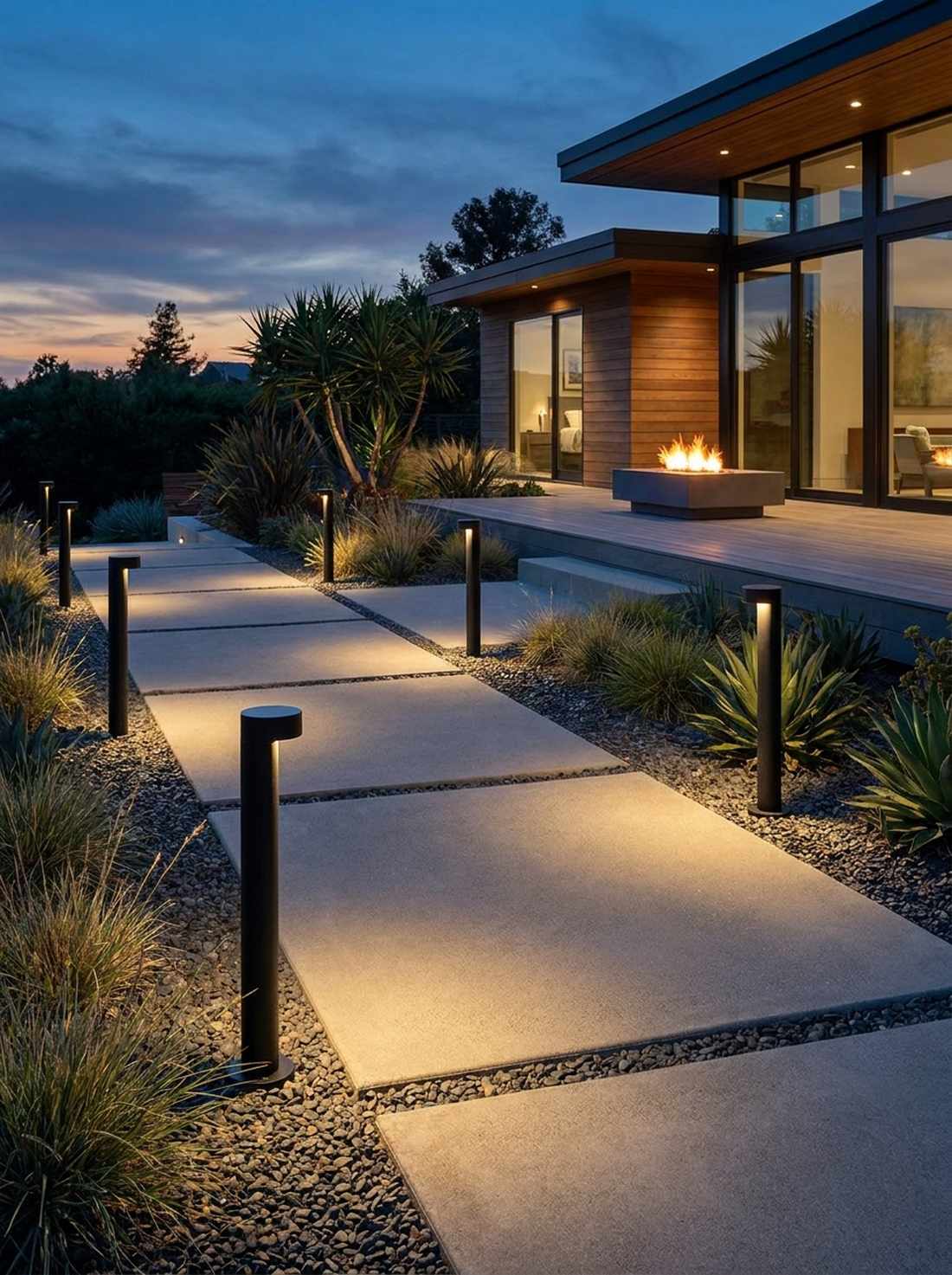
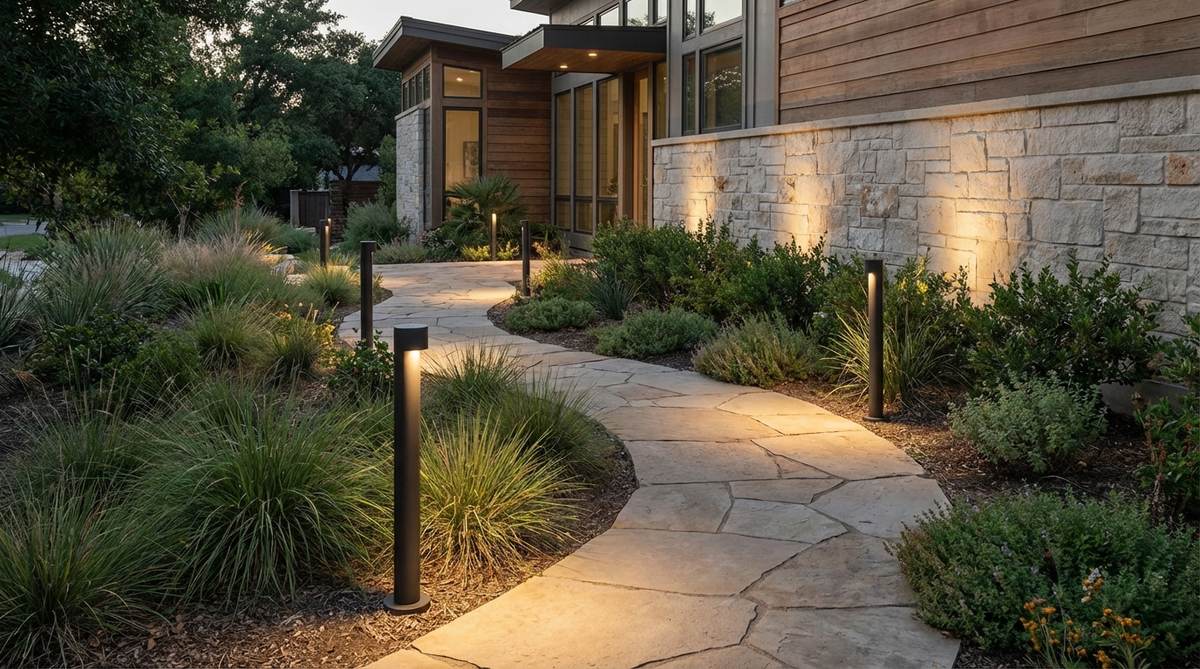
Navigating a modern walkway feels like strolling through an art gallery with minimalist cylindrical path posts. They work beautifully for bordering sleek concrete pavers or dark gravel driveways.
Chunky traditional lanterns look incredibly outdated next to clean architecture, whereas these slender 3-inch profiles disappear during the day. This is the subtle touch that makes modern garden lighting design feel incredibly upscale.
Expect to spend $60–$90 per minimalist bollard. Pin this for modern pathway upgrades.
- Key Materials: 3-inch diameter aluminum tube bollards
- Vibe / Style: Understated modernism
- Difficulty: Intermediate wiring
- Budget Breakdown: Slim bollard: $75 | Concrete anchor kit: $10
- Creator’s Tip: Space them exactly 12 feet apart; putting them too close together makes your walkway look like an airport runway.
- Smart Sourcing: Slim profile LED bollards (multi-pack) and ground-bury PVC sleeves.
22. Geometric Cube Bollards
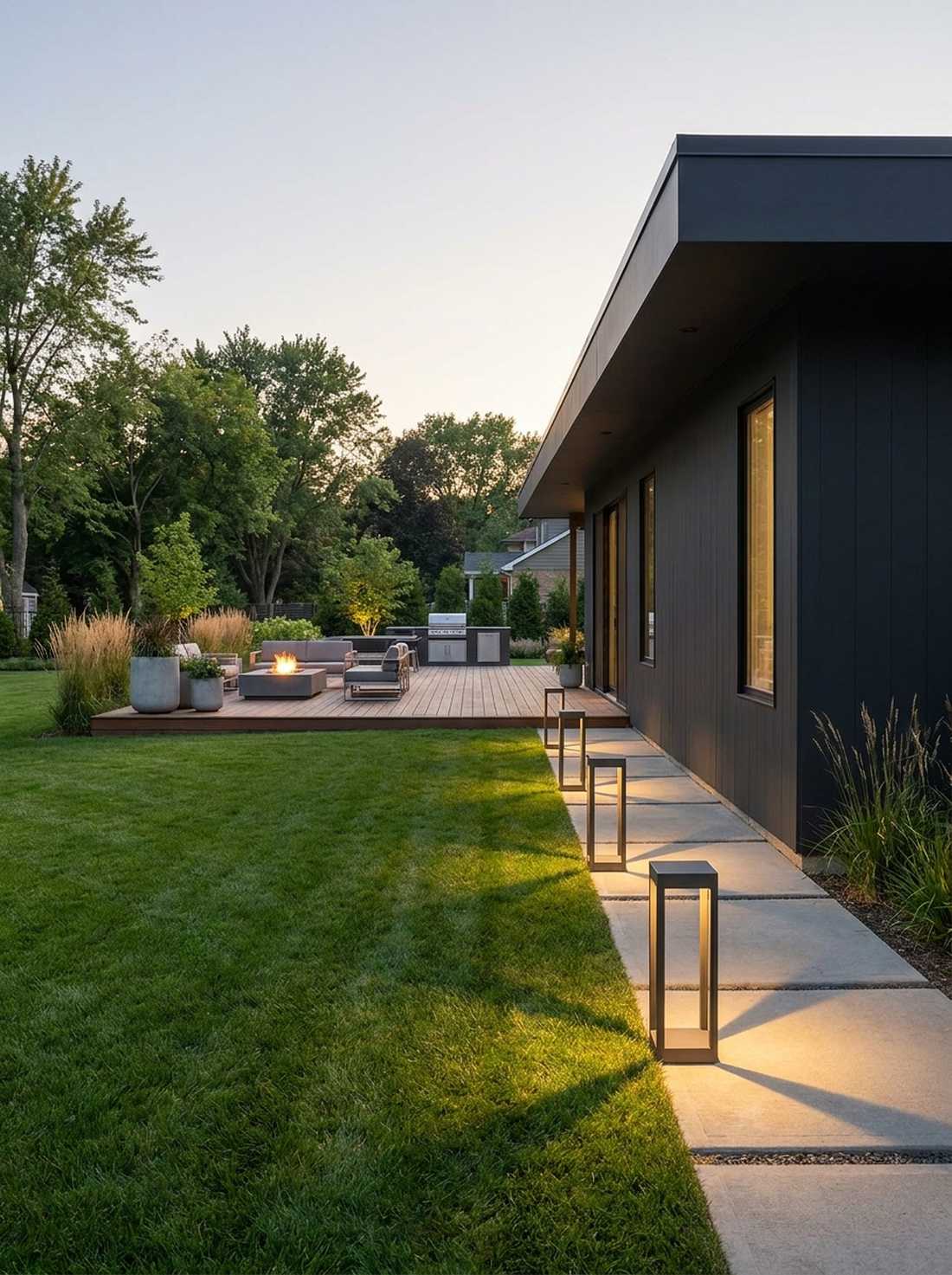
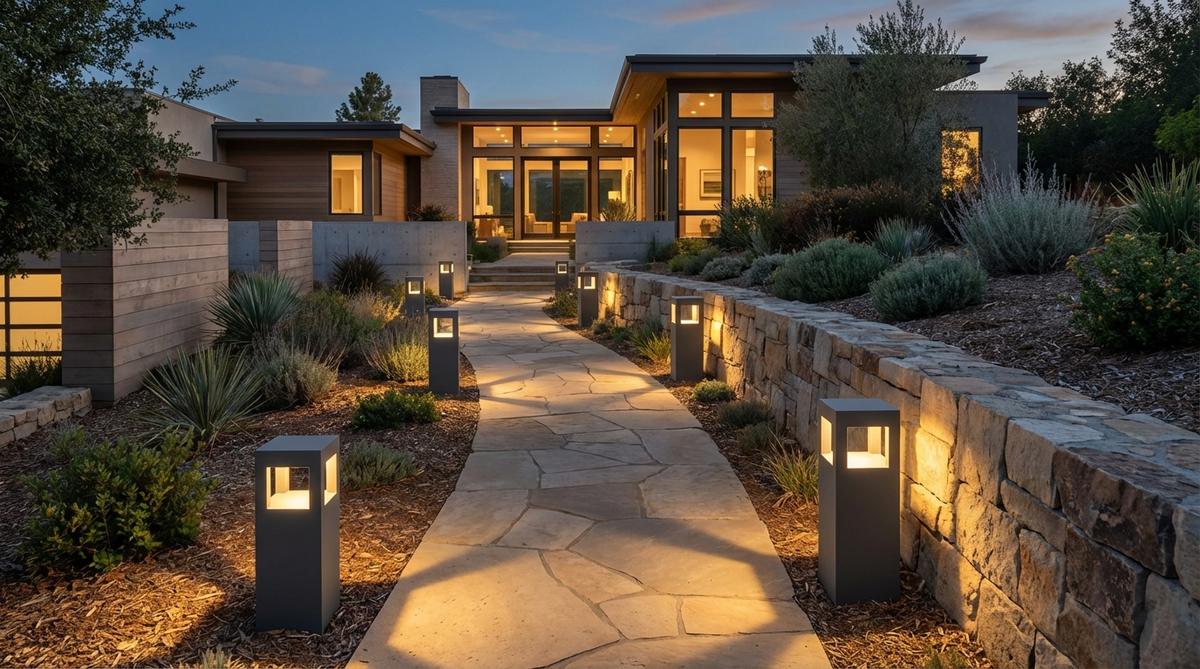
Creating a structured, orderly yard feels deeply satisfying with sharp orthogonal cube lights. Perfectly suited to echo the rigid lines of modern squared-off house facades.
Curved fixtures clash terribly with flat-roofed homes, so utilizing right angles brings the aesthetic together. Matching the geometric form of the fixture to the building is a core modern garden lighting rule.
These striking cubic posts run about $80–$120 each.
- Key Materials: Square-profile heavy die-cast bollards
- Vibe / Style: Sharp architectural order
- Difficulty: Standard ground anchoring
- Budget Breakdown: Cube fixture: $95 | Base plate: $15
- Creator’s Tip: Align the flat faces of the cubes perfectly parallel to your house siding for maximum visual harmony.
- Smart Sourcing: Geometric modern path lighting kits and corrosion-resistant anchor bolts.
23. Top-Emitting Column Lights
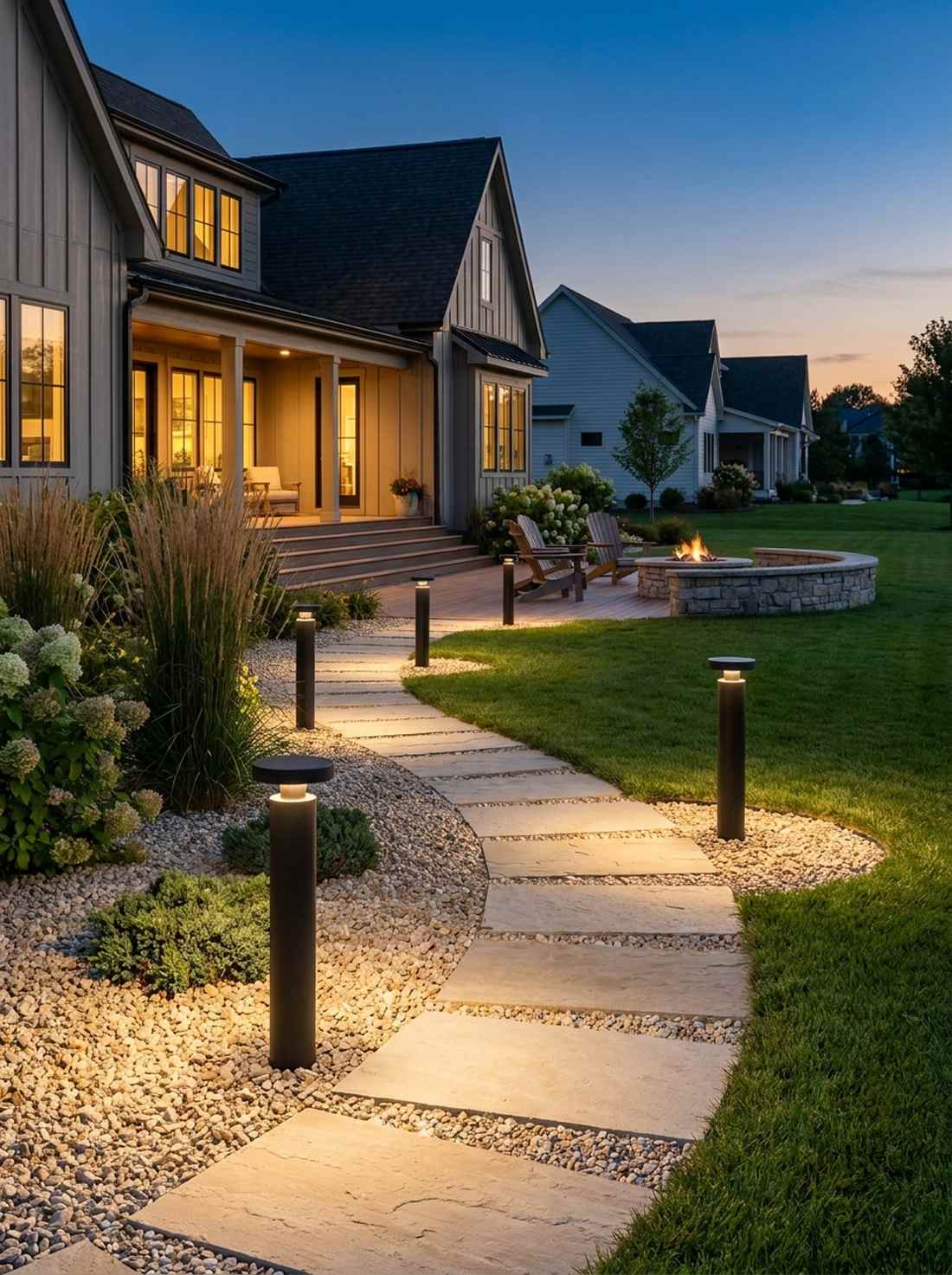
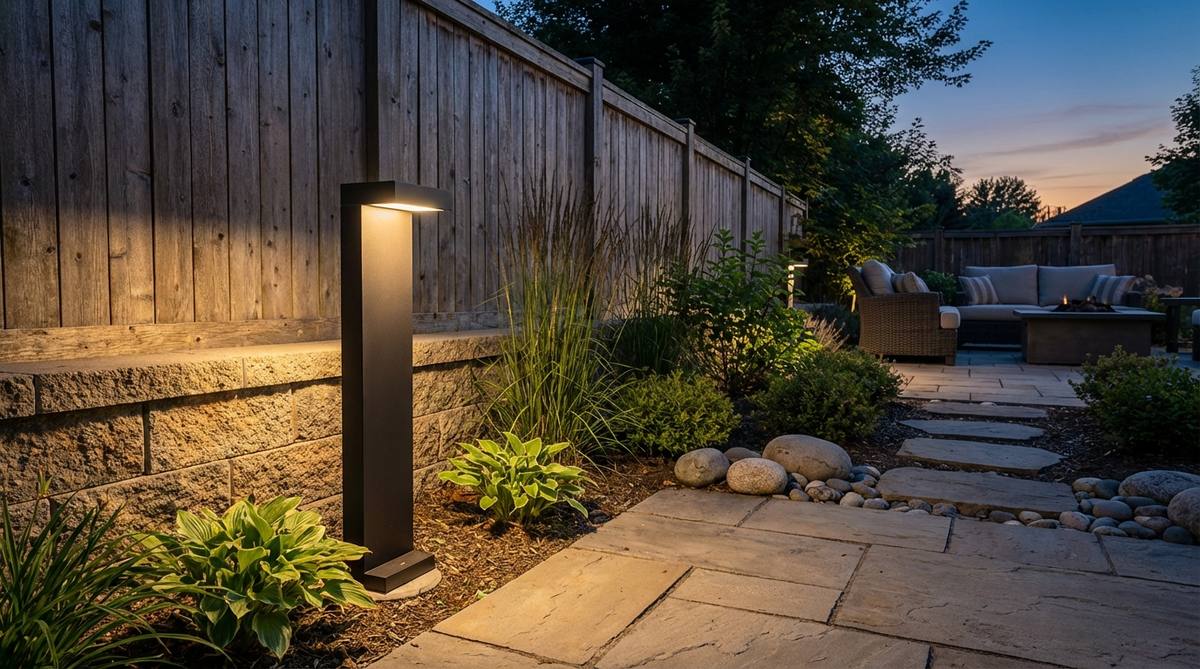
Bathing a pathway in soft, reflected light feels utterly luxurious using downward-only emission posts. Excellent for illuminating walkway corners without blinding pedestrians.
Exposed bulbs completely ruin your night vision; firing the light straight down prevents glare entirely. This top-down reflection gives an ambient pool of modern outdoor garden lighting that is incredibly easy on the eyes.
You can get this glare-free look for around $70–$100 per post. Save this to your glare-free outdoor board!
- Key Materials: Solid-top concealed LED posts
- Vibe / Style: Smooth and soft
- Difficulty: Intermediate leveling
- Budget Breakdown: Top-lit bollard: $85 | Wiring caps: $5
- Creator’s Tip: Use lighter colored gravel or concrete around the base to reflect more light upwards into the space.
- Smart Sourcing: Hidden-source LED bollard kits and die-electric waterproof grease.
24. Dual-Direction Wall-Grazing Bollards
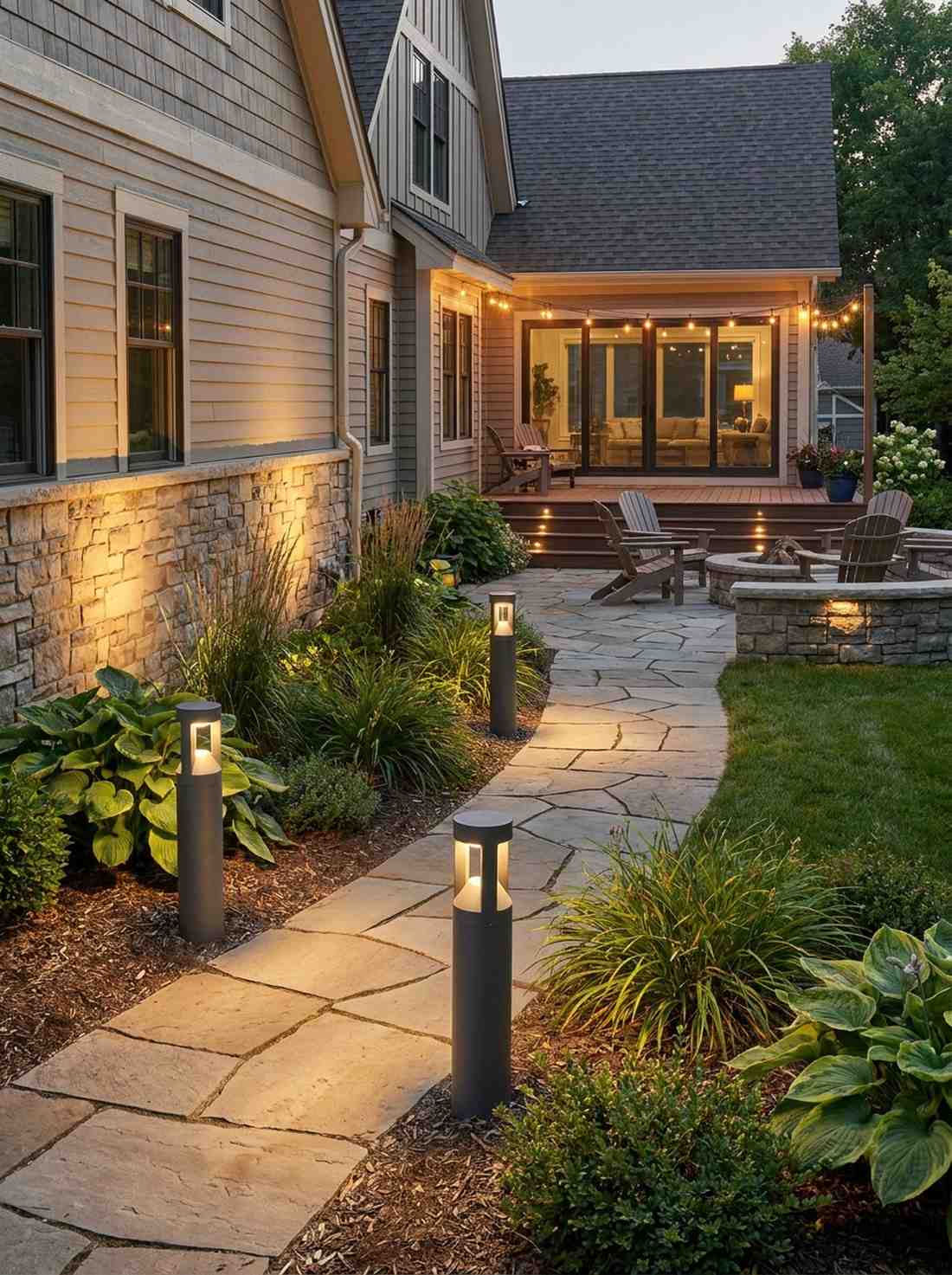
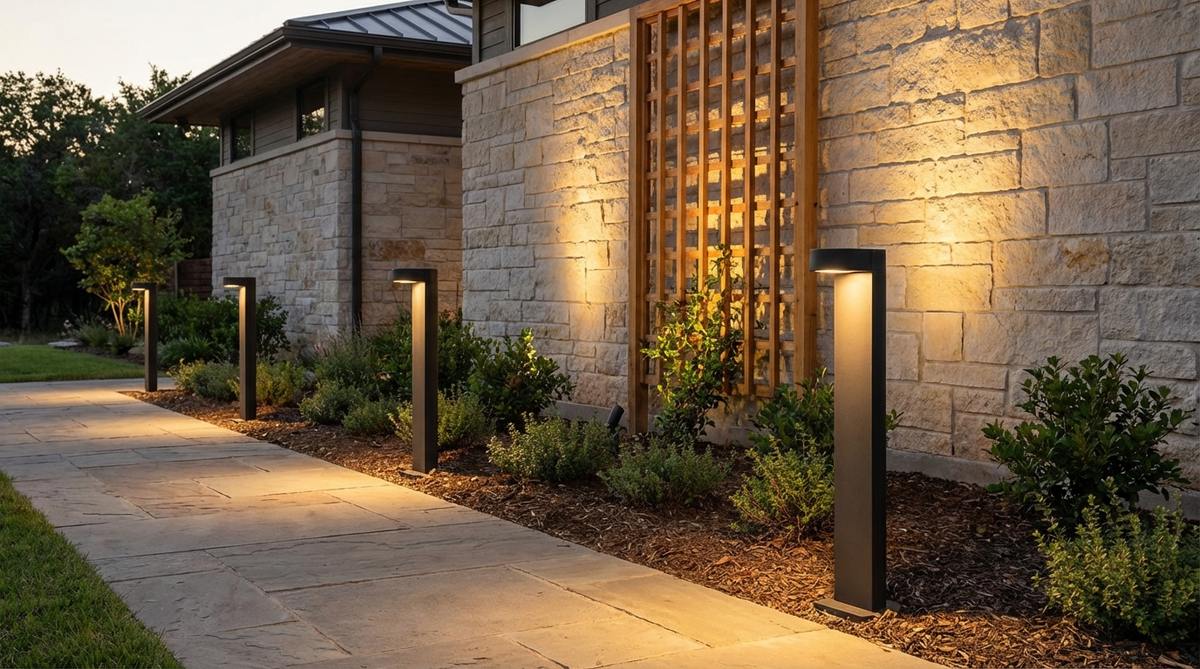
Lighting a walking path and a house wall simultaneously feels incredibly efficient with bi-directional split beams. A lifesaver for narrow side-yards where walkways hug the foundation.
Installing separate path lights and wall spots is a massive waste of money when one fixture does both. Splitting the optics gives you dual-purpose modern garden lighting ideas without cluttering the landscape.
A high-quality dual-beam unit costs about $110–$140.
- Key Materials: 2-way aperture bollard posts
- Vibe / Style: Smart minimalism
- Difficulty: Intermediate alignment
- Budget Breakdown: Dual-beam fixture: $125 | Mounting stake: $10
- Creator’s Tip: Make sure the side aiming at the house has a slightly wider beam angle to wash the wall evenly.
- Smart Sourcing: Bi-directional outdoor pathway posts and direct-bury splice kits (bulk pack).
You don’t need a massive budget for a premium look, you just need to steal this decorative shadow trick…
25. Decorative Perforated Bollards
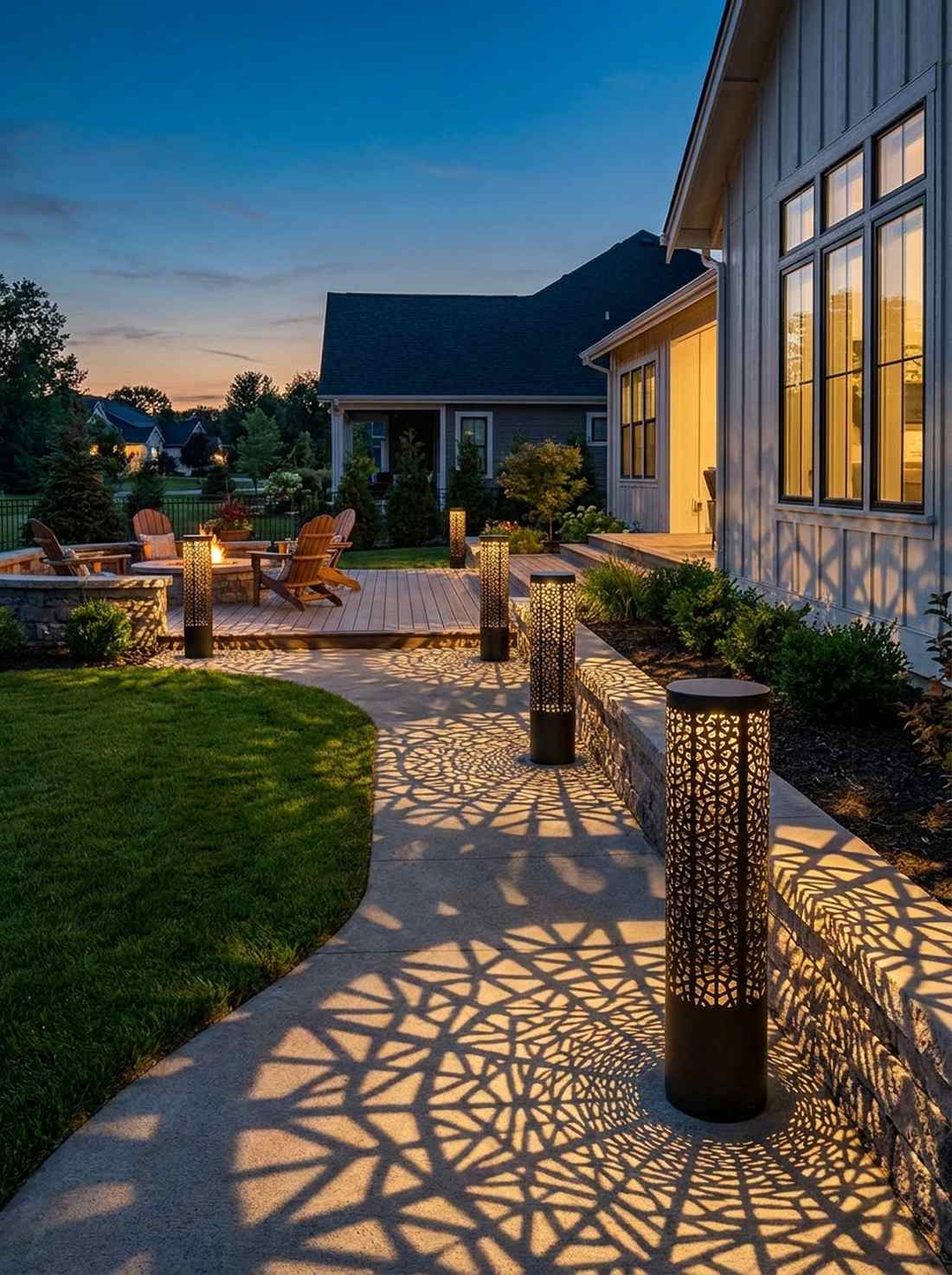
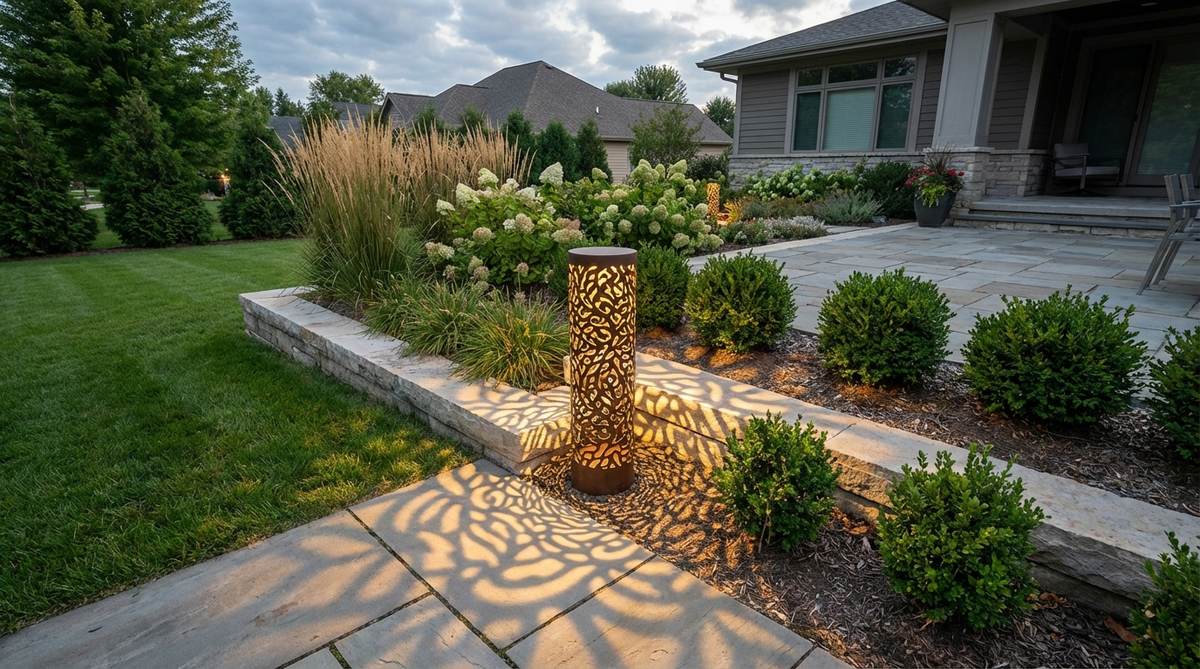
Casting intricate, lacy shadows across a plain driveway feels like pure magic with custom cut-out light towers. Outstanding for adding artistic flair to bare concrete or plain grass.
Standard lanterns just dump light, but laser-cut patterns turn the illuminated ground into an actual art piece. Projecting geometric patterns is a fantastic way to upgrade basic modern garden lighting design.
These artistic pieces average around $90–$150 each. Pin this for gorgeous shadow casting!
- Key Materials: Laser-cut aluminum tower fixtures
- Vibe / Style: Artistic and moody
- Difficulty: Standard installation
- Budget Breakdown: Perforated bollard: $130 | LED bulb: $15
- Creator’s Tip: The closer you place these to a flat wall, the sharper and more dramatic the shadow pattern will appear.
- Smart Sourcing: Laser-cut landscape light towers and high-contrast LED corn bulbs.
26. Color-Temperature-Selectable Bollards
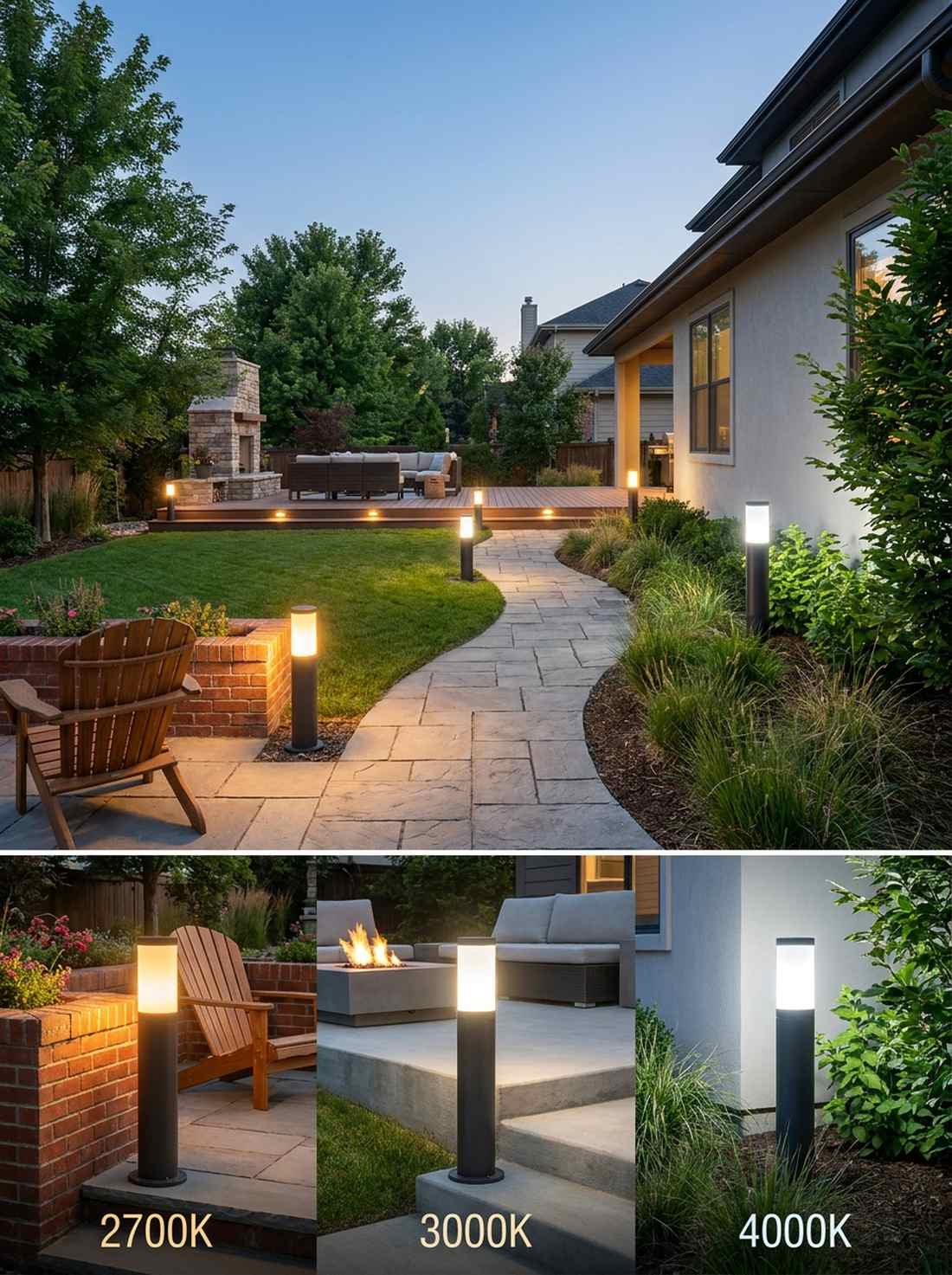
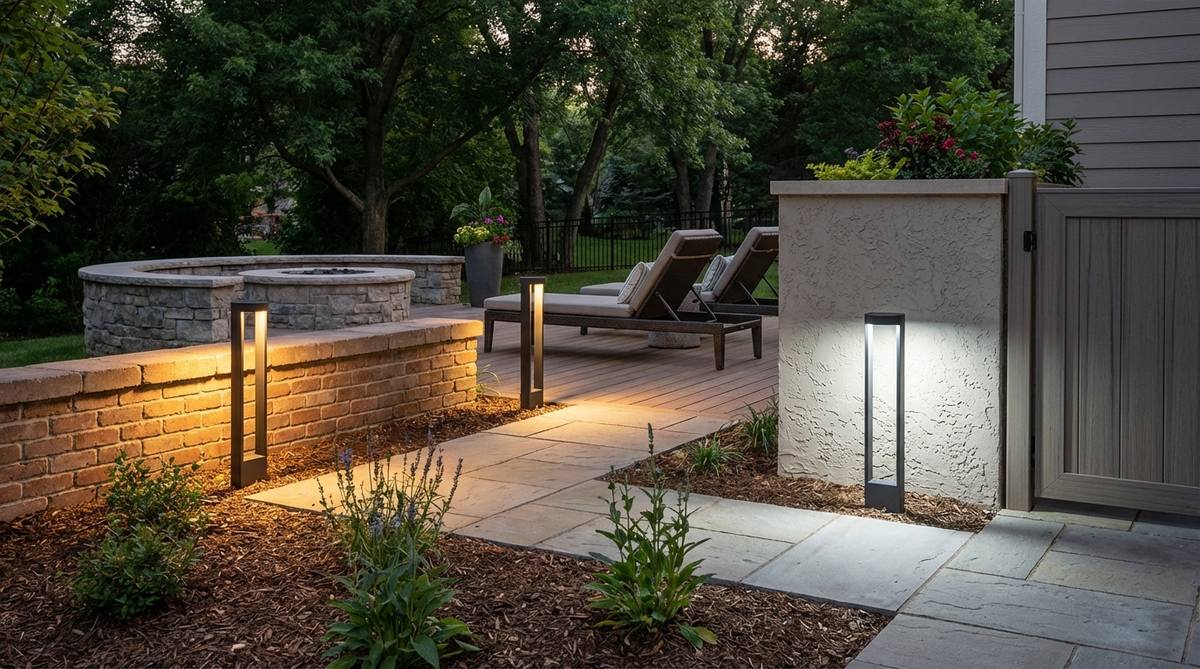
Dialing in the exact warmth of your lighting feels like a professional cheat code using switchable CCT posts. Extremely handy when you aren’t sure if your house paint needs warm or cool light.
Guessing the wrong color temperature makes houses look sickly; internal toggles let you test 2700K, 3000K, or 4000K on the spot. Consolidating choices ensures your modern outdoor garden lighting perfectly flatters your brick or stucco.
Budget roughly $85 per selectable unit.
- Key Materials: Multi-CCT integrated LED posts
- Vibe / Style: Tailored perfection
- Difficulty: Easy switch toggling
- Budget Breakdown: Selectable fixture: $80 | Wiring: $10
- Creator’s Tip: Warm (2700K) makes red brick look rich, while neutral (4000K) makes grey concrete look ultra-modern.
- Smart Sourcing: CCT-selectable modern pathway kits and gel-filled wire connectors.
27. Vandal-Resistant Steel Bollards
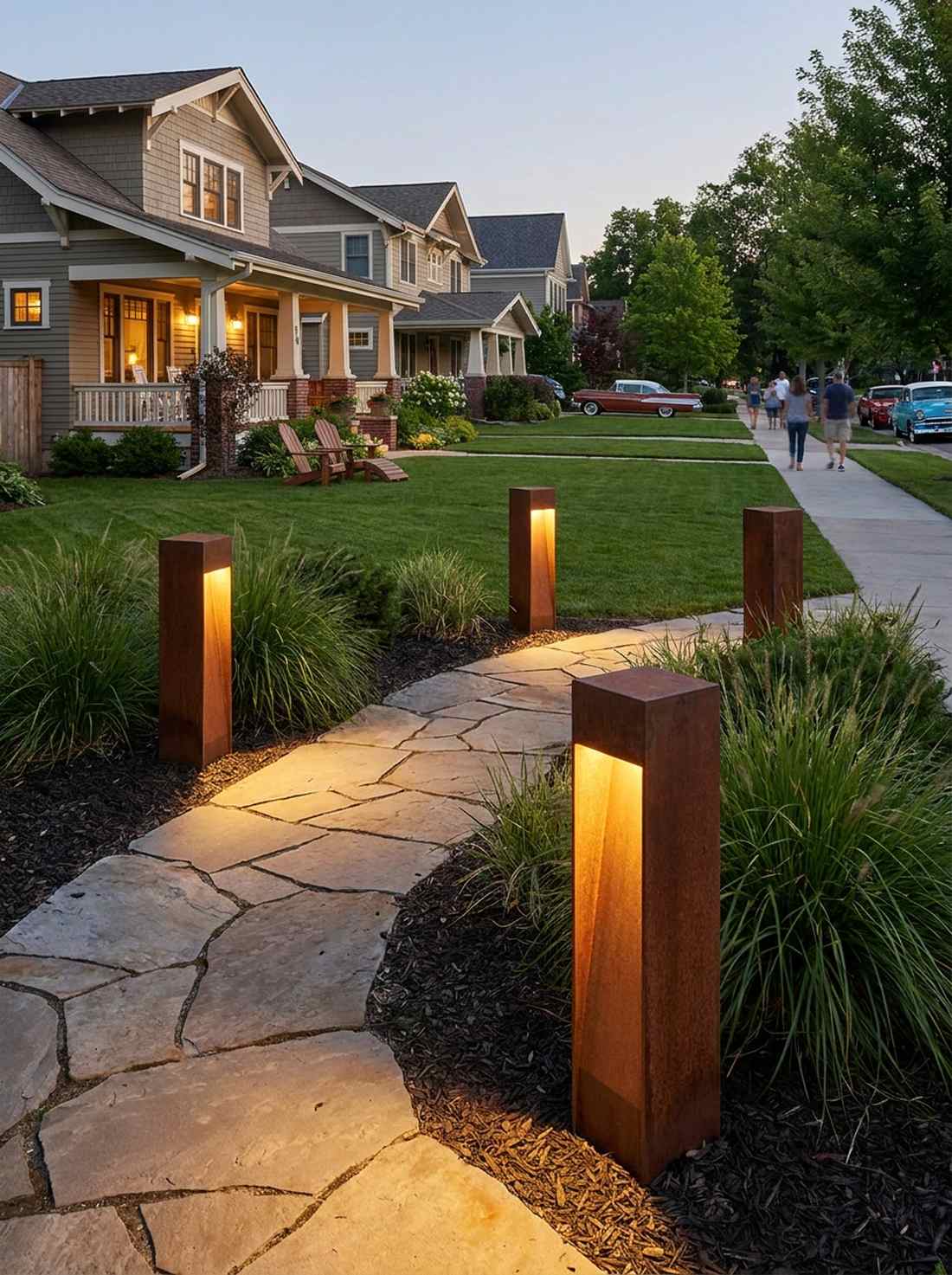
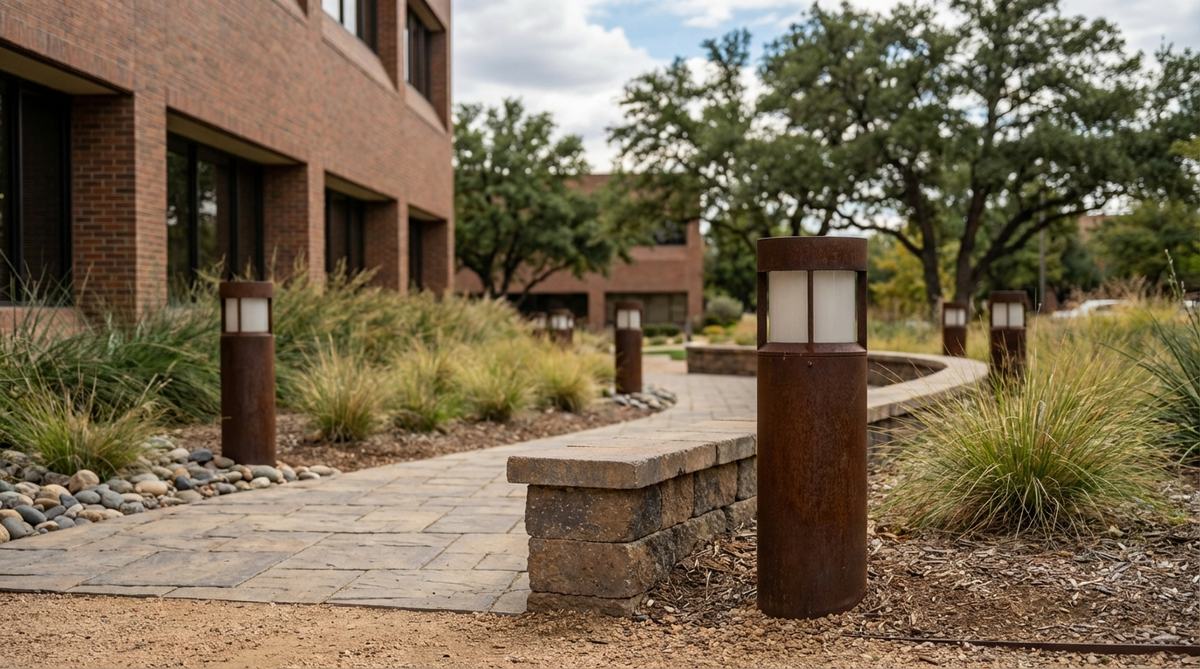
Guarding your property while looking sleek feels incredibly secure with heavy-gauge corten steel posts. The only choice for front yards exposed to heavy foot traffic or careless lawnmowers.
Flimsy aluminum dents instantly if kicked, but hardened steel takes massive impacts without flinching. Investing in tamper-proof modern garden lighting guarantees you aren’t replacing broken fixtures every summer.
These robust units cost around $130–$200. Save this for indestructible curb appeal!
- Key Materials: Thick corten or stainless steel housings
- Vibe / Style: Industrial strength
- Difficulty: Advanced heavy anchoring
- Budget Breakdown: Steel bollard: $160 | Tamper-proof screws: $15
- Creator’s Tip: Use corten steel for a gorgeous, pre-rusted industrial look that blends naturally into mulch beds.
- Smart Sourcing: Vandal-proof commercial bollard kits and security Torx bit sets.
Recessed & In-Ground Installations
28. Heavy-Duty Drive-Over Uplights
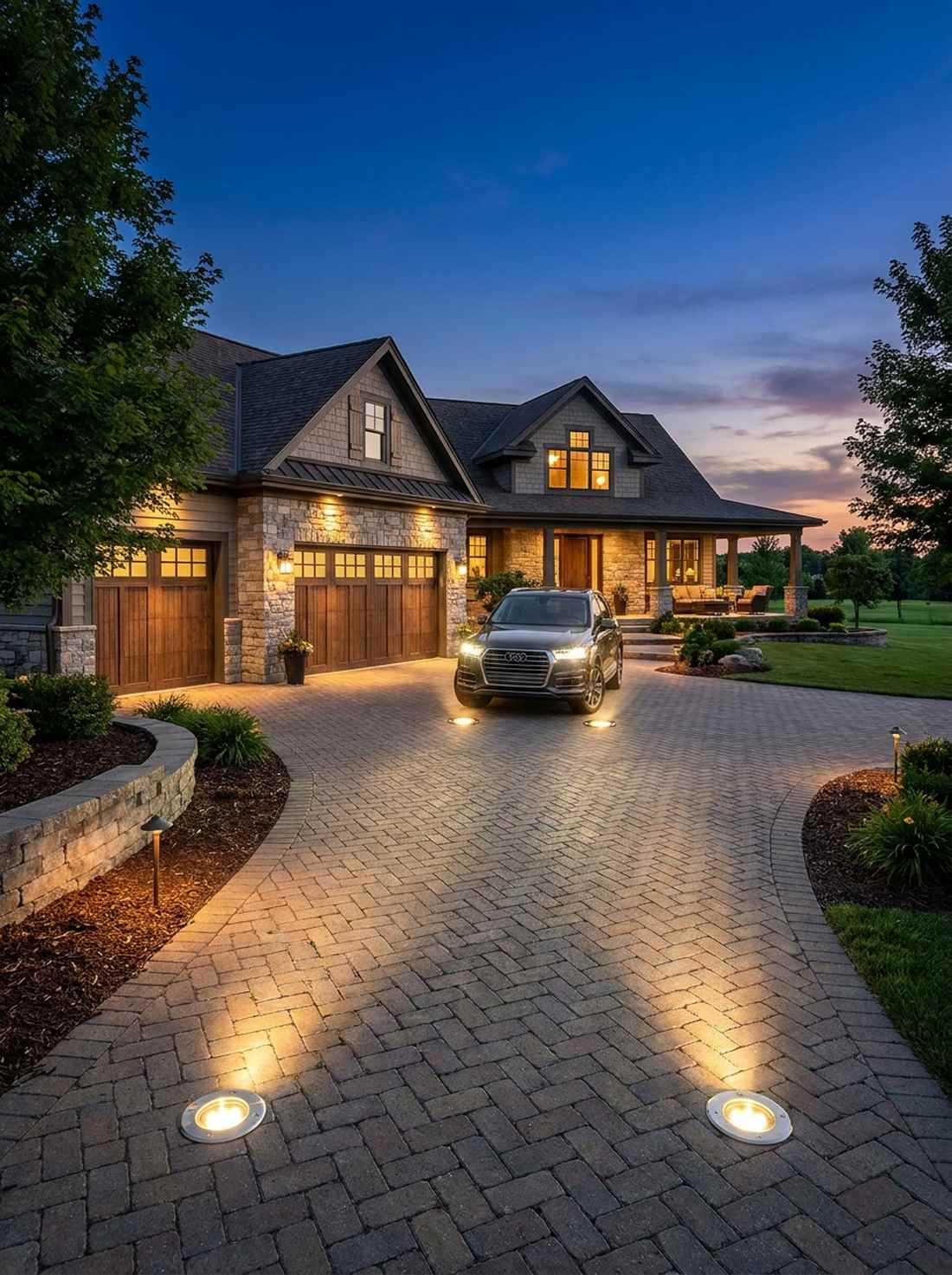
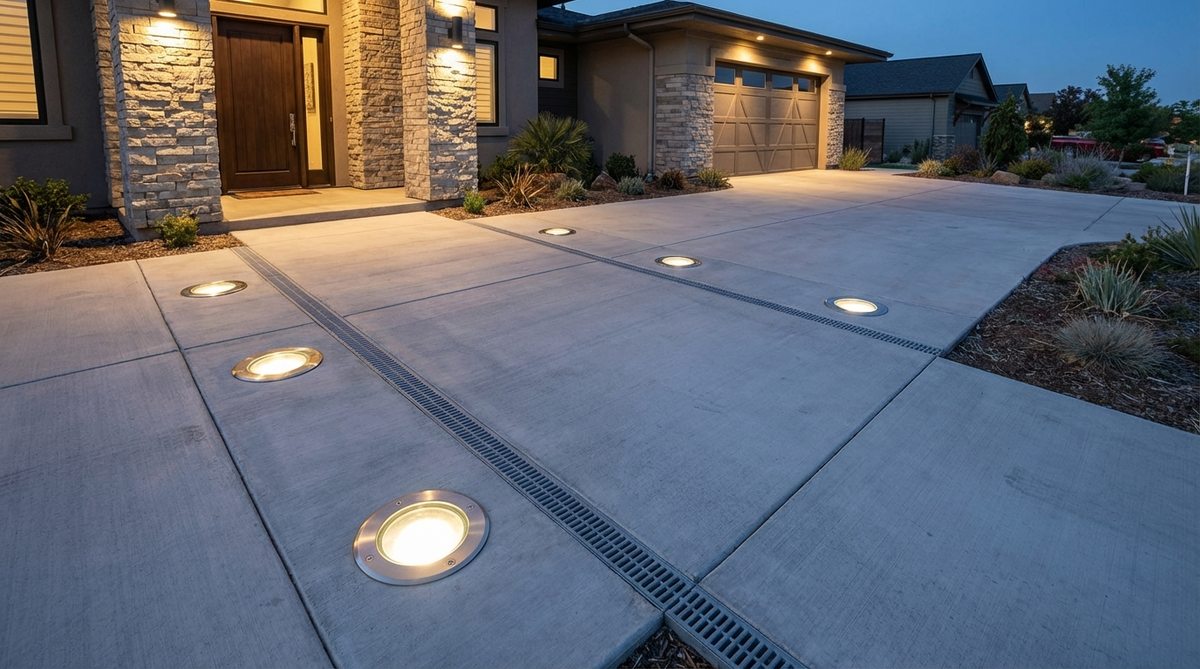
Driving right over your driveway lighting feels wonderfully futuristic with reinforced flush-mount wells. Perfectly engineered for illuminating garage doors directly from the asphalt.
Standard in-ground lights crush under a car tire, but tempered 10mm glass and reinforced housings hold 5,000+ pounds. Embedding these directly into the driveway is a staple in luxury modern outdoor garden lighting.
Expect to spend $90–$140 per structural well fixture.
- Key Materials: Drive-over rated stainless steel wells
- Vibe / Style: High-roller driveway
- Difficulty: Advanced concrete coring
- Budget Breakdown: Drive-over fixture: $110 | PVC pour sleeve: $20
- Creator’s Tip: Always pack 6 inches of crushed gravel underneath the fixture housing for rapid water drainage.
- Smart Sourcing: Drive-over rated LED well lights and high-drainage pea gravel (bulk).
29. Adjustable In-Ground Spots
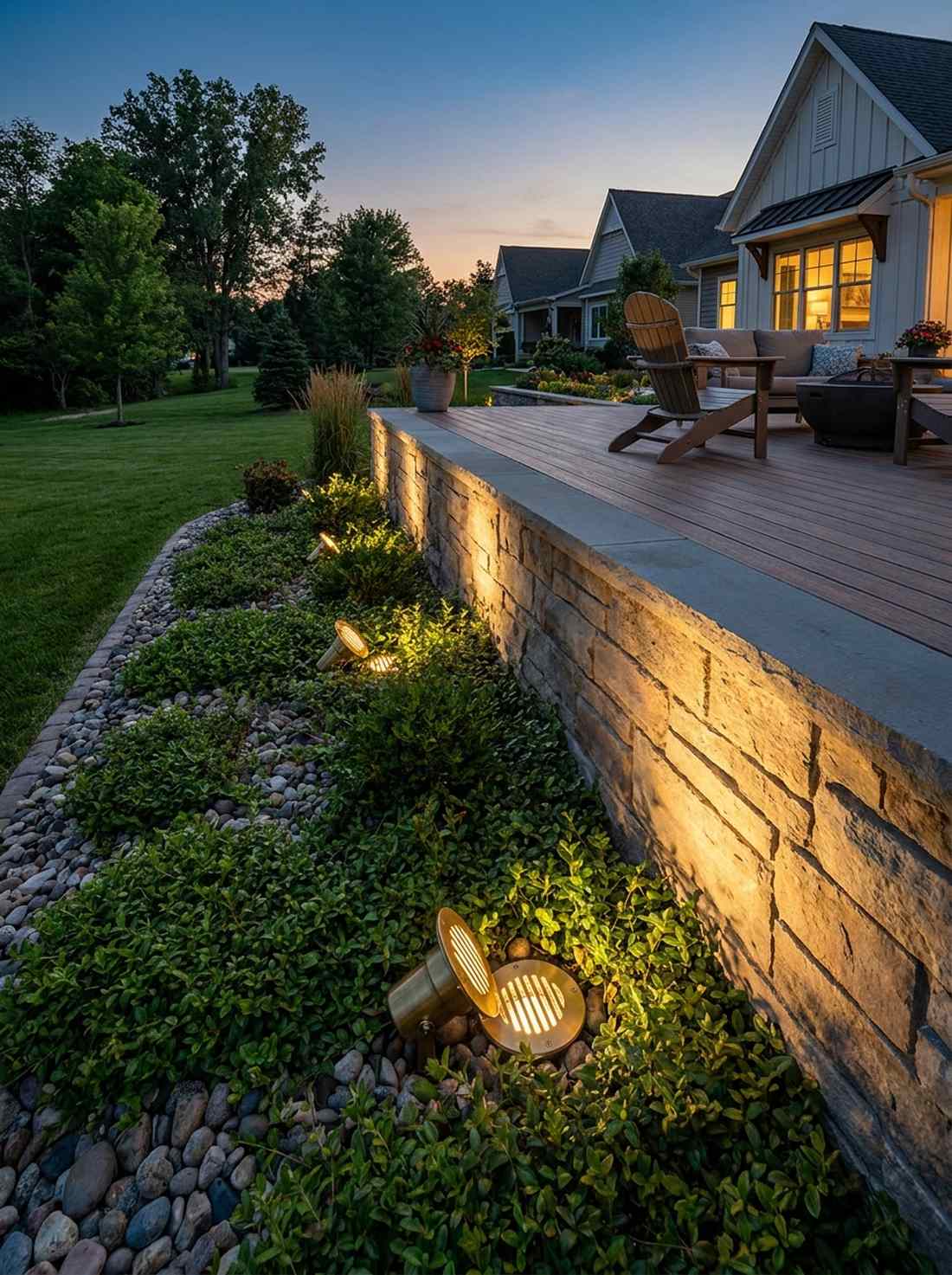
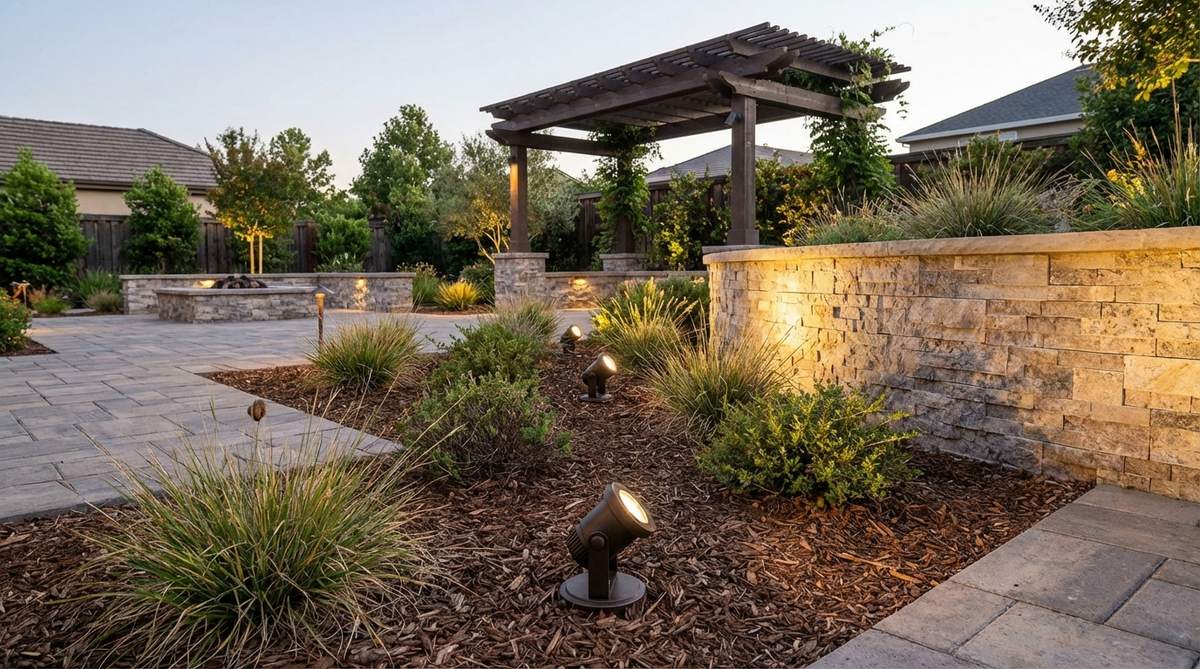
Hiding the hardware entirely gives a magical, glowing landscape effect using buried gimbal spots. Superb for dropping into thick groundcover to silently light up retaining walls.
Above-ground fixtures interrupt clean landscaping lines; burying them keeps the focus strictly on the illumination. Having an internal tilt mechanism in your modern garden lighting ideas means you can adjust the beam without digging it up.
You can execute this hidden look for about $50–$75 each. Pin this for invisible fixture tricks!
- Key Materials: IP68 buried well lights with tilt
- Vibe / Style: Secret garden glow
- Difficulty: Intermediate trenching
- Budget Breakdown: Gimbal well light: $60 | Grate cover: $15
- Creator’s Tip: Use a brass grated cover if placing near walking areas to prevent leaves from totally blocking the lens.
- Smart Sourcing: Adjustable brass in-ground well kits and slotted glare-guard covers.
Most beginners skip this next step, leaving their beautiful new hardscape looking completely flat at night…
30. Linear Slot In-Grade Lights
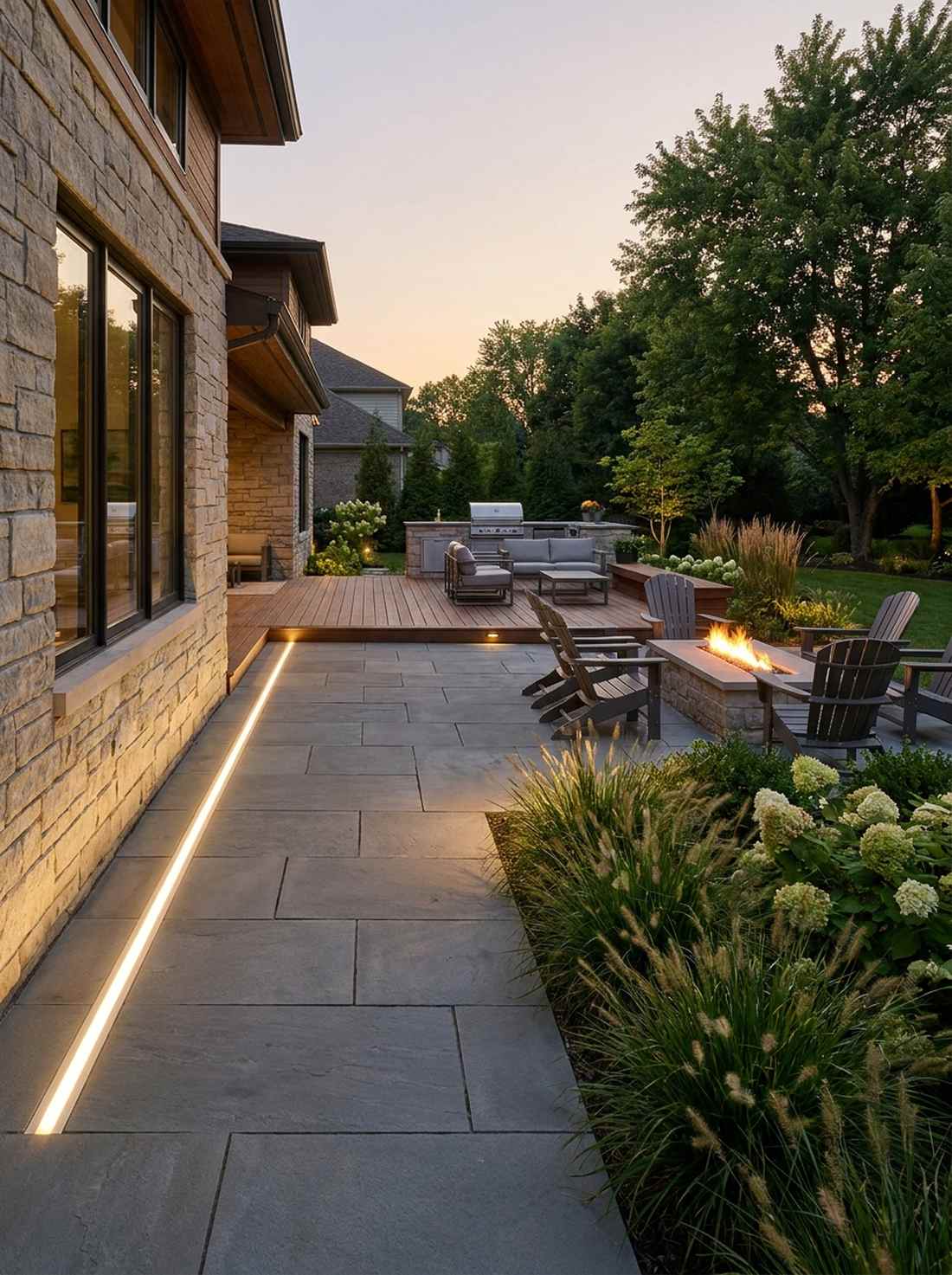
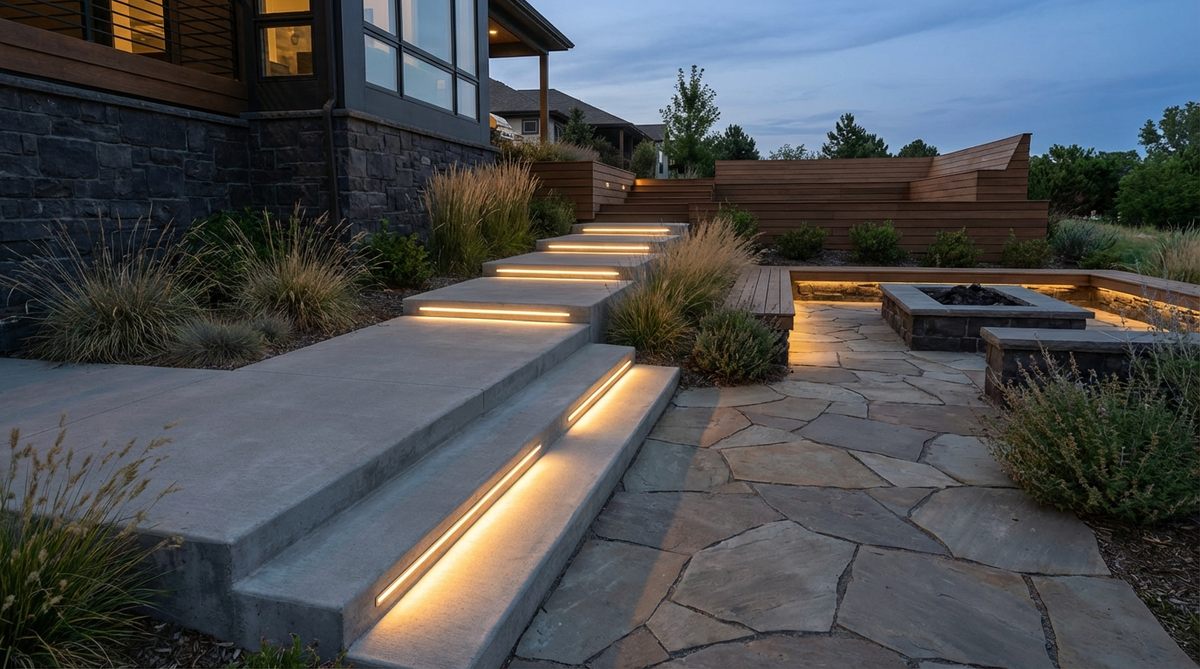
Slicing a glowing line directly into your patio feels incredibly sleek using flush linear floor channels. Absolutely stunning when installed at the exact junction where paving meets a building foundation.
Round well lights create scalloped, uneven patterns, but continuous floor slots produce a uniform blade of light. This seamless integration embeds modern garden lighting design directly into the hardscape architecture itself.
Budget roughly $120 per 3-foot channel.
- Key Materials: Extruded aluminum walk-over slots
- Vibe / Style: Ultra-contemporary edge
- Difficulty: Advanced masonry cutting
- Budget Breakdown: Linear walk-over channel: $100 | LED waterproof strip: $30
- Creator’s Tip: Cap the ends with high-grade waterproof silicone to stop patio runoff from pooling inside the metal track.
- Smart Sourcing: Walk-over rated linear aluminum channels and marine-grade silicone sealant.
Material Guide: Cheap vs. Premium Aesthetic
Knowing exactly where to save and where to spend makes all the difference in achieving that “looks expensive but isn’t” vibe.
- Standard Aluminum vs. Solid Brass/Corten: Cheaper painted metals corrode and chip after one winter. Upgrading to solid brass ensures your modern outdoor garden lighting patinas beautifully and outlasts the landscaping.
- Pre-made Hub Kits vs. Sourcing Locally: Buying a smart landscape transformer kit saves massive headaches compared to piecing together timers and photocells from the hardware store aisle.
31. Color-Kinetic In-Ground Fixtures
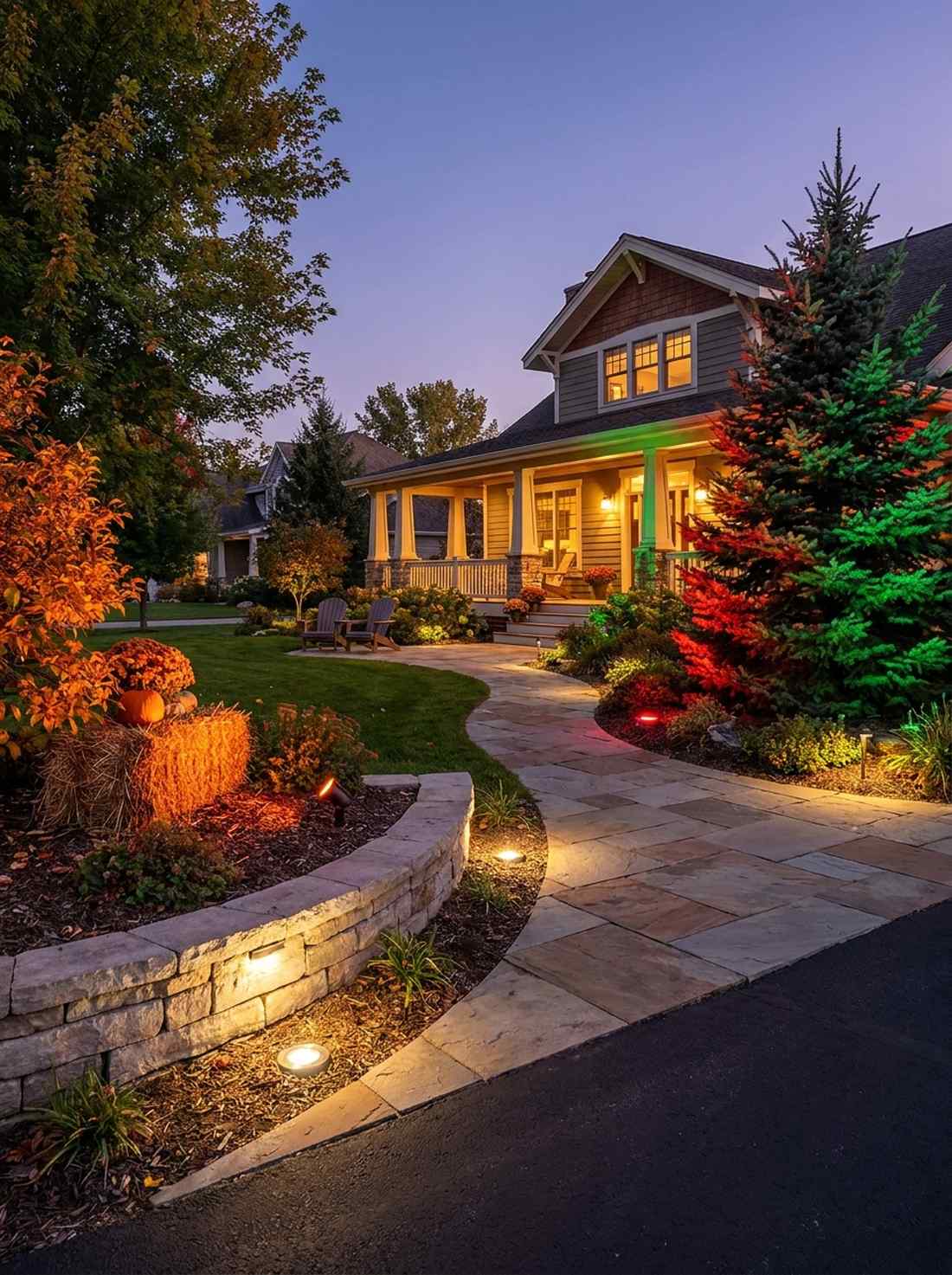
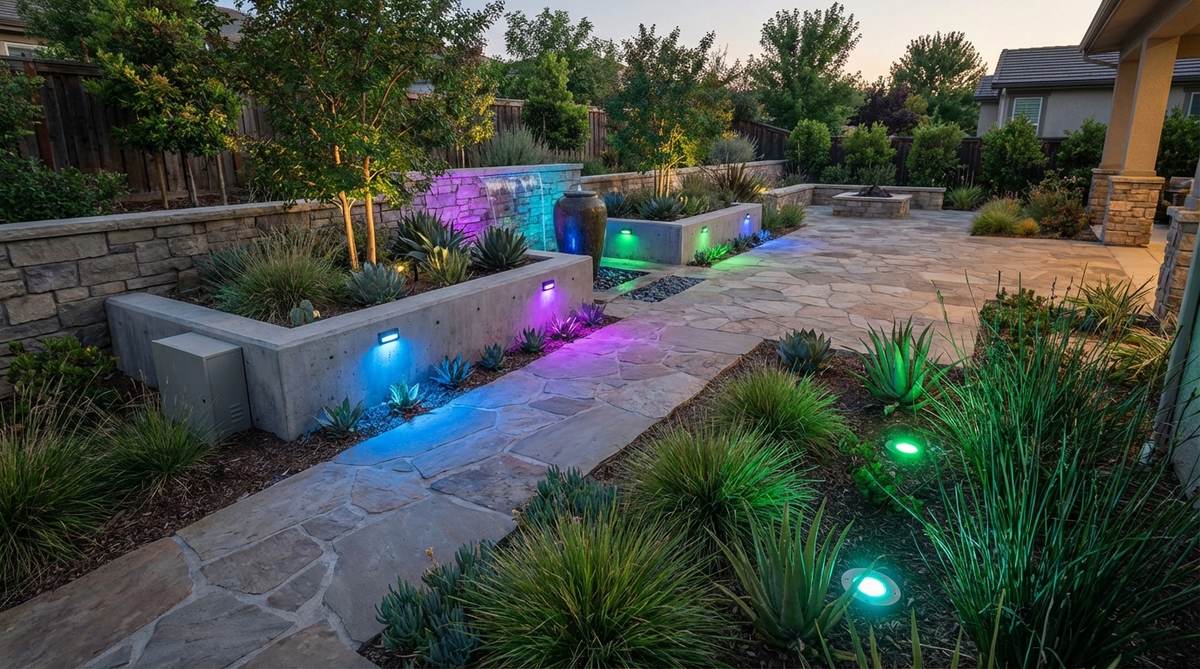
Painting your front yard in holiday colors with zero visible hardware feels brilliant using RGB well lights. Amazing for shifting from everyday white to Halloween orange or Christmas red instantly.
Hanging temporary string lights every year is a hassle; permanent color-changing in-ground units solve this forever. Managing these smart modern outdoor garden lighting nodes from an app saves endless hours on a ladder.
A 4-pack smart well system runs around $160–$220. Save this for permanent holiday lighting!
- Key Materials: Bluetooth/Wi-Fi RGB in-ground units
- Vibe / Style: Festive and hidden
- Difficulty: Smart network syncing
- Budget Breakdown: RGB well 4-pack: $180 | Low-voltage cable: $20
- Creator’s Tip: Group all the front yard lights into one “Zone” in the app so they perfectly sync their color fades together.
- Smart Sourcing: Smart RGB in-ground lighting starter kits and outdoor Wi-Fi range extenders.
32. Ultra-Shallow Remodel Wells
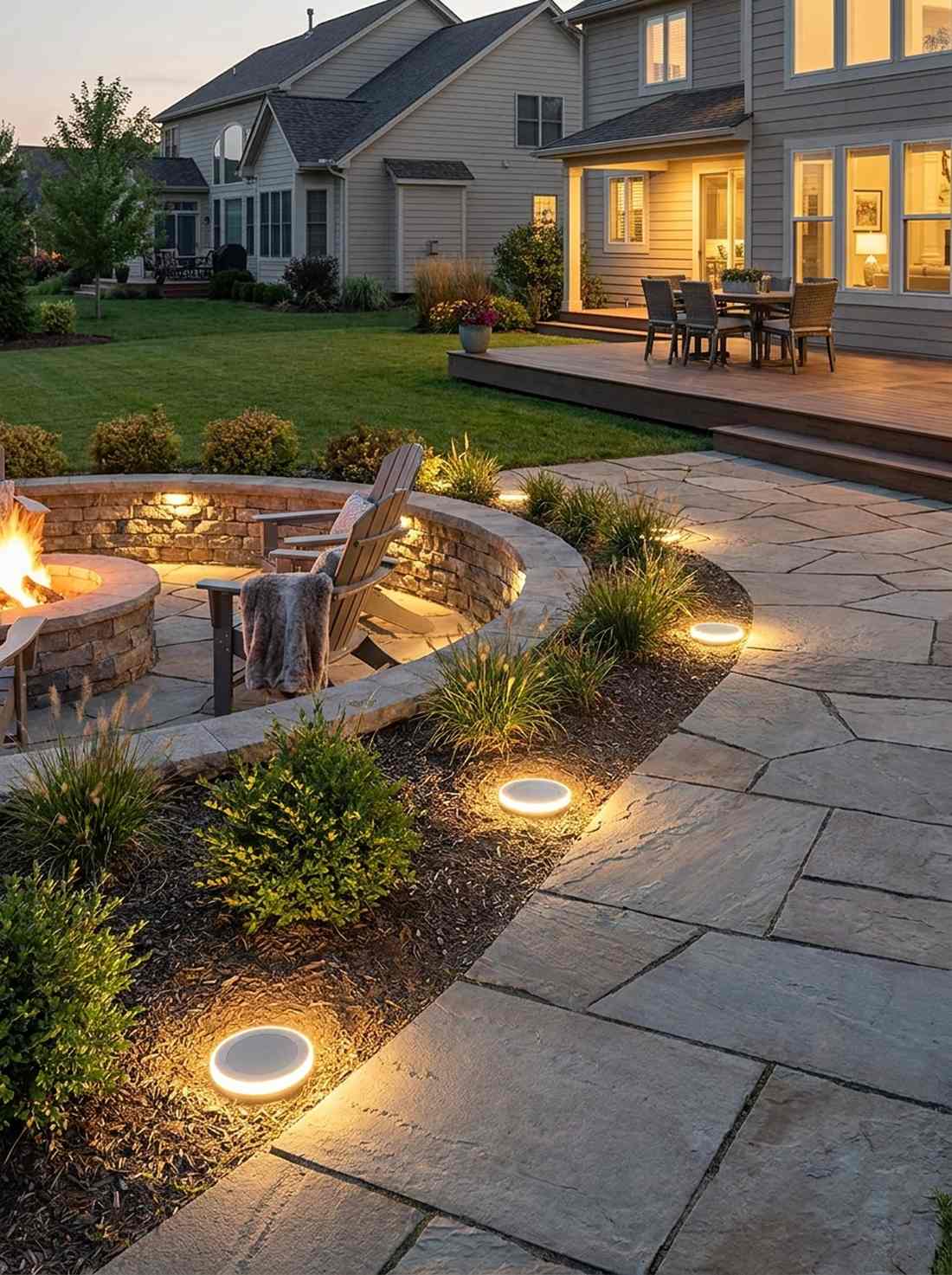
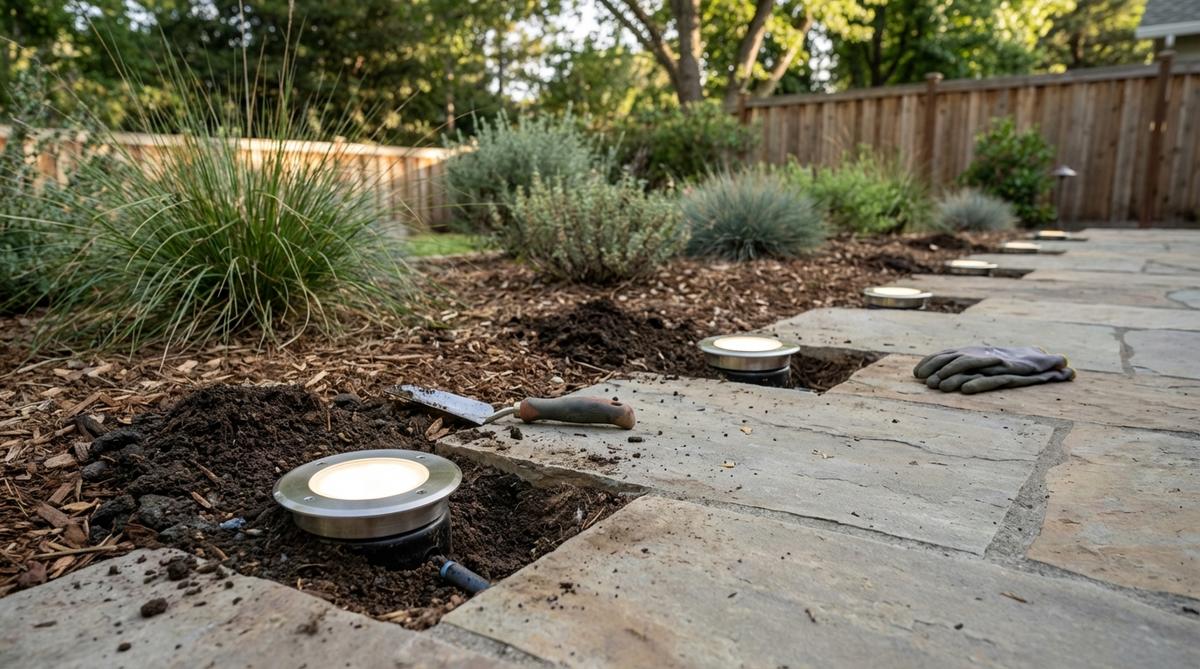
Adding recessed lighting over buried pipes feels like a huge relief using pancake-flat well fixtures. The only safe option for installing over high water tables or shallow patio concrete beds.
Standard 8-inch deep fixtures require massive excavation, but these 4-inch deep units pop in with minimal digging. Using shallow profiles brings professional modern garden lighting to incredibly tight landscape retrofits.
You can snag these shallow models for about $45–$65.
- Key Materials: 4-inch depth LED well housings
- Vibe / Style: Low-impact retrofit
- Difficulty: Easy shallow digging
- Budget Breakdown: Shallow well fixture: $55 | Core drill rental (if concrete): $40
- Creator’s Tip: Since they sit so shallow, ensure your waterproof wire connection is tucked tightly directly beneath the unit.
- Smart Sourcing: Ultra-shallow profile well lights and flat direct-bury cables.
33. Asymmetric Wall-Wash Wells
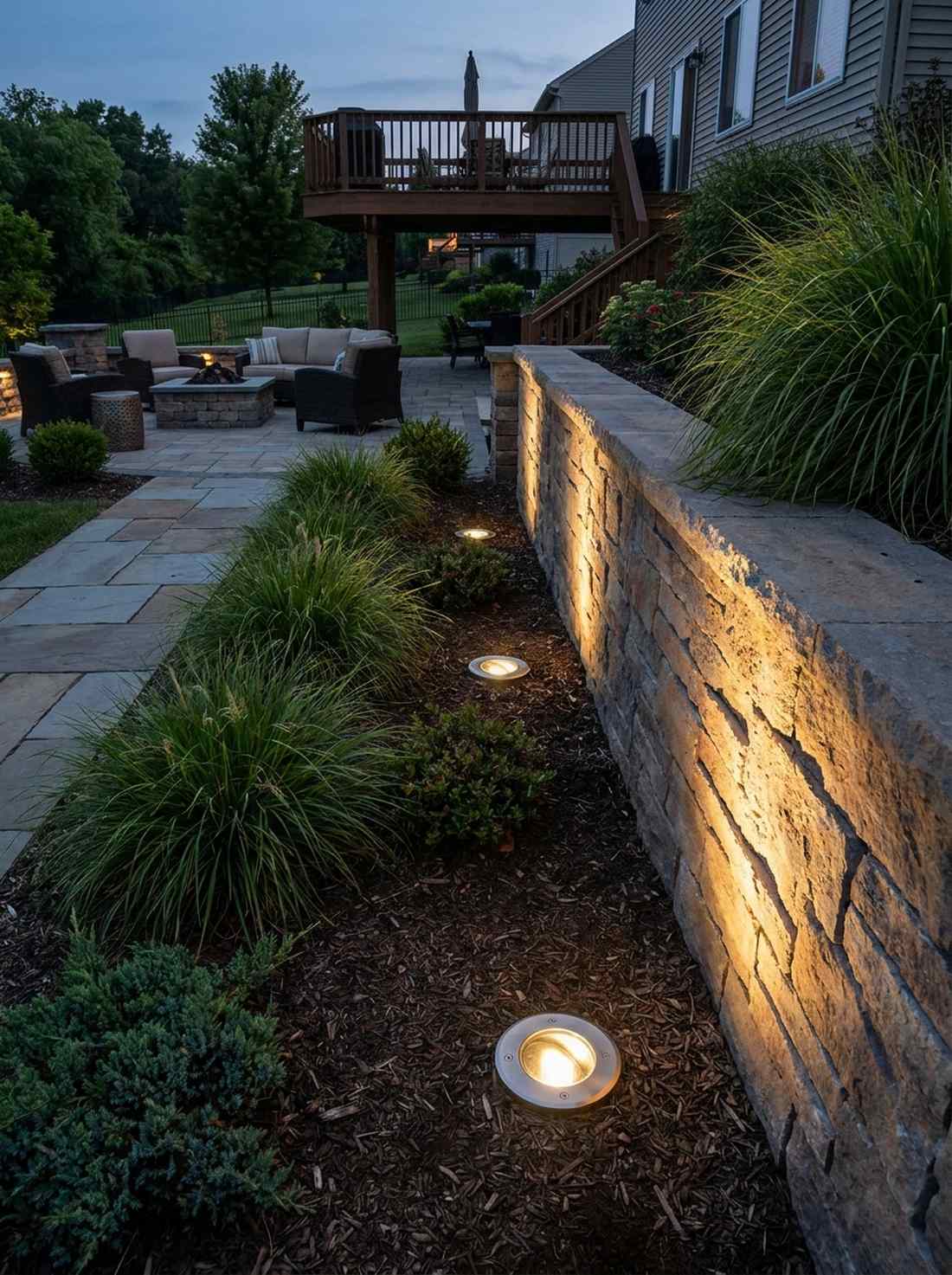
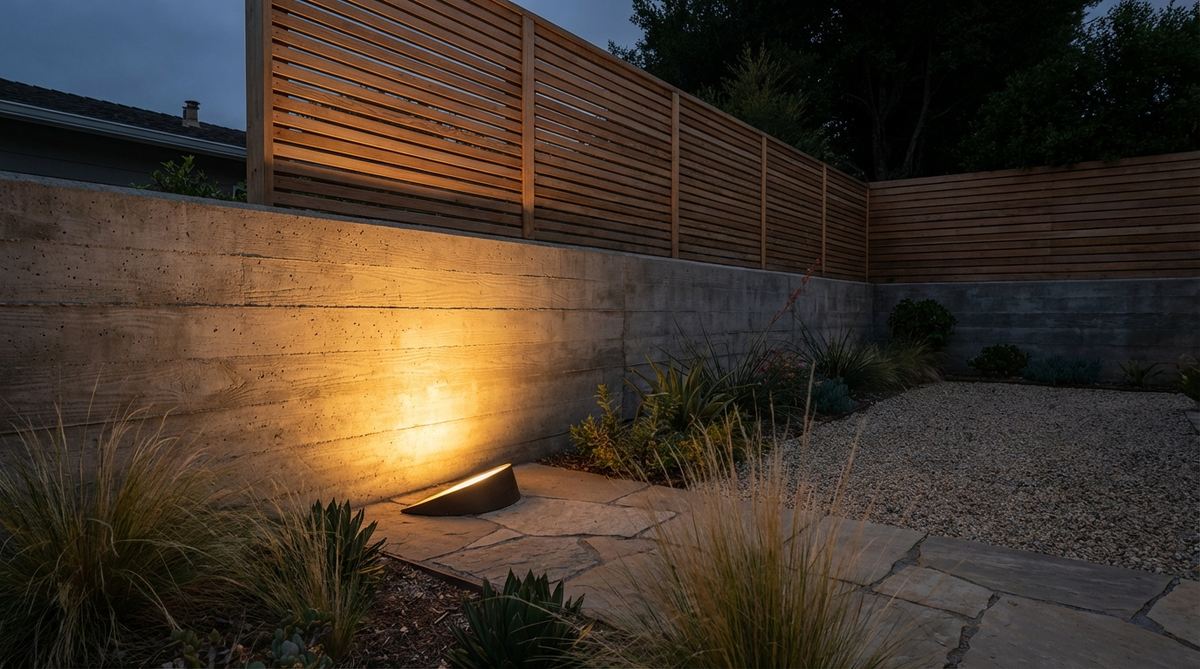
Throwing all your light exactly where you need it feels incredibly efficient with directional-lensed well lights. Crucial for putting fixtures close to a wall without wasting half the beam lighting up the dirt.
Symmetrical lenses shoot light in a useless 360-degree cone; asymmetric optics bend the beam sharply to one side. This smart optical trick maximizes lumen delivery in modern garden lighting ideas without blinding bystanders.
Budget roughly $70–$95 per asymmetric unit. Pin this to optimize your wall washes!
- Key Materials: Asymmetric reflector in-ground LEDs
- Vibe / Style: Optimized precision
- Difficulty: Rotational alignment
- Budget Breakdown: Asymmetric fixture: $80 | PVC housing: $15
- Creator’s Tip: There is usually an arrow on the rim of the fixture—point it perfectly perpendicular to the wall.
- Smart Sourcing: Asymmetric wall-wash in-ground kits and directional optic replacements.
34. Composite-Deck Recessed Lights
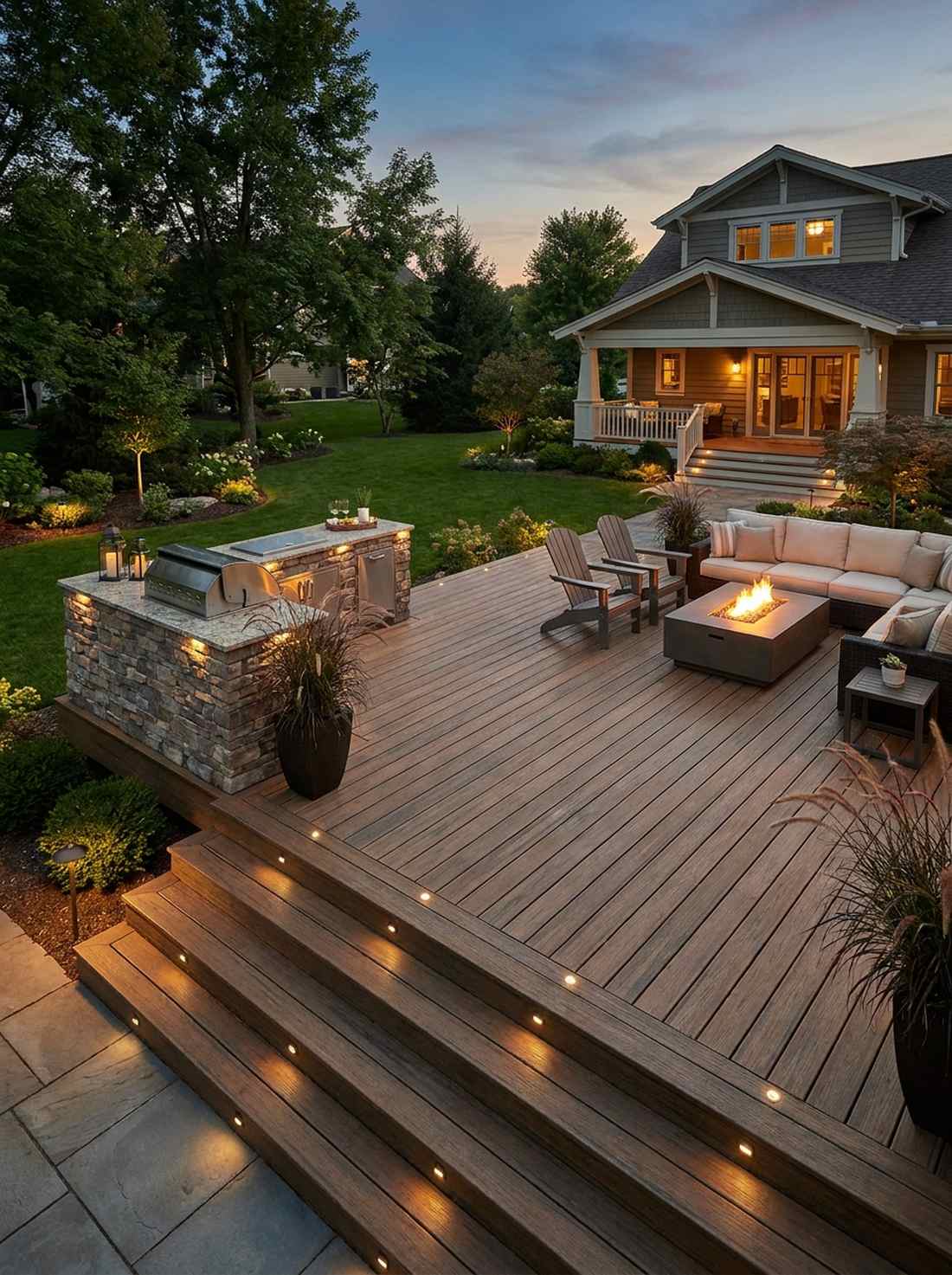
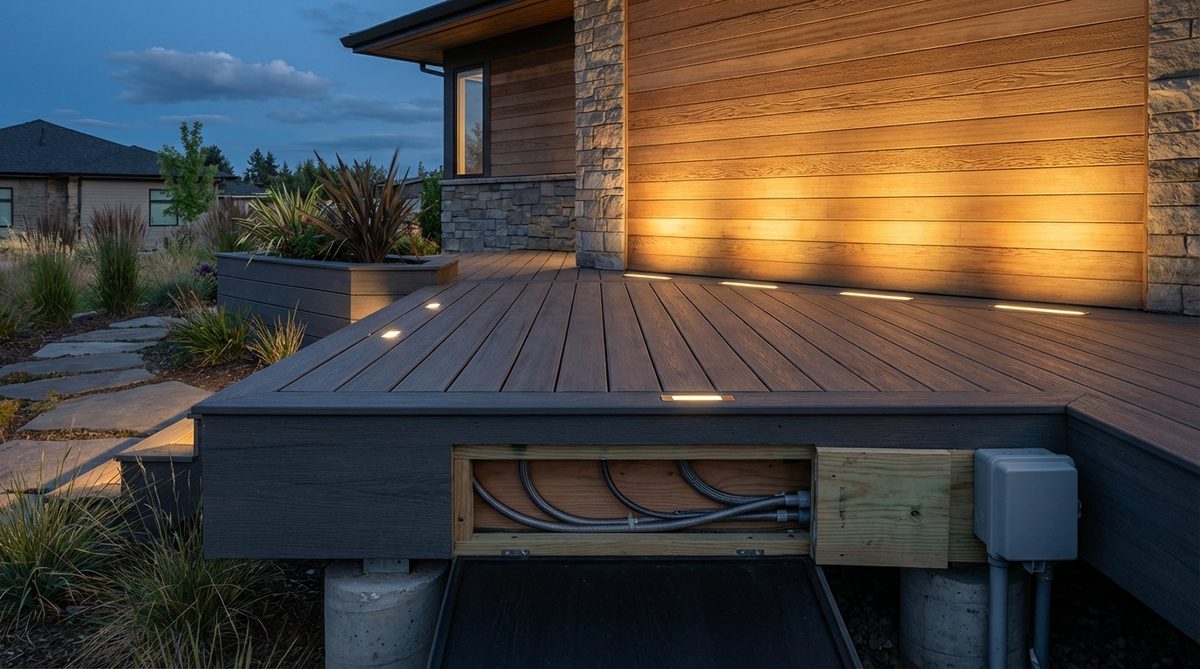
Making your raised deck feel like a premium yacht deck is simple with flush-mount floor dots. Fantastic for edging composite deck stairs or outlining the perimeter of an outdoor kitchen.
Tripping over bulky step lights ruins a party; countersinking these mini-fixtures into the wood keeps the surface totally flat. Slipping these into the joists integrates modern outdoor garden lighting perfectly into your entertaining space.
You can execute a 10-pack of deck dots for under $80.
- Key Materials: 1-inch diameter IP67 deck dots
- Vibe / Style: Sleek elevated living
- Difficulty: Intermediate hole-sawing
- Budget Breakdown: 10-pack deck dots: $60 | Spade bit: $10
- Creator’s Tip: Drill a test hole in a scrap piece of decking first to ensure the friction-fit flanges snap in perfectly tight.
- Smart Sourcing: Low-voltage composite deck lighting kits and premium wood spade bit sets.
You can buy the best lights in the world, but if you don’t use this exact control setup, you are wasting your money…
Smart & Integrated Control Systems
35. Wireless Mesh Network Controllers
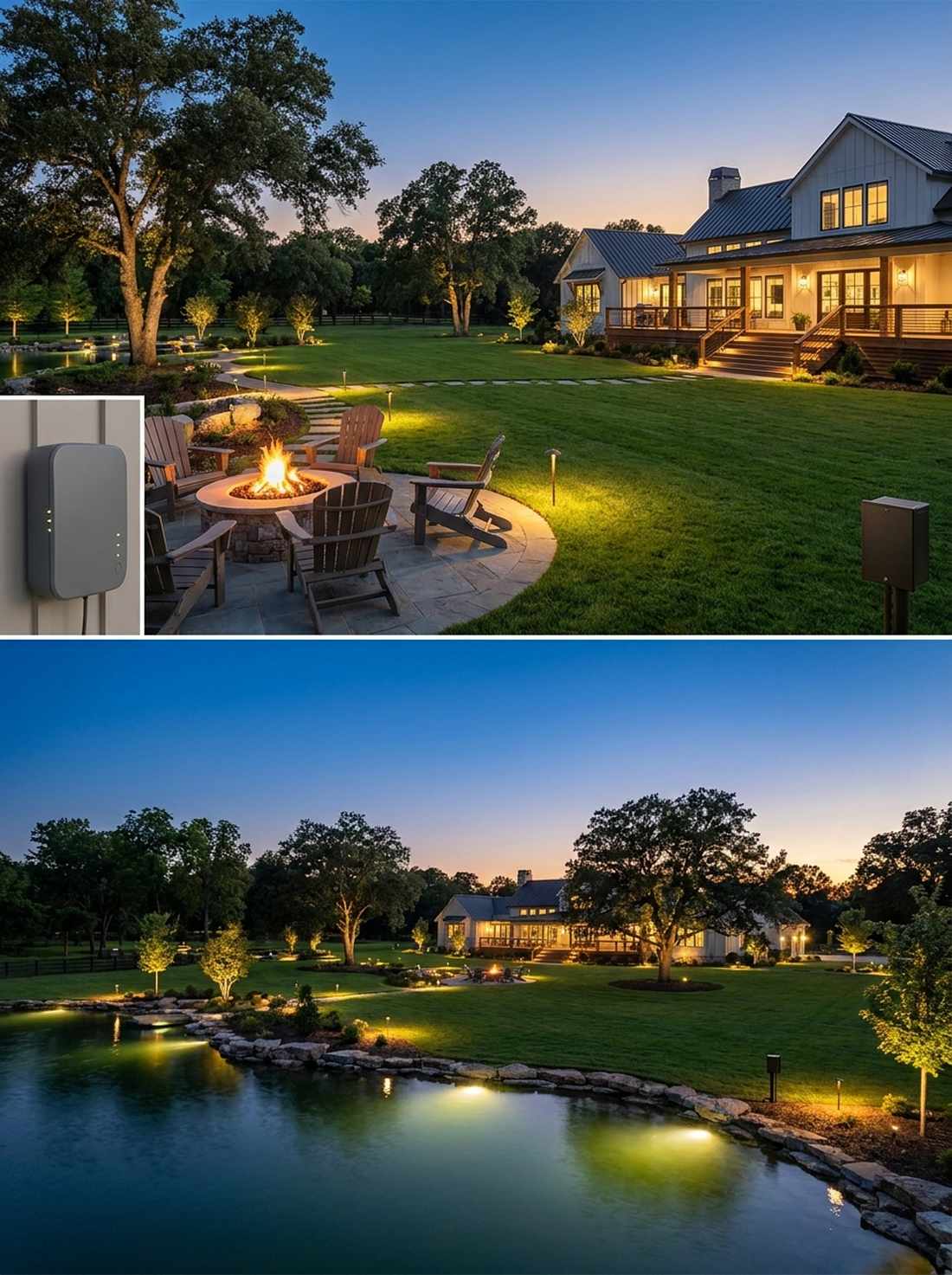
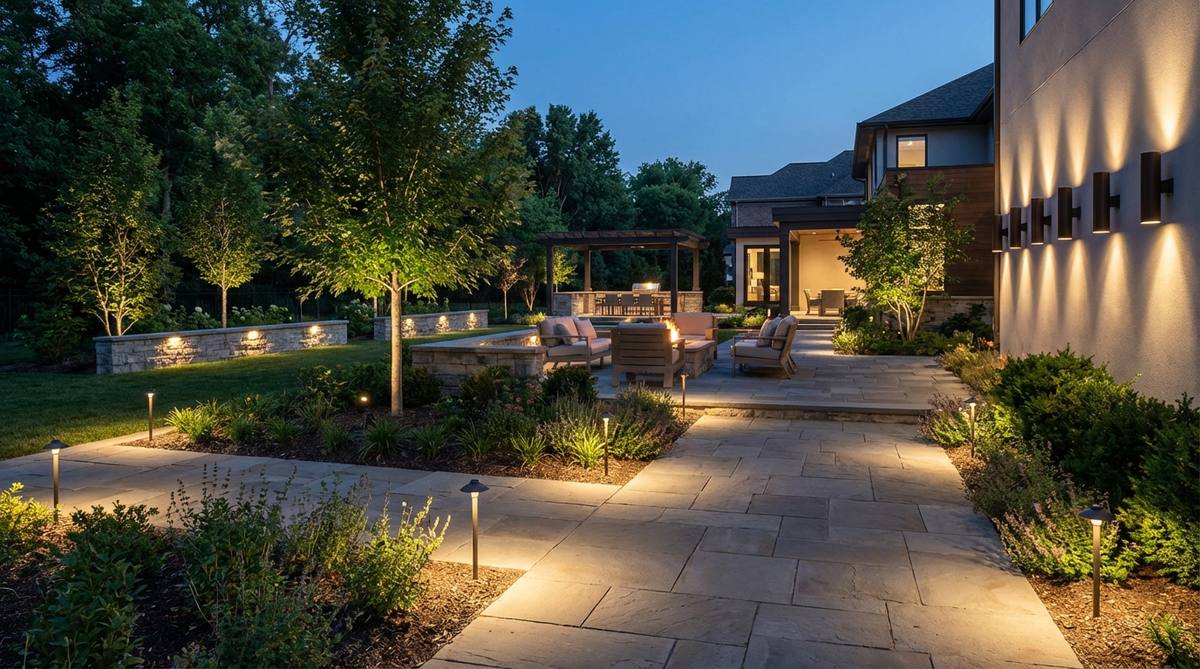
Controlling a massive yard without running miles of wire feels like a superpower with self-healing mesh networks. Ideal for sprawling properties where central control panels struggle to reach the edges.
Relying on a single Wi-Fi router for yard lights causes endless drop-outs, but mesh tech turns each light into a repeater. This enterprise-grade stability is what separates amateur setups from robust modern garden lighting design.
Expect to spend $150 for a solid mesh smart hub. Save this for massive property lighting!
- Key Materials: Mesh-enabled smart transformers
- Vibe / Style: Flawless connectivity
- Difficulty: App-based pairing
- Budget Breakdown: Mesh hub: $120 | Mesh-ready bulbs: $30/each
- Creator’s Tip: Space out your lights so no single fixture is more than 30 feet from the next to keep the mesh signal strong.
- Smart Sourcing: Mesh-network outdoor smart hubs and smart landscape lighting transformers.
36. Astronomical Time Clock Systems
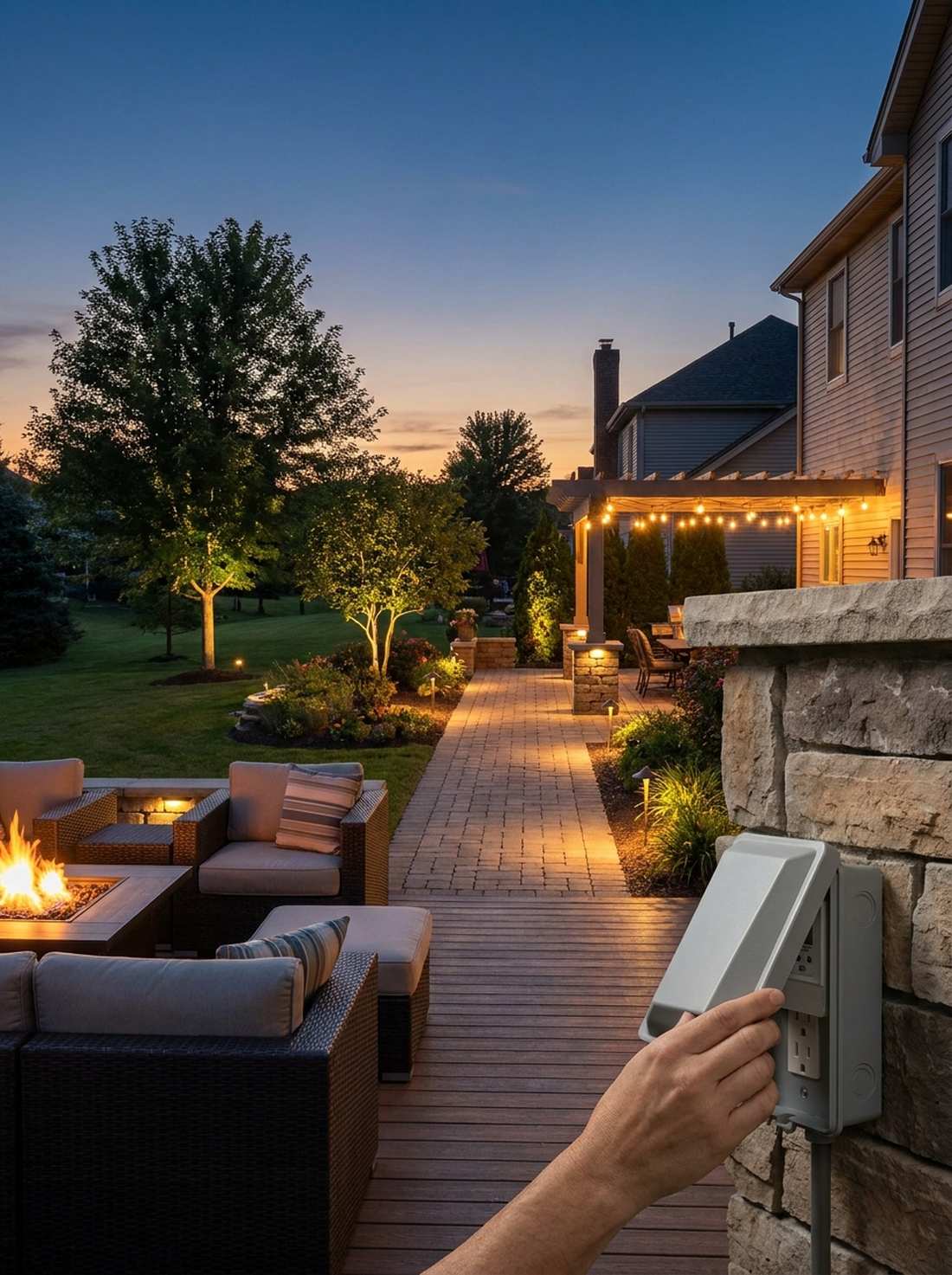
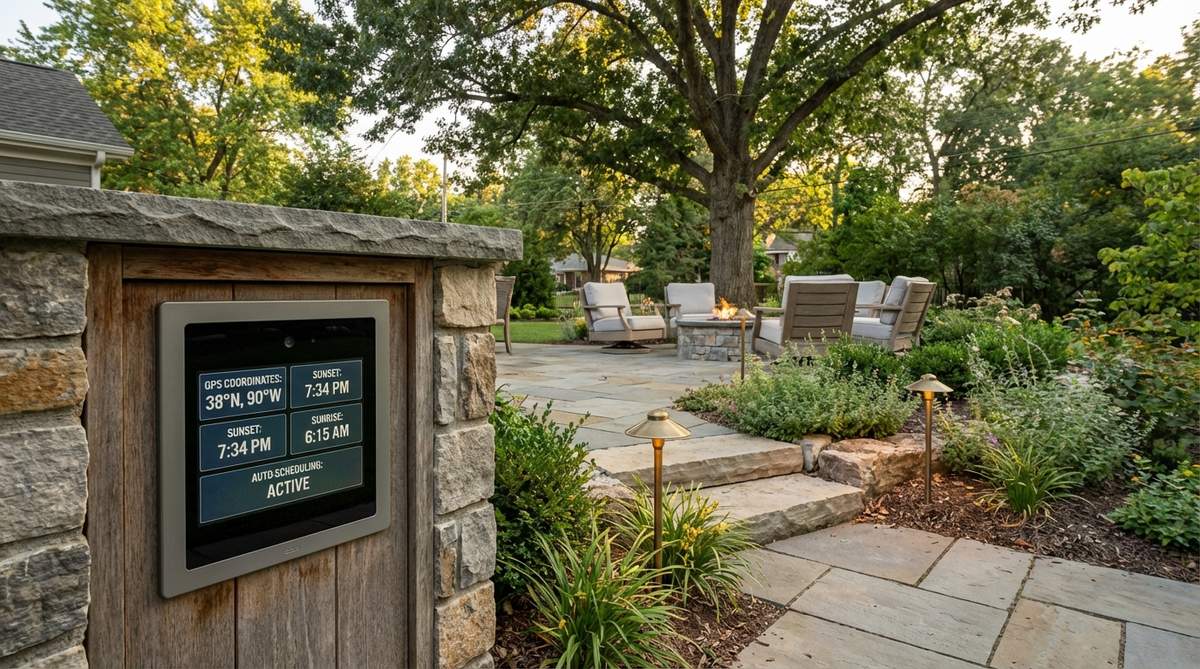
Never manually adjusting a lighting timer again feels like ultimate peace of mind with GPS-synced astronomical timers. Perfect for completely automating your home’s security and curb appeal presence.
Old mechanical dials get completely thrown off by daylight savings and power outages; this tech calculates exact sunset daily. Tying your modern outdoor garden lighting to GPS coordinates guarantees perfect dusk activation year-round.
You can upgrade your transformer for just $40–$60.
- Key Materials: GPS-enabled digital timer modules
- Vibe / Style: “Set it and forget it”
- Difficulty: Very easy plug-in
- Budget Breakdown: Astronomical timer plug: $45 | Weatherproof box: $15
- Creator’s Tip: Program a 20-minute offset so the lights turn on slightly *before* it gets completely pitch black outside.
- Smart Sourcing: Astronomical landscape lighting timers and weatherproof outdoor receptacle covers.
37. Occupancy-Sensor Zone Controls
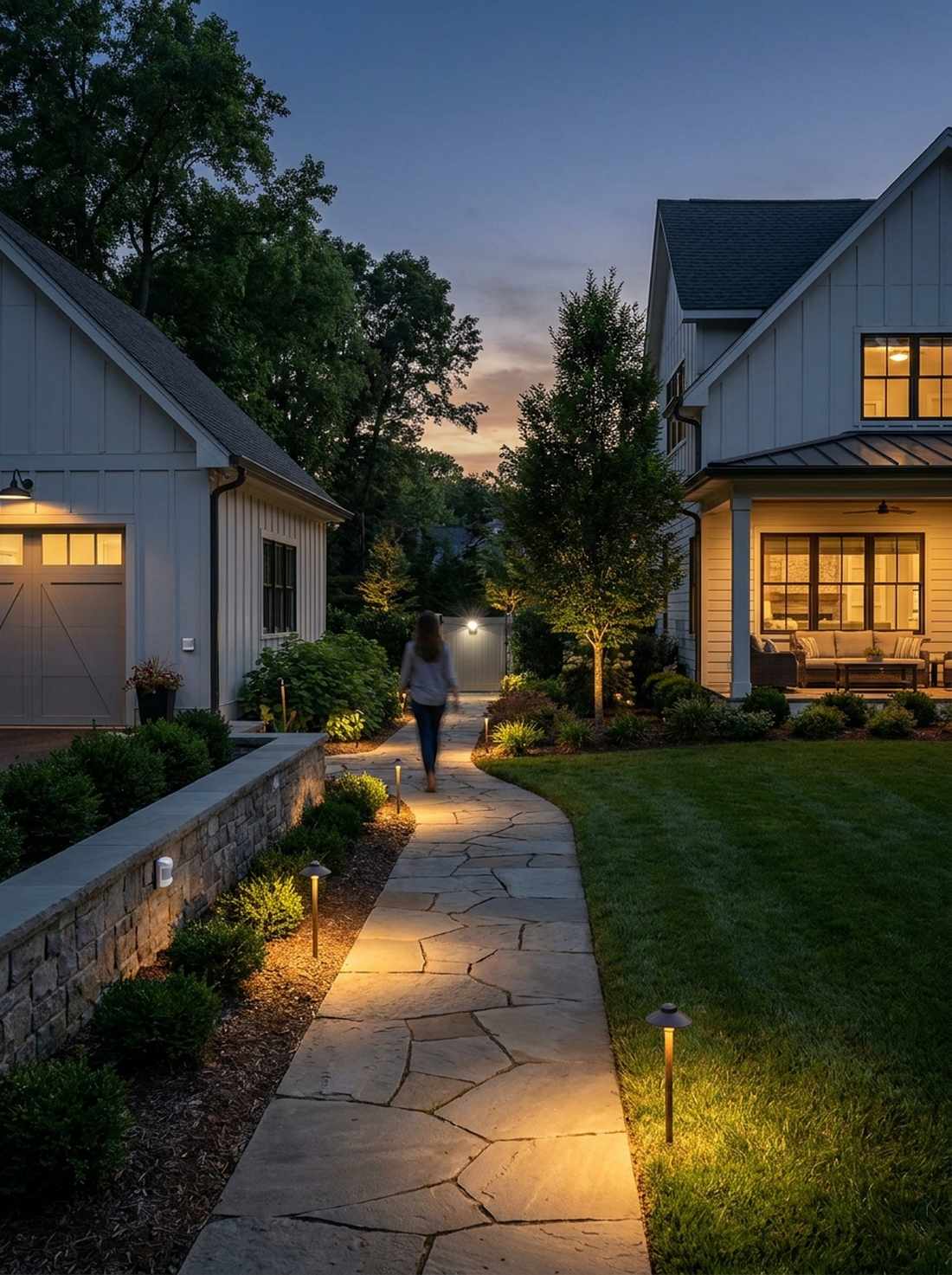
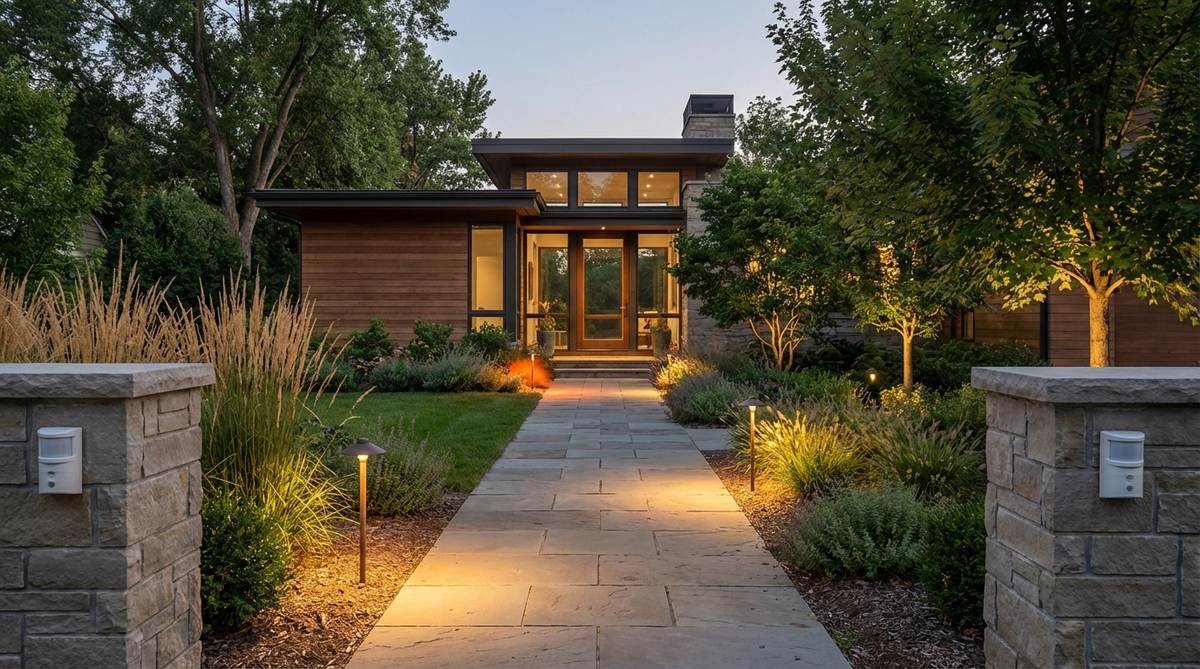
Having your property light up dynamically as you walk through it feels incredibly secure with motion-zoned pathways. Brilliant for side alleys, garage approaches, and hidden back gates.
Leaving blazing floods on all night wastes energy and annoys neighbors; responsive activation is much smarter. Integrating presence detection into your modern garden lighting ideas provides safety only exactly when needed.
A quality outdoor sensor setup runs about $50 per zone. Pin this for smart home security!
- Key Materials: 180-degree outdoor PIR sensors
- Vibe / Style: Responsive and safe
- Difficulty: Intermediate wiring
- Budget Breakdown: PIR sensor module: $35 | Wire integration: $15
- Creator’s Tip: Mount the sensor at waist height rather than on the roof so it catches body heat faster without triggering from birds.
- Smart Sourcing: Low-voltage outdoor motion sensors and zone-control smart relays.
38. DMX-Addressable RGB Systems
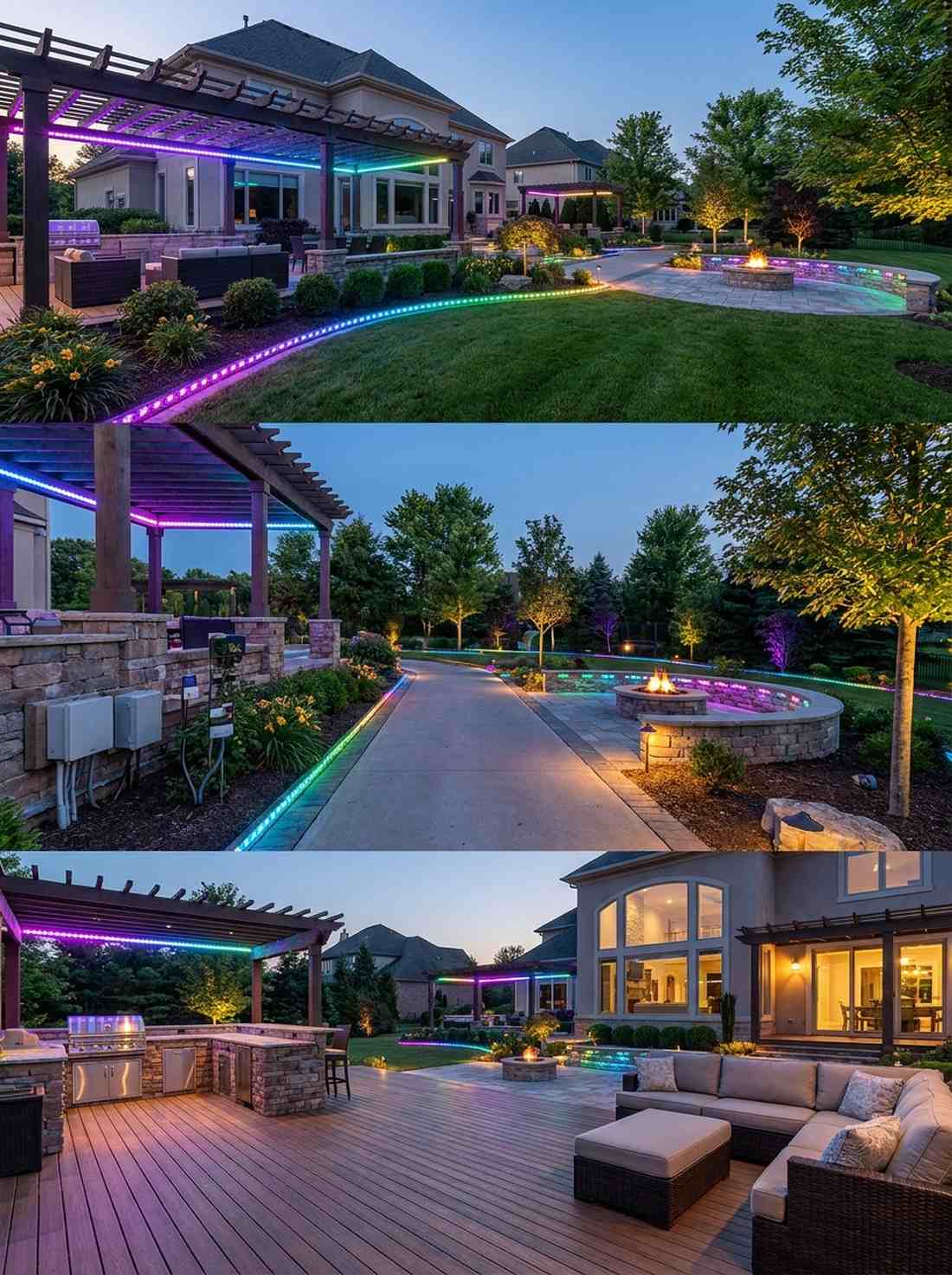
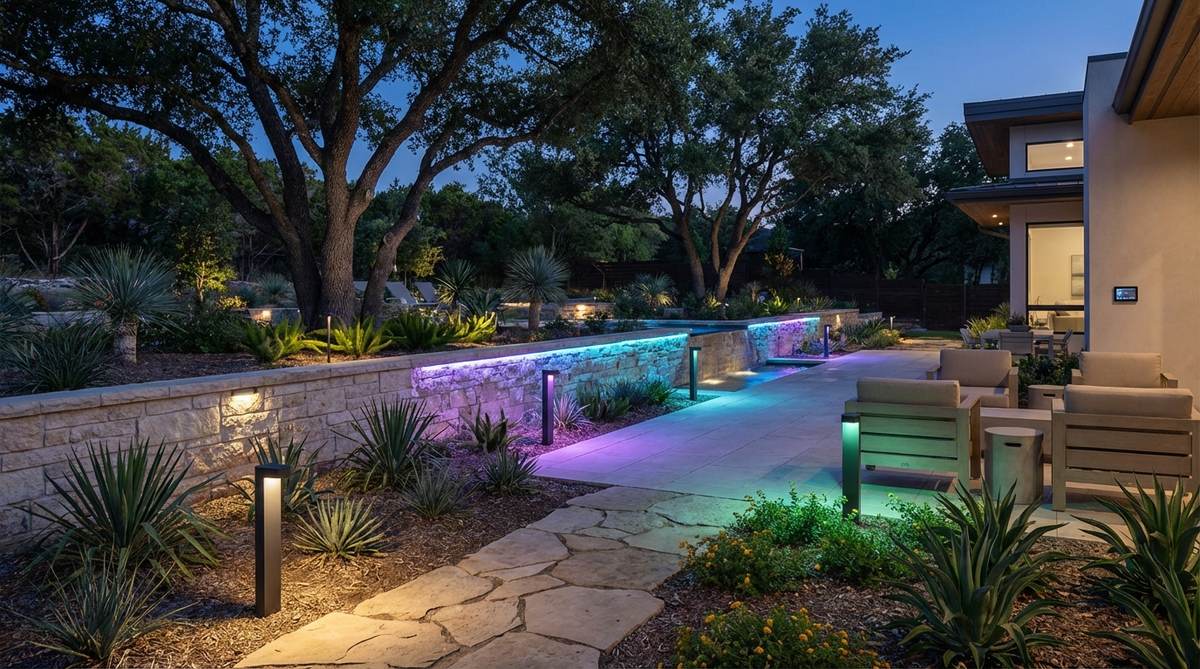
Choreographing a synchronized light show feels like producing a concert with pixel-level DMX controllers. Unbeatable for high-end residential estates hosting large outdoor weddings or massive events.
Basic remote controls limit you to generic presets, but professional DMX software lets you control every single diode independently. Elevating your modern outdoor garden lighting to this theatrical standard delivers jaw-dropping exhibition effects.
A starter DMX interface costs around $200–$300.
- Key Materials: DMX512 outdoor decoders & software
- Vibe / Style: Professional event production
- Difficulty: Advanced software programming
- Budget Breakdown: DMX interface: $180 | Shielded DMX cables: $50
- Creator’s Tip: Always use 120-ohm terminating resistors at the end of your DMX cable run to prevent the lights from flickering wildly.
- Smart Sourcing: Waterproof DMX decoders (commercial grade) and shielded outdoor XLR cables.
Before you run back to the house to flip a switch, implement this voice hack and save yourself the trip…
39. Voice-Assistant Integration
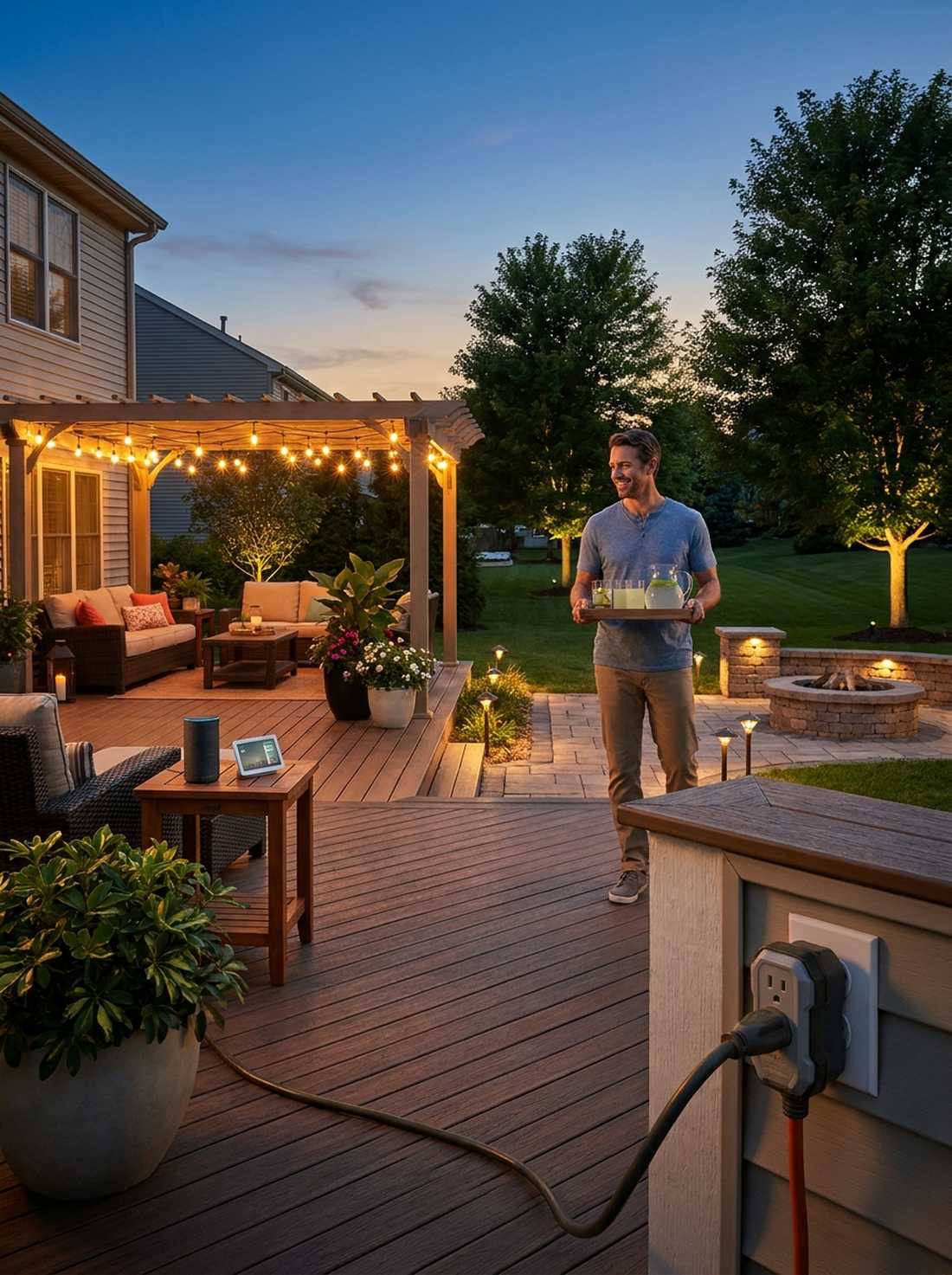
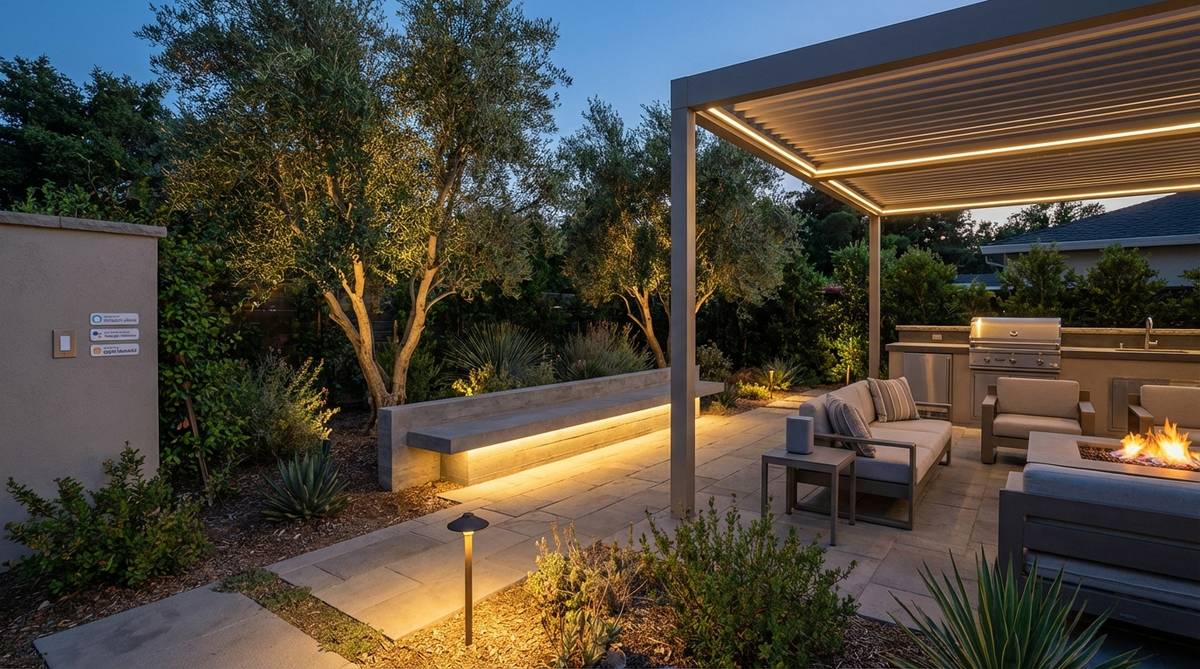
Lighting up the entire backyard while holding a tray of drinks feels effortless using voice-command smart plugs. Highly practical for seamlessly bridging your indoor smart home to your outdoor patio.
Fumbling for a tiny remote in the dark is frustrating; saying “Alexa, turn on the patio” solves the problem instantly. Merging your modern garden lighting design with Google or Alexa routines simplifies multi-system operation.
You can add this feature for as little as $30.
- Key Materials: Heavy-duty Wi-Fi smart outdoor plugs
- Vibe / Style: Ultimate convenience
- Difficulty: Very easy app sync
- Budget Breakdown: Outdoor smart plug: $25 | Extension cord: $15
- Creator’s Tip: Name the zones something very obvious like “Backyard Trees” so guests can easily guess the voice command.
- Smart Sourcing: Dual-outlet outdoor smart plugs and heavy-duty outdoor extension cords.
40. Daylight-Harvesting Photocells
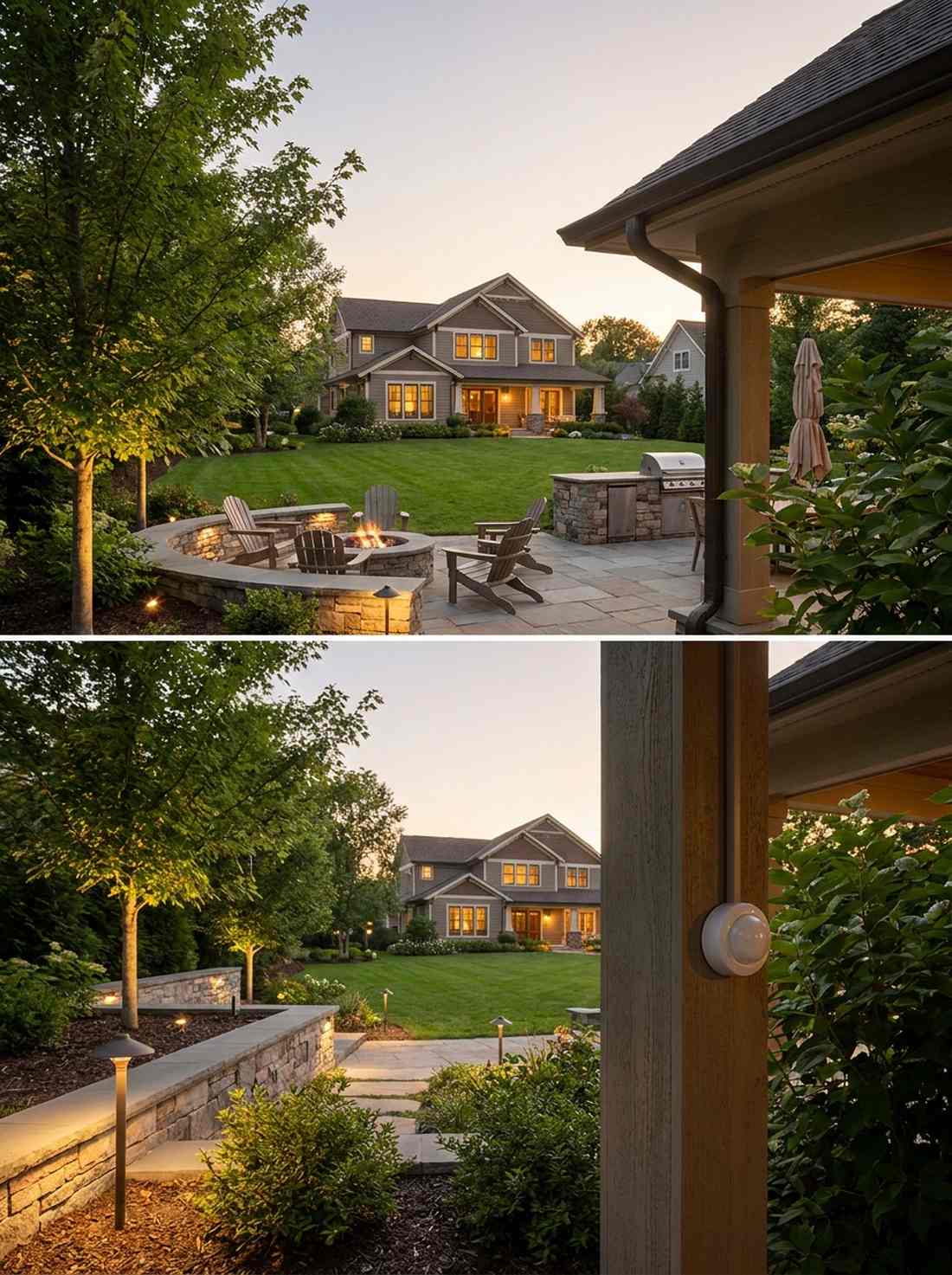
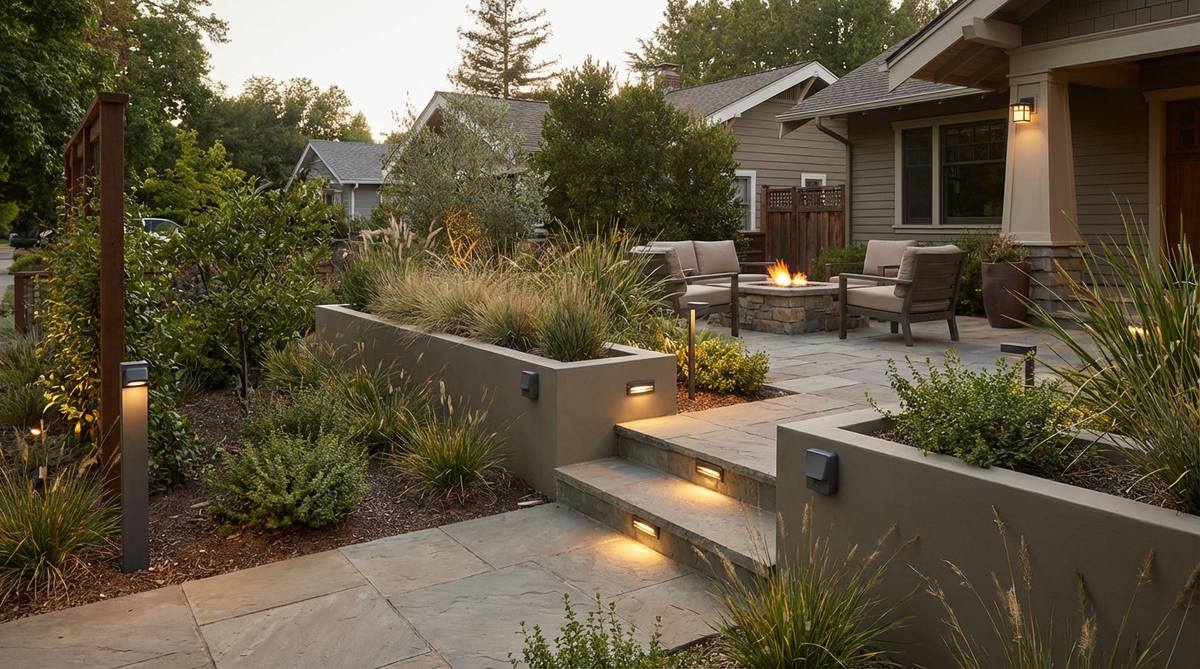
Having your lights automatically dim as the sun rises feels incredibly efficient using ambient light tracking sensors. Ideal for maintaining continuous subtle lighting that aggressively lowers your electric bill.
Simple on/off switches waste power during twilight hours, whereas proportional dimming reacts dynamically to the sun. This energy-saving approach ensures your modern outdoor garden lighting is never too bright or too dim.
A smart dimming photocell runs about $40–$70. Save this for eco-friendly home builds!
- Key Materials: Proportional dimming light sensors
- Vibe / Style: Eco-conscious tuning
- Difficulty: Intermediate integration
- Budget Breakdown: Harvesting sensor: $50 | Dimming module: $20
- Creator’s Tip: Always face the photocell North so it reads the ambient sky brightness rather than getting blinded by direct sunlight.
- Smart Sourcing: Daylight harvesting outdoor sensors and 0-10V dimming landscape transformers.
41. Building Automation Integration
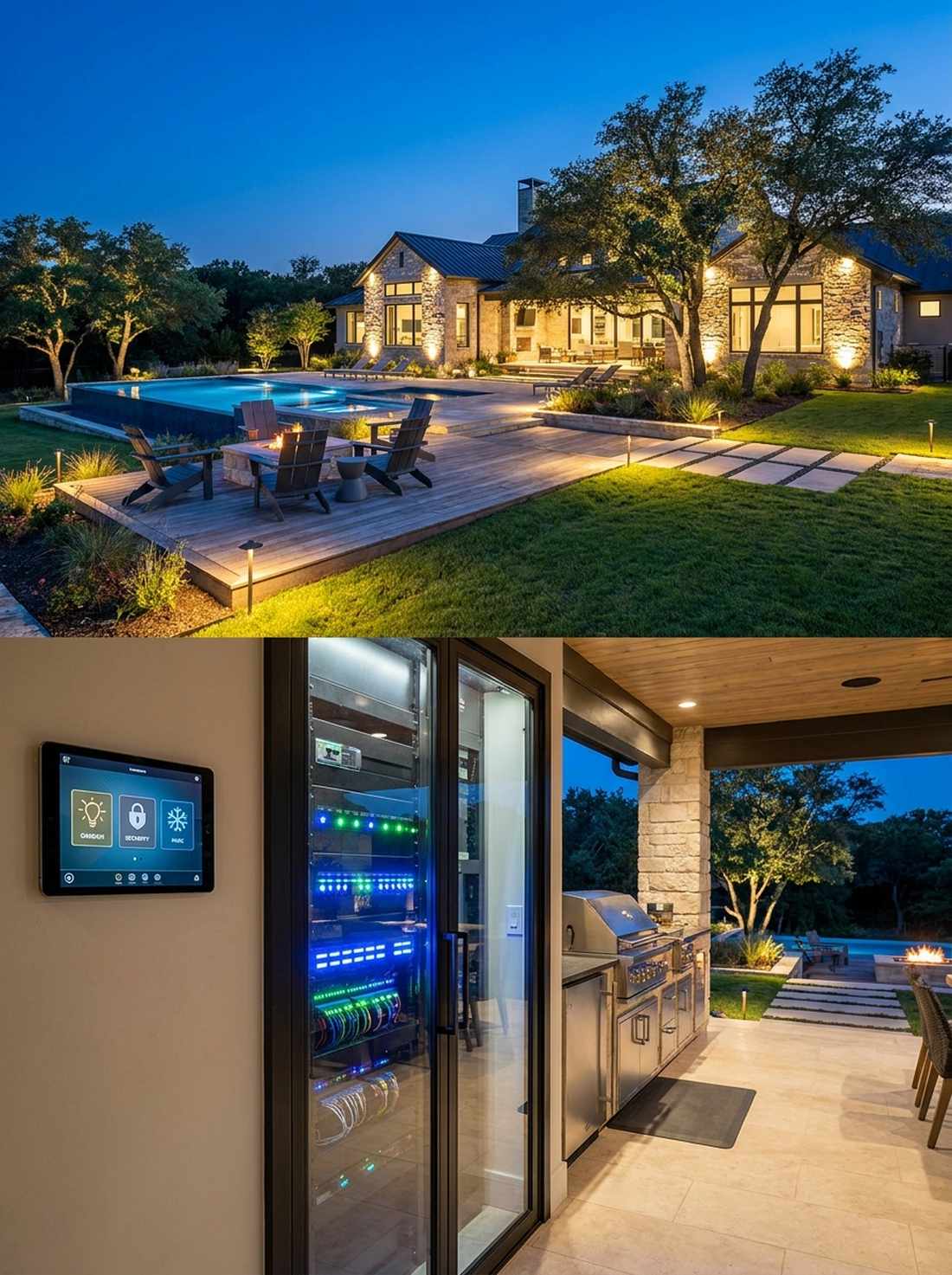
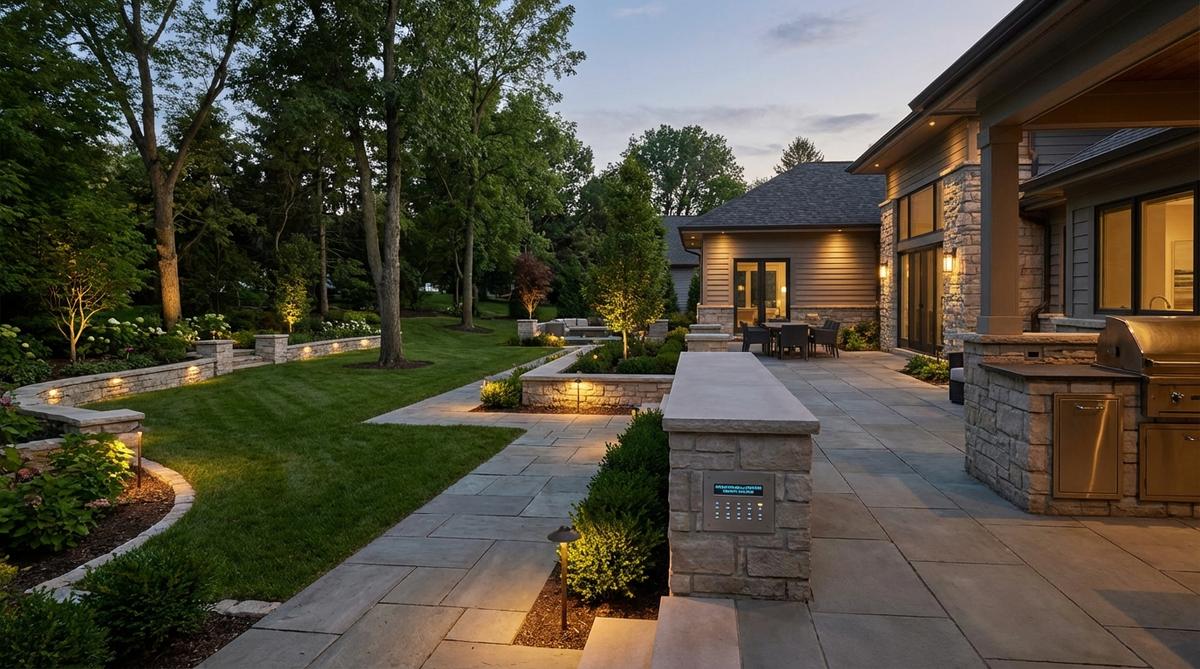
Linking your yard to your home’s central brain feels like living in the future with BACnet control modules. Crucial for massive luxury homes where lighting, HVAC, and security operate on one interface.
Isolated lighting apps clutter your phone, but native building integration ties the yard directly to your home’s security alarms. This elevates modern garden lighting ideas into a holistic, total-property management system.
Integrating this module costs upwards of $300–$500.
- Key Materials: BACnet or Modbus integration gateways
- Vibe / Style: Billionaire bunker tech
- Difficulty: Expert level IT/wiring
- Budget Breakdown: Gateway module: $350 | Integration labor: Variable
- Creator’s Tip: Program the system so that if the house burglar alarm trips, every single exterior yard light blasts to 100% brightness instantly.
- Smart Sourcing: Smart home automation integration hubs and commercial building gateway modules.
42. Energy-Monitoring Analytics Platforms
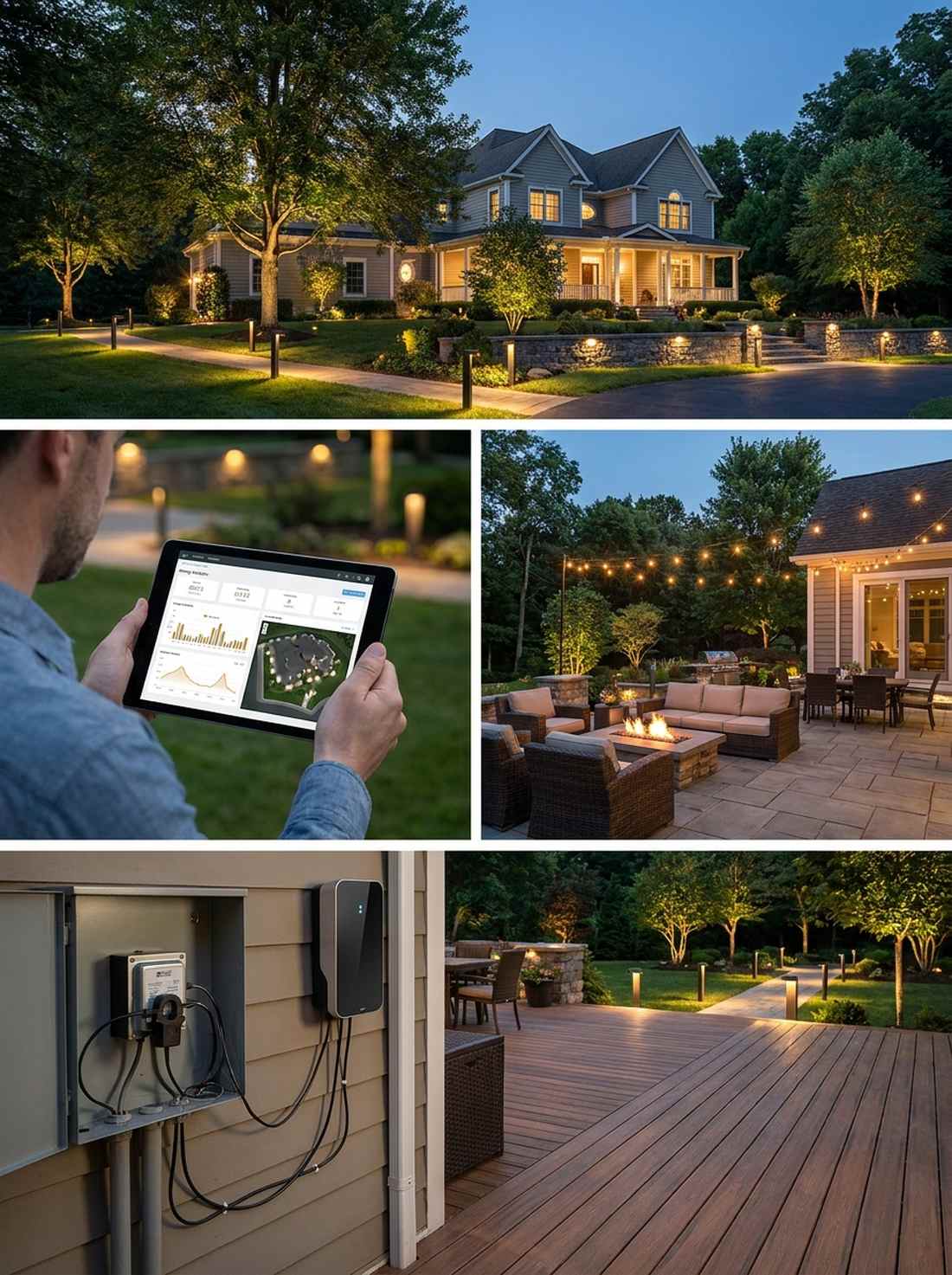
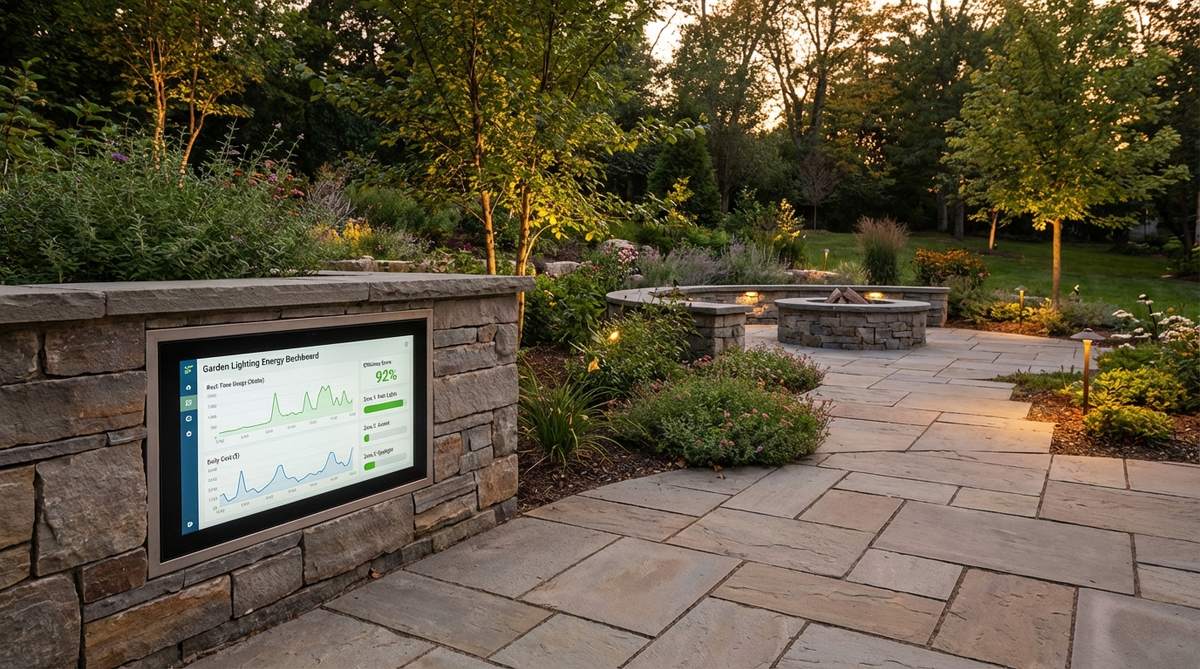
Spotting a broken fixture before you even step outside feels brilliant with cloud-based wattage monitors. Essential for huge estates to track exact operational costs and identify burnt-out sectors instantly.
Waiting for a dark spot to appear to know a light broke is outdated; current sensors notify your phone of voltage drops. Using data dashboards transforms static modern outdoor garden lighting into an actively managed network.
An energy monitoring clamp setup costs around $90–$130. Pin this for the ultimate smart yard management!
- Key Materials: Wi-Fi enabled current sensor clamps
- Vibe / Style: Data-driven landscaping
- Difficulty: Intermediate panel clamping
- Budget Breakdown: Energy monitor clamp kit: $100 | Cloud subscription: Free/$5 mo
- Creator’s Tip: Clamp the sensor directly around the main low-voltage line coming out of the transformer to track the entire yard’s exact draw.
- Smart Sourcing: Smart home energy monitoring kits and high-amp current sensor clamps.
Bringing Architectural Vision to Life
Executing these 42+ premium modern garden lighting setups transforms flat, lifeless landscaping into a commanding, high-end nighttime estate. By skipping generic plastic hardware and utilizing smart sourcing—like UV-resistant commercial starter kits and heavy-duty brass fixtures—you achieve a rich aesthetic without the designer price tag. Begin with focused uplighting on your primary architectural features, then layer in modular path arrays and smart Wi-Fi controllers to build dynamic depth across your property.
Frequently Asked Questions
What beam angle works best for uplighting columns and pillars?
Use narrow 10-15 degree beams for slender columns under 12 inches diameter to maintain focused vertical emphasis. Wider columns exceeding 18 inches benefit from 20-30 degree beams that provide adequate coverage without excessive spill. Position fixtures 4-6 inches from the column base and test beam spread before finalizing your modern outdoor garden lighting. We highly recommend using a complete low-voltage narrow beam starter kit to ensure perfectly matched outputs.
How many lumens are required to effectively highlight a two-story wall?
Residential two-story walls typically require 15-20 lumens per square foot of illuminated surface for adequate visibility. A 20-foot-wide by 20-foot-tall wall needs approximately 6,000-8,000 total lumens distributed across 3-4 fixtures. Dark materials like charcoal stucco require 25-30% more output to achieve equivalent brightness. Investing in commercial-grade LED architectural floods (bulk pack) ensures you hit these high lumen counts efficiently.
What color temperature should I choose for traditional brick architecture?
Warm white temperatures between 2700-3000K enhance the natural red and orange tones in traditional brick while creating an inviting atmosphere. Avoid cool whites above 4000K that suppress brick warmth and create an institutional appearance. If you are unsure, buy CCT-tunable outdoor lighting kits so you can switch between temperatures and perfect your modern garden lighting design after dark.
How far should uplights be positioned from building walls?
Standard practice positions fixtures 18-36 inches from wall surfaces depending on building height and desired beam spread. Closer placement (12-18 inches) creates dramatic grazing effects on textured surfaces. Greater distances provide broader coverage suitable for tall walls. To keep things clean, use heavy-duty direct-burial cables and pre-sealed brass uplights to safely test positioning before burying the lines.
Can solar-powered fixtures provide adequate architectural highlighting?
Quality solar fixtures deliver 200-400 lumens suitable for accent lighting small architectural details or secondary features. They cannot match the 800-1,500 lumen output of hardwired modern outdoor garden lighting needed for prominent features. Reserve solar for remote gates, and invest in a high-quality 12V landscape lighting transformer bundle for the main architectural highlights around your home.