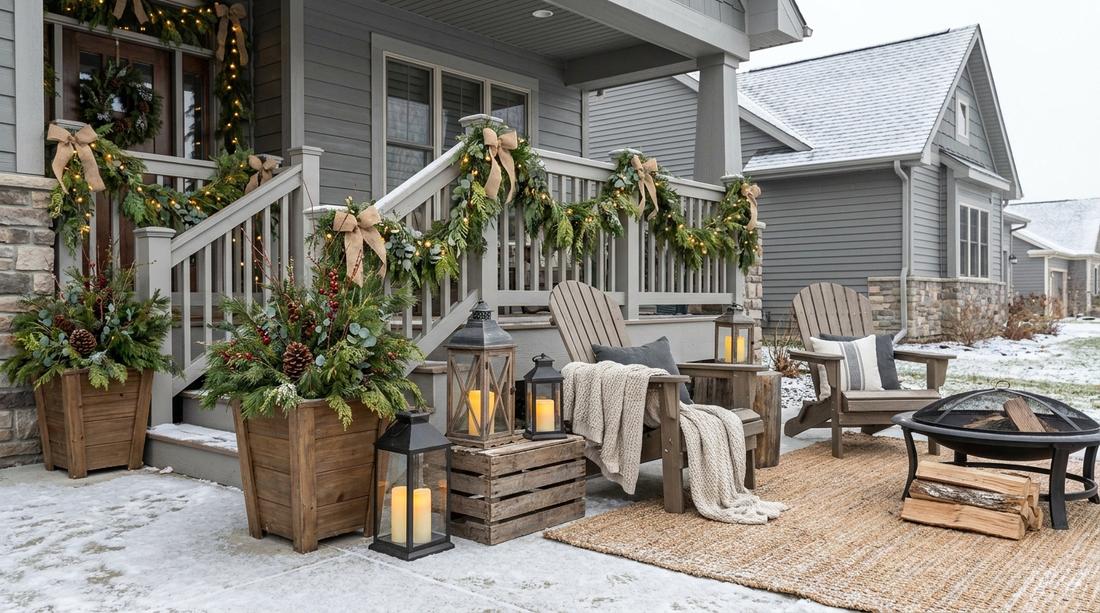
Stop letting your porch look bare after the holidays with these premium outdoor decor winter blueprints. High-end natural landscaping costs thousands, but smart material sourcing delivers designer-level results cheap. Get ready to build a stunning, weather-proof front yard setup.
Design SnapshotKey Principles
- Natural over Synthetic: Prioritize organic materials like birch branches, pine cones, and evergreen foliage that weather gracefully
- Texture Layering: Combine smooth, rough, and feathery elements to create visual depth when color is scarce
- Ambient Lighting: Use warm-toned LEDs and solar lanterns to extend usability into darker evenings
- Wildlife Integration: Design decor that doubles as habitat support for birds, beneficial insects, and small mammals
Evergreen Foundations and Natural Textures
1. Unadorned Cedar Garland Along Railings
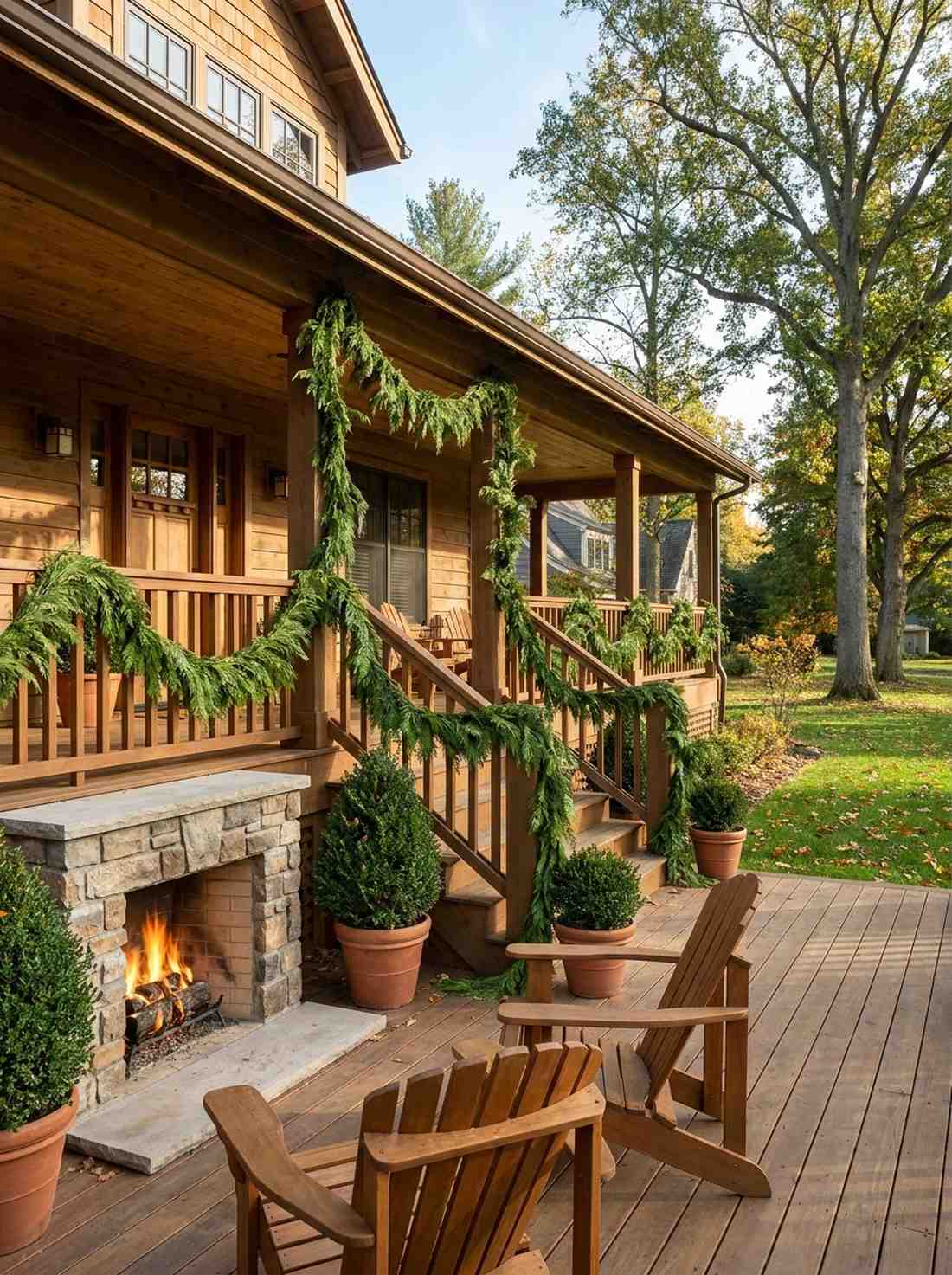
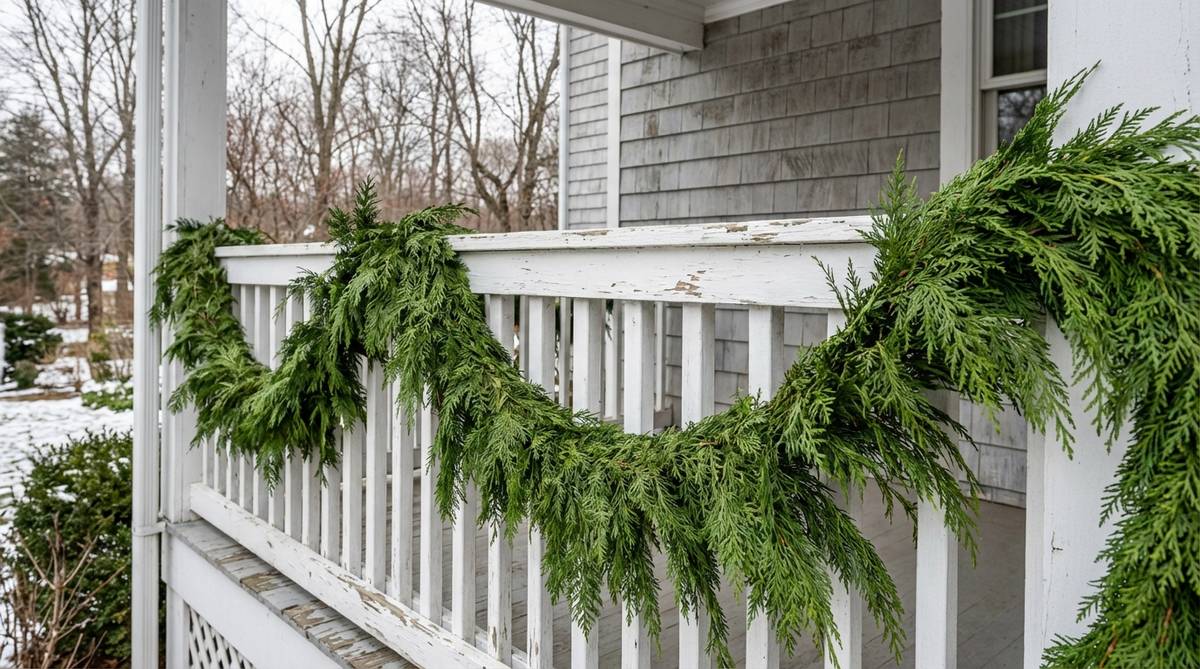
This organic draping feels like a high-end mountain lodge retreat. Fresh cedar railing decor works exceptionally well for winding front porches needing a natural touch without the holiday clutter.
Bypassing synthetic greens delivers a surprisingly premium look that transforms stark architecture. Securing durable, weather-resistant vines ensures your exterior aesthetic stays flawless well past February.
You can easily pull this off for around $25–$45 depending on the length. Save this to your exterior styling board for a quick weekend win.
- Key Materials: Live-cut cedar roping (15-20ft rolls)
- Vibe / Style: Rustic alpine estate
- Difficulty: Easy beginner setup
- Budget Breakdown: Materials: $35 | Fasteners: $8
- Creator’s Tip: Spritz the needles with anti-desiccant spray to lock in moisture and color.
- Smart Sourcing: bulk pack fresh cedar cuttings and heavy-duty green floral wire spools.
2. Birch Log Bundles Flanking Entryways
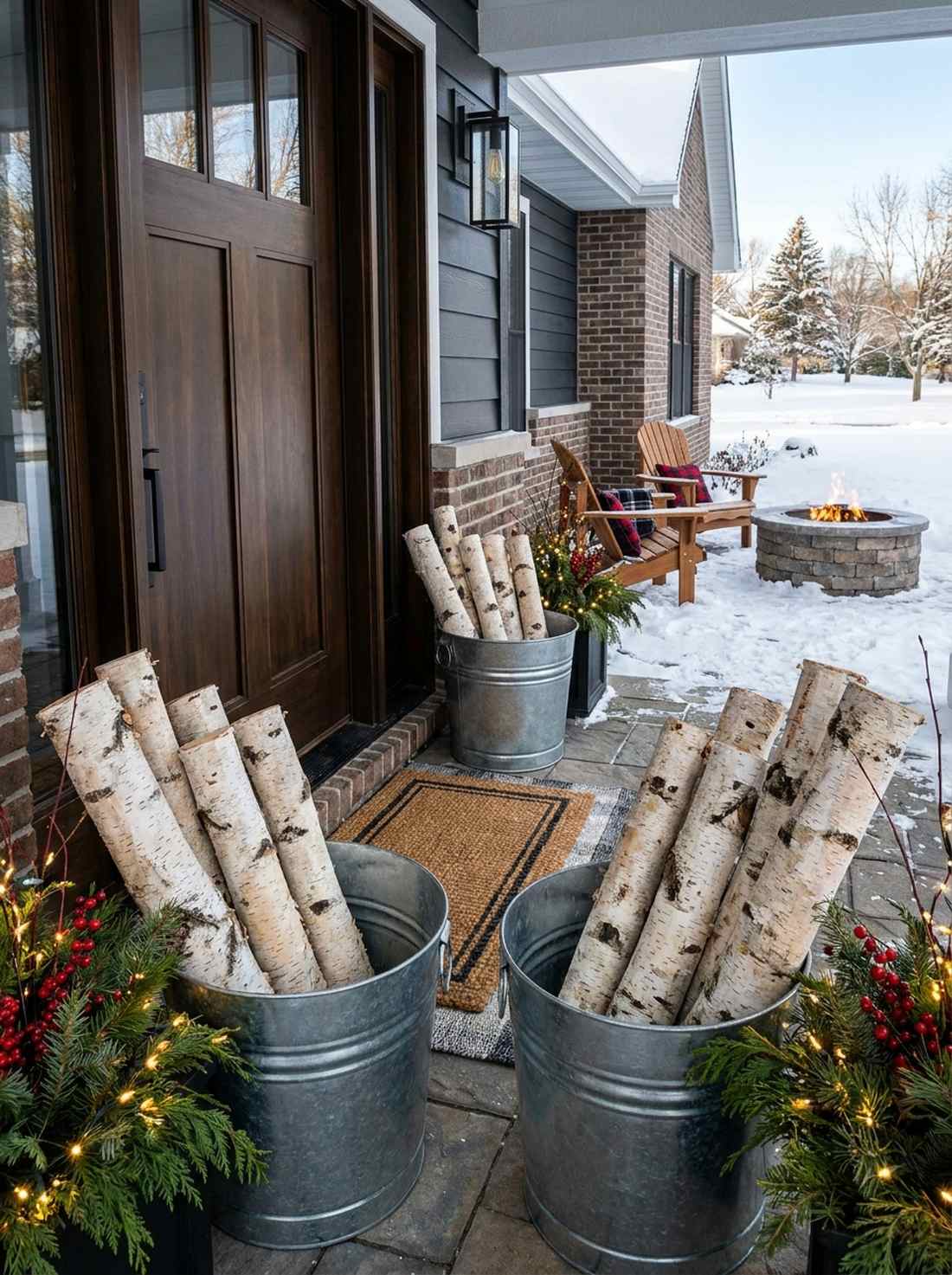
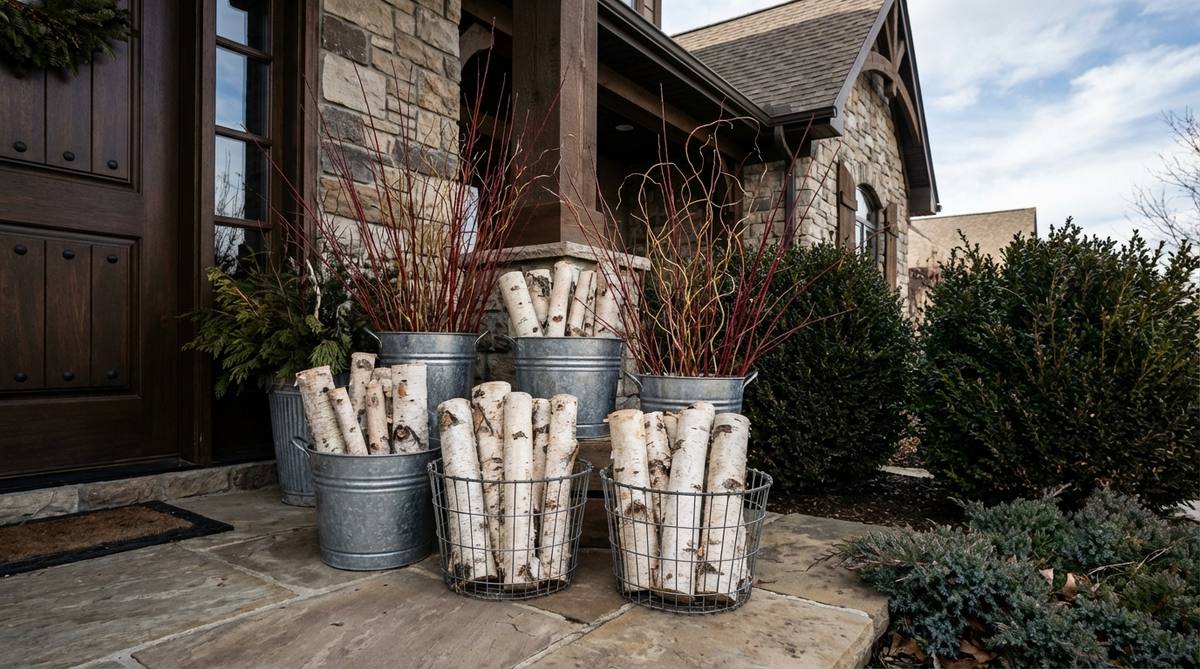
Straight out of a snowy storybook, this textured arrangement creates instant vertical drama. A stacked birch entry display is perfect for grounding large front doors or framing driveway columns.
The stark white bark instantly provides a designer-level finish against dark siding or brick. Incorporating pre-treated, kiln-dried logs prevents rot and gives that expensive boutique garden center feel.
Expect to spend roughly $30 on premium wood bundles. It’s a fast upgrade that completely changes the vibe of your entry.
- Key Materials: Kiln-dried white birch logs (18-24 inches)
- Vibe / Style: Modern farmhouse winter
- Difficulty: Zero-skill assembly
- Budget Breakdown: Logs: $25 | Basket/Base: $20
- Creator’s Tip: Always use an odd number of logs (5 or 7) for the best visual balance.
- Smart Sourcing: pre-cut kiln-dried birch logs (3-pack) and weather-proof galvanized steel buckets.
3. Pinecone-Filled Wire Baskets
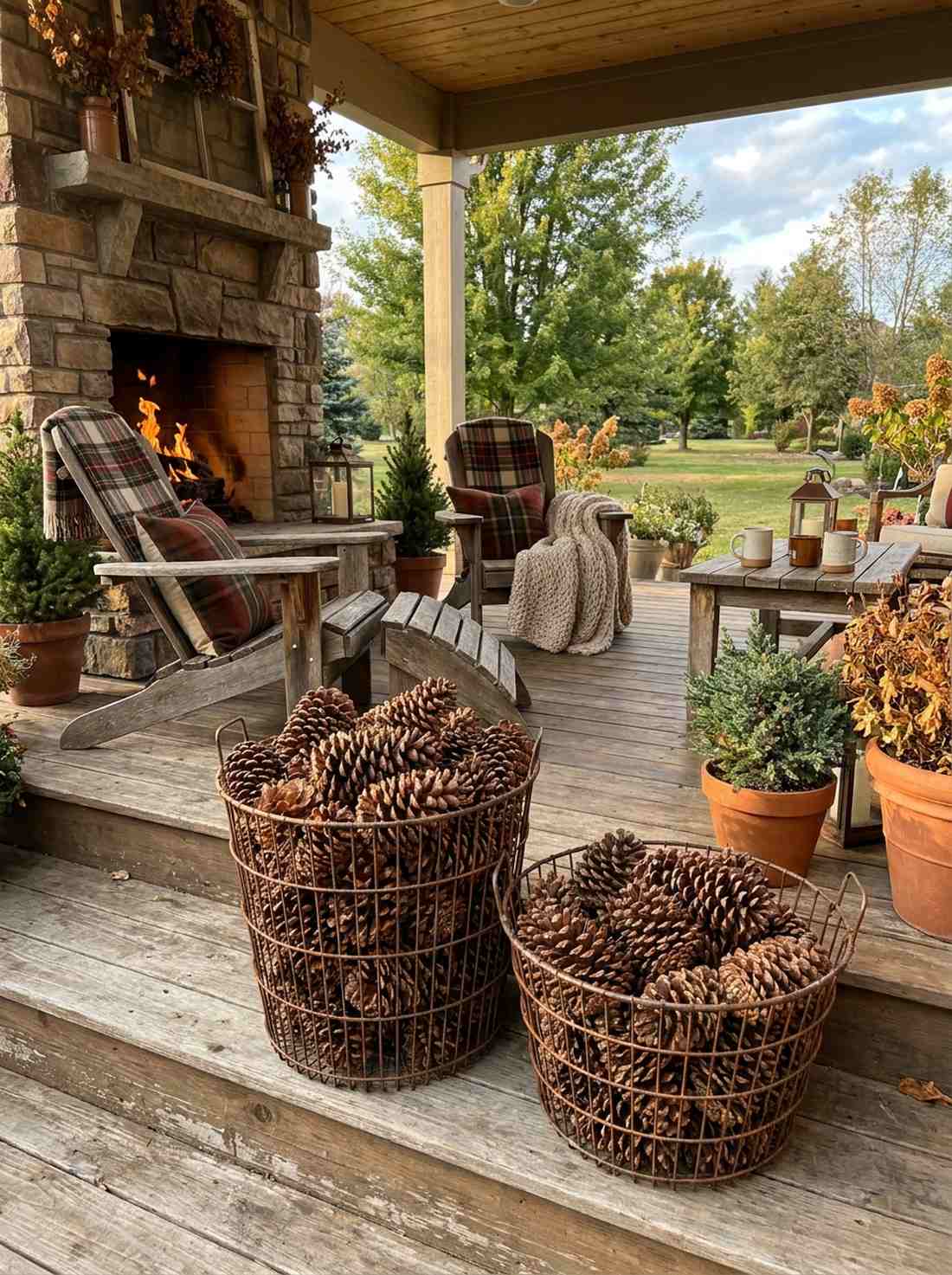
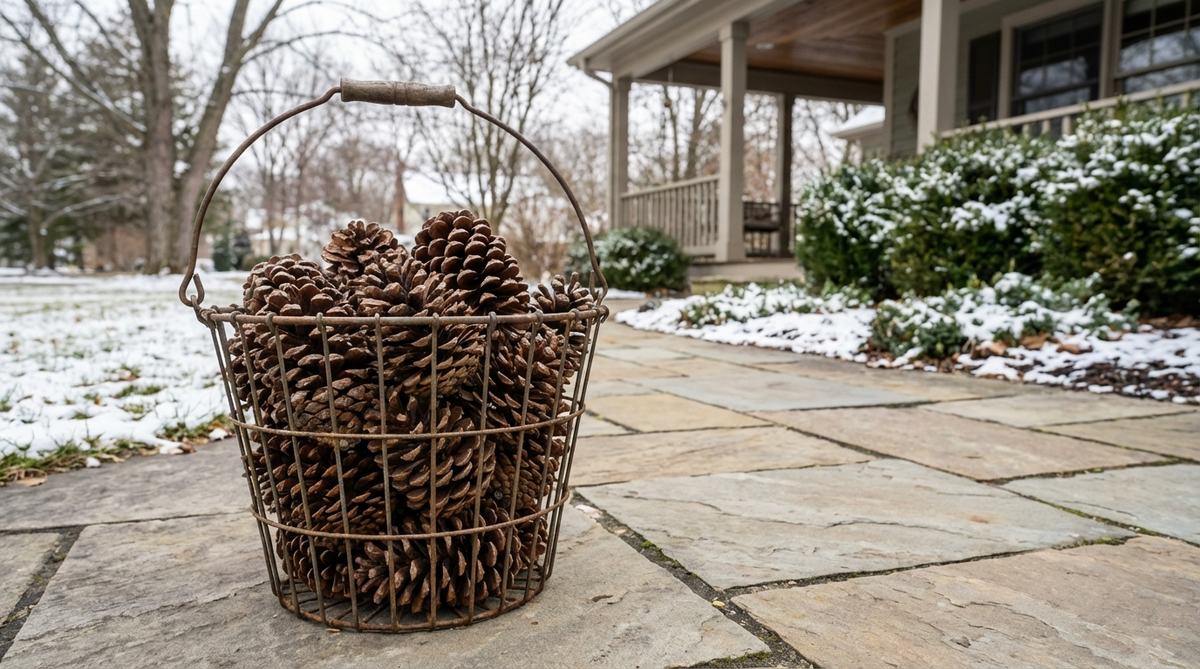
This earthy centerpiece brings an undeniable cozy woodland charm to empty corners. An oversized pinecone basket is the ultimate filler for bare patio steps or covered deck seating areas.
Most homeowners leave pots empty, but this trick looks far more expensive than it actually is. Utilizing oversized, naturally sourced cones creates incredible architectural texture that withstands freezing temperatures.
You can throw this together for under $20 if you forage, or $40 if buying pristine materials.
- Key Materials: Giant sugar pinecones
- Vibe / Style: Vintage nature lodge
- Difficulty: Takes 5 minutes
- Budget Breakdown: Basket: $25 | Pinecones: $15
- Creator’s Tip: Bake foraged pinecones at 200°F for 45 minutes to kill pests and melt sap before displaying.
- Smart Sourcing: bulk jumbo sugar pinecones and rust-resistant vintage wire baskets.
4. Undecorated Potted Evergreen Trees
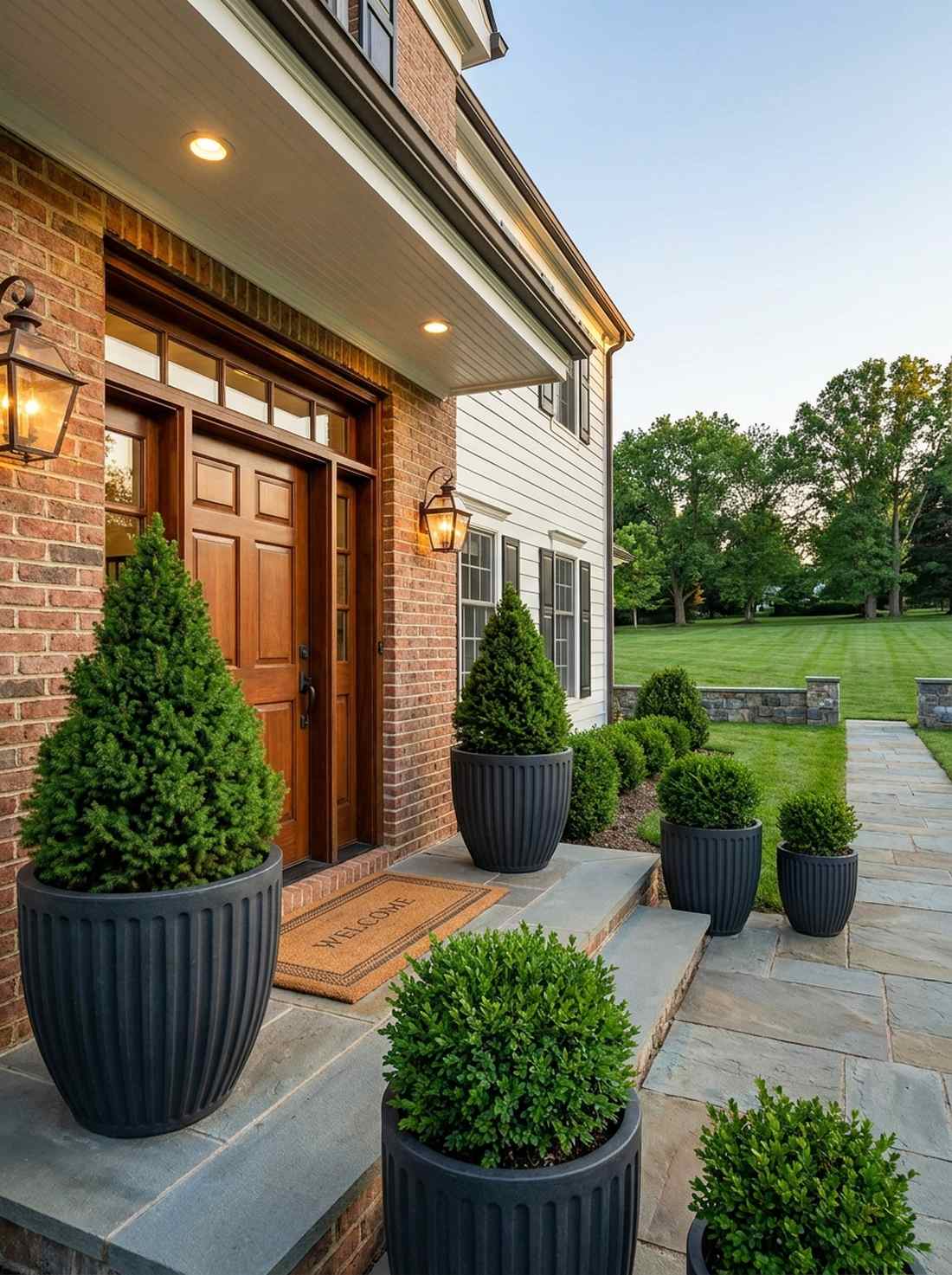
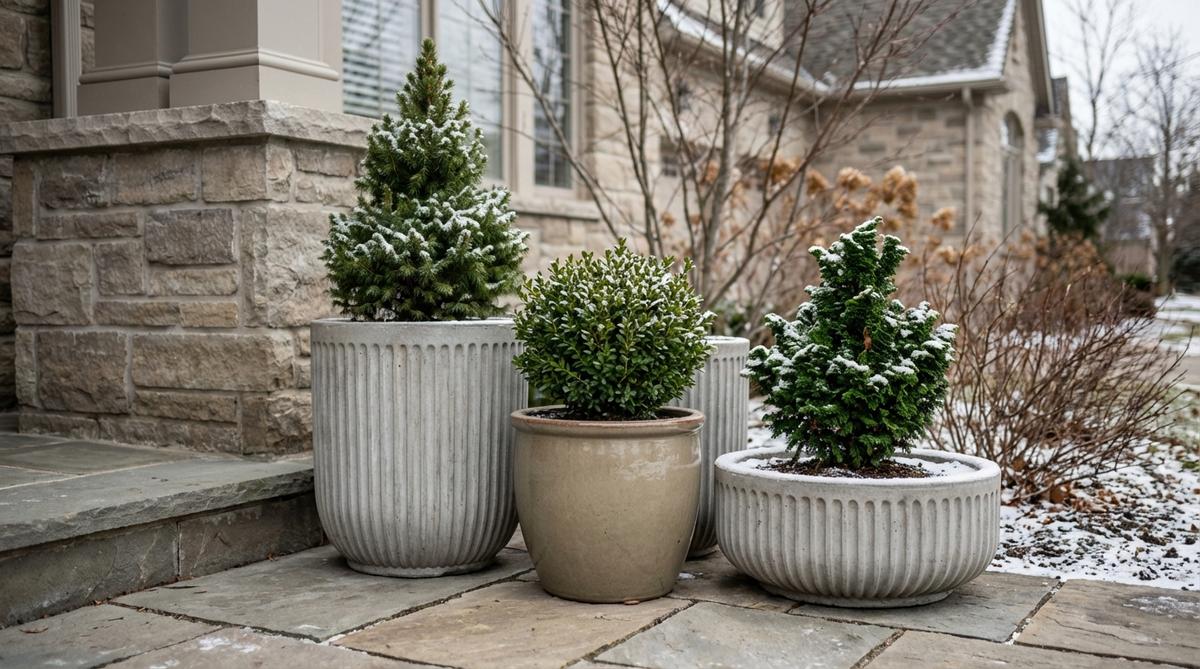
These stately green pillars feel like wandering through a manicured European estate. Potted dwarf evergreens offer brilliant structured symmetry for flanking a grand entryway or lining a long walkway.
Instead of cheap seasonal plastics, investing in cold-hardy living shrubs gives your yard a permanent, wealthy aesthetic. Selecting the right dense foliage plants turns a simple porch into a luxury exterior statement.
Plan for about $50–$80 per planter for a high-quality living setup. Pin this if you’re planning a sophisticated small-space upgrade.
- Key Materials: Dwarf Alberta Spruce or Boxwood shrubs
- Vibe / Style: Classic European courtyard
- Difficulty: Moderate potting required
- Budget Breakdown: Shrub: $40 | Heavy planter: $35
- Creator’s Tip: Insulate the inside of the pot with bubble wrap before adding soil to protect roots from deep freezes.
- Smart Sourcing: UV-resistant resin fluted planters and premium winter-blend potting soil.
Most people get this completely wrong… until they try the exact layout coming up next.
5. Dried Hydrangea Clusters
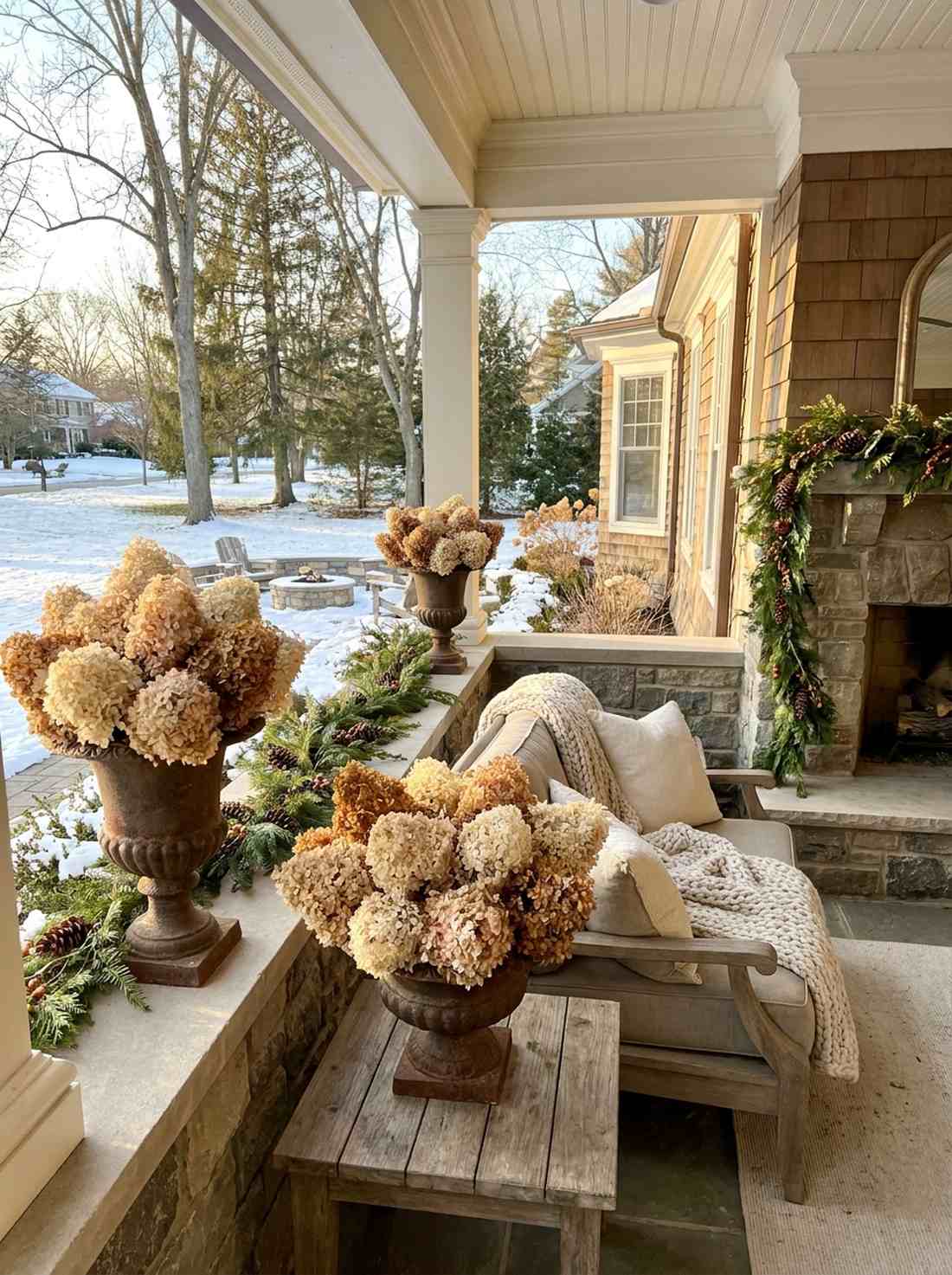
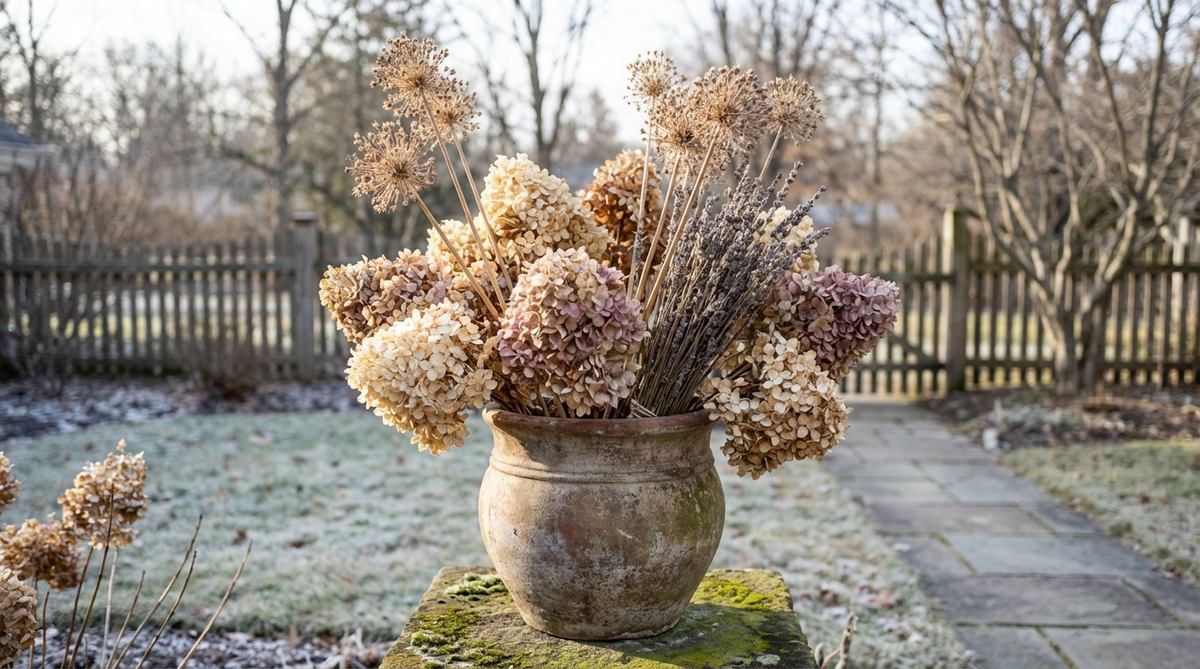
These papery blooms look like frozen antique lace catching the afternoon sunlight. Dried winter floral urns are incredibly elegant when placed on side tables or sheltered porch rails.
Achieving this muted, romantic texture delivers a surprisingly premium look that defies typical winter bareness. Treating the dried heads with specialized floral protectant keeps the delicate petals intact against harsh winds.
You can easily pull this off for just the cost of a spray sealant, around $15.
- Key Materials: Preserved hydrangea heads
- Vibe / Style: Shabby chic winter garden
- Difficulty: Delicate handling needed
- Budget Breakdown: Florals: Free/Foraged | Spray: $15
- Creator’s Tip: Cut stems at an angle and dip in wax to seal out moisture before arranging outside.
- Smart Sourcing: UV-blocking floral preservation spray and heavy cast-iron garden urns.
6. Stacked Firewood Displays
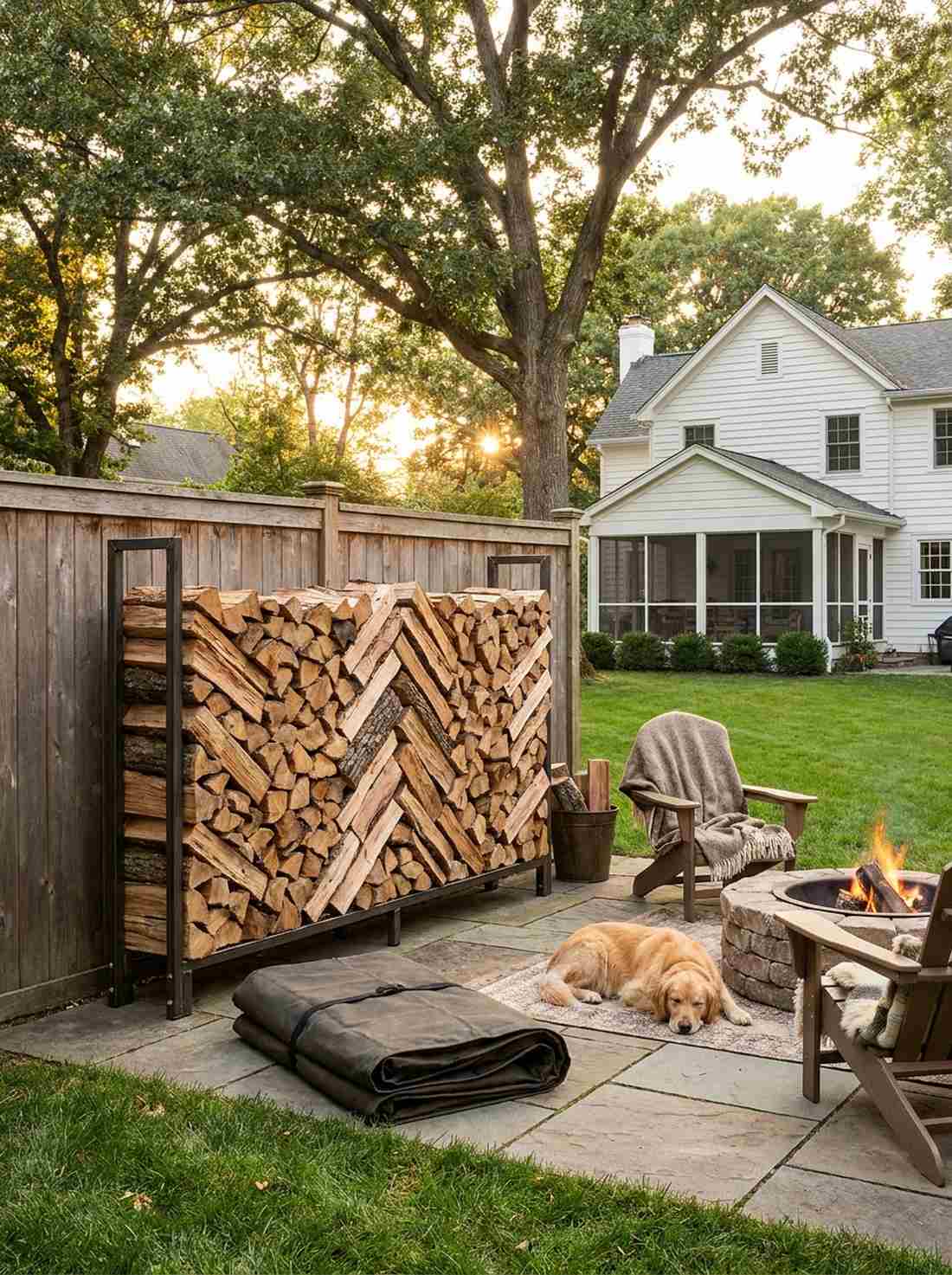
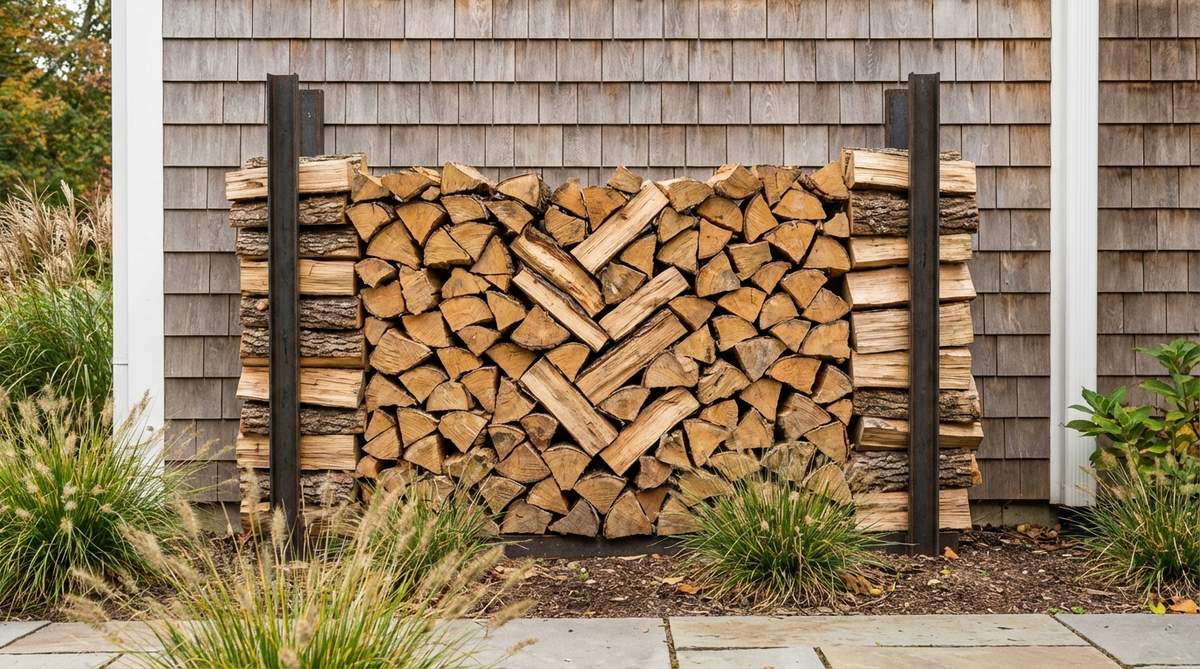
There is something deeply satisfying about the geometric perfection of neat timber. A patterned firewood rack doubles as functional art against a bland garage wall or an empty patio fence.
Turning a basic storage chore into a deliberate design choice creates serious visual impact. Installing a heavy-duty rack frame ensures the wood stays off the damp ground while looking impeccably organized.
A solid frame setup runs around $40–$60, making it an incredibly practical investment.
- Key Materials: Seasoned split hardwood
- Vibe / Style: Practical rugged warmth
- Difficulty: Heavy lifting involved
- Budget Breakdown: Wood: Local rates | Bracket frame: $45
- Creator’s Tip: Build a chevron pattern by alternating the direction of the split wood faces for a custom look.
- Smart Sourcing: adjustable steel firewood bracket kits and heavy-duty waterproof log covers.
7. White Birch Branch Arrangements
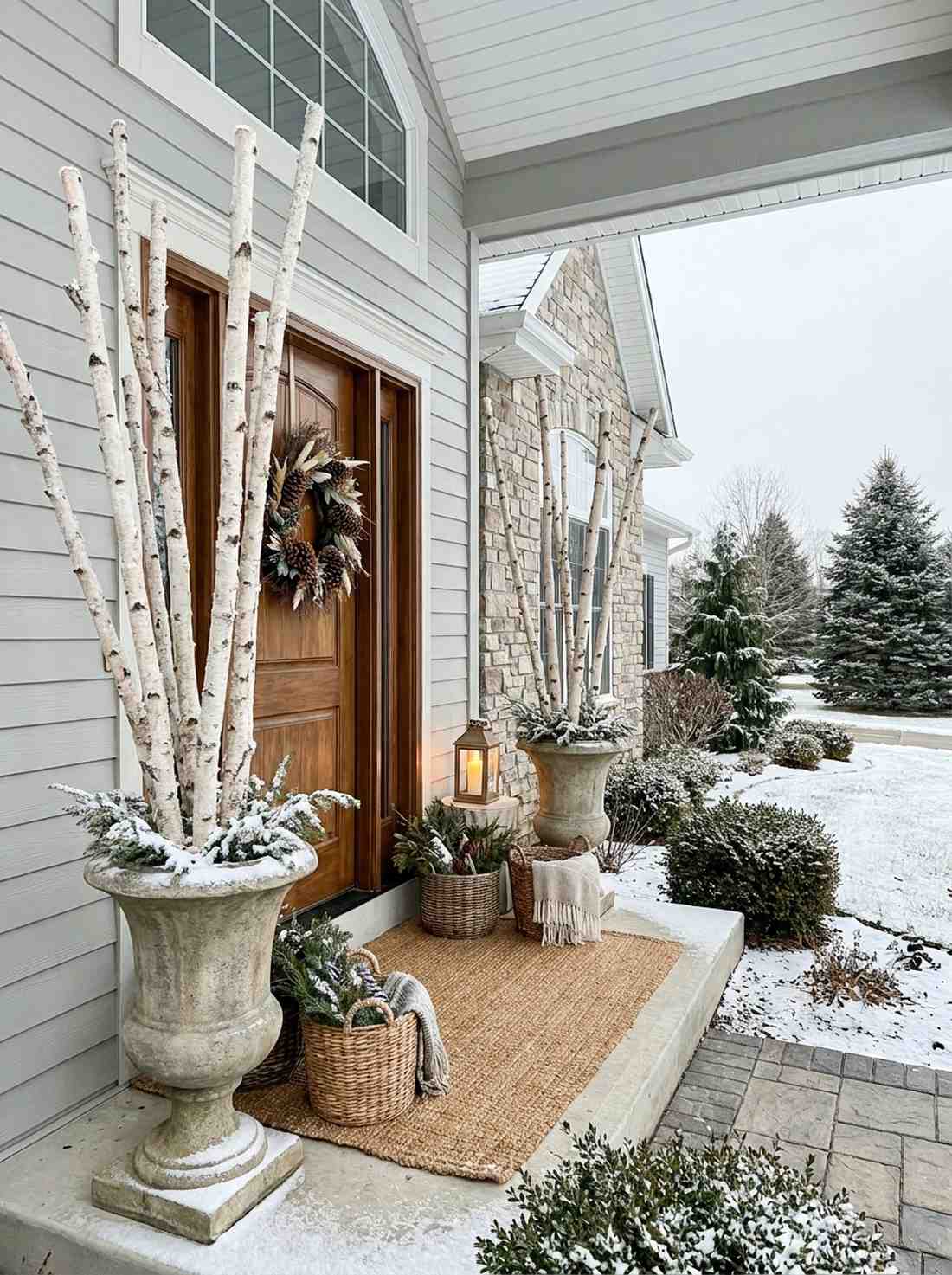
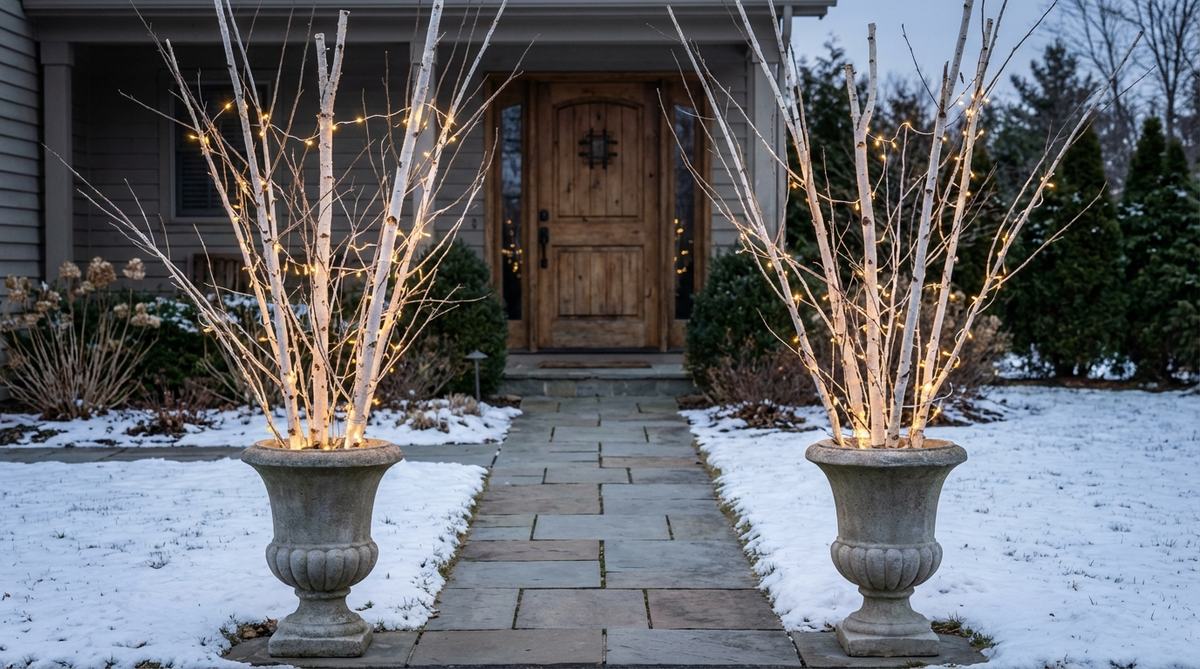
These towering branches stretch upward like delicate frosted sculptures against the house. Tall winter branch urns make brilliant vertical accents for filling empty outdoor corners or framing a doorway.
This minimalist approach completely bypasses the cheap plastic look, adding elegant height without overwhelming the space. Anchoring them deep in weather-resistant foam prevents the winter gales from tipping your masterpiece.
Creating this airy silhouette costs roughly $35. Save this to your seasonal transition board to remember the materials.
- Key Materials: 5-foot natural birch poles
- Vibe / Style: Modern minimalist frost
- Difficulty: Super quick assembly
- Budget Breakdown: Branches: $25 | Anchoring foam: $10
- Creator’s Tip: Weigh down the bottom of the container with pea gravel before inserting the foam block.
- Smart Sourcing: extra-tall decorative birch poles (5-pack) and dense outdoor floral foam blocks.
8. Winter Berry Branches
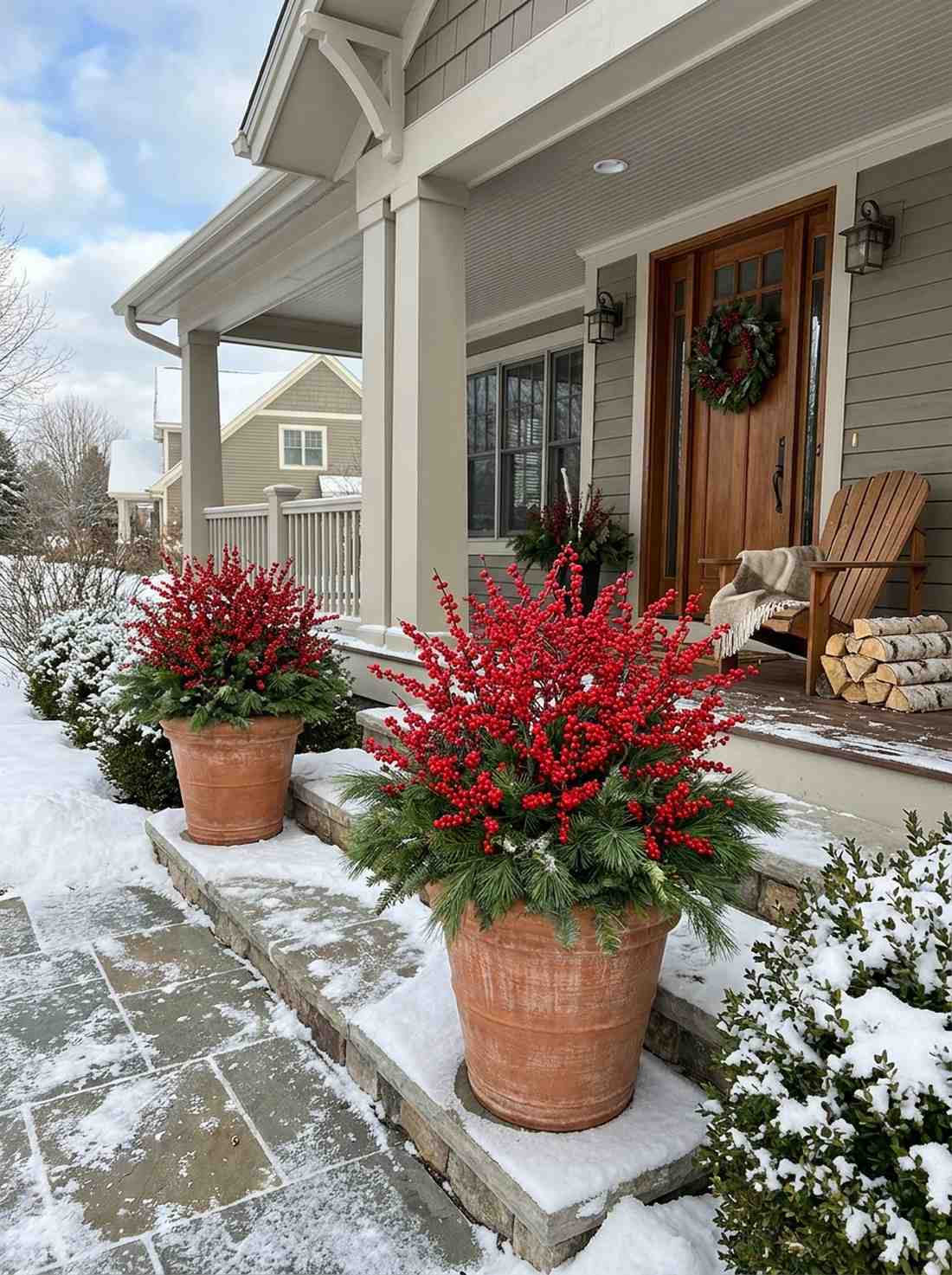
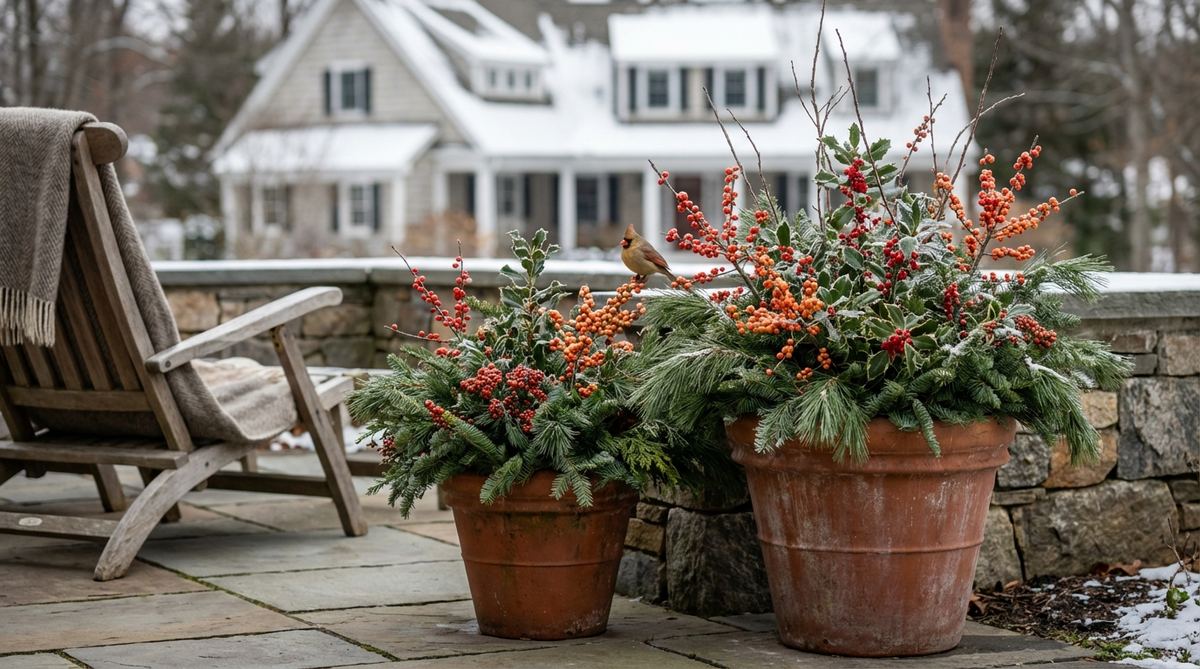
The explosive pops of crimson against a grey sky feel incredibly lively and warm. A red winterberry planter is the absolute perfect addition for livening up dull, snow-covered front steps.
Injecting organic, vibrant color is the ultimate hack for making a dormant landscape feel expensive and intentional. Mixing these bold stems with dense faux-pine gives a florist-quality arrangement that lasts months.
Expect to spend around $20–$30 on a thick bunch of premium stems.
- Key Materials: Natural or faux Ilex verticillata (Winterberry)
- Vibe / Style: Classic heritage garden
- Difficulty: Beginner friendly
- Budget Breakdown: Berry stems: $25 | Potting sand: $5
- Creator’s Tip: If using real berries, spray them with bitter apple deterrent so birds don’t strip them immediately.
- Smart Sourcing: UV-coated faux winterberry sprays and heavy decorative planter weights.
Lighting Strategies for Winter Ambiance
9. Solar Pathway Lanterns
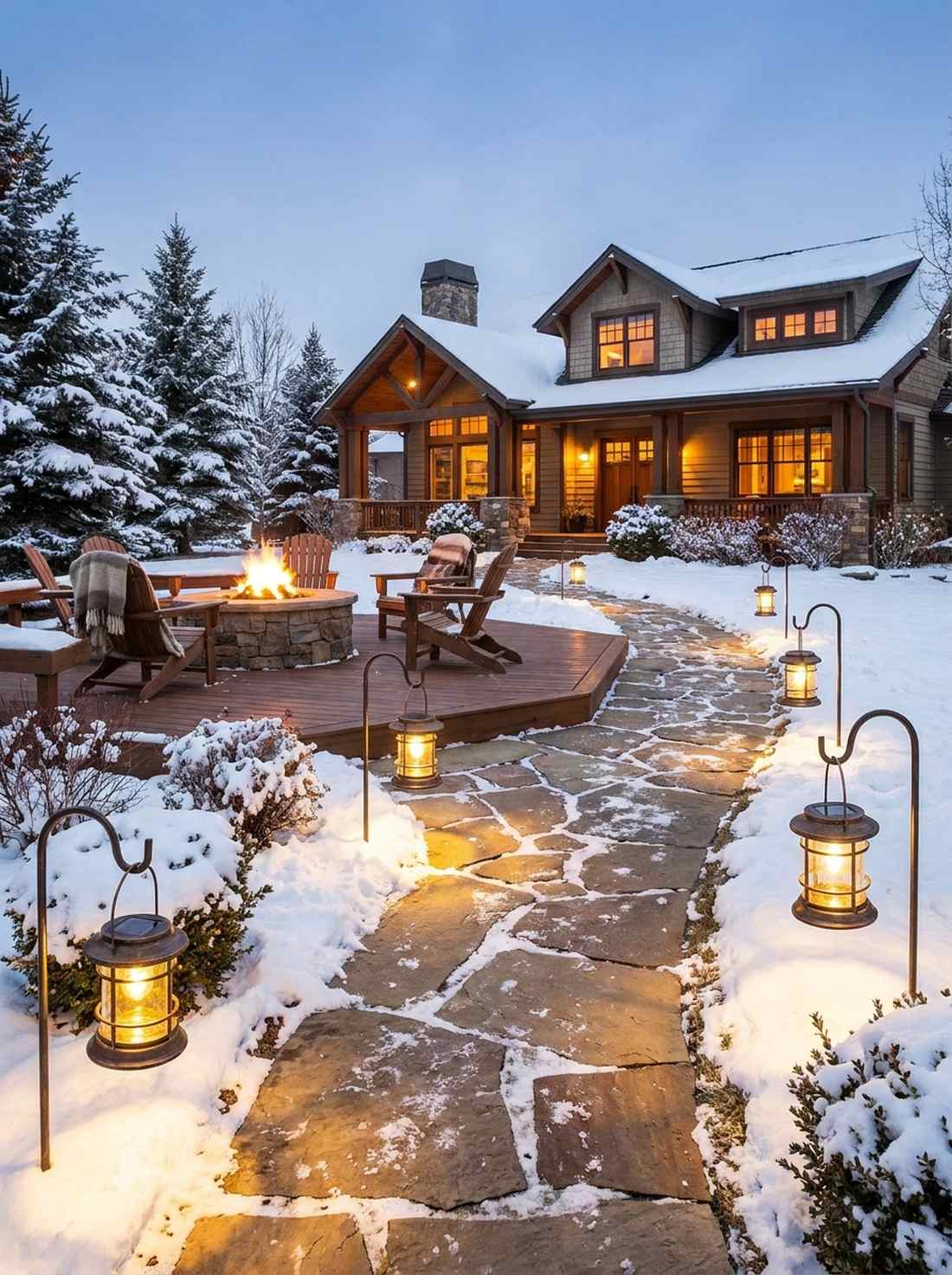
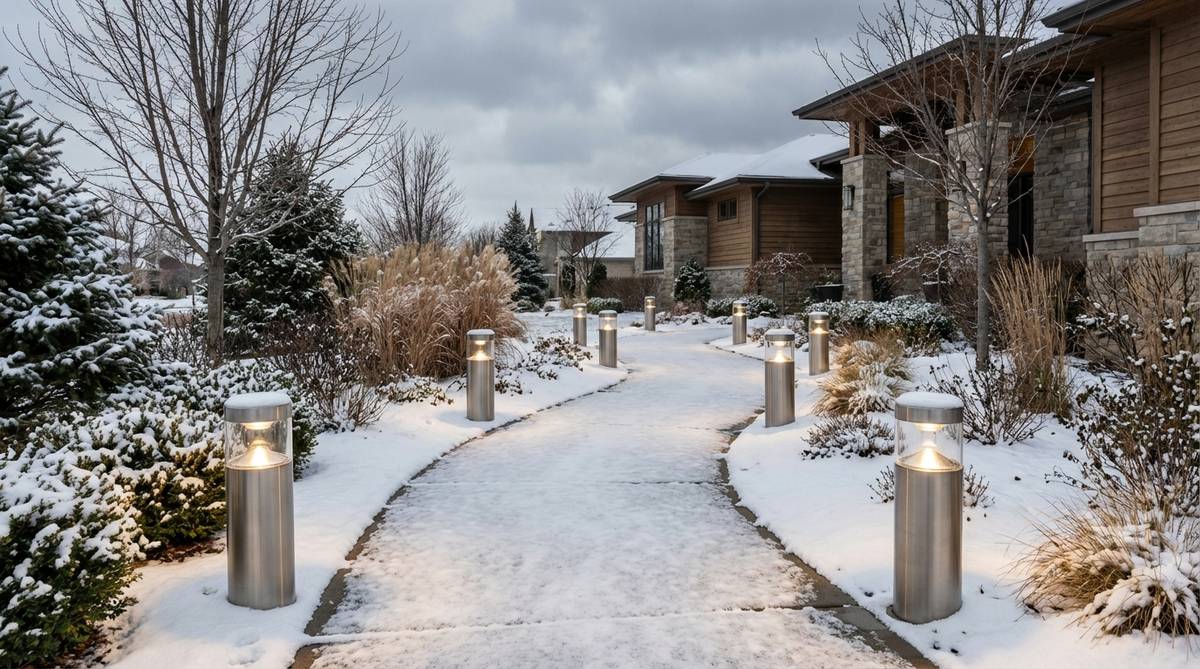
These glowing beacons guide you home like a warmly lit, welcoming runway. Vintage solar pathway lights are essential for illuminating slick, icy driveways or dark garden trails safely.
Strategic ambient lighting elevates a standard yard into a luxury exterior space effortlessly. Ditching cheap plastic stakes for heavy glass and metal models ensures your winter landscape lighting kits survive deep freezes.
You can outfit a whole walkway beautifully for around $60–$90. Pin this to your outdoor lighting inspiration board!
- Key Materials: Cold-weather rated solar LEDs
- Vibe / Style: Welcoming neighborhood glow
- Difficulty: Simple push-in installation
- Budget Breakdown: Lantern pack: $75 | Ground stakes: Included
- Creator’s Tip: Wipe solar panels with a damp cloth every two weeks to remove frost and dirt for maximum charge.
- Smart Sourcing: sub-zero rated glass solar lanterns (6-pack) and heavy-duty metal ground stakes.
💡 Must-Have Supplies for High-End Setups
To build these setups faster and ensure they last, skip the generic craft aisles and invest in the right foundational kits.
- Base & Support: commercial-grade weighted planter bases
- Setup Tools: professional outdoor floral wire starter kits
- Weather/Durability Protection: UV-blocking exterior acrylic clear sealants
10. Uplighting for Tree Trunks
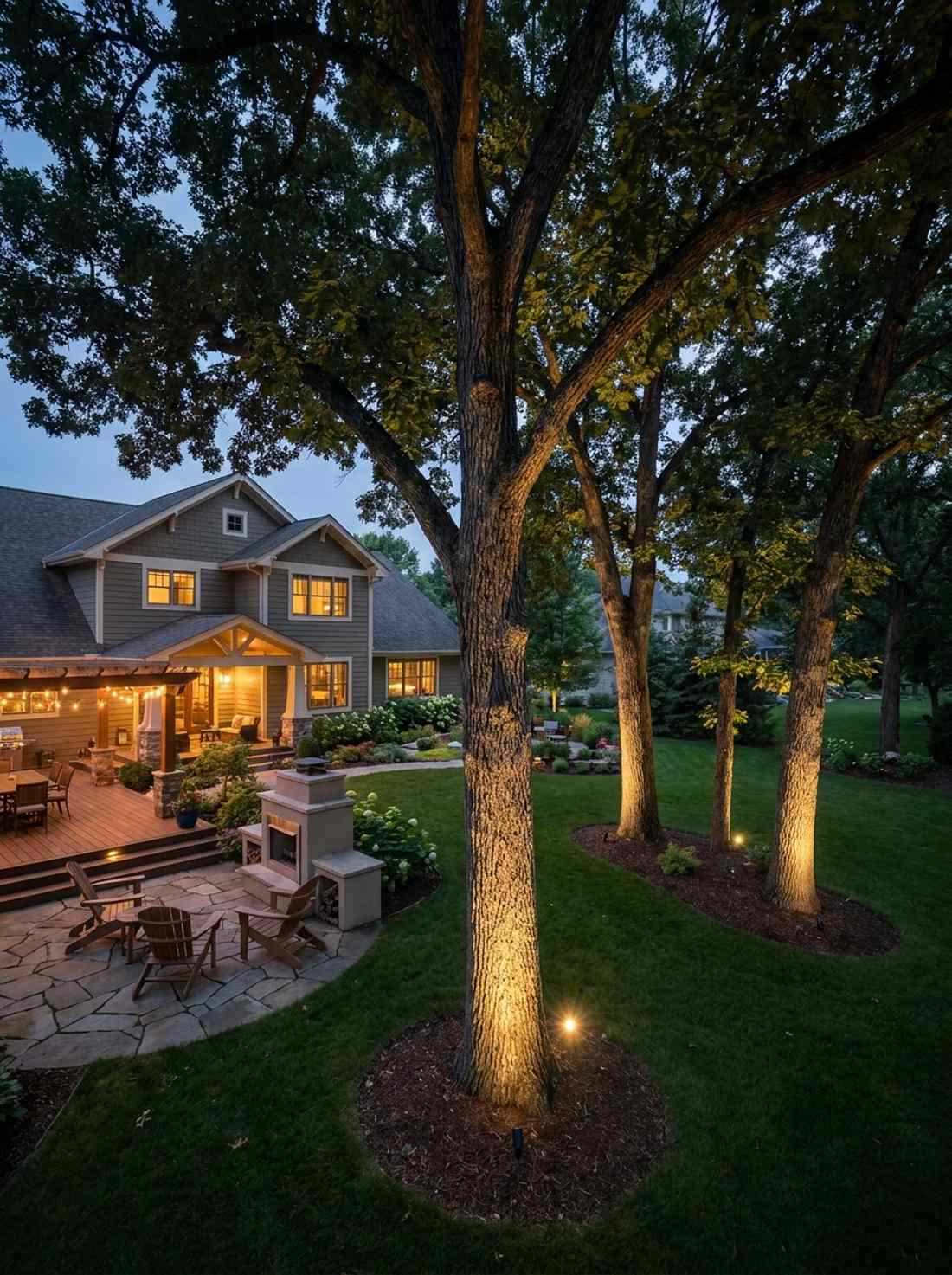
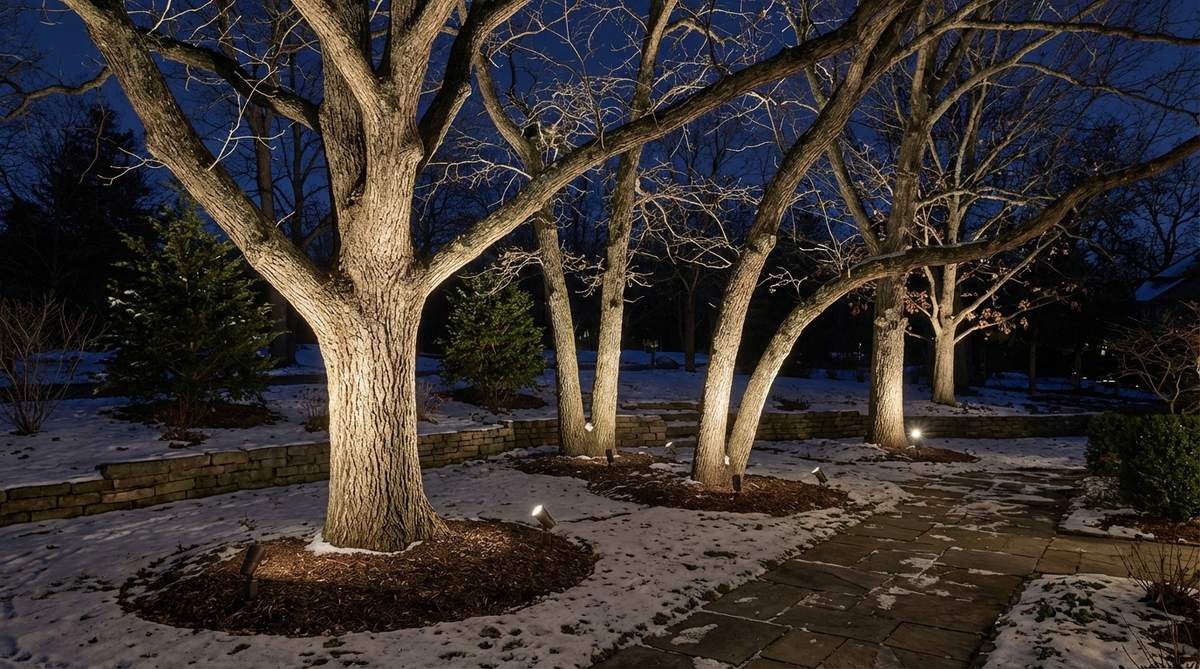
Casting dramatic shadows upward makes mature oak trees look like massive living statues. Landscape trunk uplighting completely changes the nocturnal aesthetic of a sprawling backyard.
This lighting trick mimics high-end architectural design without requiring a professional electrician. Utilizing low-voltage waterproof spotlights creates serious depth, making your property look vast and expensive.
A solid set of outdoor accent spots will run about $45–$70.
- Key Materials: IP65 waterproof LED spotlights
- Vibe / Style: Architectural grandeur
- Difficulty: Moderate wire burying
- Budget Breakdown: Light kit: $60 | Extension cables: $20
- Creator’s Tip: Position the light 18 inches away from the trunk and angle it slightly to catch the bark’s texture.
- Smart Sourcing: low-voltage landscape LED kits (waterproof) and outdoor-rated extension cables.
11. Mason Jar Candle Lanterns
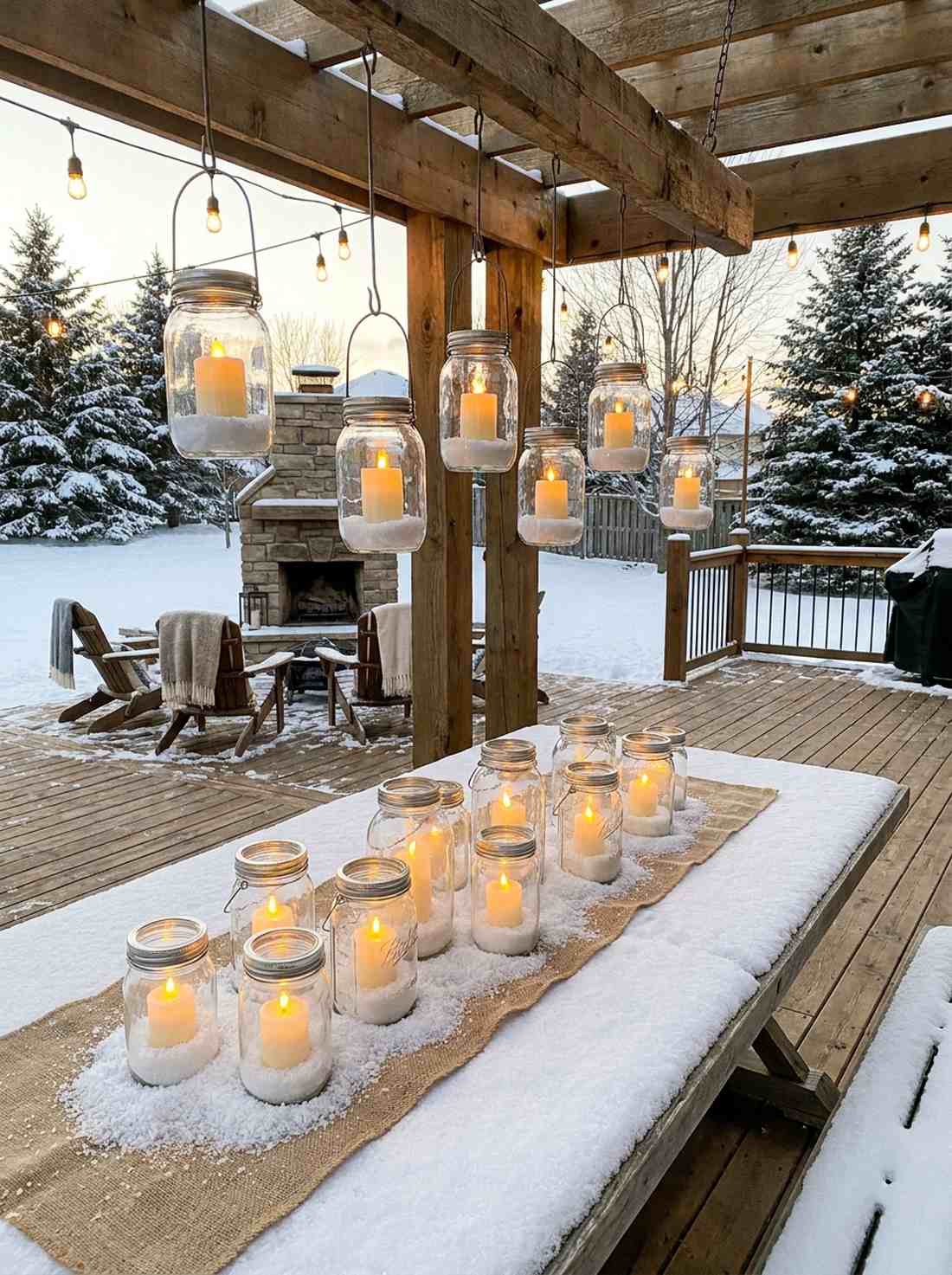
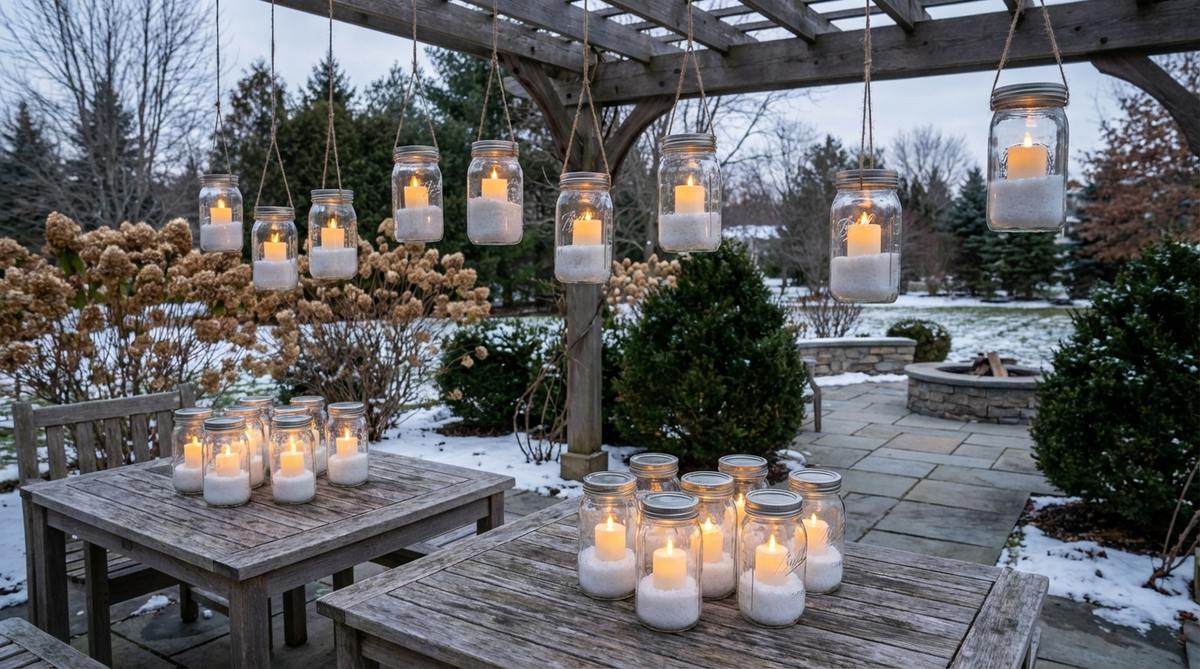
These quaint flickering jars look like trapped fireflies glowing in the cold. A rustic jar lantern cluster is the perfect cozy accent for illuminating a snowy outdoor dining table.
Swapping hazardous real flames for high-quality faux flicker bulbs provides a flawless, stress-free ambiance. Adding faux snow inside the glass completely transforms a cheap thrift store find into a premium boutique piece.
You can create a bundle of these for roughly $25. Save this idea for a magical winter patio dinner.
- Key Materials: Quart-size glass jars, LED pillar candles
- Vibe / Style: Country cabin charm
- Difficulty: Fast DIY project
- Budget Breakdown: Jars: $10 | LED Candles: $15
- Creator’s Tip: Pour a cup of Epsom salts into the bottom of each jar to stabilize the candle and mimic crystalline snow.
- Smart Sourcing: weatherproof outdoor flameless candles (bulk pack) and vintage-style wire jar hangers.
12. String Lights in Neutral Tones
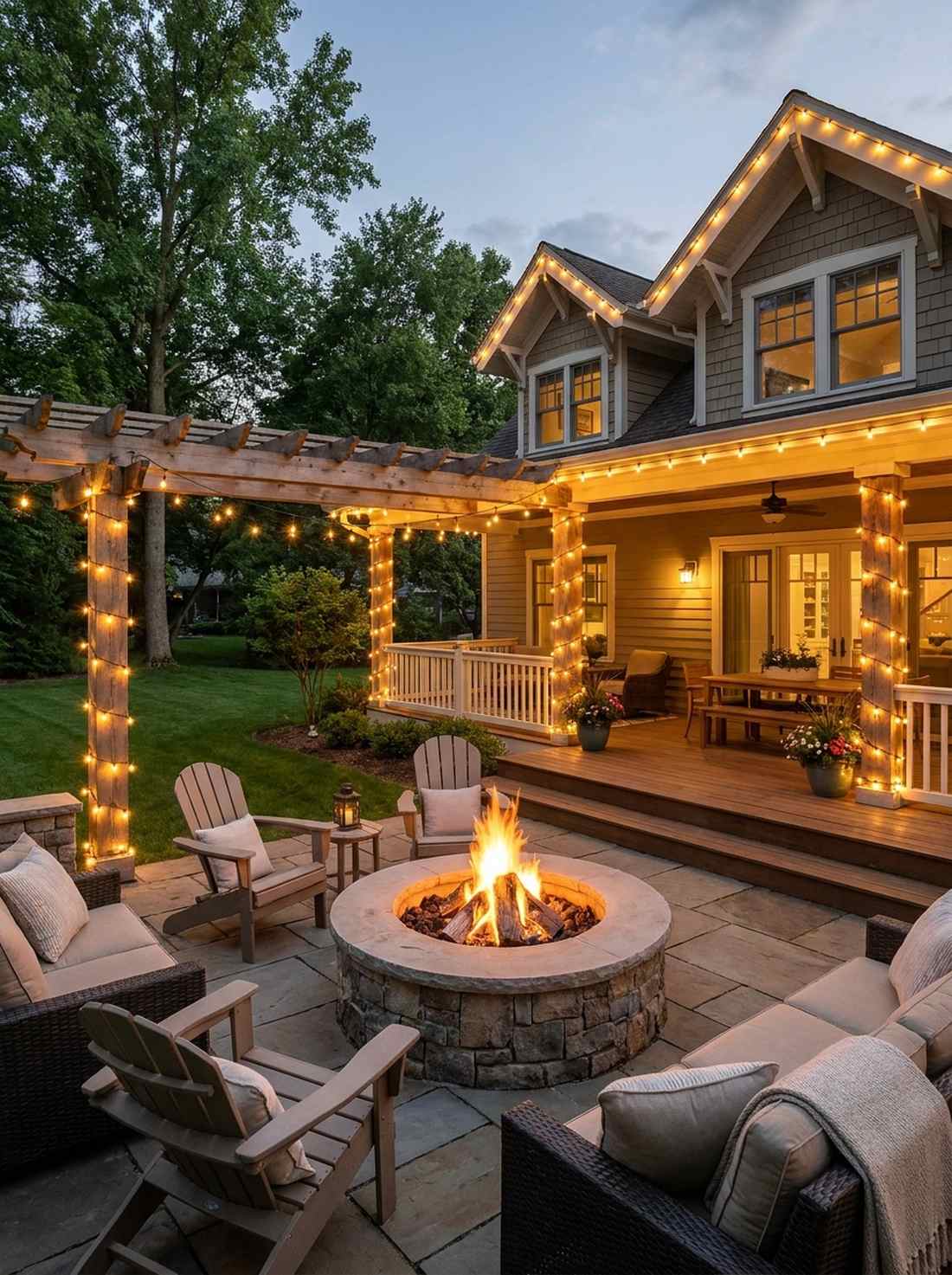
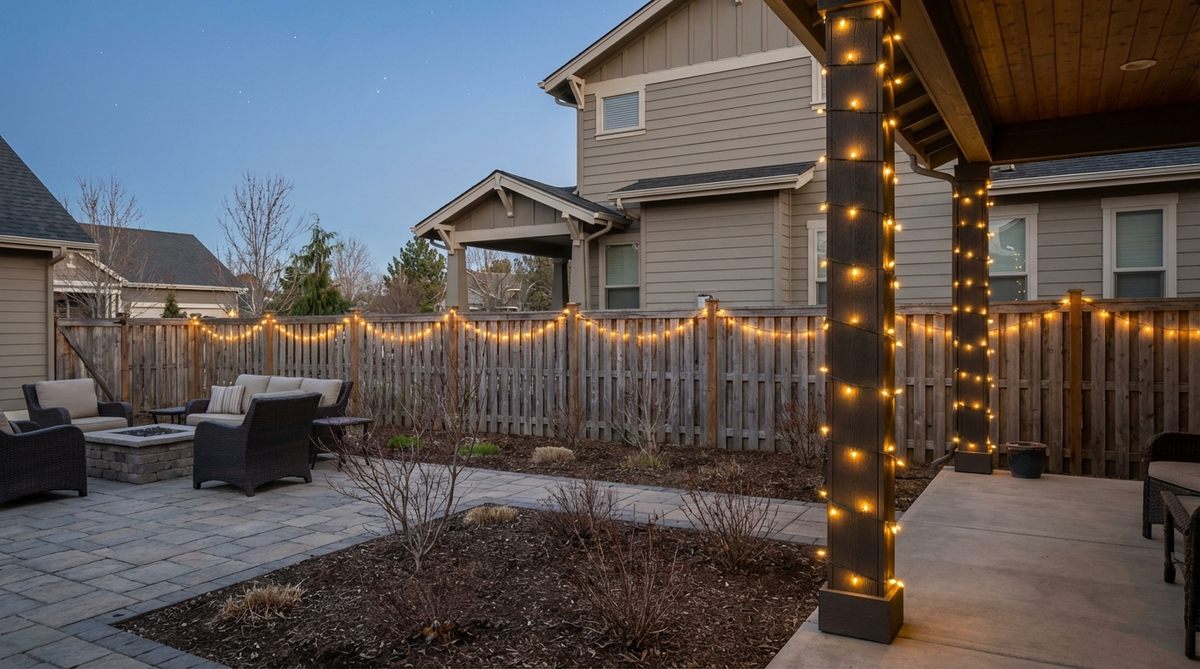
Wrapping these around pillars makes your home radiate a soft, inviting golden halo. Warm white architectural string lights are ideal for outlining pergolas, porch rails, and roofline peaks.
Choosing specifically rated warm commercial strands avoids the tacky, blinding blue-white of cheap holiday aisles. The consistent, thick cabling of professional string sets ensures they won’t short out during a sleet storm.
A robust commercial strand costs around $40–$60, offering brilliant longevity.
- Key Materials: 2700K Warm White commercial string lights
- Vibe / Style: Elegant evening terrace
- Difficulty: Careful wrapping needed
- Budget Breakdown: Light strand: $50 | Command hooks: $10
- Creator’s Tip: Keep the spacing exactly 6 inches apart as you wrap columns to keep the look highly professional.
- Smart Sourcing: shatterproof commercial LED cafe strings and outdoor-rated adhesive light clips.
13. Ice Lanterns with Embedded LEDs
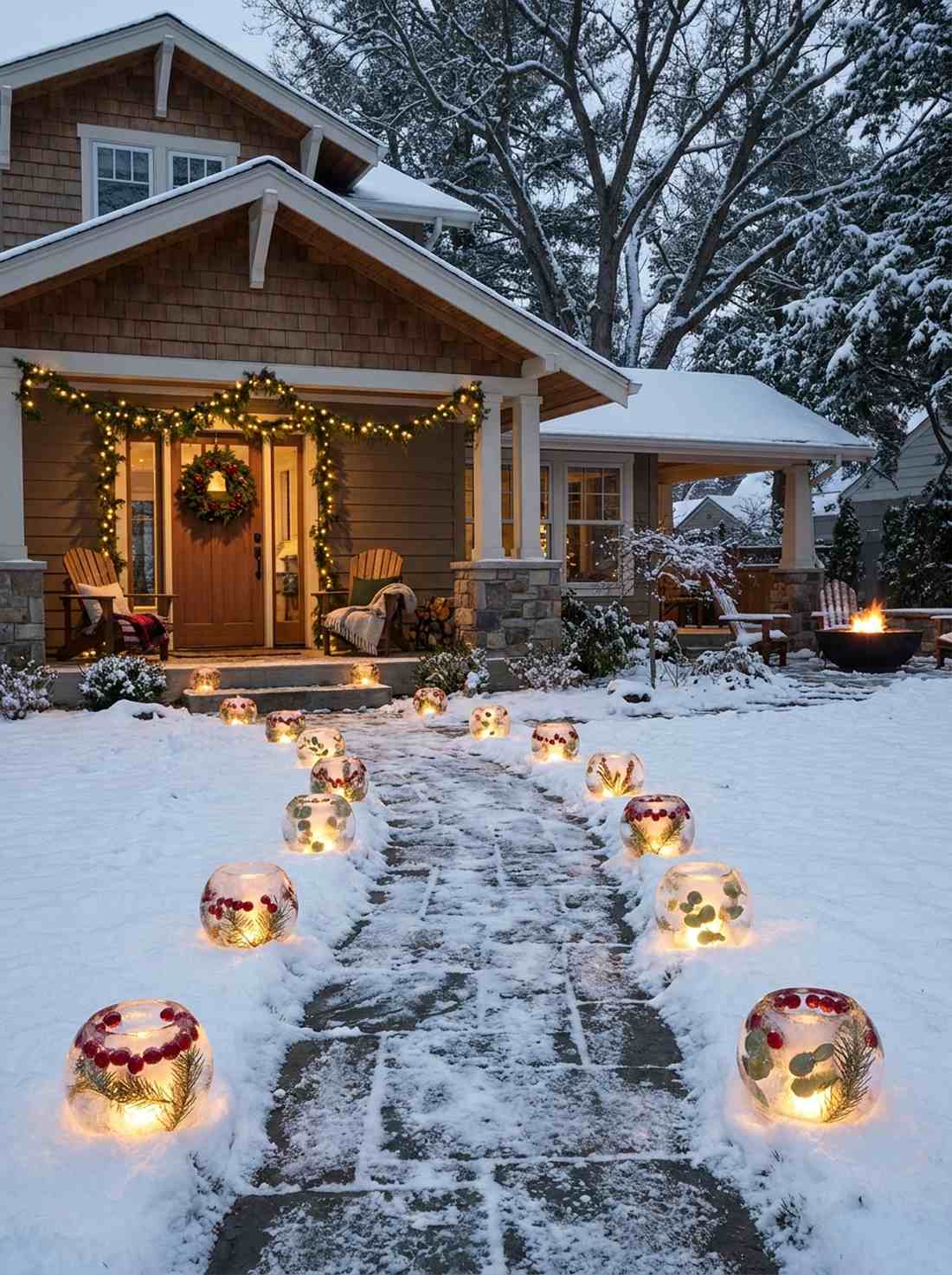
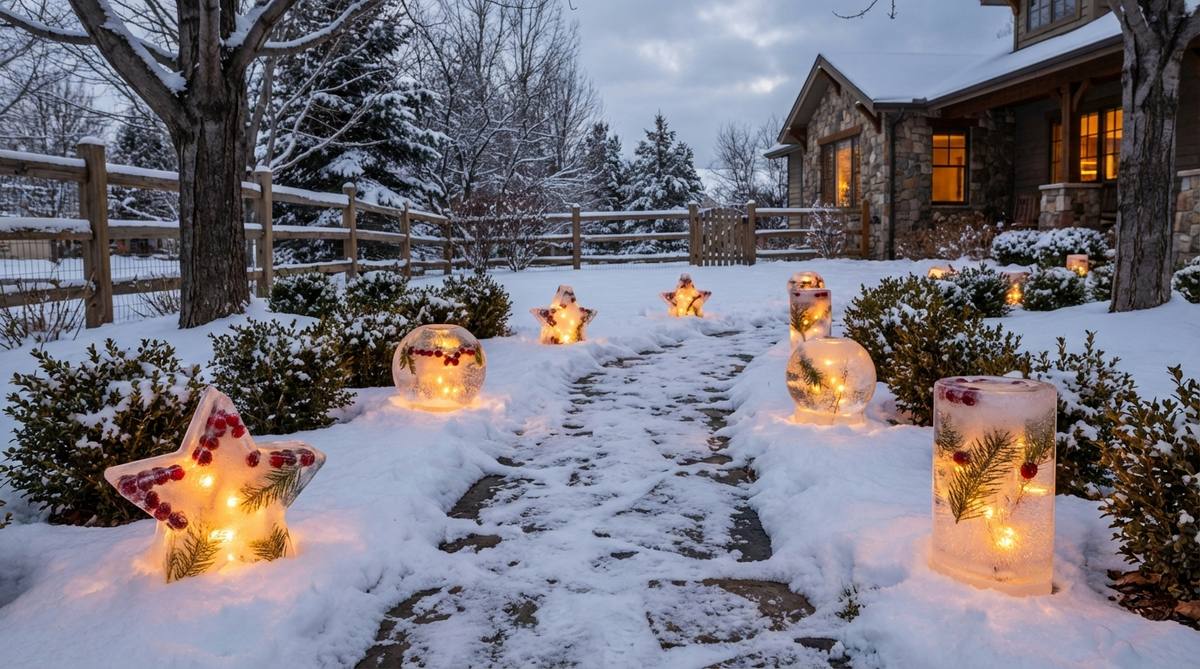
These glowing frozen orbs feel like a magical spell cast upon your front steps. Botanical ice luminaries serve as breathtaking, temporary art pieces for lining dark winter pathways.
Most DIYers fail at this, but utilizing distilled water gives a designer-level finish that is crystal clear. Submerging waterproof puck lights inside creates a stunning centerpiece that costs almost nothing to produce.
Your only real cost is the battery-operated lights, easily under $15.
- Key Materials: Silicone molds, waterproof LED pucks
- Vibe / Style: Ephemeral Nordic magic
- Difficulty: Needs freezing temps
- Budget Breakdown: Lights: $12 | Molds: $15
- Creator’s Tip: Boil the water twice before freezing it to remove trapped air bubbles for perfect glass-like clarity.
- Smart Sourcing: submersible remote-controlled LED puck lights and heavy-duty silicone freezing molds.
14. Pendant Lights Under Covered Porches
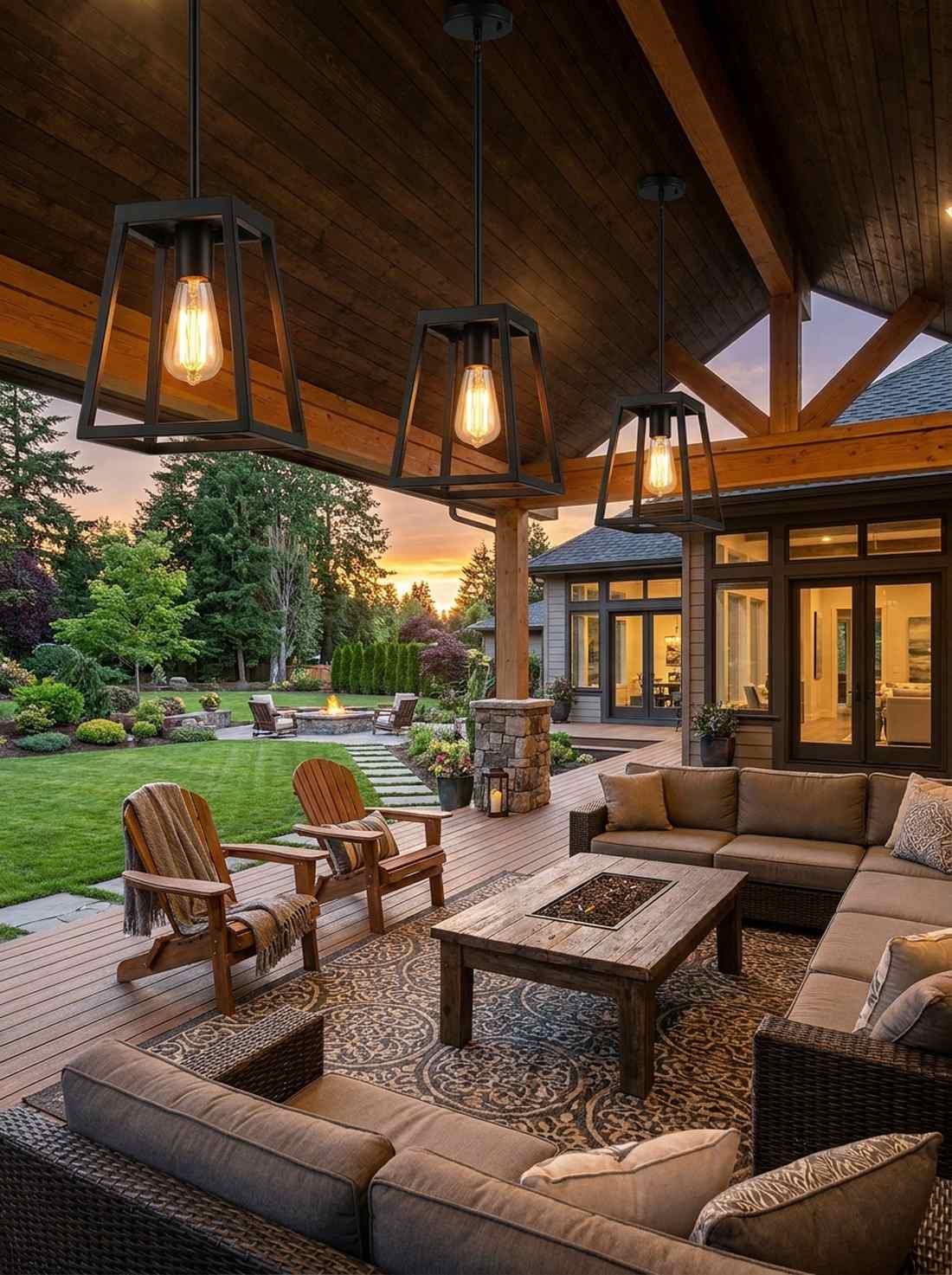
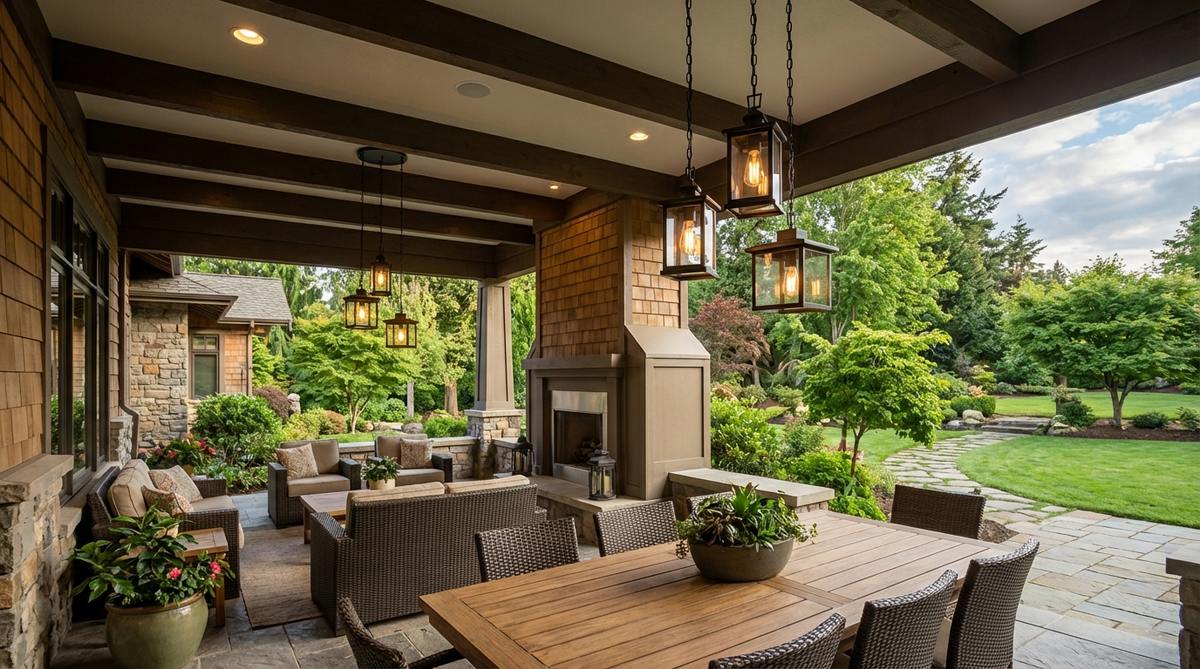
Dropping a striking fixture from the ceiling immediately defines the space as an outdoor living room. Industrial porch pendant lighting perfectly anchors seating areas safe from direct snowfall.
Upgrading a generic flush mount to a bold, hanging metal frame completely modernizes your exterior aesthetic. Installing damp-rated fixtures means you get luxury interior styling that survives heavy atmospheric moisture.
A stylish outdoor-rated fixture will set you back about $80–$150. Highly recommended for a massive curb appeal boost.
- Key Materials: Damp-rated metal pendant fixture
- Vibe / Style: Modern industrial lounge
- Difficulty: Basic electrical required
- Budget Breakdown: Fixture: $100 | LED Bulb: $8
- Creator’s Tip: Put the pendant on an outdoor dimmer switch so you can control the mood from bright task light to a soft glow.
- Smart Sourcing: rust-proof outdoor pendant fixtures and smart-dimmable exterior LED bulbs.
If you’re worried about frost damage, the upcoming trick changes everything.
15. Motion-Sensor Accent Lighting
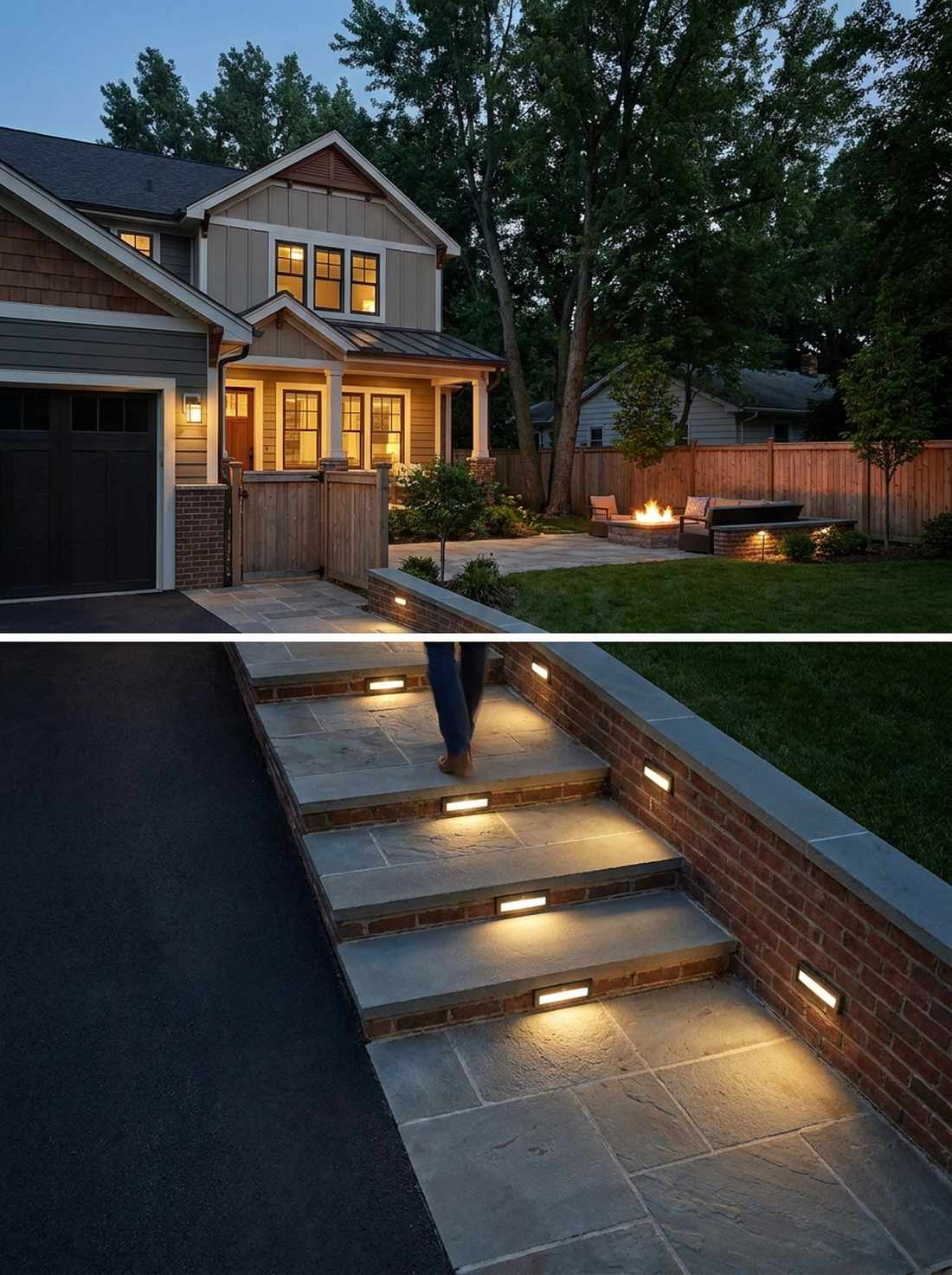
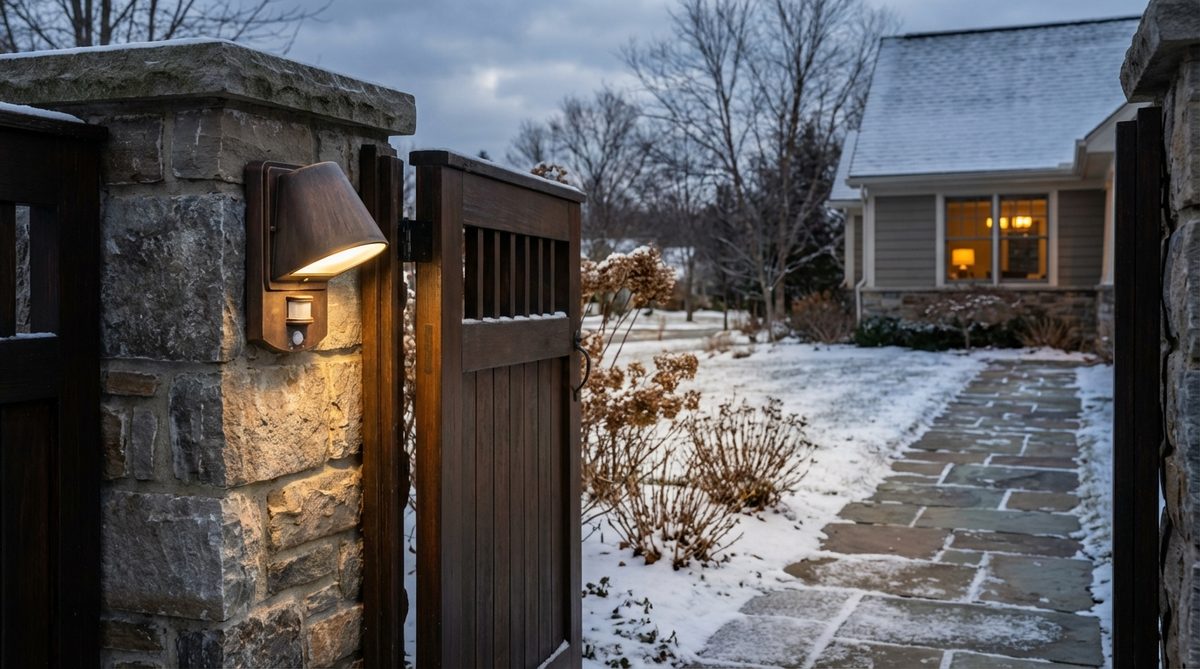
Sleek and hidden, this setup feels incredibly modern and secure as you approach the house. Hidden motion step lights are brilliant for illuminating dark garage approaches and side yard gates.
Integrating security with aesthetics delivers a surprisingly premium look without blinding the whole neighborhood. High-end low-profile sensors provide targeted, crisp light exactly where and when you step.
Expect to spend about $30–$50 for quality battery-operated sensor units.
- Key Materials: Wireless LED motion path lights
- Vibe / Style: Sleek smart home
- Difficulty: Stick-and-go setup
- Budget Breakdown: Light multi-pack: $45 | Batteries: $15
- Creator’s Tip: Mount them below knee level so the light casts down onto the path, avoiding harsh glare in the eyes.
- Smart Sourcing: battery-operated outdoor motion step lights (4-pack) and extreme-weather lithium batteries.
Structural Elements and Focal Points
16. Vintage Sleds as Wall Decor
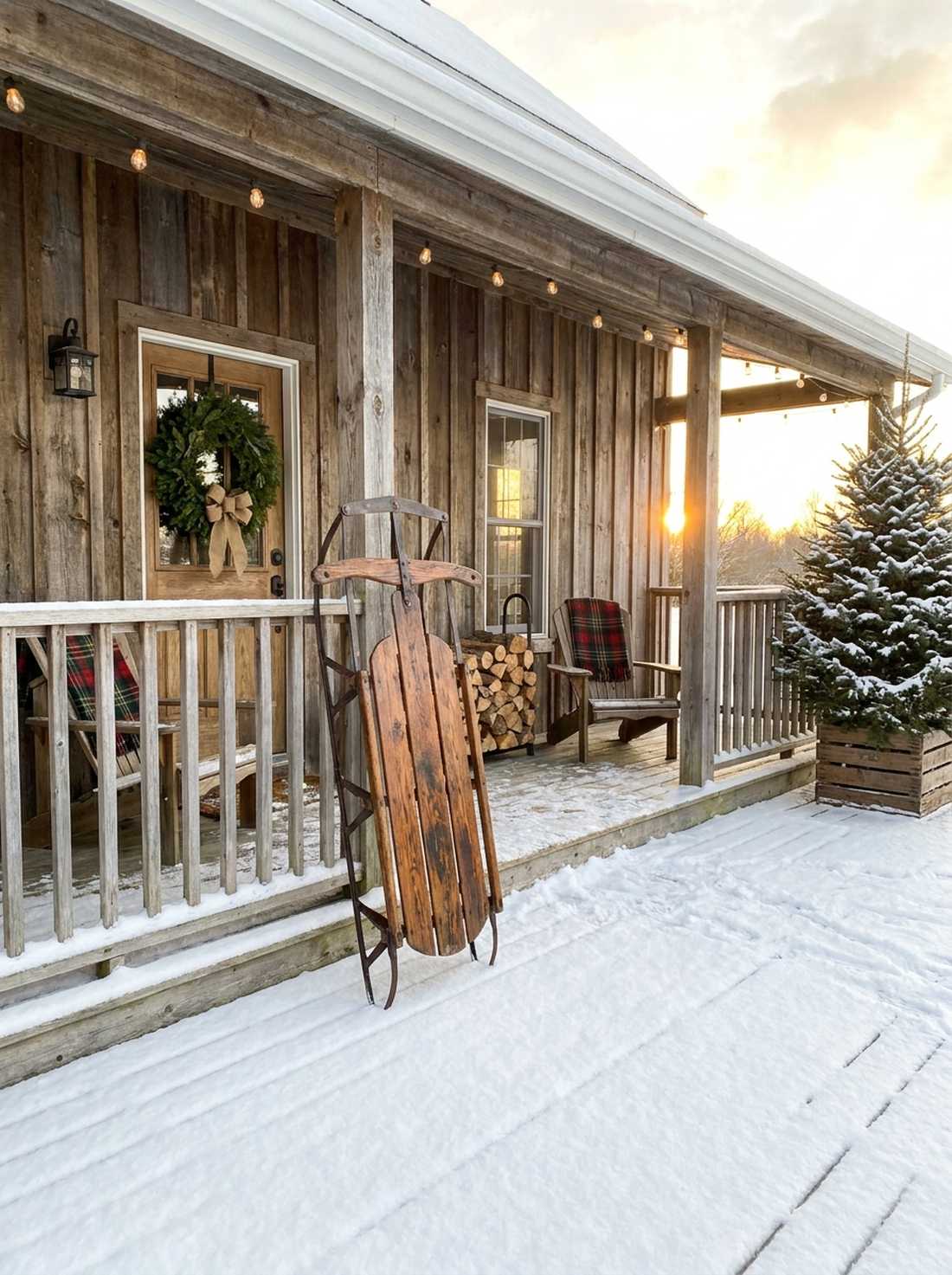
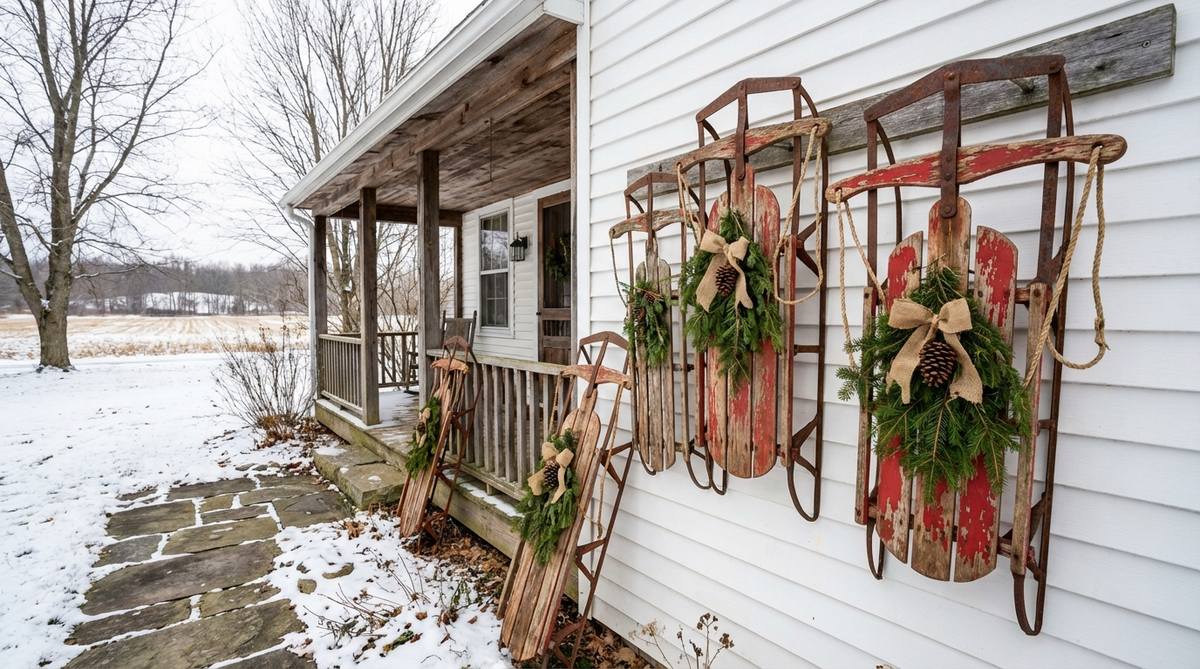
This nostalgic wooden piece leans against the wall, whispering of childhood snow days. A restored vintage toboggan display is the ultimate character-builder for empty porch siding.
Displaying authentic antique sporting gear looks far more expensive than standard big-box store signs. Treating the old wood with a deep conditioning oil protects the patina and prevents splitting in dry winter air.
You can often score a beautiful sled at a flea market for $40–$60. Pin this to your farmhouse exterior board!
- Key Materials: Authentic wooden runner sled
- Vibe / Style: Heritage winter cabin
- Difficulty: Simple leaning or hanging
- Budget Breakdown: Sled: $50 | Hanging bracket: $15
- Creator’s Tip: Use a heavy-duty guitar wall mount bracket to hang the sled securely without damaging the antique wood.
- Smart Sourcing: heavy-duty rubberized wall hooks and boiled linseed wood conditioning oil.
17. Galvanized Metal Tubs and Buckets
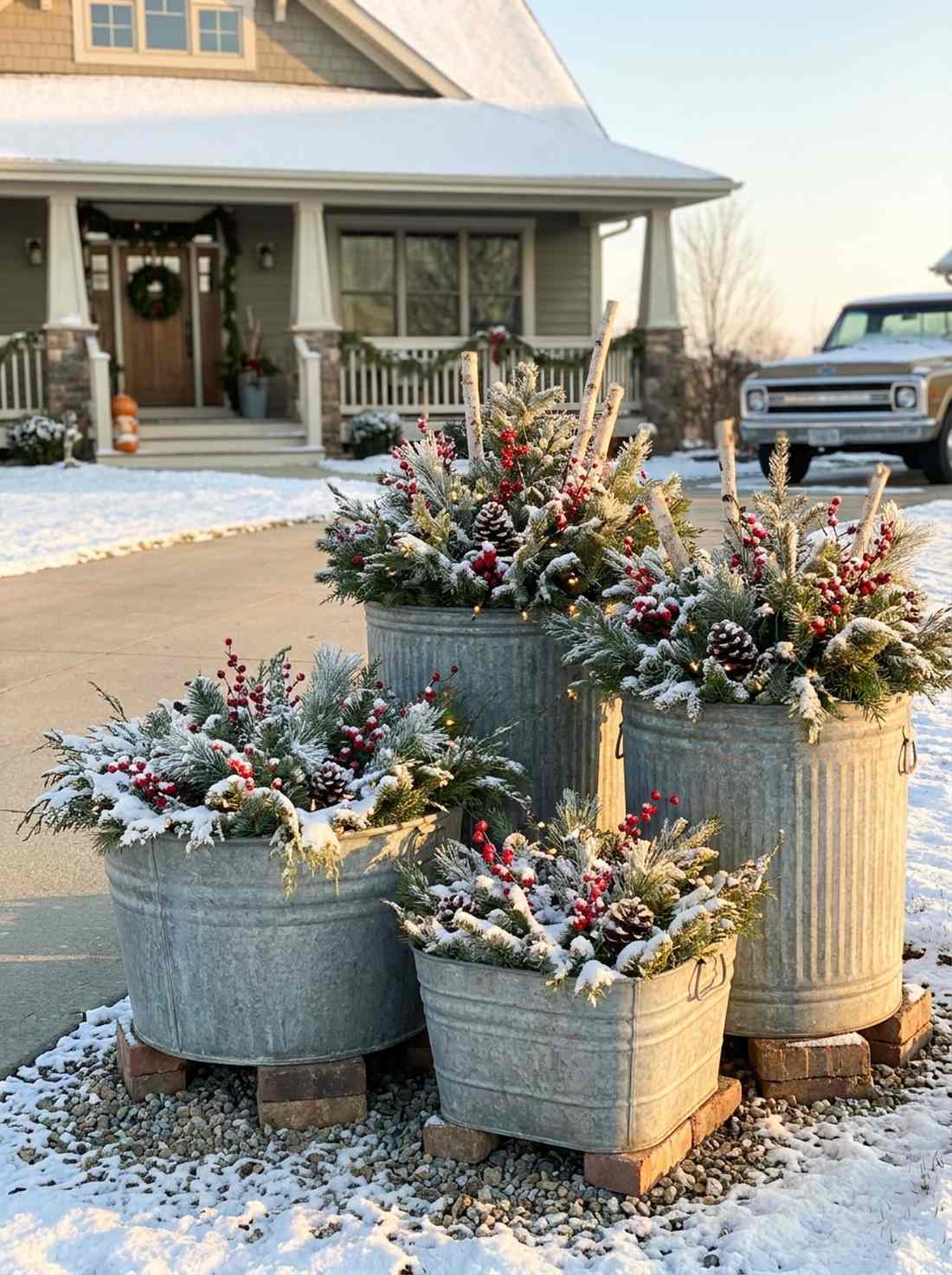
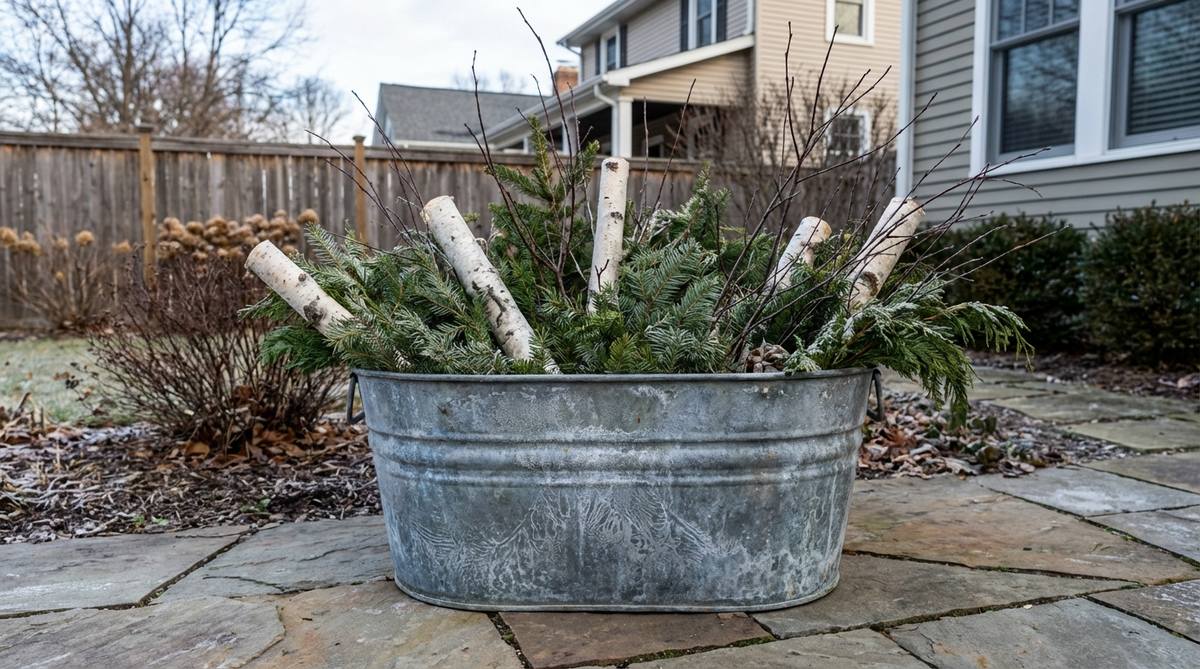
The frosted metal edges catch the morning light beautifully, adding a rugged industrial edge. Galvanized winter planter tubs work brilliantly for grounding large arrangements beside the driveway.
Embracing materials that naturally patina in the weather guarantees your curb appeal survives the frost. Upcycling feed troughs into giant textured displays is a brilliant structural hack that costs a fraction of stone pots.
A large metal wash tub costs roughly $35–$50 at agricultural supply stores.
- Key Materials: Galvanized steel wash basin
- Vibe / Style: Industrial rural chic
- Difficulty: Requires drilling drainage
- Budget Breakdown: Metal tub: $40 | Drainage gravel: $10
- Creator’s Tip: Drill at least five half-inch holes in the bottom and elevate the tub on bricks so standing water doesn’t freeze and split it.
- Smart Sourcing: galvanized steel beverage tubs (large) and titanium metal drill bit kits.
18. Window Box Winter Plantings
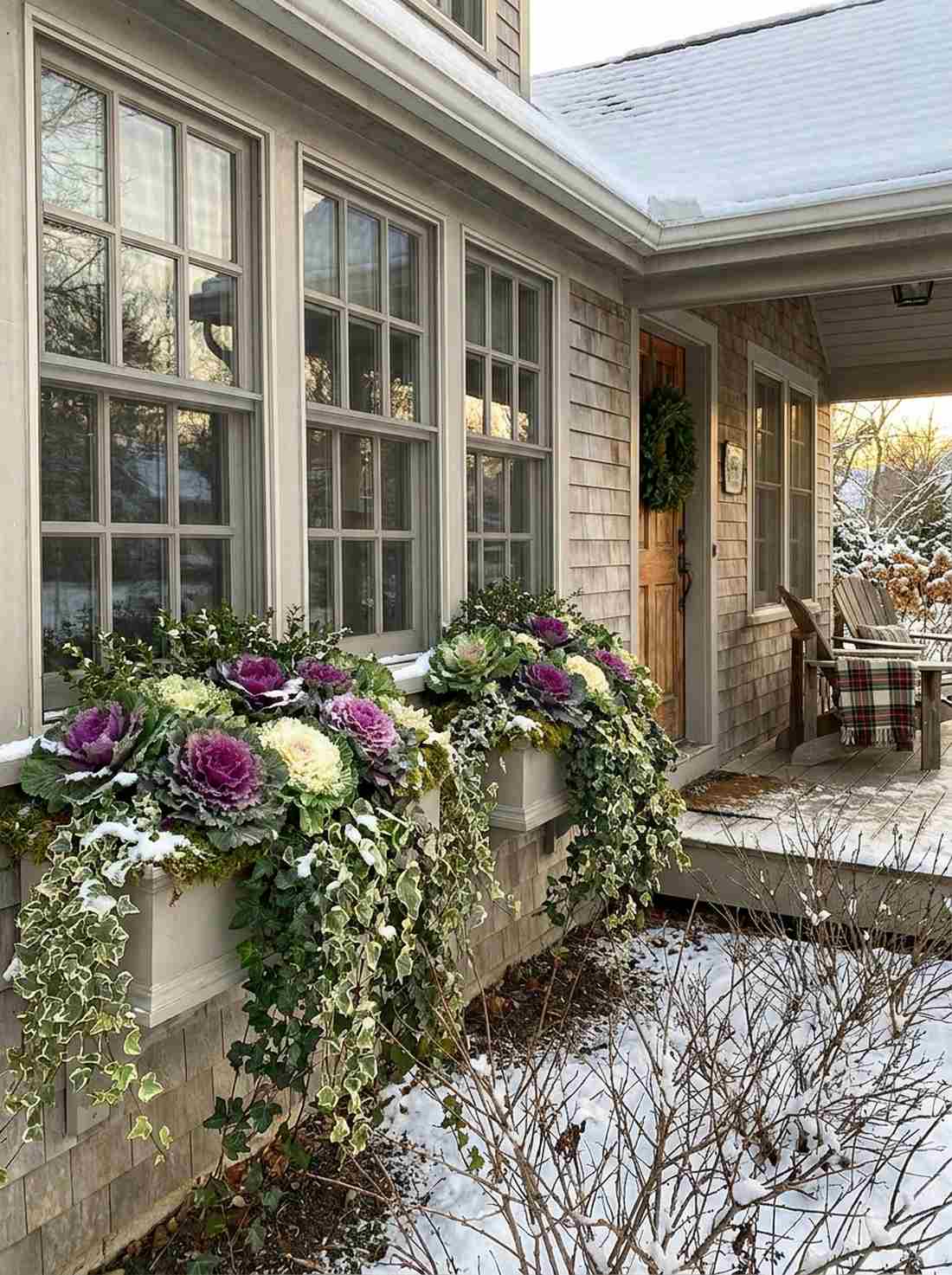
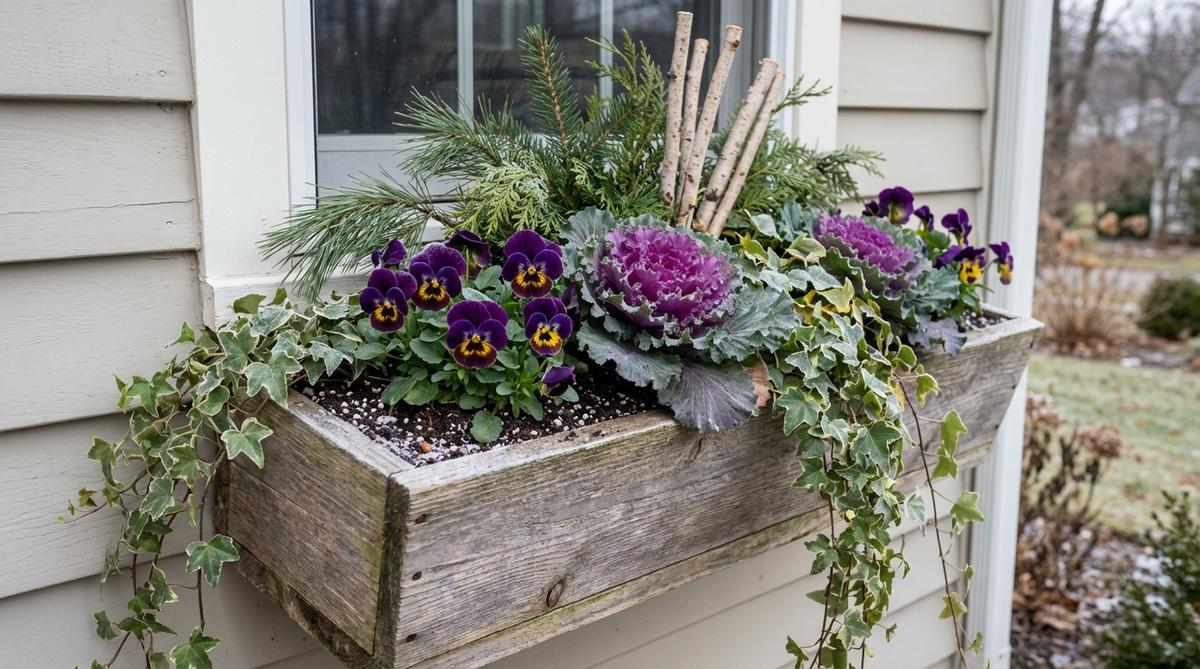
These overflowing ledges look like a lush winter oasis bursting right out of the architecture. Cold-weather window box displays are fantastic for softening the harsh exterior lines of front-facing windows.
Layering trailing ivy with hardy ornamental kale creates serious visual impact that stops passersby. Packing the soil tightly around the root balls prevents deep-freeze damage, keeping the arrangement vibrant through January.
Creating a lush box runs about $40 in fresh hardy greens and soil.
- Key Materials: Ornamental cabbage, creeping ivy, fresh soil
- Vibe / Style: Charming cottage facade
- Difficulty: Fun afternoon planting
- Budget Breakdown: Plants: $30 | Frost-proof soil: $10
- Creator’s Tip: Stuff the gaps between plants with decorative moss to insulate the soil and hide the dirt from view.
- Smart Sourcing: freeze-resistant fiberglass window boxes and bulk preserved sheet moss.
19. Wooden Barrel Planters
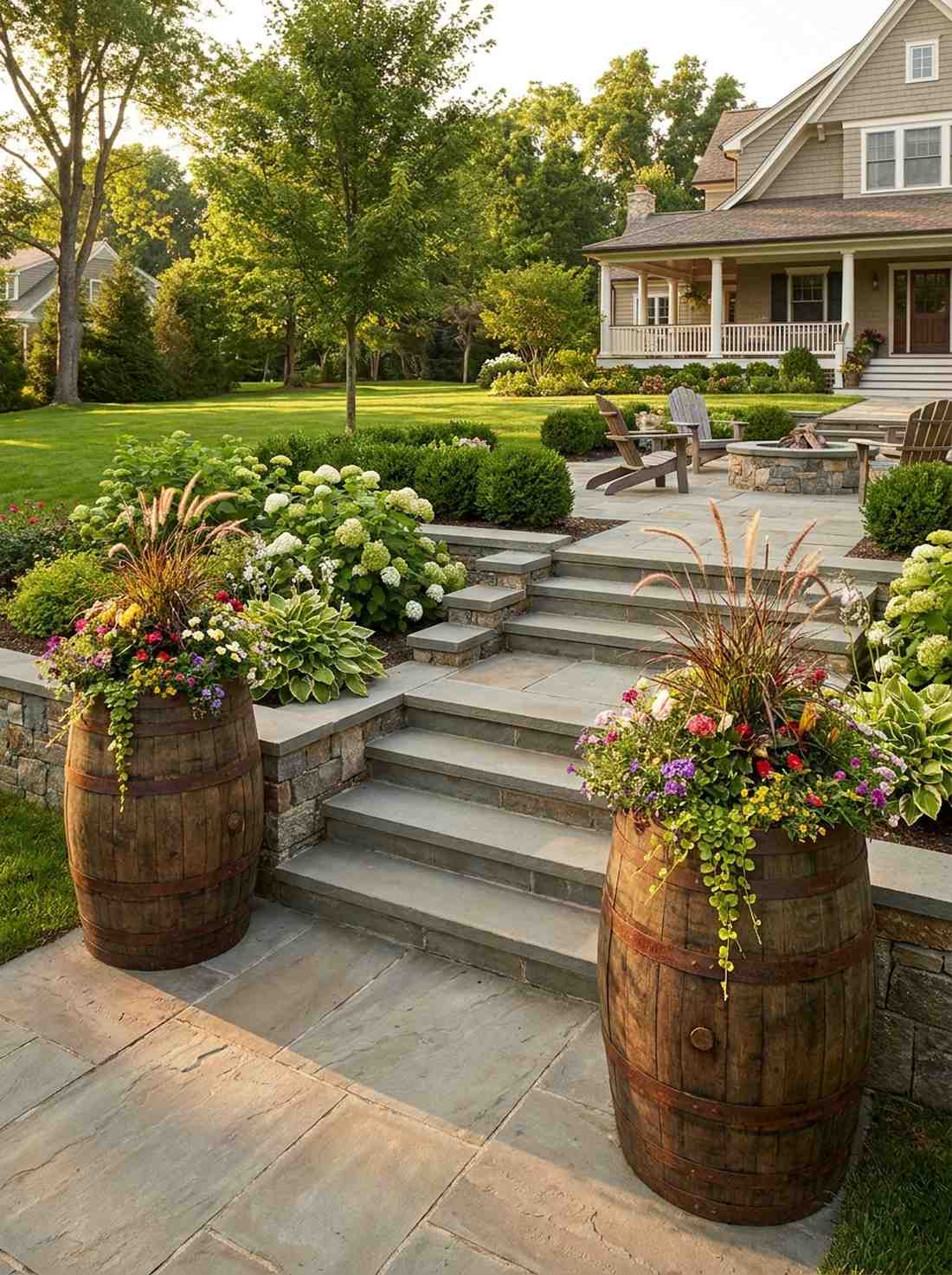
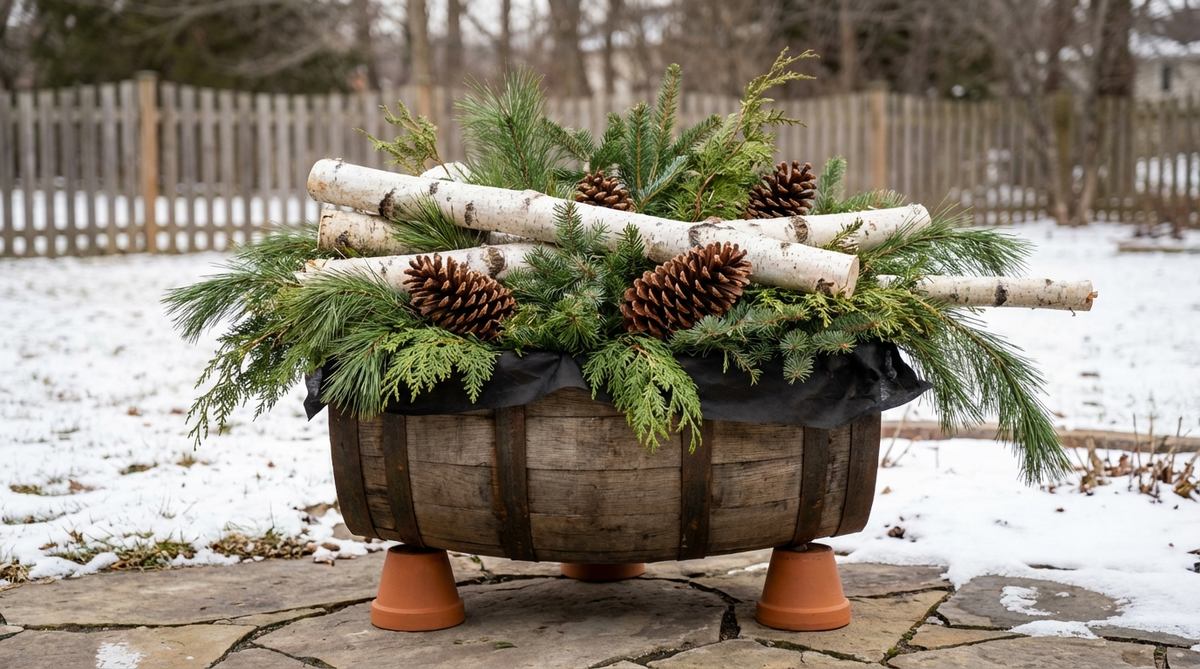
The thick oak bands and rusted iron rings provide a massive punch of texture. Half-barrel whiskey planters are incredible for flanking wide, sweeping outdoor staircases.
Using authentic, heavy-duty oak barrels delivers a designer-level finish compared to flimsy plastic imitations. Lining the inside correctly stops the wood from rotting, making this a multi-year outdoor investment.
Expect to invest around $50–$70 per authentic half-barrel. Save this for your rustic garden overhaul!
- Key Materials: Authentic oak whiskey half-barrels
- Vibe / Style: Traditional estate garden
- Difficulty: Very heavy, needs a buddy
- Budget Breakdown: Barrel: $60 | Liner fabric: $15
- Creator’s Tip: Staple heavy landscaping plastic to the interior walls, but leave the bottom exposed so water can freely drain out.
- Smart Sourcing: heavy-duty landscaping fabric rolls and invisible planter riser feet.
This next setup is ridiculously cheap but looks like a $100 custom display…
20. Pergola and Arbor Decoration
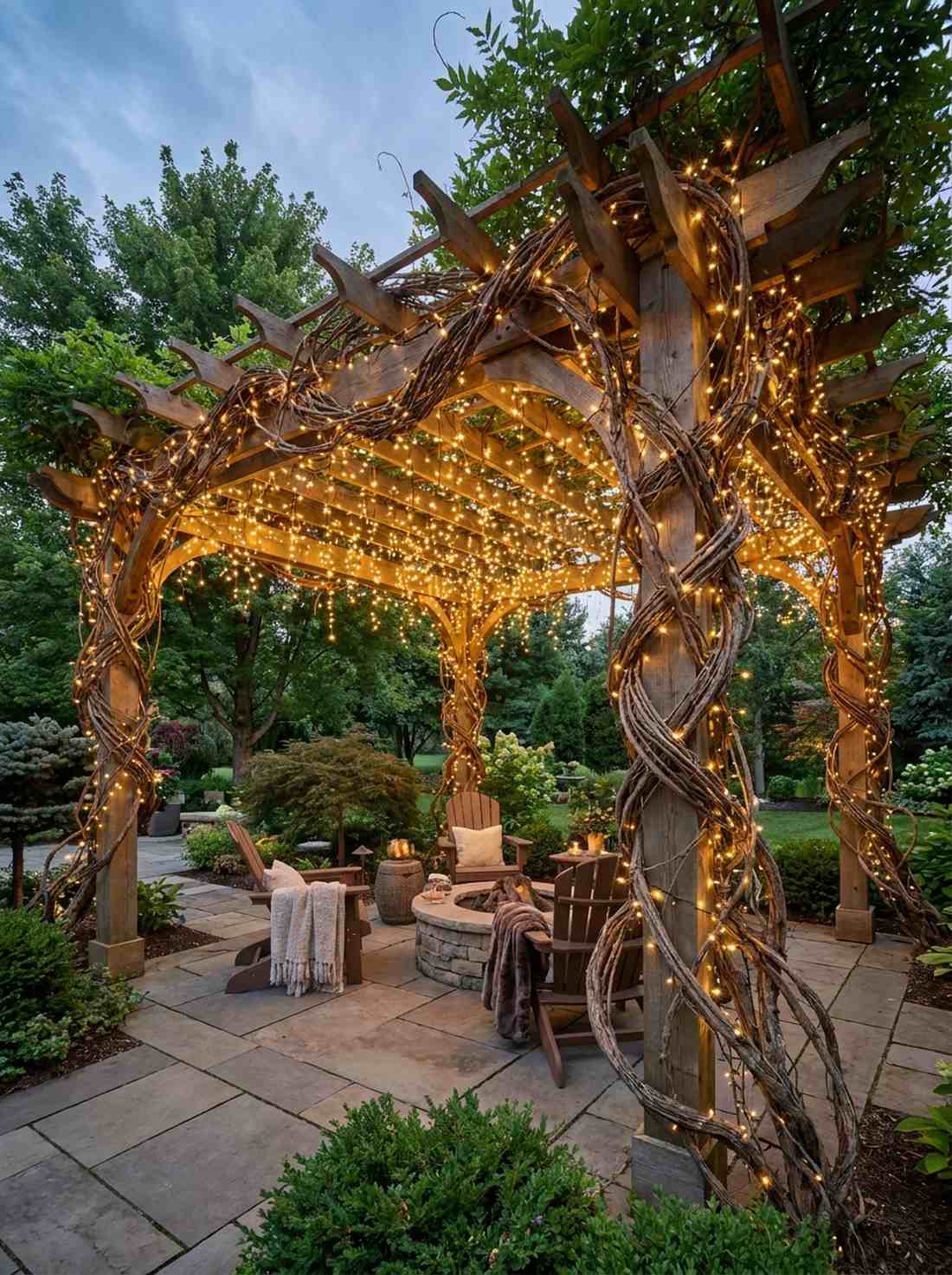
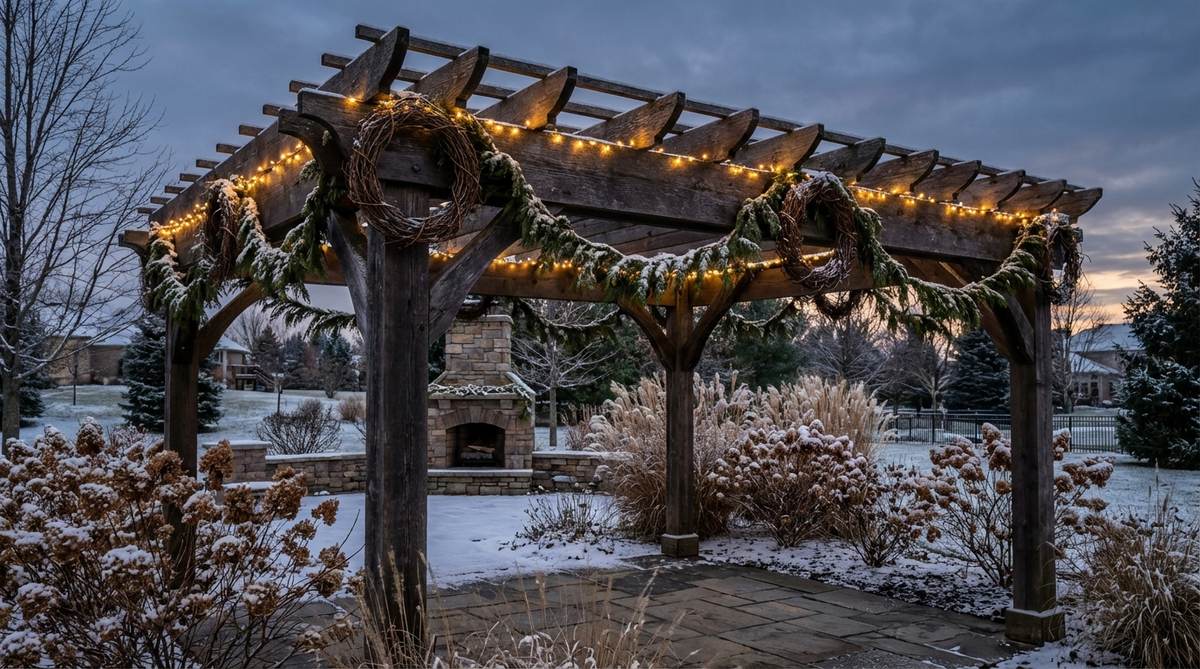
Woven branches climbing overhead feel like stepping into an enchanted, dormant forest archway. Woven grapevine arbor accents brilliantly define overhead spaces even when all the summer climbing vines are dead.
Dressing bare architecture in thick, twisting vines completely bypasses the cheap plastic look of fake garlands. Intertwining subtle, battery-operated micro-lights into the deadwood creates a mesmerizing canopy for evening relaxation.
You can buy massive rolls of grapevine for under $30. Highly recommended for a fast weekend win.
- Key Materials: Thick grapevine rolls, micro-fairy lights
- Vibe / Style: Enchanted woodland canopy
- Difficulty: Lots of ladder work
- Budget Breakdown: Grapevine rolls: $25 | Fairy lights: $20
- Creator’s Tip: Soak the grapevine rolls in hot water for an hour before installing to make them flexible and prevent snapping.
- Smart Sourcing: bulk natural grapevine wreaths/rolls and outdoor-rated copper wire fairy lights.
21. Decorative Door Baskets
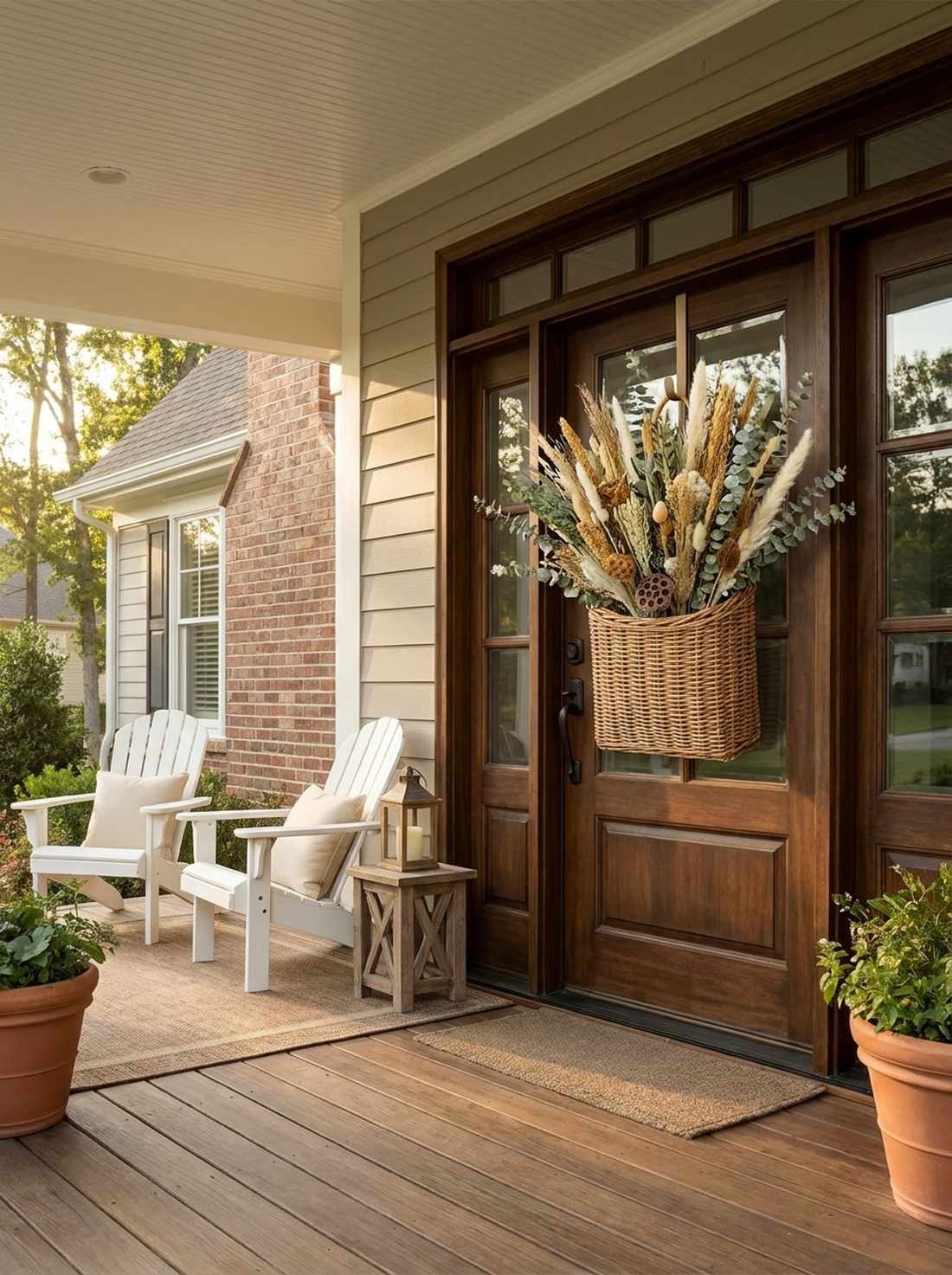
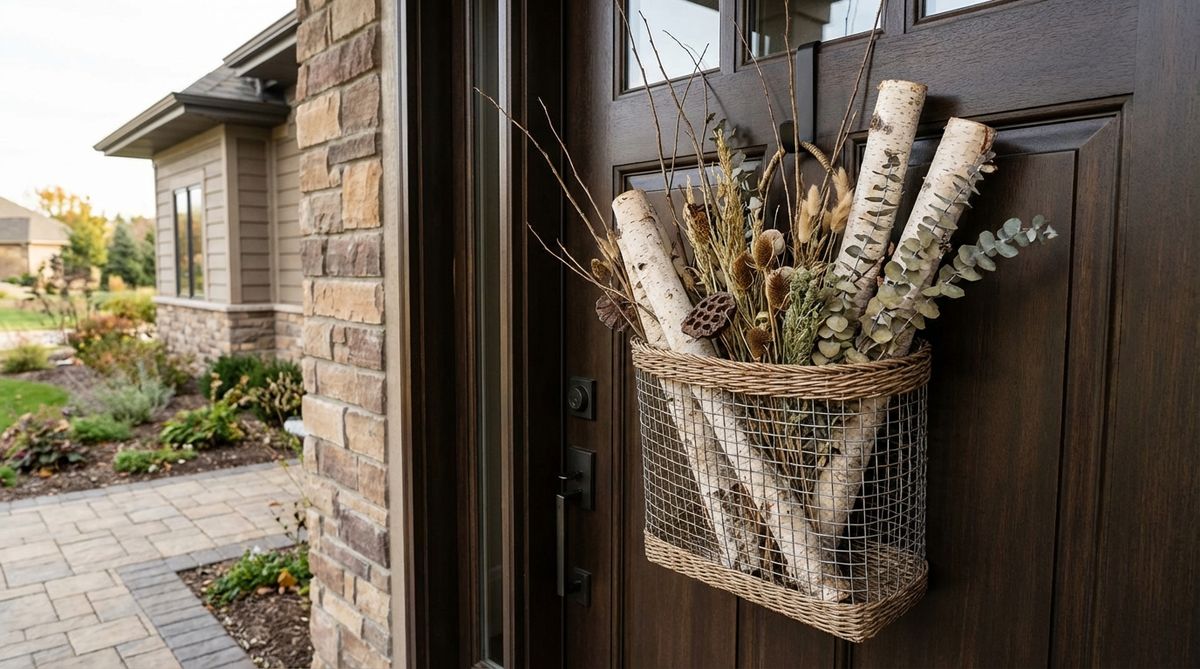
Hanging flat against the wood, this brimming arrangement feels incredibly bespoke and welcoming. A flat-backed front door basket is the ultimate modern alternative to a traditional, predictable circular wreath.
Stuffing a woven wicker sleeve with varied tall stems creates serious depth that grabs attention from the street. Utilizing a foam insert ensures every branch stays locked in place, even when the door slams shut.
A beautiful hanging basket setup costs roughly $35 to assemble.
- Key Materials: Flat-back wicker hanging basket, mixed dry stems
- Vibe / Style: Modern botanical greeting
- Difficulty: Easy floral arranging
- Budget Breakdown: Basket: $20 | Dry stems: $15
- Creator’s Tip: Add heavy fishing weights to the very bottom of the basket to stop it from swinging wildly in winter wind.
- Smart Sourcing: woven flat-back wall baskets and magnetic heavy-duty door hooks.
Wildlife-Friendly Winter Features
22. Decorative Bird Feeders
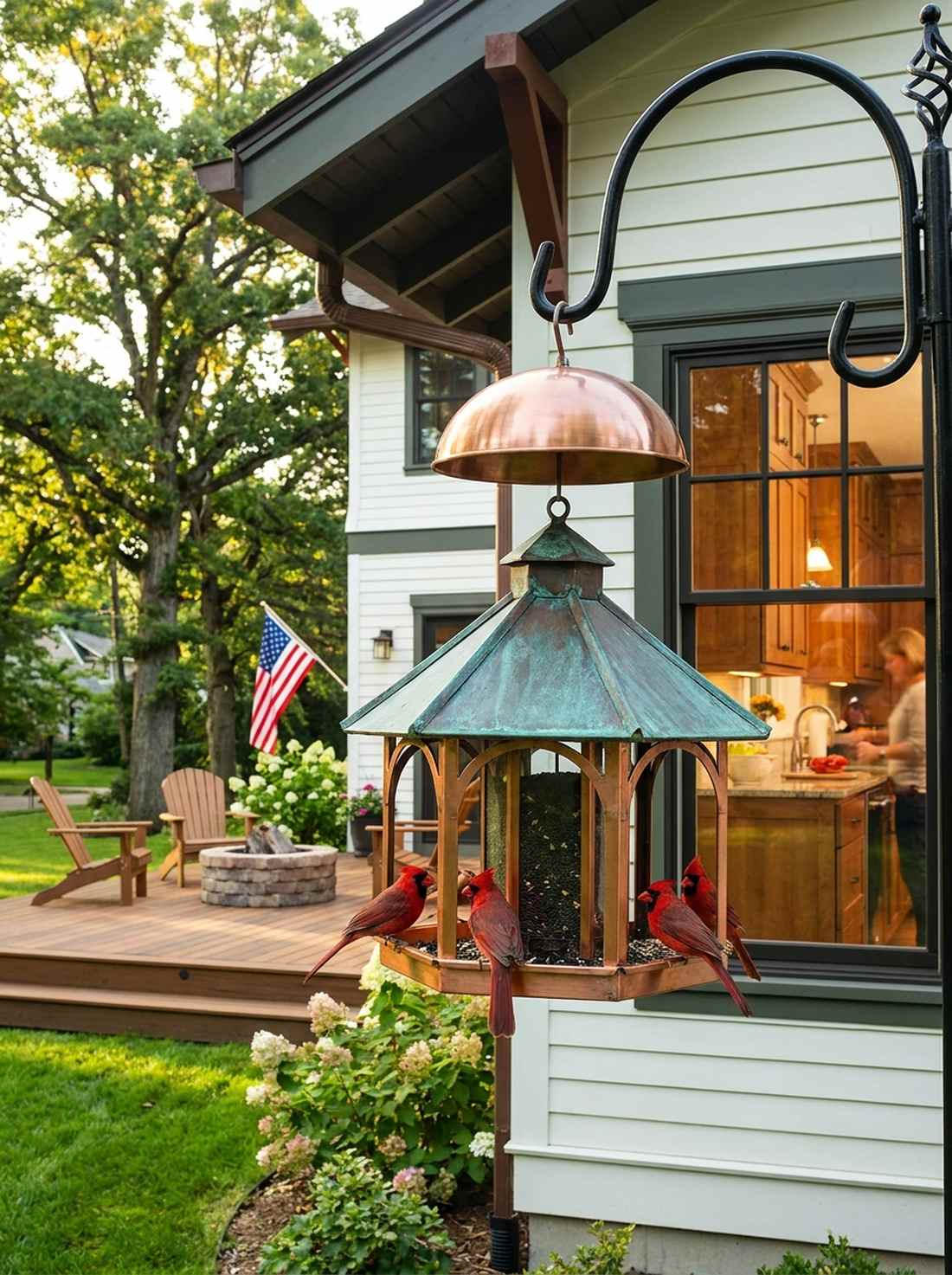
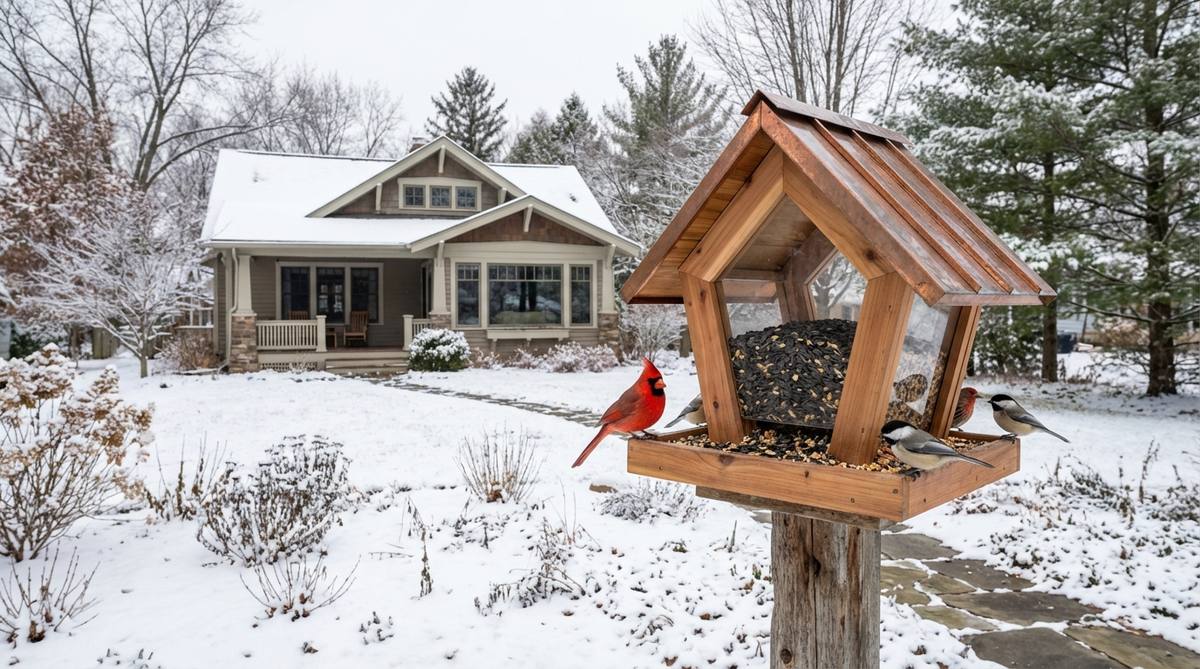
Watching bright red cardinals land on an elegant copper roof brings endless morning joy. Architectural copper bird feeders act as stunning moving-art installations right outside a warm kitchen window.
Skipping neon plastic tubes for heavy-gauge metal creates an upscale, bird-friendly habitat that looks expensive. The metal naturally develops a gorgeous green patina over the winter, blending perfectly with a high-end landscape.
A premium metallic feeder runs around $40–$75. Pin this if you love supporting local wildlife beautifully!
- Key Materials: Copper or cedar architectural feeder
- Vibe / Style: Heritage Audubon sanctuary
- Difficulty: Simple hook hanging
- Budget Breakdown: Feeder: $60 | Premium seed: $20
- Creator’s Tip: Buy a squirrel baffle to mount above it; it saves a fortune in stolen seeds and keeps the feeder looking tidy.
- Smart Sourcing: real copper gazebo bird feeders and squirrel-proof hanging baffles.
23. Log Pile Shelters
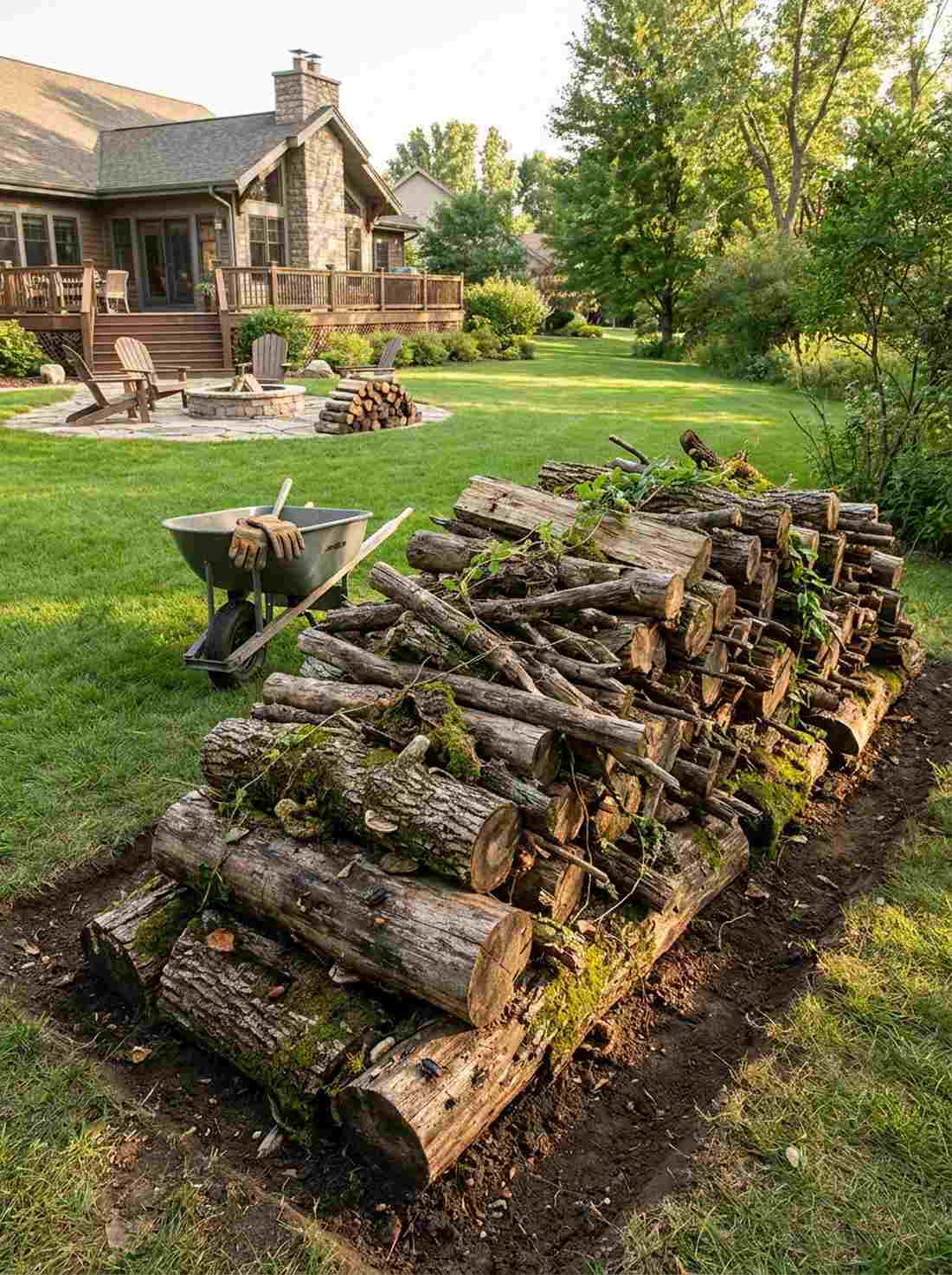
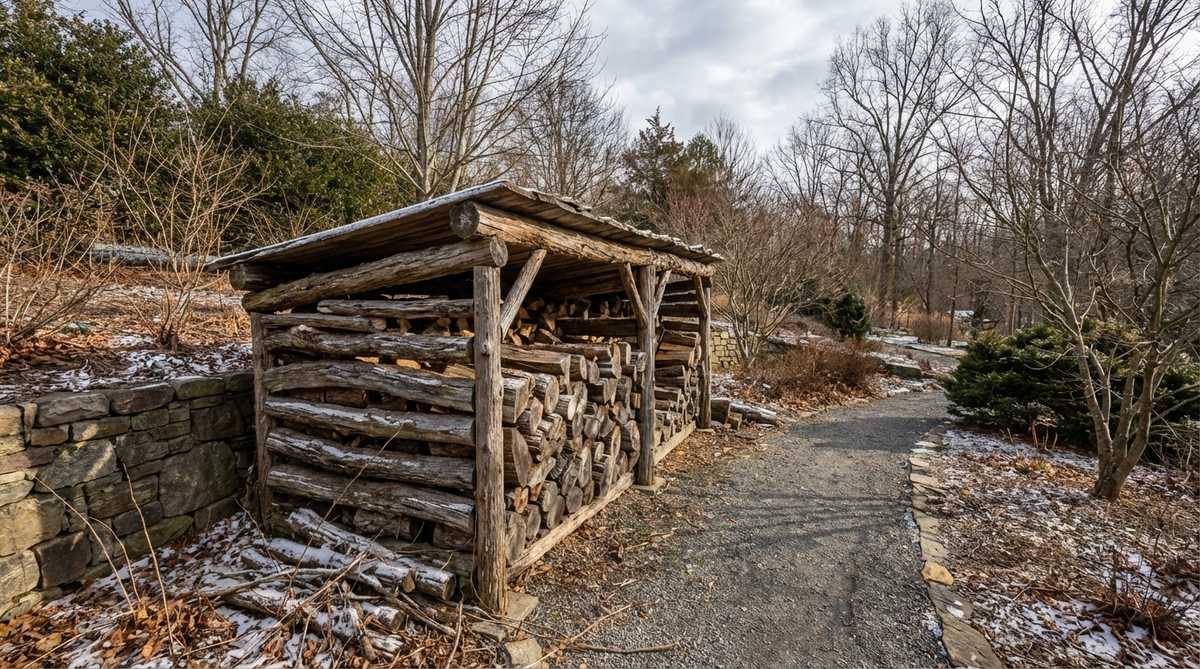
This deliberate, rustic mound looks like a beautifully curated slice of the deep woods. Wildlife log habitat piles are fantastic for filling dead space at the back edge of a deep property line.
Most homeowners burn all their scrap wood, but this trick builds an ecological focal point that supports overwintering creatures. Strategically stacking varying sizes of timber creates a visually interesting texture that benefits the entire garden ecosystem.
This project is completely free if you use fallen branches from your own yard.
- Key Materials: Mixed yard timber, loose branches
- Vibe / Style: Wild permaculture edge
- Difficulty: Zero cost, just sweat
- Budget Breakdown: Materials: Free | Labor: Free
- Creator’s Tip: Dig a shallow trench to bury the bottom logs slightly; the soil contact encourages beneficial beetles and moss growth.
- Smart Sourcing: heavy-duty landscaping work gloves and steel garden wheelbarrows.
24. Upturned Pot Hideaways
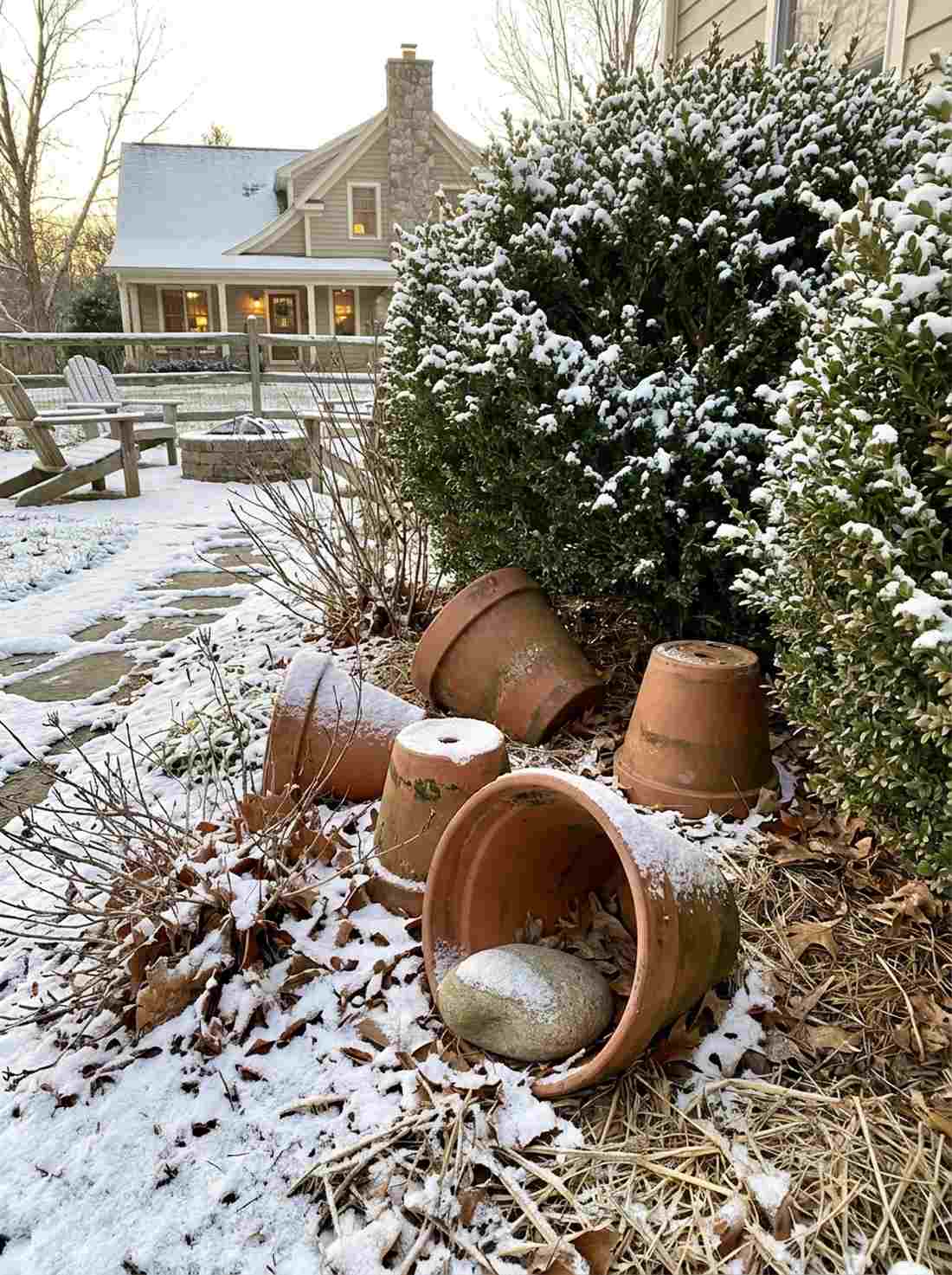
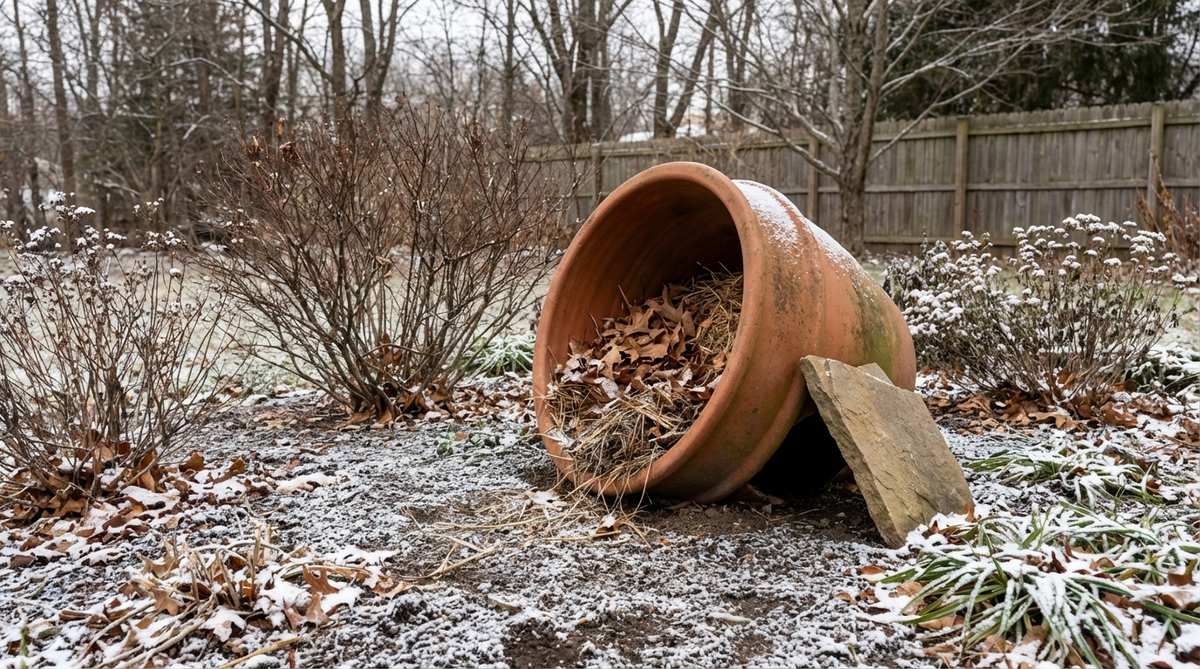
Tucked quietly under a snowy bush, this tiny terracotta dome looks like a secret fairy dwelling. Terracotta toad shelter pots add charming, miniature structural interest to dormant garden beds.
Repurposing cracked summer pots delivers a surprisingly premium look that brings narrative and whimsy to the frost. The thick clay acts as a phenomenal thermal mass, protecting beneficial garden amphibians from fatal freezing.
This setup costs absolutely nothing if you use old gardening supplies.
- Key Materials: Chipped terracotta pots, dry leaves
- Vibe / Style: Secret cottage garden
- Difficulty: Takes 2 minutes
- Budget Breakdown: Old pots: Free | Straw: $5
- Creator’s Tip: Prop up one side with a smooth river stone to create a perfectly sized entrance hole that won’t collapse.
- Smart Sourcing: natural river rock assortments and bulk organic garden straw.
Most people throw away their holiday greens, missing out on the best free landscaping hack of the year.
25. Evergreen Brush Piles
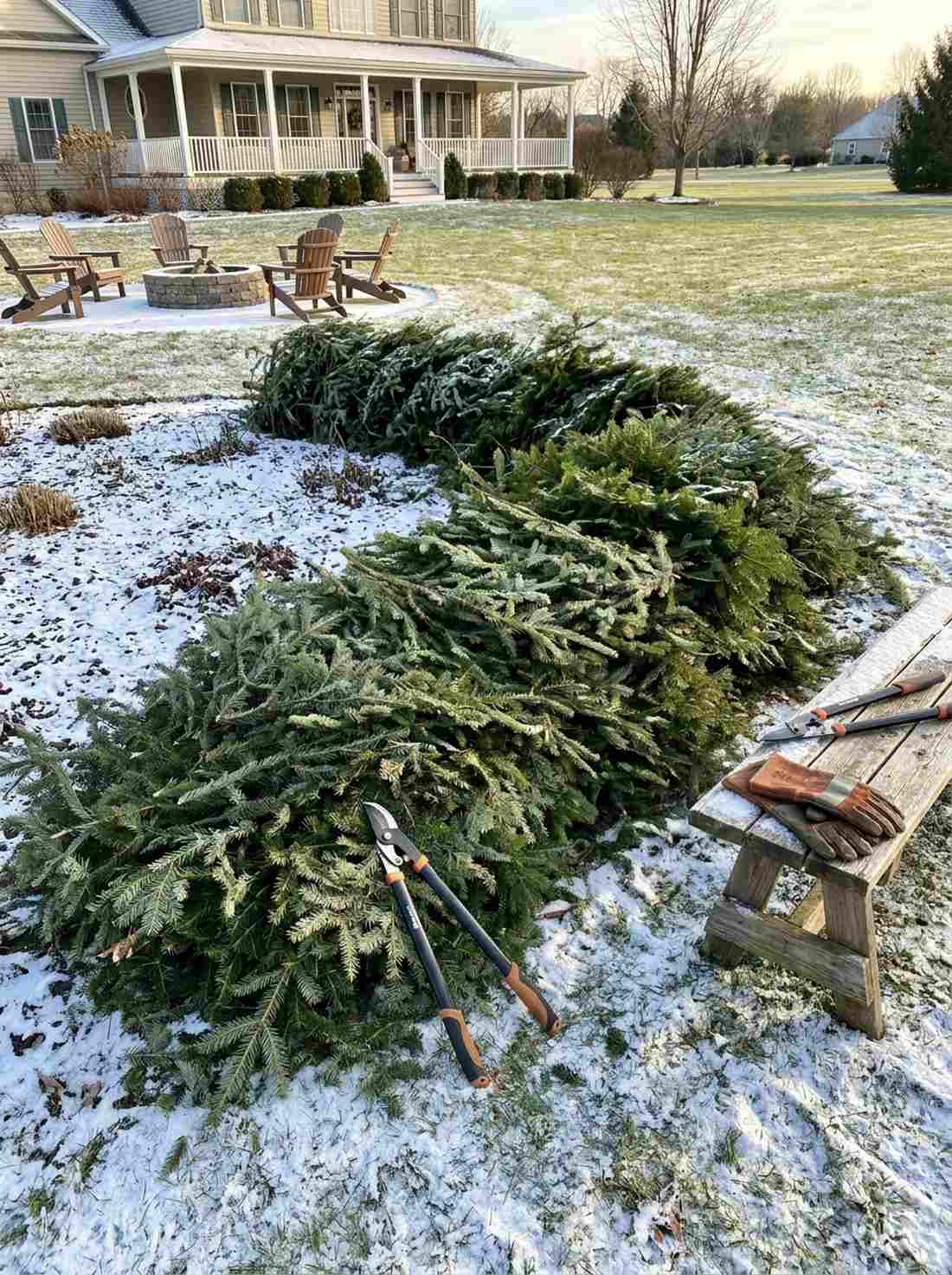
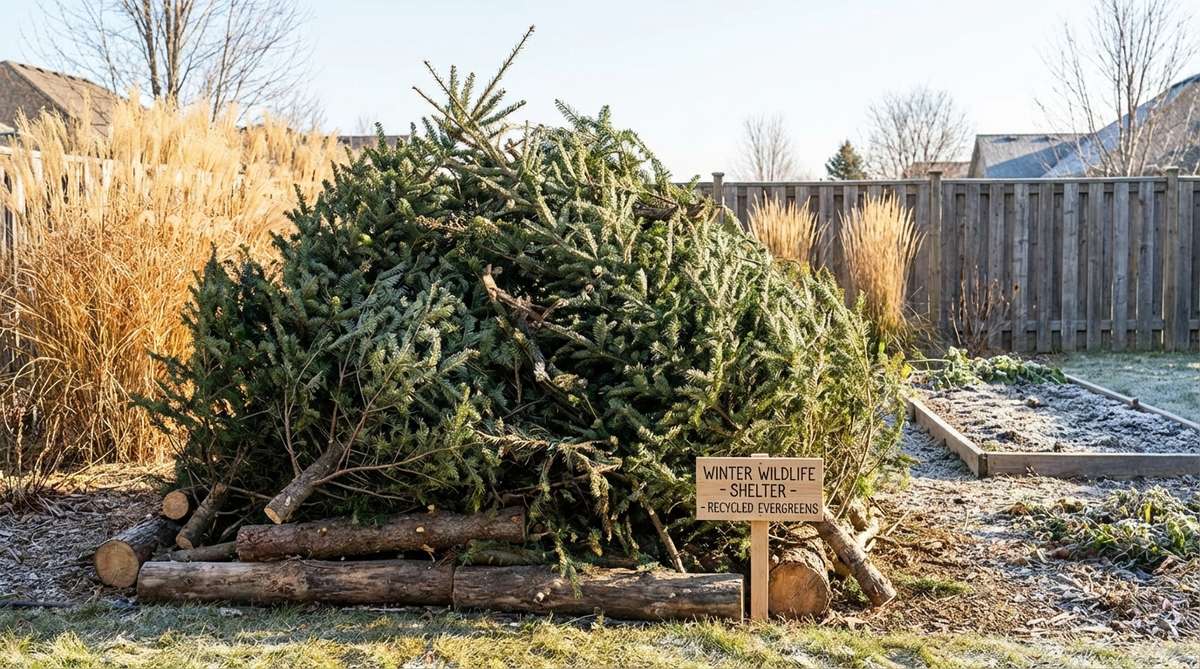
A sprawling mound of pine needles creates an earthy, textured blanket over stark, freezing ground. Recycled evergreen brush windbreaks are perfect for protecting delicate perennial roots in exposed garden beds.
Repurposing your discarded Christmas tree is the ultimate hack for free, nutrient-dense landscape armor. The interlocking branches trap snow, forming a literal igloo of insulation that keeps vital soil microbes alive.
This is a completely free zero-waste practice. Save this to your sustainable gardening board.
- Key Materials: Cut evergreen boughs, old Christmas trees
- Vibe / Style: Sustainable organic farm
- Difficulty: Loppers required
- Budget Breakdown: Boughs: Free | Effort: Moderate
- Creator’s Tip: Lay the heaviest branches down first to act as a skeletal frame, then weave the lighter, fluffier boughs over the top.
- Smart Sourcing: heavy-duty bypass loppers and thorn-proof leather gardening gauntlets.
26. Heated Birdbath Features
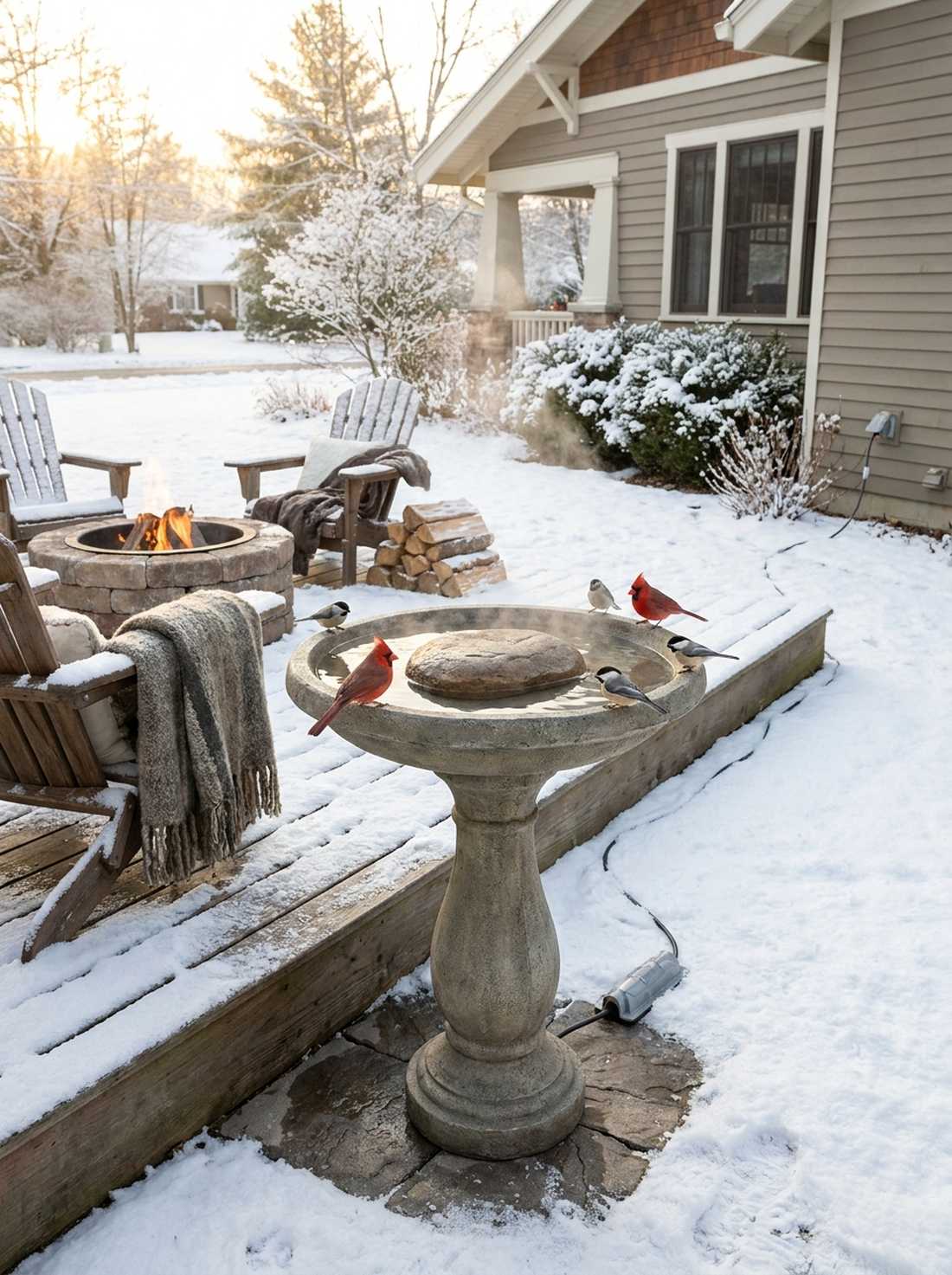
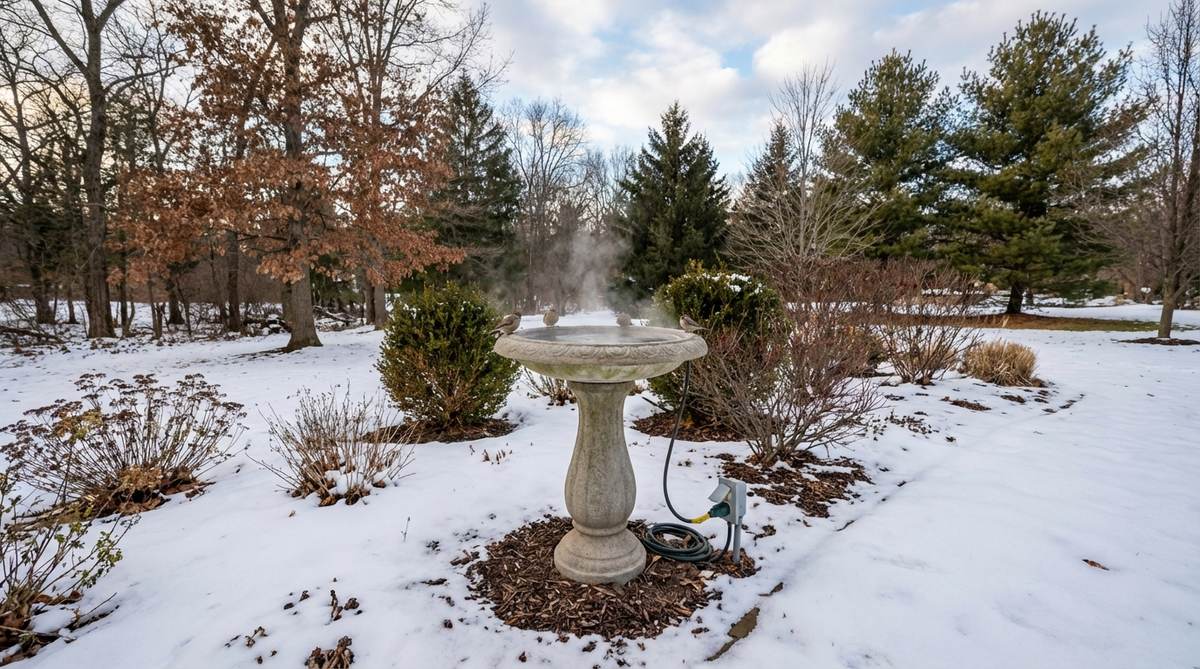
Seeing a gentle plume of steam rising from a stone basin on a zero-degree morning is magical. A thermostatic heated birdbath becomes a massive focal point when all natural water is frozen solid.
Offering open water creates incredible visual impact while drawing rare winter songbirds right to your patio. High-end heated resin basins completely bypass the cracking and splitting that destroys cheap ceramic bowls.
A reliable heated unit costs about $50–$90. Highly recommended for bird lovers.
- Key Materials: Plug-in heated resin birdbath
- Vibe / Style: Lively wildlife oasis
- Difficulty: Requires outdoor outlet
- Budget Breakdown: Bath unit: $75 | Outdoor cord: $25
- Creator’s Tip: Place a large flat rock in the center so smaller birds have a shallow island to drink from safely.
- Smart Sourcing: thermostatically controlled heated birdbaths and waterproof outdoor extension cord covers.
Material Guide: Cheap vs. Premium Aesthetic
Knowing exactly where to save and where to spend makes all the difference in achieving that “looks expensive but isn’t” vibe for your outdoor decor winter updates.
- Standard vs. UV-Resistant/Premium: Standard faux berries crack and turn pink in the sun. Upgrading to UV-coated artificial stems ensures your reds stay violently bright through March.
- Pre-made Kits vs. Sourcing Locally: Buying miniature garden supplies in bulk starter kits is drastically cheaper than buying individual wired stems and floral foam blocks from boutique craft stores.
Containers and Vertical Interest
27. Fluted Concrete Planters
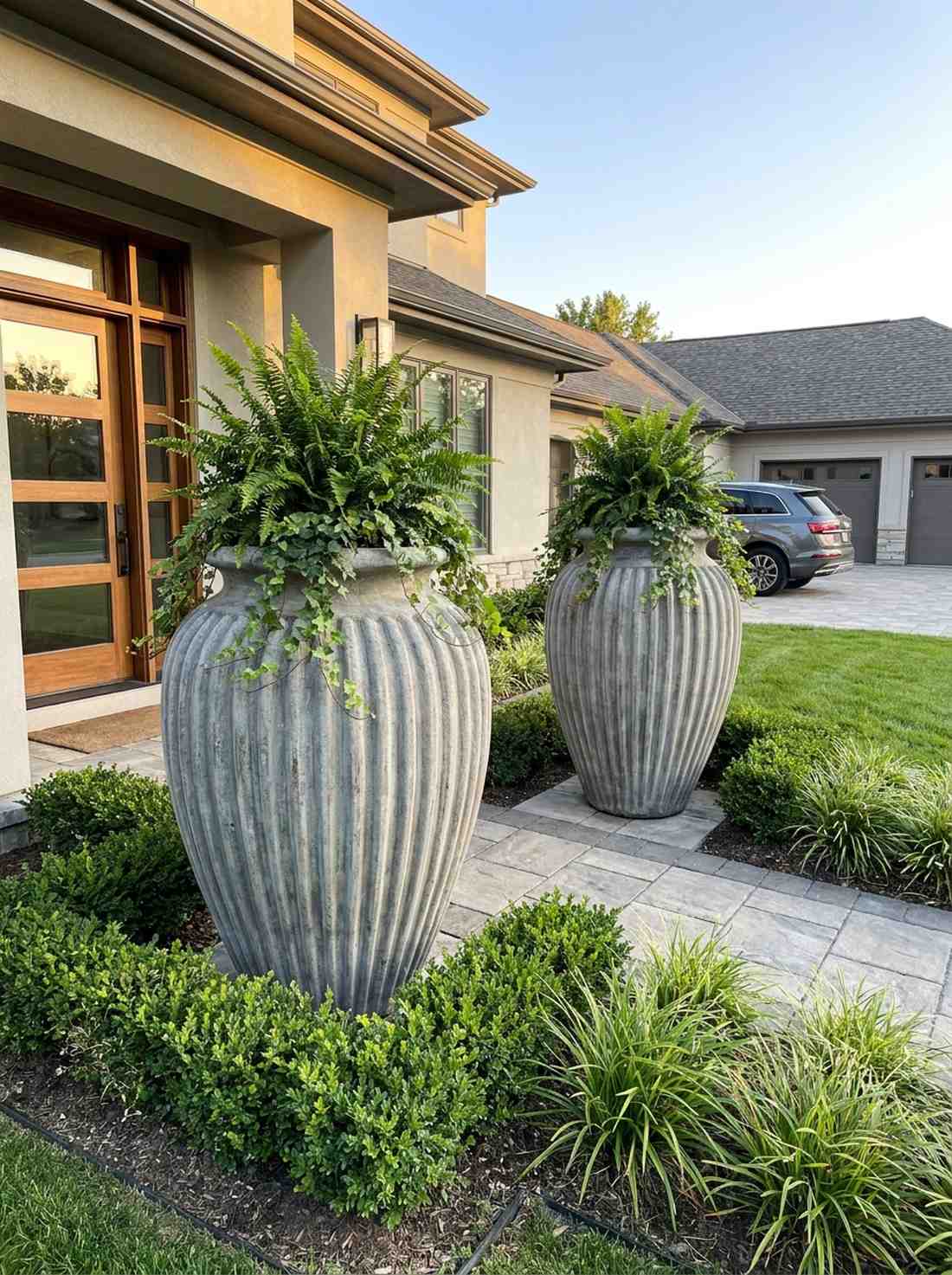
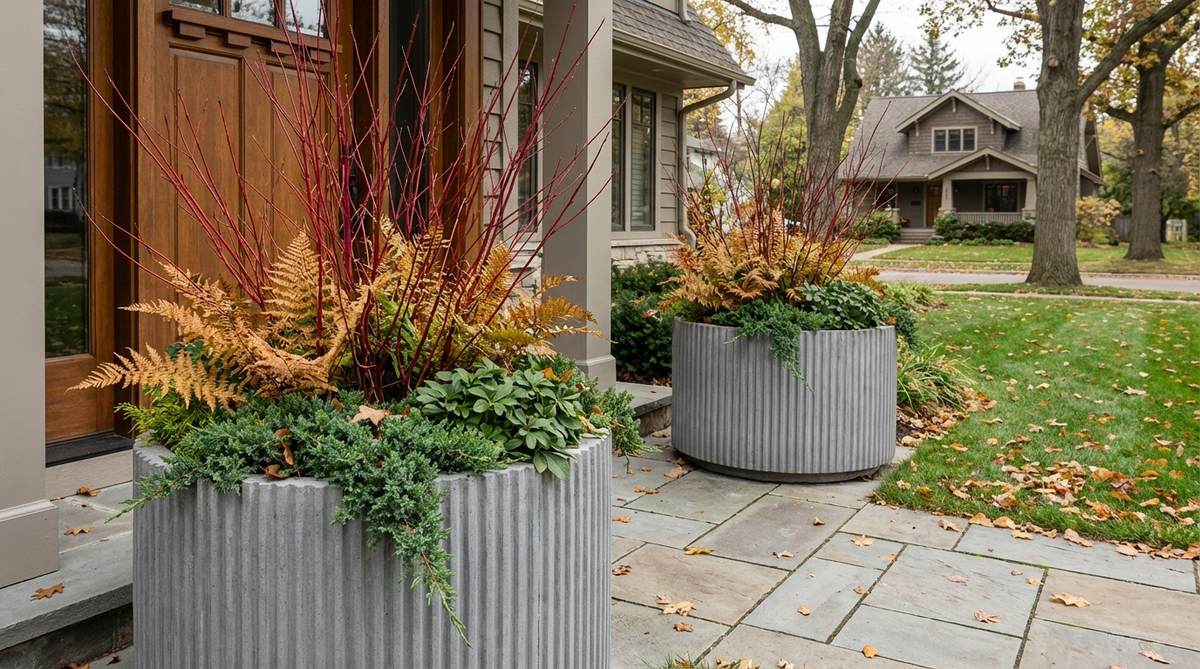
The heavy ribbed texture of cast stone provides serious architectural weight to a flimsy porch setup. Oversized fluted concrete urns look magnificent when flanking a wide driveway or framing a modern front door.
Investing in heavy-duty outdoor planters guarantees a designer-level finish that won’t blow over in a blizzard. The thick walls insulate root systems incredibly well, allowing hardy ferns to survive deep freezes.
Large cast stone planters can cost $100+, but resin alternatives mimic the look for $50. Pin this to your exterior facelift board.
- Key Materials: Fluted concrete or heavy resin planters
- Vibe / Style: Modern brutalist elegance
- Difficulty: Heavy lifting needed
- Budget Breakdown: Planter: $80 | Soil/Filler: $20
- Creator’s Tip: Fill the bottom half of the planter with empty crushed water bottles to save a fortune on potting soil and reduce the final weight.
- Smart Sourcing: lightweight fluted resin outdoor planters and bulk expanded clay drainage pebbles.
28. Topiary Ball Arrangements
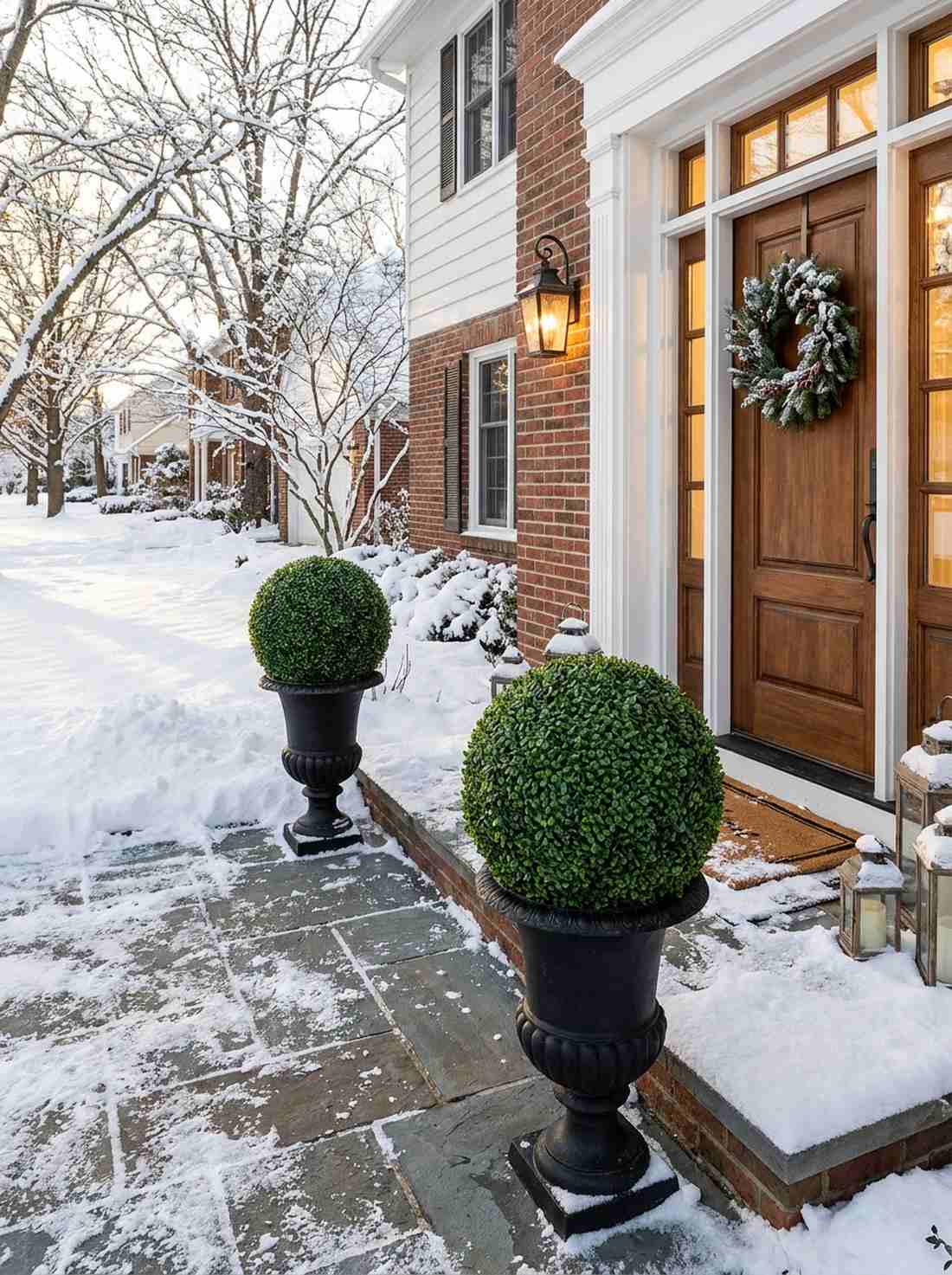
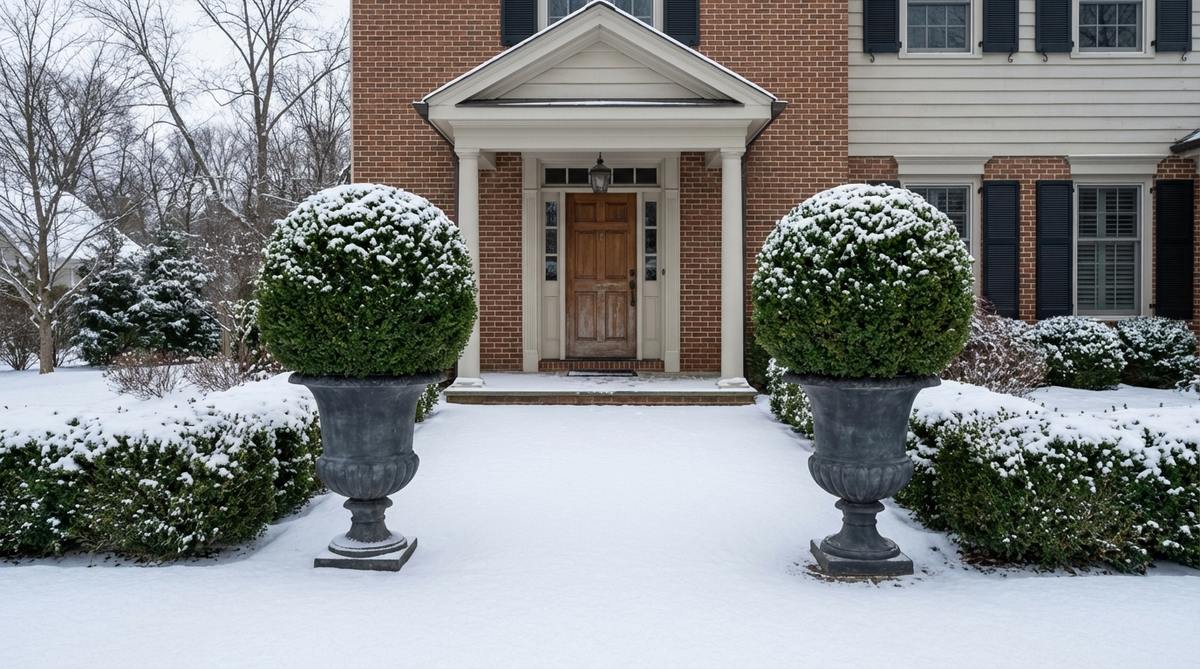
Perfectly spherical green globes resting in tall black urns scream high-end luxury. Faux boxwood topiary spheres are brilliant for creating stark, manicured symmetry on a snowy stoop.
Upgrading to UV-resistant artificial boxwood completely bypasses the cheap plastic look, requiring zero watering or pruning. These dense geometric shapes contrast beautifully against the wild, messy snow of the surrounding yard.
A pair of premium faux spheres costs roughly $40–$60.
- Key Materials: 15-inch UV-treated faux boxwood balls
- Vibe / Style: High-end luxury estate
- Difficulty: Drop-in ready
- Budget Breakdown: Spheres: $50 | Urns: $60
- Creator’s Tip: Zip-tie the plastic inner frame of the sphere to a heavy brick hidden inside the urn to prevent it from blowing away.
- Smart Sourcing: UV-resistant faux boxwood spheres (2-pack) and heavy-duty black zip ties.
29. Hanging Basket Evergreen Fills
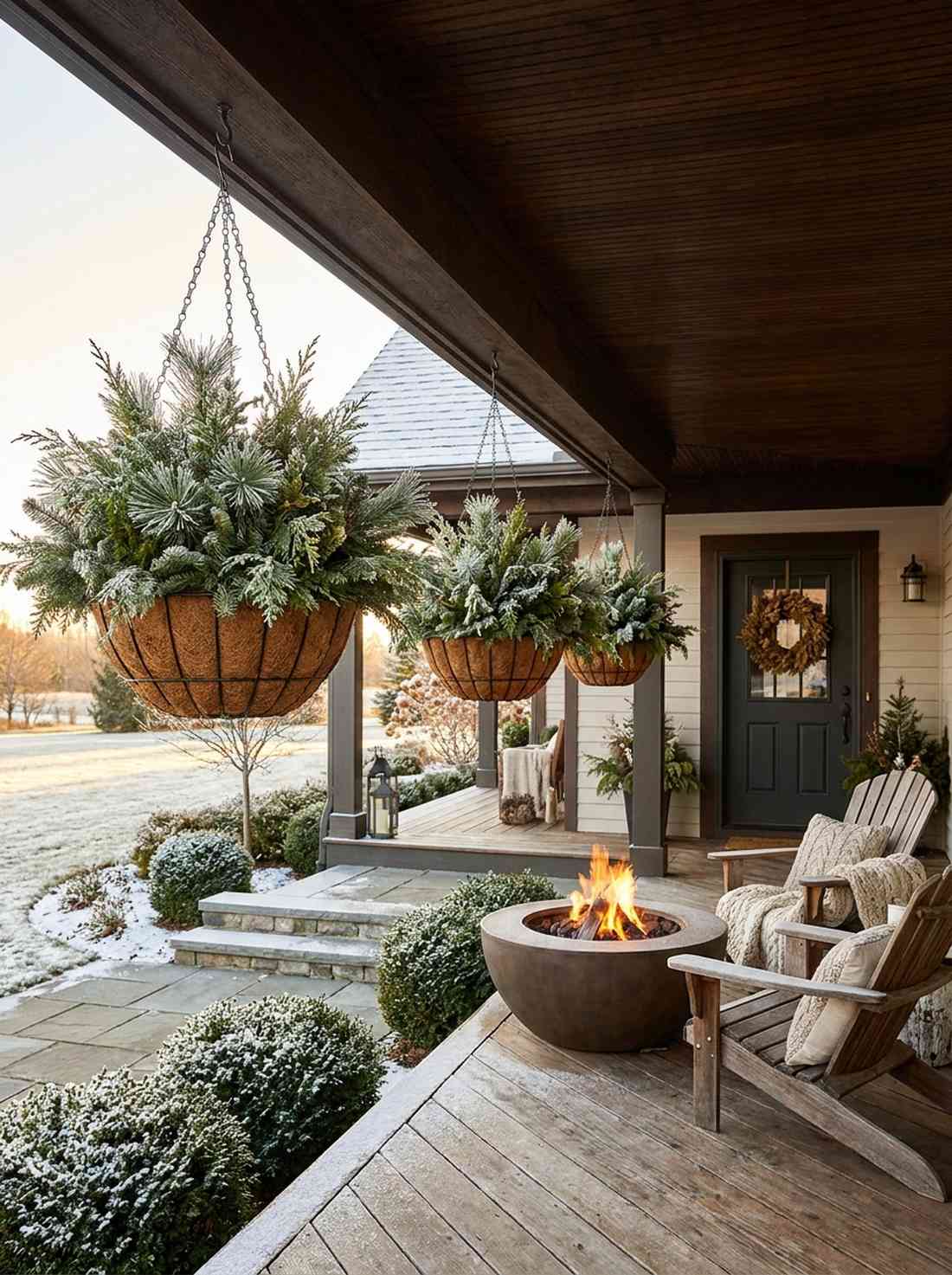
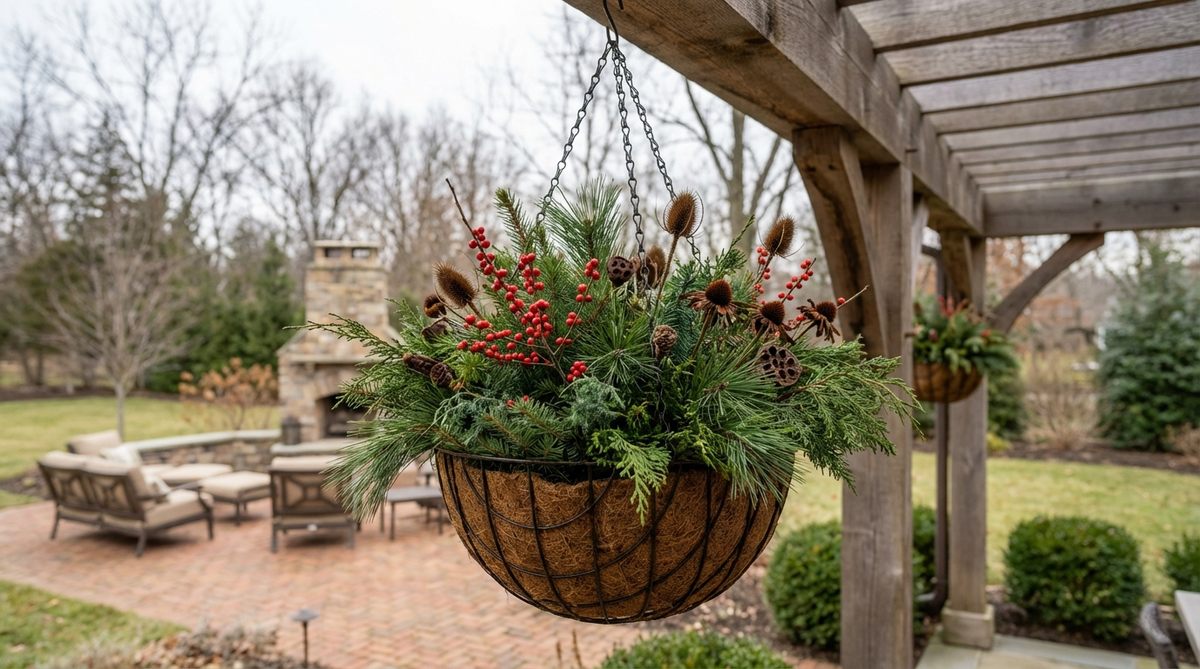
Suspended in the air, these overflowing bowls of frost-tipped pine look like floating forest crowns. Winter evergreen hanging baskets are perfect for adding eye-level texture beneath deep porch awnings.
Stuffing wire frames with diverse, hardy trimmings gives a florist-quality arrangement that lasts months in the cold. A coco-coir liner retains moisture perfectly, preventing your clipped stems from turning brown and brittle.
You can revamp your summer baskets for under $25 in fresh clippings. Save this for an easy weekend craft.
- Key Materials: Wire baskets, coco liners, mixed pine boughs
- Vibe / Style: Cozy suspended greenery
- Difficulty: Fun floral craft
- Budget Breakdown: Liners: $10 | Boughs: $15
- Creator’s Tip: Spray the finished arrangement with an anti-transpirant spray to lock the moisture into the cut needles.
- Smart Sourcing: replacement coconut coir basket liners and ready-to-use plant anti-desiccant spray.
30. Tall Ornamental Grass Clusters
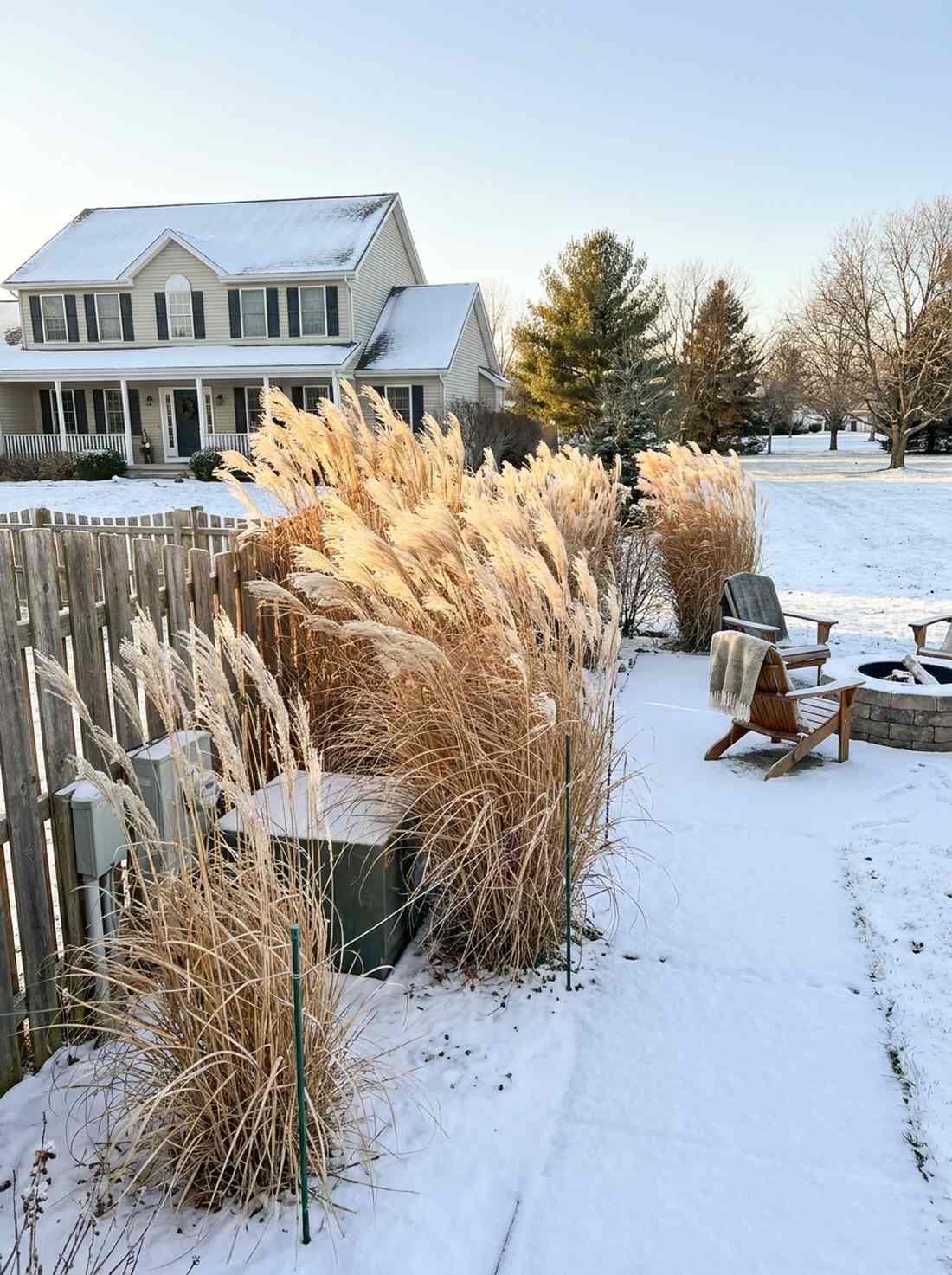
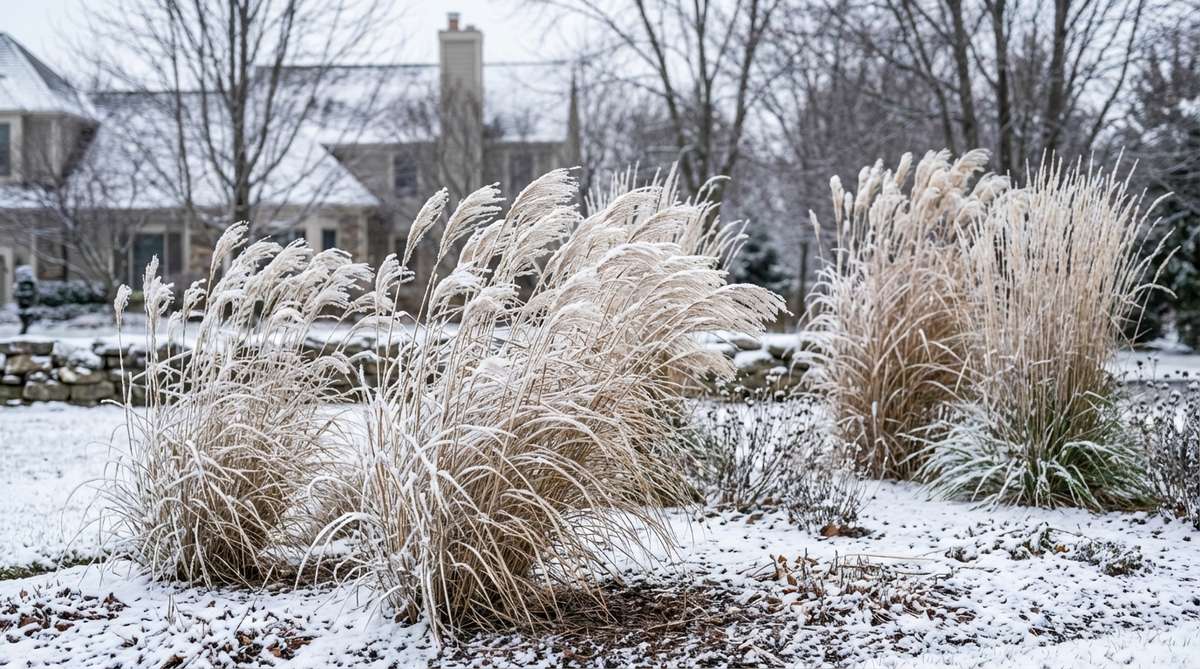
Golden, feathery plumes swaying violently in the winter wind bring dramatic kinetic energy to a dormant yard. Standing ornamental winter grass is spectacular for lining property borders or hiding ugly utility boxes.
Leaving perennials uncut is the ultimate hack for generating incredible vertical volume without spending a dime. The stiff stalks catch morning frost beautifully, turning your garden into a shimmering, icy prairie landscape.
Zero cost if already planted. It’s a fast upgrade that completely changes the vibe.
- Key Materials: Mature Miscanthus or Karl Foerster grass
- Vibe / Style: Wild prairie movement
- Difficulty: Requires leaving them alone
- Budget Breakdown: Cost: $0 | Maintenance: $0
- Creator’s Tip: Tie a loop of clear fishing line around the midsection of the clump to keep heavy snow from splitting it open.
- Smart Sourcing: invisible heavy-duty fluorocarbon line and discreet green garden stakes.
This next layout is the secret to making a cheap container look like a $200 florist delivery.
31. Winter Container Layering
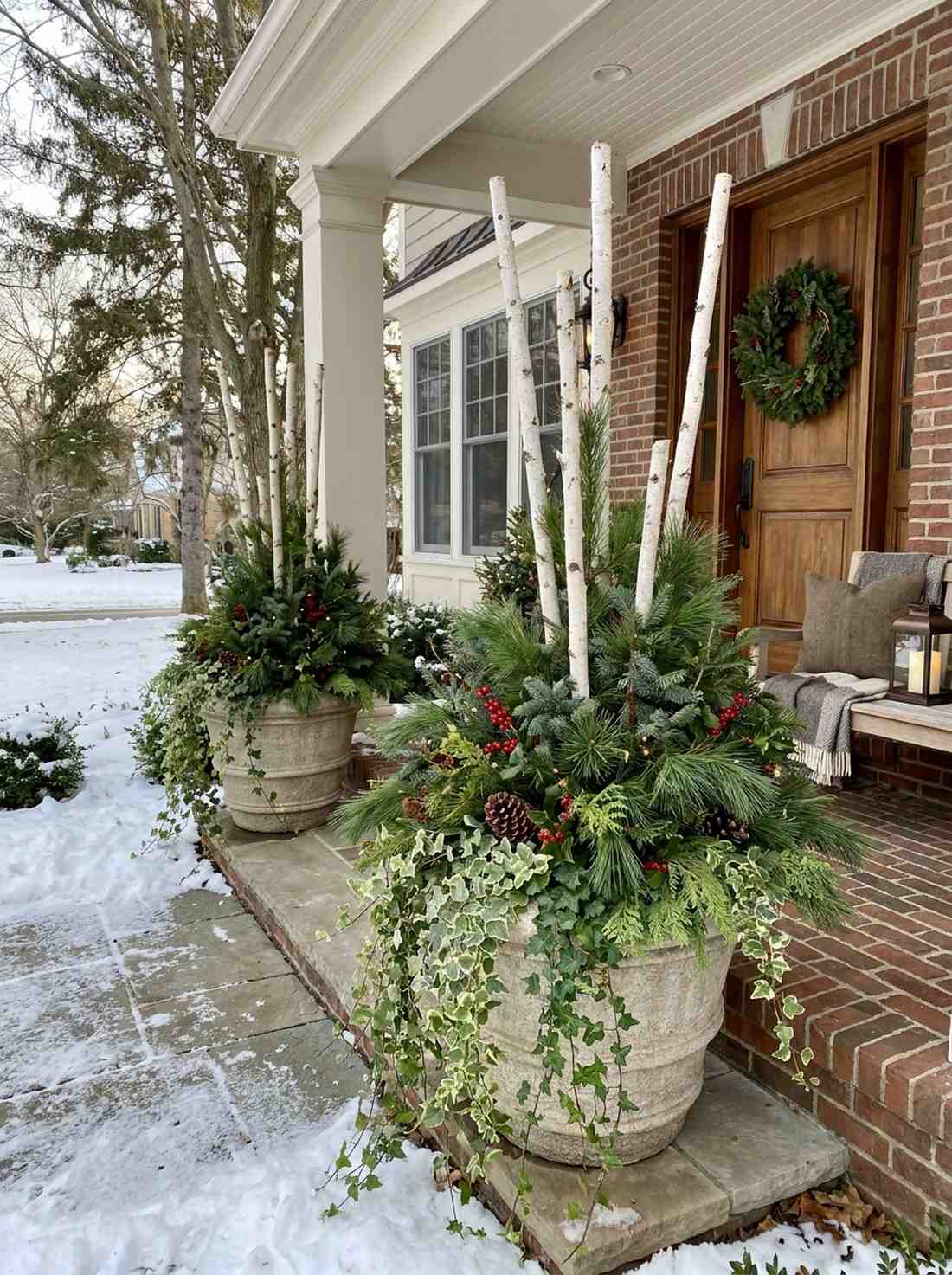
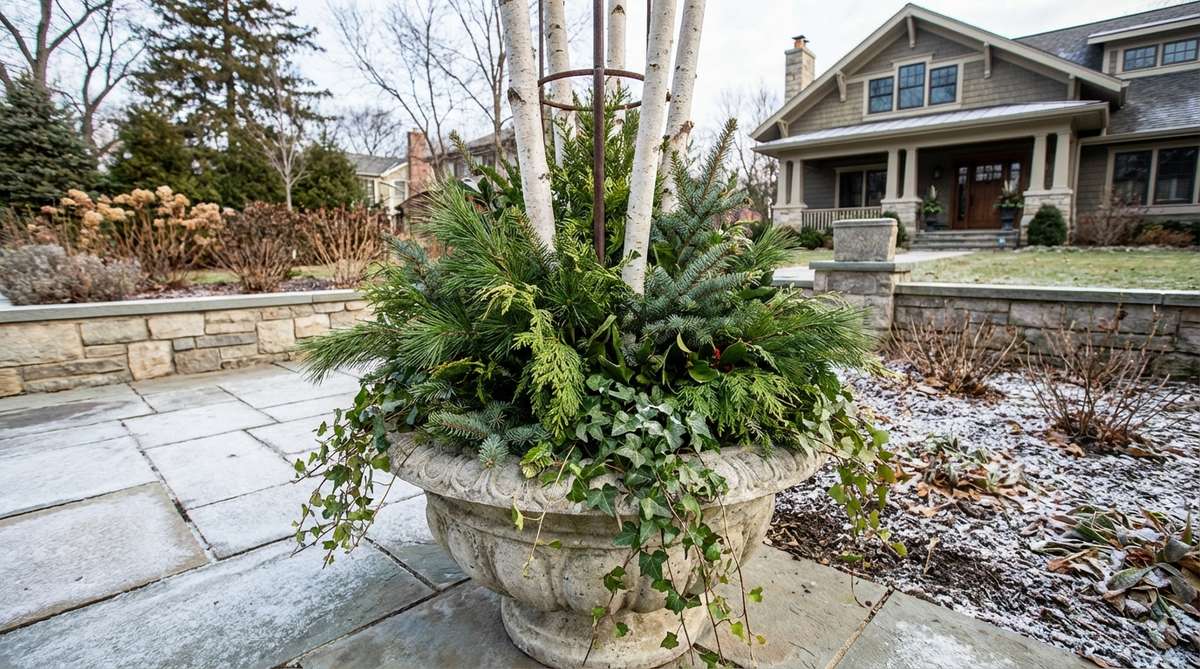
A towering explosion of birch, pine, and cascading ivy creates a masterpiece of organized chaos. Multi-level winter planter layering is the best strategy for creating a jaw-dropping focal point at your front steps.
Mastering the thriller-filler-spiller technique delivers a surprisingly premium look that dominates empty patio space. Plunging a thick piece of floral foam into the base ensures even the tallest birch branches won’t shift in a storm.
Building a massive, layered arrangement costs roughly $45 if you forage some greens.
- Key Materials: Birch poles, thick pine, trailing ivy
- Vibe / Style: Professional landscape design
- Difficulty: Requires artistic eye
- Budget Breakdown: Center poles: $20 | Greenery/Foam: $25
- Creator’s Tip: Strip the bottom 4 inches of needles off your branches before shoving them into the foam for a much tighter grip.
- Smart Sourcing: dry floral foam blocks (bulk pack) and heavy-duty bypass pruning shears.
Artisan Touches and Sculptural Accents
32. Corten Steel Sculptures
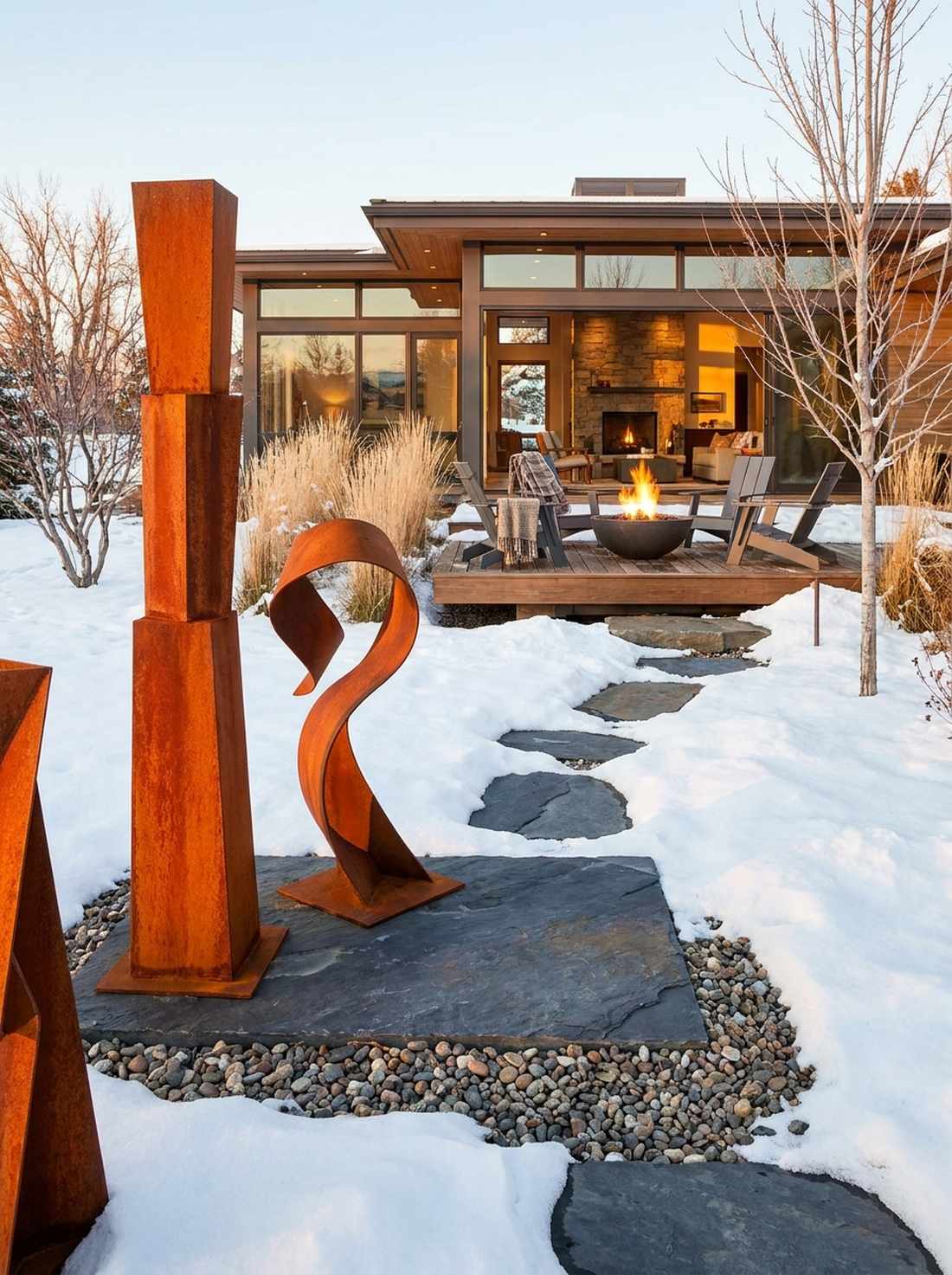
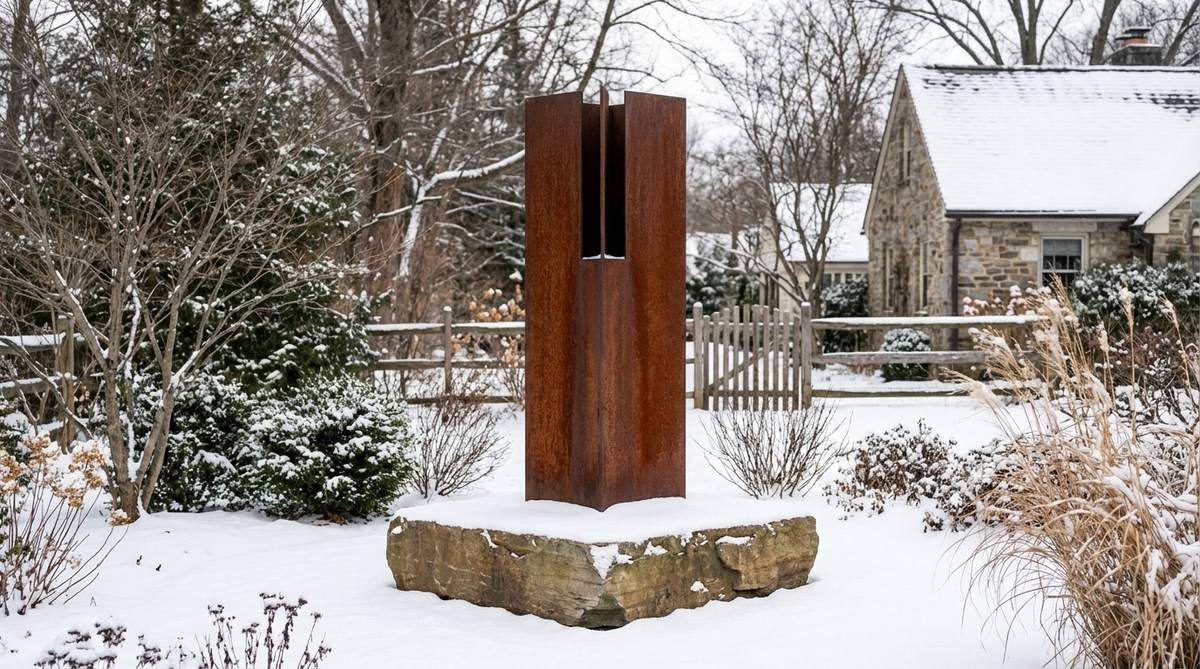
The fiery orange rust standing against a blanket of pure white snow creates a breathtaking modern contrast. Weathering steel garden art acts as an unbelievable anchor for minimalist or contemporary landscapes.
Investing in raw, oxidizing metal looks far more expensive than standard painted yard ornaments. The alloy actually protects itself as it rusts, meaning this premium sculptural piece requires absolutely zero winter maintenance.
Small to medium steel pieces start around $70–$150. Pin this if you want a bold, modern yard!
- Key Materials: Raw Corten steel silhouettes
- Vibe / Style: Modern architectural gallery
- Difficulty: Set and forget
- Budget Breakdown: Sculpture: $100 | Base stone: $15
- Creator’s Tip: Place the sculpture on a slab of slate or gravel so the rust runoff doesn’t permanently stain your concrete patio.
- Smart Sourcing: pre-rusted Corten steel garden panels and natural slate stepping stones.
33. Stone Statuary and Urns
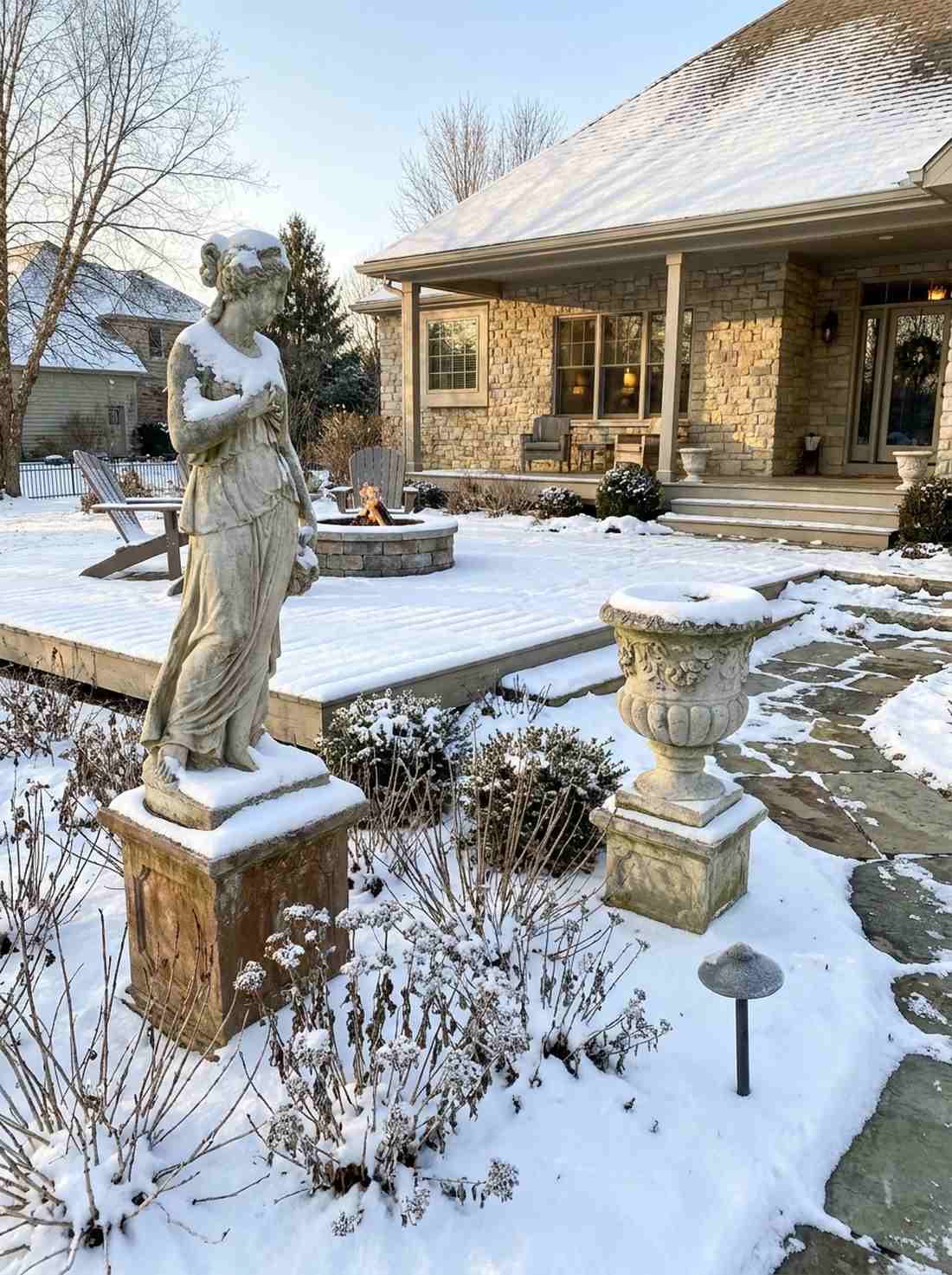
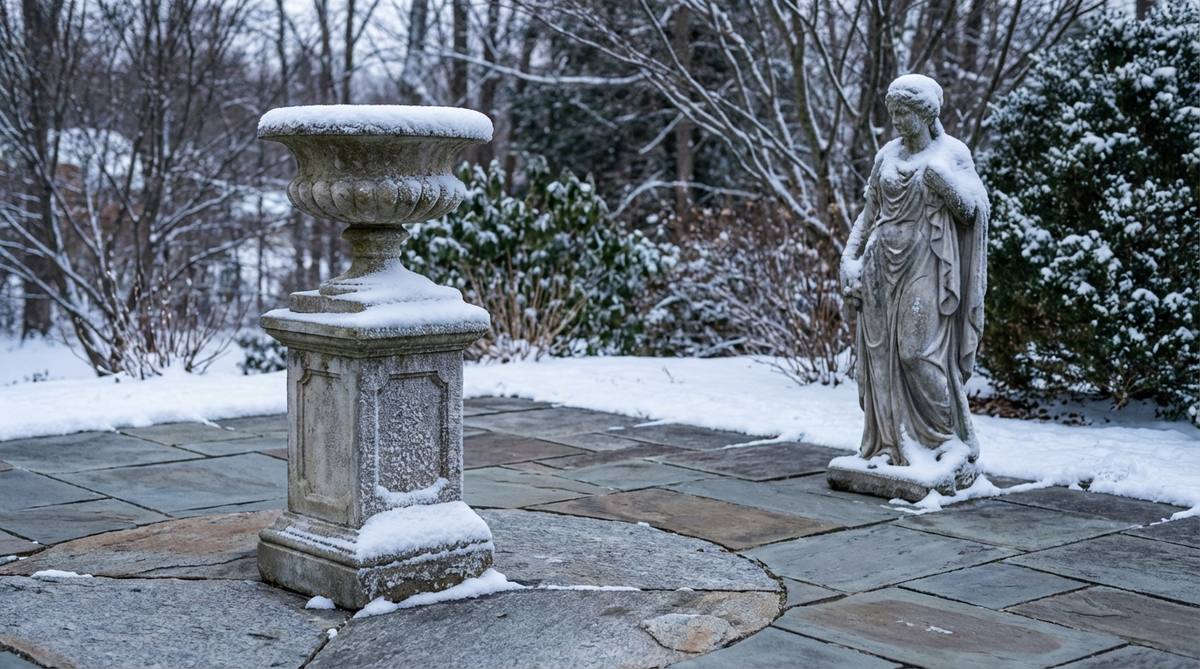
A snow-capped classical goddess or heavy limestone chalice brings an air of ancient romance to a dead garden. Classical stone winter statuary works brilliantly tucked into corners of bare, sleeping perennial beds.
Sealing dense concrete or granite correctly guarantees your curb appeal survives the frost without crumbling. The stark white of winter perfectly highlights the intricate carvings that usually get lost behind summer foliage.
Quality cast stone pieces run $80–$200, but last generations.
- Key Materials: Cast stone or solid granite pieces
- Vibe / Style: Romantic ancient ruins
- Difficulty: Extremely heavy placement
- Budget Breakdown: Statue: $120 | Sealant: $25
- Creator’s Tip: Paint a penetrating masonry sealer on the statue in late autumn to prevent micro-cracks from expanding during freeze-thaw cycles.
- Smart Sourcing: invisible penetrating concrete sealer and classic cast-stone garden pedestals.
34. Outdoor Candle Lanterns
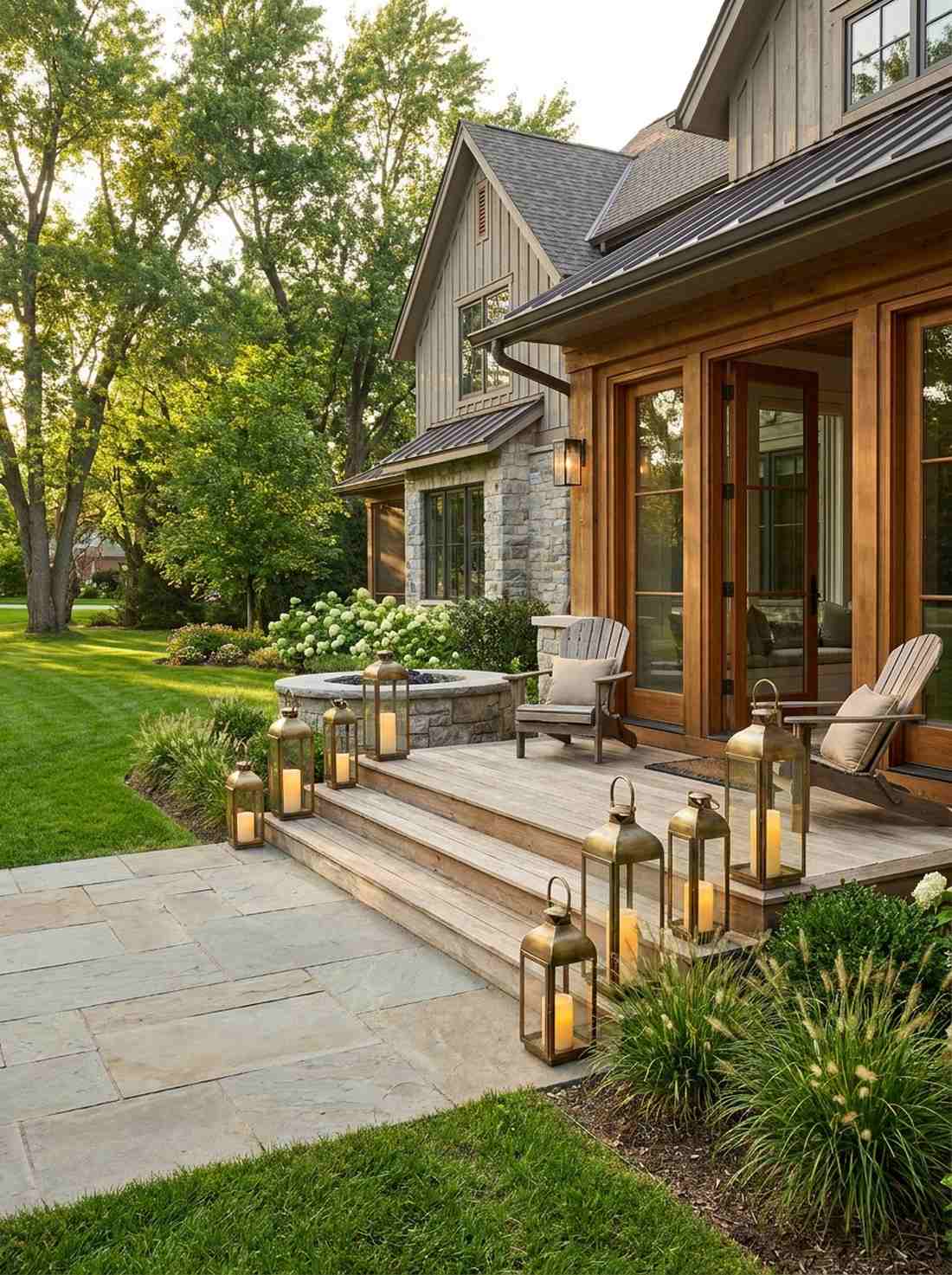
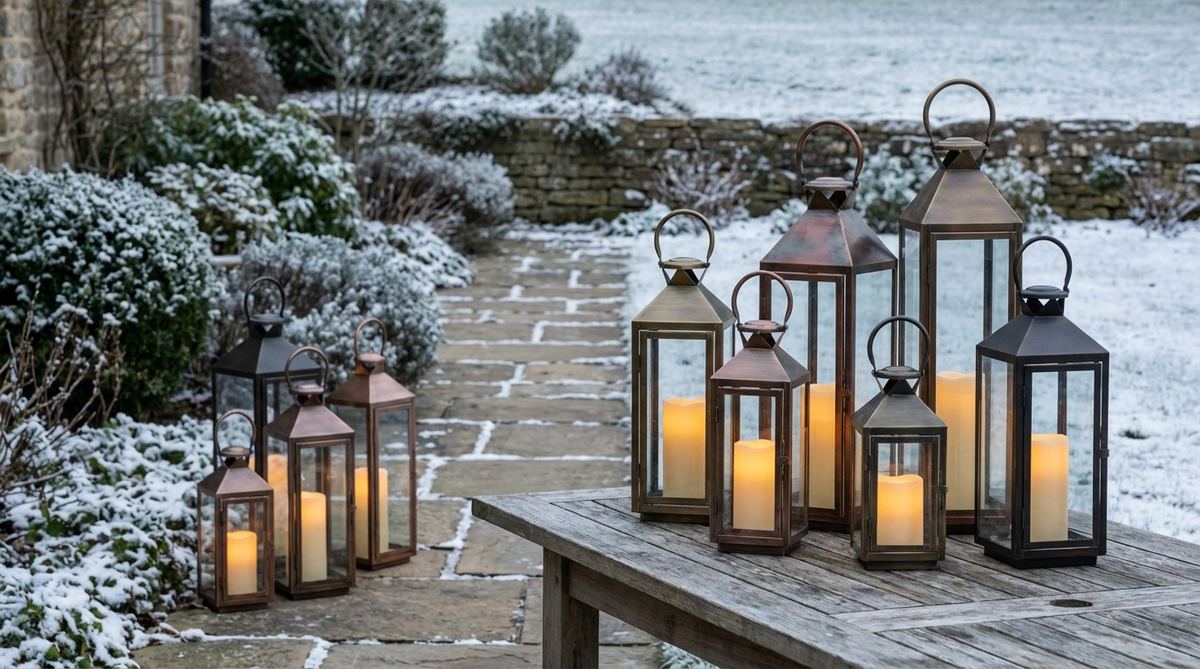
Clustered heavily on the stairs, these brass and glass towers look incredibly inviting and expensive. Oversized metal floor lanterns are the ultimate way to bracket a wide porch or frame a doorway.
Scaling up to massive, 24-inch enclosures completely bypasses the cheap plastic look of tiny tabletop candleholders. Outfitting them with remote-controlled weatherproof pillars provides instant mood lighting without ever striking a match.
A set of three varied height lanterns costs around $80–$120. Save this idea for a luxury entryway upgrade.
- Key Materials: Large brass/black metal lanterns
- Vibe / Style: Upscale resort entrance
- Difficulty: Simple grouping
- Budget Breakdown: Lantern trio: $90 | Faux candles: $30
- Creator’s Tip: Buy lanterns without glass panes if you live in high-wind areas to completely eliminate the risk of shattering.
- Smart Sourcing: oversized outdoor floor lanterns (set of 3) and remote-controlled resin outdoor candles.
35. Vintage Farm Implements
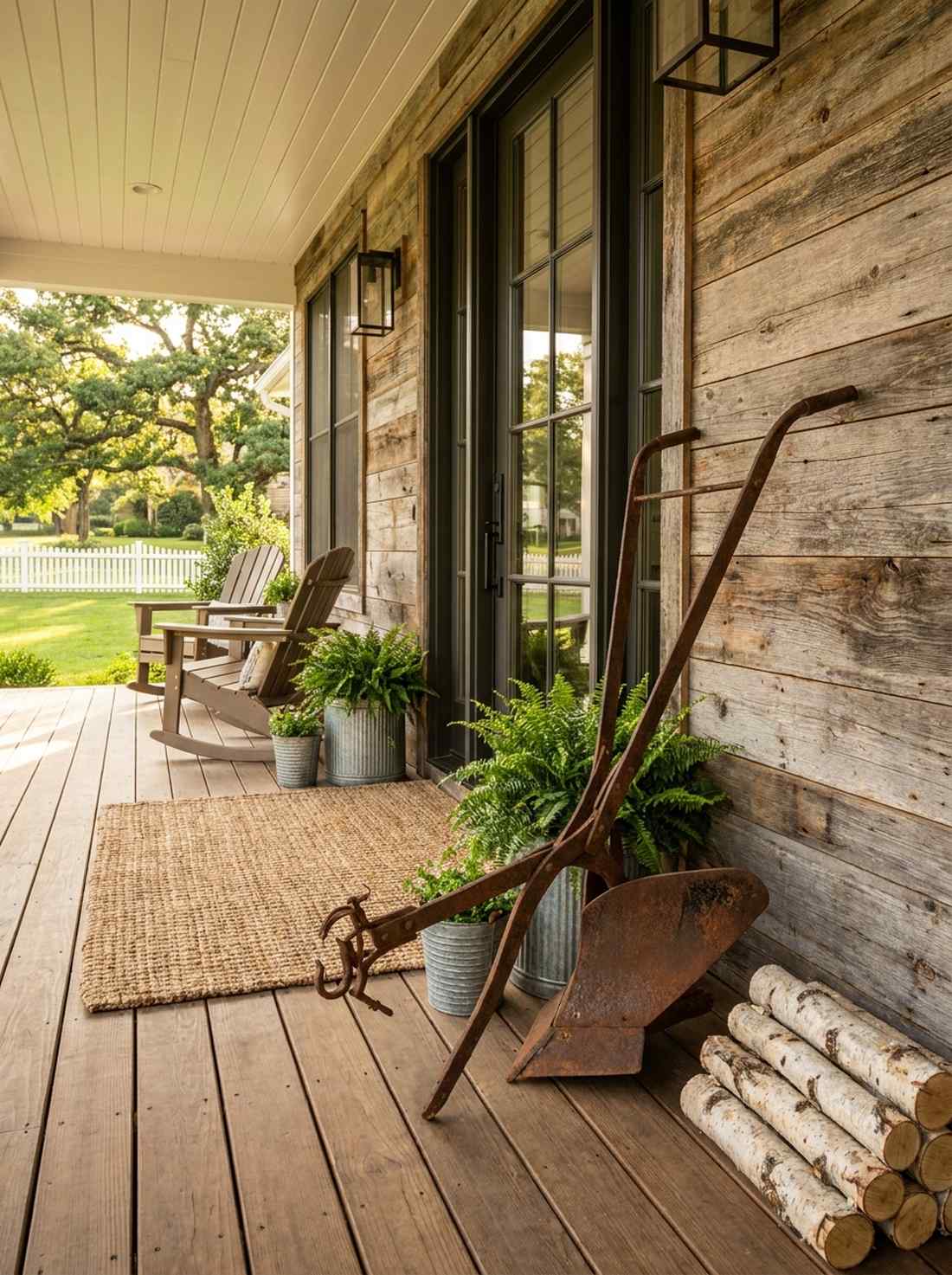
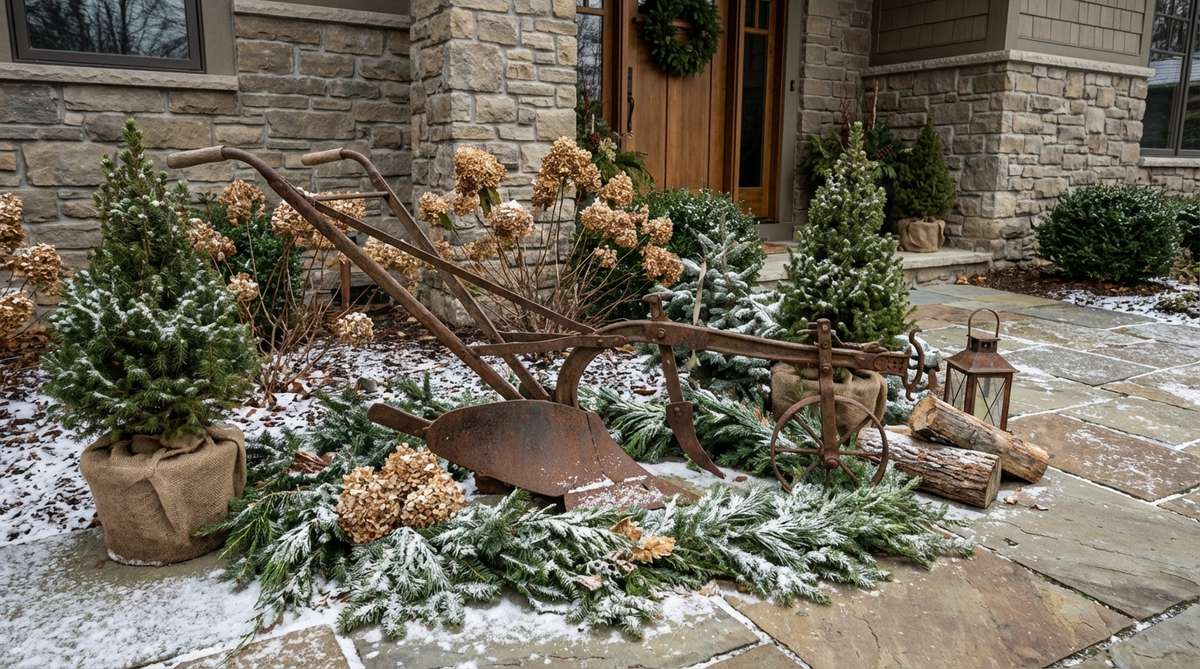
An oxidized antique milk can or iron hand plow leans by the door, dripping with rustic Americana history. Restored farm tool porch decor adds heavy, authentic texture to modern farmhouse aesthetics.
Hunting down genuine agricultural salvage delivers a designer-level finish that mass-produced replicas simply cannot touch. A quick clear-coat spray freezes the rusty patina in time, preventing it from bleeding onto your porch boards.
Scouring local flea markets can land you incredible pieces for $30–$50.
- Key Materials: Antique milk cans, wagon wheels, or plows
- Vibe / Style: Authentic Americana heritage
- Difficulty: Rust treatment required
- Budget Breakdown: Antique tool: $40 | Clear coat spray: $10
- Creator’s Tip: Use a wire brush to knock off the loose, flaky rust before spraying it with matte polyurethane.
- Smart Sourcing: matte finish rust-stopping clear enamel and stiff heavy-duty wire brushes.
Bringing It All Together
Building a high-end exterior doesn’t require a massive landscaping budget if you know how to source materials. By utilizing these 35 specific blueprints—blending structural evergreens, weather-proof outdoor lighting kits, and heavy-duty faux arrangements—you can force an expensive, intentional look year-round. Start by grabbing a bulk pack of faux stems or a quality solar lantern kit, and transform your bare winter porch into a premium visual asset today.
Frequently Asked Questions
How long can fresh evergreen garland last outdoors in winter?
Freshly cut cedar and pine can hold their vibrant color for up to 12 weeks if the temperature stays near freezing. To maximize this, avoid the craft store markup and buy bulk nursery cuttings. Treat the needles with a heavy-duty anti-desiccant spray to lock in moisture, which prevents them from turning brown and brittle prematurely.
What plants survive in outdoor containers through US winters?
If you want a premium aesthetic that doesn’t die in December, invest in cold-hardy evergreens like dwarf Alberta spruce, ornamental kale, or UV-resistant artificial boxwood. You must upgrade to thick, freeze-resistant fiberglass planters and use soil heavily amended with bulk perlite so the expanding ice doesn’t crush the root systems.
Are solar lights effective during winter months?
Yes, but you have to stop buying cheap dollar-store stakes. High-end, sub-zero rated solar pathway lights equipped with lithium batteries charge perfectly even on overcast days. Position the monocrystalline panels directly south to capture the low winter sun, ensuring you get 6-8 hours of high-lumen, warm white output.
How do I prevent outdoor decor from blowing away in winter winds?
Ditch the fragile twine and invest in professional outdoor floral wire starter kits. Weigh down the base of your decorative planters with heavy bulk gravel or hidden bricks. For door items and hanging baskets, utilize heavy-duty magnetic hooks and coated steel zip ties that won’t snap when the temperatures drop below freezing.
Can I leave outdoor winter decor up through early spring?
Absolutely, which is why styling with neutral elements like white birch logs, galvanized metal tubs, and warm-toned fairy light kits is so cost-effective. These transitional pieces bridge the gap perfectly. Simply pull down the dead organic materials in March and replace them with early spring bulbs inside your existing heavy-duty planters.