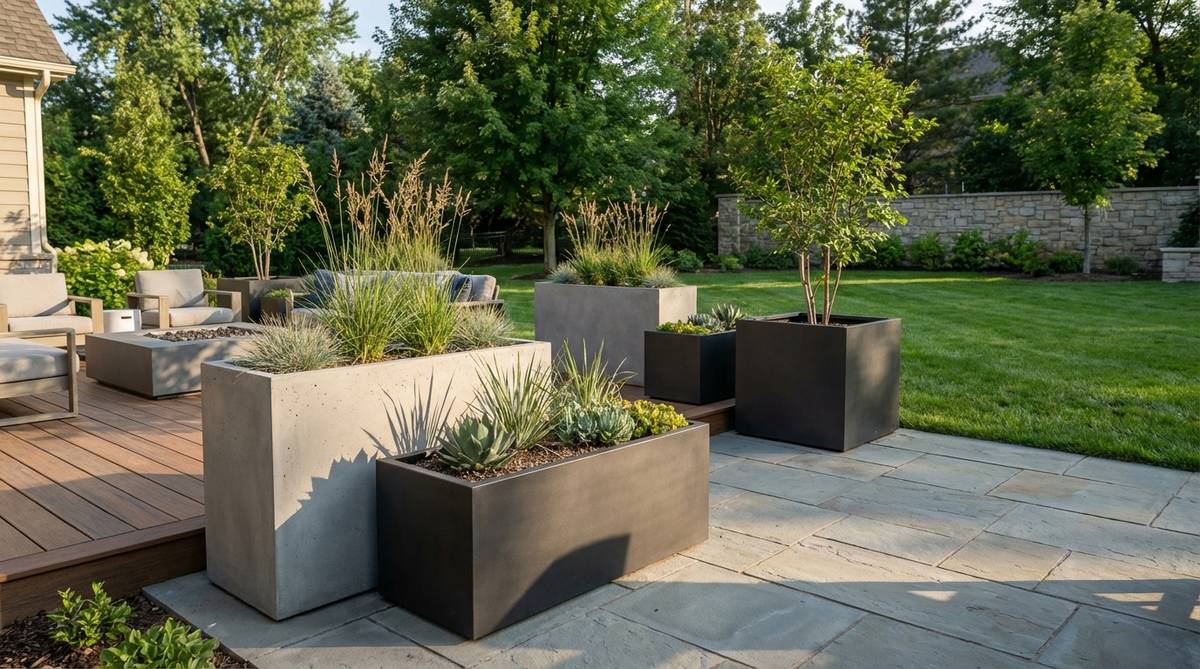
Outdoor decor planters serve as architectural elements that define spaces while showcasing greenery in contemporary settings. Fresh Garden Ideas presents this curated collection of modern planter designs that combine clean-lined containers with strategic plant selections to elevate your exterior environments.
Design SnapshotKey Principles
- Scale and Proportion: Oversized planters anchor spaces while clusters of varied sizes create visual rhythm
- Material Selection: Fiberglass, aluminum, and composite materials offer durability with minimal weight
- Plant Pairing: Combine structural foliage with cascading textures for dimensional interest
- Strategic Placement: Position planters to frame entries, define boundaries, or serve as focal points
Statement Planters for Entries and Focal Points
Entry planters establish the design vocabulary for your entire outdoor space. Designers position these containers to frame doorways and guide movement through the landscape.
1. Oversized Cube Planters with Japanese Maple
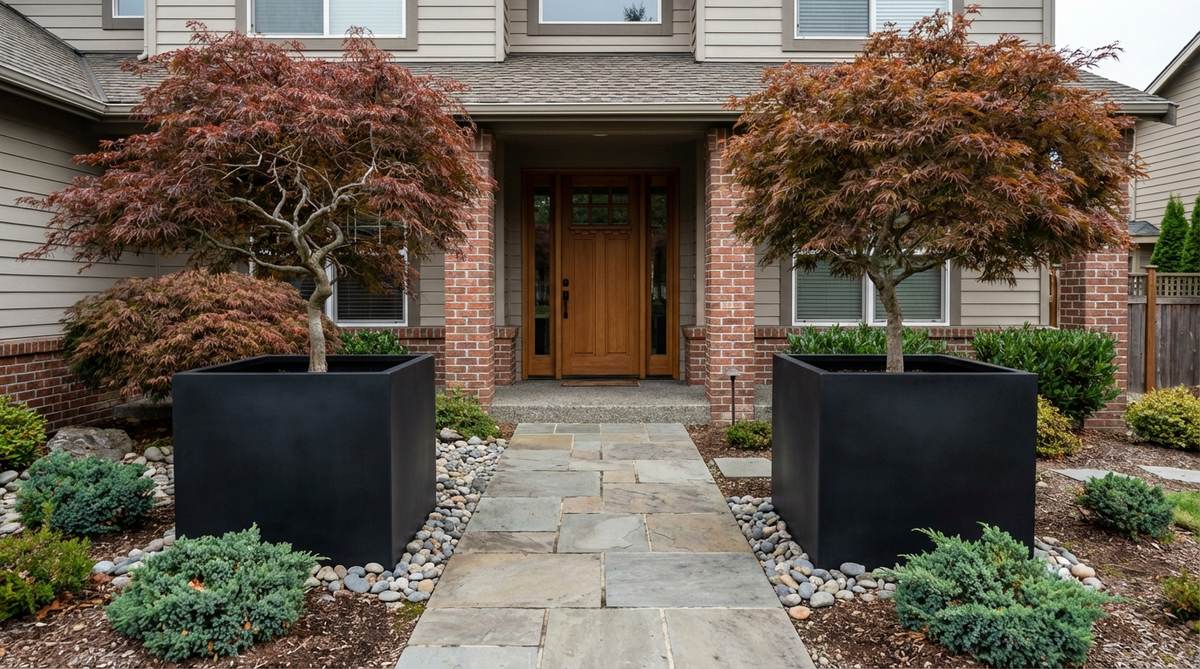
Extra-large cube planters in matte black fiberglass provide substantial visual weight for flanking front entries. The geometric form contrasts with the delicate branching structure of Japanese maples.
Plant Acer palmatum varieties in 24-30 inch cubes for instant impact. These planters accommodate root systems while maintaining portability through lightweight construction.
The pairing creates year-round interest through seasonal foliage changes. Underplant with low-growing sedums or creeping thyme to soften the base.
2. Tall Cylinder Planters with Ornamental Grasses
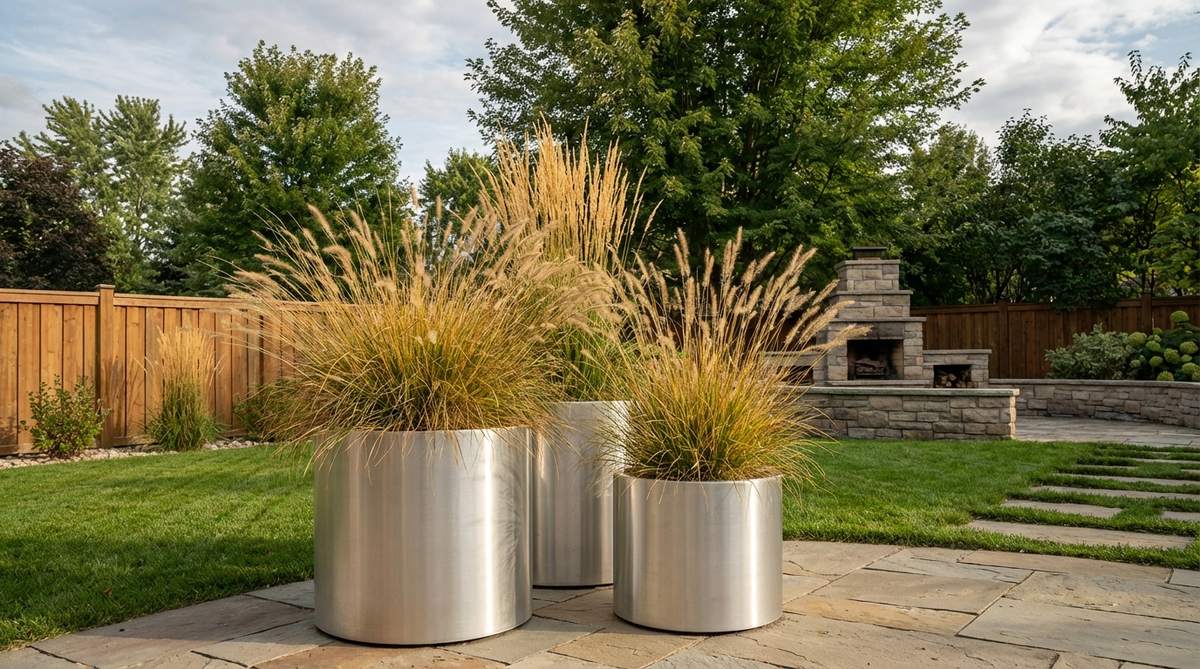
Cylindrical planters in brushed aluminum finish stand 36-48 inches tall for vertical emphasis. The reflective surface amplifies light while grasses introduce movement.
Fill with fountain grass or maiden grass that arches gracefully over the rim. Height variations create rhythm when arranged in groupings of three or five.
3. Low-Profile Round Bowls with Succulent Displays
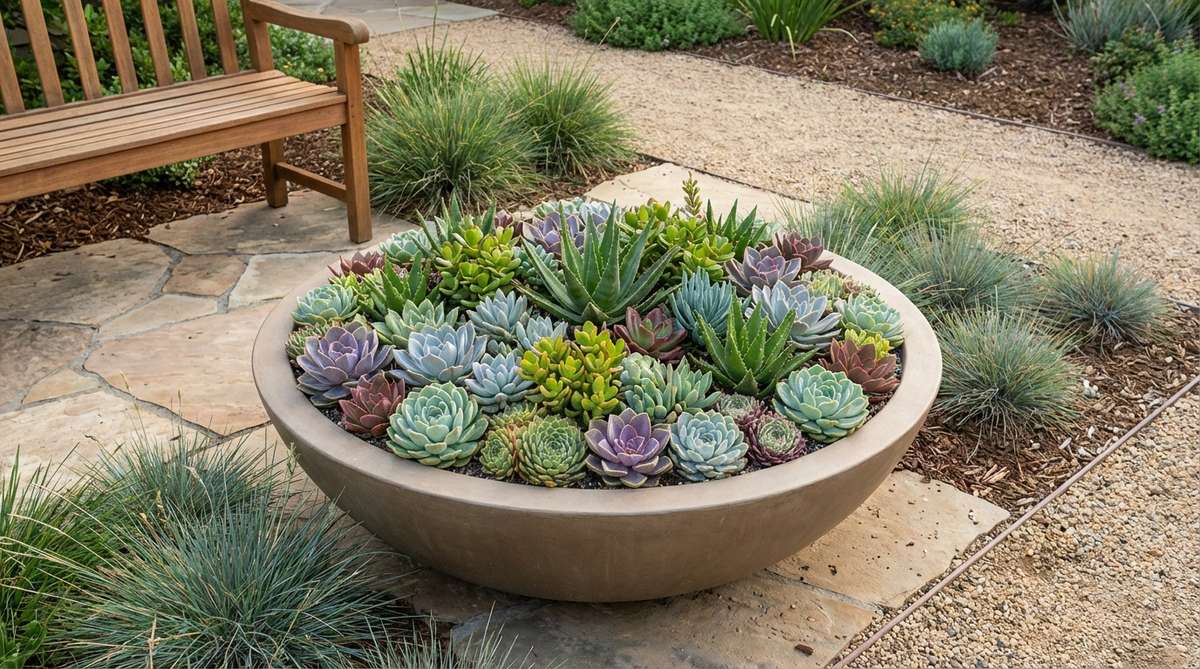
Wide, shallow bowls in concrete finish measure 30-36 inches across and 10-12 inches deep. The low profile draws attention to plant arrangements rather than containers.
Create succulent gardens using varied textures and colors in radial patterns. This layout works for entryways where overhead clearance is limited.
4. Rectangular Trough Planters for Linear Arrangements
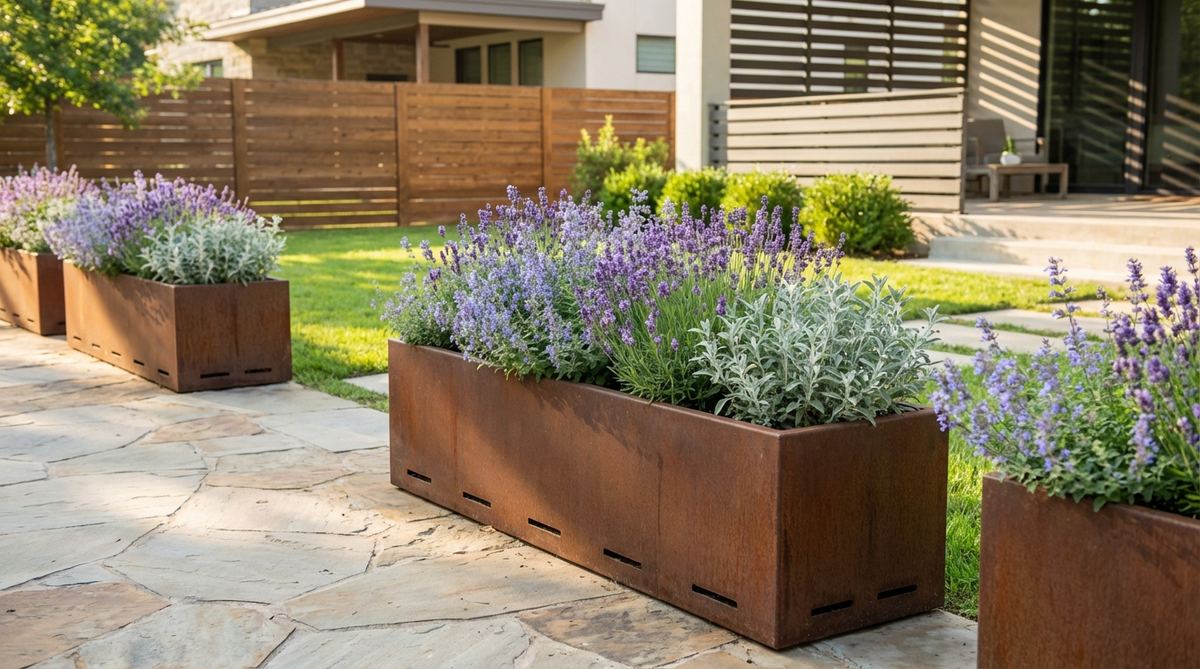
Long rectangular planters in weathered steel measure 48-72 inches in length. These troughs define edges along walkways or divide patio zones.
Plant in drifts using single species for cohesive visual flow. Lavender, catmint, or ornamental sage provide consistent texture across the length.
The elongated format emphasizes horizontal lines in modern architecture. Drainage systems built into the base prevent waterlogging.
5. Paired Urns with Symmetrical Plantings
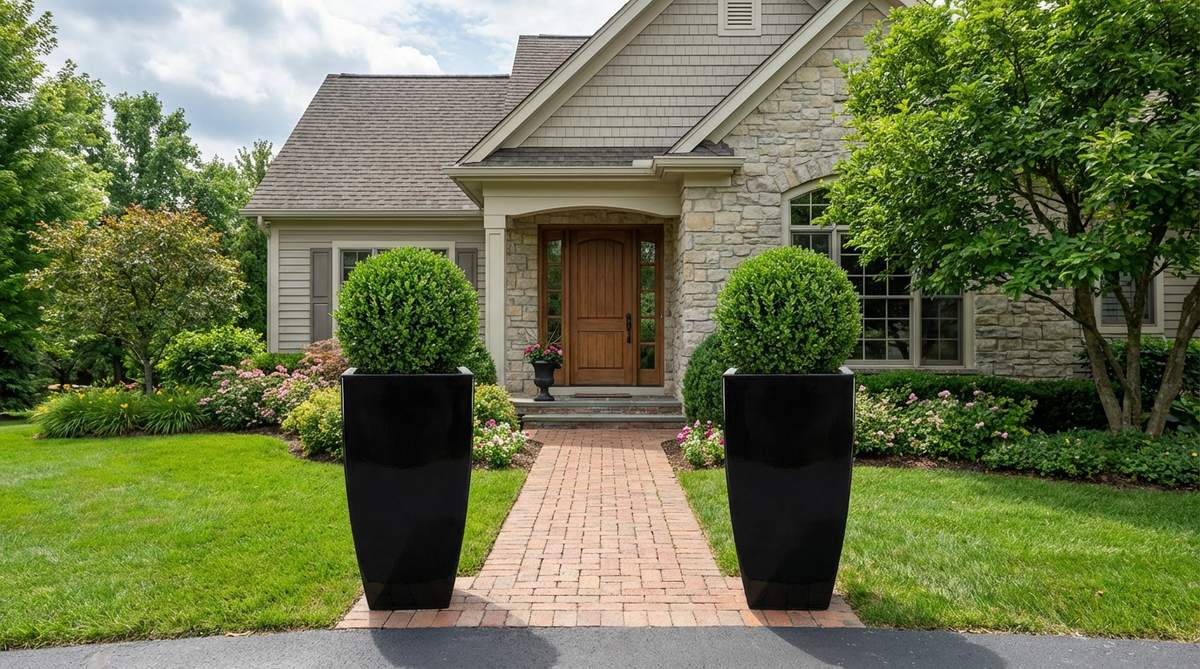
Modern urns in glossy black resin stand 30 inches tall with tapered profiles. Position identical specimens on either side of entryways for formal balance.
Plant with matching specimens such as boxwood spheres or standard-form roses. The symmetry creates architectural precision suitable for traditional home styles updated with contemporary containers.
6. Extra-Large Tapered Planters with Evergreen Screening
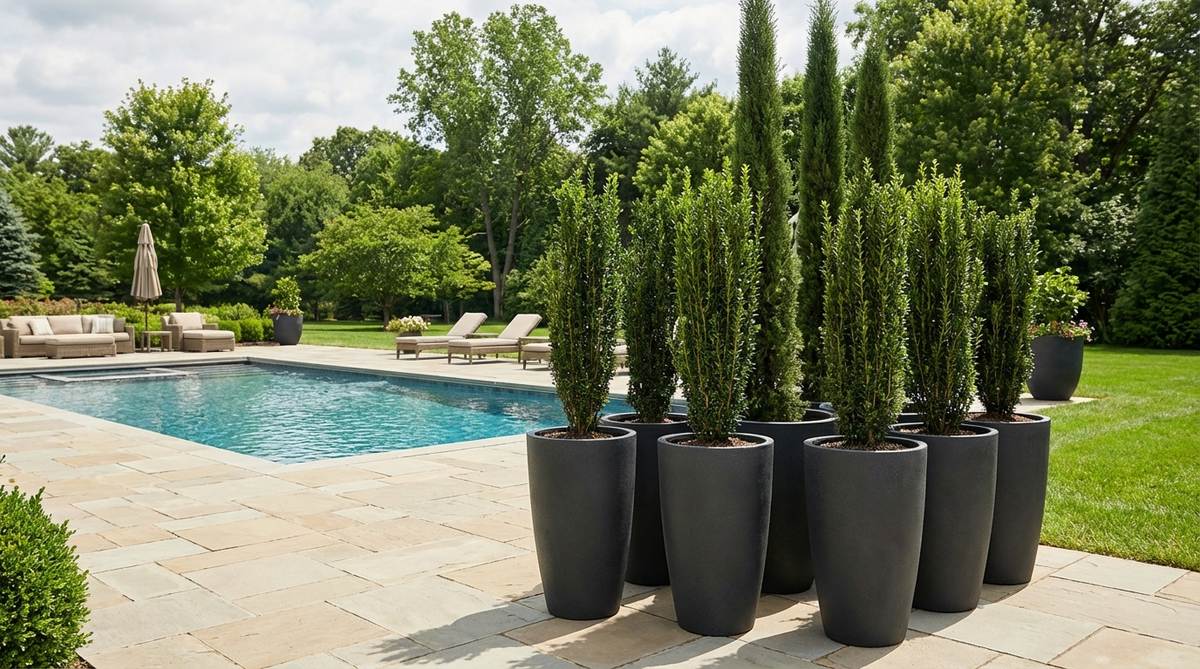
Tapered planters in charcoal fiberglass stand 40 inches tall and accommodate privacy screening. The wider top provides planting volume while the narrow base fits tight spaces.
Install columnar evergreens such as Sky Pencil holly or Italian cypress. These planters deliver movable privacy screening for patios or pool areas.
7. Tiered Planter Sets for Dimensional Displays
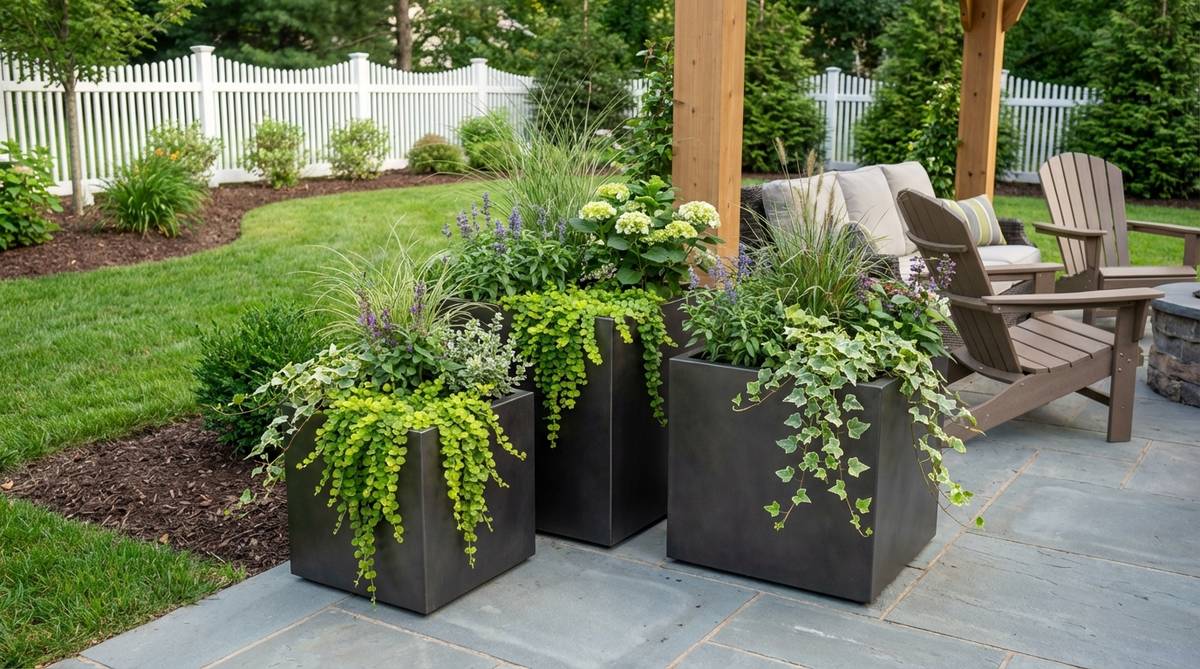
Graduated sets of cube planters in 16, 20, and 24-inch sizes create elevation changes. Stack or cluster these for visual interest in corners or dead zones.
Plant with cascading varieties in the tallest container and upright forms in smaller sizes. The varied heights direct the eye upward and fill vertical space efficiently.
8. Modern Pedestal Planters with Specimen Plants
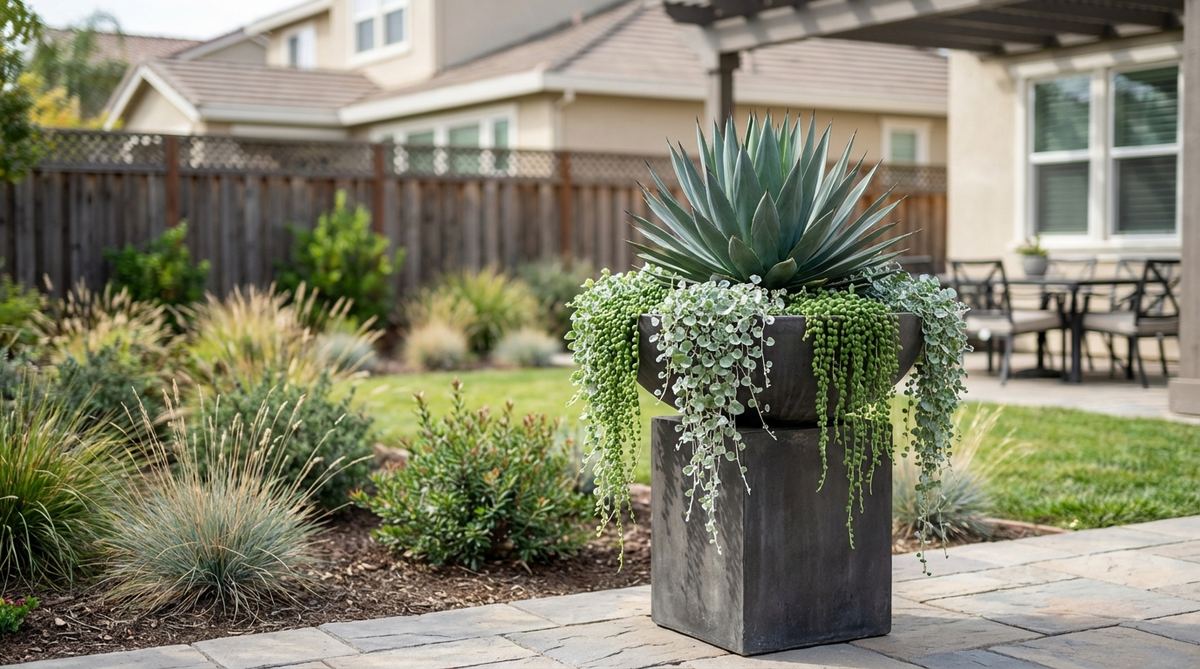
Pedestal planters elevate containers 18-24 inches off the ground on slender supports. The raised position showcases trailing plants and improves drainage.
Feature single dramatic specimens such as agave, echeveria, or architectural succulents. The elevation protects plants from ground moisture while creating sculptural focal points.
Modern Material Innovations for Outdoor Decor Plant Containers
Contemporary planters utilize advanced materials that balance aesthetics with performance. These innovations withstand weather exposure while maintaining design integrity across seasons.
9. Lightweight Fiberglass with Stone Finish
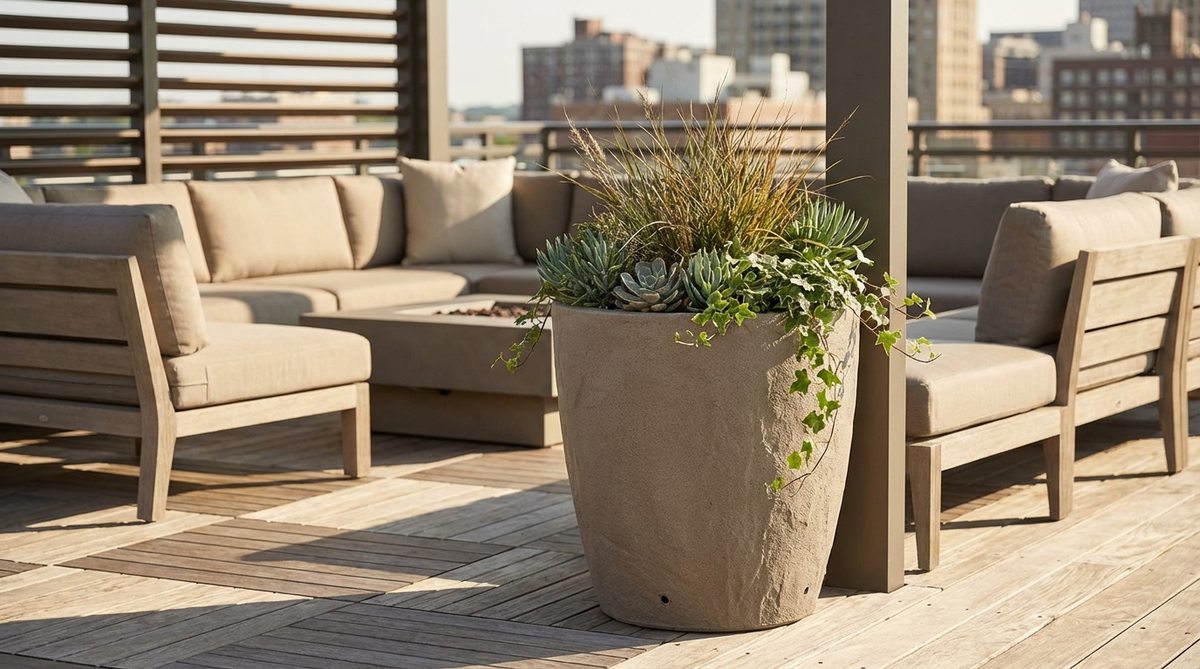
Fiberglass planters replicate limestone or sandstone texture at one-tenth the weight. The composite construction resists cracking and maintains appearance through freeze-thaw cycles.
Choose these for rooftop installations or balconies where weight restrictions apply. The material accepts custom color matching to coordinate with exterior palettes.
Drainage holes and removable plugs provide flexibility for different plant requirements. UV-resistant coatings prevent fading in full sun exposure.
10. Brushed Aluminum Contemporary Cylinders
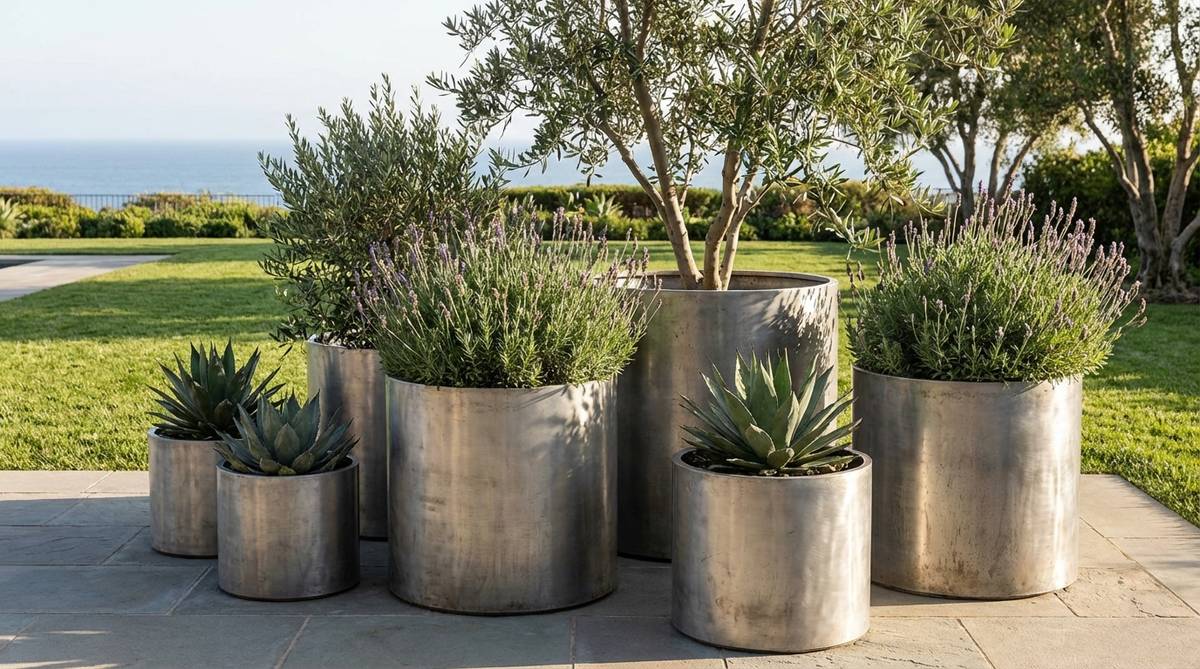
Aluminum planters in brushed or powder-coated finishes deliver industrial aesthetic. The metal conducts heat efficiently, making them suitable for heat-tolerant Mediterranean plants.
Designers specify these for modern commercial landscapes and residential settings. The material resists corrosion in coastal environments better than traditional metals.
11. Composite Wood-Grain Rectangular Boxes
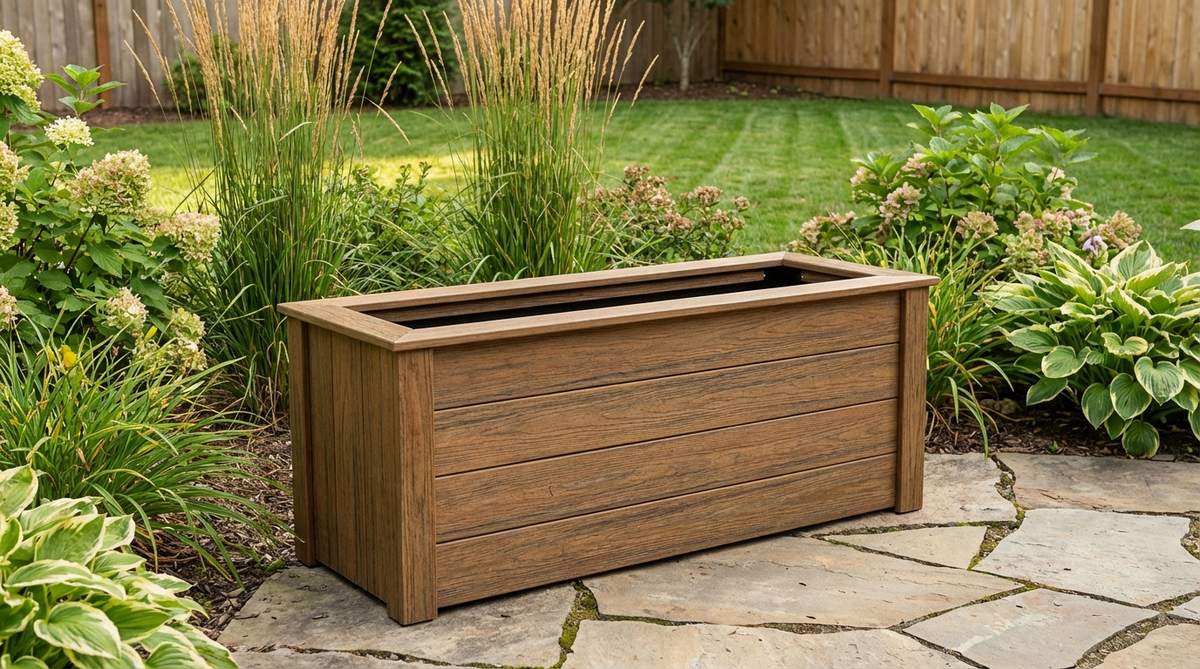
Wood-alternative composites mimic teak or cedar grain without maintenance requirements. These rectangular planters measure 36-50 inches long for raised bed applications.
The material resists rot, insects, and splitting while maintaining wood aesthetics. Install these for edible gardens or perennial borders that require deeper soil profiles.
12. Resin Wicker-Texture Modern Baskets
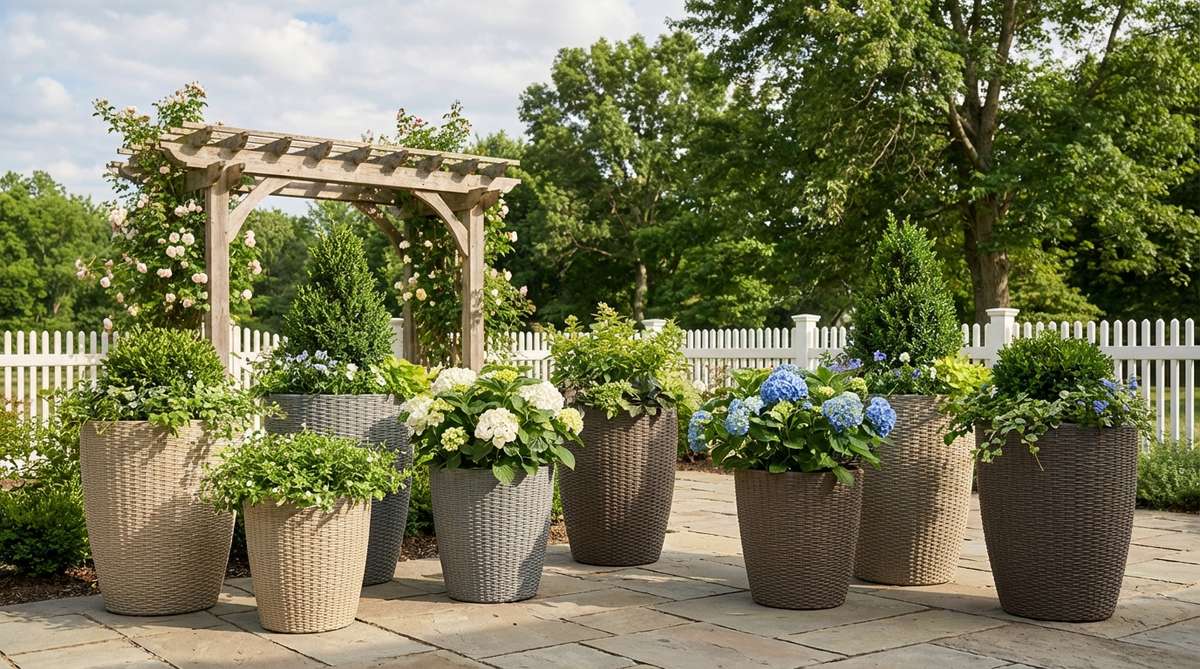
Woven resin planters offer texture variation in neutral tones. The basket weave provides visual warmth while synthetic materials ensure weather resistance.
These work effectively for cottage-style gardens transitioning to modern design. Group in clusters for cohesive outdoor living areas on patios or decks.
13. Powder-Coated Steel Industrial Aesthetic
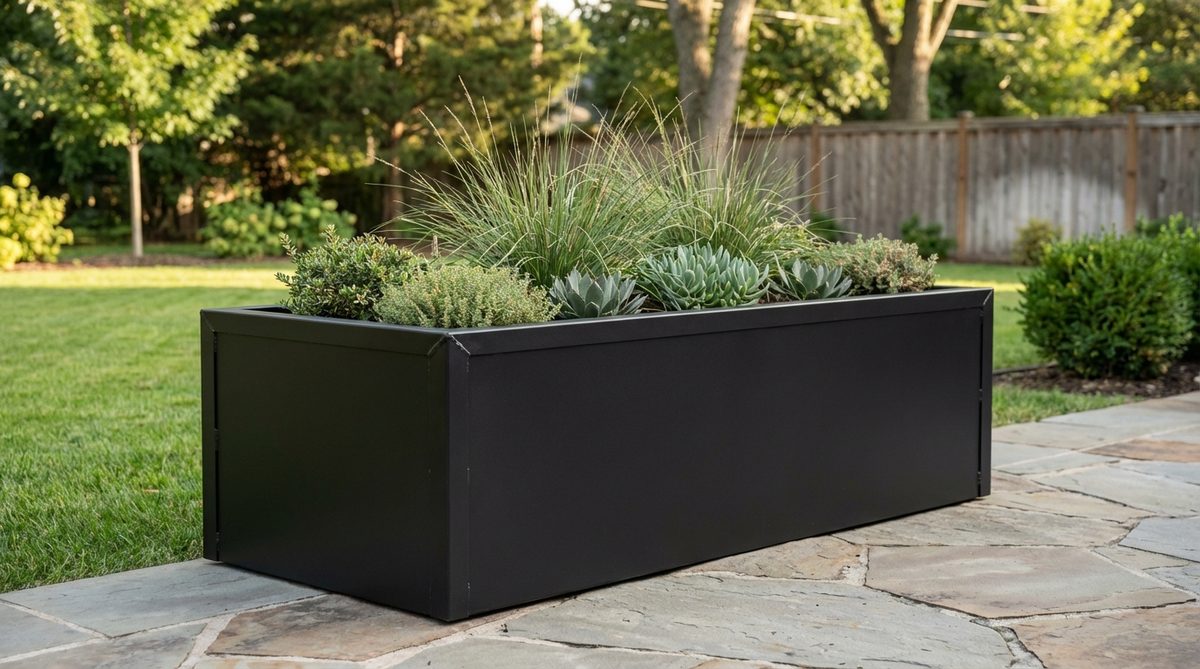
Steel planters with powder-coat finishes in matte black or rust offer urban edge. The material provides structural integrity for large-scale installations.
Specify welded corner construction for longevity in high-traffic commercial applications. Interior liners protect against rust while maintaining exterior finish quality.
14. Cast Stone Aggregate Traditional Forms
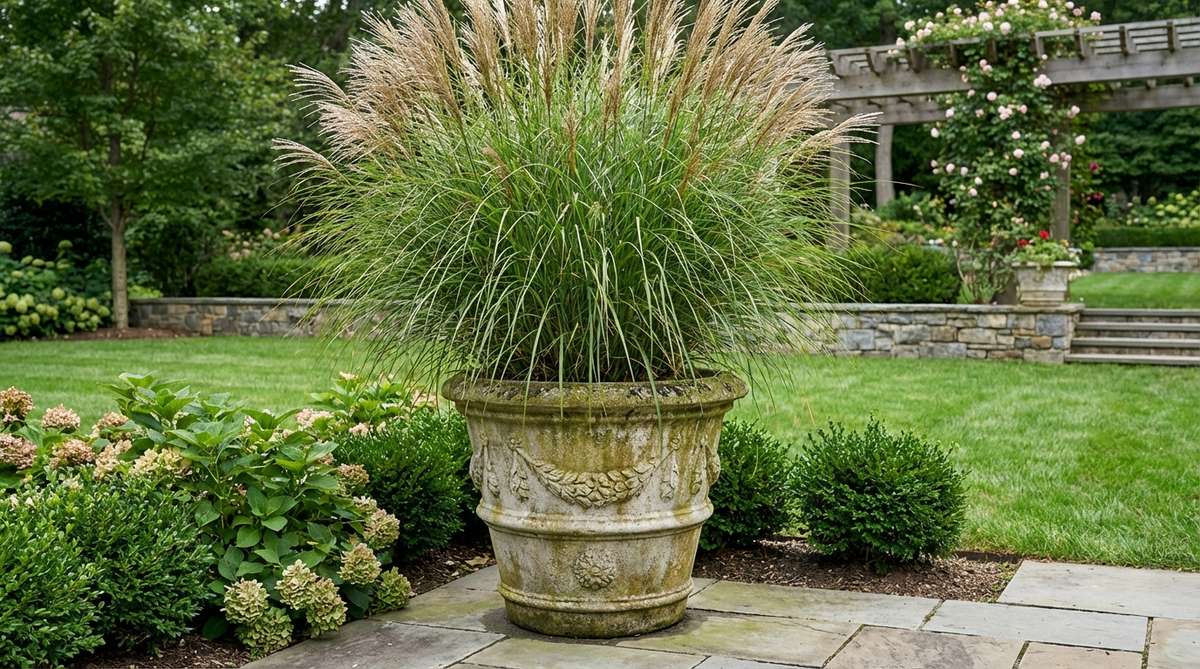
Cast stone combines crushed stone with polymer binders for authentic texture. These planters age naturally, developing patina similar to quarried stone.
The weight provides stability for tall plantings in windy locations. Designers choose these when permanent placement is desired without traditional stone cost.
15. Recycled Plastic Lumber Eco-Friendly Boxes
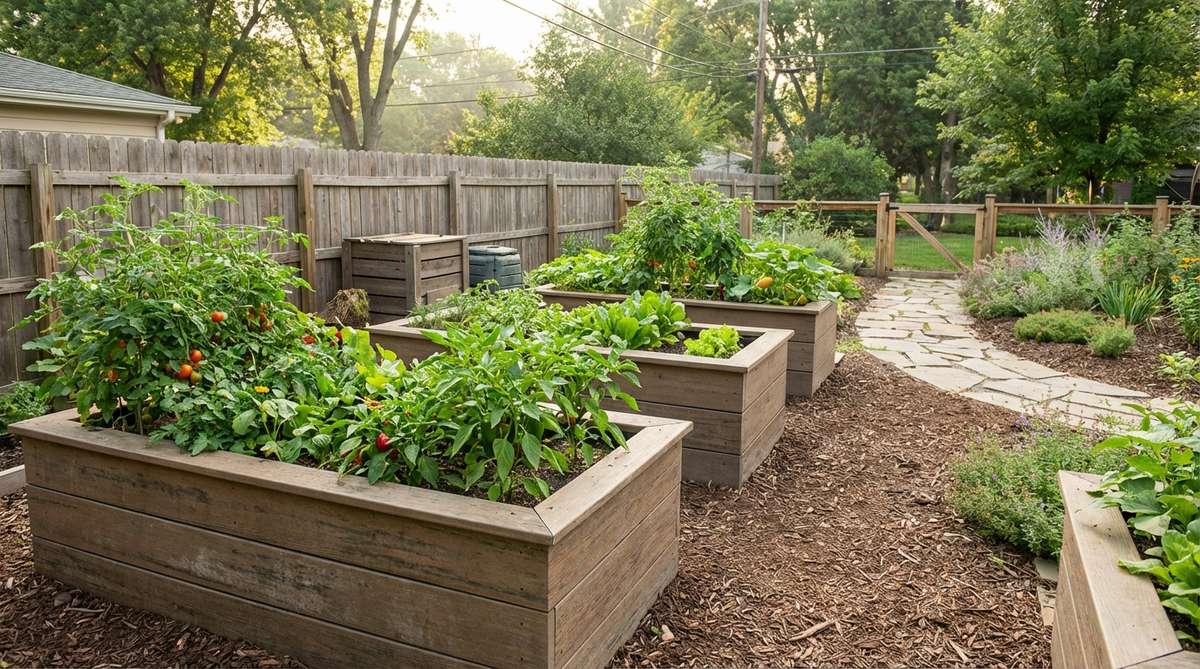
Planters constructed from recycled HDPE plastic offer sustainability credentials. The material never requires sealing or staining and maintains dimensional stability.
These rectangular boxes work for urban agriculture projects and community gardens. Color options include earth tones that blend with natural settings.
Geometric Shapes for Contemporary Style
Architectural planter forms create visual structure in landscape design. Geometric containers establish spatial organization while providing homes for diverse plant selections.
16. Perfect Cube Minimalist Statement
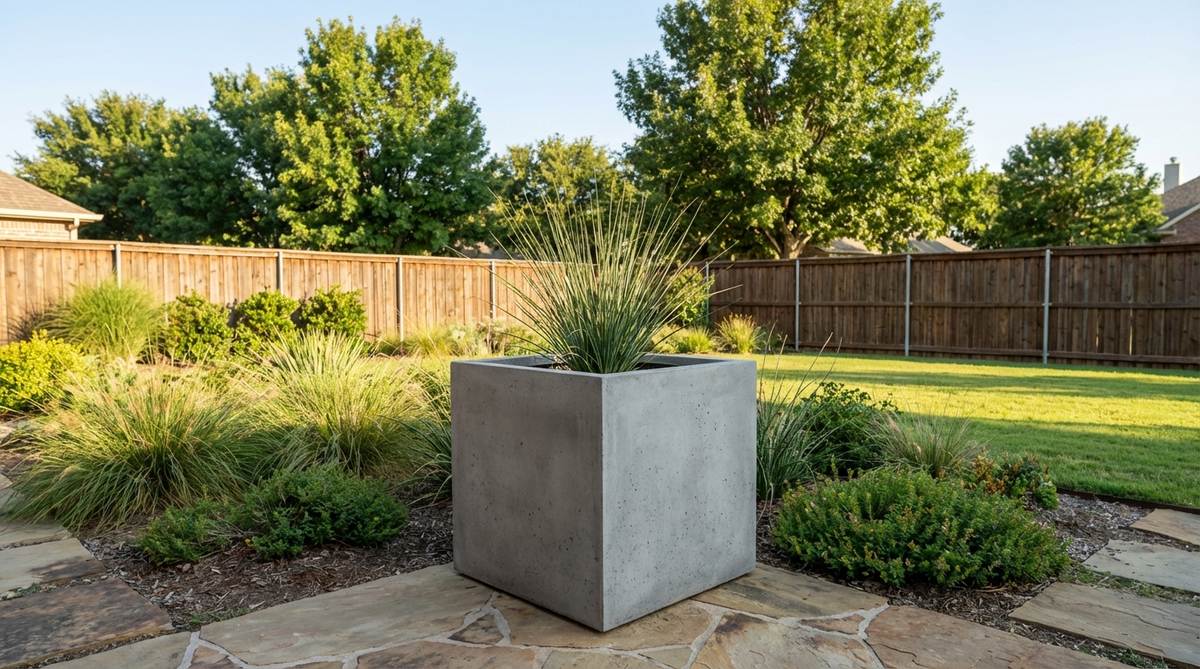
True cube planters in 18, 24, or 30-inch dimensions offer pure geometric form. The equal proportions create strong visual anchors in asymmetrical garden layouts.
Position single cubes as standalone sculptures or arrange in grid patterns. Plant with single specimens to emphasize form over botanical complexity.
17. Elongated Rectangle Space Dividers
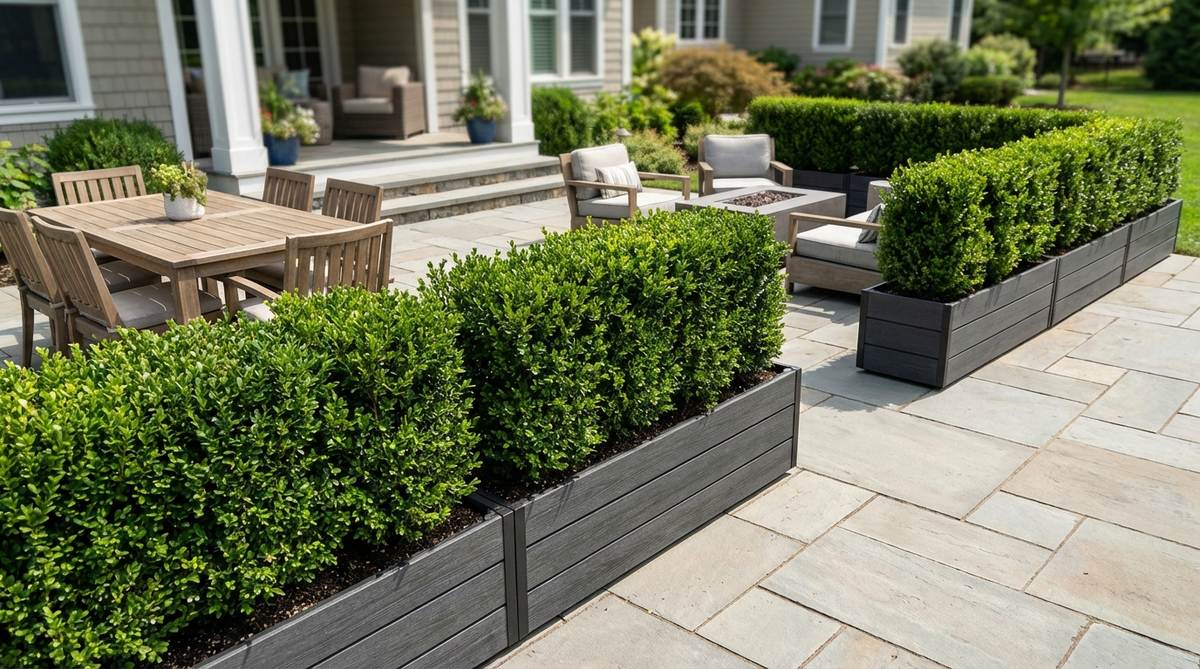
Narrow rectangular planters measuring 12 inches wide by 50 inches long function as portable walls. Install these to separate dining from lounging zones on patios.
Fill with privacy hedges such as boxwood or euonymus for living screens. The slim profile maximizes planting area while minimizing floor space consumption.
18. Hexagonal Planters Geometric Interest
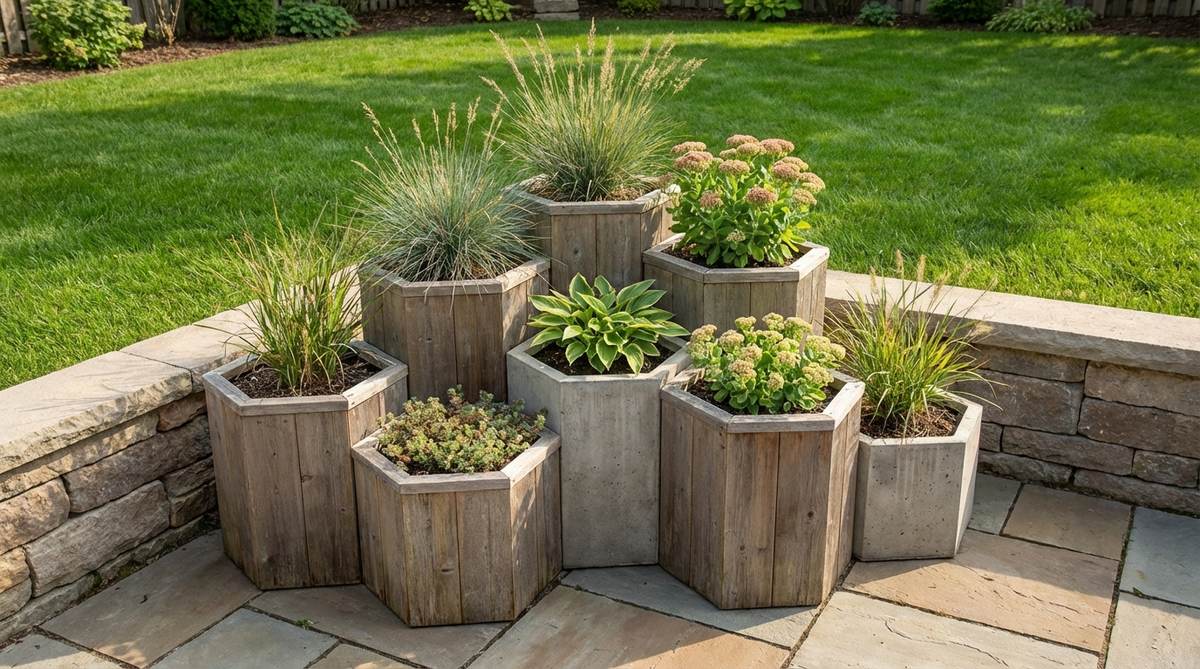
Six-sided planters introduce angular variation to rectangular spaces. The geometric complexity creates focal points without organic curves.
Arrange multiple hexagons in honeycomb patterns for modular flexibility. Plant with structural perennials that echo the angular container forms.
19. Tapered Square Modern Urns
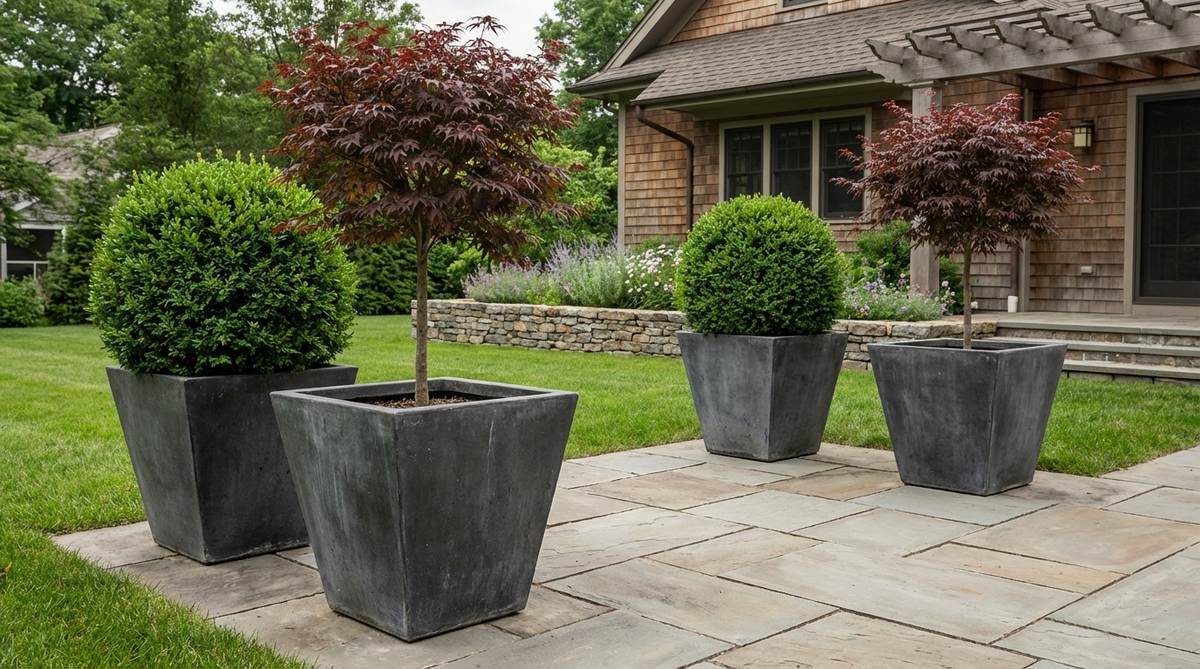
Square planters with tapered profiles combine stability with refined proportions. The wider top accommodates mature root systems while bases save floor space.
These work effectively for topiary forms or standard trees. The taper directs visual attention upward, enhancing vertical plant growth.
20. Circular Low Bowls Ground-Level Gardens
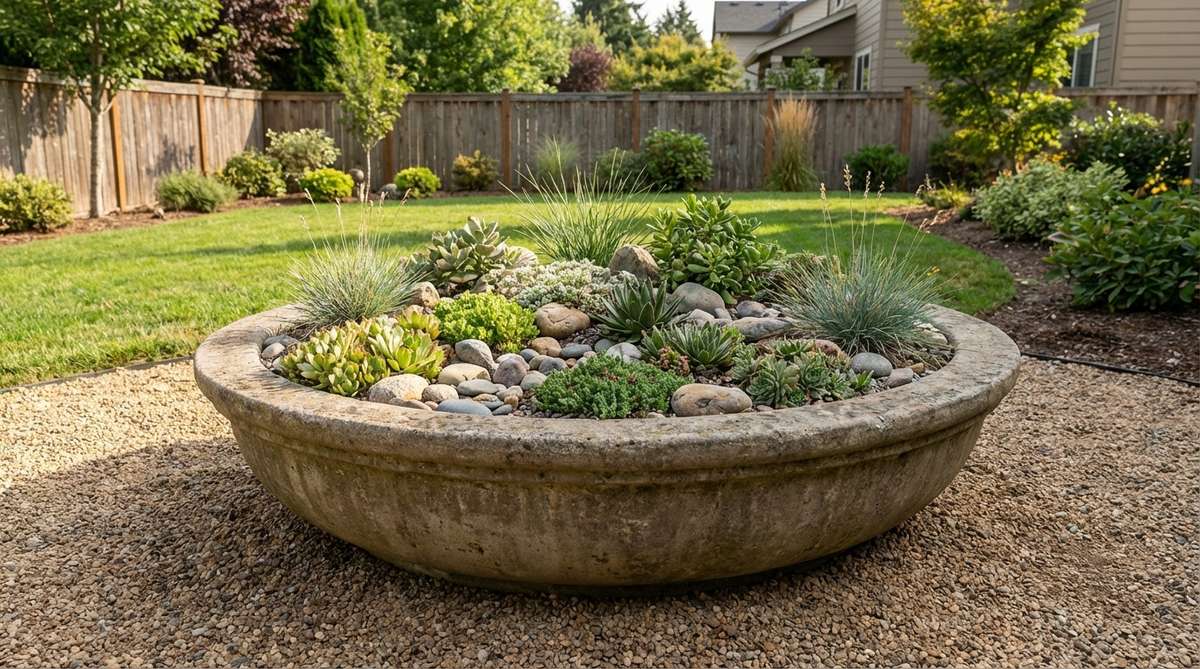
Wide circular planters 36-48 inches in diameter and 12 inches deep create ground-plane gardens. The broad surface area supports miniature landscapes.
Design rock gardens, alpine collections, or succulent arrangements within these bowls. The shallow depth prevents root rot for drought-adapted species.
21. Angular Asymmetric Artistic Vessels
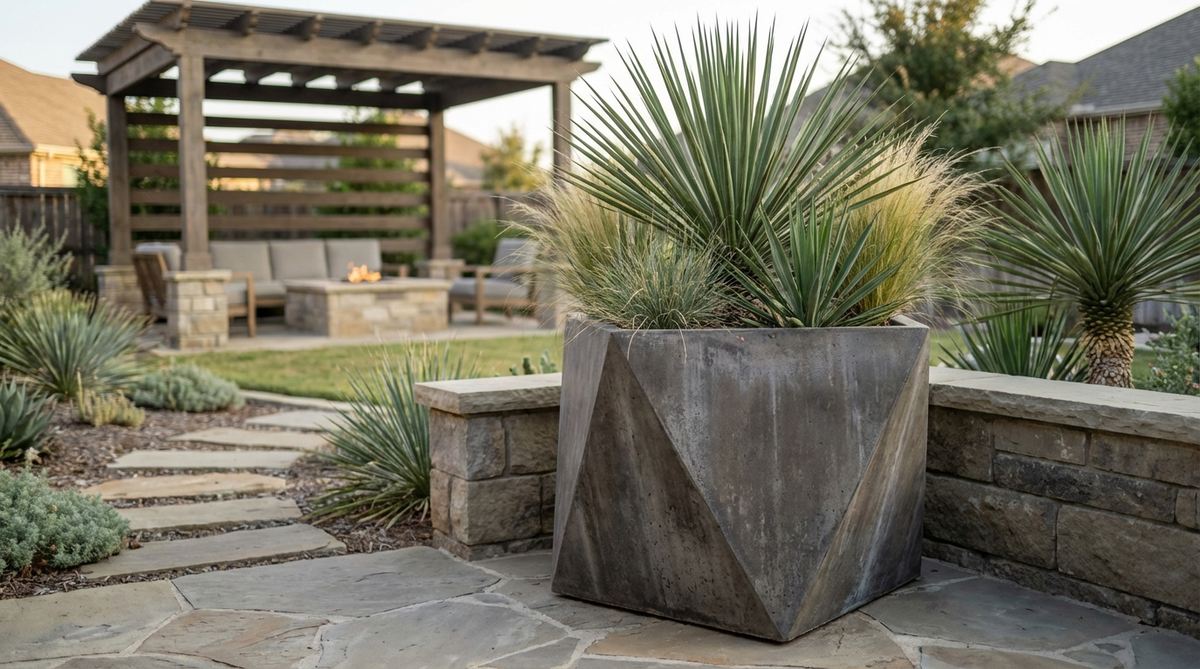
Deliberately asymmetric planters in faceted designs serve as sculptural elements. These statement pieces work best as singular focal points rather than repeated forms.
Pair with equally dramatic plant selections such as spiky yuccas or architectural grasses. The unconventional geometry demands careful placement for maximum impact.
22. Triangular Corner Space Solutions
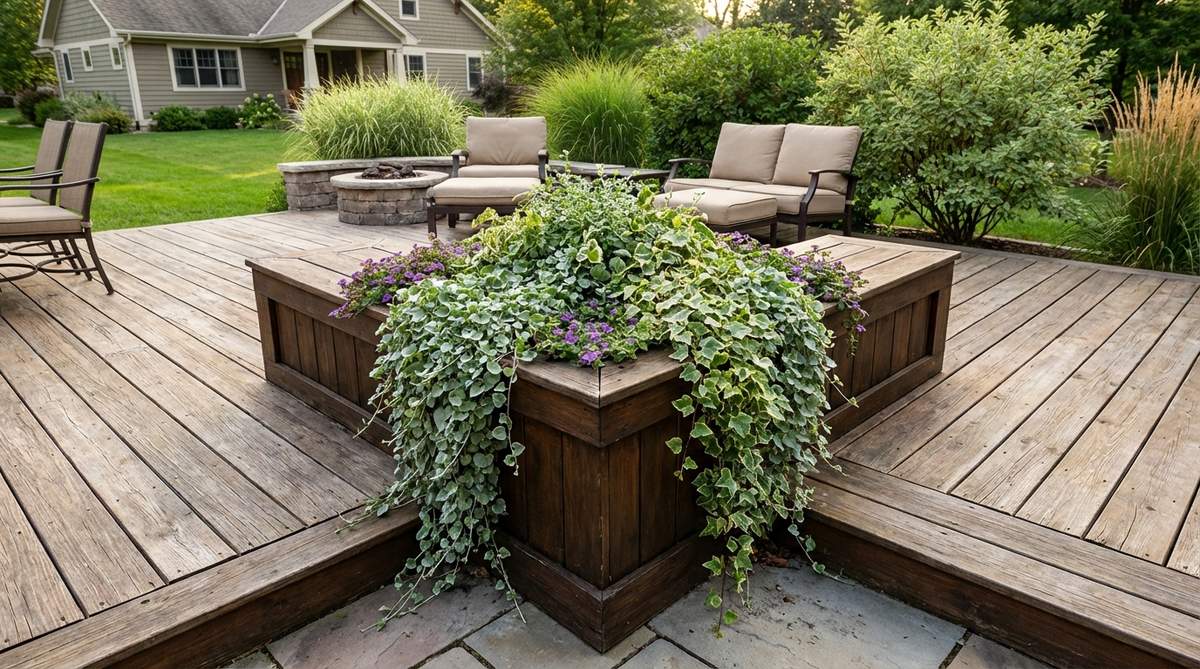
Corner-fitted triangular planters maximize awkward angles in deck or patio layouts. The 90-degree back edge sits flush against intersecting walls.
Install trailing plants that soften hard edges and flow over the angled front. These specialized shapes solve common spatial challenges in outdoor design.
Vertical Space Solutions with Outdoor Decor Plant Systems
Vertical gardening extends planting area without consuming floor space. These systems work particularly well for balconies, small patios, and urban settings with limited square footage.
23. Modular Wall-Mounted Pocket Systems
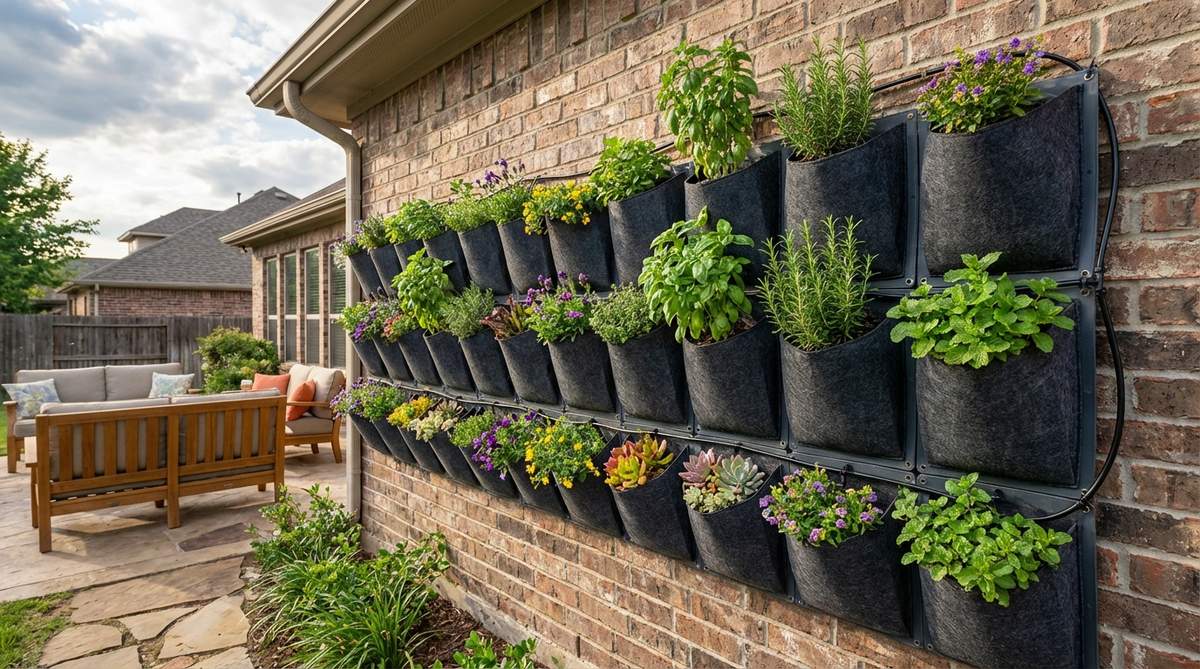
Wall pockets in weather-resistant felt or rigid plastic mount directly to exterior walls. Each pocket measures 8-12 inches square and holds individual plants.
Create living walls using combinations of herbs, succulents, or small perennials. The modular design allows for pattern customization and seasonal plant rotation.
Irrigation systems integrate into back panels for automated watering. These vertical gardens transform blank walls into productive growing spaces.
24. Ladder-Style Tiered Plant Stands
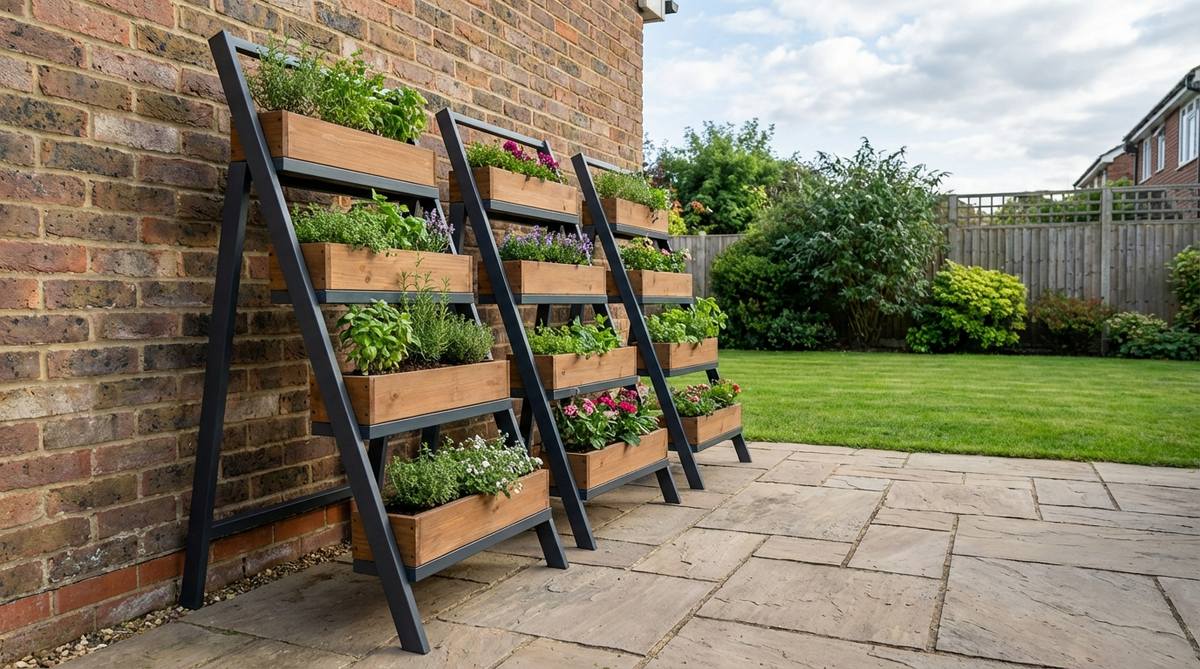
A-frame ladder planters in powder-coated metal provide four to six planting tiers. The structure leans against walls without permanent installation requirements.
Arrange containers on ascending shelves for varied plant heights. These work effectively for annual displays that change seasonally.
25. Hanging Planters with Adjustable Cables
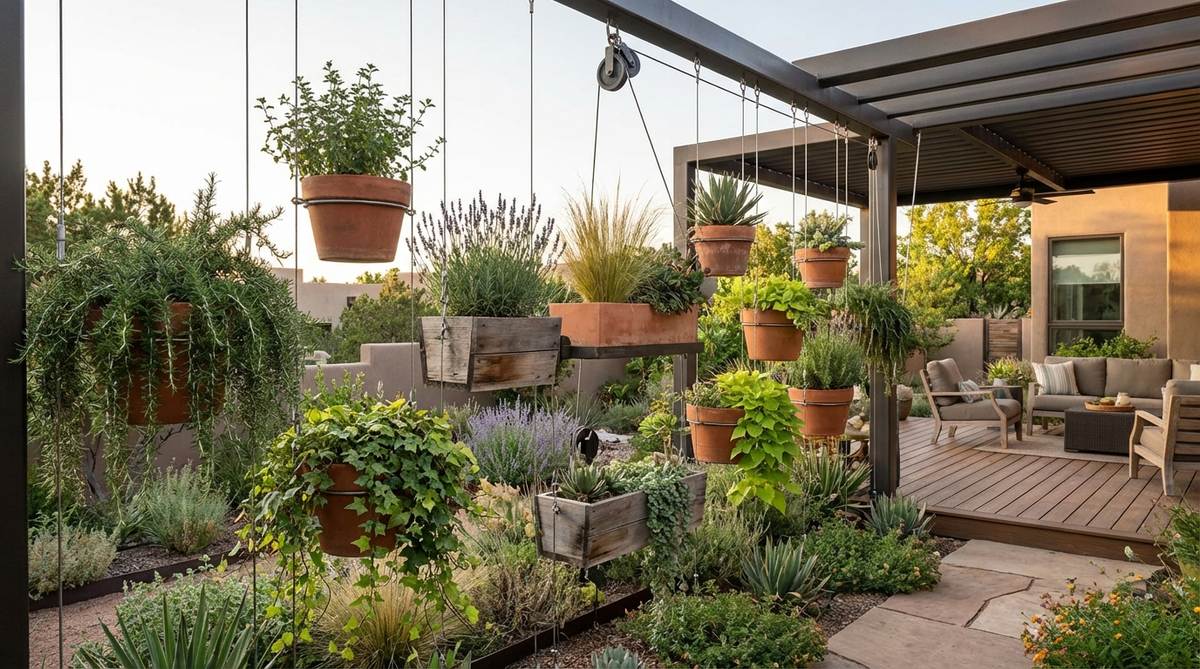
Suspended planters on steel cables create floating gardens at multiple heights. The adjustable system allows precise positioning for sunlight requirements.
Install trailing varieties that cascade downward or upright forms for eye-level interest. Stagger heights to create three-dimensional planting layers.
26. Vertical Tower Planters Rotating Systems
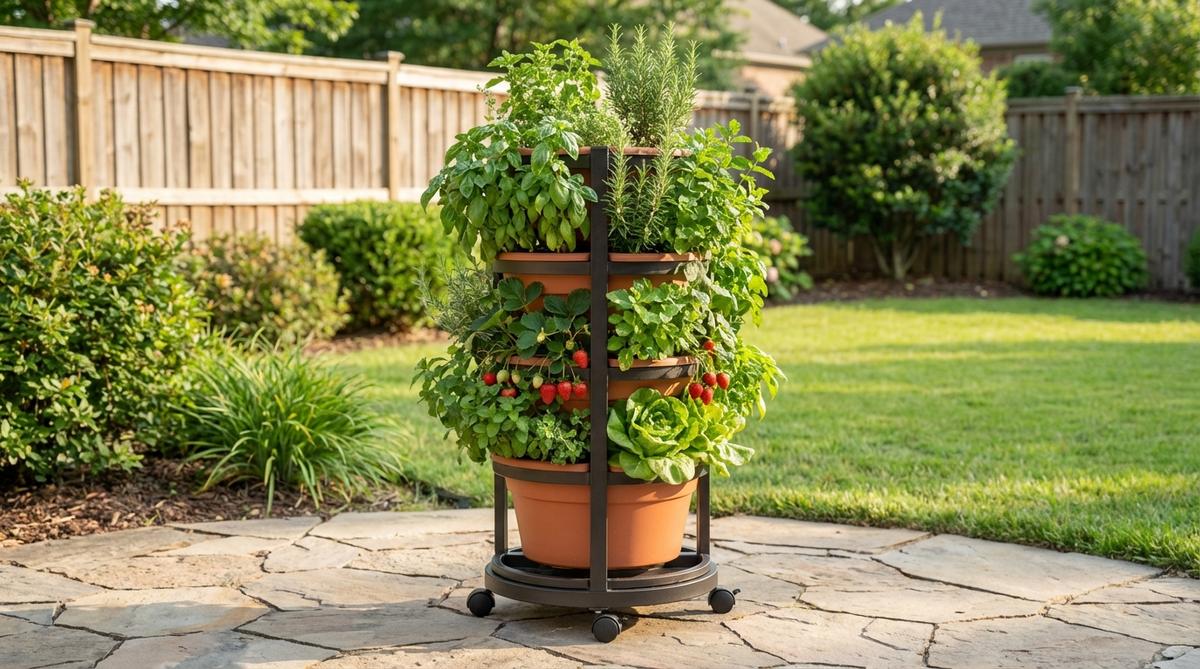
Freestanding tower systems stack planting pockets vertically around central supports. Some models rotate for even sun exposure across all sides.
These cylindrical towers work well for growing herbs, strawberries, or lettuce. The compact footprint produces high yields in minimal floor space.
27. Trellis-Backed Planter Boxes
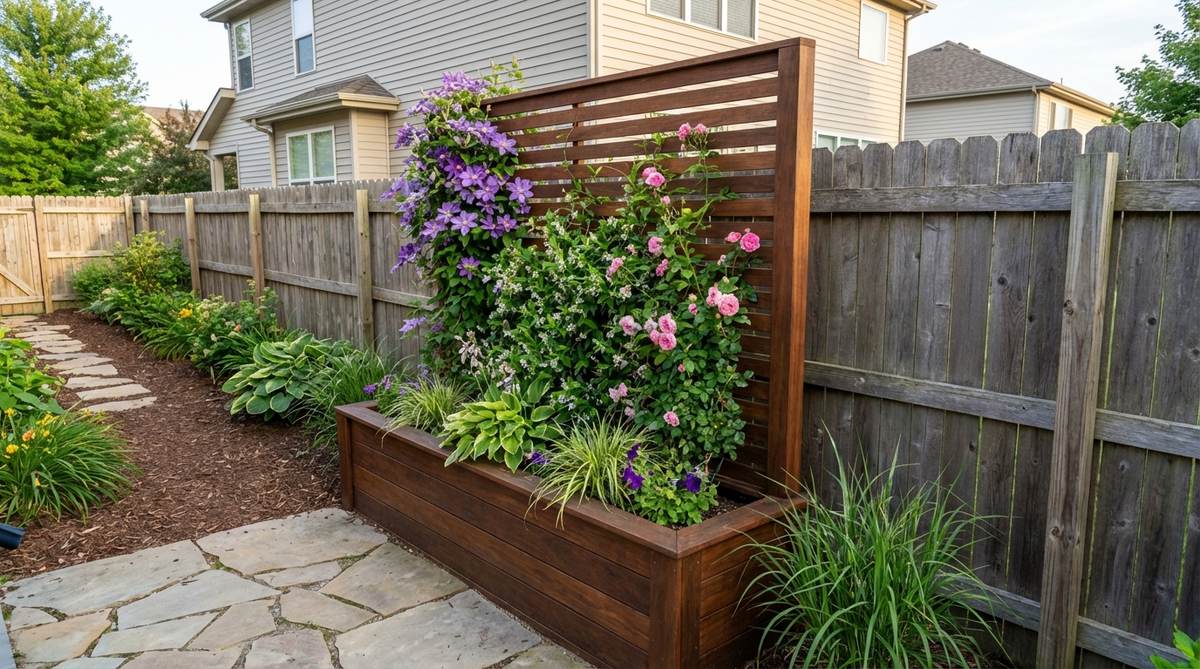
Ground-level rectangular planters integrate vertical trellis panels for climbing plants. The combined structure measures 24 inches deep by 50-72 inches tall.
Plant clematis, climbing roses, or jasmine at the base to ascend the support. This design provides privacy screening while maintaining narrow profiles.
28. Railing-Mounted Balcony Planters
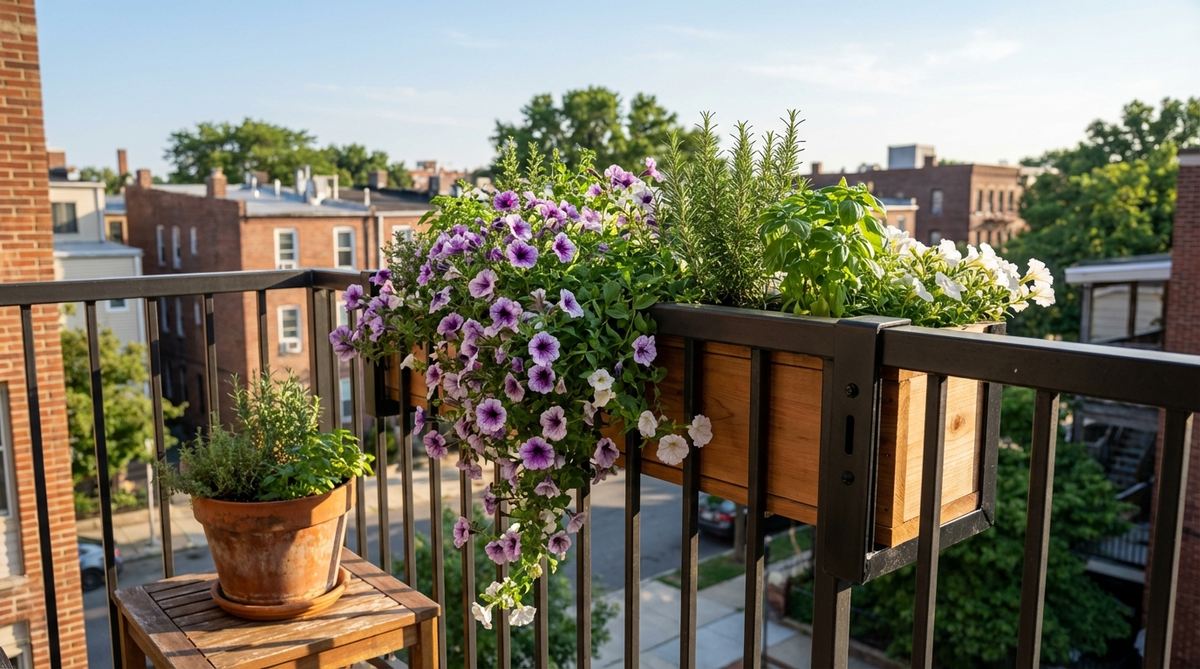
Planters with integrated brackets hook securely over balcony railings. The design distributes weight across railing tops without floor space consumption.
Plant with trailing petunias, calibrachoa, or edible herbs within easy reach. These maximize growing area in apartment and condo settings.
29. Stacked Modular Cube Columns
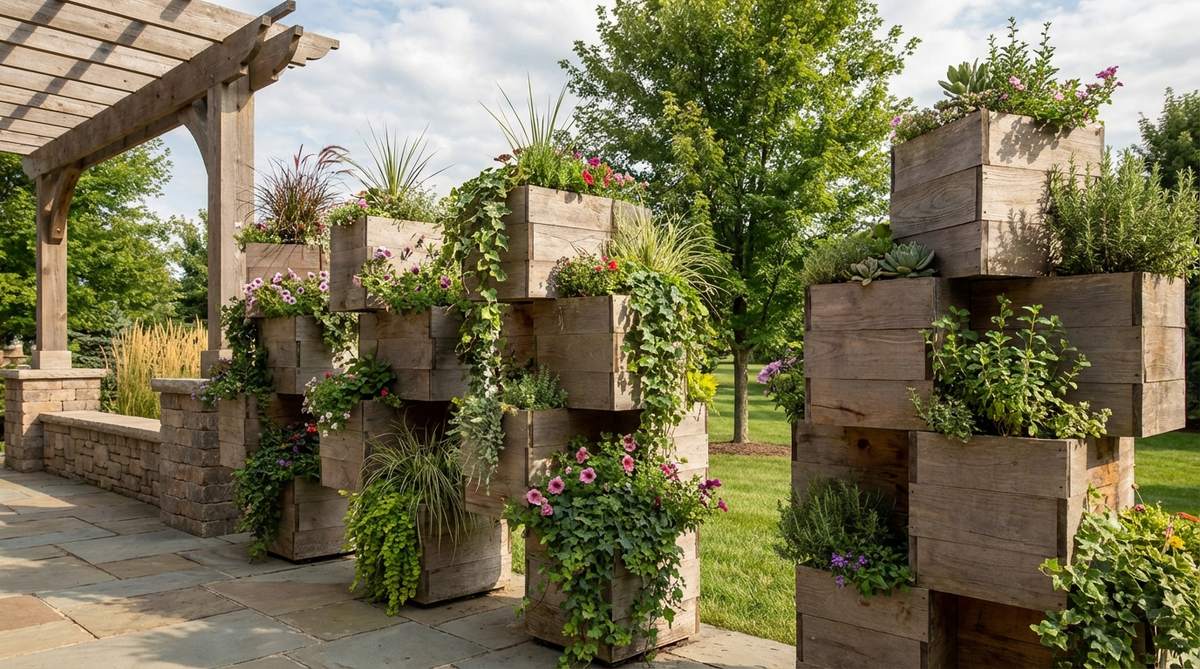
Interlocking cube planters stack to create columns 4-6 feet tall. Each 12-inch cube plants independently while contributing to vertical structure.
Alternate plant types at different heights for textural variation. The modular nature allows reconfiguration as design needs evolve.
Color and Finish Combinations for Outdoor Decor Planters
Surface treatments and color selections influence how planters integrate with architectural elements. Strategic finish choices enhance or contrast with existing exterior palettes.
30. Matte Black Modern Sophistication
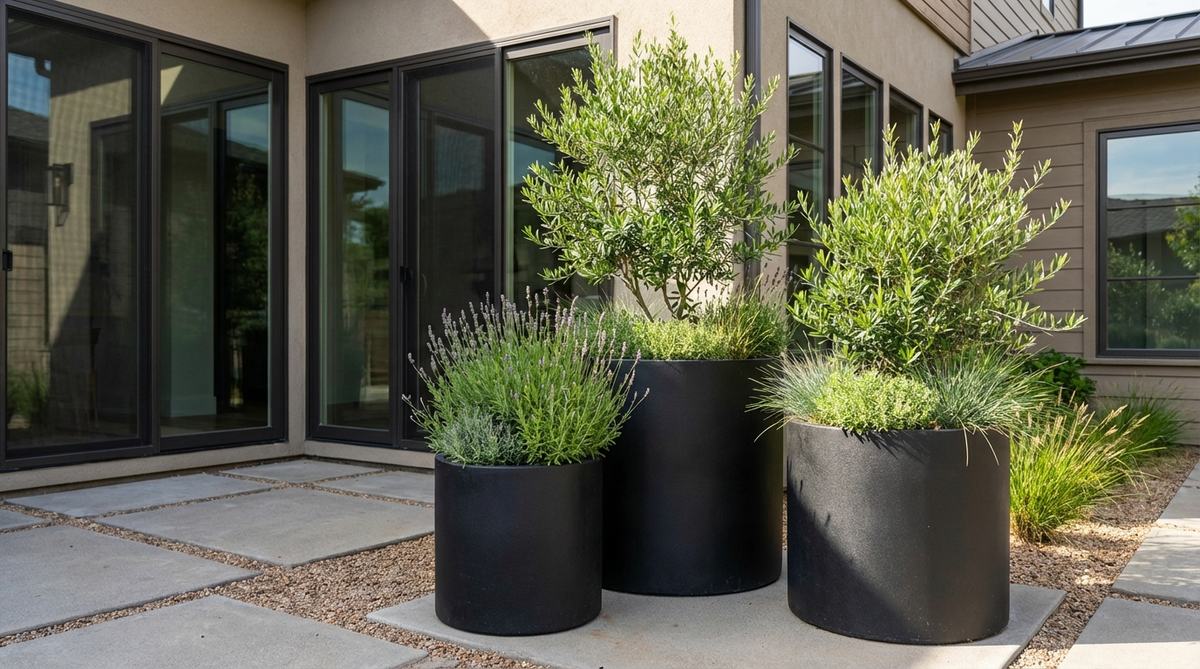
Flat black planters in fiberglass or powder-coated steel provide maximum contrast against greenery. The dark color recedes visually while plants advance in prominence.
This finish absorbs heat, making it suitable for heat-loving Mediterranean plants. Matte black coordinates with contemporary architecture featuring dark-framed windows and doors.
Group planters in varied sizes maintaining consistent color for cohesive design. The neutral shade works across all seasons and plant color palettes.
31. Crisp White Clean Minimalism
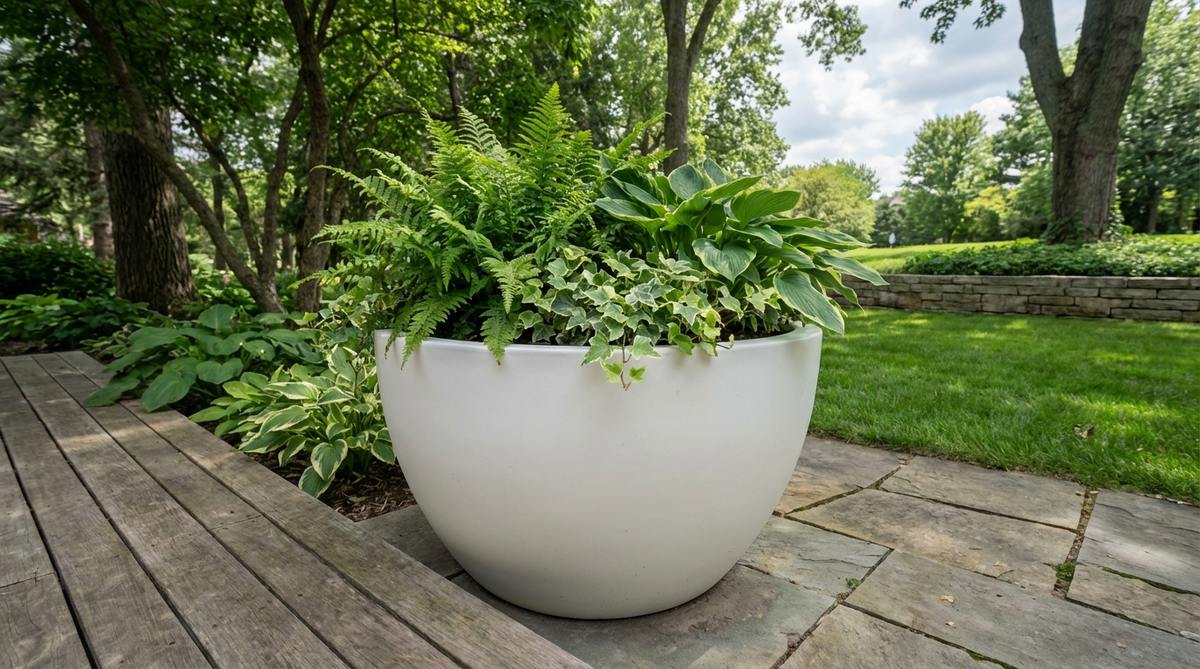
White planters in glossy or matte finishes brighten shaded areas and reflect light. The clean appearance suits Scandinavian and coastal design aesthetics.
White shows soil and water stains more readily than darker colors. Select smooth finishes that wipe clean easily for maintained appearance.
32. Warm Terracotta Mediterranean Style
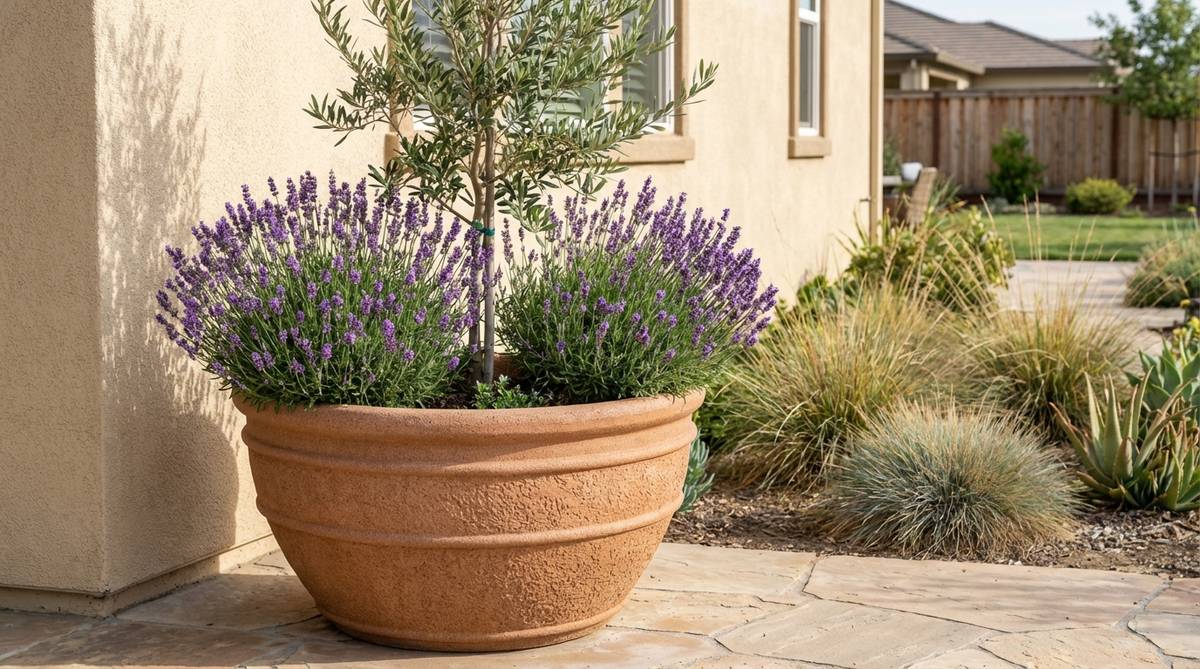
Terra cotta-colored composite planters deliver warmth without traditional clay’s porosity. The orange-brown tones complement stucco exteriors and warm-climate plantings.
These colors harmonize with drought-tolerant plants such as lavender, rosemary, and olive trees. The earthy palette creates Mediterranean courtyard aesthetics.
33. Weathered Gray Stone Effect
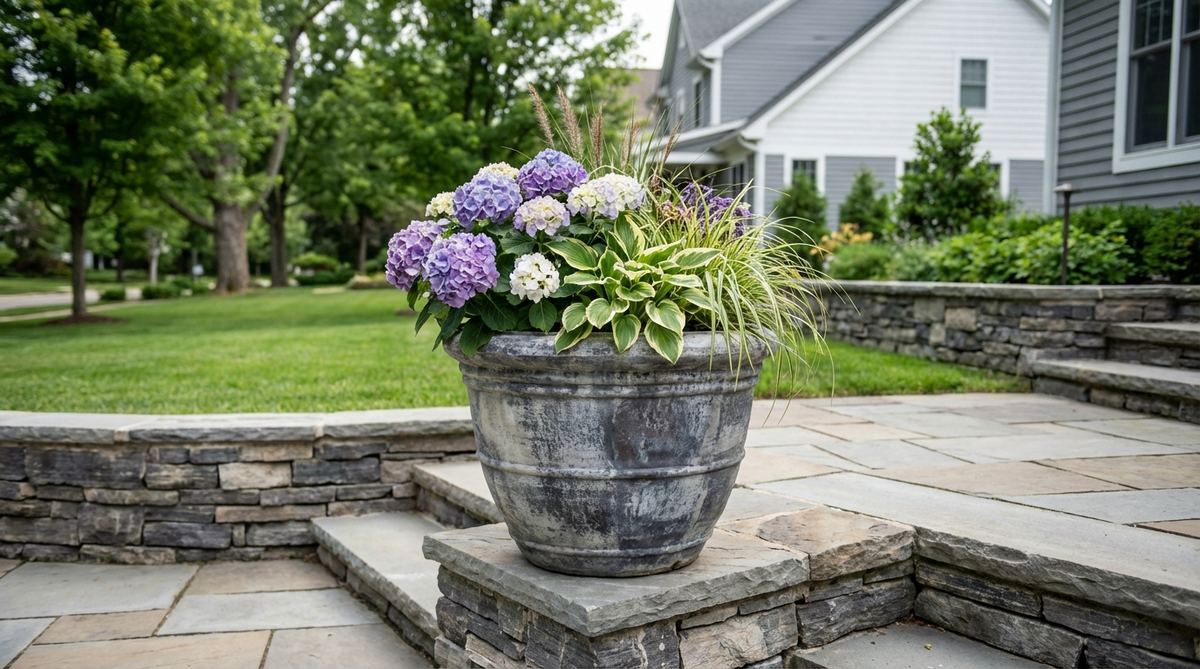
Gray planters in multiple tones from charcoal to pale slate blend with stone hardscaping. The neutral palette allows plant colors to dominate visual attention.
These finishes coordinate with contemporary gray-and-white architectural schemes. Texture variations in the surface add depth to monochromatic palettes.
34. Metallic Bronze Warm Accents
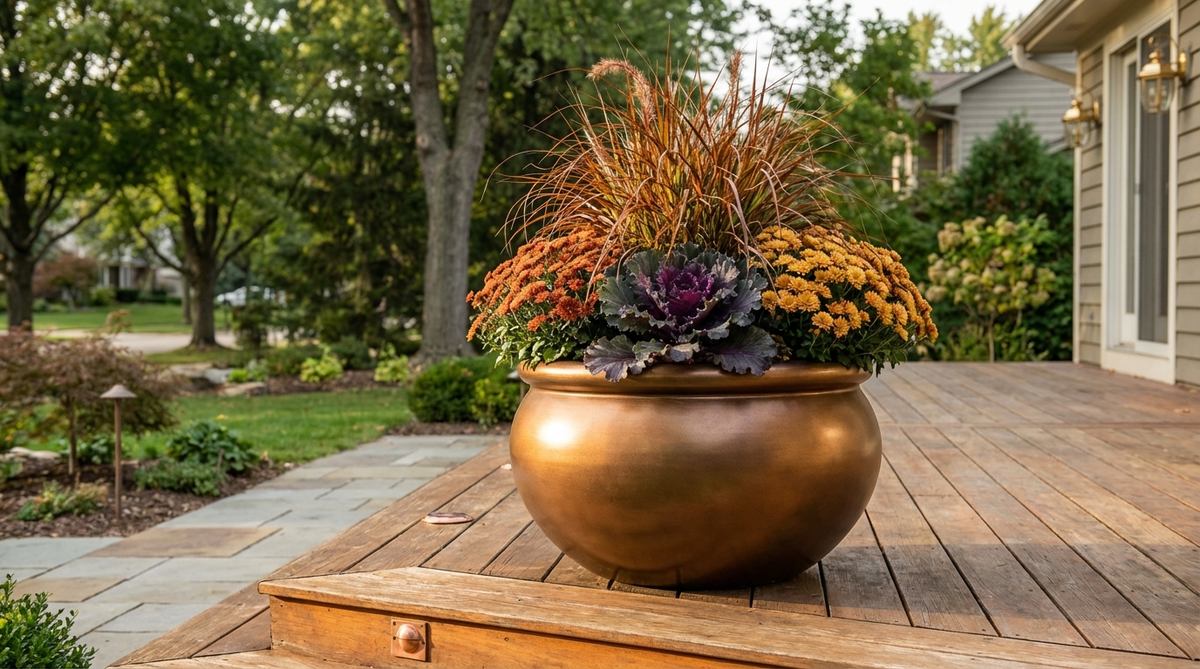
Bronze-finished planters in resin or metal add warmth to modern designs. The metallic sheen catches light and creates visual interest without bright color.
This finish works effectively with autumn-toned plantings and warm wood decking. Bronze coordinates with brass or copper exterior fixtures for unified design.
35. Deep Navy Sophisticated Alternative
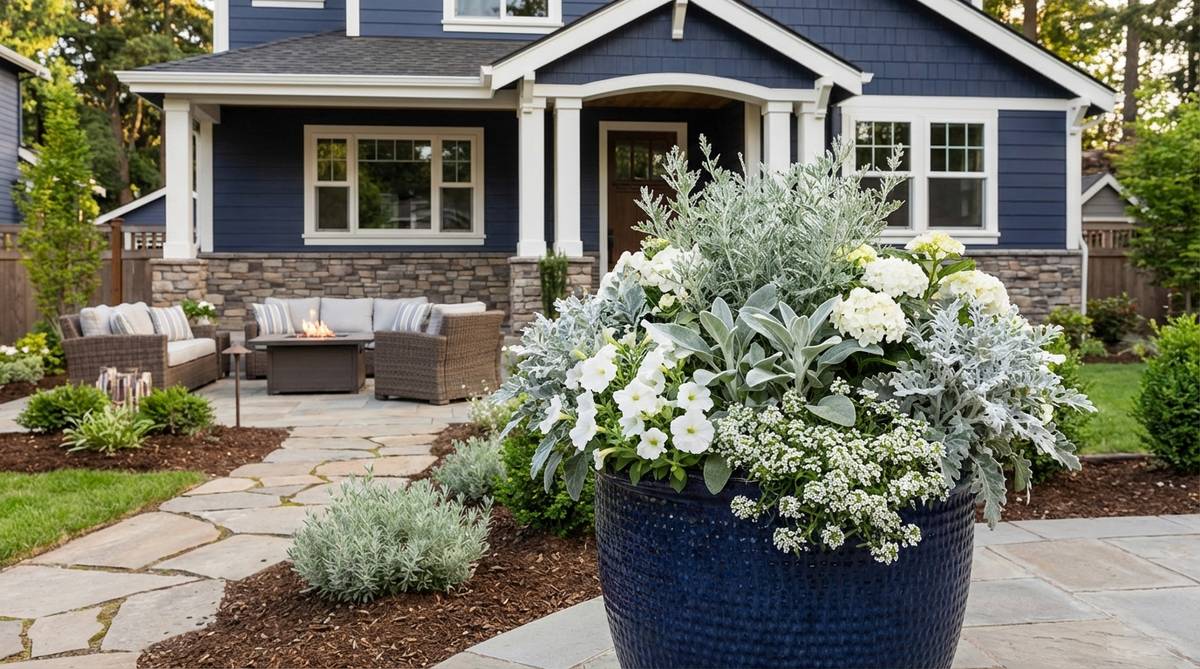
Navy blue planters offer depth without black’s stark contrast. The color reads nearly neutral while adding subtle richness to plant displays.
Navy works particularly well with silver-foliaged plants and white flowers. This choice suits traditional architecture updated with contemporary color palettes.
36. Rust Patina Industrial Character
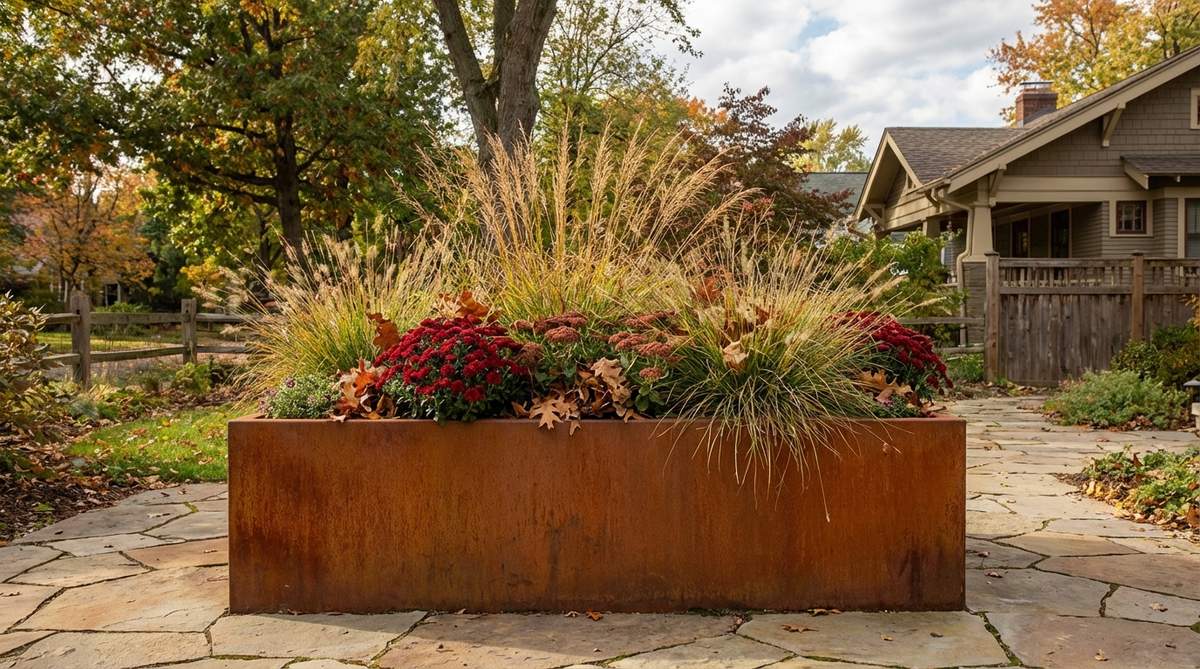
Corten steel planters develop natural rust patina that stabilizes and protects the metal. The evolving orange-brown surface creates living finish that changes over time.
This material suits industrial-modern aesthetics and naturalistic plantings. The color harmonizes with autumn foliage and warm-season grasses.
37. Two-Tone Color Blocking
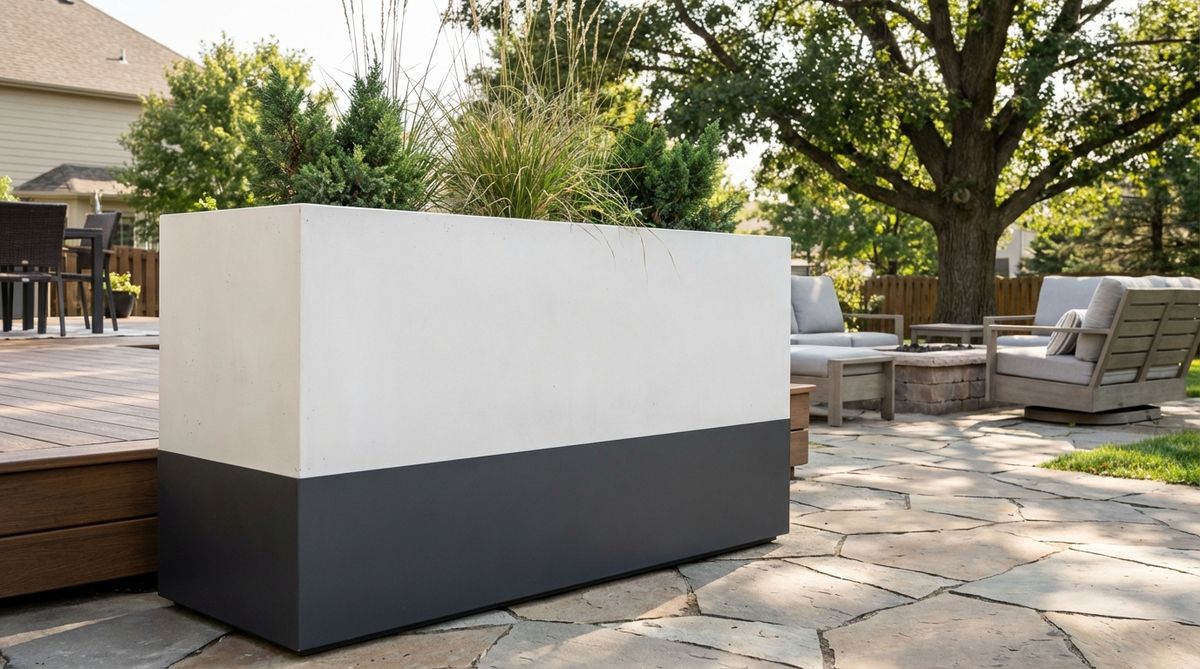
Planters with contrasting upper and lower colors create graphic interest. Common combinations include white-over-gray or black-over-bronze.
The horizontal color break adds visual complexity to simple geometric forms. These work best as accent pieces rather than primary container choices.
Scale and Height Variations in Outdoor Decor Plant Displays
Container dimensions directly impact spatial perception and planting possibilities. Strategic use of varied scales creates dynamic arrangements with professional finish.
38. Extra-Tall Columnar Planters
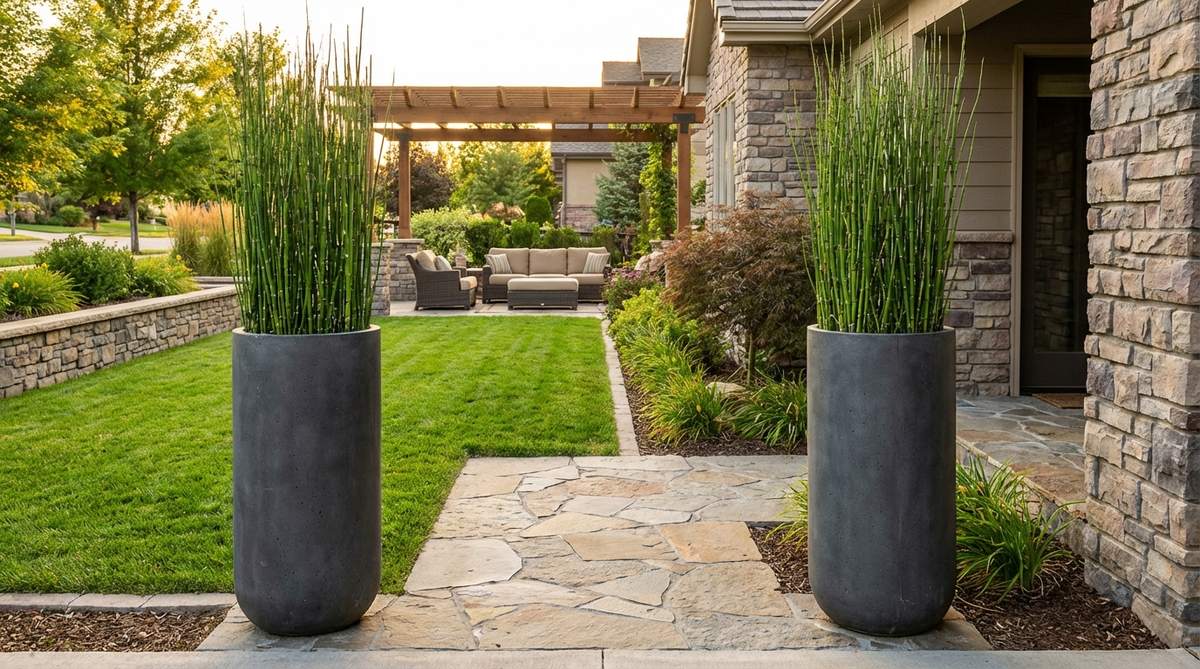
Narrow planters standing 48-50 inches tall with 14-16 inch diameters create vertical accents. These columns frame entries or define corridor edges in landscape design.
Plant with single upright specimens such as bamboo, horsetail reed, or cordyline. The height draws eyes upward and works effectively in pairs or linear arrangements.
Weighted bases prevent tipping in wind exposure. Internal support stakes stabilize tall plants within narrow confines.
39. Ground-Level Mega Planters
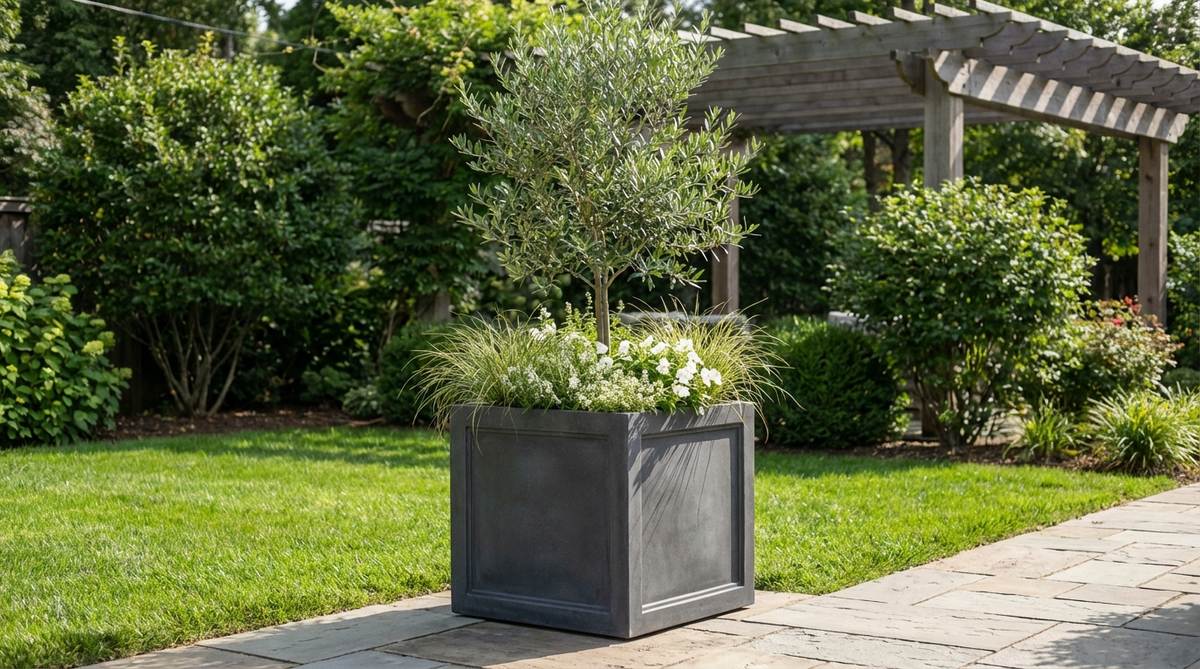
Massive planters measuring 48 inches square or 50 inches in diameter accommodate small trees. These permanent installations anchor outdoor rooms and provide shade.
Plant with mature specimens including palms, fruit trees, or large shrubs. The substantial volume supports root systems for long-term plant health.
40. Mid-Height Standard Planters
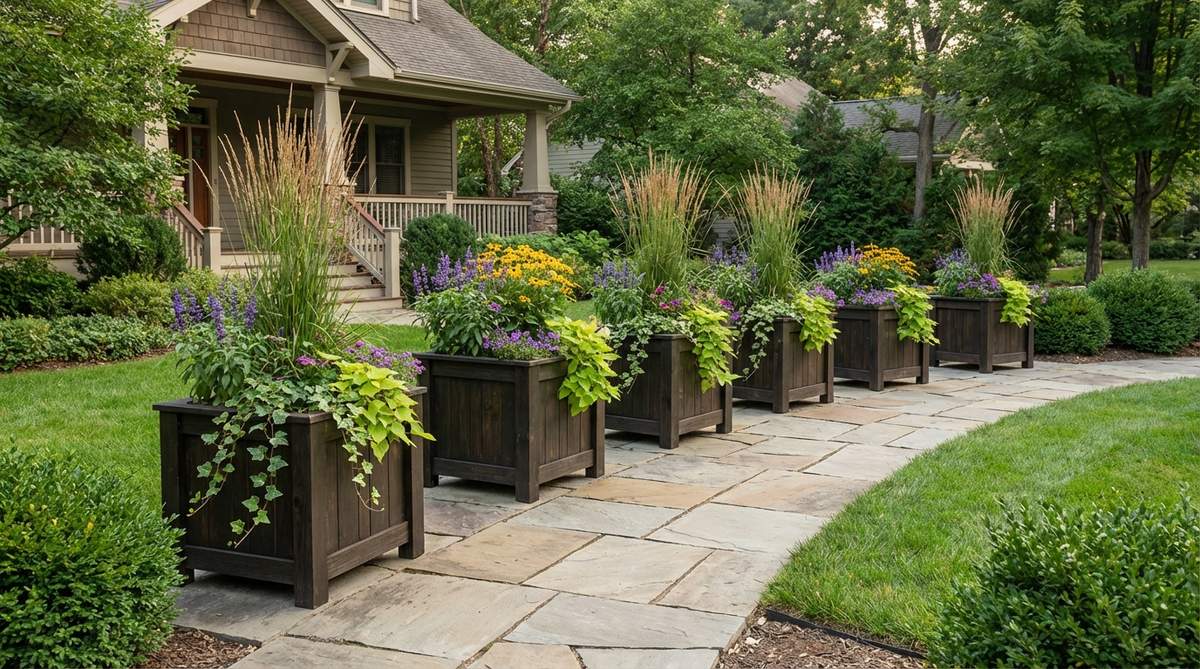
Planters in the 20-28 inch range provide versatile scale for most landscape applications. This standard size accommodates perennials, shrubs, and seasonal color.
Group in odd numbers for visual interest or line walkways with consistent spacing. The moderate height suits mixed plantings with thriller-filler-spiller combinations.
41. Compact Accent Planters
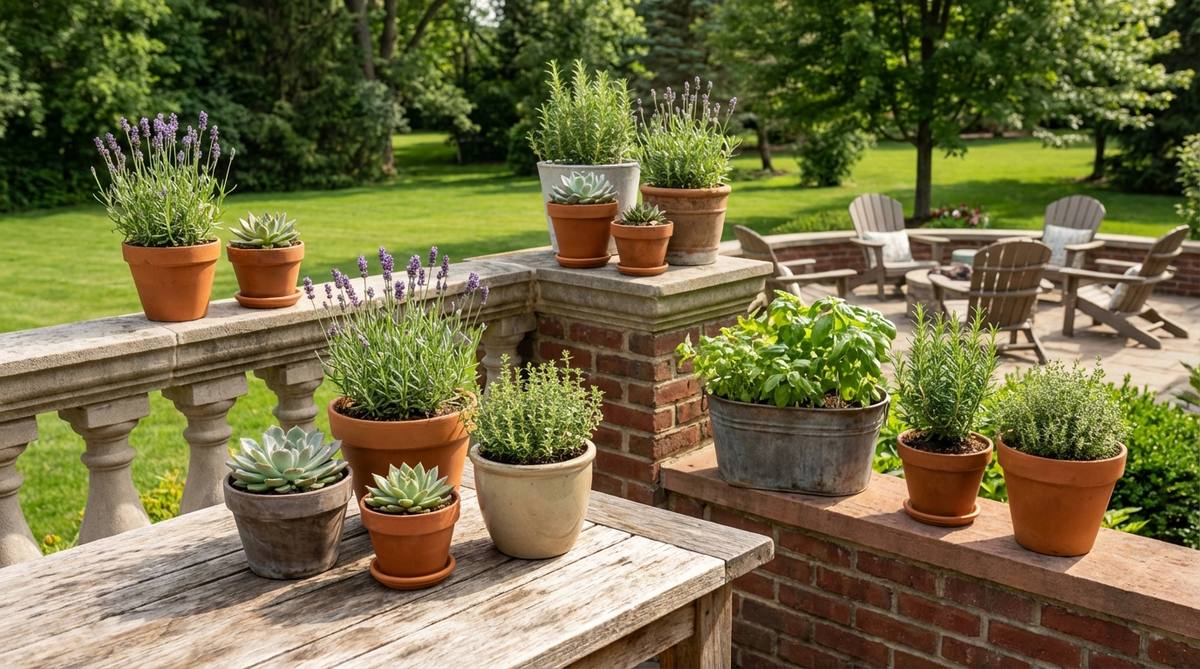
Small planters measuring 10-14 inches work for tabletop displays and tight spaces. These hold single specimens or small herb collections.
Arrange in grouped clusters for collective impact despite individual size. The compact scale suits balcony railings and narrow ledges.
42. Graduated Set Arrangements
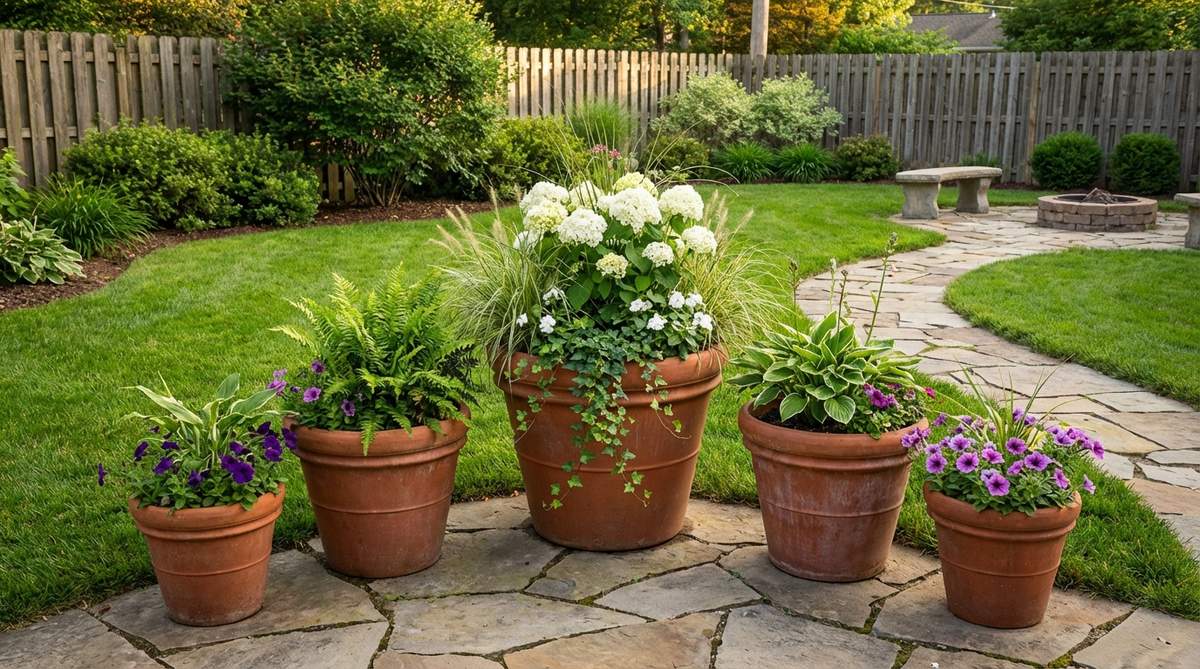
Planter sets in three to five graduated sizes create visual rhythm. Sizes might progress from 16 to 20 to 24 to 30 inches in the same design.
Position largest at focal points with smaller sizes radiating outward. The size progression guides movement through the space naturally.
43. Ultra-Wide Shallow Dishes
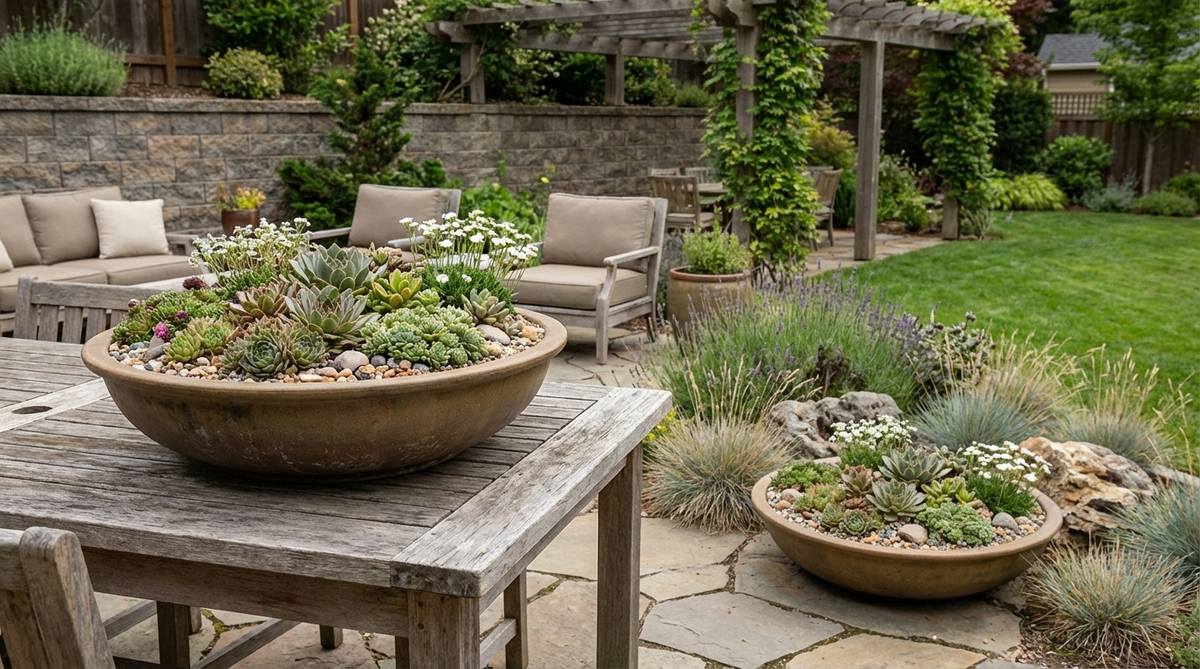
Planters measuring 40-50 inches across and only 8-10 inches deep create ground-level gardens. The proportions suit succulent compositions and alpine plantings.
Position these as centerpieces on patio tables or ground-level focal points. The shallow depth ensures proper drainage for drought-adapted species.
Specialized Planter Functions for Outdoor Spaces
Purpose-designed planters solve specific landscape challenges beyond basic plant containment. These specialized forms integrate multiple functions into single design elements.
44. Self-Watering Reservoir Systems
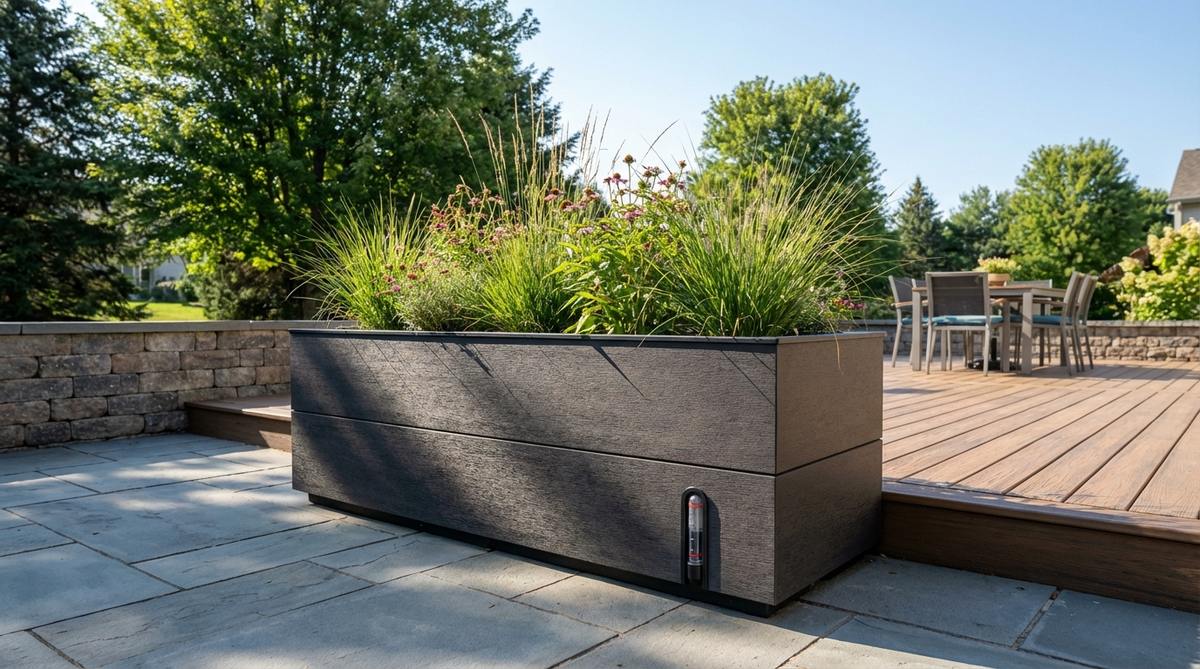
Planters with built-in water reservoirs reduce irrigation frequency through capillary action. The double-wall construction stores water in bottom chambers that feed roots gradually.
These systems work effectively for vacation properties or busy households. Visual indicators show water levels for refill timing.
Plant water-sensitive species with confidence in consistent moisture delivery. The technology extends time between watering from days to weeks.
45. Planter-Bench Combination Units
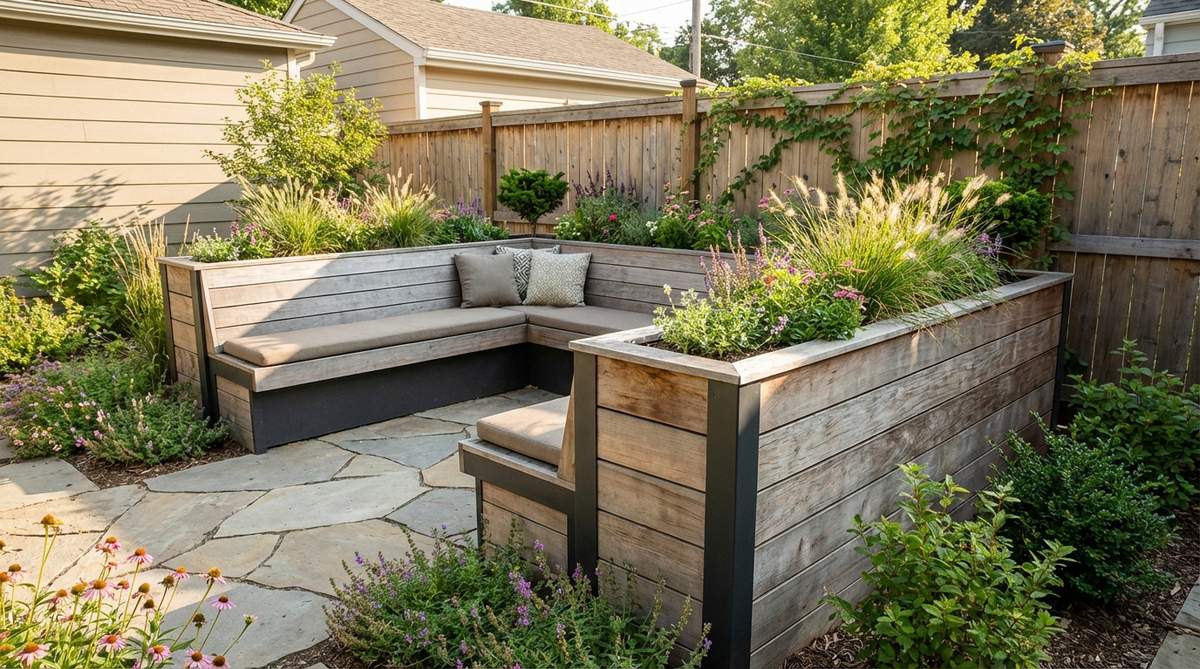
Integrated seating and planting structures combine functions in single elements. Benches span between planter boxes or incorporate planters into back or arm rests.
These multi-function pieces work well in compact urban gardens. The dual purpose maximizes utility in space-limited environments.
46. Illuminated Planters with Integrated Lighting
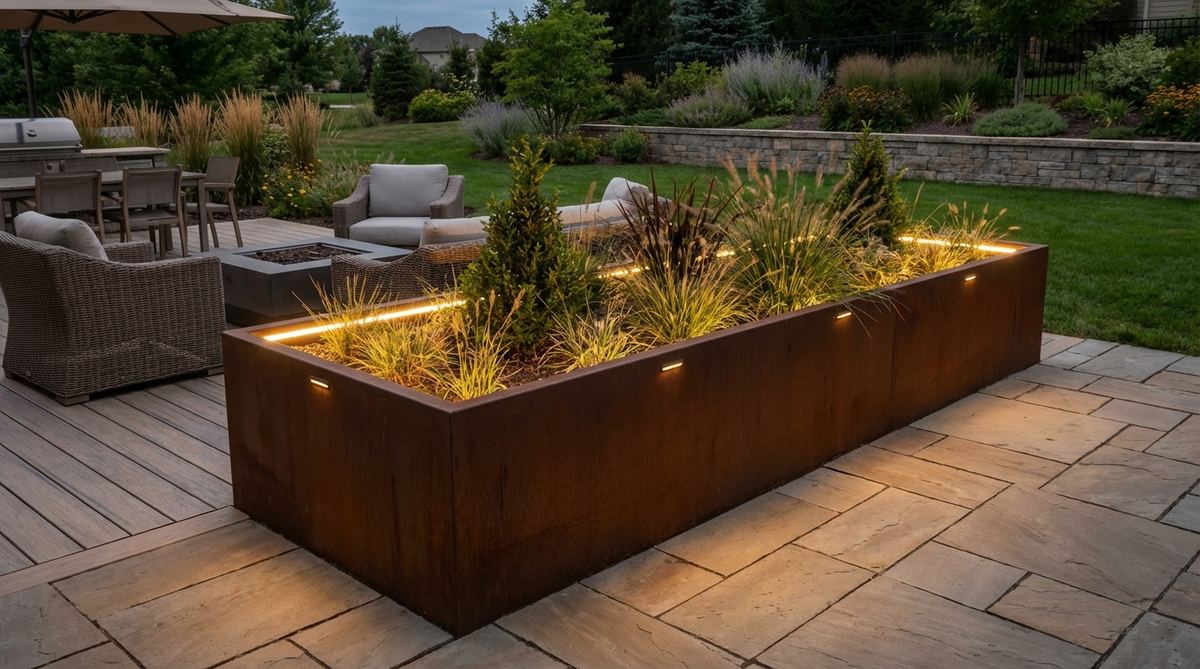
Planters with internal LED systems glow from within after dark. The lighting highlights plant silhouettes and provides ambient illumination for outdoor spaces.
Battery or plug-in power options suit different installation requirements. These work effectively for entertaining areas and nighttime visual interest.
47. Mobile Planters with Heavy-Duty Casters
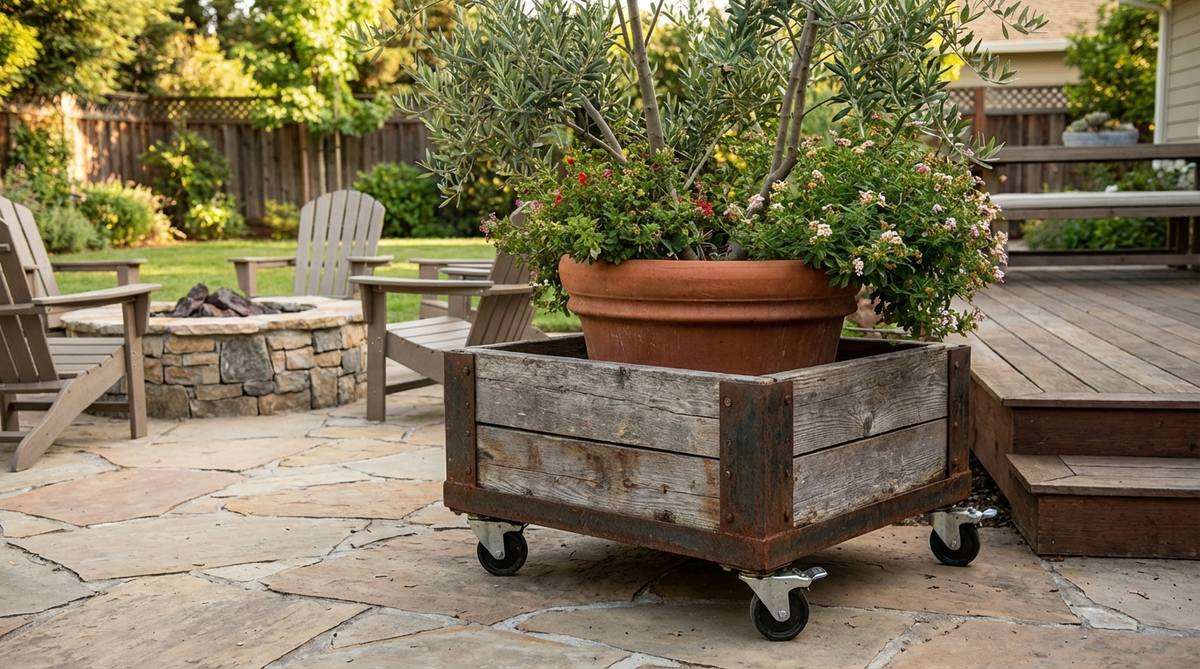
Wheeled planter bases allow repositioning of heavy containers for sun tracking or space reconfiguration. Locking casters stabilize planters when positioned.
This mobility suits seasonal arrangements or spaces used for multiple functions. Move containers to create open areas for gatherings then return to landscape positions.
48. Privacy Screen Planters
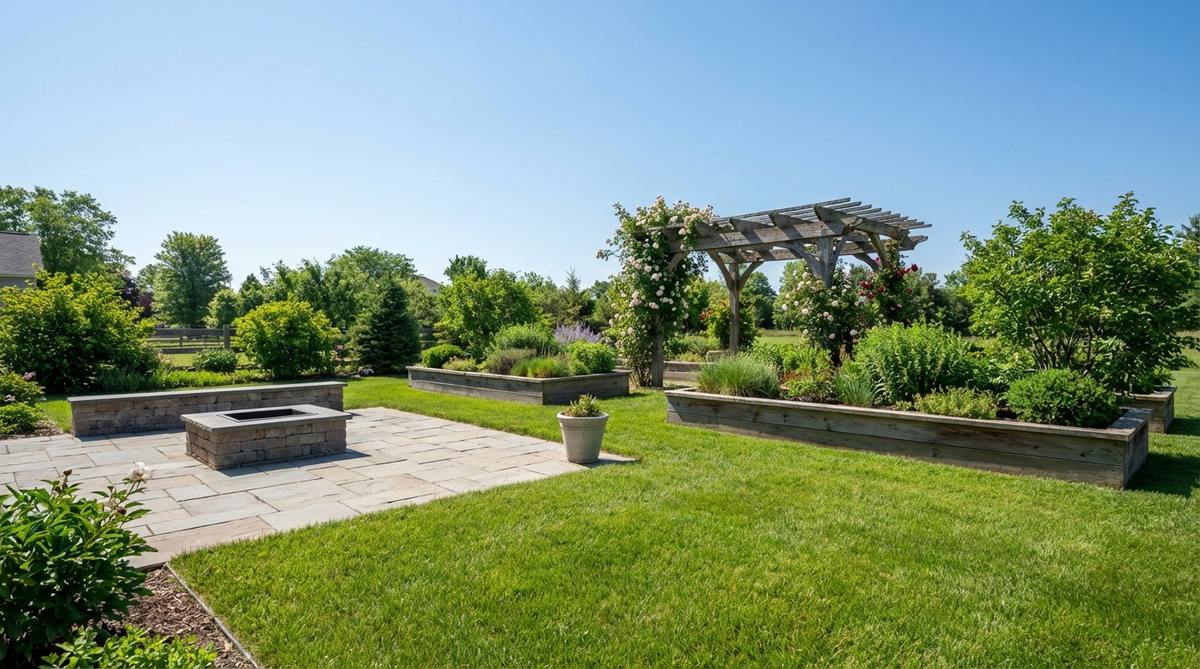
Tall narrow planters specifically designed for hedge rows create instant privacy. These typically measure 36-48 inches tall and 48-72 inches long with 12-14 inch width.
Install with evergreen screening plants such as privet, boxwood, or columnar yew. The containers provide portable property line definition or patio screening.
49. Raised Bed Planter Boxes
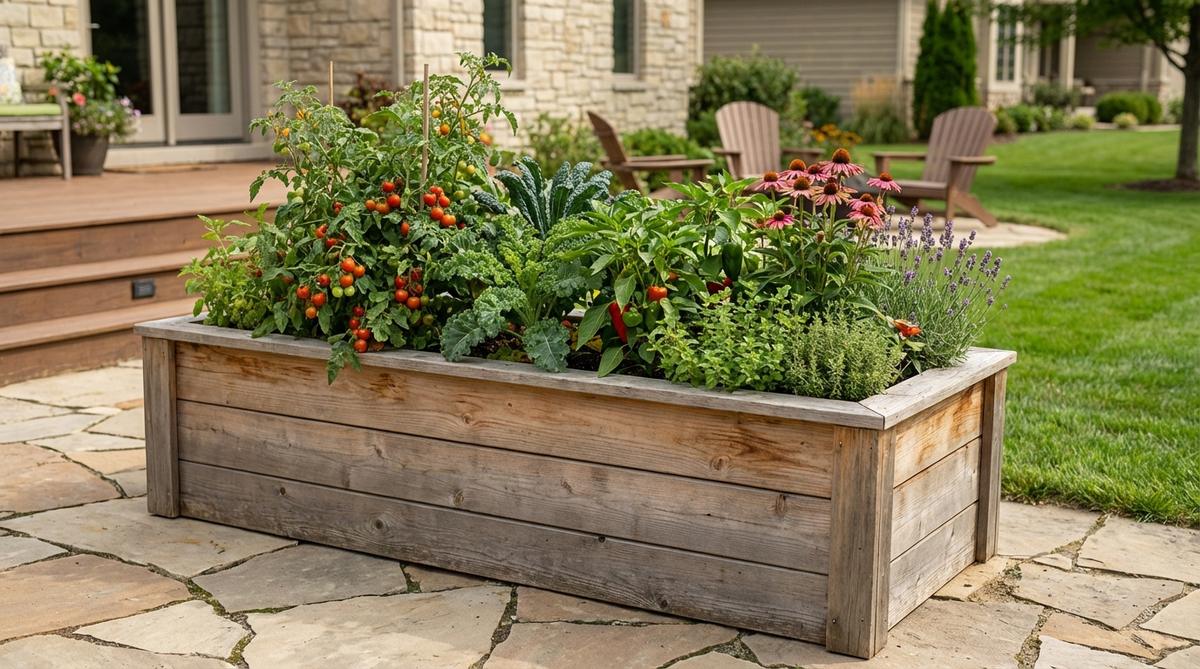
Ground-level rectangular boxes measuring 24-30 inches in height bring planting areas to comfortable working height. These eliminate bending and improve accessibility.
The depth accommodates vegetable gardening and deep-rooted perennials. Position on patios or decks for intensive edible production in small spaces.
50. Window Box-Style Rail Planters
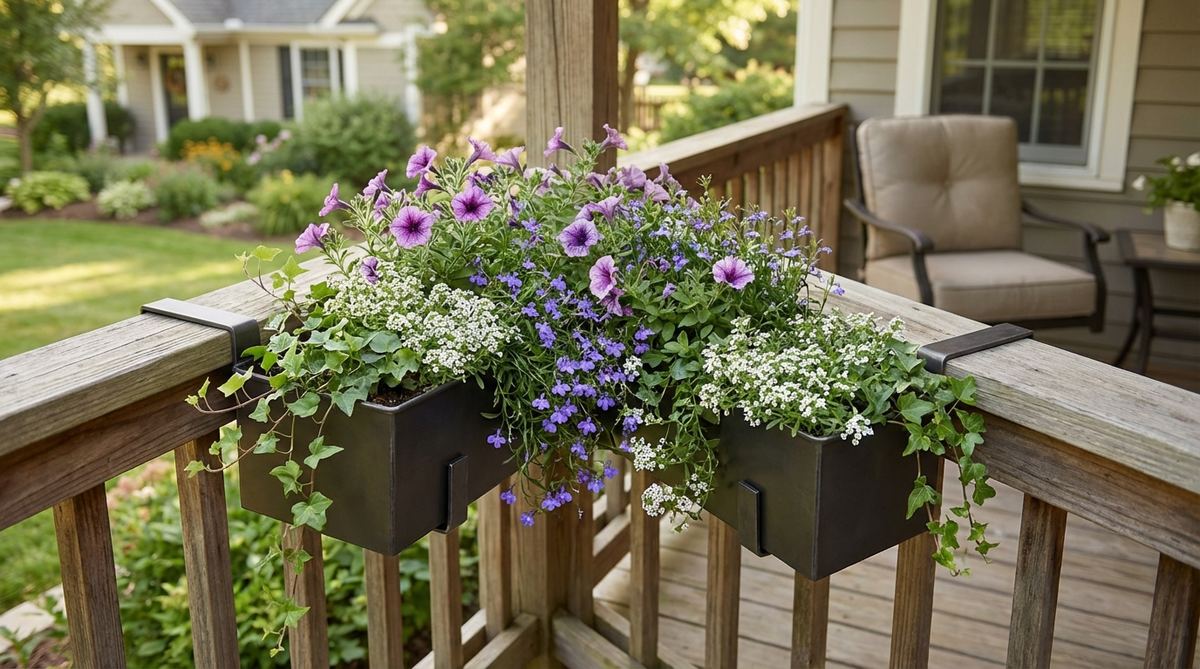
Horizontal planters designed for mounting on porch railings or fence tops measure 24-48 inches long and 6-8 inches deep. Integrated brackets ensure secure attachment.
Plant with cascading annuals that drape over edges for cottage-garden appeal. These maximize vertical surfaces without consuming deck or patio floor space.
51. Corner-Wrapping L-Shaped Planters
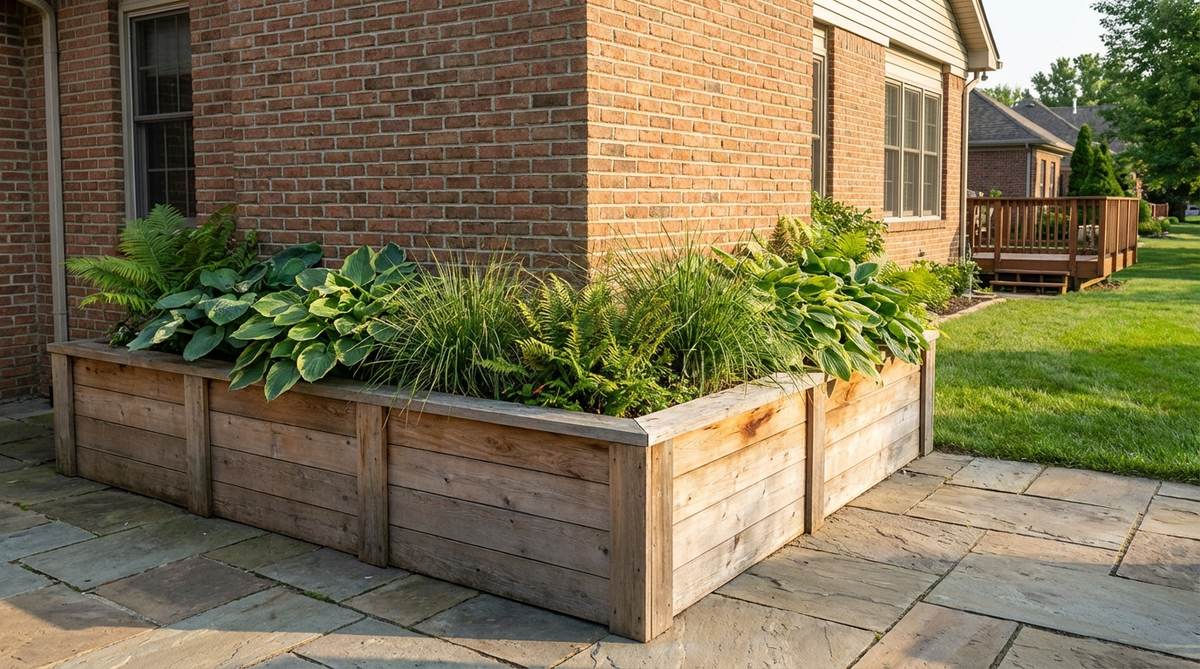
L-configured planters fit exterior corners of buildings or decks to maximize awkward spaces. The perpendicular design creates continuous planting lines around right angles.
These work effectively for foundation plantings updated with contemporary containers. The custom shape solves common layout challenges in rectangular spaces.
52. Tabletop Centerpiece Planters
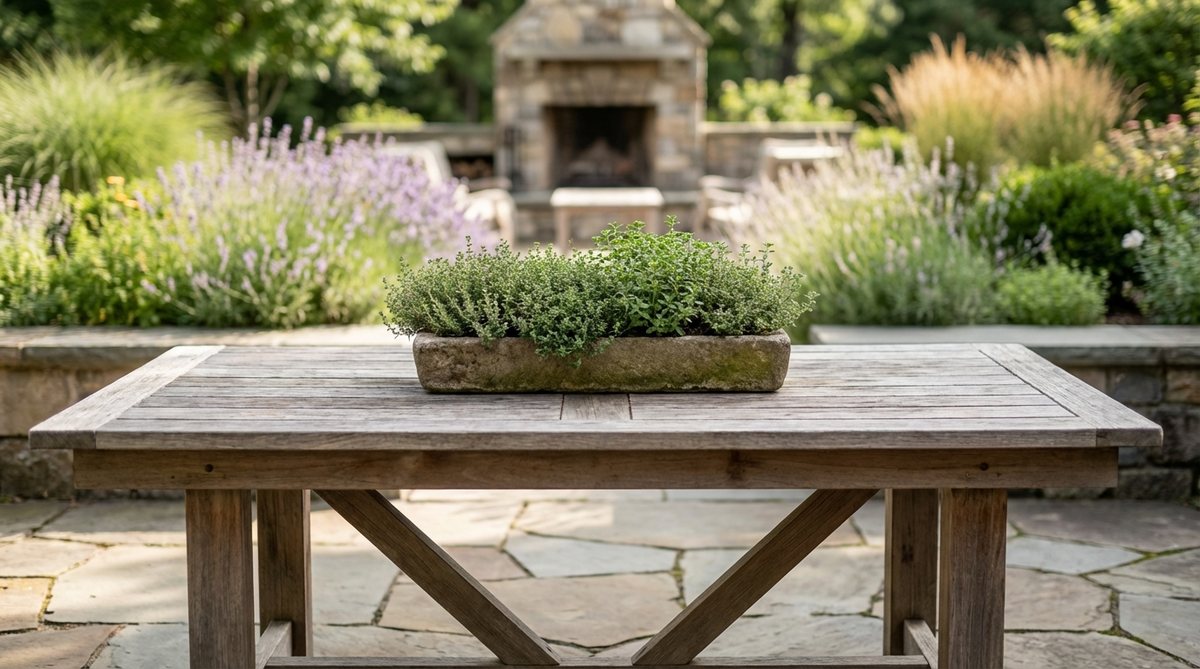
Low planters specifically proportioned for outdoor dining table centers measure 18-30 inches long and 4-6 inches tall. The minimal height preserves sightlines across tables.
Plant with low-growing herbs such as thyme or oregano for functional centerpieces. These add living elements to dining settings without obstructing conversation.
53. Multi-Compartment Herb Garden Planters
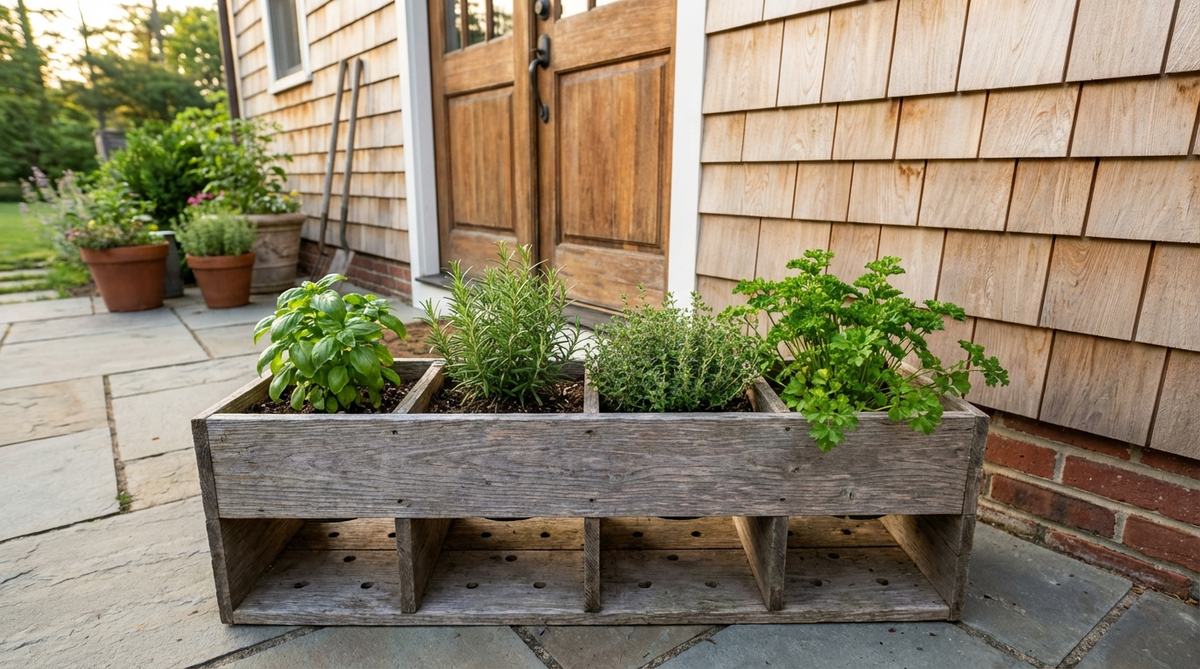
Divided planters with three to six separate cells allow growing different herbs in one container. Each compartment measures 6-8 inches square with independent drainage.
This design prevents aggressive spreaders from overtaking neighboring plants. Position near kitchen doors for convenient culinary access to multiple varieties.
54. Fountain-Planter Combination Features
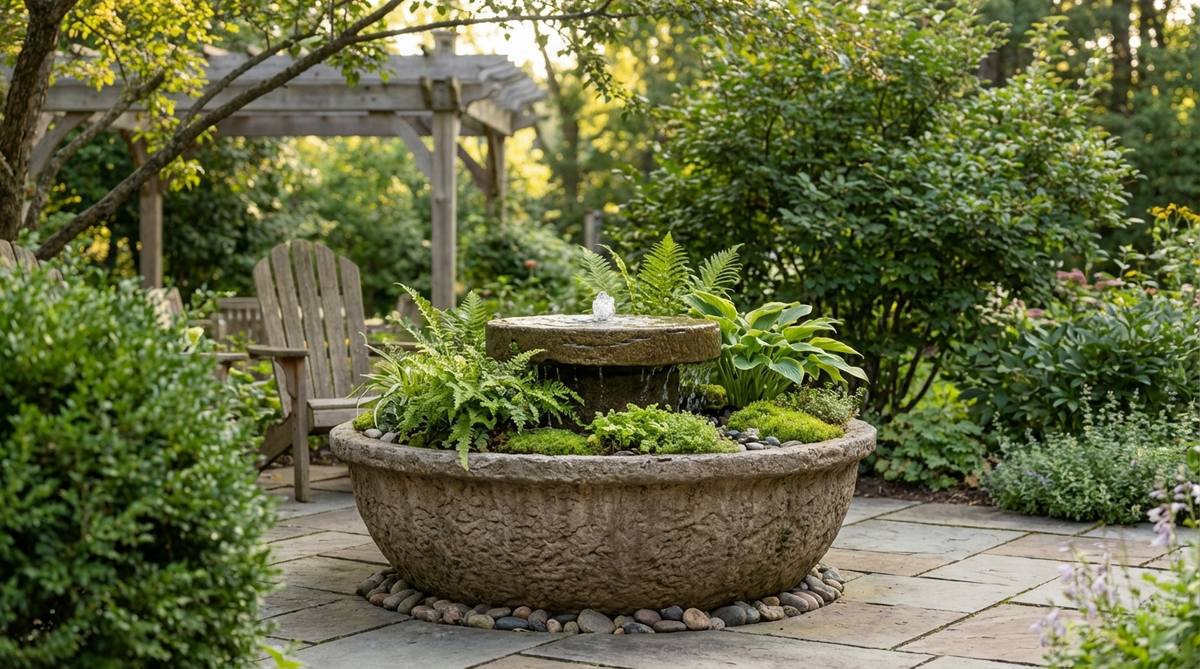
Planters with integrated water features combine sound and greenery in single elements. Water bubbles through central reservoirs surrounded by planting areas.
These create focal points for meditation gardens or patio seating areas. The water circulation aerates and provides humidity for moisture-loving plants.
Transform Your Outdoor Spaces with Modern Planter Design
Strategic selection and placement of outdoor decor planters transforms exterior environments through architectural form and living plant material. The combination of contemporary containers with appropriate greenery selections creates outdoor rooms with professional finish and lasting appeal. Fresh Garden Ideas encourages experimentation with scale, material, and arrangement to develop personalized landscape solutions that reflect individual style while addressing specific site conditions and functional requirements.
Frequently Asked Questions
What size outdoor planter works best for front entry statements?
Planters measuring 24-30 inches in height and width provide substantial presence without overwhelming residential-scale entries. Pair matching containers on either side of doorways for balanced composition. Scale up to 36-inch dimensions for larger homes or commercial applications where greater visual weight is appropriate.
Which materials offer the best durability for outdoor planters?
Fiberglass composites deliver optimal durability-to-weight ratios with resistance to cracking, fading, and weather damage. Powder-coated aluminum provides longevity in coastal environments where salt exposure corrodes other metals. Cast stone and quality resins also perform well across climate zones when properly manufactured with UV inhibitors and drainage systems.
How do I prevent outdoor planters from tipping in wind?
Add ballast weight to planter bottoms using sand, gravel, or purpose-designed weight bags before adding soil. Select planters with wider bases relative to height for improved stability. For extremely exposed locations, anchor large containers to hardscaping using hidden brackets or concrete footings integrated into installation design.
What color planters work best with varied plant combinations?
Neutral colors including black, white, charcoal gray, and natural stone tones allow plant colors to dominate visual attention without container competition. These versatile shades coordinate across seasons as plant material changes. Colored planters work best as deliberate accents with specific complementary plant palettes rather than default choices.
How many drainage holes do outdoor planters need?
Planters require minimum one drainage hole per 100 square inches of base area. Larger containers benefit from multiple holes spaced evenly across the base. Holes should measure minimum half-inch diameter to prevent soil blockage while allowing water evacuation. Some designs include removable plugs for flexibility between drained and reservoir applications.
Can modern planters work with traditional architecture?
Contemporary planters complement traditional architecture when material and finish choices reference historical elements. Select planters in classic forms such as urns or rectangles rendered in modern materials. Neutral colors and quality construction bridge style periods effectively. The contrast between traditional architecture and contemporary containers creates intentional design tension rather than aesthetic conflict.