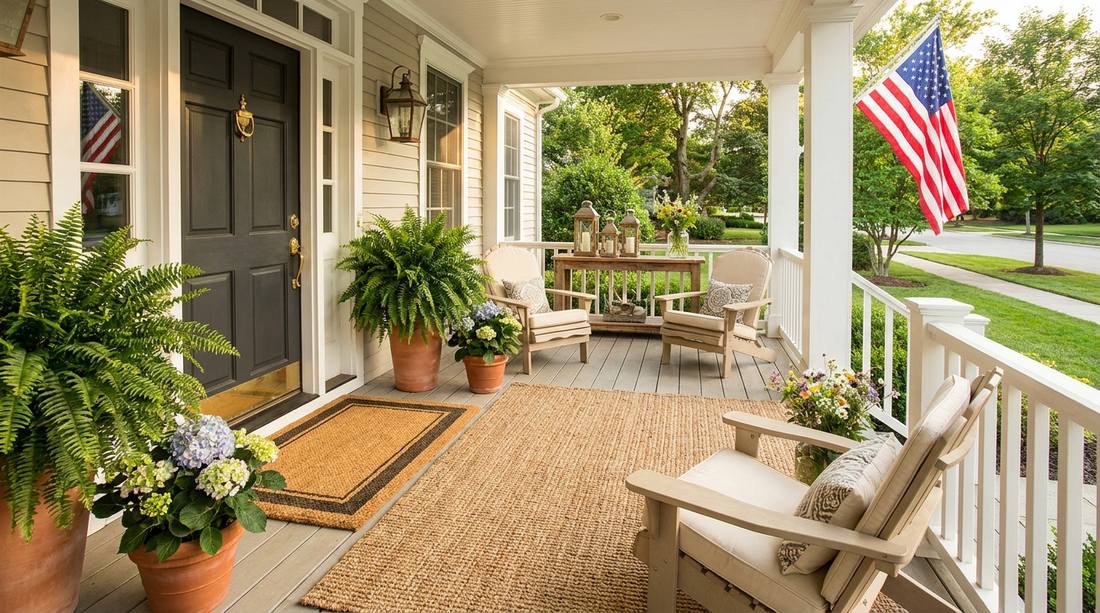
Your outdoor decor porch sets the ultimate neighborhood standard instantly. We reveal exact budget blueprints and premium material sourcing. Skip the amateur mistakes and build a designer-grade entryway.
Design SnapshotKey Principles
- Layered Lighting: Combine overhead fixtures, wall sconces, and path lights to create depth and security while highlighting architectural features.
- Scale and Proportion: Match furniture and decor elements to porch size—oversized planters work for large porches, while compact bistro sets suit smaller spaces.
- Seasonal Flexibility: Choose foundational pieces that transition easily with interchangeable accents like pillows, wreaths, and seasonal plantings.
- Cohesive Color Story: Select a palette that complements your home’s exterior, then repeat those hues throughout planters, furniture, and accessories.
Statement Lighting Fixtures That Command Attention
1. Oversized Pendant Lanterns
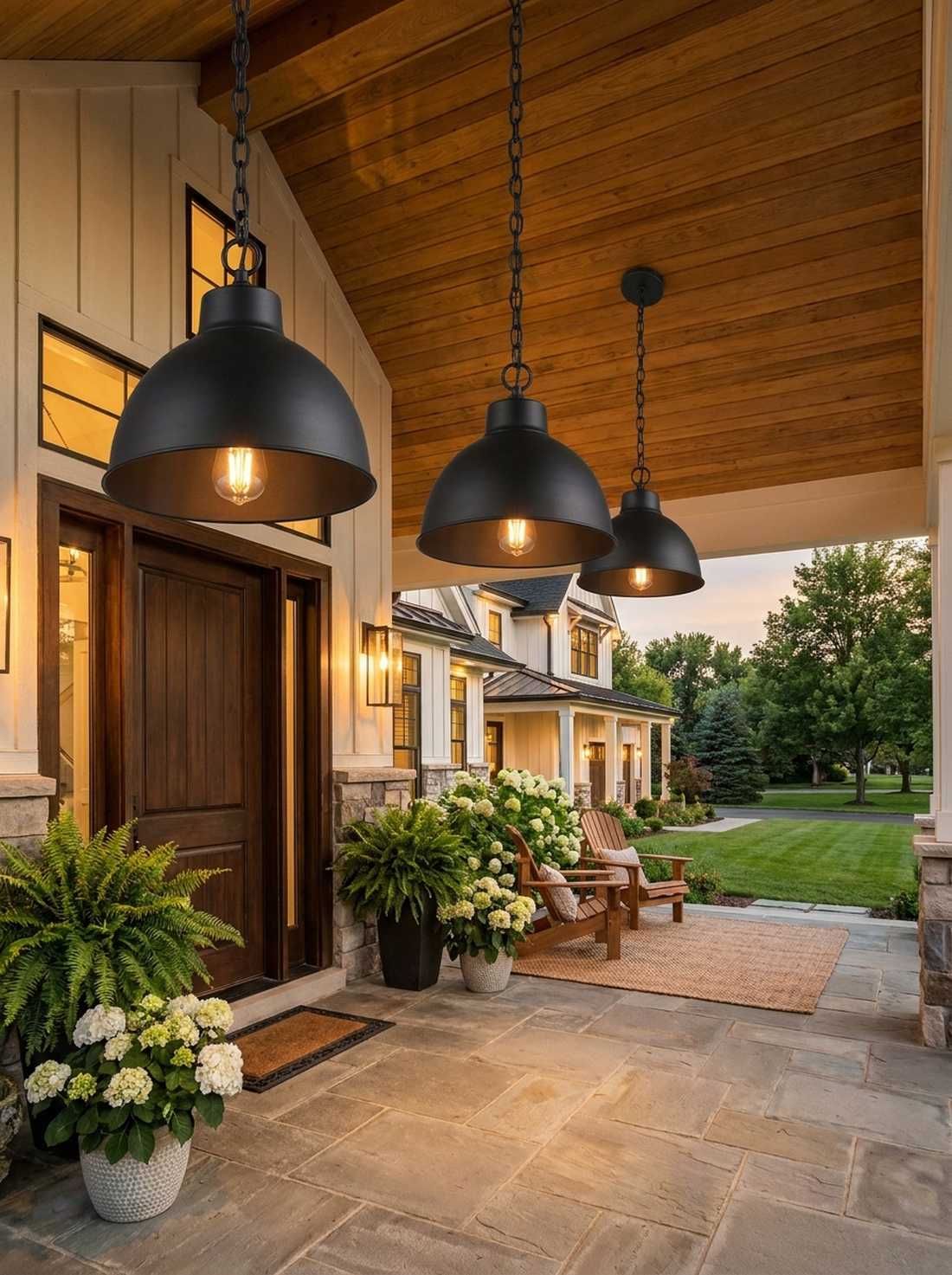
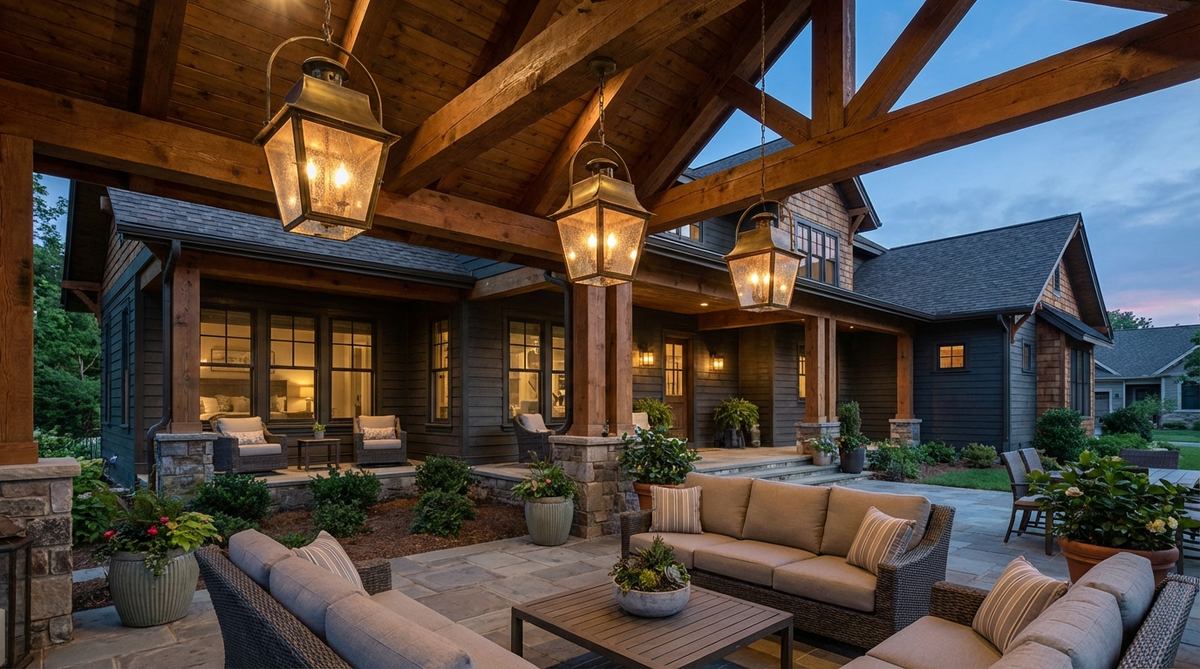
This grand entryway lighting feels like a luxury hotel arrival experience. It works exceptionally well for homes with tall, vaulted porch ceilings.
Most builders use undersized flush mounts, but upgrading to oversized fixtures instantly elevates the curb appeal. Adding outdoor hanging light kits in matte black brings a modern industrial edge to traditional architecture.
You can easily pull this off for around $80–$150. Pin this to your exterior home upgrade board!
- Key Materials: Heavy-duty ceiling chain, weather-rated lantern
- Vibe / Style: Modern Farmhouse Glam
- Difficulty: Moderate DIY electrical
- Budget Breakdown: Fixture: $100 | Hardware: $15
- Creator’s Tip: Use Edison-style LED bulbs to keep the vintage look without the massive energy bill.
- Smart Sourcing: weather-sealed metal pendant kits or commercial-grade LED vintage bulbs (bulk pack).
2. Symmetrical Wall Sconces
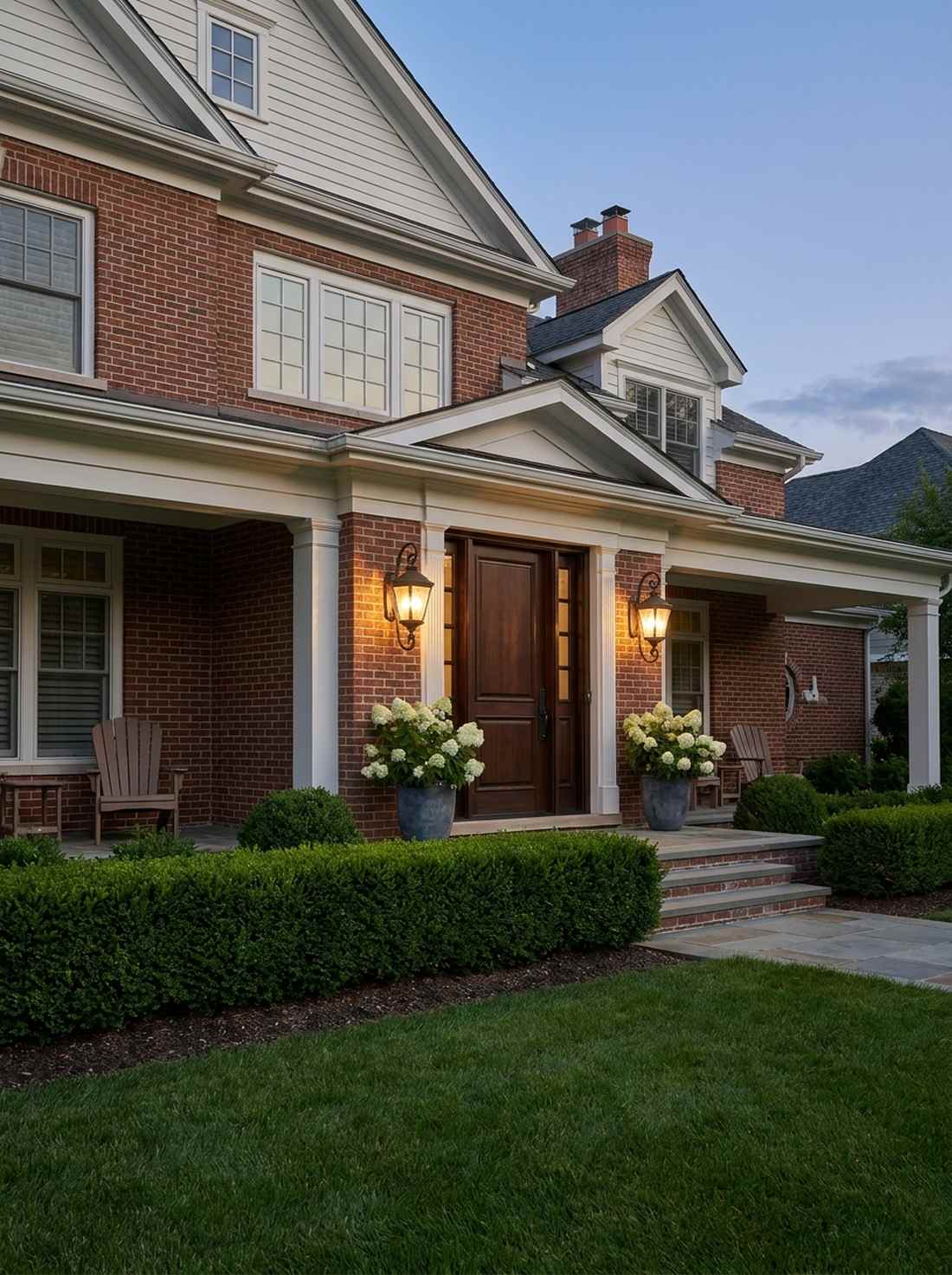
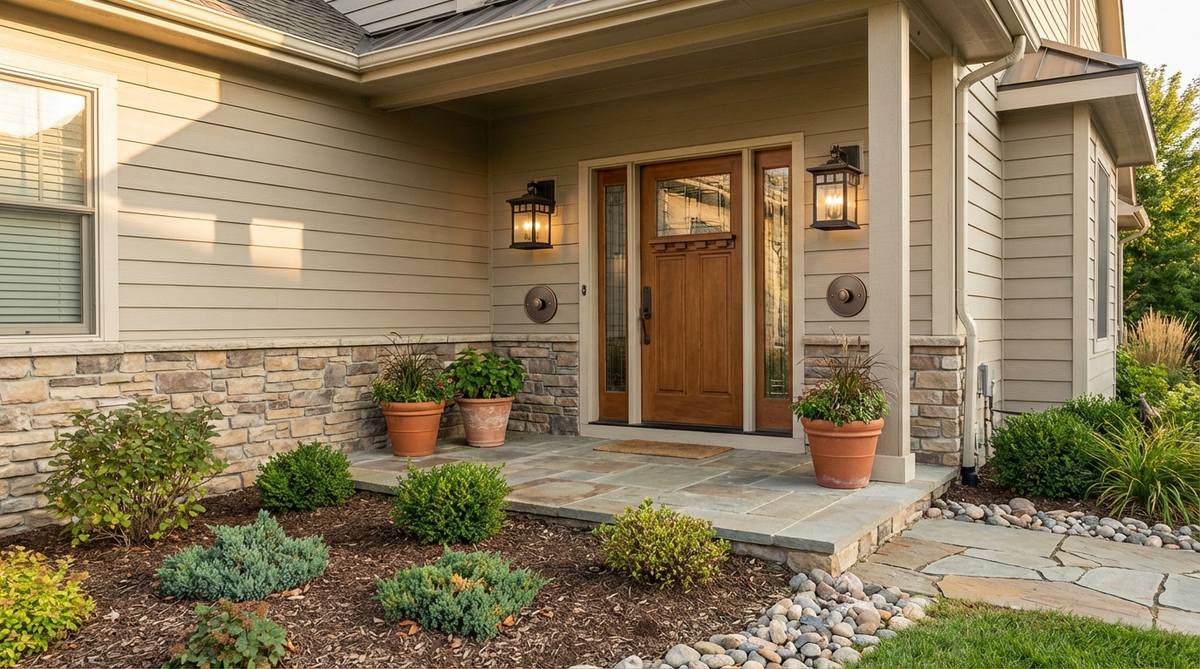
Matching front door wall sconces creates an atmosphere straight out of an architectural digest. Perfect for flanking a prominent front door to establish immediate symmetry.
While many settle for generic plastic fixtures, utilizing cast aluminum hardware delivers a surprisingly premium look. Seamlessly weaving in dusk-to-dawn sensor lights ensures your home is always glowing right at sunset.
Expect to spend around $50–$90 per sconce. It’s a fast upgrade that completely changes the vibe after dark.
- Key Materials: Cast aluminum sconces, silicone caulk
- Vibe / Style: Classic Georgian Elegance
- Difficulty: Moderate
- Budget Breakdown: Sconces: $120/pair | Caulk & Wire Nuts: $10
- Creator’s Tip: Mount them exactly 66 inches from the floor for optimal eye-level illumination.
- Smart Sourcing: cast aluminum sconce sets (2-pack) or exterior-grade clear silicone sealant.
3. Step-Integrated LED Strips
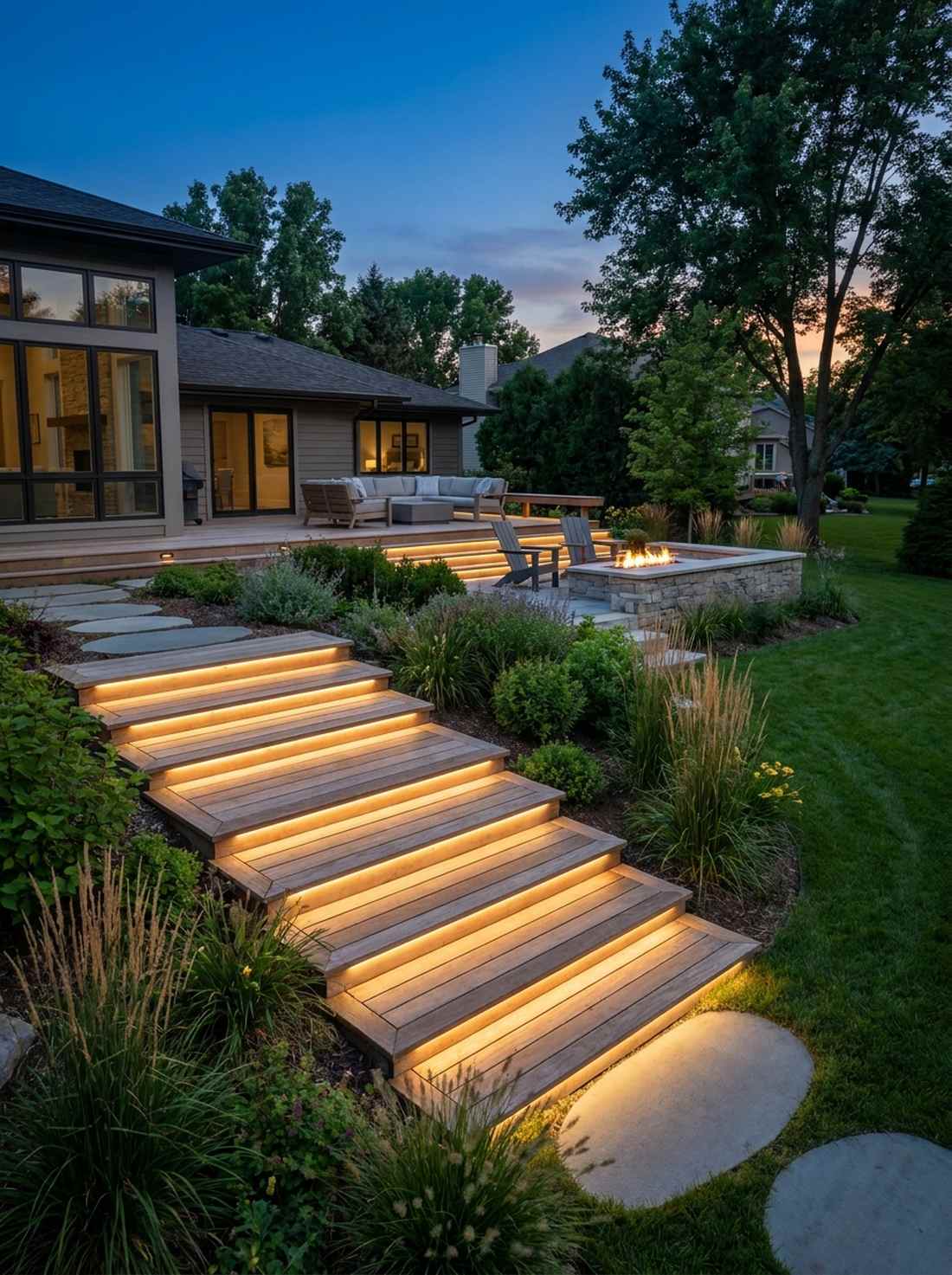
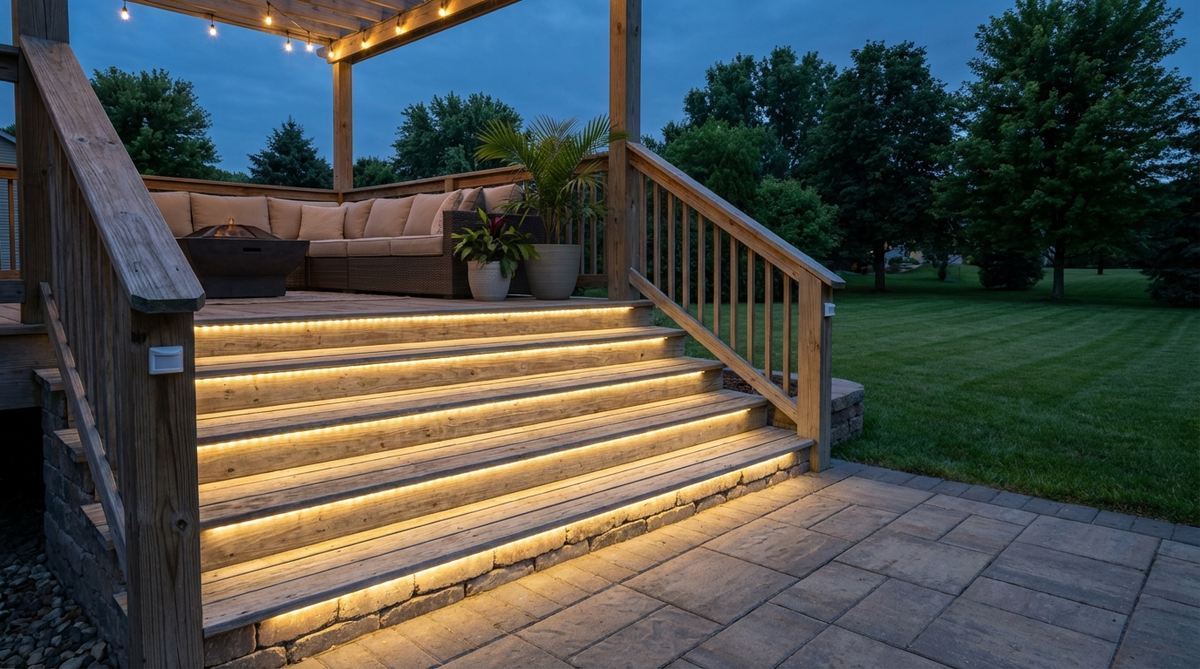
Hidden stairway accent lighting feels like a futuristic pathway guiding you home. Unbelievably perfect for long, multi-step wooden or concrete approaches.
People often overcomplicate this, but sliding flat tracks under the step lip looks far more expensive than it is. Utilizing low-voltage landscape lighting kits gives a designer-level finish that outlasts harsh winter freezes.
You can achieve this premium glow for about $40–$70. Save this if you’re planning a weekend exterior facelift.
- Key Materials: Waterproof LED tape, aluminum diffuser channels
- Vibe / Style: Ultra-Modern Minimalist
- Difficulty: Easy to Moderate
- Budget Breakdown: LED Kit: $35 | Aluminum Channels: $20
- Creator’s Tip: Always use frosted channel covers so you don’t see the individual harsh LED dots.
- Smart Sourcing: IP68 waterproof LED strip starter kits or pre-cut aluminum diffuser channels.
4. Decorative Post Lights
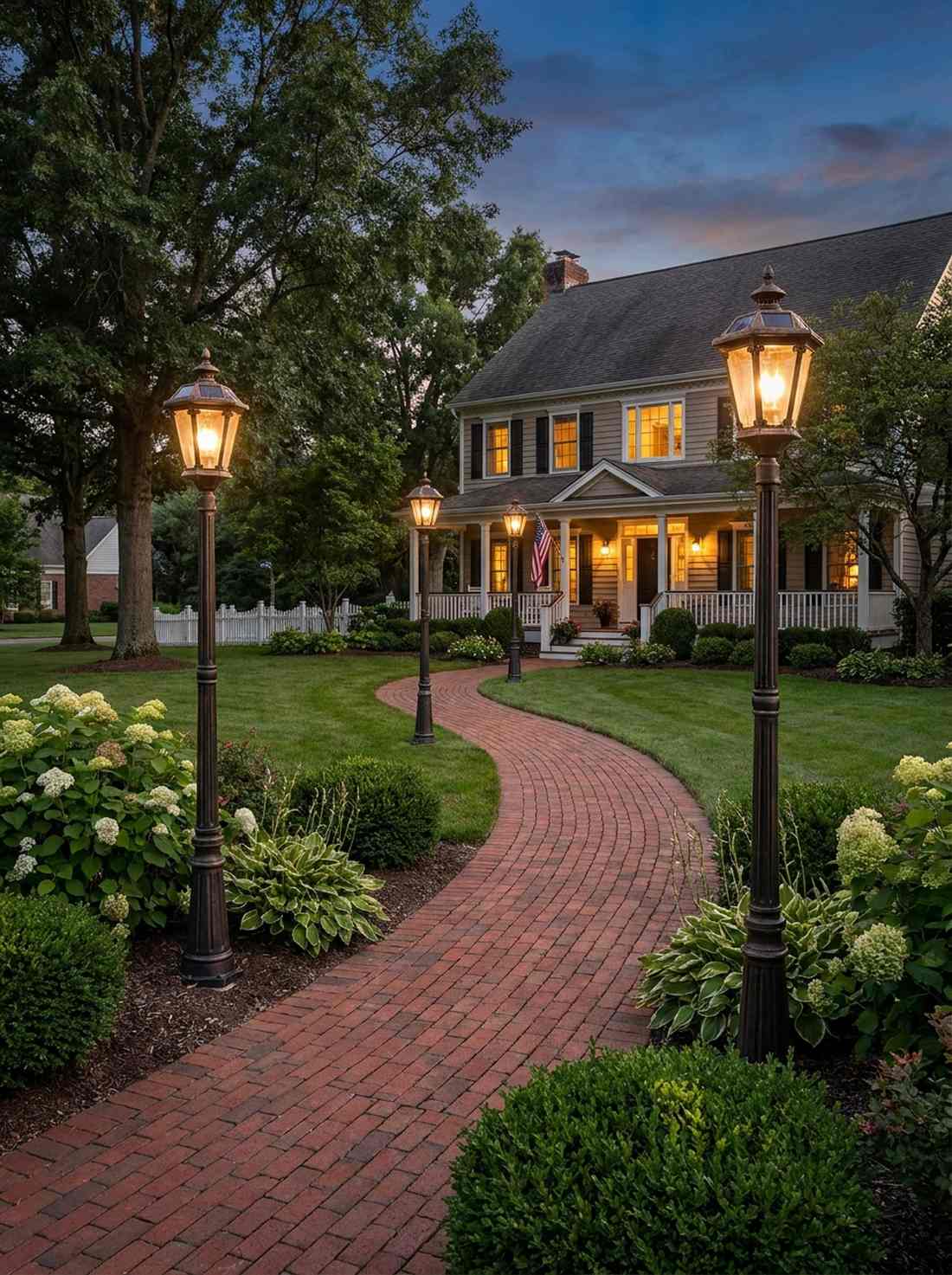
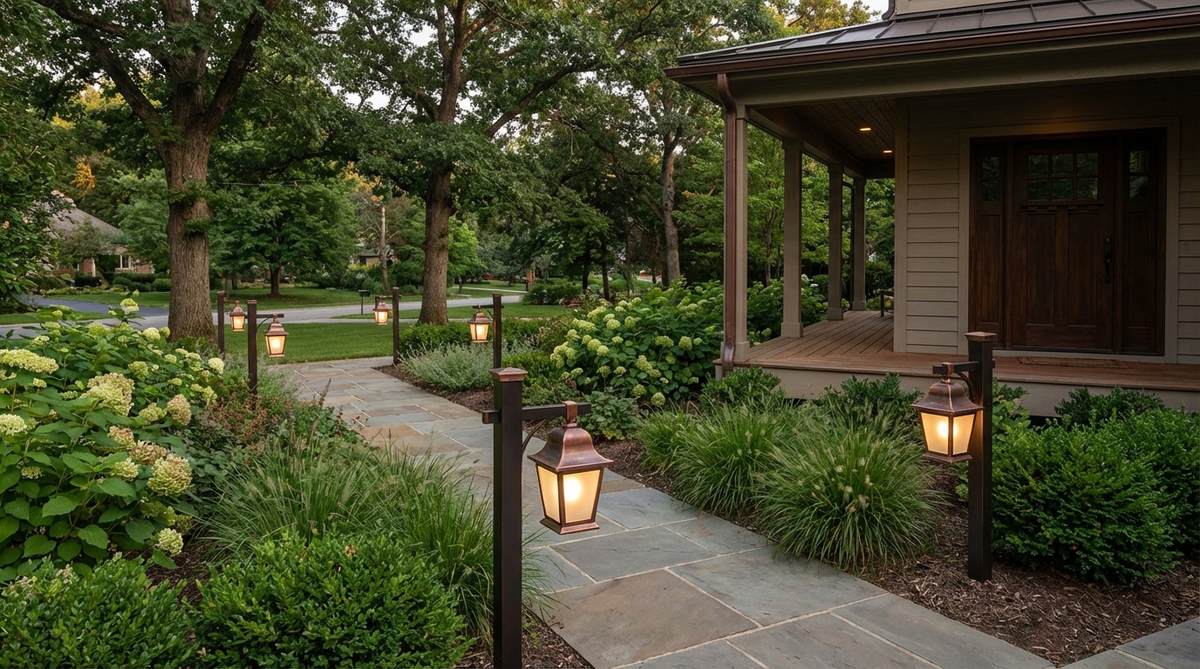
These vintage landscape post lights evoke a cozy, historic neighborhood stroll. Ideal for properties with long front walkways leading to the main porch.
A surprising number of homes leave walkways dark, but dropping in structured lighting transforms the entire estate aesthetic. Grabbing a few solar-powered post light kits completely bypasses the need for expensive trench wiring.
This lighting hack usually runs $60–$100 total. Highly recommended for a quick weekend win.
- Key Materials: Fluted posts, solar lantern heads
- Vibe / Style: Traditional Colonial
- Difficulty: Easy beginner setup
- Budget Breakdown: Post kits: $80 | Concrete base: $15
- Creator’s Tip: Secure the bases with quick-set concrete if you live in high-wind areas.
- Smart Sourcing: rust-proof aluminum post lights or fast-setting concrete mix (pre-mixed bags).
This next setup is ridiculously cheap but looks like a custom $1,000 outdoor cafe installation…
5. String Light Canopies
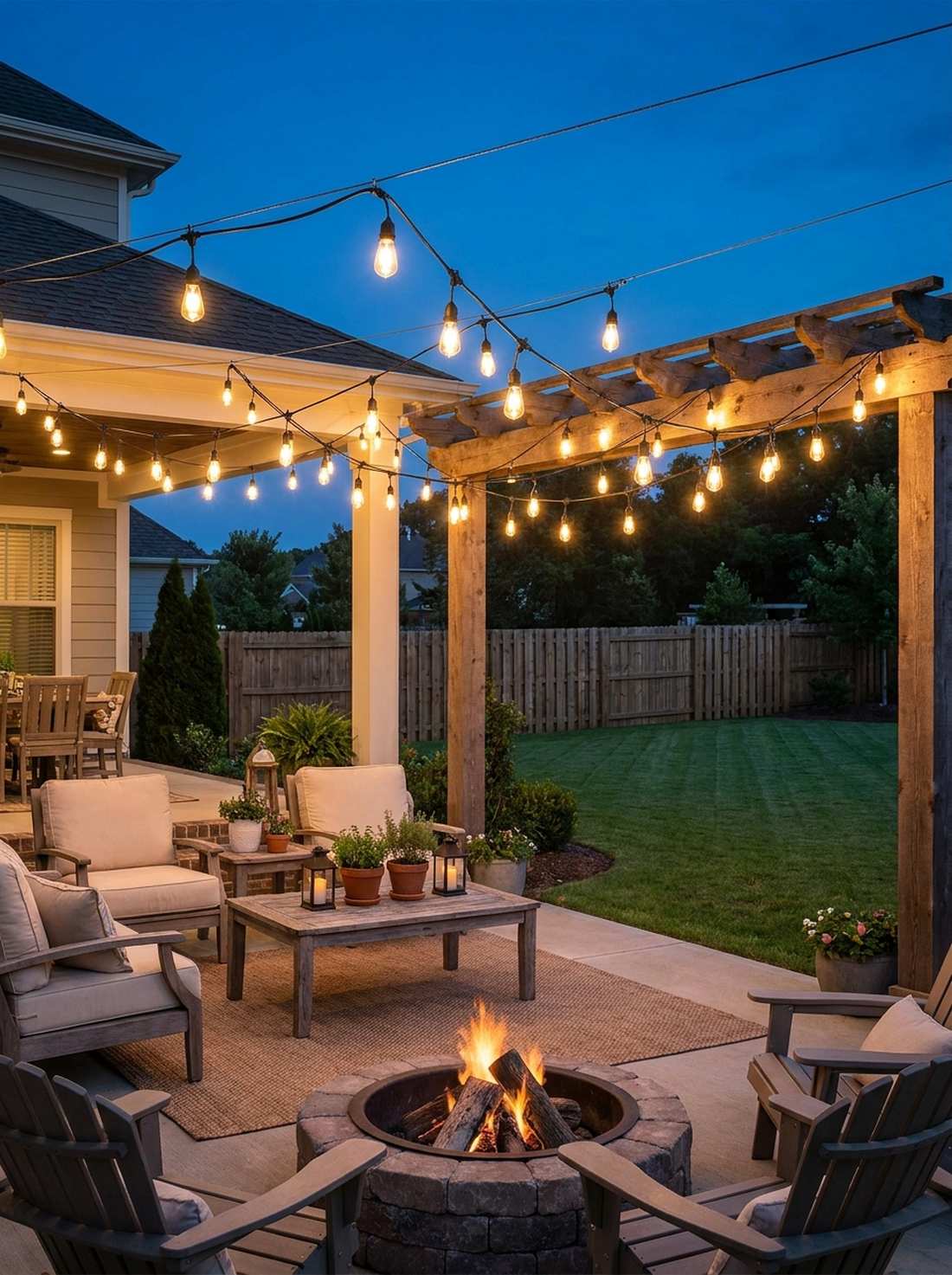
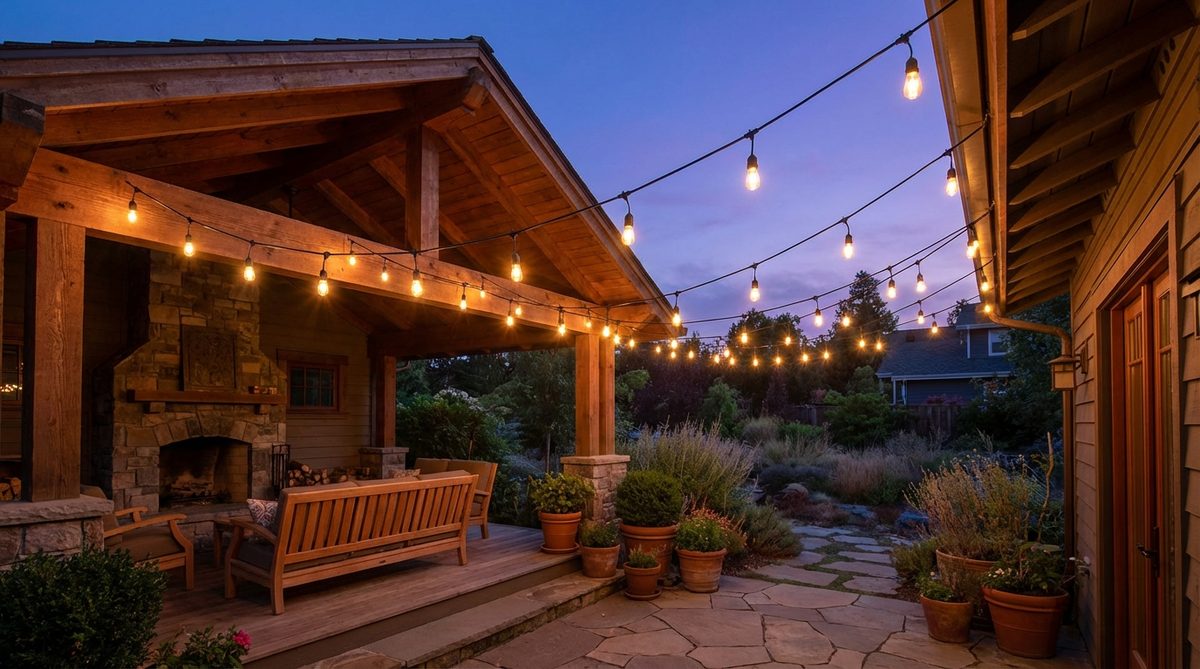
A draped patio string light canopy feels like a hidden garden party you accidentally discovered. This setup breathes life into flat, boring porch ceilings.
Most cheap strings shatter or burn out, but investing in heavy-duty wire yields a wildly expensive atmosphere. Securing commercial-grade outdoor string lights means you won’t be replacing them after the first heavy rainstorm.
Pull this off flawlessly for just $40–$60. Pin this to your summer night entertaining board!
- Key Materials: Shatterproof bulbs, steel mounting cables
- Vibe / Style: Relaxed Bistro
- Difficulty: Easy
- Budget Breakdown: String lights: $40 | Mounting wire: $15
- Creator’s Tip: Hang a stainless steel guide wire first, then zip-tie the light string to it to prevent sagging.
- Smart Sourcing: shatterproof commercial string light sets or stainless steel wire rope tension kits.
6. Solar-Powered Pathway Markers
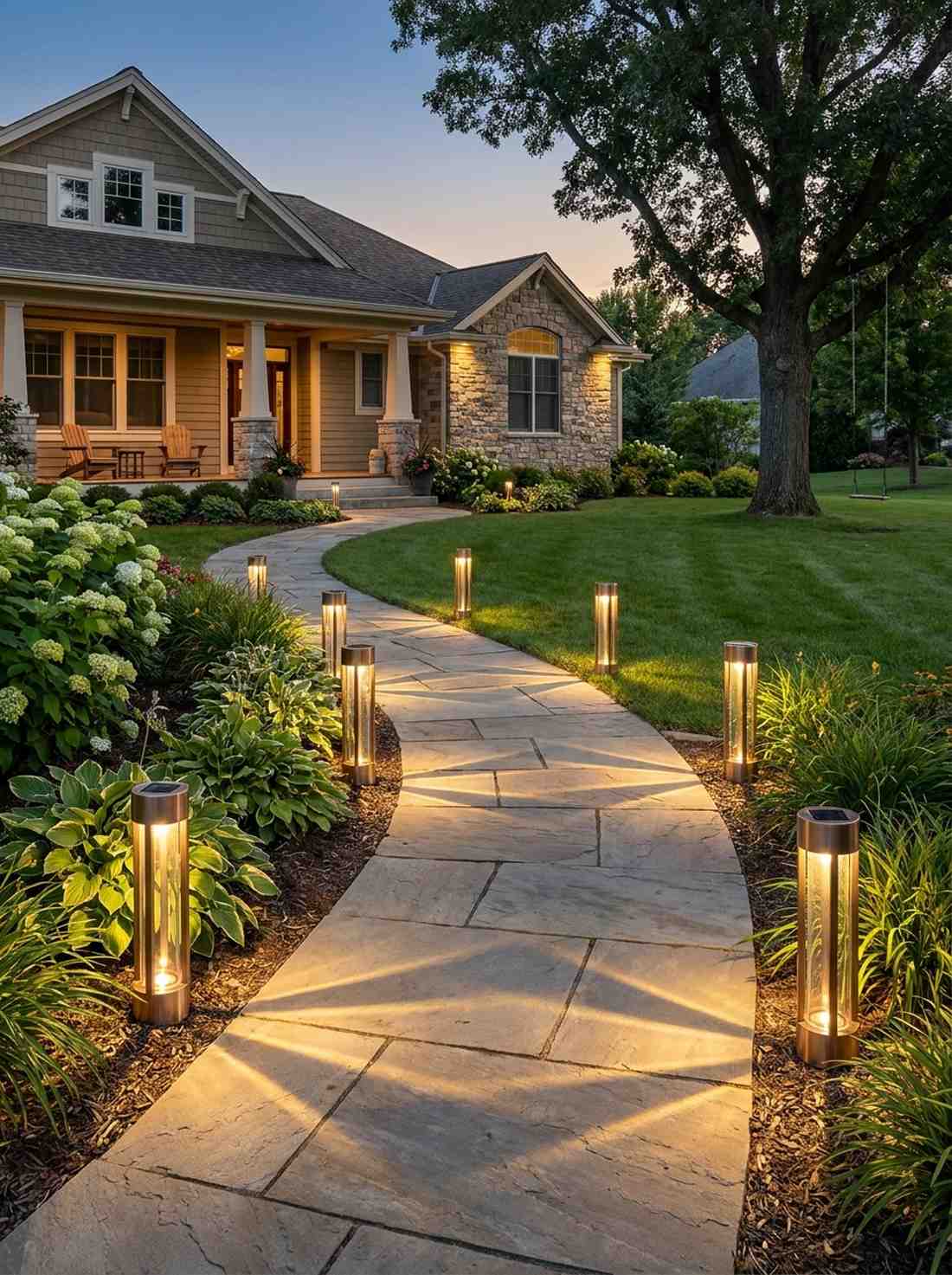
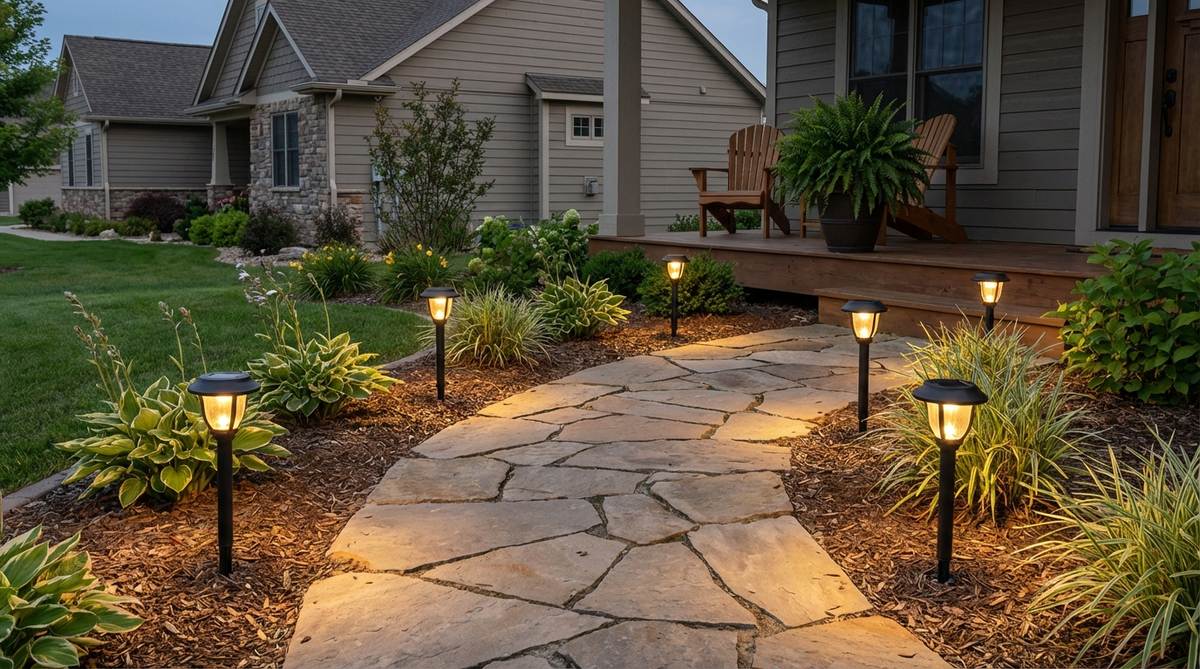
Lining the walk with sleek pathway markers feels like a guided runway to your front door. Perfect for wrapping around curved garden beds near the entryway.
People waste money on flimsy plastics, but upgrading to glass and metal housings creates a high-end estate vibe. Purchasing high-lumen solar pathway kits ensures they actually cast meaningful light rather than a dull glow.
This is a fast $30–$50 upgrade. It takes less than ten minutes to completely change the look of your yard.
- Key Materials: Glass/metal solar stakes
- Vibe / Style: Contemporary Landscape
- Difficulty: Ultra-Easy
- Budget Breakdown: Solar kit (6-pack): $45
- Creator’s Tip: Place them 6-8 feet apart, alternating sides of the walkway rather than directly across from each other.
- Smart Sourcing: heavy-duty glass solar path lights (bulk pack) or rechargeable solar batteries (high capacity).
7. Ceiling Fan-Light Combinations
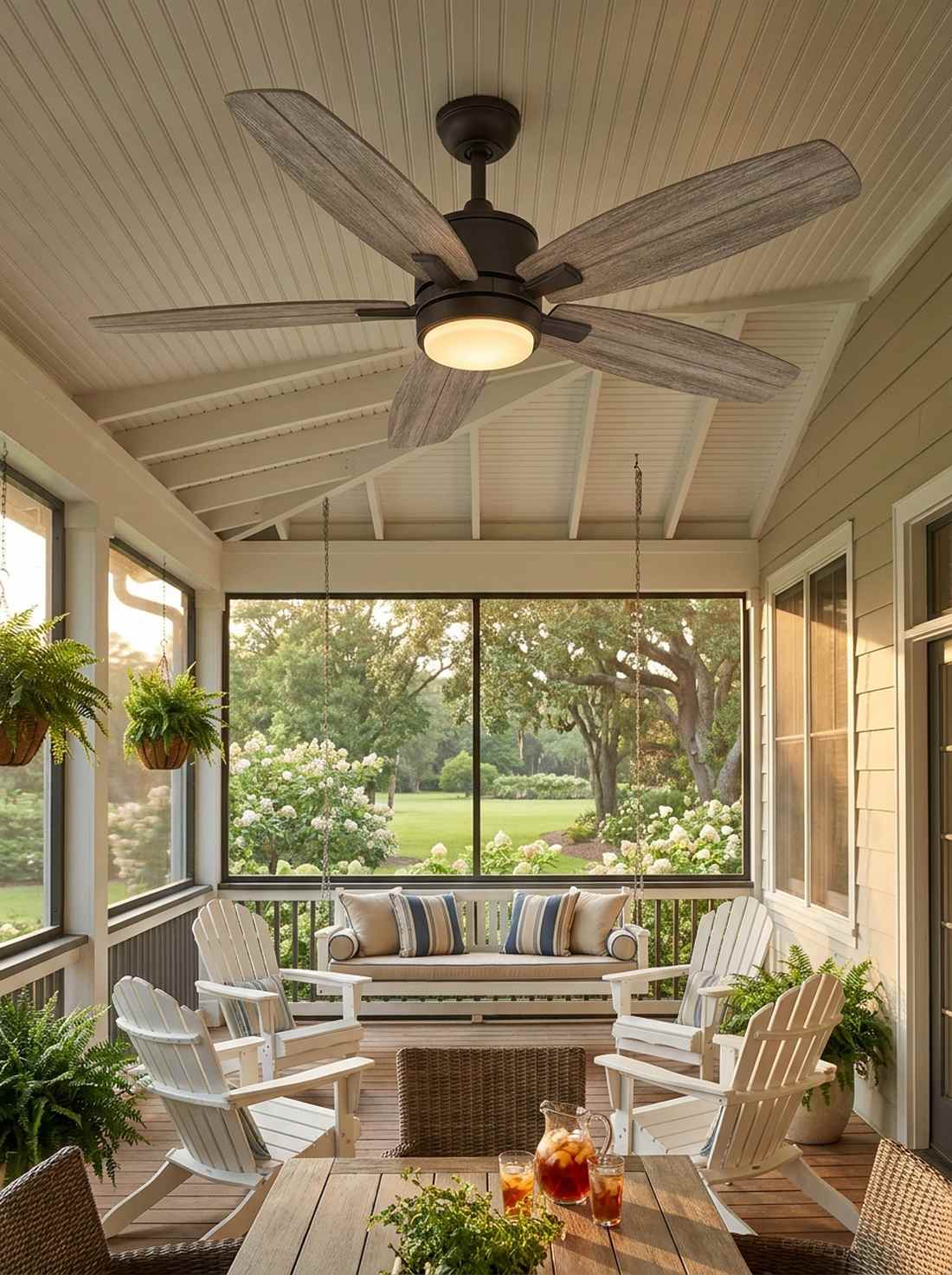
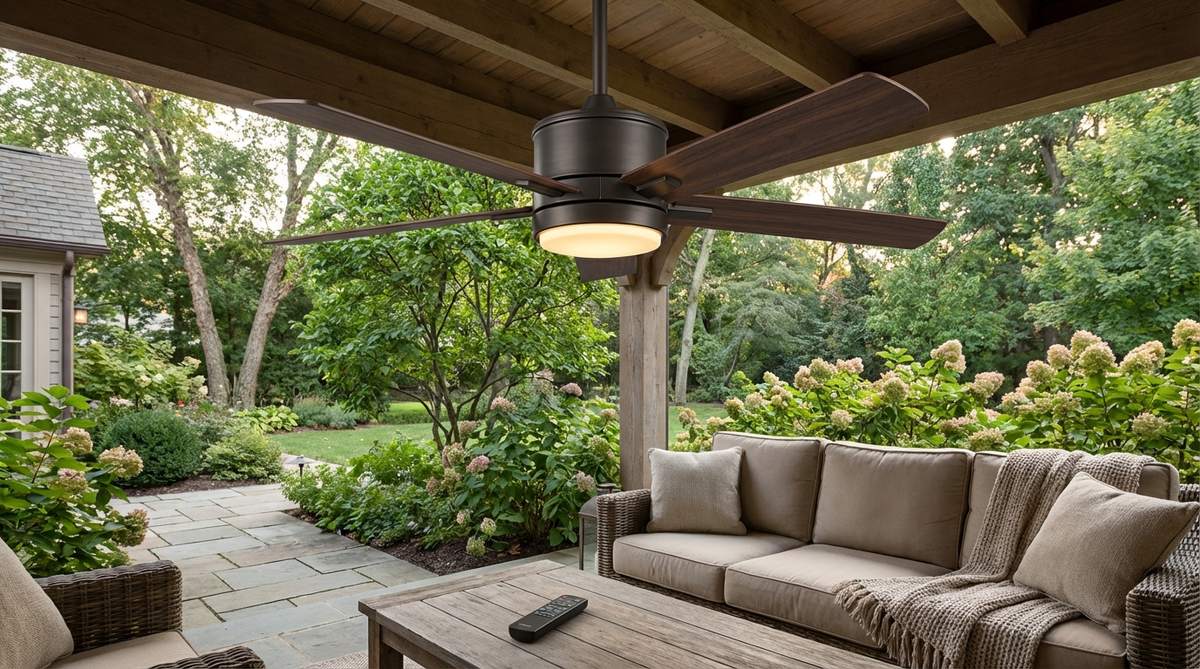
A breezy porch ceiling fan gives off deep South, wraparound porch relaxation energy. Crucial for deep, covered entryways that trap humid summer air.
While standard indoor fans warp and droop outside, sourcing wet-rated models solves the problem permanently. Installing an outdoor-rated smart fan kit lets you control the breeze and lighting directly from your phone.
Expect to budget $150–$250 for this comfort upgrade. Save this if you plan on actually lounging outside this summer!
- Key Materials: Wet-rated ceiling fan, exterior wire
- Vibe / Style: Southern Coastal
- Difficulty: Advanced DIY
- Budget Breakdown: Fan unit: $180 | Downrod: $20
- Creator’s Tip: Make sure the blade finish is plastic or treated resin, as real wood will peel from humidity.
- Smart Sourcing: wet-rated outdoor ceiling fans or weatherproof smart fan switches.
8. Uplighting for Columns
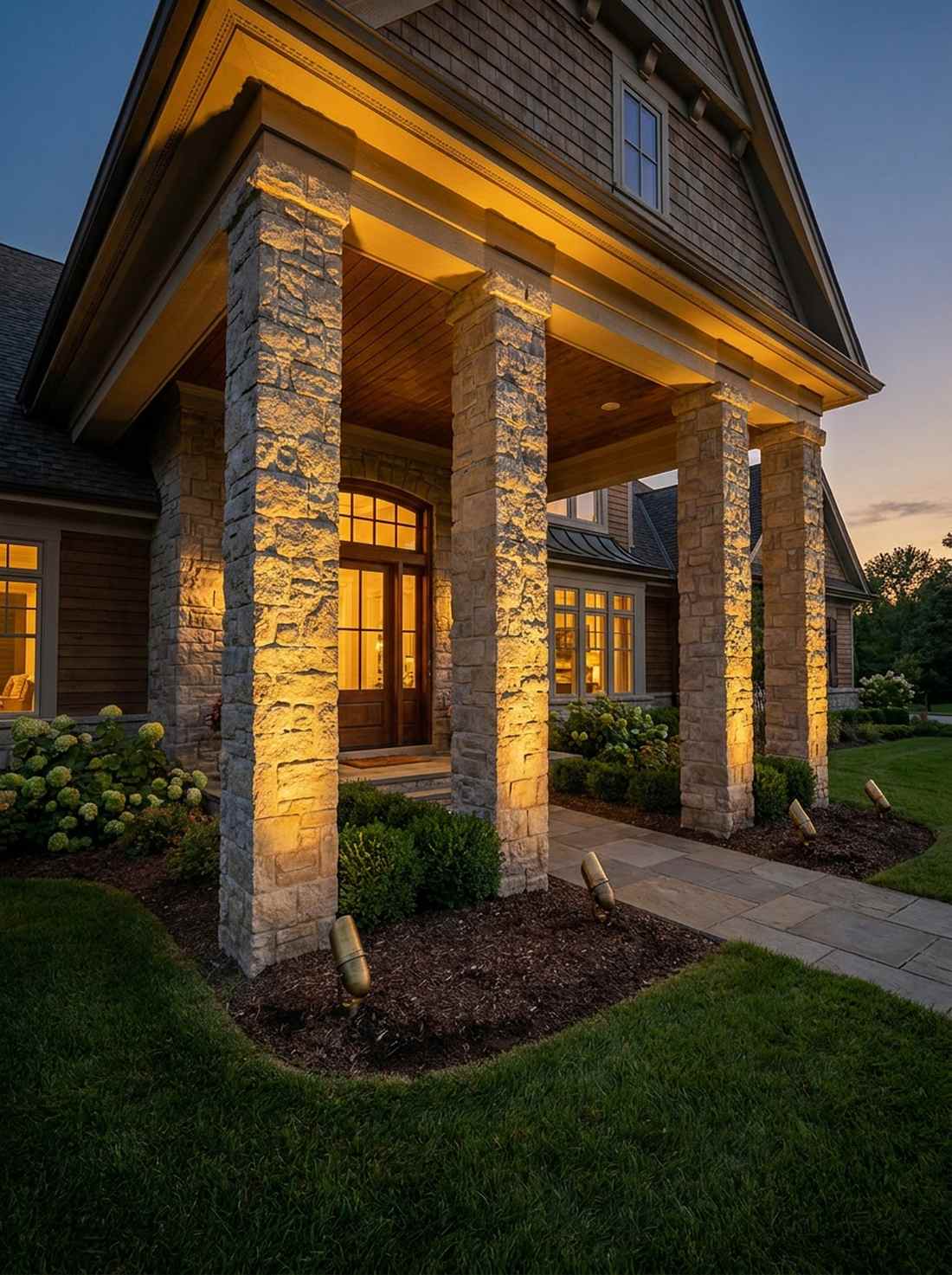
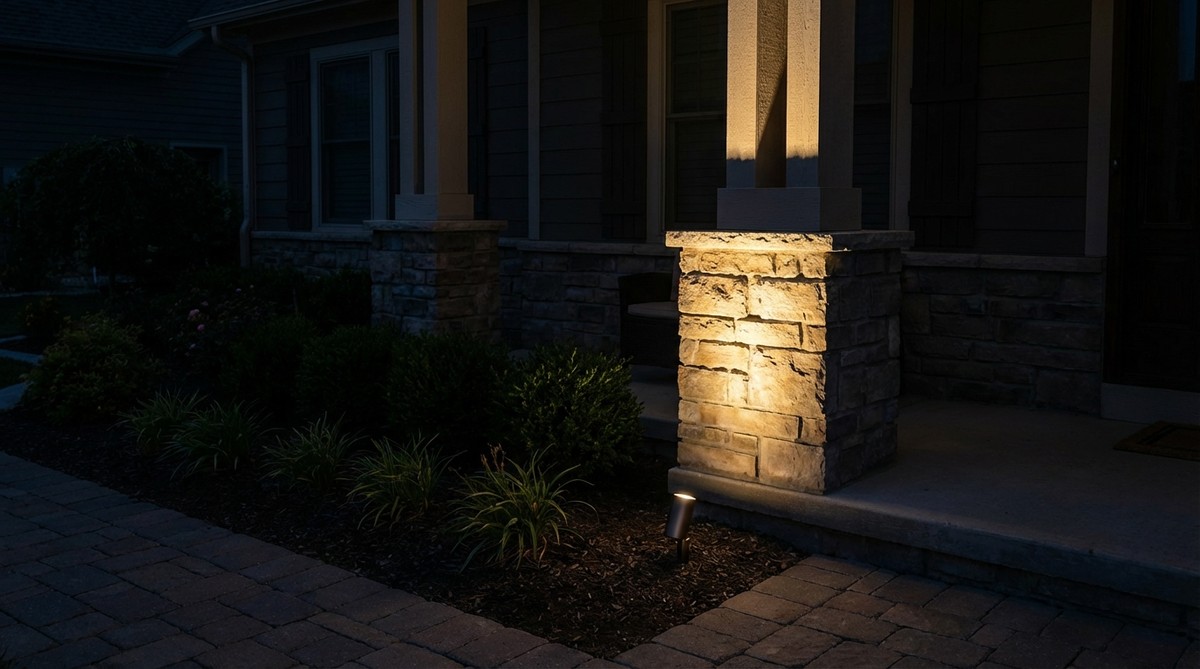
Strategic architectural column uplighting feels like a custom designer spotlighting your home’s best features. Flawless for houses with large stone, brick, or wood pillars.
Amateurs point lights directly at the front door, but grazing the columns vertically delivers a surprisingly premium look. Using directional brass landscape spotlights ensures the housing won’t corrode against soil moisture.
You can execute this high-end effect for $50–$90. It’s a striking nighttime upgrade everyone notices.
- Key Materials: Brass uplights, low-voltage wire
- Vibe / Style: Luxury Estate
- Difficulty: Moderate
- Budget Breakdown: Uplight fixtures: $60 | Transformer box: $25
- Creator’s Tip: Keep the lights 12 inches away from the base, angled slightly upward to avoid washing out the details.
- Smart Sourcing: brass low-voltage spotlights (starter kit) or weather-resistant direct burial wire.
Seating Arrangements for Every Porch Size
9. Classic Porch Swings
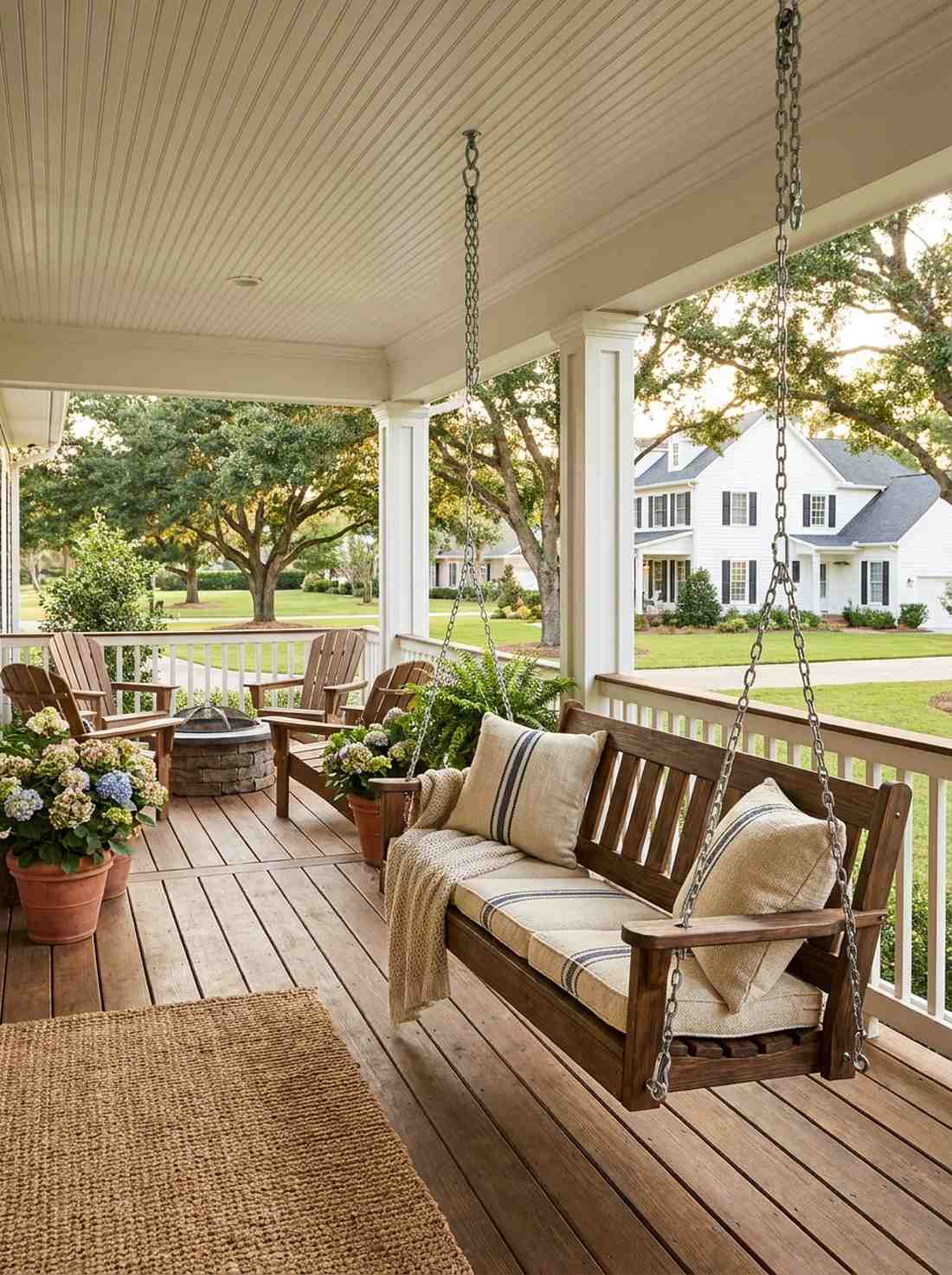
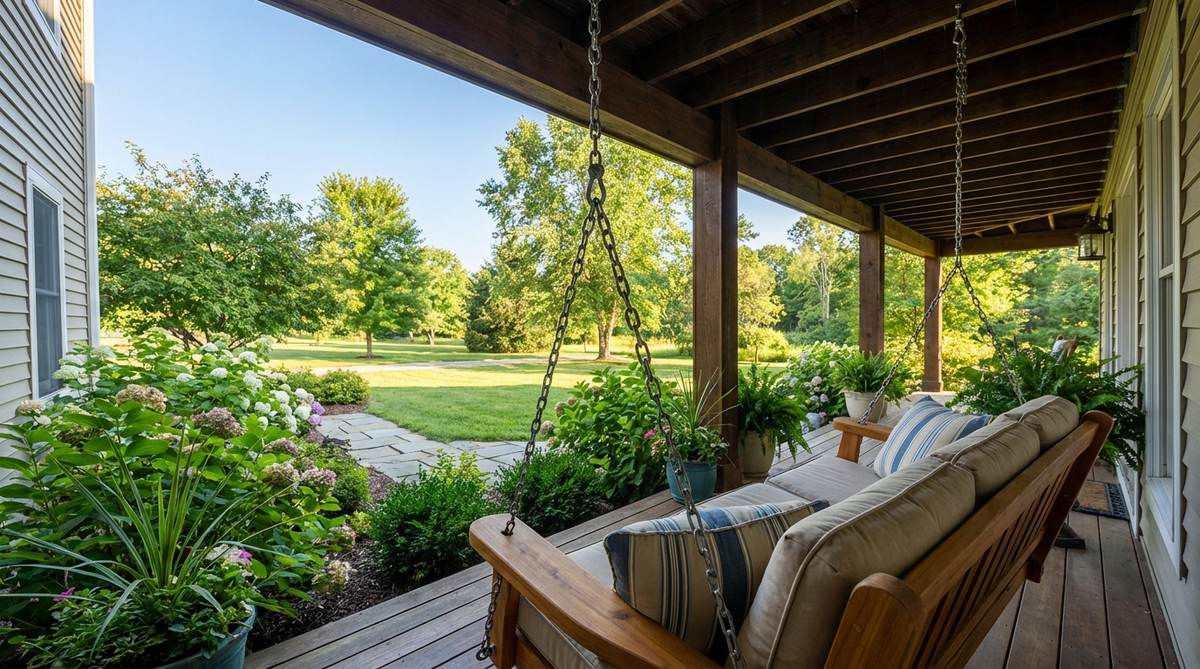
A hanging wooden porch swing evokes a nostalgic, slow-living farmhouse retreat. Absolutely meant for deep porches where you want to sip morning coffee.
Flimsy ropes stretch and fray, but utilizing heavy-duty suspension hardware guarantees safety while looking incredibly chic. Investing in UV-resistant outdoor cushions prevents that expensive fabric from bleaching out in two months.
This dreamy setup generally costs $150–$300. Save this to your ultimate porch goals board!
- Key Materials: Treated wood frame, steel swing hangers
- Vibe / Style: Rustic Nostalgia
- Difficulty: Moderate
- Budget Breakdown: Swing frame: $150 | Hardware & Chain: $40 | Cushions: $60
- Creator’s Tip: Anchor your hangers into solid ceiling joists, never just the decorative beadboard.
- Smart Sourcing: heavy-duty swing hanger kits or fade-resistant outdoor bench cushions.
💡 Must-Have Supplies for High-End Setups
To build these setups faster and ensure they last, skip the generic craft aisles and invest in the right foundational kits.
- Base & Support: heavy-duty structural framing brackets
- Setup Tools: exterior-grade power drill starter kits
- Weather/Durability Protection: UV-blocking clear marine varnish
Most people get this completely wrong… until they try the exact layout coming up next.
10. Double Rocking Chairs
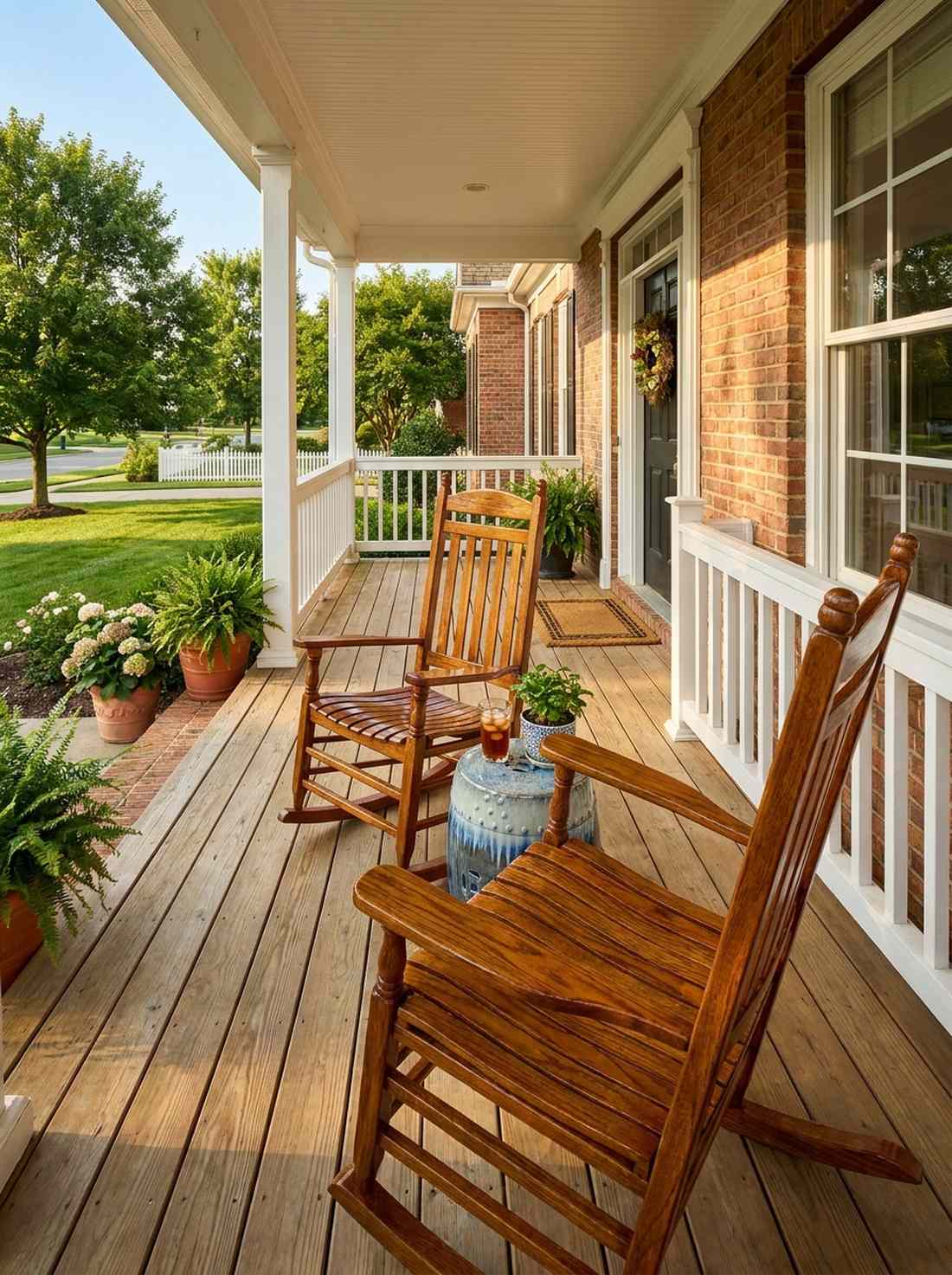
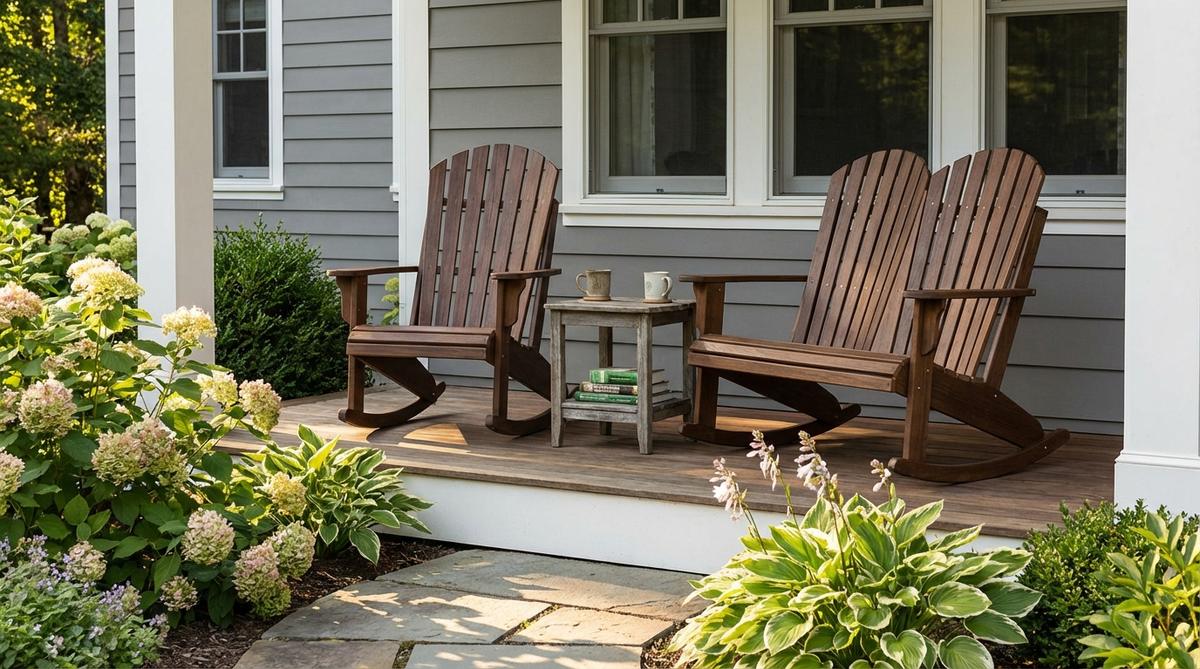
Paired classic rocking chairs create an inviting, chat-ready focal point. Brilliant for small to medium entryways where you still want a welcoming aesthetic.
Many leave raw wood to rot, but sealing the chairs with marine varnish looks far more expensive than it is. Adding a ceramic garden stool between them offers a perfect, weather-proof spot for drinks.
Budget around $180–$250 for the pair. Highly recommended for instantly boosting curb appeal.
- Key Materials: Hardwood rockers, outdoor sealant
- Vibe / Style: Welcoming Traditional
- Difficulty: Easy
- Budget Breakdown: Chairs: $180/pair | Sealant: $20
- Creator’s Tip: Angle the chairs slightly inward toward each other rather than facing straight out to the street.
- Smart Sourcing: weather-treated hardwood rocking chairs or glazed ceramic outdoor side tables.
11. Wicker Furniture Sets
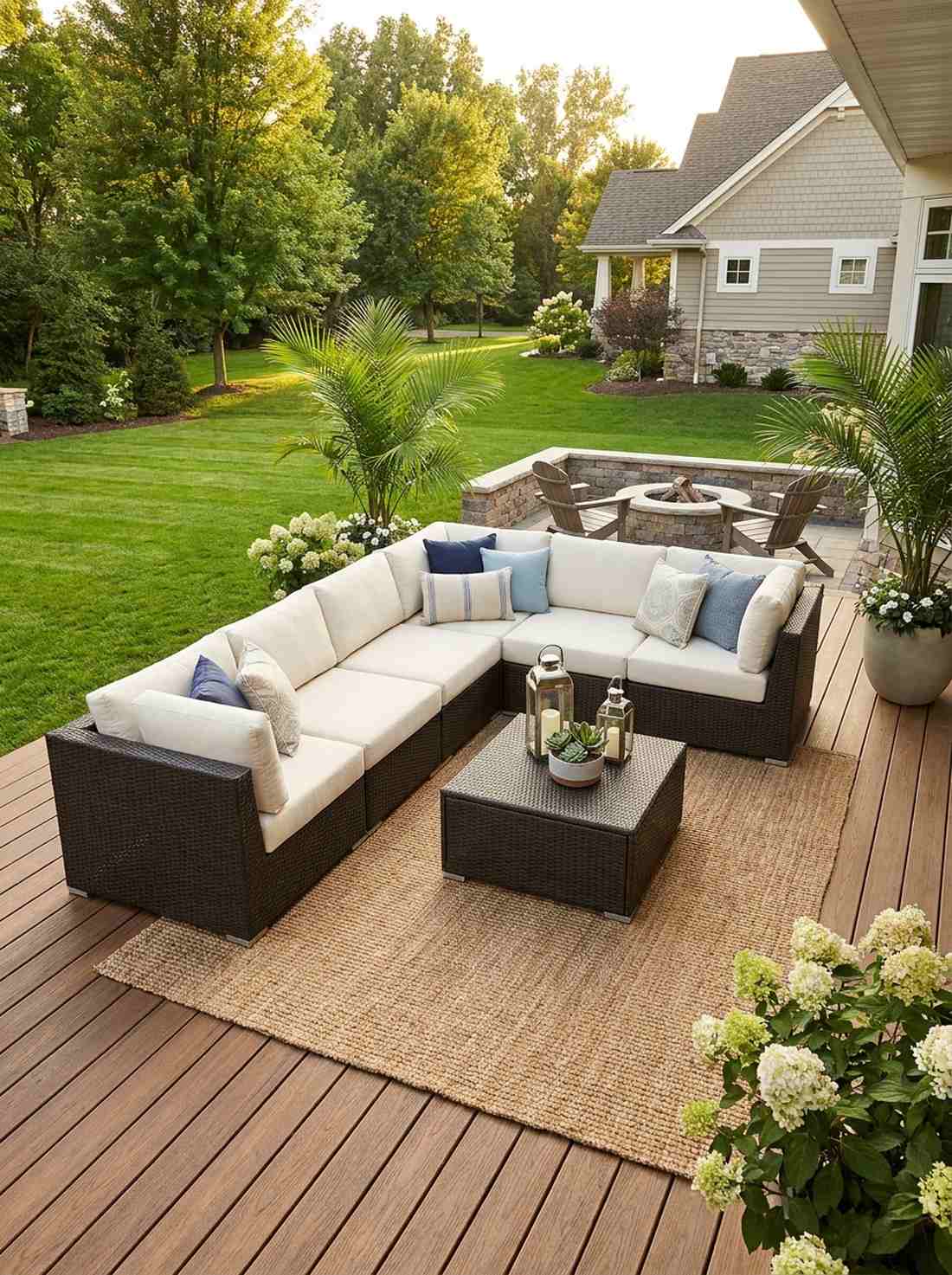
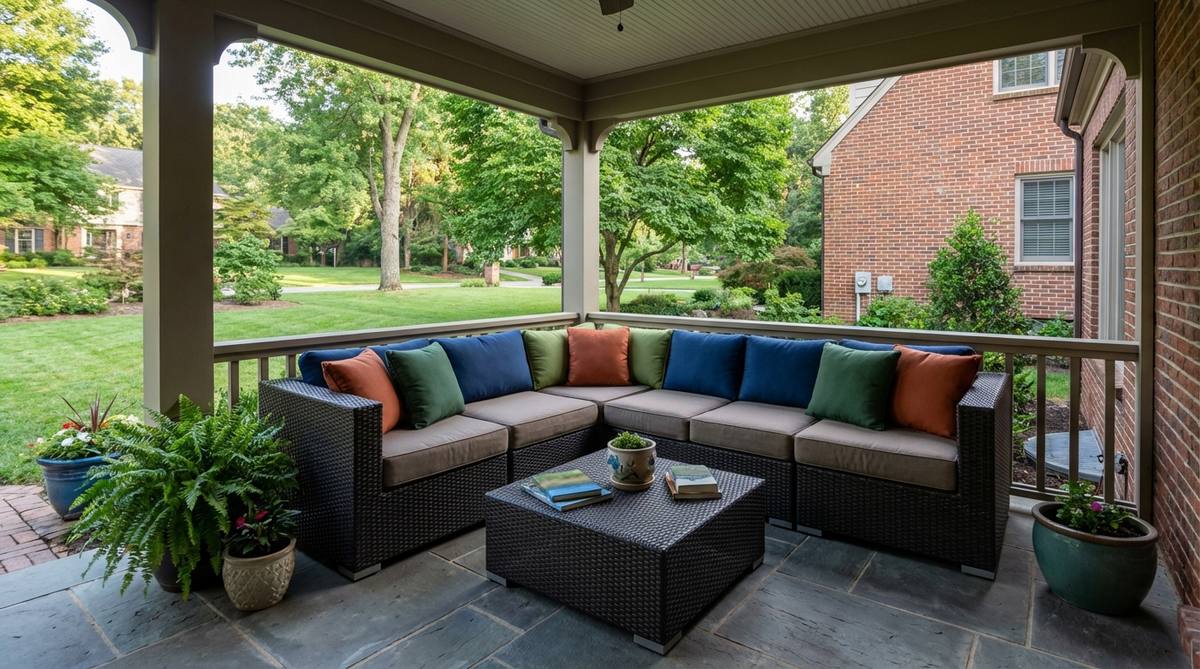
A cohesive outdoor wicker sectional feels like an extension of your indoor living room. Ideal for turning wide, expansive front spaces into a functional gathering spot.
Natural rattan breaks down fast, but opting for high-density resin gives a designer-level finish that ignores rainstorms. Searching for weatherproof resin wicker kits allows you to get that high-end catalog look at a fraction of the cost.
You can assemble a great set for $250–$400. Pin this if you’re upgrading your hosting space!
- Key Materials: Resin wicker frames, acrylic fabrics
- Vibe / Style: Modern Coastal
- Difficulty: Easy
- Budget Breakdown: Furniture set: $300 | Throw pillows: $40
- Creator’s Tip: Choose dark brown or charcoal frames—they hide dust and pollen much better than white sets.
- Smart Sourcing: all-weather resin patio sets or water-repellent fabric protector spray.
12. Metal Bistro Sets
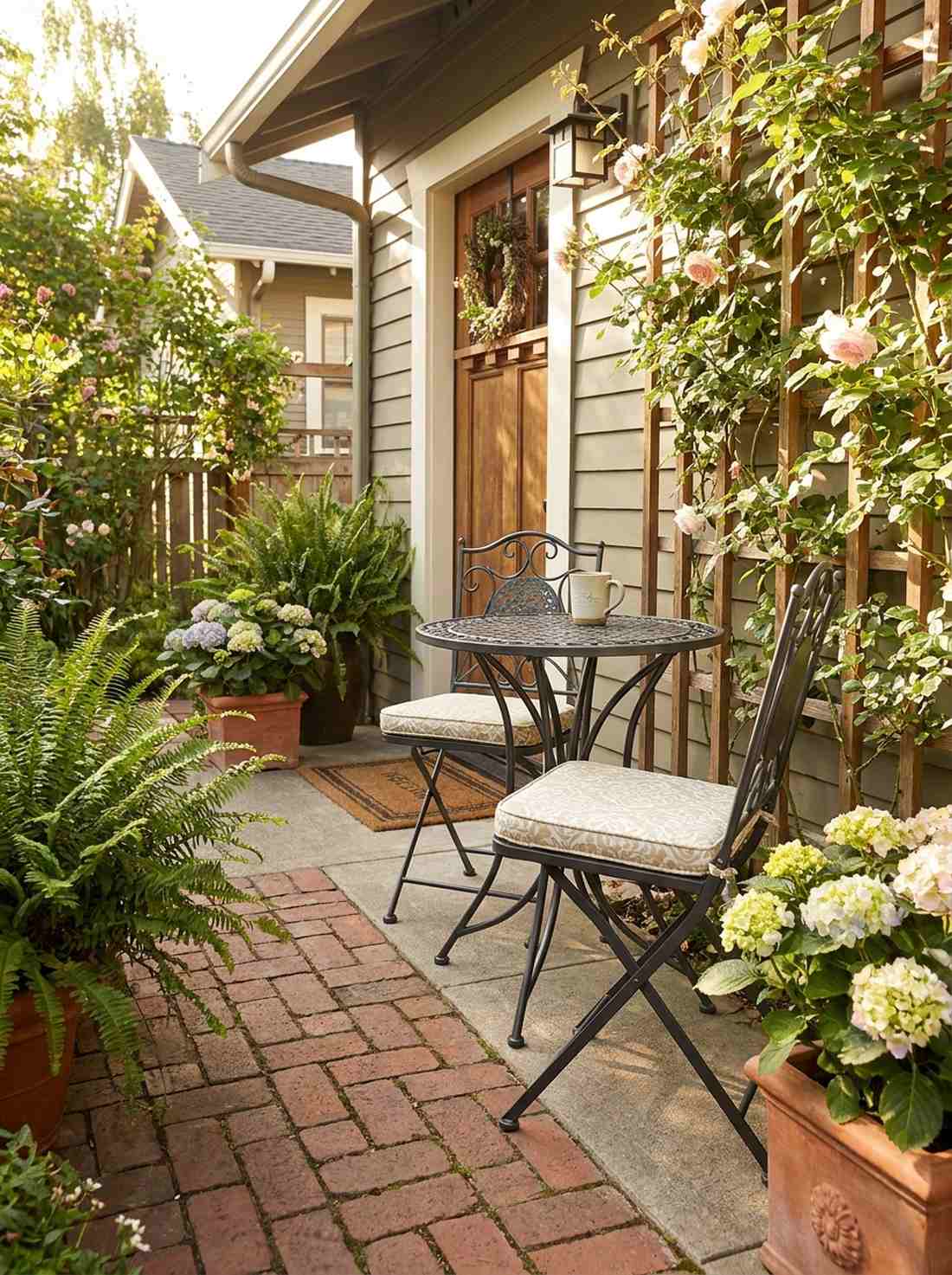
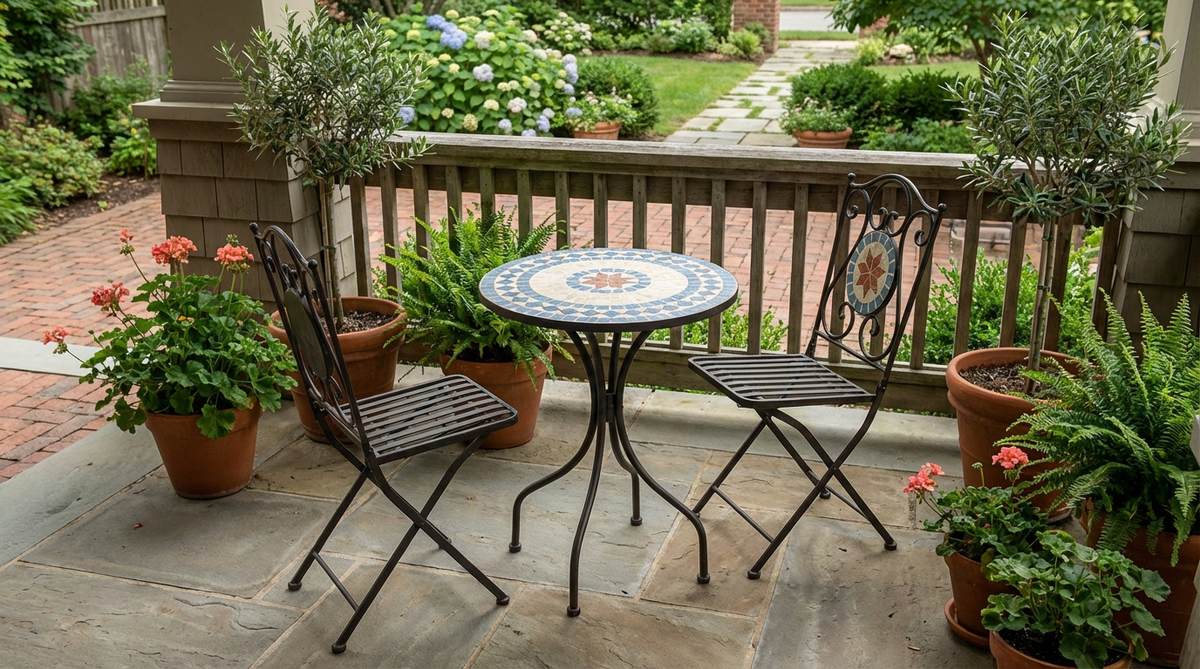
A compact wrought iron bistro set feels like a secret café tucked into your garden. Flawless for tight, narrow porches that can’t fit bulky chairs.
Most cheap metals rust quickly, but applying a clear automotive-grade sealant creates a high-end estate vibe that stays flawless. Throwing on waterproof seat pads adds just enough comfort without overwhelming the delicate frame.
This adorable upgrade usually costs $80–$150. A brilliant solution for tiny front spaces.
- Key Materials: Powder-coated steel or aluminum
- Vibe / Style: European Café
- Difficulty: Easy
- Budget Breakdown: Bistro set: $100 | Clear coat spray: $10
- Creator’s Tip: Look for folding chairs so you can easily store them against the wall during heavy storms.
- Smart Sourcing: rust-resistant powder-coated bistro kits or heavy-duty clear rust-blocking spray.
13. Built-In Bench Seating
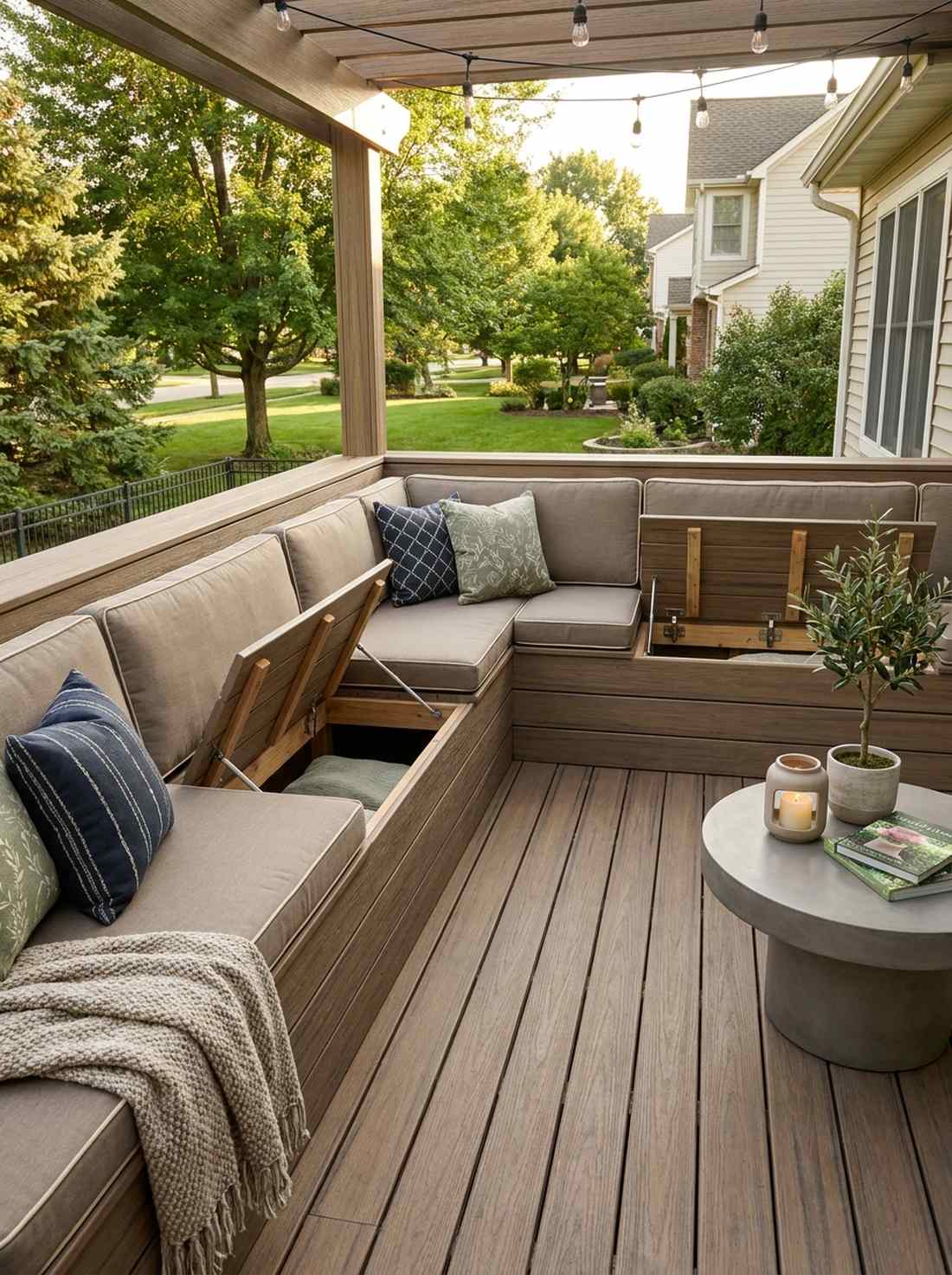
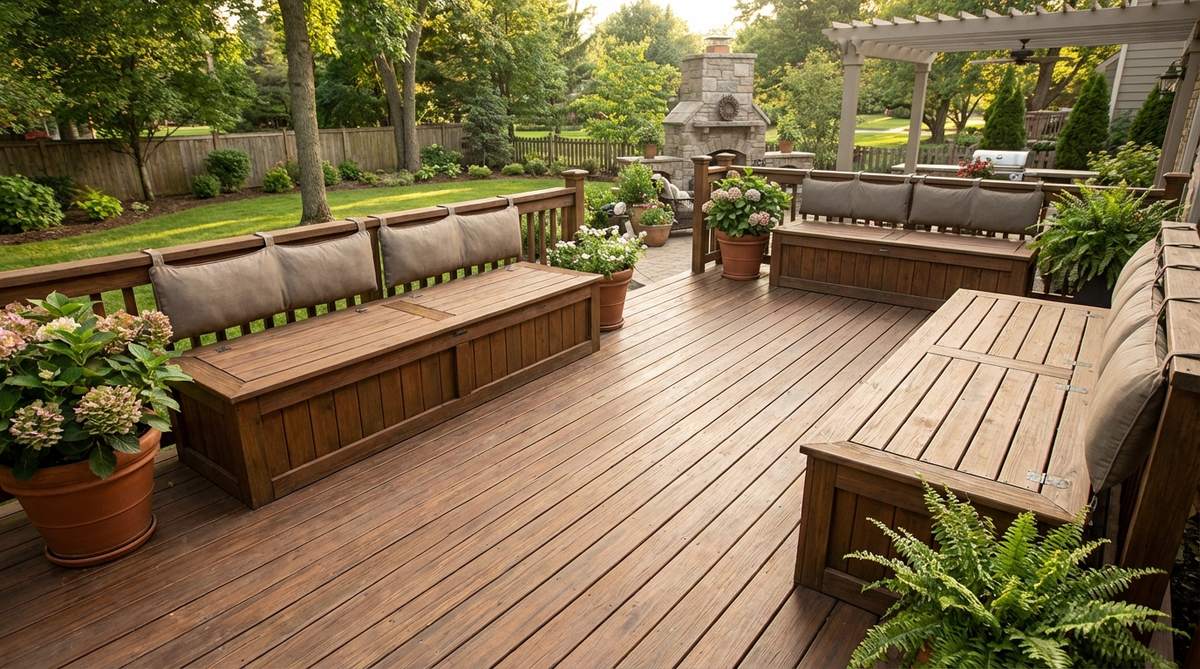
A custom corner bench seat feels like a tailored architectural masterpiece. This is the ultimate space-saver for porches bordered by solid railings.
Freestanding items clutter the flow, but building a bench directly into the corner delivers a surprisingly premium look. Utilizing pre-cut composite decking boards ensures the seating won’t splinter or require annual repainting.
Expect to spend $150–$250 on materials. Save this to your DIY weekend carpentry board!
- Key Materials: Pressure-treated framing, composite planks
- Vibe / Style: Seamless Custom Build
- Difficulty: Advanced DIY
- Budget Breakdown: Wood framing: $50 | Composite tops: $120
- Creator’s Tip: Put hinges on the seat top to create hidden, waterproof storage for outdoor pillows.
- Smart Sourcing: pre-cut composite deck boards (bulk) or stainless steel hidden deck fasteners.
14. Adirondack Chair Clusters
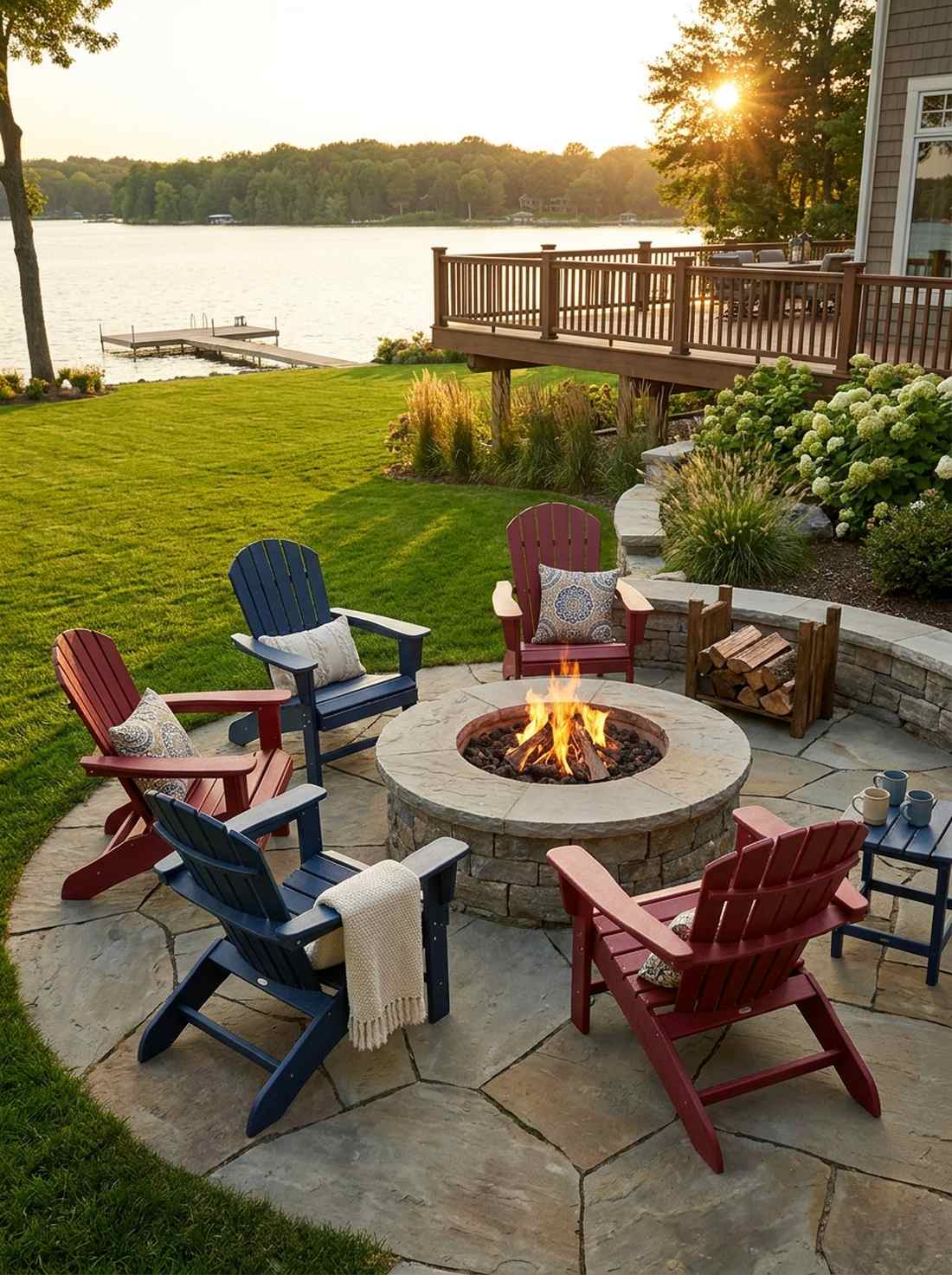
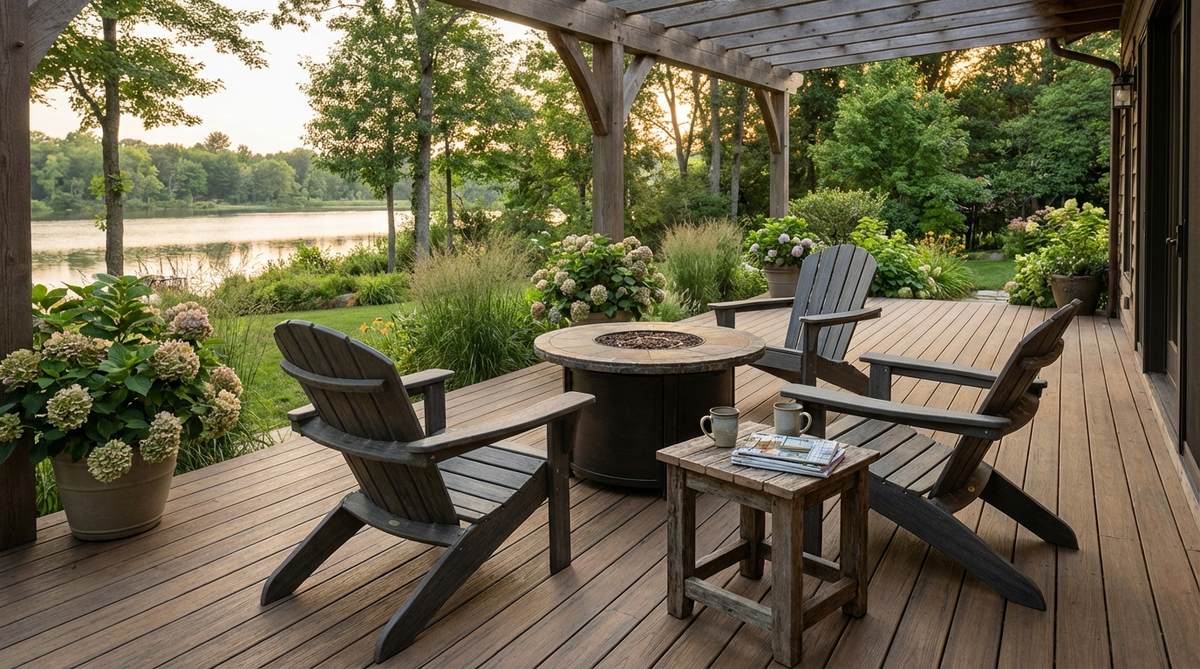
A semi-circle of classic Adirondack chairs creates an instant fire-pit or lake-house energy. Fantastic for casual front yards where the porch bleeds into the lawn.
Pine chairs rot out fast, but upgrading to poly-lumber material looks far more expensive than it is and lasts decades. Seeking out recycled plastic chair kits means zero sanding or painting ever again.
Budget around $150–$200 per chair. It’s an investment that practically outlives the house.
- Key Materials: High-density polyethylene (HDPE) lumber
- Vibe / Style: Lakeside Casual
- Difficulty: Easy
- Budget Breakdown: Poly-lumber chair: $180
- Creator’s Tip: Wash them twice a year with a power washer on a low setting to keep the colors vibrant.
- Smart Sourcing: all-weather HDPE Adirondack chairs or stainless steel outdoor furniture hardware.
Wait until you see how simple it is to fake high-end architecture with this next trick…
15. Daybed Loungers
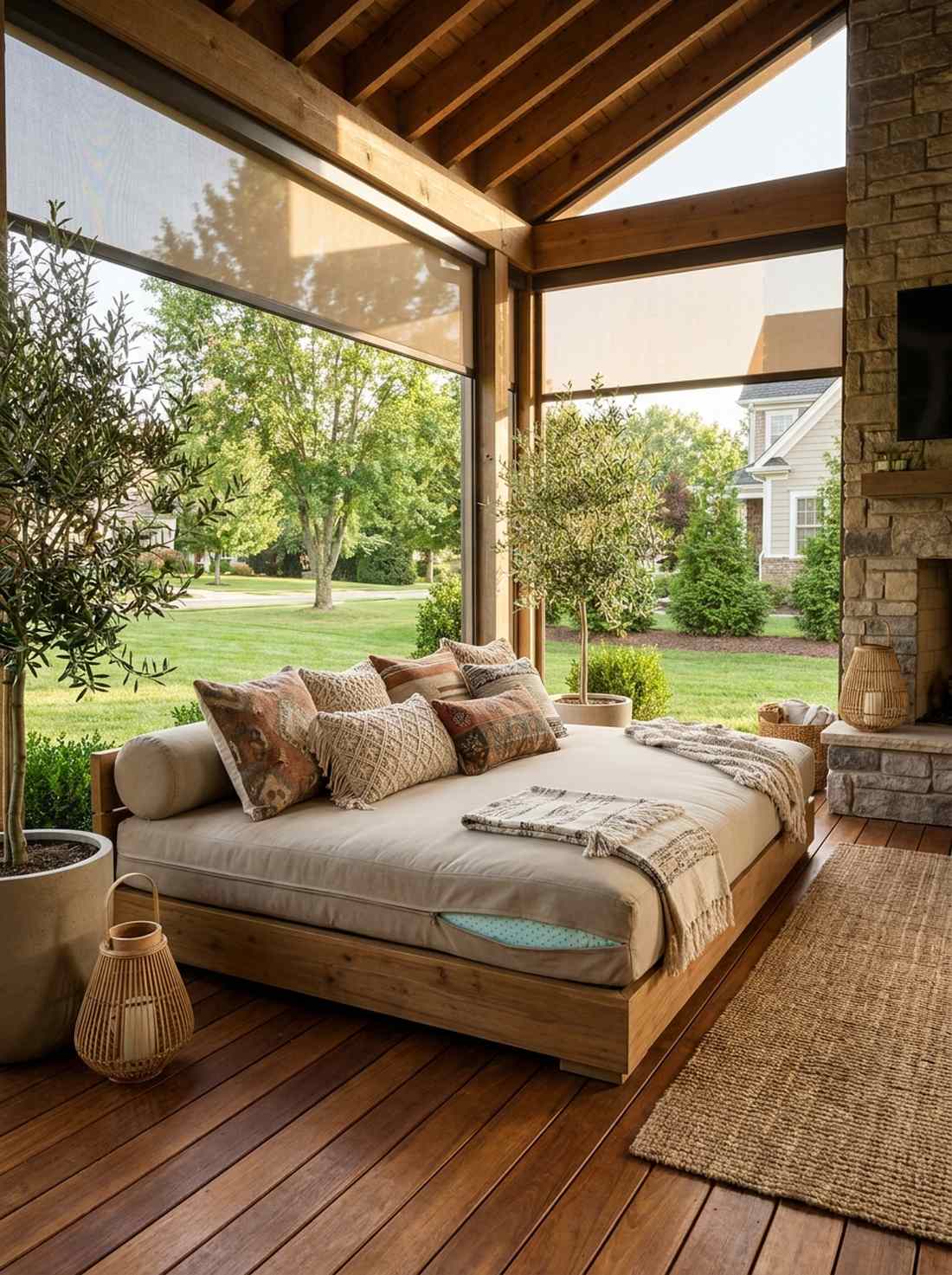
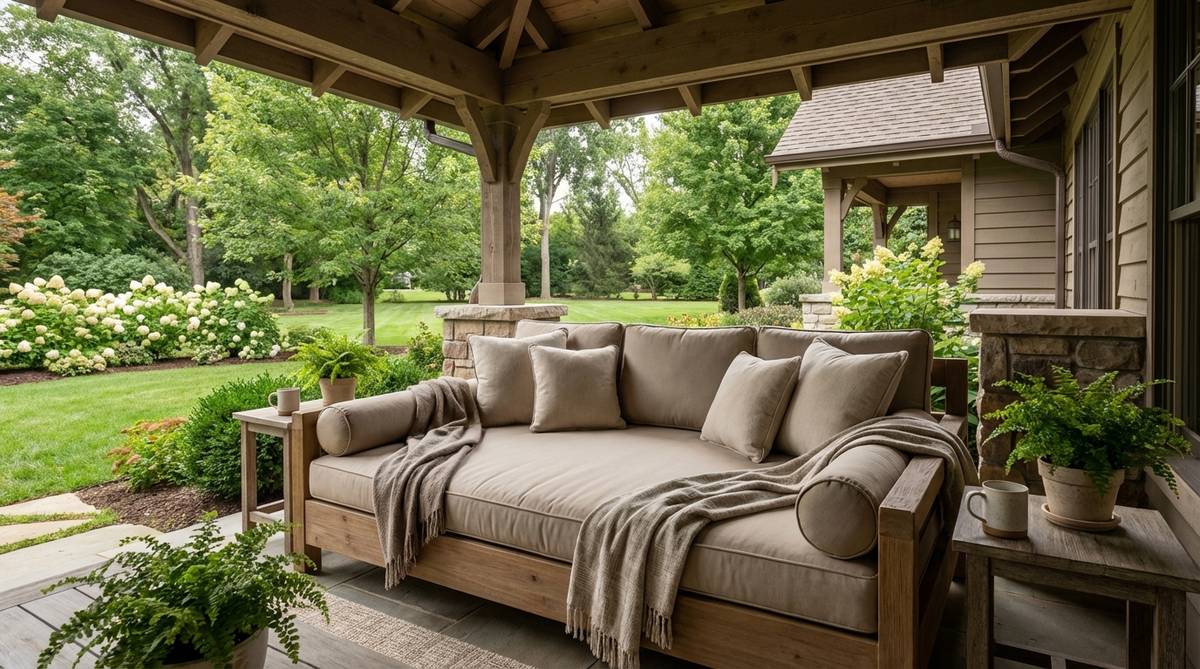
A plush outdoor daybed feels like an exclusive cabana resort experience. Only attempt this if you have a deep, fully covered porch shielded from direct rain.
Most folks ruin indoor mattresses outside, but utilizing quick-dry foam cores gives a designer-level finish that won’t grow mildew. Wrapping it all in marine-grade canvas covers ensures ultimate durability against the elements.
This luxurious setup runs $300–$500. Pin this if you want the ultimate outdoor napping spot!
- Key Materials: Wooden frame base, reticulated foam
- Vibe / Style: Bohemian Luxury
- Difficulty: Moderate
- Budget Breakdown: Frame materials: $150 | Outdoor mattress/cover: $200
- Creator’s Tip: Use standard twin-size dimensions so you can easily swap out standard fitted sheets on dry days.
- Smart Sourcing: quick-dry outdoor reticulated foam or waterproof mattress encasements.
Planter Strategies That Frame Your Entrance
16. Symmetrical Urn Pairs
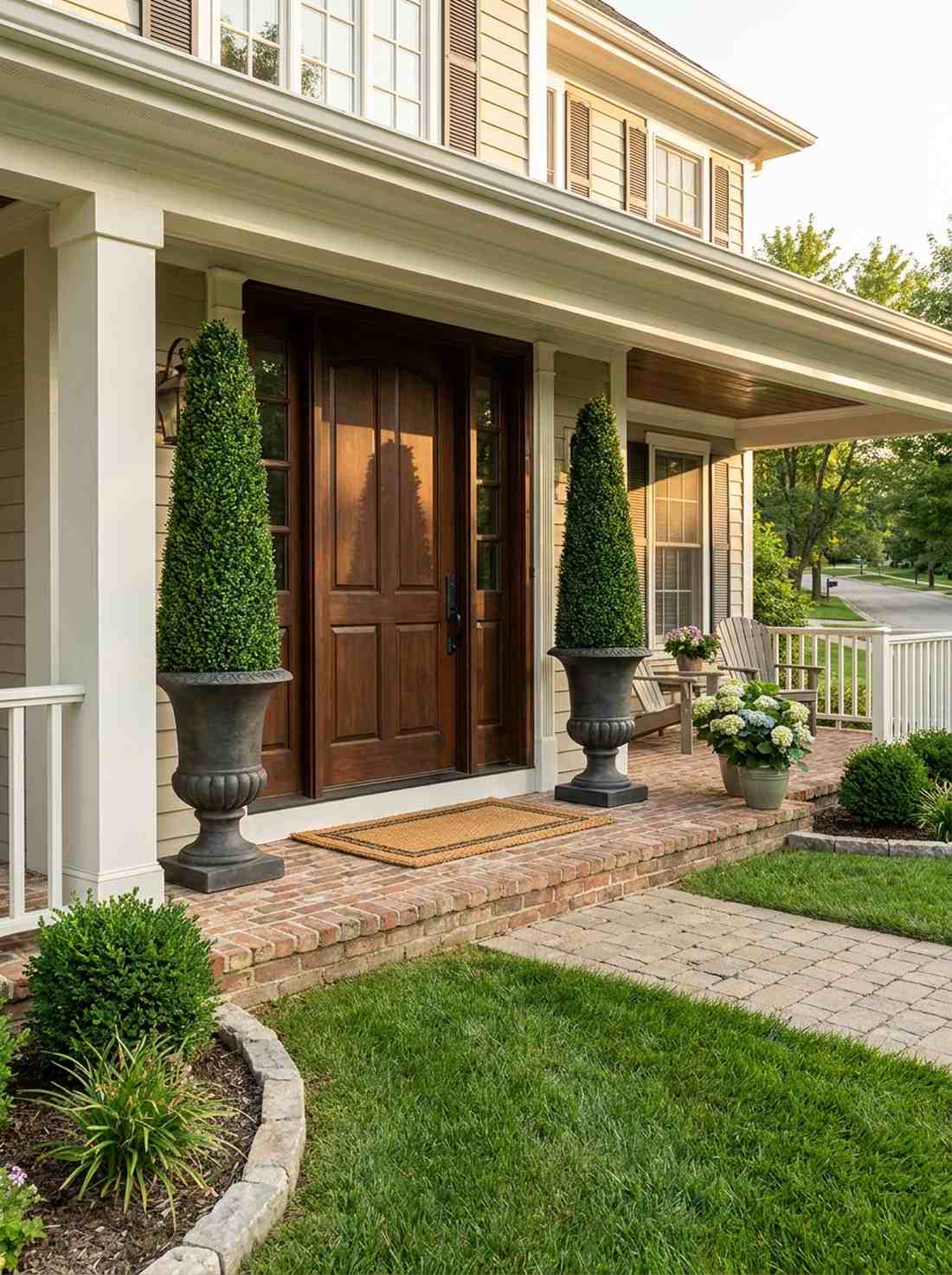
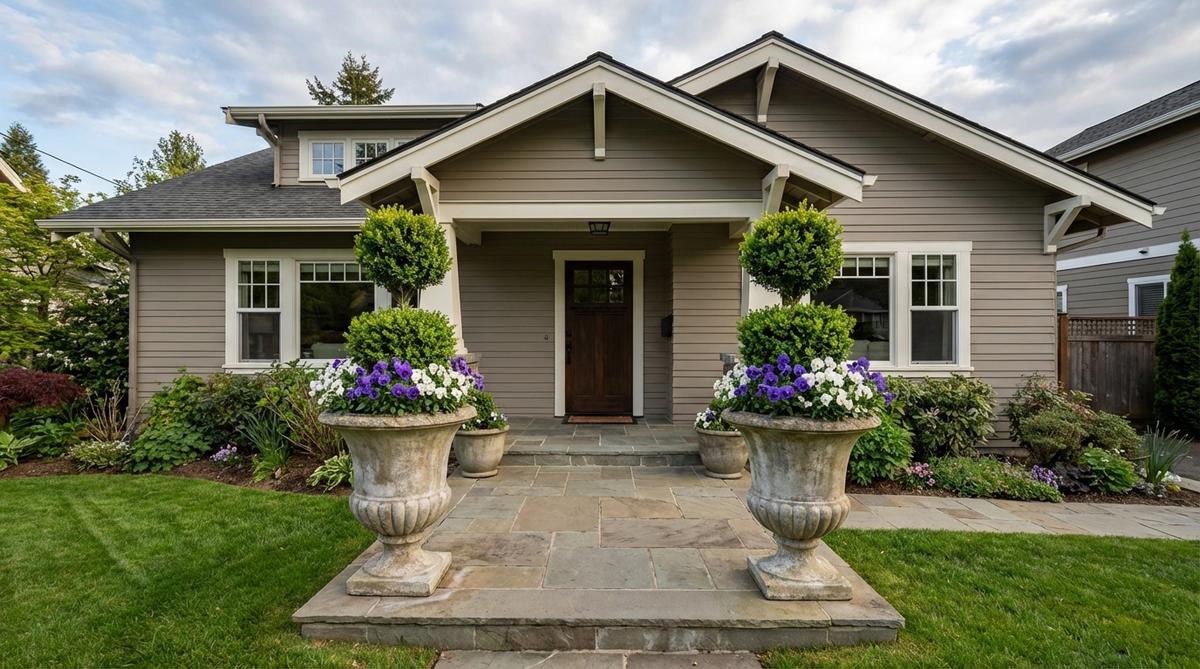
Matching tall entryway urns feels incredibly formal and manicured. This classic symmetry perfectly anchors either side of a large front door.
Heavy stone urns crack in winter, but grabbing fiberglass resin alternatives creates a high-end estate vibe without the back-breaking weight. Dropping in artificial UV-protected topiaries ensures flawless greenery year-round with zero watering.
You can execute this look for $100–$200. It’s a massive curb appeal boost that requires zero upkeep.
- Key Materials: Resin urns, faux boxwoods
- Vibe / Style: Stately Traditional
- Difficulty: Ultra-Easy
- Budget Breakdown: Urns: $80/pair | Topiaries: $60/pair
- Creator’s Tip: Fill the bottom third of the lightweight urn with gravel or bricks so wind doesn’t knock it over.
- Smart Sourcing: weatherproof fiberglass resin planters or UV-coated faux boxwood obelisks.
17. Tiered Planter Groupings
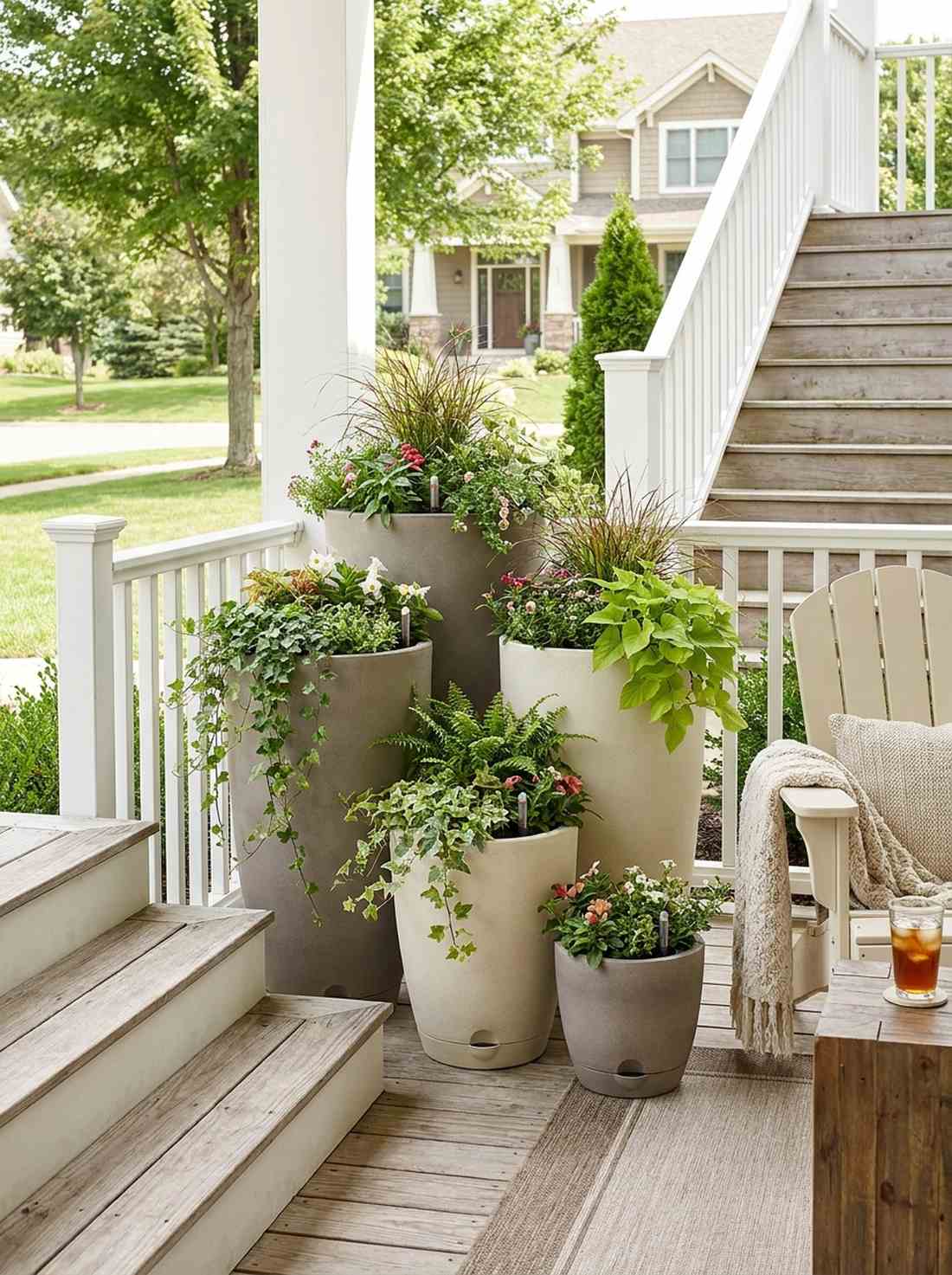
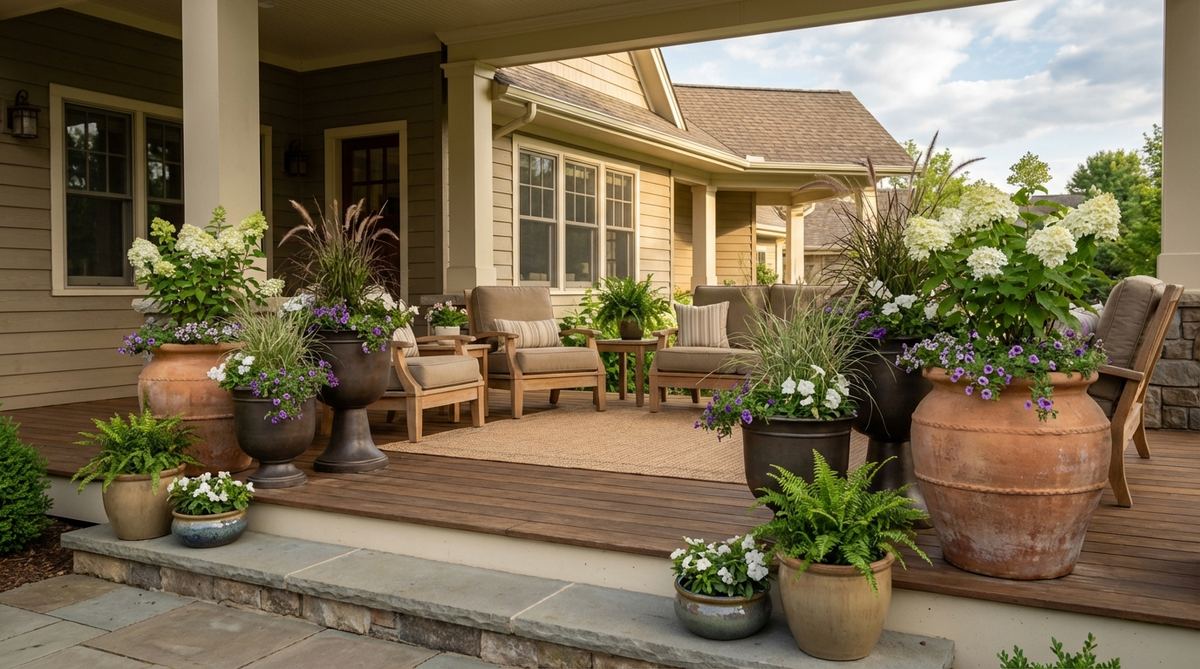
An asymmetrical clustered planter garden feels like a lush, organic living corner. Perfect for filling empty porch corners or softening harsh staircase edges.
Using pots of the same size looks flat, but varying the heights dynamically delivers a surprisingly premium look. Utilizing self-watering planter inserts saves your plants during those blistering summer heatwaves.
Expect to spend $75–$120 for a nice cluster. Save this to your container gardening board!
- Key Materials: Varied sized pots, cascading plants
- Vibe / Style: Organic Modern
- Difficulty: Easy
- Budget Breakdown: Pot trio: $60 | Soil & Plants: $40
- Creator’s Tip: Always group pots in odd numbers (3 or 5) for a naturally pleasing visual balance.
- Smart Sourcing: self-watering container systems (bulk pack) or lightweight composite concrete pots.
18. Window Box Installations
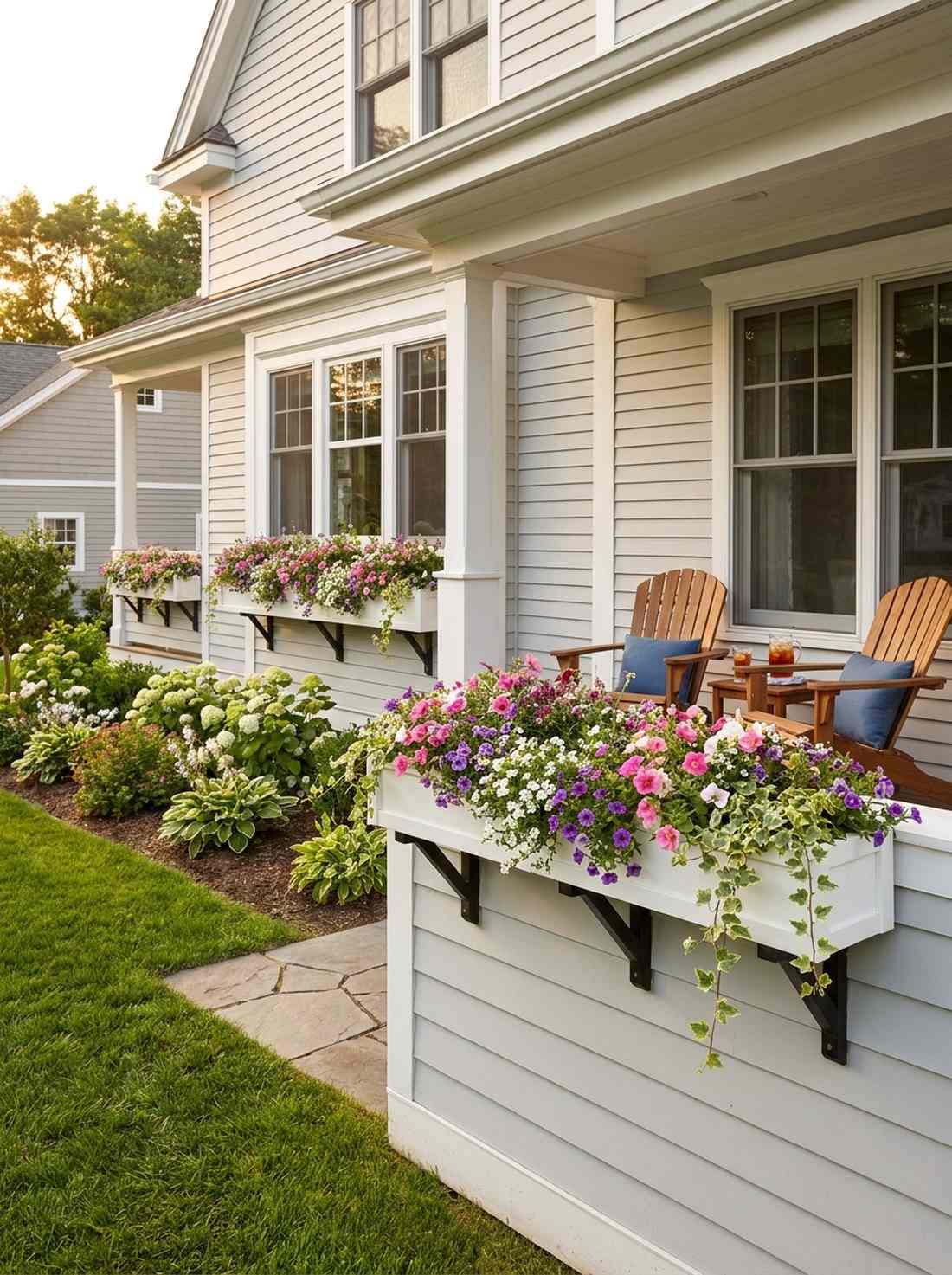
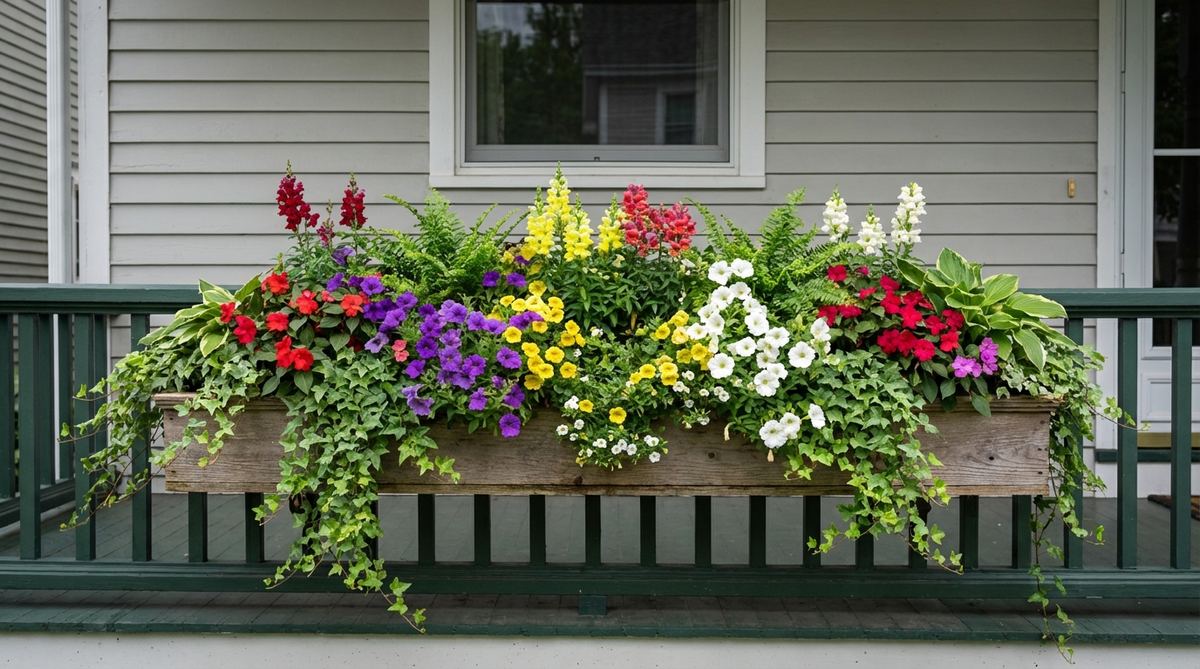
Trailing floral window boxes feel like a picturesque cottage from a storybook. Incredible for visually connecting the porch railing or front windows to the garden.
Wooden boxes rot against the siding, but mounting PVC composite boxes looks far more expensive than it is and prevents water damage. Loading them with premium potting soil blends ensures your vines cascade beautifully all season.
This blooming upgrade runs about $60–$100. A fantastic way to add a massive pop of color.
- Key Materials: PVC boxes, heavy-duty brackets
- Vibe / Style: Charming Cottagecore
- Difficulty: Moderate
- Budget Breakdown: PVC box: $50 | Brackets: $20
- Creator’s Tip: Never mount the box flush against the house; leave a 1-inch gap for air circulation and siding health.
- Smart Sourcing: rot-proof PVC window boxes or heavy-duty hidden mounting brackets.
19. Hanging Basket Layers
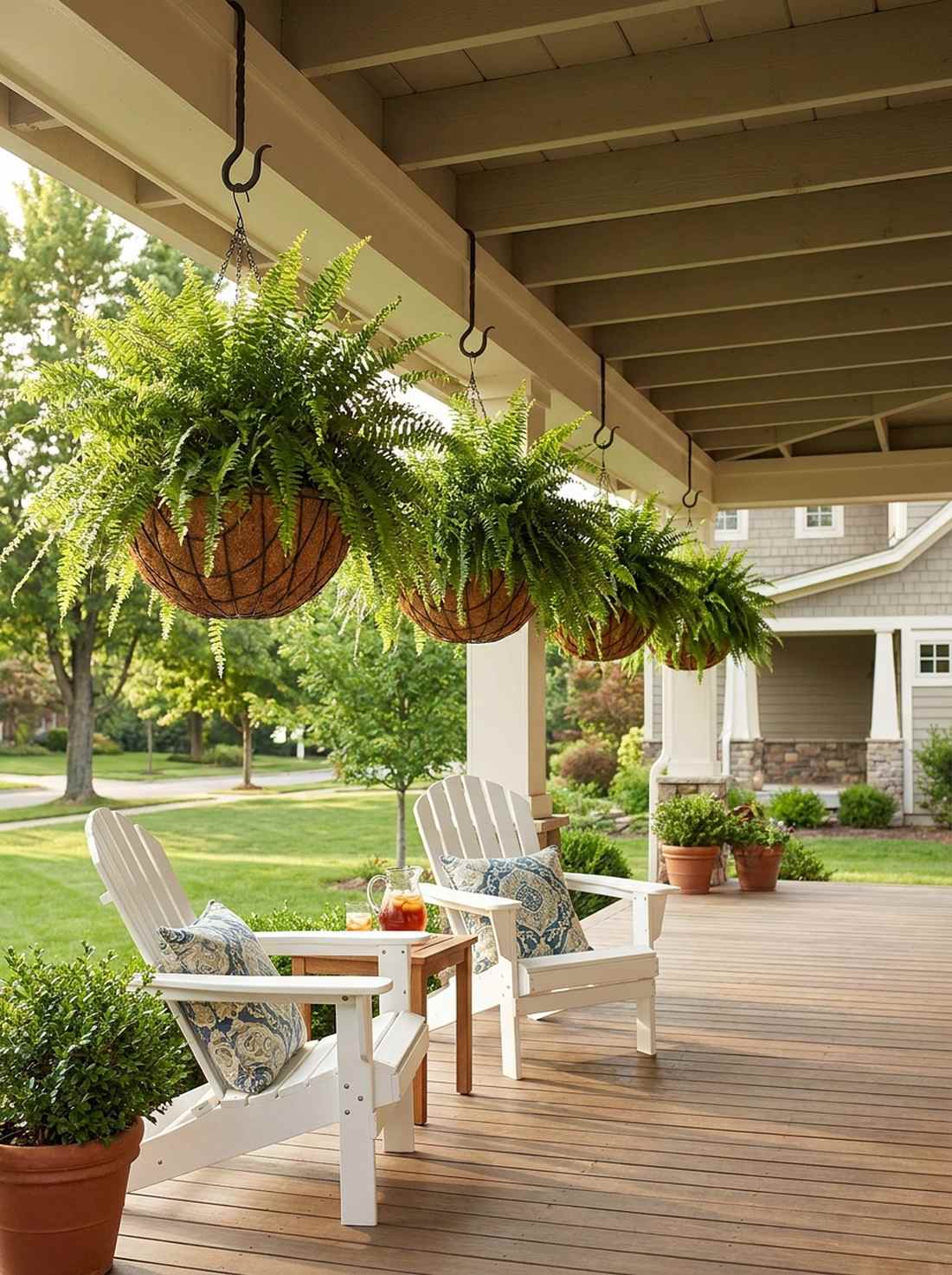
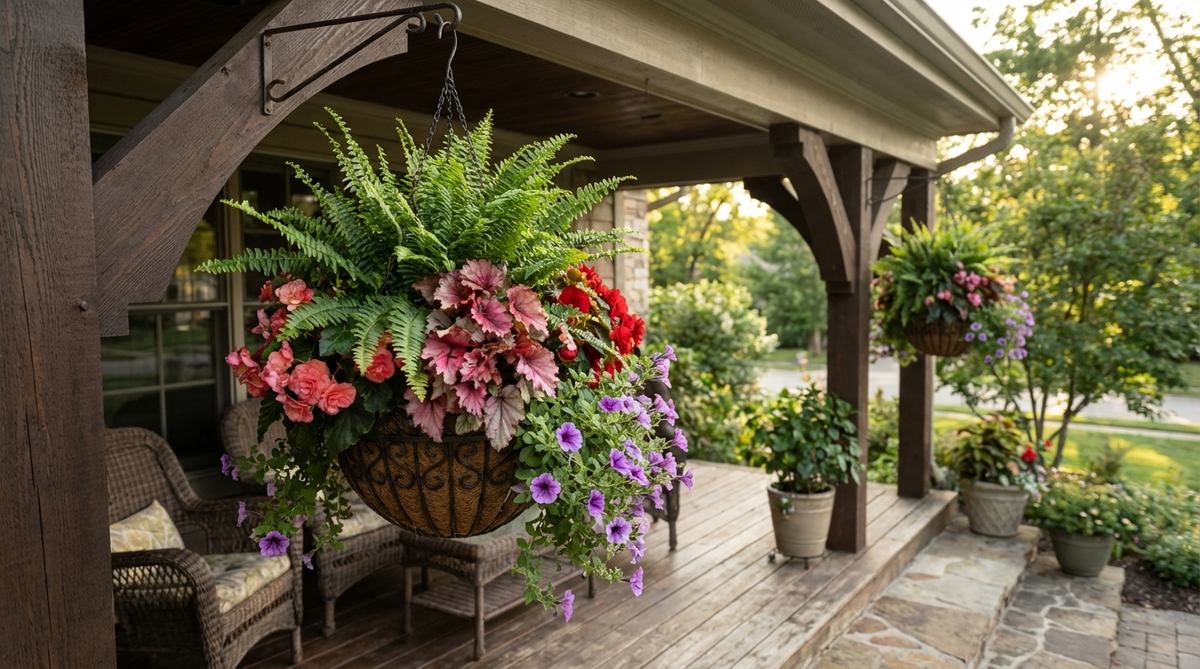
Suspended trailing fern baskets create a vibrant, floating ceiling of greenery. Best used to draw the eye upward and fill vertical space on tall porches.
Standard plastic hooks snap under soil weight, but screwing in iron beam hardware gives a designer-level finish and supreme safety. Opting for coconut coir basket liners provides amazing drainage and a natural texture.
Budget around $40–$70 for a stunning aerial display. Pin this for your summer patio prep!
- Key Materials: Wire baskets, coir liners, iron hooks
- Vibe / Style: Lush Botanical
- Difficulty: Easy
- Budget Breakdown: Baskets: $30 | Plants/Soil: $25
- Creator’s Tip: Add water-retaining gel crystals to the soil mix so you don’t have to water them twice a day.
- Smart Sourcing: pre-formed coco coir liners (bulk pack) or heavy-duty forged ceiling hooks.
This next minimalist hack is going viral because it costs practically nothing but looks like a magazine cover.
20. Terra Cotta Pot Collections
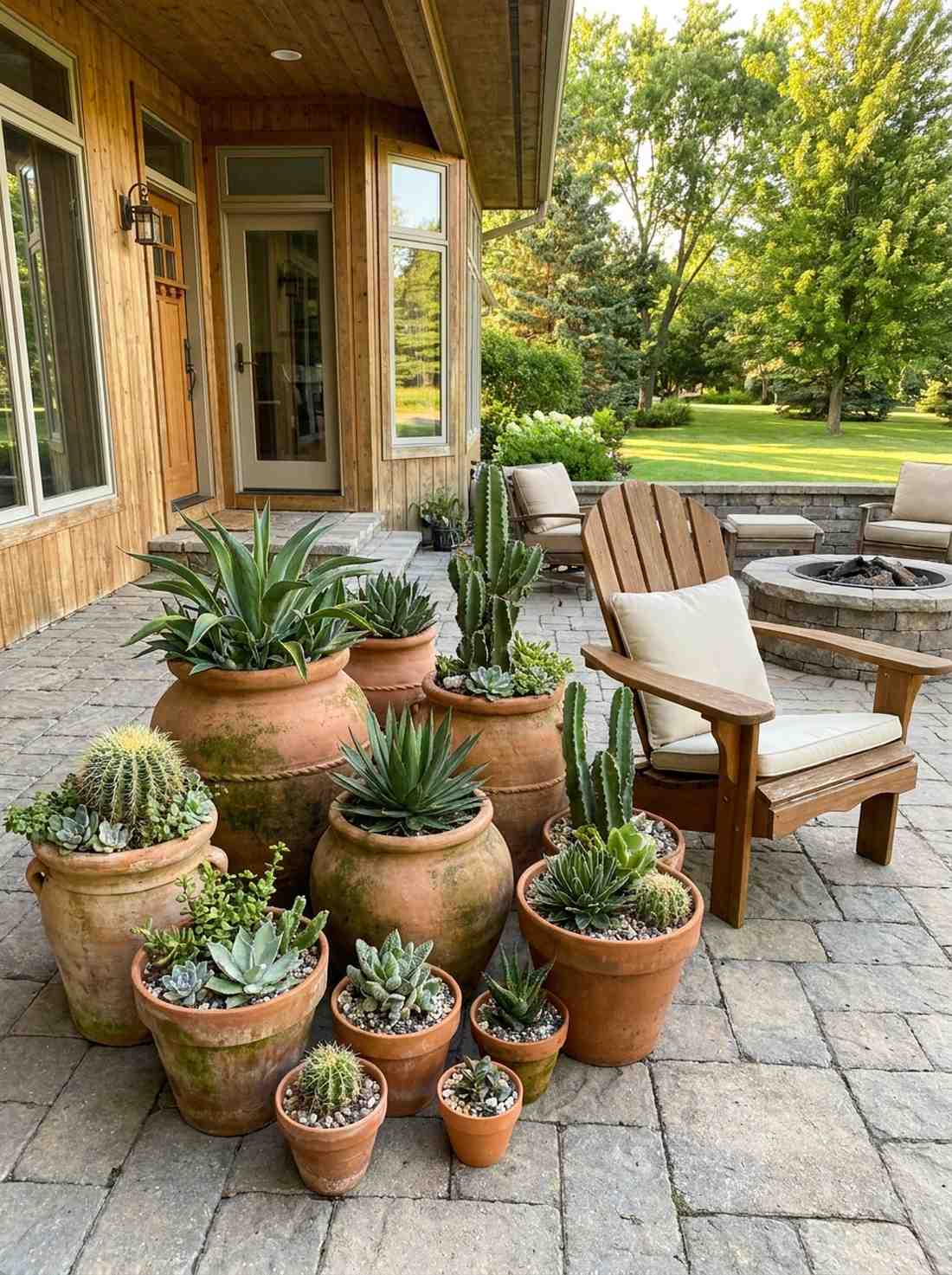
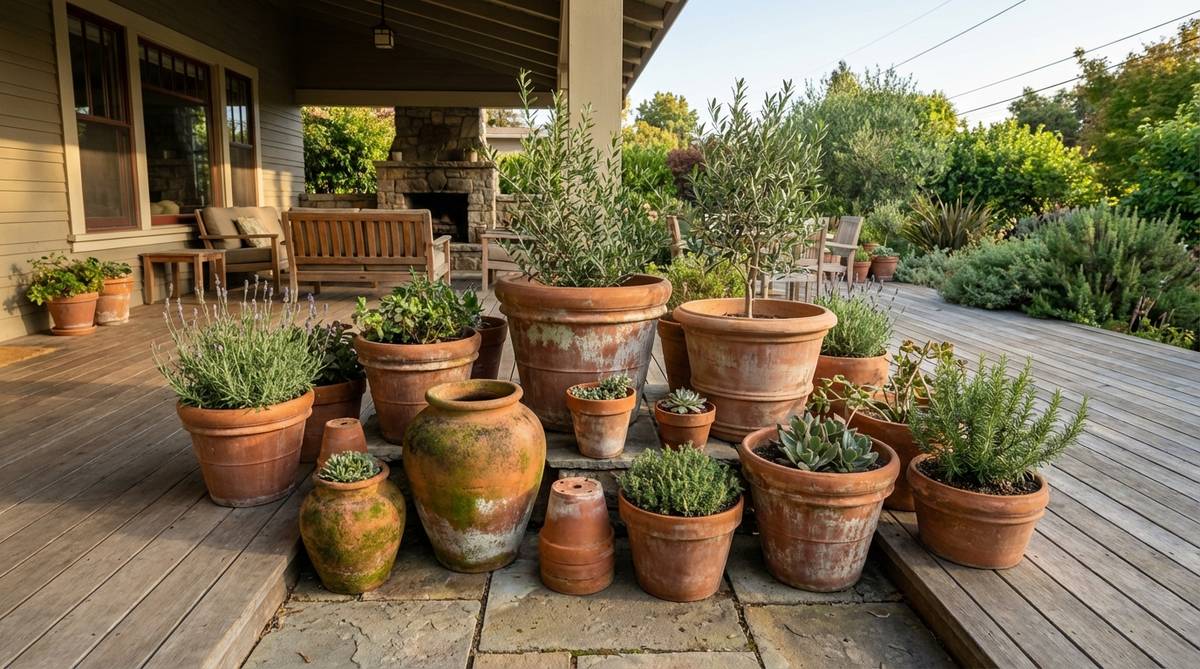
A clustered aged clay pot display feels like a warm Mediterranean villa courtyard. Brilliant for porches that get heavy, direct sunlight all day long.
Brand new clay looks sterile, but quickly aging them with a yogurt wash creates a high-end estate vibe loaded with character. Planting drought-resistant succulent kits inside them means you can practically forget about maintenance.
You can create a massive collection for just $30–$60. An affordable and stunningly rustic approach.
- Key Materials: Unglazed terra cotta, cactus soil
- Vibe / Style: Rustic Mediterranean
- Difficulty: Easy
- Budget Breakdown: Clay pots: $25 | Plants: $20
- Creator’s Tip: Brush plain yogurt on the outside of the pots and leave them in a shady spot to rapidly grow a beautiful mossy patina.
- Smart Sourcing: bulk unglazed terra cotta pots or fast-draining succulent soil mix.
21. Tall Statement Planters
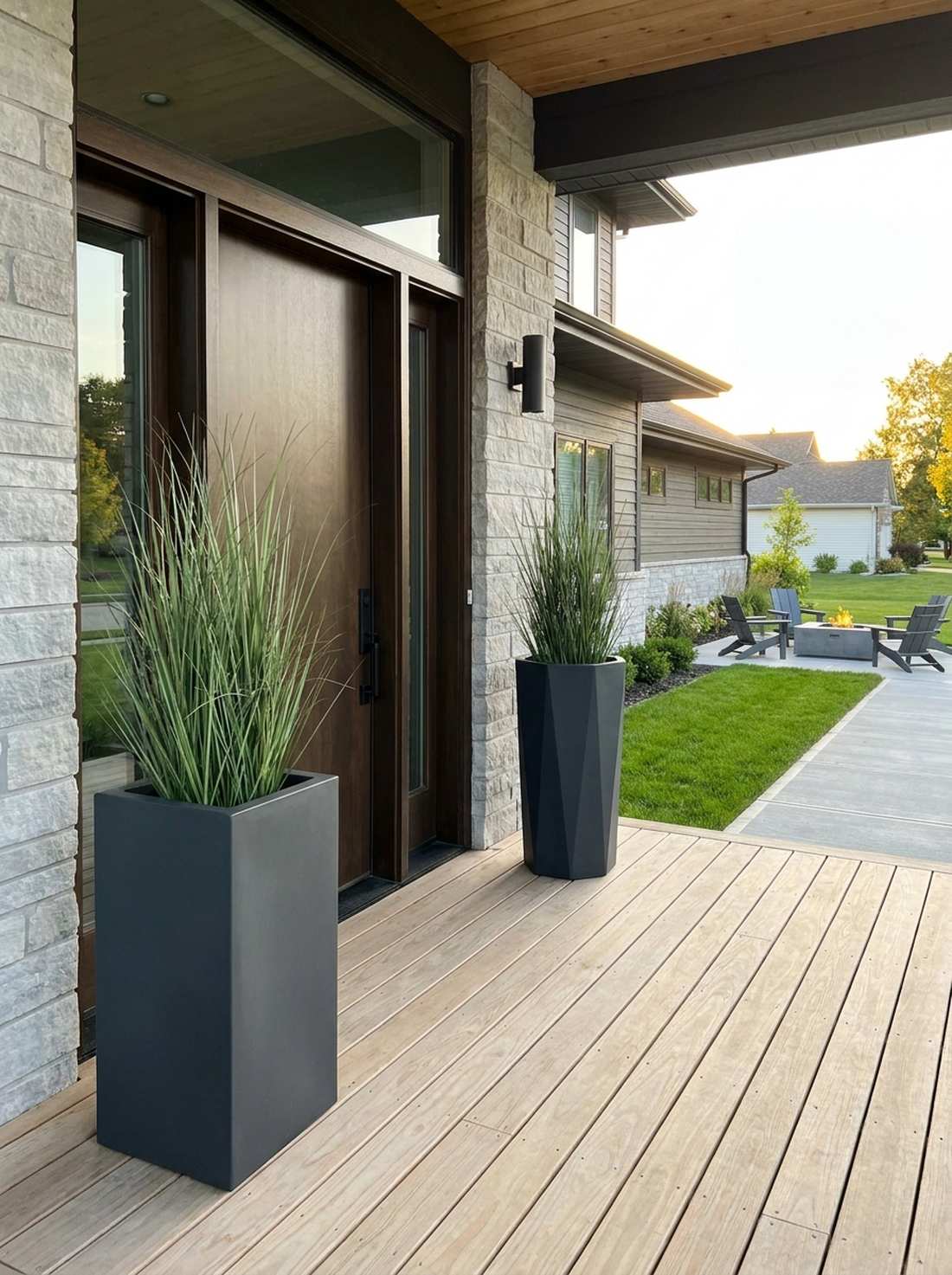
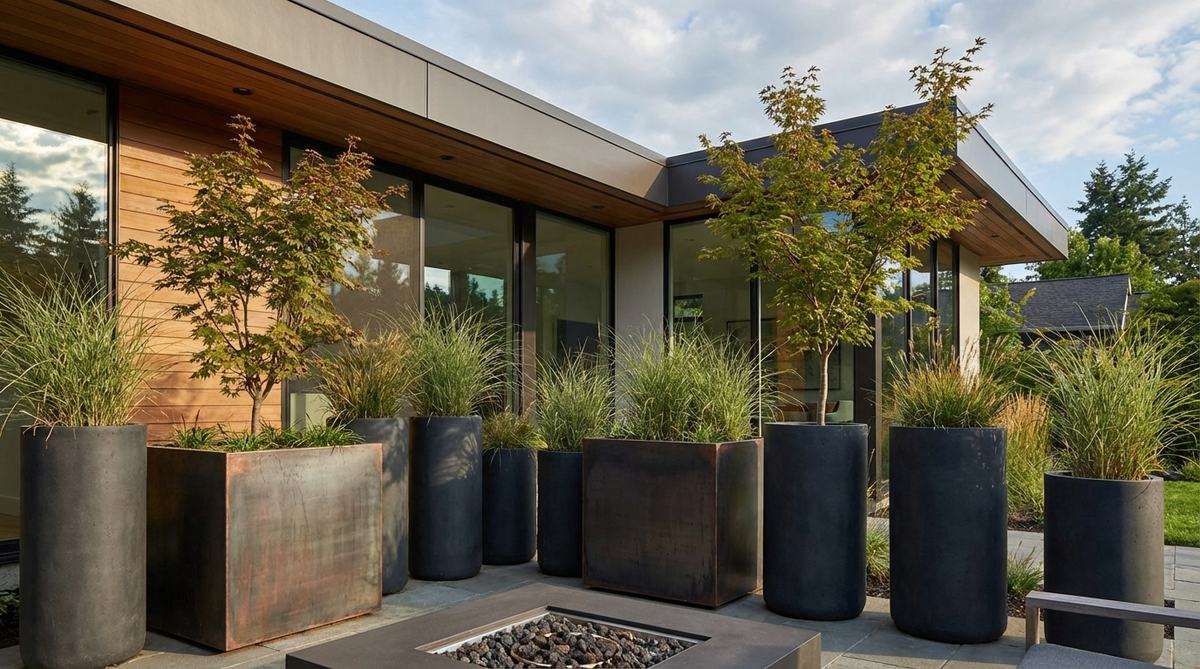
A sleek, modern geometric planter serves as a dramatic, sculptural piece of art. Unbelievably effective near minimalist front doors with clean architectural lines.
Filling these giant containers with pure dirt is a rookie mistake; putting empty plastic bottles at the bottom delivers a surprisingly premium look without the massive weight. Throwing in structural ornamental grasses keeps the silhouette sharp and dramatic.
Expect to spend $100–$150 for this modern touch. Save this to your contemporary exterior board!
- Key Materials: Tall cube/cylinder resin planter
- Vibe / Style: Modern Industrial
- Difficulty: Easy
- Budget Breakdown: Planter: $90 | Plant: $30
- Creator’s Tip: Keep the plant palette monochromatic—just one type of tall grass or a single architectural snake plant.
- Smart Sourcing: tall modern resin planters or lightweight planter filler blocks.
22. Vertical Wall Planters
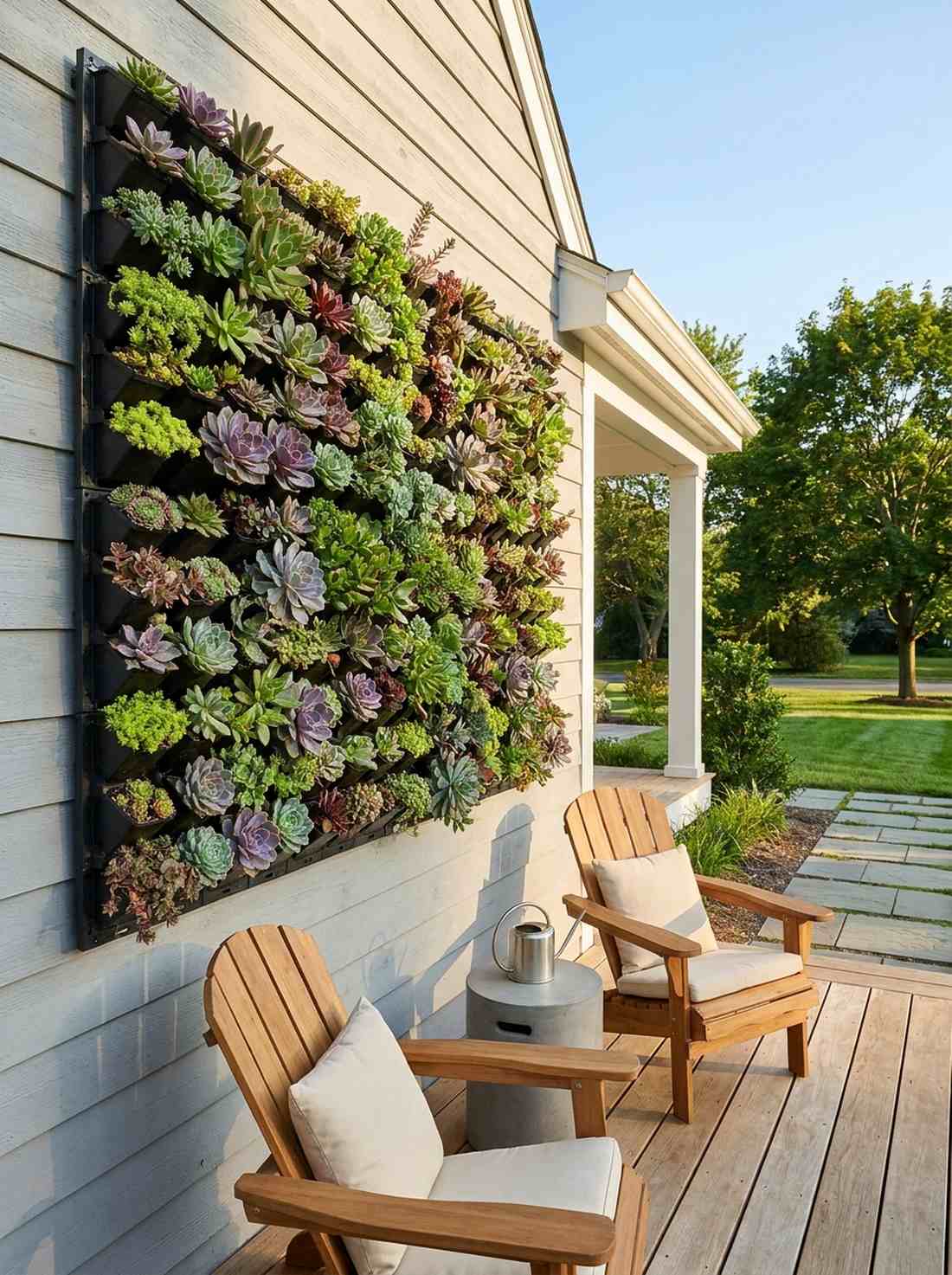
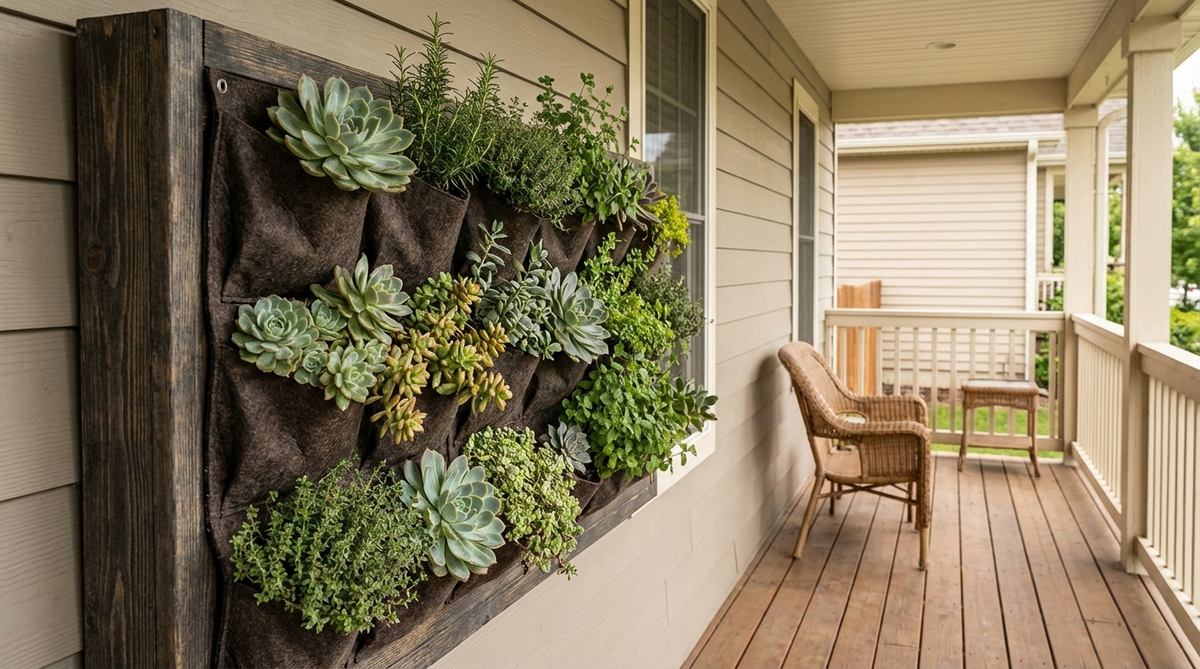
A living succulent wall grid feels like an exclusive urban botanical garden. This is the ultimate space-saving hack for tiny porches with blank siding walls.
Fabric pocket planters dry out and tear, but mounting modular rigid plastic systems looks far more expensive than it is and traps moisture perfectly. Installing modular living wall frames transforms an ugly wall into a living masterpiece.
This vertical upgrade usually runs $70–$120. Highly recommended for injecting life into dull spaces.
- Key Materials: Wall planter frame, moisture-control soil
- Vibe / Style: Urban Jungle
- Difficulty: Moderate
- Budget Breakdown: Wall frame kit: $50 | Plants: $40
- Creator’s Tip: Start with plants lying flat on the ground for a few weeks so roots can grab hold before hanging it vertically.
- Smart Sourcing: modular vertical garden frames or sphagnum moss sheets (bulk).
23. Repurposed Container Gardens
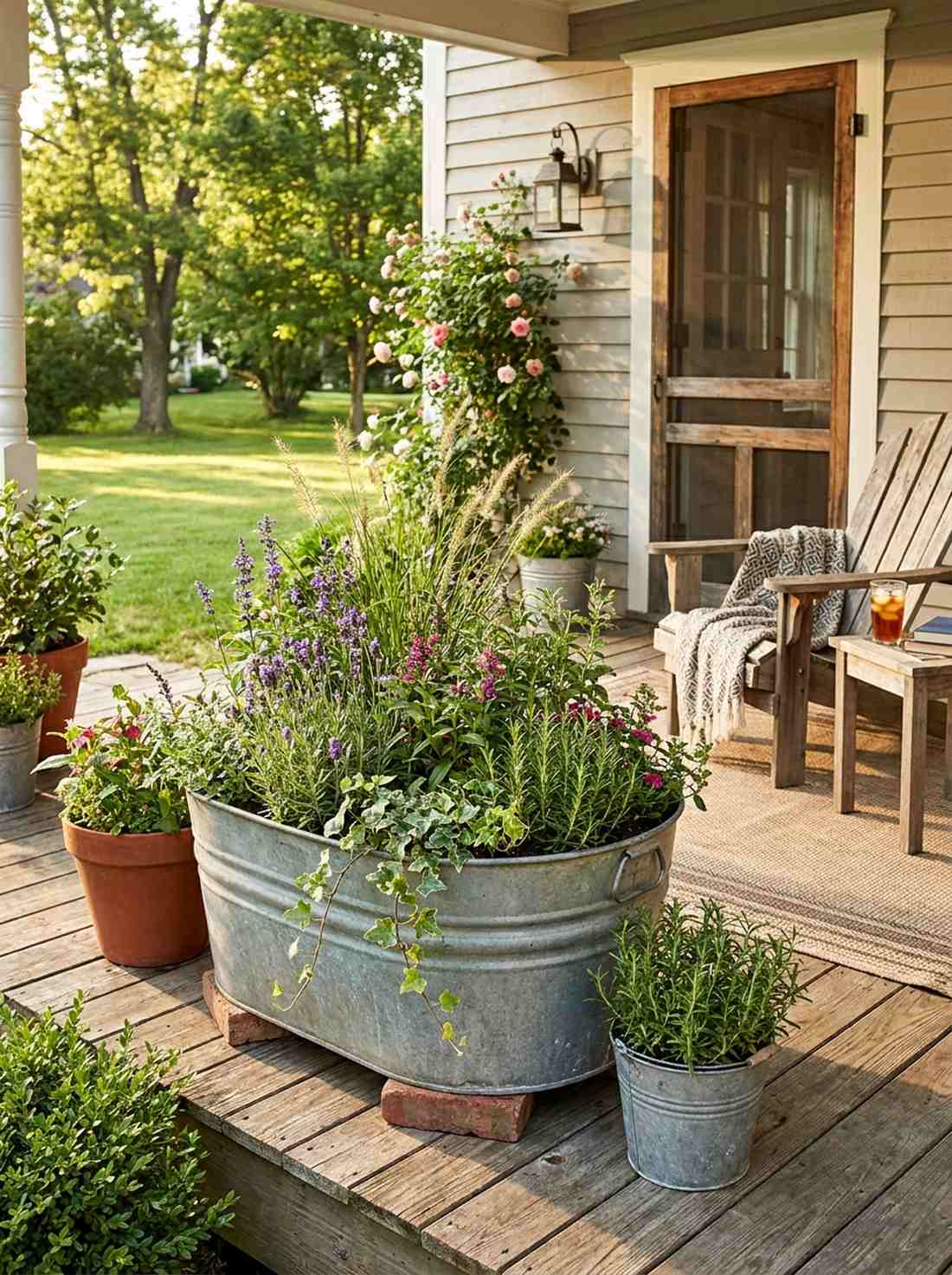
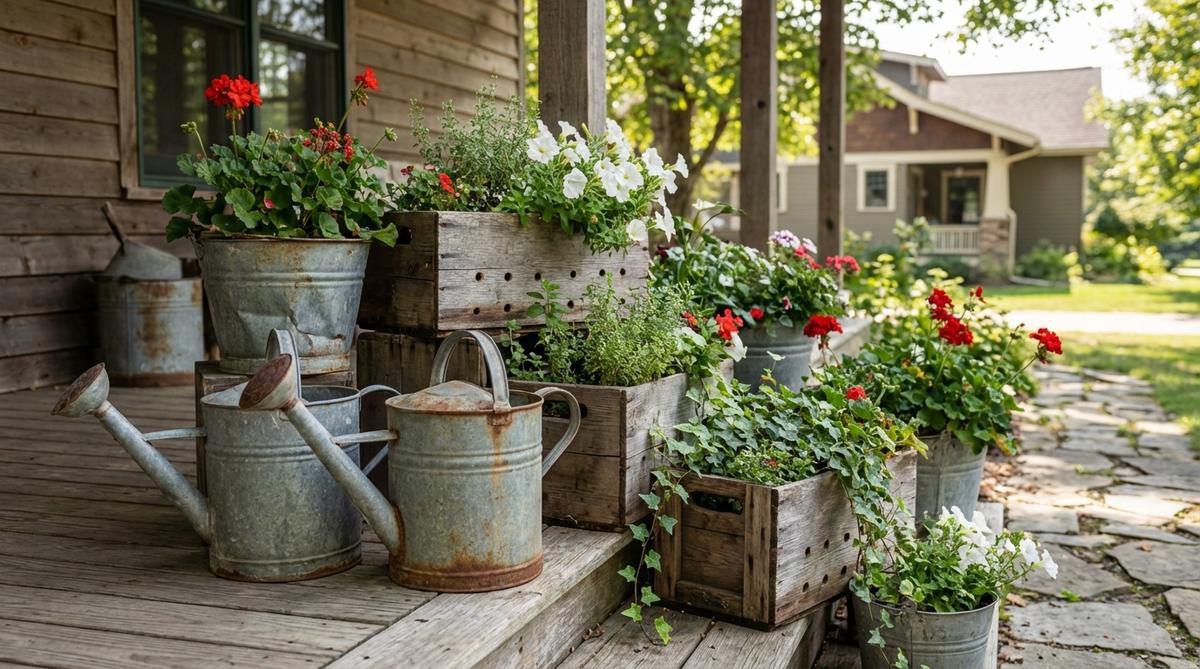
An eclectic vintage galvanized tub garden evokes an effortlessly chic farmhouse appeal. Perfect for adding whimsical personality to casual side-porch entries.
Most people forget drainage holes, but drilling the bottom and adding gravel gives a designer-level finish that prevents roots from drowning. Utilizing clear rust-prevention spray keeps the vintage metal look without staining your porch floor.
You can execute this quirky setup for $20–$40. Pin this if you love upcycling thrifted finds!
- Key Materials: Vintage buckets/tubs, metal drill bit
- Vibe / Style: Eclectic Farmhouse
- Difficulty: Easy
- Budget Breakdown: Thrifted tub: $15 | Drill bit/Spray: $15
- Creator’s Tip: Elevate the metal tub slightly on hidden brick pieces so water flows freely away from the metal base.
- Smart Sourcing: cobalt steel drill bits for metal or matte finish rust-stopping spray.
Architectural Enhancements for Structural Impact
24. Painted Porch Ceilings
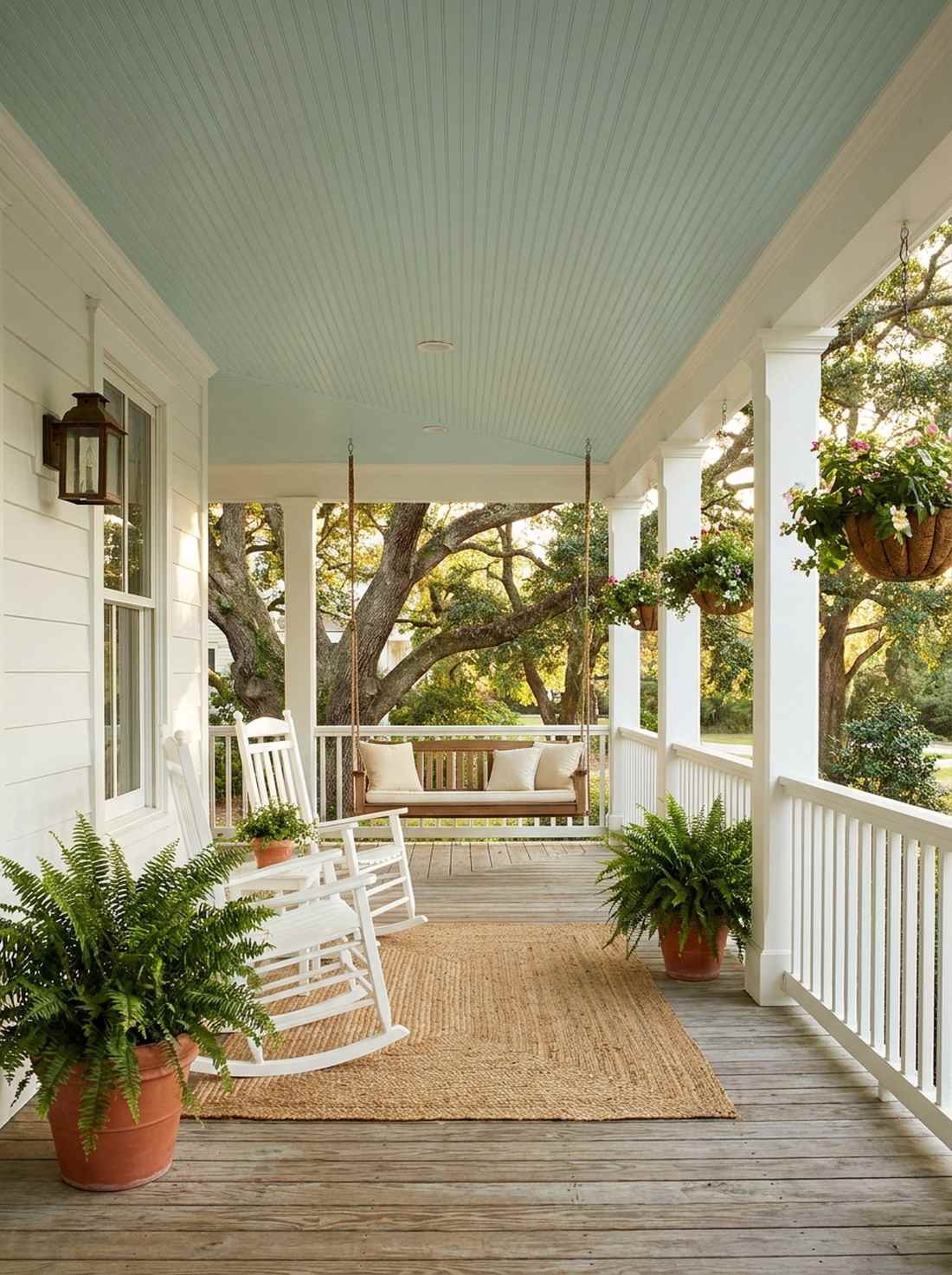
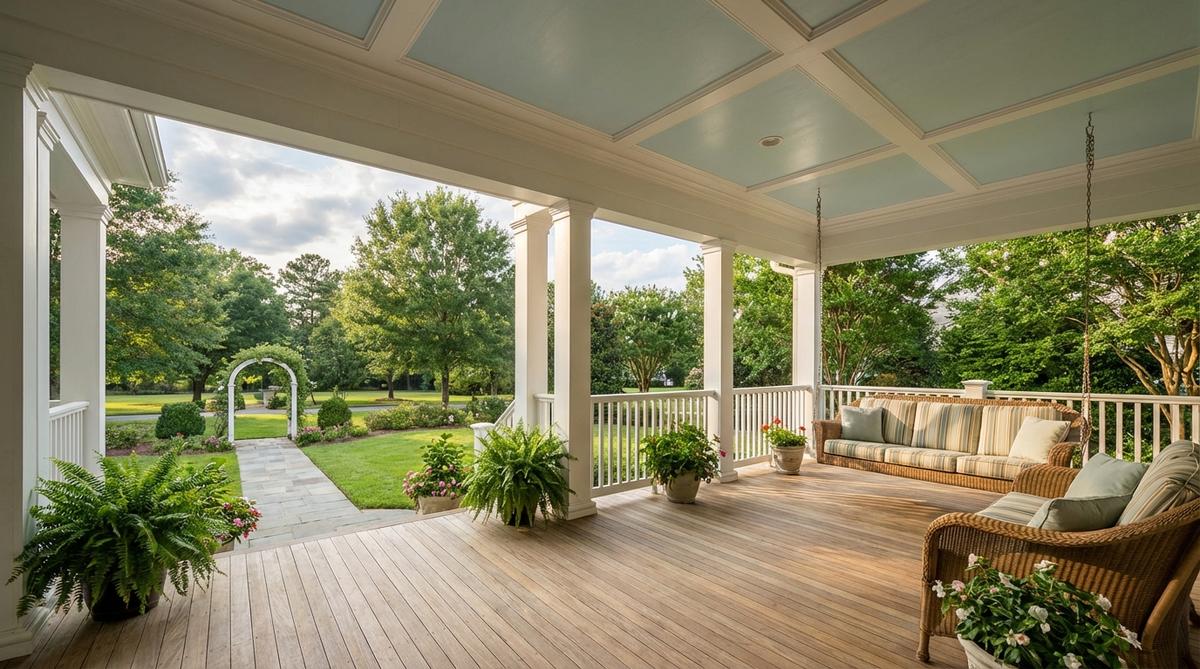
A classic “Haint Blue” ceiling feels like a breezy, traditional Southern sanctuary. It magically draws the eye up and makes a cramped roof feel incredibly airy.
White ceilings show every speck of spiderweb dirt, but rolling on a soft blue-green tint creates a high-end estate vibe that supposedly deters insects. Opting for premium exterior acrylic paint ensures the color won’t peel or blister under humidity.
This is a weekend paint job costing roughly $40–$70. A stunning historical detail anyone can pull off.
- Key Materials: Exterior paint, painter’s tape
- Vibe / Style: Southern Heritage
- Difficulty: Moderate (overhead painting)
- Budget Breakdown: Primer: $20 | Paint: $40
- Creator’s Tip: Always use a flat or satin finish; high-gloss will highlight every single flaw and nail pop in the ceiling boards.
- Smart Sourcing: mold-resistant exterior primer kits or extended reach paint roller poles.
Most DIYers are terrified of structural changes, but this next upgrade is actually a 1-hour snap-on fix.
25. Decorative Railing Systems
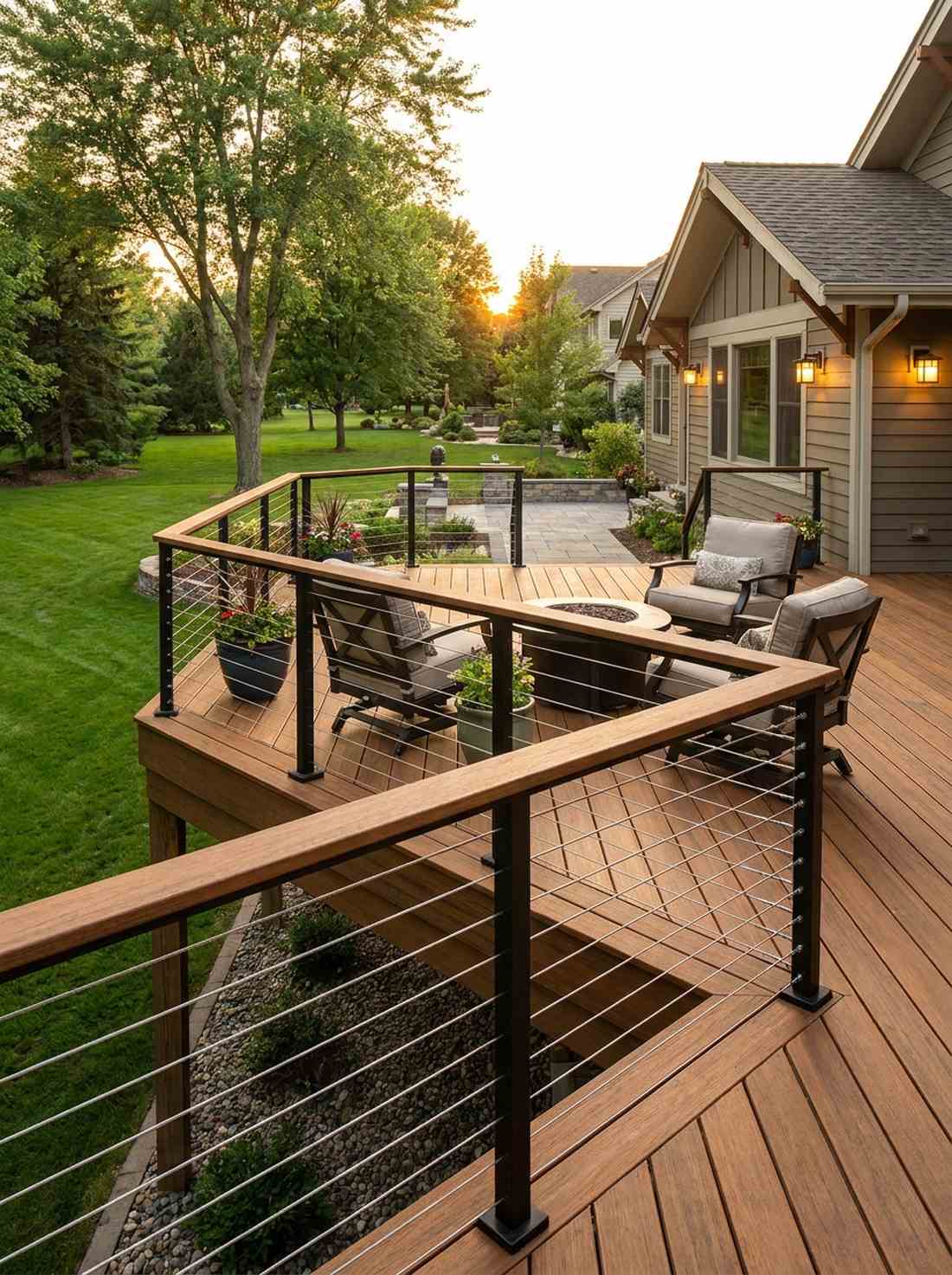
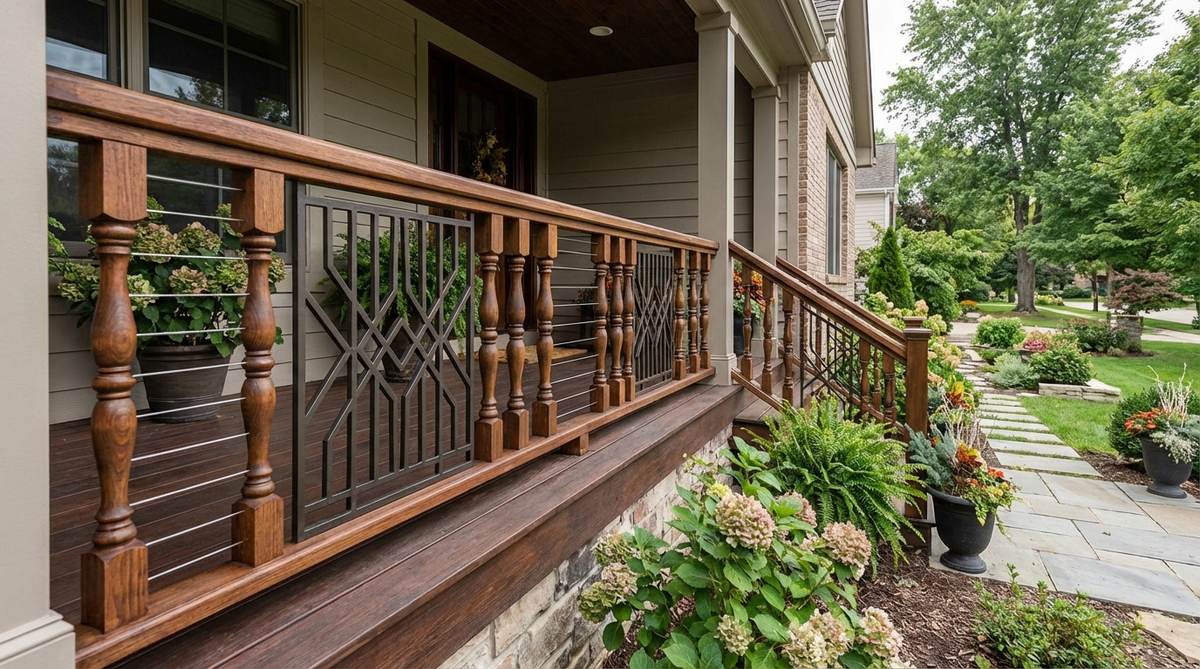
Upgraded cable or spindle railings frame the house like a custom picture border. Flawless for replacing rotted, builder-basic wooden crossbeams.
Rebuilding entire wood systems takes weeks, but installing tensioned stainless steel cables delivers a surprisingly premium look in hours. Snagging pre-drilled cable railing kits modernizes the entire facade while maintaining your yard views.
Expect to budget $200–$400 for a medium porch section. Save this to your heavy exterior renovations board!
- Key Materials: Stainless steel cable, tensioning hardware
- Vibe / Style: Modern Architectural
- Difficulty: Advanced DIY
- Budget Breakdown: Cable spools: $150 | Hardware: $80
- Creator’s Tip: Make sure your corner anchor posts are solidly bolted to the frame, as tensioned cables will easily bend weak posts.
- Smart Sourcing: stainless steel cable railing starter kits or heavy-duty post tensioners.
26. Statement Front Doors
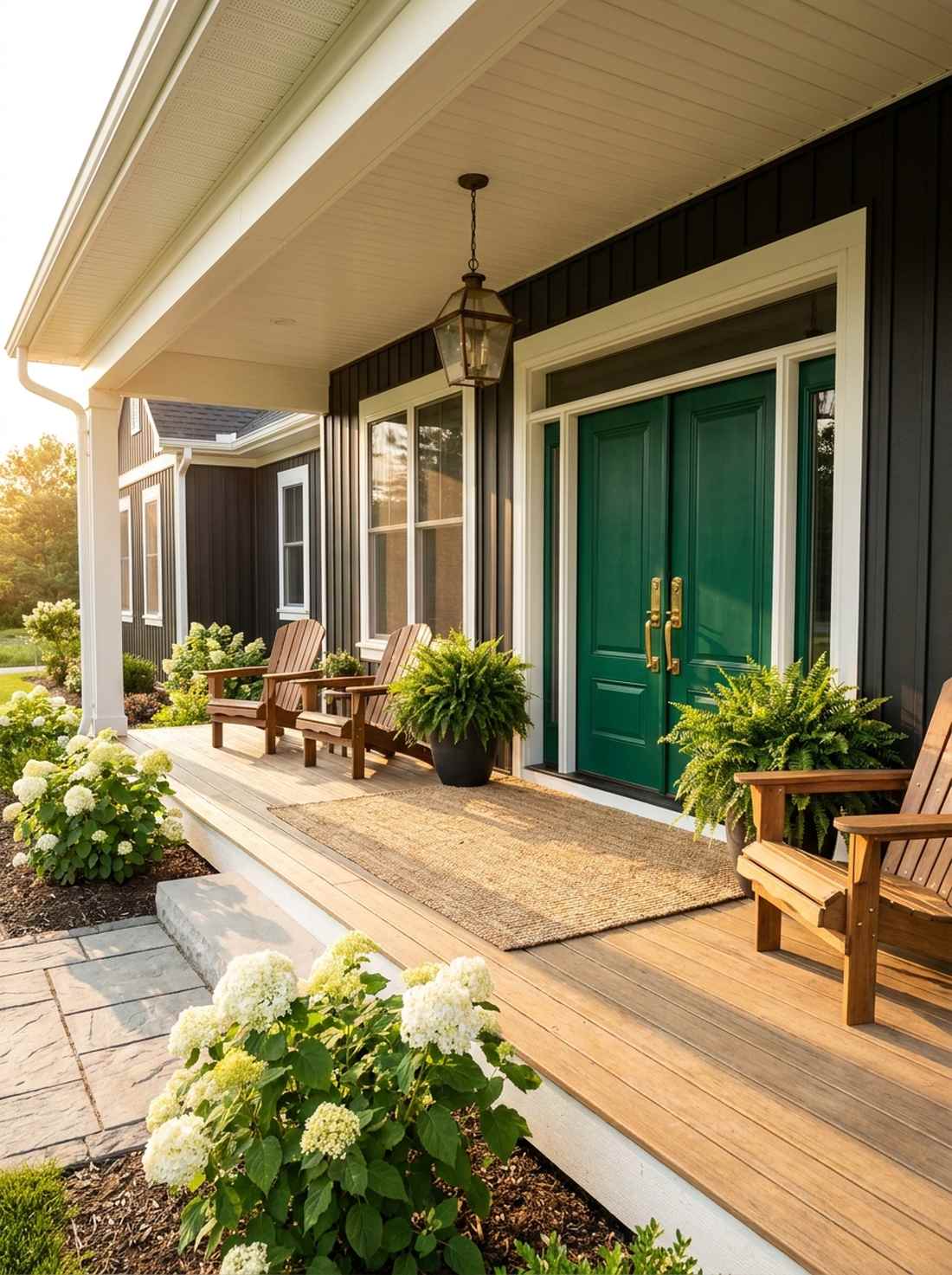
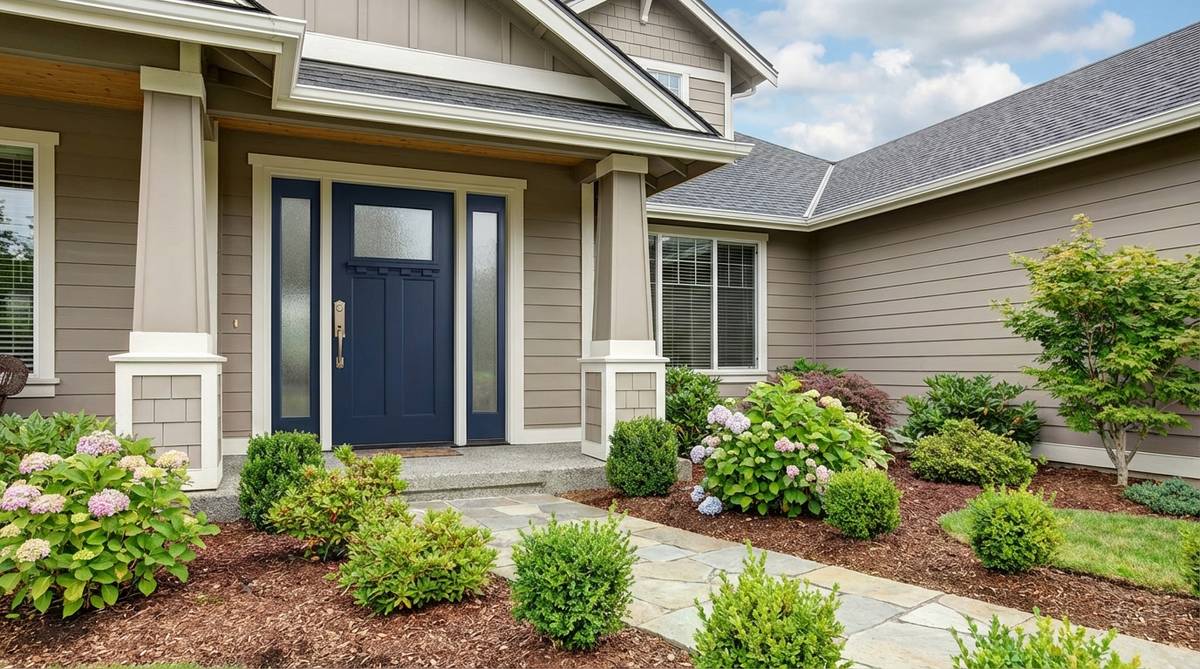
A bold painted entryway door feels incredibly intentional and bursting with personality. This is the single highest-ROI focal point you can upgrade on the porch.
Many leave factory-white doors bland, but applying a rich navy, emerald, or terracotta looks far more expensive than it is. Pairing it with heavy forged brass handlesets dramatically elevates the tactile entry experience.
This striking facelift costs about $80–$150. Highly recommended for instantly stopping neighborhood traffic.
- Key Materials: High-adhesion exterior paint, heavy hardware
- Vibe / Style: Bold & Curated
- Difficulty: Moderate
- Budget Breakdown: Paint: $40 | Handleset: $90
- Creator’s Tip: Do not paint in direct sunlight, the paint will dry too fast and leave horrible brush strokes.
- Smart Sourcing: high-adhesion exterior door paint or solid brass entry door handlesets.
27. Portico Additions
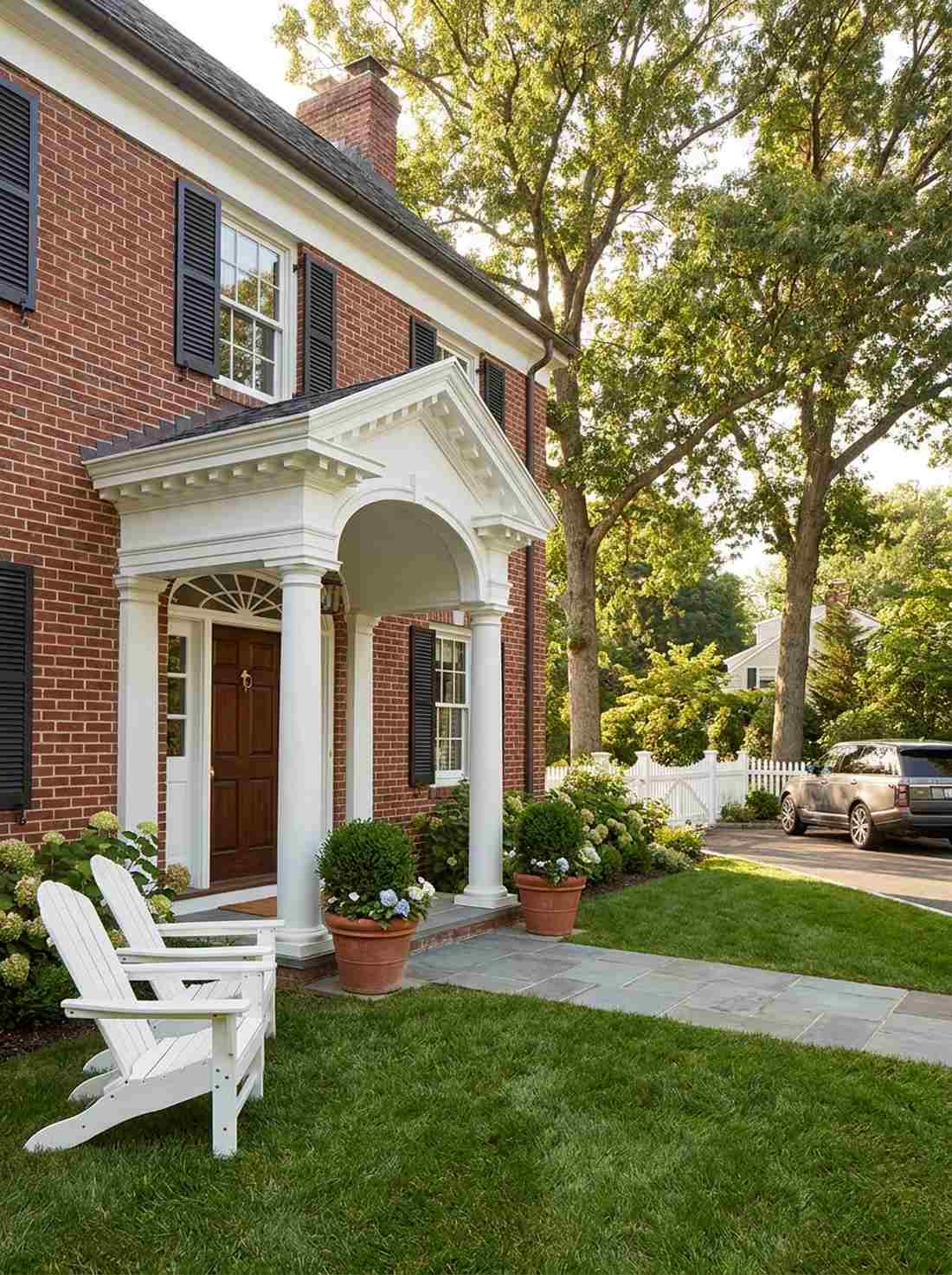
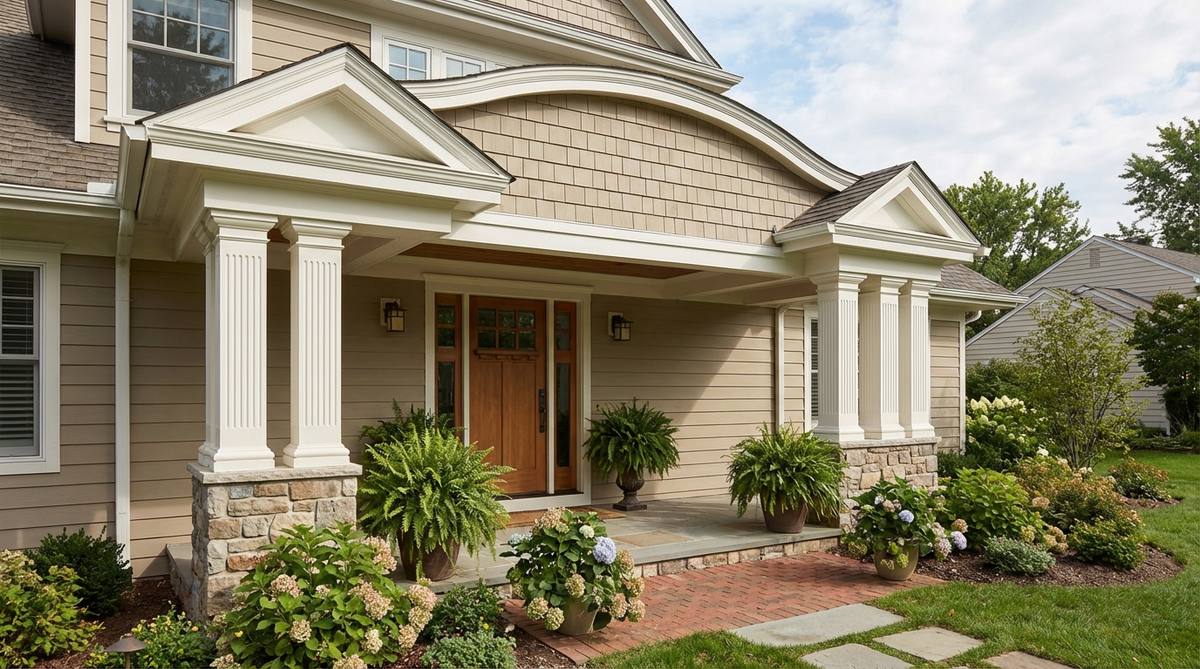
A framed front stoop portico feels like a grand, regal entrance. Crucial for flat house facades where guests currently get rained on while waiting at the door.
Building a full roof extension is intimidating, but attaching a pre-fabricated structural awning gives a designer-level finish for a fraction of the cost. Using architectural fiberglass canopy kits gives you that heavy classical look without the structural engineering nightmare.
Budget $300–$600 for a pre-made awning structure. Pin this if your front door lacks overhead coverage!
- Key Materials: Pre-fab portico canopy, lag bolts
- Vibe / Style: Classical Georgian
- Difficulty: Expert DIY / Hire a Pro
- Budget Breakdown: Canopy kit: $450 | Lag bolts/Caulk: $30
- Creator’s Tip: You must anchor the lag bolts directly into the house’s structural wall studs, not just the exterior siding.
- Smart Sourcing: pre-fabricated architectural portico kits or heavy-duty structural lag screws.
28. Column Wraps and Upgrades
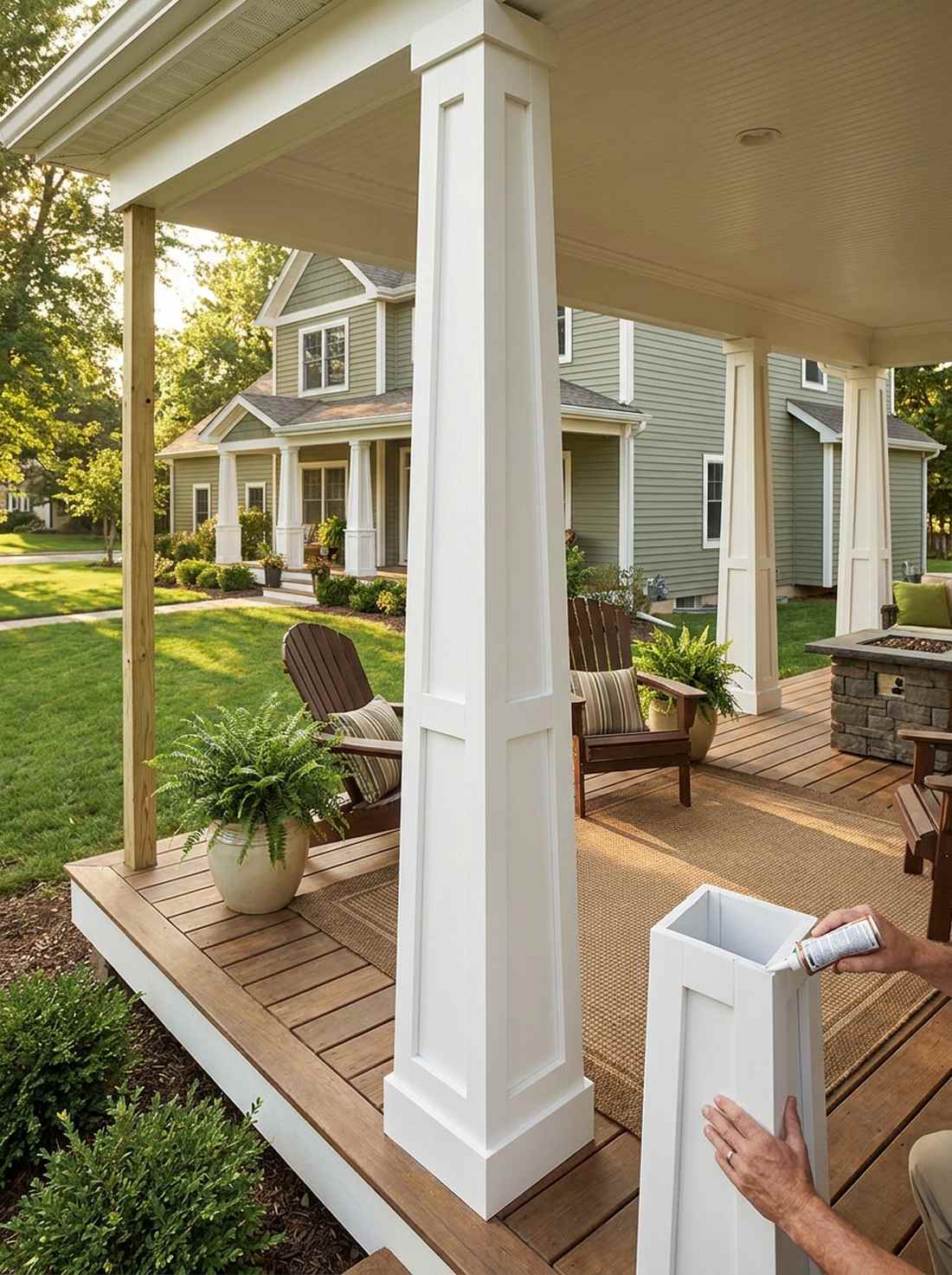
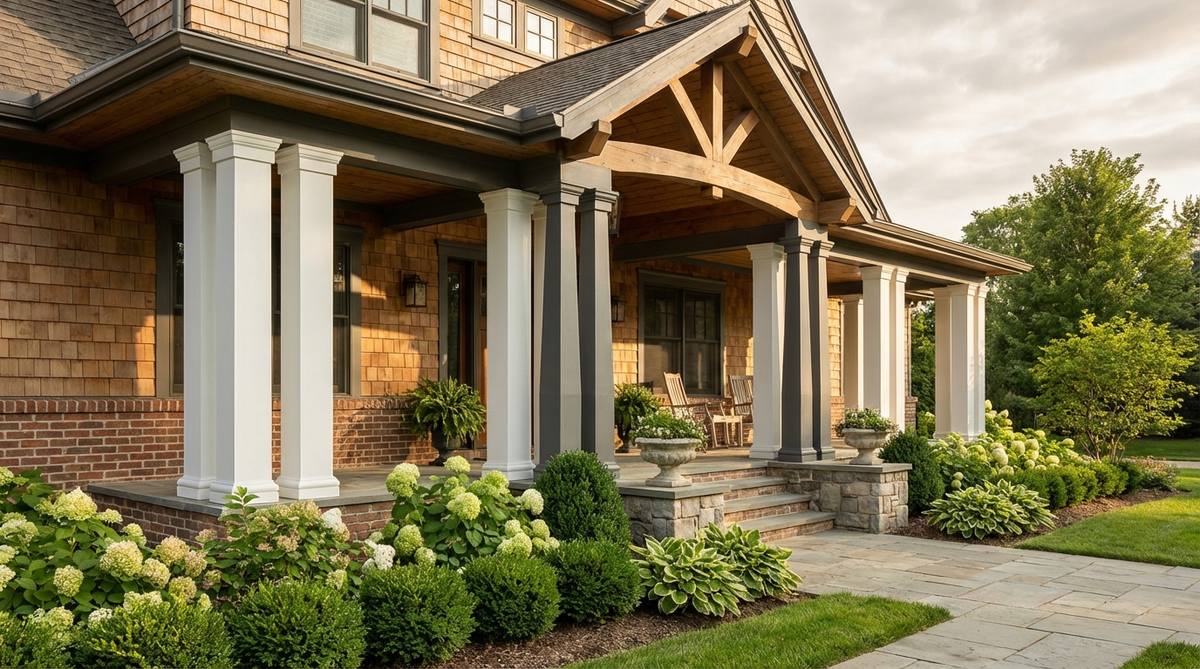
Thick tapered column wraps make a flimsy porch look like a custom craftsman masterpiece. Perfect for hiding those skinny, builder-grade 4×4 support posts.
Replacing structural posts is dangerous, but snapping a hollow PVC sleeve over them creates a high-end estate vibe effortlessly. Securing cellular PVC column wrap kits ensures they never rot, warp, or invite termites into your home.
You can execute this massive transformation for $150–$300 per pillar. A brilliant hack for architectural heft.
- Key Materials: PVC wraps, construction adhesive
- Vibe / Style: Solid Craftsman
- Difficulty: Moderate
- Budget Breakdown: PVC wrap kit: $180 | Adhesive: $15
- Creator’s Tip: Use PVC cement on the mitered corners to fuse the plastic together seamlessly before painting.
- Smart Sourcing: snap-together PVC column wraps or exterior-grade PVC cement.
29. Stone or Brick Accents
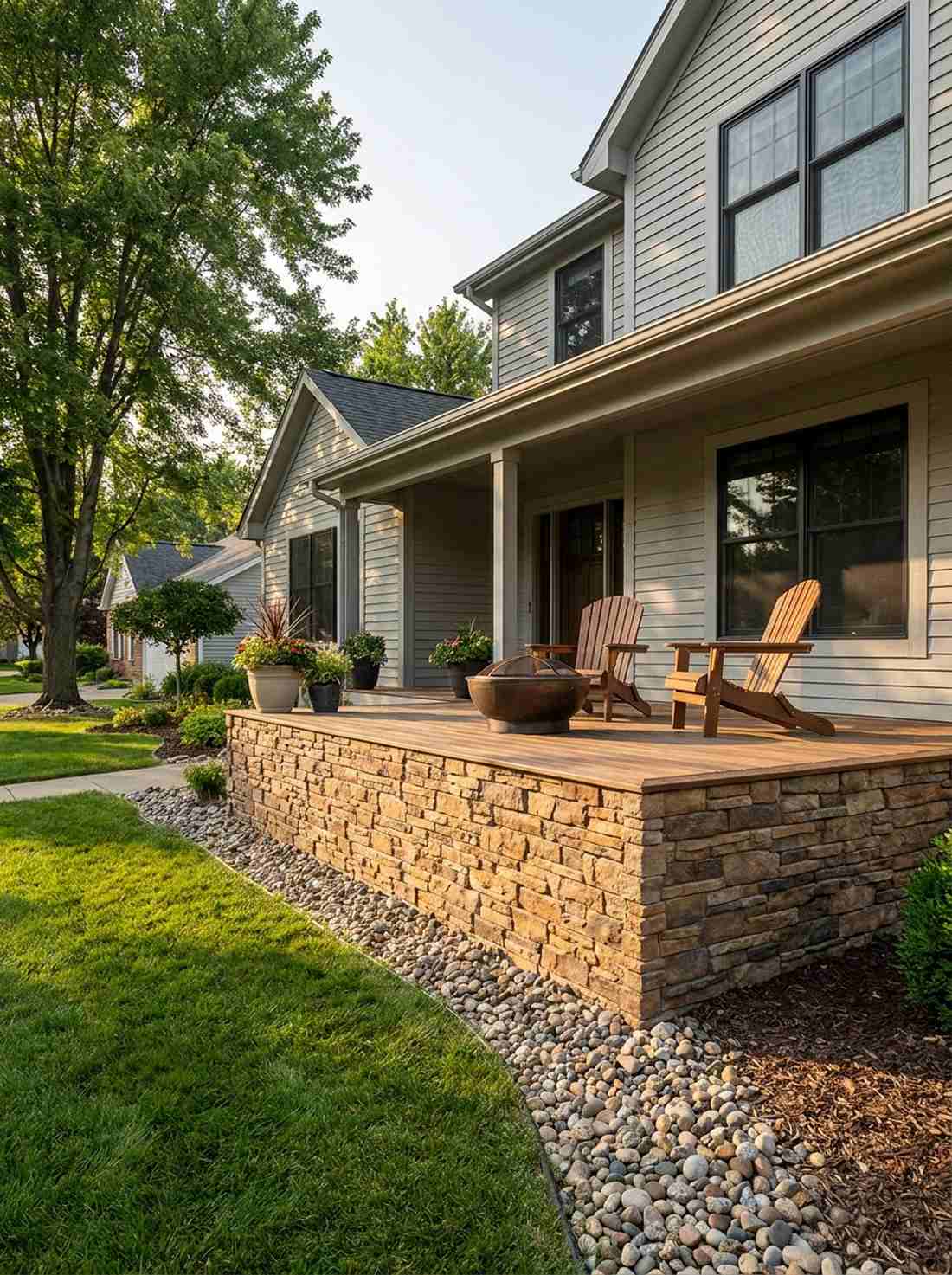
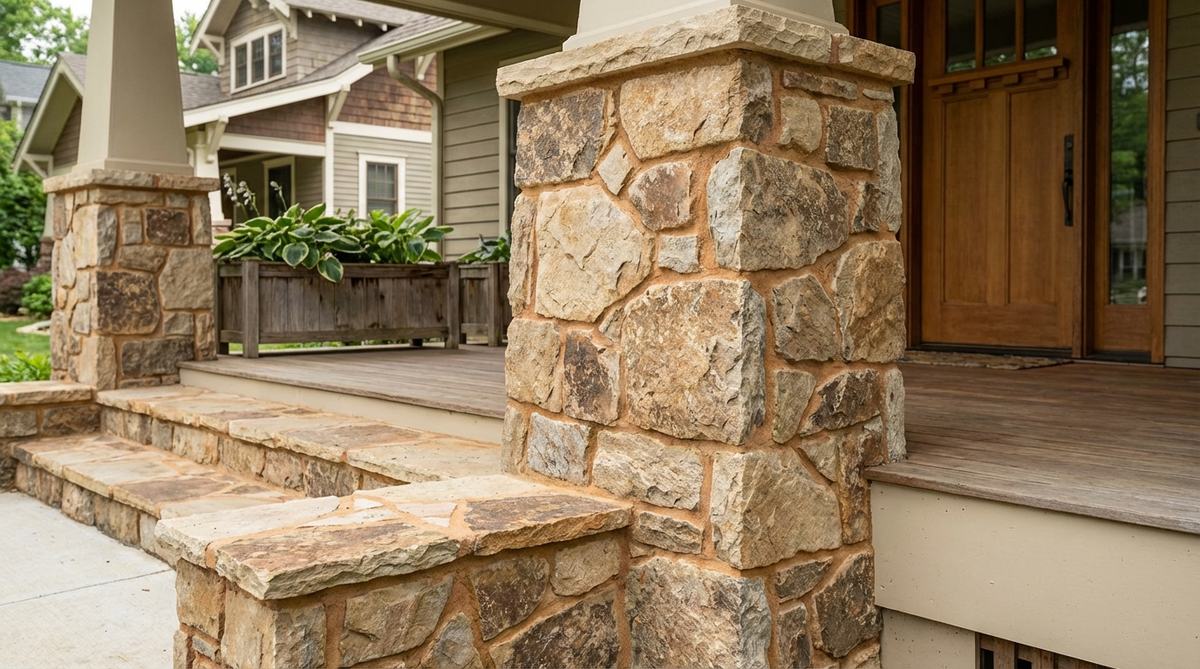
Textured stone veneer porch skirting feels earthy, grounded, and incredibly expensive. Unbelievably perfect for covering up ugly concrete foundations or exposed cinderblocks.
Hiring a mason costs thousands, but applying faux-stone panels delivers a surprisingly premium look over a single weekend. Utilizing polyurethane faux stone siding panels mimics real rock texture perfectly while cutting with a standard handsaw.
Expect to spend $200–$400 for the material. Save this to your exterior facelift board!
- Key Materials: Faux stone panels, masonry screws
- Vibe / Style: Mountain Lodge / Earthy
- Difficulty: Moderate
- Budget Breakdown: Stone panels: $250 | Screws/Adhesive: $40
- Creator’s Tip: Stagger the seams like you’re laying brick so the repeating pattern isn’t obvious to the eye.
- Smart Sourcing: lightweight faux stone veneer panels or heavy-duty exterior construction adhesive.
You’re losing so much aesthetic value if you don’t hide your junk… this next storage trick changes everything.
30. Integrated Storage Solutions
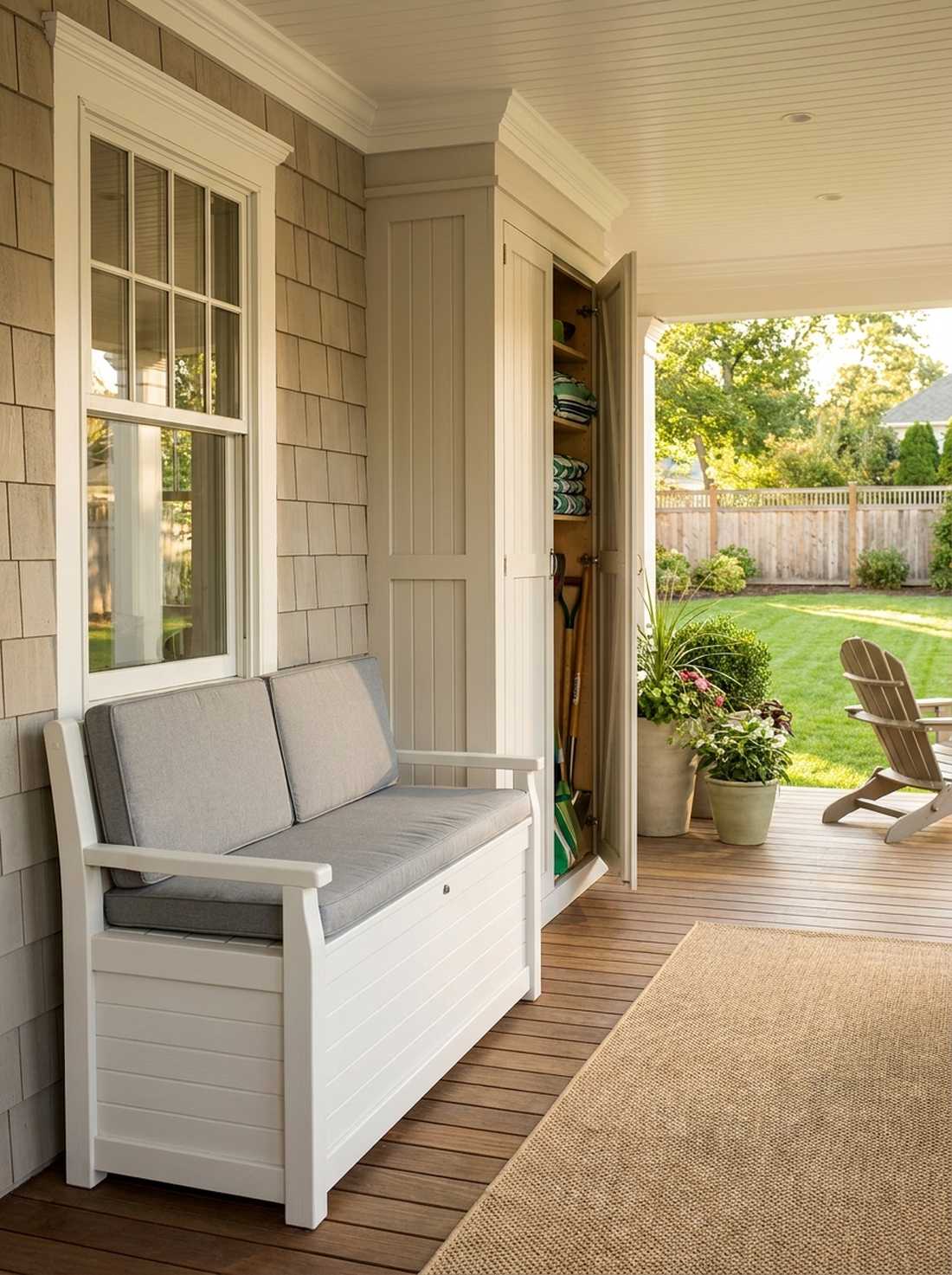
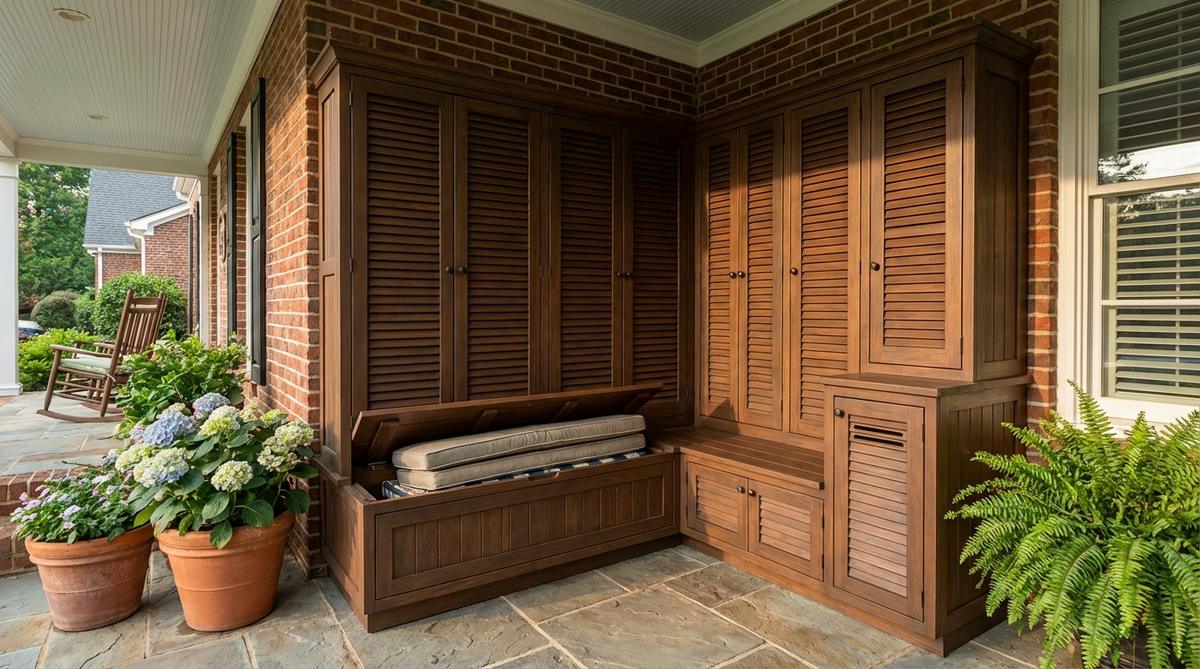
A hidden porch storage cabinet feels like a brilliantly organized mudroom transitioned outside. Ideal for tucking away messy boots, cushions, and gardening soil bags.
Leaving clutter on the deck ruins the aesthetic, but painting an outdoor storage bench to match the trim looks far more expensive than it is. Seeking out waterproof resin deck boxes disguised as seating keeps your gear bone-dry and your porch flawless.
This functional upgrade usually runs $100–$180. Highly recommended for busy, active households.
- Key Materials: Resin bench, exterior spray paint
- Vibe / Style: Clean & Minimalist
- Difficulty: Easy
- Budget Breakdown: Storage bench: $120 | Paint: $15
- Creator’s Tip: Drill two small holes in the bottom back corners for air circulation to prevent mildew on fabric cushions.
- Smart Sourcing: weatherproof outdoor storage benches or plastic-adhering exterior spray paint.
31. Decorative Porch Skirts
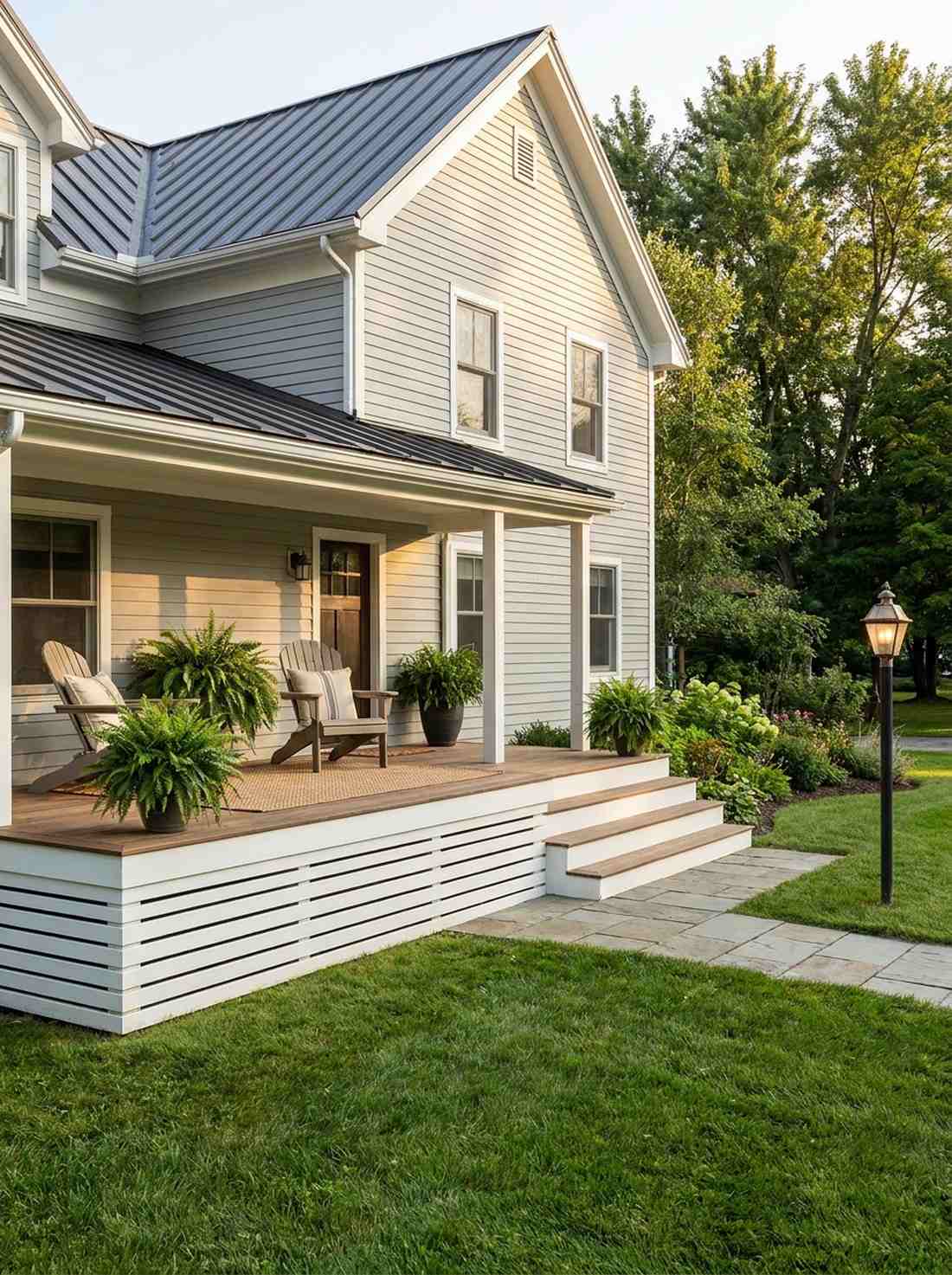
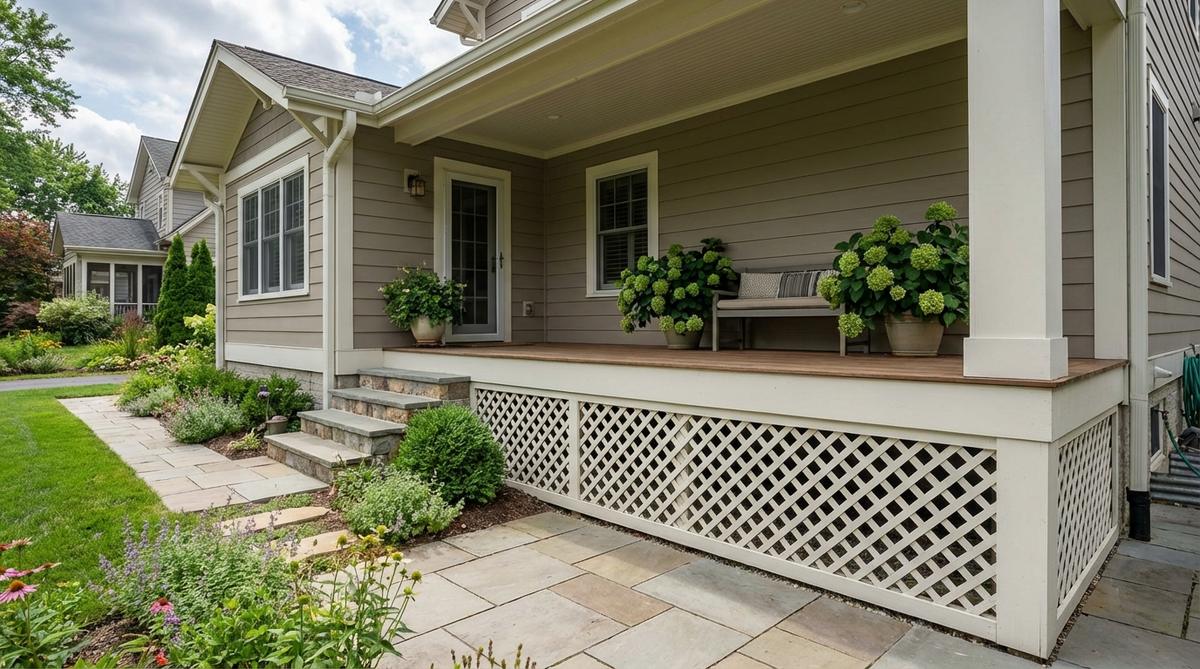
A structured slatted porch skirt frames the underside of the deck like a finished piece of furniture. Flawless for hiding the dark, messy void underneath elevated floors.
Flimsy diagonal lattice screams 1990s, but installing horizontal board-and-batten slats gives a designer-level finish that elevates the whole house. Using pre-painted vinyl privacy slats means you’ll never be crawling under the deck to repaint them.
Budget around $150–$250. Pin this if you want to banish skunks and boost curb appeal simultaneously!
- Key Materials: Vinyl or treated wood slats, framing strips
- Vibe / Style: Polished Contemporary
- Difficulty: Moderate
- Budget Breakdown: Slat materials: $180 | Deck screws: $20
- Creator’s Tip: Build the skirt panels on removable hinges so you can easily access the underneath area for plumbing or storage.
- Smart Sourcing: horizontal vinyl privacy slat kits or exterior-grade rust-proof hinges.
Material Guide: Cheap vs. Premium Aesthetic
Knowing exactly where to save and where to spend makes all the difference in achieving that “looks expensive but isn’t” vibe.
- Standard vs. UV-Resistant/Premium: Cheap plastics and fabrics will literally crumble and fade to gray after one summer. Paying 20% more for UV-coated items ensures multi-year vibrancy.
- Pre-made Kits vs. Sourcing Locally: Scavenging hardware aisles for custom brackets takes hours. Buying specialized starter kits online provides exact-fit hardware and massive time savings.
Seasonal Styling That Rotates Year-Round
32. Spring Flowering Displays
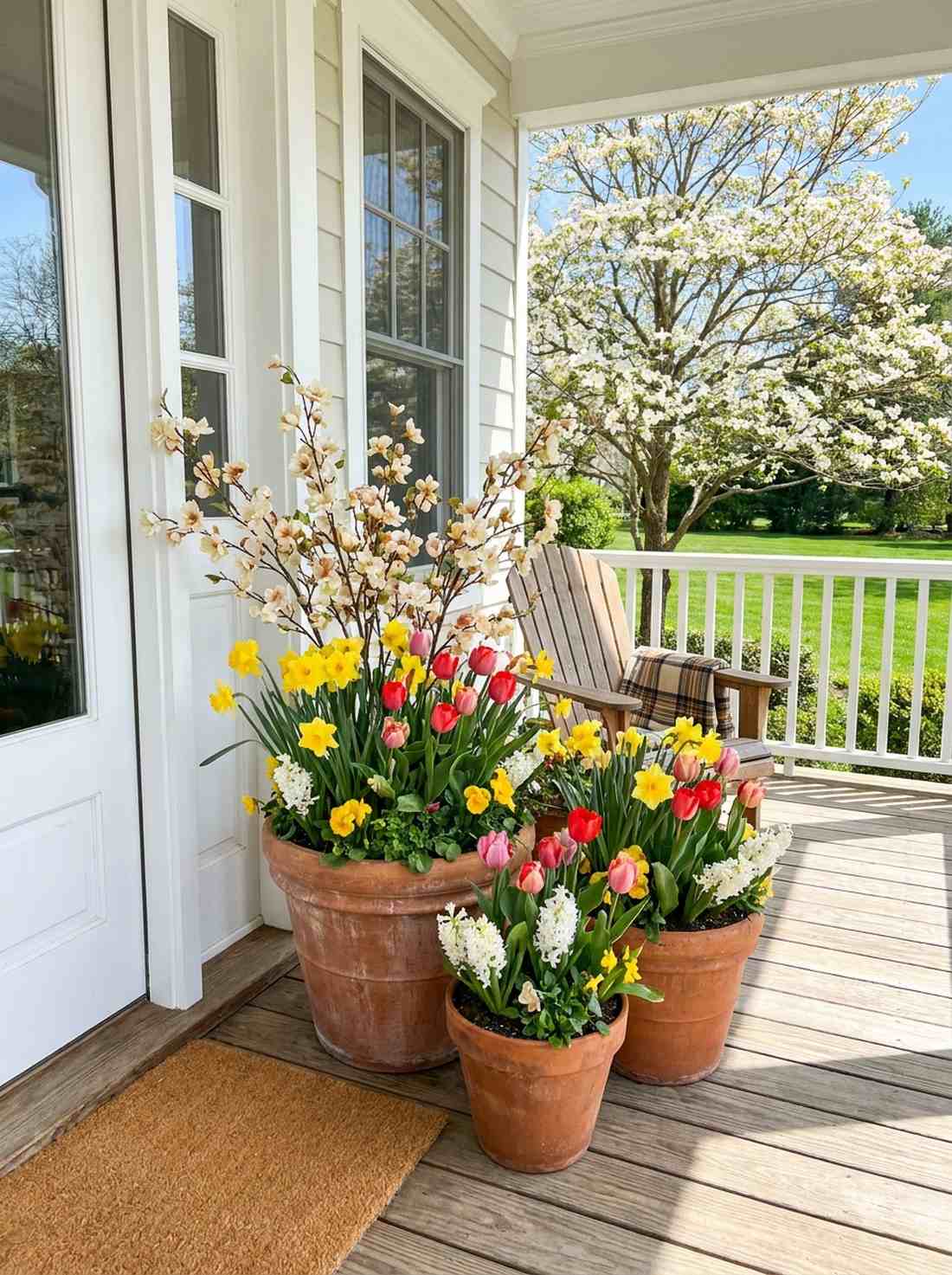
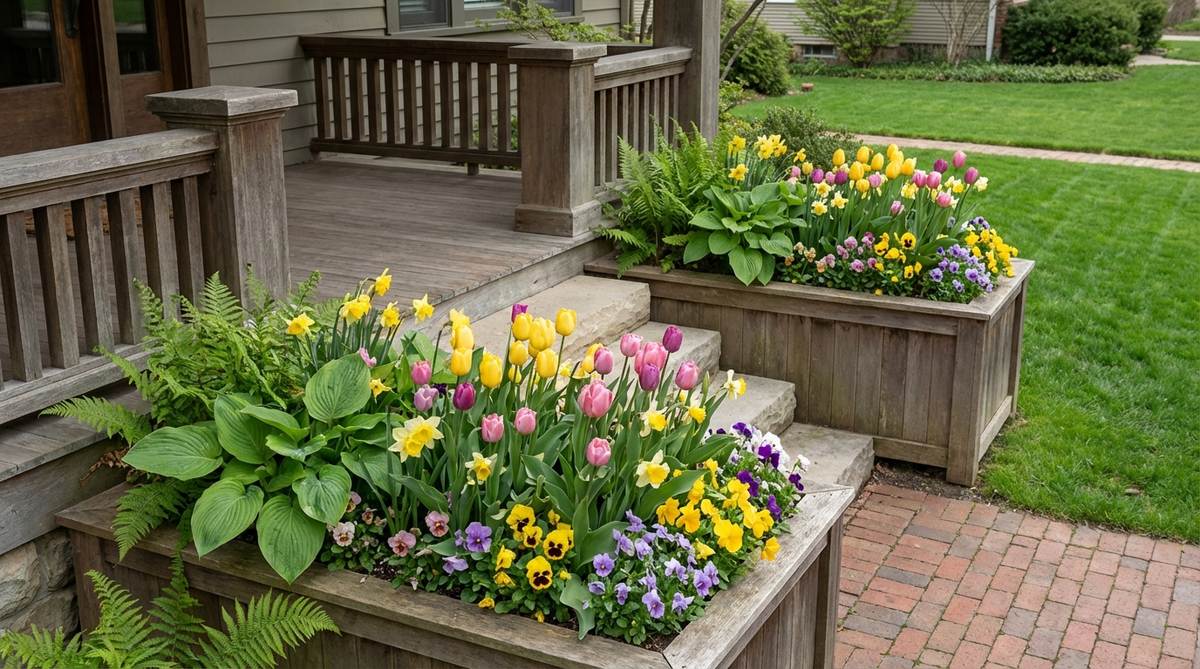
A vibrant tulip and daffodil container setup feels like a fresh, awakening garden entrance. Incredible for snapping the house out of the dreary winter blues.
Buying fully grown flowers at nurseries drains the budget, but planting dormant bulbs in autumn creates a high-end estate vibe for pennies. Mixing in faux outdoor floral stems alongside real greens gives you immediate blooms before the real ones pop.
You can execute this seasonal burst for $30–$50. A brilliant, colorful transition to warm weather.
- Key Materials: Spring bulbs, high-nutrient soil
- Vibe / Style: Fresh & Cheerful
- Difficulty: Easy
- Budget Breakdown: Bulbs: $20 | Soil: $15
- Creator’s Tip: Layer bulbs at different depths in the same pot so they bloom sequentially, extending the color for weeks.
- Smart Sourcing: bulk spring bulb assortments or UV-resistant faux outdoor floral bundles.
33. Summer Tropical Touches
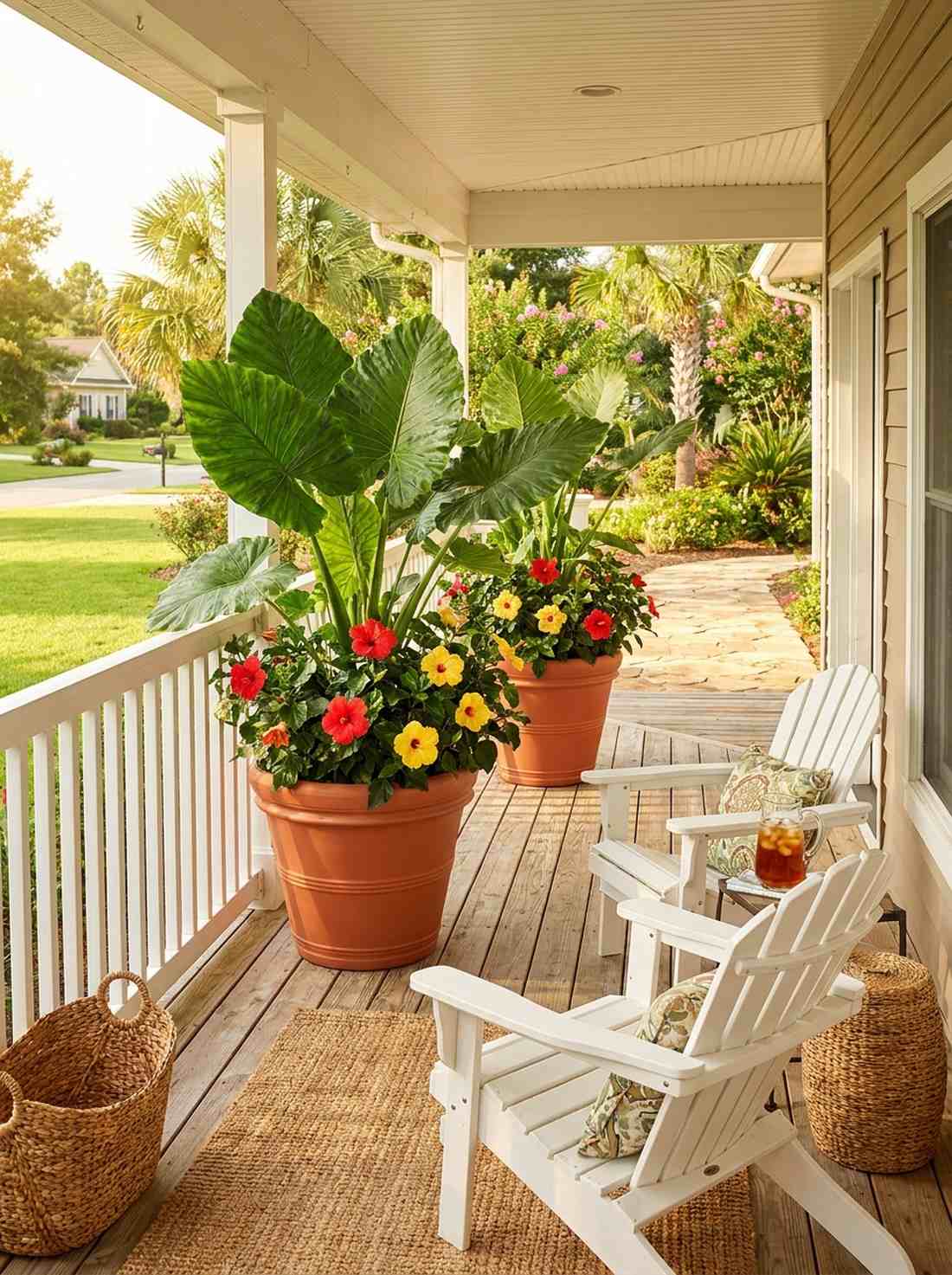
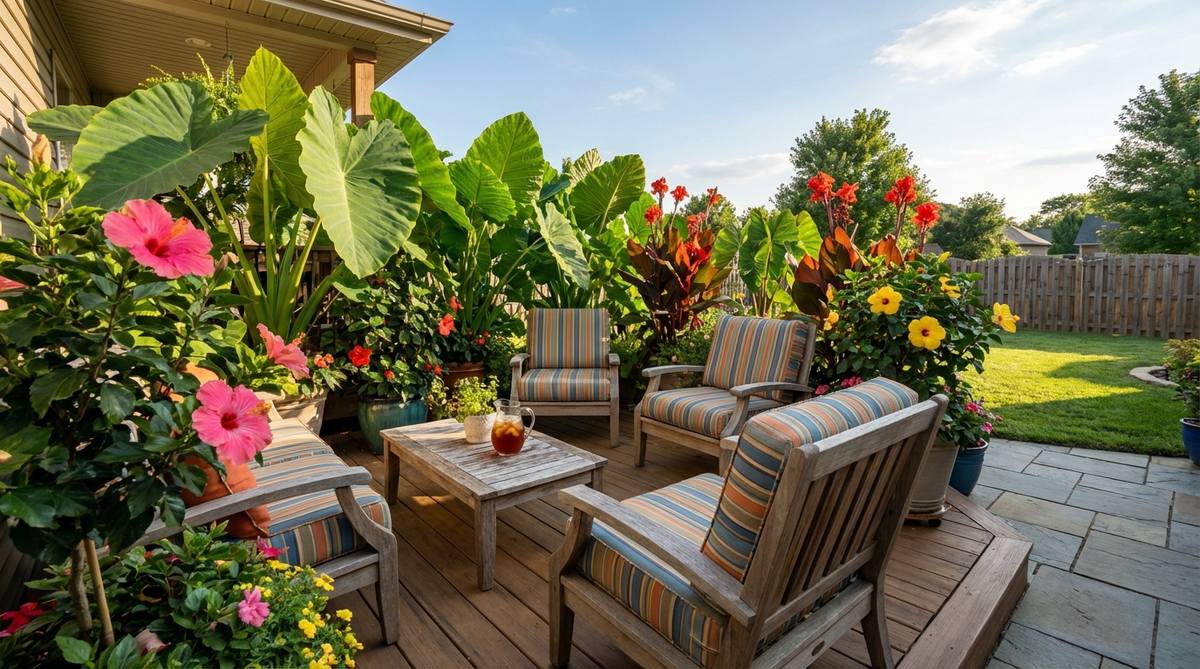
A lush elephant ear and hibiscus display feels like a balmy, exotic island getaway. Perfect for sun-drenched porches that bake during peak summer heat.
Delicate spring flowers fry in July, but leaning into massive tropical foliage delivers a surprisingly premium look that thrives in humidity. Incorporating slow-release fertilizer spikes keeps these heavy feeders pushing out massive leaves all season long.
Expect to spend $50–$80 for big impact. Save this to your hot-weather gardening board!
- Key Materials: Tropical plant bulbs, large resin pots
- Vibe / Style: Lush Resort Oasis
- Difficulty: Easy
- Budget Breakdown: Plants/Bulbs: $50 | Fertilizer: $10
- Creator’s Tip: Water them heavily in the morning; tropicals in containers dry out twice as fast as those in the ground.
- Smart Sourcing: giant elephant ear bulbs (bulk) or container-specific slow-release plant food.
34. Autumn Harvest Elements
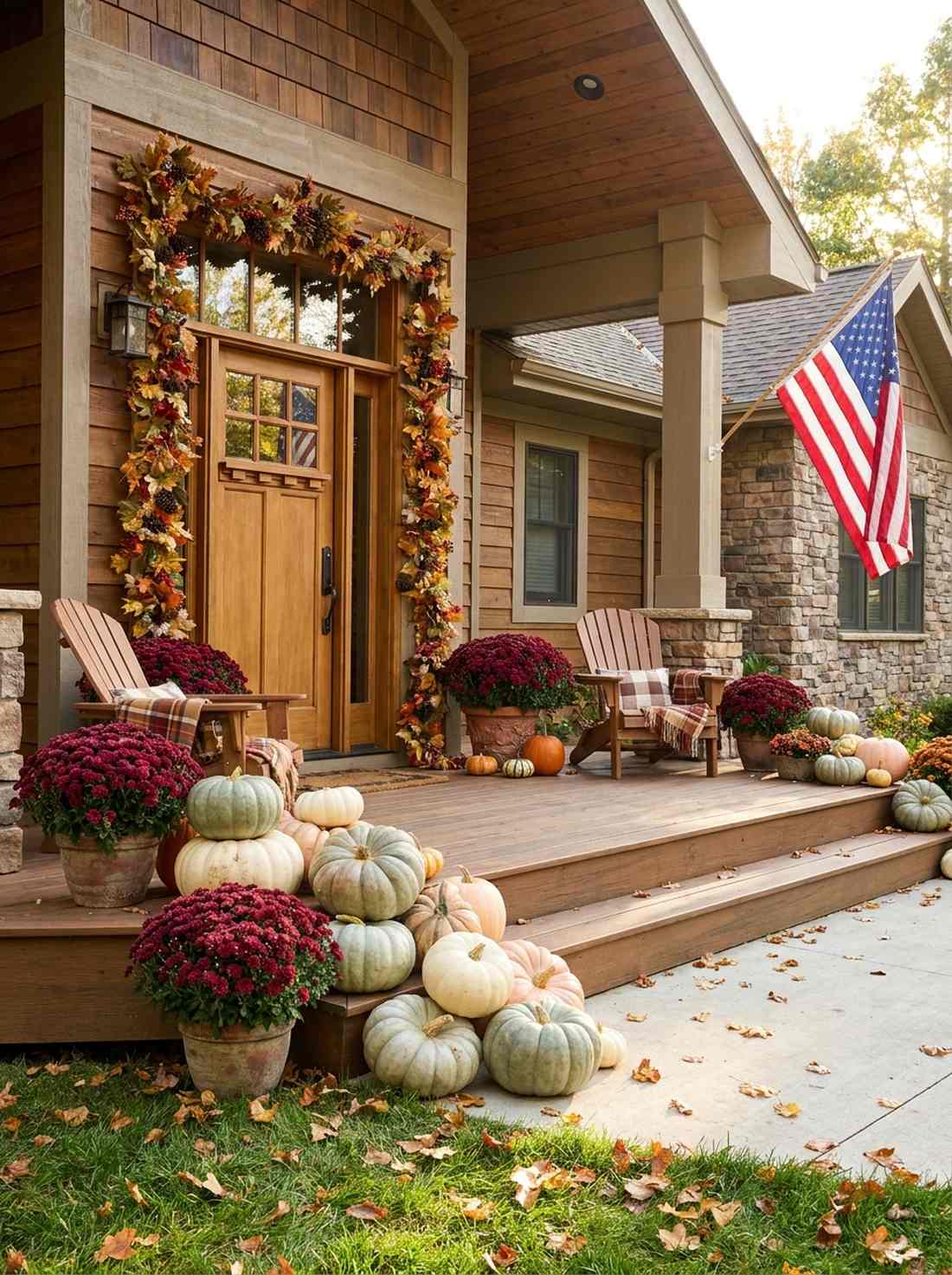
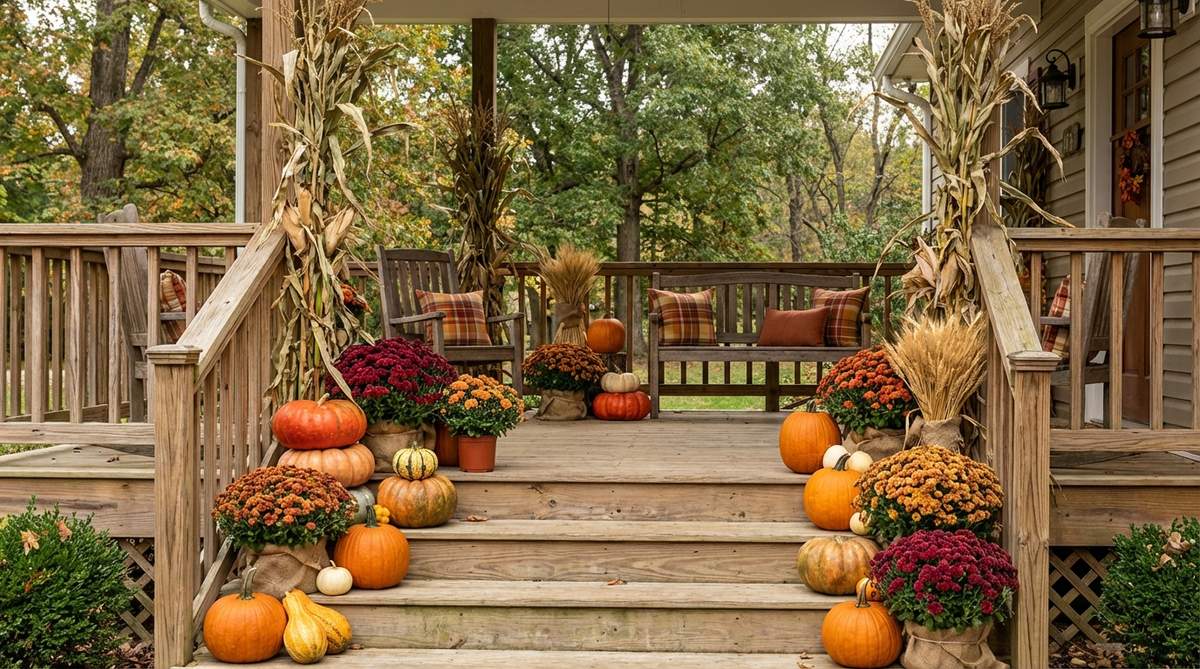
A cascading pumpkin and mum arrangement feels like a cozy, picture-perfect fall festival. Unbelievably perfect for framing the front door from September to November.
Lining up identical orange pumpkins looks basic, but stacking heirloom varieties in muted greens and whites looks far more expensive than it is. Adding artificial weatherproof harvest garlands around the doorway ties the entire rustic aesthetic together flawlessly.
This festive setup usually runs $60–$100. Highly recommended for peak autumn curb appeal.
- Key Materials: Heirloom pumpkins, burgundy mums
- Vibe / Style: Cozy Autumn Harvest
- Difficulty: Ultra-Easy
- Budget Breakdown: Pumpkins/Gourds: $50 | Garlands: $30
- Creator’s Tip: Spray the pumpkins with a light coat of clear acrylic sealant or wipe them with bleach-water to stop them from rotting quickly.
- Smart Sourcing: UV-coated faux autumn leaf garlands or outdoor-safe clear acrylic sealer sprays.
Don’t let your porch look dead in December. This next arrangement survives sub-zero temperatures flawlessly.
35. Winter Evergreen Foundations
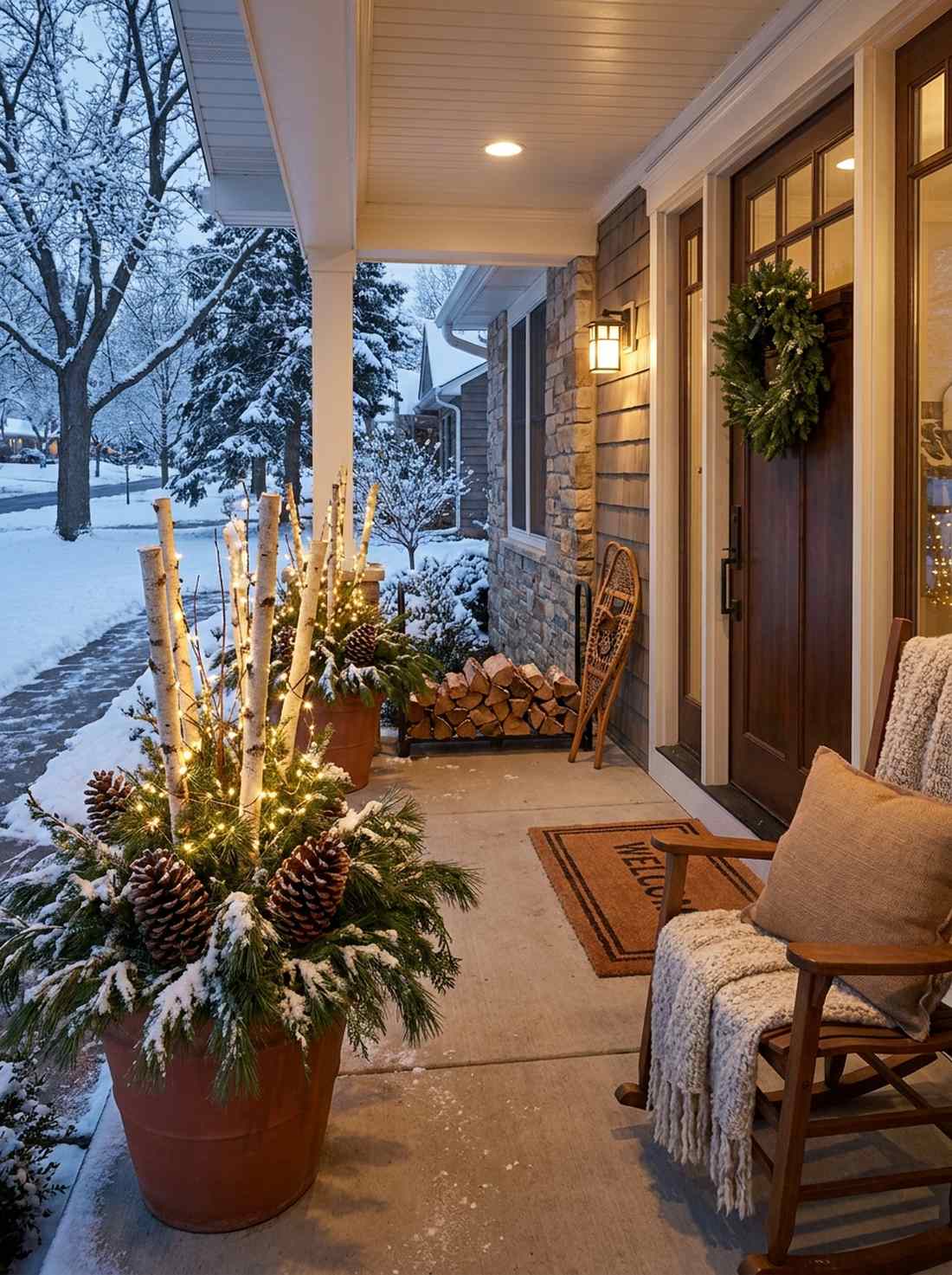
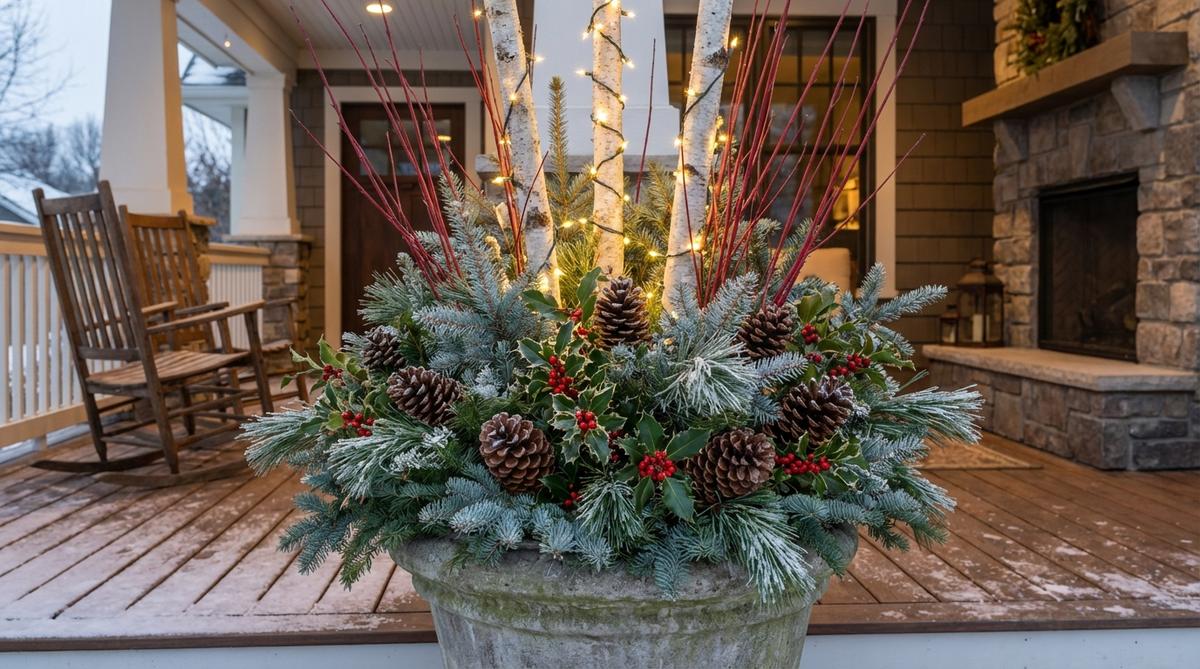
A structured pinecone and evergreen display feels like a crisp, enchanting winter woodland. Ideal for maintaining massive curb appeal when everything else is dormant.
Leaving empty pots out looks depressing, but shoving cut pine branches into the frozen soil gives a designer-level finish that withstands snow. Weaving in battery-operated outdoor fairy lights makes the dead of winter feel incredibly magical and inviting.
You can assemble this for practically free if you forage, or $30 if buying. Pin this for your winter prep!
- Key Materials: Cut pine boughs, birch poles, string lights
- Vibe / Style: Winter Wonderland
- Difficulty: Easy
- Budget Breakdown: Birch poles: $20 | Fairy lights: $15
- Creator’s Tip: Spray the cut evergreen branches with an anti-desiccant spray so the needles stay green instead of turning brittle and brown.
- Smart Sourcing: waterproof battery-operated fairy lights or anti-desiccant needle protection spray.
36. Rotating Wreath Collections
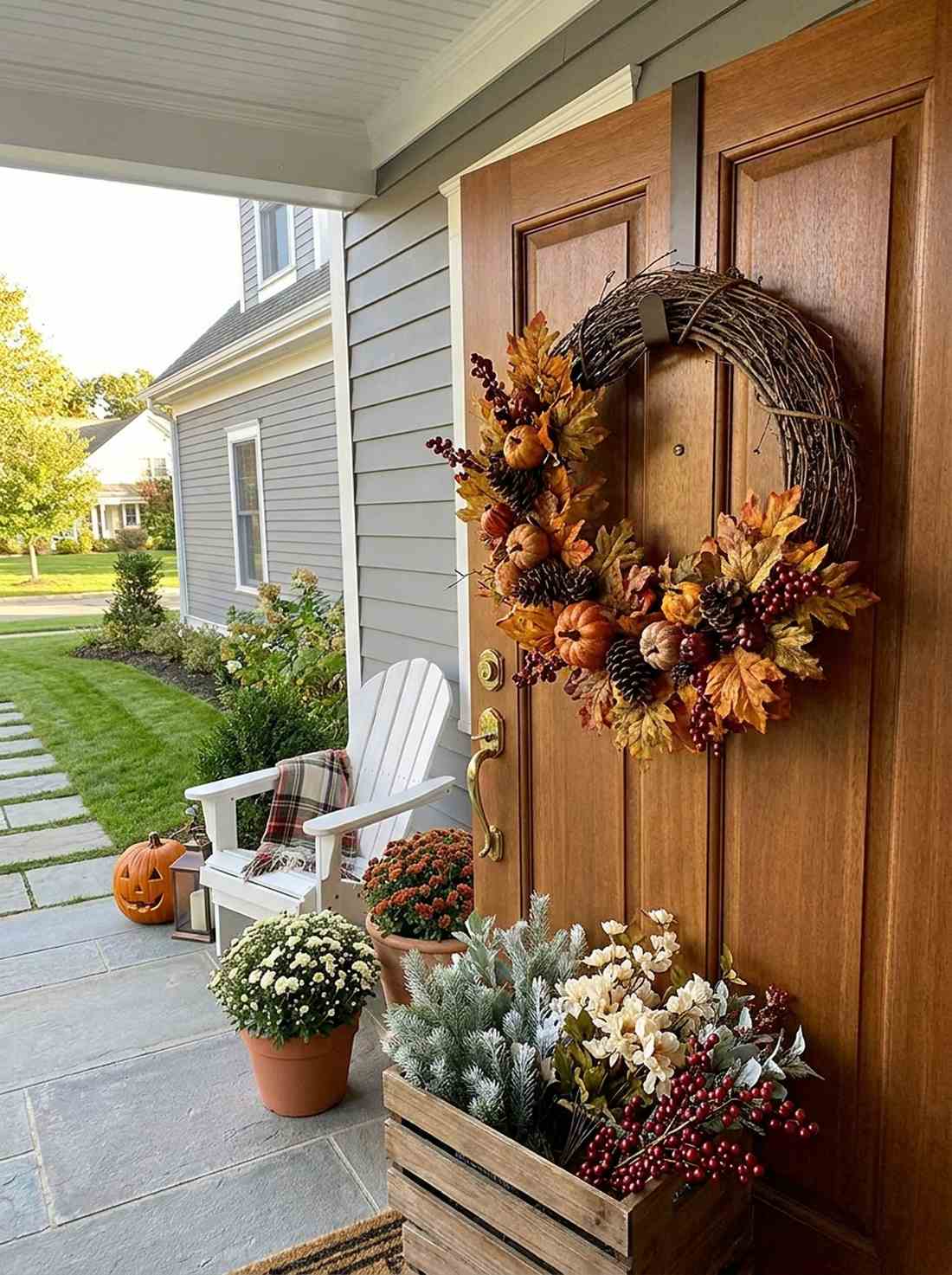
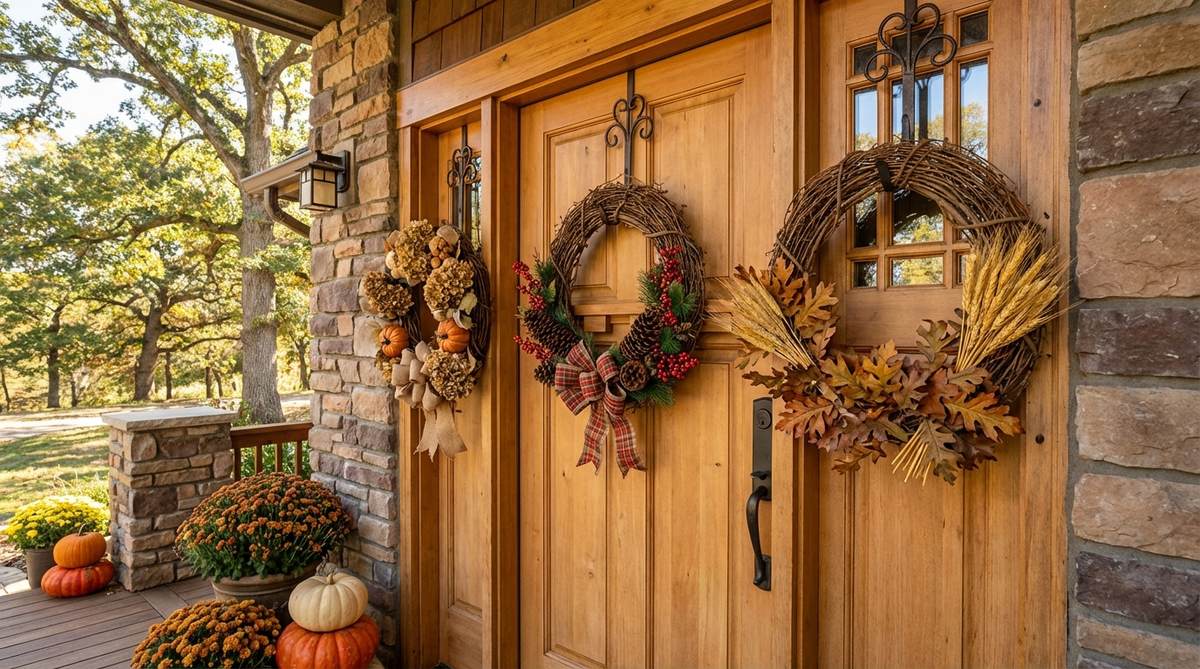
A bold seasonal front door wreath serves as the ultimate welcoming centerpiece. Flawless for adding a quick, high-impact pop of color exactly at eye level.
Constantly buying cheap seasonal wreaths wastes money, but investing in one high-quality grapevine base and swapping the florals creates a high-end estate vibe. Snagging magnetic over-the-door wreath hangers prevents you from constantly hammering nails into your expensive door.
Budget around $40–$70 for a premium base and florals. A brilliant hack for year-round freshness.
- Key Materials: Grapevine base, floral wire, faux stems
- Vibe / Style: Adaptable & Curated
- Difficulty: Easy
- Budget Breakdown: Grapevine base: $15 | Stems/Hanger: $30
- Creator’s Tip: Use floral wire instead of hot glue to attach the elements so you can easily snip them off when the season changes.
- Smart Sourcing: heavy-duty magnetic wreath hangers or thick natural grapevine wreath bases (2-pack).
37. Seasonal Pillow Rotations
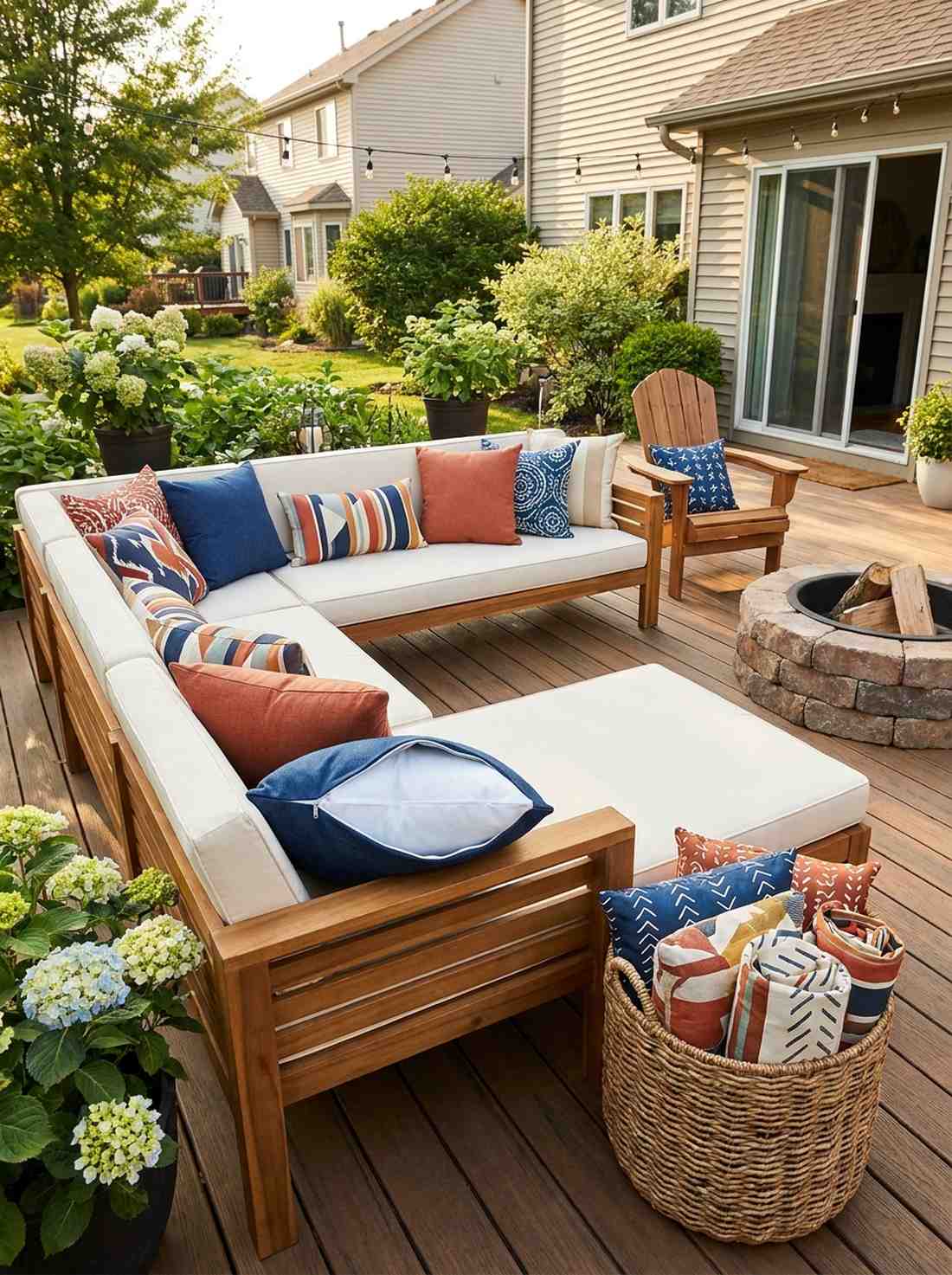
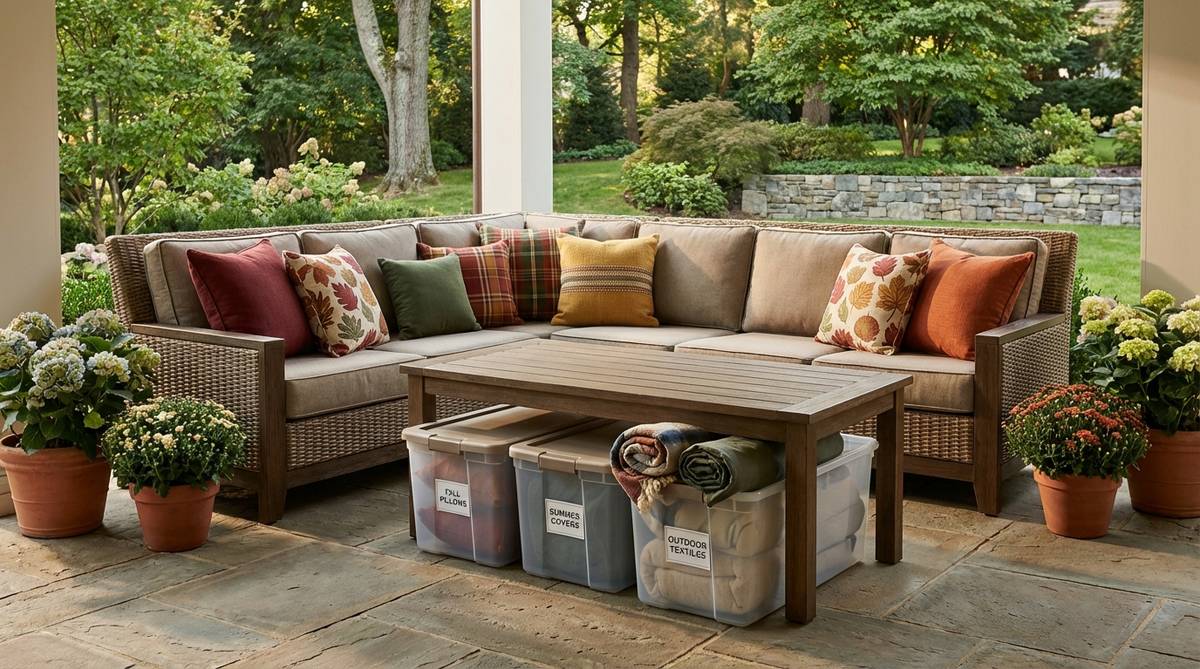
Vibrant outdoor accent pillows feel like a stylish living room magically transported outside. Perfect for injecting bold patterns without committing to permanent paint changes.
Buying entire new pillows is expensive and clunky to store, but just swapping out the covers delivers a surprisingly premium look with zero storage hassle. Utilizing waterproof pillow inserts means the core never gets moldy, no matter how hard it rains.
This textile upgrade costs $30–$50 per season. Save this to your outdoor decorating hacks board!
- Key Materials: Outdoor fabric covers, waterproof inserts
- Vibe / Style: Designer Textile Layering
- Difficulty: Ultra-Easy
- Budget Breakdown: Inserts (2-pack): $30 | Covers: $20
- Creator’s Tip: Buy covers one inch smaller than the insert to create a plump, luxurious, high-end designer look.
- Smart Sourcing: mold-resistant outdoor pillow inserts (bulk pack) or fade-resistant outdoor pillow covers.
Color and Pattern Applications
38. Monochromatic Green Schemes
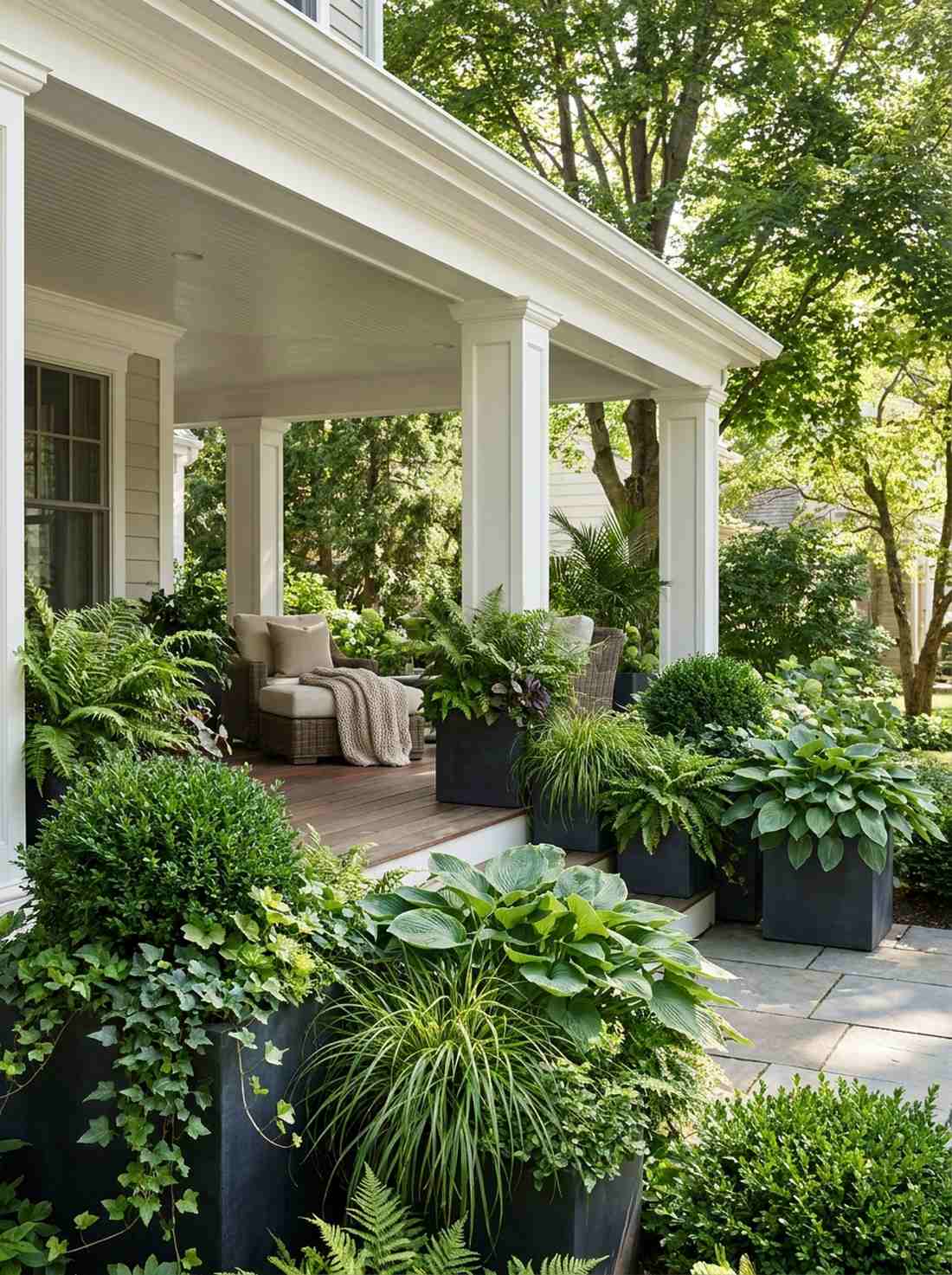
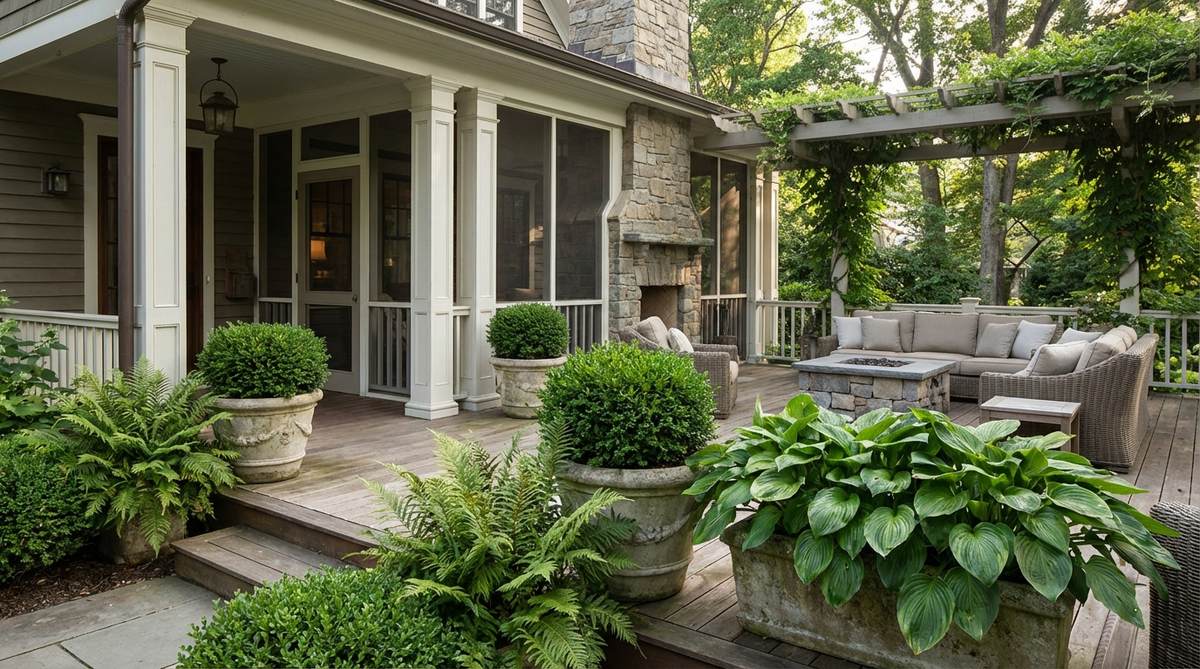
A lush, all-green foliage palette feels like a sophisticated, high-end botanical conservatory. Incredible for homes with highly detailed architectural trim you don’t want to overshadow.
Adding too many floral colors creates visual chaos, but relying purely on varied leaf textures looks far more expensive than it is. Loading up on shade-loving fern assortments against dark planters creates massive depth and modern tranquility.
Expect to spend $60–$90 for a dense, green look. Highly recommended for shaded, elegant porches.
- Key Materials: Hostas, ferns, boxwoods
- Vibe / Style: Sophisticated Conservatory
- Difficulty: Easy
- Budget Breakdown: Assorted greenery: $70
- Creator’s Tip: Mix three textures: something spiky (grass), something broad (hosta), and something trailing (ivy) to avoid it looking like a flat green blob.
- Smart Sourcing: live shade-tolerant fern collections or dark slate composite planters.
39. Coastal Blue and White
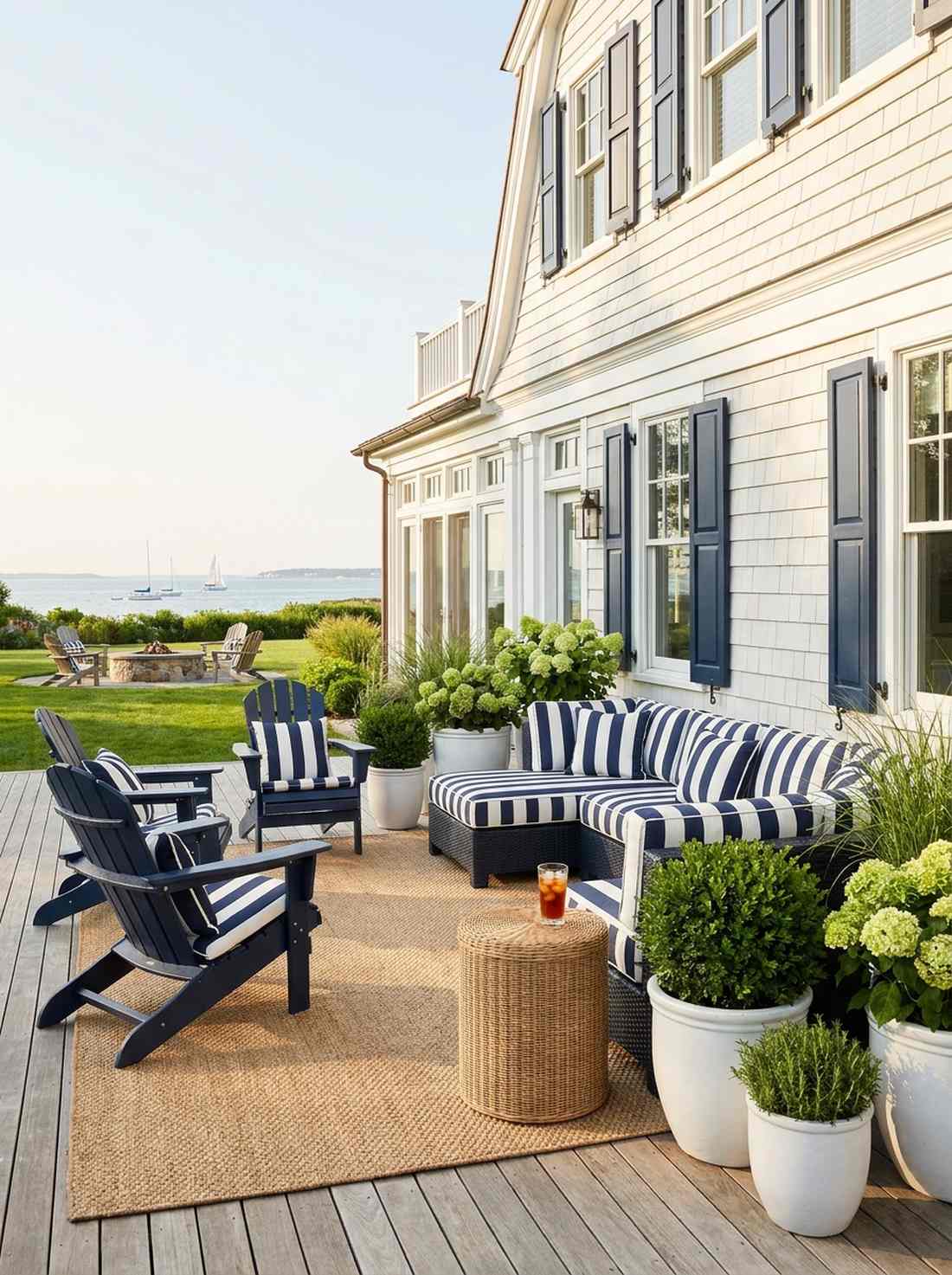
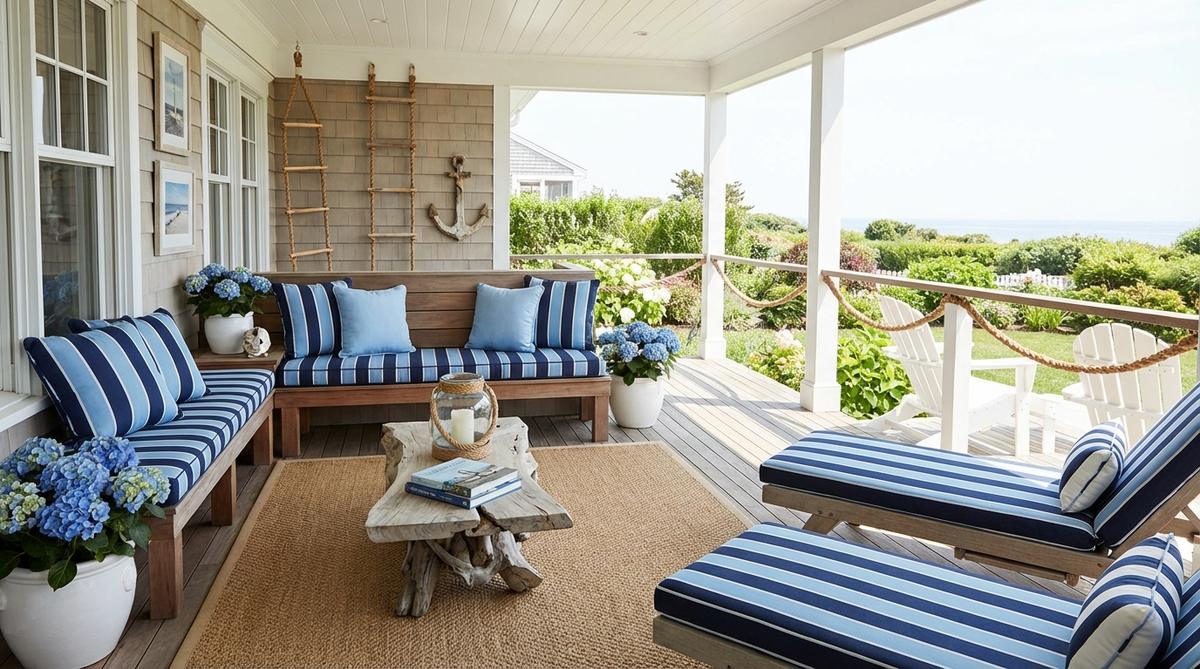
A crisp navy and white aesthetic evokes a breezy, ocean-front Hamptons estate. Flawless for updating tired brick exteriors or classic white-sided houses.
Going overboard with nautical anchors looks cheesy, but sticking to thick striped fabrics gives a designer-level finish that implies luxury. Securing UV-blocking striped canvas fabrics ensures the deep navy won’t turn a dusty purple in the sun.
This color shift usually runs $80–$120 in accents. Pin this if you crave that crisp, clean seaside vibe!
- Key Materials: Striped cushions, white ceramic pots
- Vibe / Style: Hamptons Coastal
- Difficulty: Easy
- Budget Breakdown: Pillows/Rugs: $90 | Accent pots: $30
- Creator’s Tip: Add a third texture like a natural jute rug or rattan side table to warm up the stark contrast of blue and white.
- Smart Sourcing: UV-resistant navy striped outdoor pillows or natural woven sisal outdoor rugs.
Most people match their accessories wrong. Here is the exact mathematical rule for warm color palettes…
40. Warm Sunset Palettes
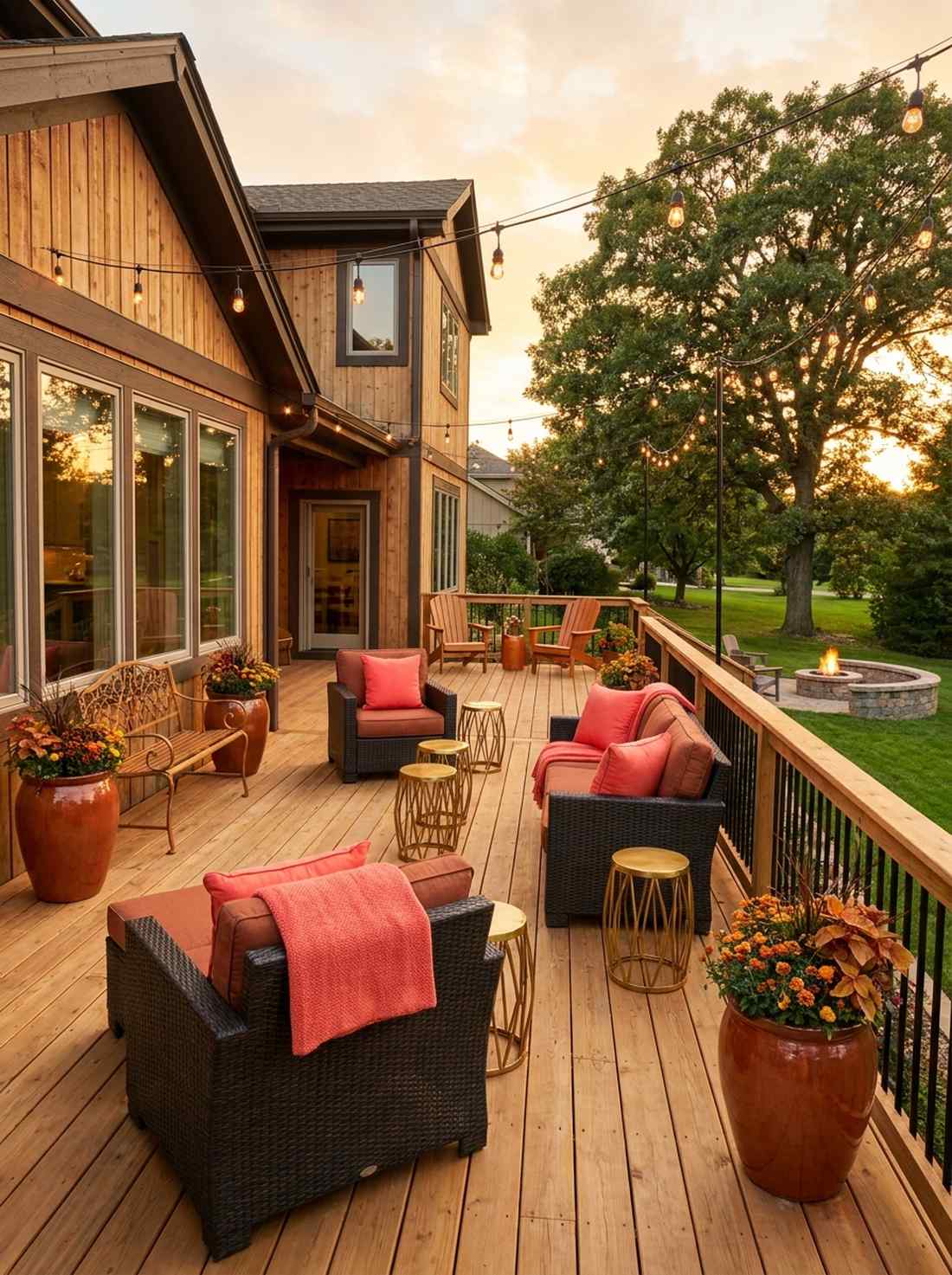
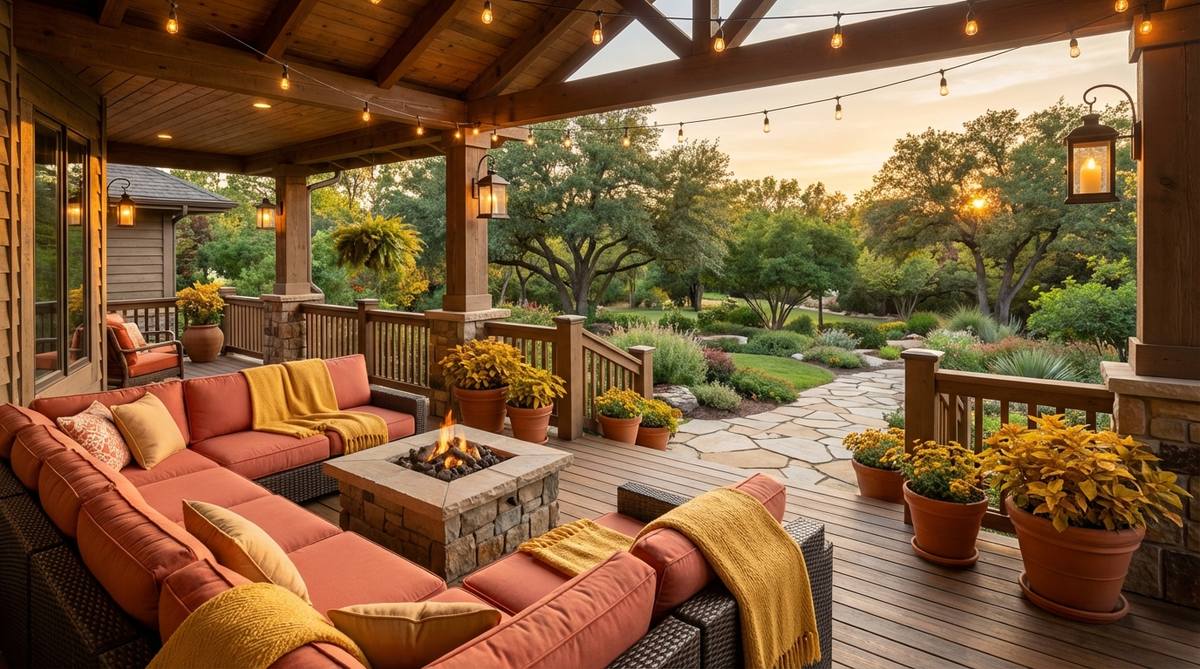
A glowing terracotta and gold palette feels like an inviting, energetic Tuscan evening. Perfect for homes with natural wood siding or dark brown trim.
Throwing too much bright orange looks chaotic, but following the 50-30-10 color rule creates a high-end estate vibe perfectly balanced. Utilizing rust-resistant metal spray paints on old furniture makes injecting these warm tones cheap and durable.
You can execute this palette swap for $40–$70. A brilliant hack for warming up a cold exterior.
- Key Materials: Coral pillows, gold accent tables
- Vibe / Style: Warm & Welcoming
- Difficulty: Easy
- Budget Breakdown: Spray paint: $15 | Accent decor: $45
- Creator’s Tip: Make terracotta the dominant 50%, a muted mustard for the 30%, and a bright pop of coral for the 10%.
- Smart Sourcing: exterior rust-stopping spray paint (warm tones) or terracotta glazed ceramic accent pieces.
41. Modern Black and Metallics
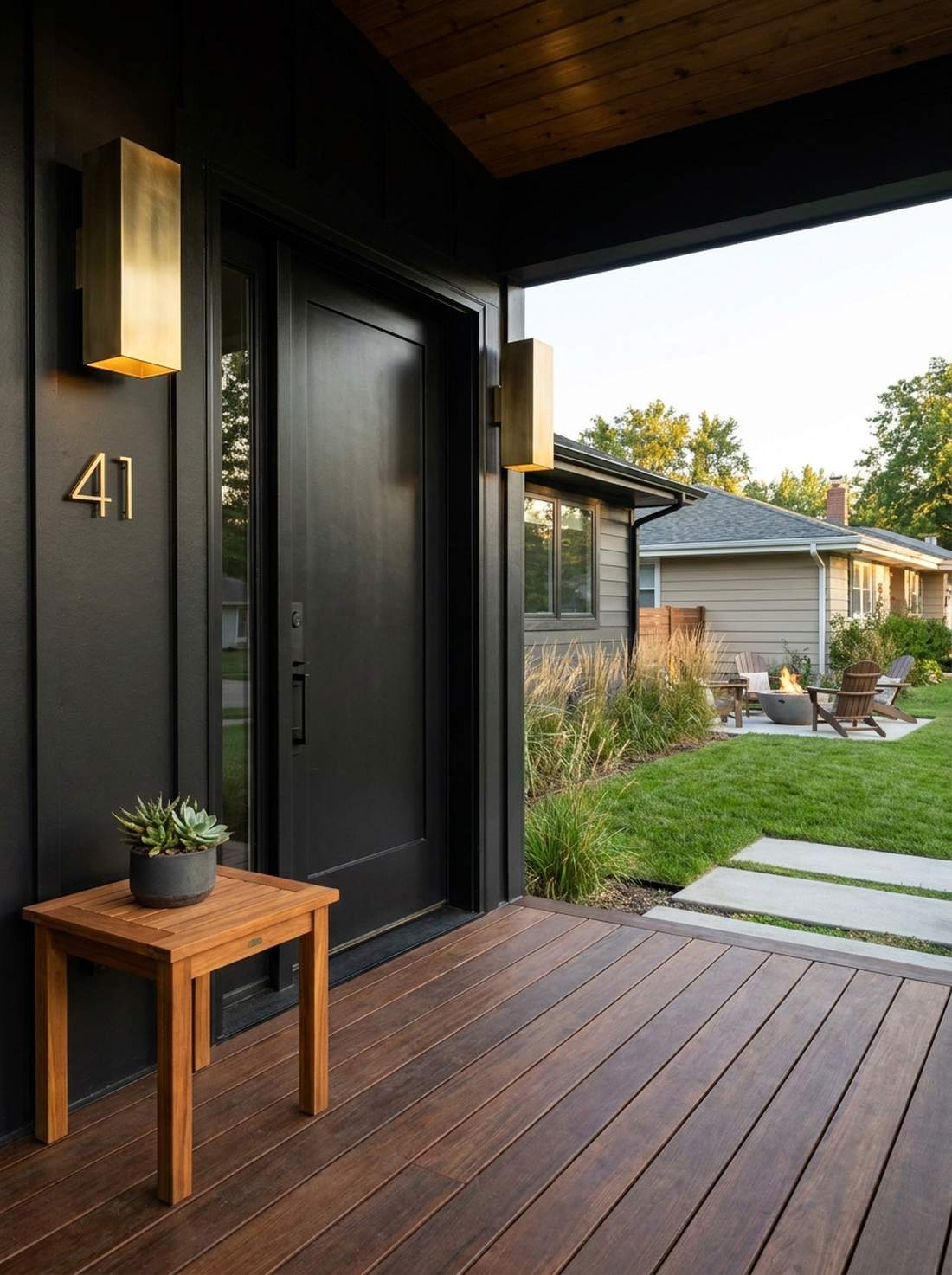
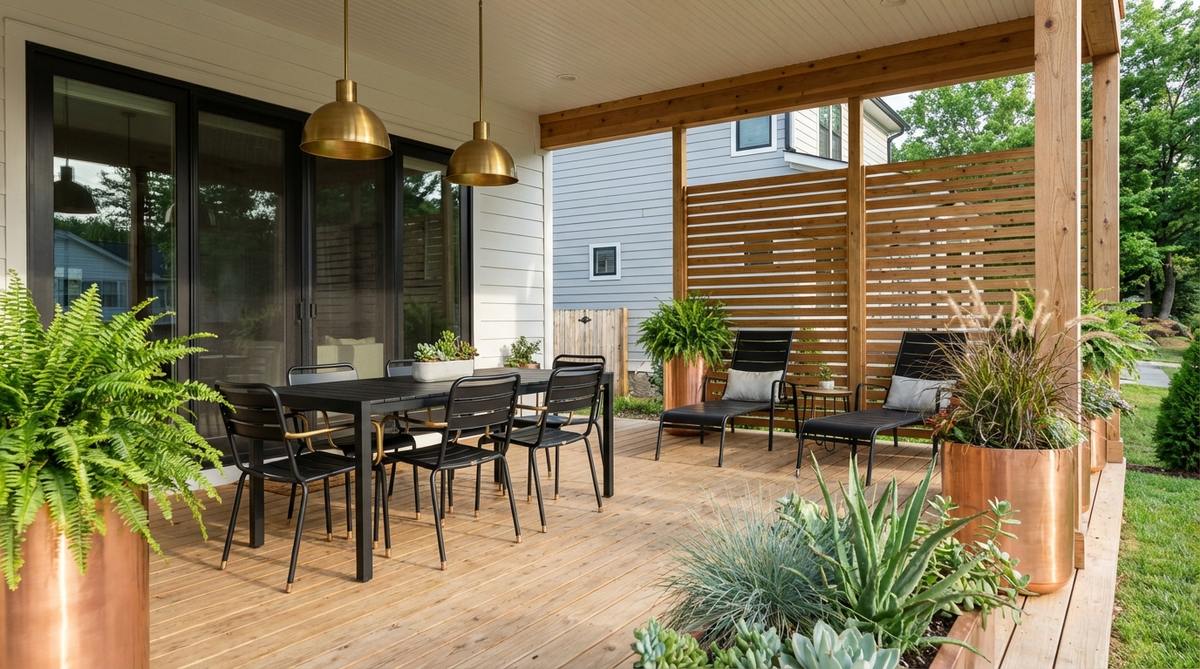
A striking matte black and copper setup feels like a sleek, ultra-modern architectural showcase. Unbelievably perfect for updating older homes with a sharp, contemporary edge.
Using glossy black highlights every speck of dust, but applying a flat matte finish delivers a surprisingly premium look. Dropping in brushed brass outdoor fixtures catches the sunlight beautifully against the dark, moody background.
Expect to spend $100–$150 on hardware and paint. Save this to your modern exterior mood board!
- Key Materials: Matte black paint, brass hardware
- Vibe / Style: Sleek Industrial
- Difficulty: Moderate
- Budget Breakdown: Paint/Supplies: $40 | Hardware/Numbers: $80
- Creator’s Tip: Warm up the severe black-and-metal look by incorporating a warm natural wood element, like a cedar side table.
- Smart Sourcing: matte black exterior acrylic paint or solid brushed brass house numbers.
42. Traditional Red, White, and Blue
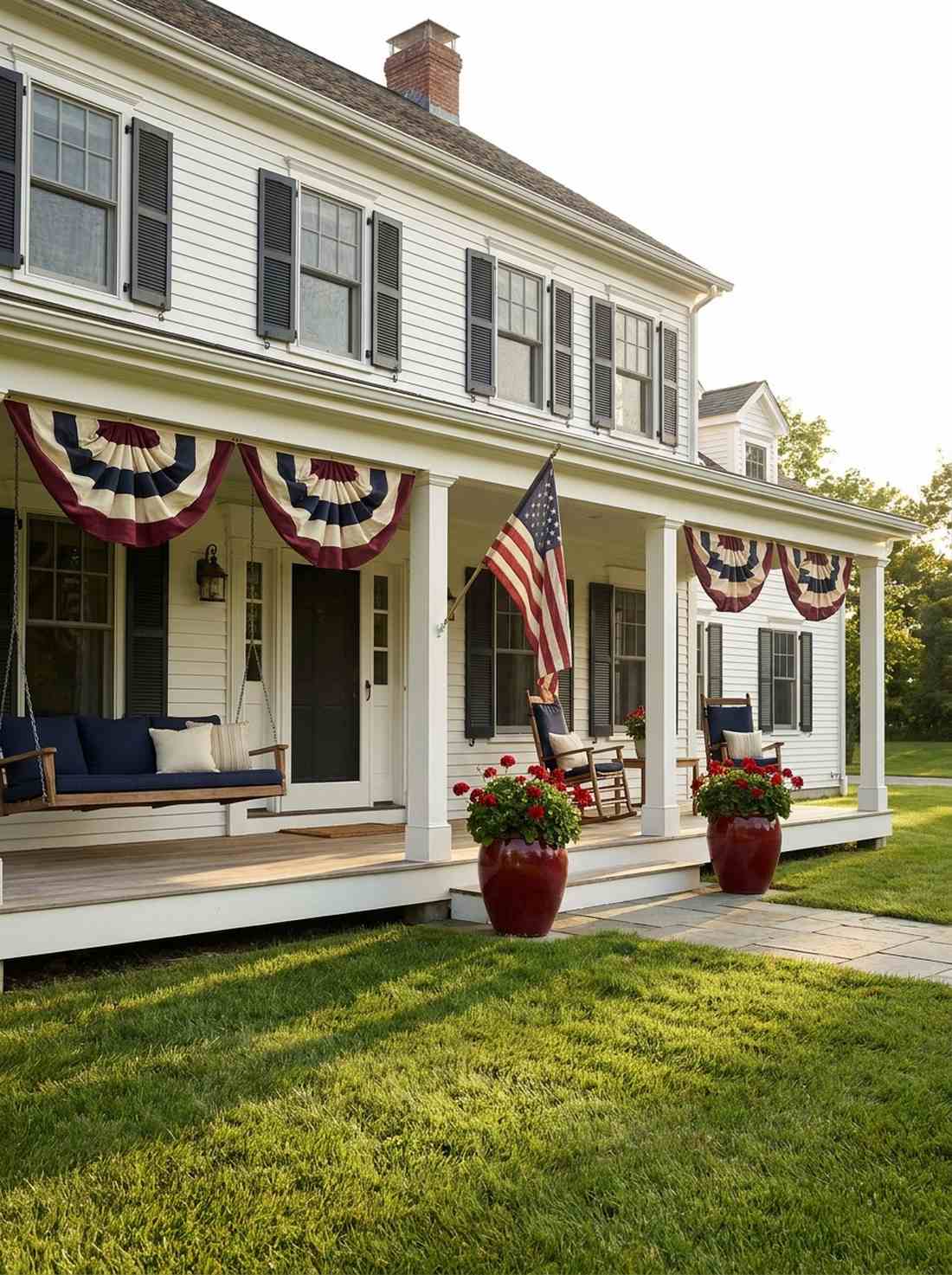
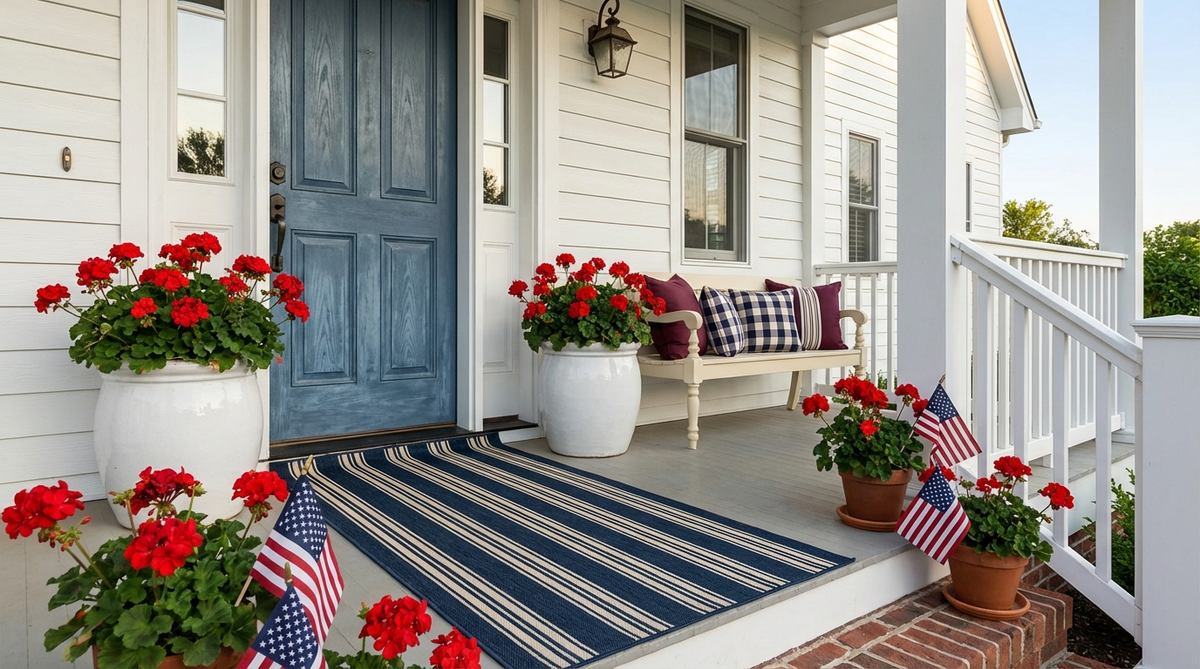
A muted Americana color scheme feels like a historically rich, classic neighborhood staple. Ideal for Colonial or Federal-style architecture aiming for timeless appeal.
Using neon flag colors looks cheap, but shifting to deep burgundy, cream, and navy looks far more expensive than it is. Adding heavy-duty woven outdoor bunting for the summer holidays locks in that premium, traditional heritage feel.
This classic approach costs about $50–$90. Highly recommended for a sophisticated summer aesthetic.
- Key Materials: Deep red planters, navy accents
- Vibe / Style: Classic Americana
- Difficulty: Easy
- Budget Breakdown: Accent pillows: $40 | Planters/Paint: $30
- Creator’s Tip: Let red geraniums act as your red element rather than painting furniture red, keeping the look natural and subtle.
- Smart Sourcing: weatherproof classic Americana bunting or deep navy outdoor patio cushions.
Functional Accessories That Solve Problems
43. Outdoor Area Rugs
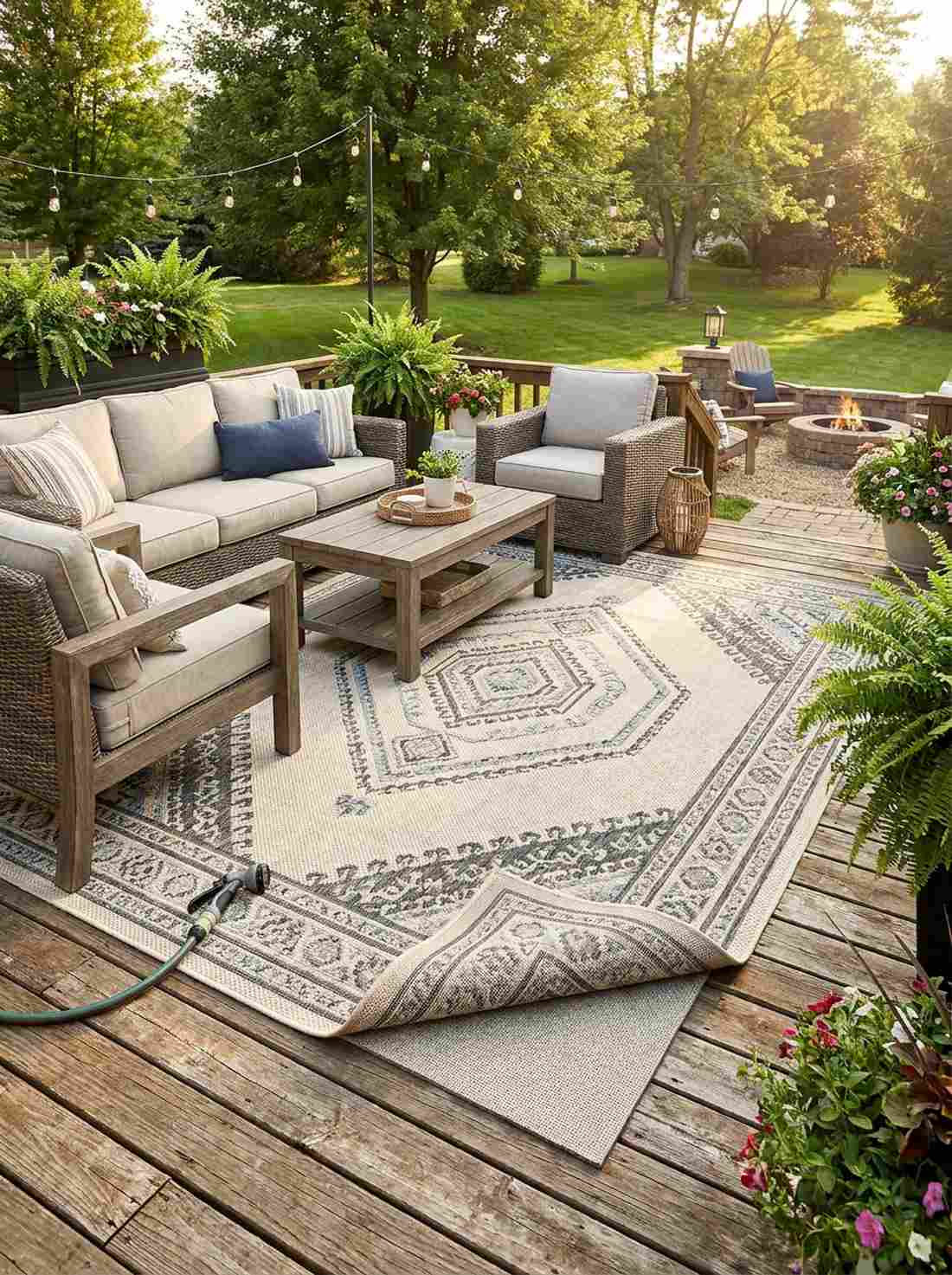
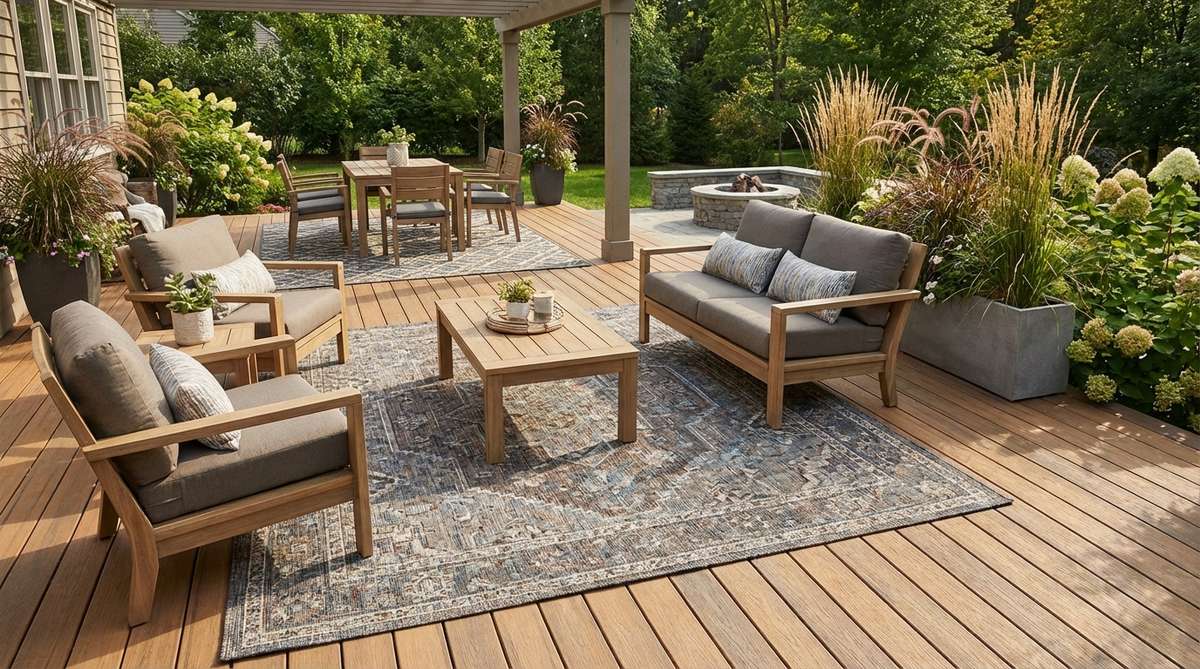
A large geometric outdoor rug feels like the crucial anchor piece uniting the entire space. Flawless for covering up stained concrete or ugly, splintering deck boards.
Cloth rugs turn into soggy mold traps, but laying down a recycled plastic mat gives a designer-level finish that hoses off in seconds. Sourcing reversible UV-coated patio mats gives you two different looks while completely resisting mildew.
Budget around $60–$120 for a large format rug. Pin this for an instant floor transformation!
- Key Materials: Recycled polypropylene plastic
- Vibe / Style: Grounded & Cohesive
- Difficulty: Ultra-Easy
- Budget Breakdown: 5×8 Outdoor Rug: $75
- Creator’s Tip: Tape down the corners with double-sided outdoor carpet tape so high winds don’t fold the rug over.
- Smart Sourcing: recycled plastic outdoor patio rugs or heavy-duty double-sided outdoor tape.
44. Decorative Mailboxes
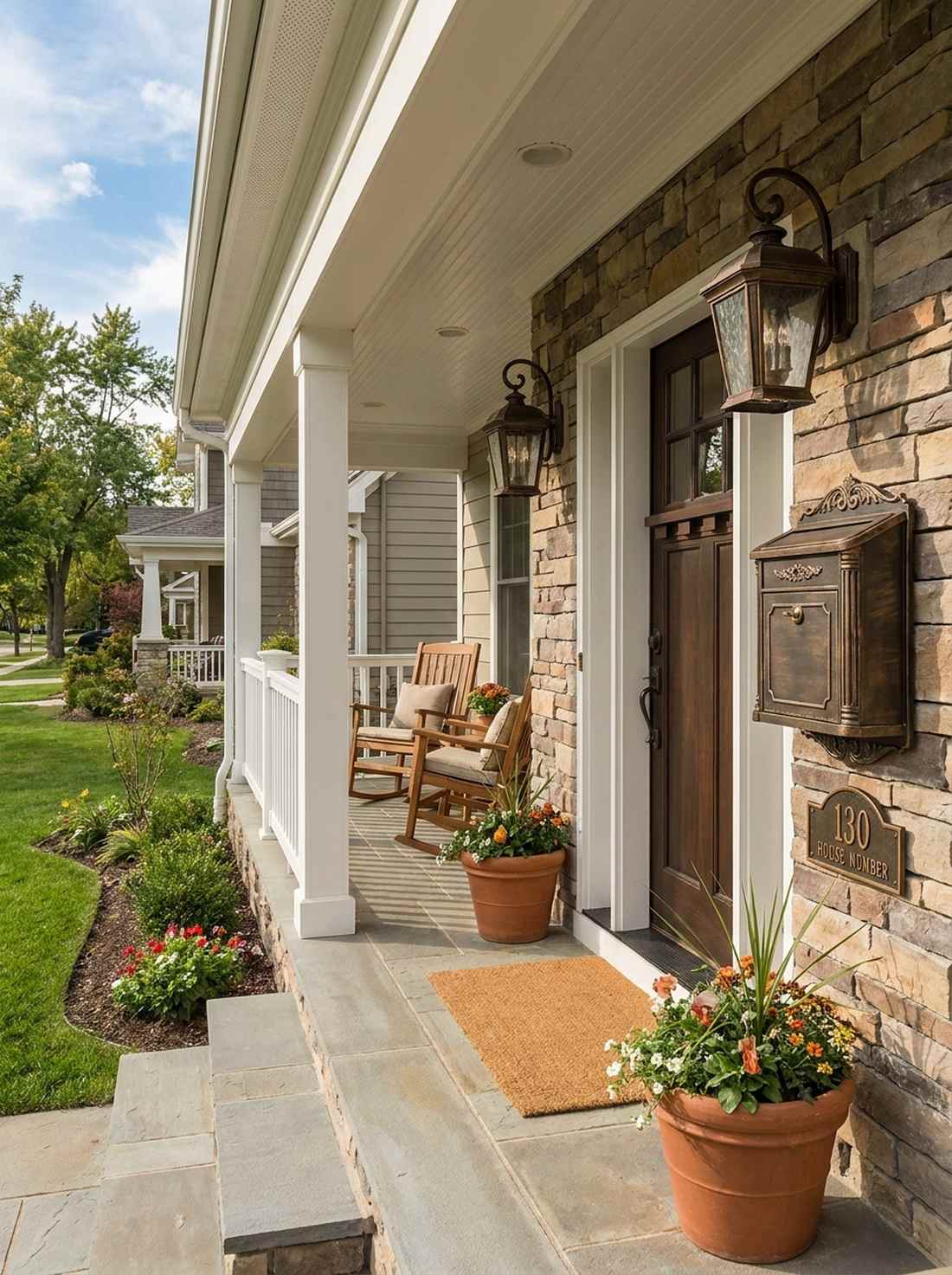
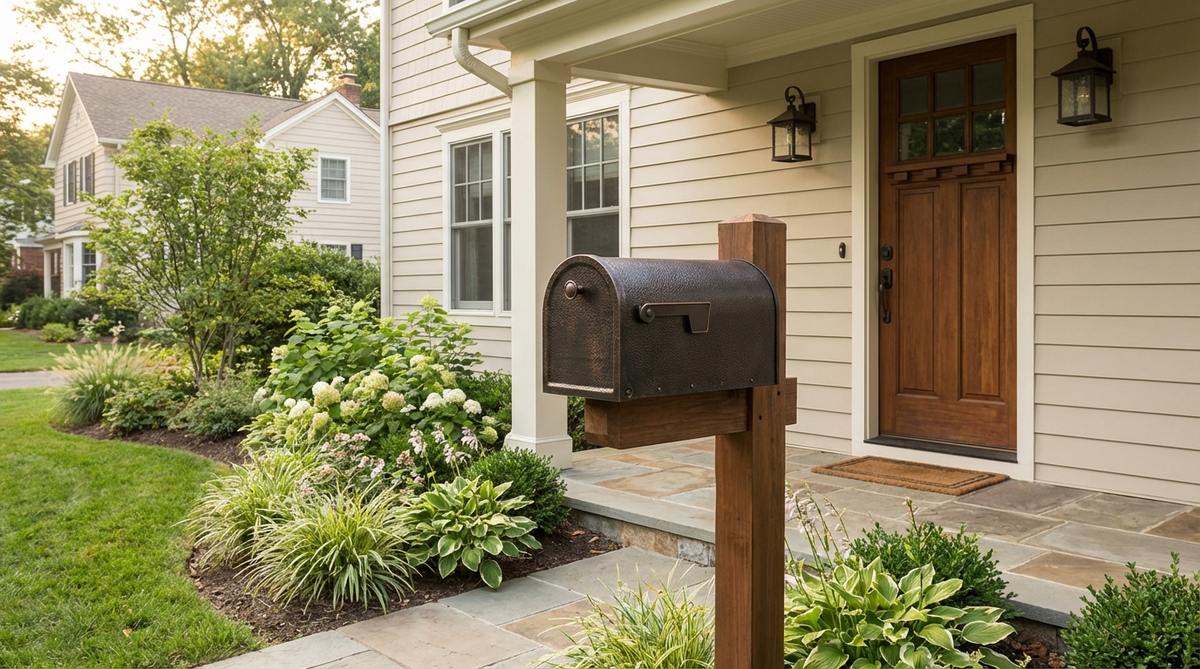
An upgraded wall-mounted mailbox feels like a custom, thoughtful architectural detail. Perfect for tight porches where a freestanding post box takes up too much yard.
Flimsy tin boxes dent immediately, but bolting up a heavy cast-iron or brass box creates a high-end estate vibe right at the door. Upgrading to a lockable parcel drop box adds serious security for your online shopping deliveries.
This functional hardware runs $50–$100. A brilliant blend of security and curb appeal.
- Key Materials: Cast aluminum/brass mailbox
- Vibe / Style: Curated Details
- Difficulty: Easy
- Budget Breakdown: Heavy mailbox: $70 | Mounting screws: $5
- Creator’s Tip: Match the mailbox finish exactly to your front door handle and light fixtures for a cohesive, expensive look.
- Smart Sourcing: cast aluminum wall-mount mailboxes or secure lockable parcel drop boxes.
Emergency responders and delivery drivers will thank you for this next simple hardware upgrade.
45. House Number Displays
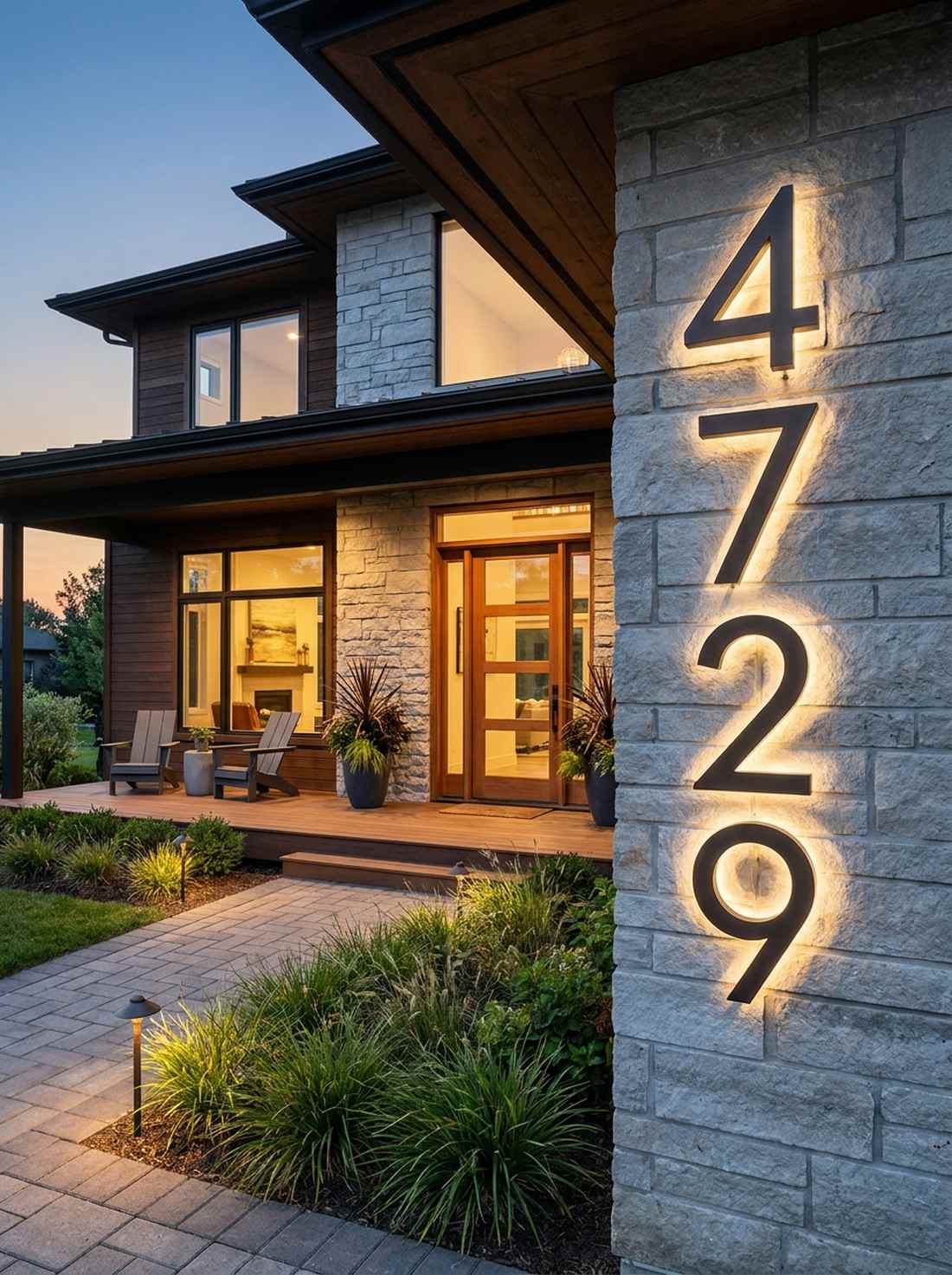
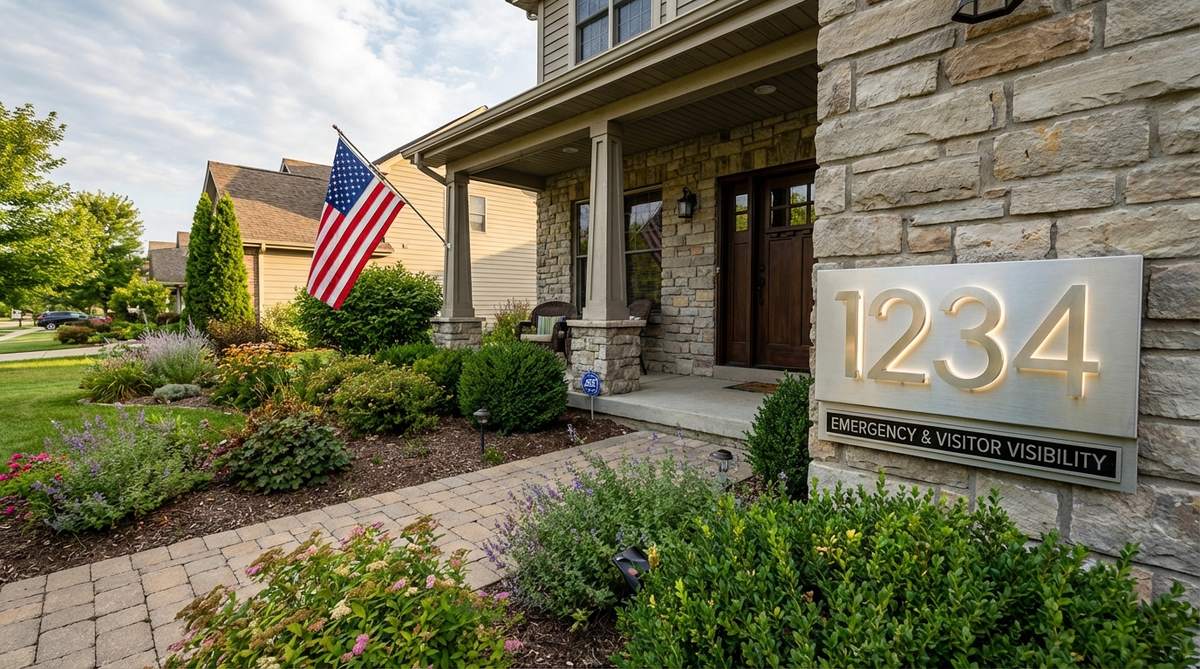
Oversized floating house numbers serve as a striking, modern focal point from the street. Unbelievably effective for ensuring guests and deliveries actually find your home.
Tiny sticker numbers look incredibly cheap, but installing heavy metal digits with stand-off spacers delivers a surprisingly premium look casting cool shadows. Integrating backlit LED house number kits ensures supreme visibility during the darkest nights.
Expect to spend $40–$80. Save this to your weekend exterior upgrades board!
- Key Materials: Metal numbers, mounting spacers
- Vibe / Style: Modern & Legible
- Difficulty: Easy DIY
- Budget Breakdown: Numbers (4 digits): $50 | Silicone: $5
- Creator’s Tip: Create a paper template of the numbers first, tape it to the wall, and step back to the street to ensure they are perfectly legible.
- Smart Sourcing: floating modern house numbers (5-inch) or solar-powered backlit address plaques.
46. Boot Tray Systems
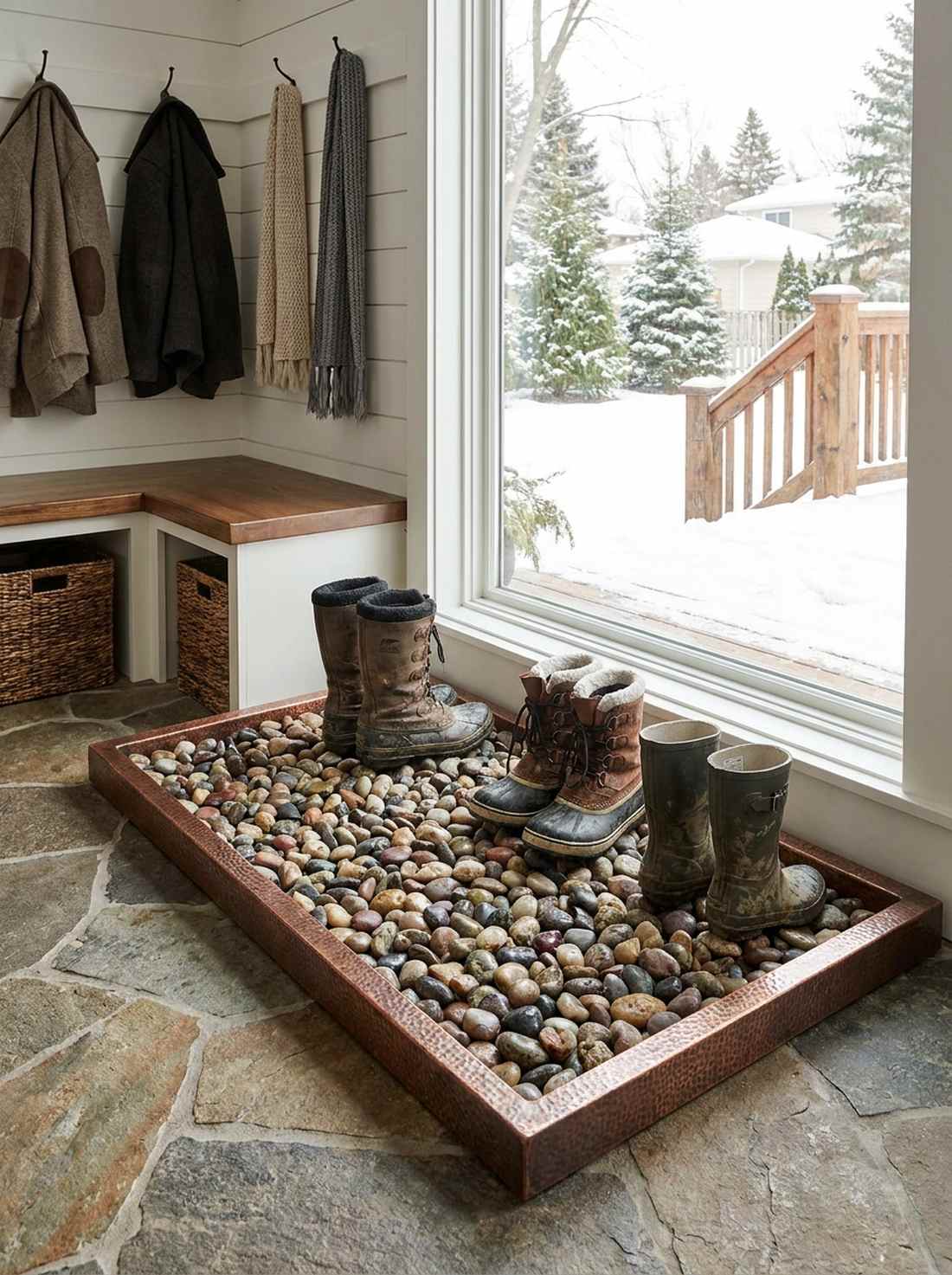
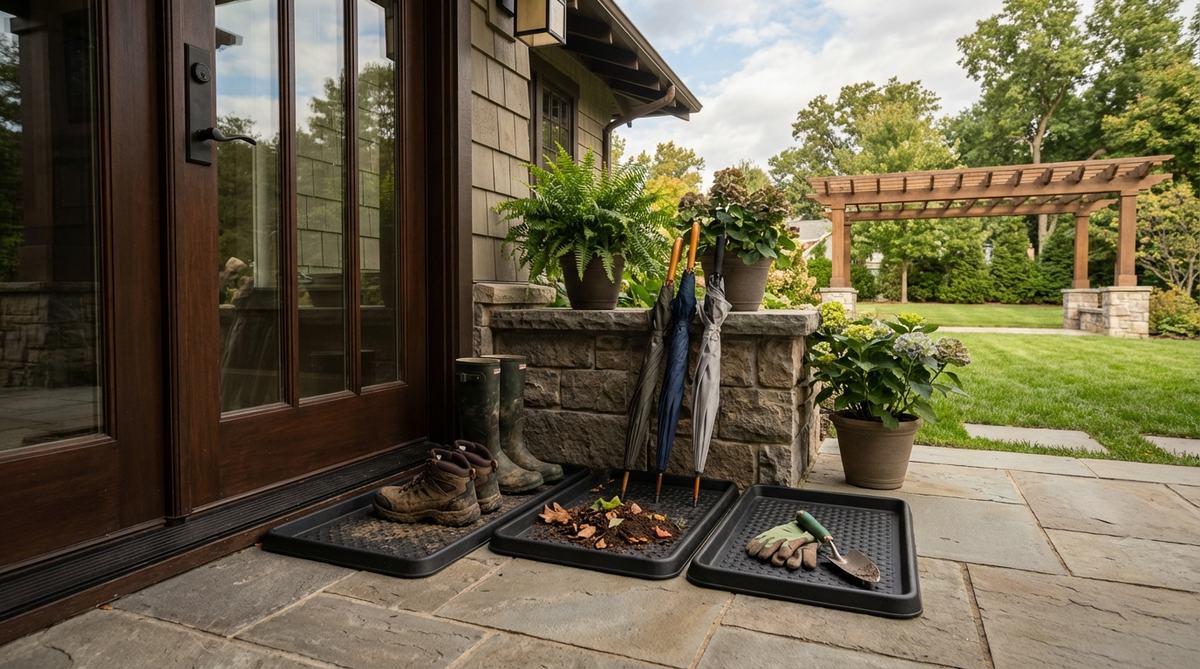
A sleek copper boot tray feels like a high-end mudroom catch-all. Ideal for keeping the interior of your house spotless during rainy or snowy seasons.
Basic plastic trays crack and look awful, but utilizing hammered metal with river rocks looks far more expensive than it is. Pouring polished decorative river stones inside the tray allows wet boots to drain properly without sitting in a puddle.
You can execute this tidy hack for $30–$50. Highly recommended for snowy climates.
- Key Materials: Metal tray, river rocks
- Vibe / Style: Practical Elegance
- Difficulty: Ultra-Easy
- Budget Breakdown: Copper finish tray: $30 | River rocks: $15
- Creator’s Tip: Use a tray with at least a 2-inch lip so melting snow doesn’t overflow onto the porch floor.
- Smart Sourcing: heavy-duty hammered metal boot trays or polished decorative river stones (bulk bag).
47. Ceiling Hooks and Brackets
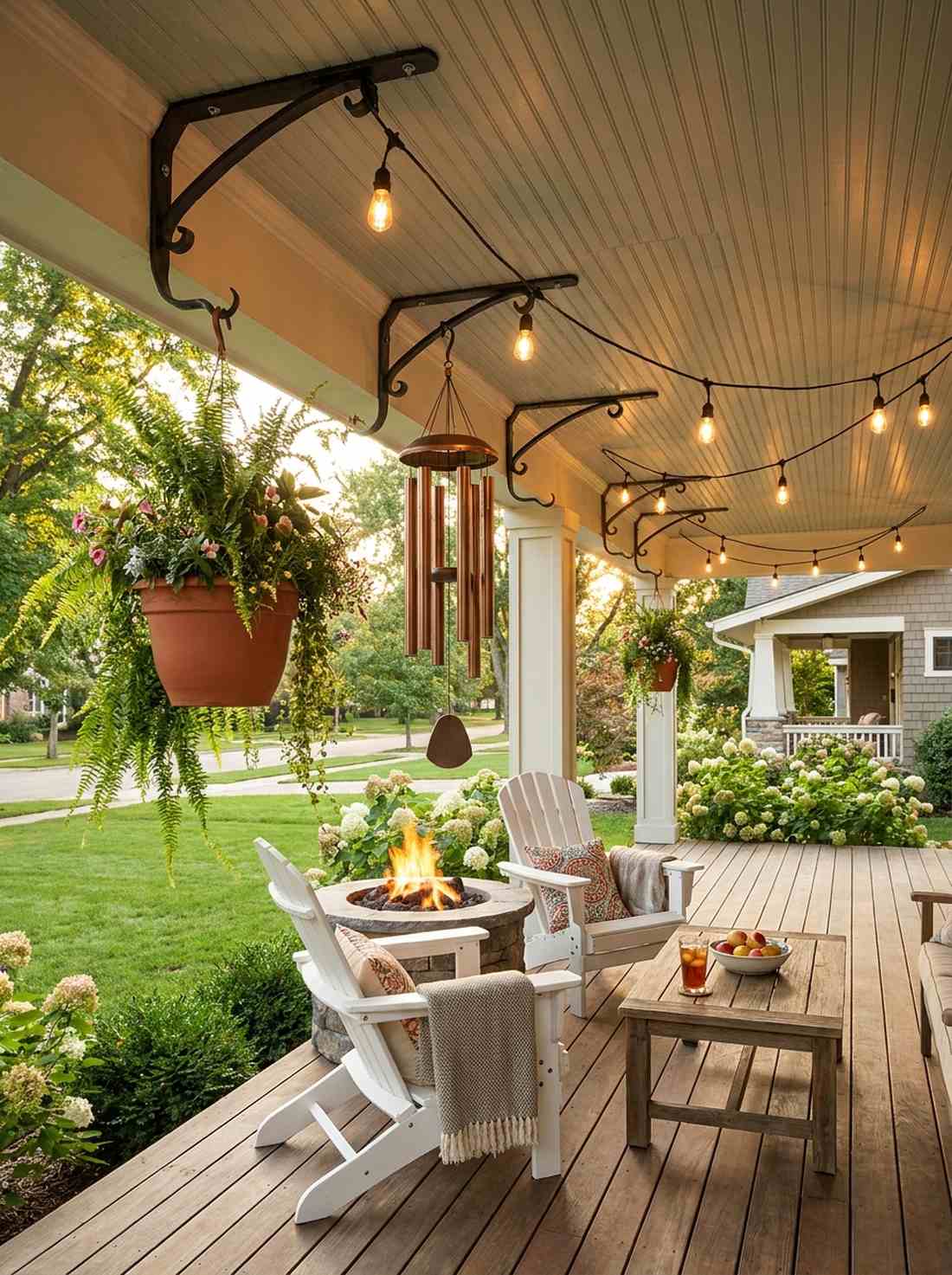
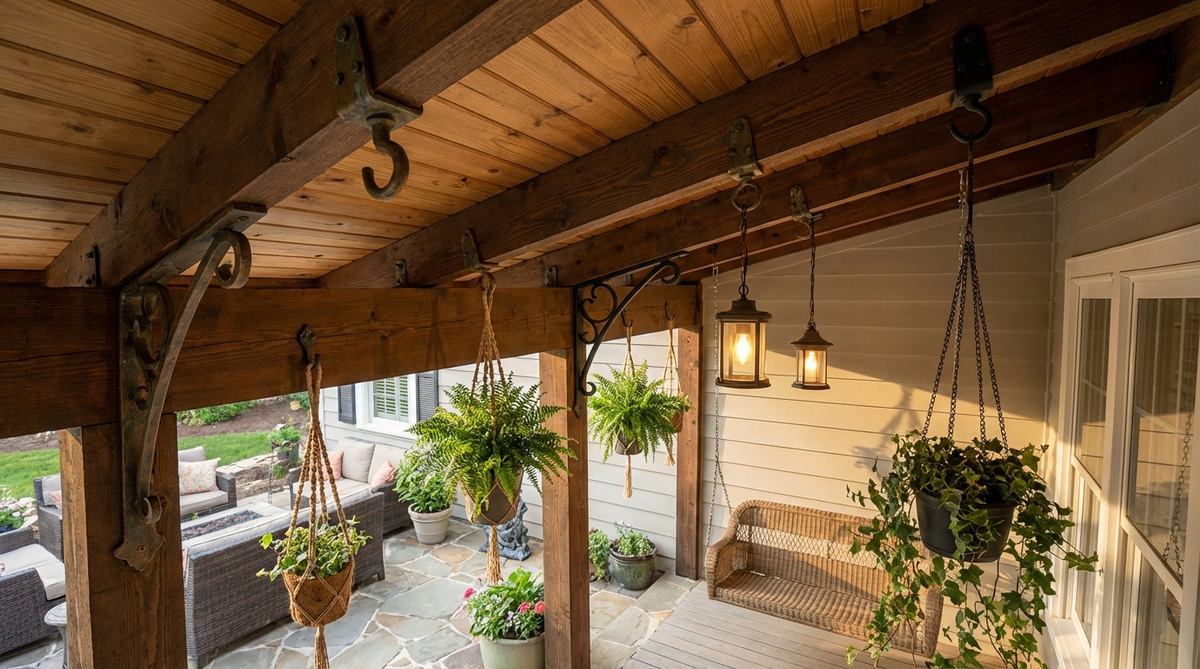
Exposed forged iron ceiling brackets feel like custom blacksmith details. Perfect for securely hanging heavy planters, wind chimes, or string lighting.
Basic silver cup hooks bend and rust, but sinking heavy-duty forged bolts gives a designer-level finish that handles serious weight. Using heavy-duty toggle bolts ensures your items won’t rip through hollow porch ceiling materials.
Budget around $15–$30 for quality hardware. Pin this if you love hanging decor safely!
- Key Materials: Forged iron hooks, lag bolts
- Vibe / Style: Artisan Details
- Difficulty: Easy
- Budget Breakdown: Hook sets: $20
- Creator’s Tip: If you can’t hit a solid wood joist, you must use a toggle bolt rated for at least 50 lbs to hang plants safely.
- Smart Sourcing: forged iron decorative ceiling hooks or heavy-duty ceiling toggle bolts.
48. Outdoor Thermometers and Clocks
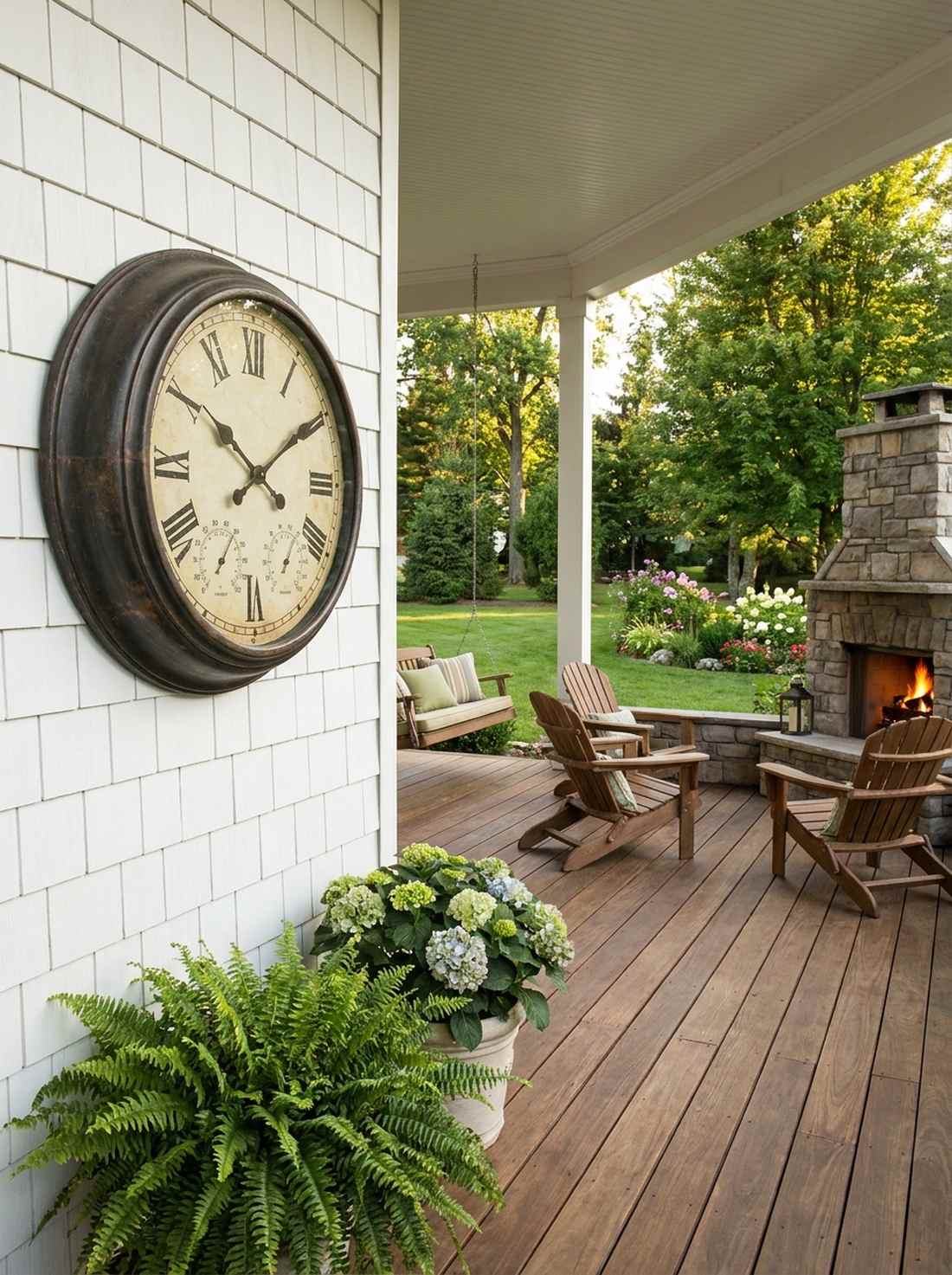
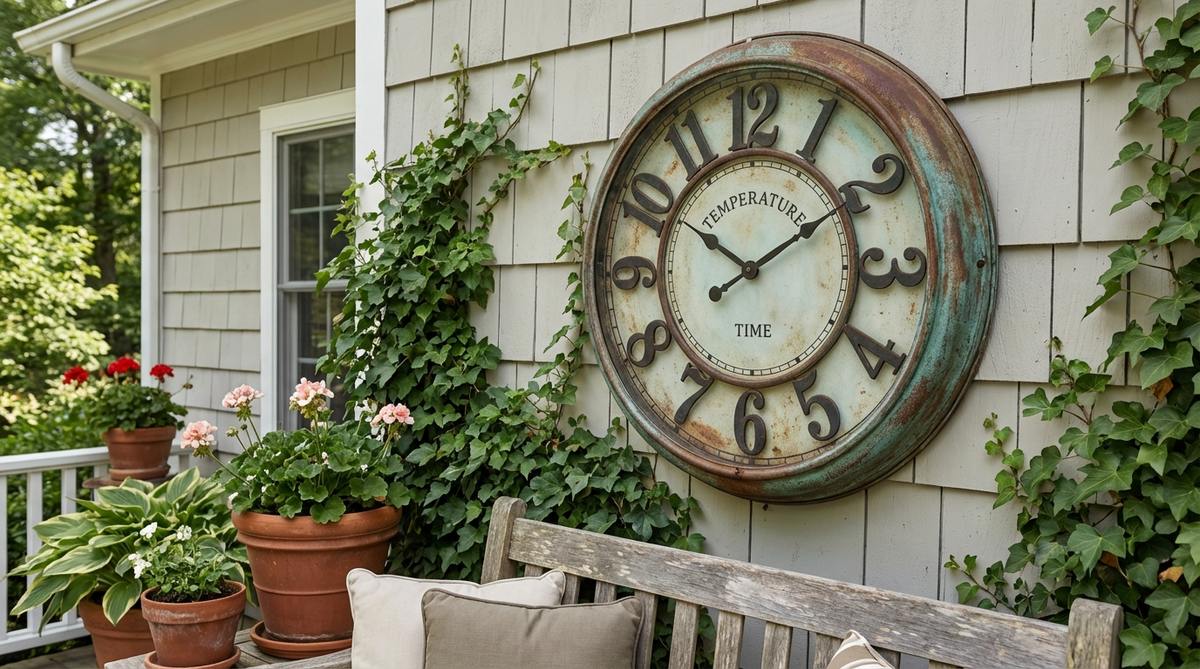
A massive vintage outdoor clock feels like a whimsical train station artifact. Brilliant for filling up large, blank siding walls where art won’t survive.
Indoor clocks get destroyed by humidity, but mounting a weather-sealed instrument creates a high-end estate vibe that serves a daily purpose. Sourcing fully weatherproof outdoor wall clocks ensures the inner mechanisms won’t rust out after the first foggy morning.
This functional decor runs $50–$90. A perfect finishing touch for a fully livable porch.
- Key Materials: Weather-sealed clock/thermometer
- Vibe / Style: Vintage Industrial
- Difficulty: Easy
- Budget Breakdown: Outdoor clock unit: $60
- Creator’s Tip: Mount thermometers out of direct sunlight, otherwise the metal casing will bake and give you wildly inaccurate readings.
- Smart Sourcing: waterproof outdoor wall clocks or large-dial analog outdoor thermometers.
Bringing Your Vision to Life
Successful outdoor decor porch design is about balancing aesthetic ambition with smart, durable material sourcing. By utilizing the exact premium upgrades and budget blueprints across these 48 specific ideas, you can build a space that looks like a custom designer install without the ridiculous markup. Skip the generic craft materials, invest in UV-resistant and weatherproof starter kits, and systematically transform your entryway into a high-end focal point that dominates the neighborhood curb appeal.
Frequently Asked Questions
What outdoor decor porch elements provide the biggest curb appeal impact?
Upgrading your front door treatments and hardwired lighting delivers the absolute highest visual ROI. Swapping builder-basic lights for cast aluminum sconces and applying a fresh coat of high-adhesion exterior paint to your door instantly elevates the aesthetic. Following these, utilizing weatherproof fiberglass resin planters to create symmetrical framing signals a premium, designer-level intention.
How do I choose furniture for a small porch?
Skip the bulky sectionals and opt for high-end, space-saving layouts. Utilizing rust-resistant powder-coated bistro kits or building custom benches with hidden storage utilizes vertical space brilliantly. If you want seating, a single weather-treated hardwood rocking chair works much better than stuffing oversized furniture into a tight entryway.
What plants work best for porch containers in full sun?
You need plants that thrive under harsh UV exposure. Pair heat-tolerant annuals with structural elements like ornamental grasses. Crucially, upgrade your pots using self-watering container systems and a premium fast-draining soil mix. This prevents your roots from boiling in standard plastic pots and ensures the greenery looks expensive all season.
How often should I update seasonal porch decorations?
Focus on two major transitions—warm season and cool season—using easily swappable, high-quality foundations. Instead of buying cheap items constantly, invest in a heavy-duty grapevine wreath base and waterproof pillow inserts. Then, simply swap out the UV-resistant faux florals and outdoor covers to keep the porch looking fresh and professionally styled year-round.
What is the best way to coordinate porch decor with home exterior colors?
The secret to an expensive-looking facade is the 50-30-10 rule using complementary colors. Pull your base color from existing trim or brick, then use exterior rust-stopping spray paint to match metal accessories perfectly. If your siding is neutral, establish a bold focal point with high-adhesion exterior door paint and echo that exact hue in your premium planters and textiles.