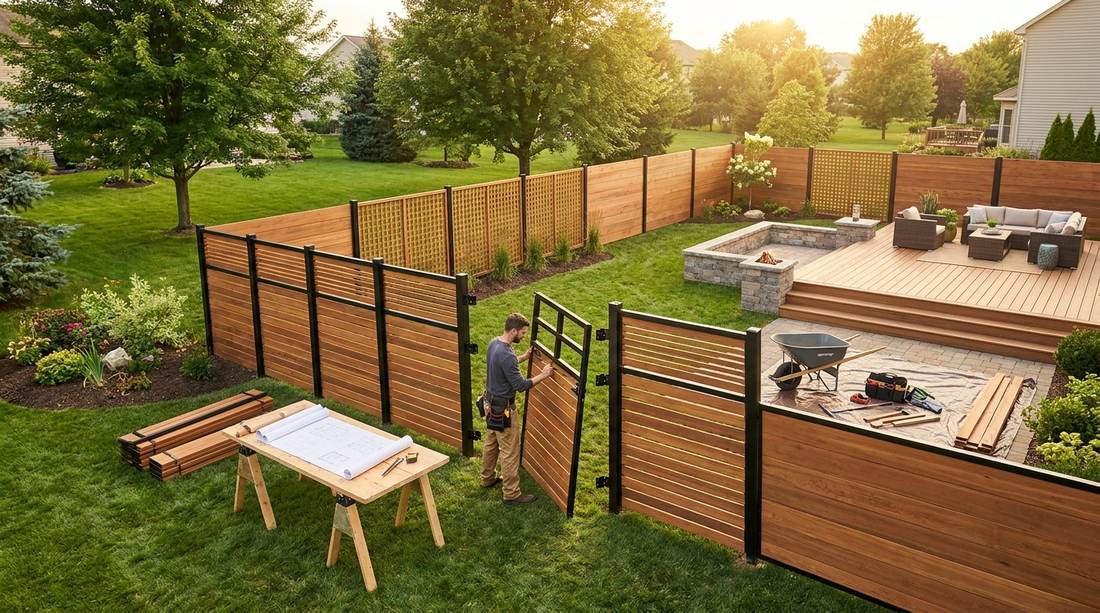
Structural borders completely dictate your exterior layout. Skip overpriced contractors by grabbing commercial-grade panels and modular brackets directly. This framework delivers elite property privacy without bankrupting your renovation budget.
Design Snapshot: Key Principles
- Height Matters: Six-foot minimum for full privacy; four-foot works for boundary definition with partial screening
- Material Durability: Cedar and redwood resist rot naturally; vinyl and composite eliminate maintenance; metal adds industrial edge
- Visual Flow: Horizontal lines elongate spaces; vertical boards add height perception; mixed materials create textural contrast
- Structural Rhythm: Board spacing controls privacy level while managing airflow and shadow play across garden beds
Classic Vertical Privacy Structures
Vertical board configurations remain the backbone of residential property perimeters. These time-tested orientations naturally shed water, resist warping, and accommodate sloped terrain seamlessly.
1. Board-on-Board Overlapping Panels
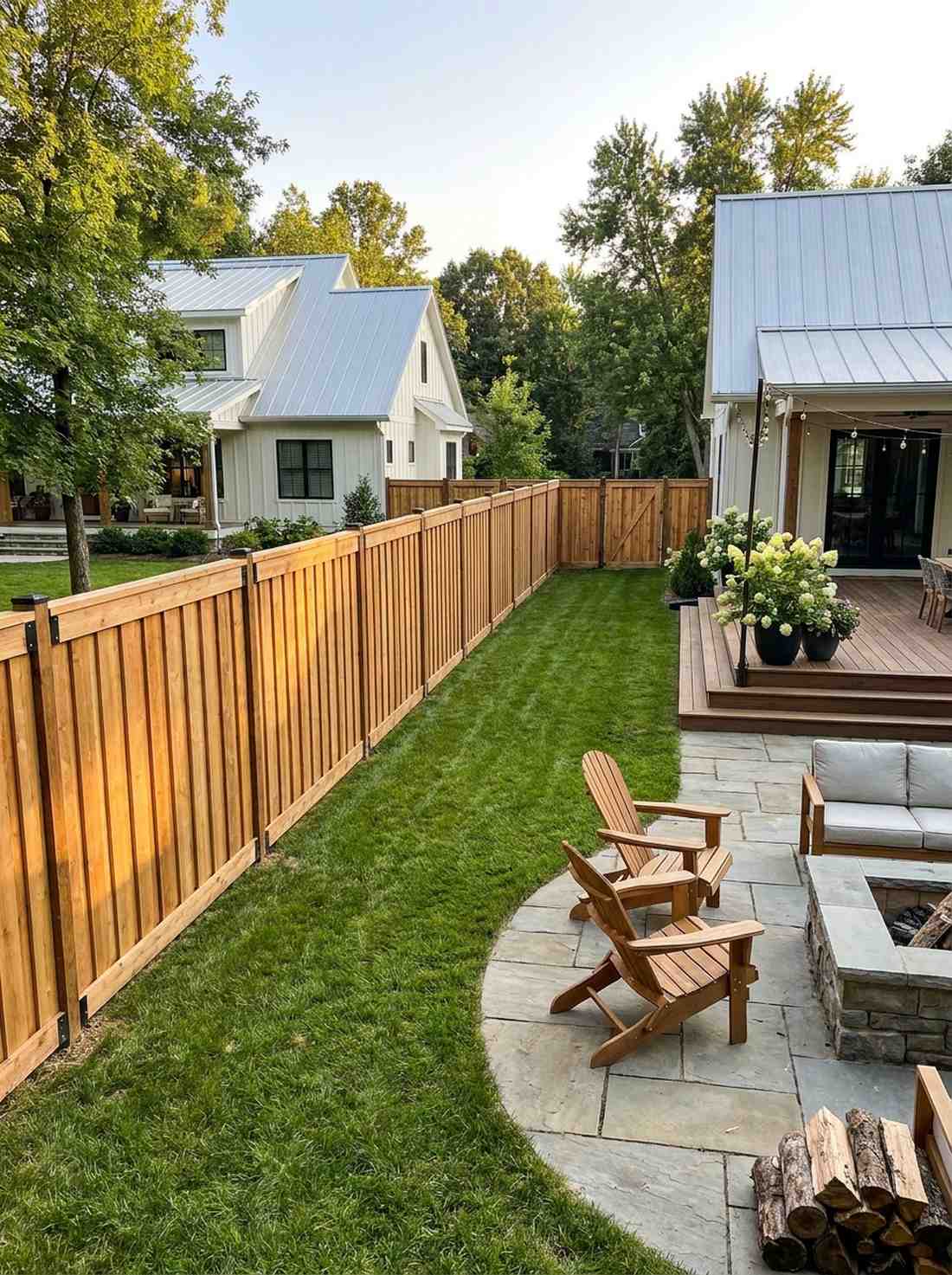
Gives off that secluded estate perimeter vibe instantly. This classic wood privacy barrier works exceptionally well for shading an exposed side yard.
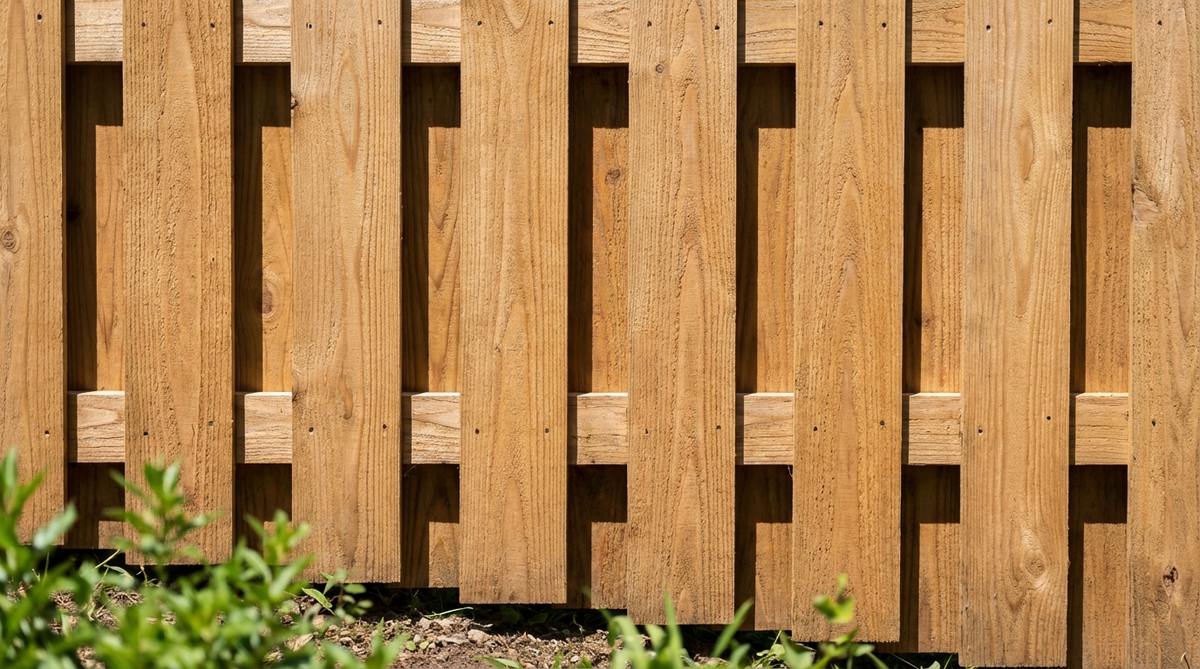
Flawlessly delivers a surprisingly premium look by staggering standard lumber. Utilizing heavy-duty fence post brackets and anti-rust hardware secures this layout against intense seasonal wind shear.
You can easily pull this off for around $25–$40 per linear foot. Save this to your DIY weekend garden board to track materials.
- Key Materials: Dimensional cedar lumber
- Vibe / Style: Traditional Estate
- Difficulty: Intermediate DIY
- Budget Breakdown: Materials: $30/ft | Base Support: $15/ft.
- Creator’s Tip: Offset the seams by exactly one inch to permanently stop light leaks.
- Smart Sourcing: pre-cut overlapping pine slats (bulk pack) | weather-resistant structural wood screws.
2. Tongue-and-Groove Solid Privacy
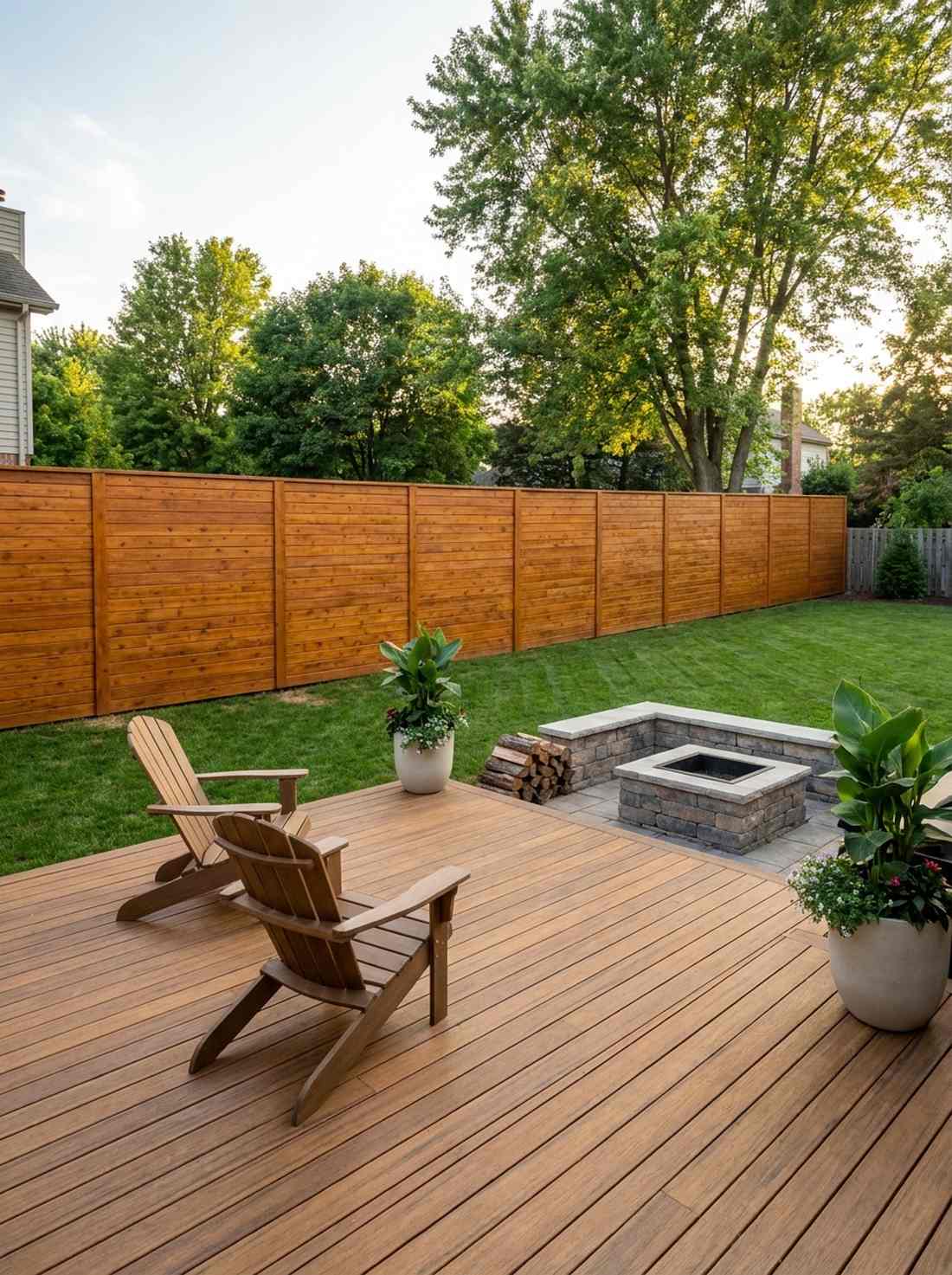
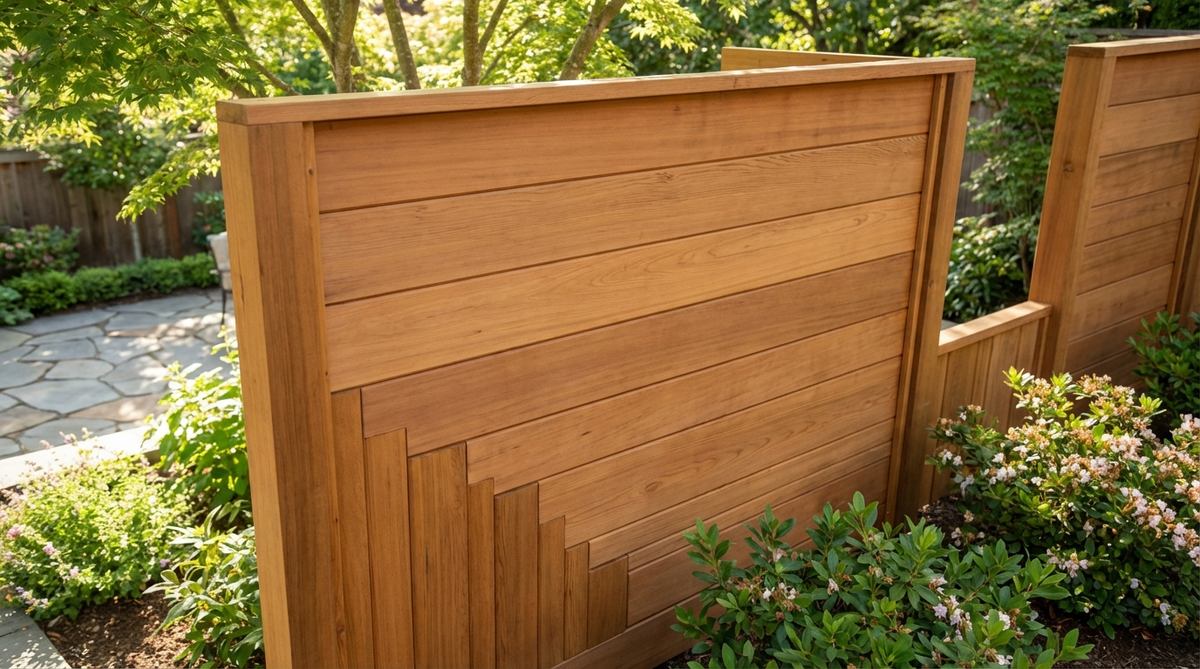
Feels like a soundproof sanctuary hidden away from the suburbs. Implementing a seamless timber boundary wall is perfect for blocking out busy neighborhood noise.
Contractors constantly overcharge for this, yet buying direct yields a high-end architectural finish. A coat of UV-blocking exterior wood stain keeps the tight interlocking joints from shifting.
Expect to spend roughly $35–$50 per foot for full coverage. It’s a massive upgrade that completely changes the yard’s acoustic profile.
- Key Materials: Interlocking boards, heavy-duty rails
- Vibe / Style: Clean & Modern
- Difficulty: Advanced DIY
- Budget Breakdown: Panels: $40/ft | Hardware: $10/ft.
- Creator’s Tip: Leave a fractional expansion gap inside the bottom track for summer humidity.
- Smart Sourcing: milled tongue-and-groove boards (pallet) | commercial-grade exterior timber sealant.
3. Capped Vertical Board with Trim
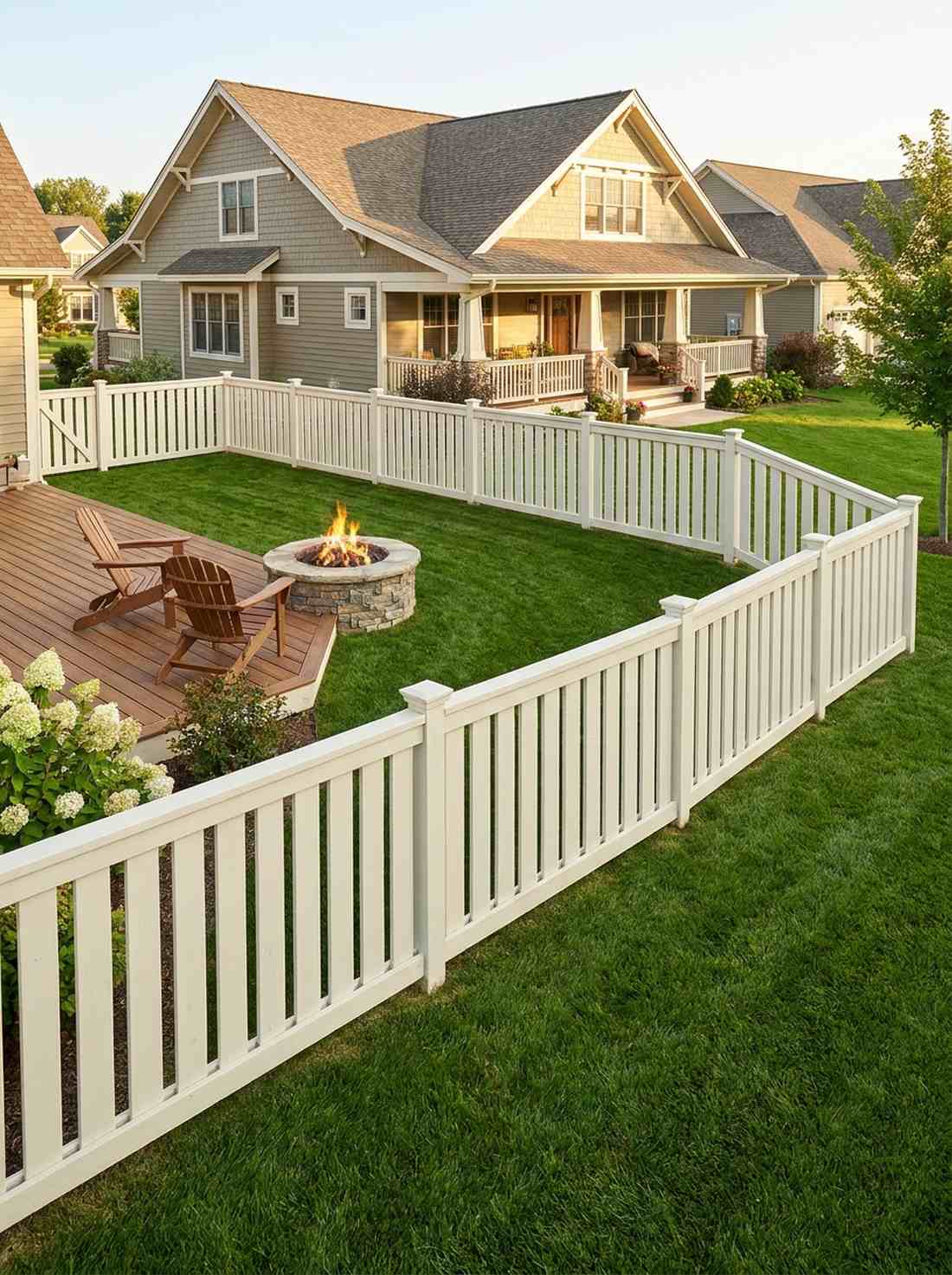
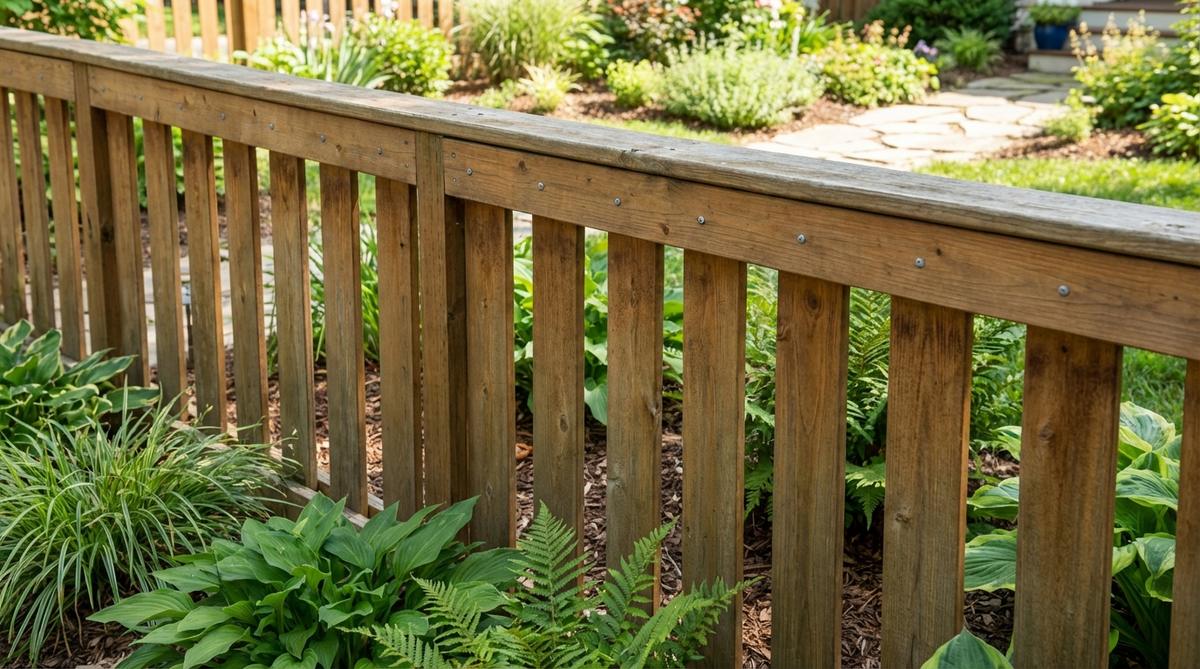
Projects an undeniably crisp and polished country-club aesthetic. This finished top-rail fencing fits beautifully around a freshly manicured lawn.
Adding a simple roof to standard pickets radically elevates the perceived property value. Incorporating waterproof cap moldings extends the lifespan by deflecting direct rainwater away from the vulnerable end grains.
You can execute this add-on for roughly $15–$25 extra per panel. Pin this if you’re planning a front yard face-lift.
- Key Materials: Standard pickets, top cap rails
- Vibe / Style: Polished Suburban
- Difficulty: Easy Weekend Project
- Budget Breakdown: Cap Wood: $15/panel | Base: $20/panel.
- Creator’s Tip: Countersink your galvanized fasteners and use wood filler before staining for a flawless top.
- Smart Sourcing: pre-routed fence cap rails (contractor bundle) | exterior-grade wood filler tubes.
4. Scalloped Top Vertical Picket
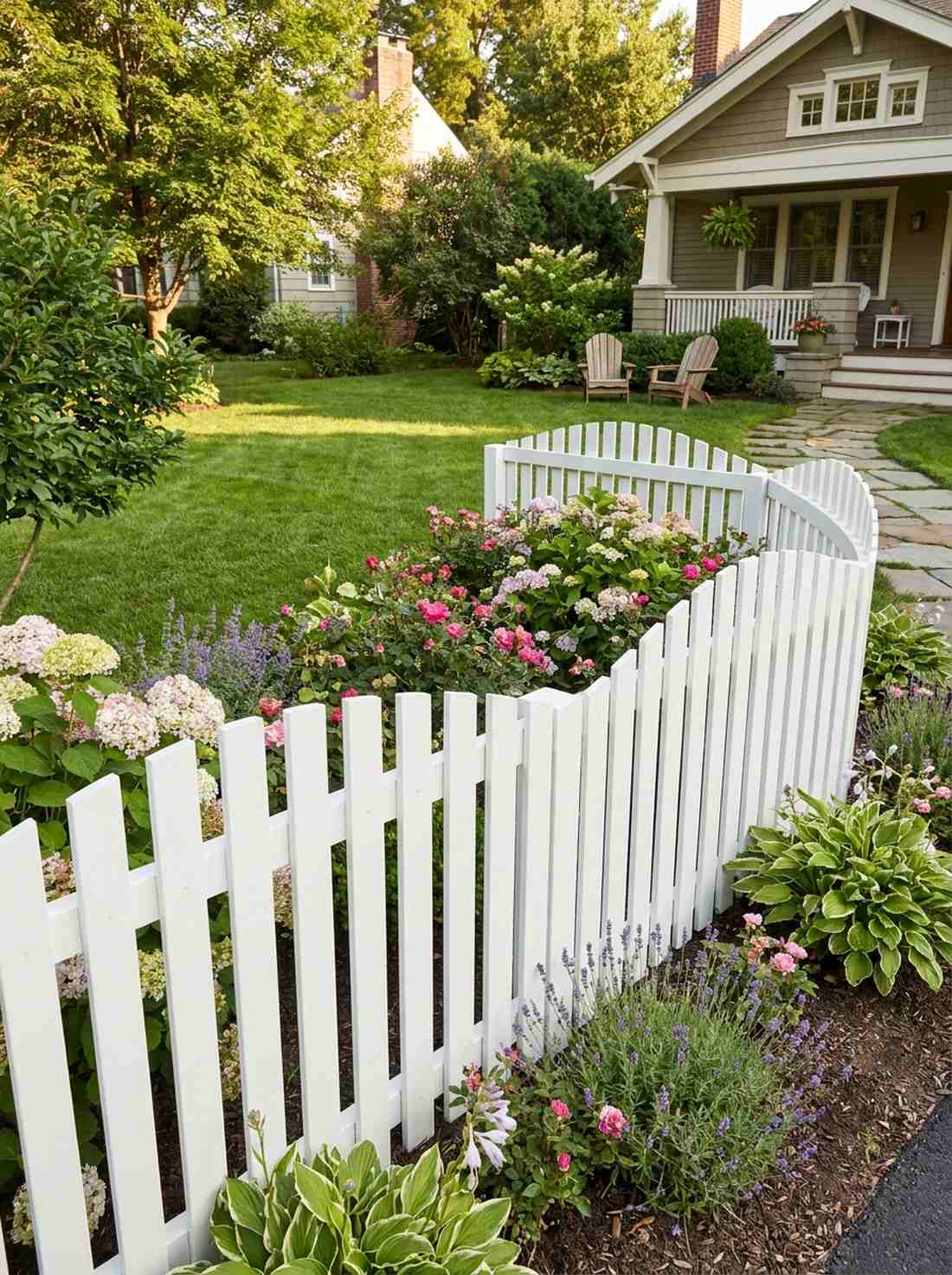
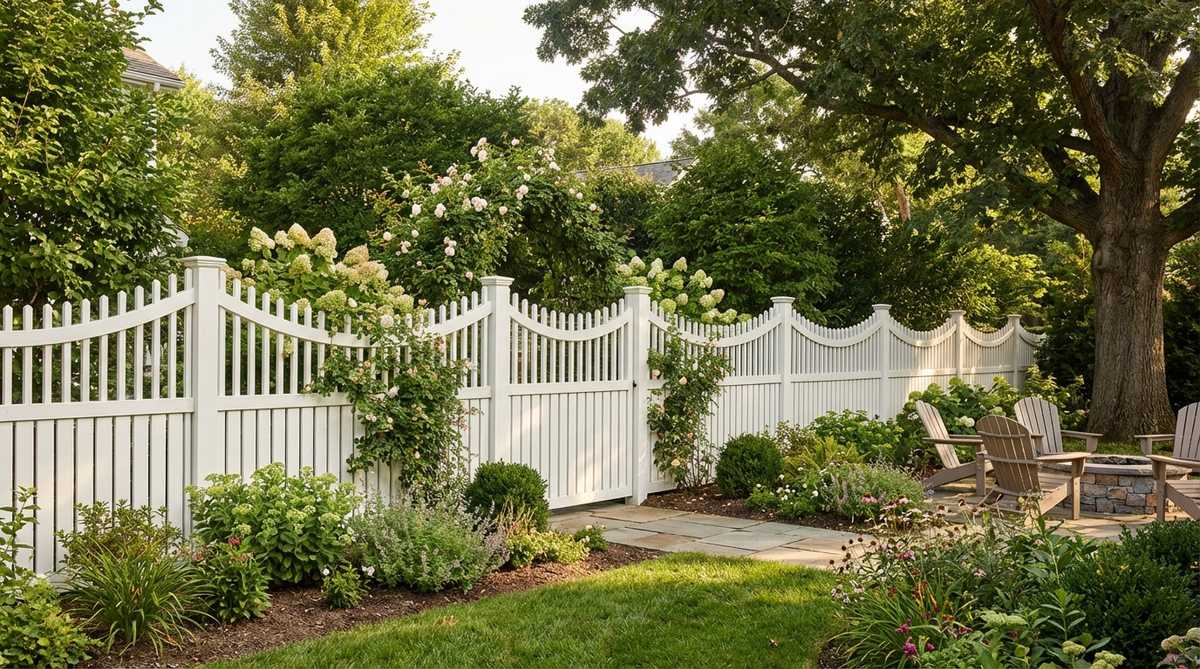
Straight out of a cozy cottage storybook. A curved perimeter enclosure gracefully defines flower beds while maintaining serious charm.
Avoids the harsh militaristic feel of flat-topped structures by introducing flowing lines. Applying acrylic protective enamel ensures the freshly cut curved edges don’t splinter over time.
This aesthetic adjustment costs almost nothing if you already own a jigsaw. Highly recommended for a quick weekend win.
- Key Materials: Treated pickets, jigsaw
- Vibe / Style: Vintage Cottage
- Difficulty: Beginner DIY
- Budget Breakdown: Lumber: $20/ft | Paint: $5/ft.
- Creator’s Tip: Create a cardboard template to trace the curve uniformly across every section before cutting.
- Smart Sourcing: heavy-duty jigsaw wood blades (multi-pack) | pre-primed decorative wood pickets.
This next setup is ridiculously cheap but looks like a $1,500 custom privacy installation…
5. Vertical Shadow Box Construction
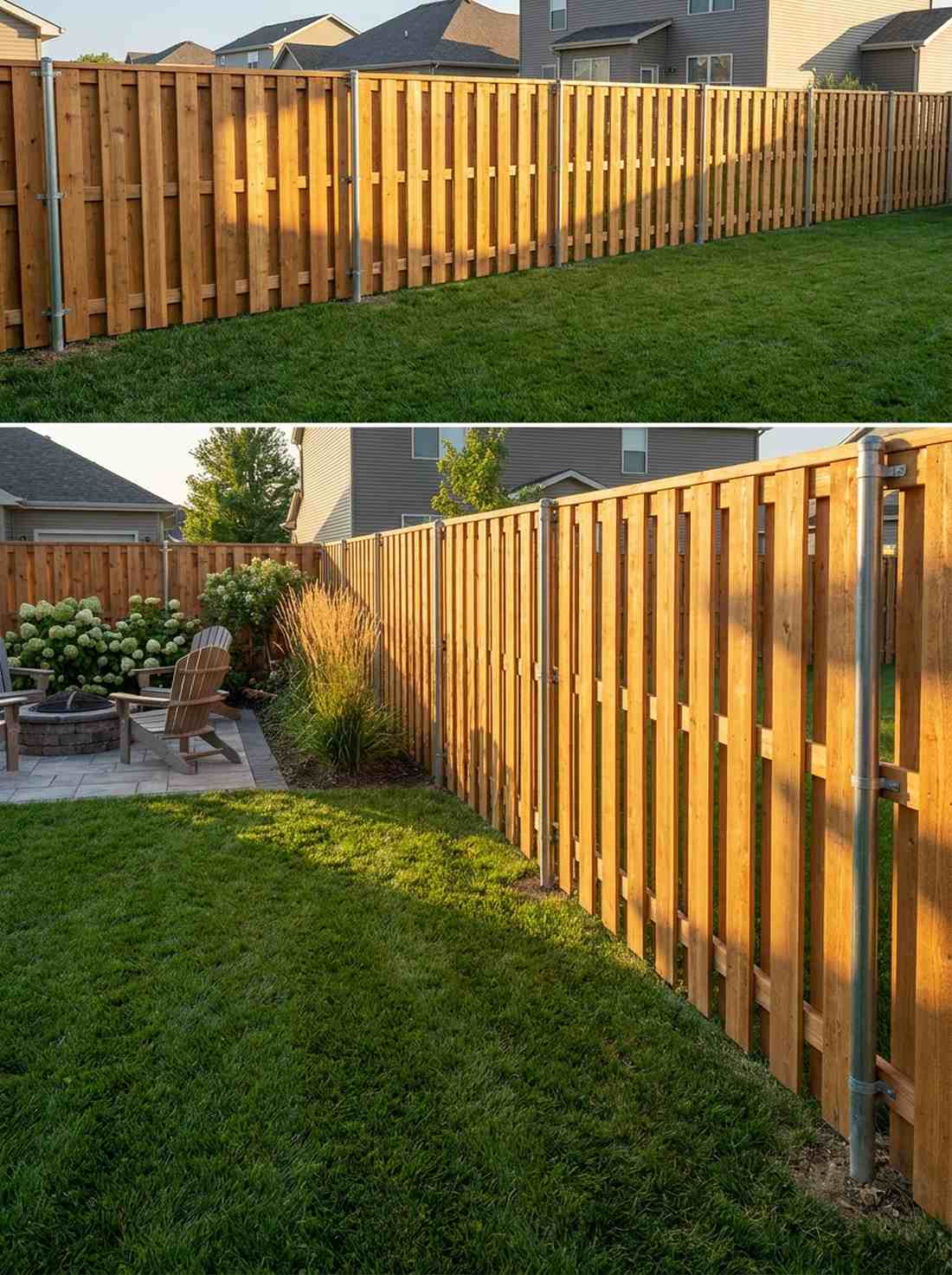
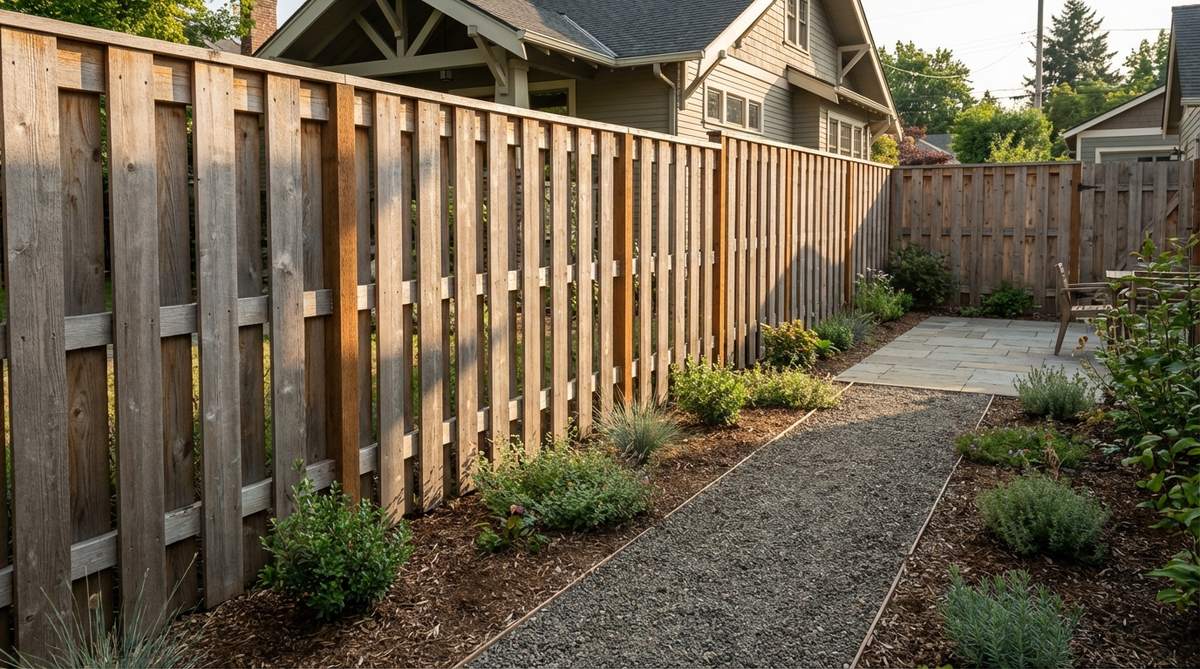
Feels like an interactive light show as the sun moves across your yard. An alternating gap fence barrier strikes the perfect balance for a shared neighbor line.
This layout ingeniously provides nearly total privacy while slashing aggressive wind loads. Snagging some galvanized steel fence posts keeps the dual-sided weight perfectly anchored.
Your material costs hover around $30–$45 per linear foot. Save this to your landscaping reference board.
- Key Materials: Wide rails, alternating slats
- Vibe / Style: Dimensional Contemporary
- Difficulty: Intermediate
- Budget Breakdown: Slats: $35/ft | Anchors: $10/ft.
- Creator’s Tip: Use a standard 2×4 block as a spacer to keep gap placement identical on both sides.
- Smart Sourcing: galvanized steel post base anchors (set of 10) | pre-cut cedar slats (pallet load).
Modern Horizontal Compositions
Horizontal orientations define contemporary landscape design. Designers specify these tight-gap arrangements to visually expand smaller exterior spaces.
6. Tight-Gap Horizontal Slat
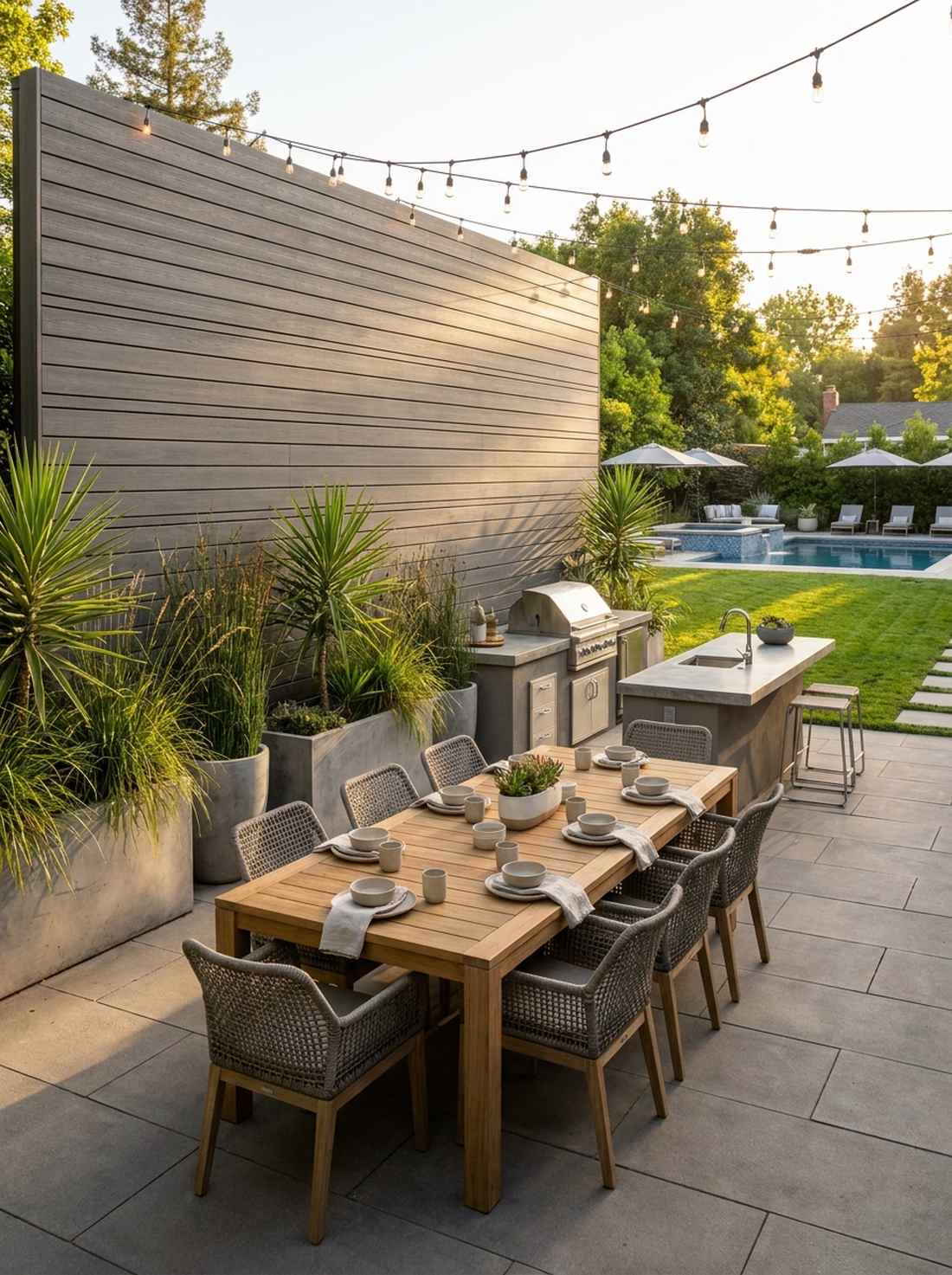
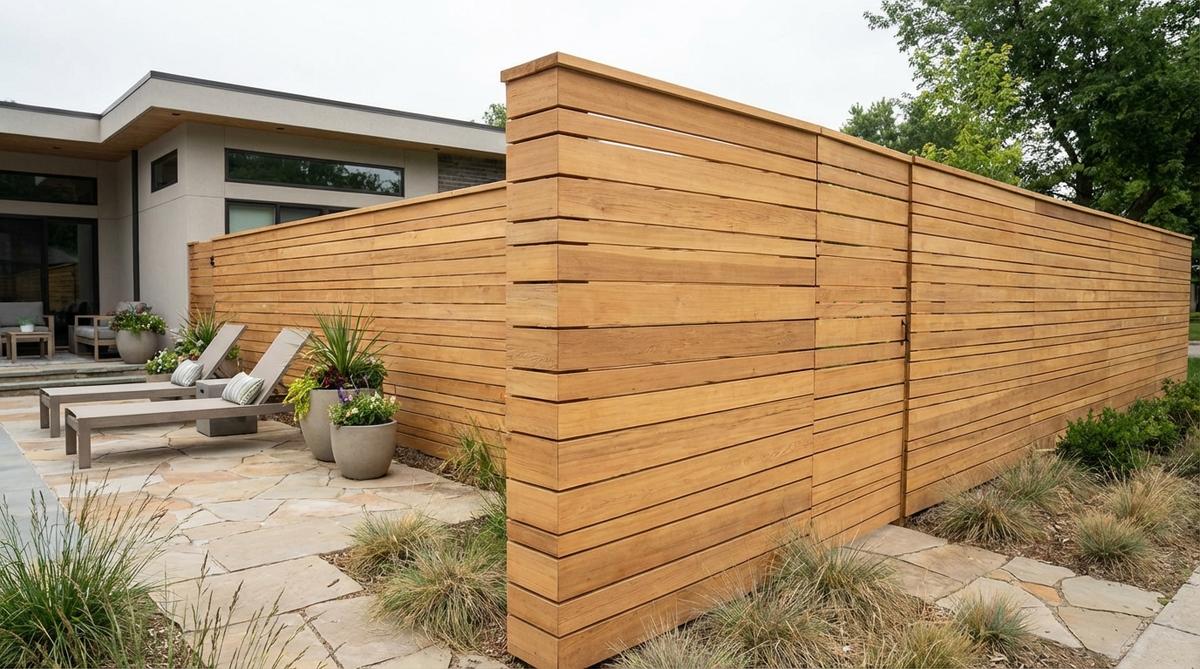
Gives your backyard an immediate luxury spa atmosphere. A minimalist horizontal slat wall is stunning when utilized as a patio dining backdrop.
This configuration completely modernizes outdated properties instantly. Leveraging composite decking fascia boards instead of natural timber guarantees zero warping or fading over the next decade.
A flawless modern look typically ranges from $45–$65 per foot. Pin this design to your modern backyard inspiration board.
- Key Materials: Composite fascia, hidden clips
- Vibe / Style: Ultra-Modern Spa
- Difficulty: Advanced
- Budget Breakdown: Composite: $50/ft | Clips: $15/ft.
- Creator’s Tip: Always use hidden fastener systems to maintain the unbroken sleek visual line.
- Smart Sourcing: UV-resistant composite fascia boards (bundle) | concealed deck fastening clips.
7. Floating Horizontal Panels
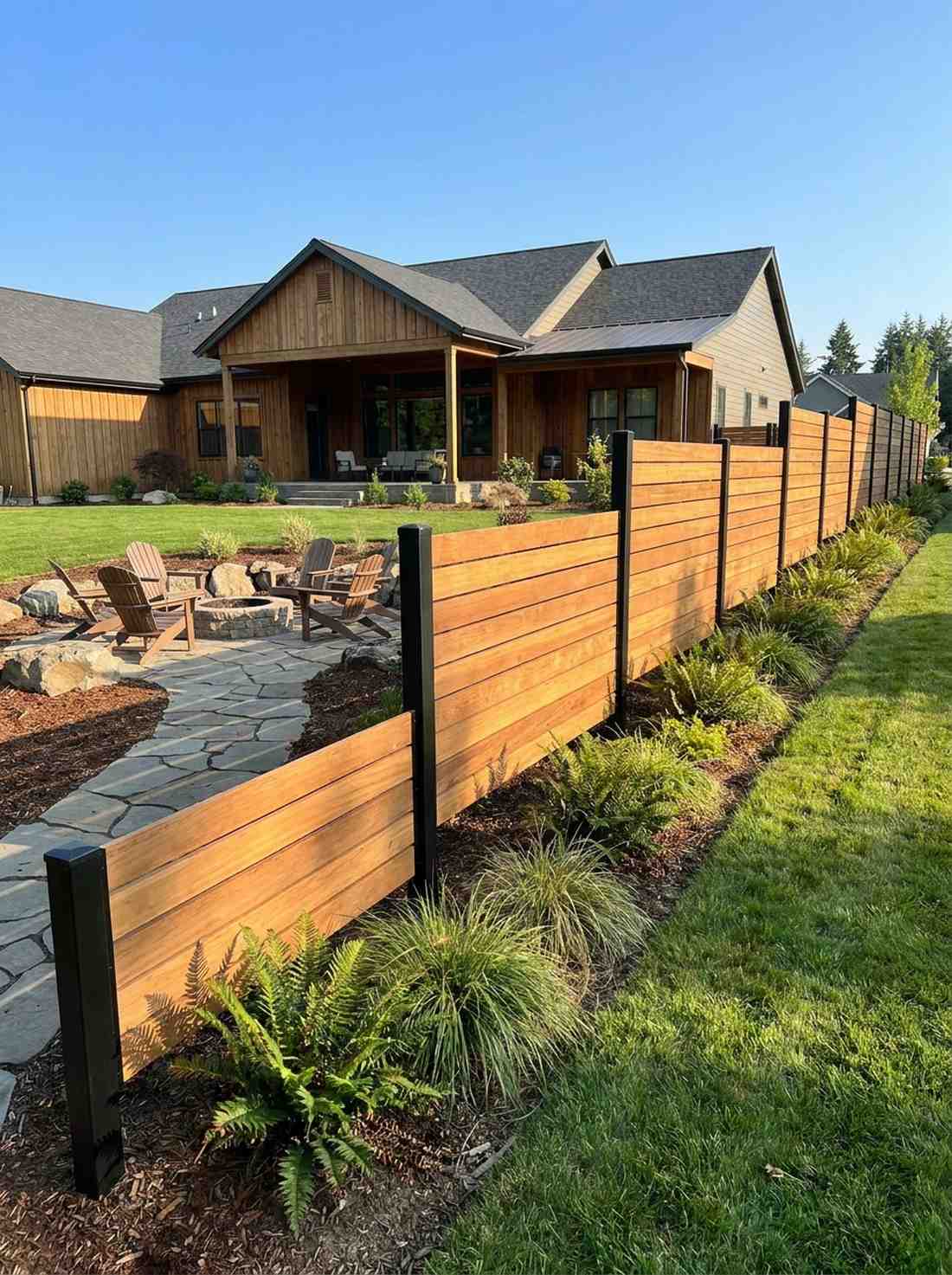
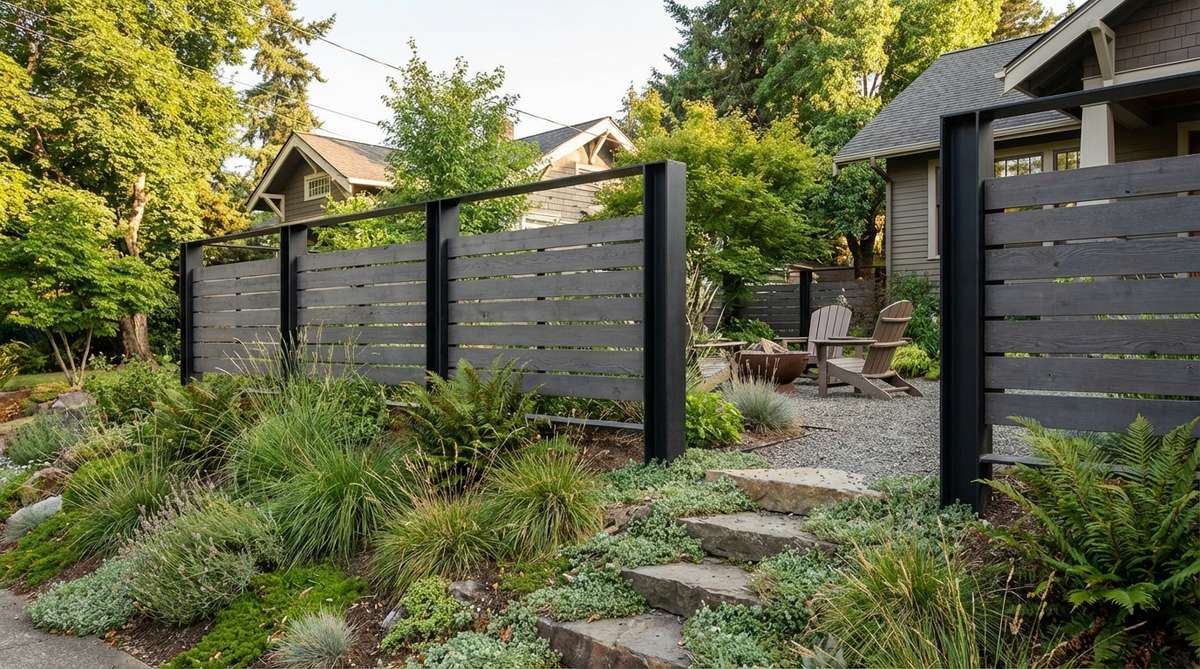
Feels remarkably airy yet completely secure. The suspended timber partition setup handles uneven or sloped terrain brilliantly.
Bypasses the nightmare of stepping fence panels by leaving intentional ground gaps. Sinking black powder-coated aluminum posts grounds the design with a striking industrial contrast against warm wood.
You can execute this illusion for around $35–$50 per section. It’s a genius hack for difficult property grading.
- Key Materials: Aluminum posts, cedar planks
- Vibe / Style: Elevated Industrial
- Difficulty: Intermediate
- Budget Breakdown: Posts: $40 each | Wood: $25/section.
- Creator’s Tip: Plant low-light ferns underneath the floating gap to seamlessly blend the boundary into the lawn.
- Smart Sourcing: matte black aluminum fence posts (kit) | heavy-duty post concrete mix.
8. Alternating Width Horizontal Boards
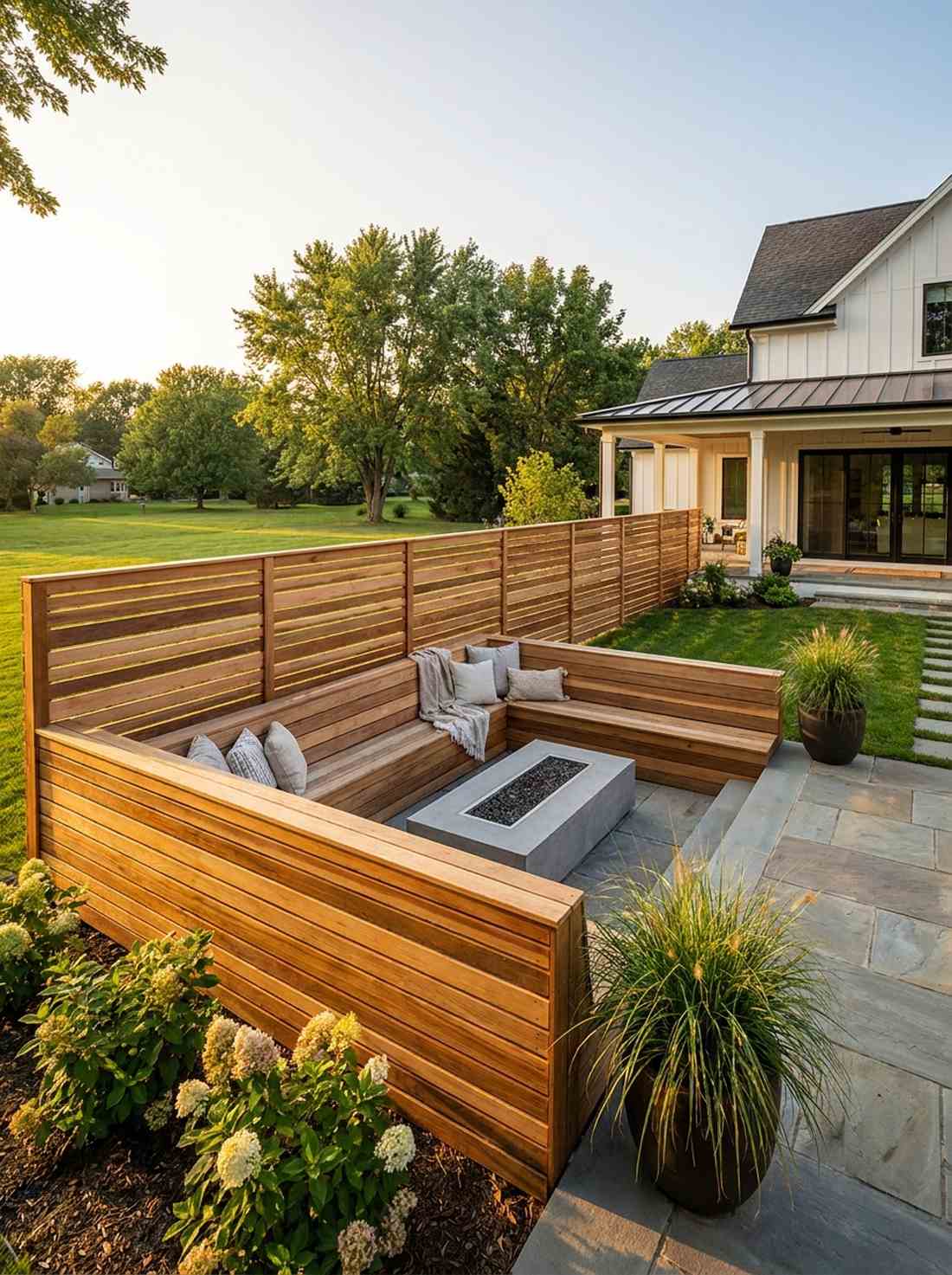
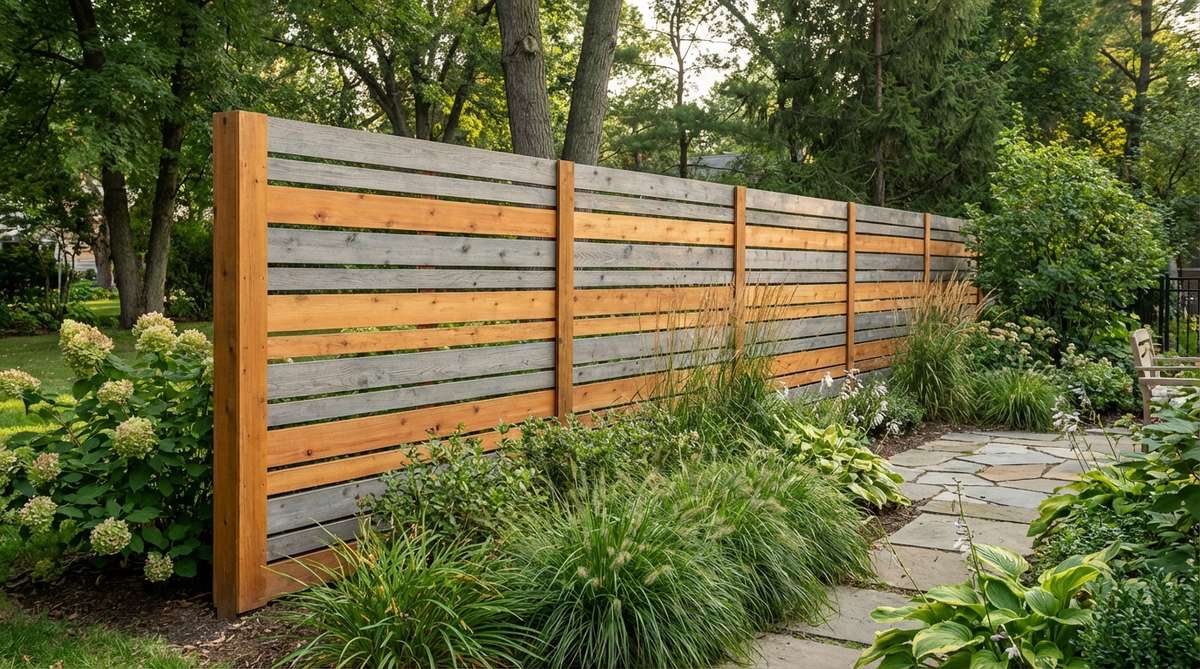
Injects architectural rhythm into an otherwise flat backyard canvas. Using a varied-width slat layout looks stunning wrapping around a modern fire pit area.
Delivers a high-end designer edge without demanding expensive specialty cuts. A top coat of clear penetrating epoxy sealer locks in the varied natural tones of the wood.
Material costs stay surprisingly low, averaging $20–$35 per linear foot. Save this if you want maximum visual impact on a standard budget.
- Key Materials: 1×4 and 1×6 lumber, sealer
- Vibe / Style: Rhythmic Modernism
- Difficulty: Easy
- Budget Breakdown: Mixed Wood: $25/ft | Sealant: $5/ft.
- Creator’s Tip: Sketch out your repeating pattern on paper before cutting to ensure you buy the exact ratio of widths.
- Smart Sourcing: clear penetrating exterior epoxy (gallon) | assorted width cedar plank bundles.
9. Horizontal Board-and-Batten
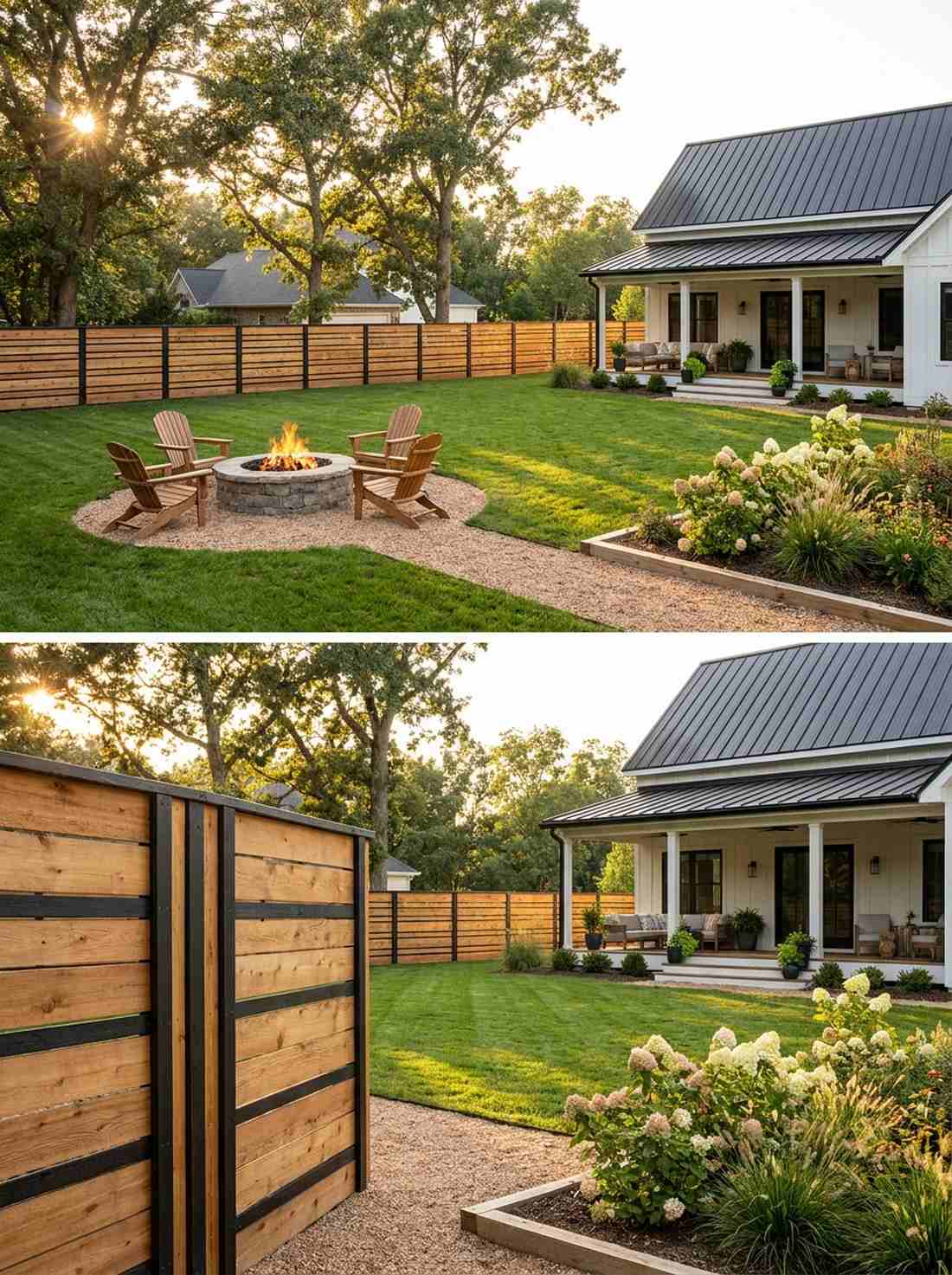
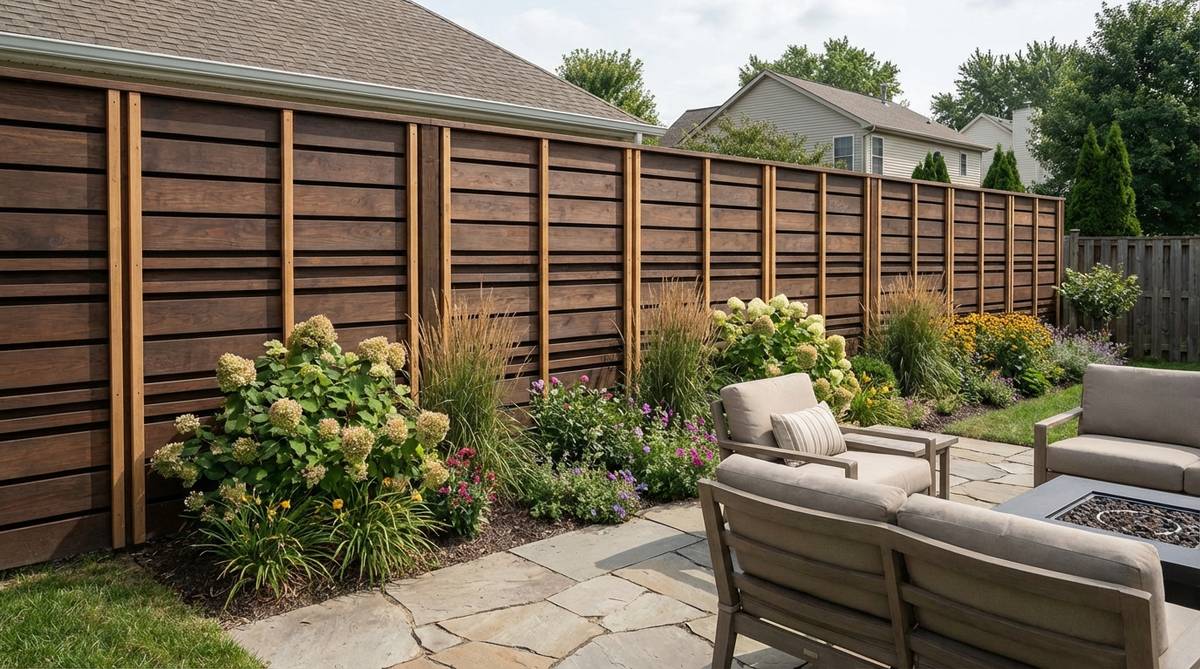
Brings a heavy, fortified farmhouse aesthetic to the property line. An overlay batten boundary wall is an incredible asset for defining large rustic gardens.
This layout hides structural seams completely while creating deep, dramatic shadows. Stocking up on galvanized brad nails ensures those decorative face strips never pop loose during temperature swings.
You can build this sturdy wall for approximately $30–$45 per foot. Highly recommended for properties dealing with heavy weather.
- Key Materials: Wide planks, narrow trim battens
- Vibe / Style: Modern Farmhouse
- Difficulty: Intermediate
- Budget Breakdown: Base Wood: $25/ft | Trim: $10/ft.
- Creator’s Tip: Paint the battens a contrasting matte black against natural wood for a hyper-modern twist.
- Smart Sourcing: exterior grade finish nailer kit | pre-milled cedar trim battens (bulk).
Most homeowners ruin their outdoor timber… until they discover the exact ventilation framework coming up next.
💡 Must-Have Supplies for High-End Setups
To construct these boundaries faster and ensure they outlast the elements, skip the generic hardware aisles and invest in specialized framing foundations.
- Base & Support: no-dig heavy duty ground anchors (pro pack)
- Setup Tools: laser-leveling perimeter layout kit
- Weather/Durability Protection: commercial marine-grade timber sealant
10. Horizontal Cedar Rain Screen
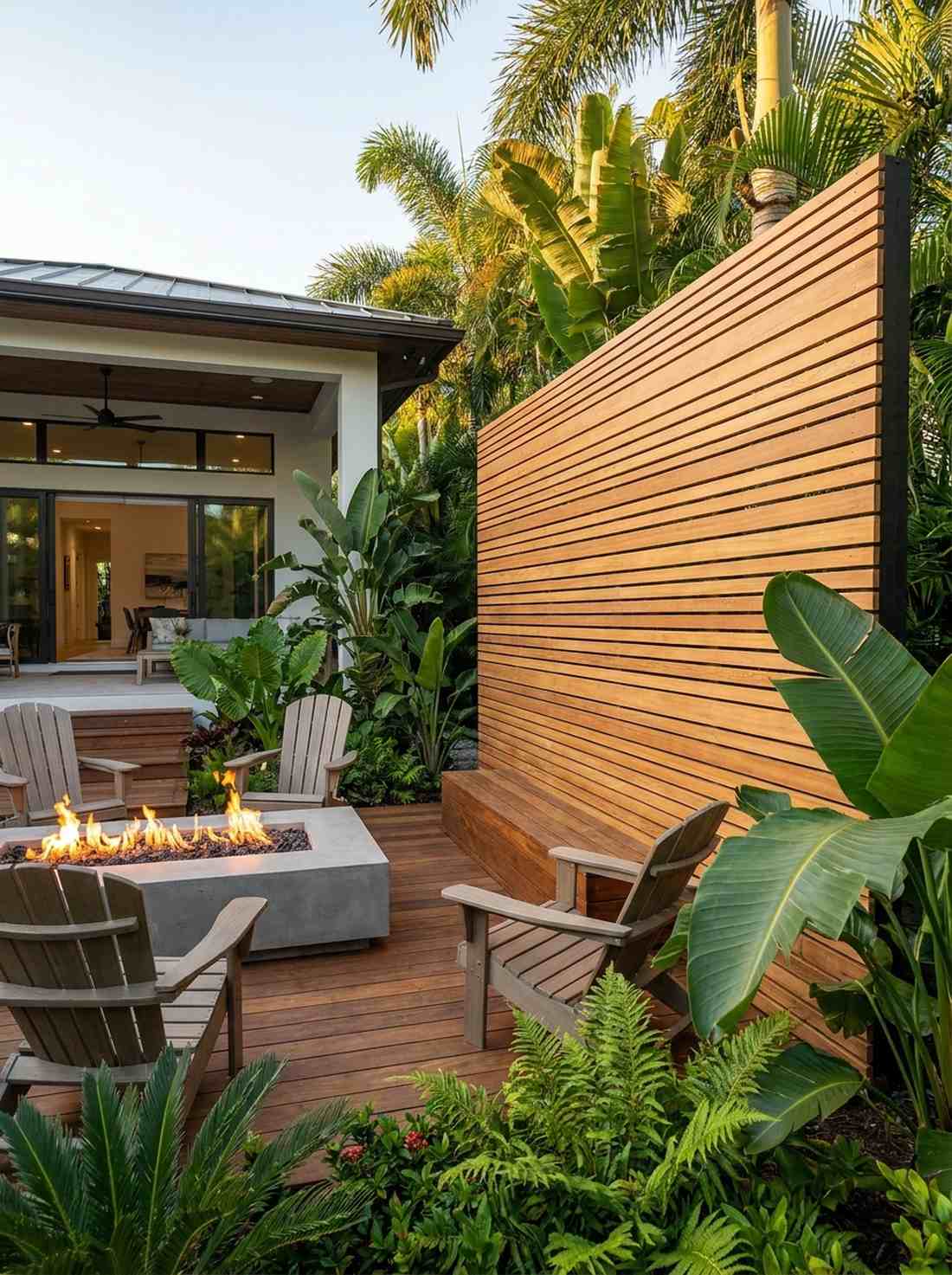
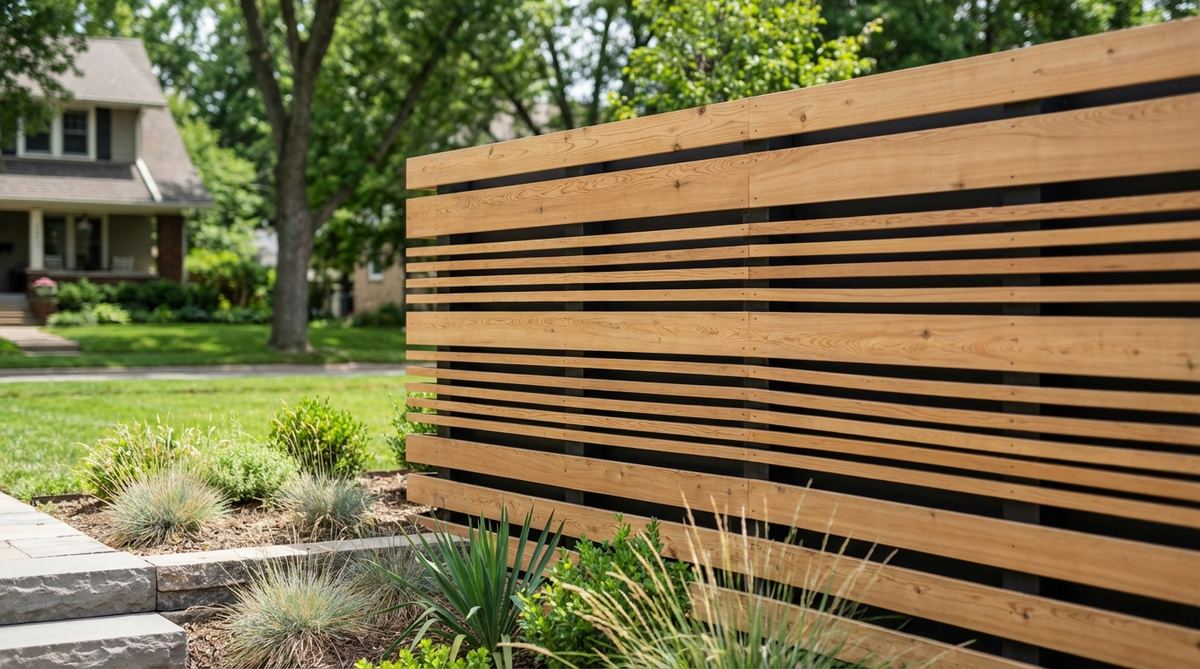
Gives off an elite architectural cladding vibe usually reserved for custom homes. A ventilated garden timber screen perfectly accents high-humidity tropical landscape spaces.
This specific technique actively prevents rot by floating the wood off the sub-frame. Snagging some pressure-treated furring strips creates the crucial air gap that lets the lumber breathe.
Expect to invest $40–$60 per linear foot for this commercial-grade method. Pin this to your advanced architecture board.
- Key Materials: Furring strips, premium cedar
- Vibe / Style: Architectural Elite
- Difficulty: Advanced DIY
- Budget Breakdown: Cedar: $45/ft | Sub-frame: $15/ft.
- Creator’s Tip: Install tiny weep holes at the absolute bottom of the frame to guarantee moisture escape.
- Smart Sourcing: pressure-treated furring strips (contractor bundle) | stainless steel siding screws.
Architectural Statement Designs
Bold structural choices transform functional perimeters into striking focal points. These layouts prioritize sheer visual impact alongside neighborhood privacy.
11. Louvered Privacy Slats
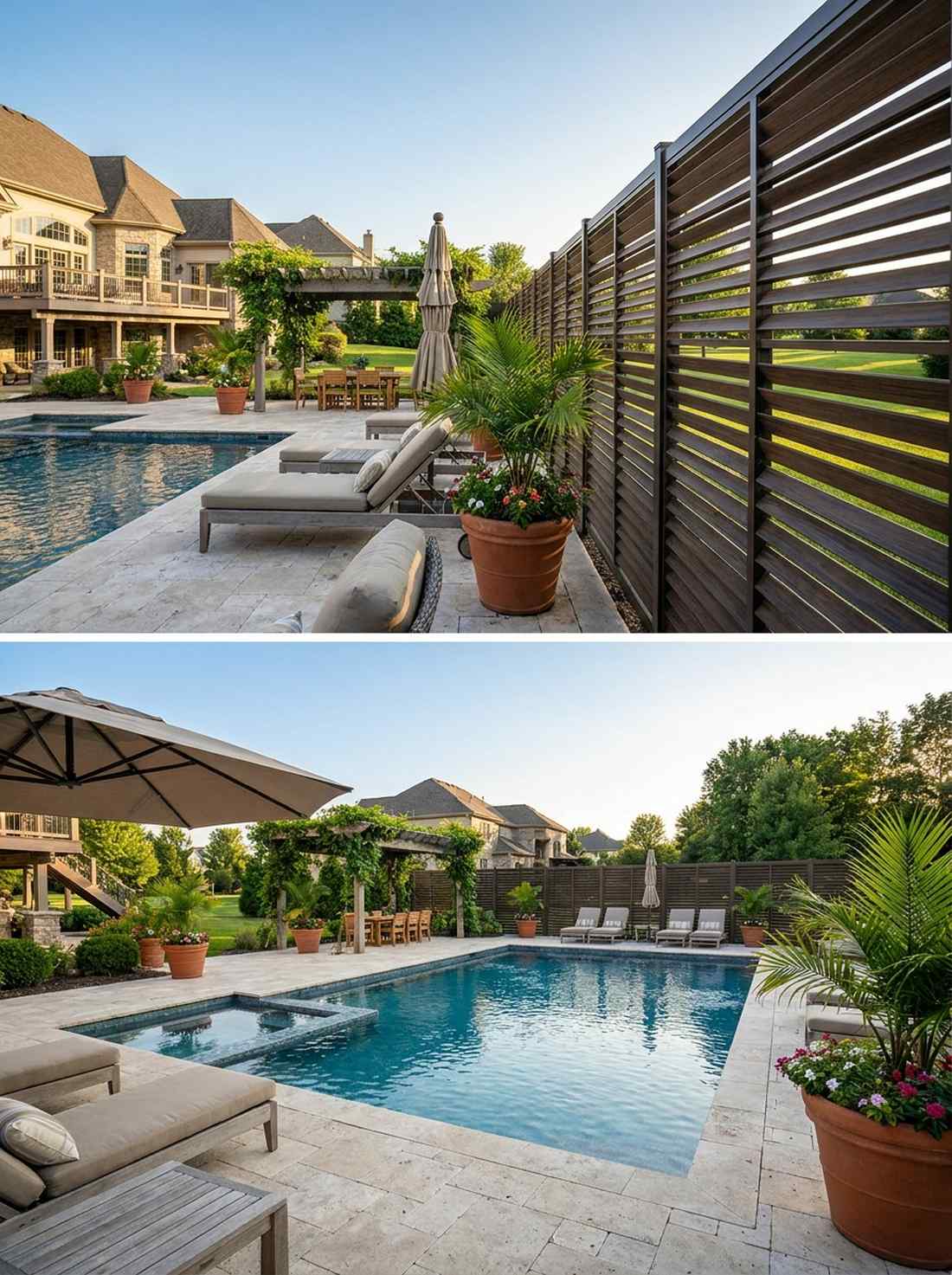
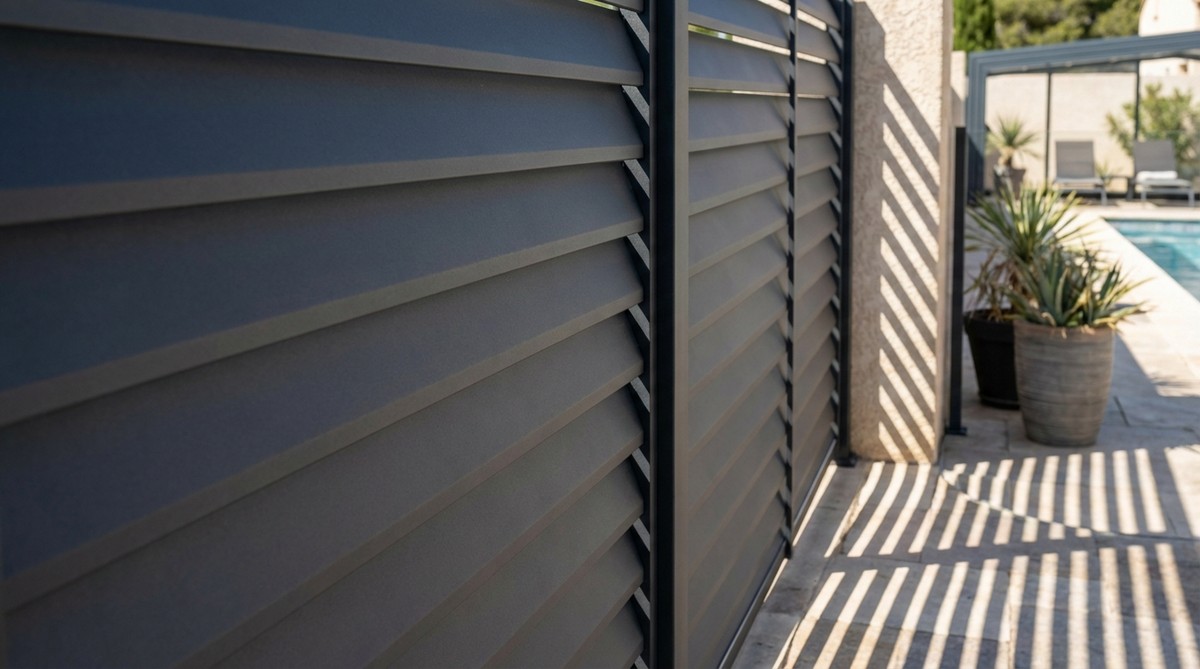
Feels like stepping onto a luxury resort balcony. The angled airflow fencing module is the absolute pinnacle of pool enclosure design.
Breezes flow right through while completely blinding outside sightlines. Investing in pre-notched aluminum louver brackets takes the mathematical nightmare out of setting the perfect 45-degree angle.
This premium ventilation setup will run about $50–$75 per foot. It’s a game-changer for stifling summer climates.
- Key Materials: Louver brackets, lightweight slats
- Vibe / Style: Tropical Resort
- Difficulty: Advanced DIY
- Budget Breakdown: Brackets: $30/kit | Slats: $40/ft.
- Creator’s Tip: Use synthetic wood for the slats to prevent the angles from warping out of alignment.
- Smart Sourcing: adjustable louver hardware kits | UV-coated composite boundary slats.
12. Corrugated Metal Panels
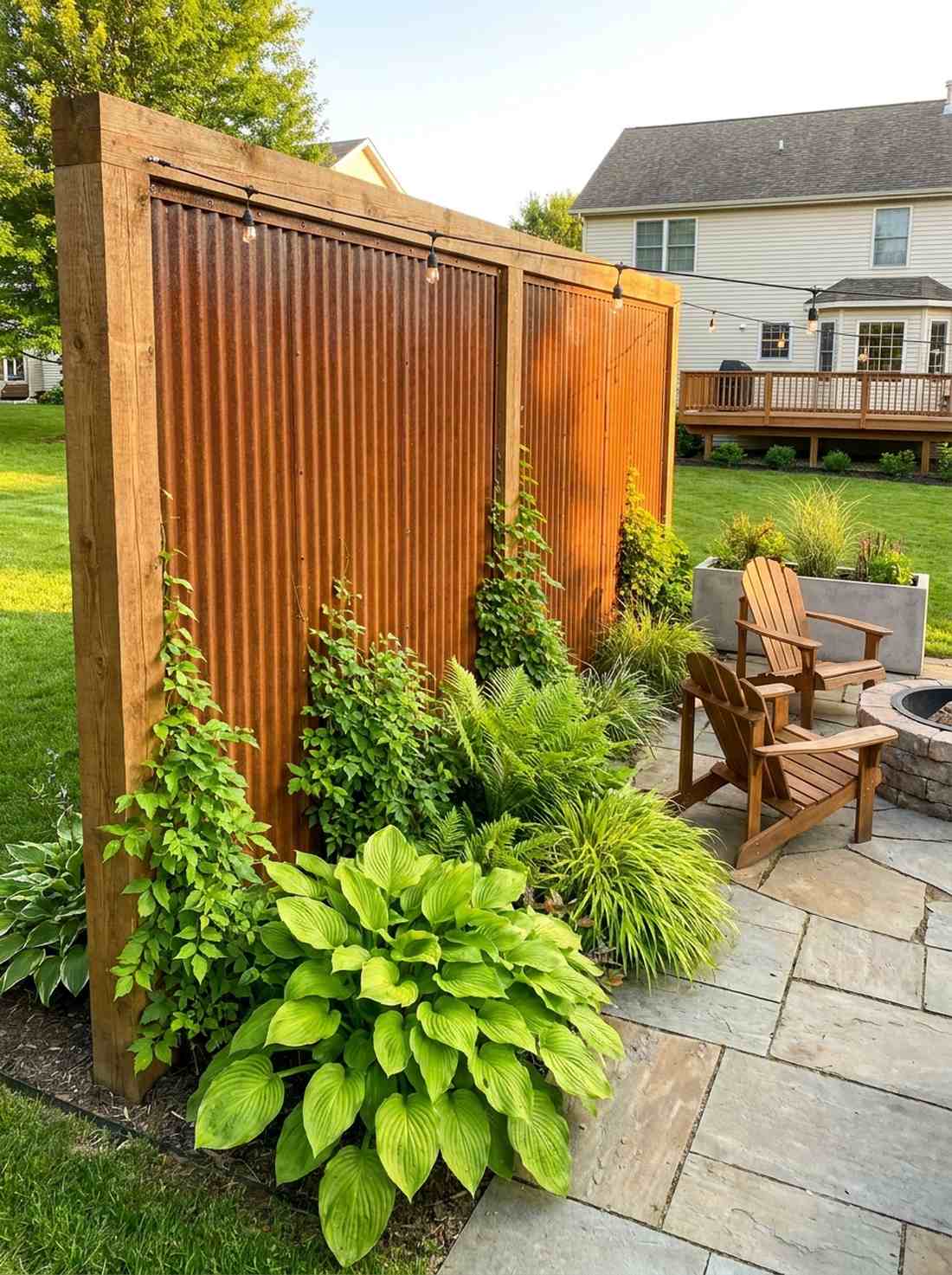
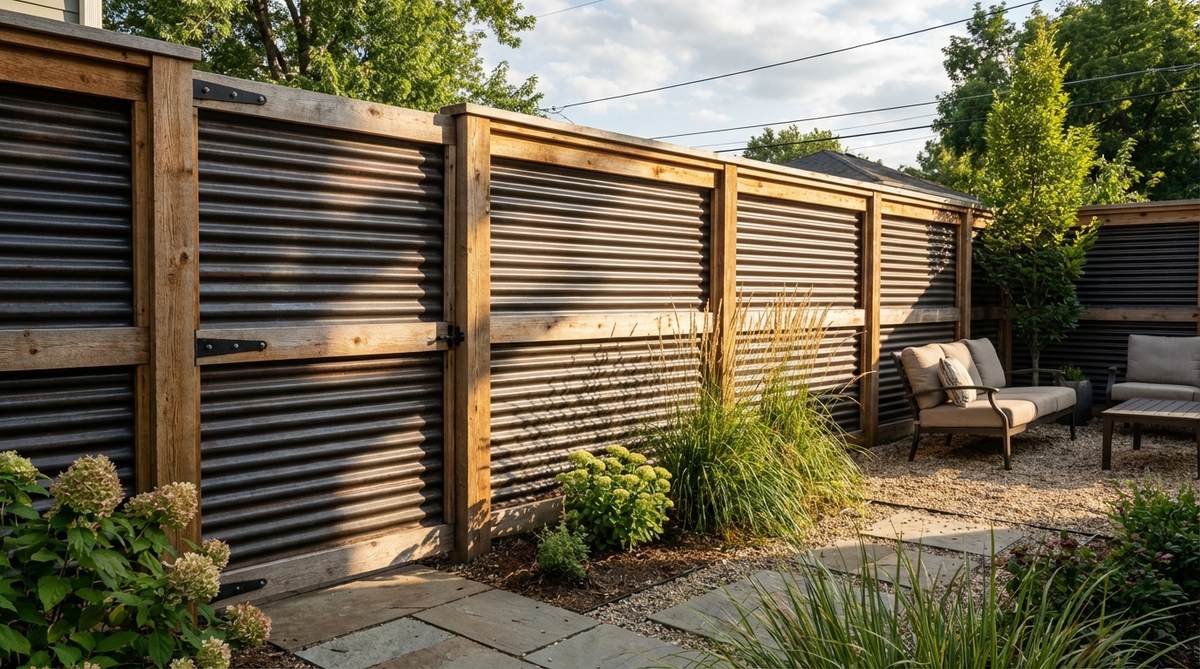
Injects a raw, edgy aesthetic into urban garden spaces. Framing an industrial corrugated partition creates an incredible backdrop for bright green foliage.
Delivers complete fortress-level privacy while remaining surprisingly lightweight. Upgrading to authentic Corten weathering steel sheets ensures that beautiful rust patina forms without actually compromising the metal.
You can piece this together for roughly $25–$45 per linear foot. Save this if you love combining rustic and modern textures.
- Key Materials: Metal sheets, timber frame
- Vibe / Style: Urban Industrial
- Difficulty: Intermediate
- Budget Breakdown: Steel Panels: $30/ft | Framing: $15/ft.
- Creator’s Tip: Pre-drill your metal sheets to prevent dimpling when driving in the exterior fasteners.
- Smart Sourcing: Corten weathering steel roofing panels | rubber-washer metal roofing screws.
13. Vertical Steel Picket Screen
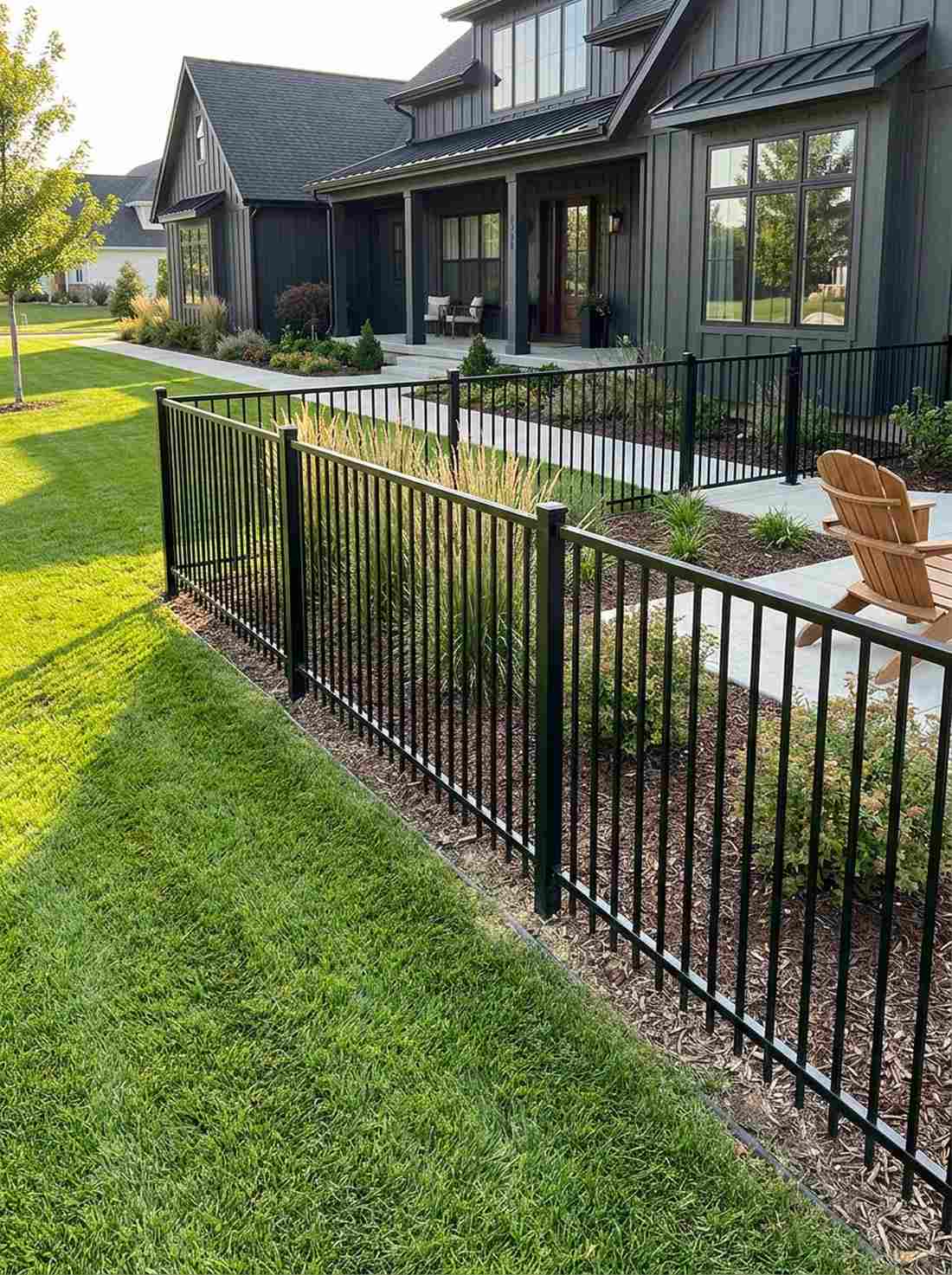
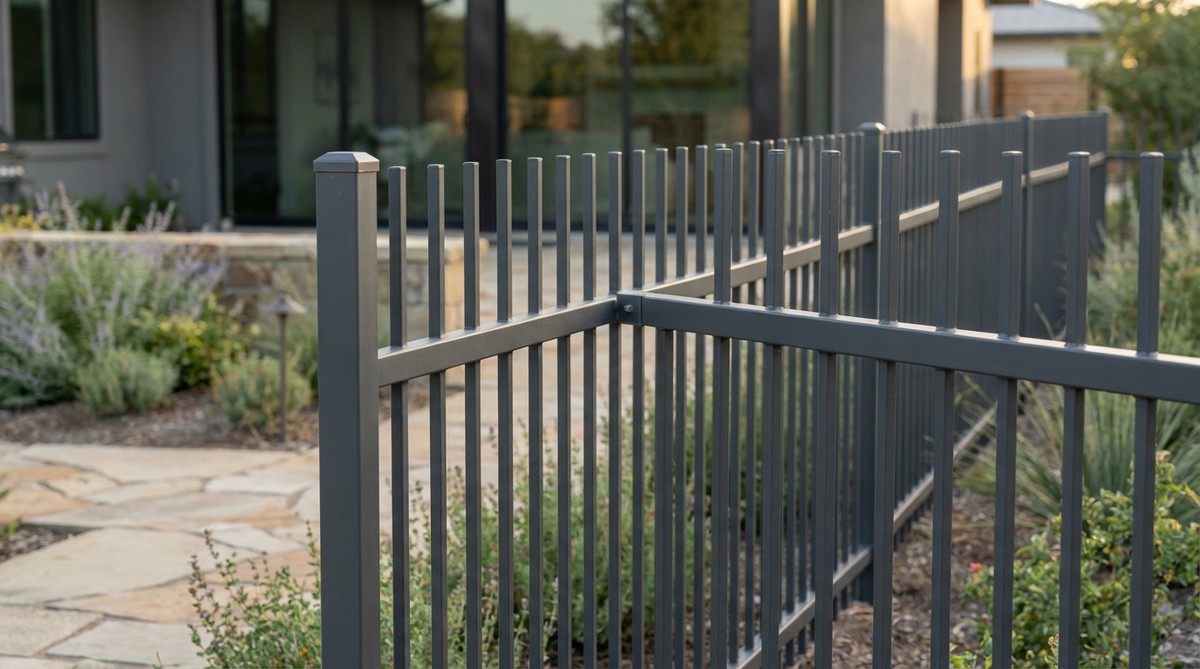
Sleek, imposing, and completely maintenance-free. A minimalist steel boundary rack defines property lines without blocking out the surrounding landscape views.
This design absolutely skips the cheap chain-link look for a high-end estate profile. Opting for powder-coated tubular steel sections guarantees decades of security without a single rust stain.
Material kits for this setup average $40–$65 per section. Pin this for front-yard security inspiration.
- Key Materials: Welded steel panels, brackets
- Vibe / Style: Modern Fortress
- Difficulty: Easy (with kits)
- Budget Breakdown: Steel Kits: $50/section | Hardware: $10/section.
- Creator’s Tip: Mount the panels two inches above the soil line so your weed whacker doesn’t scratch the powder coat.
- Smart Sourcing: powder-coated steel fence panel kits | heavy-duty metal post flanges.
14. Gabion Stone-Filled Walls
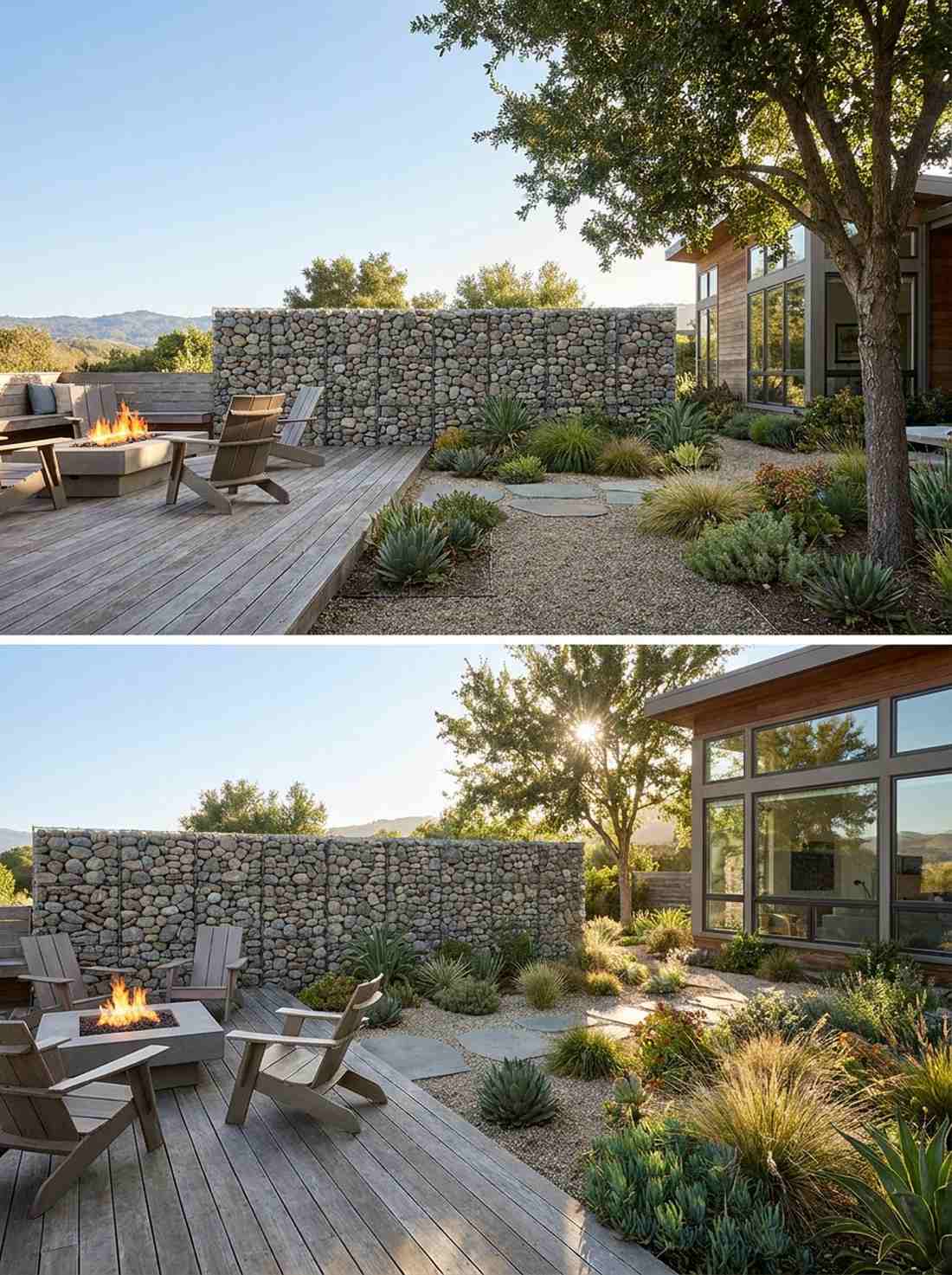
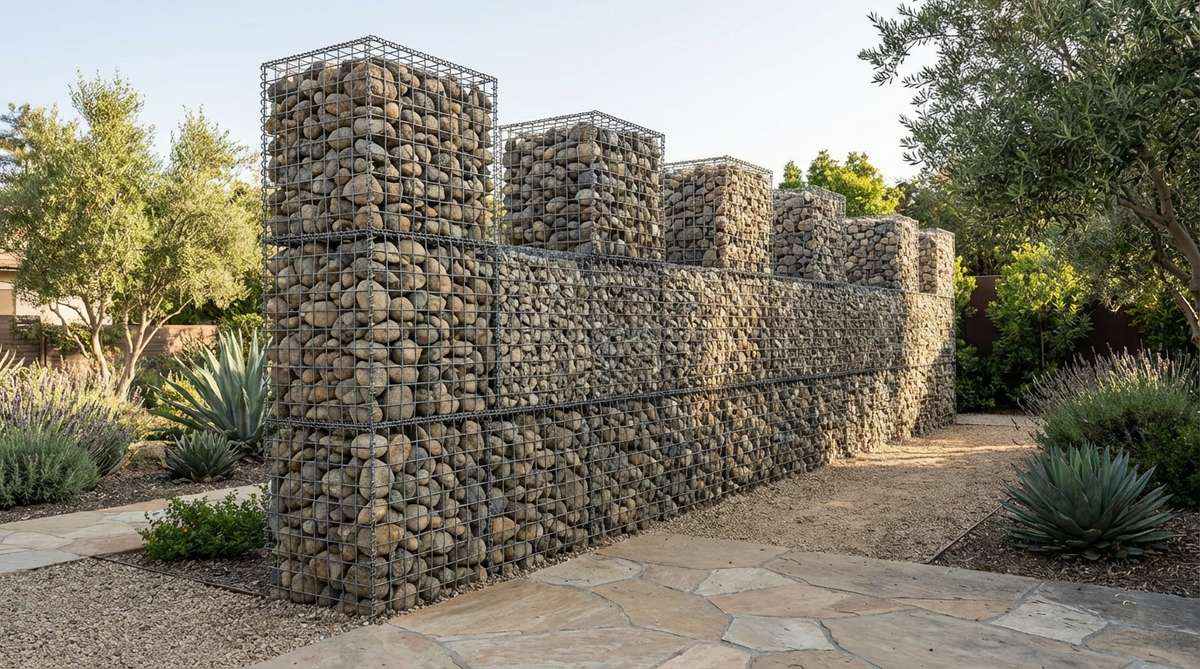
Looks like an ancient ruin seamlessly blended with modern architecture. A wire mesh rock barrier acts as an unparalleled retaining wall and privacy screen.
These massive thermal boundaries absorb street noise better than anything else on the market. Purchasing heavy-gauge galvanized gabion baskets ensures the rocks don’t bulge out into your walking paths.
Expect to spend $45–$80 per linear foot, mostly depending on stone delivery costs. It’s an architectural masterpiece for xeriscaped yards.
- Key Materials: Wire baskets, river rock
- Vibe / Style: Earthy Brutalism
- Difficulty: Labor Intensive
- Budget Breakdown: Baskets: $25/ft | Stone Bulk: $40/ft.
- Creator’s Tip: Hand-pack the outward-facing stones flat against the cage for a clean, professional facade.
- Smart Sourcing: galvanized modular gabion basket kits | heavy-duty wire tying tools.
People waste thousands on custom wrought iron before realizing this high-tech metal alternative is cheaper and faster…
15. Laser-Cut Metal Panels
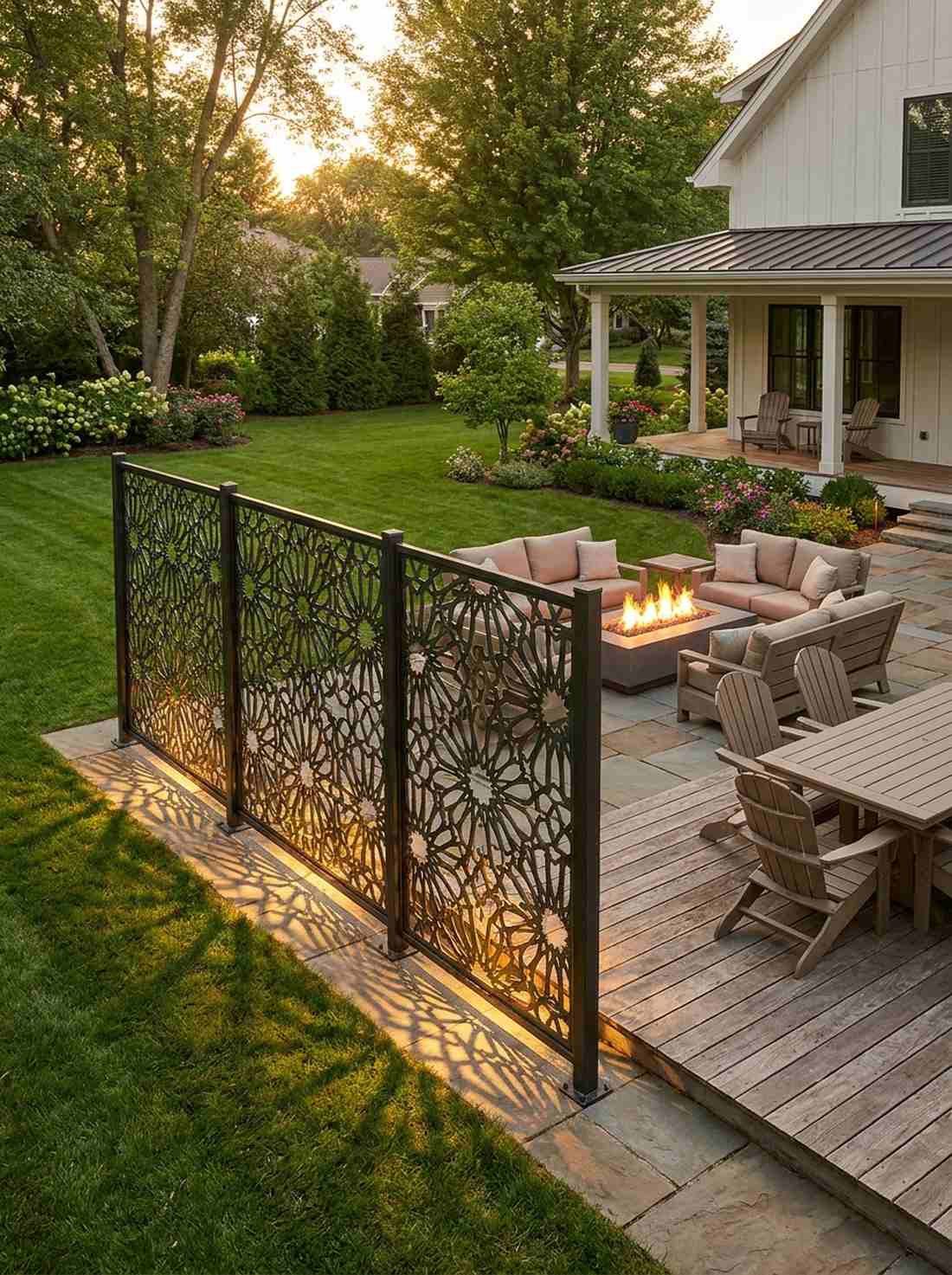
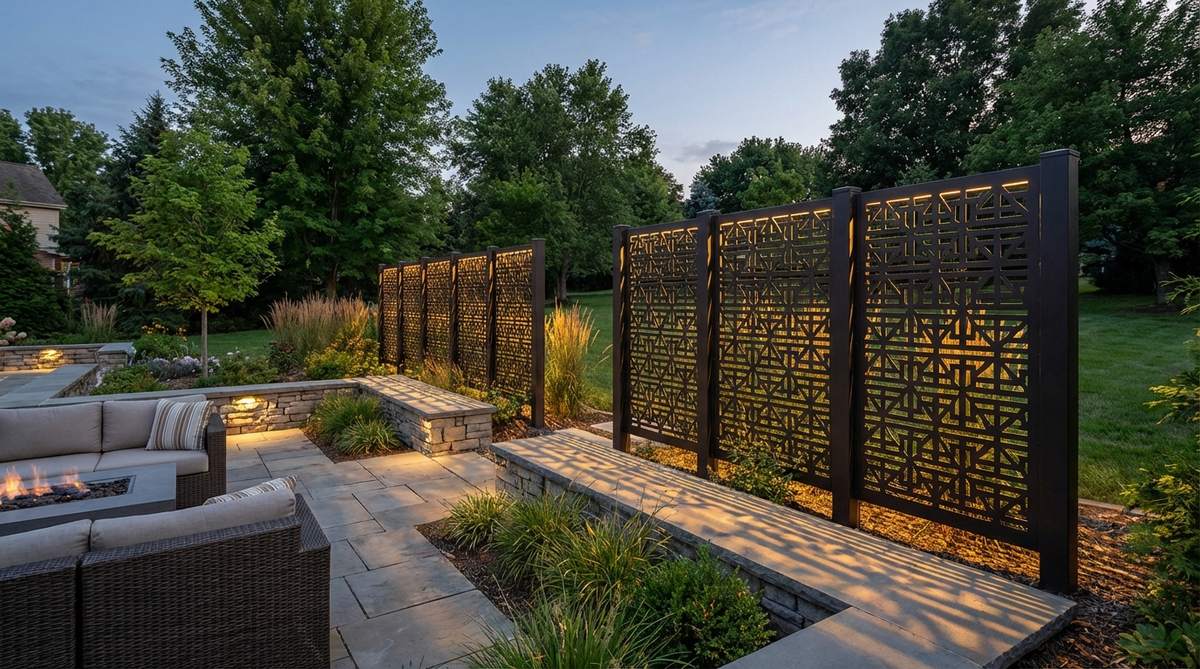
Casts breathtaking artistic shadows across your patio at sunset. Installing a geometric decorative garden screen serves as both boundary and outdoor art.
This approach gives a bespoke designer finish without requiring a master welder. Sourcing pre-cut aluminum privacy screens directly online bypasses massive custom fabrication markups.
You can integrate these statement pieces for about $60–$100 per panel. Save this to your luxury backyard mood board.
- Key Materials: Patterned aluminum, frame posts
- Vibe / Style: Artistic Boutique
- Difficulty: Intermediate
- Budget Breakdown: Art Panel: $80/each | Frame: $20/each.
- Creator’s Tip: Install low-voltage LED uplighting at the base of the panel to project the cut patterns at night.
- Smart Sourcing: laser-cut aluminum privacy screens (3-pack) | outdoor LED spotlight kits.
Hybrid Material Innovations
Combining industrial and organic textures creates visual layering that elevates standard garden layouts beyond monotonous barriers.
16. Cedar-and-Steel Post Combination
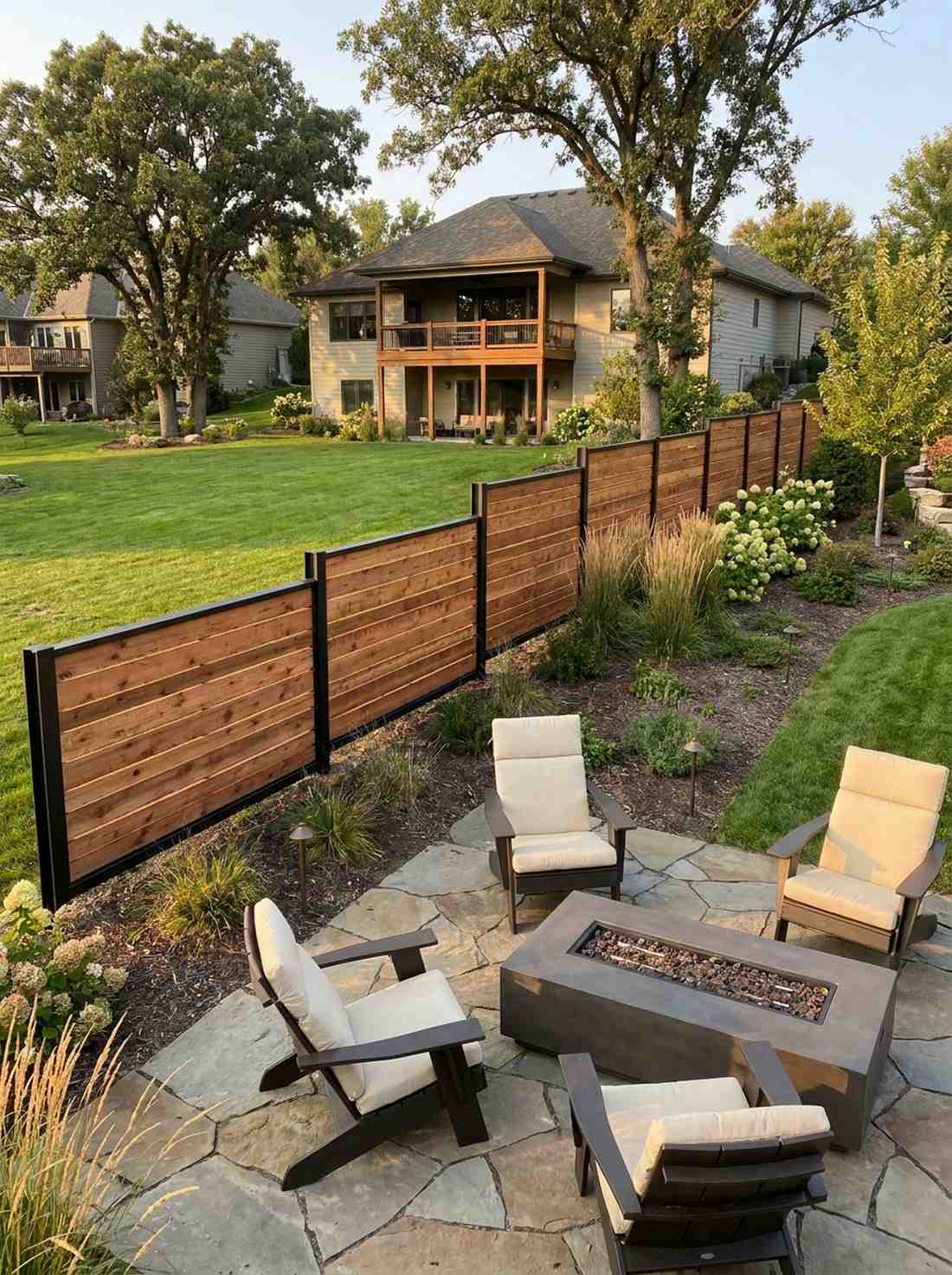
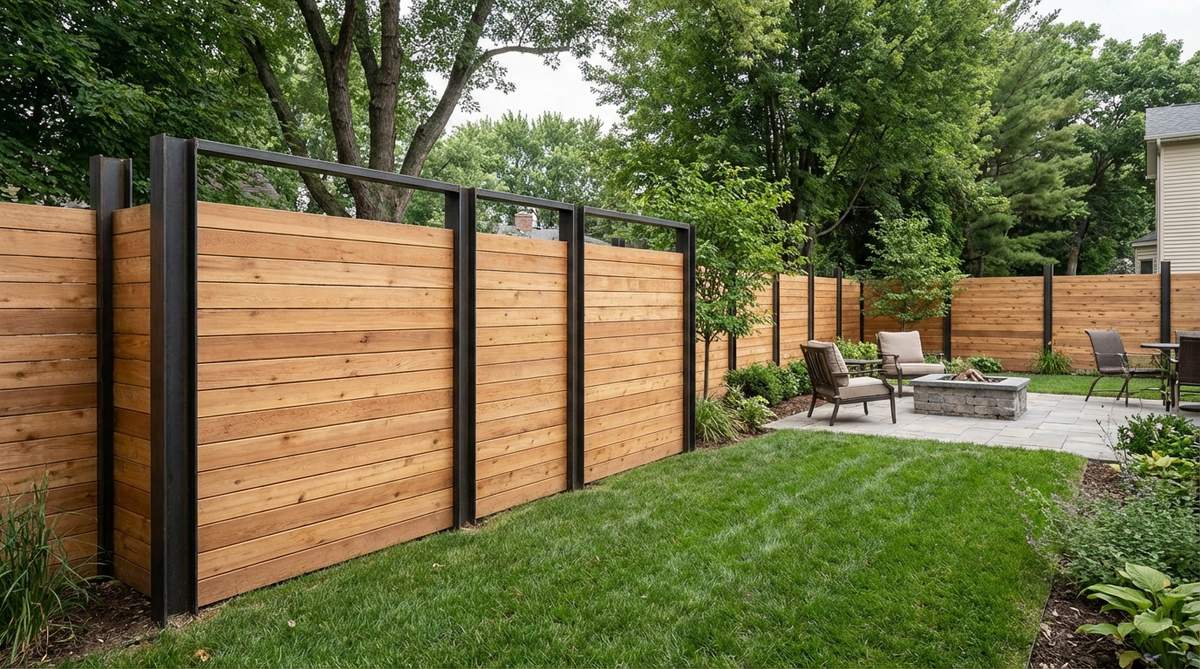
Brings a warm yet bulletproof aesthetic to the neighborhood. The wood-in-metal framing system bridges the gap between cozy timber and raw steel perfectly.
Fuses incredible structural integrity with natural organic softness. Utilizing U-channel steel fence posts lets you just drop the cut cedar planks right into the metal grooves.
This hybrid construction runs roughly $40–$60 per linear foot. It’s an incredibly fast installation if you use the drop-in method.
- Key Materials: Slotted steel posts, cedar boards
- Vibe / Style: Transitional Modern
- Difficulty: Intermediate
- Budget Breakdown: Metal Posts: $35/each | Wood Fill: $25/ft.
- Creator’s Tip: Don’t screw the boards into the channel; let them float so they can expand without cracking.
- Smart Sourcing: black U-channel steel fence posts | premium grade cedar fence boards.
17. Wood Frame with Metal Mesh Inserts
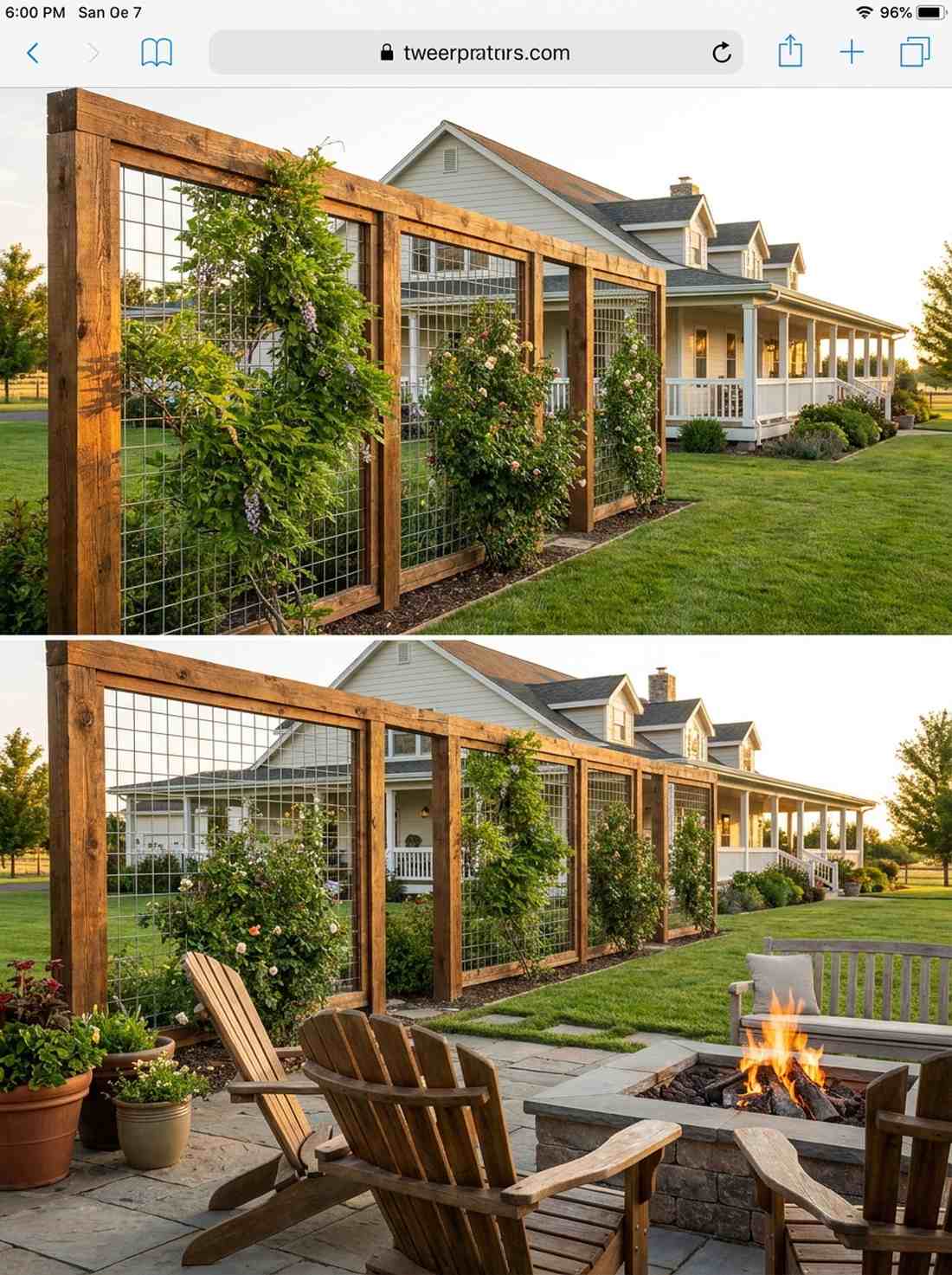
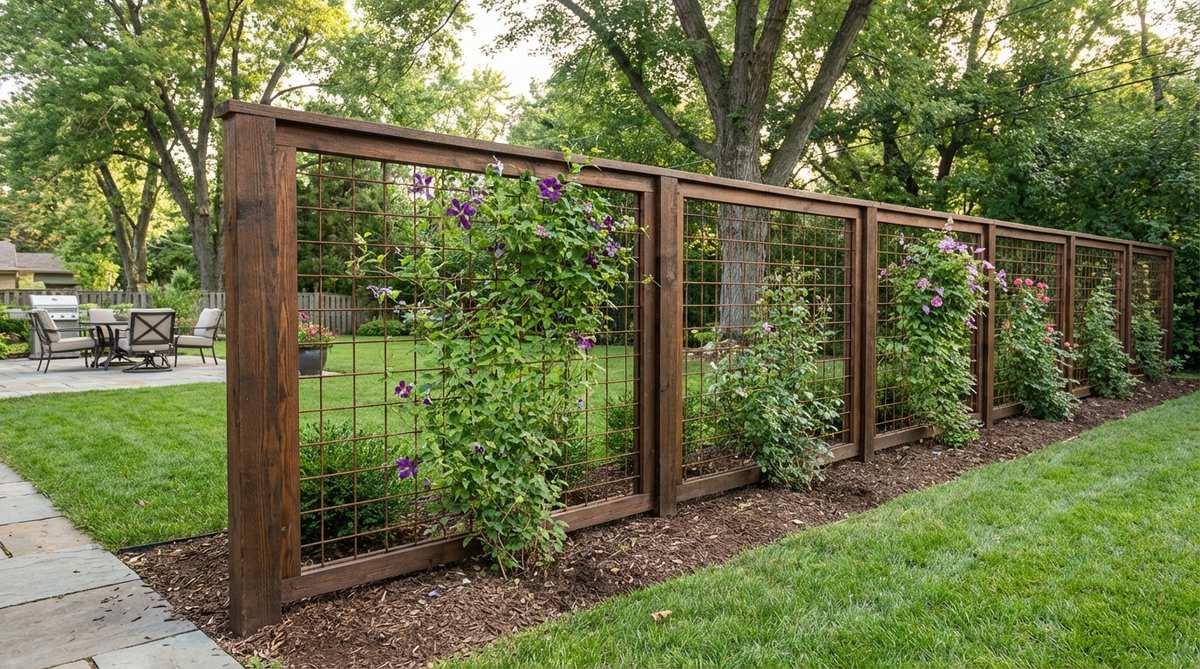
Feels like exploring a rural winery estate. A timber-framed wire grid screen is the absolute best support for aggressive climbing vines.
Delivers an expensive rustic look while saving a ton of money on solid wood fill. Stretching heavy-gauge hog wire cattle panels across the frames ensures the mesh won’t warp under the weight of mature plants.
You can assemble these agricultural chic panels for just $15–$25 a foot. Pin this if you want a living, breathing property line.
- Key Materials: Timber frame, welded wire
- Vibe / Style: Agricultural Chic
- Difficulty: Easy DIY
- Budget Breakdown: Wire Mesh: $10/ft | Framing: $15/ft.
- Creator’s Tip: Sandwich the wire mesh tightly between two identical frame pieces to hide the sharp cut edges.
- Smart Sourcing: galvanized welded wire mesh panels (bulk) | heavy-duty fencing staple gun.
18. Stone Columns with Wood Panels
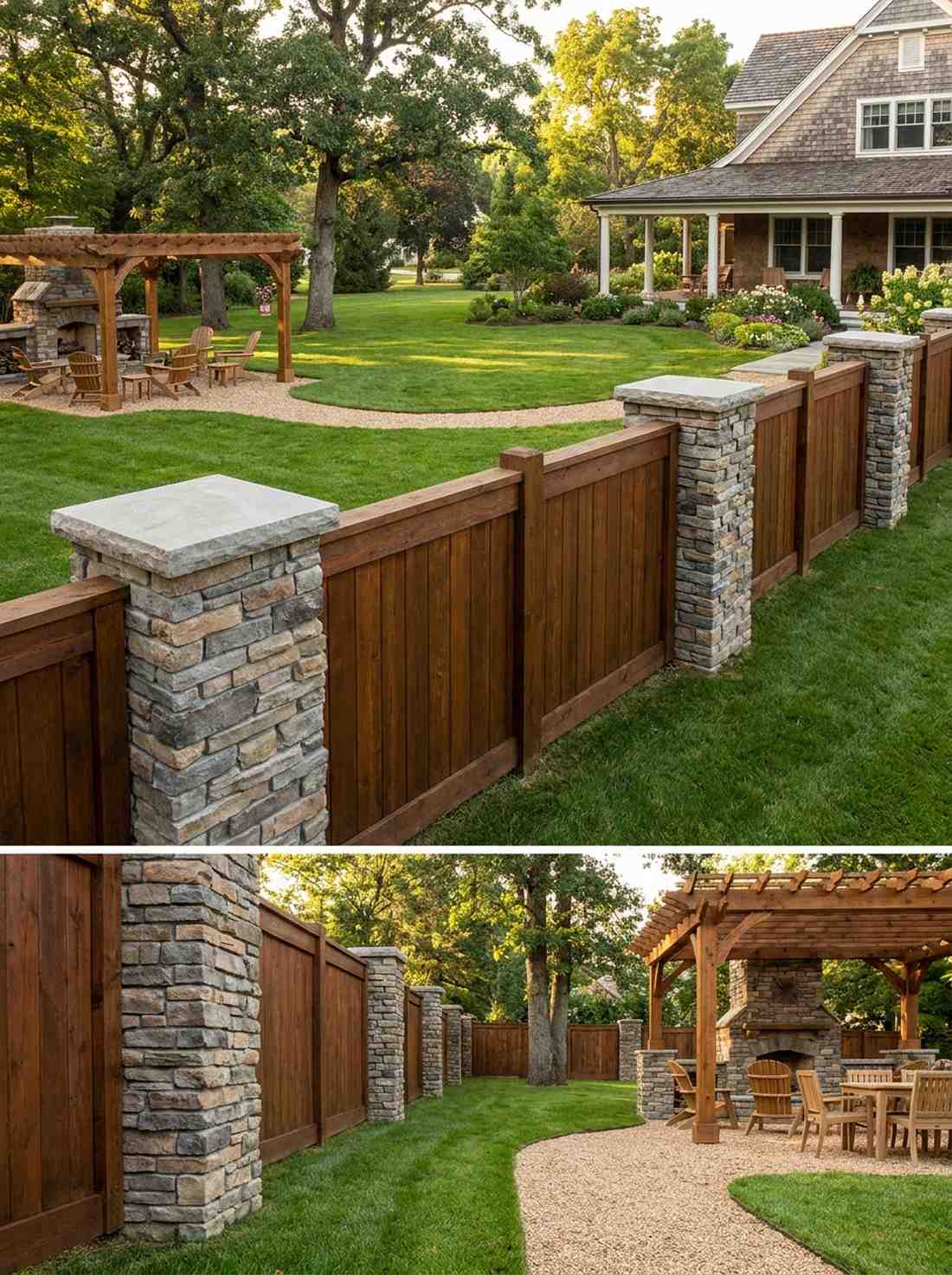
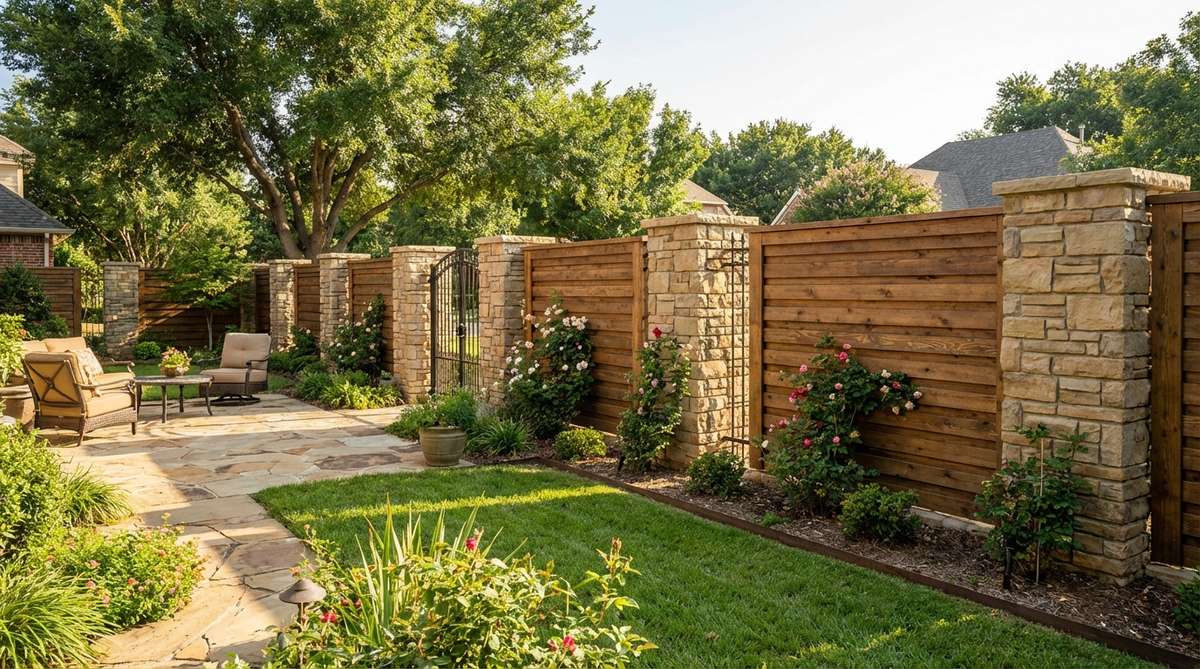
Exudes generational wealth and permanent architectural grounding. Anchoring your line with a masonry pillar and timber design instantly formalizes the garden boundary.
Most believe this requires a full masonry crew, but modern shortcuts exist. Utilizing faux stone column wrap kits over standard 6×6 wooden posts delivers the exact same monolithic look for a fraction of the cost.
Expect a mixed cost of $50–$80 per foot depending on column spacing. Save this for your ultimate dream house exterior board.
- Key Materials: Stone wraps, solid wood panels
- Vibe / Style: Grand Estate
- Difficulty: Advanced
- Budget Breakdown: Pillars: $100/each | Wood Panels: $30/ft.
- Creator’s Tip: Cap the columns with wide pre-cast concrete blocks to shed water away from the wood joints.
- Smart Sourcing: polyurethane faux stone post wraps (kit) | pre-cast concrete pillar caps.
19. Composite-and-Aluminum Hybrid
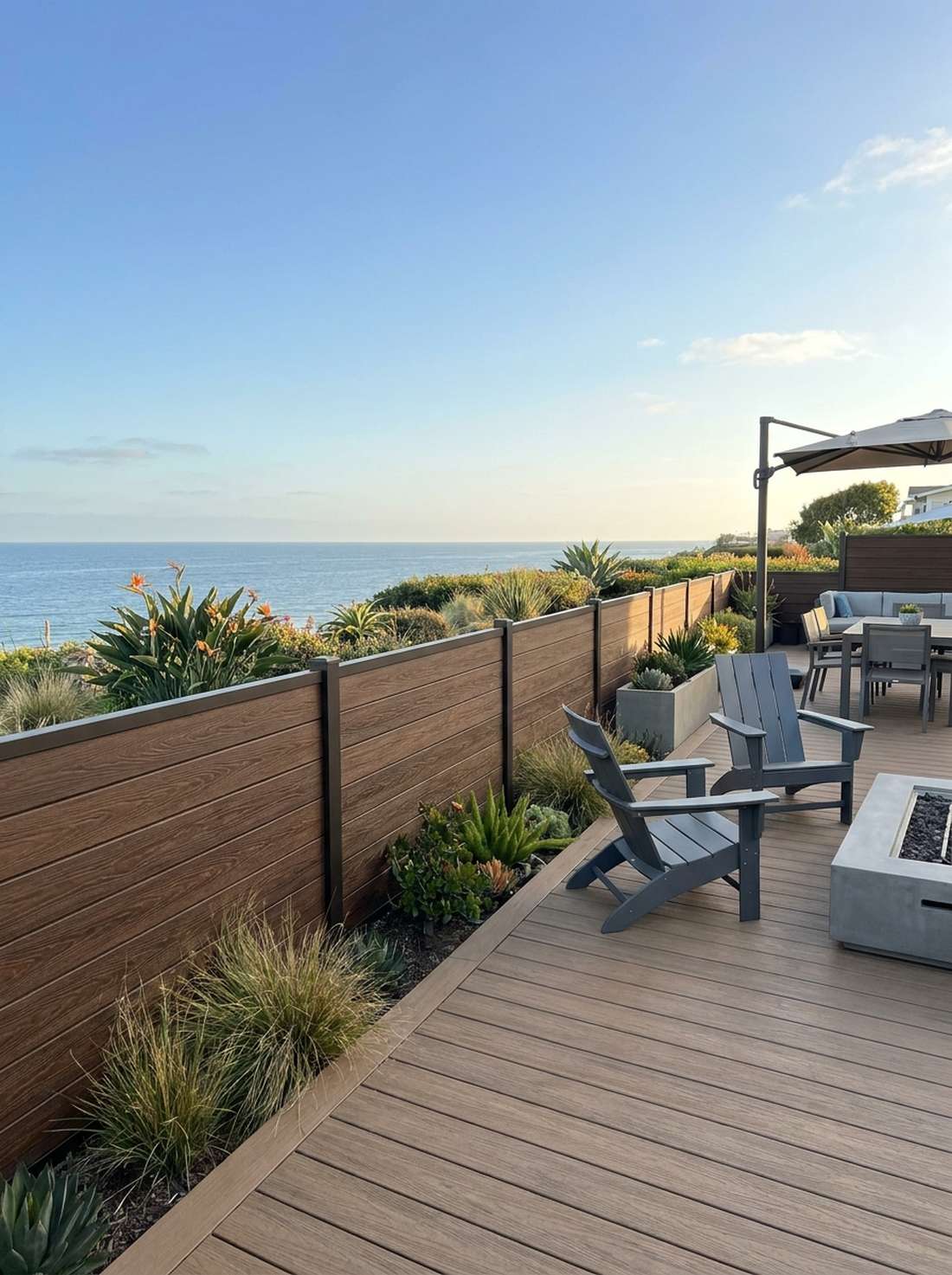
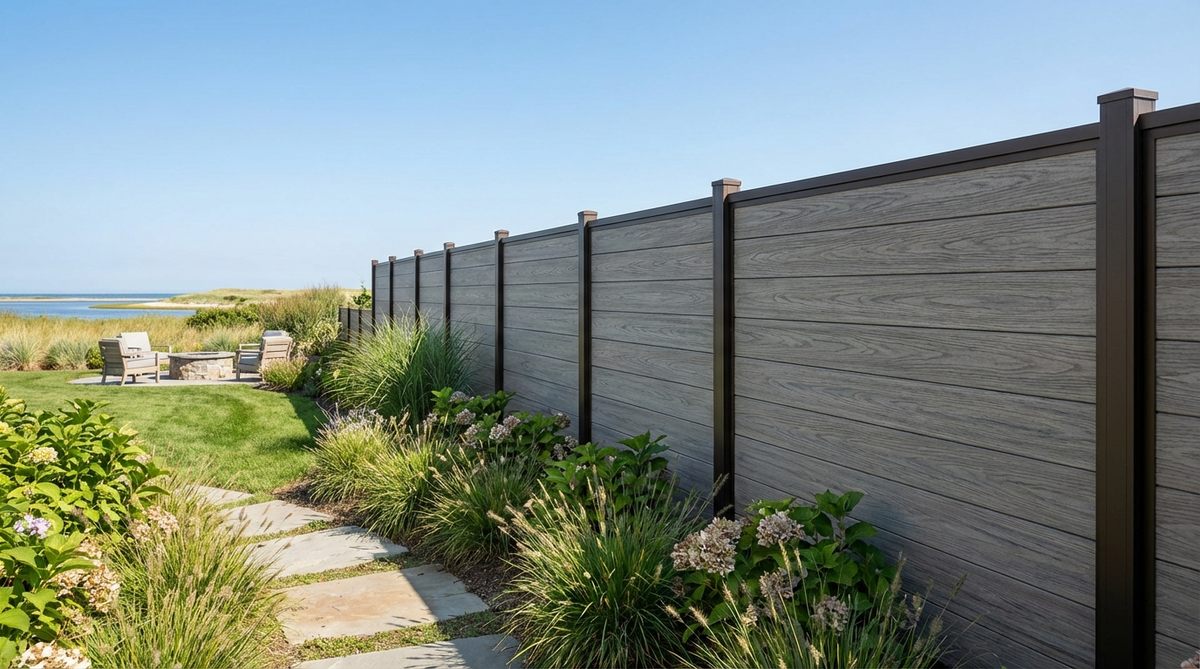
The undisputed king of zero-maintenance landscaping. Setting up a synthetic lumber and metal partition means you can throw away your stain brushes forever.
This layout absolutely dominates coastal or highly humid environments. Snapping together interlocking composite fencing kits provides the rich texture of walnut without the inevitable rotting.
Initial investment is higher at $60–$90 per foot, but the lifetime savings are massive. Pin this if you hate weekend yard maintenance.
- Key Materials: Composite boards, aluminum rails
- Vibe / Style: Pristine Modern
- Difficulty: Intermediate
- Budget Breakdown: Composite: $60/ft | Metal Frame: $25/ft.
- Creator’s Tip: Buy the boards with deep embossed grain textures; the smooth ones look too much like plastic in direct sun.
- Smart Sourcing: interlocking composite privacy boards (bundle) | aluminum H-channel fence posts.
Before you buy expensive exotic hardwoods, look at how this clever industrial mix slashes costs while boosting style…
20. Wood-and-Corrugated Metal Panels
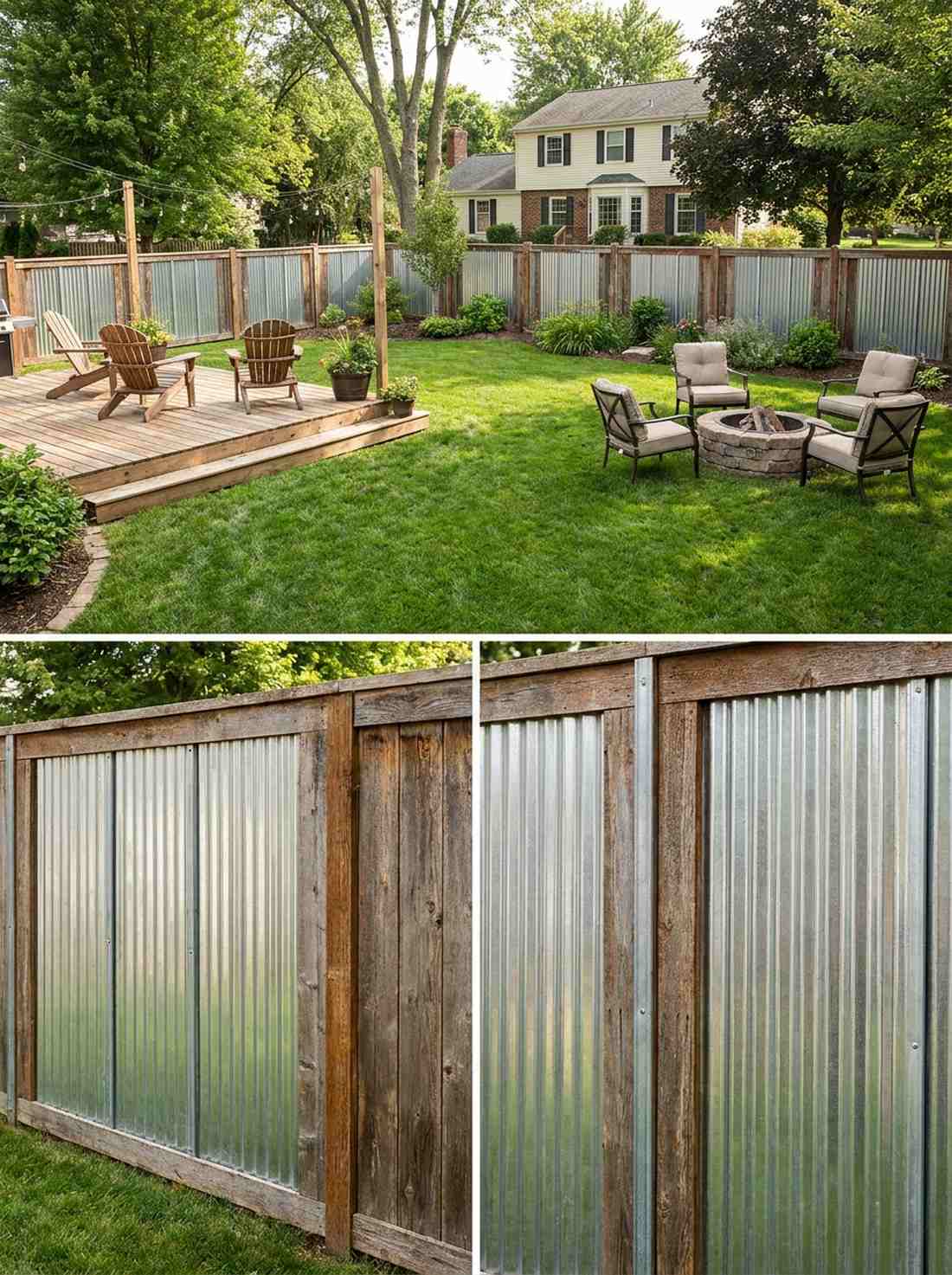
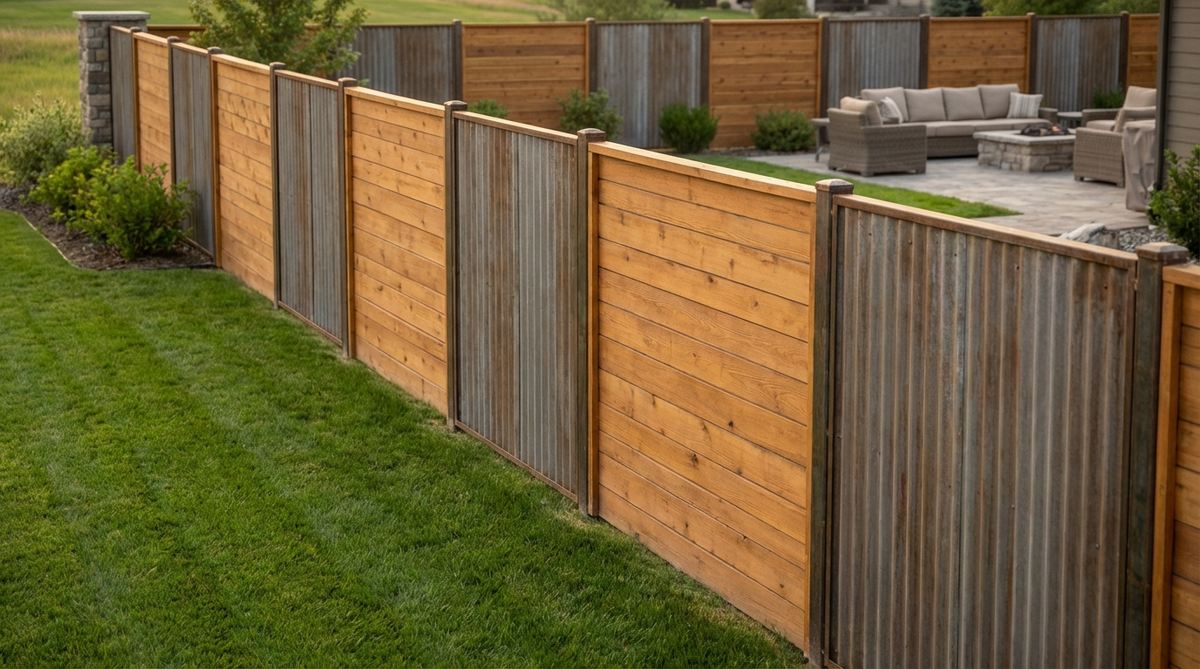
Brings a brilliant contrast of textures to a sprawling suburban yard. Alternating an industrial tin and rustic timber layout prevents long property lines from looking utterly boring.
This specific mix breaks up the visual monotony while dramatically lowering lumber costs. Sourcing galvanized siding starter strips keeps the metal panels locked tight and prevents wind rattling.
You can mix and match this barrier for around $25–$40 per foot. It’s an incredibly smart budget stretcher.
- Key Materials: Corrugated tin, cedar framing
- Vibe / Style: Eclectic Rustic-Modern
- Difficulty: Intermediate
- Budget Breakdown: Metal Sections: $20/ft | Wood Sections: $35/ft.
- Creator’s Tip: Always run the metal corrugation vertically so dirt and rain wash straight down to the soil.
- Smart Sourcing: corrugated galvanized steel panels (bulk) | self-tapping metal-to-wood screws.
Semi-Private Decorative Options
Partial screening filters views and defines boundaries without imposing claustrophobic solid barriers around your front yard or patio.
21. Diagonal Lattice Panels
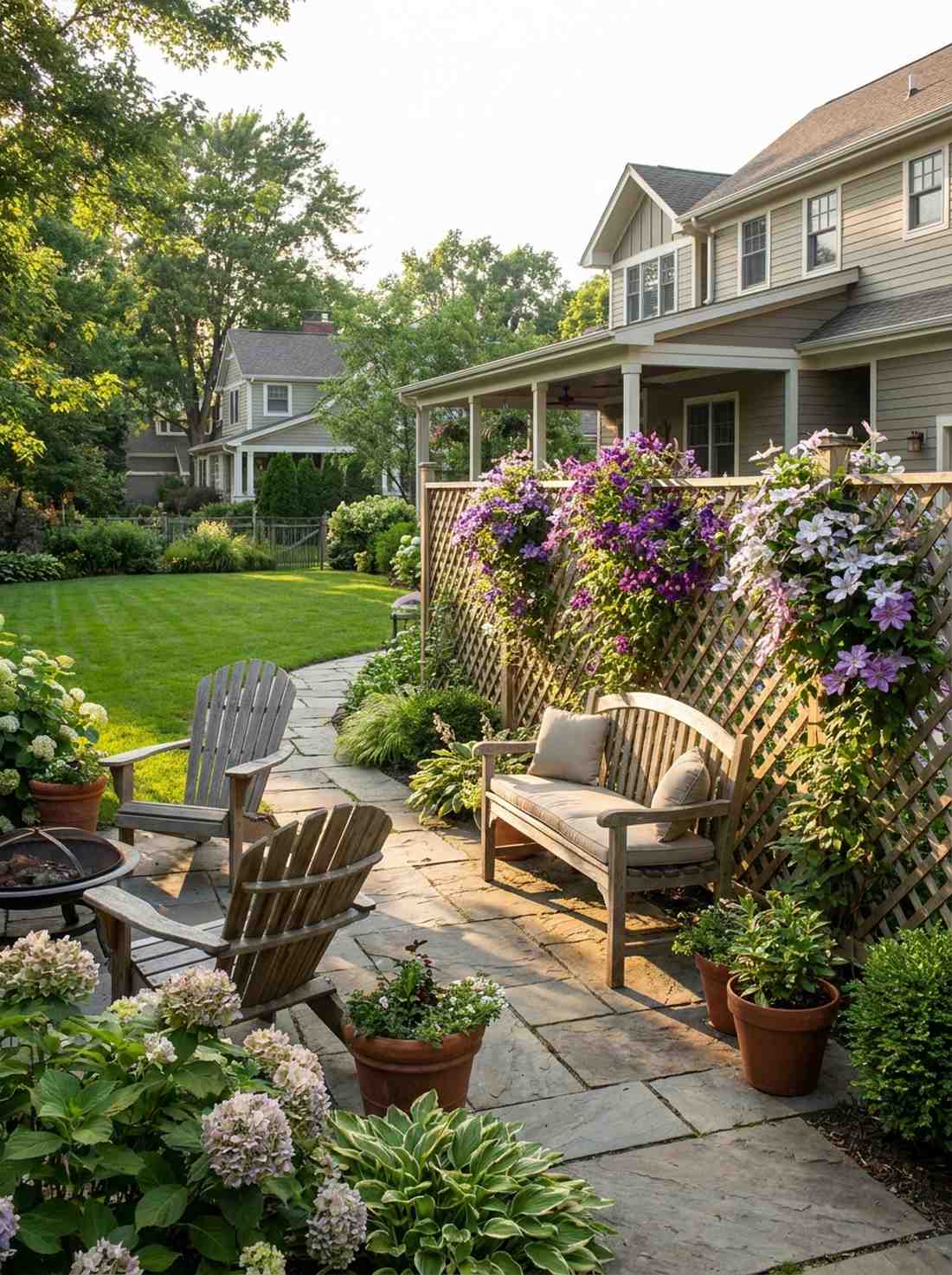
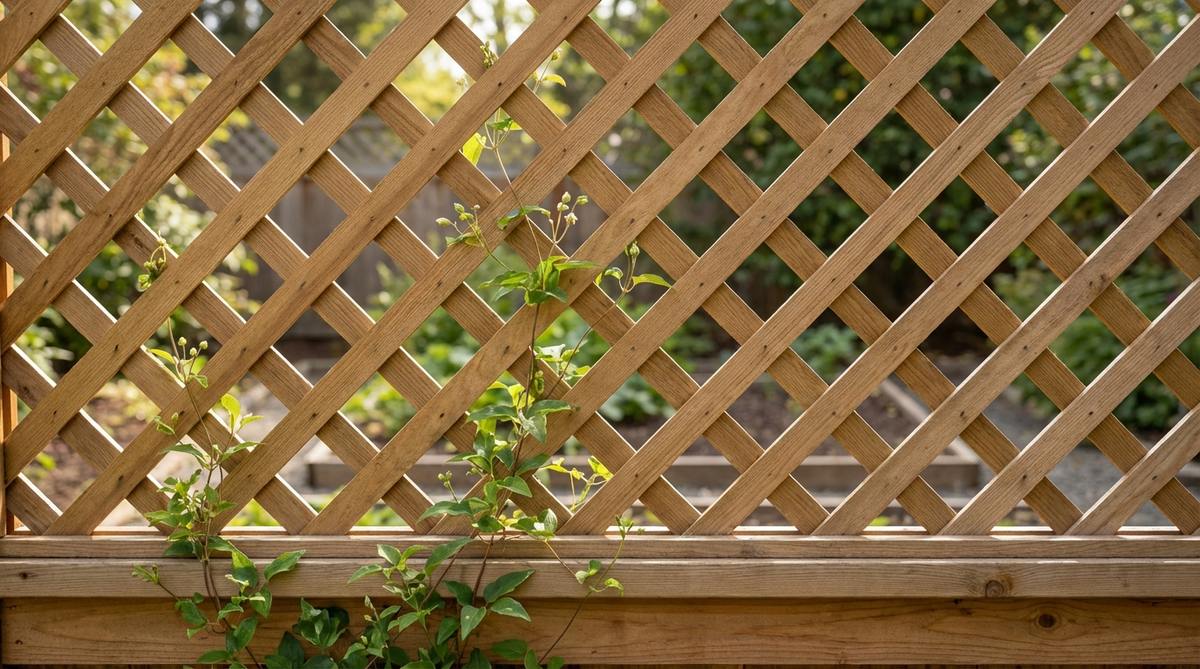
Feels like discovering a secret garden pathway. A classic diamond lattice screen is gorgeous when draped in heavy blooming clematis.
Provides an old-world elegance while still allowing massive airflow. Buying heavy-duty pressure-treated lattice sheets ensures the grid won’t snap under the sheer weight of mature vines.
You can install this semi-privacy boundary for just $15–$25 per foot. Save this to your vertical gardening strategy board.
- Key Materials: Framed lattice sheets, post mounts
- Vibe / Style: Secret Garden
- Difficulty: Easy DIY
- Budget Breakdown: Lattice Sheets: $20/each | Frames: $10/ft.
- Creator’s Tip: Sandwich the lattice edge between two 1×2 trim boards so it doesn’t warp out of the frame.
- Smart Sourcing: heavy-duty diagonal wood lattice panels (4-pack) | exterior wood structural adhesive.
22. Square Lattice Topper
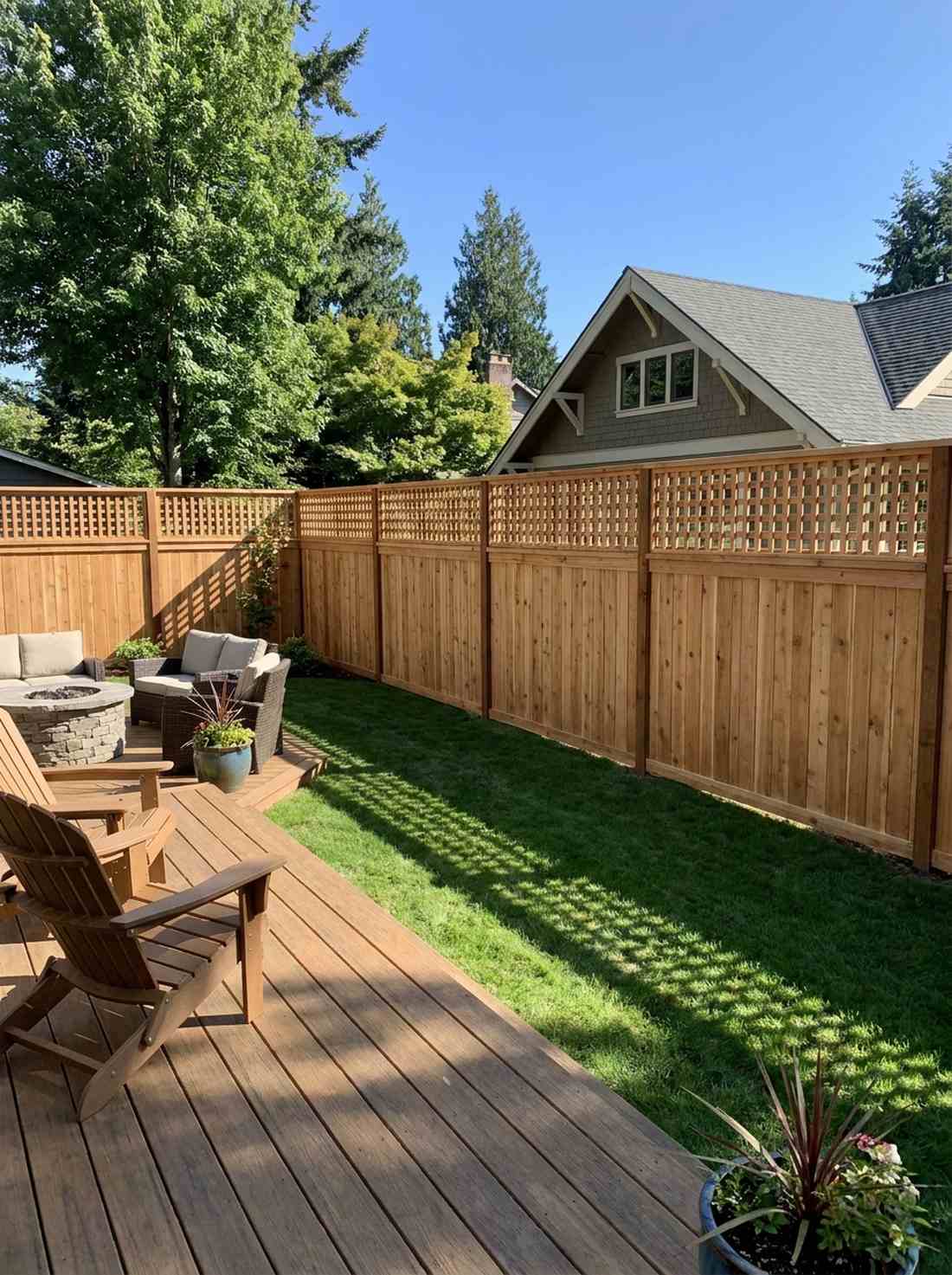
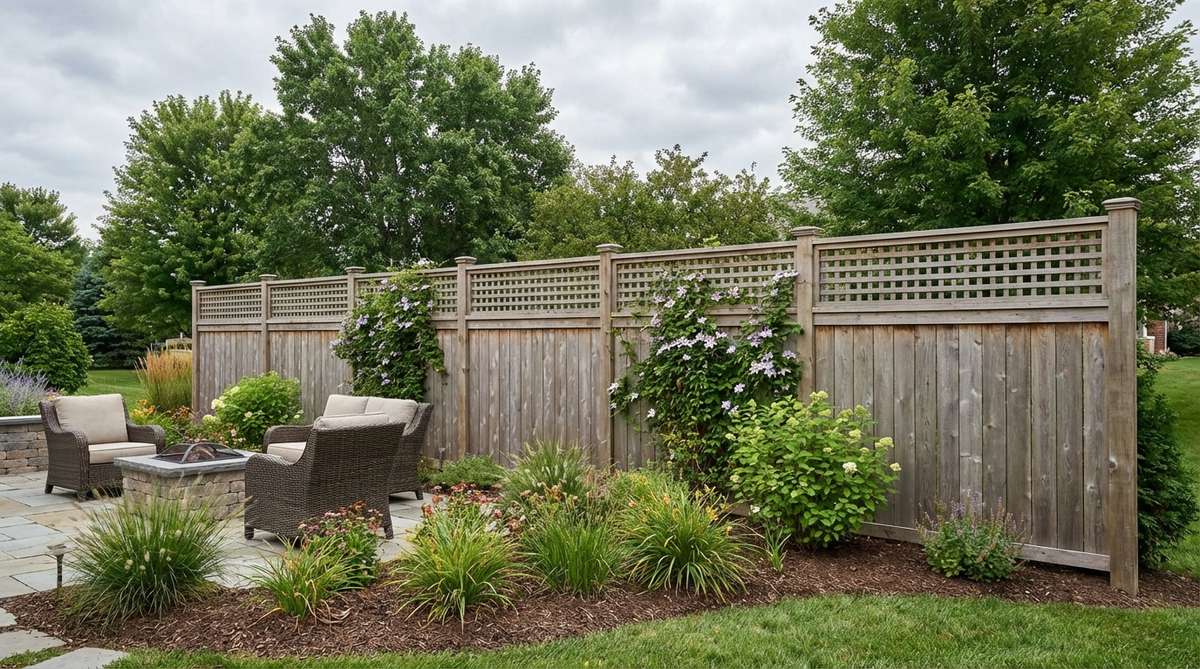
Strikes the absolute perfect compromise with nosy neighbors. Adding a geometric grid extension softens an aggressive 6-foot solid wood wall.
This layout gives you full ground-level privacy but lets sunlight spill into your yard. Grabbing pre-assembled square trellis toppers saves you hours of tedious measuring and brad-nailing.
These toppers run roughly $20–$30 per section as an add-on. Highly recommended for avoiding that “boxed-in” backyard feeling.
- Key Materials: Solid base, square grid topper
- Vibe / Style: Friendly Suburban
- Difficulty: Intermediate
- Budget Breakdown: Topper: $25/panel | Base Fence: $35/ft.
- Creator’s Tip: Ensure your main posts are cut extra long (8 feet) to seamlessly support the topper brackets.
- Smart Sourcing: pre-assembled square lattice fence toppers (kit) | U-bracket fence post mounts.
Material Guide: Cheap vs. Premium Aesthetic
Knowing exactly where to save and where to spend makes all the difference in achieving that “looks custom but isn’t” boundary profile.
- Standard vs. UV-Resistant/Premium: Standard plastic lattice cracks in one winter; paying 15% more for UV-coated composite grids ensures it survives a decade.
- Pre-made Kits vs. Custom Milling: Buying pre-slotted posts or pre-assembled topper kits saves hundreds in labor hours and guarantees perfectly square geometry every time.
23. Vertical Slat Screen with Gaps
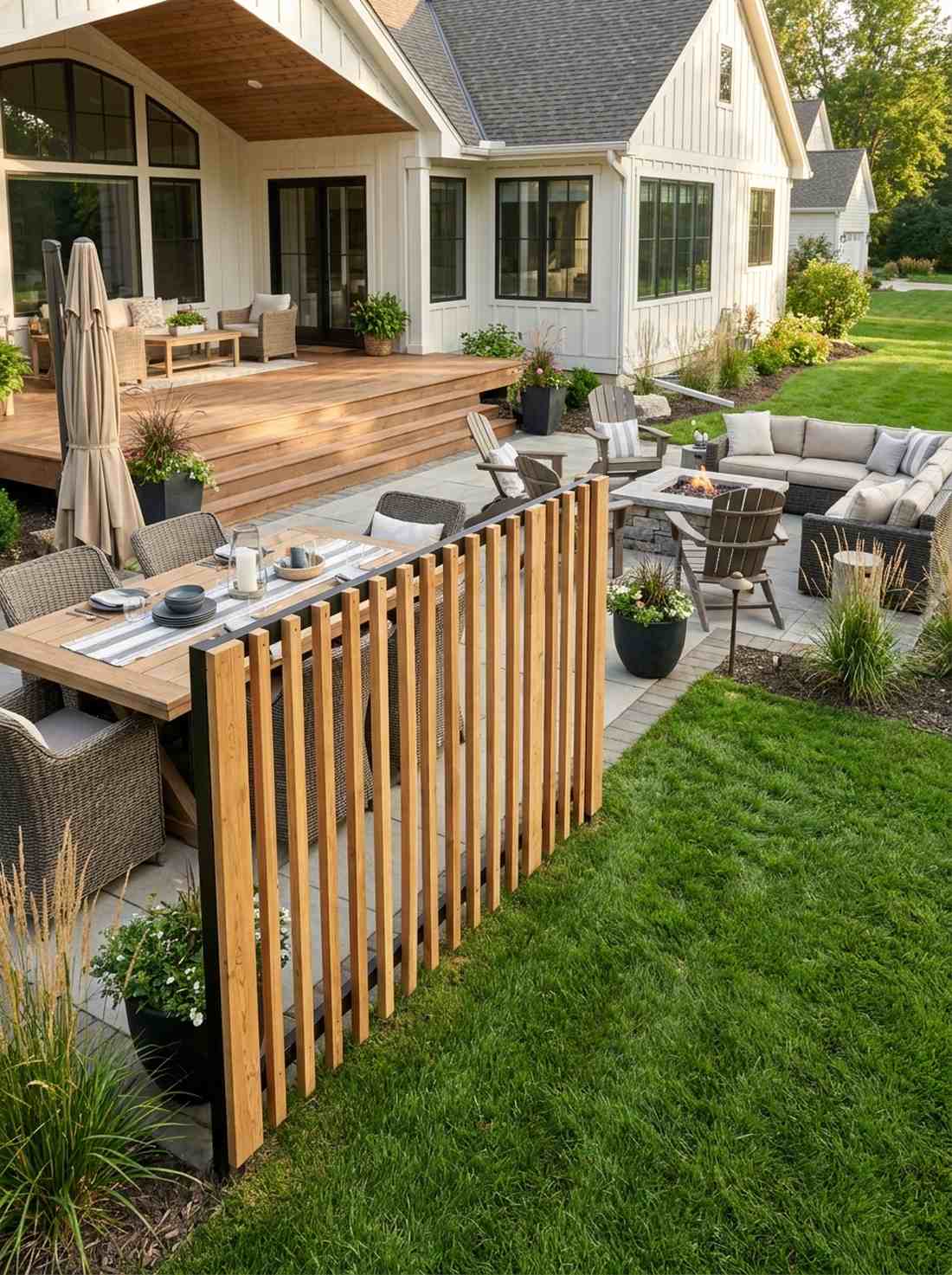
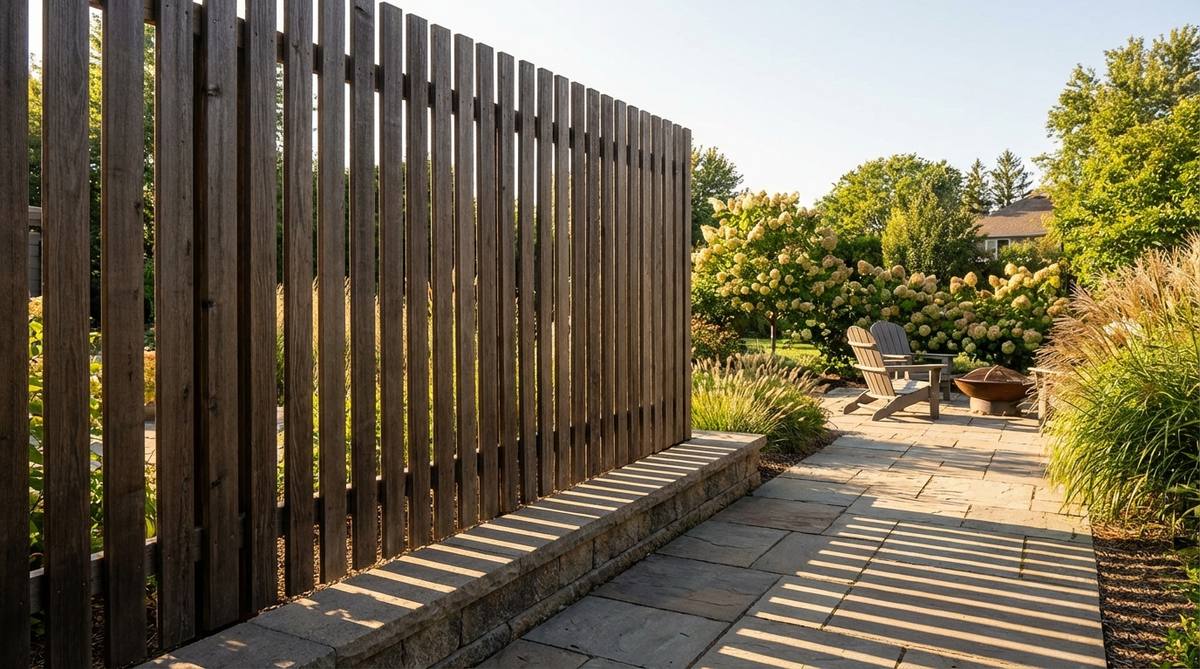
Creates a highly intentional, rhythmic visual boundary. The spaced vertical timber partition is ideal for sectioning off a dining patio without closing it in.
This layout offers a high-end Japanese garden aesthetic on a tight budget. Stocking up on premium kiln-dried cedar battens ensures those narrow strips won’t twist like a corkscrew in the sun.
You can assemble this minimalist screen for roughly $20–$35 per foot. Pin this if you love organizing outdoor zones.
- Key Materials: 1×2 or 1×3 battens, back rails
- Vibe / Style: Zen Minimalist
- Difficulty: Easy
- Budget Breakdown: Wood Strips: $25/ft | Rails: $10/ft.
- Creator’s Tip: Paint your horizontal back rails entirely black so they visually disappear behind the natural vertical wood.
- Smart Sourcing: kiln-dried cedar batten strips (bundle) | black exterior framing paint.
24. Horizontal Slat with Spacing
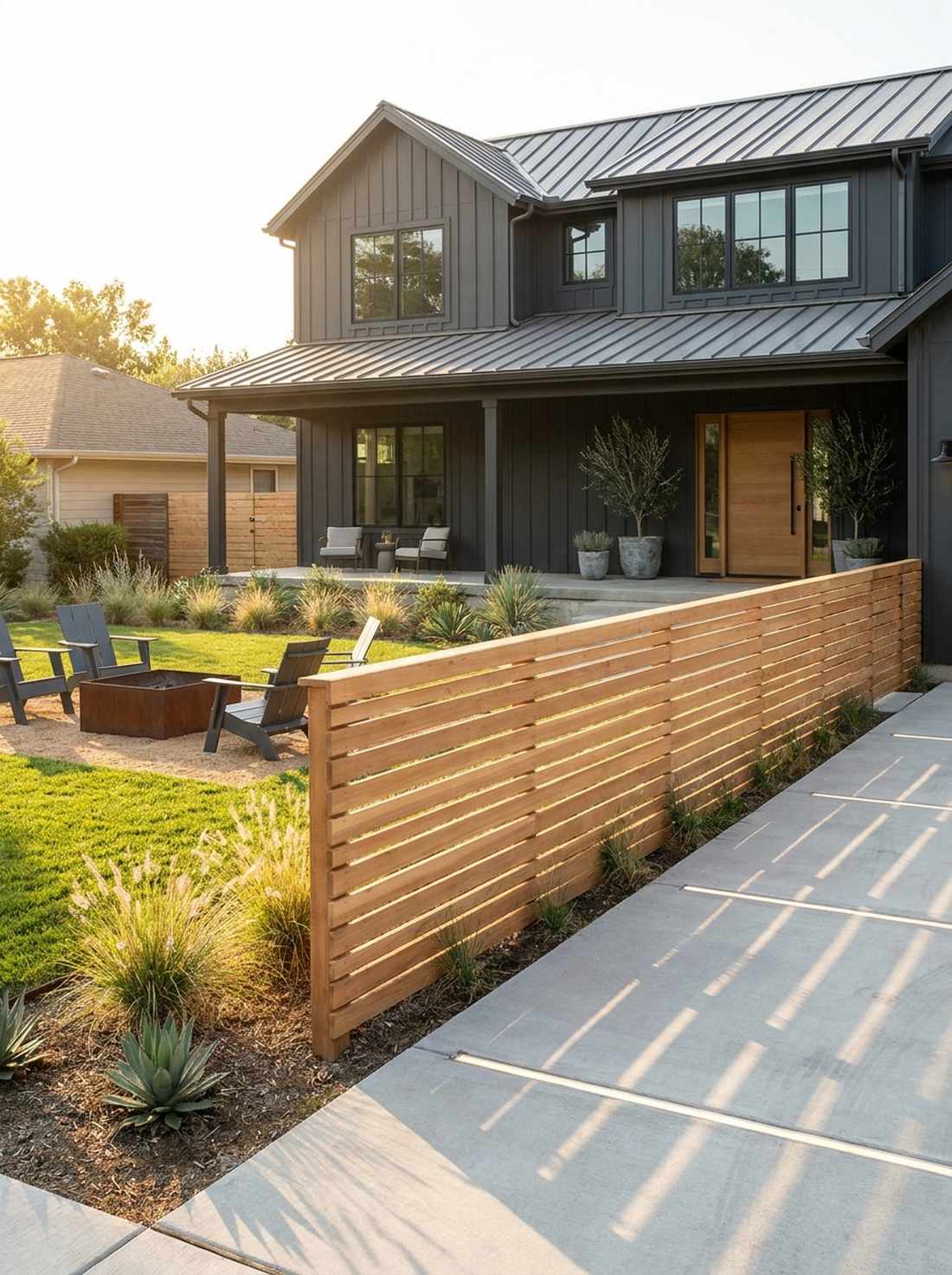
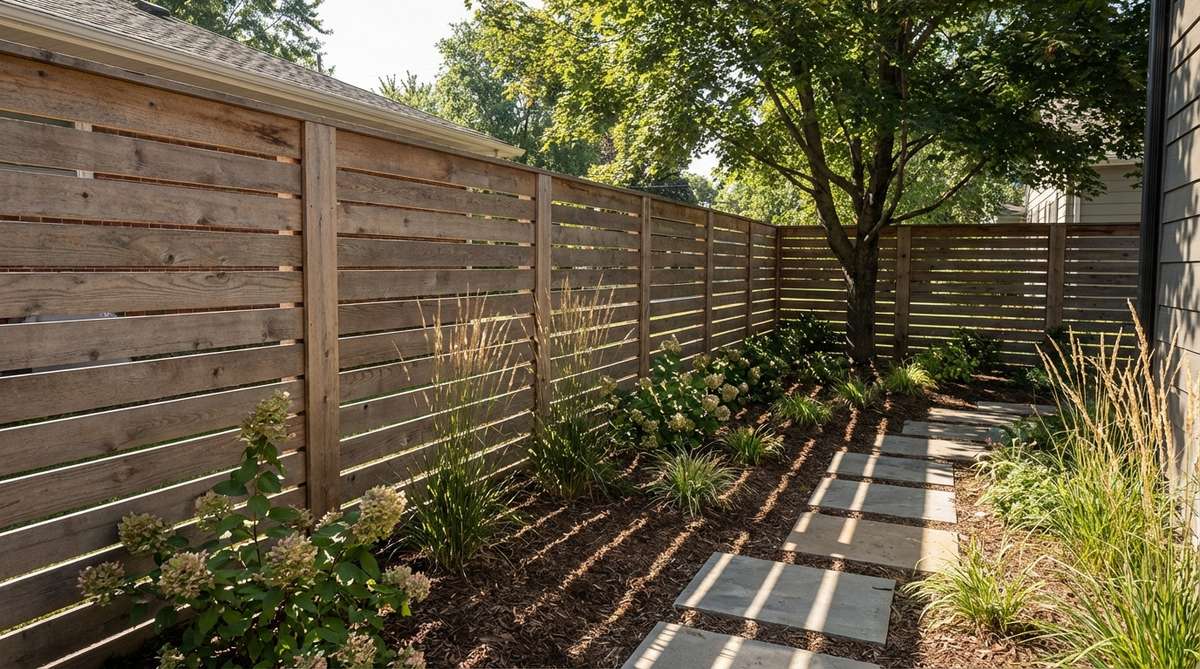
Delivers that ultra-trendy mid-century modern curb appeal. A floating horizontal gap screen works incredibly well alongside modern concrete driveway pads.
This look provides clean transparency while heavily defining your property line. Sourcing hidden deck fastening jigs ensures no ugly screw heads ruin the smooth horizontal face of the boards.
Material costs sit comfortably around $25–$45 per linear foot. It’s a fast upgrade that completely changes the home’s facade.
- Key Materials: 1×4 planks, layout spacers
- Vibe / Style: Mid-Century Modern
- Difficulty: Intermediate
- Budget Breakdown: Planks: $30/ft | Hardware: $10/ft.
- Creator’s Tip: Use a router to slightly round the edges of the planks; it casts a much softer shadow line.
- Smart Sourcing: hidden deck screw fastening jig kits | premium pre-sanded cedar planks.
If you are struggling with a boring chain-link border, this next natural overlay trick is a complete lifesaver…
25. Bamboo Reed Panels
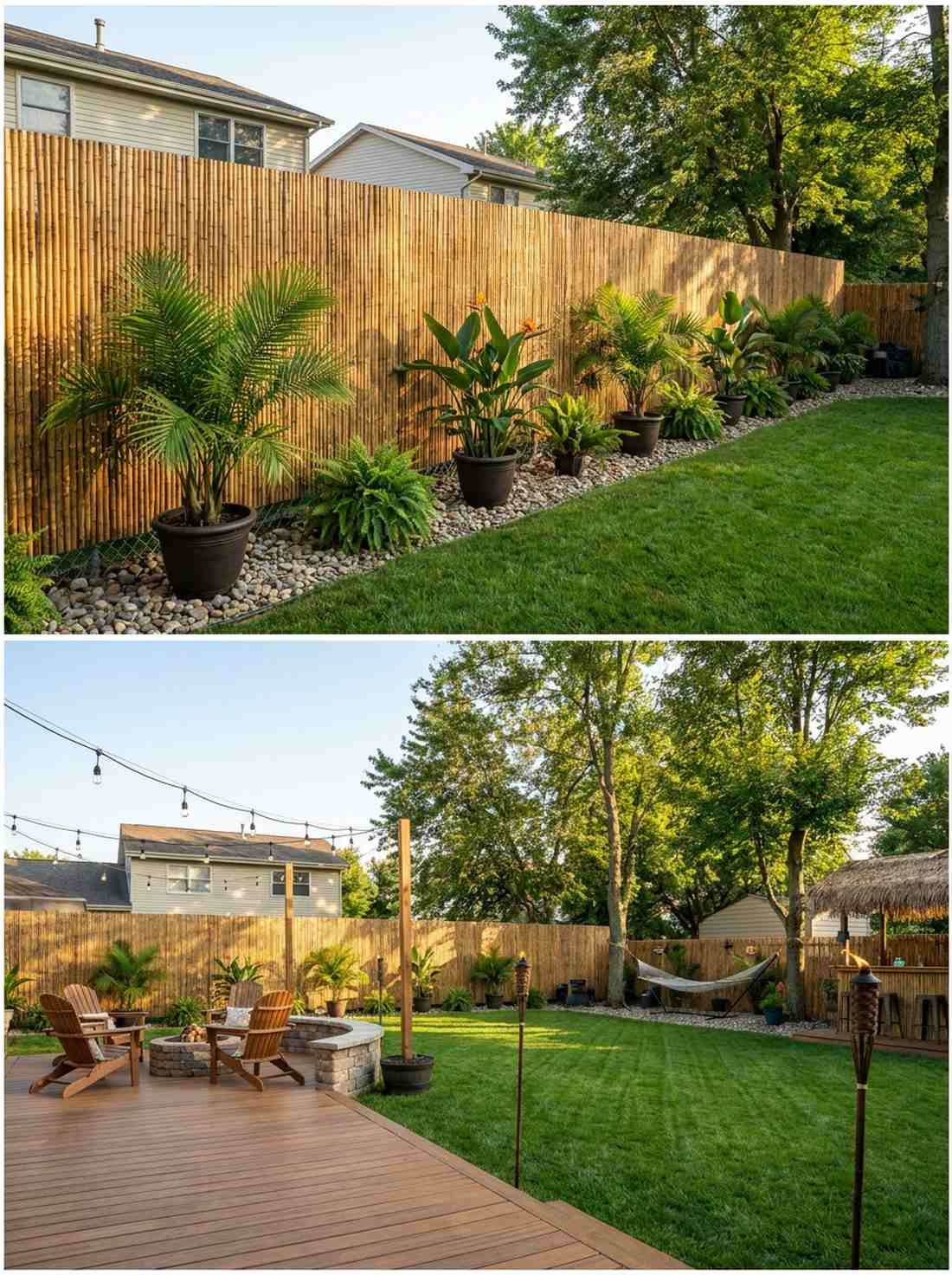
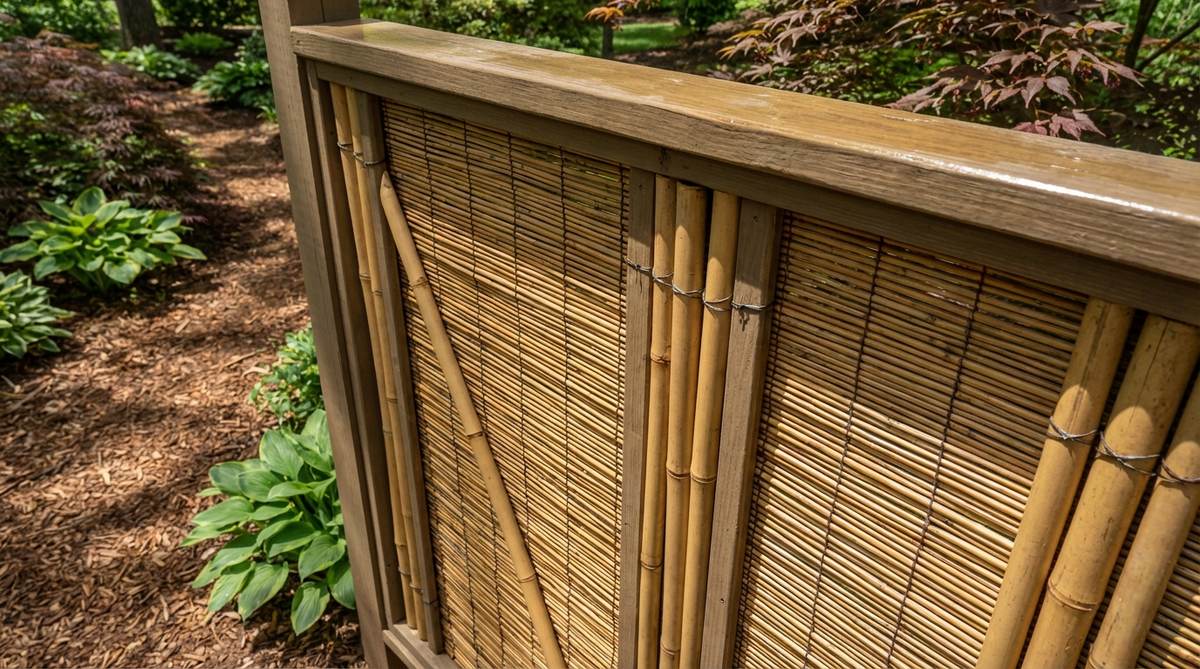
Instantly transports your backyard to a tropical island oasis. Rolling out a natural bamboo privacy roll is the fastest way to hide an ugly existing chain-link setup.
Delivers heavy organic texture for absolute pennies compared to lumber. Spraying the rolls with clear UV-protective marine varnish stops the bamboo from splitting or turning gray in the harsh summer sun.
You can transform a boundary line for a shocking $5–$12 per foot. Save this to your budget backyard makeover board.
- Key Materials: Bamboo rolls, zip ties
- Vibe / Style: Tropical Tiki
- Difficulty: Extremely Easy
- Budget Breakdown: Bamboo Rolls: $10/ft | Fasteners: $2/ft.
- Creator’s Tip: Keep the bottom of the roll at least two inches off the dirt to prevent the reeds from soaking up groundwater and rotting.
- Smart Sourcing: natural bamboo fencing rolls (bulk bundle) | heavy-duty UV-resistant zip ties.
Sustainable Natural Boundaries
Eco-conscious choices minimize ecological impact through smart material sourcing and construction methods that work with nature rather than against it.
26. Living Willow Fedge
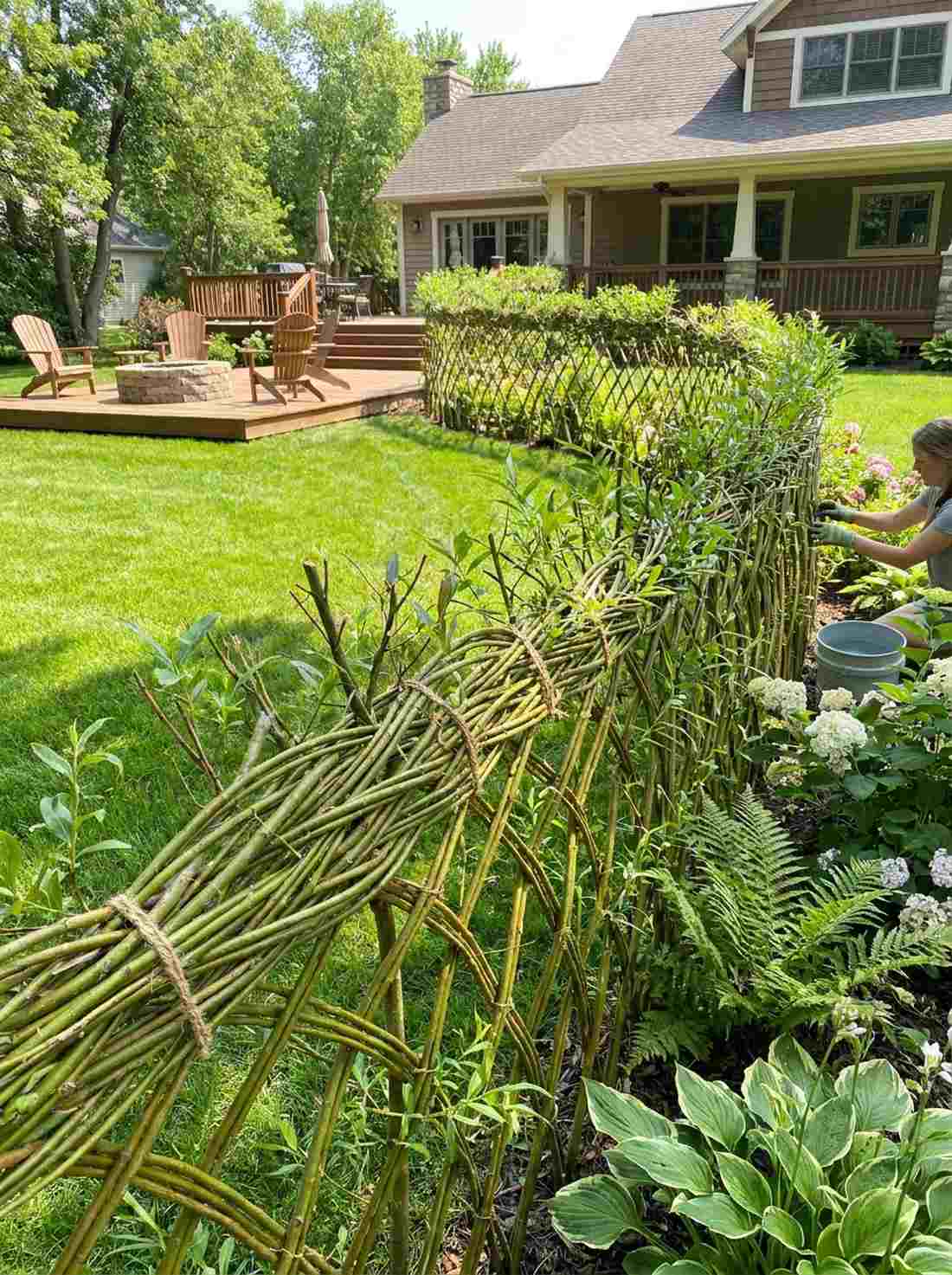
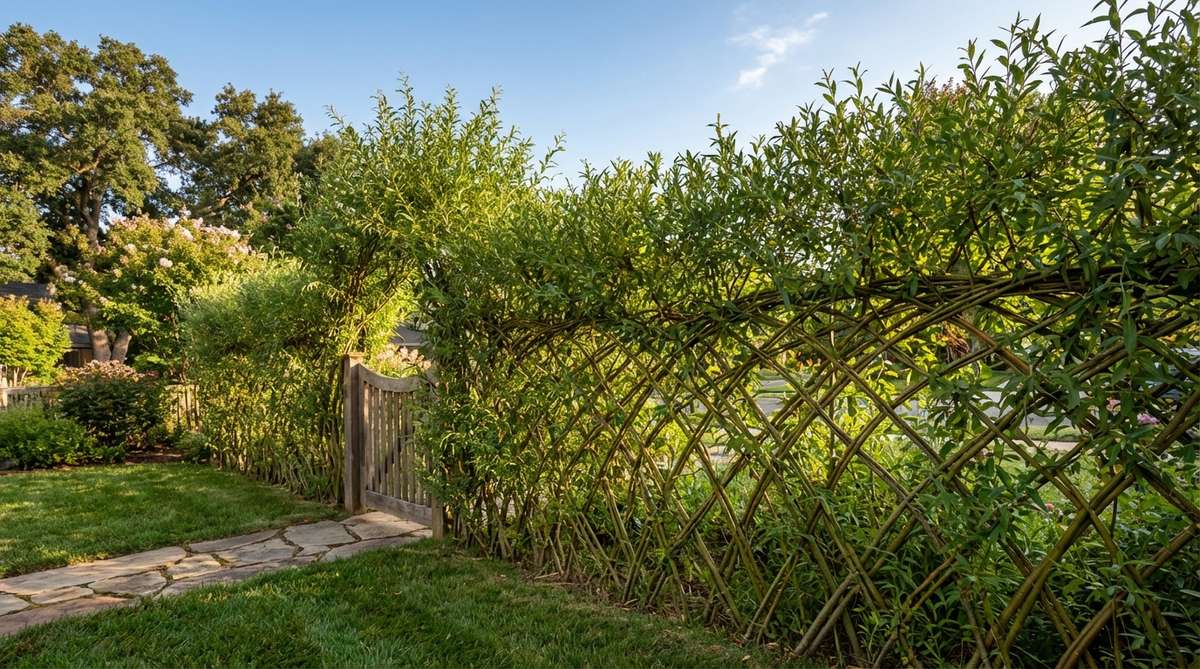
Feels like an enchanted woodland border right out of a fantasy novel. A woven living tree barrier creates the ultimate eco-friendly perimeter.
This layout replaces dead lumber with a self-sustaining green architecture. Grabbing dormant willow cuttings in bulk allows you to plant a dense, rooting grid that actually grows stronger every year.
This magical boundary costs an incredibly low $5–$15 per foot initially. Pin this if you love permaculture and sustainable gardening.
- Key Materials: Willow whips, organic twine
- Vibe / Style: Enchanted Forest
- Difficulty: Patient Gardening
- Budget Breakdown: Cuttings: $10/ft | Twine: $2/ft.
- Creator’s Tip: Soak the whips in buckets of water for 48 hours before planting to guarantee maximum root strike.
- Smart Sourcing: dormant live willow cutting bundles | biodegradable jute gardening twine.
27. Reclaimed Wood Pallet Fence
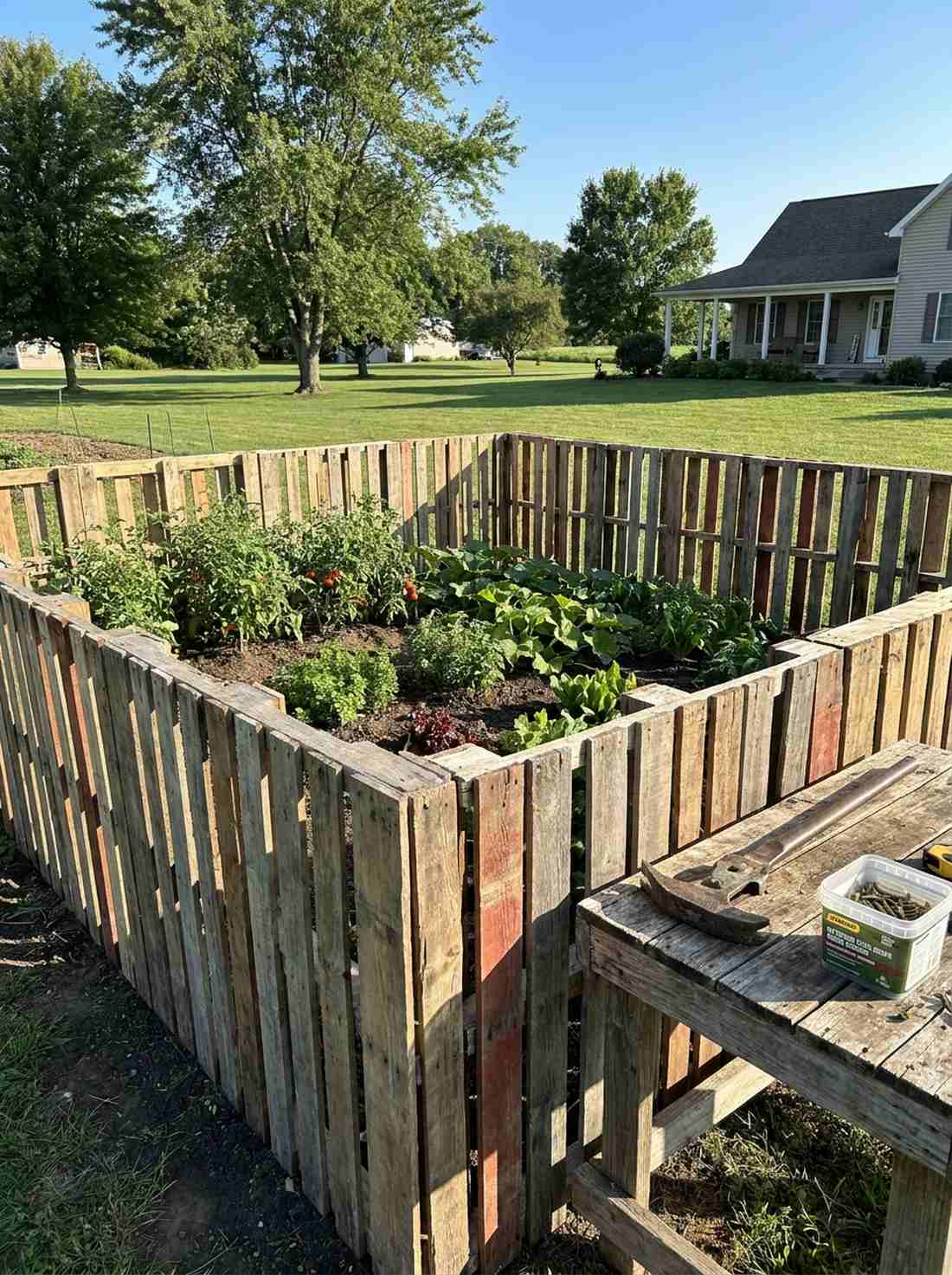
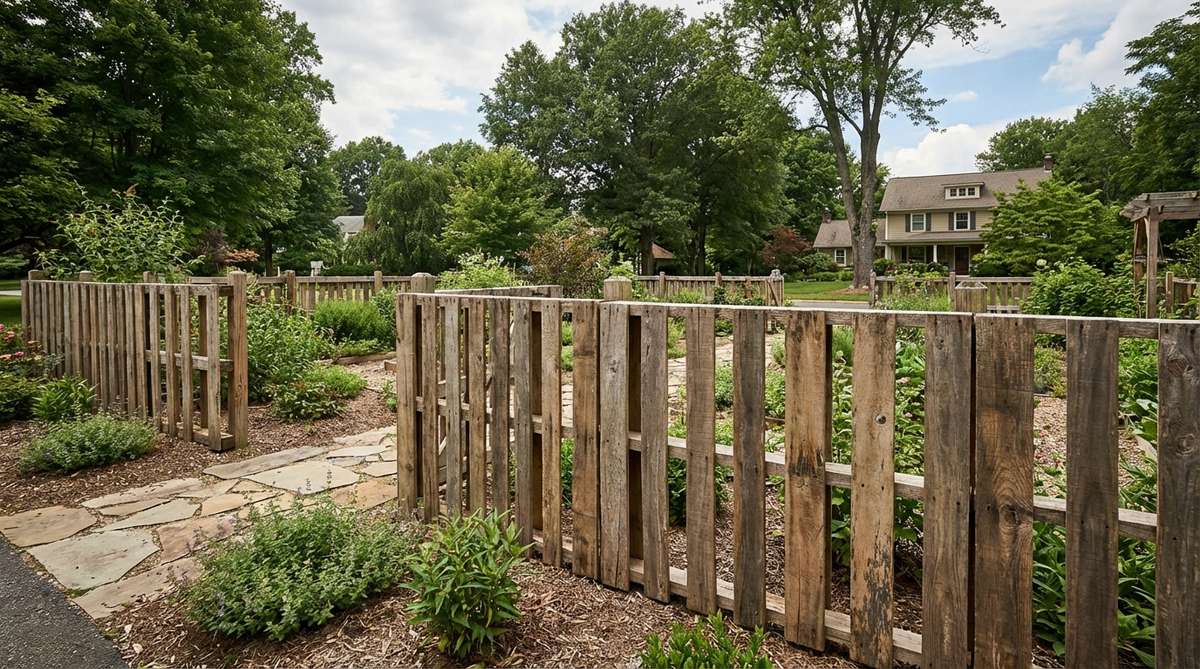
Brings intense authentic rustic character to any vegetable patch. Constructing a recycled pallet wood partition is the ultimate upcycling triumph.
This raw setup completely skips the lumber yard for an edgy, zero-waste aesthetic. Using a heavy-duty pallet dismantling tool stops you from splitting the dry, weathered boards when tearing them apart.
Your cost is essentially zero, just the price of nails and elbow grease. Highly recommended for rugged homestead layouts.
- Key Materials: Discarded pallets, deck screws
- Vibe / Style: Rugged Upcycled
- Difficulty: Physically Demanding
- Budget Breakdown: Wood: Free | Hardware: $5/ft.
- Creator’s Tip: Only use pallets marked “HT” (Heat Treated) to avoid off-gassing toxic chemical treatments into your garden soil.
- Smart Sourcing: heavy-duty pallet buster pry bar | exterior star-drive wood screws (bulk bucket).
28. Composite Recycled Plastic Lumber
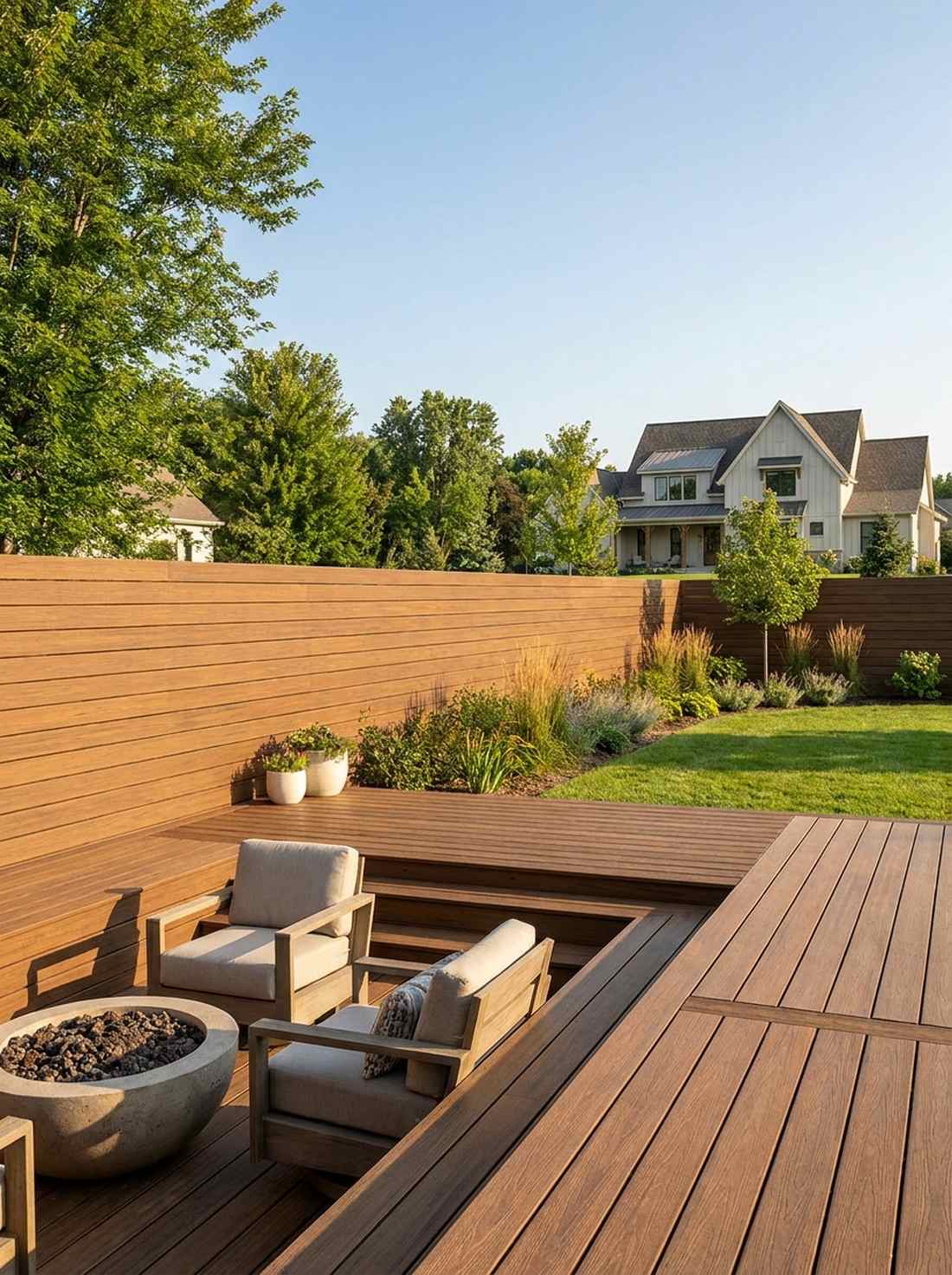
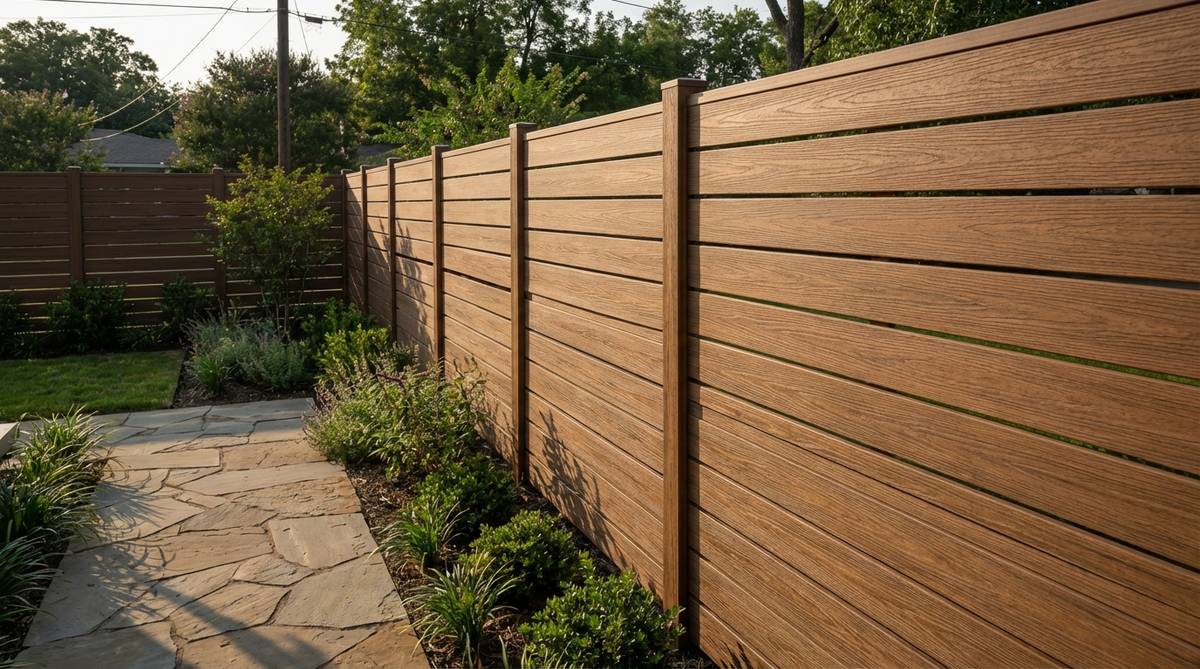
Looks like flawless premium timber but behaves like structural steel. Utilizing eco-friendly synthetic lumber boards means you protect the forests while building an indestructible wall.
This investment totally eliminates the vicious cycle of scraping, sanding, and staining. Snapping up pre-grooved composite decking kits provides a seamless barrier impervious to termites, rot, and splintering.
Expect to shell out $50–$80 per linear foot. Save this if you want a luxury look with a zero-guilt carbon footprint.
- Key Materials: Recycled composite boards
- Vibe / Style: Modern Eco-Luxury
- Difficulty: Intermediate
- Budget Breakdown: Synthetic Wood: $65/ft | Posts: $15/ft.
- Creator’s Tip: Pre-drill every single hole; composite materials expand under the heat of a screw and can crack without pilot holes.
- Smart Sourcing: recycled plastic composite fence kits | composite-specific color-matched deck screws.
29. Living Wall with Structural Support
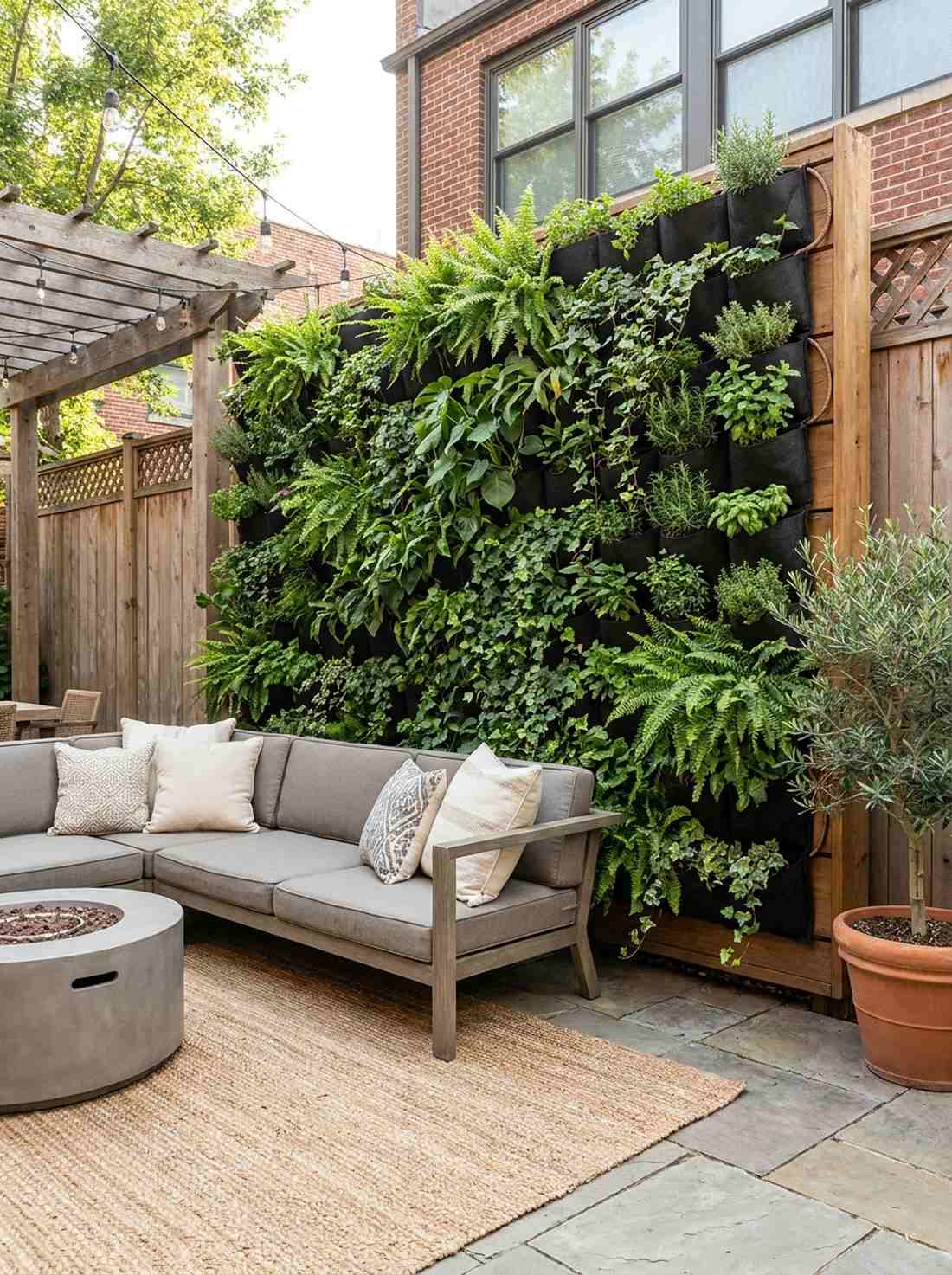
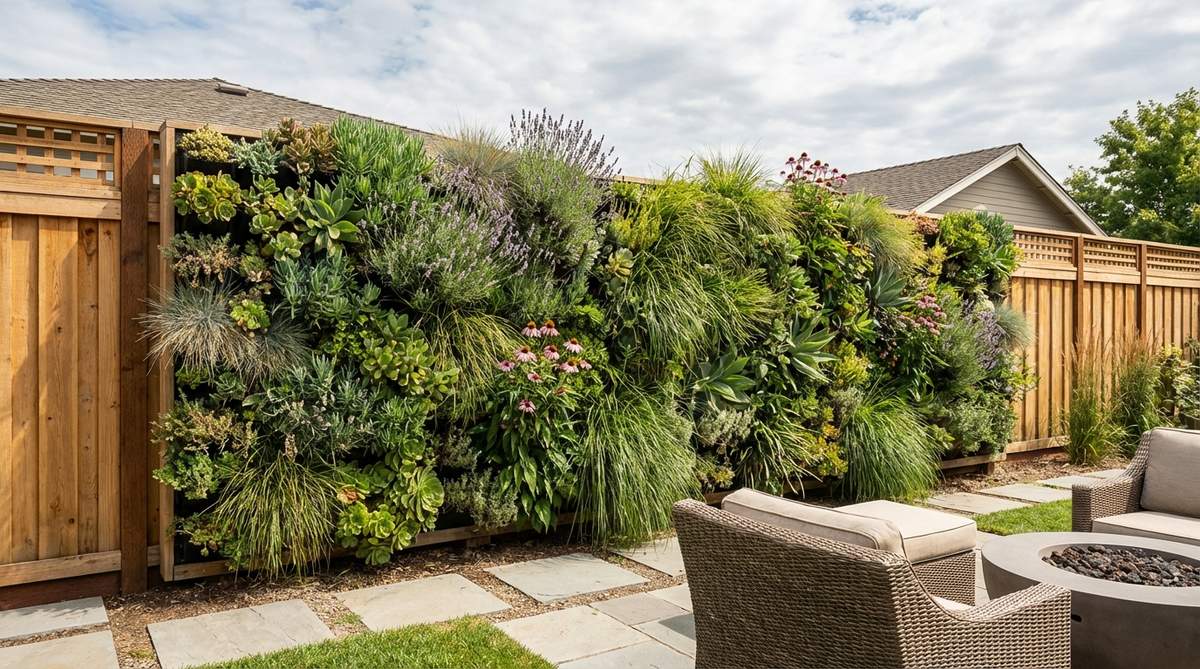
Transforms a dead border line into a lush, vertical rainforest. A structural vertical planter system maximizes greenery in tiny urban courtyards.
This layout provides extreme privacy using dense foliage instead of heavy wood. Mounting modular wall-planter pocket kits to a sturdy base frame allows you to grow ferns, trailing vines, and even herbs up to the sky.
Setting this up runs about $40–$70 per linear foot, excluding the plants. Pin this to your small space patio board.
- Key Materials: Planter pockets, backing frame
- Vibe / Style: Urban Jungle
- Difficulty: Advanced Gardening
- Budget Breakdown: Pockets: $35/ft | Irrigation: $15/ft.
- Creator’s Tip: Install a cheap drip line system weaving through the top pockets; gravity will perfectly water the rows below.
- Smart Sourcing: vertical garden felt planting pocket kits | micro-drip irrigation starter kits.
Do not buy standard treated pine until you see this next native hardwood that outlasts it by decades naturally…
30. Black Locust Naturally Rot-Resistant
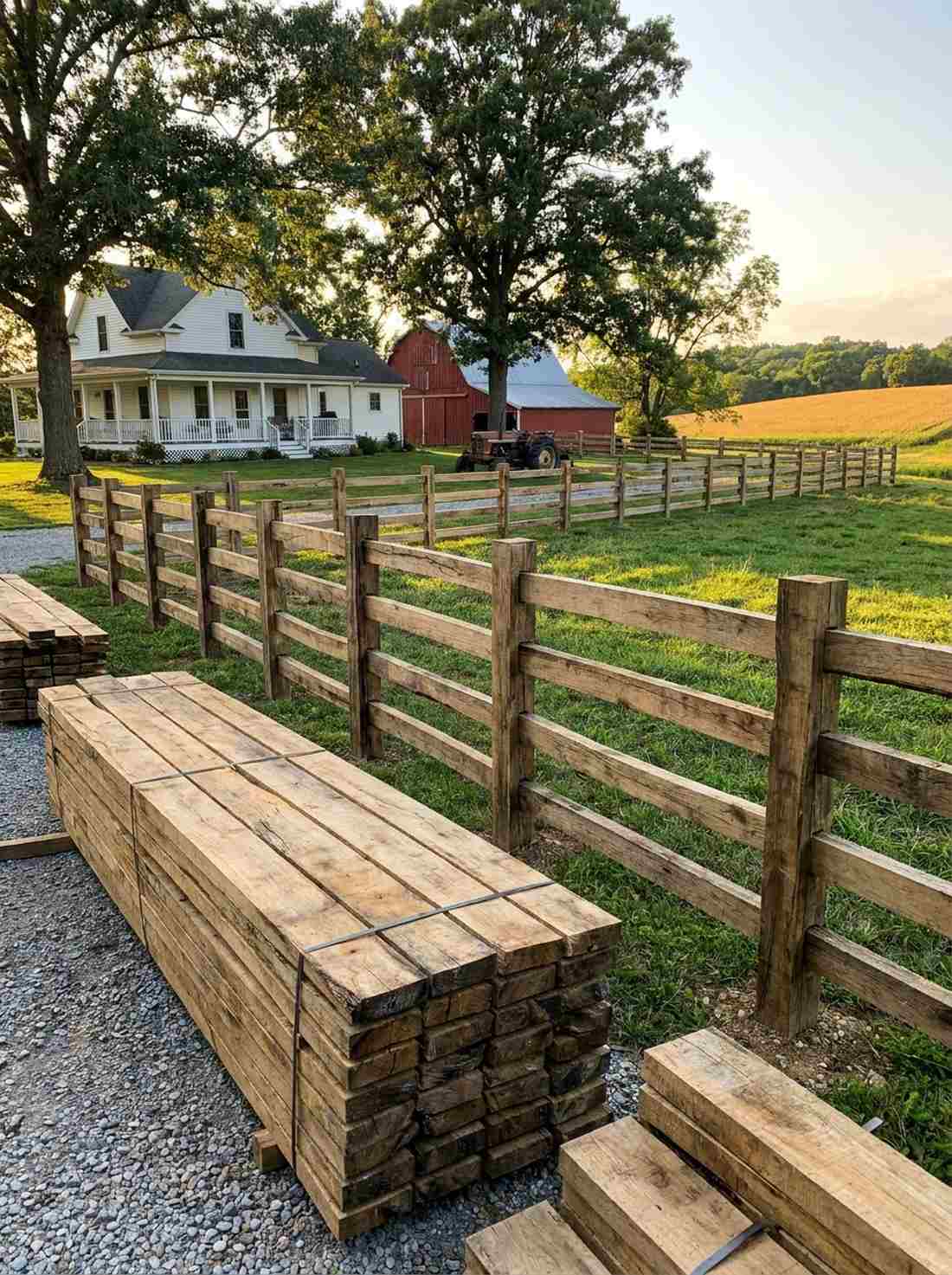
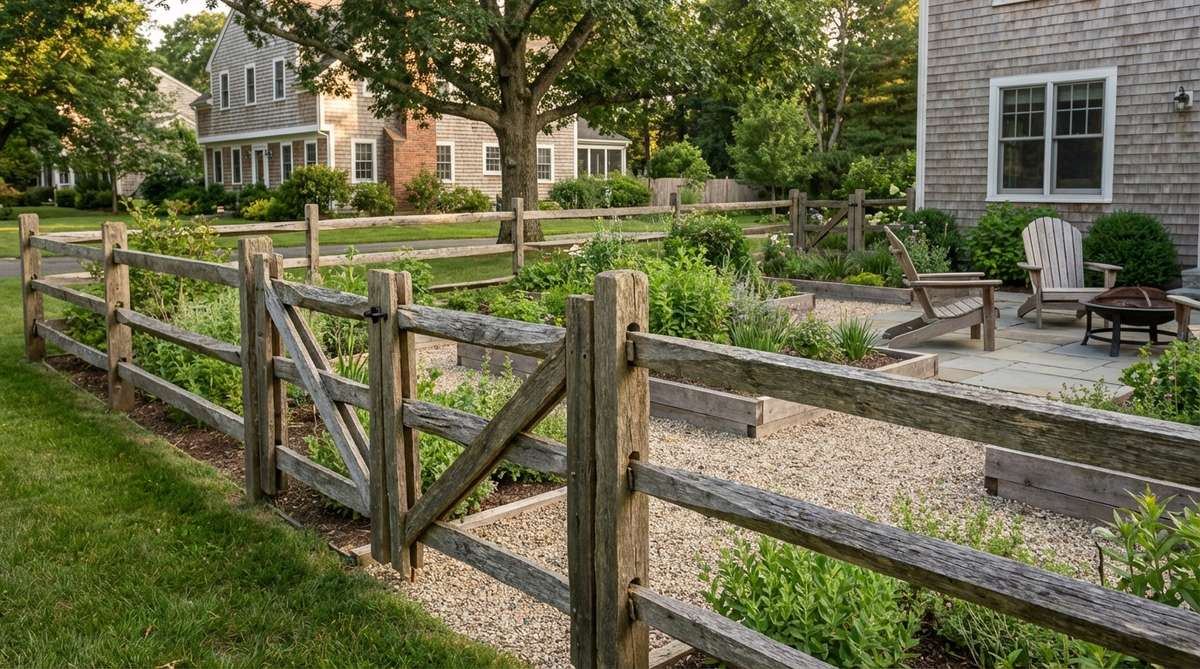
Projects an undeniably powerful, raw architectural presence. Securing a native hardwood boundary gives your property an eco-friendly fortress that rivals tropical teak.
This specific timber completely bypasses the need for toxic pressure treatments. Investing in raw black locust lumber bundles delivers a structure that will literally outlive the person building it.
Sourcing this native beast costs around $45–$70 per foot. Highly recommended for heavy-duty, lifetime farm borders.
- Key Materials: Black locust boards
- Vibe / Style: Heritage Farmhouse
- Difficulty: Intermediate (Hard to cut)
- Budget Breakdown: Hardwood: $55/ft | Hardware: $10/ft.
- Creator’s Tip: You must buy carbide-tipped saw blades; this wood is so incredibly dense it will destroy standard steel blades.
- Smart Sourcing: carbide-tipped heavy-duty circular saw blades | stainless steel heavy-gauge decking screws.
31. Iron Fence with Climbing Vines
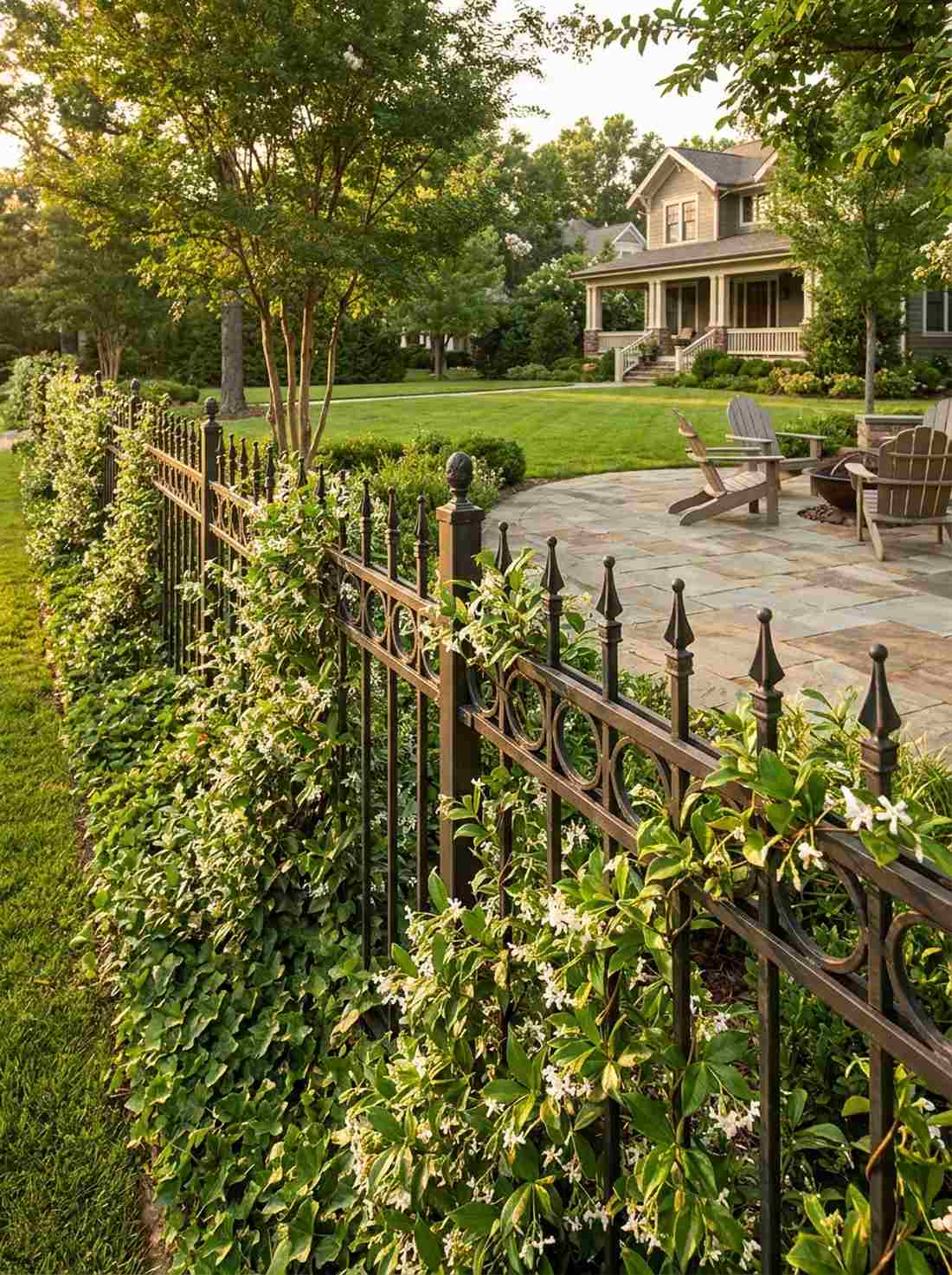
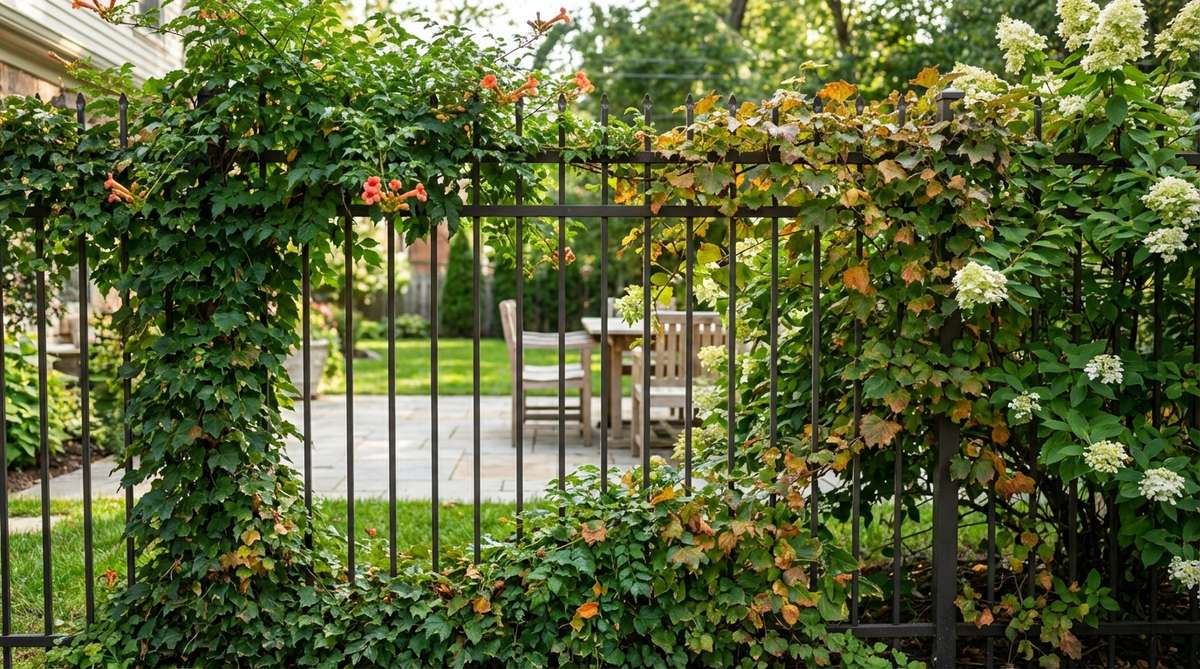
Evokes the feeling of a centuries-old European manor. Combining an ornamental metal perimeter with aggressive climbing ivy blends rigid security with wild romance.
Provides an incredibly strong lattice system without looking like cheap agricultural wire. Using bolt-together decorative iron panels gives you the classic wrought-iron aesthetic without paying custom welder prices.
You can establish this elegant framework for $35–$60 a section. Save this to your romantic English garden board.
- Key Materials: Steel panels, creeping plants
- Vibe / Style: English Manor
- Difficulty: Easy DIY Assembly
- Budget Breakdown: Metal Kit: $45/panel | Plants: $10/panel.
- Creator’s Tip: Choose Star Jasmine for warm climates; it weaves perfectly through the iron bars and smells incredible in summer.
- Smart Sourcing: ornamental aluminum fence panel kits | heavy-duty metal post base brackets.
32. Untreated Cedar Silvering Naturally
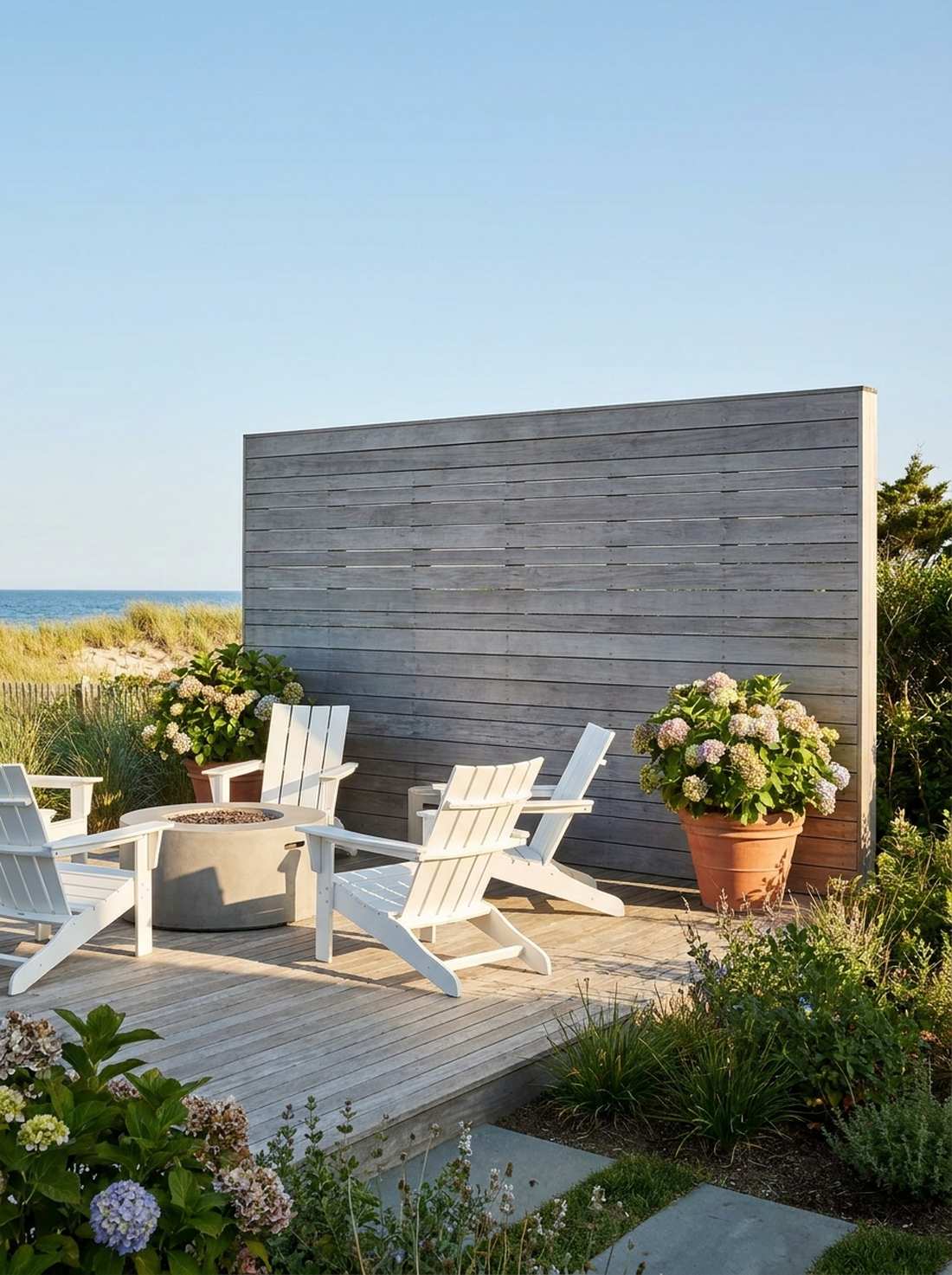
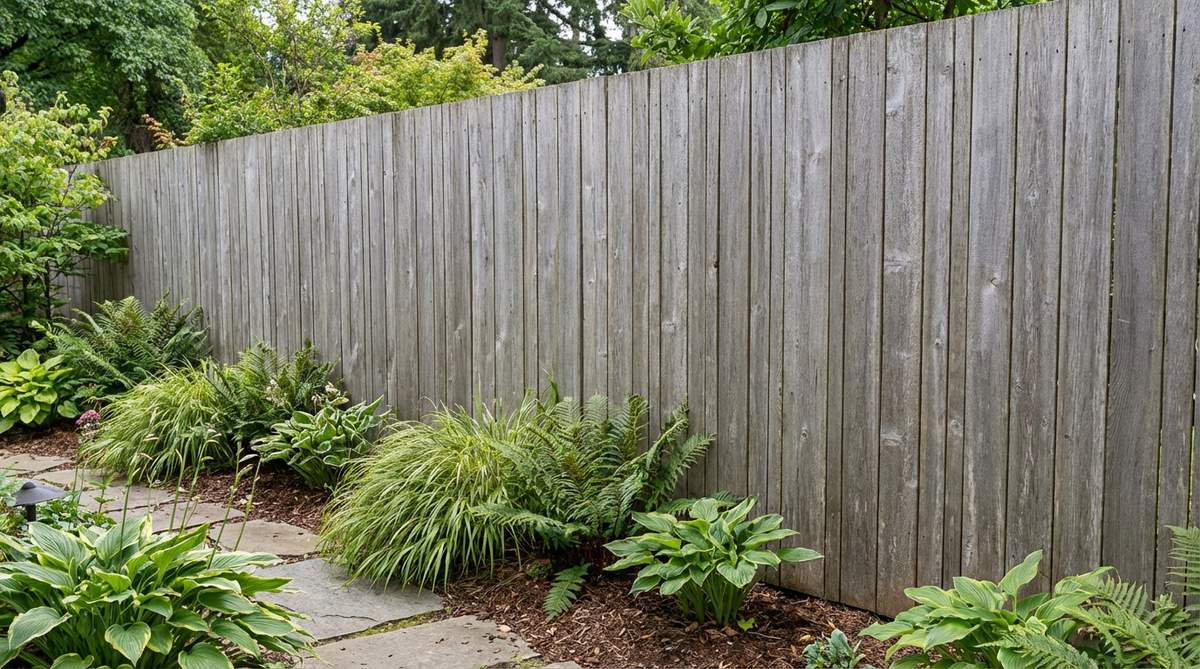
The ultimate badge of effortless coastal chic. Allowing a raw cedar timber screen to weather naturally creates a breathtaking silvery-gray patina.
This genius layout embraces nature instead of fighting it with endless chemicals. Securing premium clear-grade Western Red Cedar guarantees the wood gracefully turns silver without rotting or buckling under moisture.
Initial costs hover at $35–$50 per foot, with literally zero maintenance costs forever. Pin this if you love the Nantucket beach house vibe.
- Key Materials: High-grade cedar, stainless screws
- Vibe / Style: Coastal Driftwood
- Difficulty: Easy
- Budget Breakdown: Cedar: $45/ft | Fasteners: $5/ft.
- Creator’s Tip: You must use stainless steel hardware; galvanized nails will bleed black streak marks down the silvering wood.
- Smart Sourcing: stainless steel ring-shank exterior nails (bulk) | premium Western Red Cedar planks.
Wrap-Up
Strategic property boundary selection balances your ultimate privacy needs with high-end architectural appeal and smart material sourcing. The 32 elite blueprints presented above span from classic timber overlays to aggressive industrial metal combinations, giving you comprehensive options for upgrading your home’s exterior footprint. Before buying your bulk supplies or starter kits, accurately assess your neighborhood’s wind loads, strict zoning limits, and your own willingness to perform annual maintenance. By investing in premium UV-coated composites or utilizing clever heavy-duty hardware tricks, you can install a boundary that looks like a $10,000 contractor job at a fraction of the cost.
Frequently Asked Questions
What fence height provides complete privacy for standard residential applications?
A six-foot boundary generally stops ground-level sightlines perfectly for standard suburban properties. However, if neighbors have elevated decks, upgrading to a seven or eight-foot system using premium lattice topper extension kits handles the vertical gap without completely blocking out natural sunlight, though you should check local permit rules first.
How does horizontal versus vertical board orientation affect fence longevity?
Vertical layouts naturally shed rainwater off the boards, keeping the timber safer from rot. Horizontal designs look vastly more expensive and modern, but water tends to sit on the board edges. To prevent decay on horizontal builds, you must apply commercial-grade waterproof wood sealers or switch entirely to UV-resistant composite decking materials.
Which fence materials require the least ongoing maintenance?
If you hate weekend upkeep, avoid natural pine entirely. Buying composite privacy fence panels, vinyl kits, or powder-coated aluminum barriers guarantees decades of zero-maintenance life. They cost roughly 20% more upfront but completely eliminate the expensive cycle of buying gallons of deck stain and replacement boards every few years.
Can garden design fences reduce noise transmission from neighboring properties?
Yes, but you need aggressive mass. Flimsy pickets won’t work. Installing heavy tongue-and-groove boards, thick composite panels, or sourcing stone-filled gabion wire baskets can drop neighborhood street noise by up to 20 decibels. Layering thick evergreen shrubs directly in front of the structure provides the ultimate acoustic dampening combo.
What spacing between fence boards maintains privacy while allowing airflow?
Leaving a tight quarter-inch to half-inch gap is the golden rule for cutting wind resistance without exposing your yard to the neighbors. For extreme wind zones, building a shadow-box design or utilizing adjustable louver hardware brackets lets massive amounts of air pass through while providing 100% visual blocking from straight-on angles.