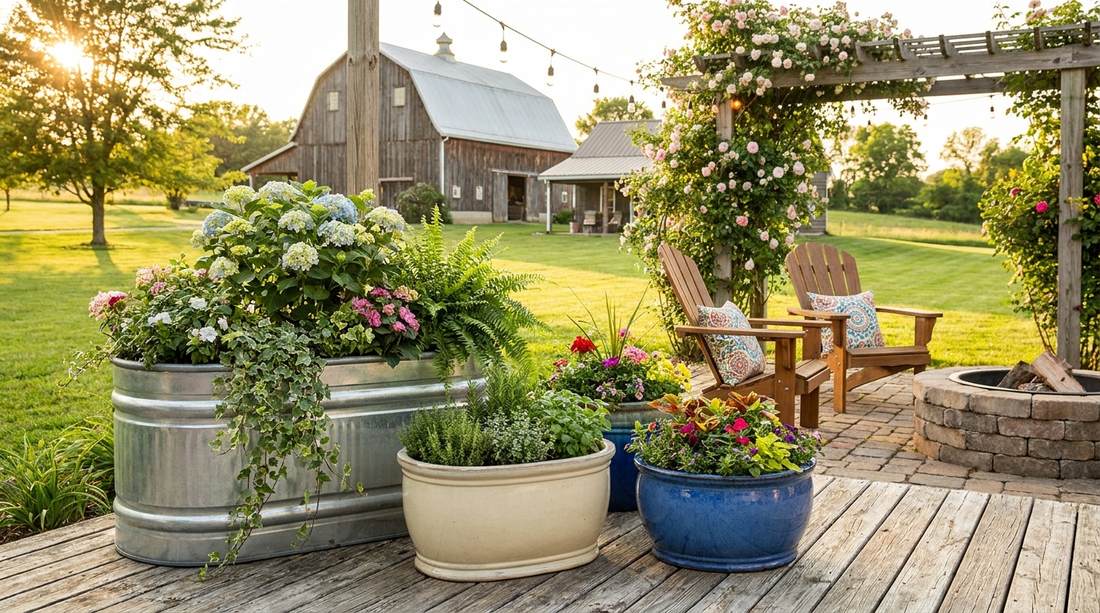
Turn an ordinary outdoor or indoor space into a breathtaking garden tub decor masterpiece that feels straight out of a magazine. This guide breaks down exactly what you need—from realistic cost estimates to smart sourcing tricks—so you can build this without draining your wallet. You’ll be surprised how a few budget-friendly supplies can deliver a premium, farmhouse garden tub decor finish that everyone will ask you about.
Design Snapshot: Key Principles
- Drainage First: Drill 3-5 holes in galvanized and ceramic bottoms to prevent root rot and waterlogging
- Weight Management: Fill the bottom third with styrofoam or empty plastic pots before adding soil to reduce container weight
- Material Properties: Galvanized metal heats quickly in sun while ceramic retains moisture—match containers to plant needs
- Visual Hierarchy: Elevate containers on pedestals, stumps, or stands to create vertical interest and improve drainage
Classic Planter Transformations with Vintage Character
Galvanized wash tubs and ceramic pots serve as versatile foundations for traditional container gardens. Their generous depth accommodates extensive root systems while the aged patina adds character that new planters lack.
1. Overflow Petunia Display
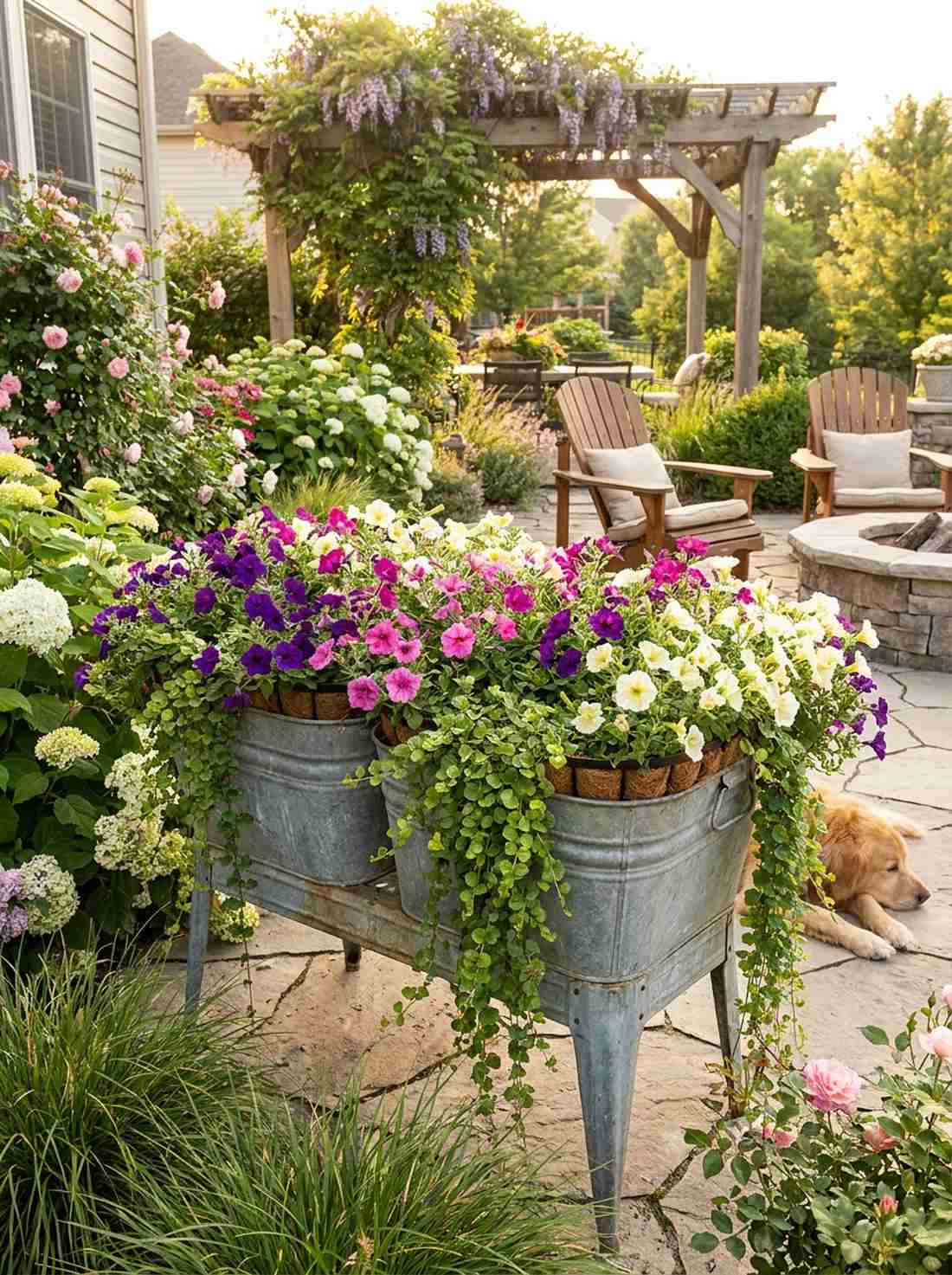
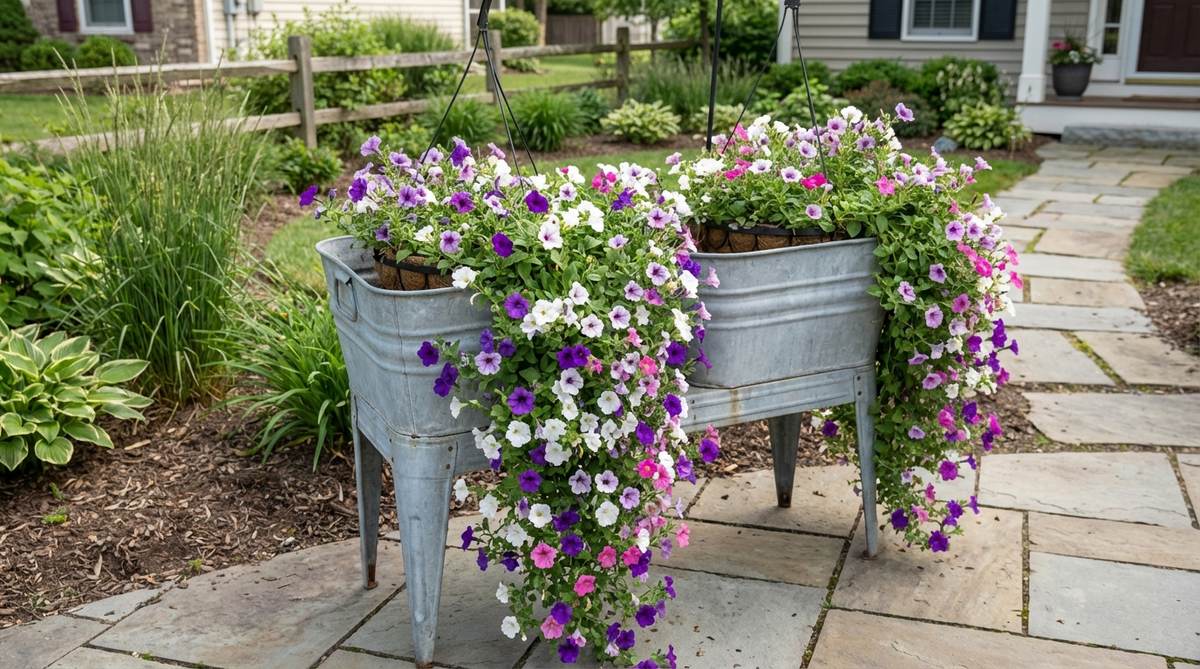
Feels like a vintage fairy tale brought to life. This classic garden tub decor idea transforms old double laundry tubs into a cascading floral waterfall. Works exceptionally well for a sun-drenched patio or as stunning corner garden tub decor.
It looks far more expensive than it is, especially when you use a simple trick: dropping pre-planted 10-inch hanging basket liners right into the metal basin. Integrate some UV-resistant trailing vines to elevate the luxury feel without the maintenance headache.
You can easily pull this off for around $35–$50 depending on the flower maturity. Save this to your DIY weekend garden board!
- Key Materials: Pre-planted trailing petunia baskets (nursery pack)
- Vibe / Style: Lush cottage-core luxury
- Difficulty: Very easy beginner setup
- Budget Breakdown: Materials: $35 | Base Tub: Thrifted for $15.
- Creator’s Tip: Deadhead spent blooms weekly to force continuous flowering until the first frost.
- Smart Sourcing: Use heavy-duty coco coir basket liners (bulk pack) and slow-release bloom booster fertilizer spikes.
2. Soap Bubble Alyssum Garden
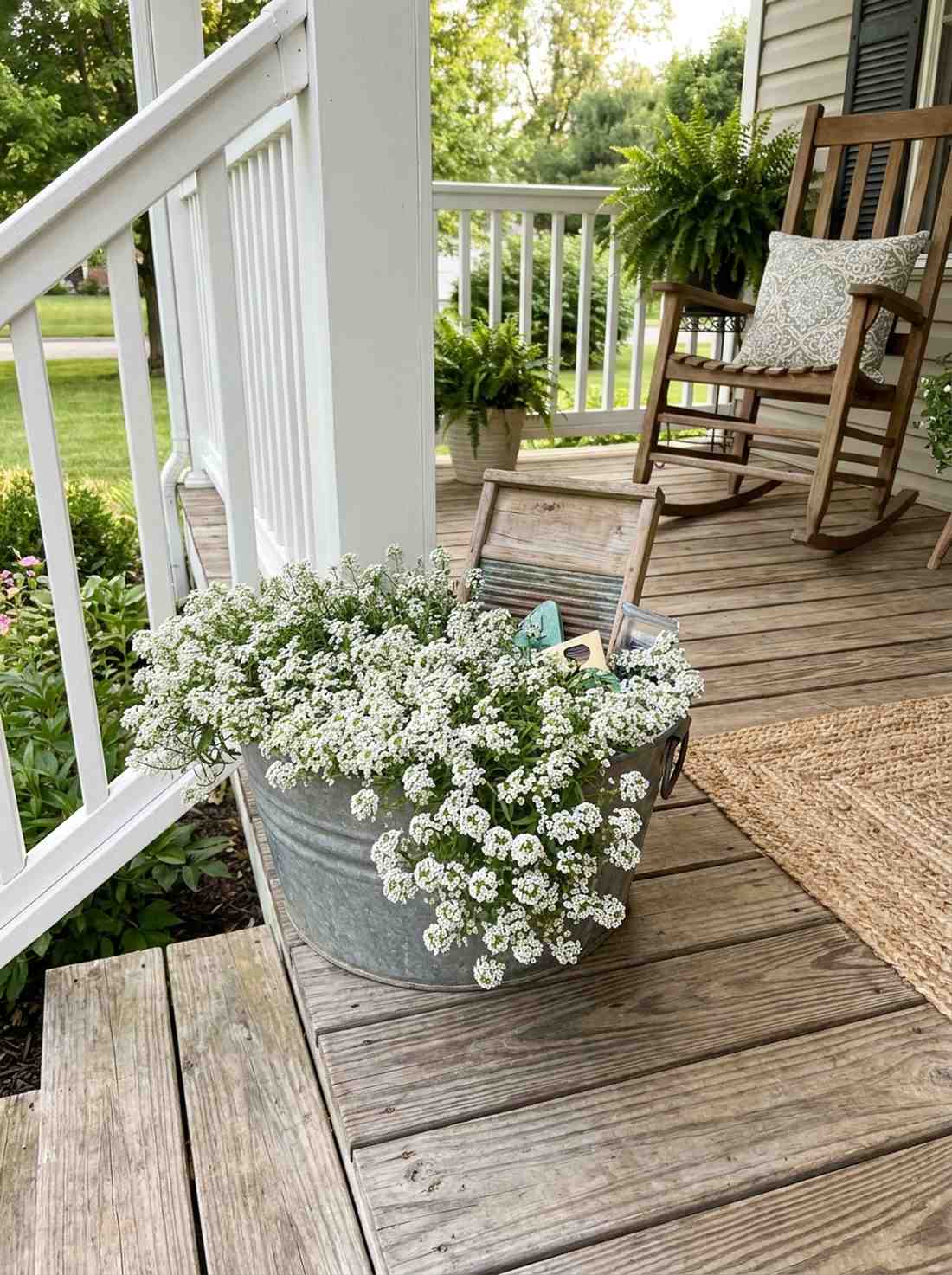
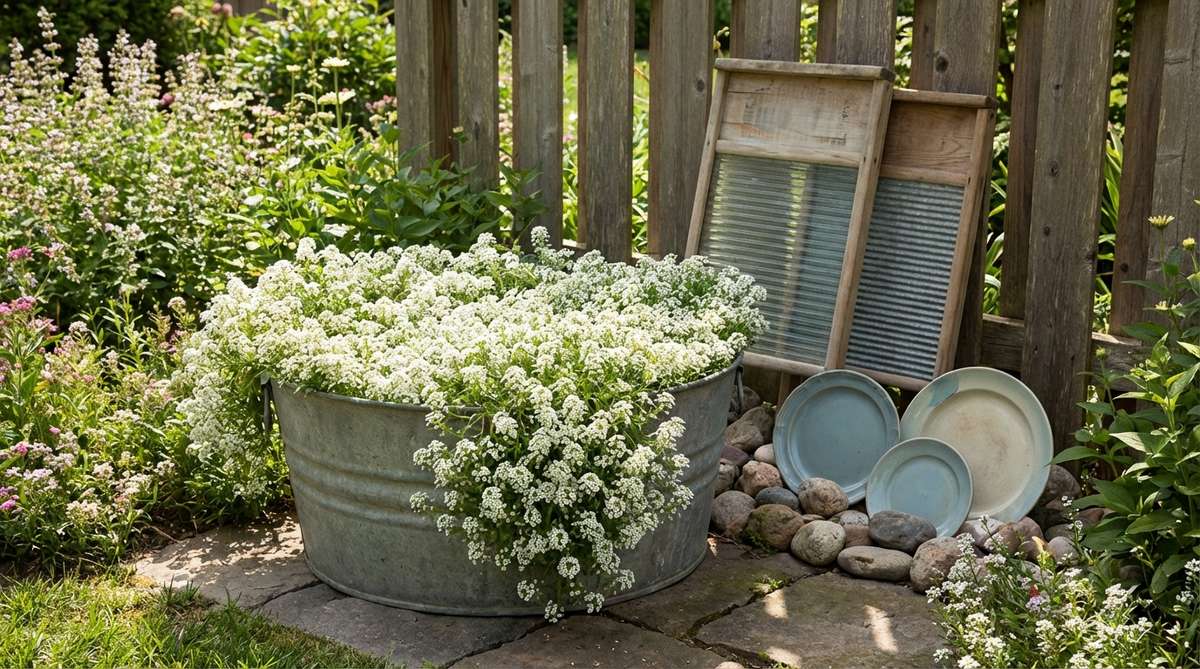
Straight out of an old-world laundry day dream, this setup bursts with tiny white blooms. This rustic garden tub decorating aesthetic mimics soap suds bubbling over the rim. Perfect for a shaded porch step or a cozy mobile home garden tub decor upgrade.
A controversial secret? Don’t overspend on specialized soils; a basic mix with the right drainage delivers a surprisingly premium look. Sneak in some waterproof miniature garden supplies like vintage washboards to complete the enchanting illusion.
Set this up for a budget-friendly $15–$25. It’s a fast upgrade that completely changes the vibe of your entryway.
- Key Materials: White sweet alyssum plugs and vintage decor accents
- Vibe / Style: Nostalgic farmhouse charm
- Difficulty: Easy weekend project
- Budget Breakdown: Plants: $12 | Accessories: $8.
- Creator’s Tip: Shear the alyssum back by one-third in midsummer to promote a massive fresh flush of growth.
- Smart Sourcing: Grab weatherproof acrylic miniature garden accessories and a pre-mixed perlite drainage additive.
3. Mixed Annual Explosion
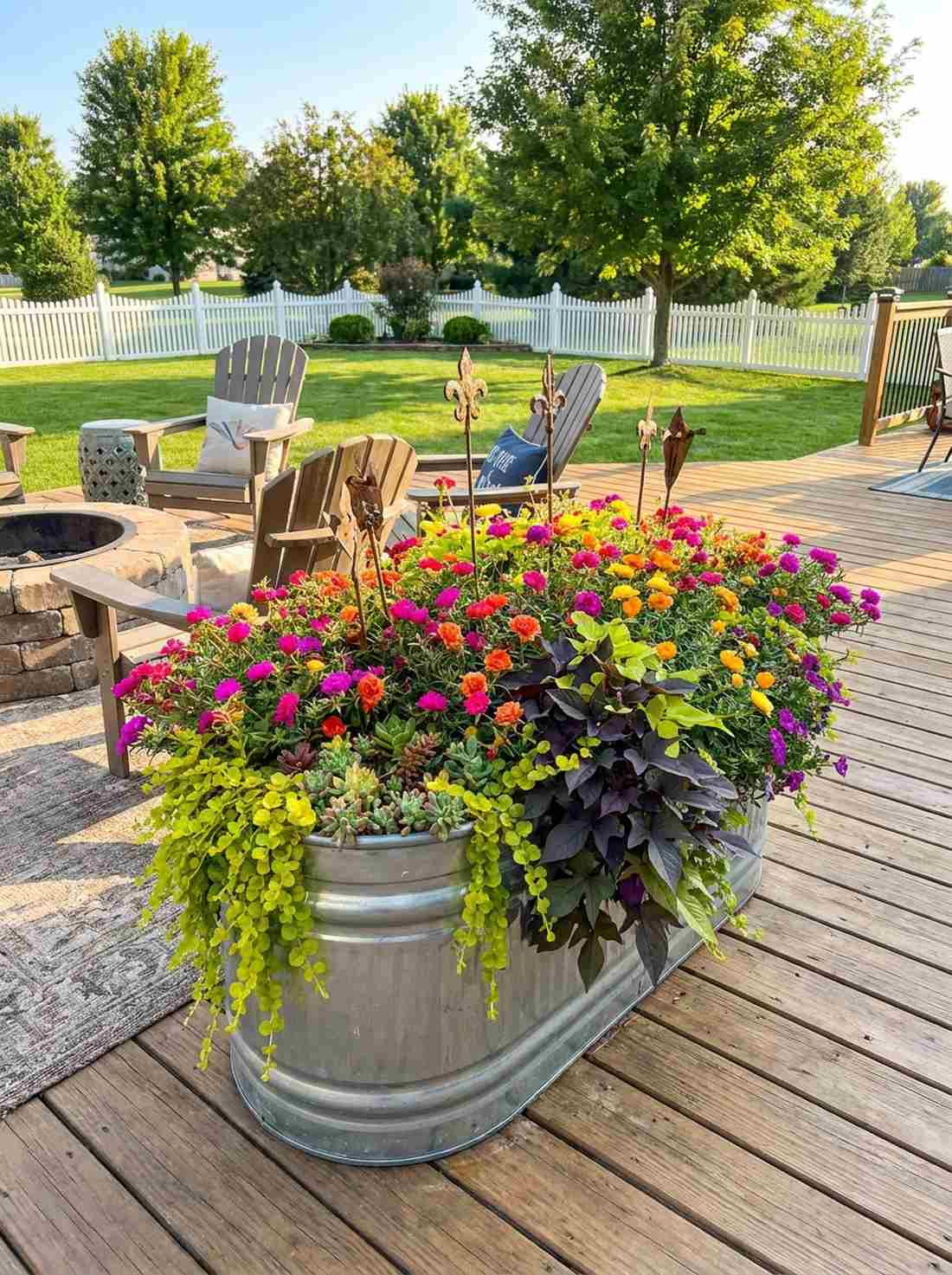
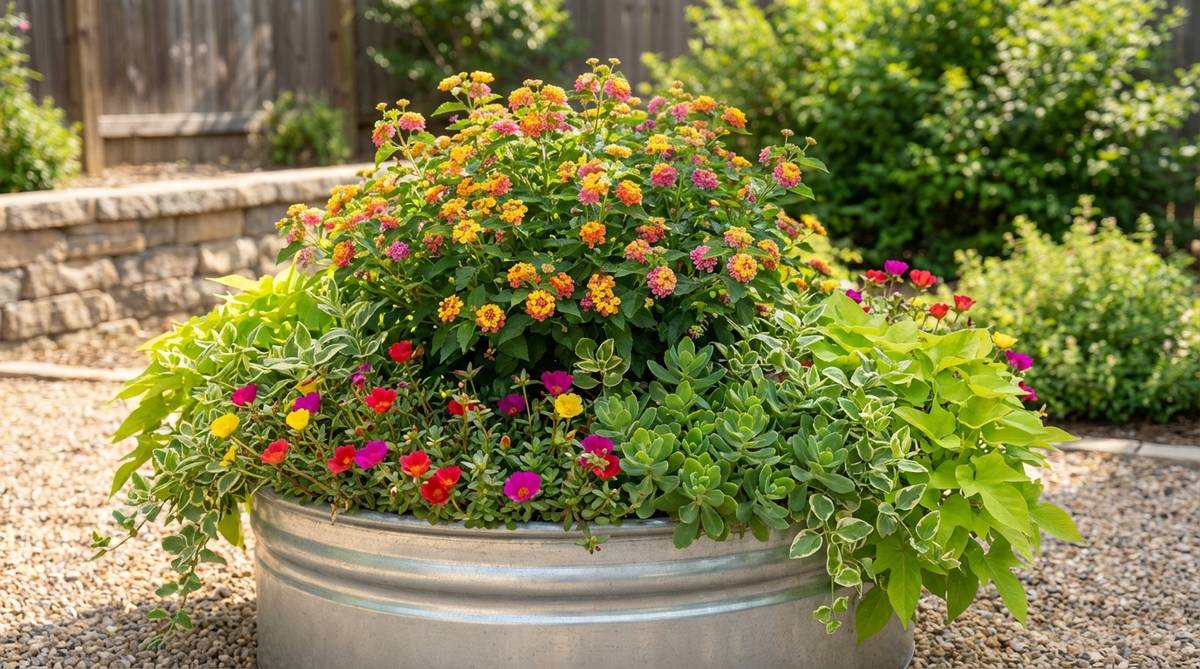
Looks like a fireworks display of pure, vibrant color. This bold galvanized tub decor concept thrives in intense heat. Absolutely brilliant as a standalone centerpiece for a large deck or driveway border.
Many beginners fail by mixing plants with different thirst levels, but grouping heat-loving lantana with drought-resistant sedum gives a designer-level finish that thrives on neglect. The metal tub heats the soil quickly, acting as a hyper-efficient growing engine.
Expect to spend about $40–$60 to fill a large oval tub. Pin this if you’re planning a massive summer color upgrade!
- Key Materials: Heat-tolerant portulaca, sweet potato vine, and sedum
- Vibe / Style: High-impact tropical burst
- Difficulty: Moderate (requires careful plant selection)
- Budget Breakdown: Annuals: $30 | Premium Soil: $15 | Tub: $15.
- Creator’s Tip: Position the tallest sun-loving plants at the exact center with trailing vines dominating the edges for maximum volume.
- Smart Sourcing: Invest in UV-coated decorative garden stakes and bulk moisture-retaining soil crystals.
4. Calibrachoa Fountain
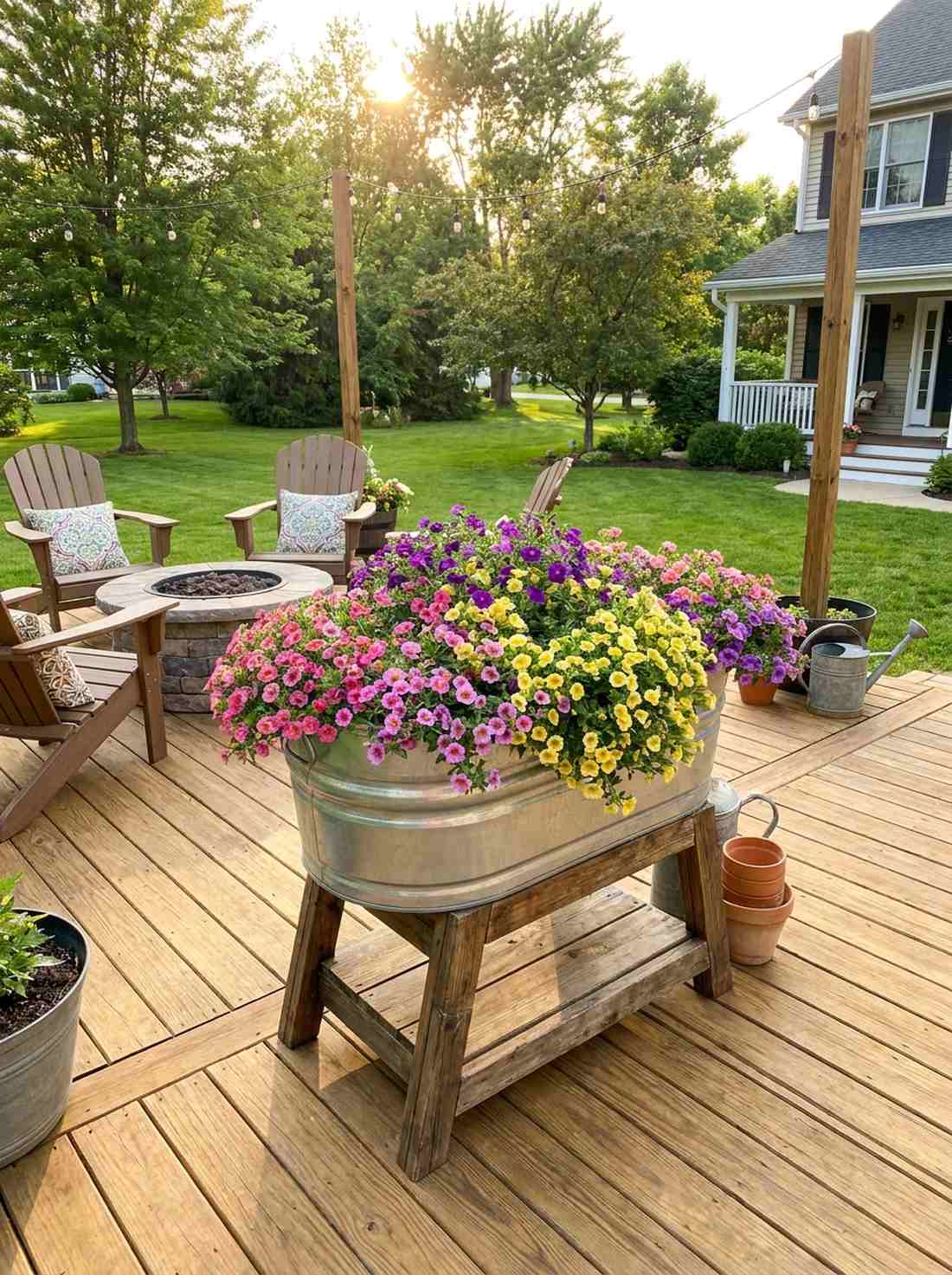
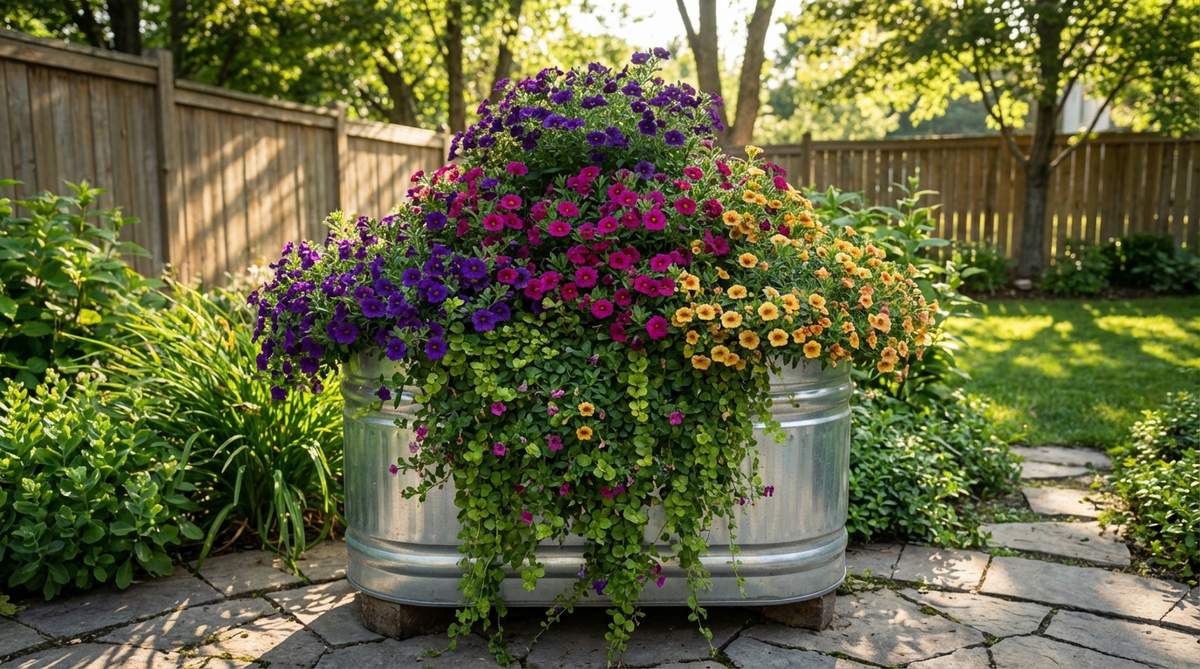
Feels like a magical spilling pot of endless tiny bells. This elevated tub decor design creates months of miniature petunia-like blooms. Highly recommended for empty corners that need a sudden burst of vertical color.
Skipping seeds and buying pre-planted hanging baskets instantly flips a basic craft project into a breathtaking masterpiece. Arrange three complementary colors in a triangle formation to fool everyone into thinking you hired a pro landscape designer.
Recreate this look for $30–$45. It’s a high-impact strategy that pays off all summer long.
- Key Materials: Calibrachoa (Million Bells) trailing baskets
- Vibe / Style: Vibrant overflow garden
- Difficulty: Easy maintenance
- Budget Breakdown: Baskets: $30 | Fertilizers: $10.
- Creator’s Tip: Galvanized metal dries faster than ceramic; check moisture daily during peak August heat.
- Smart Sourcing: Utilize a commercial-grade liquid flower fertilizer and pre-cut coco fiber moisture mats.
This next setup is ridiculously cheap but looks like a $200 custom display you’d see at a luxury nursery…
5. Shade-Loving Impatiens Sanctuary
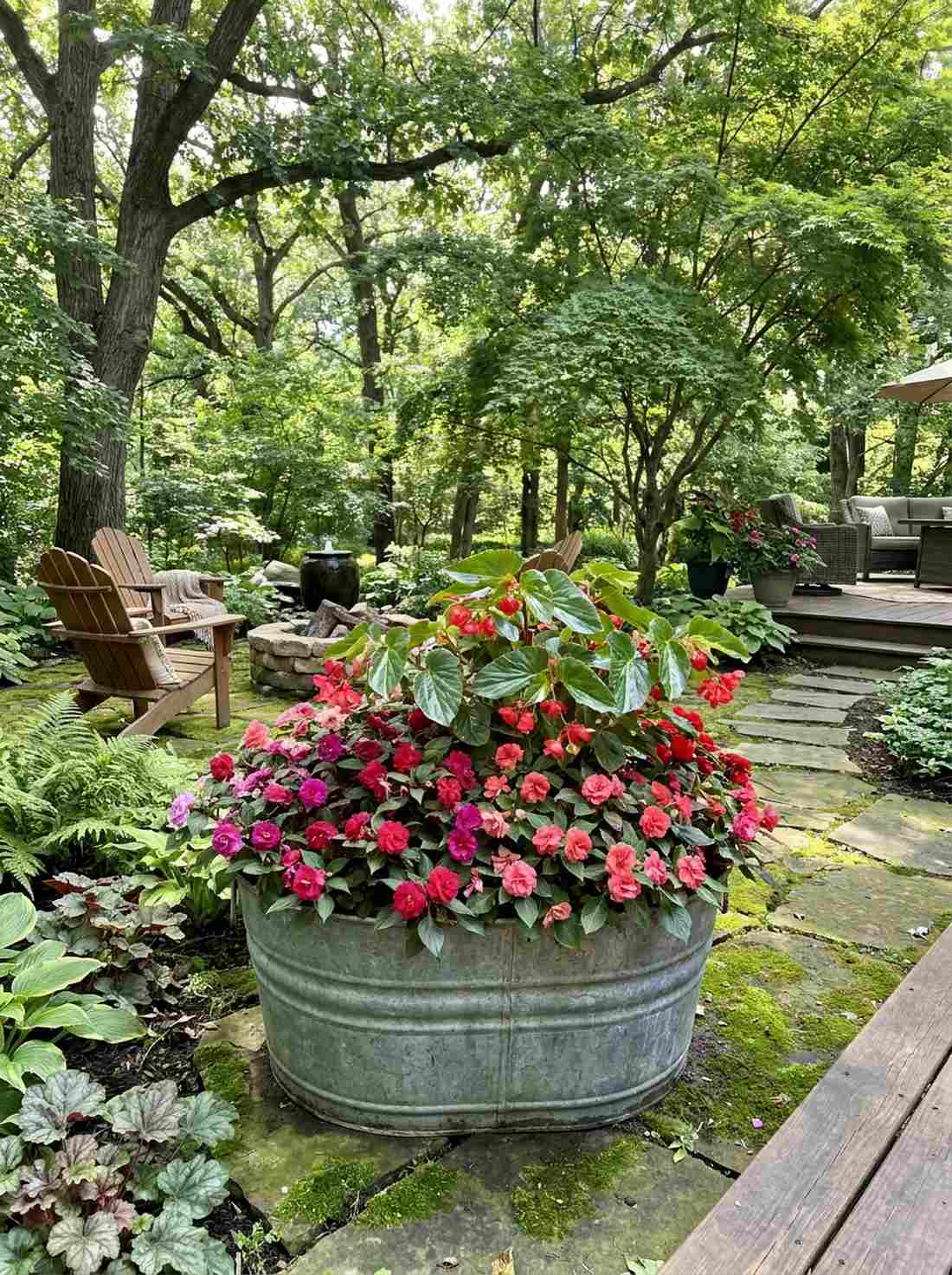
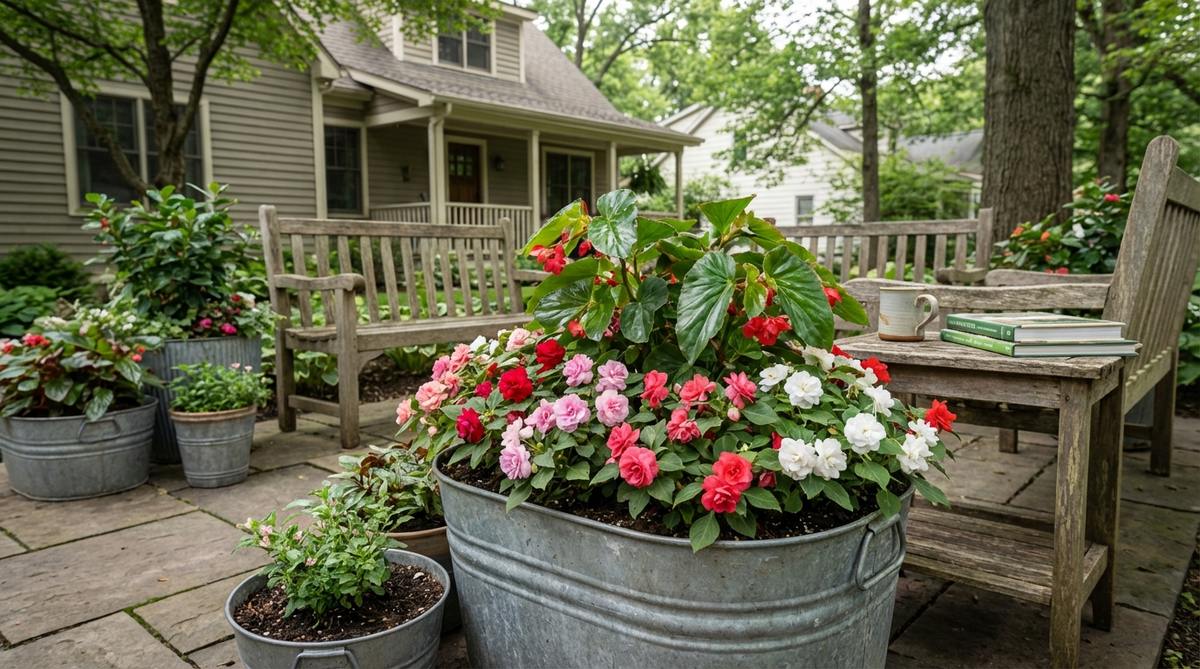
Like stumbling upon a hidden, blooming woodland sanctuary. This ceramic or metal tub garden thrives away from harsh sunlight. Brilliant for north-facing patios or deep beneath a heavy tree canopy.
Most shaded planters look dull, but pairing double rosebud impatiens with dragon wing begonias achieves that high-end aesthetic without the high-end price tag. The cooler metal prevents rapid soil temperature swings, keeping the root systems incredibly happy.
You can set this up for roughly $25–$35. Save this to your shade garden inspiration board!
- Key Materials: Double rosebud impatiens and dragon wing begonias
- Vibe / Style: Lush woodland retreat
- Difficulty: Easy (low water frequency)
- Budget Breakdown: Shade Plants: $20 | Soil: $10.
- Creator’s Tip: Monitor moisture carefully; shaded containers dry much slower, so water less frequently but deeply.
- Smart Sourcing: Use a moisture-control potting mix (bulk bag) and slow-release shade plant food spikes.
6. Ceramic Pot Succulent Cluster
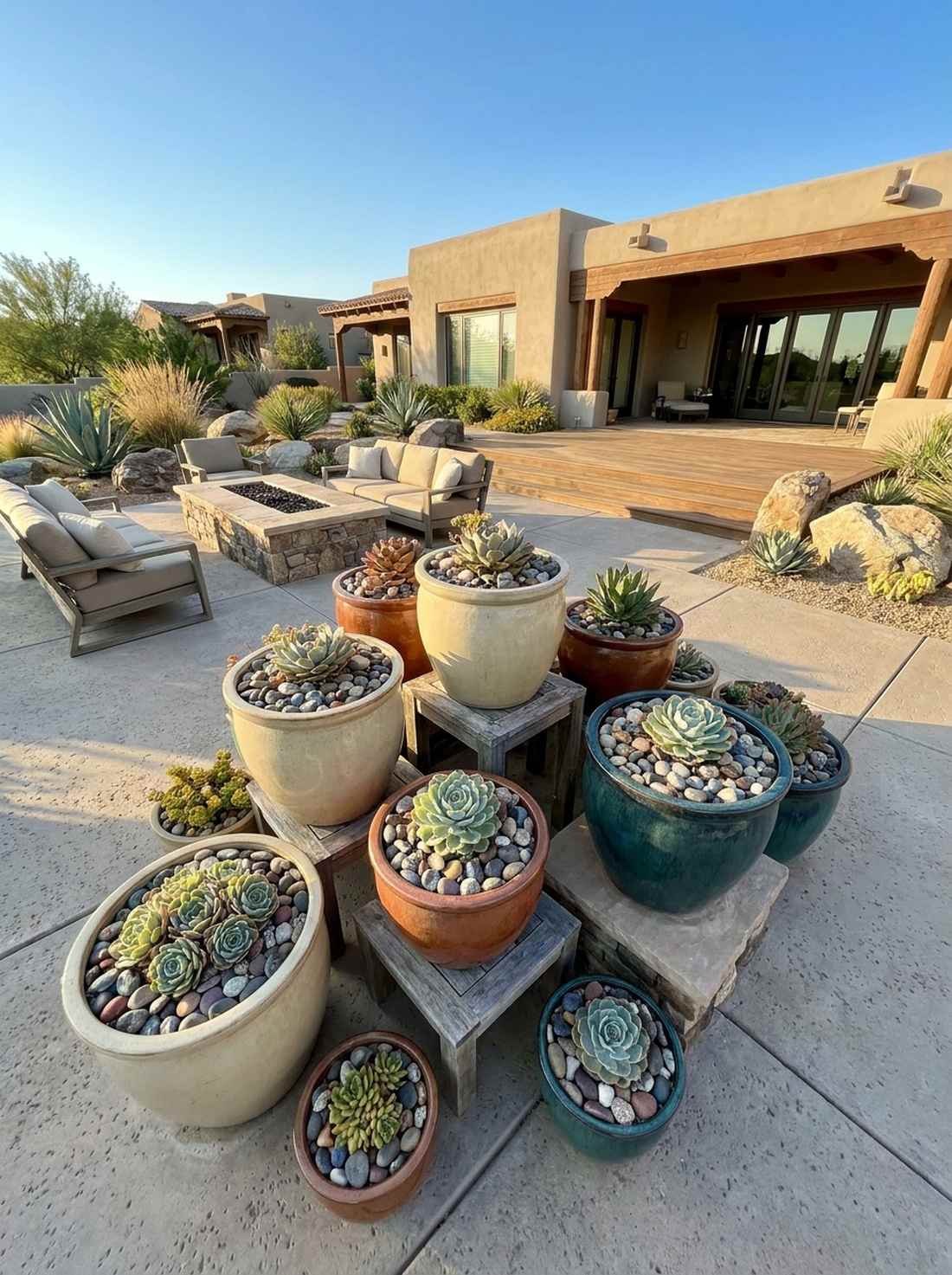
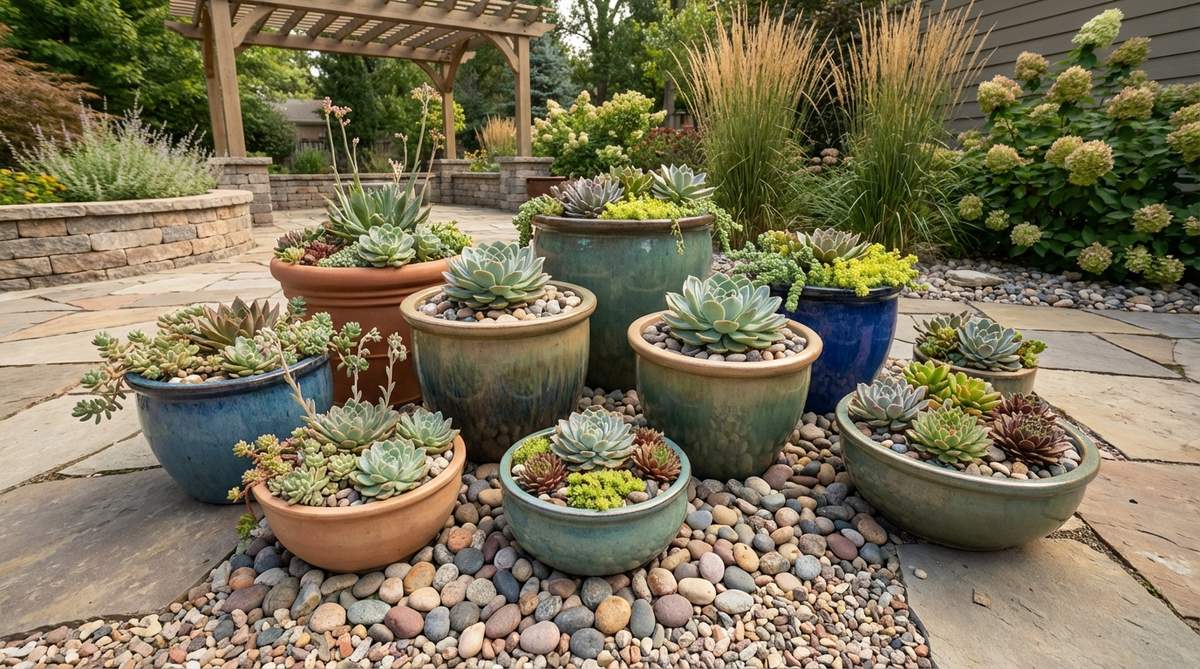
Emanates a sleek, modern desert oasis vibe. This garden tub decorating layout relies on heavy, glazed containers to anchor delicate geometric plants. Perfect for hot, arid climates or sun-baked concrete patios.
Don’t make the mistake of using standard potting soil; mixing cactus-specific dirt with decorative gravel top-dressing completely elevates a basic setup into a luxury focal point. The heavy glazed finish actively reflects light, keeping the delicate succulent root zones perfectly chilled.
This premium look costs about $40–$60, but it lasts for years. It’s highly recommended for a chic, low-maintenance aesthetic.
- Key Materials: Echeveria, sedum rosettes, and premium cactus soil
- Vibe / Style: Modern desert chic
- Difficulty: Moderate (requires strict watering discipline)
- Budget Breakdown: Succulents: $35 | Special Soil/Gravel: $15.
- Creator’s Tip: Group multiple pot sizes together for a dynamic, tiered visual impact.
- Smart Sourcing: Buy pre-washed decorative top-dressing gravel (bulk pack) and commercial-grade cactus/citrus soil mix.
Water Feature Innovations Using Vintage Pumps and Tubs
Galvanized wash tubs convert easily into relaxing water features with minimal plumbing experience. The watertight construction and authentic vintage aesthetic create focal points that engage multiple senses.
7. Hand Pump Fountain
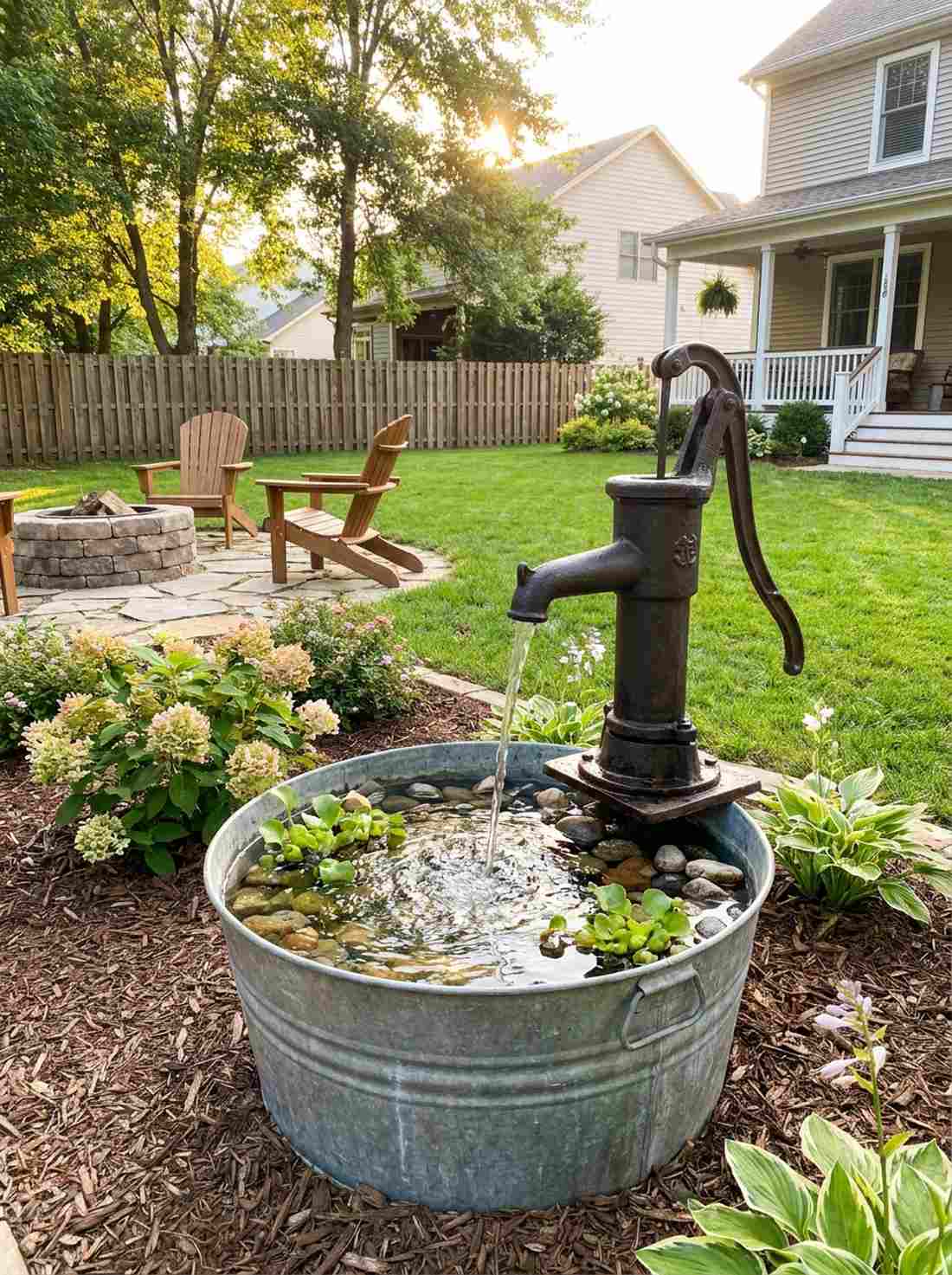
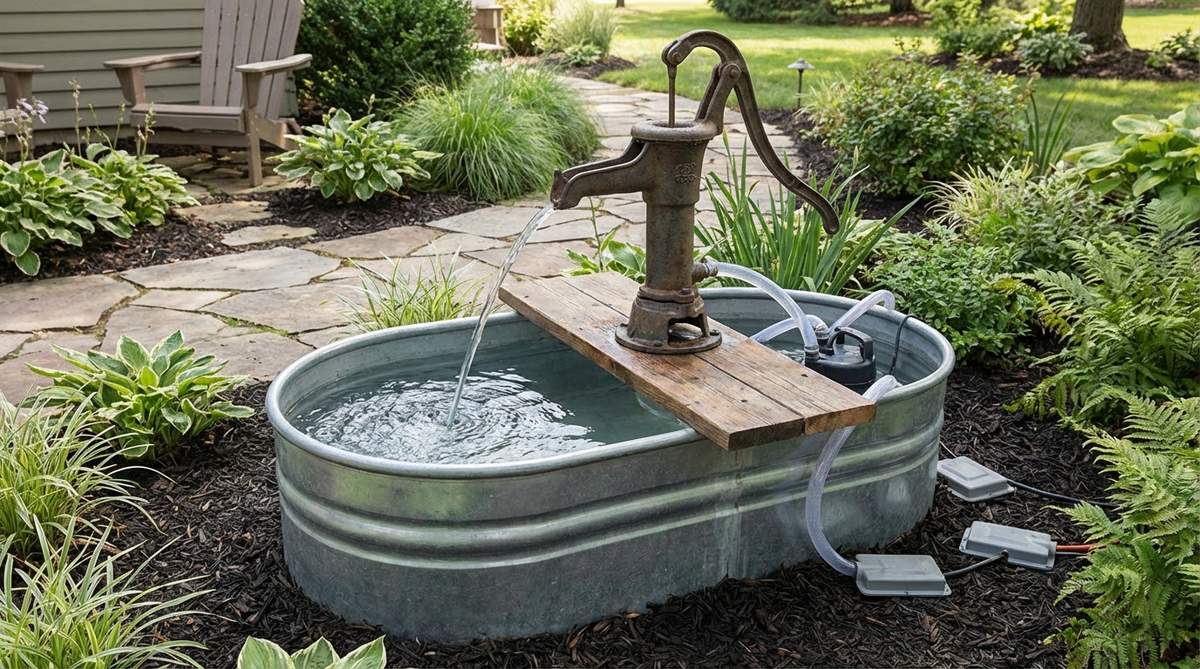
Sounds like a tranquil countryside stream right in your backyard. This farmhouse garden tub decor uses an antique hand pump to create a gentle, continuous water flow. Ideal for masking annoying street noise near a seating area.
While some think you need a plumber, mounting a flexible tubing system to a submersible pump delivers a surprisingly premium look with zero professional help. A simple weatherproof cord cover hides the mechanics, leaving only the rustic magic visible.
Build this entire water feature for under $80. Pin this if you want an expensive-looking fountain on a budget!
- Key Materials: Antique-style hand pump, galvanized tub, submersible water pump
- Vibe / Style: Rustic auditory oasis
- Difficulty: Intermediate DIY
- Budget Breakdown: Pump Motor: $25 | Cast Iron Hand Pump: $35 | Tubing: $10.
- Creator’s Tip: Choose pumps with adjustable flow and auto-shutoff features to completely prevent motor burnout.
- Smart Sourcing: Grab an adjustable 200 GPH submersible pump and a heavy-duty weatherproof extension cord cover.
8. Minnow Bucket Cascade
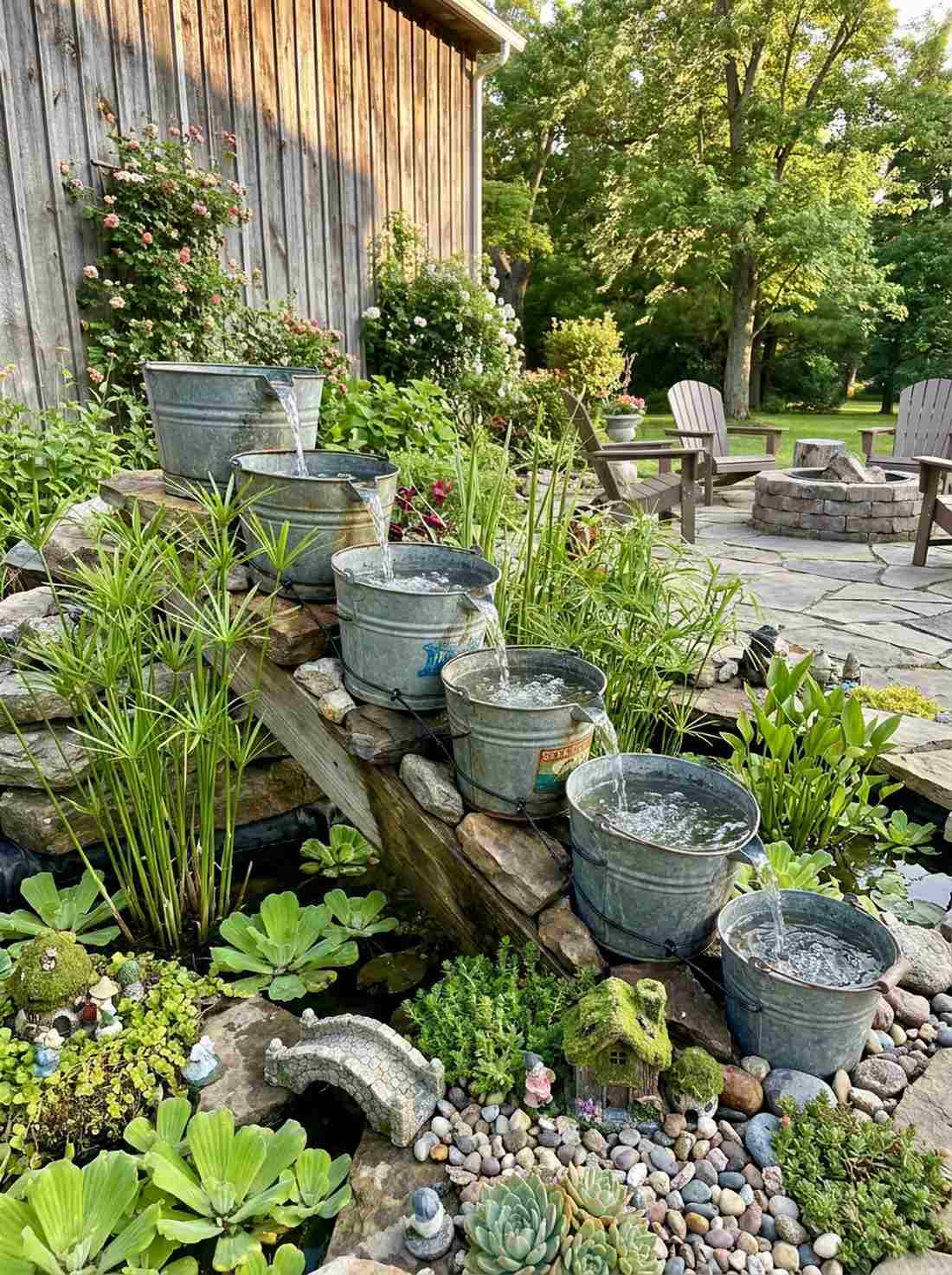
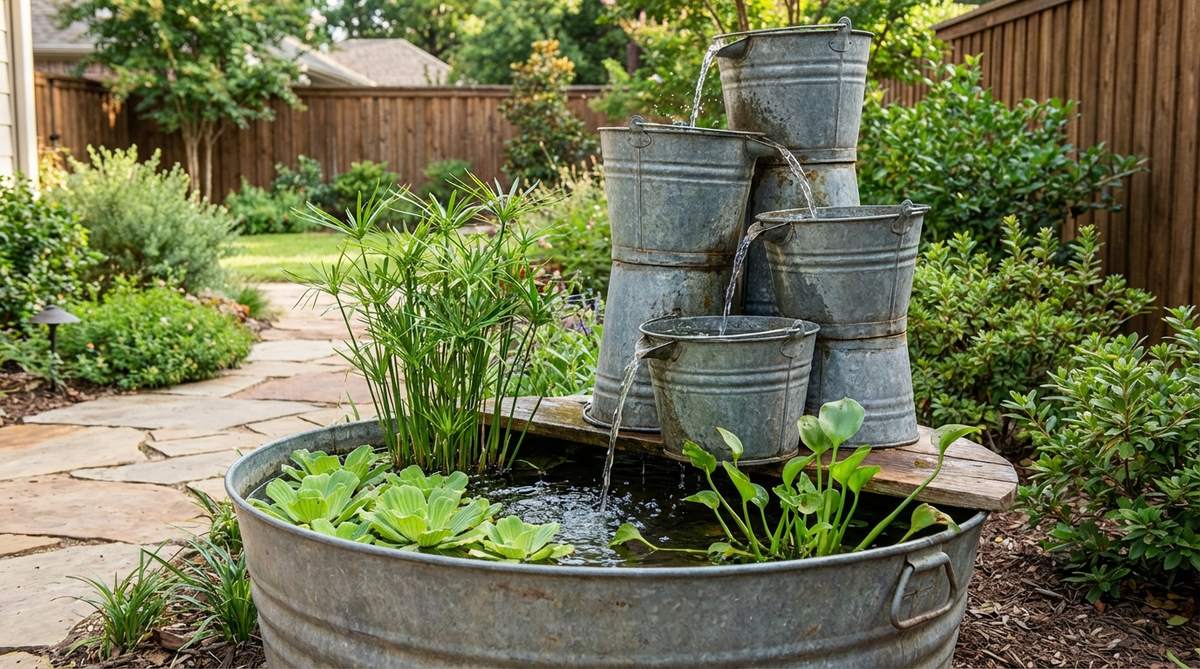
Feels like discovering a secret, multi-level waterfall in a vintage barn. This incredibly unique tiered tub decor creates varying sounds as water splashes downward. Exceptional for a garden corner that needs vertical movement.
Most DIY fountains look sloppy, but securing minnow buckets with marine-grade wire guarantees a designer-level finish that withstands the elements. Toss in some fairy garden kits and aquatic plants like dwarf papyrus to really sell the natural ecosystem vibe.
This layered masterpiece costs about $60–$90 to complete. It’s a breathtaking project that will have your neighbors taking notes.
- Key Materials: Assorted minnow buckets, aquatic plants, strong pump
- Vibe / Style: Multi-tiered rustic charm
- Difficulty: Advanced DIY
- Budget Breakdown: Buckets: $30 | Pump: $30 | Plants/Hardware: $20.
- Creator’s Tip: Calculate pump output carefully—you typically need at least 200 gallons per hour to lift water 24 inches high.
- Smart Sourcing: Use marine-grade waterproof epoxy putty and UV-resistant clear vinyl tubing (pre-cut).
9. Miniature Pond Ecosystem
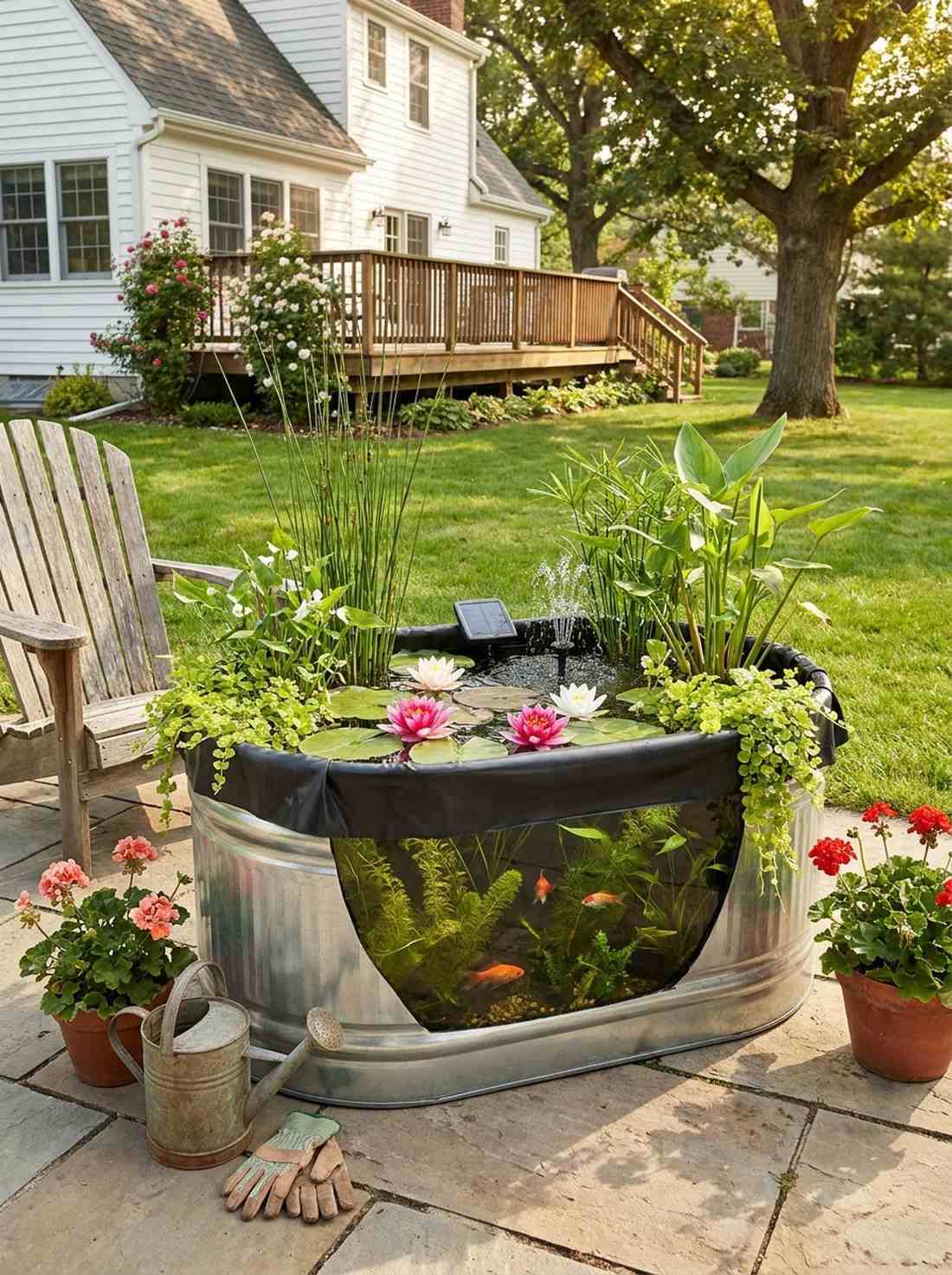
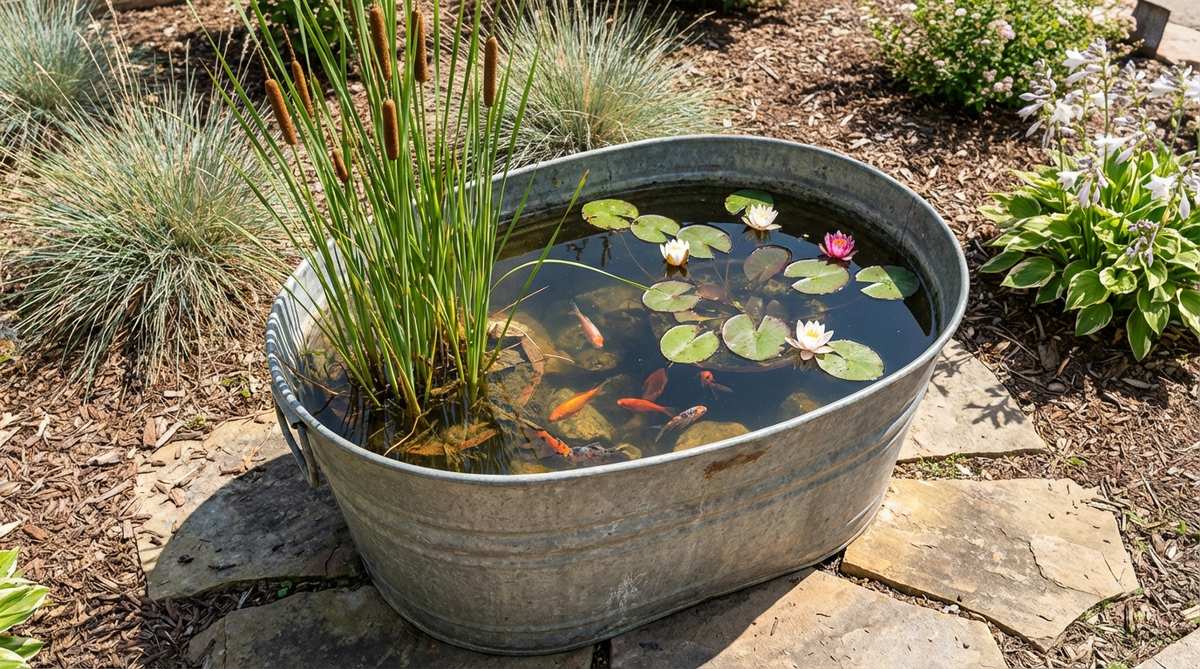
Like capturing a slice of a wild pond right on your patio. This outdoor garden tub decor idea hosts actual water lilies and marginal plants. Fits perfectly on a sturdy apartment balcony or next to a garden bench.
The secret that saves your plants? Lining the interior with flexible PVC completely stops toxic zinc from leaching, achieving that high-end aesthetic while keeping aquatic life safe. Add a few submerged oxygenators and suddenly you have a self-cleaning marvel.
Create this biological wonder for $50–$75. Save this to your water garden inspiration board!
- Key Materials: Half-barrel galvanized tub, PVC liner, aquatic oxygenators
- Vibe / Style: Zen biological wonder
- Difficulty: Moderate
- Budget Breakdown: Plants: $35 | Liner: $15 | Tub: $20.
- Creator’s Tip: The 16-inch depth easily supports a few small goldfish, provided you add proper aeration.
- Smart Sourcing: Source a heavy-duty 45-mil EPDM pond liner (pre-cut) and starter water lily tubers.
Most people get their aquatic setups completely wrong… until they try the exact layout coming up next.
10. Bubbling Rock Feature
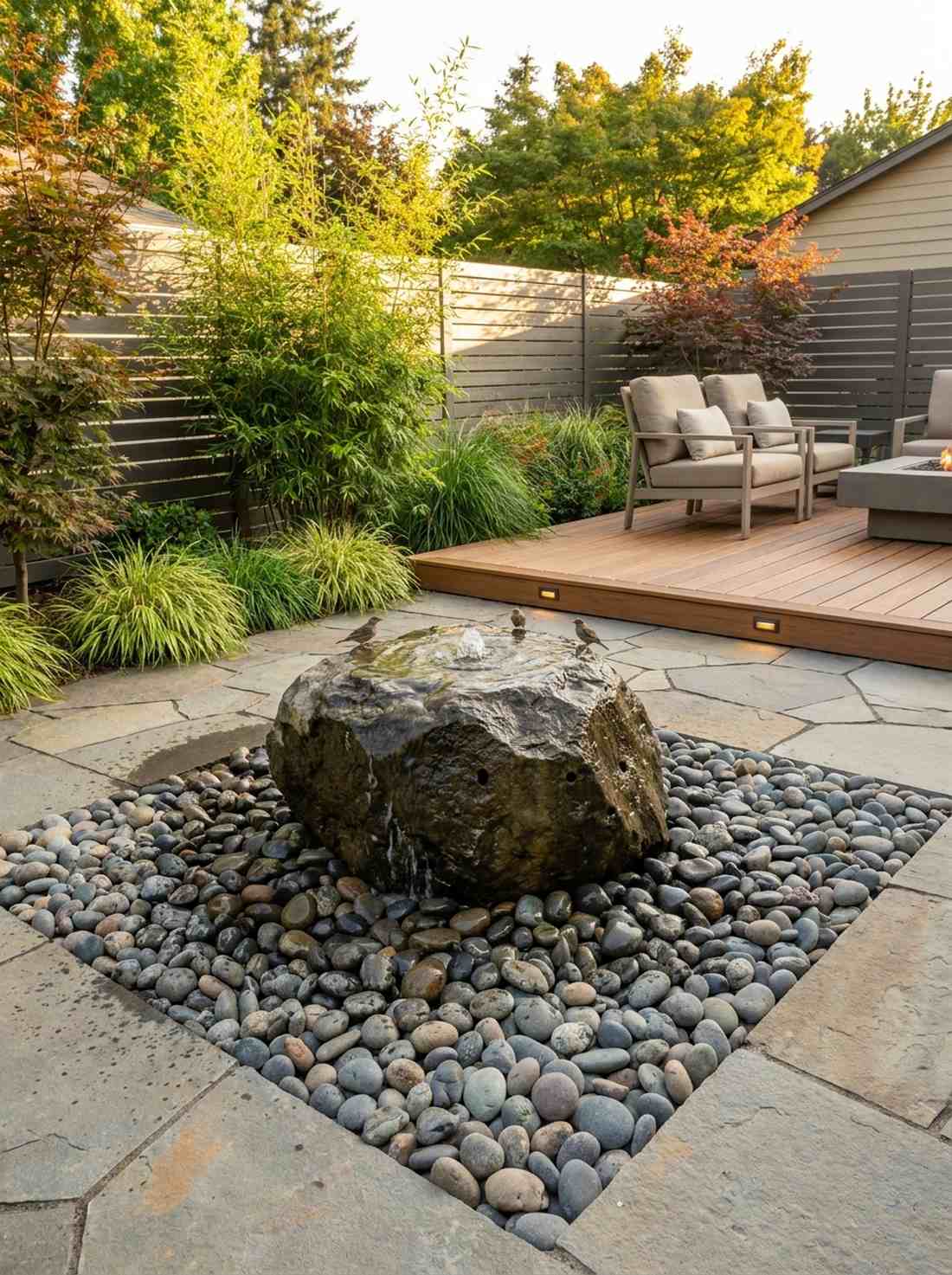
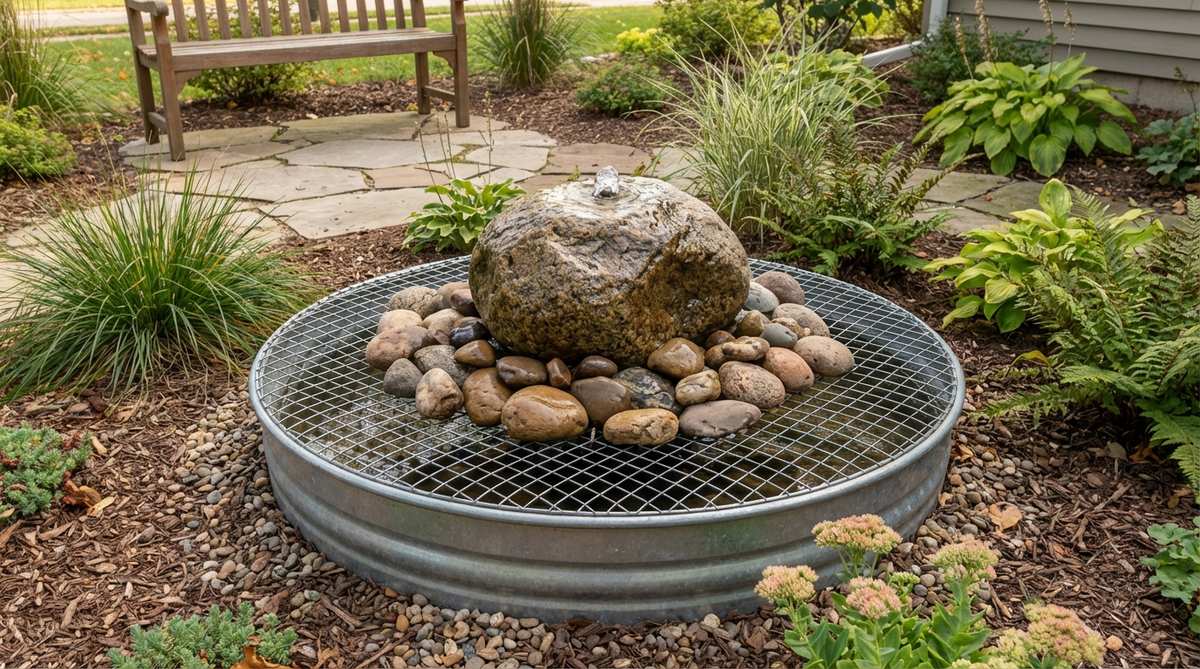
Delivers the ultimate zen-garden energy without the massive landscaping bill. This hidden garden tub decor trick uses a buried container to cycle water through decorative stones. The absolute best choice for tiny courtyards or modern minimalist spaces.
It fools everyone into thinking you hired a pro excavator, when really it’s just heavy-gauge wire mesh hiding a simple water reservoir. Because there’s no visible standing water, it pulls in songbirds without breeding a single mosquito.
You can execute this sleek trick for around $70. It completely changes the auditory vibe of a small backyard.
- Key Materials: Buried tub, heavy wire mesh, drilled boulder, pump
- Vibe / Style: Hidden modern zen
- Difficulty: Intermediate
- Budget Breakdown: Pump/Tubing: $35 | Mesh/Rocks: $25 | Tub: $10.
- Creator’s Tip: Top the mesh with varying sizes of river rocks to completely conceal the water basin underneath.
- Smart Sourcing: Buy galvanized heavy-duty hardware cloth and a pre-drilled natural basalt fountain rock.
💡 Must-Have Supplies for High-End Setups
To build these setups faster and ensure they last, skip the generic craft aisles and invest in the right foundational kits.
- Base & Support: Heavy-duty rust-proof metal planter stands
- Setup Tools: Commercial-grade waterproof epoxy putty kits
- Weather/Durability Protection: UV-resistant clear acrylic sealant spray (bulk pack)
Tiered and Stacked Displays for Maximum Impact
Vertical arrangements multiply planting space while creating architectural interest. Graduated container sizes produce professional-looking installations that draw the eye upward.
11. Three-Tier Wash Tub Tower
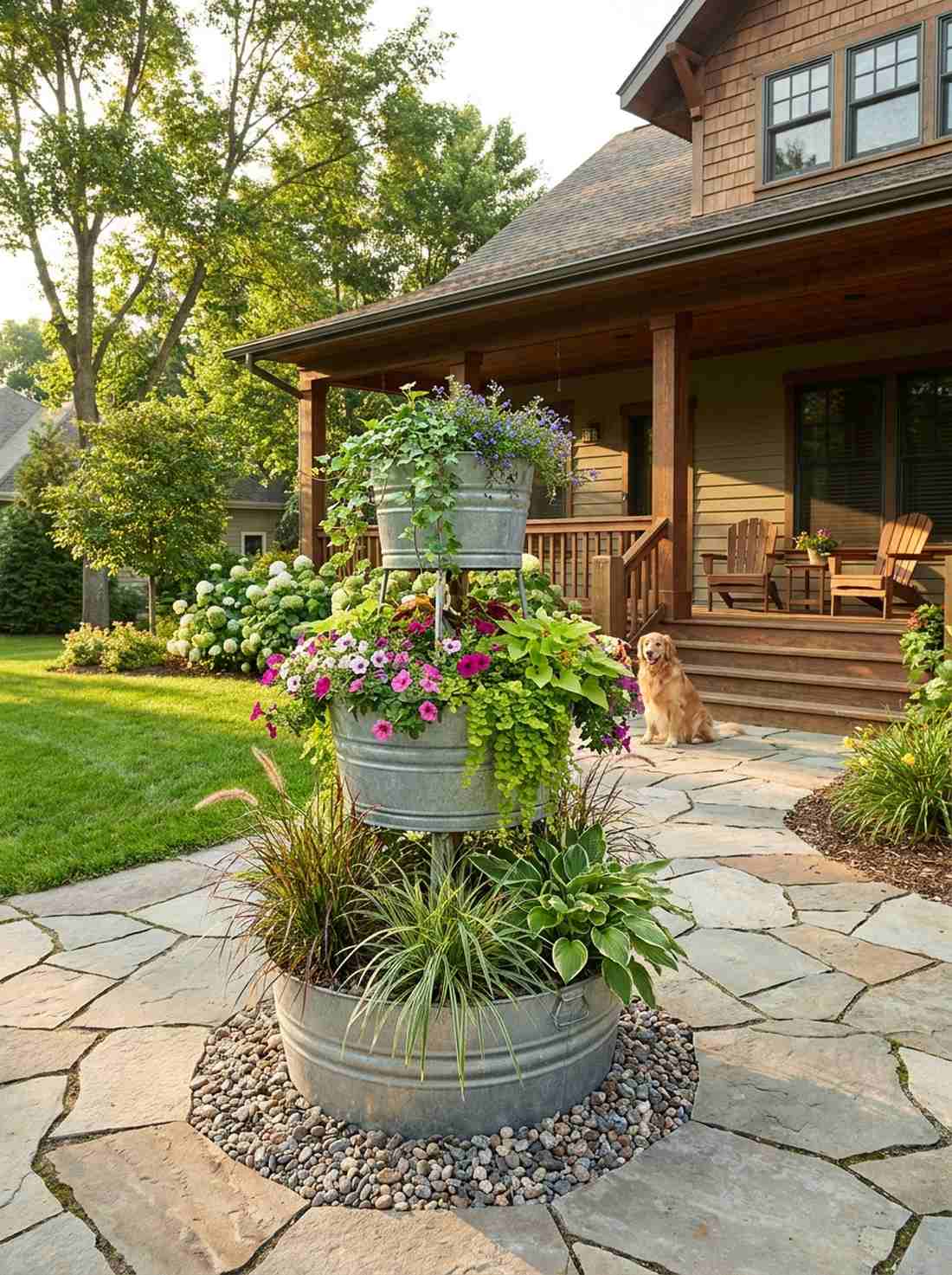
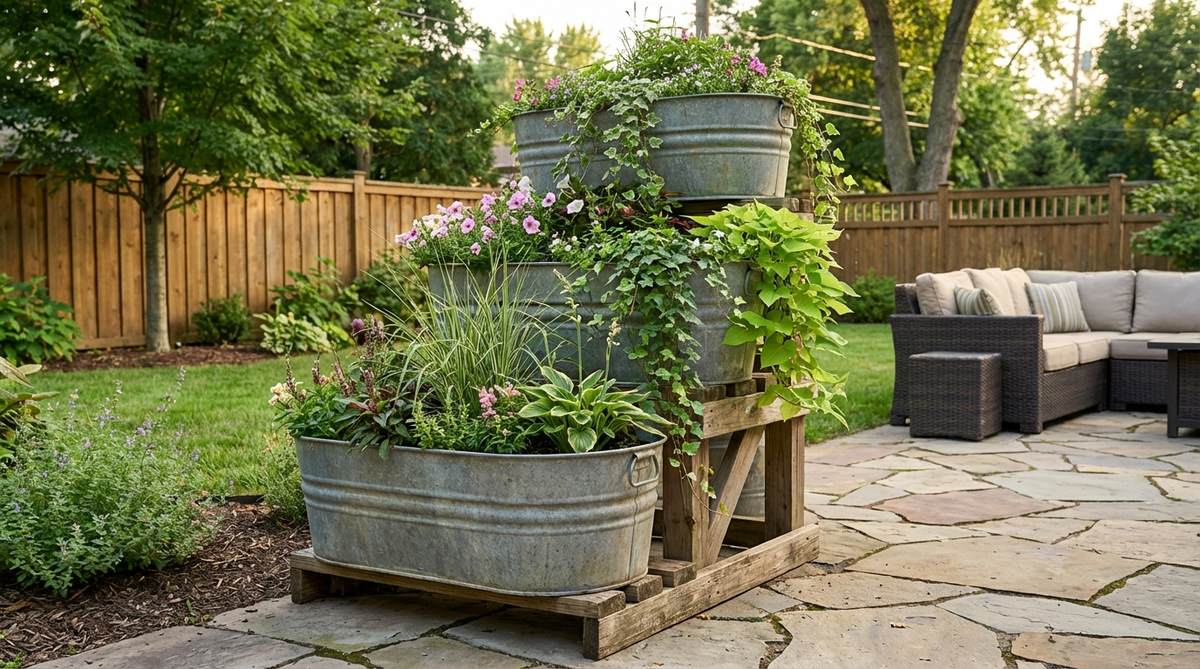
A staggering visual monument that commands absolute attention. This farmhouse garden tub decor tower stacks large, medium, and small containers. Perfect for creating a grand entrance near a front door or driveway.
Instead of wobbly, dangerous stacks, filling the bottom third of each level with crushed stone flips a basic craft project into a structurally sound masterpiece. Planting trailing varieties on top and structural plants at the base creates dynamic, expensive-looking contrast.
Build this impressive tower for $60–$90 depending on tub sourcing. Save this if you need major vertical impact!
- Key Materials: 3 graduated tubs, crushed stone base, mixed trailing/upright plants
- Vibe / Style: Imposing rustic grandeur
- Difficulty: Moderate (requires heavy lifting)
- Budget Breakdown: Tubs (set of 3): $45 | Plants/Soil: $35.
- Creator’s Tip: Drill drainage holes in all three tiers so water naturally trickles down to water the lower plants.
- Smart Sourcing: Use pre-washed drainage river rock (bulk bag) and a tiered metal tub starter kit.
12. Stool-Mounted Display
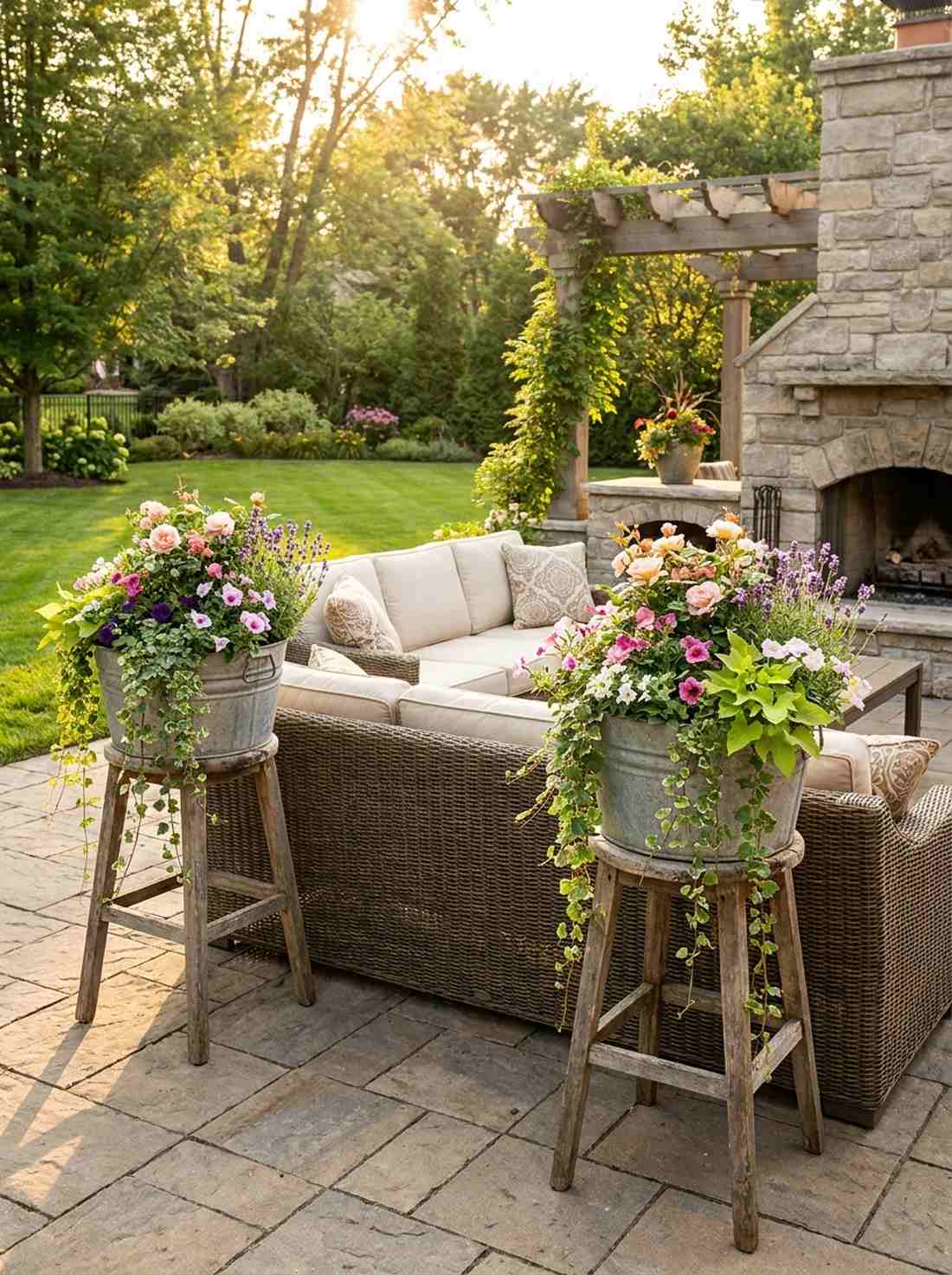
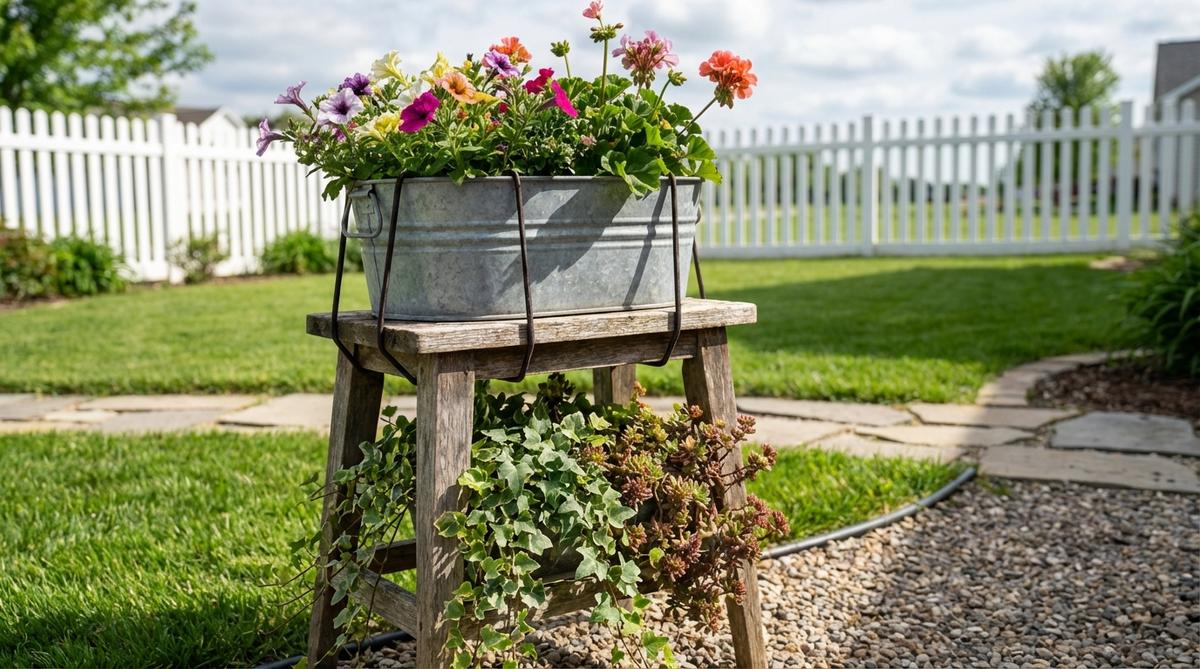
Brings your favorite blooms right up to eye level. This elevated garden tub decorating idea places gorgeous containers onto vintage wooden stools. Ideal for flanking an outdoor sofa or brightening up a boring patio corner.
Raising the container off the ground delivers a surprisingly premium look while massively improving air circulation to stop root rot. Securing the base with hidden bungee cords ensures high winds won’t ruin your designer-level finish.
Put this together for roughly $25 if you already own a stool. It’s highly recommended for showcasing fragrant flowers!
- Key Materials: Vintage wooden stool, single tub, trailing vines
- Vibe / Style: Elevated cottage charm
- Difficulty: Very Easy
- Budget Breakdown: Plants: $15 | Hardware/Soil: $10.
- Creator’s Tip: Elevated containers warm faster in spring, giving you a two-week head start on the growing season.
- Smart Sourcing: Secure it with heavy-duty outdoor UV-resistant bungee cords and use premium moisture-control soil.
13. Ladder-Rung Arrangement
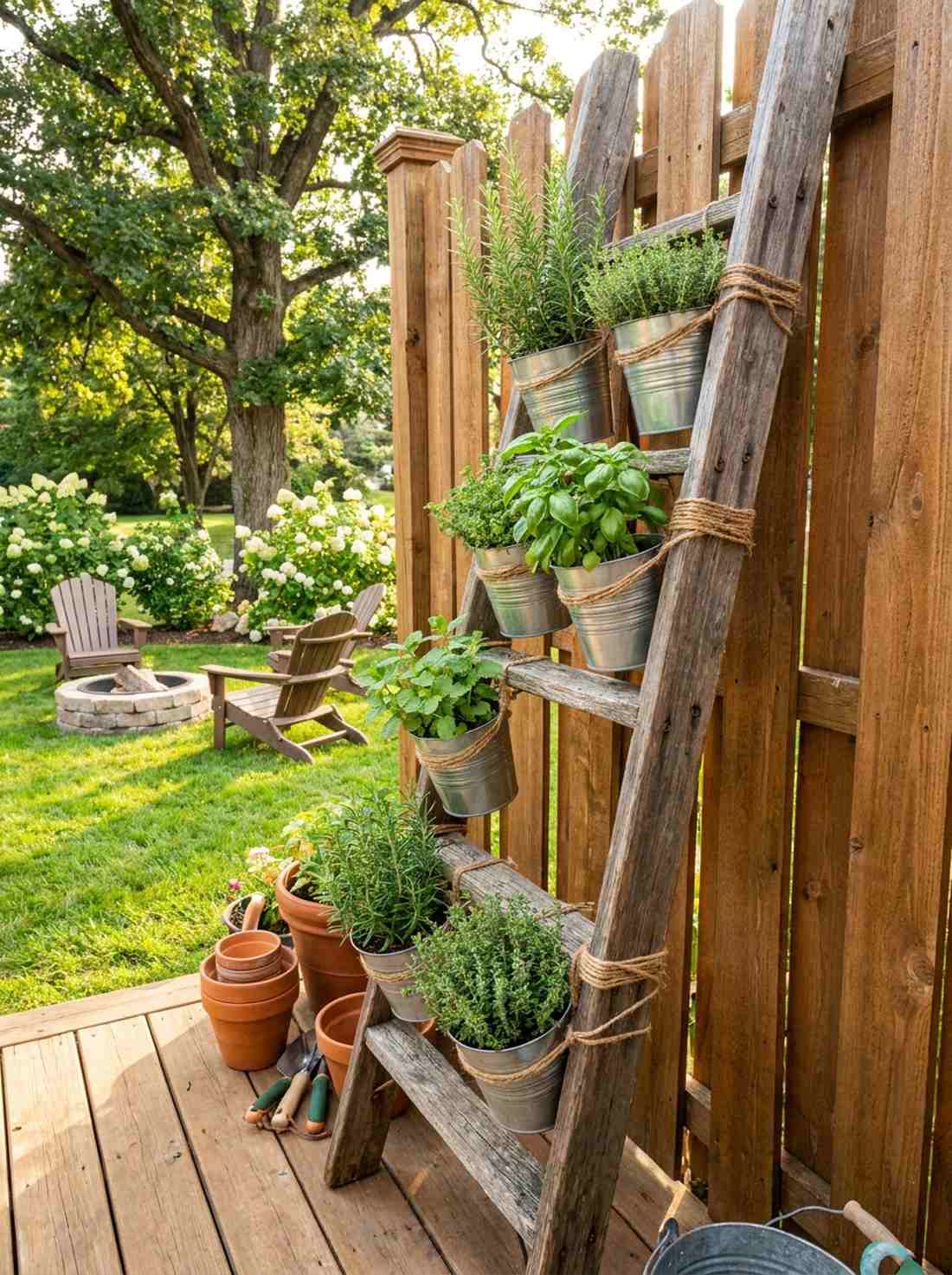
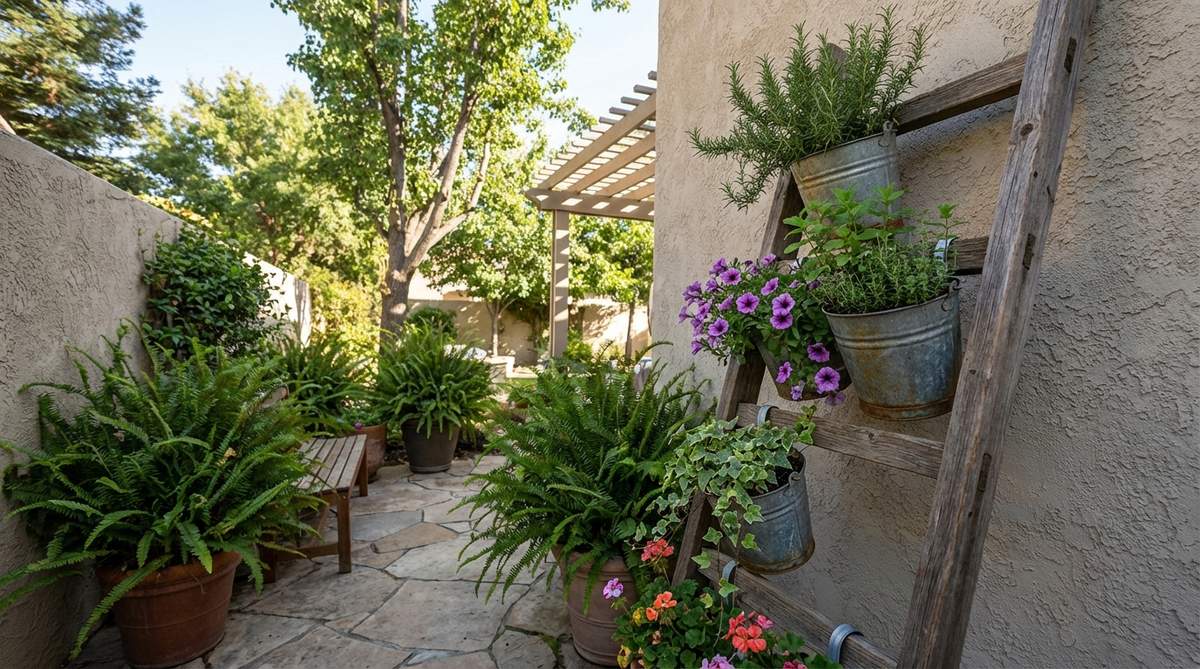
Looks like a whimsical vertical garden pulled right out of a boutique. This garden tub wall decor trick ties small buckets to an old wooden ladder. A brilliant space-saver for tight urban balconies or narrow side yards.
Most vertical gardens cost a fortune, but leaning a weathered ladder against a fence achieves that high-end aesthetic without the high-end price tag. It’s the perfect canvas to sneak in miniature garden supplies or a sprawling herb collection.
You can throw this together for under $35. Pin this to your small space gardening board!
- Key Materials: Old wooden ladder, small galvanized buckets, heavy twine
- Vibe / Style: Whimsical vertical farm
- Difficulty: Easy
- Budget Breakdown: Buckets (Pack of 6): $20 | Twine/Plants: $15.
- Creator’s Tip: Paint the ladder a bright contrasting color or leave it raw and weathered depending on your patio aesthetic.
- Smart Sourcing: Buy weather-resistant natural jute twine (bulk spool) and a set of pre-drilled mini galvanized pails.
If you think your space is too small for a tub, wait until you see this genius vertical hack coming up next…
14. Birdbath Pedestal Planter
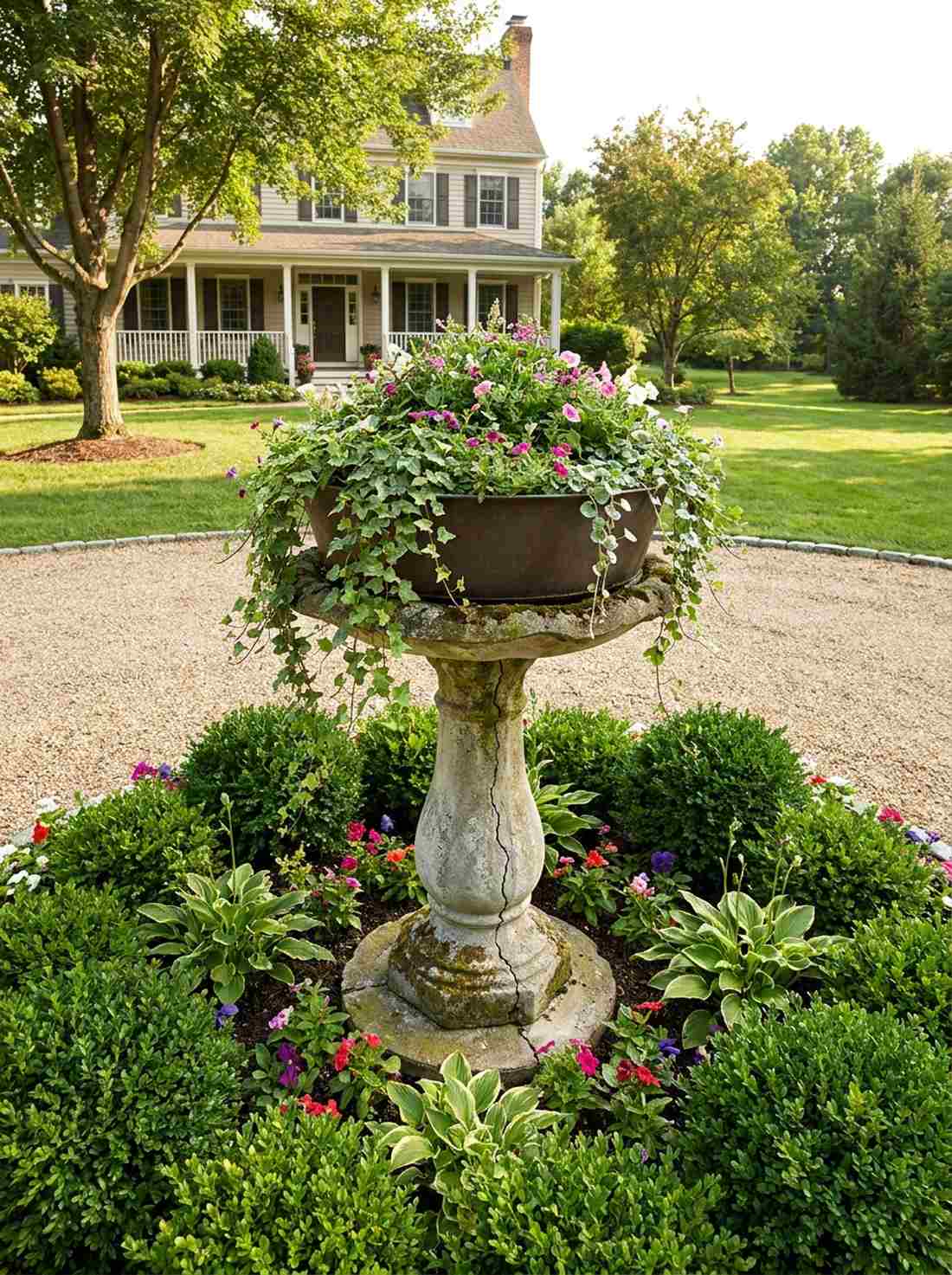
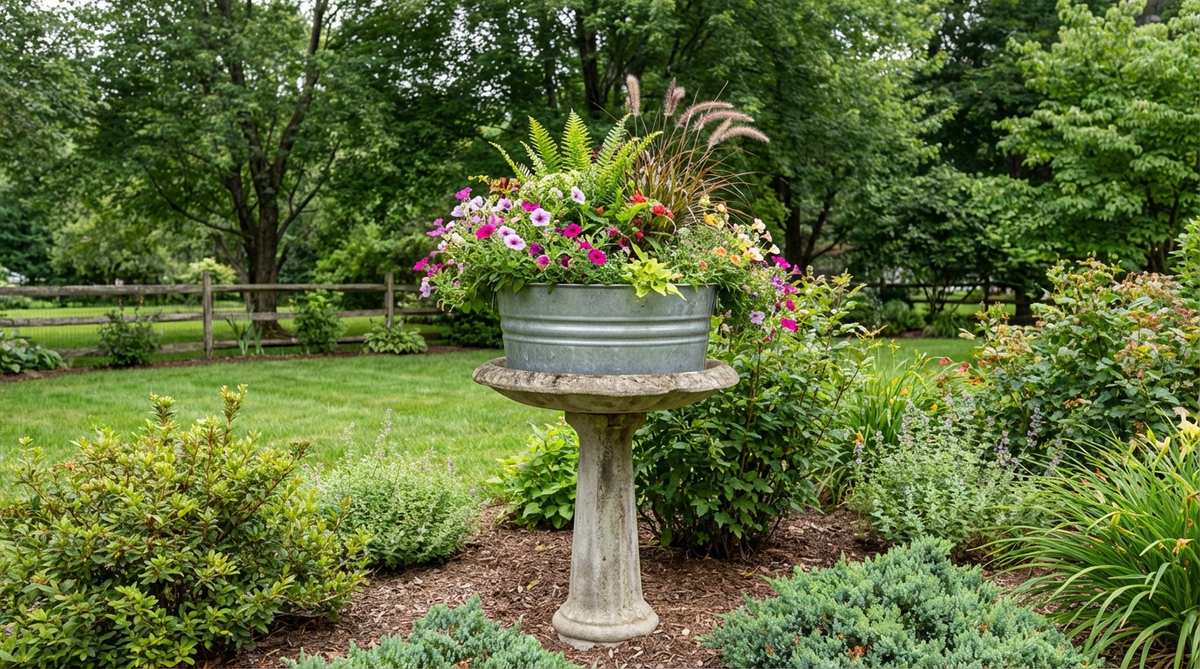
Feels like a classic English estate feature with a rustic twist. This elegant garden tub decor setup rescues a cracked concrete birdbath by topping it with a lush metal planter. Superb for the absolute center of a circular driveway or formal garden bed.
Repurposing broken garden statues completely elevates a basic setup into a luxury focal point while keeping heavy soil loads perfectly stable. Gluing the tub down with outdoor construction adhesive stops ground-dwelling pests from reaching your precious blooms.
Upcycle this look for around $20 if you have a broken pedestal. It’s a fast upgrade that completely changes the vibe.
- Key Materials: Broken birdbath pedestal, wide shallow tub, construction adhesive
- Vibe / Style: Upcycled formal elegance
- Difficulty: Easy
- Budget Breakdown: Adhesive: $8 | Soil/Plants: $12.
- Creator’s Tip: Use trailing “spiller” plants around the rim to soften the harsh transition between the metal tub and concrete base.
- Smart Sourcing: Use heavy-duty exterior landscape construction adhesive and pre-mixed trailing flower seed mats.
Seasonal Statement Pieces Throughout the Year
Galvanized and ceramic containers transition easily between seasons with simple replanting strategies. Their neutral tones complement spring pastels, summer brights, fall oranges, and winter evergreens.
15. Spring Bulb Showcase
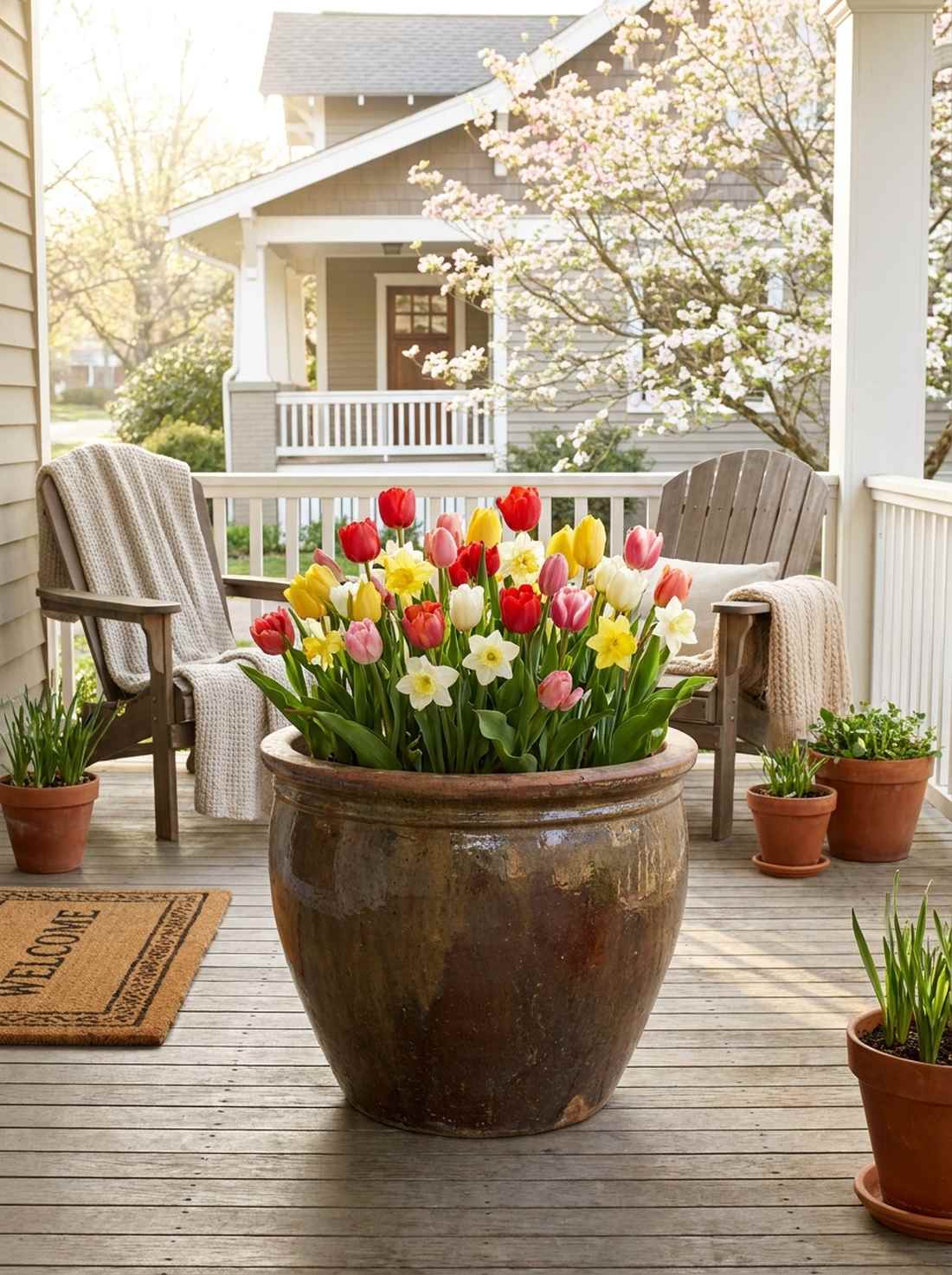
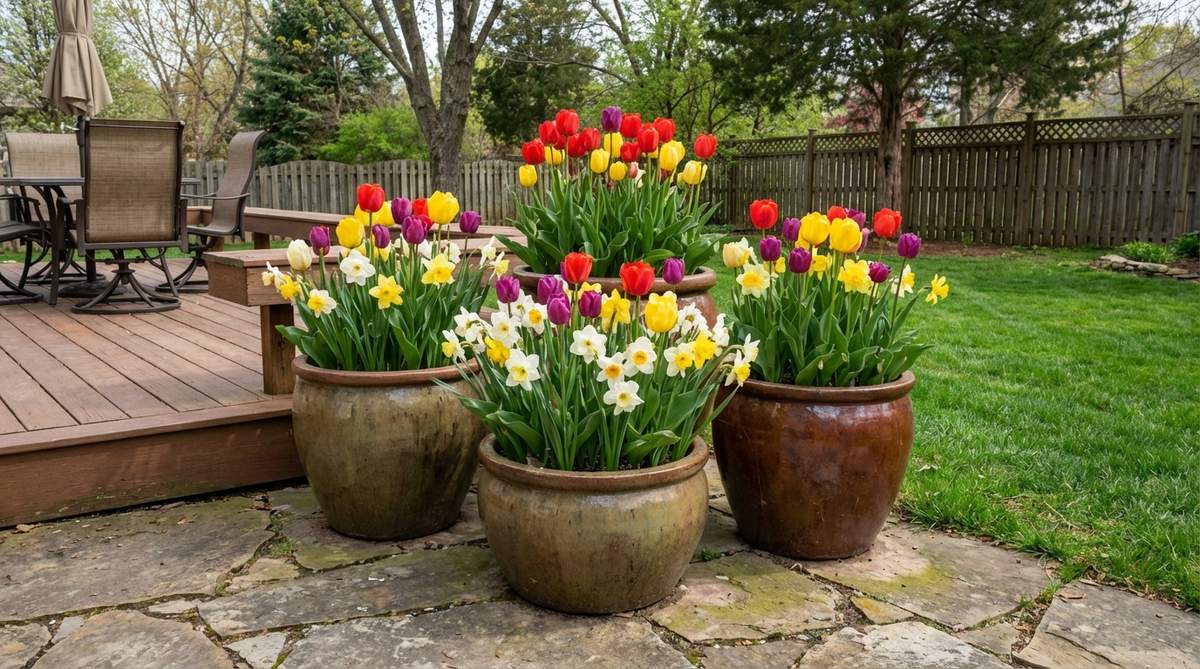
An explosive celebration of early spring color that breaks through the winter gloom. This ceramic garden tub decor forces pre-chilled tulips and daffodils to bloom weeks ahead of schedule. An absolute must-have for a welcoming front porch display.
The secret that commercial growers use? Layering bulbs at different depths—the “lasagna method”—fools everyone into thinking you hired a pro by delivering continuous, non-stop blooming. The porous ceramic perfectly insulates the roots during erratic spring freezes.
You can create this layered bulb masterpiece for $25–$40. Pin this to remember for your fall planting schedule!
- Key Materials: Pre-chilled tulip/daffodil bulbs, deep ceramic pot
- Vibe / Style: Cheerful spring awakening
- Difficulty: Moderate (requires timing)
- Budget Breakdown: Bulbs: $20 | Potting Soil: $10.
- Creator’s Tip: Plant the largest bulbs 8 inches deep, medium at 5 inches, and the smallest right near the top for staggered blooming.
- Smart Sourcing: Grab a premium spring bulb starter kit (mixed variety) and bone meal bulb fertilizer.
16. Fall Pumpkin Perch
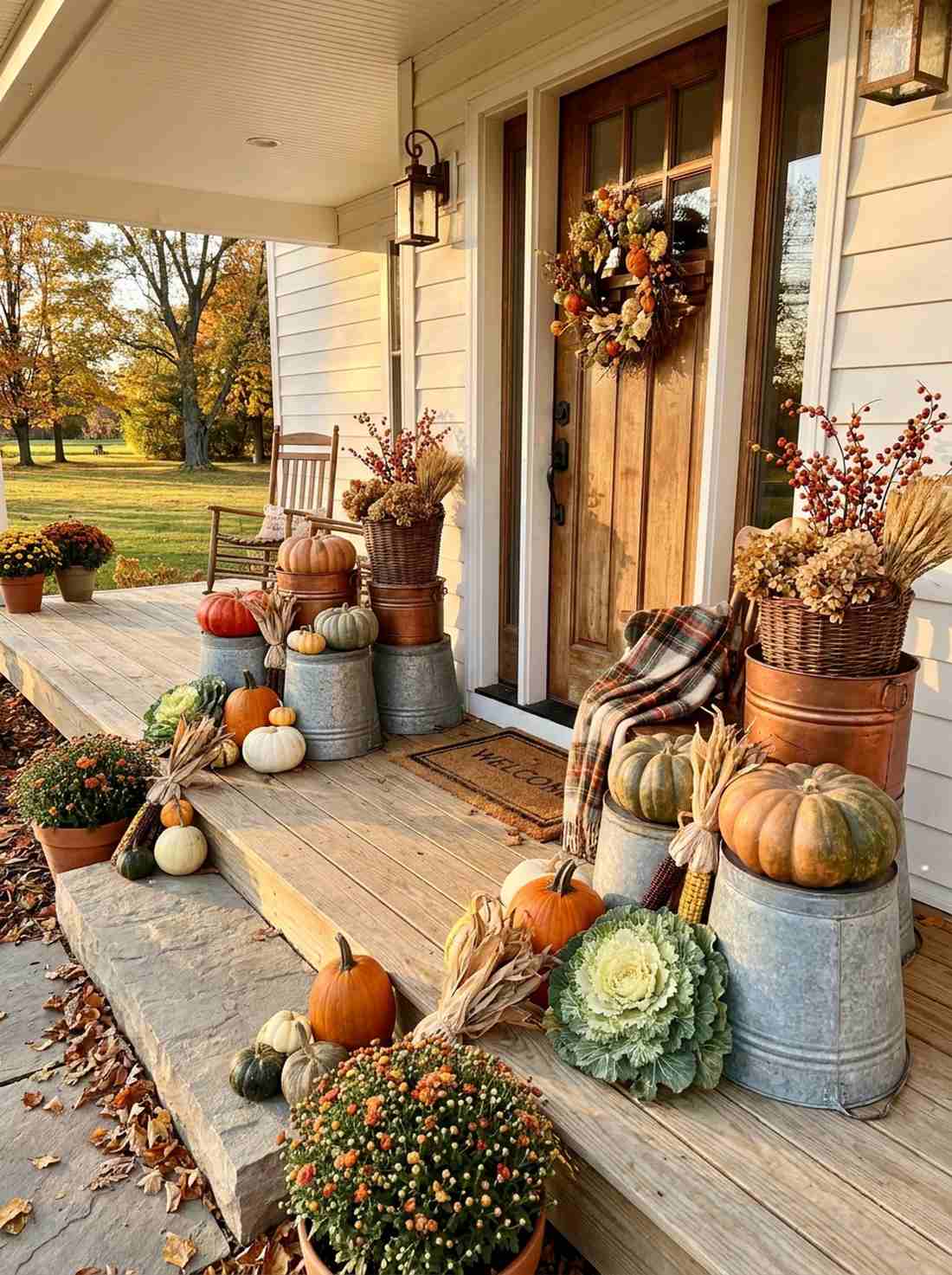
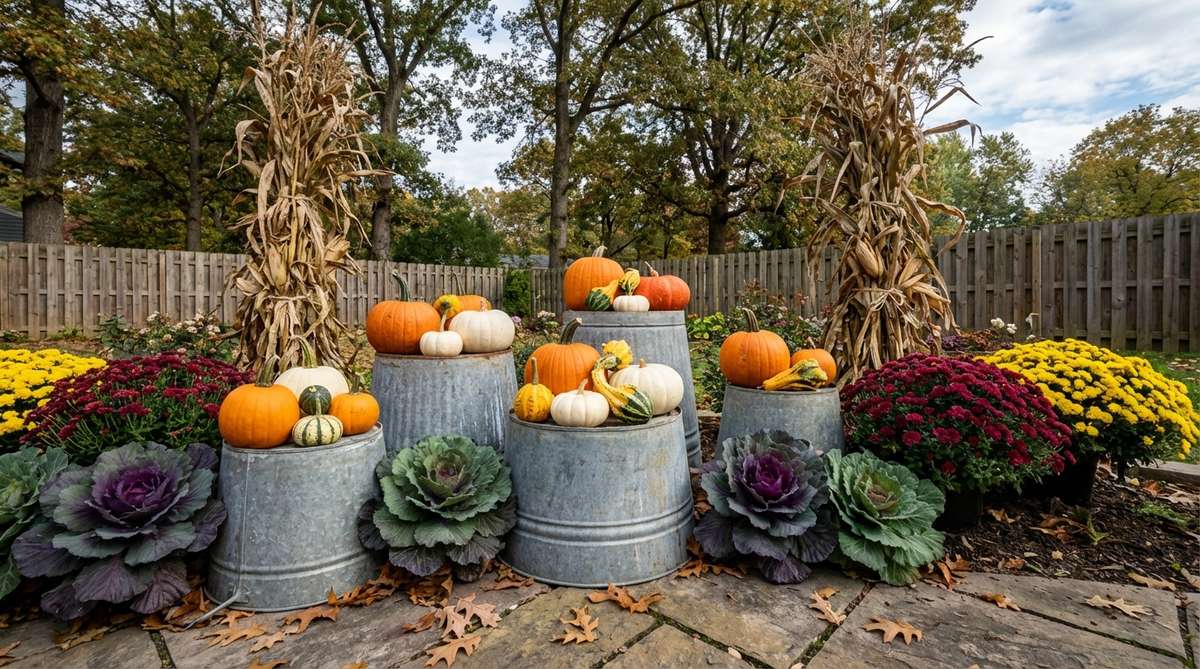
Radiates cozy autumn energy the moment you pull into the driveway. This inventive farmhouse garden tub decor uses upturned buckets as rustic pedestals for heavy pumpkins. Perfect for framing a front door or flanking outdoor steps.
Instead of letting pumpkins rot on wet soil, elevating them on raw industrial metal delivers a surprisingly premium look that contrasts beautifully with organic gourds. Tuck in some dried cornstalks and ornamental cabbage for a magazine-worthy harvest scene.
Execute this gorgeous autumn setup for $15–$30. It’s a fast upgrade that celebrates the changing seasons!
- Key Materials: Upturned galvanized buckets, assorted pumpkins, dried florals
- Vibe / Style: Cozy harvest festival
- Difficulty: Very Easy
- Budget Breakdown: Pumpkins/Gourds: $20 | Buckets: Thrifted or owned.
- Creator’s Tip: Spray paint older, rusted buckets in metallic copper or dark bronze for an intensely rich autumn appeal.
- Smart Sourcing: Use clear UV-resistant acrylic sealer spray on the pumpkins to stop rotting and faux autumn berry stems.
17. Winter Evergreen Arrangement
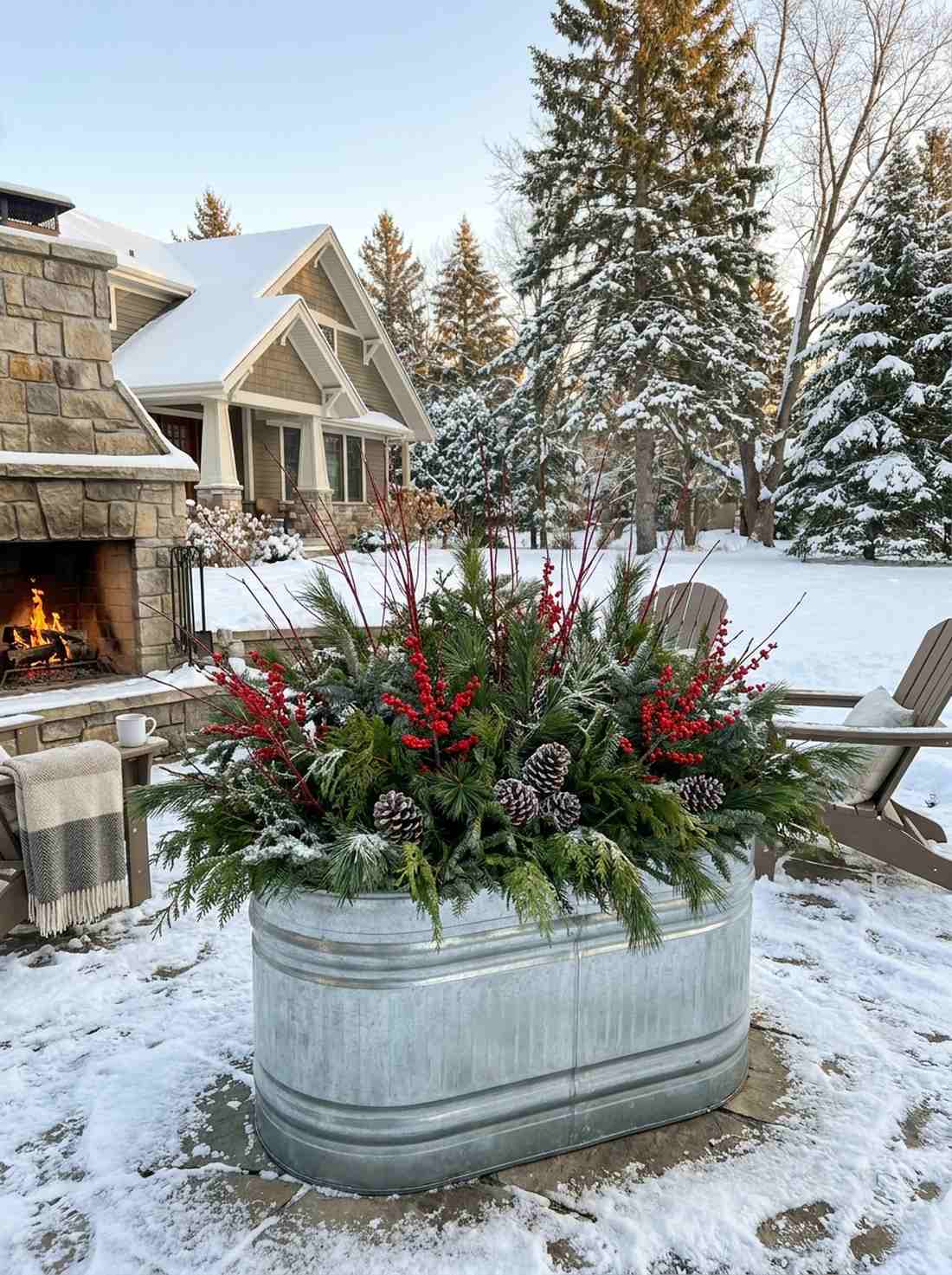
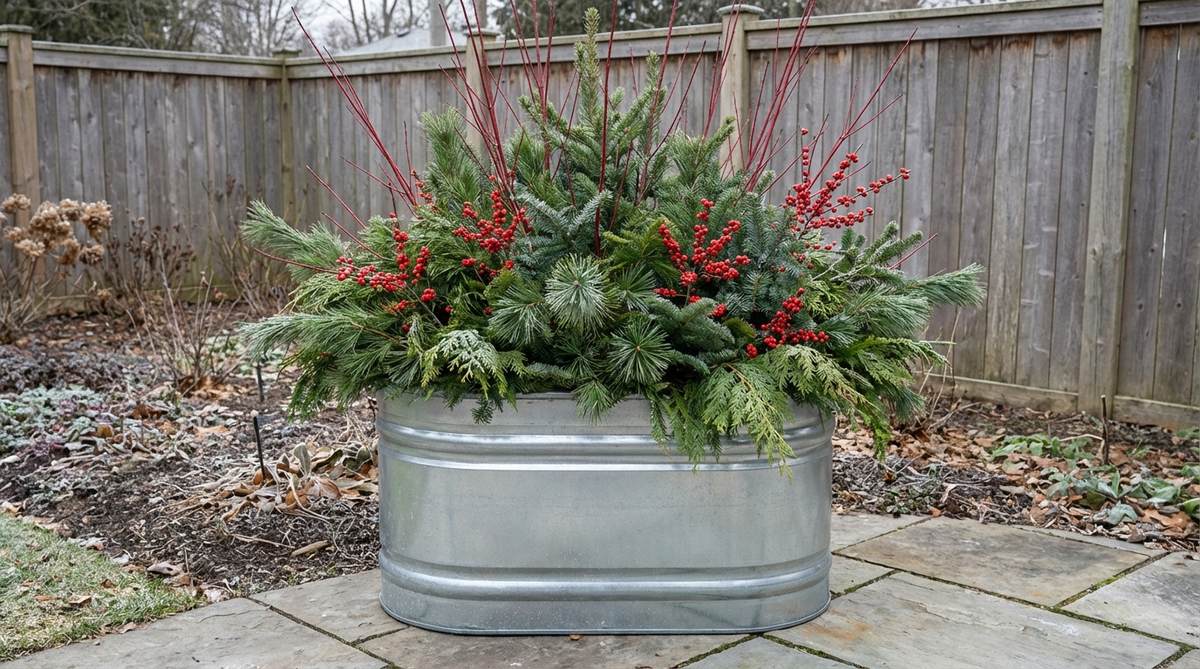
Looks like a high-end holiday installation from a luxury ski resort. This rugged garden tub decorating concept uses metal to hold heavy winter boughs when terracotta would crack and shatter. Flawless for adding life to a dead, snowy patio.
Shoving pine and cedar branches into frozen soil looks far more expensive than it is, especially when you accent it with stark red twig dogwood. These metal vessels handle the brutal freeze-thaw cycles that destroy expensive ceramic pots.
Build this winter survivor for $10–$25 using foraged greens. Save this for your winter outdoor decorating board!
- Key Materials: Mixed evergreen boughs, red twig dogwood, durable tub
- Vibe / Style: Crisp winter elegance
- Difficulty: Easy
- Budget Breakdown: Accents: $15 | Greens: Free (foraged) | Base: Owned.
- Creator’s Tip: Mist the evergreen boughs weekly if the weather is dry to maintain needle flexibility and deep green color.
- Smart Sourcing: Incorporate pre-cut faux winterberry branch stems and heavy-duty floral foam blocks (bulk).
Material Guide: Cheap vs. Premium Aesthetic
Knowing exactly where to save and where to spend makes all the difference in achieving that “looks expensive but isn’t” vibe for your garden tub decor.
- Standard vs. UV-Resistant/Premium: Upgrading to UV-coated artificial accents or heavy-duty acrylic sealants prevents the sun from fading your setup within one season. It costs a fraction more but saves complete replacement.
- Pre-made Kits vs. Sourcing Locally: While thrift store tubs are great, using premium starter kits for the internal mechanisms (like pumps, liners, or specialized soils) stops root rot and mechanical failure dead in their tracks.
Herb and Vegetable Gardens in Repurposed Containers
Food-safe galvanized containers provide ideal growing conditions for edible crops. The depth accommodates root vegetables while drainage prevents fungal diseases common in poorly ventilated planters.
18. Culinary Herb Station
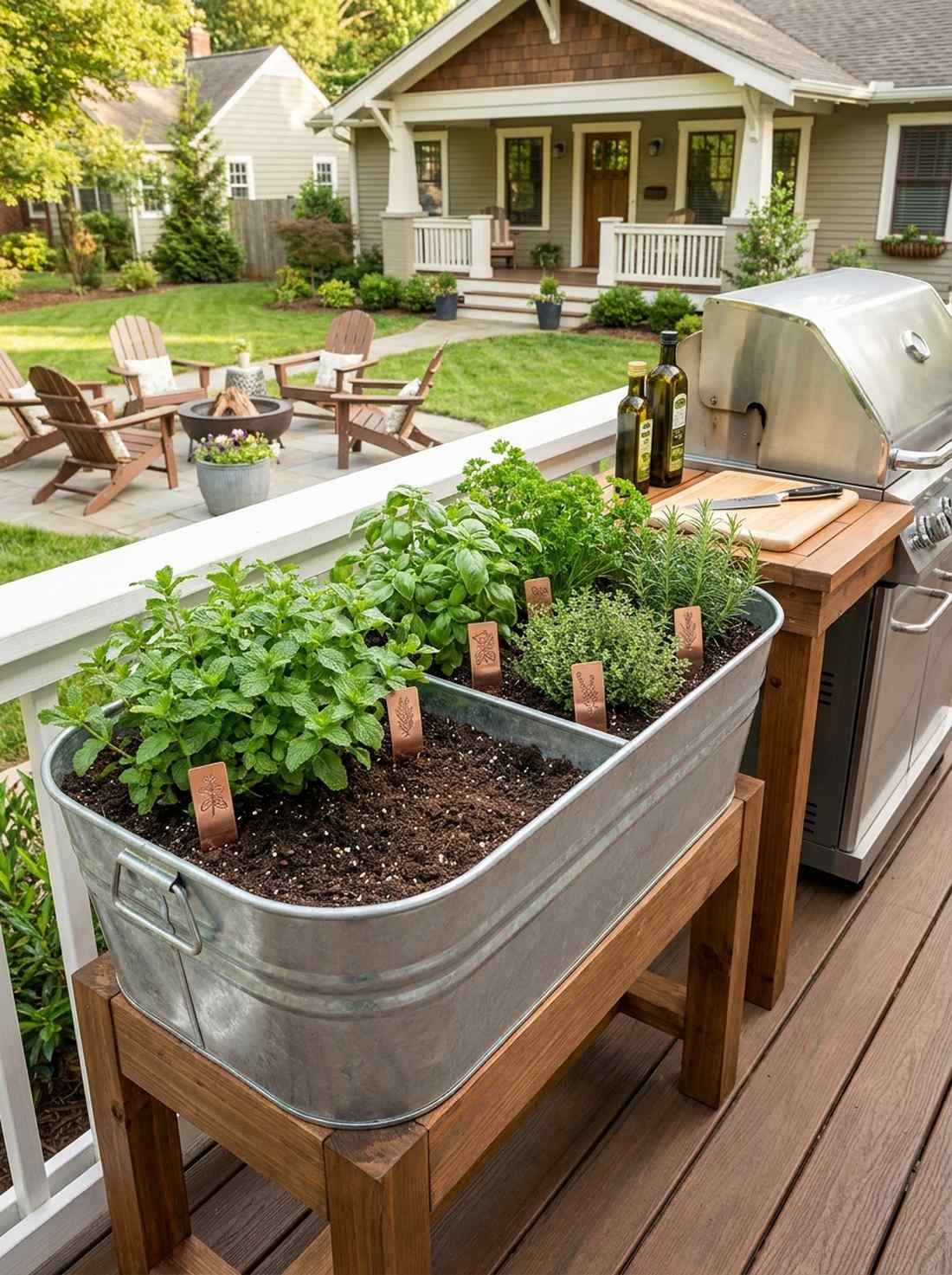
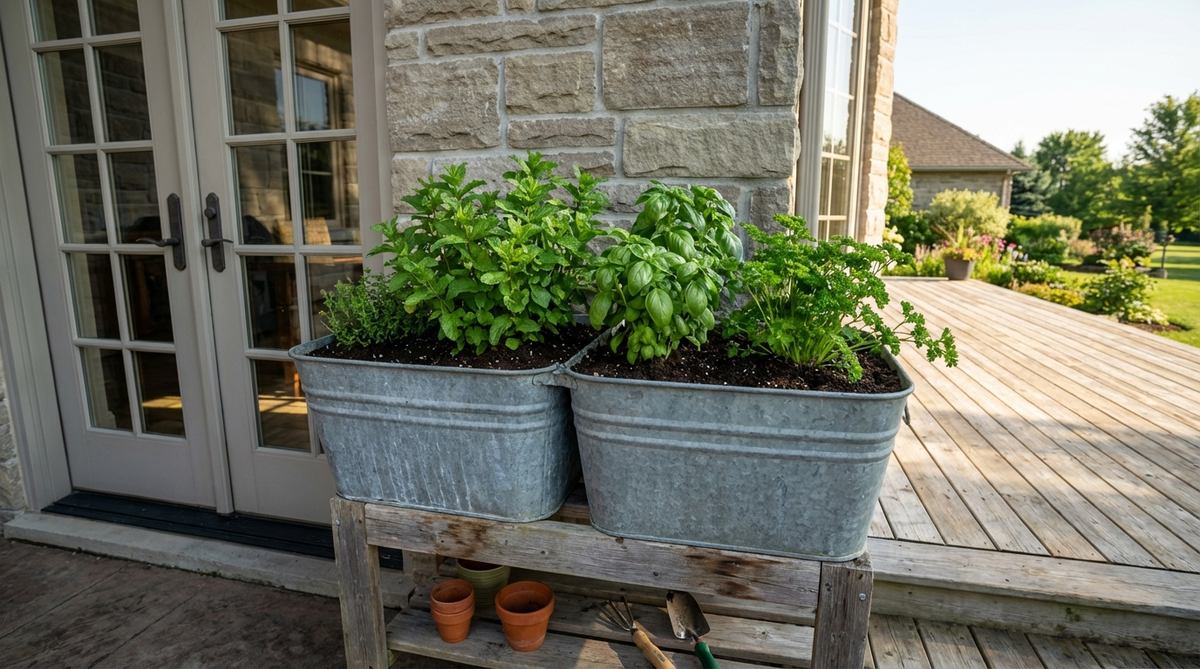
Smells like an authentic Italian villa kitchen just steps from your back door. This functional garden tub decor ideas approach uses a divided laundry tub to separate aggressive herbs. Perfect for a sunny back deck right next to your grill.
Most herb gardens become a tangled mess, but using the tub’s natural compartments flips a basic project into a highly organized, designer-level finish. Keep mint completely isolated while letting basil and parsley thrive in nutrient-rich soil on the other side.
Set up your culinary dream station for around $30–$45. Pin this if you love cooking with fresh ingredients!
- Key Materials: Divided double laundry tub, mixed culinary herbs, specialized soil
- Vibe / Style: Chef’s outdoor pantry
- Difficulty: Easy
- Budget Breakdown: Herb Starts: $25 | Potting Mix: $15.
- Creator’s Tip: Harvest the tops regularly to promote thick, bushy growth and prevent the herbs from bolting (flowering).
- Smart Sourcing: Use an organic raised bed vegetable soil mix and pre-stamped copper herb garden markers.
Stop throwing away those cracked, shallow tubs! This next farmhouse transformation will completely blow your mind…
19. Lettuce and Greens Nursery
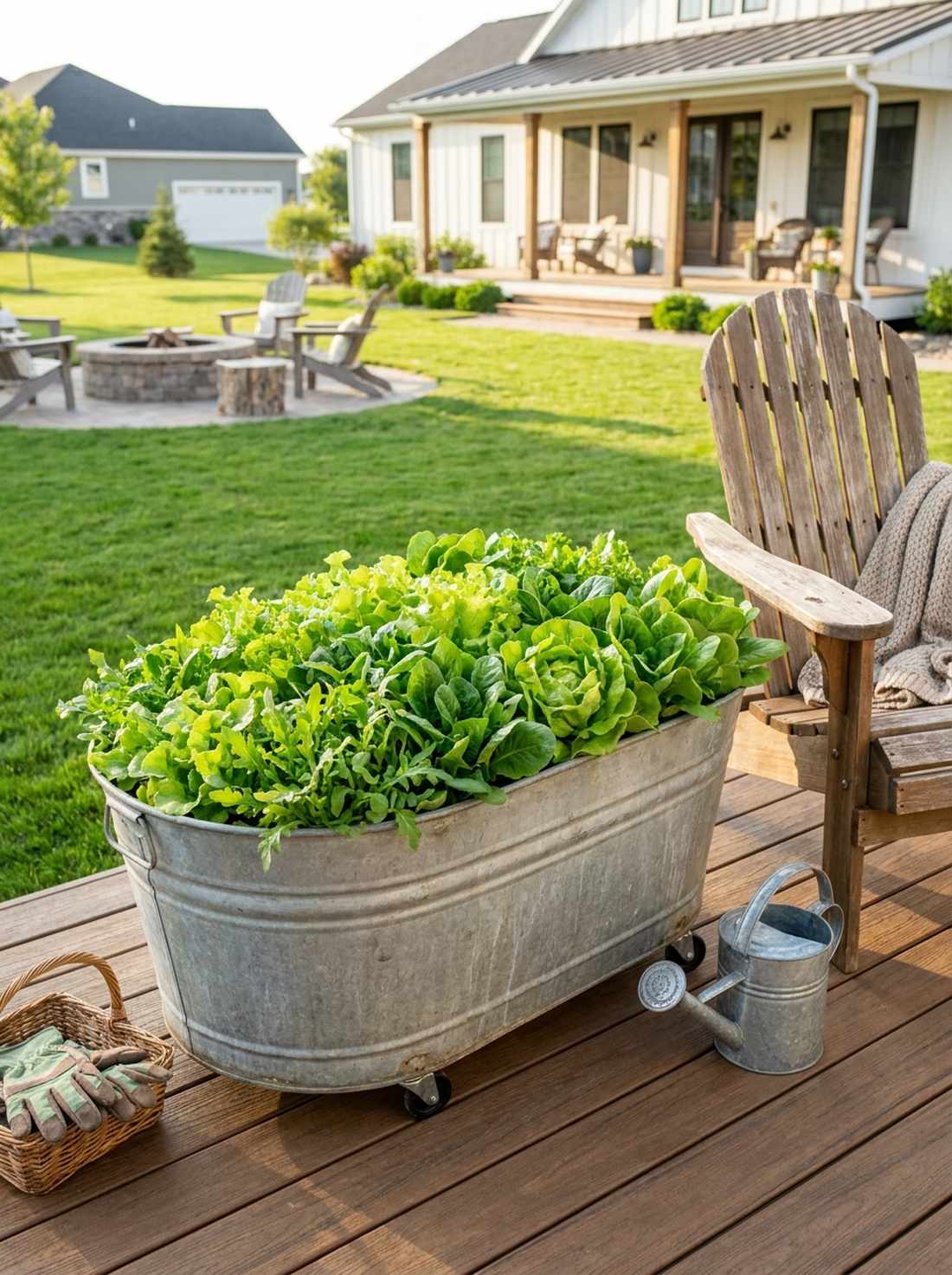
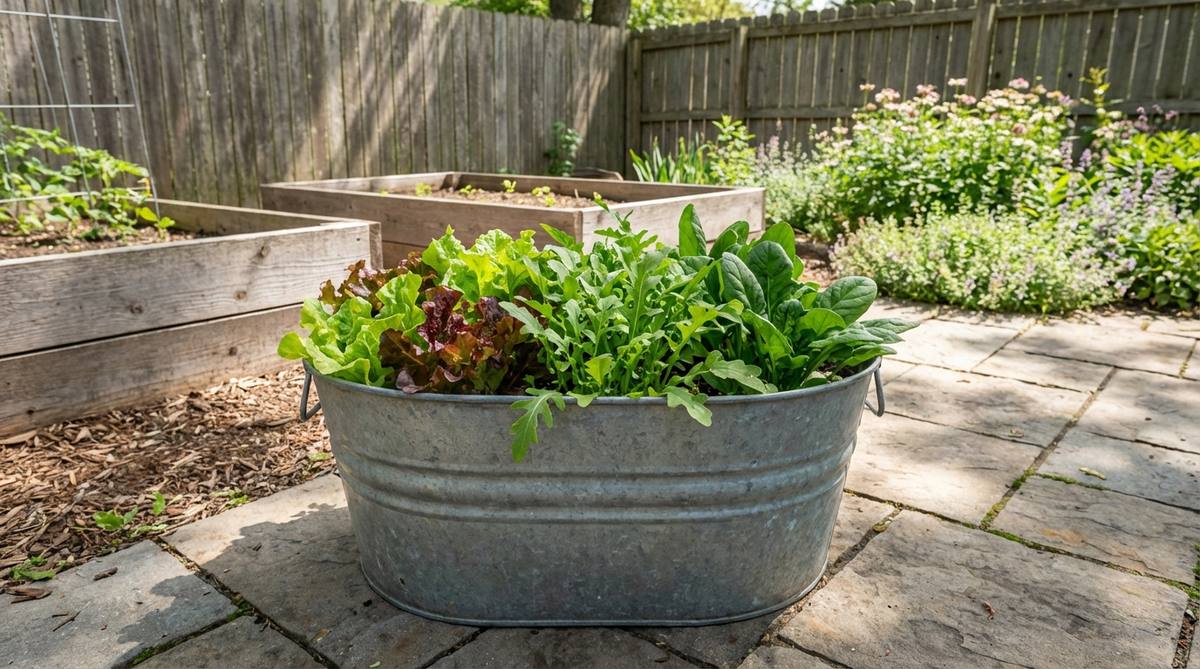
Provides a lush, edible carpet of vibrant green that you can actually eat. This shallow mobile home garden tub decor excels at growing continuous crops of fresh salad. Fantastic for small spaces that need to remain highly productive.
Growing greens in standard deep pots wastes dirt, but shallow 8-inch wash tubs achieve that high-end aesthetic while maximizing your seed-to-harvest ratio. The zinc metal naturally provides trace nutrients, making your arugula and spinach wildly robust.
Start your continuous salad bar for just $15. Save this to your urban homesteading board!
- Key Materials: Shallow wash tub, lettuce/spinach seed mixes
- Vibe / Style: Productive urban farm
- Difficulty: Very Easy
- Budget Breakdown: Seed Packets: $5 | Soil: $10.
- Creator’s Tip: Because the tub is mobile, slide it into the shade during brutal summer afternoons to stop the lettuce from turning bitter.
- Smart Sourcing: Grab a mesclun mix heirloom seed starter kit and bulk organic worm castings.
20. Compact Tomato Tower
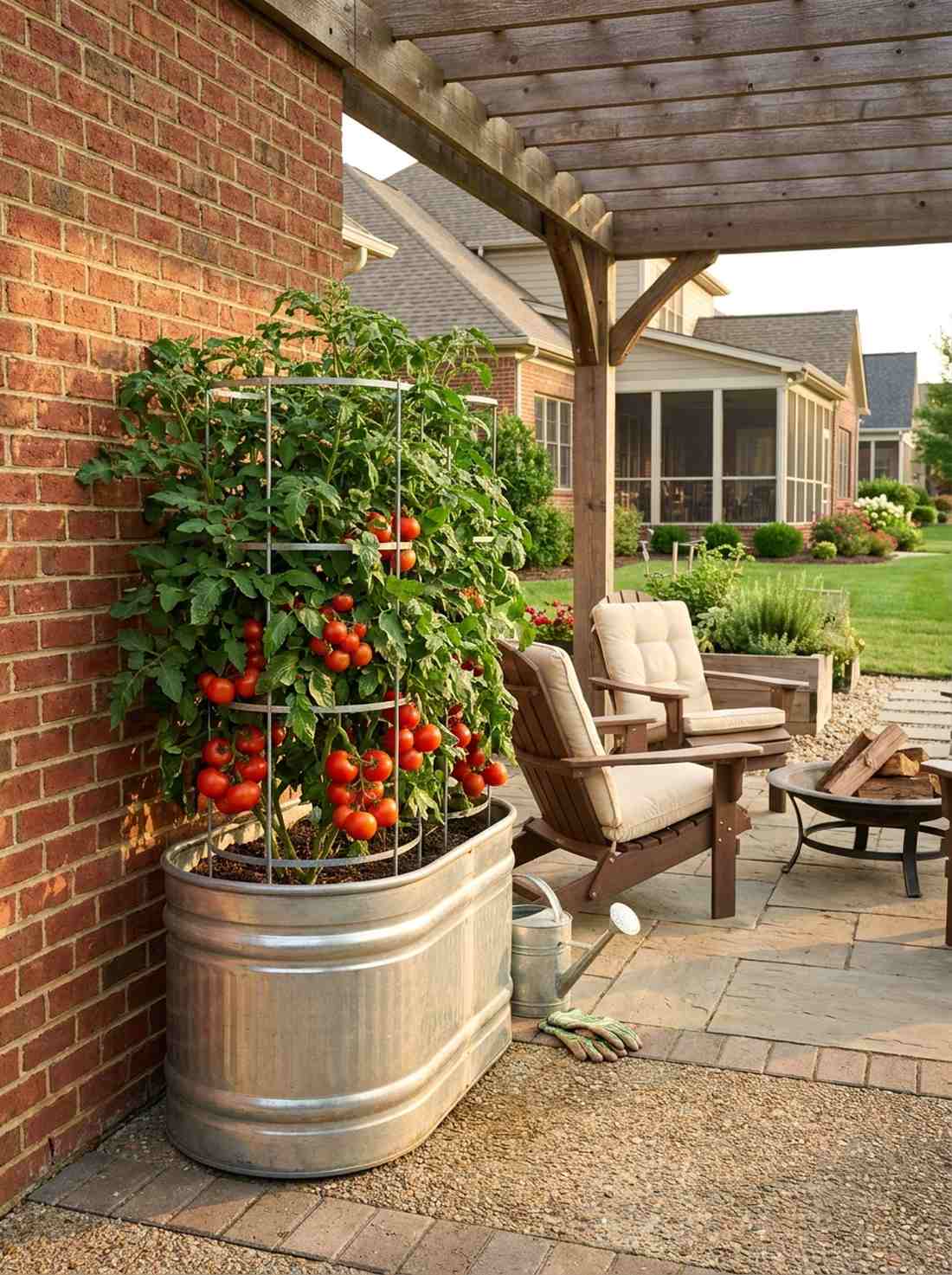
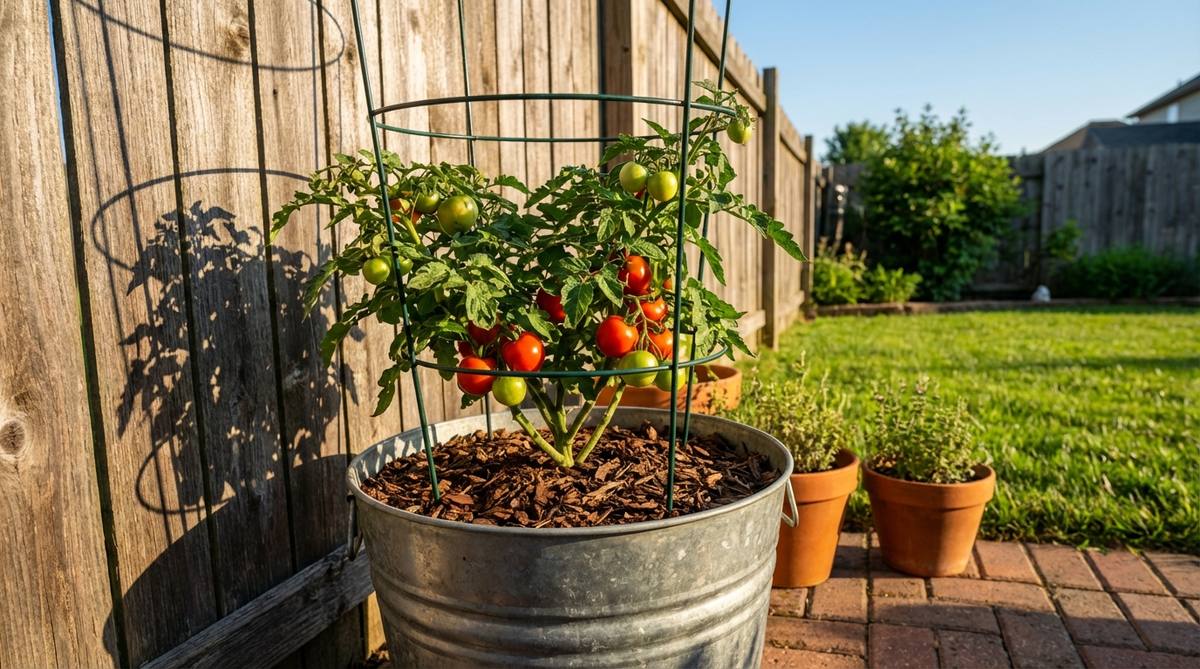
A towering inferno of bright red fruit and deep green foliage. This deep galvanized tub decor provides the perfect foundation for heavy determinate tomato plants. An amazing addition to a hot, south-facing brick wall.
Planting tomatoes in flimsy plastic pots is a recipe for disaster; dropping them into deep 15-inch metal buckets looks far more expensive than it is and creates a massive thermal mass. The metal absorbs heat all day and radiates it at night, drastically accelerating fruit ripening.
You can build this heavy-duty food tower for $25–$40. Highly recommended for patio gardeners who want serious yields.
- Key Materials: Deep galvanized bucket (15+ inches), determinate tomato plant, cage
- Vibe / Style: Robust patio agriculture
- Difficulty: Moderate (requires pruning)
- Budget Breakdown: Tomato Plant: $8 | Heavy Soil/Cage: $20.
- Creator’s Tip: Install your heavy-duty tomato cages on day one to avoid destroying the root system later in the season.
- Smart Sourcing: Use heavy-duty galvanized tomato cages (bulk) and a calcium-rich tomato fertilizer spike kit.
21. Vertical Strawberry Column
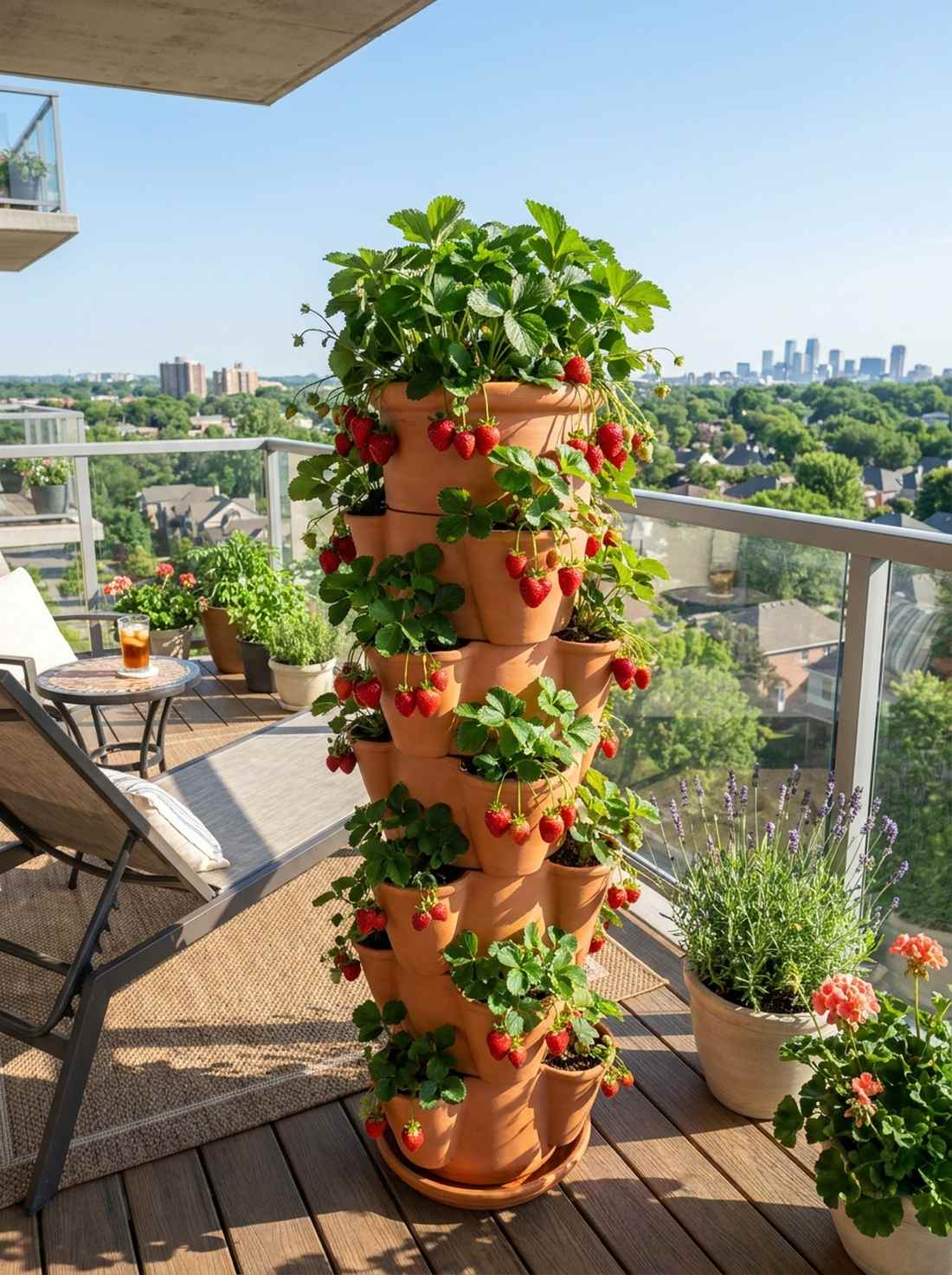
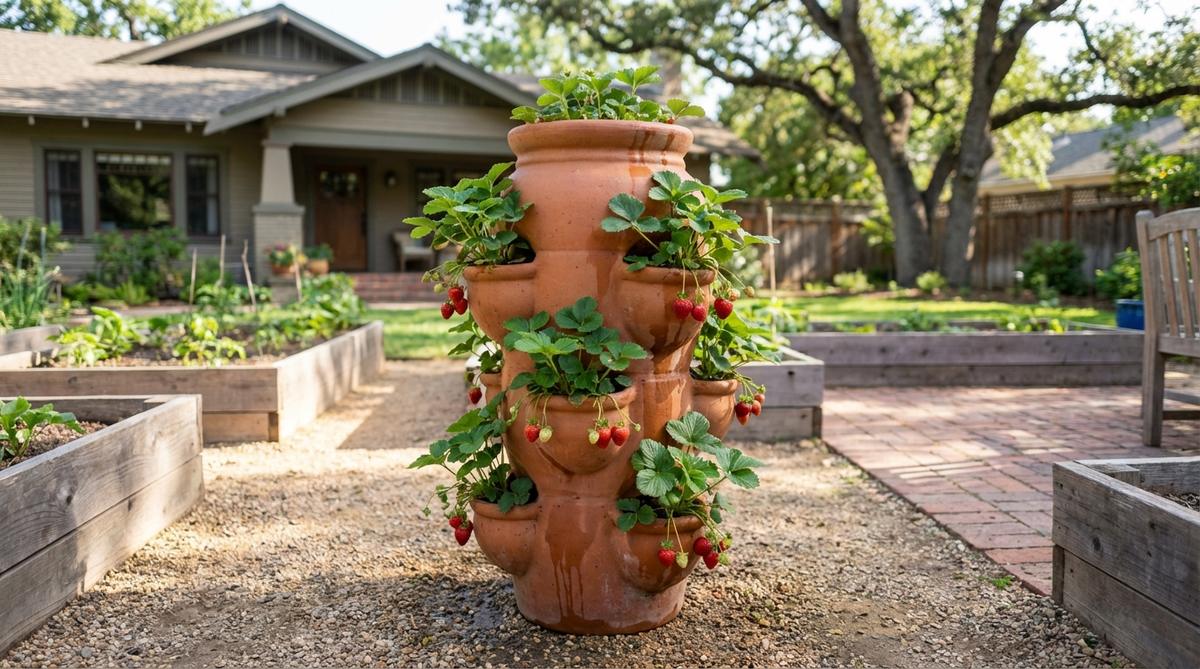
Feels like a cascading fountain of sweet, ruby-red jewels. This ceramic garden tub decor uses tiered side-pocket pots to create a breathtaking fruit pillar. The ultimate space-saving hack for a sunny apartment balcony.
Building upward instead of outward completely elevates a basic setup into a luxury focal point that produces massive fruit yields in zero square footage. The heavy ceramic walls lock in moisture, protecting the delicate crowns from drying out during intense fruiting phases.
Construct this edible vertical wonder for $45–$65. Pin this to your small patio garden ideas board!
- Key Materials: Stacked terracotta/ceramic strawberry pot, everbearing strawberry crowns
- Vibe / Style: Sweet cascading bounty
- Difficulty: Moderate
- Budget Breakdown: Strawberry Pot: $35 | Crowns/Soil: $20.
- Creator’s Tip: Rotate the heavy container 90 degrees every single week to ensure all sides get equal sun exposure for even ripening.
- Smart Sourcing: Purchase everbearing bare-root strawberry crowns (bulk pack) and a water-retaining coco coir soil block.
The final two ideas are the absolute secret to achieving that rich, expensive designer look on a dime…
Creative Placement Strategies for Visual Flow
Strategic container positioning transforms random plantings into cohesive garden designs. Thoughtful placement accounts for sightlines, traffic patterns, and functional needs.
22. Border-Embedded Accent
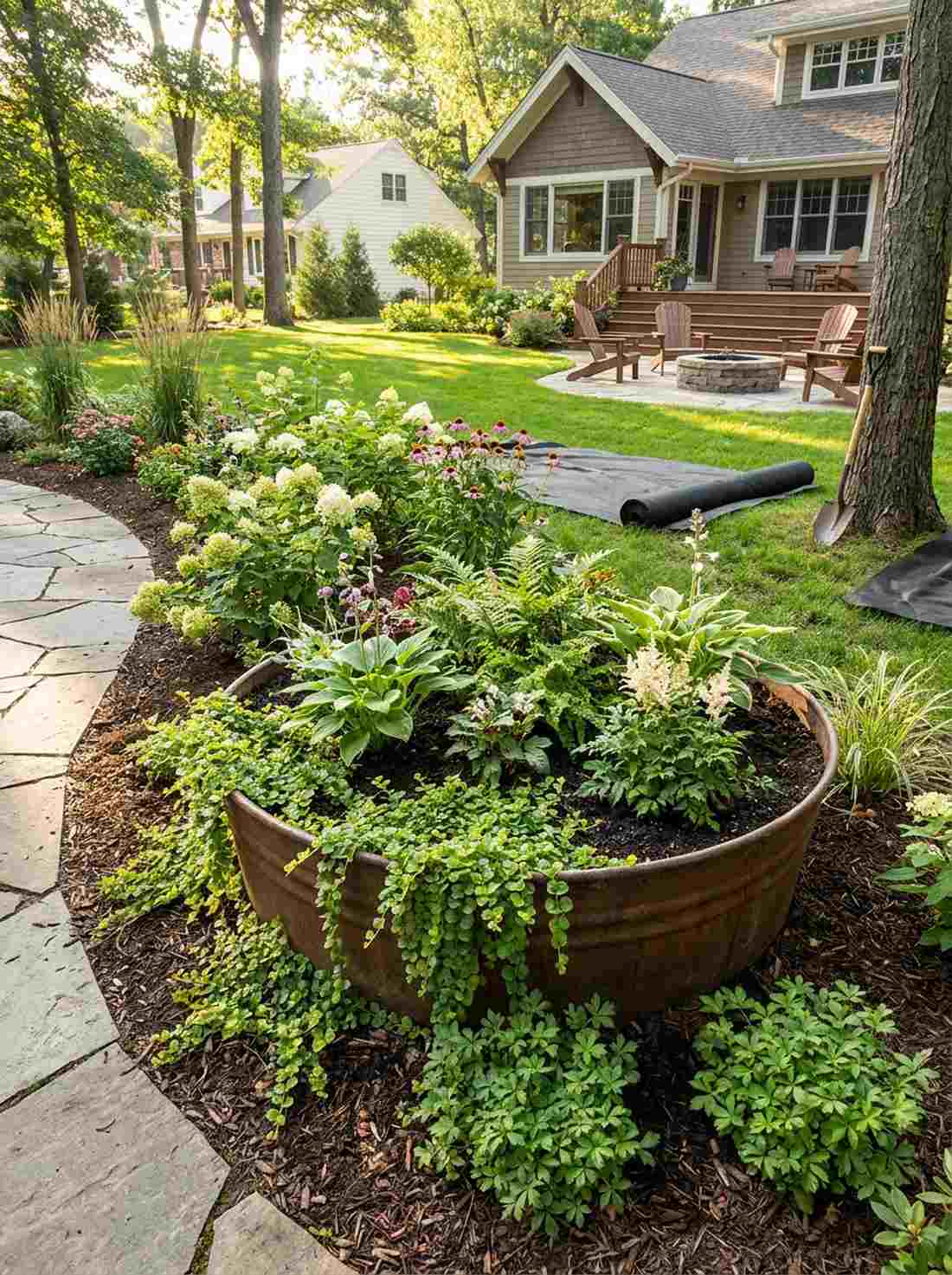
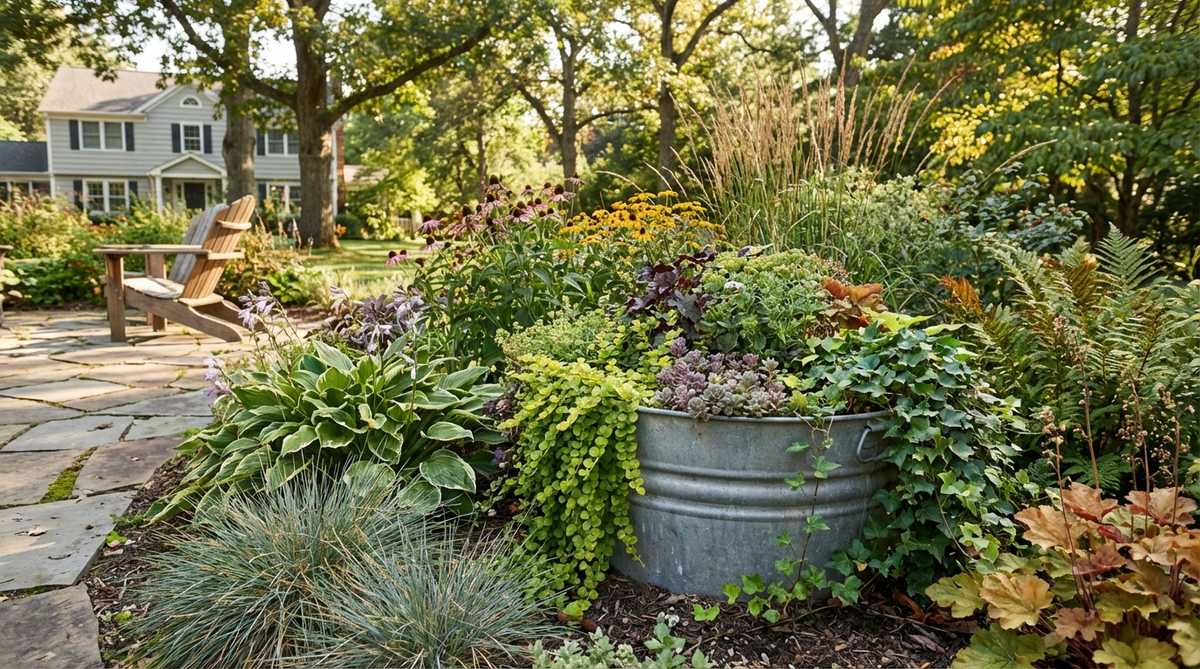
Looks like an intentional, permanent landscape feature carved right into the earth. This garden tub wall decor trick sinks a metal container directly into an existing perennial border. Incredible for adding architectural weight to a flat, boring garden bed.
By burying the tub 3 inches deep, it fools everyone into thinking you hired a pro to install custom metal edging. Trailing plants blur the harsh rim, creating a contained micro-environment perfect for fussy plants that demand different soil pH than your main yard.
This layout trick costs absolutely nothing extra. It’s a fast upgrade that completely changes the visual hierarchy.
- Key Materials: Existing tub, trailing groundcover, shovel
- Vibe / Style: Integrated landscape design
- Difficulty: Moderate (digging required)
- Budget Breakdown: Labor/Time: 1 hour | Tub: Owned.
- Creator’s Tip: Use this sunken method for aggressive spreaders like mint or bamboo to completely restrict their roots from taking over your yard.
- Smart Sourcing: Get heavy-duty landscape fabric (pre-cut roll) and a durable steel border spade shovel.
23. Pathway Terminal Feature
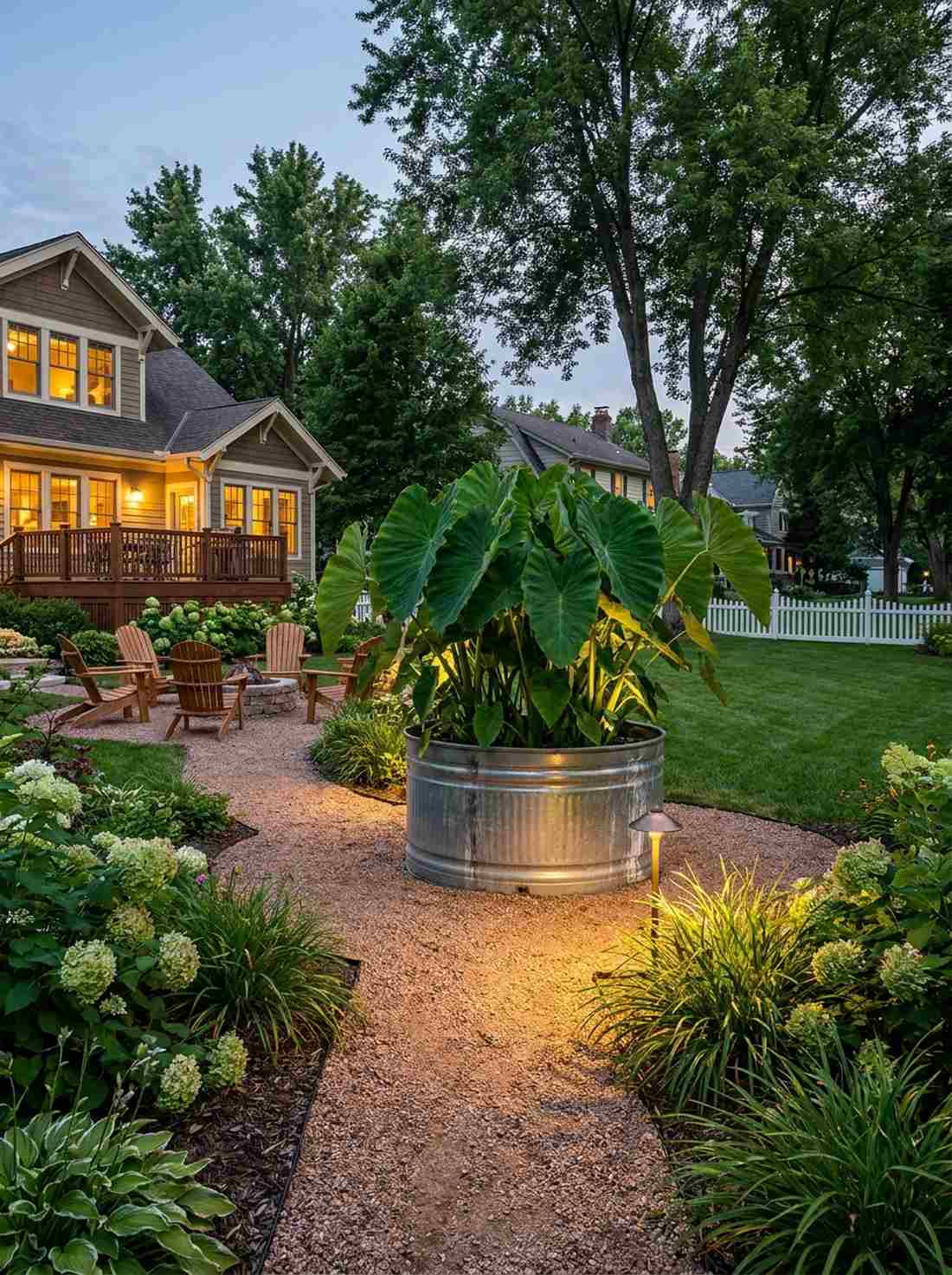
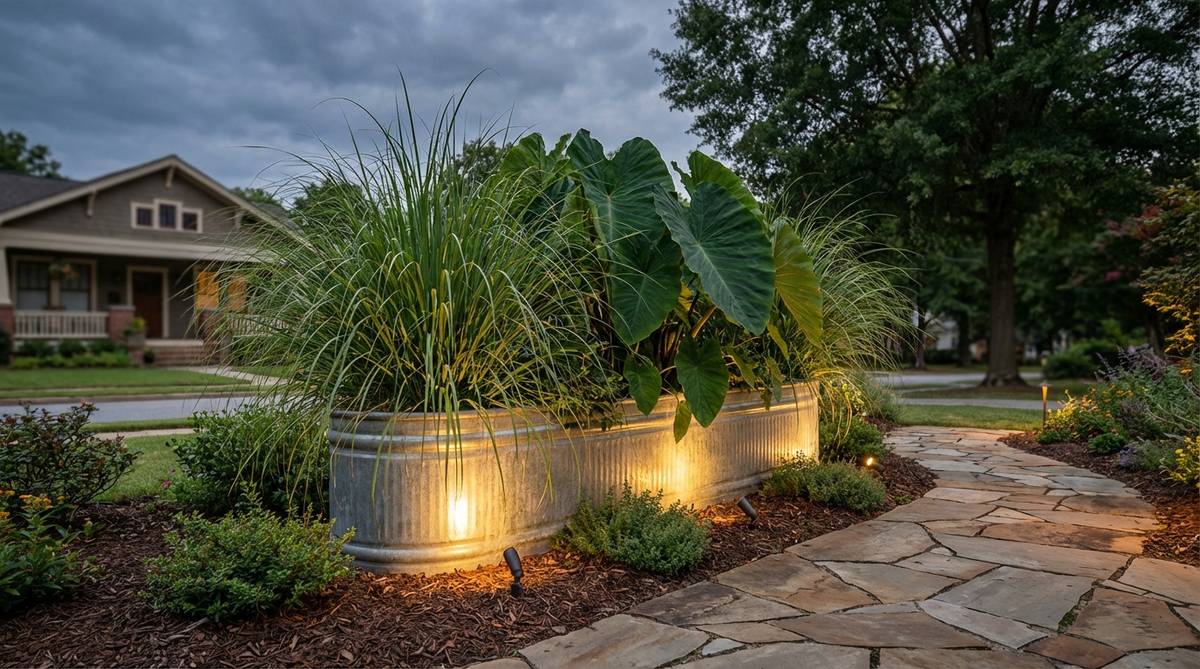
Acts like a grand, welcoming beacon at the end of a long walk. This large garden tub decor strategy places massive containers at dead ends to draw the eye. The perfect visual reward for walking down a winding backyard path.
Using bold, dramatic specimens like giant elephant ears delivers a surprisingly premium look that anchors the entire landscape. Add a simple solar uplight, and the reflective galvanized metal completely transforms your yard into an illuminated luxury resort at night.
You can execute this high-drama look for $50–$80. Save this if you want to make your yard look twice as big!
- Key Materials: Giant galvanized tub, architectural plants (Agave or Elephant Ear), solar lights
- Vibe / Style: Dramatic resort destination
- Difficulty: Easy
- Budget Breakdown: Specimen Plant: $35 | Solar Light: $20.
- Creator’s Tip: Elevate the back of the tub slightly with a brick if viewing from a distance to tilt the display forward.
- Smart Sourcing: Use high-lumen LED solar uplights (2-pack) and premium large-scale focal plant bulbs.
24. Wheelbarrow Vignette
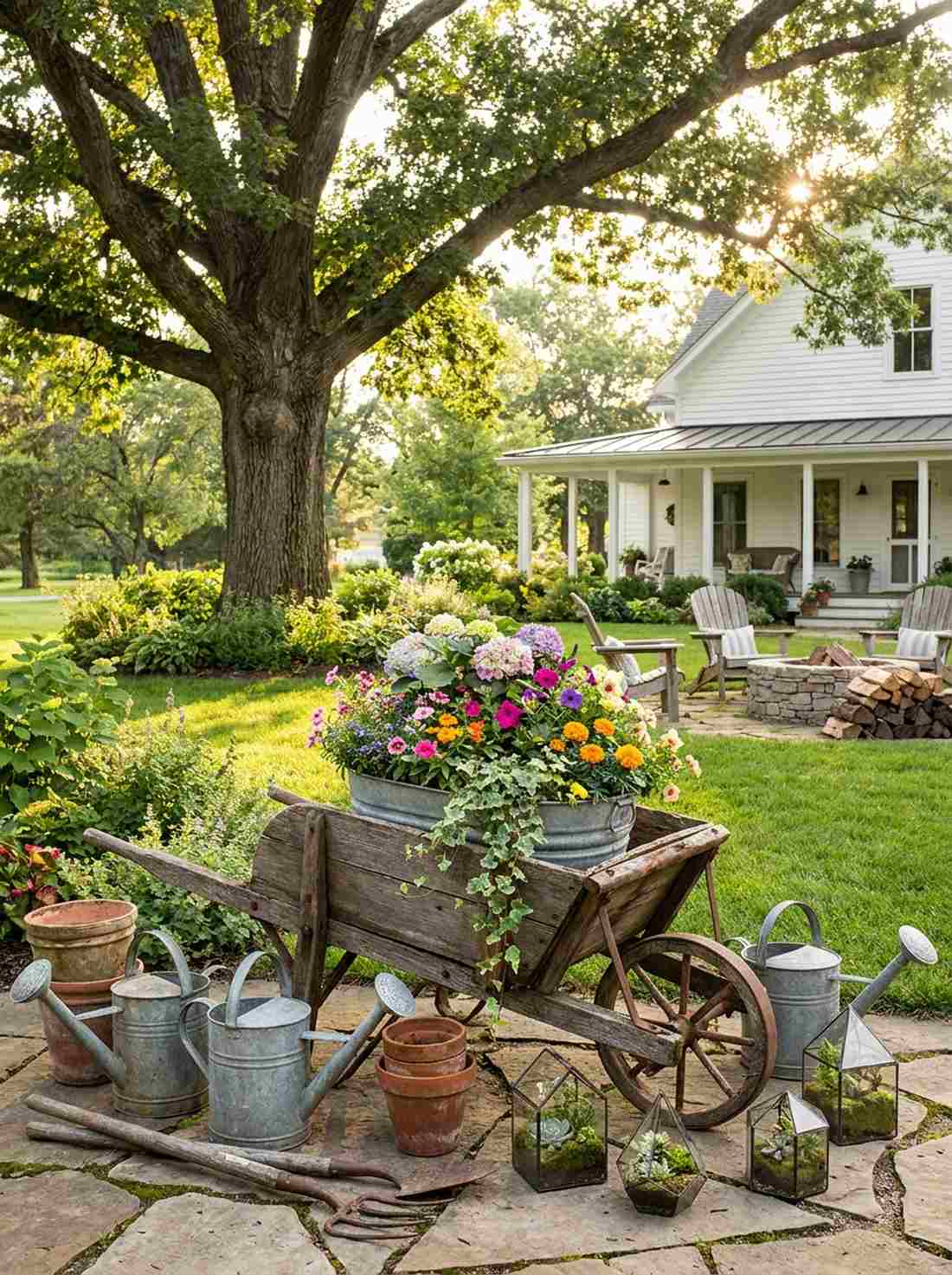
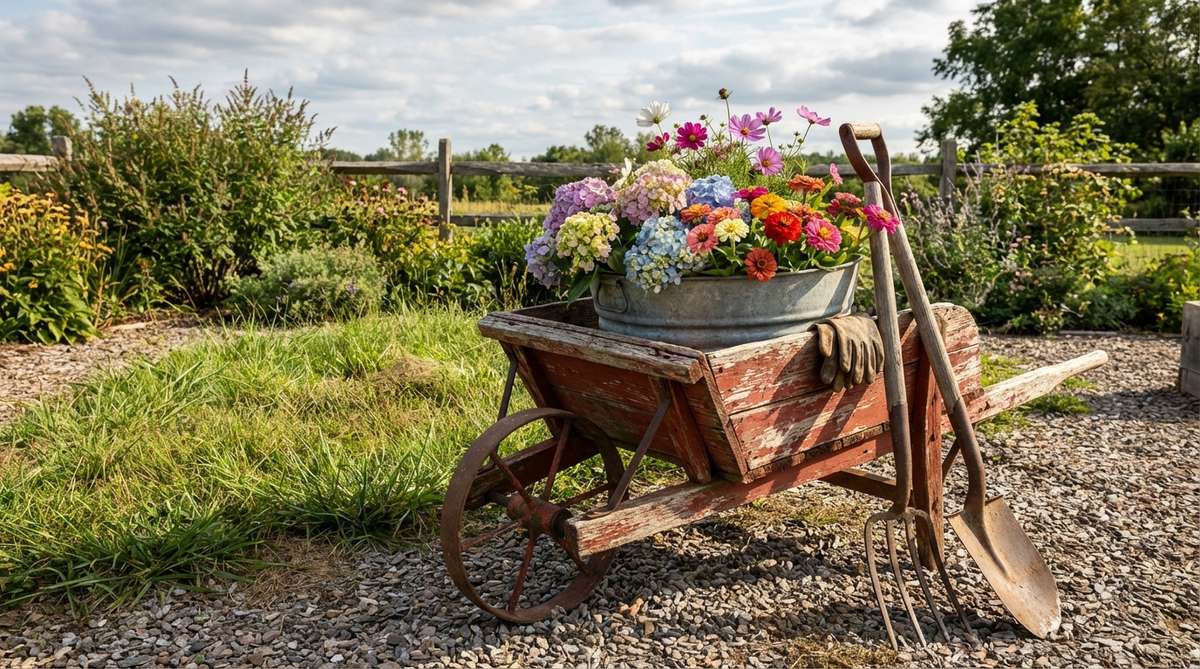
Feels like a nostalgic scene frozen in time on an old country farm. This ultimate farmhouse garden tub decor idea rests a lush tub inside an antique wheelbarrow. Incredibly charming for a front yard display or resting beneath a large oak tree.
Pairing rusted metal with vibrant blooms achieves that high-end aesthetic without the high-end price tag, telling a rich visual story. Surrounded by vintage watering cans and terrarium accessories, it becomes an emotional anchor for the entire garden.
Assemble this storybook scene for $40 if you have the vintage props. Pin this to your farmhouse aesthetic board!
- Key Materials: Antique wheelbarrow, flower-filled tub, vintage garden tools
- Vibe / Style: Storybook rustic heritage
- Difficulty: Very Easy
- Budget Breakdown: Flowers/Soil: $25 | Vintage Props: Thrifted.
- Creator’s Tip: Drill holes through both the wheelbarrow bed and the tub to guarantee flawless drainage during heavy rainstorms.
- Smart Sourcing: Purchase rustic galvanized watering can decor and a weatherproof clear matte protective spray.
25. Corner Camouflage Cluster
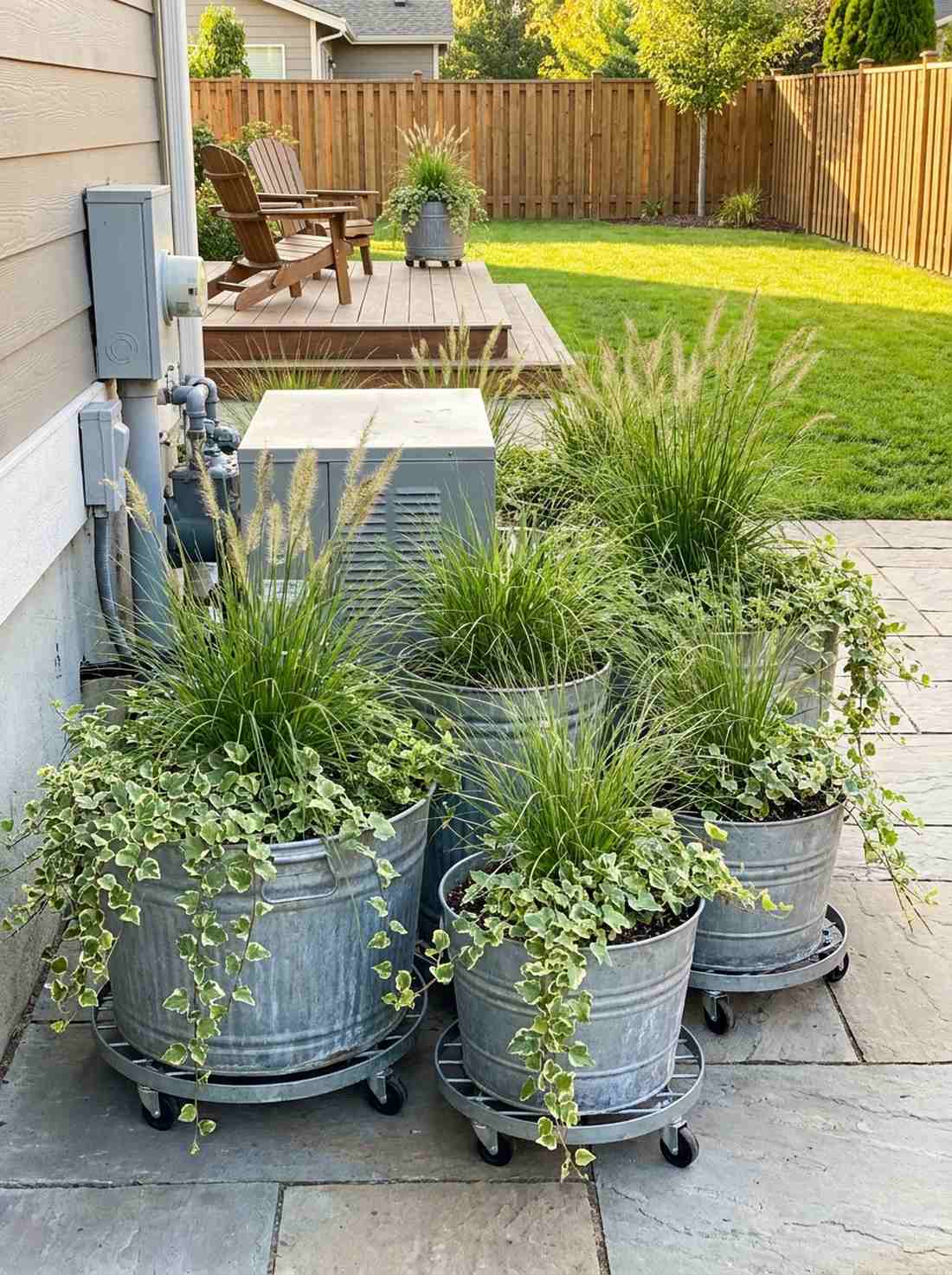
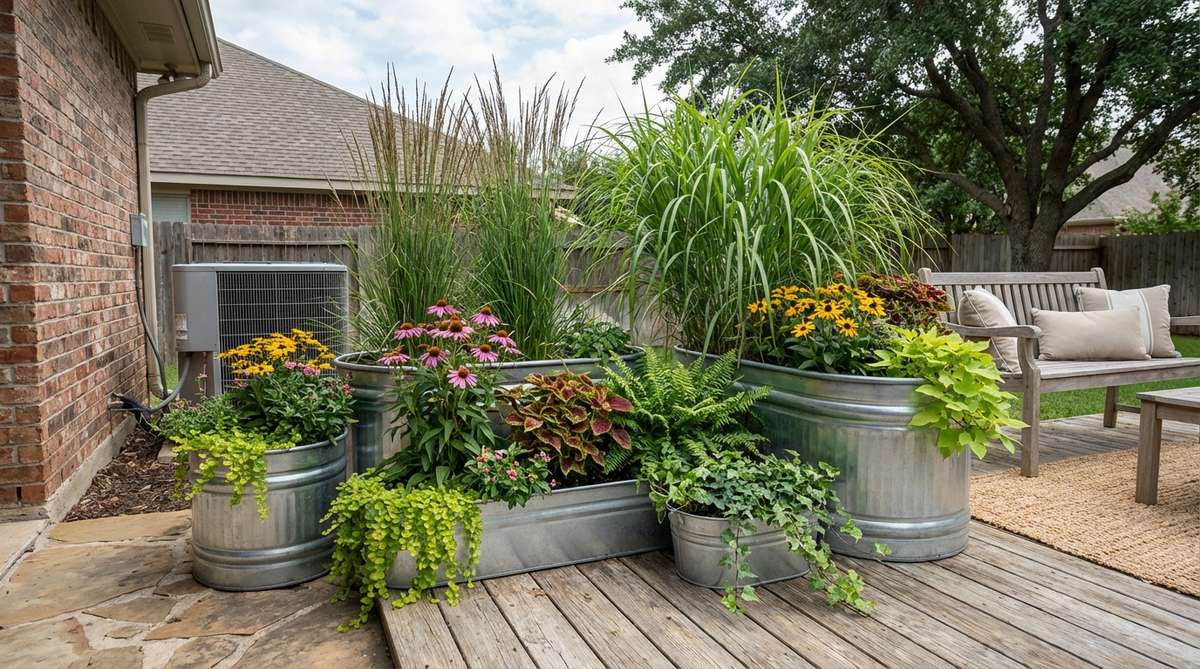
Instantly erases ugly utility boxes or foundation vents with sheer beauty. This corner garden tub decor utilizes odd-numbered clusters to build a living screen. The ultimate hack for renters or homeowners hiding unsightly backyard hardware.
Sticking to the “thriller, filler, spiller” design in multiple sizes flips a basic craft project into a highly functional privacy wall. The matching galvanized neutrality prevents the grouping from looking messy, keeping the eye focused purely on the cascading foliage.
You can build this camouflage wall for $75–$120 depending on tub size. It’s a highly recommended trick for instant curb appeal!
- Key Materials: 3 or 5 varied tubs, tall screening grass, trailing vines
- Vibe / Style: Strategic living wall
- Difficulty: Easy
- Budget Breakdown: Tubs (Set of 3): $50 | Tall Grass/Vines: $45.
- Creator’s Tip: Repeat exactly one plant variety (like trailing ivy) across all three tubs to visually unify the entire cluster.
- Smart Sourcing: Grab fast-growing ornamental grass starter plugs (bulk) and heavy-duty wheeled metal plant caddies.
Bringing Vintage Containers to Life
Repurposed galvanized and ceramic containers offer sustainable alternatives to mass-produced planters while delivering superior functionality and timeless style. These versatile vessels adapt to evolving garden needs across seasons and years, providing garden tub decor solutions that improve with age. Start with one signature piece and expand your collection as you discover the endless creative possibilities these durable containers provide for transforming ordinary outdoor spaces into extraordinary garden destinations.
Frequently Asked Questions
What is the real cost to recreate these setups?
While the base tubs can often be thrifted for $10–$20, the real cost lies in the soil and plants. Standard setups cost around $25–$40, but investing in premium pre-made kits, UV-resistant sprays, and high-quality potting mix can push the cost to $60–$80. However, the premium route ensures your setup survives multiple seasons without replacing everything.
Where is the best place to use these layouts?
These garden tub decor ideas are incredibly versatile. Smaller tubs and tiered ladder designs are perfect for apartment balconies and mobile home garden tub decor. Large, heavy galvanized water features and stacked farmhouse displays should be placed as pathway terminals, front porch focal points, or integrated deeply into backyard perennial borders.
Do galvanized containers need drainage holes for planting?
Yes, galvanized tubs require 3-5 drainage holes drilled in the bottom to prevent waterlogged soil and root rot. Use a 1/2-inch drill bit with cutting oil to pierce the metal cleanly. Position holes evenly across the base, avoiding structural seams that might split under pressure.
Is galvanized metal safe for growing vegetables and herbs?
Modern galvanized containers are safe for edible crops because the zinc coating prevents rust without leaching harmful chemicals at soil pH levels between 5.5-7.5. Avoid using vintage containers with interior paint or coatings that may contain lead. Line questionable containers with landscape fabric as an extra precaution.
How do you prevent ceramic containers from cracking in winter?
Select glazed ceramic pots rated for freeze-thaw cycles and ensure proper drainage to prevent ice expansion damage. Elevate containers on pot feet so water escapes freely, and move them to protected locations during extreme cold. Alternatively, wrap pots with insulating bubble wrap and burlap for winter protection.
What soil mix works best in galvanized tub planters?
Use high-quality potting mix blended with 25% perlite or vermiculite for improved drainage in galvanized containers. Add compost for nutrient density and moisture retention. Avoid garden soil which compacts in containers and restricts root growth—the artificial soil-free mix maintains structure across multiple seasons.
How often should I water plants in metal containers?
Galvanized metal containers dry faster than ceramic or plastic, requiring daily watering during peak summer heat. Check soil moisture by inserting your finger 2 inches deep—water when the soil feels dry at that depth. Morning watering prevents fungal diseases and allows foliage to dry before evening.