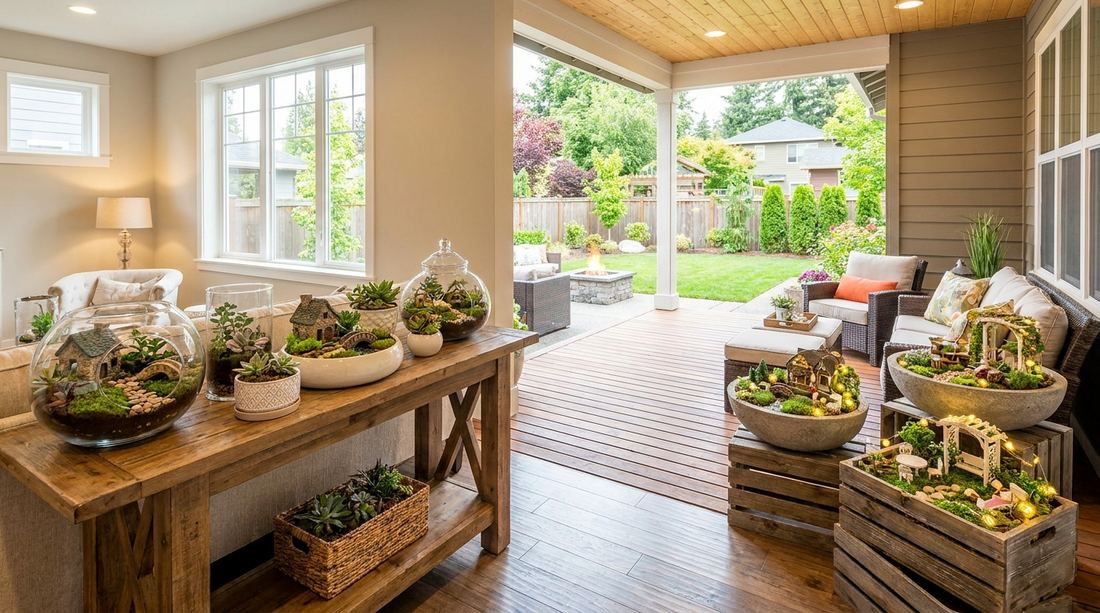
Imagine taking a simple container and turning it into a detailed, hyper-realistic world that feels alive and impossible to ignore. In this guide, you’ll find realistic cost estimates, material options, and smart sourcing ideas to help you build these miniature setups without overspending. The best part? Many of these use surprisingly cheap components but deliver a completely high-end result.
Design Snapshot Key Principles
- Layered Depth: Position larger elements in the foreground and smaller pieces toward the back to create visual distance and perspective within compact spaces.
- Focal Point Strategy: Establish one primary feature—a miniature house, distinctive stone, or specimen plant—that anchors the entire composition and guides the viewer’s eye.
- Scale Consistency: Maintain proportional relationships between plants, hardscape, and accessories so the scene reads as cohesive rather than random.
- Theme Clarity: Commit to a recognizable style or environment—woodland cottage, desert oasis, zen retreat—to unify material choices and create narrative coherence.
Enchanted Woodland Worlds
Woodland layouts recreate forest floor environments using moss, small ferns, and natural materials that mimic ancient groves. These designs rely on organic textures and earth tones to establish authentic outdoor atmospheres.
1. Moss-Covered Cottage Clearing
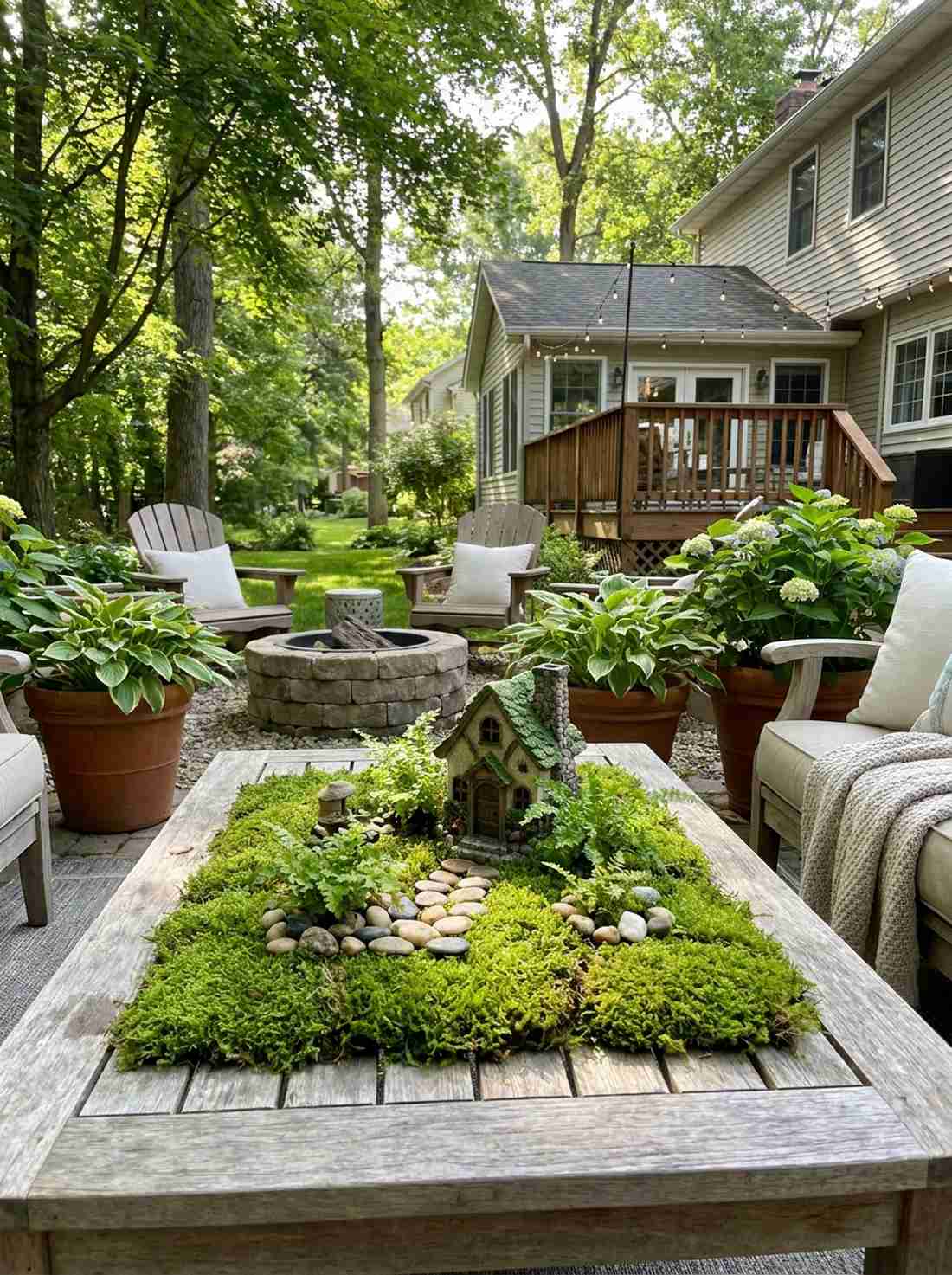
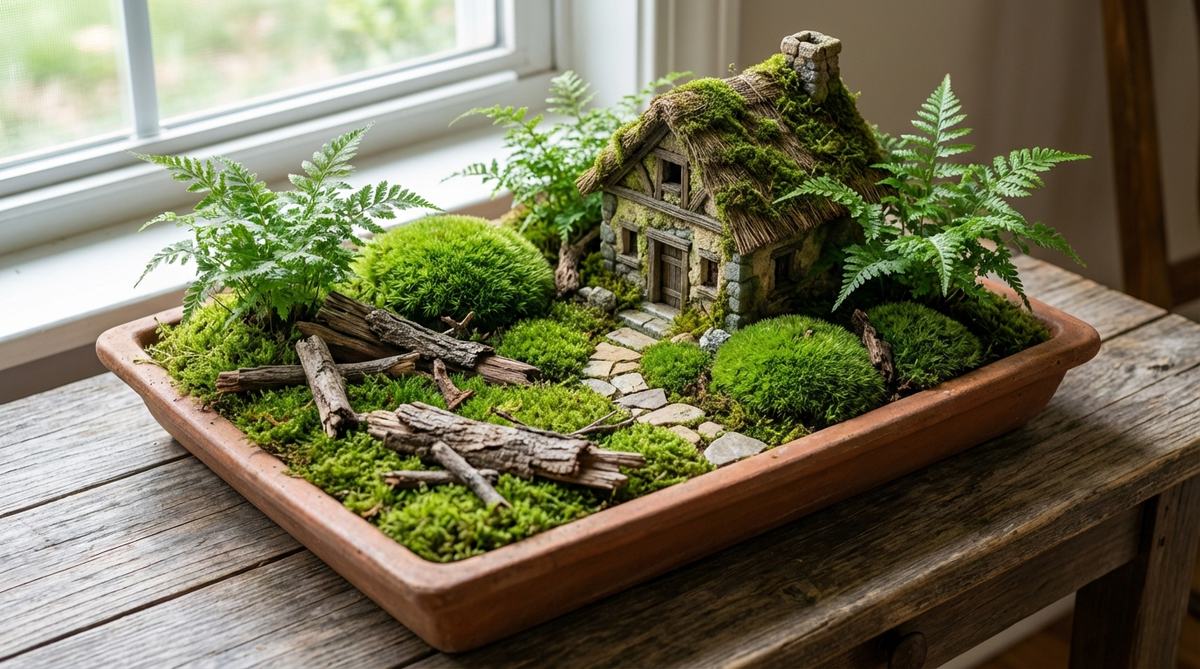
This small patio garden decor feels like a hidden forest you accidentally discovered right in your backyard. It works exceptionally well as a whimsical centerpiece for a shaded outdoor seating area.
Setting this up delivers a surprisingly premium look with minimal effort. Use sheet moss as a foundation, position your cottage off-center, and layer in high-quality miniature garden supplies like resin pebbles and baby ferns for scale.
You can easily pull this off for around $20–$35. Save this to your DIY weekend garden board for your next outdoor project!
- Key Materials: Sheet moss, tiny ferns, flat pebbles
- Vibe / Style: Enchanted woodland cottage
- Difficulty: Easy beginner setup
- Budget Breakdown: Plants: $15 | Accessories: $15
- Creator’s Tip: Mist the moss twice weekly rather than heavy watering to prevent root rot in the surrounding plants.
- Smart Sourcing: pre-cut preserved moss sheets (bulk pack) and UV-coated resin fairy cottage kits
2. Toadstool Ring Gathering Space
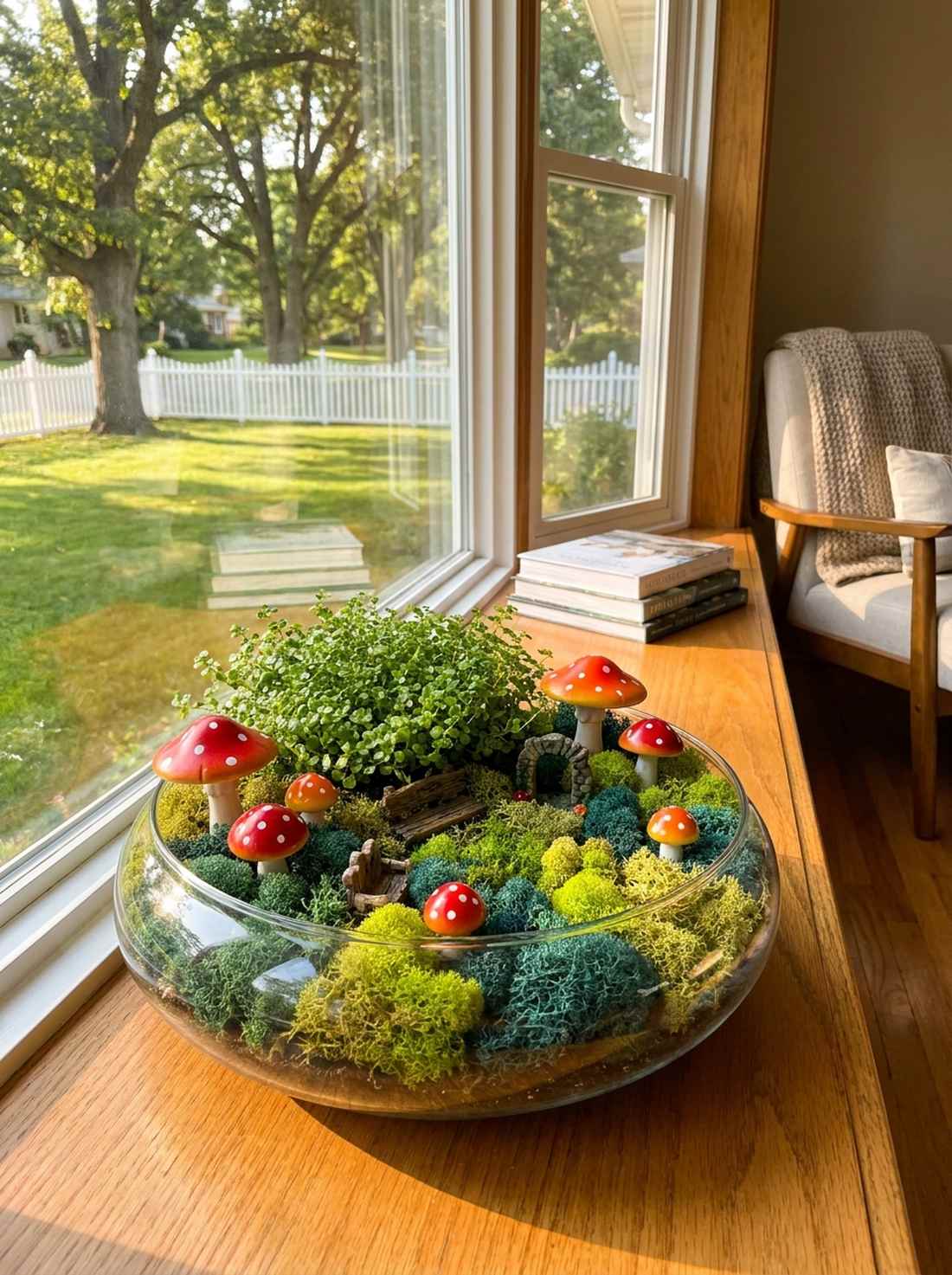
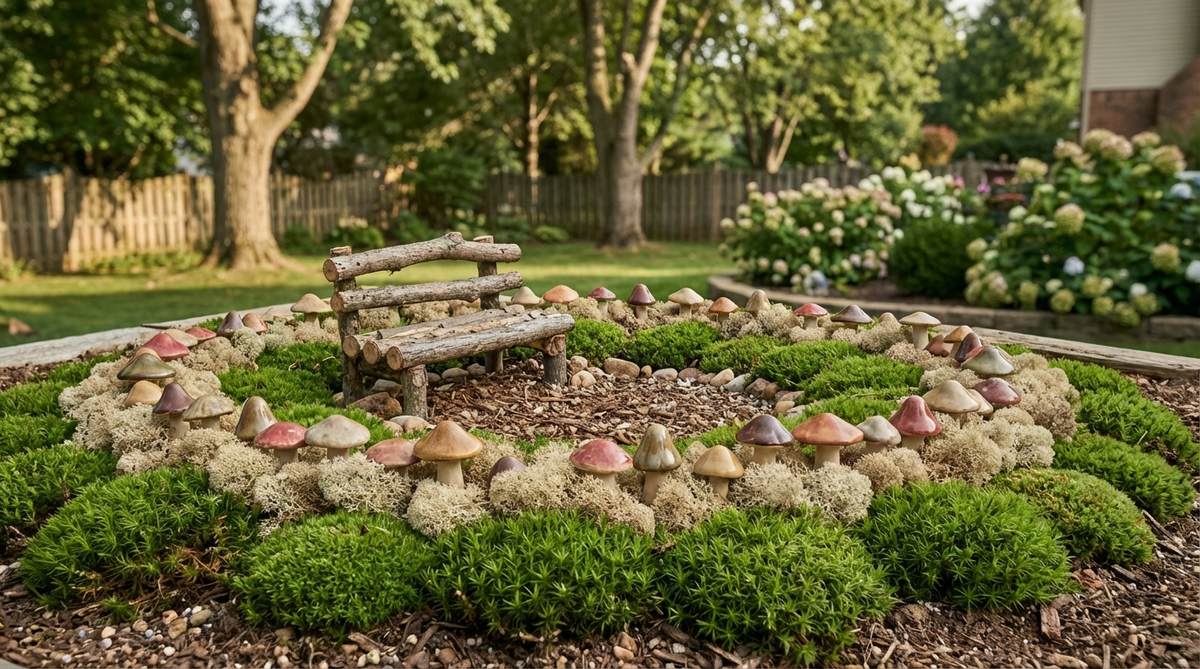
This whimsical terrarium feature feels straight out of a classic fairy tale storybook. It is absolutely perfect for bringing a pop of magical color to a bedroom windowsill or home office desk.
Most people overcomplicate this, but keeping it simple looks far more expensive than it is. Arrange a circle of toadstools on reindeer moss, using top-tier miniature fairy garden decor to establish a distinct, magical gathering zone.
You can easily pull this off for around $15–$25. Pin this if you’re planning a small space upgrade for your indoor plants!
- Key Materials: Reindeer moss, artificial toadstools, baby tears plant
- Vibe / Style: Magical folklore ring
- Difficulty: Very easy
- Budget Breakdown: Materials: $10 | Base: $10
- Creator’s Tip: Use odd numbers of toadstools (3, 5, or 7) for a more organic, natural appearance.
- Smart Sourcing: acrylic waterproof mushroom stakes (starter pack) and premium vibrant reindeer moss (assorted colors)
3. Birch Bark Forest Canopy
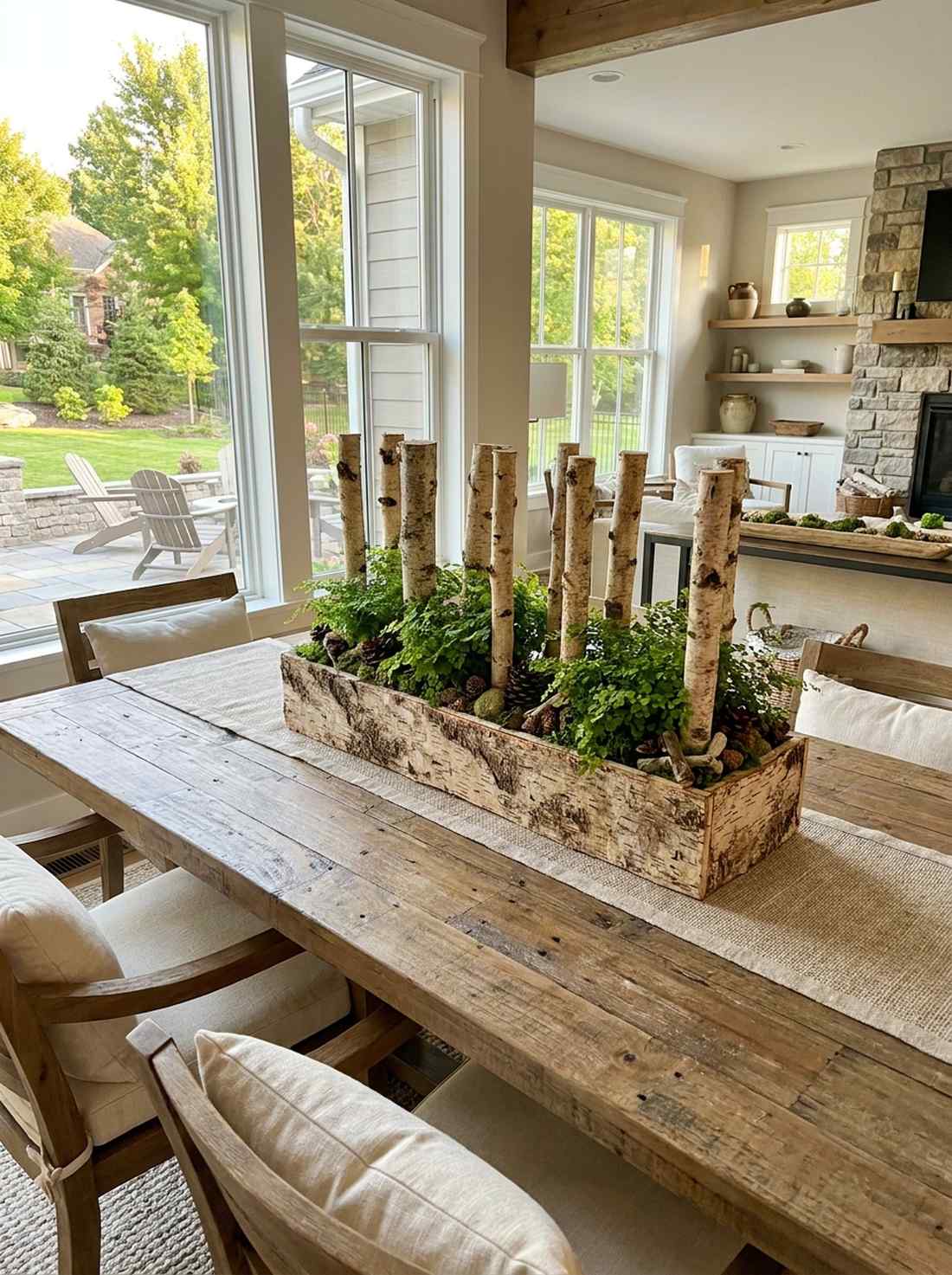
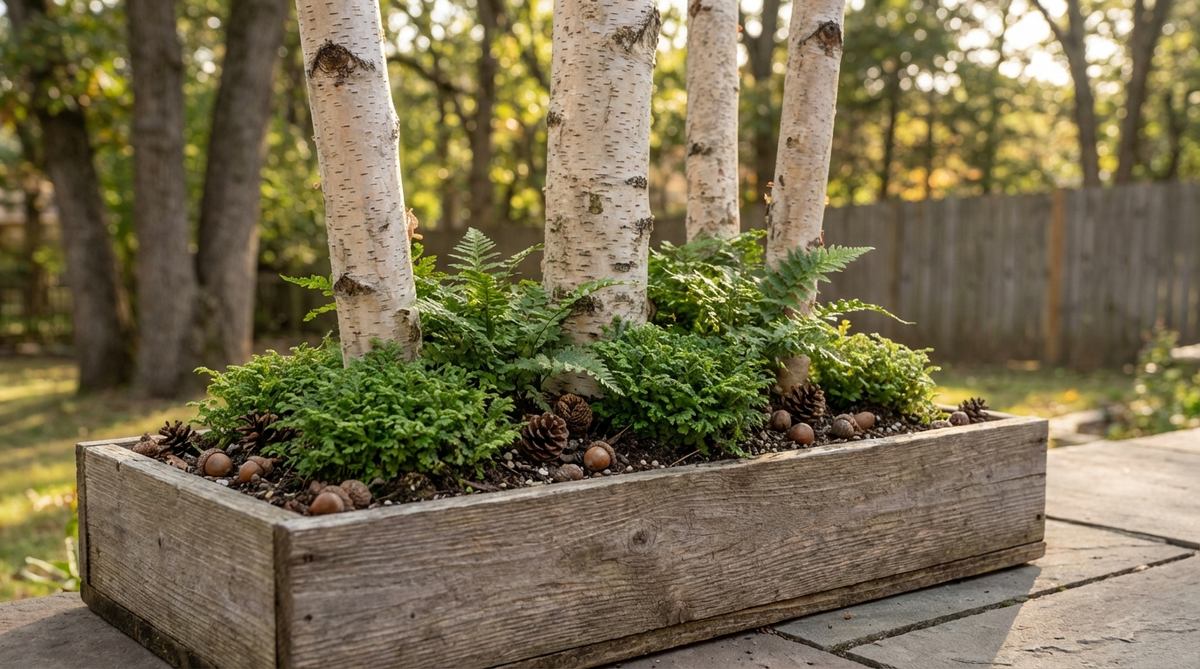
This rustic indoor planter idea feels like taking a deep breath in an ancient alpine grove. Works exceptionally well for long, rectangular dining table centerpieces.
This technique completely transforms basic dirt into high art. Stand vertical pieces of birch bark to mimic tree trunks, surrounding the bases with fine-textured selaginella and quality terrarium accessories for a dense undergrowth effect.
You can easily pull this off for around $25–$40. Save this to your rustic decor inspiration board right now!
- Key Materials: Birch bark pieces, selaginella ferns, tiny pinecones
- Vibe / Style: Alpine forest escape
- Difficulty: Intermediate
- Budget Breakdown: Bark & Accents: $15 | Plants & Soil: $20
- Creator’s Tip: Bury the bottom quarter of the bark pieces firmly in the soil so they don’t tip over when watered.
- Smart Sourcing: sanitized natural birch bark tubes (craft grade) and miniature woodland debris assortments
4. Woodland Stream With Pebble Bed
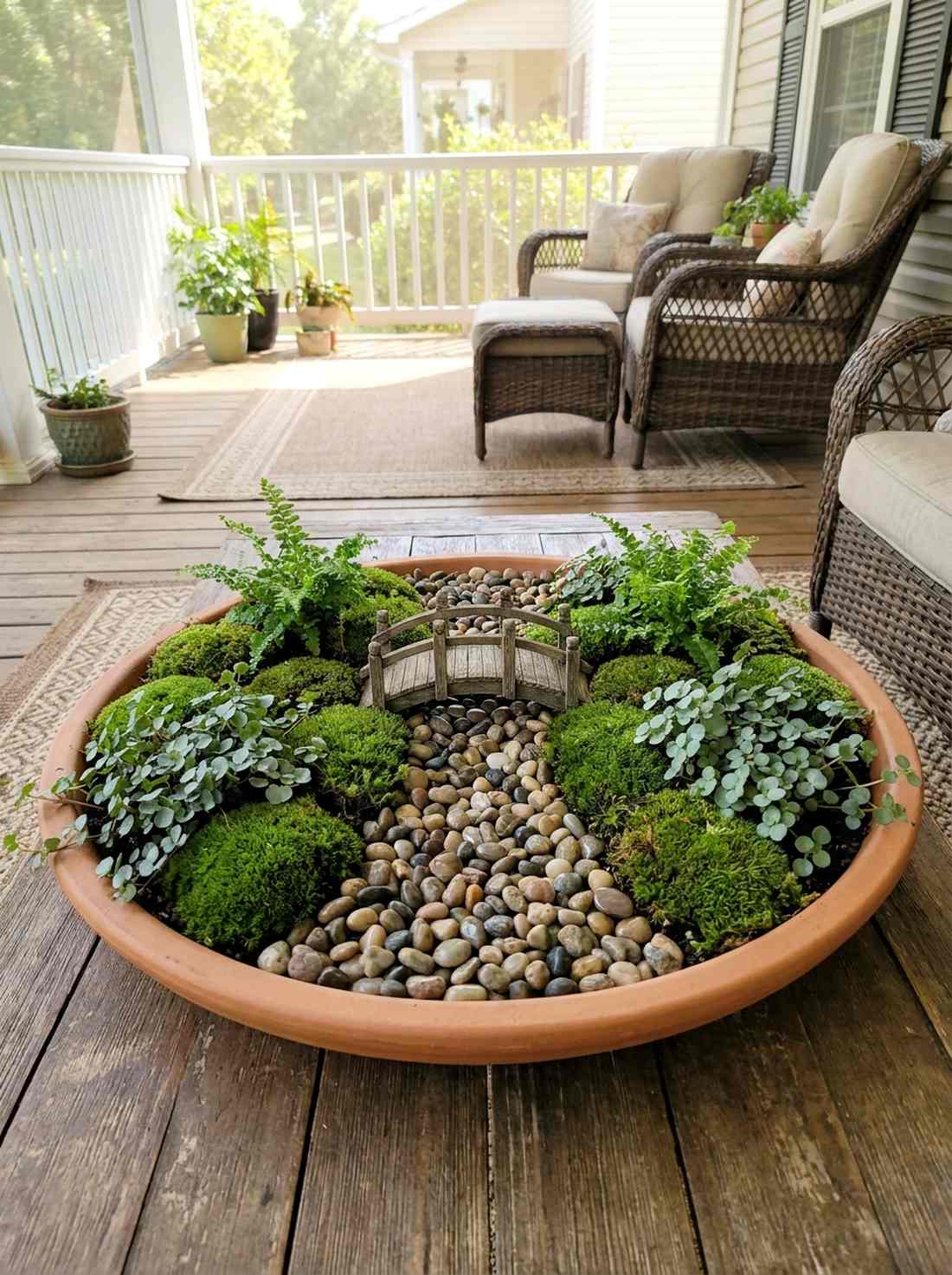
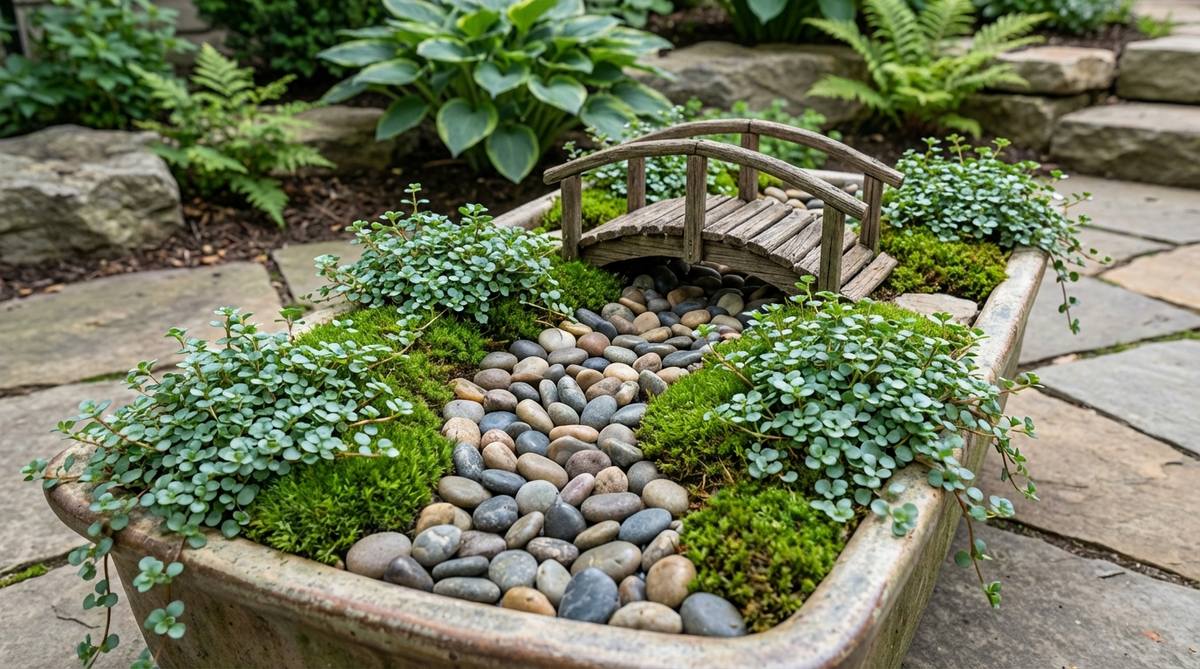
This dynamic miniature landscape feels like a peaceful babbling brook frozen in time. It works exceptionally well for wide, shallow terra cotta saucers on a covered porch.
Adding a dry riverbed gives a designer-level finish to any setup. Wind smooth aquarium gravel through the container, flanking it with lush moss and premium fairy garden kits like miniature wooden bridges.
You can easily pull this off for around $20–$30. Pin this to your landscape illusion board so you don’t lose the idea!
- Key Materials: Aquarium pebbles, Pilea glauca, miniature crossing bridge
- Vibe / Style: Tranquil nature path
- Difficulty: Beginner-friendly
- Budget Breakdown: Gravel: $5 | Plants & Bridge: $20
- Creator’s Tip: Taper the stream so it is wider at the front and narrower at the back to create forced perspective.
- Smart Sourcing: polished river rock gravel (bulk bag) and weatherproof polyresin bridge kits
This next setup is ridiculously cheap but looks like a $100 custom display…
5. Fallen Log Micro-Habitat
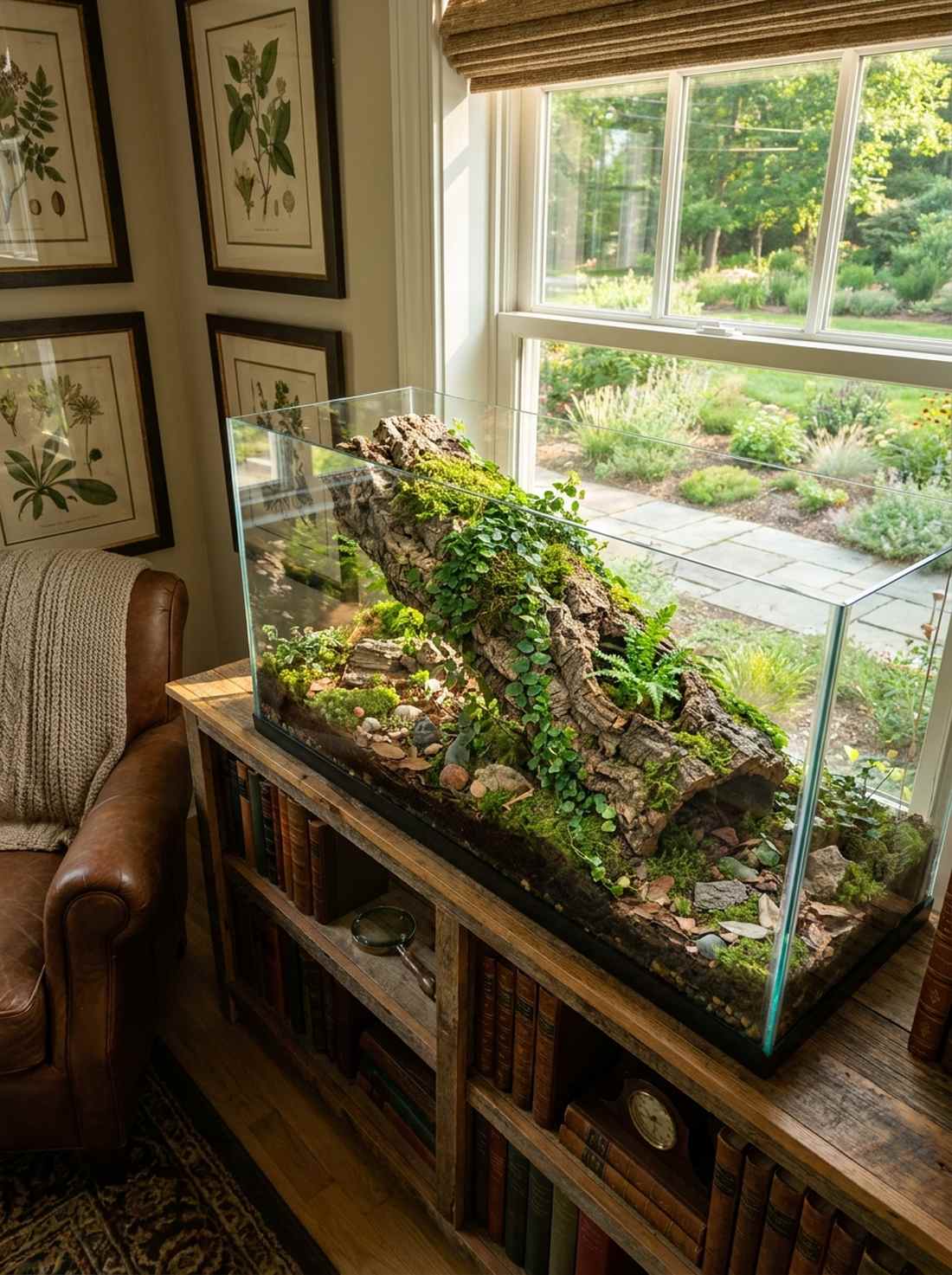
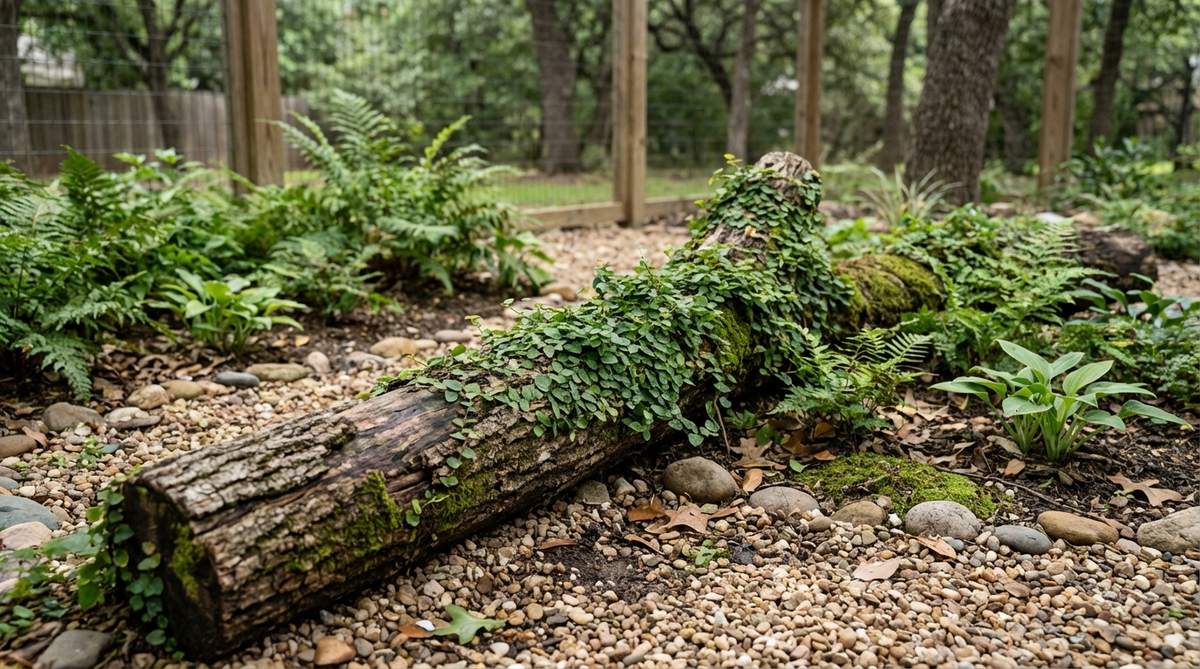
This naturalistic terrarium build feels like peering into a secret world left untouched by humans. It is the absolute perfect addition to a nature-lover’s study or library shelf.
This layout is a cheat code for instant elevation changes that look incredibly natural. Use a section of natural cork bark as a fallen tree, draping creeping figs over it while blending in essential miniature garden decor elements.
You can easily pull this off for around $15–$25. Save this to your nature craft ideas board today!
- Key Materials: Cork bark log, Ficus pumila, live moss
- Vibe / Style: Wild forest floor
- Difficulty: Intermediate
- Budget Breakdown: Wood feature: $10 | Plants: $12
- Creator’s Tip: Carve a small hollow in the cork bark to plant a tiny fern directly “inside” the log.
- Smart Sourcing: sterilized cork bark flats (terrarium grade) and live terrarium moss sampler kits
Container-Specific Compositions
Different vessels offer unique spatial challenges and opportunities that shape layout decisions. Matching design strategy to container characteristics produces more successful miniature gardens.
6. Mason Jar Layered Landscape
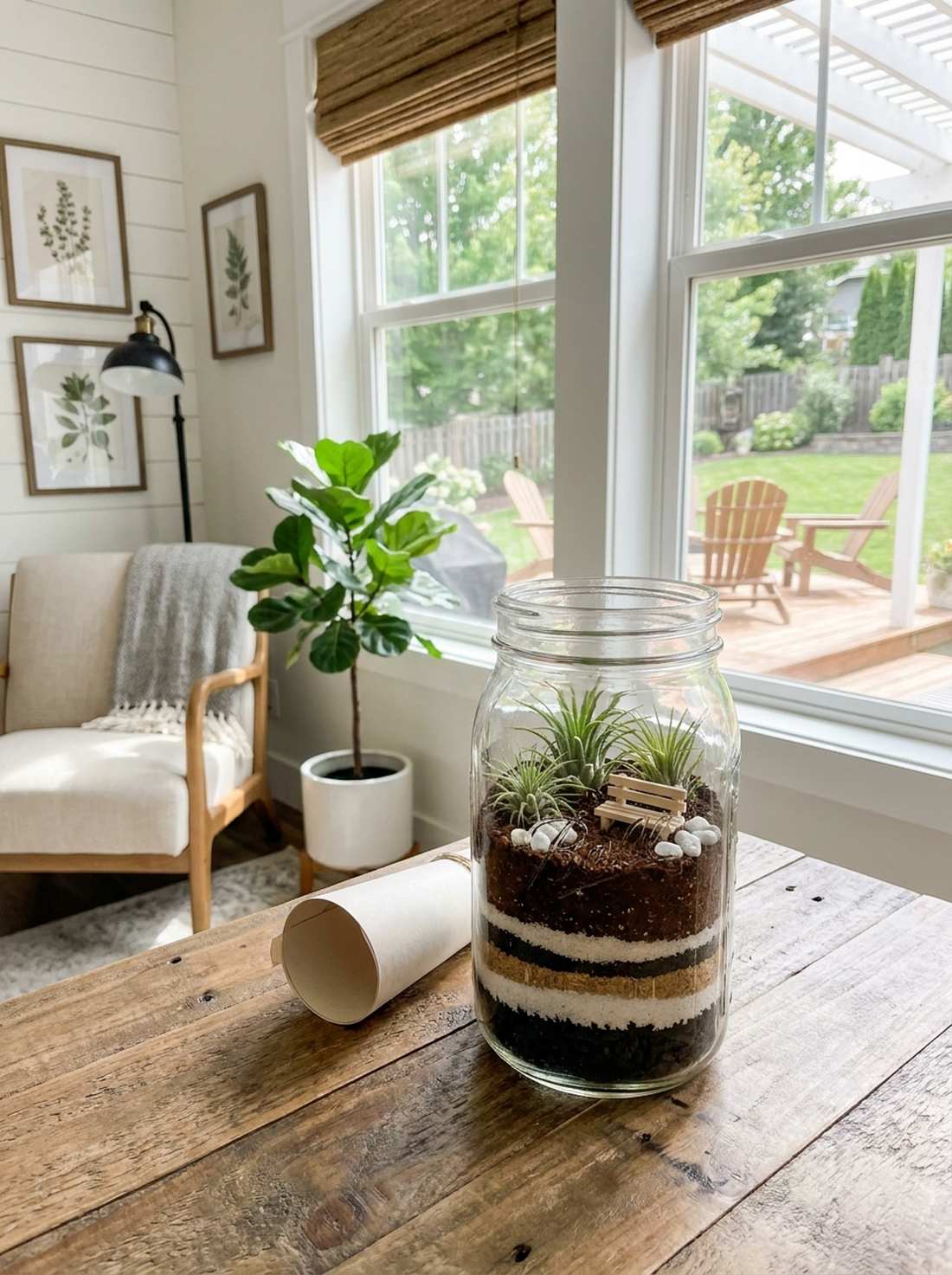
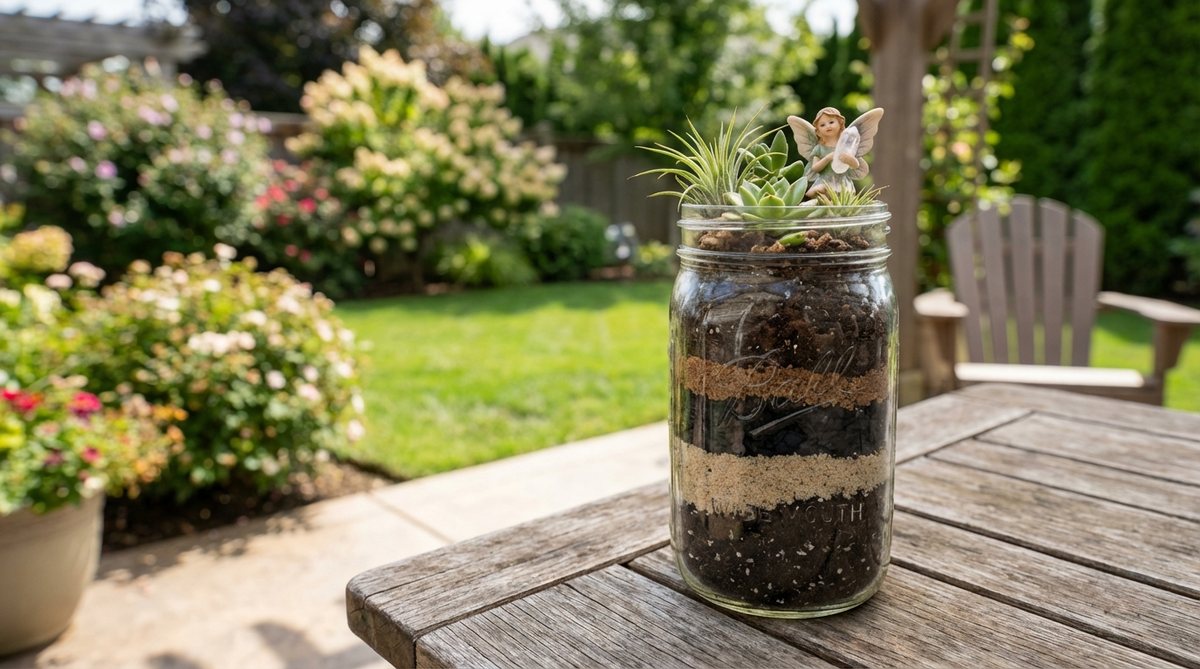
This glass vessel garden craft feels like capturing magic in a bottle. It works exceptionally well as a budget-friendly teacher gift or office desk companion.
Exposing the soil layers visually upgrades a cheap jar into a sleek decor piece. Alternate activated charcoal, bright sands, and potting mix, topping it off with air plants and tiny, affordable miniature garden supplies.
You can easily pull this off for around $10–$15. Pin this if you love quick, zero-maintenance craft projects!
- Key Materials: Mason jar, colored sand, air plants
- Vibe / Style: Modern minimalist terrarium
- Difficulty: Very easy
- Budget Breakdown: Jar & Sand: $5 | Plants: $8
- Creator’s Tip: Use a rolled-up piece of paper as a funnel to pour the sand layers perfectly without dirtying the glass.
- Smart Sourcing: multi-color terrarium sand (starter pack) and horticultural activated charcoal (bulk size)
7. Wicker Basket Country Garden
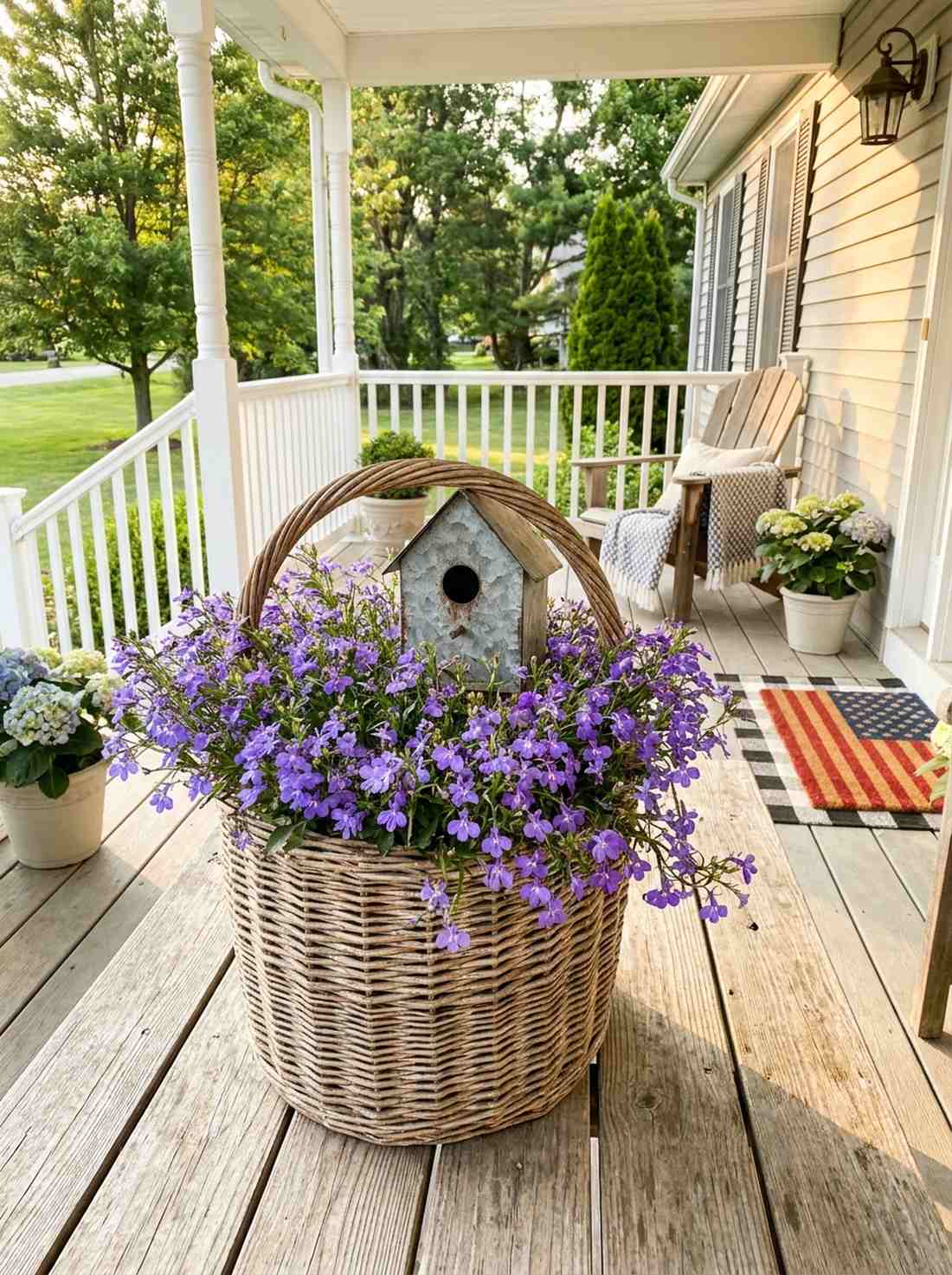
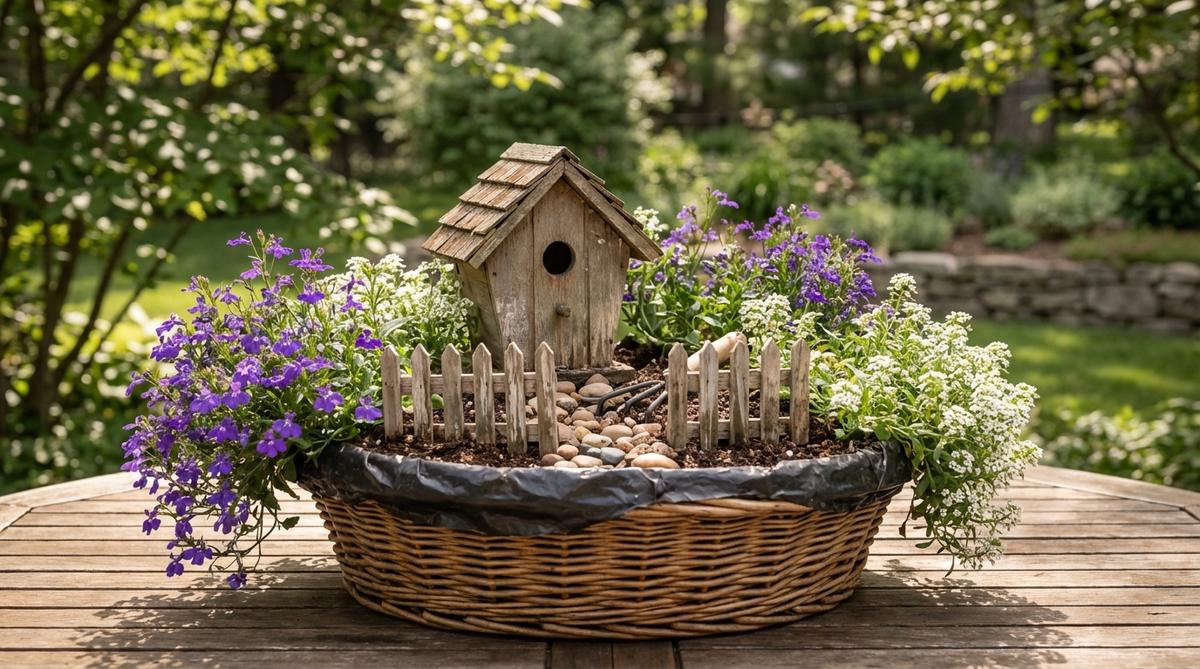
This rustic farmhouse arrangement feels like a breezy summer day at a countryside cottage. It works exceptionally well for seasonal front door displays or kitchen islands.
This charming layout brings high-end catalog vibes straight to your home. Line a thrifted basket with plastic, plant cascading purple lobelia around the rim, and insert vintage-style miniature fairy garden decor in the center.
You can easily pull this off for around $25–$35. Save this to your farmhouse aesthetic Pinterest board!
- Key Materials: Wicker basket, plastic liner, purple lobelia, tiny birdhouse
- Vibe / Style: Cottagecore vintage
- Difficulty: Beginner-friendly
- Budget Breakdown: Basket & Liner: $10 | Plants & Accents: $20
- Creator’s Tip: Poke a few tiny holes in the plastic liner and place the basket on a tray to ensure drainage without rotting the wicker.
- Smart Sourcing: heavy-duty clear planter liners (pre-cut) and distressed metal miniature birdhouses
8. Teacup Miniature Vignette
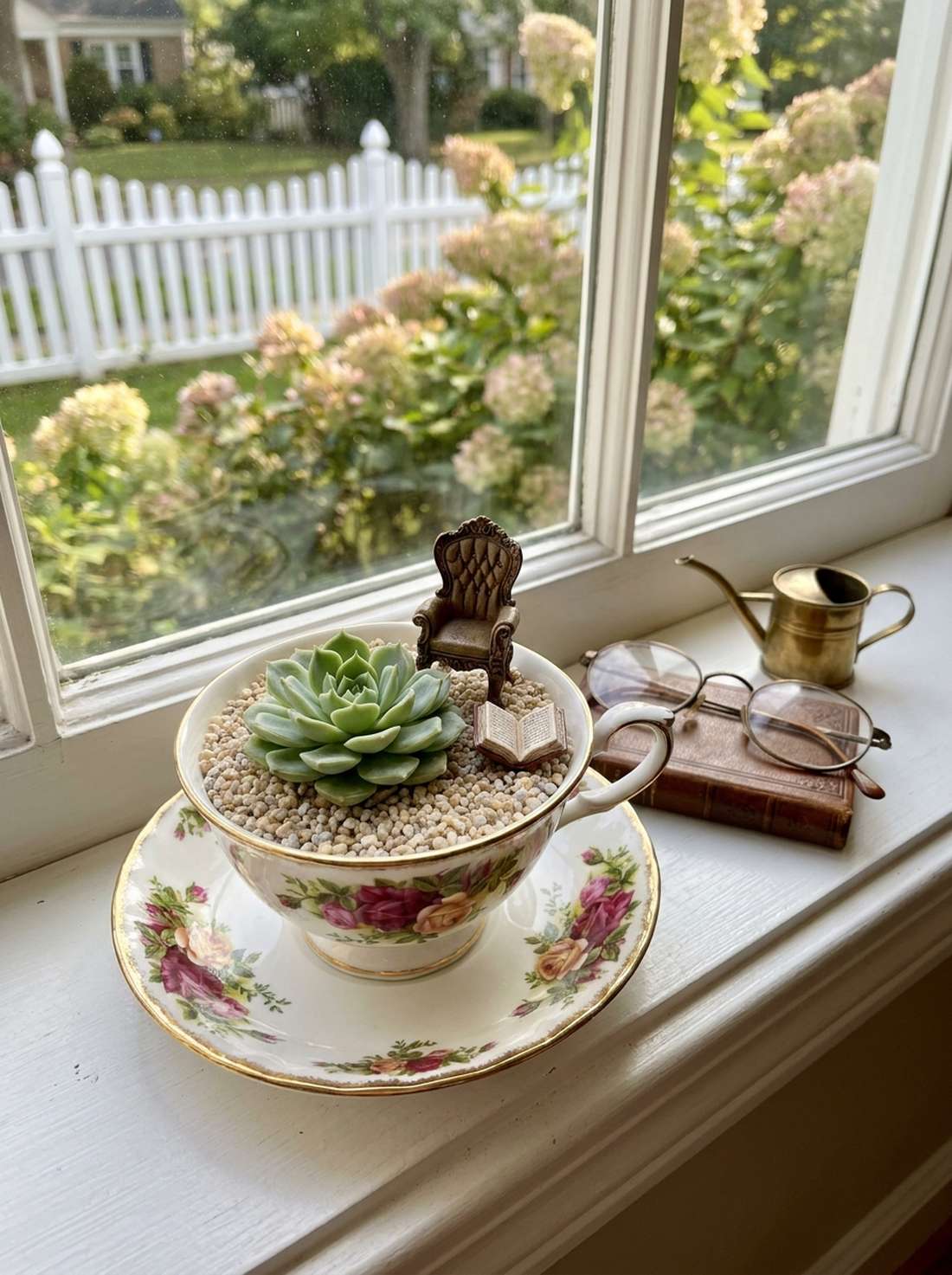
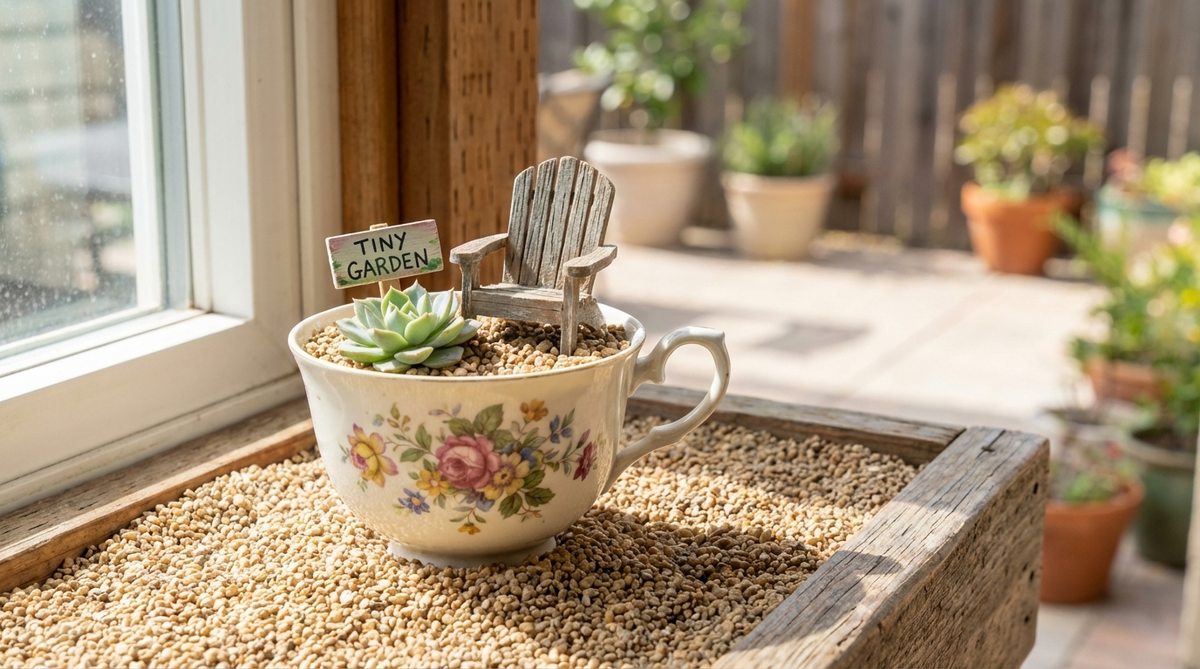
This micro desk garden feels incredibly dainty and perfectly curated. It works exceptionally well as a windowsill accent or a thoughtful handmade Mother’s Day gift.
Using vintage dishware creates an instant heirloom aesthetic that looks professionally styled. Plant a single rosette succulent in fine gravel, accompanied by ultra-micro terrarium accessories like a tiny reading chair.
You can easily pull this off for around $10–$20. Pin this to your tiny DIY projects board immediately!
- Key Materials: Vintage teacup, fine gravel, small succulent
- Vibe / Style: Elegant Victorian micro-garden
- Difficulty: Moderate (requires precision)
- Budget Breakdown: Teacup: $5 (thrifted) | Plant & Gravel: $10
- Creator’s Tip: Since teacups lack drainage, use a thick layer of pumice at the bottom and water with a dropper.
- Smart Sourcing: ultra-fine decorative top dressing gravel and micro-scale resin garden furniture sets
9. Galvanized Washtub Farmstead
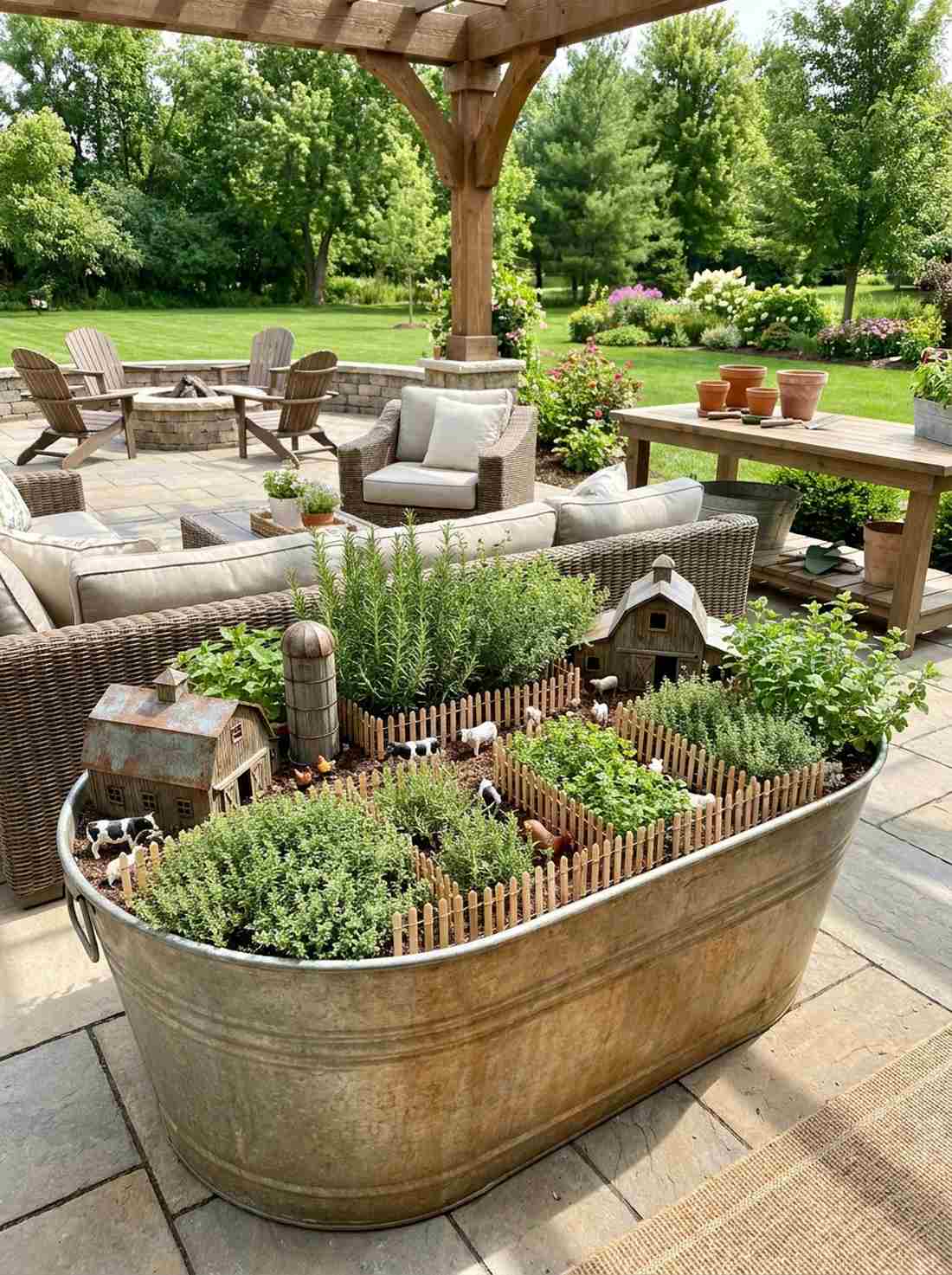
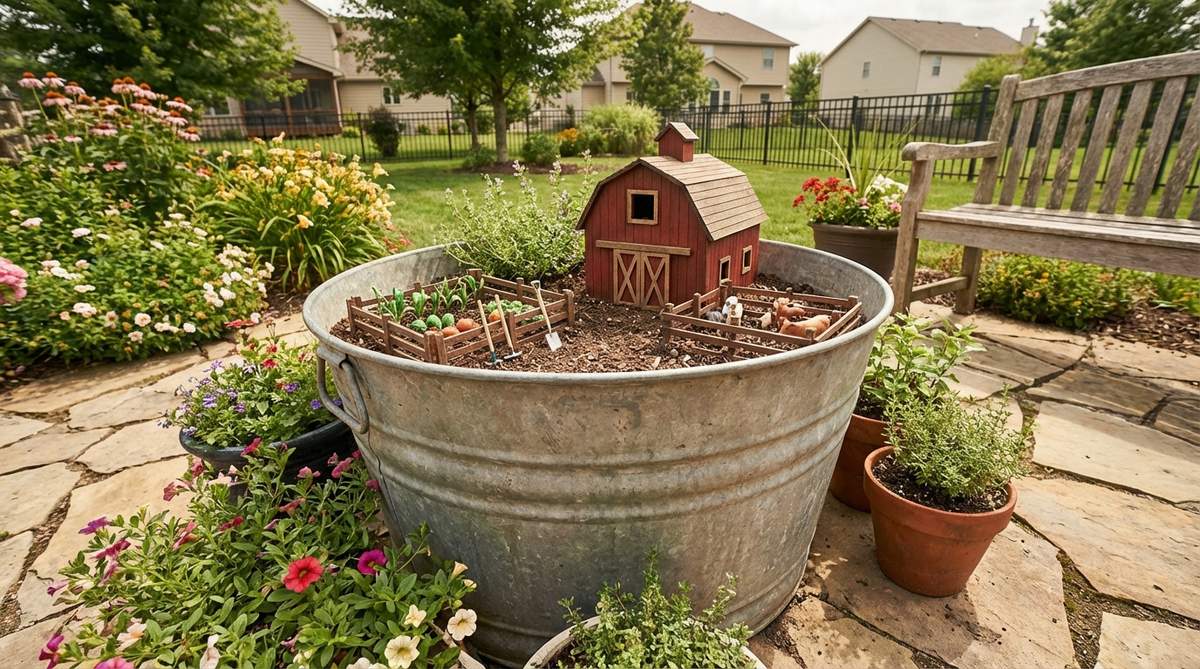
This large-scale patio container feels like an authentic working farm shrunken down by magic. It is perfect for sunny outdoor patios where you want a major conversation piece.
This is how you make a massive visual impact that looks incredibly high-end. Create multiple zones using actual edible herbs like thyme, segmented by durable fencing from premium fairy garden kits.
You can easily pull this off for around $40–$60. Save this to your outdoor garden planning board!
- Key Materials: Galvanized tub, live herbs, miniature fencing
- Vibe / Style: Rustic country farm
- Difficulty: Intermediate
- Budget Breakdown: Tub & Soil: $25 | Plants & Decor: $30
- Creator’s Tip: Drill at least five 1/2-inch holes in the bottom of the tub before adding soil to prevent waterlogging.
- Smart Sourcing: galvanized rust-proof planters (large capacity) and flexible wooden miniature picket fencing (roll)
💡 Must-Have Supplies for High-End Setups
To build these setups faster and ensure they last, skip the generic craft aisles and invest in the right foundational kits.
- Base & Support: Premium fast-draining terrarium soil mix
- Setup Tools: Stainless steel precision aquascaping tool sets
- Weather/Durability Protection: Clear UV-resistant matte spray sealants
10. Wooden Crate Rustic Retreat
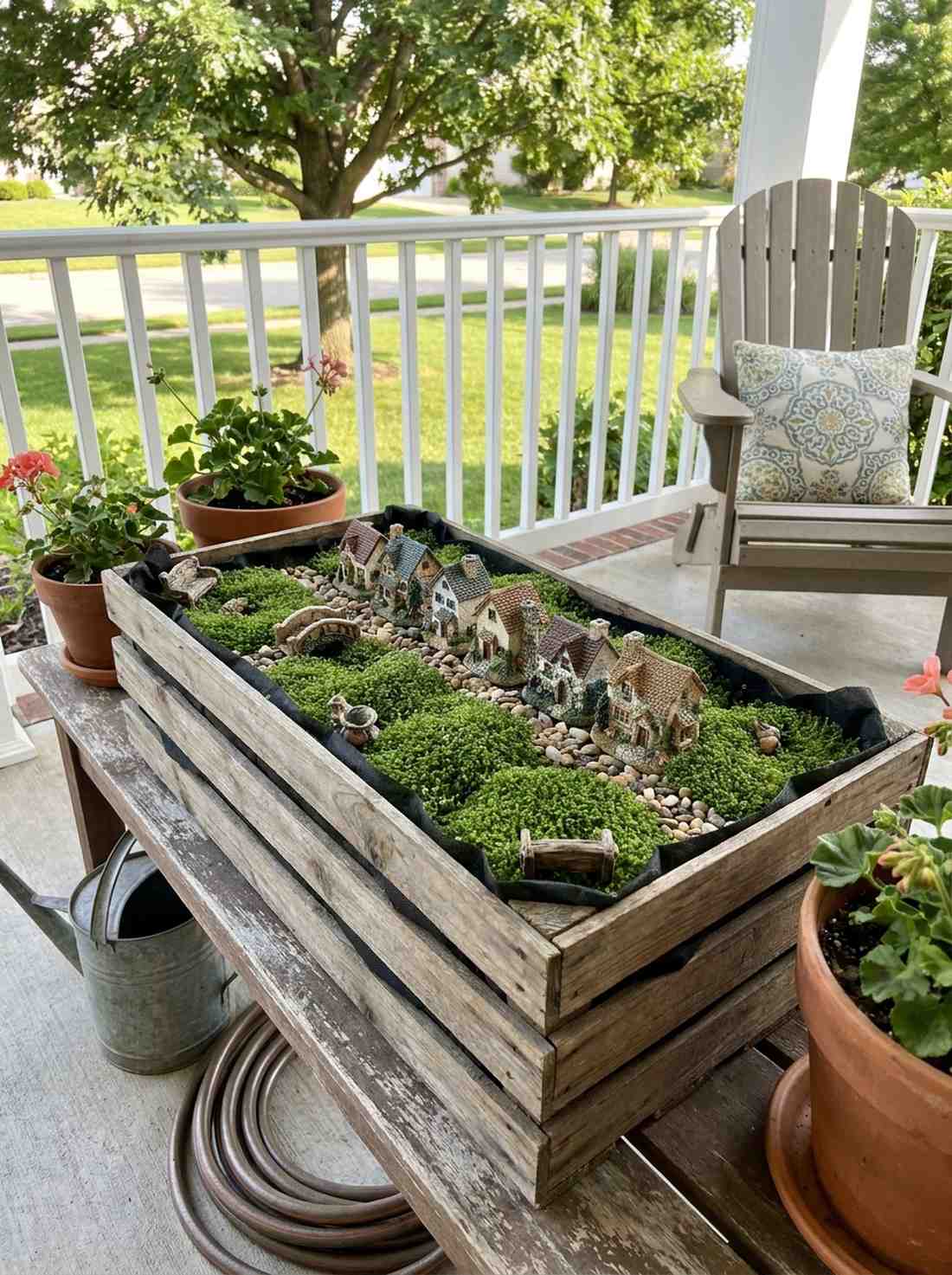
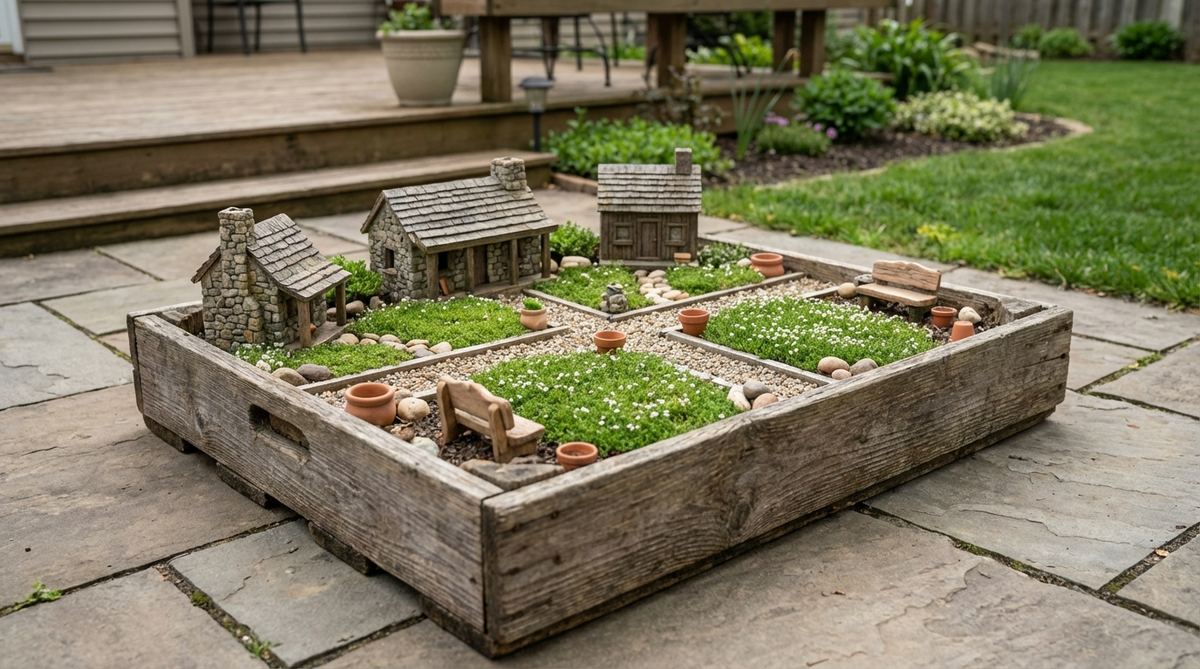
This upcycled container garden feels like a cozy, hidden neighborhood tucked away from the world. It works exceptionally well for deep window ledges or covered porch displays.
Lining up houses in a crate gives a structured, designer-level finish that is extremely satisfying to view. Build a linear street pattern using mossy ground covers and robust miniature garden decoration sets.
You can easily pull this off for around $25–$45. Pin this if you have old wooden crates lying around!
- Key Materials: Wooden produce crate, landscape fabric, Sagina subulata
- Vibe / Style: Vintage village street
- Difficulty: Beginner-friendly
- Budget Breakdown: Crate & Fabric: $10 | Plants & Houses: $25
- Creator’s Tip: Staple heavy-duty landscape fabric twice around the inside to stop soil from leaking through the wooden slats.
- Smart Sourcing: heavy-duty non-woven landscape fabric (pre-cut) and hand-painted miniature resin village kits
Terrarium Landscape Techniques
Enclosed glass environments require specific layout strategies that account for humidity, visibility through transparent walls, and limited access after planting. These techniques translate landscape design principles to miniature scale.
11. Three-Layer Depth Composition
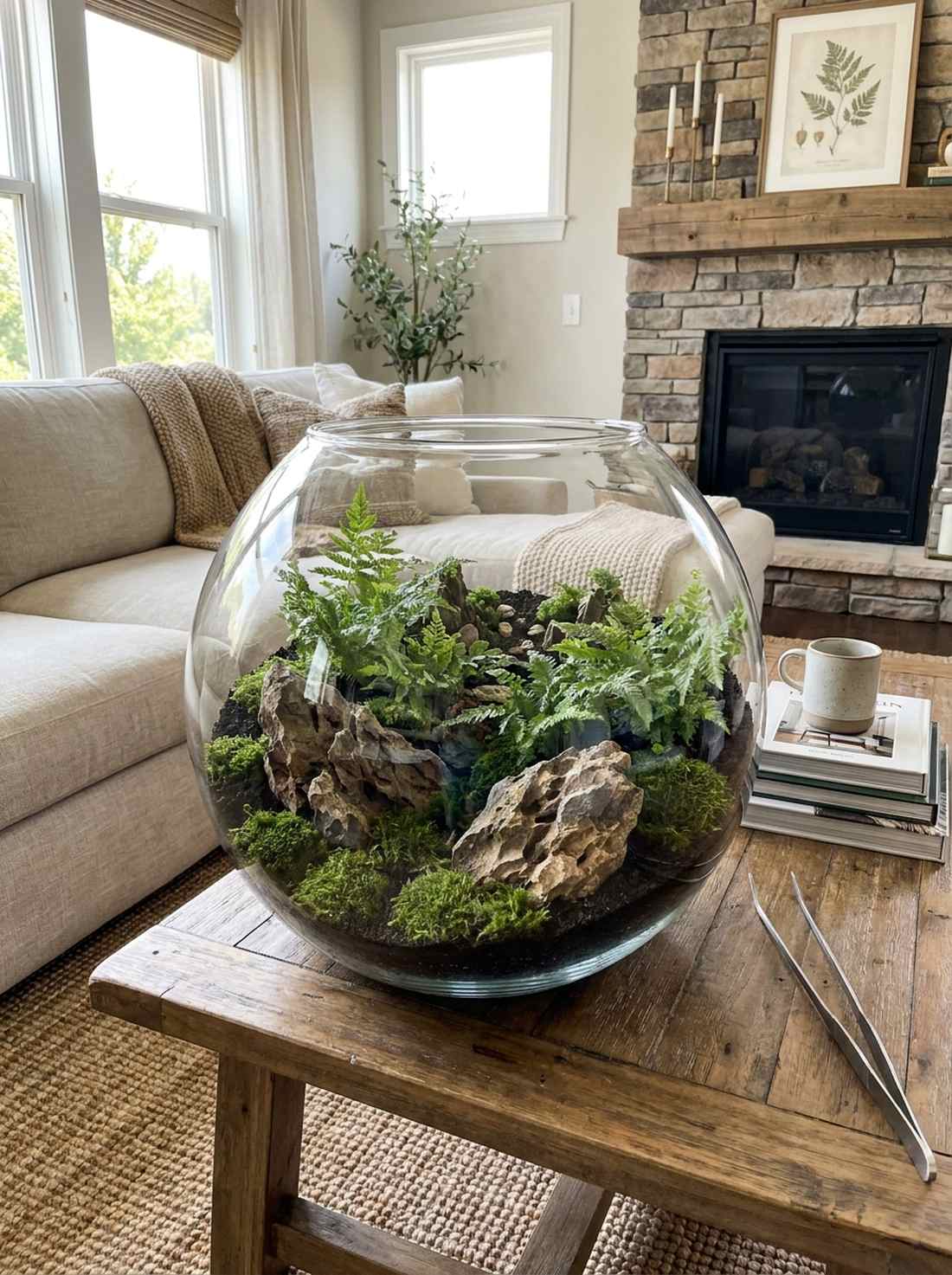
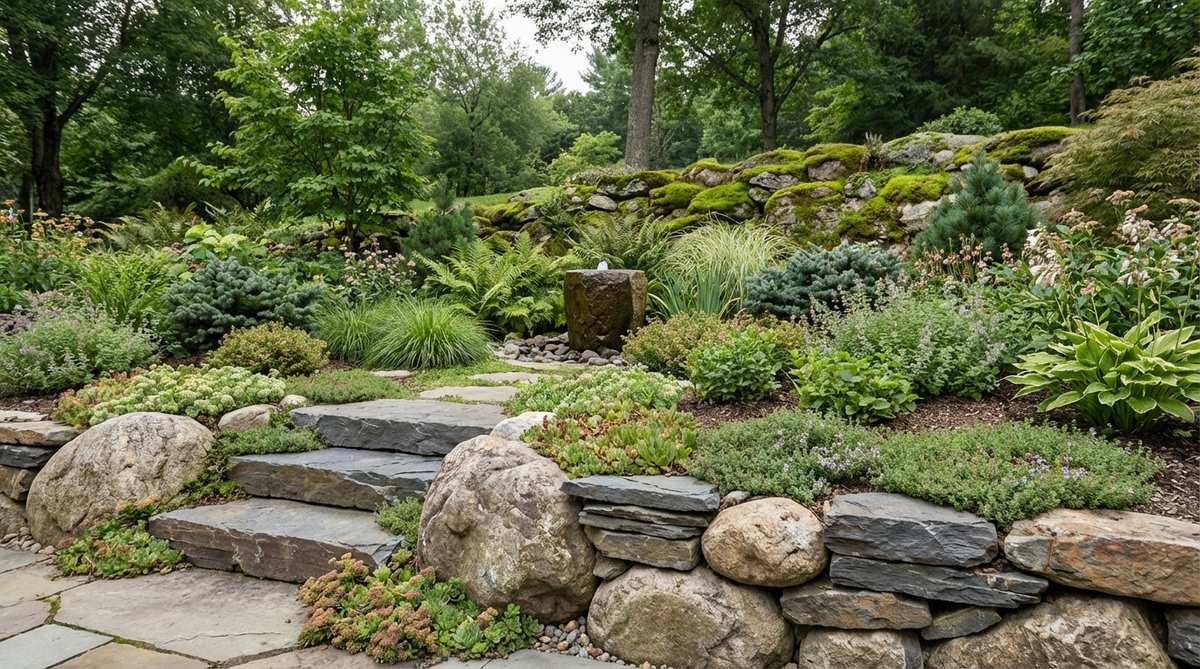
This glass bowl aquascape technique feels like looking out over a vast, endless landscape. It works exceptionally well for large, rounded glass vessels sitting on coffee tables.
Proper layering creates a mind-bending optical illusion that professional designers use. Anchor the front with large stones, fill the middle with leafy plants, and use high-end terrarium accessories in the back to force perspective.
You can easily pull this off for around $30–$50. Save this to your indoor gardening mastery board!
- Key Materials: Feature stones, medium ferns, fine moss
- Vibe / Style: Realistic miniature landscape
- Difficulty: Advanced
- Budget Breakdown: Glassware: $20 | Plants & Hardscape: $25
- Creator’s Tip: Slope the soil dramatically so the back is twice as high as the front—this is the secret to extreme depth.
- Smart Sourcing: dragon stone aquascaping rocks (assorted sizes) and long-handled stainless terrarium tweezers
12. Serpentine Stone Mountain Scene
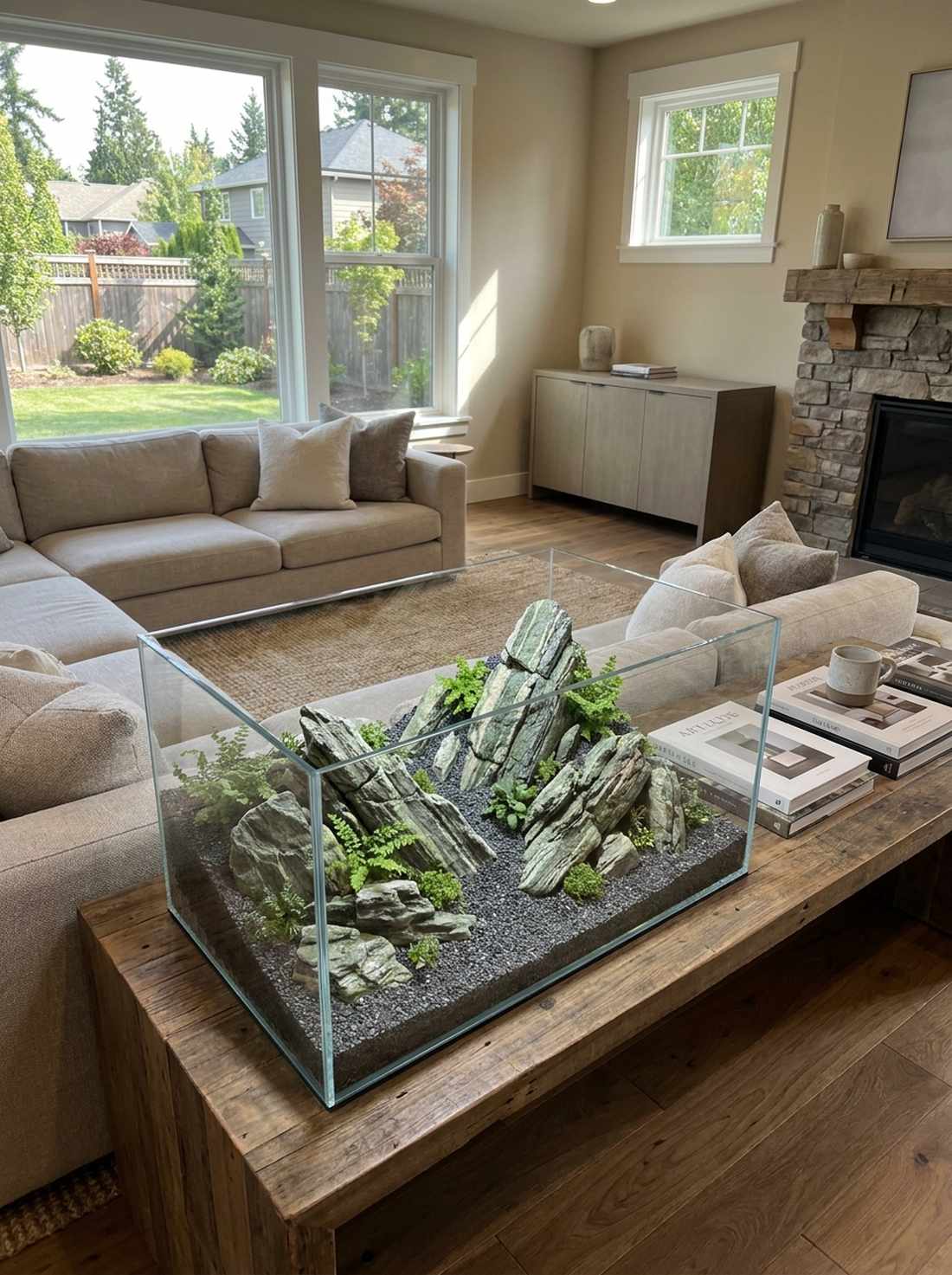
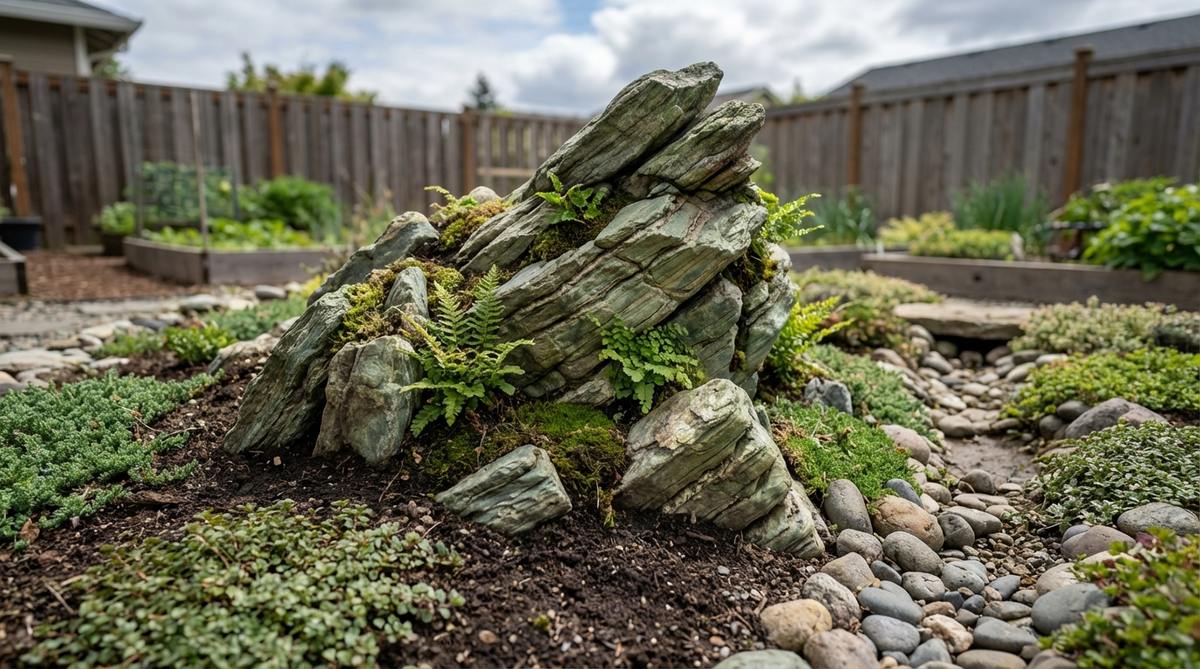
This rocky terrarium layout feels like you are hovering over a majestic mountain range. It is an incredible statement piece for minimalist living rooms.
Stacking striated stones delivers a rugged, expensive look that captures immediate attention. Tilt the serpentine stones slightly to mimic natural fault lines, tucking miniature garden supplies and tiny ferns into the crevices.
You can easily pull this off for around $35–$60. Pin this to your modern home decor board to try later!
- Key Materials: Serpentine stone, fine gravel, crevice ferns
- Vibe / Style: Alpine rocky peak
- Difficulty: Intermediate
- Budget Breakdown: Stones: $25 | Plants: $15
- Creator’s Tip: Superglue the base stones together before adding soil to ensure your “mountain” never collapses.
- Smart Sourcing: genuine serpentine rock shards (bulk box) and cyanoacrylate aquascaping gel glue
13. Sand Desert Oasis Layout
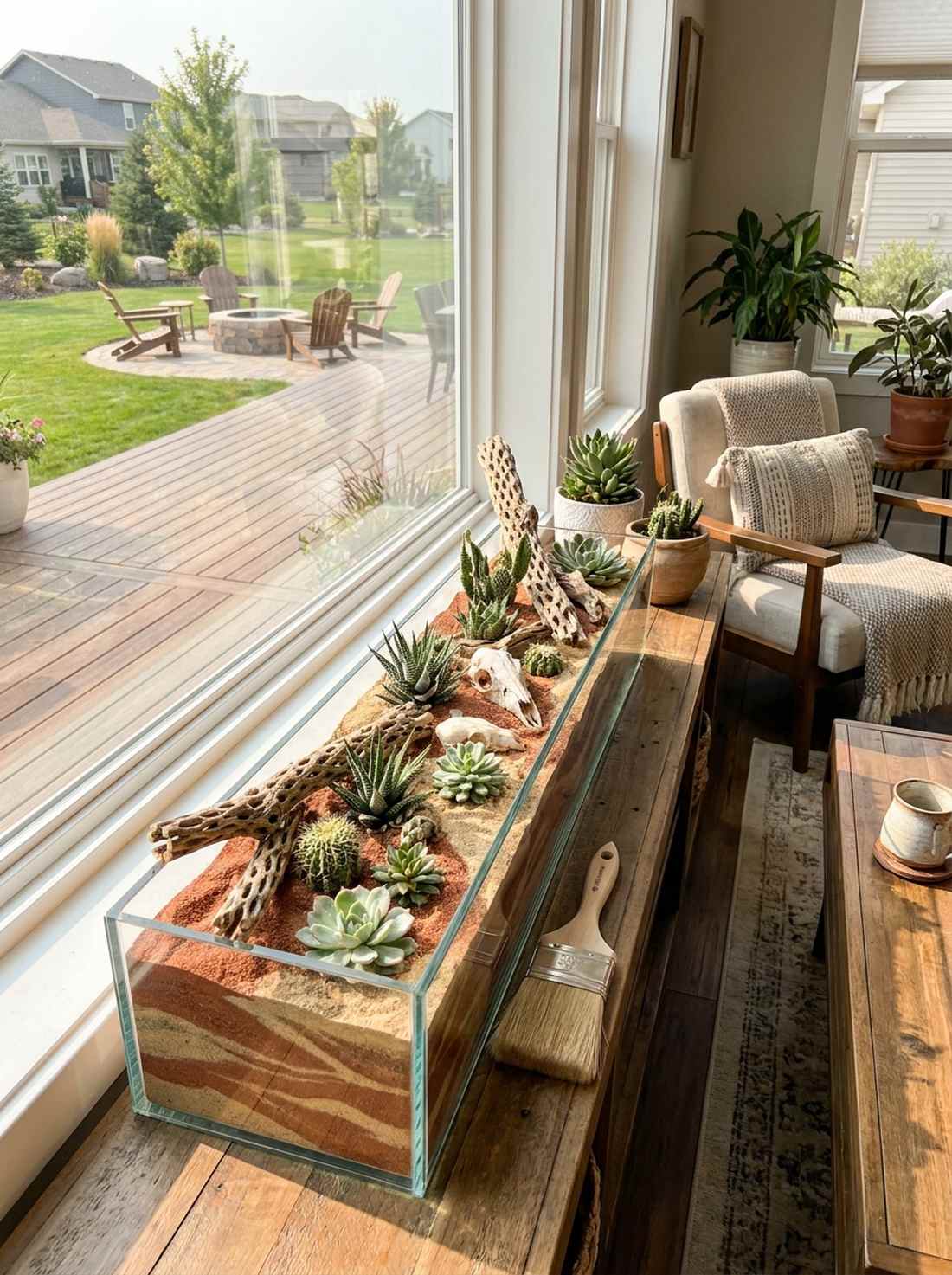
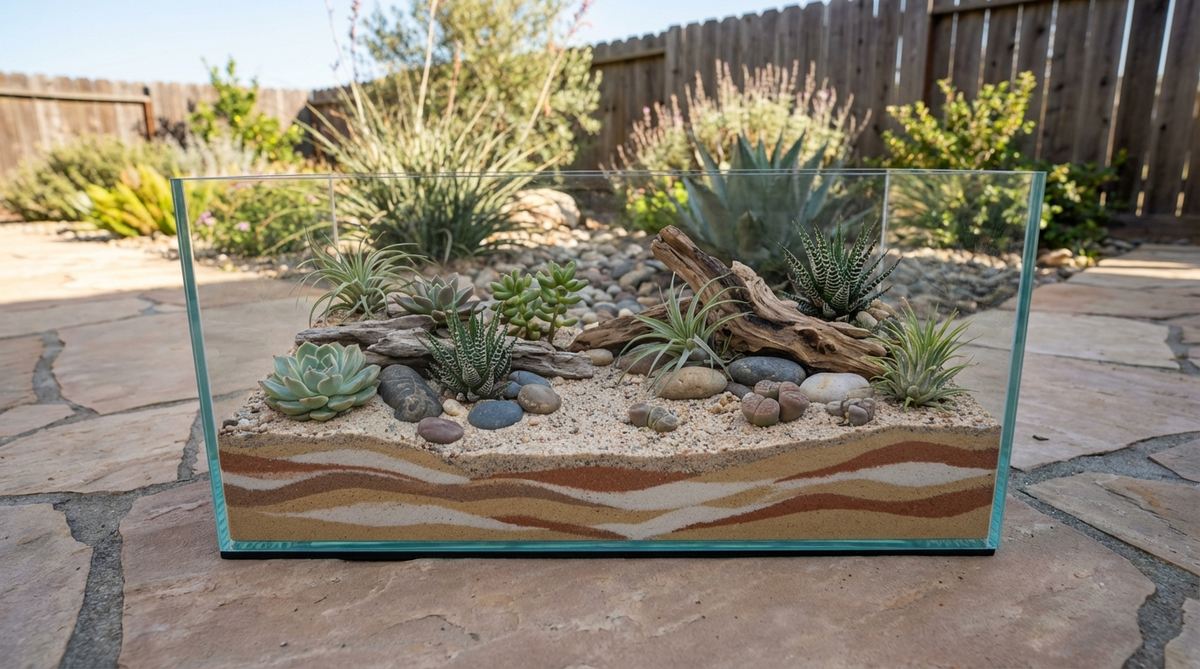
This succulent sand garden feels like a warm, sun-drenched canyon getaway. It works exceptionally well in bright, sunny windowsills where moisture-loving plants would fail.
Using colored sand instead of soil gives a highly stylized, modern aesthetic. Layer rust and tan sands organically, planting robust succulents and adding specialized miniature fairy garden decor like tiny bleached skulls or driftwood.
You can easily pull this off for around $20–$35. Save this to your low-maintenance plant board!
- Key Materials: Colored sand, small succulents, driftwood pieces
- Vibe / Style: Southwestern desert chic
- Difficulty: Easy
- Budget Breakdown: Sand & Wood: $15 | Succulents: $15
- Creator’s Tip: Use a soft paintbrush to sweep sand off the succulent leaves after planting for a pristine finish.
- Smart Sourcing: natural cholla wood branches (pre-cleaned) and premium desert terrarium sand kits
14. Tropical Rainforest Canopy
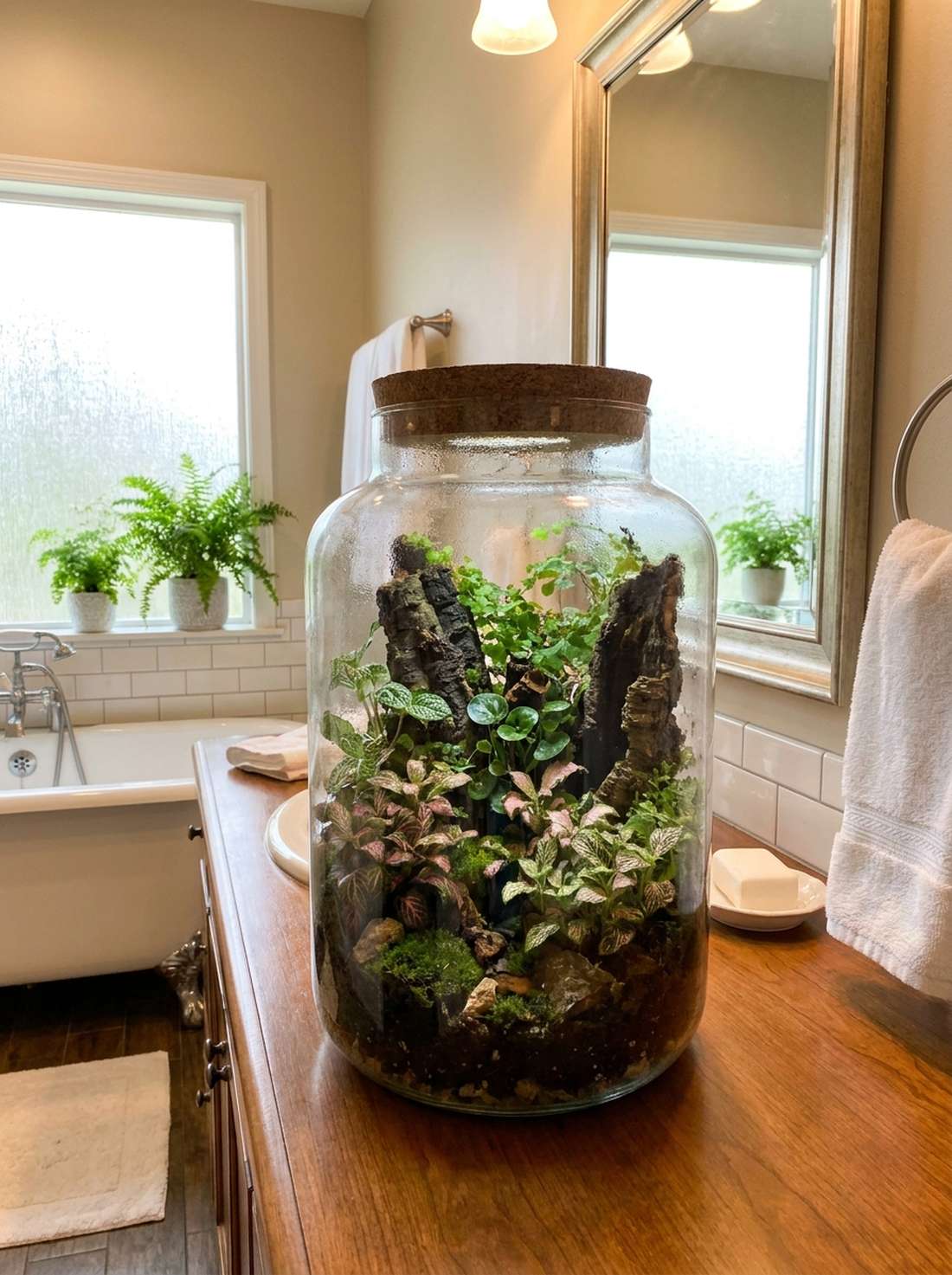
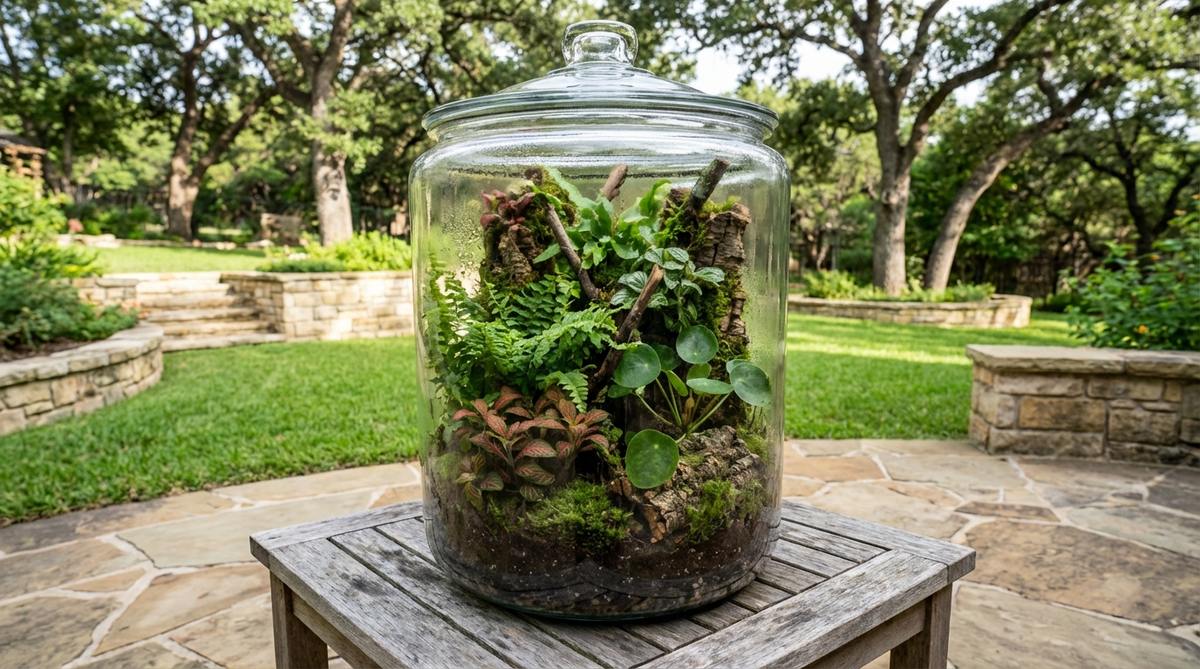
This closed ecosystem jar feels like an impenetrable, lush jungle teeming with life. It works perfectly for low-light bathrooms or humid environments.
Sealing the environment creates a self-watering marvel that looks wildly expensive. Build vertical height with cork bark and pack the space with Fittonia and Pilea, using waterproof terrarium accessories that won’t mold.
You can easily pull this off for around $30–$45. Pin this if you love the idea of a garden that waters itself!
- Key Materials: Large glass jar with lid, Fittonia, cork bark
- Vibe / Style: Dense tropical jungle
- Difficulty: Intermediate
- Budget Breakdown: Jar: $15 | Tropical Plants: $20
- Creator’s Tip: Include a hearty layer of springtails (tiny beneficial insects) to eat any mold that forms in the high humidity.
- Smart Sourcing: live springtail culture starter colonies and high-humidity terrarium plant bundles
Most people get this completely wrong… until they try the exact layout coming up next.
15. Zen Meditation Garden
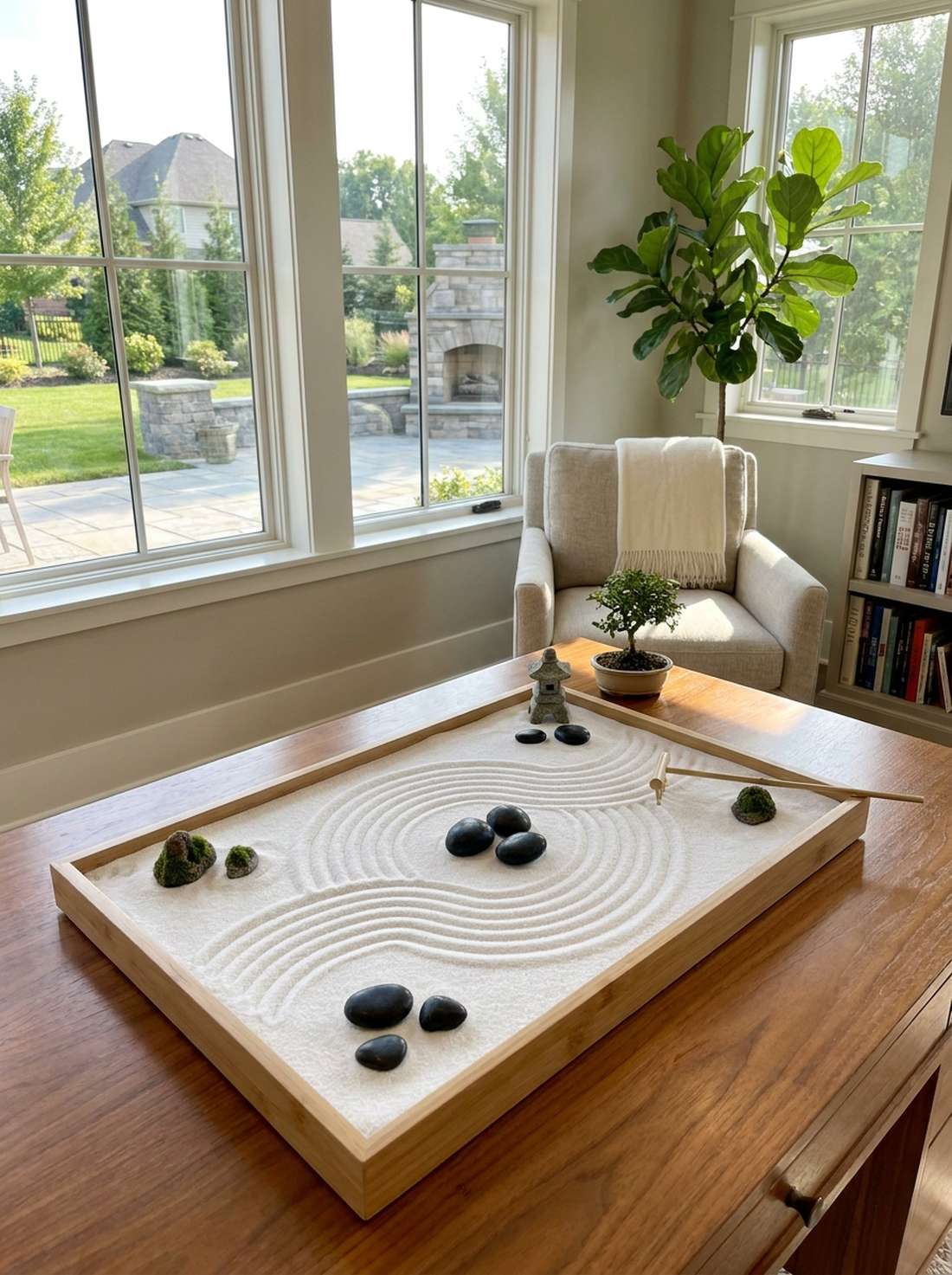
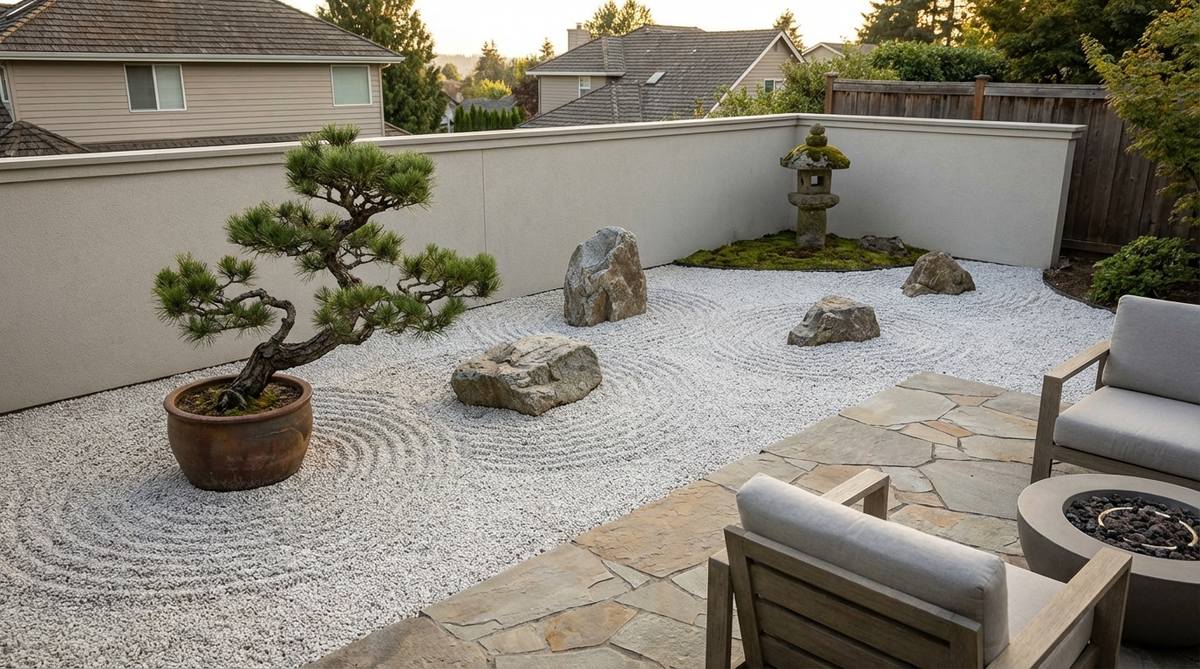
This minimalist sand container feels incredibly serene and mentally clarifying. It is the ultimate addition to a calming office space or yoga studio.
Restraint is the secret weapon that makes this layout look like a high-end spa feature. Use negative space, pristine white sand, and strategically placed rocks alongside elegant miniature garden decoration to create flowing energy.
You can easily pull this off for around $15–$30. Save this to your mindful living inspiration board!
- Key Materials: White quartz sand, smooth black stones, mini rake
- Vibe / Style: Japanese minimalist
- Difficulty: Beginner-friendly
- Budget Breakdown: Sand & Stones: $15 | Accessories: $10
- Creator’s Tip: Dampen the sand very slightly before raking to create perfectly crisp, sharp lines that hold their shape.
- Smart Sourcing: pure white quartz terrarium sand (fine grain) and bamboo miniature zen garden rake sets
Architectural Miniature Villages
Building-focused layouts organize space around structures and hardscape features rather than plant material. These designs tell stories through architectural details and urban planning at miniature scale.
16. Main Street Village Row
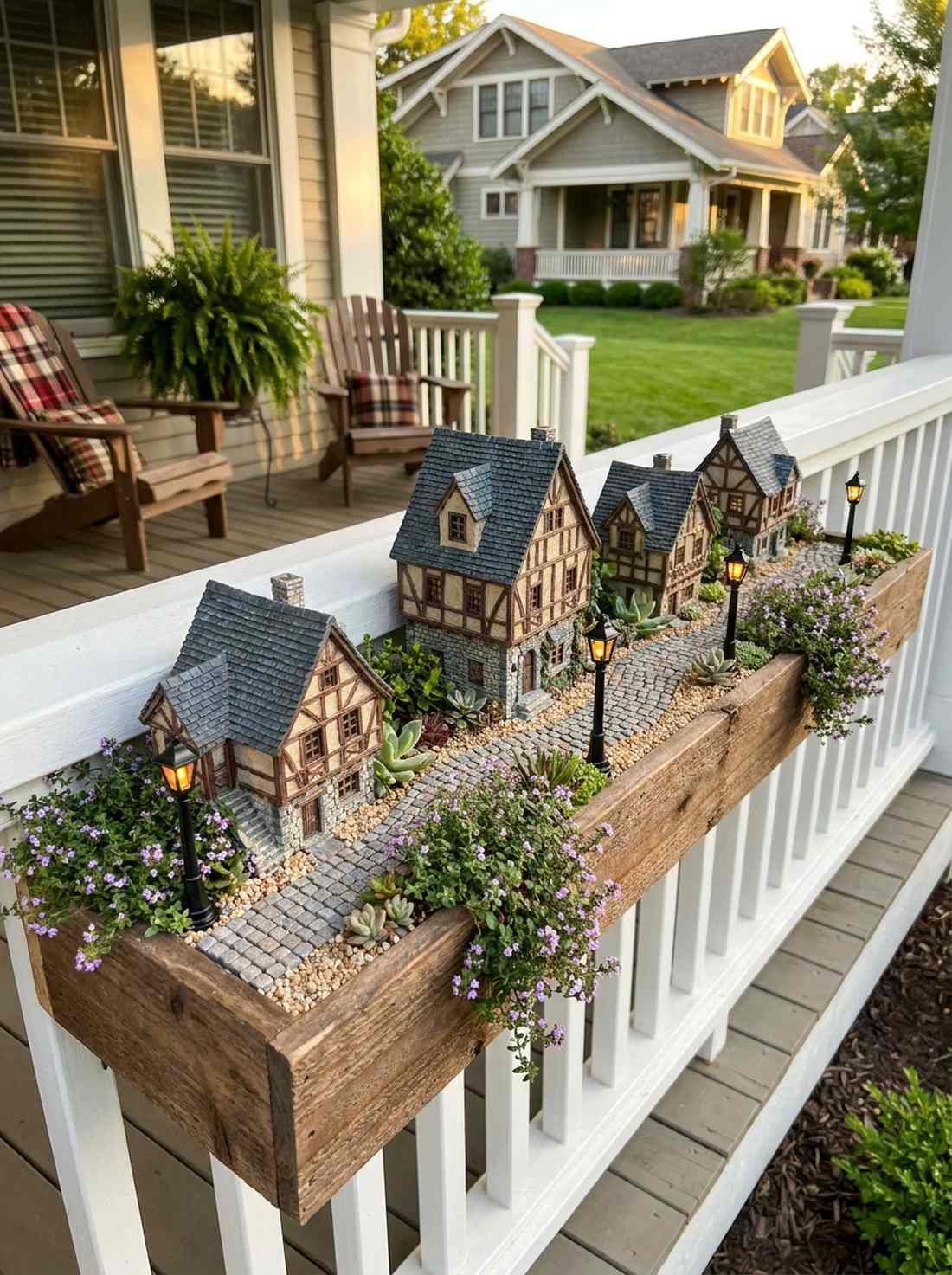
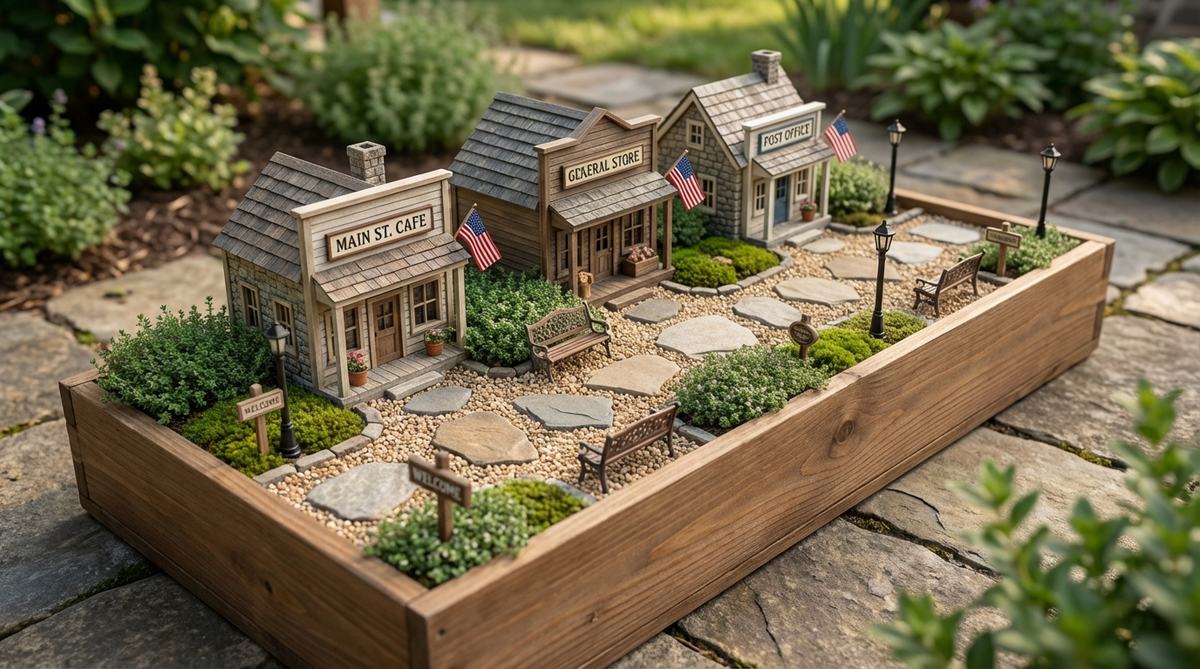
This linear layout design feels like stepping into a bustling, historic tiny town. It works exceptionally well in long planter boxes along porch railings.
Arranging buildings in a row instantly brings a cohesive, intentional aesthetic to the space. Line up multiple cottages along a pea gravel road, using high-quality miniature garden supplies like tiny streetlamps to anchor the look.
You can easily pull this off for around $40–$70. Pin this to your outdoor planter ideas board to recreate later!
- Key Materials: Resin buildings, pea gravel, creeping thyme
- Vibe / Style: Classic European village
- Difficulty: Intermediate
- Budget Breakdown: Buildings: $40 | Hardscape: $15
- Creator’s Tip: Place the tallest building in the center or at the far back to maintain a pleasing visual triangle.
- Smart Sourcing: weatherproof resin cottage assortments (4-pack) and miniature cobblestone path rolls
17. Cottage With Garden Courtyard
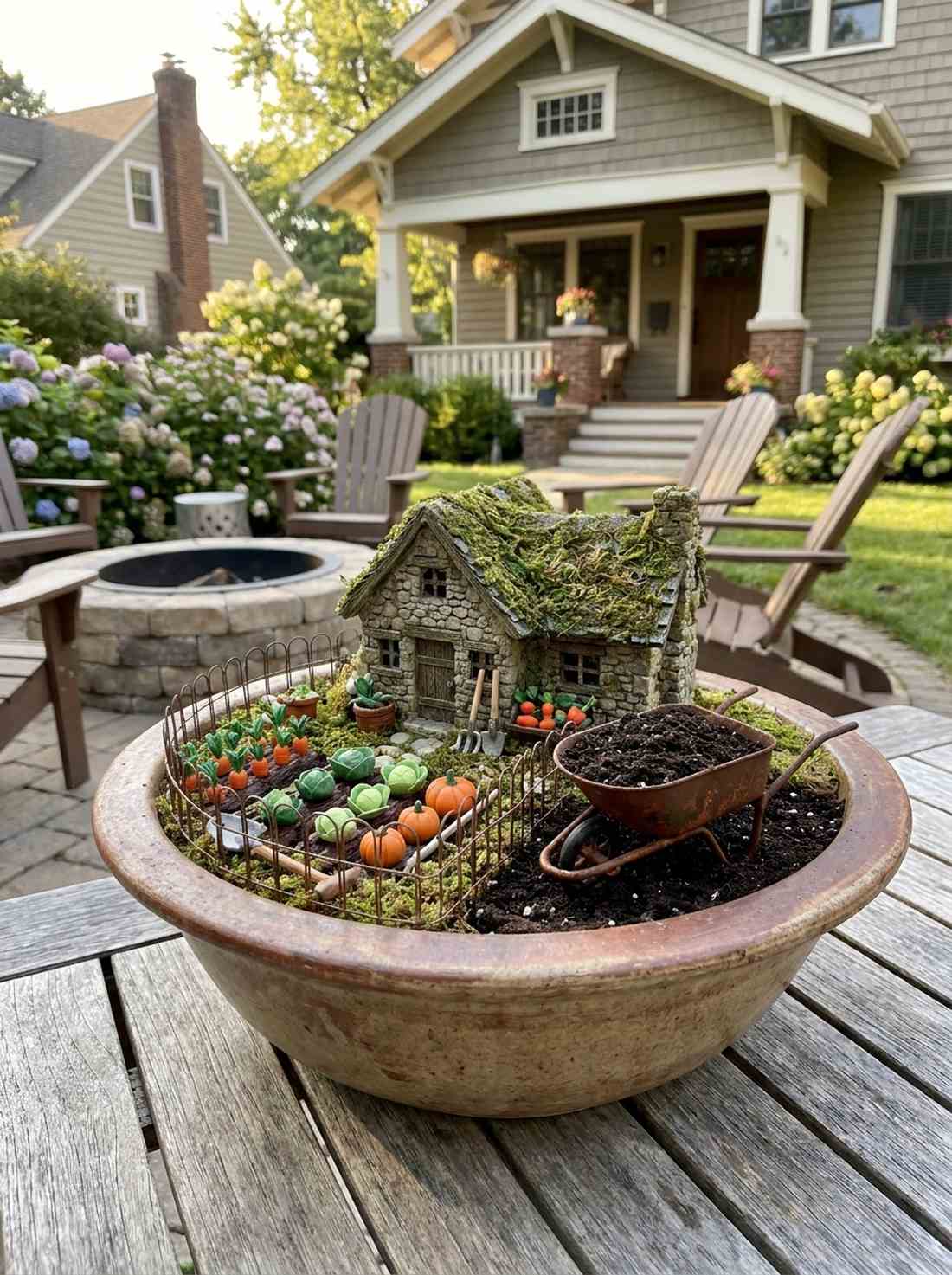
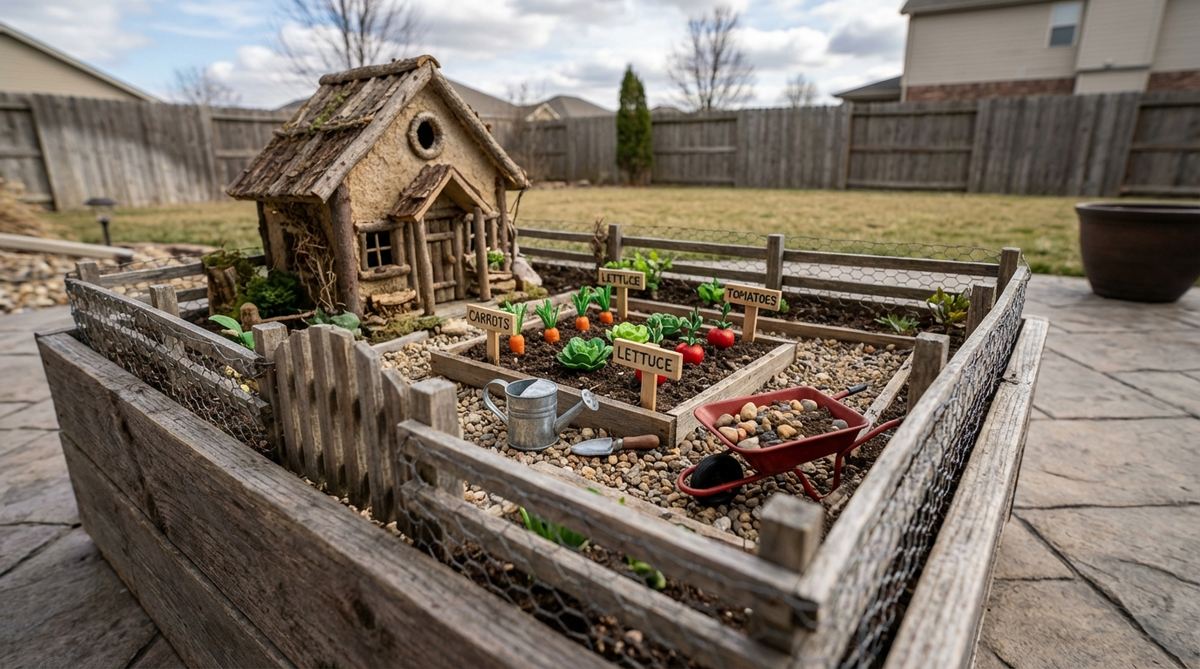
This enclosed diorama style feels like a private, sunlit garden retreat just for fairies. It is absolutely perfect for large, wide-mouth bowls on a patio table.
Defining a tiny “yard within a yard” gives a deeply engaging, narrative-driven aesthetic. Position your cottage against the container’s edge and enclose the front with premium fairy garden kits featuring tiny wheelbarrows and faux veggies.
You can easily pull this off for around $30–$50. Save this if you love highly detailed, storytelling crafts!
- Key Materials: Miniature cottage, wire fencing, polymer clay vegetables
- Vibe / Style: Homesteading fairy yard
- Difficulty: Intermediate
- Budget Breakdown: Cottage & Fence: $25 | Tiny Veggies: $10
- Creator’s Tip: Use real soil in the miniature wheelbarrow to make the “gardening” scene look startlingly realistic.
- Smart Sourcing: miniature rusted metal garden tool sets and polymer clay micro vegetable packs
18. Lighthouse Coastal Scene
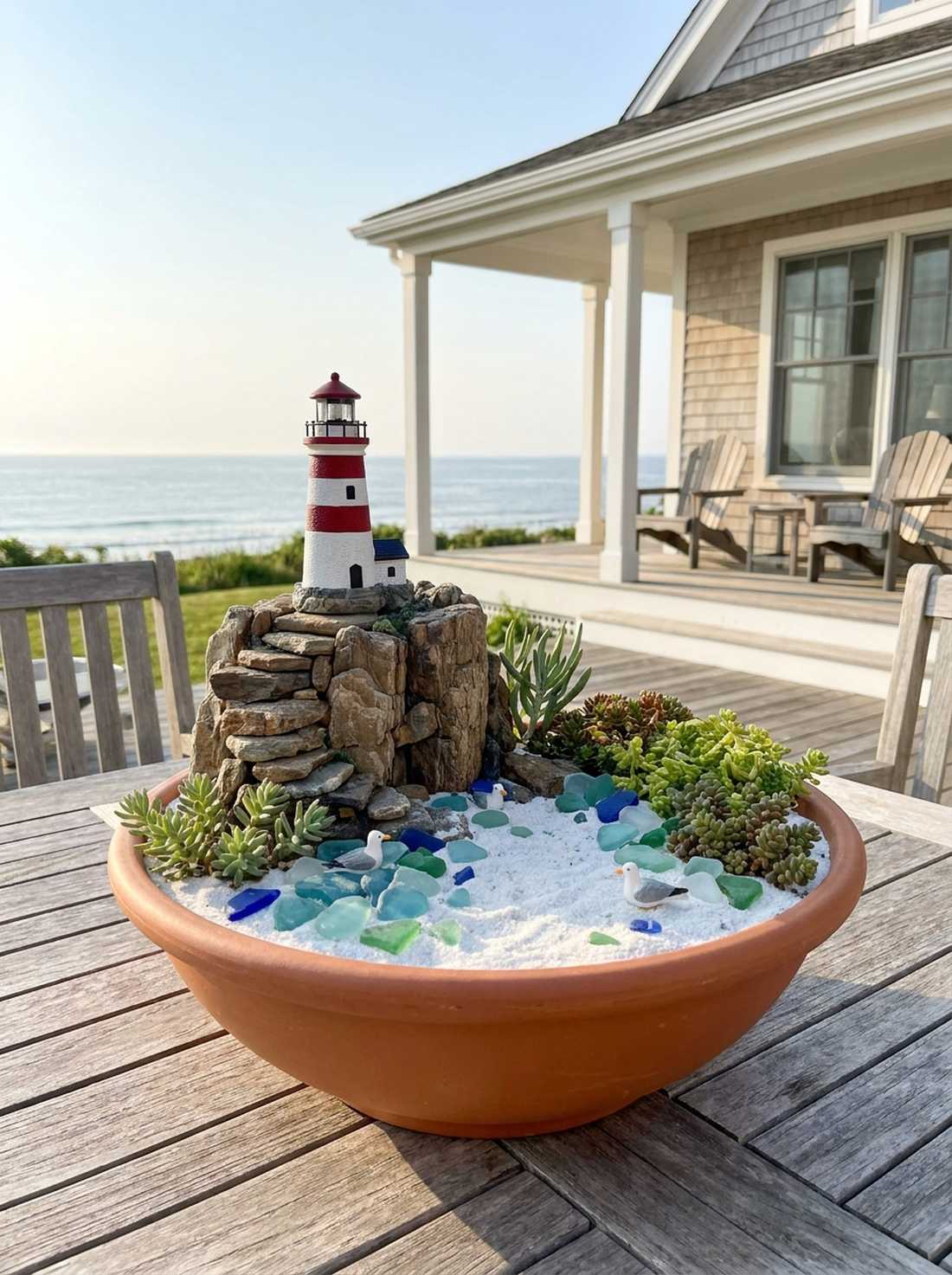
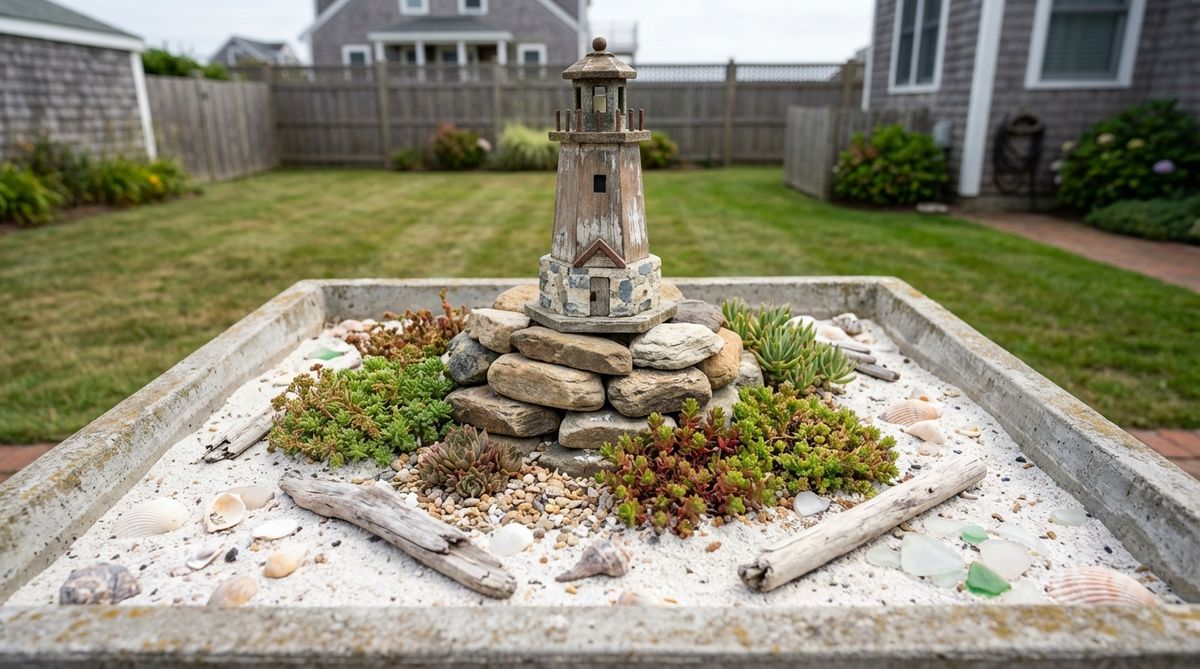
This nautical planter concept feels like a breezy, salt-sprayed morning by the ocean. It works exceptionally well in wide, shallow bowls mimicking the open beach.
Adding vertical elevation to a flat sand base creates striking, magazine-worthy contrast. Build a rocky cliff for the lighthouse, surround it with white sand, and incorporate UV-resistant miniature garden decoration like tiny seagulls and sea glass.
You can easily pull this off for around $25–$45. Pin this to your coastal home decor board instantly!
- Key Materials: Miniature lighthouse, sea glass, sedum plants
- Vibe / Style: Rugged ocean coastline
- Difficulty: Beginner-friendly
- Budget Breakdown: Lighthouse: $15 | Sand & Glass: $15
- Creator’s Tip: Use drought-tolerant sedums that look like sea-kelp—they thrive in sandy, fast-draining conditions.
- Smart Sourcing: solar-powered miniature LED lighthouses and tumbled ocean-blue sea glass assortments
19. Treehouse Elevated Dwelling
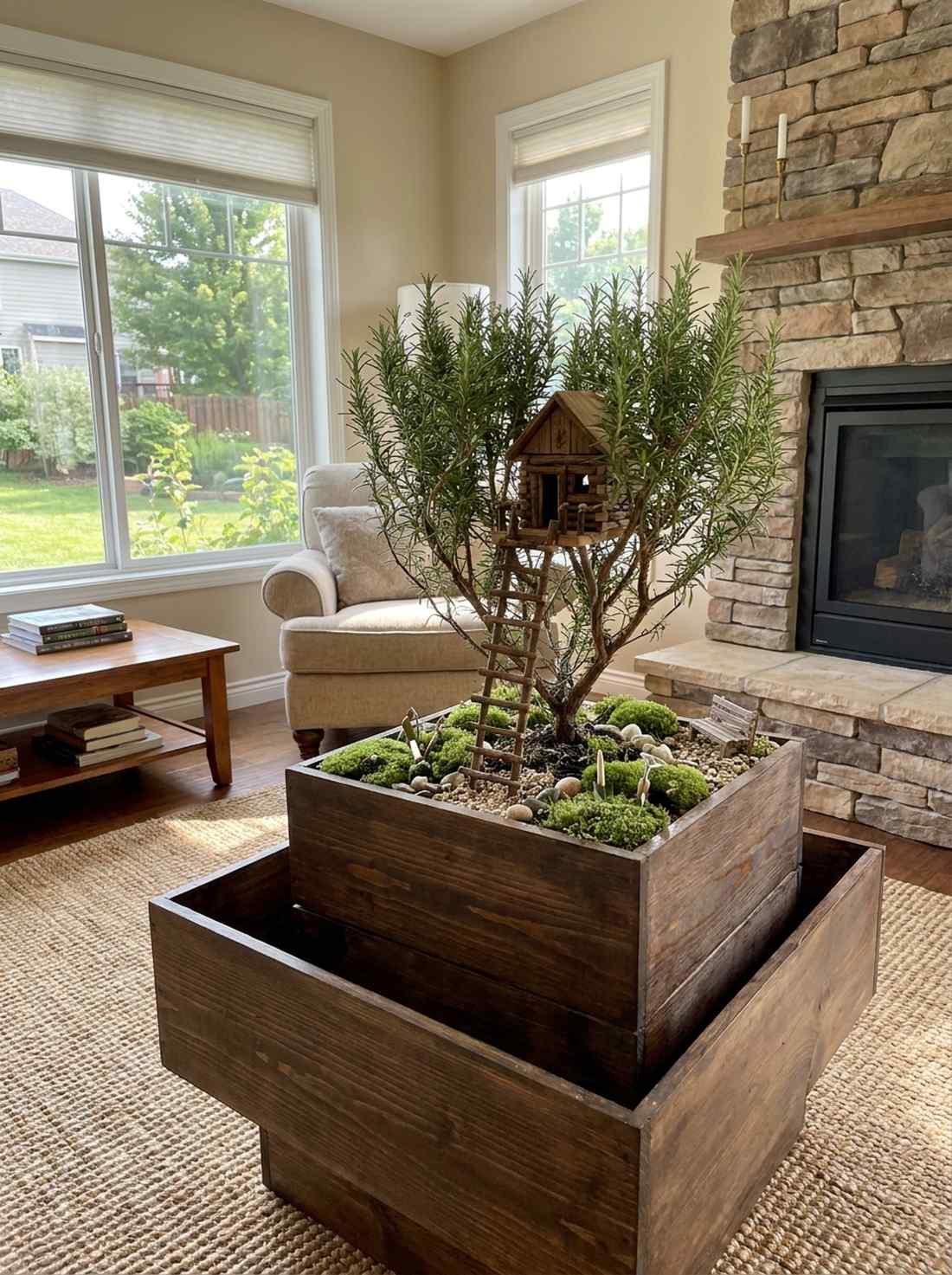
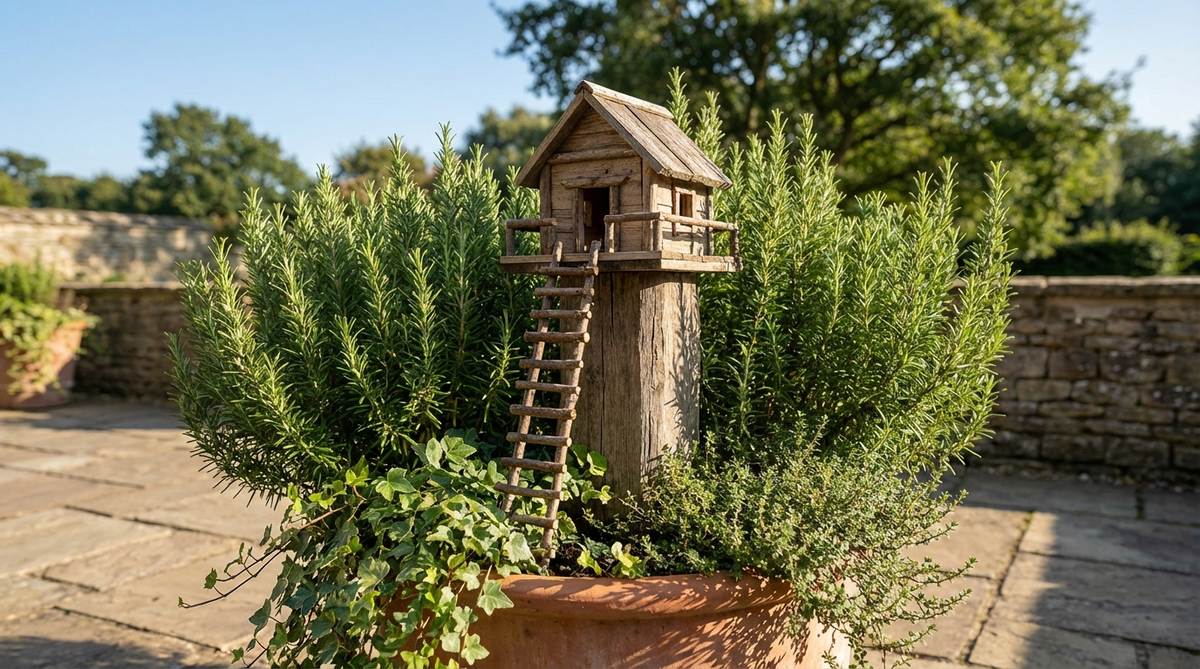
This vertical fairy garden setup feels like a thrilling childhood adventure brought to life. It is perfect for adding height and drama to deep indoor floor planters.
Suspending the focal point off the ground delivers a shockingly creative, high-end presentation. Mount a tiny wood house within the sturdy branches of a rosemary bush, blending it seamlessly with natural miniature garden supplies.
You can easily pull this off for around $20–$40. Save this to your creative indoor planting board!
- Key Materials: Tiny wooden house, sturdy woody herb (like rosemary), twig ladder
- Vibe / Style: Whimsical arboreal hideaway
- Difficulty: Advanced (requires secure mounting)
- Budget Breakdown: Plant: $15 | House & Ladder: $15
- Creator’s Tip: Secure the house using brown floral wire rather than glue so the plant can grow without restriction.
- Smart Sourcing: pre-assembled miniature twig ladders and brown coated floral binding wire
Wait until you see the spatial trick in this next one—it completely changes the vibe of small spaces.
20. Castle Ruins With Overgrowth
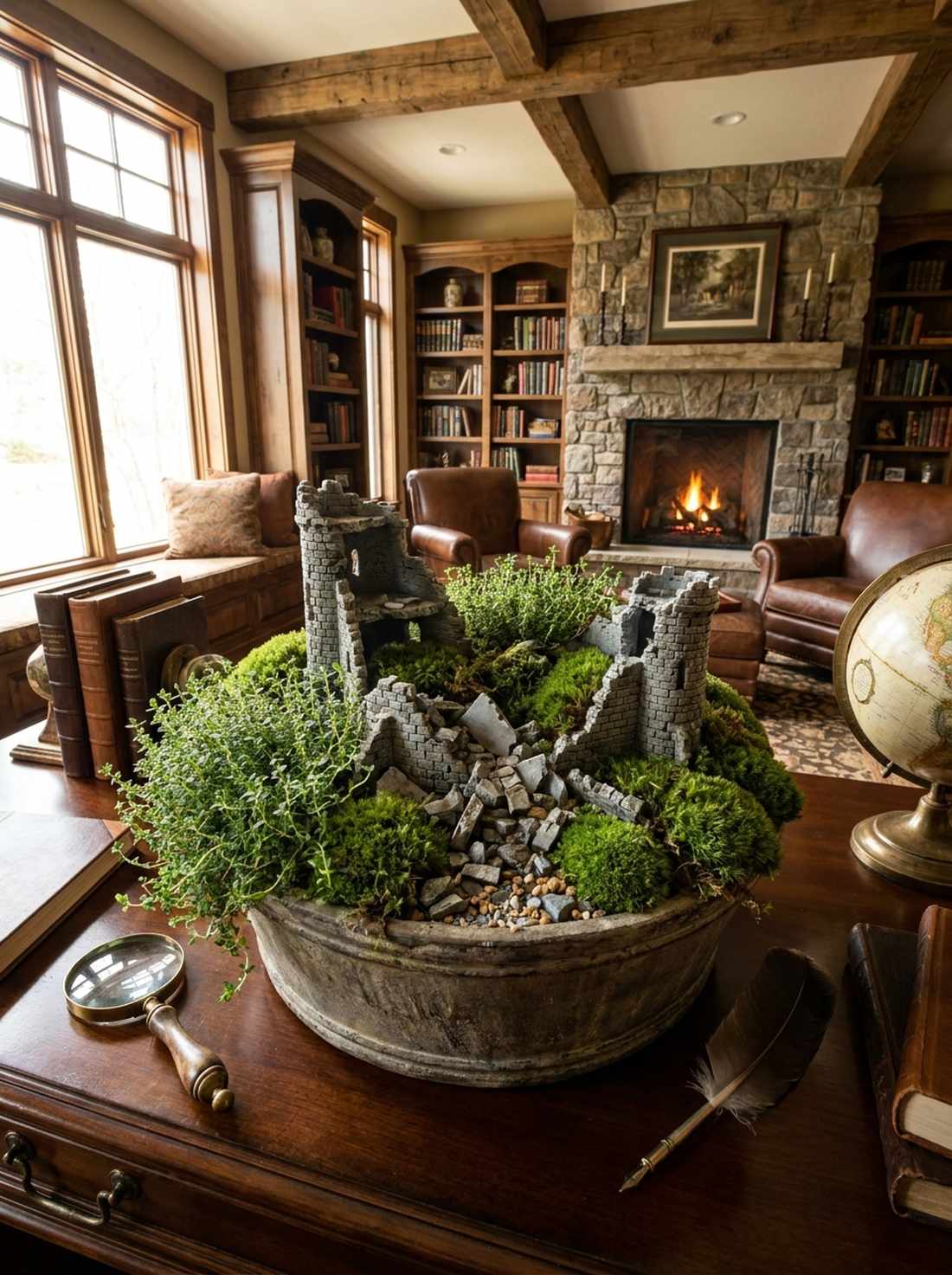
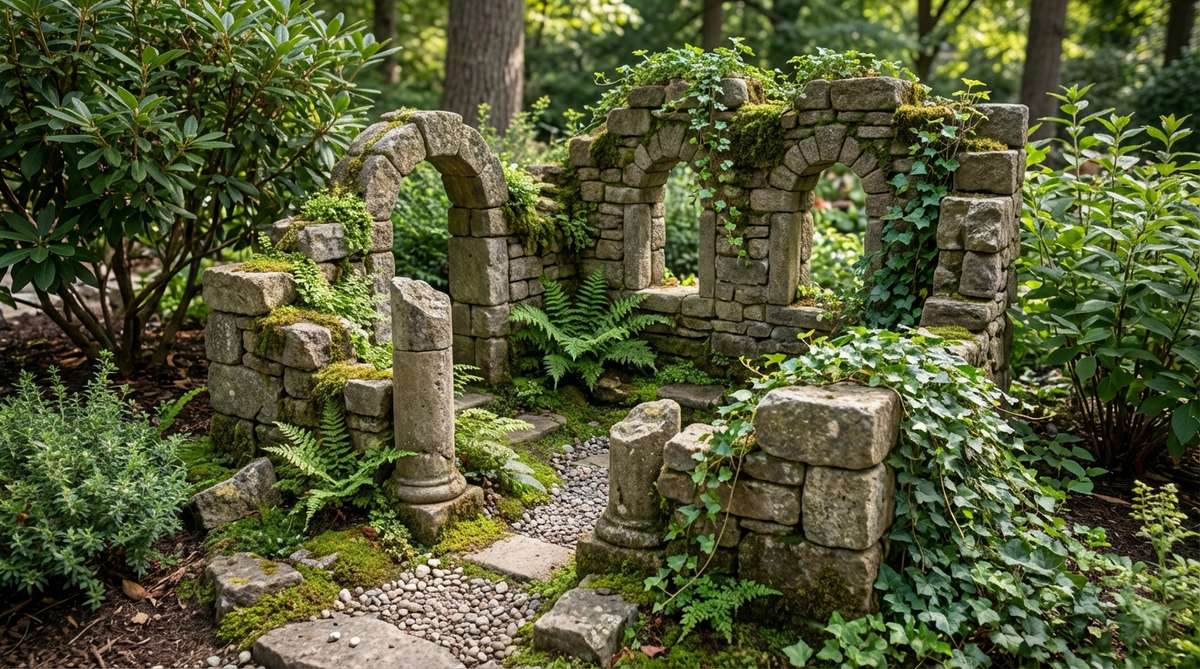
This fantasy-themed container feels incredibly ancient, romantic, and beautifully forgotten. It works exceptionally well as a gothic or dark-academia desk ornament.
Blending broken architecture with live plants achieves an expensive, time-worn aesthetic. Scatter broken resin castle pieces among creeping moss, using top-tier fairy garden kits to simulate a landscape reclaiming history.
You can easily pull this off for around $25–$45. Pin this if you’re obsessed with romantasy aesthetics!
- Key Materials: Castle ruin fragments, creeping thyme, cushion moss
- Vibe / Style: Ancient reclaimed kingdom
- Difficulty: Intermediate
- Budget Breakdown: Ruin Kit: $20 | Plants: $15
- Creator’s Tip: Intentionally break a cheap resin castle with a hammer and sand the edges for realistic, custom ruins.
- Smart Sourcing: polyresin castle ruin aquascaping decorations and live cushion moss starter packs
Seasonal & Themed Designs
Temporary or changeable layouts celebrate specific times of year or special interests. These designs refresh quickly and allow experimentation without long-term plant commitments.
21. Autumn Harvest Scene
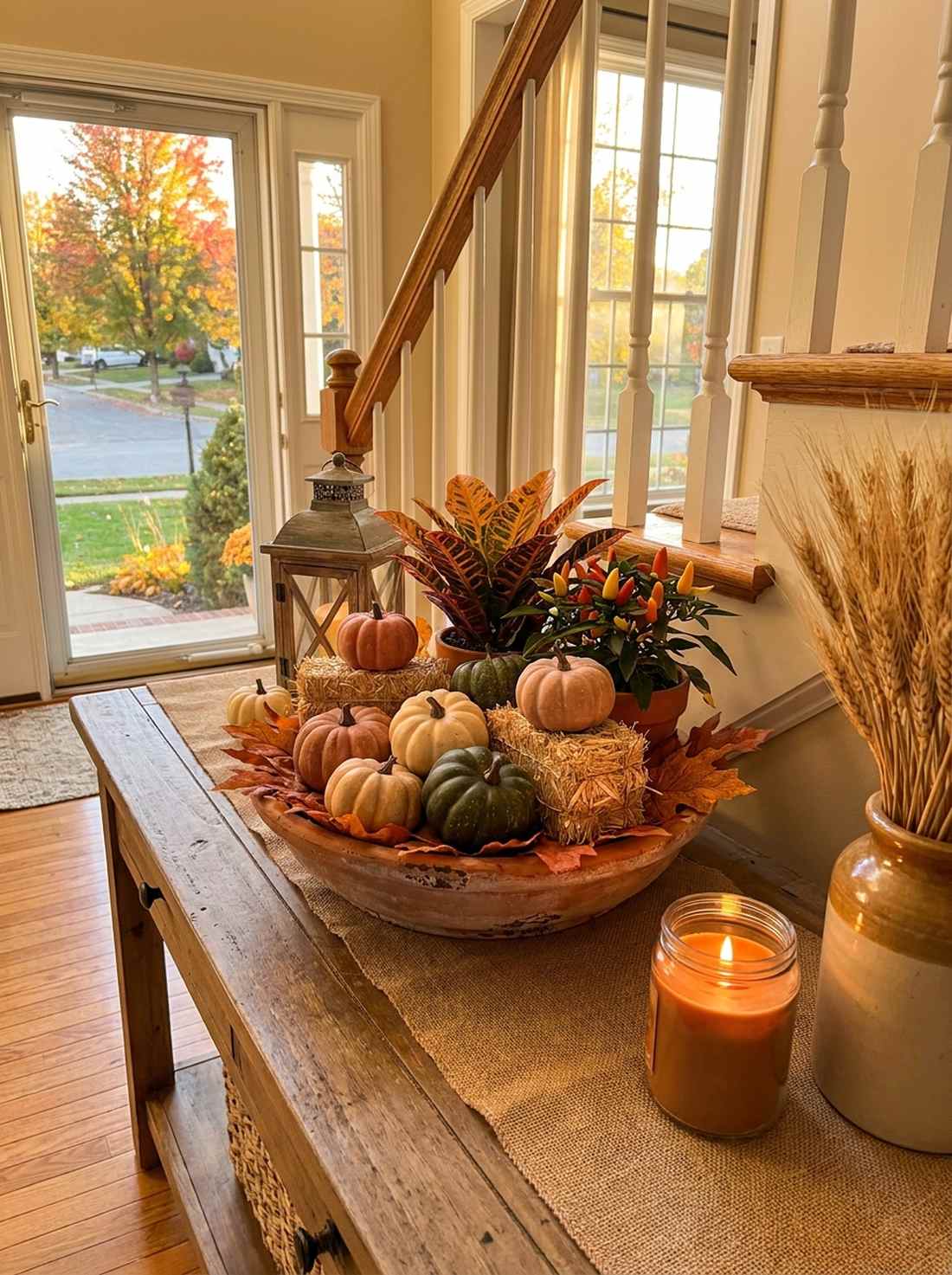
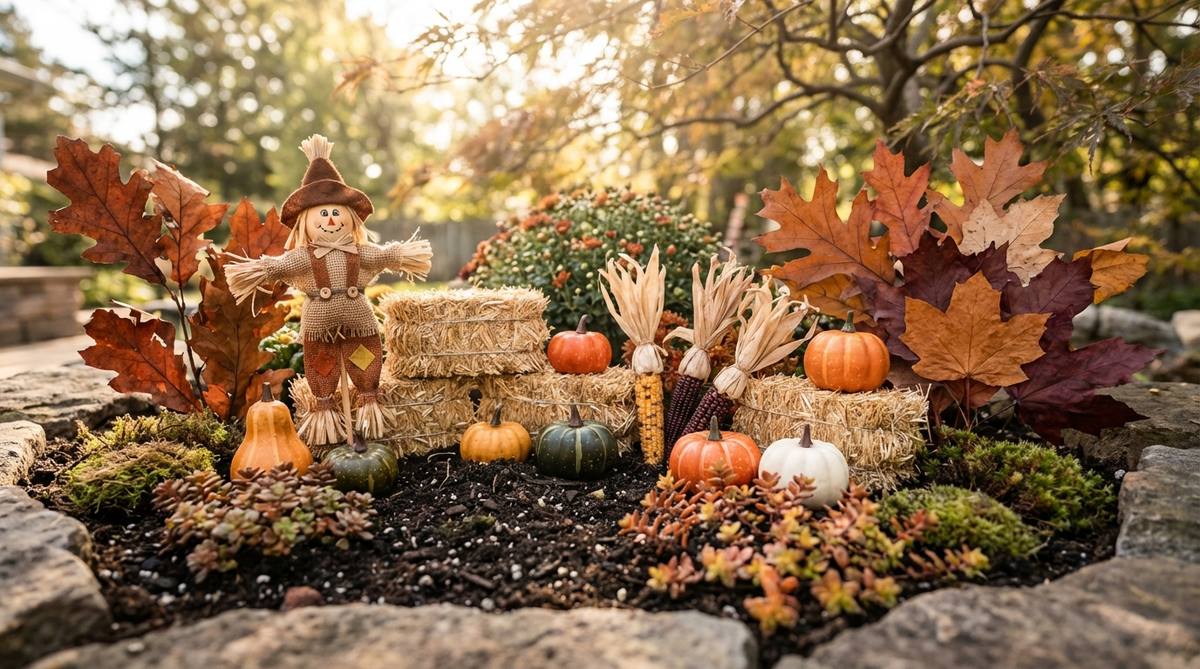
This fall-themed tabletop garden feels incredibly cozy, smelling faintly of crisp leaves and cider. It is absolutely perfect for Thanksgiving centerpieces or entryway consoles.
Swapping out seasonal props keeps your setup looking dynamic and professionally styled year-round. Use warm-toned foliage plants and layer in incredibly detailed miniature garden decor like micro-pumpkins and tiny hay bales.
You can easily pull this off for around $15–$30. Save this to your fall decor inspiration board!
- Key Materials: Mini pumpkins, rust-colored plants, tiny hay bales
- Vibe / Style: Cozy autumn farm
- Difficulty: Very easy
- Budget Breakdown: Seasonal Props: $15 | Base Plants: $10
- Creator’s Tip: Use preserved autumn leaves from a craft store rather than real ones, which will rot and mold on wet soil.
- Smart Sourcing: miniature foam pumpkin assortments (bulk bag) and craft-grade miniature straw bales
22. Winter Snow Village
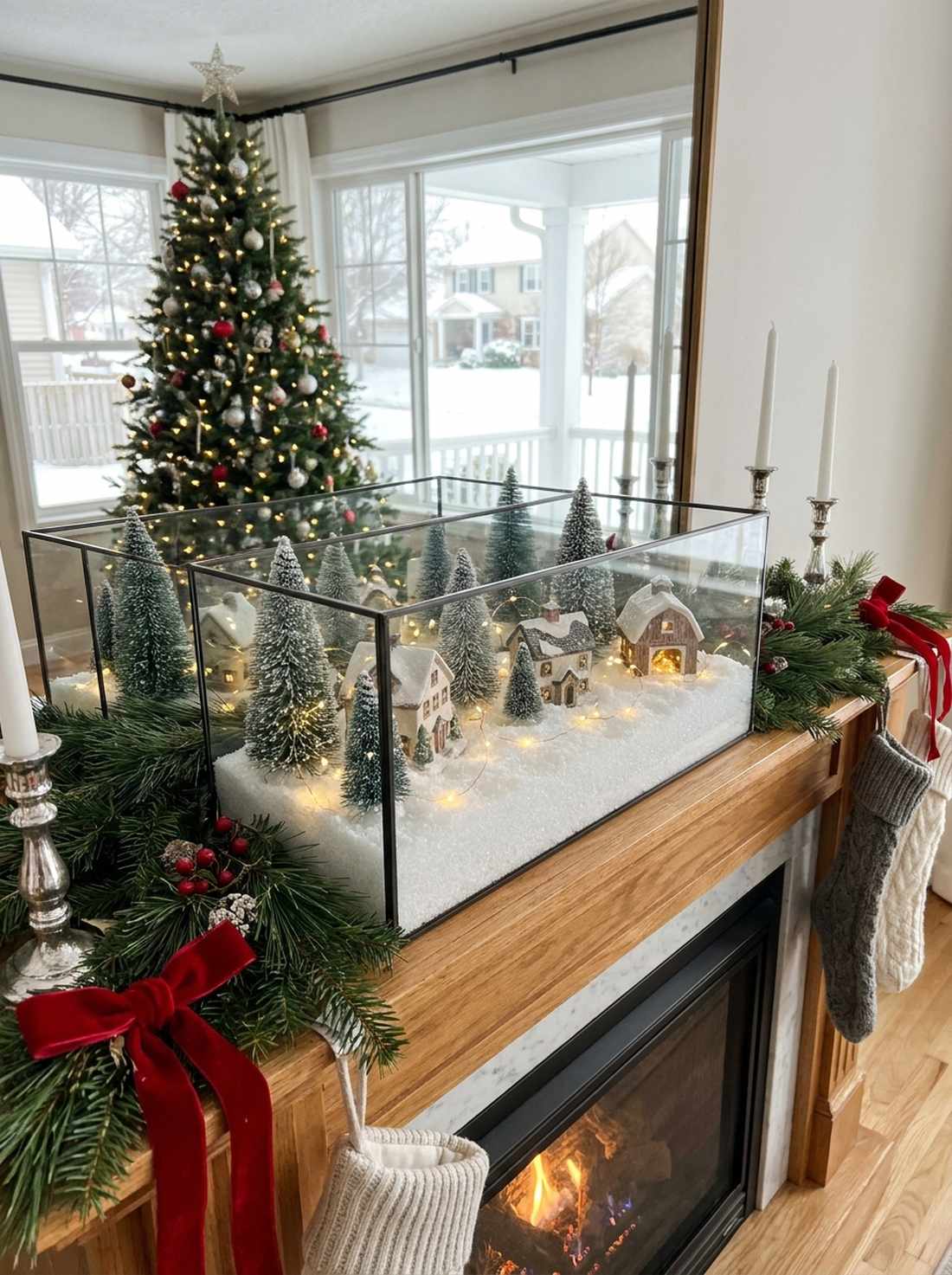
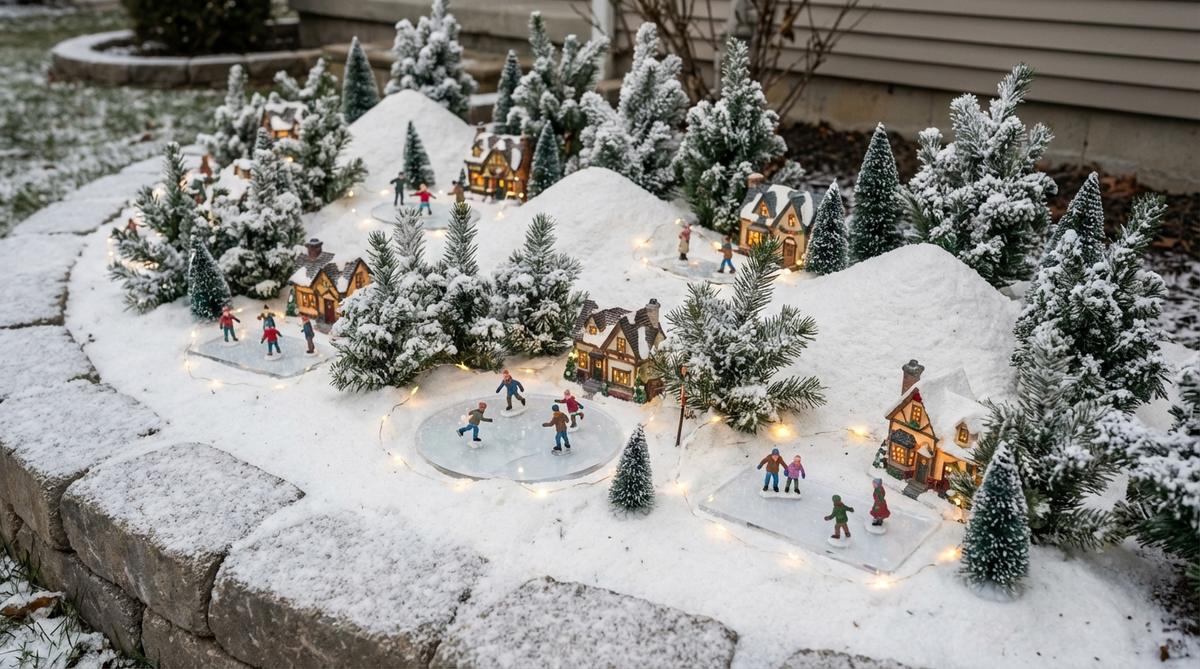
This holiday display layout feels like a crisp, magical Christmas Eve frozen under glass. It works exceptionally well for temporary holiday mantels and festive window displays.
Using dry materials instead of soil makes this a zero-maintenance masterpiece that looks incredibly expensive. Layer epsom salt for sparkling snow, embedding battery-powered lights and premium miniature fairy garden decor into the scene.
You can easily pull this off for around $20–$40. Pin this to your Christmas DIY crafts board right away!
- Key Materials: Epsom salt (snow), LED string lights, miniature evergreens
- Vibe / Style: Festive winter wonderland
- Difficulty: Beginner-friendly
- Budget Breakdown: Artificial Snow & Trees: $15 | Lights & Houses: $20
- Creator’s Tip: Hide the battery pack for the fairy lights inside a hollowed-out miniature building for a seamless look.
- Smart Sourcing: micro LED fairy string lights (copper wire) and frosted miniature sisal bottle brush trees
23. Spring Flower Garden
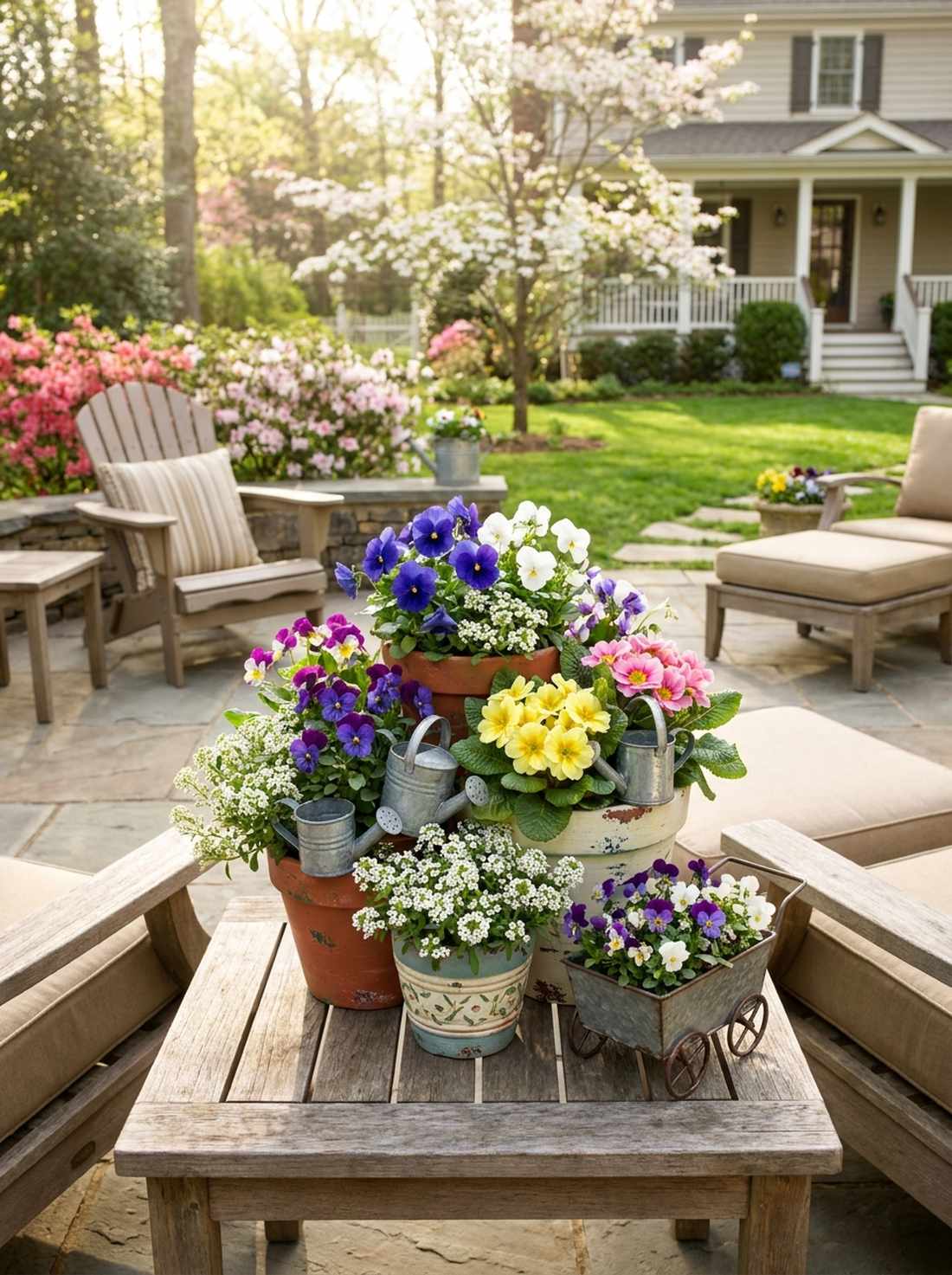
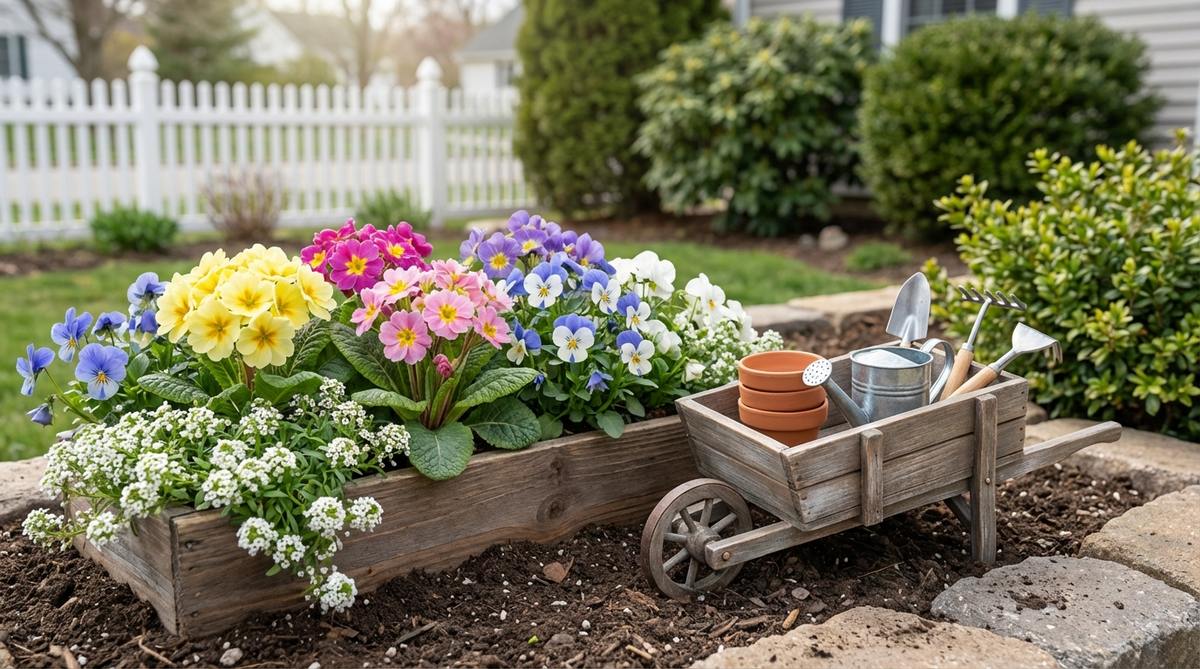
This blooming miniature planter feels wonderfully vibrant, hopeful, and bursting with new life. It is the perfect centerpiece to celebrate Easter or the start of spring.
Clustering colorful micro-blooms produces a lush, florist-quality arrangement that demands attention. Pack the space with alyssum and violas, completing the scene with high-quality miniature garden decoration like tiny metal watering cans.
You can easily pull this off for around $25–$35. Save this to your spring garden prep board!
- Key Materials: Miniature primroses, violas, tiny garden cart
- Vibe / Style: Cheerful spring renewal
- Difficulty: Intermediate (requires frequent watering)
- Budget Breakdown: Flowers: $15 | Spring Accessories: $15
- Creator’s Tip: Keep blooming plants in their original plastic nursery pots and sink them into the soil for easy swapping when blooms fade.
- Smart Sourcing: galvanized miniature watering cans and painted resin flower pot clusters
24. Beach Vacation Paradise
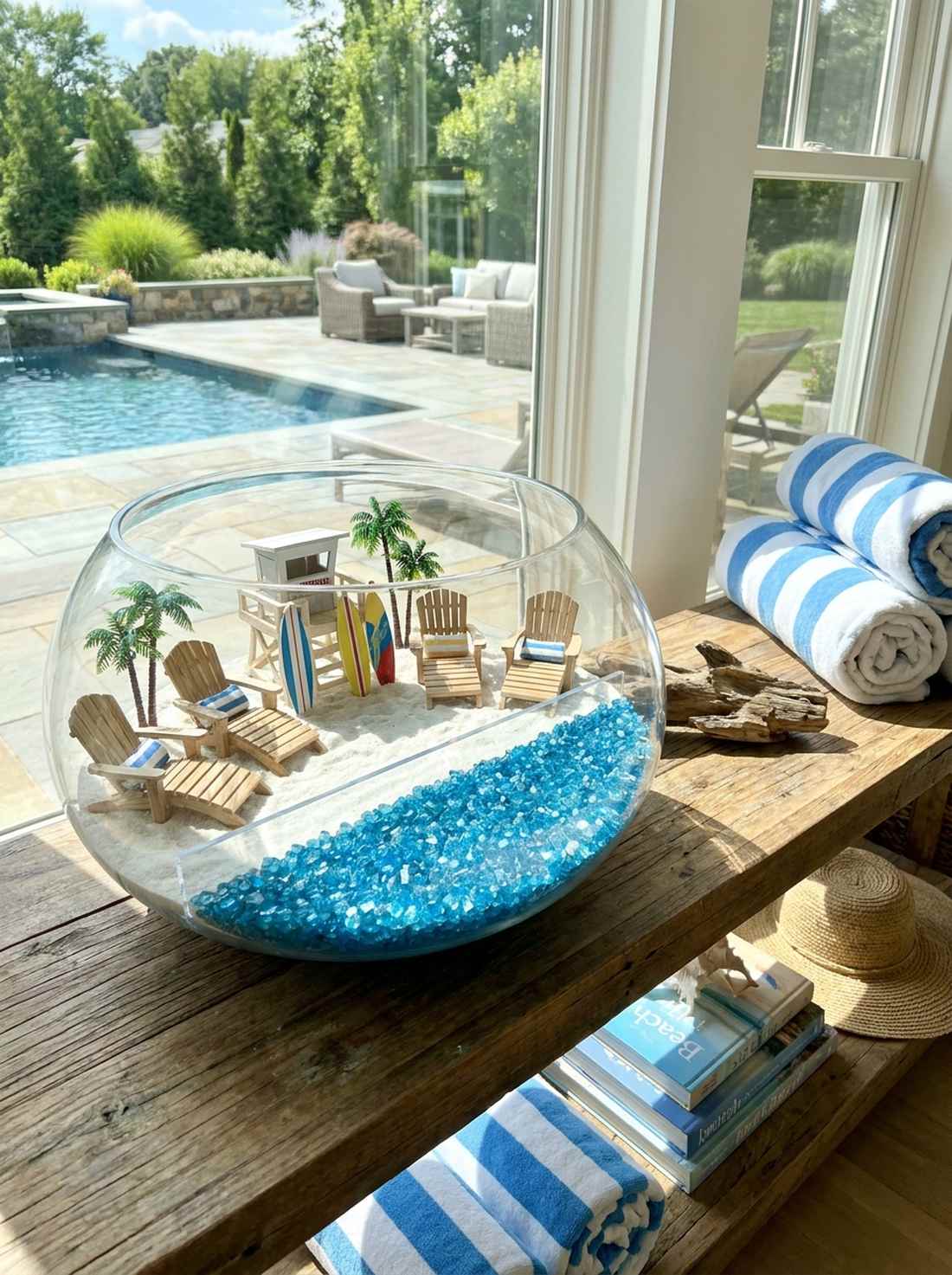
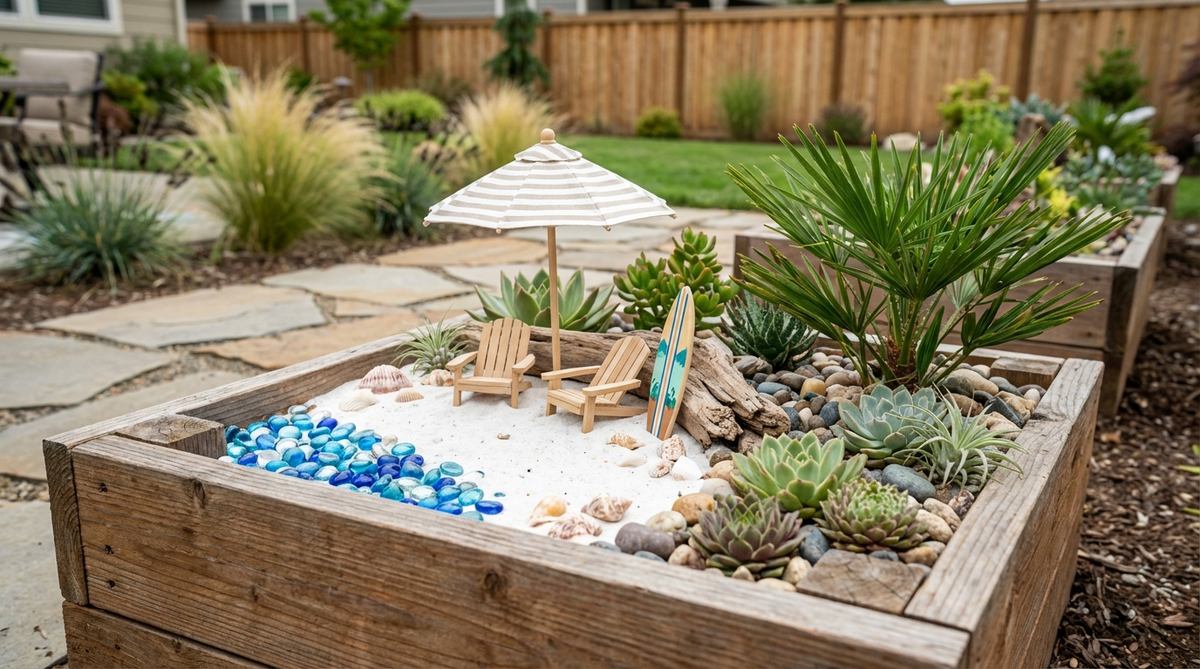
This tropical sand layout feels like the ultimate relaxing summer getaway in a bowl. It works exceptionally well on sunny bathroom counters or pool house shelves.
This sand-heavy design guarantees a flawless aesthetic while remaining virtually impossible to kill. Use blue crushed glass to simulate water alongside bright white sand, anchoring the look with specialized terrarium accessories like tiny surfboards.
You can easily pull this off for around $15–$25. Pin this if you love beach house decor!
- Key Materials: White sand, blue glass beads, tiny lounge chairs
- Vibe / Style: Sunny island resort
- Difficulty: Very easy
- Budget Breakdown: Sand & Glass: $10 | Beach Props: $10
- Creator’s Tip: Use a clear acrylic divider pushed into the base to keep the white sand and blue “water” beads from mixing.
- Smart Sourcing: crushed blue reflective fire glass and miniature wooden beach chair sets
If you think the last idea was good, this next technique is a literal game-changer for outdoor durability.
Material Guide: Cheap vs. Premium Aesthetic
Knowing exactly where to save and where to spend makes all the difference in achieving that “looks expensive but isn’t” vibe in your miniature garden decor.
- Standard vs. UV-Resistant/Premium: Upgrading to UV-resistant resin figures stops fading and breaking, ensuring your miniature garden decoration survives relentless sun exposure.
- Pre-made Kits vs. Sourcing Locally: Investing in comprehensive miniature fairy garden decor starter kits often saves both time and money compared to buying individual pieces at big-box craft stores.
25. Camping Adventure Setup
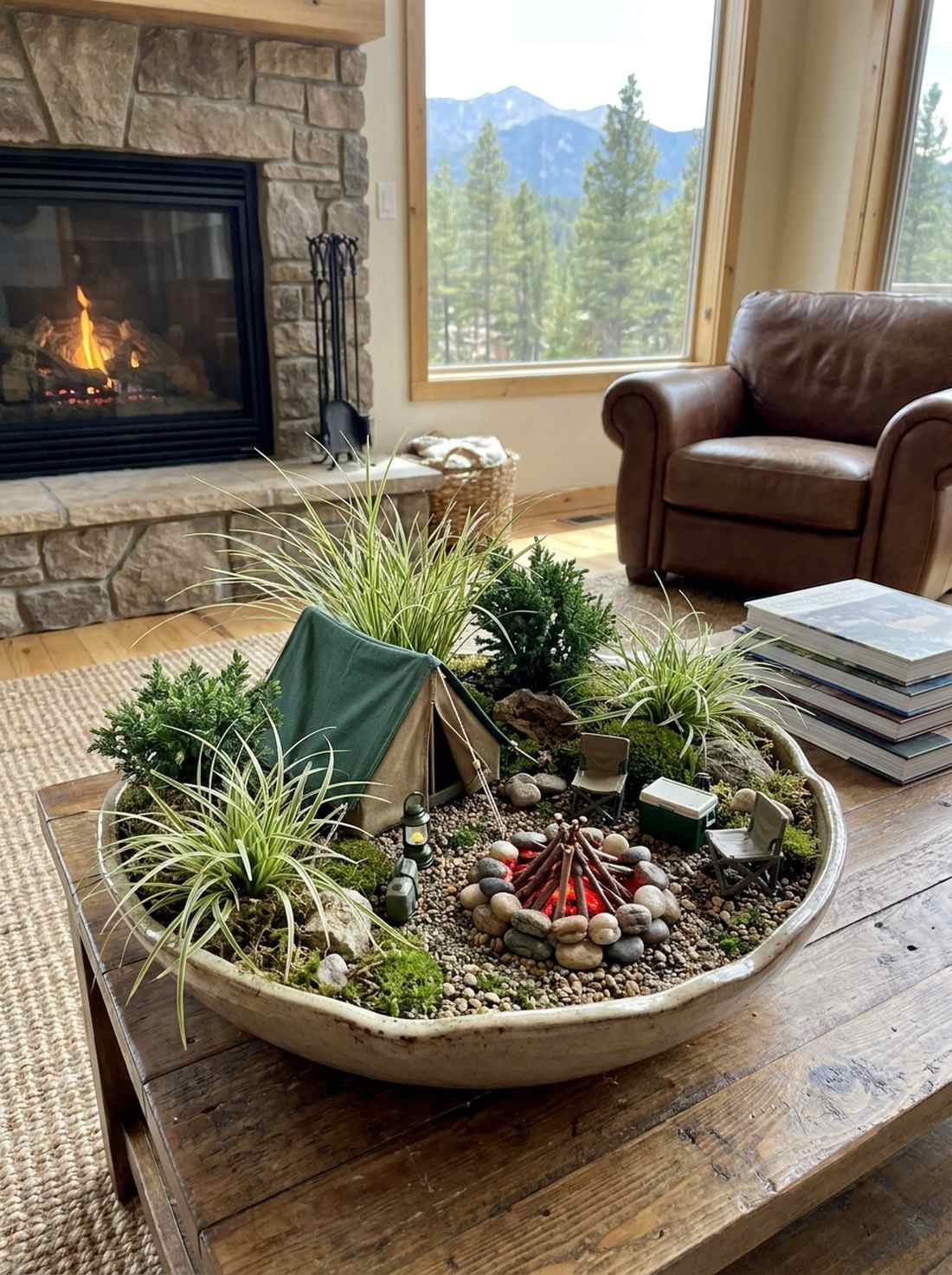
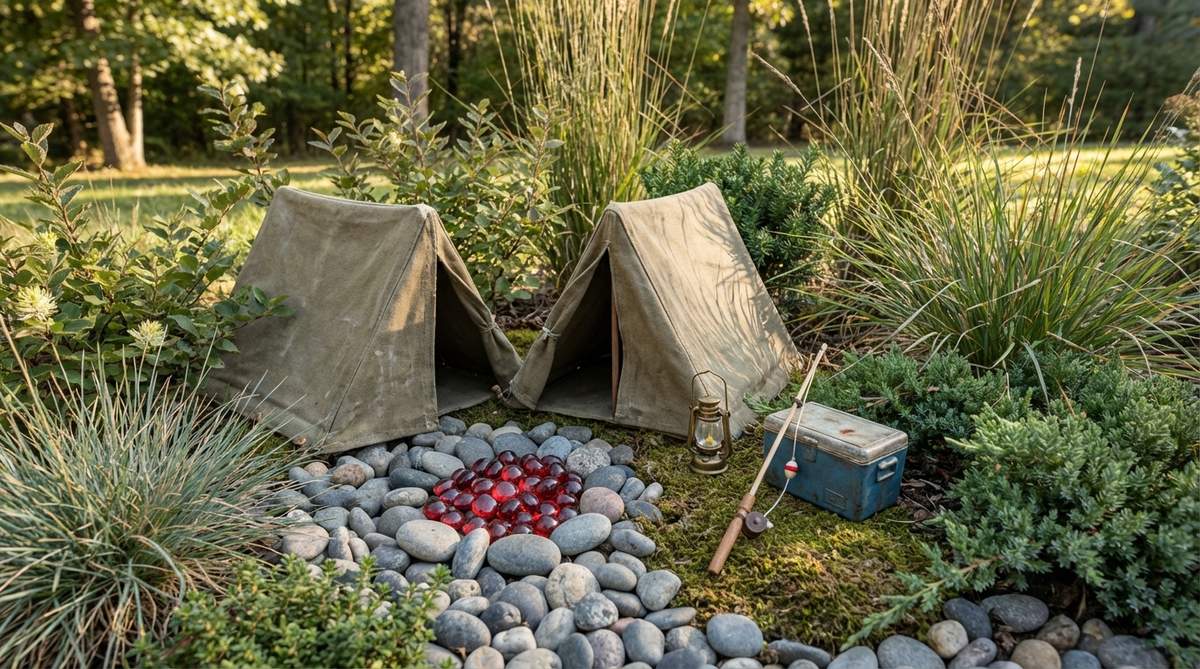
This wilderness diorama planter feels like a rugged, nostalgic weekend trip to the mountains. It is a fantastic conversational piece for a family room or a gift for outdoorsy friends.
Integrating story-driven elements instantly makes your arrangement look custom and highly creative. Place a UV-resistant miniature tent among native-looking grasses, using top-tier miniature garden supplies to build a hyper-realistic tiny campfire ring.
You can easily pull this off for around $20–$35. Save this to your unique gift ideas board!
- Key Materials: Miniature tent, tiny pebbles, grass-like sedges
- Vibe / Style: Wild forest campsite
- Difficulty: Beginner-friendly
- Budget Breakdown: Camper Props: $20 | Plants: $10
- Creator’s Tip: Hide a tiny red LED light under a pile of small twigs and clear red beads to create a “glowing” campfire effect.
- Smart Sourcing: miniature resin camping accessory kits and red transparent glass micro-beads
Water Feature Layouts
Actual or simulated water elements add movement, reflection, and cooling visual effects to miniature gardens. These features become primary focal points that organize surrounding design decisions.
26. Mirror Pond With Bridge
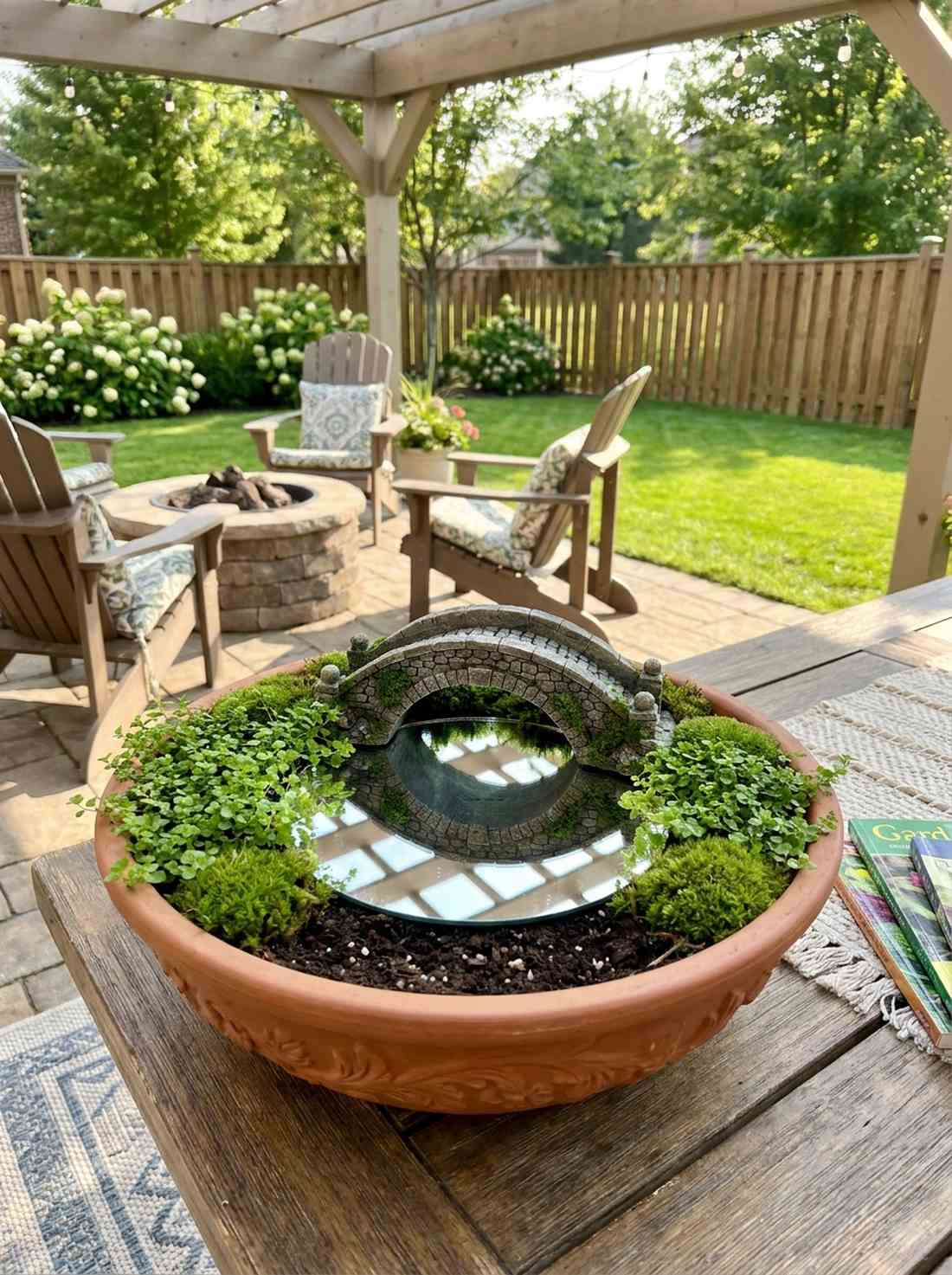
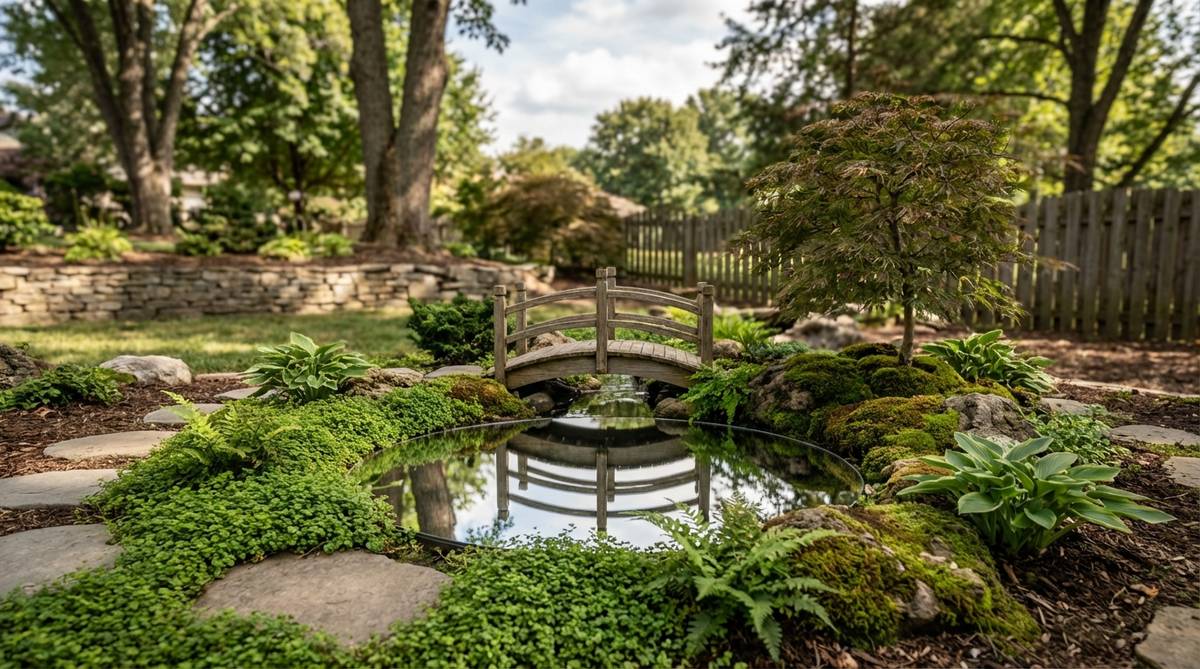
This reflective water illusion feels magically deep and incredibly peaceful. It works exceptionally well in tabletop planters where viewers look down at the display.
Using a mirror is a classic designer trick that drastically multiplies the visual density of your space. Embed a small craft mirror into the soil, hiding the edges with moss and framing it with high-end miniature fairy garden decor bridges.
You can easily pull this off for around $10–$20. Pin this to your clever DIY hacks board immediately!
- Key Materials: Small craft mirror, baby tears plant, arched bridge
- Vibe / Style: Classic English garden pond
- Difficulty: Easy
- Budget Breakdown: Mirror & Bridge: $10 | Plants & Moss: $8
- Creator’s Tip: Paint the back of the mirror with a layer of clear nail polish to prevent the silvering from degrading in wet soil.
- Smart Sourcing: frameless round craft mirrors (multi-pack) and polyresin arched cobblestone bridges
27. Fountain Centerpiece Plaza
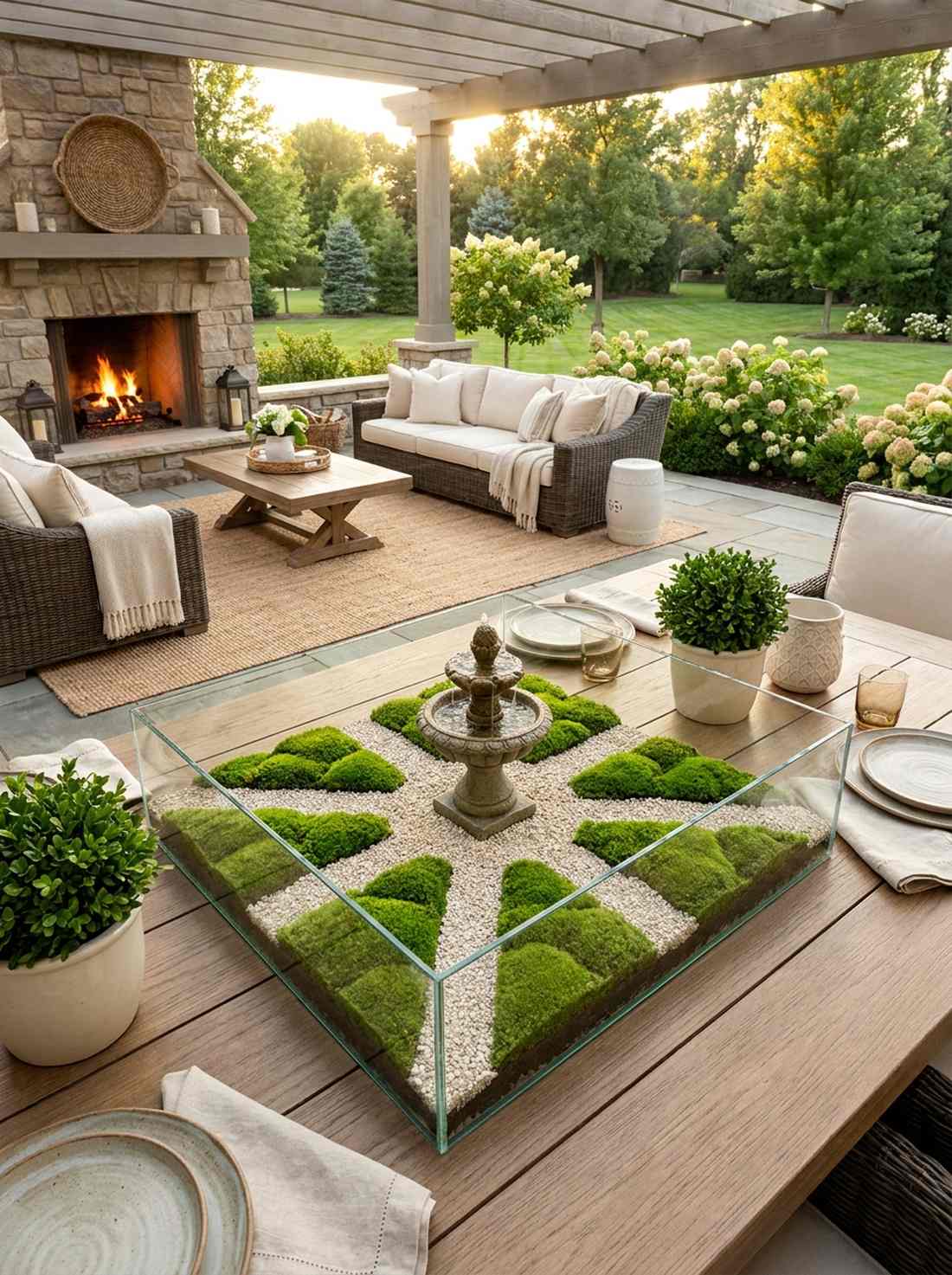
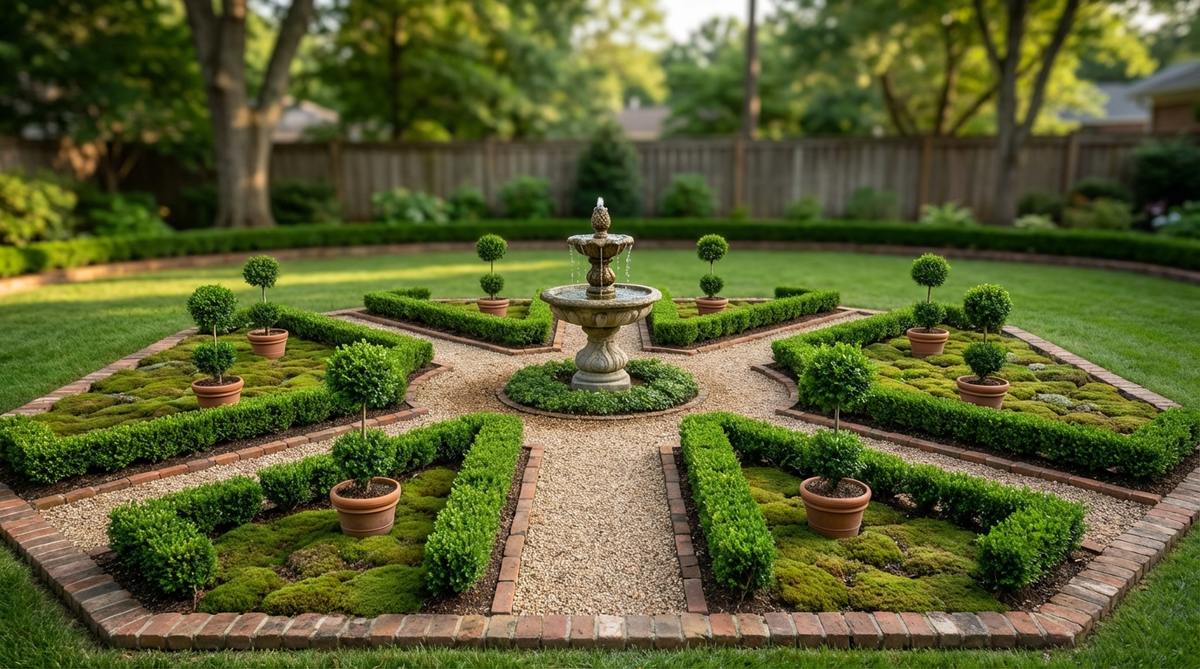
This formal geometric layout feels like a grand European estate scaled down to fit on a table. It is absolutely perfect for elegant patio settings or formal dining rooms.
Embracing strict symmetry creates an undeniable luxury aesthetic. Place a tiered faux fountain dead center, radiating pathways outward using precise, uniform terrarium accessories and manicured moss lawns.
You can easily pull this off for around $25–$45. Save this to your elegant home styling board!
- Key Materials: Miniature fountain, crushed stone paths, tight cushion moss
- Vibe / Style: Grand formal courtyard
- Difficulty: Intermediate (requires precise placement)
- Budget Breakdown: Fountain centerpiece: $15 | Moss & Stone: $15
- Creator’s Tip: Use a compass or circular template to ensure your pathways and plantings are perfectly symmetrical.
- Smart Sourcing: miniature tiered resin fountains and fine crushed limestone top dressing
28. Koi Pond With Glass Gems
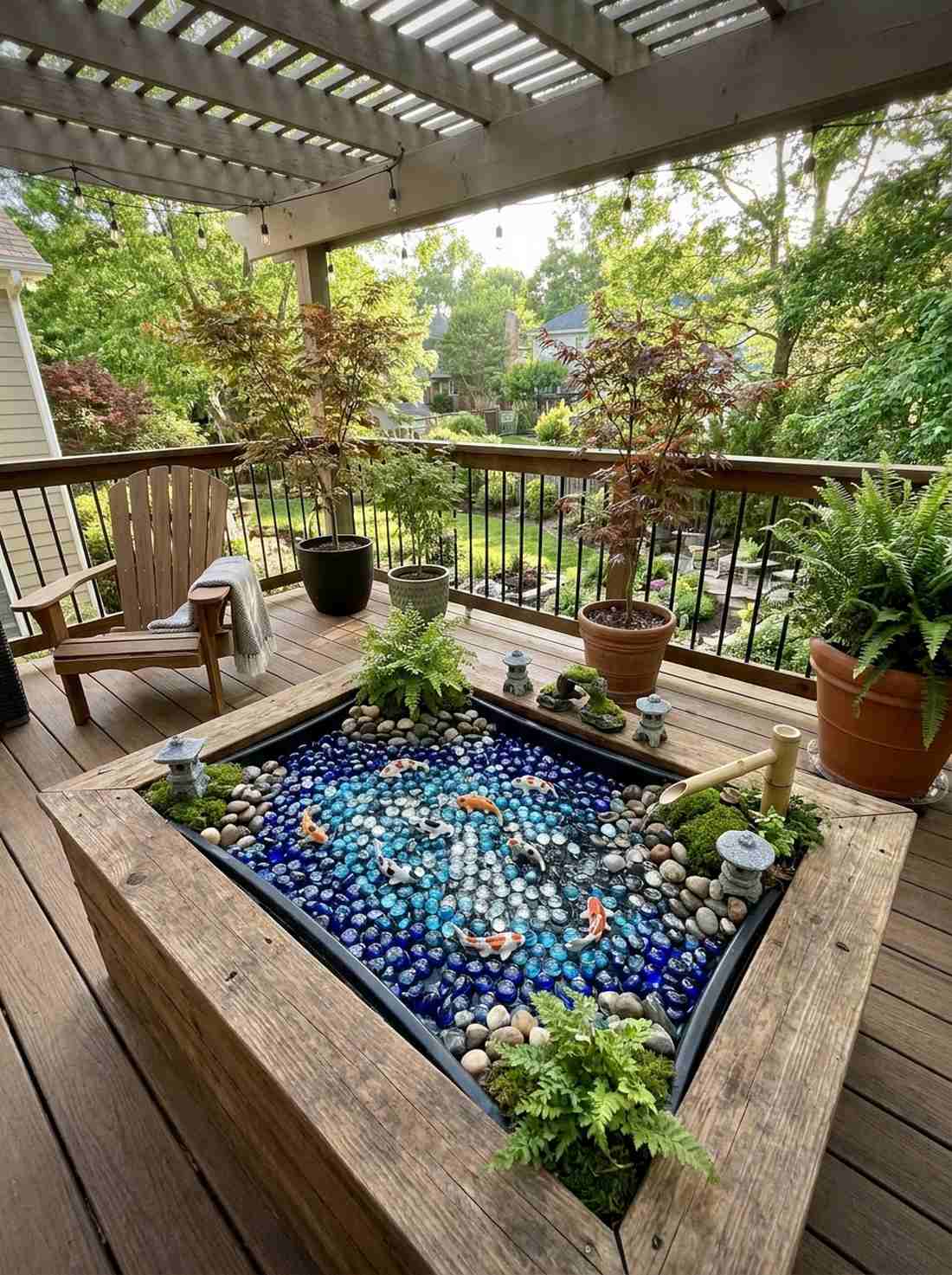
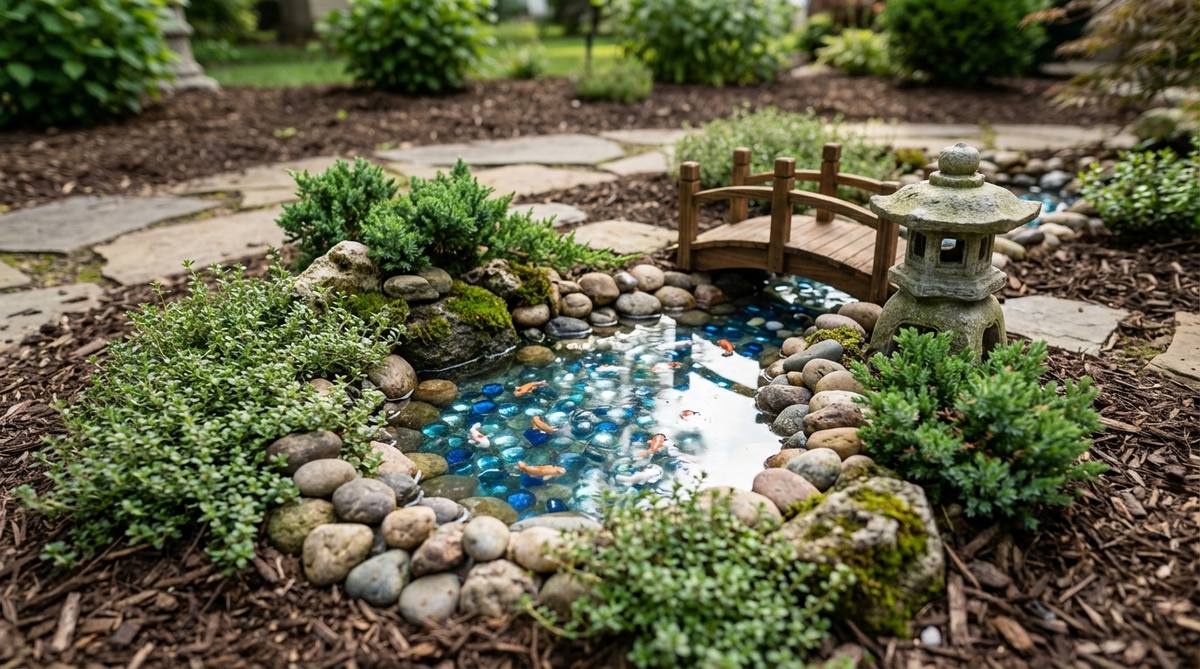
This faux water feature feels like a vibrant, shimmering slice of a Japanese garden. It works exceptionally well as a calming focal point on a shaded balcony.
Simulating deep water with stacked glass generates a mesmerizing 3D effect that looks remarkably expensive. Layer dark blue and clear gems in a depression, tucking in miniature garden decoration like tiny ceramic fish to sell the illusion.
You can easily pull this off for around $20–$35. Pin this if you want the look of a pond without the algae!
- Key Materials: Blue and clear glass gems, miniature koi fish, small rocks
- Vibe / Style: Serene Asian water garden
- Difficulty: Easy
- Budget Breakdown: Glass Gems & Fish: $15 | Hardscape: $10
- Creator’s Tip: Paint the bottom of the “pond” area black before adding the glass gems to give the illusion of infinite depth.
- Smart Sourcing: flat marble glass gems (mixed blues) and micro-painted resin koi fish figures
29. Waterfall Rock Formation
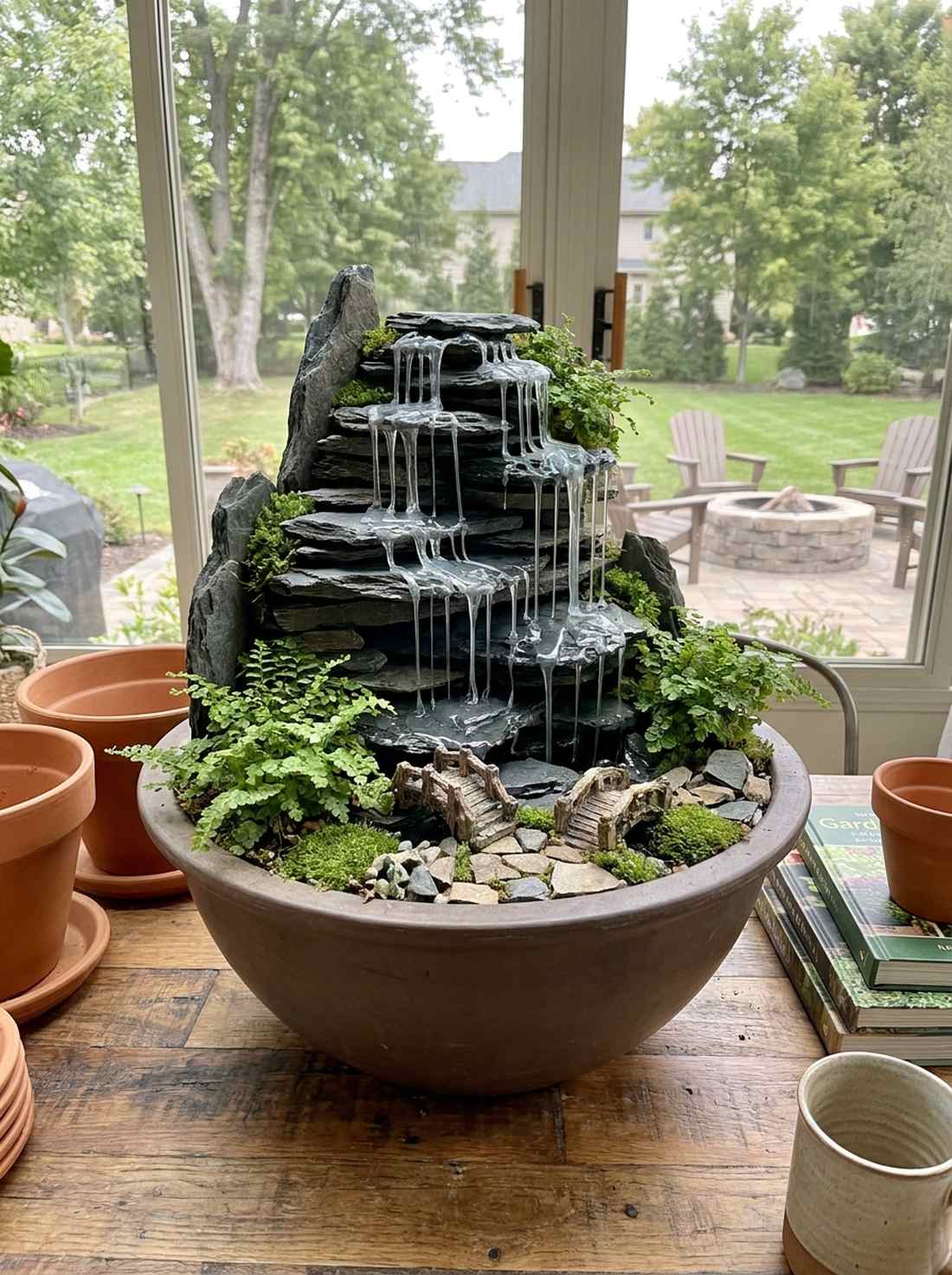
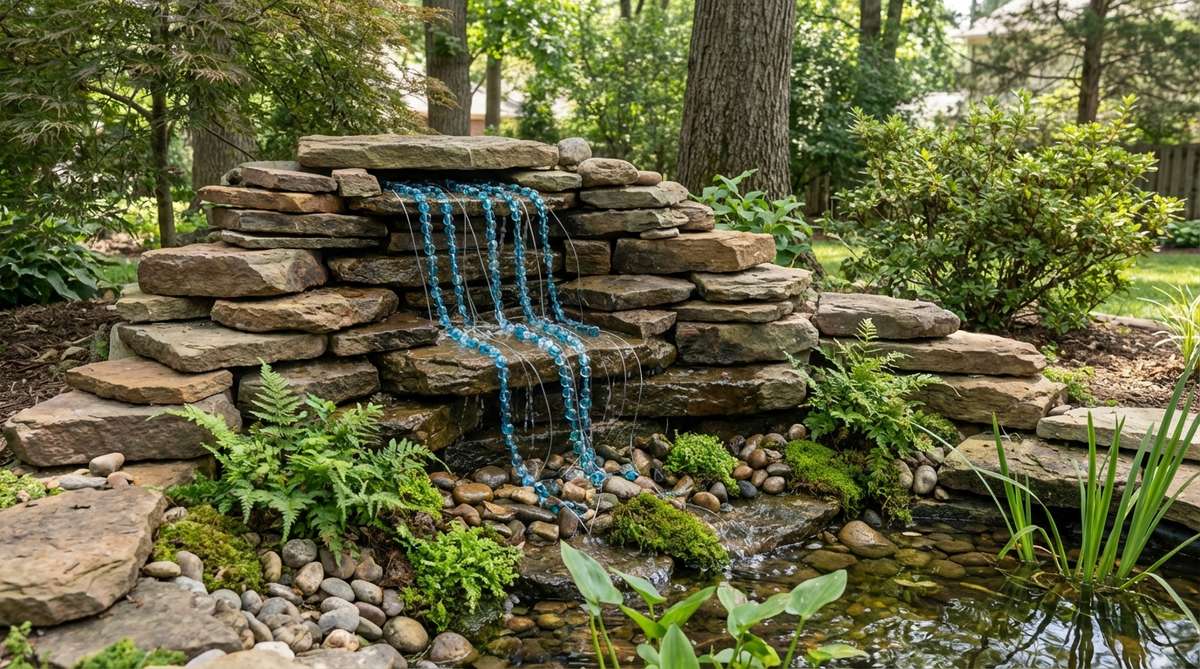
This vertical aquatic illusion feels incredibly dynamic and full of life. It is perfect for adding height and drama to deep, bowl-style planters.
Building vertical water features completely transforms flat, boring soil beds. Stack flat slate pieces and drape strands of clear hot glue or fishing line down the rocks, complementing it with premium fairy garden kits.
You can easily pull this off for around $20–$40. Save this to your advanced terrarium layout board!
- Key Materials: Flat slate stones, hot glue strands/beads, creeping ferns
- Vibe / Style: Majestic mountain falls
- Difficulty: Advanced
- Budget Breakdown: Slate: $15 | Materials & Plants: $15
- Creator’s Tip: Pipe hot glue onto a non-stick silicone mat in long, wavy strands, let them cool, and peel them off to create perfect “falling water”.
- Smart Sourcing: natural flat slate aquascaping stones and miniature woodland fern assortments
Don’t scroll past this next one—it’s the absolute highest-rated layout for stunning water illusions.
30. Creek With Stepping Stones
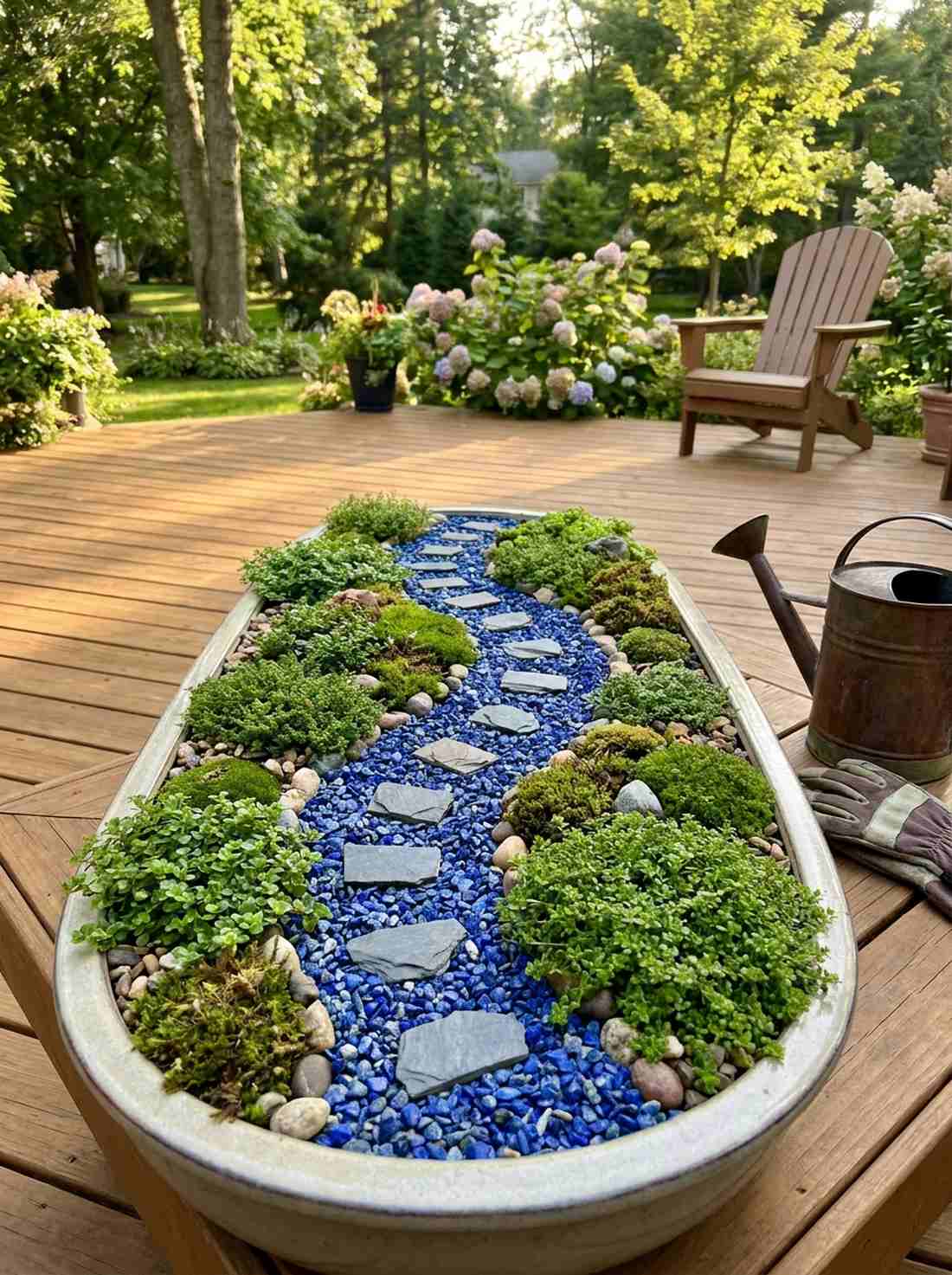
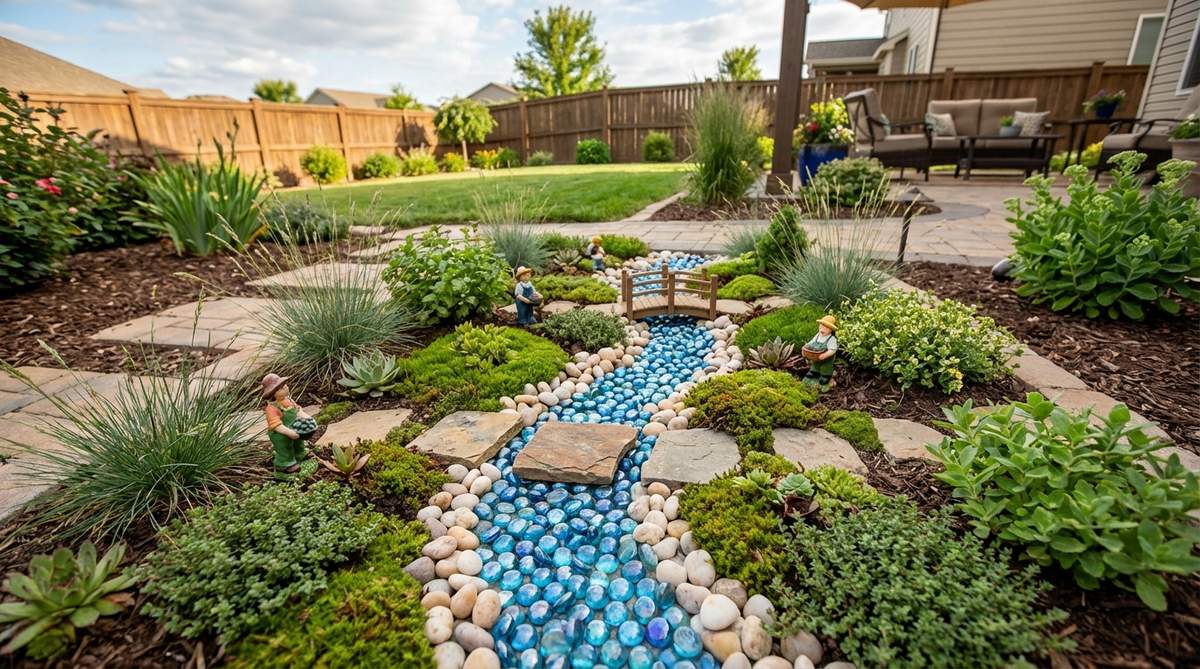
This meandering river design feels like a hidden pathway begging to be explored. It works exceptionally well in long, oval-shaped containers.
Curving lines pull the eye completely through the arrangement, resulting in a masterful, professional flow. Create a winding riverbed with blue beads, breaking it up with flat stone miniature garden supplies for a realistic crossing.
You can easily pull this off for around $15–$30. Pin this to your landscape design tips board right now!
- Key Materials: Blue gravel, flat stepping stones, low ground cover
- Vibe / Style: Enchanted woodland stream
- Difficulty: Beginner-friendly
- Budget Breakdown: River Materials: $10 | Plants: $15
- Creator’s Tip: Sink the stepping stones slightly below the level of the surrounding moss so they look settled and aged into the terrain.
- Smart Sourcing: crushed lapis lazuli craft gravel and miniature flat slate stepping stones
Vertical & Hanging Gardens
Elevated and suspended miniature gardens expand design possibilities beyond tabletop surfaces. These approaches maximize space usage and create opportunities for cascading plant forms.
31. Hanging Colander Cascade
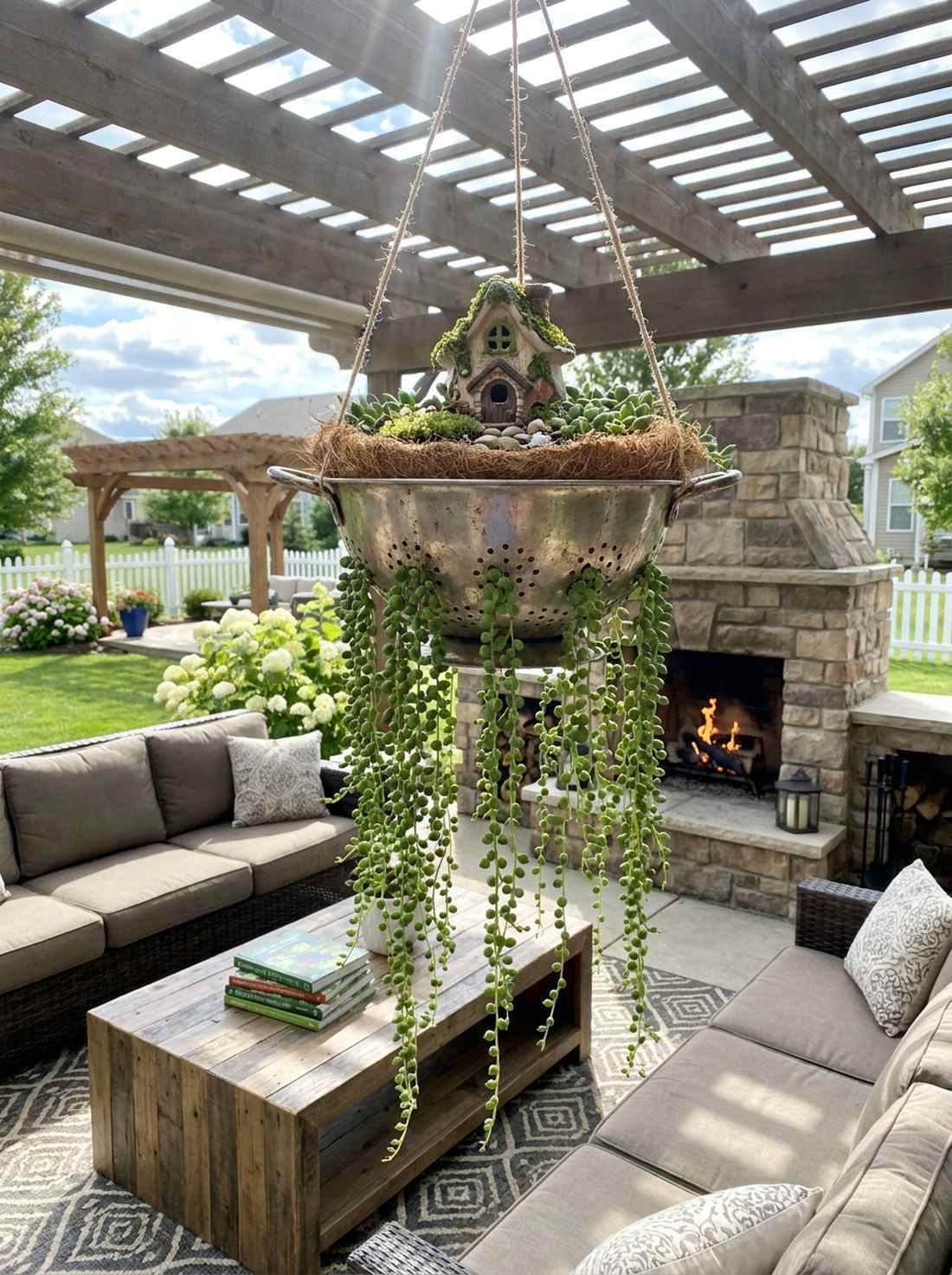
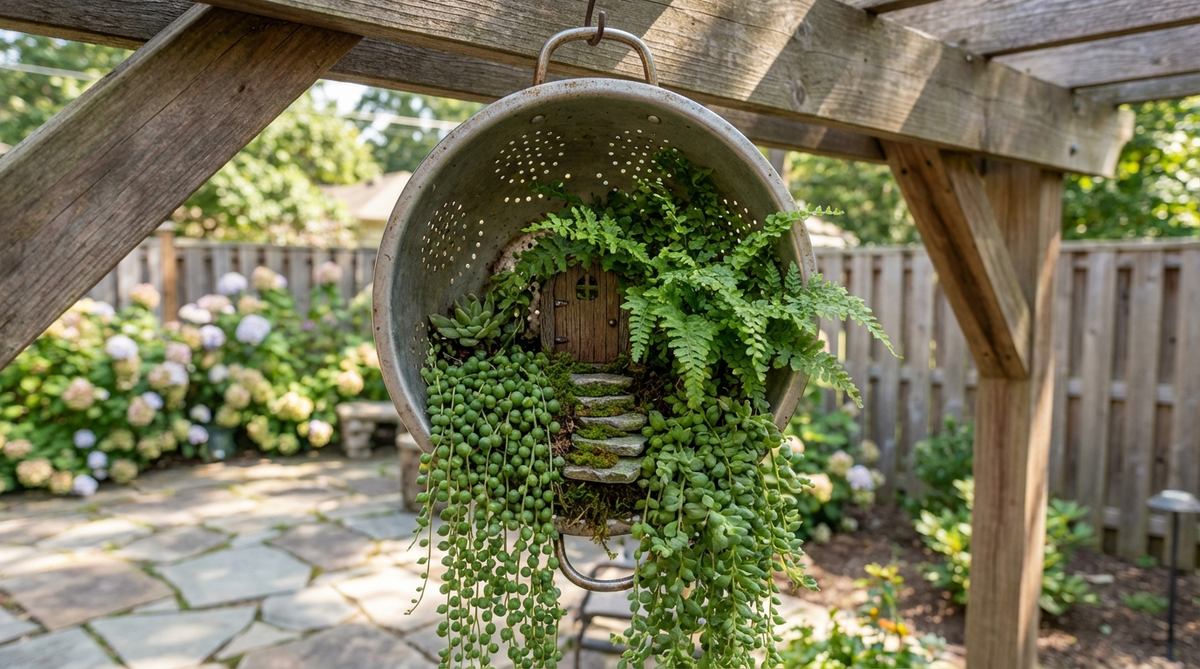
This suspended trailing planter feels incredibly whimsical and completely out of the box. It works exceptionally well hanging near bright kitchen windows or covered patios.
Repurposing household items delivers a striking vintage aesthetic for pennies. Line a metal colander, let string of pearls cascade through the holes, and nestle UV-resistant miniature garden decoration in the top center.
You can easily pull this off for around $20–$35. Save this to your upcycled garden projects board!
- Key Materials: Vintage metal colander, trailing succulents, small fairy house
- Vibe / Style: Quirky floating island
- Difficulty: Intermediate
- Budget Breakdown: Thrifted Colander: $5 | Plants & Accents: $20
- Creator’s Tip: Line the colander with a thin layer of coco coir liner before adding soil to prevent dirt from washing out of the holes.
- Smart Sourcing: pre-molded coco coir planter liners and live string of pearls starter plants
32. Wall-Mounted Shadow Box Garden
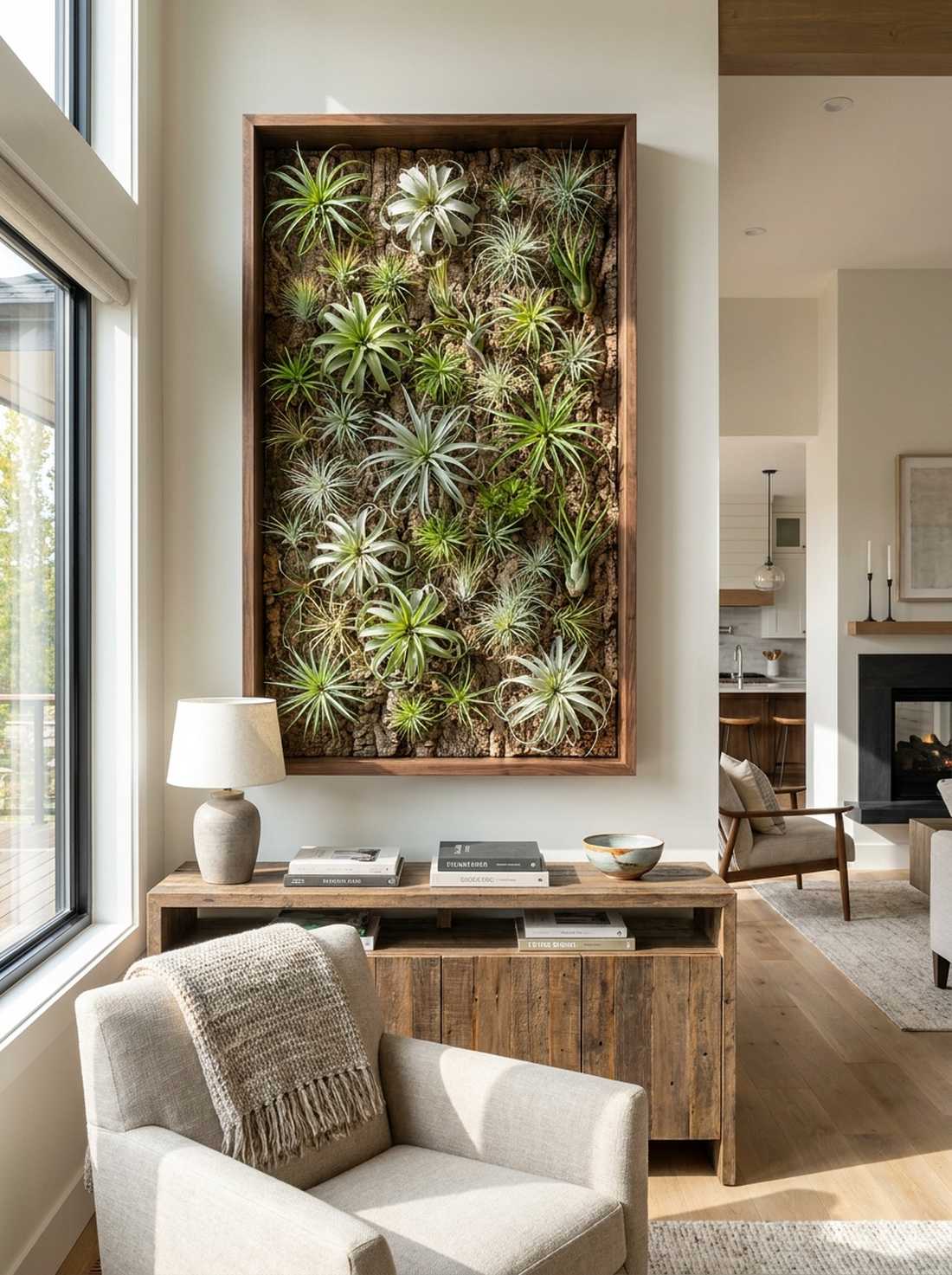
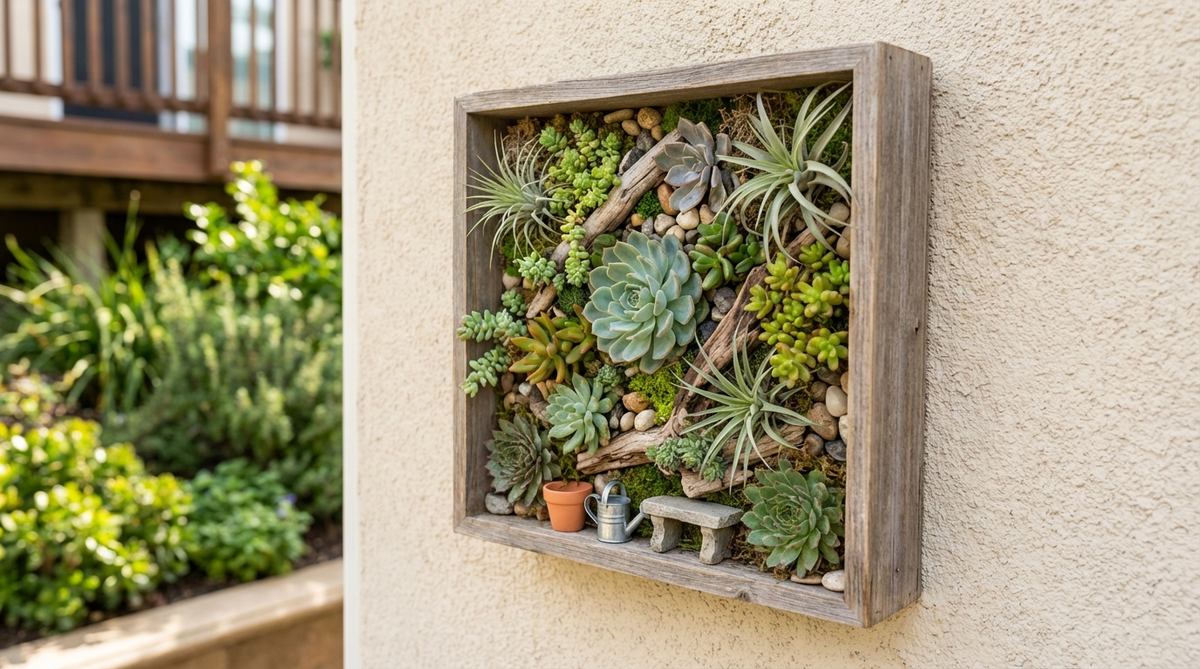
This vertical living art piece feels like a museum-quality display of pure nature. It is absolutely perfect for small apartments or office walls where floor space is limited.
Framing your layout on a wall instantly commands attention and screams high-end decor. Waterproof a deep shadow box, pack it densely with air plants, and pin lightweight terrarium accessories into the backing.
You can easily pull this off for around $35–$60. Pin this to your vertical gardening inspiration board!
- Key Materials: Deep shadow box, waterproof liner, air plants (Tillandsia)
- Vibe / Style: Modern living gallery
- Difficulty: Advanced
- Budget Breakdown: Frame & Liner: $25 | Plants: $25
- Creator’s Tip: Do not use soil. Attach air plants directly to a cork backing using wire—you only need to mist them weekly.
- Smart Sourcing: thick cork bark background panels and assorted Tillandsia air plant bundles
33. Tiered Stand Village Levels
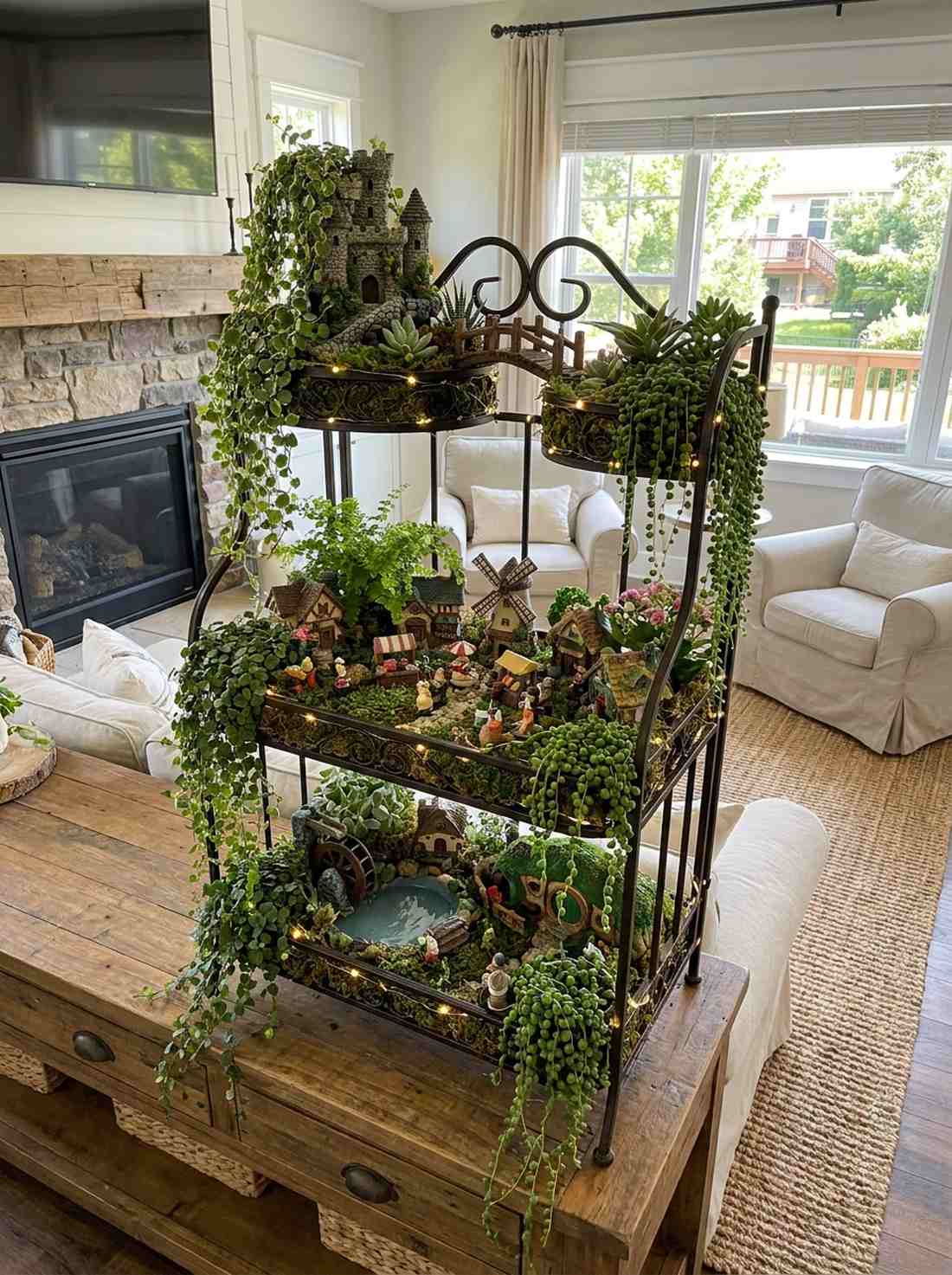
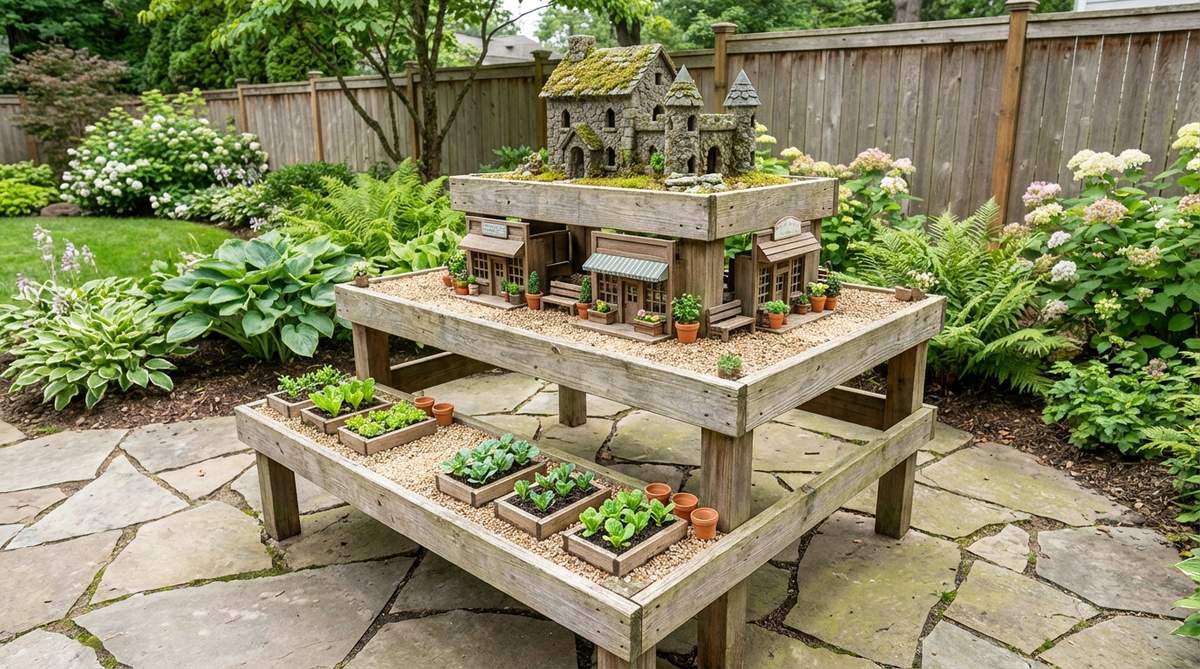
This multi-level architectural display feels like a sprawling, majestic kingdom in a surprisingly small footprint. It works exceptionally well in empty room corners or on entryway tables.
Stacking elevations is the ultimate secret to maximizing impact without cluttering your room. Dedicate each tier of a metal plant stand to a different theme, using cohesive fairy garden kits to tie the whole vertical tower together.
You can easily pull this off for around $50–$80. Save this if you’re ready to build a masterpiece!
- Key Materials: 3-tier metal stand, varied trailing plants, thematic building sets
- Vibe / Style: Epic multi-level kingdom
- Difficulty: Advanced (large scale)
- Budget Breakdown: Tiered Stand: $30 | Plants & Buildings: $40
- Creator’s Tip: Use heavily trailing plants on the upper tiers to physically bridge the gap between levels and unify the design.
- Smart Sourcing: multi-tiered wire plant stands and comprehensive miniature village starter kits
Final Thoughts On Miniature Garden Layouts
Successful miniature garden decor balances scale, theme, and spatial organization to create cohesive living landscapes within confined containers. Start with a clear vision—whether woodland retreat, architectural village, or seasonal celebration—then select plants and accessories that support that specific narrative. Layer your design with foreground, middle ground, and background elements to establish depth, and maintain consistent proportions so each component relates harmoniously to the whole. Experiment with different containers and themes to discover which layouts resonate with your personal aesthetic and maintenance preferences, knowing that miniature gardens remain flexible projects you can refresh seasonally or redesign completely as your skills develop.
Frequently Asked Questions
What is the real cost to recreate these setups?
Most basic miniature garden decoration setups can be completed for $15 to $35 if you smartly repurpose containers and use basic craft materials. However, investing in UV-resistant starter kits and comprehensive miniature fairy garden decor bundles often saves money in the long run because the pieces will not rot, fade, or break after one season of watering.
Where is the best place to use these layouts?
It completely depends on the build. Open, soil-heavy containers thrive on shaded patios, balconies, and bright windowsills. Closed terrariums using high-end terrarium accessories are perfect for low-light indoor spaces like bathrooms or office desks. Always match the layout’s sunlight and drainage needs to the specific room or outdoor space you want to decorate.
How do I prevent miniature garden plants from outgrowing the design?
Select naturally compact varieties like miniature ferns, slow-growing succulents, cushion moss, and dwarf cultivars specifically bred for small spaces. Trim plants regularly to maintain scale, removing new growth before it disrupts proportions. Root pruning every 12-18 months keeps plants contained without requiring transplanting.
Can miniature fairy gardens survive outdoors year-round?
Outdoor miniature gardens succeed when you choose weather-resistant miniature garden supplies and cold-hardy plants appropriate to your climate zone. Select resin or stone accessories rather than wood or fabric that degrades in moisture. Ensure containers have drainage holes to prevent ice damage, and position gardens in locations protected from extreme temperature swings.