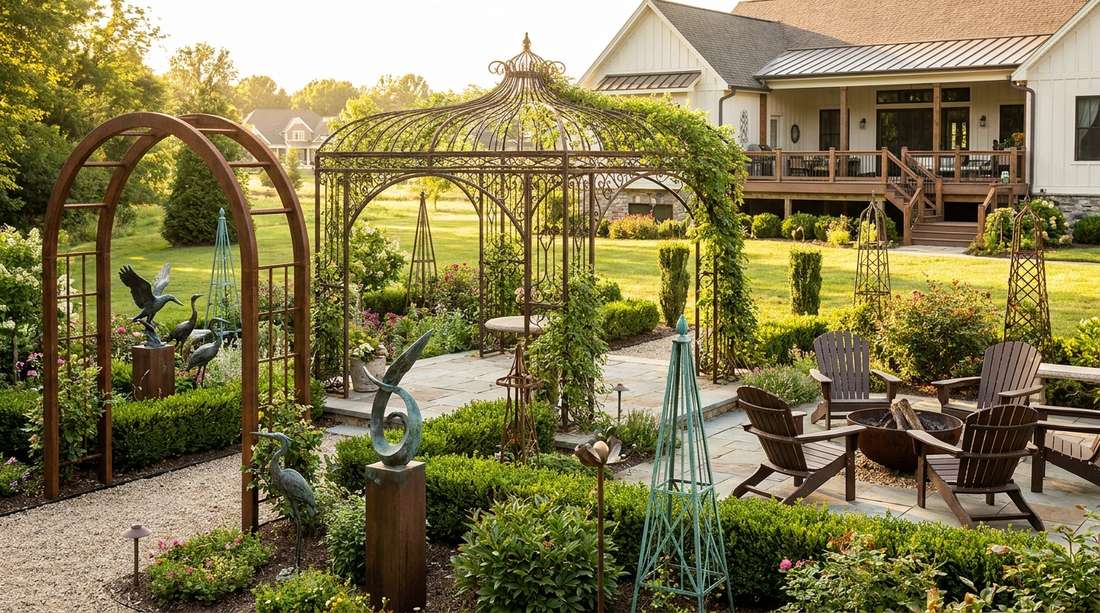
Imagine taking a simple garden space and turning it into a detailed, hyper-realistic sanctuary that feels alive and impossible to ignore. In this guide, you’ll find realistic cost estimates, material options, and smart sourcing ideas to help you build these garden decor metal setups without overspending. The best part? Many of these use surprisingly cheap components but deliver a completely high-end, architectural result.
Design Snapshot Key Principles
- Material Selection: Iron provides classic weight, steel delivers modern strength, and bronze develops rich, high-end patinas over time.
- Finish Durability: Galvanized coatings and UV-protected powder finishes ensure your metal pieces survive the harshest outdoor climates.
- Structural Balance: Proportion is everything—use oversized pieces to anchor massive yards, and delicate rust-resistant forms for intimate balcony setups.
- Integration Method: Anchor freestanding structures securely with commercial-grade footings to prevent wind damage and ensure lasting ROI.
Architectural Garden Frameworks
1. Steel Arched Pergola with Powder Coating
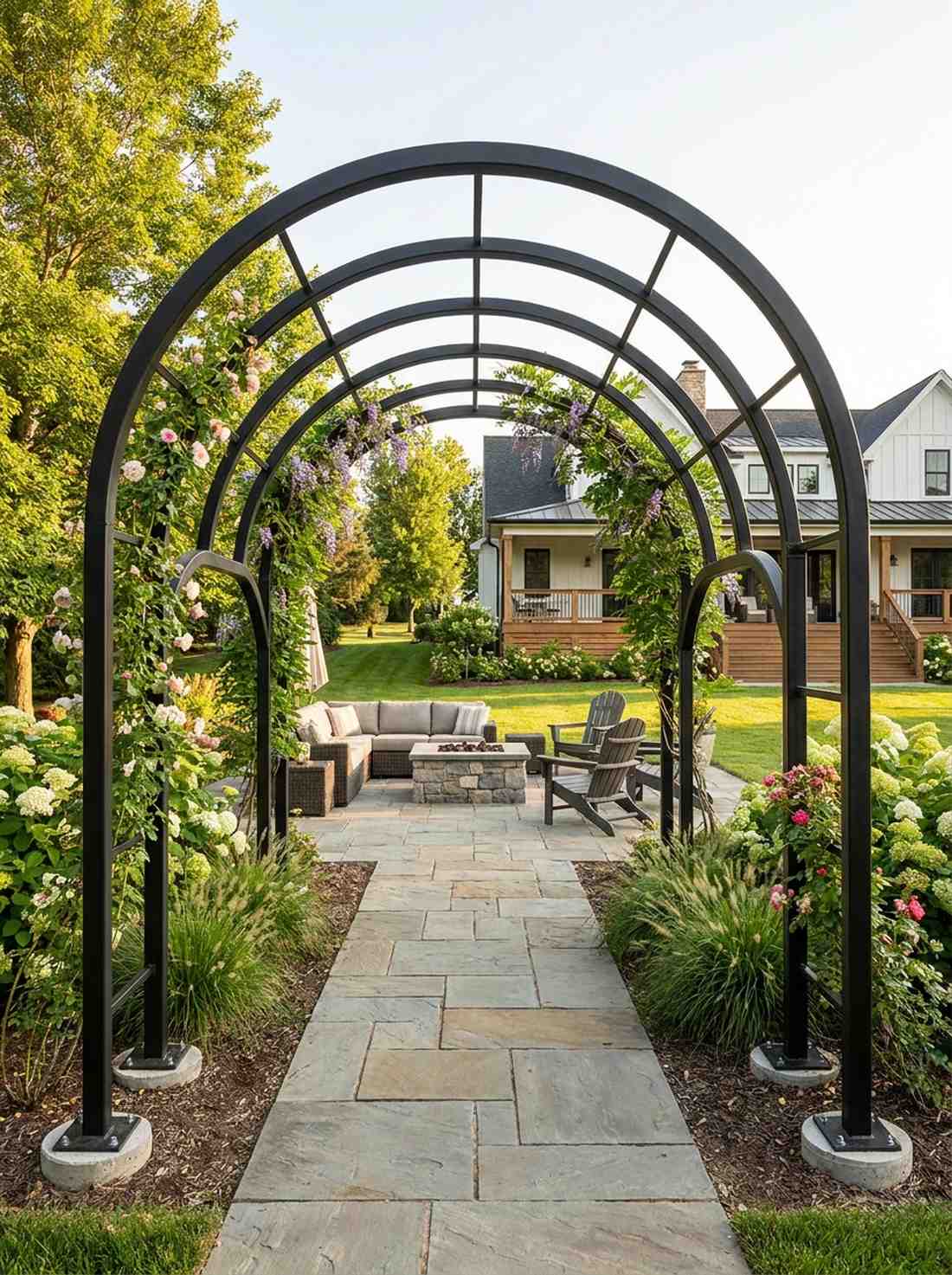
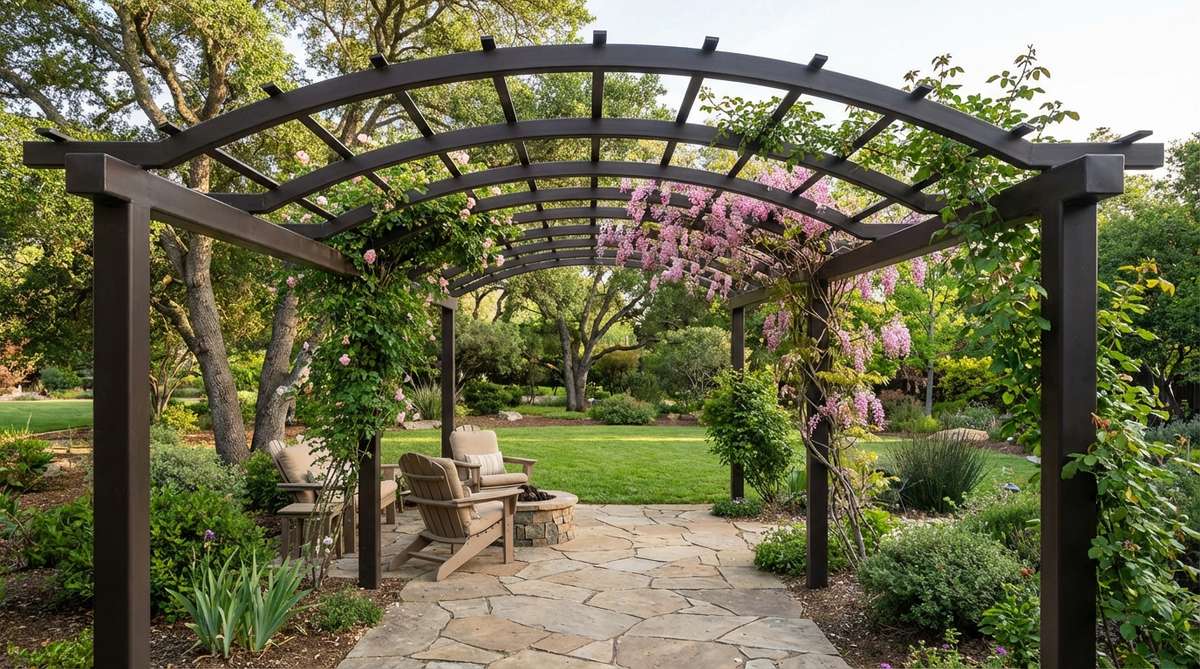
Feels like a majestic gateway straight out of a royal estate. This large metal garden structure works exceptionally well for framing a shaded patio or defining a long pathway transition.
Many assume you need an expensive contractor to achieve this, but a premium bolt-together kit delivers a surprisingly designer-level finish. By opting for UV-coated steel garden accents over basic painted metal, you avoid peeling and fading entirely.
You can easily pull this off for around $150–$350 depending on the arch span. Pin this to your backyard makeover board if you’re planning a major structural upgrade!
- Key Materials: Heavy-gauge arched steel tubes, masonry anchors, climbing vine ties.
- Vibe / Style: Grand architectural elegance.
- Difficulty: Moderate weekend DIY project.
- Budget Breakdown: Arch Kit: $180 | Concrete Anchors: $25.
- Creator’s Tip: Sink the base plates into concrete rather than just soil to prevent shifting during high winds.
- Smart Sourcing: rust-proof powder-coated steel pergola kits, heavy-duty concrete anchoring hardware packs.
2. Wrought Iron Gazebo Frame
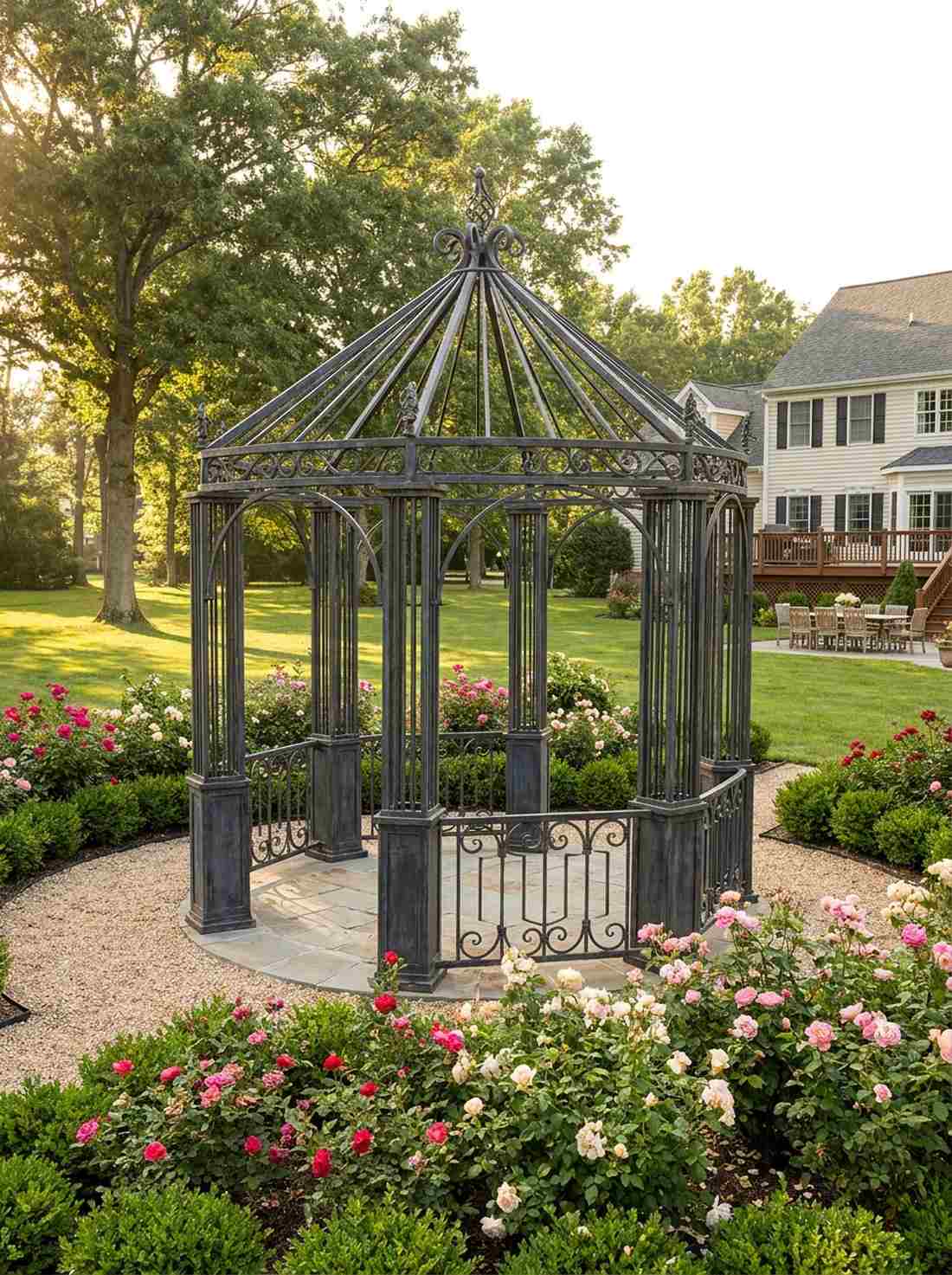
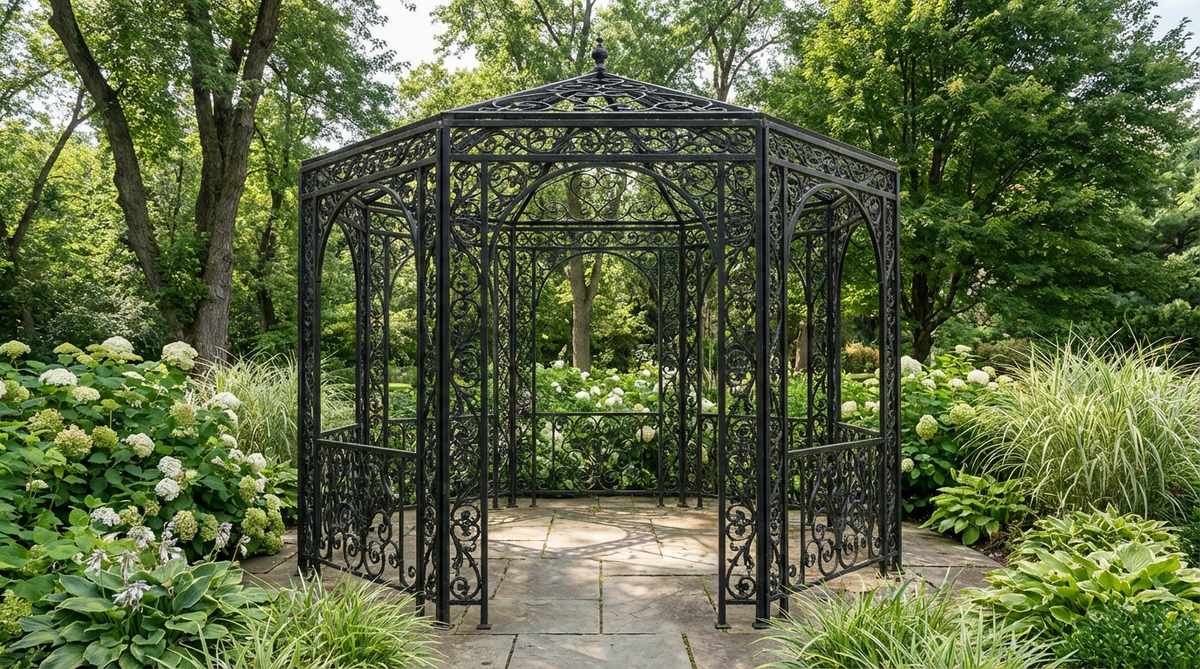
Straight out of a Victorian romance novel. This wrought iron garden decoration serves as an incredible focal point, perfect for the center of an open lawn or a large rose garden.
While custom ironwork costs thousands, utilizing pre-fabricated modular iron panels looks far more expensive than it is. Investing in legitimate heavy-duty garden pavilion kits ensures you get that authentic, solid-metal look instead of flimsy aluminum.
Expect to invest around $300–$600 for a solid base kit. Save this to your dream garden board for your ultimate landscape planning!
- Key Materials: Cast iron frame sections, rust-converter primer, hex-bolt fasteners.
- Vibe / Style: Vintage European estate.
- Difficulty: Advanced (Requires 2-3 people).
- Budget Breakdown: Gazebo Frame: $450 | Rust Protection: $40.
- Creator’s Tip: Spray all joint connections with clear enamel sealant before assembly to block hidden rust.
- Smart Sourcing: cast iron gazebo starter kits, marine-grade clear anti-rust spray.
3. Flat-Top Steel Pergola with Cross Beams
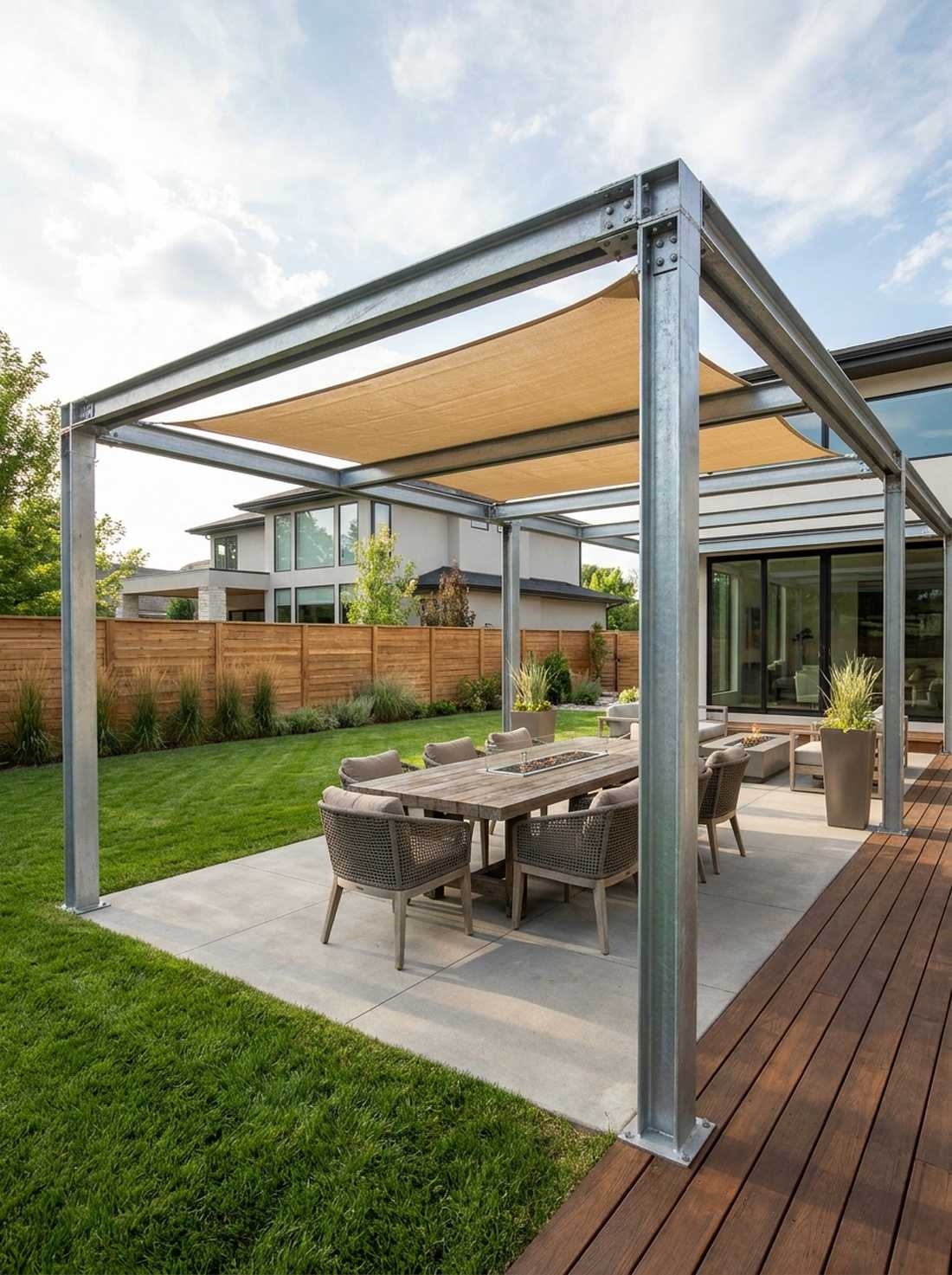
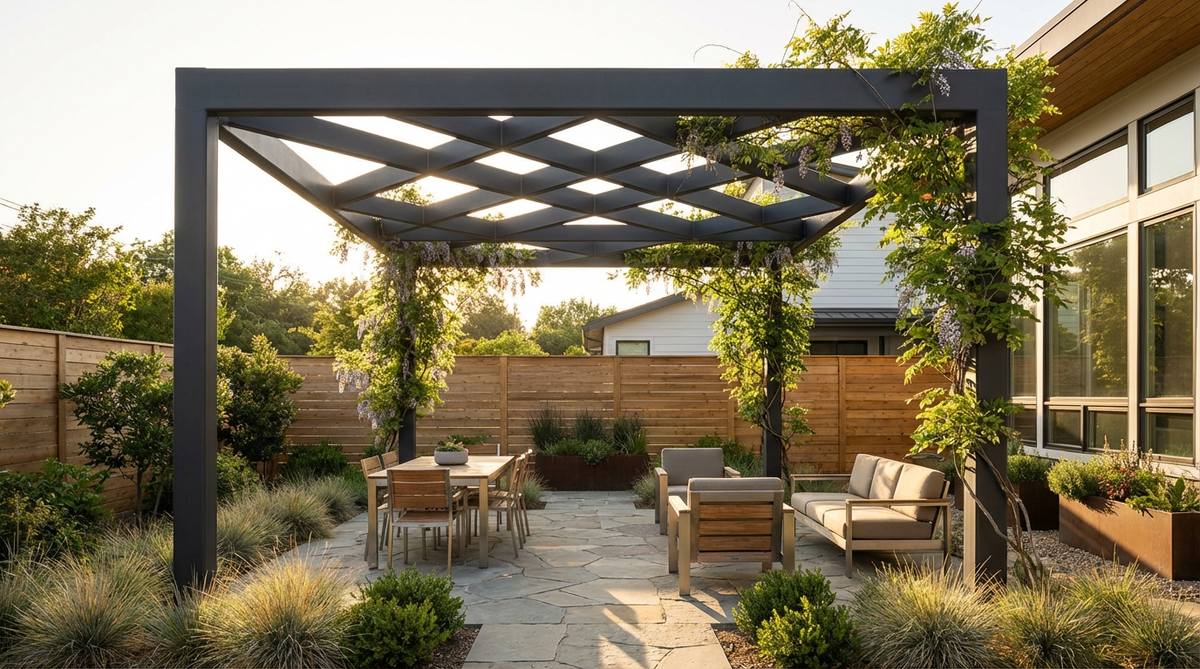
Delivers a sleek, geometric profile that feels incredibly modern. This contemporary metal garden accent works exceptionally well for urban terraces or minimalist courtyard dining spaces.
Most modern patio setups look sterile, but this layout instantly upgrades an ordinary yard into a bespoke architectural space. Seamlessly integrating commercial-grade steel garden structures with warm wood furniture creates a stunning high-contrast aesthetic.
You can easily pull this off for around $250–$500. Pin this if you’re obsessing over modern outdoor living spaces!
- Key Materials: Galvanized steel beams, corner bracket systems, shade sails.
- Vibe / Style: Minimalist urban chic.
- Difficulty: Moderate DIY setup.
- Budget Breakdown: Steel Beams: $300 | Hardware: $50.
- Creator’s Tip: Use hot-dip galvanized parts to ensure zero rust stains drip onto your patio below.
- Smart Sourcing: modular steel pergola bracket kits, pre-cut galvanized steel tubing.
4. Iron Garden Arbor with Gate
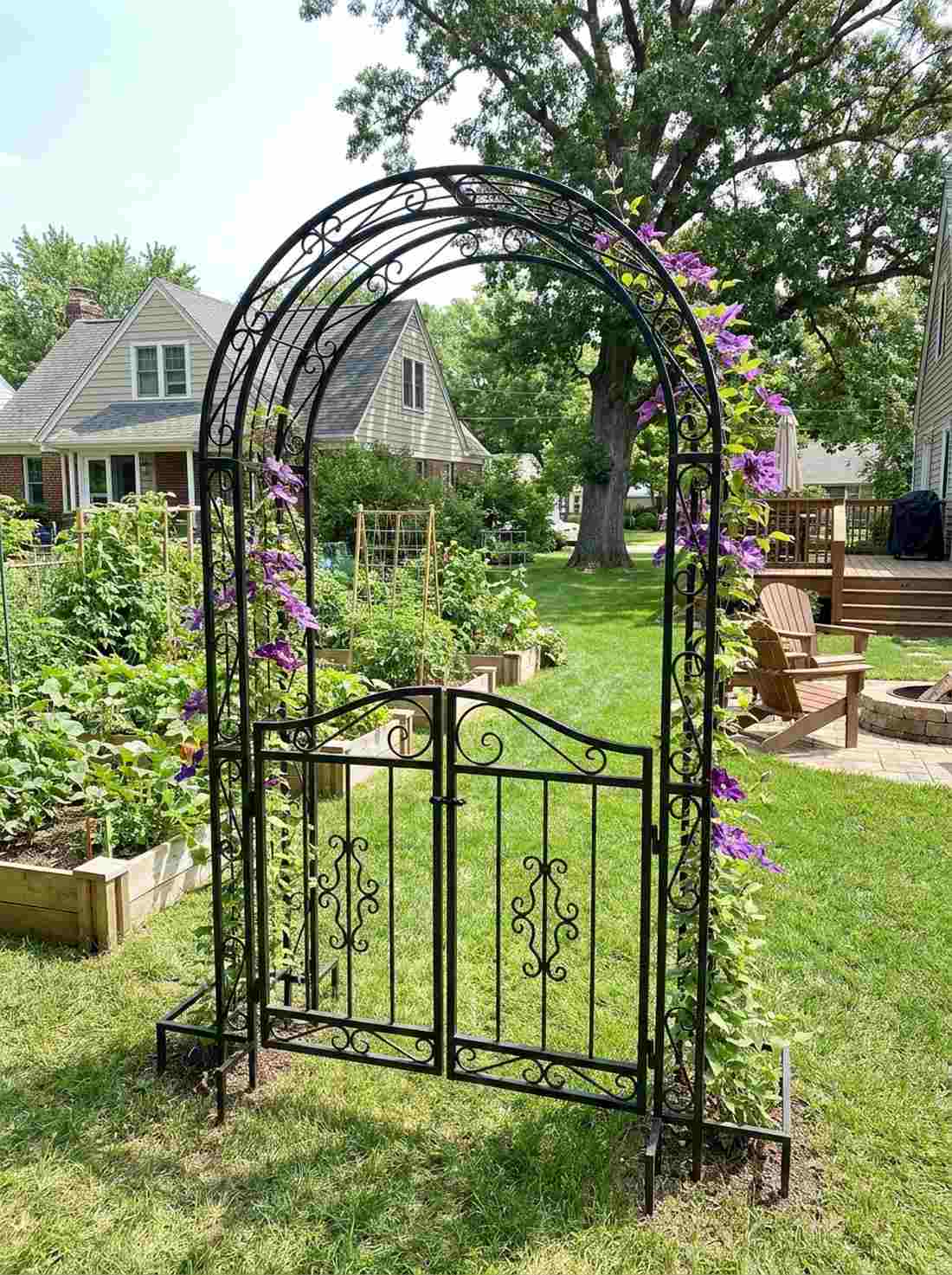
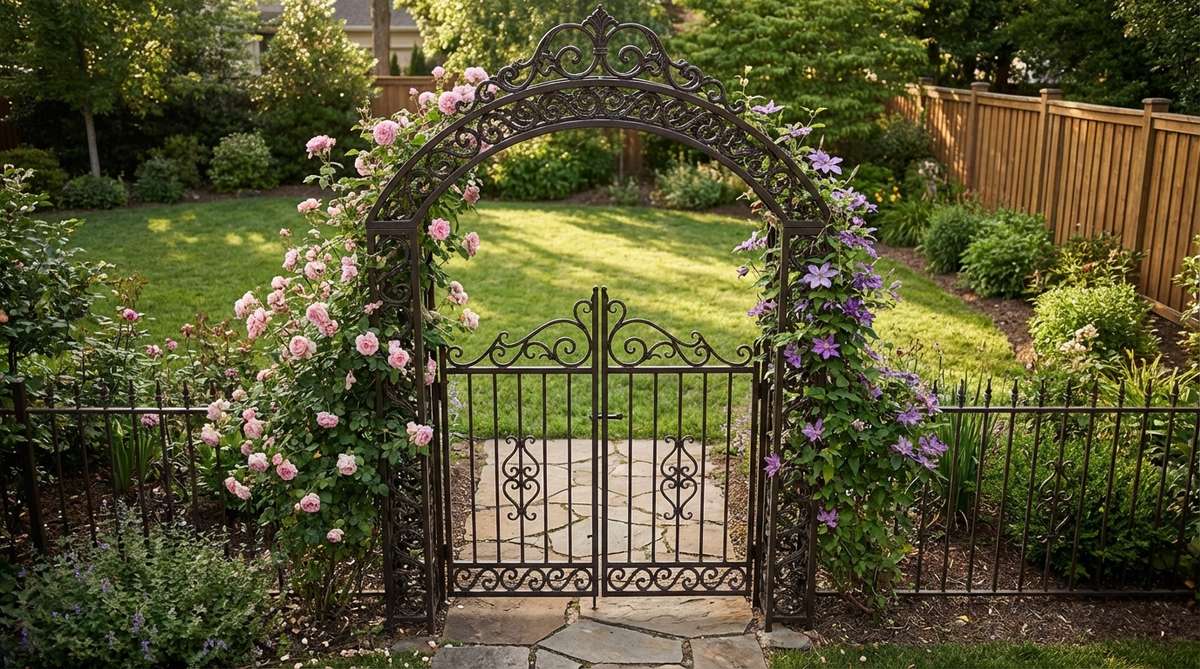
Feels like entering a secret botanical garden you accidentally discovered. This decorative metal boundary works exceptionally well to separate a wild vegetable patch from a manicured lawn.
People often overcomplicate garden zoning, but dropping in a pre-hung gate system provides that expensive landscape architect touch without the massive bill. Finding top-rated garden decor metal with integrated spring-loaded hinges prevents the gate from sagging over time.
You can set this up in an afternoon for around $80–$150. Save this to your landscape transition board right now!
- Key Materials: Iron arbor frame, hinged gate panels, step-in ground stakes.
- Vibe / Style: Secret cottage garden.
- Difficulty: Easy beginner setup.
- Budget Breakdown: Arbor & Gate Kit: $110 | Ground Anchors: $15.
- Creator’s Tip: Plant fast-growing Clematis on day one to weave through the ironwork within a single season.
- Smart Sourcing: iron garden arbor kits with pre-hung gates, heavy-duty metal ground stakes (bulk pack).
This next setup is ridiculously cheap but looks like a $500 custom landscape display…
5. Gothic Arch Steel Arbor
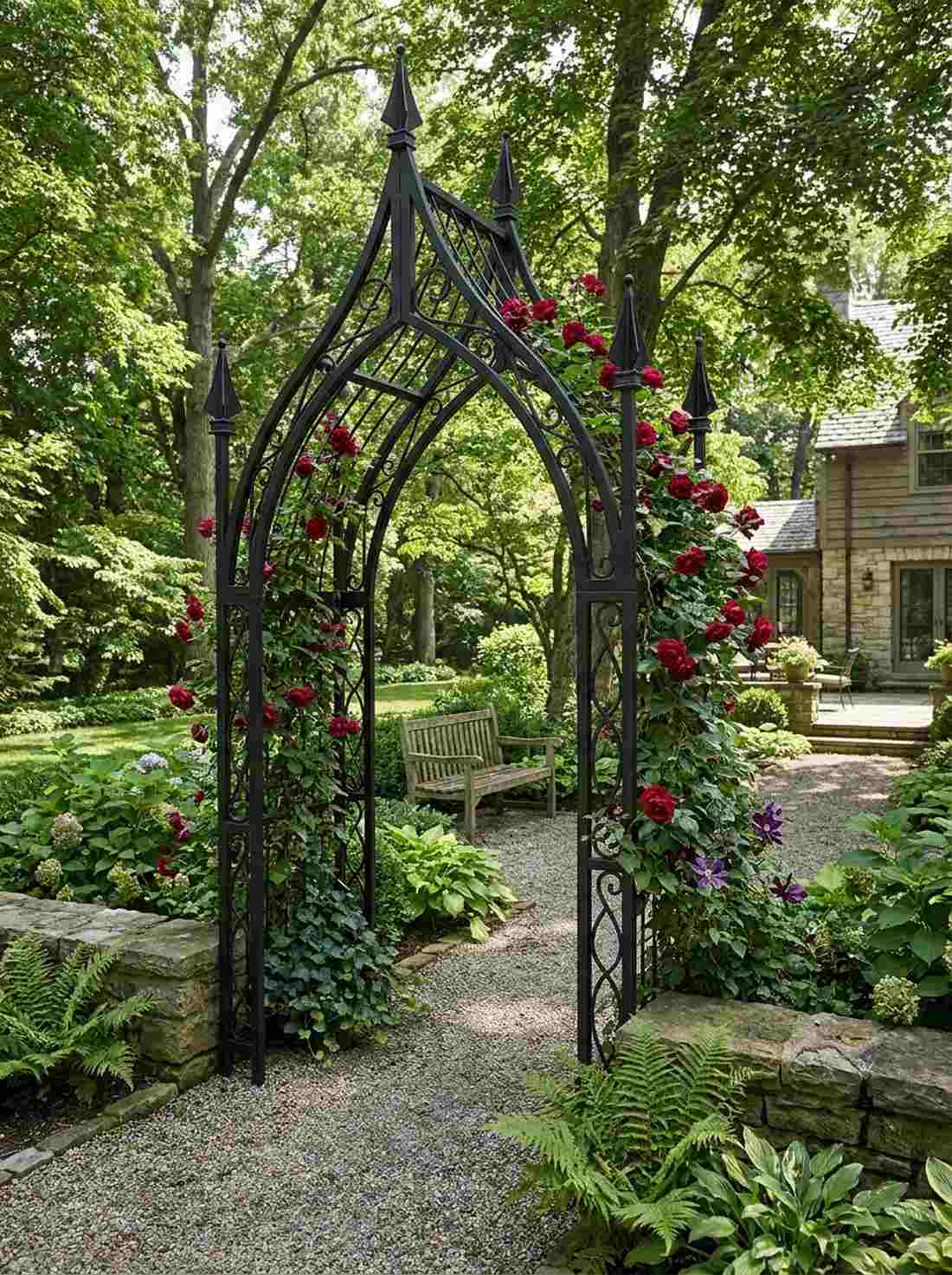
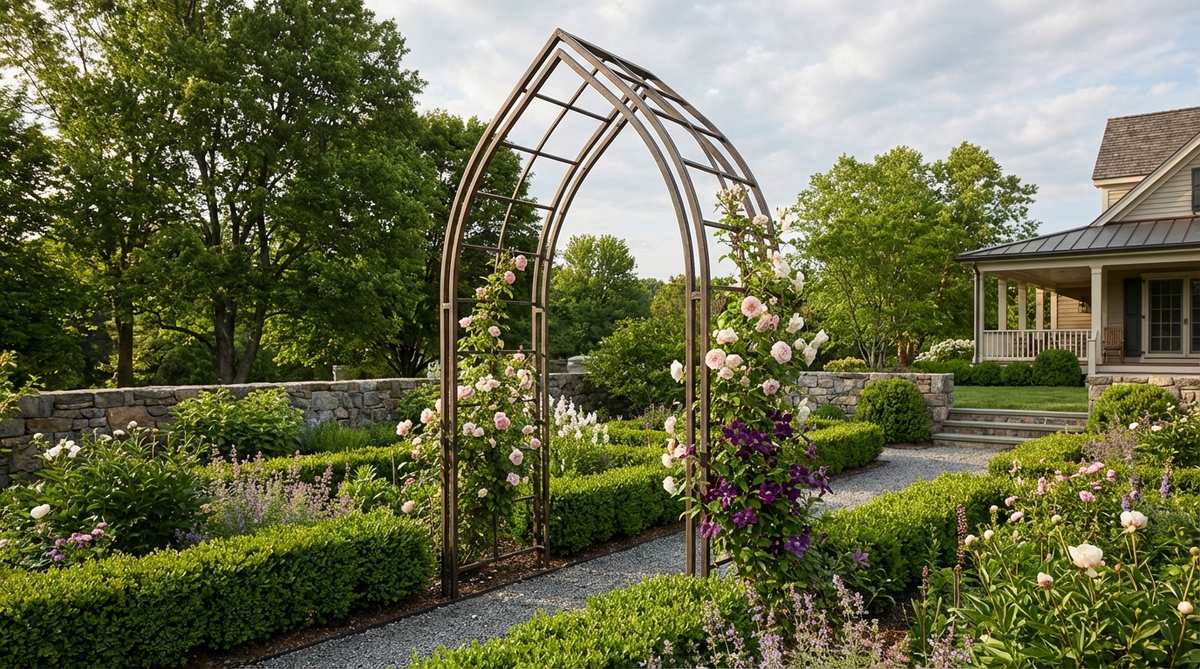
Adds a moody, dramatic aesthetic that feels like a forgotten castle ruin. This tall metal garden structure is perfectly suited for narrow pathways or as an entrance to a shade garden.
A common mistake is using rounded arches everywhere, but the pointed Gothic peak naturally draws the eye upward and makes tiny yards feel massive. Utilizing weather-resistant metal plant supports gives you year-round structural interest even when plants are dead.
You can easily recreate this look for around $60–$120. Pin this if you love dark academia or romantic landscaping!
- Key Materials: Pointed steel archway, black matte spray paint, securing pins.
- Vibe / Style: Gothic romance.
- Difficulty: Easy beginner setup.
- Budget Breakdown: Arch Kit: $75 | Paint: $10.
- Creator’s Tip: Use a matte black powder-coated finish to make the green foliage pop aggressively.
- Smart Sourcing: gothic steel arbor starter kits, matte black outdoor rust-oleum (multi-pack).
6. Freestanding Steel Pavilion Frame
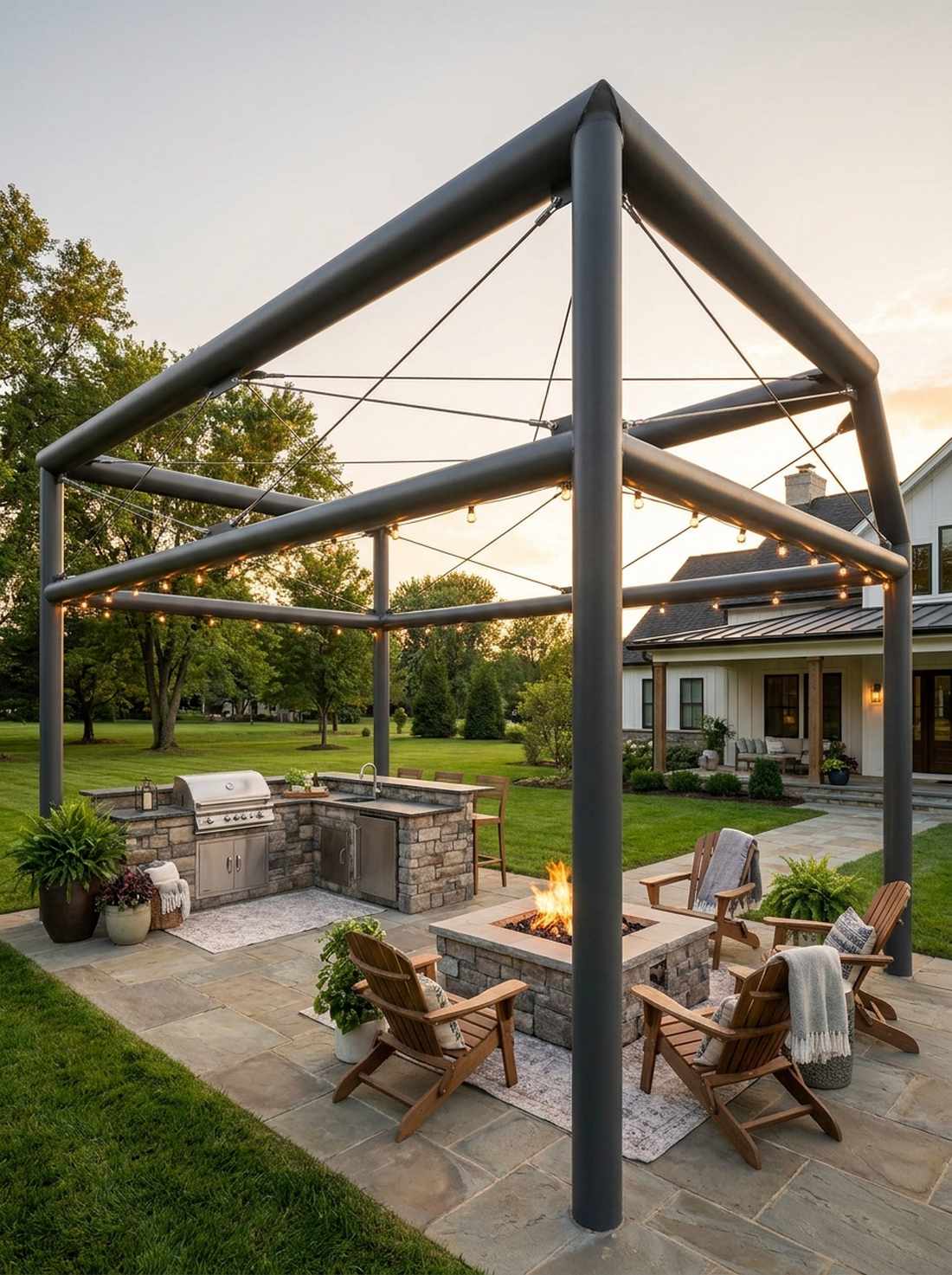
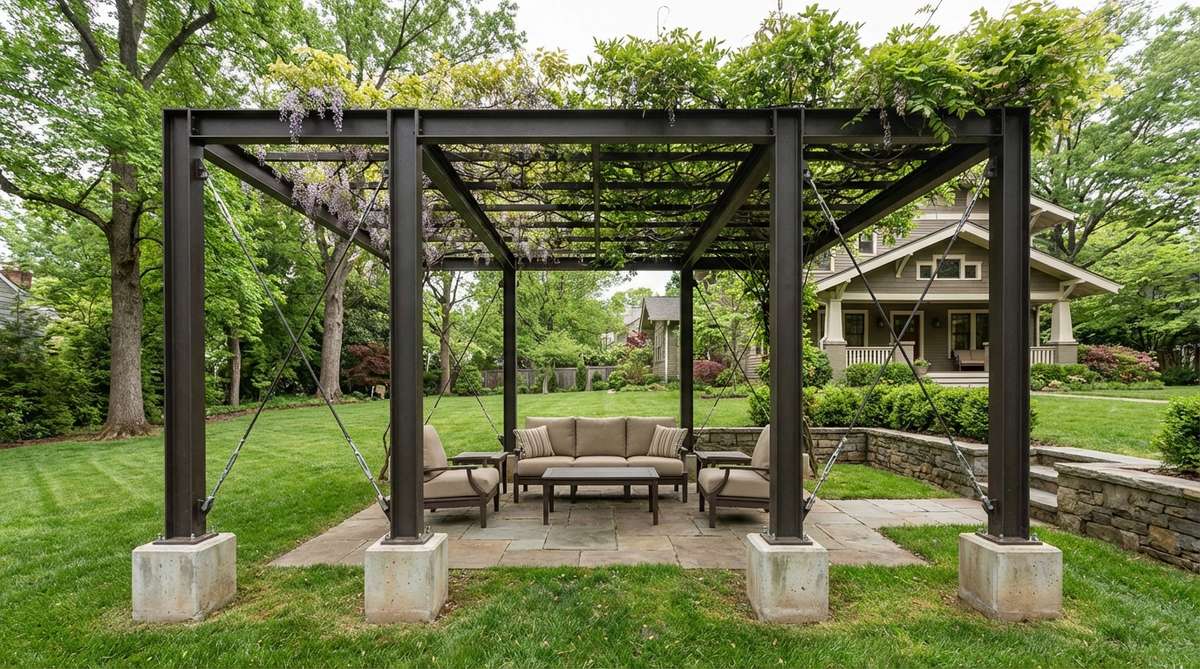
Feels like an expensive resort cabana parked right in your backyard. This massive outdoor metal framework works exceptionally well over a fire pit lounge or an outdoor kitchen.
Building with wood is currently overpriced, but a steel framework delivers a surprisingly premium look that requires zero annual staining. Sourcing commercial-grade outdoor metal pavilions guarantees the structure can hold the weight of heavy winter snow without buckling.
You can build this base framework for around $400–$800. Save this to your ultimate outdoor living board!
- Key Materials: Thick tubular steel, cross-bracing cables, post base covers.
- Vibe / Style: Luxury resort lounge.
- Difficulty: Advanced DIY project.
- Budget Breakdown: Steel Frame: $600 | Foundation plates: $80.
- Creator’s Tip: Thread outdoor bistro lights inside the hollow steel tubing to hide ugly electrical cords.
- Smart Sourcing: heavy-duty steel pavilion canopy kits, commercial steel base flanges (4-pack).
Vertical Plant Support Systems
7. Pyramid Steel Tuteur
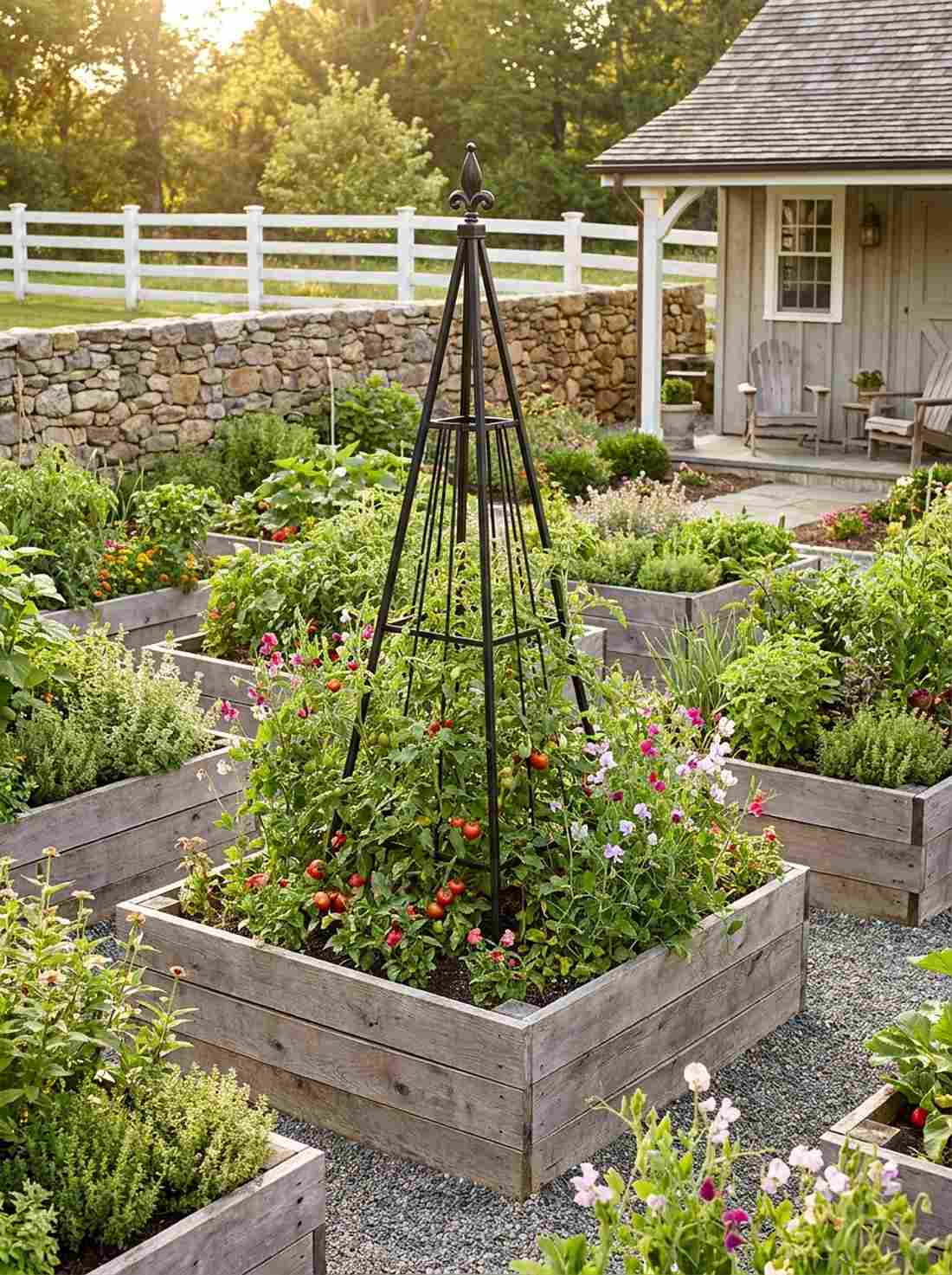
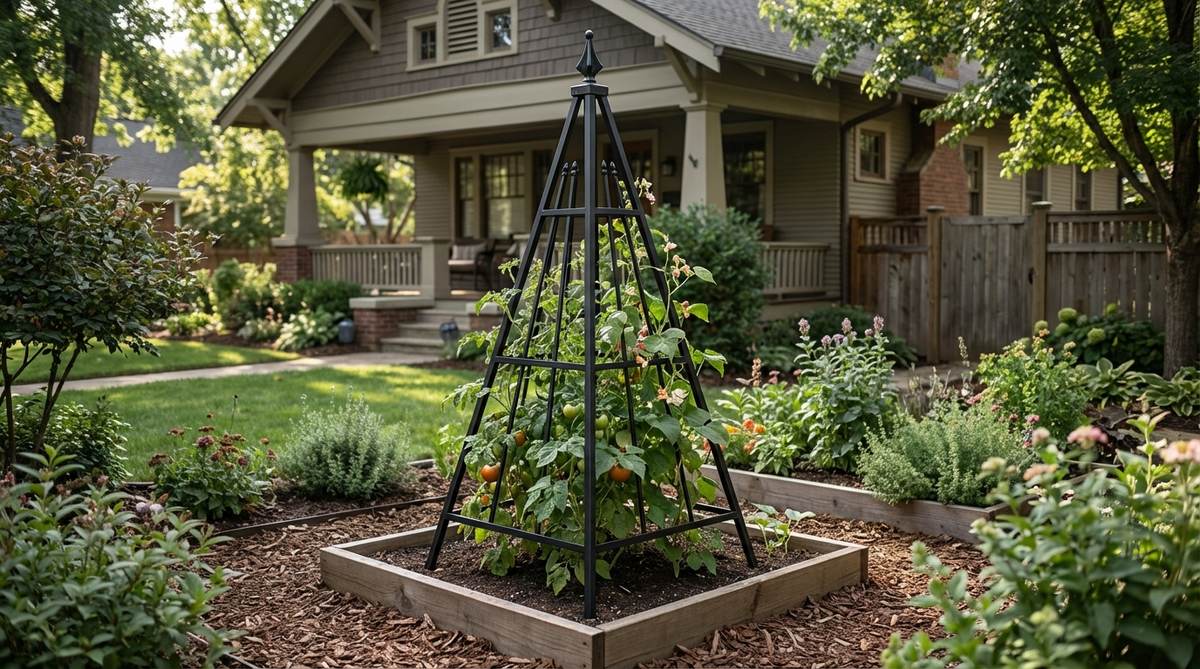
Gives your vegetable garden an instant French potager vibe. This classic metal plant support works exceptionally well in the center of raised beds for climbing tomatoes or sweet peas.
Most gardeners settle for ugly wire cages, but a sleek pyramid tuteur instantly elevates the aesthetic to magazine-cover quality. Integrating high-end garden metal accents turns functional farming into high-end landscape architecture.
You can easily pull this off for around $30–$60 per tower. Pin this to your aesthetic vegetable gardening board!
- Key Materials: Welded steel tuteurs, finial toppers, soft plant ties.
- Vibe / Style: French country kitchen garden.
- Difficulty: Zero setup required.
- Budget Breakdown: Tuteur Kit: $45 | Plant Velcro: $8.
- Creator’s Tip: Push the legs at least 8 inches into the soil before the plant grows to prevent it from blowing over when top-heavy.
- Smart Sourcing: powder-coated steel garden tuteurs (2-pack), reusable garden plant tie rolls.
8. Wrought Iron Garden Obelisk
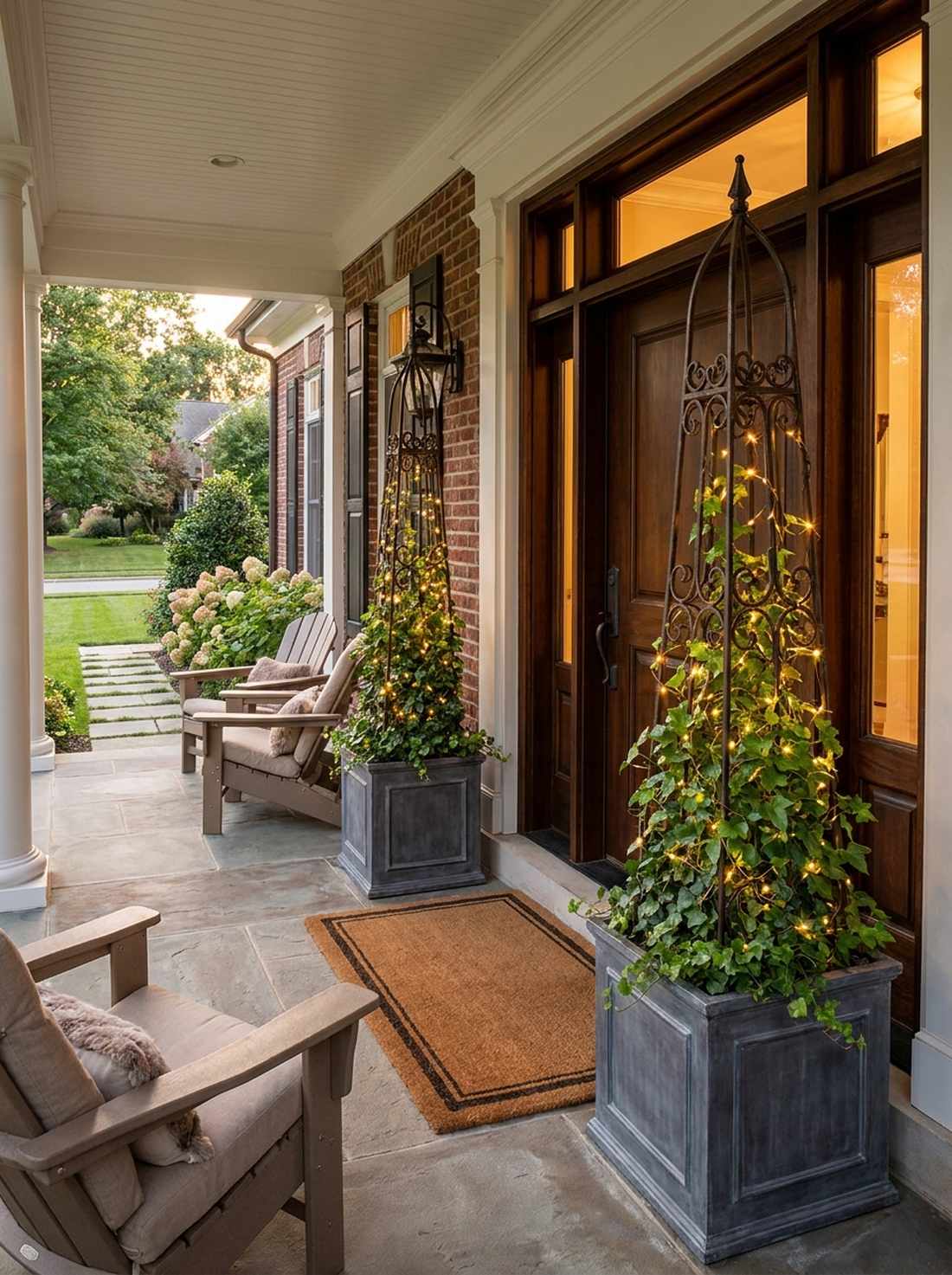
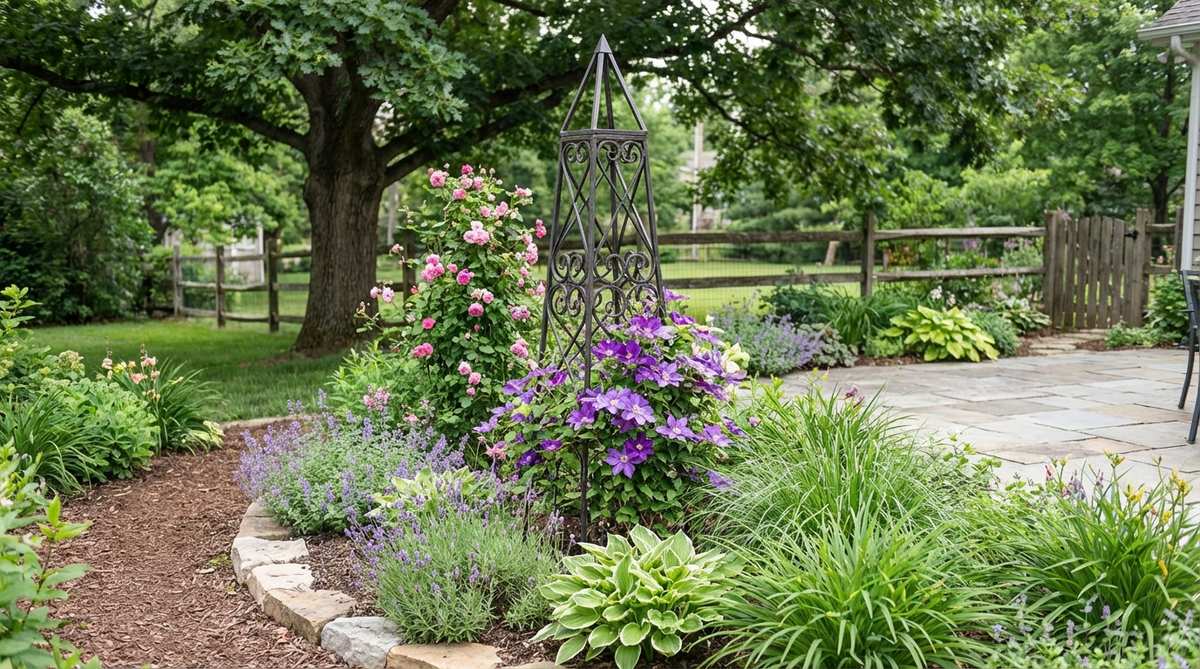
Makes basic climbing ivy look like a meticulously curated designer display. This tall iron garden decoration works exceptionally well flanking a front doorway inside large planters.
A lot of people think vertical height is hard to achieve, but dropping an obelisk into a pot creates a bespoke architectural vibe instantly. By using solid iron garden decor accents, the sheer weight keeps your pots from blowing over in winter storms.
You can grab a set of these for around $50–$90. Save this to your container gardening inspiration board!
- Key Materials: Iron obelisk frame, decorative scrollwork, heavy planter pot.
- Vibe / Style: Stately formal elegance.
- Difficulty: Easy beginner setup.
- Budget Breakdown: Iron Obelisk: $60 | Base Pot: $30.
- Creator’s Tip: Wrap battery-operated fairy lights around the ironwork for a glowing structural piece during winter nights.
- Smart Sourcing: wrought iron garden obelisks (pre-assembled), UV-coated faux lead planters.
9. Flat Steel Trellis Panel
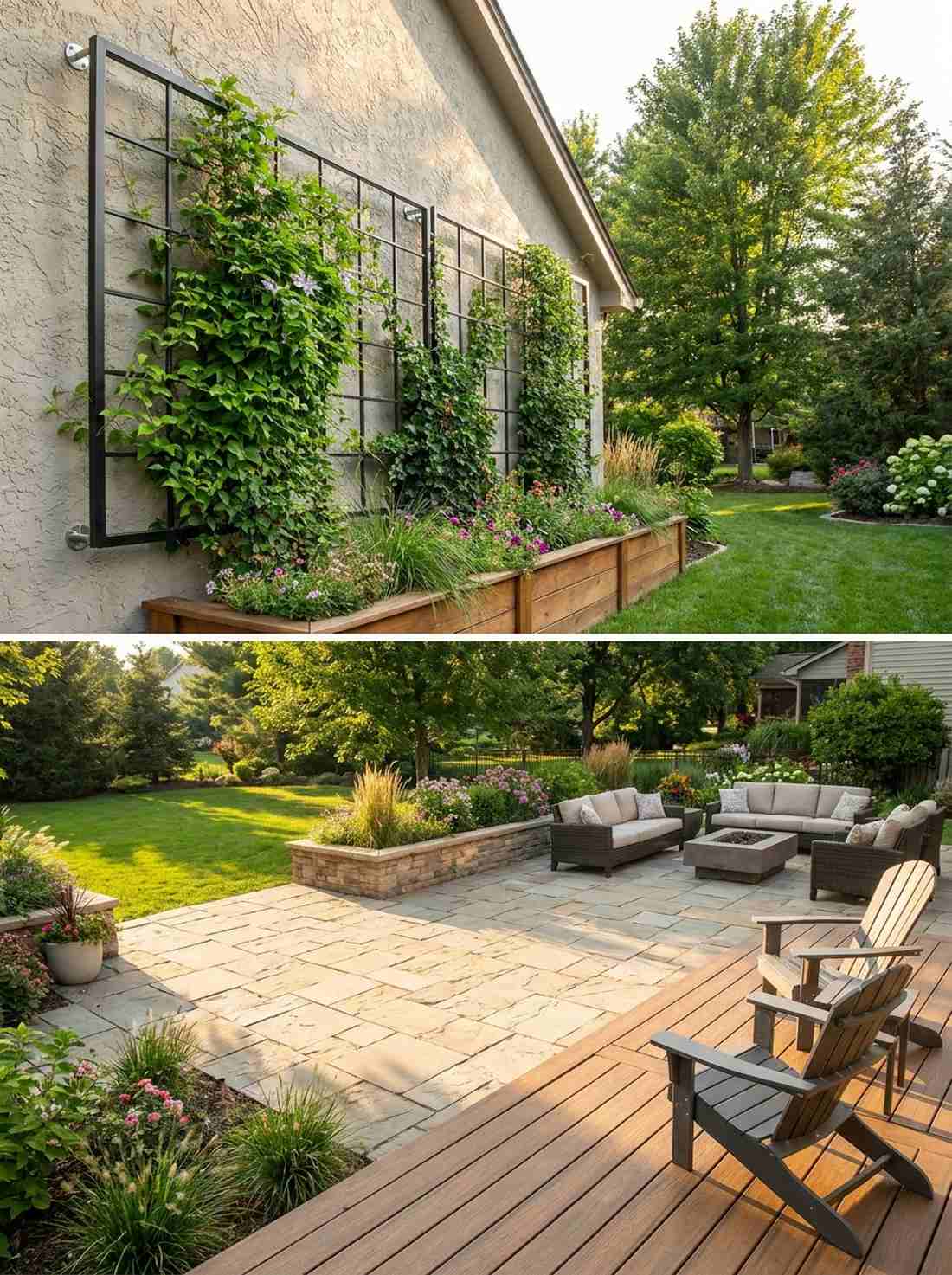
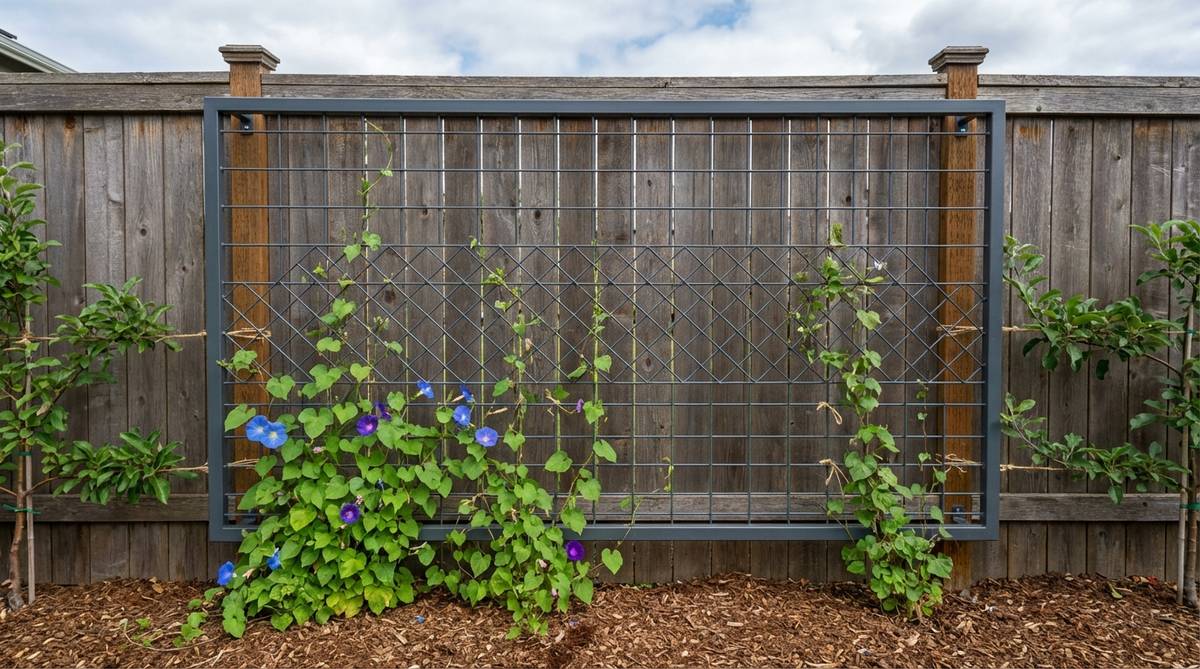
Turns an ugly, blank garage wall into a stunning living art piece. This wall-mounted steel garden accent works exceptionally well for small courtyards where horizontal space is dead.
Slapping wooden lattice on a wall looks cheap, but a geometric steel grid looks far more expensive than it is. Investing in rust-proof metal plant trellises guarantees your wall won’t end up stained with ugly orange water marks after a rainy season.
You can easily install a gorgeous panel for around $40–$80. Pin this if you have an ugly wall you desperately need to hide!
- Key Materials: Steel grid panels, wall stand-off spacers, masonry screws.
- Vibe / Style: Modern living wall.
- Difficulty: Moderate (Requires drilling into walls).
- Budget Breakdown: Trellis Panel: $50 | Spacer Hardware: $15.
- Creator’s Tip: Use 2-inch spacers behind the metal to give vines enough room to wrap around the bars naturally.
- Smart Sourcing: modern steel wall trellis grids, stainless steel stand-off mounting hardware.
💡 Must-Have Supplies for High-End Setups
To build these metal garden setups faster and ensure they last decades, skip the generic craft aisles and invest in the right foundational kits from the start.
- Base & Anchoring: heavy-duty commercial ground auger anchors
- Rust Protection: matte black rust-converting enamel spray
- Weather/Durability Protection: UV-resistant clear coat sealants (bulk pack)
Most people get their vertical gardening completely wrong… until they try the exact layout coming up next.
10. Spiral Steel Plant Support
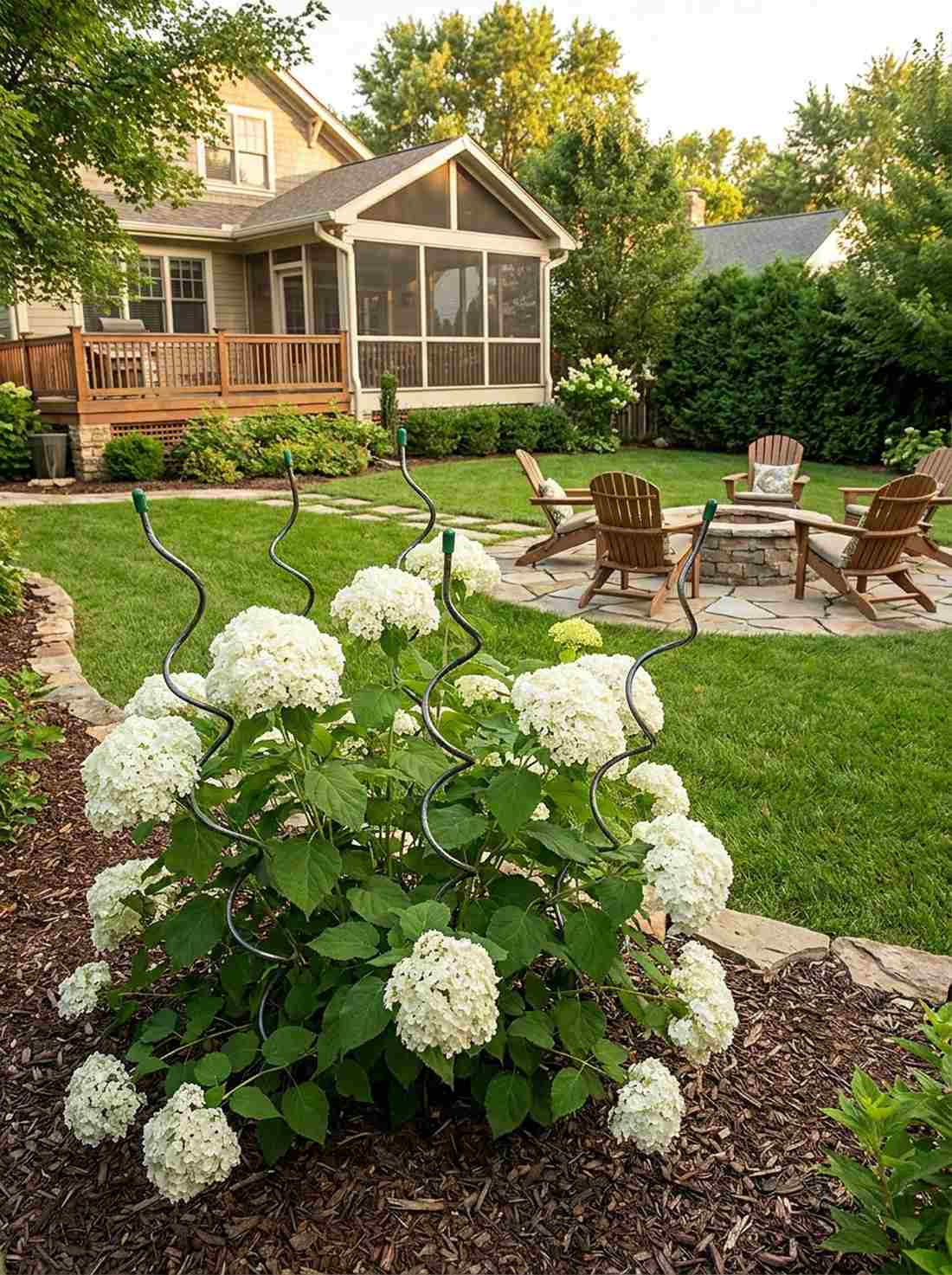
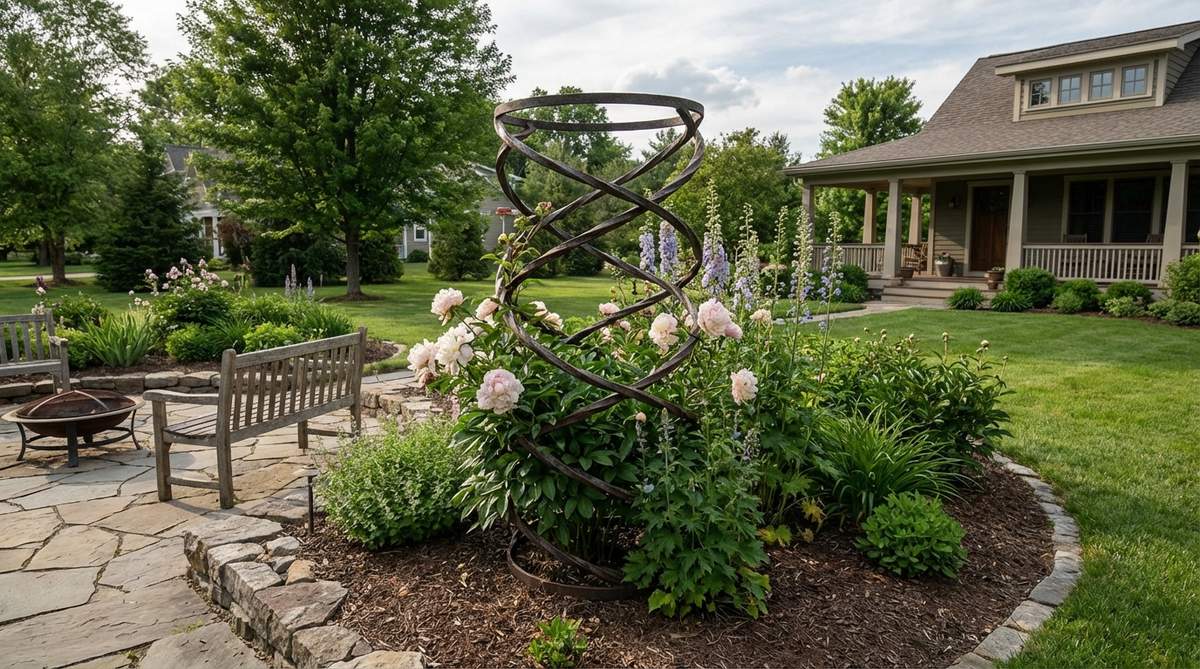
Feels like a delicate metal ribbon dancing perfectly through your flower beds. This minimalist metal plant support works exceptionally well for holding up massive, heavy blooms like peonies or hydrangeas.
Standard green plastic stakes look tacky and eventually snap, but a twisted steel spine delivers a surprisingly premium look that blends into the shadows. Utilizing specialized garden decor metal supplies ensures the structural integrity actually outlasts your perennials.
You can easily snag a bundle of these for around $15–$35. Save this to your spring flower prep board!
- Key Materials: Twisted steel spiral stakes, rubber safety caps.
- Vibe / Style: Invisible structural elegance.
- Difficulty: Easy beginner setup.
- Budget Breakdown: Spiral Stakes (Pack of 5): $25 | Rubber Caps: $5.
- Creator’s Tip: Insert the spiral when the plant is only 4 inches tall so it naturally grows through the coils without breaking stems.
- Smart Sourcing: galvanized spiral plant supports (bulk pack), green rubber safety tips for garden stakes.
11. Arched Steel Trellis for Vegetables
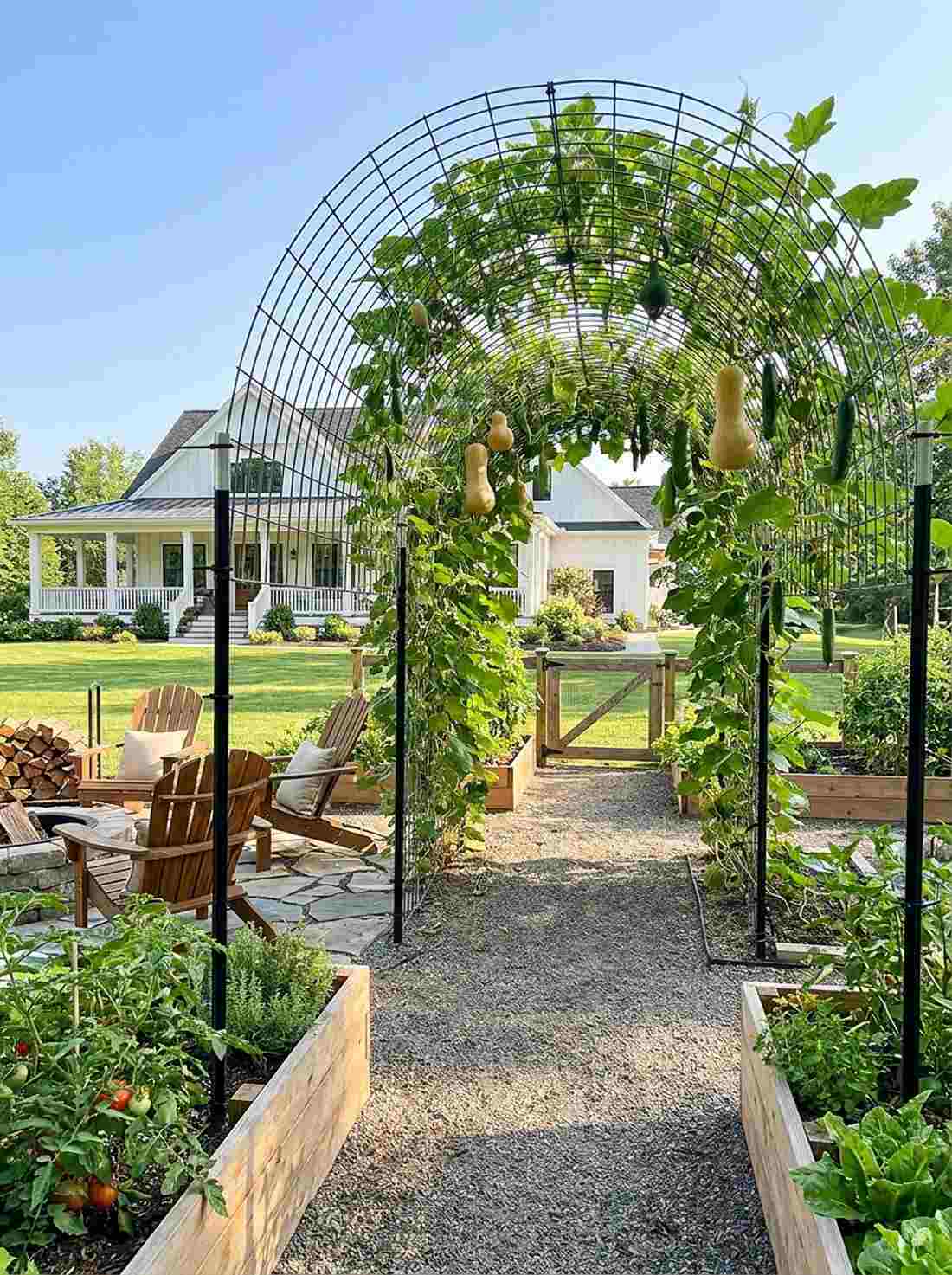
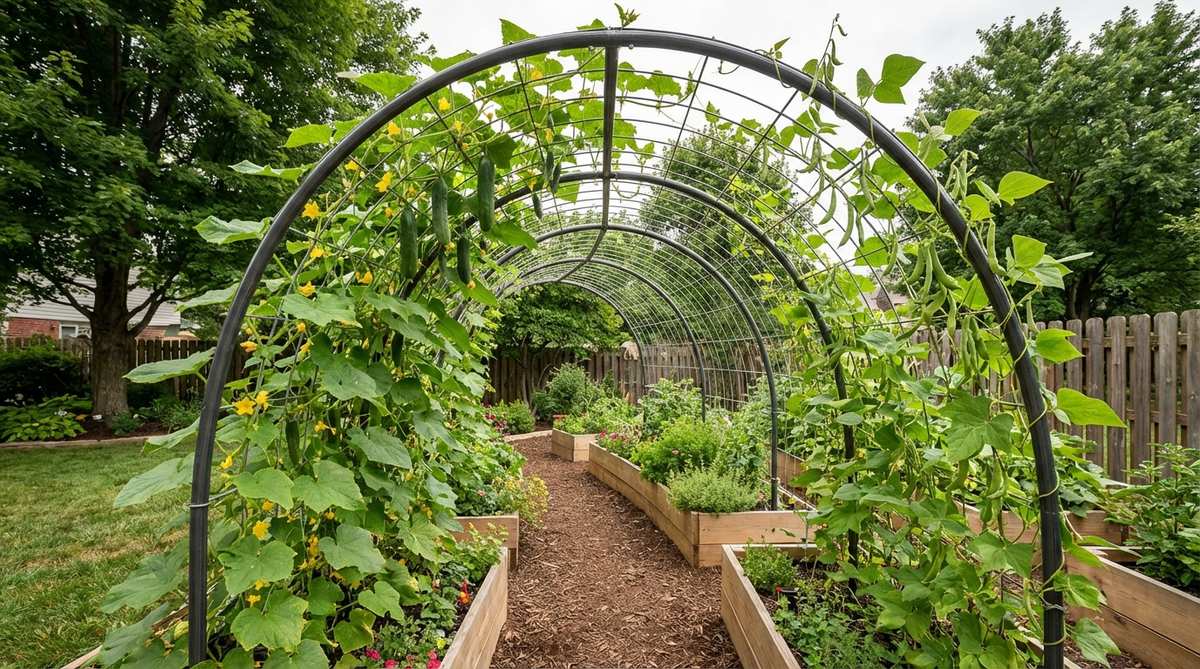
Imagine walking through a magical, shaded tunnel of hanging green vines and fresh produce. This functional metal garden structure works exceptionally well spanning across a main garden pathway.
Why waste ground space when this layout gives a designer-level finish while doubling your crop yield? Sourcing heavy-duty cattle panel alternatives or pre-bent arch kits lets you hang massive squashes without the metal bowing under the weight.
You can build this stunning tunnel for around $40–$70. Pin this to your ultimate homesteading board right now!
- Key Materials: Bent steel mesh panels, heavy U-posts, zip ties.
- Vibe / Style: Abundant harvest tunnel.
- Difficulty: Moderate DIY setup.
- Budget Breakdown: Steel Mesh Panels: $45 | T-Posts: $20.
- Creator’s Tip: Use black UV-resistant zip ties to secure the panels to the posts; standard white ones will snap in the sun.
- Smart Sourcing: pre-bent arched steel garden tunnels, UV-coated extreme weather zip ties (bulk pack).
12. Iron Rose Pillar with Rings
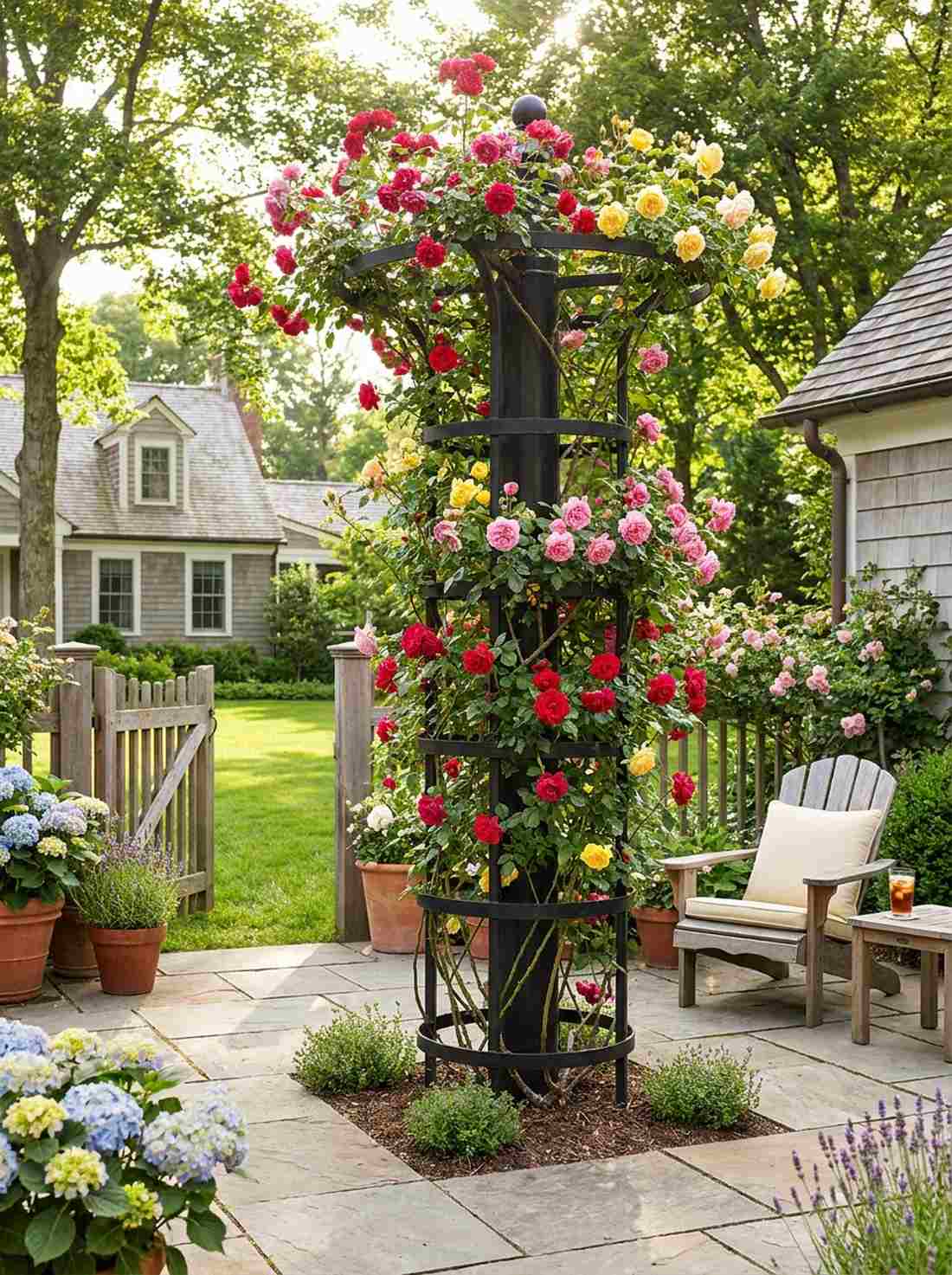
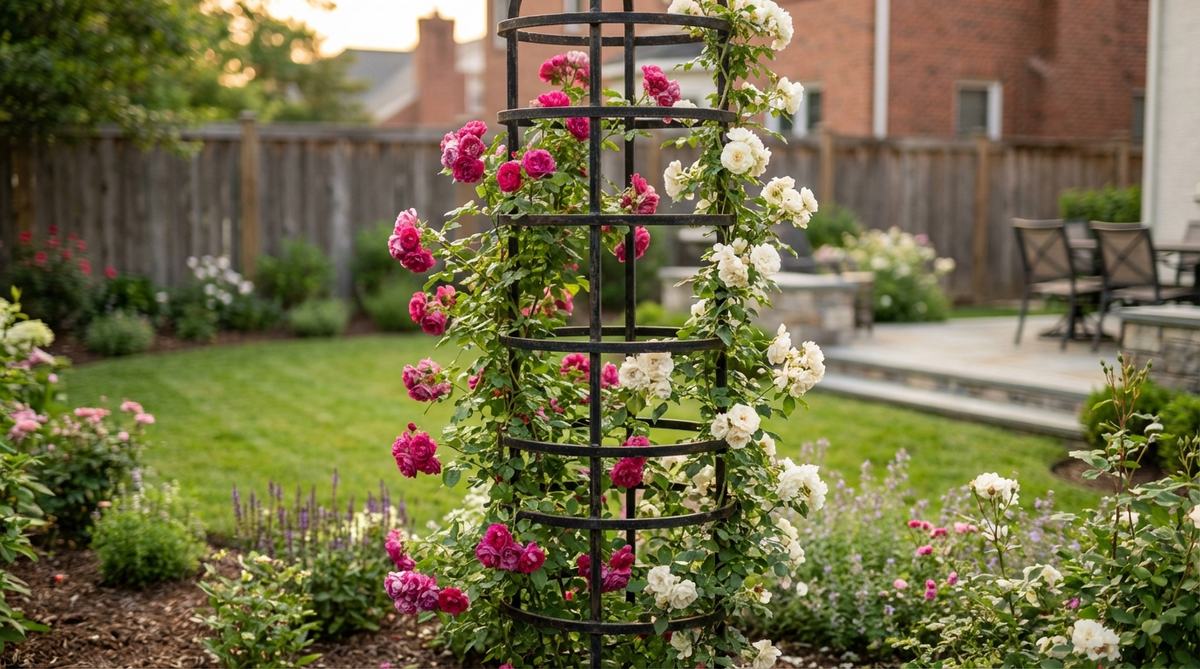
Creates a towering explosion of color that feels straight out of an English botanical garden. This heavy iron garden decoration works exceptionally well for taming aggressive climbing roses in a small courtyard.
Without structure, roses become a tangled mess, but a ringed iron pillar provides that expensive landscape architect touch without the bill. Sneaking in premium outdoor garden decor like this contains the chaos while displaying blooms perfectly at eye level.
You can pull off this classic look for around $60–$110. Save this to your cottage garden layout board!
- Key Materials: Solid iron central pillar, welded horizontal rings, deep ground spike.
- Vibe / Style: Classic English rose garden.
- Difficulty: Easy beginner setup.
- Budget Breakdown: Iron Pillar: $85 | Ground Anchor: $15.
- Creator’s Tip: Wrap the rose canes horizontally around the rings; this stresses the plant slightly and forces it to produce 3x more flowers.
- Smart Sourcing: iron ringed rose pillar kits, heavy-duty deep ground spikes.
Sculptural Focal Points
13. Bronze Figurative Statue
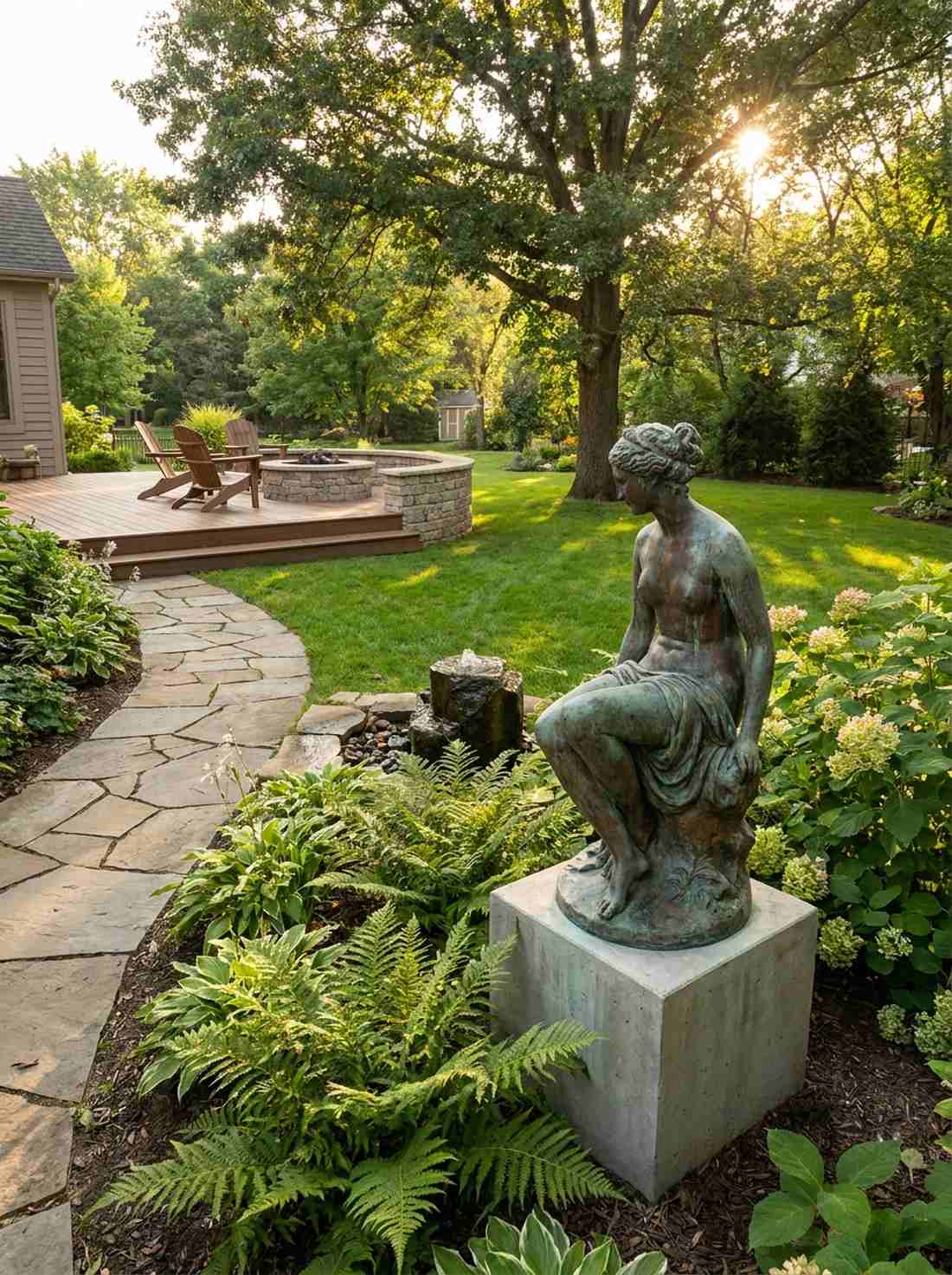

Feels like a timeless museum piece resting quietly among the ferns. This bronze garden ornament works exceptionally well tucked at the end of a winding garden path or near a water feature.
Many homeowners shy away from statues thinking they look tacky, but genuine cast bronze (or high-quality resin-bronze) instantly upgrades an ordinary yard into an estate. Implementing premium outdoor garden statues with a natural patina stops it from looking like cheap plastic.
You can achieve this high-end aesthetic for around $100–$300 for mid-sized pieces. Pin this if you’re looking for that old-world aesthetic!
- Key Materials: Bronze or cold-cast bronze statue, concrete pedestal block.
- Vibe / Style: Timeless estate elegance.
- Difficulty: Easy positioning.
- Budget Breakdown: Statue: $150 | Base Plinth: $40.
- Creator’s Tip: Rub a tiny amount of beeswax on the highest points of the statue to highlight the detail and protect the patina.
- Smart Sourcing: cold-cast bronze garden statues, pre-cast concrete garden plinths.
14. Steel Abstract Sculpture
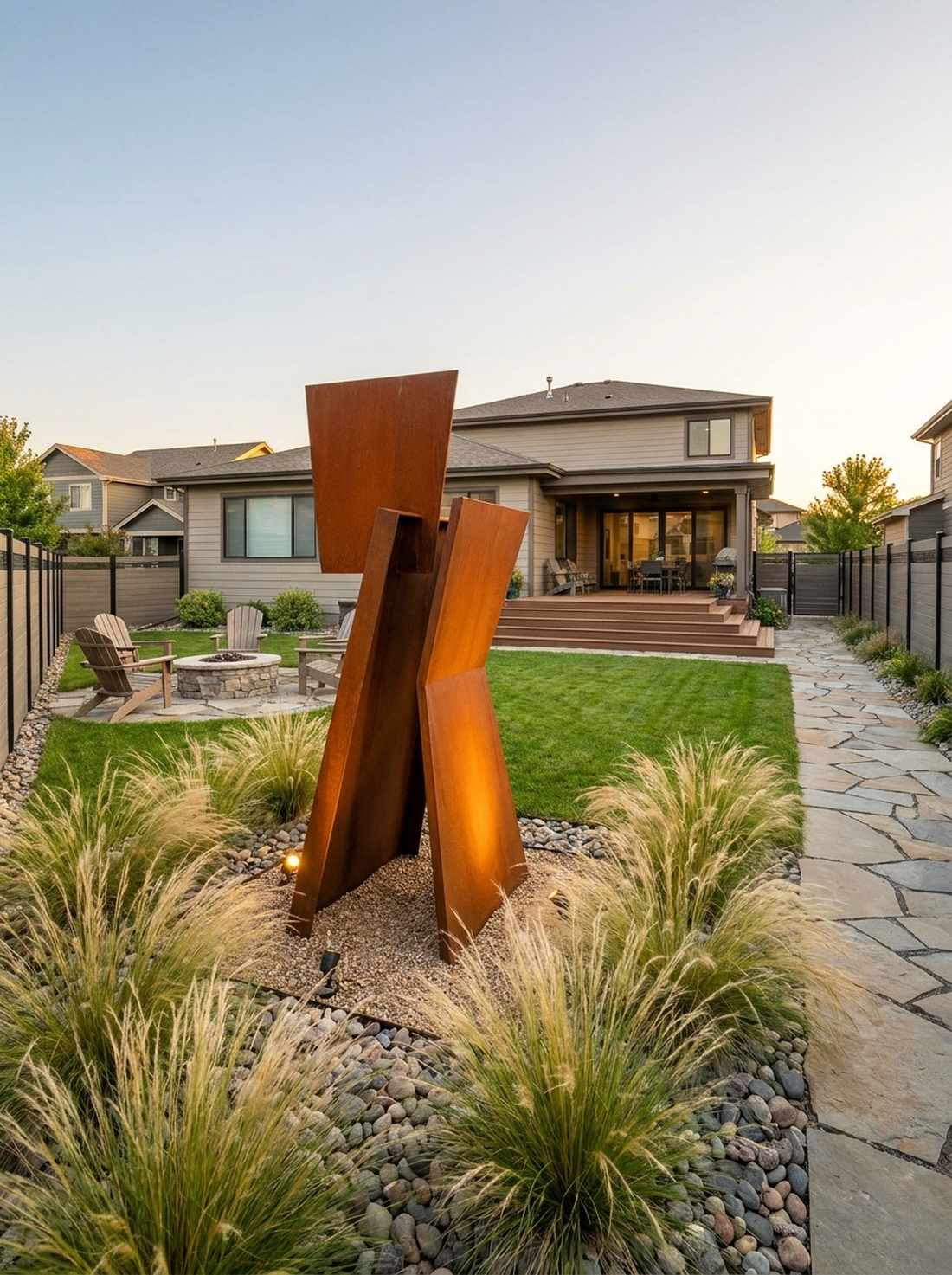
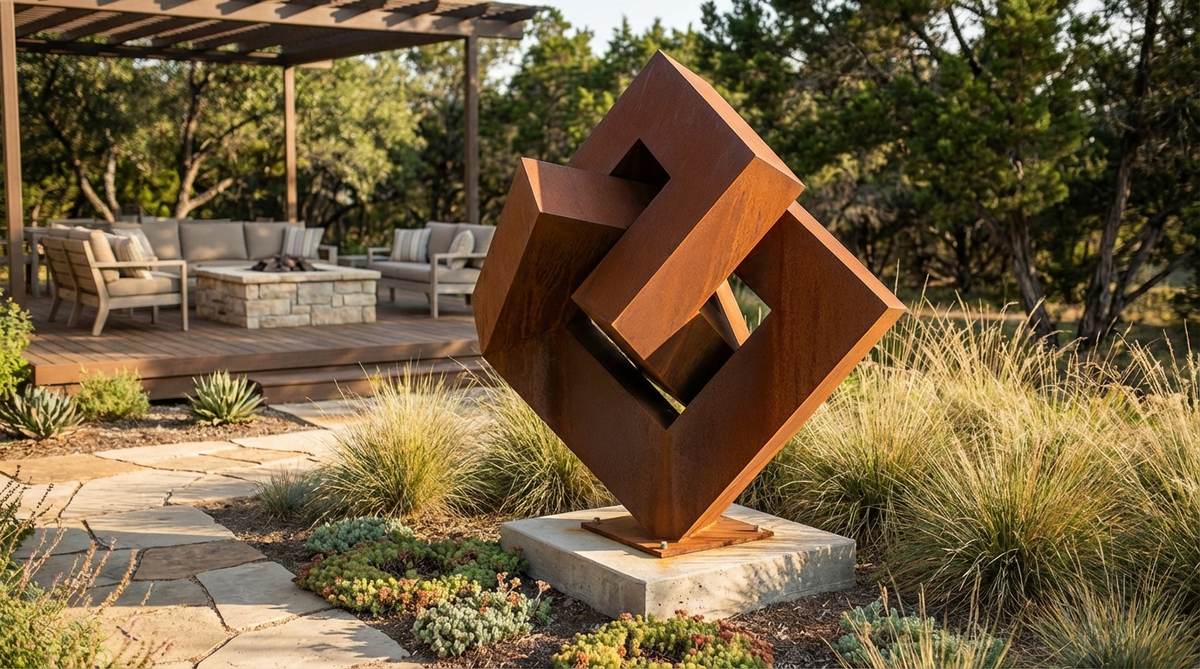
Brings a sharp, contemporary edge that totally transforms a soft landscape. This modern steel garden decoration works exceptionally well surrounded by feathery ornamental grasses or clean white river rock.
Contrasting harsh metal with soft nature looks far more expensive than it is. Utilizing Cor-Ten steel or architectural metal garden supplies ensures the piece develops a stunning rust-orange patina that seals and protects the core metal.
You can easily pull this off for around $120–$250. Save this to your modern landscape design board!
- Key Materials: Cor-Ten steel geometric plates, gravel base, accent uplighting.
- Vibe / Style: Modern art museum courtyard.
- Difficulty: Easy beginner setup.
- Budget Breakdown: Steel Sculpture: $180 | Solar Uplight: $30.
- Creator’s Tip: Spray a mixture of hydrogen peroxide, white vinegar, and salt on raw steel to force a beautiful rust patina in just 2 hours.
- Smart Sourcing: cor-ten steel garden sculptures, high-lumen solar landscaping spotlights.
If you think your garden lacks personality, this next metal feature is a complete game-changer…
15. Iron Animal Silhouette
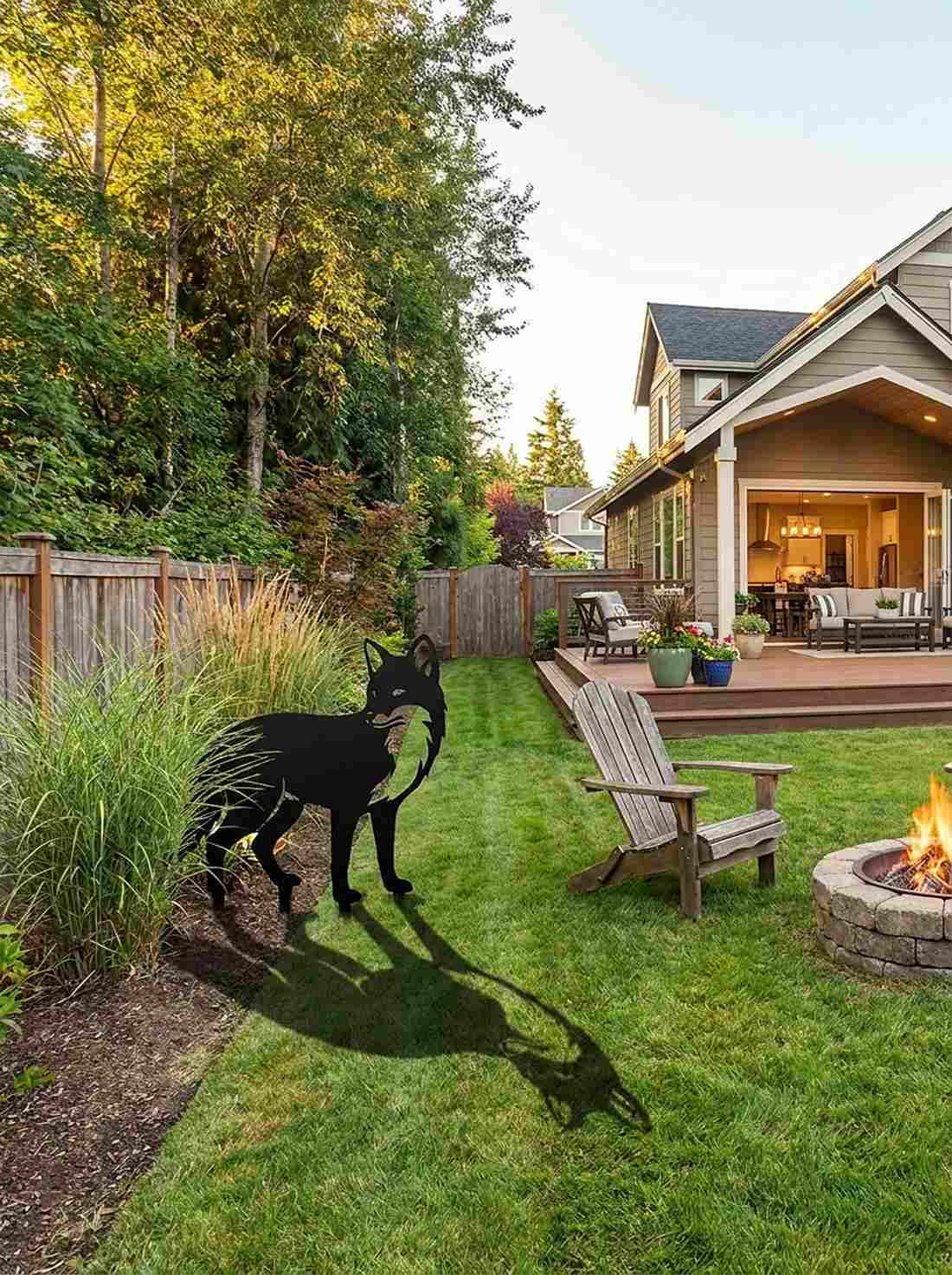
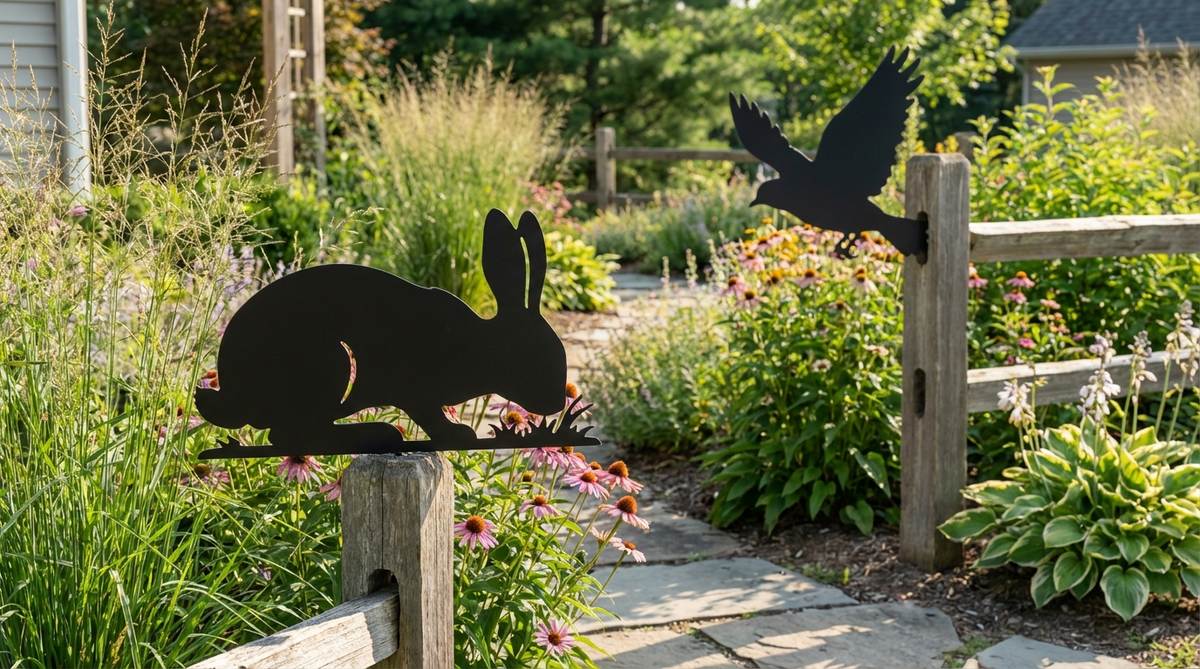
Adds a whimsical, almost magical surprise when catching it out of the corner of your eye. This decorative metal garden accent works exceptionally well pushed into the soil right along a dense tree line or fence.
Giant garden gnomes can look cluttered, but a sleek 2D black silhouette gives a designer-level finish that feels incredibly curated. Choosing laser-cut iron yard decor provides crisp, sharp lines that cast amazing shadows during golden hour.
You can easily grab these for around $20–$45. Pin this for a subtle, charming yard upgrade!
- Key Materials: Flat-cut iron stakes, rust-proof coating.
- Vibe / Style: Playful woodland charm.
- Difficulty: Zero setup required.
- Budget Breakdown: Silhouette Set: $35.
- Creator’s Tip: Place them slightly behind a layer of tall grass so they look like they are actively emerging from the wild.
- Smart Sourcing: laser-cut metal animal yard stakes (multi-pack), rust-resistant iron silhouette sets.
16. Bronze Fountain Sculpture
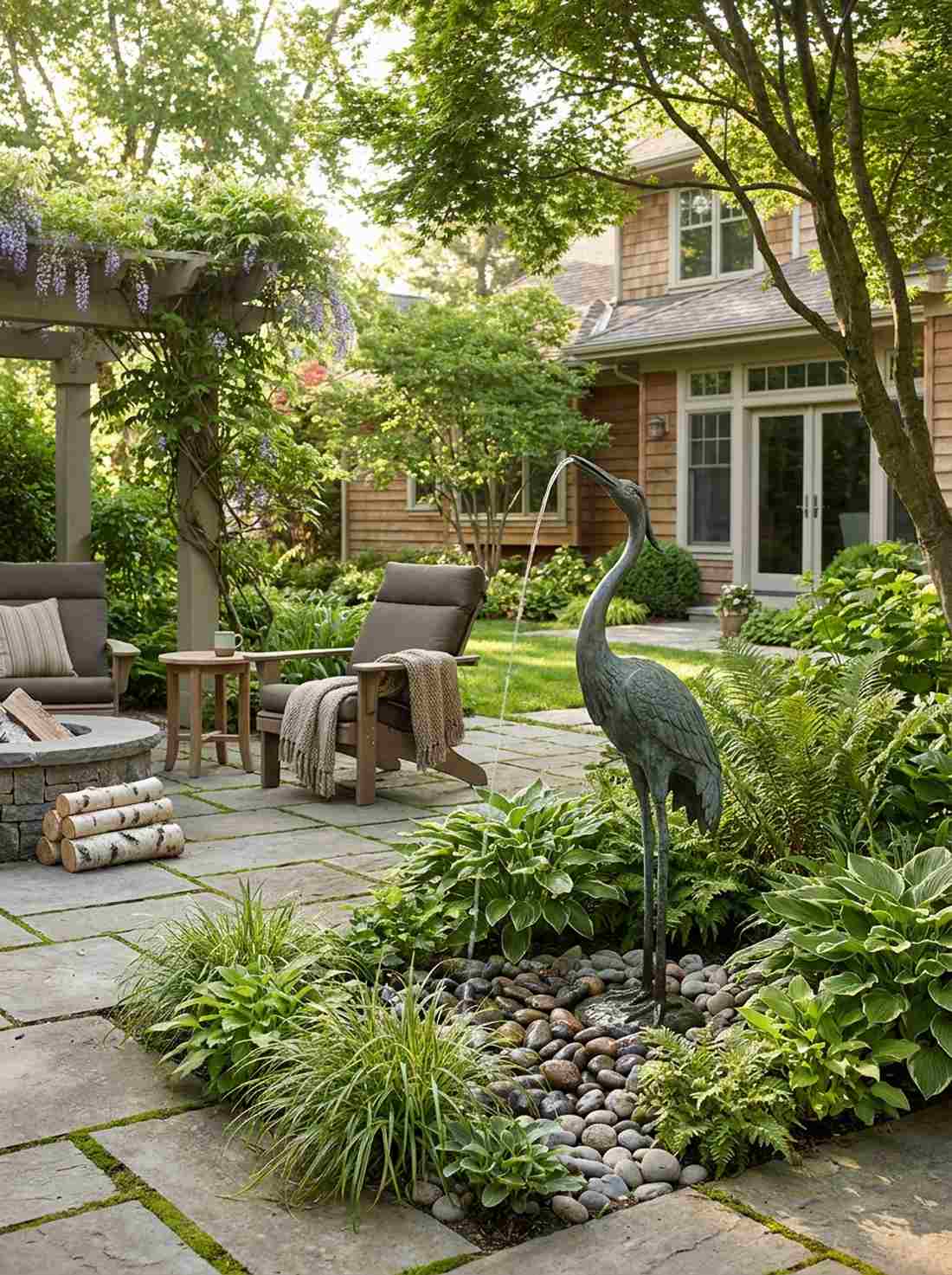
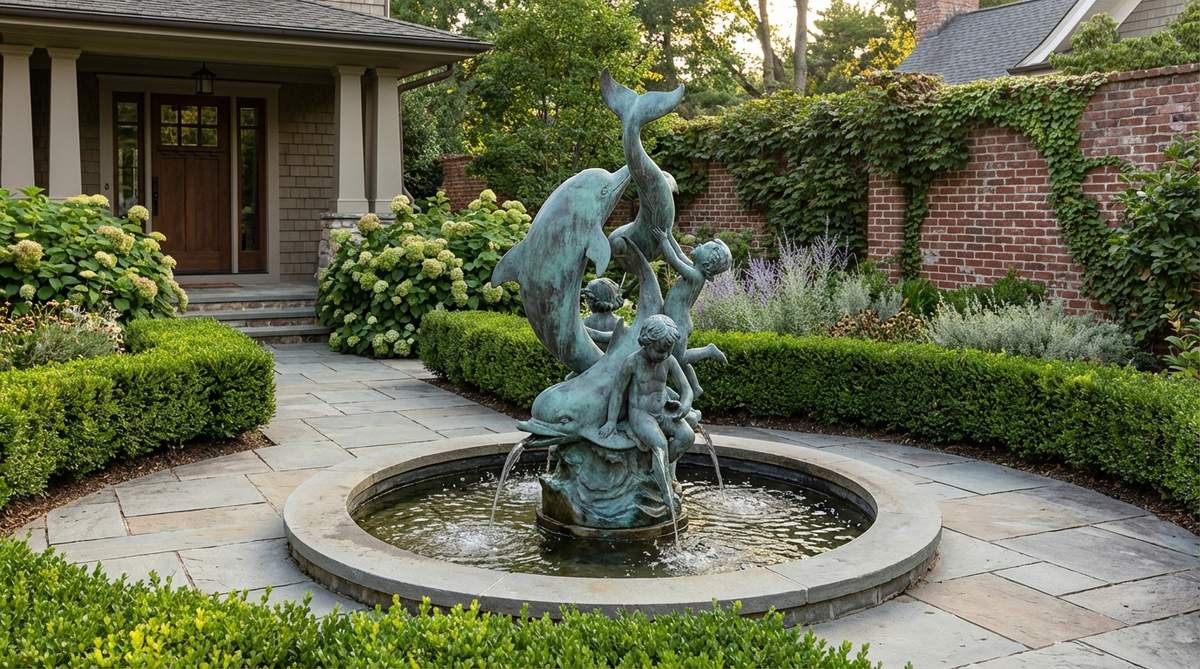
Feels like uncovering a secret, babbling oasis right on your patio. This bronze garden water feature works exceptionally well as a centerpiece for a meditation garden or a quiet outdoor seating nook.
Running water adds immense value to a property, and a bronze focal point creates a bespoke architectural vibe instantly. By pairing it with submersible outdoor pump kits, you eliminate the hassle of hardwiring while keeping that luxurious, heavy-metal aesthetic.
You can install a self-contained setup for around $150–$350. Save this to your relaxing outdoor sanctuary board!
- Key Materials: Bronze spitter statue, hidden basin, submersible pump.
- Vibe / Style: Tranquil courtyard oasis.
- Difficulty: Moderate weekend project.
- Budget Breakdown: Bronze Spitter: $120 | Pump & Basin: $80.
- Creator’s Tip: Add a few drops of algaecide to the basin water once a month to keep the bronze looking pristine and not slimy.
- Smart Sourcing: cast bronze fountain spitter statues, all-in-one hidden water basin pump kits.
17. Welded Steel Garden Sphere
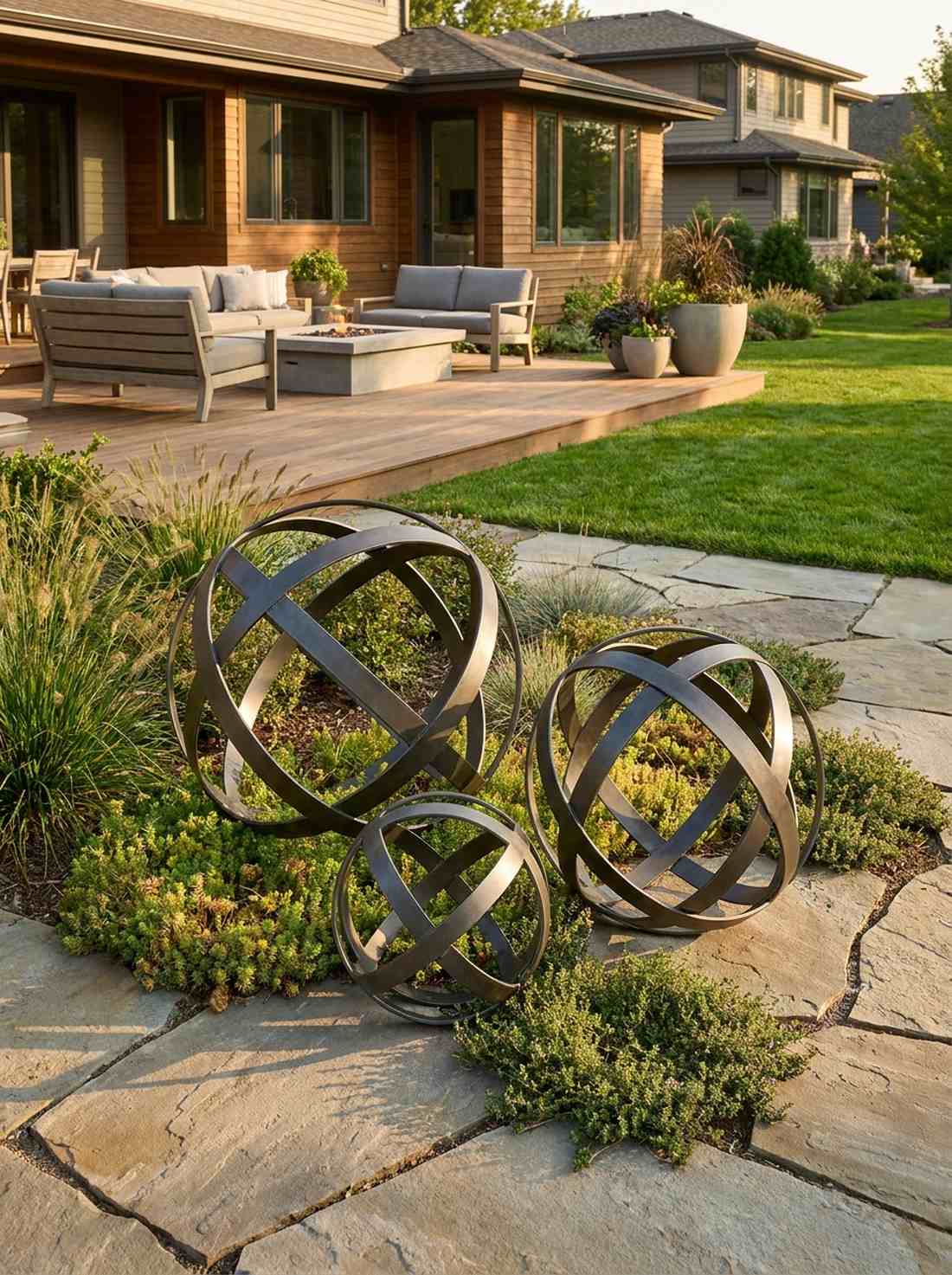
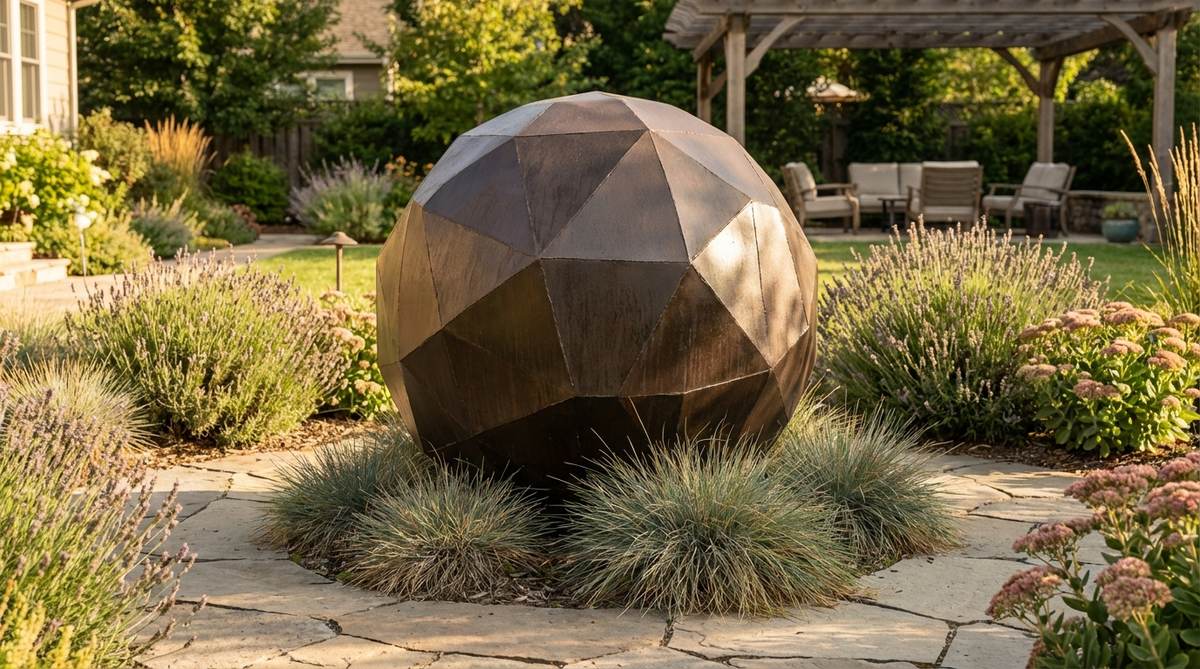
Creates a striking, hypnotic focal point that looks like industrial jewelry for your lawn. This geometric metal garden structure works exceptionally well resting directly on a flat stone patio or nestled into low groundcover.
Solid metal balls block the view, but an open-banded steel sphere delivers a surprisingly premium look that lets light and plants pass through. Combining multiple sizes from premium garden decor metal suppliers creates a modern art installation for pennies on the dollar.
You can easily pull this off for around $40–$100 per sphere. Pin this to your modern outdoor styling board!
- Key Materials: Welded steel strapping, metallic spray paint.
- Vibe / Style: Bold industrial modernism.
- Difficulty: Easy beginner setup.
- Budget Breakdown: Steel Sphere: $60 | Clear Coat: $10.
- Creator’s Tip: Buy three spheres in staggered sizes (e.g., 12″, 18″, 24″) and cluster them together for maximum visual impact.
- Smart Sourcing: welded metal garden spheres (set of 3), matte metallic outdoor spray paint.
18. Cast Iron Decorative Urn Topper
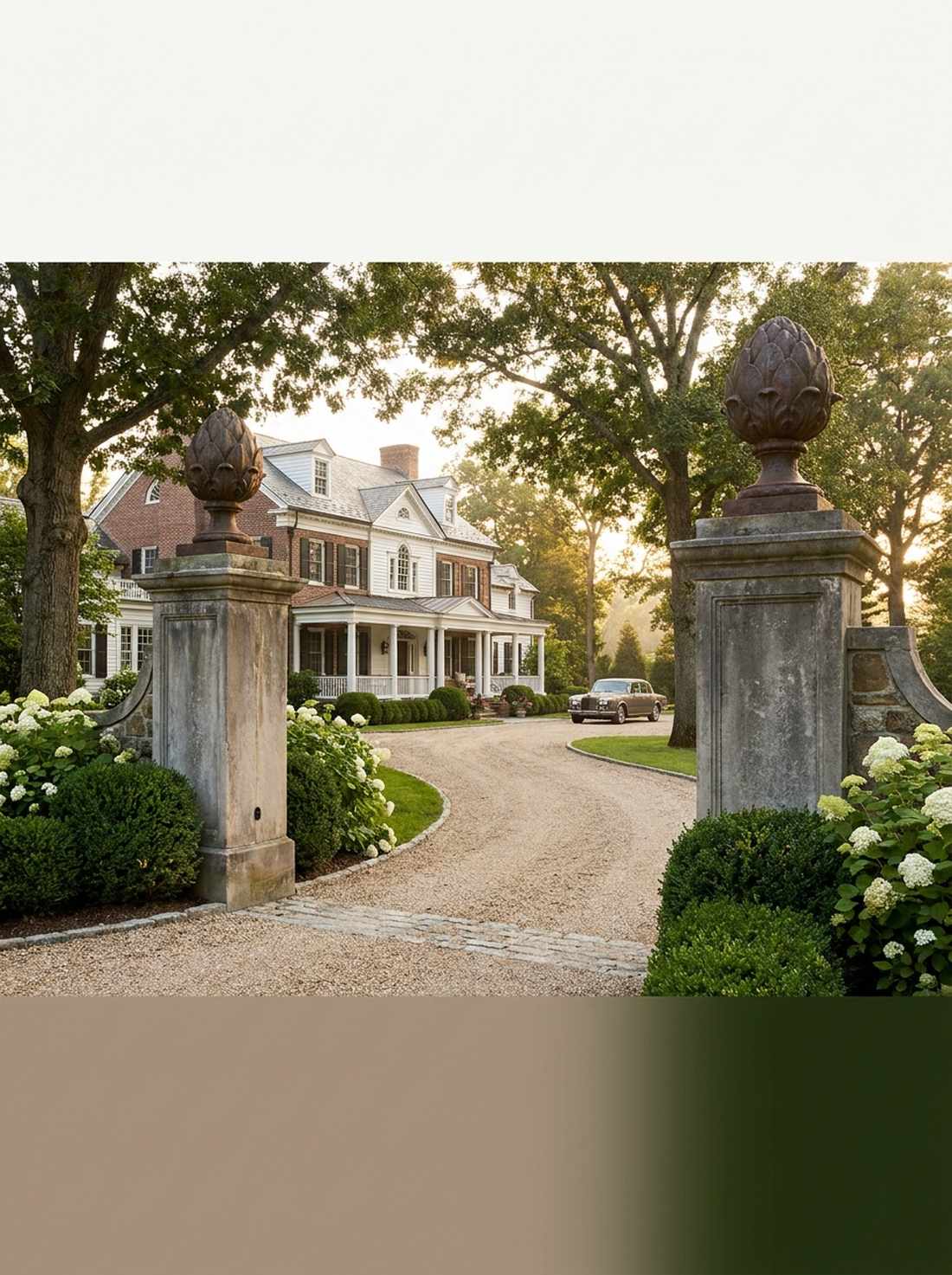
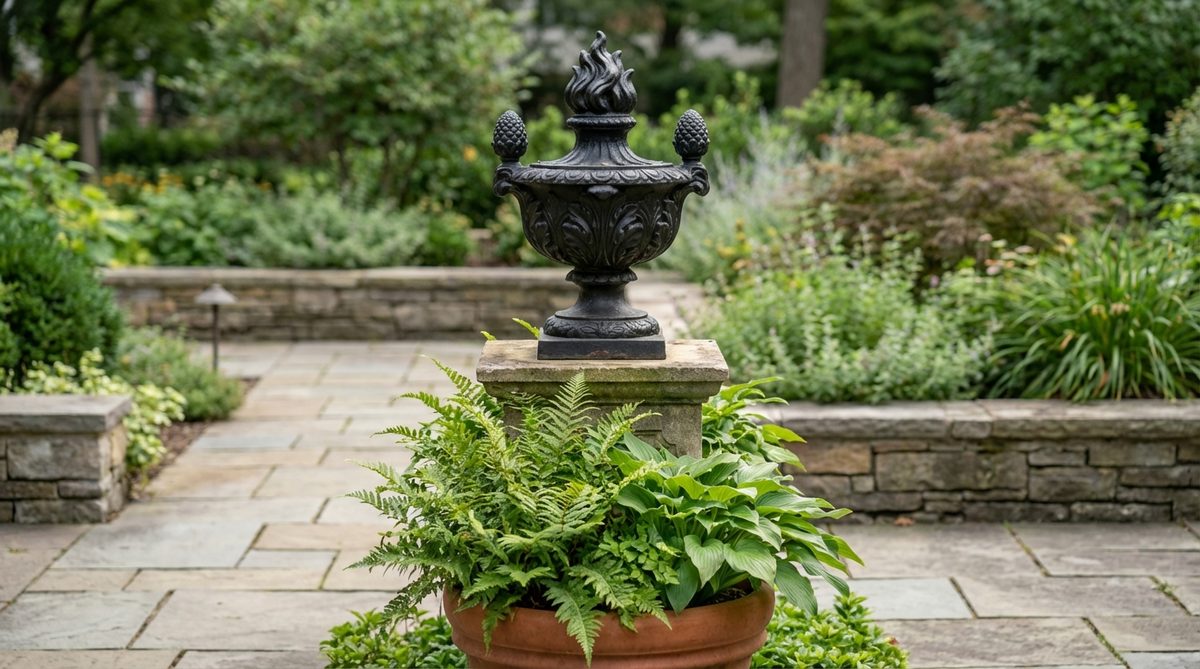
Feels like the crowning jewel of a historic, old-money estate. This cast iron garden ornament works exceptionally well mounted on top of heavy stone pillars flanking a driveway or entryway.
Empty pedestals look unfinished, but a heavy iron finial or artichoke topper looks far more expensive than it is. Using genuine architectural cast iron accents instantly adds visual weight and undeniable authority to your property line.
You can easily pull this off for around $60–$150. Save this to your curb appeal upgrade board!
- Key Materials: Cast iron finial, masonry adhesive.
- Vibe / Style: Stately old-money grandeur.
- Difficulty: Easy beginner setup.
- Budget Breakdown: Iron Topper: $90 | Heavy-duty adhesive: $10.
- Creator’s Tip: Use outdoor-grade construction adhesive rather than drilling into old stone, which can cause severe cracking.
- Smart Sourcing: cast iron architectural finials, extreme weather masonry adhesive tubes.
19. Bronze Garden Urn with Handles
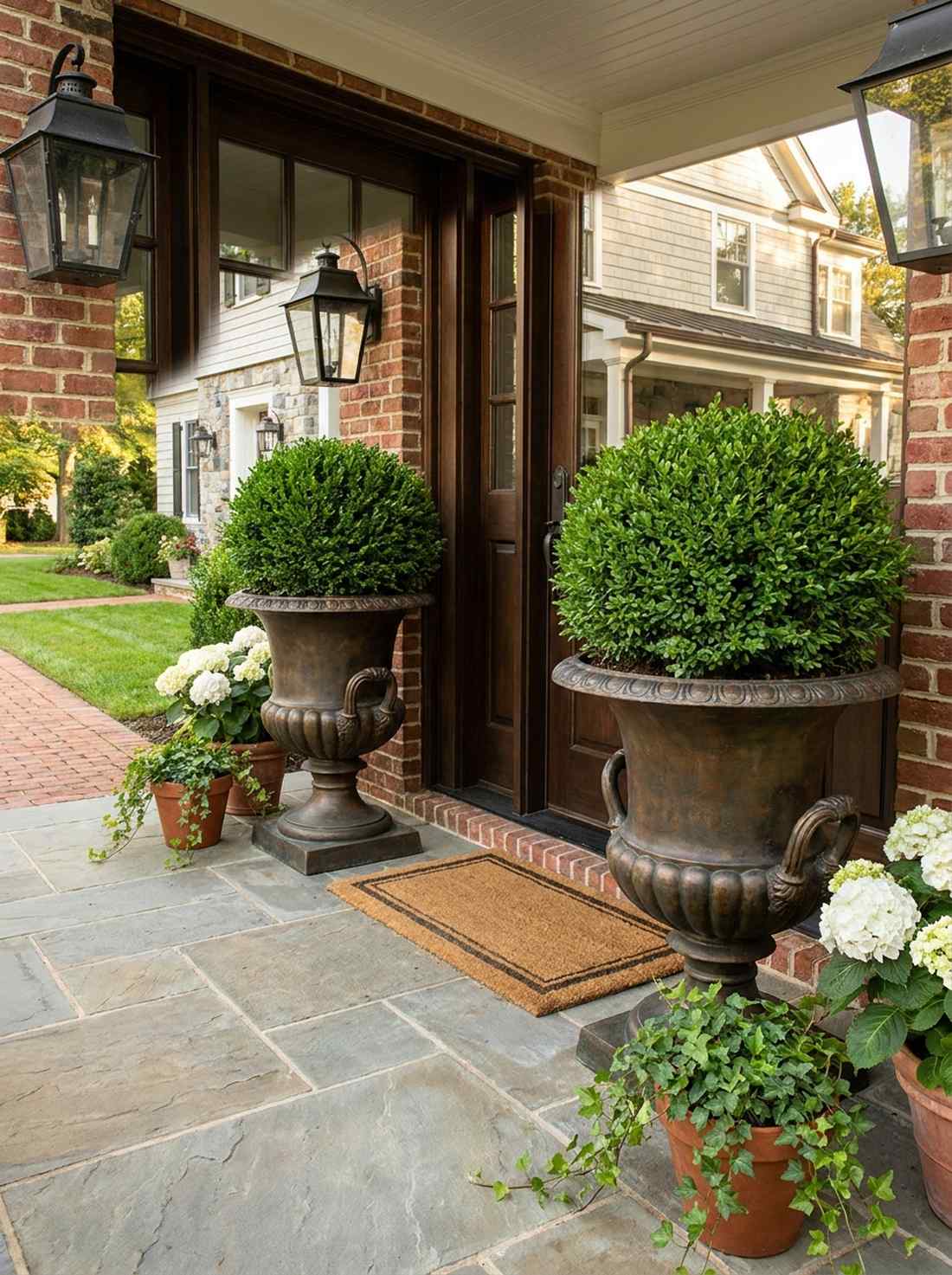
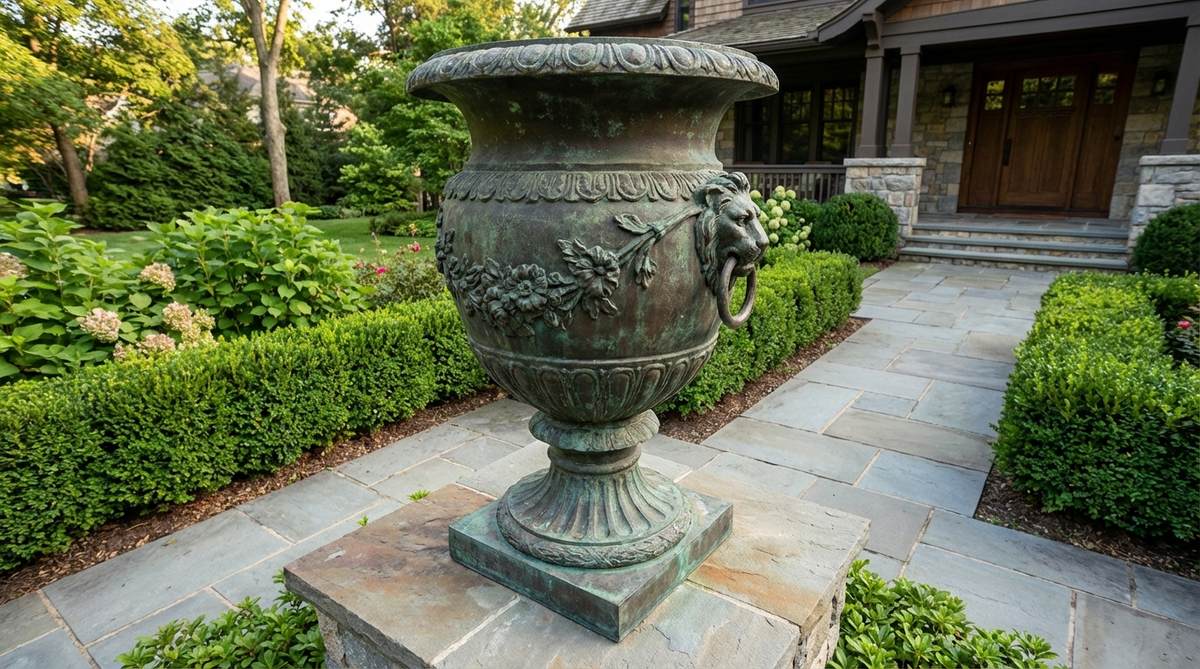
Brings a deep, rich elegance that completely grounds your floral displays. This heavy metal garden container works exceptionally well framing a front door or anchoring the corners of a back patio.
Plastic urns blow over in the wind, but a heavyweight metal vessel provides that expensive landscape architect touch without the bill. Investing in premium outdoor metal planters ensures the roots of your expensive boxwoods are insulated and protected.
You can snag a beautiful faux-bronze or real cast piece for around $80–$200. Pin this to your porch styling board right now!
- Key Materials: Cast metal urn, drainage drill bits, lightweight potting mix.
- Vibe / Style: Classic Mediterranean elegance.
- Difficulty: Easy beginner setup.
- Budget Breakdown: Urn Container: $120 | Soil/Filler: $20.
- Creator’s Tip: Fill the bottom 1/3 of the heavy urn with empty crushed water bottles before adding soil to make it easier to move.
- Smart Sourcing: heavy-duty bronze-finish garden urns, premium moisture-control potting mix (bulk bag).
The secret to high-end patio design is hiding in plain sight with this next container trick…
Functional Metal Containers
20. Galvanized Steel Planter Box
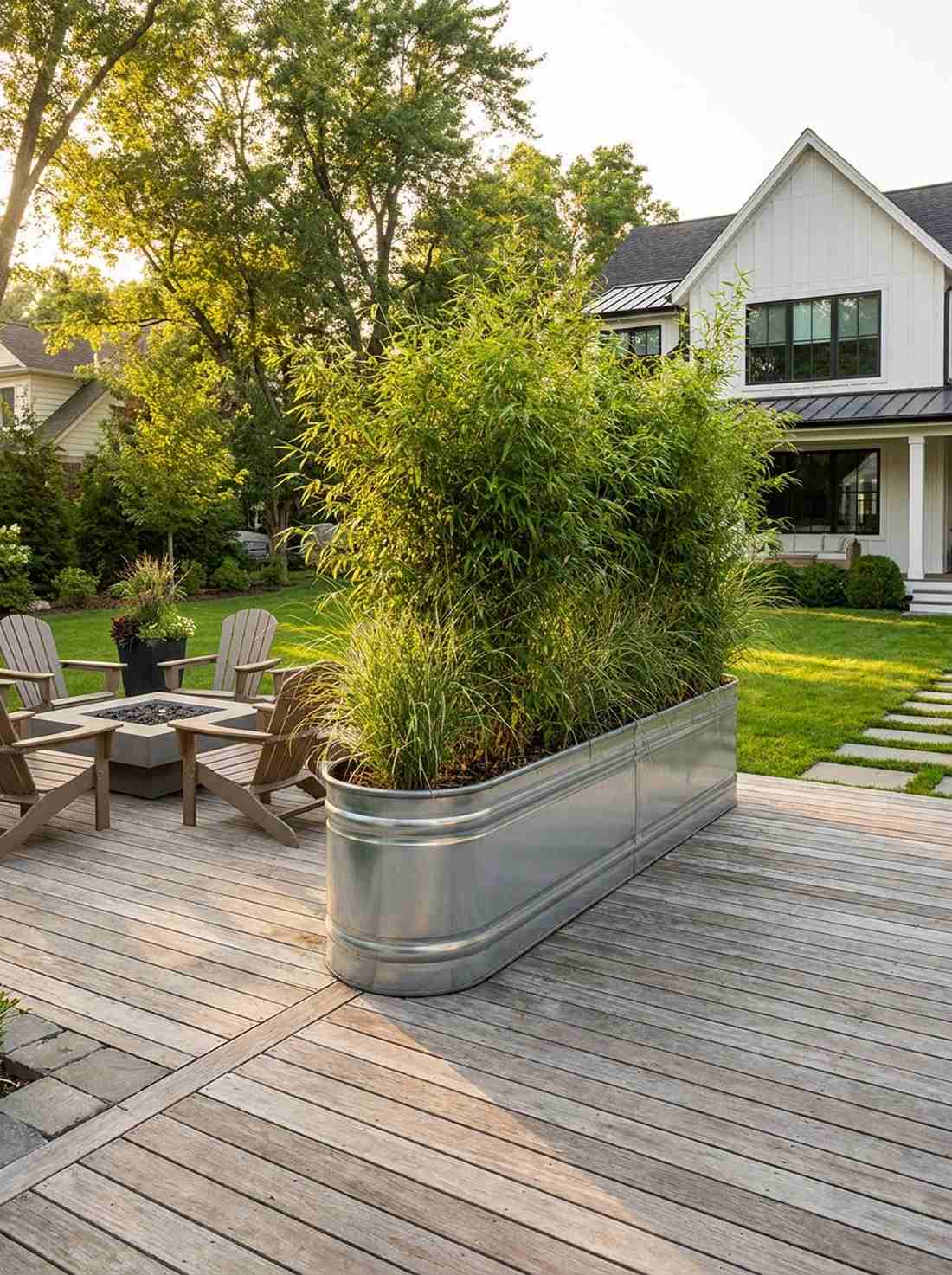
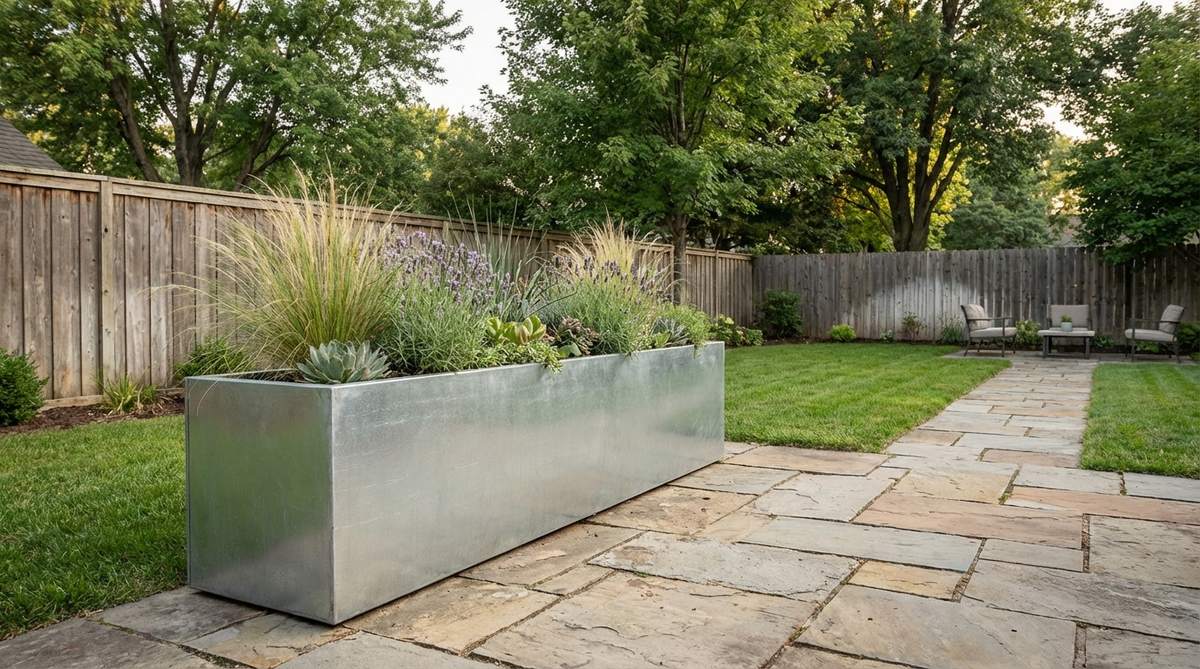
Delivers a bright, clean, industrial edge that perfectly frames modern patios. This modern metal garden planter works exceptionally well for creating a dense privacy hedge of tall bamboo or tall grasses.
Wood rots and bows under pressure, but a reinforced steel trough gives a designer-level finish that lasts practically forever. Utilizing commercial-grade galvanized steel troughs prevents the sides from bowing outward once filled with heavy, wet dirt.
You can easily set up a massive trough for around $60–$150. Save this to your modern privacy fencing board!
- Key Materials: Galvanized steel trough, power drill for drainage, casters (optional).
- Vibe / Style: Farmhouse industrial hybrid.
- Difficulty: Easy beginner setup.
- Budget Breakdown: Steel Box: $90 | Caster Wheels: $30.
- Creator’s Tip: Always drill at least six half-inch drainage holes in the bottom; steel holds water and will instantly drown your plants otherwise.
- Smart Sourcing: galvanized steel raised planter boxes, heavy-duty lockable caster wheels (4-pack).
21. Iron Window Box with Scroll Detail
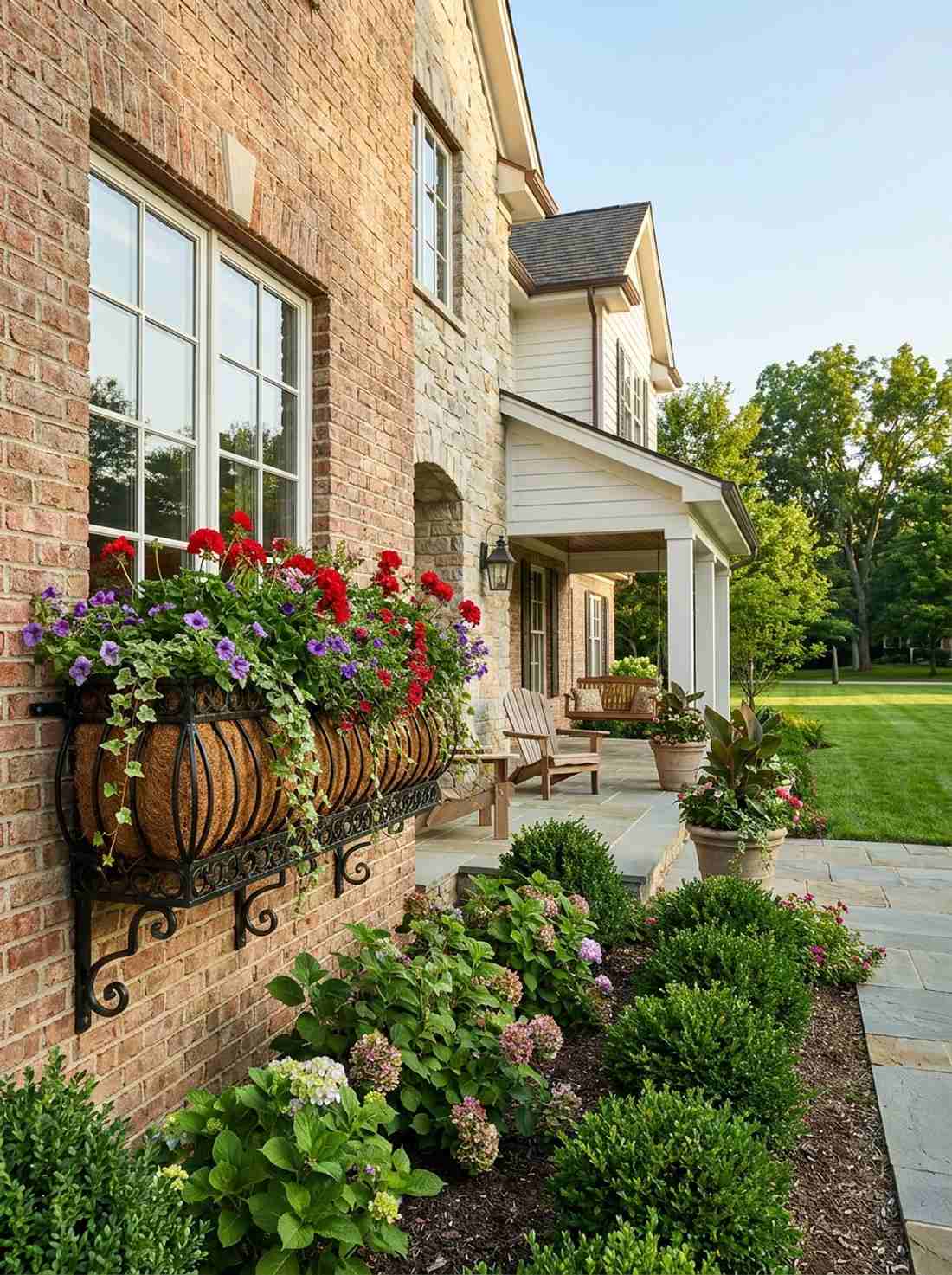
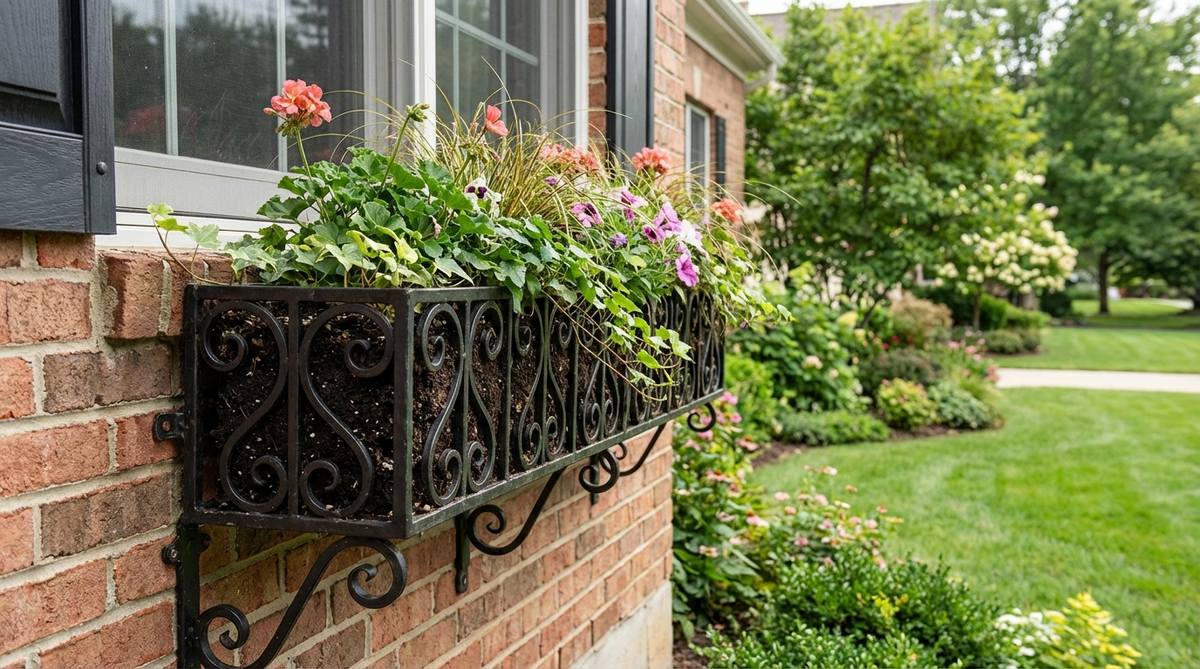
Instantly gives your home’s exterior that charming European street café vibe. This wrought iron exterior accent works exceptionally well mounted beneath first-floor windows filled with trailing flowers.
Flimsy plastic boxes crack in the winter, but a heavy scrolled iron cage looks far more expensive than it is. By pairing the ironwork with coco coir liner rolls, you get incredible drainage while maintaining a highly textured, organic look.
You can totally revamp your windows for around $40–$90 per box. Pin this for instant curb appeal upgrades!
- Key Materials: Iron scroll basket, coco liner, wall masonry anchors.
- Vibe / Style: Parisian street charm.
- Difficulty: Moderate DIY setup.
- Budget Breakdown: Iron Box: $50 | Coco Liner: $15.
- Creator’s Tip: Cut up a cheap plastic trash bag and poke holes in it to line the bottom of the coco fiber; it slows down water evaporation during summer.
- Smart Sourcing: wrought iron window planter cages, pre-cut coco coir basket liners (multi-pack).
22. Copper Garden Planter with Patina
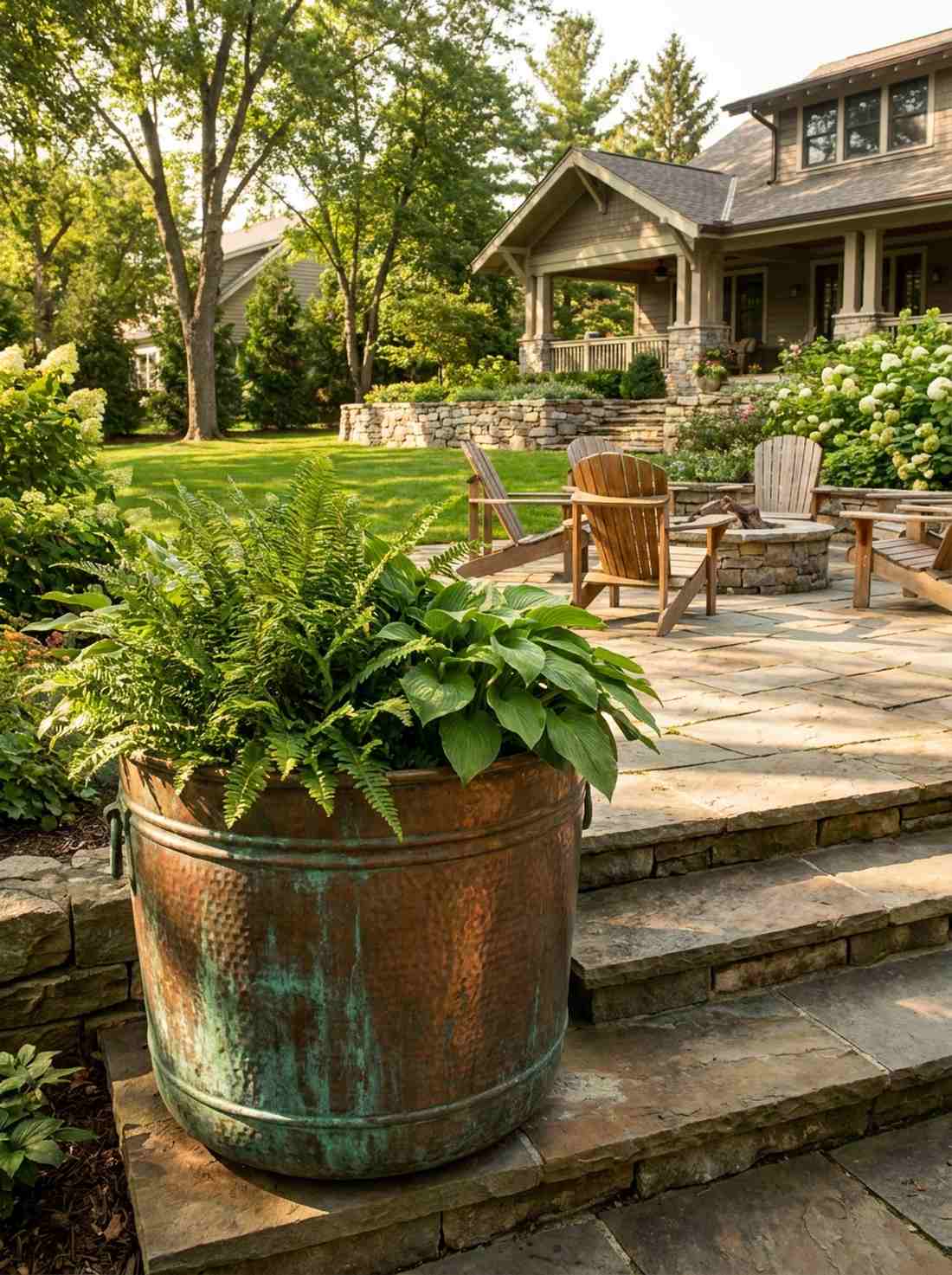
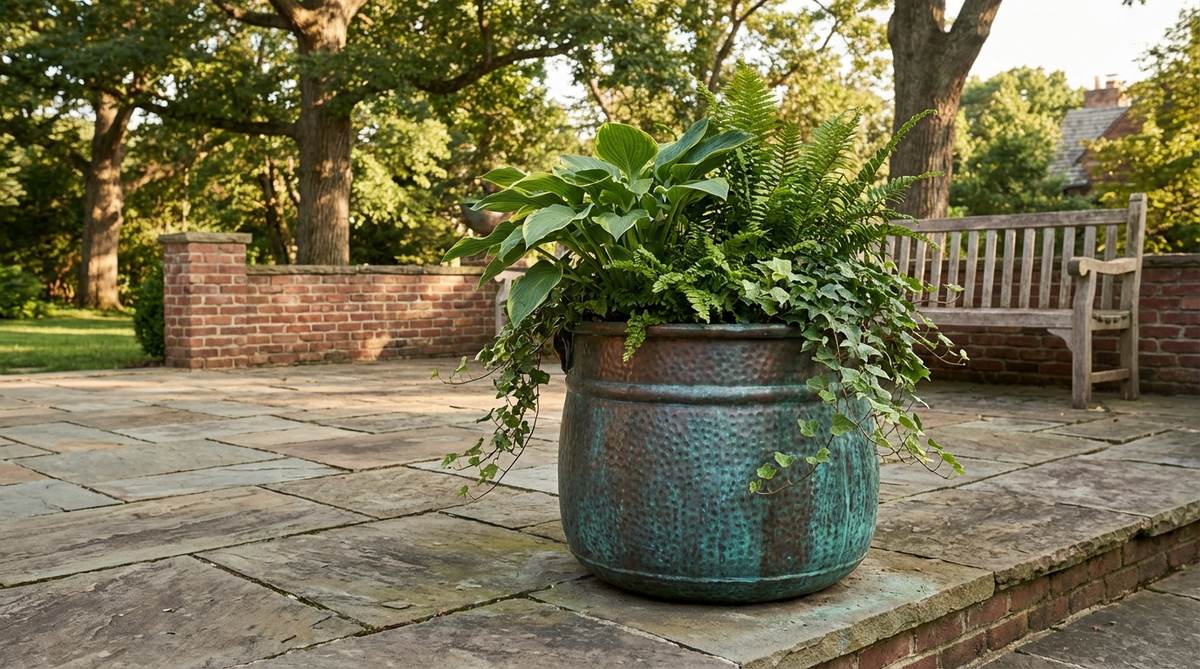
Feels like discovering a magical antique vessel in a royal greenhouse. This premium metal garden container works exceptionally well near stone steps where its bright color provides intense visual contrast.
Nothing screams luxury quite like raw copper, and letting it weather naturally creates a bespoke architectural vibe instantly. Exploring high-end metal garden decor accessories like hammered copper completely elevates basic ferns and hostas.
You can source a genuine or copper-plated piece for around $70–$180. Save this to your luxury garden styling board!
- Key Materials: Hammered copper pot, clear lacquer (optional).
- Vibe / Style: Organic luxury antique.
- Difficulty: Easy beginner setup.
- Budget Breakdown: Copper Planter: $110 | Polish: $15.
- Creator’s Tip: If you want to keep the shiny copper look and stop the green patina, you MUST spray it with exterior clear lacquer before bringing it outside.
- Smart Sourcing: hammered copper outdoor planters, UV-resistant clear lacquer spray (2-pack).
23. Steel Raised Bed Frame
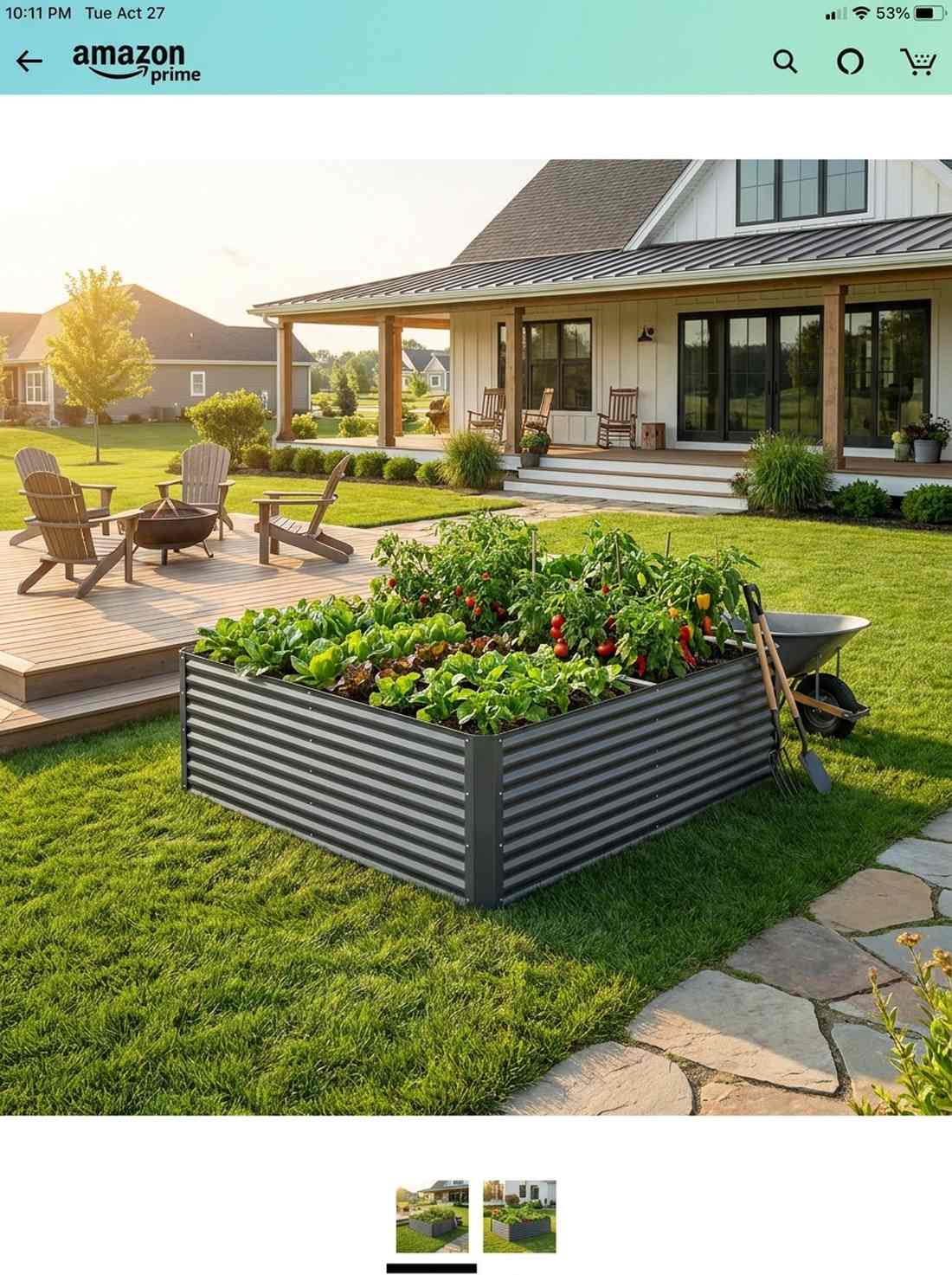
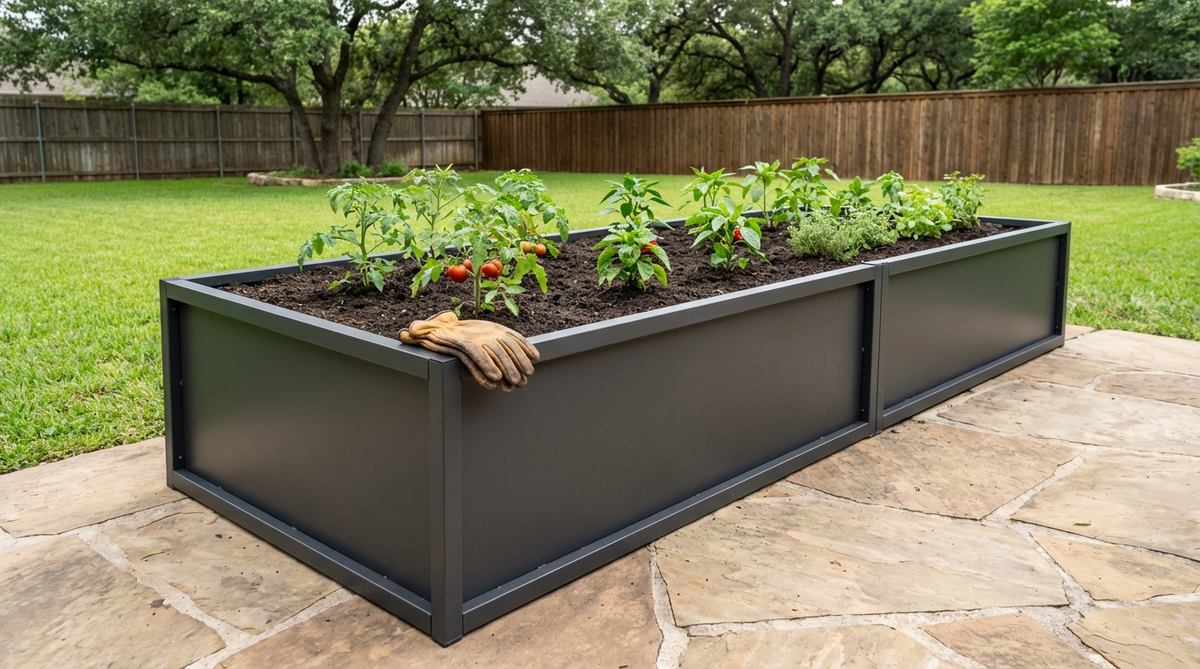
Creates a perfectly neat, incredibly durable zone for serious gardening. This heavy-duty metal garden structure works exceptionally well for large-scale vegetable farming right in a suburban backyard.
Wooden beds rot away in 3-5 years, but a powder-coated modular steel frame delivers a surprisingly premium look that lasts a lifetime. Utilizing corrugated metal landscape supplies allows you to build waist-high beds, totally saving your back and knees.
You can easily set this up for around $80–$160 depending on depth. Pin this to your ultimate homesteading board!
- Key Materials: Modular steel bed panels, corner brackets, bulk soil.
- Vibe / Style: High-efficiency modern farm.
- Difficulty: Easy bolt-together setup.
- Budget Breakdown: Steel Bed Kit: $120 | Bulk Soil: $40.
- Creator’s Tip: Put cardboard at the very bottom of the frame to kill the grass underneath and attract earthworms before adding soil.
- Smart Sourcing: modular corrugated steel raised bed kits, heavy-duty weed barrier landscape fabric (bulk roll).
24. Iron Hanging Basket Bracket
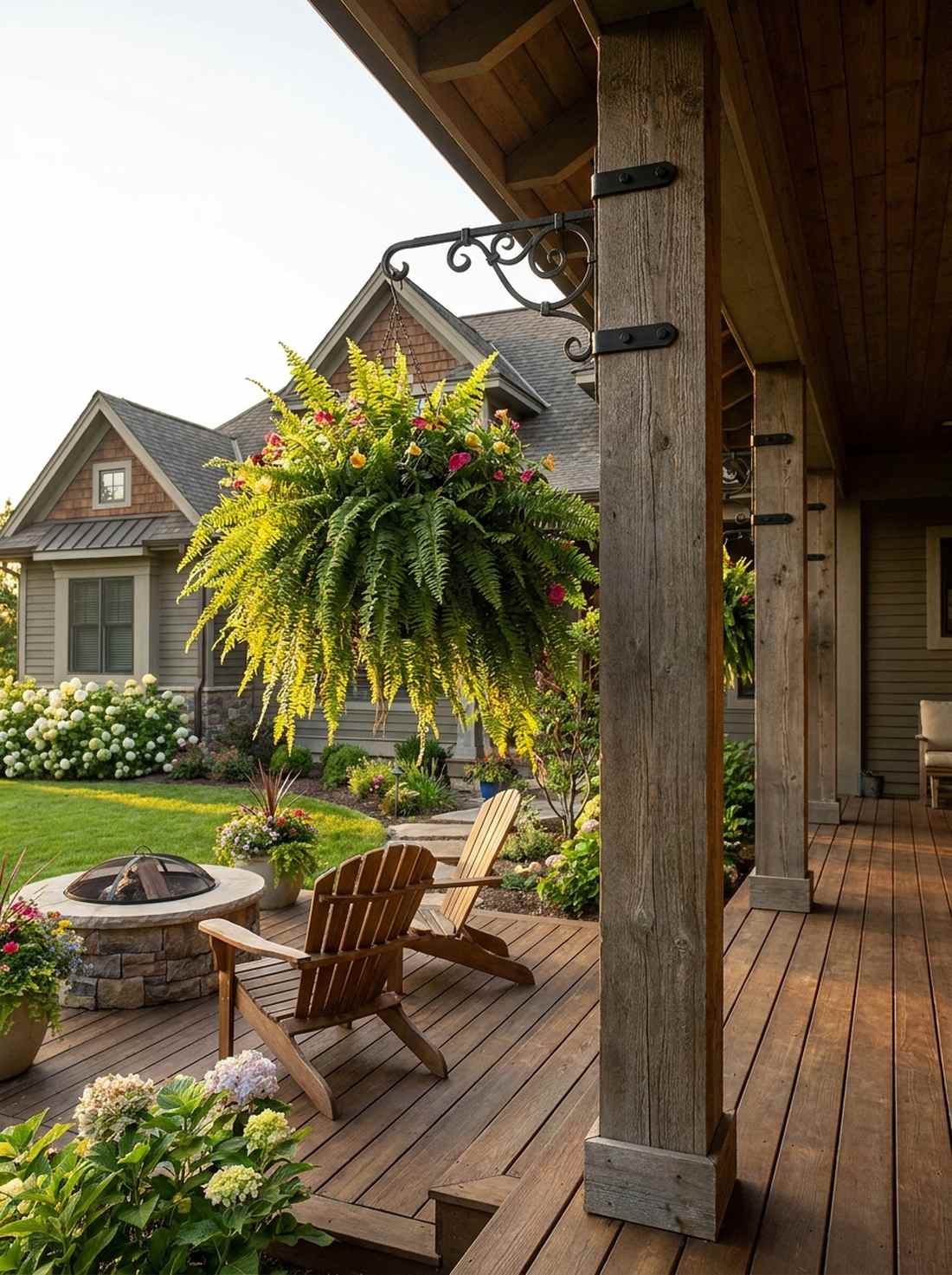
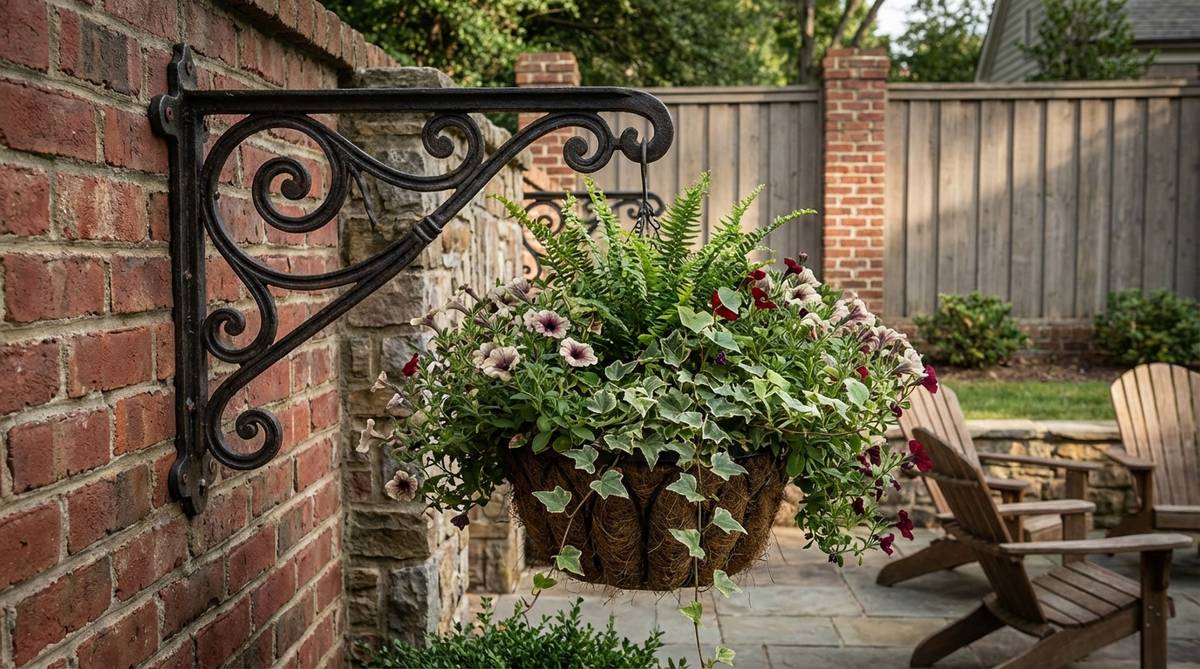
Adds a beautiful, cascading layer of color that draws the eyes up. This decorative metal garden accessory works exceptionally well mounted on wooden porch columns or bare fence posts.
Don’t trust heavy wet soil on cheap aluminum hooks; heavy-gauge iron provides that expensive landscape architect touch without the bill. Installing thick wrought iron outdoor hardware ensures your massive fern baskets never come crashing down in a storm.
You can easily snag a pair of these brackets for around $20–$40. Save this to your vertical gardening board!
- Key Materials: Heavy forged iron bracket, lag bolts.
- Vibe / Style: Classic cottage detail.
- Difficulty: Easy beginner setup.
- Budget Breakdown: Iron Brackets (Pair): $30 | Hardware: $5.
- Creator’s Tip: Ditch the screws that come in the box; buy 2-inch exterior lag bolts to ensure it actually holds the weight of wet dirt.
- Smart Sourcing: heavy-duty forged iron hanging brackets (2-pack), exterior coated wood lag screws.
Stop wasting money on cheap plastic boundaries. This next metal border hack changes everything…
Decorative Boundary Elements
25. Wrought Iron Border Fencing
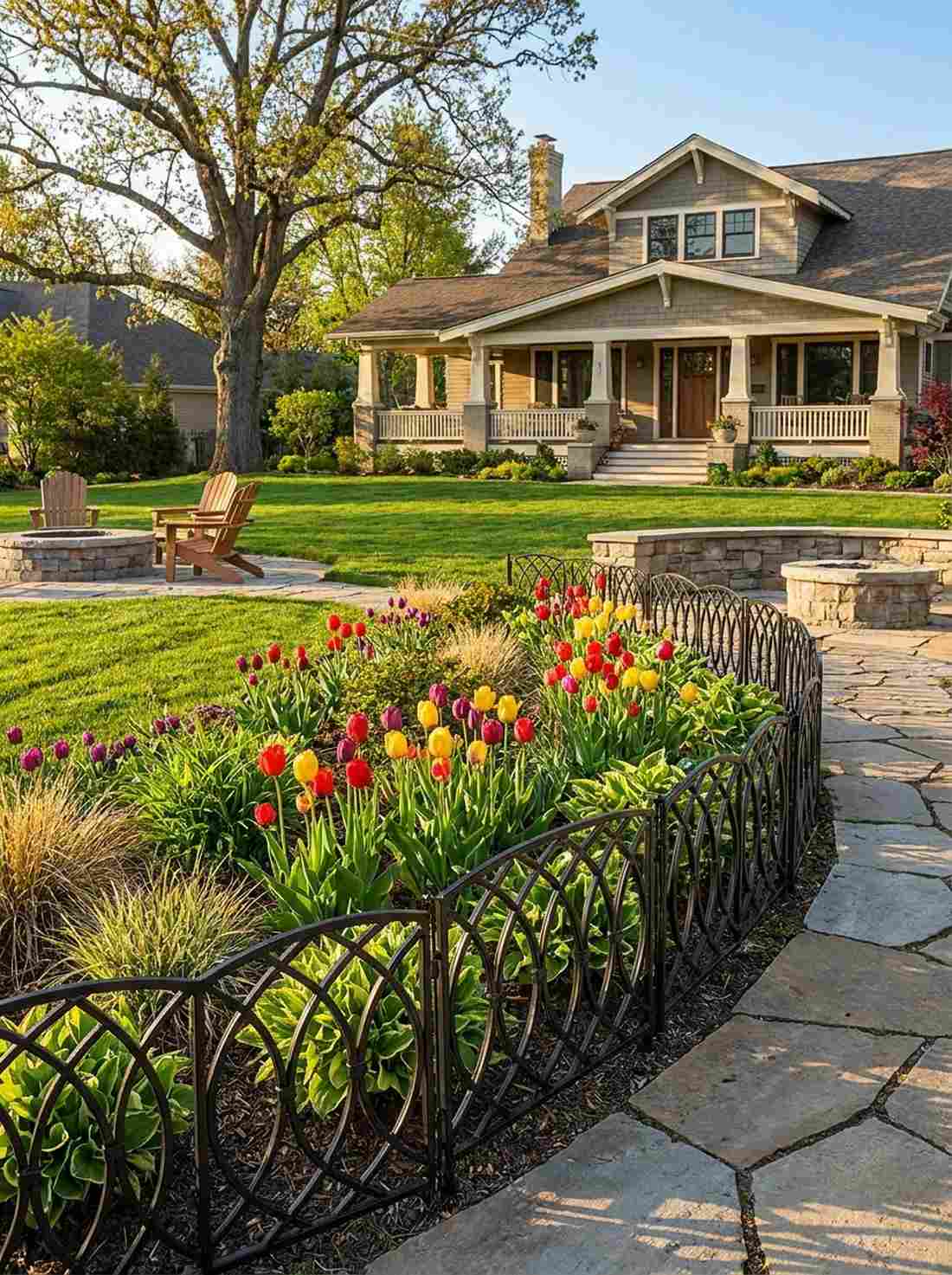
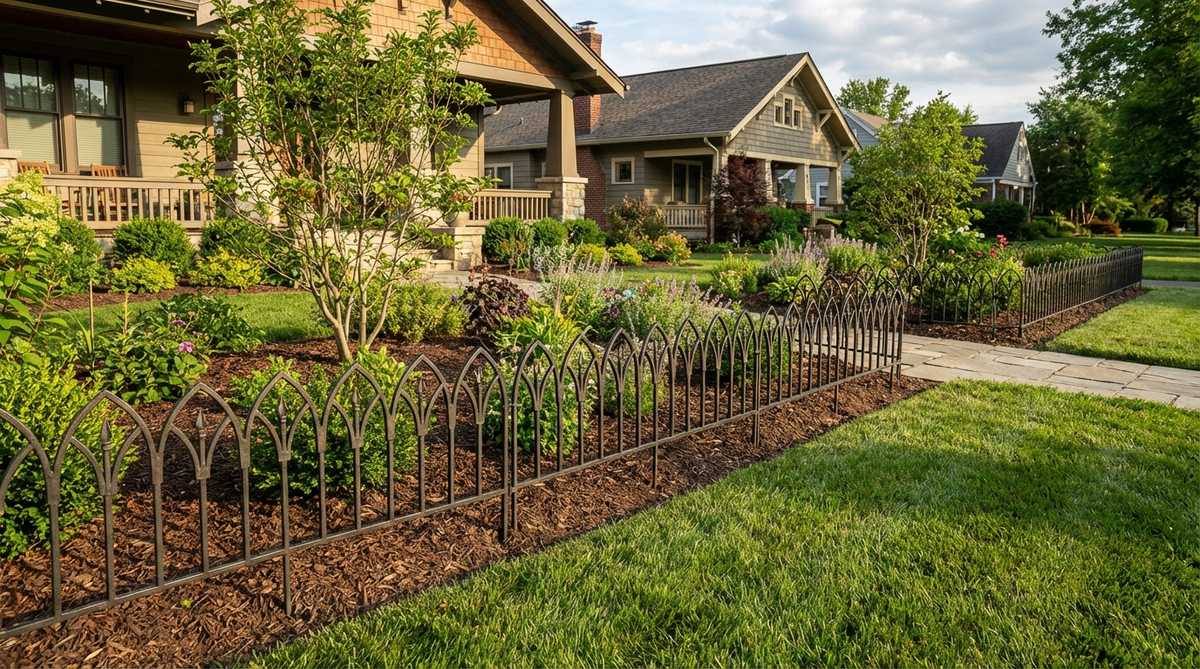
Feels like framing your flower beds with expensive black jewelry. This low decorative metal boundary works exceptionally well for keeping dogs out of your prize-winning tulips without blocking the view.
Plastic push-in borders snap easily, but interlocking wrought iron pieces give a designer-level finish that instantly neatens up a messy yard. Grabbing rust-proof metal landscape edging kits gives you a permanent solution that handles the weed whacker like a champ.
You can edge a standard flower bed for around $40–$90. Pin this if you’re tired of ugly plastic garden borders!
- Key Materials: Interlocking iron panels, rubber mallet.
- Vibe / Style: Neatly manicured estate.
- Difficulty: Easy step-in setup.
- Budget Breakdown: Iron Panels (10ft): $60 | Mallet: $10.
- Creator’s Tip: Wait until after a heavy rain to install these; the soil will be soft enough to push them in perfectly straight without bending the prongs.
- Smart Sourcing: rust-resistant wrought iron border fence panels (bulk pack), non-marring rubber mallets.
26. Steel Landscape Edging Strips
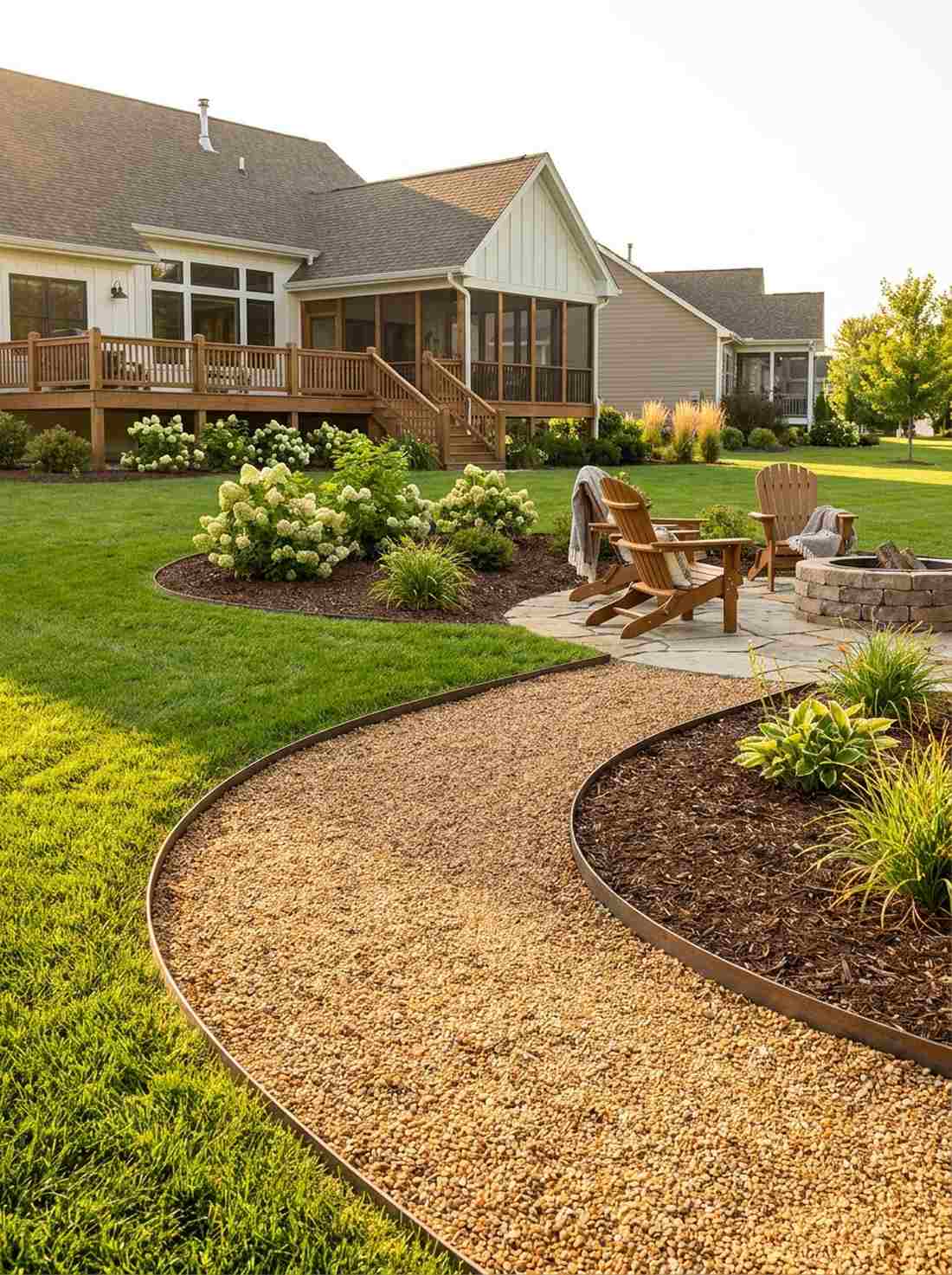
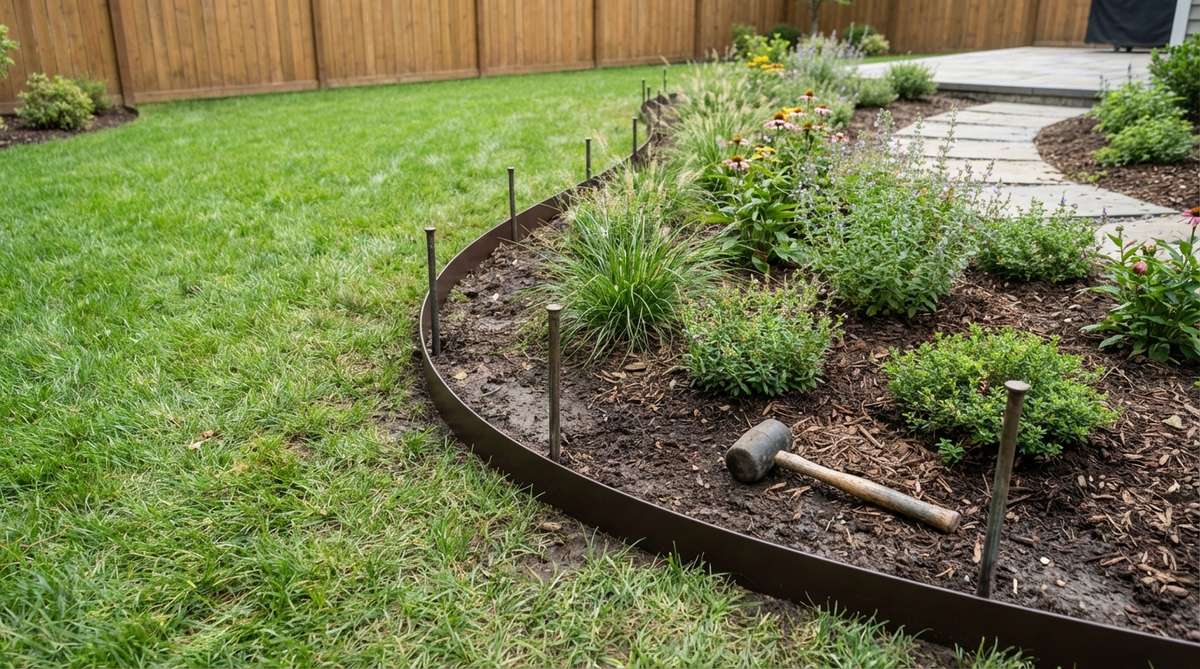
Delivers incredibly crisp, invisible lines that make your lawn look like a professional golf course. This flexible metal garden border works exceptionally well for creating perfectly curved gravel pathways.
Black plastic tubing heaves out of the ground in winter, but deep steel strips look far more expensive than it is by vanishing completely. Utilizing legitimate commercial metal landscape supplies stops grass roots from invading your mulch beds permanently.
You can line a 20-foot path for around $50–$100. Save this to your ultimate yard maintenance board!
- Key Materials: Bendable steel strips, joining clips, metal ground spikes.
- Vibe / Style: Professional invisible perfection.
- Difficulty: Moderate DIY setup.
- Budget Breakdown: Steel Edging (20ft): $80 | Spikes: $15.
- Creator’s Tip: Overlap the strips by exactly 2 inches at the joints so they don’t pop apart when the ground freezes and expands.
- Smart Sourcing: flexible steel landscape edging strips (bulk roll), heavy-duty metal edging stake kits.
27. Decorative Iron Garden Gate
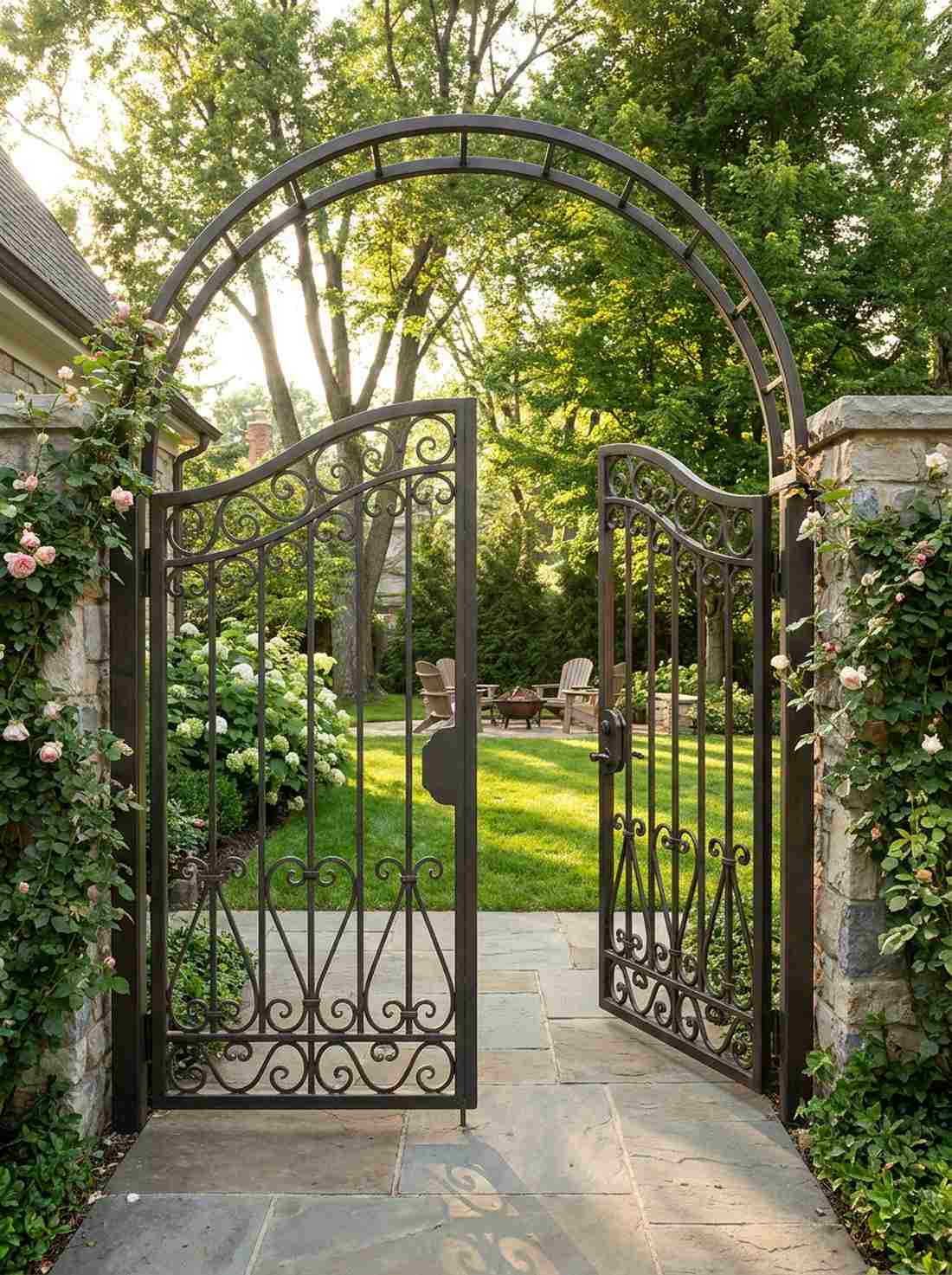
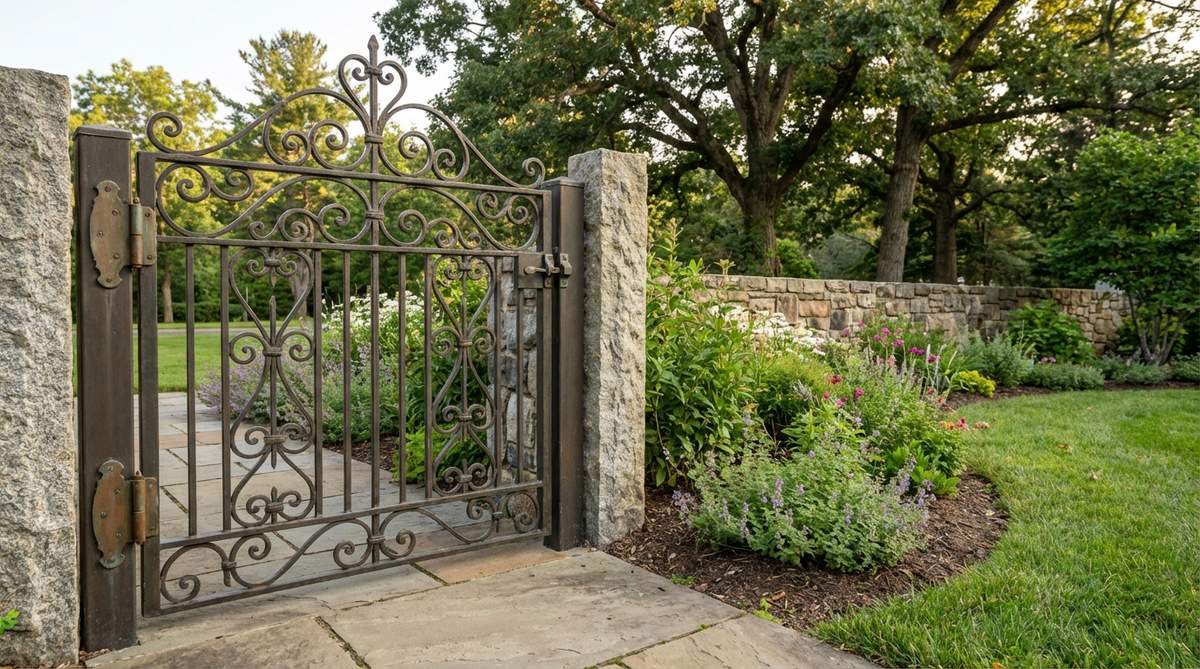
Creates a dramatic sense of arrival that feels incredibly exclusive. This heavy metal garden transition works exceptionally well dividing a public front yard from a private backyard sanctuary.
A solid wood gate feels closed off, but an open-scroll iron gate creates a bespoke architectural vibe instantly by letting you peek through. Snagging top-rated garden decor metal gates with integrated archways makes the entrance feel grand and expensive.
You can easily pull this off for around $150–$400. Pin this to your landscape privacy and entrance board!
- Key Materials: Iron gate panel, heavy post hinges, concrete footings.
- Vibe / Style: Exclusive courtyard entrance.
- Difficulty: Advanced DIY setup.
- Budget Breakdown: Iron Gate: $250 | Concrete: $30.
- Creator’s Tip: Always install a spring-loaded self-closing hinge so the heavy metal gate doesn’t slam and shatter in the wind.
- Smart Sourcing: pre-fabricated decorative iron garden gates, heavy-duty self-closing gate hinge hardware.
28. Iron Corner Bed Markers
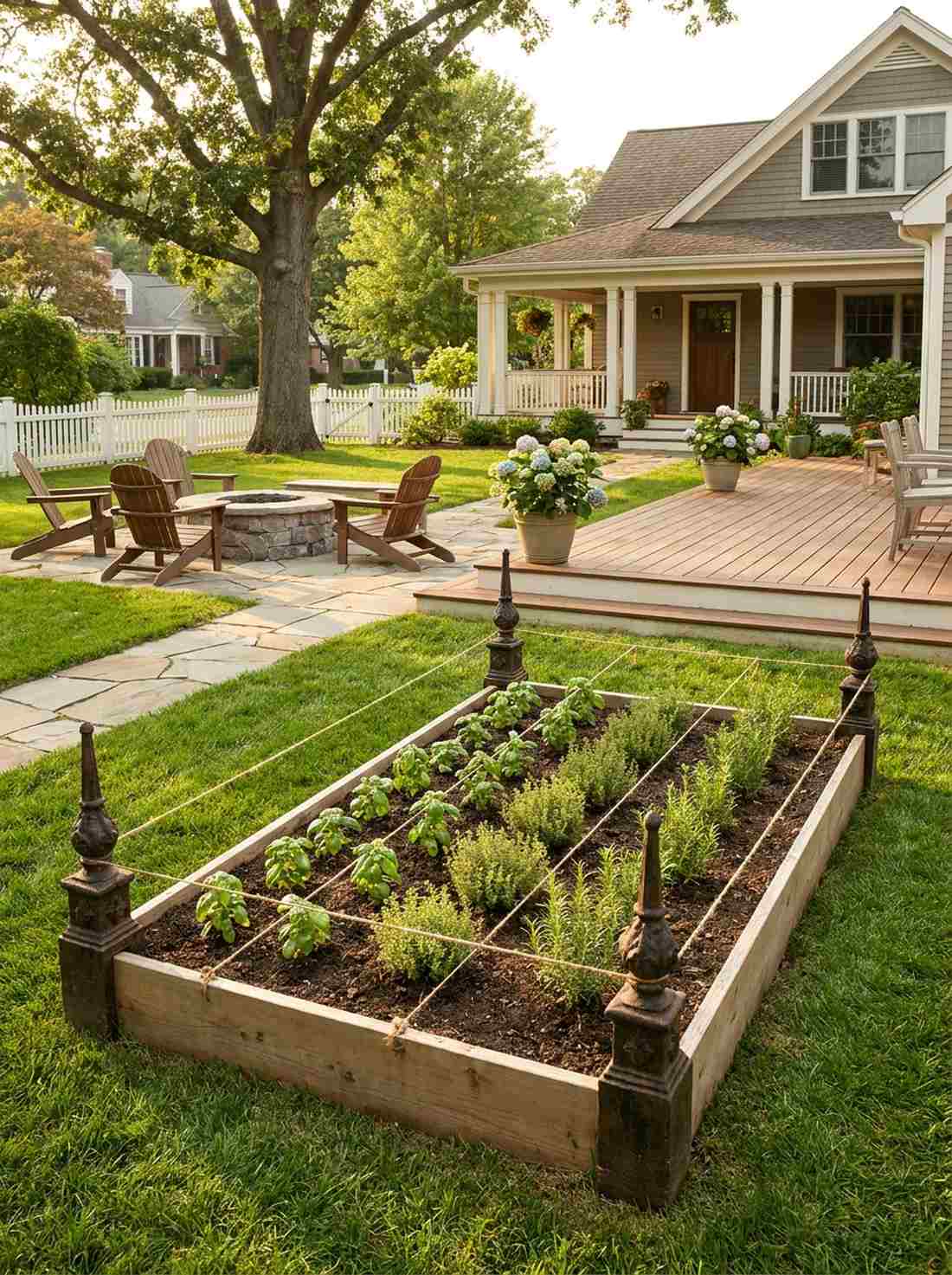
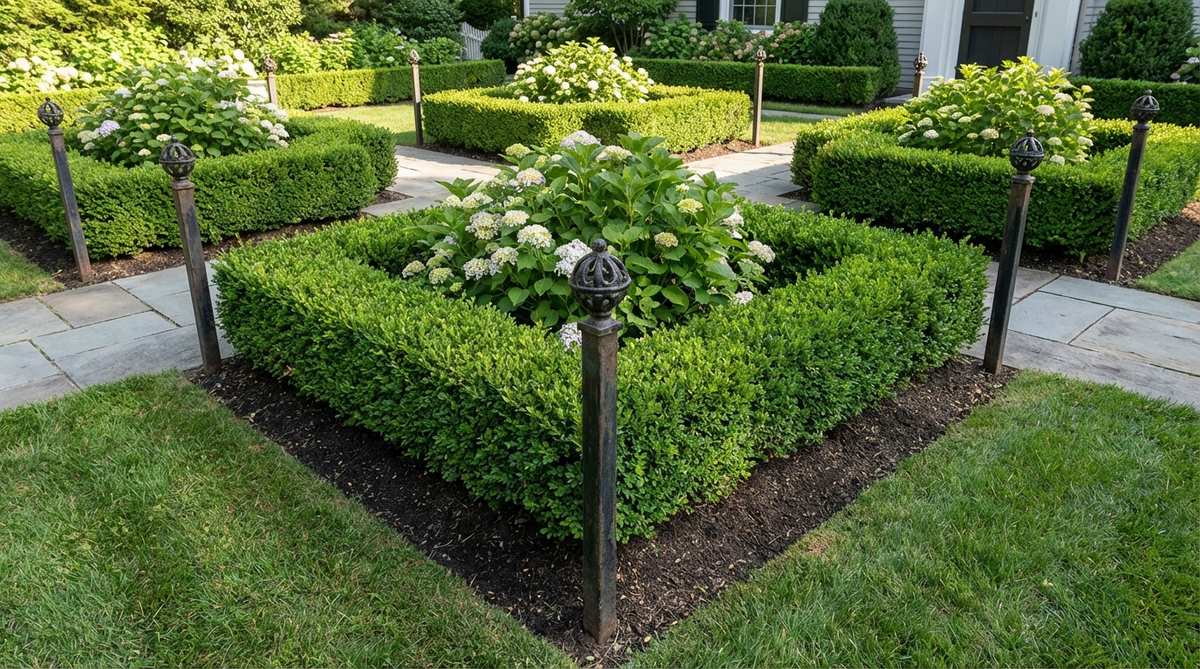
Adds sharp, intentional organization that makes a basic veggie patch look highly planned. This small metal garden accent works exceptionally well at the four corners of a low herb garden.
Details matter, and popping a heavy finial on the corners provides that expensive landscape architect touch without the bill. Using vintage iron garden decorations adds a sudden vertical pop of interest to flat, boring dirt plots.
You can snag a set of four for around $20–$50. Save this to your garden organization board right now!
- Key Materials: Spiked iron finials, leveling string line.
- Vibe / Style: Historic botanical garden.
- Difficulty: Easy beginner setup.
- Budget Breakdown: Finial Set: $35.
- Creator’s Tip: Tie twine between the corner posts to create perfectly straight lines for planting seeds like a pro.
- Smart Sourcing: cast iron garden hose guides/corner markers (4-pack), bright garden layout twine.
29. Steel Trellis Fence Panel
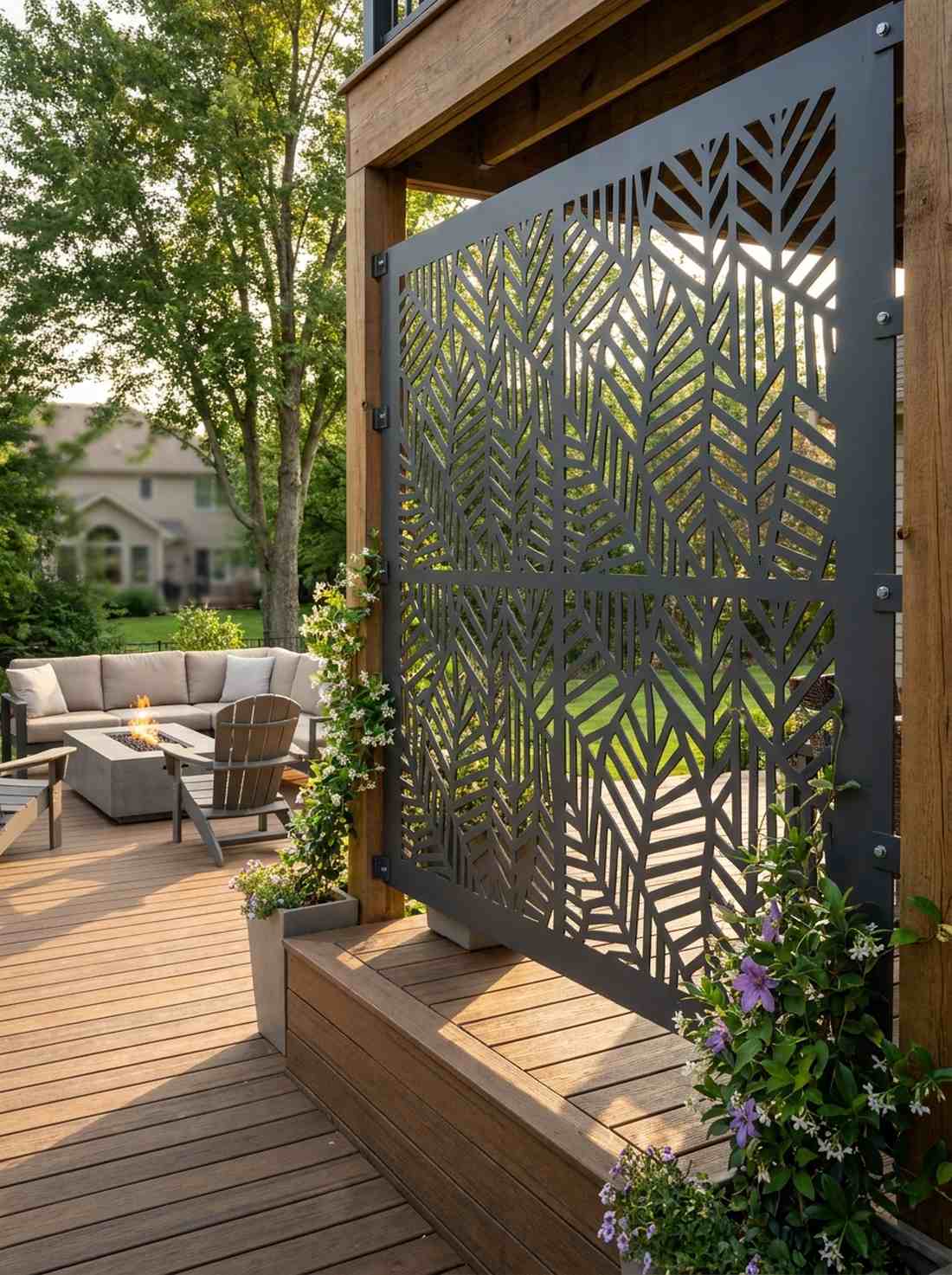
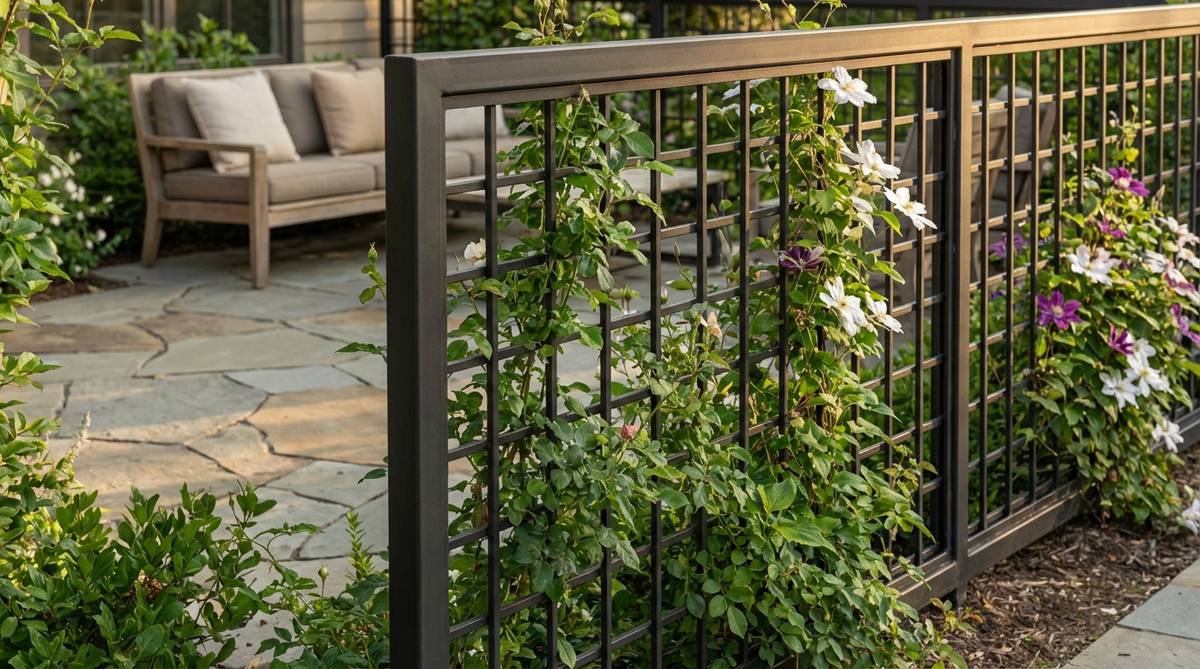
Instantly screens out nosy neighbors while doubling as a massive vertical planter. This large metal privacy structure works exceptionally well bolted to the side of a deck or patio.
Solid fences block the breeze, but a laser-cut steel privacy screen delivers a surprisingly premium look that filters light beautifully. Sourcing commercial-grade metal screening panels gives you instant privacy that gets even better once vines grow in.
You can easily install a gorgeous panel for around $120–$250. Pin this to your backyard privacy hacks board!
- Key Materials: Laser-cut steel panel, structural posts, heavy carriage bolts.
- Vibe / Style: Modern private retreat.
- Difficulty: Moderate DIY setup.
- Budget Breakdown: Steel Privacy Panel: $180 | Mounting Hardware: $30.
- Creator’s Tip: Mount the panel at least 4 inches off the deck floor so leaves and snow don’t get trapped underneath and cause rot.
- Smart Sourcing: laser-cut metal outdoor privacy screen panels, heavy-duty structural deck post brackets.
You won’t believe how this kinetic motion trick completely transforms a static, boring yard…
Kinetic and Fire Features
30. Stainless Steel Wind Sculpture
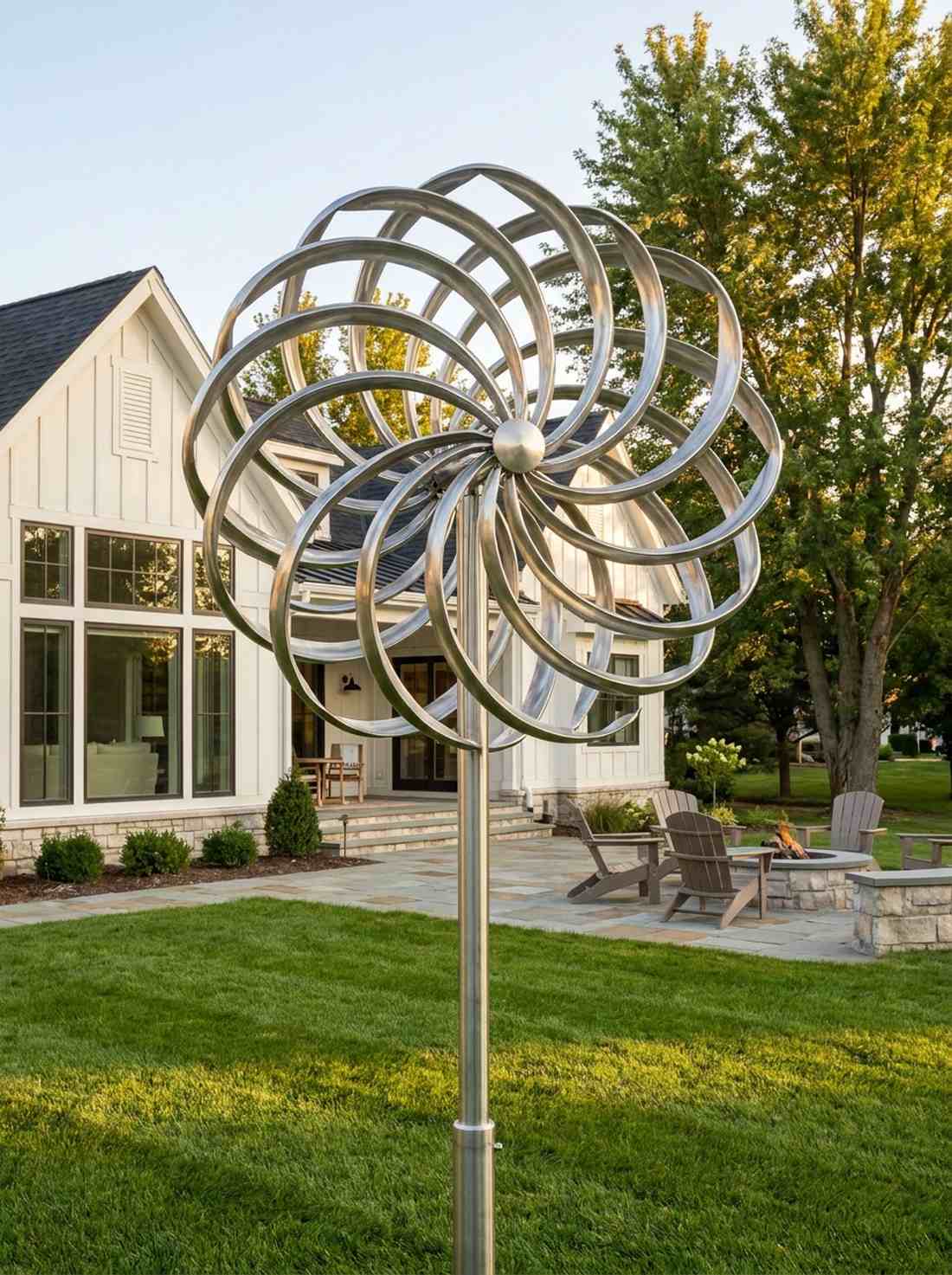
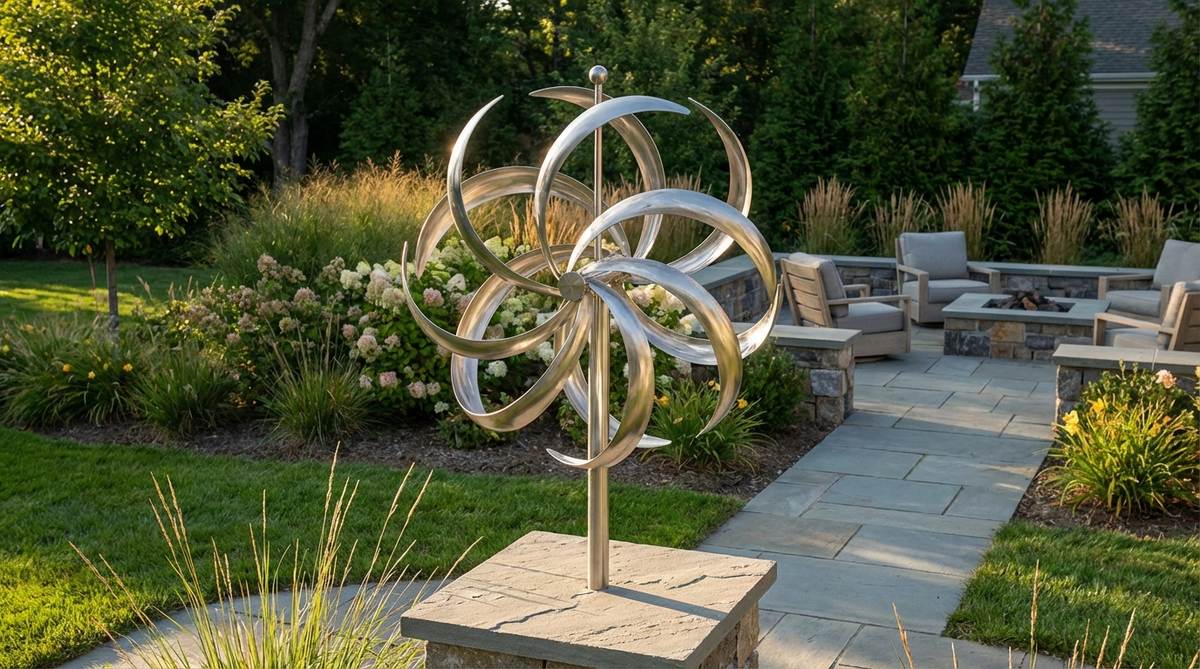
Brings a mesmerizing, hypnotic energy that makes your yard feel totally alive. This kinetic metal garden structure works exceptionally well placed in open, breezy areas where you can watch it from your living room window.
A static yard can feel dead, but a massive spinning stainless feature creates a bespoke architectural vibe instantly. By opting for high-end metal yard accessories with dual-bearing movement, you ensure it spins silently instead of squeaking annoyingly in the wind.
You can easily pull this off for around $60–$150. Save this to your dynamic yard styling board!
- Key Materials: Stainless steel spinner top, heavy-duty sectional pole, ground prong.
- Vibe / Style: Hypnotic modern movement.
- Difficulty: Easy beginner setup.
- Budget Breakdown: Wind Sculpture: $90 | Dry Lube: $10.
- Creator’s Tip: Spray dry graphite lubricant into the bearings before the first rain to ensure it never rusts or seizes up.
- Smart Sourcing: stainless steel kinetic wind sculptures, dry graphite lubricant spray (multi-purpose).
31. Copper Wind Spinner
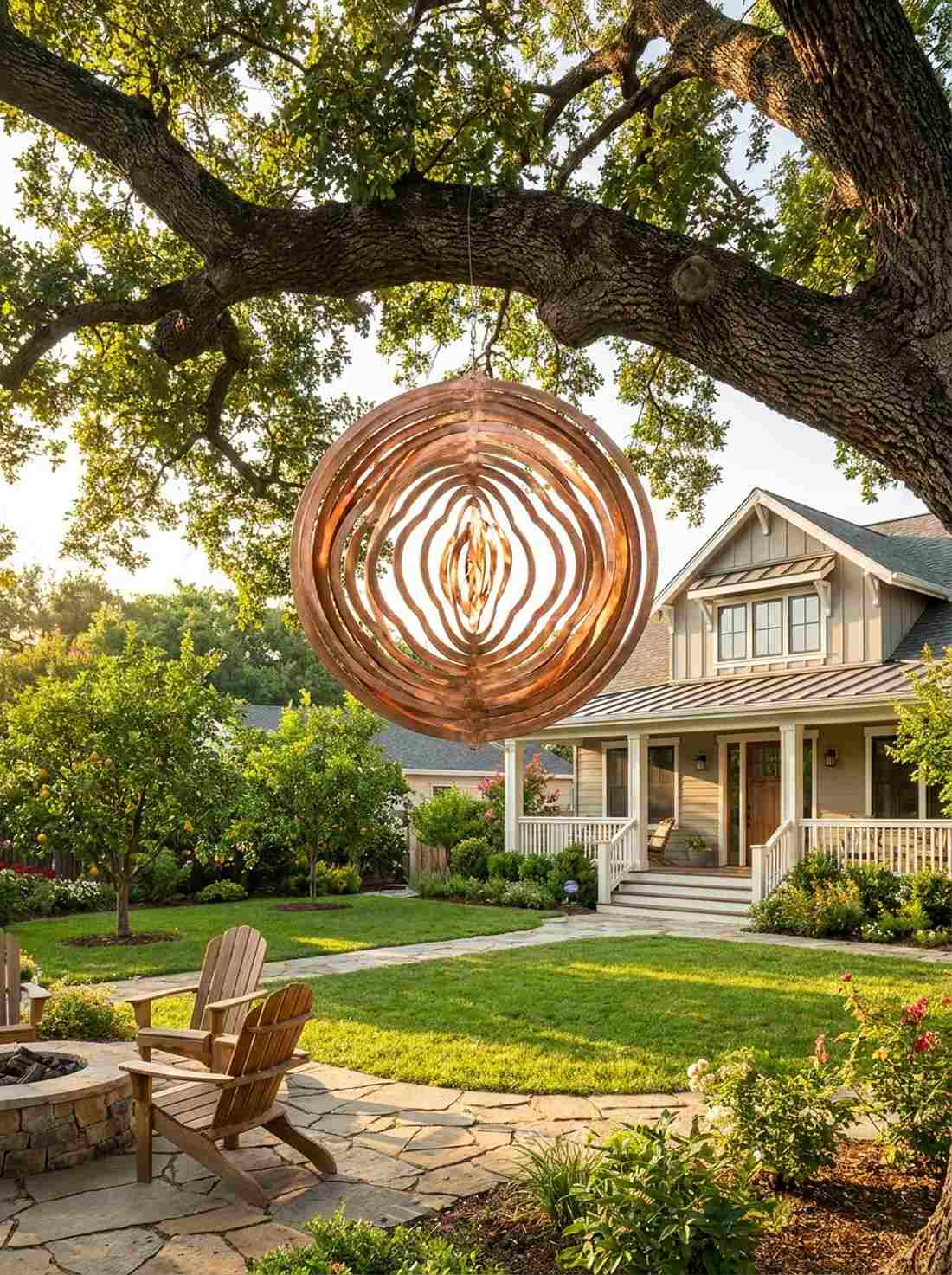
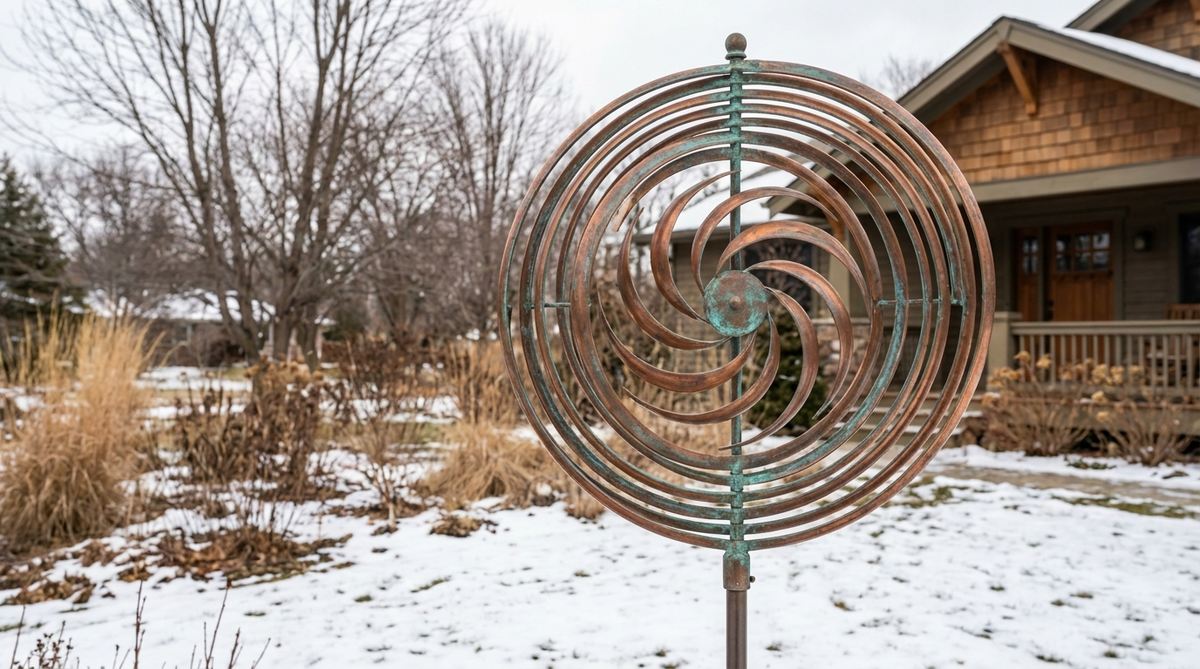
Feels like a warm, flashing beacon of light dancing in the afternoon sun. This copper garden ornament works exceptionally well hanging from a massive oak tree branch or a heavy porch hook.
Cheap plastic spinners fade and crack, but genuine spinning copper looks far more expensive than it is as it develops a natural patina. Incorporating premium outdoor garden decor like this creates a flashing visual deterrent that actually keeps birds away from your fruit trees.
You can hang one of these beautifully for around $30–$70. Pin this for a functional and beautiful yard hack!
- Key Materials: 3D copper spinner, heavy-duty swivel hook, fishing line.
- Vibe / Style: Warm bohemian energy.
- Difficulty: Easy beginner setup.
- Budget Breakdown: Copper Spinner: $45 | Swivel Hardware: $8.
- Creator’s Tip: Use high-pound test clear fishing line to hang it so the spinner looks like it is magically floating in mid-air.
- Smart Sourcing: 3D copper kinetic wind spinners, heavy-duty ball bearing swivel hooks (multi-pack).
32. Steel Fire Pit Bowl
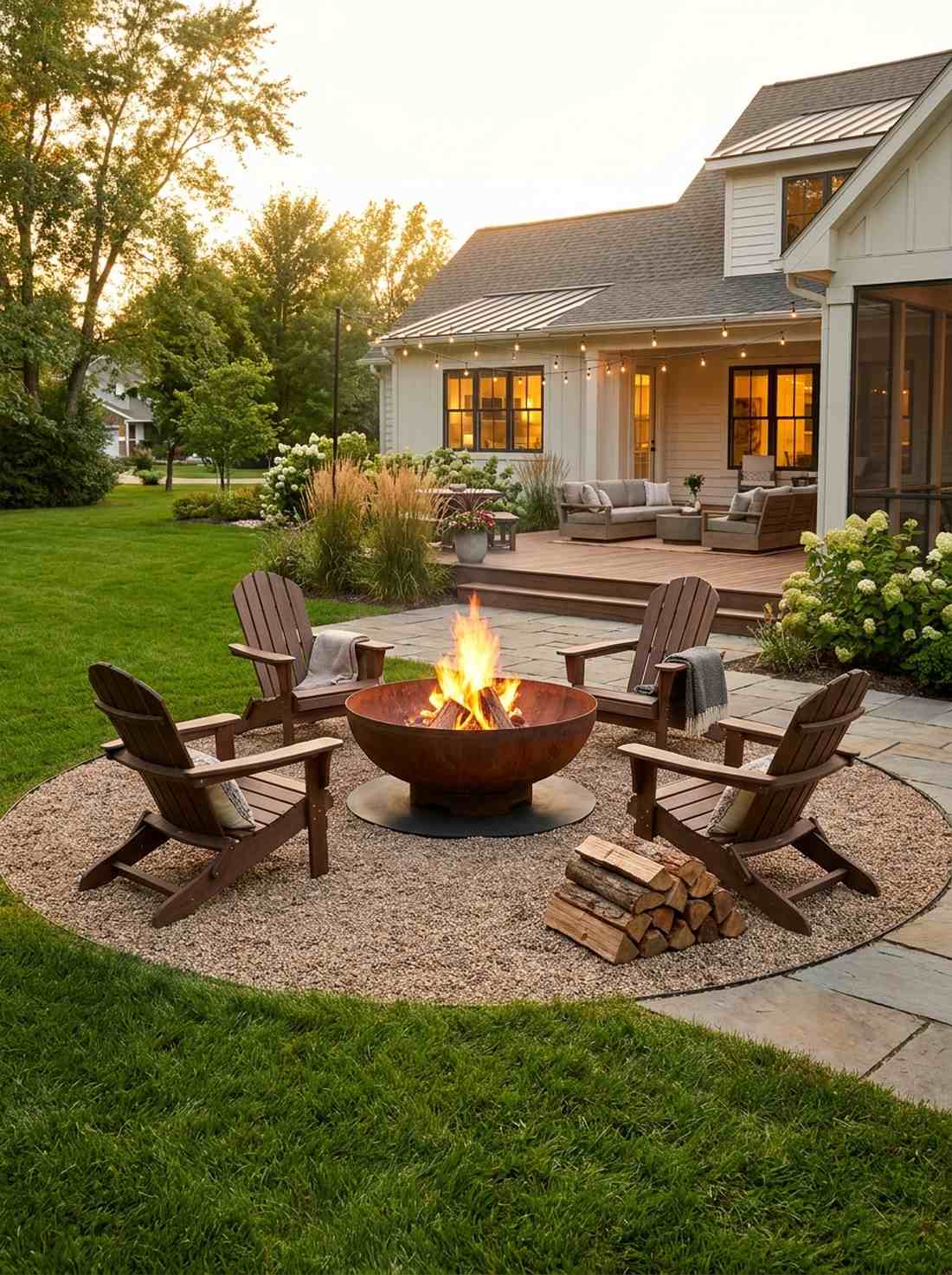
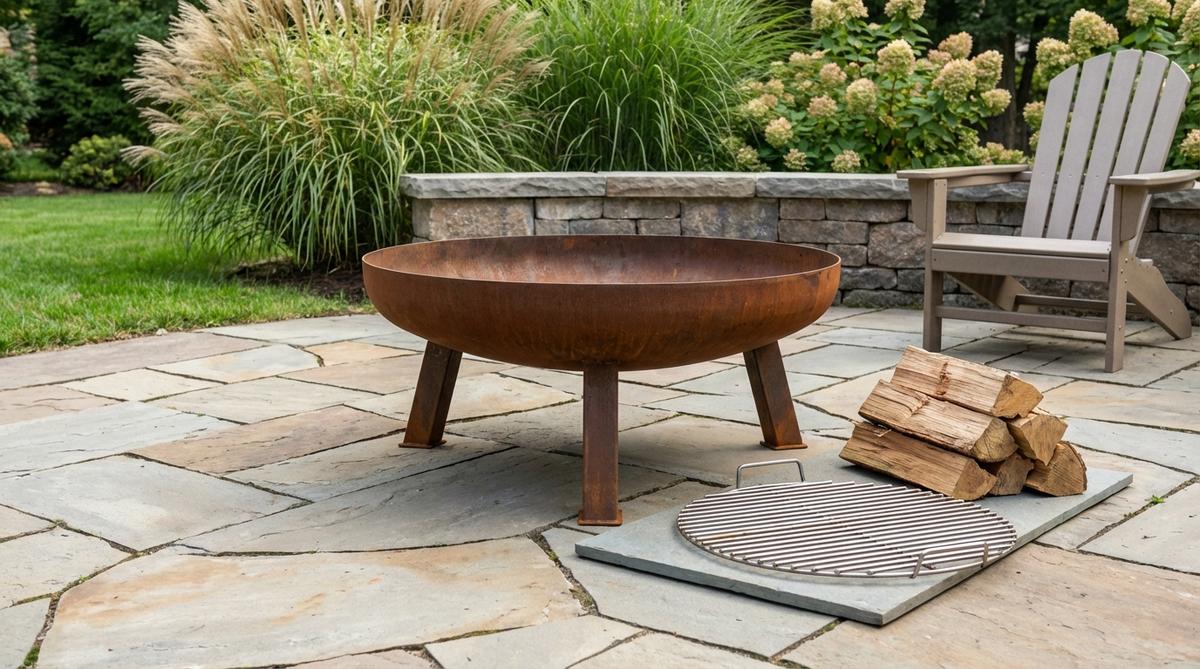
Creates an instant gathering spot that feels incredibly cozy and primal. This heavy metal outdoor feature works exceptionally well sitting in the dead center of a crushed gravel patio ringed by Adirondack chairs.
Flimsy big-box fire pits burn through the bottom in one season, but a heavy-gauge steel bowl delivers a surprisingly premium look that handles intense heat. Investing in legitimate commercial-grade outdoor metal fixtures means the bowl will naturally rust on the outside while staying structurally bulletproof.
You can easily set up this centerpiece for around $100–$250. Save this to your outdoor entertaining board right now!
- Key Materials: Heavy-gauge steel bowl, heat-proof base pad, seasoned hardwood.
- Vibe / Style: Rustic campfire lounge.
- Difficulty: Easy beginner setup.
- Budget Breakdown: Steel Fire Bowl: $180 | Base Pad: $40.
- Creator’s Tip: Drill a tiny 1/4 inch hole in the very bottom so rainwater drains out instead of creating a foul-smelling soup of wet ash.
- Smart Sourcing: heavy-gauge steel fire pit bowls, fireproof outdoor patio mat shields.
33. Cast Iron Chiminea
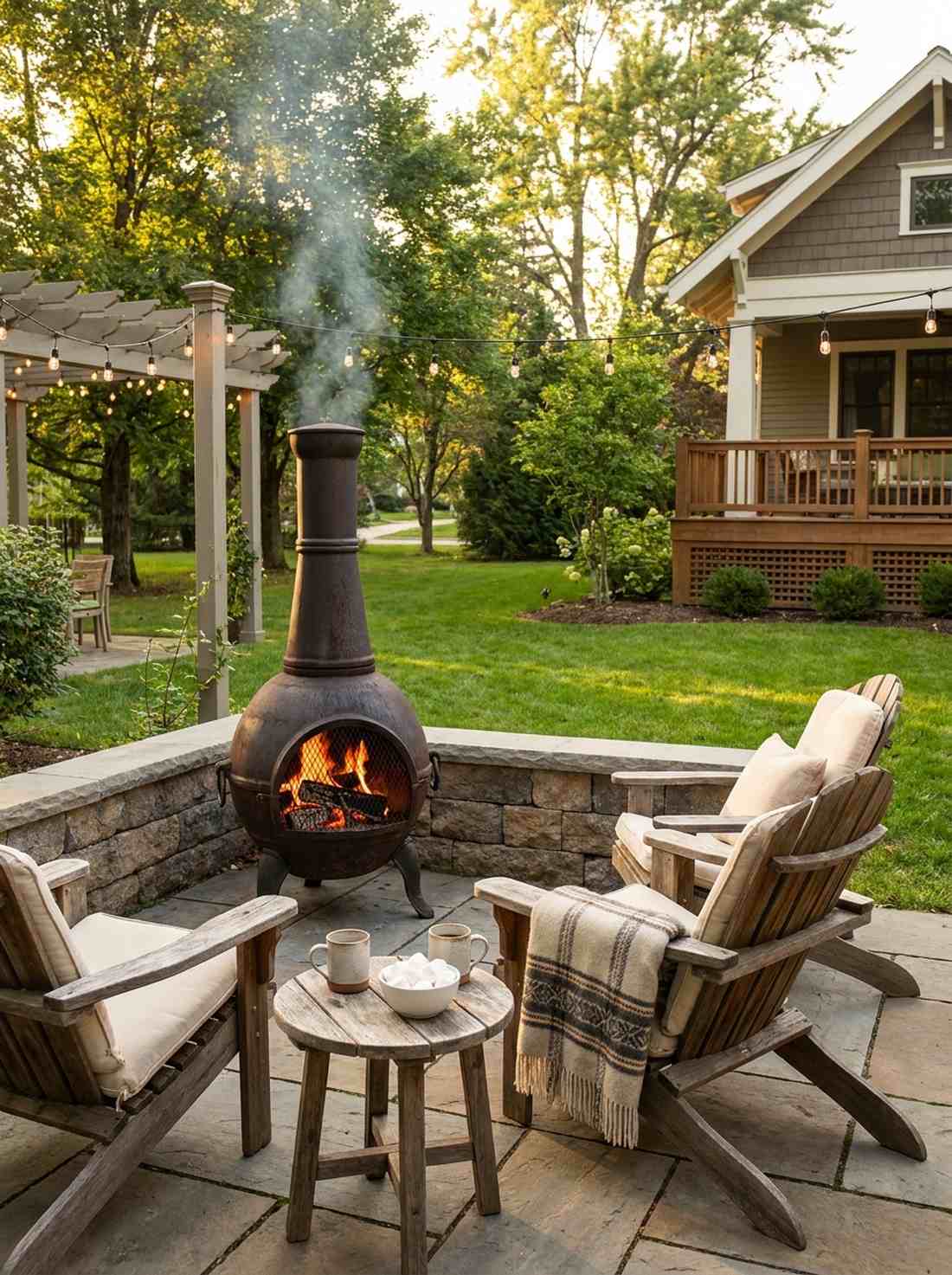
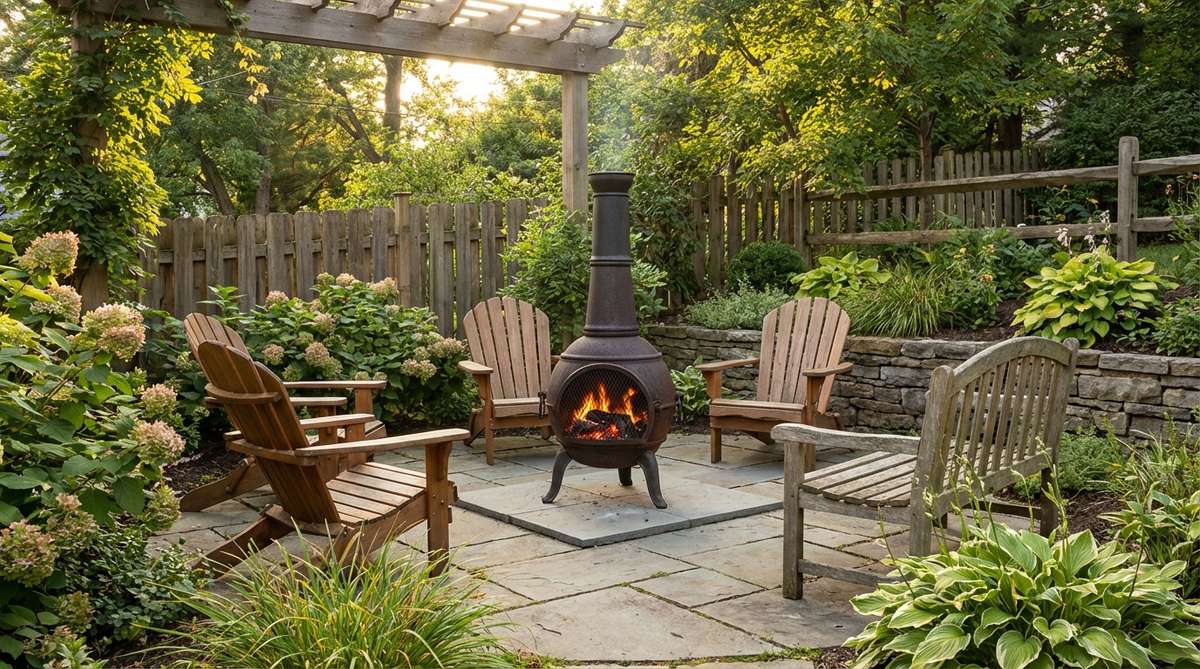
Provides an incredibly warm, focused heat that feels like an outdoor fireplace. This classic iron garden structure works exceptionally well tucked into the corner of a small patio where an open fire is too dangerous.
Clay models crack in freezing weather, but a heavy cast iron body provides that expensive landscape architect touch without the bill. Utilizing top-rated garden heating metals ensures the chimney safely directs thick smoke straight up and away from your guests’ eyes.
You can snag a gorgeous iron unit for around $150–$300. Pin this to your small patio makeover board!
- Key Materials: Cast iron body, chimney cap, high-heat stove paint.
- Vibe / Style: Cozy traditional hearth.
- Difficulty: Heavy lifting required.
- Budget Breakdown: Iron Chiminea: $200 | Cover: $30.
- Creator’s Tip: Before your first massive fire, burn three tiny fires in it first. This “cures” the iron and prevents it from cracking under sudden extreme heat.
- Smart Sourcing: cast iron outdoor chimineas, heavy-duty weatherproof chiminea covers.
34. Steel Kadai Fire Bowl
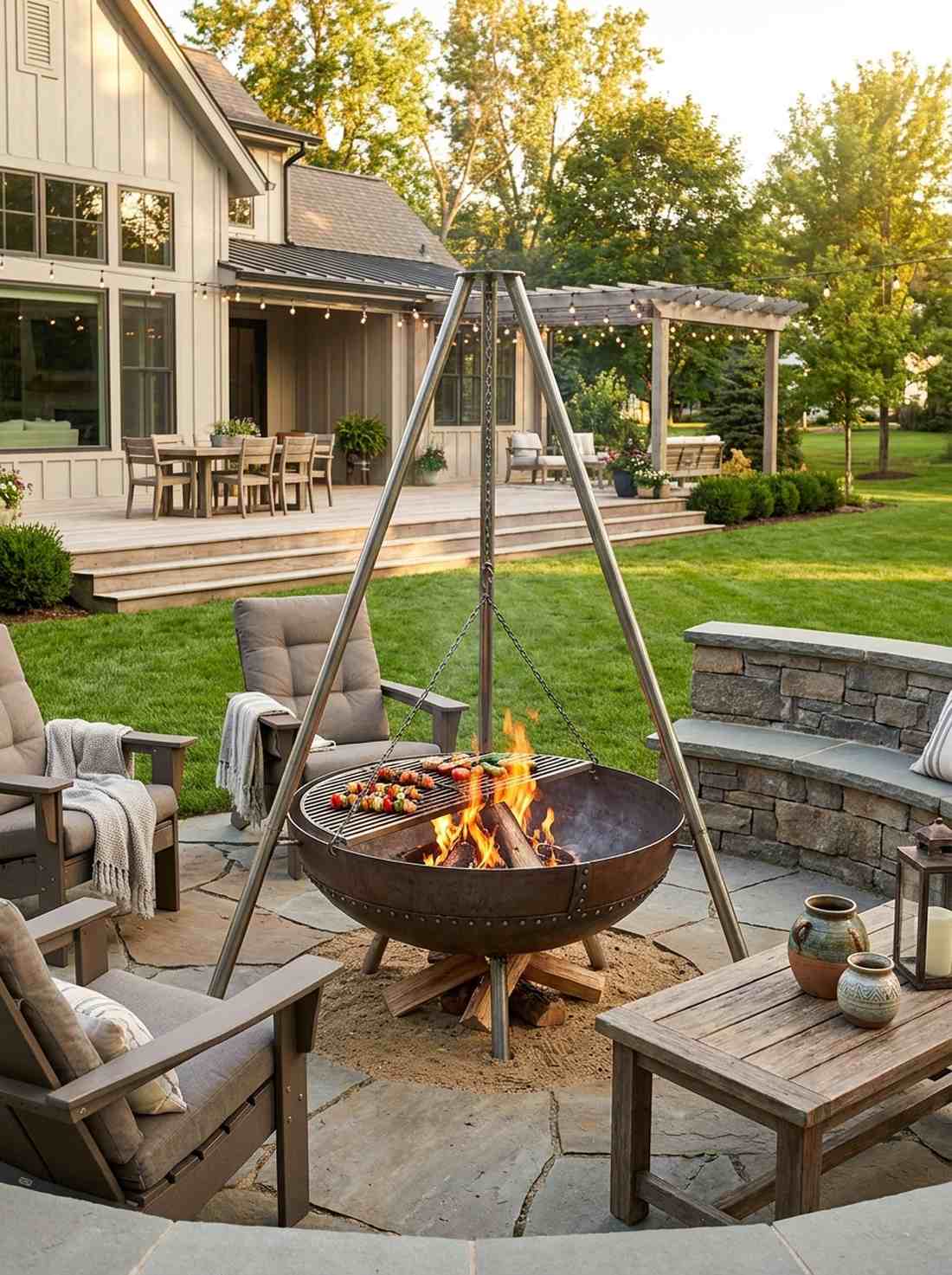
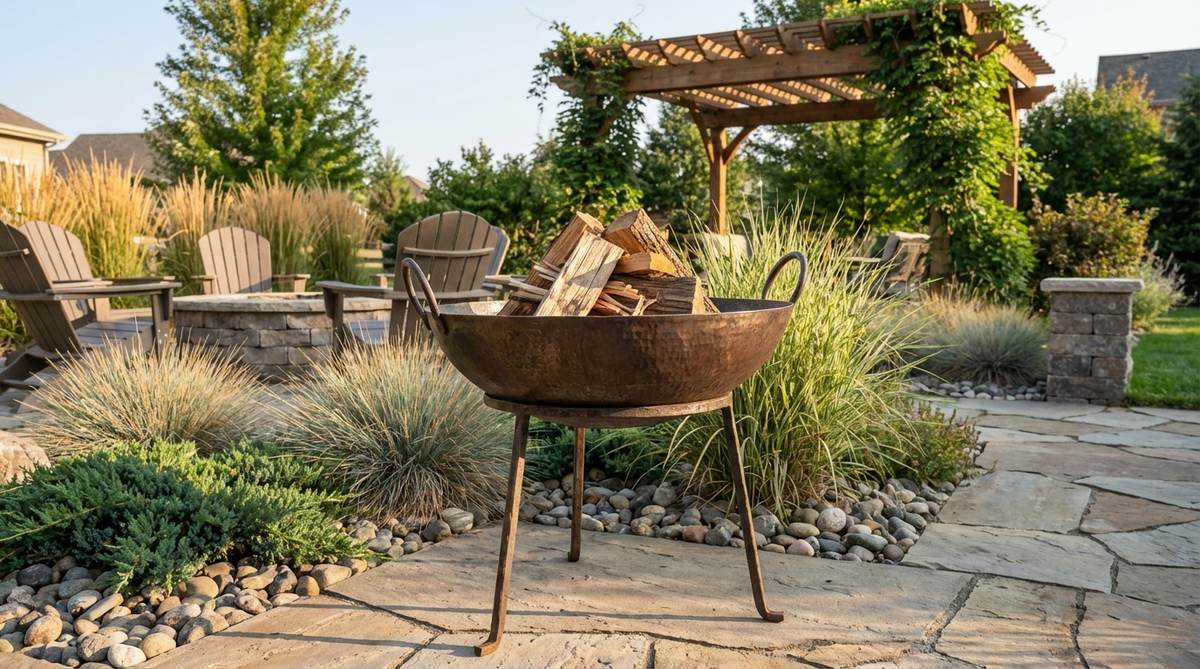
Brings a rugged, authentic global aesthetic directly to your backyard. This versatile metal garden basin works exceptionally well as a massive fire pit that doubles as a rustic outdoor grill.
Basic grills are ugly, but a riveted Indian-style kadai creates a bespoke architectural vibe instantly. Sneaking in premium outdoor cooking setups with custom grill grates turns your fire pit into a luxury culinary experience.
You can easily pull this off for around $180–$350. Save this to your backyard cooking inspiration board!
- Key Materials: Riveted steel kadai bowl, tripod stand, half-moon grill grates.
- Vibe / Style: Rugged global cooking.
- Difficulty: Easy beginner setup.
- Budget Breakdown: Kadai Bowl & Stand: $220 | Grill Grate: $45.
- Creator’s Tip: Fill the bottom inch of the bowl with dry sand before lighting a fire to protect the metal from direct heat degradation.
- Smart Sourcing: authentic steel kadai fire bowls, heavy-duty replacement fire bowl grill grates.
This next fire alternative creates a luxury resort vibe for a fraction of the cost…
35. Bronze Flame Sculpture
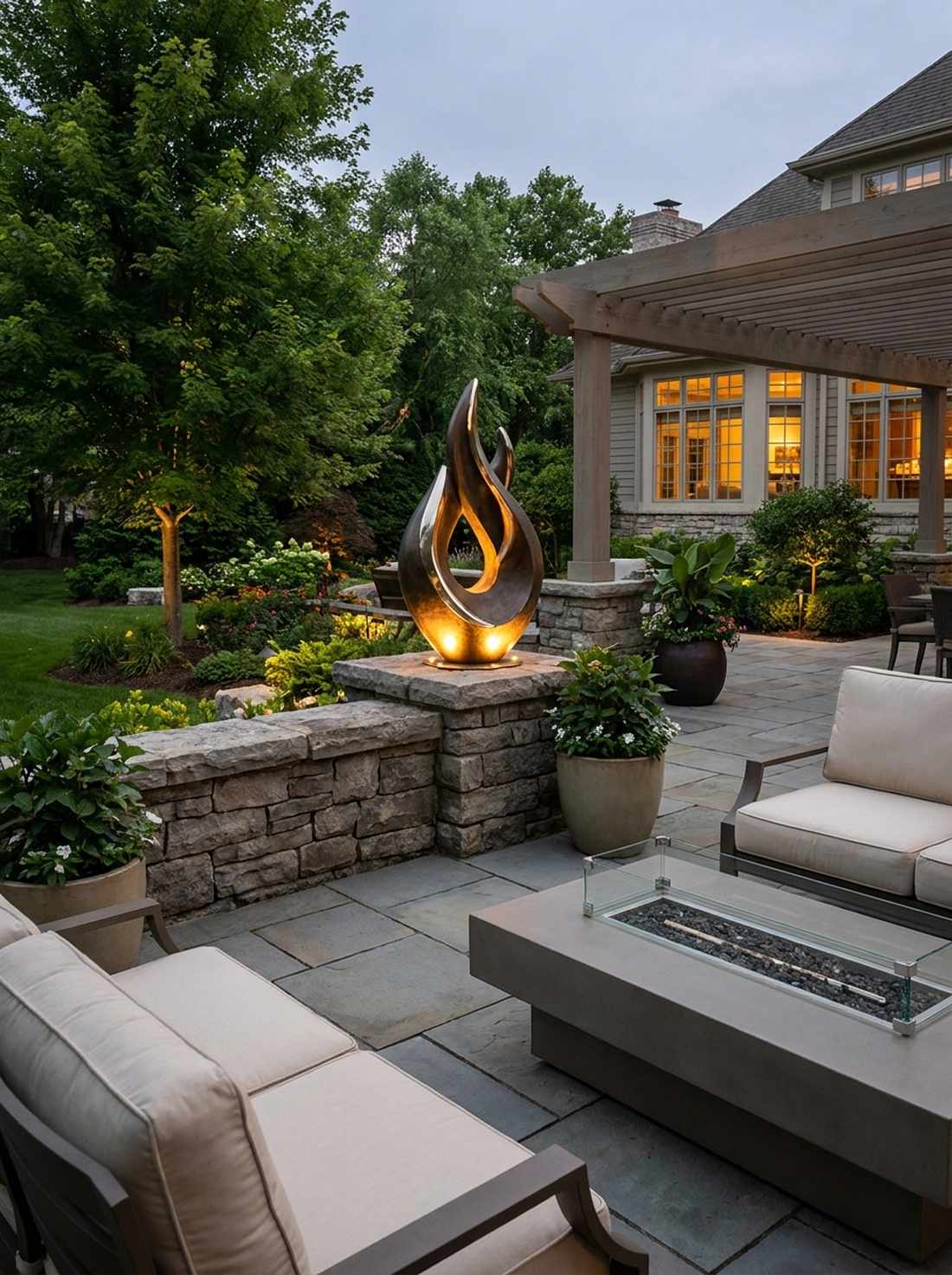
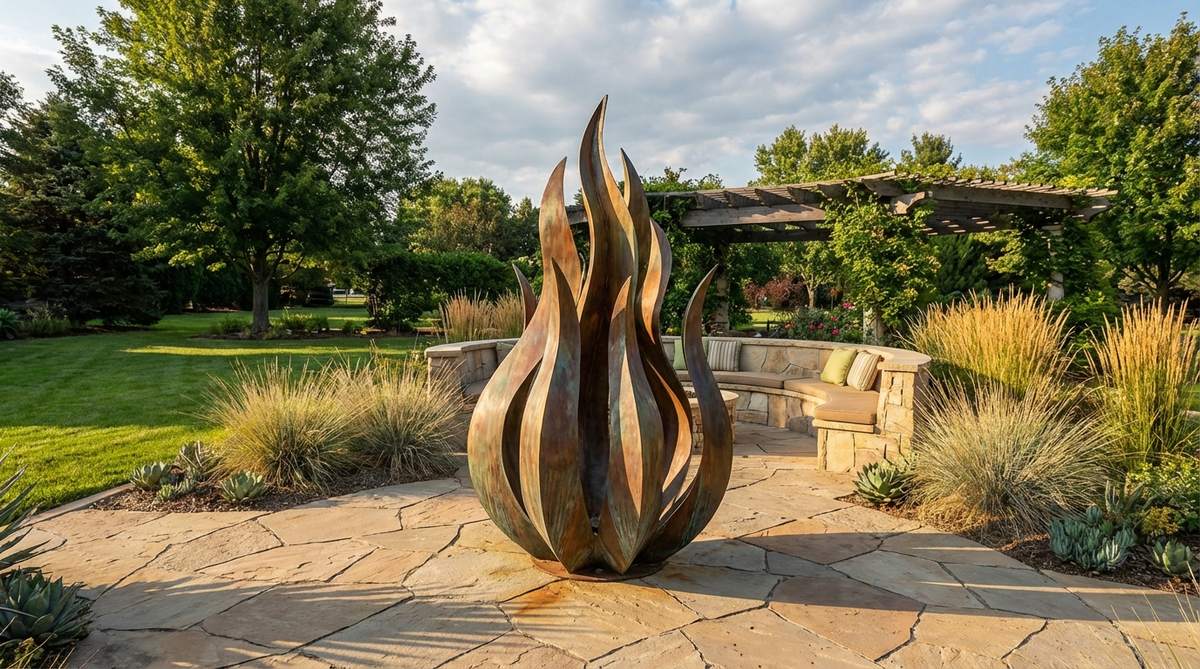
Offers the intense visual drama of fire without any of the smoke, ash, or danger. This modern bronze garden ornament works exceptionally well perched on a stone retaining wall under heavy landscaping lights.
Actual fire features are illegal on many urban balconies, but a stylized metal flame delivers a surprisingly premium look that captures the light perfectly. Integrating high-end aesthetic garden decor provides a zero-maintenance centerpiece that looks stunning 365 days a year.
You can score a heavy cast sculpture for around $100–$250. Pin this if you have a strict HOA or a tiny balcony!
- Key Materials: Cast bronze or polished metal sculpture, warm LED uplight.
- Vibe / Style: Luxury hotel patio.
- Difficulty: Easy beginner setup.
- Budget Breakdown: Bronze Sculpture: $140 | Spotlights: $35.
- Creator’s Tip: Use a warm 2700K amber LED spotlight aimed directly at the base of the sculpture to mimic the glowing light of a real fire.
- Smart Sourcing: abstract metal flame sculptures, warm amber LED landscape spotlights.
Material Guide: Cheap vs. Premium Aesthetic
Knowing exactly where to save and where to spend makes all the difference in achieving that “looks expensive but isn’t” vibe for your outdoor spaces.
- Standard Iron vs. UV-Resistant/Powder-Coated Steel: Raw iron rusts and flakes, requiring constant maintenance. Spending $20 more on a powder-coated or UV-resistant kit stops peeling, fading, and structural failure over long winters.
- Pre-made Kits vs. Sourcing Locally: Fabricating custom arbors or pergolas locally costs thousands. Leveraging heavy-duty starter kits and upgrading the hardware (like lag bolts and concrete anchors) gives you a bespoke, commercial-grade result for a fraction of the cost.
Finishing Accents and Details
36. Iron Plant Labels with Stakes
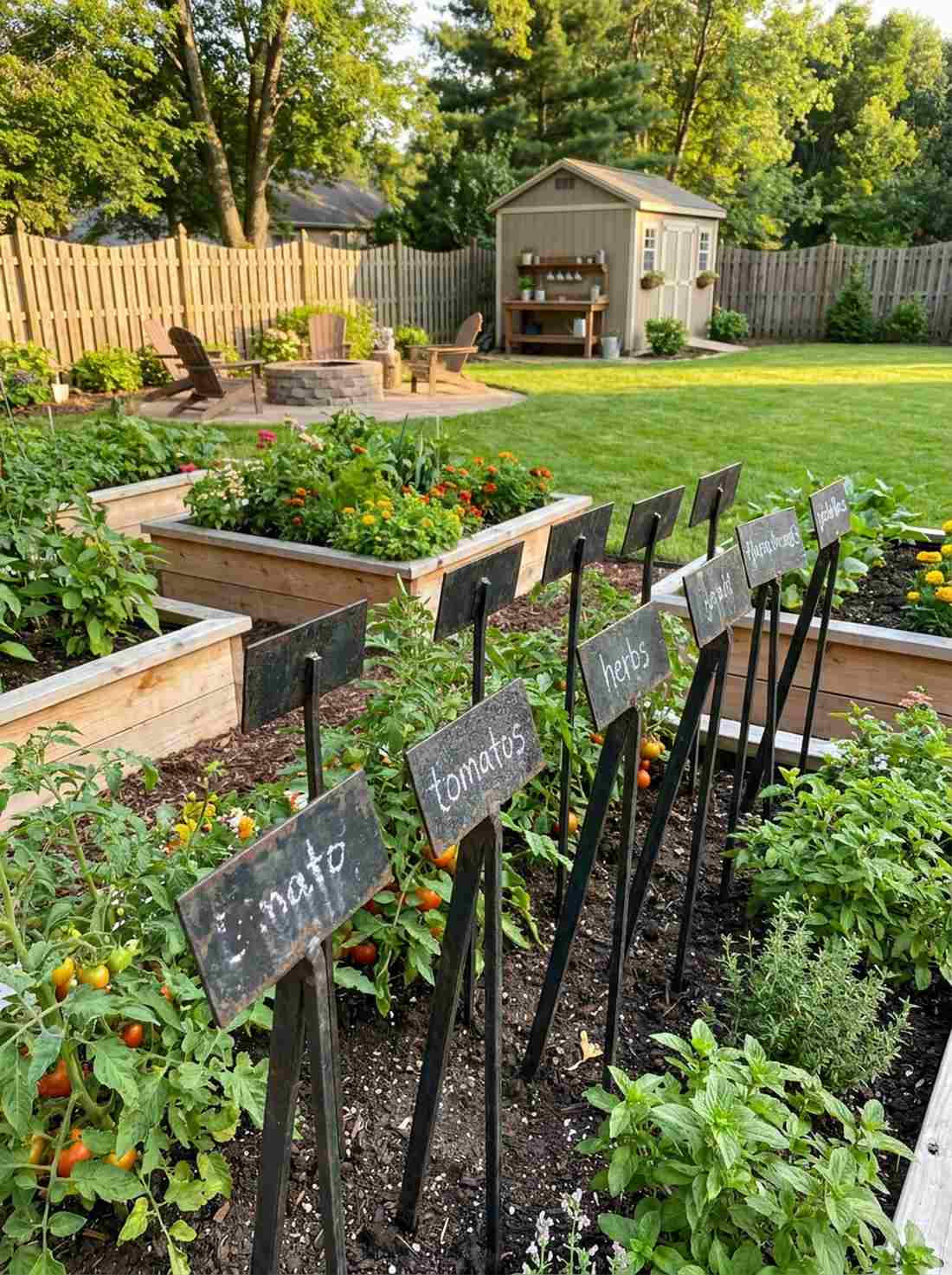
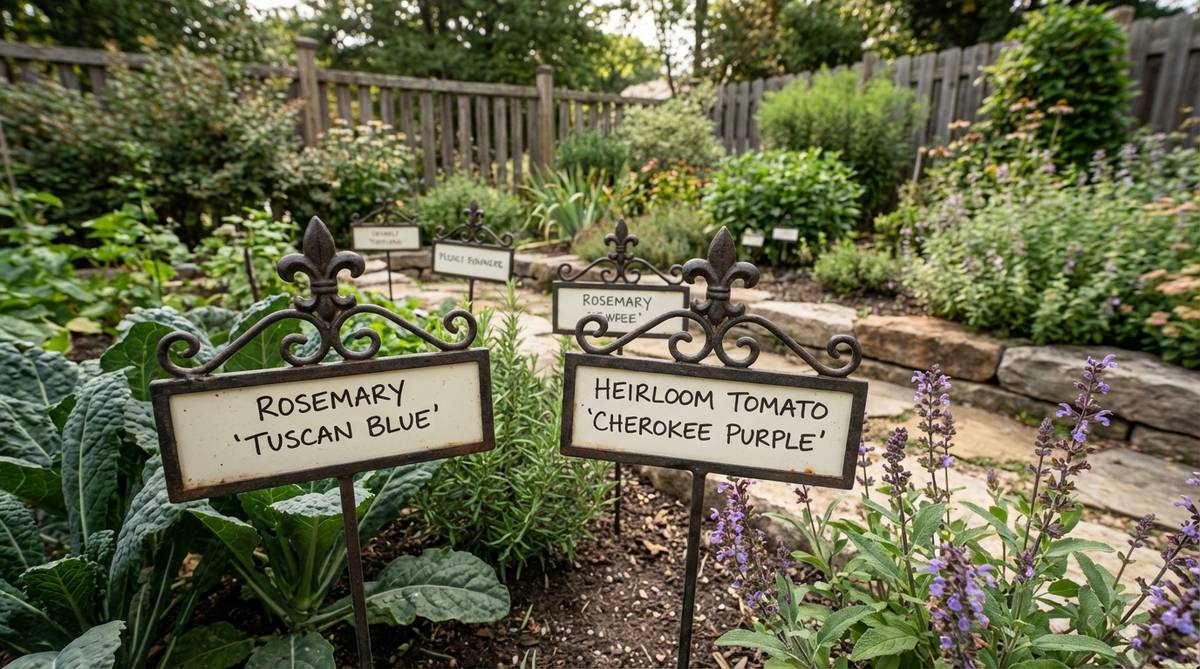
Instantly makes your backyard vegetable patch look like a professional botanical garden. This functional metal garden accessory works exceptionally well for keeping track of different tomato and herb varieties.
Plastic markers break and fade in a week, but heavy iron stakes look far more expensive than it is while surviving brutal storms. Choosing premium garden organization tools totally eliminates the frustration of forgetting what you planted in April.
You can easily outfit your whole garden for around $20–$40. Save this to your spring planting prep board!
- Key Materials: Angled iron stakes, weatherproof chalk markers.
- Vibe / Style: Professional nursery precision.
- Difficulty: Easy beginner setup.
- Budget Breakdown: Iron Stakes (Pack of 10): $25 | Paint Pens: $8.
- Creator’s Tip: Don’t use normal chalk; use oil-based paint pens so the text won’t wash off the iron plate during heavy thunderstorms.
- Smart Sourcing: weatherproof iron garden plant labels (bulk pack), oil-based outdoor paint marker pens.
37. Steel Shepherd Hooks
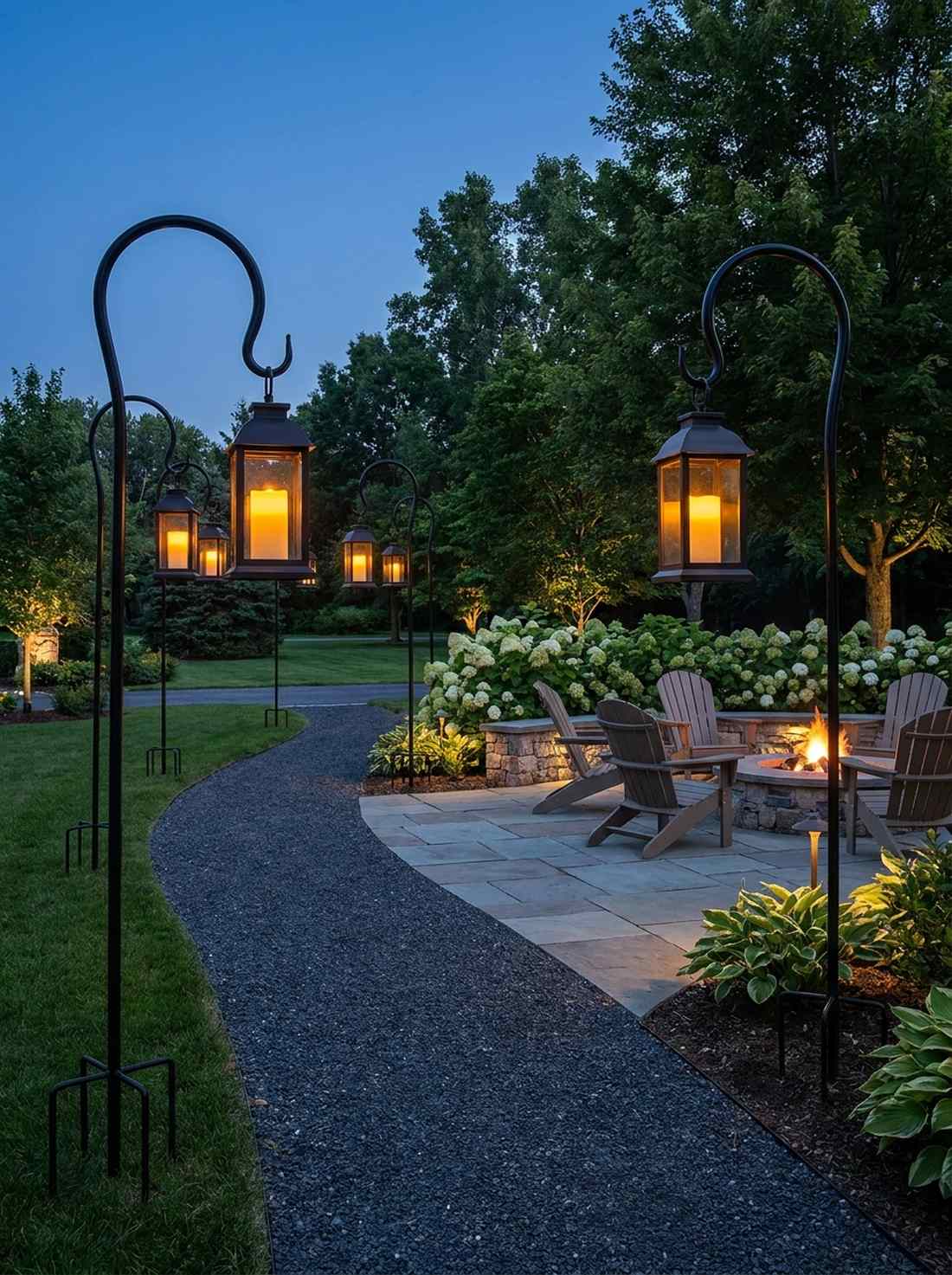
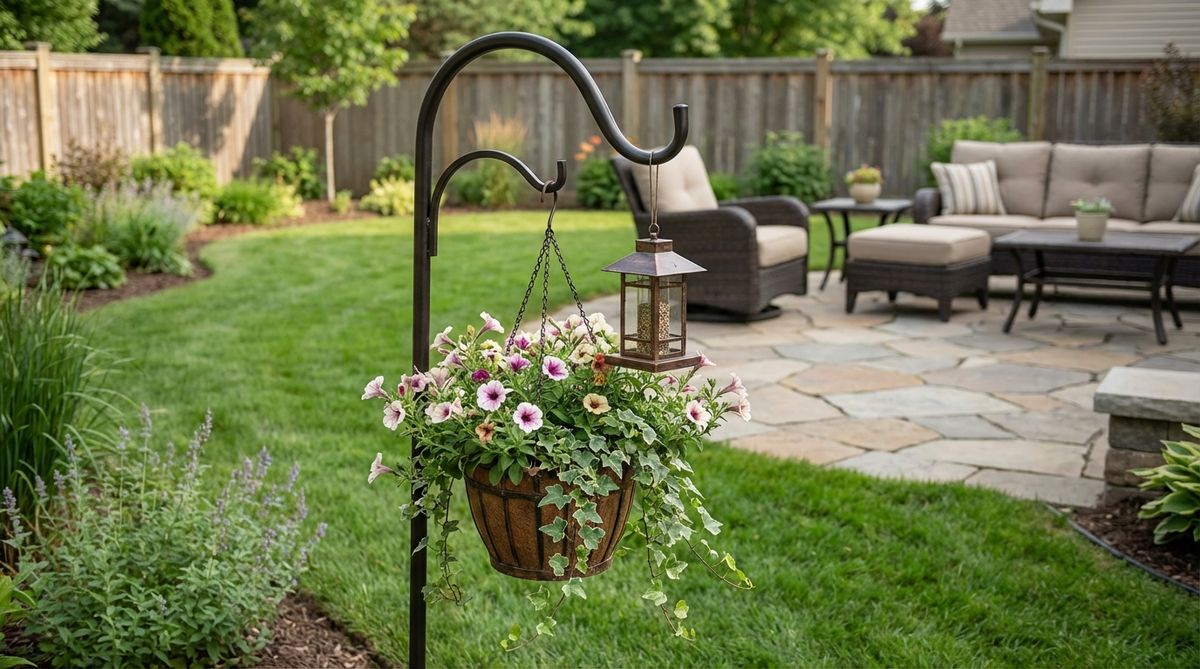
Provides a soaring, elegant curve to display hanging lanterns or heavy baskets. This tall metal garden support works exceptionally well lining a dark driveway or dotting the perimeter of a patio.
Cheap hollow hooks bend immediately under a wet basket, but a solid forged steel rod provides that expensive landscape architect touch without the bill. Utilizing heavy-duty metal garden structures with a 5-prong base ensures it stays dead straight no matter how much weight it holds.
You can easily pull this off for around $30–$60 per heavy-duty hook. Pin this to your outdoor lighting or hanging basket board!
- Key Materials: Solid core steel shepherd hook, heavy hanging lantern.
- Vibe / Style: Classic cottage pathway.
- Difficulty: Easy step-in setup.
- Budget Breakdown: Heavy-Duty Hook: $40 | Solar Lantern: $25.
- Creator’s Tip: If the ground is too soft, dig a tiny hole, drop the hook prongs in, and pour a bag of quick-setting concrete for a permanent fixture.
- Smart Sourcing: heavy-duty 5-prong solid steel shepherd hooks, hanging outdoor solar lantern kits.
38. Bronze Garden Bell
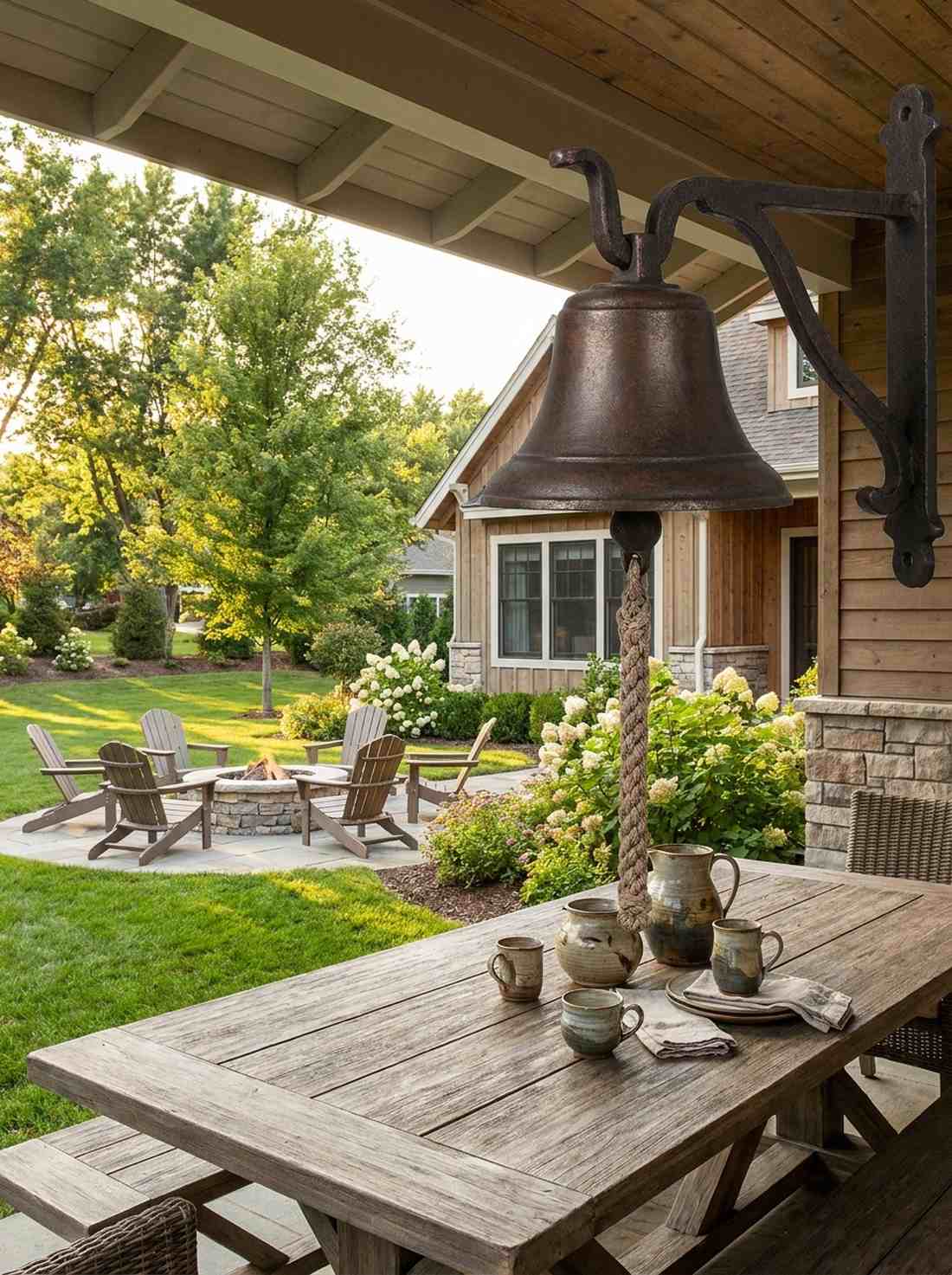
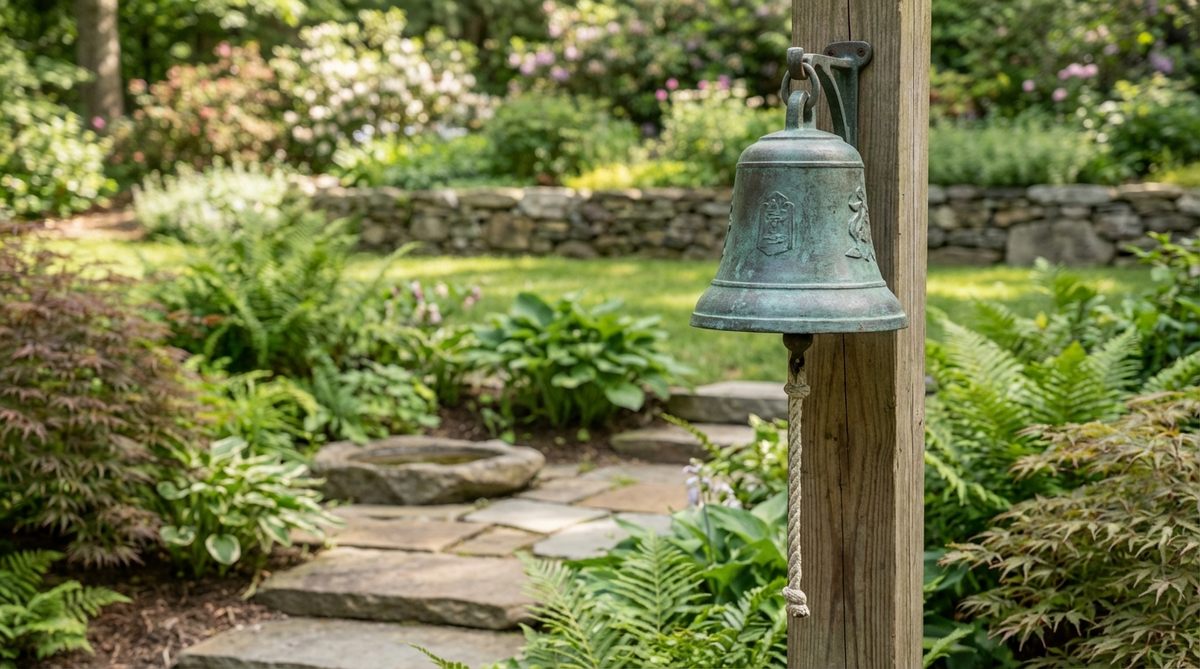
Fills your yard with a deep, resonant tone that completely changes the atmosphere. This bronze garden ornament works exceptionally well hung right outside a back door or nestled near an outdoor dining table.
Tinkly aluminum chimes can be annoying, but a thick cast bronze bell creates a bespoke architectural vibe instantly. Sneaking in premium outdoor auditory decor adds a sensory element to your garden that feels incredibly grounded and expensive.
You can hang one of these beautifully for around $40–$90. Save this to your zen outdoor space board!
- Key Materials: Cast bronze bell, heavy mounting bracket, thick braided pull rope.
- Vibe / Style: Rustic monastery courtyard.
- Difficulty: Easy beginner setup.
- Budget Breakdown: Bronze Bell Kit: $55 | Heavy Bracket: $15.
- Creator’s Tip: Hang it under a covered eave so the pull rope doesn’t rot, while the heavy bronze remains perfectly protected.
- Smart Sourcing: cast bronze outdoor garden bells, heavy-duty wrought iron wall brackets.
39. Wrought Iron Hose Holder
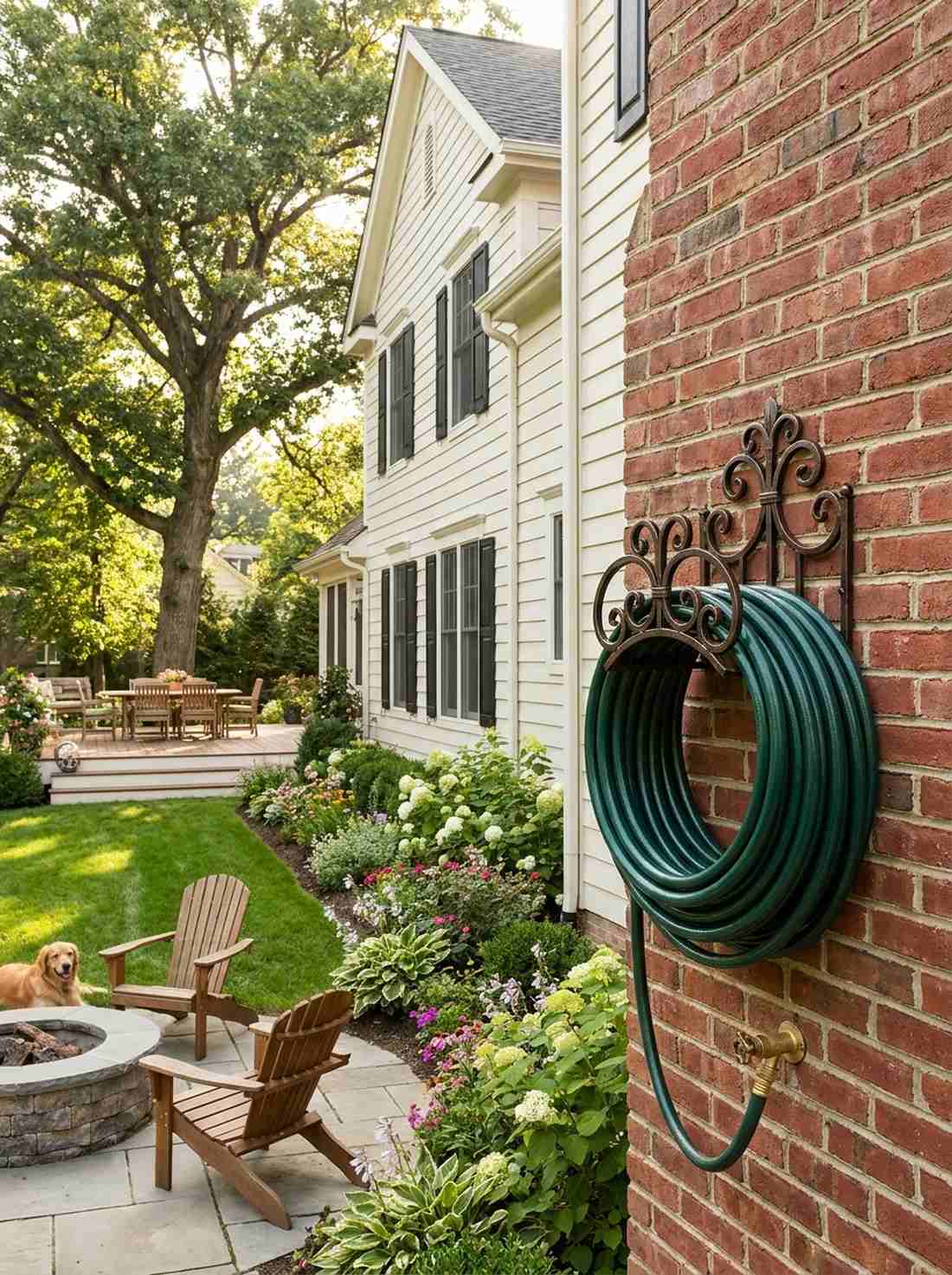
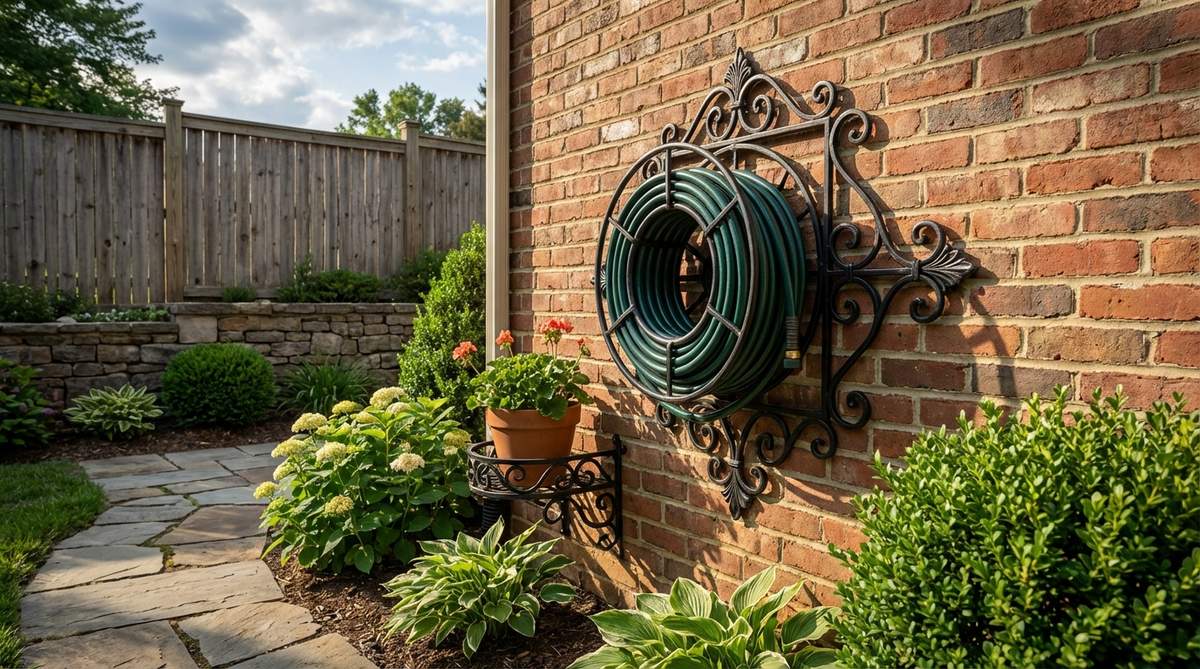
Turns an ugly neon green hose pile into a stunning piece of wall art. This practical metal garden accent works exceptionally well mounted straight onto brick or siding near your main water spigot.
Plastic hose reels crack in the sun and look terrible, but a heavy scrolled iron mount delivers a surprisingly premium look that actually holds the weight. Incorporating decorative metal exterior hardware hides the messy utility side of yard work effortlessly.
You can upgrade your water station for around $30–$70. Pin this to your ultimate outdoor organization board!
- Key Materials: Scrolled iron hose rack, masonry anchors, clear rust sealant.
- Vibe / Style: Elegant practical utility.
- Difficulty: Moderate DIY setup.
- Budget Breakdown: Iron Holder: $45 | Masonry Bolts: $5.
- Creator’s Tip: Mount it at waist height—not down by the spigot—so you never have to bend over to coil up the heavy, wet hose.
- Smart Sourcing: heavy-duty wrought iron wall hose holders, extreme weather masonry anchor kits.
40. Steel Bird Feeder Pole
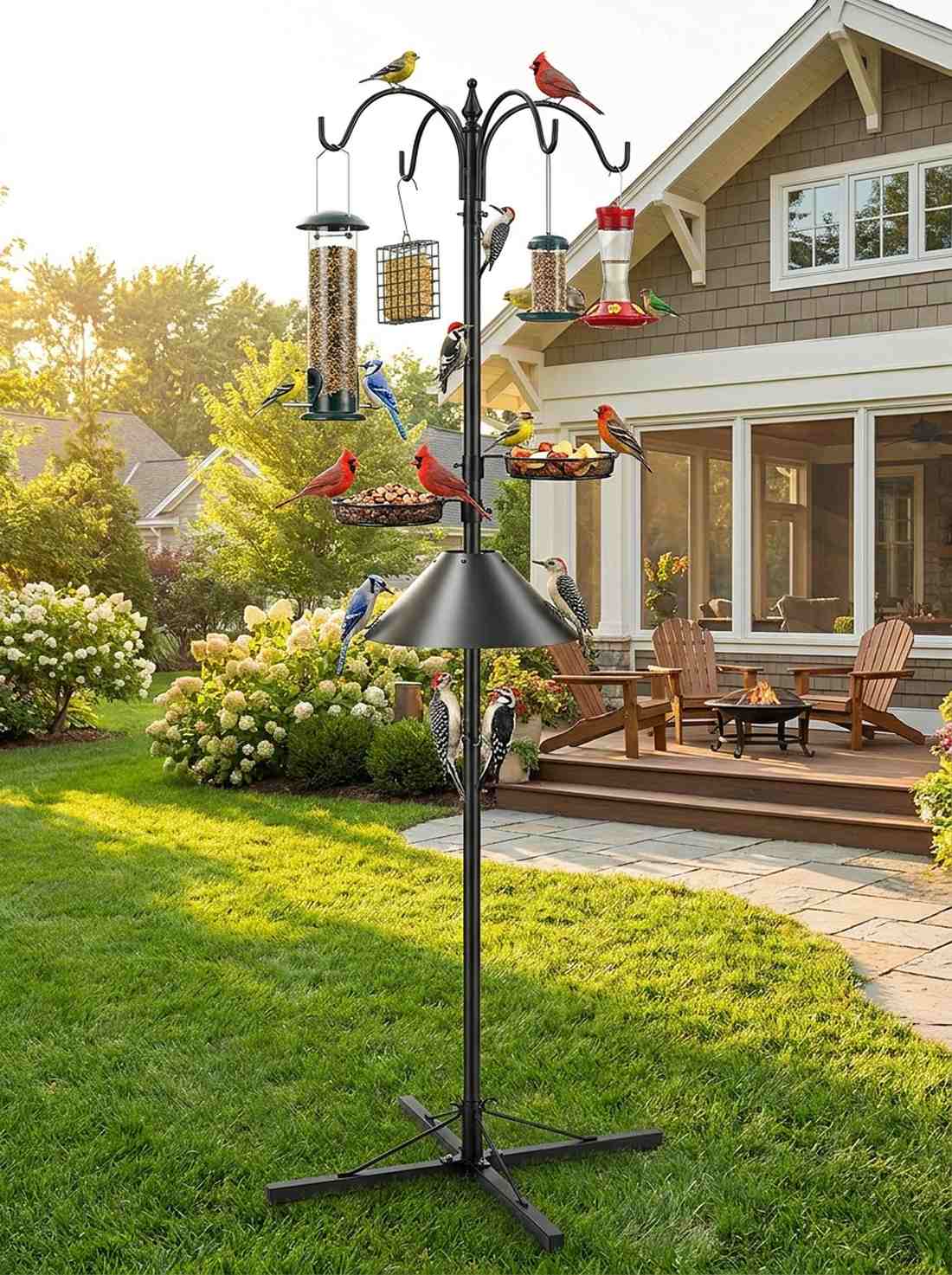
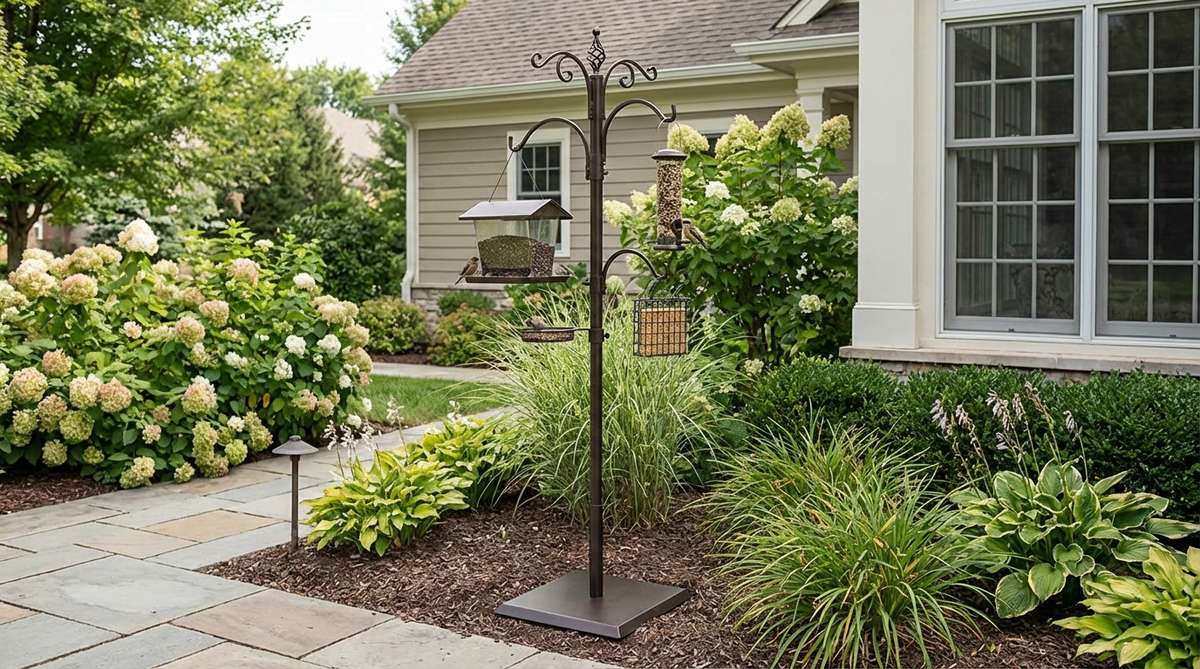
Creates a towering, multi-level buffet that brings incredible wildlife right to your window. This metal garden utility structure works exceptionally well planted just outside a kitchen window or a sunroom.
Most feeder poles lean over immediately, but a commercial-grade steel station looks far more expensive than it is by standing perfectly upright. Using squirrel-proof garden metal supplies with massive base stabilizers ensures your feeders aren’t raided by pests.
You can build a massive bird station for around $50–$120. Save this to your wildlife gardening board right now!
- Key Materials: Multi-hook steel pole system, squirrel baffle collar.
- Vibe / Style: Active wildlife sanctuary.
- Difficulty: Easy beginner setup.
- Budget Breakdown: Pole Station Kit: $65 | Squirrel Baffle: $25.
- Creator’s Tip: Place the pole exactly 10 feet away from any fences or trees; squirrels can jump incredible distances to bypass your metal baffle.
- Smart Sourcing: premium multi-hook steel bird feeding stations, wrap-around metal squirrel baffles.
41. Iron Boot Scraper
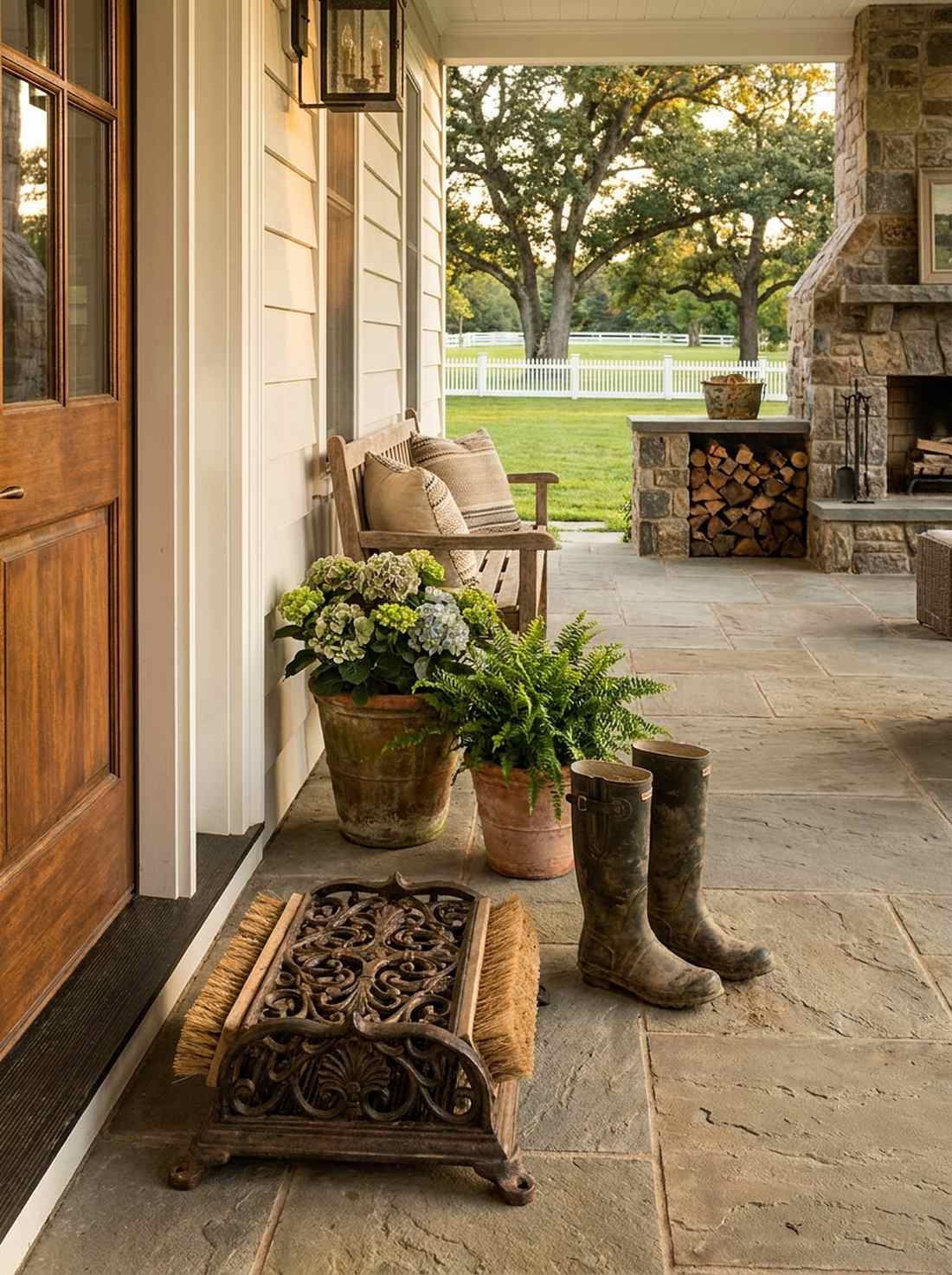
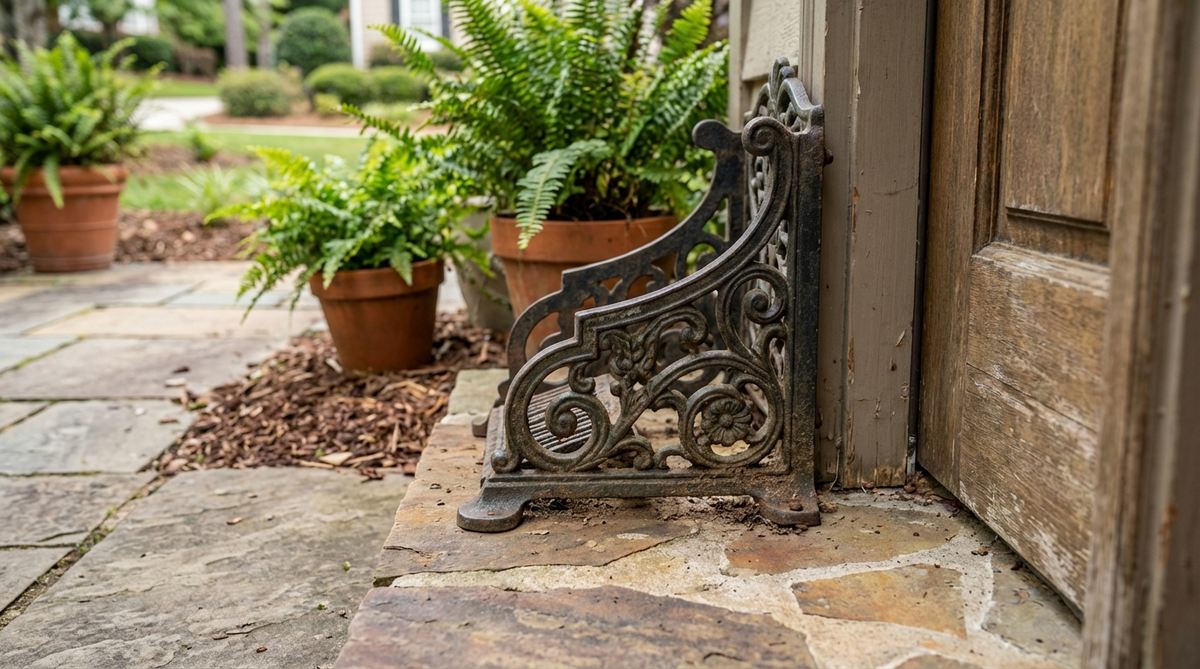
Adds a touch of historic, old-world class right at your doorstep while saving your floors. This vintage iron yard decoration works exceptionally well permanently mounted near the muddy transition of a garden or garage door.
Wiping your feet on an ugly mat isn’t enough, and a heavy cast iron scraper provides that expensive landscape architect touch without the bill. Grabbing heavy-duty metal porch accessories featuring stiff bristle brushes makes cleaning off clay and mud deeply satisfying.
You can easily pull this off for around $30–$60. Pin this to your mudroom or porch entryway board!
- Key Materials: Cast iron scraper block, replacement stiff brushes, concrete screws.
- Vibe / Style: Historic equestrian estate.
- Difficulty: Easy beginner setup.
- Budget Breakdown: Iron Scraper: $45 | Concrete Anchors: $5.
- Creator’s Tip: Do not just set it on the porch; use concrete Tapcon screws to bolt it down so it doesn’t move when you aggressively scrape your boots.
- Smart Sourcing: cast iron boot scrapers with side brushes, blue concrete Tapcon screw kits.
42. Bronze Garden Plaque
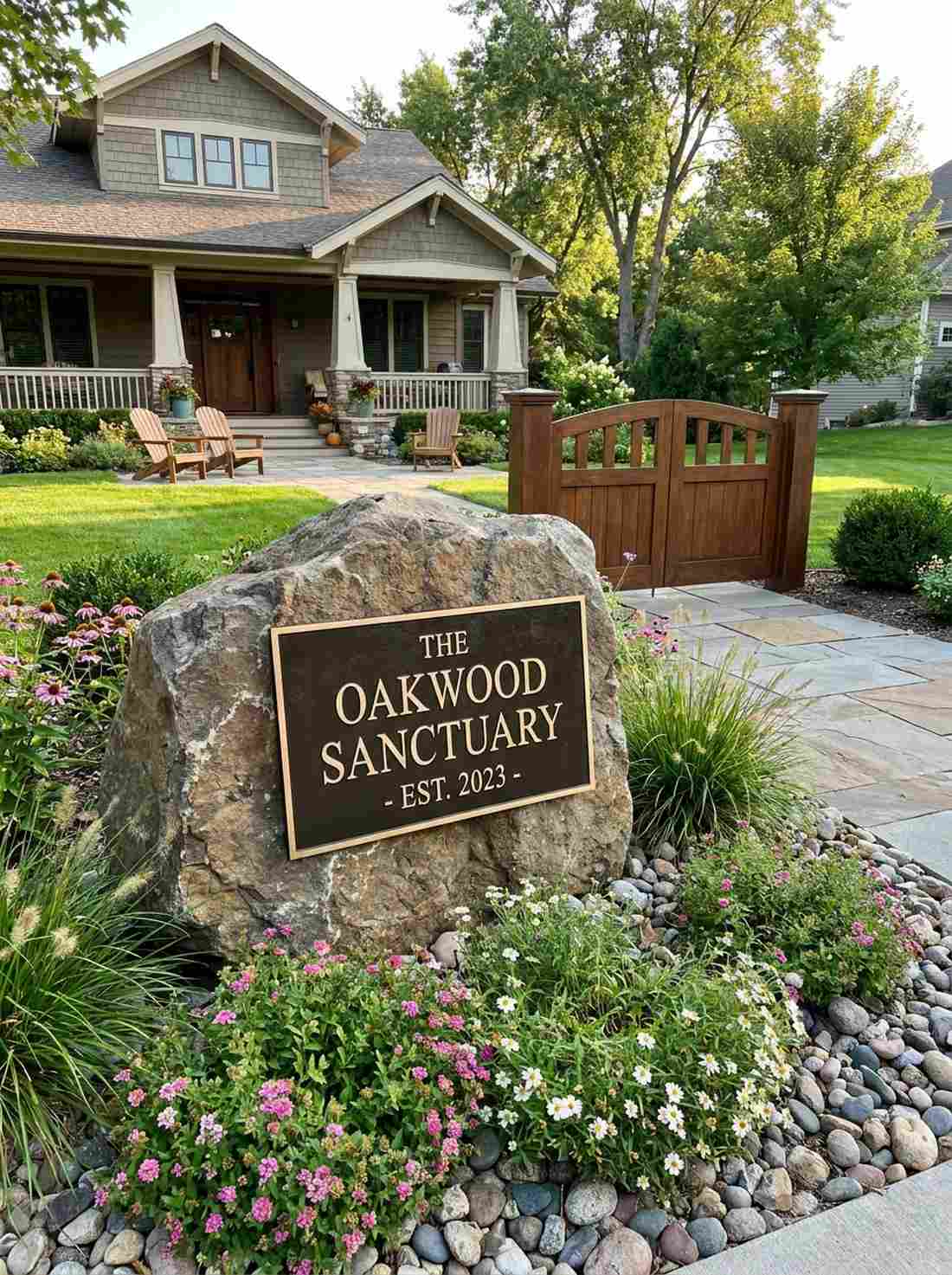
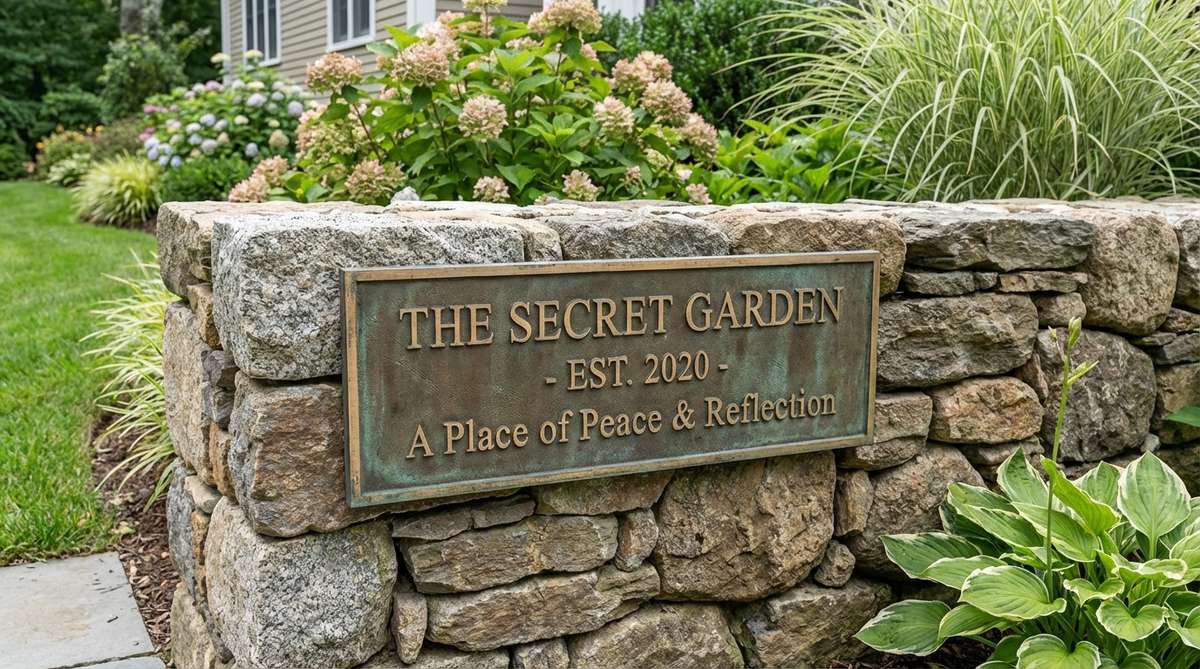
Instantly cements your garden as an official, named sanctuary that demands respect. This custom metal garden decoration works exceptionally well mounted on a large entryway boulder or a heavy wooden gate.
Flimsy wooden signs rot, but a heavy cast bronze plaque creates a bespoke architectural vibe instantly that lasts generations. Utilizing premium custom metal signage with raised lettering gives your home massive historical weight and curb appeal.
You can commission a beautiful plaque for around $70–$200. Save this to your ultimate custom home upgrade board!
- Key Materials: Custom cast bronze plaque, mounting studs, exterior epoxy.
- Vibe / Style: Official heritage estate.
- Difficulty: Easy beginner setup.
- Budget Breakdown: Custom Bronze Plaque: $130 | Epoxy: $10.
- Creator’s Tip: Opt for a blind-mount stud system on the back of the plaque so there are no ugly screw heads visible on the front face.
- Smart Sourcing: custom cast bronze garden plaques, two-part exterior marine epoxy.
Bringing It Together
Integrating garden decor metal across multiple design scales creates cohesive outdoor environments with lasting visual appeal. The inherent durability of iron, steel, and bronze ensures these investments serve your property for decades while developing authentic patinas that enhance their premium aesthetic. Begin with structural elements that define space, add functional supports that aid plant growth, then layer sculptural accents and finishing details that reflect personal style and unbelievable Pinterest-level charm.
Frequently Asked Questions
What is the real cost to recreate these metal garden setups?
While custom metal fabrication can run into the thousands, utilizing pre-made heavy-duty garden metal kits and starter packs drops the price drastically. You can achieve high-end looks for $50 to $300 by sourcing bulk-pack anchors, modular steel frames, and upgrading the protective coatings yourself.
Where is the best place to use these metal layouts?
Use large steel structures like pergolas and arbors for patio transitions and lawn framing. Utilize wall-mounted trellises to hide ugly fencing or garage walls. For small balconies and intimate patios, rely on vertical obelisks, functional iron containers, and flame sculptures to maximize impact without eating up square footage.
How do different metal finishes weather in garden environments?
Galvanized steel and UV-protected powder-coated kits resist rust for 10-20 years. Raw Cor-Ten steel is designed to develop a stable, protective orange rust patina in a few months. Bronze creates a high-end green verdigris naturally over 5-10 years. Always use clear UV-sealant if you want to stop the natural weathering process on cheaper iron components.
What installation methods ensure metal garden structures remain stable?
Never just push heavy metal into loose dirt. Set main structural posts using heavy-duty commercial ground auger anchors or concrete footings below the frost line. Always upgrade the included factory hardware to galvanized or stainless lag bolts to prevent rust bleeding at the joints.
Which metals perform best in coastal or harsh weather garden environments?
Stainless steel grades 316 and 304 resist salt corrosion indefinitely, making them perfect for beachside properties. Powder-coated aluminum combines extreme light weight with total rust resistance. Avoid raw iron and cheap mild steel in coastal zones unless heavily sealed, as salt accelerates rust that compromises structural integrity fast.